Category: News

  • Voter turnout surges in Tennessee after Black-majority district is erased

    Voter turnout surges in Tennessee after Black-majority district is erased

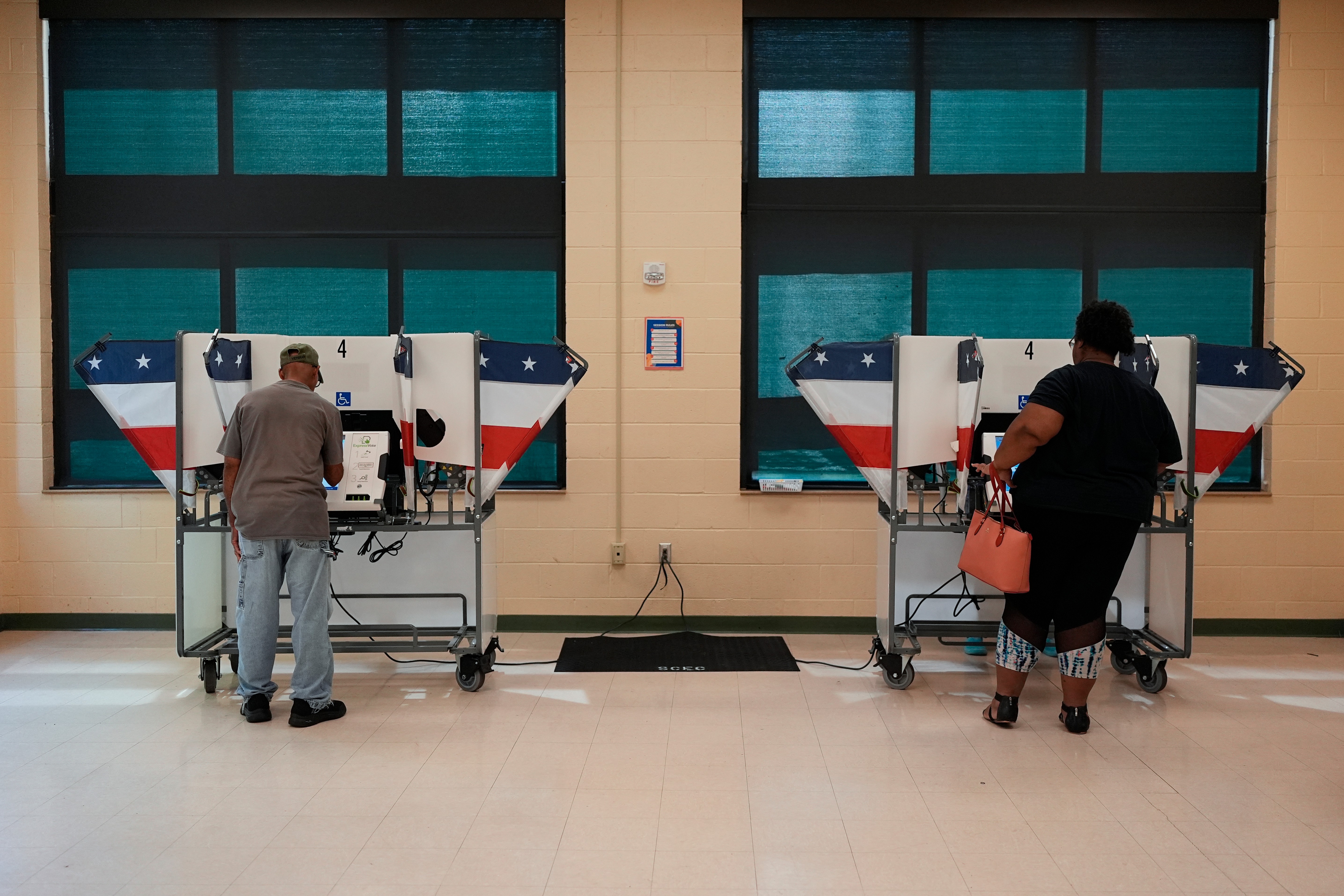
    Democratic turnout for House primaries in a majority-Black Tennessee county surged to the highest level in a decade Thursday, the latest sign that redistricting may be energizing Black voters across the South.

    A fifth of active registered voters cast a ballot in three Democratic U.S. House primaries held Thursday in Shelby County, which includes Memphis. That’s more than double the turnout percentage for similar contests in 2024.

    Organizers said the outpouring was motivated by anger over the Republican-led legislature’s action to break up the state’s only majority-Black congressional district after the U.S. Supreme Court eliminated minority voter protections in the Voting Rights Act this year. Lawmakers dispersed the Black voters of Shelby County into three separate districts that stretch into rural white communities.

    “People are pissed off,” said Kristal Knight, chairperson of the voting rights group Organize Tennessee. Memphis is “the densest part of the African American vote in the state, and people really took it personally — you are trying to come into our county, break up our county, and split our vote? And what better way to push back than to say we’re going to turn out.”

    President Donald Trump has pushed red states to draw new congressional districts to help the GOP maintain control of the House in elections this fall. The Supreme Court’s gutting of protections in the Voting Rights Act made that easier. Louisiana, Alabama, and Tennessee quickly drew new maps that dilute Black voting power, raising fears that the civil rights gains of the past 60 years are being destroyed.

    But the actions have galvanized Black voters, who have mobilized protests in many states and turned out in historic numbers in primaries in South Carolina. That turnout helped prompt the South Carolina legislature to abandon plans to dissolve a majority-Black district. The Georgia legislature also opted not to act after an outpouring of opposition.

    “People are really amped up about … what is happening across the South,” Knight said. “People need to show the rest of America, this is not the way you treat voters.”

    Democrats and voting rights organizers had worked overtime in Tennessee over the past few weeks to ensure a big presence in primary elections there for governor, a U.S. Senate seat, and the state’s nine House districts, even though Republicans are heavily favored to win those races in November.

    “A night like last night lets you know it’s not all in vain,” said the Rev. Earle Fisher, pastor at Abyssinian Missionary Baptist Church in Memphis, who was among an outspoken, ardent group of faith leaders in the city who ramped up turnout efforts after redistricting.

    Memphis resident Harmony Lucas, 26, was one of the young voters who helped to boost turnout — urging friends, family, and even co-workers to join her at the polls. Lucas said she has voted in the past, but the GOP effort to break up the state’s only majority-Black district “made me realize I had to get more serious that my voice is heard. It matters.”

    Ian Randolph, who founded the Shelby County Voter Alliance to boost voter participation, attributed the jump in turnout in part to such efforts, including by unions and other civic organizations. In recent months, they have had poll parties, done texting and phone banking, and gone door to door to canvass voters.

    “Everything that touches a voter, we are involved in,” Randolph said. “Working those things got us a better turnout.”

    Rep. Steve Cohen, Tennessee’s lone Democratic congressman, decided not to seek reelection after the 9th District, which he represents, was overhauled. Justin Pearson — a charismatic Black preacher who received national attention in 2023 for his expulsion from the state legislature after protesting at the Capitol in Nashville — won the Democratic nomination to wage the uphill battle to replace Cohen.

    In his victory speech Thursday night, Pearson depicted his candidacy as an act of defiance against redistricting and the undermining of the Voting Rights Act, calling those steps “a blatant attempt to keep people like us out of power and an attempt to make us quit.”

    GOP strategist Ward Baker, who is working in the 9th District with Republican nominee Brent Taylor, disputed the idea that Black voters are turning out in bigger numbers out of anger over redistricting.

    “It’s the first time there’s a contested primary in a long time, and several people are running,” Baker said. He pointed out that Republican voters overall still outnumber Democrats by a wide margin.

    Beyond redistricting, Randolph said voters in the majority-Black county have been energized by other issues including an attempted state takeover of Memphis-Shelby County Schools and the presence of federal immigration agents and the National Guard in the city.

    Democrats’ task gets harder heading into general elections this fall. Tennessee’s 9th District, which had been the state’s only blue seat, is now rated Solid Republican by the Cook Political Report and went for Trump by 21 points in 2024.

    “Everyone that came out last night — that needs to double for November,” Knight said.

    Fisher said he and other pastors have been planning another “Souls to the Polls” rally like the one that drew more than 1,000 people this spring. Thursday’s show of force gives him cautious optimism for November.

    “At least some of what we did worked,” Fisher said. “It’s one of those instances where you can log it as a win and build on it, but it’s not like a victory lap.”
  • A pillar of environmental enforcement is targeted by Trump and Musk’s AI company

    A pillar of environmental enforcement is targeted by Trump and Musk’s AI company

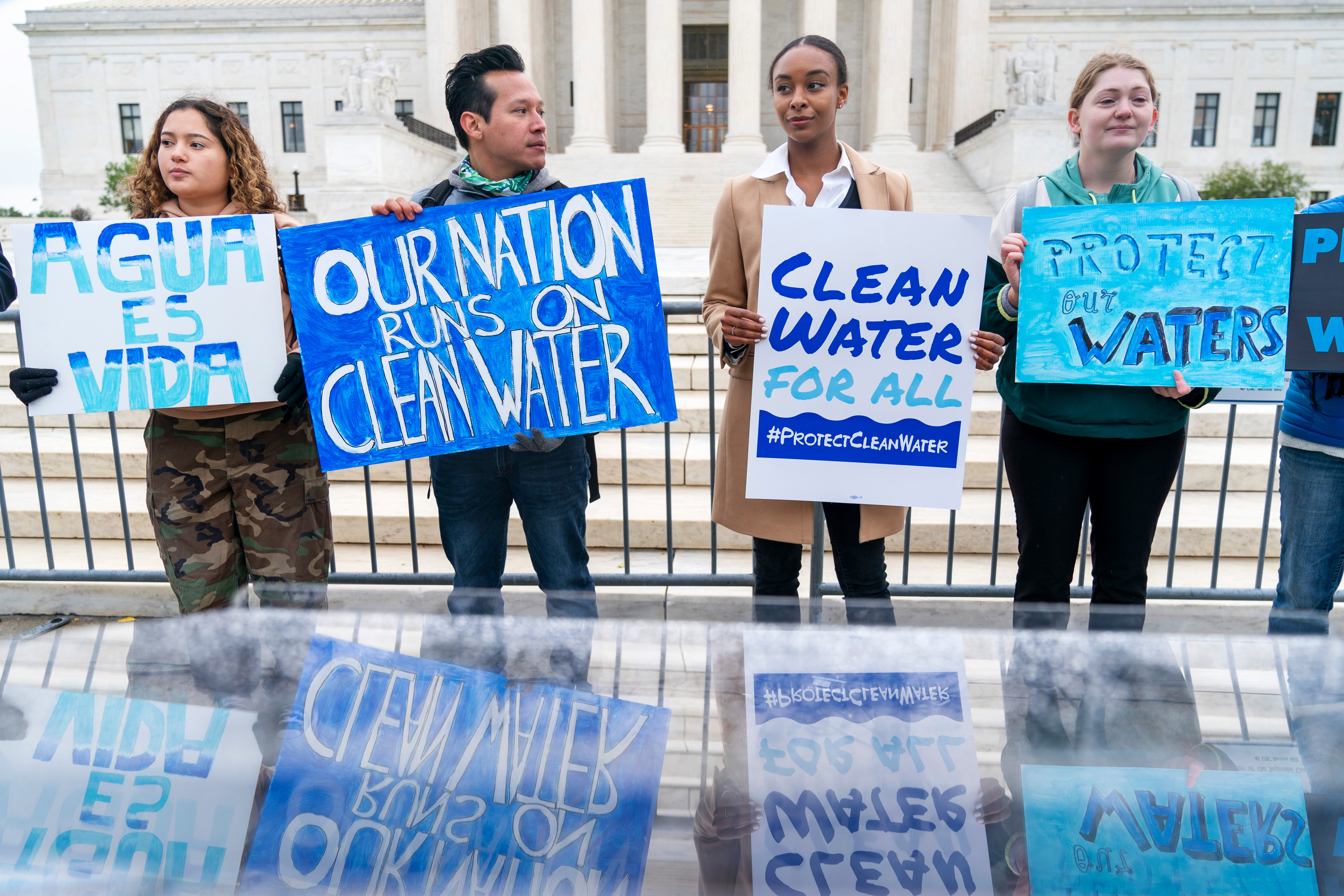
    WASHINGTON — Right-leaning legal activists along with Elon Musk ‘s artificial intelligence company have brought sweeping challenges against a cornerstone of legal enforcement in the United States: the right of private groups, people, and local governments to sue over violations of many major laws.

    Their argument, supported by the Trump administration, is that the Constitution reserves tremendous power for the president and federal agencies to decide how — or whether at all — to enforce federal law. They contend Congress should never have handed that power to others through so-called citizen suits that are part of environmental, campaign finance, and certain other laws.

    Environmentalists say it would be devastating to lose this essential, decades-old tool that is used to impose fines and halt lawbreaking by bad actors. Citizen suits, for example, have extracted millions from heavily polluting oil and gas operations, and ensured that lead pipes in Flint, Mich., would be removed after its water crisis.

    Legal experts say four pending federal cases — one of them filed last week — are moving forward at a time when the conservative majority on the Supreme Court gives opponents of citizen suits a greater chance than ever of success. The hard part for those opponents now is winning early federal cases and creating disagreement between the country’s appeals courts, which may help convince the Supreme Court the issue is important enough for a nationwide ruling.

    Back in 2000, a Supreme Court opinion opened the door for that possibility.

    “Many of us who worked in this area have been waiting basically 26 years for this shoe to drop,” said Richard Lazarus, a Harvard professor with decades of experience in environmental law.

    A more inviting Supreme Court could take up the issue

    Lazarus was referring to former moderate Justice Anthony Kennedy’s comments in a Clean Water Act case that citizen suits raised “difficult and fundamental” questions about whether they improperly dilute executive power. The late conservative Justice Antonin Scalia wrote in a dissenting opinion in the same case that citizen suits turn “over to private citizens the function of enforcing the law.” He avoided explicitly saying they were constitutional.

    “The court is more like Scalia’s court since he died than it ever was when he was there,” said Lazarus.

    He observed that those who lost cases where Scalia dissented are rushing back to today’s court hoping for a more favorable result.

    The critical issue for citizen suits is who — the government or private citizens — collects fines and has control. A person filing a citizen suit must tell the government ahead of time. The government can stop the suit if it sufficiently pursues the case itself, but its options are limited and the person suing can stay involved. Citizen suits can force compliance with the law and result in fines, which go to the U.S. Treasury.

    Prominent law firms, companies push against citizen suits

    Efforts to increase presidential power and limit who can sue have grown in recent years. They gained vital federal support this summer.

    That’s when the Pacific Legal Foundation, a right-leaning organization with recent Supreme Court success, chose a routine citizen suit in Tennessee federal court for a broader constitutional challenge.

    They signed on as attorneys for Springfield, a town of roughly 19,000 north of Nashville, that was in the early stages of fighting allegations brought by Tennessee Riverkeeper that it had let too much sewage flow from its treatment plant into a nearby creek, violating the Clean Water Act.

    It was the thirty-first citizen suit Tennessee Riverkeeper had filed under the Clean Water Act since 2010. Pacific Legal argued this was part of the problem — a private group of unelected activists had repeatedly forced others to expend resources defending themselves.

    It’s better when “the government is the one wielding the power because the government remains accountable to the people,” said Sean Radomski, a Pacific Legal Foundation attorney on the case.

    Radomski isn’t targeting every lawsuit a person can bring under federal law — he takes exception to those where fines go to the Treasury and where he says people are improperly taking on the government’s powers. Civil rights lawsuits, for example, where damages are paid directly to those wronged, wouldn’t be touched. Nor would many procedural challenges.

    Musk’s AI company also getting into the fight

    Elon Musk-led xAI argued many similar points in its ongoing bid to rid itself of the NAACP’s lawsuit accusing it of operating dozens of gas turbines near Memphis to power a data center without first getting permits. The civil rights group told a Mississippi federal court that the turbines are a pollution threat to those who lived nearby, many of whom are Black. One of their demands was to halt the gas turbines until the company complied with the law.

    The Trump administration intervened in support of Musk’s company, arguing that turning off the power to artificial intelligence that supports the Department of Defense would harm national security. Because the Trump administration wants the suit dismissed, the NAACP shouldn’t be allowed to proceed with it — prudent enforcement requires balancing interests, including national security, the DOJ said.

    Laura Thoms, director of enforcement at Earthjustice, which is representing the NAACP, said the government traditionally gets involved in cases to enforce the law, not to argue that it doesn’t matter if the law is broken.

    “This administration has determined that the company should be allowed to continue to pollute and that therefore, they should have the unilateral and unreviewable authority to veto our citizen suit,” she said.

    Changing the law would have profound consequences

    Citizen suits were written into foundational environmental laws because Congress understood that the federal government had limited resources to go after polluters and that the politics of some cases could be dicey — the government sometimes is the polluter. That’s why outside groups are necessary to fulfill the law’s purpose, according to Lazarus.

    Some argue that dynamic is especially important now. The Trump administration has slashed air and water protections and promoted fossil fuels. They’ve also constrained enforcement that could slow energy projects to only the most extreme cases, such as an “imminent and substantial threat to human health,” according to a federal guidance memo. Environmentalists say citizen suits are vital for filling the enforcement gap this administration created.

    Leaner budgets in many states make the problem worse.

    Thoms said the potential for corruption could increase, too — the president could unilaterally waive laws to benefit friends.

    She said that those who live in states with strong protections may be fine if citizen suits end, but other areas will be “sacrifice zones” where citizens have few options to fight pollution in their backyard. And the unprotected are more often poor and majority-minority communities.

    Many experts are skeptical of the challengers’ claims of a powerful president that gets to unilaterally shape enforcement even outside of criminal law. They argue the country’s history is rife with examples of that task falling to private individuals, too — a contention the challengers reject.

    David Adelman, a law professor at the University of Texas at Austin School of Law, said before the current conservative majority on the Supreme Court, he would have thought there was a close to zero percent chance the challenges would succeed.

    “But this court has been so protective of the executive branch’s complete control of implementation of federal law,” he said, “that it’s not implausible that something like this could prevail.”

  • Senators head for the exits without meeting Trump’s demands for voting bill

    Senators head for the exits without meeting Trump’s demands for voting bill

    WASHINGTON — Senators headed for the exits in the predawn hours Saturday, ending for now a crushing standoff over President Donald Trump’s demands that they stay in session to pass a strict proof-of-citizenship voting bill before the summer recess.

    While they wrapped up many key priorities in the overnight votes, advancing Trump’s SAVE America Act was not among them.

    Instead, Republican senators who had brought the chamber to a standstill spoke to Trump late in the evening about an alternative plan: They would try again to approve elements of the voting bill as part of a broader GOP budget package to fund the Iran war and replenish the Pentagon when they return to work in September.

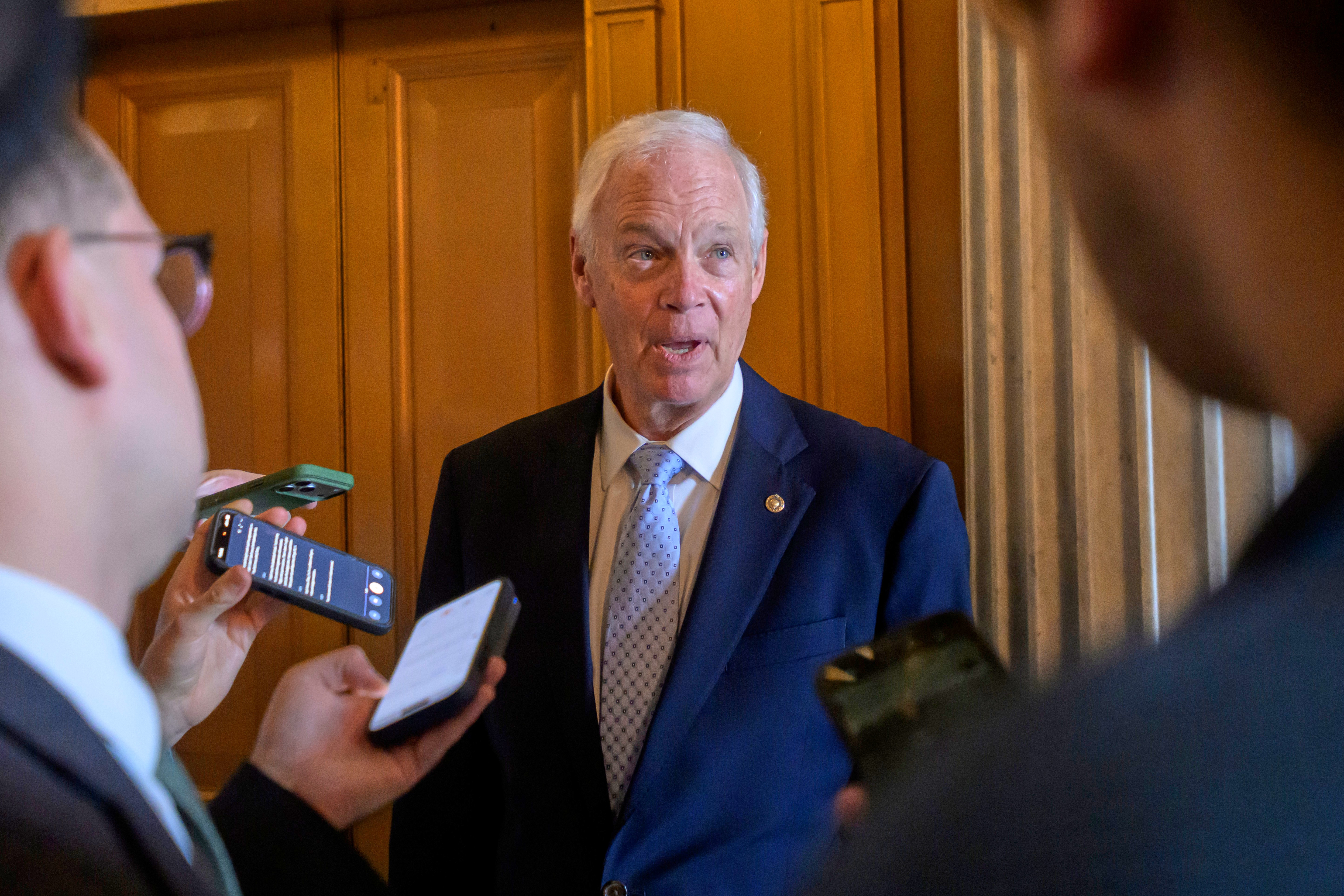
    “Obviously, with the president at his direction, this is what he wants to do,” said Sen. Ron Johnson of Wisconsin, the GOP budget committee chairperson, flanked by Sens. Mike Lee (R., Utah) and Rick Scott (R., Fla.) after their phone call with the president.

    The sudden wind-down after weeks of Trump ramping up his demands shows just how deeply the president is able to reach into the halls of Congress to set the agenda or disrupt it, the executive directing the affairs of the legislative branch. While Trump is often seen as a de facto speaker of the House, he is trying his hand at mastering the Senate.

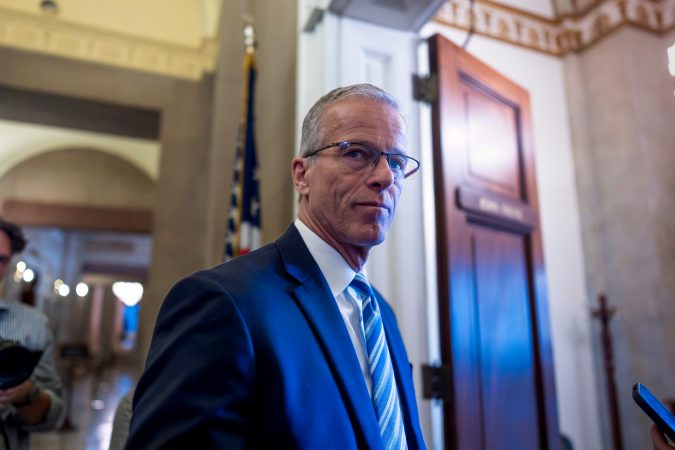
    Trump had poked and prodded Senate Majority Leader John Thune for weeks to pass the SAVE America Act, a bill that does not have enough support from the Republicans who hold majority power, let alone the Democrats whose votes would be needed to advance it in the Senate.

    The president has gone so far as to insist the Senate abandon its filibuster rules to jam the SAVE America Act past the 60-vote threshold that is typically needed to advance legislation in the chamber — something Thune and most senators have no interest in doing.

    “John’s trying. He’s trying hard. I really believe that. But if he doesn’t get there, it would be unfortunate,” Trump said in an interview with Punchbowl News that posted Friday.

    Trump’s pressure couldn’t overcome Thune’s reality

    Thune himself has worked to carefully balance the often unusual demands of the president with the political reality of his slim GOP majority. Republicans are down one vote with the prolonged absence of Sen. Mitch McConnell of Kentucky, the former leader, who said this week he was released from a rehabilitation center and is recovering at home.

    “I think everybody’s, for the most part, on the same page,” Thune (R., S.D.) said about the trio’s call with Trump, adding that eventually the Senate would have to tackle another budget bill.

    During a daylong session that dragged for nearly 20 hours, Thune successfully powered through a lengthy list of other Trump priorities. Senators confirmed the president’s pick of Todd Blanche as the attorney general, passed a sweeping Russian sanctions package to aid Ukraine, and approved a bipartisan package to fund the government into December in an early step toward avoiding a government shutdown.

    The Republicans also tried to push forward a slimmer voting bill that would require people to show IDs before casting ballots for federal elections. It failed to advance, largely on a party-line vote with Democrats opposed.

    But the failure to make progress on the SAVE America Act had erupted as an online crusade for Trump’s allies in Congress, amplified by activists urging them on.

    Led by Lee, a growing group of senators was refusing to adjourn for the summer break without passing Trump’s priority voting bill.

    At dinnertime, Thune gathered all the Republican senators for a meeting as the standoff deepened at the Capitol. There was no immediate way forward for the SAVE America Act or the broader budget bill. Thune encouraged the trio of senators to talk to the president, which they did, before regrouping back at Thune’s office.

    “We had about a two-hour conference meeting trying to figure out, you know, what we need to do to, to come to an agreement, to accomplish what the president wanted,” Johnson said. “Then we had discussion with the president, he agrees.”

    Lee acknowledged he was disappointed by the outcome, but said he understood the political reality of the situation.

    “We are not in a position right now where we have the wherewithal to pass it,” Lee told reporters at the Capitol, after the three senators emerged from Thune’s office following their call with Trump.

    Near daybreak, when the Senate did call for the vote to adjourn, Lee and others objected with hearty nos.

    On the simple voice vote, the ayes had it, and the motion to adjourn was adopted.

  • Senate passes bill to avert government shutdown before midterm elections

    Senate passes bill to avert government shutdown before midterm elections

    The Senate overwhelmingly approved a measure early Saturday to fund the government through Dec. 11 and temporarily block the White House from giving political appointees more control over federal grants.

    The 90-6 vote came after Republican leaders worked for hours through the night to reach an agreement that would allow them to vote on multiple priorities before leaving town for the five-week August recess.

    Just 6 senators — Bill Cassidy (R., La.), Tim Kaine (D., Va.), Ed Markey (D., Mass.), Rand Paul (R., Ky.), Bernie Sanders (I., Vt.) and Elizabeth Warren (D., Mass.) — opposed the funding measure, which would avoid a politically perilous shutdown ahead of the Nov. 3 midterm elections. But it still must be approved by the Republican-controlled House, where the appetite for rebuking the White House on grant funding was unclear.

    The bill, like a similar House measure passed last month, would fund the government past a Sept. 30 deadline. The Senate bill also would finance a number of requests from the White House, including funds for housing and nutrition programs. And it would extend expiring authorization for veterans’ healthcare programs.

    But the big difference between the House and Senate bills is the Senate’s decision to include a provision regarding federal grants. That provision would temporarily block the White House budget office from adopting a rule change to give political appointees more power over discretionary grant funding, diminishing the power of independent peer reviewers.

    Proposed in May, the rule change would require political appointees to review grants before they are awarded to ensure they advance the president’s priorities and do not support projects the administration opposes, including those that “fund, promote, encourage, subsidize, or facilitate” diversity, equity, and inclusion principles or “deny the biological reality of … the sex binary.” It also would give agencies the power to end grants at any time.

    Trump administration officials say the rule would add needed oversight to federal grant-making, ensuring federal funds aren’t wasted or misused. But Senate Appropriations Committee Chairperson Susan Collins (R., Maine) said it has the “potential to politicize grants and harm small, rural communities, families, and biomedical research.”

    Collins and Sen. Patty Murray (Wash.), the lead Democratic appropriator, worked together to craft the bipartisan Senate measure. House lawmakers could take it up after they return from recess at the end of August.

    If the provisions added by the Senate draw backlash, however, lawmakers could quickly find themselves in a rush to negotiate a compromise before the government runs out of funding on Sept. 30.

    Senate Republicans also initially hoped to hold a vote on a separate $150 billion budget framework to help fund the Iran war and impose new restrictions on voting ahead of the midterm elections, but Republicans scrapped that plan late Friday night.

    Republicans grappled during a two-hour closed-door meeting Friday night with whether to take up the budget framework, with which several Republicans had expressed concerns.

    A small group of Republicans spoke with Trump after the meeting and agreed to push off the vote until September, according to Sen. Ron Johnson (R., Wis.), the chairperson of the Senate Budget Committee.

    “We’re in total agreement,” Johnson told reporters. “There was no argument about it.”

    The Senate also agreed early Saturday morning to vote in September on legislation to regulate college sports led by Sens. Ted Cruz (R., Texas) and Maria Cantwell (D., Wash.). The back-and-forth over whether to vote on the bill before leaving for recess was one of several interlocking issues that kept the Senate in session late into the night.

    Senate Democrats blocked a bill during the early Saturday vote series that would require voters to show photo identification. Senate Republicans held a procedural vote on the measure in lieu of voting on the Save America Act, a more expansive bill that would impose stricter election rules which President Donald Trump had demanded the Senate pass before leaving Washington. Senate Majority Leader John Thune (R., S.D.) has said repeatedly that the Save America Act does not have enough support to pass.

    The decision to postpone the vote on the budget resolution came hours after Republicans unveiled the $150 billion spending framework, which was significantly larger than a $95 billion plan approved last month by the House. Johnson said Senate leaders intend to spend only about $105 billion.

    The smaller number tracks closely with the House package. Both would allot $60 billion to the Pentagon, which faces an urgent budget shortfall caused largely by the war with Iran, and $13 billion for intelligence needs related to the war. They also would provide $12 billion for farmers struggling to keep pace with inflation.

    Senate Republicans will seek to use up to $20 billion for election-related measures, Johnson told the Washington Post. That’s twice the amount provided in the House package. Republicans hope to use that money to pass some parts of the Save America Act, although it’s unclear how much of it would be allowed under reconciliation, the special process Republicans would use to pass the bill without Democratic votes.

    The delay in considering the measure will give Republicans time to revise their plan and win over skeptical senators.

    Sen. Thom Tillis (R., N.C.) has said he will not support a package that included elements of the Save America Act. Sens. Susan Collins (R., Maine) and Lisa Murkowski (R., Alaska) also signaled opposition to the budget resolution, while Sen. Bill Cassidy (R., La.) complained about the lack of budget cuts to cover the cost of the new spending and avoid adding to the nation’s $39.9 trillion debt.

    Sen. Roger Wicker (R., Miss.), the chairpersons of the Senate Armed Services Committee, and other Republicans, meanwhile, have called for increasing the amount of funding for the Pentagon.

    The budget framework is the first step in the reconciliation process, which would allow Republicans to evade a Democratic filibuster and move the bill with a simple majority instead of 60 votes. But both chambers must approve identical budget frameworks to set funding levels before beginning work on the actual legislation — and time is running out before the midterms.

    The Senate is set to recess until Sept. 14 and is scheduled to be in session for only three weeks before recessing again. Congress already faces a towering agenda during those weeks.

  • Federal court approves settlements that will pay New Jersey $2.5 billion for PFAS contamination

    Federal court approves settlements that will pay New Jersey $2.5 billion for PFAS contamination

    A federal judge in Camden approved settlements with DuPont and 3M that will pay New Jersey up to $2.5 billion over the next quarter century to remediate damages from decades of manufacturing and use of PFAS chemicals in the state.

    The order Friday by Renée Marie Bumb, chief U.S. district judge for New Jersey, ends a legal battle over so-called forever chemicals that started in 2019 and resulted in agreements last year that survived objections by counties, municipalities, and others over the settlement’s structure.

    “This is truly a historic moment for New Jersey, which has experienced disproportionate and extensive pollution impacts from decades of PFAS manufacturing and use by DuPont and 3M,” Ed Potosnak, acting commissioner of the New Jersey Department of Environmental Protection, said in a news release.

    The DuPont portion of the settlement covers two South Jersey manufacturing sites: Chambers Works in Pennsville and Carney’s Point, Salem County, and Repauno Works in Greenwich Township, Gloucester County. Two additional DuPont locations covered by the settlement are in Middlesex and Passaic Counties.

    3M did not manufacture per- and polyfluoroalkyl chemicals in New Jersey, but it sold a significant share of the firefighting foam that contained PFAS. It was used in military facilities, firefighter training academies, state government, and local fire departments across the state, according to state officials.

    Neither DuPont nor 3M responded to emails requesting comment Saturday.

    The approved agreements call for annual payments over 25 years. 3M will pay a total of $400 million to $450 million and DuPont and related companies will pay a total of $875 million into funds used to restore natural resources and abate damage to drinking water systems, according to Bumb.

    The DuPont entities are responsible for additional remediation commitments worth $1.2 billion, Bumb said.

    PFAS have been manufactured in the United States since the 1940s to make household, consumer, and industrial products. The World Health Organization in 2023 classified them as likely carcinogens. Health experts have associated them with high cholesterol, developmental issues in fetuses, and other health problems.

  • Why a child’s stuffed bunny is blowing up a political race — and the internet

    Why a child’s stuffed bunny is blowing up a political race — and the internet

    Until now, the mom in Pennsylvania had never heard of Rep. Max Miller or the “little blue bunny.” But she knew all about Buddy.

    Her 10-year-old daughter would not sleep without that pink blanket attached to a teddy bear’s head. Long missing an eyebrow, the plushie looked forever quizzical.

    “He’s the most precious thing in the world to her,” said Beth Tyson, a 47-year-old family therapist.

    Though she rarely had time to stay on top of politics, let alone a House race in Ohio, Tyson kept reading about what she suspected was another little girl’s most precious thing in the world. All over the country, parents on social media seemed equally invested in the saga of a stuffed animal that turned a MAGA firebrand’s reelection campaign into a national news frenzy.

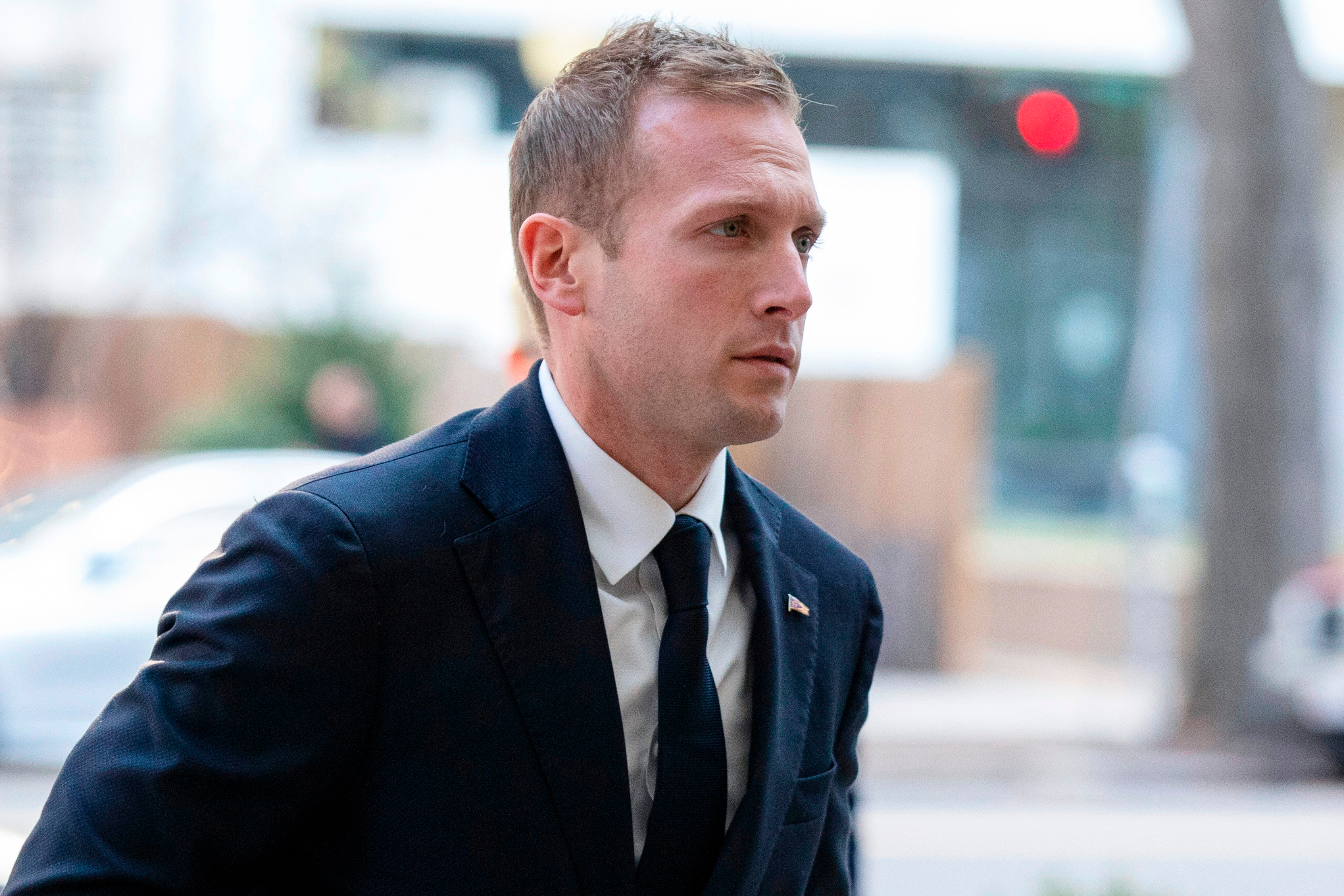
    Miller, 37, has faced domestic violence and physical abuse allegations for years, most recently from his ex-wife, the mother of his 2-year-old daughter. But no detail has broken through quite like the “little blue bunny.” Conservative colleagues who previously had avoided commenting on Miller’s personal life called this week for his resignation after his former father-in-law, another powerful Ohio Republican, accused the second-term congressman of holding his granddaughter’s stuffy “hostage” for 48 hours.

    “This girl is crying at night because she can’t sleep without her little blue bunny, and his answer is, ‘I’m just not going to give it to you,’” Sen. Bernie Moreno told reporters Tuesday.

    Miller, who has denied all claims of abuse, posted screenshots on X the next day that he said exonerated him. His ex-wife’s team had sent the wrong “conduit” to fetch the bunny, he said, according to the text messages between the two, which delayed the handoff by 14 hours — not 48.

    She asked him to please just leave it in the mailbox, according to the exchange, which racked up 2.3 million views. CNN’s Jake Tapper asked the question on so many minds, “Did you hold this doll hostage?”

    “No, Mr. Tapper,” Miller replied, asserting that doing so would be “incredibly disturbing.”

    On this, the internet agreed.

    “What kind of father wouldn’t deliver the bunny himself, knowing that it helps his little girl sleep at night?” one commenter asked.

    “This does not make you look better,” added a reporter for Gateway Pundit, a far-right news site.

    “There are literally thousands of fathers reading those tweets and thinking: ‘When my daughter lost her favorite toy, I led a search party as if for a downed NATO nuclear warhead. And when that failed, I paid $300 for a replica on eBay,” posted David Frum, a former speechwriter for President George W. Bush.

    Suddenly, the standoff over a toy in Ohio had sparked passionate chatter nationwide.

    “Everybody gets it, no matter which side of the aisle they are on,” said Jon Krosnick, director of the Political Psychology Research Group at Stanford University. The little blue bunny, he added, “communicates so powerfully to all of us.”

    Perhaps everyone has loved their own snuggle buddy or knows someone who does. Parents posted about the little blue bunnies in their homes (and the secret replacements in their closets). Tales of lost comfort items read like horror stories.

    “We have six backup monkeys,” said Danielle Baumann, a 35-year-old mother of twin toddlers following the Ohio tale from Los Angeles.

    Her daughter is especially attached to what she believes is the sole Punch, always trying to feed him dinner.

    “I can’t even imagine her losing him for one night,” Baumann said.

    The image of a child separated from a beloved pal cuts to our emotional cores, said Eve Ng, an Ohio University professor who studies mass communication. It also resonates in a world that consumes information in snippets.

    “This visual is particularly powerful,” she said, “because it manages to sum everything up in one symbol.”

    Tyson, the family therapist, didn’t want to pass judgment or wade into politics. She doesn’t have much of a stomach for America’s us-versus-them clashes, anyway. But she often speaks to the power of stuffies. Adults, she believes, should handle them carefully.

    Buddy has been her daughter’s companion since she was a baby. The girl still grasps it in her fingers at night. Him — not it. They used human pronouns for Buddy. Kids tend to be magical thinkers, Tyson said, so that thing is real.

    From her work, she knew a stuffy can soothe a young nervous system. Getting super attached to one, she added, is a healthy sign that a child can form a secure bond.

    “It can be something to tell secrets to,” she said, “or something that helps you cope, or something that makes you feel safe.”

    Randi Jaffe, 39, wondered if anyone had posted a picture of the little blue bunny. As the founder of the Lost Stuffy Project, she has replaced synthetic critters lost in the California wildfires or Texas floods.

    Now she wanted to source a duplicate for an embattled congressman’s kid. “She could keep one at Mom’s and one at Dad’s,” Jaffe said, working through a possible solution to the impasse.

    Of course, those parents might have to make sure the second bunny had the same degree of wear and tear as the first. A pristine replacement can register to a tiny person as a stranger. But not always. She thought of one survivor of the Los Angeles blaze, a girl who had lost her purple rabbit named Bubbles.

    “WANTED,” Jaffe had posted to her Instagram followers with a photo of the out-of-production Squishmallow.

    Someone in Canada replied that she had a Bubbles to spare, and where could she ship it?

    Later, Jaffe received a tender email.

    “Since the fire there have been so many things that felt impossible to replace,” the girl’s mother wrote, expressing her gratitude. Her daughter had lost so much, she added, “and Bubbles somehow became the symbol of it all.”

  • Iran makes new strait demands, the UAE says a ship was targeted

    Iran makes new strait demands, the UAE says a ship was targeted

    Iran issued dramatic new demands for the Strait of Hormuz to reopen as the United Arab Emirates said one of its ships was targeted by an Iranian missile. Yemen’s military attacked the country’s Iranian-backed Houthi rebels. And Turkey’s Kurdish peace bill won approval in parliament.

    Here’s a look at developments across the Middle East on Saturday.

    Iran says strait won’t open until the U.S. ‘corrects’ behavior

    Iran’s politburo-like body known as the Supreme National Security Council said the Strait of Hormuz will not open until the United States “corrects its behavior,” issuing new demands that could shake up talks on a deal to manage the waterway and traffic on it.

    Iran’s state broadcaster published the statement by the council’s secretary, Mohammad Bagher Zolghadr, who is also a commander in the powerful Revolutionary Guard.

    The U.S. must never threaten Iran again, the statement said, and must permanently end the war with Iran and its armed allies in the region. The U.S. must lift the naval blockade of Iranian ports and withdraw its military from the area. It also must “completely compensate” Iran for war damage, lift sanctions, and “unconditionally” release frozen assets.

    There was no immediate comment from the U.S., which has wanted an acceptable deal first on the strait before ending the blockade. According to the interim deal signed in June, a schedule to end sanctions and plan on compensation would be part of the final deal, and negotiations would address frozen assets.

    The end of a 60-day period to negotiate a final deal will end in just over a week but could be extended.

    Iran has said it was close to reaching a separate deal with Oman to manage the strait, which runs between the two countries. Iranian Foreign Minister Abbas Araghchi earlier Saturday said they were close to reaching an agreement on navigation, “specifically the determination of a transit route.” But the waterway’s reopening is contingent on other conditions, he said in remarks shared on social media.

    Oman, a mediator Gulf Arab country which has said relatively little on the talks, said in a statement Saturday that the discussions were ongoing “in a positive and constructive atmosphere,” and condemned attacks on ships on the strait.

    The strait, crucial to global supplies of oil and natural gas, had been considered an international waterway before the war.

    Iran attacks vessel in Strait of Hormuz, UAE says

    A vessel owned by Abu Dhabi’s state-owned ADNOC oil and gas company was attacked while transiting the Strait of Hormuz, Emirati authorities said earlier Saturday. The Foreign Ministry said Iran fired the missile as part of attacks on commercial shipping.

    ADNOC in a statement said there were no casualties following the attack early Saturday. The company said over a dozen of its vessels have been attacked by missiles and drones while transiting the strait since the United States and Israel launched the war on Iran in February. One crew member has been killed and 20 others wounded, it said.

    ADNOC didn’t elaborate on the attack’s location or any damage.

    Later, the United Kingdom Maritime Trade Operations Center said a vessel east of the town of Khasab, Oman, had been struck by a projectile that caused a fire that was put out, with the vessel and crew safe. It was not clear whether this was the ADNOC incident.

    Yemen’s military attacks Iran-backed Houthis

    The attacks were in response to the Houthis’ recent strikes in central and eastern Yemen. Col. Majed al-Nazili, spokesperson for Yemen’s military, said the attacks targeted the rebels’ “sites and capabilities” on multiple front lines, without elaborating.

    The escalation between the Houthis and Yemen’s internationally recognized government and its backer, a Saudi-supported coalition, threatens to reignite Yemen’s civil war following a 2022 truce.

    Turkey’s Kurdish peace bill wins approval in parliament

    A Turkish draft law aimed at advancing a peace effort with the country’s Kurdish insurgents passed its first hurdle in parliament on Saturday. A committee approved the measure. It is expected to be approved in the general assembly next week.

    Last year, the Kurdistan Workers’ Party, or PKK, declared its decision to disarm and disband as part of the peace initiative aimed at ending the decades-long conflict with the Turkish state.

    The draft legislation defines the procedures for the group’s disarmament and rehabilitation of some PKK members. The measures would come into effect once Turkey’s National Security Council confirms that the group has disbanded and surrendered all weapons.

    The conflict has killed tens of thousands of people since it began in the 1980s. Turkey and its Western allies consider the group a terrorist organization.

  • Pentagon strips security clearance from former Air Force secretary

    Pentagon strips security clearance from former Air Force secretary

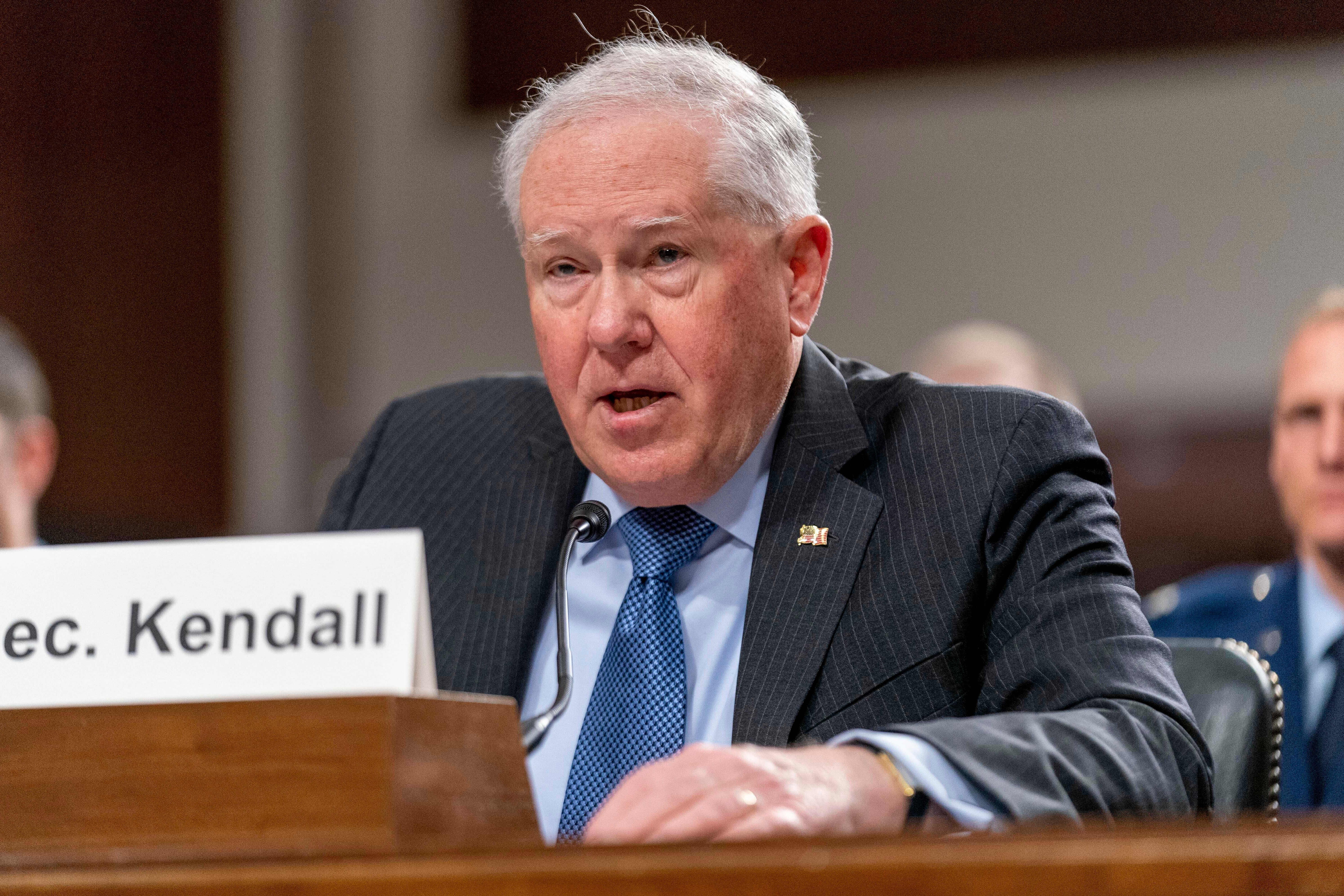
    The Trump administration has revoked the security clearance of Frank Kendall, who served as Air Force secretary under President Joe Biden, accusing him of disclosing classified information about Air Force One to the media.

    Kendall has recently been quoted in the New York Times and the Wall Street Journal, in stories scrutinizing the security features of the Boeing 747 gifted by Qatar, the plane President Donald Trump is using as his official presidential aircraft.

    Kendall told the Times that he was “surprised to see this plane used outside the U.S.,” given how speedily it was modified after the Qatari royal family gave it to the United States. To the Journal, Kendall expressed skepticism that the plane had been “maxed out” with security features, as Trump has said it would be.

    In an X post Friday night, Pentagon spokesperson Sean Parnell said Kendall was being stripped of access to classified information and his ability to hold any sensitive position following “unauthorized disclosure of classified information regarding Air Force One’s capabilities.”

    “Safeguarding classified information is a non-negotiable duty. Those who violate that trust forfeit the privilege of access and any role requiring it,” Parnell wrote.

    Kendall could not immediately be reached for comment Saturday. The former Air Force chief, who also served in the Defense Department during the Obama administration, told the Journal he was “mystified” by the revocation of his security clearance.

    “I’ve been extremely careful to not say anything that could be classified, and as far as I know I have not said anything classified,” Kendall said, adding that so far he had not been told what classified information he had supposedly revealed.

    The luxury airplane gifted by Qatar has raised ethical, legal, and security concerns since Trump announced the unusual arrangement last year. Fresh questions about the new Air Force One’s security arose last month after Trump switched jets at the last minute for part of his travel back from the NATO summit in Turkey.

    Trump denied that security concerns were behind the switch of planes for the first leg of his trip — but also suggested that Iran could have tried to attack his plane, saying he was “number one on their list” of people to assassinate.

    The White House said last month that Trump would tentatively return to flying on an older Air Force One while the Qatari-gifted jet received unspecified “additional upgrades and enhancements” that would take about a month to complete.

  • Senate narrowly approves Blanche as attorney general, capping a tough confirmation fight

    Senate narrowly approves Blanche as attorney general, capping a tough confirmation fight

    The Senate narrowly voted to confirm Todd Blanche as attorney general early Saturday morning, cementing President Donald Trump’s former criminal defense lawyer as the head of the Justice Department despite rare pushback from Republicans that had left his nomination in doubt.

    Sen. Bill Cassidy (R., La.) provided the crucial vote for Blanche as two other Republicans — Sens. Lisa Murkowski of Alaska and Susan Collins of Maine — sided with Democrats against the nominee. Sen. Mitch McConnell (R., Ky.), who has been absent from the Senate since he suffered a fall in June, missed the vote.

    The 50-49 vote at 4:31 a.m. — right before the Senate left for a five-week recess — gives Blanche the imprimatur of Senate confirmation in a job he has held on an acting basis since Trump fired former attorney general Pam Bondi in April.

    But it hardly amounted to a full-throated endorsement.

    Cassidy, despite voting in Blanche’s favor, joined Murkowski and Collins in publicly raising questions about the politicization of the Justice Department under Trump. The three also voiced concerns about Blanche’s role in a controversial deal struck this spring to resolve the president’s legal claims against the IRS — an agreement that included a now-scuttled proposal for a $1.8 billion fund to compensate people who claimed they were victims of political prosecutions.

    Two other Republican senators — John Cornyn of Texas and Thom Tillis of North Carolina — expressed similar reservations and threatened earlier in the process to vote against the nomination, although both ultimately backed Blanche.

    Explaining his decision, Cassidy described it as a choice between Blanche — who before his time as Trump’s personal lawyer had spent years as a federal prosecutor and a partner at a prestigious Manhattan law firm — and the possibility that Trump might pick someone worse.

    “Mr. Blanche is not perfect, and he will tell you this, but the choice is not between perfection and Mr. Blanche,” Cassidy said on the Senate floor Friday. “It is between Mr. Blanche and another acting attorney general who may not run the department as effectively under President Trump and who, indeed, may not be as good as Mr. Blanche.”

    For his part, Blanche said after the vote that he was “deeply honored by the trust and confidence President Trump has placed in me” and thanked the Senate for staying late for the vote.

    “To the dedicated public servants of the Department of Justice,” he said in a post to social media, “thank you for your work each day to uphold the law and keep our country safe.”

    With the confirmation fight now behind him, Blanche sheds the “acting” part of his title and, with it, any doubt about his authority as the head of a cabinet agency that Trump has made central to his second-term agenda.

    Since returning to the White House last year, the president has eroded the Justice Department’s long tradition of independence, demanding it pursue prosecutions of his political enemies and directing resources toward rewarding his allies.

    Meanwhile, the department has been ravaged by vacancies, low morale among career staff, and increasing credibility problems with federal judges.

    Blanche, first as Bondi’s No. 2 and then as the department’s acting leader, has played a central role in that transformation, although his boosters in Congress have praised his efforts to step up fraud enforcement, prosecute illegal immigration and combat violent crime.

    “America is safer with Todd Blanche at the helm of the Justice Department,” said Sen. Chuck Grassley of Iowa, the Republican chair of the Senate Judiciary Committee.

    Cassidy called aspects of Blanche’s track record troubling, but he cited the bond Blanche built with Trump as he defended him in four criminal cases during his years out of office. The senator said he hoped that trust would strengthen Blanche’s ability to talk the president out of decisions that run contrary to the rule of law.

    But Democrats insist that, at every turn, Blanche has proven unable — or unwilling — to do just that.

    Since becoming acting attorney general, Blanche has defended the president’s “right” to intervene in criminal investigations and his controversial pardons of those who attacked the U.S. Capitol on Jan. 6, 2021. He has breathed new life into probes of Trump critics, including investigations of former FBI Director James B. Comey, former CIA Director John Brennan and Cassidy Hutchinson, a former White House aide from the president’s first term who testified against him in Congress.

    “This nation deserves an Attorney General who loves the Constitution more than he loves the President. Sadly, for our nation, Todd Blanche, is not that person,” Sen. Dick Durbin of Illinois, the top Democrat on the Senate Judiciary Committee said in a statement Saturday.

    But it is the out-of-court deal Blanche announced this spring to resolve a lawsuit the president filed against the IRS earlier this year, over the leak of his tax returns to the media, that has drawn the most unified criticism from lawmakers.

    In addition to the taxpayer-backed nearly $1.8 billion payout fund, the deal also extended unusual tax protections to Trump, two of his sons and their businesses, shielding them from any preexisting tax audits.

    Lawmakers from both parties decried the agreement, describing the proposed payouts as a “slush fund” designed to reward Trump’s allies, and denouncing the tax provisions as a corrupt exercise in self-dealing from a president who has often complained of burdensome audits.

    Facing bipartisan pressure, Blanche walked back plans for the fund. But Cornyn and Tillis, both of whom are not running for reelection after Trump declined to support them, demanded written assurances from Blanche that the president would not later reverse that decision before they agreed to support his nomination.

    Blanche ultimately relented, issuing statements late last Sunday declaring the fund officially dead and clarifying that the deal’s tax provisions protected the Trumps only from past tax audits and would not prevent the IRS from reviewing their finances in the future.

    But critics have questioned whether Blanche’s written pledges hold any legal weight, given that they were not signed by Trump and his legal team, and could be ignored by the president at any point.

    Murkowski raised that possibility in a statement Friday announcing her decision to vote against Blanche’s nomination. The only reason the payout fund was now off the table, she said, was because Blanche needed Senate support for his nomination.

    “Once we vote, that will end, and there is no telling what the future holds,” she said.

    “The country needs an attorney general who will check the worst impulses of this administration,” Murkowski added. “I hope Mr. Blanche is able to achieve that if confirmed, but I simply do not have confidence that will be the case.”

  • This tween could have met Jalen Hurts. Instead, he used his Make-A-Wish to host a carnival for a homeless shelter

    This tween could have met Jalen Hurts. Instead, he used his Make-A-Wish to host a carnival for a homeless shelter

    On a mild April day, 12-year-old Sam Okyere reviewed his wish list with his mom during their drive to the Make-A-Wish Foundation’s Bala Cynwyd office.

    First choice: Legoland and Disney World.

    Second choice: meeting Eagles Jalen Hurts and Saquon Barkley.

    Third choice: hanging out with Philly rapper Lil Uzi Vert.

    But when Sam, his mom, and two members of the Make-A-Wish crew squeezed into the office’s tiny Lego-themed room for the official discussion, something different flashed to mind.

    “I want to help the homeless,” Sam told them.

    Sam has sickle cell disease. He’s endured a lifetime in and out of hematologists’ offices, white-knuckling through blood transfusions and bursting into hospitals when “pain crises,” agonizing sensations caused by disruption in the blood flow, tore through his body. This was his chance to do one completely selfish thing, and he chose to be selfless.

    “Are you sure this is what you want to do?” Maude Gambrah, Sam’s mom, asked as she started the car to drive them home to Drexel Hill. She knew Sam had a soft spot for homeless people. He was always encouraging her to give money to panhandlers around Philly. But this was his only wish.

    “Yeah, Mommy,” he responded. “This is what I want to do.”

    Make-A-Wish settled on Families Forward Philadelphia, a homeless shelter in West Philly, as the recipient of Sam’s wish and hosted a monthlong donation drive for the facility leading up to “Sam’s Perfect Day” last month. The carnival-style extravaganza on the shelter’s front lawn, attended by dozens of families experiencing homelessness as well as Sam and his family, featured Lego displays, a petting zoo, a Lego-inspired bounce castle, and water ice provided by Sam’s family’s Southwest Philly water ice business, Willkay’s.

    Making a wish a reality

    Word of the wish quickly spread around the office of Make-A-Wish Philadelphia, Delaware, & Susquehanna Valley following the April meeting. Anika Goyal, one of the staffers responsible for carrying out wishes, knew this one had to be hers.

    The chapter, which grants about 335 wishes a year, regularly fulfills shopping sprees, vacations to Disney World, and room makeovers, but it rarely gets one like Sam’s, Goyal said.

    So Goyal got to work. Sam emphasized that helping homeless children, specifically, was important to him, so Goyal selected Families Forward as the beneficiary shelter because it emphasizes keeping families intact during their stays.

    She reached out to small businesses and nonprofits — as many as she could find that also had Make-A-Wish connections. Oshun Family Center, which Goyal asked to host a table on Black maternal health and to distribute childcare kits, was founded by a mom of a Make-A-Wish recipient. Jam-Rock Kitchen, a local Jamaican restaurant owned by another Make-A-Wish family, slathered up their jerk chicken and spiced up their rice and peas for the big day.

    Goyal also looped in staff at the King of Prussia Lego store, a former contestant on the reality TV competition series LEGO Masters, and Swoop, the Philadelphia Eagles mascot, to make the event quintessentially Sam.

    Alana Deluca, manager at King of Prussia’s Lego store, talks to Sam Okyere, 12, during his Make-A-Wish donation drive and block party.Tyger Williams / Staff Photographer

    “It’s not about him,” Goyal said. “But it is about him.”

    As Goyal and the Make-A-Wish team prepared the logistics, Sam contended with a life-altering decision. Sickle cell can be treated through a bone marrow transplant. The ideal donor is a sibling who is a match. Will Okyere, Sam’s 25-year-old brother, was. So Sam and his family scheduled a transplant for the end of August. The process starts with chemotherapy and ends with in-home isolation for several months, requiring Sam to miss most of his seventh-grade year with his friends.

    “It’s a bummer,” Sam said. “But, it’s like, anything to get me better.”

    “I just want to get sickle cell over and done with,” he added.

    Sam Okyere, 12, hanging out with his friend Mosiah Saddick, 12, during Sam’s Perfect Day at Families Forward Philadelphia homeless shelter.Tyger Williams / Staff Photographer

    While sickle cell disease is not inherently fatal, it can increase the risk of life-threatening infections, acute chest syndrome, stroke, and chronic organ damage, particularly without medications or interventions such as a bone marrow transplant or gene therapy.

    Cynthia Norris, Sam’s attending hematologist at Children’s Hospital of Philadelphia, who referred Sam for the wish, said he stood out among all her eligible patients because he has the most severe variation of the disease and has had a number of complications. His grace and thoughtfulness, she said, also set him apart.

    “He’s just a very special young man,” Norris said. “He has so much empathy.”

    Sam Okyere, 12, with his dad Akwasi Okyere, Delaware Blue Coats mascot Coaty, and Philadelphia Eagles mascot Swoop during Sam’s Perfect Day Make-A-Wish donation drive and block party at Families Forward Philadelphia homeless shelter.Tyger Williams / Staff Photographer

    Living out a perfect day

    After months of waiting and preparation, Sam’s Perfect Day finally arrived.

    Shiny new yellow, red, and blue soccer balls and Hula-Hoops lined the main hall of the Families Forward office building. Tubs along the mirroring wall brimmed with sunscreen bottles, toothbrushes, and soap. A giant poster sandwiched in the middle bore Sam’s likeness in Lego form — tiny Afro and all.

    Some of the donations for Sam Okyere’s Perfect Day Make-A-Wish donation drive and block party.Tyger Williams / Staff Photographer

    Families Forward could never have afforded this bounty on its own, said Jessica Main, the nonprofit’s chief development officer. Grant money the shelter receives is often tied to specific types of services like mental health and education. Its budget for toys and recreational materials is around $3,000 annually, Main estimated. That would probably barely cover the glimmering new basketball hoop and sports equipment Sam’s donation drive brought in.

    Sam Okyere, 12, with his sister, Kayla, at the petting zoo during his Make-A-Wish donation drive and block party at Families Forward Philadelphia homeless shelter.Tyger Williams / Staff Photographer

    Sam nestled into a blue canvas chair in the petting zoo as two goats nibbled food out of Dixie cups he held in each hand.

    “I’m naming this one Ashton,” Sam announced to no one in particular, looking at a brown and white goat.

    “Food! Anybody want food,” he shouted to the tiny goats (one wearing a feathered bowler hat), bunnies, and one black pig that dragged its rotund paunch on the ground wherever it went.

    Sam Okyere, 12, is holding Penelope the pig at the petting zoo during his Make-A-Wish donation drive and block party at Families Forward Philadelphia homeless shelter in Philadelphia, Pa., on Wednesday, July 29, 2026.Tyger Williams / Staff Photographer

    “Zane, Kai, Lloyd,” he said, pointing at two goats and then the pig, naming all after characters on his favorite show Ninjago, which the uninitiated will be unsurprised to learn is a show about Legos.

    Soon a 3-year-old named Saga, wearing a white dress smattered with images of heart-shaped lollipops, entered the petting zoo enclosure, mouth agape as she stood eye-to-eye with the recently named Ashton the goat and gently patted the silver nubs on either side of its bony head. This was her first experience with farm animals.

    Her mother, Quechera Jowers, 32, followed closely. The pair have lived at the shelter for about four months.

    “I’m not going to lie, it’s a little nostalgic,” Jowers said, taking in the carnival sights as they waited in line for cotton candy, which, based on crystallized red formations encrusted around Saga’s mouth, it appeared she’d already indulged in.

    Throughout the afternoon, gleaming toddler cheeks transformed into butterfly wings, kitten whiskers, and dragon scales with face paint. Pink and purple beads were strung into friendship bracelets, and technicolor swimsuits (each child got one through Sam’s donation drive) grew soaked from a sprinkler raining down on the kids as they descended an inflatable slide adjoined to the bounce castle. Navigating the pipe system of the old converted asylum-turned-shelter facility was the challenge of the morning, Main said.

    Beyoncé blared from a portable DJ booth, chubby fingers grasped balloons on strings and absentmindedly released them into the stratosphere, and a topless toddler with wild curls boogied near the mouth of a bubble machine, a diaper band peeking out from his khaki shorts.

    Sam Okyere, 12, is trying out the DJ set with Nashirah Felder, of Fishtown, during his Perfect Day Make-A-Wish donation drive and block party at Families Forward Philadelphia homeless shelter in Philadelphia, Pa., on Wednesday, July 29, 2026.Tyger Williams / Staff Photographer

    Sam, meanwhile, alternated between the Lego games, petting zoo, and basketball station.

    After discreetly lowering his game controller in the middle of a Lego joust, allowing a friend to overtake his spacecraft and win the game, Sam sauntered over to the goats situated in a kennel in the back of a truck to bid them farewell.

    Sam Okyere, 12, plays against Corey Samuels, 41, of Princeton, N.J., a LEGO Masters winner, during his Make-A-Wish donation drive and block party at Families Forward Philadelphia homeless shelter in Philadelphia, Pa., on Wednesday, July 29, 2026.Tyger Williams / Staff Photographer

    “I don’t want them to leave,” he mused as he delicately scratched a tan one on the chin and, with an understated graciousness rare to find in adults, let alone children, allowed the petting zoo staff to take them away.

    As the afternoon drew to a close, Sam settled into a chair in the hallway full of donations and futzed with a small Lego vehicle. An event organizer informed him that the Lego store employees offered to gift him all the leftover toys. Sam politely declined and requested they instead be given to the kids at the shelter.

    Asked in the final moments what could have made Sam’s Perfect Day more perfect, he contemplated.

    “Nothing,” he resolved.

    Nothing at all.