Category: News

  • An eclipse and planet show are due Wednesday, but meteors may be the stars in Philly’s skies

    An eclipse and planet show are due Wednesday, but meteors may be the stars in Philly’s skies

    A partial eclipse will occur Wednesday, along with a planetary alignment that doesn’t happen all that often.

    For star power, however, the annual Perseids meteor shower, which will be peaking late Wednesday night and early Thursday, may outshine them both as the moon gets out of the way to prepare for its big night at the end of the month.

    The Perseids should put on quite a decent show this year for those who have access to reasonably dark skies and do not mind staying up a little late.

    These things can produce 50 to 100 meteors an hour under ultra-dark sky conditions, but you won’t see that many above light-polluted Philly.

    Above the darkness-challenged Philadelphia Museum of Art, you might be able to catch 10 an hour, said Bill Cook, NASA’s meteoroid guru at the Marshall Space Flight Center in Huntsville, Ala.

    The potential spoiler in all this would be the state of the skies, which are expected to be sunny Wednesday. But just how cloud-free they will be at night is not clear just yet, said Patrick O’Hara, meteorologist with the National Weather Service in Mount Holly.

    The weather service is calling for mostly clear skies late Wednesday night, but some clouds may roll in after midnight, and it says the forecast contains “a frustrating level of uncertainty.”

    About the eclipse

    The eclipse has been generating media attention, and it is going to be a spectacular show — if you happen to be in Greenland or Iceland or northern Spain, places that will experience the haunting magic of totality, which will occur around 1:45 p.m. Philly time.

    Locally?

    “Philly just isn’t in the right place for any good eclipse viewing this time around,” said Teddy Kareta, assistant professor of astrophysics and planetary science at Villanova University.

    Only about 8% of the sun will be blocked out at Philly’s latitude, said Dwight Dulsky, with the Bucks-Mont Astronomical Association.

    Said Kareta, “That’s a small enough change that … I don’t think I’d even notice.”

    Dulsky said the Bucks-Mont group “will be doing some safe solar viewing” of the eclipse in the marina parking lot of Nockamixon State Park, in Upper Bucks County.

    If you’re jonesing for a totality experience, NASA will be showing the whole thing live on YouTube.

    The parade of planets

    Early risers (or late stay-uppers) on Wednesday can admire a planet parade in the western sky, or at least some of its participants.

    Four planets — Jupiter, Mercury, Mars, and Saturn — will be lined up and visible to the unaided eye, said Kareta, though Jupiter and Mercury may be elusive, since they will be close to the horizon.

    The line may be slightly less orderly on the 13th, but may not look much different from the perspective of the average earthling, Kareta added.

    If you miss the planet show, Kareta advises that these things may be special but are not exactly rare. A similar alignment occurred “about a year ago,” he said.

    “As an astronomer,” he said, “I find these planetary alignments more fun and beautiful than I find them super interesting.”

    The Perseids are about to peak

    Several hours after the moon gets in the sun’s way Wednesday, it will be fortuitously out of the way for the annual Perseid meteor showers.

    As many as 50 to 100 meteors per hour may appear at their absolute peak, which this year would be in the early morning hours of Thursday.

    You would not find that absolutely dark sky anywhere around the city, but NASA’s Cook estimates that about 20 an hour might be visible over, say, Malvern. Similar numbers may appear in the open spaces of Valley Forge National Historical Park.

    Elsewhere in the great Philadelphia city-state, French Creek State Park, bordering Chester and Berks Counties, is a favorite among local sky watchers, and the prime viewing area is open all night.

    At least a few watch parties are planned, including one by the Bucks-Mont group from 8 to 11 p.m. at the Nockamixon park, Dulsky said.

    Also, the McKaig Nature Center in Upper Merion Township, Montgomery County, will be taking a busload of meteor-gazers to a clearing overlooking the McKaig Woods.

    The Perseids are so named because they appear to radiate from the constellation Perseus, but they show up all over the sky. They are the most popular among the 30 or so showers visible in the night sky annually.

    The Geminids, in December, outnumber the Perseids, but people prefer warmth with their meteor-watching. Plus, NASA reports that the Perseids are by far number one for those spectacular fireballs.

    The meteors are the result of debris from the comet Swift-Tuttle, one of the larger meteor-producing comets, having a diameter of about 15 miles.

    The earth encounters Swift-Tuttle detritus every year around this time, and those cosmic pebbles become bright streaks as they enter Earth’s atmosphere at 130,000 mph. If they’re big enough, they explode into fireballs.

    Cook says that while the moonless skies offer the ideal background, this will not be an especially prolific year for the Perseids. He said the 2028 harvest will be more abundant, when the earth passes through “a denser stream” of the comet’s sheddings.

    That once-in-a-blue-moon event

    The moon will be returning later in the month, on Aug. 31, as the second full moon of August, thus a “blue moon.” Like those planetary alignments, it is something to expect once in a blue moon.

  • Trump’s vaccine order hands some MAHA voters a win. It also gives Democrats an attack line

    Trump’s vaccine order hands some MAHA voters a win. It also gives Democrats an attack line

    NEW YORK — President Donald Trump pivoted the nation’s attention back to vaccines this week with an executive order that aims to scale back the childhood immunization schedule and space out shots into separate visits.

    After acting to overhaul the nation’s vaccine policy and guidance, the Trump administration had recently largely stepped back from additional changes to focus on less controversial subjects, raising questions over the political impetus behind and implications of the Republican president’s renewed focus on vaccines.

    For well over a decade, Trump has expressed his view — against medical groups’ guidance — that childhood vaccines should be administered in smaller doses over a long period of time. The executive order sought to bear out that discredited theory.

    While the move could endear Trump to some “Make America Healthy Again” voters who want more flexibility on immunizations, it’s also already attracting attacks designed to hurt Trump’s aligned candidates in November’s midterm elections.

    Jayme Franklin, a 28-year-old conservative activist who appeared with the president to promote his executive order on Monday, said she thinks the action is “going to go a long way” for MAHA mom voters like herself.

    But Shaughnessy Naughton, president of the left-leaning political action committee 314 Action, which aims to elect doctors to office, said she sees the order as “one more data point” in support of Democrats’ cause.

    “Our organization and our candidates are certainly going to hammer that message home — that if you want healthcare that’s accessible and affordable, if you want medical advice that is science-based, we need to have accountability in Washington,” she said.

    Trump has long called for shots spread out in separate visits

    Trump’s doubt in the number and cadence of vaccines dates back at least to 2014, when he posted to social media the disproven claim that combination shots can cause autism and said if he were president he would spread them out.

    While he’s since shown pride in his first-term Operation Warp Speed effort to disseminate COVID-19 vaccines quickly and praised certain other shots like the polio vaccine, he also has repeatedly called for reforming the childhood vaccine schedule. While his administration released an assessment comparing U.S. childhood vaccine schedules to peer nations’, several of his suggestions have come without any new scientific evidence.

    “This is based on what I feel,” Trump said last September when he called for splitting the measles, mumps and rubella, or MMR, vaccine into three single-disease vaccines.

    On Monday, he again pushed for separating the MMR shot into three, ordering the U.S. Department of Health and Human Services to work on developing that option for children, since it doesn’t currently exist in the United States. Public health experts have warned that spacing out shots could increase the risk of infection with a vaccine-preventable disease before a child returns for the next visit.

    Most Americans don’t see reevaluating vaccine safety as a top issue

    Trump’s views have aligned him with Health Secretary Robert F. Kennedy Jr., a longtime anti-vaccine activist before he entered politics.

    The president credits Kennedy’s diverse coalition of MAHA followers — whose priorities range from regulating pesticides to ending vaccine mandates — with helping him win back the White House in 2024.

    Even as the Trump administration has handed several wins to the MAHA coalition, including changing the federal dietary guidelines and loosening restrictions on peptides, some in the movement have grown impatient as their other priorities remain unfinished. It’s unclear whether Trump’s action to loosen vaccine recommendations, an issue some MAHA supporters are passionate about, will be enough to shore up those voters ahead of the midterms.

    Franklin, who runs a conservative magazine, said she had talked with Trump about making vaccine recommendations more flexible at a MAHA roundtable earlier this year. She was pleased when the administration informed her that her requests were coming true.

    “I think it just really shows he loves to hear from everyday Americans on how his policies and his administration affect the lives of people who are raising kids in this country,” she said.

    But political strategists and Trump’s own pollster Tony Fabrizio have warned that efforts to shave down vaccine recommendations may not matter much to most voters this fall.

    Polls show most Americans believe children should be vaccinated to attend school, though Republicans are less likely to see vaccines as important. And as rising prices on things like groceries, gas and healthcare tighten Americans’ budgets, many view the economy as a top issue they care about.

    “Nothing in America matters more than affordability,” pollster Frank Luntz said. “And anytime the administration or Republicans goes off affordability, they’re not talking about what Americans really care about.”

    Whit Ayres, a Republican pollster, said with most Americans viewing vaccines positively, Trump’s announcement “does not strike me as the most persuasive political message.”

    Recent polling from the healthcare research nonprofit KFF suggests that even among MAHA supporters, only 10% rank reevaluating vaccine safety as their top priority for the federal government. Higher-ranking priorities included lowering health costs (42%) and restricting chemical additives in the food supply (21%).

    Democrats are seizing on Trump’s message

    Asked about the timing of the order with the midterms approaching, a White House official who insisted on anonymity to brief reporters said that the move was a longstanding presidential priority and that other health issues voters care about were still being addressed.

    To that effect, on the day Trump signed the order, the Food and Drug Administration announced an effort to require more transparency from food manufacturers about new ingredients or additives in foods — something many in the MAHA movement had been calling for.

    The administration has also touted its efforts to lower drug prices and crack down on federal health program fraud, which it argues will save taxpayers money.

    Still, Democratic candidates, including doctors linked to Naughton’s group 314 Action, seized on Trump’s order in messages to voters this week.

    Richard Pan, a physician running as a Democrat for the U.S. House in Northern California, reposted the American Medical Association’s condemnation of Trump’s vaccine falsehoods, among other fact checks. He told the Associated Press he thinks voters are deciding between electing people who choose not to hold the administration accountable and those who “stand for the science.”

    Annie Andrews, a pediatrician and Democrat running for the U.S. Senate in South Carolina, pleaded with voters not to take health information from Trump in a video posted on Instagram in collaboration with the left-leaning Courier Newsroom.

    “Do whatever you can to help elect scientists up and down the ballot in November, including sending me to the U.S. Senate,” she said to the camera. “I cannot think of a more urgent time for us to have a pediatrician in the room where these conversations are happening.”

  • Trump administration set to spend at least $900 million on White House construction

    Trump administration set to spend at least $900 million on White House construction

    The Trump administration plans to spend at least $900 million for construction projects on the White House grounds, a significantly larger price tag than has been previously reported and one that would be covered primarily by taxpayers, according to records reviewed by the Washington Post.

    Instead of securing money directly from Congress, the records show, the administration has pieced together funding from other agencies and private donors and directed it to a little-known account that typically holds a few million dollars for routine maintenance of the executive mansion.

    Confidential contracts and related planning documents indicate that the administration plans to use money in that account for White House “modernization projects” — the administration’s term for President Donald Trump’s planned overhaul of the property, at the center of which is a gilded East Wing ballroom.

    Together, the records reveal in the greatest detail yet how the Trump administration has sidestepped Congress and shielded visibility into what would become the most expensive overhaul of the White House in more than 80 years.

    A federal appeals court struck a blow to Trump’s plans on Friday, ruling that the administration needed congressional approval to continue building the East Wing ballroom. Trump vowed to appeal the ruling, which applied only to the ballroom, setting up a Supreme Court battle over the limits of his authority to remake the White House.

    “Congress has exclusive authority to regulate the construction and demolition of White House structures,” Judges Patricia A. Millett and Bradley N. Garcia wrote in the accompanying opinion.

    In the past, administrations planning major changes to the White House grounds have done so by submitting budget requests to Congress, receiving appropriations, and directing agencies to seek approvals and hire contractors, according to historians and budget records.

    The Trump administration has not disclosed the total cost of all planned White House construction or shared details about the sources or original intended purposes of most of the money it has assembled. Trump has repeatedly said that the East Wing ballroom project would be covered by private donations.

    The Post previously reported that the projected cost of the East Wing construction alone was $600 million, with half coming from taxpayers. The confidential contracting documents include the costs of upgrades to nearby Lafayette Square, construction of a helipad, a new visitor screening center, and other previously reported projects that would drive the total cost of work on the grounds to at least $927 million.

    The contracts reviewed by the Post leave open the possibility that the work will not move forward as planned and that the money will not be spent. As of the end of June, administration officials had issued orders for over $100 million of work to be paid from the White House maintenance account, budget office records show.

    The White House did not answer questions from the Post about the source of all the funding or the total cost of the planned work, but said the money is being spent in a “manner consistent with” Congress’ original intent.

    “President Trump continues to implement long-overdue and necessary renovations to beautify the People’s House as we celebrate our great Nation’s 250th anniversary of independence,” White House spokesman Davis Ingle said in a statement. “Thanks to the Builder-in-Chief, the White House will be properly glorified and remain in excellent condition for generations to come.”

    The contracts and money for the work are being routed through the Executive Residence, a White House office with fewer than 100 employees that maintains the president’s private home. The office is not subject to rules that require most federal agencies to disclose government records, rendering the contracts confidential.

    The Executive Residence, which employs housekeepers, curators, calligraphers, and carpenters, has not previously managed major construction efforts, experts said. In recent years, Congress has appropriated $2.5 million annually to its maintenance account, known as “White House Repair and Restoration.”

    Since Trump took office, the administration has directed $875 million to that account, public budget records show.

    “That is incredibly unusual,” said Cerin Lindgrensavage, counsel for Protect Democracy, an advocacy group that is suing the Trump administration for allegedly withholding public information about federal spending.

    To assemble funding in that account, the White House budget office authorized a series of transfers from the U.S. Secret Service and the White House Military Office totaling $500 million, planning and budget documents indicate, while an additional $305 million came from private donations. The documents reviewed by the Post show another $70 million directed to that account but do not identify the source.

    Most of the $415 million in Secret Service funding was directed to the account in June after Trump allies on Capitol Hill were unable to pass legislation that would have allocated $400 million toward the East Wing and the visitor screening facility.

    That Secret Service funding was appropriated by Congress in part to recruit and train Secret Service agents, the Post previously reported, raising concerns from members of both parties on Capitol Hill that the administration was improperly using funds.

    After his confirmation hearing in June, Hal Duncan, Trump’s pick to be deputy budget officer, wrote in response to questions from Sen. Gary Peters (D., Mich.) that using the money for White House construction was consistent with the Secret Service’s mission because the project “includes security enhancements related to the East Wing Modernization Project, to include structural hardening.”

    Ingle, the White House spokesman, told the Post that the ballroom itself would be paid for by $400 million in private donations and that it was appropriate for the Secret Service and the White House Military Office to be involved in providing security infrastructure on the campus.

    “Recent events such as the foiled attack on the historic UFC Freedom 250 event at the White House proves exactly why the East Wing Modernization Project is severely needed for large scale events, which include drone proof structures and drone ports among other critical security enhancements,” Ingle said.

    A Secret Service spokesman referred questions to the White House.

    The Constitution reserves for Congress the power to decide how tax dollars should be spent. The White House budget office is permitted to move funds from one account to another, for purposes that are consistent with the original appropriation, but experts said the extent to which the Trump administration has relied on such transfers is unusual.

    “If the executive can do anything they want with appropriated funds, then the executive can do anything they want, period,” said Joe Carlile, who served as an associate director of the Office of Management and Budget during the Biden administration and now runs a firm that analyzes federal appropriations data.

    In scope, Trump’s plans rival those of Franklin D. Roosevelt, who oversaw the completion of the East Wing in 1942. Trump’s vision dwarfs all White House construction projects since, according to Ed Lengel, former chief historian for the White House Historical Association.

    Roosevelt’s successor, Harry S. Truman, carried out what Lengel said was the most extensive overhaul of the private residence of the White House, where the president and his family live. At Truman’s request, Congress approved around $80 million in today’s dollars to refurbish and bolster the structure, which had fallen into disrepair, and established a six-person commission to oversee the work.

    To fund the most recent major White House construction project, in 2009 the Obama administration requested $376 million over multiple years for electrical upgrades and structural repairs to the East and West wings. Congress appropriated money over the next several years to fund the work, and it was largely managed by the General Services Administration, which typically oversees government real estate projects.

    The federal lawsuit now headed to the Supreme Court alleges that the Trump administration illegally circumvented Congress when it demolished the East Wing in December. In response, government lawyers argued that the president is permitted by law to spend funds on “the care, maintenance, repair, alteration, refurnishing, improvement” of the executive mansion.

    The D.C. Circuit court disagreed, upholding a lower court’s decision.

    “Whether or not a massive ballroom should be constructed is for Congress to decide and is not a matter for Executive self-help,” the judges wrote.

  • Close Trump aides — but no cabinet officials — made secret catering truck move

    Close Trump aides — but no cabinet officials — made secret catering truck move

    As President Donald Trump secretly left an Air Force One jet on a catering truck last month in response to a potential Iranian assassination threat in Turkey, he was accompanied by some of his most loyal and longest-serving aides but no cabinet officials.

    Other passengers on the truck included Dan Scavino, the White House deputy chief of staff; Natalie Harp, the president’s executive assistant; and Walt Nauta, the director of Oval Office operations, according to a U.S. official familiar with the operation and corroborating material reviewed by the Washington Post. The official spoke on the condition of anonymity because he was not authorized to talk to the media.

    A few lower-profile aides also were present, but the group did not include Secretary of State Marco Rubio or other officials at the highest level of the government, according to the official and the material. Together, those aboard the catering truck moved under concealment from the legacy Air Force One aircraft to a smaller Air Force C-32A before flying to Britain separately from the White House press corps and senior officials.

    The account adds a new level of understanding to a July 8 operation that was first reported by the Post on Monday and has triggered calls from congressional Democrats for an immediate briefing. White House officials withheld the secret move from journalists traveling with the president that day and for more than a month afterward.

    Among those on the smaller jet was Defense Secretary Pete Hegseth, who boarded the C-32A using external stairs in a manner that made him look like the senior-most official on the flight, the Post reported Monday.

    Scavino, Harp, and Nauta were among an inner circle of supporters who worked for Trump at his Mar-a-Lago estate in Florida during the four years between his presidencies, after many other officials who served in the first Trump White House distanced themselves following his two impeachments and multiple criminal investigations.

    Other senior administration officials, military personnel, Secret Service agents, and journalists remained on the legacy Air Force One plane, which had been deemed too risky for the president’s travel.

    More than a month after the operation and two days after the Post first revealed the ruse involving the military aircraft, the White House has declined to say which administration officials remained on that jumbo jet, which the White House falsely claimed Trump used to leave Turkey.

    In his first public comments about the operation, Trump said the decision for him to take an alternative flight was made by the Secret Service.

    “It’s really just up to Secret Service. I just follow what they like to do,” Trump told reporters at Joint Base Andrews on Tuesday night. “They wanted me to go on a different flight, a different plane, equal safety. … I do what they say.”

    It remains unclear whether all the top administration officials involved were aware they were flying on a different plane than the president or whether they, like the reporters assigned to be in the pool covering him, were kept in the dark.

    When asked Tuesday why it was too dangerous for him to fly on the legacy Air Force One but not the press, Trump asserted that he still faced a greater threat than those on the other plane.

    “The plane that I was on was at greater risk,” Trump said. “Because that would be the plane that I think that they would be more likely to go for.”

    The White House did not provide the media with a list of passengers leaving Turkey — information that it commonly does share. Treasury Secretary Scott Bessent and Rubio were among the officials listed on the manifest on the way to Turkey, where they attended a NATO summit. Other officials on that flight included White House Deputy Chief of Staff Stephen Miller, Communications Director Steven Cheung, deputy national security adviser Michael Needham and staff secretary Will Scharf, who was promoted this week to White House counsel.

    Scavino, Harp, and Nauta did not respond to requests for comment about accompanying Trump on the catering truck and the ensuing flight from Ankara to Britain.

    Scavino has worked for Trump for more than a decade, managing his social media presence and running the White House Presidential Personnel Office. Harp, known as the “human printer,” constantly accompanies Trump with hard copies of emails, news articles, and social media posts. Nauta, a Navy veteran who served as a valet in the first Trump White House, was a key witness in the Justice Department’s probe of Trump’s handling of classified documents at Mar-a-Lago.

    The journalists flying on the old Air Force One were unaware of the operation, though they asked Trump later in the day why staff directed them to keep their windows closed throughout the flight.

    Trump responded that it was “because you’re probably on a dangerous flight because of the sleaze bags that we have to deal with.” Trump said that he has a “threat all the time” against his life and that he is “number one” on Iran’s “list.”

    Democrats have raised concerns that the maneuver left the press and some White House staff unwittingly in harm’s way. They’ve called for the administration to brief Congress on the operation.

    “There has to be a congressional briefing because it involves not just the safety of the president,” Sen. Richard Blumenthal (D., Conn.) said in an interview with CNN.

    “I want to know what precautions were taken to make sure that all of the passengers on that Air Force One, which was judged too dangerous for the president to fly on, what precautions were taken to keep the staff and reporters on that plane safe.”

    Trump told reporters Tuesday that he was not surprised by the Secret Service operation because he faces “a lot of threats that you don’t know about.”

    “Any consequential president has a lot of threats,” he said. “Non-consequential presidents don’t get threatened. And I think that I may be the most consequential.”

  • How utility and tech firms ‘educate’ regulators with big donations, secret retreats

    WEST PALM BEACH, Florida — As a pink-and-gold sunset faded over the waterside Ben Hotel, Republican state utility officials streamed out of a reception where they had been imbibing with executives from the industries they regulate.

    Milling about the coastal glam lobby, one attendee complained about service dogs in the first-class cabin on his flight. A group of men in cowboy hats urged fellow regulators and operatives to join them in continuing the night elsewhere. Another cluster lamented the growing number of local data center bans.

    The industry-funded retreat was not meant to be seen. Handouts said reporters and constituents were not welcome. But their name tags identified the attendees moving through the lobby. Among them were utility commissioners — state officials whose decisions impact electricity bills and determine whether utilities can build power plants and transmission lines.

    As energy-hungry data centers and rising electricity bills have stoked voters’ anger, some elected but obscure utility commissioners are meeting privately with companies whose fortunes they regulate, according to corporate filings and internal emails reviewed by The Washington Post.

    In interviews, commissioners and industry reps said it’s all in the interest of education. But watchdog groups say the industry-funded intermingling is a brazen conflict, as utility and tech companies seek project approvals and elected officials work to keep their seats.

    Last month’s all-expenses-paid West Palm Beach retreat was organized by the Regulators Roundtable, an ideologically conservative group whose membership is recruited from the utility industry, tech firms and right-leaning commissioners who tend to support their plans for rapid growth. Major funders have included Google, NRG Energy, the American Gas Association and the Nuclear Energy Institute, according to documents that the Energy and Policy Institute, a utility watchdog, obtained under public records laws and shared with The Post.

    “These are companies whose profits are directly affected by decisions made by a remarkably small group of regulators,” said Gabriel Straus, a research fellow at the Energy and Policy Institute. “The last thing you want to hear when you are struggling to make ends meet is your utility commissioner is sipping cocktails at a resort with the utility executives raising your rates.”

    The group promises sponsors — several paying $50,000 to be “Inaugural Member Investors” — the chance to “engage directly with these key decision-makers” and provide “insights and expertise that can help steer policy.” Its nonprofit arm flies commissioners to luxury hotels for private meetings with industry representatives, while its political wing contributes directly to campaigns in the 10 states where voters elect these regulators.

    The Regulators Roundtable denied any conflicts of interest.

    Elizabeth Gianini, the group’s president, said the access promised to corporate sponsors is appropriate, because the organization is private and “no official actions by public service and utility commissioners can nor do occur during programming.” She said the involvement of commissioners in raising money from regulated companies and the lack of public access to the gatherings does not violate any laws.

    Gianini declined to provide a full list of companies and trade groups financing the organization. IRS filings show the group is aiming to spend more than $3.7 million over this year and next.

    Founded last year by Gianini and a regulator from Georgia, the Regulators Roundtable is intertwined with GOPAC, one of the Republican Party’s oldest political training and recruiting organizations. It shares GOPAC’s offices in suburban Virginia. And a GOPAC “education” fund provides the Roundtable with administrative support and strategic guidance, according to Gianini, who is also a director at GOPAC.

    The Roundtable hosts a “campaign school” for commissioners at GOPAC’s headquarters that is aimed at honing their political skills and helping them win reelection.

    At the January session, presenters included Americans for Prosperity, the Koch-backed political powerhouse that has helped roll back renewable energy subsidies and climate regulations. Google was there, too, leading a session on using artificial intelligence to improve political communications.

    The involvement of Google, long a leader in promoting clean energy, reflects how the politics of electricity are changing as the company seeks more power plants and commissioners willing to approve them.

    “Google has been a great supporter from the start of our organization,” Gianini wrote in an email connecting Ed Lodge, an Idaho utilities commissioner and honorary chair of the Roundtable Institute, with Google lobbyist Ron Barnes.

    Google is identified in internal emails as a founding sponsor of the Regulators Roundtable, and Barnes serves on the board of the institute, which supports the retreats with industry officials.

    Google said in a statement it only funds and participates in the group’s networking and educational activities, adding it “regularly engages with policymakers to share our responsible approach to energy, infrastructure and data center development. Like many in our industry, we collaborate with third parties to facilitate these conversations with officials across the political spectrum.”

    The Roundtable’s outreach to prospective donors positions the organization as protecting utility-friendly regulators from “radical climate activists,” consumer advocates and other adversaries eager to tap ratepayer frustration to “shift regulatory control.”

    “The need for this group became clear when liberal organizations invested millions to defeat conservative candidates for Corporate Commissioner in Arizona,” Gianini wrote in a March 2025 email to a vice president at Georgia-based electricity giant Southern Company.

    Georgia illustrates the political stakes. Voters ousted two long-serving GOP commissioners there last year, after the commission green-lit six rate increases for Southern Company subsidiary Georgia Power in five years. This fall, Republicans risk losing control of the commission for the first time in three decades. Gianini highlighted the risk that “control of Georgia’s Commission could flip entirely” in a recruiting email to a commissioner from another state.

    Her email to Southern Company took aim at PowerLines, a nonpartisan utility watchdog that tracks rate increases and helps consumers participate in commission proceedings. It warned that such groups “advocating against conservative commissioners” are investing heavily in commission races and argued that energy companies should help build a political counterweight.

    PowerLines officials say it spends no money on races, and the group is focused narrowly on why utility bills are going up.

    Big energy companies “don’t want to upset the relationships they are comfortable with,” said Ari Peskoe, an electricity markets scholar at Harvard University who sits on the PowerLines advisory board. “They don’t want fresh voices on these commissions. It is a risk. It is an unknown that jeopardizes their entire business model.”

    The Roundtable’s fundraising relies in part on utility commissioners cultivating financial support for the organization from companies they regulate during meetings not typically disclosed to constituents.

    Internal emails show Gianini enlisted several commissioners in trying to persuade utilities and industry groups to become “investors.”

    “Michele Wheeler from NextEra needs to be impressed!” she wrote to an Oklahoma regulator before a series of meals with prospective Roundtable sponsors on the sidelines of an industry conference in Santa Fe. “I want to be sure she sits next to you and another commissioner that night.”

    Gianini continued: “I am getting nervous about the ‘noticing requirements’ every state seems to have their own laws and what it means. Does it make it open to the Public and or Press?”

    NextEra, the largest U.S. power utility company, which also touts its commitment to erasing carbon emissions by 2045, did not respond to questions.

    Asked about any potential ethical issues raised by elected regulators and industry officials mixing behind closed doors, Lodge, the Idaho utilities commissioner and honorary chair, wrote in an email to The Post that all of the commissioners involved are expected to abide by their state ethics laws.

    Tommy Tucker, a North Carolina commissioner who disclosed accepting $2,274 of expenses for the institute’s event in Washington, said critics misunderstand the purpose of the gatherings.

    “There is no conflict whatsoever,” he said. “It is educational. You get to meet with other commissioners who are experiencing the same things we are also dealing with data centers.”

    He said conversations have also included how to best deploy wind and solar.

    But some commissioners have voiced reservations after being courted by the group.

    Internal emails show that Alabama Public Service Commissioner Jeremy Oden hesitated over an invitation to a Roundtable gathering in Washington just months before his Republican primary.

    Oden had previously signed on to a Roundtable effort to shield regulated utilities — and the state utility commissions — from a White House-ordered review of policies that foster anticompetitive monopolies.

    About the Washington event, though, Oden wrote to a political consultant: “I would really like to go to this but don’t know if it is a good idea.”

    In the end, he decided against it. “I have never attended one of their events nor phone conversations,” Oden, who lost his reelection bid, said in an email to The Post.

    Josh Byrnes, an Iowa utility commissioner, shows up on the internal invite list for another dinner, this one with “potential investor” Southern Company.

    Byrnes said he had cut off contact with the Roundtable by then, amid scheduling conflicts and his concerns about its political overtones.

    “This is probably something I should not be involved with,” he said in an interview. “People need to do a better job thinking things through when they go to these events. I always ask myself, ‘How would you explain that to a ratepayer?’”

    Many utility and tech companies, however, have appeared enthusiastic about supporting and participating in Roundtable events.

    NRG, which disclosed its $50,000 donation in corporate filings, said it enlisted with the Regulators Roundtable to “ensure that the perspective of competitive suppliers was represented in discussions.”

    The company said in a statement that “NRG regularly engages with regulators, policymakers, and industry stakeholders across the political spectrum to advocate for consumer choice, competitive markets, and reliable, affordable energy.”

    It added that it is “not currently active with the organization,” though Roundtable emails suggest its membership won’t lapse until 2027.

    Southern Company has not reported donating directly to the Regulators Roundtable, but the company did give $25,000 to GOPAC last year, as that organization’s contributions from utilities soared.

    Dominion Energy, Duke Energy and NextEra have also collectively contributed $950,000 to GOPAC since last year. All are seeking regulatory approval for billions of dollars in new power plants, transmission lines and other infrastructure needed to serve surging electricity demand driven by AI data centers — investments expected to generate substantial returns for shareholders.

    “We participate in the political process on behalf of our customers and employees,” Dominion said in a statement. “Our contributions are bipartisan and transparent, and we don’t ask the recipients of our campaign contributions for favors.”

    Duke did not respond to questions.

    GOPAC officials wrote in an email that their support for the Roundtable comes from a separate GOPAC educational fund that does not disclose its donors. They said those donors are not permitted to “earmark” their contributions to be passed through to specific groups or causes. The chief of staff for that GOPAC fund is also identified on tax documents as the Roundtable’s secretary.

    Asked about concerns the funding of GOPAC and the Roundtable with regulated industry money creates a conflict, GOPAC responded: “One person’s concern is another’s enthusiasm for a mission of supporting public service and utility commissioners by giving them access to a broad range of perspectives to boost energy reliability, affordability, modernization and innovation.”

    “We acknowledge there are those who want to halt production, stop permitting, put on hidden fees, and mandate transitions in their drive to discredit the Regulators Roundtable and Regulators Roundtable Institute,” said the GOPAC statement. “Fortunately, most Americans want their elected and appointed leaders to have a wide-ranging and well-informed understanding of the challenges and opportunities before them.”

    The program from a GOPAC energy conference in Nashville last summer offers a glimpse of how it is seeking to influence regulation. Former Trump senior economic adviserSteve Moore pilloried renewable energy incentives and emissions targets, according to a copy of his presentation obtained through a public records request. The documents also show a Texas energy investment firm prepared slides depicting lawmakers who champion aggressive greenhouse gas rules as hapless weaklings getting shoved into a school locker.

    On the sidelines, Roundtable donors NRG and the American Gas Association were joined by several state regulators at a Roundtable dinner.

    Gas association spokeswoman Emily Ellis said the organization “engages with elected officials and regulators at all levels and across the political spectrum to educate them on energy policy issues.”

    The secrecy of the Regulators Roundtable stands in contrast to transparency demands some of its members make of other groups seeking to influence them.

    In Louisiana, utility commissioner Eric Skrmetta is leading an effort to require groups involving themselves in regulatory activities to produce sworn affidavits disclosing all the out-of-state donors of any large national organizations that provide financial support. Critics call it an onerous rule aimed at sidelining local nonprofits with layered funding streams.

    As drafted, the rule does not appear to apply to activities outside commission proceedings.

    So Skrmetta, who did not respond to requests for comment, would not have been required to disclose which donors bankrolled his Regulators Roundtable trip to Washington in January and what was discussed there.

  • Takeaways from the primaries in South Carolina, Wisconsin, Minnesota and Connecticut

    Takeaways from the primaries in South Carolina, Wisconsin, Minnesota and Connecticut

    Progressive Democrats notched another big victory in Tuesday’s Minnesota Senate primary. But a moderate Democrat narrowly won the high-profile governor’s race in Wisconsin, defying expectations of an easy win for the party’s surging democratic socialist wing.

    President Donald Trump, meanwhile, suffered a defeat after the candidate he endorsed for Minnesota governor fell short in the Republican primary.

    Here are five takeaways from Tuesday’s primaries:

    Crowley upsets Hong in Wisconsin governor’s race

    Milwaukee County executive David Crowley defeated Francesca Hong, a State Assembly member and democratic socialist, in the Democratic primary for governor after an unusually unpredictable — and unexpectedly close — primary.

    Crowley initially dropped out last month, saying it was clear he could not win. Lt. Gov. Sara Rodriguez dropped out the following week, citing irregularities with her campaign’s financial reports. Then Crowley returned to the race with the endorsement of Wisconsin Gov. Tony Evers (D). After that, yet another Democrat — Mandela Barnes, a former lieutenant governor — dropped out, further scrambling the race. To add to the confusion, Barnes and Rodriguez remained on the ballot.

    Hong was the latest democratic socialist to catch fire after several other democratic socialists defeated House Democrats in primaries earlier this year. She led in polling in the final weeks of the race but attracted criticism for calling years ago for the cancellation of Thanksgiving, which she described as a holiday “celebrating colonialism.” Evers warned that Hong probably could not defeat Rep. Tom Tiffany, who won the Republican nomination.

    Progressives prevail in Minnesota

    Another progressive, Lt. Gov. Peggy Flanagan, won the Democratic primary for an open Senate seat in Minnesota, defeating a more moderate rival, Rep. Angie Craig. Flanagan had the backing of Sens. Elizabeth Warren (D-Massachusetts) and Bernie Sanders (I-Vermont) and other progressives in Congress. She will face Michele Tafoya, a former sideline reporter for NBC’s “Sunday Night Football” who easily won the Republican nomination.

    Republicans view Flanagan as vulnerable due to the welfare-fraud scandal that rocked the state while Flanagan was in office, and they have expressed enthusiasm that Tafoya could put the seat in play.

    However, no Republican has won a Senate seat in Minnesota since 2002, and Republicans are more optimistic about flipping Democratic-held seats in Michigan, New Hampshire and Georgia than Minnesota. The Cook Political Report, which rates the race as “likely Democratic,” said it would maintain its rating regardless of which Democrat won the nomination.

    Another progressive, Matt Little, won the Democratic primary to succeed Craig in the House. Little, a former state senator and Lakeville mayor, was endorsed by Rep. Greg Casar (D-Texas), the chairman of the Congressional Progressive Caucus, among others.

    Another Democrat falls to a primary challenge

    Luke Bronin, a 47-year-old former Hartford mayor, ousted Rep. John B. Larson, 78, from his House seat representing central Connecticut in the latest generational clash to convulse the Democratic Party.

    Larson is not the only older House Democrat to lose a primary this year. Reps. Al Green (D-Texas), who is 78; Adriano Espaillat (D-New York), who is 71; Diana DeGette (D-Colorado), who is 69; and Shri Thanedar (D-Michigan), who is 71, all lost primaries to younger challengers. (Green lost his seat to another House Democrat, Rep. Christian Menefee, after redistricting reshaped their districts.)

    Unlike some of those races, Larson’s primary did not feature a strong ideological divide. Instead, Bronin campaigned on “energy, urgency and change,” and urged Larson to “pass the torch,” though he did not explicitly criticize Larson as too old.

    Larson, in turn, tried to cast himself as more progressive than Bronin and emphasized his experience representing the solidly Democratic district.

    “It’s not about age, generational change,” Larson said at a recent rally alongside Connecticut Gov. Ned Lamont (D) and labor groups. “This campaign … is about who has the record of delivering in this community.”

    Lamont, 72, who is running for a third term, also faced a younger primary challenger on Tuesday. He prevailed, easily defeating state Rep. Josh Elliott, 41.

    Graham, Norman advance to runoff in South Carolina

    Sen. Lindsey Graham (R-South Carolina) defeated a primary challenger in June, avoiding a runoff by winning a majority of the vote. But his sudden death last month forced South Carolina to hold a second Republican primary, pitting Graham’s sister, Sen. Darline Graham — whom Gov. Henry McMaster named to succeed him — against nine other Republicans.

    Graham won 33 percent of the vote on Tuesday, leading her rivals. But she did not win a majority of the vote, forcing an Aug. 25 runoff. She will face Rep. Ralph Norman, who trailed Graham with 25 percent of the vote.

    Trump endorsed Graham ahead of the primary, giving her an edge in the runoff — but it’s not clear whether it will be enough to defeat Norman.

    Consider what happened in the Republican primary for South Carolina governor. Trump endorsed Lt. Gov. Pamela Evette, who made the June runoff along with Alan Wilson, the state attorney general. When it appeared that Evette might lose to Wilson ahead of the runoff, though, Trump also endorsed Wilson, allowing him to claim victory days later when Wilson won.

    Trump could be more reluctant to back Norman, who endorsed former South Carolina governor Nikki Haley over Trump in 2024 in the presidential primary. It is also unclear whether Rep. Russell Fry — who finished third in the primary — will endorse Norman or Graham.

    Asked Tuesday night whether he would campaign for Graham in South Carolina, Trump told reporters, “I think so.” He added that he also liked “the other people” in the race, without naming them.

    “They’re all Trumpers,” he said.

    Norman told The Washington Post last week that he wasn’t sure Trump would issue a dual endorsement again. “I think people see it for what it is,” Norman said. “Double endorsement, really, is problematic to me.”

    But, he added, “I’d love to have it at any time.”

    Lindell loses primary despite Trump’s endorsement

    Trump endorsed Mike Lindell, the MyPillow chief executive who enthusiastically supported his efforts to overturn the 2020 election results, for governor of Minnesota.

    But Trump’s endorsement wasn’t enough. Lisa Demuth, the state House speaker, defeated Lindell on Tuesday. She will face Sen. Amy Klobuchar, who easily won the Democratic nomination, in November.

    Lindell’s loss was the latest blow to Trump’s endorsement record. The candidates he backed for governor in Georgia and Iowa also lost. So did Rep. Andy Ogles (R-Tennessee) and Amir Hassan, whom Trump backed for an open House seat in Michigan.

    Other Trump picks prevailed on Tuesday.

    Graham led in South Carolina. Tiffany won in Wisconsin. Michael Alfonso won the Republican primary for a House seat in northern Wisconsin that his father-in-law, Transportation Secretary Sean P. Duffy, once represented. And former congressman Jerry L. Carl and state Rep. Rhett Marques won primaries for House seats in Alabama that the state legislature redrew earlier this year following a Supreme Court ruling that weakened the Voting Rights Act.

    Natalie Allison, Matthew Choi and Ben Binday contributed to this report.

  • Residents raise concerns over disbanding police | Inquirer Chester County

    Hi, Chester County! 👋

    As Oxford weighs the future of its police force, some residents are concerned about what those changes could mean for the borough. Also this week, a new timeline on the Boot Road bridge project is expected to have ripple effects in Downingtown, QVC has named an interim head, plus, here’s where to catch tonight’s meteor shower.

    If someone forwarded you this email, sign up for free here.

    Oxford residents are concerned about potentially losing their homegrown police force

    Residents protest against the disbanding of Oxford borough’s police department. Photo courtesy of Danny Graham

    Residents in Oxford are concerned about the future of emergency response times and municipal protections in the 5,800-person borough if council moves ahead with disbanding its police department in favor of joining a regional agency.

    That’s a decision council will make at an Aug. 17 meeting as it grapples with rising costs to maintain a century-old police force.

    For some residents, the decision feels personal. “This is a small town. These guys, all 11 of them, mean something to us. We buy them coffee. We buy them donuts. They are part of our extended family. This matters to us, and how they’re being treated matters to us,” one said.

    The Inquirer’s Brooke Schultz looks at what a regional change could mean and how the borough got to this point.

    📍 Countywide News

    • Traffic signal and safety improvements are expected in six Chester County municipalities thanks to recently awarded state funds. The largest is a nearly $640,000 grant for Tredyffrin Township to make improvements along Lancaster Avenue.
    • The region will see two celestial events — a partial solar eclipse today and the Perseid’s meteor shower, which will peak tonight — and there are several great viewing spots nearby, including Valley Forge National Historical Park and French Creek State Park. Here’s what to know.
    • Expect roadwork, including on Route 30, to cause delays, detours, and some closures throughout the county this week.

    💡 Community News

    • A 9-year-old girl who was injured in an East Goshen home shooting last week, which left one woman dead, is recovering, according to the DA’s office.
    • Downingtown Mayor Erica Deuso is calling on Gov. Josh Shapiro and other state leaders to approach the delayed Boot Road bridge replacement over Amtrak with greater urgency. The East Caln Township project is now projected to continue into next year, further snarling local traffic, emergency routes, and even some other nearby projects.
    • West Chester-based home shopping giant QVC Group has named Mike George as its interim CEO after parting ways with David Rawlinson. George previously served as president and CEO of the company.
    • Honey Brook Township has named Nancy Freenock its next township manager and secretary. An attorney by trade, Freenock previously served as the city manager for Warren and borough manager for Clarion, both in Western Pennsylvania.
    • East Vincent Township is hosting a special planning commission meeting tomorrow at 6:30 p.m. at the municipal complex and on Zoom to consider AQ Dev, LLC’s conditional use application to build 53 single-family homes at 446 Stony Run Rd.
    • West Vincent Township’s board of supervisors is slated to consider Toll Brother’s proposal to build 46 homes near South Chester Springs and Conestoga Roads at its meeting on Monday.
    • The third season of Tires, which was created by comedian Shane Gillis and is set and was partly filmed in West Chester, drops on Netflix tomorrow.
    • Spooky season may still be a couple of months away, but Spirit Halloween has already opened at a former Rite Aid on Paoli Pike in West Chester. It’ll be joined this month by one at the former Tuesday Morning space in Downingtown.
    • A new coworking space, iThrive Coworking, recently opened at 10 Leopard Rd. in Paoli.

    🍽️ On our Plate

    🎳 Things to Do

    🎙️ Sound of Summer Free Concert Series: The final show of the season features a performance by Kennett Square’s own rock band The Holy Smokers. ⏰ Wednesday, Aug. 12, 6:30-8:30 p.m. 💵 Free 📍 Anson B. Nixon Park, Kennett Square

    🎸 80’s Revolution: The band will transport attendees back a few decades, playing some of the most iconic tunes from the 1980s (leg warmers optional). ⏰ Friday, Aug. 14, 7:30 p.m. 💵 $23-$28 📍 Uptown! Knauer Performing Arts Center

    🖼️ Look Around Music and Arts Festival: Hear live music, browse works of art, see skating demonstrations, and grab a bite to eat at this festival. ⏰ Saturday, Aug. 15, noon 💵 $25 in advance, $30 at the door 📍 The Elks Lodge, West Chester

    🎶 Eagleview Summer Concert Series: Old 97’s frontman Rhett Miller headlines the next show. Local trio The MAKs will also perform. ⏰ Tuesday, Aug. 18, 7-9 p.m. 💵 Free 📍 Eagleview Town Center, Exton

    🏡 On the Market

    A Kennett Square estate with a guest house and pool

    The property includes a sprawling residence, a guest house, and a pool.Next Door Photos | Courtesy of Pat McGowan/The Collective.Real Estate

    This Kennett Square property features not one but two homes, both situated on a large lot. The main six-bedroom home is a renovated and expanded mid-19th-century barn, complete with old beams, a stone fireplace, and an expansive walk-out lower level with a kitchenette. The second home, a restored 1800s farmhouse with two bedrooms, spans nearly 1,500 square feet and has its own driveway. Both overlook a pool and hot tub.

    See more photos of the property here.

    Price: $2.25M | Size: 7,402 SF | Acreage: 2.56

    🗞️ What other Chester County residents are reading this week:

    By submitting your written, visual, and/or audio contributions, you agree to The Inquirer’s Terms of Use, including the grant of rights in Section 10.

    This suburban content is produced with support from the Leslie Miller and Richard Worley Foundation and The Lenfest Institute for Journalism. Editorial content is created independently of the project donors. Gifts to support The Inquirer’s high-impact journalism can be made at inquirer.com/donate. A list of Lenfest Institute donors can be found at lenfestinstitute.org/supporters.

  • MLS’ next head got his soccer start here | Inquirer Cherry Hill

    MLS’ next head got his soccer start here | Inquirer Cherry Hill

    Hello, Cherry Hill! 👋

    Major League Soccer’s next commissioner got his start in the sport right here in the township, where he was raised. Also this week, a judge has tossed the district’s lawsuit against a local journalist, a pair of friends with township ties are cutting lawns for free, plus, beloved eatery The Pub is for sale.

    P.S. This will be my last week writing the Cherry Hill newsletter as I pass the baton to my colleague, Laura Smythe. It’s been a pleasure bringing you township news week in and week out for the past year-and-a-half — thanks for making space in your inbox and sharing your feedback with me! Please continue to tell us your ideas and look for me to pop up here every now and again in the future.

    — Lisa Dukart (cherryhill@inquirer.com)

    If someone forwarded you this email, sign up for free here.

    Meet the township native who’ll soon lead Major League Soccer

    Cherry Hill native Larry Berg (right) has been named the next commissioner of Major League Soccer. Major League Soccer

    Major League Soccer has appointed Cherry Hill native Larry Berg its next commissioner, a role he’ll begin come January.

    Unlike his predecessors — he’ll be just the third individual to hold the job — Berg has a major soccer background that he’ll lean on to stoke its next era.

    His passion for the game began thanks in part to a poster for a youth soccer league his dad saw taped to a local telephone pole. Knowing nothing about the sport, Berg’s dad signed him up, and the rest is history.

    Read more about the township native and how he plans to capitalize on the recent World Cup buzz to bolster the MLS.

    💡 Community News

    • A judge has tossed a case against local freelance journalist and former East student Benjamin Shore, who the school district claimed was filing too many public records requests that amounted to harassment.
    • A Cherry Hill lawyer has teamed up with his longtime friend, a former Cherry Hill student who’s now a teacher in Camden, to cut lawns for free throughout Camden in an effort to give back. The Inquirer’s Melanie Burney explains how they got started and why.
    • Township resident, longtime teacher, former two-time chapter president of Alpha Kappa Alpha Sorority Inc., and community advocate Betty J. Wilson died recently at the age of 92. Her family remembered her as dynamic, outgoing, and a born leader.
    • A new indoor golf simulator concept is setting up shop in Cherry Hill. Back Nine will be located at 1409 Route 70, though a timeline for opening hasn’t been announced yet.
    • Roadwork continues on Cooper Landing, Haddonfield-Berlin, Kresson, Old Orchard, and Springfield Roads, as well as Chapel Avenue this week. Here’s what to know. There will also be roadwork on Greentree Road through tomorrow.
    • Camden County was scheduled to conduct mosquito spraying throughout Cherry Hill this morning.
    • The fire department is hosting a child safety seat event Friday from 9 a.m. to noon at the Deer Park Station.
    • Philadelphia Magazine recently profiled a couple who turned their Cherry Hill home into a colorful retreat amid the woods. Check it out here. (Want to have your home featured in The Inquirer? Nominate it as a “Haven” by sending some details and photos to properties@inquirer.com).

    🍽️ On our Plate

    • Landmark eatery The Pub in neighboring Pennsauken is for sale after its longtime owners, the Gelman family, who’ve helmed it for the past 26 years, said “it’s time for a new steward.” The Inquirer’s Michael Klein has the details.
    • Drive-through-only chain 7 Brew Coffee is looking to expand into Cherry Hill and is proposing one of its popular concepts at 800 Route 38. The former Delcrest Medical Services building would be demolished to make way for the 510-square-foot shop and its two-lane drive-through, plus a bypass lane. The township’s planning commission will consider the application at Tuesday’s 7:30 p.m. meeting.
    • Sweet Cherry, an ice cream joint that also serves food and Mexican snacks, has opened at 2442 Route 38, taking over the former Sushi House space. It serves burgers, hot dogs, and Mexican street food, in addition to scoops of ice cream, water ice, and shakes. (South Jersey Food Scene)

    🎳 Things to Do

    🎶 Twilight Concert Series: Be transported to the islands when Polynesian luau band Paradise Island takes the stage. ⏰ Thursday, Aug. 13, 8 p.m. 💵 Free 📍 Cooper River Park Jack Curtis Stadium

    👻 Monster-Mania Con: Meet celebrities from popular horror films, browse merchandise, and catch some spooky screenings at this three-day event. ⏰ Friday, Aug. 14-Saturday, Aug. 16, times vary 💵 $41.74-$72.49 📍 DoubleTree by Hilton Cherry Hill Philadelphia

    📽️ Oscar Movie Marathon: Catch screenings of Oscar-winning and -nominated films throughout the week. The lineup, Monday through Friday, is: One Battle After Another, F1, Hamnet, Sentimental Value, and Sinners. ⏰ Monday, Aug. 17-Friday, Aug. 21, times vary 💵 Free 📍 Cherry Hill Public Library

    🗓️ Looking for more things to do? Check out our guide to ongoing South Jersey events.

    🏡 On the Market

    A four-bedroom home with a cozy family room

    The family room has lots of windows that look out on the backyard.Derrick Kunzer | Courtesy of Amy Rossano/ Epique Realty

    This four-bedroom split-level home in the Old Orchard section of Cherry Hill has undergone a number of updates, including a renovated eat-in kitchen with white cabinetry and stainless steel appliances. Some of its features include a dining room, a family room with a brick fireplace, and a fenced backyard with a patio. There’s an open house Saturday from noon to 2 p.m.

    See more photos of the home here.

    Price: $559,000 | Size: 2,314 SF | Acreage: 0.2

    🗞️ What other Cherry Hill residents are reading this week:

    By submitting your written, visual, and/or audio contributions, you agree to The Inquirer’s Terms of Use, including the grant of rights in Section 10.

    This suburban content is produced with support from the Leslie Miller and Richard Worley Foundation and The Lenfest Institute for Journalism. Editorial content is created independently of the project donors. Gifts to support The Inquirer’s high-impact journalism can be made at inquirer.com/donate. A list of Lenfest Institute donors can be found at lenfestinstitute.org/supporters.

  • Cheltenham school board promises frustrated parents it will ‘move with deliberate speed’ to rebuild trust after locker-room assaults

    Cheltenham school board promises frustrated parents it will ‘move with deliberate speed’ to rebuild trust after locker-room assaults

    The Cheltenham school board said it would review safety procedures and assess the culture in all of its athletic programs as it pledged to rebuild community trust after an explosive grand jury report condemned the district’s response to the assaults of a football player last season in a high school locker room.

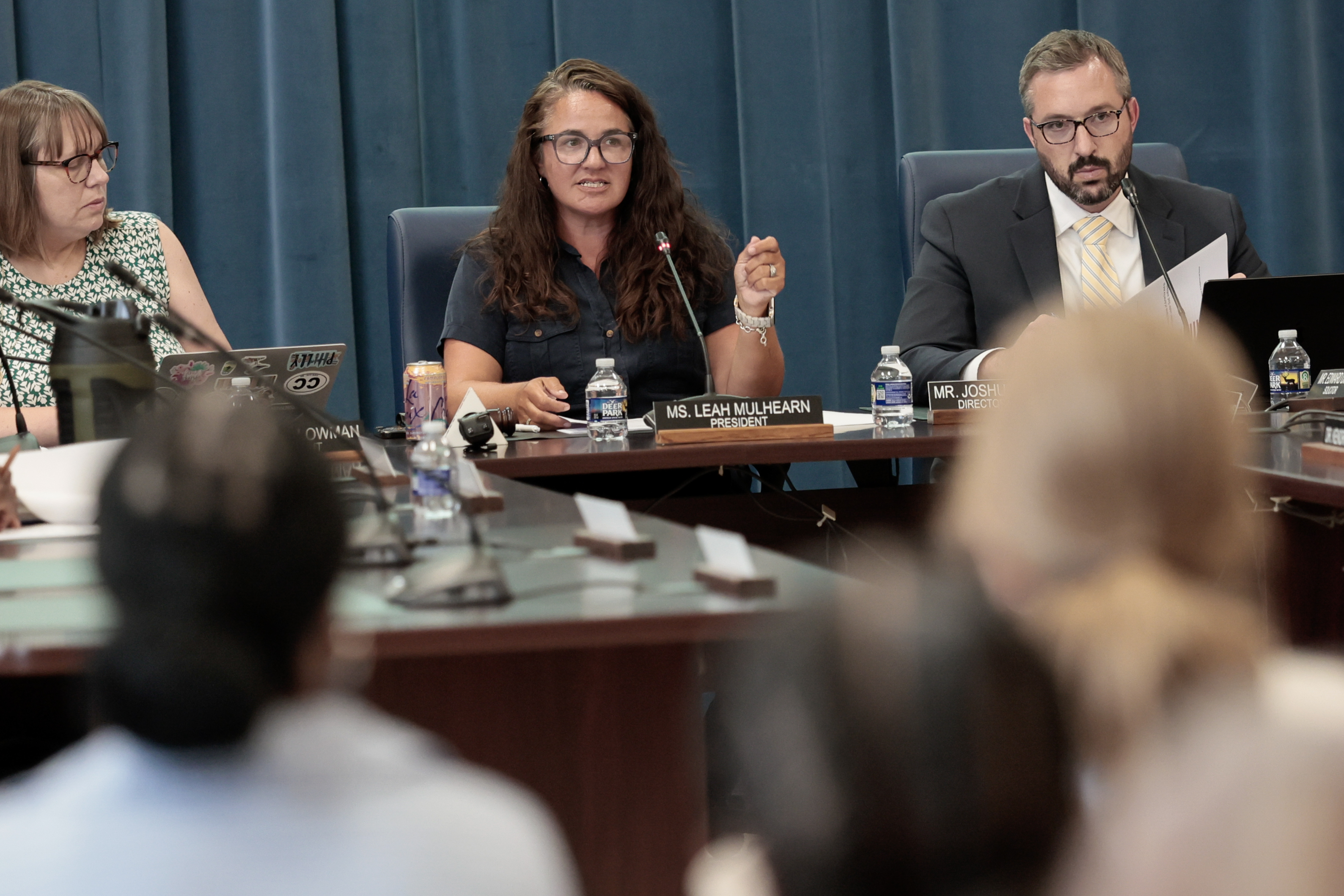
    The attacks on the 15-year-old, which took place in August and September 2025, “arose in the context of a culture of intimidation and acceptance of violence,” board president Leah Mulhearn said Tuesday night at the board’s first meeting since criminal charges were announced against four coaches and six players.

    Mulhearn, who also announced that veteran educator Chris McGinley would be tapped as interim superintendent, promised the board would move quickly to fix problems.

    The district already canceled the 2026 football season in May. “Football will not return until we address this, no matter how long it takes,” Mulhearn said.

    Parents, who lined up behind a microphone in the district’s administration building awaiting their turn to speak, expressed skepticism and demanded more from the board after a grand jury report accused the district of endangering students through a failed response to the assaults, one of which was captured on video.

    In emotional comments, some parents said their children had been assaulted in the schools, while others questioned how they could believe the board, when they had warned against hiring a coach who has since been charged with conspiracy and endangering the welfare of a child.

    “We entrusted our children to this district,” said Chowan Cowans, who withdrew her son, a rising senior and former Cheltenham football player, because “I don’t feel safe with him being there anymore.”

    Cowans accused the district of a lack of transparency, which “has to mean something when the truth is uncomfortable,” she said.

    PTO president Stephanie Curry (center) waits in line to speak during the Cheltenham School Board meeting in Elkins Park on Tuesday, August 11, 2026. The school board was meeting for the first time since criminal charges against four football coaches and six players were announced, and since Brian Scriven resigned as superintendent. .Elizabeth Robertson / Staff Photographer

    ‘Mistakes were made’

    The board has been navigating the fallout since Montgomery County prosecutors nearly two weeks ago announced the charges in the locker-room assaults and delivered a stinging assessment of the school district, with a grand jury report accusing it of “incompetence” in its handling of the situation.

    Employees at the high school appeared to minimize the Sept. 3 assault after it was reported to them by the 15-year-old victim’s mother, according to the grand jury report. They also took the head coach, Terence Tolbert, at his word that he had not instructed the player not to tell his parents what happened, and they included the coach in their investigation — which failed to uncover that there were two assaults, the report said.

    It also noted that employees were also confused about their mandatory reporting requirements.

    On Tuesday, Mulhearn said that while the board “may differ with the grand jury with respect to some of its findings about how the district and board responded, the hard truth is that we must acknowledge that mistakes were made.”

    Mulhearn said the board would “move with deliberate speed to address these issues.” She said the board would enlist an outside attorney, Leigh Dalton — who was hired by the Central Bucks School District last year to investigate special-education abuse allegations — to review the district’s policies and procedures and make recommendations within 60 days.

    She did not comment on Superintendent Brian Scriven’s resignation last week. Some parents questioned whether and when the board’s position on Scriven had shifted, after the board praised the superintendent’s leadership in May.

    A district spokesperson did not respond to a question this week about whether Scriven, who received a new five-year contract in December, would receive any payout following his resignation.

    Nor did the board indicate whether it was considering taking action against any employees at the high school. One parent, for instance, asked whether Mark Hoff, the former vice principal at Cheltenham High School, would still become the vice principal at Wyncote Elementary, in light of the grand jury report faulting high school employees.

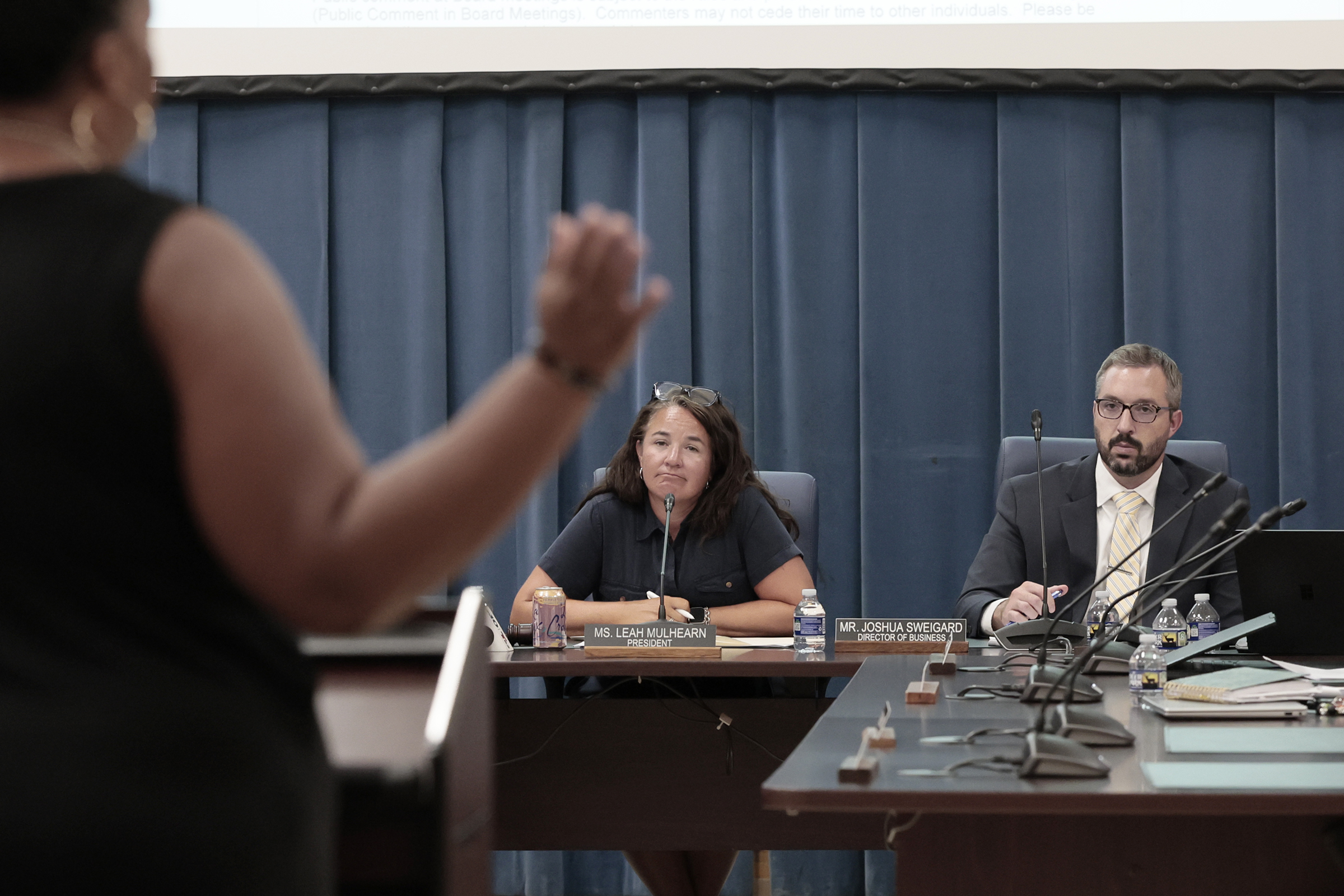
    Taryn Knox (left) speaks to School Board President Leah Mulhearn and Director of Business Joshua Sweigard during the Cheltenham School Board meeting in Elkins Park on Tuesday, August 11, 2026. The school board was meeting for the first time since criminal charges against four football coaches and six players were announced, and since Brian Scriven resigned as superintendent. .Elizabeth Robertson / Staff Photographer

    The board, which appointed director of business services Joshua Sweigard acting superintendent on Tuesday, will hold a special meeting next week to appoint McGinley as interim superintendent, Mulhearn said. McGinley previously led both the Cheltenham and Lower Merion districts and more recently served on the Philadelphia School Reform Commission and Philadelphia school board. His most recent position was as the faculty program coordinator of the Educational Leadership and Policy program at Temple University.

    Parents’ pleas

    Parents urged the board to commit to more steps. In a joint statement, the United Parents Group, the Special Education Alliance of Cheltenham, and the Cheltenham African American Alliance called for numerous actions, including a community town hall ahead of the first day of school and an assembly on the first day “to enforce a zero-tolerance policy regarding sexual harassment, bullying and hazing.” They also called for safety data to be a part of every school board meeting.

    “We are demanding a fundamental shift in how our school district operates,” Aubria Nance, reading from the groups’ joint statement, told the board.

    Numerous parents from Cheltenham Elementary, who have been pressing the district to address safety concerns they say have affected students and staff, questioned how the board’s response this time would differ.

    “Every time I hear a commitment to our students’ safety, I want to see the proof,” said Erin Fadako, a parent at the school.

    The Inquirer reported last week that some football parents had urged the district not to hire Tolbert, saying he had allowed bullying while previously serving as head coach in Abington, where he left after one season.

    “Everyone from the administration on down that has failed these students, you all have approved them to be hired here,” said Taryn Knox, who was among the football parents who had asked the district not to hire Tolbert.

    After a year of negative news coverage, Knox said, “we’re now about to go into the next school year, and the news is still here.”

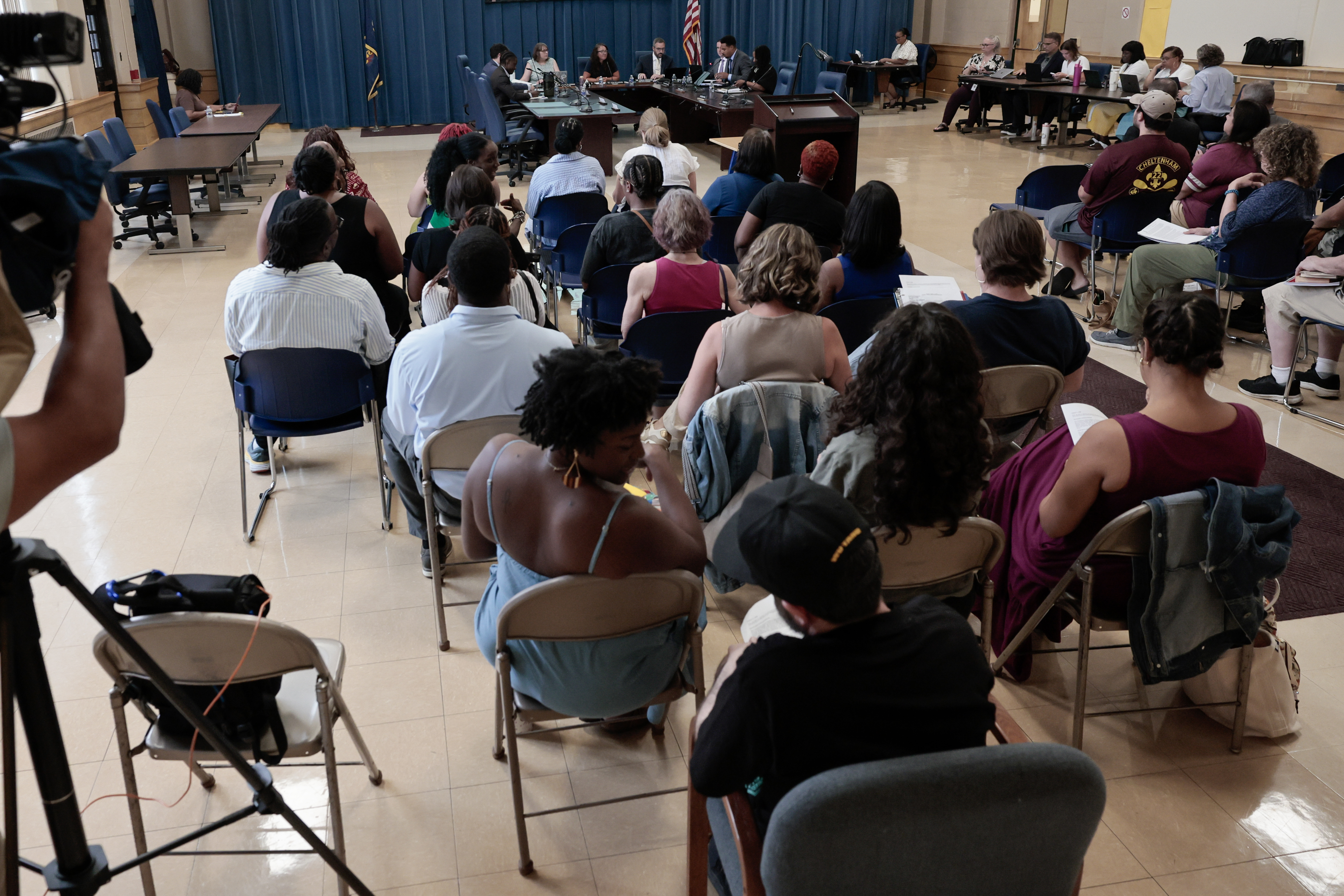
    The Cheltenham school board meeting Tuesday, Aug. 11, 2026, in Elkins Park.Elizabeth Robertson / Staff Photographer

    As they voiced their frustration, parents pleaded with the board to make real changes.

    “Stop being risk averse and do what you need to do to make it safe for our children,” said Stephanie Curry, president of the high school’s parent teacher organization. “Our kids are the ones that are suffering.”

  • Former Lumberton mayor in trouble again with new criminal case

    Former Lumberton mayor in trouble again with new criminal case

    Gina LaPlaca, the former mayor of Lumberton Township who pleaded guilty earlier this year to driving drunk with her toddler in the car, has been charged with faking signatures on a nominating petition to run for township committee, the Burlington County Prosecutor’s Office said.

    LaPlaca, 47, and her husband, Jason Carty, 49, were both charged by summons with third-degree knowingly filing a false petition, two counts of third-degree tampering with public records or information, and fourth-degree falsifying or tampering with records.

    LaPlaca also was charged with fourth-degree making a false statement under oath.

    According to the prosecutor’s office, multiple people whose names and purported signatures appeared on LaPlaca’s nominating petition indicated that they had neither signed the petition nor authorized anyone to do so on their behalf.

    The petition was submitted by Carty to the Lumberton Township municipal clerk and contained an affidavit signed by LaPlaca that she “personally circulated the petition [and] that such petition was signed by each of the signers thereof in his/her own handwriting,” the prosecutor’s office said.

    Carty also allegedly collected signatures for the petition.

    Without the allegedly fake signatures, the prosecutor’s office said, LaPlaca’s petition would have lacked the needed number of signatures required to qualify for the primary.

    Both LaPlaca and Carty are scheduled to appear in Superior Court in Mount Holly on Sept. 21.

    In March, LaPlaca, who served as mayor until December and is still a member of the township committee, pleaded guilty before Burlington County Superior Court Judge Craig Ambrose to driving under the influence and child endangerment.

    Under a deal with prosecutors, LaPlaca entered a three-year diversionary program for first-time offenders. She also agreed to attend regular Alcoholics Anonymous meetings and install an ignition interlock device in her vehicle. LaPlaca told the judge she had installed an interlock device last October. And she had already completed inpatient and outpatient treatment, prosecutors said.

    Prosecutors said cell-phone video showed LaPlaca driving a blue 2019 BMW erratically on Route 38, swerving across the center line and nearly striking a utility pole. After the motorist who recorded the video alerted police, officers located LaPlaca and found an open container of alcohol in her vehicle, authorities said.

    LaPlaca told police she had been drinking before picking up her 2-year-old son from daycare, prosecutors said. At the time, her blood-alcohol concentration measured 0.30% — more than three times New Jersey’s legal threshold for intoxication.

    Despite calls from state lawmakers to step down, she declined to resign as mayor and remained in office until her term ended in December.

    In a text message Tuesday, LaPlaca said: “I’m still in process of retaining counsel so there’s not much I can say other than these charges are absolutely baseless.”

    Carty could not be reached for comment Tuesday. A lawyer for Carty also could not be reached.

    In a separate case, Carty was arrested in late May and charged with aggravated assault and harassment, court records show.

    The New Jersey Globe news outlet reported last month that LaPlaca had alleged that Carty tried to strangle her. But then she allegedly wrote a letter to the Burlington County Prosecutor’s Office saying that her husband did not assault her and that she wished for the charges to be dropped, the New Jersey Globe reported.

    A spokesperson for the Burlington County Prosecutor’s Office declined to comment on the alleged letter, but did say that the case had been transferred to the Mercer County Prosecutor’s Office.

    A spokesperson for the Mercer County’s Prosecutor’s Office could not be reached for comment.