Category: News

  • Parts of Fairmount Park were not only the site of America’s first paper mill, but also the country’s first company town

    Parts of Fairmount Park were not only the site of America’s first paper mill, but also the country’s first company town

    We take paper for granted now. But in the late 1600s, when Pennsylvania’s founder William Penn recruited German papermaker and preacher William Rittenhouse to manufacture the writing parchment in the New World, paper was a luxury.

    England’s King William III made it difficult for his subjects — at home and in the Americas — to have it. Like many monarchs of his day, he believed it was the Crown’s duty to record history.

    The English imported paper from other European countries. So, to make matters worse, colonists who managed to appeal to the king for paper were double and triple taxed. They got fed up and went about securing their own paper to document the goings on in the government, inform citizens, record history, and ultimately plan a revolution.

    Artist Ava Haitz’s No. 1 honors the country’s first paper mill, celebrating the invention and craftsmanship that made widespread written communication possible.Ava Haitz for Colibri Workshop

    In 1690, Rittenhouse partnered with Philadelphia’s first printer, William Bradford, to build America’s first paper mill, situated in northwest Philadelphia and powered by the Monoshone Creek, a tributary of the Schuylkill.

    The paper mill will be celebrated this Saturday at Historic RittenhouseTown, part of a series of weekly “Firstival” celebrations. Firstivals are the Philadelphia Historic District’s yearlong birthday nod to places and events with Philadelphia roots. The day parties are a hallmark of this year’s Semiquincentennial fetes.

    At the Rittenhouse mill, paper was made from linen rags fashioned from flax grown in Germantown, that were broken down and shaped into sheets. The mill grew quickly as Rittenhouse, America’s first Mennonite bishop, provided paper for Bibles and Quaker and Mennonite texts in German.

    An aerial view of RittenhouseTown circa 1840-1860. The site eventually grew to more than 200 acres.Historic Rittenhouse Town

    Rittenhouse’s first paper mill was destroyed by a flood, said Alexander Jones, preservation and education manager at Historic RittenhouseTown.

    Then “Rittenhouse rebuilds and he buys out his partner,” Jones said. “The paper mill becomes his sole enterprise. Instead of hiring workers, he recruits his family and it becomes a giant company town. There is a church, a blacksmith, stone houses, a bake house, and more than 40 buildings with five or six of them under what is now Lincoln Drive.”

    RittenhouseTown’s paper mill was the only source of paper in America for more than 40 years, Jones said. It would grow to more than 200 acres.

    David Rittenhouse — Rittenhouse’s great-grandson and the astrologer, clockmaker, and first director of the U.S. Mint after whom Rittenhouse Square is named — was born in his family’s RittenhouseTown homestead in 1732.

    The town thrived for more than a century.

    By the mid-1800s, the paper mill began to slow down as dyes from textile and carpet manufacturers and chemicals from blacksmithing started to pollute the Schuylkill. The filthy water made it nearly impossible to produce good quality paper at the mill.

    The Fairmount Park Commission began acquiring parts of RittenhouseTown through a series of purchases and donations from 1890 to 1917. The city demolished many of the town’s buildings, including a barn that, Jones said, was razed and rebuilt within a year.

    RittenhouseTown’s homestead and bakehouse. The first permanent home for the Rittenhouse family and birthplace of David Rittenhouse, great-grandson of William Rittenhouse for whom Center City’s Rittenhouse Square is named.Al Cassidy for Historic Rittenhouse Town

    By that time, however, the Rittenhouse family had spread throughout the Philadelphia region from Center City to Blue Bell, Jones said.

    Today, RittenhouseTown spans 20 acres nestled in Fairmount Park right behind Lincoln Drive. Six of the original buildings remain, serving as a reminder that RittenhouseTown was the first building block of American industry.

    “The paper mill really got the ball rolling for Philadelphia,” Jones said. “And from that first came so many other American firsts in Philadelphia: the first Mennonite bishop, the first company town, and America’s first director of the U.S. Mint.”

    This week’s Firstival is Saturday, June 27, 11 a.m.-1 p.m., at Historic RittenhouseTown, 208 Lincoln Drive.

    The Inquirer is highlighting a “first” from the Philadelphia Historic District’s 52 Weeks of Firsts program each week. A “52 Weeks of Firsts” podcast, produced by All That’s Good Productions, drops every Tuesday.


  • World Cup fans are spending money in Philly. How much will actually stay in the city?

    World Cup fans are spending money in Philly. How much will actually stay in the city?

    The World Cup has arrived in Philadelphia and out of town visitors are flocking to the games, and learning about Rocky’s curse.

    But how much of the money they’re spending will actually stay in Philadelphia?

    The World Cup games were originally expected to generate a $770 million economic impact in the Philadelphia region, Axios reported in 2024. But just $30 million to $90 million is likely to stay in the region and benefit the local economy, according to estimates in a new report by the Economy League of Greater Philadelphia.

    Thousands have visited the Lemon Hill FIFA Fan Festival since it kicked off on June 11, and used SEPTA after the first Philly-hosted match earlier this month. Philadelphia International Airport also estimated a bump in travel through the airport around the June 19 game between Brazil and Haiti.

    But not all spending is equal.

    U.S. cities are spending hundreds of millions of dollars to host World Cup matches, but are limited in how much revenue they can amass from the events, according to a ProPublica analysis of host city contracts, including Philadelphia’s.

    Some of the money coming into the city during the World Cup would have been spent in Philadelphia anyway, but perhaps differently, the Economy League report indicates.

    While the city is gaining World Cup visitors, it may be losing out on regular business travelers and others that would have come to Philadelphia if not for the World Cup, the report said. Meanwhile, some who are spending money to enjoy the tournament in Philadelphia are residents, who would be spending money in the city anyway. And some fan spending is flowing directly to FIFA and other platforms, rather than to the city’s economy.

    The report highlights three areas seeing most of that spending: The stadium district, Center City hotels and restaurants, and the Fan Festival at Lemon Hill.

    “The commercial corridors beyond this core, which make up most of the city, are unlikely to see much benefit without deliberate effort, because visitor spending follows the path of least friction — toward where people sleep, arrive, or already intend to go,” the report says.

    A man looks to the skies during the rain delay of the France vs. Iraq 2026 FIFA World Cup Group 1 soccer match at Philadelphia Stadium on Monday.Elizabeth Robertson / Staff Photographer

    In the stadium district, where customers have bought tickets to attend games, they’re spending on merchandise and concessions — but few of those dollars trickle down to local independent businesses.

    In Center City, hotels and restaurants are benefiting most, but it’s not as though they wouldn’t be getting business without the games, the report notes.

    Some local food trucks and independent vendors can make money at the FIFA Fan Festival at Lemon Hill. But because the venue is gated, surrounding businesses only profit if visitors leave the festival site.

    And locals are paying the price of hosting the World Cup in other ways.

    Residents who live around the Fan Festival at Lemon Hill are unable to catch a Lyft or Uber from home because of festival restrictions, and parking in the area requires applying for a special permit. The Philadelphia Parking Authority dolled out thousands of tickets in the first few days of the festival.

    Still, the report outlines, much can be gained locally through the World Cup. Lemon Hill is set to receive $4 million in improvements, and some other benefits are harder to quantify.

    “Philadelphia has shown it can move large crowds and stage a global event capably, and the reputational and civic returns, while hard to value, are real,” the report outlines.

  • Rural area in Northern California jolted by its biggest quake since 1940

    SAN FRANCISCO — A rural area of Northern California experienced its strongest earthquake since 1940 on Wednesday morning, causing some injuries but no immediate reports of major damage, officials said.

    The epicenter of the quake, with a preliminary magnitude of 5.6, was about 7 miles northwest of the agricultural town of Willits, according to the U.S. Geological Survey. It was widely felt, including in the coastal city of Fort Bragg. The initial quake was centered inland about 50 miles east of Fort Bragg at 8:10 a.m. Pacific Time, and the USGS said it was about 5 miles deep.

    The area in Mendocino County dotted with small, agricultural towns is 140 miles northeast of San Francisco.

    Heather Rose, a Mendocino County spokesperson, said that hospitals had reported some injuries but that she had no details on their nature or extent. She said officials plan to meet later Wednesday when more information could be released.

    Power outages are affecting more than 6,000 residents of six towns near the epicenter, the Mendocino County Executive Office said in a statement. The office encouraged people to stay off the highways and roads to allow work crews to inspect for damage and make repairs.

    Brie Leon and her colleagues had just opened Club Calpella Restaurant when the building started shaking, rattling plates and liquor bottles.

    “I had just turned the open sign on and went back into the kitchen, and that’s when it happened,” she said. “It almost felt like something hit the building.”

    The restaurant is in Calpella, Calif., a town about 10 miles south of the epicenter and in a region of Mendocino County that has been struck by smaller quakes this year.

    This was the biggest earthquake in nearly nine decades in the region, which is not on a major fault, said Lucy Jones, a veteran California seismologist.

    “The area is not without earthquakes, but they’re usually smaller than this,” Jones said. She added that aftershocks are likely, but they’ll “probably stay on the low side.”

    Three other quakes under a 2.7 magnitude struck near the epicenter within an hour.

    Leon said the quake knocked frames off the walls and bottles off the shelves in the restaurant and the stockroom next door. She and other servers were cleaning up not long after to welcome customers for breakfast.

    “It wasn’t a big, big quake, but things went everywhere,” she said.

    Alan Harris and his family were at home in Kelseyville, about 40 miles southeast of the epicenter, when he received an earthquake alert on his cell phone. Soon after, the house began shaking.

    “I yelled downstairs immediately to my wife and daughter to make sure they were hanging on,” Harris said. “It was scary. You could hear things crashing, mostly on the third floor of the house.”

    A security camera inside Harris’ home shook vigorously as the quake struck. A few loud, crashing sounds can be heard on the video footage before Harris calls out: “Is everyone OK?”

    It lasted only about 30 seconds. Framed photos fell off the walls and a computer monitor was knocked over, Harris said. Nothing appeared badly damaged, he added, noting he found no structural damage to the house.

    Nearly 657,000 earthquake early warning alerts were sent by the MyShake App throughout Northern California, the California Governor’s Office of Emergency Services said. Cal OES had not received any reports of damage or injuries, but it was coordinating with authorities to evaluate impacts, the office said in a statement.

    Hundreds of thousands more people received alerts through other public safety alert systems, but those numbers have not been finalized, said Robert de Groot, a scientist with the ShakeAlert operations team.

    “The alert deliveries for this are going to be well over a million,” Groot said.

  • Trump-endorsed de la Espriella declared winner of Colombia’s presidential runoff election

    BOGOTA, Colombia — Conservative outsider Abelardo de la Espriella, a millionaire political neophyte, will be Colombia’s next president after electoral authorities on Wednesday declared him the winner of Sunday’s runoff election.

    The businessman and lawyer, whose ventures include a clothing line, wine and rum brands, and a restaurant, earned President Donald Trump’s endorsement despite never having run for office. He defeated progressive lawmaker Iván Cepeda by 1 percentage point, or more than 251,000 votes.

    The result effectively was an indictment of outgoing President Gustavo Petro’s government, whose policies Cepeda had promised to continue, including a largely failed effort to establish dialogue with multiple armed groups.

    Electoral authorities published all but a fraction of the vote count hours after polls closed Sunday. Petro and Cepeda did not accept those results, with the latter saying he would wait for a recount to do so. Authorities finished the recount before declaring de la Espriella’s victory.

    De la Espriella’s victory adds Colombia to a growing list of countries that have turned to political outsiders in search for solutions to complex social, security, and economic challenges.

    The self-proclaimed representative of “the never-before-seen” promised voters fearful of renewed internal conflict to take a heavy-handed approach to combating violent crime with strategies borrowed from Salvadoran President Nayib Bukele’s playbook, including building mega-prisons. Those tactics have lowered homicide rates in the Central American country but have fueled accusations of human rights abuses.

    Earlier Wednesday, Cepeda conceded Colombia’s presidential election to de la Espriella and accepted a Senate seat reserved for the runner-up in the presidential election.

    “We assume with serenity, responsibility, and absolute resolve — and let there be no doubt about it — the role that circumstances demand of us,” Cepeda said in an address to the nation. “We will exercise a democratic, vigilant and constructive opposition.”

    De la Espriella, 47, will begin a 4-year term Aug. 7.

    In a statement on Wednesday, de la Espriella’s campaign said de la Espriella’s “purpose is to work for national unity, with the people and for the people.” The campaign also stated his government will be committed to guaranteeing “the right to political opposition and peaceful protest, within the framework of the Constitution, the law, and respect for democratic institutions.”

    A day earlier, de la Espriella announced he is putting together his cabinet. He also said he plans to add Colombia to the Trump-dubbed “Shield of the Americas,” a coalition of countries purportedly aimed at cracking down on criminal groups in Latin America.

    More than 26 million people voted in the polarizing runoff, setting a historic record. Of those, over 426,000 people chose a third, no-name option on the ballot that allows voters to express dislike of both candidates. About 29,000 people cast blank ballots.

  • The Pennsylvania House passes two bills protecting parental rights, including for incarcerated people

    The Pennsylvania House passes two bills protecting parental rights, including for incarcerated people

    The Pennsylvania House has approved a measure that could help reinstate the rights of parents whose children are in state custody and another that would protect the parental rights of incarcerated people.

    The latter bill clarifies that a person’s incarceration status cannot be the sole reason for taking away parental rights.

    It gives courts flexibility in parental-right termination cases by allowing them to consider an individual’s efforts to comply with family service plan requirements despite being incarcerated. Also, courts could delay filing for termination when incarceration is the primary reason a child has been placed in foster care.

    The Joint State Government Commission’s Task Force on Children recommended the changes in 2011.

    The other bill would give parents whose children have been in the custody of the state for at least 15 months, or who are at least 17 years old, a process to reinstate their parental rights. Those parents would now be able to petition the court and demonstrate they are willing and able to properly care for their children.

    Both bills, which were passed earlier in the week with minimal opposition, now head to the Senate for consideration.

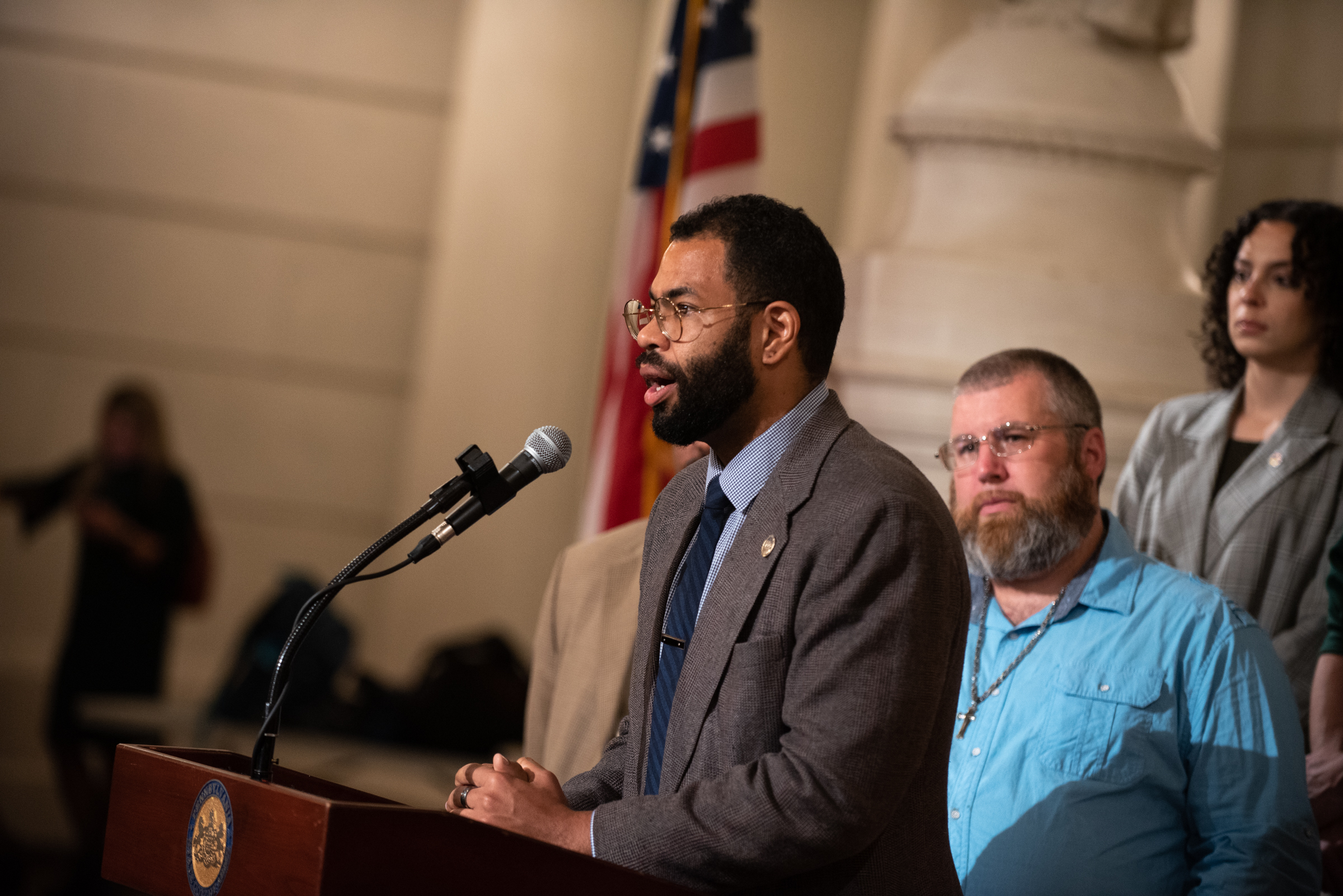
    Democratic State Rep. Rick Krajewski, whose district covers West and Southwest Philly, introduced both bills. Krajewski said that under current law, it is extremely difficult for people whose parental rights have been removed to get them reinstated, and he is interested in providing people second chances.

    “It doesn’t mean those parents are any less loving, any less caring, or any less willing to show up for their children. And unfortunately, people make mistakes … people are also not static. People grow, they go through changes,” he said.

    PA Democratic State Rep. Rick Krajewski speaks to people gathered for a protest in 2022.Erin Blewett

    Krajewski said his personal experience witnessing his stepfather being incarcerated and other family members being involved in the criminal justice system helped him understand how detrimental separating children and parents can be for both parties. He said removing a person’s parental rights solely because of incarceration is cruel.

    “This feels like an additional punishment that isn’t relevant to whatever harm they caused. … I don’t think it’s just to add this additional penalty on top,” he said.

    Krajewski has also introduced another child-welfare-related bill that would end the practice of intercepting benefits intended for foster children, and instead place the benefits in a savings account. City Council banned the practice in Philadelphia in 2022 following an Inquirer investigation, but the Philadelphia Department of Human Services still kept over $1 million a year meant for foster children and the practice remained common statewide. The bill was passed out of committee on Wednesday and will be considered by the full House.

    Local advocates like Community Legal Services Philadelphia and Philly Voice for Change, a nonprofit working to prevent family separation, voiced their support for the parental rights bills after they passed.

    “The bipartisan support in the House demonstrates a commitment to families and a recognition that children should not remain in the system when their parents are ready, willing and able to provide safe and loving care,” said Philly Voice for Change cofounder April Lee in a statement.

    “This vote is an important step toward keeping families together, promoting reunification and ensuring that children have every opportunity to return home when it is in their best interest,” she said.

  • White House seeks $87.6B from Congress for Iran war costs, U.S. farmers, and Ebola response

    WASHINGTON — The White House has formally requested $87.6 billion mostly to replenish the Pentagon after the U.S. war against Iran, submitting the request to Congress at a politically difficult time as Republican and Democratic lawmakers have objected to any further military action.

    The Office of Management and Budget sent the supplemental spending request on Wednesday. It arrived just hours after President Donald Trump assailed Republican senators during a private lunch — engaging in a shouting match with one — over their votes to approve a war powers resolution that would halt further hostilities.

    The request is mostly for expenses incurred by the Defense Department as part of Operation Epic Fury, the U.S.-led attack on Iran. But it also includes a range of other items, including aid to American farmers, help for the Ebola crisis in Africa, and other needs closer to home, including restoration projects in Washington, D.C.

    “I urge the Congress to take action on these important and urgent requests as soon as possible,” said OMB Director Russ Vought in a letter to House Speaker Mike Johnson.

    It’s unclear how quickly the House and Senate could act on the White House’s request, or if Congress takes up the matter at all. The funding faces a difficult path because many lawmakers could view any votes as a reflection of test of their support for the war effort.

    Yet the White House was clear to include provisions to interest lawmakers from various regions, including $1 billion to assist “the final design and construction of a modernized Penn Station in New York City,” which would be of interest to the Senate Democratic Leader Chuck Schumer and House Democratic Leader Hakeem Jeffries, both of New York.

    The administration said it is requesting $67 billion for the Department of Defense for what it said were urgent needs related to the war against Iran, including “funding for military personnel and readiness expenses, operational costs to rebuild stocks.”

    It also wants $11.1 billion toward economic assistance for American farmers, $1.4 billion for the Ebola virus outbreak in Central Africa and requests $500 million to support ongoing efforts “to complete restoration and construction projects in and around Washington, D.C.”

    The package also includes a collection of policy proposals that the administration strongly supports, and which are certain to raise interest among lawmakers.

    Among them, the package proposes revisions to federal regulations of hemp products that have long been in dispute, changes to the year-round sales of renewable fuels and lifting of restrictions around federal investment support in Venezuela.

    Washington Sen. Patty Murray, the lead Democrat on the Senate Appropriations Committee, said the request is not merely to pay for “the president’s disastrous war, but an attempt to secure tens of billions of additional dollars for unrelated Pentagon priorities that should rightly be considered through the annual appropriations process.”

    Murray added: “I will closely review this request in its entirety and ensure we take care of our service members, but I will not rubber-stamp tens of billions more for this disastrous war of choice.”

    Rep. Tom Cole (R., Okla.), the chairman of the House Appropriations Committee, and Rep. Ken Calvert (R., Calif.), who chairs the panel’s subcommittee on Defense, said in a joint statement, “President Trump’s request reflects the reality that our defense strength must be maintained, not merely demonstrated.”

    The biggest share of defense funding, $21 billion, will go to weapons munitions, with another $17.3 billion for operational costs and $12.1 billion for other classified programs. Funds are also requested to cover fuel costs, drone manufacturing, and cybersecurity.

    The money for farmers would provide $10 billion in economic assistance to row and specialty crop farmers and $1.1 billion specifically to Florida agriculture producers who suffered losses from this past year’s winter storms.

  • The Pa. Attorney General’s Office seeks to intervene in a murder case that Philly prosecutors helped overturn last month

    The Pa. Attorney General’s Office seeks to intervene in a murder case that Philly prosecutors helped overturn last month

    The Pennsylvania Attorney General’s Office on Wednesday said it was appealing and seeking to intervene in a murder case that Philadelphia prosecutors helped overturn last month — the first application of a recent state Supreme Court ruling that gave state prosecutors more oversight over their city counterparts in appellate matters.

    The notice, filed Wednesday in Philadelphia Common Pleas Court, seeks to insert the attorney general’s office into the case of Marc Brittingham, Rasheed Turner, and Jermal Shuler, whose convictions in a 1997 killing were vacated in May after prosecutors and defense attorneys said key evidence presented at their trial was unreliable.

    As a result, Brittingham, Turner, and Shuler were freed from prison after 28 years.

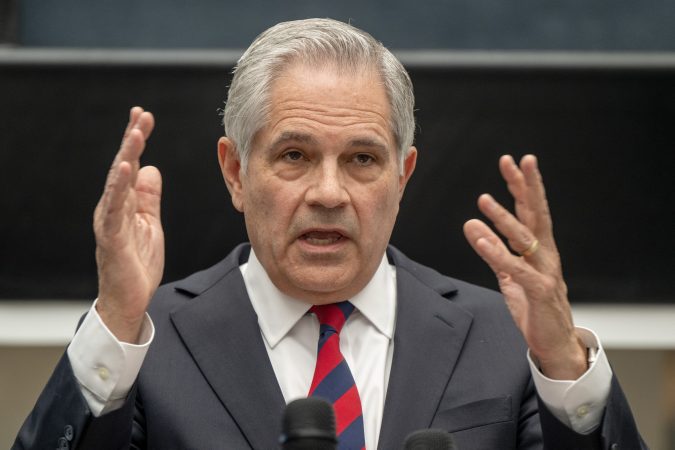
    But last week, the Pennsylvania Supreme Court said in a forceful ruling that District Attorney Larry Krasner’s office had displayed a pattern of misleading judges while seeking to overturn murder convictions. Moving forward, the justices said, the state attorney general’s office should be given the opportunity to review such cases before a judge can decide whether to grant relief.

    The filings raise a procedural question at the heart of the new ruling. The Supreme Court’s decision requires judges to notify the attorney general and gives the office “the right to intervene in the case before ruling on the concession.” But in this case, that moment had already come and gone; the judge had accepted the district attorney’s position and overturned the convictions.

    What may have allowed the attorney general back in was timing: The 30-day window to appeal the decision had not closed yet. The office filed its notice of intervention and an appeal on day 29.

    Krasner, in a brief phone call Wednesday, said, “I hope the public will watch this case carefully.”

    “I hope they will watch what our attorney general’s office stands for and what the district attorney’s office stands for,” he said. “Stay tuned. It’s going to tell us a lot about what’s really going on.”

    Deputy Attorney General Hugh Burns did not say in court documents how or why the office believed it had authority to intervene in this case, saying only that it was taking the action in response to the state Supreme Court’s order from last week.

    A spokesperson for the office declined to comment.

    Wednesday’s filing seeks to reopen a case in which many of the facts underlying the district attorney’s decision to join defense lawyers in seeking to vacate the convictions remain obscured by extensive redactions in court filings.

    Prosecutors and defense attorneys said the case was undermined by newly uncovered information about the work of Bennett Preston, a former assistant medical examiner whose testimony helped establish the prosecution’s timeline of Essie Mae Thomas’ death.

    Thomas, 73, was found stabbed to death inside her Northwest Philadelphia home in November 1997. A jury convicted Brittingham, Turner, and Shuler the following year, after hearing testimony from a neighbor who placed them at the home and from Preston, who linked Thomas’ time of death to the witness’ account. Nearly three decades later, Krasner’s prosecutors said that the testimony of the witness and Preston was questionable, and that disciplinary action had been taken against Preston.

    The details of those disciplinary actions, however, were redacted from filings.

    Officials with the district attorney’s office have said that the discovery of previously unknown disciplinary action involving Preston helped prompt the reinvestigation. But prosecutors have declined to publicly detail much of that information, and court records filed in the case concealed significant portions of the evidence that led them to conclude the convictions could no longer stand.

    When Common Pleas Court Judge Jennifer Schultz vacated the convictions in May, she found that the newly uncovered evidence would likely have changed the outcome of the trial. Prosecutors then withdrew the charges, ending the case and allowing the men to walk free.

    Jules Epstein, a criminal law professor at Temple University, said “this is unknown territory.” Because a court order is not final for 30 days, he said, the office could have a right to appeal.

    He pointed to comments from the attorney general’s office this week in which it said it was still working out a process for how and when to intervene in cases.

    “What disturbs me is did they actually look at the merits of this decision? Or did they just knee jerk and say, ‘It’s Krasner, we’re going to challenge it’?”

    Marissa Boyers Bluestine, assistant director of the Quattrone Center for the Fair Administration of Justice at the University of Pennsylvania‘s law school, said the language of the high court’s order did not appear to leave room for retroactivity.

    Bluestine, who worked on Brittingham, Turner, and Shuler’s case in her previous role leading the Pennsylvania Innocence Project, said it was also curious that the attorney general’s office was involving itself without the judge’s invitation.

    “They’re saying that they are intervening, not requesting permission to intervene, which is an interesting way to put it,” she said.

  • Ex-chief of staff to former NYC Mayor Eric Adams charged with taking bribes

    NEW YORK — A former chief of staff to ex-New York Mayor Eric Adams was arrested Wednesday in a federal bribery case about a lucrative migrant shelter contract, the latest sign that prosecutors continue to scrutinize Adams’ inner circle months after the scandal-bruised Democrat left office.

    The charges against Frank Carone are the latest in a string of corruption allegations leveled at the former mayor — who was himself indicted on bribery and other charges that were later dismissed — and key aides. Separately, federal authorities searched the homes of current and former New York Police Department leaders Wednesday in connection with a different bribery investigation.

    Adams was not accused of wrongdoing in Carone’s indictment. It alleges the ex-chief of staff exploited his position to get more than $100,000 in payoffs for steering a migrant shelter contract to a hotel that social service officials had deemed unsuitable.

    “Frank Carone was entrusted to run our city government and instead put his own wealth and status above duty,” Assistant U.S. Attorney Sarah Winik told a court.

    Carone and his brother, Anthony Carone; hotel owner Yan Po Zhu, and hotel employee Crystal Chen pleaded not guilty to various charges. The brothers sat across from each other at a defense table, where Anthony Carone rubbed his face and Frank Carone appeared to read along during the proceedings.

    Frank Carone’s lawyer, Arthur Aidala, said outside court that the case was based on “assumption after assumption after assumption.”

    “There is not one fact that indicates Frank Carone did anything specific to influence anything in our government,” Aidala said. The other defendants and their attorneys declined to comment.

    Frank Carone and the Sabrina Carpenter church video

    Carone, a former Brooklyn Democratic Party lawyer and longtime political power broker, is widely credited as one of the architects of Adams’ political rise. He also drew attention for his financial dealings with a Roman Catholic priest who let pop star Sabrina Carpenter film scenes for a provocative music video in a church.

    Federal investigators later subpoenaed the church. “They found nothing,” Aidala said Wednesday, contending that the government first targeted Carone, then looked for a case.

    Carone played a key role in Adams’ 2021 mayoral campaign, was chief of staff in 2022, then left and formed a political consulting firm.

    He “dedicated decades of his life to public service, the legal profession and helping countless individuals, businesses, and charitable organizations throughout New York,” Adams spokesperson Todd Shapiro said in a statement.

    Indictment focuses on how the hotel became a shelter

    Starting in 2022, the city scrambled to expand its shelter capacity amid an influx of migrants. Zhu’s hotel got $6.8 million to shelter some of the new arrivals, though the city’s Social Services Department had repeatedly rejected the facility, which was small and in a Queens neighborhood where residents objected to more shelters, according to prosecutors.

    Prosecutors said in court papers that Frank Carone accepted around $120,000 in bribes from Zhu and Chen to intercede on the hotel’s behalf. The money was passed through Anthony Carone’s law firm, according to the indictment.

    In a September 2022 text message, Zhu asked Frank Carone for help getting the hotel an immediate one-year contract, according to the indictment. It said Carone replied by asking for the address, and Zhu gave it, adding: “Thank you my big guy.”

    In December 2023, Zhu texted Carone: “I asked my partners to pay you for a year,” according to the document. Carone, who is also charged with obstruction of justice, deleted the message after learning he was under investigation, prosecutors said.

    Zhu “is anxious to establish his innocence,” lawyer Stephen Scaring said before the arraignments. All four defendants later were released on bond, ranging from $100,000 for Chen to $8 million for Zhu.

    Police officials’ homes searched in unrelated probe

    Separately Wednesday, the FBI and the NYPD executed search warrants at the homes of NYPD Chief of Manhattan South James McCarthy and former Deputy Commissioner Tarik Sheppard, and federal agents also searched former Chief of Department Jeffrey Maddrey’s home, according to a law enforcement official briefed on the searches. The official, who was not authorized to discuss the investigation and spoke on condition of anonymity, said the searches were part of a bribery investigation that grew out of an inquiry into Maddrey.

    There was no immediate response to an inquiry to Maddrey’s attorney. Attorney information for Sheppard and McCarthy was not immediately available.

    There is no public indication of any arrests as part of those searches.

    They were not related to Frank Carone’s arrest, according to another person familiar with the matter who also was not authorized to publicly discuss details of the case and spoke on condition of anonymity.

    Once the NYPD’s highest-ranking uniformed officer, Maddrey resigned in 2024 over allegations that he demanded sex from a subordinate in exchange for opportunities to earn extra pay. Maddrey denied the claims of a quid pro quo.

    Adams was indicted in 2024 on charges of accepting illegal campaign contributions from Turkish officials and others in exchange for political favors. The case was tossed by federal Justice Department leaders who said it was distracting Adams from assisting in Republican President Donald Trump’s immigration crackdown. Adams has denied wrongdoing.

    After skipping last year’s Democratic primary, Adams mounted but eventually abandoned an independent campaign for a second term.

  • A lawsuit challenges arrests of immigrants who come to Philly’s ICE office for routine appointments

    A lawsuit challenges arrests of immigrants who come to Philly’s ICE office for routine appointments

    A 36-year-old survivor of slavery said he has tried to follow all the rules since fleeing Mauritania, a mostly desert land in West Africa, and seeking asylum in the United States in 2023.

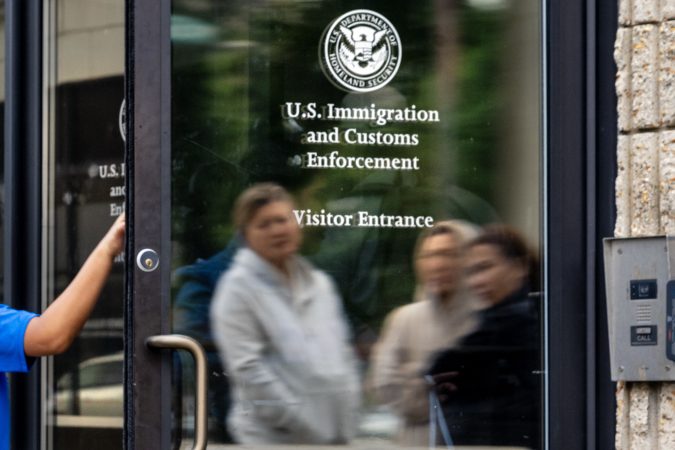
    But when Ousmane Soumare arrived at the U.S. Immigration and Customs Enforcement office in Philadelphia in November for a routine check-in, he was detained by officers.

    Now Soumare, who was released by a federal judge’s order, and two other immigrants who fear a similar fate in their forthcoming appointments are suing ICE and the Department of Homeland Security over the policy change that led to such arrests.

    The Philadelphia ICE field office violated federal law when it “unlawfully rescinded” a longstanding policy that largely allowed immigrants to pursue their immigration cases without fear of rearrest, the suit says. ICE then “began re-arresting and re-detaining people previously determined to pose no risk of flight or danger to the community and still in full compliance with all conditions of their release,” the suit says.

    Soumare, Lassana Dianifaba, and a third immigrant, who was not named in court documents, filed the lawsuit Wednesday in federal court in Philadelphia.

    “When the government releases a person from custody, there is an implicit promise that their liberty will be honored as long as they follow what is asked of them,” said Vanessa Stine, senior staff attorney with the ACLU of Pennsylvania, which represents the immigrants. “These rearrests disregard a decades-old policy and sow fear and chaos.”

    ICE does not comment on pending litigation, a spokesperson said.

    ‘Unheard of’

    In Philadelphia, ICE arrests of people who arrive for what they thought would be routine check-ins and appointments have gone from rare to common.

    That is because “sometime toward the middle of 2025,” the suit says, the local ICE office rescinded its policy that required individualized evaluation of new circumstances that would indicate an immigrant is a danger or flight risk.

    Each year thousands of people report to ICE or related immigration agencies for the mandatory check-ins. Some immigrants are required to appear every couple of weeks, some once a month, others once a year.

    The appointments help immigration officials keep track of people who in the past have been low priorities for deportation, allowed to live freely as they pursue legal efforts to stay in the United States. Now that landscape has shifted.

    The change coincided with President Donald Trump’s administration’s implementation of a policy that mandates detention for virtually every undocumented immigrant encountered by authorities.

    These mandatory detentions have led to an avalanche of lawsuits by immigrants. Philadelphia’s federal judges have granted their requests for bond hearings at near-universal rates.

    A ruling from the U.S. Court of Appeals for the Third Circuit on the constitutionality of the mandatory detention policy is pending.

    The changes have put immigrants in risky positions, making every visit to the ICE field office a gamble, because they have little choice but to show up.

    Six immigration attorneys filed affidavits in support of the new proposed class-action lawsuit that detail an explosion of cases. Christopher Casazza estimated his firm has represented roughly 190 people who were detained at ICE check-ins since September.

    Before 2025, it was “unheard of” for a law-abiding immigrant to be detained at a routine check-in, Casazza said.

    Steven Morley, who served as an immigration judge between 2010 and 2022, said in an affidavit that he could not recall “any circumstance” of people being re-detained unless they had committed a crime.

    Philadelphia federal judges responding to the flood of lawsuits by immigrants challenging their detention have also taken notice of the shift.

    In February, U.S. District Judge Gail A. Weilheimer wrote that ICE had set a “trap” for “thousands of noncitizens” by arresting immigrants who were following instructions.

    ICE offices in other cities have similarly reversed course on requiring a material change in circumstance to re-detain released immigrants, and federal judges in California and New York found the lack of individual assessment unlawful.

    The proposed class action in Philadelphia asks a federal judge to certify the class, and declare the rescission of the changed circumstances policy unlawful.

    Soumare’s next check-in is scheduled for July, and he is anxious about visiting the ICE office again.

    “When I think of the risk of being re-detained at my next check in, it scares me,” he said in a court filing. “But I will still attend because I want to follow all the necessary steps to stay here.”

    Visa holders and green card applicants

    Even people who are seeking legal status through lawful government processes are in danger of arrest.

    Green-card applicants, asylum seekers, and others who have ongoing legal or visa cases to stay in the United States have been unexpectedly taken, part of a Trump administration strategy, lawyers and advocates say, to boost the number of immigration arrests and to deport anyone who can possibly be deported.

    Arrests have occurred not just at ICE offices, but also at U.S. Citizenship and Immigration Services and at private offices of federal contractors.

    ICE says that all immigrants who do not hold legal immigration status may be subject to arrest and removal. They say that arrests undertaken at federal agencies are safer for officers, because visitors have been screened for weapons when they enter the buildings.

  • Federal judge bars Trump from implementing proof of citizenship requirement to vote

    A federal judge on Wednesday permanently barred President Donald Trump’s administration from implementing most of his first executive order on elections, part of which sought to require people to show documentary proof of citizenship when they register to vote.

    The ruling by U.S. District Court Judge Denise Casper in Boston effectively converts a preliminary injunction she issued a year ago, in which she temporarily blocked many of Trump’s efforts to overhaul elections, into a permanent ban.

    Casper rejected the Republican administration’s argument that the lawsuit to block the changes brought by Democratic state attorneys general was premature because the rules had yet to be put in place. Instead, she agreed that the Constitution gives states and Congress the authority to regulate elections, and that Trump’s requirements violated the separation of powers.

    The Constitution “does not grant the President any specific powers over elections,” wrote Casper.

    Among other proposed changes, Trump’s order would have required people to provide documentary proof of citizenship when registering to vote, prevented mail ballots from being counted if they arrive after Election Day, even if they were postmarked by then, and punished states that failed to comply by withholding certain federal money.

    In a statement, New York Attorney General Letitia James said she was grateful the court had blocked Trump’s “unconstitutional attempt to seize control of our elections” and would continue to defend voting rights in this year’s midterm elections.

    “Generations of Americans fought tirelessly for the right to vote, and we honor their legacy by protecting that right against anyone who tries to undermine it,” said James, a Democrat.

    California Attorney General Rob Bonta, whose state was the lead plaintiff in the case, said the ruling reaffirmed the constitutional principle that it s up to the states and Congress to set election rules.

    “While we are proud of this result, we are clear-eyed that President Trump’s attacks on voting rights and our elections show no signs of slowing down,” Bonta, a Democrat, said in a statement. “So let me be clear: we will keep fighting back every step of the way.”

    Requests for comment sent to the White House and the U.S. Department of Justice were not immediately returned.

    The ruling was the latest in a series against the elections executive order Trump signed just months after taking office for his second term. The Republican president has since signed another executive order on elections that seeks to create a national voter list and limit mail balloting. That directive also faces multiple legal challenges.

    Last fall, a federal judge in Washington, D.C., overseeing a separate challenge to the first election executive order by civil rights and Democratic Party-aligned groups blocked the government from taking steps to include the proof-of-citizenship requirement on the federal voter registration form. That judge later barred Trump’s defense secretary from requiring documentary proof of citizenship when military personnel register to vote or request ballots.

    In an apparent nod to the difficulty of implementing a proof-of-citizen requirement by executive order, Trump is pushing legislation in the Republican-controlled Congress to create such a mandate. The SAVE America Act has passed the House but has stalled in the Senate, leading Trump to advocate for eliminating the filibuster that is blocking the legislation.

    On Wednesday, he abruptly canceled the expected signing of a bipartisan housing bill, saying he would not sign legislation until Congress passes his proof of citizenship requirement for voting.

    The president and many of his Republican allies have been promoting the narrative that voting by noncitizens is a major problem, when in fact it’s quite rare. The federal voter registration form already requires people to attest that they are U.S. citizens. Violating that is punishable as a felony that can lead to prison or deportation.

    In another major voting case, the U.S. Supreme Court is due to issue an opinion soon on whether mail ballots must arrive by Election Day. That could immediately change the rules in 14 states that allow grace periods ranging from days to weeks if the ballots are postmarked by Election Day.

    Casper, who was nominated by Democratic President Barack Obama, is the chief judge for the U.S. District Court for the District of Massachusetts.