Category: News

  • Philly has 100-year-old stormwater infrastructure and 72,000 easily clogged inlets

    Helplessly watching stormwater fill the basement is among the most frustrating experiences for Philadelphia homeowners. It is especially bad if you are waiting for the city’s help to do something about it.

    In West Mount Airy, Arielle Wolfson, 37, said roads by her home “become a river” when it storms. She and her wife live at the bottom of a hill near the intersection of Mount Pleasant Avenue and Cresheim Road, where five stormwater inlet drains are responsible for keeping rainfall from growing into rapids as it sloshes downward. But for years, only one of the drains has been fully functioning, Wolfson said. The others have been mostly sealed shut by city repaving projects that raised the level of the street, but not the inlets built into the curb.

    When ankle-deep water slopes down into an alleyway that connects Wolfson’s home and nearly 30 others, it often floods her basement. Every rainstorm is nerve-racking, she said, and her efforts to alert the city, the water department, and City Council members had not resulted in change beyond an occasional inlet cleaning.

    Kelsey Hensley, Wolfson’s wife, said their frequent flood calculus is: “Do we go out with some friends, or do we stay home to monitor the basement?”
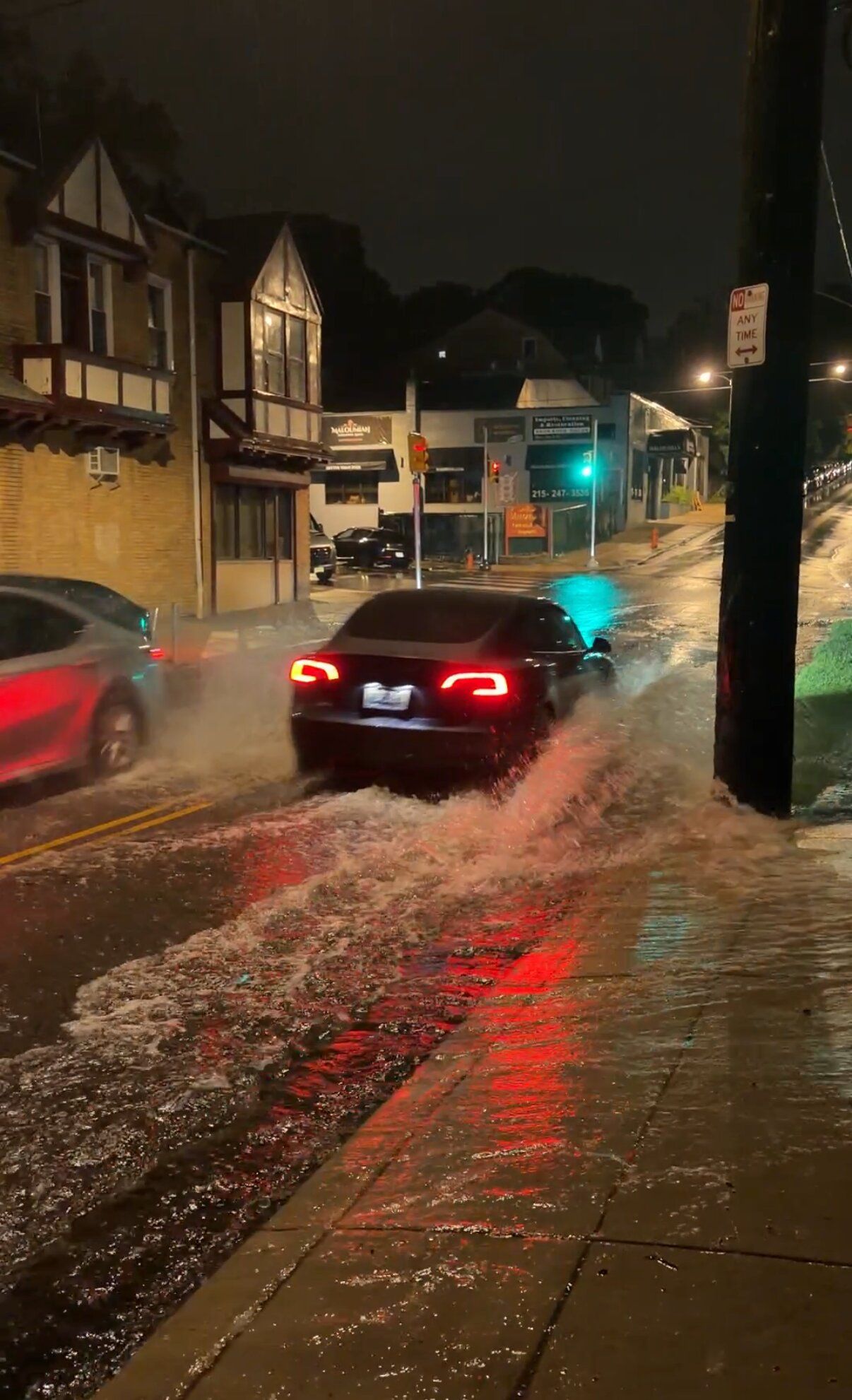
    Flooding near the intersection of Mt. Pleasant Ave and Cresheim Road in Mount Airy after an early August storm. The water often flows down the hill and into the basements of dozens of residents because the street’s stormwater inlets are not functioning properly.Kelsey Hensley

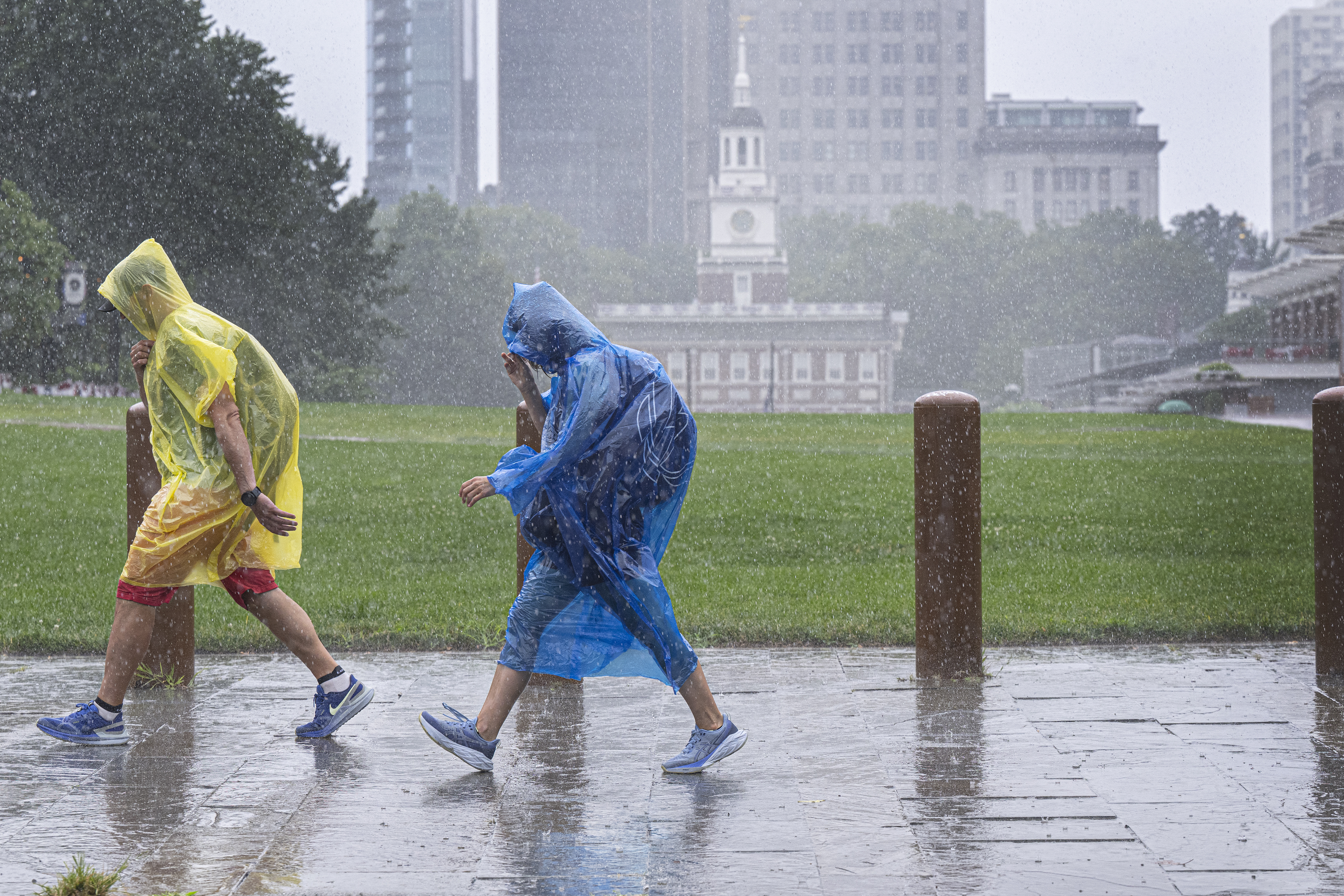
    Their anxiety is common in Philadelphia, where the city’s century-old sewer and stormwater infrastructure struggles to handle modern surfaces and roofs, increased rainfall, and a Delaware River that has risen by roughly a foot since the sewer system was built. And after 16 consecutive months of lower-than-normal precipitation, regular rainfall returned to Philadelphia in July and August, and brought flooding along with it.

    Philly has about 72,000 stormwater inlets, and it does not take much to clog them up — ordinary objects like tree leaves, dirt, trash, and other street debris can all be culprits, according to the Philadelphia Water Department. Last year, residents submitted almost 3,000 requests to the city’s 311 line for inlet cleanings, an Inquirer data review found, and the city is asking for help.

    “Across the city, The Water Department regularly checks all sewer drains and clears those that are clogged. … If they are able, we encourage residents to take part in the cleanup process before a storm comes,” city spokesperson Sharon Gallagher said in an email.

    As the planet continues to warm, the stress on Philadelphia’s flood-prone system only figures to increase, leaving more residents like Wolfson with dread when clouds gather overhead. As she spoke to The Inquirer, an afternoon rainstorm had just passed through.

    “I’m going down to the basement every hour just making sure it’s OK. So just the anxiety that’s pervasive among me, my wife, and other community members, it’s pretty unbearable,” she said.

    A frustrating wait

    Despite having roughly one stormwater inlet for every 20 Philadelphia residents, the city has generally responded to 311 requests for clogged stormwater inlets quickly. Since Mayor Cherelle L. Parker came into office in 2024, the city has closed inlet cleaning requests in under four days on average.

    But 311 data may not capture the complete scope of the issue. Some residents may report their issues directly to the water department.

    Alessia Cognata (left, of Downingtown), 5, and Sofia Lubrano, 7, of Thornton play in the rain outside of Citizens Bank Park on Tuesday, July 1, 2025. The cousins were with their families, who decided to continue their tailgate party even after the Phillies game had been postponed because of heavy rain.Elizabeth Robertson / Staff Photographer

    And clogged inlets are just one part of the Philadelphia flooding experience. Mary Catherine Doyle, 56, has been in the middle of a Sisyphean ordeal at the hands of the water department’s slow, antiquated system of hard-copy paperwork.

    She and many of her neighbors along the 2900 block of Pennsylvania Avenue in Fairmount experienced significant basement flooding following storms on July 5. Doyle’s basement was ruined, she said; rainfall, debris, and sewage had destroyed her home office, bathroom, and furniture.

    Her insurance covered the cleanup, but her policy requires she install a backwater valve to prevent future flooding. The valves let wastewater out of homes, but seal to prevent other water from coming back up through pipes.

    The water department has a basement backup protection program where residents can apply for free backwater valve installation. Doyle and over 10 of her neighbors applied after the storm, but a contractor did not show up until Aug. 12.

    Doyle said the water department explained the delays at different points by telling her it lost her physical paperwork, was understaffed, or could not sign off on one approval until a commissioner returned from vacation.

    “I don’t understand where I’m living. I can buy a house in Arizona electronically, but I have to wait … days for someone to come here,” Doyle said.
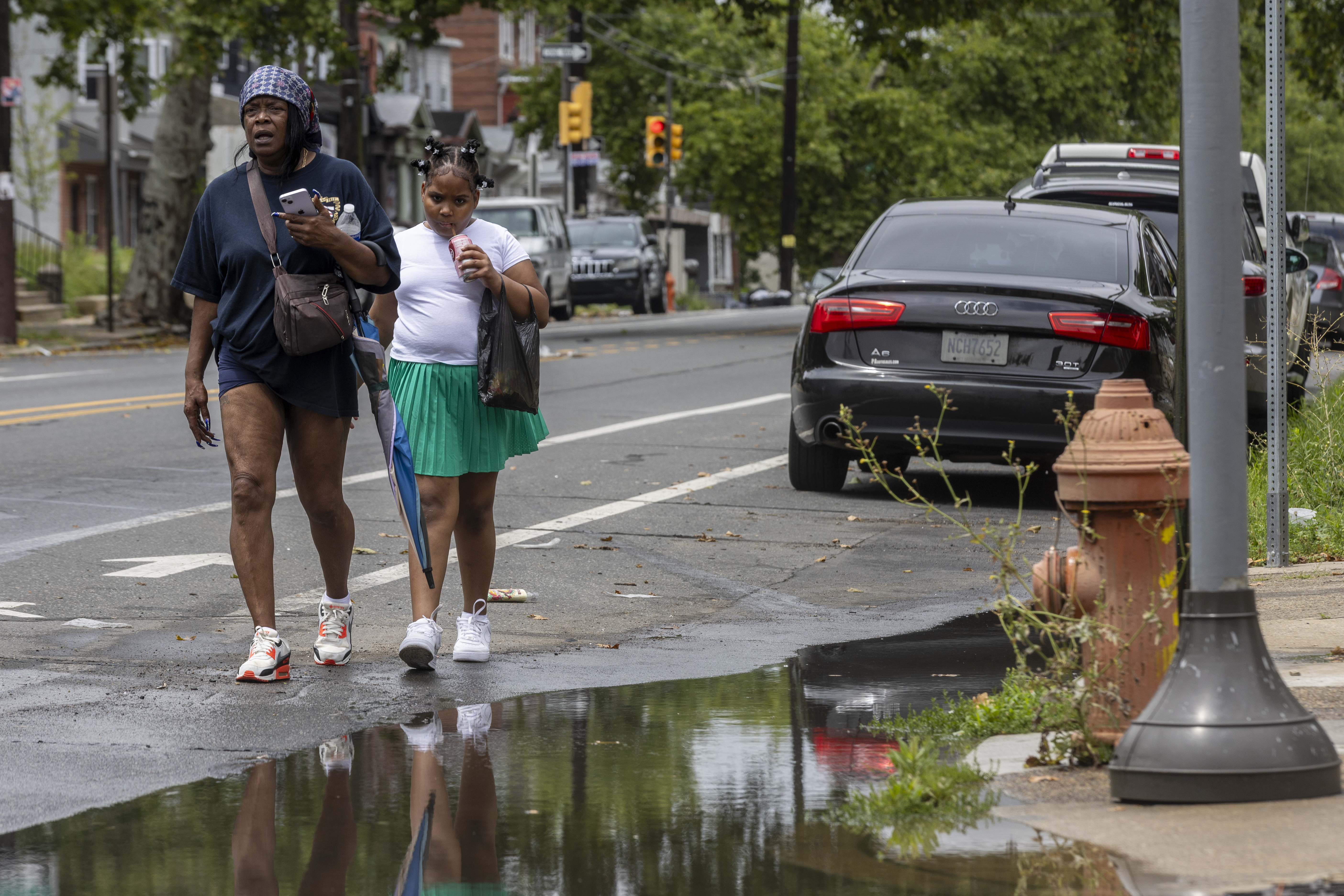
    A mother carries an umbrella while walking around a flooded sidewalk with her daughter by 15th and Erie in North Philadelphia during a flood watch on Monday, July 6, 2026.Aidan T. Gallo / Staff Photographer

    While the city’s water department is ready and willing to perform routine maintenance to prevent flooding, residents with more complex, systemic concerns often end up waiting for fixes while at the mercy of the atmosphere. Gallagher said the city is doing what it can to modernize the city’s flood infrastructure and ready itself for the demands of the future.

    “Teams are constantly working to design and construct additional projects that will increase capacity and help manage water from the increased intensity of seasonal storms,” she said.

    Luckily for Wolfson, she discovered earlier this month that the asphalt had finally been removed from the front of three of the closed inlets, plus some others further up on Cresheim Road.

    Wolfson and Hensley are happy there is finally some progress. But they wish the city would be more communicative and at least give them a timeline for the fix, they said, instead of relative silence or ambiguity.

    “You obviously want a city government to work for its citizens. … It’s extremely, extremely stressful,” Wolfson said. “It’s expensive, and it’s just frustrating because, in my mind, this is a pretty easily solvable issue.”

    Staff writer Joe Yerardi contributed to this article.
  • SEPTA’s bus route overhaul is here. Ready?

    SEPTA’s bus route overhaul is here. Ready?

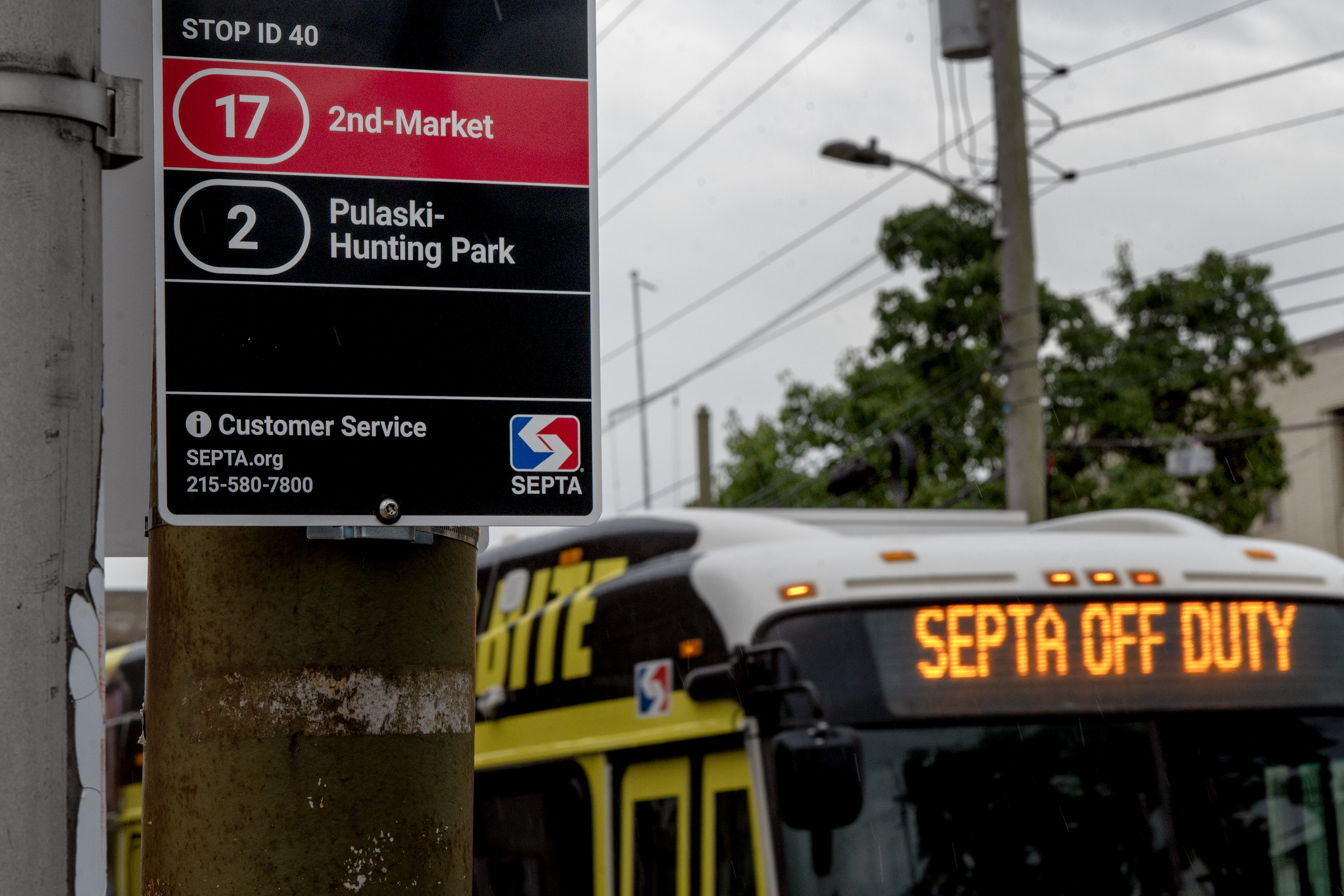
    SEPTA is eliminating seven bus routes, debuting two new ones, and adjusting more Sunday as the first phase of a bus network redesign gets underway.

    In all, riders will find changes to 30 routes, including more frequent service on those with high ridership, and buses coming less often on some lower-performing routes.

    Highlights include:

    • Routes 35, 47M, 62, 78, 80, 89, and 106 will disappear. SEPTA says they are less used or have nearby alternatives for passengers.
    • The new Route 72 will connect Frankford Transportation Center and Cedarbrook Plaza, running mostly along Cheltenham Avenue.
    • Route 76, the second new route, will travel between South Philadelphia’s Columbus Commons shopping center, anchored by Ikea and Lowe’s, and the intersection of Rising Sun and Olney Avenues.
    SEPTA is using this graphic to summarize bus-route changes at a glance for the first phase of the redesigned system.SEPTA

    This is the first comprehensive makeover of the bus network since 1968, when the authority took over bus service in the Philadelphia region from several private transit companies.

    SEPTA launched its bus system redesign efforts in earnest after ridership declined 13% from 2013 to 2019, a drop attributed to slow speeds, reliability problems, and competition from rideshare companies. And that was before the COVID-19 pandemic.

    Originally called Bus Revolution, SEPTA’s redesign was set to launch in 2025 but faced significant community pushback and coincided with the state funding crisis that halted many planned transit initiatives. It was officially shelved in November 2024.

    Along with the additions and subtractions, there are a few route extensions:

    • Route 45 will extend southward to serve the Navy Yard, the first time in a decade that a bus will serve the development seven days a week. There will be nine stops inside the Navy Yard for the 45. Currently, the route ends at Broad Street and Oregon Avenue. Route 17 will no longer stop at the Navy Yard on weekends.
    • Route 79, which ended at Snyder Avenue in South Philly, will cross the Schuylkill, go through Grays Ferry and University City, and end at 40th and Market Streets, where there is a stop on the L train, SEPTA’s new name for the Market-Frankford Line.
    • Route 53 is to be extended both east and west, to connect the Carpenter Regional Rail station on the Chestnut Hill West Line and the Richmond-Westmoreland Loop, via Aramingo Avenue. The 53 will no longer serve the Broad Street-Hunting Park Station on the B subway.

    SEPTA says it is redesigning the bus network to modernize an outdated route structure and enable more efficient travel.

    “We function as a network,” said Brandon Miller, manager of planning programs at the transit agency.

    The changes will require riders to transfer to other bus routes, as well as metro trains, more often than they do now. And discontinuing low-ridership routes while beefing up popular ones is a needed trade-off to strengthen the overall system, Miller said.

    Additional rounds of changes are scheduled for February and June 2027, with a fourth round in the fall.

  • A tornado touched down in Downingtown during Thursday’s severe storms

    A tornado touched down in Downingtown during Thursday’s severe storms

    A tornado touched down in Downingtown during a barrage of severe storms Thursday evening, the National Weather Service confirmed Saturday.

    The tornado landed in the Chester County borough at 5:40 p.m. Thursday, the weather service said in a statement, as major thunderstorms passed through the area.

    The twister was considered an EF-0, which is considered the least destructive on the Enhanced Fujita rating scale. The tornado touched down for less than a minute, according to the weather service, traveling just over a fifth of a mile along Quarry Road near the Quarry Crossings commercial development. Its winds reached speeds of 60 to 70 mph and brought down several tree branches, the weather service said.

    Downingtown’s tornado was one of three to land in the region on Thursday, according to the National Weather Service. A slightly more intense EF-1 tornado touched down in Dover, Del., at 6:09 p.m., while a tornado with an unknown Enhanced Fujita scale rating occurred at 4:41 p.m. in Estell Manor, in Atlantic County, N.J., about 19 miles inland from Ocean City.

    The tornado in Dover lasted roughly five minutes and traveled just over three miles with winds ranging from 100 to 110 mph, the weather service said. After landing in an open field, the twister caused “extensive damage” to the Dover Little League baseball diamonds at Schutte Park, the weather service said: Two scoreboards were crushed or knocked down, and several lighting fixtures were snapped.

    Then the tornado struck the Van Sant Generating Station — a power plant owned by the City of Dover located across from Schutte Park — before zigzagging through downtown Dover, where it downed trees. The tornado dissipated at the intersection of Kings Highway and North DuPont Highway after peeling the roof off a motel, the weather service said.

    The tornado in Estell Manor lasted approximately 30 seconds or less, according to the weather service, and landed in a wooded area across from the Great Egg Harbor River. There were no reports of associated damage.

    Thursday’s storms were the latest in a summer marked by intense wind and rain. The storms arrived in the Philly region just after 5 p.m. and set off a barrage of flash-flood warnings for Philadelphia, the Main Line, and sections of Delaware and New Jersey. Portions of Delaware and Chester Counties were also under tornado warnings.

    The downpours led to flash floods that made many streets impassable in the Montgomery County townships of West Norriton and Lower Providence, according to the weather service. And in Chester County, fallen trees cut off sections of heavily trafficked Route 322 in Honey Brook.

    The forecast for the rest of the weekend was looking similarly wet.

    “Multiple rounds of scattered showers and thunderstorms expected through tomorrow afternoon,” the National Weather Service at Mount Holly wrote Saturday on X, and forecasters “cannot rule out a few strong to severe thunderstorms” for Sunday.

  • An SUV struck and killed a man near La Salle University early Saturday

    A man was killed early Saturday when he walked onto the road and was struck by an SUV in the Logan section of Philadelphia, police said Saturday.

    The Philadelphia Police Department said it is investigating the fatal crash, which happened at 20th Street and Belfield Avenue. The Y-shaped intersection is located near La Salle University.

    Around 1:50 a.m., a white Jeep Cherokee driven by a 41-year-old man was traveling south on 20th Street, police said.

    The Jeep was attempting to go around a stopped vehicle when a pedestrian stepped into the roadway, police said. It struck the 36-year-old man, “causing critical injuries.”

    Fire department medics took the man to Jefferson Einstein Philadelphia Hospital, where he was pronounced dead.

    Police have not released the name of the driver or the pedestrian. The police crash investigation division is leading the inquiry into the circumstances around the incident.

  • Post-absence, N.J. Congressman Tom Kean Jr. hit the campaign trail and took a TV interview in vulnerable House race

    Post-absence, N.J. Congressman Tom Kean Jr. hit the campaign trail and took a TV interview in vulnerable House race

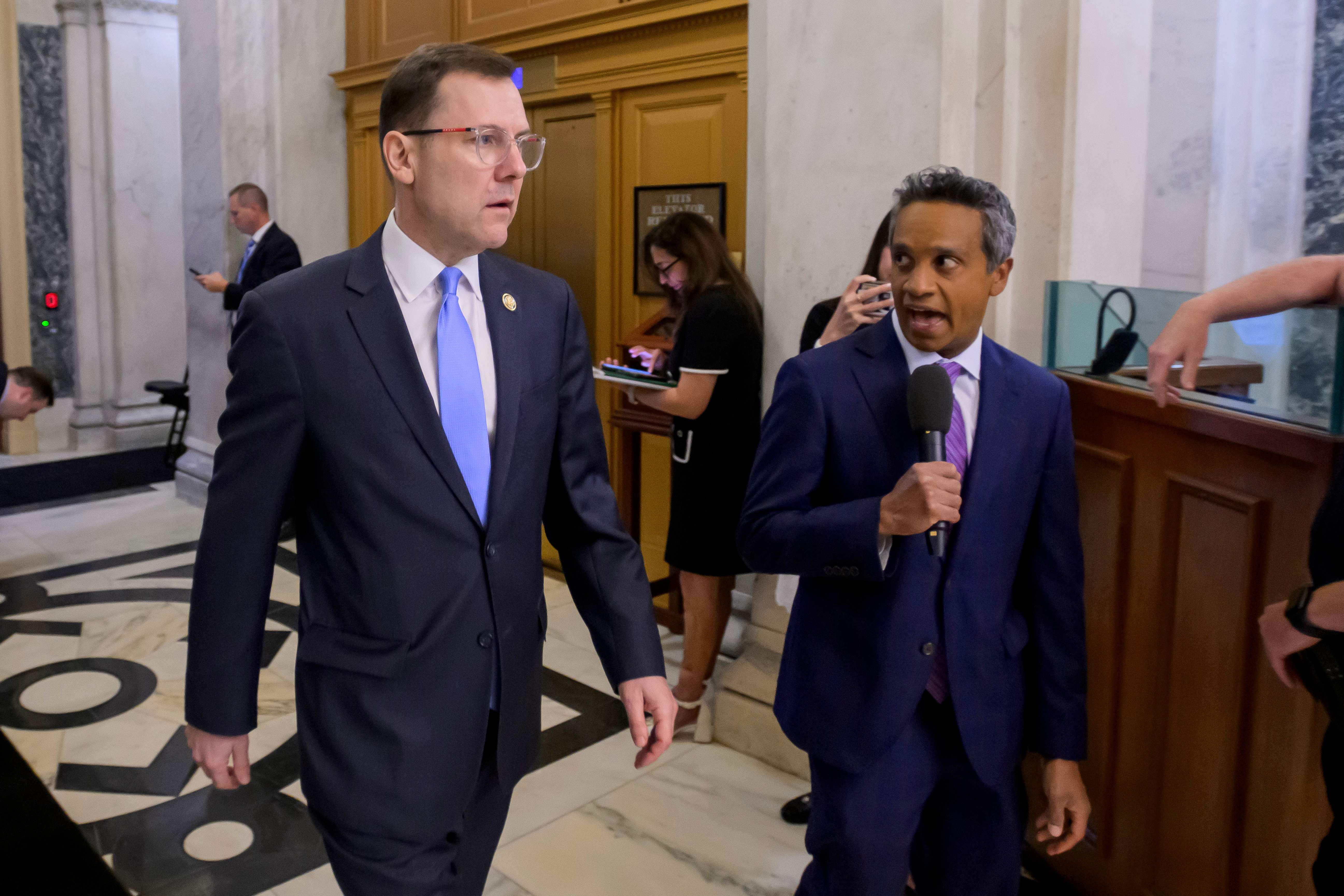
    With the midterm election nearing — and months of inactivity behind him — New Jersey U.S. Rep. Tom Kean Jr. hit the campaign trail Friday, speaking to a few dozen people at a breakfast fundraiser held at a private golf club.

    It was one of Kean’s first known campaign stops since he returned to Congress at the end of June following a long absence, which he said was due to depression. Though the congressman at times has sought to avoid media attention, he attracted just that as someone at the event called police on a New York Times reporter.

    Kean, a Republican, represents New Jersey’s 7th District, widely seen as a key race in the battle for control of the House of Representatives. House Speaker Mike Johnson (R., La.) attended the breakfast, seeking to boost support for the congressman.

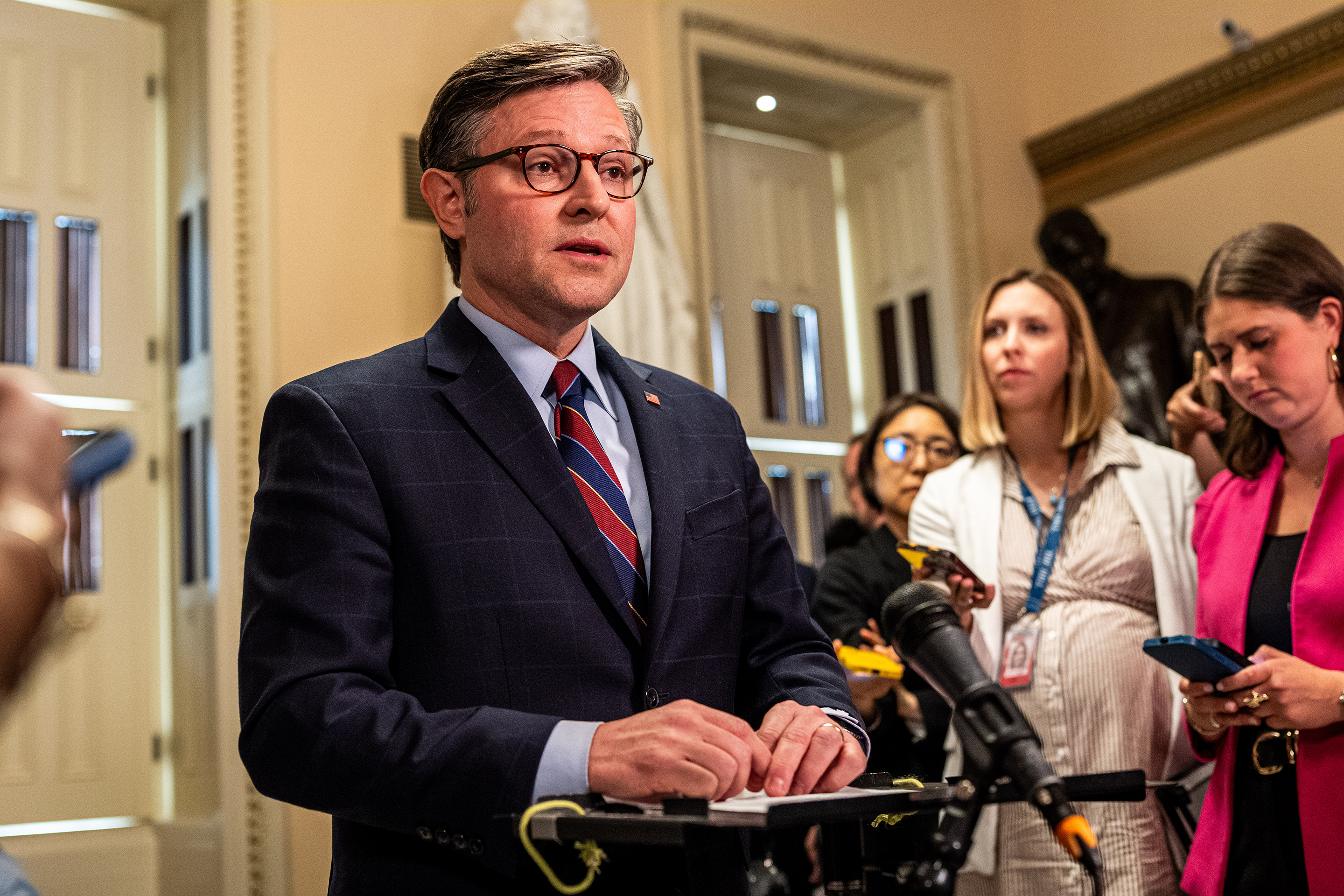
    FILE — House Speaker Mike Johnson (R-La.) speaks to reporters in Washington on July 22, 2026. Johnson joined Rep. Tom Kean Jr. (R-N.J.) on his campaign trail on Friday, Aug. 21, 2026. A reporter for the New York Times, trying to cover Kean’s fundraising event in New Jersey, was blocked at the door. (Alex Kent/The New York Times)ALEX KENT

    Kean’s reelection bid got a late start: Beginning in March, he was absent from Congress for 116 days and missed about 140 votes. As calls for an explanation mounted, Kean stated in a speech on the House floor in June that he had been seeking treatment for depression.

    Friday at the Hawk Pointe Golf Club in northwestern New Jersey, Kean talked about his issues with WFMZ-69, an Allentown, Pa.-based TV station.

    “I’m feeling great,” Kean said. “I had to focus on my mental health. I had depression. I’m back, feeling stronger than ever. And I’ve been helping people throughout the entirety of the year.”

    Police called on New York Times reporter

    WFMZ and Fox News each had a reporter present at the country club, according to the New York Times. However, Kean spokesperson Harrison Neely barred a Times reporter, Tracey Tully, from entering the event.

    Tully reported that as she waited in the parking lot for a chance to interview Johnson or Kean, she was approached by a local police officer.

    “Someone apparently had called the police from inside the club to report that there was a trespasser — this reporter — on the premises,” Tully wrote, adding that New Jersey State Police and Johnson’s security detail were already outside the venue.

    A police officer spoke with people inside the event and told Tully that it was OK for her to remain in the parking lot, the report states.

    Kean’s Democratic challenger, former Navy pilot and healthcare executive Rebecca Bennett, weighed in Saturday morning by email.

    “Tom Kean Jr. is doing what he’s always done: serving his D.C. party bosses and prioritizing his stock portfolio while hiding from anyone who wants to hold him accountable, whether that’s the press or his constituents,” Bennett said.

    Messages and calls to Kean’s office and spokesperson were not returned Saturday. On social media, Kean shared his TV appearance along with a message saying Bennett is hiding behind a campaign script.

    An important race

    While Democrats face an uphill battle in winning a majority in the Senate, they hold more favorable odds of seizing the House, according to pollsters.

    With all 435 House seats up for reelection, few are seen as more competitive than Kean’s district. Political analysis sites Cook Political Report and Sabato’s Crystal Ball each rated the race as a “toss up.”

    In 2022, Kean ousted Rep. Tom Malinowski, the district’s Democratic incumbent, and won reelection in 2024. In 2025, Democrat Mikie Sherrill won the district by 2% in her successful bid for governor.

  • A trade war between Canada and the US further ruptures a once-close and durable alliance

    A trade war between Canada and the US further ruptures a once-close and durable alliance

    TORONTO — For decades, Canada built much of its prosperity on privileged access to the United States. Now, after the collapse of trade talks, one of the world’s closest and most durable alliances has been fundamentally altered, with both countries facing the risk of a full-scale trade war.

    Prime Minister Mark Carney acknowledged the break after last-ditch negotiations failed Friday, saying Canada had recognized that “America has changed” and that the countries would “not return to our old relationship.”

    The United States imposed 50% tariffs on about $20 billion worth of Canadian goods early Saturday. Carney said Canada would retaliate dollar for dollar beginning Sept. 8, targeting sectors including steel, dairy, appliances, agricultural equipment, pulp and paper, and electronics.

    Carney foreshadowed the shift at the World Economic Forum in Davos in January, declaring that the world was experiencing “a rupture, not a transition” and urging countries such as Canada to reduce their vulnerability to economic coercion by strengthening their economies at home and diversifying abroad.

    He said in Ottawa on Saturday that warning had been borne out. He accused the U.S. of using “economic integration as a weapon” and said its “signature was written in pencil.”

    “The collapse of the tariff talks points to the fact that the old Canada-U.S. relationship is over and, for many Canadians, it also confirms the perception that Canada can’t trust the Trump administration,” said Daniel Béland, a political science professor at McGill University in Montreal.

    The pressure from Republican President Donald Trump has gone well beyond tariffs.

    He has questioned Canada’s economic viability, repeatedly talked about making it the 51st U.S. state, and used trade measures to encourage production to move from Canada to the United States. That has angered many Canadians and fueled a sense of betrayal in a country that had long regarded the U.S. as its closest ally.

    Canadian travel to the U.S. remains sharply lower than before the dispute, with July return trips down nearly 29% by car and 27% by air from July 2024, Statistics Canada said.

    The failed negotiations underscored how far the relationship had shifted. Canada had been prepared to accept some U.S. tariffs for market access and greater certainty — a break from decades of policy aimed at eliminating trade barriers.

    For Canadians accustomed to preferential access under the 1989 Canada-U.S. Free Trade Agreement, NAFTA, and its successor, even reduced tariffs would mark a retreat from the old relationship.

    The collapse also puts Carney’s approach to Trump to the test.

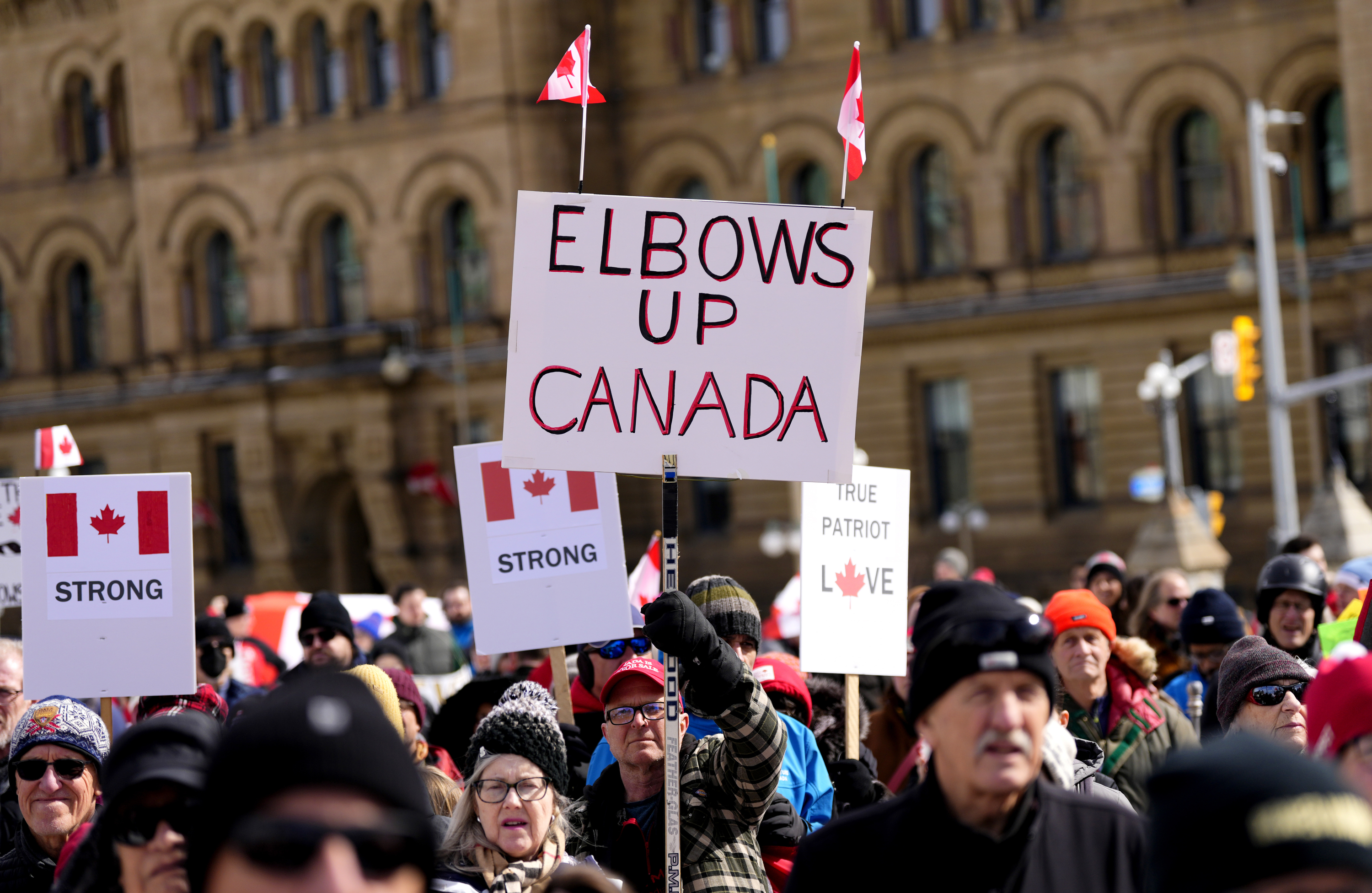
    The prime minister’s “elbows up” posture — hockey shorthand for playing aggressively and refusing to be pushed around — has helped keep him popular at home. His decision to resist U.S. pressure could also resonate abroad with those impressed by his Davos call for countries to resist economic coercion and reduce dependence on great powers.

    Provincial and conservative leaders broadly backed Carney. Saskatchewan Premier Scott Moe said, “The old status quo is not possible,” while Ontario Premier Doug Ford praised Carney for rejecting what he called a bad deal for the auto, steel, and manufacturing sectors.

    Ford said Trump “is not to be trusted whatsoever.”

    Former Alberta Premier Jason Kenney said Canada was “not cravenly surrendering in the face of constant economic and political aggression.”

    Lana Payne, national president of Unifor, Canada’s largest private-sector union, accused Trump of trying to weaken Canada’s industrial base.

    “What we have seen from the U.S. administration, or Donald Trump, is this consistent attempt to try and destroy the industrial economy of Canada with tariffs that have been strategically designed to attack us,” Payne said.

    Economic risks of fighting back and a shift seen as perhaps lasting

    Nearly three-quarters of Canada’s goods exports go to the United States. The U.S. economy is roughly 10 times larger than Canada’s, limiting Ottawa’s ability to retaliate dollar for dollar without inflicting disproportionate damage at home.

    Royal Bank of Canada economists estimate the tariffs directly affect about 0.4% of Canada’s GDP because they cover only about 5% of Canadian exports to the U.S. The damage could grow if retaliation broadens, more sectors are targeted, or the dispute curbs investment and disrupts supply chains.

    Carney himself acknowledged the cost of retaliation, saying the Canadian measures would “raise costs and reduce choice for Canadians.” He said his government would announce additional assistance for affected businesses and workers.

    Béland said the countries were witnessing “the beginning of a full-scale trade war,” though he cautioned that the situation could change rapidly.

    The dependence is not one-sided.

    Carney said Canada supplies 99% of U.S. natural gas imports, 85% of its electricity imports, and 60% of its crude oil imports. Trump has focused much of his pressure on autos, steel, and aluminum, fueling resentment among Canadians who see the push as an effort to hollow out key industries.

    Goldy Hyder, president and CEO of the Business Council of Canada, said businesses still view the U.S. as Canada’s most important trading partner but increasingly see the shift as lasting beyond Trump.

    “There is a new trade and investment model, one that could well be kept in place by future U.S. administrations whether Democrat or Republican,” Hyder said.

    Canada looks beyond U.S. because ‘things will never be the same’

    The breakdown adds urgency to Carney’s push to diversify beyond the United States. He has traveled abroad seeking investment and new trade ties, aiming to attract $1 trillion Canadian (US$730 billion) by 2030 and to double non-U.S. investment over the next decade. Canada has signed more than 20 trade and security agreements across five continents in the past year.

    That made Washington’s effort to restrict Canada’s ability to negotiate trade agreements with other countries particularly significant.

    In July, Ottawa and Alberta advanced plans for a new Pacific Coast oil pipeline to give Canadian crude greater access to Asian markets and reduce reliance on U.S. buyers.

    The immediate question is how long the latest tariff confrontation will last.

    Béland said the deeper change probably will, partly because U.S. protectionism is likely to remain influential under future administrations.

    “The idea that things will return to ‘normal’ once Donald Trump leaves the White House is probably just wishful thinking,” Béland said. “It doesn’t mean the relationship might not improve in the future but that things will never be the same.”

  • Iran security chief threatens neighbors against economic measures

    Iran security chief threatens neighbors against economic measures

    The new leader of Iran’s top security body is threatening neighbors against joining new U.S. efforts to squeeze Tehran’s economy. Egypt is trying to revive Iran-U.S. negotiations. And Iraq and Iran say Tehran has helped some ships carrying Iraqi oil to transit the Strait of Hormuz. France and Saudi Arabia are expected to discuss plans to bypass the waterway.

    Meanwhile, Israel has carried out strikes in Syria and in Gaza.

    Iran’s new top security adviser issues threats

    The hard-line new leader of Iran’s Supreme National Security Council threatened Tehran’s neighbors against joining the new U.S. effort to hurt Iran’s economy, and accused the United States of increasing global nuclear insecurity with months of war.

    “If (Trump) wants to do something, we will retaliate in a seismic manner,” he said in an interview with the state broadcaster that aired Saturday.

    Mohsen Rezaei was named this month as part of senior appointments widely seen as hardening Tehran’s political and military stance. His interview with IRIB is his most extensive public statement since then.

    Rezaei said Iran would target oil-shipping routes out of the Persian Gulf — alternatives to the Strait of Hormuz — if neighbors join what he described as the economic war against Iran. Those neighbors would be considered enemies and “we will target their interests,” he said.

    U.S. President Donald Trump in the past week has vowed to increase Iran’s pain by imposing an “unprecedented” level of economic warfare and isolation. Iran has lived under sanctions for years.

    Rezaei said discussions with Oman, located on the other side of the strait, over management of it were ongoing, and said fees would be imposed. Iran asserted control over what was seen as an international waterway shortly after the U.S. and Israel attacked on Feb. 28.

    Rezaei also vowed to make changes to Iran’s diplomacy and bring new capabilities to what he called the next war. He warned the U.S. against sending more military personnel to the region, and said the U.S. had increased nuclear insecurity because countries see that participating in international monitoring efforts, as Iran has done, is no protection against attack.

    Egypt tries to revive U.S.-Iran negotiations

    The top diplomats for Egypt and Iran discussed efforts to bring Tehran and Washington back to the negotiating table to settle the war, Egypt’s foreign ministry said.

    Iranian Foreign Minister Abbas Araghchi and Egyptian counterpart Badr Abdelatty also discussed the Iranian-Omani talks, the ministry said.

    Araghchi briefed Egypt’s foreign minister about “Iran’s view of ongoing developments, the course of negotiations and their challenges,” the ministry said, without elaborating. Araghchi confirmed the call. Separately, Araghchi said he had a call with Pakistan’s army chief, Field Marshal Asim Munir,

    Iran and Iraq say some Iraqi oil is facilitated through the strait

    The governments of Iraq and Iran said Tehran has helped some ships carrying Iraqi oil to transit the Strait of Hormuz, a key waterway for global oil, natural gas, and other supplies, but there were few details.

    “There is facilitation for some ships carrying Iraqi oil in the Strait of Hormuz,” Iraqi President Nizar Amidi said in comments published Saturday by the state-run news agency, adding that Iraq doesn’t have a national carrier for transporting oil.

    Iran’s state-run IRNA news agency said a number of Iraqi oil tankers have been permitted to transit. It was not clear how many or what Iran might have received in return.

    Syria says an Israeli drone strikes inside a village

    An Israeli drone strike on a vehicle wounded one person on Saturday in the southwestern Syrian village of Beit Jin, according to the Syrian state news agency SANA. Syria’s foreign ministry said several civilians were injured and called the strike a flagrant violation of the country’s sovereignty.

    The Israeli military said it targeted a “terrorist who advanced terror attacks in final stages of preparation,” without elaborating. It wasn’t immediately clear if it was the same strike.

    Israel has carried out hundreds of airstrikes around Syria after the ouster of former President Bashar Assad in late 2024, mainly destroying army assets to keep them out of the hands of his successors.

    Messages differ on the Golan Heights

    In an interview on Friday with Mario Nawfal, a Lebanese-Australian entrepreneur, U.S. Ambassador Tom Barrack said Israel “still” occupies the Golan Heights in violation of U.N. resolutions.

    Israeli Defense Minister Israel Katz on Saturday in a statement called Barrack’s remarks “full of inaccuracies and positions that contradict Trump’s own position.”

    Israel captured the Golan Heights from Syria in the 1967 war and annexed it in 1981. The U.N. considers the territory occupied Syrian land. But in March 2019, Trump signed a proclamation recognizing Israeli sovereignty over the Golan Heights, reversing decades of U.S. policy.

    French president, Saudi crown prince will meet

    French President Emmanuel Macron and Saudi Crown Prince Mohammed bin Salman are expected to discuss plans to develop alternative routes to the Strait of Hormuz during the Saudi leader’s two-day visit to Paris that starts on Sunday, according to officials in the presidency who weren’t authorized to be publicly named.

    Proposals include increasing trade through Omani ports outside of the Persian Gulf, expanding or doubling pipelines in Saudi Arabia and elsewhere, and developing new rail links, the officials said.

    France and Saudi Arabia have formed a task force on energy and logistics connections between the Middle East and Europe that is scheduled to meet at the ministerial level Monday. The officials said the work would focus on identifying the most strategic projects, securing financing, and establishing roles for French companies.

    An Israeli strike in Gaza kills 1 Palestinian

    An Israeli strike on the backyard of a house in central Gaza killed one Palestinian and wounded another Saturday, according to health officials at Al-Aqsa Martyrs hospital.

    Israel’s military said it targeted Sharif al-Hasanat, a Hamas commander who “advanced terror attacks and took part in efforts to restore Hamas’ underground infrastructure.” Days earlier, a U.S. negotiator reportedly asked Israel to draw down attacks while seeking to make progress on the ceasefire.

  • Trump urges court to reject BBC’s bid to secure records from his family in defamation case

    Trump urges court to reject BBC’s bid to secure records from his family in defamation case

    WASHINGTON — President Donald Trump has urged a federal judge to reject the BBC’s request for the court’s help in securing testimony and documents from three family members in response to his $10 billion defamation lawsuit against the British broadcaster.

    The BBC is trying to gain “politically-driven leverage” over Trump by serving subpoenas on daughter Ivanka Trump, son-in-law Jared Kushner and son Donald Trump Jr., personal lawyers for the Republican president argued in a court filing Friday.

    U.S. District Judge Jeffrey Kuntz in Miami did not immediately rule on the dispute.

    Kuntz, who was nominated to the bench by Trump, inherited the president’s lawsuit from another judge less than a week ago. Court filings did not immediately specify a reason for the case’s reassignment. The previous judge has set a February trial date.

    In May, a process server working for the BBC tried to serve subpoenas on Ivanka Trump and Kushner at their residence but encountered Secret Service agents who said they were not authorized to accept it, according to the president’s lawyers. They said the process server also visited Trump Tower in New York several days later in a failed attempt to serve Donald Trump Jr.

    In a court filing last week, the broadcaster asked for the court’s permission to serve subpoenas on Trump’s family members by certified mail instead of in person.

    Trump’s lawsuit, filed in December, accuses the BBC of deceptively editing portions of the speech that he delivered near the White House on Jan. 6, 2021, when a mob of his supporters attacked the Capitol to try to stop Congress from certifying Democrat Joe Biden’s victory over Trump. The suit claims the BBC spliced together separate parts of Trump’s speech to intentionally misrepresent what he said.

    The lawsuit alleges the BBC aired its documentary a week before the 2024 presidential election in “a brazen attempt to interfere in and influence” the outcome to Trump’s detriment.

    “The relief that the BBC’s Motion seeks cannot be segregated from the politically charged discovery campaign that it is based on, and which has already been ruled as improperly overbroad by this Court,” Trump’s lawyers wrote.

    The BBC has apologized to Trump for the misleading edit, but it denies defaming him.

  • Postal Service publishes finalized plan to restrict mail ballots

    Postal Service publishes finalized plan to restrict mail ballots

    WASHINGTON — The Postal Service on Friday published regulations that would restrict mail voting, its latest effort to comply with President Donald Trump’s call to restrict the popular practice just months before the midterm elections.

    In a 95-page final rule, the Postal Service clarified how it would carry out an executive order Trump signed in March, which sought to restrict mail ballots and create state-by-state lists of citizens to help determine voting eligibility.

    In the rule, the Postal Service said that it would deliver mail ballots only in states that shared voter data with the federal agency.

    Before the Postal Service accepts ballots into its system, the agency would review every envelope for compliance with the new standards, including by checking that the recipient was enrolled with the Postal Service to receive a mail ballot.

    If the regulations are enacted, the Postal Service would not deliver mail ballots to states that do not comply.

    Trump’s executive order was largely blocked by federal courts this summer, and the Postal Service said in its rule published Friday that it would “not take actions to implement the rule specifically for the 2026 election unless and until the government obtains relief from those injunctions.” In a filing to the Supreme Court, the Justice Department said that the government would not enforce the final rule unless the court ruled in its favor.

    The Supreme Court is reviewing the issue and could rule at any time.

    A Postal Service spokesperson on Friday declined to comment, citing pending litigation.

    Trump has repeatedly made unfounded claims that mail voting is “cheating,” even as he has voted by mail in multiple elections, including earlier this week.

    The president has acknowledged that combating fraud is not the only reason to target the practice. In March, he told Republican lawmakers that passing a strict voter identification law cracking down on mail ballots, which Democrats now use more than Republicans, would “guarantee the midterms” for his party.

    This article originally appeared in the New York Times.

  • TikTok settles with U.S. over child privacy concerns for $400 million

    TikTok settles with U.S. over child privacy concerns for $400 million

    WASHINGTON — TikTok on Friday reached a $400 million settlement in a lawsuit brought by the Justice Department that accused the company of illegally gathering children’s information.

    The 2024 suit, filed under the Biden administration, claimed that TikTok had gathered data from users under the age of 13 without parental permission. The suit accused TikTok of knowingly allowing children to create accounts and of failing to honor parents’ requests to delete their children’s accounts.

    TikTok violated federal privacy law along with a 2019 agreement with the government in which the app promised to take steps to protect children’s privacy, according to the government.

    Under the settlement announced Friday, TikTok will pay $300 million. The Justice Department also asked the court to eliminate the 2019 agreement, after which TikTok would pay the government an additional $100 million, according to a Justice Department news release.

    The settlement is the latest by the Trump administration, as it takes a softer approach toward ongoing government litigation against several major companies.

    In March, the Justice Department settled a lawsuit that accused Live Nation, the owner of Ticketmaster, of illegally maintaining a monopoly. The government also reached a settlement last year that allowed the technology company Hewlett Packard Enterprise to buy a rival, Juniper Networks, over the objection of some state attorneys general.

    The settlement between TikTok and the government also marks the latest win for the popular short-video app under the second Trump administration.

    During President Donald Trump’s first term, he signed an executive order to force the app’s Chinese owner, ByteDance, to sell it. But TikTok successfully sued to block that ban. In 2024, former President Joe Biden signed a law that would ban the app unless it was sold to a non-Chinese owner.

    After Trump returned to office, he repeatedly delayed enforcement of that law. In January, ByteDance announced that it had reached a deal, hammered out with the U.S. government, that spun off its American operations to a group of non-Chinese investors.

    Stanley E. Woodward Jr., an associate attorney general, called the settlement “a major victory for American children and parents” in a statement. A spokesperson for the U.S. version of TikTok did not immediately respond to a request for comment.

    This article originally appeared in the New York Times.