Category: News

  • Philadelphia police shoot, kill man outside St. Christopher’s Hospital for Children

    Philadelphia police shoot, kill man outside St. Christopher’s Hospital for Children

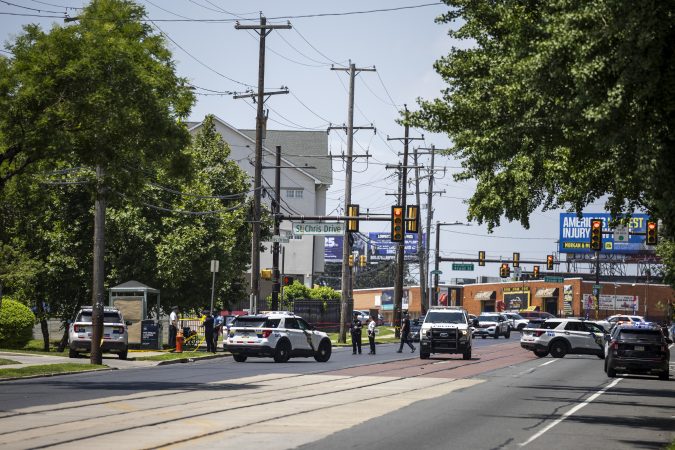
    Police shot and killed a man outside St. Christopher’s Hospital for Children in North Philadelphia on Thursday, authorities said.

    Officers were called to the hospital shortly before 10:30 a.m. for a report by hospital staff of an “irate man,” said Police Commissioner Kevin Bethel.

    At a briefing with the media Thursday evening, Bethel clarified that the man, whose name and age were not released, did not threaten anyone at the hospital.

    “The hospital was at no time under threat,” Bethel said.

    The man was at the hospital yesterday related to something involving a “child in the hospital,” Bethel said, then later adding that it was the man’s son.

    The man was asked to leave Wednesday, and when he returned Thursday, he was not allowed to enter the hospital, said Bethel, who did not elaborate on why the man was asked to leave.

    But when he returned Thursday, “he did not threaten” staff and was “compliant.”

    Shortly thereafter, a relative called police and reported that the man was suicidal and may have a gun, Bethel said.

    Police drove to the bus stop on Erie Avenue outside the hospital where the man was and an officer was just exiting from the passenger side of a police vehicle when the man allegedly pulled out a gun, Bethel said. The officer then fired.

    The man was transported to Temple University Hospital, where he later died. Bethel said a gun was recovered at the scene.

    A woman standing next to the man, who Bethel described as his girlfriend, was grazed by a bullet. He said she was in good condition.

    “He did not fire his weapon,” Bethel said about the man.

    The officer who fatally shot the man was placed on administrative duty while the shooting is investigated.

    At an earlier media briefing, Bethel described the shooting as a tragedy that unfolded in a matter of minutes.

    He added: “We have a lot to sort through,” including the mental state of the man who was killed. “He may have been going through some mental issue,” Bethel said.

    No patients or hospital staff were injured, said hospital spokesperson Bill Tierney. The man who was shot did not come inside the hospital, he said.

    The hospital initially went into a lockdown, which has since been lifted, Tierney said. Some entrances to the hospital were closed during the initial police investigation but they had reopened by Thursday afternoon, he said.

    Police have not released the name, age, or rank of the officer who discharged his weapon.

    Michael Lopez, a senior staffer at a sports complex across the street from the hospital, said he heard about a half dozen gunshots. Initially mistaking the gunfire for July Fourth fireworks, Lopez said he came out to Erie Avenue, where he saw a throng of police officers — and a woman he said appeared to be bleeding from her neck.

    “It was gruesome,” Lopez said.

    Thursday’s shooting was the second fatal shooting by a Philadelphia police officer in less than three weeks.

    On June 14, three officers were injured and Eric Franks was fatally wounded after exchanging gunfire in the Wynnefield neighborhood of West Philadelphia. The officers — who were shot in the hip, leg, and face — were hospitalized and recovered, police said.

    Their names had not been released as of Thursday because of an active threat assessment, said police spokesperson Sgt. Eric Gripp.

    — Staff writer Robert Moran contributed to this article.

  • Philly can’t force ICE agents to unmask, federal judge rules

    Philly can’t force ICE agents to unmask, federal judge rules

    Philadelphia can’t prevent U.S. Immigration and Customs Enforcement agents and other federal officers from concealing their identities, a federal judge ruled Thursday.

    U.S. District Judge Chad F. Kenney issued an order preventing Mayor Cherelle L. Parker’s administration and District Attorney Larry Krasner’s office from barring federal law enforcement officers from wearing masks, intentionally covering their badges, or using unmarked vehicles.

    The U.S. Constitution’s Supremacy Clause prevents states — or a city in this case — from imposing requirements on how federal agencies carry out their duties, the judge appointed by President Donald Trump said.

    When City Council passed the bill in April as part of the ICE Out legislative package, the lawmakers “attempted to sidestep the Constitution’s clear mandate and disregarded this fundamental principle of law that has informed American jurisprudence for over 200 years,” Kenney’s opinion said.

    Parker allowed the bill to become law without her signature, following City Solicitor Renee Garcia’s advice that signing the bill “would send an inaccurate signal to the public that the Administration can legally and practically enforce” its provisions.

    “Mayor Cherelle Parker acted with civic wisdom and courage to stand up for the Constitution and follow the rule of law to where it led, despite what may have been strong personal inclinations to the contrary,” the judge said.

    While the ordinance’s requirements apply to all law enforcement, its inclusion in an “ICE Out” package suggested the city planned to be selective in its enforcement, Kenney said.

    And even though the ordinance hadn’t taken effect yet, the judge said, the city never said it wouldn’t attempt to enforce its provision. Krasner’s past statements vowing to “arrest” and “put handcuffs” on ICE officers who break state law, as well as his involvement in a progressive prosecutors’ group committed to such prosecutions, suggest the threat of enforcement is real, Kenney said.

    “The Department of Justice will keep fighting jurisdictions that try to obstruct President Trump’s immigration enforcement with policies that endanger agents and public safety,” a department spokesperson said.

    The city is reviewing the ruling and potential next steps, a law department spokesperson said.

    Kenney showed an “unnecessary urgency” from the beginning of the case, Krasner said.

    “The red-hot rush of this federal district court judge, a Delaware County Republican appointed by Donald Trump, was predictable,” the district attorney said.

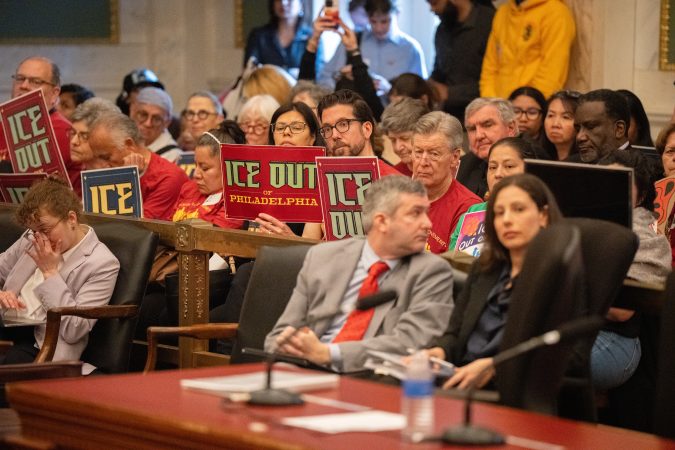
    Defending the ordinance put Parker and her administration in an awkward position. City Council passed the legislation with a veto-proof supermajority as part of a seven-bill package.

    The ordinance at the heart of the litigation made it a crime for law enforcement officers, including Immigration and Customs Enforcement agents, to wear face coverings or conceal personal identifiers like badges and nameplates while carrying out their official duties in Philadelphia, and required officers to identify themselves. It also prohibited the use of unmarked vehicles.

    The bill included exceptions allowing officers to wear masks in certain circumstances, such as medical emergencies or SWAT operations.

    An officer could face up to 90 days in jail plus a fine for violating the ordinance.

    The other bills prohibit federal immigration agencies from staging raids on city-owned property, ban discrimination on the basis of citizenship status, and prohibit the city from engaging in most forms of information-sharing with ICE.

    The legislation also codified some of Philadelphia’s long-standing sanctuary city status, which a recent poll found most city residents support.

    Parker signed the six other bills, which will take effect Tuesday.

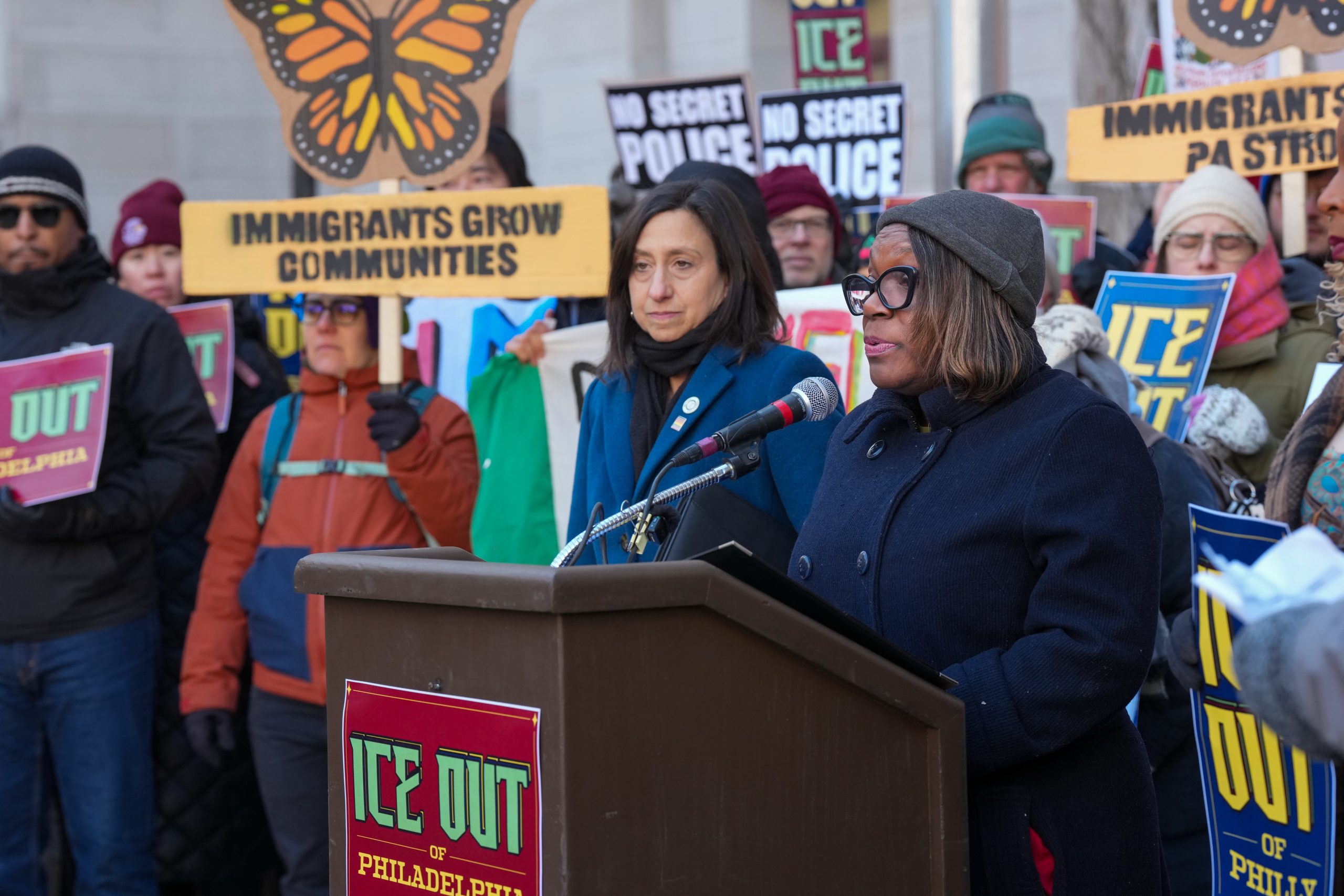
    Kendra Brooks shown here during a press conference at City Hall to announce a package of bills aimed at pushing back against ICE enforcement in Philadelphia, January 27, 2026.Jessica Griffin / Staff Photographer

    The Justice Department sued the city, Parker, Krasner, and Garcia in federal court in Philadelphia last month and requested an injunction on the enforcement of the masking bill.

    Officials from various federal agencies told the court the bill would harm their operations and officers.

    Members of the public routinely dox ICE agents, who are later subject to threats, John Rife, acting director of ICE’s Philadelphia field office, said in a filing.

    “Facial coverings reduce the risk of officers’ personal identities being shared publicly, which helps ensure that officers’ privacy and safety, and that of their family members, remains intact,” Rife said.

    The city argued the litigation was premature as the ordinance hasn’t gone into effect and there was no attempt to enforce it.

    The city also said federal agents had applied “aggressive enforcement tactics behind the mask of anonymity, undermining public safety and trust.”

    But Kenney’s opinion said, “there can be no public interest” in enforcing a provision that violates the Constitution.

    It doesn’t make sense that the city can’t hold federal officers to the same standard it holds its own police department to, Councilmember Rue Landau, who authored the bills with fellow progressive Kendra Brooks, said in a statement.

    The Trump administration has sued other jurisdictions, including New Jersey, over similar requirements. In April, the U.S. Court of Appeals for the Ninth Circuit found that a California bill requiring agents to “visibly display identification” was unconstitutional.

    On Tuesday, a federal judge in Richmond enjoined Virginia from enforcing a law barring ICE agents from covering their faces.

    “It’s unfortunate the Parker administration’s own doubts were used against the bill in this injunction,” Brooks said in a statement. “No one else is dealing with that dynamic in their lawsuits.”

  • The Supreme Court tackled race, history, and the law in fraught and reflective major rulings

    WASHINGTON — The Supreme Court just wrapped up a term that yielded significant rulings in cases involving race and discrimination that could have lasting effects on U.S. politics and society.

    Justices were at times bitterly divided — and critical of one another — in rulings that winnowed key provisions of a landmark voting rights law, allowed the government to revoke protections for some immigrants, and even challenged the historic understanding of birthright citizenship for the children of immigrants.

    The decisions come at a moment when long-standing debates over race and identity have turned toward immigration, increasing racial diversity, and the fairness of policies meant to prevent and redress discrimination.

    “This term, we saw a Supreme Court that is moving quickly to eradicate legal protections in ways that will leave vulnerable communities exposed to the harsh winds of discrimination and hatred that we continue to see across the country today,” Kristen Clarke, general counsel for the NAACP and the former head of the Justice Department’s civil rights division during the Biden administration, told the Associated Press.

    Here is a breakdown of the latest decisions involving race and what they may mean going forward:

    The temporary protected status case

    The court allowed the government to end deportation protections for Haitians and Syrians in the U.S. who have fled violence and natural disaster. President Donald Trump’s administration revoked the temporary protected status last year.

    With the president’s more than decadelong track record of denigrating developing nations and immigrants who come to the U.S. from Africa, Asia, Latin America, and the Middle East, attorneys for some affected migrants contended that the government could not cancel the designations, in part because Trump’s comments about immigrants were racist.

    “The true reason for the termination is the president’s racial animus towards non-white immigrants and bare dislike of Haitians in particular,” Geoffrey Pipoly, an attorney for the Haitian nationals in the case, said during April oral arguments in the case, Mullin v. Doe. The attorneys noted that, during his second presidential campaign, Trump claimed immigrants “are poisoning the blood of our country” and suggested in another instance that migrants have “bad genes.”

    Federal authorities denied prejudice played a role in the decision and argued that TPS was supposed to end but has lasted more than a decade in some cases.

    In writing for the 6-3 conservative majority, Justice Samuel Alito said none of the cited statements was “overtly racial,” reasoning that any of Trump’s actions could have been taken without racial animus and attributing his anti-immigrant comments to “political discourse.”

    That’s not how the court’s liberal minority saw the situation.

    “The references — of filth, disease, and primitiveness — are shot through with racial stereotypes and tropes. It is hard to imagine the statements being made today of any White community,” Justice Elena Kagan wrote in her dissent.

    The birthright citizenship case

    In one of the highest-profile cases of the term, the court reaffirmed that the 14th Amendment to the U.S. Constitution means all people born in the U.S. are citizens.

    On his first day in office last year, Trump signed an executive order seeking to restrict birthright citizenship to the children of U.S. citizens, a move that civil rights groups challenged as unconstitutional and racist.

    In his majority opinion, Chief Justice John Roberts traced the arc of birthright citizenship — a principle that all people born on U.S. soil are citizens — from its origins in English common law to its codification in the 14th Amendment.

    Roberts noted that race and citizenship had been fiercely debated in courts, speeches, Congress, and battlefields because of Black Americans’ fight for freedom from slavery.

    Freed Black Americans did not receive citizenship as a “reward,” Roberts wrote, but because “the Amendment recognized their rightful claim to birthright citizenship simply and solely by virtue of their having been born on American soil.”

    The 6-3 ruling was a blow to the Trump administration, which has made restricting immigration its central goal.

    “The clause does not extend citizenship to the children of temporary visa holders or illegal aliens,” U.S. Solicitor General John Sauer argued before the court in April.

    Justice Clarence Thomas agreed and wrote in his dissent that African descendants of enslaved people in the U.S. are a unique case separate from the children of tourists or people in the country illegally.

    “Blacks were entitled to citizenship because they were Americans. They had no other homeland, owed no allegiance to any foreign power, and were subject to no other authority,” Thomas wrote.

    In a stark move, liberal Justices Ketanji Brown Jackson and Sonia Sotomayor directly criticized Thomas’ claim in a joint opinion.

    “The Reconstruction Amendments were an anticaste, antisubordination reset for the Nation, not a mere spot treatment for the dark stain of slavery,” they wrote.

    The voting rights case

    The Supreme Court handed down a decision in April that gutted a key provision of the Voting Rights Act meant to remedy efforts to disenfranchise minority voters. Among the methods the law permitted to stop voting discrimination in states was the creation of majority-minority congressional districts.

    In the majority opinion, Alito found that because race and partisan voting behavior were so intertwined, it was unfair to conclude that a partisan gerrymander of a state’s congressional districts could be racist, given there may be other reasons for the map’s results.

    Alito reasoned that “in a state where both parties have substantial support and where race is often correlated with party preference,” partisan actors can “easily exploit” laws meant to protect minority political participation for disingenuous reasons.

    The liberal justices balked at the logic and criticized the conservative majority for harming minority representation in politics and culture. They believed that the law’s provisions were still necessary to prevent discrimination by states and worried about the fallout from its removal.

    “The consequences are likely to be far-reaching and grave,” Kagan wrote in her dissent. “Today’s decision renders Section 2 all but a dead letter. In the states where that law continues to matter — the states still marked by residential segregation and racially polarized voting — minority voters can now be cracked out of the electoral process.”

    The decision has had profound impact on the political landscape, with nearly a dozen Southern states immediately taking steps to redistrict and eliminate majority-Black districts.

  • East Whiteland directs data center developer to stop work on Superfund site

    East Whiteland directs data center developer to stop work on Superfund site

    The developer of a sprawling proposed data center on an East Whiteland Superfund site must temporarily halt any work that disturbs the soil as the municipality reviews plans, the township said Thursday.

    “Any work involving earth disturbance of any kind must cease,” the township said.

    The stoppage was requested “until greater clarity is provided with respect to the ongoing review” of the soil and health and safety plans by the township and U.S. Environmental Protection Agency.

    The EPA said in a statement that it had nothing to do with the work stoppage.

    Permits needed for the development such as fencing, construction trailers, and signage are still valid.

    Township residents have raised concerns that the planned 1.5-million-square foot data center will be built on top of the Cyprus Foote Mineral Co., which was contaminated by chemicals such as lithium, arsenic, and hexavalent chromium.

    The developers, Green Fig LLC and Sentinel Data Centers, have said the site has been cleaned.

    A representative for the developers said they agreed to the stoppage “so that [the township] had a few more days to satisfy its questions.”

    Site work had been underway since early June, after the developers saw success in court when a judge dismissed residents’ challenges to the project.

    Residents told The Inquirer they saw dust plumes rising from the site last month. It resurfaced concerns about what contamination may still exist on the land that previously housed the 79-acre Foote Mineral, which was added to the Superfund list in 1992.

    Contamination likely started as soon as 1941 when the company began crushing ores and minerals. Lithium metal, lithium chemicals, and inorganic fluxes were part of the process.

    Cleanup so far has included capping contaminated quarries, stabilizing waste areas, and maintaining a long-term monitoring program for an evolving groundwater plume. Pollutants included lithium, boron, and low-level radiation.

    The work stoppage is another wrinkle in the ongoing saga of the project, which first secured approvals in 2018 and 2024. The project has seen staunch opposition from residents since it resurfaced last year with amended plans.

    This story has been updated to clarify that the EPA had no role in the decision to order a work stoppage.

    This suburban content is produced with support from the Leslie Miller and Richard Worley Foundation and The Lenfest Institute for Journalism. Editorial content is created independently of the project donors. Gifts to support The Inquirer’s high-impact journalism can be made at inquirer.com/donate. A list of Lenfest Institute donors can be found at lenfestinstitute.org/supporters.

  • Trump administration proposes a rule it says could save Medicare patients $1.1 billion on drugs

    WASHINGTON — The Trump administration proposed a new rule on Thursday to keep hospitals from charging markups on discounted drugs for Medicare patients and says that could save consumers $1.1 billion next year, according to estimates obtained by the Associated Press.

    The rule would apply to hospitals that serve low-income patients under what is known as the 340B program, which lets hospitals buy outpatient prescription drugs at discounted prices. But in many cases, hospitals can bill insurers at rates that exceed those costs, allowing hospitals to keep the difference and resulting in higher costs to patients.

    Under the proposed rule, the Centers for Medicare & Medicaid Services would change the formula for what hospitals participating in the program can get reimbursed, in an effort to cut costs for patients.

    The Republican administration has sought to show during an election year that it is tackling the challenges of affordability for U.S. families at a time when rising healthcare costs are driving financial strains for households and the government alike. While the administration has taken several steps it says will save money on medical treatment, it is unclear how much savings might ultimately materialize based on the complexity of the country’s healthcare system.

    The American Hospital Association said the proposed rule would compound the financial pressures its members face.

    “These proposals will undermine the ability of hospitals to maintain essential services and protect affordable access to care for those who depend on the 340B program,” said Ashley Thompson, the group’s senior vice president for public policy analysis and development.

    There is the risk that hospital systems could see their revenues decrease, which could have consequences in the communities they serve. The 340B program was initially designed as a way for healthcare providers to stretch scarce federal resources to better serve more patients. But it has long been at the center of a lobbying battle between hospitals and pharmaceutical companies, with each side attempting to enlist lawmakers in maintaining or changing the benefit.

    The agency estimates that the average older adult with Medicare Part B coverage who is administered one of these drugs would save $800 a year in co-payments. That would work out to a total savings of $1.1 billion for everyone with that coverage.

    The savings over 10 years could total about $20 billion, according to a White House official who requested anonymity to discuss the rule before the official announcement. The official said the proposed rule was not previewed for hospital groups before the release.

    In a policy draft of the rule, the administration gave a specific example of how the current system works for the prostate cancer drug Lupron Depot. Hospitals under the 340B program can acquire a dose for roughly $700, but they can receive about $4,000 in Medicare reimbursement for administering it and an additional $1,000 from the patient co-payment.

    The proposed rule would cut by roughly 40% that amount that hospitals in the discounted drug program could be paid through Medicare programs. If approved, the rule would go into effect at the start of next year.

    In 2018 during President Donald Trump’s first term, his administration tried to enact this same type of rule to reduce Medicare payments to hospitals. But the Supreme Court ruled in 2022 that the government could not provide a separate reimbursement plan for 340B hospitals.

    The president signed an executive order in April 2025 to survey how much hospitals spend to buy drugs. The result of that survey led to the proposed rule, which would cap Medicare reimbursement for participating hospitals at the average sales prices, minus 33.4%. The reason that the average reimbursement rate would be cut is because the hospitals acquired the drugs at discounted prices.

  • Pa. state and religious leaders hold vigil to honor lives lost in ICE custody ahead of nation’s 250th birthday

    Pa. state and religious leaders hold vigil to honor lives lost in ICE custody ahead of nation’s 250th birthday

    As Philadelphia gears up to celebrate the nation’s 250th, a group of political and interfaith leaders held a vigil Thursday at Christ Church to honor those who died in ICE custody.

    The event comes a day before the nation’s birthday celebrations but a week after the Supreme Court’s decision to take Haitians and Syrians off temporary protection status, opening them up to deportation.

    Nathalie Cerin spoke at the vigil about her experience as a Haitian-American on TPS, which allows people whose home countries are unable to accommodate them a way to stay in the U.S. legally. Cerin said she was still celebrating Haiti’s two goals against Morocco in a World Cup game (before ultimately losing) when she heard of the Supreme Court’s decision to end TPS for Haitians.

    Cerin also said her experience on TPS had been a confusing one that left her and others in limbo.

    “The toughest part about being a TPS recipient is the ambiguity, and that’s by design,” Cerin said. “The confusion keeps you from making long-term plans. It traps you in a prison of conjecture, whispers of ICE raids and stories of people in detention centers who didn’t make it out.”

    These vigils and ICE protests happen consistently, said Alisa Lasater Wailoo of First United Methodist of Germantown, who attends the demonstrations every Monday. Demonstrations also happen on Wednesdays and Fridays, Lasater Wailoo said.

    U.S. Rep. Mary Gay Scanlon, a Democrat who represents South Philadelphia and Delaware County, also spoke Thursday, thanking the city’s religious community for stepping up during a time of need.

    “Our faith communities have stepped up and have really been a bright light,” Scanlon said. “They’ve stepped up in defense of the humanity of our neighbors and the strangers among us. They have stepped up as individuals to bring awareness and muster opposition to the administration’s activities, and they’ve stepped up in service to those who are suffering from that cruelty.”

    Scanlon tied her speech to the country’s founding, reflecting on the words of Thomas Paine, the Founding Father who wrote Common Sense, calling for independence from Great Britain.

    “He [Paine] also reminds us we are all called to contribute to the greater good, and it is not in our numbers, but in our unity, that our great strength lies,” Scanlon said. “So I call everyone to hear these words as a calling and an invitation to show up, to shine and to love.”

    The vigil concluded with a Ringing of the Bell ceremony, where the names of 50 people who have died while in ICE custody nationwide since Donald Trump took office in 2025 were spoken and followed by a bell toll.

    Two of the people honored died at the Moshannon Valley Processing Center in Pennsylvania: Fouad Saeed Abdulkadir, who died after a medical event, and Chaofeng Ge, whose death was ruled a suicide.

    State Sen. Art Haywood, a Democrat who represents parts of Philadelphia and Montgomery County, said he hoped attendees would leave remembering that the nation’s future is mutable and that they can make a change.

    “I think the main thing I want people to see is a rededication to what the nation has become,” Haywood said. “I am not so much looking back at 1776. 1776 was a very bad year for Africans; that was a year of enslavement. So I’m not that comfortable celebrating, but I think the future of the nation is very powerful.”

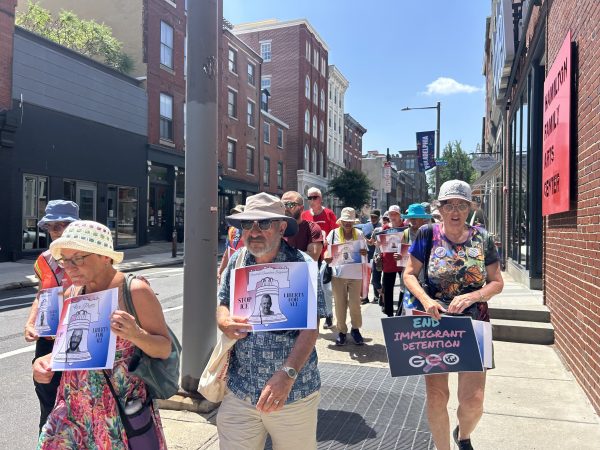
    Following the vigil held at Christ Church, Haywood, multi-faith leaders, and other attendees walked eight blocks through the hot, muggy streets of Philadelphia to take a stand in front of the ICE detention facility on Cherry Street.

    Protesters tied a long red fabric to block the main driveway of the facility. The red cloth was meant to signify the blood of those lost and the red in Betsy Ross’s American flag.

    “Today, we mark this line with the same red that runs through Betsy Ross’s flag,” said the Rev. Kipp Gilmore-Clough of Chestnut Hill United Church. “It is a witness to the bloodshed and the lives lost. But it also symbolizes the possibility of unity.”

  • Why Pa. lawmakers almost tore down Independence Hall in the 1800s

    Why Pa. lawmakers almost tore down Independence Hall in the 1800s

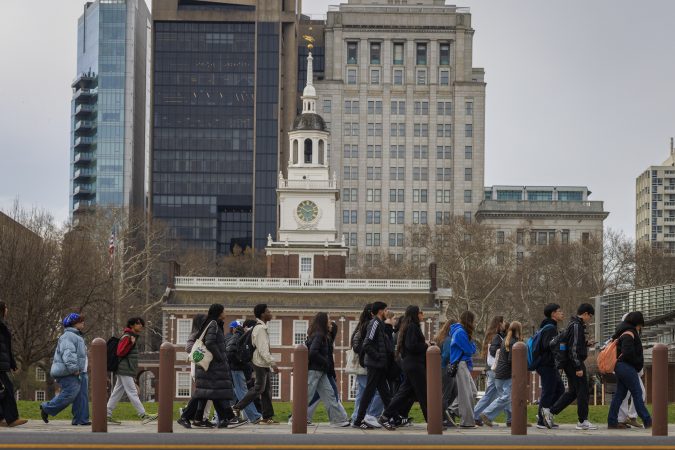
    While all eyes are on Independence Hall this week, something almost unfathomable happened more than 200 years ago: It was nearly demolished.

    Between the 18th and 19th centuries, Pennsylvania’s capital had moved to Harrisburg from Philadelphia, by way of Lancaster, and lawmakers wanted a new statehouse. The obsolete building then known as the Old State House in Philadelphia, on Chestnut between Fifth and Sixth Streets, was on prime real estate, according to Villanova University professor and historian Whitney Martinko.

    So, they contemplated demolishing the building and selling off the salvage and parcels of land to the highest bidders to fund the grand statehouse. But Philadelphians mounted a campaign to save what’s now called Independence Hall — the Georgian-style building where the Declaration of Independence and U.S. Constitution were debated and drafted. Today, Independence Hall stands as a testament to the Founding Fathers’ ideals as the country prepares for its 250th birthday this Saturday.

    “People looked to Independence Hall — already in the 1810s — as an important building and historic site,” said Martinko, who studies historic preservation in the early U.S. “Some of those people were residents of Philadelphia who didn’t want to lose a local landmark … but other people were really tourists who came to Philadelphia to see the site.”

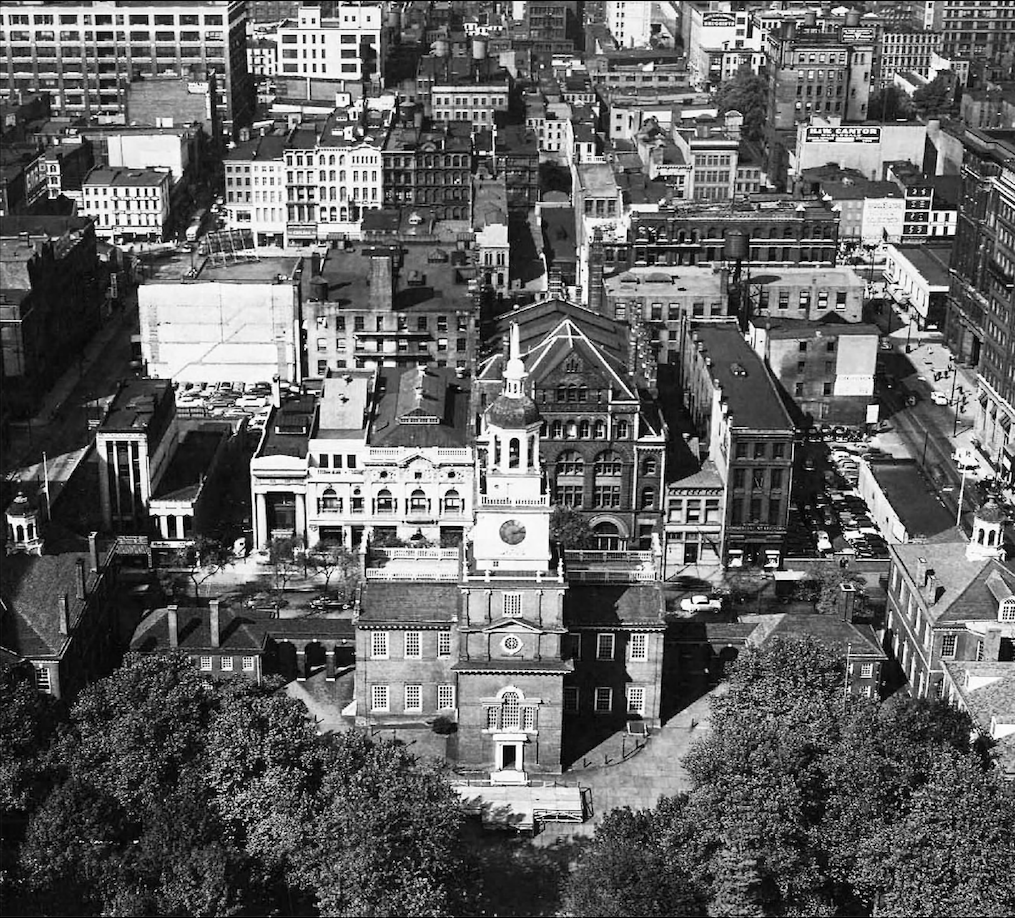
    Independence Hall in 1950, looking north from Walnut Street, in the area that would become Independence Mall.Inquirer Archives

    The state initially wouldn’t budge on its $150,000 price tag for the building, according to Martinko’s research, but after its yearslong campaign, the city ultimately purchased the plot for $70,000, or less than $2 million today. The deal, which was finalized in 1818, cemented Independence Hall’s legacy as a monument to the great American experiment.

    Government offices occupied the building, while the State House yard remained public green space. What’s now Independence National Historical Park was once a maze of industry, mixed-use buildings, and alleyways.

    By the mid-20th century, those blocks were razed, with some giving way to Independence Mall, in a push to beautify and boost civic pride.

    “Preservation and stewardship of historic sites is an ongoing decision — it’s very easy to take for granted buildings that are preserved today are going to be there tomorrow,“ Martinko said, ”but there’s no guarantee that any building will be here tomorrow or in 50 or 100 years.

    “History needs stewards and we all need to think of ourselves as people who should be engaged with saving places.”

  • Olympian is indicted after arrest at Washington’s Reflecting Pool

    Olympian is indicted after arrest at Washington’s Reflecting Pool

    A former Olympic canoeist who had been arrested in June on charges that he had vandalized the Lincoln Memorial Reflecting Pool has been indicted, according to court documents. He is charged with “destruction of property $1,000 or more,” a felony.

    President Donald Trump blamed vandals for the problems following a quick and costly makeover of the pool, and the canoeist, David Carter Hearn, 67, of Bethesda, Md., was among the first to be charged. The U.S. Park Police had arrested Hearn near the pool June 19, and accused him of destroying government property. At the time, Hearn denied the charge in an interview with the New York Times.

    Jeanine Pirro, the U.S. attorney in Washington, said in a news briefing that prosecutors had “tremendous evidence” underpinning the indictment, and she condemned what she called “unchecked vandalism and civil disorder.”

    “National Park Service employees observed Hearn actually forcefully and violently pulling up and removing the bottom liner with both hands,” she said. “According to witnesses, Hearn damaged approximately 2 square feet of sealant from the bottom of the pool.”

    When a parks employee told him to stop, Pirro said, Hearn was “belligerent, rude, and disrespectful.”

    Norm Eisen and Mary Dohrmann, lawyers representing Hearn, said in a statement that he is innocent.

    “These charges are outrageous and should be alarming to every American,” they said. “This indictment reflects the administration’s effort to shift blame for their own failures. On the eve of our nation’s Independence Day, Americans should be deeply concerned by the misuse of government power against an ordinary citizen.”

    Hearn has acknowledged putting his hand in the water and touching the peeling sealant during a pause in a bike ride but has said that is all he did. “I was just a curious, concerned citizen,” he said in an interview. “I guess I was there at the wrong place, wrong time.”

    On Thursday, Pirro described the case in the context of Trump’s extensive efforts to refurbish Washington, D.C., which she said was amid “a renaissance like it has never experienced before, in both safety and in beauty.”

    In April, Trump announced that he would be fixing “the once beautiful Reflecting Pool.”

    The pool’s problems, including leakage and the routine algal blooms, had bedeviled previous administrations, including Barack Obama’s, but Trump declared that when he was done, the pool would be “much more beautiful than the day it was built!”

    The administration awarded no-bid contracts to drain, resurface, and refill the pool at a cost of $16.4 million, but by mid-June — days before Hearn’s arrest — it was already clear that things were not going according to plan.

    Chunks of the sealant, which had been recently applied to the pool’s concrete slabs, were spotted floating in the water. And the water was turning a lively shade of green, proof that the algae was still present.

    Past administrations have wrestled with keeping the pool free of algae, but experts said some of the current problems were because of decisions made during the rushed makeover. But Trump blamed vandals, who he said, without citing evidence, had poured fertilizer into the water to nurture the algae.

    The area, an eternal draw for tourists, was quickly surrounded by security officers. Federal officials have said that seven people, including Hearn, have been arrested on charges of vandalizing the pool.

    Pirro said that her office was reviewing those other cases and that some would likely result in misdemeanor charges and others in violations.

    The indictment of Hearn came at a fraught moment for Pirro’s office, which has had trouble obtaining — and sustaining — criminal cases against Washington residents who protested Trump’s anti-crime efforts involving the National Guard and federal law enforcement.

    Under Pirro, prosecutors failed three times last summer to secure an indictment against a woman accused of assaulting an FBI agent during a protest against immigration officials, and ultimately lost the case at trial.

    In a similar case, grand jurors in Washington rejected efforts to indict a man who was accused of hurling a submarine sandwich at a federal officer on the street. Prosecutors later lost that case at trial as well.

    Gregory Rosen, a former prosecutor in Pirro’s office, raised questions about Thursday’s charges, especially given binding precedent from the court of appeals in Washington.

    “Malicious destruction of property has never meant just touching things,” he said. “The court has consistently required either an actual intent to cause the harm or wanton conduct, and damage resulting from an accident or curiosity doesn’t qualify.”

    This article originally appeared in the New York Times.

  • Burlington County man caught in child trafficking sting drove an hour to have sex with underage girl, DA says

    Burlington County man caught in child trafficking sting drove an hour to have sex with underage girl, DA says

    Christopher Reynolds thought he was talking to a woman looking to exchange money for sex with her 13-year-old daughter, Bucks County prosecutors said Thursday.

    Reynolds was adamant about certain graphic details while negotiating the price for the encounter, and even offered a higher rate so the woman could buy her daughter an emergency contraceptive pill, according to the affidavit of probable cause for his arrest.

    But in reality, Reynolds was speaking to an undercover detective who investigates human trafficking. And Reynolds, 35, was arrested late Wednesday after driving nearly an hour from New Jersey to a motel in Bensalem.

    Reynolds, of Browns Mills, Burlington County, has been charged with criminal attempt to engage or perform a commercial sex act with a minor, criminal attempt to commit trafficking in individuals, and related crimes. He was held in lieu of $500,000 bail, and there was no indication that he had hired an attorney.

    District Attorney Joe Khan said Reynolds’ arrest “sends an unmistakable message to those who look to prey on children in our communities.”

    “This is the exact kind of proactive, aggressive enforcement the public can expect from our office’s revamped anti-trafficking operation,” he said. “We are going to use every tool and technology at our disposal, and we will continue to hunt down those who attempt to exploit vulnerable individuals.”

    Investigators say the undercover detective first started communicating with Reynolds on Tuesday, after he responded to an ad on a website offering “taboo” with an underage girl, the affidavit said.

    After negotiating the price and duration of the encounter, Reynolds agreed to meet the girl’s mother at a motel on Lincoln Highway. He nearly called off the appointment when detectives declined to send nude images of the girl, but relented when they sent a digitally de-aged photo of a female detective.

    Investigators arrested Reynolds as soon as he entered the motel, the affidavit said. He was carrying $300 and a bottle of Mountain Dew, items the undercover detective told him to bring to the meeting while posing as the girl’s mother.

    Reynolds is scheduled to appear before a district judge for his preliminary hearing on July 16.

  • Trump and Republicans return to communist attacks against Democrats ahead of the midterm elections

    WASHINGTON — President Donald Trump and his fellow Republicans are reviving a line of attack against Democrats heading into the midterm elections: They’re communists.

    In just the past week, Trump has issued dark warnings that members of the Democratic Party’s ascendant left are communists who want to “completely destroy the traditional American way of life” and even engage in assassinations. Vice President JD Vance has similarly called out communism as a political shift that is “something we haven’t seen in the U.S.” House Speaker Mike Johnson has decried “radical candidates” who are “self-described, self-identifying Marxists.”

    The GOP’s ideological focus conflates democratic socialism, which often centers on securing universal healthcare, higher taxes on the wealthy, and stricter corporate regulation, with communism, under which private ownership is largely eliminated. It has been building since Zohran Mamdani, a democratic socialist, won the Democratic nomination for New York City mayor last year.

    But it’s kicked into a higher gear recently after democratic socialists won several New York City congressional primaries last week. The primary victory on Tuesday by another democratic socialist, Melat Kiros, for a Denver congressional seat suggested the trend may extend beyond Manhattan liberalism.

    “The Democrats are making this easy for us,” Rep. Richard Hudson, the North Carolina Republican who leads the House GOP’s strategy and fundraising arm, said in an interview. “They’re nominating extreme liberals, leftists who are out of touch even with mainstream Democrats.”

    Republicans are holding onto slim majorities

    The messaging effort comes as Republicans scramble to hold onto threadbare congressional majorities in the November midterms. It risks overlooking public frustration, particularly among younger voters, with unfettered capitalism at a time of growing income inequality and rising costs.

    But it also gives Republicans a much-needed opportunity to shift the conversation back to territory that is more comfortable for them after their party has spent much of the year on defense over the fallout from Trump’s decision to launch a war against Iran, which contributed to widespread price spikes.

    Ralph Reed, the longtime conservative activist who hosted Trump last week at a Faith and Freedom Coalition conference, acknowledged that Republicans are facing steep headwinds this year. But the recent string of wins by democratic socialists, he said, allows Republicans to present a contrast between “common sense and crazy.”

    Democrats uncertain over the party’s direction

    The renewed push could tug at tensions among Democrats who are largely united in their loathing of Trump but are divided over the party’s direction. This year’s primaries are shaping up as a referendum between centrists who are eager to course correct from what they see as progressive overreach earlier in the decade and a left wing pushing for even more sweeping change.

    “A lot of this anger has been boiling under the surface,” said Joseph Geevarghese, executive director of Our Revolution, which was founded by U.S. Sen. Bernie Sanders, a Vermont independent who caucuses with Democrats. “It’s coming to the fore in this moment in a very powerful way.”

    But Rep. Josh Gottheimer, a centrist New Jersey Democrat, called the victories in Colorado and New York “aberrations.”

    “We’ve got to fight like hell to keep our party from being hijacked by socialists,” he said. “Most of them are bomb throwers, not problem solvers.”

    Nevada Attorney General Aaron Ford easily dispatched a more progressive rival earlier this year in his Democratic bid for governor in a state Trump carried in 2024. As he eyes a general election challenge to Republican Gov. Joe Lombardo, he insisted candidates like those who won in New York don’t represent all Democrats.

    He said the Democratic Socialists of America “is not the face of our party.”

    Rep. Suzan DelBene, a Washington Democrat who chairs the House Democratic campaign committee, said in a statement that Republicans were “resorting to desperate attacks that aren’t actually about the pocketbook issues.”

    Trump risks overreaching with communism argument

    Trump and fellow Republicans risk missing the mark when the public’s embrace of capitalism might not be as strong as it was decades ago.

    About half of U.S. adults, 54%, have a positive view of capitalism, according to an August poll from Gallup, a slight decline from 61% in 2010. Democrats have driven some of the shift, but favorable opinions of capitalism have fallen among independents as well.

    Only 42% of Democrats viewed capitalism favorably, while 66% had a positive view of socialism. The poll found that both younger and older Democrats have warmed slightly on socialism since 2010, but Democrats under age 50 are much less likely to view capitalism favorably. Democrats age 50 or older didn’t shift meaningfully.

    “Young voters, who I would argue are driving a lot of the electoral energy that we’re seeing, came of age politically in a post-Soviet world,” Geevarghese said. “The attacks don’t land in the same way when Donald Trump was politically of age.”

    Hudson, who is running the House GOP campaign committee, acknowledged the communism line might not resonate in the same way with all voters, particularly younger people. That’s why, he said, it’s important for Republicans to tailor their message to the needs of individual districts.

    “I’ve never run cookie-cutter campaigns where we just say one thing over and over everywhere,” he said.

    Still, the argument was high on Trump’s mind again on Wednesday as he visited the newly built Theodore Roosevelt Presidential Library in North Dakota. He called the former president a “ferocious opponent of a thing called communism.”

    “It’s the biggest threat to our country, including World War I, World War II, Pearl Harbor, September 11,” he said. “It’s a bigger threat, potentially a bigger threat than that, because it’s like a cancer that spreads, and you better stop it fast.”

    Beverly Gage, a history professor at Yale University who has written on the rise and fall of Sen. Joe McCarthy, said earlier eras of anti-communism politics took hold because there was a large and active Communist Party in the U.S. and the Soviet Union was the country’s primary foe. But she said Trump’s focus on the issue is notable given his ties to Roy Cohn, a onetime confidant of Trump who earlier worked for McCarthy.

    “It’s not very many steps to get from McCarthy to Roy Cohn to Donald Trump,” she said.

    California Gov. Gavin Newsom, a potential Democratic presidential candidate, shrugged off Trump’s communism focus as “bunk.” In an interview, he said the direction of the party isn’t all that different from the dynamics he’s navigated for decades in California politics.

    “I governed in an environment where the DSA was otherwise known as progressives,” he said. “This dialectic is so deeply familiar to me, and I don’t over read any of it.”