Category: News

  • FEMA crew broke law by skipping homes with Trump signs, federal watchdog says

    FEMA crew broke law by skipping homes with Trump signs, federal watchdog says

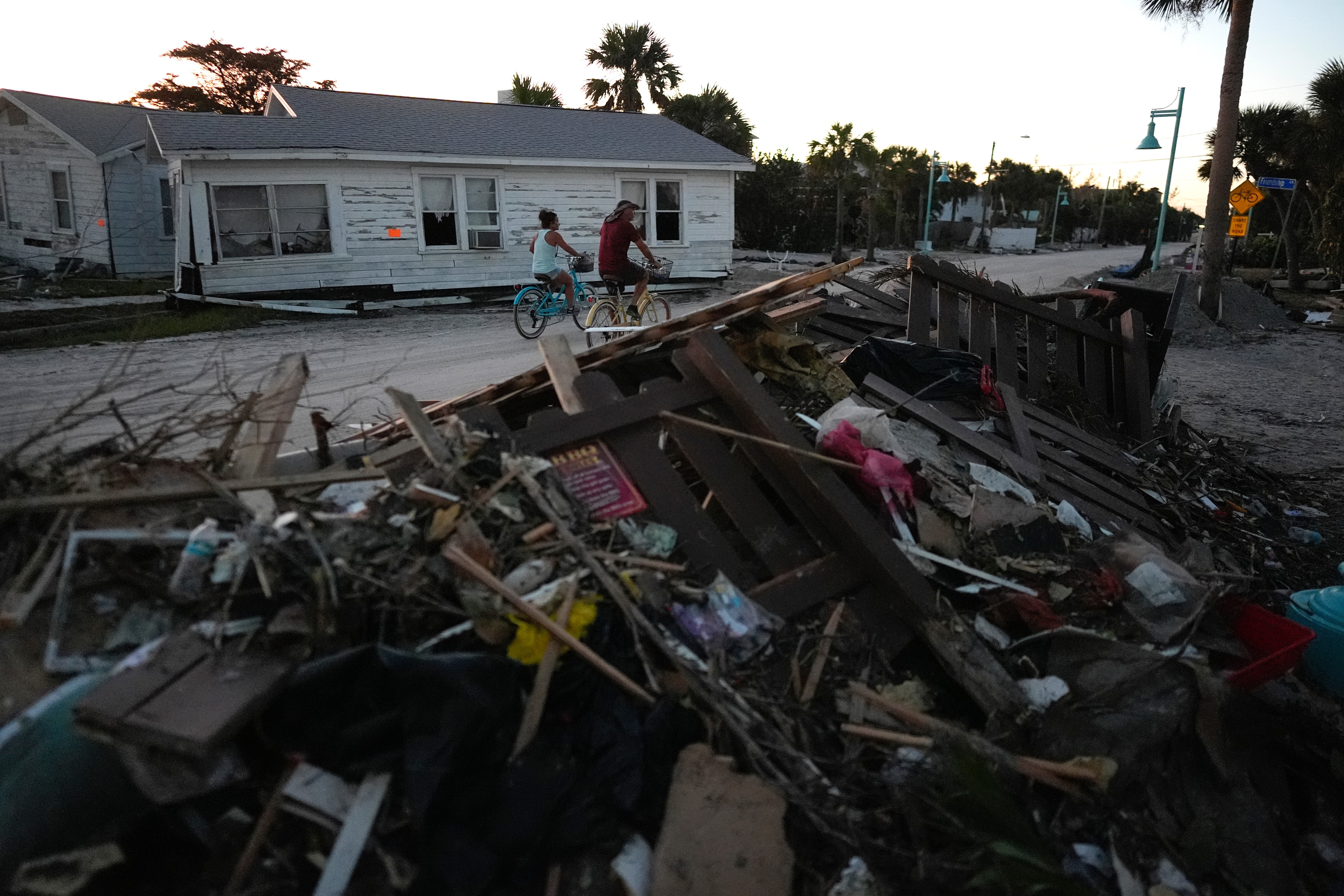
    A crew of Federal Emergency Management Agency staffers working on the response to Hurricane Milton in 2024 violated the law and agency policy by skipping nearly a dozen homes displaying signs supporting then-presidential candidate Donald Trump, a federal watchdog said Tuesday.

    The new report by the Department of Homeland Security’s Office of Inspector General found that the decision by a crew with the agency’s Disaster Survivor Assistance program “eroded public trust in FEMA’s ability to treat everyone impartially, offer unbiased and consistent assistance, and ensure equal access to resources and tools.”

    Back-to-back hurricanes hit Florida within two weeks of each other in late September and early October 2024, prompting emergency declarations and federal assistance. FEMA Disaster Survivor Assistance crews canvassed 744,288 homes and other sites in response, according the report, and did not contact “555,374 locations for reasons such as private property signs or safety concerns.”

    During FEMA’s hurricane response, which was unfolding during the last few weeks of the pivotal election, a FEMA crew lead instructed team members to avoid homes with Trump signs due to safety concerns. The same crew bypassed those 11 homes in Florida, according to survey notes obtained by the inspector general’s office.

    At the time, the crew leader did not feel safe given the heightened tension and “was looking for ways to define safety. People were not getting good guidance, so she made her own way,” said a former senior FEMA official with direct knowledge of the situation.

    After several FEMA workers filed a complaint, the agency started its own investigation and officials referred the complaint to the Office of Special Counsel and DHS’ inspector general office. Gov. Ron DeSantis (R) blamed the Biden administration, writing online that it represented a “blatant weaponization of government by partisan activists in the federal bureaucracy.” FEMA quickly fired the crew leader and several other staffers involved in the incident.

    The watchdog found that the incident highlighted weaknesses in “FEMA’s training, documentation, and oversight.” Those Disaster Survivor Assistance crews did “not receive ethics and Hatch Act training before deploying to disasters,” the report said, nor was there a policy that required “crews to explain why they skipped homes.”

    Deanne Criswell, who headed FEMA during the Hurricane Milton response, said in a Signal message Tuesday that the report “validates the actions we took at FEMA when this incident was brought to our attention. Politics should never play a role in disaster response, and even one home skipped is unacceptable.”

    Criswell said that after they learned that the crew had bypassed those homes, officials ensured the “neighborhoods were recanvassed.”

    The agency did not have a formal system for reporting potential safety threats at the time, said the senior official, who spoke on the condition of anonymity because they were not authorized to speak publicly about the internal investigation. The inspector general report also identified this as a hole in the agency’s operations.

    Criswell and the other former official noted that FEMA’s internal review found that the Hurricane Milton incident was isolated to that crew.

    “FEMA personnel conducted more than 744,000 canvassing visits following Hurricanes Helene and Milton, and the Inspector General identified 11 homes skipped for political reasons by the same crew — findings that reinforce my confidence this was an isolated incident and not a systemic practice within FEMA,” Criswell said.

    However, safety concerns during disaster response are common, the former senior official said, with most of the encounters that FEMA canvassers faced involving guns.

    The inspector general report said that after FEMA learned of the crew skipping homes, it provided mandatory training to all disaster survivor teams, including those deployed in the field.

    FEMA concurred with all of the inspector general recommendations. In a letter from July, the agency said that “when concerns were raised regarding adherence to law and policy in performance of this work — FEMA leadership acted swiftly to investigate, remediate, and strengthen training and oversight. As a result, FEMA increased mission readiness training and no longer conducts FEMA-led door-to-door outreach efforts. Staff now provide support to survivors from fixed locations determined by state and local officials through a data-informed approach.”

  • FBI sets $25,000 minimum reward for dozens of unsolved Indian Country cases

    FBI sets $25,000 minimum reward for dozens of unsolved Indian Country cases

    SIOUX FALLS, S.D. — The Federal Bureau of Investigation has established a minimum reward of $25,000 in cases where people went missing or were killed in Indian Country, part of a broader effort to address high rates of violence affecting Native American communities.

    The new minimum applies to more than 50 unsolved homicides and missing-person cases in tribal communities. Most of the cases are less than 10 years old, though a dozen have been unsolved for more than two decades, an AP analysis found.

    Victims’ families and experts are unsure the higher amounts will be enough to get tipsters to come forward, citing people’s fears and distrust of the federal government.

    “Everybody’s scared in Oglala,” said Lisa Carlow, whose father, Patrick Carlow Sr., was found dead in his Pine Ridge Reservation home in 2023. “So to me it’s like, OK, what do you guys know that you’re not saying?”

    The FBI investigates federal crimes on nearly 200 Native American reservations, along with the U.S. Bureau of Indian Affairs. At the end of 2025, the FBI’s National Crime Information Center recorded just under 1,500 active cases involving missing Native Americans, though not all become federal cases. There isn’t a minimum reward that applies across all FBI cases.

    The FBI cited several cases in its recent announcement, including that of 8-year-old Maleeka Boone, who it said was likely struck by a vehicle on the Navajo Nation, and San Carlos Apache teenager Emily Pike, whose body was found after she disappeared from an Arizona group home.

    Higher rewards could stir new interest

    Mary Kathryn Nagle, a citizen of the Cherokee Nation of Oklahoma and an attorney who advocates for families of missing Native Americans, said federal investigators often “parachute in” to investigate crimes in tight-knit communities where witnesses may stay silent because of distrust and fear of retribution.

    Still, she said, larger rewards could provide an incentive for people to talk, and show families their loved ones’ cases are being taken seriously.

    “We have people in Indian Country who know what happened to our relatives,” she said.

    Luana Ross, who is Bitterroot Salish and a co-director of the Native Voices program at the University of Washington, said cash rewards could boost interest but often aren’t paid out.

    “It is my opinion that in reservation communities, people would be extremely reluctant to turn a friend or relative into a criminal justice system that hasn’t served them well,” she said.

    Lisa Foster’s longtime friend Mona Renee Vallo was found dead after a suspected hit-and-run along historic Route 66 in Laguna Pueblo, N.M., in 2022. Foster hopes the higher reward money will renew interest in the investigation.

    Foster described Vallo as a positive, bubbly friend who could have fun no matter what. She was a member of the Confederated Tribes and Bands of the Yakama Nation.

    “Someone knows something there,” Foster said. “They have to. I mean, it’s weird that she went to work and then all of a sudden this happened to her.”

    Frustration mounts as families seek answers

    The reward in Carlow’s case was increased to $25,000 in July, up from $10,000.

    Carlow’s family says the 73-year-old rancher was respected in the Oglala community. He mowed the grass for others and spent time with his grandchildren. The family said more calls started coming in after the reward was increased, but the wait for answers continues.

    Meanwhile, the FBI declined to provide the Associated Press an update on the case.

    “It’s so hard to get your hopes up like that and think, ‘This is it, we finally got Dad’s killer.’ And then nothing comes of it,” Lisa Carlow said.

    She said fear keeps community members who may have information from contacting authorities.

    “I think that’s like deep-rooted within our people,” said her sister, JoDee Carlow. “It’s not just on Pine Ridge. It’s on every reservation.”

    Relatives don’t want cases to be forgotten

    The FBI initially offered $5,000 for information in the deaths of two brothers from Ohio, Matthew and Philip Reagan. The reward was later doubled and now will hit $25,000. Though not Native Americans, they were killed on the Navajo Nation and are featured on the FBI’s Indian Country cases website.

    The brothers planned to visit Canyon de Chelly National Monument during a trip to California. Authorities believe their SUV got stuck in mud after GPS sent them off course near Sawmill. They were shot multiple times while walking to seek help, authorities said.

    Matthew Reagan’s wife, Faye Wurstner-Reagan, said she doubts a $25,000 reward will persuade anyone in the small community to come forward.

    “You would have to promise someone, like, actual protection,” she said. “I mean, they brutally murdered two men.”

    She suggested the FBI instead put resources toward law enforcement to keep the cases from going cold and for liaisons to keep families informed.

    FBI spokesperson Brooke Brennan in Phoenix said investigating crimes in Indian Country often is complex because of the remoteness, limited resources, and extensive workload.

    Wurstner-Reagan hopes that families united in pain and grief over missing loved ones and unsolved killings might one day see justice.

    “We’re just getting forgotten, like no one is remembering any of us, and we’re just told it’s an active investigation,” she said.

  • Justice Dept. targets another Philly ‘ICE Out’ ordinance after a court win on masking ban

    Justice Dept. targets another Philly ‘ICE Out’ ordinance after a court win on masking ban

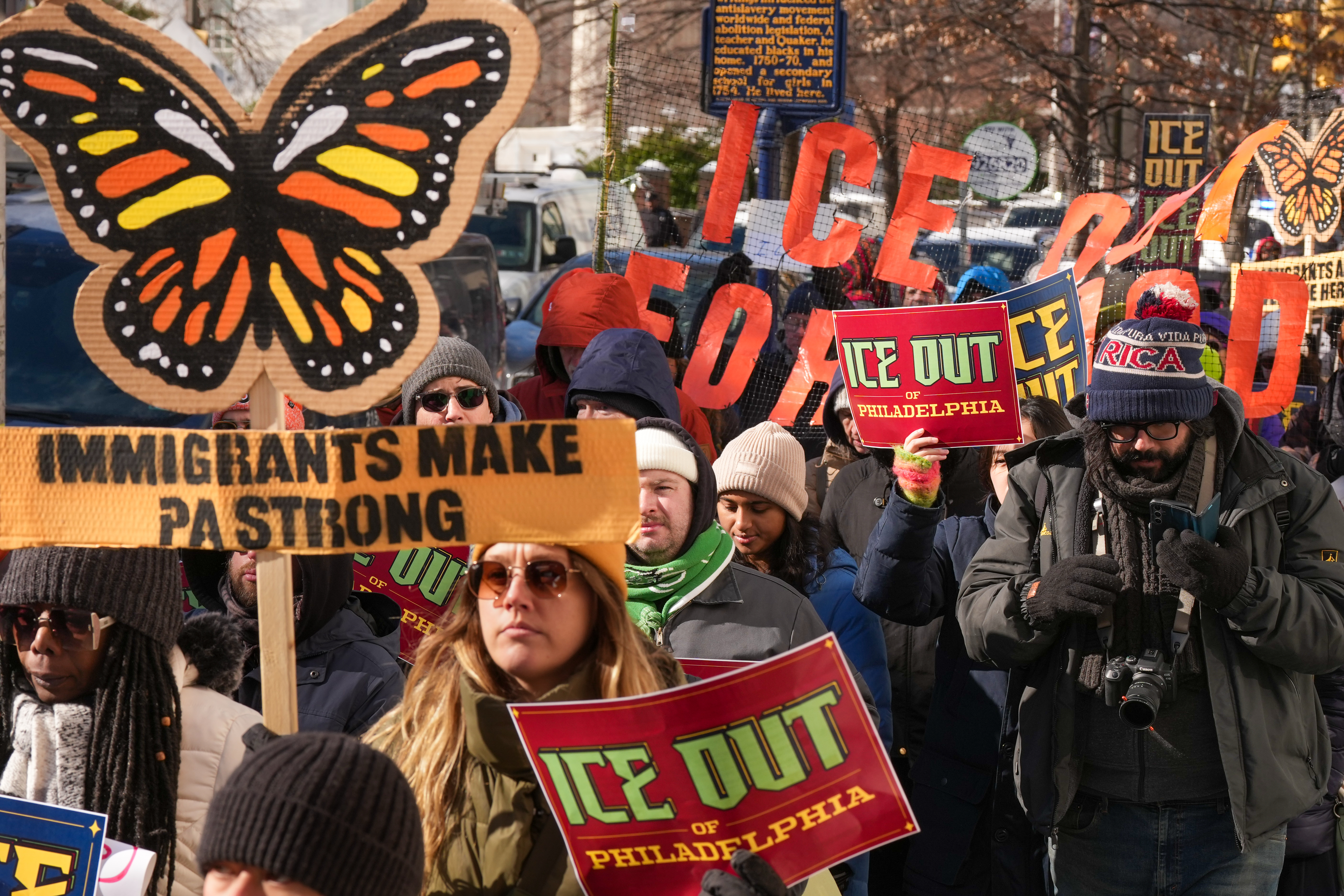
    When President Donald Trump’s administration sued Philadelphia over one of seven new local restrictions on U.S. Immigration and Customs Enforcement — a ban on law enforcement officers from wearing masks or concealing their identity — the federal lawsuit included a footnote.

    “The United States has grave concerns over the constitutionality of other parts of the Bill as well as other components of the ‘ICE Out’ legislation and reserves the right to bring additional challenges in the future,” the June complaint said.

    The U.S. Department of Justice did so Monday evening, expanding its lawsuit to challenge a second ordinance.

    The “ICE Out” legislation package that took effect July 6 codified the city’s long-standing practice of not honoring immigration detainers, which are requests by ICE that a local law enforcement agency keep a person in custody long enough to be handed over to federal agents.

    The ordinance makes it illegal for a city agency or employee to comply with a detainer by keeping people otherwise eligible for release in custody because of an immigration detainer, an administrative warrant, or suspicion that they violated immigration law.

    The ordinance imposes a “blanket refusal” by the city to cooperate with the federal government, the suit says, and amounts to a “standing assurance that the federal handoff Congress built into federal immigration law will never happen within Philadelphia, whatever the circumstances.”

    The amended complaint does not mention Philadelphia’s history of not cooperating with ICE jail detainers. But with the local law, the city “foreclosed” the prospect of using the mechanism to deport people who were arrested, the suit says.

    Since the ordinance took effect, ICE’s Enforcement and Removal Operations office in Philadelphia sent the city 26 detainers, the suit says. Fifteen were not honored and the city released the people from custody, the complaint says, while the subjects of the remaining 11 are incarcerated and the detainers remain active.

    The detainers were for people arrested for crimes that include violent assaults, harassment, and drug distribution.

    “Without these detainers being honored, ICE was only able to arrest a fraction of the aliens, with the remaining criminals ending up at-large,” the suit says.

    A spokesperson for the city’s law department declined to comment. District Attorney Larry Krasner, who is also named as a defendant, did not respond to a request for comment.

    The Justice Department beefed up its lawsuit nearly two months after a judge ruled Philadelphia could not enforce a ban on law enforcement agents concealing their identity or using an unmarked vehicle, with some exceptions, finding it was an unconstitutional attempt by a city to regulate how federal agencies operate.

    Mayor Cherelle L. Parker allowed the mask bill to become law without her signature in May, following the advice of City Solicitor Renee Garcia that signing the bill “would send an inaccurate signal to the public that the Administration can legally or practically enforce” its provisions.

    Parker signed the ban on honoring immigration detainers.

    The case against the mask ordinance also benefited from a ruling by the U.S. Court of Appeals for the Ninth Circuit that a California bill requiring agents to “visibly display identification” was unconstitutional.

    But courts so far have been unconvinced that the federal government can force cooperation with ICE.

    For example, last year a federal judge in Illinois dismissed a Justice Department lawsuit challenging Cook County and Chicago’s sanctuary city policies that included a ban on honoring immigration detainers.

    Detainers offer localities and states “the opportunity to assist in civil immigration enforcement,” U.S. District Judge Lindsay C. Jenkins wrote. But policies that ban honoring these requests “don’t make ICE’s job more difficult; they just don’t make it easier,” the Joe Biden appointee said.

    And last month, Eric C. Tostrud, the Trump-appointed chief judge of the federal district court in Minnesota, issued a similar ruling finding that immigration detainers were requests, not mandates.

  • Pennsylvania attorney general sues Snapchat over addictive features

    Pennsylvania attorney general sues Snapchat over addictive features

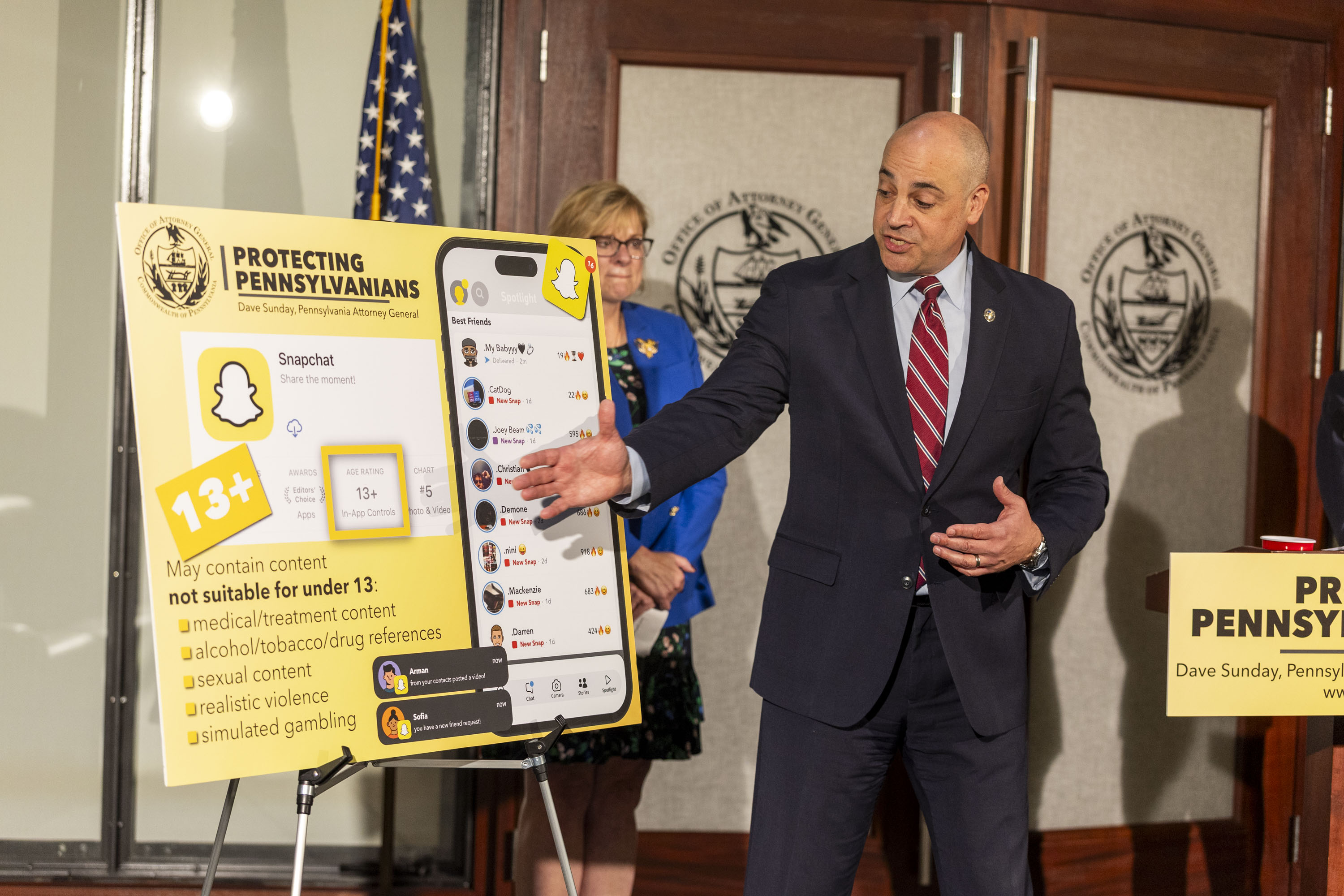
    Pennsylvania Attorney General David Sunday is suing Snapchat’s parent company for allegedly failing to protect children from addiction.

    This comes after he announced a lawsuit against TikTok over the same issue earlier this month.

    “Both of these actions reflect my priority as attorney general to protect our young people from tech giants who are choosing growth at all costs over the mental wellness of its users,” Sunday said Tuesday at a news conference in Philadelphia.

    The suit alleges that Snap Inc., owner-operator of Snapchat, does not properly warn users of the addictiveness of its features and does not protect children properly from compulsive use.

    “The allegations against Snap fundamentally misrepresent our platform and our approach to teen safety,” a Snap spokesperson said in a statement. “We share the Attorney General’s commitment to protecting young people online and are disappointed they have chosen litigation rather than working with us toward that shared goal.”

    The complaint, which Sunday’s office filed this week in Common Pleas Court in Philadelphia, asks the company to take steps to protect children from becoming addicted. It cites the SnapStreak feature and the ephemeral nature of the content as examples of ways the app hooks teens specifically.

    “To a 13-, 14-, 15-year-old, social acceptance is everything,” Sunday said. “The streak feature puts a tangible value on friendships and influences a child’s feelings of self-worth.”

    The app sends an implicit message that the more a child is on the app, the more friends they will have and the more socially accepted they will be, Sunday said.

    “That exploits the fear-of-missing-out culture to the absolute extreme,” he said.

    It also alleges that Snapchat improperly promotes how frequently adult-themed material — including sexual content and nudity, suicidal ideation, and drug use — appears on the platform to achieve an age-13-plus app rating in app stores.

    Through this litigation, Sunday said, he hopes to see Snapchat required to provide a more honest depiction of its content to app stores so it can be marked with a more mature rating, and to change its algorithm to be less addictive.

    Montgomery County similarly sued some of the nation’s largest social media companies, including Snapchat’s and TikTok’s parent companies, in a federal court in Northern California earlier this month.

  • Iran may have little to lose as U.S. tries to squeeze its economy

    Iran may have little to lose as U.S. tries to squeeze its economy

    Facing a fresh economic assault from the United States, Iran’s leaders are gambling that they can weather the coming storm and make the cost of their suffering felt in an oil-rich region that is critical to the global economy.

    As Iran’s ever more devastating economic crisis deepens, experts warn, Iranian leaders may feel they have little to lose by responding to U.S. pressure with the kind of military escalation President Donald Trump now seems keen to avoid.

    “The danger is that ‘economic D-Day’ is being presented almost as a substitute for further war when it may instead become another mechanism for escalating it,” said Sina Toossi, an Iran expert at the Center for International Policy. “The harder Washington pushes third countries to sever Iran’s remaining lifelines, the stronger Tehran’s incentive becomes to demonstrate that participating in Iran’s isolation carries costs of its own.”

    Treasury Secretary Scott Bessent on Monday announced a new package of U.S. measures to disrupt Iran’s economy, although he offered few details. The success of the U.S. efforts will also depend on how much the Trump administration can persuade other countries to go along with its plan — especially critical trade partners for Iran, such as Turkey, Russia, and China.

    Still, as the Trump administration reached for military metaphors to convey the severity of its plans — calling them an “economic D-Day”— Iran responded in kind. Iranian officials have labeled the U.S. campaign the next phase of the war that Washington has waged since U.S.-Israeli strikes were launched in February.

    Economic warfare is the “main battlefield” in the current confrontation, Iran’s Revolutionary Guard was quoted as saying in a statement Monday cited by Press TV, an Iranian state news outlet.

    In statements broadcast after Bessent’s news conference, Iran’s economy minister, Ali Madanizadeh, warned that the country would find ways to push back.

    “The enemies intend to launch an economic terrorist attack on us, but we also have our own tools and know how to play the game,” he said, in comments carried by the semiofficial news agency, Tasnim.

    A day before Bessent’s announcements, Iran’s top security chief, Mohsen Rezaei, vowed that “not a single drop” of oil would leave the region if its Persian Gulf neighbors joined the U.S. effort, and that they would be considered enemy states.

    The severity of the Iranian warnings also highlights just how bad Iran’s current economic crisis is — and it is worsening by the day.

    A report Monday by Iran’s most prominent economic newspaper, Donya-e-Eghtesad, said Iran’s rial has depreciated to new lows. It has plummeted 41% since December, when the currency rate sparked protests that morphed into weeks of nationwide unrest. Iranian security forces responded with a deadly crackdown.

    Inflation and unemployment have soared, with prices of everyday goods increasingly out of reach for many Iranians. At the same time, the U.S. strikes that damaged Iranian energy infrastructure and the ongoing U.S. naval blockade have intensified an ever-worsening fuel supply crisis — an issue that sparked massive protests in 2019.

    But Iranian officials are projecting confidence that their leadership can survive because this new wave of U.S. measures looks similar to old ones. For decades, U.S. leaders have vowed to devastate the Iranian economy through ever harsher sanctions that the Islamic Republic’s leaders have learned to withstand.

    Iran’s leadership “has been planning to confront U.S. sanctions for a long time and is fully prepared for new sanctions,” Madanizadeh said late Monday. He said the government had a two-year plan in place for dealing with such sanctions.

    Iran’s ability to withstand the Trump administration’s economic pressure campaign will depend on the attitude of Iran’s key trading partners.

    Mahdi Ghodsi, an economist at the Vienna Institute for International Economic Studies, said that “faced with sufficiently credible secondary-sanctions risks,” those trading partners may “prefer to protect their much more important financial and commercial interests with the United States and reduce the services they provide to Iranian entities.”

    Some analysts also warn that the brunt of further economic pain is likely to be borne by ordinary Iranians, not Iran’s leaders.

    Among the sectors Bessent identified as being targeted in the new U.S. campaign were gold, digital assets, technology, aviation, and shipping — sectors that Esfandyar Batmanghelidj, who heads the Bourse & Bazaar Foundation, a London-based think tank focused on Iran’s economy, called “lifelines for the Iranian people.”

    “Digital assets and gold are how ordinary Iranians protect their savings from inflation,” he wrote in a social media post. “Technology keeps Iranians connected with the world. Aviation keeps Iranian families connected with loved ones across borders. Shipping is how essential goods, including food and medicine, reach Iran.”

    This article originally appeared in the New York Times.

  • Trump officials propose sale of ‘woke’ painting by Kehinde Wiley

    Trump officials propose sale of ‘woke’ painting by Kehinde Wiley

    The State Department wants to sell a painting by celebrated artist Kehinde Wiley that the director of its Art in Embassies program called “very woke” and “aesthetically terrifying.” It was removed from the U.S. Embassy in the Dominican Republic last week.

    The painting by Wiley, who rose to fame after being selected to create President Barack Obama’s official portrait, features four Dominican models against a floral backdrop. It was commissioned by the federal government in 2013 and paid for with taxpayer dollars.

    State Department officials removed the painting from the embassy last week, after first hiding it behind a tarp designed with an image of the American flag.

    Erin Scavino, the director of Art in Embassies, criticized Wiley’s painting in a recent podcast interview and pointed out the artist’s connection to Obama. Leah Campos, the U.S. ambassador to the Dominican Republic, celebrated its removal on social media with a video playing the rock anthem “We’re Not Gonna Take It,” writing that the painting was an example of “globalist and woke ideologies.”

    Neither elaborated on what she found objectionable.

    In a statement on Monday about the removal of the painting, a State Department spokesperson did not directly address the artwork. The statement instead criticized comments Wiley had made in 2023 about his “Judith and Holofernes” painting, which he described as “a play on the ‘kill whitey’ thing.” It also cited accusations of sexual assault that Wiley has denied.

    “The work of an individual with such violent and racist words and depictions has no place in the America First State Department,” the spokesperson said.

    The statement said the State Department is determining whether it can legally sell the painting of Dominicans, which is titled “Young Artists After Siamesas 1960.”

    “If that is feasible,” the spokesperson said, “it would be the goal of Art in Embassies to proudly do so.”

    A smaller painting by the artist sold at a Phillips auction in 2024 for nearly $845,000. Wiley and his gallerist, Sean Kelly, did not respond to requests for comment.

    Virginia Shore, who commissioned the Wiley painting, established many of the embassy art collections as director of acquisitions and chief curator for the Art in Embassies program between 2000 and 2017. She described the work as nonpartisan and said there was no precedent for selling embassy artworks.

    “Calling this woke is difficult for me to understand,” she said. “This is a program validated and financially backed under Bush. There is a science of building trust and empathy across borders.”

    Wiley received an award from the State Department in 2015 because of his contributions to cultural diplomacy. He often takes inspiration from historic paintings, asking contemporary Black models to pose inside his version of the compositions. For “Young Artists After Siamesas 1960,” he spent two years studying paintings by Dominican artists Celeste Woss y Gil and Gilberto Hernández Ortega, working with art students in the country to finish the scene.

    The artwork’s removal was the latest attempt to politicize the State Department’s art program, which became part of the government during the Kennedy administration in 1963 to foster cultural diplomacy. The program was strengthened in 1999 under the Secure Embassy Construction and Counterterrorism Act, which led to embassies developing their own permanent art collections.

    This year, Scavino claimed to have gotten an ambassador in Bucharest, Romania, fired over “satanic baby art,” though the diplomat’s departure was reported as a planned retirement. She also selected a friend with no curatorial experience to serve as the commissioner of the U.S. Pavilion at the Venice Biennale, bypassing normal procedures. In July, Scavino organized an exhibition in Washington that aimed to “Make Art Great Again” with nearly 70 versions of the American flag on display.

    In a statement about the removed Wiley painting, Campos, the U.S. ambassador, said, “It is my intention that everything we project from U.S. Embassy Santo Domingo, including the art and décor, reflect the beauty, strength, and commitment to liberty of the United States of America and its people.”

    Online, she had a stronger perspective: “Under the Trump administration and my leadership, we are leaving behind globalist, ‘woke’ ideologies to embrace, instead, American patriotism and the beauty of our great country.”

    She ended the sentence with an emoji of the American flag.

    This article originally appeared in the New York Times.

  • Lincoln University just sued Lower Oxford Township in federal court over event rules it says are unconstitutional and racially discriminatory

    Lincoln University just sued Lower Oxford Township in federal court over event rules it says are unconstitutional and racially discriminatory

    An event ordinance passed earlier this month by Lower Oxford Township unfairly targets Lincoln University and is unconstitutional and racially discriminatory, the historically Black school said in a federal lawsuit filed Tuesday.

    “The ordinance’s disparate negative impact on the Lincoln University community is the result of deliberate racial gerrymandering — or other illicit gerrymandering — by the Defendants,” the school’s lawyers argued in the complaint, filed in the U.S. District Court for the Eastern District.

    The suit notes that the township’s three supervisors are white and that the population of the township nestled in farm fields with about 5,000 residents is “overwhelmingly white” except for Lincoln’s community.

    The ordinance seeks to regulate events with more than 500 people, requires a permitting process, allows the township to revoke permits without a hearing for a violation, and threatens to prohibit an entity from applying for another permit for two years if a violation occurs. In the permit request, applicants will be asked to address security, parking and traffic impact, number of attendees, planned activities, and other elements. Violations will result in fines of up to $1,000, the ordinance states.

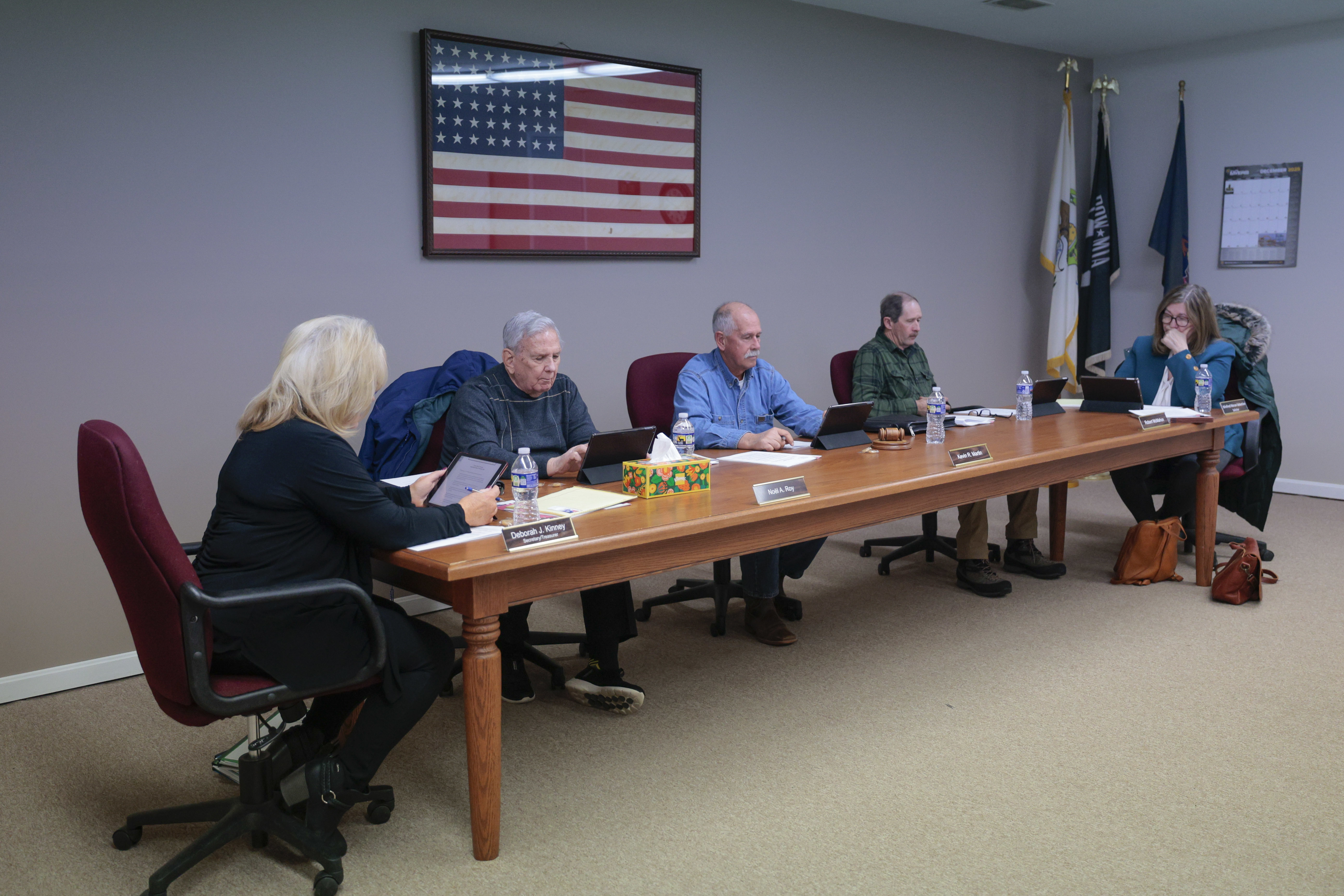
    Lower Oxford Township supervisors meet and discuss a potential event ordinance to address problems with large events held on Lincoln University’s campus, Monday, Dec. 8, 2025.Steven M. Falk / For The Inquirer

    The rural Chester County township began looking at enacting the ordinance following the shooting last October of seven people, one of whom died, on Lincoln’s campus during homecoming festivities. Township officials also had cited ongoing concerns about traffic, trash on neighbors’ lawns, and other disturbances, including crimes, during large events on the 422-acre campus, where 1,650 students are enrolled. The township previously had passed a parking ordinance in response to access issues created during large events at Lincoln.

    Deborah Kinney, township secretary/treasurer and codes enforcement officer, said Tuesday she had not been aware of the lawsuit until The Inquirer called. She declined immediate comment.

    Lincoln president Brenda A. Allen said the university is seeking to stop the township from depriving members of its community of their First Amendment rights to free speech, freedom of assembly, and freedom of religion. The ordinance, she said, is attempting to restrict the university from events that are essential to its academic mission.

    “Lower Oxford Township’s ordinance is a targeted, unconstitutional overreach that threatens the hallowed traditions ingrained in the university’s foundation,” Allen said in a statement Tuesday. “Lincoln University will remain on the front lines of protecting, defending, and advancing our community as we take this matter seriously.”

    In its ordinance, the township states that “activities associated with special events can constitute a hazard to the public’s health, safety and welfare and that these activities can also create a public nuisance when unregulated.”

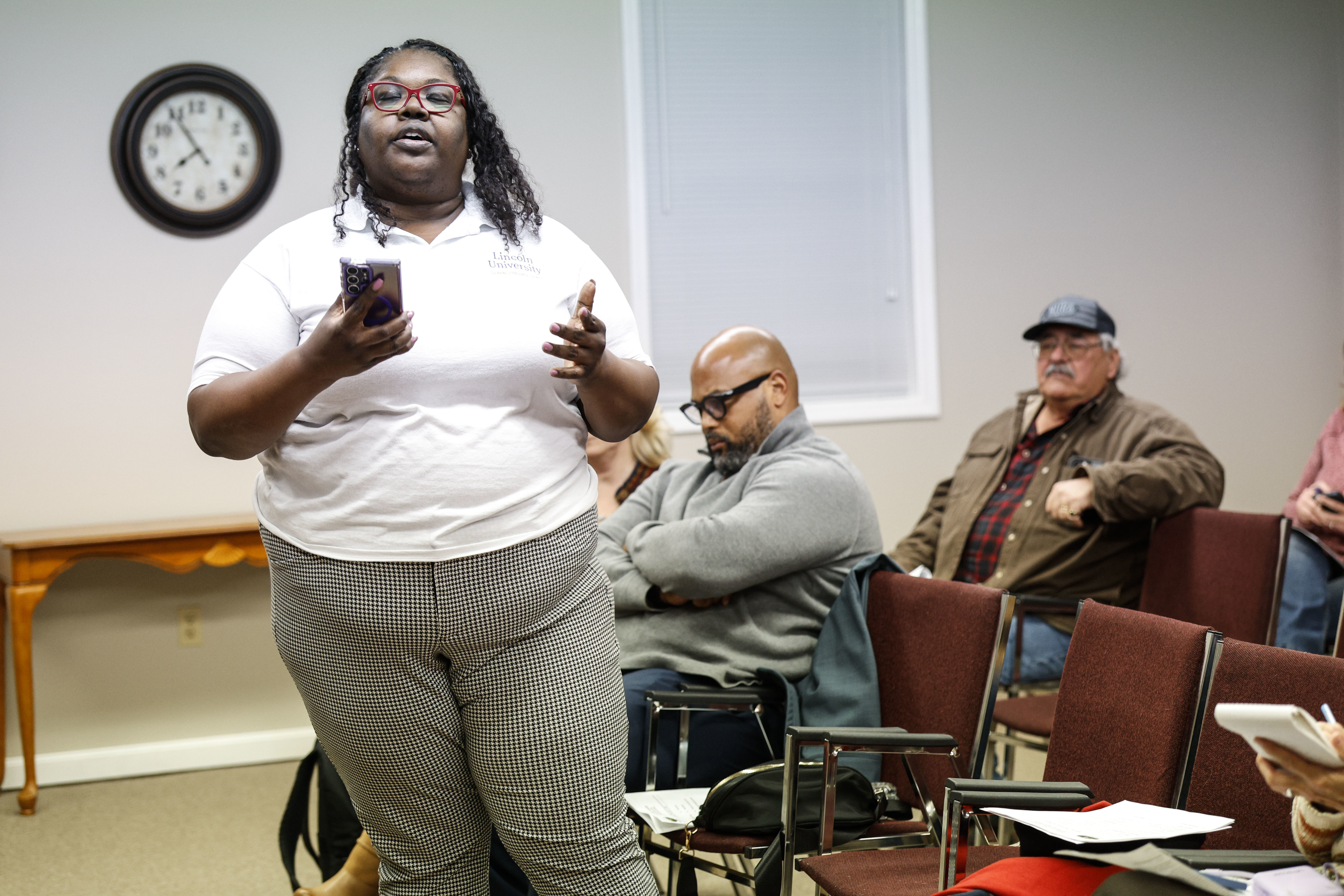
    Venus Boston, Lincoln general counsel, speaks to the Lower Oxford Township supervisors in December 2025 as they discuss a potential event ordinance to address issues with large events held on Lincoln University’s campus, Monday, Dec. 8, 2025.Steven M. Falk / For The Inquirer

    The township’s supervisors, the ordinance states, have “determined that the impact of special events that involve large numbers of attendees on roads and other infrastructure within the Township represents both a traffic hazard and an impediment to the delivery of emergency services to residents of the Township and therefore constitutes a nuisance.”

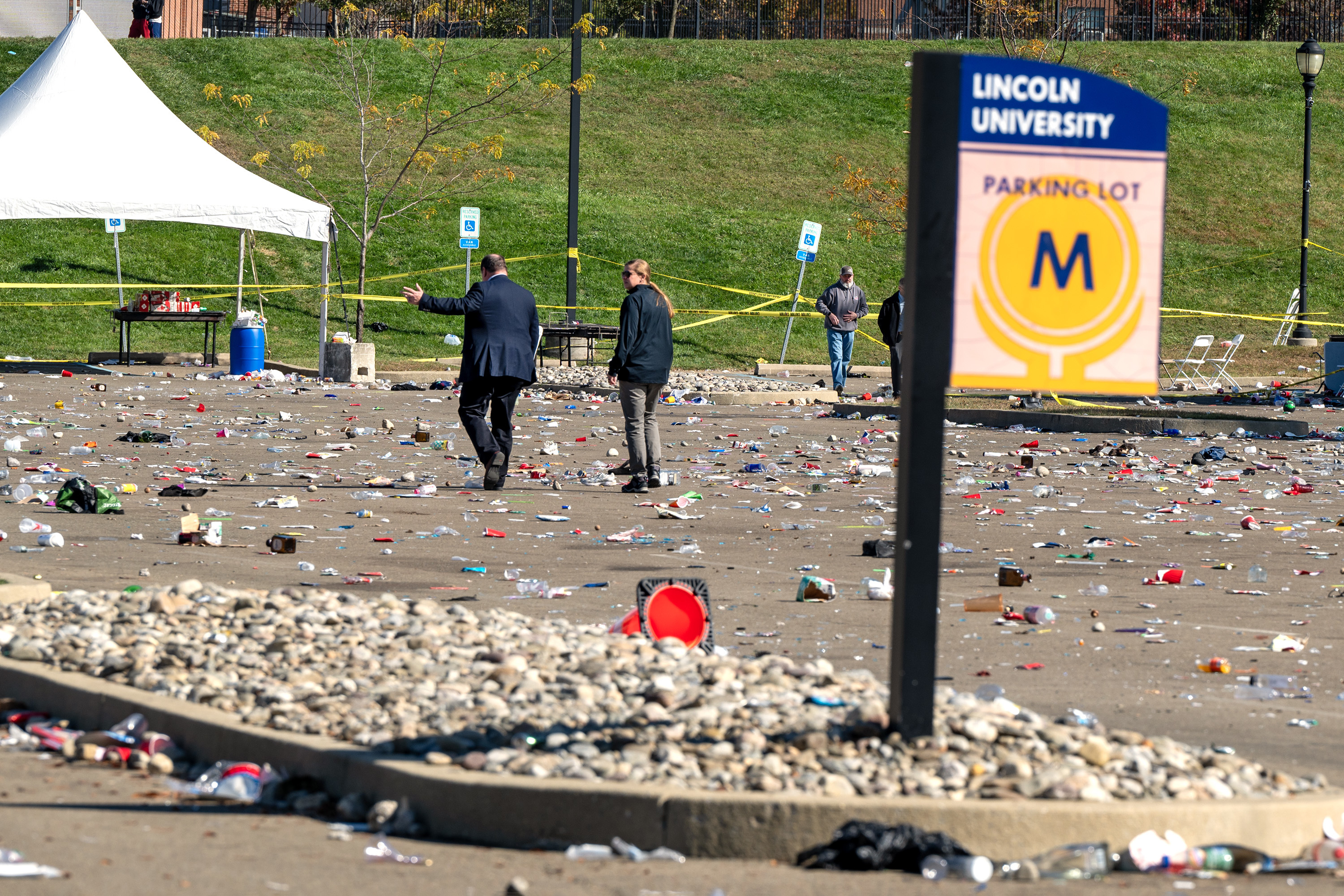
    The shootings that spurred the township to begin considering an ordinance occurred Oct. 25, when thousands gathered on campus for Lincoln’s homecoming. Emergency personnel had to use all-terrain vehicles to transport patients on stretchers because ambulances could not access the campus, given how many cars were parked around the venue, township officials said at the time.

    Investigators are on the scene outside Lincoln University’s International Cultural Center Sunday, Oct. 26, 2025, where one person was killed and several others were shot the night before during homecoming weekend celebrations.Tom Gralish / Staff Photographer

    While the ordinance applies to other township events, the school’s lawyers argue that it targets Lincoln and specifically names examples of special events subject to regulation as “College homecoming or other similar events, college, university or school commencement, graduation or baccalaureate.”

    “It was enacted by the township with the deliberate purpose and with the calculated effect of targeting Lincoln,” the school’s lawyers argued. “Specifically, the ordinance was enacted to interfere with Lincoln’s academic mission and with the speech and other academic activities of the Individual Plaintiffs and their academic colleagues.”

    The ordinance targets events with over 500 people “with the knowledge that the Lincoln University community is at all times several times in excess of that threshold” and “with the knowledge that very few — if any — of the events outside of Lincoln would exceed that threshold,” the lawyers said.

    The ordinance, the school’s lawyers argued, violates Lincoln’s constitutional rights by imposing restrictions on its speech and “its ability to serve as a marketplace of ideas.” The ordinance also violates the First Amendment right to assembly because it treats events of more than 500 people as a nuisance, the lawyers said. And the lawyers said it infringes on religious freedom by naming baccalaureates, which they said “in general — and baccalaureates at Lincoln in particular — are religious services.”

    They objected, too, that the township has sole discretion over whether an event is subject to the ordinance and over whether it should be permitted, and that no objective standards exist. And they disputed the township’s intention to require event holders to have liability insurance subject to approval by the township solicitor.

    “The ordinance also makes the sponsor of a special event liable for actions of people over whom it has no control,” the school’s lawyers argued.

    The ordinance states that the sponsor “shall be responsible to the township for damages sustained to township property caused by participants in the special event.”

    Founded in 1854, Lincoln is known as the first degree-granting historically Black university in the nation. The first presidents of both Nigeria and Ghana are Lincoln graduates, as are Philadelphia Mayor Cherelle L. Parker, former U.S. Supreme Court Justice Thurgood Marshall, and poet Langston Hughes.

    The school has received $45 million in gifts from philanthropist MacKenzie Scott, the ex-wife of Jeff Bezos. Allen, Lincoln’s president, who in 2020 had survived an internal battle to oust her and had her contract extended to 2030, was named a top leader of a historically Black college by a national nonprofit in 2021.

    Township officials had been expressing concerns about events at Lincoln for a while before the homecoming shootings brought renewed attention.

    In spring 2023, two women were shot and injured on Lincoln’s campus during its annual Spring Fling event. In 2022, a student was fatally stabbed by the sister of a student during a fight inside a dorm. During an on-campus dance in 2018, 15 students were taken to the hospital following a brawl in which a security officer was assaulted. In 2016, there was a robbery and shooting on Lincoln’s campus following homecoming. And in 2015, Lincoln tightened security after shots were fired in a dorm.

    At the homecoming last October, Ju’Juan Jeffers, 20, of Wilmington, was killed, and six others, ages 20 to 25, including a student, were also shot. Jeffers’ mother subsequently filed a lawsuit against the school, and three Wilmington men — William Sells, 20; Makaveli Valera, 19; and Karon Rollins, 17 — were charged with second-degree murder, conspiracy, and related crimes in connection with the shootings.

    “We have had meetings with people at Lincoln,” Township Supervisor Noel Roy said last December. “They’ve been somewhat reluctant to do what needs to be done to try and control the situation.”

    Allen at that time acknowledged that changes were needed around large events as well as better collaboration with the township.

    “We want to come together because we are a part of this community as well,” Venus Boston, Lincoln’s general counsel, said during a supervisors meeting last December.

    Before its Spring Fling in April, the university announced new safety plans for large events, including no outdoor events after dusk, screening guests, and allowing only one registered guest per student.

  • More than 50 kidnapped as violent gang attack in Haiti leaves 47 dead

    More than 50 kidnapped as violent gang attack in Haiti leaves 47 dead

    PORT-AU-PRINCE, Haiti — At least 47 people were killed and more than 50 others kidnapped when armed men attacked a once-peaceful community near Haiti’s capital earlier this week, the United Nations said Tuesday.

    It is believed to be one of the largest mass kidnappings in Haiti in recent years, and one gang leader is threatening to kill the hostages if authorities kill any gang members as they try to secure the community nestled in the hills above Port-au-Prince.

    Sunday’s attack on Kenscoff pierced the belief that security in the troubled Caribbean country was improving.

    “This is a major political and security test, for the government, for the police, and for the international mission alike,” said Romain Le Cour, head of the Haiti Observatory at the Global Initiative Against Transnational Organized Crime.

    He said the threat of executing hostages is a trap: If forces don’t act, they’ve failed to protect them; if they do and hostages die, the gangs will blame the state.

    Kenscoff resident Marc Paul, 42, said gangs kidnapped his brother, stepmother, stepfather, and two cousins. He said his 16-year-old niece also was kidnapped and raped but was able to escape and has reunited with him.

    “I had to run over bodies,” he said as he recalled how he ran during the attack. “I can’t sleep knowing all these people died.”

    Paul and his family had already lost their home to a previous gang attack in January 2025, but he said it was not as violent as Sunday’s attack.

    “It’s horrible,” he said, adding that he was upset about the video the gangs posted. “My brother is probably going to die.”

    A threat posted on social media

    In a video posted on social media, the gang leader threatened Vladimir Paraison, director of Haiti’s National Police.

    “Paraison, if any of our soldiers are hurt, I will kill all of them,” he said, referring to the hostages.

    The gang member identified himself as Izo 2, a reference to Izo, or Johnson André, one of Haiti’s most powerful gang leaders.

    Le Cour said Izo 2 is also known as “Didi” and leads the armed group in Kenscoff on behalf of and in coordination with Izo and other gang leaders.

    He said the aim of Sunday’s attack could be to force Haiti’s police and the U.N.-backed gang suppression force to disperse even more of their limited resources.

    “They don’t have enough personnel,” Le Cour said in a phone interview. “If you force them to deploy more troops, it would inevitably be at the expense of other areas.”

    The attack might also just be a show of force and a message to Haiti’s government and police as the country prepares to hold general elections on Dec. 13 for the first time in more than a decade.

    “This is a message to the government and the police that their claims of protection do not match reality,” Le Cour said. “The gangs are saying: When we choose to attack, we can, and we will succeed.”

    Attacks on Kenscoff have escalated

    The first major attack on Kenscoff occurred in January 2025, and since then, there have been sporadic attacks in the mountains surrounding the city center.

    But Sunday’s attack was the largest yet. At least five of the 47 people killed were children, according to the United Nations Integrated Office in Haiti, known as BINUH.

    U.N. Secretary-General António Guterres condemned the attack on Tuesday, noting that 22 of the victims were reportedly executed in a church compound where they had sought shelter: “The relentless gang attacks on communities and the loss of lives underscore the alarming security conditions in Haiti,” he said.

    Kenscoff Mayor Jean Massillon told the Associated Press on Tuesday that gangs set fire to 25 homes and killed two government employees including his cousin, who served as his security detail.

    “The atrocity of this crime reminds us that we have to continue working stronger every day to bring peace to the community,” Massillon said. “I’m optimistic that the state will continue working to eradicate the gangs in Kenscoff.”

    Gangs are coveting Kenscoff because it allows them to surround and control the upscale community of Pétion-Ville and alternate routes connecting Haiti’s capital to its southern region, said María Fernanda Arocha, a researcher with the nonprofit Armed Conflict Location & Event Data.

    Between January and August this year, security operations had managed to reduce violence in Kenscoff by 66% prior to the attack, she said in a statement.

    “While security forces have concentrated their efforts on operations aimed at regaining control in the central areas of Port-au-Prince, criminal groups have instead sought to expand into rural communities that are vulnerable due to the limited response capacity of the police, but which remain strategic hubs,” she added.

    Haitians demand police protection

    Some survivors accused the government of not providing enough protection prior to the attack, with Haiti’s National Police rejecting those accusations.

    Le Cour said that if police and armored vehicles were indeed stationed in Kenscoff prior to the attack, then the assertion is concerning: “You let the gangs come in even if you had everything in place?”

    Armed men control an estimated 70% of Port-au-Prince and swaths of land in Haiti’s central region and beyond.

    Gang violence has displaced a record 1.5 million people across Haiti, where more than 3,050 people were reported killed from January to June and another 1,400 injured, according to U.N. statistics released Tuesday.

    The U.N. noted that nearly 800 rapes were reported from April to June, with 87% of those cases representing collective rapes.

    At least 81 people also were reported kidnapped during that time period, according to a new U.N. report.

    “These figures represent only a portion of the total number of people kidnapped,” it stated. “In many cases, victims’ relatives do not report kidnappings to the police or service providers and choose to negotiate directly with the kidnappers, believing that this approach allows for a quicker release and avoids possible reprisals.”

    The number of kidnappings reported from April to June represents a more than 40% increase compared with the previous quarter.

  • Judge rejects Philly Sheriff Rochelle Bilal’s last-minute attempt to avoid court testimony

    Philadelphia Sheriff Rochelle Bilal made an unsuccessful, last-ditch attempt to avoid facing a city judge about major problems in her office, arguing through an attorney that she has “limited personal knowledge” of the real estate transactions she oversees.

    Jonathan Rardin, a lawyer the city retained to represent Bilal, wrote in a motion filed Friday afternoon that the embattled sheriff should not have to testify before Common Pleas Court Judge Paula Patrick at Wednesday’s hearing on sheriff sales because it would involve “matters outside her unique personal knowledge.”

    On Tuesday morning, Patrick rejected Bilal’s request for a protective order to shield her from testifying, writing that “Bilal and any other relevant parties shall appear” on Wednesday morning and “be expected to testify if necessary.”

    Patrick, supervisor of the court’s commerce division, scheduled the hearing in May, as winning bidders at sheriff sales continued to flood the courts with petitions seeking their deeds. As The Inquirer first reported in July 2024, Bilal’s office had not been issuing the deeds for a year or more after the auctions, leaving neglected homes unable to be renovated, rented, or resold.

    An attorney who represents real estate investors recently filed a lawsuit arguing that Bilal had breached the terms of a 2003 consent order requiring the office to issue deeds within 40 days of settlement. Patrick responded by ordering Bilal’s office to demonstrate at a public hearing that it was not in violation of the decree.

    Wednesday’s hearing will help decide whether Patrick will appoint a “special master,” a title agent, or some other third-party expert in real estate to administer sheriff sales in Philadelphia — arguably the most important function of Bilal’s office.

    Bilal’s lawyer had already successfully pushed back the hearing, which originally had been set for July 27, by arguing the sheriff had an unavoidable scheduling conflict due to “a previously scheduled vacation.” That request to delay the hearing did not mention that Bilal hoped to completely avoid testifying, and at the time, Rardin wrote that her “presence in this matter is necessary.”

    Yet last week’s motion argued instead that the sheriff’s knowledge is “limited to the information provided to her by her staff” and that she should not have to personally testify at all.

    “Requiring Sheriff Bilal to appear and testify regarding events and administrative practices that are not within her unique personal knowledge would impose an unreasonable burden and oppression” under the state’s rules of civil procedure “and would divert a high public official from the discharge of her official duties …,” Rardin wrote.

    Daniel Bernheim, the lawyer for a property group whose March lawsuit triggered Patrick’s court order, said Monday evening that Bilal’s attempt to avoid testimony was a “disappointing response by an elected official.” On Tuesday, Bernheim — himself an elected commissioner in Lower Merion Township — filed a response to her motion that sought to force Bilal to testify in court.

    “[T]he sheriff seeks to avoid answering questions based upon a series of cases which have no relevance whatsoever with the present proceedings and a claim of immunity from testifying which does not exist,” Bernheim wrote.

    In April, Bilal claimed at a City Council budget hearing that most post-auction delays had been resolved. She blamed any ongoing delays in issuing deeds on buyers who did not submit required forms or fees.

    But after Patrick filed her court order in May, Bilal’s office within 48 hours processed 277 deeds, some attached to auctions that had taken place more than a year ago. The office filed more paperwork in two days than it had in the prior three months.

  • Secret Service says it is aware of Iranian state media video threatening Barron Trump

    Secret Service says it is aware of Iranian state media video threatening Barron Trump

    The Secret Service has said it is aware of a video broadcast by Iranian state media appearing to threaten Barron Trump, President Donald Trump’s son.

    The footage, which was reportedly released by media linked to Iran’s Islamic Revolutionary Guard Corps, claimed a $10 million bounty had been placed on him.

    The video opens with the title: “Where to kill Barron Trump?” It depicts a man resembling him and suggests general locations where he might be found.

    “The U.S. Secret Service is aware of the video and investigates anything that can be perceived as a threat toward our protectees,” Nate Herring, a Secret Service spokesperson, said in an emailed statement. “Out of concern for operational security, we do not discuss matters of protective intelligence.”

    The White House did not immediately respond to a request for comment Tuesday morning.

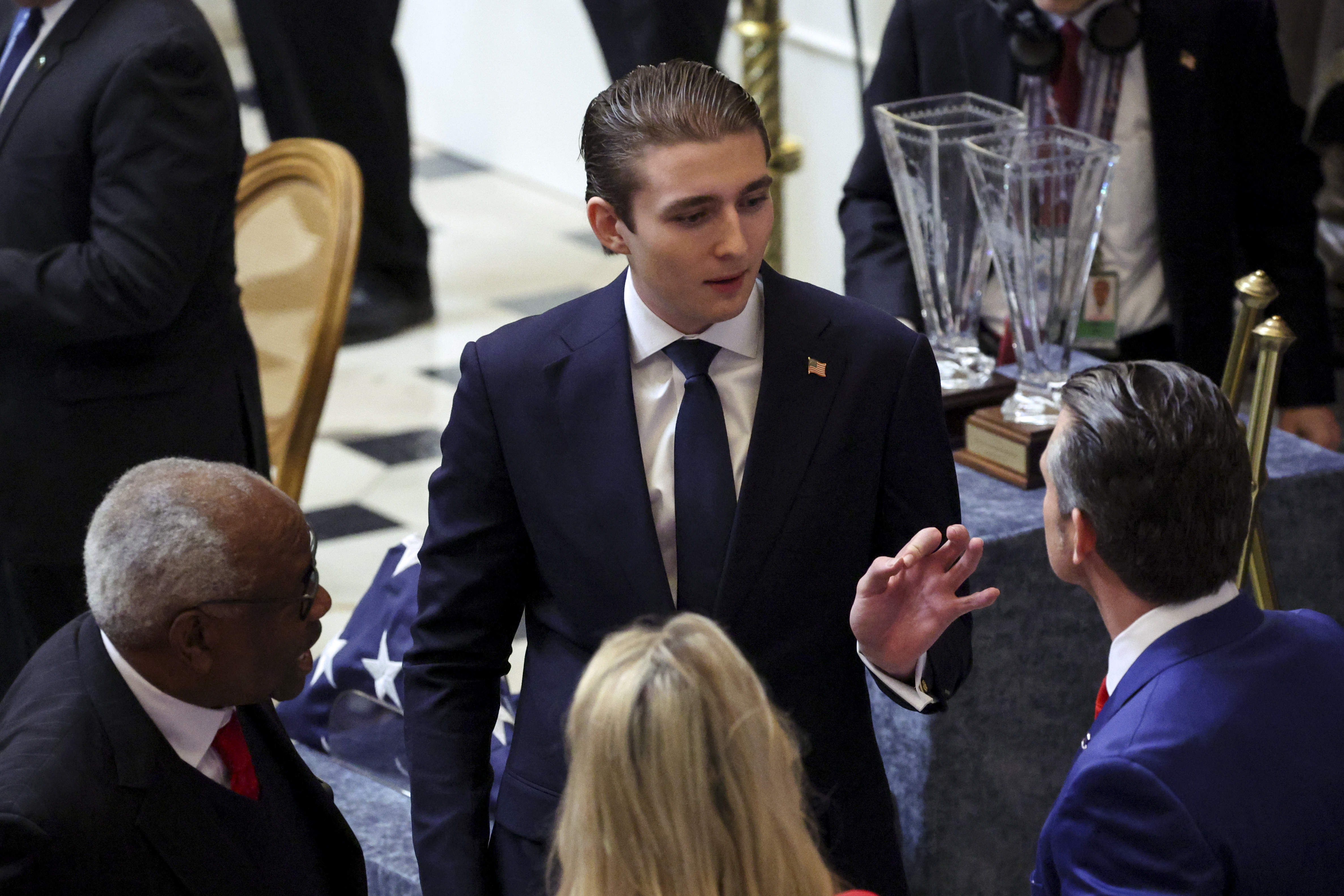
    Trump, who was 10 years old when his father was first elected president and is now 20, has kept a much lower profile than others in his family.

    He has occasionally appeared at high-profile events with his father, such as at his Inauguration Day ceremony in January 2025.

    Concerns about Iranian plots against U.S. officials, including the president, have existed for decades. Those fears have escalated in recent years because of the U.S. role in the killing of Iranian military and political leaders, including the U.S. airstrike that killed Gen. Qasem Soleimani in January 2020.

    The president has cited Iran’s efforts in 2024 to assassinate him as a factor in ordering the joint U.S.-Israeli operation that killed Ayatollah Ali Khamenei.

    In July, an Iranian assassination threat against the president prompted a clandestine operation in which he flew secretly from Turkey on an alternate military aircraft while the White House said he was aboard Air Force One. The operation was first reported by the Washington Post a month later.

    The threat was relayed by the Israeli government to the CIA. U.S. intelligence officials were skeptical and conveyed that view to the Trump administration.

    One official described it as “Israeli-derived, not U.S.-generated, and viewed as low confidence.”