Category: News

  • Questions mount after deadly Berlin Pride attack. Here’s what to know

    Questions mount after deadly Berlin Pride attack. Here’s what to know

    BERLIN — Berliners mourned Monday after the deadly attack near the city’s Pride festival as questions mounted over how the suspect was able to move freely following a conviction linked to his ties to the Islamic State group.

    The 21-year-old Abdul Ballout, a German citizen, was killed following a search that lasted nearly 24 hours after Saturday night’s attack in downtown Berlin. He was suspected of driving a van into a crowd near the Pride festival before apparently cutting others with a machete in what authorities believe was an extremist terror attack.

    One woman was killed and 29 were injured.

    Chancellor Friedrich Merz on Monday wanted to know how the attack could have been prevented. Prosecutors said Ballout previously sought to join IS.

    “We must do everything to protect people in Germany as best possible from such criminals, from dangerous people who for whatever reason can’t be taken into custody,” Merz said.

    Here’s what we know:

    Officials seek answers about suspect’s sentencing

    Ballout, who was born in Germany and has Lebanese roots, traveled to Lebanon in 2025 with the goal of going to Syria to join the Islamic State group, Berlin prosecutors said. He made contact with several people who were presumed members — or at least he believed them to be, prosecutors said.

    He was arrested in Lebanon and sentenced by a military court to three months’ imprisonment for offenses including incitement to religious and sectarian conflict. He returned to Germany after completing his sentence, where he was arrested at the Berlin airport.

    In May, a juvenile court in Berlin convicted Ballout of preparing a serious act of violence endangering the state, as well as publishing Islamic State propaganda on his Instagram account and other charges, prosecutors said. He was sentenced to one year and 10 months in youth custody, which Berlin prosecutors appealed.

    Offenders who are 18 to 21 can be prosecuted in Germany’s juvenile system.

    Officials have said Ballout was given a suspended sentence. The Berlin courts, however, said his sentence had not been suspended but they had been determining whether it should be.

    The court said it released him because he was no longer in pretrial detention, which had been particularly long, and he did not meet statutory requirements governing flight risk, reoffending and other factors.

    Some German officials questioned the court’s decision. They vowed to investigate how Ballout ended up free and whether juvenile sentencing, sometimes seen as too lenient, needs to be reformed.

    Interior Minister Alexander Dobrindt, in an interview with public broadcaster ZDF, said that considering Ballout’s conviction and history of supporting the Islamic State group, it did not make sense why he was on the streets.

    “You can assume that it certainly would have made sense to put this person in custody,” he said.

    During an interview with regional broadcaster RBB, Berlin Mayor Kai Wegner said he didn’t want to question the court system’s independence but in this case, “words fail me.”

    Deradicalization experts believed he was unwilling to change

    The court ordered Ballout to attend a deradicalization program for high-risk offenders. He was evaluated twice by the Berlin-based Violence Prevention Network, which works with people at risk from right-wing extremism and Islamism. The organization defines deradicalization as a person successfully detaching from extremism ideology and distancing themselves from violence.

    Ballout was scheduled to meet with their staff Monday for his third and final evaluation, according to Cornelia Lotthammer, the nongovernmental organization’s public relations director.

    The staff expected to tell the court that Ballout was not a candidate for their program because he sought to misrepresent himself as a friendly person who was not an extremist and therefore did not need to be deradicalized.

    “Normally high-risk people are very convinced of themselves and of their ideology, and they would propagate it within those sessions,” Lotthammer said. “And then it’s easier to work with them. This is not a typical incident.”

    Ballout appeared to try to anticipate what the staff wanted to hear, she said.

    “They could see that he is a problem. I mean, everybody knew that he was a high-risk person,” she said. “But still, if he does not work together with our colleagues, then we can’t do anything.”

    She added: “But nobody would have said, ‘He’s not a threat, just let him go.’”

    He did not seem to be planning any attacks, Lotthammer said. If the staff had any indication otherwise, they would have involved law enforcement.

    Ballout would have had to find another organization to work with, or he might have been sent back to prison, Lotthammer said.

    She declined to comment on whether their organization believed Ballout should have been released from detention, calling that the court’s jurisdiction.

    Tragedy comes ahead of major German elections

    Three German states including Berlin hold elections in September. The attack is likely to feed into campaigning, and there are fears that anti-migrant rhetoric could boost the far right.

    A string of deadly attacks committed by immigrants was one factor in the 2025 national election in which the far-right Alternative for Germany, or AfD, finished second.

    AfD has assailed the government over migration and capitalized on discontent with other issues. In the eastern state of Saxony-Anhalt, it hopes to get its first state governor.

    Kristin Brinker, AfD’s local leader in Berlin, asked on X how a supporter of the Islamic State group was able to move freely in Germany after being in custody.

    “Who bears responsibility for that in the city government?” she said.
  • Meet Jenkintown’s new superintendent, whose background ranges from Sixers reporter to Russian translator

    Meet Jenkintown’s new superintendent, whose background ranges from Sixers reporter to Russian translator

    After the sudden departure of Jenkintown’s longtime superintendent in April, the school district’s new CEO started work this month, and she already has plans.

    “I’m really excited once the year starts to really dive in and go into classrooms,” Brea D’Angelo said last week, “and get the narrative out to the community of the incredible things that are happening. … I’m really looking forward to being the communicator of those types of things.”

    D’Angelo used to be a professional communicator: She went to Rider University for TV and radio and then took a reporting job covering the Sixers at WBCB radio in Levittown.

    “I had the opportunity to go into the locker room and interview players,” D’Angelo said. “What I started realizing was that I wasn’t making a difference.”

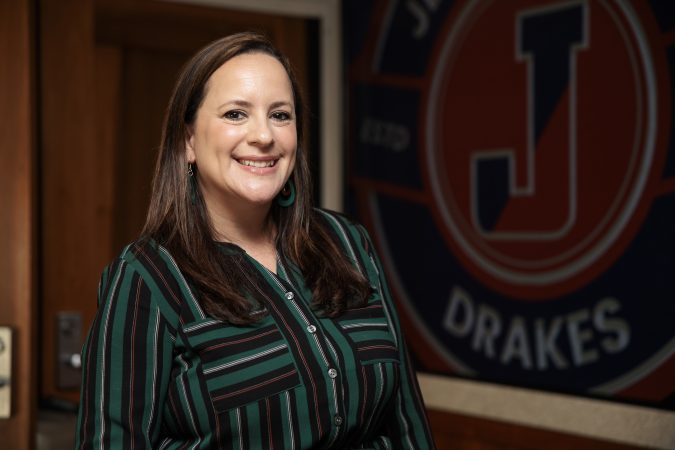
    New superintendent Brea D’Angelo poses for a portrait at Jenkintown High School on Wednesday, July 22, 2026, in Jenkintown. D’Angelo comes to the Jenkintown School District from the Hatboro-Horsham School District.Monica Herndon / Staff Photographer

    From Sixers to secondary education

    She switched from communications to education, starting as a special education assistant in the Lower Moreland Township School District and spending seven years as a secondary school teacher there before working her way up as an administrator in the Hatboro-Horsham School District, where she spent more than 12 years and still lives with her husband and teenage daughter.

    D’Angelo chose to teach English — a subject she came to love as a reluctant reader who learned the joy of books from a teacher when she was about 15.

    “[She] really took an interest and was like, ‘You just haven’t found the right thing to read yet,’” D’Angelo said, and helped her find early favorites, such as Of Mice and Men. “You want teachers to be that for someone.”

    Her plans as superintendent include a return to publishing, of sorts.

    “I’m going to do a newsletter that comes out monthly, from me,” D’Angelo said. “I just want our story to get out there and to show what an incredible place we really are.”

    Jenkintown finds comms pro to replace superintendent

    Jenkintown’s last superintendent, Jill Takacs, had announced her retirement for Aug. 31 this year before leaving early, in April, for an administrator job in New Jersey.

    Takacs’ departure came after an email from a retiring principal leaked to the public last fall that outlined concerns with Takacs’ management style, including a ”lack of transparency,” outgoing Jenkintown Elementary principal Christopher Jahnke wrote. Takacs was on leave shortly afterward.

    But some locals said they had already had concerns about Takacs’ communication with parents in Montgomery County’s smallest school district — particularly amid the universally quick-shifting plans and procedures of the COVID-19 era.

    Jenkintown’s school board appears to have taken that note, highlighting D’Angelo’s narrative chops as a reason for hiring her.

    “The board decided to hire Dr. D’Angelo due to her combination of leadership, team building, and communication skills,” board president Carolyn Riley said. “She struck the right balance between expertise and a ‘friendly but firm’ quality.”

    Riley also highlighted the new superintendent’s experience with special education and facilities management — critical for the steward of Jenkintown’s 103-year-old high school building.

    But the district’s new chief storyteller also knows what communication barriers feel like: D’Angelo grew up hearing both English and Russian, but had to pick up much more Russian as a child to interact with her Ukrainian grandmother.

    Those skills came in handy when Ukrainian refugees arrived in Hatboro-Horsham, and D’Angelo was enlisted to help families get settled.

    “I fell into it because I was pretty much the only Russian speaker on the staff,” D’Angelo said. ”I can’t even imagine fleeing my home, going to a place not speaking the language. … That was really something that I pride myself in, being able to connect with these families and support them.”

    Public relations is often a struggle for public schools, which must balance legally required disclosure with legally required secrecy, especially for personal details about individual students and staff — details like the circumstances surrounding Takacs’ departure.

    D’Angelo, who earned her Ph.D. from Gwynedd Mercy University, hopes that being fully transparent from the beginning with information she is allowed to share will help residents trust her on topics she cannot say much about.

    “I’m OK with being vulnerable in certain situations,” D’Angelo said. “When you build that strength with community members, with staff, with families — there’s a bit more understanding when I go silent on certain things, knowing it’s not because I don’t want to say it; it’s because I can’t.”

    Perhaps sports will be one of those topics: A diehard Philadelphia football and basketball fan (“I bleed green for the Eagles,” she said), D’Angelo already attended a Color Day this year, but she refuses to say which team is better.

    “I will be rooting for Blue and Red all the time, or I’ll be purple,” the new superintendent said. “Yeah, it’s gonna be one of those.”

    This suburban content is produced with support from the Leslie Miller and Richard Worley Foundation and The Lenfest Institute for Journalism. Editorial content is created independently of the project donors. Gifts to support The Inquirer’s high-impact journalism can be made at inquirer.com/donate. A list of Lenfest Institute donors can be found at lenfestinstitute.org/supporters.

  • Trump wants to give U.S.-Iran talks ‘some space’ as he weighs escalation, aide says

    Trump wants to give U.S.-Iran talks ‘some space’ as he weighs escalation, aide says

    President Donald Trump wants to give ongoing talks with Iran “some space” as he considers whether to escalate attacks, the U.S. ambassador to the United Nations said Sunday.

    Mike Waltz’s comments came as the U.S. military paused its bombing raids on Iran over the weekend after 13 consecutive days of heavy strikes and warnings by Trump of an even more aggressive bombing campaign.

    On Friday, Trump emphasized ongoing talks between the United States and Iran in an Oval Office appearance. The day prior, he had told Axios that he is “considering a massive attack. Bigger than ever before. I am close to making a decision.”

    When asked Sunday on NBC’s “Meet the Press” whether the U.S. has decided against ramping up attacks on Iran, Waltz said: “I wouldn’t go that far at all.” He said Trump is keeping “all options on the table.”

    “What the president is doing right now, as we’ve seen all along, is giving some talks some space,” Waltz said, adding that discussions are ongoing “on every level,” both technical talks and between governments.

    Waltz pushed back on reports that the decision to back away from escalation was driven in part by concerns within the Trump administration about depleted U.S. munitions.

    “The U.S. military, and I’ve verified this every which way, has everything that it needs to conduct this campaign” effectively, he said.

    Though the Pentagon has dismissed concerns about U.S. stockpiles, Pentagon officials have expressed far greater anxiety in private, according to current and former officials, arguing that the military desperately needs more money to replenish munitions, including to deter China and Russia.

    Waltz said one diplomatic challenge in negotiations is that those on the Iranian side are “divided.” He said that “there’s internal fighting,” with some seeking guidance from the supreme leader and others who “want to move in a different direction.”

    Still, the ambassador warned that Iran should “take the president very seriously. … The U.S. military is locked and loaded. In fact, more assets have gone into the region.”

    Despite the pause in U.S. strikes, the conflict with Iran has widened amid new turmoil in the Red Sea. Yemen’s Iran-backed Houthi rebels asserted responsibility for strikes Saturday on oil facilities belonging to the Saudi state oil company, Aramco, in the Red Sea towns of Yanbu and Jazan.

    The Houthi strikes could add to the pressure on global oil markets, which are already under severe strain amid disruptions caused by the closure of the Strait of Hormuz.

    On Sunday, Iranian state-affiliated media reported that an oil tanker exploded after hitting a mine in the strait.

    In a separate incident, Iran’s Foreign Ministry accused Ukraine of attacking a commercial Iranian vessel in the Caspian Sea on Saturday and killing a sailor.

    In a Saturday statement on Telegram, President Volodymyr Zelensky said Ukraine has had “good results” with long-range strikes on Russian targets, including in the Caspian Sea. He said targets included a warship and vessels involved in the transportation of military cargo linked to Iran.

    Iran’s Foreign Ministry on Sunday summoned Ukraine’s chargé d’affaires in Tehran over the attack. Iran’s assistant foreign minister, Manouchehr Moradi, said in the meeting that it amounted to an act of aggression, Iranian state media reported.

  • Medicare was one of the most successful civil rights laws in history

    Medicare was one of the most successful civil rights laws in history

    When Americans think of the seminal Civil Rights legislation of the 1960s, they think of laws like the 1964 Civil Rights Act and the 1965 Voting Rights Act. Yet, there is one piece of historic 1960s legislation that unleashed a powerful civil rights tool that rarely gets remembered as “civil rights” legislation: Medicare.

    Hospitals desegregated — some almost overnight — worried that they would get cut off from Medicare funds. “White Only” signs came down, white-only facilities and segregated wards admitted patients without regard to race and Black clinicians received admitting privileges.

    And yet, a racial healthcare crisis persists. Over the past two decades, Americans have made no progress in narrowing racial disparities in medical care, although we know more about them today than ever.

    Black patients are less likely than white patients to receive pain medication, emergency cardiology care, lung cancer surgery, a kidney transplant, an appropriate mental health diagnosis and end-of-life home hospice care. Black people are disproportionately hospitalized for psychiatric services, excessively diagnosed with schizophrenia and more likely to have amputations. Surgery is more likely to kill Black patients, including children, than white patients, and Black mothers are three times as likely to die in childbirth as white mothers.

    These disparities remain after accounting for other characteristics that influence health.

    The history of Medicare, which turns 60 this year, offers a suggestion of how to rectify some of these problems. The desegregation of hospitals didn’t come when experts recognized that they were segregated, or even when courts declared such practices unlawful. Instead, the changes came when the government required hospitals to do better, verified compliance and withheld Medicare funding when they failed.

    This transformation forged by Medicare was as unexpected as it was abrupt.

    Hospitals, especially in the South, had been segregated before the Civil Rights Act. The federal government didn’t formally even document the practices and, in many cases, willfully ignored them.

    Title VI of the 1964 Civil Rights Act aimed to address this problem. It prohibited discrimination in federally funded institutions. Medical school-affiliated hospital facilities, which received much of their funding from federal government training and research grants, quietly began taking steps toward integration. Yet, at all other facilities, passage of the law changed little.

    Nationwide, but most dramatically in the South, Black patients continued to struggle to get care. Hospitals still hung “White” and “Colored” signs, separated patient records by race and shunted Black patients into basements or separate buildings, if they’d treat Black patients at all. Black women continued to give birth in dangerous conditions. Sometimes, while in labor, they had to solicit care from multiple white-only hospitals or facilities with limited beds for Black patients until one perhaps admitted them.

    Civil rights organizations filed hundreds of Title VI complaints. Yet, the federal government had no staff assigned to enforce compliance. As a result, the complaints accomplished very little.

    There were also several other impediments preventing progress. While healthcare facilities had long received federal funds through programs like the Hill-Burton Act, which paid for the construction of segregated hospitals, mostly in the South, Washington could not easily claw back federal dollars that had already been distributed to hospitals. Further, Title VI had no built-in enforcement mechanism. The Johnson administration, which in its first two years had been consumed with passing and implementing an array of ambitious legislation like the Civil Rights Act and the Voting Rights Act, was faced with going after individual hospitals on a case-by-case basis.

    Everything changed after Congress passed Medicare in 1965. Urged on by civil rights organizations, John Gardner, secretary of the Department of Health, Education, and Welfare (HEW), announced that to receive Medicare dollars, hospitals must comply with the Civil Rights Act. The new health insurance program covered 19 million seniors and promised to pay billions to healthcare facilities — but only if they complied. To Gardner, it was an unprecedented enforcement tool.

    HEW devised a process for determining compliance. Federal workers would inspect facilities. Were patients admitted and assigned the first bed available, regardless of race? Did hospitals extend admitting privileges to Black doctors? Were there disparities between their patient population’s racial composition and that of their service area?

    Made By History sponsors. FOR USE ON MADE BY HISTORY STORIES ONLY.Inquirer Staff

    Hospitals clearly in compliance would receive Medicare dollars. Others clearly out of compliance would not.

    Gardner did not have enough HEW staff to dispatch to inspect the nation’s 4,000 hospitals. So he put out a call for federal employees willing to volunteer in his department and conduct inspections. Over 1,000 came forward including tax accountants, veterinarians and scientists.

    In April 1966, civil rights movement activists trained them. Some violations would be obvious. That included “whites only” signs above entrances, bathrooms and in cafeterias, racially separate medical records and infants segregated by race.

    But trainers warned that hospital administrators might disguise a facility as integrated for the visit. Some did. One put a white administrator in a patient gown in a room with a Black patient. Another placed four comatose patients, each a different race, next to each other.

    Doing the “HEW shuffle” of fixing signs and shifting a few patients was insufficient, the inspectors explained. Facilities needed to be race-blind.

    The combination of a strict standard coupled with inspections worked.

    In three months, nearly all hospitals ended formal segregation and had been Title VI-certified as Medicare providers. After July 1, hospitals that had not been certified as Title VI compliant — those that lagged transforming their facility or refused on principle to do so — could not provide care for Medicare patients.

    The lives of Black people in the South radically changed. Before the intervention Black infants below the Mason-Dixon line died at twice the rate of whites. By 1971, however, Black infant mortality halved, largely because they more readily received care for treatable conditions and their mothers had access to hospitals for the first time.

    Yet, even as Medicare proved enormously successful in erasing formal segregation, racial stratification patterns remained apparent in hospitals throughout the U.S., exacerbated by residential segregation and referral networks systems.

    Ironically, we know this from Medicare itself. The program has long served as a tool for researchers to investigate disparities in healthcare: beneficiaries share a common insurance which makes it easier to isolate inequities.

    And racial separation persists among Medicare patients. Black Medicare patients are disproportionately treated at hospitals with fewer resources and worse outcomes. In some hospitals, certain teams treat only Black Medicare patients. Other teams treat only white ones.

    Starting in 2003, Medicare Advantage expanded the enrollment of Medicare recipients in commercial insurance alternatives. In Medicare Advantage, the federal government pays insurance companies fixed amounts for each enrollee and the companies then manage benefits. These programs, separate and unequal, also expose racial double standards.

    Even within the same Medicare Advantage plan, care is worse for Black and poor enrollees. Black enrollees tend to have worse follow-up care and chronic disease management than white enrollees. Additionally, they experience higher rates of preventable hospitalizations than white beneficiaries and are more likely to be readmitted.

    The 60th anniversary of Medicare should remind us that our greatest advance in health equity came from enforceable commitments to providing equal care, regardless of race. Racial disparities in healthcare can be eliminated if the federal government requires compliance — and then enforces it.

    For hospitals and physicians in 1966, equal treatment suddenly became a condition of financial survival. The immediate gains Black patients received suggest that if the federal government required healthcare systems and insurers to make real, measurable progress toward addressing racial health disparity, it would produce immediate and significant gains once more.

    The question is whether Americans — and their government — are willing to demand such accountability as they did 60 years ago?

    David Barton Smith is emeritus professor of health management and policy at Temple University. He was the recipient of a Robert Wood Johnson Health Policy Research Investigator Award and is author of three books and numerous articles related to this topic.

    Leila Morsy is an economic justice research fellow at the Legal Defense Fund Thurgood Marshall Institute and a senior lecturer at Flinders University. She is writing a book about the history of the exclusion of Black doctors and its contemporary consequences.

    Made by History takes readers beyond the headlines with articles written and edited by professional historians. Opinions expressed do not necessarily reflect the views of The Inquirer.

  • Trump administration reviewing ICE vetting process after Maine shooting

    Trump administration reviewing ICE vetting process after Maine shooting

    The Trump administration is reviewing its process for vetting U.S. immigration officers after reports that a man allegedly involved in the fatal shooting of an immigrant in Maine had a history of violent outbursts, a senior White House official said Sunday.

    In an interview with The Washington Post earlier this month, Ashley Brouillette, said her former spouse, David Brouillette, told her in a phone call that he was the Immigration and Customs Enforcement officer who fatally shot Colombian immigrant Johan Sebastián Durán Guerrero, in Biddeford, Maine, on July 13.

    Ashley Brouillette said her ex-husband had a pattern of violent outbursts, including throwing boiling hot water on her while she was holding their young daughter.

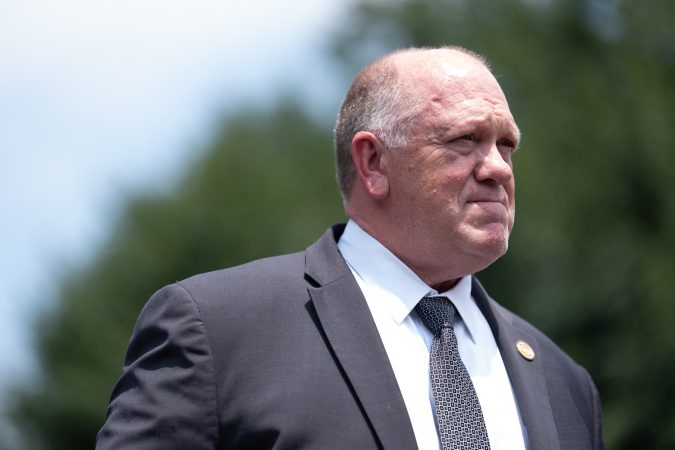
    “If this person had that type of history, it would have been a vetting issue, and it should have been brought to the attention of those” who make such decisions, White House border czar Tom Homan told CNN’s “State of the Union.”

    Homan did not confirm that David Brouillette shot Durán, but he said that the Department of Homeland Security is investigating whether the vetting process failed.

    “When they hire somebody, they put them through a vetting process and look at all that stuff, so I know, based on that information, that that’s part of the ongoing investigation,” Homan said.

    “Was that information not available? Did they not know? So there’s a separate administrative investigation on what happened here,” he added.

    The Department of Homeland Security has not publicly released the name of the officer who shot Durán. The 25-year-old’s death led to mass protests in Maine.

    Ashley Brouillette identified David Brouillette as the officer seen on video footage of the scene in Biddeford. The video does not show the shooting itself, but it does show two officers in the moments afterward.

    She accused her ex-husband of pointing a gun at her and threatening her, among other instances of past violence. Ashley Brouillette also told The Post that he was diagnosed with several mental health disorders as a young adult. The Post could not independently verify those claims.

    David Brouillette’s other ex-wife, Lucinda Brouillette, also has described a pattern of physical and mental abuse in court filings. In some filings, she said Brouillette had been medically discharged from the military in 2015 because of post-traumatic stress. The Post has not independently verified that claim.

    In a statement to The Post, Lucinda Brouillette said that throughout her marriage, “and in the years that followed, I have feared for a long time that his anger, aggression, and escalating behavior would eventually result in severe, life threatening violence.”

    The Post reported Friday that David Brouillette was found by a judge to have made statements in court last year that were not credible.

    He said in an October court hearing related to child support payments that he was struggling to earn money because he had health issues and his driver’s license had been revoked, but a judge concluded in a Nov. 17 ruling that those claims were not credible.

    The judge denied his request to terminate his child support payments to a former wife. Instead, the judge concluded that David Brouillette was “voluntarily underemployed.” David Brouillette did not respond to calls or emails for the story.

    Ashley Brouillette said David Brouillette was hired by ICE in November, as the federal agency was rushing to put thousands of new officers on the streets. Former Department of Homeland Security officials have publicly questioned whether those new hires were properly vetted.

    In the CNN interview, Homan said that ICE is also reviewing agent training and that agents are undergoing additional training.

    “I know this specific case, as far as the vetting, is under review by internal affairs section, so we’ll see where it lies,” he said.

    Durán, who had a work permit issued by the Trump administration, was shot shortly after leaving for work on July 13.

    ICE has said that officers were in the area surveilling an address associated with an individual who has a final order of removal when they saw Durán leave and attempted to stop his vehicle. The agency has alleged that Durán tried to flee the officers and that an officer fired because he feared for public safety.

    After the shooting, the office of Maine Attorney General Aaron Frey said the officer would be placed on leave. Sen. Angus King (I-Maine) said at a news conference that none of the officers involved in the fatal shooting were wearing body cameras.

    A spokesperson for King said Homeland Security Secretary Markwayne Mullin told the senator that Durán was not the target of the ICE operation.

  • ☕ An inclusive coffee shop | Inquirer South Jersey

    ☕ An inclusive coffee shop | Inquirer South Jersey

    Good morning, South Jersey.

    Tucked inside the Vineland Public Library, there’s a nonprofit coffee shop that employs and supports the careers of adults with disabilities.

    And Gov. Mikie Sherrill signed a law to prevent surveillance pricing for groceries, which she said is part of her overall agenda to prioritize affordability in the state.

    Plus, Collingswood announced that the borough is reviewing its public pool policies after an anti-LGBTQ social media account posted about them, and more news of the day.

    — Taylor Allen (southjersey@inquirer.com)

    If someone forwarded you this email, sign up for free here.

    A coffee shop ‘with a purpose’

    Inclusion Cafe opened in early May inside the Vineland Public Library.

    It’s an offshoot of Inclusion Coffee Shop in Elmer which opened in 2022. Both cafes focus on career development for adults with disabilities. The coffee shops have hired 15 employees with disabilities and seven without. Staff members are paid $16 an hour, plus tips.

    “I love it so far,” said Victor Perez, 19, who’s a barista with autism. “I go in and clock in, get my apron. … I like the caramel hot coffee.”

    The founder of the coffee shops created the cafes after her son’s Down syndrome diagnosis.

    The Inquirer’s Sarah Nicell has the story.

    What to know about N.J.’s surveillance pricing ban on groceries

    Gov. Mikie Sherrill signed the Fair Price Protection Act which prohibits surveillance pricing of groceries.

    New Jersey is the third state to ban the practice through law.

    🛒 What is surveillance pricing?

    It’s when grocery stores or apps uses shoppers’ personal data to create individualized prices on items.

    The new law defines the practice as a strategy where an algorithm or automatic system uses personal data to adjust, optimize, or adjust food prices.

    🛒 What exactly does the law do?

    It bans strategies that determine grocery costs based on consumers’ data, prohibits new electronic shelf labels for one year, and requires the state to study the utility of these type of labels.

    Aliya Schneider has more answers, including what lawmakers thought of the bill.

    What to know today

    • One teenager is charged with fatally shooting another Friday evening in Mullica Township, according to the Atlantic County Prosecutor’s office.
    • Collingswood officials are reviewing the borough’s public pool rules after an anti-LGBTQ social media account posted about its policies.
    • Burlington County will begin repaving a 2.7-mile portion of Old York Road in Burlington Township, Springfield, and Florence on Monday. It’s expected to take about two weeks to finish.
    • The family-owned bakery Too Sweet Boutique recently moved to Washington Township after nearly a decade in Deptford.
    • Speaking of bakeries, the former McMillan’s Bakery in Haddon Township will reopen as Del Buono’s Pastry Shop in August. The shop will reserve 900 square feet of the new space to host DiBartolo’s Kakery led by Woolwich resident Al DiBartolo who was a winner of Food Network’s Halloween Wars and a contestant on TLC’s Next Great Baker.
    • There’s already unauthorized merch of LeBron James as a Sixer outside of Philly stadiums and down the Shore.
    • Wawa and Lands’ End launched a limited-edition mini hoagie tote bag and it immediately sold out online. They are available at select Wawa locations only in New Jersey.

    🧠 Trivia time

    LeBron James is set to finish his legendary NBA career as a Sixer.

    He agreed to sign a two-year contract at what value?

    A) $6 million

    B) $7 million

    C) $8 million

    D) $12 million

    Think you know? Check your answer.

    What we’re…

    🎤 Reminiscing: On Shakira’s final U.S. show Saturday in Atlantic City, which closed out her World Cup Tour.

    🥤Craving: A milkshake from the Maple Shade Custard Stand.

    🏠 Admiring: The architecture of South Jersey’s patterned brick 18th-century farmhouses.

    📬 Your South Jersey view

    A sunny afternoon at Cooper’s Poynt Waterfront Park in Camden.Taylor Allen

    I’m always grateful that I live in walking distance to city parks.

    What does your community look like? What South Jersey memory would you like to share? Submit a photo and/or a brief description for a chance to be featured in the Monday edition of this newsletter.

    🗞️ What other South Jersey residents are reading

    And that’s all I have for you this morning. Thanks for choosing to start your week with The Inquirer. Let’s do this again tomorrow. 😎

    By submitting your written, visual, and/or audio contributions, you agree to The Inquirer’s Terms of Use, including the grant of rights in Section 10.

  • Is building a data center on a Superfund site safe? Construction has started on one in Chester County.

    Is building a data center on a Superfund site safe? Construction has started on one in Chester County.

    Kelly Donia was seated in her Malvern Hunt home when she spotted dust plumes rising from construction vehicles combing the site of a planned data center complex in East Whiteland Township.

    She immediately drove to the site, across Swedesford Road from her development, to watch that day in June, anxious about the safety of building a 1.5 million-square-foot data center directly on top of a Superfund site in Chester County.

    “No one seems to be concerned, but I mean, we live right here, we work right here, there are children — there’s a daycare,” Donia said. “I don’t understand. I don’t understand our officials, and I don’t understand the developer, and I don’t understand the general contractor.”

    Donia is not alone in her fears. She and many of her neighbors, who had packed into East Whiteland meetings about the project for months, have continued to raise concerns about the safety of the building on the former 79-acre Cyprus Foote Mineral Co. property, which was contaminated over decades by a range of chemicals such as lithium, arsenic, and hexavalent chromium.

    Not long after Donia saw those plumes, the township issued a stop-work order until it gathers more information on the environmental impact of construction.

    While the developer says the site is safe, and the township has approved the plans, some residents believe that documents filed with the township and U.S. Environmental Protection Agency show that the site is still contaminated from its years as an industrial site, and they worry about what impact the construction will have on their community.

    Here is what The Inquirer knows about the Foote Superfund site.

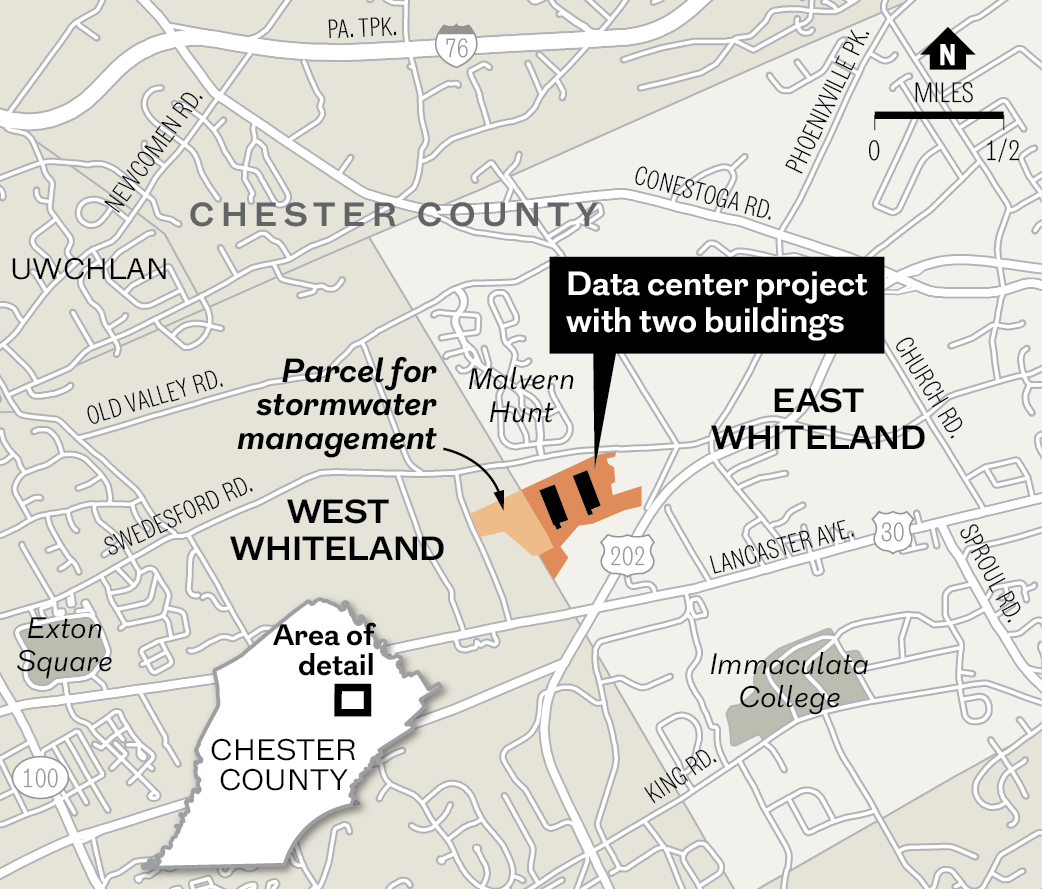
    Location of the two-building data center project in East Whiteland, Chester County.John Duchneskie

    What is proposed?

    Green Fig LLC and Sentinel Data Centers plan to build a 1.5 million-square-foot data center on the 79-acre former site of Cyprus Foote Mineral Co.

    Green Fig LLC first proposed a data center in 2018 and secured early zoning board approvals. The plans were greenlit by the township’s supervisors in 2024, drawing little pushback from the community.

    Residents have been more engaged since the plan came back before the township earlier this year, first with ambitions to scale it up, then with a proposal to shrink it to appease outraged residents.

    People protest the expanded data center before the East Whiteland Planning Commission meeting held at Penn State Great Valley on Monday, March 9, 2026 in Malvern.Monica Herndon / Staff Photographer

    What are residents concerned about?

    Residents fear that construction work on the site will kick up pollution in the air and release contaminants into the drinking water. They worry that there has not been ongoing testing of the soil on the site, especially knowing that contamination exists below.

    How did the site become polluted?

    Pollution at the Foote Mineral Co. likely started as soon as 1941 when the company began crushing ores and minerals.

    Foote closed in 1991 with two quarries, a pit where solvents were burned, a lined wastewater basin, and more than 50 buildings and processing areas. Three unlined lagoons were backfilled.

    At the time, public and private wells within four miles of the site had supplied drinking water to approximately 42,300 people. Several private wells near the site were found to be contaminated and were closed. A public water-supply well one mile away was also shuttered.

    Cleanup, led by the EPA, has included capping contaminated quarries, stabilizing waste areas, and maintaining a long-term monitoring program for an evolving groundwater plume. Pollutants included lithium, boron, and low-level radiation.

    An open land site is shown in East and West Whiteland Townships in Chester County on Thursday, January 5, 2023, where Green Fig LLC has proposed its data center project.Jose F. Moreno / Staff Photographer

    What is a Superfund site, and how did it become one?

    A Superfund site is a contaminated location in the United States designated by the federal government as a severe health or environmental hazard. Foote was added to the federal Superfund list in 1992.

    In a 2023 letter to East Whiteland Township officials, a contractor hired on behalf of the developers incorrectly said that the site had been removed from the U.S. Environmental Protection Agency’s National Priorities List, an inventory of the nation’s most serious hazardous waste sites.

    As of Friday, Foote Mineral Co. remained on the list posted on the EPA’s website. The EPA says because of the ongoing pollution, there is no proposal to remove the Foote site from the National Priorities List, nor any timeline for remediation to be complete.

    What does the EPA recommend?

    It’s complicated.

    A 2024 EPA report, the most recent environmental evaluation of the site, found concentrations of certain pollutants have decreased over time, but an excessive amount of volatile organic compounds, or VOCs, remained. VOCs are gases that contain a variety of chemicals that may adversely affect human health. VOCs tend to be much more concentrated when contained indoors.

    The EPA recommended updated land-use restrictions and further data collection to ensure the site remains safe during future redevelopment.

    On its website, the EPA wrote that the “hazardous substances, pollutants or contaminants remain at the site above levels that allow for unlimited use and unrestricted exposure.”

    Days before the 2024 findings were released, an EPA engineer filed a report known as a “Superfund Checklist for Retracting the Sitewide Ready for Anticipated Use Measure (SWRAU)” that said the site “no longer meets” standards for human exposure.

    The EPA said in an emailed statement that SWRAU forms are only for guidance.

    SWRAU “designations are not required for redevelopment,” the statement said. “So long as all land and groundwater use restrictions continue to be met and redevelopment does not interfere with EPA’s cleanup or future investigations, sites can be reused and redeveloped.”

    “Based on a careful review of construction plans by EPA subject matter experts, the agency does not anticipate the development to impact the remedy at the Foote Mineral Co. Superfund site,” Mike Bastasch, an EPA spokesperson, said in June. The EPA “remains engaged and will continue monitoring redevelopment progress to ensure the remedy remains intact,” he said.

    What do experts say?

    If a site is properly cleaned up, there are “potential ways that a data center could be a better use, environmentally, of the land,” said Noah Kittner, associate professor in the Department of Environmental Sciences and Engineering at the University of North Carolina Gillings School of Global Public Health.

    But that is contingent on how it uses water, what kind of systems are in place, what types of energy and electricity are being used, and whether diesel generators are being used in the construction, development, and operation of the site, he said.

    The documentation from the EPA showing remaining contamination “certainly raises some red flags” about redeveloping the site, he added. And whether the project does more harm than good is “highly dependent on plans for construction.”

    “You could have a poorly executed project, and it causes a lot more problems for the community,” Kittner said. “Or you could have a really well-designed remediation project that builds in sustainability principles and other factors that could really transform that area from what was once highly polluting to something that is environmentally positive.”

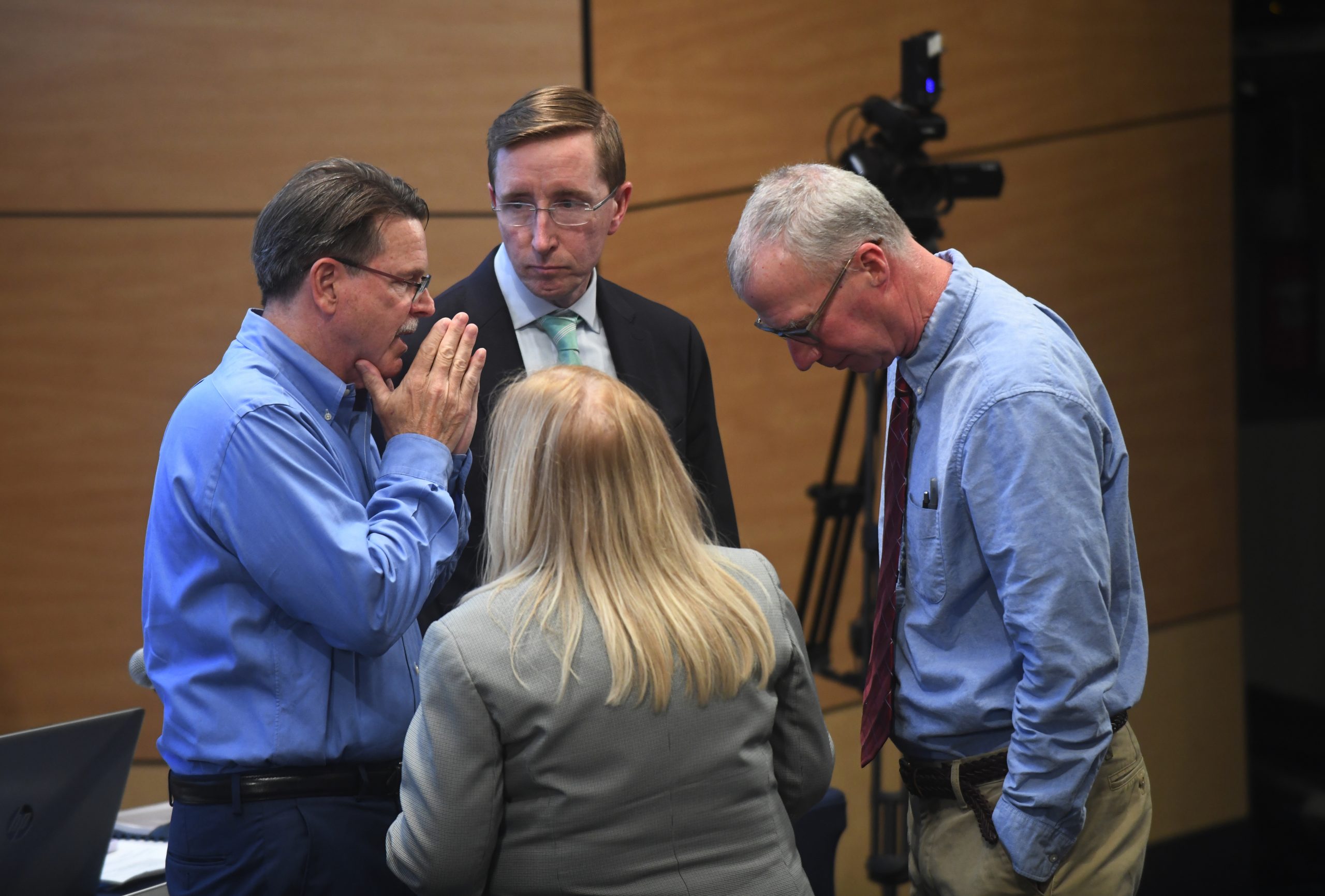
    Scott Lambert, chair of the East Whiteland board of supervisors, left, confers with township officials about the data center proposal on April 14, 2026.Bob Williams / For The Inquirer

    Who decides?

    The EPA said in a statement to The Inquirer that it does not “recommend, propose, or approve specific Superfund redevelopment plans.” The agency reviews proposed uses and checks if there are “any potential conflicts with the selected remedy (including cleanup standards) or any issues that could reduce protection of human health and the environment,” the statement said.

    The EPA’s goal is that most Superfund sites will be cleaned enough for commercial or industrial use. However, in some cases, the EPA can impose near permanent, severe restrictions on potential uses. Most Superfund sites undergo evaluations every five years to make those determinations until a site is removed from the National Priorities List.

    Beyond that, it falls to the township to make final decisions on what the project will ultimately look like, and whether it could be built. Municipal leaders have said previously that, due to state law, they feel their hands are tied to allow for uses such as data centers.

    What’s next?

    The project remains in limbo: The developers have returned to the township seeking to amend their plans and alter the final design for the project. Supervisors tabled their decision at their last meeting on July 8, saying they needed more information about proposed changes.

    Residents remain concerned about long-term construction at the site.

    This suburban content is produced with support from the Leslie Miller and Richard Worley Foundation and The Lenfest Institute for Journalism. Editorial content is created independently of the project donors. Gifts to support The Inquirer’s high-impact journalism can be made at inquirer.com/donate. A list of Lenfest Institute donors can be found at lenfestinstitute.org/supporters.

  • A coffee shop hidden inside a Vineland library creates opportunity for adults with disabilities

    A coffee shop hidden inside a Vineland library creates opportunity for adults with disabilities

    It wasn’t until Noel Perez vented on Facebook that he was able to help his son, Victor Perez, find a job in South Jersey.

    Noel Perez, 42, of Vineland, Cumberland County, said local employers expected Victor Perez, 19, to donate his time rather than get paid. Because his son is a student with autism in the Salem County Special Services School District, Noel Perez said people wanted him to just be a volunteer.

    But his social media post led to the suggestion that Victor Perez apply for a role at Inclusion Cafe — a new nonprofit coffee shop tucked away in Vineland Public Library employing adults with disabilities.

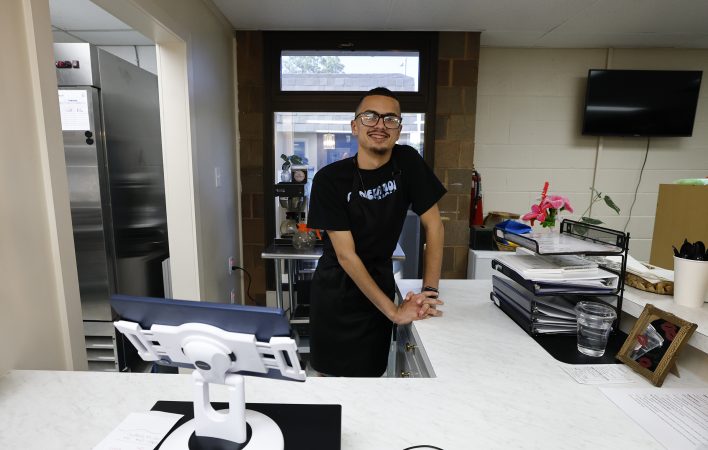
    “I love it so far,” Victor Perez said. “I go in and clock in, get my apron. … I like the caramel hot coffee.”

    Barista Victor Perez,19, at the Inclusion Cafe inside the Vineland Public Library in Cumberland County, N.J. on Thursday, July 23, 2026. The cafe seeks to create jobs for adults with disabilities in a supportive environment.Yong Kim / Staff Photographer

    Inclusion Cafe at 1058 E. Landis Ave., which opened in early May, is an offshoot of Inclusion Coffee Shop in Elmer, Salem County, which opened in 2022.

    The cafes were founded by Amanda Vellon, 38, who grew up in Vineland and now lives in Elmer. Both focus on career development for adults with disabilities, and Vellon said the coffee shops have hired 15 staff members with disabilities and seven without. Vellon said employees make $16 an hour, plus tips.

    Victor Perez said he’s made five friends on the job since he started in May and works about two-and-a-half days per week. He said he likes when the nonprofit features him in TikTok videos.

    “It’s inviting for people like Victor,” Noel Perez said. “It gives him opportunity and chances for people to interact with him and for him to interact with people.”

    In 2021, after a surprise pregnancy, Vellon found out her son had a heart defect during an ultrasound appointment, and later Down syndrome at 32 weeks. Vellon said the diagnosis brought on “a roller coaster of emotions,” and she wanted to find a way to spread joy and keep people from feeling scared about their children’s futures.

    “My husband said, ‘We want to own a restaurant. Why don’t we try a coffee shop?’” Vellon said. “After some thought, I said, ‘Let’s do it, but let’s do it with a purpose.’”

    Vellon’s son, Rome, is 5 years old now. The Elmer location, a business at 119 S. Main St., has kept on, and after registering Inclusion Cafe as a community and economic development nonprofit in 2025, Vellon moved to work with Vineland Mayor Anthony Fanucci and other officials to incorporate the coffee shop there.

    “The Inclusion Cafe is about creating opportunities and making sure everyone in our community feels welcome and valued,” Fanucci said in an emailed statement. “The Vineland Public Library has always been a place where people come together to learn, connect, and access important resources, so it was a natural fit for a program that promotes inclusion and independence.”

    Luis Amberths, business manager at Vineland Public Library, said the library serves about 600 people every day. As a community hub for Vineland’s 60,000 residents, staff have been seeking ways to expand its services, including in the form of an esports room. The new cafe was a mutually beneficial way to expand upon those offerings, Amberths said.

    Despite the cafe leasing a nontraditional space toward the back of the library, Amberths said customers are still finding their way there and checking out books, too.

    “In spite of all that, it’s being found. … We were pretty busy already because of what we offer and the programming we have, but it’s been tenfold because of what [the cafe] has done,” Amberths said.

    The coffee shop offers coffee flights, specialty lattes, homemade syrups, and breakfast items, influenced by what Vellon’s own children like. Rome’s favorite, a plain bagel with cream cheese, made the cut. Staples from her two other kids, including a bacon, sausage, egg, and cheese on a strawberry bagel with strawberry jam, are featured, too.

    “I was very anxious before opening. … It’s not a storefront. We don’t necessarily have foot traffic. It’s not very visible to the road,” Vellon said. “I had a lot of reservations, but none of that has stopped the community from coming to support us.”

  • Who lives in the new apartments at the Navy Yard? Turns out, not very many people.

    Who lives in the new apartments at the Navy Yard? Turns out, not very many people.

    A year ago, Priya Brown spent many weekday afternoons sitting in traffic, inching home to Northern Liberties from her job in the Navy Yard.

    Since moving into the new apartments at South Philly’s converted military base in January, the 27-year-old said her daily routine has gotten much more relaxing — with far fewer brake lights. An assistant buyer at Anthropologie, Brown walks 10 minutes to her office at Urban Outfitters’ Navy Yard headquarters.

    “My life is so much easier,” Brown said last week as she walked her tiny basset hound, Momo, around her building, AVE Constitution. The air was quiet, save for an occasional bird chirping and the steady hum of planes making their descent into Philadelphia International Airport.

    “I’m not a city person,” added Brown, an Annapolis native who moved to Philly for work. In Northern Liberties, “I missed grass a lot.”

    The Navy Yard has open space and paths for walking and running, as seen in this 2022 file photo.Yong Kim / Staff Photographer

    Brown pays about $2,400 a month for her one-bedroom, she said, and takes advantage of the free and abundant street parking, a rarity elsewhere in the city.

    AVE, the national apartment brand run by Korman Communities, is calling its neighboring Navy Yard complexes, Constitution and Normandy, “Philadelphia’s newest neighborhood.”

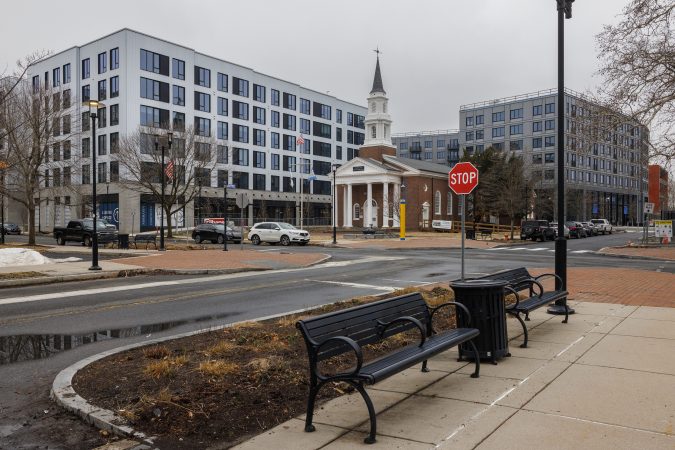
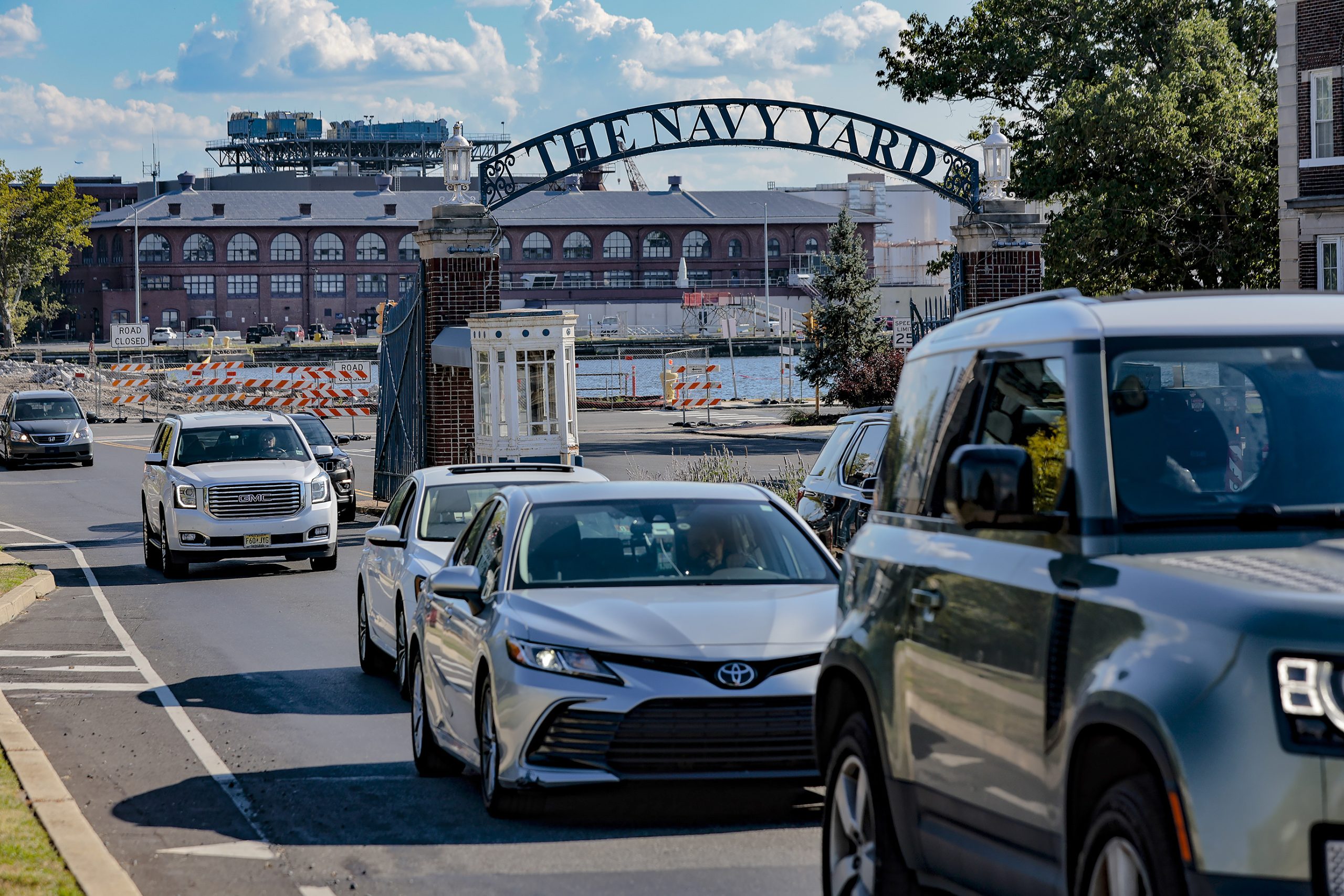
    Constitution opened late last year as the first new private-sector housing complex on the 1,200-acre property at the city’s southernmost edge. The naval base was decommissioned in the 1990s and has since become an office and laboratory hub, with more than 150 companies that employ 16,000 people.

    It also includes more than 20 acres of parks and miles of walking paths, some along the Delaware River, as well as a restaurant and hotel.

    Now, it is also home to a small but growing number of residents.

    More than a third of the 347 units in Constitution are leased, according to Sam Korman, AVE’s director of operations. Next door at Normandy, which opened this spring, more than 20% of the 267 units are leased, according to Korman. Normandy includes unfurnished apartments for tenants, as well as furnished ones that are marketed to business travelers. Lease-ups for buildings of this size typically take about 18 months, a spokesperson for the company said.

    “We are extremely pleased with the reception to AVE Navy Yard through our first few months of operations,” Korman said last month in a statement. “This past month has been our most successful for both furnished and unfurnished leasing, a positive trend that we expect to continue throughout the summer,” a busy season for rentals.

    Navy Yard stakeholders eventually want the property to have 4,000 apartments, along with more retail space and a second hotel, according to its 2022 redevelopment plan.

    A one-bedroom apartment at AVE Normandy as seen in March.Alejandro A. Alvarez / Staff Photographer

    Some Navy Yard residents love their ‘secluded spot’

    As cars drove by from the Navy Yard office complexes, headed toward I-76 and I-95 on a recent afternoon, only a handful of people were out and about near the apartment buildings.

    Several food couriers dropped off orders in the Normandy lobby. Nearby, in front of floor-to-ceiling windows, someone walked on the treadmill in an otherwise-empty gym. On an outdoor deck above, people could be heard splashing in the pool.

    Otherwise, passersby were few.

    Brown said she enjoys the suburban-esque solitude, though she’s glad more tenants are moving in. This winter, it felt like only a handful of other people lived in the building, she said, but now her floor seems like it’s almost full, making it “less spooky.”

    A communal space at AVE Normandy in March.Alejandro A. Alvarez / Staff Photographer

    Across the street at Normandy, resident Integra Feliciano has picked up a similar vibe.

    “I have the sense that I’m definitely one of the earlier tenants,” said the 29-year-old, who moved in April and was drawn to the area’s tranquility after living near Passyunk.

    Feliciano commutes to her job at a life sciences company in West Philly. She looked at apartments in Center City but couldn’t find anything as quiet and luxurious — without “ridiculously expensive” parking.

    At her last apartment, she said, she paid more than $300 a month for parking, a rate that was set to hit $500 around the time she moved. Like Brown, she now parks on the street for free.

    The Navy Yard is “a secluded spot, a little gem,” said Feliciano, who pays $2,510 for her one-bedroom. “I like being in proximity to the city, but I don’t like being right in it.”

    The Navy Yard itself is “still up-and-coming in terms of having more restaurants and stuff,” Feliciano said, but there’s plenty to do.

    People leave the Navy Yard at rush hour in August 2022.Steven M. Falk / Staff Photographer

    In the spring, she said, she and her boyfriend bought last-minute tickets to a Sixers playoff game and walked over to Xfinity Mobile Arena. While out for a run one day, she discovered the Southeast Asian Market in FDR Park.

    She swims in her building’s pool whenever she can, she said, and often invites family and friends over. And she said her guests love that they don’t have to “circle the block for an hour” to find a parking spot.

    “I had a friend come over, and she just parked right in front,” Feliciano said. “She said, ‘Oh, that’s it?’”

    Why the first resident was drawn to AVE Navy Yard

    Gokul Krishnan is glad more people are discovering the Navy Yard apartments. The 51-year-old, who works as the chief sourcing and global trade compliance officer for URBN brands, was the first person to sign a lease and move into Constitution last November.

    “It feels like home,” said Krishnan, who moved to Philly from the San Francisco area. “It’s so calm.”

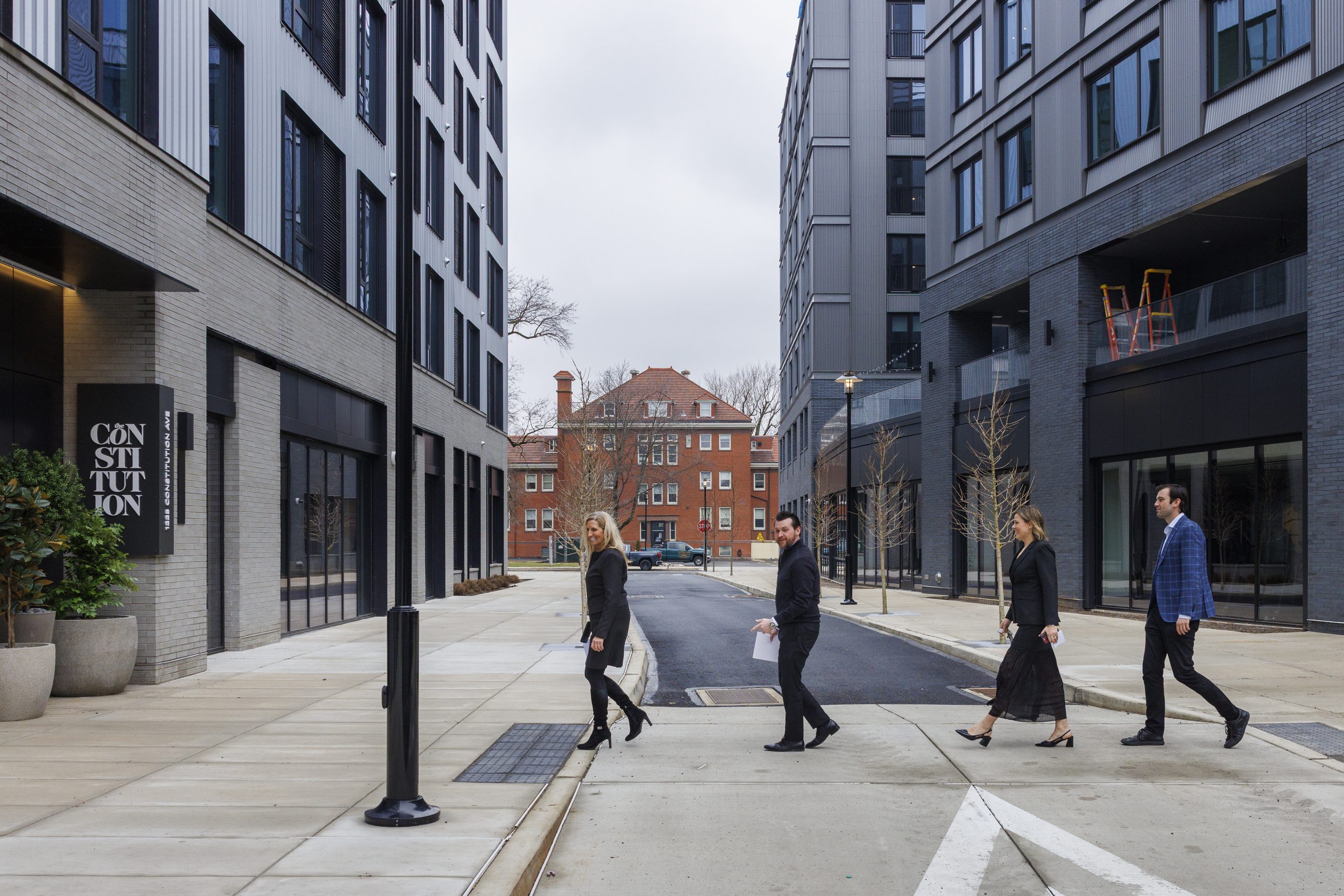
    AVE Navy Yard executives walk between the Constitution and Normandy apartment buildings in March.Alejandro A. Alvarez / Staff Photographer

    He enjoys taking walks around the Navy Yard, using the gym, and spending time in the building’s lounge and outdoor courtyard. The AVE staff is kind and communicative, he said, and he, too, enjoys a 10-minute walking commute to his office at the Urban Outfitters headquarters.

    While he does drive or use a delivery service for groceries, he said he has walked to the Navy Yard’s Gatehouse restaurant or to the Courtyard by Marriott hotel lounge for a bite to eat.

    Krishnan signed an 18-month lease, he said, and pays about $3,000 a month for his one-bedroom, plus parking in the complex’s covered garage. He may upgrade to a larger unit next year, he said. His wife plans to move from California once their son graduates high school, and she’s bringing the couple’s 6-year-old goldendoodle, Simba.

    Editor’s note: This story has been updated with additional information about leasing plans.

  • Jewish America 250 looks back on centuries of Jewish contributions to the U.S.

    Jewish America 250 looks back on centuries of Jewish contributions to the U.S.

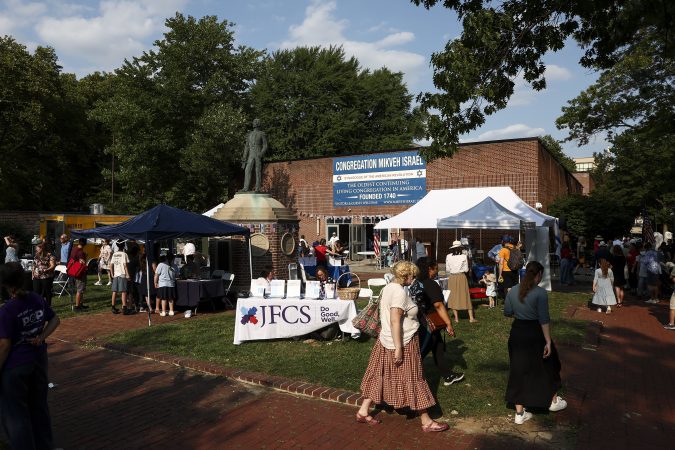
    While Philadelphia’s Fourth of July visitors might be long gone, hundreds of people were at Congregation Mikveh Israel in Center City on Sunday afternoon celebrating the Semiquincentennial while looking back at more than 250 years of Jewish contributions to the United States.

    At Jewish America 250, visitors of all ages were met by more than 60 vendors, food trucks, and live music at the historic synagogue — the oldest in Philadelphia — for an interfaith celebration highlighting the nation’s history and founding principles, Rabbi Yosef Zarnighian said.

    Rabbi Yosef Zarnighian speaks about Jonas Phillips during Jewish America 250 at Congregation Mikveh Israel on Sunday in Philadelphia.Monica Herndon / Staff Photographer

    “We thought that it would be quite appropriate to honor the 250th celebration of the United States by having the entire community, doesn’t matter your religion, your race — totally irrelevant. If you are part of the Philadelphia community, we want you to come showcase your business, your institution, your restaurant here,” Zarnighian said.

    “From 1788 to now, we’ve been about interfaith dialogue and sharing that common American heritage that doesn’t recognize religion or race or anything like that — it’s about being American,” he said.

    Congregation Mikveh Israel has a rich history in Philadelphia tracing back to before the nation’s founding.

    Visitors viewed historic artifacts in Congregation Mikveh Israel’s museum during Jewish America 250 Sunday. Monica Herndon / Staff Photographer

    The synagogue’s artifacts and displays highlight the impact Philadelphia’s Jewish community has had throughout history: from protesting the inclusion of a religion oath in the Constitution to founding the Association of Jewish Immigrants in 1884.

    The synagogue’s Spruce Street Cemetery recognizes some of this history, with part of the burial ground dedicated specifically to Jewish Revolutionary War soldiers, Zarnighian said.

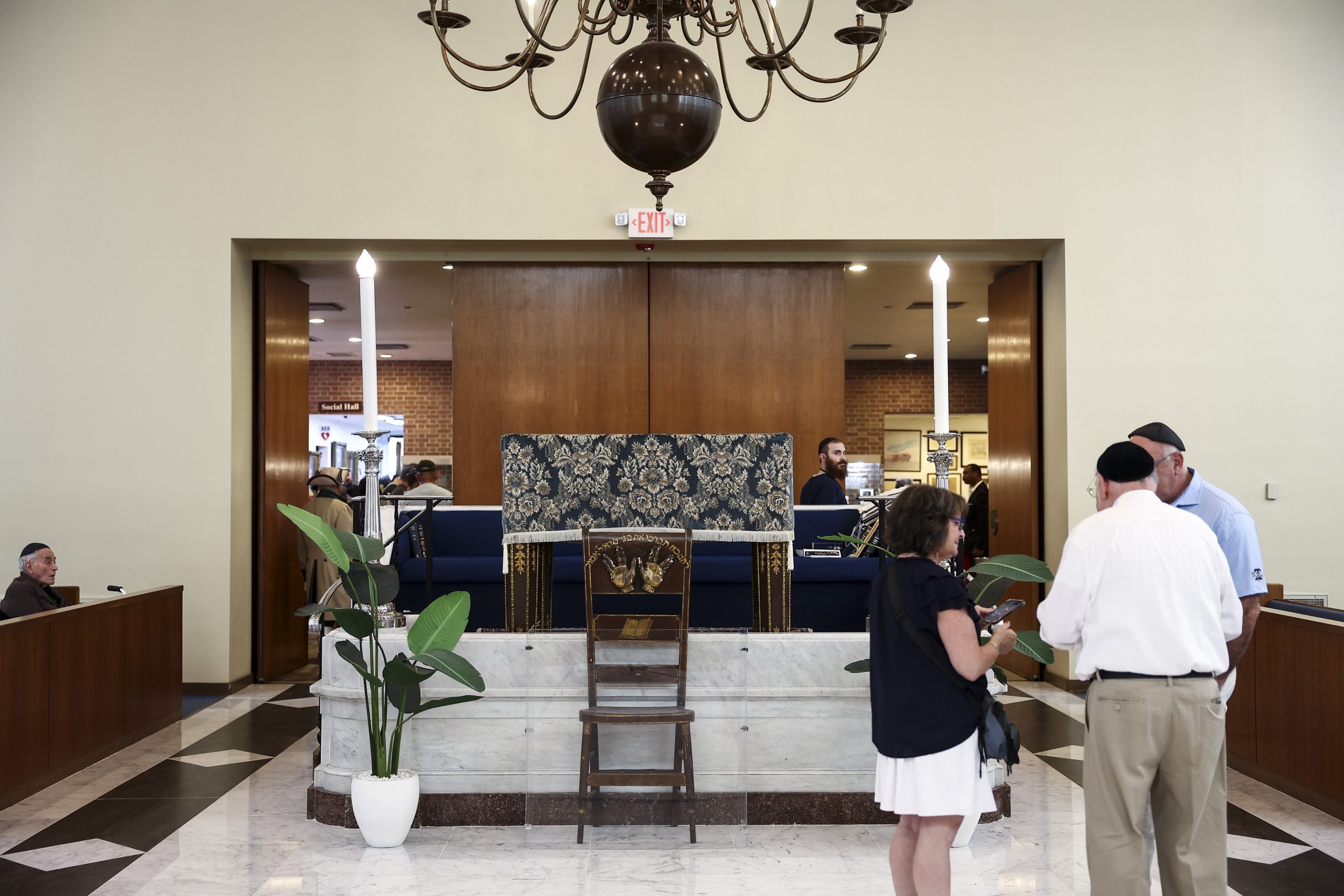
    In the synagogue at 44 N. Fourth St., the centerpiece of the synagogue’s connection to its past — a prayer table that has been used for centuries of services — sits atop a marble Civil War-era platform.

    “It’s the symbol of uninterrupted Jewish prayer in Philadelphia since 1782,” Zarnighian said.

    Historic pieces, including the table from 1782, the marble platform from 1859 and the wooden chair from 1816, were available for public viewing during the event at Congregation Mikveh Israel on Sunday.Monica Herndon / Staff Photographer

    Siblings Sheryl Kline and Mark Fried, longtime members of the congregation, had a special connection to the history on display at Sunday’s event and were excited to share it.

    The pair looked down at the rare travel Torah, kept safe behind protective glass, that had belonged to their grandfather, Gustav Cohn.

    At roughly one-third the size of a regular Torah, the scroll was easy for Cohn to bring along as he made his way across the country as a traveling salesman.

    Sheryl Kline, left, of Chester County, and Mark Fried, of Bucks County, look at their great grandfather’s Torah Sunday at Congregation Mikveh Israel.Monica Herndon / Staff Photographer

    He eventually settled in Philadelphia and, in his later years, moved in with his daughter’s family, who were longtime members of Mikveh Israel.

    “We’re very proud,” Kline said. “We’re very proud to be part of the celebration of the country and the synagogue.”

    Now living in the suburbs, the siblings do not travel into the city for services every week, but there is one special service that cannot be missed.

    Per Cohn’s instructions when he lent the Torah, it must be read at least once a year, Kline said, “usually on my grandmother’s birthday.”