Category: News

  • Secretive group’s latest anti-Trump artwork placed in D.C. — and Greenland

    Secretive group’s latest anti-Trump artwork placed in D.C. — and Greenland

    The mysterious art collective responsible for more than a dozen installations mocking President Donald Trump and his administration over the past two years struck again on the National Mall in Washington on Monday morning, this time with an international twist.

    The group, Secret Handshake, created Operation Epic Furious: Nuuk ’Em All, a satirical video game playable on three video game cabinets placed under the dome of D.C.’s World War I Memorial near the under-repair Lincoln Memorial Reflecting Pool.

    The game, according to a news release sent by Secret Handshake, “turns all of Trump’s latest Greenland ambitions into an unhinged Arctic adventure.” Nuuk, a city of about 20,000 people, is the capital of Greenland, an autonomous territory of Denmark.

    In the game, the group says, the president “battles unthinkable evils like Fully Vaccinated Children, Woke Yetis, and the happiest people on Earth, the Danish. All the while, the player’s greatest challenge is trying to keep President Trump from falling back asleep.”

    The White House did not immediately respond to a request for comment on the new installation. It has previously dismissed the group’s work. In response to a mocking Iran War Participation Trophy that Secret Handshake installed on the National Mall in July, the White House said, “These untalented ‘artists’ should stick to their ugly ‘art’ and refrain from weighing in on foreign policy — which they clearly know nothing about, given the fact that the United States Military achieved all of its objectives during Operation Epic Fury.”

    A fourth video game cabinet for Operation Epic Furious: Nuuk ’Em All appears to have been placed in Nuuk over the weekend, according to photos posted on Secret Handshake’s Instagram account. The photos show a console on a hillside overlooking the coastal town.

    Representatives of Greenland’s government in Washington declined to comment on the installation.

    The four video game consoles take aim at positions held by the Trump administration in regard to the United States’ relationship with Greenland. They are decorated with cartoon images of Trump as well as Vice President JD Vance, Defense Secretary Pete Hegseth, FBI Director Kash Patel, and Health and Human Services Secretary Robert F. Kennedy Jr. There are also images of cartoon penguins wearing ammunition belts and American flag patches and a map of Greenland with made-up names and a large section of it labeled “Future Golf Course.”

    Numerous quotes attributed to Trump adorn the consoles, including “That’s Our Territory. All we’re asking for is to get Greenland,” and “We need Greenland very badly. One way or the other, we’re going to get it.”

    On Monday morning, a few visitors happened upon the video games. Shantha Tellambura, 62, and his wife, tourists from Australia who were spending their first day in Washington, said they were surprised to see the installations in a public setting.

    “I think it’s very interesting and it signifies freedom of expression,” Tellambura said. “It’s important that ordinary people are allowed to express their opinions.”

    The message the work delivered, he said, was necessary.

    “We are headed toward a problematic time especially with the possibility of nuclear war,” he said.

    Secret Handshake members have declined in phone interviews with the Washington Post to provide any identifying information. The group has previously placed installations and artwork critical of Trump at locations across Washington.

    They include a statue of Trump and Jeffrey Epstein holding hands, a mock tribute to Trump from the world’s authoritarian leaders, and a reproduction of the desk of former House Speaker Nancy Pelosi (D., Calif.) with a pile of fake excrement on it that ridiculed the Jan. 6, 2021, rioters who sought to overturn the 2020 election.

    In May, the group installed its first video game project. A playable game titled Operation Epic Furious: Strait to Hell targeted the war with Iran.

    Previous installations by the group, all of which had a National Park Service permit for temporary display, were at prominent spots on the Mall, including directly in view of the Capitol’s west side. The group has also installed works in Philadelphia and Portland, Ore.

  • Congo’s Ebola outbreak tops 8,000 confirmed cases as disease remains out of control

    Congo’s Ebola outbreak tops 8,000 confirmed cases as disease remains out of control

    BUNIA, Congo — The number of confirmed cases of Ebola virus in Congo has surged past 8,000, as the country runs out of health workers to contain the deadly disease.

    Congo announced an outbreak on May 15, caused by the rare Bundibugyo virus, which has no known treatment or vaccine, and has struggled to contain it.

    The latest data from Congo’s health ministry released Sunday showed that 8,067 cases have been confirmed, with 3,901 deaths as of Sept. 26 across 63 health zones in seven of the country’s 26 provinces, with a fatality rate of more than 48%.

    “The continuously high crude case fatality ratio, and especially the continuously high rate of deaths occurring in communities, highlights the seriousness of the disease and the persistent challenges in timely case detection and access to early and adequate patient care,” the World Health Organization said in its latest report.

    It means that a large percentage of those infected were dying, without taking into account factors like delays in seeking help or hidden cases.

    The U.N. Office for the Coordination of Humanitarian Affairs said on Monday that the outbreak has begun to have an impact on other essential services in the hot spots as resources are mobilized toward fighting Ebola. According to OCHA’s report, routine primary healthcare services fell by 13% between April and June in Ituri province alone.

    “The indirect impact of the outbreak reflects both reduced health service availability — as a result of staffing and operational pressures — and reduced demand, as fear of infection and isolation discourages care-seeking,” OCHA said.

    Last week, WHO said that Congo was running out of health workers to contain the disease. Health workers have complained about delayed or missing payments, triggering several strikes. According to the Africa Centers for Disease Control and Prevention, 50 health workers have died since the outbreak was announced.

    Some areas have shown signs of improvement, with fewer confirmed cases in the past several weeks, including in Ituri province and Haut-Uele, but officials say the disease is spreading further in other areas, expanding its geographical reach.

    According to data from the Africa CDC, the current outbreak has outpaced the two-year West Africa regional outbreak in terms of spread in the same time. By week 19, the regional outbreak between 2014 and 2016 recorded 3,781 cases, while the current outbreak recorded 7,840. WHO said that it’s on track to surpass the regional outbreak, which killed 11,000 people.

    Containment efforts have been hamstrung by insecurity, displacement, a health workers’ strike, and intense population movements.

  • A Delco firefighter was sentenced to house arrest for calling a woman the N-word during an argument

    A Delco firefighter was sentenced to house arrest for calling a woman the N-word during an argument

    A former assistant volunteer fire chief in Delaware County was sentenced Monday to 23 months of restrictive probation for calling a Black woman the N-word during what he described as a “road rage encounter” in 2024.

    John Romano, 48, must serve the first seven months of his sentence on house arrest, according to a ruling from Judge Margaret Amoroso. He also must undergo anger management and racial sensitivity training, and have no further contact with the victim.

    Amoroso convicted Romano earlier this year of ethnic intimidation, terroristic threats, and related crimes during a bench trial.

    During Monday’s proceeding, First Assistant District Attorney Kristin Kemp asked the judge to send Romano to jail for up to two years.

    “I don’t doubt he’s a racist,” the judge said. “But being a racist, in and of itself, is not a crime.”

    Amoroso said she was focusing more on threats Romano made to the victim, which included taking a picture of her license plate and telling her he would “take care” of her at her home.

    Romano, the former assistant fire chief of the Sharon Hill Fire Company, encountered the woman on Hook Road in Darby Township in November 2024, while he was using a forklift to unload Christmas trees. His forklift was blocking the road, the woman testified at trial, causing a traffic jam of irritated drivers who were honking their horns.

    After the car in front of hers squeezed through a small gap near the forklift, the woman said, Romano got out of the forklift and “rushed” to her passenger window. Romano then called her the N-word. He later told Darby Township officers who responded to her 911 call that she was “a wild animal” and said he was “tired of dealing with them,” according to body camera footage played in court.

    In a statement to the judge, Romano said Monday that he never intended to threaten the driver, and expressed frustration that he was “being prosecuted over words.” He took a photo of her license plate, he said, because she struck his forklift and he was afraid she would drive off without exchanging insurance information.

    Kemp, the prosecutor, said Monday that Romano had demonstrated a pattern of violent, bullying behavior throughout his life, including an arrest in 2006 for ethnic intimidation in a similar incident and a 2013 gun-possession conviction for which he spent two years in state prison.

    “This isn’t someone who had a bad day and mouthed off about his beliefs,” Kemp said. “This is someone who seeks others out to put them in fear, whether with a weapon or his hands.”

    Romano’s attorney, Christopher Boggs, said the case had been blown out of proportion.

    “I have never understood the level of attention this case received,” he said.

    Unlike other people charged with ethnic intimidation, Romano had made no effort to “hunt or stalk” someone, Boggs said, drawing comparisons to crosses burned on Black families’ lawns.

    Two people close to Romano spoke on his behalf, saying, despite his strong personality, he is dedicated to his community through his volunteer firefighting, as well as other service he’s provided during floods and snow storms.

    But Amoroso made her feelings clear.

    “Maybe you’re a great guy to the people who don’t piss you off,” she told Romano. “But you’re a bully, and that’s what you did: You threatened [the victim] for pissing you off.”

  • Trump administration lowers fuel economy standards, critics say at a significant environmental cost

    Trump administration lowers fuel economy standards, critics say at a significant environmental cost

    DETROIT — The Trump administration on Monday released new fuel economy standards that relax regulatory requirements for automakers to control pollution from gasoline-powered cars and light trucks. The new rules were released shortly after President Donald Trump rejected an Iranian proposal to open the Strait of Hormuz, sending oil prices soaring.

    The change furthers Trump’s promise to revoke policies that encouraged or created incentives for the production of electric vehicles and, ultimately, will expose Americans to more planet-warming pollution from vehicles.

    Mileage standards, known as Corporate Average Fuel Economy, or CAFE, requirements, have been implemented since the 1970s energy crisis, and set out how far new vehicles need to travel on a gallon of gasoline. Over time, automakers have gradually improved their vehicles’ average efficiency.

    The Department of Transportation and the National Highway Traffic Safety Administration estimated that the finalized standards would correspond to a combined industry fleetwide average of roughly 34.9 miles per gallon for passenger cars and light trucks in the 2031 model year. That’s up from 30.1 miles per gallon for model year 2024, but down from a projected 50.4 miles per gallon in 2031 under rules put in place by the Biden administration.

    “Thanks to President Trump’s leadership, we have finally ended the illegal mandate that forced automakers to produce more expensive electric vehicles that American families didn’t want,” Secretary of Transportation Sean Duffy said in a statement touting vehicle affordability.

    NHTSA had projected last December that the new standards would hover at roughly 34.5 miles per gallon.

    The news comes amid ongoing tensions as the war in Iran persists, with Trump refusing a deal with Iran to open the strait as recently as Saturday, impacting the world’s oil supply.

    Environmental groups concerned over rollback

    News of the revised standards immediately drew rebukes from environmentalists.

    The DOT said Monday that the rule would cut yearly oil consumption in 2050 by about 1.3 billion barrels as compared to yearly oil consumption in 2024.

    But when the 2024 standards went into effect, NHTSA estimated they would save 14 billion gallons of gasoline from being burned by 2050. The agency also said that while new fuel-efficient vehicles cost more up front, savings on gasoline over the lifetime of the car or truck would more than make up for that.

    Environmental groups estimate now, without stricter standards, cars could produce 22,111 more tons of carbon dioxide per year than under the Biden-era rules in 2035.

    The rule also translates to an extra 90 tons a year of deadly soot particles and 4,870 additional tons a year of smog components such as nitrogen oxides and volatile organic compounds emitted into the air in coming years, experts say.

    Transportation already accounts for much of total U.S. greenhouse gas emissions that warm the planet: 28% as of the last estimate in 2022.

    It “ignores the feasibility of clean technology and the millions of fuel-efficient cars already on the road,” Dan Becker, director of the Center for Biological Diversity’s Safe Climate Transport Campaign, said of the rule.

    Since taking office, Trump has also pulled back auto tailpipe emissions rules, repealed fines for automakers that do not meet federal mileage standards, and terminated consumer credits of up to $7,500 for EV purchases.

    The president has repeatedly pledged to end what he falsely calls an EV “mandate,” referring incorrectly to former President Joe Biden’s target that half of all new vehicle sales be electric by 2030. No federal policy has mandated auto companies to sell EVs.

    According to data from Cox Automotive, EVs accounted for 5.7% of total new-vehicle sales in August, down from 7.4% for all of 2025.

    Katherine García, director of the Sierra Club’s Clean Transportation for All campaign, vowed the environmental group would fight the rule.

    “Less fuel-efficient cars mean more gas burned, spending more at the pump, and dirtier air in our communities,” Garcia wrote in a statement.

    The state of the industry

    Automakers and industry groups have said the new rules will increase Americans’ access to the full range of gasoline vehicles they need and can afford.

    “NHTSA made the right call to better align fuel economy standards with the law and current market conditions,” John Bozzella, president and CEO of the Alliance for Automotive Innovation, which represents the domestic auto industry, said in a statement. He said the previous standards “effectively required a switchover to electric vehicles that was out of step with market realities and customer demand. Today’s final rule is an appropriate course correction.”

    “What the industry needs is long-term regulatory stability that includes balanced, durable, and achievable fuel economy standards that continue to reduce emissions and improve fuel economy,” Bozzella added. “This is the formula for preserving consumer vehicle choice and keeping the U.S. auto industry globally competitive.”

    A spokesperson for Ford Motor Company, maker of the top-selling pickup truck, the F-150, said: “We appreciate Secretary Duffy and the Administration’s work to align regulations with market realities. As we evaluate the final rule’s full impact on our business, we’ll continue working with the Administration to build a strong American auto industry.”

    A General Motors spokesperson said in a statement the company supports the goals of the rule “and its intention to better align fuel economy standards with market realities.”

    Stellantis also welcomed the changes.

    “These standards will allow us to offer our customers the freedom to choose from a range of vehicles and powertrains that meet their needs, from brands they love and trust,” a Stellantis spokesperson said in a statement.

    Trump wrote on his Truth Social media account Saturday that the less stringent mileage requirements would “take the waste out of building cars in America” and save families “thousands on a new, beautiful and safe car,” while boosting auto production in the U.S.

    The DOT reiterated on Monday that the changes will cut the average cost of a new vehicle by $1,300, and save Americans $138 billion over the next five years.

    Americans, however, are spending more on gas as Washington’s war with Iran disrupts the global flow of fuel; gasoline prices averaged $4.47 on Monday, according to the AAA motor club, up from $3.13 a year ago. The rising cost of oil weighed on U.S. stocks to start the week.

    “Trump is tanking sensible mile per gallon standards at the worst possible time for consumers, who are getting hit with sky-high prices at the pump,” the Center for Biological Diversity’s Becker said. “Consumers will pay the price for these reckless rollbacks while Trump’s Big Oil and Big Auto buddies reap the short-term profits.”

    Experts have also said that less stringent rules do not necessarily translate to more consumer purchases of new vehicles that may have more safety features.

    The average new car in America sold for $50,089 in August, crossing over the $50,000 line for the first time since last December, according to Kelley Blue Book data.

  • Senate Republicans make a final legislative push ahead of the midterms

    Senate Republicans make a final legislative push ahead of the midterms

    Barely five weeks before November’s midterm elections, Senate Republicans are rushing to pass more legislation that they can run on as polling shows Democrats within striking distance of retaking the chamber.

    The Senate is expected to vote on legislation this week meant to protect consumers from high electricity costs caused in part by the data center building boom. And some Republicans are pushing to take up other bills to address voters’ frustrations with the cost of living.

    Senate Majority Leader John Thune (R., S.D.) decided against sending senators home early last week to campaign, opting instead to keep the Senate in session to try to bolster Republicans’ legislative record. This week is the last that the Senate is scheduled to be in session before Election Day.

    Republicans are confronting the once-unthinkable prospect that they could lose the Senate. Democrats are running competitively even in some states that President Donald Trump won by double digits in 2024, giving the party a shot at picking up the four seats they need to recapture the chamber.

    Almost no Republican is in more danger of losing his seat than Sen. Jon Husted (Ohio), who introduced the data center bill that Republicans are set to take up.

    Former Democratic senator Sherrod Brown, who is challenging Husted, has spent millions of dollars on ads attacking Husted over his support for data centers, which the ads blame for “causing electric bills to spike by thousands of dollars.” The National Republican Senatorial Committee warned in a memo last month that the ads are effective, describing data centers as an “anchor hanging around Husted’s neck.”

    Sixty-nine percent of likely voters in Ohio say data centers — enormous warehouses filled with servers that power the artificial intelligence boom and the rest of the internet — are mostly bad for home energy costs, according to a Bowling Green State University/YouGov poll conducted this month.

    Husted has defended his record on data centers and criticized Brown for supporting them in the past. He described his bill as a way to “show the American people that we’re serious about driving down electric prices and making life more affordable for them” — and he almost dared Democrats to block it.

    “If Senate Democrats want to be the lone obstacle to passage, then shame on them,” he told reporters. “That shows that they don’t really care about affordability.”

    It is not clear whether Husted’s bill will pass.

    The House approved it overwhelmingly, but Sen. Martin Heinrich (D, N.M.) blocked Husted from fast-tracking its passage this month, arguing that it did not go far enough. Heinrich sought to pass his own bill to force data centers to shoulder the costs of upgrading the electric grid, which Republicans blocked.

    Husted’s bill does not take full effect for two years and would not bring down electricity prices before the midterms. Some Democrats have argued that it would do little to address affordability at all.

    “Senator Husted’s bill is a fraud,” Senate Minority Leader Chuck Schumer (D., N.Y.) told reporters last week. “It’s voluntary. No company has to do it.”

    Republicans say Democrats are just trying to deny them victories. Sen. Bernie Moreno (R., Ohio) accused Democrats of blocking Husted’s bill “so they can just put up another TV ad to say that electricity prices are high so that they can win an election.”

    Senate Republicans have spent much of the past two weeks working to pass legislation from Sens. Ted Cruz (R., Texas) and Maria Cantwell (D., Wash.) to overhaul regulation of college sports. Cruz has argued the bill is crucial to “protect an American institution that millions of people love,” but some Republicans have groused that it is hardly the most pressing issue for the party to tackle right before the midterms.

    “With gas at over $4 a gallon, a persistent war with Iran, $40 trillion in debt, the Senate has decided that the most urgent thing now is to dictate how college sports are run from Washington,” Sen. Rand Paul (R., Ky.) said on the Senate floor.

    Sen. John Kennedy (R., La.) said he was prepared to support the bill if he secures an amendment vote but argued it is not a priority for voters, describing it as a way “to make the football coaches happy.”

    “I haven’t met a single person on the campaign trail, when they lie down to sleep and can’t, who are worried about the football coaches,” Kennedy told reporters.

    Husted is not the only Republican senator facing a tough race who has pushed to pass legislation that can be campaigned on before heading home.

    Sen. Susan Collins (R., Maine), who is seeking a sixth term in a Democratic-leaning state, has pressed Senate Republican leadership to take up a bipartisan bill to force insurers to cap the cost of insulin at $35.

    Another vulnerable Republican, Sen. Dan Sullivan (Alaska), tried to pass legislation last week meant to protect salmon in his state. He was blocked by Sen. Ed Markey (D., Mass.), who said he needed more time to seek feedback from fishermen in his state.

    Husted and other Republicans are campaigning on the tax and domestic policy bill that Trump signed into law last year, which cut taxes on tips and overtime. But some Senate Republicans have pushed for months to do more to address voters’ affordability concerns.

    Sen. Josh Hawley (R., Mo.) said he had urged Senate leadership to take up the insulin bill, along with legislation to suspend the federal gas tax and other bills to make life easier for working families.

    “My view is that ought to be our sole focus,” Hawley said. “If we’re not going to do that, it’s not clear to me what we’re doing here.”

    Rep. Ashley Hinson (R), who is facing a tight race for an open Senate seat in Iowa, last week called on the House to return to Washington to vote on suspending the federal gas tax as well as other steps to reduce fuel prices. The House adjourned earlier this month and has no plans to return before Election Day.

    Thune has faulted Democrats for obstructing his party’s agenda. Republicans and Democrats have spent months negotiating over legislation to overhaul the federal permitting process, which could bring down energy costs by making it easier to build power lines and other infrastructure. Thune said the Senate could take up such a bill before the midterms if the two sides were to reach a deal, but he acknowledged Thursday that it would not happen, which he blamed on Democrats.

    “While they may acknowledge the need for permitting reform, what they really care about is denying Republicans another legislative win” ahead of the midterms, Thune said on the Senate floor.

    Sen. Sheldon Whitehouse (R.I.) and Heinrich, the Democrats leading permitting negotiations, said Friday that they wanted to give senators more time to review the legislation and warned that trying to pass it before the midterms could kill the bill.

    “We are talking about major changes to how America builds energy and infrastructure,” they said in a statement. “Getting that right has to matter more than election-year deadlines.”

  • New Montco group wants to protect you from getting scammed

    New Montco group wants to protect you from getting scammed

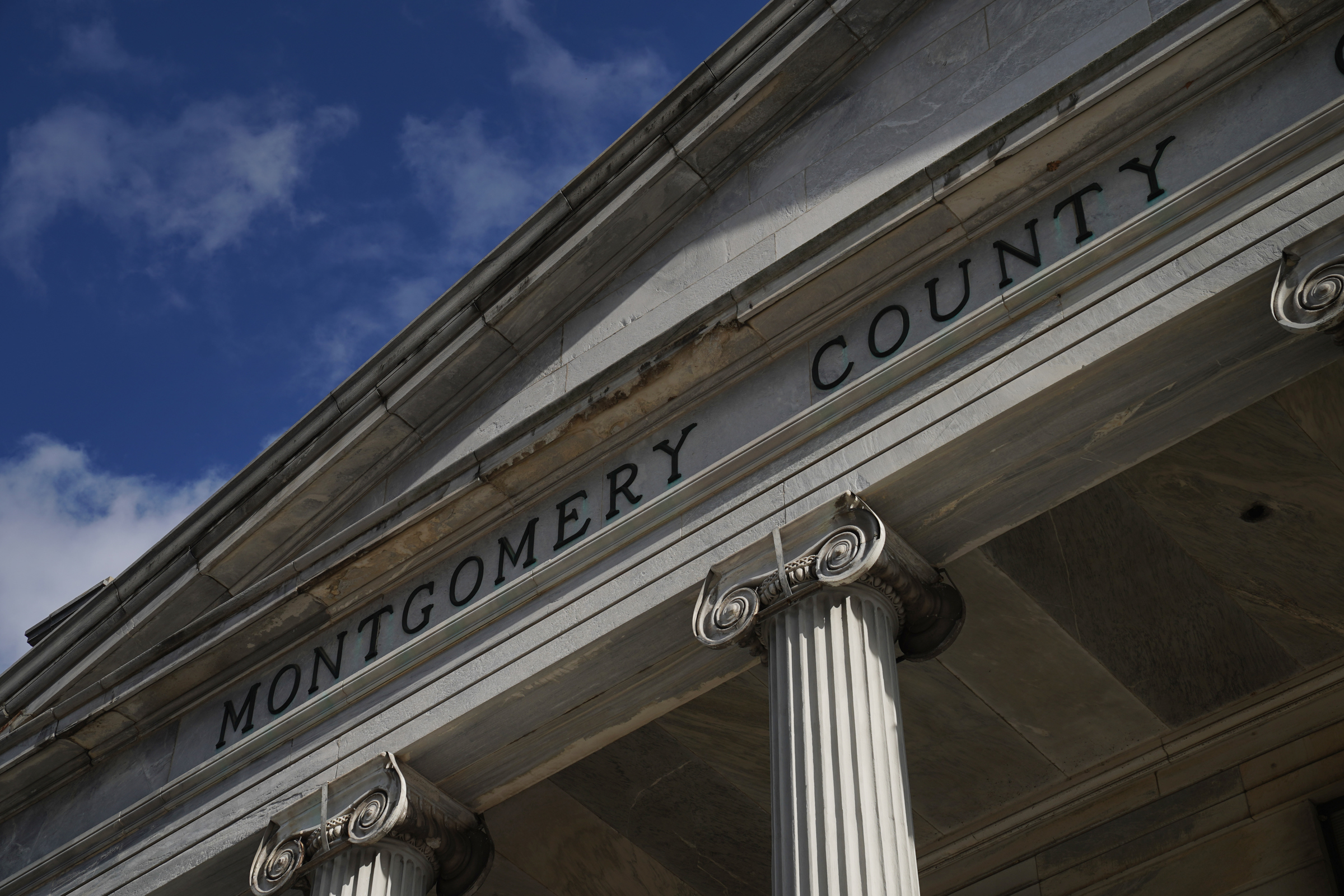
    Montgomery County officials are starting a new consumer protection collaboration and taking on cash-advance apps in one of its first cases.

    Montgomery County District Attorney Kevin R. Steele and the Montgomery County Board of Commissioners announced the effort Monday, saying that the solicitor’s office and district attorney’s office would work together to investigate issues that impact the finances, health, and well-being of residents.

    “When companies engage in unlawful or deceptive conduct that harms our residents, we will use every available tool to hold them accountable,” Steele said in a statement.

    “This is the first long-term partnership on consumer protection that we’re aware of,” Montgomery County Commissioner Neil K. Makhija said in an interview. He added that it is particularly important given continued economic uncertainty.

    “People are struggling to cover everyday needs,” Makhija, a public interest attorney, said. “Some companies see that and they see an opportunity to make a profit.”

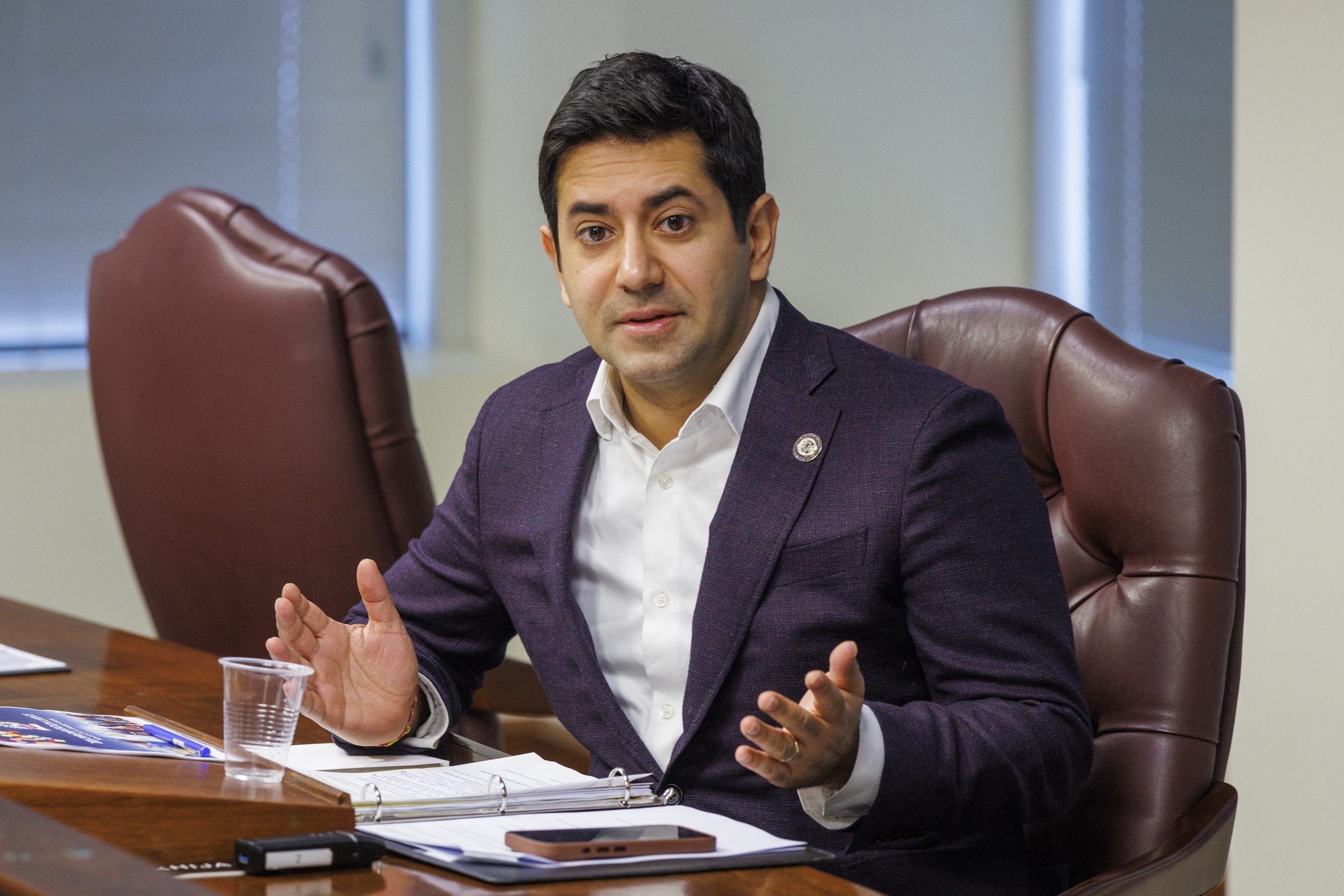
    Montgomery County Commissioner Neil K. Makhija says digital lending apps have taken advantage of Pennsylvanians who are struggling to make ends meet.Alejandro A. Alvarez / Staff Photographer

    Some digital lending apps are among those companies, according to Montgomery officials.

    Traditional payday lending involves taking out a short-term, high-interest loan due on a consumer’s next payday. The practice is illegal in many states, including Pennsylvania and New Jersey.

    But Montgomery County officials say some apps continue to give out similar loans, disguised as interest-free cash advances.

    On Monday, the county district attorney’s office filed two lawsuits against the apps MoneyLion and Dave, alleging that the companies provide short-term cash advances and then tack on fees, tips, and other charges so they effectively function as high-interest loans, violating Pennsylvania law.

    Spokespeople for MoneyLion and Dave did not immediately return requests for comment.

    More than a million Pennsylvanians have used these apps, Makhija said, and officials hope to learn through the lawsuits how many Montgomery County residents have been impacted. Suits such as these can result in financial settlements or orders to stop illegal practices, the commissioner said.

    “The reason this is so powerful is that we are not bound by the fine print” that consumers often agree to when they sign up for these apps, Makhija said. “Consumers today unknowingly are waiving their rights to a jury trial … what we are able to do is take action on behalf of the Commonwealth by our district attorney.”

    The county accounted for this effort in its 2026 budget for the district attorney’s office.

    “These cases pay for themselves: You’re addressing harm and you’re able to recover funds to continue the work,” Makhija said. “This is not a cost sink for the county.”

    As part of the consumer-protection collaboration, Montgomery County also sued some of the country’s largest social media companies over youth mental health impacts, and joined other local districts attorney in a suit against online ticket-reseller Vivid Seats over hidden fees.

    Montgomery County residents can email consumer.complaint@montgomerycountypa.gov with tips about ongoing cases or other issues, Makhija said.

  • 41 arrested in HUD-backed operation targeting Philly fugitives receiving public housing assistance

    41 arrested in HUD-backed operation targeting Philly fugitives receiving public housing assistance

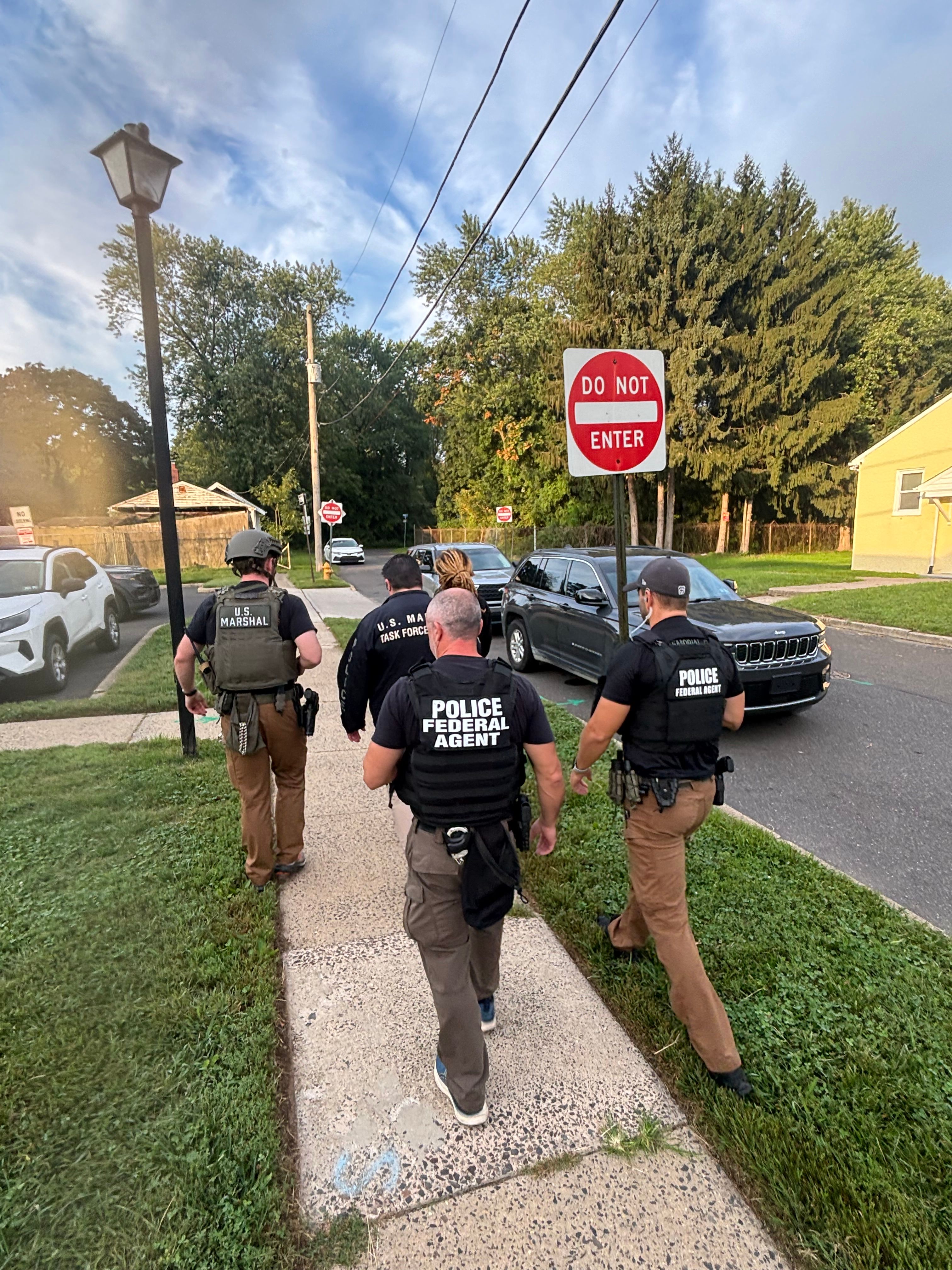
    Forty one people in Philadelphia and surrounding areas were arrested in a sweeping operation conducted by the U.S. Marshals Violent Crime Fugitive Task Force this month, the agency said Monday.

    The effort, dubbed “Operation Moving Day” targeted people wanted for violent felonies who were living in federally subsidized housing.

    The initiative is part of a larger federal criminal enforcement campaign being carried out in cities across the country this year by the Inspector General’s Office of the Department of Housing and Urban Development with support from U.S. Marshals.

    The Philadelphia-area operation led to the arrests of people wanted for felonies including arson, aggravated assault, armed robbery, crimes against children, and at least one shooting.

    Robert Clark, a spokesperson for the U.S. Marshals’ Eastern Pennsylvania Violent Crime Fugitive Task Force, said most of those arrested during the operation were living in private apartment units and had been receiving subsidized rental assistance through federal programs.

    Arrests occurred in neighborhoods across the city, according to Clark, along with a handful of arrests occurred outside city limits and as far north as Lehigh County.

    Among those arrested was a 31-year-old man wanted by Philadelphia police for his role in an early August shooting. The incident occurred on the 3300 block of North Smedley Street and left a woman hospitalized with a shoulder injury.

    Marshals also arrested a 23-year-old employee of Bregy Elementary School in South Philadelphia who had been charged with indecent assault and unlawful contact with a minor in late August, Clark said.

    The operation marked the first time U.S. Marshals in Eastern Pennsylvania took part in a joint law enforcement effort backed by HUD, he said.

    This summer, U.S. Marshals task forces in other major cities have aided HUD in arresting fugitives living in federally subsidized housing, such as Kansas City, Mo., Memphis, Minneapolis, and most recently in New York and New Jersey.

    The arrests were part of a national operation called ‘Operation Clean House.” The initiative launched after the success of an operation in Columbus, Ohio last winter that led to the arrests of more than 50 people with outstanding felony warrants, Clark said.

    A spokesperson for HUD did not immediately return a request for comment.

    In February, after 16 people were arrested in a similar operation in Minneapolis, U.S. Department of Housing and Urban Development Acting Inspector General Brian D. Harrison said the operation had successfully targeted “dangerous fugitives” living in federally subsidized housing.

    “Defeating fraud in housing remains a top priority for HUD OIG,” Garrison said in a statement. “HUD housing is America’s housing serving millions of deserving Americans, and we are unwavering in our commitment to ensuring accountability throughout HUD’s programs.”

  • Trump asked China’s president if he wanted to buy U.S. arms, ambassador says

    Trump asked China’s president if he wanted to buy U.S. arms, ambassador says

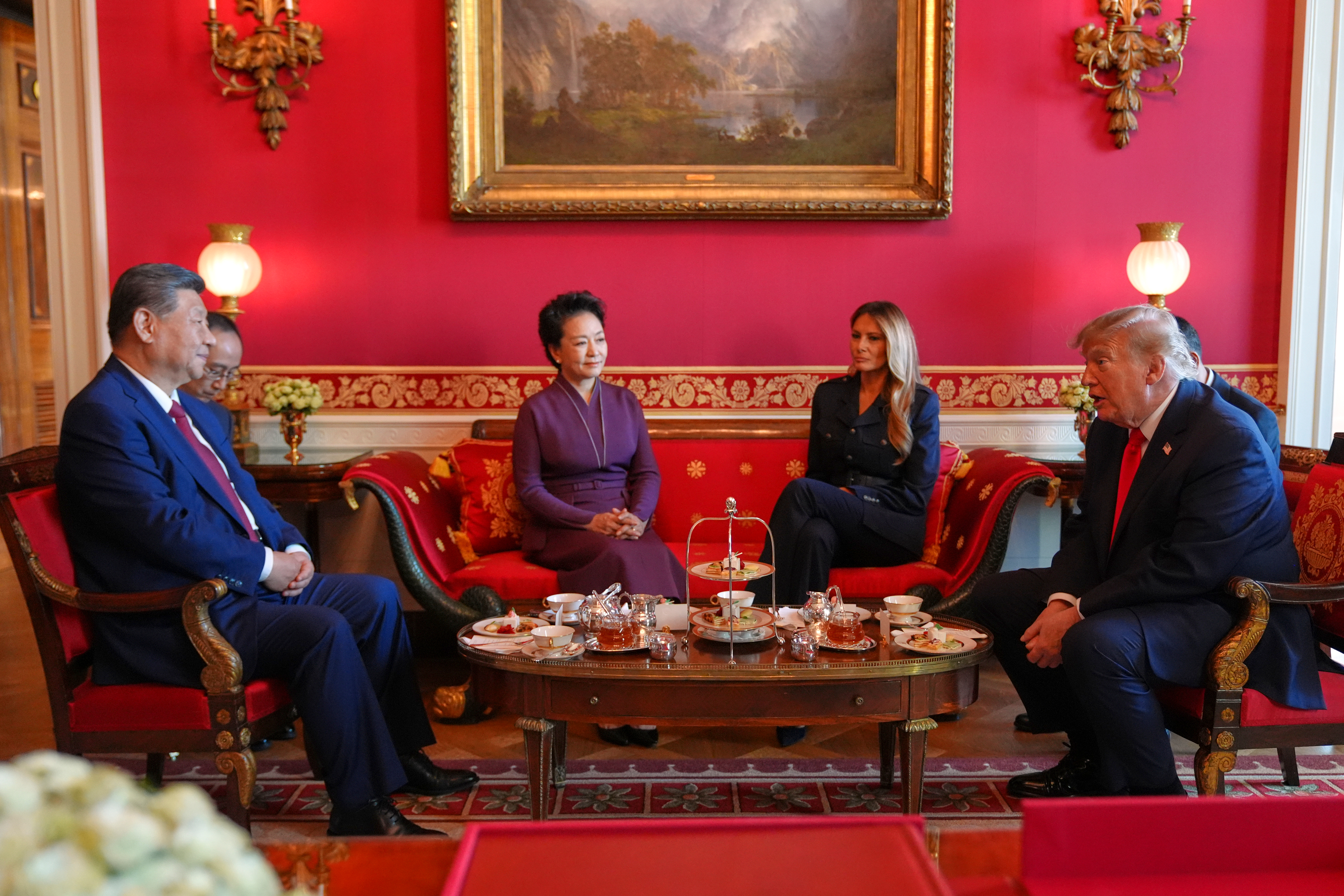
    WASHINGTON — President Donald Trump has asked Chinese President Xi Jinping if he wanted to buy weapons from the United States, the U.S. ambassador to China said.

    David Perdue said Trump raised the prospect of the arms sales from the U.S. to its ascendant geopolitical rival, an unlikely offer that if consummated would upend generations of U.S. policy toward China and Taiwan and expose U.S. technology to a potential foe. Perdue, speaking to Shannon Bream on Fox News Channel’s Fox News Sunday days after Trump hosted Xi for a state visit in Washington, didn’t specify when the offer was made.

    But the State Department on Monday looked to distance the Trump administration from Perdue’s comments, saying that “U.S. law prohibits arms sales to China and there is no offer or plan to sell arms to China.”

    Perdue said Sunday that Trump, a Republican, was downplaying longstanding U.S. arms sales to Taiwan — which have drawn protest from Beijing for years — by couching it as just one of many sales Washington makes around the world — and even asking Xi if he’d be in the market for U.S. weaponry.

    Bream had cited concerns from Republican and Democratic lawmakers over delayed aid packages and weapons orders to Taiwan, the self-ruled democracy that seeks to defend itself from China’s threat to invade the island. Bream asked if the U.S. is denying arms to Taiwan to appease the Chinese president, who visited Trump last week.

    Perdue pushed back on the suggestion, stating that Trump “is as strong on Taiwan as I’ve ever seen anybody” and has sold it plenty of weapons. Perdue also said Trump and Xi continue to talk about future U.S. weapons sales to Taiwan.

    “But President Trump continues to say, ‘Hey, we sell arms to other people around the world,’” Perdue said. “He actually asked President Xi, would he like to buy some, at one point.”

    The offer “speaks to (Trump’s) treatment of China in almost exclusively commercial terms, even at the potential expense of the U.S. military position in Asia,” said Evan Sankey, an analyst focused on U.S. policy toward China at the Cato Institute.

    He said the U.S. last sold arms to Beijing in the 1980s and resuming those sales would be “a shocking policy change.”

    The U.S. is bound by its own laws to provide Taiwan with the means to defend itself. While not recognizing Taiwan as a country, the U.S. is the island’s strongest informal backer and arms provider. But multiple U.S. leaders have left ambiguous whether they would commit military force to defend the U.S. ally should China invade.

    China has pressed Washington to halt the arms sales, most prominently during a previous summit in May between Trump and Xi in Beijing. After that meeting, the United States paused the sale of a record-breaking $14 billion package — and Trump described arms sales to Taiwan as a “very good negotiating chip” with China.

    In their private talks at the White House last week, Xi pressed Trump to oppose Taiwan independence, according to Chinese state media.

    In Beijing, China’s foreign ministry spokesperson Guo Jiakun did not confirm Perdue’s remarks when asked about the matter on Monday. But he told reporters that China has always strengthened its national defense capabilities based on its needs and is committed to maintaining world peace and stability.

  • An ex-Delco official is on trial, accused of sexually harassing two of his female subordinates

    An ex-Delco official is on trial, accused of sexually harassing two of his female subordinates

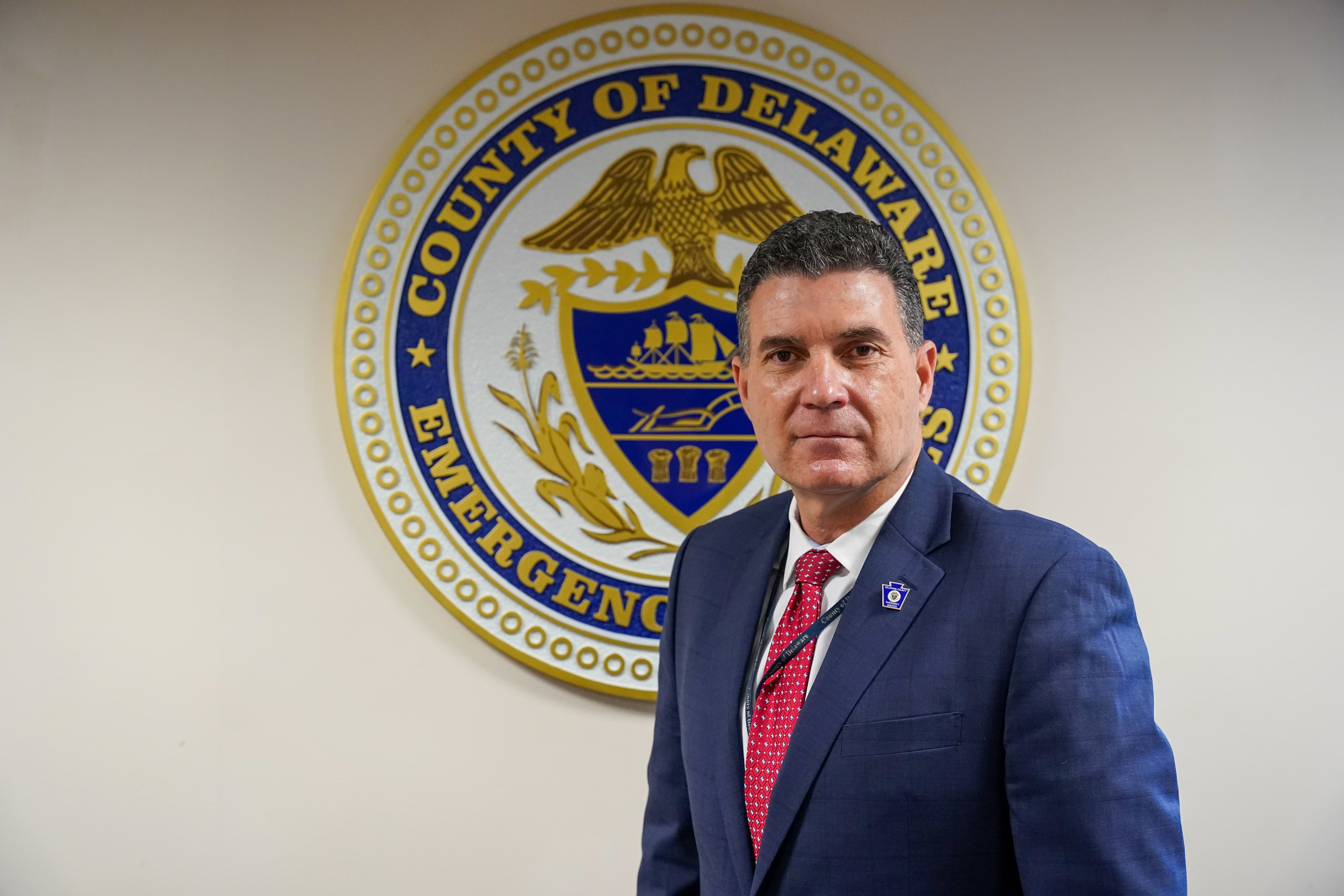
    When Tim Boyce grabbed his executive assistant’s buttocks in 2024, she said Monday, she wasn’t sure how to report the incident to authorities in Delaware County.

    “The director of all emergency services, all 911, just assaulted me and made me feel the worst I had ever felt in my life,” the woman said at the start of Boyce’s trial on charges of indecent assault and harassment involving two of his former employees.

    “I didn’t know who to trust at that point,” she said, adding that she later told Boyce, then the head of county’s department Department of Emergency Services, his behavior had made her feel disgusting and “like a piece of meat.”

    Boyce was fired in May 2024, not long after the woman filed a complaint with the Equal Employment Opportunity Commission in which she also said he grabbed her cheeks and attempted to pull her in for a kiss.

    Criminal charges followed soon after that incident, along with allegations that Boyce had assaulted and harassed another female employee, who told investigators that Boyce showed her pictures of his penis, pulled up her skirt, and asked her if she enjoyed a particular sex act.

    In court Monday, Deputy Attorney General Madelyn Abry told jurors Boyce was confident that because of his position of authority, no one would find out about his actions.

    “What she thought she was getting was a job that would help her,” Abry said of the first victim. “But what she got was a job that was too good to be true.”

    Abry said the woman left her office on the day of the assault and never came back, resigning in a text exchange with Boyce in which he apologized to her.

    Boyce’s attorney, Andrew Edelberg, denied those assertions, telling jurors “there is not a single piece of corroborating evidence anywhere” supporting the charges against him.

    No one else witnessed the alleged assaults, he said, and the two women waited several months before reporting them to police.

    He described Boyce as a 40-year public servant, starting as an Upper Darby firefighter who “ran into burning buildings to save children.”

    The allegations, he said, came at a time when Democrats had come to power in the longtime GOP stronghold of Delaware County, and Boyce, a Republican, was “low-hanging fruit” for them to target.

    Edelberg also suggested that former District Attorney Jack Stollsteimer, who, at the time the women came forward was running for attorney general saw the case as a way to boost his campaign. Stollsteimer lost his bid for that office and is now a county judge.

    “This case is about power, politics, and punishment, because of an administration change, and because someone was running for office and couldn’t look weak on TV,” he said. “And what else? Money, money, money.”

    Both women have filed civil suits against Boyce and the county, and Edelberg said they were motivated, in part, by potential monetary settlements.

    Boyce’s trial is expected to last through Friday before Delaware County Court Judge Stephanie Klein.

  • At every turn, Trump’s ideas for aiding U.S. consumers run into resistance

    At every turn, Trump’s ideas for aiding U.S. consumers run into resistance

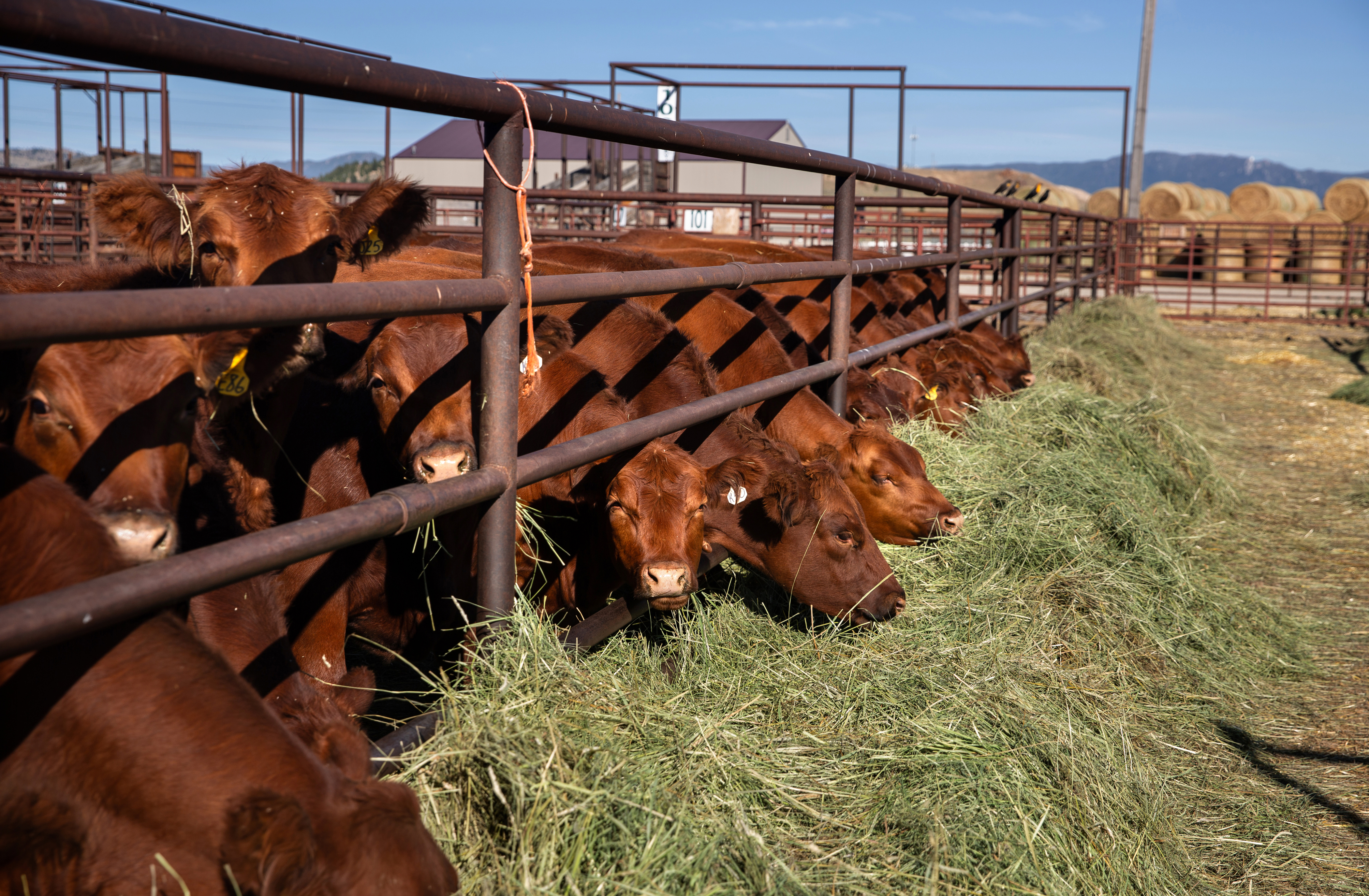
    First came a proposal to permit tariff-free beef imports, but that immediately angered America’s farmers and ranchers.

    Then came a plan to ban exports of domestic diesel fuel, but that met with pushback from major oil companies.

    In between, President Donald Trump pitched the idea of simply cutting $5,000 checks to adult Americans frustrated, polls show, by high food and gas prices — if the GOP maintains control of Congress. But that idea, too, has come under fire, even from some Republican lawmakers concerned about the potential hit to the budget deficit.

    With just five weeks until Election Day, the White House has thrown out multiple ideas for combating persistent inflation, which has outpaced wage growth. But experts say it is unclear whether Trump can execute any policy that would placate inflation-weary voters and help the GOP maintain control of Congress.

    “These are symptoms of panic in the administration about problems that they have in part created,” said David Wessel, director of the Hutchins Center on Fiscal and Monetary Policy at the Brookings Institution.

    Inflation has been running over the Federal Reserve’s target rate since 2021, but an array of Trump policies have fed the problem, economists say. Trump’s decision to join Israel in going to war with Iran has disrupted the global oil supply, leading to elevated energy rates. His tariffs have produced higher prices for some imported goods. And his administration’s immigration crackdown has made low-cost labor harder to find, keeping price pressures on domestic companies high.

    Consumer frustration is reflected in polling. The gap has steadily widened between voters who approve of and disapprove of Trump’s performance as president, and 73% of Americans said they disapprove of Trump’s handling of the economy in a recent poll conducted by SSRS for CNN. Only 27% approved — his lowest approval rating on the issue ever recorded by the survey.

    Against that backdrop, Trump has floated a parade of ideas for cutting prices.

    “President Trump pledged to lower costs and raise real wages for everyday Americans, and the Administration continues to rigorously evaluate every option on the table to deliver,” White House spokesperson Kush Desai said in a statement.

    On top of the political hurdles, however, these policies have been “small in the grand scheme of things … if they’re helpful at all,” said Mark Zandi, chief economist at Moody’s Analytics. “So it’s not like it’s moving the dial on the affordability crisis.”

    Douglas Holtz-Eakin, president of the American Action Forum, a conservative-leaning think tank, said it’s not uncommon for politicians to try to bring down prices in the run-up to elections, especially when their party’s control of Washington is at risk.

    President Joe Biden did the same ahead of the 2022 midterms, notably by calling for a federal gas tax holiday and releasing millions of barrels of oil from the nation’s Strategic Petroleum Reserve in an effort to bring down sky-high gas prices.

    “This whack-a-mole with particular prices is something the Biden guys tried,” said Holtz-Eakin, who was a senior economic adviser to President George W. Bush and the 2008 presidential campaign of then-Sen. John McCain (R., Ariz.). “It doesn’t solve the economic problem, and it doesn’t seem particularly politically successful.”

    For Trump, time is running out, said Rebecca Patterson, a senior fellow at the Council on Foreign Relations.

    The U.S. economy is so big and so complex that improving affordability “is simply not something anyone can do in a month,” Patterson said. “Actions taken today might help in the medium and longer term. But between now and the election, the best you can hope for is that voters appreciate that you’re trying.”

    One idea the administration has executed is buying back Treasury bonds. But so far, the payoff has been minimal.

    In part because of the competition for cash from massive private-sector spending on artificial intelligence, investors are demanding higher interest rates for Treasury bonds. Higher bond yields, in turn, raise interest rates for consumer loans such as mortgages. The average 30-year fixed mortgage rate hit 7% last week for the first time since January 2025.

    In August, Treasury Secretary Scott Bessent announced he would intervene in the bond market by buying back longer-term Treasury bonds to try to slow the rise in yields. That has not yet worked in bringing down yields, though Bessent contended in a recent congressional hearing that it is nonetheless a success because “we then proceeded to have the two most successful Treasury auctions that we’ve had in 20 years.”

    While Bessent was wrestling with the bond market, Trump decided to tackle meat prices.

    In late August, the president signed a proclamation that rolled back tariffs on foreign beef trimmings for 90 days in an effort to boost imports and lower ground beef prices, which have risen almost 25% since the beginning of Trump’s second term.

    But that drew rare pushback from farm-state Republicans, including Sen. Chuck Grassley (Iowa), Sen. Pete Ricketts (Neb.), Sen. Roger Marshall (Kan.) and Rep. Ashley Hinson (Iowa), who is running in a competitive Senate election in her state.

    The lawmakers argued that a flood of cheap foreign beef would undermine American farmers and ranchers, who are already struggling with high fuel, grain, and fertilizer prices due to the Iran war and other factors.

    Trump issued a follow-up executive order aimed at helping ranchers, and the Agriculture Department announced new policies aimed at supporting American beef producers. The administration is now reportedly considering reversing course on beef imports — though the White House has denied that.

    Then came the Republican midterm convention in Dallas, where Trump made his biggest pitch yet: If Republicans keep both the House and Senate on Nov. 3, Trump said, he would give every adult American a $5,000 dividend to spend within the United States.

    Some Republican lawmakers applauded the idea, but others were skeptical, saying the checks not only could exacerbate inflation but also could increase historically large budget deficits. The proposal could cost more than $1 trillion at a time when concern is growing about the nation’s outsize debt, which recently surpassed $40 trillion.

    Public interest groups blasted the idea; Lisa Gilbert, co-president of the left-leaning consumer watchdog Public Citizen, called it an “explicit and desperate attempt to buy votes.”

    And voters largely have not been swayed: A YouGov poll released earlier this month found that 64% of U.S. adults felt they would probably or definitely not receive the dividend if Republicans were to win the election.

    So far, there have been few signs of interest on Capitol Hill, where lawmakers would have to draft legislation to authorize the checks and vote to approve it.

    Last week, after diesel prices hit a record high, Trump and Bessent announced a new idea for tackling soaring fuel prices: a ban on diesel exports. Their theory was that a ban would boost the diesel supply for American consumers, lowering the price at the pump.

    Several Republican candidates in competitive congressional races supported the idea. But major oil companies and Energy Secretary Chris Wright objected, arguing that such a policy would incentivize companies to lower diesel production, which would further raise fuel prices.

    By midweek, the fate of the diesel export ban, too, seemed uncertain: Wright said any new limits on diesel exports were likely to be voluntary.