Category: New Jersey News

  • Critics say bias is behind N.J. car insurance rates, urge lawmakers to act

    Critics say bias is behind N.J. car insurance rates, urge lawmakers to act

    For almost a decade, consumer and civil rights advocates have urged New Jersey lawmakers to bar companies from basing car insurance rates on socioeconomic factors they deem discriminatory and that have nothing to do with driving — things like credit history, marital status, education level, occupation, and zip code.

    They renewed their plea Monday, when the Senate’s commerce committee called up a long-stalled bill for consideration — its third committee hearing since it was first introduced in 2018. The bill’s supporters expressed frustration with the legislative inaction, with Danielle Combs of the NAACP’s New Jersey state conference calling insurers’ practice “thinly veiled discrimination.”

    “This proposed law is about more than car insurance rates. It’s about justice. It’s about dismantling systems that quietly but powerfully keep our communities at a disadvantage,” Combs said. “When a single mother in Newark, Trenton, or Camden has to pay double what someone in a wealthier suburb pays for the same coverage and the same driving record, that is not fair, that is not equal, and that is not acceptable.”

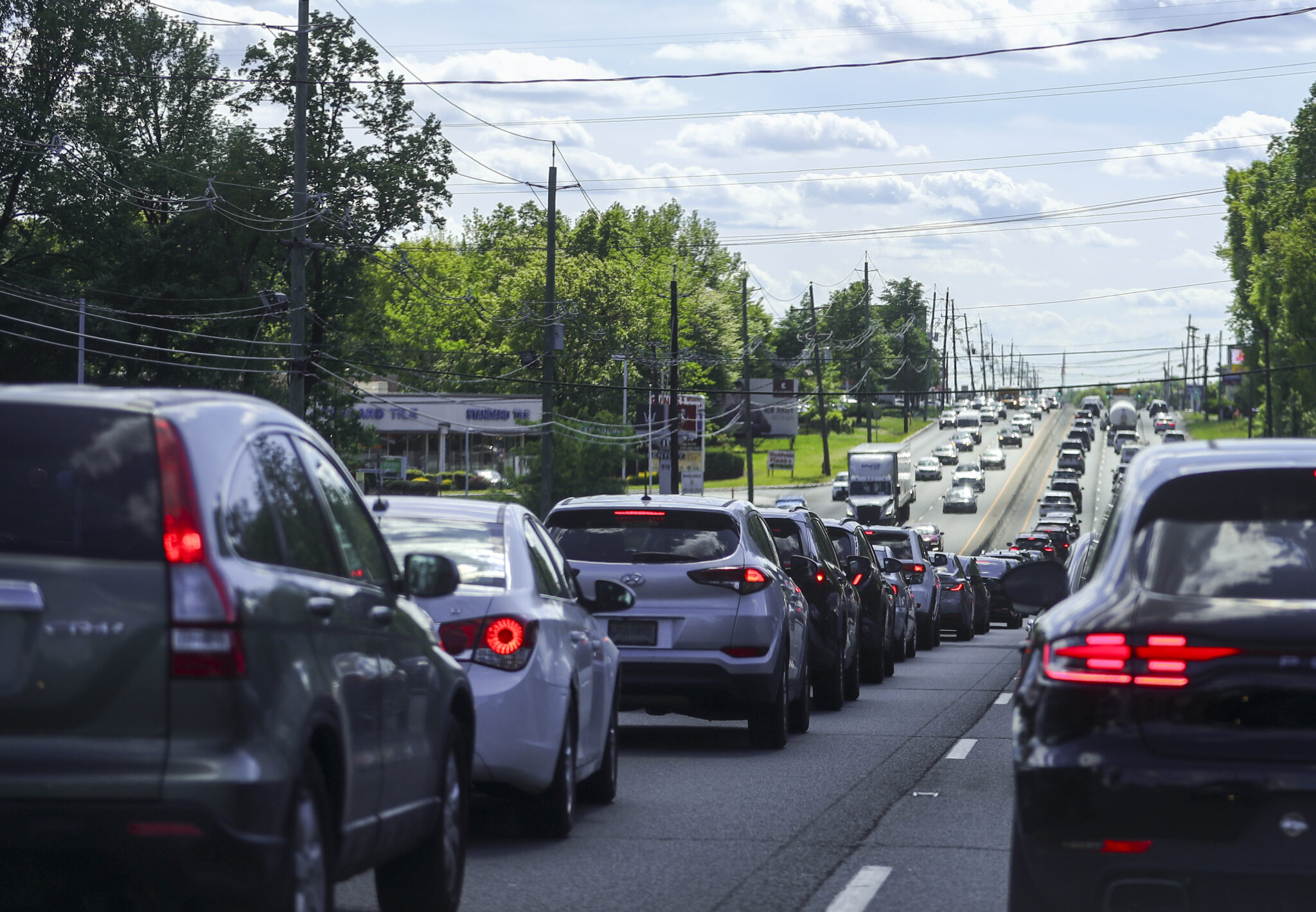
    The latest hearing comes seven months after the NAACP, Latino Action Network, and the Latino Coalition of New Jersey sued the state to compel change. A judge agreed in April to stay the case until October so the state Department of Banking and Insurance can review the issues. It also comes as car insurance premiums in New Jersey have soared since the pandemic, a trend critics say has fueled a spike in uninsured motorists amid broader affordability concerns.

    But while the Senate panel’s chair, Sen. Joseph Lagana (D-Bergen), conceded that using socioeconomic factors to set insurance rates could have “a discriminatory impact,” the committee did not act on the bill.

    Four insurance industry insiders testified against the bill, and several other business groups also registered their opposition. Lagana pointed to their objections as evidence the legislation needs more work before seeing a vote.

    “We have to figure out how to balance the two and what should be the policy, to make sure that people are not disproportionately impacted by something that may be a legitimate rating tool,” Lagana said. “And that’s a very fine needle to thread.”

    Industry lobbyists insisted socioeconomic factors predict risk, are not discriminatory, and are an “actuarially justifiable” variable upon which they can set premiums predictive of loss.

    “The bill before you today does not ban discrimination. New Jersey law already does that. The bill before you today bans accuracy,” said George McNab of the National Association of Mutual Insurance Companies.

    Gary La Spisa of the Insurance Council of New Jersey defended the industry’s use of socioeconomic factors in setting rates, saying they’re overseen by the Department of Banking and Insurance and every premium increase must be justified to get approval.

    Barring any consideration of socioeconomic factors would force insurers to assume that drivers with different levels of risk represent the same risk, McNab added.

    “The inevitable result is a one-size-fits-all pricing that is neither scientifically sound nor fair to New Jersey consumers,” he said. “Riskier drivers would become harder to identify and would pay less than they should, while many responsible drivers will be asked to subsidize those higher risks.”

    But Javier Robles, president of Latino Action Network, pushed back on that argument. He reminded the panel that about a quarter of New Jersey’s labor force is Latino, and half of those workers hold blue-collar jobs.

    “When New Jersey allows insurance to charge higher rates based on education or job title, it punishes the very people who make New Jersey work. A home health aide shouldn’t pay more than a health care executive with the same driving record. That’s not risk-based pricing. That’s bias, plain and simple,” Robles said.

    Basing rates on socioeconomic factors has unintended consequences, Consumer Reports’ Chuck Bell noted, saying Garden State drivers with poor credit face higher surcharges than people convicted of drunk driving.

    “Somebody who does one of the most dangerous things you can do on the road is charged less than somebody with poor credit,” Bell told the panel. “People who live in lower-income neighborhoods are getting multiple gut punches because of the use of these factors, education, occupation, and credit history, and it’s really time to take action.”

    That’s especially true because a person’s credit score could dip because of things outside their control, such as a layoff or medical emergency, added John Harmon of the African American Chamber of Commerce of New Jersey.

    The bill’s supporters noted that other states including New York have banned socioeconomic factors in premium determinations and yet “the auto insurers continue to do business,” as Beverly Brown Ruggia of New Jersey Citizen Action put it.

    Lagana assured supporters and critics alike that bill sponsor Sen. Teresa Ruiz (D-Essex) would use their testimony to tweak the bill. Ruiz did not respond to a request for comment.

    The bill passed the full Senate in 2019 and 2021 but didn’t advance at all in the last two legislative sessions and has never moved in the Assembly.

    This story originally appeared on New Jersey Monitor.
  • Jackie Love, former Deptford Township deputy mayor and longtime champion of disability services, has died at 83

    Jackie Love, former Deptford Township deputy mayor and longtime champion of disability services, has died at 83

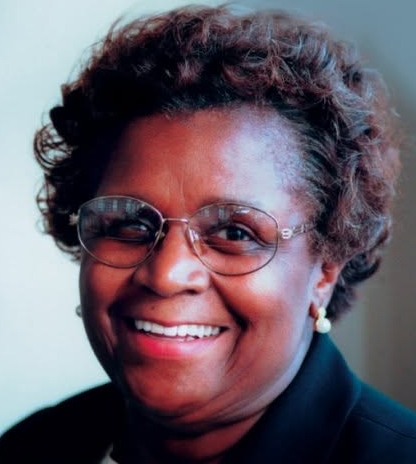
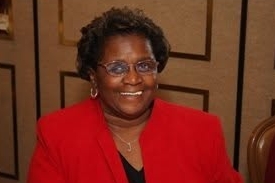
    Jackie Love, 83, of Deptford Township, longtime social justice activist, Black political pioneer, former council member and the second Black female deputy mayor of Deptford Township, former director of what is now the New Jersey Division of Disability Services, New Jersey Elected Officials Hall of Famer, mentor, and volunteer, died Friday, May 29, of age-associated decline at Shady Lane Nursing Home in Clarksboro, Gloucester County.

    Born in Philadelphia, Mrs. Love moved to Deptford Township when she was 13. She was reared by her grandmother, earned an associate’s degree in business administration at Camden County College in 1972, and served in government leadership roles for Deptford Township, Gloucester County, and New Jersey for four decades until her retirement in 2009.

    “Her caring spirit and willingness to help her community is a true example of a servant leader,” a former colleague said on Facebook.

    Mrs. Love was hired by Gloucester County officials in the 1970s to coordinate employment training programs and later to prevent and eliminate disability discrimination. She was the first director of the old Gloucester County Office for the Disabled in the 1980s and later was director of the Gloucester County Disabled Persons Advisory Commission.

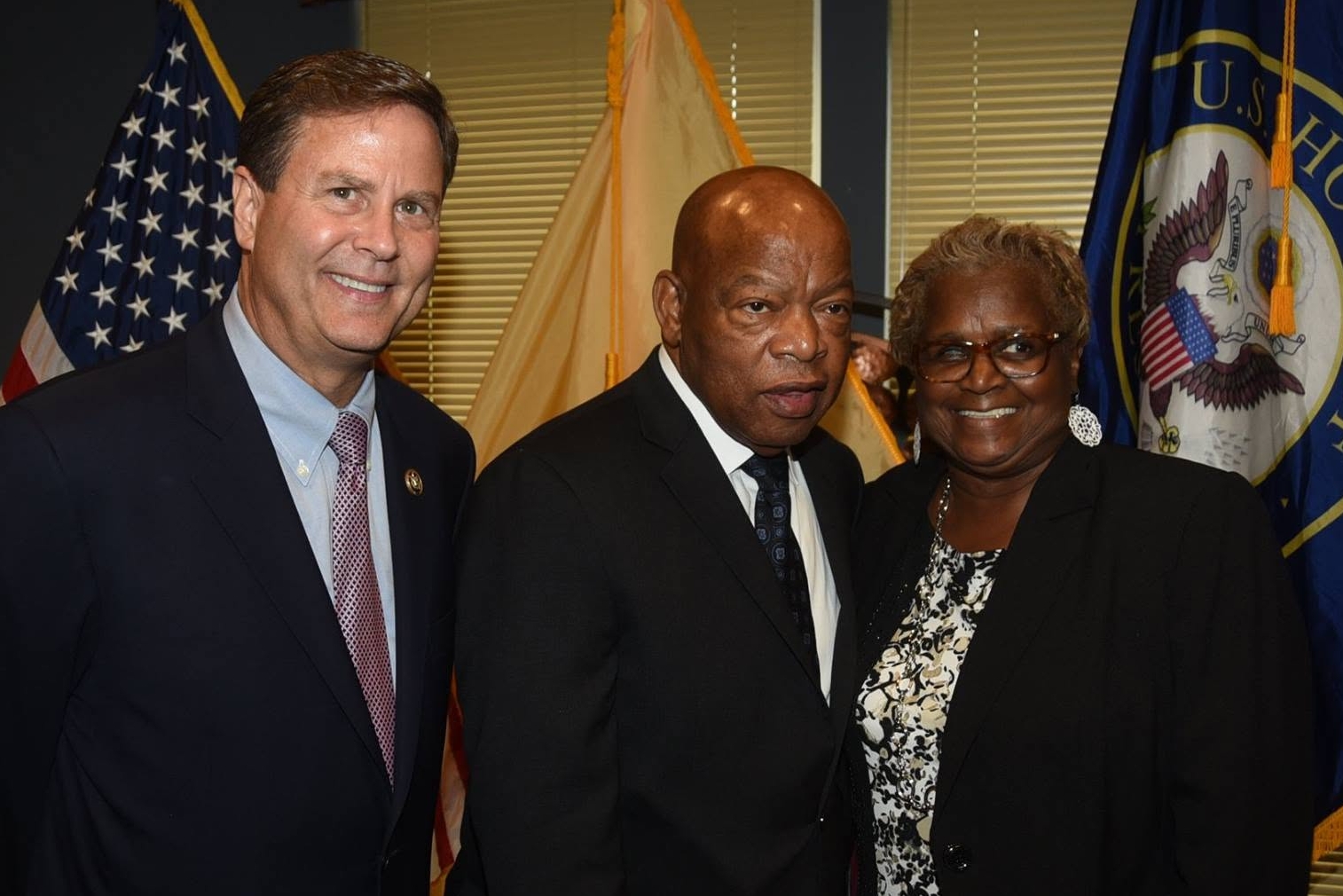
    Mrs. Love stands with U.S. Reps. Donald Norcross (left) and John Lewis.Courtesy of the family

    She became director at the old New Jersey State Office for Disability, now the New Jersey Division of Disability Services, in the 1990s and championed the installation of sidewalk ramps, curb cuts, and other improvements throughout the state. “We wanted to start making sure that we were accessible,” she told Front Runner New Jersey in 2025. “That’s a highlight of my life.”

    Mrs. Love first ran for Deptford Township Council as a Democrat in 1989. She received more votes than any of the other nine candidates, routinely collaborated with members of both parties, colleagues said, and became deputy mayor in 1996.

    “When Jackie was on council and she walked into a room, everybody knew who Jackie Love was,” Deptford Township Mayor Paul Medany told The Inquirer in 2015. “She’s known all over the state.”

    As Deptford council member and deputy mayor, Mrs. Love focused on reducing juvenile crime and lobbied for sound barriers along the New Jersey Turnpike, lower speed limits on busy township roads, responsible school budgets, improvements to animal waste disposal procedures, and upgraded vendor code guidelines. In 2015, Deptford Township officials renamed Church Street Park as the Jackie Love Community Park.

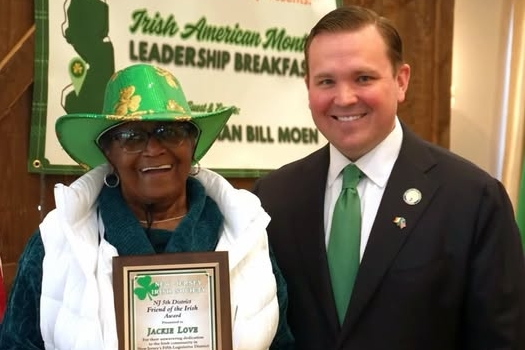
    Mrs. Love stands with state Assemblyman Bill Moen in 2025.New Jersey Irish Society

    “To see the future politicians and others out there playing and getting involved is another highlight of my life,” she told Front Runner New Jersey about the park.

    In 2005, the editorial board for the Courier-Post called Mrs. Love “loyal, hardworking, and a team player.” In a Facebook tribute, U.S. Rep. Donald Norcross (D., N.J.) said: “Jacquelyn Love was a force for good in Deptford for generations. She paved the way for others as a Black female deputy mayor … and long remained a champion for civil rights, faith, the disabled, and many more throughout her life.”

    Mrs. Love also served as a commissioner for the Delaware River Port Authority. She was active with the Gloucester County Minority Coalition, the Gloucester County College advisory committee on diversity and civility, and other groups.

    She recruited volunteer poll workers and was a delegate for Bill Clinton at the 1992 Democratic National Convention in New York. In the 1970s, she traveled the country with civil rights leader Leon Sullivan and helped organize his Opportunities Industrialization Centers of America.

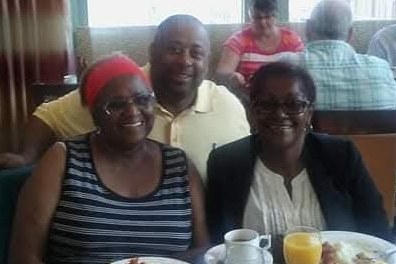
    Mrs. Love (left) enjoyed time with her family.Courtesy of the family

    She was named the 1987 Woman of the Year by the Gloucester County chapter of the NAACP, honored in 2005 by the Gloucester County Human Relations Commission, and inducted into the New Jersey Elected Officials Hall of Fame in 2010. In March, her achievements were recognized by the New Jersey Irish Society.

    Mrs. Love mentored dozens of colleagues and friends, conferred frequently with Philadelphia Mayor Cherelle L. Parker, and volunteered at Mount Zion Wesley United Methodist Church and for the United Way. On Facebook, former colleagues called her “a once-in-a-lifetime type of leader” and “one of the most dedicated public officials I have ever had the honor of working with.”

    Jacquelyn Williams was born Sept. 10, 1942. She dropped out of Woodbury High School at 17, earned her General Educational Development certificate later, and worked at first as a counselor at Ancora Psychiatric Hospital in Hammonton.

    She married Arnold Love in 1972, and together they reared her daughter, Wanda, and their son, Wayne. Her husband died in 1985.

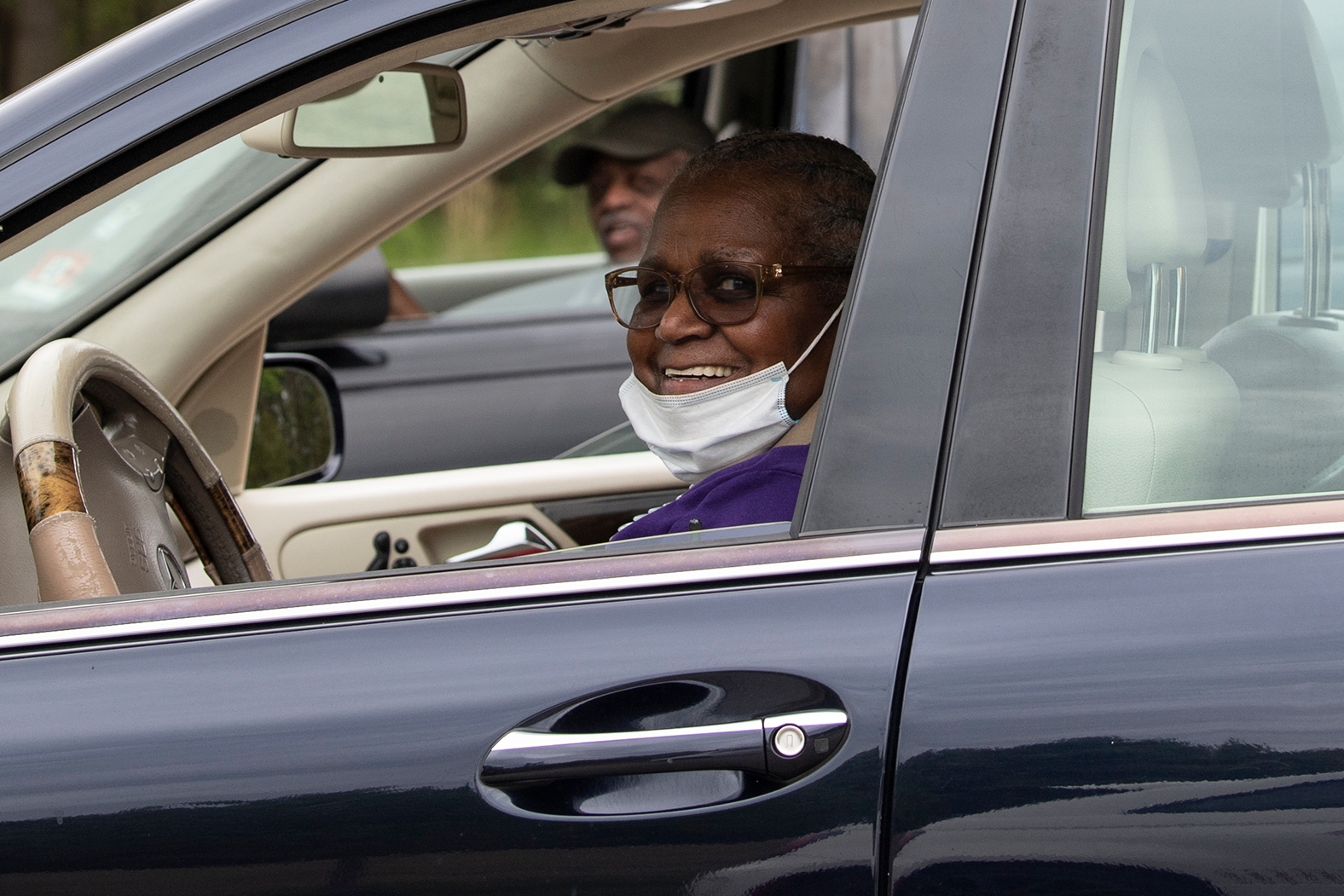
    Mrs. Love participated in this 2020 drive-by salute to a friend’s 60th wedding anniversary. Jose F. Moreno / Staff Photographer

    Friendly and classy, friends said, Mrs. Love wore memorable hats and enjoyed shopping at local Amish markets. She visited Amish friends in Lancaster when she was young, took classes at what are now Rowan and Rutgers Universities, and lived in Jericho for decades.

    Friends called her a “cornerstone of this neighborhood” and a “wonderful down-to-earth lady.” One friend said: “Jackie set the standard for leadership and dedication to her family, faith, friends, and public service.”

    Her son said: “She showed love to so many people.”

    In addition to her children, Mrs. Love is survived by four grandchildren, four great-grandchildren, a sister, and other relatives.

    Visitation with the family is to be from 8 to 10 a.m. Friday, June 12, at Gloucester County Community Church, 359 Chapel Heights Rd., Sewell, N.J. 08080. A service is to follow.

    Friends called Mrs. Love a “cornerstone of this neighborhood.”Courtesy of the family
  • Cherry Hill school board gets pushback on suggestion to drop African American history mandate

    Cherry Hill school board gets pushback on suggestion to drop African American history mandate

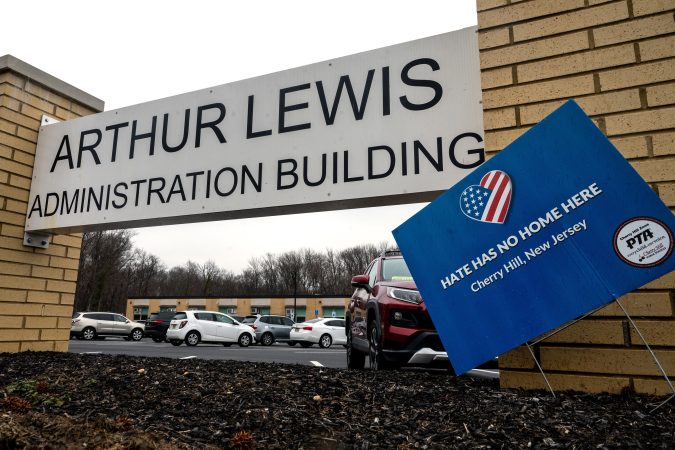
    The Cherry Hill school board made national headlines when it became the first New Jersey school system to require students to take a course on African American history to graduate.

    Five years later, the board debated whether the course should be dropped as a requirement in light of budget problems in South Jersey’s largest school system.

    And while officials have assured the community that the course will remain part of the curriculum, the debate highlights the difficult choices that districts are facing during a tough budget year. In Cherry Hill, the board approved a budget that will cut 70 positions, increase class sizes, and raise property taxes to eliminate a $29 million deficit.

    As that budget process played out this spring, board member Renee Cherfane suggested the district could reconsider African American history if future budget cuts are necessary. The idea drew pushback from students as well as community and civil rights leaders, who pledged to fight any attempt to roll back the requirement.

    “Black history is an essential part of American history,” said Ma’isha Aziz, president of the Camden County East branch of the NAACP. “Teaching it helps ensure students gain a fuller understanding of the nation’s past and present.”

    Cherry Hill High School East senior Skylar Adams, a member of the African American Cultural Club, said changing the course would send the wrong message. Black students make up about 10% of the district’s 11,000 students.

    “In the world we live in today where the rights and voices of African Americans are constantly being challenged and minimized, now is not the time to make our history seem less important,” Adams told the board. “Making this course an elective instead of a requirement sends a message that learning about Black history is optional and not important enough for every student.”

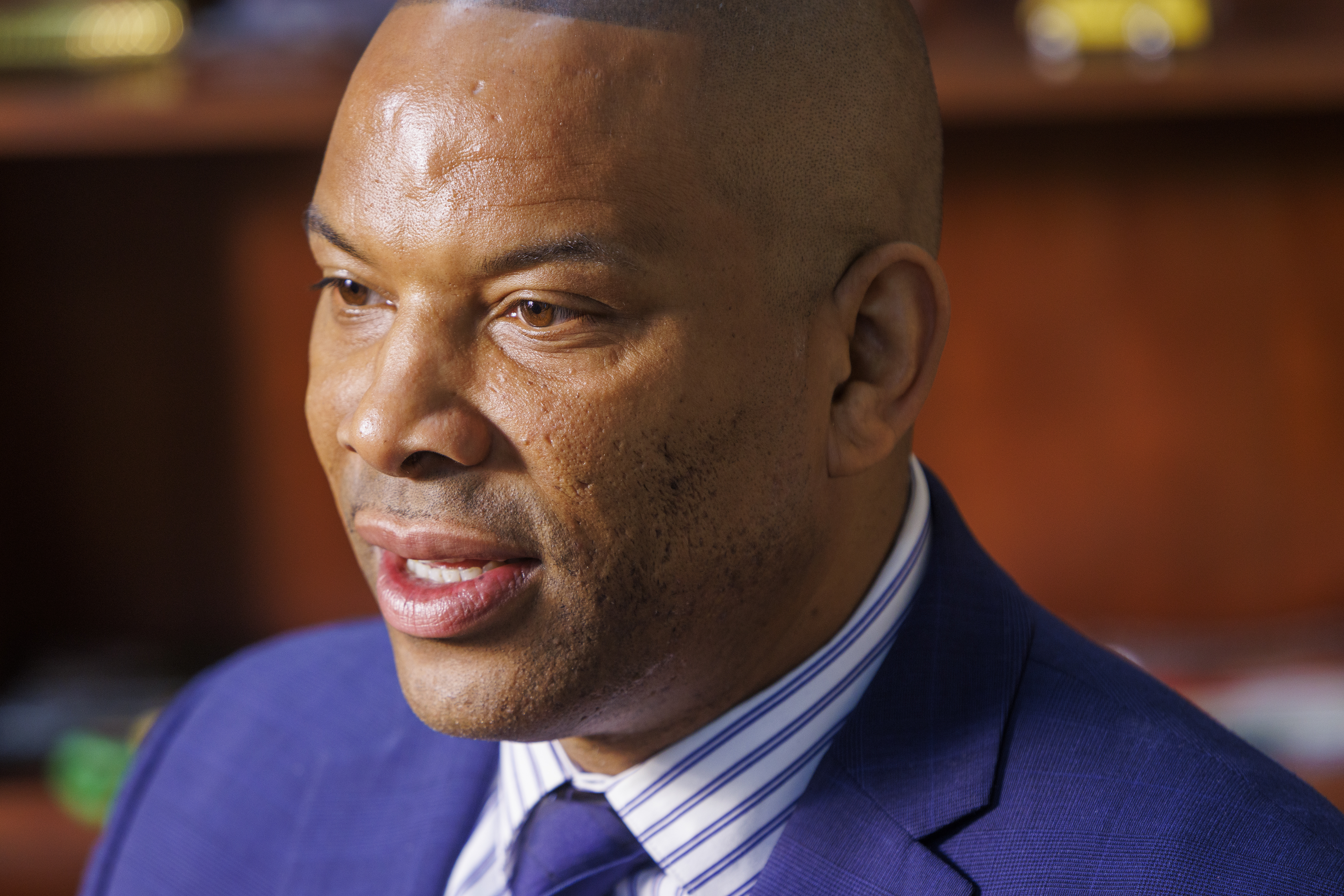
    Superintendent Kwame Morton, the district’s first Black schools chief, praised students who made passionate appeals to the board to keep the course. He reassured them that the course was not in jeopardy.

    “The board is not at this point taking action on any recommendation to eliminate that course. That’s not what’s happening,” Morton said.

    Cherry Hill Superintendent Kwame Morton.Alejandro A. Alvarez / Staff Photographer

    Here is what to know about the debate around the course:

    How the issue unfolded

    Cherfane sparked a heated discussion during a board meeting last month when she suggested making African American studies an elective instead of a required course. She cited the district’s $29 million deficit, which prompted layoffs and cuts.

    In the event the board has to cut additional teaching positions in the future, having that class as a mandate limits options, she said. About 800 students are required to take the course every year, she said.

    “It’s not about offering the class. It’s about requiring it,” Cherfane said. ”We wouldn’t be getting rid of it entirely.”

    Other board members asked Cherfane to explain why she targeted that class. The district offers other electives, such as multivariable calculus, a high-level math course that few students take, that are not required by the state as a graduation requirement, said board member Miriam Stern.

    Board president Gina Winters said any review examining potential cost savings should not be specific to one class. The African American history class was pitched by students and supported by the community, she said.

    “I understand that it’s a tight budget, but we also have a responsibility as a board to educate our children on the things that our community thinks are important,” Winters said.

    Cherfane did not respond to messages seeking comment.

    How did the class get started?

    By an 8-0 vote, the board approved the course as a graduation requirement in February 2021. Students who organized Black Lives Matter protests sparked by the killing of George Floyd in 2020 in Minneapolis by a white police officer asked for the class. They said Black history was mostly taught only in February.

    Cherry Hill became the first district in the state with the requirement, according to the New Jersey Department of Education. New Jersey and Pennsylvania require history to be taught, but districts decide the content of their courses. Philadelphia and Camden schools also mandate a course in African American history to graduate.

    The district developed a curriculum for a semester course and began offering it for the 2021-22 school year for freshmen and sophomores at its two comprehensive high schools. The district hired two teachers.

    Teacher Jennifer LaShure said the course tackles topics that previously received little attention in U.S. history classes. She has included units on early African culture, arts, systemic oppression of today, anti-racism, and activism.

    “I worry about the message that it sends to the students that something as important as history can be taken away,” LaShure told the board. “We see it all over, but it’s scary to see it happening right here.”

    Community pushback

    Former board member Corrien Elmore-Stratton, who was the only Black member of the board that approved the course as a requirement, said the need for it remains.

    “… We are already having spaces and places where our students are being erased, torn down, no longer heard, misunderstood, and DEI has become a dirty word,” she said, referencing President Donald Trump’s attacks on diversity, equity, and inclusion. “It really is disheartening to hear that anyone on this board of education to think of to do.”

    Carole Roskoph, a retired educator and former Cherry Hill council member, said she was “perplexed” by the discussion.

    “It doesn’t make sense to me,” she said.

    Motion withdrawn

    Following the discussion, Cherfane made a motion to refer the issue to the policy committee to review possibly adjusting the graduation requirement for African American history. She withdrew the motion midway through voting, after a board member expressed unreadiness, and the discussion abruptly ended.

    Cherfane did not reintroduce the motion at the May 26 meeting and it was unclear if the matter would be addressed again.

    Other cuts, however, are moving forward in Cherry Hill and will take effect next school year.

  • Body of missing Philly swimmer found in New Jersey, officials say

    A body believed to be a swimmer who went missing in the Delaware River was found by police after it washed ashore in Palmyra, Burlington County, Monday.

    Carlos Gil-Reyes, a 31-year old Philadelphia barber, was identified by friends after diving into the Delaware River in the city’s Torresdale section early Friday. He never resurfaced.

    New Jersey State Police said the body they found matched the description of Gil-Reyes. The case remains under investigation.

    Gil-Reyes was among about 20 people who gathered at the Delaware River in boats off Pleasant Hill Park in Philadelphia’s Torresdale section around 1 a.m. Friday, according to police.

    At some point, Gil-Reyes jumped into the water with another person, but wasn’t able to get back to the boat.

    “He swam out of the boat with my other friend and the last word he told my friend, ‘Hey, I can’t no more, I love you,’” Argeni Infante Reyes, a friend of Gil-Reyes, told reporters. “That breaks my heart because the last word he said is, ‘I can’t swim anymore and I love you.’”

  • Catholicism is growing in Philly and New Jersey. Who’s filling the pews?

    Catholicism is growing in Philly and New Jersey. Who’s filling the pews?

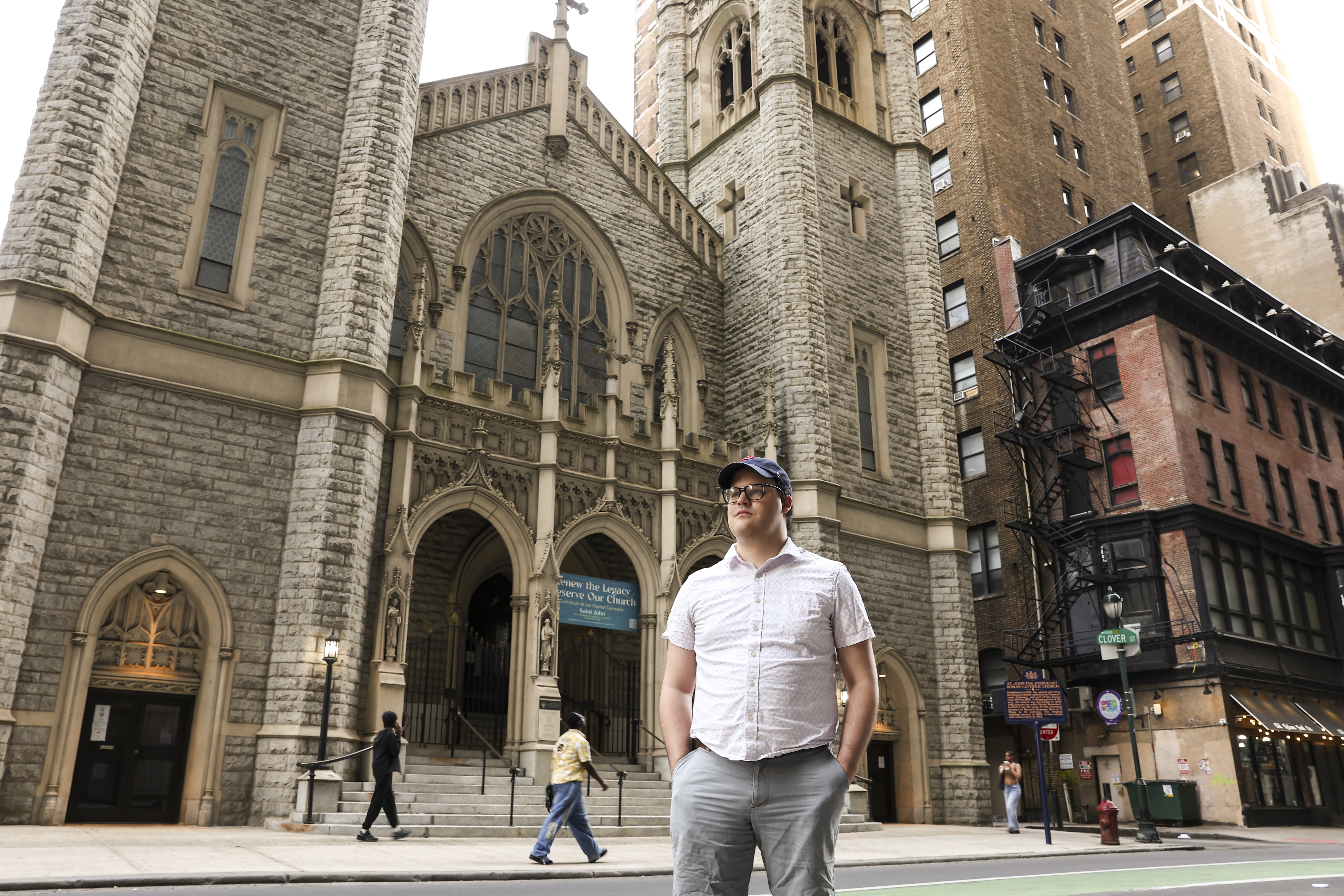
    Church bells rang out from one of Philadelphia’s oldest cathedrals, echoing off downtown parking garages and office buildings, while one of the city’s newer Catholics tried to explain his conversion.

    Daniel Yesilonis, 32, grew up evangelical in the Harrisburg area and converted to Mormonism while studying at Temple University. He said his Mormon mission to Colorado Springs, Colo., was deflating, though, and after he came out as gay during the COVID-19 pandemic, he officially left that church.

    Like millions of Americans, Yesilonis figured he would try his best to be decent, to be spiritual without a label or building attached to it. But he soon felt a sense of loss.

    “It was like something was missing, maybe a sense of community or something,” Yesilonis said outside the church in April.

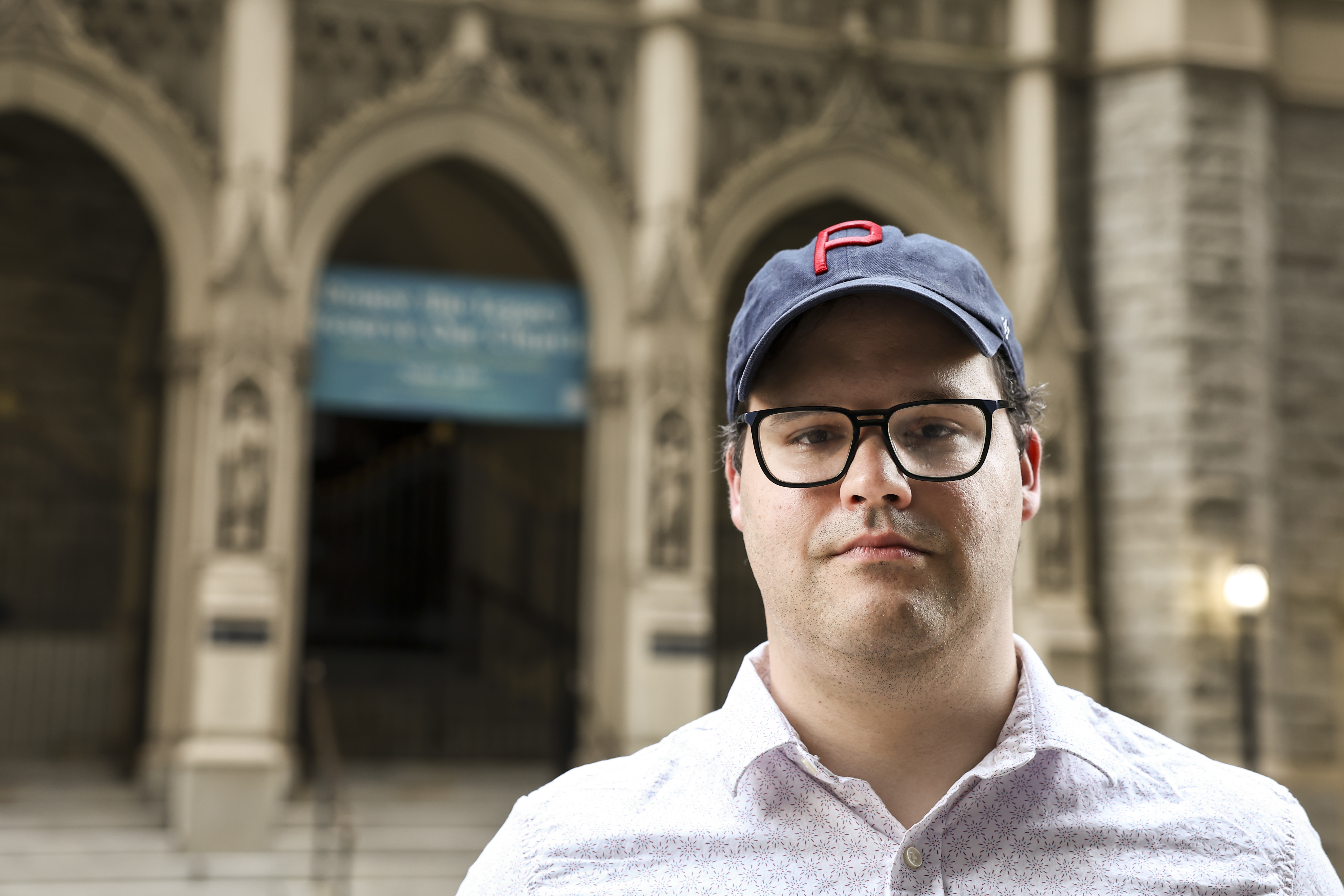
    Daniel Yesilonis posed for a portrait outside of St. John The Evangelist Church on Wednesday, April 15, 2026 in Philadelphia.Monica Herndon / Staff Photographer

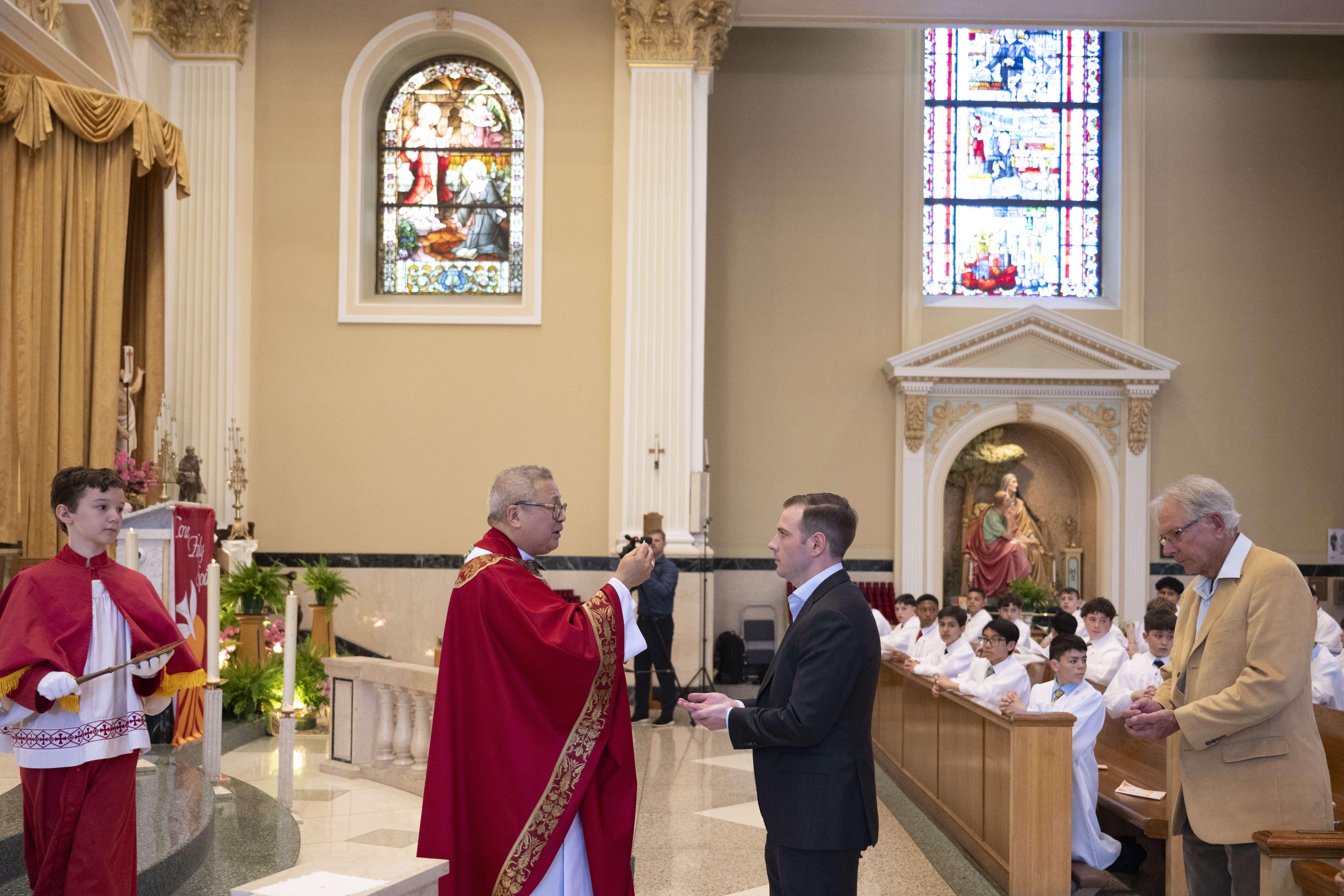
    So, at an Easter vigil Mass in 2024, Yesilonis was among a group of candidates (people who were already baptized) and catechumens (those who were never baptized) who became Catholic and joined St. John the Evangelist on 13th Street.

    Converts like Yesilonis are on the rise at churches all over Philadelphia and New Jersey, diocese officials said, a conversion boom that is being reported globally, including large spikes in Canada and France. In Philly, there have been 1,162 candidates and catechumens this year, which is a 60% increase since 2025 and a 100% increase since 2017.

    Researchers and religious scholars said it was too soon to say much about the recent spike, but noted that a rise would be bucking long-term trends. Earlier this year, the Pew Research Center found that Catholicism has lost more people than it has gained in 24 countries it surveyed, including the United States. A 2025 Pew study found that Christianity’s long-term losses were starting to “level off,” but according to the Archdiocese of Philadelphia, two high schools closed in 2021, and the last time a new Catholic school and parish opened was back in 2010.

    Since 2012, 34 Catholic churches have closed in the archdiocese. So the trend, while noticeable, is still a small change.

    “There would have to be a huge swing, something dramatic would have to happen, for the church to start gaining huge numbers,” said Patricia Tevington, a Pew Research assistant who lives in Philadelphia.

    There is no one reason for the recent increase, diocese officials said.

    In the Philadelphia Archdiocese, the Rev. Gerald Dennis Gill said, many new devotees were baptized as children but did not grow up with Catholicism because their parents or other elders had stopped practicing. He believes they are experiencing a vacuum in their life and are seeking to fill that.

    “Our culture is not offering something objectively good and true and beautiful, but it’s within all of us to seek that out,” he said. “People of all ages are finding the need to have a relationship with the Lord, for meaning and the promise of heaven.”

    A confirmation mass is held at St. Monica Roman Catholic Church in Philadelphia on Saturday, April 18, 2026.Joe Lamberti / For The Inquirer

    Across the river in the Camden Diocese, spokesperson Michael Walsh said, the number of catechumens grew from 194 last year to 238 in 2026, a nearly 23% increase.

    Catholics are not knocking on doors the way Yesilonis had to in Colorado, but members of St. Agatha-St. James Parish had an “Ask a Catholic” tent at West Philly’s 68th annual Spruce Hill May Fair in Clark Park on May 9.

    Newer Catholics whom The Inquirer spoke to in recent months (including this reporter’s adult son) cited a slew of different personal reasons for their decision.

    “We’re all looking to God to help us, to save us. For me, it was time,” said Jana Muhammad, a “middle-aged” candidate who received the sacrament of confirmation at St. Monica’s in South Philly earlier this spring. “It’s really a rough, rough time out there right now. There’s no peace right now, and people are really looking for peace, and it’s not there right now. For me, personally, when it gets really rough, I absolutely pray to God.”

    There is, however, a litany of theories being tossed around online and in the media about the increase in Catholicism that are sometimes at odds with one another.

    The trend has been attributed to increasing conservatism in young men. Catholicism has also been offered up as an antidote to the so-called red pill, a “manosphere” belief that society now caters to women. Some say the increase is a Gen Z response to the isolation of the pandemic. Others say that technology burnout is fueling it. There have been stories about the rise of Catholic social media influencers and the popularity of the prayer app Hallow, which has been downloaded 32 million times since it debuted in 2018.

    “People ask why priests always wear black. ’Cause everyday is a funeral for the haters,” the Rev. David Michael Moses, a Catholic “priestfluencer” with 1.1 million followers on Instagram, said in a post.

    Actor Mark Wahlberg, a partner in Hallow, is a proud Catholic, but so is Shia LaBeouf, a recent convert who reportedly yelled, “I’m a Catholic,” while allegedly shouting homophobic slurs in New Orleans earlier this year.

    The middle-ground, welcoming approach taken by the late Pope Francis and his successor, Pope Leo XIV, who has been vocal against President Donald Trump’s war on Iran, has also pulled people closer to Catholicism.

    “Pope Francis inspired my decision,” Yesilonis said.

    Daniel Yesilonis posed for a portrait outside of St. John The Evangelist Church on Wednesday, April 15, 2026 in Philadelphia.Monica Herndon / Staff Photographer

    Yesilonis said he knows he could never marry a man in the Catholic Church, but he has found solace among the LGBTQ+ parishioners at St. John the Evangelist.

    “I found a community as much as I found a church,” he said.

    The Rev. Thomas Betz, of St. John’s, said the church “teaches and believes” the same tenet as the wider church, but has been open.

    “St. John, by its very nature, is in the heart of the city and open to different races, and people who think differently, politically,” he said. “Everyone is welcome.”

    Mark Schiavo, 26, waits to be confirmed at St. Monica Roman Catholic Church in Philadelphia on Saturday, April 18, 2026.Joe Lamberti / For The Inquirer

    Down in Cape May, Sara Kelly said she grew up in a family that gave up on formal religion, but still held on to a strong spiritual sense of right and wrong. Her father, Kurt, suffered from head and neck cancer for years, and after he died in 2019, she constantly wondered about the afterlife.

    Kelly and her husband went to some nondenominational churches in Philadelphia, where she lived at the time, but did not find the answers she was looking for. The couple moved to the Shore and struggled with finances.

    One day, while walking on the Delaware Bay beach, she fell to her knees and asked God for help.

    “I’ve never done anything like that before,” she said.

    At the advice of a relative, Kelly began sitting in a Catholic church in 2025, and later downloaded the Hallow app. She bought a rosary, too, and began going back to church multiple times a week, and eventually signed up for Order of Christian Initiation of Adults (OCIA) classes.

    “I know for me, it was really enjoyable to go to a place where the focus is only on love and trying to help others,” she said. “At every Mass, we’re praying for people caught up in war, people in Gaza and Ukraine.”

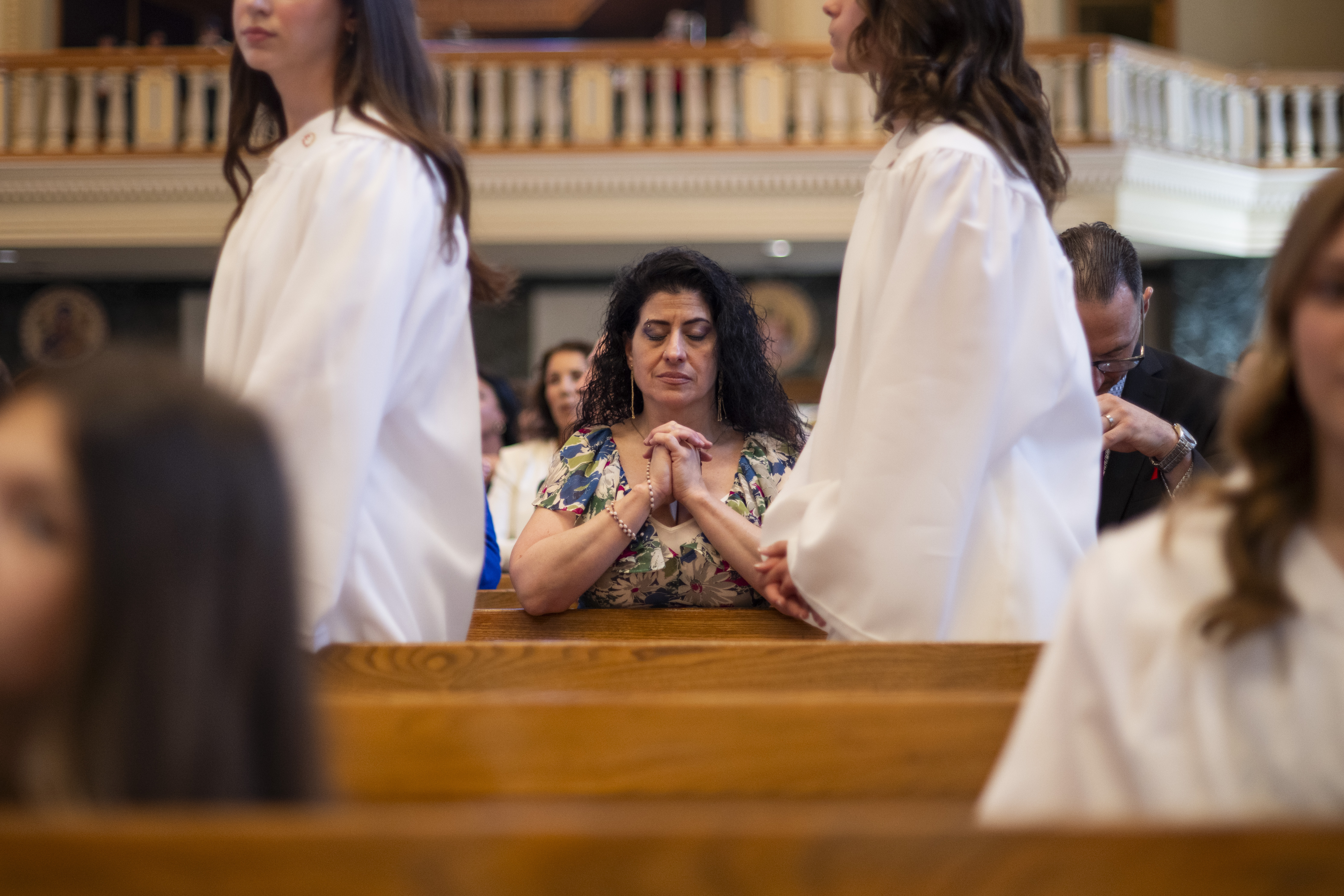
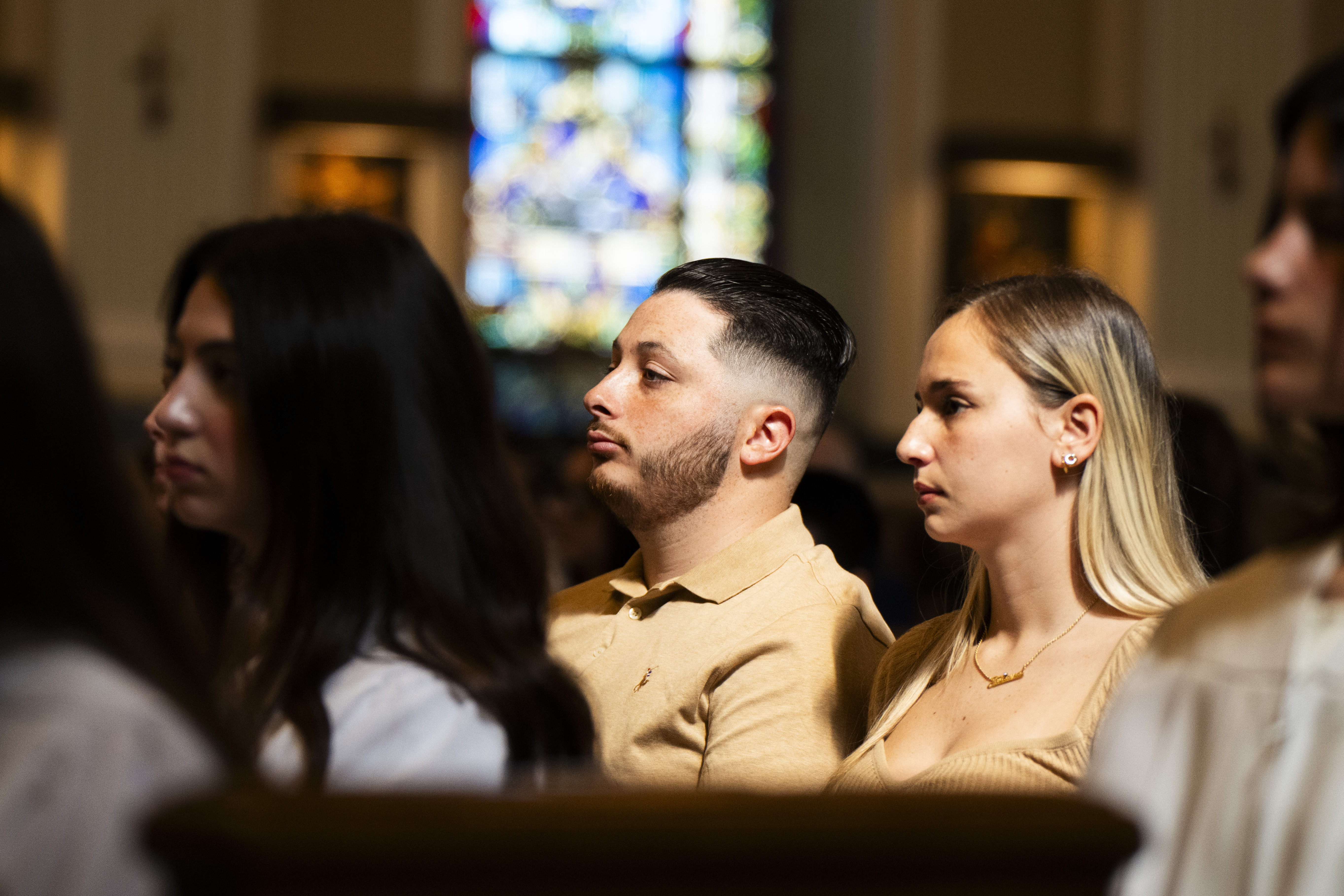
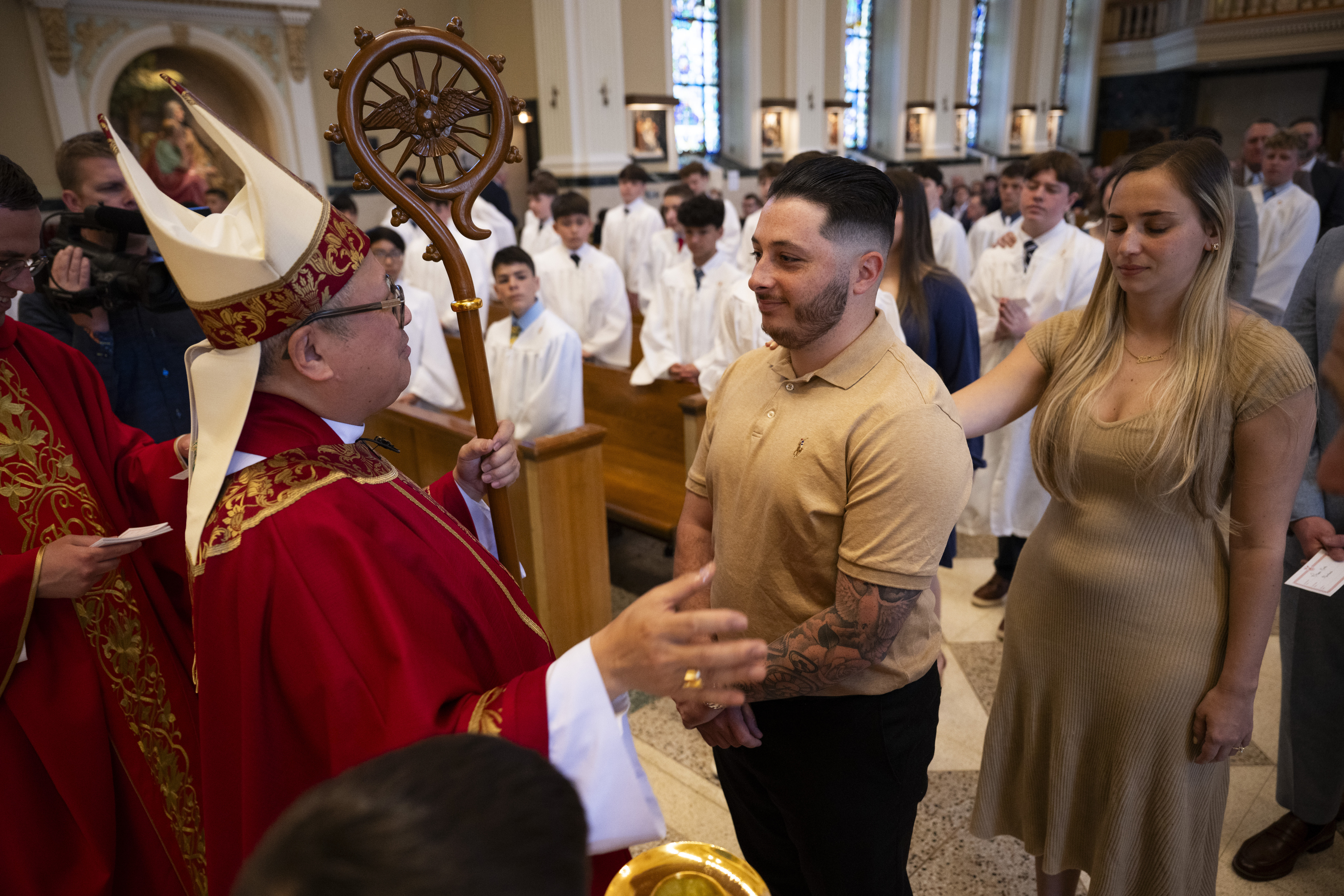
    On a breezy April morning in South Philly, hundreds of people filed into St. Monica’s for the Rite of Confirmation Mass. A few dozen teens in white filled the front pews, but just behind them were a handful of adults, like Jana Muhammad, there to receive their final sacrament and take the name of a saint.

    Muhammad chose Angelica. She was baptized as a child and grew up going to church. She said her stepmother did not want to “force” religion on her and gave her the choice to make up her own mind as an adult.

    “And it was just time,” she said.

    The Rev. Edward Town led the Christian initiation processes there and said the reasons adults come back vary from simple to profound.

    “People want stability in their lives,” he said. “To young people, the world seems very unstable, and there’s a lot of uncertainty. I think our faith gives us a little hope, right?”

    When the Mass was finished, the Rev. Efren V. Esmilla, auxiliary bishop of Philadelphia, extended an invitation to any other seekers sitting in the church.

    “Come find us,” he said. “Our door is always open.”

    Mark Schiavo, 26, is confirmed at St. Monica Roman Catholic Church in Philadelphia on Saturday, April 18, 2026.Joe Lamberti / For The Inquirer
  • At a new Goodwill in South Jersey, customers are flocking for the deals and the resale potential

    At a new Goodwill in South Jersey, customers are flocking for the deals and the resale potential

    Mia Garcia showed off her clothing haul: a multicolored tank top, a backless white tee, a lacy maroon cardigan, and white tights for an upcoming trip to the New Jersey Renaissance Faire.

    The 19-year-old was as excited about the bill as she was about the fashion.

    Her grand total: $15.

    She and her friend, Salsbee Jahan, scored the deals at a massive new Goodwill store in Deptford, where local executives say a growing number of Gen Z shoppers are flocking for clothes, shoes, decor, and more. Young customers are increasingly fueling the world’s largest thrift store chain, which posted record revenue last year.

    At Goodwill, “it’s definitely cheaper and easier to find older-style clothes,” like popular Y2K-inspired fits that are sold at a premium elsewhere, Garcia said. At some name-brand stores, “$20 won’t even get you get a shirt.”

    The women, both Deptford natives attending Rowan College of South Jersey, say they frequent malls, too. But Jahan, 18, said they’re trying to thrift more because “everything is going up” in price.

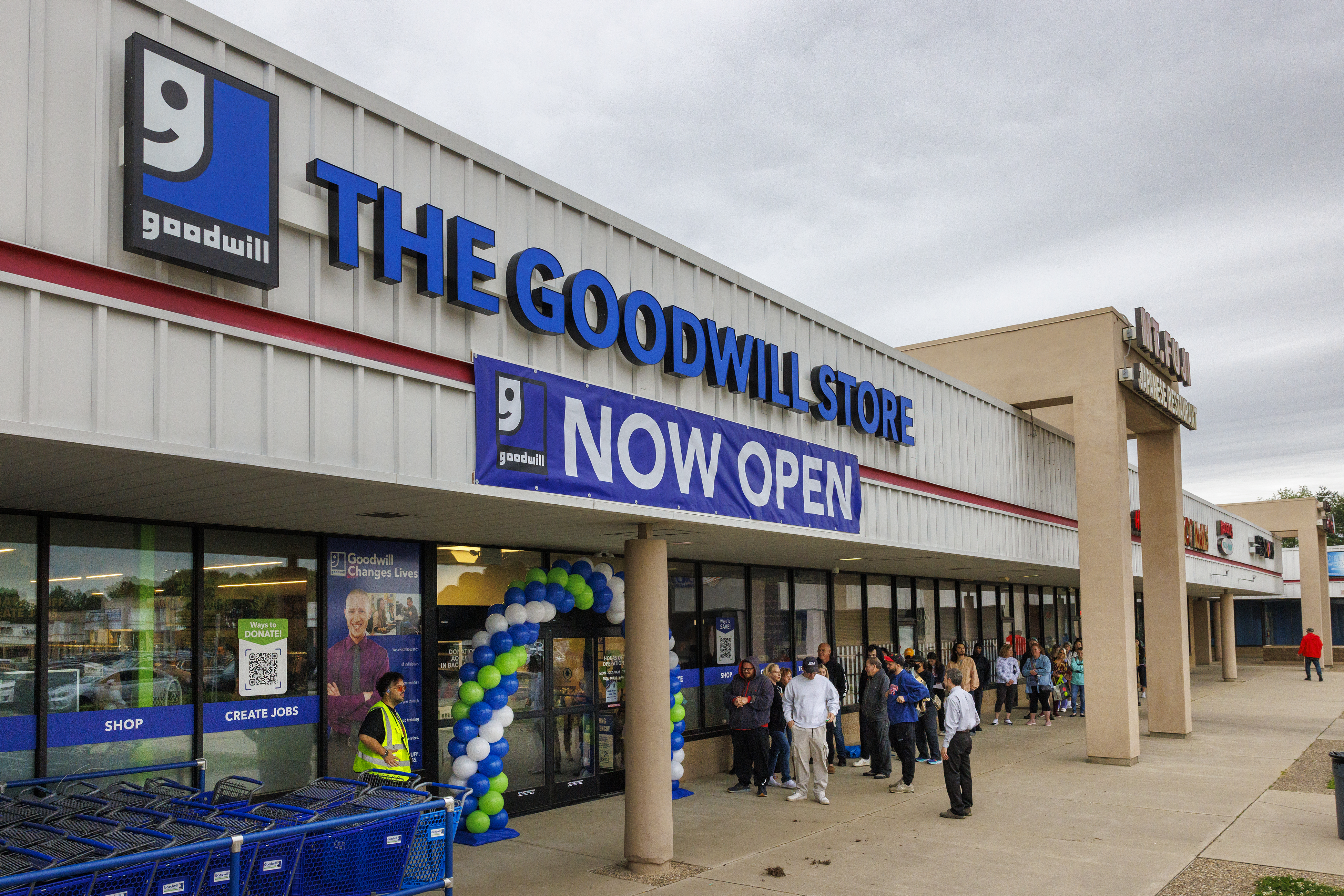
    Shoppers lined up to get inside the new Goodwill store in Deptford on opening day.Alejandro A. Alvarez / Staff Photographer

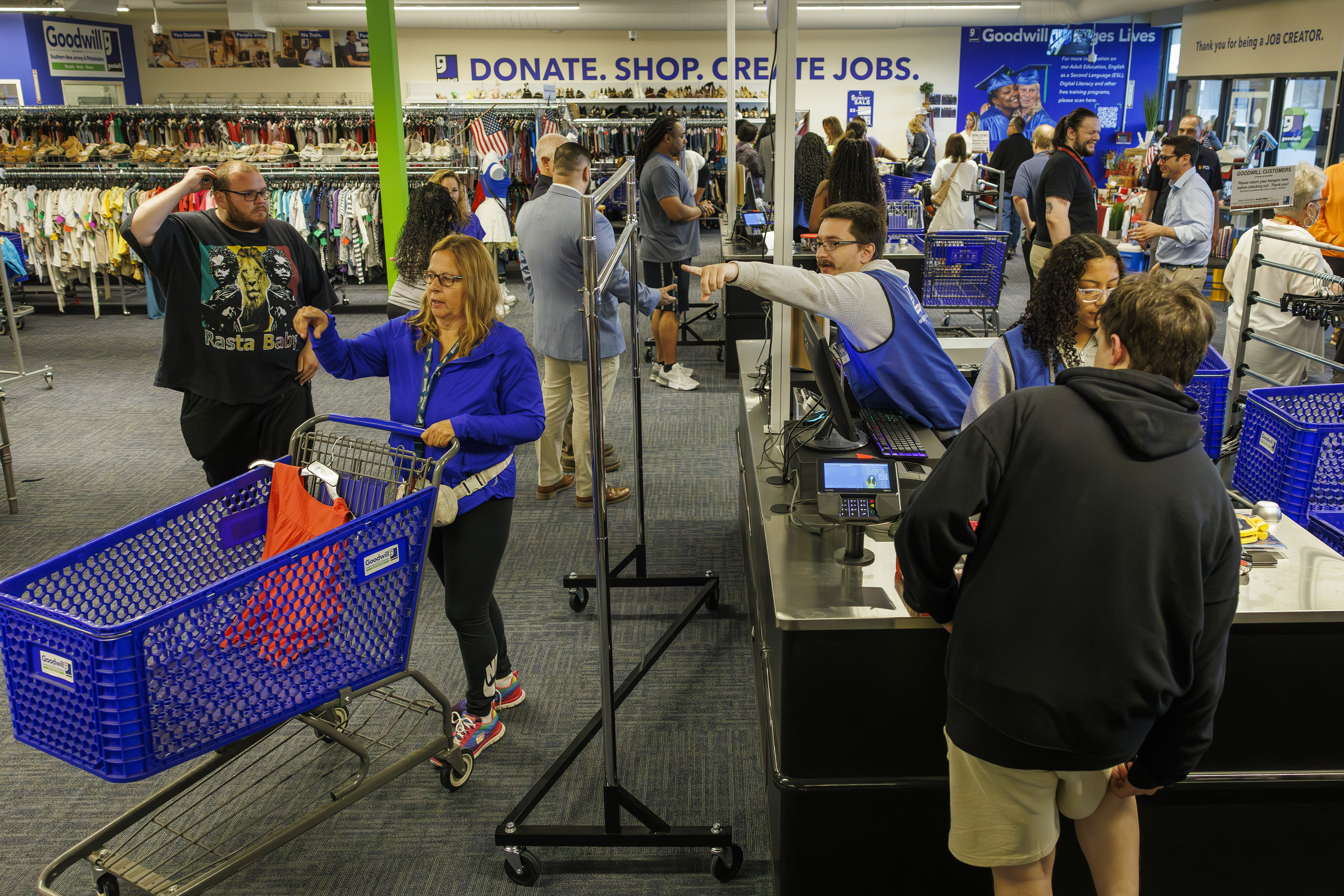
    The sentiment was echoed by several other customers at the 19,000-square-foot store, which was buzzing with dozens of shoppers around lunchtime Tuesday.

    “Gas prices have gone up. Groceries have gone up,” said Kaitlin Deegan, a 38-year-old nurse from Salem County. She was wearing a graphic tee and denim shorts that she had bought for under $10 at another Goodwill. “Now it’s all about thrifting.”

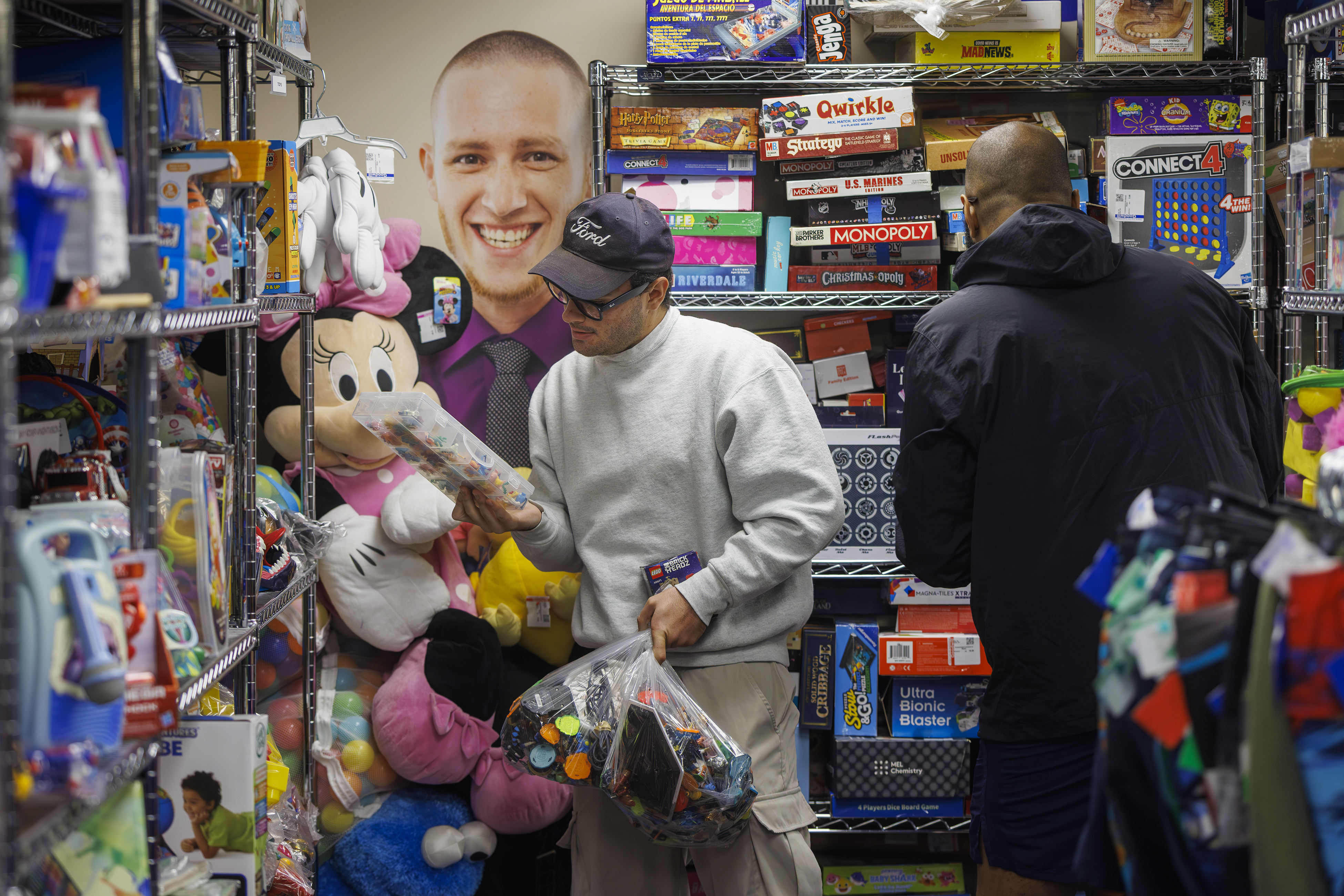
    Nearby, one woman put a $6.49 denim skirt in her cart, next to a pair of $7.99 sparkly shoes she’d grabbed earlier. Across the room, children perused shelves of toys, games, and stuffed animals — most under $10 — and teens eyed rows of $1.99 DVDs and 99-cent CDs.

    In its first 12 days, the new location on Clements Bridge Road averaged about 600 customers a day, more than double the foot traffic recorded at a smaller Goodwill retail store that recently closed in nearby Woodbury Heights, said regional manager Josef Fortun.

    Each Deptford customer has spent about $31 on average, he said, exceeding managers’ goals.

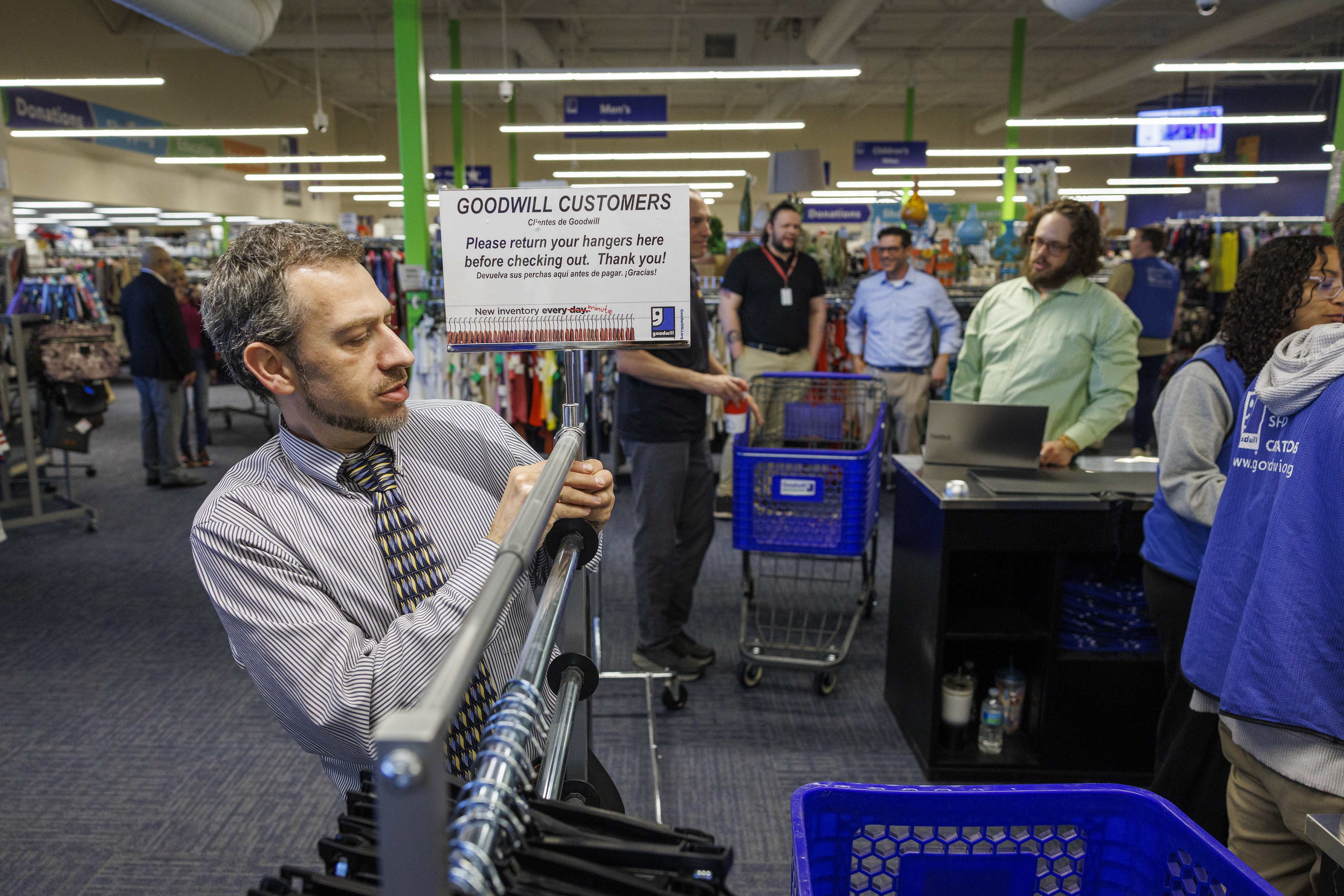
    Josef Fortun, regional manager with Goodwill Industries of Southern New Jersey, prepares the new Deptford store to open on May 21.Alejandro A. Alvarez / Staff Photographer

    This early success in South Jersey comes amid a larger thrifting resurgence. Last year, the U.S. resale market grew nearly four times faster than the broader apparel market, according to an annual report from the online consignment platform ThredUp.

    Goodwill recorded more than $7 billion in revenue last year, the New York Times reported, and annual sales across its 3,400 stores have risen 50% since 2019. Smaller secondhand shops, such as Savers Value Village and ThredUp, have also reported revenue increases, according to the Times.

    In the same Deptford shopping center as the new Goodwill, there are three other thrift stores: Once Upon A Child, Plato’s Closet, and Play It Again Sports. All are owned by Winmark Corporation, which has been adding more thrift stores and reporting year-over-year revenue increases.

    In nearby Cherry Hill, a Red White & Blue Thrift opened this spring, a half-mile from a 2nd Ave thrift outpost — owned by Savers Value Village — that opened in 2024.

    Goodwill also opened a store a year ago in a former Rite Aid in Voorhees. And its Woodbury Heights location, which is still accepting donations, is set to reopen June 15 as a Goodwill Home Medical Equipment Store.

    Boyd said the nonprofit chain is looking to expand into Cape May County in the near future.

    Why are more people thrifting?

    More people are buying secondhand right now for many reasons, said Mark Boyd, president and CEO of Goodwill Industries of Southern New Jersey and Philadelphia.

    “Challenging economic times definitely bring people into the Goodwill store, maybe for the first time,” Boyd said. At the same time, “there’s a lot of people out there who care a lot about reuse, and that’s driving particularly younger shoppers into Goodwill.”

    Friends Reed Habiak (foreground left) and Anthony Nunez (foreground right), both influencers and resellers, were first in line at the new Goodwill store in Deptford on May 21.Alejandro A. Alvarez / Staff Photographer

    And while thrifting is one of the most “tactile” experiences, Boyd said social media is playing a role in its rebirth. Many Goodwill customers are resellers, he said. They find steals in store aisles and then mark up the products to sell online or at flea markets.

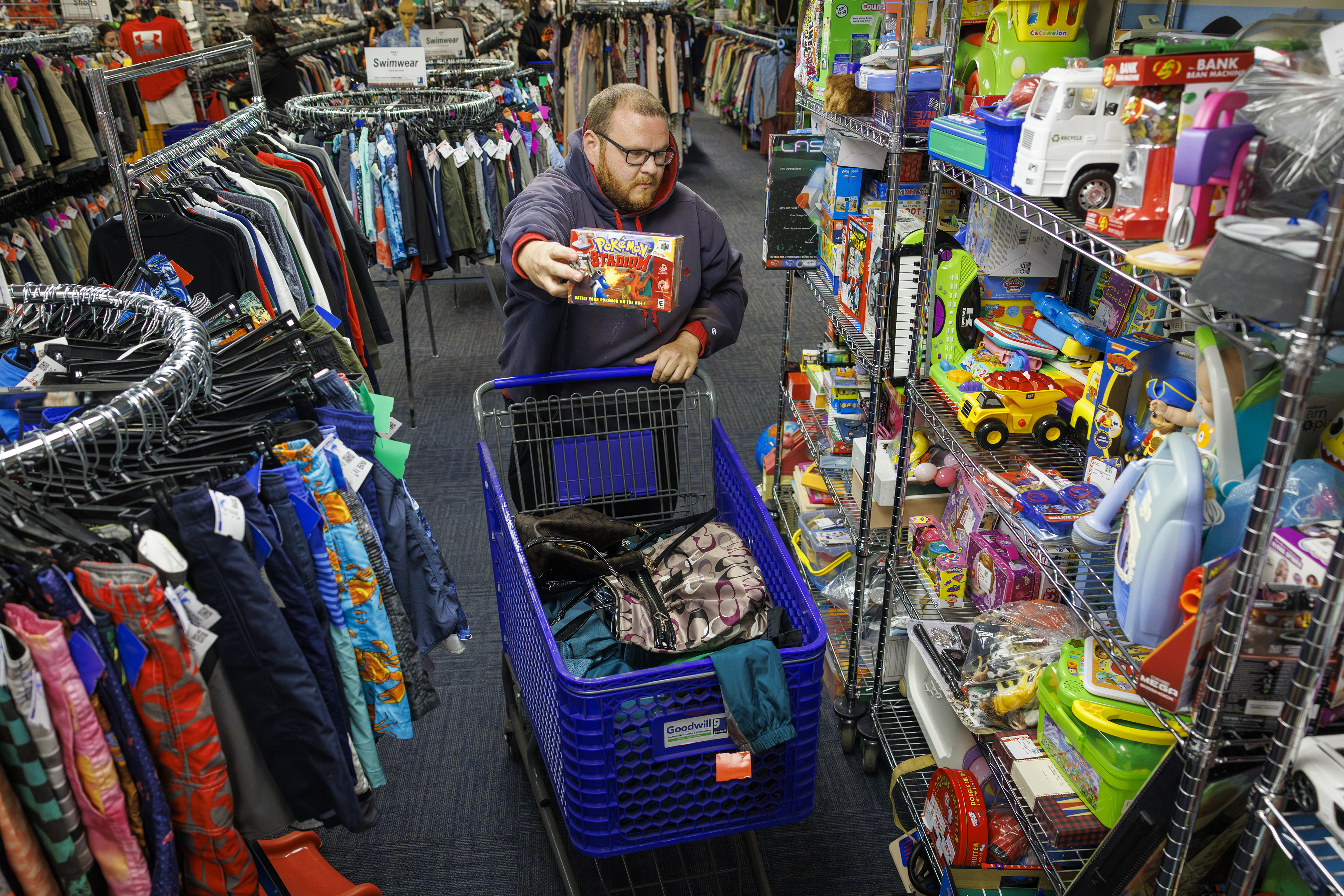
    On Deptford Goodwill’s opening day last month, professional reseller Anthony Nunez was first in line. He had arrived with a friend around 4:30 a.m., ready to hunt for sports jerseys, Pokemon memorabilia, video games, and vintage clothing to resell on eBay.

    Since losing a job in compliance during the pandemic, the 34-year-old Sayreville resident has been reselling full-time, making more than $100,000 a year, he said.

    Anthony Nunez flashes a Pokemon Stadium game he picked up in the toy section at the opening of the new Goodwill in Deptford.Alejandro A. Alvarez / Staff Photographer

    At the Deptford Goodwill, Nunez made a beeline for items with a high resale value, including a still-in-the-box Pokemon Stadium video game for Nintendo 64. He bought it for $18, Nunez said, and later resold it for $150, recouping the cost of his entire Goodwill trip.

    It helped that Goodwill executives had invited several resellers to a store preview, he noted.

    “They understand we help them too,” Nunez said. “I don’t know if they would be able to exist without us.”

    How social media has promoted thrifting

    Some longtime thrifters have started using social media to make extra cash.

    Melody Appel got into thrifting decades ago, when she was a student at Drexel University.

    Now 47 and living in Monmouth County, N.J., Appel recently got a TikTok account at the urging of her teenage daughters. At first, she just used the account to show off her thrifting hauls. But over the past month, she said she has started reselling items, too, making around $1,500.

    Many of her TikTok followers seem to be between the ages of 30 and 60, she said, but she has noticed many younger customers in stores.

    “People are seeing what they can find,” said Appel, who works as an educator and interior decorator. “And maybe their perception of what thrifting was is different from what thrifting is.”

    Reed Habiak, a social media influencer and reseller, looks for items in the Deptford Goodwill’s toy section on opening day last month. Alejandro A. Alvarez / Staff Photographer

    While some found their way to thrifting through social media, others get hooked when they stumble into a store, said Fortun, the Goodwill regional manager. He has noticed more young people at the Deptford store than at the old location in Woodbury Heights, he said, and he attributes some of that to the Edge Fitness Club right next door.

    Customers often come in on a whim, he said, and are in awe of the wide selection and the price tags.

    “People always look for deals,” Fortun said. “You go to discount stores like Ross and Burlington, you still don’t find items as cheap.”

    Goodwill is trying to keep these customers hooked with a new online loyalty program, which will offer special deals and send push alerts to shoppers when their favorite brands are stocked at a local store, said Boyd, CEO of the South Jersey and Philadelphia locations.

    Mark Boyd, CEO at Goodwill Industries of Southern New Jersey and Philadelphia, cuts the ribbon to open the new store in Deptford last month.Alejandro A. Alvarez / Staff Photographer

    Executives are also looking into using artificial intelligence to optimize parts of their operations, such as pricing, he said. But he doesn’t think technology could enhance the customer experience much, he added, and over-digitization could detract from it.

    “I really think thrifting is like one of the most human experiences you’re going to have, and it’s a great shopping experience,” Boyd said, “and that’s why it’s so popular.”