Officials of the Pennsylvania and New Jersey Turnpikes have chosen a design to replace the 70-year-old bridge over the Delaware River linking the toll roads: a six-lane span that would be built about 195 feet north of the existing one.
Called a ”tied-arch” bridge, the $1.6 billion replacement would be cheaper than other styles considered and can be built fastest, said John Boyer, senior engineer for the Pennsylvania Turnpike Commission.
“Shorter time frames mean less disruption to local businesses and daily life for the communities in this area,” said Boyer, the manager of the joint project.
Because the new bridge would be farther from the existing Delaware River Bridge than alternatives, traffic can keep flowing as it’s built, he said.
Planners for years have known that the region would need a new turnpike bridge because of exponential growth in traffic volume, especially trucks.
Freight volumes nationally are projected to grow by 73% by 2050, with warehouses on both sides of the river relying on crossing.
Before the nearby I-95/Pennsylvania Turnpike interchange opened in 2018, an average of 42,000 vehicles a day crossed the four-lane Delaware River Bridge. Now, that’s up to around 70,000. By 2050, projections say an average 93,000 vehicles will need to traverse the replacement.
The surfaceof a tied-arch bridge provides tension to resist the horizontal forces pressing on either end of the arch, like the taut string that connects a bow. It requires less sturdy foundations than a bridge supported by cables.
“You can be build those river piers while you’re building the arch structure off-site,” Boyer said. When the piers are ready, the arch can be brought in by barge and “you can essentially jack it and elevate it up into place,” he said.
Federal authorities approved a new span in 2003, but the project was put on hold because of problems paying for it.
As congestion increased on the repaired bridge, more traffic capacity became imperative, officials said.
Because the earlier federal approval was so old, officials had to start again with a new environmental impact statement and design studies. Last year, turnpike officials settled on two options.
Now, they’re finishing up the environmental impact statement, with formal public hearings scheduled for the winter.
Turnpike officials expect the Federal Highway Administrationto make a decision on the project around April 2028.
The two states’ turnpike agencies will finance the balance. Borrowing would be backed by toll revenue, but both say the bridge project won’t increase tolls for drivers.
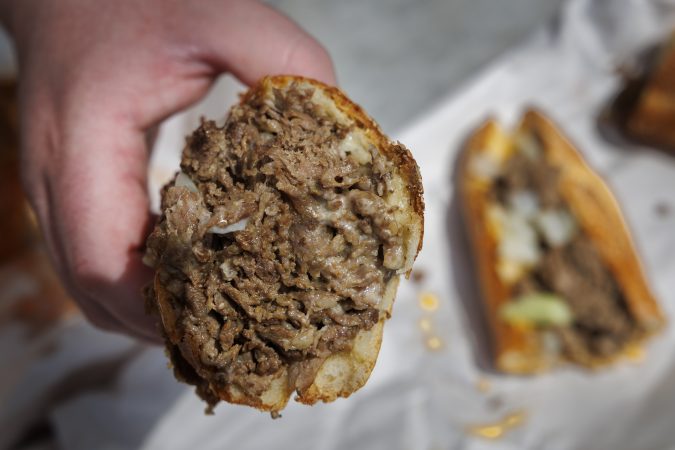
Angelo’s Pizzeria owner Danny DiGiampietro has been pursuing two ambitious goals: reviving a landmark Montgomery County bakery and opening a branch of his Michelin-recommended pizza-and-sandwich operation in South Jersey, where it all began.
Both projects now appear to be gaining momentum. While Angelo’s vaunted rolls are being baked at the former Conshohocken Italian Bakery property, which DiGiampietro purchased last year, the long-held plans to reopen the bakery’s counter to retail customers remain on hold. DiGiampietro said the building requires additional work, which he declined to specify. “Every time we fix one thing, something else comes up,” he said.
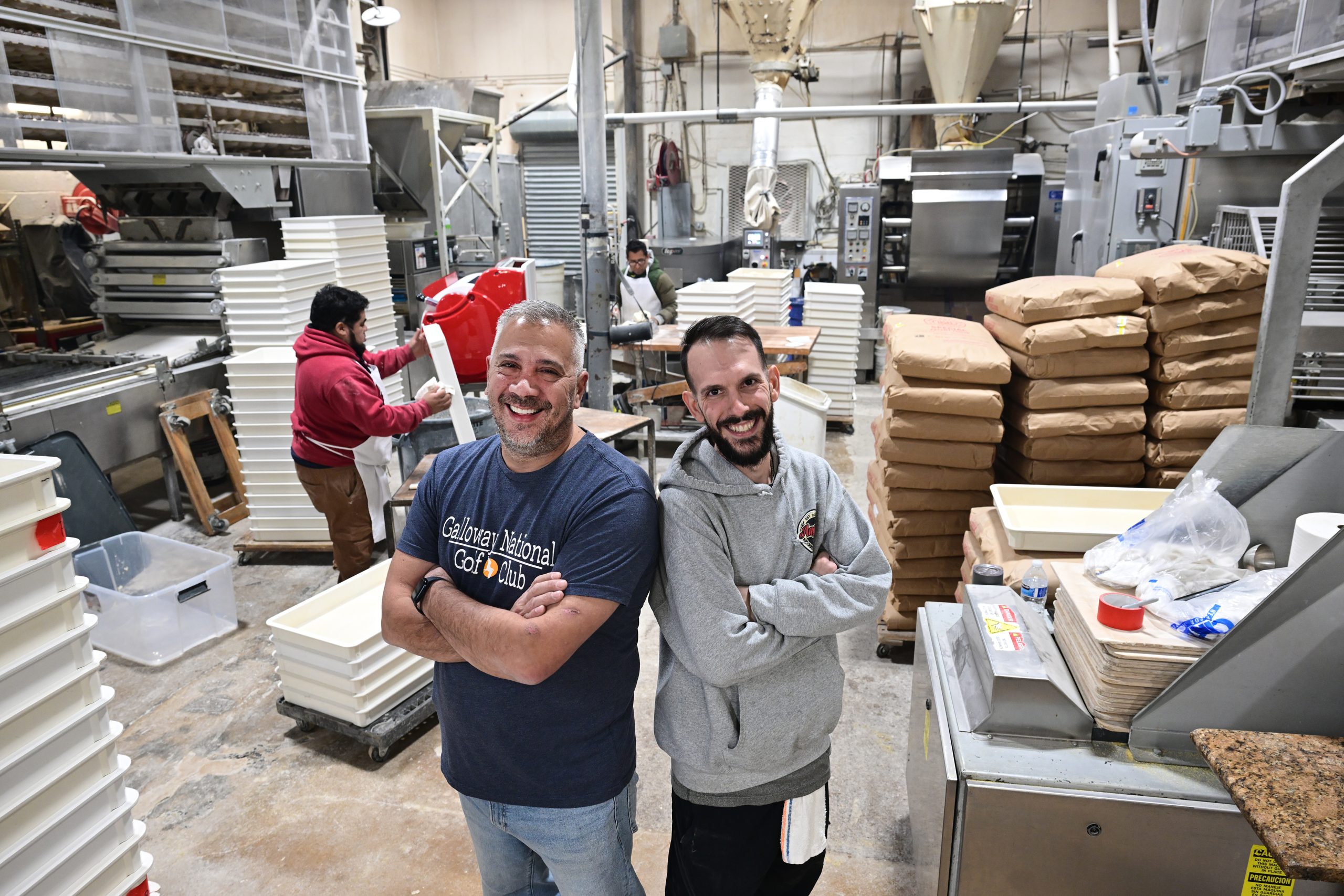
Danny DiGiampietro (left), owner of Angelo’s Pizzeria, with partner Jared Braunstein at the bakery in Conshohocken in December 2024.Jose F. Moreno / Staff Photographer
But Angelo’s is moving into wholesale bread production, the backbone of Conshohocken Italian Bakery’s business under the Gambone family for more than a half-century before its 2024 closing.
A key piece of the puzzle is on the way: a massive Polin oven imported from Italy to give his bakers more flexibility, DiGiampietro said.
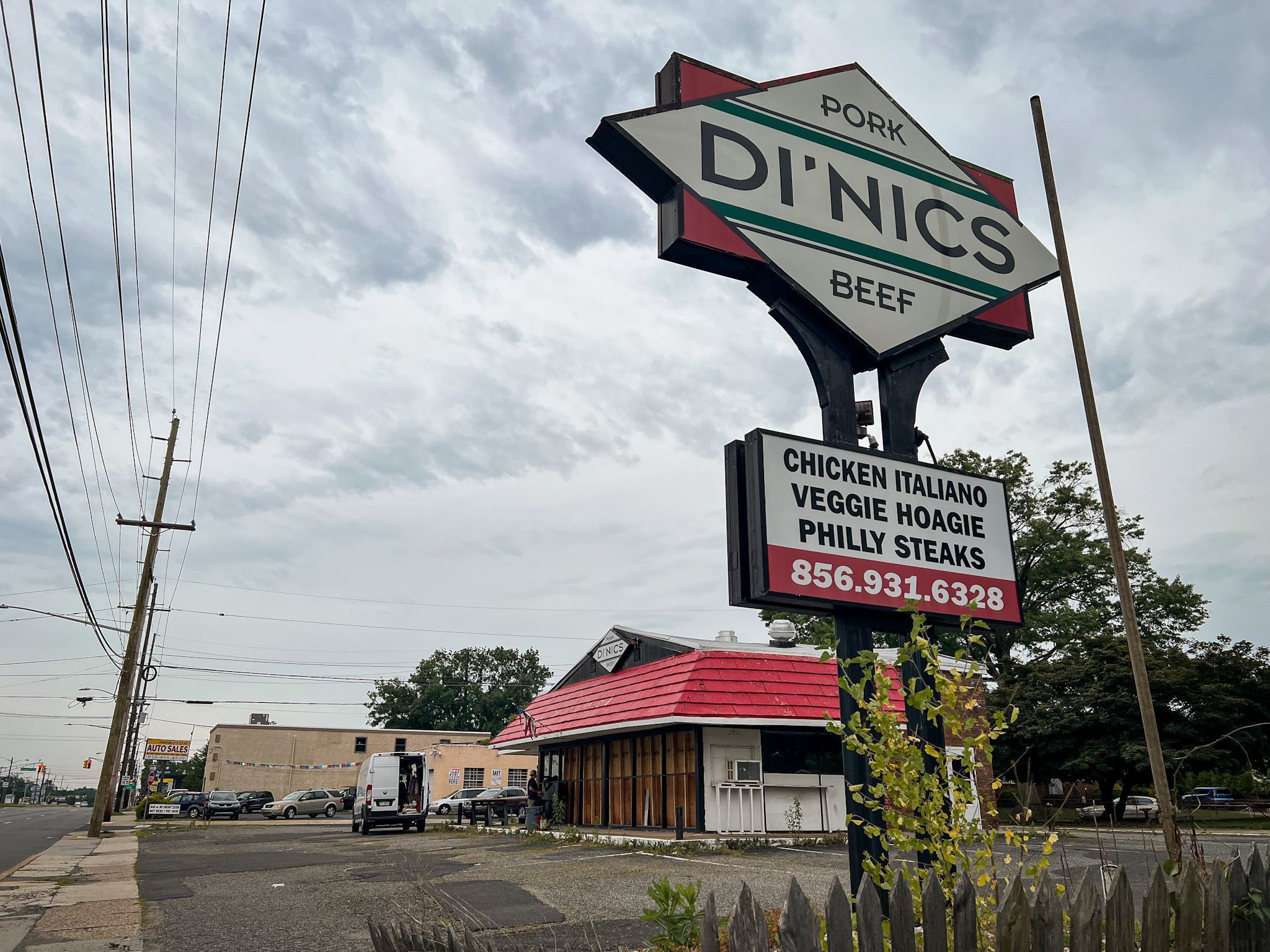
The future location of Angelo’s Pizzeria in West Collingswood Heights, previously Di’Nics, on June 18, 2026.Michael Klein / Staff
At “Conshy,” as the Jones Street bakery was known, the Gambone family supplied rolls and bread to hundreds of restaurants and sandwich shops throughout the region. Its closing created a frenzy among customers and competitors.
DiGiampietro said the new oven will allow bakers to create a line of kaiser rolls, potato rolls, steak rolls, and hoagie rolls. Although he will in effect be selling to his sandwich shop competitors, he likens it to giving shops “the canvas to make their art,” DiGiampietro said. “Everyone’s different.”
A return to wholesaling was not in the initial plans for DiGiampietro, who owned a bread bakery in South Philadelphia about 20 years ago. “I went bankrupt the first time. So hopefully I don’t go bankrupt again.”
Meanwhile, demolition and rebuilding are underway at the future Angelo’s Pizzeria location at 310 Black Horse Pike in the West Collingswood Heights neighborhood of Haddon Township, Camden County. The stand-alone building was formerly Di’Nics.
Crews recently gutted the building, which DiGiampietro hopes to transform into a full-service Angelo’s within the next several months.
The project will mark his return to New Jersey. DiGiampietro opened his first Angelo’s in Haddonfield in 2013 before closing it in 2018 to focus on the Ninth Street location in South Philadelphia, which opened in 2019 and helped turn Angelo’s into one of the region’s most sought-after pizzeria and cheesesteak shops.
The Angelo’s in West Collingswood Heights, about 10 minutes from the Walt Whitman Bridge, will include table seating as well as a counter overlooking the kitchen. Initially, DiGiampietro wanted more seating. Then he began talking about a takeout-only operation.
“But people love the show,” he said. “They like to see everything happening.”
The build-out still requires installation of a pizza oven, walk-in refrigeration, and other equipment. Even so, DiGiampietro believes the compact space can work.
“We think we can keep a dining room and still fit everything we need in there,” he said. “It’ll be tight, but we work on Ninth Street in basically a submarine, so how much tighter can it get?”
On May 22, detainees inside Delaney Hall in Newark, the largest immigrant detention center in the Northeast, operated by the private corporation GEO Group, announced a labor and hunger strike in response to months of abuse, unattended complaints over detention conditions, and unmet medical, legal, and personal needs. Detainees detailed these conditions in a series of public letters, as family and community members protested and advocated for freeing their loved ones.
Their protests were met with violence. Some detainees were pepper sprayed, brutalized, and transferred, while masked ICE agents assaulted protesters outside of Delaney. New Jersey state police later arrived on horseback, tear gassing the crowds and sending community members to the hospital.
Complaints had been ongoing since Delaney Hall was reopened as a detention facility in May 2025, but the origin of these abuses actually began four decades earlier ago in 1993, in Elizabeth, a small city less than 10 miles away, with the opening of New Jersey’s first privately run detention facility, the Elizabeth Detention Center (EDC).
The history of EDC helps us understand that the battles over Delaney Hall are the outgrowth of detention privatization, its intersection with mass incarceration, and bipartisan political support for detention that has rarely faltered. It also demonstrates the consistency with which detained people have resisted their detention. Far from the southern border, New Jersey has long been a central node in the detention and deportation machine—and in the fight to end it.
New Jersey was home to the Ellis Island Immigration Station, which opened in 1892. Before the Immigration Act of 1924, Ellis Island served mostly as a gateway and immigrant processing center, but from the 1930s and until its closure in 1954, it operated as a dedicated detention facility, leading a Supreme Court Justice to refer to it as an “island prison.”
Detention became more central to U.S. immigration policy in the 1980s and 1990s. In 1980, for example, the United States detained thousands of Cuban refugees who came during the Mariel boatlift. Private corporations, which governments had begun to turn to for running their prisons, expanded into new markets of immigrant detention. Today, more than 90% of detention centers are run by for-profit corporations.
The presumed “need” for expanding detention bed spaces surfaced after the first bombing of the World Trade Center in February 1993. The Immigration and Naturalization Service (INS), the predecessor to today’s immigration agencies, issued a request for proposals for a detention center, ideally located near the three major airports in the New York City area. Because the WTC plotters were foreign-born, politicians used national security as an excuse for wide-ranging changes to the immigration system.
Esmor Correctional Services, a for-profit company which operated halfway houses and welfare hotels, submitted the winning bid to turn a warehouse in Elizabeth into a NYC-area detention center housing up to 300 detainees. Almost immediately after its opening in 1994, people detained there began complaining of inhumane treatment and conditions.
By 1995, the awful conditions and frequent abuse became public knowledge when detainees organized a hunger strike described in numerous articles in the Bergen Record by journalist Elizabeth Llorente. As Hawa Jama, a Somalian asylum seeker and the lead plaintiff in a lawsuit against Esmor, described in a deposition, “I complained personally to every INS person, every Esmor official… I come to this country to save my life, to ask [for] asylum. And they put me in jail, hell. I can describe hell… Esmor was hell.”
On June 18, 1995, the detainees staged a riot inside the facility. The media attention spurred by the hunger strike and the uprising caused INS to terminate its contract with Esmor. In its place, INS contracted Corrections Corporation of America (rebranded as CoreCivic in 2016), which has run it ever since.
Detention space increased in 1996 when President Bill Clinton signed two laws affecting immigrants in the United States. The Illegal Immigration Reform and Immigrant Responsibility Act (IIRIRA) and Antiterrorism and Effective Death Penalty Act (AEDPA) delegalized lawful permanent residents who had committed certain crimes, widened what counted as an “aggravated felony,” and made more immigrants deportable and detainable, mandatorily, and indefinitely. This merged with the increasingly harsh penalties for drug crimes, which affected immigrants. The 1996 laws also targeted asylum-seekers as subject to potential removal, creating an artificial need for more detention space, and revoked the discretion of immigration authorities to release certain noncitizens from detention.
In the 1990s and early 2000s, EDC was just one piece in the larger infrastructure of detention in New Jersey. Bergen, Essex and Hudson counties had also begun to hold immigration detainees in their jails against payment from the federal government. Delaney Hall, which first opened in 2000 as a halfway house for people with substance abuse issues convicted of low-level offenses, also began to hold immigrants for profit. As Essex County Executive Joseph D. Vincenzo said to the Star Ledger in 2008, “This is a home run for us. We have to find a way to bring in new revenue, and this is the way to do it.”
ICE detention in New Jersey peaked in 2009, then declined until 2015, and increased again after President Donald Trump issued a January 2017 executive order that greatly expanded who would be detainable under the law. In New Jersey alone, ICE arrests more than doubled in 2017 as a direct consequence of the administration’s decision to prioritize the detention of migrants and asylum seekers with no criminal convictions. Because 2017 bail reform had reduced the number of people held in New Jersey’s jails awaiting trial, ICE detention became an even more attractive source of revenue for local county jails.
Activists and advocates working across the New York/New Jersey border had been fighting against immigration detention since the 1990s. Coalition members organized protests, advocated with communities, and pressured public officials to end ICE detention in New Jersey. Fearing that detention would become a death sentence during the early months of Covid-19, detained people in every facility in the state went on a hunger strike, bringing renewed attention to the campaign of ending detention.
Made By History sponsors. FOR USE ON MADE BY HISTORY STORIES ONLY.Inquirer Staff
In 2021, the political tide turned as county and state democrats came out publicly against ICE detention. Within the course of a year, the county jails depopulated their ICE detainees and Governor Phil Murphy signed a law (AB 5207) that banned the creation or renewal of detention contracts with ICE.
ICE detention was nearly eradicated in New Jersey. The EDC was the only facility still in operation. Under the new anti-detention law, when its contract came up for renewal, it, too, would close. Instead, CoreCivic sued New Jersey in a U.S. District Court, claiming the state law was unconstitutional. GEO Group soon filed suit as well. CoreCivic and GEO Group were joined by the Department of Justice under President Joe Biden, who saw New Jersey as essential to immigration enforcement.
The District Court’s 2023 decision striking down New Jersey’s anti-detention law was appealed by the New Jersey Attorney General’s office before the U.S. Court of Appeals for the Third Circuit. The federal appeals court upheld the 2023 ruling and thereby created the possibility for Delaney Hall to reopen on May 1, 2025, and to become the largest immigrant detention facility in the Northeast today.
The lawsuit shows a key tension that continues to play out. While immigration is managed by the federal government, the detention system that EDC and Delaney Hall are a part of, has been forged by bipartisan support at the county and state levels and motivated by economic interests. The overlapping “war on crime” and “war on drugs” caused mass incarceration and immigration detention to become intertwined. Trump has built on this foundation, not created an entirely new system.
Understanding the current situation at Delaney Hall requires this historical context. More than 30 years ago, the EDC proved to federal and state leaders that privatized immigration detention could “work” in New Jersey, as long as the mistreatment and abuse of detained people could be kept out of the spotlight. But history also shows us that when detained community members resist through complaints, lawsuits, hunger strikes and, even, an uprising, their voices and experiences reveal the system’s underbelly and inspire systemic change. We hope that history will teach future generations that such efforts are worthwhile.
Mary Rizzo is a historian at Rutgers University-Newark, and the co-author of a chapter in Elizabeth Detention Center.
Made by History takes readers beyond the headlines with articles written and edited by professional historians. Opinions expressed do not necessarily reflect the views of The Inquirer.
One Friday afternoon recently, I was in Wildwood on deadline for a story. Famished, with three dollar bills in my pocket, I went over to the Snow White restaurant on the boardwalk and asked for french fries. Alas, it was cash-only, and $3 was not going to get me french fries. But I was offered their $1 hotdog, complete with mustard and sauerkraut. It is a nostalgia-fueled menu item, they said, befitting a family-owned joint that opened in the 1940s. I left a $2 tip.
So look, it’s possible to eat cheap at the Jersey Shore.
It’s also possible to go a little nuts. Rory Tees, a faithful reader, urged me to go to the new Lighthouse Kitchen and Cafe on Pacific Avenue in Wildwood, where he said he’d ordered a $16 omelet and then was charged a la carte for home fries and toast, making the total for two people close to $60. But that seems to have been an opening week glitch because when I went, my $16 Greek omelet included potatoes (thin discs that looked like potato chips but were soft inside) and toast. The menu does say the omelets come with toast and home fries. The cup of coffee, which the server explained came from hand-harvested and hand-roasted beans sourced from the owner’s mother’s farm in Chiapas, Mexico, was $4 — and I’d argue worth every penny. They refilled my cup for free. There are cheaper spots in Wildwood, but it was a delicious meal and a classy (bougie?) treat right there on resurgent Pacific Avenue. I wish them well.
Anyway, I let Rory know he might be entitled to a refund on his a la carte potatoes and toast, but there is still some truth to his experience in Wildwood and elsewhere down the Shore. “I hate that the Wildwoods are becoming unaffordable with the influx of new money,” Rory wrote.
My colleague Michaelle Bond writes this week that starter homes in these 10 Jersey Shore towns average $1 million and up: Avalon, Stone Harbor, Strathmere, Cape May Point, and five of Long Beach Island’s six towns: Harvey Cedars, Barnegat Light, Long Beach Township, Surf City, and Beach Haven.
Meanwhile, I leveled up and had a hot dog in Margate for $13 this week, albeit one topped with mustard, relish, peppers, onions, pickle, celery salt, and tomato. It’s at the new Dock’s Dogs, run by Hillary Bor, the former owner of Philly’s acclaimed but now-closed Pumpkin BYOB. Bor is now a year-round Shore resident and she and her boyfriend, Tim Nedzwecky, have brought a casual sunset vibe to the bay, complete with music jams on Wednesdays and a spectacular view. There’s a crab cake version of a hot dog ($22), and non-dog chicken and egg salad options. Look for my story on the Bor’s new Shore venture.
📮 Are you a $1 or $13 hot dog person? Any hidden gems or other ways to eat cheaply at the Jersey Shore? Send tips here, and I’ll include some responses in a future newsletter. Have ideas or news tips about the Shore or this newsletter? Send them to me here.
🌤️ Weekend looks mostly lovely, with a bit of a cooling trend.
🦪 Dylan Dreyer and Al Roker of NBC’s Today Show were visiting Atlantic City this week for a feature set to air , June 23, in the third hour, including a visit to Dock’s Oyster House. They also wound up at Lucy the Elephant.
💔 Cape May’s Sincere Rhea, a former track and field hurdler standout, is still in the thick of the drama on Peacock’s Love Island USA. His mother has thoughts.
🇭🇹 Les Grenadiers, the World Cup team from Haiti that is based in Atlantic City, are looking for the big upset against Brazil in Philadelphia on Friday.
👣 The Barefoot Country Music festival comes to Wildwood this weekend. Headliners include Post Malone, Miranda Lambert, Shaboozey, Eric Church, and Kelsea Ballerini.
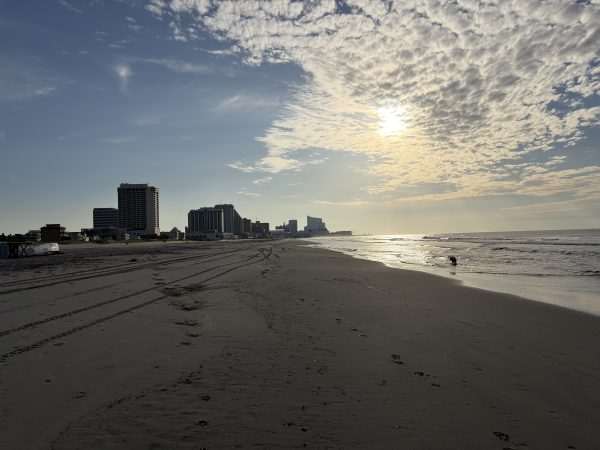
An early-morning dog walk in Atlantic City on June 12, 26.Amy S. Rosenberg/Staff
🧠 Trivia time
Two New Jersey beaches made an Island.com list of the nine cleanest beaches in America. One was Point Pleasant Beach in Ocean County. The other was a beach from Cape May County.
We asked our Shore Line group chat whether it’s OK to reserve spots early on the beach by setting up chairs and a canopy. The results are in! (Join our chat here.)
The majority of people responding were fine with it, while 15% wanted to see some consideration on how much space was taken up. But 30% of you thought it was a breach of etiquette.
Here’s a sampling:
Yes, good for them for motivating early in the day!
I hate when people do that. And 9 times out of 10 when they do it, they are obnoxiously large reservations. Putting up multiple beach cabanas, etc.
It depends on how long they’ve been gone. If they don’t show up for an hour, you could just fold their stuff up in a nice little pile. I’d be okay with that.
No problem with that at all. But those people can’t get upset if another group sets up close to them in their absence.
Have your own thought on this topic? Other etiquette questions you’d like us to tackle? Let us know here.
Your Shore memory
Ernie Russom, of Highland Park, Pa., and Wildwood Crest, texted us this memory:
Around 1991 or 1992, we would bring our now soon-to-be 38-year-old son to the beach at the end of our street in Wildwood Crest. The beach was expansive. Nearly as wide as they are today. We wanted a way for him to know where we were on the beach. I sectioned and used a 12-foot pvc pipe as a flag pole. Back then, we were the only flag flying in our immediate area. Our flag was for his safety.
Today, our 12-foot pole is dwarfed by the 15-to-20-foot telescoping aluminum flag poles. The large number of flags flying resemble tailgating outside of a college football game. We now have a telescoping pole with a unique flag of the day. Our flag is a marker that tells us how far up or down beach the ocean currents have taken us while we are enjoying the surf. It also is the maker of today’s “home base” at the beach.
Send us your Shore memory! In 200 words, tell us how the Shore taps into something deep for you, and we will publish them in this space during the summer.
By submitting your written, visual, and/or audio contributions, you agree to The Inquirer’s Terms of Use, including the grant of rights in Section 10.
The inaugural class of Project SEARCH, a nine-month internship program that provides career training to students with intellectual and developmental disabilities, graduated this week.
Through the program that is a collaboration between Virtua Health and the Burlington County Special Services School District, the six students who made up the graduating class completed 10-week rotations in multiple hospital departments over the school year.
The participants gathered hands-on experience working in multiple departments such as cardiology, physical therapy, food services, and patient transport.
“I have built real skills, gained so much confidence, and discovered what I am truly capable of achieving,” Alyssa Eiring said in her commencement speech at the graduation ceremony in Westhampton.
The New Jersey Attorney General’s Office released a 560-page report covering disciplinary actions against law enforcement, including the firing of a Burlington County corrections officer.
Rowan University will close a health center for abused children, Rowan-Virtua Child Abuse Research Education and Service Institute (CARES) in Vineland because of Gov. Mikie Sherrill’s proposed budget plan. Another CARES office in Stratford will remain open.
Food insecurity in the Philly region, including South Jersey, has increased after a federal law altered the Supplemental Nutrition Assistance Program and reduced its benefits under President Donald Trump’s Big Beautiful Bill Act.
Some New Jersey lawmakers are looking for pathways to incentivize farmers to produce more hazelnuts, according to New Jersey Monitor.
NBC10 reports that Jersey Mike’s is now America’s favorite fast food chain, dethroning Chick-fil-A, based on a recent survey.
🗓️ The best things to do this week
⚽World Cup Outdoor Watch Party: Cheer on Team USA against Team Australia. Evesham Township is partnering with The Promenade at Sagemore Shopping Center and LaScala’s Fire restaurant for the festivities. Food and drinks will be available for purchase. ⏰ Friday, June 19, begins at 3 p.m. 💵 Pay-as-you go 📍500 NJ-73, Marlton
🎤 Peabody’s Wayback Machine Summer Concert:Indulge your nostalgia with Peabody’s Wayback Machine, the throwback band that specializes in 1980s music. It’s the first of Gloucester County’s concert series this season. ⏰ June 20, 7-8:30 p.m. 💵 Free📍 James G. Atkinson Park, 138 Bethel Mill Rd., Sewell
🗓️ Camden’s Junteenth Festival:Celebrate with this large festival full of art, culture, and celebration. The featured events include live music, live art demonstrations, and more. ⏰ Sunday, June 21, noon-8 p.m. .💵 Pay-as-you go 📍Farnham Park, 1648 Baird Blvd., Camden
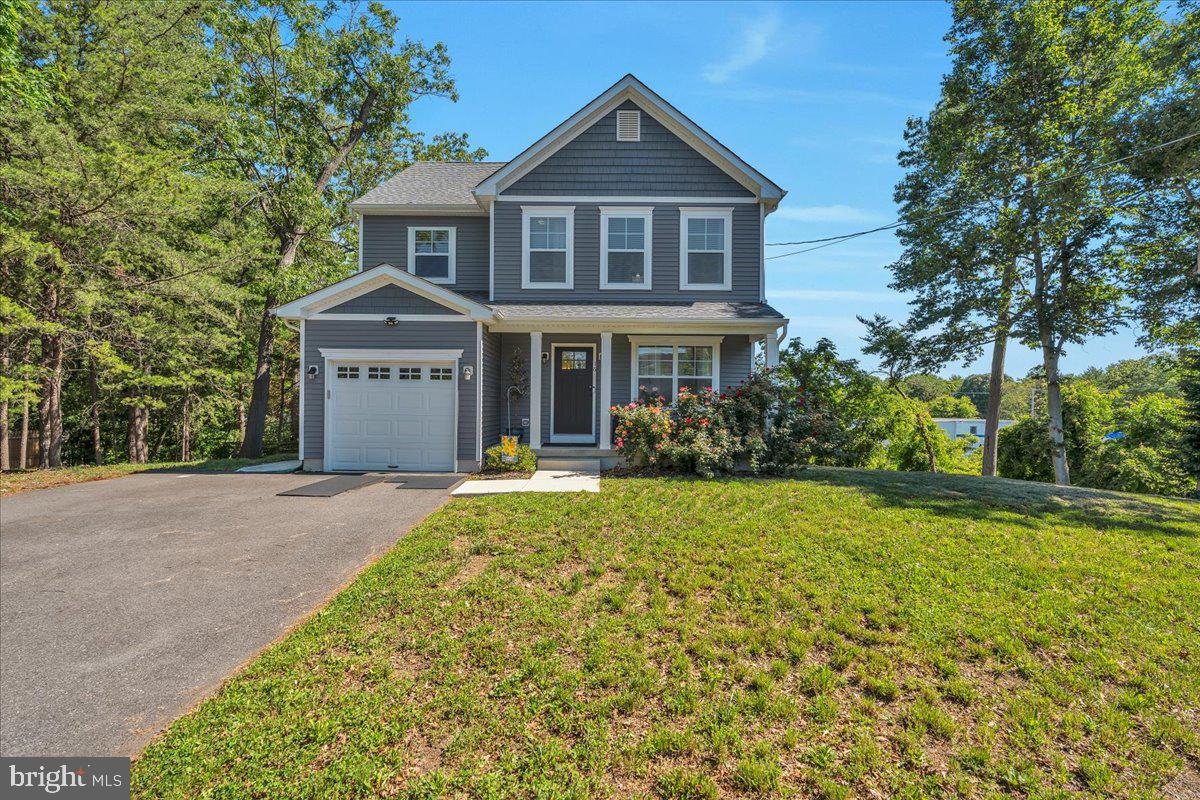
Tucked away on a peaceful street, this four-bedroom home in Sewell provides a lot of privacy. Built in 2023, the home has modern amenities. The updated kitchen leads into a dining area and a spacious living room. The home includes 2.5 bathrooms and a finished basement with ample space for a home office or a media room. Both the front and back porches allow for outdoor seating for entertaining guests.
Jasmine Jackson sat on her couch at her home in Winslow Township, watching a broadcast of the nation’s fastest high school hurdlers competing at the 2025 Brooks PR Invitational. As she watched, she made it her goal to be on that track, competing in the race.
After a year of training and dropping time, her invitation arrived in the mail, making her the first athlete in Winslow Township history to earn a spot in the prestigious event.
“It was a big accomplishment when I got the invitation,” she said. “I was ecstatic. To know I was the first to do this showed it was a stepping stone to something even greater.”
And something greater came at this year’s Brooks PR Invitational on June 7 in Renton, Wash.
The Winslow Township High School sophomore claimed the 100-meter hurdles title with a time of 13.33 seconds. It came days after winning the New Jersey Meet of Champions and running a personal-best 13.28 seconds.
Jasmine Jackson set a personal record in the 100-meter hurdles at the New Jersey Meet of Champions.Jose F. Moreno / Staff Photographer
Her personal record currently ranks No. 3 in state history, No. 3 all-time on the wind-legal list for sophomores, and No. 3 in the nation this season. Jackson continues to climb the ranks as one of the nation’s fastest hurdlers and wants to accomplish more.
Her love for hurdling began at a young age. Jackson grew up going to the track with her dad, Tyree Jackson, who was a sprinter and relay runner at Camden High School and Rowan. He is now a track-and-field coach at Pennsauken.
When she was 5, she saw a hurdle on the track and asked her dad if she could try to jump over it. Tyree initially said no, worried she might hurt herself, but she persistently asked, so he finally gave in.
She cleared the hurdle with her right leg leading and left leg trailing, the form she still uses today.
“It was perfect,” Tyree said.
Starting out, however, he wasn’t convinced that hurdles would become her event.
“There were a lot of times where I thought that maybe hurdles weren’t for her because she was too timid and scared to actually run through the hurdles,” he said.
Tyree scoured the internet for drills and training ideas to help his daughter develop as a hurdler. His former teammates offered advice on technique and form, and they soon progressed from wickets to smaller hurdles. She joined Winslow Elite Track and Field at age 8 to keep improving.
By 14 years old, Jasmine broke the national record for the 100-meter hurdles with a time of 13.72 seconds at the 58th AAU Junior Olympic Games in Greensboro, N.C. That race gave her a newfound confidence.
“That race pushed her over the edge as far as her demeanor and her confidence level because in order for her to win and break the record, she had to beat some really talented athletes she had never beaten before,” Tyree said.
And as her confidence has grown, her times have dropped.
Part of that growth has come from racing against the nation’s best, including one of her biggest competitors, Nia Armstrong from Tampa, Fla. The hurdlers have developed a friendly rivalry over the years since they typically compete in the same races and push each other to faster times.
“Whenever those two compete against each other, it’s like I don’t care who else is on the track, the race is going to be between them,” Tyree said.
Before the Meet of Champions earlier this month, Jasmine was nervous. The meet featured the toughest competition she faced all season. But as she set up on the line, she reminded herself that she belongs here and is built for the moment.
“I just tell myself I’ve been here before. It’s just a track. I know how to run. I know how to hurdle. I know what I’m capable of,” she said. “I believe in myself, I’m ready for this moment, and not to let an opportunity pass by because you might not get it again.”
Developing self-belief in a mentally challenging sport, Jasmine says, has been one of her biggest areas of growth.
“She’s always been good. She just didn’t have the confidence to know that she’s good,” said Shawnnika Brown, Jasmine’s high school coach. “Now, she is running with a purpose.”
That purpose is reflected in her daily routine. Jasmine trains with her team after school, goes to the gym to lift weights, and does additional hurdle sessions with her dad on the weekends.
Having Tyree as her coach has also been an important part of her success.
“I try not to let the coach interfere with the father,” Tyree said. “I’ve learned how to talk to her and get her motivated to the best of my ability without her being upset with the father.”
After Jasmine won at Brooks, Tyree let his daughter enjoy the moment before turning their attention to the next race.
“She knows I’m going to focus on the flaws first before I celebrate her and give her roses because I sometimes have to be the coach first and then dad second,” he said.
That approach is shaping one of the nation’s fastest high school hurdlers, but Jasmine’s goals go beyond state titles and national championships.
Jasmine Jackson will compete at the New Balance Nationals at Franklin Field this weekend.Jose F. Moreno / Staff Photographer
“The ultimate goal is to go to the Olympics,” Jasmine said. “Knowing I have that goal in mind, no matter how I feel, I know I have to work for it. It’s not going to be given to me. I have to earn it.”
For now, the 15-year-old can check the Brooks PR Invitational off her list. Up next is the New Balance Nationals running until Sunday at Franklin Field. Jasmine will run the 100-meter hurdles and 4×400-meter relay championship. She is looking to earn her first national title at the event.
“I’m tired of being second at this event,” she said, laughing. “I’m going up against pretty tough girls, so it’s going to take a lot to win. I believe I can do it if I put my mind to it.”
During her internship at Virtua Mount Holly Hospital, student Alyssa Eiring greeted cardiology patients with her signature charm, “Welcome to cardiologyyyyyyy!”
Her disarming and bubbly personality quickly put patients at ease, said medical secretary Heather Davenport, who mentored Eiring in the hospital’s cardiology department.
“Coming into the hospital for testing isn’t someone’s happy place but Alyssa sure made it feel like that for everyone,” Davenport said.
Eiring and five other students formed the inaugural class of Project SEARCH, a collaboration between Virtua Health and the Burlington County Special Services School District. The nine-month internship program gives students with intellectual and developmental disabilities hands-on job training.
Eiring was born with Cornelia de Lange syndrome, a rare genetic disease that causes cognitive and developmental delays. At a graduation ceremony Tuesday, she won the “Compassion in Action Award” for “excellence in customer service.”
The 21-year-old from Florence Township led the procession of graduates in royal blue gowns onto a stage festooned with blue, red, and silver balloons. She then took to the podium — one of two commencement speakers.
“I have built real skills, gained so much confidence, and discovered what I am truly capable of achieving,” she said, addressingfamily, friends, educators, and Virtua employees gathered in a gymnasium on the campus of the Burlington County Special Services Transition Program in Westampton, N.J.
“We are ready to take everything we have learned here and step out into the employment world.”
“We did it!” she shouted, eliciting cheers.
Alyssa Eiring, 21, of Florence Township, celebrates her graduation from Project SEARCH.Jessica Griffin / Staff Photographer
Eiring will now begin looking for a job. Her 26-year-old sister, Toni Eiring, said she’s up to the task.
“She has more faith in herself in the workplace,” her sister said. “Her demeanor changed. The way she stands on her own two feet. It’s almost like she developed a different part of her brain.”
Grace Sullivan (back right, blue eyeglass frames) celebrates her graduation from Project SEARCH with her mother, Teresa Sullivan, and other family members inside the gymnasium on the Westampton campus of the Burlington County Special Services Transition Program. Jessica Griffin / Staff Photographer
`A true turning point’
Each student completed 10-week rotations in three hospital departments over the schoolyear. Fellow graduate Tristian Villafuerte, who has autism, started off in patient transport and finished in food services.
The 21-year-old Burlington Township resident calledhis second internship in equipment services “a true turning point.”
“I was given the autonomy to independently navigate the hospital,” he said in his speech, noting he was responsible for collecting soiled equipment and bringing it back to the central supply for sterilization.
“Having that trust placed in me changed everything,” Villafuerte said.
Mary Jean Kneringer, principal of the Burlington County Special Services Transition Program, congratulates graduate Tristian Villafuerte. The 21-year-old from Burlington Township was hired by Virtua Health after completing an internship at its Mount Holly hospital.Jessica Griffin / Staff Photographer
Villafuerte now joins Virtua Health, one of two graduates hired out of the program. He will work as an equipment services technician at Virtua Voorhees Hospital in Camden County.
The program creates a new pipeline of employees in hard-to-fill areas, said Katherine Kealey, Virtua’s director of workforce development.
“We have to start thinking about looking at other populations that we haven’t really tapped into previously,” Kealey said. “This is a really great opportunity for us to expand our workforce, mirroring the communities that we serve.”
Myson Parham, left, and Kortu Lemu attend graduation at Virtua Health at Burlington County Special Services Transitions Campus, in Westampton, NJ, on June 16.Jessica Griffin / Staff Photographer
Landing a `perfect’ job
The program landed graduate Matthew Pettola, 21, of Cinnaminson Township, a job at Virtua. He starts later this month as a food services worker at the hospital’s Mount Holly location.
Pettola won the “Purpose Driven Award,” recognizingthe intern who “used unexpected challenges as a compass — turning difficult experiences into valuable insights.”
He is autistic, and the frenetic pace of kitchen work proved a “perfect fit,” said his stepmom, Tracey Pettola.
“Doing the tray line, food prep, dishwashing. It was real fast-paced, which is great for him because he’s fidgety,” she said. “It just worked for him. He loved it.”
“Every day, he came home so much more confident. He was so excited to talk about his day. What he learned. He made friends. He became more social,” she said.
Pettola’s father, also named Matthew Pettola, described the program as a “godsend.”
Matthew Pettola (center) shows off the award he won after completing an internship at Virtua Mount Holly Hospital. His father, also named Matthew Pettola, and his stepmom, Tracey Pettola, attended his graduation on June 16.Jessica Griffin / Staff Photographer
Teresa Sullivan watched her 21-year-olddaughter become increasingly independent during her internship in the rehabilitation department.
Grace Sullivan would tell her mother to relax and “stay in bed,” because she wanted to get herself up and out the door on her own.
She took the bus to the hospital aloneand started insisting on making her own meals once back at her Florence Township home. Her communication skills and ability to follow directions sharpened, her mother said.
“We used to give her a little bit more guidance — now she puts her hand up and says, ‘I got it,’” Teresa Sullivan said.
After accepting her certificate, Grace Sullivan, who was born with Down syndrome, walked to her mother in the audience. Smiling broadly, she handed her a rose as a thank you for supporting her.
Her mother accepted the flower through tears.
“I feel good. I liked all of it,” Grace Sullivan said after the ceremony. “My favorite thing was the patients and making friends with my coworkers.”
The program is accepting applications for new interns, who will start Aug. 31.
Teresa Sullivan embraces her daughter, Grace Sullivan, from the audience of her graduation ceremony. After receiving her certificate, Grace Sullivan walked over to her mother and handed her a rose to thank her for her support. Jessica Griffin / Staff Photographer
Julie Harrison, a clinical psychologist in South Jersey who works with children who have experienced abuse, received a letter from Rowan University: Notice of Layoff.
Her position as a teacher, researcher, and provider in Camden County would be eliminated “due to the loss of state appropriation funding,” the May 12 letter said. Harrison works for the Rowan-Virtua Child Abuse Research Education and Service Institute (CARES), which provides evaluation, treatment, and other services to children who have experienced abuse in South Jersey, and conducts research on the subject.
The notice came after Gov. Mikie Sherrill proposed slashing the $1.85 million line item in her state budget plan for the program.
CAREShas offices in Stratford in Camden County and Vineland in Cumberland County. The Vineland location, which opened two years ago to provide better access to families in deeper South Jersey, is shutting down due to the anticipated cuts.
“With Mikie Sherrill being in office, we had a lot of hope because she really was pretty loud about wanting to help kids, wanting to help families, wanting to really champion mental health services, and so we were pretty surprised about this budget,” Harrison said in an interview.
The clinician ispregnant with twins and her job prospects are uncertain as the clock ticks until her final day at CARES. But she is mostly concerned about the impacts the funding cuts will have on children facing trauma in South Jersey, and the workers caring for them.
The South Jersey program serves more than 1,500 children across more than 4,000 visits in both locations. Though just about 200 families use the more rural Vineland location, that is where these types of services can be the most critical, Harrison said.
“It’s a pretty resource-dry community,” she said. “There’s not a ton of public transportation to get around. … The amount of services that are available to these families generally is much lower than other parts of New Jersey.”
Harrison is one of about 20 people whose jobs are being impacted by the anticipated funding cuts across both office locations, according to union members. The majority of those are layoffs, and some employees had their hours dramatically reduced to the point they lost their healthcare benefits, according to union members.
Ali A. Houshmand, president of Rowan University, said in a May 11 email that Sherrill’s proposed cuts forced the child abuse care center to pull back its services beginning July 1. He announced the closure of the Vineland office without saying it outright.
“CARES will consolidate its work into our Stratford campus offices and will continue to fulfill its mission there: delivering high‑quality evaluations and treatment, supporting partner agencies across the region and educating the next generation of physicians and health professionals,” he said in the email.
Joe Cardona, a Rowan University spokesperson, said the program also receives $3 million from other state agencies that will not be cut. He said the program’s goal is to offer the same services but reduce the quantity of care.
“The exact outcome, of course, is to be determined,” he added.
What is clear is that the closing of the Vineland center will have a domino effect on Stratford.
“It’s creating an environment where people who are already doing multiple roles, performing multiple jobs, are going to be asked to do more,” Harrison said. “It’s just that horrible ‘do more with less.’”
Harrison said she was just days away from submitting a grant application to start a food pantry out of the Vineland office when she heard the news. Her team did not submit the application after learning about the cuts and Vineland’s planned closure.
CARES is one of four legislatively mandated diagnostic and treatment centers through the New Jersey Department of Children and Family, though it provides more expansive medical and mental healthcare than legally required. The center champions trauma-focused cognitive behavioral therapy, an internationally recognized model that was developed by the South Jersey program’s codirector.
The program has tried to keep waiting lists for trauma care to under three weeks, but it has now grown to 10 to 12 weeks and the wait for care will probably get longer, Harrison said.
“There is a high cost to what untreated trauma can look like for medical, mental health, all those services down the road if trauma isn’t treated early on,” she said.
Dr. Ali A. Houshmand, president of Rowan University, speaks to students and staff at a fundraising event in September 2025. Erin Blewett / For The Inquirer
‘Tough choices’
Sherrill championed improving mental health for young people on the campaign trail and in her budget proposal by allocating $33 million to expand mental health services for students with high needs in K-12 schools, $500,000 for a new social media research center focused on young people’s mental health, and $125,000 for the newly created New Jersey Office of Youth Online Mental Health Safety and Awareness.
Her office did not respond to a request for comment on her proposal to decrease funding for CARES.
In response to a request for comment for an earlier Inquirer story about Sherrill’s decision to cut all state funding for Rowan’s brand-new veterinary school, an administration official cited the governor’s “blanket cut to all legislative add-ons.” These items refer to funding allocations legislators secure for their district that are sometimes criticized as “pork” or “Christmas tree items.” They can range from improvements for a local park to community services, like CARES.
Sherrill, in her budget address, spoke about making “tough choices” in order to have “the most fiscally responsible budget that our state has seen in years.”
The state budget is a negotiation between the governor and legislative leaders due June 30, so it is unclear how much funding these programs will get in the end. But Rowan has moved forward as if the money for CARES is not on the table.
This is not the first time the program has been at risk as part of the budget dance.
Former Gov. Phil Murphy proposed cuts to the program last year, citing “belt-tightening,” but legislators were able to get the money back in the budget.
This year, Harrison said, people are not optimistic because CARES is one of so many programs Sherrill struck a pen through.
Dio Tsitouras, the executive director of the American Association of University Professors Biomedical and Health Sciences union, said he hopes Sherrill allocates more money to CARES because more state revenue has been identified since her budget proposal. But state officials have still warned of financial uncertainty on the horizon.
“The CARES program is invaluable to protecting our state’s most vulnerable children,” Tsitouras said.
It would have nothing to do with Arthur, which on Wednesday became the first named storm of the Atlantic hurricane season, but the Philly region may be in for tropical-storm force gusts and strong thunderstorms Thursday.
Even if the rains don’t come — and on Wednesday, the storm odds were close to 50-50 — wind gusts to 45 mph are possible during the afternoon, said Alex Staarmann, meteorologist at the National Weather Service in Mount Holly, “quite unusual for June.”
Not so unusual these days would be the forecast high, which would mark the 14th time this year that official readings in Philly had reached 90 degrees or higher. That is about half the average total for an entire year.
But this heat will be more of a ripple than a wave, and the outlook for the holiday weekend is looking spectacular.
When the winds and storms may arrive in Philly on Thursday
As a front approaches, winds from the southwest are expected to gust to 20 mph during the morning and 30 to 40 mph in the afternoon.
While the winds are all but a certainty, it was unclear if any strong storms would pop Thursday. If they did, the best estimate would be between 1 an 8 p.m., the weather service said.
“The environment is favorable for damaging winds if anything does develop,” Staarmann said.
“The biggest question is how widespread the storms are going to be,” he said.
Uncertainty is a near 100% certainty with June storms
Such uncertainty is standard fare with thunderstorm threats this time of year, said Rich Thompson, forecast operations branch chief at the government’s Storm Prediction Center, which would have to make a call on posting severe storm watches.
With so many moving parts and micro-features such as terrain involved, predicting the behavior of small-scale storms is “incredibly complicated,” he said, and on some days clues are frighteningly lacking.
And while observations have improved immeasurably in recent decades, “we still aren’t observing most of what’s there,” he said. Land-based surface observations are far more plentiful than those over the oceans, which cover 70% of the atmosphere, and in the upper atmosphere, where the weather is manufactured.
Even if the atmosphere were perfectly measured, he added, meteorologists would still have to contend with the fact that the physics involved in forecasting are not completely understood.
Arthur and the weekend outlook for Philly
As for Arthur, knighted with a name by the National Hurricane Center at 11 a.m. Philadelphia time Wednesday as it matured off the southeast Texas coast, it is forecast to deluge portions of the Gulf states.
Then it is due to head out to sea before it could have anything to do with Philadelphia or the Jersey Shore, which is likely to be a popular destination this weekend.
For Friday, Juneteenth; Saturday; and Sunday, the beginning of the astronomical summer, highs are expected in the mid-80s with sunny days and no threat of showers until early Monday.
RINGOES — The first time Ozgur Tunceli planted hazelnut saplings on her Hunterdon County farm, deer came through and ate them to the ground.
The next time, her goats did the same.
“Imagine me sitting there and crying and regretting everything that I did,” she said. “I said, ‘I should sell this farm and just go back to my suburban life.’”
Instead, she got an electric fence. Now, four years after she set out to become a hazelnut farmer, Tunceli has close to 1,000 trees planted on her hilly, sprawling property in Ringoes. She’s part of a small but widening group of pioneers who are working to make hazelnuts as much of a signature New Jersey crop as tomatoes, blueberries, corn, and cranberries.
“We are really trying to build an entire industry here,” Tunceli said.
The state wants to help, said Ed Wengryn, the state’s agriculture secretary.
Officials are eyeing incentives to offset high startup costs and entice more farmers into growing the trees, Wengryn said.
And Sen. Andrew Zwicker (D-Middlesex), whose district office is just up the road from a hazelnut farm in Hillsborough, is seeking $6.5 million in state funding to help growers buy equipment to sort, shell, and package nuts for sale and secure a processing site. He envisions hazelnuts at every Garden State farm stand and a New Jersey version of Nutella on supermarket shelves someday.
“The potential for New Jersey to become a major player in hazelnut production is enormous,” Zwicker said. “I don’t think New Jersey peaches, blueberries, and tomatoes are going away, but I think if we get this right, we will be known worldwide as a hazelnut producer.”
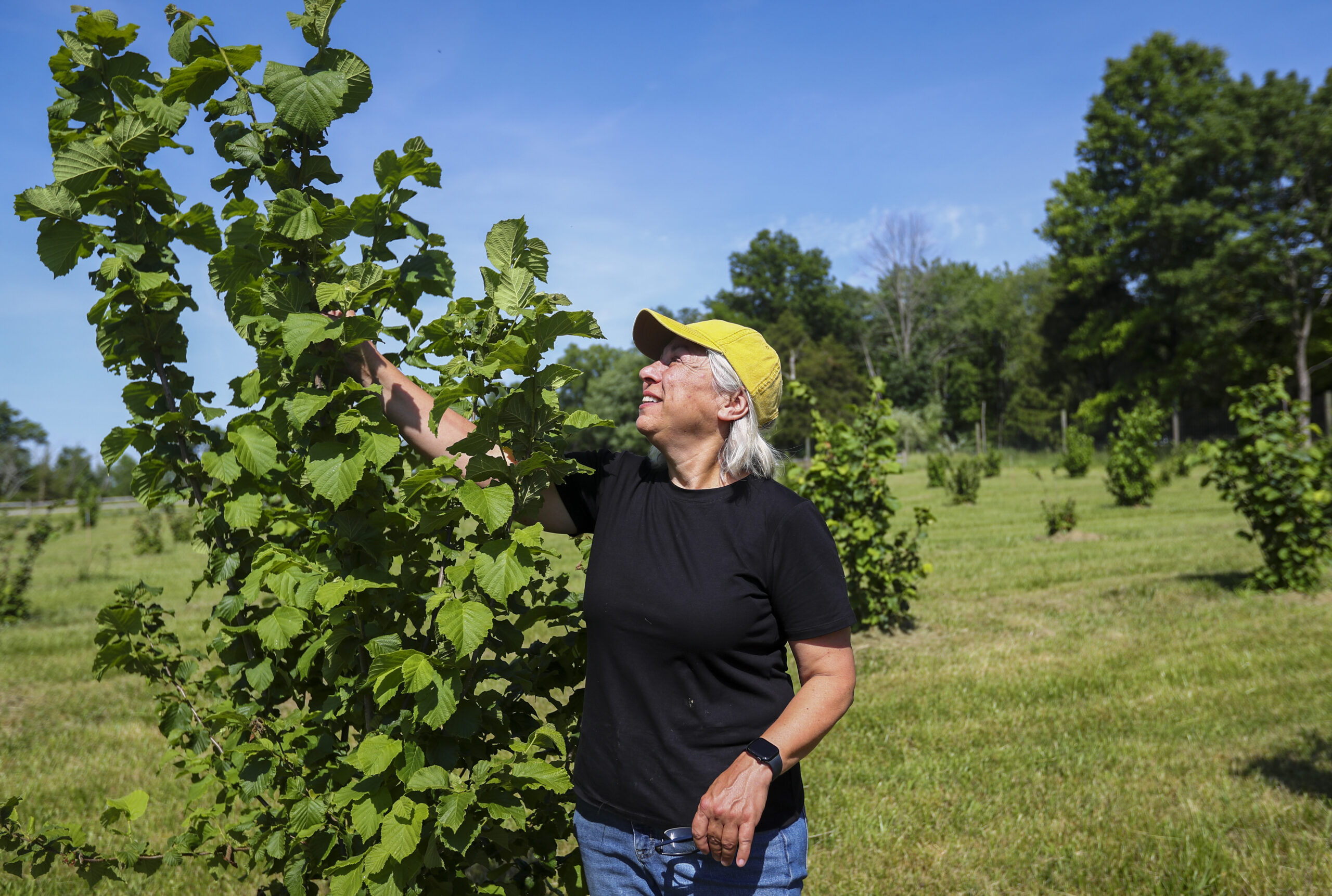
Ozgur Tunceli shows one of the few of her hazelnut trees that is taller than she is on June 5, 2026, at Our Farm by the Creek, her hazelnut farm in Ringoes.Dana DiFilippo/New Jersey Monitor
Some hazelnut history
Turkey produces about 70% of the world’s hazelnuts, and until recently, Oregon’s Willamette Valley was the only place in the U.S. to grow the nutrient-rich, round nuts also known as filberts.
The seeds for New Jersey’s fledgling filbert industry were first planted, literally, by Rutgers University.
Tom Molnar was a Rutgers student about 30 years ago hunting for a Ph.D. topic when he decided to focus on hazelnuts, which are native to New Jersey but had been decimated by disease decades ago. Molnar’s mentor was the late C. Reed Funk, Rutgers’ famed turfgrass breeder whose work made the school millions in royalties and a global powerhouse in grass development. Funk saw better breeding as key to growing nuts in the Northeast, Molnar said.
“We had land, we had funding, and he knew how to run a breeding program,” said Molnar, who’s now a professor of plant biology at Rutgers.
Molnar rejected nut trees like walnut, pistachio, and pecan, not wanting to compete with big U.S. producers like California and Georgia. He picked hazelnuts because, besides being native to New Jersey, they need less water, are more compact, and produce faster than other nut trees, he said.
He started by collecting hazelnut seeds from around the world and eventually planted tens of thousands of trees at Rutgers’ research farm in East Brunswick, observing and experimenting to create disease-resistant, higher-yield trees.
By 2020, his research had progressed enough that he wanted to see how his trees would do around the Garden State. He partnered with several farmers to plant Rutgers-bred varieties whose names honor their Jersey roots: Raritan, Somerset, Monmouth, and Hunterdon. Those farms still serve as living laboratories, with new growers adding to their ranks since Rutgers licensed a Columbus nursery to sell their cultivars.
“This has been a dream to grow hazelnuts in the eastern U.S. for 200 years,” Molnar said.
Ed Clerico was one of the “early adopters,” as Molnar puts it.
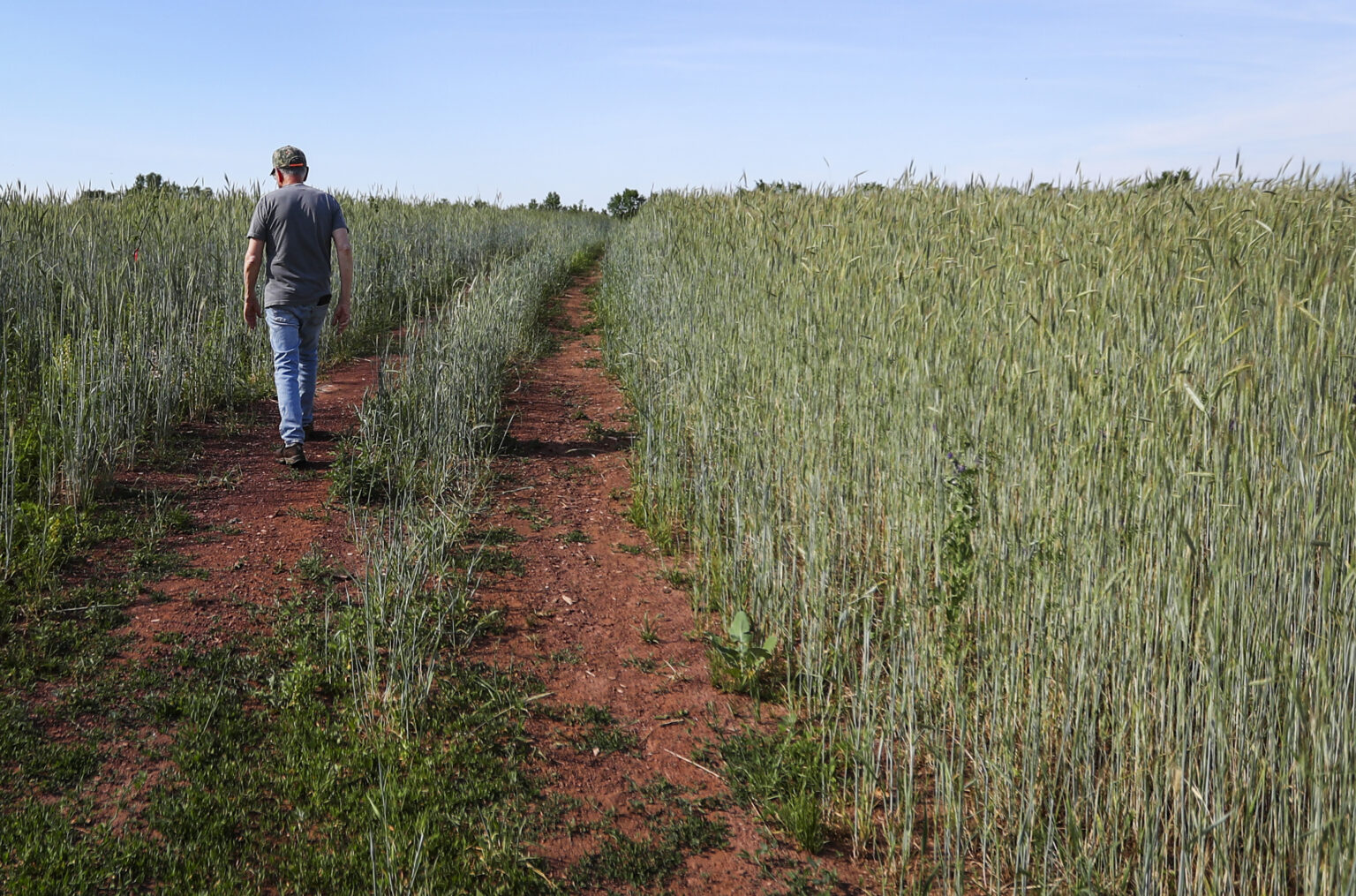
Farmer Ed Clerico walks the fields of his farm in Hillsborough on June 6, 2026.Dana DiFilippo/New Jersey Monitor
Clerico is a third-generation farmer whose family ran a dairy farm in Hillsborough (the one near Zwicker’s office), but who pivoted in retirement to perennial crops that don’t require annual tillage and planting.
He also had a career in water resource management, an experience that has deepened his dedication to filbert farming.
His 38-acre farm sits along Royce Brook, which feeds the Millstone and Raritan rivers, two waterways that flow through nearby Manville and Bound Brook and that sometimes catastrophically flood. He regards hazelnut trees, as well as thirstier breeds like the persimmons and pawpaws he’s planting in a floodplain beside the brook, as pulling double duty.
“There’s just a lot of benefits to agroforestry. Growing trees sequester a lot of carbon, so there’s greenhouse gas benefits. And they help with water quality and flood mitigation,” Clerico said. “This could be one of the best stormwater management and water quality advancements. When you hear about stormwater management, people are very oriented towards man-made infrastructure, but we could be using the environment as infrastructure too.”
Wengryn already is a convert, for the trees’ ecological benefits alone.
“They create a shade canopy, reducing ambient air temperatures in and around the orchard area. When we get these intense storms that drop a quarter to a half inch of rain in 15 minutes, the leaf canopy breaks that up, so it actually falls more gently to the soil and we get less soil erosion from this kind of agriculture,” Wengryn said.
Molnar ticks off a long list of other perks he hopes will persuade more farmers to plant Rutgers’ hazelnuts. They don’t require as many fungicides or insecticides, or as much pruning, as the peach, apple, and other fruit trees more commonly grown in New Jersey. They’re harvested by machine so don’t need as much labor as hand-picked crops. The trees are more climate-resistant and can live for over 50 years, making them both less susceptible to weather extremes that can destroy less-hardy crops and a good long-term investment. And hazelnuts aren’t as perishable as other crops; harvested unshelled nuts can be stored and stay fresh for over a year.
“That means you could sell them throughout the winter into the spring,” Molnar said.
But several hurdles have kept the industry small so far.
The high land costs that can make farming a pricey profession in New Jersey have hindered hazelnut expansion, farmers agreed.
The costs and logistics of processing are another barrier, Molnar added.
With most filbert farming occurring on other continents, U.S. growers must look to Europe and beyond for the machinery to harvest, sort, and get the nuts to market. Tunceli, Clerico, and two other farmers formed an agroforestry cooperative to process, promote, and sell their nuts. The co-op recently bought some equipment, funded by a federal grant, that they’ll house at Tunceli’s 89-acre farm until they find funding to open a separate processing facility.
Farmer Ed Clerico bought specialized equipment, including this mower, to harvest hazelnuts on his Hillsborough farm.Dana DiFilippo/New Jersey Monitor
At the same time, it takes five years for young hazelnut trees to produce their first nuts and seven to eight years for them to come into significant production, Molnar said. That means farmers see little to no return on their investment for years.
“Younger farmers don’t really have that much money to invest, while older farmers don’t have that much time,” Tunceli said.
Tunceli, who’s 56 and has kept her job in the healthcare insurance industry, hopes her orchards will thrive enough for her to live wholly off her land, but she expects that could take another five years.
Because hazelnuts have not been a U.S. crop outside of Oregon, some local farmers also see challenges in who to sell them to, fretting that a market might not exist here.
Tuncheli is not one whit worried about that.
She grew up in Turkey and immigrated here for college about 30 years ago. In Turkey, every bit of hazelnut trees gets used, she said. The kernels become nut butters, oils, flour, milk, candies, desserts, and other foods; the trees’ leaves can make herbal teas; their limbs can be used to weave baskets; and nutshells can be used for exfoliating scrubs, cosmetics, and even clean-burning fuels.
“That part is really easy,” she grinned.
Wengryn doesn’t see that as a problem either, noting a “global craze” for treats like Italian company Ferrero’s Nutella and Ferrero Rocher chocolate-hazelnut bonbons.
“People love this product,” he said of hazelnuts. “There’s very little domestic production of it, and this is an opportunity to enter that market.”
The future of filberts
Zwicker has submitted two budget resolutions that, if approved, would provide $298,200 in state funding to the agroforestry cooperative to support hazelnut automation, cold storage, food safety compliance, and commercial-scale infrastructure and nearly $6.3 million for the cooperative to build a processing facility and establish grower incentives.
Wengryn said he aims to work with the state Economic Development Authority to tailor more “business builder” funding to sustainable agriculture like hazelnut farming. He also thinks New Jersey could designate money collected under the Regional Greenhouse Gas Initiative, a multistate effort to reduce the power sector’s emissions that worsen climate change, for agroforestry.
“This type of agriculture really complements that carbon sequestration and really does improve our air quality and our water quality,” he said.
Whether or not New Jersey becomes a hub for hazelnuts, Rutgers’ cultivars now grow beyond the Garden State. Their trees are planted on about 300 acres across New Jersey, Pennsylvania, New York, and Ohio, Molnar said.
His work has made him somewhat of a celebrity in agriculture, at least elsewhere, in places where hazelnuts are a major, prized crop.
“In New Jersey, I’m an anonymous nobody, and like, nobody cares what I do,” he said with a laugh. “I guess agriculture isn’t really cool.”
Thomas Molnar stands in front of hazelnut trees cultivated by his team at Rutgers Horticultural Farm 3 in East Brunswick.Photo by Anthony Grippa, courtesy of Rutgers University
But Clerico expects Molnar’s research, like the trees on his own Hillsborough farm, will outlive them both.
“Rutgers’ work isn’t just leading-edge in terms of New Jersey. What they’ve done in their breeding programs to produce trees that have multiple gene resistance to diseases could benefit everywhere in the world,” Clerico said.
Some state legislators clearly agree and aren’t waiting on the industry to scale up to brag about New Jersey’s role in the hazelnut tree’s return to the region’s soils.
They want hazelnuts to be the official state nut.
The Assembly passed the proposal Thursday, despite opposition from most of the chamber’s Republicans that drove some to voice their objections for the record.
Assemblywoman Aura Dunn (R-Morris) said anointing hazelnuts the state nut was a few decades premature, Assemblyman Gregory Myhre (R-Ocean) said the American chestnut should get the honor, and Brian Bergen (R-Morris) blasted the the bill as a “moronic, awful, stupid, crazy, nutty piece of legislation.”
“Why on earth do we need a state nut?” Bergen said, before imploring Assembly Speaker Craig Coughlin: “I just really wish that, Mr. Speaker, you would do a better job selecting the bills that come to the floor, because this is useless.”
Bill sponsor Assemblyman Sterley Stanley (D-Middlesex), whose district includes Rutgers’ research farm, remained undeterred.
In a sweeping statement on the Assembly floor with Molnar standing at his side, Stanley hailed hazelnuts as “the most promising engine for economic development offered to rural communities in decades.”
“These trees represent a monumental achievement for our state, a true breakthrough in science that reinforces why we are known as the Garden State,” he said. “These hazelnuts are testament to the balanced spirit of innovation and resilience that lies at the heart of what it means to be a New Jerseyan.”