Farmers markets are more than just an alternative to grocery stores — they offer a direct line to local farmers, bakers, and artisans. Instead of buying a mass-market bag of greens, you can chat with the person who planted the seed and ask them questions about how they raise their vegetables. And what better way to experience the abundance of South Jersey produce and products than a beach-adjacent market?
Here are seven weekly Shore markets worth a trip, from Wildwood to Ocean City.
Margate Community Farmers Market
Every Thursday morning from mid-June to early September, tables filled with fresh produce — cherries, peach cider, corn, potatoes, tomatoes, carrots, and more — populate the corner of Monroe and Amherst. There’s fun on offer, too: This year, the market hosted a peach pie contest and dog show.
Thursdays, 8:30 to 11:30 a.m.; Parking lot at corner of Monroe & Amherst Ave, Margate City
West Cape May Farmers Market
Located at the West Cape May’s Backyard Park, the borough’s late afternoon-to-evening farmers market runs June 23 until Aug. 25, rain or shine. While there are a plethora of fresh produce and local food vendors, the market also offers open mic from 3 to 5 p.m., followed by live music performances after 5 p.m.
Tuesdays, 3 to 7:30 p.m.; 732 Broadway, West Cape May
Sea Isle City Farmers Market
From June to September, vendors descend on Sea Isle’s Excursion Park on Tuesday mornings.. Shop tomatoes, peaches, snap peas, and other seasonal finds from Al’s Produce. Pick up a monstera, peace lily, or an alocasia from Petals and Plants. Or grab a treat from Duck Donuts as you walk around. Other sellers at this year’s market include Telford, Pa. ‘s Nutty Novelties, art-kit expert the Crayon Lady, and Petersburg, N.J.’s Salt and Clover Sheep Farm.
Tuesdays, 8 a.m. to noon; Excursion Park, Pleasure Avenue & JFK Boulevard, Sea Isle City
Wildwood Farmers Market
It’s the 13th season of the Wildwood Farmers Market, and this summer there are over 100 vendors attending, including artists and clothing retailers, plus weekly entertainment for the kids in attendance. There’s plenty of produce to choose from and baked goods to try, including gluten-free options. Grab an iced coffee or cold-pressed juice from one of the vendors and get lost among the booths selling hot sauces, jerkies, spice mixes, wines, sea glass art, and more. This market runs Saturdays till Labor Day, so get there while you can.
Saturdays, 8 a.m. to 12:30 p.m.; 3400 Pacific Ave., Wildwood
Brigantine Farmers Market
Rain or shine, the Brigantine Community School parking lot plays host to the Brigantine Farmers Market every summer Saturday, until Sept. 5 this year. Munch on Kismet bagels and Duke’s Dogs hot dogs.Get Pickled pickles, and Maui Joe’s shaved ice as you shop from farm vendors like Nectar Flow Farm with mushrooms and berries, Recklesstown Farm Distillery’s craft spirits, and Sam Mento Farms with Hammonton blueberries.
Saturdays, 8 a.m. to noon; 205 Sheridan Pl., Brigantine
Ventnor City Farmers Market
Farmers market season in Ventnor runs from May 22 to Sept. 4. The market, which celebrated its 10th anniversary this year, takes place in the parking lot at St. James Church. With more than 80 farmers, food vendors, and crafters, this market is a great place for stocking up on fresh-cut flowers from Far & Away Flowers; grass-fed, free-range meats products from Giordano’s Family Farm; smoked salmon and pastrami from South Jersey Smoke House; and fruits and veggies from Peplowski Fruit Farms.
Fridays, 8:30 a.m. to noon; 6421 Atlantic Ave., Ventnor
Stone Harbor Farmers Market
Every Sunday morning from Memorial Day until Sept. 20, vendors set up shop at Stone Harbor’s Water Tower Plaza. Fill up a tote with tomatoes, sunflowers, cherries, peaches, and other produce from vendors like The Potato Homestead, Springhouse Farms, and Brookeberry Farms; coffee bean bags from Harry & Beans Coffee and fresh squeezed lemonade from Twisted Lemonade Beverage Co.; and specialty foods like Pickle Girl Pickles, RSK Doughnuts, and Carlo’s Empanadas.
Sundays, 8 a.m. to 12:30 p.m.; 95th St. and 2nd. Ave., Stone Harbor
Ocean City Farmers Market
Wednesdays in Ocean City mean a stop at the farmers market. In the summer, local farmers and vendors sell cherries, peaches, cucumbers, and corn at the Tabernacle Grounds. There are also stalls offering tomato pies. Head to Sixth Street and Asbury Avenue for other items — think baby onesies and framed art. This market runs through mid-September.
Wednesdays, 8 a.m. to noon; 550 Wesley Ave., Ocean City
Cherry Hill native Ali Larter is currently starring in “Landman.”Emerson Miller/Paramount+
Ever wonder who the region’s most-searched-for locally born celebrities are?
The Inquirer recently dug into the 2025 top five most-searched individuals born in Cherry Hill, with the results showcasing some serious acting talent.
Topping the list of township natives with the most searches is former model and actress Ali Larter, followed by fellow actress and musician Cristin Milioti. Two additional actors, one whose name you’ll likely hear a lot more of soon, and a former NBA player, also make the top five.
Cherry Hill police arrested an Atlantic City lifeguard, Stephen M. Pagnoni, last week after he allegedly arranged to meet with someone he believed to be a teenage girl at a township park for sex in exchange for money. The Inquirer’s Robert Moran has the details.
Major League Soccer has named Cherry Hill native Larry Berg as its next commissioner, a role he’ll assume on Jan. 1. The 60-year-old, who is an owner of Los Angeles FC, will be the league’s third commissioner.
Friday is the deadline to join the waiting list for the 45 rental units soon to be available at affordable housing development Hamilton House. Qualifying applicants will then be randomly selected.
Spooky season may still be a couple of months away, but Spirit Halloween has set up shop at the former LA Fitness on Route 38. (If you’re down the Shore, you can check out the newly opened 20,000-square-foot flagship in Egg Harbor Township.)
DIY studio Deko Deko is opening its Cherry Hill location Saturday at 1601 King Highway North. The Philadelphia-based business lets you paint ceramics as well as make custom creations of things like keychains and pixel beads.
Roadwork continues on Kenilworth Avenue and Kresson Road, which will have a mix of closures and lane shifts throughout the week. Work will also impact Springdale, Cooper Landing, Haddonfield-Berlin, and Old Orchard Roads.
🏫 Schools Briefing
The school board has approved Caroline Steer as the district’s director of secondary education, a role previously held by Neil Burti, who is now superintendent of Mount Laurel Schools. Steer most recently served as director of elementary education for Pennsauken Public Schools.
🍽️ On our Plate
After fending off closure rumors, Brio Italian Grille officially closed its doors last week at Towne Place at Garden State Park. It’s one of a number of restaurants to shutter in the region recently. The Inquirer’s Michael Klein looks at the flux and what it could signal.
Dolsot House has some of the best chicken wings in South Jersey, according to a ranking from BestofNJ.com. The website touted the Sawmill Village shop’s double-fried Korean wings, which you can douse with flavors such as honey sesame, soy garlic, spicy, or diablo sauce.
🎳 Things to Do
🦖 Jurassic World: Teens can watch the 2015 film starring Chris Pratt and Bryce Dallas Howard. Registration is required. ⏰ Wednesday, Aug. 5, 6-8:30 p.m. 💵 Free 📍 Cherry Hill Public Library
🛼 SpongeBob’s Ice Cream Party: This themed skate event includes a snowball fight and freeze pops. ⏰ Saturday, Aug. 8, noon-3 p.m. and 4-7 p.m. 💵 $14 admission 📍 Hot Wheelz
🦪 Shuck and Sips Oyster Night: Enjoy fresh oysters from Laughing Gull Oyster Farm, along with gin and tonics and music. ⏰ Wednesday, Aug. 12, 5:30 p.m. 💵 $49 📍 Randall’s Restaurant
The home spans nearly 4,800 square feet.Steve Edwards Photography | Courtesy of Cristin Holloway/eXp Realty
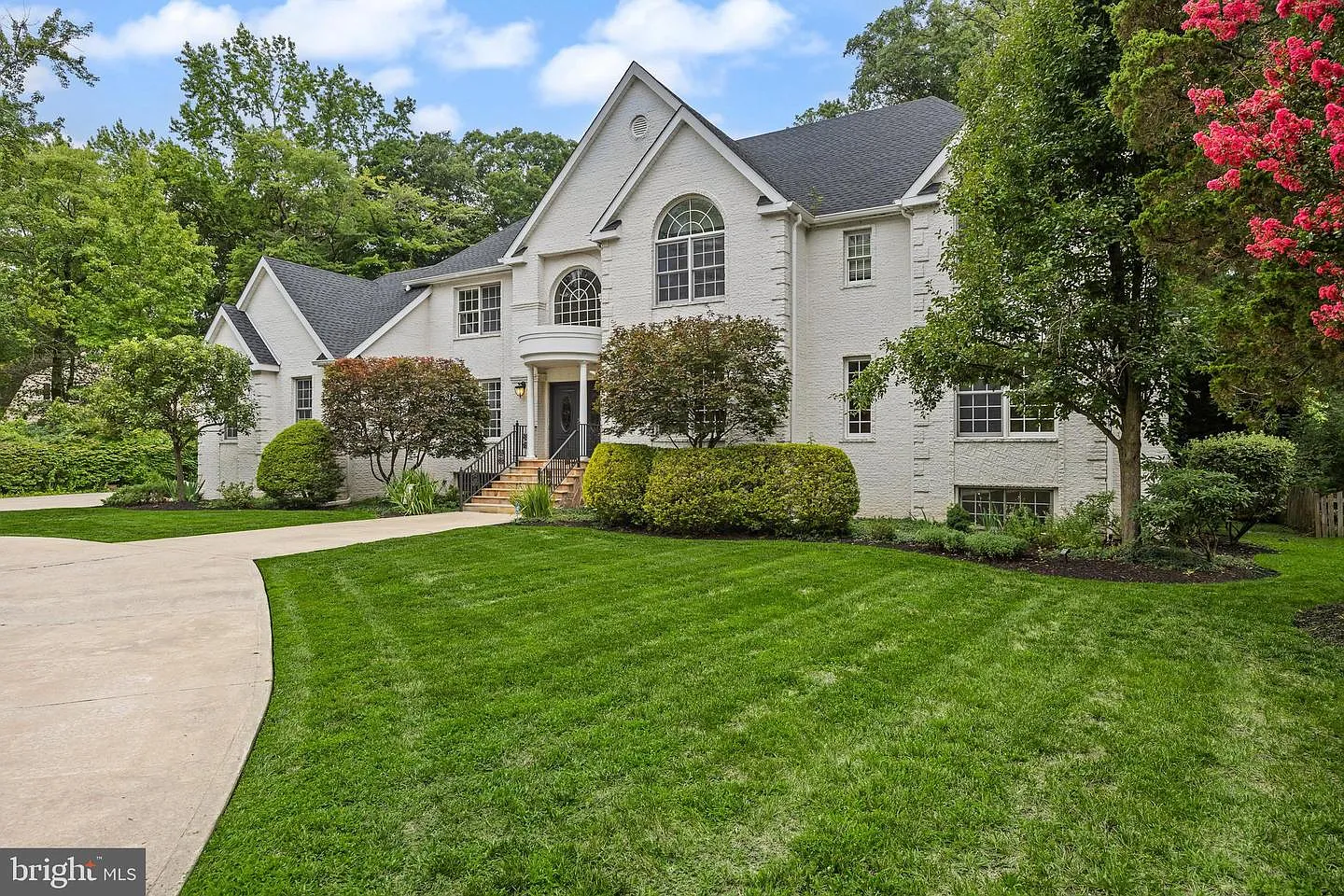
Located in the Fox Hollow Woods neighborhood in the Springdale section of Cherry Hill, this seven-bedroom home features a family room with a fireplace and soaring ceilings; a living room with built-ins and a library ladder; and a finished lower level that could be its own suite thanks to a bedroom, full bathroom, living room, and kitchenette. The home also has a first-floor primary suite with a walk-in closet and soaking tub.
By submitting your written, visual, and/or audio contributions, you agree to The Inquirer’s Terms of Use, including the grant of rights in Section 10.
This suburban content is produced with support from the Leslie Miller and Richard Worley Foundation and The Lenfest Institute for Journalism. Editorial content is created independently of the project donors. Gifts to support The Inquirer’s high-impact journalism can be made at inquirer.com/donate. A list of Lenfest Institute donors can be found at lenfestinstitute.org/supporters.
In its 69 years as a wildlife refuge, Woodford Cedar Run in Medford has never had a staff veterinarian to care for the thousands of animals that come through its doors annually.
The Burlington County rehabilitation center isn’t alone. Mike O’Malley, Cedar Run’s executive director, said he doesn’t know of any New Jersey wildlife refuges with staff vets. The shortage is a money problem.
Yet less than two weeks ago, Amanda Cameron joined Cedar Run as one of very few full-time wildlife veterinarians in the tristate area. O’Malley said he hopes Cameron’s hiring will improve Cedar Run’s patient survival rates.
“These animals are experiencing some of the most intense traumas you can imagine,” O’Malley said. “This will allow us to take on really complex cases and advance the care we’re providing to all of the animals.”
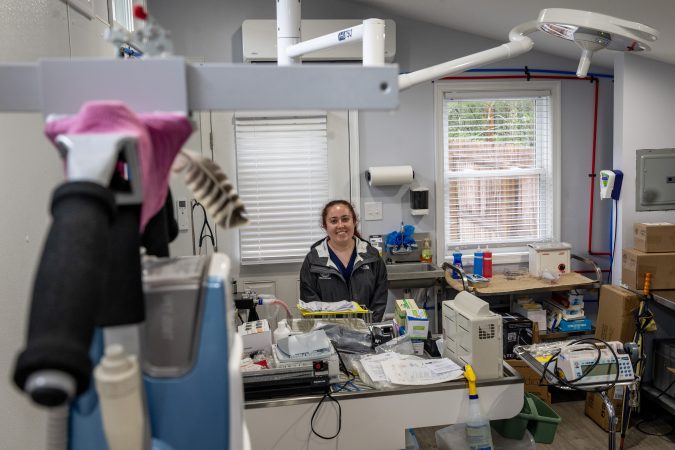
Cameron, 27 and a Massachusetts native, doesn’t yet have a fully operational space to do exams and procedures on the 8,000 birds, raccoons, rabbits, turtles, and more that cycle through Cedar Run annually. Her main responsibility right now is ordering a laundry list of supplies to furnish a medical suite that has sat half-finished for years in the hopes that Cedar Run would someday have a doctor to use it.
On Monday, items awaited sorting in the small clinic. And while Cameron has mostly been on desk duty, she’s already managed to get her hands on a few cases.
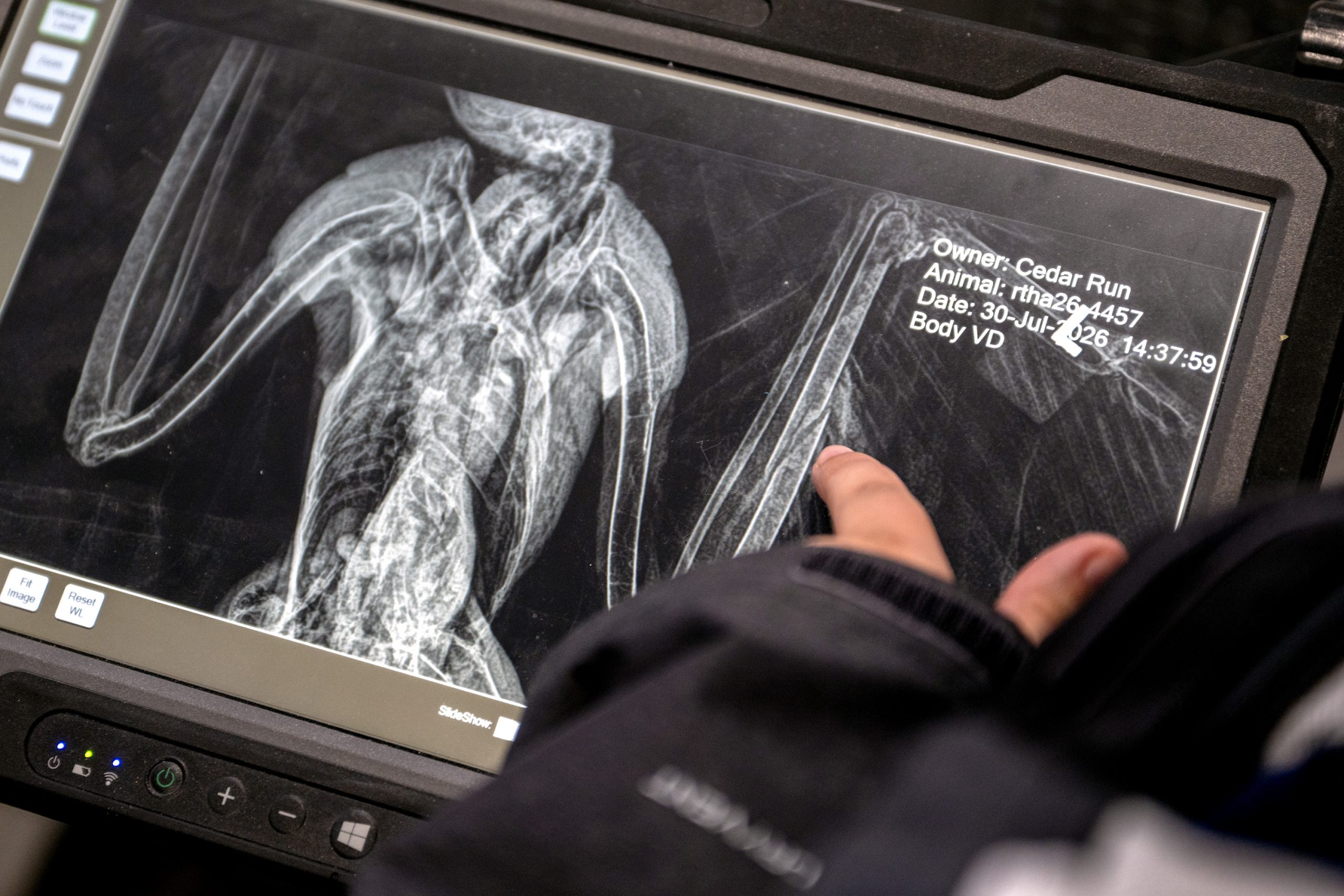
In rain boots and scrubs, Cameron reached across the X-ray table to show the fractured wing of a red-tailed hawk. He’s not out of the woods yet, she said, but he’s on the right track. To survive in the wild, the wings of raptors need to be close to perfect.
“Fortunately that is not surgical,“ Cameron said. ”So we’ve been able to just wrap them and give them some time with pain meds, and he’s doing really well.”
Veterinarian Amanda Cameron looks over the X-ray of a red-tailed hawk with a broken wing bone that would not heal by itself in the wild.Tom Gralish / Staff Photographer
‘Not just today’
Nonprofit wildlife centers often can’t afford to pay the salary of a full-time doctor, O’Malley said, nor buy expensive equipment to support them. Wildlife rehabs already have to foot the bill for the animals’ medical expenses since they don’t have owners to pay them. Plus, Cedar Run maintains 171 preserved acres in the Pinelands and pays to offer wildlife education services to the public.
About 18 licensed wildlife rehabilitators serve New Jersey, and most specialize in a limited number of species. Only three are located in South Jersey, and O’Malley said Cedar Run is the tristate area’s “biggest and busiest.”
In 2025, Cedar Run spent $710,000 on wildlife rehabilitation-related expenses, $172,000 more than the previous year, according to a 2025 audit provided to The Inquirer by O’Malley. Total salaries and wages were nearly $850,000, and O’Malley said the addition of Cameron will cost the center six figures annually. He declined to share the exact number, but said the cost to the nonprofit is “nothing to sneeze at.”
To support Cameron’s salary, Cedar Run will have to keep a steady fundraising pace, but O’Malley said that shouldn’t be a problem with donor support and creative revenue streams, like hosting weddings.
“We feel confident and able to raise the resources needed, not just today but tomorrow,” O’Malley said.
Last year, Cedar Run earned $1.7 million in contributions, grants, and donations, a $780,000 boost from 2024.
Rather than hiring full-time vets, places like Cedar Run typically outsource their medical needs through volunteer doctors, or transport animals to exotics vets nearby. Cedar Run partners with Animal & Bird Health Care Center in Cherry Hill, along with Rancocas Veterinary Associates in Mount Laurel and Rowan University’s new Shreiber School of Veterinary Medicine.
But the extra stress from transport creates unnecessary risk, Cameron said. Some species, like rabbits, can’t handle loud noises. Other animals can injure themselves in panic.
The rehabilitation center takes in almost any wildlife native to New Jersey, aside from black bears and domestic animals. When Jersey residents find an injured raptor, rabbit, or raccoon, Cedar Run’s 12 staff members and more than 200 volunteers do their best to make sure they are treated and released back into their native environments.
Nonreleasable resident raccoons at Woodford Cedar Run Wildlife Refuge. The 12 staff members and more than 200 volunteers care for thousands of animals each year, including many who are unable to be returned to the wild.Tom Gralish / Staff Photographer
Success is not easy to define. About 20% to 30% of all patients brought to Cedar Run survive, O’Malley said, a statistic exacerbated by bird flu and the fact that many animals brought to the center have endured traumatic incidents.
Unlike domestic veterinarians, Cameron is not providing annual checkups, diabetes treatments, or allergy medications to her patients.
“These animals are getting severed by lawnmowers. They’re getting poisoned. … If you remove those animals that need immediate euthanasia off the top, we’re more like 50%, which is obviously much better,” O’Malley said. “So there’s a lot of nuance.”
‘Now we can do this’
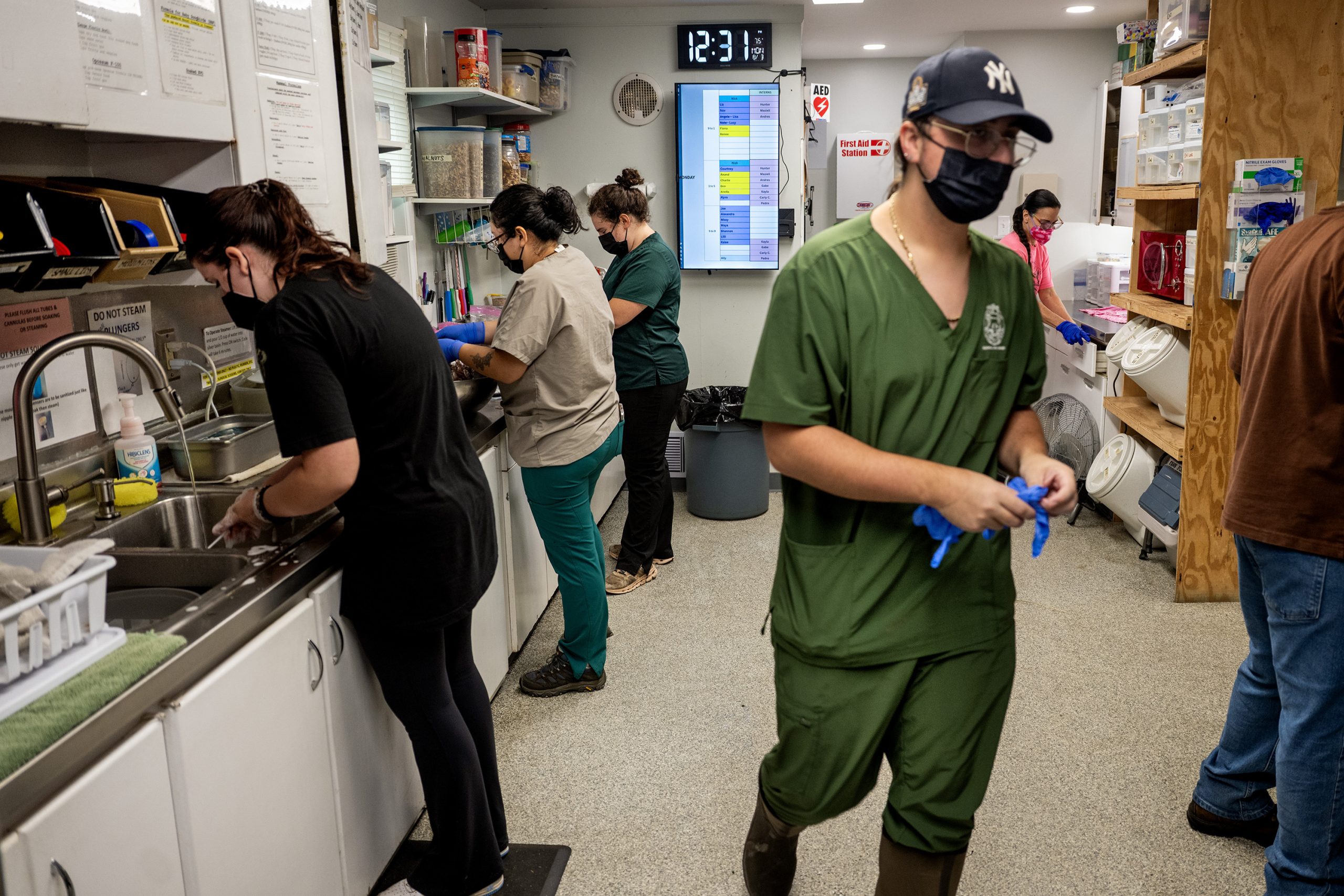
Lori Swanson, director of wildlife rehabilitation, has worked at Cedar Run for more than 20 years. On Monday, Swanson stepped out of a fishy-smelling hospital to greet Cameron. Volunteers were preparing fresh seafood in the hospital kitchen for their patients, donated by an intern’s dad.
“Heather is in there with an opossum,” Swanson said. “Which you’ll need to look at.”
The staff at Woodford Cedar Run Wildlife Refuge in Medford in the busy kitchen Monday, Aug. 3, 2026, preparing lunch for all the animals in their care.Tom Gralish / Staff Photographer
As the only veterinarian on-site, Cameron will care for a variety of species with a vast range of traumas, from broken bones to blindness, along with helping to manage the health concerns of Cedar Run’s 60 nonreleasable residents. Cameron has already taken a first look at a resident skunk with heart disease, and a resident red fox with a cloudy eye.
When the Shreiber School’s first round of vet students reach their externship year, students will shadow Cameron at Cedar Run, making Rowan one of only a handful of vet schools in the U.S. to have a wildlife center affiliate.
Cameron grew up about a half hour from Tufts University in Massachusetts. During her undergraduate career at Purdue University, she found time to volunteer at Tufts Wildlife Clinic, and Cameron said her interest in wildlife grew from there. She graduated with her doctorate of veterinary medicine from Tufts in 2025 and finished her internship at the wildlife clinic a few weeks ago, before moving to Marlton, a short commute to the Medford refuge.
She’s been working hard to teach Cedar Run’s rehabbers a bit of what she knows, and she said everyone is hungry to learn.
“We’ve all gotten a little bit too excited,” Cameron said. “They’ve had me look at a couple of animals already, and everyone’s just like, ‘Oh, my gosh, now we can do this.’”
Swanson is one of the excited ones. She said she hopes Cameron’s addition will mean less strain on the animals and on rehabbers’ time.
“Well, this has been my dream for about 15 years,” Swanson said.
It’ll take a while for Cameron to meet all the wildlife at Cedar Run. Monday was her first time encountering the refuge’s resident raccoons, Charlie and Gus, who were raised illegally by humans. But after decades of waiting, O’Malley and the rehabbers are eager to see what Cameron can do.
“If we had our way, we would’ve had a vet 20 years ago, but it required many years of planning,” O’Malley said.
“Sorry, Mike, I was too young,” Cameron said.
“Yeah, you would have been in diapers, I think,” O’Malley said. “It’s taken quite a while to lay that groundwork.”
Family-owned Kepple’s Carpet Inc., which has served the South Jersey region for more than 30 years, has filed for Chapter 11 bankruptcy protection.
The West Berlin-based company reported less than $50,000 in assets in its bankruptcy petition filed on July 22. The company could owe up to $500,000 in unsecured creditor claims, the filing shows.
Some of Kepple’s largest outstanding debts include $138,000 across three financing firms, more than $60,000 in state taxes, and over $50,000 owed to Comcast Business, the filing shows.
The company also owes its landlord $29,000 for their sprawling Cushman Avenue showroom featuring floor-to-ceiling carpet and flooring samples.
Chapter 11 allows the company to continue operating under court supervision while it restructures its finances and develops a plan to repay the debt over time.
Neither Kepple’s Carpet nor the company’s bankruptcy attorney returned multiple requests for comment. The large showroom was open for browsing Tuesday morning as signs indicated staff were away on a consultation.
Kepple’s filing comes as the American flooring industry grapples with inflation and tariffs.
The family of an immigrant from El Salvador who died in ICE custody in New Jersey on Tuesday outlined a list of demands for state and federal officials that they said would bring justice after his death.
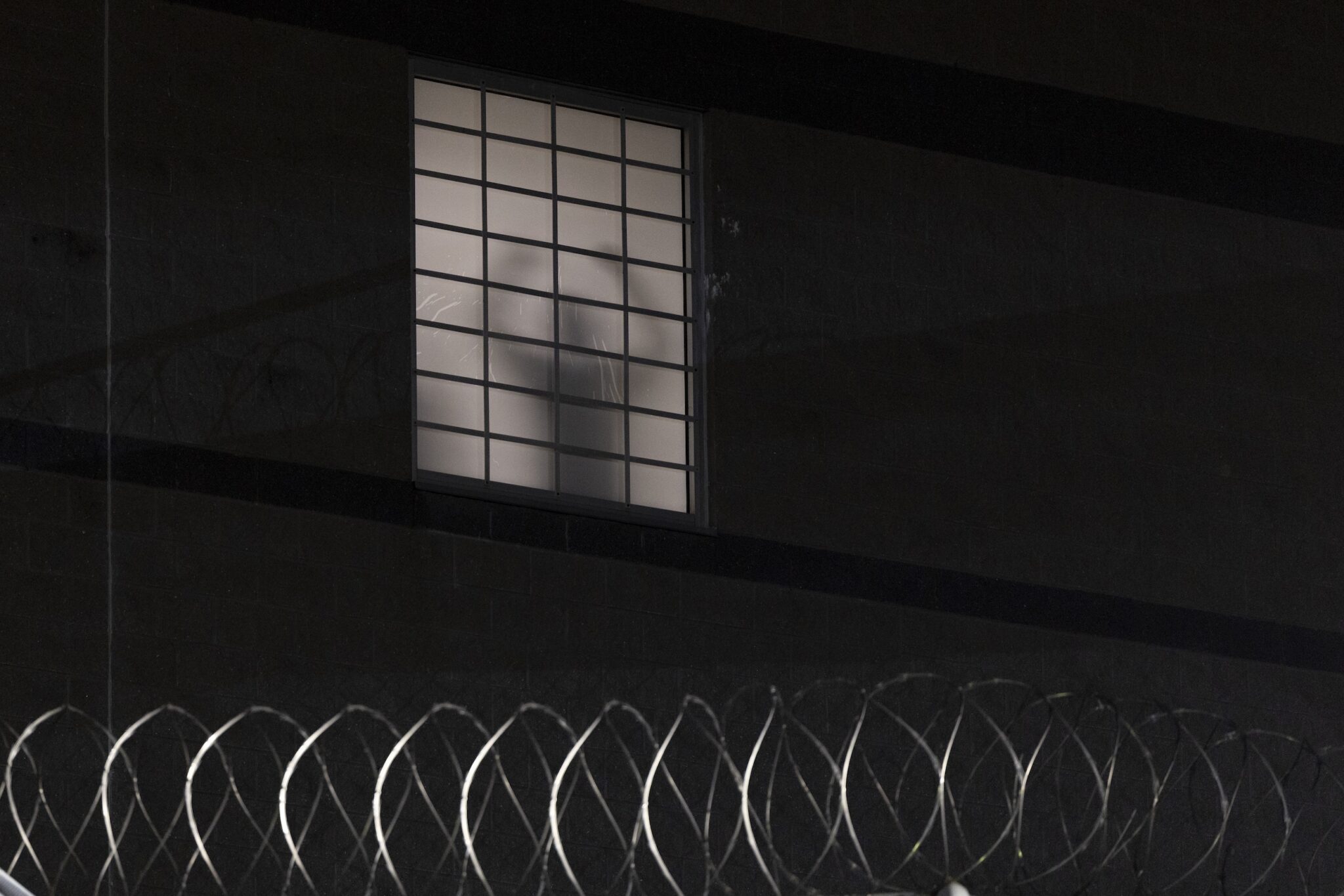
Edwin Jeovanny López Cornejo, 41, whose family said he had been living in the U.S. for two decades, died in ICE custody on Saturday after having a medical episode at Delaney Hall in Newark. The privately run ICE facility has been the subject of complaints of poor conditions, ongoing protests, and the site of clashes between federal officials and elected Democrats.
“On the same day, we were both dead, the only difference was his heart stopped beating,” his 12-year-old daughter Ashley López said at a news conference held outside the Reformed Church of Highland Park on Tuesday streamed by Cosecha New Jersey, an immigrant-rights group. “I am going to grow up without a father. They did not even let me see him one last time before he died.”
“We had so many plans, we will never do them, because they are heartless monsters,” she added.
López Cornejo’s family members have accused ICE of neglecting to provide proper medical care to him, an accusation the federal agency denies. His mother María Cornejo questioned whether ICE gave her son his medicine for high blood pressure, diabetes, and seizures. He was detained in Plainfield in North Jersey on June 18.
ICE said Monday evening that López Cornejo’s cause of death was pending further medical review, but Sen. Andy Kim shared later that night that he died of a heart attack and cardiac arrest. Kim said López Cornejo already had a habeas corpus case calling for his release due to his medical issues.
(function(){function e(){window.addEventListener(`message`,function(e){if(e.data[`datawrapper-height`]!==void 0){var t=document.querySelectorAll(`iframe`);for(var n in e.data[`datawrapper-height`])for(var r=0,i;i=t[r];r++)if(i.contentWindow===e.source){var a=e.data[`datawrapper-height`][n]+`px`;i.style.height=a}}})}e()})();
While speaking at the news conference, Danilo López, the brother of López Cornejo, called for an independent investigation of the incident by New Jersey Attorney General Jennifer Davenport, a release of his brother’s medical records by the facility’s owner GEO Group and ICE, the closure of the detention center and the release of all those detained. He also asked Gov. Mikie Sherrill to open an investigation into health protocols at the center.
“I know that there’s nothing that will bring my brother back but if we feel our pain now maybe we can avoid other deaths,” Danilo López said in Spanish.
Davenport’s office said Tuesday it “can neither confirm or deny an investigation at this time.”
Sherrill has called for the shuttering of Delaney Hall amid a broader battle over President Donald Trump’s immigration crackdown. Her administration is in various court fights with Trump’s administration, including one attempting to gain access to Delaney Hall for a full state health inspection.
Activists have repeatedly called for Delaney Hall to shut its doors but the Trump administration has made clear it’s not closing the facility anytime soon as it holds a crucial role in the president’s mass deportation operation.
U.S. Rep. Analilia Mejia, a progressive Democrat who represents a North Jersey district, said at the news conference that she’s spoken to people inside Delaney Hall during oversight visits who say they’re being denied their medication and proper medical care.
A spokesperson for U.S. Rep. Bonnie Watson Coleman, a Central Jersey Democrat, said her office gets calls from families saying their loved ones aren’t receiving their medication and are getting moldy food inside the facility.
Trump officials and allies have denied there are issues inside Delaney Hall, including U.S. Rep. Jeff Van Drew, a South Jersey Republican who, prior to this incident, visited the facility and called it clean and “well-run” with “medical care, recreation, and other basic services.”
ICE said it provides “comprehensive medical care” to people in the facility, including 24 hour emergency care.
“While in custody, Lopez-Cornejo received proper medical care and was seen by medical professionals,” the federal agency said in a statement.
Danilo López said that his brother had told him over the phone that he had to fill out a form to just get Tylenol at Delaney Hall and it could be days before he received it.
María Cornejo accused ICE of lying about giving her son proper medical attention.
“I just want justice for my son and for my granddaughter who is going to grow without a father,” she said in Spanish.
Danilo López said Tuesday he didn’t know why his brother was detained because he had a valid work permit, but ICE said López Cornejo was arrested by the U.S. Border Patrol “for illegally entering the United States without inspection” in August 2006 and was sent back to El Salvador that October before returning without permission.
López Cornejo’s daughter, Ashley, said Tuesday that “no one is illegal on stolen land,” a common refrain from immigrant rights activists.
Her mother, who was not named, called the incident the result of a systemic failure.
“From the bottom of my heart I feel the system failed Edwin,” she said in Spanish. “Failed my daughter, failed me as a mom, and failed all those other kids who are suffering like my daughter is.”
New Jersey Attorney General Jennifer Davenport filed the state’s fourth open lawsuit against Amazon on Tuesday, accusing the tech giant of creating worse work conditions for lower pay through its “anticompetitive” delivery driver network.
“Today, my office is acting to stand up for thousands of New Jersey delivery drivers who are being exploited every day by one of the world’s biggest, richest corporations,” Davenport said at a news conference.
The suit homesin on Amazon’s Delivery Service Partners (DSPs) program, which the company advertises as an opportunity for prospective entrepreneurs to open their own business while partnering with the tech giant by managing a local system of drivers. But these businesses are beholden to Amazon, Davenport argues, and the tech giant’s system prevents drivers from unionizing or getting better work conditions.
“These are the workers who bring Amazon packages to our front doors,” she said. “They often show up in Amazon vans, wearing Amazon vests, carrying boxes with the Amazon logo on them. And in our view, they are working longer hours in worse conditions and for less money because of Amazon’s anticompetitive behavior.”
These drivers earn “significantly less” than drivers for UPS, FedEx, and the U.S. Postal Service, according to the complaint.
The complaint describes a work environment of employee surveillance, union busting, and drivers having no choice but to urinate in water bottles to meet Amazon’s metrics.
“They must accept invasive surveillance that monitors their every moment and action while at work and face the possibility of immediate termination for the smallest infraction or failure to meet these unreasonable requirements,” the complaint states.
Steve Kelly, a spokesperson for Amazon, pushed back strongly on the claims made in the suit and accused Davenport of choosing to hold a news conference rather than seeking a greater understanding of the program.
“This complaint is not grounded in fact. The Attorney General’s characterization of the DSP Program and the claims about working conditions are just wrong. The truth is, DSPs are independent business owners who make their own decisions about hiring, fleet management, and capacity planning — and they choose whether to work with other companies besides Amazon,” Kelly said in a statement.
“Had the Attorney General bothered to look at the facts, they would have also seen that the vast majority of routes are finished on-time or early — built on real-world data accounting for stop complexity, traffic, and geography. DSPs manage their drivers’ workday and route execution, and DSP employees are free to choose their employer and associate with who they want, full stop.”
Kelly said the company was confident that it would prevail in court.
On its website, Amazon advertises the DSP program as providing “the unique opportunity to create jobs in your neighborhood and lead a team that delivers gifts, textbooks, and pet food to your community.”
But Davenport’s office argues that the DSPs “are anything but independent.”
“Rather, Amazon keeps control of the levers that matter — setting demanding operational requirements, monitoring driver performance, controlling route allocations, and restricting DSPs from hiring one another’s drivers — with exploitative consequences for the drivers themselves,“ her office said in a release.
Davenport also alleges that Amazon monitors DSP workers with artificial intelligence and cameras inside the vehicles they drive, and that the company has intimidated and retaliated against drivers who were suspected of union organizing.
The complaint cites an incident in Queens, N.Y., in which Amazon allegedly sent drones to blacklist striking workers. It also cites an instance in Edison where workers were allegedly told that labor organizing could endanger DSP’s partnership with Amazon, putting their jobs in jeopardy.
The suit claims also accuses Amazon of blacklisting workers who support unionization from a broad network of DSPs, and cites workers who were terminated after their bosses learned they supported labor organizing.
Amazon is the dominant purchaser of this delivery driver labor, and since it is about buying rather than selling, their alleged anticompetitive practice is called a monopsony, rather than a monopoly. Davenport’s office said this is the first time a state has filed a monopsony complaint.
It adds to a list of court battles with the company.
In September 2023, former Attorney General Matthew Platkin joined the Federal Trade Commission and other states in suing the tech giant for allegedly maintaining a monopoly. Last October, Platkin filed one complaint over the company’s treatment of pregnant people and workers with disabilities, and another over how Amazon classifies certain workers as independent contractors and therefore denies them rights and benefits.
Davenport’s lawsuit Tuesday is the first lawsuit against Amazon filed under Democratic Gov. Mikie Sherrill’s administration, but the state’s top lawyer said the three other cases are ongoing.
The complaint, filed in the U.S. District Court for the District of New Jersey, alleges violation of the federal Sherman Antitrust Act and New Jersey’s Antitrust Act and seeks damages for DSP drivers and for Amazon to stop the alleged behavior.
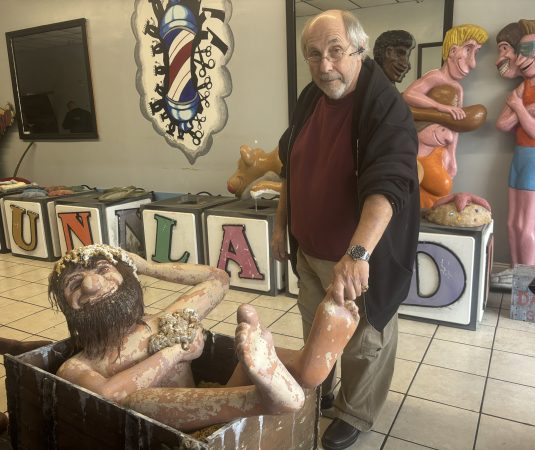
Almost two years after Gillian’s Wonderland shuttered, there are still 20 unsold eclectic artifacts from the iconic boardwalk amusement park at Obnoxious Antiques in Burlington.
Any chance you’re interested in the 12-by-6-foot skeleton head and hands that once gripped the Haunted Dark Ride at Gillian’s Wonderland Pier in Ocean City?
That item — priced at $8,500 — and 19 other spooky artifacts from the closed amusement park are for sale at Obnoxious Antiques in Burlington.
Ocean City Mayor Jay Gillian made the decision in October 2024 to close the park his family owned.
The owner of the vintage store hopes this upcoming Halloween season will bring in more buyers.
So far, half of the sold items have gone to people out of state and the other half returned to Ocean City.
According to the members of the New Jersey congressional delegation, a man who was detained at the Delaney Hall ICE facility in Newark has died.
The detention center has attracted national attention during President Donald Trump’s immigration crackdown, with numerous complaints about its practices almost since it reopened in 2025.
It’s been the site of altercations between law enforcement officers and protestors, and of political fights between state Democrats and the federal government.
The office of U.S. Sen. Andy Kim, a South Jersey Democrat, confirmed the Newark ICE field office notified the senator’s team of the death Monday. The immigrant rights group Cosecha New Jersey shared a video identifying the person who died as Edwin Jeovanny López Cornejo.
Hanwha Philly Shipyard wanted more space for better contracts, more hiring, and more profit-making potential. The yard’s leader eyed a facility in Paulsboro — but then the port operator, Holt Logistics, refused the approval. Months later, Hanwha is giving up on the New Jersey option and now is collecting offers from Southern states.
State Republicans are hopeful that a voter identification law could pass after Gov. Mikie Sherrill last week said she would support it, New Jersey Monitor reports.
Monday’s thunderstorms delayed the start of the $2.5 million project to make repairs on Collings Avenue Bridge over Newton Creek on the border of Camden and Gloucester City. It is now set to begin today and the bridge will be closed for about three months.
Speaking of roadway maintenance, residents in Camden, Oaklyn and Cherry Hill should plan to make detours since that is where the bulk of the roadway projects will occur this week.
A teacher from West Deptford suffers from retinal vasculopathy with cerebral leukoencephalopathy, or RVCL, a disease affecting fewer than 50 families worldwide that damages small blood vessels and causes premature death after harm accumulates on organs. The University of Pennsylvania got a $10 million gift to try to find a treatment.
The veteran actor Vincent Pastore, best known for playing Salvatore “Big Pussy” Bonpensiero on Jersey-set The Sopranos, has died at 80, according to the Associated Press.
🗣️ Quote of the week
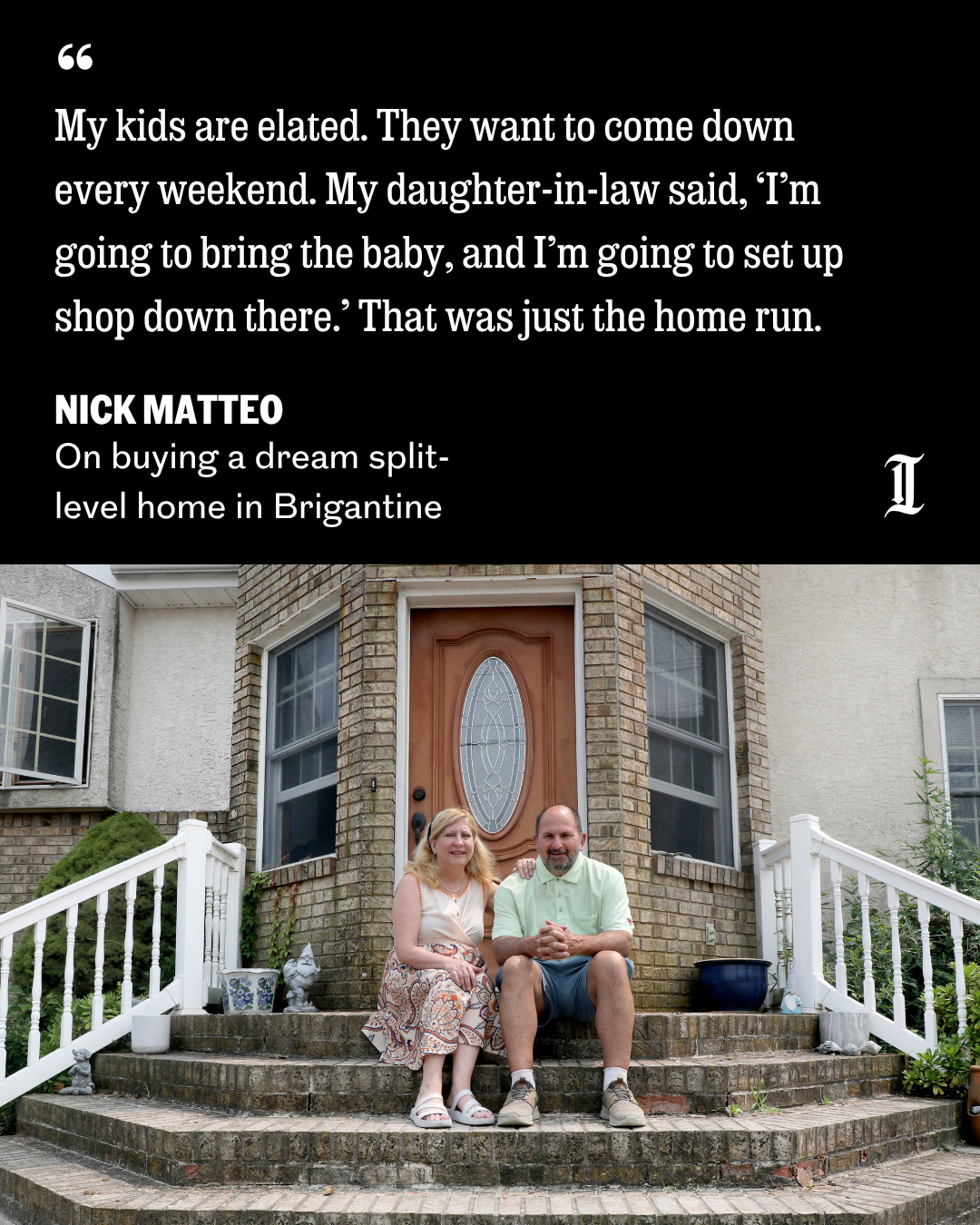
Nick and Sandy Matteo immediately fell in love with the split-level after driving by, they told The Inquirer in the latest How I Bought This House column. They called the listing agent from outside the house and got a tour the same day.
Did you recently buy a home in South Jersey? Share the story of how you did it. Email Inquirer real estate reporters at properties@inquirer.com.
🧠Trivia time
Former Gov. Phil Murphy declared which date as Bruce Springsteen Day?
The Korean-owned yard’s leaders thought they had found just the place, four miles by barge down the Delaware River at the New Jersey-funded Paulsboro facility, vacated by the offshore wind industry when President Donald Trump killed that program. In December, Hanwha agreed to take over the lease.
Philadelphia Shipyard as seen from southbound I-95 in 2024.Alejandro A. Alvarez / Staff Photographer
This despite the fact Hanwha’s proposal enjoyed support from federal, state, and local officials and even made it into the U.S. military budget for fiscal year 2026, which called for $110 million “to support shipbuilding industrial capacity” and steel fabrication in a manufacturing facility “formerly used for offshore wind manufacturing.”
Paulsboro Mayor John Giovannitti estimates that on a given day, there are fewer than 50 workers at the port.
Leo Holt, whose century-old company runs ports in Gloucester City and South Philadelphia, said he’s not completely averse to manufacturing around the Paulsboro terminal after his family’s plans to beef up container and bulk shipping there accelerate.
Hanwha declined to comment, confirming only that the shipyard is still looking for space “in the U.S.”
A rendering of a 600-acre shipyard that the Port of Tampa Bay has offered to build for Hanwha. Port Tampa Bay
What went wrong?
Since the early 2010s, New Jersey borrowed and spent more than $500 million building a Paulsboro wharf, highway ramps, and other facilities to attract big employers to the port. It replaced lost oil industry jobs and also compensated for nearby Camden’s loss of piers due to Holtec Inc.’s redevelopment in that city’s aging port district.
In borrowing documents and news releases, the public spending was justified by predictions that the port would draw hundreds, even thousands, of port and industrial jobs, which in more than a decade have yet to arrive.
Paulsboro sublets the facility to Holt as the port operator. Holt paid $1.6 million to use the property last year.
At the urging of then-Gov. Phil Murphy, then-State Senate President and iron workers union leader Steve Sweeney, then-Paulsboro Mayor John Burzichelli, and other officials, Holt in 2020 agreed to let EEW, a global pipemaker based in Germany, build supports up to 400 feet long and 40 feet across for the federally subsidized offshore wind-electric generation facilities that its Danish partner Orsted planned to locate off the New Jersey coast.
Orsted canceled in 2023, citing rising costs. Trying to cut his company’s losses, EEW executive vice president Esben Strandgaard began looking for new tenants, attracting more than 200 inquiries and initiating talks with Hanwha.
Hanwha needed the landlord’s permission to take over the lease. Hanwha Defense USA president Tom Anderson, a retired Navy rear admiral, and the Holts met last fall to discuss the proposal.
Instead of approving, the Holts sued, challenging EEW’s authority to pick a replacement and demanding control of the facility.
Hanwha, aided by its political supporters, tried to make a deal, but Holt stood firm. In March, Hanwha canceled the agreement.
What the Holts want
“The north star for redevelopment at Paulsboro has been marine terminal operations,” said Leo Holt, president of the Gloucester City-based company. “We stretched to assist the state in any way we could,” but “Hanwha was never a part of the plan, nor was shipbuilding.”
Holt spoke of the failed industrial proposals — wind, shipbuilding, and others to build power plant equipment on site — as an obstacle, not a goal.
“The detour imposed on New Jersey is over, and the road is clear to the Paulsboro Marine Terminal,” he said. “We were glad to see that the page was turned on the detour.”
Holt Logistics, which has been expanding containerized cargo facilities on both sides of the river, has shipped containers to Paulsboro and hopes to augment Paulsboro’s current port tenants, Holt said.
Those include Novolipetsk Steel (NLMK), owned by Russian billionaire Vladimir Lisin, which due to Ukraine war sanctions stopped importing Russian steel through the port for its plant in Farrell, Pa., and has switched to steel from Latin America, East Asia, and other countries, according to Holt.
The port also ships containers to the U.S. Navy base in Rota, Spain, and to ports in Cyprus, Israel, and other Mediterranean countries.
More than a container port
New Jersey has spent more than half a billion dollars improving the Paulsboro site with a wharf, highway connections to I-295, and other public works, the mayor said.
“I’m not aware of Paulsboro people, Gloucester County people, working there right now,” said Burzichelli, now a state senator and a supporter of both the wind and the Hanwha projects.
New Jersey invested in the BP site to make it more than a container port, Burzichelli says.
“That [state-built] wharf was designed to handle any industry, and the public investment was designed to create the maximum amount of high-paying jobs that can be created,” he said.
The port section “was always intended to be a bulk port,” requiring plenty of longshoremen’s labor, and “certainly not a container port,” which “take up a lot of space but don’t generate big jobs,” Burzichelli said.
“They don’t pay taxes the way an [industrial] building will pay,” he added.
The Holts’ “choices and the interest of the state of New Jersey, the interests of Gloucester County, and the interests of the borough of Paulsboro, are not aligned, at this point,” Burzichelli said. “I hope we can get them aligned.”
Mayor Giovannitti said, “We thought we had a deal last year with Hanwha” but are left with “a $750,000 hole in our budget” — the annual payment, in lieu of taxes, that EEW and its partners paid the borough while it was operating. The town’s annual budget is $13 million.
Instructors and graduates of the union-backed preapprenticeship program Global Skills Union Pathways Project at Philly Hanwha Shipyard in February.GSUPP
What Paulsboro could offer
Strandgaard says he’s not surprised Hanwha decided not to “waste any more of their time” on Paulsboro: “They could not see themselves working with a hostile landlord.”
It’s an ideal site for shipbuilding or any other industry that needs a deep water port, he said. But “Holt Logistics really controls what comes in and out. This was very upsetting, for us and Hanwha, that Hanwha with the support of the Navy did not have enough leverage.”
Other East Coast sites would take a year or more to prepare. “The beauty of Paulsboro is they could start the day after” concluding a deal, Strandgaard said.
He said he was surprised the new administration of New Jersey Gov. Mikie Sherrill didn’t make landing Hanwha a priority.
Sherrill was “disappointed that EEW could not reach an agreement with Hanwha or other parties despite the state’s efforts to facilitate discussions and bring stakeholders together,” spokesperson Maggie Garbarino said in a statement.
Holt’s goal: A modern marine terminal
On any given day, between 500 and 900 Holt employees are moving cargo at the company’s South Jersey operations, Holt said. He declined to estimate how many of those were in Paulsboro.
According to tax records, the port handled about 250,000 tons of cargo last year. That’s less than one-tenth of all South Jersey Port Corp. cargoes.
Holt called the state “vital partners in the renovation of the facility. We are working to have both marine operations and manufacturing operations. But we cannot be deterred from taking it where we promised: to be an active modern marine terminal.”
He said he expects the Sherrill administration will prove to be more congenial to the Holts’ vision for the property — “manufacturing, distribution, or anything” that makes sense to his family.
South Jersey officials say they haven’t given up. “The people of Paulsboro were told this was about jobs, jobs, jobs, and those would be manufacturing jobs. Not stacking containers four high with automated forklifts,” Giovannitti said.
Burzichelli still hopes Hanwha and Holt can be brought to the same page. “Many of us still don’t think we are done with manufacturing,” he said.
A 41-year-old man from El Salvador who was detained at the Delaney Hall ICE facility has died, the U.S. Immigrations and Customs Enforcement confirmed Monday evening hours after his family and a member of Congress spoke out about the incident.
Delaney Hall, a privately operated detention center under contract with ICE, has been the site of turmoil during President Donald Trump’s immigration crackdown. It’s been the target of complaints almost since it reopened in 2025. Elected officials have clashed with the federal government over accessing the facility, and altercations between law enforcement and protesters outside the facility went viral earlier this summer.
On Monday, immigrant rights group Cosecha New Jersey shared a video identifying the person who died as Edwin Jeovanny López Cornejo.
María Cornejo, who identified herself as his mother, said in Spanish in the videothat the hospital called her to inform her of her son’s death, and that his heart was not beating when he arrived.
“There is this pain that has struck me now — it’s not just me who’s been struck by it, yet there are many people in this country who are growing tired of this pain,” his mother said in Spanish.
“If they don’t ensure that justice is served, well, they’re going to keep doing this forever, and we don’t know how many more people we’ll have to lose in this country,” she added. “Hardworking people. People who aren’t involved in other things, but who devote themselves to their work.”
Shortly after that video streamed on Facebook, U.S. Rep. Rob Menendez, a North Jersey Democrat, said in a video on X that he was showing up for an unannounced oversight visit to Delaney Hall. A few hours later, he said ICE confirmed López Cornejo’s death.
“We asked certain medical questions which ICE couldn’t give us answers to,” he said. “We have to request it or his family has to request it, which we will.”
Later on Monday, ICE said in a statement that López Cornejo experienced a medical emergency while in custody and was pronounced dead at University Hospital in Newark after medical staff “responded immediately” and called emergency services.
The agency said the cause of his death is pending further medical review on Monday evening, but Sen. Andy Kim attributed it to a heart attack and cardiac arrest in a video he posted on X later that night.
Kim, whose office said it was notified of the death Monday morning, noted that López Cornejo already had a habeus corpus case open arguing for his release due to his medical issues.
“I’m not going to jump to conclusions, but we have to get answers to what happened to Edwin to understand all of what transpired,” the South Jersey Democrat said.
Cornejo said her son took medicine for blood pressure, diabetes, and seizures. She said that while she does not know for sure whether he had access to his medicine, she believes ICE neglected to provide it to him, leading to his death.
She said she last spoke on the phone with her son on Friday — the day before his death — when he said that he felt ill and part of his face and hand had fallen asleep. He told her he was taken to the doctor that day and they were going to run some labs, but he didn’t say when.
ICE said López Cornejo “received proper medical care and was seen by medical professionals.”
Menendez said he learned that López Cornejo “complained of difficulties that he was having” on Saturday and collapsed at Delaney Hall, where CPR was performed before he was taken to the hospital.
Cornejo said her son had been in the U.S. for 20 years and was a hard worker. She said he hada 12-year-old daughter who had not been able to see him since he entered the facility six weeks ago. He previously told her on the phone that his hands turned purple from the handcuffs he was arrested in.
Danilo López, who identified himself as López Cornejo’s brother, said in the video he doesn’t know why his sibling was detained because he had a valid work permit.
“I wouldn’t wish the pain we’re going through right now on anyone, and I don’t want this to keep happening,” he said. “Because it hurts so much — it leaves a void, it leaves a daughter orphaned, and above all, it leaves an irreparable void in the family. And that’s why I’m asking for justice for my brother.”
According to ICE, López Cornejo was arrested by U.S. Border Patrol “for illegally entering the United States without inspection” in August 2006 and he was sent back to El Salvador that October.
He later returned to the United States at an “unknown date” before he was arrested in Plainfield in Union County in June, according to ICE.
Sebastiana Cornejo, who identified herself as López Cornejo’s aunt, said in the videothat he was arrested on his way to work.
She blamed her nephew’s death on ICE detaining him and called for the Trump administration to stop its mass deportations, and “that they stop separating families, leaving children orphaned with no one to care for them.”
“Why are they detaining so many working people?” she said. “We immigrants don’t harm anyone; we come to work, not to harm anyone.”
Democratic Gov. Mikie Sherrill said her administration is working with the state’s congressional delegation “to gather all the facts surrounding his death,” but noted that the state health department continues to struggle to access the whole facility for an inspection, which is at the heart of one of New Jersey’s court battles with Trump.
“Every effort to block oversight raises serious questions about what is happening inside Delaney Hall and what those operating the facility are trying to hide,” she said. “This tragedy is another painful reminder of why Delaney Hall should be closed.”
Sen. Andy Kim (D., N.J.) stands between federal agents and demonstrators in an attempt to prevent a clash outside the Delaney Hall migrant detention center in Newark, N.J., on May 25.DAKOTA SANTIAGO
Turmoil at Delaney Hall
Detentions have surged across the nation, from about 38,000 when Trump took office to more than 70,000 in January and standing at about 66,000 as of July. Delaney Hall, a gray, two-story building in an industrial area of Newark, has been a key part of that infrastructure.
It has also been the site of protests, complaints, and political fights between the Trump administration and New Jersey Democrats since its doors opened in May 2025.
Last year, Newark Mayor Ras Baraka was arrested outside the facility before his charges were dropped. U.S. Rep. LaMonica McIver, a North Jersey Democrat, still faces federal charges over an altercation outside the facility on the same day.
Federal officials insisted there was no hunger strike and said detainees there and elsewhere in the system were being held in safe and humane conditions.
At least 22 people have died in ICE custody so far this year, according to DHS data, provoking outrage from immigrant allies who blame poor medical care, unhealthy conditions, and lack of agency training.
Human Rights Watch, a nonprofit watchdog group, calculated that more than 50 people died in ICE custody in the first 500 days of Trump’s term — the highest rate in more than a decade. It’s more than two and a half times as high as during the first Trump administration, and stands nearly four times that of the Biden administration, Human Rights Watch said.
ICE says the health of detainees ranks among its highest priorities, and national detention standards require it to provide comprehensive medical, dental, and mental health care from the moment someone arrives at a facility.
The federal agency says some people who are detained may not have received prior, reliable care for existing conditions. And some people may never before have had comprehensive medical care at all.
In December, a 41-year-old Haitian national named Jean Wilson Brutus died one day after entering Delaney Hall, succumbing to what ICE said was suspected natural causes following a medical emergency. ICE said agents tried to revive him and EMS performed life-saving measures but he died in the hospital.
Menendez said on Monday that another individual who had been in custody at Delaney Hall died just weeks ago at University Hospital after a possible seizure.
Amol Sinha, executive director at the ACLU of New Jersey, said in a statement Monday that López Cornejo’s death is “another devastating result of the rampant inhumane conditions” at detention centers across the country.
“The Trump administration’s detention and deportation machine continues to terrorize and traumatize communities at an unprecedented level, yet numbers cannot encapsulate the grief and devastation that these abuses cause,” he said.
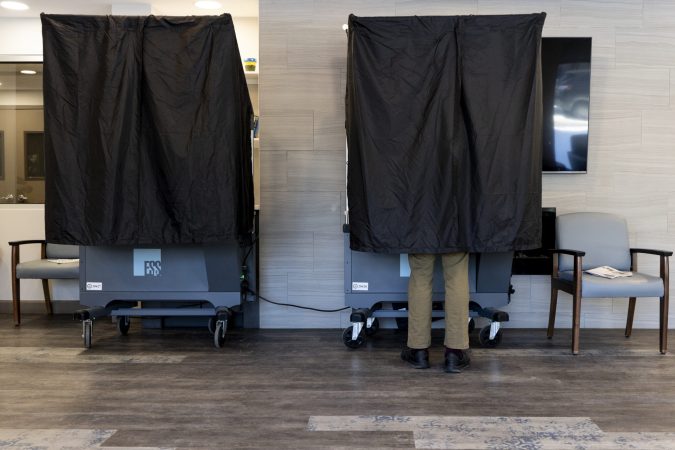
Republican lawmakers say they’re hopeful the governor’s new comments expressing support for voter ID legislation could push long-stalled bills toward hearings when the Legislature returns to Trenton in the fall.
“I absolutely think this should be one of the top priorities when we come back into session,” said Sen. Michael Testa (R., Cumberland). “There absolutely needs to be a discussion, and the people of New Jersey deserve that discussion to be had.”
Gov. Mikie Sherrill, a Democrat, said last week during an appearance on News 12 that she would support a voter ID law in New Jersey if legislation reached her desk.
“Certainly if that was the law passed here, I would support that,” she said, responding to a viewer’s question. “I don’t have a problem with voter ID.”
Sherrill’s comments come on the heels of her revealing that thousands of noncitizens were registered to vote via the state Motor Vehicle Commission, and fewer than 400 of them cast ballots. The revelation led to a new round of voter fraud complaints from Republicans in New Jersey and nationwide, while the Trump administration demanded information about the voters in question. Sherrill declined to share that data and has said the state is conducting an independent investigation.
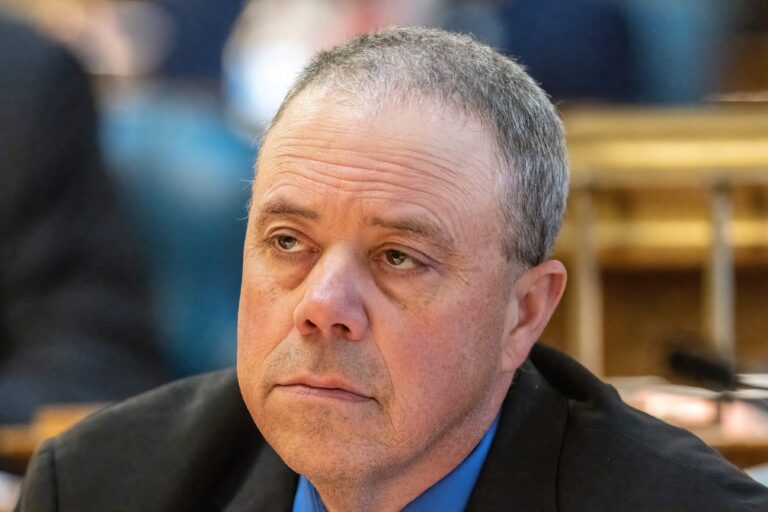
Sen. Parker Space.Hal Brown/ New Jersey Monitor
Sen. Parker Space (R., Sussex) is a sponsor of a bill that would require voters to show identification to cast ballots, including a driver’s license, a Real ID, or a passport, among others, and those without them would have to show utility bills in their name, a mortgage or rental statement, or two pieces of mail from a government agency or utility company. Any voter who does not show these would be subject to a challenge.
Space said he was encouraged by the governor’s remarks that his bill — which has been introduced three times since 2022 but has never advanced to a committee hearing — could finally be posted for a vote.
“Hopefully she stands by her word and we can get the Legislature on board,” he said.
He noted that the issue hasn’t historically been a priority for Democratic legislative leadership, which decides which bills advance.
Assemblyman Gerry Scharfenberger (R., Monmouth) has sponsored the bill in the lower chamber since 2022. He said he proposed legislation with more options for voters besides showing just photo identification because he thought it would get some support from Democratic lawmakers, though he concedes that has not worked so far.
The new voter registration issue, Scharfenberger said, shows the “walls are closing in, as far as the Democrats being able to avoid this issue.”
“There’s no way they can avoid addressing this. If I could be a little bit of a forecaster here, I think the more information they find out about the motor vehicle issue, the more those numbers are going to grow,” he said. “It’s become too much with the public psyche, and I think we’re going to have to address it with solid legislation, and not just token tweaks here or there.”
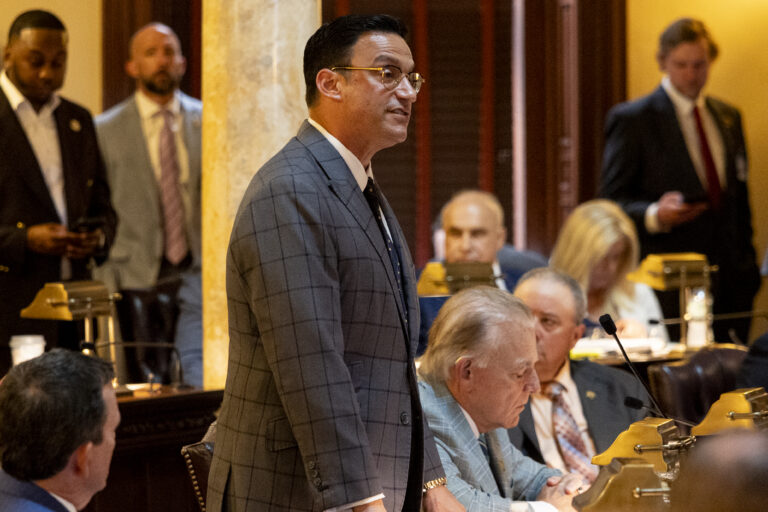
Testa said he was “pretty shocked” to hear Sherrill’s comments on supporting voter ID, but “pleasantly surprised.”
He’s the co-sponsor of a voter ID bill that would require a voter to show one of four forms of photo ID: a driver’s license, a Real ID, an identification-only card issued by the Motor Vehicle Commission, or a U.S. passport. He said it’s easier to train ballot workers on how to validate just these forms of ID.
Sen. Michael Testa Jr.Anne-Marie Caruso/New Jersey Monitor
“We’ve done everything in this state to be able to allow individuals to vote by mail, to expand the time period for vote by mail, to give people more locations to go vote — and I don’t necessarily have a major problem with any of these modalities for people to vote — but if you’re going to vote on Election Day, you should have a photo ID,” he said.
A spokesman for Senate President Nicholas Scutari (D., Union) did not respond to a request for comment. A spokesperson for Assembly Speaker Craig Coughlin (D., Middlesex) declined to comment.
Thirty-six states have laws requiring voters to show some form of ID at the polls, and eight of those strictly require photo ID.
But voting rights groups say there are decades of studies showing certain communities are less likely to have access to photo ID. Liza Weisberg, supervising attorney of the American Civil Liberties Union of New Jersey, said people who are homeless, young voters, and communities of color are the “most likely to face disenfranchisement.”
She called Sherrill’s comments on voter ID a “moment of concern.” Seven advocacy groups — including the ACLU, New Jersey Institute for Social Justice, and the League of Women Voters — sent Sherrill a letter Friday urging her to reject voter ID legislation outright.
They noted that state law already requires people to provide a driver’s license number or their Social Security number to register to vote.
Weisberg said the recent voter registration news doesn’t justify implementing voter ID, noting the newly registered voters in question represent a “small fraction” of the state’s voters, with an even smaller group actually casting a ballot. Sherrill initially said about 6,600 people who identified themselves as noncitizens at the Motor Vehicle Commission were added to the voter rolls, and later said about 2,000 of them may indeed be citizens. The state has 6.7 million registered voters.
“I really hope that there is not an effort to continue using this event to justify voter suppression efforts that really don’t have anything to do with it,” Weisberg said.
Republicans dismissed arguments that voter ID laws disproportionately burden low-income, elderly, minority, and young voters. They noted multiple reasons people need to show photo ID, like renting a car or applying for food stamps.
Testa called the disenfranchisement argument “very, very pompous,” saying it suggests that voters could be “ill-equipped or too stupid” to obtain a photo ID. Scharfenberger called it “the most racist position I’ve ever heard,” and Space said those arguments “pander to the far left and liberal media.”