Category: New Jersey News

  • More than two years later, no good answers about woman who went missing in the Pine Barrens

    More than two years later, no good answers about woman who went missing in the Pine Barrens

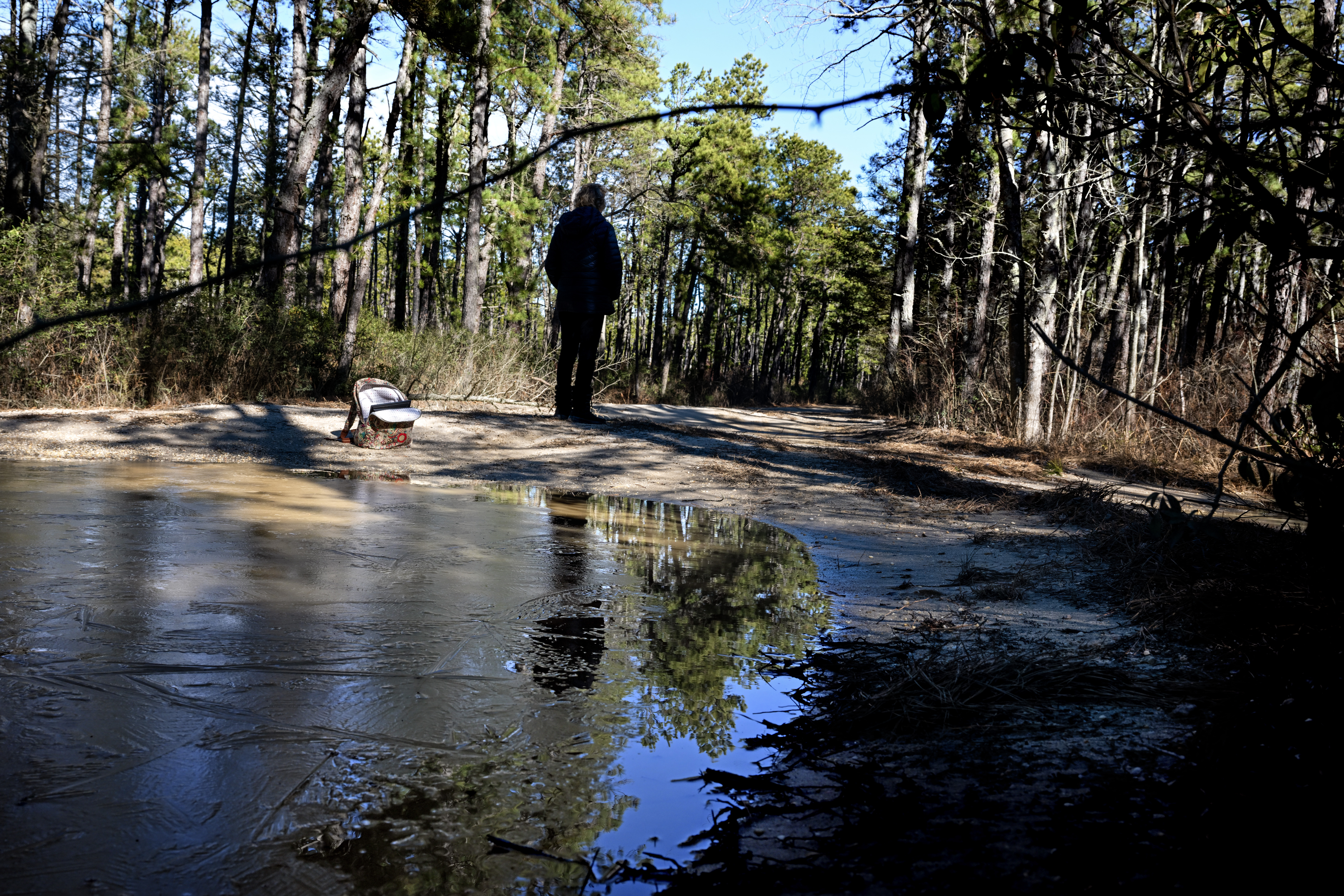
    Pine after pine rolls by on a windy winter day, until the road becomes sand and snakes its way through this wild stretch of New Jersey.

    For millions of visitors, these Pine Barrens are a magical, mysterious place, full of folklore. For Sue Quackenbush, the pines feel ominous, a place to fear ever since her daughter, Danielle Lopez, disappeared there in April 2024.

    “This isn’t grief, yet. This is terror,” Quackenbush said on a January afternoon there.

    Sue Quackenbush is on Lost Lane Road in Woodland Township on Jan. 12. In April, 2024 her daughter Danielle Lopez disappeared farther up the dirt road while camping with her boyfriend in New Jersey’s Brendan T. Byrne State Forest. She is offering a $25,000 reward for information leading to solving the case.Tom Gralish / Staff Photographer

    Vanished from camp

    Lopez was 37 at the time of her disappearance and staying with a boyfriend, James Scott Dunn, at a campground in Brendan T. Byrne State Forest, about 16 miles north of Lost Lane, in April 2024.

    Just after 9 a.m. on April 13, 2024, Lopez was captured on surveillance buying coffee at a Burlington County Wawa, not far from the campground.

    Later on April 13, around 6 p.m., witnesses saw her walking alone on Lost Lane, a desolate, sandy road pocked with muddy puddles deep in the Pine Barrens.

    She was never seen again.

    Quackenbush reported Lopez missing 11 days later on April 24. Dunn went to see the police a week later, at Quackenbush’s urging, and was arrested on unrelated drug charges. According to the New Jersey Department of Corrections, Dunn was sentenced to five years in prison on Oct. 25, 2025, on those charges, along with a theft by deception charge. He is currently incarcerated at South Woods State Prison.

    Lopez’s car, a 2008 Hyundai Accent, was not discovered until May 1, 2024, disabled and abandoned on Lost Lane, in one of the many muddy holes that dot the road.

    Quackenbush, whom the Inquirer has been speaking to since January, said her daughter, known as “D-Lo,” was vivacious and loud. She also had some issues with alcohol, and had sought help for it in the past.

    “There’s no denying Danielle had alcohol issues. I’ve never tried to mislead or cover that up. There’s no denying that most people don’t go camping in April … in New Jersey,” she said.

    The investigation

    The New Jersey State Police are investigating Lopez’s disappearance and have declined to comment to The Inquirer on the case.

    In a social media post on the two-year anniversary of her disappearance, police said they were still “seeking the public’s assistance in locating Danielle and gathering any information related to her disappearance.”

    In 2024, investigators told NBC’s Dateline that witnesses who saw Lopez walking on Lost Lane that evening on April 13 were filming with a GoPro camera. Based on the footage, investigators told Dateline that Lopez was alone and “did not appear to be in distress” in the video, which has not been released. Lopez allegedly asked those witnesses to help push her car out, but they didn’t.

    A family photo of Danielle Lopez, who disappeared in April 2024 while camping with her boyfriend in New Jersey’s Brendan T. Byrne State Forest.Courtesy of Sue Quackenbush

    Investigators told Dateline they found “multiple items” belonging to Lopez in her car, but not her phone. Police told Dateline there were no signs of suspicious activity associated with the abandoned car.

    In an interview with The Inquirer in prison, Dunn said he and Lopez were “homeless” and living in and out of hotels before moving to the campground, which has a 14-day camping limit.

    He discussed a handful of alibis that kept him away from the campground for several days: He said he picked up a motorcycle, visited friends, hotels, and a truck stop. When he returned to the campground after April 13, 2024, he said it was in “disarray.”

    “And I was wondering where Danielle was,” he said.

    (A New Jersey Department of Corrections spokesman sat in on The Inquirer’s interview with Dunn and recorded it for “recordkeeping.” NJSP investigators later shared the recording with Quackenbush. The NJSP did not return a request for comment on why they shared the interview with Quackenbush.)

    A mother’s grief

    Quackenbush now brings pepper spray when she drives to Lost Lane from Pennsylvania, and her voice trembles a bit as she gets closer to the desolate road where her daughter was last seen alive. On a January afternoon, a large puddle stopped Quackenbush and The Inquirer from visiting the memorial she erected near the site. The water was too murky, and there was no way to tell how deep it was.

    Quackenbush suspects her daughter wanted to see Lake Oswego near Lost Lane when the car got stuck, and believes she could have walked the 16 or so miles back to the Brendan Byrne campground, if she knew the way.

    A family photo of Danielle Lopez with her two brothers. She disappeared in April 2024 while camping with her boyfriend in New Jersey’s Brendan T. Byrne State Forest.Courtesy of Sue Quackenbush

    Quackenbush holds on to hope, the belief that her daughter is alive, because she suffered so deeply in the past.

    “More than most,” she said.

    Quackenbush lost her eldest son, Eric, to suicide in 2015. Her younger son, Michael, a Marine who served in Afghanistan, died in a Florida car crash in 2016.

    Lopez struggled with loss as well, Quackenbush said, including the deaths of her grandfather in May 2020 and her father a month later. Roscoe, Lopez’s beloved rescue dog, had to be euthanized a few months before her disappearance.

    A reward poster on a parking lot restroom on Lost Lane Road in Woodland Township. In April, 2024 Sue Quackenbush’s daughter Danielle Lopez disappeared farther up the dirt road while camping with her boyfriend in New Jersey’s Brendan T. Byrne State Forest.Tom Gralish / Staff Photographer

    Quackenbush is offering a $25,000 reward to anyone with information that could solve the case. In January, she said many tips have come in as a result. She’s also been on podcasts and is an administrator of a Facebook group dedicated to the case that has over 1,500 followers.

    “Danielle, no day shall erase you from the memory of time,” she wrote on Facebook on the second anniversary of her disappearance.

    Sue Quackenbush holds a collage of photos of her daughter Danielle Lopez.Tom Gralish / Staff Photographer

    In January, Quackenbush cried during her visit to the Pine Barrens as she clutched photos of her daughter and sons. The memorial for Lopez was still a 20-minute walk beyond the puddle, on Lost Lane.

    “It’s my goal to get the name of this road changed,” she said.
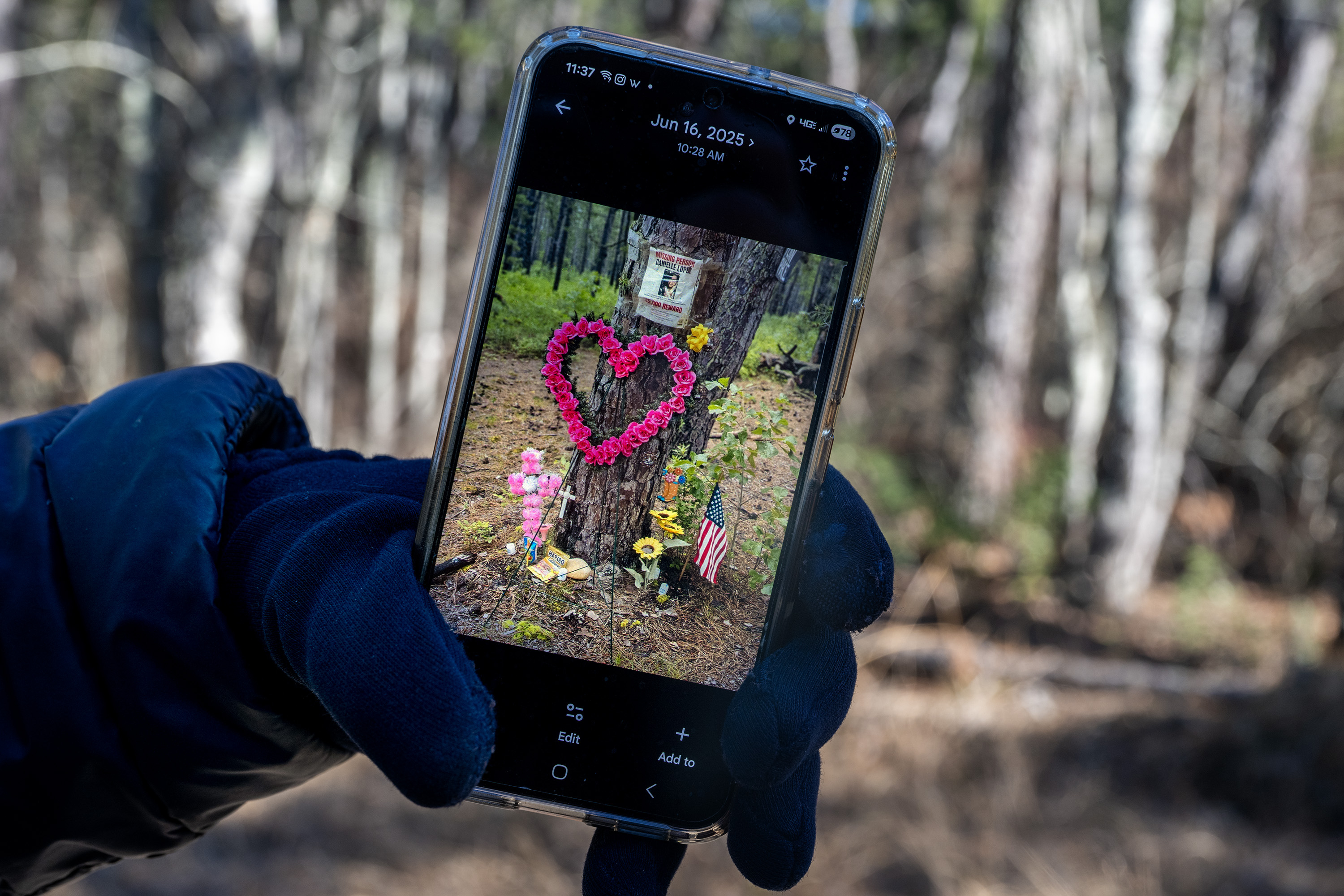
    Sue Quackenbush holds a photo she took last summer of the memorial she created for her daughter.Tom Gralish / Staff Photographer

    Anyone with information is urged to contact the New Jersey State Police Missing Persons Unit at (609) 882-2000 ext. 2554 or email missingpinformation@njsp.gov.

  • A South Philly hotel was part of a $100 million Ponzi scheme, a Justice Dept. lawsuit says

    A South Philly hotel was part of a $100 million Ponzi scheme, a Justice Dept. lawsuit says

    All publicity is good publicity, the adage goes, but the Penrose Hotel had a rough reputation before closing its doors in March 2020.

    Online reviews paint a vivid picture of the establishment to the north of FDR Park before its post-pandemic renovation and rebrands: Bedbugs, fossilized vomit, blood splatters, gang tags, and mold encompassed with the aroma of urine, cigarettes, and weed.

    “At least I wasn’t alone through this and the bedbugs keep me company,” a Yelp review from 2018 says. ”I guess you can say I am survivor but I wouldn’t recommend this to the faint of heart.”

    The hotel might have been a “tower of terror,” as another reviewer dubbed it, but it served a key role in a $100 million Ponzi scheme that lasted more than three decades, according to a lawsuit filed by the U.S. Department of Justice last week.

    The Justice Department accuses a New Jersey-based father-son duo, Pankaj Sheth and Rajan Sheth, among other family members, of using chronically understaffed and underfunded hotels in a state of gross disrepair, and a revolving door of business entities, to fraudulently obtain government-secured loans.

    The sprawling 332-page, 133-count federal complaint, filed Friday in the U.S. District Court of the Eastern District of Pennsylvania, names as defendants seven members of the Sheth family, 21 business entities, and eight of the family’s business associates.

    It asks a federal judge to order the defendants to return “all funds paid by the United States by which the defendants were unjustly enriched.”

    A spokesperson for the U.S. Attorney’s Office declined to comment.

    Rajan Sheth, the son, denied the Justice Department’s claims against him, his family, and their businesses.

    “The business we’re in is buying distressed properties and we turn them around,” Sheth said. “There is no scheme here.”

    The U.S. Attorney’s Office has been investigating the operation for more than two years, Rajan Sheth said, and the family complied with requests for documents. “Every penny” the family borrowed was paid back and they continue to operate and invest in the hotels, he said.

    The family intends to fight the allegations and file a countersuit, Rajan Sheth said.

    Repeated cycle

    The lawsuit alleges the Sheth family and its associates obtained government-backed loans they were not eligible for because of their financial history — past defaults, bankruptcies, fraud judgments, and overwhelming debt — by transferring the ownership of over a dozen hotels in the Mid-Atlantic to straw companies.

    These companies, typically limited-liability corporations, would lie to obtain a loan for a property, the suit says. The funds would go to pay old loans and enrich the Sheth family, according to the complaint, while defaulting on the new loan. The Sheths would then use delay tactics in court to prevent foreclosure until another straw company obtained a new fraudulent loan.

    “The Sheths repeated this cycle many times,” the complaint says.

    The family owned the hotel on Penrose Avenue since 1999, according to the complaint, and defaulted on the loan it obtained to purchase the property shortly thereafter.

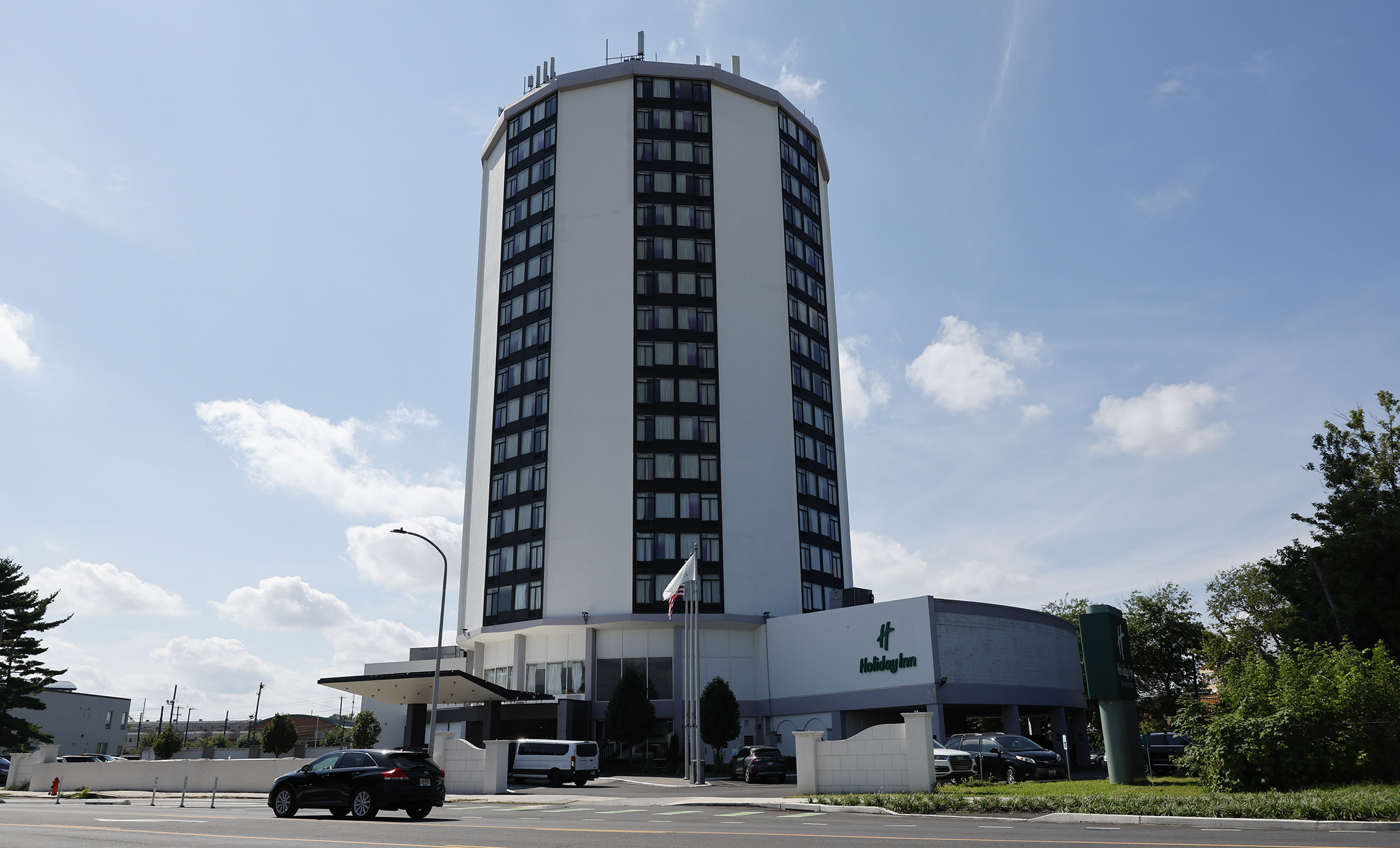
    The hotel has changed names multiple times in the years since, from Skyview Plaza to Penrose, Radisson, and most recently Holiday Inn Philadelphia Airport-Stadium Area. During that time, the Sheths transferred ownership and created new shell businesses that claimed to run the operations of the hotel. That was to prevent banks and the federal government from knowing about past defaults, according to the suit.

    For example, in 2018, the family used a company called Penn Hospitality Management LLC to take a $5 million loan from the Small Business Administration and a $3.1 million loan from a commercial lender. The Sheths pocketed $1.8 million, the suit says, which was intended to renovate the hotel before rebranding as the Radisson.

    The hotel defaulted on the 2018 loan at the end of 2020, the suit says, and the Sheths used a new straw company, 2015 Hospitality Management LLC to secure a fresh $12 million loan, which allowed them to keep control of the property.

    The family also took advantage of federal COVID-19 recovery efforts, such as the CARES Act business loans and Payment Protection Program.

    All told, the Sheths used the Penrose property as collateral to obtain loans worth more than $45 million, the suit says, and like at other hotels, nearly every new, larger loan was used to back pay the previous default. In other words, according to the government, a Ponzi scheme of $100 million across the various properties.

    The federal complaint focuses on Penrose in the period between 2016 to 2022 but Philadelphia property records show that the hotel is still owned by Vraj Brig PA LLC, one of the business entities named as a defendant.

    The Penrose hotel closed in March 2020, reopened in 2022 as the Radisson Hotel Philadelphia after $10 million renovation, and became a Holiday Inn in 2023.

    IHG, which owns the Holiday Inn brand, did not respond to a request for comment. The international hospitality company is not named as a defendant.

    Rajan Sheth said the transformation of the hotel from the notorious Penrose to a Holiday Inn is an example that the family business is legitimate.

    “Look at the place now,” he said.

  • HelloFresh to close South Jersey distribution center

    HelloFresh to close South Jersey distribution center

    The meal-kit company HelloFresh said Monday it is closing its Gloucester County distribution center, eliminating nearly 400 jobs, according to a notification made to New Jersey.

    In a statement, HelloFresh confirmed the closure, which will occur on Sept. 30. The facility is located in Logan Township, but has a Swedesboro mailing address.

    “We are deeply grateful for the contributions of our Swedesboro team members, and we are committed to supporting affected eligible employees through this transition with severance assistance, extended healthcare support, career transition resources, and internal transfer opportunities where available,” a spokesperson for the company said.

    A spokesperson for Logan Township could not be reached for comment.

    Thomas Fromm, mayor of Swedesboro, said he received a state notification about the closure and called the news “really sad to hear.”

    “I’m sure a number of the employees impacted are from our town and surrounding communities and this is devastating news to hear for their families,” Fromm said in an email.

    “I spoke to a representative of HelloFresh and asked for a list of Swedesboro residents being let go but he said they couldn’t provide that information,” Fromm said.

    HelloFresh is a popular meal-kit business headquartered in Germany. The service peaked in popularity during COVID, but more recently has been reporting declining revenue. Its stock price in Germany peaked well over the U.S. equivalent of $100 in 2021, but more recently has been trading below $5.

    The HelloFresh spokesperson said in the Monday statement: “Operational efficiency is central to everything we do at HelloFresh, and we regularly evaluate our fulfillment setup to ensure we operate as effectively as possible. Following a review of our footprint, we have made the decision to close our Swedesboro, New Jersey distribution center on September 30, 2026, and will seamlessly integrate its operations into our broader fulfillment network.”

    Last year, HelloFresh closed and consolidated facilities in Texas, resulting in the layoffs of hundreds of people.

    Earlier this year, HelloFresh announced it was ceasing operations in Italy and Spain.

  • Avalon will allow outdoor live music one hour later at Gully’s

    Avalon will allow outdoor live music one hour later at Gully’s

    Avalon has changed its tune.

    Over objections from nearby residents, the affluent Cape May County shore town voted to soften liquor license restrictions for the popular new bar Gully’s, allowing one more hour of outdoor music, until 9 p.m.

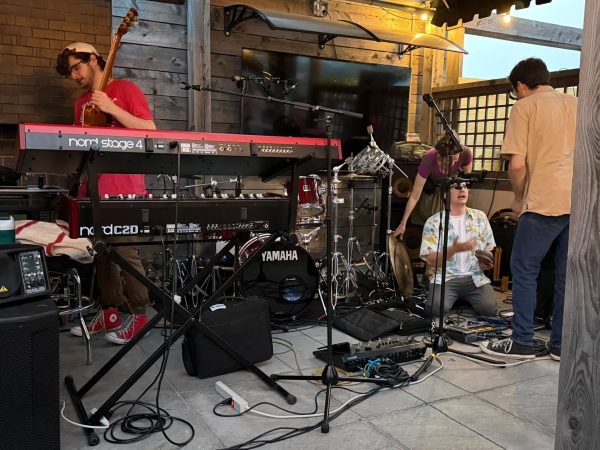
    The vote followed an outcry from the town’s locals, old-timers, and music lovers after the band Three and One was told to stop playing at 8 p.m. July 17, two hours earlier than advertised, after complaints from neighbors and a visit from Avalon police.

    The 8 p.m. cutoff for outdoor music was a special condition included in the liquor licenses of Gully’s and other bars in town.

    But at its August council meeting last Wednesday, the council adopted new restrictions on Gully’s that gives the bar one more hour for outdoor live music.

    Gully’s had been appealing those conditions to the state’s Division of Alcohol Beverage Control before the resolution’s adoption.

    Councilman Jamie McDermott downplayed the consequences of extending the music one more hour, and said the noise was “part of living within the two blocks of the commercial business district.”

    “It’s a summer disruption,” he said. “We’re talking about eight Saturday nights that are going to go until nine o’clock.

    “For me, for a summer town, that’s not Sea Isle, that’s the seashore at its best,” he said.

    According to the resolution, Gully’s has retained a sound engineer to help with noise volume from its bands.

    “Each band will be given the sound engineer’s phone number so that the engineer can approve the band’s system before it is set up,” the resolution states.

    In addition, “bands will be warned that they will be cut off and not paid if they do not keep the volume reasonable.”

    The council noted that Gully’s space is mostly outdoors, unlike other bars in town with bigger indoor footprints for music, and that the borough itself has outdoor music until 9 p.m. at its public concerts.

    The extension to 9 p.m. was characterized as a temporary solution for the rest of the summer. The issue will be revisited before next summer.

    Gully’s has agreed to withdraw its appeal, for now, Nicole Curio, the municipal solicitor, told the council.

    The hanging candied bacon served over grits and Gully’s blooming potato at Gully’s on Wednesday, June 17, 2026, in Avalon, NJ.Monica Herndon / Staff Photographer

    The resolution requires Gully’s bands to have smaller sound systems, no 18-inch or larger bass speakers, and to monitor their volume. The restaurant announced the change on its Facebook page.

    The resolution also states that concerned neighbors will be given a number to text if they have issues with the volume.

    Gully’s has also agreed to reposition the stage so that bands are facing the building rather than the neighborhood, the resolution states.

    City Council President Greg “Chet” Johnson said at the meeting that the town needed to ensure that all the new people investing in summer homes had places to go once they arrived in Avalon.

    “The town has changed,” Johnson said, addressing residents who had objected to the new regulation. “It’s a more affluent community that’s coming here. You’ve had great appreciation in your property. This is going to continue to grow and boom. People that come down now, they’re not bringing their groceries. They want to go to restaurants. They want entertainment.”

    The popularity of Gully’s, in a space where a previous business had not flourished, showed that it was something the town as a whole supported, he said.

    Larry Hayes, a neighbor who lives about 500 yards away and has complained about the noise, said he was opposed to the new regulations. Others said Avalon was caving to Gully’s.

    Council Vice President Sam Wierman said it was unrealistic for neighbors near Avalon’s commercial district to want “everything shut off” at 8 p.m.

    “That’s the reality of living,” he said. “I don’t think 9 p.m. is unreasonable. It’s a middle ground.”

    Curio, the solicitor, noted that the resolution did not address other events at Gully’s, like its amplified Monday minnow races, which were also receiving attention from PETA, the animal rights group.

    Resident Jody Kyle, meanwhile, noted a noise issue she thought was worse than Gully’s: The noise from the nearby Wawa, which she said went on until midnight or 2 a.m. some nights.

    “It’s underaged kids who belong at home,” she told council.

  • Released from ICE custody | Inquirer South Jersey

    Good morning, South Jersey. The rains have returned after a week break. Some more showers are possible this morning.

    The owner of Zena’s American Mediterranean Cuisine in Collingswood has been released from ICE custody at Delaney Hall.

    And a former landfill that has been closed for more than 50 years in Voorhees Township will soon become the home to a 13.5-acre solar field.

    Plus, Cape May has a new curfew for minors, and more news of the day.

    — Taylor Allen (southjersey@inquirer.com)

    If someone forwarded you this email, sign up for free here.

    Released on bond

    After two weeks at the ICE detention center Delaney Hall in Newark, the owner of Zena’s American Mediterranean Cuisine in Collingswood was granted bond on Friday and released to his family.

    Iemad Saifo, an immigrant from Syria, was detained during a routine check-in at the ICE office in Mount Laurel. He came to America in 2002 on a business visa and later sought asylum after the outbreak of the Syrian civil war.

    According to ICE, Saifo was arrested because he does not have permanent status and for a 2018 case where he was indicted and found guilty of witness tampering and sentenced to five years’ probation.

    Dozens of community members from the Collingswood area wrote 150 letters and signed a petition to urge the court to keep him in South Jersey with his family. Many know him from the restaurant that’s been open since 2011.

    The Inquirer’s Dana Munro has the story.

    A former landfill turned solar field

    Voorhees Township is set to have a new solar field that should expand access to renewable energy and to lower utility bills for New Jersey residents.

    The 13.5-acre solar field is part of the state’s Community Solar Energy Program, which allows households who use the state’s four major electricity providers to subscribe to a participating solar facility and receive renewable credits on their bills without having to install solar panels themselves.

    Solar panels are expected to cover about half the property that used to be a 35-acre landfill. It’s been largely untouched since it closed in 1972.

    When complete, more than half of the energy generated from the project will be dedicated to low- and moderate-income households, according to a township administrator.

    Reporter Lacey Latch has more insight into the statewide program an shares what to expect from the Voorhees solar project.

    What to know today

    • Haddon Township police are looking for additional victims and witnesses after they arrested a Camden man on Thursday following an investigation into multiple incidents of sexual misconduct including involving minors.
    • A 60-year-old man from Sicklerville was arrested in connection to multiple burglaries of residents’ backyard sheds, according to Gloucester Township Police. He is charged with three counts of burglary, two counts of theft, and one count of resisting arrest, among others.
    • A state Superior Court judge ordered the Voorhees Planning Board to reconsider a plan for a super Wawa on Route 73 on the border of Voorhees and Berlin Townships, 70and73 reports.
    • Burlington County is expected to begin repaving a 0.6-mile stretch of Ridge Road in Southampton Township. The work should be finished in about a week.
    • Cape May adopted a new curfew last week that bans minors from the city’s beaches after 8 p.m. and other public areas after 10:30 p.m.

    🧠 Trivia time

    New Jersey’s Diggerland is the only construction-themed amusement park in the county.

    Where is it?

    A) West Berlin

    B) Clayton

    C) Swedesboro

    D) Maple Shade

    Think you know? Check your answer.

    What we’re …

    💰 Comparing: Vacation costs of trips to the Outer Banks, the Shore, Dublin, and Mexico.

    🎠 Viewing: Photographer Tom Gralish’s latest Scene Through the Lens with snapshots of ordinary life in Cherry Hill, Camden, and West Deptford.

    💭 Wondering: If banana will dethrone pumpkin space as the flavor that pops up everywhere?

    📬 Your South Jersey view

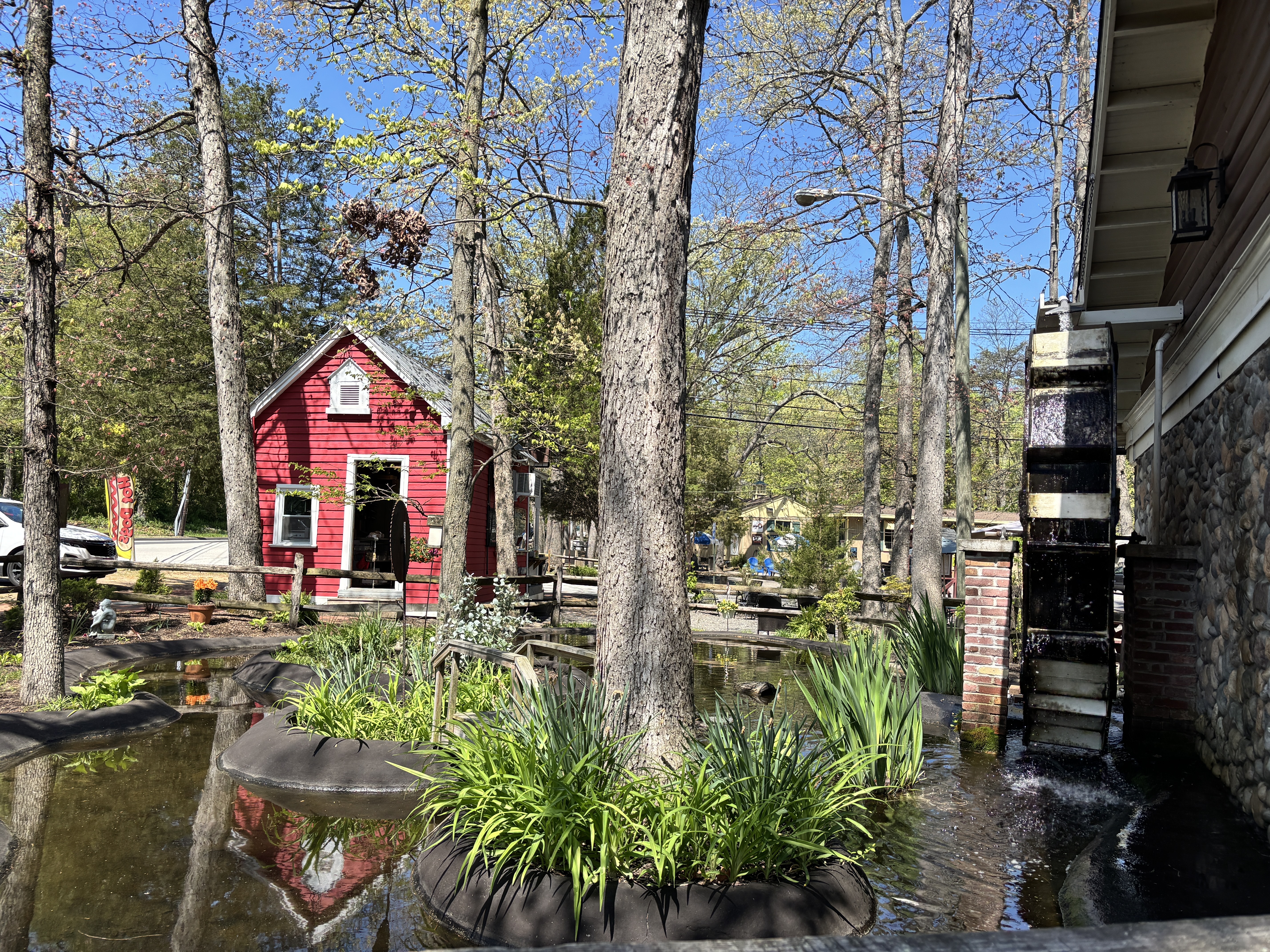
    A spring morning at the Rancocas Woods Village of Shops in Mount Laurel.Taylor Allen

    The various wood-framed businesses, which include casual eateries, boutiques, vintage shops, and a book store, sit on Creek Road among trees in Mount Laurel. They make up the Rancocas Woods Village of Shops and it’s always a charming visit.

    What does your community look like? What South Jersey memory would you like to share? Submit a photo and/or a brief description for a chance to be featured in the Monday edition of this newsletter.

    🗞️ What other South Jersey residents are reading

    And that’s been your news for the day. Thanks for waking up with The Inquirer. ☀️

    By submitting your written, visual, and/or audio contributions, you agree to The Inquirer’s Terms of Use, including the grant of rights in Section 10.

  • A former dump in Camden County will soon be home to energy-generating solar panels

    A former dump in Camden County will soon be home to energy-generating solar panels

    A former landfill in Voorhees Township will become the home of a new solar field aimed at expanding access to renewable energy and lowering utility bills for New Jersey residents.

    Once complete, the 13.5-acre community-scale solar array will join the more than 200 solar projects that make up the state’s Community Solar Energy Program.

    Started in 2019, the program allows households served by the state’s four major electricity providers — Public Service Electric & Gas, Jersey Central Power & Light, Atlantic City Electric, and Rockland Electric Co. — to subscribe to a participating solar facility to receive renewable energy credits on their bill without requiring that they install solar panels themselves.

    The program also mandates that a majority of the available renewable energy be set aside for low- and moderate-income households, who are less likely to be able to install their own systems, program manager Sawyer Morgan said in an email.

    There are now more than 51,000 households subscribed to the community solar program statewide, Morgan said, receiving over $18 million in net savings since the first projects came online in 2021.

    Most of the existing community solar projects are at capacity for participating households, he said, but the program anticipates over 100 additional solar projects to be completed and operational before the end of the year.

    While New Jersey is currently home to 209 community solar projects with a total capacity of 291 megawatts, Morgan said, an additional 392 projects that are in development or under construction will add 703 megawatts of capacity to the grid.

    “These projects are all on rooftops, canopies, landfills, contaminated sites, mining sites, and certain bodies of water as floating solar,” he said, including the solar project in Voorhees.

    The 35-acre landfill on Centennial Boulevard ceased operations in 1972, and the property was acquired by the township five years later. In the decades since, the land has remained largely untouched, unable to be developed because of its prior use.

    Now, solar panels are expected to cover about half the property, according to development plans approved by the Voorhees Township Planning Board last month. The exact configuration of the panels will be finalized before construction begins, the plans show.

    The developer, Voorhees Solar LLC, was not immediately available for comment about the construction schedule, overall cost, and other project details. The company is owned by the Pegasus Cos. Inc., a wireless and broadband service provider based in Bala Cynwyd, according to the application submitted to the township.

    “We can’t build a park or redevelop it with homes,” said Stephen Steglik, Voorhees Township administrator. “The only other option was keeping it empty and in its current state.”

    At least with the solar project, he said, the township can create savings for residents while also collecting nearly $900,000 in one-time land lease fees.

    The project will have the capacity to produce around four megawatts of energy when operating at full power, according to the project plans, enough to power up to 4,000 typical households.

    Of the energy is generated by the project, 51% is going to be dedicated to low- and moderate-income households, Steglik said.

    “While costs are going higher and higher, at the very least Voorhees Township is trying to take steps to maintain utility costs and at least try to save people a little bit of money,” he said.

  • Cape May implements stricter curfews for juveniles after ‘disruptive, dangerous’ incidents

    Cape May implements stricter curfews for juveniles after ‘disruptive, dangerous’ incidents

    Minors are no longer allowed on Cape May’s beaches after 8 p.m. or in other public areas after 10:30 p.m. under a new curfew passed by the Jersey Shore city.

    The Cape May City Council on Thursday adopted stricter curfew measures for people under 18 after the city’s police department reported an influx of “disruptive, dangerous, and unlawful” behavior from large groups of minors, according to the city ordinance.

    The ordinance went into effect Thursday.

    “We have a very tranquil, peaceful community here. We are not against juveniles. We are not saying we don’t want them here. While they’re here, we just want them to be responsible,” Cape May Police Chief Dekon Fashaw said at the meeting.

    “Respectfully, we do not want to be their babysitters,” Fashaw said.

    Minors will be barred from the city’s beaches, boardwalk, promenade, and other public areas at the set times unless they are accompanied by a parent or guardian, working, or commuting to or from work.

    The city also banned backpacks and other large bags on the promenade, beaches, and boardwalk and in other public areas from 8 p.m. to 6 a.m. with some exceptions, including medical devices.

    Cape May expedited the vote under a state provision that allows local governments to adopt emergency ordinances quickly when they are considered necessary for preserving the public order.

    “It’s come to the attention of city administration and the council that the police department really needs these tools now, not in September, not in October,” Christopher Gillin-Schwartz, the city’s solicitor, said.

    Fashaw said his department has responded to minors drinking and fighting in public places.

    Curfews in other Shore towns have pushed minors down to Cape May, he said, where they were previously allowed to be out until midnight.

    Sea Isle City, North Wildwood, and Wildwood have 10 p.m. curfews for unaccompanied minors. Sea Isle City and Wildwood both have backpack bans as well. Ocean City’s juvenile curfew is 1 a.m. during the summer months.

  • You think you know a place

    You think you know a place

    Say you’re delivering packages, pizzas, or people. Or you’re a newspaper photographer out looking for pictures. If you’ve been driving around a city for a few years, the streets might seem ordinary, but then something about an intersection, a store front or a sign gives you that feeling of Déjà vu.

    Of all our senses, sound, taste and smell are usually considered the most powerful memory triggers. Like when Sam “Plays it again” in Casablanca or Anton Ego tastes Remy’s ratatouille. Or when any of us open a brand new box of Crayola crayons.

    But as a photographer it is the visual reminders that are powerful. Driving in the city I am always taken back to a graduation party I photographed down a particular street, or the sunset I framed. Or how I negotiated a hill in a snowstorm, or covered a shooting on that block.

    Sometimes I feel like I have been leaving bread crumbs behind me as I drive everywhere, waiting to be remembered.

    A 1950s Dodge Meadowbrook parked near Front and Main Streets in Camden.Tom Gralish / Staff Photographer

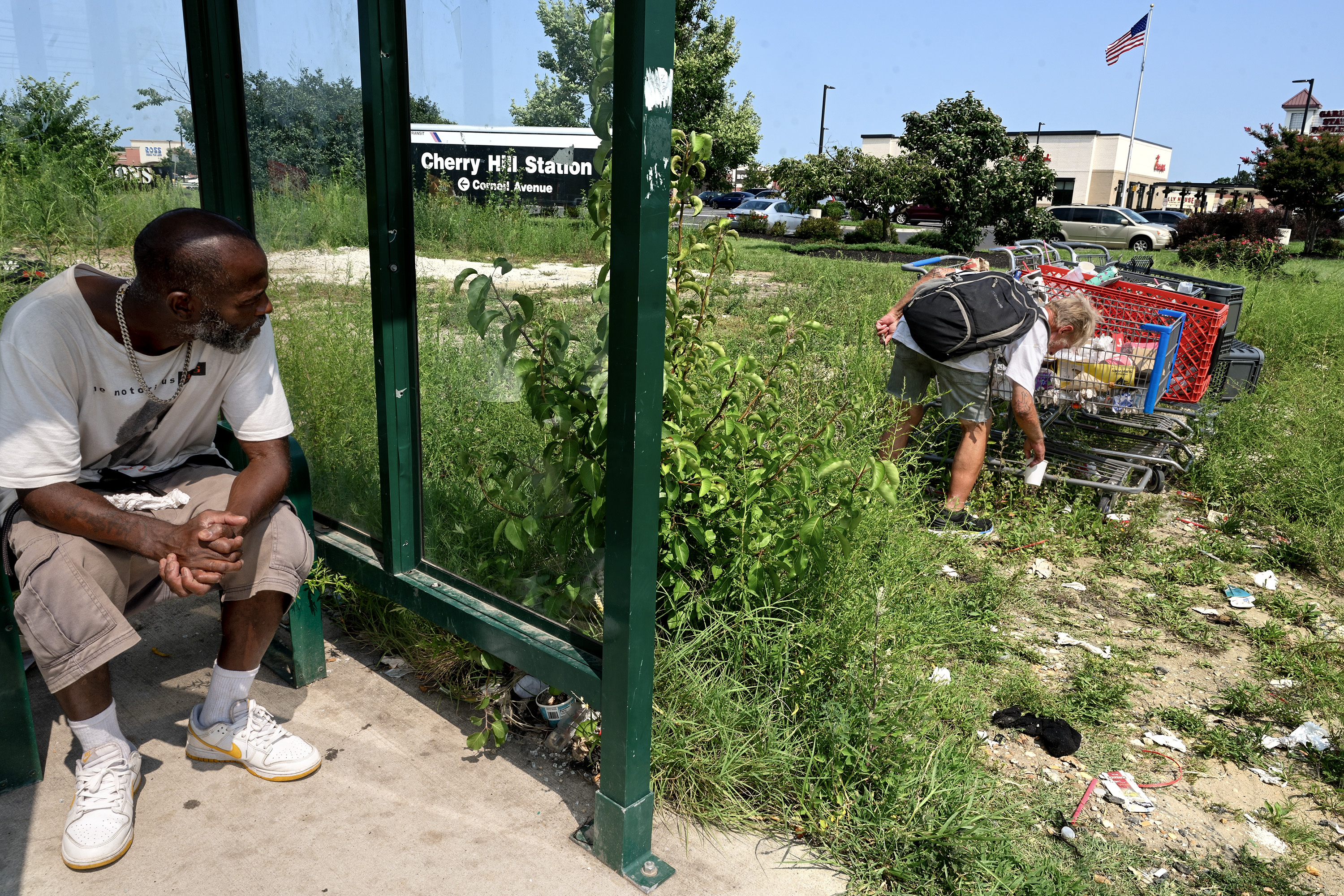
    Stalled in backed-up traffic for the ongoing construction on Rt. 70 in Cherry Hill last week, I glanced over at a bus shelter. I recalled years ago seeing riders standing in the slim shadow of a utility pole to get just a tiny bit of some shade from the sun while waiting for their bus.

    They waited next to a multimillion dollar retail development on the site of the former Garden State Racetrack. The mostly minimum wage workers who rode the bus to their jobs there didn’t even have a bench to sit on — let alone relief from the elements while waiting to go home. Back then I photographed commuters sitting on overturned shopping carts and tried to interest an editorial writer to take up their cause.

    Eventually, a bench was put there, and a few years later a shelter was installed. But as I sat in my car the other day, it still didn’t look right. I turned into the shopping center and walked over.

    Wayne Peters picks up trash while waiting for a bus with Bobby White.Tom Gralish / Staff Photographer

    Wayne Peters tells me he’s been taking NJ Transit’s 406 bus to and from Camden for about two years, and says this stop has “gotta be the worst in the state.” He says he always picks up trash when he’s there, and adds more to the piles already in the shopping carts that serve as receptacles.

    Fellow rider Bobby White added, “You’d think something in Cherry Hill would be better. How hard would it be to put a trash can here?” Before their bus arrives, Peters, trying to be positive about the shelter, reminds him “They fixed a broken window once.”

    Another thing about revisiting so many corners of our region is it becomes easy to think I’ve seen it all. And then I hear about a place I didn’t know anything about.

    A semi-retired friend from Bucks County and her friend try to take weekly drives every Thursday they call “Highways of History.” Last week she texted me some photos saying “guess where we are.”

    My photo of an old wharf and pavilion on the Delaware River Wednesday, Aug. 12, 2026. The Nary Yard in Philadelphia is across the river.Tom Gralish / Staff Photographer

    Now in all my years of being like a UPS, DoorDash, or Lyft driver I had never been to the place in her pictures. I could tell from her other stops that she was nearby, which made it even more mysterious. There was a carousel and other things for kids, like a smaller version of the giant covered wooden slide I’d been to at Smith Memorial Playground & Playhouse in Philadelphia’s Fairmount Park.

    Just like the well-known Philly playground that is considered a childhood rite of passage, a New Jersey version has been around for well over a century and when she told me it was only twenty minutes from my house I was completely gobsmacked.

    Not only had I never even heard of the place as a journalist, but it never even entered my consciousness during those years when my wife and I were constantly googling “things to do with a toddler” finding ways to keep our kids — and ourselves — entertained and out of the house.

    She told the me her father took the ferry there from Penn Treaty Park in Fishtown and “spent many a happy day along with hundreds of other poor kids in the 1930s for free soup and crackers and a carefree day.”

    It’s called Soupy Island. It was founded in 1877 on an island in the Delaware River by the Sanitarium Association of Philadelphia, a group of doctors who wanted to help sick city kids with tuberculosis recover with fresh air, playtime, and that free soup. When the Delaware was dredged a few years later and the island was wiped out, the camp moved to the mainland, on the Jersey banks of the river.

    My love of history was sparked and I could not believe the connections. My own father, growing up in St. Paul, Minnesota, was sent away every summer to the “Prev.” He shared many great memories with me of learning how to swim and fish at a preventorium on a lake.

    Boys fishing at the Children’s Preventorium on Lake Owasso near Shoreview, Minnesota in the 1930s.Minnesota Historical Society

    As its name implies, it was designed to halt tuberculosis among children by getting them away from their crowded, mostly immigrant inner-city neighborhoods and out to the country.

    I spent the weekend digging around and reading everything I could to learn all about Soupy Island, amazed to see The Inquirer had done a number of stories about it, even in the years I’d lived here (kids were still coming over by ferry from Penn Treaty well into the 1980s.)

    An original 1930s German-made Ferrari-Heyn carousel at Soupy Island.Tom Gralish / Staff Photographer

    Seeing that it was closing up for the summer, I planned to reach out the caretaker on Monday to go make pictures. That’s when I learned my colleague, reporter Sarah Nicell, was visiting on their penultimate day of the season. She grew up in South Jersey, and she had never heard of it before either.

    I made sure I got the photo assignment.

    Since 1998 a black-and-white photo has appeared every Monday in staff photographer Tom Gralish’s “Scene Through the Lens” photo column in the print editions of The Inquirer’s local news section. Here are the most recent, in color:

    » SEE MORE: Archived columns and Twenty years of a photo column.

  • Owner of Zena’s American Mediterranean Cuisine in Collingswood released on bond from ICE detention

    Owner of Zena’s American Mediterranean Cuisine in Collingswood released on bond from ICE detention

    Iemad Saifo, the 65-year-old owner of Zena’s American Mediterranean Cuisine in Collingswood, has been released after spending two weeks in ICE detention at Delaney Hall in Newark, N.J.

    Saifo emigrated to the United States from Syria in 2002 on a business visa and later sought asylum after the outbreak of the Syrian civil war. He was detained during a routine ICE check-in July 31.

    Saifo is the primary caregiver for his 12-year-old son, who has autism. The elder Saifo also has spasmodic dysphonia, a rare condition that makes it difficult for him to speak, as well as chronic kidney disease.

    Dozens of Collingswood-area community members wrote letters and signed a petition urging the court to keep him in South Jersey with his family.

    As President Donald Trump pushes his mass deportation agenda, routine check-ins have become increasingly risky for immigrants. Immigration advocates say many of those who have been arrested at ICE check-ins were simply following government protocols.

    Last week, New Jersey Attorney General Jennifer Davenport announced her office was investigating Delaney Hall after multiple detainees died there during the last year, raising concerns about the facility’s conditions and medical negligence. The privately operated detention center under contract with ICE has been the scene of fierce protests and political fights between the Trump administration and Democrats since its May 2025 reopening.

    U.S. Immigration and Customs Enforcement said in a statement that Iemad Saifo was arrested both because he does not have permanent status and because of a 2018 case in which he was indicted and found guilty of witness tampering and sentenced to five years’ probation.

    “Under President Trump and Secretary Mullin, ICE is targeting the worst of the worst,” a Department of Homeland Security spokesperson wrote. “Nearly 70% of ICE arrests are of illegal aliens charged or convicted of a crime in the U.S.”

    One of Saifo’s attorneys, Fiona Powell, credited the 150 notarized letters from community members testifying to his character with helping secure his release.

    “This was an outpouring of community support like I’ve never seen before,” she said.

    Those letters were authored last weekend during an event that friends, family, and community organizers hosted at his restaurant.

    Many in South Jersey know Iemad Saifo from his restaurant, which opened in 2011, and from the nearly 10 years he previously spent working at a local 7-Eleven, said his 27-year-old daughter, Zena Saifo, for whom the restaurant is named.

    Zena Saifo said she, her mother, and one of her brothers were granted asylum after the war began. Her father never heard back from the Department of Homeland Security on his asylum application, she said, so he later applied for permanent residency through his younger son, who was born in the United States.

    “He’s always willing to help people, to give,” Zena Saifo said of her father. “People are really enraged and disgusted by what’s happening and doing everything they can to support him.”

    Zena Saifo is still reeling from the day of his detention, she said, when she, her brother, and lawyers arrived at the Mount Laurel ICE office for the check-in around 7:30 a.m. and were made to wait until past noon. The Saifos’ lawyer notified Zena her father would be detained. She tearfully pleaded with the ICE officer to let her say goodbye to him but was denied, she said.

    “‘Was this the last time I saw my father?’” Zena Saifo recalled wondering in the moment. “It was just really, really devastating.”

    In the period since Iemad Saifo’s detention, two of his sons, ages 24 and 26, have taken over the restaurant. His wife has stayed at home and taken care of the youngest. He turned 12 last weekend without his father present.

    Zena Saifo said her father’s two requests of her in his absence were to water the family fig tree and to host a big celebration for her brother’s birthday.

    On Friday morning, the family was en route to pay the $7,500 bond and pick Iemad Saifo up from Delaney Hall, Powell said.

    The 2018 charge was brought up during the bond review, she said, but “in the end the judge was able to see that he’s an older man with a family who needs him and strong community ties and that he deserves to be home with his family.”

    Going forward, Iemad Saifo’s legal team will do all it can to secure permanent residency for him. In the interim, Powell said, immigrants are always at risk of detention regardless of their circumstances. The Trump administration has issued 46,000 orders of removal or voluntary deportation since the start of last year in Pennsylvania, New Jersey, and Delaware, more than in the entirety of former President Joe Biden’s term. In New Jersey’s courts, orders of removal or voluntary departure rose 47% just between May and June, from 2,348 to 3,446.

    However, to legally detain Iemad Saifo again, the government would need to show something about his situation has changed.

    “It could take potentially months or years more in order to get him permanent status here, but we will continue doing everything we can to keep him here,” Powell said.

  • With Trump’s Hamas deal in peril, Kushner set to visit Israel for Gaza talks

    With Trump’s Hamas deal in peril, Kushner set to visit Israel for Gaza talks

    TEL AVIV, Israel — Jared Kushner, President Donald Trump’s senior aide and son-in-law, is set to visit Israel early next week, according to four people familiar with the plans, days after the Israeli government rejected a U.S.-brokered disarmament deal with Hamas.

    Kushner is expected to meet with Israel’s prime minister, Benjamin Netanyahu, to discuss the Gaza Strip, the people said, speaking on condition of anonymity to divulge details about Kushner’s schedule.

    The deal, agreed to late last month between Trump’s Board of Peace and the militant group Hamas, called for the disarmament of Palestinian factions in Gaza and the withdrawal of Israeli forces there.

    The Board of Peace is a new international organization chaired by Trump that has focused on plans for governing and rebuilding Gaza. Kushner is a senior member of its executive board and was involved in ceasefire negotiations between Hamas and Israel.

    Netanyahu said Sunday that Israel rejected the deal, a move that was seen as an appeal to his right-wing voting base before national elections in October. Yet the prime minister also ordered the Israeli military to pause its strikes in Gaza, in an apparent effort to appease the Trump administration.

    For days after the announcement, the Israeli military conducted no airstrikes in Gaza, until Wednesday, when the military carried out a fresh attack, saying it was targeting Hamas militants. It conducted further attacks Thursday.

    Hamas officials have condemned the strikes, calling on mediating countries in the region to pressure Israel to halt them.

    Hamas remains in control of about half of Gaza, where most of its people live. The group said that among those killed by Israel this week was the head of the police force in the Gaza City area.

    Nickolay Mladenov, the Board of Peace’s high representative for Gaza and former United Nations envoy, will join Kushner in Israel, according to two of the people with knowledge of the visit. Mladenov has played a leading role in the negotiations with Hamas over disarmament, frequently meeting with officials from the group in Egypt.

    Kushner and Mladenov were also expected to visit Egypt next week to meet with regional mediators, according to two of the people.

    The deal with Hamas says that, as part of the disarmament process, Israel should first uphold its side of the ceasefire, which was agreed to in October last year. That includes halting airstrikes and allowing more aid into Gaza.

    The 15-point document leaves elements of the disarmament process vague, however. It calls for a “gradual, sequential, and time-bound manner” for decommissioning and storing heavy weapons, with an exact timetable still to be determined.

    It adds that, at the “end of the process,” the National Committee for the Administration of Gaza will “hold, control, or store weapons in Gaza.” The committee, a body of Palestinian technocrats, was assembled by the Board of Peace to take over governing Gaza under the board’s supervision.

    Many Israelis remain skeptical that Trump’s Board of Peace can successfully disarm Hamas. The group has long touted armed struggle against Israel as the core of its ideology, and members have said they regard disarmament as tantamount to surrender.

    This article originally appeared in The New York Times.