Category: Nation & World

  • Suspect in shooting at Idaho restaurant died from self-inflicted gunshot wound, police say

    Suspect in shooting at Idaho restaurant died from self-inflicted gunshot wound, police say

    TWIN FALLS, Idaho — The suspect in a fatal weekend shooting at an In-N-Out Burger restaurant in southern Idaho died of a self-inflicted gunshot wound, police said Sunday.

    Investigators are confident that 24-year-old Chad Williams acted alone during the shooting Saturday in Twin Falls, Police Chief Matthew Hicks said at a news conference. In all, three people died and seven others were injured at the recently opened restaurant.

    Authorities said two of the injured were treated at a hospital and released, three were listed in stable condition, and two were in critical condition.

    Hicks said an off-duty state trooper and an armed citizen both fired back and diverted the gunman. “We believe their actions helped drive the suspect away from the scene, preventing further casualties,” the chief said.

    One of those killed was an employee, the fast-food chain’s owner said.

    “My heart is broken, my chest is heavy, my eyes burn from the tears I’ve shed. We lost one of our beautiful Associates tonight,” In-N-Out owner Lynsi Snyder said in a statement released early Sunday on social media. “In-N-Out will be mourning with the families and praying for them as they tread through a very painful season.”

    The FBI on Sunday encouraged the public to submit images and videos related to the shooting.

    The In-N-Out had opened just about a week earlier, on July 24, as part of the California-based company’s recent expansion to Idaho.

    Authorities are notifying victims’ relatives

    Snyder did not identify the worker. Officials were still trying to notify relatives of victims and so were not yet releasing the names, ages, or other details about the people hurt in the shooting, Twin Falls spokesperson Josh Palmer said Saturday.

    Police who responded to the shooting found the body of the suspected gunman in an area near the restaurant, Palmer said. He did not know if the suspect was included in the fatality count.

    Palmer said investigators were interviewing witnesses to the shooting. The restaurant is in a busy shopping plaza, and hundreds of people were in the area when it happened around 2 p.m.

    Witnesses describe chaotic scene

    Lane Koehn, 34, said he was at a stoplight near the In-N-Out when he saw a person with an AR-style rifle emerge from the drive-thru. A man with a pistol started firing at the shooter.

    He then saw someone in an In-N-Out uniform drag a person, also wearing a uniform, bleeding from a gunshot wound to her chest across the parking lot. The employee, Koehn, and the man with the pistol stayed until paramedics arrived for her.

    “She was pretty bad off, but I don’t know. I hope she made it,” Koehn said.

    Koehn said he was told by police to evacuate because the shooting was still active.

    He said the shooter fired at least three or four rounds and it was not clear whether or not anyone in particular was targeted.

    Video taken by a driver from across the street captured a shooter, who appeared to be dressed in black, walking up to a white car carrying a long rifle, opening the driver-side door and popping the trunk. The person then walked to the trunk and reached inside. At that point the driver who shot the video left quickly, fearing that the man might be getting more weapons.

    Twin Falls resident Haley Dodaro, 43, and her mother went to In-N-Out for lunch Saturday afternoon. While waiting in the drive-thru line, they saw people running across the road and workers bolting out of the restaurant. At first, Dodaro thought there might have been a fire, but then a man directing traffic in a reflective vest said there was a shooter.

    “So that’s when we knew there was a shooting. People were running out crying and screaming. It was very scary,” Dodaro said in a text message to The Associated Press.

    Employee told people to get down

    Nayeli Rodriguez, 40, of Burley, was inside waiting for food with her daughters when she heard shots from the kitchen. An employee said it was a shooting and told people to get down. Rodriguez said an older man tried to protect her and her daughters, and they were among the last to run outside.

    “We were trying to get as far as we could and some angels let us in their car,” Rodriguez said, also via text message. “I left my car there in the parking lot.”

    Police said multiple people were taken to St. Luke’s Magic Valley Medical Center. Hospital spokesperson Taylor Marschner said in a statement that it was “working closely with law enforcement and emergency responders as they manage the situation.”

    Twin Falls, a city of about 56,000 people, is about 130 miles southeast of Boise and about 75 miles north of the Nevada border.

  • Israel says it has serious concerns with Hamas disarmament deal

    Israel says it has serious concerns with Hamas disarmament deal

    TEL AVIV, Israel — Israel has shared “serious security concerns” with the White House regarding the proposed disarmament deal with Hamas, an Israeli official said Sunday in what were some of the first public comments since U.S. President Donald Trump announced the agreement.

    Doron Spielman, spokesperson for the Israeli Prime Minister’s office, told the Associated Press that Israel’s intelligence assessment is that Hamas remains committed to rebuilding its military rather than genuinely demilitarizing. He said the Israeli military would not withdraw from Gaza — where it controls more than 60% of the territory — before Hamas disarms.

    “Our assessment is that if we redeploy before Hamas is truly disarmed, it will quickly expand its presence throughout Gaza, rebuild its terrorist infrastructure, once again threaten Israeli communities, and seek to carry out another Oct. 7-style attack,” he said, referring to the Hamas militant attack on Israel in 2023 that triggered the war in the Gaza Strip.

    “Disarming means physically giving up the weapons. Nothing less,” Spielman said.

    His comments come days after Hamas said that it would begin disarming as part of the U.S.-brokered ceasefire signed nine months ago to end the nearly three-year-long conflict. It marks a potential breakthrough in ending the conflict, but many hurdles, conditions, and long timelines remain.

    Hamas says it has agreed to disarm but obstacles remain

    Trump’s 20-point ceasefire plan calls on the militant group to surrender its weapons and destroy its vast network of tunnels. It also envisions Israeli forces withdrawing from Gaza, the arrival of a new technocratic Palestinian government, deployment of an international security force, and the rebuilding of the battered Palestinian enclave.

    Hamas disarming has been a sticking point and has deadlocked negotiations for months. In announcing the deal on social media on Thursday, Trump said it would be carried out in “carefully structured phases.”

    A copy of the agreement obtained and verified by the AP said that all weapons held by the Hamas-run police will be transferred to the U.S.-backed Palestinian technocratic committee, known as the National Committee for the Administration of Gaza, upon its arrival in the enclave. It’s not clear when that would happen since it is contingent on other steps.

    A process to decommission and store heavy weapons and to dismantle military production sites and tunnels will begin after the arrival of the Palestinian committee and the deployment of international forces. The process will be linked to a phased Israeli withdrawal, according to the agreement.

    The areas Israel controls in Gaza have been mostly destroyed and depopulated. Most of the territory’s 2 million Palestinians are in the other part, where hundreds of thousands live in squalid tent camps and destroyed neighborhoods.

    Israel appears unlikely to pull back significant forces or make other concessions ahead of its October elections. Prime Minister Benjamin Netanyahu faces a tough reelection battle, with his far-right coalition partners urging him to keep up the pressure on Hamas and leave forces in Gaza, and opponents accusing him of failing to prevent the Oct. 7, 2023, attack.

    Hamas-led militants attacked Israeli communities then, killing around 1,200 people, mostly civilians, and taking 251 others hostage. Israel responded with a punishing military offensive that has killed more than 73,000 people, according to the Gaza Health Ministry.

    The ministry, which was part of the recently dissolved Hamas-run government, maintains detailed records viewed as generally reliable by U.N. agencies and international organizations. It does not distinguish between civilians and militants but says women and children make up around half of all fatalities.

    Israel warns Hamas is rearming

    While Spielman said Israel greatly appreciates Trump’s commitment to its security and to finding a durable resolution, the government’s position on disarmament is based on detailed intelligence saying that Hamas continues to rearm, recruit fighters, and rebuild its military capabilities.

    It’s unclear what exactly Israel conveyed to the White House. Two people with knowledge of the deal told the AP that Israel had communicated its issues with it to former British Prime Minister Tony Blair, who’s part of the Trump-led Board of Peace. One of them said that among the points Israel wanted was freedom to conduct military operations in Gaza. They spoke anonymously because they were not authorized to speak to the media.

    Israel continues to strike Gaza

    Since the ceasefire was signed last October, Israel has continued striking Gaza, saying it’s targeting Hamas and its infrastructure.

    Overnight Saturday and into Sunday evening, Israeli strikes killed at least 17, including children, local hospitals said. A strike on a residential apartment in southern Gaza killed three family members, including their 4-year-old child, according to Nasser hospital, where the bodies arrived.

    The Israeli military said the overnight strikes and those on Sunday afternoon had targeted Hamas military operatives.

  • Trump says Gulf leaders’ input weighed heavily in decision to hold off on ordering new Iran strikes

    Trump says Gulf leaders’ input weighed heavily in decision to hold off on ordering new Iran strikes

    WASHINGTON — U.S. President Donald Trump said Sunday he decided to hold off on ordering American forces to carry out new strikes against Iran at the urging of Gulf allies Qatar, Saudi Arabia, and United Arab Emirates.

    The U.S. president added that a plan was in place for U.S. forces to carry out “the biggest attack since World War II” on Sunday. But he decided to scrap the plan and give diplomacy more time to play out after hearing from key Gulf leaders — including Saudi Crown Prince Mohammed bin Salman — as well as at the request of unnamed Iranian officials.

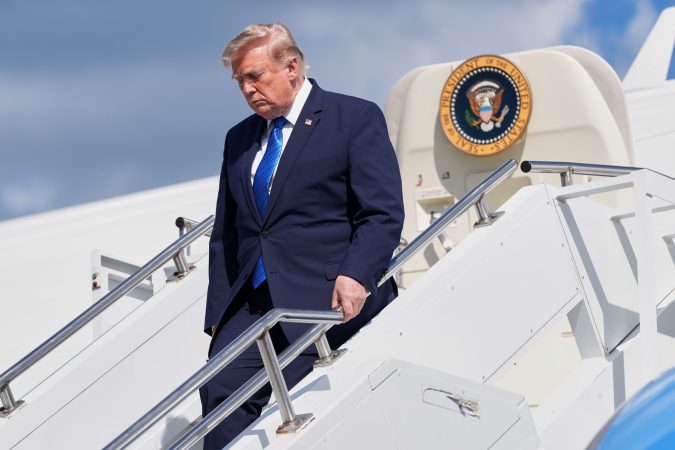
    “I said to the crown prince, ‘What would you rather do? Would you rather us do this or not?’” Trump told reporters on Air Force One as he flew back to Washington after spending the weekend at his golf club in Bedminster, N.J. “They said we would much prefer a deal as opposed to an attack, because you don’t know where these attacks lead.”

    Trump and the crown prince spoke on Saturday before the U.S. president announced in a social media post that Mideast allies had reached the “perimeters” of a deal to end the 5-month-old war.

    It was another turnabout for Trump, who a day earlier said he’s “losing faith” in negotiations with Iran and offered the ominous warning that the U.S. military “will be hitting them very hard.”

    Trump on Sunday reiterated that the emerging deal would include a reopening of the Strait of Hormuz, the critical waterway where about a fifth of the world’s energy flowed before the start of the war, and would resolve U.S. concerns about Iran’s nuclear program.

    Iran has repeatedly attacked vessels attempting to transit through the Strait of Hormuz without its authorization as part of its conflict with the U.S.

    And Iran’s Foreign Ministry spokesperson Esmail Baghaei said on Sunday that the Strait of Hormuz “will in no way return to the status it was before February 28th,” the day the war started.

    On a call with Iranian state TV, he added that Iran is discussing shipping through the strait with Oman, on the other side of Hormuz, but that there’s no current talk about reopening the crucial waterway.

    Trump has announced halts to strikes on Iran on several occasions since the United States and Israel attacked Iran on Feb. 28, only for things to unravel and fighting to resume again.

    Iran’s defense minister said on X that the country was “neither surprised nor passive” following Trump’s announcement and said Iran remains alert in the face of concrete threats from the U.S.

    While Iran’s leaders appear united in a war strategy signaling strength and endurance, a struggle for control seems to be brewing within the theocracy’s leadership between those who oppose all negotiations with the U.S. and others who count on military pressure to win at the negotiating table.

    Latest proposal would bring sides back to negotiations

    Trump on Sunday said he expected negotiations to resume “tomorrow afternoon” but did not detail who would be involved in such talks.

    A regional official said the proposal announced by Trump over the weekend calls for the U.S. and Iran to return to negotiations and continue working out many of the issues that have stymied prior progress on the deal.

    The official, who is involved in the mediation efforts, said the proposal calls for reopening of the Strait of Hormuz and halting attacks across the region, including by Iranian-backed militias in Iraq on the Arab Gulf countries and Jordan.

    The U.S., in exchange, will end its naval blockade on Iran and allow Tehran to export its oil as stated in the tentative ceasefire deal, he said.

    No deal has been reached yet, but mediation efforts are underway, said the official, who spoke on condition of anonymity because he wasn’t authorized to talk to the media.

    Trump said that Israel is joining his commitment to end the war by implementing the ceasefire deal reached in June. Israel did not publicly comment on the announcement.

    Saudis are concerned about Iran’s retaliation

    Prince Mohammed, the kingdom’s de facto leader, raised concerns about the U.S. potentially escalating the conflict when he spoke with Trump by phone on Saturday.

    The call was “candid and constructive,” according to a person briefed on the call who was not authorized to comment publicly and requested anonymity.

    The crown prince conveyed that an escalation in fighting could have a severe impact on the global economy if Tehran responded to a new U.S. bombardment by targeting some of the United States’ Gulf allies.

    The call happened before Trump’s social media announcement, the person said. The crown prince sought clarity from Trump on what potential new action he was weighing to take against Iran.

    Saudi officials, the person added, have underscored in their engagements with the Trump administration that the kingdom — as well as fellow Persian Gulf energy titans the United Arab Emirates and Qatar — are in a good position to defend against further potential Iranian attacks, but that Kuwait could be more vulnerable to attacks by Iranian-backed militias in Iraq.

    Trump suggested that his conversation with the Saudi crown prince weighed heavily in his decision to halt his plans to carry out strikes on Iran.

    “It would have been disastrous for them. And they didn’t want us to do it,” Trump said. ”And frankly, Saudi Arabia didn’t want it either. They thought that a deal is imminent.”

  • Inside the week that tested Anthony Fauci, as GOP lawmakers push for his jailing

    Inside the week that tested Anthony Fauci, as GOP lawmakers push for his jailing

    Anthony Fauci didn’t know Rand Paul had his diary, let alone that the GOP senator was going to release it, his friends said.

    So last Saturday — after the Kentucky lawmaker had publicly shared years of Fauci’s private reflections, on everything from fighting COVID-19 to attending “A-list” events — Fauci went to another party.

    There, at a birthday celebration for former White House chief of staff Ron Klain, Fauci mingled with friends and former Biden administration colleagues. They cheered and toasted him, apparently unaware that his critics were combing through documents that would kick off one of the most fraught weeks of his decades-long career.

    For a few hours, Fauci was back inside a familiar Washington.

    Then reality intruded. His longtime critics now control congressional committees, the health agencies where he spent his career, and the Justice Department that could ultimately decide whether to prosecute him. After years of promising to hold Fauci accountable for the government’s pandemic response, they are flexing their power to try.

    The past week offered the clearest glimpse yet of what that reckoning could look like.

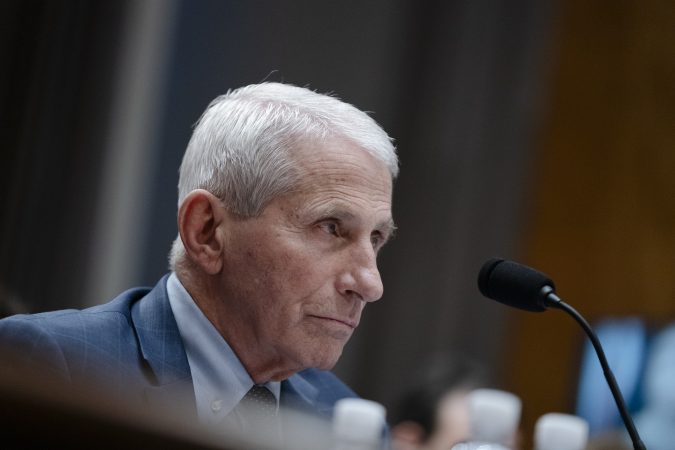
    On Monday, Health Secretary Robert F. Kennedy Jr., a longtime Fauci foe, bragged about his department’s monthslong efforts to scour 11 government servers to reassemble Fauci’s diary and turn it over to Paul. On Wednesday, Fauci faced hours of questions from Paul and fellow Republican senators at a congressional hearing Fauci and his allies believe was designed to entrap him. He invoked his Fifth Amendment right not to testify more than 100 times.

    President Donald Trump, who said he watched the “whole thing,” criticized Fauci after the hearing but sidestepped questions about whether he should be prosecuted.

    The effort has exposed the difficulty of settling, six years later, the bitter disputes that made Fauci one of the pandemic’s most polarizing figures. Paul and other Republicans say newly obtained records have raised fresh questions about Fauci’s conduct. Several senators accused him of misleading Americans during the coronavirus pandemic and pressed him on whether he engaged in a cover-up of the virus’ potential origins.

    But some of the central allegations have been investigated before, and even some Republicans involved in those inquiries question how much the new material adds. Fauci denies claims of a cover-up, and his allies say he is stuck in a Kafkaesque nightmare. Their fears were accentuated after a former Fauci aide was arrested in April after he privately bragged about concealing emails.

    The pressure on Fauci, 85, is intensifying. More lawmakers are preparing to challenge him. Paparazzi lurk outside his door, and death threats persist. Clips of Fauci refusing to answer questions have become memes, sparking jokes on ESPN and mockery in conservative media. The scrutiny recalls the darkest days of the pandemic — except now, rather than the government marshaling its resources to defend Fauci, he is paying for his own security.

    Paul’s committee is set to vote Wednesday on whether to hold Fauci in contempt of Congress, a measure expected to pass with Republican support. Paul has said they will immediately refer the matter to the Justice Department for prosecution.

    “I think he’ll be remembered more like a mafia don than a great scientist,” Paul, the chairperson of the Senate’s government oversight committee, told podcaster Benny Johnson after last week’s hearing.

    Peter Staley, a former adversary turned longtime friend, said Fauci is trying to stick to his routine, taking power walks with his wife and seeing patients at Georgetown University’s hospital.

    “He’s not crumbling,” Staley said, invoking “Brooklyn tough,” an expression he said Fauci often uses. “I’m worried for his safety. I’m not worried for his mental state.”

    This story is drawn from interviews with 17 friends, critics, and former colleagues of Fauci, as well as current administration officials, lawmakers, and congressional aides. Through a spokesperson, Fauci declined to comment.

    Fauci, who led the National Institutes of Health’s infectious-disease work, emerged from the COVID-19 pandemic as the face of the government’s response. That perch gave him access to elite social circles, won him accolades, and made him a worldwide celebrity — fame that has carried a bitter aftertaste.

    He has since been blamed for myriad pandemic-related policies, including decisions that others made but he amplified, such as the CDC’s recommendation to stay 6 feet apart to minimize virus risks. Activists and lawmakers have said they want to hold Fauci accountable for students’ learning loss, workers’ lost jobs, and other harms resulting from COVID-related shutdowns.

    Some past colleagues have been happy to see Fauci face difficult questions. Several said that his diary shows that Fauci — who details his interactions with reporters and celebrities — was too seduced by his media coverage. They also criticized his efforts to work with NIH grantees to be nominated for prizes, which were detailed in another batch of documents released by Paul.

    “This is the Fauci I knew being exposed to the world,” said Chris Meekins, who served as a senior health official in the first Trump administration, and battled with Fauci about vaccine and funding priorities before the pandemic.

    Others say Paul and his allies are only seeking to embarrass and damage Fauci after years of battling with him, often in contentious showdowns in the Senate. Paul has contended that last week’s hearing was part of his investigation into the pandemic’s origins, including whether Fauci tried to conceal a possible laboratory leak that may have sparked the outbreak.

    “We learned nothing from that hearing,” said Ashish Jha, who led the nation’s COVID response under Biden and worked closely with Fauci. “Nothing about the important issues. Nothing about how to prevent the next pandemic. And this kind of vilification will scare people away from public service.”

    Paul has also said that Fauci’s diary has produced new revelations about his shifting thoughts on the virus’ origins and risks. But the diary generally hews closely to Fauci’s 2024 memoir, On Call, and his other past interviews and testimony.

    Fauci also sat for 21 hours of interviews with a GOP-led subcommittee in 2024, where he discussed the possible origins of the coronavirus, his private conversations about whether a laboratory leak sparked the outbreak, and other controversial matters. The subcommittee pressed Fauci on whether his agency had inadvertently sparked the pandemic by funding risky coronavirus research in China, a claim he has persistently denied.

    “The journal should have been produced back in 2023 but sitting here in 2026 I am not sure what the entries add to the debate,” Mitch Benzine, who was the GOP subcommittee’s staff director and led the questioning of Fauci, wrote in an email. “Some of the information is new and does add color to Dr. Fauci’s thoughts through the pandemic, but the findings are no different than what we found years ago.”

    The subcommittee’s investigation led to one of Fauci’s former aides being arrested earlier this year, an event referenced by Paul and seen as a potential harbinger for Fauci. Justice Department officials say David M. Morens skirted public records laws and hid his communications to thwart inquiries into the origins of the coronavirus pandemic. Fauci has distanced himself from Morens, saying he knew nothing about his actions.

    Marc Short, who served as Vice President Mike Pence’s chief of staff, clashed with Fauci over COVID restrictions in 2020 and felt the doctor’s advice was frequently wrong. But Short said Fauci’s role in the early coronavirus response is now being distorted, noting that local leaders had significant leeway over how and when to reopen schools and businesses under the Trump administration’s “federalist” approach.

    “He’s been made a scapegoat for public health officials who made the wrong decisions,” Short said, recalling a 2020 conversation in which the doctor laid out their different responsibilities.

    “‘My job is to tell people how not to get infected. It’s your job to consider all the other factors,’” Short recalled Fauci saying.

    Fauci was a prominent Washington figure, if not a household name, during his nearly four decades leading NIH’s infectious-disease institute. He was repeatedly summoned to the White House to advise presidents about how to handle virus outbreaks and held up as a model for generations of scientists.

    Fauci attracted national attention in the 1980s for his work on HIV/AIDS, which initially drew fire from activists such as Staley, who protested outside his office — with mock coffins and an effigy of Fauci — castigating him as a bureaucrat who was doing too little to save lives.

    But Fauci won over those critics, convincing them of his sincerity. He also rose in esteem, with scientists and politicians — including many prominent Republicans — touting him as an example of what government could accomplish.

    Asked in a 1988 presidential debate to name an inspiring hero, Vice President George H.W. Bush singled out Fauci for his work fighting AIDS. Twenty years later, Bush’s son, President George W. Bush, awarded Fauci the Medal of Freedom for his work as an architect of PEPFAR, a worldwide AIDS relief program credited with saving tens of millions of lives.

    Entering 2020, Fauci had kept a diary on his work computer for years — a nightly ritual in which he tracked his day, his dealings, and his media appearances as material for a planned memoir, allies said.

    Then came the coronavirus, which would kill millions around the world, and transform Fauci’s life. He emerged as the government’s spokesperson across two administrations, initially hailed by Republicans as well as Democrats and seen as a reassuring figure. Trump bestowed one of his highest compliments: Fauci was good on TV.

    But as the pandemic stretched on, Fauci’s pessimism and encouragement of strict measures rankled Trump and other administration officials. Parents grew frustrated with school shutdowns. Conservative media increasingly turned on the doctor, and by late 2020, Trump was entertaining chants of “Fire Fauci” at campaign rallies.

    “I didn’t mind him, I didn’t find him to be bad personally, as a person,” Trump told Fox & Friends last week. “But I didn’t agree with what he was saying or what he was doing.”

    Still, Trump awarded Fauci a commendation for his work on Operation Warp Speed, the president’s successful initiative to accelerate development of coronavirus vaccines, before leaving office in January 2021.

    The incoming Biden administration, meanwhile, elevated Fauci as President Joe Biden’s chief medical adviser — a political job for the longtime civil servant. Fauci had significant sway over that administration’s coronavirus policies and personnel.

    He left government at the end of 2022, wary of looming GOP investigations, and with dwindling popularity.

    “It is clear that even with Pro bono considerations that this is going to cost me a lot of money since the GOP has promised that they would make my life miserable and blame me for virtually everything that happened bad to the country during the pandemic,” Fauci wrote in his diary in November 2022.

    A few months later, Biden issued Fauci a preemptive pardon on his final day in office. That afternoon, Trump returned to the presidency and swiftly elevated some of Fauci’s critics to key government positions.

    Kennedy, who wrote a book about Fauci that the doctor considered slanderous, runs the health department. Jay Bhattacharya, whom Fauci dismissed as a stooge in his diary, now runs NIH. Some of Fauci’s adversaries, such as Trump’s economic adviser Peter Navarro, also rejoined the White House and other agencies.

    Trump has said he will not challenge Biden’s pardon of Fauci, but the doctor still faces legal peril. The pardon does not cover events after it was issued on Jan. 20, 2025, and Fauci and his allies worried that if he misspoke at any point to Paul’s panel, he would face perjury charges — a concern that triggered his invocations of the Fifth Amendment. And while Biden’s pardon protects Fauci from federal criminal investigations into his time involved in the nation’s coronavirus response, it did not rule out state prosecution. Florida’s attorney general last week announced a new investigation into Fauci.

    Benzine, the former House GOP staffer, said he expects Paul’s committee to find Fauci in contempt this week.

    “What comes next is unclear,” Benzine wrote in an email. “What is clear, is that this is not over for Dr. Fauci.”

    Many Americans have moved on from the depths of the pandemic. Fauci’s neighborhood was once dotted with signs reading, “Thank you Dr. Fauci.” They have long been taken down, and none were newly visible the day after last week’s hearing.

  • Coyotes take over abandoned housing development, vexing neighbors

    Coyotes take over abandoned housing development, vexing neighbors

    WEST HOLLYWOOD, Calif. — In a region where the demand for housing outpaces its supply, a pack of coyotes have made a vacant construction site their home.

    For months, residents in the dense West Hollywood neighborhood say they have complained about the coyotes. At night, the coyote howls echo through the development keeping residents awake. During the day, some dog owners say they worry about the safety of their furry companions.

    In late July, the neighborly dispute became a local spectacle after news outlets reported on the coyotes’ home, dubbed by a neighbor as the “coyote condos.”

    Over the next week, the block was flooded with onlookers and reporters and even a helicopter trying to capture an image of the coyotes from above. With all the attention, the pack was coming out as early. The howls came later and later into the night.

    “It’s kind of like a cacophony of howls,” neighbor Collin Newman said, describing how the structure amplifies the coyotes’ cries in every direction. Newman, who has lived in the neighborhood for ten years, captured the howls from across the street. “If you’ve ever seen The Lion King, imagine a pack of hyenas in the middle of the wilderness. And there’s no escape.”

    Neighbors say the site has been vacant for years. Already under construction in 2018, the development faced opposition from neighbors and the West Hollywood Planning Commission, according to an article from WEHOonline.

    The city of West Hollywood said construction on the unfinished 22-unit condominium building was halted in 2024. It sits in a densely populated block of shoulder-to-shoulder apartment buildings, over a mile from any open wild space.

    Across Los Angeles, coyote sightings are common. While some generally avoid human contact, others can lose their fear of humans and pose a risk, especially to dogs and cats.

    “The scary part is when we walk the dogs.” Jesus Zavala, a neighbor, said while walking his Chihuahua, Zoe. “They can just come out and grab dogs, especially the small ones.”

    But after four or five months the coyotes are now commonplace, Zavala said, and he is no longer nervous to take Zoe out at night. Many that walk their dogs in the neighborhood look unbothered. The fire hydrants and street signs are all fully utilized.

    Under a full moon late Thursday night, the only howls came from curious onlookers hoping to get a glimpse of the pack.

    “Look!” a family walking their dog said and pointed to a room on the third floor, where all they could see was the outline of a coyote. Soon it retreated into the shadows.

    One car of people waited over an hour to hear the coyotes.

    The city of West Hollywood follows a coexistence plan that favors nonlethal practices to reduce harm to humans. The city said they are requiring the property owners to swiftly retain a wildlife control expert and take next steps. The owners did not return a request for comment.

    Newman said he hopes there will be a resolution that makes people feel safe but also points out that there are a handful of other vacant structures in the area. First there were unhoused people squatting, now there are coyotes.

    “As far as I’m concerned, it’s theirs,” Newman said of the coyotes, “They’re the ones occupying it, living in it. They might have been paying rent. They probably got a good deal on it because it’s been just sitting there.”

  • Trump stands to profit from U.S. policy announcements by selling fast access to his social media posts

    Trump stands to profit from U.S. policy announcements by selling fast access to his social media posts

    NEW YORK — President Donald Trump knows the world hangs on his every word. Now he wants you to pay for it.

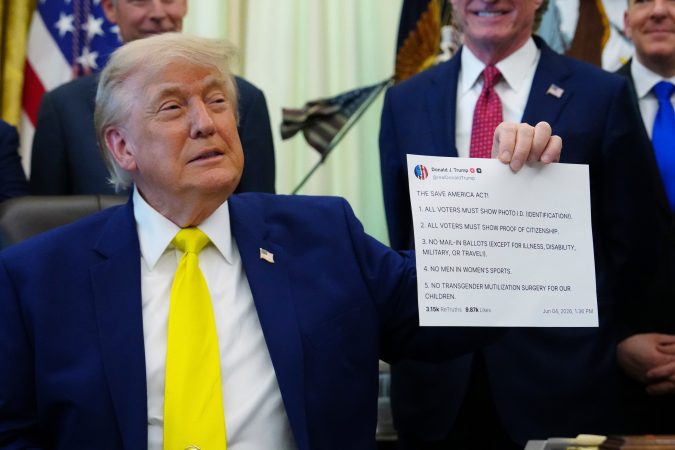
    The social media posts of the world’s most powerful man are going on sale Saturday when his Truth Social business begins offering sneak peeks of them to Wall Street traders willing to pay up. The move raises the prospect of big profits for Trump’s company and big questions about insider trading and using public office for private gain.

    Similar fast speed feeds are sold by other social media firms and media providers, but Truth Social doesn’t just distribute the news, it makes it, regularly rattling markets as Trump posts policy changes on everything from war to central bank leadership to tariffs.

    “If this was the CEO a public company, this would be jail time,” said Irene Aldridge, head of Able Alpha Trading, which doesn’t plan to buy the service. “We have a President of the United States who has the front seat to all the action, who makes all the decisions, and he’s disclosing this ahead of time to a select group.”

    Trump’s company says critics just aren’t capitalist enough

    Asked about the propriety of the new service and whether White House lawyers had vetted it, Trump’s press office declined to comment, referring questions to Truth Social’s publicly traded parent. That company, Trump Media & Technology, issued a statement blasting Democratic critics for mischaracterizing the service “out of ideological opposition to free markets or a failure to grasp the distinction between public and nonpublic information — or, quite possibly, both.”

    A prolific poster, Trump has sent stocks, bonds and currencies soaring and plunging with his online musings and threats. That presents opportunities for so-called high frequency traders that specialize in buying and selling within milliseconds, exploiting tiny, fleeting difference in prices.

    Profits aplenty betting on oil, stocks, and currencies

    Just this month, Trump has threatened on Truth Social to slap higher tariffs on Canada, kill a nuclear deal with Saudi Arabia, and widen the Iran war. With advanced knowledge, traders betting on a plunge in the Canadian dollar, a drop in nuclear energy stocks, and a jump in oil futures could have raked in big profits.

    “For the big guys, it’s going to be something they need,” said Joe Saluzzi, co-founder of Themis Trading, who estimates about 100 of high frequency firms might be willing to pay for the service. “It’s market-moving information.”

    Dubbed Truth API, the service comes as these firms are spending more on feeds and servers that bypass slower internet connections with direct lines to news and data sources. The chance for profits is greater than ever thanks to artificial intelligence’s ability to read posts and articles more accurately for market-making changes and Trump’s penchant for making news online.

    When Trump makes surprise announcements, traders pounce

    Traders profit when prices jump up and down, and with his taste for cliffhangers, threats, and policy reversals America’s first reality-TV president provides plenty of potentially market-moving content.

    The reversals are especially profitable, allowing traders to win both ways — jumping ahead of stocks moving up or down to a post threatening something, then cashing out within thousands of a second, then betting the other way.

    In addition to Trump, the service will include posts from other “high ranking” Truth Social contributors, including possibly his two oldest sons, Donald Jr. and Eric, who along with the father are heavily followed by users.

    Truth Social has said that the information will be released to the traders and the general public at the same time so there really isn’t an issue of fairness. But Themis Trading’s Saluzzi, a critic of high speed trading, says that’s a red herring because when the posts are received, not when they are released, is what matters.

    “Somebody who buys the info and has a system built to process it will be able to act quicker than you and me,” said Saluzzi, adding in reference to everyday, small stock buyers, “The loser is always the retail investor.”

    Trump posts about a company he likes, and stocks jump

    Aside from policy scoops, another reason to sign up has emerged in recent months: Trump is posting more about publicly traded companies, praising ones he likes in a way that sets off buying frenzies.

    “The pimping of specific companies — obviously Wall Street would like to know that before other people,” said Dylan Hedler-Gaudette, a federal ethics rule expert at the watchdog Project on Government Oversight. “It’s a real mess.”

    In April, moments after Trump praised Palantir Technologies in a post that included its stock symbol, the price briefly jumped the most it had in an entire year. Later that month, Trump posted, “Congratulations on Intel doing such a great job,” and the stock immediately jumped in after-hours trading.

    Just which firms are signing up for the feed is unclear. Asked for comment, none of the half dozen most well known high-speed traders, such as Citadel Securities and XTX Markets, replied. If just three sign up for the $100,000 a month fee, that would double revenue at Trump Media, which reported taking in $3.7 million last year.

    Trump Media needs big money customers

    The company can use their business.

    Stock in the Truth Social parent has plunged 75% since Trump took office last year as the company keeps reporting hundreds of millions in losses despite the president’s help driving traffic to its site by posting major decisions there.

    In fact, the president breaks news on Truth Social so often that the White House press office will copy his posts into an email when responding to questions from the media seeking details on policies. If his posts aren’t available yet, journalists are sometimes told, “Wait for the Truth.”

    Another problem for Truth Social is looming if the Democrats take control of Congress and launch investigations, as vowed by Massachusetts Senator Sen. Elizabeth Warren in a statement Friday specifically attacking the new service: “We will haul in those responsible for this open corruption to answer to the American people.”

    If the losses keep mounting for the company, though, some predict the president will push things further, using the platform even more for policy announcements.

    “That’s absolutely going to happen,” warns Craig Holman, a lobbyist for the good government group Public Citizen. “Trump knows how to sell products.”

  • U.S. general warns Pentagon he lacks sufficient forces to protect Israel

    The top U.S. general in Europe privately warned the Pentagon this week that he lacks sufficient naval forces to continue protecting Israel from incoming ballistic missiles, officials said, illustrating how the ongoing Iran war has imposed constraints on the military.

    Gen. Alexus Grynkewich, the head of U.S. European Command, sent written notification to senior Pentagon officials saying that without another Navy destroyer he will be forced to choose defense of the United States “homeland” over that of Israel, said the officials, who like some others spoke on the condition of anonymity to discuss the correspondence.

    A U.S. defense official said Grynkewich’s notification appears consistent with past outreach to the Pentagon from the military’s top generals when they see certain risks that require Washington’s consideration. This can occur, the official said, as commanders compete for finite resources and weapons.

    The Pentagon declined to comment. U.S. European Command did not respond to requests for comment. A spokesperson for the Israeli Embassy in Washington could not be reached for comment.

    The general’s warning comes at a tenuous moment in the five-month conflict, as near-daily attacks have resumed following the collapse of peace talks between Washington and Tehran and the operation’s intensity has drained U.S. supplies of key defensive weapons.

    The Navy has been particularly taxed, as the Trump administration has directed a blockade of Iranian ports in response to Tehran’s closure of the Strait of Hormuz. The standoff has stymied the movement of Middle Eastern oil and other commodities through the narrow waterway, upending the global economy.

    U.S. naval destroyers in the eastern Mediterranean Sea have been employed as a part of Israel’s defense for many years. The vessels, equipped with powerful radar and armed with an array of missiles, have downed missiles aimed at Israel not only by Iran, but by Houthi militants in Yemen that are equipped by Tehran.

    European Command is central to this mission, as it coordinates military operations in the Mediterranean. At the same time, its forces must remain ready for any Russian incursion into territory protected by the NATO military alliance. Russia also poses a ballistic missile threat to the United States, with missiles capable of reaching the U.S. mainland.

    The Navy has five destroyers that deploy from a U.S. port in Rota, Spain, with a sixth expected to arrive there later this year, Pentagon officials have said. But maintenance issues have piled up due to the Iran war’s tempo, complicating matters for Grynkewich, officials said. The Washington Post withheld specific details about the ships’ availability at the request of military officials, who cited security concerns.

    As the Post reported in May, Pentagon assessments conducted earlier in the war showed that U.S. forces have shouldered the brunt of defending Israel from Iranian ballistic missiles. The assessments found that American weapons, including the Terminal High Altitude Area Defense and naval interceptors launched from the eastern Mediterranean, were used far more frequently than Israeli air defense weapons.

    Two destroyers, the USS Paul Ignatius and the USS Roosevelt, were in the Mediterranean Sea on Friday, a U.S. official said. Three destroyers were in Rota: the USS Arleigh Burke, the USS Bulkeley and the USS Oscar Austin.

    Closer to Iran, an armada of additional vessels was in the Arabian Sea, including two aircraft carriers, the USS George H.W. Bush and USS Abraham Lincoln, and at least 15 other warships, this official said. Eleven are destroyers.

    The fleet has been central to the Trump administration’s blockade of Iranian ports. It also has been involved in an effort called Project Freedom, in which the U.S. military has helped protect vessels in the contested Strait of Hormuz.

    Another destroyer, the USS Gonzalez, is in the Red Sea, where Yemen’s Houthis have attempted to enforce their own blockade of commercial shipping in a bid to further the economic pressure facing the U.S. and its allies in the region. Saudi Arabia, a key U.S. partner, has sought to thwart the Houthis, a longtime adversary, by developing a military coalition to ensure freedom of navigation.

    The Iran war is increasingly unpopular among the U.S. public, and members of Congress — from both political parties — have grown frustrated with the administration as top officials struggle to articulate a plan for ending the conflict on terms deemed favorable to the United States. There is a deepening worry among many Republicans, particularly, that the war’s impact on the price of gas, food, and other goods will cost the party in November’s midterm elections.

    Tom Karako, director of the Missile Defense Project at the Center for Strategic and International Studies, a think tank, said the warning issued by Grynkewich highlights the scope of the Pentagon’s challenges.

    “Being on a wartime footing is going to take a toll in terms of readiness and munitions inventory levels,” he said. “Now the question is: What’s the strategy here?”

  • In Trump Gaza deal, Hamas disarms, Israel withdraws. Neither wants to go first.

    In Trump Gaza deal, Hamas disarms, Israel withdraws. Neither wants to go first.

    TEL AVIV — President Donald Trump this week touted “a HISTORIC agreement for the COMPLETE DISARMAMENT” of Hamas. But after his Board of Peace released the text of the 15-point plan Friday, analysts cautioned that there seemed to be a substantial gap between Israel and Hamas on a path forward.

    Under the agreement, the sides have 14 days to agree on the “timetable and implementation mechanisms” for the disarmament of Hamas and the withdrawal of Israeli forces from Gaza. But there was already disagreement on the order in which each should happen.

    Israeli Prime Minister Benjamin Netanyahu, who met with Trump on Tuesday, has been silent on the deal. In a statement to the Post, an Israeli official reiterated Israel’s long-standing position: “Israel demands the complete disarmament of Hamas, including the removal of weapons from Gaza and the full demilitarization of the Strip, as a prerequisite for any process.” The official spoke on the condition of anonymity to discuss the highly sensitive subject.

    Hamas, meanwhile, said Israel must end its military campaign in Gaza as a “first step.” The Israel Defense Forces on Friday announced the killing of men it described as a Hamas commander and a Hamas arms smuggler. Hamas also said that its agreement to surrender heavy weapons was contingent on Israel’s “cessation of all forms of hostility,” among other variables.

    Jonathan Rynhold, a senior researcher at the Begin-Sadat Center for Strategic Studies at Bar-Ilan University, said the effort to move toward disarmament and demilitarization in phases represented “some kind of progress,” but obstacles remained.

    “On a practical level, what Israel wants is for Hamas to disarm, and then for Israel to withdraw. Hamas wants the opposite,” he said. “Israel does not believe that Hamas will voluntarily disarm in a material sense.”

    Under the agreement, the weapons Hamas surrenders are to be held by the National Committee for the Administration of Gaza, run by Palestinian technocrats. The fear in Israel, Rynhold said, is that the militants, who led the surprise attack that killed about 1,200 people in Israel on Oct. 7, 2023, will retain the ability to intimidate whoever is in the government in Gaza.

    Israel responded to the Hamas attack with a military campaign that has killed more than 73,000 people, according to the Gaza health ministry.

    “The bottom line,” Rynhold said, “is that Israel doesn’t think that Hamas has changed its DNA.”

    There will be “no Israeli withdrawal from the Yellow Line before Hamas is disarmed and the Gaza Strip is demilitarized,” the Israeli official said. The line marks territory controlled by Israel since the sides agreed to a ceasefire in October. The territory amounts to about half the enclave.

    Ibrahim Al-Madhoun, a Gazan political analyst seen as close to Hamas, said the plan “represents significant political progress” toward an end to the war.

    “But optimism must remain cautious,” he said in a statement. “Israel has not finalized its position, and Netanyahu is evading and trying to evade the deal’s entitlements.”

    A month ago, Hebrew University political scientist Gayil Talshir noted, Netanyahu was boasting that Israel controlled 70% of the Gaza Strip — implying that the IDF had gone beyond the yellow line.

    Talshir predicted the IDF would first withdraw to the yellow line. Later, “if Hamas is indeed disarmed,” she said, “the IDF will gradually withdraw to the perimeter.”

    With elections in October, Talshir said, Netanyahu doesn’t want to give opponents the opportunity to say he has approved the withdrawal of military forces in either Gaza or Lebanon, where Israel is fighting Hezbollah. Israel has in fact withdrawn from several villages in southern Lebanon, ceding control back to the Lebanese army, and Trump’s announcement suggested more to come.

    There appears to be “a gap between the facts and how Netanyahu is presenting them,” Talshir said. Netanyahu, she said, is trying to portray himself as close to Trump but also able to stand up to him.

    “This is the narrative he sells in Israel — that only Netanyahu can say ‘no’ to an American president. This is both contradictory and makes Trump’s blood boil.”

    Right-wing National Security Minister Itamar Ben Gvir said Friday the agreement will allow “Hamas to organize for the next massacre.”

    Madhoun, the Gazan analyst, said the Israeli elections will complicate implementation of any agreement. “The Gaza war has turned into political and electoral material,” he said.

    Gadi Eisenkot, a leading challenger to Netanyahu, said, “The infuriating gap between [his] promises and reality has been exposed.” The deal stems from his “political weakness,” the former IDF chief of staff said, and will leave Hamas in power in Gaza.

    Michael Milstein, a former adviser on Palestinian affairs to the Israeli military, said there appeared to be a gap between Netanyahu’s claim of an “excellent” meeting with Trump and the details of the agreement. But he said he doubts Trump is “set on the details” of the deal.

    “I say this cautiously, but it seems that what is happening aligns with Hamas’ interests, which is mainly the growing pressure on Israel to begin the withdrawal,” said Milstein, who is now at the Moshe Dayan Center at Tel Aviv University. “No one is conditioning every single bit of progress [in the agreement] on complete disarmament.”

    The government’s mistake, he said, was refusing to “engage with a political track.”

    “The deal ends up being forced on you from the outside.”

    For Netanyahu, he said, the timing is a “nightmare scenario.”

    “If Trump is determined to push this forward — realizing he isn’t securing achievements in Iran, Lebanon, and Ukraine — and Netanyahu remains extremely stubborn about not complying with anything, this opens the door to friction.”

    The question, Madhoun said, is whether the Trump administration can “oblige Israel to implement what is agreed upon.”

    Hussam Al Hwaiti hoped so.

    “After three years of war, killing, destruction and siege, I say ‘enough,’” the Gaza merchant said Friday.

    “We don’t want to resist,” he said. “Hamas is weak now. They are not in a position to continue the fight. … It’s time to return back to our normal life, travel, and send our children to school.”

  • Spain installs sea barrier on Ceuta’s border with Morocco after frontier rush that killed 67

    Spain installs sea barrier on Ceuta’s border with Morocco after frontier rush that killed 67

    CEUTA, Spain — Spain on Saturday installed a 1,600-foot-long barrier on the sea border between its North African territory of Ceuta and neighboring Morocco after tens of thousands of migrants breached the frontier earlier in the week.

    At least 67 migrants died, including some who drowned and others who were killed in a stampede to cross a breakwater barrier, the Spanish government said Saturday.

    Spanish Prime Minister Pedro Sánchez slammed the reaction of some other European Union leaders to the events in Ceuta, saying calls for Spain to be suspended from the EU’s borderless Schengen zone were “driven by prejudice, fake news, ignorance, or political interest.”

    A handful of exhausted migrants who swam to Ceuta’s urban Tarajal beach Saturday morning were met by soldiers who escorted them across the border. Most of the 50,000 to 60,000 migrants who entered the territory between Thursday and Friday soon went back.

    “We are relentless against those who break the law,” Spanish Interior Minister Fernando Grande-Marlaska told journalists Saturday.

    Questioned how the massive border breach could have happened given the heavy security on both sides of the border and whether Morocco posed a threat to Ceuta, Marlaska defended the government in Rabat.

    “The events require an evaluation by Spain and Morocco,” he said. But it was the cooperation with its neighbors that allowed Spain “to revert the situation in 24 hours.”

    “Morocco is not a threat to Ceuta, or to the rest of Spain. It is a reliable partner,” Marlaska emphasized.

    EU leaders call for coordinated response

    The leaders of 22 EU countries called for a coordinated response to the situation. In a letter to top EU officials, released Saturday by the Danish prime minister’s office, the countries asked the EU’s current Irish presidency to urgently convene a videoconference of interior ministers.

    “We cannot allow uncontrolled mass crossings, the instrumentalization of migration, or other hybrid threats to create the perception that illegal entry into the European Union is possible. That a migrant’s illegal entry can turn into legal stay,” the letter said. “Such a perception would encourage further attempts, undermine confidence in our common migration policy and have repercussions for all Member States.”

    Leaders of Italy, Denmark, Austria, Belgium, Bulgaria, Cyprus, Croatia, the Czech Republic, Estonia, Finland, Germany, Greece, Hungary, Latvia, Lithuania, Malta, the Netherlands, Poland, Romania, Slovenia, Slovakia, and Sweden signed the letter.

    Sánchez also asked for a videoconference of EU interior ministers to “enable us to establish a common response to situations of this kind and reaffirm that the security of our external borders is a shared responsibility of all Member States, and not only of those on the Union’s front line.”

    Italian Premier Giorgia Meloni has threatened to suspend Italy’s open-border Schengen agreement with Spain, and Italy was reimposing border controls for people arriving from Spain by air and sea.

    “In the current international context, the European Union cannot afford this kind of selfish, polarizing, and unlawful reaction,” Sánchez wrote in his letter.

    Migrants head back into Morocco

    Hundreds of migrants returned to Morocco on Saturday. Some told an Associated Press reporter they were returning “of their own free will” after what they described as degrading treatment on the Spanish side of the border.

    Migrants walked along a long stretch of wave breakers before slipping into Morocco through a small breach in the border fence that had become an informal entry point. Moroccan police and soldiers watched. Most of the migrants were Moroccans, while a smaller number were from sub-Saharan Africa.

    Hungry and angry, some barefoot or shirtless and others nursing visible injuries, those who returned said they had “seen hell in Ceuta.”

    “I decided to come back on my own,” said Ouail Lamzeiz. “I spent eight days in Ceuta, and I was about to get a bed at the migrant center, but I hadn’t eaten for days. Even the Moroccans there didn’t help,” he added, showing a document supporting his account.

    His friend, Salah Eddine El Arrage, said he decided to return to Morocco after, he said, Spanish police beat him.

    Migrants said they spent their nights sleeping in the forests around Ceuta because they could not find shelter, and that they often fought over food.

    One, Othmane El Merzoug, asked passersby for a phone call so he could reach his family and ask them to send money for the journey back to his hometown, about 189 miles from the border.

    Along Ceuta’s Tarajal beach, sunbathers largely ignored the streams of migrants walking toward the border.

    Ceuta resident Mohamed Abdelatif, 21, said the border rush had ruptured the city’s peace.

    “The reality is, it’s not good,” Abdelatif said, before wading into the water with his girlfriend.

    The road linking the Moroccan town of Fnideq to the border crossing bore the scars of the unrest. Burned-out vehicles sat along the roadside, while the acrid smell of smoke still hung in the air. Police barriers channeled traffic toward the crossing, and water cannons remained stationed nearby.

    “Life in this city has been disrupted as a result of the border incident,” said Ceuta President Juan Jesús Vivas. “The return of people has begun satisfactorily but the process must be completed.”

    In the Moroccan city of Tangier, about 46 miles west of Ceuta, the main railway station was busy with people returning. Some slept on the ground.

    “I tried to cross, but I failed. I stayed near the border with Ceuta for two days, but I couldn’t find anything to eat,” said Abdalah, an aspiring migrant who asked that his last name not be published out of fear of retaliation for trying to cross illegally.

    But some who made it to Ceuta were determined to stay. Among them was Mohamed Hatri, a 23-year-old Moroccan.

    “They’ve closed everything down so that we can’t buy anything to eat, to force us to return to our country,” he said, adding that he and others were determined to stay “whether we’re hungry or not.”

  • The U.S. faces financial losses as the Trump administration ends temporary protections for thousands of immigrants

    The U.S. faces financial losses as the Trump administration ends temporary protections for thousands of immigrants

    The government protection that allows more than a million immigrants to live and work in the U.S. because it is unsafe for them to go home expired last month for people from Syria and Haiti.

    It is set to conclude for more than 170,000 people from El Salvador in September, and in October 100,000 from Ukraine could face the same termination of temporary protected status (TPS).

    The Trump administration promises to deport those who lose legal status ― a fate advocates say is guaranteed to hurt immigrant families that include spouses and children who are American citizens.

    But immigration researchers and organizations say that immigrants will not be the only ones hurt, that the rest of the U.S. will pay a big financial price ― in lost taxes, wages, spending, and services, as large numbers of workers and dollars exit the U.S. economy.

    The nation’s 1.3 million TPS-holders work at higher proportions than the country as a whole, pay billions of dollars each year in federal and local taxes, and contribute to the solvency of a Social Security system from which they are unlikely to ever draw benefits.

    “Even if you don’t care anything about immigration in this country, removing this many highly productive workers from the economy is going to hurt Americans in their pocketbooks,” said Rebecca Shi, executive director of the American Business Immigration Coalition, a Chicago-based, bipartisan network of companies and CEOs. “Americans are going to get hit, in terms of inflation, in healthcare, in housing.”

    Many TPS-holders work in critical jobs and industries. They are the people who build homes, keep restaurants running, fix plumbing and wiring, and, particularly in the case of Haitians, care for the ill and elderly.

    “If you access our healthcare system in any way, shape, or form, particularly elderly care or senior care, you’re going to feel it,” said Anuj Gupta, president and CEO of the Welcoming Center in Philadelphia, “Whether it’s shortage of staff at facilities, whether it’s longer wait times to get in for the appointment that you need. … And if we start going down the road of Salvadorians, Ukrainians, Venezuelans, all having their TPS removed, then those kinds of day-to-day impacts will be more profound.”

    (function(){function e(){window.addEventListener(`message`,function(e){if(e.data[`datawrapper-height`]!==void 0){var t=document.querySelectorAll(`iframe`);for(var n in e.data[`datawrapper-height`])for(var r=0,i;i=t[r];r++)if(i.contentWindow===e.source){var a=e.data[`datawrapper-height`][n]+`px`;i.style.height=a}}})}e()})();

    TPS-holders live in every state. Florida is home to the largest number, about 404,000, followed by Texas and New York. New Jersey ranks seventh, with 43,360, and Pennsylvania 14th, with 23,770, according to the National Immigration Forum.

    “Certain states are just going to get obliterated by this,” said Jeff Hornstein, executive director of the Economy League of Greater Philadelphia, a regional policy and research organization.

    The Philadelphia region will get hit, too. The league examined four countries where designations are ending or at risk ― El Salvador, Ukraine, Syria, and Haiti.

    In the local area, between 4,100 and 6,100 workers from those countries depend on TPS, and as many as 4,600 could lose legal employment authorization, the league said.

    In the city, those TPS workers bring home $36 million to $76 million in annual salaries and pay $1.5 million to $3 million in wage tax.

    The most affected local sectors are predicted to be construction, building cleaning and landscaping, trucking and warehousing, manufacturing, restaurants, and retail.

    The league’s Saloni Tandon, who directs research and analytics, said area residents may notice changes in everyday life, such as the cleanliness of offices and buildings, and the speed of delivery for goods.

    “Because our minimum wage is so low, there are fewer workers coming into the region,” she said. “So it’s going to get very tricky and very stressful to compensate for that.”

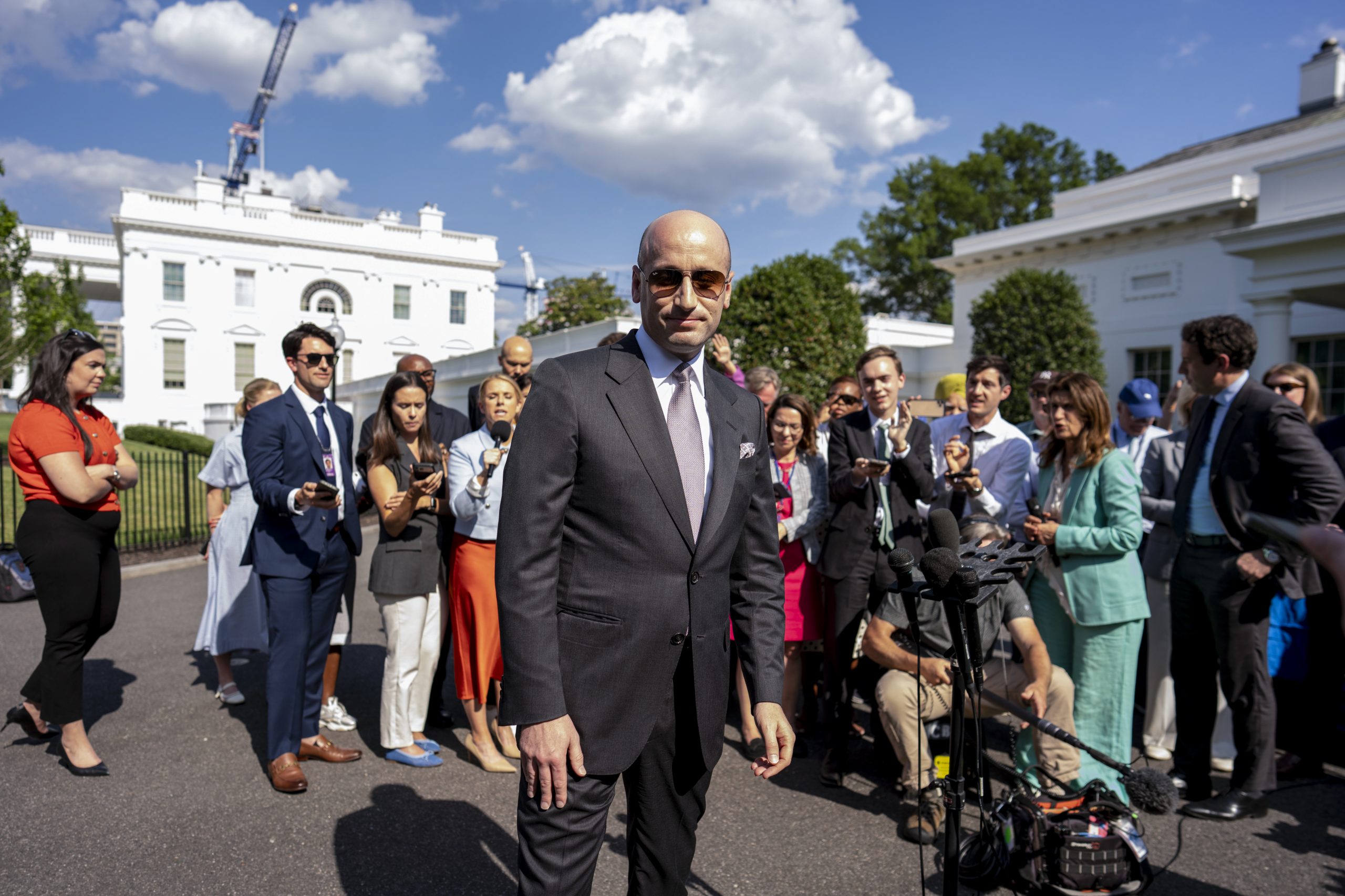
    Stephen Miller, a key White House advisor, speaks to reporters outside the White House after the Supreme Court ruling on June 25. He called Supreme Court’s ruling on TPS “a victory 10 years in the making.”DOUG MILLS

    The American Business Immigration Coalition notes that while the U.S. has only 4% of the world population, it produces 25% of all gross national product and captures 65% of global stock market value. That is tied to the strength of the economy, which depends on the growth and productivity of the workforce.

    With birth rates falling below replacement levels and a shrinking pool of domestic labor, the coalition said, the United States must embrace a robust legal immigration system to ensure sustained economic growth.

    That has become harder for people here under TPS.

    In June, the Supreme Court ruled that the Trump administration could terminate temporary protected status for countries like Haiti and Syria, putting more than 350,000 people from those lands at immediate risk of deportation.

    More broadly, the ruling appears to make Department of Homeland Security decisions about TPS unreviewable by lower courts, creating deep uncertainty for the future.

    Homeland Security says TPS has officially ended for Haiti and Syria, even though cases involving stays and constitutional issues are technically alive in lower courts. The Supreme Court decision started the process for an implementation order that typically takes 32 days. Once TPS ends for individual countries, holders revert to their previous immigration status, meaning those who have no other protection will be subject to arrest and deportation.

    The Trump administration has made a goal of ending TPS, insisting that “temporary” means temporary. It’s unclear if the administration may let TPS designations end on their staggered schedules or attempt to conclude the status for all holders at once.

    Work authorizations for Haitians expired on Monday.

    They face a forced return to a country crippled by natural disasters, governmental collapse, and ongoing gang violence.

    The U.S. government warns Americans not to go to Haiti, issuing its highest “Do Not Travel” advisory. The United Nations estimates that 90% of Port-au-Prince, the capital and largest city, is controlled by criminal gangs, the violence having left thousands dead and displaced more than 1.4 million people.

    White House adviser Stephen Miller told reporters after the court ruling that it was safe for Haitians to return, saying it would be “crazy to say that Haitians couldn’t live in Haiti.”

    Asked if people who lose TPS would be deported, he answered: “Of course. If you no longer have status in this country, then you’re supposed to be deported.”

    CBS News reported last Sunday that U.S. Immigration and Customs Enforcement is preparing a operation to quickly arrest and deport Haitians — including those in Ohio, where Trump falsely accused migrants in Springfield of eating cats and dogs.

    The Haitian Bridge Alliance, a California-based advocacy organization, warns against “one of the largest family separation events in modern-day history,” as TPS-holders live with an estimated 390,000 American-citizen children and 410,000 citizen adults.

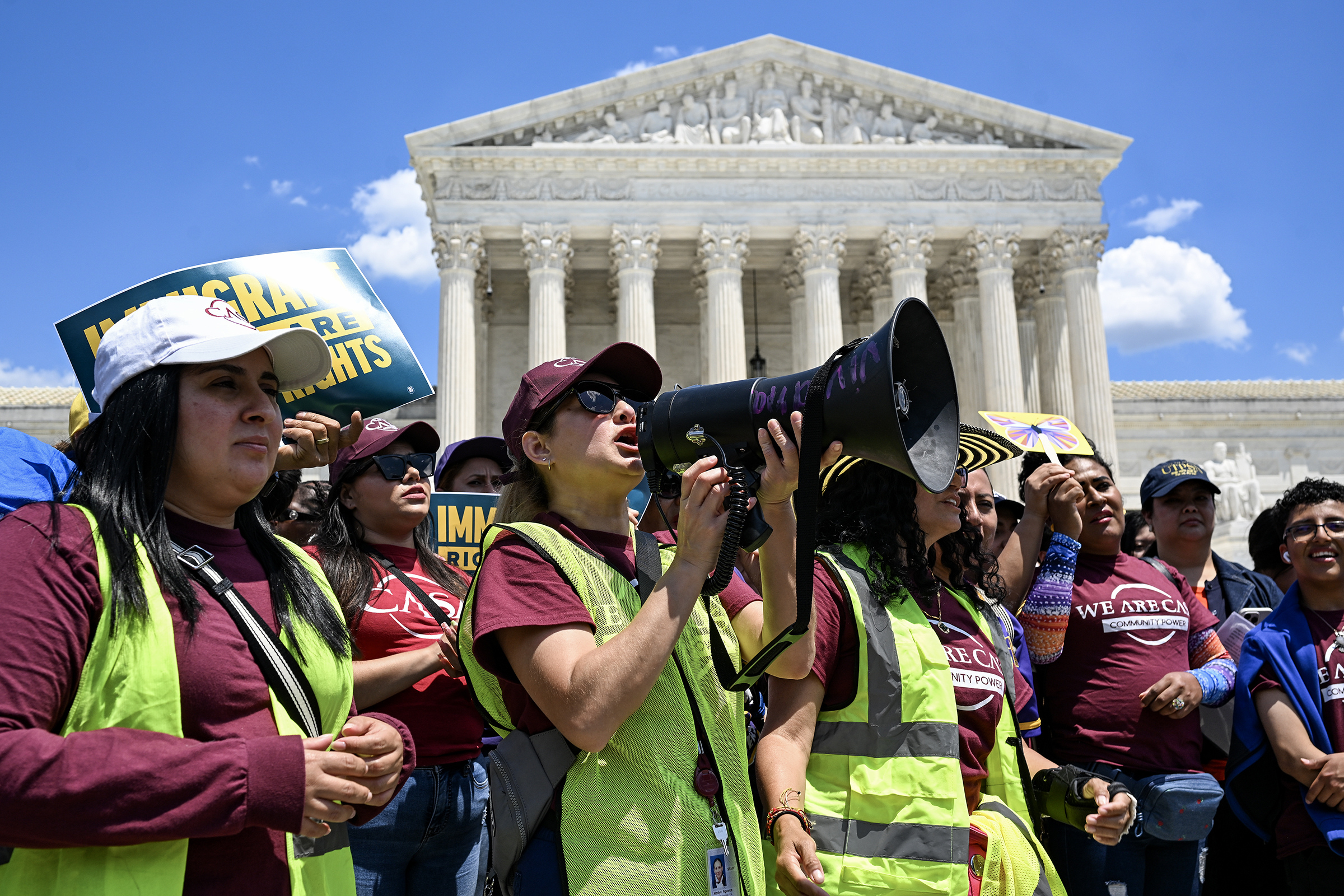
    Demonstrators protest outside the U.S. Supreme Court after the court issued a 6-3 ruling that significantly impacts the future of Temporary Protected Status, a U.S. immigration program established by Congress in 1990.KENNY HOLSTON

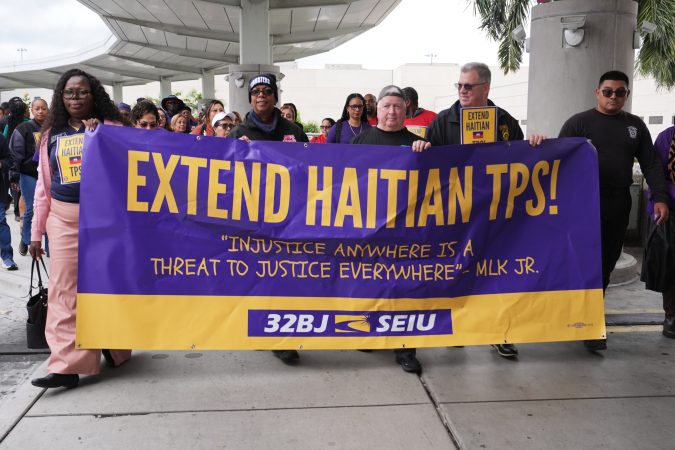
    Immigrant allies are planning a rally for Haitians in Philadelphia on Thursday.

    TPS is a humanitarian status that the U.S. can grant to foreign nationals whose countries are embroiled in war, environmental disasters, epidemics, or other extraordinary circumstances. It provides work authorization and protection from removal, but no path to permanent residency or citizenship.

    People with TPS participate in the labor force at a rate of 85%, well above the overall U.S. rate of 63%, according to a new policy briefing from FWD.us, a bipartisan advocate for immigration and criminal justice reform.

    About one-third of TPS households own homes and pay mortgages.

    Each year, people with TPS pay about $7.8 billion in federal, payroll, state, and local taxes, and contribute $690 million to Social Security, FWD.us said.

    Haitian TPS-holders pay close to a billion dollars in taxes annually, according to the American Immigration Council.

    They compose a disproportionate share of nursing aides and long-term-care assistants, and any removal is expected to hurt nursing homes and assisted-living facilities that already face a shortage of workers.

    “In Ohio, Florida, and Pennsylvania, businesses will lose workers, the elderly will lose caretakers, and families will be separated,” said Vanessa Cárdenas, executive director of America’s Voice, a Washington-based advocacy organization.

    The pro-business U.S. Chamber of Commerce has urged the Senate to pass legislation that would extend protections for Haiti, in order “to prevent significant disruption to America’s workforce and avoid an unnecessary humanitarian crisis.”

    The chamber knows TPS was never intended to be permanent, it wrote in a letter to Senate leadership, but the reality is hundreds of thousands of Haitian nationals have lived and worked lawfully in the U.S., “contributing to communities and filling critical positions throughout the American economy.”

    At the same time, widespread violence and governmental dysfunction in Haiti “make safe and orderly large-scale repatriation unrealistic.”

    Ukrainians in the U.S. face a similar situation.

    Many have nothing to return to ― their homes were destroyed in the war. Or they lived in cities that face constant bombardment, making any return potentially deadly.

    The Philadelphia region has been a main resettlement area for people escaping the war, spurred by the vitality of a local Ukrainian community that is tens of thousands strong. Now Ukrainians who fled to the U.S. see their TPS scheduled to end on Oct. 19, and wonder how they will afford food and housing if that happens.

    “People are really panicked,” said Iryna Mazur, the honorary consul of Ukraine in Philadelphia.

    Ukrainians need both an extension and a redesignation of TPS ― the latter allowing newer arrivals to qualify, she said. Employers are upset, too, worried they are about to lose good, qualified workers, including many employed as mechanics or plumbers’ and electricians’ assistants.

    “They are losing their employees, and their businesses will be hurt,” Mazur said. “We need the [Trump] administration to act.”