DEIR AL-BALAH, Gaza City — Israeli Prime Minister Benjamin Netanyahu said Tuesday that Israeli forces will not withdraw from their current lines in Gaza until Hamas has completely disarmed.
In remarks on social media, Netanyahu suggested there were differences between Israel and the Trump administration over a recent deal announced to disarm the militant group.
The agreement called for Hamas to begin disarming and for Israel to halt its strikes and begin withdrawing from Gaza. It was part of an October ceasefire agreement that ended major military operations but has stalled on other fronts. Netanyahu instead said disarmament should come first, and that Israeli forces would continue to “do whatever is necessary to protect themselves, our territory, and our citizens.”
The Trump administration “sent us a draft. We did not agree. It is not our draft. We sent our comments,” Netanyahu said. “This is our position. We stand firm on our interests, I believe both wisely and resolutely.”
Earlier on Tuesday, Palestinians gathered for a mass funeral of more than 100 bodies finally recovered from a deadly Israeli strike in Gaza in 2023. More than 300 people were killed on Nov. 22, 2023, weeks into the war with Hamas, when warplanes flattened a residential block in Gaza City’s Sabra neighborhood.
Around 40 bodies were recovered soon afterward in a frantic scramble of rough tools and bare hands, but most were buried deep beneath the rubble. Reports of the high number of victims in one of the war’s deadliest attacks took days to reach the public in the chaos just before its first ceasefire.
Over the weekend, first responders dug through the destroyed buildings and recovered remains of 112 victims, including 40 children, according to the Civil Defense, a rescue agency operating under the Hamas-run Interior Ministry.
It said 157 bodies still have not been found.
“The only crime of these martyrs was that they remained steadfast and resilient in their homes, believing that these homes would protect them,” one relative, Taysir al-Hassayna, told the Associated Press following the funeral prayers.
For the missing, it’s “as if their bodies had evaporated without a trace.”
The current ceasefire has allowed recovery of remains
Only now are some bodies of people killed in the war’s ferocious early months slowly being recovered, as a fragile ceasefire that took effect in October allows such efforts to push ahead in parts of devastated Gaza.
Those discoveries have contributed to the war’s rising toll. The Hamas-led militant attack on southern Israel on Oct. 7, 2023, killed around 1,200 people and saw 251 taken hostage. Israel’s retaliatory offensive has killed more than 73,377 Palestinians, including since the ceasefire, Gaza’s Health Ministry said.
At least 7,400 people have been reported by relatives to still be under the rubble, Zaher al-Waheidi, head of the ministry’s records department, told the AP. The true number is likely thousands higher because in some cases entire families were killed in a single bombing, leaving no one to report the missing, al-Waheidi has said.
The people mourned on Tuesday were from a residential block belonging to the Hassayna and Abu Sharia clan, and many were related. The Associated Press has identified at least 60 families across Gaza who lost 25 or more family members during the first three months of war.
On Tuesday, the remains of the victims, wrapped in Palestinian flags, were laid in rows on the ground. Many were marked with photos, and flower petals were scattered around all. Hundreds of people surrounded the bodies for funeral prayers, some standing on the rubble.
Following the prayers, people carried the bodies on stretchers along a narrow street lined by destroyed buildings and buried them in a nearby cemetery.
Gaza is struggling to rebuild amid ceasefire violations
The ceasefire halted much of the fighting, but at least 1,252 people have been killed in Gaza since it took effect, according to the territory’s Health Ministry. The ministry, part of the Hamas-led government, maintains detailed casualty records that are seen as generally reliable by U.N. agencies and independent experts. It does not give a breakdown of civilians and militants but says women and children make up most of the dead.
Israel says its strikes are against militants who endanger its soldiers, took part in the Oct. 7 attack, or carry out other violations. Five Israeli soldiers have been killed since the ceasefire.
Gaza remains largely shattered. Most of its 2 million Palestinians are displaced, many living in tent camps where poor conditions and overcrowding have led to rodent infestations and outbreaks of infectious diseases such as chickenpox.
Each side has accused the other of violating the ceasefire, and negotiations on further steps have largely stalled. Hamas has held onto its weapons, despite agreements to disarm, and the Israeli military has refused to withdraw and controls over half the territory.
The Board of Peace official overseeing Gaza’s postwar transition, Nikolay Mladenov, on Monday met with Netanyahu, in part to discuss a new disarmament deal the U.S.-created board has reached with Hamas.
Last week, President Donald Trump announced an agreement that calls for Israel to cease its military operations in Gaza and for Hamas and its allies there to halt all militant activity. After the text of the agreement was released, Israel said it had “serious security concerns.”
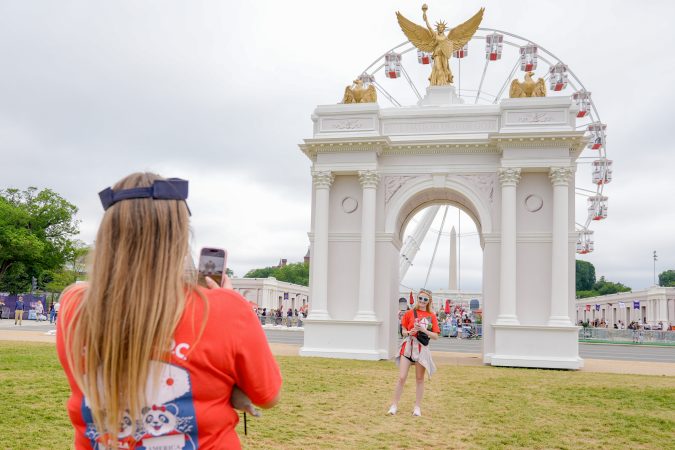
WASHINGTON — President Donald Trump’s proposed 250-foot-tall memorial arch could disrupt the historical significance of dozens of sites near its planned location, according to an assessment by the National Park Service.
Many of Washington’s monuments, buildings, and sites have been carefully planned over the decades to reflect significant moments in the nation’s history and evoke symbolism in being connected by sightline to other sites.
The proposed towering gilded arch, which last month received initial approval from a key federal commission, would impact the “integrity” of dozens of those historical properties because it would change “character-defining visual and spatial relationships” between them.
The NPS report, published Monday, said the immediate project area is located within the Memorial Avenue Corridor cultural landscape, “a nationally significant historic designed landscape extending between the Lincoln Memorial in Washington, D.C., and Arlington National Cemetery in Arlington, Virginia.”
One of the most obvious elements the report cited is that the arch would break alignment between the Lincoln Memorial, Memorial Bridge, and Arlington House that was formerly Confederate Gen. Robert E. Lee’s home.
“The bridge alignment and associated ceremonial landscape were intended to physically and symbolically unite North and South through a coordinated monumental composition extending across the Potomac River,” the report said.
The report puts a snag in a project that has sailed through several steps of the approval process in front of planning bodies stocked with Trump appointees and allies.
The proposed arch is one of several projects the Republican president is pursuing to leave his lasting imprint on Washington. With the potential to change the city’s sightlines, it has already sparked opposition, including through a lawsuit filed by a group of veterans and a historian.
The arch design, proposed by Trump, has already received early approval from the U.S. Commission of Fine Arts. The commissioners were all appointed by Trump. The National Capital Area Planning Commission approved the site and preliminary plans at its July meeting. The commission is expected to take up the matter again at its September meeting.
The arch is one of several projects Trump has proposed that are involved in litigation. The plaintiffs, three veterans and a historian, have challenged its construction, saying it requires Congressional approval.
“Our claim is essentially that none of this has any authorization to be happening in the first place,” said Nicolas Sansone, an attorney with Public Citizen Litigation Group representing the plaintiffs. Authorization of the construction of a monument “in the core of Washington, D.C., on National Park Service land” requires an act of Congress, he said.
The National Park Service assessment confirms what the plaintiffs have said the construction will do to the symbolic and solemn area, he added.
“I think it’s very significant that the National Park Service itself understands that this is the effect that it’s going to have,” Sansone said.
The White House did not immediately respond to a request for comment.
President Donald Trump has directed contractors to redo weeks of work on his planned White House helipad, frustrated with its appearance and questioning whether the slope of the White House lawn needs to be changed, according to two people who spoke on the condition of anonymity to discuss his private comments.
Trump has made the helipad a priority, ordering that work begun in June be completed by a state visit in September, but was dissatisfied with the results, the people said. The White House’s South Lawn, where the helipad is being built, slants downward. Trump has expressed a desire for a landing pad that sits level with the horizon, prompting contractors to disassemble their work and consider whether to start by changing the lawn itself, the people said.
Photographs obtained by the Washington Post on Tuesday show how contractors have taken apart their work, including a 100-foot-wide granite presidential seal that was beginning to take shape last week.
Construction crews having been working around the clock on the project, which Trump hopes will wrap up before Chinese President Xi Jinping visits in late September, the Post reported last month.
It was unclear how much additional cost or time the latest changes would add to the $5 million-plus project, which is being paid for by Lockheed Martin. It owns the company that manufactures the helicopters.
Lockheed Martin did not immediately respond to a question on Tuesday about whether it had been asked to cover any additional costs. Clark Construction, the firm that is working on the project, referred questions to the White House, which did not comment on the president’s specific changes.
“For years, the White House has desperately needed a proper Helipad on White House grounds that will allow the President to land safely and also protect the beautiful South Lawn grass from the fierce exhaust fumes of the incredible Marine One,” spokesperson Davis Ingle said in a statement. “Thanks to President Trump, the White House has never looked better, and it will only continue to get better under his leadership.”
Helipads should be flat for safety but do not need to be perfectly horizontal, to ensure water runoff, according to federal recommendations. The South Lawn, used for decades by helicopters that transport the president, slopes downward about 20 degrees in some places, the White House has previously said. That exceeds the recommended slant for helipads. The area chosen for the new helipad is flatter than other places.
The helipad will be near the South Portico, the traditional landing site for Marine One, the call sign for whichever helicopter is being used for the president. The project is intended to address a long-running problem: The new generation of Marine One helicopters runs the risk of burning the lawn.
The VH-92A Patriot, manufactured by Sikorsky Aircraft, has exhaust vents that aim heat down, making grass-scorching likely. Sikorsky, which is owned by Lockheed Martin, spent years working with administration officials to find a solution before Trump approved the planned helipad.
In the meantime, Trump is using the Ellipse — a park south of the White House — as a temporary landing zone for Marine One.
The next Met Gala is nine months away, but it’s already sparking charged opinions. The controversy centers around the Costume Institute’s decision to honor one designer at its next exhibit: John Galliano, a lauded fashion designer with a checkered past.
Galliano’s exhibit at the Met will be significant, marking only the third solo show for a living designer in the gala’s history. (The others were Rei Kawakubo in 2017 and Yves Saint Laurent in 1983.)
But it’s not all pierced leather and newspaper print (just two of the designer’s many signature elements). In 2011, Galliano was infamously canceled after his conviction in a Parisian court over a series of racist and antisemitic comments.
It cost him his job leading Dior. At the time, Galliano said his alcohol abuse sparked the outburst.
After “two years of exile‚” the designer’s career bounced back. Now, it will be showcased at length. Still, the Met is working to emphasize that the exhibit would not shy away from the problematic aspects of Galliano’s history.
“His career isn’t defined by a moment — something that he will live with for the rest of his life. The exhibition won’t shy away from any of the darkness in John’s past,“ Anna Wintour told Vogue. Wintor is the global editorial director of Vogue, chief content officer of Condé Nast, and Met Gala chairperson responsible for the event’s programming. “It’s part of what has shaped him. The show will take in the full arc of his career and grapple with all of it.” Wintour is a longtime champion of Galliano and his work.
The exhibit’s announcement — and the rehashing of Galliano’s comments — come during a time when antisemitism is surging globally. Fashion expert and professional thrifter Virginia Chamlee says the Met is equipped to accurately cover an influential artist without sanitizing the ugly parts.
Still, Chamlee noted, the biggest publicity draw for the Met’s annual exhibit is the televised red carpet walks leading up to the gala itself — not the exhibition that follows. She’s concerned that whatever efforts the Met has devoted to accountability could be lost to the larger audience.
“So there’s a real risk here,” Chamlee said. “Even if the museum intends to offer a complete examination of Galliano’s complicated legacy, it may come off as a straightforward celebration of someone who said things so heinous and racist that they were charged and fired for them.”
Met Gala attendees often wear looks by or inspired by the artists being honored, meaning Galliano’s pieces will likely be worn on celebrities whose looks will be photographed and televised prominently.
Fashion influencer and writer Ashley Ballard has collected vintage Galliano Dior-era pieces for years.
“It’s undeniable that Galliano’s time at Dior had a ripple effect on fashion and greater culture,” she said. The designer’s work redefined haute couture with immersive fashion shows, used historical references in fashion, and often bled into pop culture, with top celebrities wearing his designs.
“It’s key for us to remember that pioneers from this time period [1996-2011] — particularly Galliano and Alexander McQueen — created pieces that challenged high fashion as an institution,” Ballard said.
Citing Galliano’s incorporation of subcultures into his art, breaking the traditional molds of luxury fashion, Ballard called the designer’s work art that “bridged the gap between traditional fashion houses and audiences that historically were considered an afterthought.”
Ballard said the controversy over honoring Galliano was valid.
“This doesn’t exist in a vacuum, and people have the right to be upset by what was said 15 years ago,” she said. “[But] as a culture, if we genuinely care about minimizing hatred and the effects of addiction, it’s imperative that we support rehabilitation and reconstruction, offering the possibility that change is possible and welcomed — otherwise we become participants in the continuity of harm.”
Here’s everything else you need to know.
Who is John Galliano?
Galliano, 65, is a British designer who has worked for some of the industry’s top fashion houses, including Christian Dior, Givenchy, and Oscar de la Renta.
At the peak of his career, he served as Dior’s creative director for nearly 15 years. Galliano went on to work for Maison Margiela from 2014 through 2024.
Earlier this year, Zara announced a two-year creative partnership with Galliano.
What work is John Galliano best known for?
While at Dior, Galliano’s haute couture and ready-to-wear collections were hailed as among the best of the best.
He designed the fashion house’s signature Saddle Bag, premiering in 2000 and remaining a staple shape.
He’s also responsible for iconic looks, including the newspaper dress worn by Sarah Jessica Parker’s Carrie Bradshaw in Sex and the City, and model Kate Moss’ 2011 wedding dress.
“Galliano’s work as a fashion designer is very highly regarded [and collectible],” Chamlee said. “Just look at the asking price [$375,500] of this Galliano for Dior Homme menswear leather skirt. The industry also largely welcomed him back years ago.”
Galliano was recorded at a Paris bar making drunken, antisemitic comments to a group of Jewish women.
The video recording surfaced in February 2011, just before Paris Fashion Week. Dior suspended and ultimately fired the creative director.
Galliano was tried by French authorities under national laws against antisemitic speech, where he was found guilty and ordered to pay €16,500 (about $19,000) in fines and damages. He also lost a compensation case against Dior in labor court.
What happened to Galliano after Dior fired him for his antisemitic comments?
Galliano spent years involved in public and private efforts to rehabilitate.
The 2024 documentary High & Low — John Galliano suggests Galliano was overworked and abusing alcohol and drugs when he made the disparaging comments. The documentary features interviews and analysis on Galliano’s efforts to repair the harm he’d done.
After a period of silence, alcohol rehabilitation, and outreach to Jewish organizations, some of the designer’s fashion peers and religious leaders began publicly forgiving him.
Notably, Anna Wintour has repeatedly championed Galliano’s work, both in the early days of his career and later, after his period of cancellation.
She reportedly helped the designer secure funding over the years, as well as his positions at Givenchy and Dior prior to his conviction and at Oscar de la Renta in 2013. In March, he announced his partnership with Zara.
Wintour and Galliano met with Jewish leaders to discuss the planned Met Gala showcase, according to the New York Times.
The Times quoted Jonathan Greenblatt, chief executive of the Anti-Defamation League, as saying: “We believe John Galliano has genuinely worked through the issues that led to his antisemitic outburst years ago in Paris, and we have long since accepted his apology.”
Greenblatt added: “His efforts to repair the damage his words caused and to learn from that incident should be applauded.”
What has the Met said about the Galliano exhibit?
In a news release Friday, the museum promised John Galliano: Horizons would address the good, bad, and ugly of Galliano’s career.
“It will directly address the rupture caused by his antisemitic, racist, and anti-Asian conduct in 2010 and 2011, which resulted in his dismissal from Christian Dior and his eponymous label and his conviction by a Paris court for public insults based on race, religion, ethnicity, or origin,” the release said. “It will also consider his subsequent treatment for substance addiction and his later public acknowledgment of his actions. Rather than presenting a conventional narrative of disgrace and redemption, the gallery will examine how memory, experience, cultural values, and historical circumstances continually reshape the reception of a designer’s work.”
Have other ‘canceled’ designers been honored at the Met Gala?
Several Met Gala showcases and exhibitions have been considered controversial over the years, but experts say this time is different.
The celebration for Yves Saint Laurent in 1983 was criticized for being the first to celebrate a living artist. Critics and art historians suggested the precedent could lead to a promotional advertorial-style treatment for an active brand.
“Lagerfeld had a long record of cruel and discriminatory public comments … But Galliano’s conduct was explicit enough to result in his firing and a criminal conviction,” said Chamlee. As a living designer, Galliano stands to benefit professionally and financially from the renewed attention, she added.
When is the 2027 Met Gala?
The Met Gala will take place May 3. John Galliano: Horizons will premiere to the public May 9 and be on display through Jan. 9, 2028.
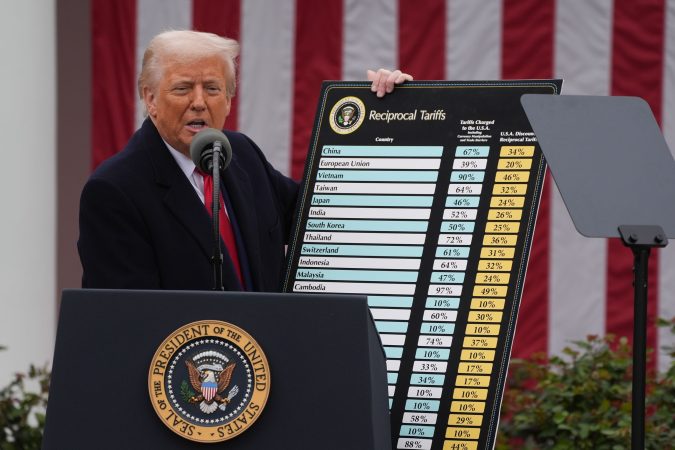
LONDON — When President Donald Trump strode into the Rose Garden in April 2025 brandishing a poster board of tariff hikes, the world leaped as if a fire alarm had gone off. Markets shed trillions of dollars, envoys rushed to Washington, and more than 75 governments scrambled to negotiate, some scrapping carefully prepped countermeasures in a rush to cut deals.
Sixteen months later, the flabbergasting threats keep piling up — to weaponize trade, annex Canada, seize Greenland, abandon NATO, annihilate Iran — but the alarm bells have gone quiet. World leaders are slower to rattle as they’ve seen the president increasingly fenced in by courts, rebuffed by Congress, and strung along by Tehran — his ultimatums evaporating and poll numbers sinking.
When Trump announced a fresh barrage of tariffs last month, this time based on accusations of child labor violations to skirt limits imposed by the Supreme Court, the world didn’t shriek — it shrugged. France’s central bank governor predicted little impact. Britain proclaimed its exporters largely unaffected. Mexico’s economy minister waved it off as one tariff simply replacing another.
The financial markets, inured to the bluster, hardly moved.
As Trump nears the midpoint of his second term, officials and analysts say, one of his signature powers — to bluster on social media, shock, spark panic, and convert that panic (“thank you for your attention to this matter”) into the outcomes that he wants, has begun to fade. The bully pulpit of the presidency remains, but the audience is no longer quaking in the pews.
“We are getting used to these daily announcements,” said Brando Benifei, an Italian member of the European Parliament who chairs its delegation for relations with the United States. “We don’t take them so seriously anymore.”
At home, Trump continues to dominate the national conversation and drive the policy agenda. Still, the president was unable to muscle the Republican-controlled Senate into leaving the Epstein files under seal or passing his signature Save America Act. This week, he had to make concessions to get his nomination of Todd Blanche as attorney general back on track.
Abroad, most consequently, Iran refuses to bend under American bombs and reopen the Strait of Hormuz, and Russian President Vladimir Putin persists in his war in Ukraine. Europe met Trump’s recently renewed demands for Greenland with a collective sigh, and trading partners have shrugged off the latest tariffs.
For a world weary of the United States’ capacity to disrupt, the bombast is baked in, the threats are frequently bluffs, and the president who relishes shock and awe, in the end, often backs down.
The stock trader’s refrain of “TACO” — Trump Always Chickens Out — has begun to take hold in more world capitals, said Jeremy Shapiro, director of the U.S. program at the European Council on Foreign Relations think tank.
“I’ve been a little surprised at how much his bluster has worked until now,” Shapiro said of the bravado that rattled the world at the start of Trump’s second term. It was effective, he said, because it drew on the “awesome power and deep, long-stored-up diplomatic capital of the United States” — reserves, he said, that Trump has “finally started to blow through.”
Officials “are starting to notice that he’s kind of a bully, and is quite easy to scare,” Shapiro said.
Last year’s “Liberation Day” tariffs were hollowed out within days by carve-outs and delays. The steep levies he threatened against European allies over Greenland were withdrawn in Davos, Switzerland, in January for a vague “framework” that Denmark never accepted and has yielded no major change.
China met his threat of 100% tariffs by refusing to blink, then used its chokehold on rare-earth minerals and a halt on U.S. soybean purchases to force Washington into a climbdown — a lesson in how standing tough often causes Trump to bend that other governments have also learned.
Brazil’s president, Luiz Inácio Lula da Silva, ignored a 50% tariff designed to derail the prosecution of former president Jair Bolsonaro, who was convicted of charges related to fomenting an armed coup and sentenced to 27 years anyway.
Nowhere is the erosion of Trump’s bluster-power starker than in Iran, where the United States and Israeli initiated a bombing campaign that killed the country’s supreme leader and other top officials but left the Islamic regime intact and with a stranglehold on the Strait of Hormuz, a vital conduit for global energy supplies and other cargo.
Trump issued a cascade of ultimatums demanding that Tehran reopen the strait, notably threatening to annihilate Iranian “civilization” if it refused. The strait stayed shut. Iran did not fold, even under existential threat, and Trump quietly shifted his stated goals on regime change and on Iran’s stockpile of enriched uranium.
“Between threats, then bombing, then backing off, what he’s radiating to the Iranians is that he’s desperate,” said Ronald E. Neumann, a career Foreign Service officer and U.S. ambassador to Afghanistan, Bahrain, and Algeria under Presidents Bill Clinton and George W. Bush. “As experienced bargainers, that means you don’t have to lower the price.” Neumann also put it less diplomatically: “The way Trump bargains,” he said, “I wouldn’t give him money to go to the carpet bazaar.”
Trump’s browbeating also failed to pull European countries into his Iran campaign. He threatened Spain with a total trade embargo after it refused assistance, leaned on Britain, France, and Germany to reimpose U.N. sanctions, and hinted he might not honor America’s NATO obligations. But those allies refused to get more deeply involved the war — and some countries, namely Spain and Italy, have closed their bases or airspace to it.
When Trump threatened to cut off trade with Spain, said one EU diplomat, officials seemed more inclined to dismiss the comments as rhetorical bluster, with many having learned from experience that his outburst would fizzle if ignored. But this diplomat, who spoke on the condition of anonymity to discuss delicate relations, conceded that Trump’s unpredictability made such calculations difficult.
“It can be tricky,” the diplomat said, citing Trump’s military operations against Iran. “He doesn’t always chicken out.”
To be sure, Trump has shown he is willing pull the trigger.
To the surprise of his America First base that expected retrenchment, not adventurism, he has deployed the U.S. military more aggressively abroad than any recent president — seizing Venezuela’s Nicolás Maduro in a January raid by Special Operations forces, bombing Tehran a month later, and ordering dozens of lethal strikes on alleged drug boats across the Caribbean and Pacific.
At home, he sent National Guard troops on patrol in Washington, D.C., and his immigration crackdown has thrown American cities into turmoil, with masked federal agents sweeping workplaces and courthouses — raids that sometimes turned deadly and ignited protests.
But even the willingness to use force has not bought the deference it once did. Increasingly, officials and politicians at home and abroad are willing to challenge Trump’s threats — or ignore them.
“Europe is noticeably less prone to panic,” said Mujtaba Rahman, managing director for Europe at the Eurasia Group consultancy. “European governments are increasingly distinguishing between Trump’s rhetoric … and the policies that ultimately emerge.”
The pattern reaches into the Gulf, where officials have grown inured to Trump’s style of deal making, analysts said.
Last month, Washington and Riyadh announced an agreement on Saudi Arabia’s civilian nuclear program only for Trump to post later on Truth Social that the deal was contingent on Saudi Arabia joining the Abraham Accords.
Saudi officials found the claim surprising and annoying given that they had already trumpeted the agreement across their own channels, said Andrew Leber, a Middle East scholar at the Carnegie Endowment for International Peace, the Washington-based policy institute.
“At this point, they have dealt enough with Trump deals to know that such exasperating and inconsistent moves have become the norm,” Leber said.
For much of Trump’s first year back, European capitals ran the same strategy of flattery and appeasement they believed had contained him before. European Commission President Ursula von der Leyen flew to Trump’s Scottish golf resort to settle a trade fight on his terms. Britain invited him for an unprecedented second state visit.
Leaders now are still willing to flatter Trump, especially in private, but they are less willing to offer the concessions he wants, according to a European diplomat who has been involved directly in talks with the administration.
“Behind closed doors they are still putting it on thick because they know it works,” said the diplomat, who spoke on the condition of anonymity to discuss sensitive interactions. “This is a president who can significantly soften his position in the course of a single meeting. But that doesn’t mean you give in. That is true more than ever.”
Greenland was a turning point, the diplomat said, because Trump’s threats evaporated against united European opposition. China, too, showed that pushing back could bend the president, as did Brazil, whereas Europe’s surrender to Trump’s initial trade barrage merely led to further demands from him.
“I think people are saying, well, we don’t want to provoke him unnecessarily, but we can’t really make him happy,” said Neumann, the former ambassador.
Learning to mute Trump’s threats won’t necessarily make the rest of his term easier to navigate, analysts said. Doing so could even make things less predictable if Republicans lose one or both of their majorities in Congress in the midterm elections and Trump turns to more unilateral executive actions.
“It could be super dangerous,” Shapiro said. “Trump is not somebody who will go quietly into the night. He will rage about his loss of capacity and he will look for other ways to take risks with American power.”
JEFFERSON, Ga. — Marci Bakely couldn’t understand how her ex-boyfriend always seemed to know where she was.
When she went to buy groceries or on a date or to the doctor, he’d text her about it, sometimes within minutes, despite working 15 miles from her home as a police chief in a small town in the Atlanta suburbs. One day in 2024, when he incorrectly suspected that she’d gone to see a man against his wishes, he messaged her, “I didn’t think you would slip up,” according to texts she shared with The Washington Post.
Bakely, 50, began to feel like she was constantly being watched. She says she installed three cameras around her home and on her patio, to see if he was staking out her cul-de-sac. She bought a hidden-camera detector and nervously waved it down every wall. Three times, in desperation, she says she drove her Kia to a mechanic’s shop, asking them to scan for trackers on her car.
Then one day, when she pressed him for answers, her ex told her in a text: He was using Flock.
Like thousands of other law-enforcement agencies across the United States, his police force could follow cars spotted by Flock’s sprawling network of artificial-intelligence roadside cameras, which record passing license plates into a mappable database that officers can search while investigating crime.
Flock had sold its system as a police officer’s dream crime-fighting tool. But the tool had also given the chief, Michael Steffman, the power to silently monitor Bakely’s life. By the time she understood what was happening, Steffman had looked up the tags for her and her teenage daughter roughly 600 times, according to Have I Been Flocked, a website that aggregates police search logs made available through public records.
Steffman was arrested in November on charges of stalking, harassment and license-plate-reader misuse. In April, before a trial could take place, he was found dead in his home from what officials said was a suicide. The town manager of Braselton, where Steffman worked, declined to comment. The town’s new police chief and four members of Steffman’s family did not respond to requests for comment.
Backed by some of Silicon Valley’s top investors, Flock has rapidly grown into a colossus of American technological surveillance. A leader of the surging industry for license-plate readers, the company told The Post that its more than 120,000 shoebox-size cameras now scan the roads of more than 6,000 communities and record 20 billion plate scans a month.
But bad actors have used this massive camera network as a powerful weapon for intimate surveillance. Authorities have charged or accused at least 50 law-enforcement officers of using license-plate readers for unauthorized purposes, including to stalk women without their knowledge or consent, a Post analysis of police and court records found.
In 26 of these cases, police investigators and prosecutors said the officers used the technology to spy on their wives, their girlfriends, their exes, their exes’ new partners or women they wanted to meet. In other cases, police or prosecutors have not specified the alleged surveillance targets. Flock’s system was used in 46 of the cases analyzed by The Post, while the other cases involved competing products.
Many of the plate-reader misuse cases were previously covered by local media outlets, and some were first compiled by the Institute for Justice, a civil liberties law firm in Arlington, Virginia.
The Post reviewed thousands of pages of court documents and internal police reports and conducted interviews with seven alleged victims, some of whom spoke publicly for the first time, to paint a comprehensive picture of the misuse of Flock and other license-plate readers by police officers around the country.
The review found that Flock gave police departments wide latitude about whether to activate settings that some police and privacy advocates argue could deter misconduct, and that many departments conducted limited oversight of their officers’ searches. As a result, rogue police were able to monitor their subjects’ movements with precision and secrecy.
After The Post relayed its findings to Flock, the company said in a statement it “will soon be announcing better filters and tools to stop abuse before it happens.”
Flock officials said in interviews that officers who misuse its technology represent a small share of its 140,000 active users, and that the company offers training guides and search logs to help police departments run internal audits. In April, the company rolled out a new voluntary “audit assistance” feature, which agencies can choose to enable, that automatically scans officers’ searches for suspicious activity, such as queries repeatedly targeting the same vehicle or run by officers off the clock.
In an interview with The Post, Flock chief executive Garrett Langley said misuse of its systems is inevitable and that the company is focused on providing tools to catch perpetrators after the fact. In their contracts with Flock, police departments agree to use the tool solely for “bona fide investigations” of crime.
“We’re not going to change humans, and humans make bad decisions,” Langley said. “What we can do is make sure that they know if you use this tool, you will be held accountable.”
The Post’s investigation sheds light on the scope of the technology’s misuse across the country, as well as the toll on victims and families who felt they were constantly being watched.
Through automated license-plate reader systems, or ALPRs, officers could trace the rhythms and travels of their subjects’ daily lives, leading in some instances to violent confrontations, moments of psychological manipulation, and threats of coercion and control, the analysis found.
In Wisconsin, a police officer allegedly used Flock to check whether his ex-girlfriend had gone to an abortion clinic, according to a police affidavit for a case set for trial this month.
In Kansas, a police chief who tracked his ex through Flock sneaked up on her while she was intimate with another man, a state police certification body alleged, leading to his firing.
In Florida, a deputy speeding to stop a young actress he’d added to a watch list for a license-plate tool called Guardian nearly caused a head-on crash, according to a police report and video from his dashboard camera. The deputy was arrested in March, and his attorney declined to comment.
And in California, prosecutors said a former deputy, Alexander Vanny, used Flock as part of a months-long campaign of “stalking” and “humiliating” his former fiancée that also involved following her around town and installing a hidden camera in her roommate’s bathroom, according to a sentencing brief.
Vanny was convicted by a jury on 10 charges, including stalking and unauthorized access of electronic data, and sentenced in February to six years in prison. His attorney told The Post that case focused on Vanny photographing the license plate of a man who’d driven away with his former fiancée after she’d gone to a bar, and that he’d done so out of concern for her.
While some of the searches resulted in officers’ firings, prosecutions and prison sentences, police departments in other cases allowed officers to continue using the systems even after receiving warnings that they were being misused.
“This was not a lapse in judgment; it was a continual, repetitive, obsessive behavior,” a Wisconsin woman wrote in a domestic-abuse restraining order petition, saying that Flock data showed that her officer ex-boyfriend had searched the plates for her and her partner 179 times. She said she lived in a “constant state of fear and unease.”
An array of privacy advocates has argued that Flock could deter bad actors by making simple changes to its product, such as requiring officers to label every search with a criminal case number. Some policing experts also warned that agencies’ inconsistencies in developing and enforcing standard procedures for license-plate readers could lead to further misconduct. With no federal laws governing use and only a patchwork of state laws, many of the country’s roughly 18,000 police agencies are left to decide their rules on their own.
Christian Quinn, a former commander with the Fairfax County police in Virginia who now consults with agencies and technology vendors, said privacy features and oversight by local governments shouldn’t undermine the ability of police to do their jobs. Rules that significantly limit license-plate technologies, he said, could “chill the use of them altogether.”
But Eva Galperin, the director of cybersecurity at the advocacy group Electronic Frontier Foundation, said that abuse of the tool is “inevitable” and that the company’s approach to date, coupled with poor supervision by police leadership, has done little to protect women from abusive police officers.
“Flock has already claimed that they have oversight, that they have guardrails, and we still see these kinds of abuses,” she said.
Officers’ searches are logged by police agencies, but only some of them have been made available through public-records requests, making it tough for people to find out whether their cars are being tracked. Some of the women said they learned of the surveillance only after they received calls from internal-affairs investigators or ran their plate numbers through third-party tools such as Have I Been Flocked.
Some victims, such as Bakely, also say they’ve struggled to get their experiences taken seriously because the perpetrators are police, entrusted with broad authority to pursue investigations with operational secrecy and employed by the same agencies they were told to call for help.
Bakely said the cameras had left her feeling powerless to stop her ex-boyfriend from tracking her life. She didn’t feel safe asking the police agency he led, she said, and she couldn’t get access to records that would have shown the surveillance was happening in real time. After Steffman told her about his Flock searches, she filed for a restraining order, but a judge denied it on the basis that she couldn’t prove ongoing abuse, court records show.
He “watched every single move I made,” she said. But “who do you turn the chief of police in to?”
Flock has more than 120,000 cameras in more than 6,000 communities that record 20 billion plate scans a month. (Kevin D. Liles/For The Washington Post)Kevin D. Liles
‘As transformational as DNA’
When Bakely met Steffman on the dating app Tinder in 2022, he seemed like a perfect catch.
He had kids and coached Little League baseball. He loved crude jokes and was quick with a compliment. And he had a stable career, with 20 years in law enforcement. After several tough months during which Bakely, an Air Force veteran, uprooted her life to move closer to her parents, he helped her feel safe, like she wasn’t alone.
“He literally was my only friend,” she said in an interview.
After a few months, she said, he began to act differently — more controlling and paranoid. He looked through 13 years of her Facebook history, forcing her to block men who’d left her comments, she told The Post. He also demanded access to her Ring doorbell camera and looked up all the names in her phone’s contact book.
The couple broke up in late 2023, she said, but Steffman’s texts didn’t stop. Randomly, sometimes in the middle of the night, he’d ask cryptic questions about where she’d gone then say he’d already “looked it up,” according to a text exchange reviewed by The Post. She said he seemed to relish the idea of knowing things about her she had not wanted to share.
One day in July 2024, after she had pushed him to explain himself, he told her he had used a “Flock camera.” She had no idea what that meant.
“It’s a camera system that reads tags,” he wrote in messages she shared with The Post. He insisted that it was a lapse in judgment and that he wouldn’t “ever look again.”
“Don’t worry I’m not tracking you or some weird stalker s–t,” he wrote, with a cry-laughing emoji.
It had been seven years since Flock had installed its first camera not far from here, in Atlanta, as part of an idea by Langley — then a recent engineering graduate from Georgia Tech — to protect his neighborhood from a string of smash-and-grabs.
Langley’s first camera was an Android phone, hung outside in a rainproof box. But soon his start-up began promoting itself as something far bigger, saying it was building “the first public safety operating system that eliminates crime.”
The company dispatched installers to hang the cameras along public roadways and sent sales teams to city halls and police expos with offers of quick-start leasing deals costing around $3,000 per camera per year, public contracting documents show.
Thousands of cities and police departments bought into the idea, and Flock gave them the choice to share their Flock data with other agencies or to view others’ data from across city or state lines. Many homeowners associations, apartment complexes and strip malls began signing up, too, giving them a way to search through their own local camera feeds.
Flock quickly became the most prominent player in the burgeoning license-plate-reader business, rivaling systems from competitors such as Axon’s Fleet 3 and Motorola’s VehicleManager. Despite lacking the established law-enforcement relationships of its peers, Flock’s surveillance-subscription packages made its cameras accessible for small-town police departments and neighborhood-watch groups. Flock said last year it had surpassed $300 million in annual revenue.
Flock told agencies that it could set its “own written rules for who can access the system and how it can be used,” company documents show. Agency leaders decide which officers receive log-in credentials, according to Flock’s rules, and the officers don’t need a warrant to run a search; they just type a plate number and go.
Over time, Flock upgraded its tool’s surveillance power, creating “hot lists” that notify officers whenever a target car is captured on camera and a “vehicle fingerprint” feature that lets them search for a vehicle by its look or characteristics — say, any white minivan with bumper stickers — without knowing its plate number, company documents show.
Flock engineers improved the cameras, too, wiring them to use solar panels and cellular networks so that they could be installed anywhere and record at all hours. Flock’s flagship camera, the Falcon, uses a style of AI image recognition, known as computer vision, that can read the plate on a speeding car at night or in heavy rain.
Big venture capital firms including Andreessen Horowitz, an early Facebook investor, have poured money into Flock, betting on the company as a way to revolutionize policing. Flock, a private company, said last year its business was worth $7.5 billion.
In a TED Talk in April, Langley said the company had expanded into making camera drones, police software and audio-detection devices after seeing its success in license-plate readers, which he said a police chief had told him were, for crime fighting, “as transformational as DNA.” He shared the story of how police used Flock to stop the abductor of a girl in Tennessee and said, “I don’t know how many more 11-year-old girls need to be kidnapped … before we say enough is enough.”
Asked onstage whether his system’s use ever made him uncomfortable, Langley cited three recent instances of officer misuse, including a case that resembled Steffman’s: “a police chief in northern Georgia that used Flock to track an ex-partner.” Langley noted, however, that Flock’s audit logs had been used to investigate the abuse — evidence, he said, that the company’s safeguards were working.
“He was probably a bad person. He was going to do this, one way or another,” Langley said. “And so I look at the 1 million-plus” criminal investigations Flock says it helped support last year “and go, okay, this is a trade-off that I can make.”
Bakely says her ex-boyfriend “watched every single move I made” by using Flock. (Kevin D. Liles/For The Washington Post)Kevin D. Liles
‘The police are already here’
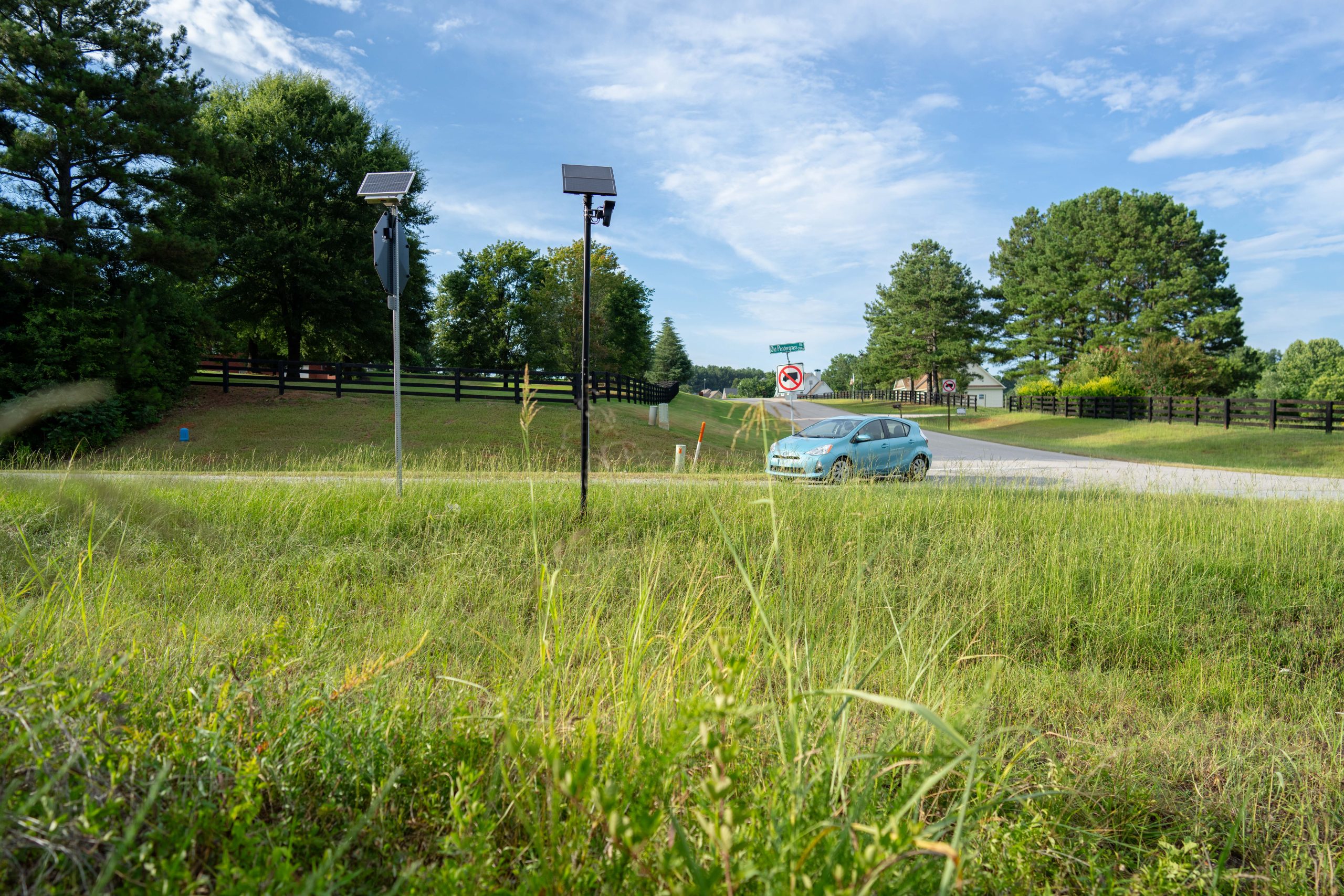
For months, Bakely hadn’t realized how often she had been driving by Flock cameras, which looked like automatic air fresheners and had been mounted high atop black utility poles. One recorded the road she drove to the Kroger supermarket; another faced a gas station. In the small downtown of Jefferson, where she lived, there were two recording in opposite directions, one on each side of the town’s central creek.
She had believed Steffman when he said he had looked up her plates just once. Months later, when Bakely heard about the Have I Been Flocked website on the local news and looked up her plate’s search history, she learned the truth. He had searched her car hundreds of times over a span of about 13 months, sometimes dozens of times a week, the audit records showed. Many of his searches were made between midnight and 4 a.m.
As Flock’s popularity had ballooned with police, more officers had begun treating the tool like a personal spy device. In Kansas, a woman who drove her children to her father’s house for breakfast one morning began receiving text messages from her ex-husband, Kechi police lieutenant Victor Heiar, demanding to know where she had taken their kids, according to an interview she gave police and text messages she shared with investigators that were reviewed by The Post.
Heiar later described the restaurant where she had just celebrated her birthday and the center where she took their kids to day care — a location she had hidden from him out of fear and distrust, she told police. Heiar was fired, his state police certification was revoked and he pleaded guilty to computer crime and stalking, for which he was sentenced to 18 months of probation. The Kechi police chief declined to comment. Heiar and his attorney did not respond to requests for comment.
And the monitoring sometimes preceded threats of violence or control. In Florida, Orange City officer Jarmarus Brown called his girlfriend on FaceTime to show her videos of her driving, according to a sheriff’s office report. Once, he went to her apartment, grabbed her and reminded her that he carried a gun, leading her to threaten to call the police, an investigator’s incident report alleged. He responded, the report said, by referring to himself: “The police are already here.”
Brown was arrested last year and pleaded no contest to a charge of unauthorized use of computers. He was sentenced this month to five years of probation and a $618 fine. Brown’s attorney and the Orange City police did not respond to requests for comment.
In some of the cases, officers used the searches to uncover deeply personal information about their subjects’ lives. In Wisconsin, Menasha officer Cristian Morales used Flock to check whether his then-girlfriend had gone to a clinic to “seek a potential termination of said pregnancy,” according to an affidavit from an investigating officer with another police department seeking to subpoena Flock for search records.
He texted the woman to say he had verified she didn’t go to the clinic and told her, “You continue to lie,” the affidavit alleged. He later contacted the clinic in an attempt to obtain her medical records, confronted her at her home and began calling her as many as 19 times a day, according to the affidavit.
The woman and Morales’ attorney declined to comment. The Menasha police did not respond to requests for comment. Morales was charged in January with misconduct in public office and has pleaded not guilty. A criminal complaint said Morales admitted to searching for the woman’s vehicle, labeling them in the Flock system as “welfare” checks, and blamed his decision on bad judgment, desperation and a lack of sleep.
Some officers, however, have defended their personal searches as normal behavior for police. Coty Wayne Hall, an officer in Niceville, Florida, ran 192 inappropriate Flock searches, including to track a former romantic partner, according to an internal-affairs investigation. The woman, a fellow officer, told investigators he once texted her details about what she was wearing one day when she took her kids to the park.
Hall was fired, pleaded no contest to charges of computer-system misuse, stalking and battery, and was sentenced to probation. In an interview, he said it was unfair that he was being made “out to be some sort of monster.”
“Pretty much everybody uses that computer system” improperly in the department, he said, and “they don’t audit it [nearly] as much as they should.” Niceville Police Chief Mark Hayse said in a statement that the department’s Flock use was audited “and only one individual was found to be out of compliance.”
‘No consequences’
Flock’s defenders have argued that the prosecutions of rogue officers prove that its guardrails work. But in some cases, officers were allowed to keep searching Flock’s data after being accused of misuse.
In Jerome County, Idaho, Sheriff Gary Taylor told The Post that a previous sheriff, George Oppedyk, had searched for his wife’s car several times a day in the weeks after a prosecutor filed a complaint about him to the Idaho attorney general’s office.
Oppedyk resigned months afterward, more than two years before his term was slated to end, and faced no charges with the attorney general, Raúl R. Labrador, who said in a February letter that his office couldn’t prove a crime “beyond a reasonable doubt.” Oppedyk, the letter said, had argued he’d run the searches “to check the system’s reliability.”
Labrador said in a statement that his office did not have the authority to prosecute Oppedyk because license-plate-reader misuse in Idaho is not regarded as a “standalone crime.” He said he is working with state legislators to address this “gap in the law” so that they can prosecute future misuse.
Taylor said in an interview that Flock is a powerful law-enforcement tool but that he worries “a few bad apples [could] ruin it for everybody.”
“If there are no consequences because the sheriff who abused it didn’t get in trouble, what’s to deter other people from doing the same thing?” Taylor said. Oppdeyk did not respond to requests for comment.
The vast majority of the surveillance targets identified by The Post are women, and several of them said the experience — menacing messages and confrontations that led to the revelation they’d been watched — left them feeling violated and paralyzed. Galperin, of EFF, said that asymmetry of power is a large part of what makes the tool so dangerous in the hands of bad officers.
“The goal of the abuser is to make themselves seem omniscient and omnipotent,” she said. “You don’t have to be watching your victim all the time. They just have to believe that at any moment you could be.”
In some cases, license-plate data was just one component of a broader stalking campaign. In April, Kyle Rector, a former officer in Bonner Springs, Kansas, was charged with using law-enforcement equipment to stalk his estranged wife and two men he thought she was seeing, including by using data from a license-plate-reader system called ELSAG. Investigators also alleged they found monitoring software installed on her computer and a video camera hidden in her bedroom light switch.
Rector has not offered a plea yet in the case, and his attorney declined to comment. A preliminary hearing is scheduled for September. Bonner Springs police said the agency is cooperating with investigators. ELSAG’s developer, the security contractor Leonardo, said it offers training and auditing tools to encourage responsible use.
Being subjected to extensive tracking left some women deeply unnerved, pushing some to change their lives or start driving their relatives’ cars in hopes of not being tracked. One woman, a sheriff’s deputy in Wisconsin who spoke on the condition of anonymity because she was fearful of further harassment, said she had her plate searched 16 times in a single day by a fellow deputy with whom she had been romantically involved.
The deputy lost his job after an internal investigation but has faced no criminal charges, and the lack of punishment has made the situation harder for her to move on, she said in an interview.
“I didn’t leave my house for a week,” she said. “I was scared to see him.”
Adam Dodge, a former family-law attorney and founder of the cyber safety training group EndTAB, said the tool is too easily misused by officers to engage in acts of domestic violence. The fact that the offenders have guns, badges and access to surveillance technology makes it even harder for victims to report their suspicions, he said, for fear that they won’t be believed and could face retribution if they speak out.
“Any time you give an abusive individual access to one of those systems, they are likely going to misuse it,” he said. And “where do you go as a victim if you’re being abused — you go to law enforcement, right?”
Some of the women who ultimately reported the misuse said they were dismissed or ignored. Alexandria Griffith, a mother in Leechburg, Pennsylvania, said in an interview that she repeatedly warned the police department and district attorney’s office that her officer husband had stalked and threatened her. During one text exchange she shared with The Post, the officer, Michael McSherry, shared a screenshot of her license plate in the search results of a Flock competitor to claim she had lied to him. “Plate readers dont lie,” he wrote.
Griffith said officials at both agencies dismissed her pleas. Within days, she said, McSherry confronted her in her parents’ home armed with a gun, shoving her and her 4-year-old son and threatening to kill himself, according to a police report.
In an interview with The Post, McSherry expressed regret for misusing the license-plate reader to track Griffith and disputed the police report’s characterization of the altercation. He was arrested and pleaded guilty to stalking and official oppression, for which he served roughly 11 months in jail.
“A lot of people … knew that all of this was happening,” Griffith said. “And they kind of just brushed me off.”
A car drives past a pair of Flock cameras in Jefferson, Georgia, last month. (Kevin D. Liles/For The Washington Post)Kevin D. Liles
‘Police the police’
Flock has said incidents of abuse are unfortunate but tough to fully prevent, given the vast network of nationwide users and the reality that any tool can be abused. The company said that its audit logs have proved valuable for internal investigations, and that the “audit assistance” feature has already helped address some instances of misuse. Flock last month said a department in Albany, Georgia, fired five officers after the feature flagged signs of misconduct.
Langley, Flock’s chief, has dismissed pushes by activists for the company to further limit how officers use its product.
“No one elected me the police chief of America,” he told Forbes last year, adding, “I don’t think it’s our job to police the police.”
Most law-enforcement agencies prohibit officers from accessing any police database for personal purposes, and in many departments such misuse is regarded as a fireable offense, according to Max Isaacs, director of law and policy at the New York University Law School’s Policing Project.
But due to a patchwork of rules and regulations, the extent to which such officers are punished varies widely based on their agency and state. Thirteen states have adopted laws requiring police departments to audit officers’ license-plate reader usage, the NYU group found. At least eight states have criminalized the misuse of license-plate readers, including Georgia, which classified this crime as misdemeanor “of a high and aggravated nature,” the statute says.
Some privacy advocates argue there are very basic changes Flock and police departments could make to prevent abuse. Jay Stanley, a policy analyst at the American Civil Liberties Union, told The Post that every search should require a criminal case number as “standard expected practice” because it could help “make lying harder and detection easier for a department that is well-managed enough to care.”
Flock said last year that it would start allowing agencies to turn on the criminal-case-number requirement for its own officers, but it’s an optional setting. A company spokesman told The Post that roughly 1 in 4 agencies had turned on the “audit assistance” feature, which sends in-app notifications to police supervisors.
Though Flock says in training guides that officers should detail a reason for each search, many of them have been justified with vague, one-word explanations, such as “investigation,” that make it harder for internal-affairs teams to evaluate, documents reviewed by The Post show.
After DeFlock Joplin, an advocacy group in the Missouri city, requested audit logs from the police, the group said that 85 percent of searches had a one-word justification, such as “suspicious” or “drugs,” and that less than 3 percent of searches had been linked to a criminal case.
Some experts suspect that many audit logs aren’t being reviewed at all — and that, if they were, officials would discover more cases of misuse. The Institute for Justice and other groups have proposed that Flock searches should be permitted only for officers who have obtained a warrant from a judge, much like police searches in the real world. A Flock spokesman said the company isn’t “capable or responsible for mandating a warrant,” and Flock’s defenders and investors have argued that the restriction would make the tool cumbersome and erode officers’ investigative edge.
“Most of the time when you need license-plate information, it’s a timeliness thing,” said Quinn, the former police commander. Requiring a warrant, he said, could delay police from responding to active safety threats.
Police departments largely acknowledge that license-plate readers require oversight, but absent federal laws around the technology many of them have not implemented strict guidelines to prevent abuse, said Chuck Wexler, executive director of the Police Executive Research Forum, a nonprofit that advises agencies on policing practices.
“This is the nature of technology and policing,” Wexler said. “Very often a technology will be farther ahead of policy, and that’s what has happened, I think, with license-plate readers.”
Some agencies that have set their own rules have found themselves scrambling to update them amid updates to the technology’s power. Jim Sheehan, a New Jersey program coordinator who helps write policies followed by more than 500 law-enforcement agencies in the state, said he is helping to revise local license-plate-reader standards for the third time since the rules were adopted in 2010.
Some advocates, however, fear Flock’s current approach merely allows police officials to police themselves. In Milwaukee, an internal-affairs detective investigating a fellow officer’s misuse of Flock was found, in a separate investigation, to have misused Flock to surveil an unnamed victim and later admitted to installing a GPS tracker on the victim’s car, according to a criminal complaint last month.
The detective, Tehrangi Chapman, was charged with misconduct in public office and misuse of a GPS device. Chapman and his attorney did not respond to requests for comment. Milwaukee Police Chief Jeffrey B. Norman said in a statement, “No one is above the law.”
Torin Monahan, a professor at the University of North Carolina at Chapel Hill who studies surveillance, said Flock’s resistance to stricter user oversight offers only “a performance of accountability” designed to minimize scandal and maximize new sign-ups from public-sector clientele.
“They don’t want any impediments to police adoption,” he said. “The more cameras that are on the network, the stronger the network becomes.”
But David Ulevitch, a partner at Flock investor Andreessen Horowitz, said the more than 40 Flock misuse cases were “an infinitesimally small number” relative to the hundreds of thousands of officers nationwide. It’s “truly a nonissue,” he said in an interview, “… and by the way, that’s 40 officers that now have been disciplined or charged or fired that otherwise would not have been, thank you to Flock.”
For Bakely, the searches from her ex-boyfriend stopped in August 2025, according to search logs later made public and compiled by Have I Been Flocked. That month, she had filed for a restraining order against Steffman, writing that he “uses the traffic (Flock) cameras to track my location,” her petition said.
A judge denied her request, saying that Steffman’s conduct was “concerning” but that Bakely had no evidence to “support current allegations of stalking.” After he suggested Bakely file a complaint with the local sheriff’s office, that office then referred the case to the Georgia Bureau of Investigation. Three months later, when agents arrested Steffman, bureau officials said an investigation found he had misused the license-plate system “to harass and stalk multiple individuals.”
Steffman died before a trial could be initiated, and superior court records do not list an attorney. Calls, emails and text messages sent to four of Steffman’s family members were not returned. On LinkedIn, he had said he retired after a career in law enforcement focused on “ensuring that every resident feels seen, heard and protected.”
Braselton’s town manager declined to comment, but a previous town manager said in a statement that the town was “disappointed by the circumstances and the charges.” Five days before GBI announced his arrest, the town’s Facebook page had posted a photo showing Steffman posing with the mayor and town council for a celebration of his 20 years of “dedicated service.”
His “leadership and commitment,” the post said, “have helped shape the department and strengthen the safety of our community.”
Patrick Marley contributed to this report from Madison, Wisconsin.
SPOKANE, Wash. — A man charged with intentionally setting a wildfire that’s destroyed hundreds of buildings in and around Washington state’s second-largest city was contacted by law enforcement about two fires last year, though he wasn’t charged in either, court documents show.
Aaron F. Farinacci, of Spokane, was arrested Monday and booked on suspicion of first-degree arson in connection with the Old Trails Fire, the biggest of three blazes that have destroyed at least 700 buildings and forced tens of thousands of people from their homes. According to court records, he denied setting the fire. His bond was set at $1 million and he was due in court later Tuesday.
Authorities haven’t said what caused the other two fires burning around Spokane. No deaths have been reported.
Farinacci, 37, served about a decade in prison after killing his father in Arizona in 2010. Last year, authorities questioned him about two fire-related cases in Spokane, according to a probable cause statement filed in Spokane County Superior Court.
One involved several “bus-sized” fires in an area near Farinacci’s apartment in July 2025, police records in that case say. The other involved a wildfire in a state park that prompted evacuation notices the following month. In neither case was he arrested.
A tip leads to an arrest
On Saturday, a 64-year-old man who lives in a rural neighborhood northwest of Spokane was driving with his grandson when he saw a man standing along some railroad tracks and looking toward nearby trees, sheriff’s detective Michael Drapeau wrote in the probable cause statement. About 10 minutes later, as they were returning home, the man was still there, this time bending over as he faced the tree line. He stood up and acted “nervous” as the vehicle passed, the man told police.
Soon after they returned home, the man’s daughter noticed smoke rising from the area and called 911. The man drove back there and gave a police officer a description of the man he had seen — bald, white, wearing a green shirt, and carrying a backpack.
A responding sheriff’s deputy saw a man matching that description walking more than a mile away and detained him. Another deputy also responded, and the man who reported the tip showed up to identify the person in custody — Farinacci — as the one he had seen in the area of the fire, the document states.
Farinacci had a backpack and a fanny pack, in which he had a pack of cigarettes, waterproof matches, and a butane lighter, it says. He told the deputies he didn’t start the fire and he denied having been in the area where it started. He was wearing a green T-shirt that read, “Who needs luck I have charm,” the detective wrote.
The deputies were unaware of Farinacci’s prior fire-related contacts and the cause of the Old Trails Fire hadn’t been determined yet, so they released him to continue working on evacuation efforts, Drapeau wrote.
But the following day, a wildland fire investigator for the state determined that the fire had started in the same area where Farinacci had been seen, the document says. The investigator ruled out other possible causes, including sparks from electric wires or passing trains, and police arrested Farinacci on Monday.
“As it happens in so many critical cases, it was citizens who were paying attention to their surroundings, being aware, and willing to step up and say something that led to the relatively quick apprehension of Mr. Farinacci,” Sheriff John Nowels told reporters Monday.
Farinacci remained jailed ahead of Tuesday’s hearing. The Spokane County Public Defender’s office will represent him during the appearance, and a lawyer will be assigned to him afterward if it’s determined he needs one, said its director, Colin Charbonneau. In an effort to get comment from Farinacci’s family, the Associated Press sent a message to a possible social media account for a brother.
Police contacted him about earlier fires
A detective investigating the Old Trails Fire ran a criminal history check on Farinacci and found that he had been contacted by law enforcement twice before during fire investigations.
Spokane police responded to reports of several fires on July 8, 2025, near Farinacci’s apartment. The area near the Spokane River involved several “bus-sized” fires and prompted a significant emergency response, according to a police record.
The Washington State Patrol made contact with Farinacci the following month while pursuing a suspect in a wildfire at Riverside State Park. They found him on a park bench, “seemingly out of breath from possibly running.” They took photos of him. He was wearing a green T-shirt just like the one he was seen wearing on Saturday, the document says.
Convicted of manslaughter
Farinacci, then age 21, shot and killed his father in Mesa, Ariz., during a 2010 argument about washing dishes, police said. Farinacci also shot himself but survived.
He was charged with murder but pleaded guilty in 2012 to manslaughter and aggravated assault, records show.
A judge in 2011 found that Farinacci was mentally fit to assist in his own defense, though defense lawyer Jose Colon continued to raise questions about his mental health and noted that he had been hospitalized multiple times for psychiatric treatment, court records show.
In a letter to the judge, Beth Farinacci, who had married Farinacci’s father, said second-degree murder, not manslaughter, would have been a more appropriate way to resolve the case. But she went along with the plea deal because she believed a trial wouldn’t be beneficial to her family.
“Manslaughter is for when someone accidentally kills another person. It is not for someone who intentionally points a loaded gun at their father and shots him in his face and back,” Beth Farinacci wrote.
Farinacci was released from probation in Arizona in early 2024. A probation officer said Farinacci maintained a stable residence with his girlfriend and her family in the previous year, but also noted he hadn’t completed a mental health evaluation or domestic violence treatment.
Residents return to destroyed homes
The fires were among dozens across the Western U.S. that have stretched the ability of federal, state, and local agencies to fight them. More than 1,000 firefighters, many from outside of Washington state, were in the Spokane area Tuesday, and that number was expected to rise.
Winds died down Monday and Tuesday, aiding the efforts of firefighters, but the weather was expected to get hotter by Wednesday.
In one neighborhood, blackened vehicles, a boat twisted by the heat and melted plastic recycling bins remained. Across the street, lawns were still green and houses were spared, as residents continued to run hoses or sprinklers to water their properties.
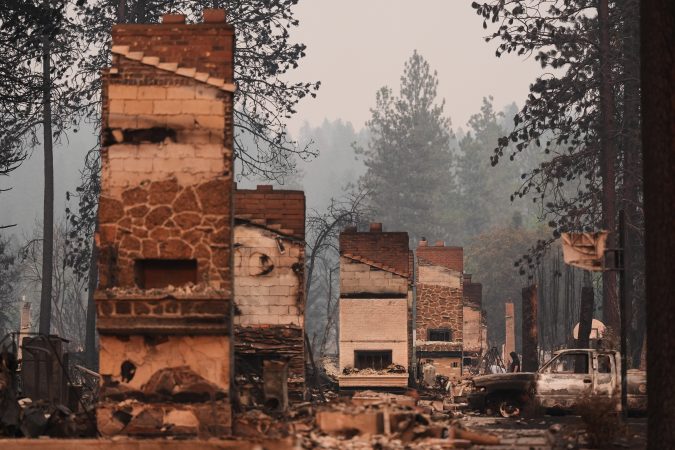
Some residents who had to flee blazes over the weekend returned to find homes that had been burned to the ground. In some cases, only chimneys were left standing.
“There’s nothing to save,” Miriam Sim, 76, said as she and her husband, Daniel Sim, surveyed the ruins of the home where they had lived since 2005.
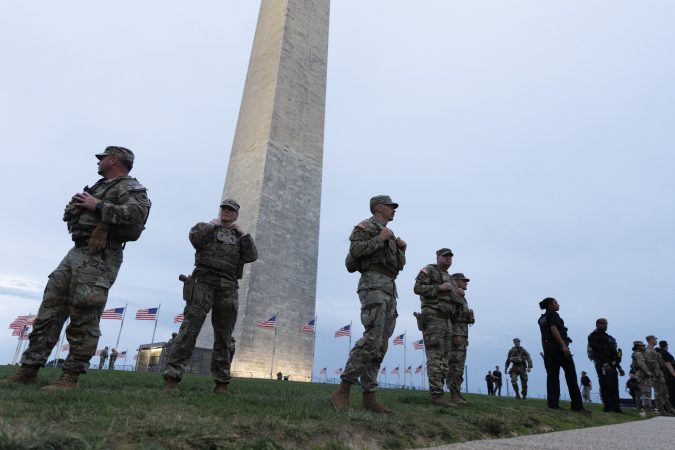
The Pentagon’s deployment of National Guard troops to Washington, D.C., is set to cost an additional $1.4 billion through the end of the Trump administration, according to information provided to Congress and reviewed by The Washington Post.
The estimate, which encompasses October 2026 through January 2029, adds to the hundreds of millions of dollars spent on the mission to date. While the administration has not disclosed the full cost of the mission so far, the new figure represents the most comprehensive accounting yet of the president’s unprecedented use of the military to patrol the nation’s capital — an operation fiercely criticized by many Democrats and civil liberty advocates.
The information was provided to Sen. Elizabeth Warren (D-Massachusetts), a member of the Senate Armed Services Committee, by Jules Hurst III, Trump’s nominee to become the Pentagon’s comptroller, as part of his confirmation process. Hurst is set to be confirmed in a bloc of Trump administration nominees as soon as this week.
The administration deployed National Guard personnel to Washington in August 2025, after Edward Coristine, a former staffer in Elon Musk’s U.S. DOGE Service initiative to slash the federal government, was assaulted in an attempted carjacking. The National Guard will maintain a presence in D.C. until January 2029 or “until the president says the mission is over,” Brig. Gen. Leland Blanchard II, the interim commanding general of the D.C. National Guard, told reporters in a news briefing Monday.
The cost estimate provided to Warren assumes a deployment of about 2,500 National Guard personnel. There are approximately 4,600 service members in the city now, Blanchard said, part of a temporary surge coinciding with summer events to commemorate the 250th anniversary of the signing of the Declaration of Independence.
Democrats have called the deployment a wasteful use of military resources and an infringement on Americans’ civil liberties, and they have pressed Defense Secretary Pete Hegseth to justify the mission as the Pentagon faces urgent budget shortfalls because of the Iran war and other military operations.
“The National Guard are not pawns and taxpayer dollars are not a piggy bank for Trump’s political stunts,” Warren said in a statement.
In testimony to the Senate Appropriations Committee last month, Hegseth acknowledged the Defense Department is facing financial pressure but repeatedly blamed the situation on the Biden administration’s management of the military.
The Pentagon did not immediately respond to a request for comment.
Since returning to office, Trump has deployed active-duty and National Guard units to American cities on controversial missions to stop crime or protect federal immigration agents. Academics and researchers who specialize in politicization and the military, along with local officials in some of the targeted communities, have argued that the operations violate laws barring the military from engaging in domestic law enforcement.
Some state and local governments, including Washington, have challenged the deployments in court.
The Congressional Budget Office estimated in January that the administration’s National Guard deployment in Washington cost $223 million through the end of 2025. It said deployments in Los Angeles, Memphis, Chicago and Portland, Oregon, together cost an additional $273 million in 2025.
CBO has estimated that each additional month of deployment in Washington would cost about $55 million.
Trump’s record $1.5 trillion defense budget request for fiscal 2027 includes $2.3 billion in funding for domestic use of the military, including $605 million for the National Guard mission in Washington.
In a separate request to Congress for $67 billion in additional funding to help cover the costs of the Iran war, the Trump administration also requested $800 million for the National Guard. Sen. Patty Murray (Washington), the Appropriations Committee’s top Democrat, said during last month’s hearing with Hegseth that those funds would go toward extending the D.C. deployment.
Blanchard, the National Guard general, defended the mission, noting that last month the Trump administration signed a $292 million contract to move National Guard members into local apartments from hotels in and around Washington. The move, Blanchard said, will save $90 million on lodging and transportation costs over the course of the contract.
He said, too, that service members have responded to about 800 medical emergencies — performing CPR and applying tourniquets on gunshot victims, and administering 325 doses of Narcan, a drug used to treat overdoses.
While Trump officials have repeatedly asserted the National Guard was necessary to help address a crime emergency in the city, D.C. police data shows violent crimes this year have remained about the same from this time in 2025. Property crimes, including burglary from cars and motor vehicle theft, have decreased by about a quarter. When the National Guard was deployed last year, crime rates were near a six-year low, according to federal data.
National Guard personnel in Washington are supposed to yield to local police for law enforcement activities, such as arrests, said Michael Perloff, the senior staff attorney for the American Civil Liberties Union’s D.C. chapter. But their orders leave open gray areas, including how personnel should respond in an emergency or when under threat, he said.
“National Guard members aren’t trained to handle those situations,” said Perloff, whose organization is challenging the mission’s legality in court.
The service members deployed in D.C. have been tasked with a variety of missions, such as guarding the Reflecting Pool in front of the Lincoln Memorial and cleaning up garbage on city streets.
In November, two National Guard personnel were shot while patrolling the city blocks away from the White House. One died from her injuries.
Rahmanullah Lakanwal, an Afghan national charged in the shooting, pleaded not guilty in June. He is facing a possible death sentence if convicted.
The status of the Iran war remained in limbo Monday, as President Donald Trump insisted that talks between Tehran and Washington were “going on right now” while Iran’s Foreign Ministry spokesman said, “We are not currently holding negotiations with the United States.”
Trump, who in a social media post earlier in the day called Iranian leaders “unbelievably duplicitous,” told reporters in the Oval Office that “we’re straight about” talks between the two countries, though “they deny. But they’re not denying it now. They just put out a statement, not denying it.”
Asked where that statement could be found, a White House spokesperson referred The Washington Post back to the president’s remarks.
Trump said Iran, along with other regional states, had “begged” for talks, leading him to call off what he had described as an imminent U.S. attack that would have been “harder than any attack … since World War II.”
“We were going to hit them very hard yesterday, very, very hard,” Trump said. But “I want to give them every last chance before decapitation. It’s very tough to do what we have planned, still planned,” he said. “I’m very proud of the fact that I will give people a chance.”
It was far from the first time since the war began on Feb. 28 that the two sides have offered differing versions of reality on damage done by their dueling airstrikes, what they have agreed to in on-again-off-again informal talks, or even whether those talks were happening.
The conflict, which officials originally said would last only a few weeks but is now entering in its sixth month, has dragged down Trump’s poll numbers. Growing numbers of Republican lawmakers and voters have questioned both the rationale for the war and Trump’s strategy.
Although Trump went into the war saying his goal was to destroy Tehran’s nuclear program — an objective he previously said was achieved after 12 days of U.S. and Israeli bombing last summer — Iran’s closure of the Strait of Hormuz within days after the conflict began quickly became the focus of administration attention. The narrow waterway is a chokepoint, bordered by Iran and Oman in the Persian Gulf, through which at least 20 percent of the world’s energy supplies transit.
Iran refused to let ships pass without permission, said it was going to impose tolls, and began mining the channel and shooting at commercial vessels. In April, the U.S. imposed a naval blockade barring all ships from entering or leaving Iranian ports. Iran continued to menace international shipping while Washington responded by bombing Iranian defensive sites around the waterway and some infrastructure farther inland, leading Tehran to fire missiles and drones at its Persian Gulf neighbors that host U.S. military facilities.
As the price of gasoline surged at U.S. pumps, the two sides agreed to direct talks in mid-April in Islamabad, with the U.S. delegation headed by Vice President JD Vance. Unable to reach agreement there, after subsequent lower-level negotiations they signed a 14-point memorandum of understanding in mid-June that included a pullback of the U.S. blockade, an easing of sanctions against Iran, and plans for Iran and Oman to jointly figure out a way to manage the strait, while Washington and Tehran moved to nuclear negotiations.
The ceasefire collapsed within weeks, largely over Iran’s insistence on continuing its control over the strait. The U.S. reimposed its blockade and sanctions, as both sides resumed sporadic military attacks.
In recent days, regional Arab powers — including Saudi Arabia, the United Arab Emirates and Qatar — have been in touch with Trump as they try to facilitate an end to the conflict, which is damaging their economies. Iran has also been reaching out to many of those same leaders.
U.S. intelligence agencies have assessed that Iran is unlikely to change its own negotiating stance or be defeated in the near term.
According to Tehran, there have been no direct negotiations with the U.S. since April, although both sides concede that messages have been passed through regional mediators.
Last week, Oman sent Tehran a proposal for reopening the Strait of Hormuz that would divide maritime traffic 50-50 between routes along their opposite coastlines. Muscat also suggested a system of “voluntary” contributions from nonprofits, interested states and companies to pay for navigational aid, maintenance and environmental safeguards for the strait.
Similar to a process used by Singapore, Malaysia and Indonesia, which border the Strait of Malacca, an international trade chokepoint between the Pacific and Indian oceans, the proposed system could be a face-saving way for Iran to move away from the tolls and controls that it has demanded and that Trump and other world leaders have said can never be allowed.
In a press briefing Monday in Tehran, Foreign Ministry spokesman Esmaeil Baqaei said that Iran was negotiating only with Oman over ensuring the safe passage of commercial shipping through the strait and that there were no talks with the United States.
“The strait was not closed because of disagreements between Iran and Oman,” Baqaei said. “It has faced disruption since last March due to the military aggression of the United States and the Zionist regime” in Israel.
In his Truth Social post Monday morning, Trump was dismissive of the Iran-Oman talks. “They ask for a meeting, some would say ‘beg,’ talks begin, with more scheduled in the immediate future,” he said of Iran, “and they say, openly and proudly, that they’re not having any discussions, that nothing is being talked about, and they’re only dealing with ‘Oman.’”
“They then go on to give their usual blather in saying, the Strait of Hormuz will be operated powerfully by them,” Trump said. But the United States has erected a “wall of steel” with its naval blockade, and “nothing gets through to Iran, unless we want it to, and nothing will get through, unless a Deal, or Total Surrender, is accomplished.”
Philadelphia is asking a federal appeals court for a redo on the President’s House, saying the court’s June ruling that allowed President Donald Trump’s administration to swap the exhibit at the historic site limited the ability of judges to restrain the executive branch.
The city is seeking a new hearing in front of the entire U.S. Court of Appeals for the Third Circuit, or the same three judges who issued a unanimous ruling in June that held the city has no rights over the displays at George Washington‘s Philadelphia home.
The ruling created a catch-22, the city’s attorneys said in Monday’s court filing, not only for the President’s House Site but also for the ability of federal courts in the Philadelphia area to review government actions broadly.
The Third Circuit found that the abrupt removal of the slavery exhibit from the President’s House could not be challenged under the statute that governs final actions by federal government agencies. The removal, the appeals court said, was not an “agency action” or “final.”
“Both holdings are wrong, and both are of exceptional importance,” the city’s filing said.
The city contends that the court supplied a road map for federal agencies to evade challenges in court. Under this precedent, the federal government can evade courts’ review by “announcing — even mid-litigation — that it might do something else later,” the city said.
The judges opened the door for a federal agency to defeat a lawsuit over its conduct simply “by pointing to what it might do next,” according to Philadelphia’s filing.
It is rare for circuit courts to hold rehearings in front of the original or the full courts, which is known as en banc, said Adam Crews, a professor at Rutgers School of Law.
“The court will not grant rehearing en banc when the panel correctly states the law and the contested issue is simply the application of the law to specific fact,” Crews said.
Even if the entire court agrees to hear the case, the city might not find a sympathetic audience.
A majority of the court’s 14 members have been appointed by Republicans, and six were named by Trump.
The panel that issued the June ruling consisted of Hardiman, a George W. Bush appointee; Luis F. Restrepo, a Barack Obama appointee; and Peter J. Phipps, who was appointed by Trump.
The city filed the request for reconsideration hours before the deadline to appeal the June order, and at a time when Mayor Cherelle L. Parker’s law department is in transition.
City Solicitor Renee Garcia, who resigned last week, argued the case on behalf of the city at a January district court hearing. U.S. District Judge Cynthia M. Rufe issued a blistering opinion and an injunction ordering the restoration of the exhibits, which was later overturned by the Third Circuit.
Parker appointed Monique Galloway, who worked for the U.S. Attorney Office in Philadelphia, as the city’s next solicitor.
Monday’s filing still carried Garcia’s name,who remains in the role until early September.
The National Park Service and Department of the Interior did not immediately respond to a request for comment.
Advocates for the original exhibit, including Avenging the Ancestors Coalition and city leaders, vowed to keep fighting to restore the removed panels to the site. Michael Coard, leader of Avenging the Ancestors Coalition, said last month the group was exploring new legal strategies.
“This site, Sixth and Market Streets, is the only site where George Washington lived on federal property — that federal property was known as America’s first White House — and Black people were enslaved,” Coard said from the President’s House on the day the exhibit was swapped. “There’s only one place where that happened. Right here.”