Category: Nation & World

  • North Korea conducts ballistic missile test days before US and South Korea begin drills

    North Korea conducts ballistic missile test days before US and South Korea begin drills

    SEOUL, South Korea — North Korea launched a short-range ballistic missile toward the sea on Thursday, South Korea’s military said, resuming weapons tests days before its rivals the U.S. and South Korea begin annual military drills that North Korea views as an invasion rehearsal.

    The launch from North Korea’s eastern coastal Wonsan area was detected around 5 p.m., South Korea’s Joint Chiefs of Staff said, explaining that South Korea’s military has bolstered its surveillance posture and is closely coordinating with the U.S. and Japan.

    Japan’s Defense Ministry also said North Korea fired a possible ballistic missile but there was no impact in or around Japan, where the coast guard urged ships around the coast to use caution and notify authorities if any fallen objects were found.

    The ballistic missile launch was North Korea’s first since late June, when it tested a tactical ballistic missile with a “special mission” warhead and other weapons. After watching the testing activities, leader Kim Jong Un underscored the need to bolster the military’s “deadly and destructive offensive posture.”

    Thursday’s launch also came ahead of large-scale, annual exercises to be conducted by the U.S. and South Korean militaries later this month. U.S. and South Korean officials say the training is defensive in nature, but North Korea says the maneuvers are a practice invasion and often responds with its own missile tests and warlike rhetoric.

    South Korean and U.S. officials haven’t formally released details about this year’s joint exercise, but the drills are typically held in the latter half of August.

    Kim has been focusing on enlarging its nuclear and missile arsenals since his high-stakes diplomacy with U.S. President Donald Trump collapsed in 2019. Experts say Kim wants international recognition as a nuclear state so that he can demand the lifting of international economic sanctions on North Korea.

    U.N. Security Council resolutions ban North Korea from launches involving its huge stockpile of ballistic missiles. Tests of other weapons including cruise missiles and artillery systems are not banned, but experts say they still pose a threat to South Korea and the U.S.

    In early July, Kim supervised tests of a nuclear-capable cruise missile aboard a new 5,000-ton destroyer. After years of prioritizing ballistic missile development, Kim has increasingly turned his focus to naval capabilities, including the construction of a nuclear-powered submarine.

    In recent years, Kim has boosted his diplomatic credentials by expanding ties with Russia. North Korea has supplied conventional weapons and troops to Russia to support its war against Ukraine.

    Kim also has pushed to deepen cooperation with China, the North’s economic pipeline. Chinese President Xi Jinping visited the North Korean capital Pyongyang in June for the first time in seven years.

    In response to Trump’s repeated outreach to restart diplomacy, Kim has suggested talks can resume if the U.S. drops its demand for North Korean denuclearization as a precondition.

  • The first small steps taken in Neil Armstrong’s childhood home inspired a giant leap for mankind

    The first small steps taken in Neil Armstrong’s childhood home inspired a giant leap for mankind

    WAPAKONETA, Ohio — Inside Neil Armstrong’s boyhood home, at the top of a creaky stairway, sits his bedroom where he launched model airplanes out of the rear window to measure how far they’d fly.

    Hanging in the room now are autographed photos of astronauts who have visited the privately kept house to see where Armstrong’s first steps to the moon began.

    Owned by a retired history teacher devoted to preserving its past and charming character, the home is for sale for the first time in nearly 40 years. What will become of it remains uncertain.

    All over Armstrong’s hometown of Wapakoneta, there are reminders of his history-making moonwalk. But few places played a bigger role early in his journey than 601 W Benton St. — the house where the Armstrong family settled in western Ohio when he was a young teenager.

    It’s where Armstrong built planes out of balsa wood and glue in the dining room and constructed a basement wind tunnel to test his models. He’d often pedal his bike from home to take flying lessons at an airstrip.

    At age 16, Armstrong made his first solo flight and got his pilot’s license. Just 20 years later, he rocketed into space for the first time. After the 1969 moon landing, he taught at the University of Cincinnati.

    A parade of astronauts has visited Armstrong’s house

    Today, Armstrong’s two-story boyhood home is an occasional stop for visitors to the Armstrong Air and Space Museum in Wapakoneta, even though the house isn’t open for tours.

    When Karen Mikesell bought the place in 1988, she had no idea who once lived there until another teacher soon told her.

    As a history teacher who later became a school principal, Mikesell felt a responsibility to “keep it like the Armstrongs had it,” she said.

    She’s hosted nine astronauts, including Buzz Aldrin, who flew to the moon with Armstrong and Michael Collins in 1969.

    Aldrin stepped inside the bedroom upstairs a few years after Armstrong died in 2012, Mikesell recalled, “and the tears just streamed down his cheeks.”

    Over the years, she’s been given a moon rock and received a piece of gold foil that covered the Apollo 11 capsule — a gift from one of the Navy frogmen who helped recover the command module and its crew.

    Some astronauts autographed their photos with personal messages to Mikesell — “thanks for taking such great care of Neil’s home!” wrote Mike Foreman, who flew on two space shuttle missions.

    “You can read books, but you can never have those kinds of experiences that I was able to have because I lived here,” she said. “I could go on and on.”

    House holds many reminders of the first man on the moon

    Armstrong’s family bought the home in 1944 after his father had moved them about a dozen times with his job as a government auditor. The oldest of three children, Neil was born in a farmhouse just outside Wapakoneta, today a city of just under 10,000 people.

    The house on Benton Street with its big front porch has changed little on the outside. Inside, the layout is similar too, though it has been updated.

    In the backyard, a garage that Armstrong and his father built with scrap lumber still stands, though a chicken coop where he and his friends gathered for Boy Scout meetings is long gone.

    Armstrong’s old bedroom is now decorated with photos and paintings of the moon landing. Hanging from the ceiling is a model of the Wright brothers’ first production airplane — the aviation pioneers were from nearby Dayton and an inspiration for Armstrong.

    Mikesell never met Armstrong, who was famously private. She did talk with his parents, siblings, and children about the 1908 home and its place in Armstrong’s upbringing.

    A part of American history is for sale

    Mikesell, who’s 82, said she hopes someone might be willing to buy the house and donate it to the Armstrong museum, which doesn’t have the funds to acquire the property, according to Logan Rex, its spokesperson.

    She is just one of a handful of people who’ve owned the home since the Armstrongs sold it in the mid-1960s. By the time she bought the house, the rooms were covered with wallpaper in a rainbow of colors, so she sought to restore its original look.

    While the house, which is listed at $430,000, isn’t legally protected from alteration, Mikesell is also optimistic that the new owners will respect it — whether it remains a private residence or becomes a place for overnight stays.

    “It’s time to let someone else have the opportunity to be as blessed as I’ve been,” she said, “and to take care of it and keep it as a part of history.”

  • Senate confirms Erica Schwartz as CDC director, bringing new leadership to troubled agency

    Senate confirms Erica Schwartz as CDC director, bringing new leadership to troubled agency

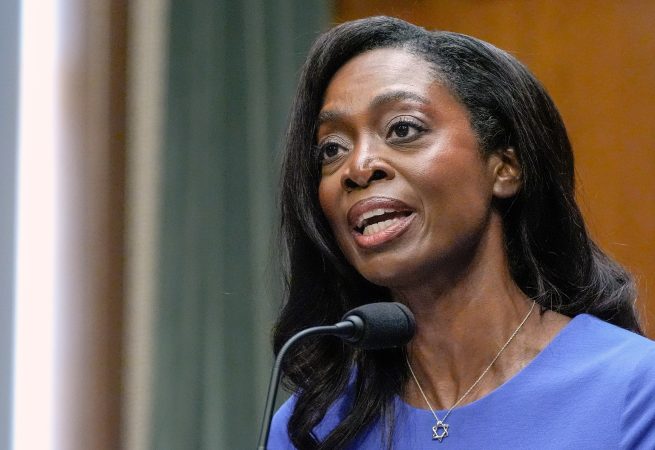
    NEW YORK — The Senate on Wednesday confirmed Erica Schwartz as director of the Centers for Disease Control and Prevention, placing her in charge of a public health agency beleaguered by political meddling and low morale.

    Schwartz was confirmed in a 51-44 vote. The 54-year-old becomes the 22nd leader of the Atlanta-based CDC, which is charged with protecting Americans from preventable health threats, and the agency’s first confirmed director in nearly a year. Her resume includes medical and law degrees, a stint as deputy surgeon general, and a leadership position at the U.S. Coast Guard.

    Schwartz’s nomination appeared to be on shaky ground after a hearing before the Senate Health, Education, Labor, and Pensions Committee last month. The chairperson, Sen. Bill Cassidy (R., La.) and others questioned whether she would be willing to stand up to Republican President Donald Trump’s health secretary, Robert F. Kennedy Jr., if he ordered CDC to do something unsupported by science and good public health practice.

    But weeks later, Cassidy said he had spoken with Schwartz after that hearing and with others who knew her, and said he had gained confidence in her.

    U.S. Department of Health and Human Services officials did not immediately respond to questions about when Schwartz will start the job or her salary.

    The CDC has been in turmoil since Trump returned to office last year.

    Largely due to layoffs and resignations, the agency has lost 3,000-plus employees, more than one-quarter of its workforce. Morale has plummeted as a succession of mostly temporary leaders has come and gone. The front office has been staffed by political appointees with little or no training in medicine or public health.

    “Now, Dr. Schwartz needs to prove that her leadership will serve science and not the whims of politicians. CDC needs a Director who will protect public health workers, defend evidence-based guidance, and refuse any directive that would undermine public safety,” said the National Public Health Coalition, an organization of former and current CDC workers, in a statement Wednesday.

    When Schwartz was nominated in April, public health experts were cautiously optimistic, citing her background. They also noted that Schwartz was the choice of Trump and not Kennedy, who is a leading voice in the anti-vaccine movement before he was tapped to oversee the CDC and other federal health agencies.

    Schwartz was the third Trump nominee for CDC director in the past 18 months.

    The first was a former Florida congressman, David Weldon. His Senate hearing in March 2025 was canceled an hour before it was to begin. Weldon said at the time that he had been told not enough senators were willing to vote for him.

    The White House then moved on to Susan Monarez, who had been serving as the CDC’s acting director. Monarez was confirmed by the Senate, but ousted from the job in less than a month. Trump administration officials said she was not aligned with the president’s agenda, so they terminated her.

    Since then, there have been a series of HHS officials as acting CDC directors.

    “With all the turmoil of the past two years, the CDC desperately needs stability, experienced leadership, and a steadfast commitment to science,” said Georges Benjamin of the American Public Health Association in a statement Wednesday.

    The CDC position was one of several leadership vacancies among federal health agencies, including the U.S. surgeon general and the commissioner of the Food and Drug Administration.

  • FAA is investigating why a plane was allowed to take off as President Trump’s helicopter approached

    FAA is investigating why a plane was allowed to take off as President Trump’s helicopter approached

    WASHINGTON — The Federal Aviation Administration is investigating why a plane was allowed to take off as President Donald Trump’s helicopter was approaching Reagan National Airport Tuesday afternoon in what appears to be a violation of safety procedures put in place after last year’s midair collision near that busy Washington, D.C., airport.

    The incident occurred as Marine One left the White House for Andrews Air Force Base with the president aboard for the first leg of a West Coast trip. A commercial jet took off at the same time. The FAA decided after 67 people died on Jan. 29, 2025, when an airliner collided with an Army Black Hawk helicopter that all takeoffs and landings at Reagan would be halted anytime a helicopter passes by the airport.

    The airplane that took off Tuesday was climbing above Marine One as the helicopter approached, so the two aircraft were not on a collision course.

    The FAA said in a statement that the preliminary investigation showed “there was a momentary loss of separation after which the aircraft continued to move away from one another.”

    “The air traffic controller was in contact with both the commercial pilot and Marine One pilot during the loss of separation,” the FAA said.

    The White House emphasized that President Trump was not in danger during the incident.

    “Marine One flights are piloted by some of the best aviators in the world, and at no point was the President in harm’s way,” said White House spokesperson Kush Desai.

    And the Marine Corps defended the actions of their helicopter pilots.

    “There were no ‘close calls’ with the routine Marine One movement,” Tuesday, said Marine Corps spokesperson Capt. Jacob Sugg in an email. “Washington National Tower did not delay the helicopter crew, ask them to hold, or otherwise alter their flight profile. To the contrary, the ATC team approved the requested route and provided timely and appropriate traffic information.”

    The Wall Street Journal first reported the incident.

    The airspace near the White House and Reagan is heavily congested with military and commercial aircraft.

    Poor communication between the military and the civilian air traffic controllers at Reagan has been an issue in the past. It came out last spring after one of the hearings on the midair collision that a hotline connecting the Pentagon to the tower at Reagan hadn’t been working for more than three years, and the FAA hadn’t even realized it.

    The Federal Aviation Administration took steps to ensure that helicopters and airplanes would no longer share the same airspace around Reagan National Airport shortly after the investigation into last year’s midair collision began. The rules also prohibit air traffic controllers from relying on visual separation and require all military aircraft to broadcast their locations.

    The main group of family members of the victims of last year’s crash questioned why the government hasn’t done more to prevent collisions in the crowded airspace around Reagan in a post on X Wednesday morning. The family members have been urging Congress to reach a compromise and pass the package of aviation safety reforms that the NTSB recommended after the midair collision.

    The NTSB said Wednesday morning that it is still gathering information about Tuesday’s incident involving Marine One and hasn’t yet decided whether to investigate.

  • TPS for Haitians officially ends, putting thousands out of work and in limbo

    TPS for Haitians officially ends, putting thousands out of work and in limbo

    A federal judge on Wednesday took the final step in allowing the Trump administration to terminate temporary protected status for 350,000 Haitians, meaning many are likely to lose their jobs and be at risk of deportation back to a country the United States says remains dangerous.

    U.S. District Judge Ana C. Reyes of the District of Columbia had enjoined the administration in February from ending TPS for Haitians, and a federal appeals court had refused to lift the ban. Reyes reversed her decision after the U.S. Supreme Court ruled 6-3 in June that federal law bars judicial review of TPS determinations.

    The high court’s ruling means TPS “is no longer in effect,” Reyes wrote in her new order Wednesday. However, the judge said she would allow attorneys to continue seeking discovery and litigating their underlying claims that the Trump administration terminated TPS because of their clients’ race.

    The Supreme Court’s ruling left open a narrow path for TPS holders to challenge the loss of their status on constitutional grounds. An attorney representing the immigrants involved in the Supreme Court case said the team is considering filing a new lawsuit.

    Immigration experts said that even before Reyes’s amended ruling, companies had begun large-scale layoffs of Haitian TPS holders, who now face the possibility of detention and deportation. Another federal judge in New York is expected to soon allow the Trump administration to formally end TPS for an estimated 6,000 Syrians to comply with the Supreme Court.

    About 200,000 Haitians with TPS hold jobs, with large concentrations of workers in healthcare, food service, warehousing, retail, and long-term caregiving, according to an analysis of government data by the immigration advocacy group FWD.us. Business owners have been preparing for weeks by raising sign-on bonuses, cutting shifts and making inroads at community colleges and high schools to hire new staff, industry leaders said.

    In Philadelphia, Haitians and their allies plan to march through Center City on Thursday, to demand that the federal government provide some form of relief.

    The end of TPS threatens to exert dramatic impact on the city’s 11,000-strong Haitian community, including deportations to a homeland in chaos — beset by natural disasters, governmental collapse, and gang violence that has displaced more than a million people.

    Some local Haitians have become desperate to see if they can gain legal status in this country, such as asylum, or find somewhere else in the world to go that’s safe.

    In Philadelphia and elsewhere, many TPS-holders work in critical jobs and industries — the people who build homes, keep restaurants running, fix plumbing and wiring, and, particularly in the case of Haitians, care for the ill and elderly.

    “If you access our healthcare system in any way, shape, or form, particularly elderly care or senior care, you’re going to feel it,” Anuj Gupta, president and CEO of the Welcoming Center in Philadelphia, told The Inquirer.

    Industries and employers here will be hit as the Trump administration moves to end TPS for a series of countries through the fall.

    The Economy League of Greater Philadelphia, a regional policy and research organization, examined four countries where designations are ending or at risk ― El Salvador, Ukraine, Syria, and Haiti.

    It estimated that in the local area, between 4,100 and 6,100 workers from those countries depend on TPS. In the city, those TPS workers bring home $36 million to $76 million in annual salaries and pay $1.5 million to $3 million in wage tax.

    The local sectors predicted to be most affected by job losses are construction, building cleaning and landscaping, trucking and warehousing, manufacturing, restaurants, and retail.

    In Ohio, the Department of Homeland Security has recently begun summoning Haitian immigrants to check-in appointments and requiring them to wear ankle monitors, in what appears to be a new enforcement effort after the Supreme Court’s decision.

    In Springfield, Ohio, which has more than 10,000 Haitians, residents awoke Wednesday to group messages relaying worry and a sense of dread. Though Reyes’ order was expected, the reality of its implications is only starting to feel real, community members said.

    Haitian parents of U.S. citizens are now asking for help with power-of-attorney forms to ensure their children will be cared for if they are detained or deported. Some Americans have been preparing their own children in case they have to say goodbye to Haitian friends.

    Not all Haitians are immediately vulnerable to arrest, said Katie Kersh, senior attorney with Advocates for Basic Legal Equality, a legal nonprofit, because some have pending immigration cases. But the possibility of immediate detention at mandatory check-ins with U.S. Immigration and Customs Enforcement this week is now greater, she said.

    “The way this group has been specifically targeted is symbolic of the administration’s efforts to criminalize immigrants of color,” Kersh said. “In targeting people who had TPS, they are targeting people who followed the law.”

    The termination is expected to weigh most heavily on certain major metropolises, such as Miami and Boston, as well particular midsize cities, such as Columbus, Ohio, and Allentown, Pa. Those local economies will see a reduction in consumer spending and tax revenue, experts say.

    DHS has called TPS a “de fact amnesty program” and said Congress never intended for it to offer permanent protections for foreigners.

    Most TPS holders have lived in the U.S. for years, some for more than a decade. The Obama administration first granted TPS to Haitians in 2010, after a major earthquake destabilized the country, and to Syrians in 2012, amid a violent civil war in their country.

    The prospect of migrants being sent back home is particularly worrisome, experts said, because those countries remain dangerous and politically unstable. The U.S. State Department maintains a “do not travel” warning for U.S. citizens to both countries, citing the threat of kidnappings, violent crime, and terrorism.

    The Haitian Legal Defense and Education Fund, in a court filing last week, asked Reyes to implement a 90-day ban on the federal government from deporting Haitians who lose TPS status, citing systematic violence in Haiti that “demonstrates a pattern of crimes against humanity.” The judge did not grant that request.

    “This is an embarrassment for the United States of America,” Sen. Chris Murphy (D., Conn.) said in a conference call with reporters Monday. “There is no safe place to return for TPS holders from places like Haiti and Yemen and Venezuela and Syria. In fact, in those places I just mentioned, the situation is not stabilizing, getting better, it is getting worse.”

    Some Haitian TPS holders may have other pending immigration claims, including applications for asylum, that allow them to remain in the U.S. Others will be left without any legal status, putting them at risk of being detained, whether through a targeted ICE operation or a traffic stop that leads to questions about their status in the U.S.

    Immigration attorney Ira Kurzban, who helped represent the Haitians in the Supreme Court case, said he is bracing for a rush of arrests by the Trump administration. But he is urging his Haitian clients to continue pursuing applications for asylum or another form of legal status, even if they are detained. The alternative, he said, is returning to a country where they could be harmed or killed.

    “I tell my clients to fight, fight, and fight,” Kurzban said. “Nobody is telling a client to make up anything, but if there is a claim, I think the worst thing they can do is just give up.”

    The high court’s decision, which was issued along ideological lines, is expected to eventually affect all of the estimated 1.7 million people from 17 countries who had been granted TPS. President Donald Trump’s administration has sought to eliminate the humanitarian protections for people from 13 of the 17 countries in the TPS program, though litigation in lower courts had slowed the government’s effort.

    TPS is reserved for people from designated countries that are in the midst of armed conflict, natural disaster, or other crises. The protections allow immigrants in the U.S. to work legally for up to 18 months and seek to renew their status after that. Applicants are required to pay fees and pass a background check and cannot have serious criminal records.

    Many Haitians and business owners have been making plans to prepare for the sudden loss of thousands of workers. Nursing home leaders warned they would have fewer beds to offer if health aides were forced to leave the country. Business owners started calculating how many days they could continue to employ TPS holders. Immigrants began making plans to sell or rent their homes and secure bank accounts.

    It is up to employers to verify who has a valid work authorization, and some companies do so only once a year. So how quickly someone might lose their job will vary.

    A plurality of Americans oppose ending TPS and deporting those who have been protected by it, according to a Washington Post-Ipsos poll conducted last month. The poll found 44% oppose terminating the program, compared with 32% who support doing so.

    Trump has long signaled that he wants to deport many of the immigrants previously protected through TPS. He falsely claimed during his presidential campaign that Haitian residents in Springfield, Ohio, were killing and eating their neighbors’ pets — and said that immigrants were “poisoning the blood” of the country.

    After the Supreme Court ruling in June, Stephen Miller, White House deputy chief of staff and the architect of much of Trump’s immigration policy, said that he expected people who lose TPS status to be deported.

    Those who lose TPS can seek asylum if they apply within what the law calls a “reasonable period” of time after losing their status, which is evaluated at the discretion of the immigration judge.

    The Trump administration recently announced a new rule that could make it more difficult for asylum seekers to remain in the country. The provision allows asylum officers to send applicants directly into deportation proceedings in immigration court without granting them an interview to determine whether they are eligible for protection and permission to stay permanently.

    U.S. Citizenship and Immigration Services, which announced the new rule, said it aims to wipe out 31% of an asylum application backlog totaling 1.4 million cases.

    The Trump administration already has deported some former TPS holders after revoking their status, including Venezuelans, said Emi MacLean, a senior staff attorney at the ACLU of Northern California. Her organization represents Haitian and Venezuelan TPS holders in a separate legal case that remains active as the ACLU and its partners seek to amend their complaint to be in line with the Supreme Court’s ruling.

    MacLean said that the large number of Haitians who stand to lose TPS could have deep impacts in some labor industries, including healthcare, where many of them worked.

    “It will be a huge loss to many people and communities,” she said.

    Staff writer Jeff Gammage contributed to this article.

  • Afghanistan’s child deaths are rising as food distributions face cuts, UN says

    Afghanistan’s child deaths are rising as food distributions face cuts, UN says

    ROME — Child malnutrition has reached critical levels in a third of Afghanistan’s provinces and is expected to worsen as funding shortfalls force cuts in food distributions and other support, the U.N. World Food Program said Tuesday.

    “We must act now to stem the rise in child deaths, which this crisis is provoking,” John Aylieff, WFP’s country director in Afghanistan, said in a statement, adding that “it is already too late for too many.”

    Afghanistan continues to recover from decades of conflict and upheaval, including the chaotic withdrawal of U.S. forces in 2021 as the Taliban took power.

    Olga Cherevko, spokesperson for the U.N. humanitarian office in Afghanistan, said nutrition specialists report that “wasting among children has worsened this year in over three-quarters of the country.” Children suffering from a condition known as wasting are acutely malnourished, become very thin for their height, and need immediate therapeutic feeding.

    But “too many children arrive at health facilities severely malnourished” while others never make it, Cherevko told reporters at U.N. headquarters by video from Afghanistan, where she has traveled across the country in recent months and weeks.

    WFP said 142 health centers closed in 2025 because of aid reductions and more than 13,000 children lost access to nutrition treatment. It did not mention any specific donor, such as the United States, where the Trump administration has made sweeping cuts in foreign aid.

    Nearly 3.7 million Afghan children are projected to suffer from acute malnutrition this year, along with 1.2 million pregnant and breastfeeding women, according to WFP.

    The agency said 12 Afghan provinces have reached critical levels of acute child malnutrition, a record number. It cited a combination of conflict, unemployment, rising food prices, disease outbreaks, poor water and sanitation, and reduced humanitarian funding.

    Deliveries delayed by the Iran war and other fighting

    WFP said supply shortages linked to conflict in the Middle East and the nine-month closure of Pakistan’s border because of fighting between the neighbors have disrupted deliveries of nutrition products, leaving nearly one million malnourished women and children without essential nutrition services for five months.

    From August through October, WFP said, food distributions aimed at preventing famine in the worst-hit areas are being suspended due to lack of funding, even though the annual peak season for malnutrition is between July and October.

    It said it urgently needs $540 million over the next six months.

    WFP previously described cuts as ‘devastating’

    Humanitarian groups in Afghanistan are grappling with steep funding cuts. In February, Aylieff told the Associated Press that cuts had been “devastating” and were forcing the agency to turn away three out of four acutely malnourished children.

    Funding for food assistance has dropped sharply — by about 59% since 2022 — even as needs have surged, according to a recent WFP report.

    In June, the U.S. pledged $800 million to WFP, which said it will help more than 38 million people in at least 37 countries.

    Cherevko of the U.N. humanitarian office said the larger $1.71 billion humanitarian appeal for Afghanistan is just over 26% funded, which is “alarming,” especially since malnutrition and other indicators are worsening.

  • Man arrested at Trump’s California golf course faces illegal weapons charges

    Man arrested at Trump’s California golf course faces illegal weapons charges

    LOS ANGELES — A California man who was arrested at President Donald Trump’s Los Angeles-area golf course was pretending to be part of the security detail preparing for Trump’s visit and had a stash of illegal weapons in his car and home, authorities said.

    Jeanine John Taele, 38, was due in court Wednesday on a federal weapons charge but the hearing was canceled. He is being held at a downtown LA jail on state charges, according to booking records, and not yet in federal custody, said a spokesperson for the U.S. attorney’s office.

    Taele was arrested Sunday at Trump National Golf Club in Rancho Palos Verdes, two days before Trump visited for a fundraising dinner.

    Taele was first seen on the property Friday, walking throughout the course wearing an earpiece and taking photos and videos of federal agents’ activities as they conducted a security assessment, according to a federal criminal complaint.

    Taele drove away but then returned to the course Sunday. He approached federal agents and said he was employed by the State Department and was there for a security detail. Taele said he had a loaded weapon in his vehicle and was arrested after it was searched, according to federal officials. Authorities also found a 16-round magazine with ammunition in his pocket.

    He already appeared in court on state weapons charges and a second-degree robbery charge for an unrelated incident.

    Taele is charged federally with possession of an unregistered short-barreled rifle that was found at this home, authorities said. The complaint alleges the firearm is an illegally modified AR-style rifle with a barrel that was cut down to 10 inches from 14 inches.

    The Los Angeles County Sheriff’s Department said a search of his pickup truck in the club parking lot turned up a loaded 9mm pistol, binoculars, and a badge that read “security protection agent,” according to federal prosecutors.

    Law enforcement searched his home in the nearby city of Downey on Monday and found a rifle and other firearms, magazines and ammunition, body armor, and notebooks with “concerning statements,” federal authorities said. No details about the statements were released.

    “Mr. Taele’s troubling behavior at the President’s public golf course merely days before the President was expected to arrive raised serious red flags for law enforcement,” Patrick Grandy, the assistant director in charge of the FBI’s Los Angeles office, said in a statement. “There is no room for error, particularly in light of previous attempts on President Trump’s life.”

    In brief remarks about Taele’s arrest to Fox News on Tuesday, Trump said “only consequential presidents” are targeted, “and I am definitely consequential,” which he said brought him “a little solace.”

    Taele was a corporal in the U.S. Marines who was deployed to Iraq in 2008 and Afghanistan in 2010 and worked as a warehouse clerk, according to the U.S. Marine Corps. He earned numerous commendations, including an award for good conduct, during his service from 2008 to 2016.

    The Los Angeles County public defender’s office, which is representing Taele in the state criminal case, did not immediately return an email seeking comment Wednesday. Family members could not immediately be reached for comment.

    Last year a jury found a man guilty of trying to assassinate Trump at the president’s Florida country club. And while a candidate in 2024, Trump narrowly escaped an assassination attempt by a shooter on a roof at a campaign rally in Butler, Pa.

  • Lawmakers call for Pentagon probe of Trump family-backed companies

    Lawmakers call for Pentagon probe of Trump family-backed companies

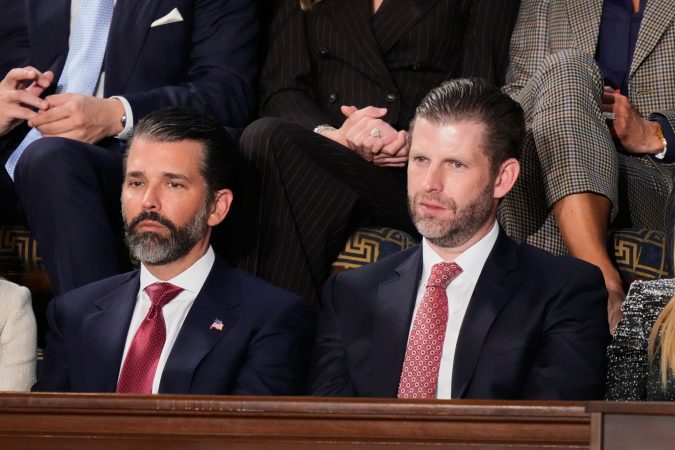
    A group of Democratic lawmakers have asked the Pentagon’s official watchdog to open an investigation after the Washington Post revealed that 15 companies with investment from President Donald Trump’s sons have garnered $3.2 billion in federal contracts, investments, and loans — most coming after Trump took office for the second time.

    The letter from Sens. Elizabeth Warren (Mass.), Richard Blumenthal (Conn.), Tammy Duckworth (Ill.), and Rep. Robert Garcia (Calif.) asks for an inquiry into Defense Department contracts awarded to companies affiliated with Eric and Donald Trump Jr., according to a copy of the request provided to the Post.

    Excluding giants SpaceX and Anduril from the tally, companies with investment from funds associated with Trump’s sons have gained more than three times the number of government contracts and other funding than they had before the president’s second term, the Post reported.

    “We are concerned about a growing cloud of corruption amid questions about whether the President’s family and administration officials may be abusing their positions to influence DoD awards, and the extent to which this is undermining the competitive, apolitical contracting process used to ensure that service members have the best equipment and most effective technologies and weapons systems on the market,” the lawmakers wrote in the letter to the Pentagon’s inspector general, Platte B. Moring III.

    Trump’s sons have amassed a sizable portfolio of defense technology startups as the Pentagon shifts its strategic focus to new warfighting tools, putting large amounts of money into developing smaller, nimbler weaponry. While the new direction has broad bipartisan support, ethics experts and Democrats have raised transparency concerns about how companies are selected for opportunities. Republicans have largely avoided the issue.

    The Trump brothers have said that their investments in companies seeking defense contracts are aligned with patriotic goals of creating new U.S. manufacturing jobs and defeating China’s edge in drones, artificial intelligence, and other critical components of the supply chain. Trump Jr. previously told the Post, through a spokesperson, that he does not “interface with the Federal Government as part of his role with any company he invests in or advises.” The spokesperson, Andy Surabian, stressed that Trump Jr. is a private citizen and a businessperson who has never served in government.

    A spokesperson for the Trump organization, Kimberly Benza, told the Post that “Eric Trump and Donald Trump Jr. are passive, minority investors with absolutely no involvement in the day-to-day operations, strategic decisions, management, or any activities of these companies. They have no role whatsoever in the awarding, oversight, or management of any government contracts and remain proud to invest in American companies and American technology.”

    White House spokesperson Anna Kelly referred the Post to an earlier statement that said there were “no conflicts of interest” and that “This is the same, tired narrative that Democrats have pushed against President Trump, his family, and his administration for a decade.”

    The Pentagon also referred to the department’s earlier statement from acting Pentagon press secretary Joel Valdez in response to the Post’s original story. The statement said that “No company receives preferential treatment.”

    One company that Trump Jr. is invested in, Vulcan Elements, received a $620 million direct federal loan from the Pentagon’s Office of Strategic Capital. The Post previously reported that the company was fast-tracked ahead of other firms waiting in line for a loan from the unit, which focuses on innovative technology. ProPublica reported that a senior White House official, Peter Navarro, intervened on behalf of the company to help it garner a loan.

    While no evidence has surfaced that either brother has used political connections inappropriately to advocate for their companies — and doing so is not against the law — ethics experts have said the brothers should not be involved in companies whose primary business is seeking government contracts because of the potential for abuse. Many of the companies that the brothers are invested in are not primarily defense companies, but sell to the Pentagon as a part of their business.

    The congressional letter requests that the inspector general probe Pentagon awards to Trump family-tied companies, and review the decision-making process to determine whether protocols to prohibit conflicts of interest are being followed. The lawmakers noted in their letter that they have “repeatedly sought, and failed to obtain” an explanation from the Pentagon and White House about the decision-making criteria and the ethics obligations associated with recent awards to the companies.

    According to the letter, the Pentagon responded to a previous request with assurance that the Office of Strategic Capital is “committed to upholding the highest ethical standards” and ensuring that the process is free of conflicts of interests. The lawmakers described that response as unsatisfactory, saying it “left us with more concerns that OSC is unaware of or willfully ignoring the potential for corruption in the awards process at the expense of U.S. national security.”

    Trump Jr.’s investment portfolio largely runs through a venture firm called 1789 Capital. The firm has garnered billions in new investment since Trump Jr. joined as a partner in November 2024, just days after his father was reelected president, according to the Post’s previous reporting. Trump Jr. does not sit on the firm’s investment committee, the Post reported, meaning he doesn’t make direct investment decisions, even though he shares in the profit as a partner in the firm. 1789 Capital declined to comment.

    Eric Trump’s defense tech investments run through American Ventures, the venture capital arm of the investment bank Dominari Holdings. Dominari is located in Trump Tower and its leaders are friendly with the Trump brothers, according to people familiar with the relationship, who spoke on the condition of anonymity in order to describe it.

  • Ukraine fails to halt Russian barrage as Zelensky blames partners for ‘horrific casualties’

    Ukraine fails to halt Russian barrage as Zelensky blames partners for ‘horrific casualties’

    KYIV — Ukrainian forces failed to shoot down a single Russian missile early Wednesday during Moscow’s latest aerial bombardment of Kyiv and the surrounding region — a consequence that President Volodymyr Zelensky blamed on a plunge in anti-ballistic systems supplied by its partners, including the United States.

    Zelensky wrote on X that 17 people were killed and 44 injured, adding: “Ballistic missile interceptors could have saved the lives of those killed today. It is very important that our partners understand that delays in supplying them, or an unwillingness to provide anti-ballistic systems, lead directly to such horrific casualties and destruction.” In a separate post Wednesday, he said that the number of air defense missiles supplied by partners “has dropped threefold compared with 2025.”

    “Our partners do have the missiles,” Zelensky wrote. “It is important that the necessary political decisions on supplies and the acceleration of production processes are ultimately made.”

    It was the third major ballistic attack on Kyiv in a week, and came only days after Zelensky warned that his country had run out of air defense interceptors. Russia launched 24 ballistic and four hypersonic cruise missiles overnight, along with 115 attack drones, most of which targeted the area outside of Kyiv, Ukraine’s Air Force said on social media. All of the missiles and 17 drones struck targets.

    Russian forces also appear to be expanding their list of civilian targets to include Ukraine’s major supermarket chains.

    In a statement posted on social media, Russia’s Defense Ministry said it carried out a “massive strike” that resulted “in the destruction of transportation, logistics, and distribution centers in the city of Kyiv and the Kyiv region.”

    Ukraine relies on the U.S.-designed Patriot air defense systems as its only means to shoot down Russian ballistic missiles, and until recently, a large number were intercepted. However, the system’s interceptor missiles are in short supply, in part because of the large number used during the Iran war.

    European governments, Ukraine’s chief military backers, have been reluctant to hand over more of their Patriots out of worry this could hobble their own defenses. Earlier this year, the Trump administration prodded several European countries to send Kyiv their Patriot missiles, but some declined out of such concern, people familiar with the private discussions said.

    NATO officials say production of the U.S.-made batteries and other air defenses is lagging behind the pace of global conflict and impacting countries including the United States.

    On Friday, President Donald Trump also appeared to reverse an agreement reached with Zelensky earlier to provide Ukraine with licenses to produce interceptor missiles itself.

    On social media on Wednesday, Zelensky also called for Ukraine’s allies to impose additional sanctions on Russia since he said “a significant share” of the components that Moscow obtains abroad for its ballistic missile production were not under sanctions.

    Russia’s latest attack destroyed warehouses and logistics centers of some of Ukraine’s largest retail companies.

    Iryna Chechotkina, a co-founder of Rozetka — Ukraine’s largest online marketplace, similar to Amazon — said that a distribution warehouse in the Kyiv suburb of Brovary, where more than 100,000 orders were processed daily, was destroyed completely and could not be restored. No one was injured in the attack, to her “great relief,” she said.

    “Today I was supposed to post about Rozetka turning 21. To thank our customers, partners, and team for this long journey we have traveled together,” Chechotkina wrote on Facebook.

    “Instead, at night I watched as my life’s work burned down after three ballistic missiles hit,” she said.

    For its part, Ukrainian drones in recent weeks have been bombarding warehouses run by Russia’s largest e-commerce marketplace, Wildberries. On Wednesday, Ukrainian drones attacked a facility in Russia’s central Tula region, Telegram channels and local officials said.

  • State of New Mexico sues Justice Department and Todd Blanche, saying they blocked its Epstein probe

    State of New Mexico sues Justice Department and Todd Blanche, saying they blocked its Epstein probe

    CEDAR CREST, N.M. — New Mexico’s attorney general sued the U.S. Department of Justice on Wednesday, accusing it of blocking the state from investigating sex crimes at Jeffrey Epstein’s sprawling ranch near Santa Fe.

    The lawsuit in federal court in Washington, D.C., said the department and Acting Attorney General Todd Blanche stonewalled New Mexico Attorney General Raúl Torrez’s criminal investigation into Epstein and others, taking action that “actively harms victims and undermines the public interest.”

    The lawsuit sought judicial intervention to force the federal government to turn over materials to New Mexico’s investigators. It was filed the same day that the New Mexico House of Representatives released a report saying “those directly responsible for protecting New Mexicans relied on others to do their job,” including federal prosecutors in New York.

    According to the Washington lawsuit, Torrez and his senior prosecutors “have faced sustained resistance” to the kind of information-sharing common between state and federal investigators.

    In a statement, the Justice Department said it was not releasing some information the state requested because federal court orders ban disclosing “victim-identifying information carte blanche, and New Mexico has provided no lawful basis to justify such sweeping disclosures.”

    It said protecting victim privacy remains a top priority, though the Justice Department “remains available to assist New Mexico’s investigation consistent with the law and binding court orders.”

    The lawsuit said the Justice Department and Blanche were hiding information about Epstein and his co-conspirators when New Mexico is one of the few jurisdictions that may still be able to hold Epstein’s associates accountable or “provide some sense of justice to survivors.”

    In a video conference call with reporters, Torrez said his office has made 10 separate requests for key information and has been ignored or denied.

    “We have heard repeatedly they will cooperate and what our team has experienced is anything but cooperation,” Torrez said.

    “Todd Blanche today with a stroke of a pen could grant us the access that he claimed,” Torrez said. “Instead they have decided to stonewall, to obstruct, and to frankly conceal for whatever reason.”

    Epstein took his own life in a federal jail in New York City in August 2019 after he was denied bail on sex trafficking charges lodged against him when he was arrested a month earlier.

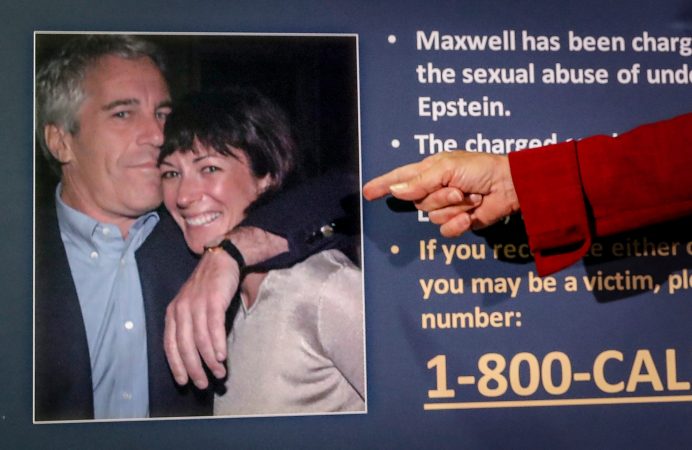
    His former girlfriend and close associate, Ghislaine Maxwell, is serving a 20-year prison sentence after she was convicted in 2021 of sex trafficking charges at a trial in Manhattan, where some witness testimony alleged that Epstein and Maxwell had sexually abused women at the New Mexico ranch.

    Meanwhile, the interim report by the New Mexico Survivors’ Truth Commission, established in February by the New Mexico House of Representatives, in part blamed federal prosecutors in Manhattan for a dearth of information about Epstein’s activities in New Mexico, saying they “never prioritized New Mexicans, focusing instead on Epstein’s misdeeds in New York, Palm Beach, Florida, and the Virgin Islands, while leaving Epstein’s offenses in New Mexico unexamined.”

    Later in the report, though, the commission cited evidence gathered by New York’s federal prosecutors to describe women who described suffering sexual abuse from Epstein at his Zorro Ranch.

    At Maxwell’s trial, Annie Farmer, now a psychologist, testified she was 16 when she agreed to go to Epstein’s New Mexico ranch, where Maxwell touched her breast during a massage and Epstein unexpectedly crawled into bed and pressed himself against her.

    A spokesperson for New York federal prosecutors sent along the Justice Department statement on Epstein in response to a request for comment.

    Coinciding with the release of the report, about 50 members of the media and the public gathered in a legislative hearing room at the New Mexico state capitol on Wednesday to hear about the commission’s preliminary findings.

    Rachel Benavidez, the lone speaker in the “survivor testimony” portion of the meeting, alleged that Epstein sexually abused her at Zorro Ranch beginning in the late 1990s. Benavidez said Epstein’s connections with powerful people in the state allowed him to “roam free here in New Mexico unchecked” after he had been convicted of sex crimes elsewhere.

    “We don’t need more paper files sitting as artifacts,” Benevidez said, urging the commission to question “co-conspirators” who helped Epstein evade accountability in the state.

    She has said in other interviews that she was brought to the ranch to work as a massage therapist but she did not get into that in her testimony Wednesday except to say Epstein had exploited “The one thing that meant everything to me at that time, my hard earned career.”

    Epstein purchased his sprawling estate in Stanley, N.M., a sparsely populated ranching community about 30 miles south of Santa Fe, in 1993 from former Democratic Gov. Bruce King and built a hilltop mansion with a private airstrip and helipad.

    The property was sold by Epstein’s estate in 2023 to the family of Don Huffines, a Republican who was recently appointed state comptroller in Texas. In a February social media post on X, Huffines said the property has been renamed San Rafael Ranch after a saint associated with healing and that his family plans to operate a Christian retreat there.

    In December, the Justice Department started releasing investigative records pertaining to Epstein and Maxwell in accordance with the Epstein Files Transparency Act.

    Complaints quickly arose about shoddy redactions and too many sealed materials from accusers and members of Congress who fought to pass the transparency act. Records that were released, including photographs, interview transcripts, call logs, court records, and other documents, were either already public or heavily blacked out, and many lacked necessary context.