Category: Nation & World

  • How utility and tech firms ‘educate’ regulators with big donations, secret retreats

    How utility and tech firms ‘educate’ regulators with big donations, secret retreats

    WEST PALM BEACH, Florida — As a pink-and-gold sunset faded over the waterside Ben Hotel, Republican state utility officials streamed out of a reception where they had been imbibing with executives from the industries they regulate.

    Milling about the coastal glam lobby, one attendee complained about service dogs in the first-class cabin on his flight. A group of men in cowboy hats urged fellow regulators and operatives to join them in continuing the night elsewhere. Another cluster lamented the growing number of local data center bans.

    The industry-funded retreat was not meant to be seen. Handouts said reporters and constituents were not welcome. But their name tags identified the attendees moving through the lobby. Among them were utility commissioners — state officials whose decisions impact electricity bills and determine whether utilities can build power plants and transmission lines.

    As energy-hungry data centers and rising electricity bills have stoked voters’ anger, some elected but obscure utility commissioners are meeting privately with companies whose fortunes they regulate, according to corporate filings and internal emails reviewed by The Washington Post.

    In interviews, commissioners and industry reps said it’s all in the interest of education. But watchdog groups say the industry-funded intermingling is a brazen conflict, as utility and tech companies seek project approvals and elected officials work to keep their seats.

    Last month’s all-expenses-paid West Palm Beach retreat was organized by the Regulators Roundtable, an ideologically conservative group whose membership is recruited from the utility industry, tech firms and right-leaning commissioners who tend to support their plans for rapid growth. Major funders have included Google, NRG Energy, the American Gas Association and the Nuclear Energy Institute, according to documents that the Energy and Policy Institute, a utility watchdog, obtained under public records laws and shared with The Post.

    “These are companies whose profits are directly affected by decisions made by a remarkably small group of regulators,” said Gabriel Straus, a research fellow at the Energy and Policy Institute. “The last thing you want to hear when you are struggling to make ends meet is your utility commissioner is sipping cocktails at a resort with the utility executives raising your rates.”

    The group promises sponsors — several paying $50,000 to be “Inaugural Member Investors” — the chance to “engage directly with these key decision-makers” and provide “insights and expertise that can help steer policy.” Its nonprofit arm flies commissioners to luxury hotels for private meetings with industry representatives, while its political wing contributes directly to campaigns in the 10 states where voters elect these regulators.

    The Regulators Roundtable denied any conflicts of interest.

    Elizabeth Gianini, the group’s president, said the access promised to corporate sponsors is appropriate, because the organization is private and “no official actions by public service and utility commissioners can nor do occur during programming.” She said the involvement of commissioners in raising money from regulated companies and the lack of public access to the gatherings does not violate any laws.

    Gianini declined to provide a full list of companies and trade groups financing the organization. IRS filings show the group is aiming to spend more than $3.7 million over this year and next.

    Founded last year by Gianini and a regulator from Georgia, the Regulators Roundtable is intertwined with GOPAC, one of the Republican Party’s oldest political training and recruiting organizations. It shares GOPAC’s offices in suburban Virginia. And a GOPAC “education” fund provides the Roundtable with administrative support and strategic guidance, according to Gianini, who is also a director at GOPAC.

    The Roundtable hosts a “campaign school” for commissioners at GOPAC’s headquarters that is aimed at honing their political skills and helping them win reelection.

    At the January session, presenters included Americans for Prosperity, the Koch-backed political powerhouse that has helped roll back renewable energy subsidies and climate regulations. Google was there, too, leading a session on using artificial intelligence to improve political communications.

    The involvement of Google, long a leader in promoting clean energy, reflects how the politics of electricity are changing as the company seeks more power plants and commissioners willing to approve them.

    “Google has been a great supporter from the start of our organization,” Gianini wrote in an email connecting Ed Lodge, an Idaho utilities commissioner and honorary chair of the Roundtable Institute, with Google lobbyist Ron Barnes.

    Google is identified in internal emails as a founding sponsor of the Regulators Roundtable, and Barnes serves on the board of the institute, which supports the retreats with industry officials.

    Google said in a statement it only funds and participates in the group’s networking and educational activities, adding it “regularly engages with policymakers to share our responsible approach to energy, infrastructure and data center development. Like many in our industry, we collaborate with third parties to facilitate these conversations with officials across the political spectrum.”

    The Roundtable’s outreach to prospective donors positions the organization as protecting utility-friendly regulators from “radical climate activists,” consumer advocates and other adversaries eager to tap ratepayer frustration to “shift regulatory control.”

    “The need for this group became clear when liberal organizations invested millions to defeat conservative candidates for Corporate Commissioner in Arizona,” Gianini wrote in a March 2025 email to a vice president at Georgia-based electricity giant Southern Company.

    Georgia illustrates the political stakes. Voters ousted two long-serving GOP commissioners there last year, after the commission green-lit six rate increases for Southern Company subsidiary Georgia Power in five years. This fall, Republicans risk losing control of the commission for the first time in three decades. Gianini highlighted the risk that “control of Georgia’s Commission could flip entirely” in a recruiting email to a commissioner from another state.

    Her email to Southern Company took aim at PowerLines, a nonpartisan utility watchdog that tracks rate increases and helps consumers participate in commission proceedings. It warned that such groups “advocating against conservative commissioners” are investing heavily in commission races and argued that energy companies should help build a political counterweight.

    PowerLines officials say it spends no money on races, and the group is focused narrowly on why utility bills are going up.

    Big energy companies “don’t want to upset the relationships they are comfortable with,” said Ari Peskoe, an electricity markets scholar at Harvard University who sits on the PowerLines advisory board. “They don’t want fresh voices on these commissions. It is a risk. It is an unknown that jeopardizes their entire business model.”

    The Roundtable’s fundraising relies in part on utility commissioners cultivating financial support for the organization from companies they regulate during meetings not typically disclosed to constituents.

    Internal emails show Gianini enlisted several commissioners in trying to persuade utilities and industry groups to become “investors.”

    “Michele Wheeler from NextEra needs to be impressed!” she wrote to an Oklahoma regulator before a series of meals with prospective Roundtable sponsors on the sidelines of an industry conference in Santa Fe. “I want to be sure she sits next to you and another commissioner that night.”

    Gianini continued: “I am getting nervous about the ‘noticing requirements’ every state seems to have their own laws and what it means. Does it make it open to the Public and or Press?”

    NextEra, the largest U.S. power utility company, which also touts its commitment to erasing carbon emissions by 2045, did not respond to questions.

    Asked about any potential ethical issues raised by elected regulators and industry officials mixing behind closed doors, Lodge, the Idaho utilities commissioner and honorary chair, wrote in an email to The Post that all of the commissioners involved are expected to abide by their state ethics laws.

    Tommy Tucker, a North Carolina commissioner who disclosed accepting $2,274 of expenses for the institute’s event in Washington, said critics misunderstand the purpose of the gatherings.

    “There is no conflict whatsoever,” he said. “It is educational. You get to meet with other commissioners who are experiencing the same things we are also dealing with data centers.”

    He said conversations have also included how to best deploy wind and solar.

    But some commissioners have voiced reservations after being courted by the group.

    Internal emails show that Alabama Public Service Commissioner Jeremy Oden hesitated over an invitation to a Roundtable gathering in Washington just months before his Republican primary.

    Oden had previously signed on to a Roundtable effort to shield regulated utilities — and the state utility commissions — from a White House-ordered review of policies that foster anticompetitive monopolies.

    About the Washington event, though, Oden wrote to a political consultant: “I would really like to go to this but don’t know if it is a good idea.”

    In the end, he decided against it. “I have never attended one of their events nor phone conversations,” Oden, who lost his reelection bid, said in an email to The Post.

    Josh Byrnes, an Iowa utility commissioner, shows up on the internal invite list for another dinner, this one with “potential investor” Southern Company.

    Byrnes said he had cut off contact with the Roundtable by then, amid scheduling conflicts and his concerns about its political overtones.

    “This is probably something I should not be involved with,” he said in an interview. “People need to do a better job thinking things through when they go to these events. I always ask myself, ‘How would you explain that to a ratepayer?’”

    Many utility and tech companies, however, have appeared enthusiastic about supporting and participating in Roundtable events.

    NRG, which disclosed its $50,000 donation in corporate filings, said it enlisted with the Regulators Roundtable to “ensure that the perspective of competitive suppliers was represented in discussions.”

    The company said in a statement that “NRG regularly engages with regulators, policymakers, and industry stakeholders across the political spectrum to advocate for consumer choice, competitive markets, and reliable, affordable energy.”

    It added that it is “not currently active with the organization,” though Roundtable emails suggest its membership won’t lapse until 2027.

    Southern Company has not reported donating directly to the Regulators Roundtable, but the company did give $25,000 to GOPAC last year, as that organization’s contributions from utilities soared.

    Dominion Energy, Duke Energy and NextEra have also collectively contributed $950,000 to GOPAC since last year. All are seeking regulatory approval for billions of dollars in new power plants, transmission lines and other infrastructure needed to serve surging electricity demand driven by AI data centers — investments expected to generate substantial returns for shareholders.

    “We participate in the political process on behalf of our customers and employees,” Dominion said in a statement. “Our contributions are bipartisan and transparent, and we don’t ask the recipients of our campaign contributions for favors.”

    Duke did not respond to questions.

    GOPAC officials wrote in an email that their support for the Roundtable comes from a separate GOPAC educational fund that does not disclose its donors. They said those donors are not permitted to “earmark” their contributions to be passed through to specific groups or causes. The chief of staff for that GOPAC fund is also identified on tax documents as the Roundtable’s secretary.

    Asked about concerns the funding of GOPAC and the Roundtable with regulated industry money creates a conflict, GOPAC responded: “One person’s concern is another’s enthusiasm for a mission of supporting public service and utility commissioners by giving them access to a broad range of perspectives to boost energy reliability, affordability, modernization and innovation.”

    “We acknowledge there are those who want to halt production, stop permitting, put on hidden fees, and mandate transitions in their drive to discredit the Regulators Roundtable and Regulators Roundtable Institute,” said the GOPAC statement. “Fortunately, most Americans want their elected and appointed leaders to have a wide-ranging and well-informed understanding of the challenges and opportunities before them.”

    The program from a GOPAC energy conference in Nashville last summer offers a glimpse of how it is seeking to influence regulation. Former Trump senior economic adviserSteve Moore pilloried renewable energy incentives and emissions targets, according to a copy of his presentation obtained through a public records request. The documents also show a Texas energy investment firm prepared slides depicting lawmakers who champion aggressive greenhouse gas rules as hapless weaklings getting shoved into a school locker.

    On the sidelines, Roundtable donors NRG and the American Gas Association were joined by several state regulators at a Roundtable dinner.

    Gas association spokeswoman Emily Ellis said the organization “engages with elected officials and regulators at all levels and across the political spectrum to educate them on energy policy issues.”

    The secrecy of the Regulators Roundtable stands in contrast to transparency demands some of its members make of other groups seeking to influence them.

    In Louisiana, utility commissioner Eric Skrmetta is leading an effort to require groups involving themselves in regulatory activities to produce sworn affidavits disclosing all the out-of-state donors of any large national organizations that provide financial support. Critics call it an onerous rule aimed at sidelining local nonprofits with layered funding streams.

    As drafted, the rule does not appear to apply to activities outside commission proceedings.

    So Skrmetta, who did not respond to requests for comment, would not have been required to disclose which donors bankrolled his Regulators Roundtable trip to Washington in January and what was discussed there.
  • Former Syrian President Assad sentenced to death in absentia for war crimes

    Former Syrian President Assad sentenced to death in absentia for war crimes

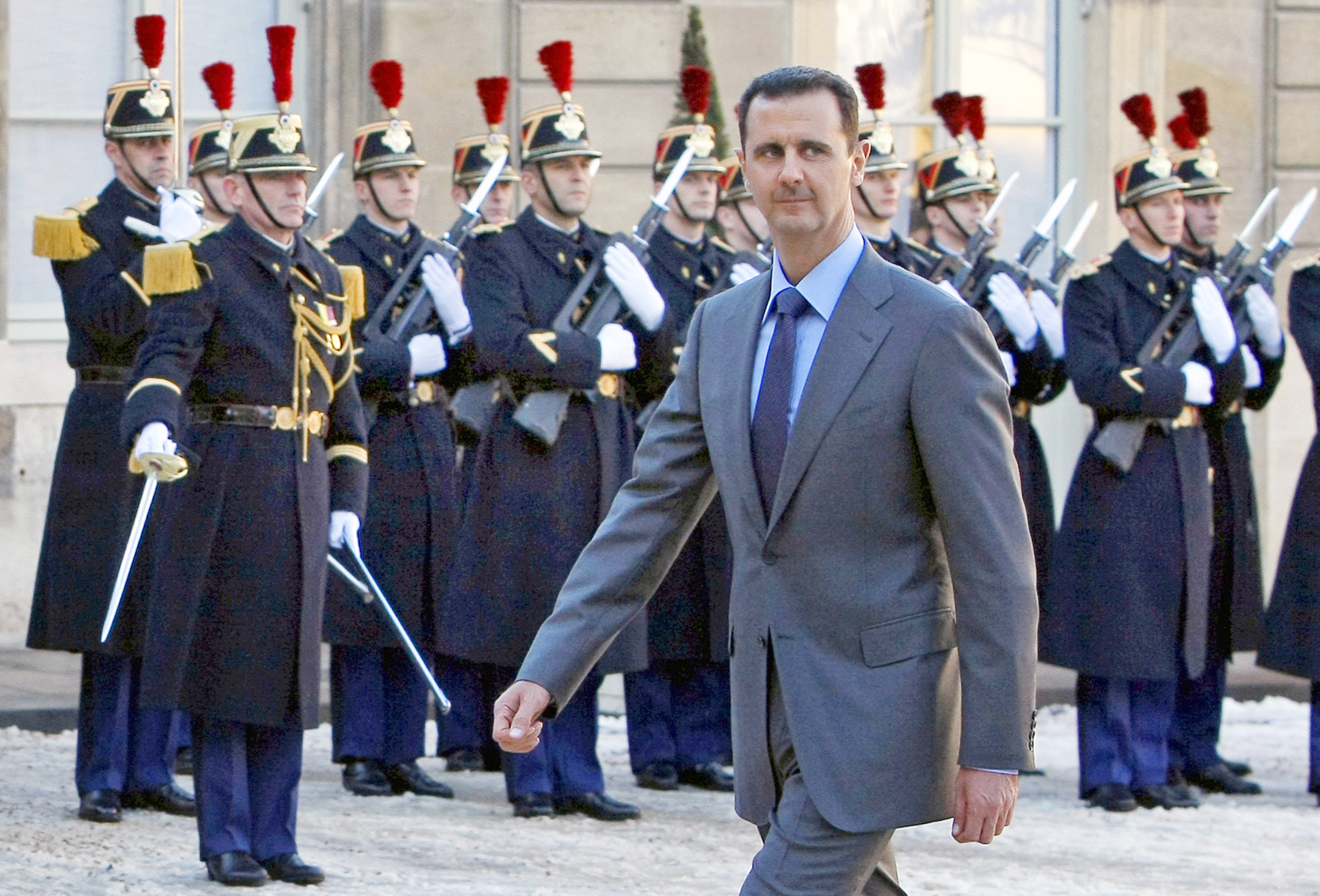
    DAMASCUS, Syria — A Syrian court on Tuesday sentenced ousted President Bashar Assad and his brother in absentia for murder, torture and crimes against humanity committed before and during the country’s 14-year civil war that left about half a million people dead.

    The verdicts by a court in Damascus are the first against Assad or any members of his inner circle since his family’s five decades in power came to an end 20 months ago. They are mostly symbolic, however, because Assad and his brother Maher fled to Russia, where they received asylum after the Syrian government’s stunning collapse in December 2024.

    Six other former officials were also sentenced to death in absentia. The only former official sentenced to death and in custody is Assad’s maternal cousin Atef Najib, who oversaw a crackdown on dissent that led to an uprising that sparked the civil war. Najib stood inside a cage wearing a prisoner’s uniform as the judge read his sentence aloud, and a crowd gathered outside the heavily guarded courthouse.

    Even though Assad is unlikely to ever face justice, the verdicts will be popular among many Syrians, especially those who have expressed frustration that the new government hasn’t moved with enough speed or strength against Assad-era figures.

    Some human rights groups, though, expressed concerns that the trials were rushed, potentially unfair, and, at the very least, exposed flaws in Syria’s justice system.

    “Bashar Assad used state agencies to commit war crimes and crimes against humanity,” said judge Fakhareddine al-Aryan during a court session that was aired live on state TV — a contrast with Assad-era trials, which were conducted in secret. The verdicts al-Aryan read aloud found Assad and the others guilty of premeditated murder, including against children, as well as other acts of brutality, including torture.

    Al-Aryan said Najib could appeal.

    “Today is the day of justice for all the wounded, martyrs, detainees and Syrians who were forced to leave their country,” said attorney Adnan al-Masalmeh, who represented families of Najib’s victims. “Today marks a victory of right against injustice, a victory of the Syrian people against the ousted regime.”

    Najib is one of the highest-ranking security officials to be put on trial. He is a former army brigadier general who was in charge of political security in Syria’s southern Daraa province.

    During his tenure, more than a dozen teenagers who scrawled anti-government graffiti on a school wall were arrested and tortured. The case became a catalyst for mass protests against the repressive policies of Assad’s security forces.

    The protests were met by a brutal government crackdown in 2011 that spiraled into the civil war that ended with Assad’s ouster in a lightning rebel offensive.

    Some of Najib’s victims were present at the courthouse, including two who were teenagers in 2011 and expressed their opinions to the Associated Press.

    “Today we reached a point where the blood was not wasted,” said Mouawiya Sayasneh, about those who died in the crackdown. Fifteen years later, “there is happiness that Atef Najib was sentenced to death,” he said.

    Another man, Nayef Abazeid, who was detained at the age of 13 in 2011, expressed his satisfaction with the sentence, adding, “Our biggest happiness will be when Bashar Assad is executed.”

    Maher Assad was a former commander of the Syrian military’s 4th Armored Division — which opposition activists have accused of killings, torture, extortion, and drug trafficking, in addition to running its own detention centers.

    “Today’s scenes outside the courthouse reflect 15 years of pain and a justice long denied,” said Hiba Zayadin, Syria researcher at Human Rights Watch. She said the rights group opposes the death penalty in all cases, including this one, because ”it’s cruel and irreversible, especially when a fair trial isn’t guaranteed.”

    She said the appeal process for Najib “needs to meet fair trial standards.” Real accountability for Assad-era crimes depends on Syria building a justice system that lasts, she said.

    The Washington-based Syria Justice and Accountability Center described Tuesday’s conviction of Najib as a “historical step in Syria’s transitional period,” but said it exposed major flaws in the justice system which likely jeopardized his right to a fair trial.

    It said that SJAC’s trial monitoring team attended Najib’s trial and documented multiple issues such as rushed proceedings and witness testimony that did not connect Atef to the crimes he was charged with. SJAC said Najib’s lawyer “lacked the capacity and willingness to meaningfully engage with the case or mount an adequate defense.”

  • Investigators say Myanmar’s military has escalated airstrikes against civilians

    Investigators say Myanmar’s military has escalated airstrikes against civilians

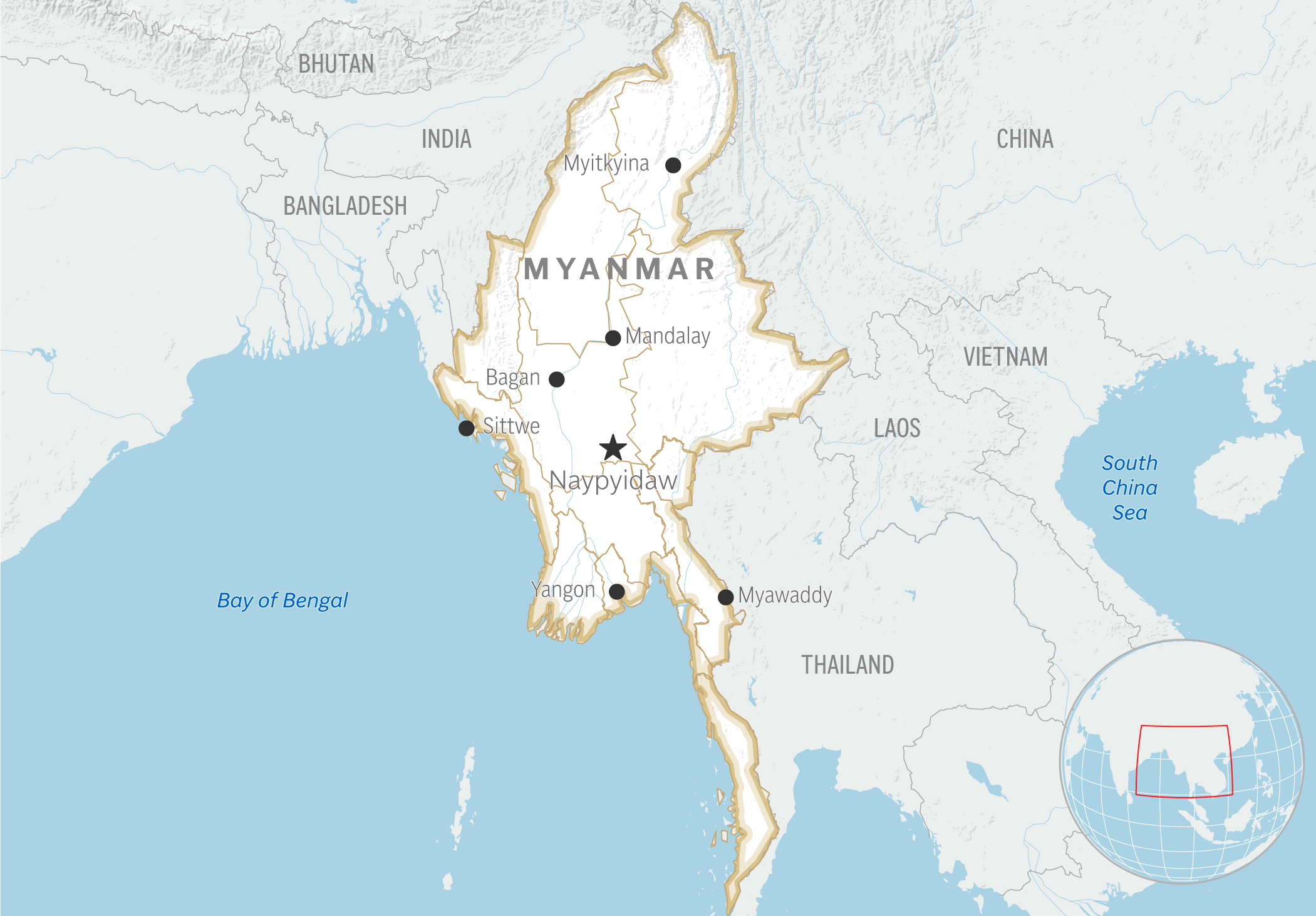
    BANGKOK — Myanmar‘s military has increasingly used low-cost aircraft such as motorized paragliders and gyrocopters in escalating aerial attacks that kill civilians in its conflict with armed, anti-government groups, a U.N. investigation said in a report Tuesday.

    Separately, a major ethnic armed group fighting the government in Rakhine state said 20 civilians had been killed in strikes by the military so far this month.

    Myanmar’s military government did not immediately respond to either the U.N. probe or the allegations by the Arakan Army. In the past, the military has said it only attacks legitimate targets of war, accusing the resistance forces of being terrorists.

    The report by the United Nations-established Independent Investigative Mechanism for Myanmar, or IIMM, details a yearlong investigation into alleged war crimes and crimes against humanity committed by Myanmar’s military and affiliated militias, as well as the opposition armed groups.

    It found that abuses escalated around the country’s army-organized elections in December and January. The IIMM said it observed a notable escalation in aerial attacks in the months preceding the elections and that they have continued unabated afterward, with investigators also documenting a pattern of deliberate arbitrary detention, torture, and sexual violence.

    The IIMM said civilian casualties are worsened by the military’s increasing use of “double-tap” aerial attacks, in which a second strike follows the first, apparently targeting first responders, people helping the wounded, and those trying to flee.

    The IIMM said the Myanmar military was increasingly using motorized paragliders — also known as paramotors — as well as gyrocopters and drones to carry out low-altitude airstrikes with unguided explosives.

    In several recent incidents in the upper Sagaing region, paramotor pilots allegedly cut their engines as they approached targets, allowing them to glide silently and leaving civilians little or no warning to flee or seek shelter, the report said.

    The IIMM’s report came as the Arakan Army, a powerful ethnic armed group fighting the army in Rakhine, said that about 20 civilians were killed and 22 injured in airstrikes across three townships from Aug. 1-11, including one attack involving up to eight aircraft that lasted about an hour.

    The military-backed government has not publicly commented on the alleged attacks.

    According to the Assistance Association for Political Prisoners, an independent organization that keeps detailed tallies of arrests and casualties linked to the civil war, more than 8,000 civilians have been killed and more than 31,000 arrested by Myanmar’s security forces since 2021.

    The IIMM, which was established by the U.N. Human Rights Council in 2018 to monitor violations of international law in Myanmar, said it gathered evidence from more than 1,600 sources and witnesses that can be used in future prosecutions of those responsible.

    “Behind every piece of evidence we collect are people whose lives have been devastated by these crimes,” group leader Nicholas Koumjian said in the report. “Communities across Myanmar are not only living under the constant threat of violence but are also coping with the profound and lasting impact of what they have endured.”

    The IIMM said it is also investigating serious crimes allegedly committed by armed groups opposed to the military, including members of the Arakan Army, who have been accused of rape and other sexual violence against Rohingya Muslim women, summary executions, child recruitment, and the destruction of mosques in Rakhine.

    The report said numerous people were also arrested under an electoral law that carries up to 20 years in prison or the death penalty for acts such as criticizing the elections online or distributing “anti-election” leaflets.

    The election was dismissed by the critics as a sham designed to consolidate the military’s grip on power after its 2021 takeover that ousted the elected government of Aung San Suu Kyi, triggering deadly civil war.

  • Trump told Ukraine it had no cards. Then Kyiv took the war to Russia

    Trump told Ukraine it had no cards. Then Kyiv took the war to Russia

    The meeting in the Oval Office between U.S. President Donald Trump and Ukrainian President Volodymyr Zelensky was a diplomatic car crash.

    “Your country is in big trouble. You’re not winning,” Trump said, dressing down Zelenskyy in front of the world’s media. “You don’t have the cards.”

    The blowup in February 2025, three years into the war, was more than just a heated public exchange: The Ukrainian delegation was asked to leave the White House, and Washington briefly suspended intelligence sharing with Kyiv. In the ensuing months, as Russia made slow but steady gains on the battlefield, Trump warmly welcomed Russian President Vladimir Putin in Alaska and seemed ready to push Ukraine into an unfavorable peace deal, including forcing it to give up territory.

    But even as Zelensky sat next to Trump, his forces were preparing an operation that would reveal Ukraine’s ability and ambition to take the war to Russia: Months later, drones smuggled into the country attacked Russian bombers, destroying or damaging planes worth hundreds of millions of dollars.

    Since then, Kyiv has ramped up a campaign of longer-range strikes inside Russia and in areas Moscow has seized, increased production of weapons, targeted Russian air defenses, and hit oil infrastructure and the warehouses of a major retailer in a bid to ensure ordinary Russians feel the impact of the conflict.

    In an embarrassment to Putin, Ukrainian drone strikes sent thick plumes of smoke billowing over St. Petersburg shortly before the opening of an international economic forum in June. Concern over Ukraine’s attacks led Russian authorities to scale down the May 9 military parade commemorating the defeat of Nazi Germany. Strikes on oil refineries have caused a summer fuel crisis.

    By the time Trump and Zelensky met at a NATO summit in July, the American president said the Ukrainian leader had “been very effective” in the war. “We’ve actually developed a good relationship,” Trump added.

    But as Ukraine’s strikes have intensified, so have Russia’s — and Kyiv faces major challenges in defending against them because of shortages of American Patriot air defense missiles.

    In the first six months of the year, 1,396 civilians were killed in Ukraine, according to the U.N. Meanwhile, the world body said Russian authorities reported 250 civilians killed in the same period. On Monday, a strike that Ukraine said hit an oil refinery in Russia killed 13 people, according to local officials.

    And while Ukraine’s effort appears to have shifted the narrative about the war in Washington, it’s still not clear if it will be able to push Putin toward the negotiating table.

    Ukraine’s strikes are aimed at undermining the idea that Russia can afford to “just let this roll,” said Jack Watling, a senior research fellow at the London-based RUSI think tank.

    The question of whether it will succeed depends on how much pain Ukraine can exact. “Logically, above a certain threshold, it does work but whether they can reach that threshold is an interesting question” — and one that depends at least partly on factors outside Kyiv’s control, like continued European financial support, he noted.

    Ukraine brings the war to Russia

    While most of Ukraine’s strikes have a range of less than 125 miles, its longer-range attacks have increased dramatically this year. It launched three times as many of those strikes in July as it did in January, according to data from ACLED, an independent conflict monitor. Repeatedly hitting deep into Russia has forced its military to stretch air defenses over a larger area.

    Many of its strikes have focused on four key categories of targets, according to an Associated Press analysis of hundreds of Ukrainian attacks this year — compiled from statements by Russian officials and state media and the Ukrainian military.

    As the Iran war pushed up energy prices, leading the U.S. to ease sanctions on Russian oil, Kyiv ramped up strikes on oil infrastructure to deny the Kremlin revenue from fuel exports and force shortages on ordinary Russians. It is also striking defense manufacturing to damage Russia’s long-term ability to produce weapons, targeting air defenses to clear a path for its own arms, and hitting retail warehouses to bring the effects to ordinary Russians.

    — As part of the campaign against oil infrastructure, Kyiv said it hit Russia’s largest oil refinery, more than 1,550 miles from Ukraine.

    — Kyiv has also targeted defense manufacturing centers. It hit a factory making navigation systems multiple times, including with its own Flamingo missile.

    — In July and August, Ukraine struck Wildberries warehouses. Kyiv said the company helps supply the Russian military. Moscow denies that.

    — Many of Ukraine’s strikes on Russian air defenses and radar are around Russian-held Crimea and are often carried out with drones.

    Maj. Robert “Magyar” Brovdi, the commander leading Ukraine’s drone war, told the AP its strikes in Crimea are also aimed at rendering the peninsula unusable as a staging ground for Russian forces.

    Starlink gives Ukraine an advantage — for now

    It’s not always clear if Ukraine’s attacks are effective — and some may have resulted in minimal or no damage. In May and June, Ukraine said it hit several satellite, reconnaissance, or signals intelligence facilities in Russia, but satellite images analyzed by AP did not show major damage.

    Still, Ukraine has one advantage that can help it strip back Russian air defenses and make its drone strikes more precise.

    It has access to Elon Musk’s satellite communications service Starlink — which means its operators can control drones in real time in Russian-held Ukrainian territory. Russia has been blocked from using Starlink.

    But Russia is also building its own version of Starlink, and is installing jamming systems that hamper Starlink connectivity, Brovdi said.

    Ukraine is investing heavily in weapons production

    Even before the Oval Office meeting, Ukraine scrambled to invest in new weapons — but that moment was “a real wake-up call,” said a European military official who spoke on condition of anonymity to discuss the front-line situation in detail. It became clear that U.S. support could be stopped “from one day to the next.”

    Ukraine doubled down on production, churning out a growing array of weapons in larger numbers and shortening traditional research and production cycles from decades to years or even months.

    Even so, Ukraine is still not able to produce as many missiles as it needs. It also took Ukraine time to make systems that could target facilities precisely enough that Kyiv felt comfortable using them to strike deep into Russia, Watling said.

    And while Ukraine has begun to resolve navigational issues with its missiles, such as the Flamingo, those weapons are still not as accurate — or as stealthy — as their Western analogues. That often means hundreds of drones must be fired to overwhelm Russian air defenses to allow a missile to get through.

    It’s an expensive and time-consuming way to wage war since only 5% to 9% of what Ukraine fires gets past Russian air defenses, according to Watling.

    But, although Russia’s weapons are more powerful, Zelensky suggested at the NATO summit that Putin is “losing the initiative” in the war as Ukraine has moved the fight from the stalled battlefield to the sky.

    Sitting next to Trump at the summit, the Ukrainian leader even cracked a joke, demurring when Trump asked him if he would accept Moscow as a venue for peace talks, as Putin has suggested.

    “There are a lot of Ukrainian drones in the air,” Zelensky said. ”It would be dangerous.”

  • Trump pivots back to sanctions for Iran as other strategies to end his war fizzle

    Trump pivots back to sanctions for Iran as other strategies to end his war fizzle

    WASHINGTON — President Donald Trump likes to say that he started his war with Iran after 50 years of economic pressure had failed to stop its nuclear weapons ambitions — but he’s now betting that another financial squeeze can bring an end to that war.

    Trump’s administration is hoping that months of bombing have pushed Iran’s economy to a breaking point that will force its leadership to cave to demands to end its nuclear program and fully reopen the Strait of Hormuz to oil and natural gas tankers.

    The Republican president on Monday said that since Iran is seeking compensation as part of any peace talks, he now intends to demand the same for the U.S. side. It’s part of a larger pivot this weekend by Trump to argue that Iran is now on the cusp of financially collapsing, even though it has already endured decades of financial sanctions, which are often a longer-term strategy rather than an immediate tool of warfare that can halt a conflict.

    The shift comes as U.S. stockpiles of key weapons have dwindled and as stop-start talks seem again to have stalled. But Trump insists the pressure can lead to a breakthrough.

    “Yeah, they can make trouble, but they’re broke,” Trump told reporters. “They have no money. You know, Iran is broke, totally broke. And, they’re not paying their soldiers. They have inflation of 300%.”

    Inflation is running high in Iran, although Trump’s estimates were higher than what administration officials have been citing to reporters. But the prospect of a longer war also carries inflation risks for other nations, including the U.S., where the war and higher gasoline prices are unpopular.

    Crude oil prices climbed on Monday as investors interpreted Trump’s comments as a sign that fewer ships would be traversing the Strait of Hormuz, continuing to limit global supplies of gasoline, jet fuel, natural gas, and other forms of energy. The Iran war largely closed the waterway involved in shipping roughly 20% of global oil supplies before the conflict — and attempts to reopen the strait have been short-lived as it has become a source of leverage for the Iranians in negotiations.

    Iran does not appear to be publicly intimidated by the prospect of more financial sanctions.

    “Whenever Washington proves itself incapable of pursuing diplomacy, it retreats into sanctions; and whenever those sanctions fail to produce results, it simply increases the dose,” said Esmail Baghaei, spokesperson for Iran’s Foreign Ministry, on social media. “The real risk is that American politicians, clinging to this bad habit, will instead strangle their own remaining chances of a less humiliating exit from a crisis of their own making.”

    The White House has called this Operation Economic Fury

    The president didn’t say what additional financial pressure would be applied, but the administration has since April 16 been engaged in what it calls Operation Economic Fury against Iran. Treasury Secretary Scott Bessent called this component the “financial equivalent” of a bombing campaign as the countries that buy oil from Iran or bank with it could be sanctioned.

    But one problem with this pivot is that the sanctions are unable to bite as quickly as the impact of the largely shuttered strait, said Richard Nephew, a senior research scholar at Columbia University who helped direct Iran sanctions strategy in the Obama administration.

    Nephew stressed that the value of sanctions as a tool is limited because Trump has not articulated clear strategic goals for the war, at times stressing that it can’t have a nuclear weapon, then emphasizing the strait and then talking about ballistic missiles. Instead, Trump has engaged in a massive series of aerial assaults and a level of destruction that has not produced the quick end that he initially promised.

    “Economic pressure is a possible element in his strategy, but he’s yet to explain the purpose,” Nephew said. “Trump has systematically weakened his own hand through his inadequate use of force, inarticulate elucidation of an objective, and vacillation on negotiations.”

    Still, the sanctions and the ongoing U.S. naval blockade of Iranian ports give the U.S. economic and financial leverage, said Juan Zarate, a deputy national security adviser in the George W. Bush administration. Zarate said the U.S. sanctions threatening third-party countries doing business with Iran also have an impact. But these things take time, he noted.

    “The ultimate question will be how far the United States is willing to go to constrict Iran’s oil trade and threaten third countries with severe sanctions — and whether it has the patience to test whether the economic pain will change the regime’s behavior,” Zarate said.

    Past presidents used sanctions. Trump has said they didn’t go far enough

    Trump’s latest pivot to economic issues with Iran is something of a flip-flop. Trump has long derided past presidents who used sanctions to limit Iran’s economic ability to pay for its military and nuclear development. In a speech last week in Las Vegas, he defended the bombing, missiles, and drone attacks that began on Feb. 28 by indicating that the sanctions from previous administrations that date back to November 1979 had failed.

    “It’s been 47 years, but really, it’s been 50 years because they’ve been saying 47 for three years, it’s been 50 years,” Trump said. “And no other president has done what you should have done a long time ago, because Iran cannot have a nuclear weapon, can’t have it.”

    The Iranian economy has suffered gravely because of the war, with the International Monetary Fund estimating the overall economy shrinks by 5.4% and the Iranian government recently reporting an annual inflation rate of 88.6%. The U.S. Treasury Department said average loadings of Iranian oil have decreased from 1.8 million barrels per day before the war to less than 500,000 barrels per day over the past month.

    The U.S. economy — the world’s largest — has continued to grow, but inflation is elevated and borrowing costs have risen in ways that have hurt Trump’s popularity and led to disapproval of the Iran war.

    A senior U.S. official, insisting on anonymity to discuss strategy, said the U.S. military has set back Iran’s ability to produce, sell, and ship oil and other energy resources. The administration sees the naval blockade of the strait and sanctions as effective and views Trump as having additional options that can be cranked harder in the weeks and months ahead.

    Trump is essentially arguing that U.S. voters are better able to tolerate any economic inconveniences than Iranians, who have been in a state of economic hardship for years.

    “It’s not just what the military can do — we’ve got the most powerful economy in the world as well,” Defense Secretary Pete Hegseth said Monday in a joint appearance with Bessent. ”And when you’ve got a motivated treasury secretary who can pull a lot of levers because he knows how to do it, you can put a lot of pressure on adversaries.”

  • Russian attacks kill 10 in Ukraine as Zelensky says Moscow is getting more North Korean missiles

    Russian attacks kill 10 in Ukraine as Zelensky says Moscow is getting more North Korean missiles

    KYIV, Ukraine — Russia attacked Ukrainian cities with missiles, drones, and glide bombs Tuesday, killing at least 10 civilians, officials said, as President Volodymyr Zelensky said Moscow is getting new military help from North Korea for its more than 4-year-old invasion.

    Zelensky said Russian forces used ballistic missiles supplied by North Korea in an overnight attack on the southeastern city of Zaporizhzhia, where a company said seven workers at its steel plant were killed and 21 injured.

    Three more people, including a 15-year-old boy, were killed by Russian drones and artillery in the central Dnipropetrovsk region, authorities said.

    In addition to the ballistic missiles, North Korea is preparing to deploy more of its troops to Russia, Zelensky said late Monday.

    Russian President Vladimir Putin and North Korean leader Kim Jong Un signed a strategic partnership agreement in 2024, pledging mutual aid if either country faces aggression.

    Kim has sent thousands of troops and huge supplies of weapons to support Putin’s full-scale invasion of Ukraine. Some experts say the engagement with Moscow is helping improve North Korea’s military capabilities, and Zelensky said the battlefield experience would help Pyongyang menace other countries in its region.

    Ukraine says Russia is poised to escalate the war

    Ukraine says Russia is scaling up its production of ballistic missiles, aiming to exploit Kyiv’s critical shortage of Patriot air defense interceptors that can stop them, and claims Moscow is preparing to recruit more troops for a new push on the front line that stretches 775 miles along eastern and southern Ukraine.

    “Every step Russia takes — increasing ballistic missile production, bringing in North Korean equipment, preparing for mobilization — all of this shows that Moscow is preparing not for peace, but for escalation,” Zelensky said on social media.

    In an unusual step, Ukraine’s air force didn’t say in its daily report how many missiles Russia launched overnight. It was not clear whether the omission was deliberate, and Kyiv officials made no immediate comment.

    U.S.-led diplomatic efforts to stop the war have fizzled as Washington grew frustrated with the lack of progress and its attention turned to the Iran war.

    In an indication that Putin is determined to press on with the invasion, Russia’s highest court on Monday ordered that Yabloko, the only political party opposing the war, be excluded from the ballot in the Sept. 18-20 parliamentary election.

    “The Kremlin will not enter serious negotiations or make meaningful compromises on its demands as long as Putin believes that he has a viable military path to achieving his full objectives,” the Institute for the Study of War, a Washington-based think tank, said in an analysis Monday.

    “Ukraine’s Patriot shortages offer Russia an opportunity to cause very serious damage to Ukraine over the coming winter and will therefore contribute to delaying meaningful negotiations and protracting the war,” it said.

    Russia hits the grounds of a Kyiv children’s hospital

    Russian forces also struck parts of the Ukrainian capital, Kyiv, overnight, according to officials. One strike hit the grounds of a children’s hospital, leaving two craters and shattering windows, the State Emergency Service said. Children and medical workers were in bomb shelters and nobody was hurt, it added.

    At another location in Kyiv, a Russian strike started a fire in a warehouse that spread across about nearly 13,000 square feet, according to emergency officials.

    The Russian Defense Ministry said its forces overnight struck “military industrial facilities and transport and logistics centers” in Kyiv and Zaporizhzhia with “ground-based precision weapons.”

    It said in a statement that it hit civilian storage facilities housing drones in Kyiv and a metallurgical plant in Zaporizhzhia.

    Metinvest, a major Ukrainian mining and metals company with operations in Zaporizhzhia, said seven of its steel plant employees died as staff tried to reach shelters after a warning of an incoming ballistic missile.

    The company, which employs tens of thousands of people, said in a statement that the attack damaged its blast furnace and other equipment and forced the plant to shut down.

    Russia targeted Kyiv and Zaporizhzhia with Zircon anti-ship missiles and Iskander ballistic missiles, while launching 120 long-range strike drones across the country, Ukraine’s air force said.

    Russia’s biggest e-commerce company hit again

    Meanwhile, the Russian Defense Ministry said its air defenses overnight intercepted nearly 400 Ukrainian drones over 14 regions and Crimea, the peninsula that Moscow illegally annexed from Kyiv in 2014.

    Russia’s biggest online retailer, Wildberries, said its logistical facilities in the Voronezh region near the Ukrainian border came under attack and caught fire. It added that the fire was extinguished and goods stored there were “largely undamaged.”

    Ukraine has repeatedly struck Wildberries warehouses and Russian oil facilities in what it says is a strategy to compel Putin to negotiate an end to the invasion.

    Ukraine’s General Staff said its forces struck an oil refinery in the city of Orsk in Russia’s Orenburg region near the border with Kazakhstan, about 930 miles from Ukraine, causing a fire.

    The refinery, with an annual processing capacity of about 44 million barrels of crude oil, produces gasoline, diesel, and aviation fuel, among other products. The extent of the damage was being assessed, the military said.

    Meanwhile, Romania’s Ministry of National Defense said its navy destroyed two drones drifting in the Black Sea about 90 nautical miles from the port of Constanta.

    The Gerbera-type drones were neutralized by divers using controlled detonations, and some pieces were recovered, the ministry said, adding that Ukraine said the drones were not theirs.

    U.N. says over 16,000 civilians are being held by Russia

    The United Nations, meanwhile, estimates that more than 16,000 civilians detained by Russia during the war are still being “deprived of their liberty,” with many held incommunicado and on grounds that don’t comply with international law.

    “Widespread and systematic torture and ill-treatment” of both Ukrainian civilian detainees and prisoners of war by Russia are continuing, including sexual violence, said Claudia Fuentes Julio, the U.N. assistant secretary-general for human rights.

    She spoke at an informal meeting of the U.N. Security Council on Monday to spotlight the plight of civilians and soldiers taken following the Russia invasion.

  • Kennedy Center must pay over $250,000 to artist who opposed Trump name change

    Kennedy Center must pay over $250,000 to artist who opposed Trump name change

    A judge has ordered the Kennedy Center to pay more than $250,000 to a jazz musician who pulled out of a performance after the venue’s board voted to rename the building for President Donald Trump.

    D.C. Superior Court Judge Tanya Jones Bosier on Monday ordered the center to pay $252,000 in legal fees and costs to lawyers for Chuck Redd, who for years had played at the center’s annual Christmas Eve concert.

    Last year, Redd had been in talks with the venue’s staff to perform but declined to sign a contract. He told the center he chose to bow out because of “the defiant and illegal name change happening to the Kennedy Center.”

    The Kennedy Center sued in March, alleging Redd had breached his contract by withdrawing from the concert. But in June, Jones Bosier tossed the lawsuit, determining that center officials failed to show they had made a legally binding agreement with him.

    The Kennedy Center did not immediately respond to a request for comment.

  • Ex-ICE agent’s group awarded $158 million to represent migrant children

    Ex-ICE agent’s group awarded $158 million to represent migrant children

    The Trump administration has awarded a $158 million contract to represent unaccompanied migrant children to a nonprofit group founded by a former immigration agent who inspired the film Sound of Freedom, a federal contracting database shows.

    A notice of the award to the Minneapolis-based group Our Rescue, which combats child trafficking, was posted online late Friday. The contract is with the Office of Refugee Resettlement, which oversees the care of minors who cross the border without authorization and without a parent or guardian. The award could increase up to $244 million, the contract notice showed.

    President Donald Trump’s administration in recent weeks has pivoted away from working with advocacy groups that previously represented the minors. Last week, a small Texas law firm with ties to the Trump administration was awarded a $150 million no-bid contract to represent unaccompanied minors in their immigration court proceedings.

    That firm, Burke Law Group, is helmed by Marcella Burke, a former Trump appointee. Immigration advocates criticized the contract and the Trump administration’s decision to cut ties with groups that had two decades of experience in legally representing minors.

    Our Rescue was founded in 2013 by Tim Ballard, a former U.S. Immigration and Customs Enforcement agent who quit his job and embarked on efforts to rescue children from sex trafficking rings in countries including Colombia, Haiti, Mexico, and Thailand. His work was loosely fictionalized in Sound of Freedom, a 2023 film starring actor Jim Caviezel that drew acclaim from conservatives.

    Others, however, criticized the movie for catering to unfounded conspiracy theories, including those peddled by the far-right group QAnon.

    During Trump’s first term, Ballard was appointed in 2019 as a co-chair of a council tasked with making antitrafficking recommendations to the White House.

    Ballard abruptly left Our Rescue in July 2023, days before Sound of Freedom was screened at Trump’s private club in Bedminster, N.J.

    Three months later, a group of five women filed a lawsuit in Utah state court alleging Ballard had coerced them into sexual acts as part of his trafficking rescue missions tied to the organization, then known as Operation Underground Railroad (OUR).

    A separate federal lawsuit in 2024 accused him of sex trafficking and forced labor. Both lawsuits remain active.

    The Office of Refugee Resettlement and Ballard’s attorney did not respond to requests for comment.

    Our Rescue’s website states that it works with law enforcement and other partners around the world to provide services to people who are vulnerable to trafficking and exploitation. It is not clear whether the organization employs immigration attorneys with expertise in providing legal counsel to minors.

    Derek Benner, the organization’s chief executive, said in a statement that ensuring unaccompanied minors have access to support and are protected from exploitation aligns with his group’s mission.

    “These are among the most vulnerable children in the world, and they deserve nothing less than the full weight of our experience,” said Benner, who is also a former ICE agent. “We welcome this responsibility and are working on their behalf.”

    Michael Lukens, executive director of the Amica Center for Immigrant Rights, which provides legal representation to children in the Washington, D.C., area, accused the Trump administration of seeking to ramp up deportations of minors by going after their legal representation.

    The administration is trying to “make sure that the kids have an attorney on paper but are not actually providing meaningful legal advocacy,” Lukens said.

    Lukens said his organization has not received notice from the government about transferring the immigration cases of minors to the new contract holders. He said his group continues to represent unaccompanied children in cases where they have been retained.

  • Colombia searches for over 3,000 missing after a powerful earthquake kills more than 100

    Colombia searches for over 3,000 missing after a powerful earthquake kills more than 100

    PEREIRA, Colombia — Rescue crews and civilians in Colombia painstakingly searched through rubble Tuesday in the hopes of finding survivors trapped under debris after a powerful earthquake left thousands missing in dozens of cities and towns.

    The 7.4 magnitude earthquake that hit western Colombia on Monday wreaked havoc, collapsing buildings, buckling roads, crushing cars, and leaving devastated residents to console each other among the wreckage of their homes. Excavators and heavy machinery cleared heavy chunks of concrete, while buckets of rubble were passed hand-to-hand along a line of volunteers.

    Rescue crews and volunteers picked through flattened concrete buildings in affected cities, searching for signs of life. They raised their hands to call for silence when they thought they heard someone beneath the piles of debris. At least one woman was retrieved — alive — from the rubble.

    Colombian President Abelardo de la Espriella said the earthquake killed at least 181 people and left 2,595 more injured. He said at least 195 remained missing, but civilian-run databases suggest that number could be closer to 4,000.

    Crews race to find survivors

    Authorities said the deaths were concentrated in the cities of Cali, Pereira, Manizales, and Quibdo, but local leaders and families worried about casualties and damage in rural areas, from where very little information has emerged. Aid agencies consider the first 48 to 72 hours crucial for retrieving people alive, though that threshold can be extended if they have access to food and water.

    De la Espriella said more than 1,000 homes were destroyed and yet more damaged.

    Standing near the remains of his brother’s collapsed apartment building in Pereira, Jairo Vargas said he made the 135-mile drive from Medellin, hoping to find him alive.

    “I’m absolutely certain he’s here. Absolutely certain,” Vargas said, adding that his brother’s car was still parked outside. But he fears his sibling did not survive.

    “The debris surrounding my brother is soft,” he said, as heavy machinery rumbled nearby. “It’s possible that it’s protecting him, but we can’t hear any noises anymore. I don’t know. I have little hope.”

    Colombia’s new president faces his first serious challenge

    The earthquake presents the first major test for first-time officeholder de la Espriella, who entered office just days before the natural disaster. The leader, who split the country in recent elections, now seeks to unite Colombia in its disaster response.

    That challenge was particularly notable in Choco, the region at the quake’s epicenter. It is one of Colombia’s poorest and most neglected regions, often beset by warring armed groups. Much of Choco is accessible only by boat, through the jungle, or by airplane.

    Sterling Palacios, a religious and environmental leader in the region, said Choco’s capital and smaller communities along the Atrato River were devastated. Homes were reduced to rubble and aftershocks continued to rumble, terrifying residents who slept in the streets overnight.

    The Colombian Geological Service said it has documented more than 100 less powerful aftershocks since the initial quake.

    “There are towns where people have lost everything, where people have died, where homes have been destroyed,” he said. “We don’t have a full panorama of the damage, but we know it’s been massive.”

    De la Espriella traveled to Quibdo in Choco on Monday night where he announced he was mobilizing “the entire military and police apparatus,” as well as deploying engineers, rescue workers, and search dogs.

    “Choco will never again be the ‘land of the forgotten,’” he said.

    Palacios said the government’s response has so far been “concentrated in the capital,” and that authorities were flying the wounded from Quibdo to hospitals in the city of Medellín.

    The biggest challenge, he said, remains towns in rural areas only reachable by boat — journeys that can take hours or days. That response is also complicated by a toxic slate of armed groups warring for control who, during the COVID-19 pandemic, blocked healthcare workers from traveling to remote areas.

    “It’s a risk and it’s very difficult to predict” what could happen, he said, adding it could take weeks to fully assess the devastation.

    Desperate residents seek news of loved ones

    Families posted information about missing loved ones on citizen-run websites.

    Dana Carolina Zamora posted an image of her missing 60-year-old uncle, Miguel Ángel Zamora, cradling his dog. The farmer was living in a rural area of El Cairo, not far from the quake’s epicenter in San Jose Del Palmar.

    Local authorities said 80% of El Cairo, a town of about 7,000 people, was damaged. Zamora said her uncle lived in a traditional house of sticks and mud.

    “We are afraid. We hope that is not the case, that he is all right and that it is only a communication failure. But we haven’t heard anything from him,” Zamora said.

    The earthquake left many people unnerved after back-to-back quakes devastated neighboring Venezuela in late June, destroying hundreds of buildings and killing more than 6,300 people.

    Mónica Sánchez, who lives in Pereira, one of the worst-hit cities, said when the quake happened a wall collapsed inside her clothing factory. Sánchez and her 12 employees escaped just in time.

    “It was shocking — the city fell down around us,” she said.

    On Tuesday, rescue workers pulled a woman alive from the rubble. Diana Troncoso lay on a stretcher, dusty and scraped up, with her eyes closed. Observers burst into applause as she emerged, but search teams raised their hand to call for quiet so they could continue their search for survivors.

    Pereira and Cali enforced curfews Monday night to prevent looting, and private vehicles were banned from the roads of Pereira so ambulances, police, and rescue workers were able to navigate what’s left of the roads.

    The U.S. State Department has announced it would provide $15.5 million for emergency shelter, food, and other aid. Governments across Latin America have also lined up to help.

    “This has been a tragedy for the whole city, for thousands of families,” Pereira Mayor Mauricio Salazar told local media, his voice quavering. “But here we are, and we will continue forward with the hand of God.”

  • Trump’s plane ruse echoes Clinton’s Pakistan swap, but with press pool at risk

    Trump’s plane ruse echoes Clinton’s Pakistan swap, but with press pool at risk

    When President Bill Clinton deplaned in Islamabad, the sleight of hand became clear.

    A decoy jet with all of the markings of Air Force One touched down in view of the news media, and a Secret Service agent resembling the president emerged. Then, an unmarked plane landed, and the real president disembarked.

    It was March 2000, and Susan Page, a White House reporter covering the trip for USA Today, was one of a small group of people who knew about the ruse.

    Before the India-to-Pakistan flight, White House officials called Page, then the White House Correspondents’ Association president, and summoned her for an off-the-record conversation. There, White House press and security officials explained the operation, informing her of the president’s location and safety measures in place for journalists on the trip, Page said in messages with the Washington Post.

    “They told me about the extraordinary security procedures being taken because of the dangers in flying there, including use of the decoy plane,” she said. “Of course, the dangers threatened the journalists covering the trip as well as President Clinton.”

    Page’s briefing, which has not been previously reported, meant at least one journalist in the traveling press corps knew the president would not be aboard Air Force One.

    More than 25 years later, the White House faced a similar security dilemma — but handled the press very differently.

    On Monday evening, the Post reported on an extraordinary maneuver in which security personnel in Turkey secretly moved President Donald Trump from a plane marked as Air Force One to a smaller, unmarked Air Force plane, using an airport catering truck. The operation, which took place last month, was prompted by a credible Iranian threat to Trump, the Post reported.

    As the swap took place, reporters aboard the decoy plane, who were instructed to lower their window shades, were unaware of the president’s maneuver, according to the Post’s reporting.

    The incident could further degrade the already-fraught rapport between the Trump White House and the press corps, a relationship marked by name-calling, threats, legal restrictions, and lawsuits from Trump.

    Page, now USA Today’s Washington bureau chief, declined to comment on the newly revealed incident but broke a decades-old agreement with the Clinton White House to describe her experience.

    “I haven’t spoken about this episode before, because of the off-the-record ground rules of that discussion,” Page said in a text message. “But since more than a quarter-century has passed — and since the ruse became evident as soon as President Clinton disembarked in Pakistan — I think it’s OK for me to relay it now.”

    Jacqui Heinrich, current president of the WHCA, declined to comment.

    The White House did not respond to a request for comment on the operation’s impact on the journalists aboard the decoy plane.

    “As the President has said recently, there are many enemies of America who have their sights on him, and we use every tool at our disposal to address those threats,” White House Communications Director Steven Cheung previously told the Post.

    The White House press pool consists of a rotating group of journalists who send reports, photos, and footage of the president’s activities for the entire press corps. This formal system has existed since 1937, though the White House first brought in a pooler in 1881 after President James Garfield was shot. Associated Press reporter Franklin Trusdell sat outside of the president’s room, monitoring his breathing and sharing updates with his colleagues.

    The system is designed to ensure that someone from the press is present to observe the president’s movements and activities, giving the public an independent accounting.

    Because the press was seemingly in the dark about the operation, Garrett Graff, a journalist and historian, said that the Post’s reporting describes an event that is probably unprecedented in modern presidential history.

    “That the White House would lie to the press corps in its entirety about where the president is,” he said. “That’s a new Rubicon that’s being crossed.”

    The breach was not merely one of journalistic access, according to Graff. The details of the threat that prompted Trump’s operation are unknown, so it’s impossible to calculate the risks to the press pool. However, the reporters aboard the plane were probably exposed to the very threat that had prompted the extraordinary security measures, Graff said.

    “Knowing that this was a series of actions that the White House and the military took precisely because of a threat that they were deeply worried about, it makes it all the more egregious that the press was kept out of the loop,” he added.

    Former CNN Pentagon correspondent Barbara Starr said that the press fully understands and respects the security requirements of covering the president.

    But, she said, “there will be a level of distrust now that we have not seen before … their own lives were potentially at risk without them even knowing it, without them having the option of making a different choice of how to get home.”

    Politico reporter Megan Messerly was the print pooler on the day of Trump’s trip. “We are wheels up from Ankara as of 8:43 p.m.,” she reported. “We have been advised to keep our window shades in the press cabin closed. See you on the other side.”

    After landing, she wrote that the flight was “uneventful” with “no visitors to the press cabin.”

    Hours later, a reporter peppered Trump with questions about whether there was a security threat to Air Force One that warranted the shades being closed, according to Messerly’s pool report.

    “Well, I have a threat all the time. I’m number one on their list, before you,” Trump responded. “But if I go, you go. Right? Perhaps someday you want to change professions.” Messerly did not respond to a request for comment.

    The disclosure quickly prompted a scramble among White House reporters for more information.

    “We (and no doubt every other newsroom in Washington) are asking the White House and sources for more info,” NBC chief White House correspondent Garrett Haake wrote on X.

    ABC’s Michelle Stoddart, who was the TV pool producer aboard the flight, sent WHCA members additional details on the trip, following the Post’s reporting.

    “Upon arrival to the airport, the events did not seem particularly out of the ordinary to the travel pool,” she wrote. “Our photographer noted that the stairs were quickly pulled away as the press loaded.”

    She said that a photographer seated behind her opened a shade on board and was quickly instructed to close it again by a White House staffer who said it was a “request from Secret Service.”

    One White House reporter, speaking on the condition of anonymity because they weren’t authorized to speak publicly, said that they were outraged to learn about an operation that might have put the press corps in danger.

    “When you sign up to work at the White House, even as a civilian, part of your job is to defend the president,” the reporter said. “That’s not my job. I cover the president. Reporters take risks as part of the job, but not on behalf of the president.”