Category: Nation & World

  • A federal judge has blocked Trump’s second try to restrict birthright citizenship

    A federal judge has blocked Trump’s second try to restrict birthright citizenship

    A federal judge in Maryland temporarily blocked much of President Donald Trump’s latest effort to withhold citizenship from babies born in the United States to noncitizen parents, ruling that the Supreme Court had already settled questions reopened by an executive order Trump signed in August.

    While the decision was limited to children born after Feb. 19, 2025, including those born in the future, Judge Deborah L. Boardman wrote that the order would likely affect babies the Supreme Court had already defined as citizens. The ruling delivered a sharp rejection of the president’s renewed efforts to restrict birthright citizenship, after the Supreme Court ruled 6-3 in July that a previous, more sweeping, executive order from 2025 was unconstitutional.

    “No presidential executive order can undo what the Supreme Court has done,” she wrote.

    Boardman’s order took a dim view of the Trump administration’s reasoning, which she characterized as a thinly veiled attempt to get around the Supreme Court’s decision. She wrote that the president and others named in the lawsuit “completely misread” the majority’s opinion and embraced a “distorted interpretation” of its conclusions.

    In a 35-page opinion, she described the latest order as only the most recent attempt to curtail birthright citizenship by any means that could survive legal scrutiny.

    “Since his second term in office began on January 20, 2025, the president has tried, through executive order, to upend our country’s longstanding tradition of birthright citizenship and eliminate, for large swaths of Americans, the right to citizenship by birth, a right enshrined in the Citizenship Clause of the Fourteenth Amendment,” she wrote.

    Boardman described a number of ways that children covered by the lawsuit could have their citizenship rescinded, including if the Trump administration moved to label their parents members of terrorist groups or “alien enemies” under arbitrary legal determinations. She cited a pattern in which the administration has accused Venezuelan nationals of being affiliated with the criminal organization Tren de Aragua, often without evidence, in deportation proceedings.

    While she stressed that it was too soon to find that the order itself was unconstitutional, she wrote that it already appeared clear that it was unconstitutional as applied to the class of babies defined when immigration groups initially sued last year to block Trump’s first order.

    The order this year had included other measures to create novel categories of babies that could be disqualified from citizenship, including those born to parents engaged in so-called “birth tourism,” through which mothers deliberately traveled to the United States to give birth.

    It was unclear how the Trump administration planned to tag those it suspected of traveling to the United States to have their children. But Boardman noted that the executive order was broad, describing anyone who engaged in a “commercial transaction” — such as purchasing a plane ticket — as traveling to access birthright citizenship.

    The Supreme Court’s decision upholding birthright citizenship “is the law of the land,” Boardman wrote. “The President must follow it.”

    This article originally appeared in The New York Times.

  • History offers hope for the future of an independent military newspaper

    History offers hope for the future of an independent military newspaper

    On Aug. 21, the Pentagon abruptly terminated Max Lederer, Erik Slavin and Lara Korte, the publisher, editor-in-chief and Middle East correspondent for the military newspaper, Stars and Stripes.

    The Department of Defense justified the firings on the vague grounds of “insubordination,” but in a recent interview, Korte pointed to remarks that the journalists made in a July 5 CBS News segment as the cause for their termination.

    In the interview, Korte had bluntly stated, “I’m working for Stars and Stripes. Not for the Pentagon, not for any administration, not for any policymaker, I am here to cover the military community.” Her notice of termination highlighted these comments. Similarly, Slavin’s notice of termination singled out that he had pledged that a demand from the military not to publish a “perfectly accurate story” would constitute a “red line.”

    Though abrupt, the firings are simply the latest development in an intensifying battle between the Department of Defense and Stars and Stripes’ journalists, who seek to maintain the paper’s editorial independence. In January 2026, the Pentagon announced that it would reform the outlet by removing “woke distractions” and Associated Press reprints. In April, the DOD fired Jacqueline Smith, the paper’s ombudsman.

    With Lederer and Slavin removed, the administration has installed Navy Captain William Urban — a “communication professional” with no formal journalism experience — as deputy publisher.

    Collectively, the Pentagon’s recent moves have constituted an aggressive attack on the editorial integrity of Stars and Stripes; Urban’s appointment does not bode well for the newspaper’s independence. Yet, history suggests that the fight isn’t over. In the past, Stars and Stripes reporters and American troops have checked the Pentagon’s interference by drawing the public’s attention to military overreach and heightened censorship.

    Guy T. Viskniskki, a U.S. Army Officer and member of the American Expeditionary Forces (AEF), established Stars and Stripes during World War I. General John J. Pershing, the commanding general of the (AEF), quickly endorsed the new publication. In 1918, he issued a directive ordering that military officials abstain from interfering with the paper. This order, however, proved difficult to enforce.

    Though Congress authorized funding for the publication, it has always been housed within the DOD, giving the Pentagon the ability to interfere and exert authority over Stars and Stripes. Consequently, throughout its long history, the newspaper has intermittently struggled against military interference. The unpopularity of the Vietnam War brought frictions between the paper and the military to a breaking point.

    In the late 1960s, military officials attempted to use the Military Assistance Command, Vietnam’s Office of Information (M.A.C.O.I.) to pressure Stars and Stripes reporters into softening stories or shelving them entirely. When the paper ignored these “suggestions,” the relationship between the military command and Stars and Stripes journalists grew tense. One military official infamously labeled the newspaper the “Hanoi Herald” — a reference to its frequently unfavorable combat reports.

    To cut down on the unflattering coverage, the military distanced itself from the journalists; reporters were excluded from news briefings and left in the dark about visits from prominent politicians (including President Richard Nixon, who made a surprise visit to South Vietnam in July 1969).

    Events took a turn for the worse when the paper’s editor — Colonel Peter Sweers — retired and was replaced by the pro-M.A.C.O.I. Colonel William Koch. Sweers had led a team of highly educated civilian and military reporters, many of whom had professional journalism experience and were committed to preserving journalistic integrity.

    Under Koch, however, Stars and Stripes’ policies changed significantly. The new editor forced reporters to wear military uniforms, a change that identified them as enlisted men to higher-ups, thus reinforcing military hierarchies. Additionally, Koch moved the paper’s news bureau out of Saigon to a remote location, effectively removing the journalists from the center of the action, and encouraged his reporters to focus on features, not news stories. Military directives, such as the “Let’s Say It Right” policy, forced reporters to replace straightforward language with euphemisms — “Viet Cong tax collectors became extortionists and search-and-destroy missions became search-and-clear missions.”

    Yet, as the military exerted more power over Stars and Stripes, American troops began pushing back. In October 1969, Private David Dugger, a 21-year-old rifleman from Georgia, told the New York Times, “They’re just not telling it like it is.” Dugger complained that “[l]ots of times we’ve been kicked around by Charlie [the Viet Cong]. But it always comes out sounding like nothing more than a skirmish after the editors are through with it.”

    Made By History sponsors. FOR USE ON MADE BY HISTORY STORIES ONLY.Inquirer Staff

    A few months later, in April 1970, Robert Hodierne — a recently returned Army veteran and a former reporter for Stars and Stripes — published a story in the New York Times chronicling the deterioration of the newspaper’s independence. While it had once been “the one place that GIs could sometimes read about the shooting, bleeding, bombing, gassing, dying, and killing [of the war],” Hodierne wrote, the paper was no longer a reliable source of news.

    The news report quoted Pat Luminello, Stars and Stripes’ civilian bureau chief, who lamented that the military clearly wanted “a pap sheet in which they could air their views and prevent even a hint that all was not wine and roses on the war front.” When news of Hodierne’s piece reached military officials, Koch promptly terminated Luminello, ushering in a period of heightened censorship for Stars and Stripes.

    The firing ignited another round of controversy. That month, the GI-produced, underground-style magazine Grunt Free Press weighed in. In an editorial titled “Should the Troops Get All the News?” the magazine invited GIs to debate the issue. Voicing the “Yes” side, one GI posed a salient question: “If students can tell college presidents the curriculum is lousy and irrelevant, if civil rights marchers can demand more integration, then why shouldn’t a young soldier be allowed enough information to evaluate his establishment, the military?”

    The 1970 censorship episode ended inconclusively. After his firing, Luminello reached out to the House’s freedom of information subcommittee with a five-page list chronicling the military’s various attempts to censor Stars and Stripes. While the subcommittee didn’t force any changes, that didn’t deter the champions of an independent Stars and Stripes.

    Two years later, Sweers, the retired editor, proposed instituting a civilian review board to monitor and check military oversteps. “The chief editor at PS&S,” Sweers explained, “would then know his performance would be regularly examined by a group of leading professionals whose opinions would carry weight with Congress.”

    Congress didn’t immediately adopt Sweers’ recommendation, but over time, the demands of Luminello, Sweers, the troops and subsequent Stars and Stripes reporters and service members paid off. In 1991, Congress created the position of ombudsman for the newspaper. The ombudsman was tasked with monitoring the paper’s editorial independence and reporting concerns to Congress. Since the April firing of Smith, however, the position has remained vacant.

    Today, the question posed by Grunt Free Press in 1970 remains unanswered. Stars and Stripes is a military newspaper intended to give the troops access to the very rights they fight to defend — including their right to a free and independent press. Yet, recurring episodes of heightened censorship, from the Vietnam era to the present day, prove that this freedom is fragile.

    The escalating efforts seem to suggest that Stars and Stripes’ future is bleak. Yet, hope can be found by looking at the response of employees and troops who didn’t back down during the Vietnam War and subsequent periods of military censorship.

    These individuals brought the story of Pentagon interference to the public’s attention and pushed for Congress to make tangible changes to safeguard the newspaper’s independence. Although it took years of pushing, eventually these efforts resulted in the creation of the ombudsman role. It was a reminder that, when troops and journalists resist censorship, Stars and Stripes can regain its independence, even if it’s a slow process.

    Addison M. Jensen is an assistant professor of history at Montana State University. She is currently at work on a monograph titled, “News from ‘The World’: Media, Counterculture, and the American Military in Vietnam,” which uses media and popular culture to examine the experiences of American service members alongside their awareness of the stateside countercultural movements of the era.

    Made by History takes readers beyond the headlines with articles written and edited by professional historians. Opinions expressed do not necessarily reflect the views of The Inquirer.

  • Texas sees extreme flooding as more than a foot of rain falls in areas

    Texas sees extreme flooding as more than a foot of rain falls in areas

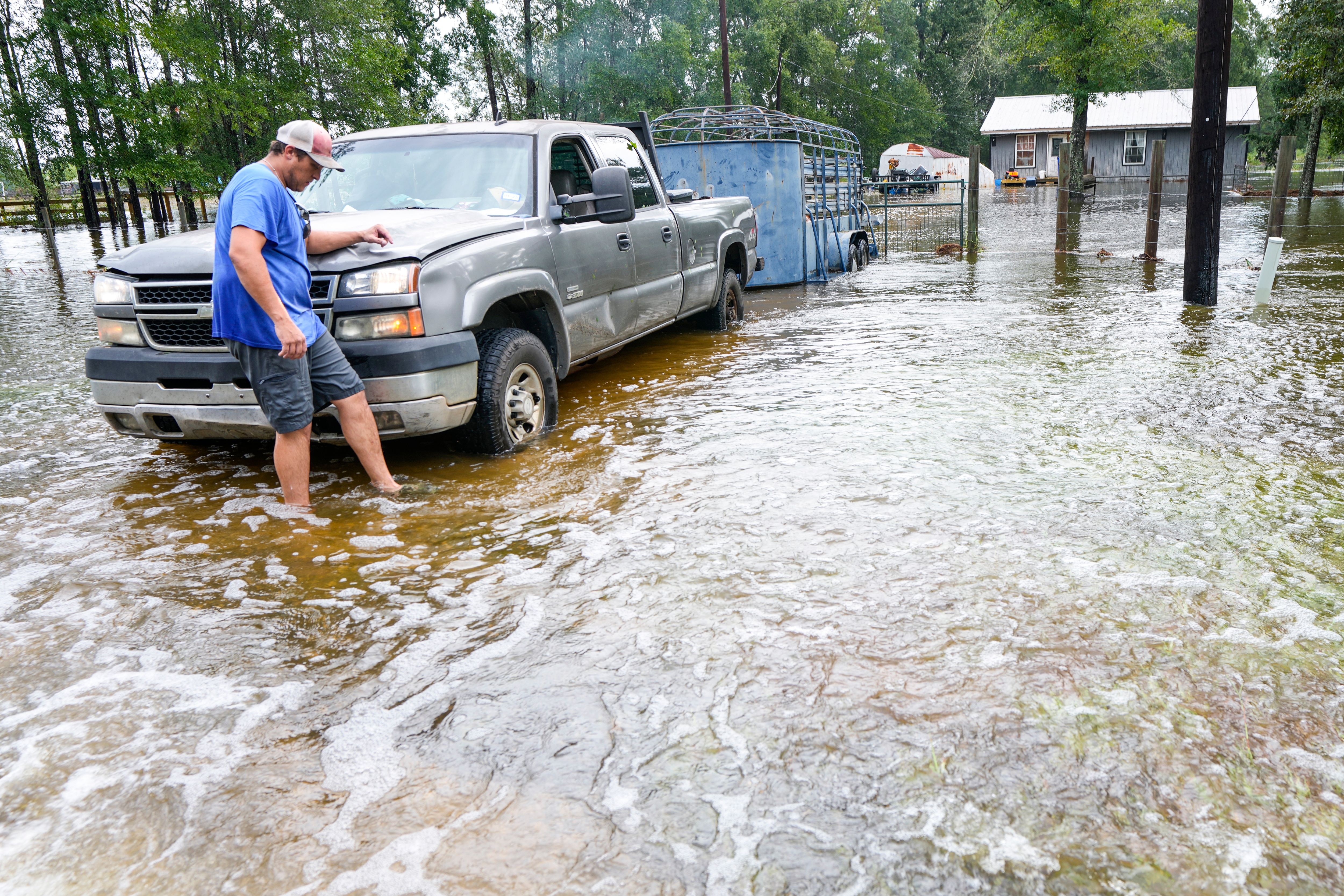
    HOUSTON — An extreme flood scenario was underway Wednesday in Southeast Texas with the remnants of Edouard.

    The storm, now a tropical depression, has dumped an estimated 15 to 22 inches of rain in spots, and some areas could experience rain totals of 25 to 30 inches.

    A flash flood emergency was issued for Hardin and Tyler counties until 10:45 a.m. local time. By noon local time, a weather station near Saratoga, Texas, was up to 17.75 inches — 5.91 inches of which fell between 5 and 6 a.m. A station south of Ivanhoe, Texas, near Warren, has recorded 15.68 inches of rain. Another near Wildwood is up to 16.52 inches. And considerably more has probably fallen in the rural areas away from weather stations.

    At least one person had to be evacuated in the East Texas town of Kountze after water entered a structure as heavy rain swept the area, according to staff at the National Weather Service office in Lake Charles, Louisiana.

    Forecasters urged people to get to higher ground as rain continued to fall early Wednesday, delaying damage assessments.

    “Move to higher ground now!” wrote the National Weather Service in Lake Charles. “This is an extremely dangerous and life-threatening situation. Do not attempt to travel unless you are fleeing an area subject to flooding or under an evacuation order.”

    Texas deployed rescue aircraft, boats and high-water vehicles, and the state’s emergency operations center has been activated, along with 1,500 state personnel.

    “We are getting it pretty good over here,” Kountze Mayor Glenn Matthews said by phone from his home, which has been without power since Tuesday night, noting crews were out doing welfare checks for the roughly 2,000 residents.

    Matthews said he had not heard any reports of injuries or deaths related to the storm, and there were no evacuation orders for the area. But there was concern about elderly residents like his parents who were without power and sometimes need oxygen.

    “What we’re doing now is making sure everyone is okay. Then we can try to assess the damage after the rain has let up some,” Matthews said. “It’s still raining as we speak. The city is pretty much flooded because this much rain at one time, there’s nothing the drainage can do about it. But it dissipates pretty well when it stops. This is not our first rodeo: We’ve been through this before many times.”

    He noted that the rains came after a lengthy dry spell: “We had just declared a burn ban. Be careful what you ask for.”

    At least 80,000 people were without power Wednesday morning across hard-hit areas of East Texas, the majority – about 50,000 — in coastal Port Arthur, an industrial refinery town of about 56,000.

    “We’re out doing damage assessments this morning in between wind and rain bands. It’s still an organized storm, albeit moving to our north. The winds are stronger than what had been forecast,” said Jeff Branick, chief executive for Jefferson County surrounding Port Arthur.

    Branick said the areas has “mostly debris issues, very little flooding” compared with Kountze and other areas to the north, where the state’s emergency management division has sent search-and-rescue boat teams.

    But he noted that the area has “some industrial upsets because of the loss of power,” including widespread complaints overnight of gas and burning rubber odors near refineries.

    “The investigation is still ongoing. Fortunately, after the odor appeared they determined one of their flares that’s used to offset the loss of power had not ignited and they got it ignited and the issue went away,” Branick said of a Valero refinery.

    Downtown Houston has seen only about a tenth of an inch of rain, if that. The edge of the heaviest rain is razor-sharp, with a flood disaster 50 to 75 miles away.

    Rainfall totals of 5 to 6 inches per hour are common in the heaviest bands. A staggering 5.91 inches fell in a single hour along Highway 787 west of Lumberton, Texas.

    Edouard is a waterlogged system, making for extremely efficient precipitation processes. Not only is there more water in the atmosphere to work with, but the saturated atmosphere means there’s little to no evaporation of the raindrops on the way down.

    There are even some indications that Edouard intensified a bit overnight. That’s because of several factors.

    For starters, diurnal — day/night — processes often lead to enhanced convection, or thunderstorm, activity after nightfall. That sometimes allows tropical cyclones to strengthen a bit after dark, even if they’re moving inland.

    The system also has an umbilical cord of moisture and instability, or thunderstorm fuel, feeding it from the southeast. That Gulf of Mexico connection helped fuel the storm, even far inland.

    But the tiny core has remained remarkably intact. It’s not often a well-defined eye is present 115 miles inland. Edouard’s decay may also be slowed by something called the “brown ocean effect,” a rare phenomenon in which a tropical system that has made landfall behaves as if it’s over water.

    It occurs when hot, saturated soils mimic a tropical ocean, allowing a cyclone to extract heat energy.

    That may seem surprising considering there’s a drought in Texas. But the hot, sunbaked soils may have become a bit warmer due to the drought. Then they were resaturated by the initial rains from Edouard’s outer bands. Soil temperatures in the top 6 inches of ground in Southeast Texas were between 82 and 85 degrees as Edouard made landfall.

    Marshall Shepherd, a researcher at the University of Georgia and a specialist on this process, likened it to a “flash brown ocean feedback.” In an email, he suggested the initial dry environment may have played a role.

    Something similar happened with the remnants of Tropical Storm Erin, which came back to life over Oklahoma on Aug. 18, 2007. Research from 2021 noted that dry conditions preceded Erin but that the storm re-wet the hot soils, allowing the brown ocean effect to occur.

    In the case of Edouard, the storm’s small size made it extra prone to interacting with the landscape, noted Brad Johnson, a research meteorologist and specialist on the role of land type.

    In the interim, Edouard will continue to dump prolific moisture.

    Steering currents are very weak, so there’s not much to scoot the system along. The storm was moving northwest at 5 mph — a brisk walking pace.

    An additional 6 to 14 inches of rain may still fall in some spots.

  • Coin with Trump’s face and gold finish to go on sale

    Coin with Trump’s face and gold finish to go on sale

    The $1 coin designed to celebrate America’s 250th birthday — and seemingly President Donald Trump, whose face gazes from one side of the gold finish — will go on sale Wednesday, according to the U.S. Mint.

    The coin’s design — Trump’s visage as “heads” and the Great Seal of the United States as “tails” — received the stamp of approval this year from the U.S. Commission of Fine Arts, whose members Trump appointed. In past comments, the president said that the idea to stamp his face on a coin was “very unusual” but that he was “honored by it.”

    The president’s second term has brought several such brandings, or attempts at them, that have become tangled up in lawsuits. That includes moves to put Trump’s name on the Kennedy Center and the U.S. Institute of Peace, as Trump works to leave his stamp on history and on Washington, D.C.

    The coins, which can be used as legal tender, drew some criticism, particularly because of federal law that bars the depiction of a living president on U.S. currency. But in some circumstances, the Treasury Secretary does have authority to authorize the minting and issuance of special coins.

    The coins were struck to “honor 250 years of great American heritage,” the U.S. Mint wrote on its website. In an arc above Trump’s face is written “LIBERTY,” and below is “1776 (tilde) 2026.” On the flip side is the Great Seal of the United States, with the bald eagle gripping arrows in one claw and an olive branch in the other. In a banner clutched in its beak is written “E PLURIBUS UNUM,” Latin for ”out of many, one.”

    A roll of 25 coins will cost $61, and a bag of 100 will cost $154.50, and the U.S. Mint said it randomly hid some special-issue coins among the rolls and bags. Those will be marked “July 4th” because they were struck on that day, the anniversary of the Declaration of Independence.

    Households are limited to only two orders, the U.S. Mint wrote, but that cap will be lifted at 2 p.m. Thursday.

  • Trump’s ‘lightning speed’ outpaces the courts

    Trump’s ‘lightning speed’ outpaces the courts

    WASHINGTON — The courts cannot keep up with President Donald Trump.

    In cases on immigration, spending, mass firings, and restructuring agencies, the administration has barreled ahead in the face of slow-moving legal challenges. If Trump loses when those lawsuits are finally resolved, it may be too late as a practical matter to undo what he has achieved.

    The challenge to Trump’s enormous White House ballroom project is just the latest example of a mismatch between a judicial system characterized by unhurried deliberation and a presidency built for speed.

    “Trump is going to get his ballroom — even if courts conclude it’s illegal,” said Leah Litman, a law professor at the University of Michigan.

    Over the past few months, three judges and four justices concluded that Trump likely violated a federal law by razing the East Wing and replacing it with a luxury building.

    Five other justices did not dispute that conclusion, ruling instead that the challengers probably lacked a direct interest in the matter sufficient to give them standing to sue.

    The litigation continues — but so does the construction. Trump said Tuesday that the project will be done by next year.

    Dissenting from an order in a different case last week, on mail-in voting, Justice Ketanji Brown Jackson wrote that she detected a pattern: a “Catch-Me-If-You-Can approach to pursuing the president’s policy agenda.”

    Davis Ingle, a White House spokesperson, said velocity was a virtue.

    “President Trump is moving at lightning speed,” he said, “because we don’t have time to waste in our mission to make America greater than ever before.”

    When the ballroom case was argued before a three-judge panel of the U.S. Court of Appeals for the District of Columbia Circuit in June, Judge Patricia A. Millett asked a telling question.

    If the government were to move very quickly to bulldoze the Statue of Liberty, she asked, was it true that “nothing can be done” by the courts?

    Yaakov Roth, a Justice Department lawyer, did not try to duck the question. “I think that’s right, yes,” he said.

    The panel ruled for the historic preservationists who had challenged the project by a 2-1 vote, affirming a ruling from a lower court judge blocking the project about four months after it was issued. That is pretty fast by judicial standards.

    But the injunction had been paused while the case moved along, and the appeals court added another two weeks. Then Chief Justice John Roberts added another pause, one that would turn out to last 10 days.

    During all of this, construction continued at a furious pace.

    When the case reached the Supreme Court last month, the challengers warned the justices that Trump had “decided to try to outrun judicial review.”

    In response, Solicitor General D. John Sauer did not exactly deny the charge. He crowed that a 250-person crew had been working 20 hours a day, seven days a week, and that the project, which he said included key security upgrades for the White House, had passed the point of no return. Echoing the challengers, he wrote that “the executive has raced to ‘outrun’ the extraordinary security threats facing this president.”

    In a decision Monday that let the project proceed for now, no justice said the project was lawful. The five-member majority, in an unsigned opinion, instead tentatively determined that the challengers had not suffered the sort of direct injury that would allow them to sue.

    Indeed, the majority went out of its way to say that “we do not pass upon the legality of the government’s East Wing project.”

    A frustrated Roberts, joined by the court’s three liberal members, wrote in dissent that “construction of the ballroom has proceeded apace for the better part of a year” even though it was most likely in violation of a federal law that requires Congress’ express permission to erect a building on federal property in Washington.

    Should Democrats capture one or both chambers of Congress in the coming election, they may be able to challenge the project in court or through legislation. But it will almost surely be too late.

    Aziz Huq, a law professor at the University of Chicago, said there was a pattern.

    He pointed to cases in which he said the administration had “immediately shut off funding in violation of law when the recipient depends on the funding and is discouraged from suing by even the temporary loss of funding.”

    This, Huq said, “is a striking use of practical power to outrun law.”

    The Supreme Court’s deliberate pace helped Trump during his last campaign, too.

    Jack Smith, the special counsel prosecuting him on charges that he had tried to subvert the 2020 election, sought to put the case on a fast track, one that would yield a trial before the 2024 election. Trump argued that he was immune from prosecution because his actions had been part of his official duties as president.

    Sauer, who was then Trump’s personal lawyer, urged the justices to go slow. The question, Sauer’s brief said, should be “resolved in a cautious, deliberative manner — not at breakneck speed.” He urged the justices not to “rush to decide the issues with reckless abandon.”

    The Supreme Court turned away a first appeal in 2023 and did not agree to hear the case until late February 2024, scheduling arguments for that April.

    The court’s decision, that July, granted Trump broad but not unlimited immunity, and Smith might in theory have been able to proceed with some elements of his case.

    But it had taken the court long enough to decide the immunity issue that the prospect of a trial before the election evaporated. After Trump won, the Justice Department dismissed the charges against him.

    “It was entirely foreseeable that the Roberts court’s decisions allowed Trump to outrun both the prosecutors and the lower courts,” said Jed Shugerman, a law professor at Boston University.

    The general problem, said Litman, a frequent critic of Trump, is that the Supreme Court, intentionally or not, “keeps missing the forest for the trees,” focusing on technical issues in the face of brazen conduct.

    “The court has created a maze of obstacles — and invented obstacles — that have the effect of allowing the executive branch to get away with lawlessness,” she said, “at least for enough time to accomplish what they’re trying to.”

    But Samuel Bray, a law professor at the University of Chicago, said courts are so powerful they must observe certain restraints. They cannot decide disputes not brought to them, for instance, and they can decide only cases in which the plaintiffs have a real stake.

    “Courts have the special power of giving judgments that are obeyed, even in the bitterest disputes,” he said. “But the special powers and special constraints of courts go together. And in the long run, the legitimacy of a judicial system depends on the judges’ commitment to working in a judicial mode, come what may.”

    Many presidents have been aggressive in pursuing their policies, and few have been eager to be second-guessed by the courts. But Trump’s actions are different in kind, said Pamela Karlan, a law professor at Stanford University.

    “He really has decided that he can just go ahead and do what he wants,” she said, “daring courts to stop him across a huge range of subject matters.”

    FILE — President Donald Trump boards Air Force One at Joint Base Andrews in Maryland, Aug. 27, 2026. In his breakneck construction of a grand ballroom and in many other initiatives, critics say, the president has tried to outrun judicial review. (Haiyun Jiang/The New York Times)Haiyun Jiang
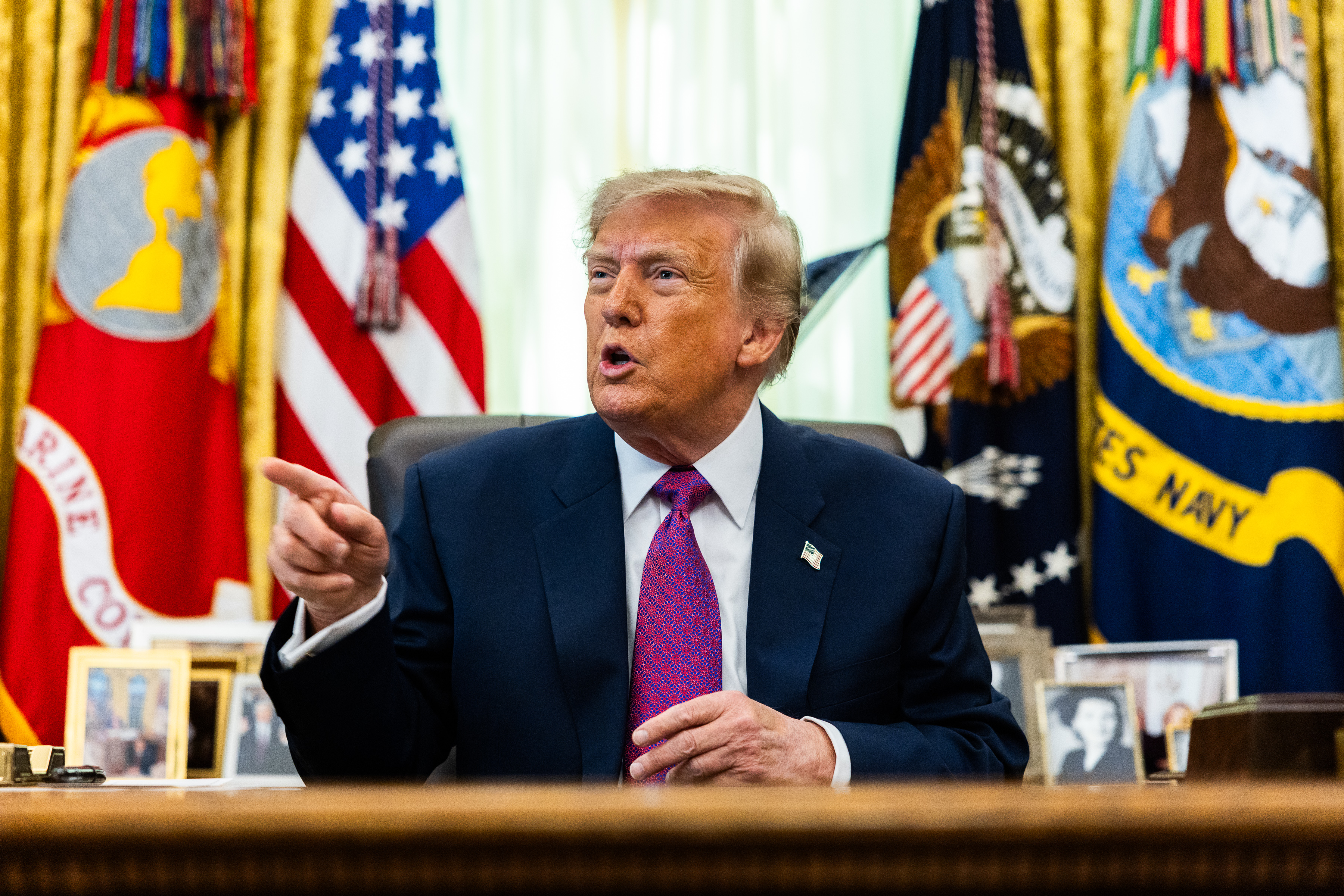
    President Donald Trump speaks to reporters in the Oval Office after ordering the name of Lake Ontario to Lake America, on Thursday, Aug. 27, 2026. On Tuesday night, after the latest exchange of fire over control of the Strait of Hormuz, Trump called on the Iranian people to rise up — something he did six months ago, before he backed off and acknowledged that his command was easier said than done. (Demetrius Freeman/The New York Times)DEMETRIUS FREEMAN
  • Symbolic funerals held in Nepal for those feared lost as some missing tourists make contact

    Symbolic funerals held in Nepal for those feared lost as some missing tourists make contact

    KATHMANDU, Nepal — Tourists previously reported missing in Nepal have made contact with authorities, officials said Wednesday, as families of locals still unaccounted for after last week’s catastrophic floods held symbolic funerals for their loved ones.

    Nepal’s Foreign Ministry said 324 foreign nationals have been rescued, while another 590 from 39 countries remain missing following the Aug. 26 floods that killed at least 1,118 people and left more than 3,900 missing.

    Australian Prime Minister Anthony Albanese said Wednesday that the number of Australians missing in the disaster had fallen from 43 to 38 after five were confirmed safe overnight.

    “Amidst all of this tragedy, we are seeing some positive news. Today, another five Australians have been confirmed safe,” Albanese told reporters in Palau, where he is attending a regional summit.

    “We hope, of course, for positive news further, and we’re doing everything we can to work with authorities,” Albanese added.

    Sunil Sharma, a spokesperson for the Nepal Tourism Board, said at least five other tourists who were previously reported missing had contacted authorities by email or telephone in recent days.

    It is thought the disaster happened when a glacial collapse in the Himalayas sent rock, ice and meltwater into valleys below, triggering powerful floods downstream. The surge entered rivers flowing through Tibet and Nepal, causing them to rise rapidly. Floodwaters swept away homes, buildings, roads and bridges, carrying mud and rocks downstream.

    Families hold symbolic funerals

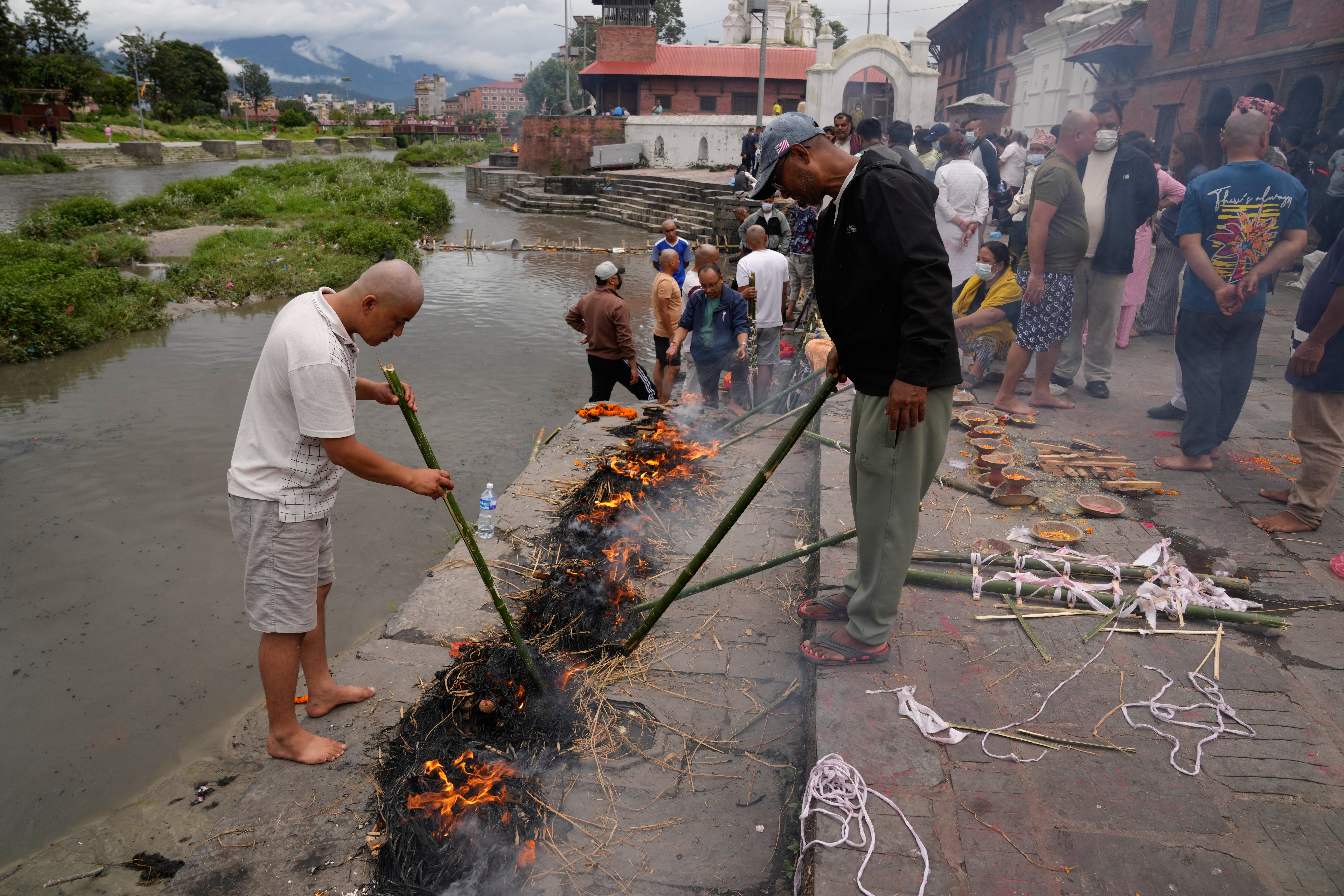
    Some families in Nuwakot, one of Nepal’s worst-affected districts, have held symbolic funerals for relatives still missing, hoping to free their souls after they were presumed dead.

    In Hindu tradition, cremation is an important final rite, and for some families, performing the ceremony even without the bodies of their loved ones provides a sense of spiritual release.

    Mukunda Rijal said his cousins and their daughters had not been found, prompting the family to perform a symbolic funeral for them.

    Along the banks of the Trishuli River, a priest placed straw effigies representing the missing family members and covered them with small piles of wood before setting them alight. The symbolic funeral pyres were surrounded by offerings to Hindu deities as relatives gathered to perform the final rites.

    Authorities in Nepal have also been burying recovered bodies in temporary graves until they can be identified. They are preserving DNA samples, photographing distinguishing facial features and recording other identifying details to help match the remains with missing people and eventually return them to their families.

    China builds access road for rescue crews

    On the Chinese side, rescue crews completed a makeshift road to the disaster site at Gyirong Port on the Nepal border, state broadcaster CCTV reported on Wednesday.

    Crews have been clearing access for heavy machinery to be used in the search at the border crossing complex, which was washed away by the floods. The road leading to the crossing was destroyed and buried under water, mud and rocks.

    At least 21 people have been killed and 541 remain missing in China, according to the Chinese state news agency Xinhua.

    Survivors find shelter in Kathmandu

    Some flood survivors are fleeing the devastation to seek shelter in Nepal’s capital, Kathmandu.

    Around 400 survivors, mostly from the town of Timure, about 65 miles west of Kathmandu, have been staying at the Yellow Gumba monastery. The shelter is being organized by locals and relatives, with relief supplies donated by individuals and charity organizations.

    Riya Tamang, 21, who fled with her 10-month-old baby as the floodwaters approached, is among those taking shelter at the monastery. She lost her grandparents in the disaster.

    “I was the last one to leave the house. It was so difficult to escape,” she said.

    Her husband, who works as a cook in Gyirong town on the Chinese side of the border, also survived, and the couple now stays in touch through video calls.

  • How much is that gene-edited dog in the window?

    How much is that gene-edited dog in the window?

    For thousands of years, we have been trying to craft our ideal canine companions. We have honed their abilities to perform an array of specific tasks, from fetching waterfowl to staring down wayward sheep. We have reshaped and refined their bodies, producing sausage-shaped dachshunds, polka-dotted Dalmatians, bushy-browed schnauzers, and deeply wrinkled Shar-Peis.

    And we have done it using nothing more sophisticated than good old-fashioned selective breeding.

    Now our canine engineering efforts are entering a new era. Earlier this month, Kindred Companion Sciences, a biotech startup based in New York, revealed that it had used the technique known as CRISPR to create the first gene-edited, hypoallergenic dogs. Thanks to a single genetic tweak, the dogs — two undeniably adorable beagles — appear unable to produce a protein that can leave some people red-eyed and wheezing.

    Still, it’s a long way from the lab to the laps of pet owners across America. (It has been 2½ years since scientists announced a gene-edited, hypoallergenic cat, but such felines are not yet available to the public.) More time and data are needed to determine whether Kindred has truly delivered on its promise of hypoallergenic dogs, experts said. Can a single gene edit reliably stave off the sniffles in humans?

    An even more critical question: What does it mean for dogs? Will our efforts to create pets that are more convenient for us have unintended health consequences for them?

    History is not encouraging. Since the Victorian era, when dog fanciers began to create and codify modern dog breeds, our quest for the perfect pooch has yielded dogs that are inbred, disease-prone, and saddled with extreme physical traits — super flat faces and ultralong backs — that compromise their welfare.

    “We’ve created an enormous amount of inherited diseases in dogs, often unintentionally, because of our pursuit of certain traits that appeal to us,” said Rowena Packer, an expert on companion animal welfare at the Royal Veterinary College in London. “I just think we have a lot more responsibility to think more critically about the dogs that we create.”

    Dog design

    For all the canine diversity we’ve managed to create through selective breeding, a truly hypoallergenic dog remains something of a holy grail. Breeders have created all manner of low-shedding dogs and purportedly hypoallergenic dogs (behold the labradoodle and all of its doodle-y descendants). But these dogs still produce proteins that, secreted through their skin, saliva, and urine, can trigger human allergies.

    Gene editing provides a “simple, elegant” way to solve the problem at the source, said Matt Walker, cofounder and CEO of Kindred, who has suffered from dog allergies his whole life.

    Kindred began with canine cells, using CRISPR to disable a gene known as Can f 1, which codes for one of the main canine allergens. Then, the scientists used a basic cloning technique to transfer the edited genomes from these cells into dog embryos. They implanted the embryos in a surrogate beagle mother, who gave birth to two puppies: Alfie and Bailey, who are now almost 2 years old.

    The company has detected no trace of the allergen in either dog, and Walker, who adopted Bailey, has experienced no allergic reactions. (Alfie was adopted by one of Walker’s colleagues.) The dogs appear to be developing normally.

    “No red flags, no yellow flags — so far, the animals seem completely healthy,” Walker said. “That said,” he added, “this is the starting point of our work.”

    Indeed, for all its purported precision, gene editing can have unpredictable consequences. Medical issues might appear later in the dogs’ lives, or when the company starts producing enough dogs to spot rare side effects.

    Or, of course, they could turn out to be perfectly healthy. But it’s too soon to say, and we’re likely to see more efforts to create gene-edited dogs in the future. Where do we want to draw our ethical lines?

    Thirty years ago, when genetic engineering was still in its infancy, philosopher Bernard Rollin proposed an ethical principle he called the “conservation of welfare,” which held that we should not modify animal genomes in ways that left the animals “worse off, in terms of suffering” than their unmodified forebears.

    That’s a sensible starting point. But it’s a low bar. And it doesn’t address all the ethical implications of making gene-edited dogs, which may require using additional animals to serve as test subjects, egg donors, and surrogate mothers.

    “I think we get sometimes so excited about the idea of what technology can fix, particularly biotechnology — we’ve got to remember that, generally, we use a lot of animals to get to that end ‘product,’” said Lisa Moses, a veterinarian and bioethicist at Harvard University.

    Ethicists have also questioned whether we should bring gene-edited dogs into a world that already has more dogs than it can care for, especially when the goal is not to create a healthier animal, but one that better meets our human needs.

    “Should we use sophisticated biotechnology to create the animals we want, rather than changing how we relate to the animals who already exist?” said Jessica Pierce, a bioethicist at the University of Colorado Anschutz Medical Campus. “That’s a question of priorities, and perhaps misplaced priorities.”

    Walker sees it differently. His allergies would prevent him from ever adopting a shelter dog, he said; gene editing is the only thing that has made it possible for him to have a relationship with dogs. “I’m also really invested in applying this work to service dogs for people who are allergic,” he said.

    “People’s ethical barometers are set differently,” he added. “For me, this feels justified by the potential benefits, as long as animal health is protected.”

    Good breeding

    Dog lovers can, in good faith, come down on different sides of the Kindred question. But if we’re going to discuss the ethics of dog creation, experts agreed, we need to ask ourselves some hard questions not just about our new gene-editing tools, but also about our long-standing breeding practices.

    “At the end of the day, they’re both producing animals for companion purposes,” said Alison Van Eenennaam, an expert on animal genomics and biotechnology at the University of California, Davis. “It’s not the technology that’s creating the ethical issues.”

    We’ve done plenty of harm without modern biotechnology. And there are ways to use gene editing to improve canine lives — even, in some cases, to undo some of the damage done through selective breeding. In a 2022 study, scientists showed that it was technically possible to use gene editing to “correct” a genetic mutation associated with hip problems in Labrador retrievers.

    But these hip problems stem from a variety of risk factors — both genetic and environmental — and most canine health conditions probably cannot be cured by editing just one gene, experts said.

    Improving dog welfare is likely to require an array of complementary approaches. These include revising breed standards, opening up closed breeding pools, performing widespread genetic screening, and educating the public about the welfare costs of breeding dogs with certain physical traits.

    Experts have been calling for these reforms for years, with limited success. But they are necessary if we want to bring our behavior in line with the values we claim to hold. We are, after all, a society that is so besotted with dogs that we have startups trying to develop canine longevity drugs — and editing genes so that people can live alongside creatures that would otherwise give them hives.

    Life with Bailey has been “amazing,” Walker said. “I didn’t really appreciate, when people say pets are part of your family, what that really means. But she really is a part of our family.”

    His wife had grown up with dogs, he added, and had long bemoaned his allergies. “She always said that this was the one thing she wished she could change about me,” he said.

    Indeed, as news of Kindred’s hypoallergenic dogs spread across the internet this month, one Facebook commenter raised precisely that possibility: “Why doesn’t he alter himself instead of the beagles?”

    Alas, we can’t yet edit dog allergies out of our own genomes. But that doesn’t mean we can’t evolve.

    This article originally appeared in the New York Times.
  • Advocacy groups, fearing federal intimidation, plan to deploy poll watchers

    Advocacy groups, fearing federal intimidation, plan to deploy poll watchers

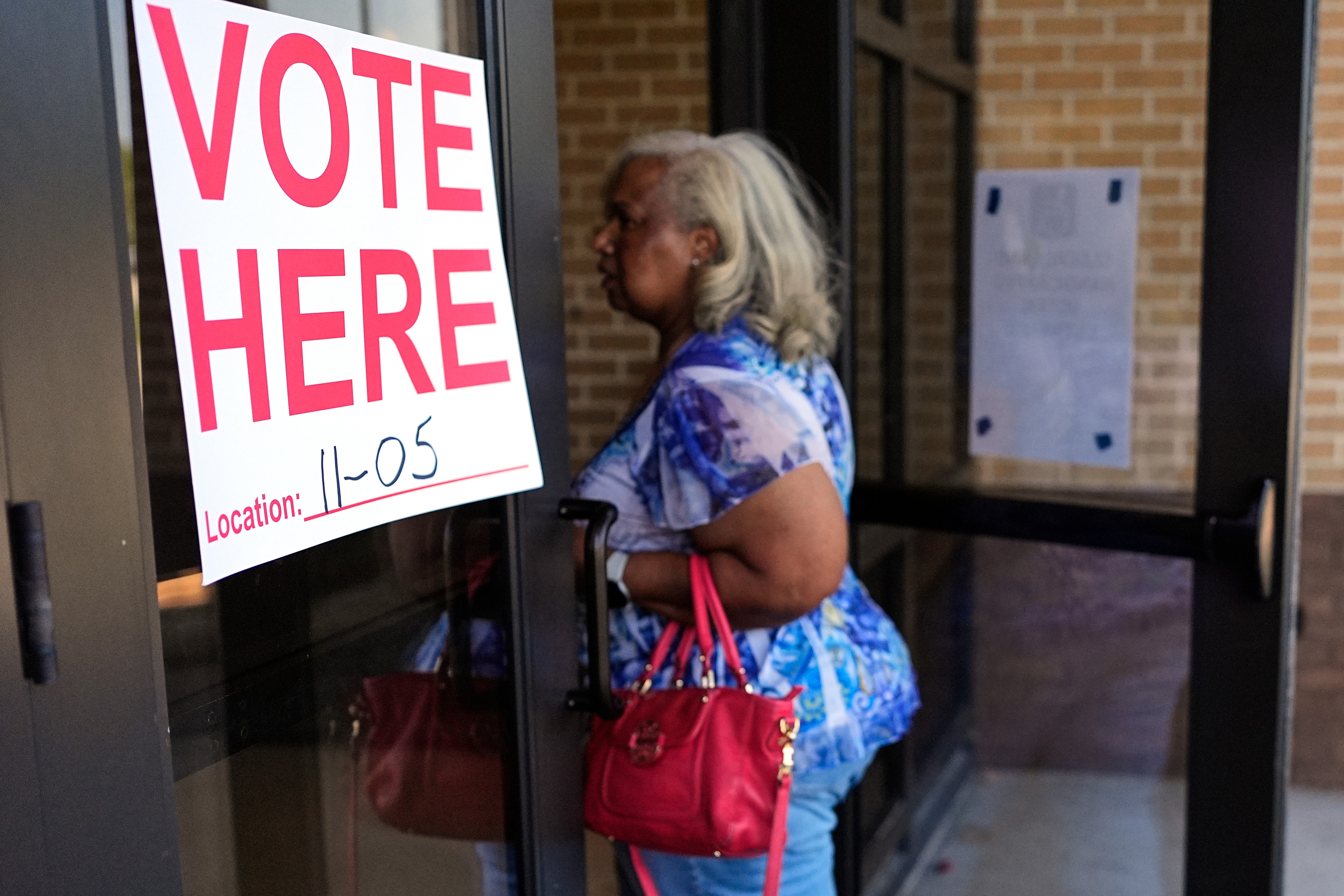
    A coalition of civil rights and advocacy groups plans to deploy hundreds of poll watchers this fall at heavily minority precincts to counter what organizers say is a threat of voter intimidation from President Donald Trump’s administration.

    The National Action Network, the American Federation of Teachers, and the Save America Movement are launching the Vote Safe project, which they described as a nonpartisan initiative set to begin during early voting and culminate in the Nov. 3 midterm elections. They are focusing on Michigan, Ohio, Georgia, and North Carolina, all of which are competitive in the battle for control of the Senate.

    Trump has routinely raised alarms about the threat of voter fraud this fall, stoking fears among his followers and prompting calls for preemptive action. He has urged Republicans to nationalize elections, and some administration officials haven’t ruled out deploying agents to polls, even though federal law prohibits doing so.

    “There is really an unprecedented threat to our elections this year, and it’s coming from our own government,” Mary Corcoran, executive director of the Save America Movement, said in an interview. Corcoran co-founded the group along with Lincoln Project co-founder Steve Schmidt to counter what they see as the excesses of Trump’s MAGA movement.

    Those locations were chosen as politically significant areas with large populations of people of color that could be vulnerable to intimidation, she said. The idea is to have trained community members — such as faith leaders, teachers, veterans, and firefighters — at polling places, so voters “can go there with confidence,” Corcoran said. “We want to replace that fear with comfort and knowledge.”

    Homeland Security Secretary Markwayne Mullin said at a news conference Tuesday that Immigration and Customs Enforcement agents aren’t meant to patrol polling places but may be present if they are serving a warrant or responding to a threat. Then-White House spokeswoman Karoline Leavitt said at a news conference this year that she “can’t guarantee that an ICE agent won’t be around a polling location in November” but added that she hadn’t heard Trump discuss plans to do so.

    Former Trump strategist and podcaster Stephen K. Bannon has suggested that ICE deployments at airports could serve as a “test run” for similar efforts at election sites.

    While both political parties have increasingly deployed poll watchers since 2020, recent years have seen clashes over charges of voter intimidation. During 2022’s midterm elections, a court order stopped armed, masked individuals from photographing people casting early ballots in Arizona. This year, the Justice Department has said it plans to send 1,000 monitors to the polls.

    Organizers said they modeled the Vote Safe initiative after a project the Save America Movement undertook last year to station observers and videographers in areas of the country with a heavy ICE presence in hopes of preventing violence.

    Corcoran said volunteers are being trained in local election laws and techniques to de-escalate tense situations. They will be clearly identified with Vote Safe insignia, she said, and none will be armed.

    Vote Safe plans to deploy poll watchers around Detroit, Atlanta, Cleveland, and Charlotte, in the 20 precincts in each area with the highest expected turnout of racial-minority voters.

    Citing the Supreme Court’s recent weakening of protections for minority voters in the Voting Rights Act, the organizers said they want to ensure that voters of every ethnicity feel welcome at polling places. They also want to protect voters from having their immigration status inappropriately challenged.

    “No voter should have to wonder whether exercising their constitutional right will put them at risk,” the Rev. Al Sharpton, founder of the National Action Network, said in a statement. “If anyone thinks the presence or threat of federal agents will frighten our communities away from the polls, they are badly mistaken.”

    Randi Weingarten, president of the American Federation of Teachers, said in a statement that the coalition’s goal is for voters to feel there is “someone standing beside them who knows their rights and knows the law,” so they can cast a ballot with confidence.

  • How the Supreme Court locks away its own history

    How the Supreme Court locks away its own history

    In early 2016, Justice Antonin Scalia died of a heart attack on a Texas ranch, sending his Supreme Court colleagues into a period of grief and uncertainty. Behind closed doors, they had to contend with another piece of unsettling news.

    Scalia, the leading light of the conservative legal movement, had left no plans for his working papers, according to five people aware of the situation. For a Supreme Court justice, this was the equivalent of dying without a will. With no instructions for creating an archive or opening it to the public, the definitive inside account of his work — and the court’s — could be lost or emerge with uncomfortable speed.

    So following his death, his colleagues entered into private negotiations to try to head off any such situation in the future.

    In a series of memos and conference meetings, Chief Justice John Roberts led the surviving justices in discussions about imposing a more uniform seal for their own papers, according to several people with knowledge of the process.

    The absence of instructions from Scalia and ensuing confidential conversations, which have not previously been reported, help explain why the nation’s highest court can be so difficult to understand. The ultimate record of the court’s work is considered the personal property of each justice, to dispose of or share as he or she chooses. And many of the justices have valued confidentiality over transparency and chosen to postpone scrutiny of their work for years to come.

    In contrast with the executive branch, which is required to preserve and ultimately make public a record of its inner workings, there are no laws to determine what the justices save, shred, burn, or reveal, or when. The court does not share any information about policies or plans for records; a spokesperson for the court did not respond to written questions.

    People familiar with the episode after Scalia’s death, who spoke to the New York Times on the condition of anonymity because of the court’s sensitivity over disclosure of internal workings, recalled that a consensus was reached but had differing memories of its terms and how solid or lasting it was.

    Still, the death of Justice Ruth Bader Ginsburg, just a few years later, provides a clue: Her Supreme Court papers went, at her direction, to the Library of Congress on the condition that no case file would be opened until every justice involved in the matter had died, a restriction that could lock away many documents for decades.

    Although some justices in previous eras arranged for their papers to be released not long after their own deaths, the trend on the Roberts court has been to impose much tighter restrictions, serving to further obscure a branch of government that has resisted calls for more transparency.

    Each year, the justices carefully compose and edit about 60 opinions in argued cases to share with the world. The fuller, richer narratives of each case, showing the behind-the-scenes stories of how members of the court pressured, persuaded, and prevailed over one another to arrive at those opinions, are hidden away in the justices’ working papers — their confidential internal memos and opinion drafts.

    The justices have said they want to keep those internal exchanges out of view, contending that secrecy protects the authority and finality of their decisions.

    Because of the court’s lack of transparency, it is impossible to say what will become of the inner history of its current work — which scholars say is more crucial, and more endangered, than ever.

    And people familiar with the court’s operations say they worry some of the most authoritative and revealing records are not being saved at all. That is because some work is now conducted digitally, via emails and texts. Those people, who spoke on the condition of anonymity to describe internal matters, said they were unaware of any consistent procedures for saving electronic records.

    The revelations found in past justices’ working papers have been so potent, they have caused bruised feelings among the justices and blowups among government institutions.

    And because no law governs the preservation of the justices’ work, each justice, assisted by staff, builds his or her own archival trove, deciding which memos, drafts, voting sheets, and meeting notes to preserve — or not.

    One spring morning in 1993, the justices opened their morning copies of the Washington Post to find detailed accounts of their internal debates. Earlier that year, Justice Thurgood Marshall, the first Black member of the court, had died, and his papers had been donated to the Library of Congress. With no announcement, the library had opened his papers for public review, and Post reporters had been digging through the newly released archive.

    The surprise release led to a brawl over how to interpret the justice’s written instructions. In a furious public letter, Chief Justice William Rehnquist took a swing at the Library of Congress, accusing it of “bad judgment” and of opening the records, some only two years old, prematurely. Marshall’s family sided with the chief justice, asking a senator to request that the papers be resealed. The library defended its reading of Marshall’s instructions. The papers stayed open.

    In the wake of that controversy, the justices considered establishing common timelines for releasing their papers but could not come to a consensus, according to the papers of Justice Harry Blackmun, who chose to make his papers public five years after his death.

    “‘This is the people’s court; it’s not our court,’” Harold Hongju Koh, a Yale University law professor and former Blackmun clerk, recalled his boss saying. “‘Who cares if we’re embarrassed. The main purpose here is to educate the public.’”

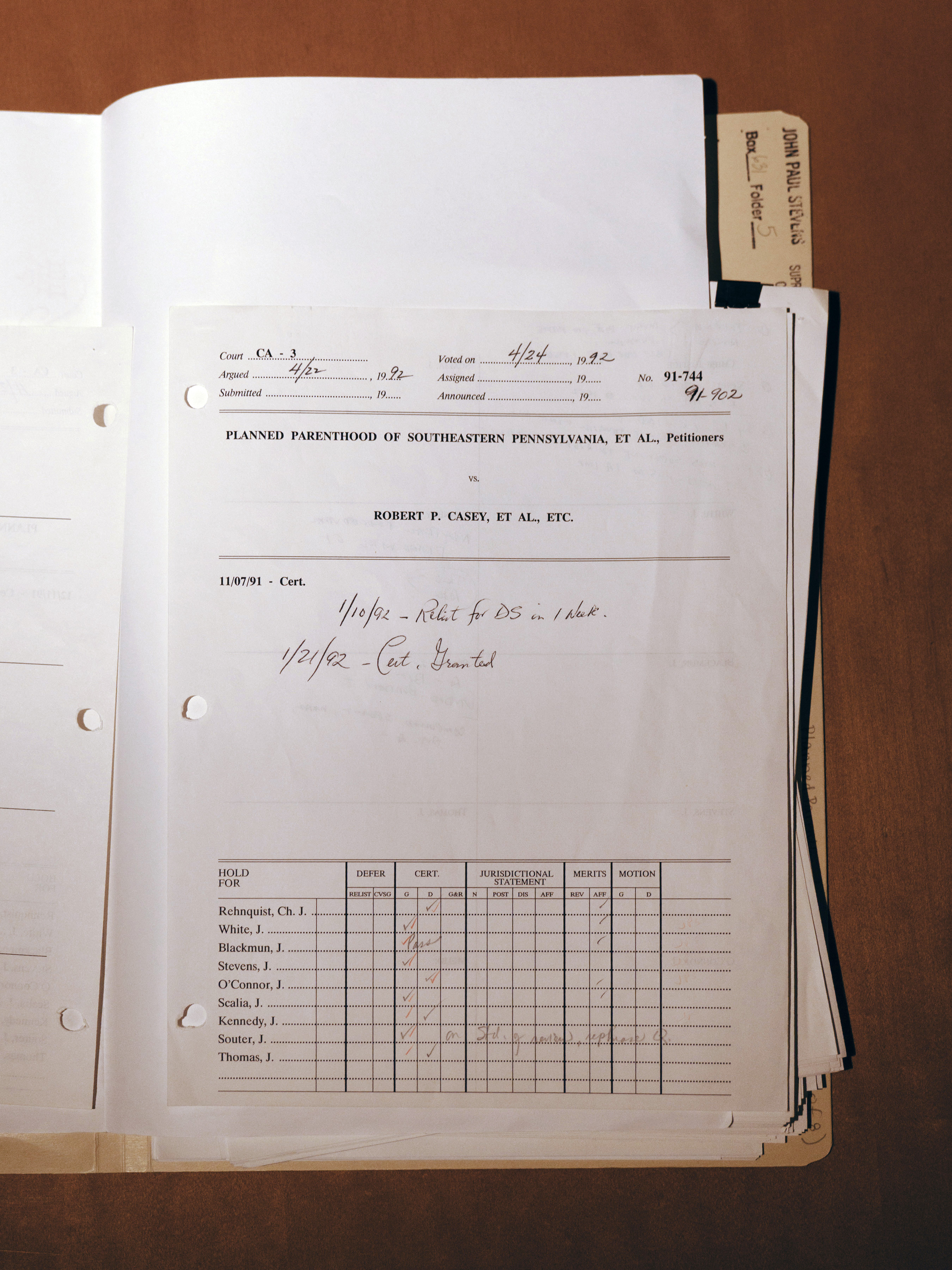
    The 2004 release of Blackmun’s papers again caused shock at the court, because of the unvarnished portrait they revealed. His 24-year chronicle of his time on the court exposed tensions among the justices, his own heavy reliance on clerks, and a bombshell: In 1992, the court had come close to overturning Roe v. Wade, but a centrist coalition of justices had secretly worked together to save the federal right to abortion. The precedent had been far more vulnerable than outsiders realized.

    A year after that release, Roberts joined the court as chief justice. The court’s new leader was reserved and disciplined. He rarely gave interviews or delivered speeches.

    The fullest record of the Roberts court is hidden away in its basement.

    In the bowels of the Supreme Court, below the red-velvet grandeur of the courtroom and the shuffle of tourists, the justices are assigned storage rooms in which they store case files, said people familiar with the court’s practices.

    Access to the records in the basement is highly restricted. But every year, about three dozen new people are allowed to read some of them: the justices’ incoming law clerks, who arrive for yearlong apprenticeships.

    Reading those files clears away the mystery that surrounds the court, say those who have seen them. Clerks often ask to read the insider accounts of the most game-changing decisions. But the deeper education is in learning about the dynamics among the justices.

    In public remarks, the justices have argued that their judicial independence requires keeping these kinds of exchanges private so they can bat around ideas and change positions.

    But some scholars question why papers should be sealed long after a justice has retired.

    The Trump era has transformed and heightened the importance of the current justices’ working papers: They will one day provide the public’s first opportunity to understand why the court ruled as it did in some emergency matters.

    “The more cases get decided without full opinions, the more important it is to get access to the papers,” Stuart Banner, a legal historian at UCLA, said in an interview.

    But it is virtually impossible to estimate when — if ever — the public might see those records.

    This article originally appeared in the New York Times.
  • Iran fires on its Gulf neighbors, retaliating for U.S. strikes after a wedding was hit

    Iran fires on its Gulf neighbors, retaliating for U.S. strikes after a wedding was hit

    Iran fired on U.S. allies in the Gulf early Wednesday following a night of American bombardment that Iranian state media says included a deadly strike on a wedding party.

    The latest violence came after a monthlong lull in fighting. The six-month war has led to a spike in oil prices, roiled the global economy and posed increasing political problems for U.S. President Donald Trump’s Republican Party ahead of November midterm elections.

    Fighting has escalated since the American military hit Iranian rocket launchers on an island in the Strait of Hormuz over the weekend, saying Iran was planning to use them to lay mines. Iran retaliated by firing missiles at American bases in Jordan that were intercepted.

    American military resources are stretched and political pressure in Washington is mounting, while Iran’s economy has been battered by sanctions and an American naval blockade. Iran’s currency hit another record low on Wednesday, with traders in Tehran exchanging 2.20 million rials for one U.S. dollar, a 10% hike from last week’s record.

    Neither side can continue indefinitely between full-scale war and a truce, said Hamidreza Azizi, senior Iran analyst at the Crisis Group, an international think tank.

    “At some point, one of the sides may see a need to escalate in order to break this cycle,” he cautioned. “So that could bring the two sides to a point that they have been trying to avoid until now, which is a full-scale war.”

    The struggle is focused on the Strait of Hormuz and oil prices

    The latest flare-up in violence came as the standoff seemed to be shifting slightly more in the U.S.’ favor, with the price of oil around $80 a barrel and Iranian leaders talking about growing economic hardships, said Sascha Bruchmann, an analyst with the International Institute for Strategic Studies’ Middle East office in Bahrain.

    “The U.S. is trying to reinstall some kind of confidence into the global oil markets … and the Iranians had to respond to that by reinserting insecurity and doubt,” Bruchmann said.

    Since the fighting resumed, the price of Brent crude oil, the international standard, has climbed to around $95, up more than 30% from the start of the war.

    U.S. Secretary of State Marco Rubio said Iran will “continue to feel the squeeze” from the United States until it drops any nuclear weapons ambitions and ends support for armed groups in the Middle East. Iran has always insisted its nuclear program is peaceful.

    U.S. allies in the region fend off Iranian attacks

    Following the strikes on Jordan, U.S. Gulf allies Kuwait and Bahrain said they had also come under attack, without reporting any casualties.

    “You will soon see that Iran’s new strategy on the battlefield, in diplomacy, and in confronting the economic blockade will shatter your foundations,” the recently appointed head of Iran’s powerful Supreme National Security Council, Mohsen Rezaei, said on X.

    In Iraq, where Iranian-backed forces are active, Kurdish authorities said they had intercepted 10 drones laden with explosives in the Irbil area. Iranian television reported that American bases in Irbil had been targeted.

    Israel’s military also said that Iran-backed Hezbollah fired two explosive drones at its soldiers in southern Lebanon, without causing casualties.

    The U.S. Central Command said Tuesday’s strikes focused on Iranian military targets, including air defense sites, radar systems and maritime assets.

    Strike on wedding killed 4 and wounded dozens, Iranian officials say

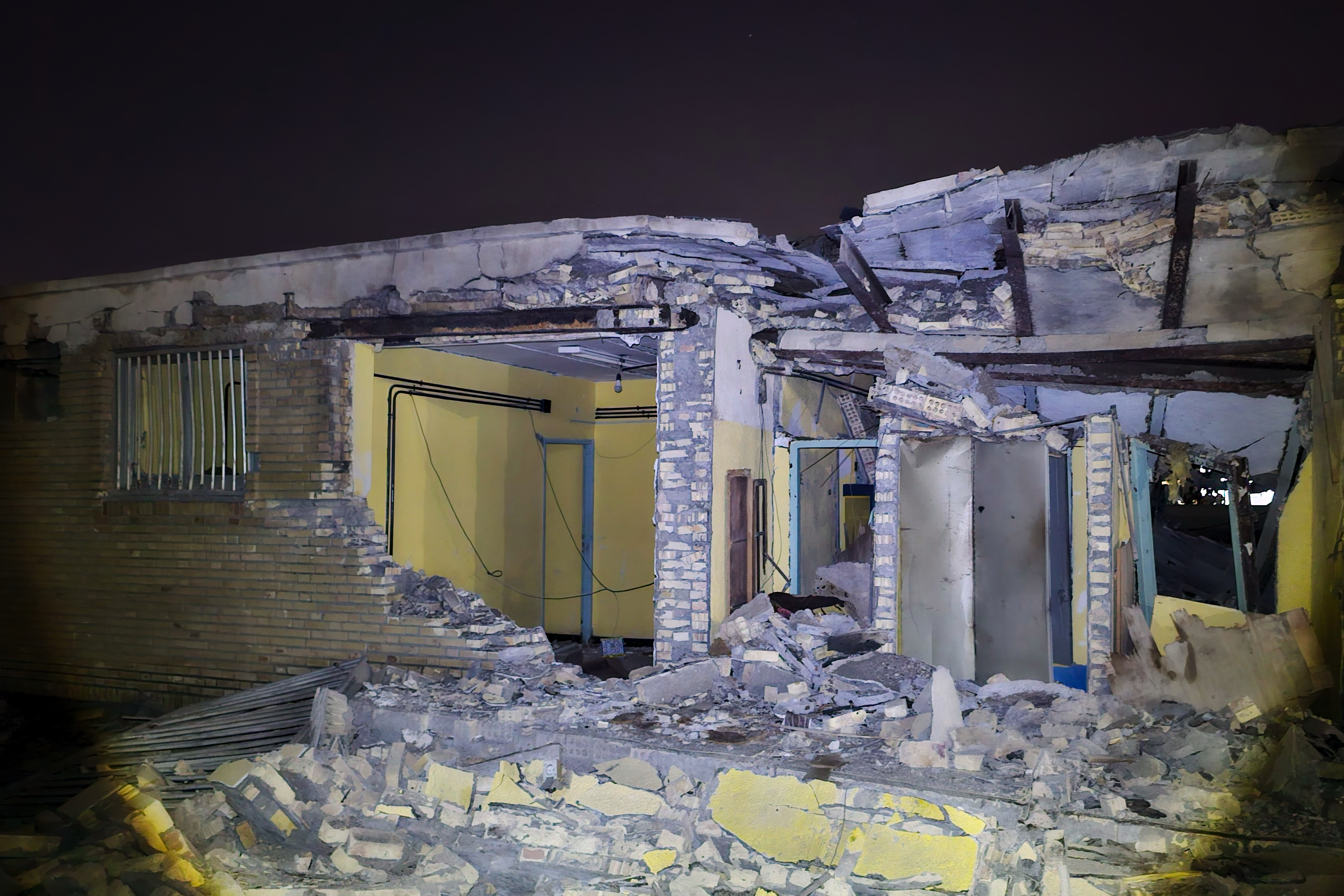
    One U.S. strike hit a home hosting a wedding in Kuhestak, a small coastal town overlooking the Strait of Hormuz, according to Iranian state media.

    Four people were killed — two women and two children, aged 4 and 16 — and at least 68 were wounded, the state news agency IRNA and state TV said Wednesday. Just after the strike, Ahmad Nafisi, the province’s deputy governor, had told Iranian state television that five people were killed. There was no explanation for the change.

    Several heavy explosions shook Kuhestak, with fireballs that lit up the night sky, according to security camera footage carried by the semiofficial Fars news agency.

    Images from Iran’s semiofficial Tasnim news agency showed several hospitalized children being treated for injuries at a hospital in the nearby town of Minab, where a U.S. missile strike on the opening day of the war hit a primary school, killing more than 100 children.

    Footage from the Iranian Red Crescent showed rescue workers entering a damaged home in the wake of the strike. It showed a hole in the roof of one house in a neighborhood of densely packed homes.

    Experts say a ‘very precise’ weapon appears to have been used

    Two weapons experts told The Associated Press that images of fragments of a missile, which Iranian media said was used in the strike, were from a U.S.-made SLAM-ER cruise missile.

    Trevor Ball, an analyst with Armament Research Services, said the SLAM-ER was “developed as a very precise weapon” that can be retargeted in flight by a human operator watching by infrared camera.

    N.R. Jenzen-Jones, director of Armament Research Services, said the air-launched missile is also used by the United Arab Emirates and Saudi Arabia. Neither has reported carrying out any recent strikes on Iran.

    “Make no mistake: these crimes will not go unpunished,” Ebrahim Azizi, chairperson of the Iranian parliament’s National Security and Foreign Policy Committee, said on X.

    U.S. Central Command spokesman Capt. Tim Hawkins said the U.S. military was “aware of the reports, which originated from Iranian state media, and we are looking into them.” He would not say if CENTCOM had launched a formal investigation.

    Separately, Iran has said four members of its paramilitary Revolutionary Guard and 10 members of the Guard’s volunteer Basij forces died in the U.S. attacks. A total of 108 people were injured in the latest round of attacks, state broadcaster the Islamic Republic of Iran Broadcasting quoted the country’s health minister as saying.

    The Strait of Hormuz remains largely shut down

    During last month’s lull in fighting, the U.S. ramped up economic pressure on Iran as Washington sought to fully open the Strait of Hormuz.

    About a fifth of the world’s traded oil was shipped through the key waterway before Israel and the U.S. attacked Iran on Feb. 28 and Iran largely shut it down in response. Despite many pronouncements from Washington that the strait is open, only a handful of ships are making the passage each day and Iran has regularly attacked vessels.

    On Wednesday, Saudi shipping company Bahri said two Filipino sailors were killed in an attack late Monday as their vessel transited the strait.

    A ceasefire deal reached in June quickly fell apart amid exchanges of strikes that same month. Mediator Pakistan has been working to restart talks.

    Late Tuesday, Trump said he would not force Iran to the bargaining table.

    “I couldn’t care less if they sign a worthless, to them, agreement. I like our position now much better, with almost total control of the Hormuz Strait, and their economy totally collapsing. They are just playing out the inevitable. When are the Iranian people going to rise up and fight?” Trump wrote on social media.