Category: Nation & World

  • Trump removes White House shrouds as he prepares for Xi visit

    Trump removes White House shrouds as he prepares for Xi visit

    Workers on Saturday removed drapes shrouding the White House’s iconic North Portico, as President Donald Trump prepares to show off his renovation work when Chinese President Xi Jinping visits the White House later this month.

    Teams of workers had been working under the shrouds for two months to repair the North Portico’s tall white columns, as well as fortifying the portico’s entrance to the White House.

    The removal meant that scaffolding on the portico’s columns was newly visible for the first time since July. Workers are expected to soon remove the scaffolding, too, said two people who spoke on the condition of anonymity to discuss the project.

    The White House did not immediately respond to questions about the state of construction on the North Portico. Administration officials have previously said Trump has personally driven the project.

    “President Trump comes out to greet a world leader. He sees door dings in the pillars and says, ‘Look at all this stuff. It needs to be repaired,’” Interior Secretary Doug Burgum said in July on The Katie Miller Podcast.

    The North Portico project is among a slew of White House construction and renovation projects launched by Trump, with the president seeking to complete several before Xi visits for a planned state dinner on Sept. 24.

    Trump earlier this year sped up a project to build a new helipad on the White House’s South Lawn and overhaul a nearby portion of the driveway, hoping to have the work done before Xi arrived. That project was completed this week, Trump has said.

    Trump also has mused about more renovations, such as redoing the North Portico’s graceful Ionic columns, which have served to frame the White House’s main entrance for two centuries. Trump prefers more decorative columns, a style known as Corinthian, the Washington Post first reported in March.

    “To be honest with you, the White House should have used Corinthian,” Trump said in a New York Magazine interview that published Friday, adding that the White House was a “luxury house” that deserved a higher level of column. “Maybe I’ll fix that, too.”

    Asked by reporters on Friday what he hoped to accomplish during Xi’s visit, the president quickly pivoted to the helipad.

    “We have a beautiful heliport, should he want to use a helicopter, just opened,” Trump said. “If you want to go outside and check it out, it’s beautiful. Just was completed, under budget, ahead of schedule, and beautiful.”

    Trump has also invoked Xi’s visit as a reason he is working to complete his new White House ballroom. The president has said that the White House is not currently equipped to hold large events to honor VIPs, forcing officials to either set up tents outside on the lawn or limit attendance.

    “Everybody’s fighting for tickets,” Trump said in a Rose Garden event on Wednesday. “We’re arguing over seats, but we won’t have that in a year from now. We won’t have that problem anymore.”

  • Trump officials draft plan to pay at-home parents, using funds for working ones

    Trump officials draft plan to pay at-home parents, using funds for working ones

    WASHINGTON — The Trump administration is moving to allow married couples with a stay-at-home spouse to collect childcare subsidies, a policy championed by Vice President JD Vance, using funds from a federal program intended to assist working parents, according to people familiar with the discussions.

    The change would create the only federal subsidy to pay parents to stay home and raise their children, one of the most significant efforts to date by the Trump administration to harness federal funds to promote a traditional view of families.

    To do so, officials are seeking to use a Health and Human Services Department fund that was created in the 1990s to help low-income and working-class parents afford childcare so they could work or go to school.

    Under the draft new rule, parents who stay home with their children could benefit from the program, which typically provides about $9,000 per child each year, potentially reshaping which families get federal childcare money.

    The move could end up redirecting money away from working parents and their childcare providers, causing some to raise their rates or even close, critics said, potentially worsening what many experts say is a childcare crisis in the country.

    About 80% of the 870,000 families who currently get the childcare subsidies have single working parents, most of them mothers, according to Health Department data.

    The policy change would effectively create a government incentive for parents to stay home with their children, an idea embraced as part of a broader conservative effort to advance policies that promote more mothers staying at home.

    The new rule being drafted would allow married couples with one stay-at-home parent in certain income brackets to collect a subsidy, according to the people, who spoke on the condition of anonymity to describe the plan before it is finalized. The change could be made without approval from Congress.

    More than 80% of stay-at-home parents are mothers, according to the Pew Research Center.

    The plan is being pushed by the White House and is seen as a top priority of Vance, according to several people familiar with the discussions. The draft rule also incorporates policies in legislation written by Secretary of State Marco Rubio when he was a senator from Florida.

    Representatives for the White House, Vance, and the Department of Health and Human Services did not respond to requests for comment.

    Vance, whose wife Usha, a former corporate lawyer, gave birth to their fourth child in July, has long advocated for more mothers to stay at home with young children and called for efforts to open up childcare subsidy programs to those providing “kinship care.”

    In 2021, Vance co-wrote an opinion essay in the Wall Street Journal contending that daycare can harm children and declaring, “Young children are clearly happier and healthier when they spend the day at home with a parent.”

    He also wrote then on Twitter that “normal Americans” want a “family policy that doesn’t shunt their kids into crap daycare so they can enjoy more ‘freedom’ in the paid labor force.”

    Some family policy experts said the changes to the program would hurt parents who have to work and have difficulty affording childcare.

    “I am a big proponent of more support for stay-at-home parents. But this is not how I would choose to do it,” said Joshua McCabe, director of social policy at the Niskanen Center, a centrist think tank.

    “Expanding the eligibility without increasing funding would mean more parents competing for the same dollars, and leaving more parents — particularly single working parents — worse off,” he said.

    The $12 billion Child Care and Development Fund, which is run by the Health Department’s Administration for Children and Families, was created during the Clinton administration to support the employment of low- to moderate-income parents. It subsidizes the care of children up to age 13 and currently offsets the costs for caring for about 1.3 million children.

    Under the current rules, most of the money is distributed to states, which in turn distribute it to parents, usually in the form of vouchers or direct deposits to childcare providers.

    To qualify, parents must prove that their income is lower than 85% of their state’s median income and that they are working, in school, or receiving job training. Some states set a lower threshold of 60% of the state’s median income.

    Under the proposed rule changes, the same pot of money would also be used to pay married parents who meet the income requirements when one parent works and the other cares for the child. The money would be intended to help offset the lost income of the stay-at-home parent.

    The proposal “creates the option for a new category of care, parent-based childcare, that will allow one married parent to receive CCDF assistance to care for their own child, while a spouse works at least 35 hours per week,” according to a draft document viewed by the New York Times.

    Unmarried couples in which one parent stays at home would not qualify under the draft. Single parents who do not work are currently not eligible for the subsidy, nor would they be under the new proposal for married couples.

    The rule, which could still be changed before publication, would need to be approved by the White House and then would be posted online for public comment. If it is finalized, it could go into effect as soon as next year.

    Some department lawyers working on the plan have questioned the legality of requiring recipients to be married, according to the people familiar with the matter. Some have also raised concerns about whether the change could increase the risk of fraud, since the money would be going to individuals rather than businesses. The administration has sought to crack down on fraud in social services programs, particularly childcare.

    The idea of paying parents to stay home was outlined in Project 2025, the conservative blueprint published by the Heritage Foundation ahead of President Donald Trump’s return to office, much of which overlaps with the administration’s policy agenda.

    “Instead of providing universal daycare, funding should go to parents either to offset the cost of staying home with a child or to pay for familial, in-home childcare,” it says, although it does not specify how or which fund to use.

    “You don’t need statutes to do it, and with existing programs we can end discrimination against stay-at-home parents,” said Roger Severino, a vice president at the Heritage Foundation who wrote the Project 2025 section on childcare policy.

    “It would be a welcome change to see equal treatment between commercial daycare and the contribution stay-at-home parents provide in caring for and raising the next generation,” he said in an interview. “It doesn’t get more pro-family than that.”

    Severino said he believed that the provision privileging married parents would most likely withstand a legal challenge. He said that under the Supreme Court decision Obergefell v. Hodges, married same-sex parents would most likely also qualify for the subsidies.

    In a letter to governors on Mother’s Day, Alex Adams, head of the Administration for Children and Families, previewed that policy changes were coming and urged states to “use every available” flexibility to distribute federal money in ways that “support married two-parent families,” and particularly “families who choose to have a parent remain at home with young children.”

    Childcare policy experts said they anticipate that in some states, the rule change could lead to much of the money going to stay-at-home parents. States have some flexibility in determining how their subsidies from the Child Care and Development Fund are allocated, and lawmakers in some red states, including Idaho, Wyoming, and Utah, have pushed for new policies for the states to support stay-at-home parents.

    That outcome could in turn shutter some of the roughly 225,000 childcare providers that rely on the subsidies for tuition payments.

    Krystal Gastineau, owner of Cribs 2 Crayons, a childcare center in Aurora, Colo., said that about half the children she cares for receive the subsidies, which are paid directly to Gastineau’s business via direct deposit. “If they could, I think parents would choose to take the money and stay home,” she said. “That would take away a major source of income.”

    “I think that’s a misuse of the system,” she said.

    Lezlie Cranston, in Auburn, Wash., uses the subsidy program to pay for care for her 4-year-old son, Ricky, and her 2-year-old daughter, Samantha, while she pursues a certification at Skagit Valley College. The subsidies have “helped tremendously with allowing me to do my coursework,” said Cranston, a single parent.

    “But changing it to let the money go to stay-at-home parents is going to create conflict between parents,” she said. “That’s a bad situation. We’re already trying to figure out how more working parents can get the subsidies. This could lead to single parents not being able to afford childcare again.”

    This article originally appeared in the New York Times.

  • A mistrial is declared in the murder case against Lindsay Clancy. Here’s what could happen next

    A mistrial is declared in the murder case against Lindsay Clancy. Here’s what could happen next

    The trial to decide if Lindsay Clancy was criminally responsible when she strangled her three children in 2023 ended in a mistrial Friday after jurors were unable to reach a consensus after weeks of conflicting testimony about her postpregnancy mental health and seven days of deliberations.

    What happens now?

    Clancy, a 36-year-old former labor and delivery nurse, remains charged with murder and will continue to be held in a psychiatric hospital until the case is resolved. Attorneys on both sides have a few options when it comes to the next steps.

    A hearing later this month could determine the path forward

    Judge William Sullivan set a hearing for Sept. 29. During that proceeding, defense attorney Kevin Reddington will likely ask the judge to declare Clancy not guilty. It’s a long shot move and very unlikely to succeed.

    That hearing could also reveal whether prosecutors will move to put Clancy on trial for a second time. They could also choose to seek a plea deal or even drop the case entirely, though that option is unlikely.

    Sullivan suggested that everyone involved in the case, from attorneys to witnesses to court administrators, would need to look at their calendars to find a suitable time for a new trial, if one is held.

    Clancy doesn’t deny strangling her children at their home south of Boston, but says postpartum psychosis led to her actions. After the killings, her husband found her badly injured in the yard, where she landed after jumping from a second-story window. She was left paralyzed from the waist down.

    Prosecutors argue she knew what she was doing.

    Prosecutors will weigh many factors as they decide on a new trial

    Plymouth County District Attorney Timothy Cruz said there would not be an immediate decision about a second trial, but he emphasized that his goal was always “getting justice for those three little babies.”

    “This case was about Lindsay Clancy and what she did … the cruel and calculated killing of three innocents,” Cruz said shortly after court ended on Friday. He later continued, “Children were murdered and it’s our job to seek justice.”

    Still, prosecutors typically consider a lot of things when determining whether to retry a case, said New York Law School professor Heather Ellis Cucolo, including the potential expense and the likely outcome.

    “I know the prosecutor stated openly that he would not allow public opinion to sway his decision, which is accurate, but the prosecution serves the public,” Cucolo said. “If it is believed that justice must be served by another trial, that is something the prosecutor’s office will take into account and weigh very heavily.”

    A conviction could mean life in prison for Clancy, while an acquittal might lead to confinement in a mental health facility.

    Clancy’s defense will likely push to drop the charges

    Cucolo said the defense attorney will likely push for the charges to be dropped entirely, and might also be open to a plea deal.

    “But if the prosecution chooses to move forward with a trial, there’s no way to prevent that from happening,” Cucolo said.

    Reddington said in court that he believed Clancy’s constitutional rights were violated when the judge declined to remove one juror after the other jurors suggested that he was not following the judge’s instructions on reasonable doubt. But a mistrial isn’t subject to an appeal, Cucolo said, because it’s not a final judgment.

    The impact on family members is another consideration, said Randy Gioia, a Boston-based defense lawyer who formerly supervised public defenders across the state.

    Gioia said prosecutors should not put Clancy through another trial. He said he accepts Reddington’s disclosure that Clancy was extremely close to an acquittal, based on a note presented to the judge by the jury foreperson.

    “Why put everyone through the trauma again: 16 to 18 jurors, all the witnesses, Patrick Clancy,” Gioia said, referring to Lindsay Clancy’s former husband. “What’s to be served here when we’ve had a long trial and long deliberations? You don’t have a strong case. You almost lost the case.”

    Attorneys on both sides could tweak their approach in a retrial

    It’s not clear exactly how the jury reached an impasse, but Reddington suggested that just one juror stood in the way of an acquittal, and said the other jurors were “robbed.”

    “They know they were robbed by one man, for whatever his agenda was, who stole seven weeks of the life of these other jurors that were so attentive, so beautiful, so wonderful,” he said outside the courthouse. “You could see how defeated they were sitting there. I got a funny feeling they would have gone on for another week if they had to. So I hope that guy can sleep well at night.”

    Jurors are under no obligation to speak to attorneys on either side of the case, but it’s common for the attorneys to see if any are open to talking about their experience, Cucolo said. Prosecutors can then use any information they get to reassess and fine-tune their approach, she said, perhaps focusing more on specific evidence or witnesses.

    A retrial would have rippling impacts

    David Meier, a lawyer who represents Patrick Clancy in a lawsuit over his former wife’s mental health treatment, released a statement about the emotional burden of the case, saying “there will never be closure” from the loss of the children.

    “The prospect of reliving this tragedy through another trial is extraordinarily painful — for Patrick, for his family, and for all of us,” Meier said.

    The statement didn’t indicate whether Patrick Clancy would support a second trial.

    Lindsay Clancy has also filed a lawsuit over her mental health treatment. A retrial would likely force those civil cases to be put on hold, Cucolo said.

    “They would not be able to move forward for now because of concerns of possible Fifth Amendment violations,” Cucolo said, because anything Clancy says in a civil case could potentially be used against her in the criminal case. That means the lawsuits could remain in legal limbo for a year or more, she said.

  • Trump moves to allow ranchers and hunters to kill gray wolves

    Trump moves to allow ranchers and hunters to kill gray wolves

    President Donald Trump on Friday ordered the Interior Department to begin the process of removing endangered-species protections for gray wolves, again intervening in a long-running fight between conservationists and ranchers who say the predators threaten their operations.

    Trump also ordered the Interior and Agriculture departments to make it easier for ranchers to kill the wolves if necessary. The measures, long sought by GOP lawmakers from Western states, elicited a swift rebuke from animal rights groups and could draw legal challenges.

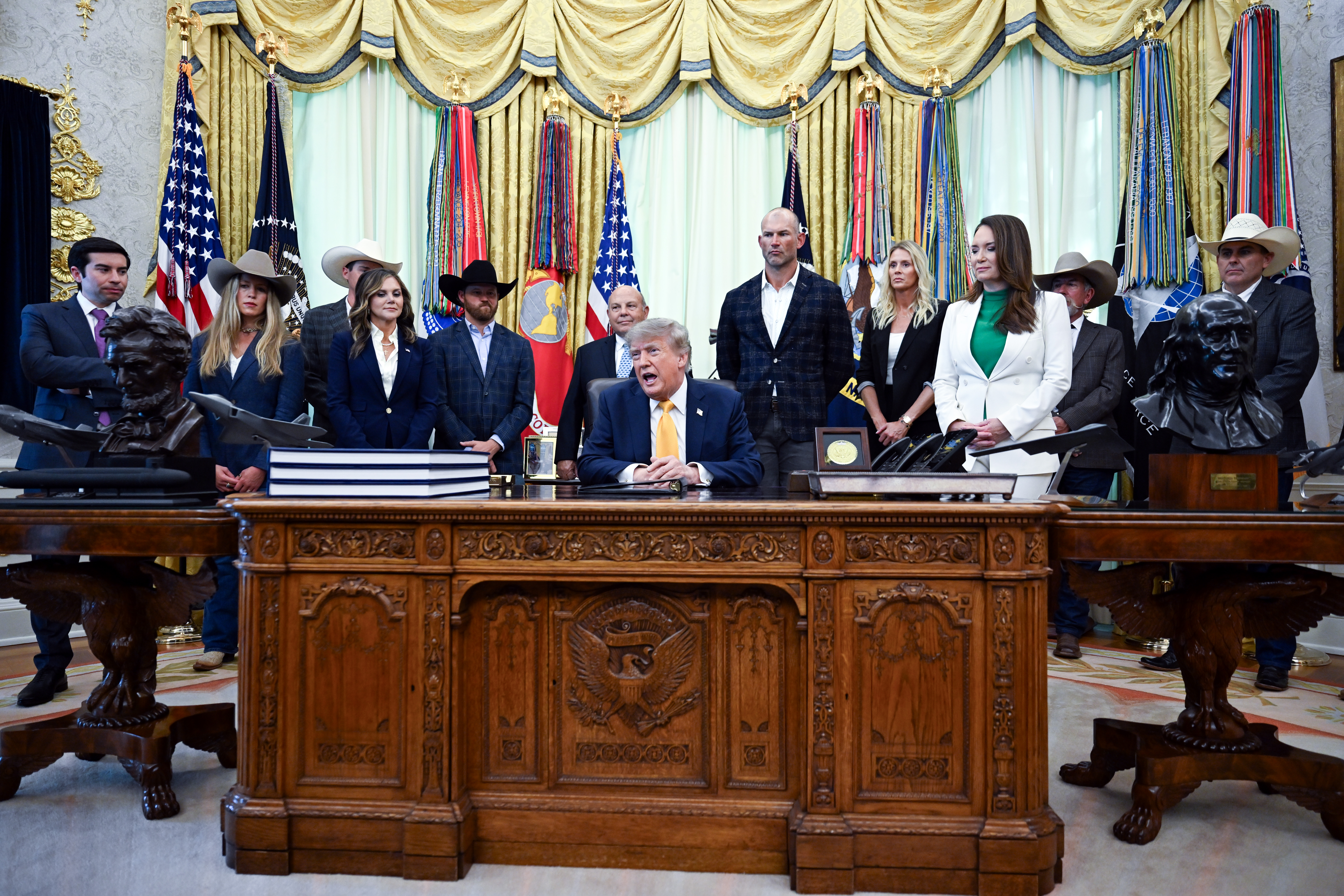
    “You’re not allowed to protect yourself, right? Or your company, your cattle,” Trump said at an Oval Office event, flanked by ranchers who shared stories of watching wolves tear through their herds. “So how do you like the idea that I’m letting you do that?”

    Under Trump’s order, Interior Secretary Doug Burgum will prepare a recommendation to fully delist or downlist the gray wolf and the Mexican wolf under the Endangered Species Act. The order also includes other measures intended to give states, ranchers, and hunters greater latitude to kill the animals.

    “Rolling back federal protections now — or setting that process in motion — would jeopardize decades of recovery and open the door for brutal killing,” Kitty Block, president and CEO of Humane World for Animals, said in a statement.

    The gray wolf and several subspecies were first listed as endangered under federal rules in the 1960s and 1970s, after centuries of westward settlement and government-backed eradication campaigns reduced their historical range in the Lower 48 states by an estimated 95%.

    Federal protections and reintroduction efforts helped lift that population from about 1,000 during the early listings to more than 6,000 by 2020, according to the U.S. Fish and Wildlife Service.

    But that recovery has fueled a long-running dispute over whether the wolves still deserve strict protections. Presidents of both parties have moved to lift at least some protections, only to have those efforts stymied, and sometimes overturned, in court.

    The Trump administration in 2020 stripped gray wolves of their endangered-species designation in the Lower 48 states, declaring the species recovered. A federal judge vacated that rule in 2022, and the wolves remain officially endangered in much of the country.

    Congress has also entered the fray. The GOP-led House in December passed a bill to end gray wolf protections. The Senate is still considering the legislation.

    “The science has been clear for years: Gray wolves are fully recovered, and their resurgence deserves to be celebrated as a true conservation success story,” Rep. Lauren Boebert (R., Colorado.), who authored the legislation, said in a statement after her bill passed the House. “It’s long past time to delist them and empower states to set their own management policies.”

    Ranchers on Friday discussed their frustrations with the status quo.

    “The problem is, because they’re on the Endangered Species List, they can’t shoot them. They have to sit and watch them destroy their herd,” Agriculture Secretary Brooke Rollins said in the Oval Office.

    “But you can shoot them as of today,” Trump mused, to laughter.

    “Well, Secretary Burgum has to do a project, but, yes,” Rollins responded.

  • U.N. approves African proposal for a new world map

    U.N. approves African proposal for a new world map

    The United Nations General Assembly on Friday endorsed a world map that depicts the size of Africa more accurately than the map most commonly used now.

    The assembly approved a resolution favoring the Equal Earth projection, a map that supporters say shows the true size of countries, over the familiar Mercator projection, which shrinks regions near the equator. It passed with 164 votes in favor and 6 abstentions, according to the United Nations.

    The only nation that voted against the resolution was the United States, which said the map promoted an “ideological agenda” and was a distraction from the “genuine problems of international peace, prosperity, or good relations.”

    The new map has supporters in Africa, who say the Mercator projection has contributed to a historical bias that has minimized tropical and equatorial regions and exaggerated the size of countries near the poles.

    The U.N. resolution does not outlaw the Mercator projection or require the use of the Equal Earth map. But it is part of a campaign to raise awareness of the effects of visual representations of the Earth on how people view the world.

    Here’s what to know about the debate.

    What is the Mercator projection?

    The projection, one of many ways to represent the spherical Earth on a flat plane, was designed by Flemish cartographer Gerardus Mercator in 1569 to help sailors navigate.

    It was created by projecting the Earth’s features onto a cylinder, then flattening that into a rectangle.

    The map was invaluable for seafaring: Any straight line drawn on the map represents a compass direction that sailors can use to determine which way to go. The projection has since become widely used in books, classrooms, and online services like Google Maps.

    Why do critics want to move away from it?

    Every map projection makes sacrifices, like shape, size, or distance: You can’t flatten a round object without somehow stretching, shrinking, or tearing it. The Mercator projection reflects true directions but distorts the size of landmasses.

    If you had a Mercator projection on your classroom wall, you might have grown up believing that Greenland, for example, is as big as Africa, even though it is 1/14th its size. You might also think that Alaska is bigger than Mexico, when it is 25% smaller.

    Critics have argued that the Mercator map creates a subtle bias whereby northern nations, including some of the world’s wealthiest, appear large and equatorial regions, home mostly to developing countries, are depicted as small. Some cartographers say it reinforces a Eurocentric and colonial worldview.

    The Equal Earth projection — created in 2018 by cartographers Bojan Savric, Bernhard Jenny, and Tom Patterson — sacrifices straight-line directions in order to render landmasses in their correct proportions. It has rounded edges to account for the Earth’s spherical shape instead of a rectangle.

    Advocacy groups in Africa have campaigned to replace the Mercator map since April 2025. The African Union endorsed the campaign in August that year, urging its 55 member states to adopt the Equal Earth map in schools and public communications. The West African nation of Togo sponsored the U.N. resolution, backed by other countries in the African Union.

    “A map is never neutral,” Robert Dussey, the foreign minister of Togo, said Thursday, promoting the U.N. resolution. “It shapes perceptions, influences how the place of peoples and continents in the world is understood, and may, sometimes from the earliest years of schooling, perpetuate representations that do not correspond to geographic reality.”

    What does the U.N. resolution do?

    The resolution calls on the more than 190 U.N. member states to update their educational materials and educate students about the accurate sizes of countries and the limitations of different map projections.

    It also urges major digital map providers to discuss the issue with governments and adopt more accurate cartographic representations.

    The resolution is not binding. But the push to replace the Mercator map has made progress in other ways.

    Google, which used a Mercator-based map for more than a decade, shifted in 2018 to showing the Earth as a globe when zoomed out on the desktop platform. “Greenland’s projection is no longer the size of Africa,” the company said on social media.

    Some schools have begun replacing Mercator maps. Boston Public Schools in 2017 began purchasing maps with the Peters projection, which shows countries in their correct proportional sizes to one another at the cost of stretching and squashing their outlines.

    The shift was part of the district’s effort to “decolonize the curriculum,” Colin Rose, then a district administrator, told the Boston Globe.

    This article originally appeared in the New York Times.

  • Judge orders Trump officials to divulge names of those who set up $1.8 billion fund

    Judge orders Trump officials to divulge names of those who set up $1.8 billion fund

    A federal magistrate judge ordered the Trump administration on Friday to reveal the identities of the people who devised a contentious plan to create a $1.8 billion fund to compensate those who believed they were wronged by political prosecutions.

    The order by the magistrate judge, Ivan D. Davis, could shed further light on how the fund was put together. The plan to create the fund, which could have funneled taxpayer money to the president’s allies, drew repeated scrutiny. It prompted a rare rebuke from Senate Republicans, and imperiled the confirmation of Todd Blanche as attorney general.

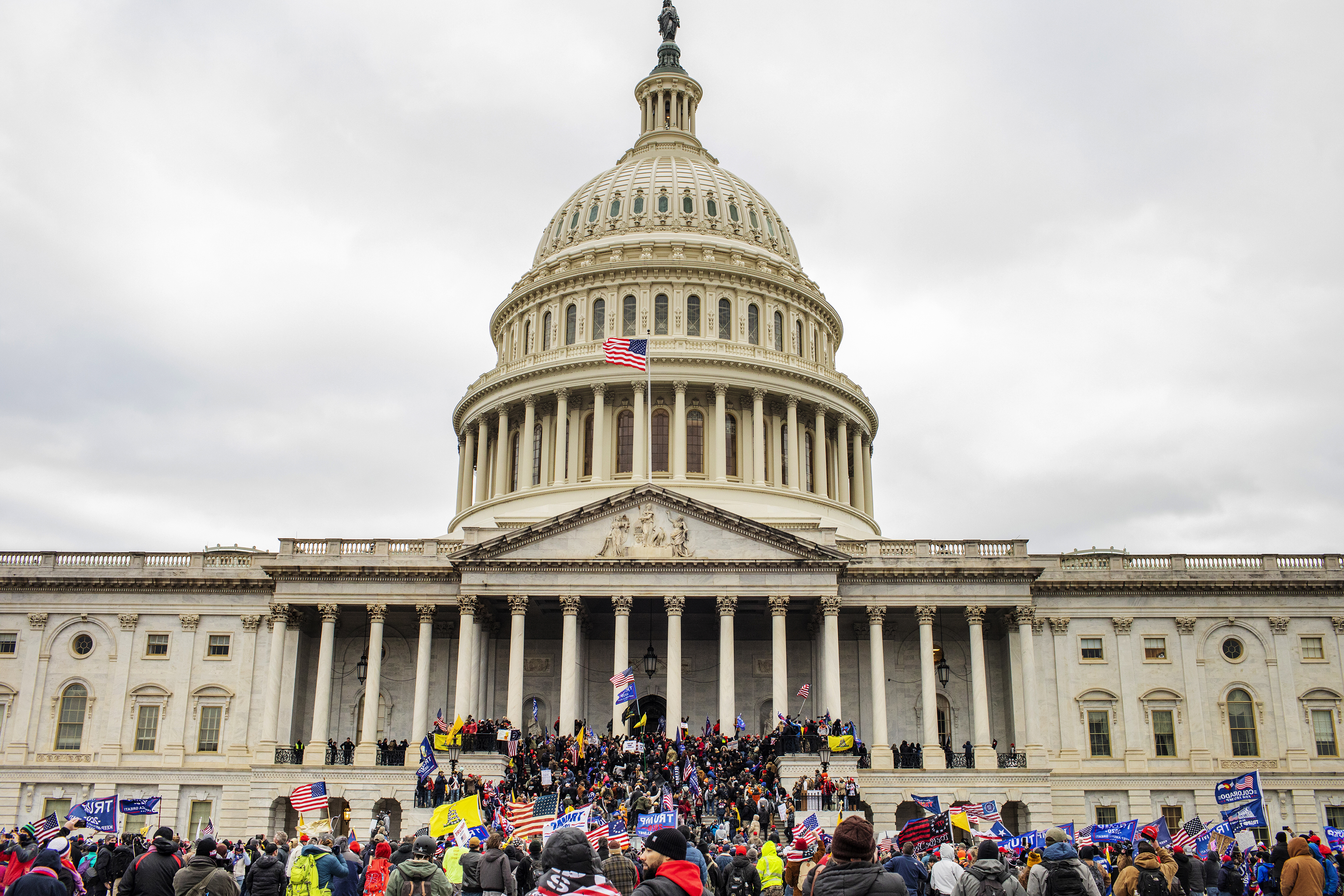
    Blanche has repeatedly said the fund is dead, but President Donald Trump has been more circumspect, indicating his support for compensating people including the rioters who were prosecuted for attacking the Capitol on Jan. 6, 2021.

    Davis’ order, issued in U.S. District Court in Alexandria, Va., came as part of a lawsuit challenging the legality of the fund and another measure by the Justice Department that benefited Trump. That provision granted the president, his family, and his businesses expansive protections against all past tax investigations.

    Both the fund and the tax immunity deal emerged from backroom negotiations between Trump’s personal lawyers and senior Justice Department officials. The measures were made public after Trump agreed to dismiss a lawsuit he had filed against the IRS, seeking damages for claims that the agency had failed to stop the release of some of his tax returns to news organizations.

    A federal judge in Florida later excoriated both the suit and the way in which it was dismissed. She said the suit was an improper exercise in self-dealing because the president had brought claims against a federal agency that he himself controlled. She also asserted that the dismissal had been worked out with the intent to evade judicial oversight.

    The suit seeking to kill the fund and the tax immunity deal was brought in Virginia by a group of plaintiffs that includes a former federal prosecutor who was fired by the Trump administration after working on Jan. 6-related cases. The group has claimed that the program was unfairly designed to help only supporters of the president.

    The union representing IRS workers later joined the suit, claiming that the tax provisions were illegal and could put its employees in the untenable position of carrying out unlawful orders.

    Lawyers for the plaintiffs hailed the decision.

    “Today’s order granting discovery is a significant step in getting to the bottom of the slush fund,” said Aman George, a lawyer for Democracy Forward, which filed the suit.

    The Justice Department did not immediately comment on the ruling.

    This article originally appeared in the New York Times.

  • New Jersey can block ICE from entering state property, a federal judge ruled

    New Jersey can block ICE from entering state property, a federal judge ruled

    An executive order signed by New Jersey Gov. Mikie Sherrill blocking federal immigration agents from using nonpublic state property does not violate the constitution, a federal judge ruled Friday.

    U.S. District Judge Georgette Castner dismissed the lawsuit by President Donald Trump’s administration against Sherrill over her executive order banning Immigration and Customs Enforcement agents from “entering accessing, or using nonpublic areas” of state-owned property without a court order.

    The February order also prohibits New Jersey agencies from allowing ICE to use state property as a “staging area, processing location, or operation base” for immigration operations.

    The Department of Justice sued New Jersey and Sherrill days after she signed the order, accusing the governor of “blatant disregard for federal laws” and taking a “deliberate action that jeopardizes the public safety of All Americans.”

    “Gov. Mikie Sherrill aims to intentionally obstruct federal law enforcement and celebrates thwarting the constitutional obligation of the President of the United States to take care that federal immigration law be faithfully executed,” the suit says.

    But the Garden State is not required to assist the federal government in immigration enforcement, Castner wrote while dismissing the case.

    “Congress contemplated state assistance in federal immigration enforcement, but it contemplated that assistance on a voluntary basis. The fact that New Jersey has decided not to volunteer — in the limited context of [the executive order] — is in accordance, not in conflict, with Congress’s design,” the Joe Biden-appointed judge wrote.

    And the Justice Department did not prove its claim that ICE would need to “entirely transform” its operations as a result of the order, Castner said.

    The Justice Department did not respond to a request for comment.

    ICE’s “untrained agents” are not making New Jersey safer, Sherrill said in a statement.

    “Once again, Trump tried to stop us, and once again we won,” the governor said.

    Civil rights and immigration advocacy organizations also celebrated Castner’s decision.

    The ruling assures that immigrants in New Jersey can use state resources, according to a statement by Jeanne LoCicero, legal director for the ACLU of New Jersey.

    “All New Jerseyans deserve to feel safe when they enter state-owned property, and New Jersey has the authority to ensure that safety,” LoCicero said.

    The Trump administration has sued cities and states that enacted restrictions on ICE, and so far it has achieved mixed results.

    Judges dismissed suits challenging provisions that prohibit local cooperation with ICE agents under the constitutional principal rooted in the Tenth Amendment that the federal government can’t force states to enforce federal laws.

    But judges also blocked state and local laws that more directly dictate what ICE agents can or can’t do, such as Philadelphia’s ordinance prohibiting law enforcement officers from concealing their identity.

    A Philly-based district judge ruled in July that the city did not have the authority to unmask ICE and other law enforcement agents.

    A DOJ lawsuit against New Jersey’s mask ban for law enforcement, which Sherrill signed into law in March, is pending.

  • Kennedy Center board renews call for Trump-backed shutdown after part of a ceiling collapses

    Kennedy Center board renews call for Trump-backed shutdown after part of a ceiling collapses

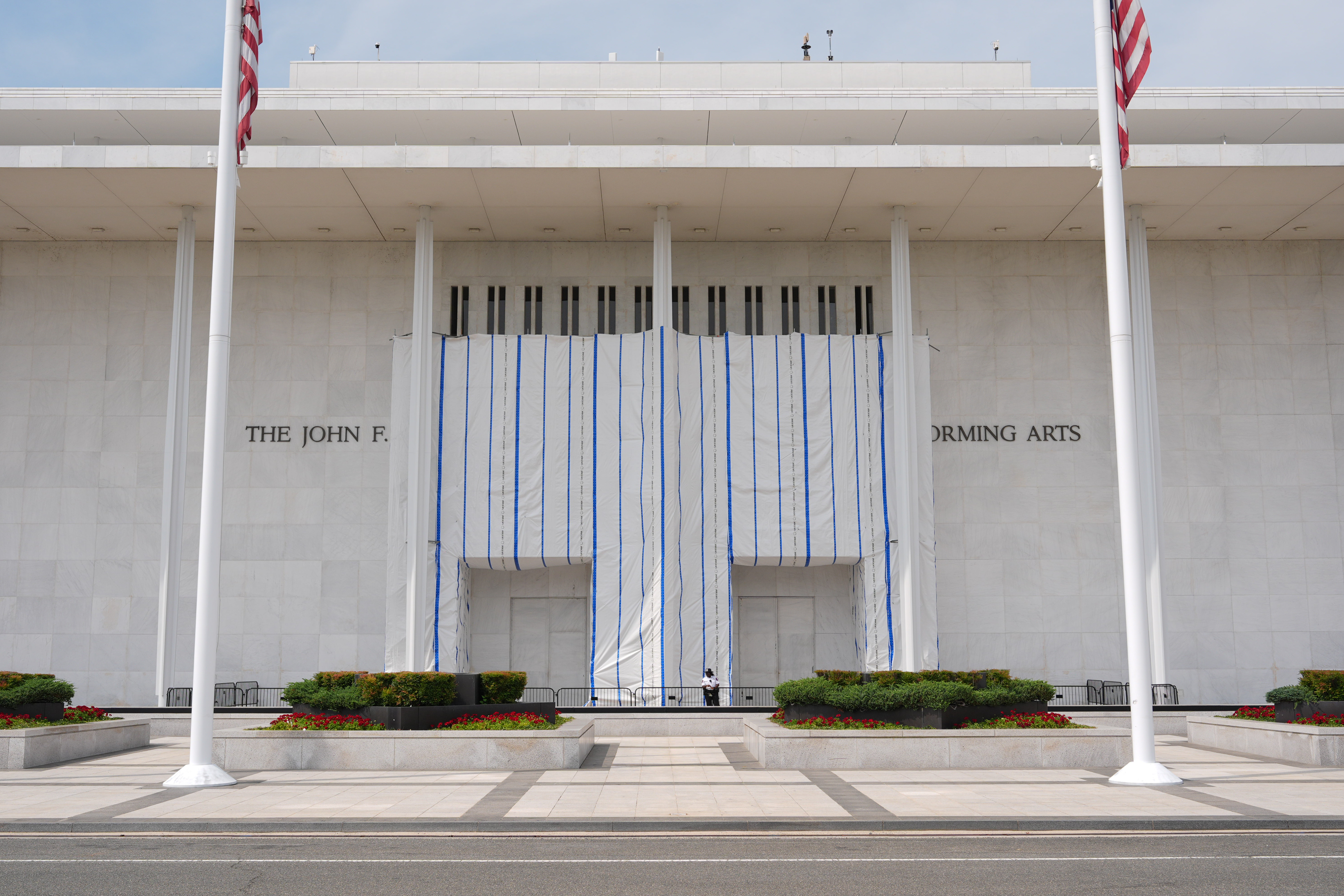
    WASHINGTON — A chunk of ceiling fell inside a main hallway of the Kennedy Center, according to a spokesperson who said the damage underscores the need to shut down the historic arts venue for renovations sought by President Donald Trump.

    No one was injured when a piece of the ceiling inside the Kennedy Center’s grand foyer collapsed Friday evening, said Roma Daravi, the center’s vice president for public relations.

    Photos provided by the center showed a large hole in the high ceiling and debris littering the red carpet in part of the hallway that connects the Kennedy Center’s three main performance auditoriums. The damage occurred during stormy weather in Washington.

    The Kennedy Center’s Trump-aligned board is fighting in court to move forward with plans to add Trump’s name to the building’s facade and to close the center for two years as it undergoes $250 million in renovations.

    Daravi called the partial ceiling collapse Friday “another example of the urgent need to close for renovation and revitalization, as our Chairman President Trump has championed.”

    “This structural failure stems from decades of neglect and deferred maintenance by the previous leadership, and there’s no justification for further delays in restoring America’s cultural center,” Daravi said in a statement.

    Trump’s efforts to add his name and make other big changes to the center established to honor President John F. Kennedy following his assassination are just part of Trump’s broader second-term agenda to reshape Washington.

    Trump already has demolished the East Wing of the White House to make way for a ballroom. He also plans a triumphal arch near Arlington National Cemetery and a renovated golf course along the Potomac River.

    U.S. District Judge Christopher Cooper ruled in May that Trump’s name had been added to the Kennedy Center illegally and ordered that it be taken down. He also blocked the administration from closing the venue for renovations.

    Now before the judge is an August vote by the Kennedy Center’s board to return Trump’s name to the facade so it reads: “The John F. Kennedy Center for the Performing Arts Restored and Renovated By President Donald J. Trump.” Justice Department lawyers have argued donations for renovations will dry up without Trump’s name on the building.

    Other changes have moved forward. Last week, the Kennedy Center took down a large stick figure sculpture known as Blue that had stood outside the center since 2019. The Kennedy Center gave no reason for its removal, but said in a statement “we are honored to have been stewards” of the late sculptor Joel Shapiro’s work.

    Grace Terpstra of Keep the KC, a community group fighting the Kennedy Center’s closure, said she suspects the board will seize on what appears to be limited ceiling damage “to make the point that the whole thing needs to be shut down, that it’s going to fall on everybody.”

    “I think they’ll try to make it into a bigger thing and show that they’ve found a lot of other things,” said Terpstra, the group’s founder.

  • U.S. military hits 3 Iranian oil tankers after saying Navy ships were targeted with missiles

    U.S. military hits 3 Iranian oil tankers after saying Navy ships were targeted with missiles

    CAIRO — U.S. forces struck three Iranian oil tankers after Navy warships were targeted with missiles, the American military said Saturday, warning that it would “if necessary, destroy Iran’s limited and exposed oil fleet.”

    The strikes — a day after U.S. President Donald Trump sought to minimize the conflict as “small potatoes” — keep up a new tilt back toward fighting after six months of on-again, off-again war that began with U.S. and Israeli attacks on the country on Feb. 28. Both sides have sought to inflict both military and economic pain, and negotiations have collapsed.

    The military’s statement said that an American aircraft carrier and a destroyer evaded “multiple unprovoked Iranian attacks” while patrolling in the region and no U.S. personnel were hurt. It said that two Iranian oil carriers were “permanently disabled” and the third, unladen one, was destroyed.

    The U.S. statement said that the tankers were part of a shadow network helping to fund Iran’s powerful Revolutionary Guard and its armed proxies in the region.

    There was no immediate Iranian response.

    Iran had reported a strike near Kharg Island

    Earlier, Iranian state television had said that four U.S. missiles struck a tanker about 6 miles from Kharg Island, home to a terminal through which the country exports most of its oil. Kharg Island has been repeatedly targeted during the war, including U.S. strikes on military sites there in March.

    The U.S. said that one tanker was struck off Kharg Island and another was struck near Jask, east of the Strait of Hormuz. The unladen tanker was hit in the Gulf of Oman, and the U.S. said its crew had been “directed to abandon ship.” The statement shared what it called video footage of the strikes.

    After the U.S. statement, Iran’s state broadcaster reported the two other tankers attacked, saying their crews had evacuated.

    “We will not hesitate to defend American forces, and if necessary, destroy Iran’s limited and exposed oil fleet,” said Adm. Brad Cooper, the head of U.S. Central Command.

    The strikes came nearly a week after the U.S. and Iran resumed attacks following a month of relative calm, with the Strait of Hormuz and Iranian communities along it again being targeted. At least five people were killed earlier in the week during a U.S. bombardment of southern Iran. One strike hit a wedding.

    Masoumeh Zarei, 13, was wounded in the attack. She spoke to the Associated Press at a hospital while being treated for injuries to her abdomen.

    She said that the wedding celebration had already begun when she set out to join it. She never made it there. She was knocked unconscious when a telecommunications tower was struck. Her next memory was of waking up in a hospital.

    “The party had just started, and we wanted to go there,” Zarei said, her voice hoarse. “I had made my nails really pretty for the party, but everything changed.”

    Her friend, 14-year-old Kiana Karimi, also was wounded and in intensive care. She told the AP that she heard five explosions.

    “The first three explosions at the telecommunications tower threw us to the ground,” Karimi said. “I quickly got up to pick my brothers up off the ground. Then there were two more explosions, and after that I don’t remember anything.”

    U.S. had tried to turn to economic pressure

    The resumption of fighting in the past week came after new U.S. efforts to apply economic pressures on Tehran, whose hard-line new senior leaders have signaled the willingness to dig in after weathering decades of sanctions. The elected government of Iranian President Masoud Pezeshkian, however, has said that it favors a negotiated end to the war.

    Iran has found ways over the years to circumvent sanctions — and now a U.S. blockade of its ports — and get its oil to buyers to help ease growing economic pressures. That relies in part on a shadow fleet transporting its oil.

    Meanwhile, the issue that helped lead to the war — Iran’s nuclear program — was meant to be addressed in negotiations that fell apart soon after the U.S. and Iran signed a memorandum of understanding in mid-June. Now diplomats say the U.S., Britain, France, and Germany seek to refer Iran to the U.N. Security Council for failure to comply with its nuclear nonproliferation obligations.

    Instead, Tehran’s new leverage focuses on the strait that is crucial to global oil and natural gas shipments and was seen as an international waterway before the war began.

    The U.S. military has been helping to guide ships through the strait as Tehran asserts control and targets some vessels, but overall traffic remains low.

  • Across the nation, Salvadoran immigrants brace for loss of temporary protected status

    Across the nation, Salvadoran immigrants brace for loss of temporary protected status

    Weeks after thousands of Haitian and Syrian immigrants saw the end of their protected status in the U.S., exposing them to ICE arrest and deportation, more than 170,000 people from El Salvador now face the same fate.

    And soon.

    Temporary protected status for the Central American nation is set to end on Sept. 9, a deadline that’s provoked urgency and uncertainty among community leaders, activists, and businesspeople around the country. They say the loss of legal status hurts not only the immigrants who have built lives and families here, but also Americans who depend on their labor, expertise, and tax dollars.

    TPS, as it’s called, has been a mainstay of U.S. immigration and humanitarian policy for more than three decades — and now is fast disappearing under the Trump administration.

    It was created by Congress in 1990, and El Salvador became the first country to be designated, in 1991, in response to Salvadorans fleeing a brutal 12-year civil war.

    As of last year the U.S. provided TPS to about 1.3 million people, allowing them to live and work in this country while their homelands grappled with war, environmental disaster, epidemics, or other extraordinary circumstances.

    When Trump returned to office in January 2025, TPS was provided to nationals of 17 countries. Since then the administration has ended or is moving to end status for 13, affecting about 1 million of the 1.3 million recipients, according to the Pew Research Center.

    A key aspect of that evolving effort came in June, when the Supreme Court ruled that the administration could terminate TPS for countries such as Haiti and Syria. And further that Department of Homeland Security decisions about TPS would be largely unreviewable by lower courts, disarming advocates of a weapon they had used to fight cancellations.

    The Trump administration insists that temporary means exactly that, that TPS was never meant to become a path to permanent residency. The White House promises to deport those who lose legal status, an outcome that advocates say is guaranteed to hurt immigrant families that include spouses and children who are American citizens.

    Homeland Security posted video of a Haitian deportation flight on social media, where it said: “Those with terminated TPS are in our nation Illegally. They have two options: LEAVE IMMEDIATELY or be DEPORTED.”

    Some legal groups argue that the law requires the secretary of Homeland Security to formally extend or terminate TPS at least 60 days before the expiration date for any particular country. And that the Trump administration failed to publish such a notice for El Salvador in the Federal Register, meaning that protections should automatically extend for six months.

    However, U.S. Citizenship and Immigration Services says the TPS designation expires on Sept. 9, as scheduled.

    El Salvador has the third-highest TPS population in the U.S. at just over 170,000, ahead of the 101,000 from Ukraine, whose status expires next month.

    Elnora Bassey, a policy attorney at CLINIC, the Catholic Legal Immigration Network Inc., said in a statement that renewing TPS for El Salvador offers the administration “an opportunity to make a choice that demonstrates its ability to protect vulnerable populations, and that we are a nation that demonstrates compassion for all people.”

    The 1991 designation for El Salvador was followed by immigration relief that allowed El Salvadorans to stay when initial TPS finding expired. In 2001 the country was redesignated after two earthquakes killed at least 1,100, injured nearly 8,000, and displaced more than one million people.

    An estimated 2.5 million Salvadorans live in the U.S., according to a Pew Research Center analysis of census data. Philadelphia is home to an estimated 2,759, with about 17,300 statewide and 78,000 in New Jersey.

    El Salvador, known as the “Land of Volcanoes” for its frequent and often destructive eruptions, is roughly the size of New Jersey and has a population of about 6.3 million people.

    For years, the nation was beset by one of the world’s highest homicide rates, more than 100 per 100,000 people. That has declined dramatically amid the government’s use of emergency powers that have seen the detention of more than 80,000 suspected gang members.

    The U.S. State Department ranks El Salvador at Level 1, its safest travel rating, and says “gang activity has decreased dramatically since 2022, causing a drop in violent crime and murders.”

    Research by the National TPS Alliance says that deporting Salvadoran immigrants would deepen difficult socioeconomic conditions in that country and potentially cause political unrest and destabilization.

    The alliance estimates that remittances from the U.S. to Salvadoran families would decrease by more than $1.2 billion. And that poverty rates there would increase 10%, with older, deported immigrants unable to find jobs, and younger ones facing unemployment.

    TPS provides immigrants in the U.S. with work authorization and protection from removal, but no path to permanent residency or citizenship. Once TPS protection ends, holders revert to their previous immigration status.

    For many that means they become undocumented and subject to removal proceedings.

    TPS holders work at higher proportions than the country as a whole, pay billions of dollars each year in federal and local taxes, and contribute to the solvency of a Social Security system from which they are unlikely to ever draw benefits.

    TPS holders from El Salvador annually pay about $1.5 billion in federal, state, and local taxes, according to the National TPS Alliance. They work mainly in construction, in buildings and grounds services, in transportation, and in manufacturing.

    “TPS holders from El Salvador are our neighbors, friends, colleagues, faith leaders, highly skilled workers, and small-business owners,” said Dulce Guzmán, executive director of Alianza Americas, a nonprofit group that supports Latino communities. “At a moment when immigrant communities face tremendous uncertainty and fear, our faith and shared humanity call us to choose compassion, uphold human dignity, and love our neighbors without distinction.”