Category: Nation & World

  • Canada’s retaliatory tariffs set to take effect as Trump threatens to escalate

    Canada’s retaliatory tariffs set to take effect as Trump threatens to escalate

    OTTAWA, Ontario — After more than two weeks of finger-pointing, threats, and patronizing insults between longtime trading partners, Canada’s latest retaliatory tariffs against the United States are set to take effect just after midnight Eastern time Tuesday.

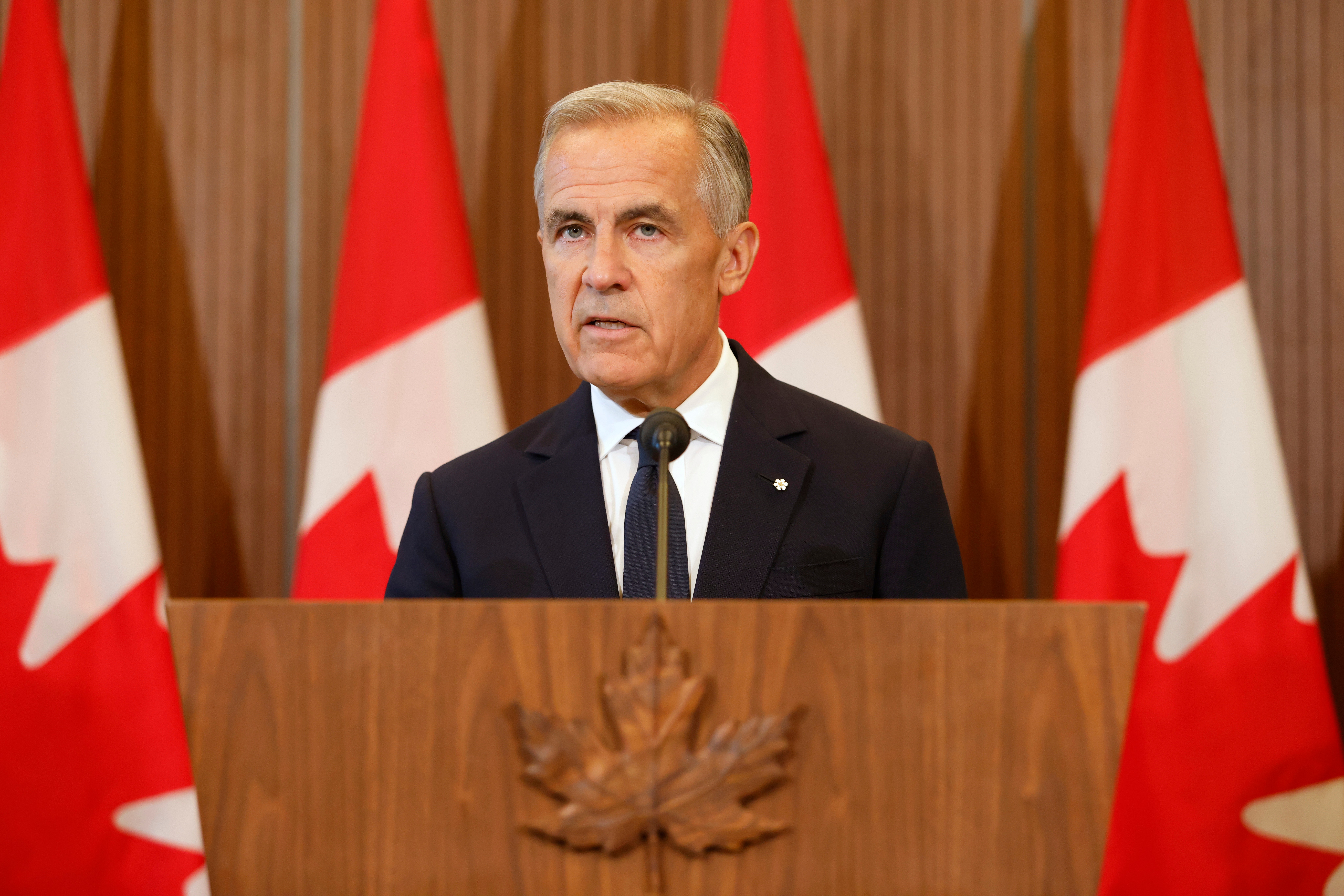
    Polls show that Canadians strongly back Prime Minister Mark Carney’s decision to end trade talks with Washington last month and to hit back with tariffs on about $20 billion in U.S. products entering Canada. But there is also concern over what might happen next. President Donald Trump has repeatedly threatened another round of U.S. tariffs if Canada follows through on its plan.

    Some in Canadian industry say they are inclined to take Trump at his word, at least on this threat.

    People in the Trump administration “are willing to hurt themselves, their own sectors and industries, in pursuit of their goal, however misguided I think it is,” said Flavio Volpe, president of the Automotive Parts Manufacturers’​ Association of Canada. “So they may escalate. I hope that we don’t end up in a tit-for-tat situation. We’re going to run out of runway.”

    Carney announced Canada’s new tariffs after he pulled Canadian negotiators out of talks in Washington last month — an ultimately unsuccessful attempt to stave off 50% U.S. tariffs on $20 billion in Canadian exports and to reduce or eliminate tariffs of up to 50% on Canadian steel, aluminum, and automobiles.

    The Trump administration said the tariffs it imposed last month were in part a response to retaliatory tariffs Canada placed last year on some U.S. imports, particularly autos. U.S. officials have repeatedly noted that only China and Canada retaliated against the United States since Trump began upending global trade.

    At a news conference after a sternly worded speech announcing the tariffs, Carney declared that Canada had been attacked by the United States and that the two countries are now “at war.”

    Last week, U.S. Treasury Secretary Scott Bessent rejected that framing, arguing that Canada is too small an economic power to battle the United States. “I don’t think you can be in a tit-for-tat with someone who’s 13 times larger than you are,” Bessent said on CNBC.

    On Friday, Trump escalated his trade rhetoric even further. He said that he might “end all trade with Canada” and other countries that have trade surpluses with the United States.

    Separately, U.S. Commerce Secretary Howard Lutnick said Carney had shut down the talks to gain “political leverage” at home, not because of what the U.S. side had offered.

    As last week went on, Carney made it clear that he was in no hurry to return to negotiations and was focused instead on diversifying Canada’s trade and expanding its domestic economy.

    “At the appropriate time, the conversation will happen,” he said. “But the most important thing we can do is not to spend all our time waiting by the phone, waiting for a call, refreshing on social media to see what’s coming across.”

    Many of the U.S. items that will soon face Canadian tariffs of 15%, 25%, or 50% mirror the Canadian exports that are now met with 50% U.S. tariffs, particularly clothing and wood products. Canada revised the list to remove dozens of fish products after the Canadian fishing industry said that tight cross-border integration meant that its members would also be harmed.

    Canadian officials have suggested that many targeted items come from states where voters supported Trump, though some political analysts question how much pressure that will actually bring on the White House. The list also includes items with little bearing on the Canadian economy, including the metal bands that attach erasers to pencils, migratory bird identification bands, and fish egg incubators.

    Trump has not imposed tariffs on some of Canada’s largest exports, including oil and gas and many minerals, and has exempted many products with enough North American content to move duty-free under the United States-Mexico-Canada Agreement. Auto parts, for example, are subject to a 25% tariff but generally cross the border without incurring it.

    As a result, Canada’s overall average tariff rate remains low compared with what most other countries face, and the majority of its trade, by dollar value, is still duty-free.

    After the talks collapsed, Trump threatened to impose 50% tariffs on autos and auto parts in January, apparently without the USMCA exemption — a move most analysts believe would be devastating for Canada’s auto industry. Trump has not taken formal steps toward carrying out the threat, though some in Canada speculate that rather than target new products or raise existing tariff rates, the Trump administration may instead strip away the USMCA exemption for many goods.

    Volpe said that auto parts makers were not intimidated. He said that last year when the Trump administration proposed collecting tariffs on Canadian auto parts “they understood that it would shut down the auto industry in a week.”

    He added: “Ultimately, I think they will back off that. But if they don’t, they can have at it.”

    This article originally appeared in the New York Times.

  • EU seeks to reassure a Trump-rattled Greenland with promise of a new partnership and investment

    EU seeks to reassure a Trump-rattled Greenland with promise of a new partnership and investment

    BRUSSELS — The European Union on Monday sought to reassure a jittery Greenland with the promise of a stronger partnership and hundreds of millions of euros in investment following repeated threats from U.S. President Donald Trump to take control of the island.

    During a visit to the capital Nuuk, European Commission President Ursula von der Leyen offered 200 million euros ($232 million) in support over the next two years to help Greenland tackle climate change, boost internet connections, and improve hydropower plants, fisheries, and education.

    The EU has increased its focus on Greenland since Trump began insisting that the United States should take control of the island for security reasons. His persistent claims raised sovereignty concerns and pushback from Greenlandic and Danish leaders and heightened tensions among NATO allies.

    “Greenland’s future is for the people of Greenland and Denmark to decide. No one else,” von der Leyen said. “Territorial integrity, sovereignty, the inviolability of borders. These are fundamental principles of international law.”

    EU promises money for Greenland’s development

    Funds are also earmarked for better housing, support to small businesses, and sustainable tourism. Von der Leyen also said that she wants to double EU budget support to Greenland to around half a billion euros ($580 million) from 2028.

    “Greenland can count on the EU,” she said, after signing an EU-Greenland declaration with Prime Minister Jens-Frederik Nielsen and Danish Prime Minister Mette Frederiksen. Greenland is a semiautonomous territory of NATO ally Denmark.

    Nielsen described the 27-nation EU as “a loyal and trusted friend,” notably at a time when the island faces “new challenges that we cannot tackle alone.”

    “Through these challenging times, your support to us is unfailing,” he said. “You have stood by us and continue to stand by us. We feel it and are deeply grateful.”

    Denmark and European allies resist Trump’s pressure

    The Trump administration also leaned on Denmark. “We have been under pressure,” Frederiksen told reporters. “It has been very clear, and we are very thankful for the great support we have received from our European partners but, by the way, also globally.”

    Denmark and seven of its European allies sent a small group of military personnel to the island in January, publicly for military exercises focused on strengthening Arctic security, but with the intention of showing support for Greenland’s sovereignty.

    In response, Trump threatened to slap new tariffs on them all: Denmark, Finland, France, Germany, the Netherlands, Norway, Sweden, and the United Kingdom. They condemned the move as undermining trans-Atlantic relations, and Trump eventually backed down after NATO agreed to boost security in the Arctic region.

    Von der Leyen’s visit came as 11 NATO countries began military exercises in Greenland on Monday involving around 400 military personnel, including special forces troops trained to operate in Arctic conditions from Canada, Denmark, and Finland. No U.S. troops are taking part in the Arctic Shield drills, which run Sept. 7-18.

  • Federal investigators probe Amazon cargo jet’s fiery runway crash that killed 5 in Miami

    Federal investigators probe Amazon cargo jet’s fiery runway crash that killed 5 in Miami

    MIAMI — The five people killed when an Amazon cargo jet ran off a runway at Miami International Airport were all inside a van carrying seven people from a cleaning company and an SUV hit outside of airport property, National Transportation Safety Board Chairperson Jennifer Homendy said Monday.

    Homendy called the scene of Sunday’s crash “utter devastation.” She didn’t detail how many people were in the SUV or where the dead were located.

    Homendy walked the route the Boeing 767 followed, noting tire marks from the pavement into the grass, the destroyed van carrying the cleaning crew, torn fencing, navigational equipment, and the crushed SUV outside airport property.

    The debris included vehicle air bags, equipment from the vehicles, the airplane, and the airport, and “fencing everywhere,” Homendy said.

    “It’s pretty extensive. Hard to see and I’m sure it must have been very difficult for the responders as well,” Homendy said.

    The airline, all told, traveled about 1,300 feet past the paved surface. Debris was everywhere, she said.

    “I would describe it in one word as devastating, utter devastation,” Homendy said.

    The van with seven people inside was “torn apart. It certainly must have been devastating,” she said. The van was owned by Professional Ocean Service Corp., an airline cleaning contractor.

    Homendy said the NTSB would issue more information on Tuesday, including possibly information on speed that is confirmed by the flight data recorder.

    Federal investigators examining cause

    Federal investigators examining the crash spent Monday determining whether the plane touched down too late to stop safely.

    Video of Sunday’s landing appears to show the Boeing 767 remaining airborne well down the runway before touching down. Aviation experts said investigators will seek to determine exactly where the plane landed, whether it was beyond the normal touchdown zone, and why the pilots did not abandon the landing.

    Investigators will also examine the plane’s speed and braking, weather and wind conditions, the aircraft’s mechanical condition, and other factors that could have contributed to the deadly overrun.

    The aircraft on Sunday flew from Cincinnati to Miami and then to San Juan, Puerto Rico. It was returning to Miami when it overran the runway around 2 p.m. and plowed across a road used by warehouse workers and other businesses that surround the airport.

    Aside from the five who died, three people were critically injured and two others were hospitalized with less severe injuries, officials said.

    The crash, which sent thick black smoke billowing into the sky, trapped the pilot and copilot in the cockpit and some occupants in cars, said Miami-Dade Fire Rescue Chief Ray Jadallah. The agency said crews also had to extricate a person who was trapped under a vehicle.

    The typical landing zone for a plane is within the first 3,000 feet of a runway, experts said. If the cargo jet was beyond that area, it should have aborted the landing and gone around for another try, aviation safety expert Steve Arroyo said.

    Mary Schiavo, who is a pilot and former Inspector General of the Transportation Department, said video posted online shows the Amazon plane floating above the runway for an extended period without flaring the nose upward to force the main landing gear onto the ground.

    It wasn’t raining at the time, but dark storm clouds loomed and strong winds were reported. Schiavo said that if the plane had a tail wind, that could have contributed to it floating further down the runway.

    “A tail wind would certainly add to your troubles if you’ve already given up a good chunk of the runway by not touching down and landing right away,” Schiavo said.

    Airport appears compliant without updated system

    The Miami airport is not equipped with arresting systems that the FAA says have been installed at more than 120 airports nationwide to safely stop planes that do go past the end of a runway. Those beds of lightweight, crushable material at the end of a runway have been credited by the FAA with helping save at least 497 lives aboard planes that overran runways.

    Miami’s airport appears to be in compliance and wasn’t required to have an arresting system because it has a 1,000-foot safety buffer at the end of its runways, said Mike O’Donnell, the FAA’s former director of airport safety and accident investigations.

    The requirement was prompted by American Airlines Flight 1420 overrunning a runway at Little Rock National Airport in Arkansas in 1999, killing nine.

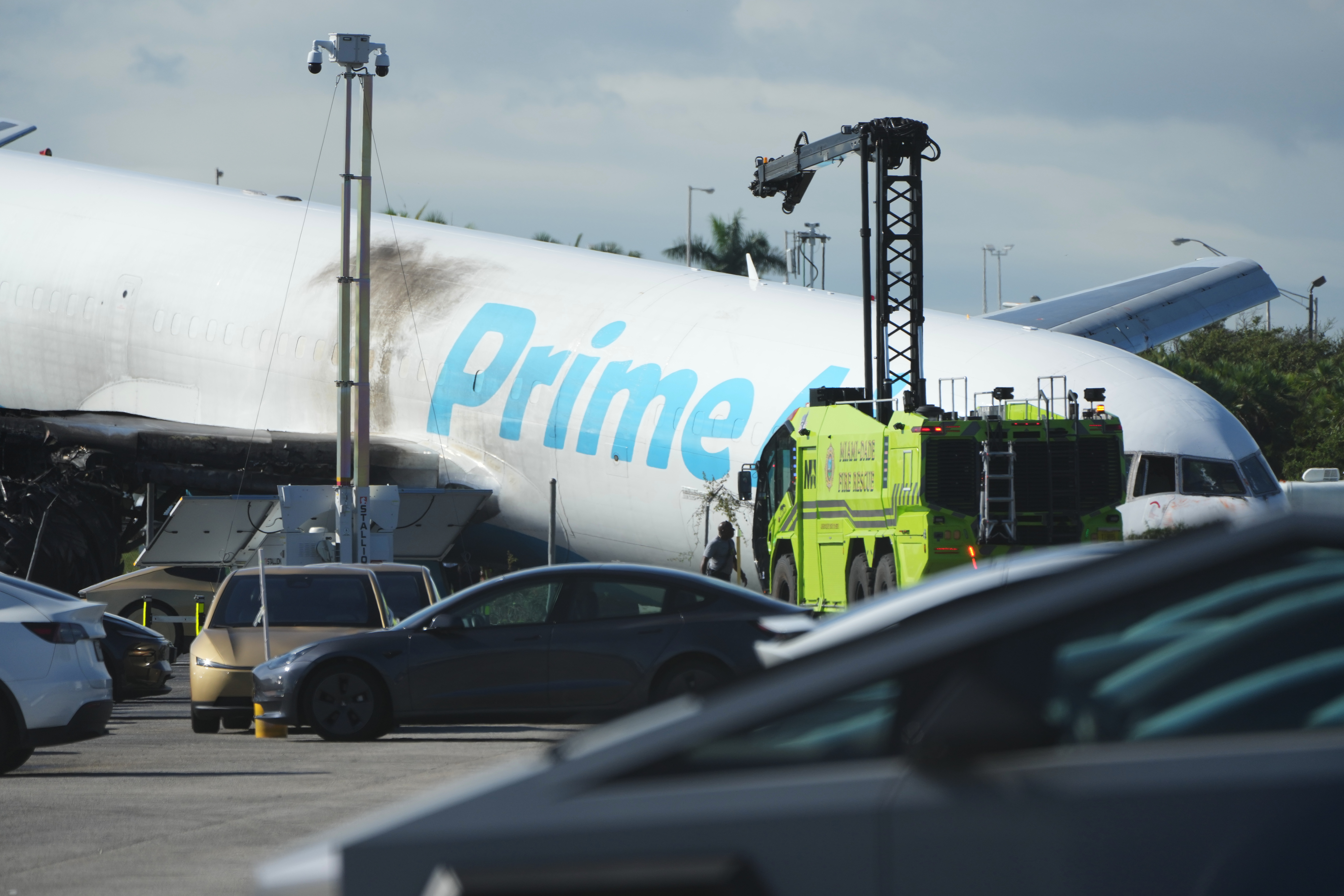
    The Prime Air plane came to rest beside a roadway near two semitrucks, images showed. The aircraft appeared to be resting on its belly and was largely intact despite the fire.

    The flight had been operated by 21 Air, a cargo carrier based in North Carolina. The 32-year-old Boeing 767 was originally built to carry passengers and flew for several airlines for more than two decades before being converted to a cargo plane in 2015, according to flight-tracking site Flightradar24.

    Schiavo said the NTSB will also closely examine the maintenance history of this plane — particularly since it has a history of foreign ownership, including by a Russian company.

    The crash halted flights at the busy travel hub for much of Sunday afternoon and continued to hamper air travel into Monday.

    Miami International Airport said that two of its four runways remained closed Monday and that operations were to be affected throughout the day because of aircraft and flight crews not arriving there due to Sunday’s cancellations after the crash.

    An airport spokesperson said there were 160 cancellations and more than 300 delayed flights Sunday, plus another 69 canceled flights Monday through mid-afternoon. Flight tracking sites were reporting widespread delays at the airport.

    Amazon said in a statement that it would cooperate with any investigation.

    “We’re heartbroken to learn that five people lost their lives in today’s incident at Miami International Airport,” the company said. “Our deepest sympathies go out to the families, loved ones, and all those affected by this devastating loss.”

    Last year, a UPS plane crashed after losing its engine while accelerating down the runway at Louisville’s Muhammad Ali International Airport. The crash killed all three pilots and 12 people on the ground. Twenty-three more were injured.

  • ‘It offends me’: Giuliani says Mamdani should skip 9/11 memorial

    ‘It offends me’: Giuliani says Mamdani should skip 9/11 memorial

    NEW YORK — Rudy Giuliani, the former mayor who shepherded New York City through the Sept. 11 attacks, said on Sunday that he did not think Mayor Zohran Mamdani should attend upcoming memorial ceremonies to mark the 25th anniversary of the attacks.

    “It offends me,” Giuliani said in an anti-Muslim diatribe on the far-right news outlet Newsmax, regarding Mamdani plans to attend the New York memorial. Giuliani also compared Mamdani to the Sept. 11 hijackers, who he said had hostility to America and “they weren’t hiding it like Mamdani is trying to hide it.”

    Giuliani’s tirade also included baseless claims, including that Mamdani is a supporter of a Muslim plot that aimed at “taking over certain parts of America and certain parts of Europe,” a right-wing conspiracy theory he has endorsed in the past.

    His comments on Sunday made him the most prominent person to endorse a call from some conservatives for Mamdani to skip the upcoming memorial ceremonies.

    That demand has also been the subject of an online petition, which by Sunday had drawn almost 100,000 signatures.

    Mamdani’s office declined on Sunday to directly address Giuliani’s comments, but directed reporters to his response to that online petition.

    “I will proudly honor the families, the survivors, the first responders forever impacted by that horrific terror attack by standing alongside them at this year’s 9/11 commemoration, reaffirming that we will never forget the solemn day felt by all of us who call this city home and, frankly, by all of us who call this country home,” the mayor’s statement said.

    The mayor’s office also pointed to two executive orders he signed this past week to establish Sept. 11 as an annual “Citywide Day of Remembrance and Service” and to take steps to modernize the city’s emergency preparedness procedures.

    According to his schedule, Mamdani has already attended or plans to attend roughly a dozen Sept. 11 memorial events, primarily at firehouses across the city that had been the home stations for firefighters who died in the attack or developed illnesses in its aftermath.

    Giuliani is expected to attend the ceremonies. Earlier this year, he was hospitalized with a serious case of pneumonia and said he believed his health problems stemmed in part from exposure to airborne toxins that blanketed parts of the city after the collapse of the World Trade Center.

    Giuliani was two blocks away from the first tower when it collapsed, and his head and shoulders were dusted with ash from the disaster as he joined the throngs of people fleeing north through lower Manhattan.

    Mamdani was 9 years old and in class at his Upper West Side elementary school when the attacks took place. He has spoken about the attacks as a formative experience for him as a child.

    In an interview with the New York Times last year, he spoke of how important it is “to honor the memories of those that were killed” and described “learning their stories over the many years that I’ve been a New Yorker, the deep sorrow, that continues to this day, of futures that were stolen from so many and families that continue to live with that.”

    He also talked about how Islamophobic backlash to the attacks had made anti-Muslim prejudice “a fact of life” for Muslim Americans.

    “It was this horrific day that was also for many New Yorkers the moment at which they were marked an ‘other,’” he said.

    Giuliani was widely praised and seen as a unifying figure after Sept. 11 for his stoic response to the attacks, which killed more than 2,700 people in New York City and left parts of Manhattan devastated for years.

    But in the years since, Giuliani has politically drifted far to the right, serving as a high-profile surrogate and personal attorney for President Donald Trump. Last year, Trump pardoned Giuliani and several others who had been accused of trying to overturn the results of the 2020 presidential election.

    This article originally appeared in the New York Times.
  • Philadelphia bystanders lifted a car to save a woman who was trapped underneath

    Philadelphia bystanders lifted a car to save a woman who was trapped underneath

    A driver of a Volkswagen Beetle was making a right turn in suburban Philadelphia when he collided with an e-bike rider on the shoulder of a road.

    The driver jumped out of his car and ran to the passenger side, but only the woman’s legs were visible. He tried to lift the roughly 2,000-pound car, but it was too heavy.

    Chrissy Vollmer, who owns a sign shop near the crash site in Prospect Park, said she heard the woman yell: “Get this car off of me.”

    “It’s a sound that you can’t really ignore,” said Vollmer, 47, who called 911.

    In the ensuing seconds Monday morning, Vollmer and other bystanders rushed to the car to help, which local police called “courageous, selfless, and potentially lifesaving.”

    The driver and Vollmer tried lifting the car to no avail. Amelia Cannon, who works at a homecare agency next to the crash site, heard the woman cry for help and rushed from her office to assist. A FedEx delivery driver ran over a few seconds later, followed by another man.

    The group counted down from three and tipped the side of the car a few inches off the street — just as a police officer arrived on the scene. In a video of the rescue, more people seemed to show up out of nowhere to keep the car in place and to pull the bike rider out from underneath.

    The rider, who police identified as a 44-year-old woman from Ridley Park, was free within a minute of the crash, Prospect Park Police Chief David Madonna said.

    The woman was transported to a local hospital with upper body injuries but is in stable condition and expected to recover, Madonna said.

    “When you’re dealing with a trauma patient, every second counts,” Madonna said. “If we would have had to wait for some type of heavy equipment to remove that vehicle, or use other means to extricate her from that position, things could’ve certainly been worse for her.”

    Madonna said he doesn’t expect anyone will be charged. He said the driver, whom he identified as a 66-year-old man from Prospect Park, made a legal turn and wasn’t at fault.

    After the e-bike rider was free, she thanked the people around her, Vollmer said. Vollmer and Cannon said they returned to their jobs after the rescue but struggled to focus because their adrenaline was flowing.

    A few days later, they said they were surprised that people were commending them on social media after local news outlets covered the story.

    “It’s kind of normal if someone’s in need of help,” Vollmer said, “you want to help them.”

    Still, in his three decades working in law enforcement, Madonna said he has rarely seen people make as much of an effort to help a neighbor as they did Monday.

    “When you put yourself in potentially harm’s way, and you don’t stop to consider the risks that you’re exposing yourself to, how can you not be impressed by that?” Madonna said. “That is humanity at its finest.”

  • At least 5 dead after Amazon cargo plane overshoots runway in Miami

    At least 5 dead after Amazon cargo plane overshoots runway in Miami

    MIAMI — An Amazon cargo plane barreled off a runway at Miami International Airport on Sunday, killing at least five people as it struck vehicles and burst into flames, authorities said.

    The aircraft overran the runway around 2 p.m. after arriving from San Juan, Puerto Rico. Five people were killed, three critically injured, and two others hospitalized with less severe injuries, Miami-Dade County officials told a news conference.

    More than 60 Miami-Dade Fire Rescue units responded to the crash, arriving to find the aircraft on fire as crews worked to extinguish the flames and assess patients.

    The Prime Air plane came to rest beside a roadway near two semi-trucks, according to images from the scene. The aircraft appeared to be resting on its belly and was largely intact despite the fire.

    The flight had been operated by 21 Air, a cargo carrier based in North Carolina. The 32-year-old Boeing 767 was originally built to carry passengers and flew for several airlines for more than two decades before being converted to a cargo plane in 2015, according to flight-tracking site Flightradar24.

    About 250 flights were delayed at the airport late afternoon Sunday, according to FlightAware, a website that tracks flight disruptions.

    The National Transportation Safety Board said it was gathering information about the crash.

    “We’re working closely with local authorities and officials to understand exactly what happened,” Amazon spokesperson Kelly Nantel said in a social media post. “Right now, our absolute priority is the safety, well-being, and care of everyone involved.”

  • Nepal flood survivor’s family in China relieved after days of anxious waiting

    Nepal flood survivor’s family in China relieved after days of anxious waiting

    HONG KONG — After days of waiting anxiously, Lu Haitao’s family could finally breathe a sigh of relief when the Chinese man was rescued from a tunnel in Nepal where devastating floods killed more than 1,300 people.

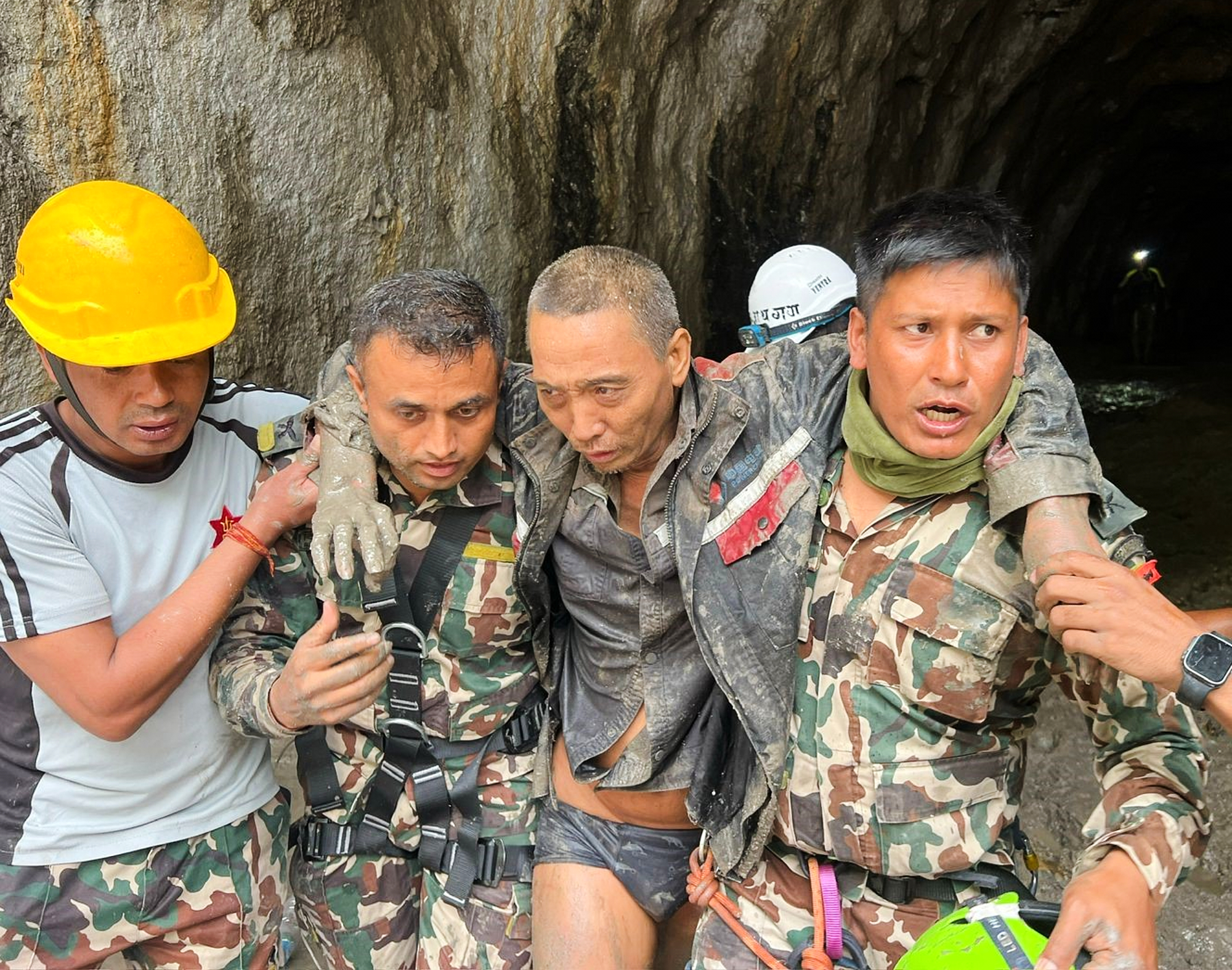
    Rescuers carried out Lu from a 740-foot hydropower tunnel and evacuated him by helicopter Saturday, 10 days after the floods. He was taken to a hospital and was in stable condition, Chinese state broadcaster CCTV reported.

    The Aug. 26 floods were likely caused by a glacier collapse, and nearly 4,900 remain missing in the South Asian country, according to Nepal’s disaster management agency.

    Lu recalled climbing to the highest point inside the tunnel and thinking the whistles he heard from the rescue crews were in his imagination, according to audio shared by CCTV. He told a Chinese embassy staffer that the emergency personnel initially could not hear him when he shouted toward their lights.

    “When they shone before my eyes, I couldn’t believe it,” he said. “I no longer shouted. I had lost hope.”

    Lu Hairong, Lu’s sister in China, told state media Red Star News that she received a call about the rescue before the news emerged. But she only found it believable after seeing him in a picture in the news.

    Her 49-year-old brother, who is married with a son, was previously a farmer from Henan province in central China and took additional work, mainly carpentry, during his spare time. He headed to Nepal for work with a fellow villager in February, his first time working abroad, she told Red Star News.

    She told Cover News, another Chinese state media outlet, that Lu had not shared his exact working location and she could only watch the news sent by others in a mutual aid group for families of the missing, unable to eat or sleep well.

    “It’s a stroke of sheer luck amid the misfortune,” she said of the rescue.

    Lu’s cousin, Lu Haiqing, said her mind went blank after learning he was missing on the sixth day after the floods. She then searched for Nepal news every day and used artificial intelligence to translate Nepali to Chinese. She wept every day on her way to work, Chinese news portal Jiupai News reported.

    On Saturday, Lu’s cousin received a picture from his sister asking her to help confirm his identity. The man looked very similar but she needed to call another relative to help confirm, the report said.

    “This day has finally come,” she was quoted as saying. “There is hope when one doesn’t give up.”

    On the Tibet side of the border, 43 people died and 519 were missing, of whom 261 were foreigners, as of Saturday evening, CCTV reported.

    Rescuers operated excavators to search for those unaccounted for after a mudslide hit the Gyirong border facility and swallowed people, according to videos from foreign media pool coverage on a government-organized trip.

    The border crossing area was seen Sunday covered by fragments of rocks and gravel, with yellow chrysanthemums being laid on the ground in the disaster zone in an apparent tribute to the victims.

  • Deadly Iran wedding strike likely due to U.S. bomb missing a nearby target

    Deadly Iran wedding strike likely due to U.S. bomb missing a nearby target

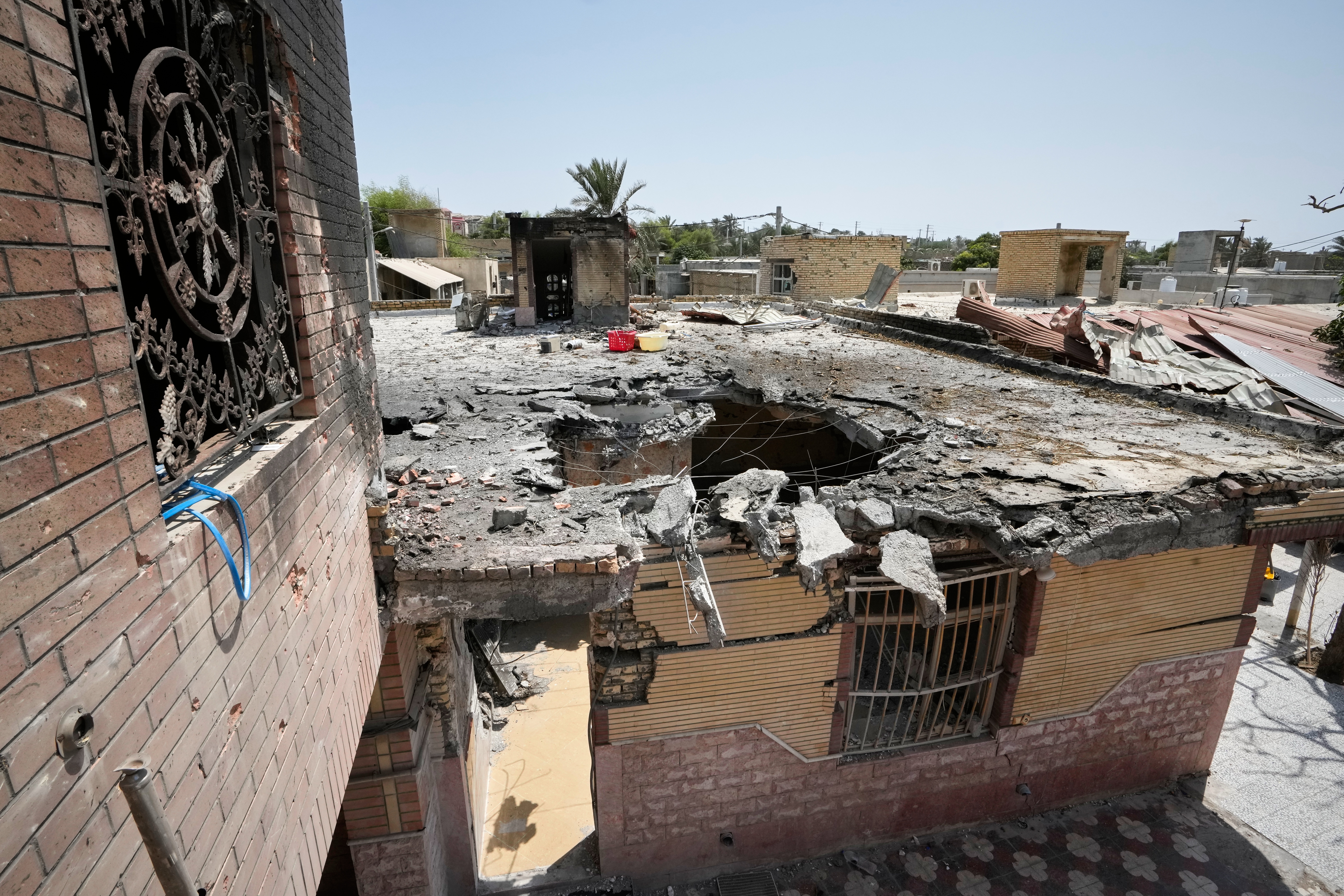
    The Pentagon is investigating the high likelihood that an explosion in southern Iran that destroyed a home hosting a wedding celebration was caused by a U.S. bomb that missed a nearby target, a person familiar with the operation said.

    The strike on the home, which Iranian officials said killed at least four civilians and injured dozens more, was part of a larger wave of attacks on Tuesday in southern Iran, described by U.S. officials as retaliation for increased threats to U.S. troops and commercial shipping.

    U.S. forces launched an airstrike in the coastal town of Kuhestak that targeted a communications complex, a U.S. official said. The complex, which included a small building at its base, sat in a civilian area but was believed to be utilized in part by Iranian forces to conduct operations, the person familiar said.

    Six bombs dropped by U.S. Navy jets traveled on a tight pathway toward the tower and all struck the site except for one, which appeared to go astray, said the person, who like others spoke on the condition of anonymity to discuss sensitive operations.

    An explosion tore into the roof of the home approximately 440 feet from the tower, according to visuals verified by the Washington Post.

    The explosion killed at least two women and two children aged 4 and 16 years old, according to Ali Jafarian, Iran’s deputy health minister, and injured more than 90 others. The Post could not independently verify those figures.

    The mishap followed an exhaustive targeting process, which include U.S. personnel working to minimize harm to civilians, the person familiar said, like multiple layers of verifying target locations.

    “We’re investigating it because obviously we care. We want to know,” Vice President JD Vance said when asked about the strike in a news conference Thursday.

    Central Command, which oversees military operations in the area, said it was aware of reports of civilian casualties and is “looking into them” but declined to provide additional details.

    “The U.S. military never targets civilians, unlike the IRGC,” said Navy Capt. Tim Hawkins, a spokesperson for Central Command, using the acronym for Iran’s paramilitary Revolutionary Guard.

    Officials are assessing one other possibility for the explosion at the home, including an air defense missile falling out of the sky — a circumstance the person familiar and weapons experts independently said was highly unlikely.

    The tower was the only target slated for attack in Kuhestak, the person familiar said, ruling out a scenario that the home was intentionally struck or was mixed up with some other target.

    The Post verified photographs and video from the night of the attack and aftermath published on social media to determine locations and precise distances.

    Details of the strike were earlier reported by the New York Times and Reuters.

    The bombing is among a growing list of U.S. strikes that have killed civilians during the six-month conflict, which has entered a tenuous ceasefire marked by occasional attacks.

    The Trump administration has dismissed concerns raised by lawmakers and human rights groups that have alleged airstrikes without due regard for civilians nearby are violations of international law. The Pentagon has mostly dismantled an office focused on mitigating civilian harm and reassigned personnel who investigate such incidents.

    An airstrike on an Iranian military compound in the early hours of the war in February struck a nearby school, killing at least 175 people, many of them children, according to Iranian state media. That strike was the result of an error that involved outdated targeting information, the Post previously reported.

    Video posted by the Iranian Red Crescent Society from the night of the wedding attack showed people with flashlights rushing into the damaged buildings, and emergency workers appearing to use a hose to douse fires.

    “In the new list of war crimes and attacks by the U.S. army on civilian targets in Iran, after schools, stadiums, and residential homes, now add wedding ceremonies to this list too,” the Iranian Red Crescent Society wrote on X.

    It is unclear why the bomb in Tuesday’s strike did not hit its intended target. Guided munitions rely on several precise capabilities, including GPS coordinates, and almost always strike their intended targets, munition experts have said. Errant strikes are rare and typically the result of flawed intelligence, human error, or malfunctions on the weapon itself.

    The munitions used to target the tower complex were U.S. glide bombs known as Joint Standoff Weapons, or JSOW, the person familiar with the incident said. One of the several variants carries a 500-pound warhead, according to the Navy.

    Images from an Iranian state news channel showed strike remnants that were consistent with the JSOW’s tail fin and casing, said Trevor Ball, a weapons technical analyst for Armament Research Services who served as an Army explosive ordnance disposal technician. The Post was not able to independently verify the pieces were recovered from the site.

    The damage seen is consistent with a variant of JSOW that uses two warheads with about 193 pounds of explosives inside, Ball said. The uniform shape of the crater, plus a spread of fragmentation on the structure and nearby buildings, showed a munition that detonated directly on the roof or exploded right above it, he said.

    He ruled out other possibilities for the damage, like an Iranian air defense missile falling onto the home or a weapons depot exploding nearby, because the damage and shrapnel marks would have appeared significantly different.

    The JSOW can be manually updated on its way to a target and it is possible they missed by aiming for a narrow segment of the tower, said Mark Cancian, a senior adviser with the Center for Strategic and International Studies think tank.

    It is unlikely that electronic jamming or some other interference would alone be sufficient to disrupt the trajectory of a JSOW, which have complementary guidance systems, Cancian said. He said it was “highly likely” the strikes at the tower and home were conducted by U.S. forces after reviewing imagery and other details.

    Wes Bryant, who previously served as a targeter in Air Force Special Operations, said military planners are obliged to consider the immediate area when attacking in a populated area.

    “Civilian pattern of life should be established prior to attack, and every structure adjacent to the targeted structure should be characterized,” said Bryant, who later served in the Pentagon office focused on mitigating harm to noncombatants.

  • U.S. denies Iran’s claim to have struck an unmanned ship in Strait of Hormuz

    U.S. denies Iran’s claim to have struck an unmanned ship in Strait of Hormuz

    The U.S. military has denied Iran‘s claim to have struck an unmanned American military vessel in the Strait of Hormuz, calling it a “total lie.”

    Meanwhile, Israeli strikes in southern Lebanon killed seven people and leveled a vacant hospital, according to Lebanese authorities, near an area that has become a flash point in fighting between Israel and the Iran-backed militant group Hezbollah.

    Iran says it hit a U.S. boat in the strait

    State-run media in Tehran said the U.S. vessel was trying to enter an area that Iran says is restricted in the Strait of Hormuz, but Capt. Tim Hawkins, spokesperson for the U.S. Central Command, called it “a total lie.”

    The claim came a day after the U.S. said it struck Iranian oil tankers in retaliation for Iran launching ballistic missiles at Navy warships. Attacks resumed last week after roughly a month of quiet.

    The war began with U.S. and Israeli attacks on Iran on Feb. 28. But negotiations have collapsed after a ceasefire agreement was announced in June, and on-and-off fighting has persisted with both sides trying to inflict military and economic pain.

    Iran’s parliament speaker and chief negotiator, Mohammad Bagher Qalibaf, said the era of “proportionate responses” is over and Iran’s retaliation will be “faster, heavier and more painful.”

    Israeli strikes kill 7 in Lebanon

    Israeli strikes killed at least seven people in southern Lebanon and leveled an empty hospital, Lebanon’s Health Ministry said.

    Strikes on the village of Arabsalim killed two, the ministry said. Two others were killed in Nabatiyeh al-Fawqa, near a strategic hill that Israel said its forces gained control over Thursday. And three people were killed in the village of Nabatiyeh al-Tahta after an Israeli drone struck a parking lot. At least 20 others were wounded in strikes, the ministry said, among them three children and five women.

    Israel’s military said its latest strikes came in response to a drone attack launched earlier Sunday by Hezbollah on troops in southern Lebanon. It said Hezbollah had used the empty hospital as a command center.

    Since a ceasefire went into effect between Israel and Hezbollah more than two months ago, low-level skirmishes and Israeli strikes continue in the south.

    Mass funeral in Gaza for over 110 Palestinians found in rubble

    Dozens of Palestinians gathered in Gaza City to mourn over 110 people, including at least 70 children, after their remains were recovered.

    Rescue crews have been digging out the bodies from the Zeitoun neighborhood. They said the dead came from three families whose houses were flattened by Israeli strikes earlier in the war.

    “We are witnessing a painful, heartbreaking scene,” said Mustafa Quzghat, a relative.

    The bodies were wrapped in white shrouds and draped with Palestinian flags. Some shrouds bore images of the deceased, according to Associated Press footage. They were laid out in rows on the ground.

    Over 73,650 Palestinians have been killed since the war in Gaza began, according to Gaza’s Health Ministry. The ministry, part of the Hamas-run government, maintains detailed records viewed as generally reliable by U.N. agencies and international organizations. It doesn’t give a breakdown of civilians and militants.

    Kushner says Gaza has long been ‘dystopian’

    Jared Kushner, President Donald Trump’s son-in-law, defended the lack of progress in talks about next steps in the fragile Gaza ceasefire, saying, “It’s been a dystopian place for a long time.”

    Speaking at a news conference in Ukraine, Kushner defended his work with Trump’s special envoy, Steve Witkoff, saying the militarization by the Hamas militant group in the Palestinian territory was “beyond our comprehension, so demilitarizing it is not going to be easy.”

    “But we’re very determined, and we’re working through these things,” Kushner said.

    He added: “We’re working through some political issues in Israel. I think we agree with them on the end state. They just have a crazy election, and that makes them a little irrational in certain regards.” Israel’s election is set for Oct. 27.

    Israeli strike in Gaza kills a father and daughter

    An Israeli strike on a civilian vehicle in western Gaza City killed a father and his daughter and wounded at least six others, according to health officials at Shifa Hospital, where the casualties were taken.

    The Israeli military said it struck a “terrorist” in Gaza City.

    Israeli strikes have killed at least 1,344 Palestinians in Gaza since a ceasefire agreement was reached with the Hamas militant group in October, according to Gaza’s Health Ministry. Israel says it is targeting Hamas and other militants who pose a threat, and in response to ceasefire violations, including occasional attacks.

    The war began when Hamas-led militants attacked southern Israel on Oct. 7, 2023, killing around 1,200 people and taking 251 others hostage.

    Muslim nations condemn Israeli proposal to empty Gaza

    Any Israeli plan or action to remove Palestinians from Gaza would violate international law and undermine the U.S.-backed plan for drawing down the war, the foreign ministers of Egypt, Saudi Arabia, Jordan, and five other governments said in a statement.

    Israel’s national security minister, Itamar Ben-Gvir, last week published a plan to encourage Palestinian migration from Gaza. Israel’s defense minister, Israel Katz, has said Israel is prepared to facilitate the removal of Palestinians by sea, air, or other means, and that plans remain under discussion.

    The governments called the statements “inflammatory” and said they threatened the “legitimate and inalienable rights” of Palestinians and the future establishment of a Palestinian state.

  • Trump envoys make first visit to Kyiv

    Trump envoys make first visit to Kyiv

    KYIV, Ukraine — President Donald Trump’s envoys, Steve Witkoff and Jared Kushner, met with officials in Ukraine on Sunday, their first trip to the country and the second stop on a diplomatic tour aimed at reviving efforts to end the war between Ukraine and Russia.

    Witkoff and Kushner came straight from Moscow, where they spoke Saturday with Russian President Vladimir Putin for several hours. They arrived in Kyiv, the capital, by train, alighting on a platform bearing a sign that read, “PEACE EXPRESS,” and then were taken by motorcade to meet Ukrainian President Volodymyr Zelensky.

    Witkoff and Kushner, who have traveled to Moscow several times, had never before visited Kyiv, despite multiple official invitations.

    “We have been waiting for Steve and Jared, Witkoff and Kushner, for a long time,” Zelensky told reporters before greeting the two with hugs.

    The men met for about three hours in the gilded halls of Mariinsky Palace, the official residence of Zelensky. They briefly addressed journalists afterward, with Witkoff saying it had been a meaningful, substantive, and encouraging conversation.

    “We look forward to continuing this day as long as it takes,” he said, seated across a large table from the Ukrainian delegation. A second round of talks got underway soon after, with national security advisers from Britain, France, and Germany joining the discussion.

    Witkoff thanked the Ukrainian delegation, saying they had a “delightful trip” and were having a “great time” in Kyiv, calling the hospitality “unsurpassed.”

    The meetings come at a dangerous moment in the nearly five-year conflict. Russia and Ukraine have both been escalating, waging an intensifying air war at least in part to try to gain the upper hand in settlement talks.

    That was reflected in the delicate, weekslong discussions around the U.S. envoys’ travel. The United States insisted that Ukraine temporarily cease attacks on Moscow and that Russia temporarily halt attacks on Kyiv while the men were in those cities, according to officials familiar with the diplomatic effort.

    Zelensky publicly committed to doing so Friday evening, hours before Witkoff, the president’s special envoy, and Kushner, his son-in-law and frequent negotiator, landed in Moscow. While they were there, the Kremlin announced that Russia would pause strikes on Kyiv for three days.

    Few expect a breakthrough from the U.S. envoys’ trip, which has been billed as the first step toward reviving talks mediated by the Trump administration. Those are expected to resume late this month — days after Russia’s parliamentary election and weeks before U.S. midterm elections, Ukraine’s chief negotiator, who greeted the envoys at the train station Sunday, recently told the New York Times.

    Trump returned to office last year pledging to end the war in Ukraine swiftly. He enlisted Witkoff and later Kushner to assist with negotiations, which have unfolded in fits and starts.

    By February, Witkoff and Russian and Ukrainian negotiators had whittled a 20-point peace plan to two key unresolved points: management of a Russian-occupied nuclear power plant and control of territory that Ukraine still holds in the eastern Donbas region. Then the United States and Israel attacked Iran, shifting the White House’s attention away from resolving the war in Ukraine.

    Trump told reporters Friday that Witkoff and Kushner were traveling with a proposal to end the war, but he did not provide further details.

    It was unclear whether it was a new proposal or if the men would be pushing to close the gap on the remaining issues.

    Few in Ukraine expect a speedy resolution. The Kremlin has given no indication that it is ready to stop the fighting, and Ukrainian officials say they expect Russian forces to try to inflict as much pain on Ukraine as possible during the winter in hopes of pummeling Kyiv into submission at the negotiating table.

    The Russian military’s gains on the battlefield have slowed in recent months. Yet the Kremlin’s foreign policy aide, Yuri Ushakov, told reporters that Putin, in his meeting with the Americans, emphasized that Russia’s forces were advancing and would achieve their goals.

    This article originally appeared in the New York Times.