EVIAN-LES-BAINS, France — The United States could soon reimpose sanctions on Russian oil shipments after President Donald Trump and fellow leaders at the Group of Seven summit of major industrialized democracies moved Tuesday to put the war in Ukraine back on top of their agenda, more than four years after Russia launched its full-scale invasion.
The Iran war has recently overshadowed Ukraine, but Trump said he wants to shift the focus following the announcement of an agreement to end the 3½-month-old conflict in the Gulf.
Trump said Iran will soon be “back in the rearview mirror.”
Trump said the sanctions on Russia that were eased during the Iran war to help lower oil prices can go back in place as more oil moves through the Strait of Hormuz.
“Soon we’ll be able to do that because the oil is now flowing,” Trump told reporters in Evian, the French spa town close to the Swiss border that is hosting the summit. “We’re in a position to do that soon.”
The U.S. in March temporarily eased some sanctions on some Russian oil shipments as crude prices sharply increased. The waiver has been extended.
Zelensky joins G7 leaders for talks
Ukrainian President Volodymyr Zelensky joined the G7 leaders for talks on the war in his country. They wrapped quickly, after just 75 minutes.
Zelensky said Ukraine is serious about peace while Russia toys with world leaders. “The entire ‘Seven’ supports Ukraine unanimously today,” he said.
Zelensky added that G7 leaders supported Ukraine’s need for more Patriot missiles and discussed how to increase production by licensing it. Patriot missiles are able to counter Russian ballistic missile attacks on Ukraine’s power grid and cities.
As the U.S. under Trump has cut back aid to Ukraine, France and its European allies are now the biggest providers of military and financial support to Kyiv.
Trump downplayed the impact of the Russia-Ukraine war on the U.S. but lamented the death toll.
“The whole thing is ridiculous,” Trump said. “So, yeah, I’m going to do whatever I can.”
Meanwhile, the U.K. announced new sanctions targeting the “shadow fleet” Russia uses to ship oil and gas, and the finance networks used by Moscow to evade Western sanctions. The ships targeted include several recently purchased by Russia to transport liquefied natural gas from its sanctioned Arctic LNG 2 project.
Russia fires again at Ukraine’s biggest cities
Hours before the summit began Monday, Russia fired hundreds of drones and dozens of missiles at Ukraine’s biggest cities in a barrage that killed 11 people and set fire to a religious landmark.
The attacks came after Zelensky and Putin spoke separately by phone with Trump on Sunday, the U.S. leader’s 80th birthday.
While campaigning in 2024 for a return to the White House, Trump claimed he could end the Russia-Ukraine war within 24 hours of taking office. However, negotiations have faltered and Trump has acknowledged it has proved much harder than he thought.
Ukraine sees EU membership as a security guarantee for a stable future once the war ends. Its best guarantee would be membership in the NATO military alliance, but the Trump administration insists that cannot happen, and others are wary of Ukraine joining while the war continues.
Trump says he may send Iran deal to Congress
The U.S.-Iran ceasefire deal got plenty of attention at Tuesday’s sessions, with Trump voicing his openness to sending the deal to Congress for review. The text has not been made public.
“I like the idea, send it to Congress please,” Trump said at the start of a meeting with United Arab Emirates President Sheikh Mohammed bin Zayed Al Nahyan on the summit’s sidelines. He added, “I mean, who wouldn’t approve it?”
Republicans on Capitol Hill say they want Trump to provide more information about the agreement, with some expressing skepticism that the deal can deter Iran from pursuing a nuclear weapon.
Trump also met with the Emir of Qatar, Sheikh Tamim bin Hamad al-Thani. The Gulf nations are not part of the G7, but French President Emmanuel Macron extended invitations to their leaders at a fraught moment for their region.
Trump said Israeli operations to target Hezbollah “should have been able to deal with them faster,” adding: “It just goes on forever. And when that happens, it throws a negative light on the big deal. And that’s the deal with Iran.”
Macron said France and other Western partners are “ready to take action very quickly” to help reopen the Strait of Hormuz peacefully to ease the economic impact of rising oil prices. France and the U.K. have championed a mission to restore maritime security there as soon as conditions allow.
The G7 comprises France, the United States, Canada, Germany, Italy, Japan, and the United Kingdom. Other guest nations, including Brazil, India, Kenya, and South Korea, were invited to participate in some discussions.
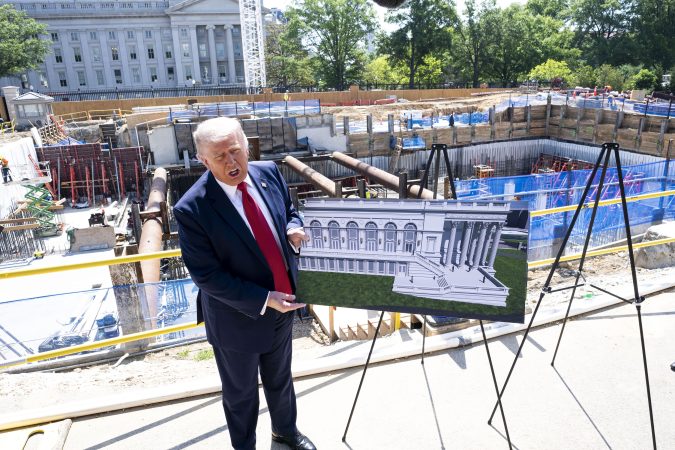
Five months after the demolition of the White House’s East Wing, President Donald Trump claimed that the project to construct a massive ballroom and a bunker in its place would cost up to $400 million and that private donors would pay for all of it.
“This is taxpayer-free. We have no taxpayer putting up 10 cents,” Trump told reporters in the Oval Office on March 31, describing the project as including bomb shelters and major medical facilities.
But a detailed project summary prepared for the White House by the contractor more than three weeks before Trump’s comments estimated the total construction cost at $600 million — with more than half coming from taxpayers, according to a copy of the contractor estimate obtained by the Washington Post.
By the time Trump made his comments in March, the federal government had already approved more than a dozen payments to the contractor overseeing the work, Clark Construction, totaling tens of millions of dollars in public funds, according to a log of the contractor’s invoices obtained by the Post.
Since first announcing the East Wing project last July, Trump has repeatedly said that the price tag would not exceed $400 million and that private donations routed through a nonprofit would cover its entire cost. At other times, he has said that the Secret Service and the military would contribute security enhancements, without elaborating on the price of those upgrades.
Multiple project summaries provided to the White House by Clark Construction show that internal cost estimates have been significantly higher than administration officials have acknowledged in public comments or court filings. They also show that the work was projected to rely heavily on taxpayer dollars from the moment it was announced.
The White House did not answer questions about the internal cost estimates or taxpayer funding.
“President Trump and generous American patriots are funding the ballroom to the tune of approximately $400 million, which will be a secure and appropriate venue for Presidents for generations to come,” White House spokesperson Davis Ingle wrote in a statement.
A spokesperson for McLean, Virginia-based Clark Construction said all project details are confidential and referred questions to the White House.
The Post obtained six cost estimates for the entire East Wing project, dated from July 2025 to March of this year, that show an increasing price tag as well as the expected sources of funding. Those records, as well as invoice logs and correspondence, provide the clearest accounting yet of Trump’s most ambitious construction project in the nation’s capital. The project is deeply unpopular with most Americans, and even some Republican lawmakers have balked at funding it.
When the White House first announced the plan to build a ballroom on July 31, 2025, it said in a news release that contributions from Trump and “other patriot donors” would cover the cost of the project, which it said would be $200 million. The White House added that the “United States Secret Service will provide the necessary security enhancements and modifications.” There was no mention of an underground military bunker.
The records obtained by the Post show that the administration and Clark worked hand in hand starting last June to determine the scope and cost of construction.
White House officials received a preliminary estimate, dated July 11, projecting that construction would cost $270 million, with over $100 million coming from taxpayers through the Secret Service and the White House Military Office, the records show.
Emails from that time show that administration officials planned to use $3.6 million of Secret Service money to cover initial expenses for site preparation before demolition.
A White House lawyer explained in an email to colleagues on July 30 that she had added a line to contract language “to tie the project more closely to security-related issues since USSS [U.S. Secret Service] is providing the funding.”
“We believe this edit is important to comply with fiscal law principles,” wrote Caroline C. Hunter, general counsel in the White House Office of Administration. Hunter did not respond to messages seeking comment.
More than $1.6 million in Secret Service funds was also budgeted to cover part of the demolition itself, according to a cost estimate. The U.S. Secret Service did not provide answers to questions before publication of this report.
Three contracting and procurement experts who reviewed the documents at the Post’s request said the demolition of the East Wing appeared to fall outside the scope of the Secret Service’s mission of protecting government leaders.
“That is a stretch,” said Anthony Costa, a former General Services Administration official who oversaw complex government real estate projects during a career that spanned four presidential administrations. “How is that something Secret Service should do and fund?”
On Oct. 22, in the same week Clark began demolishing the East Wing, Trump told reporters that the price had risen to $300 million. He said that the military was involved but that the project would be paid for “100% by me and some friends of mine.”
However, a project summary dated Oct. 20, the day the demolition began, shows that Clark expected the full project to cost $478 million. Taxpayers were expected to fund nearly half of that, the documents show.
Speaking at the White House in December, Trump said the cost could reach $400 million. “We’re donating a building that’s approximately $400 million,” he said.
By March, Clark had informed the White House that the projected cost had increased to $600 million. A project summary dated March 5 shows that nearly half of that, $293 million, was expected to come from “private sources.” The estimate said an additional $155 million would come from the Secret Service, $149 million from the White House Military Office, and $3 million from the Executive Residence, all sources funded by taxpayers.
That month, the administration acknowledged that the project included underground security features, including what Trump has described as a hospital.
A court issued an injunction in March, pausing construction above ground but allowing work to continue on the secure underground bunker after a historic-preservation group filed a lawsuit arguing that the White House had failed to seek necessary reviews.
In April, an alleged would-be assassin attempted to access the White House Correspondents’ Association dinner before he was apprehended by law enforcement. Within days, the administration said that rebuilding the East Wing, including the ballroom, was a national security imperative.
Trump and some elected Republicans said a new ballroom could more securely host events like the correspondents’ dinner. Sen. Lindsey Graham (R., S.C.) and others introduced legislation that would have authorized $400 million in spending “to upgrade the presidential ballroom and strengthen the White House’s security infrastructure.” Seven Republican senators joined Democrats to block the idea.
“President Trump indicated that the ballroom was going to be built with private donations,” said Sen. Susan Collins (R., Maine), one of the senators who opposed it. “I think that’s the commitment that should be kept.”
In May, with the legislative proposal pending, Trump provided reporters with another update, showing off the construction site and saying all the parts of the project were intertwined. “This is one well-knit building. One thing doesn’t work without the other,” he said.
This time the president made more of a distinction over who would pay for each part of the structure. The government would pay for part of the construction on the new East Wing, he said, describing that work as “for the security of that and the whole White House premises.”
“They have a budget in Secret Service and the military to do some of the work that you see right here,” Trump said. The ballroom itself, he said, “is not going to be paid for by the taxpayer. This is a gift to the United States of America.”
The Secret Service and the White House Military Office (WHMO) have long held roles in securing the White House complex for the president, his family, and staff members.
The three experts who reviewed documents related to the project said it was appropriate for the Secret Service and the WHMO to pay only for parts of the project that fall within their mission. Trump said some security spending would go toward defenses including “the greatest drone empire … to protect Washington” on the building’s roof.
But the experts also said the project documents contradicted the administration’s statements claiming that the East Wing would be paid for by donors. Stan Soloway, a former Pentagon acquisition official who is board chair at the National Academy of Public Administration, said that from a contracting and budget perspective, “you can’t disentangle the entertainment space from all of the other parts that are in here.”
He said it was clear from the documents that taxpayers are footing the bill for parts of the ballroom: “I think it’s inevitable that it bleeds over. It’s one structure.”
The World Cup’s hottest accessory is free, but it’ll cost hours of your time.
At the FIFA Fan Festival in Lemon Hill, fans watched Germany beat Curacao, the Netherlands and Japan draw, and Ecuador lose to Ivory Coast on Sunday. Between games, attendees bought snacks or tried their hand at sponsored booths for prizes. Lines ebbed and flowed. But one stretched across the field with seemingly no end in sight.
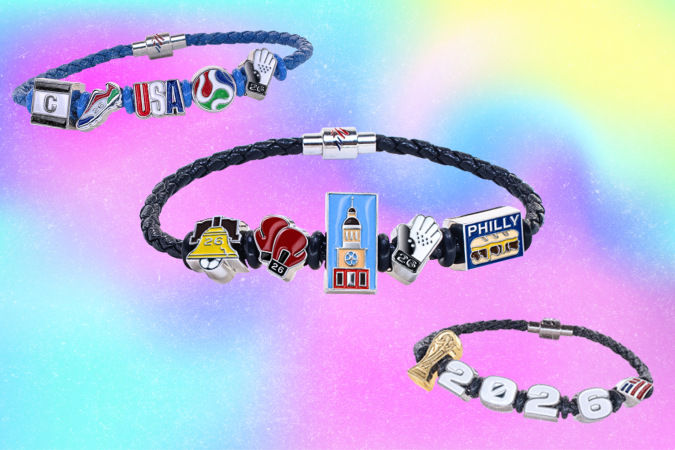
A simple customizable charm bracelet has taken off at FIFA Fan Festivals nationwide, including Philly’s. The accessory has prompted wait times rivaling a Taylor Swift merch line, the latest sneaker drop, or John’s Water Ice during a record-breaking heat wave.
“Get there early!” TikTokers warned while showing off their new hardware. “I waited four hours,” one user wrote.
Bank of America is the sponsor behind the giveaway. The company announced in a news release that it was armed with more than 2 million “Fan Bands” and 10 million beads.
Mimicking a Pandora bracelet, the Fan Bands are composed of a red, blue, or black woven band and an assortment of metal beads that lace through. Available beads include numbers, flags, a FIFA World Cup trophy, and several city-specific designs that pair with World Cup host cities.
City-specific designs include a cable car for San Francisco, Mount Rainier in Seattle, a yellow cab in New York City, and a lobster in Boston.
Philadelphia’s city-specific charms include the Liberty Bell, a cheesesteak, the LOVE statue, Rocky’s boxing gloves, and Independence Hall. Visitors can either design a custom bracelet, selecting five beads, or opt for a faster pre-designed bracelet.
The bracelets are completely free for Fan Festival attendees — no sign-ups or bank loyalty required, either. But be warned: The lines are serious.
On Reddit, an attendee said visitors ran straight to the Bank of America booth when Philly’s Fan Fest opened and that they waited an hour and 20 minutes to get theirs. On TikTok, users said they waited anywhere from four to eight hours depending on when they arrived and their level of determination.
The allegiance isn’t limited to Philadelphia. People attending Fan Fests in other cities are also complaining about the lines.
In Dallas, one attendee noted: “more people [were] lining up for bracelets than watching the match.”
And if waiting in lines isn’t your thing, Philly has another charm bracelet ready and waiting.
Artist John Wind launched a collection of Philly charms in honor of the nation’s 250th birthday that feature the LOVE statue, a boxing glove, and even a soccer ball.
The locally made bracelet, which is a collaboration with the Philadelphia Visitor Center, is $98.
WASHINGTON — President Donald Trump’s administration is further dismantling the Education Department, moving oversight of special education and civil rights to other agencies.
The Department of Justice will take on enforcement of civil rights in education, while the Department of Health and Human Services will oversee special education. With the transfers announced Tuesday, the vast majority of Education Department functions now have been assigned to other agencies.
Trump, a Republican, campaigned on shutting down the Education Department, saying he would “move education back to the states where it belongs.” While only Congress can close the department, Trump’s education secretary, Linda McMahon, a billionaire and former CEO of World Wrestling Entertainment, has formed agreements with other federal agencies to handle much of her department’s work.
McMahon said the agreements align federal responsibilities with the agencies best positioned to support them.
“The Trump Administration has been clear: as we scale back federal micromanagement when it hinders success, we are equally committed to bolstering the efficacy of federal oversight where it is essential,” McMahon said in a written statement.
Critics warn of impacts to student services
Advocates said the changes would create uncertainty around services relied upon by millions of students and families.
“As is too often the case, traditionally underserved students — including students with disabilities, Black and Latino students, multilingual learners, students from low-income backgrounds, and students in rural communities — will bear the greatest burden created by this reckless decision, to which the disability and civil rights communities have already been vehemently opposed,” said a written statement from EdTrust, a Washington, D.C.-based think tank that advocates for educational equity.
The Education Department already has offloaded some of its programs through 10 earlier internal agreements, but the agencies involved in Tuesday’s announcement — the Office of Special Education and Rehabilitative Services and the Office for Civil Rights — were among the most closely watched.
The Office of Special Education and Rehabilitative Services manages billions of dollars in grants and oversees state compliance with the Individuals with Disabilities Education Act. The Office for Civil Rights, which has been thinned by mass layoffs, investigates complaints of discrimination at the nation’s schools and universities.
The Department of Justice also will take over work protecting student privacy and will provide some training and advisory help to schools.
While HHS and the Department of Justice will take over most day-to-day duties of the assigned offices, the Education Department will continue to perform some tasks, such as responding to audits and issuing final determinations in civil rights cases, that it is explicitly required to do by law.
The agreements are scattering education programs to agencies that do not have the expertise to manage them, said Sen. Patty Murray (D., Wash.).
“Instead of helping kids get a great education, this administration is spending its time, energy, and taxpayer resources fixated on where employees sit and illegally trying to shutter the Department of Education,” Murray said in a written statement.
Rachel Gittleman, president of the union that represents department employees, said the moves will create chaos for families, students, and schools.
“This will leave our most vulnerable students and families who have been shut out of our education system without the services they need and without protection when they face discrimination,” Gittleman said in written a statement.
Families of students with disabilities opposed the decision
The transfer of special education to Health and Human Services most alarmed disability advocates, who say oversight of whether schools are adequately serving children with disabilities is best handled by education experts — not medical experts.
“The IDEA is intended to equip students as they learn alongside their peers, not cure them — the HHS is not prepared to oversee and administer the IDEA program effectively. Health and education systems speak in entirely different languages, including variations in terminology, training, and disciplines,” said Jennifer Coco, interim executive director of the Center for Learner Equity.
The Education Department said McMahon spent over six months in listening sessions with families, advocates, and educators to better understand concerns around how the department’s dismantling could affect special education. Many families raised concerns about obstacles to obtaining proper services for their children, but Coco said participants in those sessions were united in their opposition to moving special education oversight out of the Education Department.
“I think we agree on the problem,” Coco said. “We have stark disagreement on the solution and these transfers today don’t feel like a solution to that problem.”
The workers brought the copies of the Emancipation Proclamation and the 13th Amendment to the Constitution into the warehouse display room and carefully placed them on a table covered with blue blankets.
Both documents, which date to the 1860s, bear the original signature of President Abraham Lincoln. Both are treasured milestones in the nation’s bloody struggle to eradicate slavery, and are worth millions.
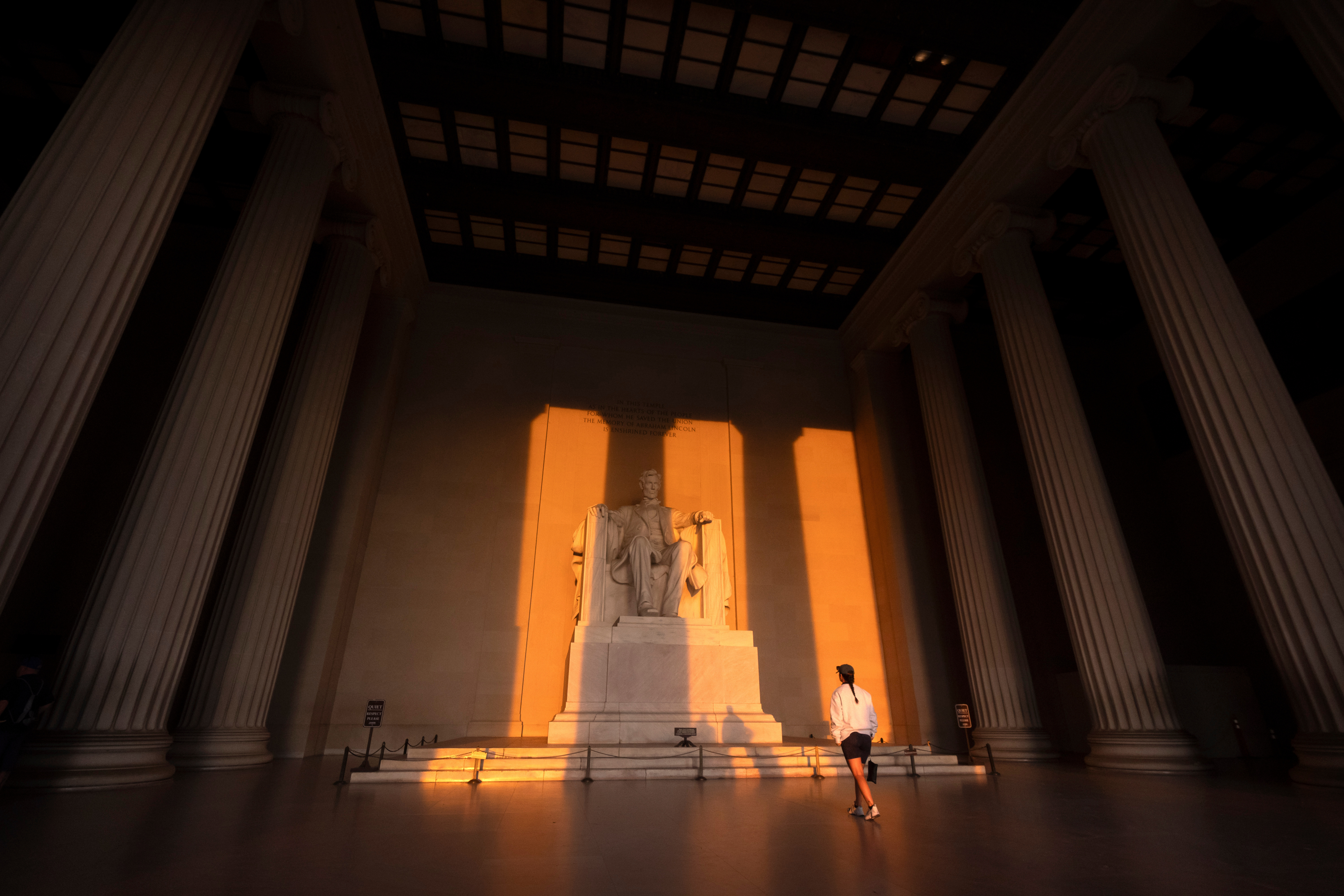
And both are now being loaned for public display in a new exhibit area under the Lincoln Memorial, which is due to open June 25 to honor the nation’s 250th birthday.
The Washington Post was given an up-close look at the historic documents in a private storage facility, before they were to be sent to the memorial.
The copy of the 1863 proclamation, which freed enslaved people in the rebellious states, also bears the faded signatures of Secretary of State William H. Seward and Lincoln’s private secretary, John Nicolay. The 1865 copy of the 13th Amendment, which outlawed slavery in the United States, is handwritten on lined parchment.
The National Park Foundation said that the documents are being loaned by hedge fund billionaire, collector, and philanthropist Kenneth C. Griffin, who bought them last year at auction for a reported $18 million. (The originals are in the National Archives.)
The foundation, the nonprofit fundraising partner of the National Park Service, said the artifacts will be on loan through June 2027. The documents will be part of a new, state-of-the-art exhibit space in the rarely seen area beneath the Lincoln Memorial called the undercroft.
The 15,000-square-foot space will allow visitors to see through floor-to-ceiling glass the massive concrete foundations that support the memorial — and view part of 50,000-square-foot undercroft itself.
“Everyone who’s been there just raves about it,” said Jeff Reinbold, president and CEO of the foundation. “We’ve talked about this for so long and now can actually see that vision come to life.”
“It will be one of the hottest tickets in D.C.,” he said. “Talk about powerful. You have a chance to see these documents under the memorial for the president who signed them.”
Griffin said in a statement: “The Emancipation Proclamation and the 13th Amendment marked a profound step forward, abolishing the scourge of slavery and moving the country closer to its founding ideals.”
The foundation said the copy of the Emancipation Proclamation is one of 27 known remaining copies from the limited number printed for a large patriotic fundraising fair in Philadelphia in 1864. The proclamation, issued on Jan. 1, 1863, in the midst of the Civil War, freed enslaved people in the states or parts of states still in rebellion, and allowed Black men to join the Army and Navy, according to the National Archives.
The copy that will be on display at the Lincoln Memorial was one of 48 signed by Lincoln to raise money for hospitals, injured Union soldiers, and the families of soldiers killed in the war, said Selby Kiffer, international senior specialist for books and manuscripts at Sotheby’s, where the documents were sold.
Each copy was sold for $10 — roughly $200 today. They did not sell out.
The 13th Amendment, ratified by the states in 1865, ended slavery in the United States.
The rare copy of the amendment on loan to the memorial dates to 1865, and is one of only 15 known copies like it.
In addition to Lincoln’s signature, it has those of other notable political figures of the era — Sen. Charles Sumner, Rep. Thaddeus Stevens, and Vice President Hannibal Hamlin, among others.
“It was such a big moment that many legislators wanted to sort of capture it for themselves,” Kiffer said in a video interview.
So various members of Congress hired clerks to write out special copies of the amendment.
Then, “a little bit like a high school yearbook, you would take it around and get everyone who had worked on this monumental piece of legislation and amendment to the Constitution to sign it,” Kiffer said.
“They were really mementos,” he said. “They were all individual, unique creations.”
The Griffin copy “is one of the most complete, with the signatures of the senators and congressmen who voted in favor of the amendment,” he said. (Not all members of Congress voted for the amendment.)
It is signed by 37 senators and 114 members of the House. They were among the legislators who voted to send the amendment to the states for ratification, he said.
The exhibit area where the documents will be displayed will also tell the story of how the Lincoln Memorial was built and examine its role in American history and civil rights, the foundation said.
The project includes new restrooms, a larger bookstore, and new elevators, the Park Service said. It will also feature an immersive theater presentation that projects images of historic events onto the memorial foundations.
The undertaking is believed to be the most extensive of its kind at the memorial since it was dedicated in 1922, the Park Service said.
The undercroft, essentially the memorial’s basement, is the huge area beneath the 38,000-ton structure, which sits on a platform supported by 122 concrete pillars. The undercroft is so large that the entire memorial, flipped upside down, would fit in it, officials have said.
The project opening the area to visitors has been in the works since 2016, when another billionaire, David Rubenstein, donated $18.5 million to the effort. But major work did not get underway until 2023, the National Park Service has said.
The memorial, which includes the 175-ton marble sculpture of Lincoln, was built on a spot called Kidwell Flats, a tract on the Potomac River that had been reclaimed with mud dredged from the river.
Ground was broken in 1914. The statue of the seated Lincoln was made from 28 blocks of Georgia marble carved by sculptor Daniel Chester French in the New York studio of the Piccirilli brothers, a team of renowned Italian stonecutters.
The blocks were then shipped to Washington and assembled inside the memorial in 1919.
The memorial was dedicated in 1922 in the presence of Lincoln’s son, Robert, then 78. About 50,000 people attended. African Americans, as was the cruel custom in then-segregated Washington, were shunted off to the rear.
On Easter Sunday in 1939, the African American opera star Marian Anderson elevated the significance of the memorial when she sang there after being barred from performing at whites-only Constitution Hall seven blocks away.
Twenty-four years after Anderson’s performance, the Rev. Martin Luther King Jr. gave his “I Have a Dream” speech there before 250,000 people.
And 50 years later, President Barack Obama, the country’s first Black president, spoke there on the anniversary of King’s speech.
BASTROP, Texas — Many of the tech bros who swing by Found Fine Art in Bastrop, Texas, are smitten with Schoolgirl Witchblade, a bronze statuette of a manga-style character with pigtails, a barely there bodice and a clawed hand ready for a supernatural brawl (price: $3,200).
The preference seems on-brand. These bros work for SpaceX, the reusable rocket and internet satellite megacorporation led by Elon Musk, who created a sexy, pigtailed, manga-style digital girlfriend for premium users of his Grok chatbot.
“They ask a lot about these,” said Alexandria Lagos, a gallery sales associate, pointing to Schoolgirl and similar works. “Though I haven’t seen anyone buy one.”
That could change. On June 12, SpaceX raised $75 billion in the largest initial public offering in history. The company employs 1,600 people near Bastrop, which means that a sizable chunk of the town’s 14,000 residents just got rich or at least richer. On Thursday, the gallery’s owner, Jamie Howard, wore a look of subdued delight, as if she were waiting for a piñata to get whacked and the candy to drop on the floor.
“I definitely have clients who plan to celebrate by investing in various things,” she said with a smile. “Once they cash out their shares, there is going to be some delightful fallout around here.”
The bounty has been five years in the making. Musk started buying land in Bastrop and Travis counties, near Austin, in 2021, using about a dozen different private companies to snap up more than 1,000 acres. His tunneling enterprise, the Boring Co., opened here first, and Starlink, part of SpaceX, opened an operational plant two years later. The companies — plus social platform X and a fledging residential community — form a compound on about 600 acres located 10 miles northwest of downtown Bastrop, known to locals as “Elon Land.”
Soon after the stock market closed on June 12, Elon Land was briefly a scene of pure jubilation. Ten SpaceX employees, dressed in jeans and black T-shirts with YOLO printed on them in large letters, gathered to celebrate at the Boring Bodega, a warehouse-sized convenience store, bar, and hair salon next to the Boring Co. and across the street from SpaceX.
They were bubbling about their windfall. A woman announced she was ready to buy a Jeep she’d been eyeing for years. A man discussed plans to borrow against the money he now had in shares that would be locked up for a period.
The party moved outside to a grassy lawn, where everyone grabbed bottles of sparkling wine, shook them up, and doused each other, hooting like they’d just won the Super Bowl. They would drive off and head to Austin for more toasts that night.
The revelers declined to talk to me, explaining that they were not allowed to speak to the media.
The scene would have been unfathomable six years ago, when the area’s most significant employers included a rendering plant for pet food and companies that dug up and sold dirt.
Not that Bastrop was a backwater, pre-Musk. Founded in 1832, when Texas was still part of Mexico, it has a charming downtown of late 1800s-era brick buildings, one of which is an opera house. Around the corner, there’s the Bastrop County Museum and Visitor Center, where you can hear a highly sanitized biography of the Baron de Bastrop, the man for whom the city is named. More than a few residents described him as a “bit of a con man.” He wasn’t a baron, for starters, and he fled the Netherlands after he was accused of embezzling tax funds.
Musk has said he was drawn to Texas because of its business-friendly approach to regulation. He built his SpaceX headquarters and main production and rocket-testing site, Starbase, as a newly incorporated corporate town near Brownsville on the U.S.-Mexico border. But Bastrop, just 30 miles southeast of Austin and not far from the city’s international airport, became a hub for orbital hardware manufacturing. The more Musk built, the more people poured in. Today, the “Population 7,000” sign on the way into town is badly in need of an update.
The center of gravity is the 1.1 million-square-foot SpaceX plant, which on a recent sweltering afternoon seemed to shimmer ominously in the heat. White and black, a few city blocks wide and tapered at both ends, it looks like an extraterrestrial vessel about to disgorge aliens whose intentions are unclear.
Few people have ever laid eyes on the Willy Wonka of this vast factory. Musk is a figure of legend, like a yeti. One woman said she had a friend who years ago spotted him in a local H-E-B, a Texas supermarket chain. Lagos, the gallery employee, used to work for X and said she once saw him at a distance.
His impact, by contrast, is palpable. Beyond the dense little downtown, Bastrop — it’s pronounced “bass-drop” — is rolling pine forests and rural farmland mixed with sprawling subdivisions. Judah Ross, a real estate agent, drove me around, pointing out new retail and restaurants, including chains such as Chuy’s and Texas Roadhouse, as well as homes that doubled in value “almost overnight” when Musk turned up. A few hit the $1 million mark for the first time. There was also a boom in a high-end development called the Colony, where sales of $600,000 homes are now pretty common. Del Webb, a developer of communities for people over 55, opened a location in Bastrop this year.
“A lot of, like, older couples moving out here,” Ross said. “Oftentimes their kids or grandkids are coming here to work for SpaceX, and so the parents want to follow along to be nearby.”
Much of this growth can be attributed to non-Musk factors, including low interest rates circa 2021 as well as COVID-19 and the rise of remote work. Bastrop had the advantage of proximity to the red-hot Austin market. Other Texas towns near major cities — Fulshear, for example, which is not far from Houston — have grown just as fast or faster.
What sets Bastrop apart is its demographic mix. As several women here approvingly noted, there are now a lot more single men in their 30s at area bars and restaurants. (Another woman said the city was desperately in need of interior designers.) Less happily, there’s traffic. Trips that once took 20 minutes now take 40 minutes if you dare to hit the road near rush hour.
For longtime Bastrop residents, the Musk Effect has been greeted with a combination of tentative appreciation and nothing-to-do-about-it shrugs. John Kirkland is a Bastrop City Council member and also mayor pro tem — the “back up mayor,” as he put it. Over lunch, he noted that the state of Texas provided few tools to constrain or block Musk. Elon Land is in Bastrop County but outside Bastrop’s city limits. An agreement about how to handle wastewater is the only deal that the city has with the entire Musk complex.
“None of us wants growth, but we can’t stop it,” Kirkland said. “As long as he isn’t breaking the law, he is allowed to build.”
At the Copper Shot Distillery, a handful of longtime Bastropians who regularly meet up on Thursday nights said they grasped the benefits of Musk’s corporate presence, but they had some complaints.
In 2024, the Boring Co. was fined a mere $11,876 for environmental violations in its Bastrop-area site. That hardly amounts to a tap on the shoulder, let alone a slap on the wrist, and locals were furious. Cheryl Green, one of the Thursday-night gatherers, wondered why the planet’s first trillionaire wouldn’t pony up a few bucks for something in the city.
“How about a YMCA?” she said, plaintively. “But I don’t think he’s known for that kind of thing.”
Musk has far grander construction in mind. Last week he announced plans for an 11 million-square-foot factory to build data centers that would operate in space. More quietly, an array of developers have been devising plans of their own. Joshua Bingaman, a real estate broker, said that last week he fielded a handful of calls from developers seeking parcels for sale near downtown. Ready or not, he predicted that Bastrop would eventually get a men’s fashion boutique, a spot for coffee connoisseurs, and a high-end cocktail bar. And that’s just the beginning.
“I don’t think people here have any idea of what’s coming,” Bingaman said. “There’s going to be a tidal wave.”
Authorities intercepted a plot to attack the Ultimate Fighting Championship event held outside the White House over the weekend, according to court papers made public Tuesday that described plans to fly drones loaded with explosives over the crowd, set them off, and gun down fleeing attendees.
FBI Director Kash Patel posted on social media Tuesday morning that “multiple individuals” had been taken into custody. Following “a multi-state operation,” he wrote, the “allegedly planned attacks were stopped cold.”
It was not immediately clear how close the alleged plot came to reality or how many people authorities believe may have been involved.
Matthew C. Quinn, deputy director of the Secret Service, told reporters Tuesday morning that the event “was never at risk due to the great investigative work.”
But he cautioned that some people allegedly involved were still at large. And after Patel’s social media post revealed the alleged plot, Quinn pointedly noted that the Secret Service had chosen not to “leak” news of the investigation.
A criminal complaint filed in federal court in Ohio on Monday and unsealed Tuesday depicted plans to carry out “a coordinated attack against the United States government” during the UFC event.
The complaint alleges that Tycen Proper, 19, admitted to plotting the attack with people who began communicating via TikTok, a social media app, before shifting to Signal, an encrypted messaging app.
Proper has been arrested and is in custody, with a detention hearing set for Wednesday. An assistant public defender appointed to represent him did not immediately respond to a message seeking comment Tuesday.
According to an affidavit submitted with the complaint, Proper’s mother contacted law enforcement because she was alarmed by his recent actions, including buying guns “and communicating with certain individuals online.”
The affidavit was signed by Christopher S. Betts, who wrote that he is a Columbus, Ohio, police detective assigned to an FBI Joint Terrorism Task Force.
Betts wrote that police went to the home where Proper lives with his parents on Wednesday, four days before the UFC event. Proper’s father told them that his son had recently gotten new firearms and ammunition and was planning to meet up with the people he met online during the upcoming weekend, Betts wrote.
The local sheriff’s office took Proper to a local hospital and sought an “emergency admission based on homicidal ideations,” Betts continued. The sheriff’s office also called the FBI.
Betts said that he spoke with Proper’s mother the next day and that she said her son had been interacting with people online “who claimed to be ex-military and Christian-based.” Proper’s mother said the group had anti-government beliefs, Betts continued, and had expressed grievances dealing with the handling of files related to sex offender Jeffrey Epstein and data centers.
She also described seeing her son mapping an area outside D.C., Betts added. And he wrote that family members told investigators Proper had made “concerning statements” in recent months, including antisemitic rhetoric and sympathetic remarks about Adolf Hitler.
Investigators spoke to Proper on Thursday, and he admitted to planning to attack people at the UFC event, Betts said. He wrote that Proper described plans for members of the plot to meet in Fredericksburg, Va., south of D.C., and then “stage a demonstration” near the White House.
According to Betts, Proper said he was not going to the event to shoot people but reported that some other members of the group were intending to carry out violence.
Proper described plans to sent drones “laden with unspecified explosive devices” over the north side of the UFC arena, Betts wrote. Then the group planned to shoot attendees fleeing the explosions, including “wealthy people and politicians,” Betts said. He wrote that Proper said the attack was meant to start a revolution.
When investigators searched Proper’s phone, Betts said, they found chats on Signal “consistent with much of what” he had described. The phone showed a large chat with about 19 people and smaller groups with four to five people, Betts added. In another app, Betts wrote, Proper discussed targeting a U.S. senator because of her support for Israel.
News of the alleged plot spread widely Tuesday morning when Patel posted about it on social media.
“On June 10, FBI and our law enforcement partners became aware of a potential threat to the UFC America 250 event in Washington, D.C. involving individuals outside of the National Capital Region,” Patel wrote in his post.
The White House declined to comment further Tuesday, and the FBI referred questions to Patel’s social media post. The Justice Department and UFC did not immediately respond to requests for comment on the alleged plot.
When asked Tuesday whether he had been briefed about the alleged planned attack, President Donald Trump said he had not heard about it.
“The attack that I watched were the fighters,” Trump told reporters at the Group of Seven summit in France.
Speaking with reporters Tuesday, Quinn, the Secret Service’s deputy director, described the alleged plot as “unique” because of the number of people and the level of planning involved.
He said the Secret Service had led the investigation from the start.
“In order to maintain the integrity of the investigation and the security plan, we chose not to leak it,” he added.
Pressed on whether he was suggesting Patel or the FBI had jumped the gun by divulging details of the investigation, Quinn said he was “not going to comment on who or what.”
“I’m going to tell you that we, the Secret Service, made a conscious decision to maintain the integrity of the security plan and the ongoing investigation,” he said.
The FBI did not immediately respond to a request for comment Tuesday about Quinn’s remarks.
Patel has been criticized in the past for posting prematurely on social media about ongoing investigations, including when he announced last year that someone was in custody after conservative activist Charlie Kirk was killed. The person was soon released.
The UFC event held at the White House on Sunday was an unprecedented spectacle designed to mark America’s 250th anniversary and Trump’s 80th birthday. It was run by UFC CEO Dana White, a close Trump friend, and the president and the first lady sat in the front row to watch the fights.
Joe Rogan, a podcaster who provided color commentary at the UFC event Sunday, had called the decision to hold the event outside “odd” and the event a “security nightmare” and “kind of a gimmick.”
“I just don’t think that you should compete in a world championship fight in a noncontrolled environment,” Rogan said on his podcast last week. “I think it should be inside an air-conditioned arena. … You wouldn’t ask them to play a world championship basketball game outside in the sun.”
The event included two flyovers and a fireworks finale near the National Mall well after midnight. The Federal Aviation Administration implemented a ground stop at the region’s three airports during the fireworks Sunday “to ensure safety.”
LOS ANGELES — A B-52 bomber crashed shortly after takeoff at a U.S. Air Force base in Southern California’s Mojave Desert and burst into flames Monday, killing all eight people aboard, military officials said.
Aerial footage showed virtually nothing left of the aircraft that went down around 11:20 a.m. during a routine test mission at Edwards Air Force Base, which is north of Los Angeles. Black smoke rose from a large swath of charred desert near the runway on the base, with emergency vehicles nearby.
Those on the B-52 included government contractors and uniformed military. Aircraft manufacturer Boeing confirmed Monday evening that two of its employees were on board.
After reviewing footage of the crash, it was determined that no one could have survived, Col. James Hayes, the deputy commander for the 412 test wing at Edwards, said at a news conference.
“We lost eight great Americans,” Hayes said, adding that officials were working to notify their families.
It was not immediately clear what caused the crash, and it could take up to six months to complete an investigation, Hayes said, but shared that the B-52 was supporting the “radar modernization program.”
In 2025, Boeing sent a B-52 to Edwards with a new, modernized radar system. A test team planned to conduct ground and flight test activities on the aircraft throughout 2026 to feed a production decision, the air force said in a 2025 news release. The modern Active Electronically Scanned Array (AESA) radar system replaced the aircraft’s antiquated radar for efficacy. It was unclear if that was the same aircraft involved in Monday’s crash.
Edwards Air Force Base is home to a large portion of the U.S. Air Force’s aircraft test and development efforts and is about 100 miles (161 km) north of Los Angeles. The 412th Test Wing, which runs the base, also conducts developmental testing of all Air Force aircraft, weapons systems, software and components before purchase by the service as well as throughout their lifespan.
The airfield was closed most of Monday and all inbound aircraft were being diverted, but it reopened to people coming onto the base by late afternoon. Non-commercial visitor passes for the base were suspended as emergency crews doused the flames.
It’s too soon to say what might have happened.
Air Force Secretary Troy Meink said he is deeply saddened by the lives lost.
“We mourn this loss and honor the service of our Airmen, civilians, and contractors who work every day to advance our mission,” he said in a post on X.
The way the B-52 crashed so quickly after takeoff without getting very high or going far makes aviation safety expert Jeff Guzzetti suspect some kind of flight control malfunction.
It’s possible the controls were rigged wrong after maintenance, he said, or a catastrophic engine problem or a failure of a piece of equipment that was being tested.
“I think it was definitely a controllability issue. Now, whether that was tied to an engine failure, a flight control failure, or some new testing device failure, I’m not sure,” said Guzzetti, who used to investigate crashes for both the Federal Aviation Administration and the National Transportation Safety Board.
Although the Air Force has been flying B-52 bombers for more than 70 years, testing out new equipment on a plane can create new challenges.
“A flight test is always riskier than normal operations, so that’s why you have specially trained test pilots, and you should have other safety protocols,” Guzzetti said.
In recent years, fatal Air Force training accidents in the U.S. have included an instructor pilot who was killed in 2024 when the ejection seat activated while the aircraft was still on the ground in Texas and an Air Force ROTC cadet’s death in a 2022 accident involving a Humvee during a training exercise in Idaho. Two Air Force pilots were killed when a trainer jet crashed near an Alabama airport in 2021.
DUBAI, United Arab Emirates (AP) — Iran’s top diplomat said Tuesday that the tentative deal to end the war with the United States would require Israel to withdraw from Lebanon — a condition Israel has already rejected and that could sink the agreement, leading to the resumption of all-out war.
The deal, which is between the U.S. and Iran, has not been made public, and officials have sometimes offered contradictory interpretations of what is in it. While Israel is not party to the agreement, it is part of the war: It joined the U.S. in launching strikes on Iran on Feb. 28, and has since fought the Iran-backed Hezbollah militant group in Lebanon and seized large swaths of that country.
Iranian Foreign Minister Abbas Araghchi said Israel’s continued occupation of southern Lebanon would violate the deal.
“Without the withdrawal of Israeli forces from the territories they occupied during this war, the war has not fully come to an end,” Araghchi said.
Pakistan, a key mediator, has said the deal called for an end to military operations, including in Lebanon, as Iran long insisted. But Araghchi’s call for a withdrawal adds a new wrinkle.
A U.S. official, who spoke on condition of anonymity to discuss outlines of the agreement, has said the deal did not call for an Israeli withdrawal. And Israeli Prime Minister Benjamin Netanyahu said Monday that Israel would remain in Lebanon “as long as necessary.”
The negotiations to end the war have been plagued by such disagreements before — leading to a prolonged but uneasy ceasefire that has failed to develop into a permanent end to hostilities and that has left the Strait of Hormuz, a crucial waterway for the world’s energy supplies, effectively shut.
Unresolved issues cast doubt on agreement’s long-term prospects
The agreement is meant to provide a meaningful truce in a monthslong war that has killed thousands across the Middle East, including the top leaders of Iran’s theocracy, and raised the prices of fuel, food and other basic goods far beyond the region.
The unpublished agreement provides for the “immediate” opening of the Strait of Hormuz and lifting of the blockade, according to a senior U.S. official who spoke to reporters on condition of anonymity to discuss outlines of the agreement on Monday.
Brokered mainly by Pakistan, it starts with the simultaneous lifting of Iran’s closure of the strait and the U.S. blockade of Iran’s ports, according to Pakistani officials. The United States and Iran will then begin 60 days of negotiations over Iran’s nuclear program and the potential lifting of sanctions, Pakistani officials who helped broker the interim deal said, speaking on condition of anonymity about the unpublished text.
It also includes the possibility of releasing Iran’s frozen funds and a $300 billion fund to help rebuild Iran if Tehran meets certain benchmarks, senior U.S. officials told reporters Monday. President Donald Trump later said the United States would not “invest” funds in Iran.
Araghchi’s comments Tuesday appear to match the understanding of two regional officials with direct knowledge of the interim deal. The officials, speaking to The Associated Press on condition of anonymity to discuss the closed-door negotiations, said it would require Israel to leave nearly all the territory it occupies in Lebanon, minus a few hilltop points along the border seized earlier.
The officials say Iran insisted the accord include Lebanon in the last days of the negotiations. Regarding the timeline, the officials said the release of frozen Iranian assets are tied to Tehran implementing the deal. Gulf Arab states also have pledged to inject billions of dollars in Iran’s economy, they added.
Beyond Lebanon, there’s one more point of possible contention on Iran’s nuclear program. The interim deal begins a 60-day clock for talks over Tehran’s stockpile of highly enriched uranium.
Iran has agreed to discuss ways to possibly “dilute or remove” its stockpile, the officials said. However, it remains unclear whether Tehran would agree to that, particularly with hard-liners opposing to giving it up.
U.S. officials have not yet explained how they see the agreement addressing Iran’s nuclear program, including who will be in charge of verifying that Iran is in compliance and who will destroy or remove highly enriched uranium believed to be buried under nuclear sites that were badly damaged by U.S. strikes last summer.
Despite anger, US allies push to make deal work at G7 summit
Meanwhile, world leaders gathered in France for the first full day of the Group of Seven summit of major industrialized nations, where Iran was high on the agenda. Scheduled discussions include a work session focused on “ending crises and ensuring stability in the Middle East.” Leaders of Egypt, Qatar and the United Arab Emirates are to join the talks.
Trump has clashed with European leaders over not consulting them before going to war in Iran. Even so, leaders are expected to strike a measured tone as they seek ways to ease the economic fallout from rising oil prices caused by the blockade of the Strait of Hormuz.
The president told reporters on Tuesday that he’s “not happy with the way Israel has handled themselves with Lebanon and with Hezbollah.”
“It just goes on forever,” he said of Israel’s strategy. ”And when that happens, it throws a negative light on the big deal. And that’s the deal with Iran.”
Ahead of their meeting, the leaders of France, Germany, Italy and the United Kingdom issued a joint statement congratulating the United States, the Iranian government and the mediators on what they called a “diplomatic breakthrough.” Canada also signed the statement. The leaders said it was vital for detailed negotiations to take place and for the deal to be quickly implemented so the Strait of Hormuz can be reopened to tanker traffic.
For years, federal health officials have warned about the risks associated with a supplement derived from the leaves of kratom trees that adherents say can kill pain or boost energy. Sold in gas stations across America, kratom has been linked to liver toxicity, seizures and thousands of deaths.
Powerful figures close to President Donald Trump, including Homeland Security Secretary Markwayne Mullin, pushed to downplay those concerns.
Mullin, until recently a Republican senator from Oklahoma, played a key role in a sprawling influence campaign spearheaded by the kratom industry that courted Health Secretary Robert F. Kennedy Jr. and Vice President JD Vance, among others in the Trump administration, an investigation by The New York Times found.
Only when he was nominated by Trump in March to lead the Homeland Security Department did it become clear that Mullin had a financial connection to the supplement. In a disclosure statement, he listed an investment worth as much as $1 million in a kratom company, Botanic Tonics, that could benefit from the changes he has sought.
The company’s founder, Jerry W. Ross — who had been an energy executive in Mullin’s home state before pleading guilty to a financial crime — is a leading player in the influence campaign that was devised to benefit kratom at the expense of its rivals in the marketplace.
The kratom campaign underscores how corporations in the growing wellness industry can gain traction in Trump’s government by casting risky products as aligned with the administration’s Make America Healthy Again, or MAHA, agenda championed by Kennedy, who has sometimes prioritized unproven remedies over science.
In July, while still a senator, Mullin showed up at a Food and Drug Administration news conference and endorsed proposed federal restrictions on more powerful synthetic supplements that compete with kratom for shelf space. In explaining his position, Mullin pointed to a history of addiction in his family, though health experts say kratom products have also been shown to be addictive.
His disclosure form did not indicate when he acquired his stake in Botanic Tonics, but he has not filed paperwork to indicate that he has divested from it.
The Homeland Security Department did not answer questions about the investment. In a statement, the department said that Mullin “follows all ethics and conflict of interest standards and has not lobbied for any individual or company.”
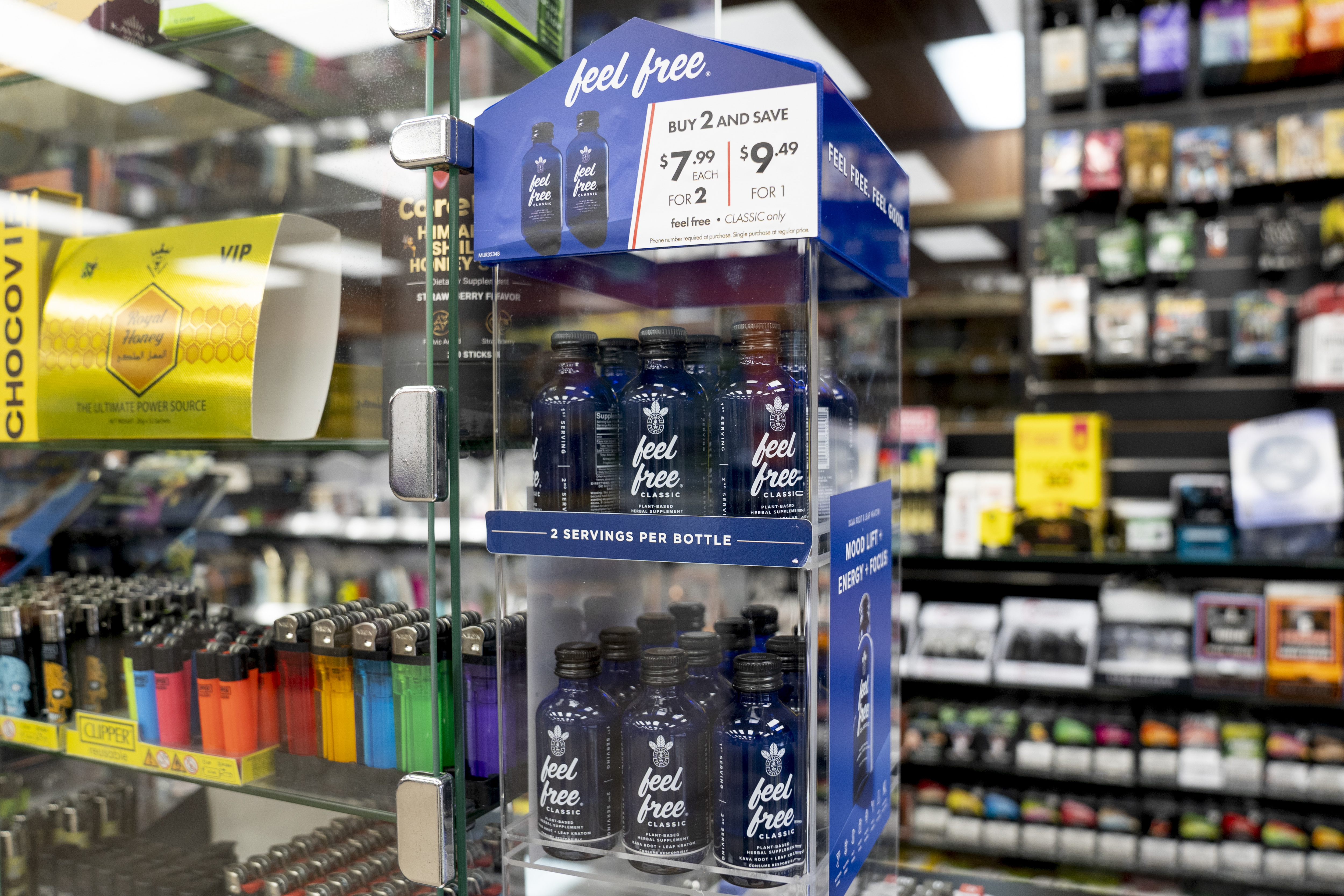
Bottles of Feel Free, a kratom product produced by Botanic Tonics, displayed at a smoke shop in Oklahoma City, May 27, 2026. With support from Markwayne Mullin and Robert F. Kennedy Jr., the kratom industry is pursuing a potentially lucrative policy. (Nick Oxford/The New York Times)NICK OXFORD
The restrictions that Mullin supported on the synthetic products would have been a boon to Ross’ company and others in the kratom industry, which market their supplements as safer and more natural. The kratom companies used donations and lobbyists to push for the crackdown.
“It’s not pay to play. It’s pay to have conversations. It’s pay to have a chance at the table,” Ryan Niddel, CEO of Diversified Botanics, another kratom company involved in the effort, said in an interview with the Times. “And anybody that considers any of the lobbying work or any of the governmental work that goes on being different than that, I think has their head buried in the sand at this point.
“I mean, that is the world that we live in.”
The Times’ investigation — drawn from campaign finance data, lobbying disclosures, court filings, private correspondence and dozens of interviews — found the following:
Ross ramped up his donations to Kennedy’s defunct presidential campaign after Trump chose him to be health secretary. Ross privately boasted that he was “working on a plan for Bobby.”
The FDA in 2025 deleted links on its kratom webpage that detailed a then-pending legal case against Ross’ company, Botanic Tonics, after his allies pushed for the change.
Botanic Tonics had been sued by the federal government for illegally selling kratom products that were not proven safe, which the company disputed. But in December, the Justice Department suddenly moved to drop the case — which the company celebrated as a sign of the federal government’s receptiveness to kratom.
Kennedy, as health secretary, called the governor of Ohio to try to head off a state ban on kratom in the fall of 2025. Months later, Botanic Tonics donated $1 million to a political committee associated with Kennedy.
Ross, joined by influential lobbyist Ches McDowell, used donations to secure a private audience with Vance to lobby him about the benefits of kratom and to urge the ban on the synthetic products.
Kush Desai, a spokesperson for the White House, suggested the administration was not swayed by the influence campaign, even though Trump recently made comments about needing to address the matter.
“The only guiding factor behind the Trump administration’s healthcare policymaking is gold standard science,” he said in a statement. The administration, he added, was working “to get this critical matter correct and ensure the health and safety of Americans.”
The Health and Human Services Department and Kennedy did not respond to requests for comment, nor did Ross.
The administration’s receptiveness to kratom comes as Trump has also expressed a willingness to loosen rules covering other drugs backed by influence campaigns, including cannabis and psychedelics. The permissive posture stands in contrast to Trump’s baseless skepticism about highly regulated and widely used medications like Tylenol and vaccines.
“It’s looking like we have a coin-operated drug policy that basically responds to whoever will give money,” said Kevin Sabet, who worked on drug policy under Republican and Democratic presidents. “And it threatens public health and safety because it’s going around the scientific process in favor of donors and influencers.”
A rising scourge
Long used medicinally in Southeast Asia, the leaves of the kratom tree contain a compound called mitragynine that interacts with the brain’s opioid receptors in a manner said to produce mild pain relief and — depending on its preparation — either sedation or energy and focus.
Kratom started gaining popularity in the United States in the early 2010s as the opioid addiction epidemic raged. With doctors tightening access to powerful prescription painkillers such as OxyContin, users spread the word that kratom — initially sold as a bitter-tasting powder — could produce a similar effect.
Devotees promoted it as a way to kick opioid addiction or to replace alcohol. But as reports of negative effects started rolling in, the government tried to take action.
Under the Obama administration, the Drug Enforcement Administration described kratom as “a drug and chemical of concern,” and moved to greatly restrict access by classifying it as a Schedule I drug. Doing so would have defined it as having no medicinal value, making it illegal to sell.
The proposal was withdrawn weeks later amid backlash from the fledgling industry, kratom users and members of Congress.
Another proposal to restrict access during the first Trump administration was also pulled after lobbying by an industry trade group, over the objection of Scott Gottlieb, the FDA commissioner at the time.
Kratom took off, appearing on the shelves of convenience stores and vape shops as tablets, drinks and gummies. The products varied in strength, and the concentration of active ingredients on the labels was not always accurate. They could be purchased in many states without age verification.
From 2020 through 2024, kratom was found in the system of more than 5,200 people who died of drug overdoses, according to data from the Centers for Disease Control and Prevention based on death certificates and other official reports. Though kratom was often found in combination with other drugs, one study determined that those using kratom carried a sixfold increase in the risk of overdose death.
Wyatt Wheeler, 27, was pursuing a master’s degree in business at Texas Christian University. He died of an overdose in October 2022, six weeks after he started taking a kratom extract, according to his mother, Patti Wheeler.
An autopsy report issued by a county medical examiner in Fort Worth found that the cause of the overdose was the “combined toxic effects” of the active compound in kratom, along with a prescribed antidepressant and antihistamines.
Patti Wheeler has become an anti-kratom activist, producing a documentary about the drug’s harms and pushing for state and federal restrictions.
She says the industry has used its influence to thwart safeguards.
If the federal government had effectively banned kratom earlier, Wheeler said in an interview, many overdose deaths could have been avoided.
“My son would be alive,” she said.
Feel free
It was in this profitable but unregulated landscape that Ross set out to take the kratom industry mainstream.
It was a fresh start for Ross after his stint in federal prison.
Formerly a prominent energy executive in Oklahoma named Jerry D. Cash, he was an admitted heavy drinker who was charged on three occasions with driving under the influence from 2001 through 2008.
In 2010, he pleaded guilty to a federal charge related to concealing his diversion of $10 million from oil and gas companies he ran.
He was released from prison in the fall of 2013, after serving less than three years of a nine-year sentence. He was ordered to participate in substance abuse treatment and to abstain from intoxicants including alcohol, which he has said he previously used to cope with social anxiety.
Eventually, he said later on a podcast, he began to experiment with other “social lubricants” — both legal and illegal — in search of a healthier alternative. By the time he created Botanic Tonics in 2020 with a base of operations in the Tulsa area, he had changed his name. The company began selling a roughly shot-size beverage called Feel Free containing kratom and another supplement called kava.
Business boomed as Feel Free and competing products were embraced by skeptics of mainstream medicine who would become the core of the MAHA movement.
Feel Free came to be sold at more than 24,000 retailers. Through a company, Ross would eventually pay more than $30 million for an 11,000-square-foot home in Malibu, California, overlooking the Pacific Ocean.
Still, serious challenges loomed for the kratom business.
In late 2023 a more powerful synthetic product emerged, featuring elevated levels of a psychoactive compound that is also found in lower levels in natural kratom. It is called 7-OH, or 7-hydroxymitragynine.
Government and legal scrutiny of both kratom and 7-OH began mounting. While some states passed industry-endorsed laws regulating kratom, others enacted restrictions or even banned it and 7-OH entirely.
Users also began suing.
A class-action lawsuit filed in 2023 asserted that Botanic Tonics targeted recovering alcoholics with advertising casting Feel Free as a healthy, safe and sober alternative. The suit claimed that, to the contrary, the tonic had the “potential to be highly addictive.”
The lead plaintiff in the suit was a recovering alcoholic in California. He spent $3,000 a month on Feel Free, according to the suit. (They retail for about $10 a bottle.) It said he “could no longer function without Feel Free and suffered severe withdrawal symptoms when he attempted to stop,” eventually turning back to alcohol “in an effort to cope with the worsening symptoms of his Feel Free addiction.”
To settle the class action, Ross last year signed an agreement under which Botanic Tonics would pay $8.75 million and include warnings on Feel Free labels about how kratom “can become habit-forming and cause serious adverse health effects.”
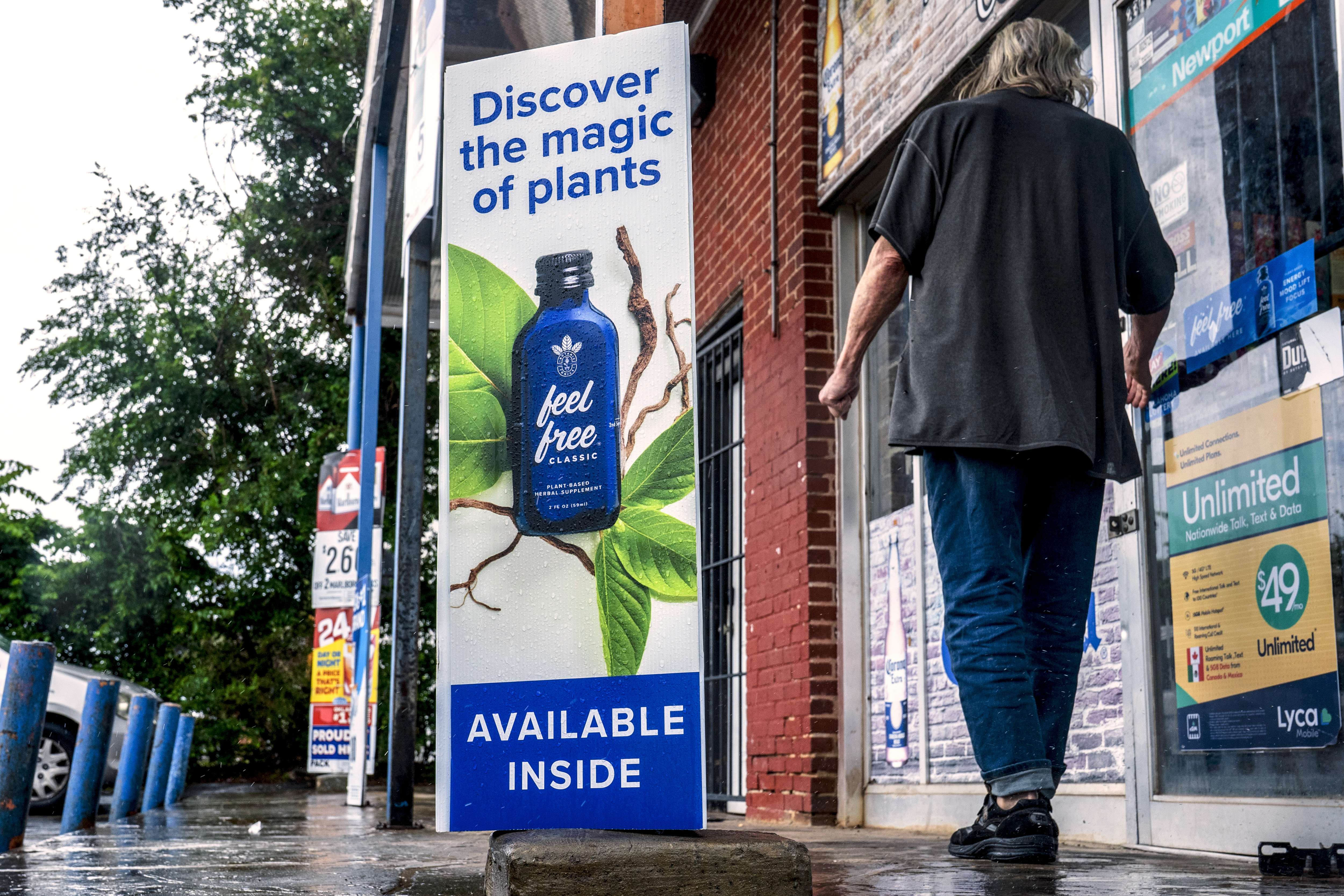
A sign advertising Feel Free, a kratom product produced by Botanic Tonics, outside a convenience store in Oklahoma City, May 27, 2026. With support from Markwayne Mullin and Robert F. Kennedy Jr., the kratom industry is pursuing a potentially lucrative policy. With support from Markwayne Mullin and Robert F. Kennedy Jr., the kratom industry is pursuing a potentially lucrative policy. (Nick Oxford/The New York Times)NICK OXFORD
The FDA would eventually receive more than 965 kratom-related reports of harm, including 264 resulting in death. The self-reported claims detailed instances of vomiting, paranoia and drug withdrawal.
In 2023, FDA inspectors visited Botanic Tonics’ warehouse in suburban Tulsa. They reported their findings to the Justice Department, which went to court to seize 250,000 bottles of Feel Free and other kratom supplements.
In court filings, prosecutors cited “serious safety concerns,” saying kratom had been linked to “addiction” and “liver toxicity.” They accused Botanic Tonics of engaging in illegal interstate trade of an unapproved substance.
On a podcast released in 2024, Ross indicated that he planned a campaign to differentiate between natural kratom and other versions.
“We’re going to be coming out of the chute asking for separate regulation for whole leaf kratom,” he said.
Calling a governor
Trump’s election — and his appointment of Kennedy as health secretary days later — created an ideal environment for such a campaign.
To others working on the issue, Ross highlighted his relationship with Kennedy, indicating that he was planning to enlist the incoming secretary in efforts to influence the administration, according to one associate.
In the weeks around the inauguration, Ross donated nearly $162,000 to Kennedy’s defunct presidential campaign, exceeding by many times his total federal political giving to that point.
Ross was not the only kratom entrepreneur jockeying for position.
A newly formed group called Botanicals for Better Health and Wellness, which is linked to a rival kratom supplement maker, retained the firm of Jeff Miller, a leading Trump fundraiser, to lobby the FDA, Congress and the White House. The new group donated $50,000 to the incoming president’s inaugural committee, for which Miller was finance chair.
Miller and the group did not respond to requests for comment.
Shortly after the inauguration, another rival firm, Diversified Botanics, which produces the popular kratom brand MIT45, hired a lobbyist who worked on Trump’s first presidential campaign and transition. The lobbyist helped arrange meetings with members of Congress and officials from the FDA and the health department for Diversified’s CEO, Niddel.
Niddel said he wanted to explain to government officials how his company’s products differed from those featuring 7-OH.
“We got to get in front of this,” Niddel said he recalled thinking. “It’s going to destroy the kratom industry, because an uninformed consumer or an uninformed legislator — it’s all being lumped in together.”
Vince Sanders, founder and president of CBD American Shaman, which helped popularize 7-OH, said the kratom industry is targeting businesses like his for financial reasons, not because of moral or safety concerns.
“We’ve devastated the industry,” Sanders said. “When 7-OH came in and people tried it, they learned very quickly that it was vastly superior. I mean, this is like going from a horse and buggy to an automobile.”
Sanders’ company received a letter from the FDA last year accusing it of illegally marketing 7-OH products. It recently agreed to halt sales in Missouri to settle a lawsuit brought by the state attorney general. The suit accused the company of peddling “deadly opioids,” though the company did not acknowledge liability.
Sanders believes that kratom lobbying has “demonized” his side of the industry.
Mullin used his connections in Trump’s orbit to help the other side.
Starting while he was in the Senate and continuing after he became homeland security secretary, Mullin urged officials in the health department to remove language from the FDA website warning of kratom’s harms, according to four people familiar with his efforts who were not authorized to discuss them.
For the kratom industry, the warnings on the FDA website were no small concern. Industry representatives said they feared state officials were taking their cues from the agency in deciding whether to pursue bans or other restrictions.
Records obtained by the Times show that the FDA was asked to remove from its kratom webpage links that took readers to enforcement actions against Ross’ kratom company and others.
By the end of 2025, the FDA had removed the links.
Other requested changes were not enacted, including one asking the agency to remove a warning “not to use kratom because of the risk of serious adverse events, including liver toxicity, seizures and substance use disorder.”
Emily Hilliard, a health department spokesperson, declined to comment on the website changes, but said the agency is “solely focused on serving the American people, not advancing industry interests.”
Mullin went public with his involvement in July.
In a notable move, he joined Kennedy and Dr. Marty Makary, then the FDA commissioner, at a news briefing to announce that the agency was moving to effectively end the legal sale of synthetic 7-OH products.
In a comment that was later highlighted by a group backed by Ross, Makary said at the briefing that “we’re not targeting the kratom leaf.”
Mullin added that companies selling 7-OH were exploiting a loophole in FDA regulations to cause harm to consumers.
“It’s legal, but it’s an addiction that’s ruining lives,” he said.
Kennedy referred to his own past struggles with addiction at the news briefing. Weeks later, he pushed Ohio to adopt a policy that would have protected the kratom industry.
Gov. Mike DeWine, a Republican, had announced a plan in August to designate all kratom products as illegal drugs. But Kennedy asked DeWine to crack down instead only on synthetic 7-OH — and not kratom leaf products. The health secretary had hoped to see states align with the federal effort, said Dan Tierney, a spokesperson for the governor.
DeWine soon dropped the push to ban kratom and moved forward with an emergency prohibition against 7-OH. After a review, though, his office said it was moving ahead with a broader kratom crackdown.
‘People are asking for it’
Having powerful people in Trump’s Cabinet vouching for kratom was not enough for Ross. He actively joined the effort to kneecap his competition.
His allies launched an opaque company to position natural kratom products as safer than synthetic alternatives.
They gave the company a name, Stop Gas Station Heroin, that made synthetics sound especially dangerous. The company hired the firm of the lobbyist McDowell, who had been introduced to Ross as a well-connected Trump insider.
McDowell, who is close to the president’s elder sons, also employs a nephew of Kennedy and the son of Trump’s 2024 campaign co-manager Chris LaCivita.
Stop Gas Station Heroin has paid McDowell’s firm, Checkmate Government Relations, at least $600,000, according to lobbying records.
McDowell’s firm has pushed for tougher enforcement against the rival synthetic products in meetings with congressional offices and Kennedy’s health department.
All the while, Botanic Tonics had been awaiting a ruling on its own battle with the federal government.
In December, a federal judge denied the company’s motion to dismiss the FDA lawsuit accusing it of unlawfully selling kratom.
Then, less than two weeks later, federal prosecutors moved to drop the case, as reported by The Kansas City Star. They told the judge that the seized supplements had expired and that the Trump administration had “determined it would not be a prudent use of government resources to sustain this action.”
In a statement praising the decision, the company said the dismissal “reflects a maturing regulatory landscape” in which federal agencies increasingly recognize the differences between natural kratom leaf and the synthetic products.
Justin A. Lollman, a lawyer for the company, told the Times in a statement that even during the lawsuit, the government “never sought to restrict Botanic Tonics’ continued manufacture and sale of Feel Free.” The company has sold more than 130 million servings of Feel Free, he added.
In February, after the dismissal, Ross donated a total of $443,000 to the Republican National Committee in connection with a fundraising dinner headlined by Vance in New York.
Before the dinner, Ross, accompanied by McDowell, secured a private meeting with Vance. Ross used the access to promote the benefits of natural kratom and urge the Trump administration, and particularly the DEA, to clamp down on 7-OH, according to two people briefed on the meeting who were not authorized to discuss it.
McDowell’s firm did not respond to a request for comment.
Over the next two months, Botanic Tonics donated $1 million to MAHA PAC, which is associated with Kennedy. The money from Botanic Tonics accounted for about 44% of all the funds raised by the political action committee between the beginning of last year and the end of April.
The PAC did not respond to a request for comment.
It is not clear whether the administration will approve the emergency ban of 7-OH that Ross and his allies have sought.
But during a briefing in the Oval Office about maternal healthcare last month, Trump made a stray comment indicating the issue had reached his desk, even as his administration was grappling with higher-profile priorities including a war with Iran.
“We’re looking very seriously at natural 7-OH and getting that approved,” Trump said.
The statement left even industry insiders divided on whether he was siding with natural kratom or synthetic 7-OH, or taking another position altogether.
Whatever his stance, Trump left the impression that he had heard from influential figures on the matter, adding that “we’re looking to see if we can do something there.