Category: Nation & World

  • U.S. lifts blockade of Iran and Iranian supreme leader endorses direct talks with American officials

    WASHINGTON — The U.S. on Thursday lifted its blockade of Iran, and oil tankers began freely moving through the Strait of Hormuz after months of being unable to use the critical channel, as the tentative agreement to end the war took effect.

    Meanwhile, Vice President JD Vance announced that he may postpone a trip to Switzerland that had been planned for Friday and included a ceremonial signing of the deal. The visit might have helped start talks on the next, potentially even more critical, round of negotiations between the two sides.

    Hours later, Iranian Supreme Leader Ayatollah Mojtaba Khamenei endorsed direct negotiations with the U.S. in a statement read by state media.

    “It is obvious that the face-to-face negotiations that will be held in the future will not mean accepting the enemy’s opinion,” he said.

    It was Khamenei’s first reaction to the agreement, and it indicated a shift in Iran’s approach. Hard-liners, especially Khamenei’s father, the previous supreme leader, have long opposed direct talks, especially after the U.S. pulled out of the 2015 nuclear deal between Iran and world powers.

    The supreme leader has not been seen in public since he was wounded in a strike at the start of the war.

    Trump envoy tells lawmakers Iran will invite U.N. inspectors to nuclear sites

    In other developments, Trump envoy Steve Witkoff told U.S. lawmakers Thursday in a private briefing that Iran will invite the U.N.’s nuclear watchdog agency to inspect its nuclear sites and begin work on identifying and uncovering the locations of Tehran’s enriched material.

    The briefing was described by two people familiar with the conversation who spoke to the Associated Press on condition of anonymity to share the closed-door details.

    Witkoff told congressional leadership and members of national security-related committees that the agreement that the U.S. struck with Iran did not include any side deals, but a side letter was drafted between Tehran and the International Atomic Energy Agency extending the invitation.

    Witkoff disclosed the existence of the letter and invitation in the briefing, according to the people.

    Witkoff said the letter to IAEA Director-General Rafael Mariano Grossi would enable him to bring U.S. nuclear inspectors to Tehran.

    Uncertain timeline could make it more difficult to promote deal

    Pakistani Prime Minister Shehbaz Sharif also postponed a planned visit to Switzerland, where Islamabad officials were to host the ceremony, because the agreement had already been signed, said two senior officials who spoke on condition of anonymity because of the sensitivity of the matter.

    The now uncertain timeline could raise new questions and make it even more difficult for the Trump administration to promote a deal that many in the U.S. — including some congressional Republicans — have criticized as too favorable to Tehran.

    “Our plan is to go to Switzerland. I don’t know exactly when,” Vance said during a briefing with reporters at the White House when asked about not flying, as planned, to the signing ceremony.

    “I suspect this weekend, but I’m not sure,” he added.

    That injected new doubt into an agreement that President Donald Trump said he signed to avoid “economic catastrophe” in the U.S.

    Vance’s announcement came a day after Trump signed the pact with Iran while dining with French President Emmanuel Macron at the Palace of Versailles. The deal is slated to take immediate effect and extends a ceasefire while giving each side 60 days to hammer out broader agreements on larger issues.

    Trump said the deal would avoid continued stress on the U.S. economy after the war caused oil prices to skyrocket, made financial markets skittish, and fueled inflation. He repeatedly said he did not want to be compared to Herbert Hoover, whose policies helped exacerbate the Great Depression of the 1930s.

    Vance defends U.S.-Iran deal

    The vice president, who was initially personally skeptical of the U.S. going to war with Iran, has increasingly become the administration’s face of the conflict and has been outspoken in defending the deal. Asked about concerns it concedes too much, the vice president said repeatedly that the accord would force Iran to “change their behavior.”

    Vance defended the agreement and shrugged off accusations that its rollout has been piecemeal and sometimes contradictory, saying, “I don’t think our public messaging has been chaotic.”

    He also offered a surprisingly blunt warning to Israel, which has pushed the U.S. to take a harder stance against Iran and launched attacks on the Iranian-backed Hezbollah militia in Lebanon throughout the war, including just before the deal extending the ceasefire was reached. Those attacks complicated the peace efforts with Iran.

    Trump “is the only head of state in the entire world who is sympathetic to the nation of Israel at this moment in time,” Vance said. “And he happens to be the head of state of the world’s superpower.”

    The vice president said more than 12.5 million barrels of oil went through the Strait of Hormuz on Wednesday night. That could further soothe oil prices that spiked during the war but have been falling since the U.S. and Iran announced a tentative deal to end the conflict.

    He said the U.S. easing its blockade of Iran means “honoring our end of the early part of the agreement on the military side.”

    U.S. Central Command said American warships “will remain in the general area to make sure that all aspects of the agreement are adhered to, obeyed, and in full force and effect.”

    Shipping starts to pick up

    At least two oil tankers left Iran and crossed the U.S. military blockade without being stopped. A merchant shipping tracking website said the ships were carrying a combined total of 3.8 million barrels of Iranian crude oil.

    Iranian state media said shipping had “normalized” at Iran’s southern ports but added that the strait remains supervised and under the control of the Iranian military, and transiting through the vital waterway still requires coordination.

    Major shipowners began moving vessels through the strait after the agreement was signed, according to maritime data company Lloyd’s List Intelligence, though Lloyd’s did not give data on how many ships have passed through the strait as of Thursday.

    In a media briefing, Richard Meade, editor-in-chief of Lloyd’s List, said for the first time in 110 days, ships owned by major companies are transiting the strait after effectively being marooned there since February.

    Tankers controlled by major ship owners Grimaldi Group, Cosco, Knutsen, and NYK have passed through the strait. And two Iranian-flagged, sanctioned crude oil tankers owned by the National Iranian Tanker Company have entered the strait, according to Lloyd’s List.

    Phillip Belcher, marine director of Intertanko, a trade group for global independent tanker owners, said the main central route of the strait is still closed and has an estimated 80 mines that need to be cleared.

    But ships have been passing through the smaller northern route, which goes through Iranian waters, and the southern route, which goes through Omani waters.

    Lloyd’s List estimated that 550 merchant ships will need to exit the Persian Gulf. It could take weeks or months to fully reopen the strait, and the two alternative routes do not have as much capacity as the strait’s central passage.

    Agreement calls for a lasting end to hostilities

    The U.S.-Iran deal calls for a permanent end to hostilities and starts a 60-day negotiating clock to reach a final deal on the future of Iran’s nuclear program, though Trump has left the door open to resume attacks. The agreement appears to offer Iran several benefits up front while extracting little in return.

    It states that Iran’s stockpile of highly enriched uranium, which is believed to be buried under rubble, must at minimum be diluted under international supervision. It also says that Iran shall not procure or develop nuclear weapons — a commitment it has made previously. But beyond stating that the U.S. and Iran will negotiate over Iran’s nuclear program, other commitments still need to be worked out.

    The deal also waives U.S.-backed sanctions on the country, immediately allowing Iran to sell its oil freely in a major concession from Washington.

    Still, Kaja Kallas, the European Union’s foreign policy chief, said Thursday that the 27-nation bloc would leave its sanctions on Iran in place for now. The bloc had slapped a series of separate sanctions on Iran over its nuclear program, human rights violations and the closing of the strait.
  • Hegseth attacks NATO allies and announces a review of U.S. forces in Europe

    BRUSSELS — U.S. Defense Secretary Pete Hegseth lashed out at NATO allies on Thursday as he announced a six-month Pentagon review of American forces in Europe whose outcome will depend on how fast the Europeans take responsibility for their own security.

    The review was yet another surprise for European allies and Canada as they learn to deal with an increasingly unpredictable ally. U.S. officials and senior military officers had promised to coordinate closely with the Europeans as America draws down.

    In recent months, U.S. President Donald Trump and the Pentagon have sent conflicting signals about whether America is reducing or increasing its military footprint in Europe, as well as threatening to annex Greenland, a semiautonomous island that is part of ally Denmark. Just weeks ago, the Trump administration said that it would no longer provide as much military support should any NATO member come under attack.

    “This will be a real review. It will be designed to ensure that NATO is moving fast and irreversibly toward Europe leading, stepping up to take primary responsibility for the defense of Europe,” Hegseth told his NATO counterparts. “It’s a review that some countries will fail and others will pass with flying colors.”

    German Chancellor Friedrich Merz later said the allies have long been aware of U.S. plans to pull troops from Europe at some point and that they must take care of their own security.

    “We know that we must do more and we are doing it,” Merz said.

    Public dressing down over bases, gender, and migration

    In a fiery speech at NATO headquarters in Brussels, Hegseth lambasted European allies for failing to provide U.S. forces access to bases in Europe to launch attacks on Iran, calling it “shameful.”

    “These allies, they put America’s sons and daughters, our sons and daughters, at risk by denying them the predictable access, basing, and overflight that never should have been in question at all,” he said. The review would also assess whether the U.S. has full access and overflight “when we need it.”

    While defense ministers and military officers sat in silence, Hegseth railed against migration and gender equality policies in Europe, in remarks reminiscent to those of Vice President JD Vance in February last year that angered many Europeans.

    “Instead of tanks and fighters and air defenses, the focus has been on gender equity and climate change and defense austerity. Europe’s borders flew wide open, welfare states expanded, defense budgets cratered, along with Europe’s belief in itself and its civilization,” Hegseth said.

    Hegseth’s comments largely mischaracterized European policies today. On defense, European allies and Canada have launched an unprecedented effort to boost defense spending and expand their armed forces. NATO Secretary-General Mark Rutte noted on Thursday that they spent $90 billion more on defense last year, a 20% increase over 2024. And while Europe accepted large numbers of migrants and asylum seekers more than a decade ago, most countries have tightened their borders since.

    It does not augur well for a summit of NATO leaders in Turkey on July 7-8.

    A rare and short visit to NATO

    It was a rare visit to NATO by Hegseth, his first this year after skipping a meeting in February. The Pentagon chief did not stay long, leaving well before the gathering was over and hours before Ukraine’s President Volodymyr Zelensky was due to press allies for more weapons for his country.

    Speaking to reporters at Brussels airport before flying home, Hegseth said, “It was great to hear country after country say, ‘We’re going to meet our target. We’re going to meet our target.’ There are still a few outliers, and we will be clear with them as we do this review.”

    NATO’s supreme allied commander, an American, is working on backup plans to defend Europe after the U.S. signaled on June 3 that it would no longer supply an aircraft carrier and support ships, aerial refueling planes, and dozens of fighter jets, among other military assets, in a crisis.

    The Trump administration insists that it needs to be able to plan for two simultaneous conflicts and wants more military resources at hand should it clash with China in the Indo-Pacific region.

    Under NATO’s collective security guarantee — Article 5 of its founding treaty — the 32 allies pledge that an attack on one of them will be considered an attack on all. It does not oblige them to provide military support, although many likely would.

    In essence, the United States is scaling back how it might help should an ally trigger Article 5.

    U.S. nuclear weapons will stay

    The U.S. has by far NATO’s biggest armed forces. It does not intend to withdraw its nuclear weapons in Europe, which are key to NATO’s deterrence. To underscore that point, NATO’s Nuclear Planning Group issued its first statement in 19 years after Thursday’s meeting.

    In the statement, it “recalled that the strategic nuclear forces of the Alliance remain the supreme guarantee of Allied security and underpin NATO’s extended deterrence architecture.”

    The ministers “agreed to continue enhancing NATO’s nuclear deterrence mission by modernizing NATO’s nuclear capabilities, strengthening its nuclear planning capacity, and adapting to achieve its security interests.”

    Rutte played down the impact of the U.S. decision, saying that the NATO Force Model — the system for organizing what forces member countries will provide commanders in times of peace, crisis, or conflict — is just “a planning tool,” and not a reflection of what would actually happen.

    “If war breaks out, we will all max out what we need to do to make sure we can fight the war,” Rutte told reporters. “In the planning phase, it is important to know what we can count on. What is in theory there.”

  • Ebola cases increase almost 40% in a week as death toll passes 200

    DAKAR, Senegal — The Ebola outbreak in Congo and Uganda has claimed more than 200 lives in its first month and is the worst known outbreak at this stage, with up to 35,000 suspected potential contacts, Africa’s Centres for Disease Control and Prevention said on Thursday.

    With 894 confirmed cases so far, the current outbreak is three times worse than a previous outbreak in Uganda in 2000, which had 281 cases at the same point, said Wessam Mankoula, a medical epidemiologist at Africa CDC.

    The latest number of cases is believed to be higher because the outbreak was confirmed on May 15, weeks after it was suspected to have begun. The number of cases has increased 38% since last week and is now in 32 health zones across eastern Congo, said Mankoula.

    The outbreak is caused by the rare Bundibugyo virus, which has no approved vaccines or treatments and was not tested for in the early days. The more common Zaire virus, for which there is a vaccine, was responsible for most of Congo’s past 16 outbreaks of the disease.

    So far 74 patients have recovered from the disease across eastern Congo and Uganda. Experimental treatments like monoclonal antibodies are being developed for Bundibugyo.

    The outbreak is concentrated in Congo’s eastern province of Ituri, which accounts for more than 90% of the cases. Cases have also been recorded in the North Kivu and South Kivu provinces and have spread across the border to Uganda, where 19 confirmed cases have been reported and two people have died.

    Contact tracing remains an issue due to the area’s remoteness and ongoing insecurity in Ituri province, Mankoula said.

    “For those 800 confirmed cases, we should have between 17,000 to 35,000 contacts that should be in our contact list,” said Mankoula. Currently only around 4,000 contacts have been tracked and are being evaluated, less than 15%.

    “We are still far from controlling the situation of this outbreak,” said Mankoula.

    Nearly a million people have been displaced by years of conflict in Ituri, according to the U.N. humanitarian office, making contact tracing difficult as people flee attacks or move frequently in the vast province with dense forests, poor roads, and remote villages that can take days to reach.

    Tracing is also difficult among the thousands of miners who regularly move among remote sites in the mineral-rich region.

    Of the over $900 million pledged to fight the outbreak, only $90 million has been released, further complicating the ongoing crisis, according to Mankoula.

    Africa CDC estimates it needs 540 personnel to fight the outbreak and so far they only have 84.

    “We’re keeping our fingers crossed those new pledges will be fast tracked, and we’ll be following up with different member states and different partners about their commitment to turn those pledges into actual money released to their affected countries or partners,” said Mankoula.

  • Ukrainian drones set a Moscow refinery ablaze in a major attack on the Russian capital

    Ukraine struck a major Moscow oil refinery Thursday for a second time in a week, sending huge plumes of black smoke over the capital and disrupting hundreds of flights at its airports in one of its biggest drone attacks since Russia’s full-scale invasion over four years ago, officials said.

    Ukraine has repeatedly targeted Russian oil facilities, aiming to cut Moscow’s revenue for the war and make Russians feel the consequences of the invasion. Some areas have reported fuel shortages.

    The attack by dozens of drones came hours after Ukrainian President Volodymyr Zelensky said he had held “an important coordination call” with the presidents of the United States and France and had won key pledges of further support from this week’s G7 summit.

    “If Ukraine is going to burn, your Moscow will burn too,” Zelensky said, adding that the attack was part of Kyiv’s effort to bring Russian President Vladimir Putin to the negotiating table. ”It is time to end the aggression, time to end this war.”

    Ukrainian attack embarrasses Putin again

    The Moscow attack was the latest embarrassment for Putin. Ukrainian drones attacked his hometown of St. Petersburg earlier this month as he welcomed foreign VIPs to his showcase economic forum in the city.

    Putin on Thursday was in Kazan, some 430 miles east of Moscow, hosting leaders of the Association of Southeast Asian Nations as Russia seeks to bolster business and other ties with the regional bloc.

    Russia’s state-controlled TV channels only briefly mentioned the attack on Moscow. Pro-Kremlin newspapers reported it, with some praising the performance of air defenses while noting that the strike highlighted the need to further strengthen the defensive shield around the capital.

    Vyacheslav Volodin, speaker of the lower house of Russia’s parliament, warned that Moscow would respond by ramping up its strikes.

    “Their action will lead to our counteraction and launching harsher blows, with more powerful weapons,” Volodin said in televised remarks.

    Some Russian hawks urged the Kremlin to respond with nuclear weapons. Nationalist Konstantin Malofeyev criticized the military for “fighting at half-strength in a gentlemanlike way.”

    “War means victory at any cost,” Malofeyev wrote on his Telegram channel, suggesting the use of “the nuclear weapons that our ancestors created and stockpiled while mobilizing the entire country’s strength precisely for this purpose — to win.”

    Fires rage at Moscow refinery

    Thick black smoke and occasional flames spewed from the Moscow Oil Refinery amid its red-and-white smokestacks on the southeastern edge of the city, about 9 miles from the Kremlin. Sooty rain fell on cars, according to local video.

    “One of the most popular questions asked by Muscovites this morning is ‘What is going on?’” Ukrainian Foreign Minister Andrii Sybiha said in a post on X. ”I can answer. Your country started a war of aggression against ours. For years, it has been killing our people. Now that you know what’s going on, ask Putin when he is planning to end it.”

    The refinery is one of Russia’s biggest, according to its website, producing more than a third of the Moscow region’s fuel. It was last attacked by Ukraine on Tuesday, but officials said that fire was swiftly put out.

    Thursday’s fire at the refinery was “largely contained,” Moscow Mayor Sergei Sobyanin said hours afterward, adding that remaining hot spots were being extinguished.

    As Ukraine pressed its strikes on Russia’s energy infrastructure, fuel supplies appeared to be under strain. Gas station chains in multiple regions have introduced restrictions on what drivers could buy. Russian independent news outlet Agentstvo reported that one out of every four gas stations has introduced some kind of restrictions.

    Authorities in the capital said in a statement hours after the attack that “supplies of oil products to Moscow and the work of all gas stations in the city continue as normal.”

    The attack also temporarily halted flights from four Moscow airports, transport and aviation authorities said. The Russian business daily Kommersant counted more than 500 delayed or canceled flights at the airports, based on their online flight information.

    In the greater Moscow region, a drone hit a residential building in the town of Zhukovsky, according to Gov. Andrei Vorobyov. Buildings elsewhere were damaged by drone debris, injuring 17 people, including two children, he added.

    Ukraine seeks more help from NATO, EU

    “Russia is on the back foot: militarily, economically and politically,” ‪EU foreign policy chief Kaja Kallas‬ said on X after meeting Thursday with Ukrainian Defense Minister Mykhailo Fedorov. “Now is the time to provide Ukraine with even greater support and to exert even more pressure on Russia to end the war.”

    Zelensky held talks Thursday in Brussels with NATO and European Union leaders, and the German and Ukrainian defense ministers signed an agreement to jointly develop an air defense system to counter ballistic missiles. Zelensky described it as the start of an “anti-ballistic missile coalition” and invited others to join.

    Russia has relentlessly struck Ukraine with those types of missiles, which air defenses struggle to counter.

    Russia says it downed over 500 Ukrainian drones

    The Russian Defense Ministry said its air defenses overnight shot down 555 Ukrainian drones over multiple regions, with almost 200 intercepted as they approached Moscow. That was roughly double the number of drones that Russia launched at Ukraine overnight, according to the Ukrainian air force.

    “If Putin does not want to end this war and wants to continue it, we will not sit quietly — we will respond,” Zelensky said in a voice message to a group chat with journalists.

    He has accepted an unconditional ceasefire demanded by U.S. President Donald Trump, but Putin has refused, and U.S.-led peace efforts have fizzled.

    Ukraine disrupts Russian supply lines

    Along with pledges of more diplomatic and military help at the G7 summit, Ukraine recently has gained momentum on the battlefield against Russia’s bigger army, thanks to its high-tech drones, Western officials and analysts say. Longer-range drones are choking Russian supply lines in occupied regions of Ukraine, in addition to disrupting oil production.

    French President Emmanuel Macron said the G7 summit was “very important for Ukraine” because its supporters — crucially including the U.S. — vowed to help it, although he provided no details. The U.S. under Trump has cut back assistance to Ukraine, leaving the Europeans as the biggest suppliers of military and financial aid. Trump and Zelensky have had a sometimes strained relationship.

    “America is with us on Ukraine, that is very important,” Macron said as he and Trump left the Palace of Versailles near Paris.

    In other developments Thursday, Russia struck the city of Sumy in northeastern Ukraine with two glide bombs that killed a 64-year-old man who was fishing in a river, said Oleh Hryhorov, head of the regional military administration. A Russian strike on the central city of Dnipro killed one man and wounded nine, said Oleksandr Hanzha, head of the Dnipropetrovsk regional military administration.

  • Reflecting Pool algae bloom is one of biggest recorded in years after $14M renovation

    Days after the completion this month of a $14 million renovation, the shallow water in the Lincoln Memorial’s Reflecting Pool had more algae in it than at any recorded point in the month of June for at least five years, according to a specialized analysis of satellite data.

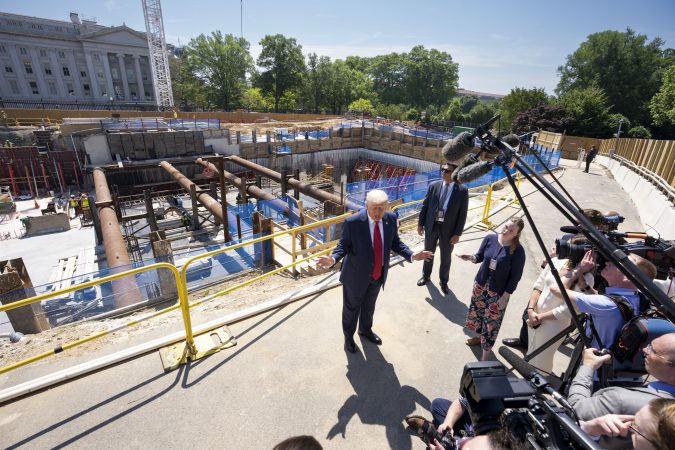
    President Donald Trump vowed in April to clean up what he called the “filthy” and “disgusting” water in the Reflecting Pool. He promised to resurface the basin to eliminate persistent leaking and to paint it “American flag blue.” Once the pool started to be refilled, on June 4, he praised its “clean, beautiful water.”

    But the algae blooms that have long plagued the pool came roaring back, spawning more than a few conspiracy theories and much debate about the renovation. Some social media users said they suspected “bureaucrats” had seeded the algae bloom in an act of sabotage, while others claimed photos showing the reappearance of the algae were taken during the Biden years. Trump administration officials said the algae was caused by residual material in supply lines that had been dormant for weeks.

    Regardless, there was a lot of it.

    At the Washington Post’s request, Alana Menendez, a postdoctoral researcher at the University of Virginia’s Department of Environmental Sciences, analyzed light-reflectance data from a European satellite called Sentinel-2. The satellite captures clear images of the Reflecting Pool several times a month, and the data it produces can be used to estimate the presence of chlorophyll-a, a pigment found in algae.

    A higher value of that metric, known as the normalized difference chlorophyll index (NDCI), points to more algae in the water, Menendez said.

    Menendez’s analysis detected more algae in the reflecting pool in an image taken Saturday — in the week after it reopened — than in any June images going back to 2021. The algae level was among the highest measured in any month in the past two years, according to the analysis.

    Hot and sunny weather — which the Washington area has been experiencing — creates conditions in which the plantlike aquatic organisms thrive. The D.C. area experienced a heat wave just as the pool was being refilled earlier this month.

    Menendez found there was a strong indication of an algal bloom in the Reflecting Pool on March 10, when it was unseasonably hot. Just before construction began, on April 1, the bloom had reduced.

    “We would expect June to have more algae naturally than February, March, or April because there is more light availability and higher temperatures,” Menendez said.

    The Interior Department, which oversees the Park Service and contracted for the work, said in a statement that it is treating the pool with hydrogen peroxide and using “high-tech nanobubble ozone technology” to effectively cut off the algae’s food supply.

    White House spokesperson Taylor Rogers said the nanobubble equipment would “keep the Reflecting Pool crystal clear.”

    “Thanks to President Trump, new lining and industrial grade materials will permanently seal the Reflecting Pool, which previously leaked 16 million gallons per year and wasted countless taxpayer dollars,” she said.

    Trump has not publicly commented on the algae problem. On Monday, he posted that he would host a Trump rally on July 4 “with the backdrop of the Lincoln Memorial and surrounding the beautifully new Reflecting Pool.”

    Algae has been an on-and-off problem for the 6.75 million-gallon Reflecting Pool since it was built in the 1920s. It quickly reappeared after a more than $30 million renovation that was completed in 2012, though that project also changed the source of the pool’s water: Previously, it had been fed from the city’s drinking water, but after the renovation the water was drawn from the Tidal Basin, saving the city 32 million gallons of water a year.

    In its statement, the Interior Department said the Obama-era renovation “resulted in massive algae clumps taking over the pool’s surface following years of construction that cost taxpayers millions upon millions only to be broken and disgusting days later.”

    Last month, a local advocacy organization sued to stop Trump’s changes to the Reflecting Pool, alleging that the Interior Department failed to undergo required federal reviews for the project. The Trump administration in response called the work “routine maintenance” that will have “trivial aesthetic and environmental impact” and was not subject to certain environmental reviews.

    Contractors finished the project before a federal judge could rule in the case.

    As the pool was being filled earlier this month, Ed Stierli, an official with a different advocacy group, National Parks Conservation Association, wondered if the dark paint color was increasing the water temperature, exacerbating the algae problem.

    “These are all questions that would normally be answered during that review process that just was not done in this case,” he told the Post.

    By midday on Tuesday, the area was filling up with summer tourists and some locals who came to see how green the pool had become.

    “It’s the biggest tourist attraction now,” called out a biker as he wheeled past.

  • Budget office redirects $352M in Secret Service funds to White House security

    Budget office redirects $352M in Secret Service funds to White House security

    The Trump administration’s budget office has redirected $352 million that was intended in part for Secret Service training and recruitment to what it described as security measures at the White House, a government database shows.

    The White House and the Office of Management and Budget did not specify the purpose of the unusually large shift in response to questions on Wednesday. But a person familiar with the Secret Service budget, speaking on the condition of anonymity because they were not authorized to comment publicly, told the Washington Post the funding was to help pay for a new White House East Wing that includes a large ballroom.

    Asked about the shift and its purpose, a White House spokesperson issued a statement stressing the necessity of security enhancements for the East Wing project. “The East Wing Modernization Project is inextricably tied to the security of the President, the White House grounds and the certain security infrastructure assets,” spokesperson Davis R. Ingle wrote in a statement.

    The Secret Service did not respond to emailed questions.

    The transfer of Secret Service funds — equal to more than 10% of the agency’s annual budget in recent years — comes amid revelations that President Donald Trump’s controversial ballroom project will rely more significantly on taxpayer money than the administration has publicly acknowledged.

    Trump has claimed repeatedly that the project will cost $400 million and has generally said it will be funded entirely by private donors. But this week, the Post reported that the contractor overseeing the work told the White House in March that the expected cost was $600 million, with more than half coming from taxpayers.

    The March budget estimates obtained by the Post show that $155 million for the project was expected to come from the Secret Service. Most of the rest of the public funding was projected to come from the White House Military Office.

    The administration’s budget office on Friday disclosed in a public database that it was redirecting $340.8 million and $10.8 million in Secret Service money for “White House Security Measures.”

    The redirected money, included in the Republican spending package dubbed the One Big Beautiful Bill Act that passed last July, was intended to bolster the Secret Service after two attempts on the president’s life — the first at a rally in Butler, Pa., and the second at his West Palm Beach, Fla., golf course.

    The law provided the Secret Service with $1.17 billion and specified that the money was meant to provide for “personnel, training facilities, programming, and technology” as well as “performance, retention, and signing bonuses” for agency personnel.

    Sen. Chuck Grassley (R., Iowa), chairman of the Senate Judiciary Committee, issued a news release at the time celebrating the law’s passage, saying it “provides essential resources for U.S. Secret Service recruitment and training efforts in the wake of two assassination attempts against President Trump.”

    Neither the bill nor Grassley’s office made any mention of the White House’s East Wing. Grassley’s office did not immediately respond on Wednesday to questions about whether he supports use of the funds for the East Wing.

    Key senators from both parties questioned the redirecting of the funds, which was first reported by Roll Call.

    Sen. Susan Collins (R., Maine), chairperson of the appropriations committee, directed staff to look into the move, according to a Republican staffer familiar with the matter.

    On Tuesday, after the Post’s report, Collins said she had taken Trump at his word. “I’ve said repeatedly that the President has promised only private donations would be used for the ballroom, and I believe he should keep that promise,” she said in an interview.

    Sen. Jeff Merkley of Oregon, a member of the appropriations committee and the top Democrat on the Senate Budget Committee, said the transfer showed Trump was more interested in his “vanity project” than safety and security.

    “This funding was intended to pay Secret Service agents and ensure they have the technology and resources they need to keep individuals under their protection safe,” he said in a statement.

    The administration has been pressing Congress to allocate taxpayer funds for the project since an armed man ran through a security checkpoint at the White House Correspondents’ Association dinner in April. Department of Homeland Security Secretary Markwayne Mullin and Secret Service Director Sean Curran wrote to Republican congressional leaders after the incident to back a proposed $1 billion for the Secret Service in part for “security upgrades at the White House to minimize threats, including the security components to the East Wing Modernization Project.” In a private meeting, Curran pitched GOP senators on spending $220 million of that money on “hardening” the ballroom.

    Several Republican lawmakers in both chambers raised concerns about providing funding for the ballroom project in the lead-up to the midterm elections, especially as Americans express frustration with the cost of living. The funding was stripped out of a larger spending bill because rules prevented it from being included.

    Ingle, the White House spokesperson, said in his statement that an alleged plot to attack the White House during a UFC event last weekend “proves exactly why the East Wing Modernization Project is severely needed for large scale events, which include drone proof structures and drone ports among other critical security enhancements.”

  • Supreme Court sides with a Texas man who says it’s not a crime for marijuana users to have guns

    WASHINGTON — The Supreme Court ruled Thursday against a broad federal ban on gun ownership by marijuana users, the latest in a line of firearm cases from a court that has expanded gun rights.

    The justices decided unanimously in favor of Ali Danial Hemani, a Texas man who argued that a law barring guns from anyone who regularly uses illegal drugs violates the Second Amendment.

    Justice Neil Gorsuch wrote that his opinion narrowly limits the government’s power to take guns away from drug users who are not considered dangerous. Hemani, who was not charged with any other crimes or accused of using the weapon under the influence, is thankful he “finally has closure,” lawyer Zachary Newland said.

    The decision is a loss for President Donald Trump’s Republican administration, which had defended the 1968 law despite arguing against other gun restrictions. Its core argument “fails under every measure,” Gorsuch wrote.

    The law was originally meant to keep guns away from dangerous people, but millions of people now use marijuana, Gorsuch wrote. It is broadly legal in about half the states and has gained widespread use for health purposes.

    “Whatever one thinks of these developments, the federal government has not just tolerated them; it helped fuel them,” Gorsuch wrote. “All of which leaves it awkwardly positioned to suggest that the millions of Americans who now regularly use marijuana are categorically and unusually dangerous.”

    The law was also used in a case against Hunter Biden, who was convicted in Wilmington, Del., of buying a gun while addicted to cocaine in 2018. He was later pardoned by his father, Democratic President Joe Biden.

    Someone addicted to an illegal drug could potentially still be prosecuted after Thursday’s decision.

    “We do not address efforts to ban addicts, or those presently intoxicated, from possessing a firearm,” Gorsuch wrote. Prosecutors could charge a marijuana user if they had evidence the person was dangerous, he said.

    Recreational use remains illegal on a federal level even after the Trump administration reclassified medical marijuana as a less-dangerous drug in April.

    The case made for some unusual political alliances.

    The American Civil Liberties Union and the National Rifle Association supported Hemani’s case, as did cannabis legalization groups such as NORML. On the other side were gun safety groups including Everytown that usually oppose the administration on Second Amendment issues.

    The ACLU applauded the ruling, saying that nearly half of Americans have reported using marijuana at some point in their lives.

    “The court has sent a strong message that the government cannot criminalize the conduct of large numbers of people by making categorical and unfounded assumptions about whether they are dangerous,” said Cecillia Wang, legal director at the ACLU.

    The Second Amendment Foundation called it a “major victory for gun owners.”

    The group Smart Approaches to Marijuana, which opposes legalization of the drug, condemned the court’s decision.

    “While the justices in this case appear to be most concerned with historical battles over Second Amendment rights, public health and safety are the collateral damage in this decision,” said CEO Kevin Sabet.

    Gun control groups were more muted, with Everytown saying that the decision still recognizes that “drugs and guns can make for a dangerous mix.”

    It is rare to see standalone criminal charges filed against people accused solely of owning guns and using drugs. The charge is more often filed against people also accused of other crimes.

    The opinion is the latest in a series of firearm cases to reach the Supreme Court since its landmark ruling expanding gun rights in 2022 led to a wave of challenges around the country.

    Since then, the high court has upheld a law aimed at protecting victims of domestic violence and strict regulations on ghost gun kits but has struck down a ban on bump stocks, an accessory that enables rapid fire. The justices are also considering a second firearm case this term over strict regulations on carrying guns in Hawaii.

  • Springsteen, Bono and Stevie Wonder help the Obamas open their presidential museum

    Former President Barack Obama formally opened his presidential center in Chicago on Thursday with a call to defend democracy as three other former presidents joined him on stage in an extraordinary event featuring politicians, A-list celebrities, athletes, and other internationally known figures.

    “I hope this center will serve as an affirmation of just how special, how precious our democracy truly is and remind us what we can achieve when we embrace our shared responsibilities as citizens,” the nation’s first Black president told the crowd.

    Bono, John Legend, Christina Aguilera, Marc Anthony, and Eddie Vedder took turns on the stage ahead of Bruce Springsteen and Stevie Wonder, who closed the show singing “Higher Ground” as the former presidents, world leaders, and others danced along.

    President Donald Trump was conspicuous both in his physical absence and by not being mentioned by any of the speakers or performers. Trump called the $850 million center a “total disaster” in a social media post in February.

    Obama voiced his support for character, honesty, integrity, kindness, compassion, and sense of duty, praising both Democrats and Republicans, including those he defeated.

    “Every president here today, as different as we are, has tried our best to uphold values that John McCain and Mitt Romney believed in no less than I did,” Obama said. “It is our greatest inheritance.”

    Reflecting on his arrival in Chicago in 1985 as an untested political organizer, he said he could not have built the Obama Presidential Center anywhere else. He met his future wife, Michelle, nearby, their wedding reception was within walking distance, his children were born in the neighborhood, and he launched his first candidacy not far away.

    “It’s an expression of thanks, an acknowledgment that so much of what I hold most dear I owe to the people of this city and the people of the surrounding neighborhoods,” Obama said.

    Michelle had some emotional words for her husband

    The Obamas and their daughters shared the stage with former presidents Joe Biden, George W. Bush, and Bill Clinton along with former first ladies Jill Biden, Laura Bush, and Hillary Rodham Clinton. Former Vice President Kamala Harris and many other leading Democrats were in the audience.

    Michelle Obama spoke directly to her husband when she stepped up to the podium. “Eight years in the crucible and not once did you melt in the heat. Not once did you let it harden you.

    “Instead, you used it to reveal your truest essence,” she said. “Your stubborn optimism and unflinching courage. Your dazzling brilliance and unpretentious decency. Your ferocious work ethic and absolutely unshakable moral fiber. And to do it all as a first.”

    She ticked off highlights from her husband’s eight years in office, including ordering the raid that led to the killing of Osama bin Laden, “standing up for marriage equality,” and “listening to science.”

    “And you did it all with such grace and class and cool,” she said. “You made the hardest job in the world look like a walk in this beautiful park.”

    Obama appeared to wipe away a tear as she praised him.

    Michelle Obama also referenced the current “anxious and divisive times” and warned against being cynical or complacent as “everything feels so upside down.” She pitched the center as “a respite from all that.”

    A-list entertainers, inspirational anthems, and protest songs

    Jennifer Hudson sang the national anthem and Aguilera delivered a rousing rendition of “What a Wonderful World.” Pearl Jam’s Vedder, joined by Chicago teenagers in the nonprofit Guitars Over Guns program, sang an original song called “Better Believe,” written just for the dedication.

    Legend sang “Someday We’ll All Be Free” and was joined by the rapper Common and Uniting Voices Chicago for their Academy Award-winning song “Glory.”

    Bono, who said he was representing the Irish, joined with The Edge in singing the U2 song “City of Blinding Lights.” The Roots served as the house band. And Springsteen sang “Land of Hopes and Dreams” before turning to the Obamas and saying “I love you.”

    Wonder sang “All I Do” and “Signed, Sealed, Delivered (I’m Yours)” before the grand finale, joined by the performers who preceded him.

    The VIP crowd included several potential 2028 Democratic presidential candidates; civil rights leaders Andrew Young and Al Sharpton; Oprah Winfrey; comedians David Letterman, Conan O’Brien, and Stephen Colbert; actor Tom Hanks; tennis legend Billie Jean King; and Chicago Cubs Chairperson Tom Ricketts.

    Former world leaders in attendance included former German Chancellor Angela Merkel and former Canadian Prime Minister Justin Trudeau.

    Event kicked off weekend of celebration

    The three-hour invitation-only celebration included commentary from a nearby park where thousands gathered, and it was livestreamed to many more. It kicks off a weekend of events as the center opens to the general public on Juneteenth.

    “This is not a monument to the Obamas,” said Valerie Jarrett, the Obama Foundation’s chief executive and former Obama top adviser. “This is a tribute to all those who made this journey possible.”

    The opening, like the ribbon-cuttings of other presidential libraries over the years, had a heavy focus on accomplishments. This former president also expressed some regrets — such as the increase in political polarization during his two terms. “It’s one of the few regrets of my presidency — that the rancor and suspicion between the parties has gotten worse instead of better,” Obama said in his final State of the Union.

    “Some of the exhibits reflect unfinished business,” Obama said Thursday. “In some cases, my own shortcomings and mistakes.”

    General admission tickets for the center are sold out through the end of October. More than a million visitors a year are expected at the nearly 20-acre campus.

  • Trump demanded Iran’s ‘unconditional surrender.’ He got a surprise instead.

    Trump demanded Iran’s ‘unconditional surrender.’ He got a surprise instead.

    WASHINGTON — It was less than 15 weeks ago when President Donald Trump, at the height of his bravado about how the war with Iran would end, declared “there will be no deal with Iran except UNCONDITIONAL SURRENDER.”

    When the text of the deal intended to wind down the conflict was finally released Wednesday, read aloud paragraph by paragraph by a senior administration official who stopped to defend each section, it read nothing like a surrender document. Instead, the Iranians emerged from a confrontation with the world’s most powerful military having not only survived, but with much to celebrate.

    It starts with the resumption of Iran’s ability to reap billions of dollars in oil sales, lifting pressure on the struggling regime even as negotiators prepare to begin haggling over a far more lengthy and critical document: the one Trump insisted in an interview Sunday will arrest Iran’s nuclear program for the next 15 or 20 years.

    For a president who prizes leverage above all else, that decision is just another mystery of the war. But the wording of the “Memorandum of Understanding” also suggests that, over time, Iran may negotiate some permanent way to exercise sovereignty over the Strait of Hormuz. That seems in contradiction to Secretary of State Marco Rubio’s declarations just a few weeks ago that anything other than the kind of free passage through the strait that the world knew before the war was “not acceptable” and “cannot happen.”

    And the memorandum, signed Wednesday evening by Iran’s president and Trump, describes a pathway in which Iran could begin receiving billions of dollars in assets that have been frozen for years. Trump insists the money will only be released in return for “good behavior.” But it is essentially the same concession that Barack Obama made 11 years ago, and that Trump has savaged ever since.

    As Trump reminds reporters — often angrily — the United States did have many accomplishments on the battlefield: It sank Iran’s less-than-impressive navy, wiped out its small air force, destroyed much of Iran’s defense industrial base and demolished some of its missile emplacements and mobile launchers. But that was not Trump’s goal. As he said at the opening of the campaign, he sought the total destruction of the nuclear and missile programs, the fall of the regime and, as he suggested later on, U.S. control of the country’s oil industry.

    In the next few days, the details of this agreement will be picked apart. Hard-liners in Trump’s party have already been expressing objections. So have the Israelis, frozen out of the negotiations and fearful they are being forced by Trump into a ceasefire with Hezbollah that will interfere with their ability to rip apart the terror group. Historians will grapple for years about the lessons of a conflict in which the United States spent tens of billions of dollars, with 13 Americans and more than 3,000 Iranians reported to have been killed.

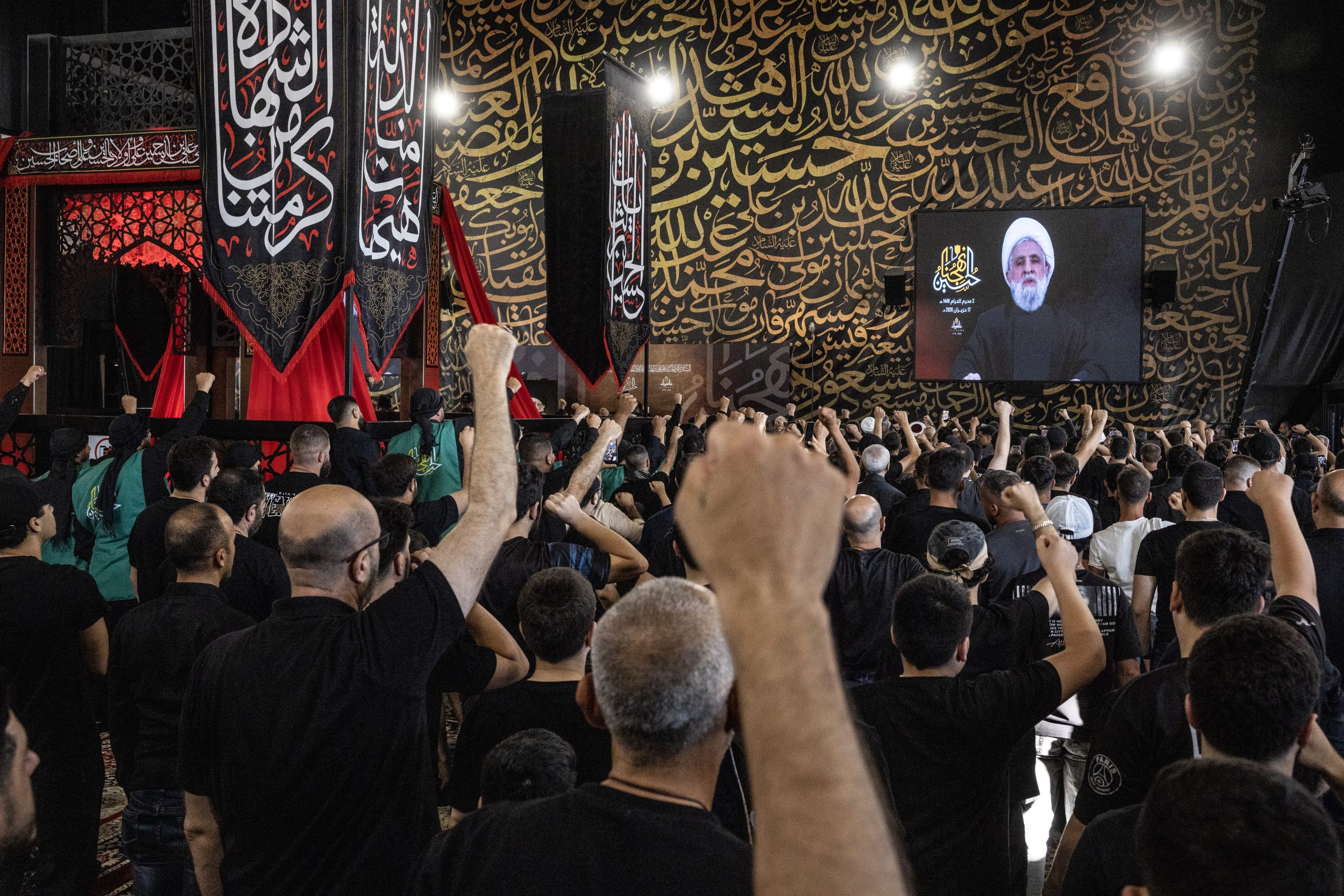
    People chant the name of Hezbollah leader Sheikh Naim Kassem during his public address on Wednesday.David Guttenfelder

    But it was Trump himself who offered what may be the most clear-eyed answer about why he needed to end this war so fast. He didn’t want comparisons to Herbert Hoover, he told reporters Wednesday at the Hotel Royal in Évian-les-Bains, on the shores of Lake Geneva.

    “He was always the one I didn’t want to be,” Trump said of the 31st president, who presided over the market crash that ushered in the Great Depression. “I didn’t want to see economic catastrophe.” Later he noted that if the war continued, the world would have begun to run out of oil stockpiles.

    That combination — economic chaos and disrupted oil markets — is exactly what the Iranians viewed from the opening days of the war as their most potent weapon. They executed on that vision with precision, closing the strait and blowing up petrochemical facilities, desalination plants, hotels and air bases across the Persian Gulf. And by the president’s own testimony, it worked.

    If that was Phase 1 of Iran’s strategy, history suggests Phase 2 may be one of delay and more delay. In past negotiations, the Iranians refined the art of arguing over every paragraph, throwing in new obstacles to inspections or reinterpreting the meaning of “nuclear research” to embrace continued uranium enrichment. Few were more skilled at this process, former U.S. negotiators say, than Abbas Araghchi, the Iranian foreign minister, and a veteran of past talks.

    And Trump, eager to move on, seems to be paving the way for a long, slow process. On Tuesday, he said he wasn’t especially concerned with getting Iran’s nuclear fuel — now buried under the rubble of last year’s U.S. air attacks — out of the country. On Wednesday, he acknowledged the talks would probably go beyond 60 days.

    It is too early to say whether Trump will ultimately be able to claim more accomplishments. If, in the next stage of negotiations, he manages to get the Iranians to ship their stockpiles of nuclear fuel out of the country (as President Barack Obama did in 2015) and cease all enrichment activity for nearly two decades (which Obama failed to accomplish), then he may be able claim some long-term victory.

    If the war turns out to have destabilized the Iranian leadership and triggered protests and an uprising, as Trump called for at the beginning of the conflict, he could well claim credit.

    But for now it looks like the opposite is taking place. If anything, Trump has propped up the new leadership, ostensibly run by the new supreme leader, the injured and out-of-sight Mojtaba Khamenei, the son of Ayatollah Ali Khamenei, who was killed in the opening strike of the war.

    The Revolutionary Guard, which has overseen the nuclear program for years, seems firmly in control, though a senior administration official argued to reporters several days ago that by bringing about a peace, Trump is now forcing the elite military unit to face the travails of governing.

    Senior members of the Obama administration, having absorbed years of critiques from Trump about the shortcomings and loopholes in the agreement struck in 2015, saw their moment to exact a measure of retribution.

    “The only ‘achievement’ of the ceasefire is the likely reopening the Strait of Hormuz — which was open before the war started,” former Secretary of State Antony Blinken wrote online Wednesday. “And we will apparently pay Iran to do so, in the form of waivers for the export of Iranian crude oil. Iran has now demonstrated the capacity to stop or slow the passage of oil, natural gas, fertilizer and other critical products upon which so much of the world depend.”

    Blinken, an architect of the 2015 accord, concluded: “Going forward, it will almost certainly find ways to collect ‘fees’ for safe passage that will help entrench the regime.”

    While some Republicans expressed cautious optimism that Trump’s peace-through-negotiation strategy may yet work, a good number of Iran hard-liners and America First adherents could not bring themselves to repeat the talking points in support of the accord that were being e-mailed by members of the administration. Among the most outspoken were those protected by impending retirement.

    “Reagan is rolling over in his grave,” Sen. Bill Cassidy, R-La., who lost a primary last month after Trump targeted him for defeat, wrote on social media. He said that Iran’s nuclear ambitions “were not curbed” and that the war had taught the Iranians that they had more leverage over the Strait of Hormuz and the world economy than they knew. Cassidy termed the war “the worst foreign policy blunder in decades.”

    But the bigger risk may be this one: When Iran’s leaders begin to clear the rubble left by 40 days of bombing, and think about how to spend the billions in oil revenue that will soon resume, they may well question whether they had the right nuclear strategy.

    For more than two decades Iran walked right up to the edge of building a nuclear bomb, but never stepped over the line, figuring that a “threshold” capability was all it needed to deter the United States and Israel from attacking. That enabled it to stay in the nonproliferation treaty, and insist that it had only peaceful intentions, with the security of knowing that in months it could produce a weapon. The result was that it was bombed in June 2025 and attacked again in February 2026.

    North Korea, in contrast, raced for the bomb, setting off its first successful nuclear test in 2006, and now has an arsenal of 60 or more weapons, according to U.S. intelligence agencies. It has escaped no nuclear strategist that these days, Trump isn’t issuing threats to North Korea.

    On Sunday, when Trump called the Times, this reporter asked him whether Iran might now follow the North Korean model. “He’s got serious nuclear weapons,” Trump said of Kim Jong Un, whom he threatened with annihilation during the first Trump term, then met three times in a fruitless effort to convince him to disarm. “But that should not have been allowed,” he said, asking whether North Korea got the bomb under President Clinton or President Obama. (It made its first test under President George W. Bush.)

    But Trump evaded the question of whether his decision to attack Iran could ultimately drive it to follow North Korea’s model. And he insisted his deal would stop Iran, saying Prime Minister Benjamin Netanyahu should thank him for keeping Israel from nuclear annihilation.

    “Whatever it takes,” he said. “Forty-seven years,” he said, referring to the 1979 Iranian Revolution, “nobody was able to do it. And we did it. We did it the right way.”

    History may prove him right, but it is far too premature to make that claim. Maybe even he knows that, based on his statements Wednesday morning. If the accord didn’t stick, he had a plan, he insisted. He would “go back to bombing.”

    This article originally appeared in The New York Times.

  • Clouds of black smoke rise over Moscow after Ukrainian drones hit an oil refinery

    Ukraine hit a major Moscow oil refinery for a second time in a week and disrupted commercial flights at the city’s airports in one of its biggest drone attacks since Russia’s all-out invasion of its neighbor more than four years ago, Russian officials said Thursday.

    The attack came hours after Ukrainian President Volodymyr Zelenskyy said he had held “an important coordination call” with the presidents of the United States and France, and had won key pledges of further support from the G7 summit this week.

    Zelenskyy was expected in Brussels later Thursday for talks with NATO and European Union leaders, including discussions about the possible building of a continental system to protect against ballistic missiles. Russia has relentlessly struck Ukraine with those types of missiles, which air defenses struggle to counter.

    Ukraine has repeatedly targeted Russia’s oil facilities, aiming to cut Moscow’s revenue for the war and make Russians feel the consequences of the invasion. Some areas have reported fuel shortages.

    Ukrainian Foreign Minister Andrii Sybiha said on X: “One of the most popular questions asked by Muscovites this morning is ‘What is going on?’ I can answer. Your country started a war of aggression against ours. For years, it has been killing our people. Now that you know what’s going on, ask Putin when he is planning to end it.”

    Huge fires rage at Moscow refinery near Kremlin

    Images and video released by the Russian media showed massive fires raging at the Moscow Oil Refinery, located about 15 kilometers (9 miles) from the Kremlin. Thick black clouds of smoke rose over the city.

    The refinery is one of Russia’s biggest, according to its official website, and produces more than a third of the Moscow region’s fuel. It was last attacked by Ukrainian drones on Tuesday, catching fire, but officials said the blaze was swiftly put out.

    Flights from four Moscow airports were temporarily halted, transport and aviation authorities said.

    In the Moscow region, which surrounds but does not include the capital city, a drone hit a residential building in the town of Zhukovsky, and the building was being evacuated, according to Gov. Andrei Vorobyov.

    Buildings elsewhere in the region were damaged by drone debris and 16 people, including two children, were wounded, according to Vorobyov.

    Ukrainian drone attack embarrasses Putin again

    The Russian Defense Ministry said that its air defenses overnight shot down 555 Ukrainian drones over multiple regions, with almost 200 intercepted as they were approaching the Russian capital.

    That was roughly double the number of drones that Russia launched at Ukraine overnight, according to the Ukrainian air force.

    The attack was the latest embarrassment for Russian President Vladimir Putin, after a Ukrainian drone attack on his hometown of St. Petersburg earlier this month just as he held a showcase economic forum in the city with foreign VIP visitors.

    Putin on Thursday was in Kazan, some 700 kilometers (430 miles) east of Moscow, hosting leaders of the Association of Southeast Asian Nations as Russia seeks to bolster business and other ties with the nations of the regional bloc.

    Zelenskyy said the attack on Moscow was part of Ukraine’s efforts to force Putin to the negotiating table. The Ukrainian president has accepted an unconditional ceasefire demanded by Trump but Putin has refused, and U.S.-led peace efforts have petered out.

    “If Putin does not want to end this war and wants to continue it, we will not sit quietly — we will respond,” he added in a voice message to a group chat with journalists.

    Ukraine disrupts Russian supply lines with drones

    As well as pledges of more diplomatic and military help at the G7 summit, Ukraine recently has gained momentum on the battlefield against Russia’s bigger army thanks to its high-tech drones, Western officials and analysts say.

    Longer-range drone strikes are choking Russian supply lines in occupied regions of Ukraine, in addition to disrupting Russian oil production.

    Macron said the G7 summit was “very important for Ukraine” because its supporters — crucially including the United States — vowed to help it, although the French president provided no details. The U.S. under Trump has cut back assistance to Ukraine, leaving the Europeans as the biggest suppliers of military and financial aid. Trump and Zelenskyy have had an at times strained relationship.

    “America is with us on Ukraine, that is very important,” Macron told reporters as he and Trump left the Palace of Versailles near Paris.