Category: Nation & World

  • House again passes resolution seeking to halt military action in Iran as some Republicans defect

    House again passes resolution seeking to halt military action in Iran as some Republicans defect

    WASHINGTON — The House on Thursday narrowly passed a resolution to halt U.S. military action in Iran, sending a warning to President Donald Trump for the second time as the war has escalated and the future of the conflict is increasingly uncertain.

    The 214-208 vote requiring congressional approval for the war comes as the Senate is expected to consider a similar resolution later Thursday morning. Though the votes forced by Democrats are largely symbolic, they are meant as a strong signal to the Republican president that his support on Capitol Hill is chipping away as the war drags on and lawmakers in both parties have questioned his administration’s endgame.

    The war has had “no clear mission, no strategy, no end goal,” said Washington Rep. Pramila Jayapal, a Democrat who led the resolution on the House floor.

    The resolution narrowly passed after four Republicans — Reps. Brian Fitzpatrick of Pennsylvania, Tom Barrett of Michigan, Warren Davidson of Ohio, and Thomas Massie of Kentucky — voted with Democrats to end the war. But the vast majority of Republicans voted to back the war and cede congressional war powers to Trump.

    Trump has insisted that continued U.S. attacks against Iran do not mean a return to war or long-term action. After the first House vote to halt the war in early June, he posted on social media that it was “unpatriotic” and “meaningless.”

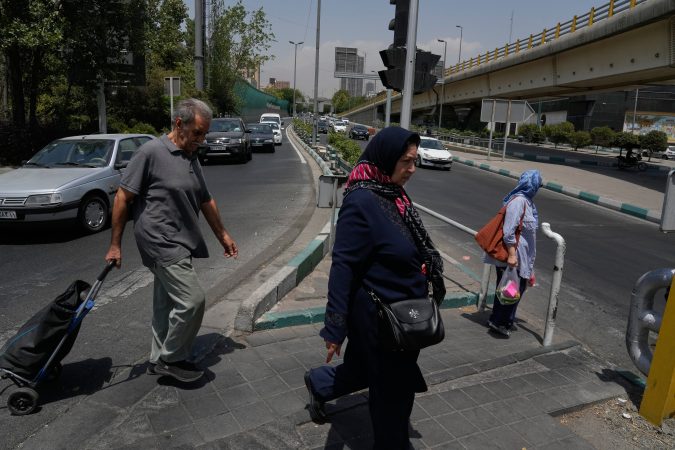
    Continued American airstrikes are occurring even as diplomatic efforts show little public sign of progress and officials on both sides have dug in on the dispute over the Strait of Hormuz, a crucial waterway for global energy that remains largely closed. The unpopular war threatens further worldwide economic disruption and is sending fuel prices up ahead of midterm U.S. elections this fall.

    Most Republicans vote to cede congressional powers

    As the House debated the resolution Wednesday evening, Foreign Affairs Committee Chairman Brian Mast (R., Fla.) read out names of 18 service members killed since the war began.

    “To belittle this mission is to belittle and demean the very service these members gave their life for,” Mast said. “Their sacrifice was not meaningless. This operation is bringing reckoning for the hundreds of times Iran has attacked and killed people of the United States of America.”

    The top Democrat on the panel, New York Rep. Gregory Meeks, said that presidents are supposed to make the case to Congress.

    The service members who died made the ultimate sacrifice for “an illegal unauthorized war that the American people don’t want,” Meeks said.

    As both chambers vote on whether to weigh in, the U.S. has carried out waves of airstrikes in recent days as the two countries clash over control of the Strait of Hormuz. Gas prices have spiked again, and Defense Secretary Pete Hegseth told senators at a hearing Tuesday that the U.S. had spent $37.5 billion on the war so far. On Wednesday, Trump traveled to Dover Air Force Base for the arrival and dignified transfer of the remains of four U.S. service members.

    “I do think the combination of the hearings, plus the fact that we are in this new escalatory phase where Americans have been killed, and Americans are experiencing the rising costs — I think it’s important that people be held accountable,” said Maryland Sen. Chris Van Hollen, a Democrat who is leading the Senate effort on Thursday. “And this is a very unpopular war.”

    Trump is watching Iran votes closely

    Republicans on both sides of the Capitol know that voting against the war can have a political cost, even as many of them have privately questioned the Trump administration’s handling of the conflict.

    In his post after the June House vote, Trump called the four Republicans who voted with Democrats “GRANDSTANDERS!” and said they should be “ashamed of themselves.”

    “They would rather have our Country fail than give me another, of many, victories,” he said.

    When the Senate passed a war powers resolution on Iran for the first time in June, the president attended a GOP Senate luncheon the next day and called the Republicans who voted for it “losers.”

    Louisiana Sen. Bill Cassidy, a Republican who lost his Senate seat in a primary after Trump endorsed one of his opponents, told Trump directly that he needed to give more details to the public about the conflict. “This was supposed to last four weeks. It’s lasted four months,” Cassidy said. “Our original objectives have not been achieved.”

    Trump argued back, Cassidy later told reporters, and he told the president that he wouldn’t change his vote until he got a briefing. The White House later relented, giving Cassidy a one-on-one meeting, and the Louisiana Republican changed his vote in a late-night do-over vote before the Senate left for a two-week recess.

    Cassidy wouldn’t say Wednesday whether recent developments would change his vote.

    Polling find Americans disapprove of the war

    Most Americans disapprove of the way Trump is handling the situation with Iran, according to recent polling. A Washington Post/Ipsos poll conducted in July found that few Americans think the war in Iran has been worth fighting, and most aren’t confident that the U.S. military action in Iran and negotiations to end the war will prevent Iran from developing nuclear weapons.

    Only about two-thirds of Republicans approve of Trump’s handling of the situation in Iran, according to the poll. Most Republicans, about 6 in 10, think the war has been worth fighting and are confident that the military action and ensuing negotiations will prevent Iran from development nuclear weapons, but a sizable share — about one-third — are unconvinced.

  • Saudi nuclear deal in doubt as Trump adds new condition regarding Israel

    Saudi nuclear deal in doubt as Trump adds new condition regarding Israel

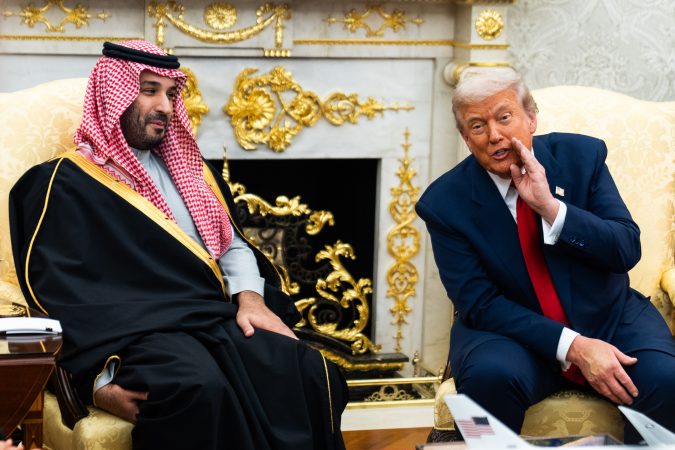
    Saudi Arabia would need to normalize relations with Israel to receive the U.S. nuclear technology it has long sought, President Donald Trump said Thursday, adding a new and potentially deal-ending stipulation to an agreement signed just a day earlier.

    The nuclear deal — which was fiercely opposed by Israel and others concerned about nuclear proliferation — is “totally subject” to Saudi Arabia joining the Abraham Accords, Trump said in a social media post, referring to the effort from his first term to normalize relations between Israel and Muslim-majority countries from which it had long been estranged. The Saudis have thus far refused to join the accord.

    It was the latest whiplash-inducing policy shift from the White House, which had faced-down considerable political opposition to push forward with the Saudi deal. The Biden administration also discussed a nuclear deal with Saudi Arabia, but tied any agreement to opening diplomatic relations with Israel, a move that has the potential to reshape dynamics in the Middle East, but which remains distant.

    If the Saudis “don’t join the Abraham Accords, the deal is off,” White House press secretary Karoline Leavitt said a few hours after Trump’s post, responding to questions from reporters.

    Asked why that condition had not been included in the deal when it was announced Wednesday, Leavitt said that Trump is “always the final dealmaker.”

    It wasn’t immediately clear how the Trump administration would modify a legal agreement that it has already signed with the Saudi government. Asked for details, the White House pointed to Leavitt’s comments.

    The deal to allow the Saudis to build nuclear power plants using U.S. technology, creating a pathway to a Saudi nuclear enrichment program, has set off debate in Congress. Many lawmakers fear that allowing more countries to develop enrichment programs could eventually lead to more possessing nuclear weapons.

    Israel hotly opposes Saudi Arabia’s developing a nuclear enrichment program, fearful it could lead to a regional arms race. Israeli leaders welcomed Trump’s new conditions.

    The Saudis have long sought to build nuclear power plants on their territory — and Crown Prince Mohammed bin Salman, the de facto ruler of the country, has declared that they would work to develop nuclear weapons if Iran develops its own.

    The Biden administration also explored a nuclear deal with Saudi Arabia, but it ultimately floundered because normalizing relations with Israel was the main condition the U.S. placed on the agreement. The deal the Trump administration signed Wednesday would have imposed no such requirement.

    Trump’s new condition on Thursday would attach a major string to the deal. Saudi leaders were nearing a normalization agreement with Israel in 2023, just before the Hamas attack on Israel on Oct. 7 of that year. Since then, however, talks have been paused. Saudi leaders now say they would want guarantees of an eventual Palestinian state, and Saudi public opinion has soured toward Israel because of its handling of the war in Gaza. Any nuclear deal tied to Saudi-Israel diplomatic breakthroughs has seemed remote.

    “The Civil Nuclear Deal (There will be no enrichment of material!) being made between the United States Department of Energy and Saudi Arabia, which pertains only to non-military use such as the ones that Iran and UAE (and others) already have, will be approved,” Trump wrote on Truth Social on Thursday. “But is totally subject to Saudi Arabia joining the very respected and successful Abraham Accords.”

    The Abraham Accords, signed in 2020, normalized diplomatic and economic ties between Israel and Bahrain and the United Arab Emirates. Morocco later joined. Saudi Arabia is a heavyweight of the Middle East. Boosting ties to Israel would be a major shift in a region long beset by religious tensions.

    The president’s assertion that there would be no nuclear enrichment as part of the deal appears to contradict how people familiar with the deal have described it. Most of the deal’s details remain private.

    The president will need to submit the agreement to Congress, starting a 90-day clock for approval. That move could take place as early as today.

    It is unlikely Congress will be able to stop the deal, even if there is substantial opposition. The president could veto their disapproval, and opponents are unlikely to have the votes to override him.

    But Trump’s new condition could stymie the deal even before it gets off the ground.

    Trump had not spoken to Mohammed in the hours since the social media announcement, Leavitt said. Nor did he speak to Israeli Prime Minister Benjamin Netanyahu, she said.

    It was just the latest example of the president’s on-again, off-again approach to policymaking. Last week, Trump said that the United States would impose a 20% toll on shipping through the Strait of Hormuz, despite months in which his own administration said that doing so would be a violation of international law.

    A day later, and following widespread condemnation, he abandoned the idea, saying he would make investment deals with Persian Gulf countries instead.

    The agreement that Energy Secretary Chris Wright and his Saudi counterpart signed Wednesday lays out conditions for nuclear energy cooperation and includes stipulations aimed at preventing the spread of nuclear weapons.

    But unlike other recent deals with countries that do not already have a domestic enrichment program, this one would not impose the same strict conditions aimed at preventing them from moving in that direction.

    The initial announcement of the deal on Wednesday drew condemnation in Israel, where leaders fear a Saudi nuclear program could spur a regional arms race. Israelis worry that Turkey and others could also seek nuclear enrichment programs, ultimately leading to far more countries in the region that have a pathway to a nuclear weapon.

    Israel has an undeclared nuclear weapons program, in addition to civilian nuclear power capability.

    “Saudi Arabia’s joining of the Abraham Accords would be an historic leap forward for peace in the Middle East,” Netanyahu said Thursday in a statement.

    The Trump administration has offered little information about the agreement’s contents. Three people familiar with the details said that it is designed with safeguards to keep the Saudis from enriching nuclear fuel to weapons-grade level.

    But they said it exempts the Saudis from aggressive international inspections required in nuclear reactor deals with other countries, including the United Arab Emirates. Instead, sensitive inspections would be executed by American teams under terms spelled out in the agreement, which was initially worked out when the crown prince visited Washington in November.

    The people spoke on the condition of anonymity because they were not authorized to discuss the agreement publicly.

    “These agreements reflect our two nations’ shared commitment to strengthening U.S.-Saudi commercial relations, delivering prosperity at home and security to our allies abroad,” Energy Secretary Chris Wright said in a Wednesday statement.

    Trump had to sign a separate national security waiver to allow the deal to move forward, since it does not include conventional international inspections, according to the people familiar with the deal.

    Under the Saudi deal, the two countries agree to study for two years whether enrichment on Saudi soil is feasible and necessary.

    Proponents say the deal with the Saudis gives the U.S. an opportunity to control the expansion of the enrichment network on its own terms and limit the risk of nuclear proliferation. The deal requires that any enrichment on Saudi soil would be controlled by U.S. companies using technology that is not shared with the Saudis, in an effort to limit the possibility that Saudi Arabia could use the program to develop a nuclear weapon.

    Nonproliferation experts have long warned against such a deal, saying that safeguards are unlikely to hold for the long term.

  • Mideast oil producers step up plans to bypass the Strait of Hormuz

    Mideast oil producers step up plans to bypass the Strait of Hormuz

    Before the war in Iran, roughly 15 million barrels of Persian Gulf oil were shipped each day through the Strait of Hormuz. Within a few years, much of that oil could bypass the strait.

    As Iran’s chokehold over the strait drags on and oil prices surge, countries across the Gulf are planning to spend billions of dollars to build pipelines enabling them to redirect more supplies to ports along the Red Sea and the Gulf of Oman.

    At least seven major pipeline projects are under construction, in the planning stage or being discussed as possibilities, according to government officials, oil companies and analysts. The war has been a wake-up call for Gulf oil producers, who are determined to become less dependent on a transit point that hugs Iran’s coast.

    But alternatives to Hormuz are also vulnerable to disruption. Yemen’s Iran-backed Houthi rebels said early Thursday they had attacked two Saudi oil tankers in the Red Sea, a key alternative route to the strait for Saudi oil exports.

    Some alternative routes will take the oil on longer and more expensive paths to market. Regardless, producers have realized that relying so heavily on the Strait of Hormuz “is no longer a prudent long-term strategy,” said Victoria Grabenwöger, senior research analyst at data firm Kpler.

    The Red Sea and Gulf of Oman have become vital alternatives to Hormuz

    The effective shutdown of the Strait of Hormuz would have been an even greater shock to the world economy were it not for a pipeline Saudi Arabia built in the 1980s amid fears that Tehran would disrupt shipping through the strait during the Iran-Iraq war.

    The Saudis’ East-West pipeline carries oil across the desert nation from a processing facility in Abqaiq to the city of Yanbu on the Red Sea coast. Once there, it is loaded onto tankers that head either south to the Arabian Sea or north to the Suez Canal.

    The United Arab Emirates has been sending more oil to the port of Fujairah, which abuts the Gulf of Oman, about 145 kilometers (90 miles) south of Hormuz.

    Combined, the two pipelines had spare capacity of about 3.5 million to 5.5 million barrels per day before the war began, according to the U.S. Energy Information Administration. The two pipelines are now running near full capacity.

    More oil could begin flowing through a UAE port by next year

    The state-owned oil company of Abu Dhabi, one of the UAE’s seven emirates, is accelerating construction of a $3 billion, 300-kilometer (200-mile) pipeline to Fujairah. That pipeline, which will run parallel to an existing one, aims to increase oil supplied to Fujairah by more than 1.2 million barrels a day.

    The project, which started before the war, is now reportedly about halfway completed, according to Kpler. The pipeline is intended to be completed by early 2027, but Kpler says mid-2027 is more likely given the need to expand the port at Fujairah.

    The ambitious timeline “has only become feasible against the backdrop of the Strait of Hormuz blockade,” Kpler’s Grabenwöger said.

    Plans to pipe more oil to Turkey and Syria will take longer

    In Iraq, officials are ramping up plans to develop alternative export routes for southern oil fields around Basra. Iraq is so dependent on the Strait of Hormuz that it has had to scale back production.

    The Iraqi government, which gets some 90% of its revenues from oil sales, has been pursuing pipeline projects with U.S. companies. One would take supplies from an oil terminal in Basra — through which more than 3 million barrels were exported daily before the war — to the port of Ceyhan in Turkey, along the Mediterranean Sea.

    That pipeline would also have a branch extending to the Mediterranean port of Baniyas in Syria. Some 2 million barrels a day of oil could ultimately flow through the pipeline to Baniyas, which the U.S. State Department has called “a critical energy corridor.”

    Iraqi officials have also held discussions with Jordan on advancing long-discussed plans for a pipeline that would carry oil from Basra to Aqaba. From there it would be exported via the Red Sea or the Suez Canal to Asia and beyond.

    The new pipelines will add time and costs — and are also vulnerable to attacks

    Taken together, the new projects to bypass Hormuz could carry an added 3.8 million barrels of oil a day by the end of next year, and 7.3 million barrels per day by the end of 2028, according to analysts at the investment bank Goldman Sachs. The projects would mean some 60% of the Gulf’s total prewar exports of 23 million barrels a day could bypass Hormuz if needed, the analysts said.

    Pipelines from the Persian Gulf to the Mediterranean Sea send oil in the wrong direction to help Asian countries that relied on exports through Hormuz, requiring a much longer trip around the southern tip of Africa.

    Any additional supplies piped from Saudi Arabia to the Red Sea will also be vulnerable to attacks by Houthi rebels in Yemen, as Thursday’s attacks show; the rebels have successfully disrupted shipping before at the Bab el-Mandeb Strait, which connects the Red Sea to the Gulf of Aden.

    That oil could also be sent to the Suez Canal instead to reach the Mediterranean. But the canal cannot accommodate the industry’s largest tankers, which hold up to 2 million barrels per vessel and are often the most cost-efficient way to transport oil long distances.

    And pipelines themselves are not immune to attack. The Saudi East-West pipeline was shut down by a Houthi drone strike in May 2019.

    Meanwhile oil pipelines don’t help with the disruption to supplies of liquefied natural gas, or LNG, carried by ship. About one-fifth of the world’s LNG — much of it from Qatar and headed for Asian customers — transited the strait before the war.

  • U.S. on track to have historically low number of homicides in 2026, report says

    U.S. on track to have historically low number of homicides in 2026, report says

    LOS ANGELES — Data collected from 30 American cities showed an 18% decrease in the homicide rate from 2025 compared to the same period in 2026, translating to about 215 fewer homicides this year, according to a new report from the independent Council on Criminal Justice.

    Should the trend continue, it would push the annual homicide rate to the lowest levels in over a century once final numbers are released at the end of the year.

    The report, released Thursday, tracked 13 crimes and recorded drops in nine of those categories, including carjackings, residential burglary, and aggravated assaults. There was a small jump in shoplifting, domestic violence incidents, sexual assaults, and drug offenses over the same period between 2025 and 2026, the report showed.

    Experts say the broadly positive changes are exceeding expectations, improving on baseline crime rates from before 2020 and the COVID-19 pandemic, which brought historic surges in violence.

    Democrats and Republicans across the country have tried to capitalize on the positive developments during a competitive midterm election year. But the trends documented in the report carry through in cities with leadership across the political spectrum.

    That suggests the most significant factors contributing to the improvements are taking place nationwide and are not specific to a single local public safety measure, said Adam Gelb, the president and CEO of the Council on Criminal Justice, a nonpartisan think tank for criminal justice policy and research.

    “Murder and other crime rates are falling across the map in cities with different political leadership, different housing and economic conditions, different policing and prosecution and violence reduction strategies and different levels of federal enforcement activity,” Gelb said.

    The council collects data from police departments and other law enforcement sources. Some of the report categories include data from as many as 36 cities, while others include fewer cities in their totals because of tracking gaps or differences in definitions for specific crimes.

    Notably, Gelb said that a significant number of violent crimes were less deadly: There was a 23% drop in the lethality of the crimes committed, which is measured by the share of serious violent crime that is fatal.

    Many of the non-violent crimes tracked in the report also saw declines, including a 13% drop in residential burglaries year over year and a 50% drop in burglaries compared to pre-pandemic levels in 2019. At the same time, reported shoplifting bucked the trends of other property crimes, showing a 5% increase. And while there was a small increase in drug offenses, those were still lower than pre-pandemic levels.

    Roughly a third of the 30 sampled cities defied average homicide rate declines across the country, recording an increase in deadly violence from the first half of 2025 to the same period in 2026. That includes Norfolk, Va., which saw a 64% increase in homicides, and San Francisco, which saw a 55% increase. The number of cities that saw a longer-term increase was far smaller: Only Norfolk, Austin, Pittsburgh, and Minneapolis experienced more homicides in 2026 than in the same period in 2019.

    Philadelphia has recorded 96 homicides so far in 2026, a 23.8% decline from the same period in 2025. If the current pace continues, Philadelphia is on track to record fewer than 200 homicides for the first time since the 1960s, a remarkable turnaround from just five years ago, when nearly three times as many people were killed.

    There are many factors that could impact why a location sees increases or decreases in certain crimes when another doesn’t, according to John Roman, director of the Center on Public Safety and Justice at the National Opinion Research Center from the University of Chicago.

    Roman said that conservative politicians affiliated with President Donald Trump will point to intensified immigration crackdowns and the deployment of the National Guard in cities like Los Angeles and Memphis, whereas liberal politicians might point to former Democratic President Joe Biden’s public safety legislation that strengthened background checks on firearm sales.

    But ultimately, Roman said, the best explanations transcend specific administrations. That ranges from decreased drug usage and therefore fewer purchases from illegal markets, which are often linked to violence, to an influx of federal funding for localities after the pandemic that was spent on social programming.

    Those programs, Roman said, often funded jobs like teachers and social workers who primarily work with “young people who are the highest risk of violence and victimization.”

    While both Gelb and Roman concurred that there wasn’t a single reason, Gelb said the outcomes should be studied for future insights and celebrated.

    “This is one of the most significant public safety developments in decades. It means lives are being saved, families are spared trauma and communities are regaining stability,” Gelb said.

  • EU hits Google with $1 billion fine over its Play app store and search

    EU hits Google with $1 billion fine over its Play app store and search

    BRUSSELS — The European Union on Thursday hit Google with a fine of 890 million euros ($1 billion) after it said the technology behemoth broke digital antitrust regulations by setting up Google Play and its ubiquitous search engine to corral consumers towards its own services and apps to the detriment of competitors.

    It was the latest major crackdown on Big Tech by Brussels, which has led the world in reining in some of the world’s largest companies from Silicon Valley to Beijing.

    Google had recently lost its appeal of a $4.5 billion antitrust fine imposed by the EU for throttling competition and reducing consumer choice through the dominance of its mobile Android operating system.

    The European Commission, the bloc’s executive branch and highest antitrust enforcer, said it was acting in the interest of consumers after running an antitrust investigation of Google.

    “The best products should succeed because they’re better, not because they’re owned by the company running the search engine. And European consumers have a right to be told by app developers where to sign up to the best offers, even when the app store owner does not get a cut,” said Teresa Ribera, the commission’s Executive Vice President for Clean, Just and Competitive Transition.

    Google’s President of Global Affairs Kent Walker blasted the fine as “product degradation driven by a small group of self-serving complainants” that will have a negative impact on European businesses and consumers.

    He said that the EU’s Digital Markets Act forces Google “to strip away real-time search features Europeans love — like instant pricing and direct availability for hotels, flights, and restaurants — and dismantle safety protections on Google Play.”

    Brussels has ratcheted up the pressure on U.S. and Chinese tech giants despite the risk of incurring the wrath of President Donald Trump, who has lashed out at the 27-nation bloc’s digital regulations and vowed to retaliate if American tech companies are penalized.

    The EU describes the world’s seven tech giants — Amazon, Apple, Google parent Alphabet, Meta, Microsoft and TikTok owner ByteDance — as “gatekeepers” that control access for consumers.

    “In the EU, businesses have the right to compete fairly. Gatekeepers have the obligation to ensure a level playing field and consumers the right to choose for cheaper alternative offers,” European Commission spokesperson Thomas Regnier said.

  • A democratic socialist surges in a swing-state primary

    A democratic socialist surges in a swing-state primary

    MADISON, Wis. — As a democratic socialist running for governor in a state Donald Trump won twice, Francesca Hong knew early on that she had doubters.

    She knew it before her critics highlighted her past calls to abolish the police. She knew it before Republicans started spending $2 million to get her through the Democratic primary because they viewed her as a weak opponent. And she knew it before Wisconsin’s outgoing Democratic governor backed a candidate to try to halt her surge in support.

    “It’s a huge flex for us when I get to go and talk to people, especially when there’s so much skepticism right now around my favorite e-word — electability — and, you know, are we for real?” Hong told two dozen supporters, some in “Hotties for Hong” T-shirts, before they knocked on doors for her on a recent Saturday morning.

    Few doubt that her campaign is for real. She’s getting clicks like no one else in the field of five primary candidates. She has locked up support from national figures, inspired the base, and rattled establishment Democrats. And she’s riding high after democratic socialists and progressives won recent primaries in Colorado, New York, and Washington.

    Hong, 37, wears Air Jordans and friendship bracelets, sings karaoke at campaign events, and talks to voters about her love of the Milwaukee Bucks and the need to wallop millionaires with higher taxes. She initially lagged behind her opponents in fundraising, but she has seen a recent burst of donations, including some that came after she appeared on controversial liberal streamer Hasan Piker’s show.

    Hong, a third-term state representative from Madison, is betting she can thrive in a state where Sen. Bernie Sanders (Ind., Vt.), a self-described democratic socialist, won 71 of 72 counties in 2016’s Democratic presidential primary. While progressives have claimed recent victories around the country, Rep. Greg Stanton (D., Ariz.) easily fought off a primary challenge Tuesday from a democratic socialist.

    If Hong wins the Aug. 11 primary, she will next test whether democratic socialists can find support beyond the nation’s urban centers and win a general election in one of the most closely divided states in the country.

    Her backers don’t want her to moderate her call for systemic change if she wins the primary.

    “We can’t keep settling for crumbs,” said Sam Lies, a 61-year-old pharmaceutical representative who is volunteering for Hong’s campaign.

    On the campaign trail, Hong talks about reimagining what government can do, as well as her experience growing up as the child of South Korean immigrants and the challenges she faces as a single mom trying to pay her bills. She recently settled a $30,000 lawsuit over her credit card debt, and she works occasional shifts as a chef and bartender after closing her ramen restaurant two years ago.

    Hong is campaigning on “permanent affordability” and a new way of running the state. She wants to more than double the income tax on millionaires and many businesses, provide free school lunches to all students, subsidize childcare, set the minimum wage at $20 an hour, ban police officers from cooperating with U.S. Immigration and Customs Enforcement in many cases, establish a public bank and public grocery stores, put a one-year freeze on building data centers, protect doctors who provide gender transition care, expand union rights, legalize marijuana, and end the state’s school voucher program.

    “I will not weakly accept the sellout of Wisconsin to trillionaires, billionaires and big tech,” she told attendees at the Democratic Party’s state convention last month.

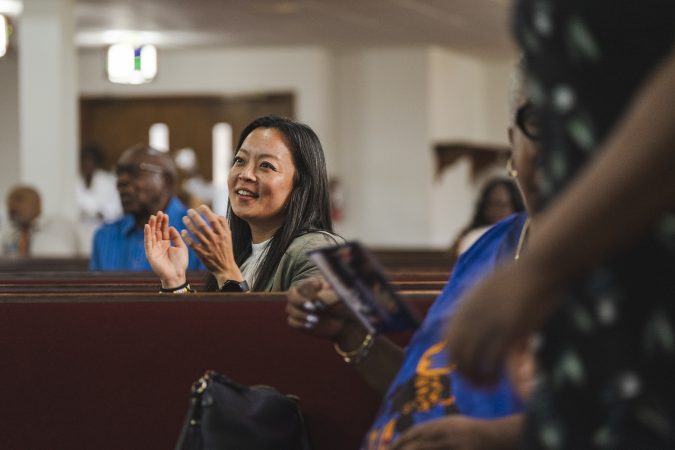
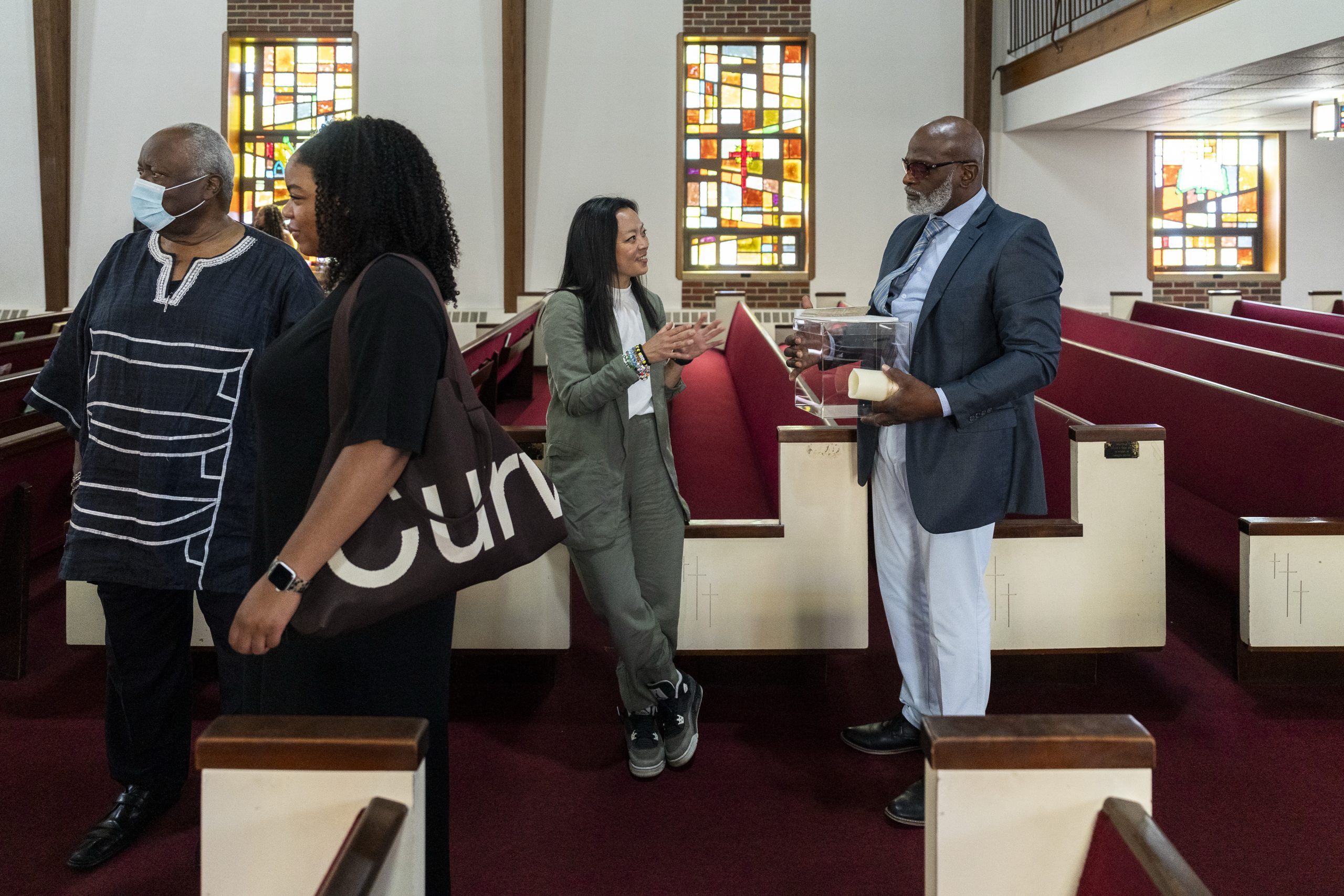
    Hong meets parishioners at the church. Sara Stathas

    Little known at the start of the race, Hong has seen rising support as she runs against four others, including Mandela Barnes, a former lieutenant governor and the Democrats’ 2022 Senate nominee.

    The primary has been tumultuous. A leading candidate, Lt. Gov. Sara Rodriguez, dropped out last week, pointing to faulty campaign finance reports that she blamed on her fired campaign manager. Milwaukee County Executive David Crowley, who had recently quit the race for governor, revived his campaign with support from the current governor, Tony Evers.

    Amid the shake-ups, the Republican Governors Association started spending $2 million on ads calling Hong “too liberal for Wisconsin.” While ostensibly attack ads, the spots could boost Democratic support for her and are the clearest signal yet that Republicans believe they have the best chance of winning in November if Democrats nominate Hong.

    ‘Brooklyn, Wisconsin, not Brooklyn, New York’

    Some who like Hong’s ideas worry about how Republicans will portray her in a general election given that she has embraced socialism, used the C-word online and said her ideal world would be one without prisons.

    “She’s sort of inviting some controversies,” said Vivian Venish, 28, who attended Hong’s campaign launch party but has been studying other candidates.

    The winner of the Democratic primary will face Republican Tom Tiffany, a three-term congressman from northern Wisconsin who has called Hong out of step, saying she “wants to abolish the police and bring socialism to Wisconsin.”

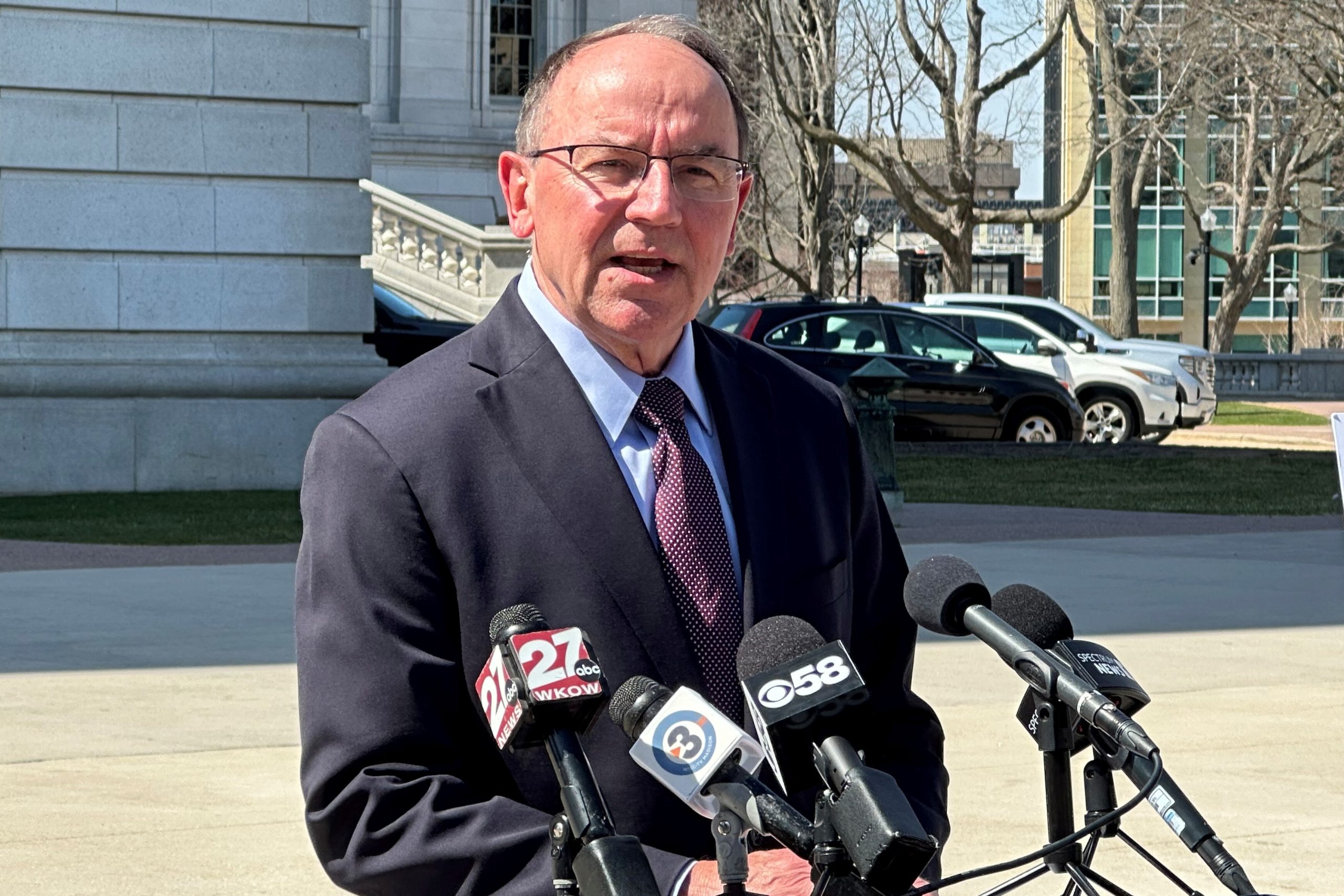
    Rep. Tom Tiffany (R., Wis.), a candidate for Wisconsin governor, speaks during an April 8 news conference in Madison about what the GOP needs to do in November.Scott Bauer

    Brian Schimming, chairman of the state Republican Party, said he expects a tight race in November no matter whom Democrats select. But he questioned Hong’s appeal.

    “We’re in Brooklyn, Wisconsin, not Brooklyn, New York,” he said.

    Wisconsin is as politically divided as it gets, with one Democratic senator, one Republican senator, a Democratic governor, and a Republican-led legislature. The last three presidential races were decided by less than 1 percentage point, with Trump winning in 2016 and 2024 but losing in 2020.

    While narrowly divided today, Wisconsin has a long history of socialism. For much of the first half of the 20th century, Milwaukee was led by socialist mayors who championed “sewer socialism” by focusing on infrastructure and public housing. Wisconsin voters elected a socialist to Congress and sent others to the state legislature.

    In her convention speech, Hong cited progressive iconoclasts like Robert “Fighting Bob” LaFollette, a representative, governor, and senator more than a century ago who “imagined a better world and fought like hell to realize it.”

    “These folks were called unreasonable, impractical and unelectable,” she said. “Yet today, they’re considered visionaries.”

    Hong poses for a photo with a supporter in Racine. Sara Stathas

    She has won the support of Rep. Ro Khanna (D., Calif.), Rep. Ilhan Omar (D., Minn.) and Nina Turner, a co-chair of Sanders’ 2020 campaign for president.

    Hong was a prominent supporter of the push to get Wisconsin Democrats to cast “uninstructed” ballots in the 2020 primary to protest President Joe Biden’s backing of Israel. She found new progressive allies last month by appearing on streams with Piker and Michael Beyer, who is known as Mike from PA. Piker has said he would “vote for Hamas over Israel every single time,” and Beyer has said Jewishness is a “demonic ethnicity, wholly invented.”

    Hong “is willing to sell out the Jews of Wisconsin for a few bucks,” Ann Jacobs, chair of the state Democratic Party’s Jewish caucus, said in a post on social media.

    Hong doesn’t agree with everything the two streamers have said but is willing to talk to anyone to reach more voters, her campaign manager said.

    ‘This is me being myself’

    Voters — especially those born after the end of the Cold War — are ready for something different, not candidates the establishment deems electable, said Dillon Sheehan, a Hong supporter who helps lead the Madison-area chapter of the Democratic Socialists of America. Republicans defanged the term by using it so much, he said.

    “They have called Joe Biden a socialist,” he said.

    Hong argues voters are hungry for dramatic change, and her history of fierce rhetoric shows she has consistently pushed the Democratic Party to the left. In 2020, she called for “defunding the police as a first step towards abolishing the police.”

    Matt Bennett, a co-founder of the center-left Third Way think tank, called the comments “the most toxic thing you could possibly imagine basically anywhere, but especially in a purple place like Wisconsin.”

    In an interview, Hong said she believes the best way to reduce crime is to provide more services and treatment. She said that as governor she would increase state aid to towns and cities and let local officials decide whether to use the money to boost police spending.

    Hong rarely backs down. She has kept in place incendiary posts, including one in 2020 that called tavern lobbyists the c-word. Last year, she used the same word as an acronym in a post encouraging people to vote for liberals in statewide races.

    “This is me being myself,” she said. “I came up through kitchens and a restaurant industry, and now politics, where swearing is pretty normal.”

    Hong is campaigning on “permanent affordability” and a new way of running the state.Sara Stathas

    Her campaign style, she said, allows her to connect with voters who feel left out. She has held hip-hop parties and craft fairs and arranged for volunteers to meet at a Dungeons & Dragons gathering.

    On a recent Thursday, members of a Madison club that caters to women and trans bicyclists took their usual ride around the state Capitol. Afterward, more than a dozen of them spread out in a park and decorated postcards encouraging people to vote for Hong.

    The cyclists said they were drawn to Hong’s support for the working class and opposition to data centers. More than anything, they wanted someone ready to shake up the system.

    “If there was ever a year for her to win, it would be this year,” said hotel worker Aiya Askana, 28. “So I’m going to go for it.”

  • House votes for Department of War renaming as part of an annual defense bill

    House votes for Department of War renaming as part of an annual defense bill

    WASHINGTON — The House on Wednesday passed a defense policy bill that incorporates President Donald Trump’s request for a historic $1.15 trillion in spending for national security and that would designate the Department of Defense as the Department of War.

    It also would provide for a pay raise next year ranging from 5% to 7% for service members, depending upon their rank.

    The National Defense Authorization Act is generally one of the more bipartisan bills that Congress takes up on an annual basis. That’s not the case this year. The vote was 216-212.

    Democrats took issue with steep spending increases for the Pentagon as Republicans attempted to cut numerous non-defense programs through other bills. They also opposed some of the conservative social policy riders that were included.

    For example, the bill includes a prohibition on gender-related medical care under the military health program known as TRICARE. It also eases hurdles for service members to carry a privately owned firearm on base, following Defense Secretary Pete Hegseth’s lead on the issue.

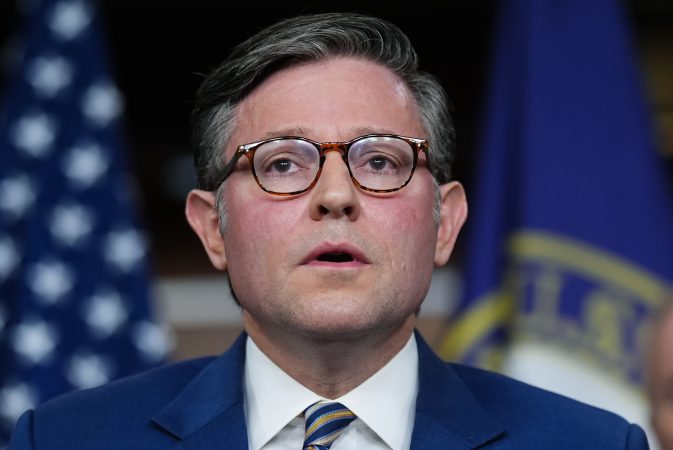
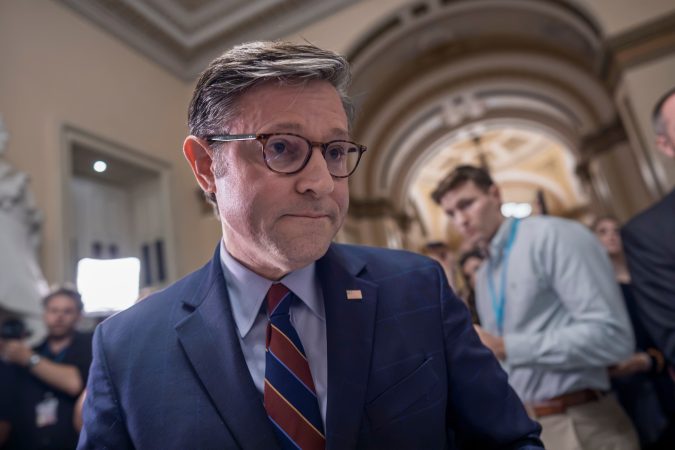
    Republican leaders’ decision to attach Trump’s elections overhaul bill to the defense bill upon its passing also amplified the partisan divide. Speaker Mike Johnson is working to accommodate Republican lawmakers who are angry that the Senate won’t pass the SAVE America Act and are insisting that it be included in must-pass bills until the Senate relents.

    The House bill is testing a normally bipartisan process

    Rep. Mike Rogers, the Republican chairman of the House Armed Services Committee, said he knows there were areas of disagreement, but he emphasized that Wednesday’s vote was a step in a long process. He promised to work in a bipartisan manner on a final product that can pass both chambers and be signed into law.

    Rogers said the United States needs to reverse decades of underinvestment and neglect in the nation’s armed forces and defense industrial base.

    “This bill will do that and much more,” he said. “It will build the ready, capable and lethal fighting force we need to deter China and other adversaries.”

    Rep. Adam Smith, the ranking Democratic lawmaker on the Armed Services Committee, said the defense spending the administration has asked for this year is approaching $1.6 trillion when including separate efforts to pay for the war in Iran and boost weapons stockpiles.

    “The American people are struggling to pay their bills and we’re going to put $1.6 trillion into the defense budget. It’s not a reasonable thing to ask,” Smith said.

    Smith also expressed concern about the war with Iran and that in supporting the defense bill, lawmakers are “de facto supporting this war with no end in sight.”

    “We are in an incredibly, incredibly dangerous time,” Smith said. “I want to maintain the bipartisan nature of this bill. I do. And I know that the chairman does. But if we’re going to do this, we’re going to need some Republicans to stand up to the president of the United States and say, ‘No. No, we’re not going to get you $1.6 trillion. No, we’re not just going to give you a blank check for a war that is totally out of control.”

    The White House backs parts of the legislation

    The spending increases authorized in the bill would not take effect until Congress follows up with a separate defense appropriations bill. The Senate has not yet approved its version of the defense measure. It’s possible a final product won’t be ready until after the midterm elections.

    The White House applauded the spending levels authorized in the House bill and the Department of War designation that it says recognizes the “willingness to fight and win wars on behalf of our nation.”

    The president issued an executive order last year renaming the Defense Department, but it’s up to Congress to make the change official. The Congressional Budget Office has projected that the renaming could cost taxpayers as much as $125 million.

    The White House’s statement also said that the administration has a number of concerns with certain provisions in the bill and would work with Congress before a final bill is presented to the president. Among those concerns was a section of the bill it said would limit or undermine the president’s ability to name military installations and property.

    In 2023, during a national reckoning on issues of race in America, seven Army bases’ names were changed because they honored Confederate leaders. Last year, those bases reverted to their original names, but with different namesakes who share Confederate surnames. The Army found other service members with the same last names to honor.

  • U.S. signs nuclear deal with Saudi Arabia that gives it path to enriching fuel

    U.S. signs nuclear deal with Saudi Arabia that gives it path to enriching fuel

    The Trump administration on Wednesday signed an agreement with Saudi Arabia that gives that country a pathway to enrich nuclear fuel and commits it to using U.S. firms to supply its reactors.

    The agreement, which the Energy Department announced had been signed, is certain to spark heated debate in Congress, where many lawmakers have long expressed concern that exporting enrichment capabilities will lead to a proliferation of nuclear arms.

    Saudi Crown Prince Mohammed bin Salman has spoken openly about working to develop nuclear weapons if Iran is not stopped from getting them.

    While the Trump administration offered little information about the agreement’s contents, three people familiar with it shared details with the Washington Post. The people spoke on the condition of anonymity because they were not authorized to discuss the agreement publicly.

    The people familiar with the new agreement say it is designed with safeguards to keep the Saudis from enriching nuclear fuel to weapons-grade level. But they also acknowledge it includes a waiver that exempts the Saudis from the aggressive international inspections required in nuclear reactor deals with other countries, including the United Arab Emirates. Instead, sensitive inspections would be executed by American teams under terms spelled out in the agreement, which was initially worked out when the crown prince visited Washington in November.

    “These agreements reflect our two nations’ shared commitment to strengthening U.S.-Saudi commercial relations, delivering prosperity at home and security to our allies abroad,” Energy Secretary Chris Wright said in a statement. “Rest assured, these agreements uphold the highest standards of nuclear safety and nonproliferation, while relying on the world’s best nuclear technology and scientists, designed right here in the United States.”

    On Wednesday, Wright and his Saudi counterpart signed what is known as a 123 agreement, which lays out conditions for nuclear energy cooperation and includes stipulations aimed at preventing the spread of nuclear weapons.

    Unlike with this agreement, other recent deals between the U.S. and countries that are not already enriching their own fuel have precluded or discouraged them from doing so.

    Because the deal does not include conventional international inspections, President Donald Trump had to sign a separate national security waiver for it to go forward, according to the individuals familiar with it. Now that the agreement has been signed, the details will be sent to Congress, which has 90 days to act on it.

    Even if Congress votes against implementing the deal, the president could veto that disapproval, and it is unlikely that opponents would have enough votes to block the deal from going forward.

    The Wall Street Journal first reported the details of the agreement.

    Under the deal, the two countries agree to study for two years whether enrichment on Saudi soil is feasible and necessary. There is enough nuclear fuel manufactured in other countries to power future Saudi reactors. But nuclear energy proponents argue the world’s fuel supply will quickly run out if plans by the Trump administration and other governments to vastly expand nuclear power production around the globe materialize.

    They say the deal with the Saudis gives the U.S. an opportunity to expand the enrichment network on its own terms, limiting the associated weapons proliferation risks. The deal stipulates that any enrichment on Saudi soil would be controlled by U.S. companies using technology that is not shared with the Saudis. The aim is to allow Saudi Arabia to achieve its goal of developing a nuclear power economy without giving the kingdom access to tools it could use to develop a nuclear weapon.

    Nonproliferation experts have long warned against such a deal, starting back when the Biden administration raised this possibility as part of efforts to establish diplomatic relations between Saudi Arabia and Israel. They continued to speak out as the Trump administration signaled it was heading down the same road, arguing that any safeguards the U.S. establishes will not hold.

    “A bad U.S. nuclear deal with Saudi Arabia is coming for congressional review — inexplicably, carried over from the Biden administration,” wrote Andrea Stricker, a nonproliferation scholar at the Foundation for Defense of Democracies, a national security think tank, in a post on X. “Congress should block it. If it does not, one hopes the policy will be reversed by a subsequent administration before too much damage is done in terms of watering down safeguards, setting negative precedents for other states, and failing to contain the spread of enrichment and reprocessing — which we just put back in the box in Iran via force.”

    There are currently 14 nations enriching uranium, according to the think tank, nine of which have nuclear weapons.

    The agreement is sparking alarm in Israel, where officials have long sought to keep neighboring nations from enriching nuclear fuel. Unlike the Biden administration’s proposed nuclear energy pact with Saudi Arabia, which U.S. officials had predicated on the Persian Gulf state recognizing Israel’s right to exist, there is no such stipulation in the arrangement Trump negotiated.

    Naftali Bennett, who had served as Israeli’s prime minister and now chairs the Together party, said in a statement that the deal “joins a series of diplomatic failures in which Israel is losing influence over its own fate.”

    Bennett, who is challenging Israeli Prime Minister Benjamin Netanyahu in the upcoming elections, called the deal “a severe strategic failure that jeopardizes our security” by threatening to trigger a regional “nuclear arms race and a dangerous loss of control.”

    Israel Ziv, a former head of the Israel Defense Forces Operations Division, wrote in the daily newspaper Maariv that the agreement “is the final diplomatic nail in the coffin for the future of regional normalization.”

    Netanyahu’s office did not respond to a request for comment on Wednesday.

    Even analysts who concede that the expansion of enrichment to Saudi Arabia and other countries is inevitable — as countries pursue nuclear power amid fast-rising global energy demand — question the structure of the agreement.

    Richard Nephew, who advised Presidents Joe Biden and Barack Obama on the Middle East, said in an interview that the sidelining of international inspectors would set a worrisome precedent. He said that while U.S. inspectors are capable of robust review of nuclear activities, adversaries of the U.S. are unlikely to trust their findings and may choose to abandon inspections by the International Atomic Energy Agency.

    “The point is not that Americans can’t do a great job at inspections,” he said. “The point is if you were Iran, how much confidence would you have in American inspections of Saudi operations? How would we feel if the Iranians said, ‘Don’t worry. Russians will inspect us.’ We would not accept that.”

    “What if the Russians told us not to worry about nuclear facilities in Cuba because they were inspecting them?” he said. “All of this just doesn’t work in a geopolitical environment with as much mistrust and uncertainty as ours.”

    One of the biggest beneficiaries of the deal is the legacy U.S. nuclear firm Westinghouse, which builds the large light-water reactors Saudi Arabia is seeking. While officials familiar with the agreement said it does not specifically name the company, the deal’s provisions requiring that U.S. firms are contracted for the nuclear work effectively steer the Saudis to the firm and its AP1000 reactors, each of which is capable of powering hundreds of thousands of homes.

    There are also supply chain provisions that aim to give other U.S. firms an advantage, including those mining uranium and building components used in reactor construction.

    But the nuclear supply chain in the U.S. has severely atrophied over the years, as utilities stopped building plants following project cost overruns and construction delays that cost ratepayers tens of billions of dollars.

    The agreement states a strong preference for U.S. suppliers at all stages in construction and development of nuclear plants, according to the individuals familiar with it, but does not prohibit the Saudis from seeking materials, parts and expertise elsewhere when needed.

    Members of Congress are already criticizing the framework. Rep. Brad Sherman (D., Calif.) noted during a House Foreign Affairs Committee hearing Wednesday that Iran’s nuclear program, which the White House says it is now being leveraged by Iranian leaders to build a weapon, is rooted in U.S. technology given to that country when it was still run by the shah.

    “We have no idea who is going to be running Saudi Arabia 10 years from now,” Sherman said. “We are bombing Iran because they insist upon enriching and reprocessing. We are entering into an agreement with Saudi Arabia, giving them the green light to reprocess and to enrich, and the only difference I see here is that Westinghouse stands to make an awful lot of money on this deal, whereas the Iranians were not enriching American companies.”

    Sherman pointed out that when Secretary of State Marco Rubio served in the Senate, he joined Sherman in co-sponsoring the “No Nuclear Weapons for Saudi Arabia Act,” which would have required that Congress affirmatively approve any deal with the Saudis before it could move forward.

    In a gaggle with reporters Wednesday during a trip to the Philippines, Rubio declined to answer questions about the deal in detail, saying the U.S. would not sign any agreement that risks proliferation.

  • U.S. military says it’s carrying out strikes on Iran as both sides threaten civilian infrastructure

    U.S. military says it’s carrying out strikes on Iran as both sides threaten civilian infrastructure

    DUBAI, United Arab Emirates — The U.S. military announced Wednesday that it was conducting a 12th night of strikes against Iran as both sides increasingly targeted civilian infrastructure.

    U.S. Central Command once again said the attacks were designed to “further degrade Iran’s ability to threaten civilian mariners and commercial vessels transiting regional waters,” as the Americans push to regain control over the Strait of Hormuz and restore the flow of international shipping.

    President Donald Trump warned earlier Wednesday that the U.S. will destroy one bridge or power plant each time Iran shoots at a ship in the strait.

    “From this point forward, any time the Islamic Republic of Iran shoots at a ship in the Strait of Hormuz, whether it be by Missile, Rocket, Drone, or any other device or weapon, the United States will bomb and destroy ONE BRIDGE OR POWER PLANT,” Trump wrote on social media.

    The continued American airstrikes are occurring even as diplomatic efforts show little public sign of progress and officials on both sides have dug in on the dispute over the crucial waterway for global energy that remains largely closed because of Iranian attacks. The unpopular war threatens further worldwide economic disruption and sending fuel prices up ahead of midterm U.S. elections this fall.

    Seyed Abbas Araghchi, Iran’s foreign minister, said his country would adopt an “eye for an eye” defense doctrine.

    “Any aggression against Iran, including our infrastructure, will compel a powerful and decisive response,” he posted Wednesday on X.

    The U.S. carried out a previous wave of strikes on Iran overnight into Wednesday, and air defenses opened fire over the capital, Tehran. Iran launched a missile attack on a Jordanian city on Israel’s doorstep, and alerts were issued in Bahrain and Saudi Arabia.

    With negotiations largely stalled, both sides have sought leverage by targeting civilian infrastructure. Iran has responded to U.S. attacks by targeting energy infrastructure and desalination plants that provide drinking water in parched neighboring Gulf countries.

    International law generally prohibits such attacks unless the infrastructure is being used for military purposes. United Nations Secretary-General Antonio Guterres decried such attacks as “unacceptable” on Tuesday.

    The costs of war are mounting

    The closure of the strait, through which a fifth of the world’s traded oil and gas passed during peacetime, has jolted the world economy with effects far beyond the Middle East. A new threat by Iran-backed Houthi rebels in Yemen to target Saudi shipping in the Red Sea puts another trade chokepoint at risk.

    “From this point forward, any time the Islamic Republic of Iran shoots at a ship in the Strait of Hormuz, whether it be by Missile, Rocket, Drone, or any other device or weapon, the United States will bomb and destroy ONE BRIDGE OR POWER PLANT,” Trump wrote on social media.

    Trump traveled to Dover Air Force Base on Wednesday for the arrival of the remains of four U.S. service members. A day earlier, his defense secretary, Pete Hegseth, estimated in a fiery Senate hearing that the U.S. had spent $37.5 billion on the war so far.

    Benchmark Brent crude oil rose to more than $93 a barrel in trading. That’s up from less than $72 early this month, which is roughly where it was before the war. Gasoline prices are also climbing.

    Iran says it has the right to manage traffic and potentially charge fees in the strait, which was open to all and toll-free before the war. It has attacked ships using a route through the strait that is overseen by U.S. forces and intended to be outside Tehran’s control.

    Iran’s parliament speaker, Mohammad Bagher Qalibaf, who has led negotiations with the U.S., appeared to brush off Trump’s threats.

    “If our security is not ensured, no infrastructure will be safe, and the security of the strait is in the absence of American forces,” he wrote on social media. “We have repeatedly said that the situation of the strait will not return to prewar conditions.”

    Attacks shake Iran and Jordan

    Jordan’s military said it intercepted four Iranian missiles over Aqaba, while two others fell in “uninhabited areas.” Plumes of smoke could be seen overhead in videos filmed by people in the nearby Israeli city of Eilat. Jordan said it also intercepted four Iranian drones.

    Iran has avoided striking Israel since hostilities resumed last month, apparently hoping to keep it from reentering the war. But the attack on Aqaba, within sight of Israel’s Eilat, raised concerns over a further widening of the conflict after an agreement to halt hostilities collapsed.

    Another missile alert sounded in Bahrain, and Saudi Arabia warned residents of the Persian Gulf city of Dammam to seek shelter. Saudi authorities later said the danger had passed, without elaborating.

    The U.S. military said earlier Wednesday that it had completed an 11th night of strikes on Iran, with targets including aircraft hangars and drone storage sites.

    Iran’s state-run IRNA news agency reported explosions across several provinces. Iran’s Health Ministry says U.S. strikes over the past 11 days have killed 53 people, including six women and three children, and wounded nearly 600 people.

    Iran’s paramilitary Revolutionary Guard insisted its retaliatory attacks would continue.

    Diplomatic efforts show no signs of progress

    Before the latest strikes, Iranian Interior Minister Eskandar Momeni visited Pakistan, a key mediator in the conflict, seeking to revive diplomacy. But it was unclear what new arrangement might be reached to end the war, which lately has become a battle for control over the Strait of Hormuz.

    Iran’s Interior Ministry spokesman Ali Zeinivand said “diplomacy isn’t called off” and that messages were still being exchanged, without elaborating, according to IRNA.

    An Arab diplomat said Gulf states are increasingly pessimistic about finding an off-ramp for escalating hostilities and are particularly concerned about the latest round of threats in which the two sides have warned they may attack civilian infrastructure.

    The diplomat said countries in the region, in addition to Pakistan and Turkey, are continuing to push for de-escalation. But, he said the chances for any improvement currently appear bleak. The diplomat spoke on condition of anonymity due to the sensitivity of the situation.

    At a regional summit in the Philippines, U.S. Secretary of State Marco Rubio denounced Iran’s actions in the strait.

    “If we create a precedent in the Middle East where a nation state can decide that they are going to control an international waterway, charge a toll and if you don’t pay them, blow up your ships, we have created a very dangerous precedent which will repeat itself in other parts of the world, including in this region,” he said.

    Rubio said the U.S. remains open to negotiations with Iran, “but right now they don’t seem to be serious about that” so instead the focus is on protecting shipping.

    In response to Iran’s attacks, the U.S. reimposed a blockade on Iranian ports.

    Trump signals U.S. may attack underground nuclear site

    Speaking from the Oval Office on Tuesday, Trump gave a dim view on possible talks, saying the U.S. had “no interest in meeting.”

    He signaled that U.S. forces could soon target an under-construction Iranian nuclear site buried deep under a mountain.

    The site, known as Pickaxe Mountain, lies on the south side of Iran’s Natanz nuclear enrichment site, which was bombed by the U.S. during the 12-day war between Iran and Israel in 2025. But Pickaxe Mountain has remained untouched as Iran continues to dig at the site.

    Iran has always insisted its nuclear program is peaceful, while resuming the enrichment of uranium to near weapons-grade levels since Trump scrapped a 2015 nuclear deal during his first term. The U.S. and others believe Iran had a nuclear weapons program until 2003 and may reconstitute it in the future.

  • As the president touts Trump Accounts, some families are still waiting for baby’s $1,000

    As the president touts Trump Accounts, some families are still waiting for baby’s $1,000

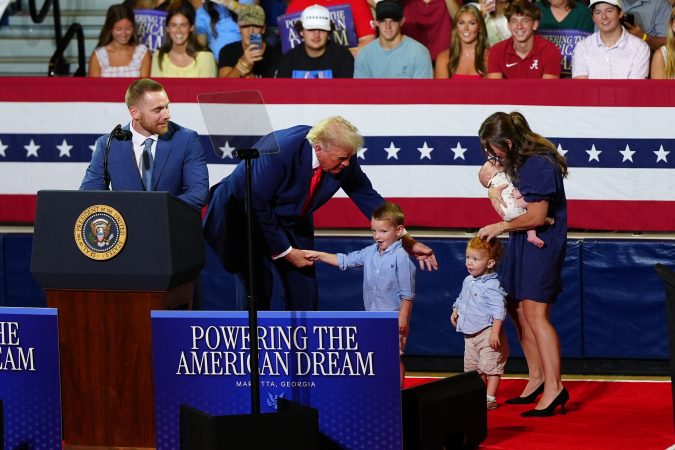
    WASHINGTON — At a rally Wednesday, President Donald Trump touted the $1,000 babies can receive when their parents open Trump Accounts in their names, seed money that Trump says will help give them “a really fair shot at the American dream.”

    “Think of that. The government is finally giving money back to our children,” Trump said to the crowd gathered at a Georgia high school

    Some parents who opened accounts earlier this month for their babies say they’re still waiting for their money. The accounts went live July 4, two days before Trump rang the opening bells for the New York Stock Exchange and the Nasdaq from the Oval Office.

    The tax-advantaged accounts can be opened for any child under the age of 18, and more than 7 million accounts are already active, Trump said Wednesday. Babies born between Jan. 1, 2025, and Dec. 31, 2028, get $1,000 in seed money from the U.S. Treasury. Most of those families receive their $1,000 in one or two days, the Treasury Department said.

    After the Trump Accounts are set up, parents, relatives, friends and employers can contribute to them. Some billionaires have also pledged philanthropic contributions to the accounts. The money is turned over to private firms that invest it in index funds, a type of mutual fund that tracks the performance of the stock market. The money can’t be accessed until the child turns 18, and only then for specific purposes, such as going to school, opening a business or buying a home.

    At the rally Wednesday, Rick Jackson, Georgia’s GOP nominee for governor, said he would push for state lawmakers to match the $1,000 in seed money from the federal government. Jackson, a wealthy businessman and CEO of a healthcare company, said he believes Georgia lawmakers will support that, but “if they don’t, I will personally donate it myself.”

    Boosters of the program say it’s a chance to give more Americans a stake in the stock market. They hope it will stem the rising popularity of democratic socialists, who seek to raise taxes on corporations and wealthy people to ease the cost of things like food and healthcare for low-income and middle-class Americans.

    Some parents were told it could take 4 weeks for the deposit

    For babies born since Trump took office last year, $1,000 from the U.S. Treasury is supposed to kick off the accounts. While some parents report receiving the money, others said in interviews and on social media they’re still waiting for their $1,000.

    Masaki and Kristina McLellan, new parents from Bergen County, N.J., said in an interview they were wary of signing up for the accounts because they worried it was a promotional stunt for the president. But the $1,000 incentive persuaded the couple, whose daughter Maya was born in late March, to start an account anyway.

    Masaki McLellan said he applied for the account July 6. At first, the application was rejected, but the account was activated after he called the Trump Account hotline. He was told he’d see the money in the account in 10 days. Now, he says, he’s been told it will take up to four weeks.

    Kristina McLellan said she was disappointed it was taking so long to fund her daughter’s account. But the infant has multiple other investments already compounding for her. Maya’s parents have already started a 529 college savings plan and a custodial brokerage account for her. The Trump Account is the third investment account in the little girl’s name.

    “We definitely want to give her options for her future and make sure she can choose what she wants to do,” said McLellan, a studio director for a local news station, who returns from maternity leave next week.

    The Treasury Department emphasized the McLellans’ case is unusual and said only a sliver of those who apply need customer support.

    Treasury says most parents wait only 1 or 2 days

    The Treasury Department said that the lag between opening an account and receiving the seed funding constitutes “standard processing time, like receiving a tax refund,” and that the overwhelming majority of parents are waiting only one to two days. But the department likes to give parents a conservative estimate for how long it might take for the money to be transferred, such as the estimate of up to four weeks given to the McLellans.

    “Trump Accounts level the playing field by allowing every parent to invest in their children’s future, not just wealthy families with trust funds,” the department said.

    The government also unveiled an initiative last month that permits child welfare agencies to open accounts on behalf of foster youth.

    “With roughly 1 million sign-ups per month before launch, Trump Accounts have become the most popular and successful government-backed savings product in U.S. history,” the Treasury Department said.

    On Wednesday, Trump called the accounts “the most consequential” part of his signature tax and spending cuts bill, also known as the One Big Beautiful Bill.

    Trump faces pressure over his handling of the economy

    Trump’s stop in Georgia comes as he and fellow Republicans face pressure in the midterm elections for their handling of the economy. Only 33% of U.S. adults approve of Trump’s economic leadership, among the lower ratings of his second term, according to a June survey by the Associated Press-NORC Center for Public Affairs Research. Trump pledged to lower costs, but his tariffs and the war in Iran have instead helped to increase prices.

    Trump Accounts are similar to baby bonds, championed by Democratic-led cities and states meant to shrink the wealth gap between low- and high-income children. But unlike most baby bonds, which generally target kids from disadvantaged backgrounds, Trump Accounts are available to families of all incomes.

    The program has faced criticism from those who say it does nothing to help families in a child’s first years of life, when children are most likely to experience poverty, homelessness, and hunger. And the Republican bill that created the program also slashed funding for programs that are disproportionately used by children, including Medicaid and the Supplemental Nutrition Assistance Program.