Ewart Rouse, 85, of Lawnside, retired award-winning reporter and editor for The Inquirer, author, journalism adjunct professor, mentor, immigrant advocate, and indomitable cricketer, died Thursday, July 2, of age-associated decline at the Samaritan Center at Voorhees.
Born in Trinidad, West Indies, Mr. Rouse immigrated to New York in 1969 and joined The Inquirer in 1974. For nearly 30 years, until he retired in 2002, Mr. Rouse was an award-winning business and news reporter, suburban editor, and mentor to hundreds of young journalists.
He won a 1980 Keystone Award for a news series on city taxi service and was recognized for another series on street gang homicides involving Black youth. Later, he wrote business columns and covered South Jersey news.
He opened a 1975 story about former President Gerald Ford’s first visit to Philadelphia with: “The old man sat alone and dejectedly with his flags against the wall of the Philadelphia National Bank building at 5th and Market Streets. ‘Not one,’ he muttered. ‘I haven’t sold not one flag today.’”
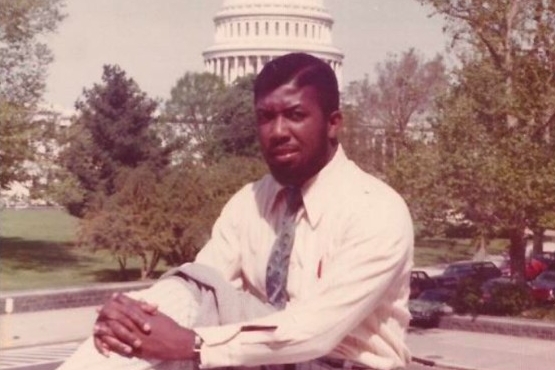
Mr. Rouse worked for the Associated Press in Washington DC.Courtesy of the family
Before The Inquirer, Mr. Rouse was a news and political reporter for the Associated Press in Newark, N.J., Atlantic City, and Washington, D.C. “He was a popular colleague who contributed importantly to the paper’s growth,” Gene Foreman, retired managing editor at The Inquirer, said on Facebook.
Other former Inquirer colleagues called Mr. Rouse “professional and gracious,” “careful and respectful,” and “kind and generous.” Retired Inquirer editor Lil Swanson said on Facebook: “Ewart was filled with wisdom and grace. When he was an editor, young writers flocked to him because he always made their stories better and helped them grow.”
He covered courts and politics for the Trinidad Guardian in Port-of-Spain before leaving for New York, and interviewed Trinidad Nobel laureate V.S. Naipaul for the 1997 book Conversations with V.S. Naipaul. In Philadelphia and South Jersey, he taught news writing, business writing, and investigative journalism at Temple, Rutgers, and Arcadia Universities.
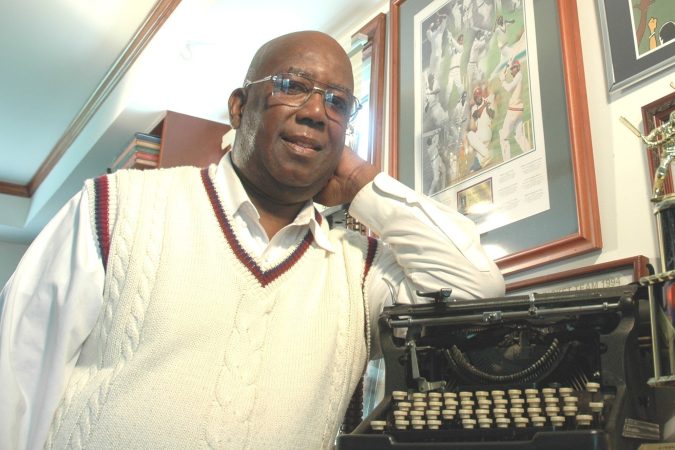
Mr. Rouse loved to play, watch, and write about cricket.Ewart Rouse
Readers called his books “highly entertaining” and “a wonderful addition to cricket literature” in reviews. His daughter Karen said: “The clackety-clack (zing!) of his typewriter was a constant in our home.”
Mr. Rouse played cricket in Trinidad and later in South Jersey, and he cofounded the Philadelphia Cricket League, the New Jersey Cricket Association, and the Echelon Cricket Club. He played the game, managed teams, and became one of the region’s greatest advocates for cricket and its immigrant players.
In 2013, he earned a lifetime achievement award from the South Jersey Caribbean Cultural and Development Organization, and recognition from then-Camden Mayor Dana Redd for his contributions to the community as a journalist, teacher, and cricket activist. “It truly was an honor to be recognized by my own community,” he said on his website, ewartrouse.com.
In a 2016 online interview, Mr. Rouse was asked to advise young writers. “Read anything you get your hands on,” he said, “From books and newspapers … to labels on paint. Each contains nuggets of information that the mind will retrieve for just the right spot in your next project.”
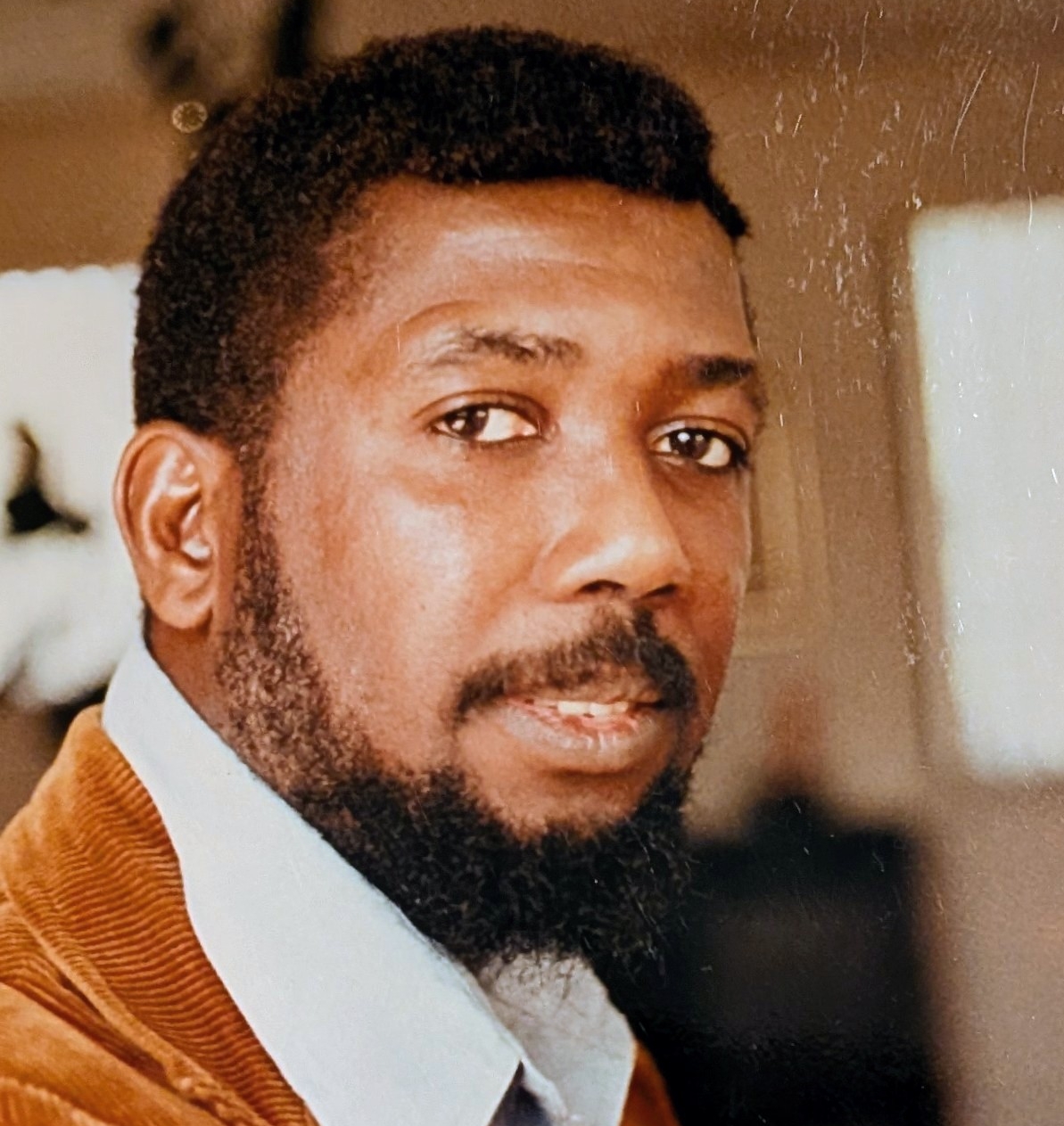
Mr. Rouse and his wife, Vanda, met in Trinidad.Courtesy of the family
Ewart Rigsby Rouse was born Sept. 16, 1940, in Tunapuna, Trinidad. He was an avid reader and creative writer as a boy, and noticed one day that several of his favorite writers — Charles Dickens, John Steinbeck, and Ernest Hemingway — started out as newspaper reporters.
“And now I wanted to be a journalist like them,” he said in a short self-published autobiography.
He met his wife, Vanda, in Trinidad, and they married and had daughters Joann, Karen, and Kristin. They lived in New York, Pleasantville, N.J., and Washington, and settled in Lawnside in the 1970s.
Mr. Rouse was active with the C.C. Morris Cricket Library Association, the South Jersey Writers’ Group, and the Rainy Tuesday Writers Group. He was an avid gardener and routinely gave away bags of home-grown tomatoes to friends and neighbors.
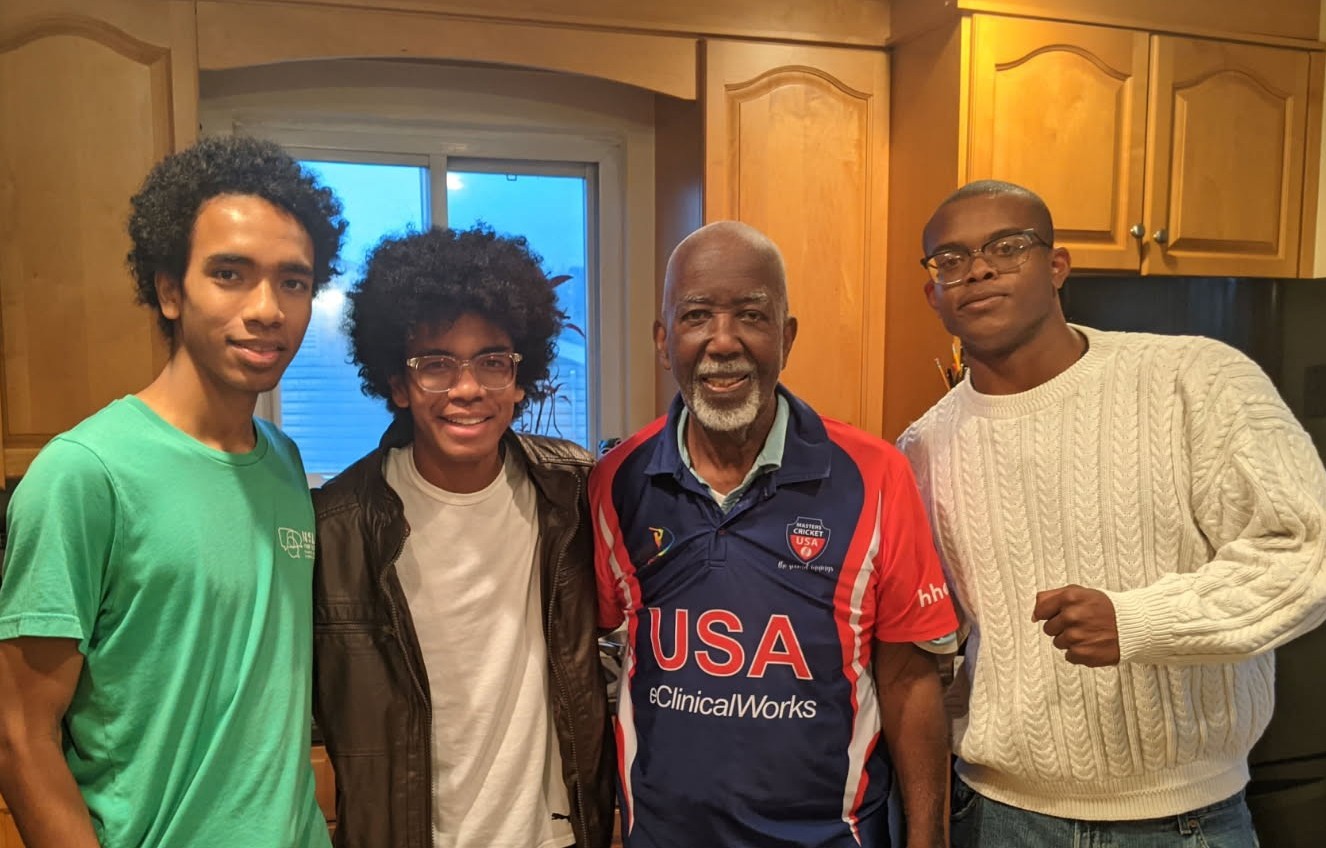
Mr. Rouse enjoyed time with his grandsons. Courtesy of the family
He collected records, listened to Nat King Cole and Frank Sinatra, followed the 76ers, and grilled outdoors as often as possible. He took his family on memorable trips to Trinidad that “opened up a world to us that was accessible, one that we could dare to explore,” said his daughter Karen.
In 2016, Mr. Rouse told aspiring writers: “Who knows, maybe you end up with a bestseller. Some might call you a dreamer. But, hey, as the saying goes, you can’t have a dream come [true] if you don’t have a dream.”
New findings about an alien asteroid are out, and it’s all thanks to a New Jersey couple after an uninvited hazard crashed into their home two years ago.
In July 2024, a meteorite shot through the sky. Observers across the Northeast said they witnessed a fireball at the time.
Before reaching Earth, the asteroid had a mass of 115 pounds, according to calculations based on the fireball’s brightness, speed, and sonic boom. Most of the mass — which blazed through the atmosphere at 32,000 mph — was annihilated. The news went quiet.
NASA said at the time that the rock likely hadn’t survived. No one reported anything making it to the ground.
But in a quiet Hillsborough, N.J., residence, a couple’s home started violently shaking at around 11:15 a.m. The male homeowner — who requested anonymity citing privacy concerns — told the New York Times the crash caused a hole in the ceiling above his bed.
A handout photo shows damage to the ceiling, attic, and roof of a home in Hillsborough, N.J., that was struck by a meteorite on July 16, 2024. A New Jersey couple helped scientists uncover the makeup of an unusual asteroid after it fell into their bedroom.VIA THE NEW YORK TIMES
“Good thing I didn’t sleep in,” he told the Times. The meteorite fragment also had an odor: rotten, sulfurous, with fine black soot and dark rocks.
TheSomerset County couple spent weeks gathering what would amount to about three pounds of extraterrestrial material, using disposable gloves, aluminum foil, and glass jars on the advice of scientists who would later study the findings in detail.
They painstakingly extracted every fleck of meteor dust they could find, using tape to peel microscopic bits off walls, and buying a new vacuum cleaner to exclusively suck up cosmic particles from the carpet, they told the Times.
“We were extremely meticulous,” one of the homeowners said. “The only thing we were missing were the hazmat suits.”
And they told no one about the meteorite except immediate family and the scientists — until now.
“Thanks to the homeowner’s quick reaction, these are the most pristine [meteorites] we know of,” saidPeter Jenniskens of the SETI Institute(a nonprofit institute that studies extraterrestrial intelligence)and NASA’s Ames Research Center.
Two years later, the secret is out.
A journal published Wednesday by ScienceAdvances details the homeowners’ findings and the contents of the meteorite.
As it turns out, the fragments showed scientists that the meteorite was made of a rare and primitive material. The study also revealed that before the fragments broke off, the meteorite had been covered in brine. Meteor experts say that’s a new observation and suggests the meteorite’s parent asteroid had liquid water that evaporated.
Researchers said high concentrations of salt in brines could “create molecules crucial to life on Earth.” The meteorite also held a mix of soluble organic compounds, including amino acids, and compounds found in blood and used in photosynthesis in living organisms.
Does that mean we absolutely have proof of aliens now? Not so fast.
But experts say it does help scientists understand what building blocks of life may have been delivered to the early Earth.
Now that the study of the meteorite is wrapped, the American Museum of Natural History in New York City will receive some of the fragments.
“We are thrilled that nature delivered such a precious asteroid sample on our doorstep,” museum curator Denton Ebel told CBS.
As for the meteorite’s name? It wasn’t New Jersey-born, but it sure was New Jersey-bred. The meteorite was named Hillsborough, for the roof it crashed through and the couple who helped preserve it.
Smoke from Canadian wildfires continues to blanket the region, casting a haze across the sky and posing a risk for people with respiratory issues.
With massive fires burning across Western Ontario, forecasters said wind patterns shifted this week to allow the smoke from those fires to enter the Northeastern and Mid-Atlantic United States.
The city raised the air quality alert level from code red to code purple — meaning the air is “very unhealthy” and can cause health issues for all people.
Friday morning, at least six of the city’s air quality sensors were registering above 200 in the amount of fine particulate matter and nitrogen dioxide in the air, a metric called the air quality index. The city website tracking air data warned people to stay inside, keep windows and doors closed, and run air purifiers if possible. Those who must venture outside should wear N95 or KN95 masks.
(function () {window.addEventListener(‘message’, function (e) { var message = e.data; var els = document.querySelectorAll(‘iframe[src*=”‘ + message.id + ‘”]’); els.forEach(function(el) { el.style.height = message.height + ‘px’; }); }, false); })();
An AQI between 150 and 200 is still considered unhealthy to breathe with prolonged exposure, according to the EPA. Children, older people, and those with respiratory issues could be particularly susceptible to health issues. In air quality alerts issued by the National Weather Service, forecasters recommended avoiding prolonged outdoor exposure, particularly activities like exercise.
By Friday a prior heat advisory had been lifted, with temperatures expected to near 90. Air quality tends to worsen in dense, urban environments during hot weather.
Forecasters urged residents across the eastern United States, particularly those with respiratory issues, to monitor alerts from local officials and be mindful of conditions where they live or work.
(function () {window.addEventListener(‘message’, function (e) { var message = e.data; var els = document.querySelectorAll(‘iframe[src*=”‘ + message.id + ‘”]’); els.forEach(function(el) { el.style.height = message.height + ‘px’; }); }, false); })();
If you’re not able to zoom in on the above map, click here for another version.
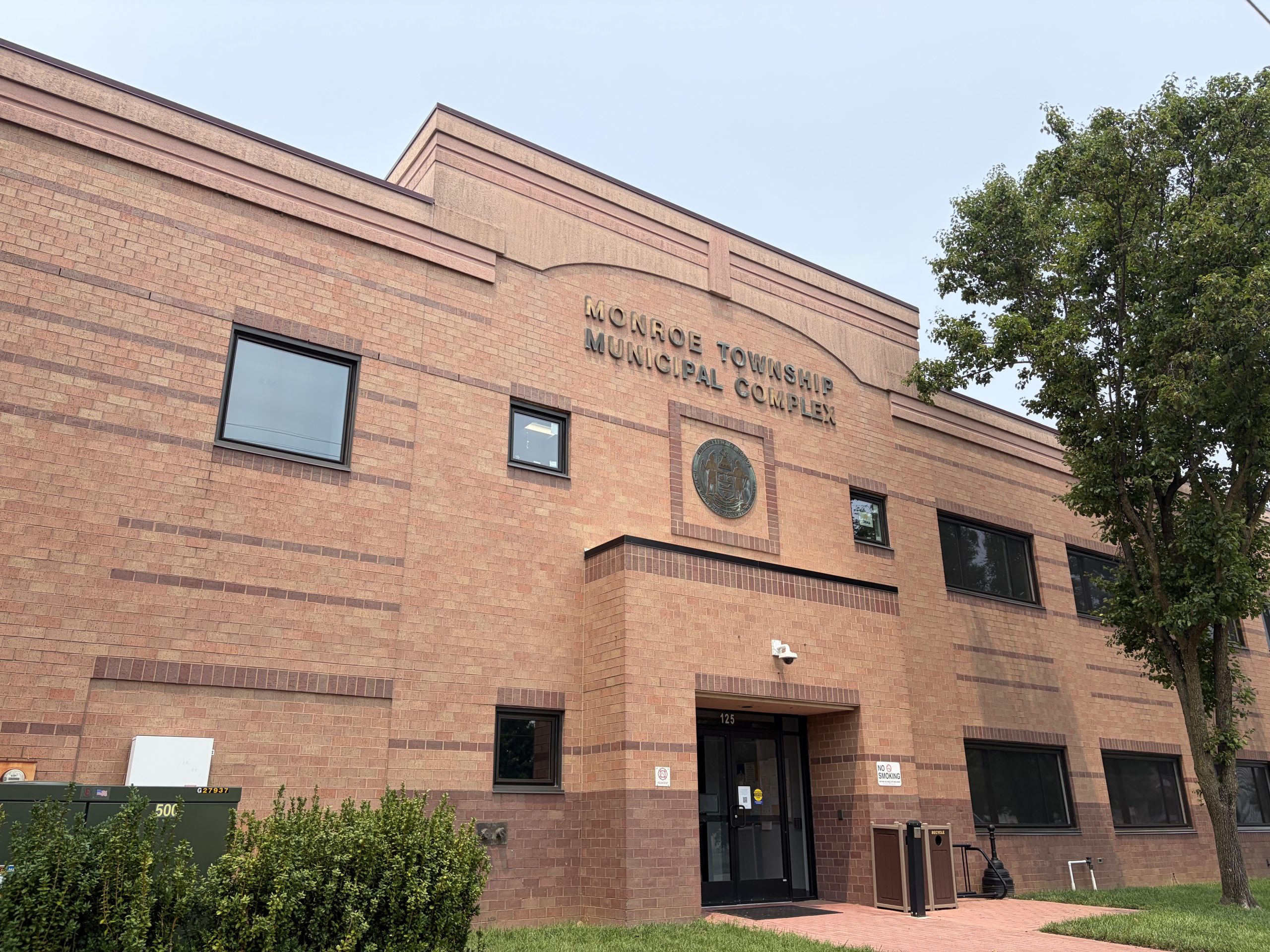
Data centers have drawn controversy across the region as residents protest their potential impact on the environment, noise levels, and quality of life. That debate is raging now in Monroe Township, where officials recently banned their development.
Now, a company that has been planning to build a data center in the Gloucester County municipality is pushing back.
Princeton-based Hexa Builders has for years sought to develop a property at 3043 Black Horse Pike. It’s now suing Monroe officials for $300 million after they denied its application to build a 1 million-square-foot data center and a warehouse.
Among Hexa’s allegations, according to its complaint: “Data centers are a medium of expression and banning data centers would impose a significant burden on the free speech rights of all citizens in the United States.”
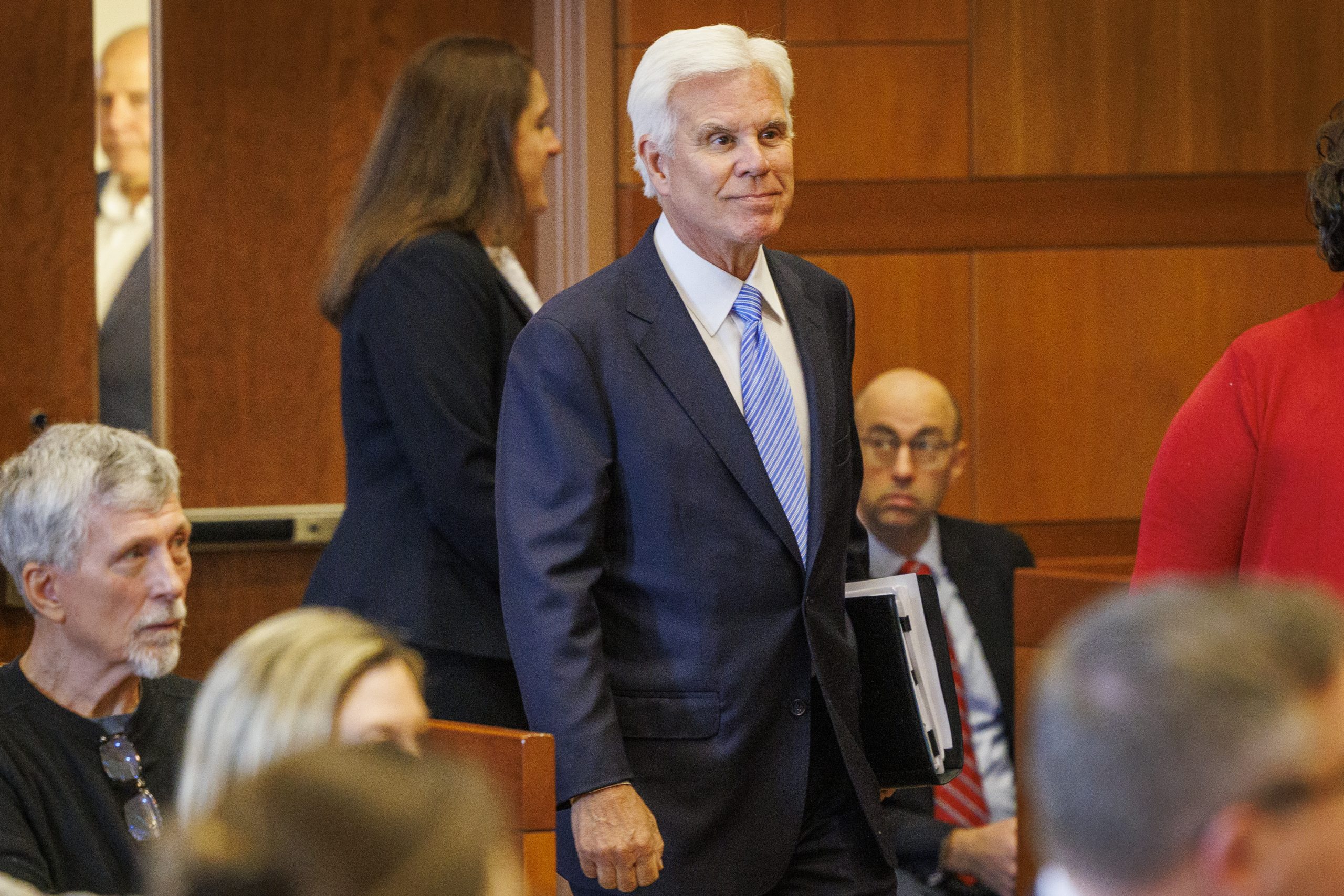
An Inquirer staffer’s typed interview notes from 2019 came into the possession of the New Jersey Attorney General’s Office during an investigation that led to the high-profile, and recently abandoned, racketeering indictment against South Jersey power broker George E. Norcross III.
News organizations typically treat unpublished reporting material as confidential and often fight government demands for it in court.
The Inquirer’s top editor said the notes were not passed on by the journalist, nor was the company subpoenaed by authorities for them.
More than 500 acres of Burlington County farmland could be protected from development after officials voted to bring seven farms into the county’s Farmland Preservation Program.
The parasitic infection cyclosporiasis has been found in dozens of states, though cases in New Jersey were at typical levels as of this week.
Burlington County received $500,000 to improve its trails. The bulk of the funding will go toward engineering design costs for a trail segment that goes through Mount Laurel.
State energy regulators are investigating after July Fourth storms left around 850,000 New Jerseyans without power, mostly in areas serviced by PSE&G and Jersey Central Power & Light, New Jersey Monitor reports.
Somerdale Cold Cuts in Somerdale has temporarily closed after a thief stole copper piping connected to its refrigerator and deli case, according to 6abc.
🧠Trivia time
Which former New Jersey governor signed a bill into law to formally recognize Central Jersey?
A reader asks: I have been doing the Shore my entire life. I still pack an outfit for every day and an outfit for every night. Am I weird? Do other people do this or do they just throw stuff in a suitcase and wear the same things over and over because they are “on vacation down the shore”?
Amy answered: I appreciate [this reader’s] effort to keep things elevated. But I think the majority is falling into the “throw stuff in a suitcase” camp. Plus, they need room for the sheets the rentals don’t provide down the Shore.
Where do you fall on this topic? Is there such a thing as too casual at the Shore? Email Rosenberg at downtheshore@inquirer.com.
📸 Photo of the week
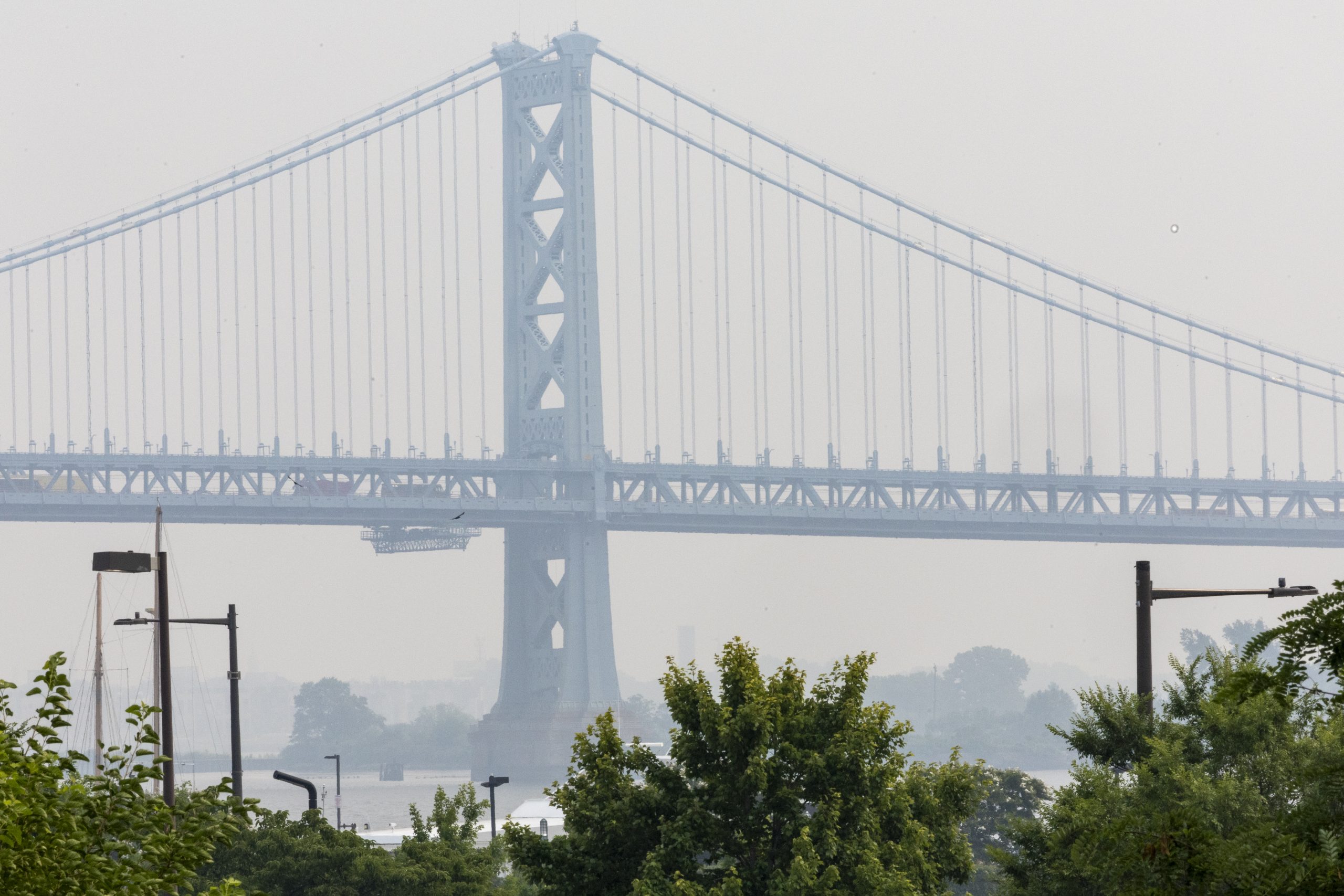
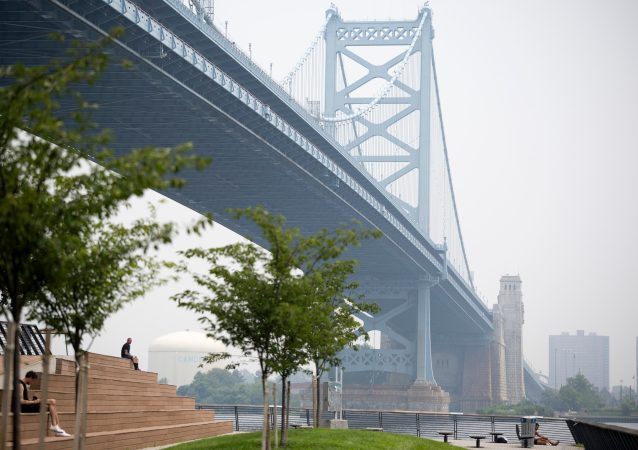
Hazy skies over the Ben Franklin Bridge caused by wildfires in Canada on Thursday.Aidan T. Gallo / Staff Photographer
Stay safe out there as you enjoy your weekend. I’ll be back with you Monday morning with more South Jersey news of the day.
By submitting your written, visual, and/or audio contributions, you agree to The Inquirer’s Terms of Use, including the grant of rights in Section 10.
A real estate developer sued local officials in Monroe Township for $300 million shortly after the Gloucester County municipality banned data centers. Now, the case has moved to federal court.
Hexa Builders, a Princeton-based real estate developer, has long sought to develop a property at 3043 Black Horse Pike. Hexa filed a lawsuit on June 5 in New Jersey Superior Court after Monroe officials denied its application to build a 1 million-square-foot data center and a warehouse on the property.
The ban, put in place by two ordinances approved by the township on April 22, followed months of public outcry against Hexa’s potential project. Even after the ban was passed and officially took effect on May 13, Monroe Township residents packed the room when Hexa presented its application that still included a data center at a rowdy Special Planning Board meeting on May 22.
In the filing against Monroe’s mayor, township, and planning board, Hexa claimed the application rejection and data center ban are arbitrary, violate freedom of speech rights and the 14th Amendment, and more. The Woodbury Warbler, a local news site, reported on the filing last month.
Jim Maley, Hexa’s lawyer and a partner at Maley Givens in Collingswood, said he expects the ban to be overthrown, since he believes the ban in Monroe stems from trending public disdain for data centers.
“Nobody is giving any testimonial, any scientific reasons for the good of the community. Everybody’s doing it,” Maley said. “It’s just a thing.”
For now, Maley said Hexa is at a standstill. But the company still wants to complete the project, even with the public’s pushback and what could be a lengthy court process.
On July 6, the township moved for the case to be pushed to federal court, closing the Superior Court case, and no federal proceedings are on the docket yet.
“The Township is committed to vigorously and zealously defending this lawsuit while remaining steadfast in its commitment to protecting the interests of the Township, its residents, and its taxpayers,” said Sandra Graise, solicitor for Monroe Township, in an email.
Graise declined to further comment on the case or the data center ban, but the township wrote in a Facebook post last month that the lawsuit wasn’t a surprise.
How the ban came to be
Hexa, led by CEO Dipal Patel, officially obtained the property in a $5 million transfer of about 170 acres of farmland back in 2022. The township has included that land in a resolution for commercial redevelopment since 2019.
The site was previously approved for the construction of hundreds of homes when Hexa bought it, Maley said, but the township ended up moving in a different direction. In 2022, the township approved a redevelopment plan that set the grounds for Hexa to build warehouse, storage, and distribution facilities on Black Horse Pike, but not data centers.
That changed in early 2025, when the township passed an ordinance amending the redevelopment plan to allow data centers.
It didn’t take long for residents to speak out about the impact a data center could have on water quality, pollution, and noise in their neighborhoods, even before Hexa officially added a data center to their plan.
A planning board meeting in January 2026 dragged on for more than four hours because of resident objections, but the township still voted to approve a preliminary site plan for Hexa to move forward with its warehouse and distribution center project. The proposal didn’t include a data center at the time, though the lawsuit filed in June claims that Hexa had already expressed interest in developing one, and residents made it clear they weren’t fans of the possibility.
The township drafted an ordinance in March to set standards for data centers, including noise restrictions and a closed loop cooling system to avoid groundwater withdrawal, but that ordinance was tabled and never moved forward.
Instead, in April, Monroe passed two ordinances: one banning data centers altogether, and another repealing the 2025 ordinance that allowed data centers on Hexa’s property.
“At the end of the day, this Township has now banned any data center use from ever coming to Monroe Township. I thank those residents who attended the many meetings and expressed their concerns. The process worked,” Mayor Greg Wolfe wrote in a May township newsletter.
Two weeks before the ban was adopted, though, Hexa’s legal complaint claimed it submitted an amended application to the township to turn one of its proposed warehouses into a data center.
Maley said the amendment was driven by “interest from the marketplace that began before Township passed the ordinance” that allowed data centers at 3043 Black Horse Pike last year.
When Hexa sought approval for the new application on May 12, the township deemed the company’s application incomplete, prompting Hexa’s lawsuit.
The lawsuit
The $300 million sought by Hexa Builders accounts for financial losses related to the stunted data center project, Maley said.
“The damages all come from real, actual commercial realities here. … It’s the loss of the value of the project,” Maley said.
In its 102-page complaint, initially filed in Gloucester County court on June 5, Hexa claimed that Monroe violated the 14th Amendment by treating Hexa’s plan differently from similarly sized projects, like warehouses and other high water usage facilities, that it claims would have similar environmental and aesthetic impacts.
Hexa also claimed that banning data centers violates the First Amendment and free speech rights, since the facilities could support artificial intelligence and social media communications in the area.
Maley said the data center ban will have “an adverse effect on communications,” and the argument is an effort to adapt constitutional law to today’s tech.
“Data centers are a medium of expression and banning data centers would impose a significant burden on the free speech rights of all citizens in the United States,” the complaint reads.
Those are just some of the 20 counts alleged by Hexa, including that the township didn’t give the company ample notice of its ban as it prepared data center plans. Monroe Township officials have publicly shared their intention to keep mostly silent on the litigation as the case moves forward.
Some residents have continued to speak out at meetings and ask questions about potential loopholes in Monroe’s ordinances to ensure their neighborhoods remain data center-free.
At the township’s planning board session on July 9, Williamstown resident John Romano asked who allowed Hexa’s application to get so far in the first place, and whether Monroe will be able to hold a case against Hexa in court. He said the data center would be right in his backyard.
“I’d like to sit out in my backyard and enjoy a stogie and a cold one and not hear noise and pollution and this and that,” Romano said. “I would like to be able to stay in Monroe Township, live out my golden years here, which was the plan. This has got my wife and I really concerned.”
BERLIN, N.J. — Blake Zielinski carried the puck around the ice at Pennsauken Skate Zone in Camden County on a muggy late June day. He skated around an Edgebosshockey mini-stick, dangled and weaved before putting a shot into the upper corner.
There was some hooting and hollering, a raised stick, and a celebration with one knee touching the ice before the winger with a big grin threw a hit into the glass at the end boards.
Peering through the glass along the sideline were Ed Snider Youth Hockey & Education campers who one day hoped to follow in Zielinski’s footsteps. Above him hung banners that also dotted the other sheet of ice at the Skate Zone. Each banner includes a name, a logo, and a year. There are Mattias Samuelsson-Buffalo Sabres-2018; Cam Dineen, who just signed with the Flyers, with Arizona Coyotes-2016; Tyler Boucher-Ottawa Senators-2021; Cayden Primeau-Montreal Canadiens-2017; and the late Johnny Gaudreau-Calgary Flames-2011.
A 15th banner is now set to join them: One for Blake Zielinski, Los Angeles Kings, 2026.
“Obviously being drafted is a dream come true,” he told The Inquirer via text while on the West Coast for the Kings’ development camp. “It’s what I’ve been working toward my entire life. There’s honestly no words that you can describe the feeling that went through me after my name was called. I couldn’t have done it without my family and everyone who helped along the way, and it’s just the beginning, for sure!”
While the beginning of Zielinski’s NHL dreams is on the West Coast in gray, black, and white, his origin story is in orange and black.
Blake Zielinski had to wait until Day 2 of the NHL draft, but not for long, as he was selected 80th overall by the Los Angeles Kings.Courtesy of Julie Zie
A natural skater finds his calling
On a quiet street in Berlin, Camden County, nicely manicured lawns dot the landscape. Inside one of those houses lies a basement that has seen its fair share of knee hockey, and the living room’s hardwood floor is scratched because of a makeshift puck made out of an old tobacco tin and tape. Three kids, Grant, Kylie, and Blake, the youngest, filled this house with memories.
The backyard is typical, with a comfortable sitting area, green grass, lighting, and a white fence. The fence looks tall, but it is actually not tall enough. Despite its majestic height, it cannot stop hard rubber disks from heading into a neighbor’s yard.
“I broke a couple of fences when I was younger,” Blake said with a chuckle. That is why two summers ago, Blake, his father, Joe, and one of Joe’s friends dug a foot down into the dirt, built a shooting platform — it has a BZ97 on it — and set up netting that stretches all around a hockey goal, almost touching the fence on both sides and going vertically to the sky.
Blake Zielinski shoots pucks in the backyard with his dog, Mabel, at his family home in Berlin.Isaiah Vazquez / For The Inquirer
This spot, regardless of the weather, has seen several buckets of pucks find the netting — preferably between the pipes of the 6-by-4-foot goal — or stopped by Mabel, the family dog.
All of these moments have been tinder, lighting up easily as Blake’s love of the game and his skill level have grown to become a third-round NHL draft pick. But the initial spark came from the Flyers, of course.
“My first hockey game [that] I think I ever watched was the Flyers in the Stanley Cup Finals in 2010,” he said. “I was 2 or 3 years old, and I saw Patrick Kane score the goal on the Flyers, and it stuck with me. I don’t know why. But that’s one reason I really love hockey, and just, in general, after that, I just fell in love with it.”
Blake would often accompany his older brother Grant’s ball hockey games in Marlton, Burlington County. He was handed a stick and ball, and spent time hitting the ball off the rink before finally playing games from his preschool days until the eighth grade. The ice hockey itch came early.
By the age of 3, he wanted to skate, his mom Julie recalls.
“My friend Jenn [Edwards], I just happened to meet with her because our daughters played field hockey together and she said, ‘Oh, I’m a skater. … I can teach him,’” Julie said.
“So I said, ‘Let’s go.’ Put on his little jacket … he had a helmet. And went over to the Flyers Skate Zone, met with her. And she said, ‘He’s doing great. How long has he skated for?’ I said, ‘About 20 minutes.’”
Blake Zielinski skates for the first time, working with family friend Jenn Edwards, at the Flyers Skate Zone in Voorhees. According to his mother, Julie Zielinski, he threw the walker aside and “that was it.”Courtesy of Julie Zielinski
The family still jokes that Jenn said it just because she wanted to make money with lessons, but that was far from the case. It was easy to see Blake’s knack for moving on ice — and for the record, Edwards jokes in return that she wants credit for him becoming a draft pick.
A Flyers fan, and an audience with Johnny Hockey
Over time, Zielinski progressed through the youth hockey ranks in the Greater Philly Area. While his number has changed over the years — he was, coincidentally, given Danny Brière’s No. 48 by the Kings at development camp — some of it was with a No. 93 on the back. One of his favorite players growing up was former Flyers right wing Jakub Voráček.
“My first game, I was pretty young. I think I had this Voráček jersey. I got surprised for my birthday,” Blake said. “ … I think there used to be a restaurant in Wells Fargo where you can see the ice when you’re up there eating. Just enjoyed it with my family.”
The number of games he has attended over the years is too big to count. Joe would often take Grant and Blake on Thursday nights, and they would have to begrudgingly leave early because it was a school night, his sons often chirping at their dad if they’d left a game that the Flyers came back to win.
Recently, Blake was there watching the Flyers take on the Pittsburgh Penguins in almost every home game of the first round of the Stanley Cup playoffs, dreaming of what it would be like under those same bright lights.
Blake Zielinski’s suit jacket for the draft featured moments and memories from throughout his hockey career. More than 20 people were in Buffalo, N.Y., to hear his name called, including his 82-year-old grandmother, Patricia Mayer, and his billet mom from Iowa, Kelly Schofield.Isaiah Vazquez / For The Inquirer
“When he was in preschool, he made a book, and the whole book was based on the Flyers,” Julie said. “The rink, the number, all of it, the little stick figures. And it was, one day, when I grew up, I’m going to play for the Flyers. … He wore Flyers stuff all the time to school. And every picture was always Flyers or [a] rink or something.”
Blake would actually don orange and black, playing for Virtua and Flyers Elite, which is where people began noticing the kid racking up points. As a youngster, he skated with the kids of Flyers players and coaches, and he suited up for Tony Voce, the first Philly native to play for the Flyers organization, a few times, including at the World Selects Invitational.
And like any local kid, he plied his trade not only at Pennsauken and Voorhees, but also at Holleydell Ice Arena in Sewell, Gloucester County, working with South Jersey coaching legend Guy Gaudreau and skating a few times with his son Johnny in the summer.
“When I was on a summer team, Guy was coaching us; Johnny would always come on the ice a little bit and come around,” Zielinski said. “And so he came out to one of the practices, and he demoed one of these drills, and just came down — we were like 7- or 8-year-olds, and he just ripped it on our goalie.
“That was always one of the moments that I remember, just him coming down and always giving the kids in the community a good laugh, and just that was the person he was,” Blake recalled of the Calgary Flames and Columbus Blue Jackets forward, who was a fatal victim in an alleged drunken-driving incident while cycling along with his brother Matthew in August 2024 in South Jersey.
A young Blake Zielinski grew up dreaming of being a Flyer, he is now a member of the LA Kings organization.
The hockey world takes notice
At the age of 15, Blake started playing with the North Jersey Avalanche, a top-tier U16 squad based out of Ice House in Hackensack.
It took a village to get him up and down the state for practices and games, with his sister Kylie picking Blake up from school and dropping him off at Julie’s school before she got him to Joe’s office for the drive north. There were a lot of late-night dinners at home — often after midnight — before getting up early for school.
Although he eventually billeted in North Jersey, the long trips paid off. It was with the Avalanche that Providence College first saw Zielinski play; he will be a freshman there in the fall. And it was there that he was asked to head to Des Moines, Iowa, for a two-week stint in November 2024 with the Buccaneers of the United States Hockey League. He went out again in December and was in the airport in Chicago, eating and watching YouTube videos, waiting to head home, when he got the call that the Bucs wanted him to play the rest of the season with them.
“When I went out and watched him play in Des Moines, I was really impressed with how well he wanted the puck and was holding on to the puck in the game,” Friars coach Nate Leaman said during a recent phone interview.
Blake Zielinski scored 25 goals this past season for the Buccaneers.Courtesy of Des Moines Buccaneers
“He’s like the youngest guy in the game, and he was really good at getting the puck, holding on to the puck and making plays with the puck. Typically, you see young guys go in the USHL, and they’re a little timid, but I thought he did a really good job with that.
“He’s really crafty around the net. He can score. He’s another kid who is pretty physically put together,” he added about the 6-foot, 187-pound winger. “I think that’s good, but I think the big thing with him is just that you get him below the tops of circles, on the power play, around the net, he’s really crafty and quick in those situations.”
He notched 32 points in 41 games to finish the year, with the hockey world starting to take notice. Last summer, he opened more eyes when he helped the United States win gold at the Hlinka Gretzky Cup, leading the team with four goals and nine points. In the semifinals, he was named USA Hockey’s player of the game after potting a goal and an assist and scoring in the shootout with a “T.J. Oshie move” to beat Canada, 4-3.
This past season was a busy one. Aside from 55 points in 53 regular-season games and two goals in three playoff games for the Bucs, he was a late addition to the U.S. roster at the CHL USA Prospects Challenge, a two-game series between top prospects for the 2026 draft from the Canadian Hockey League and the U.S. National Team Development Program Under-18 Team.
In December, as a 17-year-old, he was part of the U.S. team that won gold at the World Junior “A” Challenge, a U-19 tournament, notching two goals and four points in five games. And in January, he played in the Chipotle All-American Game, showcasing the top draft-eligible players from USA Hockey’s U-18 National Team and other teams in the USHL.
And at the end of the USHL season, Zielinski received the Gaudreau Award, an honor given annually to the player in the United States Hockey League who best embodies the legacy of Johnny and Matthew.
“Despite his elite talent, Blake competes with humility and respect for the game,” his coach for Des Moines, Derek Damon, told USHL.com. “He understands that success is built through team effort, and he consistently uses his ability not just to stand out, but to lift the performance and confidence of everyone around him.”
Jane (second from left) and Guy Gaudreau (middle) with Blake Zielinski at the Second Annual Gaudreau 5K & Family Fun Day in May.Courtesy of Julie Z
Soon Blake Zielinski’s banner will hang near the one with Johnny Gaudreau’s name on it. It went by fast for the Zielinski clan. One day, he was a kid, bigger than others his age, unable to stop, and now the hope is that another South Jersey kid will follow in the footsteps of Johnny and live out his NHL dreams.
“It’s just been a great ride, and the time went so fast, you didn’t have time to think about anything,” Joe said. The ride is not done, but, as Voce, who died in July 2024, would advise, have fun.
“I think that’s one of the biggest things,” Blake said. “When I was younger, just go out there and enjoy it. My dad said that a lot to me when I was growing up, you have to enjoy every day, every second, because you never really know what could happen.”
Federal prosecutors in New Jersey on Thursday announced guilty pleas and prison sentences for five people connected to fraud schemes involving large checks stolen from the mail, including from a postal annex in Camden.
Juawan Reed, 30, of Sharon Hill, a former postal worker, pleaded guilty on July 15 to charges of conspiring to commit bank fraud, aggravated identity theft, theft of public money, theft of U.S. mail, money laundering, and filing a false income-tax return, U.S. Attorney Robert Frazier said.
Reed stole checks from the mail while he worked at the U.S. Postal Service Camden Carrier Annex, prosecutors said.
Reed sold checks or provided them to two other conspirators who advertised some of the stolen checks on social media or resold them to others, prosecutors said.
In one 2022 example, Reed stole a $686,541.88 U.S. Treasury check payable to a business in Pennsauken, New Jersey. Reed then provided the check to a conspirator, Christopher Hayman, 30, of Philadelphia, who then posed as the CEO of the business to open a bank account. Hayman then withdrew a substantial portion of the money before the bank was able to detect the fraud and closed the account, prosecutors said.
Hayman pleaded guilty on July 14 conspiring to commit bank fraud, Frazier said.
Reed admitted that he created and used a stolen identity to open financial accounts, which he used to launder some of the fraud proceeds, prosecutors said. He also admitted that he failed to report on his tax returns “hundreds of thousands of dollars that he earned from his crimes,” the U.S. Attorney’s Office said.
Reed admitted that the bank fraud conspiracy caused more than $2.4 million in actual losses and was intended to fraudulently obtain more than $20 million, prosecutors said.
Also as part of the fraud scheme, checks were stolen from blue mail collection boxes, and counterfeit version of stolen checks were created, and stolen checks were altered to increase their value, prosecutors said.
In a separate part of the conspiracy, fraudulent debit cards were created that led to more than $400,000 in actual losses for victims and intended losses exceeding $1.5 million.
On June 22, Tyree Holmes, 34, of Philadelphia, pleaded guilty to conspiring to commit bank fraud.
Kharon Parson-Wright, 28, of Marlton, was sentenced on June 22 to 57 months imprisonment, after previously pleading guilty to conspiring to commit bank fraud and aggravated identity theft.
Yasmene Johnson, 29, of Marlton, was sentenced on May 12 to 57 months imprisonment after previously pleading guilty to conspiring to commit bank fraud and aggravated identity theft.
Reed is scheduled to be sentenced on Nov. 17. Hayman is scheduled to be sentenced on Nov. 16, and Holmes on Oct. 27.
The polluted campfire-like vaporfrom Canadian wildfires plummeted air quality Thursday, lowered visibility enough that flights were delayed at Philadelphia International Airport, and prompted cancellation of a concert at Cooper River Park in Camden County.The Phillies moved Thursday night’s game up one hour due to air quality concerns.
The smoke, which was expected to blanket the region at least through Friday, originated from fires burning in Western Ontario, said Sarah Johnson, a meteorologist at the National Weather Service’s Mount Holly office.
It was swept in by winds that mixed to keep it closer to the ground.
“It’s just a factor of the winds at all levels kind of working together,” Johnson explained.
It is difficult to pinpoint when the air quality might return to normal, she said. Those forecasts come from state environmental protection departments and are usually no more than 48 hours out.
The Pennsylvania Department of Environmental Protection has declared a Code Purple Air Quality Alert for Friday. Code purple signifies very unhealthy air, meaning people should avoid long or intense outdoor activities, and sensitive groups should avoid all outdoor activities. The department suggested not using gas-powered lawn and garden equipment, and avoiding the burning of leaves or trash.
Rain forecast for Saturday could help suppress the smoke, Johnson said, but on Thursday afternoon it was too early to be sure.
Poor air quality caused by the fires remained the biggest issue as they burned through forests and buildings before their smoke swept south, collecting ambient pollution from Boston, New York, and other areas before reaching Philadelphia.
Philadelphia issued a Code Red Air Quality Caution Day on Thursday, meaning some people were at risk of experiencing health effects, including elevated risks forpeople with heart or lung disease, asthma, older adults, children, pregnant people, immunocompromised people, people experiencing homelessness, people who use drugs, people without access to air filtration, and outdoor workers.
The city advised people to limit their time outdoors and consider rescheduling activities.
“Today is not the day to start your marathon training plan,” Palak Raval-Nelson, commissioner of the Philadelphia Department of Public Health, said in a statement.
Penn State graduate student Ray Boone waits for the bus with a face mask on because of the air quality, on Thursday, July 16, 2026 at 17th Street and JFK Boulevard in Philadelphia. The Pennsylvania Department of Environmental Protection has declared a statewide Code Red air quality day due to Canadian wildfire smoke blowing into the Philadelphia region.Monica Herndon / Staff Photographer
High temps increase risks
The smoke affected thousands of square miles in the region, from the Poconos to the Shore through Delaware.
The Air Quality Index, or AQI, by the U.S. Environmental Protection Agency was in the unhealthy range for all of the region as of 4 p.m. Thursday. The index ranges from 0 to 500. Unhealthy is from 151 to 200.
Censors in Centre County, Pa., recorded a hazardous AQI of 345 by Thursday afternoon, the highest and most dangerous level. Other sensors in Lycoming and Bradford Counties recorded AQIs above 200, or very unhealthy.
Not helping: Temperatures in the 90s with humidity so high that it made it feel in excess of 100 degrees.
Julie and Bill Guise, 66 and 72, respectively, basked in the somewhat cool breeze billowing from a giant fan inside the President’s House complex at Independence National Historical Park, hoping to get relief from the oppressive air. The Flagstaff, Ariz., residents, however, were unaware of what exactly was causing it.
“We couldn’t figure out what it was,” Bill Guise said of the haze in the atmosphere.
But it did not change their plans. The couple are used to wildfires.
“It’s much worse out West,” Julie Guise added, likening the western smoke, when it’s extra bad, to sitting next to a campfire.
Eric Balaban, a pulmonary and critical care fellow at Temple University, was hesitant but still went running Thursday morning.
“If I didn’t have an addiction to running, I would not have gone. And I would recommend other people not to run. Do as I say, not as I do,” he said with a laugh.
But exposure to the smoke is a serious matter, Balaban said. He noted that the smoke that travels “carries a uniquely toxic profile that poses severe health risks to both healthy individuals and vulnerable populations.”
Ruth McDermott-Levy, a professor at Villanova University’s school of nursing, said that air quality had become a risk not only for those already suffering from health issues, but for everyone.
“All of us are at risk,” McDermott-Levy said. “Certainly there are groups of people at greater risk, from pregnant women, children, older people, and those with cardiac and respiratory illnesses. But we’re at an unhealthy level for everyone.”
The Philadelphia Museum of Art behind a smokey haze on Thursday, July 16, 2026 in Philadelphia. The Pennsylvania Department of Environmental Protection has declared a statewide Code Red air quality day due to Canadian wildfire smoke blowing into the Philadelphia region.Monica Herndon / Staff Photographer
What’s in the air?
The two major pollutants of concern are ground-level ozone and fine particulate matter known as PM2.5.
Ground-level ozone is a pollutant that forms when nitrogen oxides and volatile organics emitted by vehicles, power plants, and industry react in sunlight, especially during hot days. It can cause airways to constrict, leading to shortness of breath. It can especially affect those with asthma, emphysema, and chronic bronchitis.
Fine particulate matter is so small that it can cross from the lungs directly into the bloodstream, bringing a body-wide exposure that can increase the risk of heart attacks and strokes, in addition to causing acute chest tightness, shortness of breath, and dizziness in otherwise healthy people.
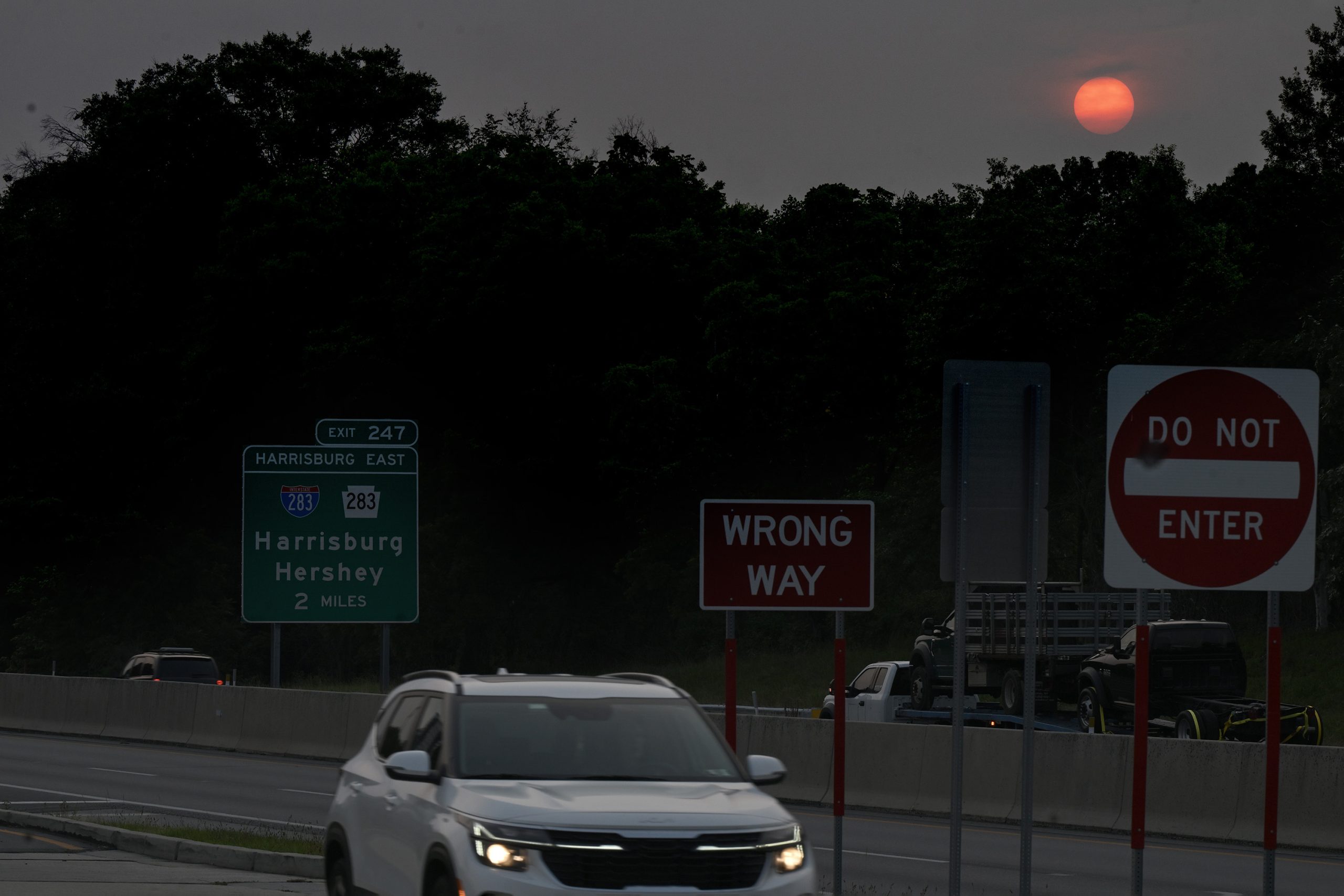
The sun sets in a hazy sky over the Pennsylvania Turnpike Wednesday, July 15, 2026 as the Canadian and Great Lakes wildfire smoke moves into the region’ This at the Highspire Service Plaza], eastbound near Middletown.Tom Gralish / Staff Photographer
Staff writer Nate File contributed to this article.
Even more farmland in Burlington County could be preserved for years to come after the Burlington County Board of Commissioners took the first steps to protect more than 500 acres from future development late last month.
The board voted on June 24 to grant preliminary approval for seven Burlington County farms totaling 529 acres to enter the county’s Farmland Preservation Program.
Farms can voluntarily join the program where the state and county pay farmers for the development rights to their land and enact a permanent deed restriction, ensuring the land is forever protected for agricultural uses even if the farm is sold. The farmers would retain ownership of the land.
The seven farms will now be appraised before the county can make offers to purchase the development rights.
Burlington County leads the state in farmland preservation with more than 67,000 acres of farmland protected, Commissioner Randy Brolo said, which accounts for nearly 72% of all active farmland within the county.
“Farming and agriculture have always been a major part of life in Burlington County, and our board has made it our mission to do everything possible to keep the industry strong and viable for the present and the future,” Burlington County Commissioner Director Felicia Hopson said in a statement. “The Burlington County Farmland Preservation Program is essential to that goal, and we’re pleased to take this step to protect more acres of farmland.”
The farms that could be preserved are:
Bruch Farm in Chesterfield, 59 acres
Kirby Farm in Pemberton, 50 acres
Lounsberry Farm in Springfield, 169 acres
Russo Farm in Tabernacle, 37 acres
Seward Farm in Southampton, 22 acres
Specca Farm in Springfield, 82 acres
Varano Farm in Tabernacle, 110 acres
State funding could cover up to 80% of the preservation costs while the remainder is paid for out of the county’s Open Space and Farmland Preservation Trust Fund.
The county is also poised to preserve another seven farms totaling 1,070 acres.
“Every acre of farmland Burlington County preserves guards against overdevelopment that can impact our environment and quality of life, so we continue to target more farms and open space for protection,” Commissioner Deputy Director Allison Eckel said in a statement. “It’s good policy for Burlington County farmers and a win for residents who value living in a county with a green landscape and freshly grown food.”
The state’s energy regulators will examine utilities’ handling of recent outages that left thousands of New Jerseyans without power amid heat waves that pushed temperatures above 100 degrees in parts of the state, sometimes for days.
Regulatory staff will examine utilities’ preparedness before and after the early-July storms that prompted the outages, their communication with customers, and their ability to quickly restore power, Board of Public Utilities President Ben Hertz-Shargel said at the agency’s Wednesday meeting.
“We expect utilities to be prepared, communicate effectively, and restore service safely and as quickly as possible. When they fall short, the board will hold them accountable,” Hertz-Shargel said.
The Garden State saw severe and sudden thunderstorms during the Fourth of July weekend that the New Jersey Utilities Association, a trade group, said knocked out power for roughly 850,000 customers, mostly in areas serviced by PSE&G and Jersey Central Power & Light.
Restoration work was largely complete by July 10, when fewer than 1,000 remained without power, the association said, but by then some lawmakers had already started to raise alarms about days-long outages during sweltering heat.
At the time, Assemblyman Greg McGuckin (R., Ocean), whose legislative district falls within JCP&L’s central service area, said regular, extended summer outages had become the utility’s business model. On Wednesday, he said a review was long overdue.
“It’s unacceptable that every summer we continue to end up like a third-world country every time there’s a storm,” McGuckin said. “It’s inexcusable to me that power stations are not adequately protected from a lightning storm when lightning storms are a common occurrence in the summer at the Jersey Shore.”
The New Jersey Utilities Association, which represents JCP&L, PSE&G, and the state’s other electric distribution companies, said the storms were some of the most severe New Jersey had seen in recent years. Heavy rain and winds that approached the force of a hurricane downed trees and wires, prompting the outages.
“These storms were a multi-day, multi-utility crisis that required massive mobilization, but the state’s electric distribution companies’ restoration teams, along with local, county and state emergency personnel, worked around the clock to restore power to over 800,000 customers in just six days,” said Richard Henning, the association’s president and CEO.
He said the industry looks forward to collaborating with the state to boost resilience and improve storm response.
Chris Hoenig, a spokesperson for JCP&L, acknowledged the power outages were disruptive, particularly given that week’s extreme heat, but said the company had marshalled about 5,700 workers to assess damage, fix power lines, and remove downed trees, among other things.
“Four consecutive days of severe thunderstorms, damaging winds and flooding rains caused widespread damage across JCP&L’s service territory, with impacts comparable to those experienced during a hurricane,” Hoenig said. “Throughout the restoration effort, our crews remained focused on a single objective: restoring service safely and as quickly as possible to every affected customer.”
Asked to comment, Darwin Pham, a spokesman for Gov. Mikie Sherrill, said, “The Sherrill Administration will continue holding utility companies accountable to ensure they are providing reliable power, including making appropriate improvements to their energy infrastructure and outage response if gaps are identified.”
The board on Wednesday also vote to advance an order to show cause that could levy $44.1 million in fines against JCP&L for failing to meet reliability benchmarks in 2022, 2023, and 2024. Commissioner Christine Guhl-Sadovy, the board’s immediate past president, will preside over that case.
“I think that this action really shows, without predetermining any outcome, that we are taking very seriously the utility performance, particularly around these reliability issues and that, when warranted, we are willing to impose penalties,” she said.
The board also voted to open procurement for new nuclear power plants.
The vote follows a bill Gov. Mikie Sherrill signed earlier this week that calls for the state to stand up about 1,100 megawatts of new nuclear power to meet rising electricity demand spurred mostly by artificial intelligence data centers.
The governor has championed nuclear power as a method of meeting the state’s energy needs in the long term, though the measure has faced criticism because of the long timelines and high costs associated with nuclear plants and because it calls for those plants to be subsidized by other generators who would pass those expenses on to ratepayers.
“The project is super important, but we just have to be mindful,” Commissioner Joseph Coviello said. “It’s going to be extremely expensive at the start, and it’s only going to get more expensive, so we just have to be mindful of how we spend the ratepayers’ money.”