Category: Life

  • The micro Museum of the Philadelphian celebrates Philly’s macro personality

    The micro Museum of the Philadelphian celebrates Philly’s macro personality

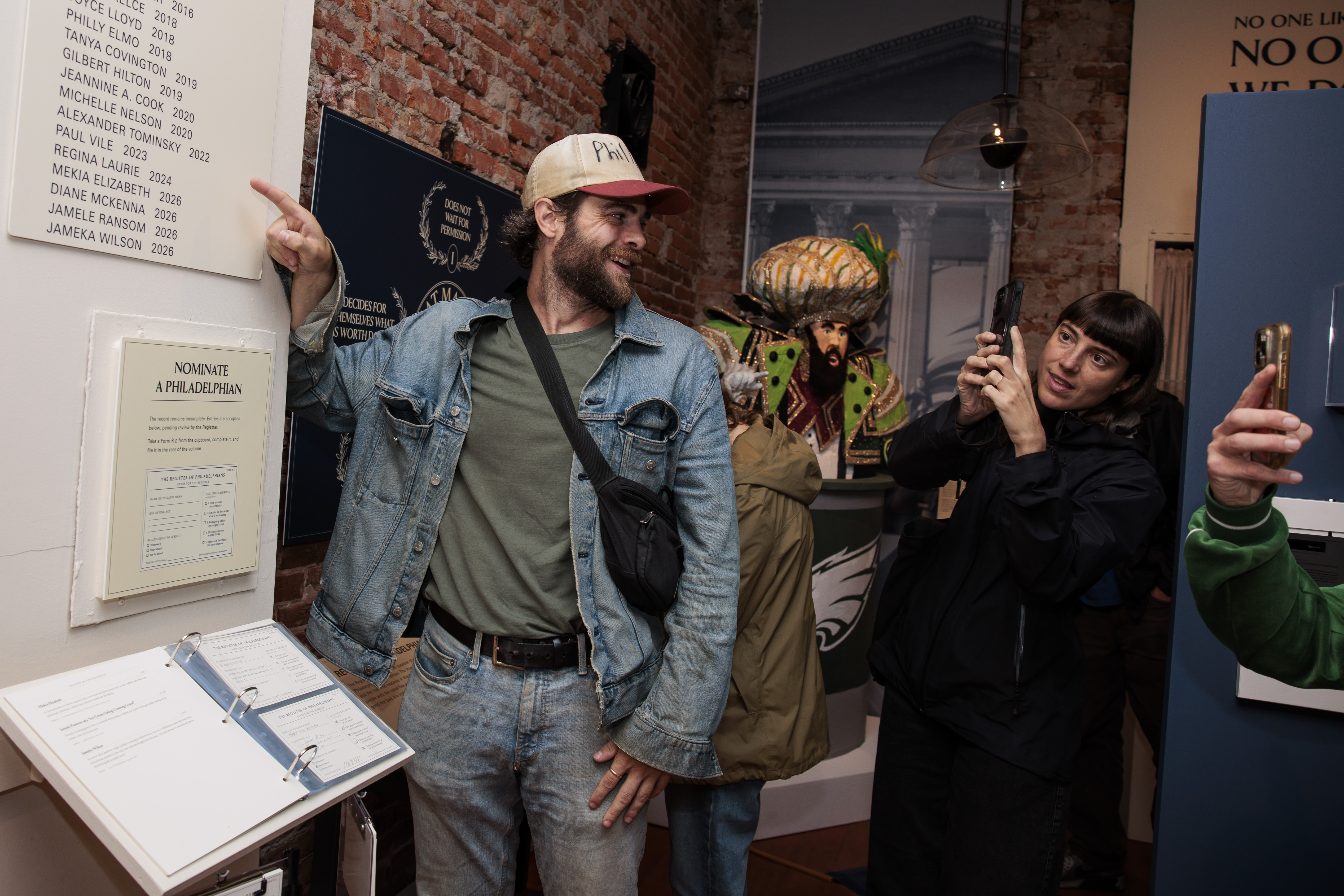
    Alexander “Chicken Man” Tominsky walked into the Museum of the Philadelphian in a Canadian tuxedo and a baseball hat with “Phillies” written on it in marker on Tuesday and was blown away to find his name on a plaque alongside other local legends like Benjamin Franklin and Philly Elmo.

    “No way! Oh my gracious! Who would have known when I was a little kid crying in my pillow something like this would happen,” he said, pointing to his name.

    Tominsky — who became renowned throughout the land in 2022 for eating 40 rotisserie chickens in 40 days, culminating with a public noshing of a chicken on an abandoned Walmart pier in South Philly — was invited to a preview opening for the museum by its founder and creator, Brian Adoff.
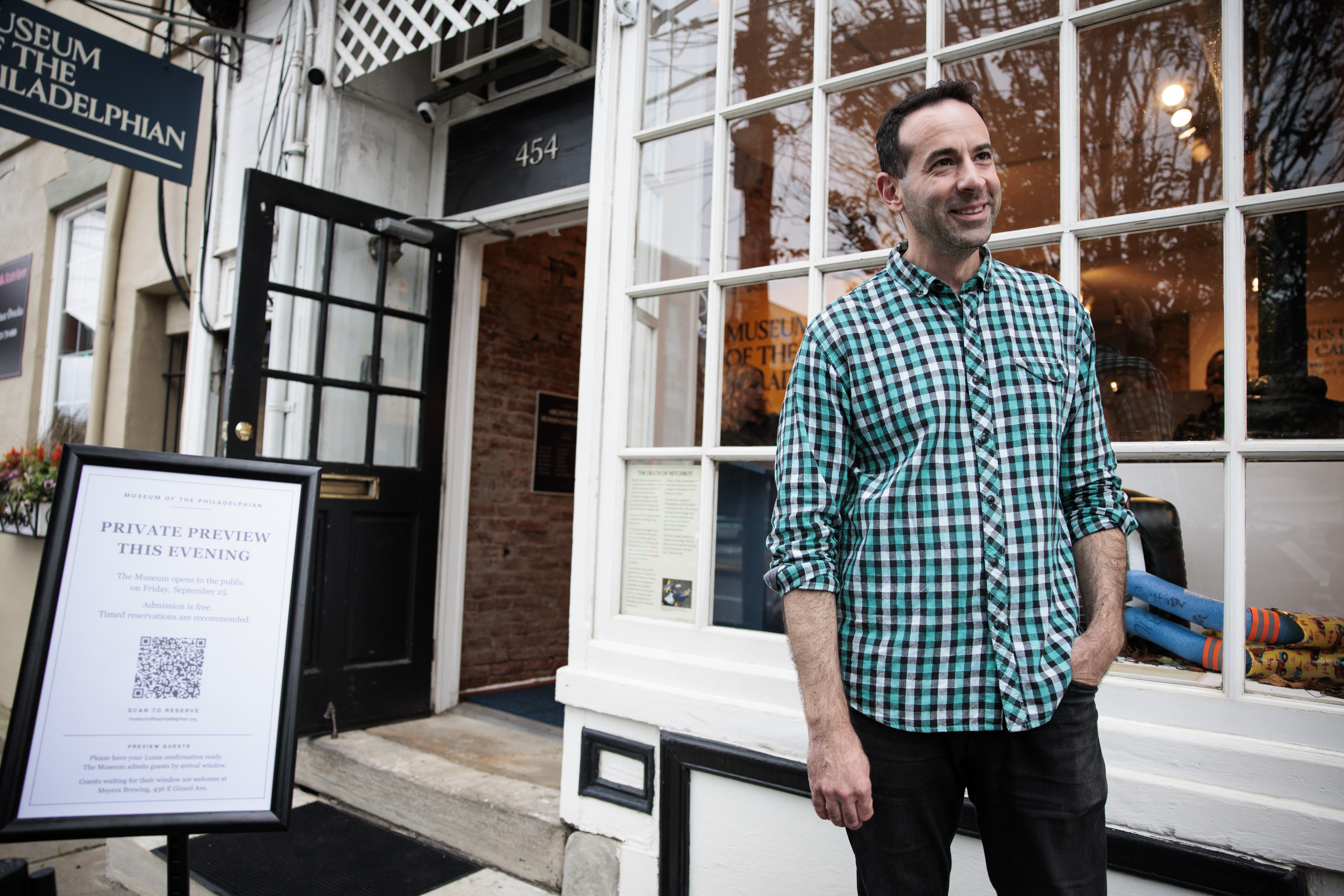
    Founder and creator Brian Adoff outside his Museum of the Philadelphian in Fishtown.Monica Herndon / Staff Photographer

    “The museum is about the personality and attitude and conduct of Philadelphians,” Adoff said. “My personal hope is that you leave inspired to really be the best version of yourself, the best Philadelphian you can be.”

    Located in a 300-square-foot storefront that was previously Adoff’s office on East Girard Avenue in Fishtown, the free, temporary “micro museum” is just down the road from another Philly landmark — the “I Hate Bank of America” sign. The large, yellow banner was put up by a homeowner in 2007, after the bank branch across the street ticked him off. The branch closed many years ago, but the sign remains, a grand tribute to Philadelphians’ spite.

    View on Threads

    What makes Philadelphians this way? And what makes it so oddly endearing? These are questions Adoff explores in his absurd and unexpectedly heartwarming museum, which opens Friday.

    “There’s an emotional narrative arc the museum takes in its 300 square feet, where it ends with literally a book of Philadelphians who exhibit five qualities that I’ve determined, with my crack team of curatorial advisers, that make up a Philadelphian,” Adoff said.

    As of a student of the Philadelphian who’s written hundreds of profiles of the everyday people who make me love this city more every day, I thought Adoff had set a lofty goal for himself when we first met earlier this month. How do you distill what it means to be a Philadelphian in 300 square feet? And how do you decide who makes the cut?

    At the preview Tuesday, I was pleased to find that over the course of about 20 exhibits in the space, Adoff skillfully addresses the Santa-hating-battery-throwing-robot-killing tropes that haunt Philadelphians, while also getting to the oddly-touching truths behind those, and other very Philly stories.
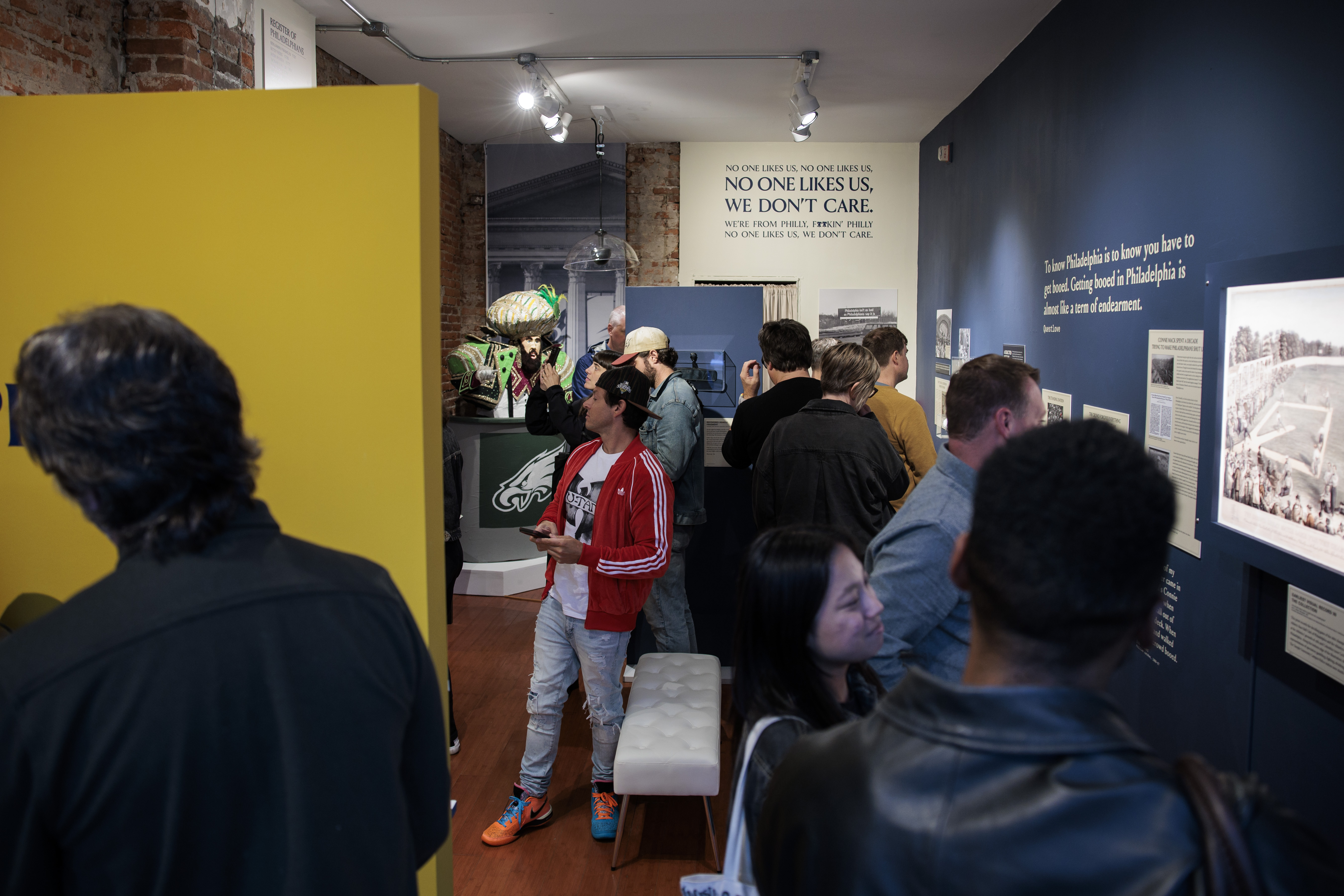
    Visitors browse the Museum of the Philadelphian.Monica Herndon / Staff Photographer

    And while Adoff and his team have compiled a “Register of Philadelphians” with more than 50 names and stories of local folk heroes who epitomize what it means to be a Philadelphian, their best decision may have been to include cards for visitors to nominate their own quintessential Philadelphian. Because if one thing is certain, Philly is going to have thoughts.

    Grease the pole

    Guests are greeted in the museum’s front window by a re-creation of the death of hitchBOT, the hitchhiking Canadian robot who traveled across the country on human kindness, only to be dismembered and beheaded in Philly. In the accompanying plaque, Adoff notes that Philadelphians offered to rebuild the robot, and that a Philly police detective jokingly blamed the crime on New Jerseyans.
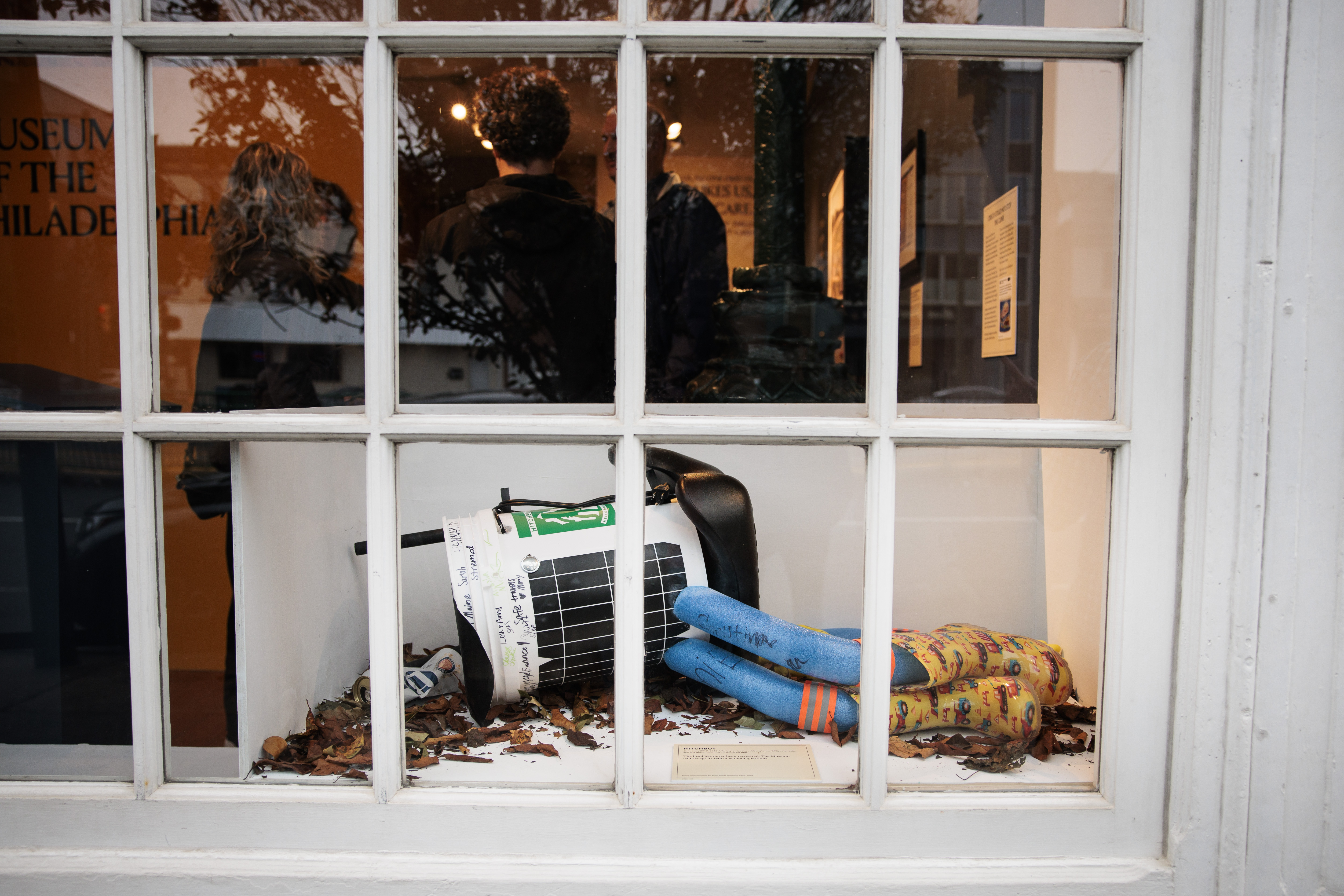
    A re-creation of the death of hitchBOT is displayed in the front window of the Museum of the Philadelphian.Monica Herndon / Staff Photographer

    Once inside the museum, two large papier-mâché sculptures immediately catch the eye — one, of a Philadelphian climbing a greased pole, and the other of Jason Kelce during his Eagles Super Bowl speech. In the first, guests are invited to “grease the pole” with a paintbrush and clear goo from a nearby can (you know I did it!), and at the latter, visitors can stand under a sound dome (fancy!) in front of the sculpture to hear Kelce’s “Hungry Dogs” speech.
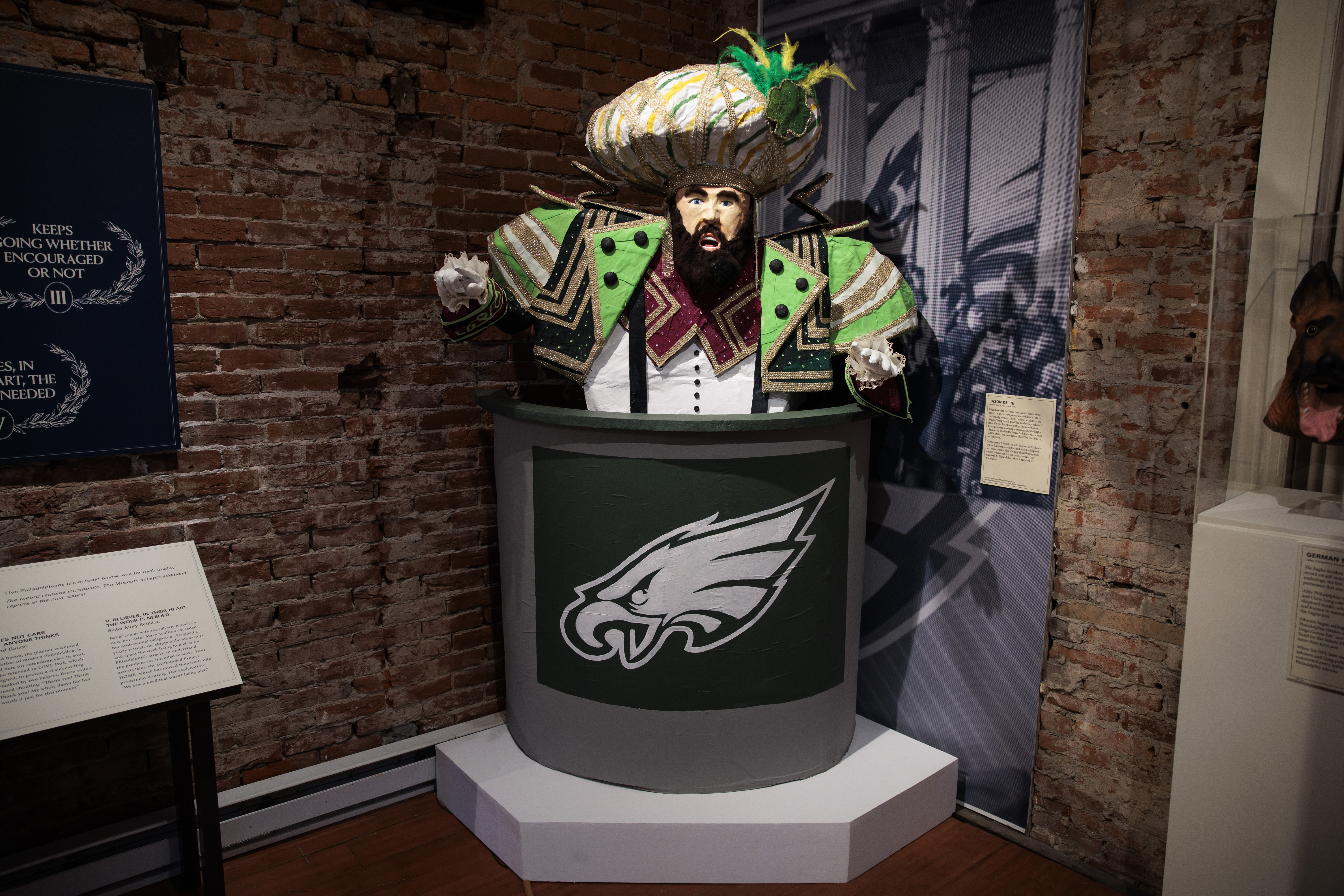
    A papier-mâché sculpture of Jason Kelce during his 2018 Eagles Super Bowl speech is featured in the Museum of the Philadelphian.Monica Herndon / Staff Photographer

    In the center of the room is a freestanding wall with a rearview mirror on it. The accompanying plaque tells the story of Ted Passon, whose parked car was flipped in the aftermath of the Phillies 2008 World Series win. Passon created a blog asking Philadelphians who enjoyed the spectacle to help pay for his vehicle, and through the generosity of donors, he was able to get a new car and give $3,000 to someone else whose car was flipped. On an iPad at the exhibit, visitors can play a YouTube video of the flipping and read Passon’s blog.

    I remembered the story well because I interviewed Passon about it in 2008. Seeing him at the event Tuesday was a full-circle Philly moment for both of us. Passon, who’s now an Emmy Award-winning documentarian, said he was happy to loan the mirror of the vehicle Philly claimed from him to the museum.

    “It’s an honor to be included in the story of Philadelphia,” he said. “If I can be a footnote in the city’s history, I did something right in my life.”

    ‘Booing is my love language’

    Other exhibits explore Philadelphians’ history with booing, our history of throwing things, and the five qualities Adoff and his team have decided make a Philadelphian, with number one being, “Does not wait for permission.”

    The “Register of Philadelphians” on the wall and accompanying book begins in 1731 with Benjamin Franklin and ends this year, with Jameka Wilson, the woman who went viral for her TV interview about kicking a man in a Chucky mask who was terrorizing pedestrians.
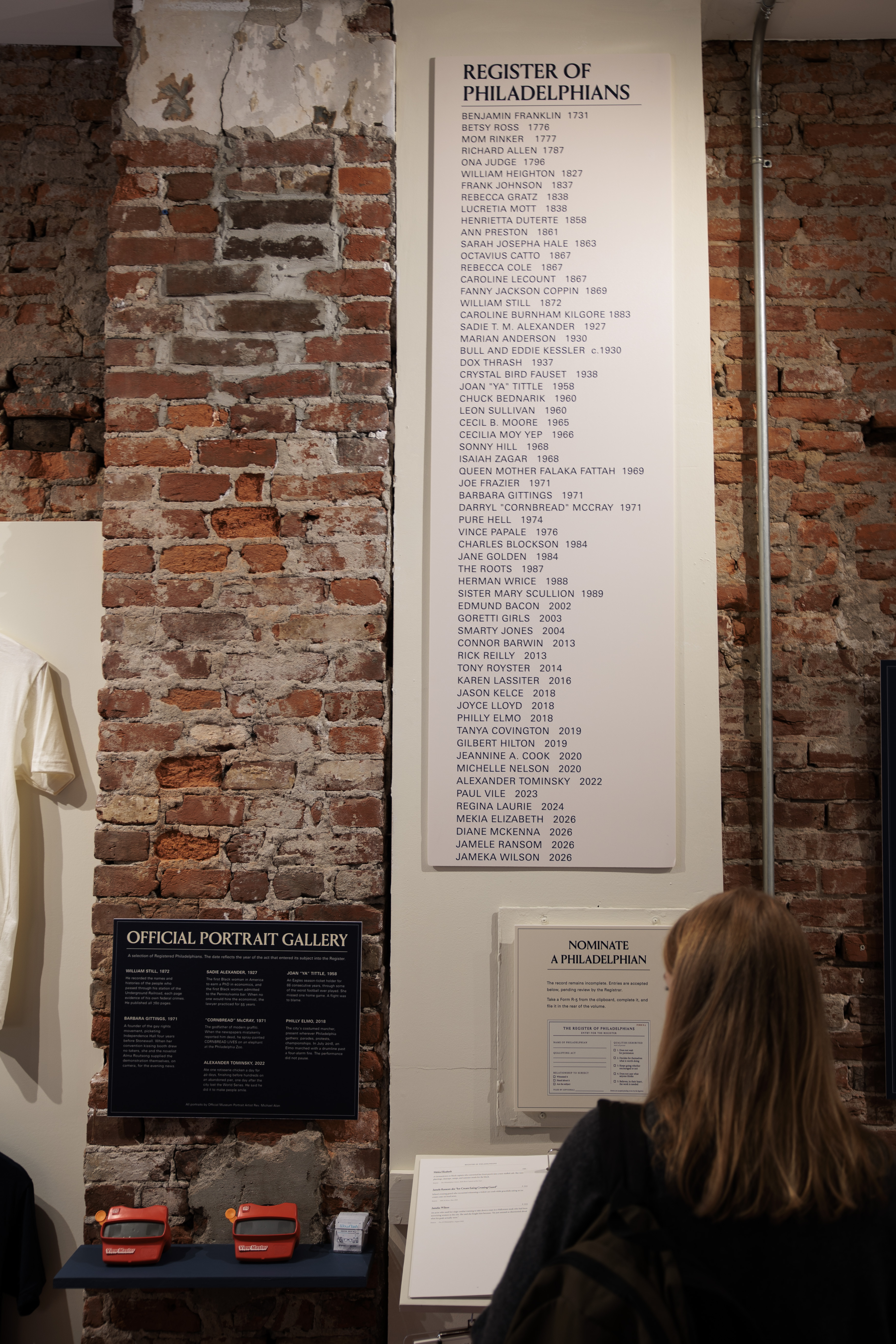
    The Register of Philadelphians features notable Philadelphians ranging from Ben Franklin to Jameka Wilson. To the left of the register is the museum’s official portrait gallery, which can be seen through two ViewMasters. Monica Herndon / Staff Photographer

    I was excited to see a couple people I’ve written about on the list, including Paul “Jelloman” Vile and the late Gilbert Hilton, who turned heads across the city for years in his “Badillac” car, which was covered in items from Goodwill, and who was one of the most Philly people I’ve ever met.

    There’s also a portrait gallery by the Rev. Michael Alan of seven Philadelphians in the register that can only be seen through an old-school ViewMaster, which were a hit with the crowd.

    “It was a small space and this was a way to make something look bigger without being bigger,” Alan said.
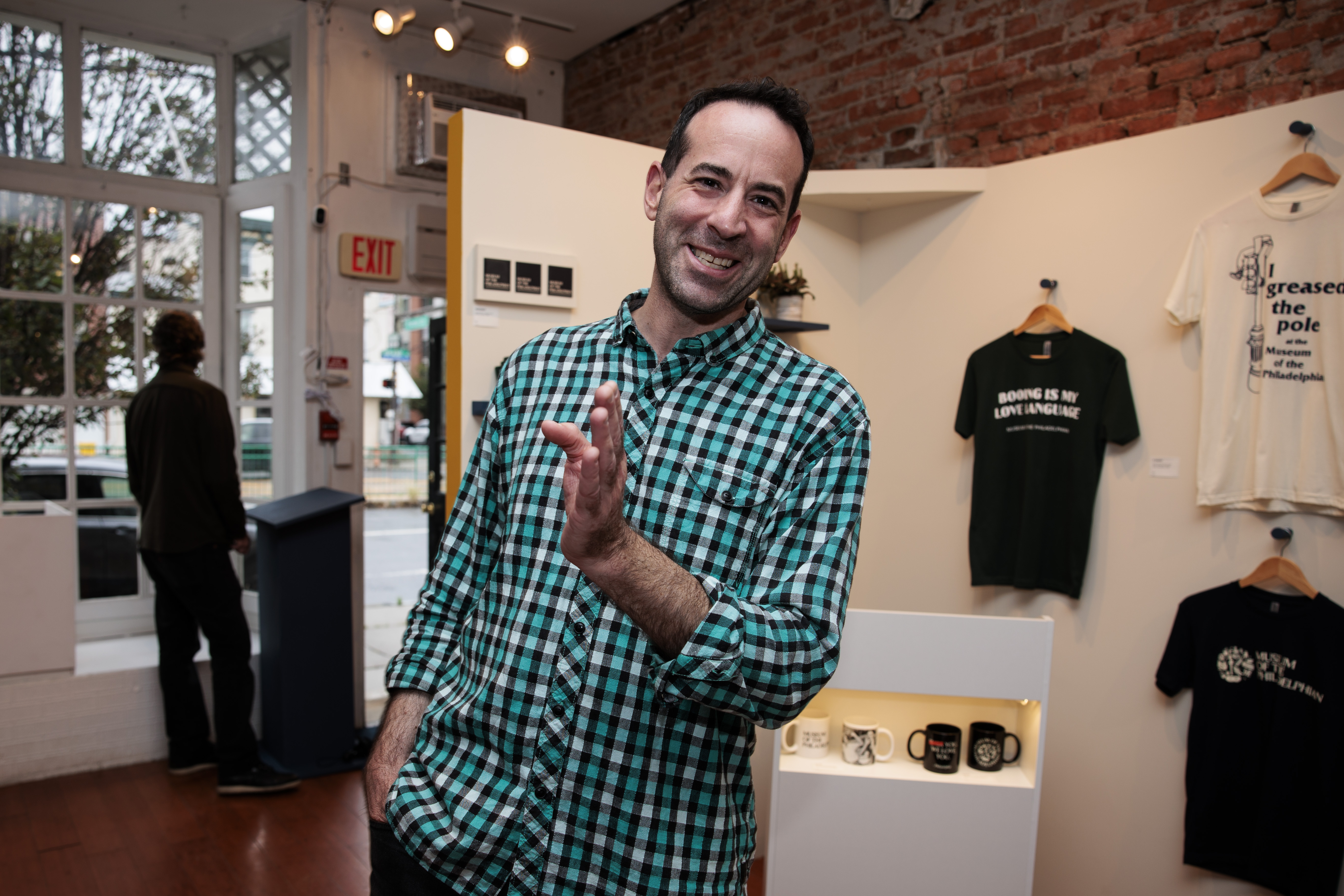
    Creator and founder Brian Adoff talks about the Museum of the Philadelphian in front of the museum’s gift shop. Monica Herndon / Staff Photographer

    The tiny museum even has a gift shop with shirts that say “I greased the pole at the Museum of the Philadelphian” and bumper stickers that read “Booing is my love language.”

    ‘The most Philadelphian thing’

    The museum was funded by Adoff through his experience design studio, Architects of Human Connection, and admission is free because he believes “the Philadelphian has paid enough.”

    The museum is a culmination of Adoff’s many endeavors over the years, from music, clowning, absurdist theater, and working as a tour guide for the Greater Philadelphia Film Office, to managing a software business and, most recently, creating events that connect Philadelphians.

    In 2023, he cofounded the Fishtown Choir,and last year, Adoff created Join Philly, which connects Philadelphians with area clubs and groups.

    The idea for the museum came to Adoff in June, as he was trying to think of uses for his storefront office space. With the help of five paid collaborators, Adoff built the museum in less than three months, which is impressive, given the amount of research that clearly went into the exhibits, plaques, and bios.

    “It started kind of absurd and silly until I was like, ‘Oh, this is just like everything else I do. It matters and it actually has heart and it has meaning,” he said.

    Brian Adoff in the Museum of the Philadelphian he created in Fishtown. Monica Herndon / Staff Photographer

    Here’s the potentially scandalous thing — Adoff isn’t a Philly native. He’s originally from Long Island, moved to Cherry Hill as a kid, and came to Philly to attend the University of Arts. He spent time in Chicago then returned to Fishtown 20 years ago, where now lives with his wife and son.

    Knowing how nativist Philly can be (my native colleagues said transplants can “never” say they’re from Philly if they moved after the age of 13), I had to ask Adoff what gave him the gall to open the museum.

    “Because I express the qualities that make a Philadelphian,” he said.

    “But you decided those qualities, right?” I asked. (They are: 1. Does not wait for permission 2. Decides for themselves what is worth doing 3. Keeps going whether encouraged or not 4. Does not care what anyone thinks 5. Believes, in their heart, the work is needed).

    “Yes, which is the most Philadelphian thing I could have done,” he said.

    Adoff wants people to leave his museum feeling as inspired as he did after watching the opening of the Obama Presidential Center on TV. He dreams of Rob Mac narrating an audio tour of the exhibit, like Steve Buscemi does for Eastern State Penitentiary. And his longterm goal is to open a more universal experience one day — a fart museum. Everybody isn’t lucky enough to be a Philadelphian, but everyone farts.

    I imagine Benjamin Franklin, a fellow Philly transplant who once wrote a satirical essay about flatulence, would think that’s a gas.
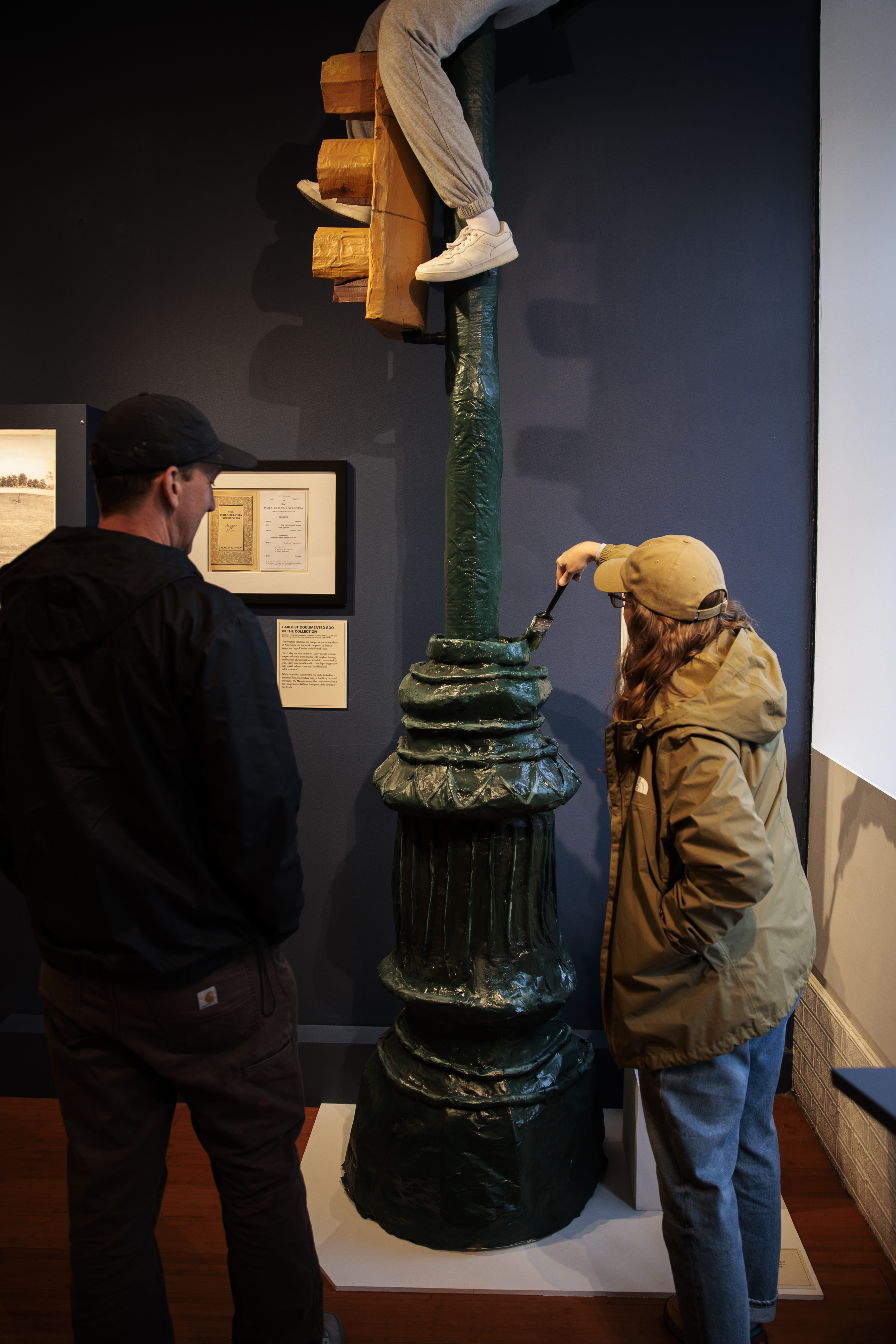
    Darrin Rowland (left), and Leslye Rowland grease the pole sculpture at the Museum of the Philadelphian on Tuesday. Monica Herndon / Staff Photographer

    Know before you go

    • The museum, 454 E. Girard Ave., is open Fridays (5 to 8 p.m.), Saturdays (noon to 5 p.m.), and Sundays (noon to 5 p.m.) Sept. 25 through Nov. 1.
    • Admission is free, but timed reservations online are recommended. Opening night is already booked and only a few spots remain for this weekend.
    • Like Philadelphia, there is a lack of public bathrooms at the museum, in that there are none.
    • The museum is wheelchair accessible via a temporary ramp. Email visit@museumofthephiladelphian.org prior to visiting so staff can have the ramp ready.
    • All ages are welcome, but some exhibits do include profanity.

  • Dear Abby | Self-centered grandmother alienates entire family

    Dear Abby | Self-centered grandmother alienates entire family

    DEAR ABBY: I have a mother-in-law of 30 years I distance myself from. I do this in order to maintain my sanity. She seems incapable of carrying on a normal conversation and responds to any comment or question by talking about herself, even though it usually has nothing to do with what was said. What bothers me most is when she’s around our adult children. She won’t ask them any questions, isn’t interested in how they are or what they are up to, and doesn’t say anything loving or kind. Instead, she drones on about other people in her life who have nothing to do with us. We constantly say we don’t know that person, but she continues talking about them. I have tried for many years to redirect conversations, to no avail. She has been this way for as long as I have known her. Do you think it’s possible to get through to a person like this, to make her understand how a normal conversation should go? Do you think it’s terrible for her grandchildren not to want to be around her? I don’t encourage them to spend much time with her because they end up feeling annoyed and disappointed. That, however, does not sit well with their father. Any thoughts would be appreciated.

    — FRUSTRATED DAUGHTER-IN-LAW

    DEAR FRUSTRATED: Your mother-in-law appears to be solely centered upon herself. If, after 30 years, you haven’t been able to get through to her that her lack of interest in her grandchildren has isolated her from them, you and your husband must recognize that she isn’t going to change. There is no quick fix for this. After three decades of this treatment, your children will never want to be in their grandmother’s presence any more than they are required to be, whether it sits well with their father or not.

    ** ** **

    DEAR ABBY: My sister and I have an OK relationship. When we were younger, we always fought, but that’s what siblings do. When my father died, I learned about it not from a phone call, but on social media. To say I was hurt and angry is an understatement. How can I get past this? I told my sister how hurt I was when it happened, but I can’t seem to move on. Now my mother is not doing well, and I’m afraid this will happen again since I have been named executor of her will and a trustee of any assets to be received by my older sister. What are your thoughts on how to get past this and potentially handle any future dealings?

    — YOUNG EXECUTOR

    DEAR YOUNG EXECUTOR: I’m sorry to learn your mother is unwell. Executorship is a big responsibility. As you navigate the next steps, try to set the tone with humility. Instead of dwelling on the past, fulfill your duties objectively and with diligence. If the estate is large and your sister is unhappy with the terms of the will, consult a probate lawyer to keep matters from getting personal.

  • Dear Abby | Irresponsible daughter can’t get it together

    Dear Abby | Irresponsible daughter can’t get it together

    DEAR ABBY: I am a widow who lost my husband 15 years ago. When my husband died, we had a daughter and one grandson. My daughter, a single mom, later had another son.

    I have my own business and have worked hard these many years to help support my daughter, who is financially irresponsible. She has been evicted four times in the past 10 years, had two cars repossessed and can’t seem to keep a job for even a year.

    I am at my wits’ end. I need to stop helping her financially because it’s affecting my financial and mental health. She doesn’t have a job and can’t get her own place, so I feel I have no choice but to let her move in with me. I want to put a limit on how long she can stay. What should I do?

    — SUBJUGATED IN TEXAS

    DEAR SUBJUGATED: Do not allow your daughter to move in with you. If she does, you will never get rid of her. Give her a certain amount of money for shelter and make it plain that she must use it to find a place to live (if only temporarily). Because it’s the last handout she’ll receive, she must get a job to support herself and her children. Then let her live the life she has chosen for herself. If you don’t, you will be your dysfunctional daughter’s prisoner until the day you die.

    ** ** **

    DEAR ABBY: Throughout my professional career, I was a quality assurance engineer with the task of analysis and corrective actions. If something broke or an error was made (for example, a worker’s hand getting caught in a machine), I’d try to identify a fix so it wouldn’t happen again. I am now retired and still tend to approach things with the same attitude.

    I often get frustrated when someone makes an error and there’s no corrective action, admission that a mistake was made or even a small apology. I recently discovered an error on my financial accounts and asked the bank how this was overlooked even after I had pointed out the error prior to the account being processed. Abby, I was completely ignored and never received any feedback. What’s the best way to ask someone for an explanation concerning what actions were taken to ensure the error does not happen again?

    — KEEN ON QUALITY

    DEAR KEEN ON QUALITY: In your line of work, safety was the top priority. You developed a zero-tolerance attitude toward errors because it was literally a matter of life and limb. Outside that environment, however, you may find it helpful to remember that the stakes are not nearly so high.

    No permanent harm came of the bank error. You are right that it would be best if the bank reviewed its procedures to avoid future errors, but that’s their job, not yours. Having corrected the error in a timely fashion, the bank owes you no further explanation. Trust that, in the future, they will do their best to improve without your help (but always check your statements).

  • Fans are paying $350 for signs at SEPTA’s vintage sale (yes, Broad Street already sold out)

    Fans are paying $350 for signs at SEPTA’s vintage sale (yes, Broad Street already sold out)

    Transit fans who asked what in the El was happening with SEPTA’s old stuff inspired a sale of vintage items from its vault this month, marking the first time in the agency’s six decades of existence that Philly’s biggest fleet has held anything close to a garage sale.

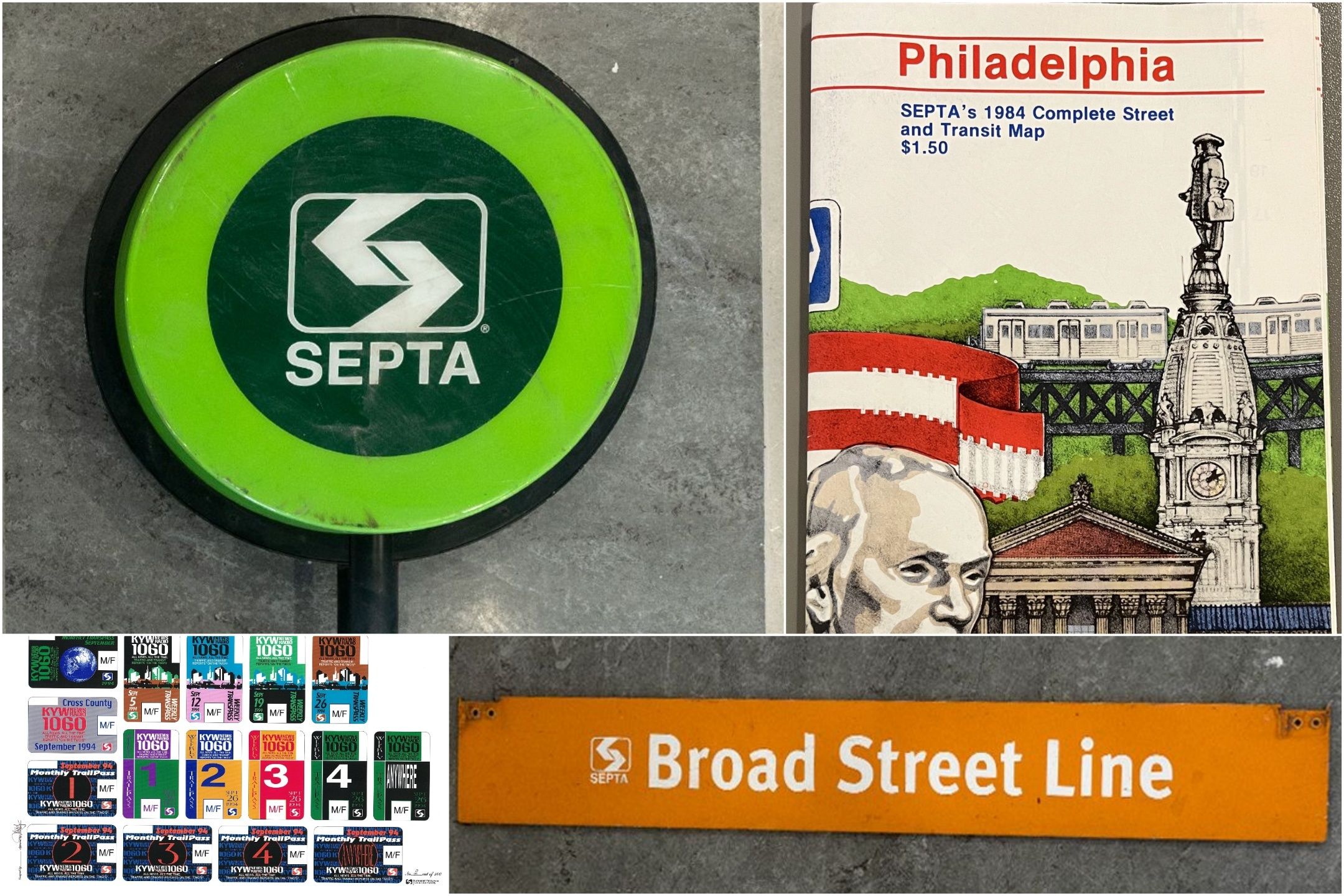
    Dubbed “RETROmania,” the sale began online Sept. 14 and is already proving to be a gravy train for SEPTA, with decommissioned transit signs selling out for up to $350 a pop.

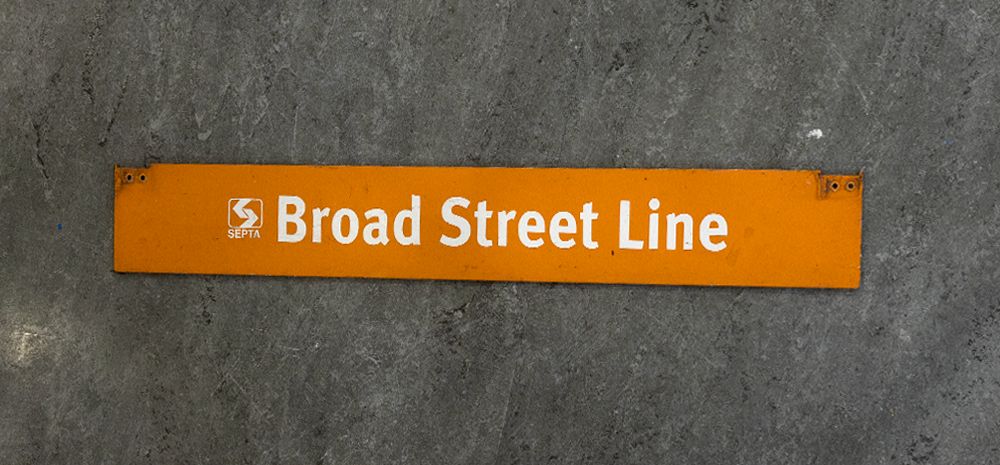
    It’s no surprise that signs for the Broad Street Line, which has shuttled Philly sports fans to and from the stadium complex for decades, have been among the hottest-ticket items. Other available products include old street and transit maps and vintage TransPass design sheets.

    A TransPass sheet from 1994 is selling for $50 during SEPTA’s RETROmania sale.Courtesy of SEPTA

    The early success of the online sale has SEPTA Store manager Al’Lee Floyd and store supervisor Melissa “Meli” Smalls excited for the in-person sales at the store on Oct. 2 and 3.

    “It was a big surprise … we did not anticipate some of the signs would sell out in one day,” Floyd said.

    Since taking over the SEPTA Store at the agency’s headquarters on Market Street near 12th in Center City in 2021, Floyd has reinvigorated the agency’s merchandise and fan base with wildly popular items like viral pint glasses and must-have ugly Christmas sweaters.

    Al’Lee Floyd, manager of the SEPTA Store, outside of the store at the SEPTA headquarters in Center City in 2024. Jessica Griffin / Staff Photographer

    But SEPTA’s vintage sale — the first of its kind anyone can recall — was inspired squarely by its customers. Over the last two years, as SEPTA rebranded the names of its lines and signage, like switching the Broad Street Line to the B (a change many Philadelphians have neither accepted nor acknowledged), SEPTA fans have inquired about what’s happening to the signs with the old names on them.

    “When people started noticing the stations were switching over, a lot of people were coming into the store and asking what we were doing with the signs coming down,” Smalls said. “We got with our wayfinding team and asked what the plans were and they said they could get them to us if we wanted them.”

    Smalls and Floyd took their customers’ curiosity as a sign and went full steam ahead with a vintage sale, digging up other items from SEPTA’s warehouse.

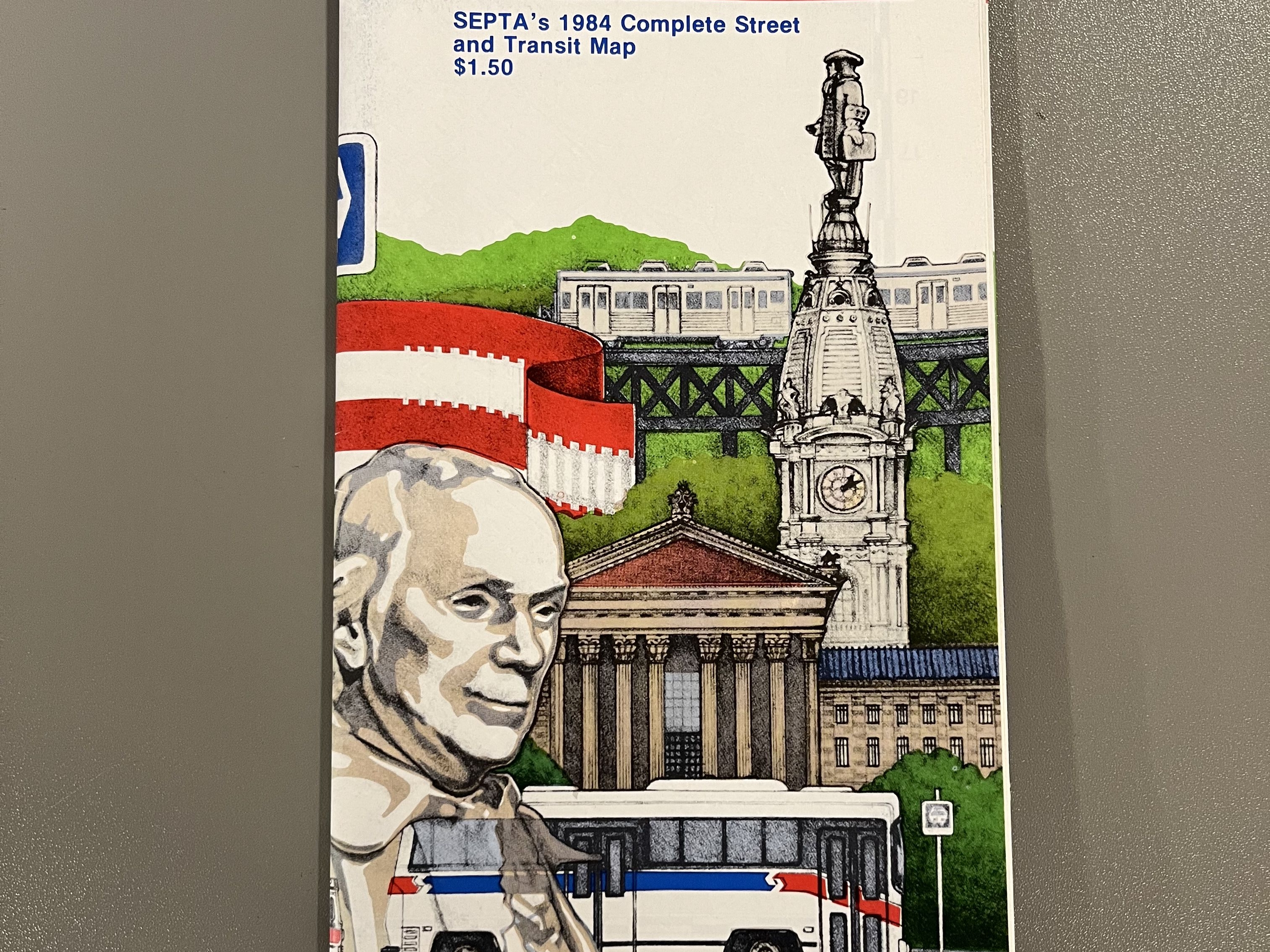
    This 1984 street and transit map from SEPTA sold for $25 in its RETROmania sale.Courtesy of SEPTA

    Street and transit maps from 1966 to 1999, which were priced at $25 each, have already sold out, but a Delco Public Transit Map and Guide from the 2010s is still available. There are also plenty of vintage TransPass sheets from 1993 and 1994 still for sale at $50 each.

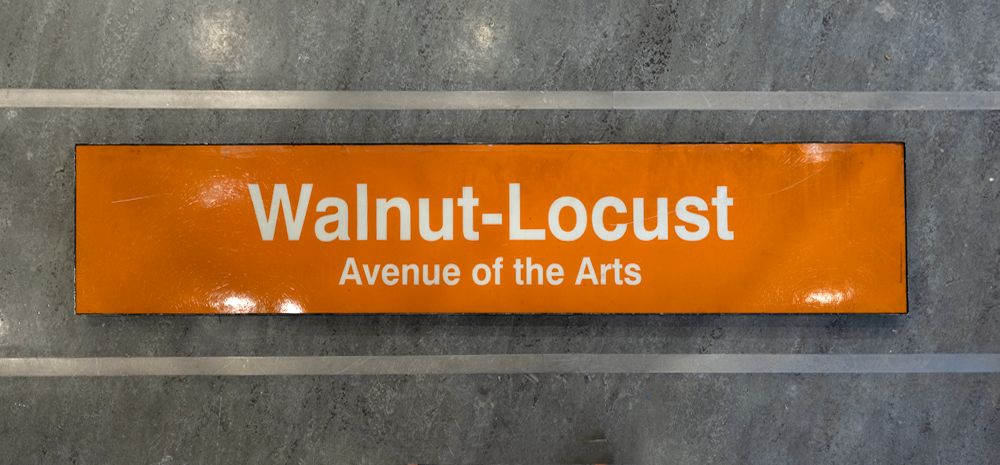
    Some decommissioned signs were still available as of publication, like one for Walnut-Locust / Avenue of the Arts that’s going for $350 and an Olney Transportation Center sign priced at $125.

    This Walnut-Locust sign was still available, as of publishing time, for $350 in SEPTA’s RETROmania sale.Courtesy of SEPTA

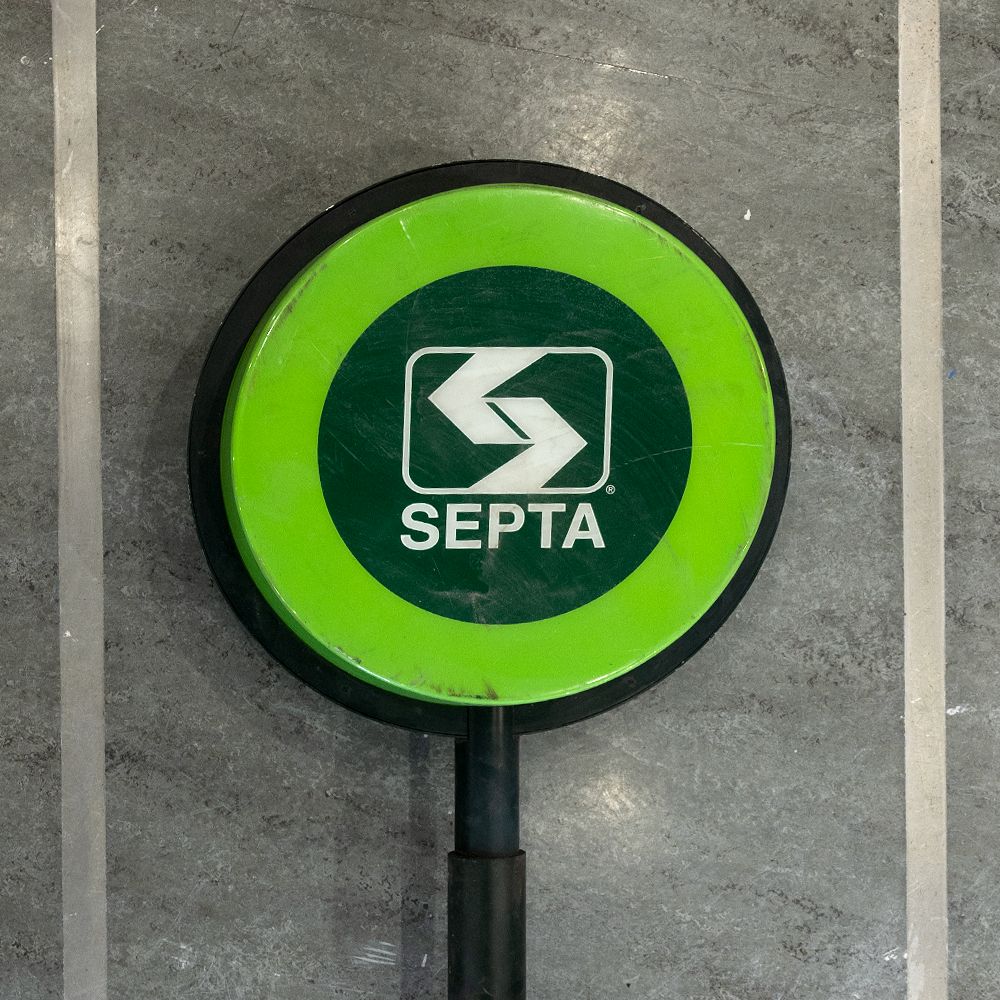
    Among the most popular items were what SEPTA calls its “lollipop” signs, circular plastic signs ringed in green with the SEPTA logo in the center, that sold for $350, and, of course, the Broad Street Line signs, which ranged from $125 to $350.

    “If a sign identified anything to do with NRG [Station] or any sports complex stuff, it was a little more of a higher ticket item,” Floyd said.

    Broad Street Line signs, like the one pictured above, quickly sold out in SEPTA’s RETROmania sale.Courtesy of SEPTA

    SEPTA had already sold more than 100 signs as of Sept. 18, when it dropped a new batch of signs into the mix — prototypes with the current names of the lines on them for $50 each.

    Unsurprisingly, those haven’t been as popular as the old signs that are drenched in nostalgia (and probably other things) and aged with a fine Philadelphia subway patina.

    Anyone who buys a decommissioned SEPTA sign is required to sign an agreement that they will not use it for commercial purposes, Floyd said.

    Affectionately referred to by staff as “lollipop” signs, these circular signs already sold out at $350 a pop during SEPTA’s RETROmania sale.Courtesy of SEPTA

    The in-person sale at the SEPTA store will include merchandise similar to that in the online sale, along with vintage apparel. A preview sale will be held from 10 a.m. to 4 p.m. Oct. 2 at the store, with the main sale taking place from 10 a.m. to 4 p.m. Oct. 3.

    Floyd recommends getting in line early.

    “It’s first come, first served, once it’s gone, it’s gone,” she said.

  • Dear Abby | Unfaithful husband invites other woman to move in

    Dear Abby | Unfaithful husband invites other woman to move in

    DEAR ABBY: My husband, “Dirk,” cheated on me more than 20 years ago. He has kept in touch with the woman since then. Sixteen months ago, she told him she was “in a bad place.” He offered to let this (married) woman move in with us and didn’t tell me until two weeks before she got here.

    Abby, this woman lives like a pig. Her room is filthy, and she has broken several things in my house without paying for anything. Before she moved here, Dirk wanted to get her teeth fixed. I ended up paying for it with my credit card. She promised she was going to pay me back, but she has given me exactly $510 of the $5,000 that she owes me. She has a job, so there’s no reason why she is not giving me the money.

    I’m not worried about Dirk cheating with her again, as she has not maintained her looks or figure over the years. Still, how much more of this should I take? I asked her to leave once, but he got her to come back. He will not go to marriage counseling as he doesn’t think we need it. When I ask him why he keeps her around, he tells me he enjoys her company. Do you think I should contact a lawyer and start divorce proceedings or let this go?

    — LOSING MY MIND IN TEXAS

    DEAR LOSING MY MIND: My dear, you should have left long ago. Call a lawyer immediately. However, since this woman is not a physical threat, resist the urge to move out until you have your attorney’s approval. Abandoning your home may harm your case in the divorce proceedings.

    ** ** **

    DEAR ABBY: I became close with an attractive, younger coworker last year. Realizing I was starting to get a crush, I told her I needed to stay away because of my feelings and, being married, couldn’t risk losing my family. She went through a hard time during our breakup, but we started getting close again. The breakup led her to do something she regrets so much it has affected her work. It has alienated pretty much everyone she knows except for me. I have encouraged her to seek professional help because her emotional state is very draining. I also feel I have reached a point where I no longer want to be around it, but I don’t know how to tell her without feeling guilty for turning my back on her when she’s begging for help. She’s in such a depression; she’s killing herself slowly. What should I do?

    — REMOVING MYSELF IN THE EAST

    DEAR REMOVING: What you should do is reiterate to her firmly, but as kindly as you can, that she needs to get professional help for her depression. If she balks, explain that, because of her emotional state, she has alienated friends and coworkers and that you are not equipped to give her the support she needs. Then learn from this experience and back away.

  • The people building Philadelphia are breaking down

    The people building Philadelphia are breaking down

    When Buddy Osborne’s phone rings, it’s because something has gone wrong. An accident. A death. A traumatic event on a job site. This past April, it was a catastrophic collapse. A parking garage had fallen, and three construction workers were dead.

    Osborne, 67, the chaplain for the Philadelphia Building and Construction Trades Council, arrived at the scene to find an ironworker being interviewed by investigators from the Occupational Safety and Health Administration. The man had witnessed the collapse. The workers who died had been part of his crew. Osborne did not know him. They had never met. But as a chaplain, Osborne was there to help the workers who witnessed the traumatic event. His job, as he put it, was to “render support to workers in distress.”

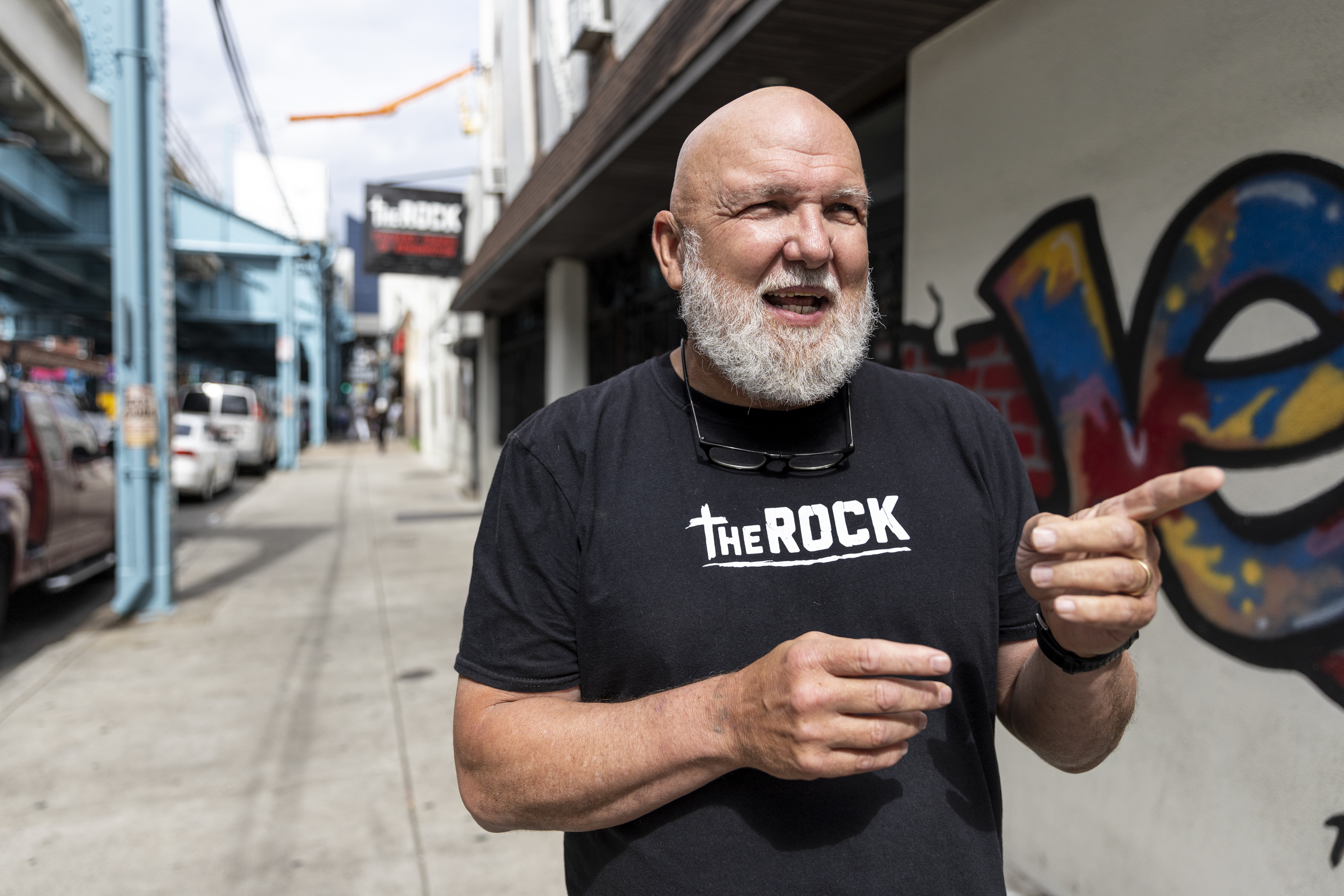
    In addition to being a pastor at the Rock Ministry, Buddy Osborne is the chaplain for the Philadelphia Building Trades Council and a former Tyger Williams / Staff Photographer

    He waited until the interview ended. Then he walked over, introduced himself, and placed a hand on the worker’s shoulder. “He’s a tough guy,” Osborne said, “but he just broke down.” Osborne hugged the worker as he wept. By the time he pulled away, his shirt was wet with the man’s tears.

    The ironworker Osborne comforted was part of a workforce that is deeply woven into Philadelphia’s civic identity. Roughly 121,000 people across the Philadelphia metropolitan area work in construction, following a decade of steady growth. The Philadelphia Building and Construction Trades Council alone represents more than 50 local unions. Politicians court their support. The city celebrates the buildings, roads, and public projects they construct. But behind that civic pride is a workforce in profound distress.

    Construction has one of the highest suicide rates of any major industry in the country, according to the Centers for Disease Control and Prevention. More than 5,000 construction workers die by suicide each year, roughly five times the number who die from fatal worksite injuries, and male construction workers are 75% more likely to die by suicide than the general population. Construction workers also die from drug overdoses at a higher rate than workers in any other industry.

    Those numbers have set off an urgent effort in Philadelphia to confront the mental health crisis roiling the construction industry. Osborne is but one small part of it. An entire alphabet of organizations, from ATAP, the Allied Trades Assistance Program, and CIASP, the Construction Industry Alliance for Suicide Prevention, to CWC, Carpenters Who Care, and MACSC, the Mid-Atlantic Construction Safety Council, now offer expanded access to mental healthcare and substance use treatment.

    There are peer-support networks and suicide prevention training programs. On job sites, there are daily stand-downs and toolbox talks devoted to mental health awareness. There is a Construction Suicide Prevention Week every September, and this past May, for the first time, 50 workers gathered in the Wissahickon for the Greater Philadelphia Construction Hike for Hope, sponsored by the American Foundation for Suicide Prevention.

    All of this is to say: Everybody cares. All eyes are on the issue.

    As Johnathan Davis, a professor at the University of Iowa’s College of Public Health, put it: “The construction industry has had a phenomenal response to this problem, and the awareness, the destigmatization, and the support programs are important parts of that response.” Indeed, it has never been easier for a construction worker in distress to get help.

    Yet the crisis of the distressed construction worker persists, in part because, according to interviews with dozens of workers, the industry itself produces the suffering. And, so far, it has done more to treat it than to prevent it. The focus now, Davis said, needs to be on “upstream solutions.” So, not only helping workers once they hit their breaking points, but also addressing the conditions that bring them there in the first place.

    Union workers watch as demolition continues in Grays Ferry on Sunday, April 12, 2026, at the site of the parking garage collapse.Tom Gralish / Staff Photographer

    The same day Osborne, who lives in Kensington, was at the parking garage, Marianne Wolfe was meeting with the workers in their union halls.

    Wolfe is the managed care supervisor for ATAP, an employee assistance program that provides mental health and substance use services for organized labor. After a tragedy like the parking garage collapse, part of her job is to lead workers through critical incident stress debriefing, a structured, therapist-led conversation meant to help people process the trauma they have just experienced.

    In this case, that meant sitting with workers who had witnessed the collapse and were still trying to make sense of it.

    “They were just trying to wrap their heads around what took place,” Wolfe said. “Survivor’s guilt. It was a ‘Why wasn’t it me?’ type of thing.”

    Trauma, Wolfe said, “is a very tricky thing.” It does not always arrive when expected. It can surface weeks or years later. That is why she expected ATAP to keep receiving calls about the collapse for at least several months. If so, those calls will come into an office that is already busy.

    “We’re a high-volume call center,” Wolfe said.

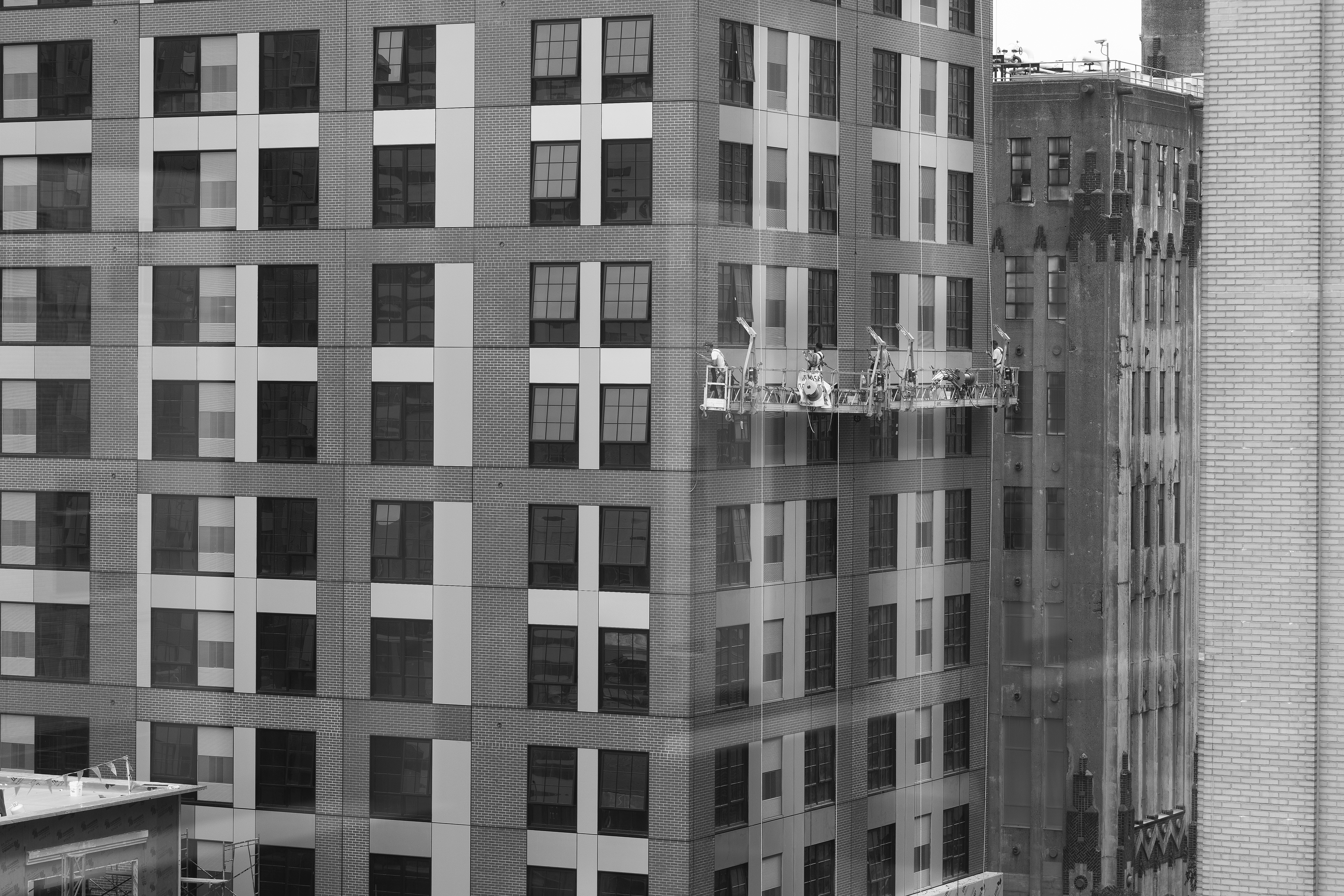
    Scaffold workers work on a building on North Broad street in Philadelphia Pa.Jose F. Moreno / Staff Photographer

    Workers reach out to ATAP when they need help and don’t know where to turn. They call ATAP’s 24-hour emergency hotline when they are desperate, sometimes actively suicidal, and an ATAP employee quickly connects them to the right level of support, whether that is outpatient counseling, substance use treatment, or immediate inpatient care.

    For years, Wolfe said, most of the calls coming into ATAP were about substance use that was exacerbated, in part, by wear and tear from demanding physical labor.

    “We were still in the opioid epidemic,” she said. “Now we are in what we’re calling a mental health epidemic.” She attributed the shift to years of education and anti-stigma work that made it easier for workers to ask for help.

    Some workers call because they are anxious. Some call to discuss family or work-life balance issues. Sometimes they call because they cannot sleep. Their reasons run the gamut, but they all lead back to a simple truth: “Being a construction worker isn’t an easy job,” Wolfe said.

    Layoffs and financial instability are par for the course. The hours are grueling. Some work seven days a week. There is hardly any time to see family. Left unaddressed, those pressures can pile up until a worker feels helpless, or hopeless, or, in Anthony Zecca’s case, both.

    A nonprofit called ATAP helped Anthony Zecca get a psychiatrist and helped find treatment and services for his son, Salvatore, who has autism.William Thomas Cain / For The Inquirer

    “I’ll be honest with you,” Zecca, who lives in Fairless Hills, said in April. “I didn’t want to live anymore.”

    He was describing how low things had gotten the previous December. His marriage was on the brink of collapse. His father-in-law had warned him that if he couldn’t get his temper under control, he was going to lose his family. He had been having anger issues ever since he got out of prison in 2023, after serving four years for possession of a firearm. “I had a very hard time adjusting,” he said.

    At Christmas, Zecca got so angry that he kicked over the tree and broke his toe. He had to get surgery and could not work for six weeks. But the real wake-up call was his daughter’s reaction that night.

    “I saw how terrified she was of me, and I just broke down in tears,” he said. “I couldn’t do it anymore.”

    Zecca, 41, called ATAP the next day and spoke to Wolfe. “I told her I’m having a lot of problems at home,” he recalled. “I said I’m really depressed. I’m not doing good.”

    Wolfe got to work on Zecca’s behalf immediately. She got him into anger management and found him a therapist and a psychiatrist, whom he now sees every month. She helped his 8-year-old son who has autism, too, by connecting him with a behavioral psychologist. Zecca ended up calling ATAP so frequently that Wolfe gave him her personal cell phone number.

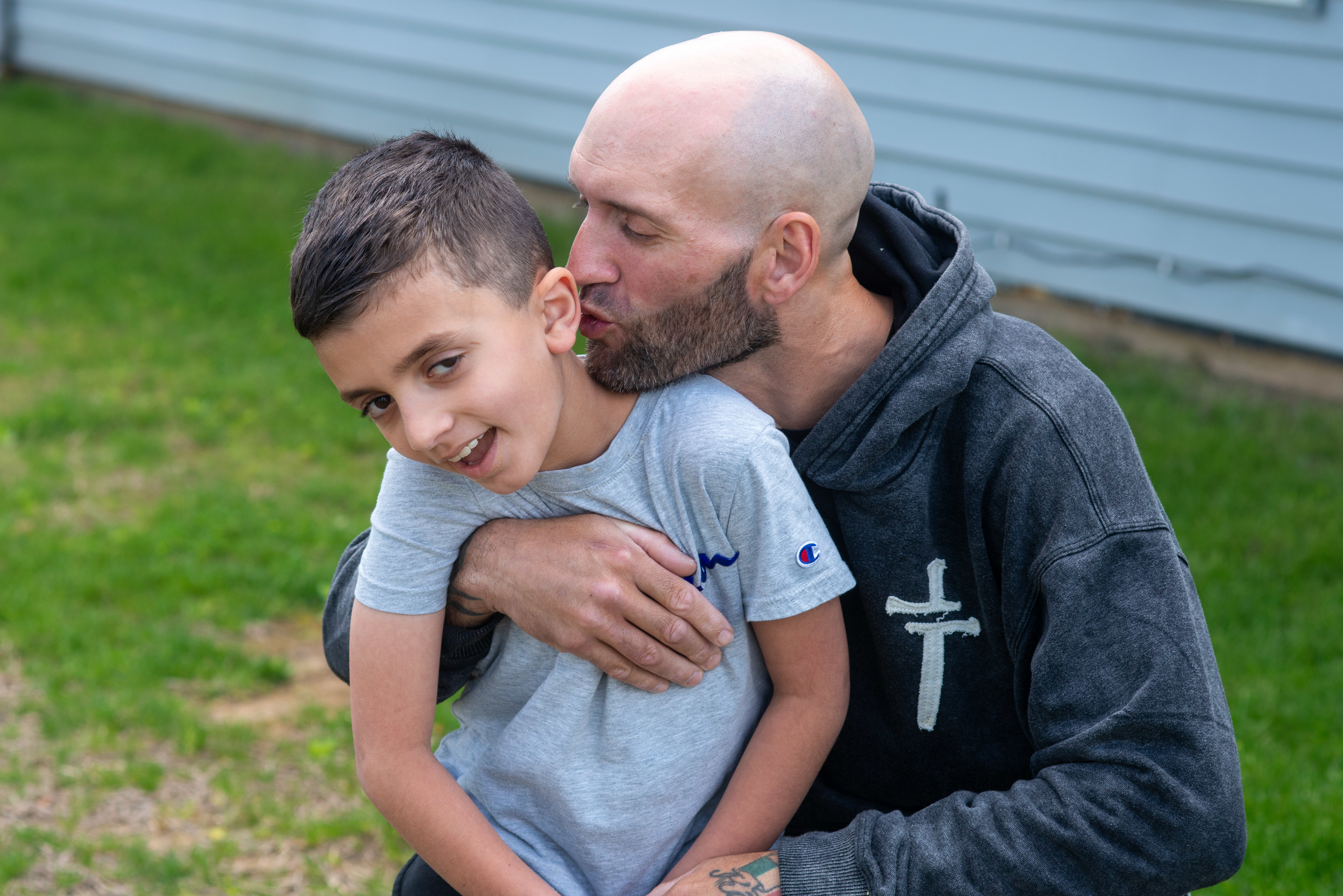
    Anthony Zecca (CQ) and his son Salvatore Zecca (CQ), 8, pose for a photograph in their yard Friday, May 08, 2026 at private residence in Fairless Hills, Pennsylvania. A nonprofit called ATAP helped get him a psychiatrist and helped find treatment and services for his son, Salvatore, who has autism.William Thomas Cain / For The Inquirer

    Life has been much better for Zecca ever since he reached out to ATAP. He and his wife still fight sometimes, mostly about his hours. He is away from 4 a.m. until 7 p.m. every day. But they have not had any major blowouts since Christmas. His psychiatrist put him on Wellbutrin, which Zecca says helps with both his depression and his ADHD. He uses his therapy sessions to work through the different stressors in his life.

    Zecca still has many sleepless nights and considers himself an “anxiety-ridden person.” And the construction industry remains his biggest stressor. He wakes up every day worried he will be laid off and out of work for the next month. “It really wears on me,” he said.

    Unable to make peace with the industry’s uncertainty, Zecca is trying to change his circumstances.

    “I just want a steady job where I don’t have to worry about being laid off,” he said. He is tired of the stress on the job, the demanding timelines, and the endless hours. He is hardly alone.

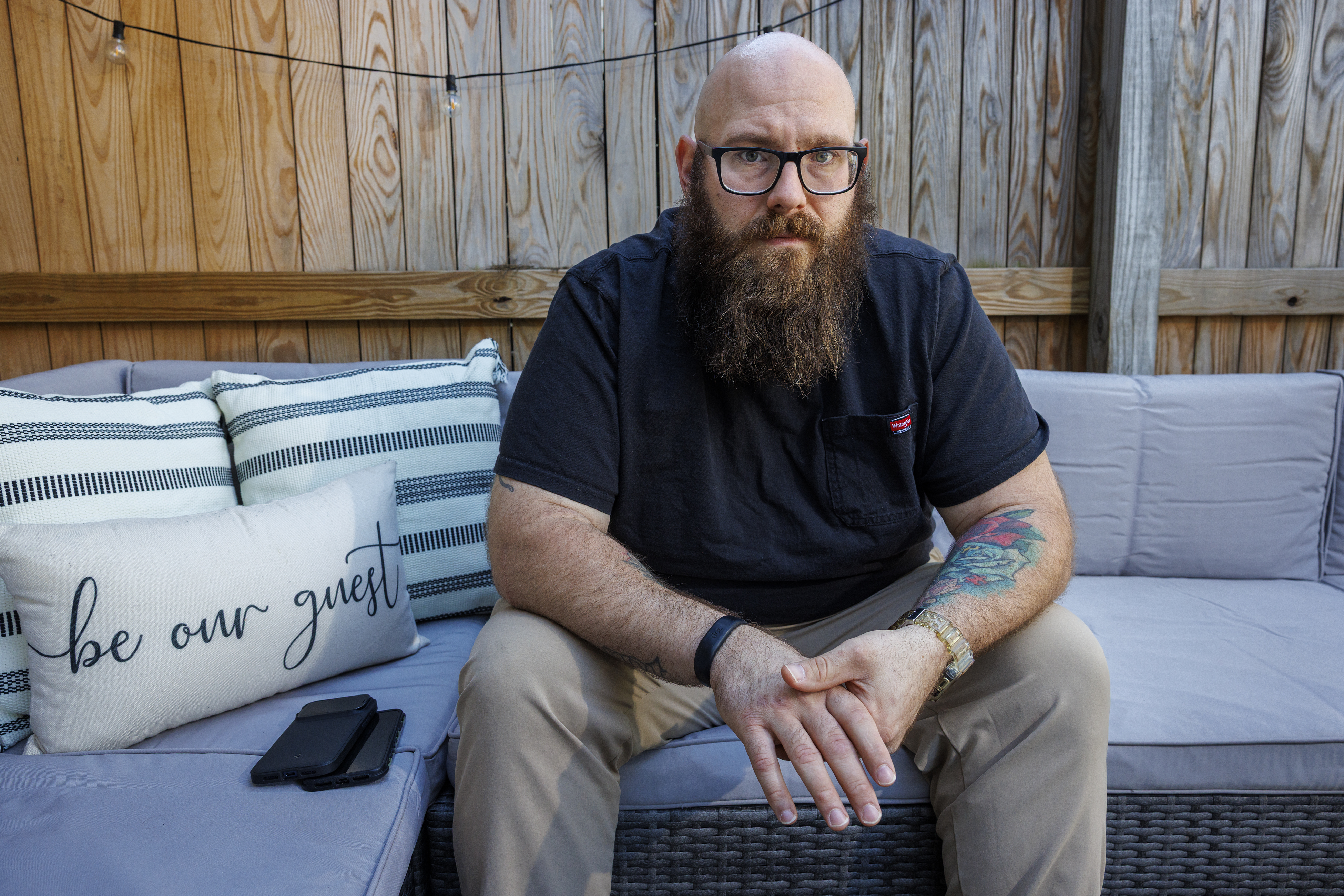
    John Sobetsky of Royersford at his home on Tuesday, May 12, 2026. John has been dealing with depression over the years and is a major advocate of mental health treatment in the construction industry.Alejandro A. Alvarez / Staff Photographer

    John Sobetsky, 35, was among the workers who gathered in the Wissahickon for the Greater Philadelphia Construction Hike for Hope. For him, the cause is personal: Sobetsky survived a suicide attempt in high school and is now active in the industry’s mental health efforts. He also knows firsthand how the pressures of construction can overwhelm the rest of a person’s life.

    The former technician and concrete mixer-turned-business development manager said his life is much more manageable ever since he traded the grind and churn of construction work for a 9-to-5.

    “It’s almost night and day,” he said. “I don’t have those deadlines weighing on me. I have freedom. I have flexibility.”

    Three years ago, Sobetsky, who lives in Royersford, was managing a construction project that was such a “complete cluster from beginning to end. … I wasn’t sleeping. I wasn’t eating,” Sobetsky recalled. “My anxiety was out of control.”

    Eventually, it affected his ability to do his job. “I was missing wire runs,” he said. “I was spending way too much time on tasks that should have taken me half the time because I was just mentally out of it.” It got so bad that his boss asked him if he was OK. That, experts say, is often how distress shows up on the job.

    “Warning signs often masquerade as performance issues,” said Sonya Bohmann, executive director of the Construction Industry Alliance for Suicide Prevention. “It’s things like not showing up for work on time anymore. It’s things like jumping to conflict when you’re usually the person who’s really the steady Eddie.”

    Those sorts of behavioral changes are opportunities for bosses and supervisors to check in and point workers to available services. But, according to Bohmann, culture frequently gets in the way.

    “It’s hard to say I’m going to therapy because people will look at you like you’re weak or selfish,” she said, “and you never want someone to think that you’re not fit for duty under the hard hat because then they don’t want you on their crew.”

    John Sobetsky of Royersford with books that he enjoys reading for relaxation at his home on Tuesday, May 12, 2026. John has been dealing with depression over the years and is a major advocate of mental health treatment in the construction industry.Alejandro A. Alvarez / Staff Photographer

    That fear stopped Zecca from seeing the free mental health counselor at his union hall. “I didn’t want a higher-up to see me go in and out of there and think I was a head case,” he said.

    According to Sobetsky, until the culture changes, even the best-intentioned services are nothing more than a “checkbox.” Because when a boss or superintendent treats leaving 45 minutes early on a Tuesday to see a therapist as a problem, the help exists only on paper. “Then you don’t really offer it,” Sobetsky said, “because I can’t use it.”

    To Bohmann, that is where the work has to move next: from checking the box to creating what she calls a “culture of care,” built on the understanding that the way the industry functions actually affects workers’ mental health.

    That’s not just her hunch. It is what new research from professor Davis and the Center for Construction Research and Training (known by its former acronym, CPWR) suggests. Davis conducted an unpublished study that he says shows the presence of family and paid leave policies correlated with lower rates of suicide for construction workers.

    “I believe it,” Zecca said when told about the study’s findings. The implications could not be clearer.

    As Davis said: “If you as an employer, you as a contractor, you as a union, are interested in lowering the rate of suicide … these are the type of benefits that you should be working into your programs.”

    One upstream, preventive solution the industry so desperately needs? It already exists. It is called PTO.

    A construction worker stood in a window at 21st and Washington Streets in Philadelphia, Pa. on Thursday, July 27, 2023. Philly had declared a “heat emergency,” when it felt like 106 degrees in the shade.Monica Herndon / Staff Photographer

    Jason Scholl, the owner of LK Miller, based in Ambler, recently transitioned all of his workers from hourly to salaried wages. He gives them Friday afternoons off in the summer and generally tries to create a culture where his team feels safe. “I try to give them every tool in my toolbox to help them handle the rigors of what they’re doing on a day-to-day,” Scholl said.

    There are concerned bosses, too. Ones who take decisive action, like Mary Pat Geppert, who runs Geppert Bros., the demolition contractor that cleaned up the site of the deadly January 2025 plane crash in Northeast Philadelphia. The work was horrifying, Geppert said. Debris and human remains were spread across a 12-block area. Geppert’s workers would not even bring their boots home because of what they walked through. She knew they needed help, so she brought in Buddy Osborne and gave everyone the morning off to talk about what they had seen. She bought them new boots, too. And reminded them of one of her favorite sayings: “It’s OK to not be OK.”

    But it’s what Geppert does not do that she believes makes the biggest difference to her workers’ mental health. She does not lay people off. Or at least she tries very hard not to. Even when Geppert Bros. does not have a contract, she keeps her guys working in the company’s own yard. “That’s our secret sauce,” she said. “We don’t let our guys go back to the hall.”

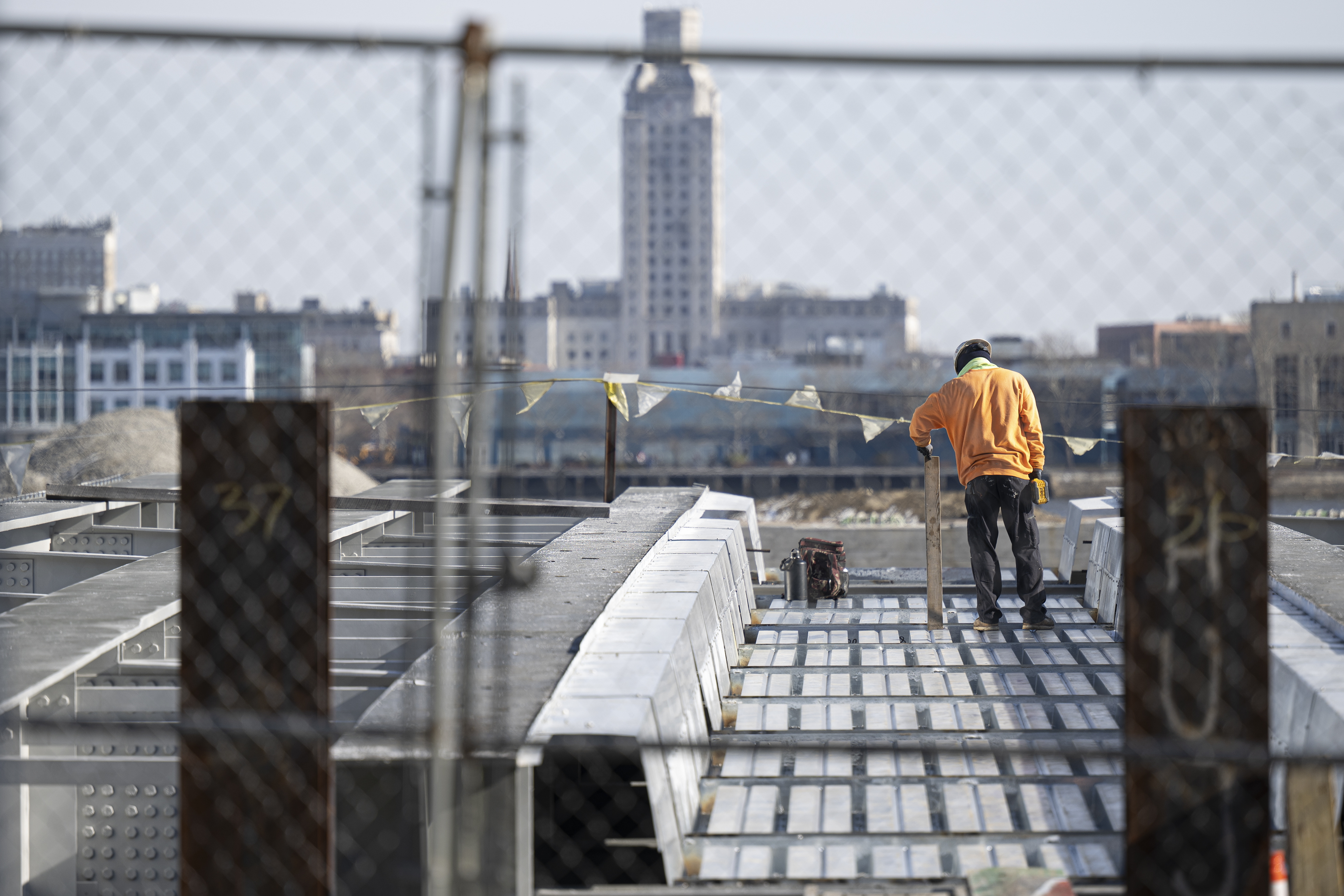
    A construction worker works at a construction site near Interstate 95 in Philadelphia, Thursday, Jan. 22, 2026.Jose F. Moreno / Staff Photographer

    What Geppert Bros. has figured out is what Davis hopes the industry can move toward: steadier, more long-term employment. Such big conceptual changes, like reconfiguring benefits packages and contracts to increase stability, might take more time, but Davis says the industry is well-suited to address these problems.

    Zecca is not waiting for those changes to arrive. For more than a year, he has been trying to land a full-time job with Energy Transfer, an oil and gas company headquartered in Texas. The job would involve maintaining the company’s pipelines in Pennsylvania. Instead of starting over with new bosses, crews, and equipment every few months, he would work with the same team on the same project.

    It is his dream job. Not because of the work itself or the money. Because it is steady. He wears the company’s navy-and-white hat every day for good luck.

    “I just need something with more consistency,” he said one evening in May.

    Two days later, he was laid off.

    A construction worker helps guide a section of pre-cast concrete in place in the upper level at the site of the new Eagles Stadium on Friday, May 10, 2002.David Maialetti / Staff Photographer
  • Dear Abby | Mom’s passing triggers reevaluation of friendships

    Dear Abby | Mom’s passing triggers reevaluation of friendships

    DEAR ABBY: My mom died of extreme old age recently. She was a sweet woman everyone loved. I sent invitations to her memorial, and I’m getting a lot of excuses for why my friends can’t attend. I am upset.

    In my circle of friends (all similar ages), I was the last to graduate, get a career job, start a relationship, buy a house, be married and so forth. I’ve attended my friends’ graduations, weddings, baby showers, milestone birthdays, and family funerals, yet there hasn’t been much reciprocation.

    Excuses for not attending Mom’s memorial included going to a grandkid’s soccer game and attending a 2-year-old’s birthday party. Really? I know I’m dealing with unusually strong emotions due to Mom’s death, but I want to scream, “This is MY MOM,” not some distant friend or relative. My spouse says I shouldn’t stress and that all we need is each other (said by someone who has a huge, loving family whereas my family is just me and my dad). How do I deal with my feelings of resentment, abandonment and being a low priority?

    — LAST ONE IN CALIFORNIA

    DEAR LAST ONE: Your spouse is right. In the final analysis, all you need is each other — though a few supportive friends would certainly be welcome. I have always said that funerals are for the living, not the deceased. Be grateful for the support you are receiving from the people who accepted the invitation to your mother’s funeral. They are your core support group; the others are mere acquaintances, so start thinking of them in those terms.

    ** ** **

    DEAR ABBY: I rent a two-bedroom apartment, which I shared with my best friend. When he moved away last month due to a work relocation, I advertised the room, and a couple moved in. They are friendly and pay their rent on time, but their cooking produces extremely strong smells that I cannot tolerate. My medication causes hypersensitivity to odors, and I can no longer stand to be in the kitchen because the smells linger. They also live on a very different schedule from me. As a result, my diet and sleep are both suffering. They remain unaware of how the adjustment has affected me because I don’t feel they are doing anything wrong. I would like to move out into a studio of my own. The lease on this apartment is currently a month-to-month, so the only thing keeping me here is the guilt I feel about burdening my roommates with this. They will have to move out, find a replacement for me or take on the full rent themselves. I want to do right by them, but I know it would be best for me to leave. What is the proper course of action here?

    — DOOMED IN AUSTRALIA

    DEAR DOOMED: There is no reason why you should feel guilty for leveling with this couple; your health must come first. Explain the problem to them and tell them that while you like them personally, your health is being affected by the cooking odors. Tell them that because you are now on a month-to-month lease, you plan to move to a smaller place of your own and give them the option of staying or moving. Consider this a first step in learning to stand up for yourself.

  • The equinox arrives Tuesday in Philly, and it finally feels like fall

    The equinox arrives Tuesday in Philly, and it finally feels like fall

    Nature already is splashing its flecks of yellow on the trees, and soon the Technicolor waves of foliage will ripple toward Philadelphia in what the experts predict will be quite a spectacular season.

    Right on schedule, at 8:04 p.m. Philadelphia time Tuesday, the astronomical fall begins with the instant of the autumnal equinox, when the sun beams its direct light on the equator and nature continues to turn down the dimmer switch in the Northern Hemisphere. It is as though the trees brighten to compensate for our daily loss of 2½ minutes of daylight.

    It’s the season when the night skies are stunningly crowded with winged traffic, when a remarkable 2-inch-long, Halloween-hued creature has its days in the sun.

    And on the nation’s 251st autumnal equinox, we take a look at what nature might offer in the only season with two widely accepted names, “autumn” and “fall.” And we peek at the coming winter — for which a lot of people around here have other names.

    Another Red October?

    A beautiful view along Kelly Drive during a sunny day in the quite warm October of 2024.Jessica Griffin / Staff Photographer

    For the third time in the last four years, an equinoctial cooldown is due this week, with daytime highs in the 60s, as much as 10 degrees below normal.

    But the federal Climate Prediction Center on Thursday had the odds tilted toward above-normal temperatures in October in Philly.

    Monthly readings have been above normal in 15 of the last 16 Octobers. In 2024, it hit 84 degrees on Halloween. In that period, annual average temperatures at Philadelphia International Airport have been about 1.3 degrees above normal, but the Octobers have been a full 2 degrees above.

    A very early line on winter

    The intensifying El Niño in the equatorial Pacific is a major player in the center’s winter outlook, posted Thursday. It favors above-normal temperatures here and in most of the nation. The center eschews snow forecasts, but it does foresee a potentially active storm track along the East Coast.

    A cautionary note: This whole seasonal-forecast exercise remains quite the work in progress, and last winter was yet another victory for atmospheric chaos over science. No one foresaw the 30 inches of snow for Philly or a historic snow-and-ice cover.

    The ‘woolly bears’ vs. science?

    A “woolly bear” caterpillar. Do those rings say anything about the coming winter?Wiki Commons

    The so-called woolly bear caterpillar had long held a legendary place nationally in weather folklore, but in 1948 the forecasting reputation of the incipient Isabella tiger moths took wings.

    That year a respected entomologist with the Natural History Museum in New York City ventured to a state park and announced that, based on his analysis of the caterpillars’ black-and-orange-ish rings, the subsequent winter would be mild in the New York region. His forecast was dutifully reported in a New York newspaper, and, indeed, the winter was quite mild.

    He continued reporting his annual analyses (however waggishly) that correctly foretold of several mild winters.

    As it happened, some of the winters in that period were so snow-deprived in the Northeast they became the impetus for the snow-making industry that has forever changed skiing.

    Don’t credit or blame the woolly bears, said Douglas S. Richmond, entomology professor at Purdue University. Their ubiquitous presence this time of year all over North America indicates little more than a 100% probability that it is autumn.

    A single crimson tree in Cherry Hill’s Wallworth Park greets Michel and Brigitte Mistler, from Normandy, France, as they take a morning walk while visiting their daughter in the township Oct. 22, 2025. Tom Gralish / Staff Photographer

    They are quite fascinating creatures, he notes, that survive winters by producing “body fluids that function as cryoprotectants — essentially biological antifreeze.”

    Their bodies actually may contain clues about the behavior of a previous season, according to Richmond.

    “It’s probably better to think about woolly bears as being much better equipped with a rearview mirror than a crystal ball,” he said.

    A natural place to look for clues

    Bill Cullina, executive director of the Morris Arboretum and Gardens of the University of Pennsylvania, holds a collection of acorns in November 2019. Regardless of what the acorns said, that winter was virtually snowless.Jessica Griffin / Staff Photographer

    Humans have had a long history of forgoing global forecast models and oscillation indexes in favor of consulting nature for winter clues.

    One popular myth cited by The Old Farmer’s Almanac holds that if the acorns keep raining down from the trees like hailstones, get ready for a big chill.

    Leaves would be another indicator: If they drop early, winter will be a breeze. If they linger late, those breezes might be cold.

    Among Native Americans, beavers were bellwethers. The thicker their autumnal coats and stronger their lodges, the harsher the winter.

    The natural world is where to look for clues about the season to come. The waning sun may dim human energy, but it is an ultra-busy time for a lot of other species. It is prime mating season for animals such as birds, bears, deer, moose — and porcupines. We won’t ask how they hug.

    And birds — billions of them — are on the move.

    An avian air force in the night sky

    Audubon’s Keith Russell looking to the skies over Strawberry Mansion while leading a tour.JOSEPH KACZMAREK

    The bird feeders and baths are getting ever emptier these days, but something quite amazing is happening after nightfall about 3,000 feet over our heads.

    An estimated 1.3 million birds flew across Philadelphia on Friday night and early Saturday. And Chester County was the regional hot spot, with 3.8 million heading south-southwest, according to the Cornell University Ornithology Lab’s radar-powered BirdCast dashboard, With a tail wind from the north, they were zipping along at 25 to 30 mph about 1,600 to 1,800 feet above our heads. On the site, you can track bird traffic live, county by county.

    This is the peak migration season, continuing into the first week of October, says Keith Russell, urban-conservation program manager for Audubon Mid-Atlantic, with about 300 species racing through the region, including ruby-crowned kinglets and black-throated green warblers.

    To travel thousands of miles, the birds evidently use a remarkable assortment of clues from the sun, the stars, the Earth’s magnetic field, and even landmarks, according to the Cornell lab.

    If anyone calls you a “bird brain,” be flattered.

    Be grateful for the Earth’s equinoxes

    A NASA/Johns Hopkins University Applied Physics Laboratory/Carnegie Institution of Washington image of Mercury in 2013. You probably don’t want to visit. It has lots of equinoxes but it’s mighty hot, mighty cold, and it has no atmosphere. AP

    Our planet is arguably in the solar system’s sweet spot for equinoxes, which occur twice a year.

    By contrast, Saturn gets one only every 15 Earth years, and Neptune every 82 years, says Harry J. Augensen, director of the Widener University Observatory and a physics and astronomy professor emeritus.

    Mercury has four a year, but temperatures range from 800 degrees Fahrenheit to 290 degrees below zero.

    Earth never looked so good.

  • Dear Abby | Teacher suspects parents’ phone habits affect kids

    Dear Abby | Teacher suspects parents’ phone habits affect kids

    DEAR ABBY: You sometimes ask readers to share their pet peeves. I am a public school teacher, and here is mine: Parents wonder why their children misbehave, argue with them and act out with attention-getting behaviors. My advice to them: Put down those cellphones and pay attention to your kids!

    I just had a conference with a mother whose children argue, pout and scream when they are told to do something at home. These children have no special needs and don’t demonstrate those behaviors at school. Abby, the woman texted on her phone throughout the meeting. That behavior is not OK.

    The next time I encounter a parent who does it, I will ask the person if he or she would like to suspend the conference to take care of the pressing business. Perhaps these parents need to be embarrassed a bit so they will realize how inappropriate texting or talking on the phone is when face-to-face with another person.

    — A VENTING EDUCATOR

    DEAR EDUCATOR: I agree that what the parent did was extremely rude. It sent the unmistakable message that not only was the meeting not important to her, but neither was anything you had to say. If you are asking me for permission to inform parents that cellphones must be silenced and out of sight during conferences with you, you have it. My advice is to say it as soon as the parent enters your classroom. You can frame it as parents following the same rules as students in your space.

    ** ** **

    DEAR ABBY: I have three grown children. One son, “Charles,” with his wife and three elementary-school-aged children, rents the house next door to me for about $1,200 a month less than I might charge a nonfamily renter. My other two kids live hundreds of miles away. My younger son, “James,” is unmarried and without children. He thinks I’m being unfair to him and his sister because I’m not charging the maximum rent the house might get, thereby reducing his inheritance. I place great value in having Charles and his family living next door to me. James thinks I should be regularly compensating him and his sister for what he claims I’m giving to Charles and his family. What do you think?

    — LANDLORD DAD

    DEAR LANDLORD DAD: I think it’s presumptuous and ill-mannered of your younger son to count his inheritance while his father is still living and breathing. Charles’ rent is between you and him, and frankly, James shouldn’t be privy to the details of the arrangement. Tell your grasping younger son that every time he brings this up in the future, you’ll deduct $1,200 from his share of the estate and divide it between Charles and his sister.

    ** ** **

    DEAR ABBY: I have two daughters, ages 19 and 21. They both have jobs. My husband and I would like them to help pay for a family vacation because they expect expensive experiences. Are we wrong to ask them to contribute?

    — HELPING OUT IN NEW YORK

    DEAR HELPING: I don’t think it would be wrong to enlighten your daughters about what the family vacation is costing. If their expectations will uncomfortably strain your budget, explain that you will need them to chip in so they can experience everything they want.

  • Dear Abby | Good neighbor learns inclusivity has limits

    Dear Abby | Good neighbor learns inclusivity has limits

    DEAR ABBY: I am a single woman in a friendly neighborhood. Every month, I have the neighbors over for dinner and a movie. I like to be inclusive — bring the kids, bring the dogs! One couple recently had their elderly mom move in, and I installed a ramp so she could join us. Babies cry, dogs bark, women breastfeed, but all are welcome. I put sleeping bags on the floor for the kids to sit on while grownups sit on the couches. Cleanup is a bear, but every squished meatball on the floor reminds me how much I love everyone.

    Recently, a new couple moved in, so of course I invited them and their 6-year-old to join us. They warned me that he has severe autism, but I told them everyone is welcome, that he wouldn’t be expected to be quiet and that the house is thoroughly kid-proofed. When the family showed up to join us, their child was horrible, even by my nonexistent standards for kiddo behavior. He screamed, threw food, bit, spit and hit the other kids and the dogs for an hour. Finally, everyone started to leave before the movie was over. The boy’s parents really did try their best, and I was genuinely sympathetic. They apologized the next day and said that if they were welcome in the future, they would alternate one parent staying home with their son while the other joined us. That sounds reasonable, but I don’t like it. I can’t be inclusive just when it suits me. They have since invited me to their home for dinner, and their son was just as bad there, banishing my thoughts that maybe it was just a strange house he was reacting to. I don’t know what to do with all this. I’m looking for a magic wand. Any suggestions?

    — NEIGHBORLY IN THE EAST

    DEAR NEIGHBORLY: You are a caring, lovely person, but there is no magic wand that will make that child’s severe autism and behavior problems go away. Because you are determined to entertain the entire family, the practical solution would be to invite them and their son over on another evening when other children and pets won’t be at risk of injury. Your movie night will be history if it is disrupted like that again. While I commend you for wanting to befriend the family, I think the parents had the right solution.

    ** ** **

    DEAR ABBY: I’m 70 now, and many of my friends and family spend our time together complaining about their various ailments. I, too, have had some problems but do not make them a part of our visits unless I’m asked about them. How can I rethink how to make these times more positive for everyone involved?

    — POSITIVE IN OREGON

    DEAR POSITIVE: Sometimes, people of a certain age talk about their health problems because they have become less active and can find little else to talk about. To keep the energy flowing in a more positive direction, help your friends find hobbies and other interests to discuss. Even if they have medical issues, most people can manage quiet activities like board games, card games, a book club or a knitting circle. If all else fails, you can always ask them about their families as a change of subject.