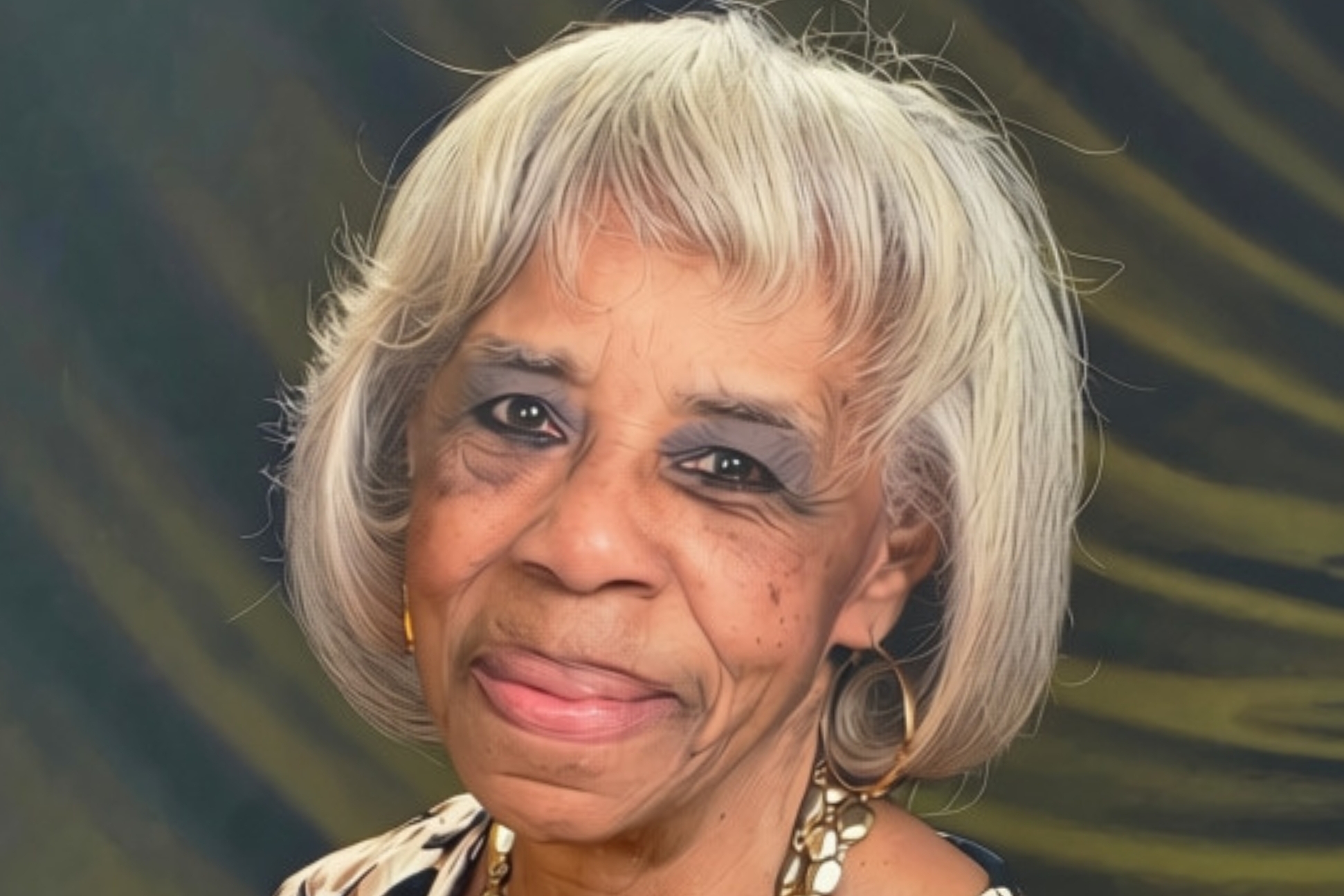
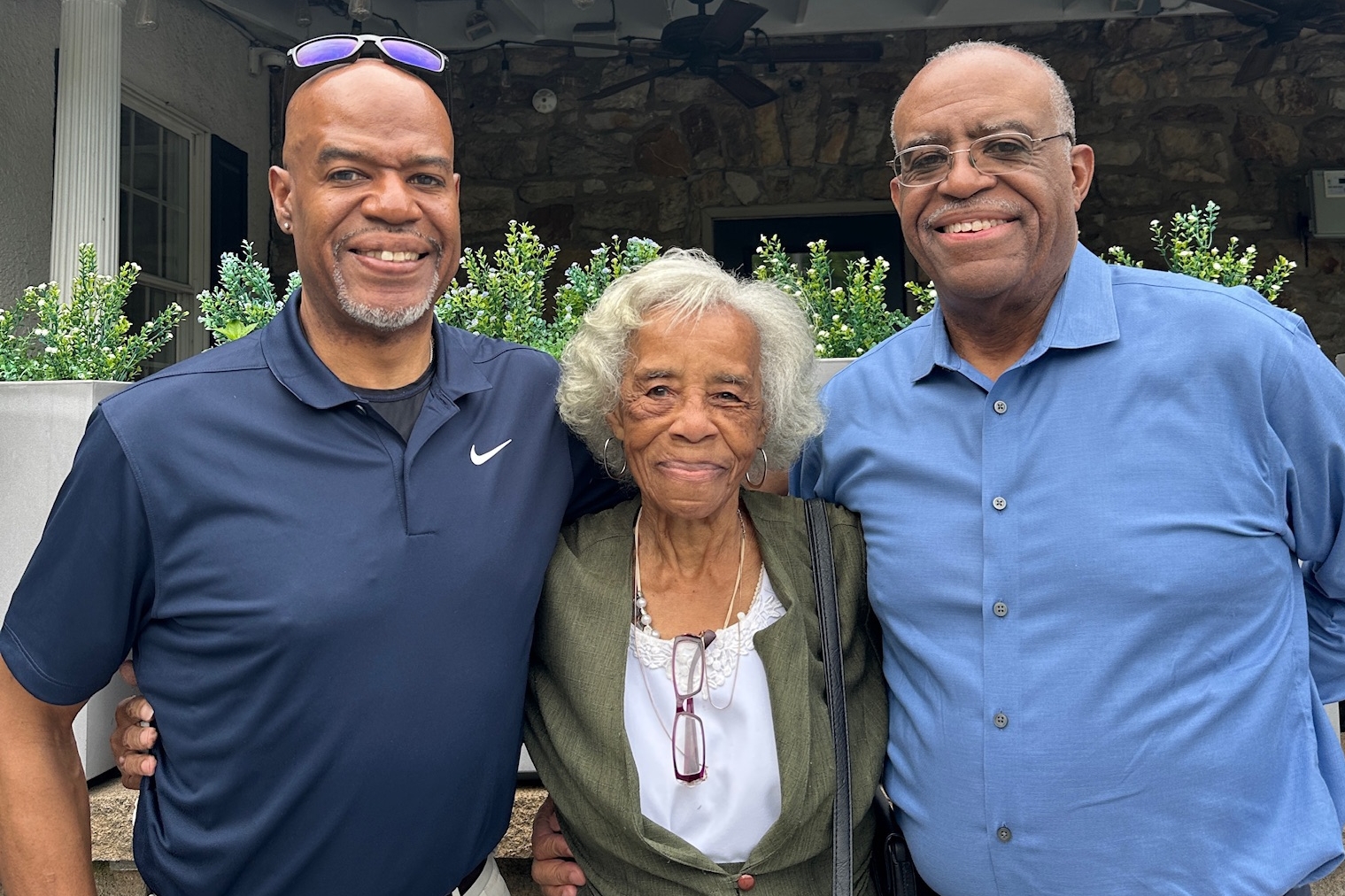
Joan M. Satterthwaite, 92, of Philadelphia, talented tailor and seamstress, longtime office administrator for the Mayor’s Commission on Aging, volunteer, and community caretaker, died Tuesday, Aug. 4, of sepsis at Jefferson Washington Township Hospital in Gloucester County.
Adept at designing, constructing, fitting, and altering garments of all kinds, Ms. Satterthwaite worked at the Botany 500 factory at Broad Street and Lehigh Avenue, and for other clothing manufacturers in Philadelphia, for more than 20 years. She could do every job on the intricate clothing assembly line, her son Kevin said, and she did them fast and well.
She joined the International Ladies’ Garment Workers’ Union in the 1950s and supplemented her weekday work by producing gowns, dresses, suits, and other clothing for family, friends, church choirs, wedding parties, and local businesses.
She made Halloween costumes for her two sons when they were young and tailored suits when they were older. She designed a wedding dress for her daughter-in-law.
She could duplicate many patterns by looking at them just once. Over the years, she collected eight sewing machines. “Her craftsmanship and attention to detail earned her the admiration and loyalty of countless clients,” her family said in a tribute.
Her son Kevin said: “We would call her an entrepreneur today.”
In the mid-1980s, Ms. Satterthwaite left garments and became certified in office administration and computer technology at the old Philadelphia School of Office Technologies. For a decade, she worked for the Joseph Shein Law Firm.
She tried to retire in the mid-1990s. But she impressed officials at the Mayor’s Commission on Aging so much as a client that they recruited her as a receptionist and administrative assistant. Sheleft that job in 2018, at 85.
Ms. Satterthwaite reared her sons in Philadelphia. Courtesy of the family
After that, she volunteered with veterans groups, was active in the community, and opened her home to anyone in need. “If someone asked for help,” her son Kevin said, “she was there.”
Her family said: “Joan’s life was a testament to perseverance, faith, compassion, and determination. Her kindness, generosity, and genuine concern for others became hallmarks of a life well lived.”
A friend said online: “Ms. Joan was the nicest person ever. … Her kind spirit reminded me of my grandmother.”
Joan Marie Watts was born Dec. 28, 1933, in North Philadelphia. Her mother died when she was 2, and she was reared by her grandfather and his wife.
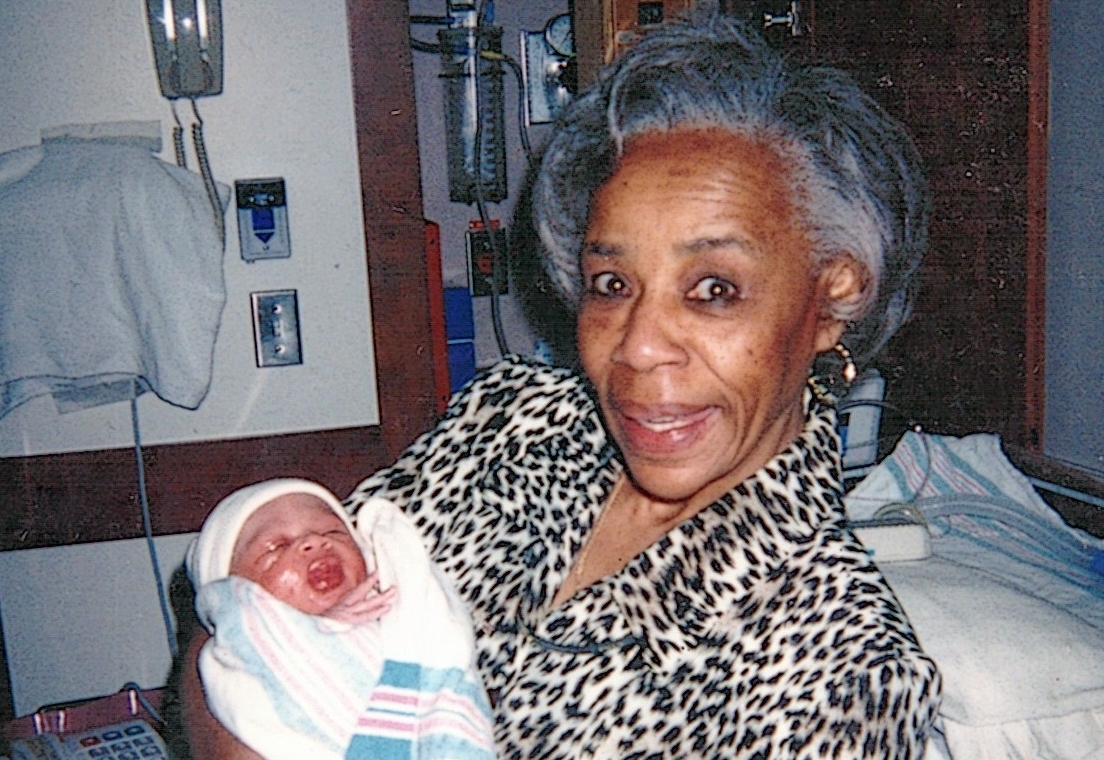
Ms. Satterthwaite doted on her grandchildren.Courtesy of the family
She studied tailoring and sewing at William Penn High School and graduated in 1952. She married Charles Satterthwaite in 1953, and they had sons Kevin and Eric. Her husband died earlier.
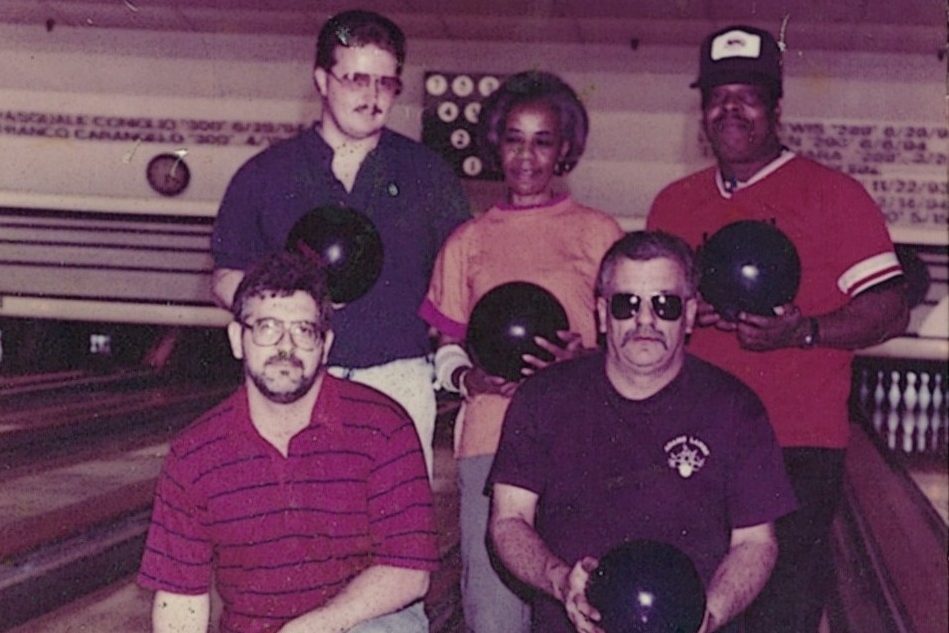
Ms. Satterthwaite was a member of Triumph Baptist Church for more than 35 years, and she went to breakfast with others often after Sunday service. She had breakfast with her sons on Saturdays, bowled every week for 30 years, hosted memorable family gatherings on holidays, and pored over puzzle books when she was older to stay sharp.
Her family noted her “warm heart, generous spirit, and love of people” in a tribute and said: “Her kindness, patience, and genuine concern for others left a lasting impression on all who knew her.”
She doted on her family and told them often that education was a key to success. She lived in Nicetown and Logan, and most recently in Washington Township.
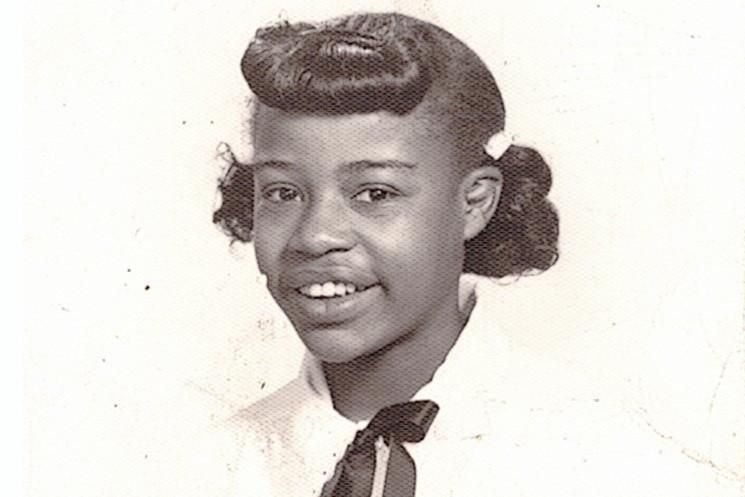
Ms. Satterthwaite graduated from William Penn High School. Courtesy of the family
Her son Eric praised her “unwavering belief that nothing in life was more important than family.” Her son Kevin said: “She was welcoming and warm. She liked being around people. Her life force kept her going.”
In addition to her sons, Ms. Satterthwaite is survived by four grandchildren, two sisters, a brother, and other relatives. Two brothers died earlier.
Services were held earlier.
Donations in her name may be made to Triumph Baptist Church, 1648 W. Hunting Park Ave., Philadelphia, Pa. 19140.
Ms. Satterthwaite bowled every week for decades. Courtesy of the family
DEAR ABBY: I am a 63-year-old man. My fiancée (57) and I have been dating exclusively, or so I thought, for four years. I just found out she has a male friend she has been seeing without my knowledge. They go to lunch and dinner and other activities.
She says they are just friends. He is her attorney, and he wants a romantic relationship. She lied by omission, and now my trust is damaged. I’m worried about her dishonesty and the viability of our relationship. She thinks it’s not a big deal. Your thoughts?
— SIMMERING SUSPICION IN FLORIDA
DEAR SIMMERING SUSPICION: A woman who is engaged has no business spending time alone with another man who has expressed a romantic interest in her. This is a big deal, made bigger by her attempts to hide it and downplay it. Warning: If you go through with this wedding, there’s a good chance you’ll need to start seeing a lawyer of your own.
** ** **
DEAR ABBY: My husband and I have been married for 34 years. Ten years ago, my husband had to take custody of his then 56-year-old brother, “Clay,” because back in 1987 he fried his brain on PCP. For a decade, our life has been a daily living hell.
Clay has frightened off one of our cats. He lies, steals from us, can’t and won’t clean up after himself and doesn’t wash his hands. He is the most disgusting person I have ever met. He’s spoiled rotten and lazy and expects the only woman in the home to do everything. This is an ingrained behavior that he has had for years.
I want a divorce. My husband will not put Clay into an assisted living facility or a mental institution. I love my husband, but I refuse to be disrespected by anyone. I told him I wouldn’t ever allow any member of my family to disrespect him the way I, our marriage and our home have been disrespected by his brother. Abby, would you divorce your husband for subjecting you to this daily living hell for 10 years?
— DONE IN MONTANA
DEAR DONE: I certainly wouldn’t have put up with your mess of a brother-in-law for an entire decade! Still, if you are considering divorce, you must mention that to your husband. Offer him a final opportunity to make other arrangements for his brother. Be clear that if he continues to value Clay’s comfort over yours, the marriage is over.
** ** **
DEAR ABBY: I am a boy in South Korea who likes boys. When I was in middle school, I loved girls just like everyone else, but it changed after entering high school. When I see boys in school now, I have started to feel the charm of them. These days, I’m scared that if I reveal it, I’ll be mocked by my friends and others. What should I do?
— NOT STRAIGHT IN SEOUL, S. KOREA
DEAR NOT STRAIGHT: If you don’t feel comfortable or safe coming out to your friends, it’s OK to wait. All of this gets a bit easier after you graduate, especially if you are able to attend a university. For now, focus on your studies so you can make that happen. To find gay or gay-friendly people to talk to outside your school, look up an organization called Dding Dong at ddingdong.kr.
DEAR ABBY: After nearly 18 years of marriage, I left my wife. Our daughters were 10 and 12. We had married quickly, and only later did I realize how deeply judgmental her “born-again” beliefs were — so much so that she gradually cut off my entire side of the family. I tried for years to reason with her, to no avail, and we divorced. What I never anticipated was losing my children as well.
In the years that followed, I sent cards, letters and messages — most went unanswered. I was told, “The girls don’t want to see you,” yet I was never given the chance to hear that directly from them. Over time, I came to realize I was a victim of parental alienation — something I never would have imagined from someone who professed strong Christian values.
More than 35 years have passed since I left that marriage, and I have had no meaningful contact with my daughters since. I am not without fault, and I own my mistakes, but the pain of lost years — and lost connection — remains. I write for others who may see themselves here: Please don’t let years pass in silence. Talk. Listen. Apologize. Seek understanding before distance becomes permanent.
— MR. KALAMAZOO
DEAR MR. KALAMAZOO: You have my sympathy for the years of pain and separation you’ve endured. Your story shows the importance of seeking partial custody or visitation rights as part of a divorce settlement. Your ex-wife would have had a much harder time cutting you off from your daughters if you’d had a court-mandated right to spend time with them. What’s done is done. You must allow yourself to accept it and live your life.
** ** **
DEAR ABBY: I am feeling uncomfortable with what has become a steady stream of requests on social media for charitable contributions on friends’ birthdays. My husband and I carefully budget our annual charitable contributions, and we try to be as generous as possible, but we cannot possibly respond to all of these requests and still fund our own preferences.
Would it be rude to post a comment saying, “Although this is not one of our charitable priorities, we wish you a happy birthday!”? My best friend says it would be better not to respond at all, but that feels a bit rude. What do you think?
— UNHAPPY BIRTHDAYS IN MONTANA
DEAR UNHAPPY: Do not state that the charity the person has chosen is low on your list of priorities. Acknowledge the occasion by posting warm wishes for the birthday to be a special one. Period.
** ** **
DEAR ABBY: My daughter is 19 and has a job. She has had a friend since fifth grade. They went six months without talking, but now they’re friends again. My daughter offers to buy her stuff, but I feel it’s not fair of the friend to accept. She works, too, but she doesn’t have enough money for any activities other than lunch. I want to stay out of it, but it bothers me. What should I do?
— PROUD MOM IN MASSACHUSETTS
DEAR MOM: Stay out of it. If the arrangement becomes so out of balance that it begins to bother your daughter, she will deal with it without your involvement. If she wants your advice, she’ll ask for it.
In early July, before the 250th anniversary of the nation’s founding, Texas Democrat James Talarico preached on the proper place of religion in politics. In his sermon, he argued for the importance of the separation of church and state while emphasizing that religion could still inform a person’s approach to and involvement in politics. He stressed how Christianity should shape the tone of one’s politics. Drawing on Jesus’ Parable of the Good Samaritan, Talarico claimed that loving one’s neighbor includes respecting people of different faiths.
Many of these politicians, including Talarico, Trone Garriott, and Hamilton, have emphasized their religious faith not only as a part of their overall message, but they have situated their Christianity at the core of their identity. While there’s nothing “new” about Democratic politicians whose religious identity is central to their politics — this was common a century ago with progressives such as William Jennings Bryan and Barbara Jordan during the Civil Rights era (and still is quite common among African American politicians) — today’s candidates do represent a departure from the trend of the past four decades of Democratic Party politics.
It hasn’t always been this way. Prior to the 1980s, candidates conversant in religion were common and unremarkable. At the time, evangelical and “mainline” Protestants were not aligned with political parties in the way they are today. As social scientist Ryan Burge has pointed out, in the 1970s most white evangelicals were Democrats and evangelicals helped elect “born again” Jimmy Carter in 1976 — the so-called “Year of the Evangelical.”
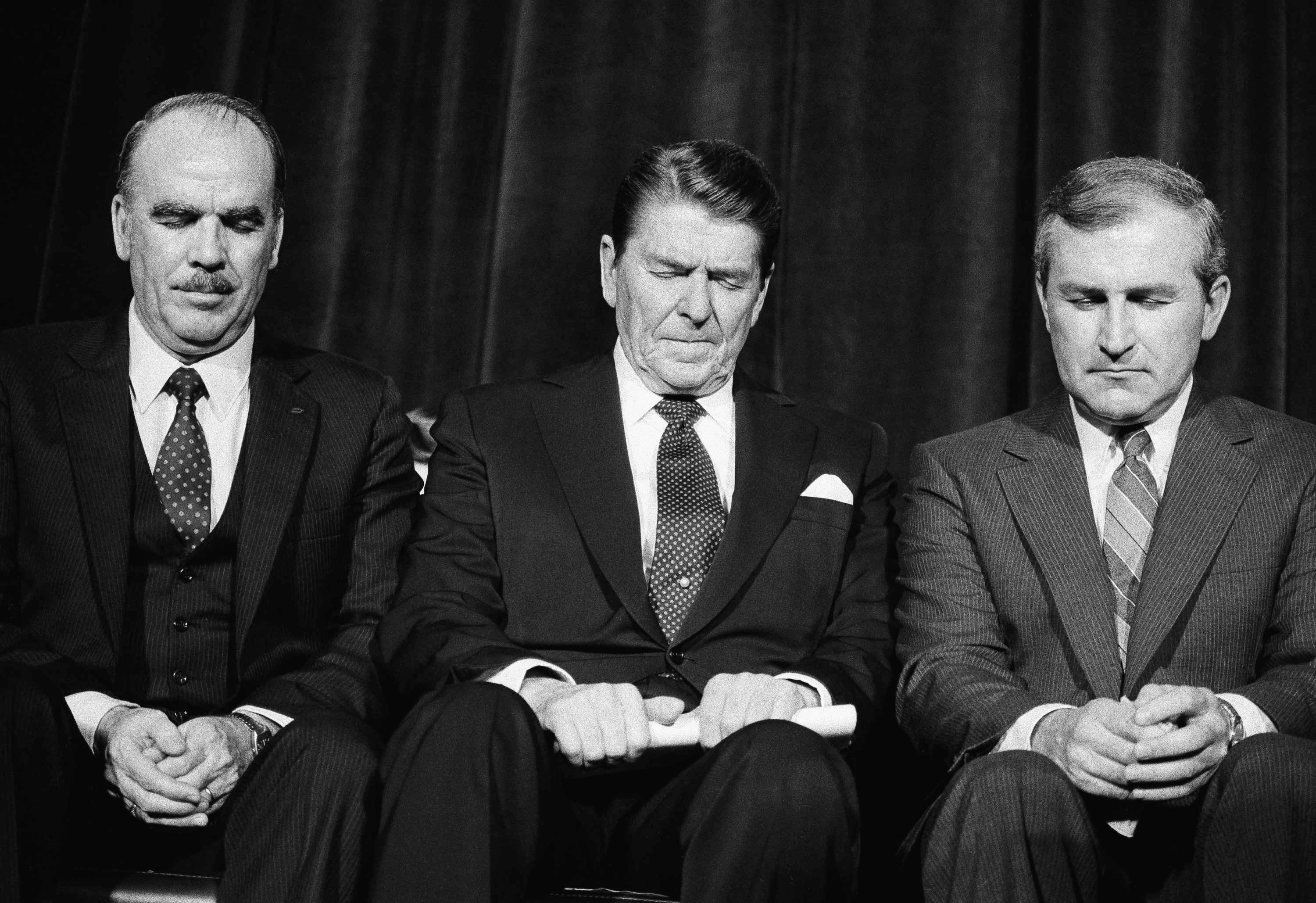
President Ronald Reagan prays with National Association of Evangelicals President Arthur Gay, left, following his address to the organization’s convention asking for help in winning approval of a constitutional amendment permitting prayer in school in Columbus, Ohio, March 7, 1984.Barry Thumma
But evangelicals’ rejection of Carter for reelection in 1980 signified an important shift for both parties. Explanations for white evangelicals’ turn away from Christian politicians like Carter and toward Ronald Reagan and the Republican Party — newly perceived as a reliably religious unit — usually point to several events in the 1970s.
By 1972, the number of delegates at the Democratic National Convention identifying as agnostics, atheists, or people who almost never attended church had grown to 24% (compared to 5% of Americans who listed “no religion” on the General Social Survey.) These delegates helped to add progressive positions on women and gay rights into the party platform at a time when they were to the left of mainstream America’s sensibilities.
Then in 1978, the IRS targeted mostly white private elementary and secondary schools, sometimes known as “segregation academies,” many of them religious, that had formed in response to desegregation, threatening their tax-exempt status unless they could demonstrate non-discrimination toward Black students. Additionally, by this time, the Supreme Court’s 1973 decision in Roe v. Wade began to galvanize evangelical activists in a space that had been historically dominated by Catholic priests and laypeople.
Both of these issues came together in the 1980 election, the latter thanks in part to the attention Francis Schaeffer drew to the issue in his writings and speeches across America and the organizing of Jerry Falwell Sr.’s Moral Majority. Because of the growing number of Democrats who self-identified as atheist, agnostic, or non-church attending, white Democrats tended to cede the religious political ground to the new Religious Right, even though plenty of Democrats were religious. Over the next decade, this helped create a binary between a “religious traditionalist” Republican Party and a “secularist progressive” Democratic Party.
The Rev. Jerry Falwell speaks at his Thomas Road Baptist Church in Lynchburg, Va., in a 1999 photo.
Demographic trends over the next 40 years reinforced this shift. In 1975, 30% of Americans were part of the Protestant “mainline” (e.g. United Methodist, Evangelical Lutheran, Presbyterian USA, Episcopal Church, American Baptist, Disciples of Christ, and United Church of Christ). Today the mainline only accounts for between 9% and 13% of Americans. Theories for this decline abound, including loss of identity, aging congregations, poor retention of children as they grow into adulthood, controversies over sexuality, ordination of women and LGBTQ clergy, and same-sex marriage, which led to conservatives joining more evangelical churches.
Over this same period, the number of Americans identifying as “unaffiliated” (the so-called “nones”) rose from 5% to nearly 30%.
Factors driving this growth include people being more willing in a secularizing environment to admit they aren’t religious, young people who choose not to identify with any religion, and the general population becoming less religious over time. Democrats have enjoyed a decided advantage among the voting “nones” going all the way back to the 1984 election.
For Black Americans, there has also been a more modest decline in affiliation with historically Black churches (e.g. National Baptist, Church of God in Christ, and AME Zion). Yet these churches have maintained a continued source of relevance for Black Protestants, playing a vital role in Black life as a source of social support, political organizing, community engagement, aid to the needy, and defense against racism and ethnic solidarity. Today, 53% of African Americans are still associated with historically Black Protestant churches, which probably accounts for the persistence over the past 40 years of progressive Black politicians with ministerial credentials.
Meanwhile, evangelicals shifted from a slight majority favoring the Democratic Party before the 1980s toward a reliable core of the Republican Party, at a moment when their numbers were increasing. By the end of the 20th century, evangelicals grew to represent nearly 30% of all Americans, in part by having larger families, retaining their children in the church at higher rates, and maintaining cultural and theological distinctiveness.
Collectively though, these trends meant the Democratic Party became less beholden to a religious demographic within its own constituency, and consequently, religiously-oriented politicians seemed less relevant to the Democratic Party.
Made By History sponsors. FOR USE ON MADE BY HISTORY STORIES ONLY.Inquirer Staff
The exception was the African American wing of the party, where Christianity remained central to most voters’ identities. Here, a political figure like U.S. Sen. Raphael Warnock (senior pastor of Ebenezer Baptist in Atlanta, a historically Black mainline church that Dr. Martin Luther King Sr. and Jr. pastored) is not exceptional. The Black church’s historic emphasis on social issues and inequality allowed for adherents’ continued support of Democratic candidates who were white and less religious, even as it did lead to some tension over progressive social goals, such as same-sex marriage.
In fact, it was the emergence of a Black politician in 2004, then-Senate candidate Barack Obama, who helped call attention to the dearth of religiously-conversant Democratic politicians, arguing that his party needed to reengage religiously-affiliated voters. From 2004 to 2008, the Democratic Party emphasized outreach to religious voters in a concerted way. But after the 2008 election, and Obama’s win, this focus for the Democrats declined so much so that, by 2016, Michael Wear and others involved in rallying Democratic religious voters for Obama had become frustrated at the lack of dedicated outreach.
So, does the emergence of Democratic politicians such as Talarico, Trone Garriott, and Hamilton signal a new shift on the order of what happened in the 1970s?
It may be too early to tell.
It may be, as Wheaton College Professor Esau McCaulley has argued, that the emergence of these politicians is linked to the backlash growing among Protestants tired of MAGA evangelicals defining what Christianity means in America today. Or, perhaps, these candidates are simply the culmination of a growing recognition within the Democratic Party of its need to reengage Christian voters.
Regardless, it’s not an accident that the new crop of ordained Democratic candidates are located in regions of relative mainline Protestantism vibrancy in the Midwest and South.
With the exception of Presbyterian Pastor Matt Schultz of Alaska, all 12 of the ordained candidates are running in Midwest or Southern states. Perhaps, politicians such as Talarico will succeed in reshaping how Christianity functions in the political space and reclaim a lost politics of religion within the Democratic Party. Time will tell if they are part of a new vanguard, or only a brief aberration.
Made by History takes readers beyond the headlines with articles written and edited by professional historians. Opinions expressed do not necessarily reflect the views of The Inquirer.
DEAR ABBY: My middle-aged son is on the autism spectrum and has recently come back home to live with us. He left home at 19 and has always had roommates. We didn’t realize that he had autism until about a year ago.
We like having him here but are having a difficult time adjusting. My son has agreed to help with bills and contribute toward groceries, but my husband thinks we should split all expenses three ways equally. My son works in the food service industry and earns a low wage, even though he puts in 32 to 34 hours a week. He eats at work most of the time and at home only twice a week. I’m retired and live on a small Social Security check. My husband makes more than twice what my son and I make. I think we should contribute based on our income, and I feel that my son and I should contribute 20% each toward food and other bills. Every time I try to discuss this with my husband, he gets angry and accuses me of taking advantage of him. I’m hoping we can get this resolved and move on.
— DESPERATE MOM
DEAR MOM: I assume you want your son to stay with you for the long term; does your husband feel the same? Is it possible he’s being difficult about money so your son will move out again? The phrase “on the autism spectrum” covers a wide range of needs, so I’m not in a position to weigh in on what you should expect of your son. A licensed family counselor who specializes in autism may be able to help you and your husband understand how much your son is capable of contributing.
** ** **
DEAR ABBY: My fiancé, “Dustin,” and I have been a couple for five years. We live together and are fairly happy. The problem is his gaming habits. At first, it wasn’t an issue because I also play the occasional video game. Since moving into our own place, I’ve noticed Dustin has started spending a tremendous amount of time on these video games. From the time he wakes up around 1 p.m. until right after he gets off work around 10 p.m., he’ll log on and play for hours. Most nights he doesn’t come to bed until 5 a.m.!
With all his free time, he doesn’t help clean or cook, and I get none of his attention. I’m not sure where I go from here. I have spoken to him about this habit, but he doesn’t see any issue because he grew up constantly playing games. I need some guidance on this issue because it’s driving a wedge in our relationship.
— GAME OVER IN NORTH CAROLINA
DEAR GAME OVER: Dustin doesn’t see any issue with the status quo because it isn’t a problem — for him. He’s got a pretty good deal. You do the cooking and the cleaning and contribute to half the expenses, but you’re not even getting companionship.
Tell your fiancé you need more from him because this isn’t what you signed up for when you moved in together. Offer him the option of couples counseling so your issues can be mediated. If he isn’t willing and this doesn’t resolve the problem, then cut your losses and move out unless you want to spend the rest of your life as a “gaming widow.”
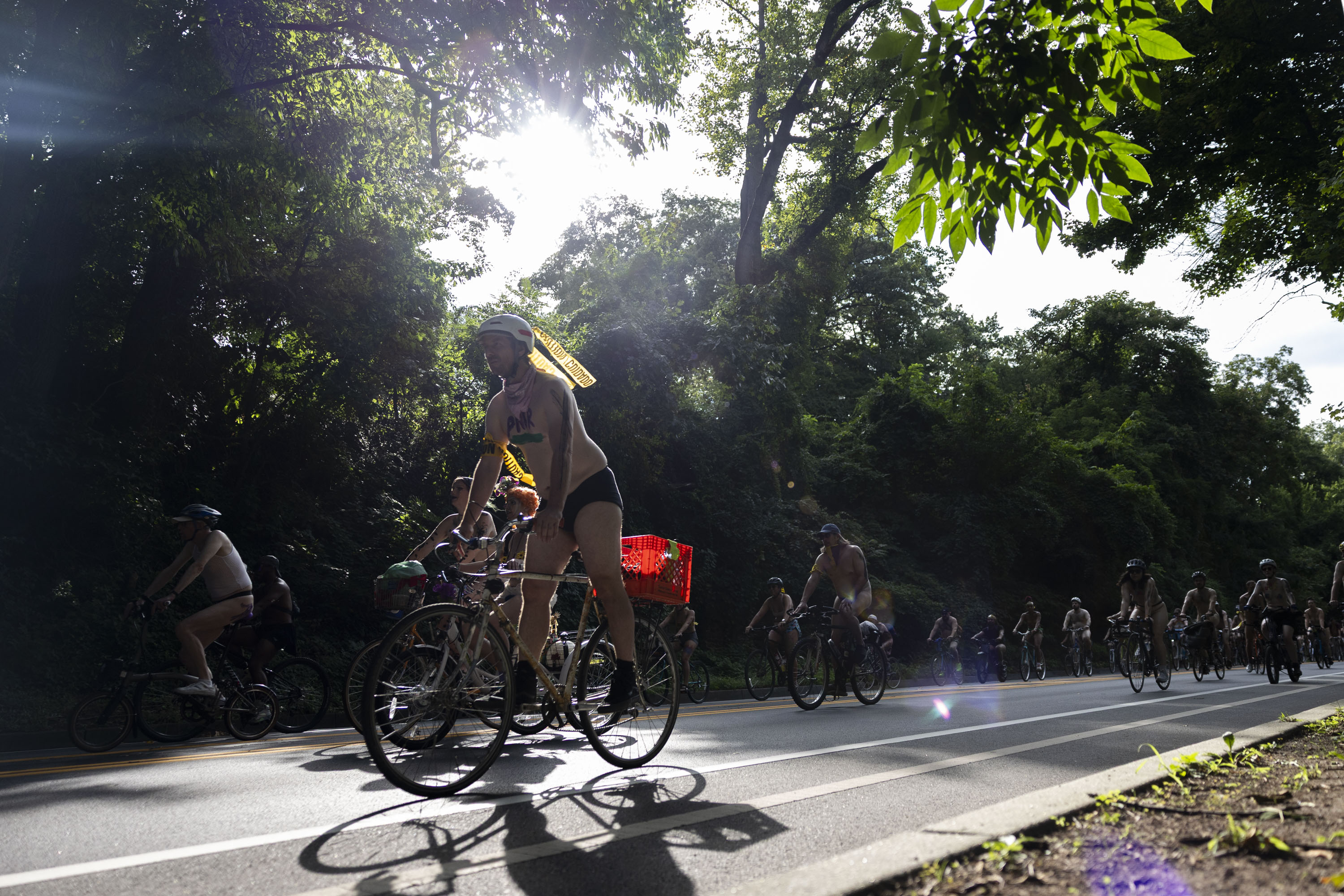
By sheer happenstance, a twosome of naked demonstrations took place Saturday across the city — a “free the nipple”-esque protest midday at Philadelphia City Hall followed by the annual Naked Bike Ride in the late afternoon.
Beyond the shock and awe of scantily clad or not-at-all clad people, both events were acts of resistance, defiance, and free expression, and went deeper than, well, skin deep, attendees said.
As hundreds lined up along Martin Luther King Drive for the 17th edition of the Naked Bike Ride, their bodies — with varying degrees exposure — were like flesh-toned picket signs. People painted themselves with phrases denouncing President Donald Trump and his administration’s targeting of immigrants, calling for a freed Palestine, and demanding enhanced bicycle safety measures. Mattie L., who was visiting from Savannah, Ga., wrote “Voting is Hot,” across his back.
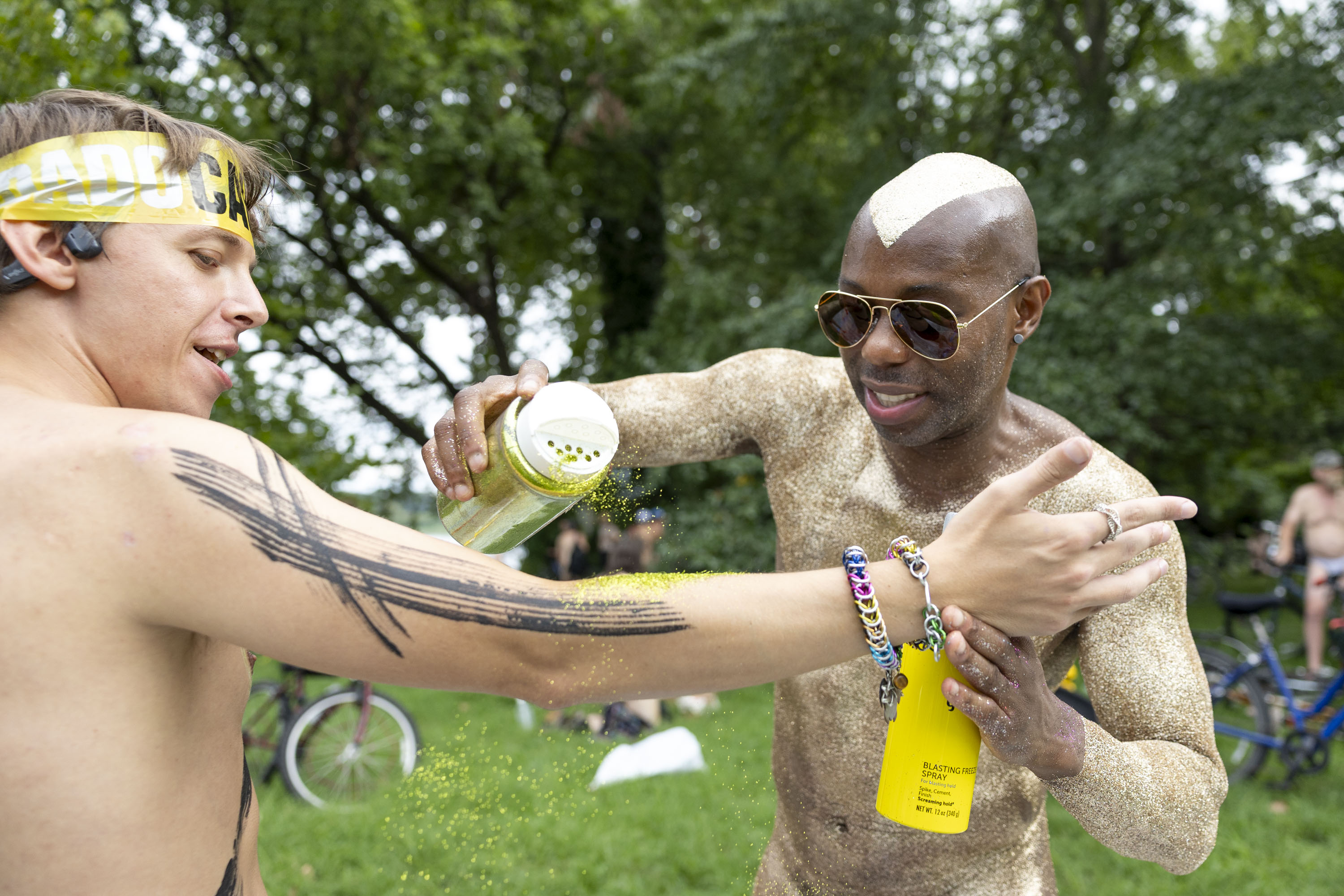
Rocket (right) puts glitter on Ari Tm of Fairmount for the Naked Bike Ride on Saturday, Aug. 22, 2026, in Philadelphia.Tyger Williams / Staff Photographer
“Besides the bodies, the messages themselves add another reason for people to lock in what [we’re] saying and to really take it to heart,” said 35-year-old Mattie, who declined to give his last name, citing concern for his privacy.
To riders, the bare-as-you-dare ride, which snakes 12 miles through the city, is an annual pro-environment, pro-bicycle safety and advocacy, and pro-self-love-intended counterpunch to fuel dependency, car-first American infrastructure, and body shaming.
Biking in a car-centric city is itself an act of rebellion, said Emma K., a 28-year-old Temple University alum who now lives in New York City. Emma also declined to give her last name because of privacy concerns.
Dane Jorento, 65, of Drexel Hill, was drawn to the Naked Bike Ride because of “naked,” “biking,” and “protest.” Being unabashedly naked, Jorento said, is an act of radical vulnerability and self-acceptance.
For Morningstar Hirst, who was part of the ride’s “street team,” the Naked Bike Ride was about showing off their new body post-top surgery, while “protesting and leaning into body positivity.”
“I am all about freedom within one’s body and then mobility with that body — I think that this ride sums that up really quickly and really easily,” Hirst, 34, of West Philadelphia, said.
“Every body is a wonderful body,” he added.
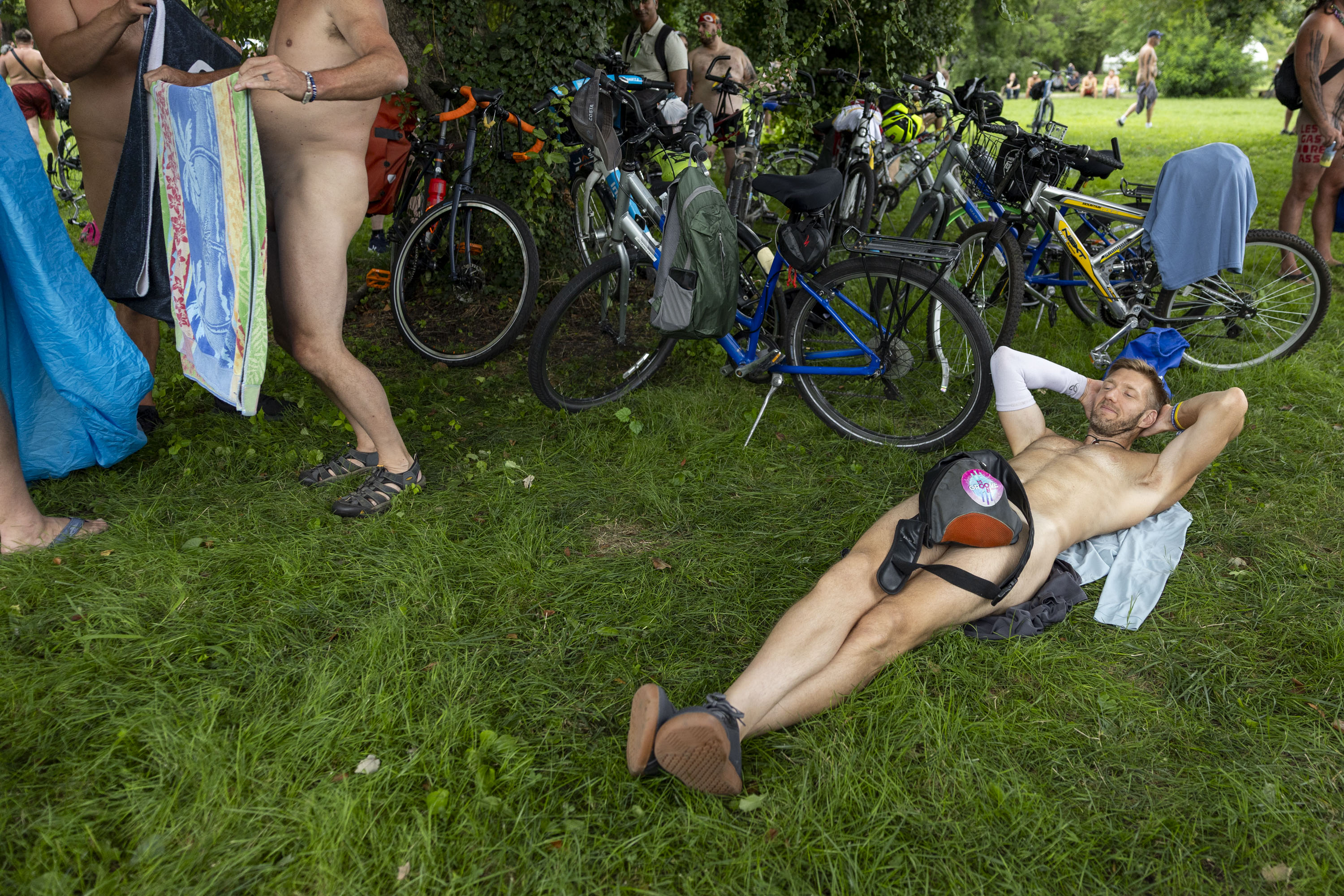
Ryan Genova of Glenside chills during his fifth time attending the Naked Bike Ride on Saturday, Aug. 22, 2026, in Philadelphia.Tyger Williams / Staff Photographer
Go Topless Day had a clear agenda: Roughly a dozen bare-chested picketers gathered in LOVE Park at noon, before marching around City Hall with a police escort, chanting, “free your breasts, free your mind,” to stir action around what protesters described as the legal hypocrisy that allows men to be shirtless in public but not women.
“If men can go legally topless in a street, women should have the same right,” organizer Kasyo Perrier said. “Otherwise, we should force men to wear tops.”
Chloe Theodosiou of Germantown gets a message of “Hands Off Equal Rights” written on their chest for the GoTopless Day Civil Rights March at LOVE Park on Saturday, Aug. 22, 2026, in Philadelphia.Tyger Williams / Staff Photographer
Go Topless Day is a cause of the Raëlian Movement, a religious group that believes extraterrestrials created humanity. Core tenets of the Raëlian Movement are freedom and equality, explained Perrier, who is a Raëlian priest: “We’re created beautiful and and there’s no reason to be ashamed of our body.” (Go Topless Day, in its 19th year, is usually held around Aug. 26, Women’s Equality Day, marking women’s suffrage, according to Perrier.)
“It is a gateway to self-love; it is a gateway to neighborly love when we stop making certain things taboo,” participant Chloe Theodosiou, 30, of Germantown, said of the cause.
Not everyone felt so uninhibited. Tourists with cellphone cameras gawked, a woman with a stroller scoffed. A group of tweens giggled and shielded their eyes.
One man gruffly remarked, “no one wants to see that.”
“We’re all just shapes — just a bunch of circles and triangles,” Theodosiou remarked.
DEAR ABBY: My best friend and I got pregnant, each with our first child, with our due dates a week apart. We felt blessed to be going through this amazing experience at the same time. Our babies are now 2 months old. I am adjusting well to motherhood. I feel it’s coming naturally to me. My friend is having the opposite experience. Ever since the birth of her daughter, she has been distant, anxious and depressed. She’s a different person. I don’t know how to help her. I don’t know what she’s going through. To make matters worse, she told me that when I make comments about being super happy and loving breastfeeding (as she struggles with it), she thinks I am rubbing it in her face. I care about her dearly, but am I not allowed to speak my truth because she’s struggling? How do I support her and still be forthcoming about my own positive experience?
— ONE OF TWO NEW MOMS
DEAR ONE: There may be a physiological cause for your friend’s anxiety and depression. Childbirth can lead to a hormonal imbalance that can be corrected. It’s important that she talk to her obstetrician about the negative emotions she’s experiencing. Please don’t wait to urge her to do this, because the problem could worsen. Allow me to offer a final thought: You would be a more sensitive friend to her if you share your joy at being a new mother with friends other than this one — at least for a while. You don’t need to censor your social media, but please find other things to talk about when face to face with her.
** ** **
DEAR ABBY: My husband and I have friends we consider our “BFF couple.” The husband, “Brian,” recently became unemployed, which has left him more time to travel. Brian and his wife fly to see his dad in Florida several times a year. Although they live an hour closer to the airport than we do, Brian asks every time for my husband to drive them to and from the airport. My husband is retired, so his schedule is a bit freer than most, but now he is driving much longer to drop off and pick up than it would take this couple to use Uber or, even better, park their car in remote parking. It’s not a financial issue for them because they fly on his dad’s points and Brian’s wife makes twice what I do.
I have argued with my husband over this and told him he doesn’t need to be their cab driver simply because they feel entitled to his time and are too lazy to park their car at the airport. The wear and tear on our car and the promises of gas money that never appears exacerbate my frustration. Am I wrong to stand my ground on this issue with my husband?
— NOT YOUR CABBIE
DEAR NOT YOUR CABBIE: I agree that this couple could stand to be more self-sufficient and considerate, but your husband’s time is his to spend as he pleases. As long as he doesn’t break any engagements with you to help them out, why not just admire his generous spirit? That said, given recent gas prices, you might suggest that he collect the gas money up front moving forward.
As the afterglow of the world’s largest sports tournament and the country’s formal 250th birthday party in Philadelphia fades, the city is returning to its regularly scheduled programming.
But those months of celebrations came with significant investments into the city: building up the Benjamin Franklin Parkway, hosting Grammy Award-winning stars, renovating Lemon Hill to welcome half a million people, and, of course, the cleaning and maintenance work that made Philadelphia look fresher than it has in years.
SEPTA and the city partnered to landscape and beautify major traffic intersections, sometimes with a new mural provided by Mural Arts Philadelphia. SEPTA stations alsoreceived a much-needed deep clean and graffiti removal, all before and during the summer celebrations.
PHLASH buses got an extra stop to get to Lemon Hill; fans got free rides on the Broad Street Line after World Cup games. And, just as the international fans packed up their bags to head home, it’s time for many of those features to go, too.
But what about all the things staying in Philly? The city is not getting just generational memories and a summer party out of the deal. Here are some of the major legacy projects remaining in Philadelphia for years to come, perhaps even until the tercentennial celebration in 2076.
(function(){function e(){window.addEventListener(`message`,function(e){if(e.data[`datawrapper-height`]!==void 0){var t=document.querySelectorAll(`iframe`);for(var n in e.data[`datawrapper-height`])for(var r=0,i;i=t[r];r++)if(i.contentWindow===e.source){var a=e.data[`datawrapper-height`][n]+`px`;i.style.height=a}}})}e()})();
New mini soccer pitches across Pennsylvania
Location: Throughout Pennsylvania.
The project: How does the United States grow the next crop of elite soccer players? By making it easier to play soccer starting at a young age. At least 13 mini soccer pitches are being installed at schools, recreation centers, and parks across Pennsylvania.
The first two of Philly’s mini pitches were installed at West Oak Lane’s Building 21 and the Swenson Arts and Technology High School in Northeast Philadelphia. According to the U.S. Soccer Foundation, which is overseeing the project, each mini pitch costs $150,000 to install.
The U.S. Soccer Foundation has committed $2 million to install mini-soccer fields like this one in Northeast Philadelphia ahead of the 2026 FIFA World Cup.Kerith Gabriel
Who is behind it: The city and several nonprofits and private companies are backing this initiative, mostly through a $2 million investment from Philadelphia Soccer 2026, the city’s host committee for the 2026 men’s World Cup. Additional backers include the Philadelphia School District, Independence Blue Cross, and Comcast, among others. The U.S. Soccer Foundation is administering the funds and overseeing the installation of the pitches.
The project: The transformation of Fishtown’s TipTop Playground into two mini, enclosed turf soccer pitches, with additional event space and field lighting for night play. The pitches are now open for kids and adults.
Fishtown’s street soccer park will host leagues, free training clinics, and youth soccer programs. Casual pickup soccer is available outside of scheduled programming, led by Street Soccer USA, the organization that helps run such soccer parks across the country.
Who is behind it: You guessed it: Bank of America and Visa. Street Soccer USA will run programming at the park in collaboration with local groups.
Lemon Hill Park
FIFA President Gianni Infantino, center, will visit Lemon Hill Park on Thursday, April 10 for an operational planning tour of Philadelphia Soccer 2026’s FIFA Fan Festival siteJose F. Moreno / Staff Photographer
Location: Sedgley Drive and North Lemon Hill Drive.
The project: Lemon Hill Park received some updates ahead of hosting the official FIFA Fan Festival, and is now getting a much-needed makeover after 39 days of World Cup festivities. The restoration of the grass is underway, with more permanent amenities soon to be constructed.
Some upgrades are complete:
Other upgrades are coming soon:
Who is behind it: Philadelphia Soccer 2026 is committing $4 million to park upgrades, with help from the city, to repair the grass fields, bring new modern amenities to parts of the park, and outfit the space with new electrical service, provided by Peco, to prepare for future large events.
FDR Park’s Ashburn Field
The MLB is renovating Ashburn Field in FDR Park, a city field managed and maintained by the Phillies that hosts a variety of youth baseball programs.Colin Evans / For The Inquirer
Location: 1500 Pattison Ave.
The project: Ashburn Field at FDR Park has been resurfaced with a new turf field, meant to better handle wet weather conditions. The 135,000-square-foot field was built in 1998, using funds generated from the 1996 MLB All-Star Game in Philadelphia.
Who is behind it: Major League Baseball and the Phillies, as part of a combined investment of more than $5 million in various projects tied to the 2026 MLB All-Star Game, including revitalizing the Negro Leagues Memorial Park and mural at 44th Street and Parkside Avenue in West Philly.
Independence National Historical Park
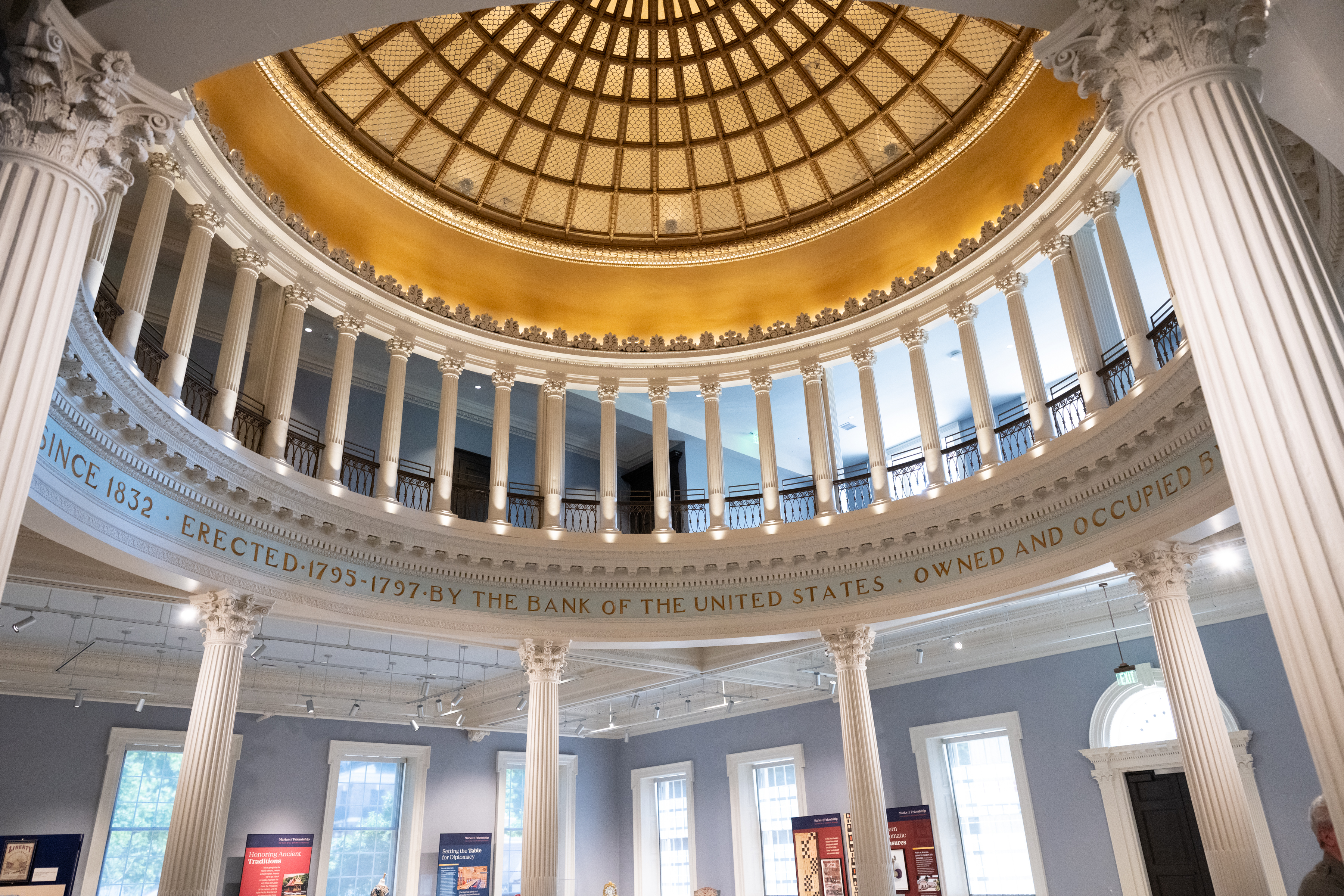
The rotunda inside the First Bank of the United States is pictured on Monday, June 29, 2026 in Philadelphia.Erin Blewett / For The Inquirer
Location: 599 Market St.
The project: Several improvements have already come to Independence National Historical Park and Independence Mall to commemorate the nation’s Semiquincentennial, and more are on the way. They include:
A $3.9 million “Join or Die” sculpture on Independence Mall, inspired by the truncated snake in Benjamin Franklin’s cartoon of the same name. The 46-foot-long granite work is expected to be unveiled this fall.
Beautification and horticultural work. This includes work at the Benjamin Rush Garden at Third and Walnut Streets, which showcases the 1976 Bicentennial Bell, a 10-ton Liberty Bell replica gifted by Queen Elizabeth II.
The reopening of the First Bank of the United States, on Third Street between Walnut and Chestnut Streets. The bank had been closed for 50 years but is now open for visitors thanks to a $43 million renovation.
Who is behind it: Independence Historical Trust, the city, the state, private foundations, philanthropists, and legacy groups.
Germantown Historical Society Visitor Center
Location: 5501 Germantown Ave.
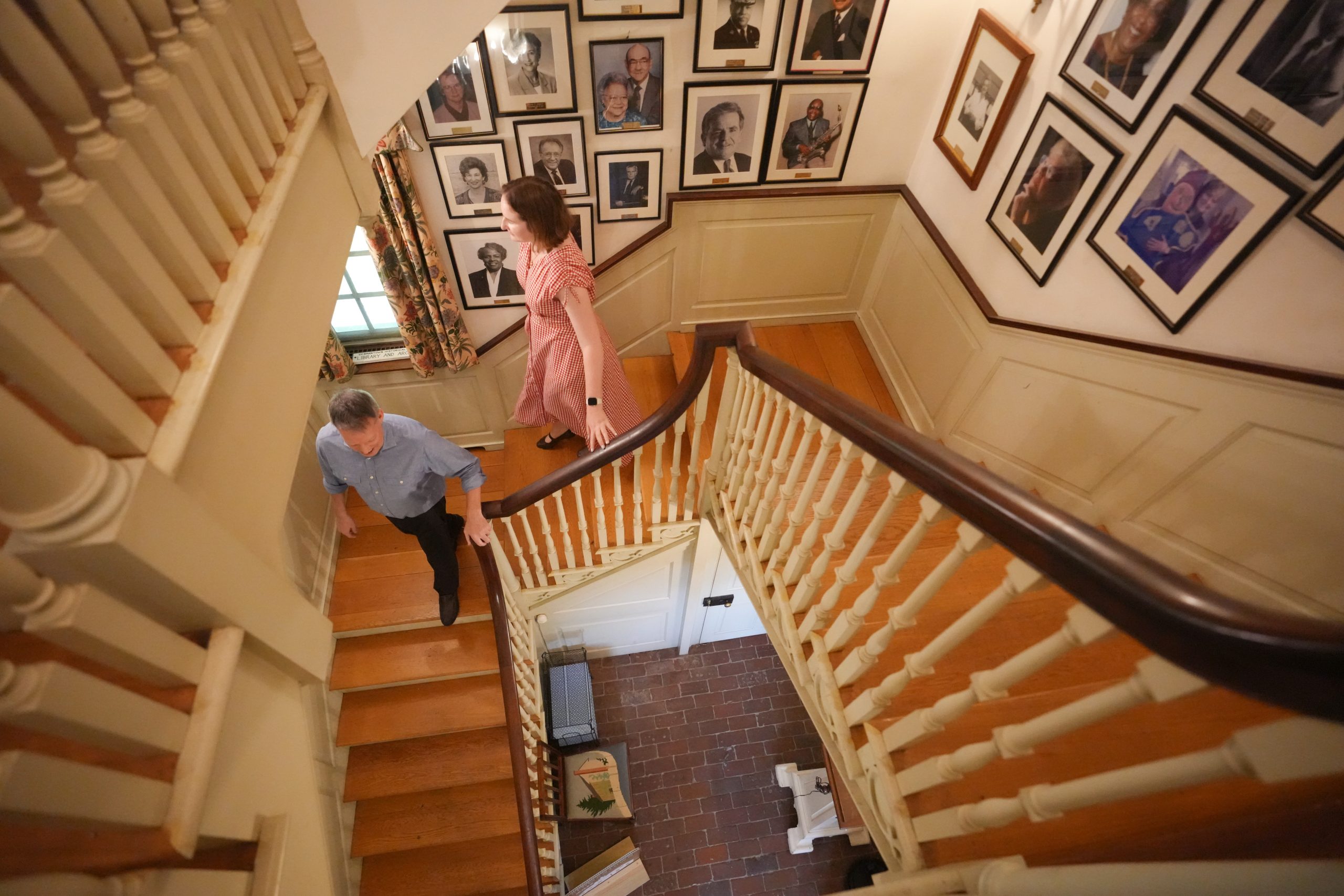
Tuomi Forrest, executive director at the Germantown Historical Society, and Kaila Temple, curator of collections at GHS, at the Germantown Historical Society building located at 5501 Germantown Ave. in Philadelphia, July 21, 2026.Jessica Griffin / Staff Photographer
The project: The Germantown Historical Society has its first visitors center, thanks to a $100,000 renovation of a section of its headquarters. It is modest but will host rotating exhibits, maps and pamphlets, and a gift shop.
Historic Germantown consists of various landmarks and attractions in Northwest Philly, including the Aces Veterans Museum, Awbury Arboretum, and the Germantown White House, where George Washington once lived.
Who is behind it: The Funder Collaborative for the Semiquincentennial, a philanthropic group organized by the Connelly Foundation that donated to many initiatives and projects related to the 250th anniversary celebration.
My child is about to start kindergarten and is excited about the school-provided lunch (he knows there is regular pizza). The menu looks mostly fine and I won’t stop him from enjoying it if everyone else is, but I noticed that he can choose to have chocolate milk every single day, which seems like a lot to me. Am I overthinking it or should I tell him he can only choose it once a week? I won’t even be there to see if he’s telling the truth. Do I ask the school to restrict it?
Jason Nark, Life & Culture reporter
I also have a child starting kindergarten, but we have to supply all the lunches.
Zoe Greenberg, Life & Culture reporter
Will you be packing chocolate milk every day?
Jason Nark
No way, but I’m not horrified by the idea. I was recently scolded for packing her marshmallows for summer camp lunch.
Leaving it up to the kid seems like a bad idea. I have to explain this to my parents, often, when they watch my daughter. They will argue “well, she likes (insert ice cream, gummy bears, YouTube, etc.) so we give it to her.”
Zoe Greenberg
So I was just rereading an article about “fat activist” (her words) Virginia Sole-Smith, the author of Fat Talk: Parenting in the Age of Diet Culture. She talked about her own method for “unhealthy” foods — she lets her kids decide, and thinks it’s a way for them to figure out what they actually want/need.
For example, she serves brownies and Cheez-Its and chicken and broccoli at the same time on the dinner table, and the kids decide what to eat, how much to eat, and in what order. I was intrigued!
Jason Nark
I wonder if she’s teaching this kindergarten class.
Zoe Greenberg
Jason, would you talk to the school, or would you tell your daughter chocolate milk is a once-a-week delicacy?
Jason Nark
I would talk to the school, first, and if this was their policy, I would talk to my daughter and set some limits.
Zoe Greenberg
I feel like drawing attention to the chocolate milk as an everyday option, and saying it’s not allowed, makes it seem so much more interesting and desirable.
Jason Nark
We don’t treat kids like adults (or shouldn’t) for a reason.
Zoe Greenberg
I might just say nothing and assume the kid won’t drink it every day? But I also have a five-month-old and he hasn’t ever gotten to drink chocolate milk.
In your school could you have chocolate milk at lunch? I feel like maybe I could, but I didn’t much. I’m picturing the little brown carton.
Jason Nark
I think we could. I drank Pepsi at lunch every day, so that’s even worse. I grew up before people drank water.
Zoe Greenberg
You wish you’d been restricted?
Jason Nark
Maybe not restricted, just more informed. I wish my wrestling team had a nutritionist.
My daughter brings a water bottle to school every day and that’s her drink. If we go out somewhere, she can get chocolate milk or juice.
Funnily enough, a few weeks ago, we were eating pizza and I asked her if she wanted a sip of soda and she seemed horrified.
Zoe Greenberg
Wow. She wants WATER.
How would you deal with the fact that you won’t know if she does or doesn’t drink the chocolate milk, even if you set limits? To me it’s better to not introduce the “you can’t have this” and then the kid has to lie or find a workaround. (Or I guess follow the rule.)
Jason Nark
My daughter is a pretty straight shooter, so I think she’d follow the plan. I wouldn’t ban the chocolate milk, though.
My bigger fight is with the grandparents.
Zoe Greenberg
It’s true, the grandparents will say, “He didn’t want to nap so he didn’t” and I’m like of course he didn’t want to nap, but he really does.
Jason Nark
As an aside, I’ve interviewed a lot of dairy farmers who tell me real milk in schools is key to their survival.
Zoe Greenberg
Oh wow. And I think it’s a USDA requirement. The daycare center required us to sign a waiver if our child was allergic to cow’s milk, otherwise he has to get it.
Do you place restrictions on the grandparents?
Jason Nark
I try, but…
Zoe Greenberg
Sometimes we have to learn to let go.
Jason Nark
Particularly if they’re babysitting.
Zoe Greenberg
Yes. Unlimited chocolate milk is a small price to pay.
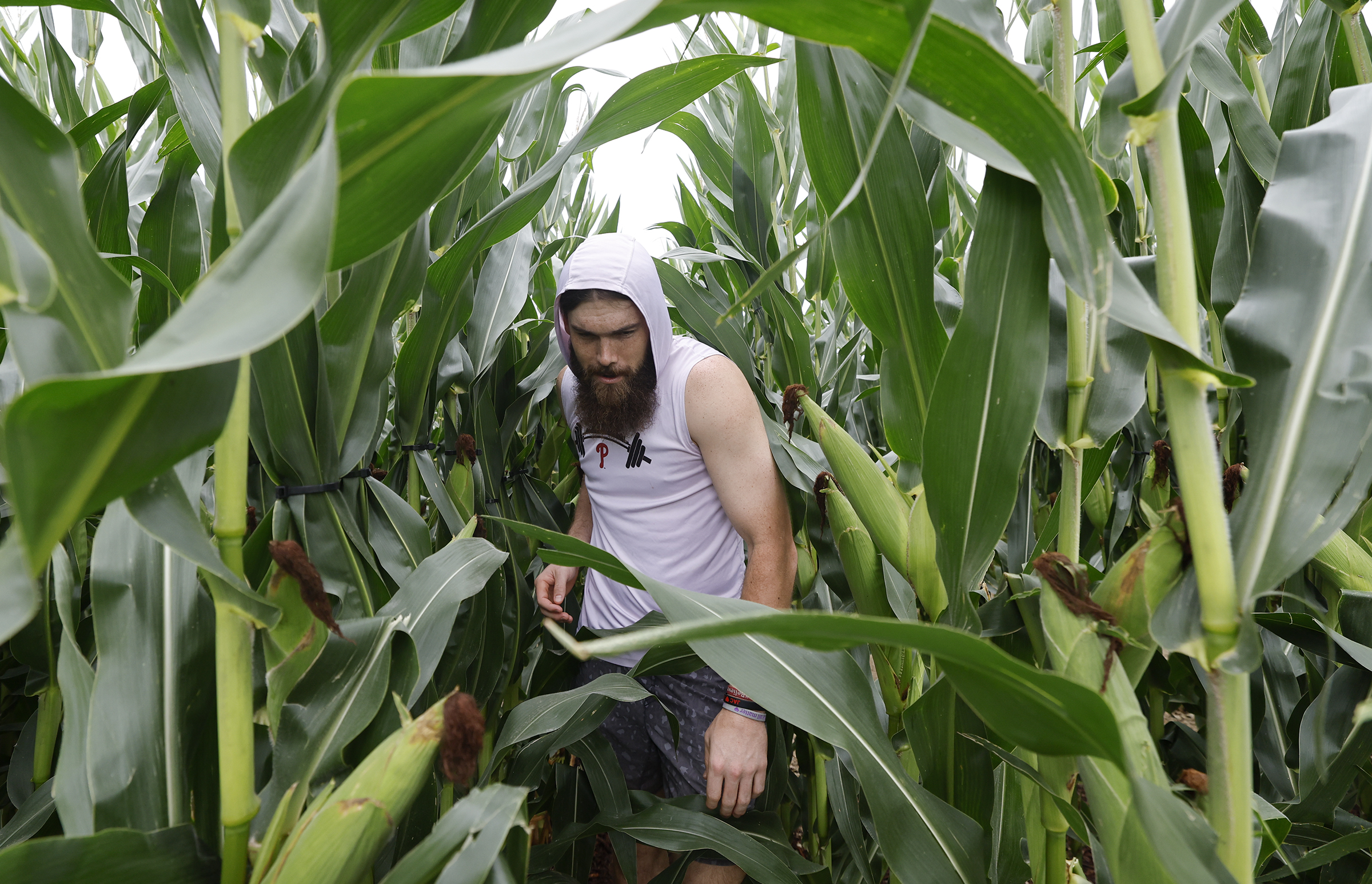
The Phillies crawled into Iowa for MLB’s mystical Field of Dreams game and haven’t lost since. The Fightins peeled off seven in a row since emerging from the cornfield in what’s become baseball’s most spine-tingling summer happening (Sorry, All-Star Game, but Mike Schmidt coming out of the corn was one for the ages.)
Powered by a suddenly divine offense — in the name of the Harper, Bohm, and Bryson Stott, amen — and a resurgent Aaron Nola, the Phillies’ season-best streak put the team 12 games over .500 for the first time all season. By Aug. 20, they enjoyed a two-game cushion for the second NL Wild Card spot. Whether the Phillies celestial good fortune has a Hollywood ending remains to be seen — and will depend largely on the trinity of Zach Wheeler, Cristopher Sánchez, and Jesús Luzardo, and saintly wisdom of Donny Baseball. Is it Heaven? Maybe not. But it’s August in Philadelphia, and the Baseball Gods are smiling.
A bar at McGlinchey’s, 259 S. 15th St.MPN Realty
‘The Gray Wave’ hits Philly restaurants: B-
I’m a sucker for the city’s past. Especially its boozy, foodie past. My sepia-toned Philly time-machine daydreams include strolling bygone Jazz Age South Street speakeasies, clinking a Diet Coke to the swoosh of the gilded curtain at Palumbo’s nightclub, and touring the handsome booths of the 19th-century Reading Terminal Market. All to say, it’s a bummer to mark the passing of iconic Philly-area eateries like Kelly’s Seafood and Steve Stein’s Famous Deli, both in Northeast Philadelphia, and both closing by the end of the month.
Other landmarks — including the Medieval-inspired Pennsauken steakhouse, The Pub, and legendary Center City spots like Cherry Street Tavern and McGlinchey’s — are on the market. Some in the Philly restaurant scene have coined a phrase for what they say is a broader generational transition among small businesses as longtime owners reach retirement without children interested in taking over: “The Gray Wave.” Raise a Diet Coke — or something stronger, if you wish — to all the old great ones saying goodbye. But, alas, since a grand metropolis such as our own is nothing if not an ever-regenerating engine, offer too a hearty huzzah to the future greats that will surely follow in their boozy wake. Sláinte.
Jamika W. for President: A
Philadelphians pride themselves on providing local news reporters with profoundly entertaining and refined recountings of crimes and catastrophes. It’s in our blood — and unique vowel shifts. But for sheer charm and grace, few surpass everyone’s new favorite Philadelphian, Jamika W., who this week exuberantly reenacted kicking a masked menace near City Hall during a now-viral ABC7 Eyewitness News report.
On Aug. 17, Jamika W. saw something (a masked marauder chasing a woman into a coffee shop) and did something about it (calmly delivered a debilitating and flawless front kick to said marauder’s chest). Even more winsome than the kick itself — which Jamika W. displayed with wide-eyed enthusiasm and cool confidence — is the ironclad and incontrovertible reasoning behind her Roundhouse of Reckoning. “He just seemed disorientated about what his goals actually were,” she said, with a smile. “I had bags, he wasn’t reaching for those. He didn’t seem like he had a clear goal to actually get into La Colombe to do anything, so I was like, ‘OK, well, let’s see if you can fight, and he couldn’t.’”
Willie Nelson performs during the Outlaw Music Festival at Freedom Mortgage Pavilion in Camden on Friday, September 12, 2025. On Sept. 24, Willie Nelson & Family and Neil Young and the Chrome Hearts will play a coheadlining date at the Highmark Mann.Elizabeth Robertson / Staff Photographer
Willie and Neil Philly bound: B+
For the first summer in years, Willie Nelson will not be bringing his Outlaw Music Festival to Philadelphia. At 93, and fueled by love, music, and his own THC-infused drink, Willie’s Remedy, the Outlaw Oracle needs a break. But all is not lost in Willieville. Turns out Nelson isn’t skipping Philly after all. On Sept. 24, Willie Nelson & Family and Neil Young and the Chrome Hearts will play a coheadlining date at the Highmark Mann. (Teenage songwriter phenom Ty Myers is also on the bill.)
Personally, I bawl like a baby every time I hear Willie Nelson sing “Blue Eyes Crying in The Rain.” See you soon, Willie.
The new limited-edition Phanatic Caramel Curveball Cream Smoothie was announced Aug. 17 at Wawa’s Penrose Avenue store. Jessica Griffin / Staff Photographer
The new Phanatic smoothie: C-
Few can fault the limited-edition Phanatic Caramel Curveball Cream recipe, though vanilla ice cream, caramel sauce, whipped cream, salted caramel syrup, and sea salt pretzel pieces doesn’t exactly scream Galápagos Islands. Also, can you really call it a smoothie if it’s … 950 calories?
But what disappoints most is a Philly fan taste-tester who cheerfully testified that the drink contained a salty-sweet savor similar to a “sprinkling of Mets tears.” Mets?! They stink. An embarrassment, last in the division. Why is anybody concerned with them? Haven’t you read the news baby, we’re two games behind the Diamondbacks for the second Wild Card! Do rattlesnakes cry?