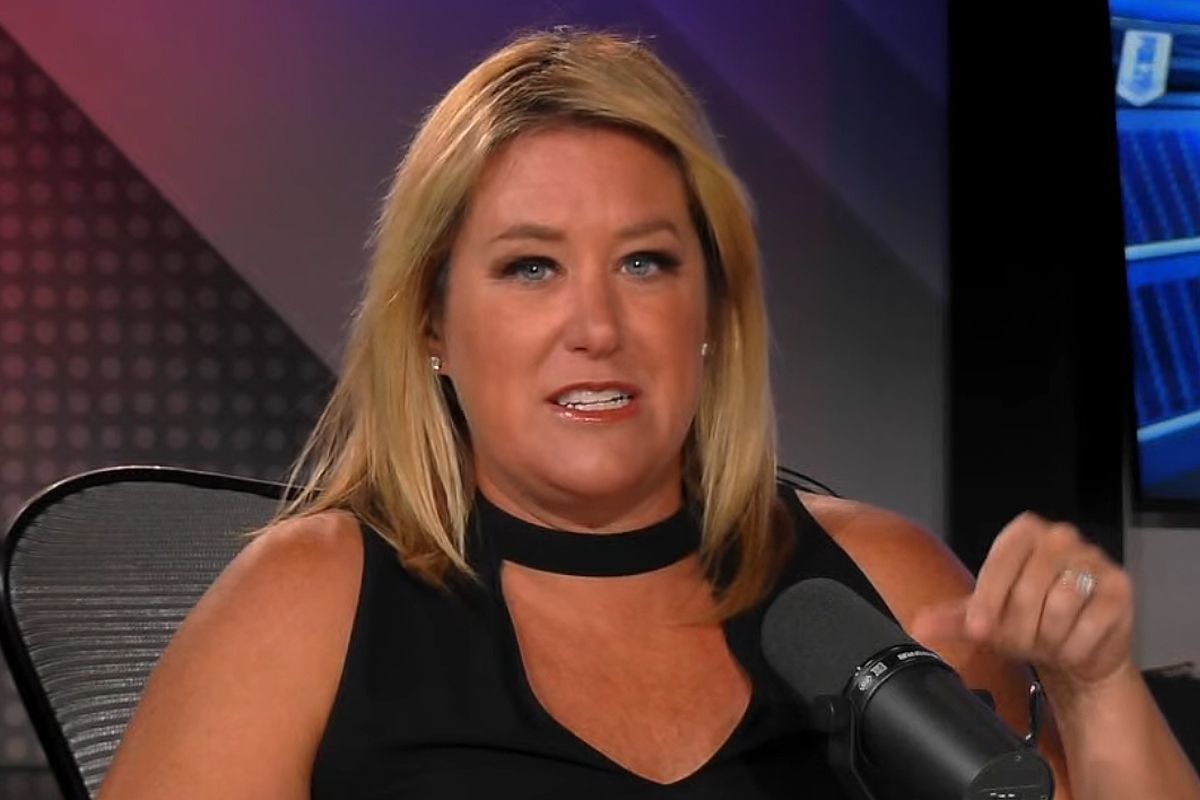
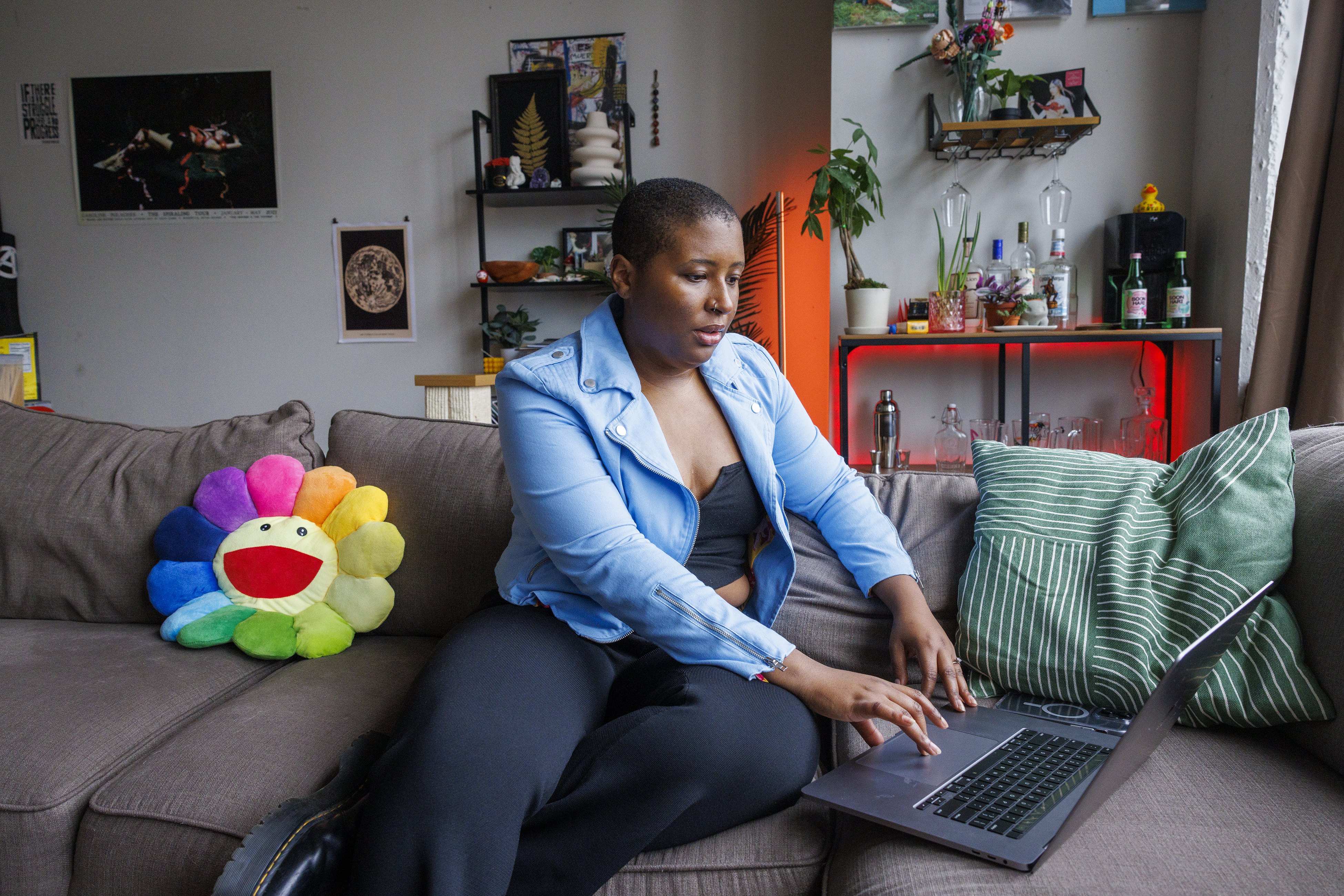
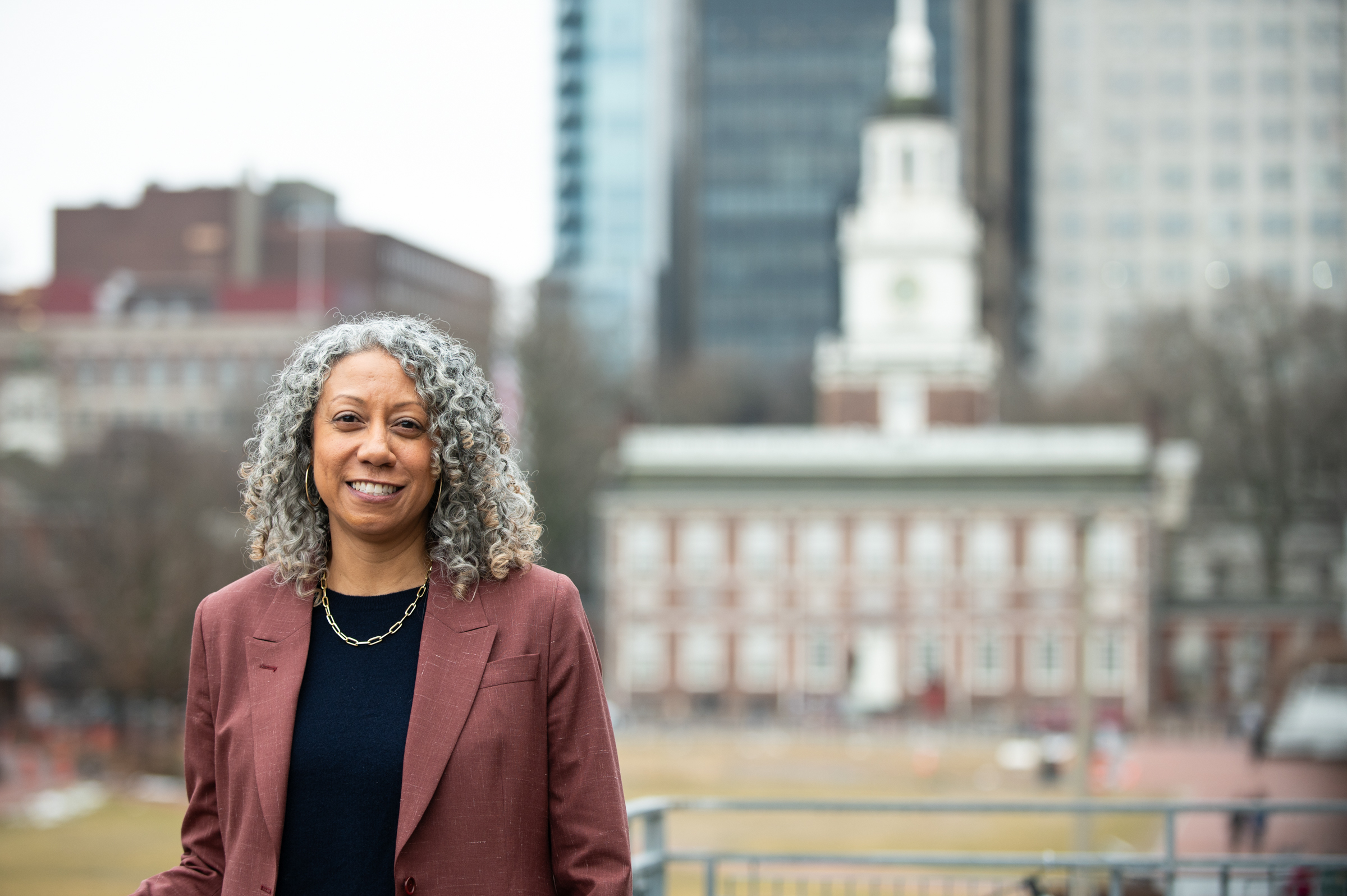
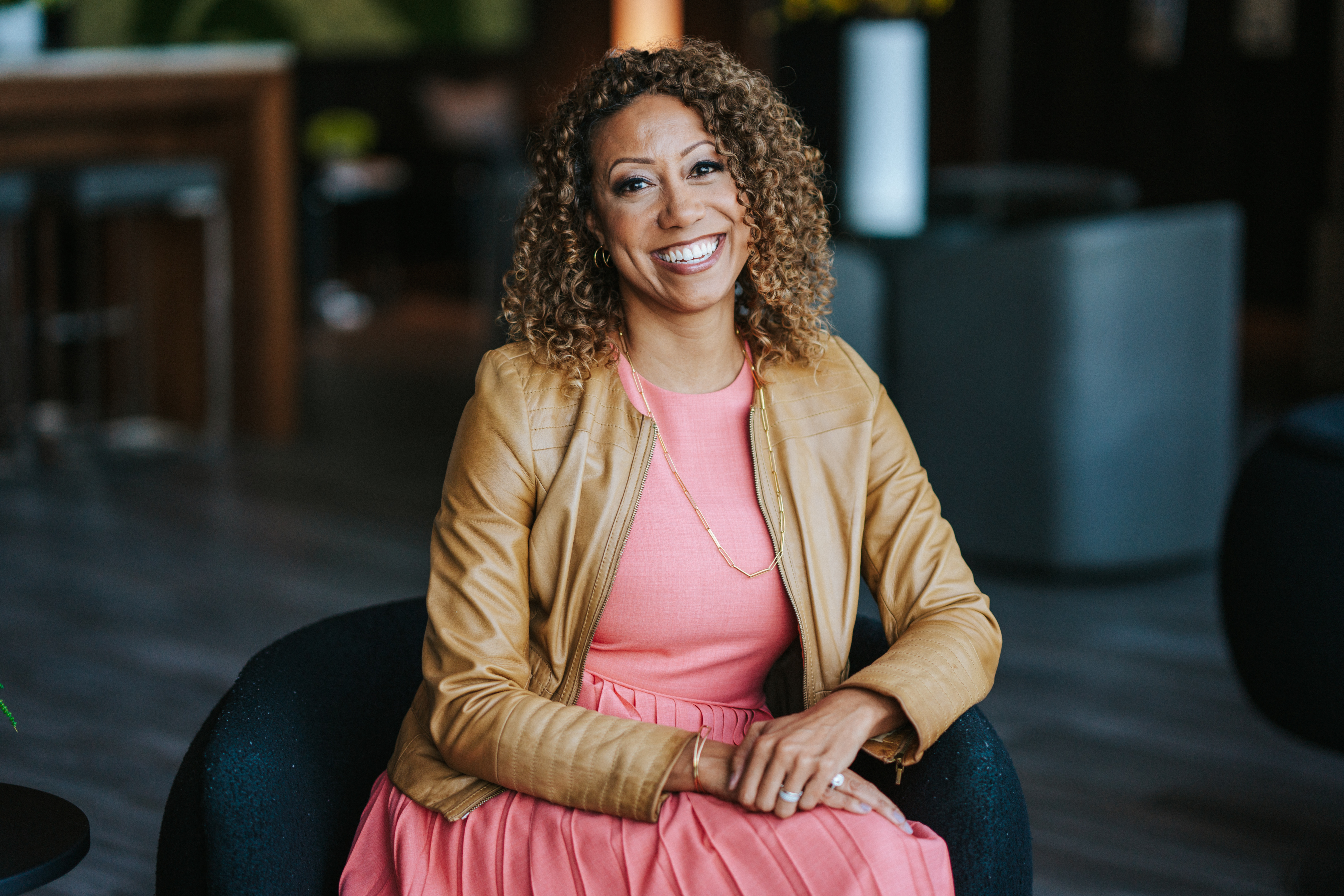
Ahead of anchoring her first Philly sportscast in more than two years (947 days for those counting), Jamie Apody’s focus was squarely on her feet.
“I’m mostly rusty with high heels. Oh god, it’s a disaster,” Apody said Monday night before making her debut as a sports anchor on Fox 29.
Apody, who spent 18 years as part of 6abc’s Action News team, is getting an expanded role at Fox 29. In addition to her regular appearances on The Phantastic Sports Show, which began in 2024, Apody will anchor the station’s Saturday 10 p.m. newscast and pop in elsewhere as needed.
“It’s not a full-time thing, but who knows? Maybe it’ll become that. That’d be awesome,” Apody said. “But I’m so thrilled to be doing what I love again.”
The expanded role will also include reporting, which will put her back into the stadiums during a busy year for Philly sports, featuring the World Cup, the MLB All-Star Game, and the Eagles heading to London.
“I’m more than ready,” Apody said. “I do think it’s going to be a little weird … not to mention starting with a different station’s name on the microphone after all this time.”
Jamie Apody has been working with Fox 29 since 2024.Fox 29
She certainly has plenty of experience. For the bulk of her tenure at 6abc, Apody anchored the 5:30 p.m. edition of Action News five days a week and was a regular at the city’s stadiums covering the teams.
It was even difficult for Apody to return to Citizens Bank Park and Lincoln Financial Field as a fan, something she avoided for about a year. Ultimately, she was forced back to the stands by her three young sons, all of whom are diehard Philly sports fans.
“It was really hard. Harder than I thought,” Apody said. “For a while there, those stadiums and ballparks really reminded me that I wasn’t able to do what I love more than anything, so it was hard for me to face. I actually made the choice not to face it.”
After leaving 6abc, Apody reached out to most of the stations around town and had meetings with both NBC10 and CBS3. But she really hit it off with Fox 29 executives Jim Driscoll and Dennis Bianchi, and said working for the station has been “a breath of fresh air,” recalling the words of former 6abc sports director Gary Papa, who hired her in 2006.
“He once told me, ‘You don’t know what you don’t know. You don’t even know what you know,’” Apody recalled. “The first time I walked in the door [at Fox 29] two years ago, I couldn’t believe what I’d been missing.”
She’s not the only Action News alum at the station. Former 6abc sports anchor Jeff Skversky, who also sparked speculation by his sudden TV exit in 2021, joined Fox 29 as a freelance reporter in 2025 after first contributing to The Phantastic Sports Show.
“I think it’s such an amazing fit,” Apody said of Fox 29. “I almost wonder what things would have been like if our paths crossed earlier.”
To a degree not seen since Mitt Romney’s presidential bid, or the smash hit musical The Book of Mormon, it seems like Mormons are having a moment. But notably, this moment belongs to Mormon women.
Most Americans know very little about Mormon women, and what is known is often based on sensational stories about narrowly circumscribed gender roles and stereotypes about polygamy. The women of Secret Lives of Mormon Wives challenge these assumptions, projecting an image of influence, ambition, and agency that sits uneasily alongside popular assumptions about Mormon womanhood. As SLOMW reflects, there have been times in Mormon history when women have exercised substantial power and influence, often drawing on core doctrines that emphasize equality. Yet, Mormon women have also seen their opportunities revoked or diminished in tandem with political and cultural moments in the U.S. at large.
Members of the faith credit Joseph Smith, Jr. as the prophet who formally established the Church of Jesus Christ of Latter-day Saints—commonly known as the Mormon Church—in 1830. At this time, the rights of women in the U.S. were broadly restricted. In most cases, women could not vote or run for political office, and married women were legally barred from owning property or keeping their own wages.
Early Mormon history suggests possible openings for women’s power in the church and in doctrine. For one, the LDS Church recognized a feminine divine, taught about by Joseph Smith in the 1830s and 1840s. Some scholars have suggested that in the 1840s when Smith developed temple liturgies in LDS temples, he incorporated “elements that suggest he viewed women as holders of a form of priesthood.” This vision of ordained women was not realized, yet they held spiritual roles: women prophesied, performed blessings, and participated in their own rituals of “washing and anointing” before giving birth.
In 1842, Smith’s first wife Emma Smith and others established the Relief Society, a women-only organization to “seek out and relieve the distressed.” It provided a platform for women to serve in church leadership capacities, fundraise and manage their own budgets, and publicly speak about religion. The confidence and community organizing skills Mormon women gained through the Relief Society set the stage for their entry into national political life.
At the turn of the 20th century, Mormon women carried that same organizational energy into the women’s suffrage movement. White women in Utah were the first in the nation to vote in 1870, 50 years before the passage of the 19th Amendment. Initially, women’s suffrage in Utah was directly tied to the common practice of plural marriage—Mormon women believed they could use their vote to support polygamy and show that they were not “oppressed, helpless, and enslaved” as anti-polygamists claimed. Relief Society leaders developed education programs about the political process and civic engagement and sent Utah delegates to represent them at national suffrage conventions.
However, Wells’ release from service as Relief Society president in 1921, “marked the beginnings of decades of declining institutional power for Mormon women,” as scholars of Mormon feminism have argued. Facing suspicion from other Christians, LDS church leaders emphasized alignment with conservative American values at mid-century, defining women primarily as mothers and homemakers rather than as independent spiritual practitioners as they had been in the early years of the church.
Efforts to constrain women in narrowly defined roles grew in tandem with postwar national trends. Following World War II, cultural pressures mounted for working women to return to domestic life, with marriage, motherhood, and homemaking recast as women’s primary obligations—a retrenchment that would spur new feminist movements in the 1960s and 1970s.
By the early 1970s, when Congress moved to pass the Equal Rights Amendment—which would have upheld equality regardless of sex—the Mormon Church funded an effort to ensure its defeat. It organized speakers and published oppositions to it in official LDS communications. Many women supported the Church’s anti-ERA stance, concerned that the amendment might expand abortion access and LGTBQ rights—policies that in their view went against LDS principles.
Alternatively, some Mormon women believed the church’s progressive doctrine regarding women and their own advocacy for women’s educational and political advancements were closely aligned with the aims of the ERA. Sonia Johnson, a fifth generation Mormon and feminist activist, formed the “Mormons for ERA” group. They protested the church‘s anti-ERA position, notably chaining themselves to the gates of the Seattle Temple Open House in 1980, while urging Americans to bar missionaries from their homes until the church changed course.
Made By History sponsors. FOR USE ON MADE BY HISTORY STORIES ONLY.Inquirer Staff
The church and its membership continue to battle between changing with the times and hewing to traditionalism, with advancements and setbacks on both fronts.
For example, the priesthood and temple ban on members with African ancestry was lifted in 1978, the BYU’s Women Research Institute began organizing a women’s conference in 1984, temple marriage ceremony language changed for women from “obeying their husbands” to “hearkening their husbands” in 1990, and Chieko Okazaki became the first woman of color appointed to the General Relief Society Presidency also in 1990.
Yet, the church also deepened its commitment to rigid gender hierarchy. In 1995, President Gordon B. Hinckley declared that God’s commandment to “multiply and replenish the earth remains in force,” sex should explicitly be between a lawfully wedded man and woman, children are entitled to be born “within the bonds of matrimony,” and that God divinely wants fathers to “preside over” their families and mothers are “primarily responsible” for nurturing their children. Hinckley’s declaration provided religious justification to keep women out of formal employment, focusing instead on maternal, homemaking, child-rearing responsibilities.
In a surprising move, the Church lowered the missionary age for women from 21 to 19 in 2012, more than doubling the number of women serving missions. While service remains optional for women, the policy change gave young women more access to similar spiritual training and church leadership opportunities predominantly accessed by men while serving a full-time mission before fulfilling their duties as wives and mothers. That a single policy change could so dramatically reshape women’s participation reveals just how much institutional gatekeeping, rather than women’s desire or capacity, had long determined the boundaries of their religious lives.
Although discredited by Church officials,The Secret Lives of Mormon Wives may be expressing a form of power and independence that Mormon doctrine claims to support—but which the institution struggles to grant in practice. Mormon women are not flat, oppressed, one-dimensional characters. SLOMW highlights this dichotomy for global audiences—with messaging coming directly from the women themselves rather than from the patriarchal and tightly controlled organization.
Mallory Hutchings-Tryon is an educator and historian at the University of Washington whose work sits at the intersection of gender equality, education policy, and religious autonomy.
Made by History takes readers beyond the headlines with articles written and edited by professional historians. Opinions expressed do not necessarily reflect the views of The Inquirer.
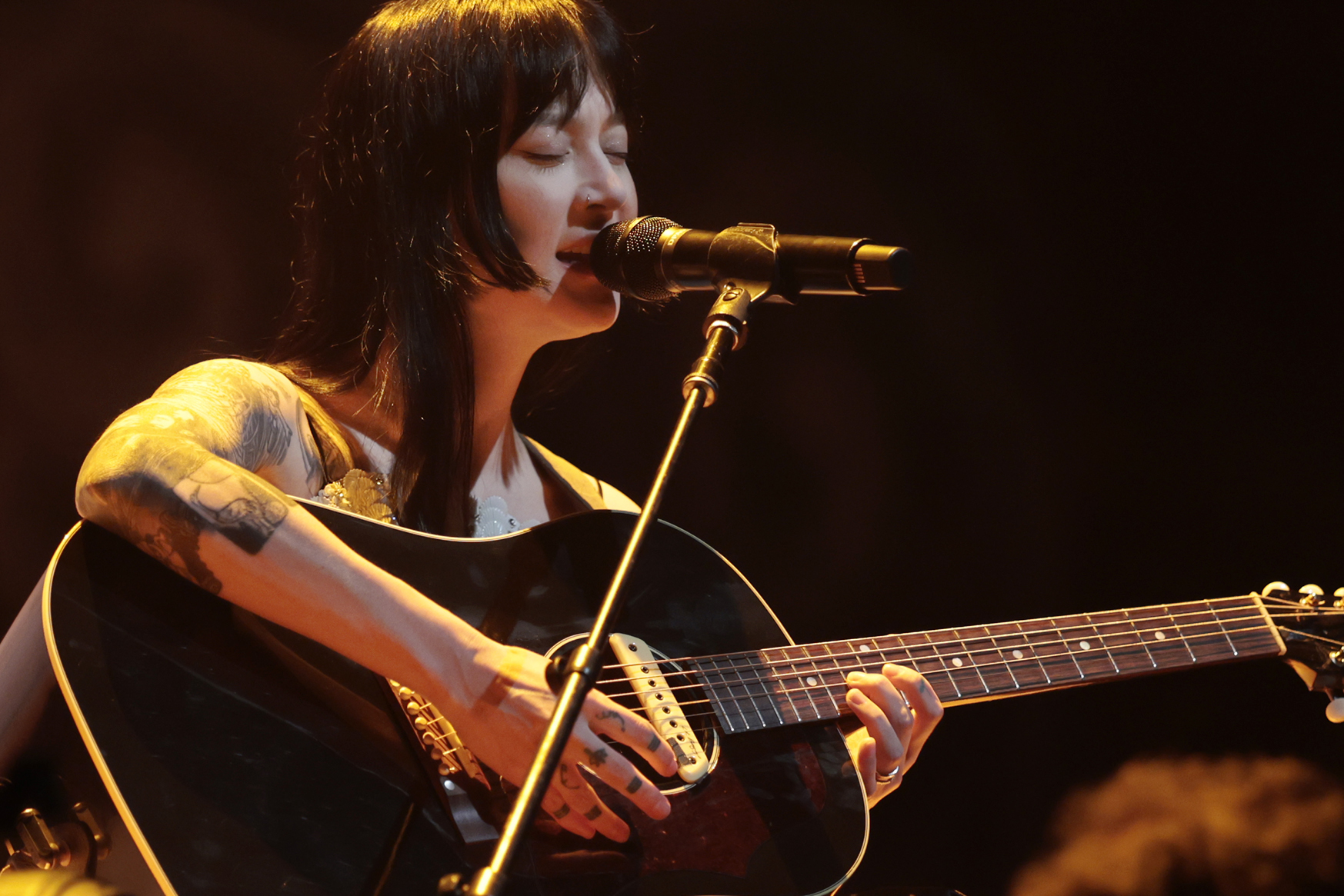
That’s how Michelle Zauner of Japanese Breakfast announced her pregnancy on Instagram on Monday — with an added exclamation point — after performing with a quite visible baby bump at the Governors Ball in New York’s Flushing Meadows Corona Park over the weekend.
The Crying in H Mart author, for whom the coat check at Philly venue Union Transfer is named (she used to work there), has two more festival dates scheduled this month: at Bonnaroo in Tennessee and the Stern Grove Festival in San Francisco.
Then Zauner kicks off a tour opening for Death Cab for Cutie at the Highmark Mann in Philadelphia on July 17. She’s playing in support of her 2025 album, Melancholy Brunettes (& Sad Women).
Zauner, who grew up in Eugene, Oregon, founded Japanese Breakfast in 2013 while living in Philadelphia and also leads the band Little Big League.
Melancholy is the follow-up to her 2021 album, Jubilee, which earned her two Grammy nominations.
The H Mart grocery store cited in the title of her book — a book about grieving her mother, Chongmi, and exploring her Korean identity through food — is in Elkins Park.
The songwriter and author, who is a Bryn Mawr College graduate, is married to guitarist and keyboard player Peter Bradley. They were married in 2014.
Last year, Zauner guested on the song “NamgungFefere” by the South Korean band Silica Gel and also recorded her own song “My Baby (Got Nothing at All)” for the soundtrack of the Dakota Johnson-starring movie Materialists.
She’s also written a screenplay for a film version of Crying in H Mart. In 2022, it was announced that actor Will Sharpe — currently starring as Mozart in the Amadeus TV series — would direct from Zauner’s script. But the movie is on hold, and Sharpe is no longer attached to the project.
Zauner is not the only acclaimed woman of indie rock who rose to prominence in Philadelphia in the 2010s to recently announce a pregnancy.
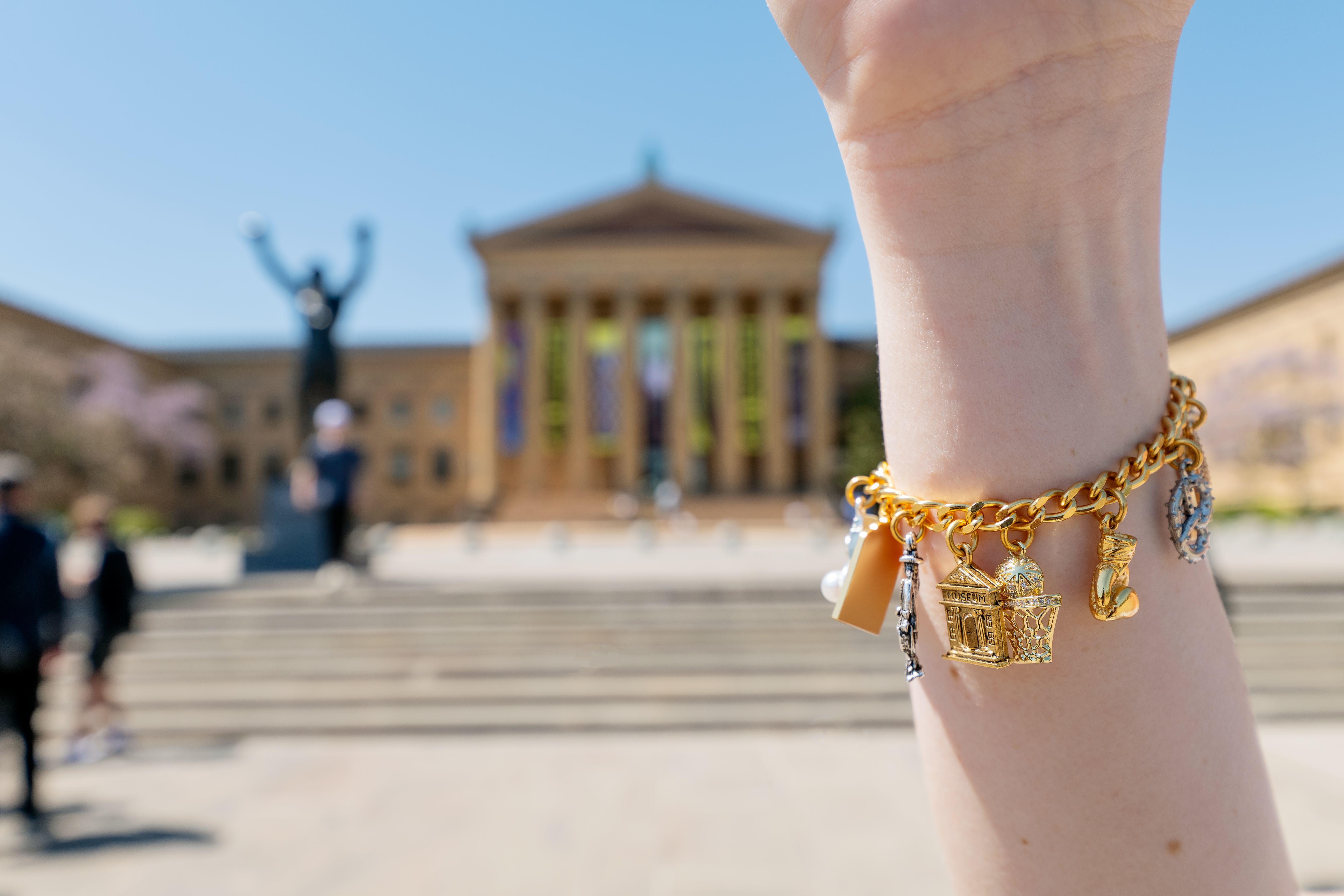
My John Wind charm bracelet featuring a salty soft pretzel, the LOVE statue, and a nattily dressed William Penn is one of my favorite pieces of Philly-centric jewelry.
In honor of our nation’s 250th birthday, Wind is giving the charms some more brotherly love. A proud Philadelphian, Wind has partnered with the Philadelphia Visitor Center for a six-piece commemorative jewelry collection featuring four necklaces, one bracelet, and a key chain/bag fob.
A commemorative John Wind charm bracelet available at the Philadelphia Visitor Center in honor of America’s 250th birthday.Nicole Vassallo for the Philadelphia Visitor Center
The soft pretzel, the LOVE statue, and William Penn remain a part of the jeweled tableau, and Wind has added a few knickknacks to the Semiquincentennial mix, like a boxing glove as a shout-out to Rocky; a soccer ball for World Cup afficionados, a star with red, white, and blue stripes for patriots, and a Liberty Bell.
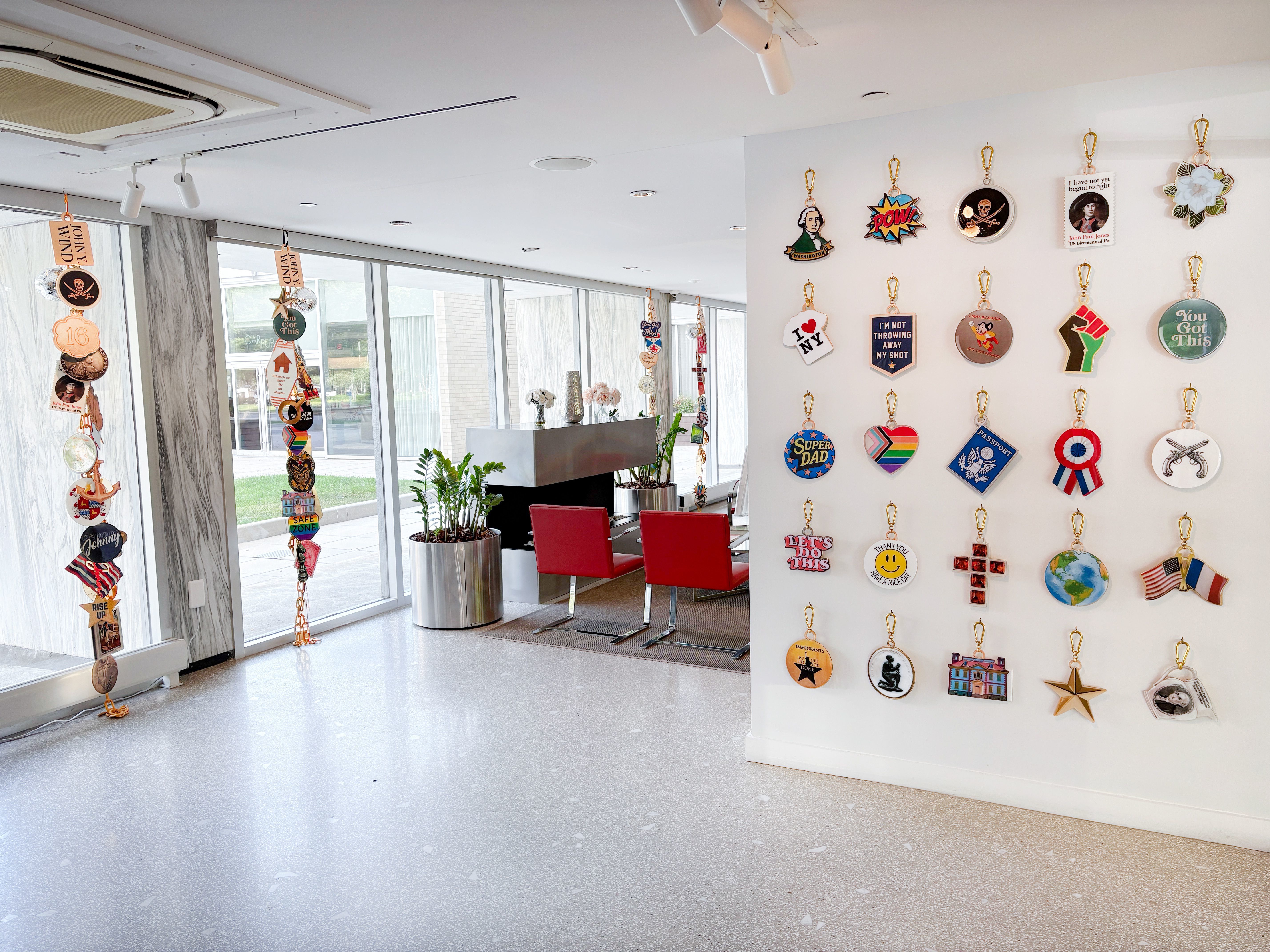
Wind, who has been making charm jewelry since he started his business in the 1980s, has turned some of his tiny amulets into giant pieces of public art.
John Wind’s exhibition at Park Towne Place, a collaboration between the Philadelphia artist and InLiquid.John Wind
Earlier in the week, Wind unveiled an installation of Philadelphia, patriotic, and social justice charms as wall art at Park Towne Place. The show, “Charm Offensive @ Reilly Memorial” will be up through Oct. 6. It is a joint project between Wind, InLiquid Art, and Park Towne Place. All of the wall charms are for sale at $150 each.
The John Wind x Philadelphia Visitor Center Collection is available at select Philadelphia Visitor Center locations and at johnwind.com. Prices range from $48 for the key chain/bag fob to $108 for the necklace.
— Elizabeth Wellington
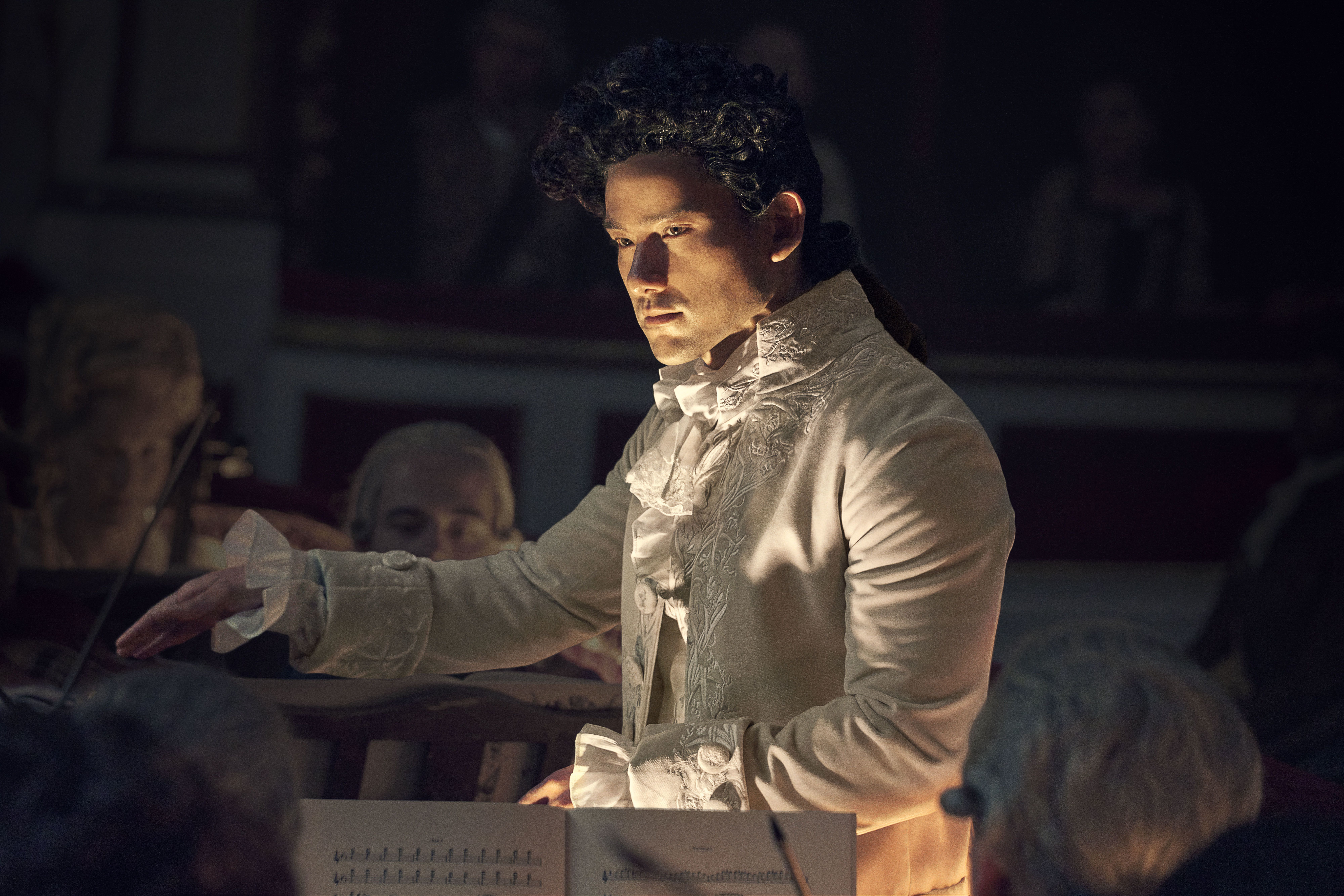
Will Sharpe as Mozart in “Amadeus,” the miniseries on Starz.Courtesy Starz
A new, hunky ‘Amadeus’
We’ll leave the notes on Amadeus, now streaming on Starz, to the film and TV critics — mostly. The miniseries based on Peter Shaffer’s play about Mozart and his less-than-genius jealous rival Antonio Salieri doesn’t have half the atmosphere or humor of the 1984 Milos Forman film.
That said, a hunky Mozart (Will Sharpe) seems like the update our age demands.
But we can offer a few notes on, well, the notes — the ones written by Mozart. Snippets of his music woven through the show last only a few seconds each, leaving a thirst to hear the rest of the musical works in recordings.
Mozart wrote only two piano concertos in minor keys, and one of them, the dark D Minor, K. 466, is heard in the opening credits. Annie Fischer’s 1959 recording with Adrian Boult and the Philharmonia Orchestra is exactly the storm you want.
Three pieces flicker by in Amadeus in the scene where Mozart’s wife, Constanze, shares Mozart’s scores with Salieri — The Sinfonia Concertante for Violin, Viola and Orchestra, ‘Gran Partita’ Serenade, and the Symphony No. 25. Each one of such beauty and invention there’s no mystery about why Salieri was undone by envy. A fun recording rabbit hole awaits listeners in each: the discovery that a particular interpretation can fundamentally alter the character of a piece.
A number of Mozart piano sonatas find their way into the miniseries, and Walter Gieseking’s recordings of crystalline tone and exquisite phrasing explain the kind of truths that are revealed when a composer finds his or her ideal interpreter. A form of genius, really.
“Amadeus” is streaming on Starz.
— Peter Dobrin
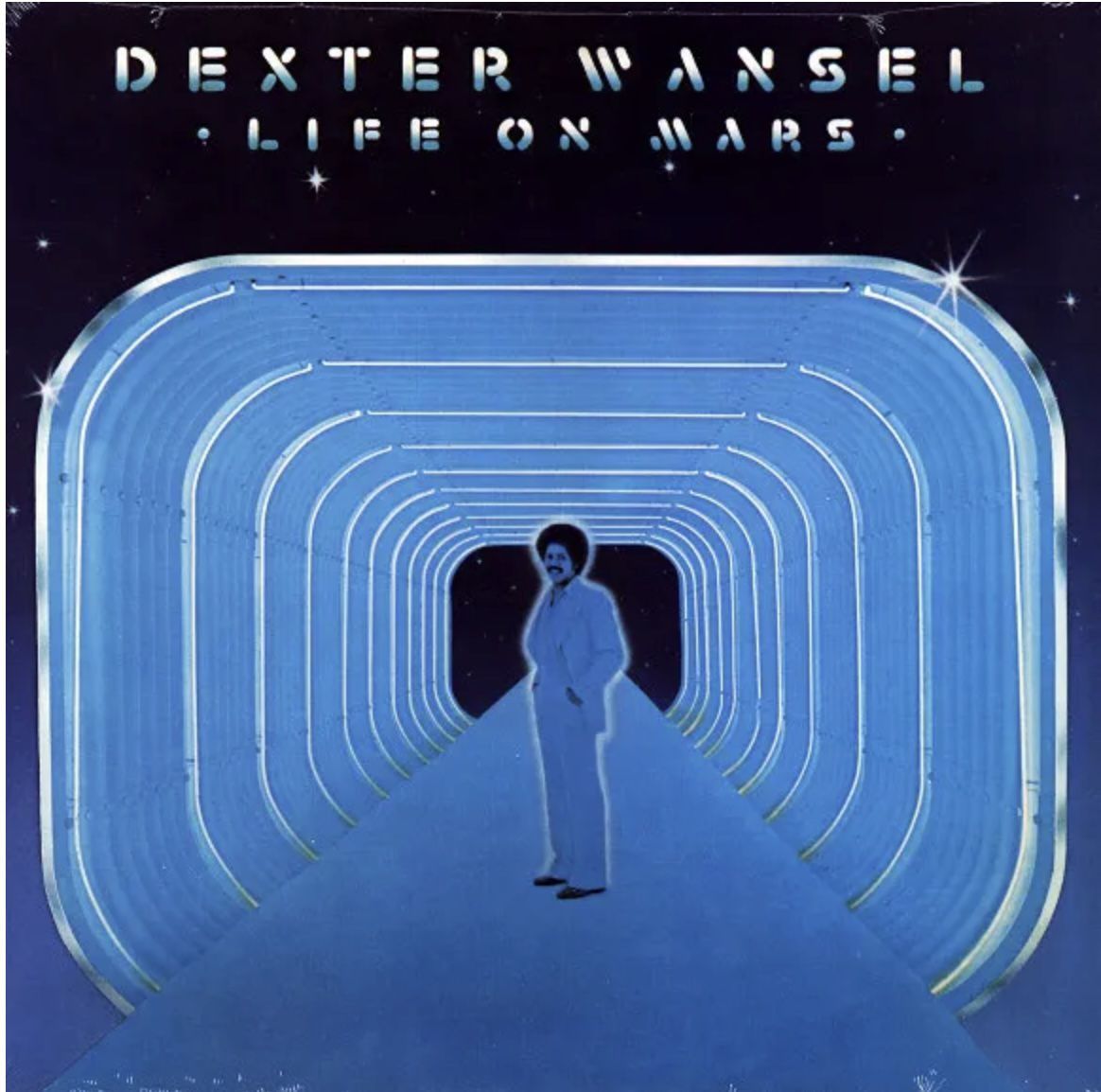
The cover image to Dexter Wansel’s 1976 album “Life on Mars.”Philadelphia International Records
Remembering a Philly jazz legend
Dexter Wansel was the player par excellence during the latter stage of Philadelphia International Records run of excellence in the late 1970s and 1980s. He wrote and produced for the Jacksons, Patti LaBelle, Teddy Pendergrass, the Jones Girls, and more.
As Kenny Gamble and Leon Huff said in a statement after Wansel’s death on May 31 at 75, he “brought a new age sound” to PIR. “Dexter’s synthesizer and keyboard sounds were iconic.”
As great a behind-the-scenes player as he was, Wansel was also a solo artist whose music pushed PIR forward, blending old school R&B with futuristic sounds and the kinds of sci-fi adventures that were au courant in the ’70s, with the work of artists like David Bowie and George Clinton.
Wansel’s 1976 space-funk album Life on Mars is the place to start looking into his legacy. It was partly inspired by Bowie’s 1971 song “Life on Mars,” but Wansel’s track of the same name is a different song. His use of the ARP 2600 synth was innovative, and Wansel expanded the interstellar theme with song titles like “Stargazer” and “Rings of Saturn.”
But the album, which points forward the silky soul Quiet Storm format, remains connected to funky, earthly pleasures and structured songwriting. “One Million Miles from the Ground” is actually about lovemaking, not planet exploring. Life on Mars also opens with a tribute to Gamble, Wansel’s PIR employer, with a horn-powered instrumental called “A Prophet Named K.G.”
On June 24, as part of Art Philly, DJ-producer King Britt will honor Wansel and Life on Mars with a live performance at Johnny Brenda’s as part of his weeklong “Blacktronika: Philadelphia Now and Then” event series. The Blacktronika Icon Award that was planned to be presented to Wansel at the show will be given posthumously.
“Blacktronika: Philadelphia Now and Then” at Johnny Brenda’s, 1201 N. Frankford Ave., June 23-29. johnnybrendas.com
— Dan DeLuca
A hotel full of art
I know where the cool kids were Wednesday night — crowding into Yowie for the launch of Elsewhere, an art fair produced by Blah Blah Gallery and hosted within the rooms of the boutique hotel.
The premise: a blend of Philly and international artists taking over hotel rooms and inviting guests into their suites. The result was three floors of contemporary art curated by some of today’s most exciting, thoughtful, and sustainable artists and galleries from around the world.
Qualeasha Wood in her apartment in Philly in 2023 after making the move from New York City.Alejandro A. Alvarez / Staff Photographer
There’s something extremely approachable and exciting about getting to hear about art while sitting on a couch with a gallery curator, sipping white wine together, being greeted by a piece of pop art inside a bathroom shower, or a Tadashi Adamson sculpture of toast with eyes staged on the hotel room’s kitchen counter.
I also spotted pieces by Philly-tied textile artist Qualeasha Wood in the hallway of an area on the second floor curated by DARLA out of New York. We love to see it.
Tina Fey as Kate, Marco Calvani center) as Claude, and Colman Domingo as Danny in Season 2 of “The Four Seasons.”Emily V. Aragones/Netflix
Shore laughs
It’s always a good time when Philly stars collab for big projects, and that’s especially true with Tina Fey and Colman Domingo in the second season of their Netflix comedy, The Four Seasons. As a cocreator and writer of the show, Fey decided that the show’s cast of vacationing couples should take a trip to the Jersey Shore, where she used to visit for many summers as a kid.
Those two episodes — filmed in Ocean Grove and Point Pleasant Beach — are some of the funniest in the season, and offer a chance for Fey’s and Domingo’s characters (Kate and Danny) to bond as they dream of opening a B&B.
One part that really had me cackling was when Will Forte, who plays Fey’s husband, makes a beach friend. Kate knows he’s been searching for a guy friend to talk sports or play games. There’s a moment when Kate and Danny see the two dudes talking and they start making fun of what topics they might be discussing (the Mets, TV sales, Gatorade flavors?) and then the camera cuts to the guys, who are actually talking about deep trauma and grief.
It’s a sweet and authentic portrayal of the Shore that feels like an excellent way to start the summer. There are so many laughs in this season I’d argue it might be better than the first. Plus, not to give anything away, but there’s even a brief trip to Philadelphia in the final episode, complete with a Wawa shout-out.
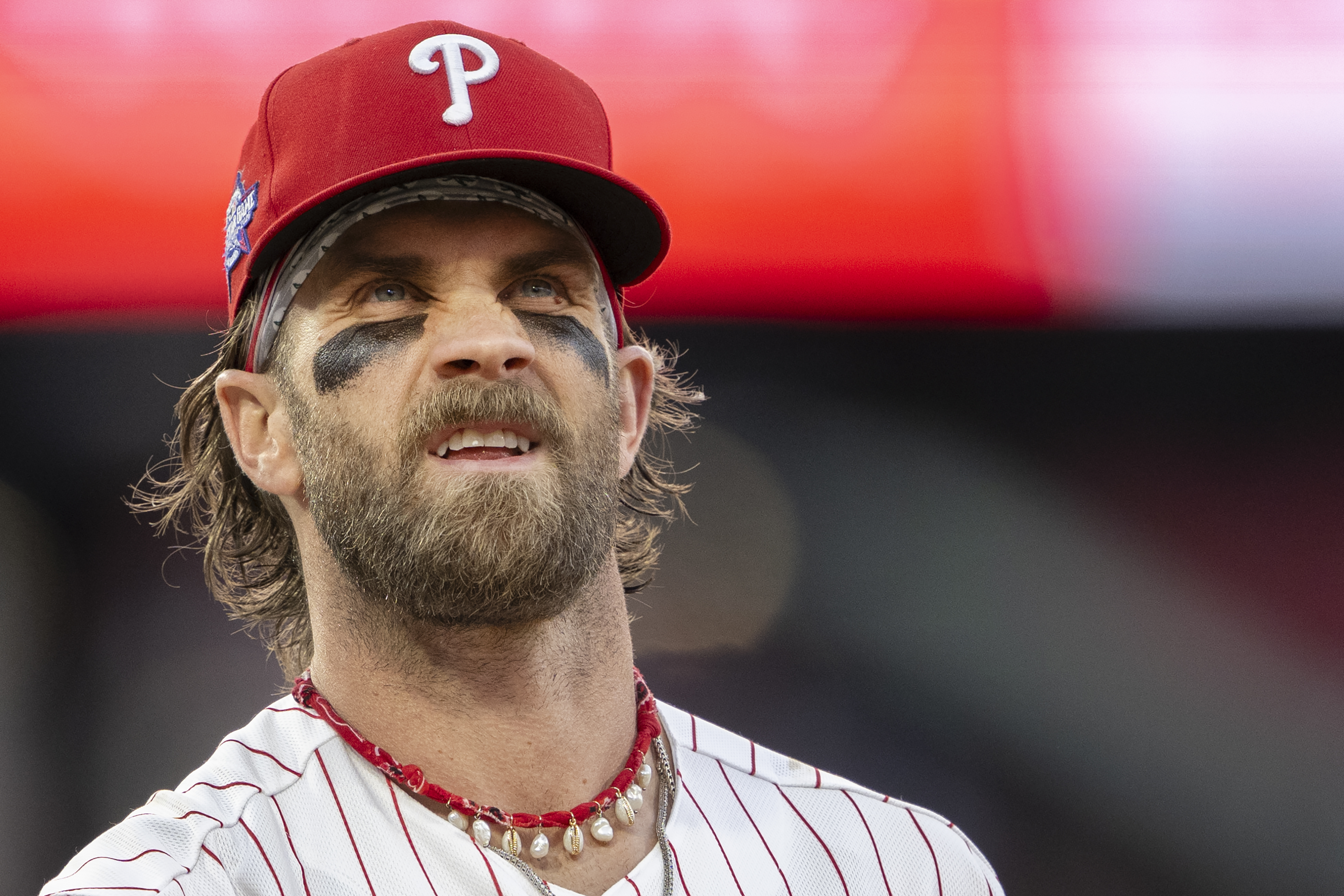
The revelation was so unsettling that the Padres put it on the videoboard, dentists weighed in, and millions of people suddenly found themselves evaluating the oral hygiene habits of the Phillies’ first baseman.
The funniest part is that Harper seemed genuinely confused by the backlash. “I’ve done it forever,” he said, which somehow makes it worse.
What elevates this from ordinary internet nonsense to a true Philly sports story is that Harper is currently one of the best players in baseball, and yet this became a legitimate multiday discussion.
For the record, dentists do not recommend the technique. But Harper has two MVPs, hundreds of home runs, and apparently very clean teeth, so hard to argue with the results.
Sean Reifel (left), Melanie Moreno (middle), Sincere Rhea (right) are contestants of Love Island USA 2026.Ben Symons/PEACOCK
Three Philly-area contestants on ‘Love Island’? The Eagles agenda is spreading: B+
And within one episode, Philadelphia had already established diplomatic relations.
North Philly’s Melanie Moreno and Cape May’s Sincere Rhea immediately bonded over the Eagles, with Moreno declaring, “Literally cut me and I’ll bleed green.”
The funniest part about Philly representation on reality TV is that contestants from here almost never ease people into it. Within minutes, viewers knew Moreno was from Philadelphia because she announced it the same way most Philadelphians do: loudly and with complete confidence.
Meanwhile, Rhea seems genuinely wholesome enough that the producers will almost certainly try to create problems for him by Episode 3.
The real winner, though, may be Philadelphia itself. The city somehow landed three contestants on one of the biggest reality shows, ensuring that for at least the next few weeks, viewers will get Eagles fandom and blunt honesty on their screens.
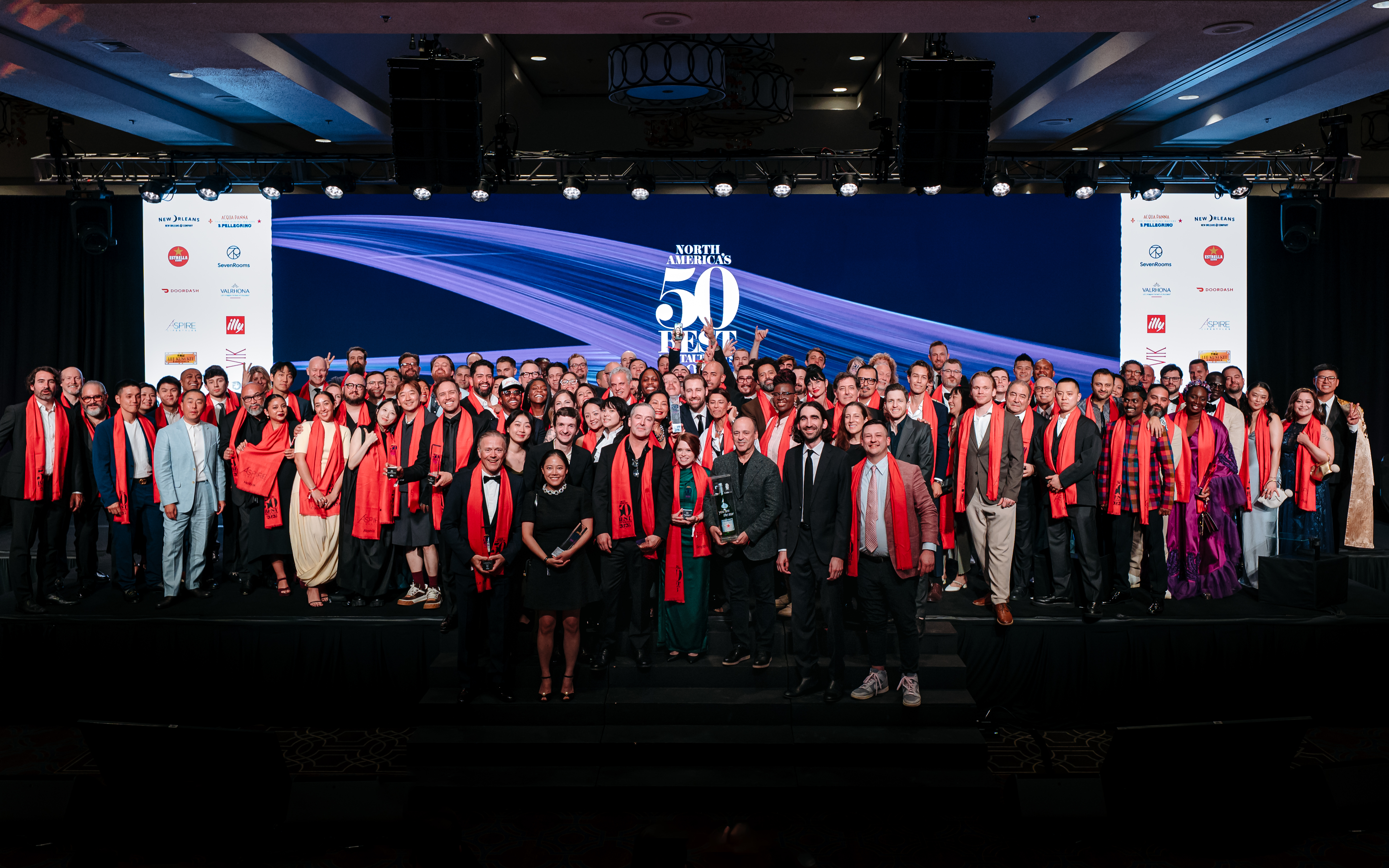
Winners at the North America’s 50 Best Restaurants announcement.50 Best
Philly restaurants keep collecting national awards like it’s normal now: A
The funny thing is that Philly food fans have become almost spoiled by this stuff.
A few years ago, getting one restaurant on a list like this would have triggered a citywide victory lap. Now the reaction is more along the lines of: “Only two? What happened to Royal Sushi?”
To be fair, both restaurants dropped in the rankings this year. But they also remained on a list featuring just 50 restaurants across the United States and Canada, which is a pretty good reminder of how much Philly’s dining scene has changed.
Not that long ago, national restaurant conversations about Philadelphia basically began and ended with cheesesteaks.
Now we’re arguing about Michelin recommendations, international rankings, tasting menus, and whether a restaurant fell from 7th to 11th … that’s a good problem to have.
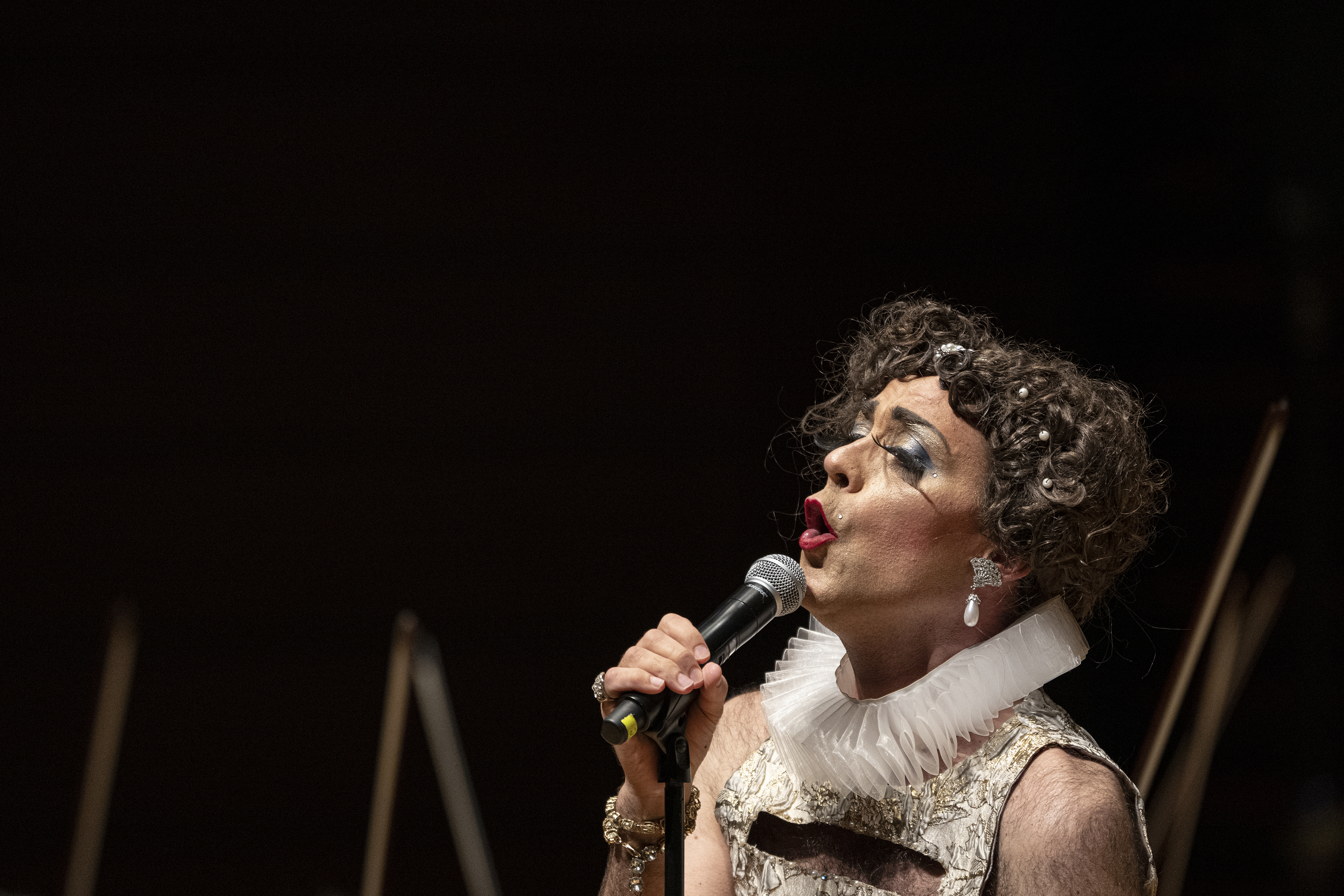
Local drag royalty Martha Graham Cracker sings during the Philadelphia Orchestra’s Pride Concert on June 4, 2025, at the Kimmel Center in Philadelphia.Jose F. Moreno / Staff Photographer
Philadelphia gave Martha Graham Cracker a fitting farewell: A+
The tributes poured in from every corner of the city — theater, music, drag, dance, politics — which says a lot about the rare place he occupied in Philadelphia culture.
But one detail from the obituary stood out. David Devan, the former head of Opera Philadelphia, was at the hospital when van Reigersberg died June 1, the first day of Pride Month. Leaving afterward, he watched the city’s Pride rainbow lights come on across Philadelphia.
“It was the first day of Pride Month, and our greatest queer Philadelphian died,” Devan said.
For a performer who spent decades making people laugh, feel welcome, and feel seen, it’s difficult to imagine a more fitting image than Philadelphia lighting up in rainbows on the night he died.
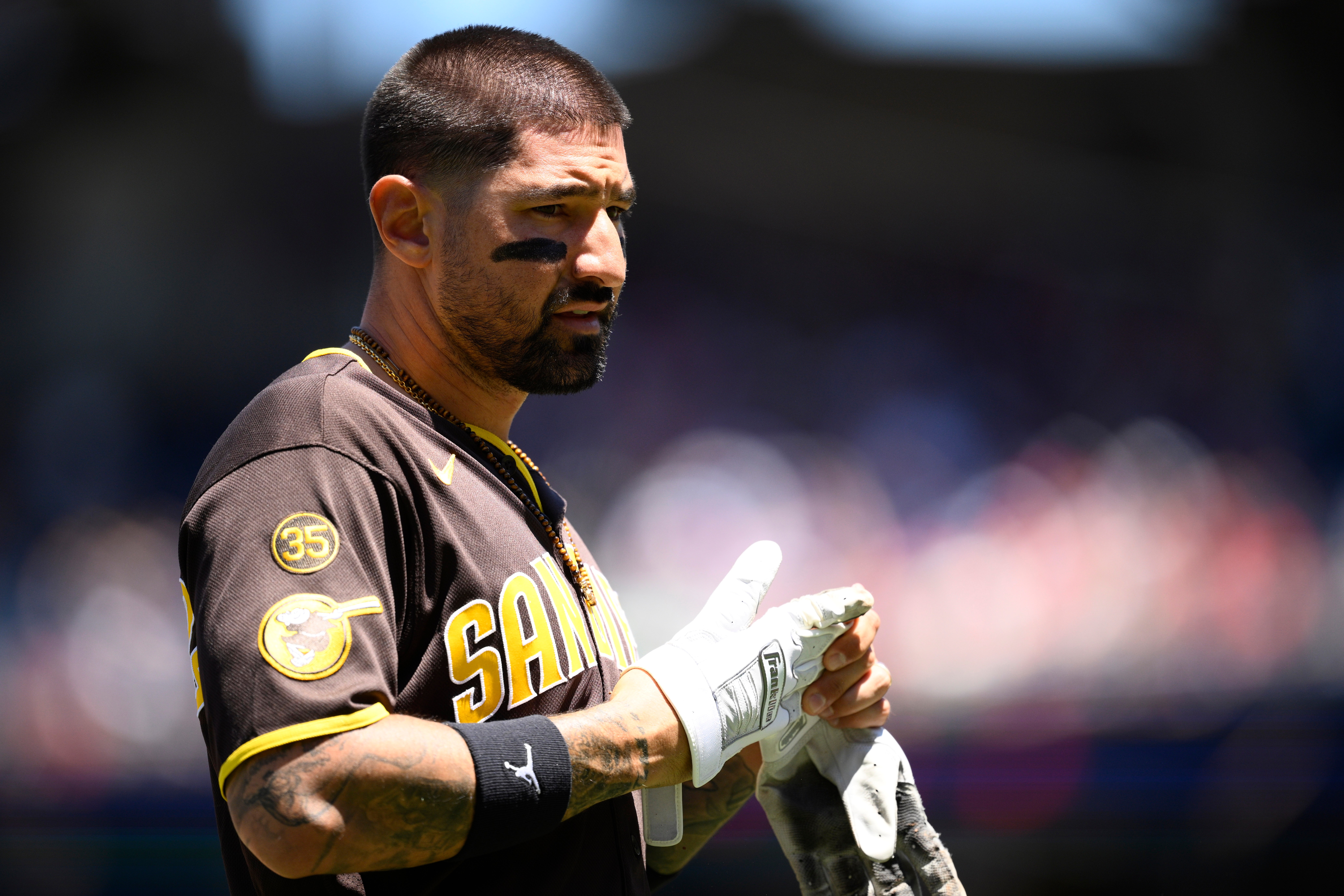
San Diego Padres’ Nick Castellanos looks on during the third inning against the Washington Nationals, on May 31, 2026, in Washington. (AP Photo/Nick Wass)Nick Wass
The Nick Castellanos reunion tour lasted about as long as expected: C
When Nick Castellanos returned to Citizens Bank Park this week, the Phillies played a scoreboard tribute featuring some of his memorable moments from the 2022 postseason. Twenty-four hours later, the Padres designated him for assignment. The timing was brutal.
Castellanos hit .191 in a part-time role with San Diego after the Phillies released him in spring training. Still, there’s something oddly fitting about the whole thing happening in Philadelphia.
For all the frustration that came with the final year of the Castellanos era, he was also part of some genuinely great Phillies moments: The standing ovations, the postseason homers, the absolute certainty that if something weird happened in a game, Castellanos would somehow be involved.
Now, he’s looking for another opportunity at age 34. And if this is the end of the road, at least Philadelphia got one last chance to tip its cap before the baseball gods immediately delivered one final, extremely Nick Castellanos plot twist.
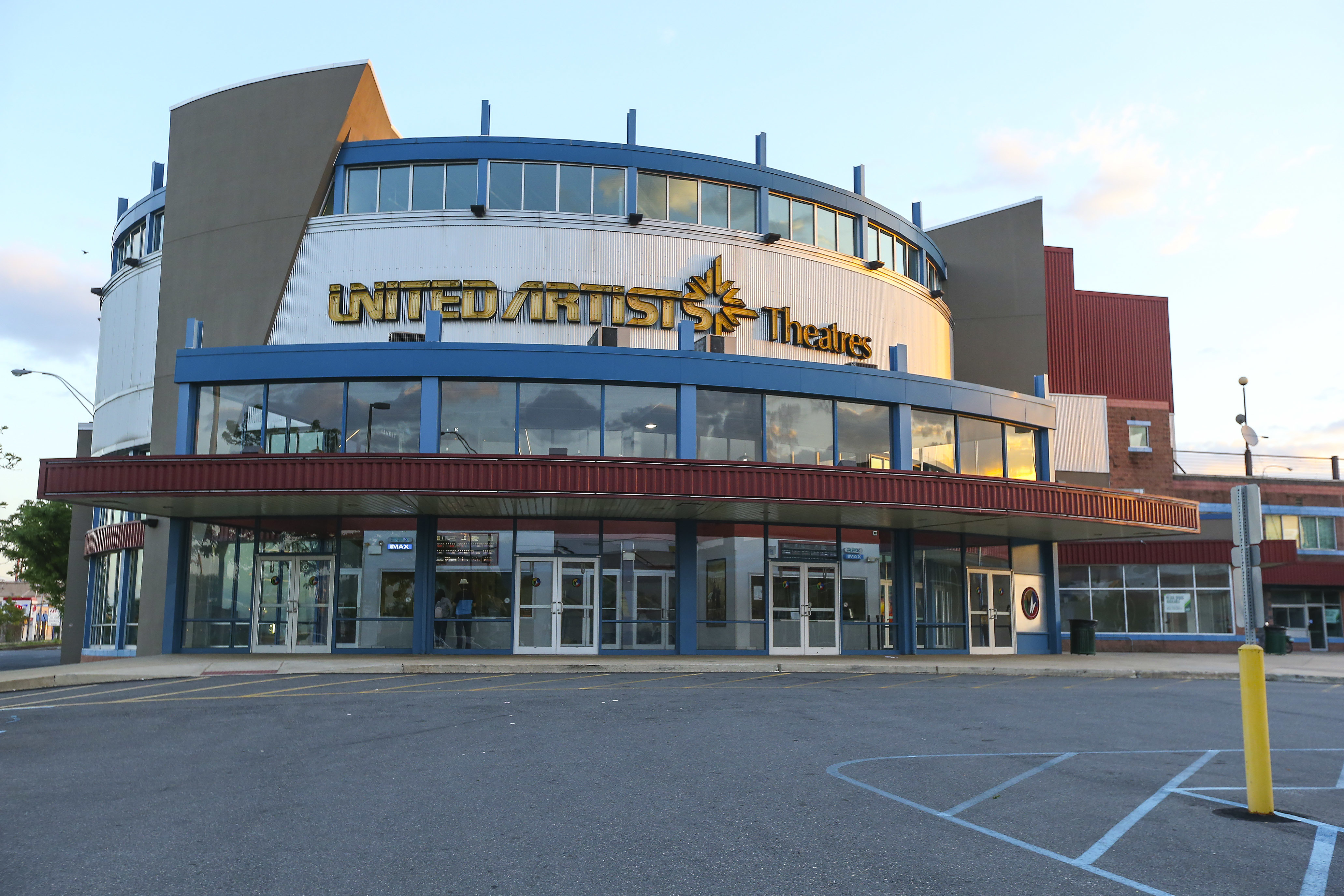
Apple Cinemas has scrapped plans to reopen the former Riverview Plaza theater in South Philly, closed since 2020. Photo taken May 6, 2019.STEVEN M. FALK / Staff Photographer
And what makes it sting is that people were genuinely excited about this one.
The plan included bringing movies back to a theater that’s been dark since 2020, adding an IMAX screen, and giving Philly something it currently doesn’t have: a true IMAX theater. Instead, the project collapsed amid a dispute between Apple Cinemas and property owner Bart Blatstein over the condition of the building and lease obligations.
The result is that the giant empty theater remains a giant empty theater.
Cristopher Sánchez gets a Standing Ovation for giving up a run. 👏👏👏
That’s not just a Phillies record. That’s an MLB record.
By reaching 45⅔ scoreless innings, Sánchez passed Hall of Famer Carl Hubbell and moved into sixth place on the all-time list, regardless of handedness.
What’s remarkable is how quickly this has gone from surprising to expected.
Bryce Harper probably summed it up best when he said it feels normal now. A pitcher is doing things that haven’t been done in generations, and the reaction has become, “Yep, that’s Sánchez.” A few nervous moments, a bunch of awkward swings at changeups, seven scoreless innings, and another historic number attached to his name.
The streak will end eventually, but right now, Philadelphia is watching one of the best stretches of pitching in baseball history unfold every fifth day.
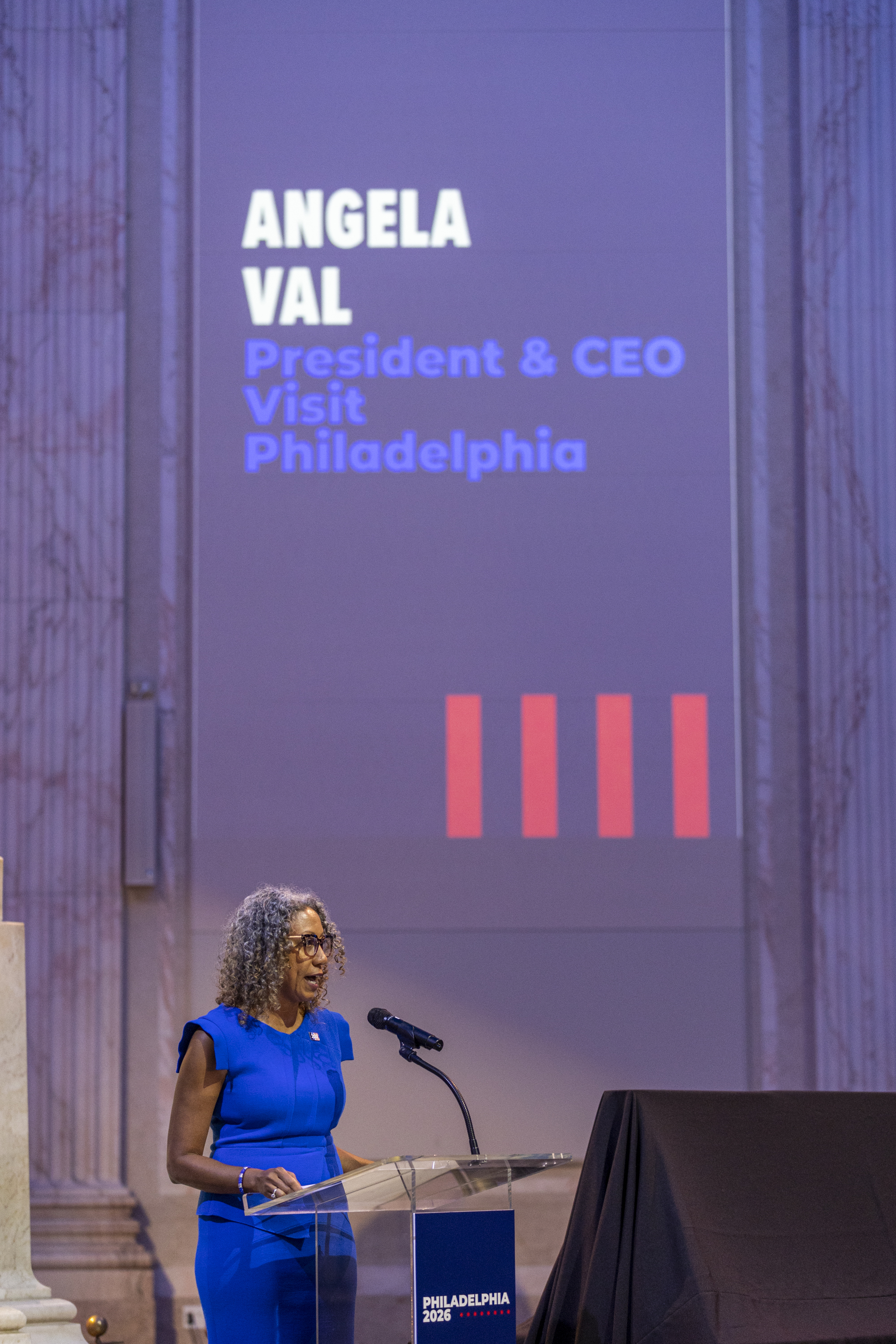
For Angela Val, experiencing the charms of Philadelphia is far more than just a personal pastime. It’s part of her job.
President and CEO of Visit Philadelphia, the nonprofit that serves as the city’s official leisure-tourism marketing agency, it falls to Val to sell the city’s many allures to the wider world. Especially this year, as Philadelphia prepares to ascend the global stage for America’s 250th anniversary.
“It’s exciting for it to be here,” said Val, who has led Visit Philadelphia since 2022, after a prior 17-year stint at the agency, when she worked her way from a receptionist to vice president. “I have been preparing for this year with lots of different people, and to see it come to fruition — to be in the implementation stage — is really thrilling.”
Angela Val, president and CEO of Visit PhiladelphiaRachel Rosenstein
A native of Rockville, Md., Val fell in love with Philly’s rising potential after earning a degree in hospitality management from Drexel University in 1994.
Starting out working hotel front desk and catering jobs, Val first joined Visit Philadelphia in 1998, amid Center City’s long awaited renaissance.
“I just felt like I was going to be part of a city that’s going to have a great deal of growth over the next 10 years,” she said.
Now, Val helps spearhead that growth.
For the 250th, Visit Philadelphia has rolled out a series of marketing campaigns and events, including TED Democracy, a daylong symposium of broadcast TED talks exploring modern day democracy scheduled for June 13 at the Kimmel Center.
Val, who lives in Point Breeze with her husband, and her dogs, Dash and Bailey, who are Mi-Kis, said her perfect Philly day would include a rooftop sunset, a killer workout, sweets before dinner, lots of great Philly food, and some late-night hanging with neighbors.
7 a.m.
We always start off with my dogs. We have two puppies. They’re about a year old. I take them to the deck to run around very early in the morning. We have a skyline view. We took all of our COVID refund and renovated the deck. I do like to sit on the deck with a cup of tea. The Random Tea Room sells a great loose mint tea that I love.
I usually go back to bed. I am not a morning person. I am somebody who likes to hit the snooze button. So I’ll do that — just chill out in bed a little bit longer and catch the news.
Angela Val, President and CEO of Visit Philadelphia, Speaks to guests and press about the announcement of TED Talks focus on democracy leading up to 2026 in Philadelphia, Pa., on Tuesday, May, 21, 2024.Tyger Williams / Staff Photographer
9 a.m.
I usually head to the gym. I have a trainer. I belong to the Bellevue Sporting Club. I am all about strength training these days. As you get older, the doctor recommends less cardio, more strength. I had never really lifted weights before. Thus, I got a trainer, and I have to say, I do love it. Emily’s fantastic. I usually try to get that in two or three times a week, if possible. It always makes me feel better.
11 a.m.
I get a good walk there and a good walk back. I’m pretty ravenous afterward. Joe and I will usually meet up at Enswell. It’s just so pretty in there. They have this awesome egg sandwich — it’s so buttery and delicious. If that’s not available, I get the omelet, which is also delicious. Always with a side salad..
1 p.m.
In the afternoon, we just pick an activity to do. I love to walk so we usually walk some place — go see some exhibit or gallery. If this is a day in 2026, I’m going to want to check out “The Declaration’s Journey” at the Museum of the American Revolution. They have rare copies of the Declaration of Independence but also an advanced copy of Martin Luther King Jr.’s speech “I have a dream.” And the bench on which he wrote “Letter from a Birmingham Jail.”
And [I’d go to] Calder Gardens. It’s small, but so different for Philly. It’s so modern and beautiful.
4 p.m.
[Then I’m] headed to the Bread Room — from High Street Hospitality and Ellen Yin — to get a couple sweet treats. And I would love to be able to take one of the baking classes there. They have this scone with orange blossom frosting. It is delicious. They also have a chocolate chip cookie that has a little bit of sea salt on the top, which I also think is delicious. And it’s a big boy, so you can share it, and not have to eat the whole thing, like I do.
6 p.m.
We would honestly come home and take a nap and play with the dogs. But we would definitely go back out.
8 p.m.
We do eat out a lot. It’s just the two of us. We would go to Sao. That is one of the places that I would love to try. We’ve been to Mawn many times and it’s delicious. But we heard Sao was really great too. Fresh seafood. I am a seafood lover. I don’t eat meat regularly. For me to find a great seafood place, especially one that’s close by, I’m in.
We go to Alice a lot. I like their artichoke salad there. We like to sit at the bar there at the very end. Also American Sardine Bar, which is right down the street from our house. I eat so often downtown during the week because of work. So I try really hard on the weekends to hit neighborhood spots. I don’t eat sardines. But what I wish they would bring back is their fried bologna sandwich. I will tell you that at two o’clock in the morning, if you’ve had a few drinks, it’s delicious. Always a cocktail. I’m old school. I’m always going to love the Cosmo (very light pink, not too sweet). But I was also was recently introduced to the Paper Plane. It seems just like a Cosmopolitan, but it has a whiskey base. It’s not too sweet.
11 p.m.
A perfect end is actually going next door to see our neighbors. We’re very good friends. And they have a beautiful patio with a pergola up top, so we’d just hang around with them around the firepit and listen to records. The soundtrack is probably Leon Bridges. That’s a perfect night.
The conversation has been edited for clarity and brevity.
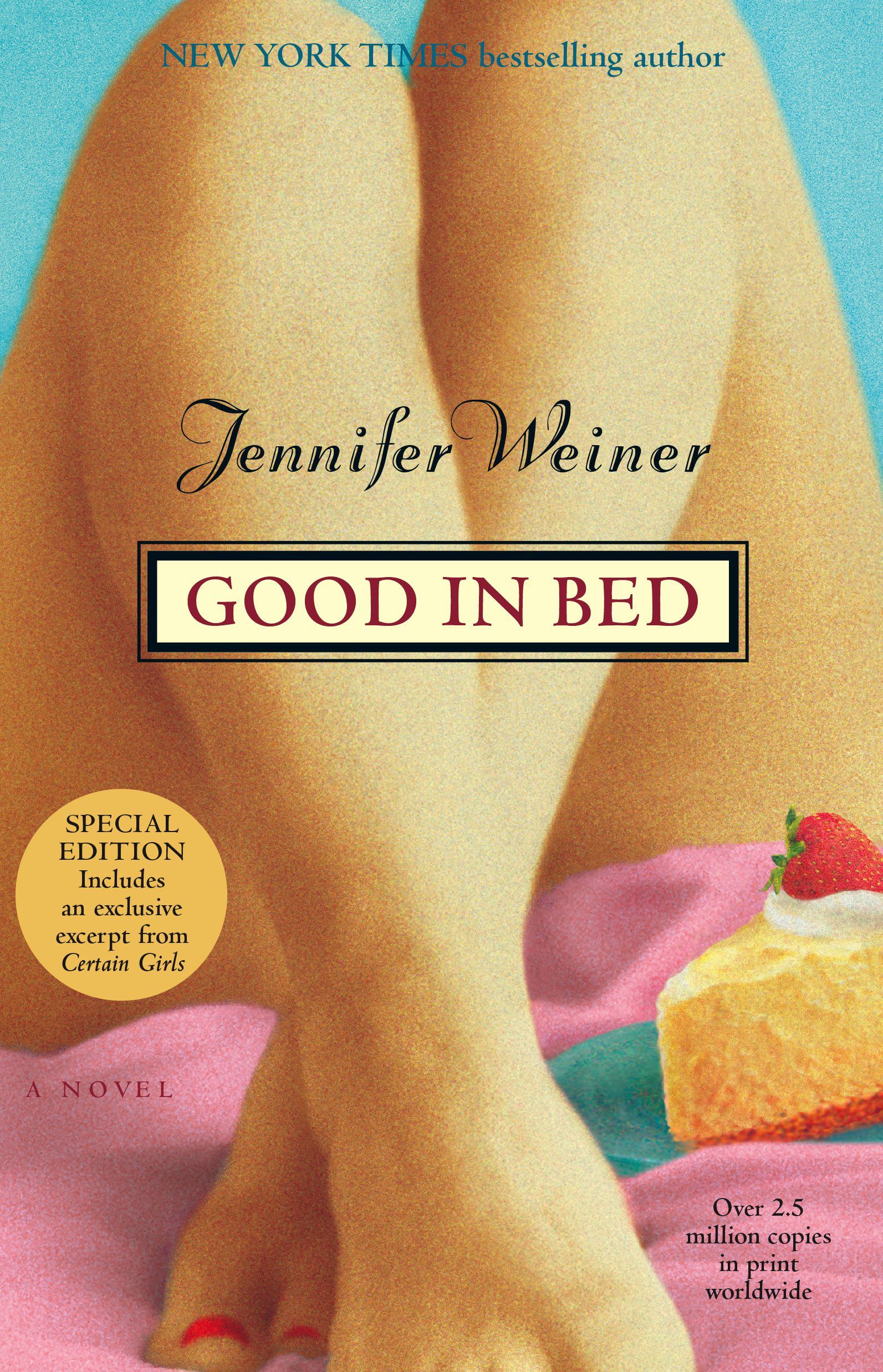
In the 25 years since Jennifer Weiner’s first book Good in Bed debuted, much has changed.
Considered the first chick lit novel centering women with imperfect bodies — basically all of us — Good in Bed is a fictional story about Connie Shapiro, a plus-size Philadelphia journalist, coming to terms with her body image.
Good in Bed spent almost a year onthe New York Times Best Seller list and was part of the early aughts’ pop-culture body positivity arsenal that gave curvy girls the courage to demand to be seen on the red carpet and in shopping haunts.
Cover of Jennifer Weiner’s first book “Good in Bed.”Simon & Schuster Books
Then came Ozempic and the rash of weight loss drugs.
“It’s kind of inevitable there would be a pendulum swing back,” Weiner said. “It’s always one step forward, two steps back. But I’m glad I wrote that first book and have written many books since that give women a chance to see themselves.”
Weiner, who was single when she wrote Good in Bed,has gone through her fair share of life changes.She married, had two daughters — Lucy and Phoebe — and divorced, married again, this time to her “second and final husband.”
Lucy graduated from college. Phoebe is on her way to college.
Weiner, who grew up in Connecticut and moved to Philadelphia in 1994 for a job at The Inquirer, has written 20 adult novels, a collection of essays, and three novels for middle grade students.
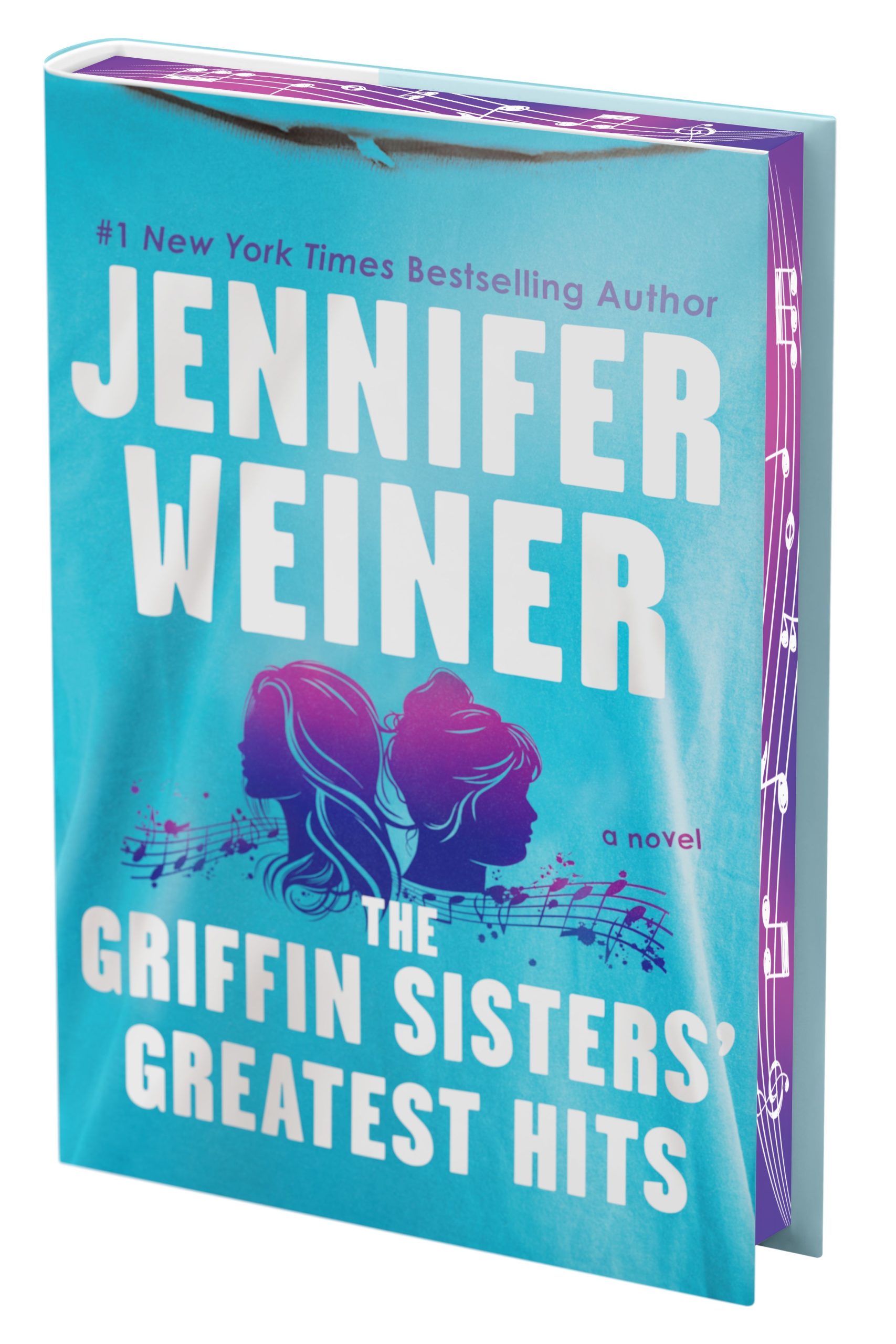
Jennifer Weiner’s “The Griffin Sisters’ Greatest Hits” was optioned by Universal Pictures in 2026. Amy Sherman-Palladino will write and direct.HarperCollins
Her second novel, In Her Shoes, was turned into a 2005 movie starring Cameron Diaz. Earlier this year, Universal Pictures optioned the rights to develop her 2025 book TheGriffin Sisters’ Greatest Hits. Amy Sherman-Palladino will write and direct.
The Queen Village resident has gone from telling stories about 20-something Gen X women seeking relationships and falling in love with their authentic selves, to telling stories about 50-something Gen X women seeking relationships and falling in love with their authentic selves.
“I feel really, really lucky that I’ve gotten to do this for this long,” Weiner said on a recent video call. She was sitting at her desk, sipping iced coffee from a mason jar that her Instagram feed influenced her to buy.
“My readers stayed with me, I’ve picked up new readers. I feel really fortunate the characters I created along the way, and the questions I have asked them, have resonated.”
Here is Weiner’s idea of a perfect Philly day.
The conversation has been edited for clarity and brevity.
8 a.m.
I wake up. My husband and I do [the New York Times’] Wordle, Connections, and the Spelling Bee together. We usually win, but when we don’t, we know it’s going to be a bad day.
We take our dog Levon, third in our series of terriers, out for a walk at Mario Lanza Park in our Queen Village neighborhood.
Mario Lanza Park, in a photo from October 2022.Michelle Myers
Now, I would go to Fiore Fine Foods in Queen Village. Because it’s my perfect Philly Day, they have not moved [to Kensington] from our neighborhood. I’d order an iced coffee and theSaltie, a breakfast sandwich with scrambled eggs and ricotta cheese. It’s just the perfect breakfast sandwich.
10 a.m.
Next, I’m going to get some exercise. You know I’m a middle-aged woman. I try to sweat every day because it’s helpful when you are sitting at a desk all of the time. I lift weights atG-Strength. It’s funny, the same women who were doing step aerobics in the 1990s and aughts, and transitioned to yoga and Pilates, are now lifting weights. It’s like we all read the same health articles.
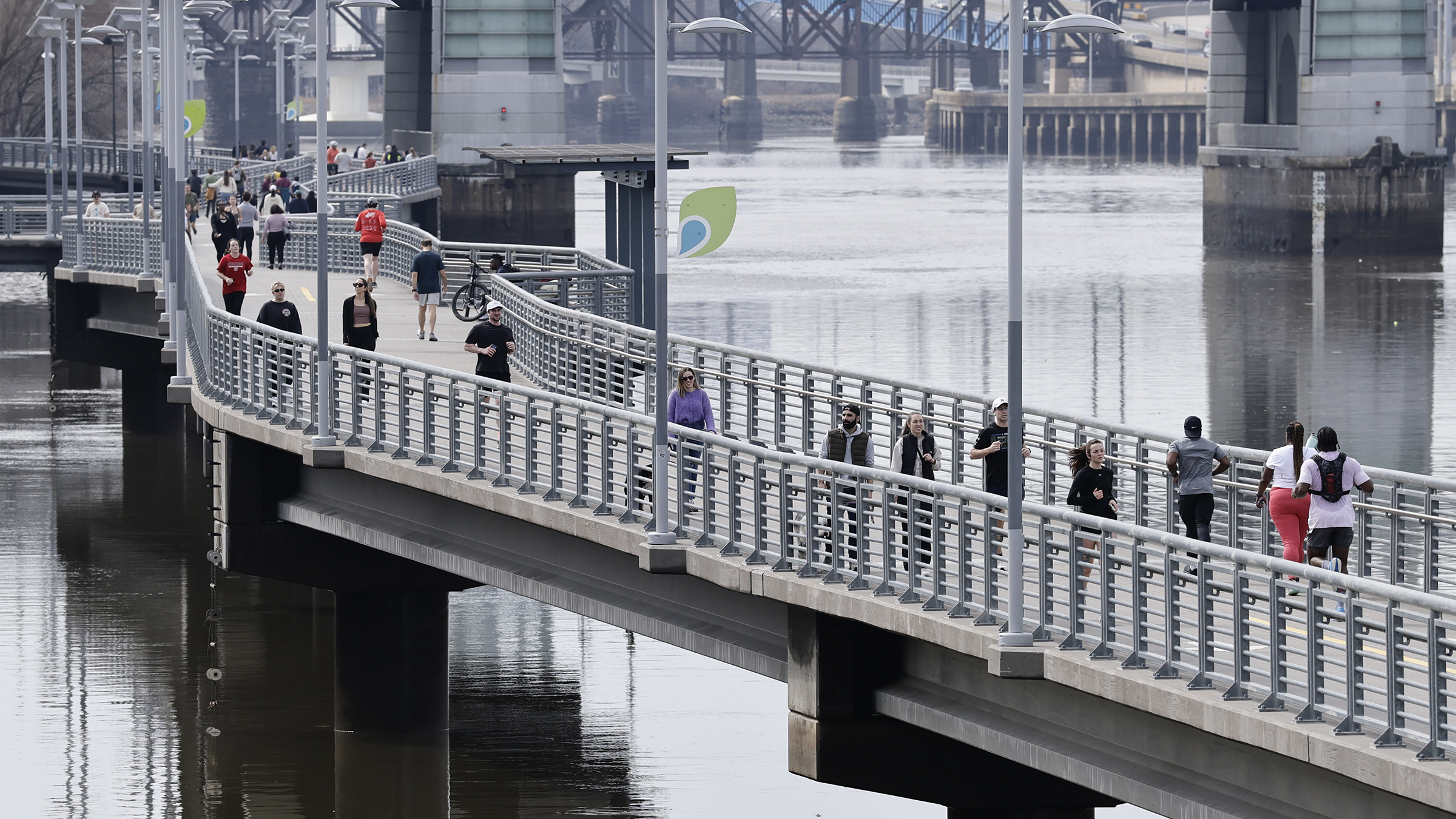
Joggers and walkers move along the Schuylkill Banks Boardwalk on March 8.Yong Kim / Staff Photographer
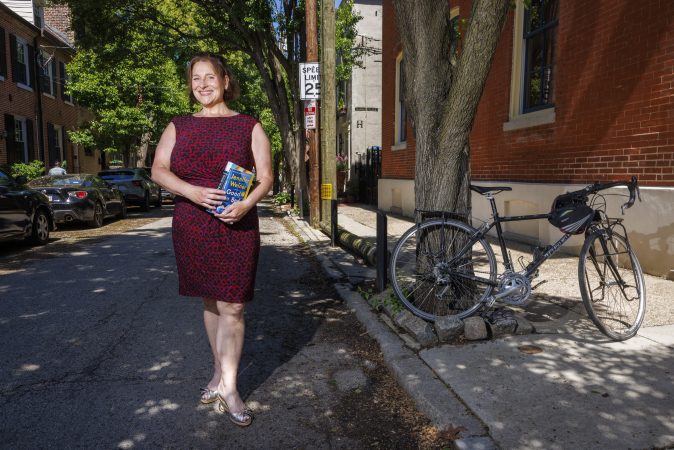
And because I have so much energy, I’d then ride with the Bicycle Club of Philadelphia. Since it’s a perfect day, the weather is great, there aren’t any cars parked in the bike lane, and people go around me without honking. I’d make my way up 26th Street, along the Schuylkill Banks,and meet at the Philadelphia Museum of Art or Cosmic Cafe and ride through Manayunk up to Narberth. We’d stop at GET Caféand Little Blue Owl Baking Company. The joke at the bike club is we are riding for coffee and a croissant.
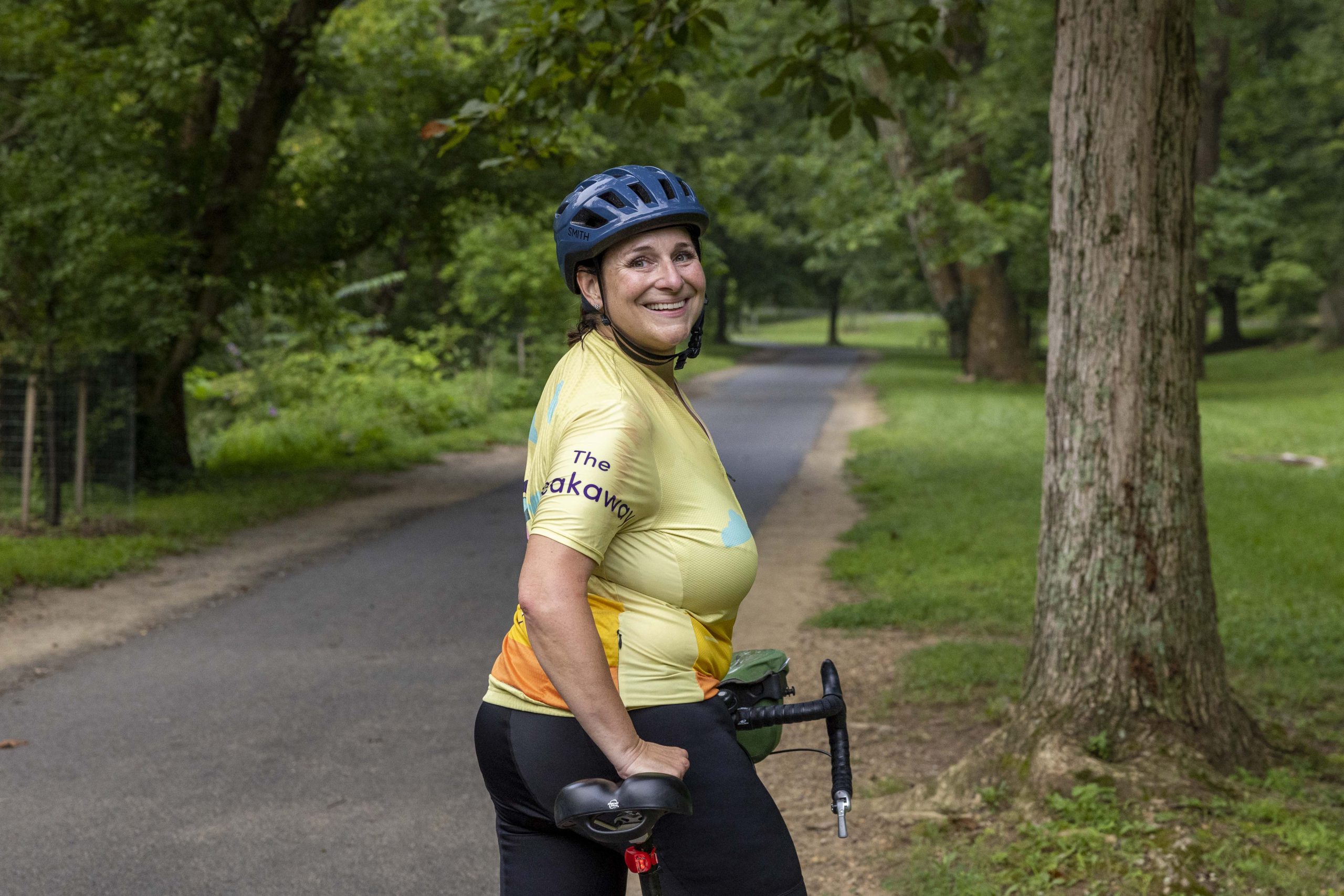
Jennifer Weiner with her bike in Rock Creek Park in August 2023. Amanda Andrade-Rhoades
2 p.m.
When I get home, my daughter Phoebe would be there and we’d go to Forîn Cafe on South Street for a matcha. That’s my daughter’s thing, she loves matcha.
We love thrifting, so we might wander over to ACE Coffee Outpost, a vintage clothing shop and cafe, and B-Bop, a shop that sells plus-size clothes. There is a chance I’ll go to Merrygold Shop and Wall Flower Paper & Party where they have cute baby things, presents, and beautiful cards.
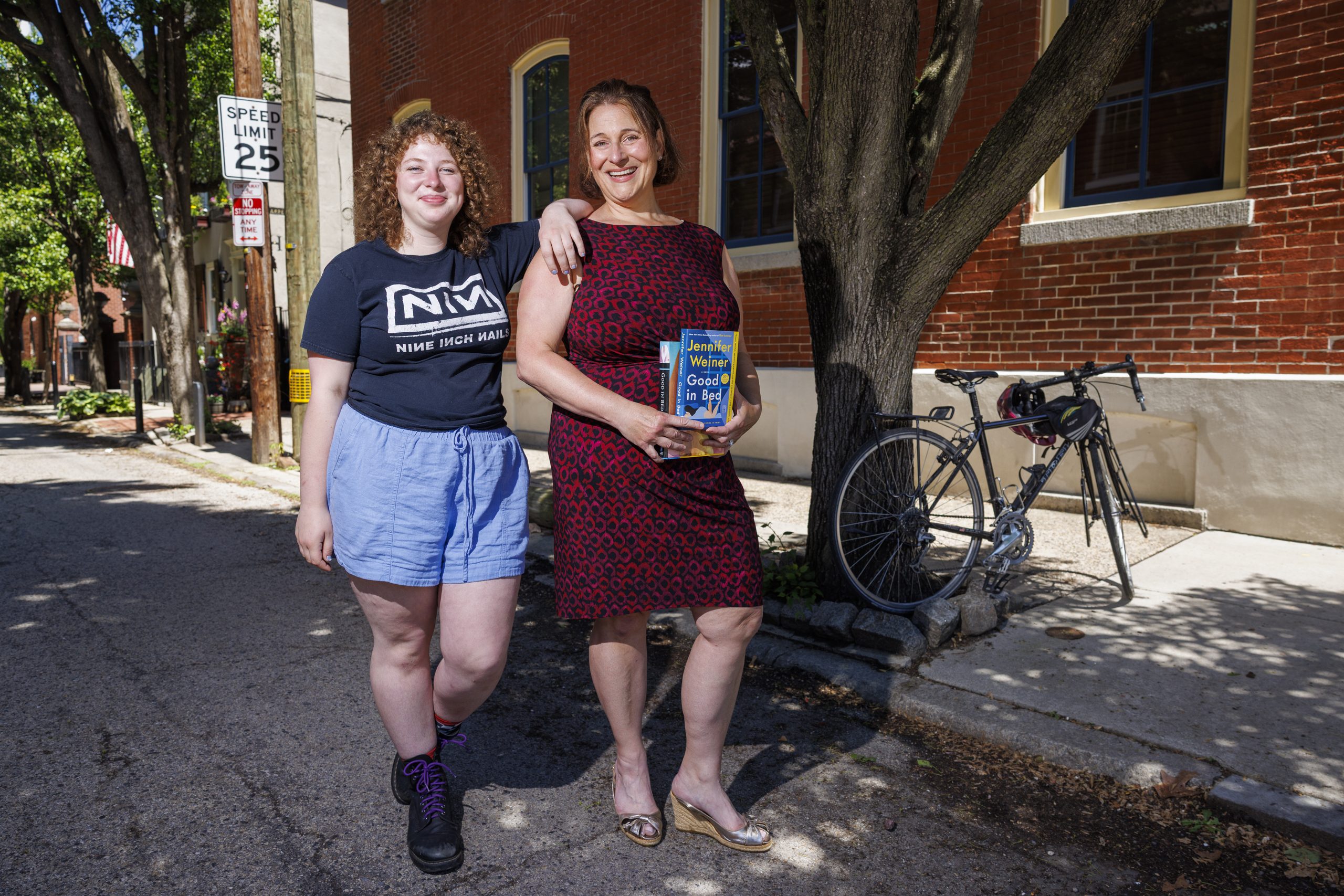
Philadelphia author Jennifer Weiner at her home in Queen Village on April 27. Going on the 25th anniversary of her book “Good in Bed,” Weiner is seen here with her daughter Phoebe Bonin, 18.Alejandro A. Alvarez / Staff Photographer
3:30 p.m.
Then I’ll take a shower and a nap. And I’ll write till about 6.
6 p.m.
Because it’s the perfect Philly day, I have the opportunity to bend the rules of time and space. So, now it’s 10 a.m. again and my husband and I are walking to places that would still be open at this time of day like the Mighty Bread Companyor Machine Shop Boulangerie in the Bok. Then we’d walk to Superétteon Passyunk.
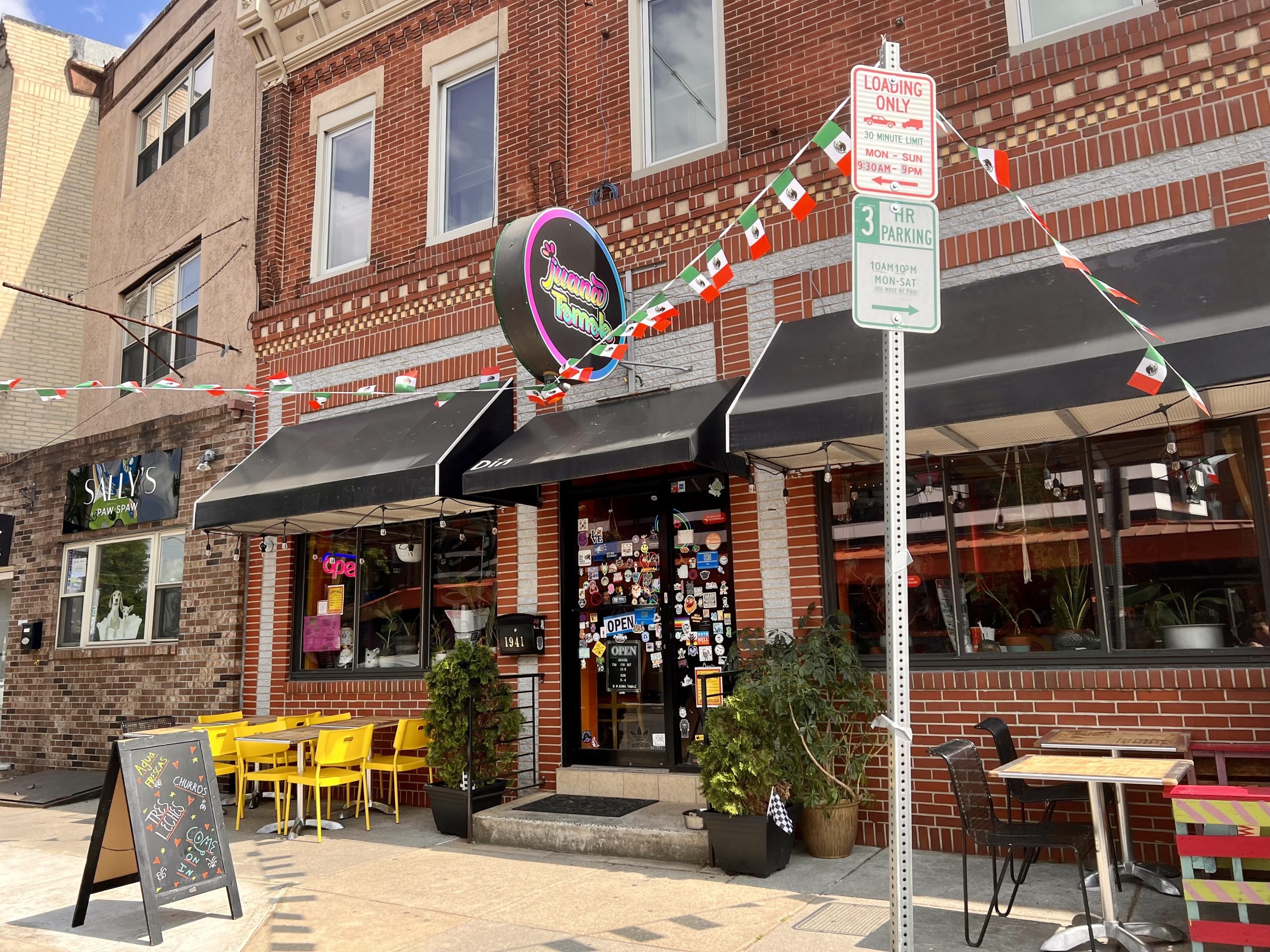
Now since I’m on Passyunk, I’d fast forward to evening and have dinner at Juana Tamale. My favorite is the birria quesadilla.
Juana Tamale, 1941 E. Passyunk Ave., on May 18, 2023.Michael Klein / Staff
8 p.m.
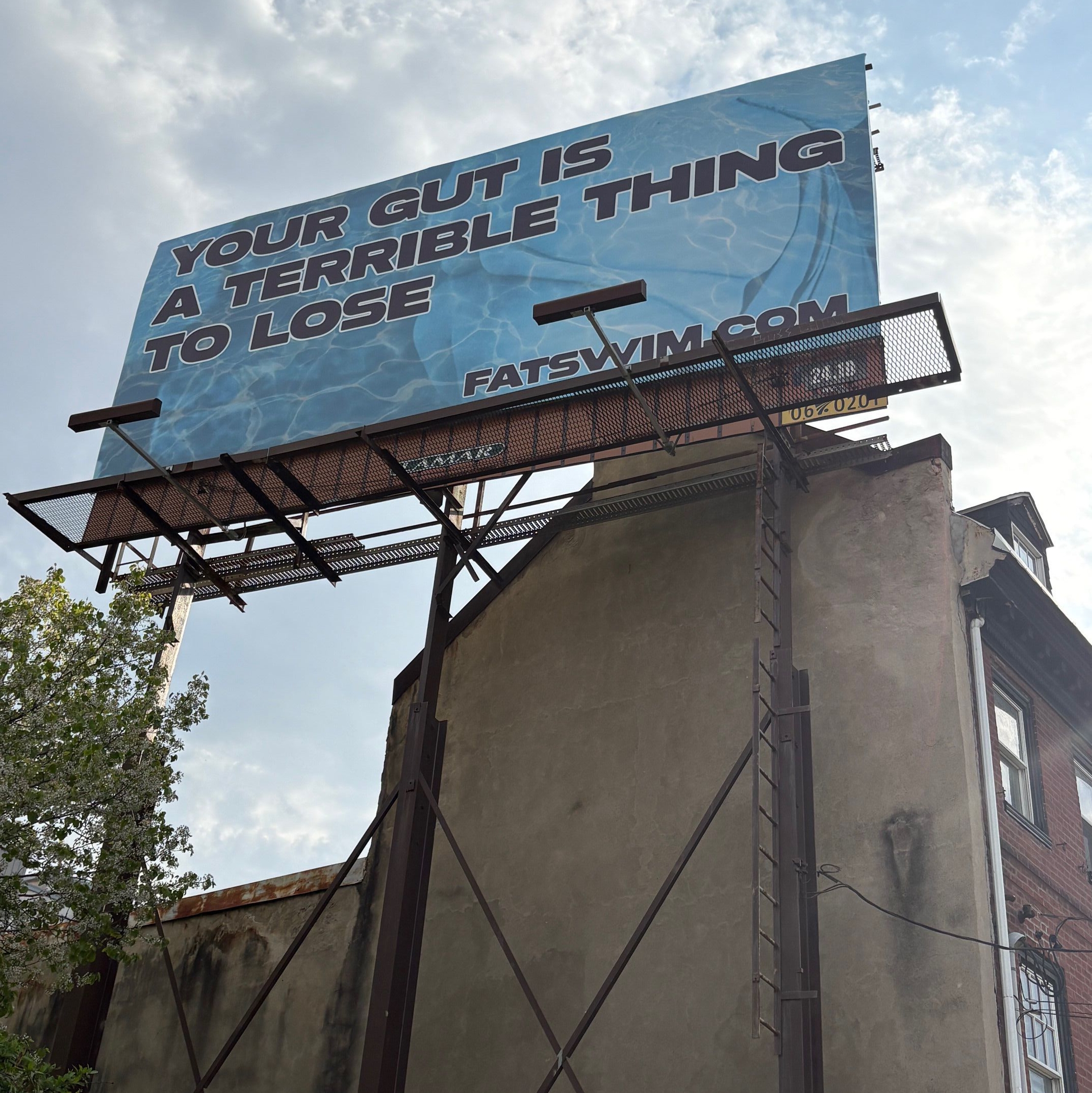
I’d end my perfect Philly day with a reading at a local bookstore, like Head House Books to support Philadelphia authors like Emma Copley Eisenberg, who might be reading from her new book, Fat Swim. I went to see the billboard the first day it was up. I work with her at Blue Stoop.
It’s important I end my Philly day trying to help the next generation of writers.
Emma Copley Eisenberg’s billboard touting the website that announces her newest collection of short stories, “Fat Swim.” The billboard is visible from I-95 right before you get to the Girard Avenue exit.Elizabeth Wellington
Weiner is celebrating the 25th anniversary of her debut novel “Good in Bed” all year. She is currently working on her next novel.
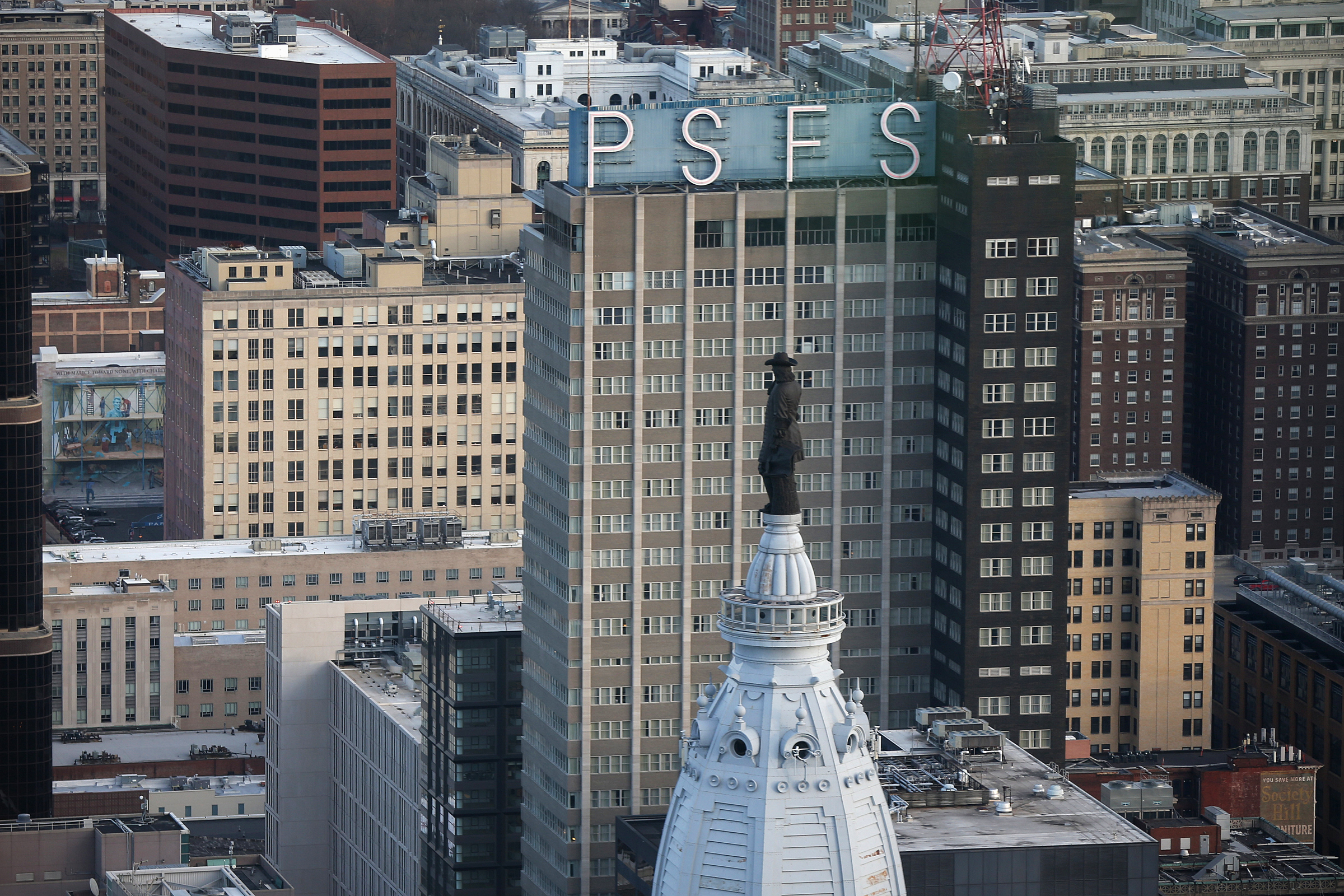
For more than quarter century, Greta Greenberger ended her tours of Philadelphia City Hall at the tower, just below the bronze buckled shoes of William Penn (1892), the shady colossus that Alexander Milne Calder sculpted.
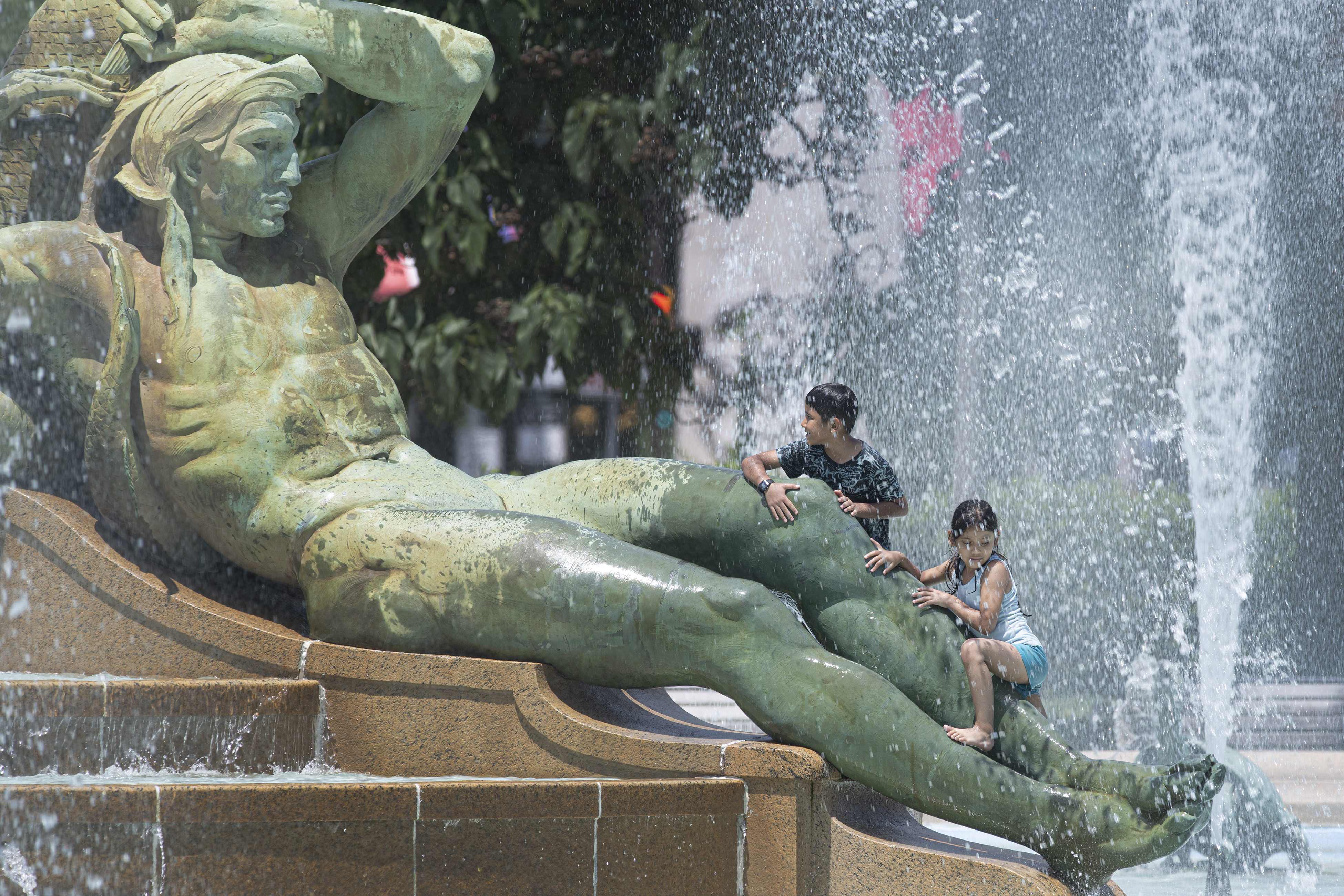
From there, she’d point up the Parkway to Logan Square, where on hot days children sneak into The Fountain of Three Rivers (1924), created by Calder’s son, Alexander Stirling Calder, to honor the Schuylkill, the Delaware, and the Wissahickon.
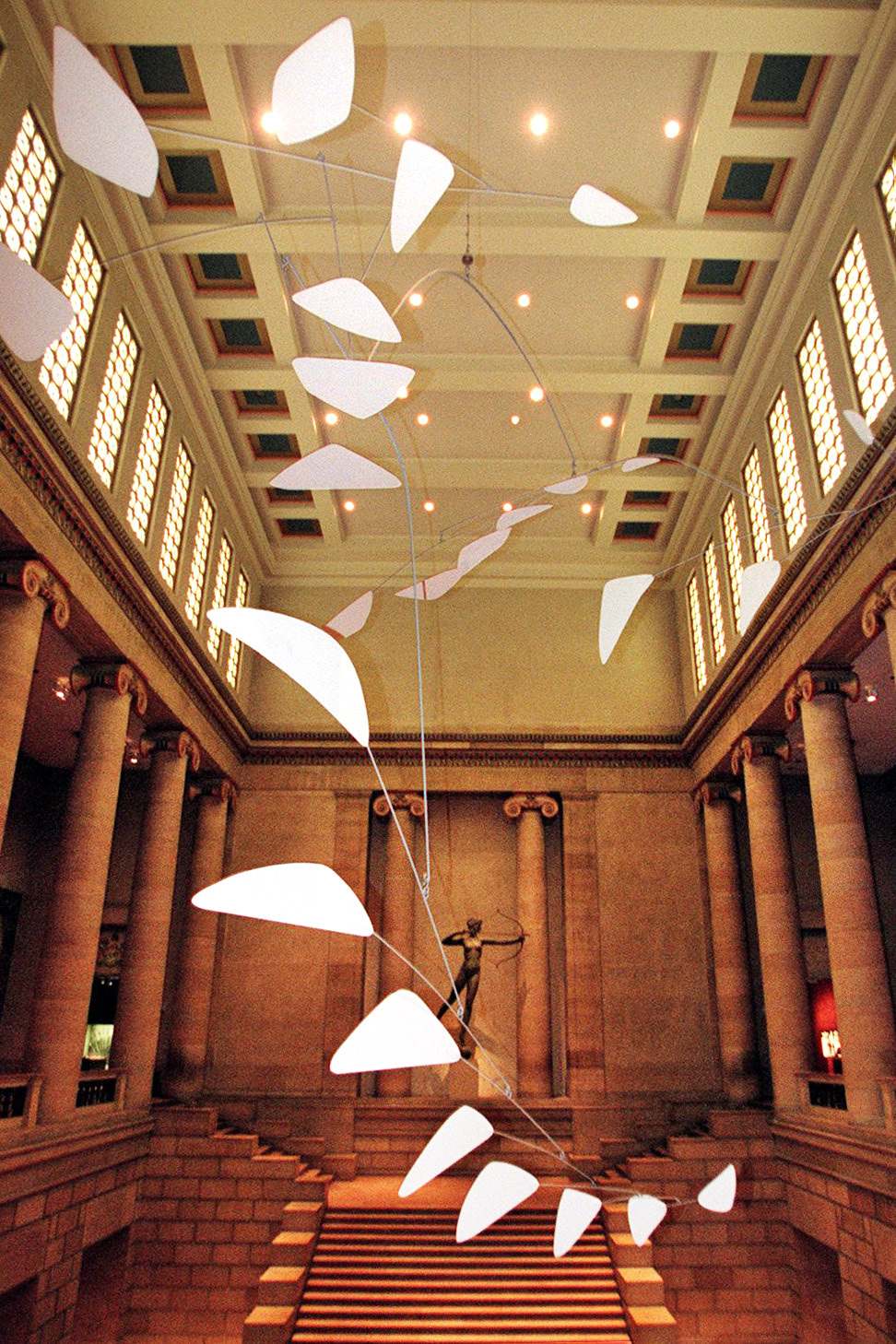
She’d finish her lesson at the Philadelphia Art Museum, where an unearthly, white mobile, Ghost (1964), designed by the third generation of Alexander Calders, Sandy, sways ever so slightly in the Great Stair Hall.
“Sometimes, I’d refer to this as ‘The Father, the Son and the Holy Ghost,’” she says. “It tells such a wonderful story.”
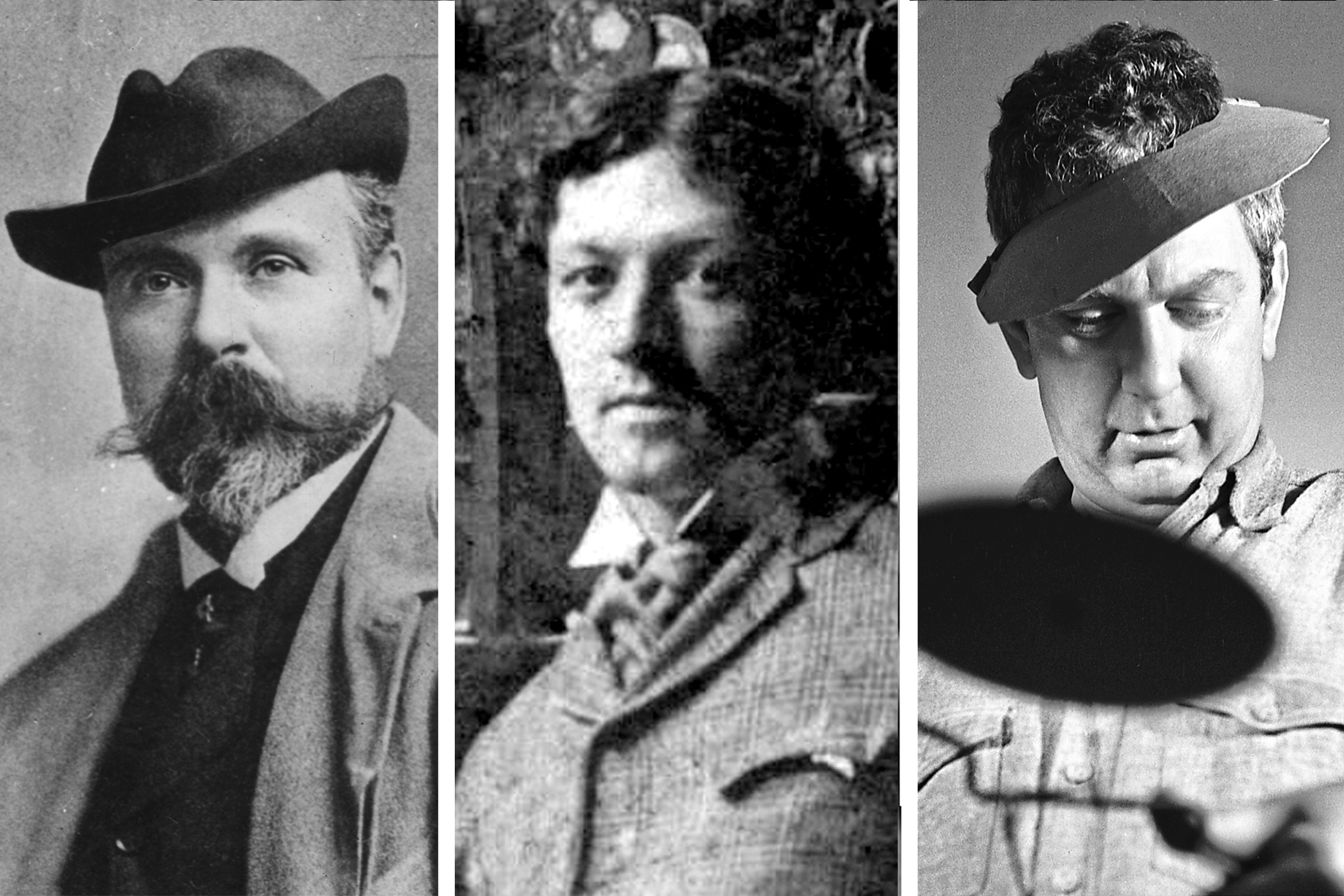
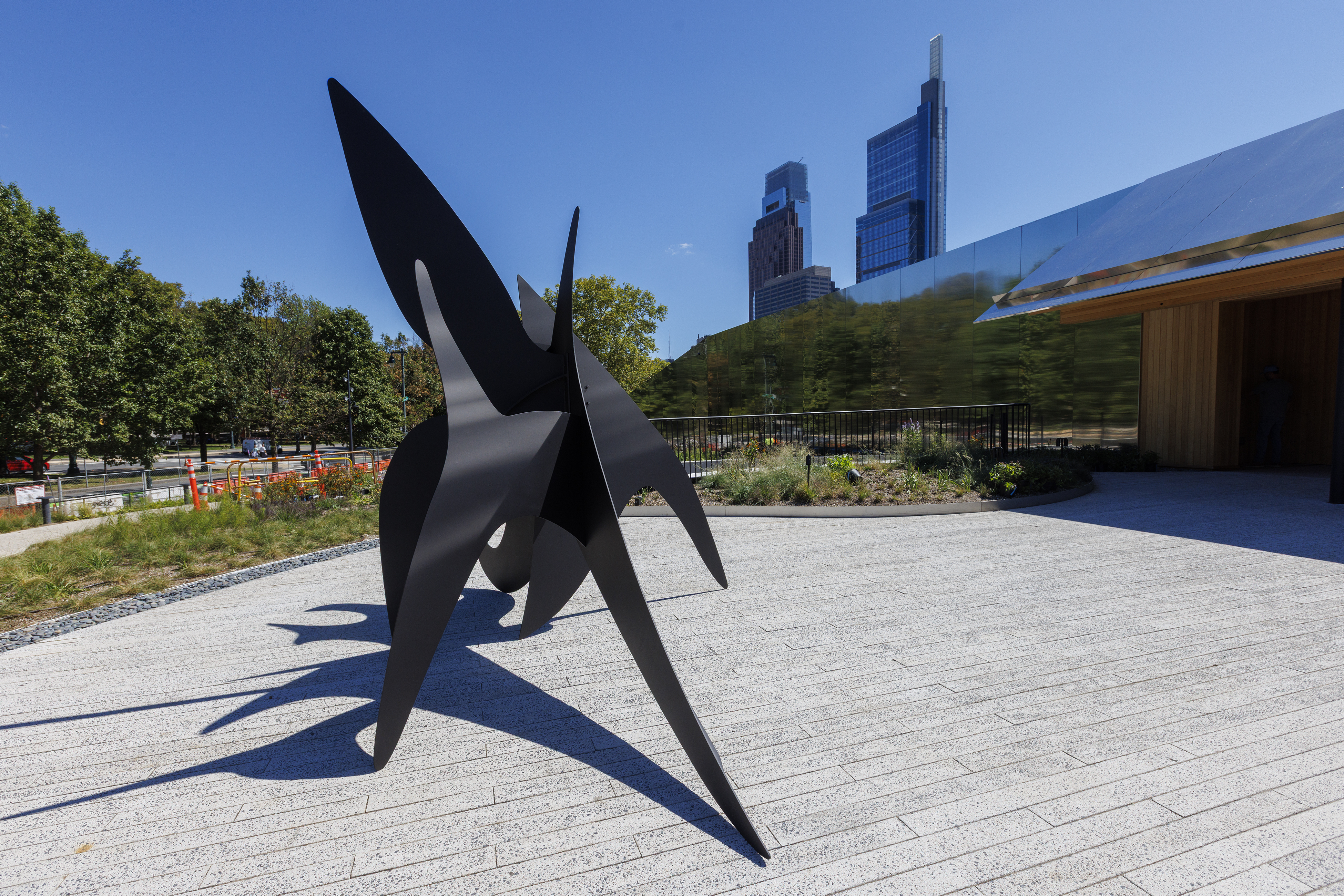
That story will be easier to tell now, with the opening of Calder Gardens at 21st Street and the Ben Franklin Parkway. The Gardens, focused on the work of the youngest Calder, known asSandy, brings another opportunity to celebrate the family dynasty’s in Philadelphia: three sculptors named Alexander Calder who have shaped the look of the city and beyond.
Exterior of the new Calder Gardens on the Ben Franklin Parkway.Alejandro A. Alvarez / Staff Photographer
“The Calder family is incredibly important to Philadelphia,” said Anna O. Marley, the former chief curator at the Pennsylvania Academy of Fine Arts (PAFA), where so many Calders studied. “They tell us so much about what it means to be an artist in the United States and how an American artistic identity was created in Philadelphia.”
And their work here offers “a pocket history of art,” in the view of Kathleen A. Foster, the Art Museum’s senior curator of American art.
“Between the three of them, you really go from the academic realism of the grandfather through kind of shift into Art Deco and modernism in the `20s with Stirling Calder, and then all the way into modern forms, completely abstract shapes and bright colors.”
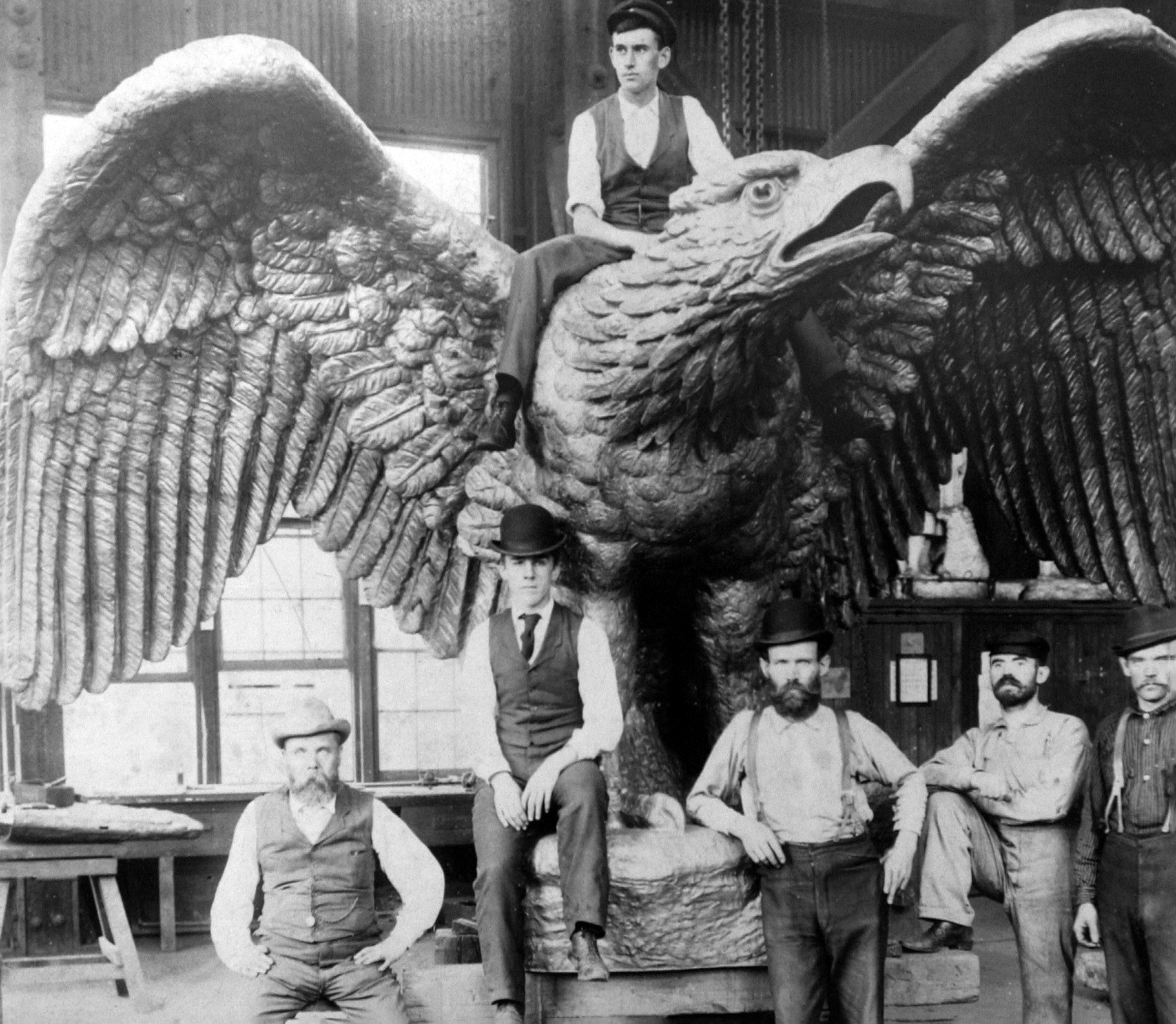
A photograph of workers and an Alexander Milne Calder eagle sculpture before installation around 1894, on display in the tower at City Hall. Calder created the statue of William Penn atop Philadelphia City Hall — and over 250 other works of sculpture on the exterior and interior of the building — from 1871-1901.Inquirer archives
‘One of the greatest’
The Philadelphia that Alexander Milne Calder, a Scottish stonecutter’s son from Aberdeen, first saw in 1868 was sorely in need of a makeover. The sprawling metropolis was known for building big things like ships and rail engines and a wealth of small manufacturers that earned it the nickname “Workshop of the World.”
It was also filthy.
“It’s clear that there is no future for a city that is just increasingly based on its industrial might, on the dirt-producing, noise-producing, the squalor,“ says David Brownlee, emeritus professor of the history of art at the University of Pennsylvania.
The boundaries of Fairmount Park had just been established the year before and plans would soon begin for a giant celebration of the country’s 100th birthday, the 1876 Centennial, which would show the world the city’s cultural achievements. The Benjamin Franklin Parkway was unfolding, a broad boulevard lined by art and leading to what Brownlee calls “one of the greatest monumental ensembles of sculpture ever created.”
That would be City Hall, the émigré Calder’s workplace for 22 years as he presided over the creation of more than 250 sculptures from his first floor office in the building’s southwest corner — and the towering figure of the colony’s founder.
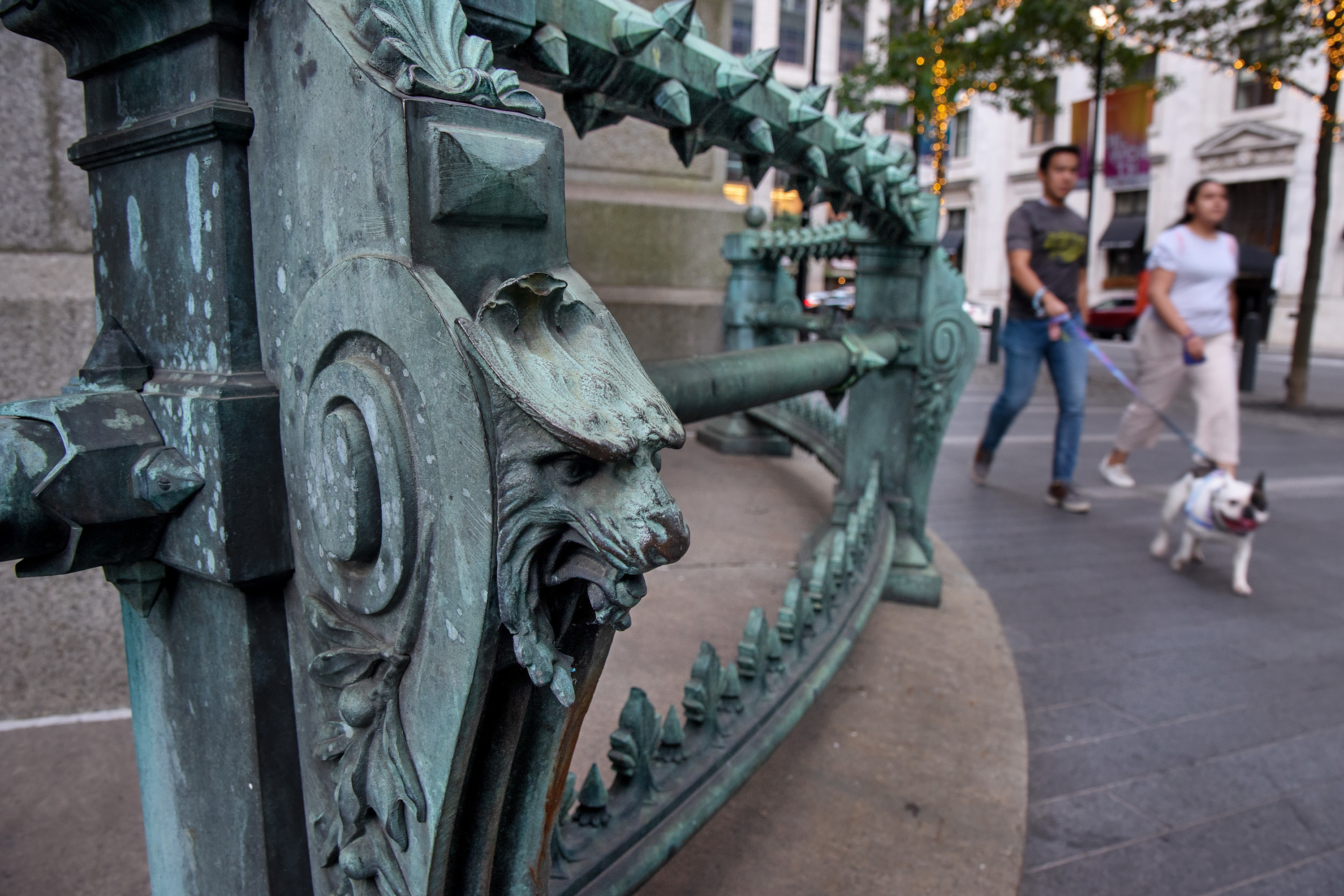
There were once almost 150 small lion heads on the ornate bronze spiked railing that surrounds City Hall. They, like most of the statuary on the building — including the big one of William Penn — were designed by Alexander Milne Calder. Less than two dozen of the lions remain after 100 years. TOM GRALISH / Staff Photographer
Calder had worked at the Royal Academy in Edinburgh and on the Albert Memorial in London before sailing to America. He stopped in New York, but chose Philadelphia, armed with a letter of introduction to the city’s most eminent sculptor, Joseph A. Bailly, and to the scion of a monument business, William Struthers. Calder was 22.
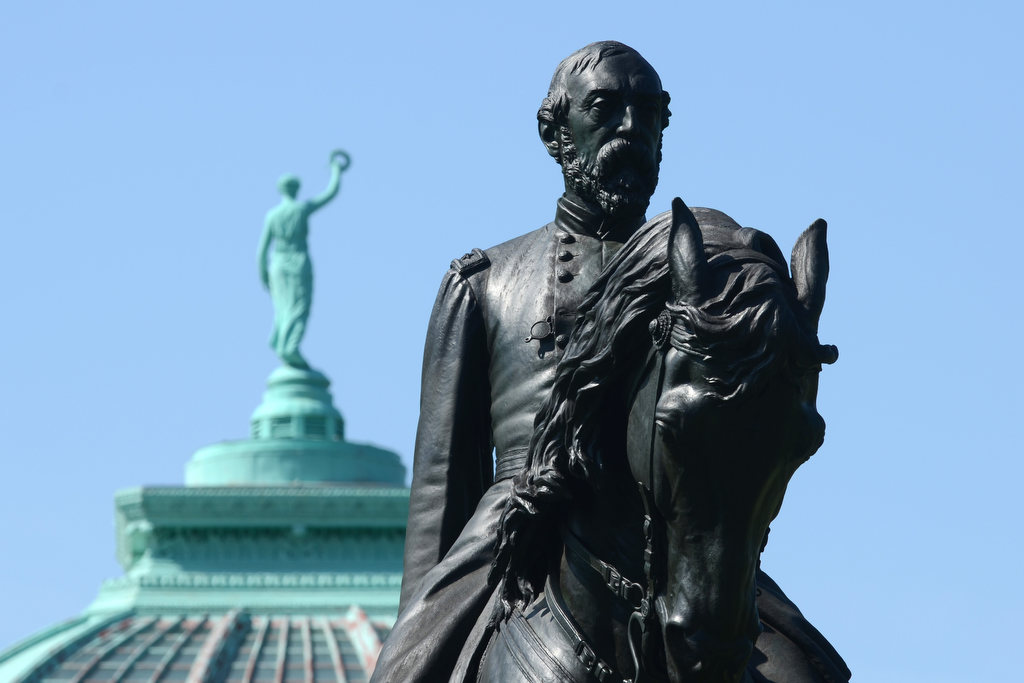
He registered that year at Pennsylvania Academy of the Fine Arts, the nation’s first art school and museum, and studied “antiques,” drawing from plaster casts of classic sculptures. It was not long before Calder won a prized commission over one of his instructors, to sculpt the likeness of Major Gen. George G. Meade atop his horse, Baldy. Meade, who’d defeated Robert E. Lee at Gettysburg, later designed many of the paths and drives of Fairmount Park. His statue stands now behind the Please Touch Museum on Lansdowne Drive.
Alexander Milne Calder’s Meade Equestrian Monument in the rear of Memorial Hall. It was cast using captured Confederate cannon for the bronze. Calder rendered Gen. Meade reining in his horse at a moment of crisis during battle.
When Greenberger gives tours of City Hall — though retired, she still volunteers one day a week — she likes to start in the north portico, where one can sample his expansive vision. Look up to the south, and there are Africans, surrounded by tobacco leaves, a lion. To the east, people from China, Japan, India, and an Asian elephant. West are the Native Americans and pioneers, and a bear. And north is Europe, people from Germany, England, France, maple leaves, and cattle. (She isn’t sure why cattle.)
Calder started on the Penn sculpture in 1886. The iconic figure, now visible from miles away, was the fourth version of the colony’s founder that the sculptor created. Calder’s models were one-tenth the size of the 37-foot high statue. His goal, according to an article at the time in The Inquirer, was to create “William Penn as he is known to Philadelphians; not a theoretical one or a fine English gentleman.”
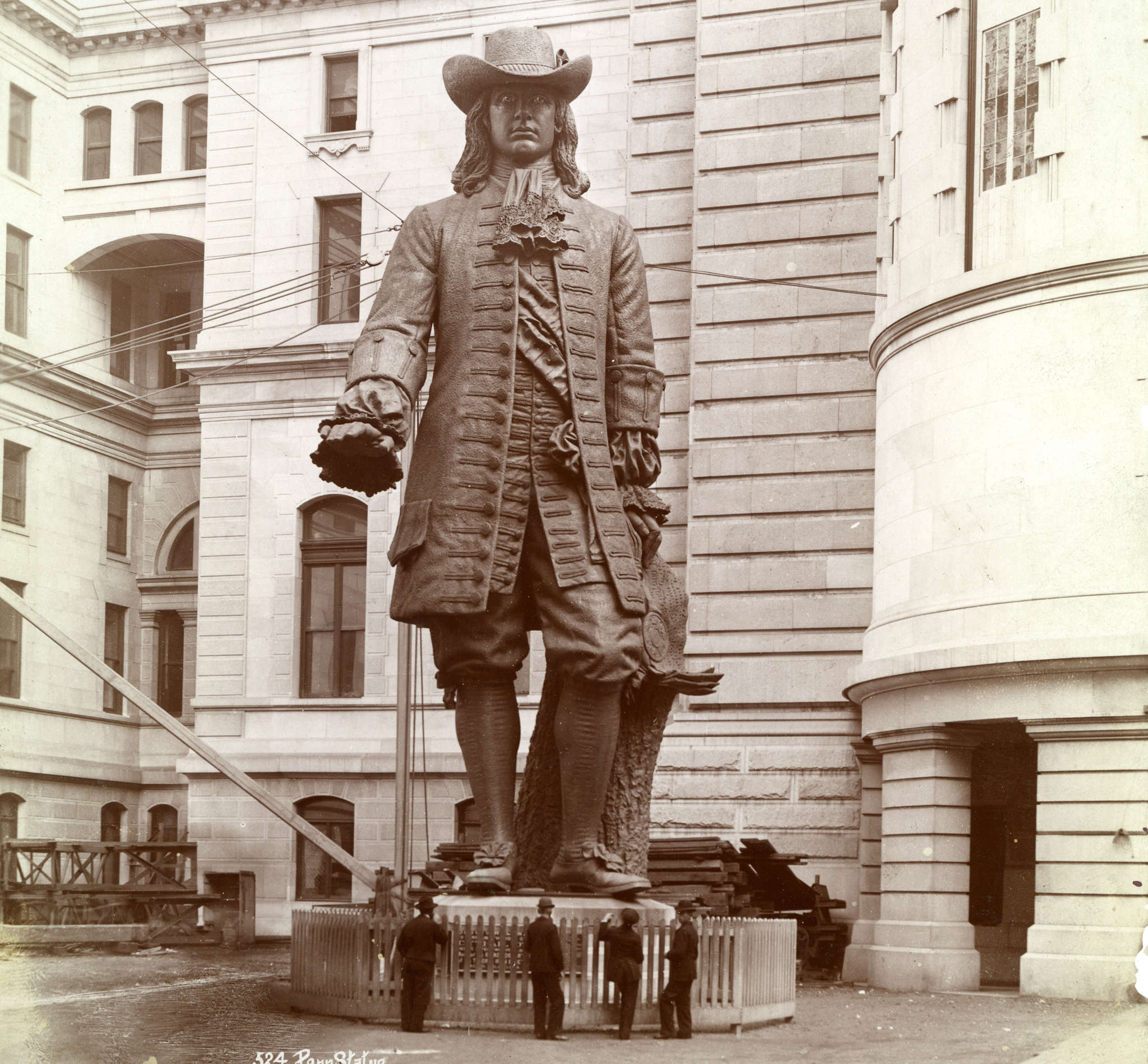
The William Penn statue on display in the City Hall courtyard in 1893, the year before it was hoisted, bit by bit, to the top.Historical Society of Pennsylvania
Four teams of horses drew massive plaster sections of the statue up Broad Street to the Tacony Iron & Metal Works. It wasn’t until Thanksgiving 1894 that the head was lifted onto the statue atop the tower, completing Calder’s colossus.
He was not happy with the result.
For most of the day, William Penn’s face is shadowed. That was not the artist’s intent. Calder had wanted Penn facing south, where the sun would light his youthful face and the intricate detail of his garb would be visible for all to admire.
But members of the Public Buildings Commission wanted Penn facing northeast, toward Penn Treaty Park, the site of the 1683 peace agreement with the Lenni-Lenape.
In a letter quoted in the Dec. 14, 1894 Inquirer, Calder wrote “I think that you will agree that is very disappointing from every point of view.”
Calder’s William Penn statue atop City Hall as seen from the Comcast Technology Center in Center City.TIM TAI / Staff Photographer
While Calder lived in a number of homes around the city — a home at 2020 Bainbridge St. and a studio at 337 Broad — when he registered at PAFA, the address listed was 1903 N. Park Ave., now on Temple’s campus. Decades later, his granddaughter, Margaret Calder Hayes, would remember the North Philadelphia house as “gloomy” — four floors with Empire furniture, a long dark hallway leading to a parlor where children were not welcome unaccompanied.
Calder had met his wife, Margaret Stirling, soon after his arrival in Philadelphia and married her after a brief courtship.
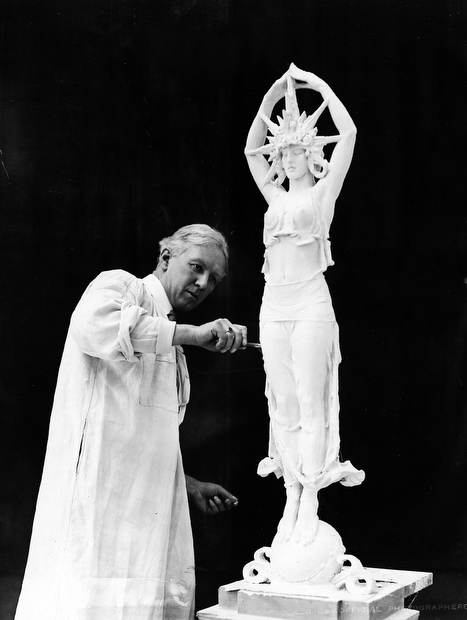
Three of their sons would study at PAFA and become artists — Ralph Milne Calder, and Norman Day Calder, and Alexander Stirling Calder. But it was “Stirling,” the eldest who left the biggest mark on Philadelphia.
A portrait of A. Stirling Calder.
‘An idealist, somewhat withdrawn’
In a remembrance kept in the PAFA archives, Alexander Stirling Calder describes art as a fallback. Ever since he was 6 and saw the great Edwin Booth play Hamlet, Stirling Calder wanted to be an actor. But he was too shy. In 1885, he enrolled in art classes at the academy’s new building at Broad and Cherry, and years later recalled the first criticism of his teacher, the artist Thomas Eakins: “Attack all of your difficulties at once.” Eakins urged sculptors to paint, painters to sculpt, and to dissect cadavers to learn anatomy.
After studying at the École des Beaux-Arts in Paris, he returned home and won a commission to immortalize Samuel Gross with a statue that first stood on the National Mall in Washington, D.C. (It’s since been moved to the Center City campus of Thomas Jefferson University). At 25, he married a fellow PAFA student, Nanette Lederer, a painter.
To the critic Malcolm Cowley, Stirling Calder was “an idealist, somewhat withdrawn, wholly impractical, creating symbolic figures while brooding on the cruelty of nature.”
Foster says that looking at the allegorical figures in Logan Square’s Swann Fountain, you can see how Stirling inherited his father’s traditions.
Children cool off at the Swann Memorial Fountain in 2023.Jose F. Moreno/ Staff Photographer
“But the figures have a kind of sleek, modern simplicity to them,” she said. “They’re more stylized. So by the 1920s the Swann Fountain represents a kind of moving from the academic past into a more expressive and abstract style.”
The fence came off the Swann Fountain on a hot July day in 1924. The next evening, 10,000 revelers danced to tangos from a police band. Not everyone was pleased — some wondering if the average Philadelphian would grasp the significance of all that Calder had created.
He was unbothered.
“The meaning of works of art is just as mysterious as life itself. It can be explained in many ways by people of different philosophies. …,” he was quoted in the Evening Bulletin as saying. “There are lots of things in life we do not understand; art is no exception.”
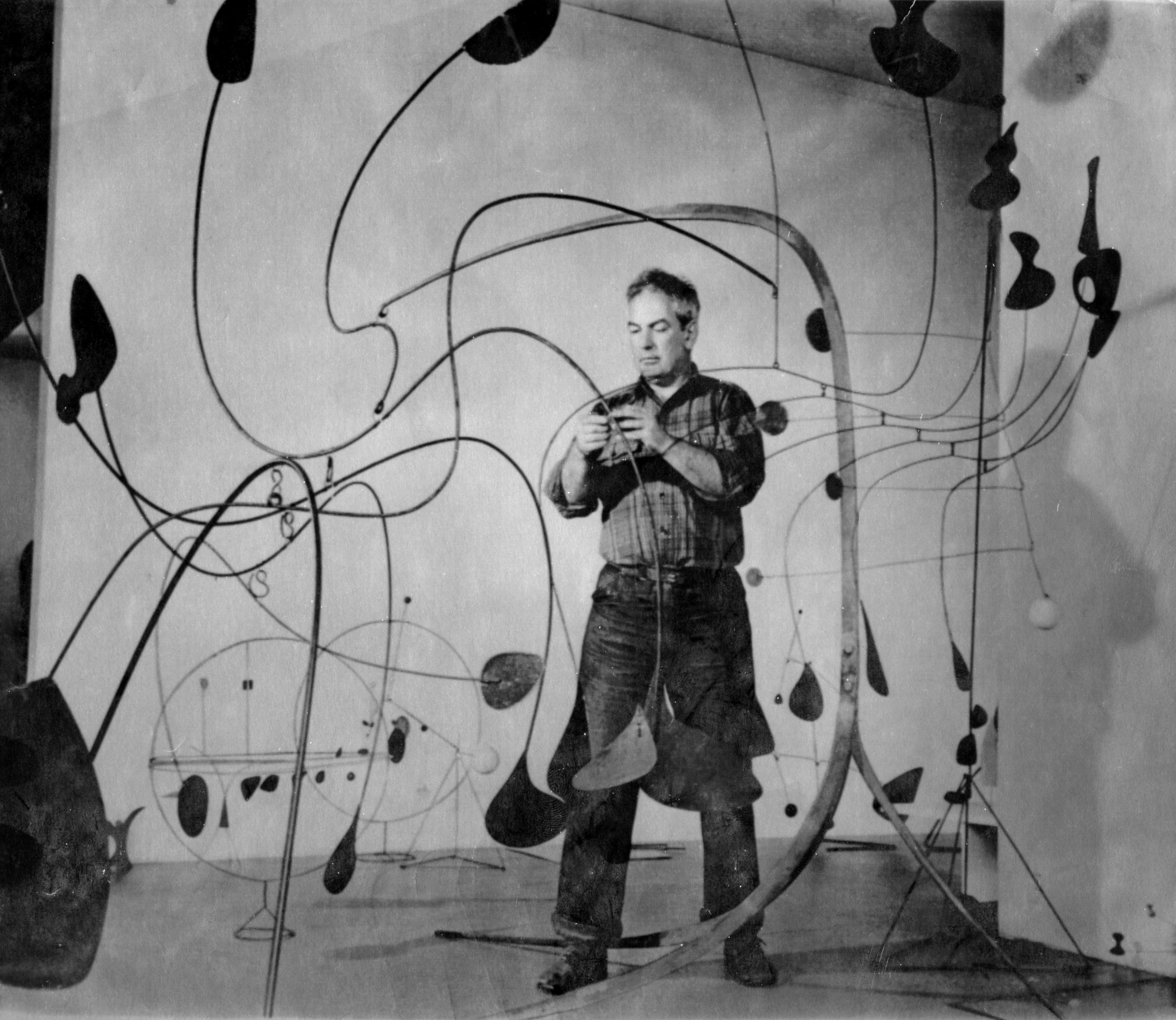
Alexander “Sandy” Calder installs his “Big Spider” mobile at New York’s Museum of Modern Art in 1943.The Evening Bulletin / Temple Urban Archives
‘A big child’
In his autobiography, Sandy Calder included a photograph of the sprawling mansion in Philadelphia where he says he was born. He called the place Lawnton. In 1898 when Calder was born, Lawnton was a neighborhood in East Oak Lane, served by the Reading Line and lined with grand homes where the wealthy went to escape the summer heat.
It’s unlikely Calder was born there. David Brownlee has dug into the mystery of the third and most famous Calder’s birthplace. While his family doctor lived in Lawnton, and it is possible that his mother delivered her son nearby, more likely, he was born near the edge of the growing city, at 1203 East Washington Lane in Germantown. City records showed that Stirling Calder rented that country place, while the family still owned a home on North Park Avenue.
In Margaret Calder Hayes’ memoir, she described how Sandy, two years younger, went to school in Buster Brown suits his mother had sewn and by 8 had built a Noah’s Ark of animals. He enrolled in Germantown Academy, when it was still in the city, but left at age 9 before moving to Croton-on-Hudson, N.Y.
“We love to claim him, but he only went to school here as a child,” Foster said of the youngest Calder’s time in Philadelphia.
Yet in some ways, he’s the essence of the city he was born in: practical, playful, unpretentious, no pushover.
He worked as a fireman on a steamer bound for San Francisco, spent a year keeping time in a Washington state logging camp. Trained as an mechanical engineer, he moved to New York City at age 25 to paint.
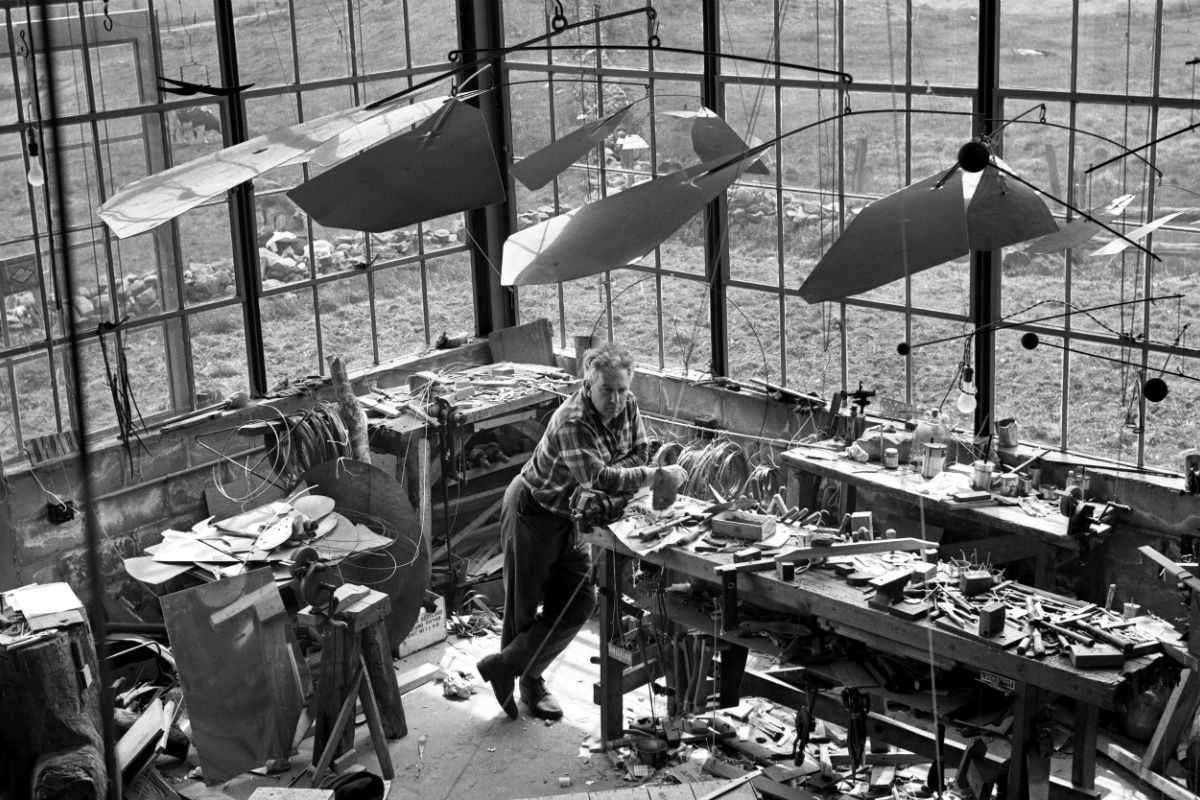
Calder with Mobile in his Roxbury, Ct., studio in 1941.Herbert Matter
He is known as a 20th century modernist, the artist who put sculpture in motion.
After visiting Calder’s Paris studio in 1931 and marveling at his sculptures that relied on little motors, Marcel Duchamp coined the word “mobiles” for these kinetic marvels.
Parisians took to him, while they scoffed at other American artists. Cowley, in an introduction to Hayes’ Three Alexander Calders had a theory:
”Of course his work in itself, continually inventive, playful, and enchanting, was his ticket of admission.” But Sandy and his wife Louisa, “a beauty,” Cowley wrote, entertained generously and simply. Calder was in the tradition of the Noble Savage, “who disregards social conventions and judges everything by his instinctive standards.”
“A big child,” as his friend the playwright Arthur Miller once put it.
Sandy Calder created Ghost in 1964 for a retrospective at the Guggenheim in New York City, that included 400 examples of his mobiles, stabiles, toys, jewelry, carvings, tapestries, etc. The Art Museum bought the 34-foot-long showpiece a year later and brought it to the city of his birth.
Ghost, in the Great Stair Hall at the Philadelphia Museum of Art (now, Philadelphia Art Museum). It was created to hang in the center of the Guggenheim Museum in New York for Calder’s exhibition there in 1964.Steven M. Falk / Staff Photographer
“It’s a colossal example of the mobile and it’s majestic,” Foster said. “When it moves, it’s just breathtaking, because it, it almost moves like a giant dinosaur or something. In other words, it’s got long spines and fins, and it moves very slowly and grandly in the air currents in the Great Stair Hall. … It’s delightful.”
“When every baby has a mobile hanging over their crib, you don’t think about Calder as being the genesis of this. I think he would be delighted to know that … because he was such a child at heart. He managed to keep that imagination.”
Now, Philadelphia will be home to an institution that celebrates that imagination. It’s a fitting homecoming for an artist whose life and legacy was so shaped by his family, who in turn both shaped and were shaped by Philadelphia.
The weight of a name
Tú Huynh was working at the National Gallery of Art in Washington, D.C., when he told a job applicant to look for him under the giant Calder mobile that hangs in the East Building.
That was in 1997. The applicant,Kaleo Bird, landed the job — and later, his heart. Three years later they moved as a couple to Philadelphia, where she started grad school. Soon they married.
In 2008, when their son was born, they didn’t take long to decide on a first name:
Calder.
He’s now 17, a senior at Penn Charter School.
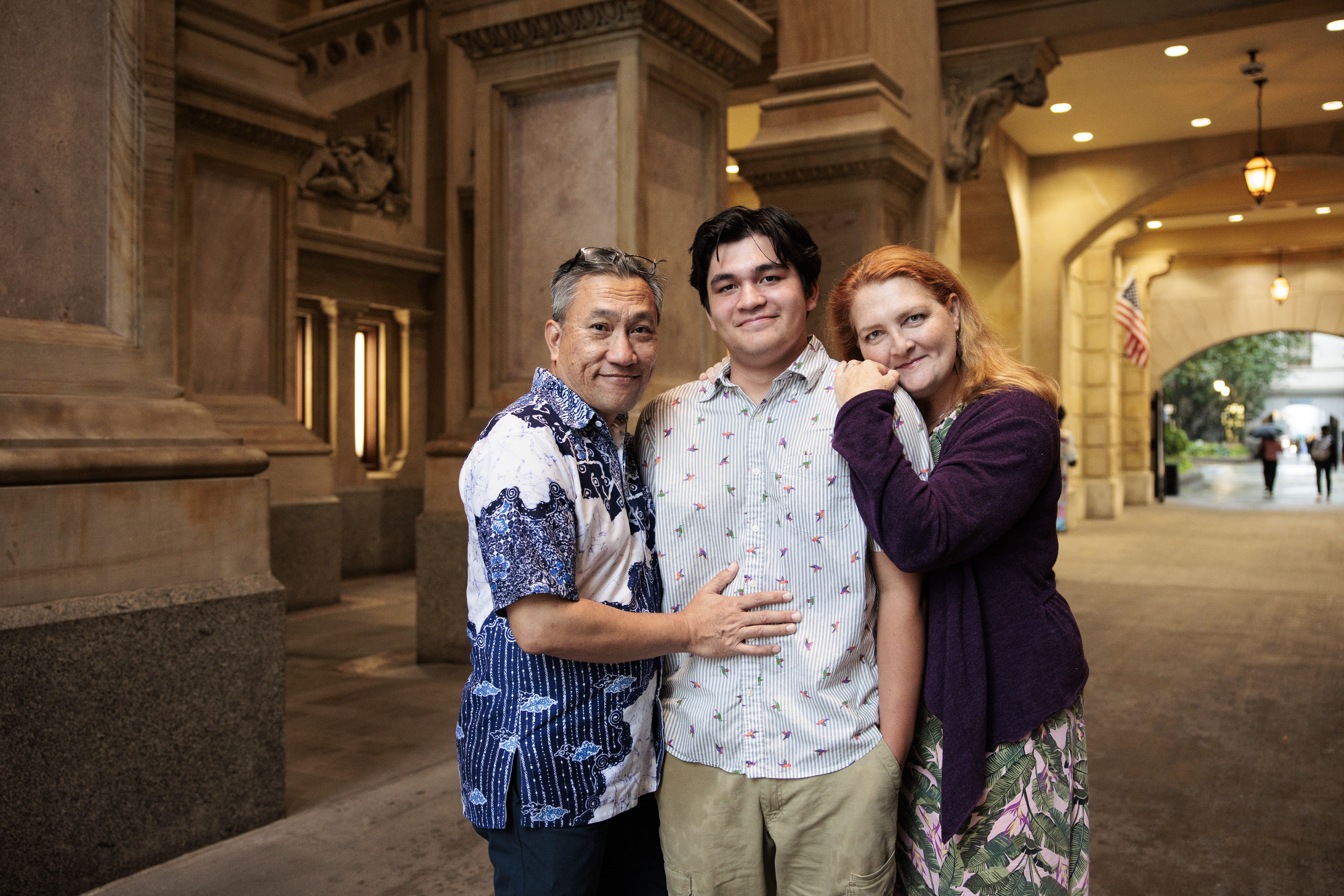
Tú Huynh, Calder Huynh, 17, and Kaleo Bird at Philadelphia City Hall where more than 250 of Alexander Milne Calder’s sculptures adorn the building, topped by his statue of William Penn. Monica Herndon / Staff Photographer
“I have yet to meet anyone my age who knows who the whole Calder family was, which is a shame because I feel they’ve had such an impact here, particularly with City Hall,” said the teen. “So many people think Ben Franklin is atop City Hall and don’t know anything about these beautiful sculptures.”
His father now runs the Art in City Hall program.
“I tell people that the true art of City Hall belongs to Alexander Milne Calder,” says Tú Huynh. “This was his Sistine Chapel. There are over 250 sculptures, leafs, busts all over this building. And that’s an homage to his ideal of what this city, state and country is supposed to be about. And he doesn’t sugarcoat anything. There are enslaved Africans, Indigenous populations, Europeans. It tells you the folks who’ve contributed to this extraordinary country.”
Calder Huynh says he feels the weight of his name — in a way that the two generations named after Alexander Milne Calder must have felt.
He paints, draws in charcoal, creates his own comic books — exploring themes with super heroes and Westerns, always with an eye on his father’s works that line the walls of their home.
“Naming me after them is such a big thing to put on someone. For me, it is a weight that Alexander Sandy Calder must have felt. A weight to achieve and create something that differs from what his family members had created, which is kind of cool. … Put something in this world that hasn’t been done yet.”
“The Magic of Calder Gardens” is produced with support from Lisa D. Kabnick and John H. McFadden. Editorial content is created independently of the project’s donors.
To support The Inquirer’s High-Impact Journalism Fund, visit Inquirer.com/giving
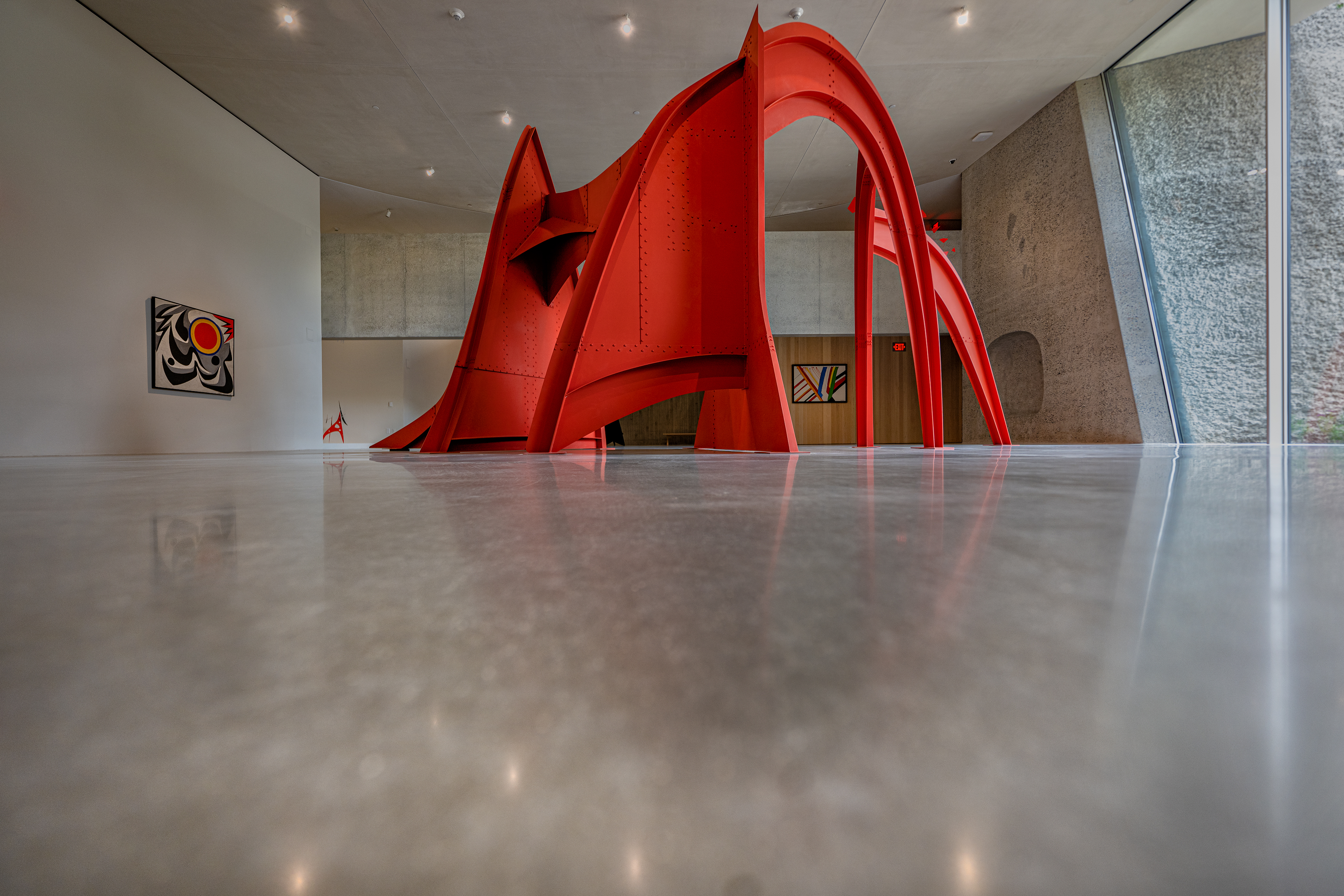
Jerusalem Stabile II, 1976 by Alexander Calder is shown on display at the Calder Museum in Philadelphia.Jose F. Moreno / Staff Photographer