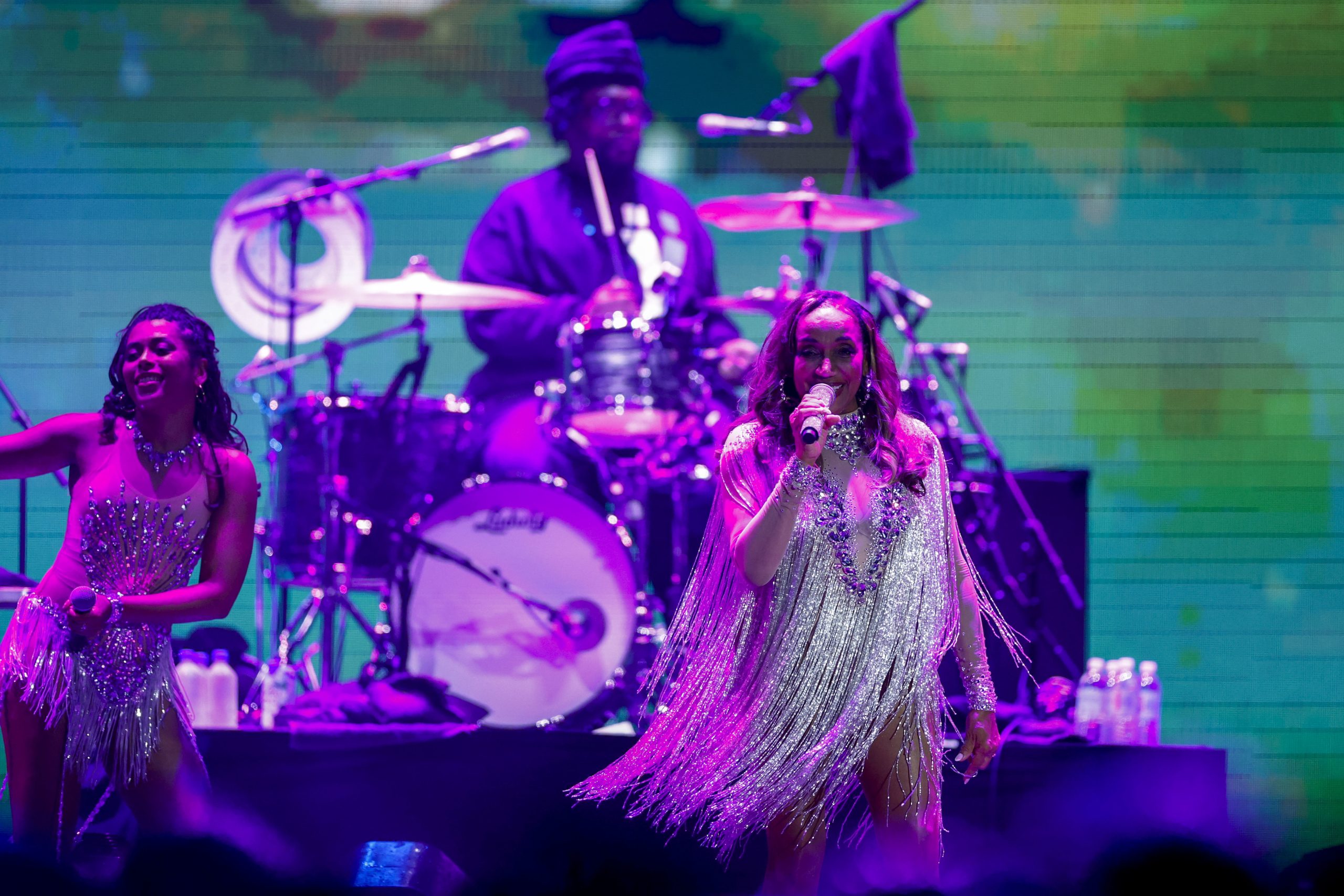
Just days before Ed Sheeran’s concert on Saturday at Lincoln Financial Field, rapper Macklemore was dropped over pro-Palestine comments. Following that, several of Sheeran’s supporting acts have quit in support of Macklemore.
Aaron Rowe, Finneas, Lukas Graham, and Sheeran’s backing band, Beoga, have all announced they were dropping out of the tour, Deadline reported. Lincoln Financial Field officials didn’t immediately return a phone call for comment on what this might mean for this weekend’s concert.
Macklemore, a Grammy winner, joined the tour earlier this month and was slated to open for Sheeran on eight of his last 10 shows on the U.S. leg of the tour.
According to Rolling Stone, Macklemore was dropped because of the rapper’s pro-Palestine statements at two shows at MetLife Stadium in East Rutherford, N.J., earlier this month.
On Sept. 4, Macklemore performed his 2024 protest song, “Hind’s Hall,” about pro-Palestine demonstrators at Columbia University and chanted “Free Palestine” while a screen behind him showed footage from the war in Gaza.
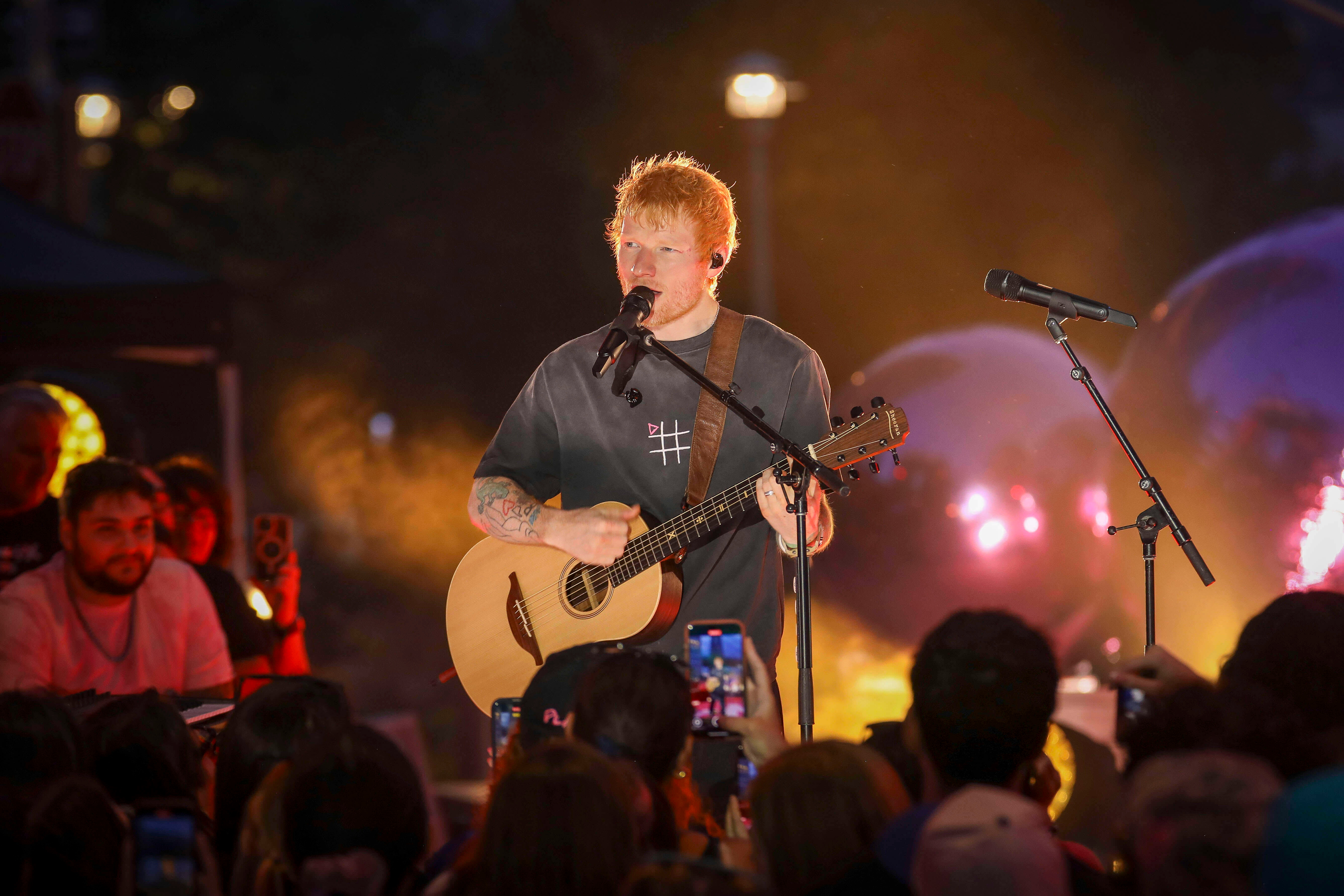
Singer-songwriter Ed Sheeran performs during “Ed Sheeran’s Play: Live from New York” presented by TikTok at Domino Square in Brooklyn on Sept. 13, 2025. (Photo by Andy Kropa/Invision/AP, File)Andy Kropa
On Tuesday, Sheeran issued a statement on Instagram, writing that he was in contact last week with venue owners, promoters, and activists to “find a mutual resolution for all.”
While he respects Macklemore’s “strength of purpose to stand up and shout for what he believes,” Sheeran said he was unable to “build bridges” with venue owners and promoters because of the way the rapper “conveyed part of his message” during his two New Jersey shows.
Messina Touring Group, the promotional team behind the U.S. leg of Sheeran’s tour, told Rolling Stone that several venues “will not allow a concert to take place with Macklemore on the lineup.” That list of venues includes Gillette Stadium in Foxborough, Mass.; Atlanta’s Mercedes-Benz Stadium; Indianapolis’ Lucas Oil Stadium; Bank of America Stadium in Charlotte, N.C.; AT&T Stadium in Arlington, Texas; Raymond James Stadium in Tampa, Fla.; and the South Philadelphia venue.
Not removing Macklemore from the lineup, Messina representatives said, would “result in the cancellation of the tour and impact hundreds of thousands of fans.”
Lincoln Financial Field representatives did not respond to requests for comment from The Inquirer at the time of publishing.
U.S. rapper Macklemore (center) attends a demonstration in support of Palestinians calling for a cease-fire in the Gaza Strip, near the Dolby Theatre where the 96th Academy Awards Oscars ceremony were being held, on March 10, 2024, in Los Angeles. (AP Photo/Etienne Laurent, File)Etienne Laurent
“What I said at MetLife I have been saying on stages around the world for almost three years,” Macklemore wrote in a social media post on Monday. “So why is it an issue now? Because now I’m sharing a stage with one of the biggest artists in the world, in some of the biggest stadiums in America.”
The rapper wrote that he was dropped from the tour after Sheeran, whom he called a friend, received a call from Robert Kraft, the owner of the NFL’s New England Patriots and Gillette Stadium.
“Kraft had rallied some of the other stadium owners and collectively they gave [Sheeran] an ultimatum: if Macklemore stays on the tour, you will not be allowed to play in our venues,” the post reads.
“I agree with Macklemore,” Kraft said in a statement obtained by USA Today Sports, in which he acknowledged his decision that Macklemore’s “participation in the September 25th and 26th concerts at Gillette Stadium would cross that line.”
Kraft also wrote: “Too many lives have been lost and there has been too much suffering, but only sharing selective information and ignoring the actions of Hamas is not honest and only advances more divisiveness and hate.”
Macklemore’s shows at MetLife spurred backlash from pro-Israel groups like StopAntisemitism. In a social media post, the group accused Macklemore of spreading “anti‑Israel propaganda,” an assertion that was amplified by Bucks County-bred pop star Pink.
“A repost isn’t a statement,” Pink clarified in an Instagram post, adding that she didn’t object to Macklemore’s “Free Palestine” chants, and said that she believes that “Palestinians deserve a future that honors their humanity and their aspirations.”
“I have never asked for another artist to be silenced and I’m not asking now. I don’t need anyone fired, and I don’t need a refund,” she said. “What I need is to be able to say, as a Jewish mom, ‘that scared me, and it scared people I love,’ without being told our fear is just propaganda, and without being told I’m somehow cool with genocide because I noticed?” she wrote. She also pointed to her “decade as a UNICEF ambassador” during which she worked for “kids who didn’t choose the country or the war they were born into.”
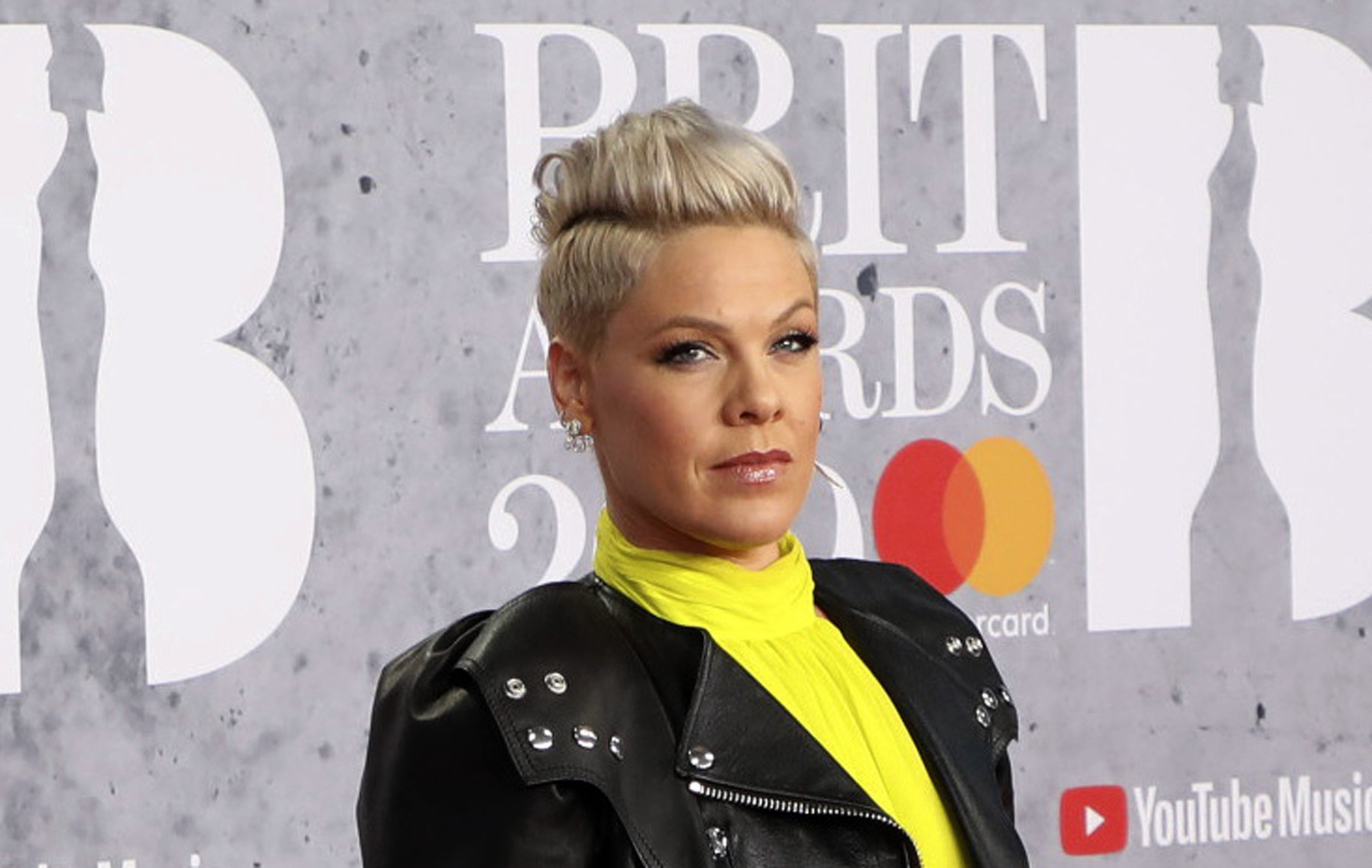
In this Feb. 20, 2019 file photo, singer Pink poses for photographers at the Brit Awards in London. (Photo by Vianney Le Caer/Invision/AP, File)Vianney Le Caer
The Israeli American Council also launched a petition, demanding that Macklemore be removed from the tour.
Macklemore performs at Austin City Limits Live at the Moody Theater during the South by Southwest Music Festival on March 17, 2023, in Austin, Texas. (Photo by Jack Plunkett/Invision/AP, File)Jack Plunkett
Despite one “painful disagreement, Macklemore contends that he will remain friends with Sheeran and understands his position.“Taking a side can cost you. Money, brand deals, sponsorships, festivals, private shows, relationships and access. I’ve lost all of those things,” Macklemore wrote in his social media post.
The North American leg of the “Loop Tour” wraps up at Raymond James Stadium on Nov. 7. A South American leg of the tour will follow in November and December.
An earlier version of this article misstated the day of Ed Sheeran’s concert. It is on Saturday, Sept. 19.
Musicians and management of the Philadelphia Orchestra have struck a tentative agreement on a new three-year labor deal. The pact, whose terms were finalized in the past few days after more than six months of talks, would, if ratified, put the base minimum salary of orchestra members at $200,008 annually by the end of the contract.
Players were presented with the deal Monday and, after a mandatory 48-hour period to mull it, are slated to hold a ratification vote starting Wednesday.
The old contract expired Monday at 12:01 a.m., but no interruption of performances is expected. Opening night of the 2026-27 season is Sept. 24 — a benefit concert for the musicians’ retirement fund featuring Joe Hisaishi’s Orbis and Beethoven’s Symphony No. 9.
The musicians’ negotiating committee recommended the contract — which keeps the Philadelphia Orchestra’s players among a group of the best paid in the U.S. — to the full membership.
“It’s a step in the right direction,” Ellen Trainer, president of local 77-274 of the American Federation of Musicians, said of the tentative deal. “I think the association [management] understood our narrative and worked with us to achieve something we can all be proud of.”
“This is a deal that commits to the artistry of the orchestra,” said Philadelphia Orchestra and Ensemble Arts president and CEO Ryan Fleur. “We’re trying to assure short- and long-term economic stability. It does make an investment in our artists and it is a competitive deal that will keep them among their highest-paid peers.”
The new contract follows one whose negotiations in 2023 were publicly acrimonious and left some orchestra board members feeling bruised. Players authorized a strike, though a strike never happened, and they filed unfair labor practice complaints with the National Labor Relations Board.
Talks this time did not bubble over in public, though musicians did make labor-solidarity statements over the summer such as wearing union T-shirts to rehearsals.
The new contract calls for an increase in base salary from the current $176,280 to $200,008 over the contract’s three-year span. Many players earn more, and some, like principals, make much more.
The contract does not call for changes in healthcare coverage. It provides work-rule changes, such as opening up more rehearsals to students, and spells out protocols for hearing loss protections during performances using amplified sound. The third year of the contract grants supplemental payments to substitute and extra musicians for their retirement accounts.
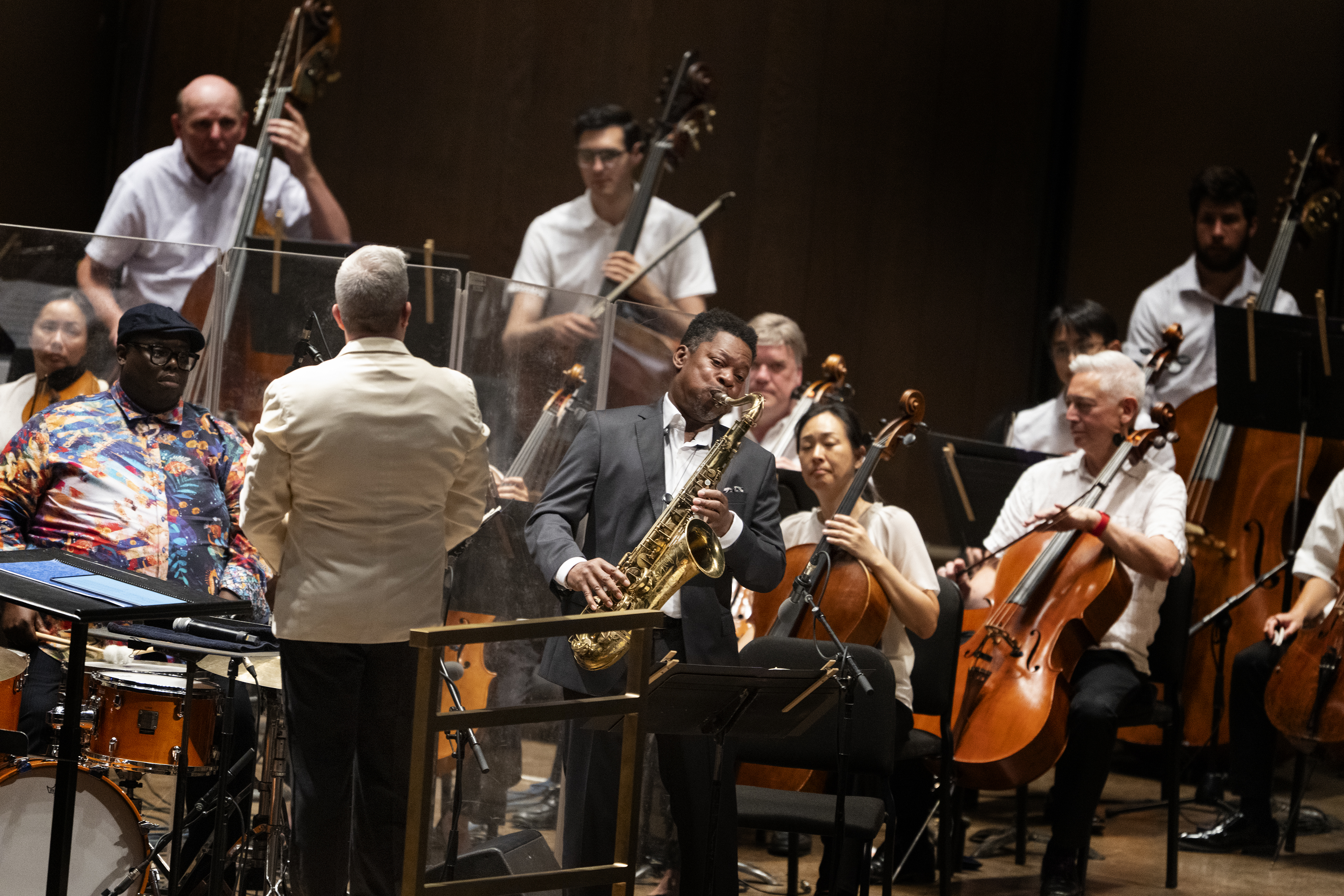
Ravi Coltrane and the Philadelphia Orchestra, conducted by Edwin Outwater, during a concert celebrating the 100th anniversary of John Coltrane’s birth at the Highmark Mann Center this past July.Jose F. Moreno / Staff Photographer
The new contract increases the size of the “complement” — that is, the number of full-time members — from the current 103 to 104 by the third year.
The deal also enshrines for the first time a limit on the number of live-to-screen movie presentations that can be programmed to two per subscription season, with no more than three performances per movie. The contract does not restrict the number of film concerts in summer.
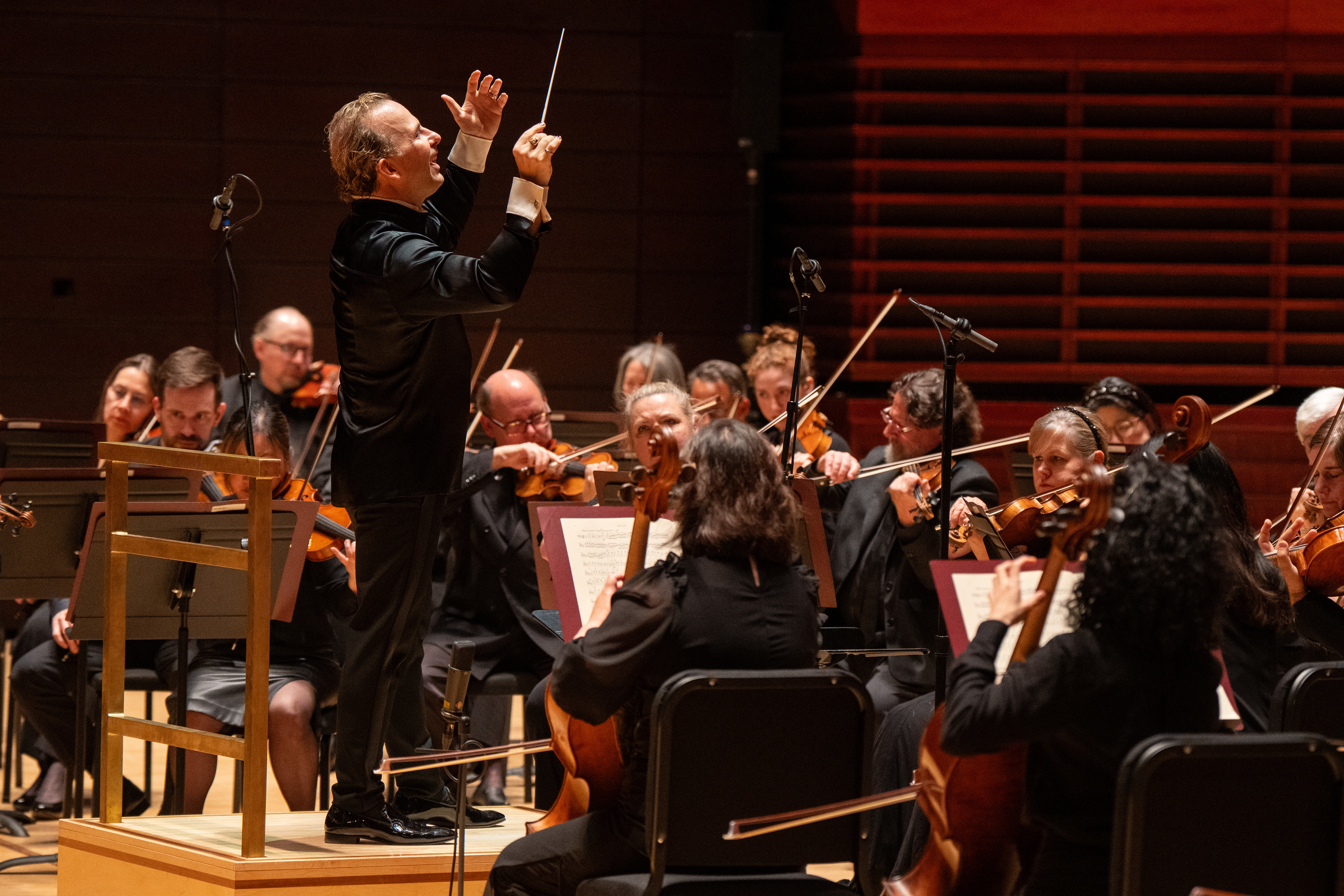
Fleur said it’s not the film music itself that concerns the orchestra’s musicians. But film scores are typically recorded in multiple sessions, and when an orchestra performs the entire score all at once, “it’s a very intense process and requires skills that are not consistent with the skills when responding to [music and artistic director] Yannick [Nézet-Séguin] in a Mahler symphony.”
The new contract also provides for a process at the end of the season to review “the quality of all programs featuring a nonsymphonic work, including, but not limited to, programs featuring pops music,” to discuss the income generated as well as the “impact of the programming on the artistic health of the Philadelphia Orchestra.”
Musician dissatisfaction has been around certain concerts at which “the orchestra is playing with stand-lights and they’re not really a partner on the stage but more in the background,” said Trainer. “They want to be mutually featured.”
A number of other major U.S. orchestras have been in negotiations recently. This month, the National Symphony Orchestra settled a new contract, as did the Boston Symphony Orchestra last month. Players of the Cleveland Orchestra recently voted to authorize a strike. The San Francisco Opera canceled opening night of its 104th season on Sept. 12 after musicians of the orchestra went on strike.
Philadelphia Orchestra has also had its share of strikes, though the most serious work stoppage in past years was three decades ago — a 64-day strike in 1996.
Fleur said that recent talks featured a “collaborative process,” and while there were times when each side got frustrated, “that’s what happens when there’s an open dialogue, and we worked through it.”
Orchestra negotiating committee chairperson and violinist Dara Morales said that this time in talks she felt that “the musicians’ voices and our collective knowledge of the orchestra and our industry were taken seriously.”
On Sunday, Nobel Peace Prize-winning activist Malala Yousafzai was spotted at Lincoln Financial Field with her husband, Asser Malik, for the Eagles’ season opener against the Washington Commanders.
According to a team spokesperson, the Eagles leadership invited the education activist and her husband to attend the game.
Malala Yousafzai visiting an Ethiopian classroom as part of the Higher Education Readiness (HER) programMalin Fezehai
Fans took to social media to post images of Yousafzai in the stands, donning a custom Eagles jersey with her last name stitched on the back.
She quote-tweeted an X post of her pictured on the jumbotron with the caption, “GO BIRDS 🦅.” .
On Monday, she made an Instagram post of her wearing her a custom Birds jersey and matching hat, and enjoying the home opener with Malik from their seats near the 50-yard line.
Last October, Yousafzai visited Philadelphia on the book tour for her memoir, Finding My Way, where she was in conversation with Kylie Kelce.
“I’m really excited to be in Philadelphia,” the cricket fan had said to The Inquirer, “and open to going to an Eagles game. I don’t think I’ve been to any of the games.”
At the book event, encouraged by Kelce, Yousafzai joined the live audience for an Eagles chant. She later posted a picture of herself hugging Kelce on Instagram, with her husband and former Eagle Jason Kelce smiling in the corner of the photo.
Last December, Yousafzai posted a picture of herself wearing an Eagles jersey during her travels with Malik, who is a former executive with the Multan Sultans, a Pakistani professional cricket team. The team’s primary color, coincidentally enough, is also green.
Judging by the online reaction, Yousafzai, the youngest person to receive a Nobel Peace Prize,was welcomed into the Eagles fold.
“You deserve a 2nd Nobel Prize for bringing a peaceful approach to Eagles fandom!,” one X user commented.
No Philadelphia rock radio station has a richer, more colorful history than WMMR-FM (93.3). And none has showcased more on-air personalities who went on to become Philly institutions.
The station’s beginnings as a progressive rock station date back to 1968 with Dave Herman’s free-form show The Marconi Experiment. In the 1970s, DJs like Ed Sciaky, Michael Tearson, and David Dye helped turned Philly into a stronghold for artists like Bruce Springsteen, Billy Joel, and Yes.
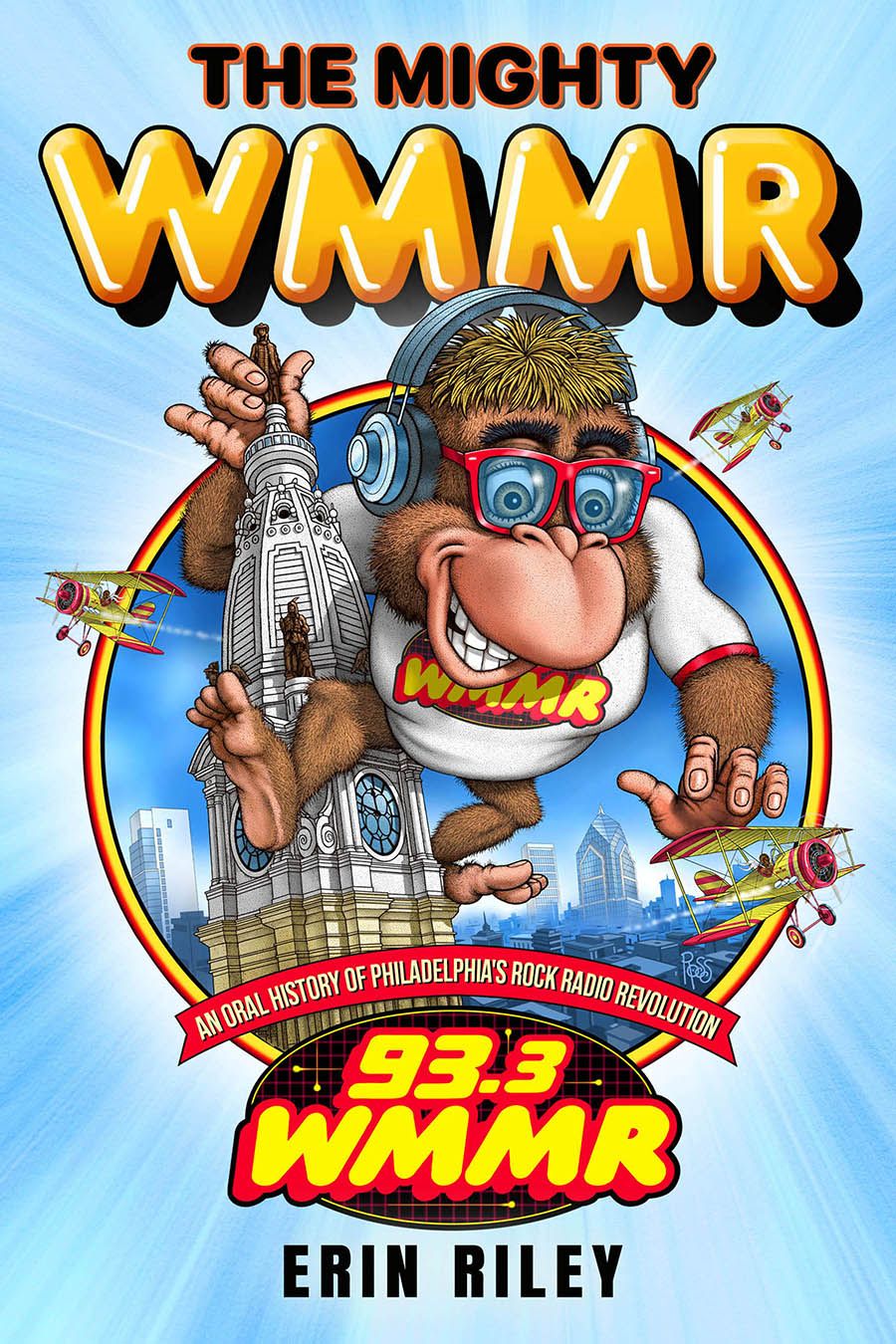
That whole story is told by Erin Riley in The Mighty WMMR: An Oral History of Philadelphia’s Rock Radio Revolution, a new book published by Temple University Press.
The cover image to Erin Riley’s oral history book “The Mighty WMMR: An Oral History of Philadelphia’s Rock Radio Revolution,” published by Temple University Press. Riley will be in conversation with former WMMR deejay John DeBella at the Parkway Central Library on Tuesday, Sept. 15.Bruce Gore / Scott Ross / Temple University
Riley served as ‘MMR’s music director from 1983 to 1991 and is the author of the memoir A Dark Force: 20 Years with a Covert Narcissist. She gives voice to 60 interview subjects talking about the station that branded itself “the home of rock and roll.”
On Tuesday evening at the Parkway Central Library, Riley will be joined by DeBella, discussing the book and the history of the station.
The book includes DJs and programmers with names known well by longtime Philly radio listeners, such as Cyndy Drue, Lynn Kratz, “Bubba” John Stevens, as well as Mark Goodman, who became one of MTVs original VJs after leaving the station.
Also reminiscing about the station’s glory days are DJs such as former Daily News and Inquirer music writer and WMMR DJ Jonathan Takiff, WMMR and later WYSP-FM (94.1) morning host Anita Gevinson, who, Riley says, came up with the winning idea to tell the station’s story as an anecdote-filled oral history.
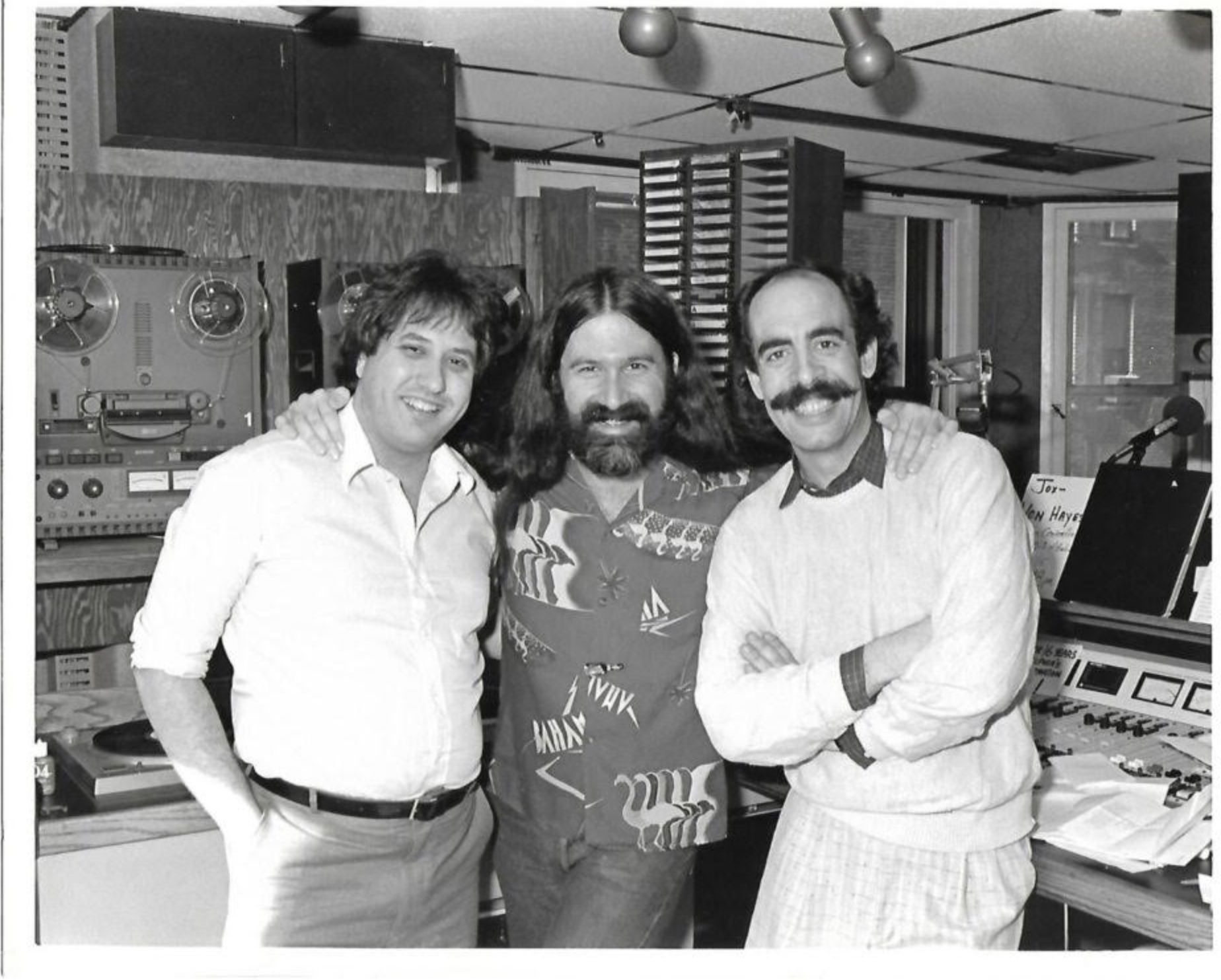
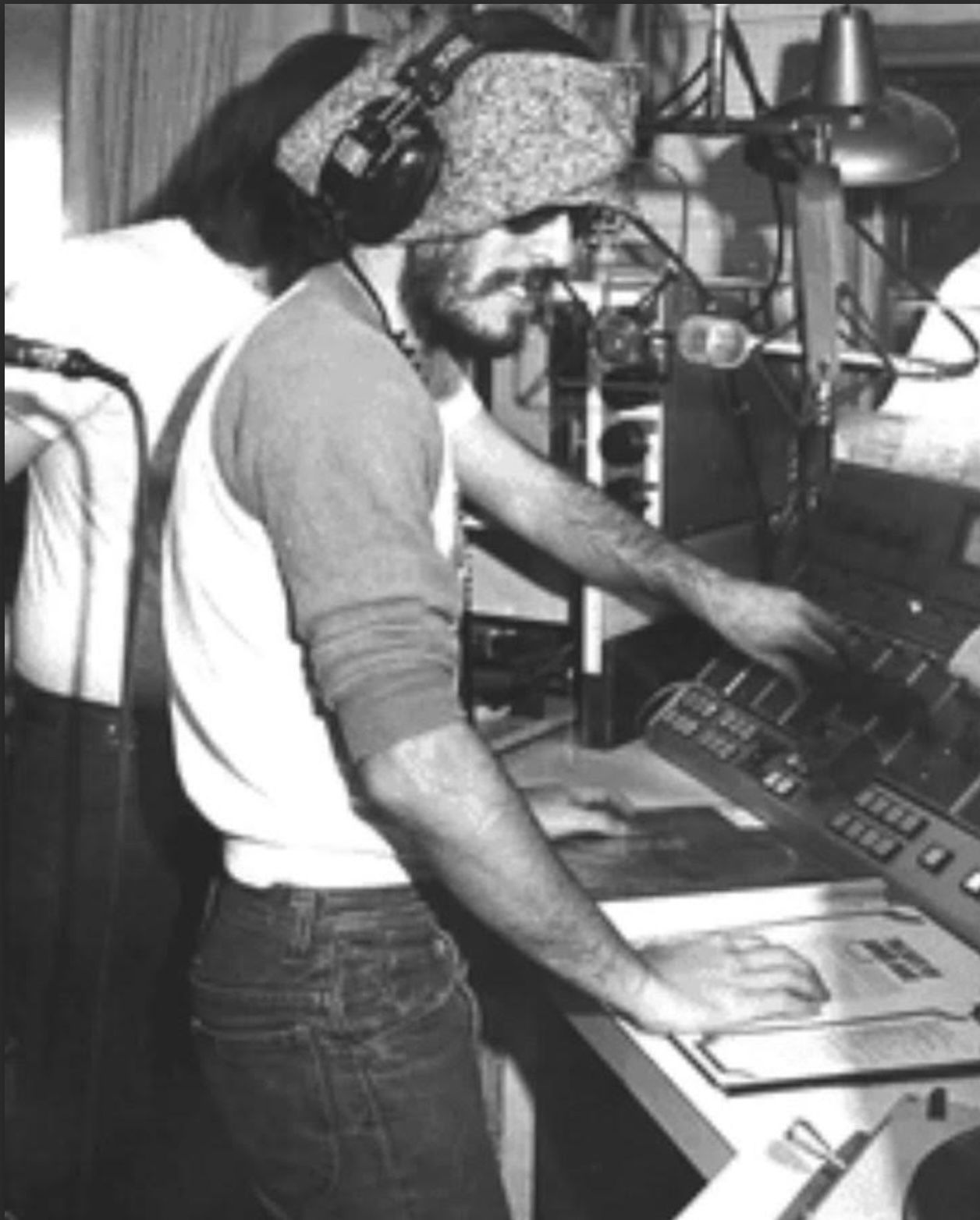
Joe Bonadonna, Pierre Robert, and John DeBella in the Rittenhouse Square studio of WMMR-FM (93.3) in the 1980s. Erin Riley, the former WMMR music director who is the author of “The Mighty WMMR: An Oral History of Philadelphia’s Rock Radio Revolution,” will be in conversation with DeBella at the Parkway Central Library on Tuesday, Sept. 15.Courtesy of WMMR
In the book, Riley writes of her first day of work at the station’s then Rittenhouse Square offices in 1983, when she met Tearson for the first time and he proceeded to immediately roll a joint during their introductory conversation.
“I figured if he’s doing it, no one’s having a problem with this,” she writes.
The Mighty WMMR is a nostalgia fest. Interviewees include artists like Kenn Kweder, Richard Bush of the A’s, and John Eddie telling tales of long gone hot spots like Emerald City, Grendel’s Lair, and Stars, the venue run by Stephen Starr, now a restaurateur but then a club owner and concert promoter.
Eric Bazilian and Rob Hyman of the Hooters tell of how Tearson gave the band its first big break by playing its cover of a Skatalites song on his show Gorilla Theatre.
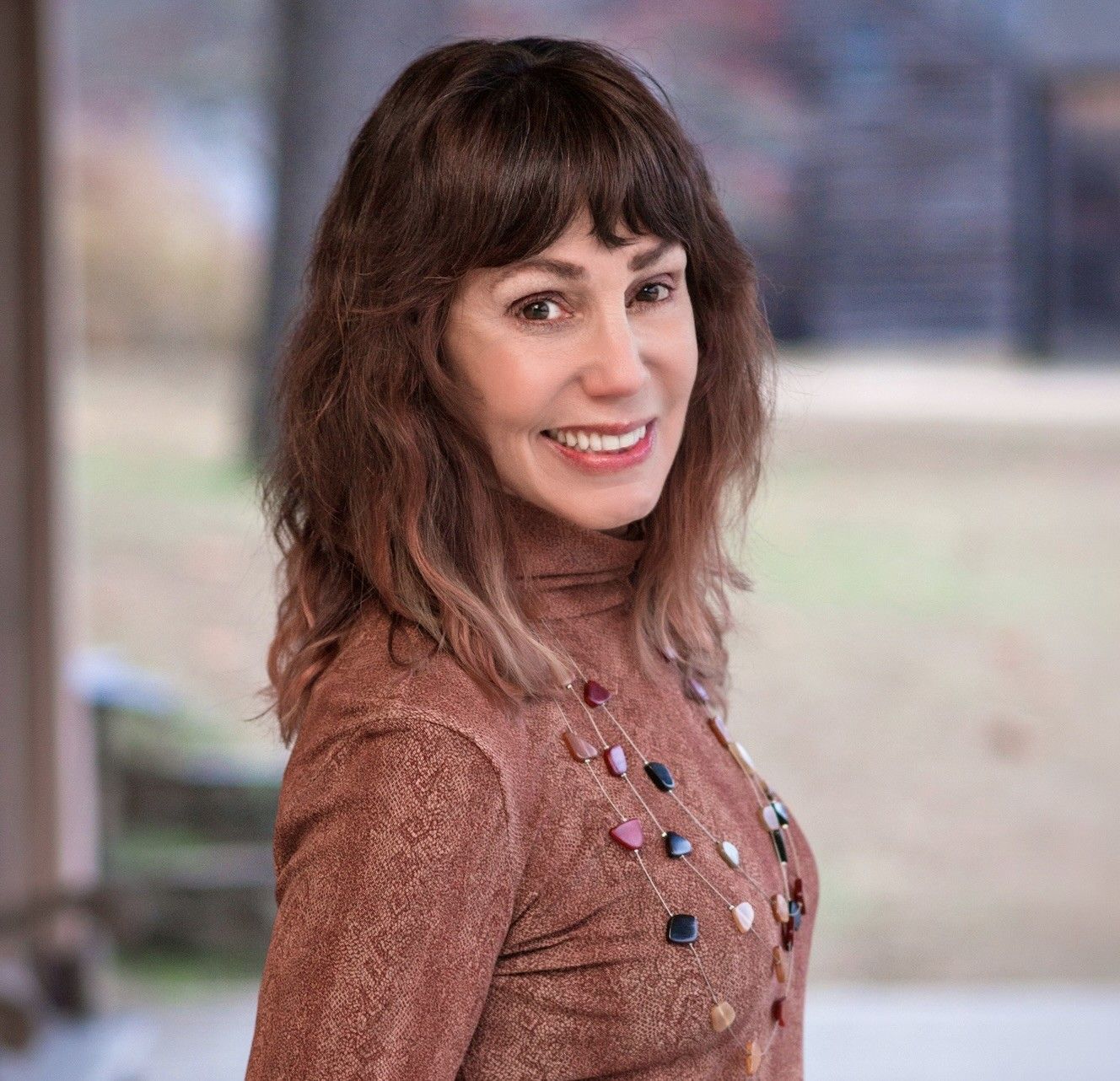
Erin Riley, author of the oral history book “The Mighty WMMR: An Oral History of Philadelphia’s Rock Radio Revolution,” published by Temple University Press. Riley will be in conversation with former WMMR deejay John DeBella at the Parkway Central Library on Tuesday, Sept. 15.Annmarie Young
Judy Sciaky, the widow of Ed Sciaky, who died in 2004, tells of her late husband’s close relationship with Springsteen, who frequently slept on the sofa at the couple’s Lombard Street house during his early 1970s salad days.
WMMR deejay Steve Martorano is one of several who warmly remembers Sciaky, who, he says, “never missed a buffet in his life.”
Springsteen once referred to her husband as “Hungry Ed” in an onstage monologue, Judy Sciaky remembers. The Boss also had a jacket made for the DJ with that nickname stitched on. She adds that Manfred Mann’s hit version of “Blinded By the Light” resulted from Sciaky introducing the band to Springsteen’s song.
Sciaky’s support for artists like Springsteen, Joel, and Warren Zevon is legendary.
“Ed was there first. He believed first, committed to them, and did what he did,” program director Charlie Kendall recalls in the book. But did Sciaky play Greetings From Asbury Park, N.J., Springsteen’s debut album, first?
No, Riley clarifies. That was Tearson, followed by Takiff the same night.
Dye, who later was the founding host of World Cafe on WXPN-FM (88.5), where his Dave’s World airs on Sunday mornings, concurs with the timeline, though Springsteen himself misremembers it in his Born to Run memoir and name-checks Dye in a chapter titled “A DJ saved my life.”
Bruce Springsteen guest DJing in WMMR’s Rittenhouse Square studios in the 1970s. Erin Riley, the former WMMR music director who is the author of “The Mighty WMMR: An Oral History of Philadelphia’s Rock Radio Revolution,” will be in conversation with John DeBella at the Parkway Central Library on Tuesday, Sept. 15.Courtesy of WMMR
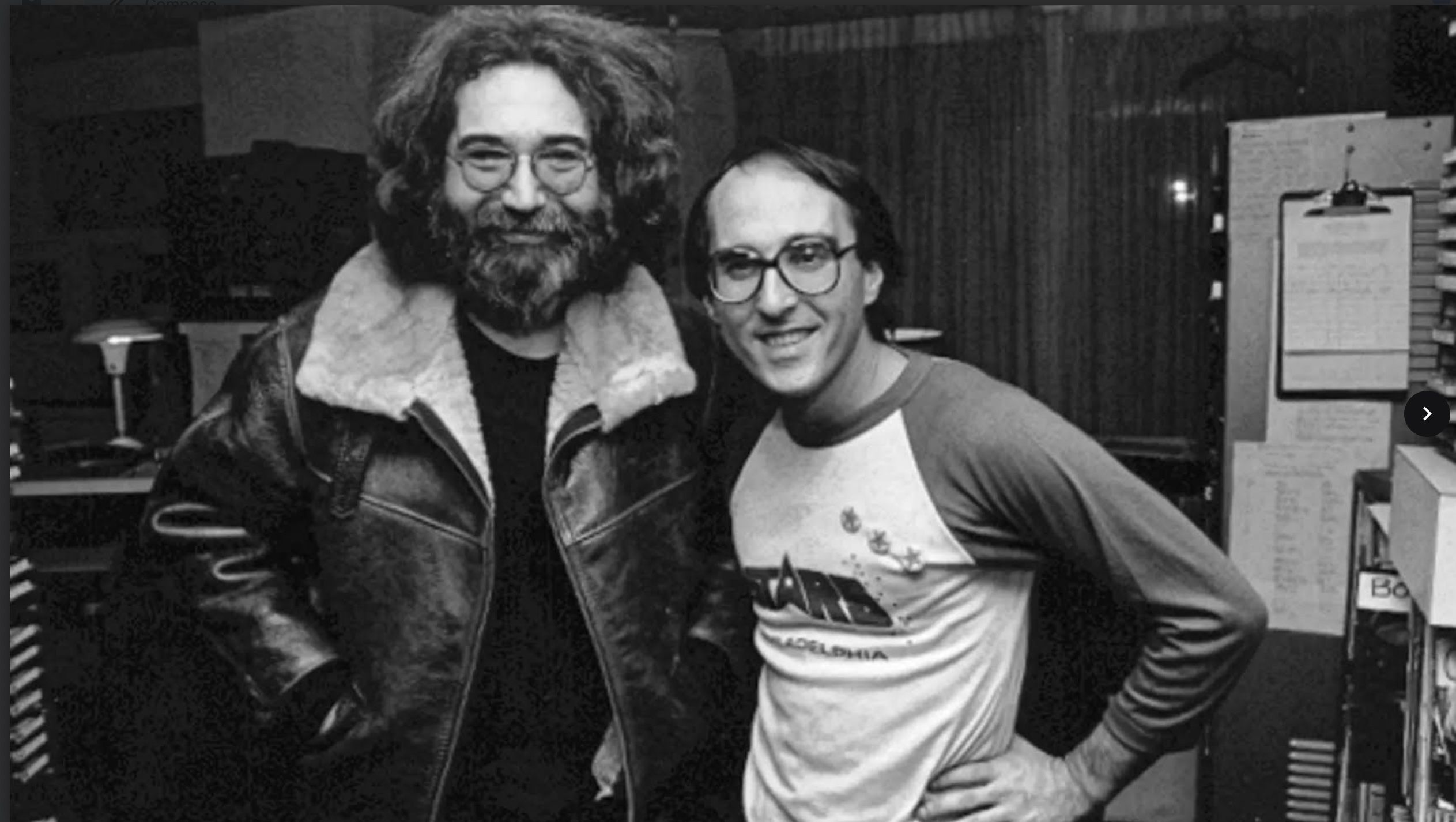
Gene Shay, the late Folk Show host who made his home at ‘MMR in the early 1970s, is paid tribute to as well. As is Robert, who came to ‘MMR in 1982 and briefly worked as an assistant music director.
Joe Bonadonna, who hired him, recalls that as an assistant MD, Robert “was terrible.”
“He was so disorganized. … when he started to do part time-work on the air, it just became a natural progression for him. He was not an analytical brain, he was more of an artsy character.”
Robert, who died in October 2025, will be celebrated by David Uosikkinen’s In the Pocket during the Philly all-star band’s In the Pocket at Ardmore Music Hall on Sept. 26.
Erin Riley in conversation with John DeBella plus special guests at 7 p.m. Tuesday, Sept. 15 at Parkway Central Library, 1901 Vine St. Free. Books will be available for purchase. freelibrary.org.
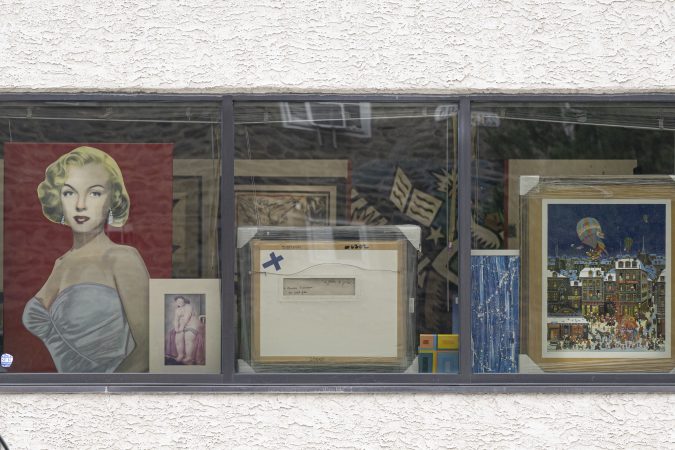
A Main Line art dealer, whose gallery was raided by federal authorities this summer, is named in a new lawsuit, for allegedly participating in an international “pipeline” to sell fraudulent artwork.
Nathan “Nicky” Isen is among half a dozen people being sued by a Florida family who says they were scammed into buying fake Andy Warhol paintings and prints by a network of “suppliers, fake authenticators and distributors.” According to the lawsuit, filed last week in Miami, the enterprise stretched from Isen’s gallery, Dane Fine Art in Haverford Township, to Florida and Peru.
Isen’s lawyer, Patrick Egan, said in a statement Sunday that “the claims in this lawsuit are just that, claims.”
“My client categorically denies any wrongdoing and any connection with any alleged conspiracy,” the statement said. “We look forward to the opportunity to challenge these claims in court.”
The lawsuit, filed by Richard and Judy Perlman, alleges that Isen had developed a “toxic” reputation among collectors and appraisers after he pleaded guilty to money laundering in 2015. He rebranded his then-gallery, I. Brewster & Co., to Dane Fine Art. (A website for I. Brewster & Co. now redirects users to Dane Fine Art.)
But, despite the rebrand, the lawsuit contends Isen’s “modus operandi remained unchanged.” He was “selling pages torn from art books as authentic prints.”
According to the 42-page lawsuit, Isen then “formed a conspiracy” with Leslie Roberts, an art dealer in an affluent Miami neighborhood.
“This conspiracy provided what each needed: Isen got a gallery front in Florida with no connection to his toxic name, while Roberts got forged inventory,” the lawsuit filed by the Perlman family alleges.
The Perlmans also sued Roberts in 2024. That case settled in January for an undisclosed amount, according to the Wall Street Journal. Roberts also pleaded guilty to art-related wire fraud and is scheduled to be sentenced later this month, the news outlet reported.
Between 2023 and 2024, Isen’s gallery repeatedly invoiced Roberts’ gallery for, what the lawsuit called, “forged” Warhol works, which the Perlmans then purchased. Roberts told the Wall Street Journal he believed the Warhols were genuine at the time.
In July, the FBI conducted “court-authorized law enforcement activity” at Dane Fine Art, in the 2300 block of Haverford Road.
It’s unclear why the FBI searched the business. Isen’s lawyer did not respond to questions about the FBI raid and declined to comment on the matter to the Wall Street Journal.
After a long offseason, the Philadelphia Eagles are finally back in action Sunday, taking on the Washington Commanders to kick off a season filled with “Super Bowl or bust”-level expectations.
“There’s no way this team should lose more than three games, four at the most,” writes Inquirer columnist Marcus Hayes. “They’ve got a Pro Bowl quarterback, a superstar running back, a franchise receiver, and a genius running a defense with more talent than any defense in team history that didn’t include Reggie White.”
Calling the Birds’ season opener on Fox is a familiar figure — former Super Bowl villain turned top broadcaster Tom Brady, who is entering his third season as the network’s top NFL analyst.
To Brady’s credit, he made steady improvement in the booth last year, developing into one of the best analysts currently calling games. The future Hall of Famer worked six Birds games last season and is in line to call at least four this year, including the Eagles’ Thanksgiving Day matchup against the Dallas Cowboys.
Despite his other commitments outside the booth, which include being a minority owner of the Las Vegas Raiders, Brady expects to fulfill the 10-year,$375 million deal he signed with Fox in 2024.
“I have a lot to prove to myself, to my teammates. I have a lot to prove to the executives,” Brady told the Sports Business Journal. “I want to go earn it and I don’t want anything given to me. I hope they’ll have me through the end of this contract.”
Here’s everything you need to know to watch or stream the Eagles’ season opener against the Commanders.
How to watch and stream Eagles vs. Commanders
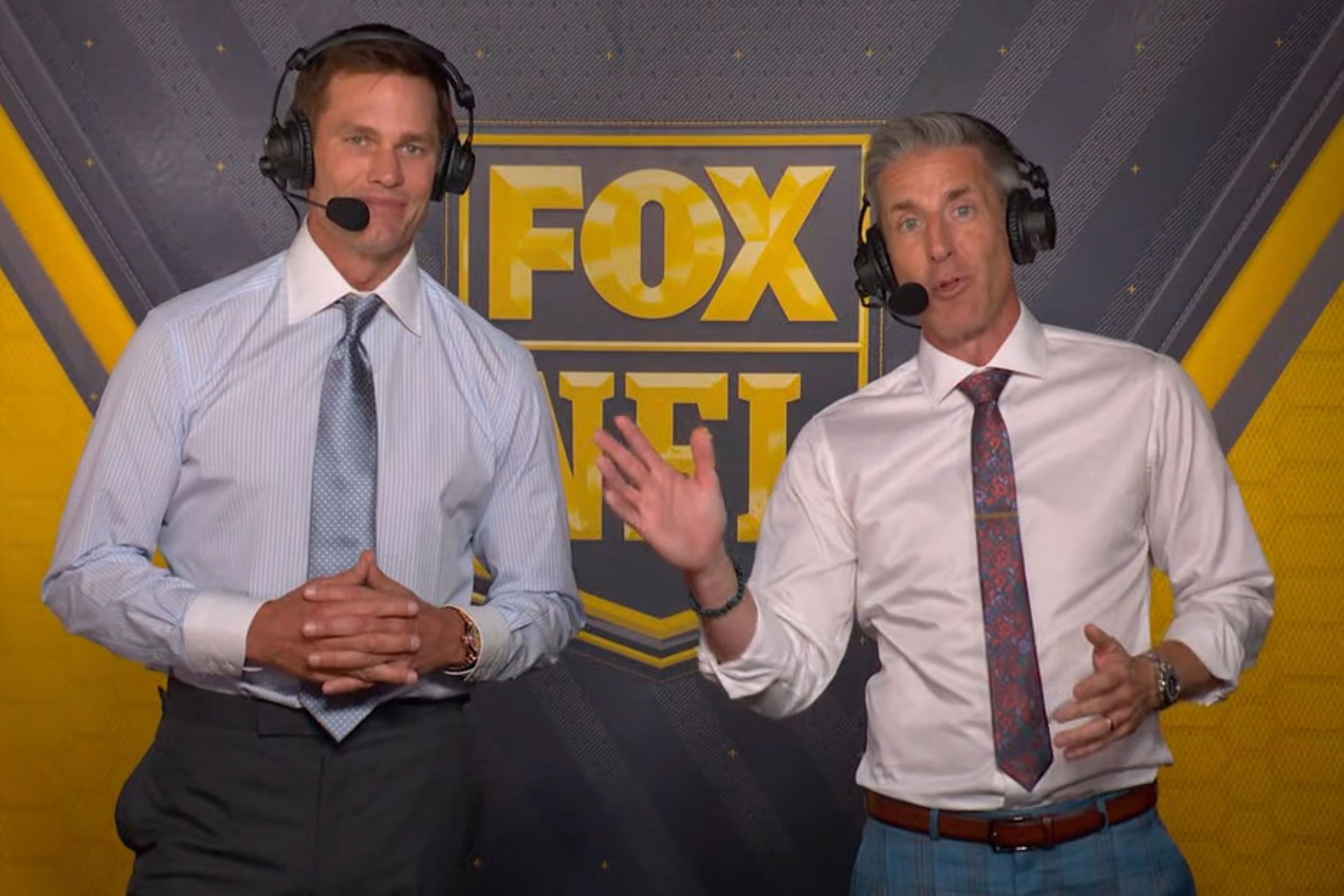
Tom Brady (left) and Kevin Burkhardt will call Eagles-Commanders on Fox Sunday.Fox Sports
Sunday’s Week 1 game between the Eagles and Commanders is scheduled to start at 4:25 p.m. Philadelphia time on Fox.
Erin Andrews and Tom Rinaldi will report from the sidelines at Lincoln Financial Field.
The game will stream on Fox One, the network’s subscription streaming service. It’s also available on any so-called skinny bundle that carries Fox, including fuboTV, YouTube TV, Hulu + Live TV, Sling TV, and DirecTV Stream. Most offer a free trial.
If you live in Philadelphia or any other TV market where the game is airing, you can also stream the game on NFL+, the league’s subscription streaming service, which runs $6.99 a month.
If you’re looking to stream the game for free and you live in or around Philadelphia, your best option is to use a digital antenna, since the game will air on broadcast television on Fox 29.
Merrill Reese and Mike Quick back together on radio
Video: How Merrill Reese, the voice of the Eagles, prepares to go on air
Another familiar voice returning this year is Merrill Reese, who is back for his 50th season calling Eagles games on 94.1 WIP.
Reese began his long career as the team’s pre- and postgame radio host before being promoted to color analyst in 1975. He became the voice of the Eagles suddenly in December 1977 after his partner Charlie Swift died by suicide, and has remained in the booth ever since.
While Reese, 84, is by far the longest-tenured announcer in the league, he has no intention of this being his last season in the booth.
“I always kiddingly say they’re going to have to remove me with a crane,” Reese told The Inquirer’s Matt Breen in a lengthy interview. “My greatest pleasure is to sit there and broadcast an Eagles game. There’s nothing I love more. I even enjoy doing the preseason games. … I have no intention of stopping.”
Merrill Reese (left) and Mike Quick promoting their own beer in 2022. ELIZABETH ROBERTSON / Staff Photographer
Back alongside Reese is former Eagles wide receiver Mike Quick, who joined the booth in 1998. Reese has had a number of broadcast partners over the years — Jim Barniak, Bill Bergey, Stan Walters — but none had the staying power of Quick.
“I believe we’ve become like members of the family,” Reese said. “We’re like their old friends who’ve been with them for many, many years. … They can identify with us. They feel comfortable with us.”
Ron Jaworski not returning to NBC Sports Philadelphia
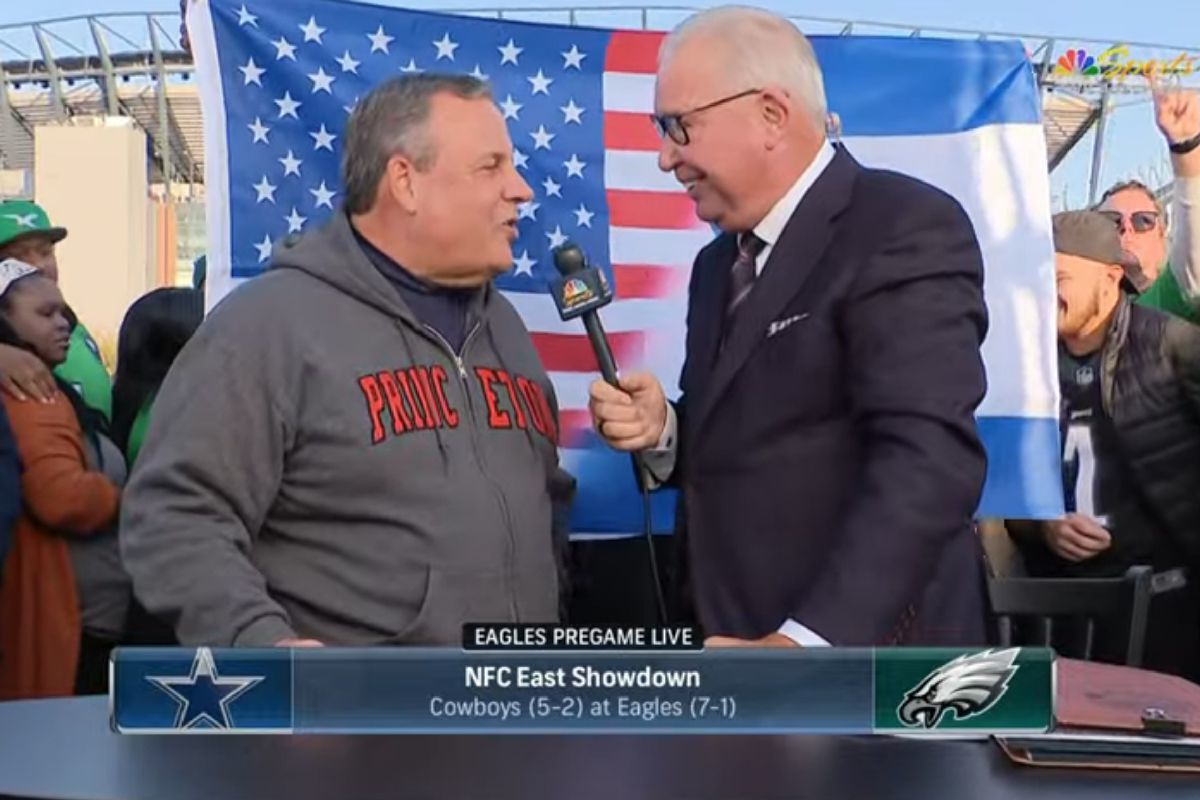
Ron Jaworski, seen here speaking with Former New Jersey Gov. Chris Christie before an Eagles game. NBC Sports Philadelphia
Ron Jaworski, the former Eagles quarterback known to most fans simply as “Jaws,” won’t be part of NBC Sports Philadelphia’s pre- and postgame coverage this season.
The former Eagles quarterback and longtime NFL analyst made the decision to pull back on his broadcasting duties last week after four years with the network.
Michael Barkann, who has hosted Eagles pre- and postgame since the Comcast SportsNet days, is back for his 30th NFL season. He’ll be joined by Reuben Frank and two former Birds players — offensive lineman Barrett Brooks and wide receiver Jason Avant.
Charli XCX spent over a decade in the electro pop trenches before suddenly blowing up big time in the Brat summer of 2024.
So it’s not a surprise that the British singer, who said “all of my albums work in opposites” and “repel against each other,” would react to long-time-in-coming viral success with a stylistic about-face and pause for self-reflection.
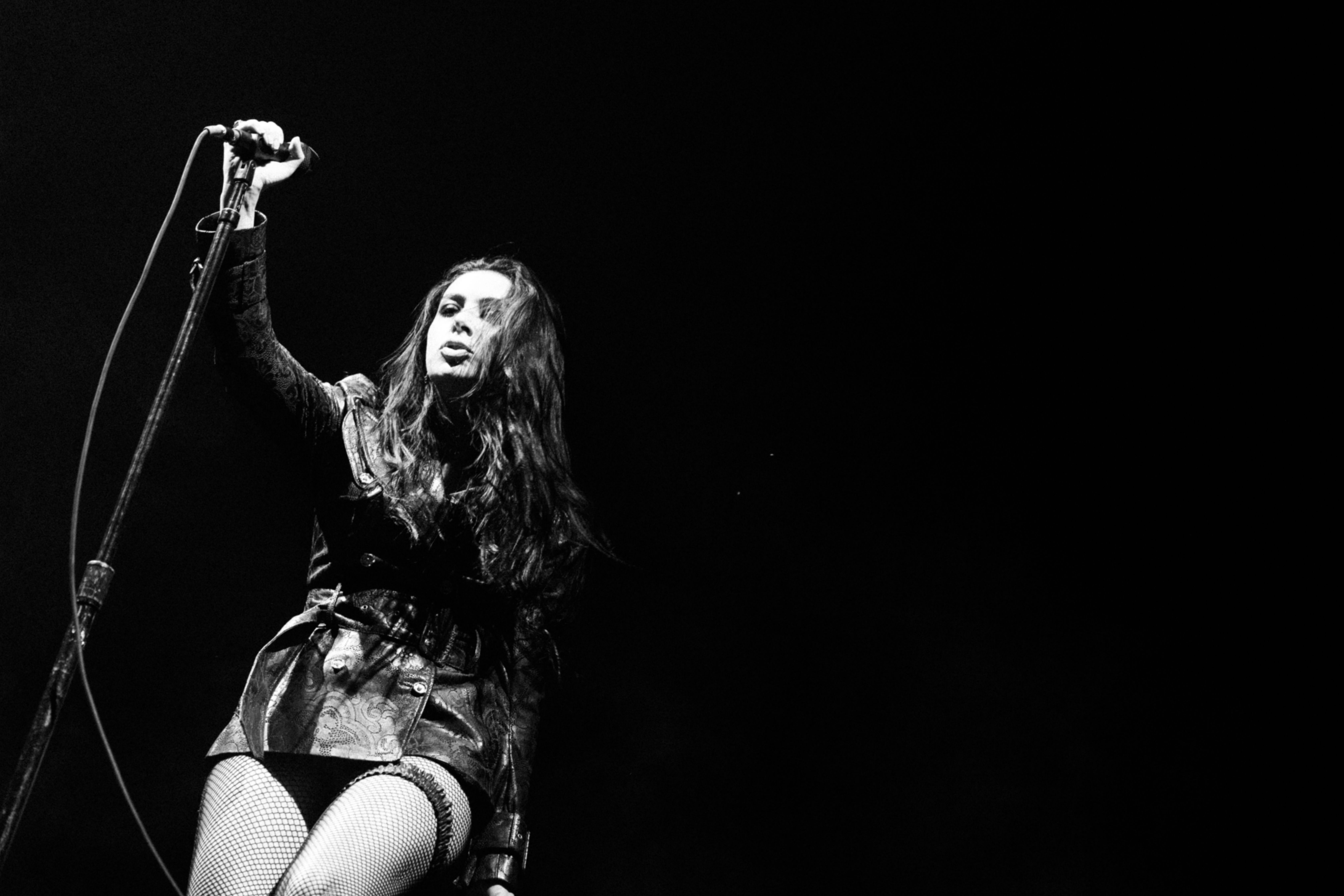
The result is her new album Music, Fashion, Film, which gives its name to the tour that launched at Xfinity Mobile Arena in South Philadelphia on Friday with a hyperkinetic performance in front of a deliriously excitable opening-night crowd.
On its surface, the Music, Fashion, Film album appears to be a turn away from the Dionysian “Club Classics” culture of its predecessor into something more serious-minded and self-consciously mature.
The image on the album cover — and on the $50 T-shirts selling on the concourse — is not of the trendsetting pop star, but a group shot of three titans in their fields — Velvet Underground cofounder John Cale, fashion designer Marc Jacobs, and movie director Martin Scorsese.
Instead of the neon green that lit up Brat summer, the cover shot — and all Music, Fashion, Film imagery — is in black and white.
The album’s lead track, “Rock Music,” which she opened with Friday, Charli, 34, appears to be putting club culture in her rear view.
“Me and my friends,” she sings. “Yeah, we’re on to the next. I think the dance floor is dead / So now we’re making … Rock Music.”
And truth be told, she is — some of the time.
For most of the first and last thirds of the 100-minute show — which included 29 songs, with the briefest of breaks for exhortations like “Philly, this is the Music, Fashion, Film tour, are you [expletive] with me!” — she was accompanied by a three-piece band that included Morrisville, Pa., native Chris Greatti on guitar.
Charli XCX at the Leeds Festival in England in August. The British pop star opened her “Music, Fashion, Film” tour at Xfinity Mobile Arena in South Philadelphia on Friday night.Courtesy of the Artist
Music, Fashion, Film songs like “Wink, Wink,” “Persona,” and “2007” kicked into gear with overdriven guitars and hyper-pop-processed production that upped the adrenaline level.
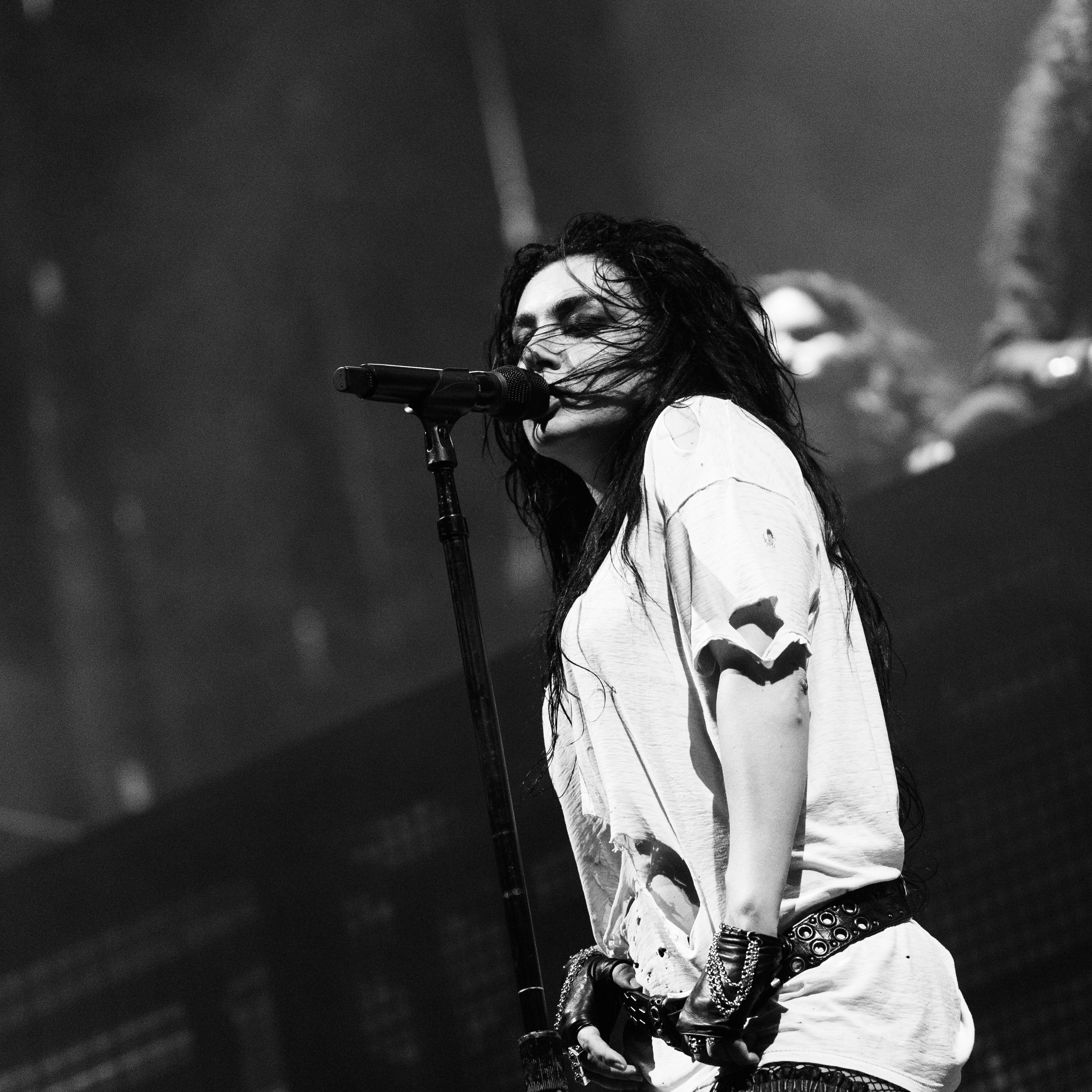
And Charli — whose given name is Aitchison and whose stage name comes from a teenage online screen moniker meaning “Kiss Charli Kiss “ — fully embraced the rock aesthetic, striking poses that made her look like an Italian neorealist film star in the black-and-white image on the video screens.
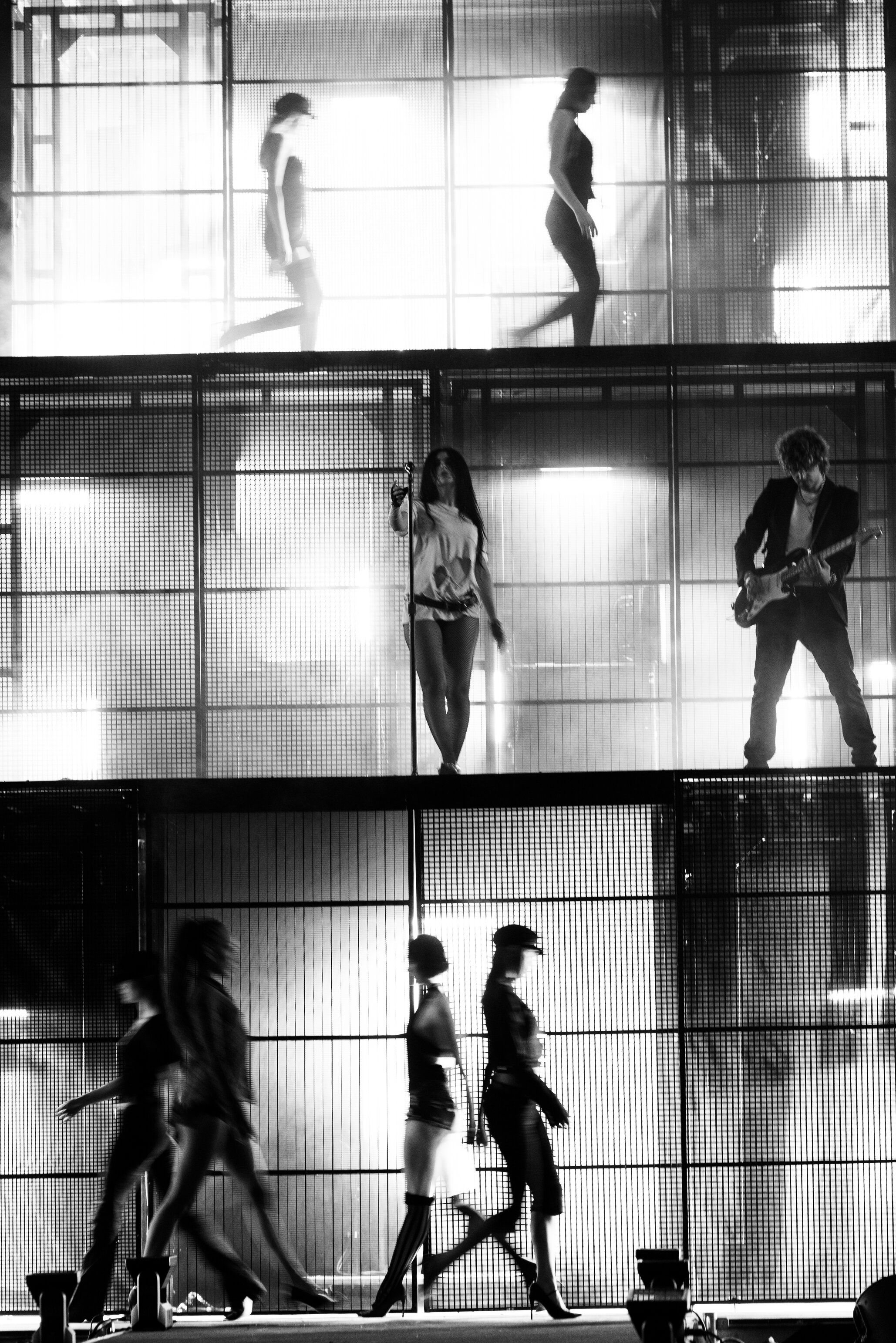
But for all of their brash rock and roll presentation on a three-tiered stage topped by a facsimile of a smoke-emitting giant speaker — and no shortage of pyro going off throughout the show — the Music, Fashion, Film songs are actually introspective and soul-searching.
Not in a navel-gazing, overly earnest way though. Charli XCX couldn’t bore you with self-pitying clichés about the perils of pop stardom if she tried.
Instead, she’s droll and sharply observant and self-aware about a lack of fulfillment from fame. Along with Cale, whose recorded voice was heard on Friday from their collaboration on “House,” from the Wuthering Heights soundtrack released this year, Charli is a also a super fan of his Velvets bandmate Lou Reed.
And several Music Fashion, Film songs display a deadpan dark wit that show she has more in common with Reed than an appreciation for black leather.
Most amusing was “Card Declined,” a song about the failure of retail therapy to come through and transform your essential self when you need it most. “Let’s go shopping,” she sang on Friday. “I’ll buy a handbag. I’ll buy some shoes … a personality, a whole backstory … Card declined.”
Equally astute and self aware were “Persona,” “Wink, Wink” — in which she vowed ”I’m not a bad girl anymore, I promise” — and “Camera,” about being addicted to growing up in public, to a dangerous degree.
Charli played 13 songs from Music Fashion, Film, and included a few older cuts, such as “Party 4 U,” from 2020’s How I’m Feeling Now and the title song from her 2014 EP Vroom, Vroom.
And the surprise of the evening was “Stay Away,” pulled from True Romance, the debut album that brought her to Philadelphia for her first-ever U.S. performance at a Making Time party at Voyeur in the Gayborhood in 2012.
In the lead up to Friday’s show, Charli gave fans fashion tips on social media, saying the dress code is “whatever you want but if you want to commit I’d just get an old T-shirt and rip it to shreds and wear that.”
Charli XCX at the Lollapalooza in Chicago in July. The British pop star opened her ‘Music, Fashion, Film’ tour at the Xfinity Mobile Arena in South Philadelphia on Friday night.Courtesy of the Artist
Many women, men, girls and boys took heed, usually pairing the distressed garment with something black leathery, and most leaving Brat gear at home.
The songs from the new album carried the existential theme. Though to be honest, they were delivered with so much energy that the buzz in the room never let up.
But the unadulterated partying — and the shrieks of delight and singing along to every single lyric — really cut loose on the Brat songs that made up the meat in the middle of the show. With the band mostly out of sight, bass-heavy beats thumped as the general admission dance floor pulsated.
Like a boss, Charli prowled the catwalk and writhed on the ground. She was followed around by a coterie of what I counted as 14 associates, who were more like fashion-model voguers than dancers.
It was difficult to tell how many people were onstage at any one time because flashing strobes seemed to go off every millisecond. The group of planning-ahead fans next to me were better prepared than I, having arrived with Charli-esque sunglasses to wear when necessary.
The show got back to existential business at the end. First, with “SS26,” a lovely pop song with a sobering point of view that cast doubt on art’s ability to make a difference.
“Spring, Summer, ’26, when the world is gonna end, no hope for any of it,” she sang. “We’re walking on a runway that goes straight to hell, nothing’s gonna save us, not music, fashion, or film.”
That was followed by the closing, “No One Lasts Forever,” which also closes the album. It’s a song about seizing the day and embracing the here and now, ‘’cause nothing gonna last forever.”
On Friday, Charli put that point across musically as an inviting pop rock song. But then, as on the album, she handed off the mic to the voice of Canadian director David Cronenberg, recorded in conversation with her.
As a trancelike beat throbbed behind him, and Charli and dancers posed motionless on the elevated stage, Cronenberg spoke about how art can live forever, but artists can’t.
When everybody’s time is up — including the pop star being celebrated in that very arena on Friday — Cronenberg’s looped voice repeated 27 times, “They are dead, they are gone, no one lasts forever.”
And what that translates to — he and Charli were arguing — is the artistic license to be inspired and create in the moments that we’re here. That thought was boiled down to three words “Oblivion is Freedom,” which were spelled out on the video screens, and also on a T-shirt sold at the merch table.
While Steve Gerben is known for having cocreated one of the year’s most popular Netflix comedy series, his friends and the internet are attempting to crown him with a more ribbing title: The “King of West Chester Golf.”
The Berwyn-born actor, comedian, and costar of Netflix’s Tires says the nickname is just a joke created by his costar and fellow Pennsylvanian Shane Gillis after Gerben “broke 80″ for the first time, scoring 79 on 18 holes of golf last year. It’s something that fewer than 10% of golfers worldwide reportedly do in their lifetime.
“I thought I would just get my friend to start videotaping in case it happened on the 18th hole. And then I did it,” Gerben, 43, remembers with fondness. “So Shane saw that video and was making fun of it on his podcast, calling me the ‘King of West Chester Golf.’”
Gerben’s character on Tires, Will, an anxious go-getter who sees the best in those around him, is not unlike Gerben in real life. Even when receiving praise for his golf prowess or growing television career, Gerben is more comfortable sharing credit with others and not taking the spotlight. And while he downplays his claim to the West Chester golf throne, Gerben does play golf every week in the Philadelphia region — from West Chester courses to the occasional charity event at Ardmore’s Merion Golf Club.
As his profile has grown with the success of Tires, Gerben continues to live in West Chester, cultivating a life around golfing near home and creating a local television production alongside his best friends.
“I can’t see myself leaving the area. I really love it here and it’s home,” he said. “Also, just given how I feel about golf, suburbs make way more sense — it’s just scratching the right itch for me.”
It also helps that the hit show Gerben cocreated with Mechanicsburg-born Gillis and Philadelphia’s John McKeever is filmed in West Chester off East Gay Street, inside an addition to the real-life tire shop of Gerben’s father.
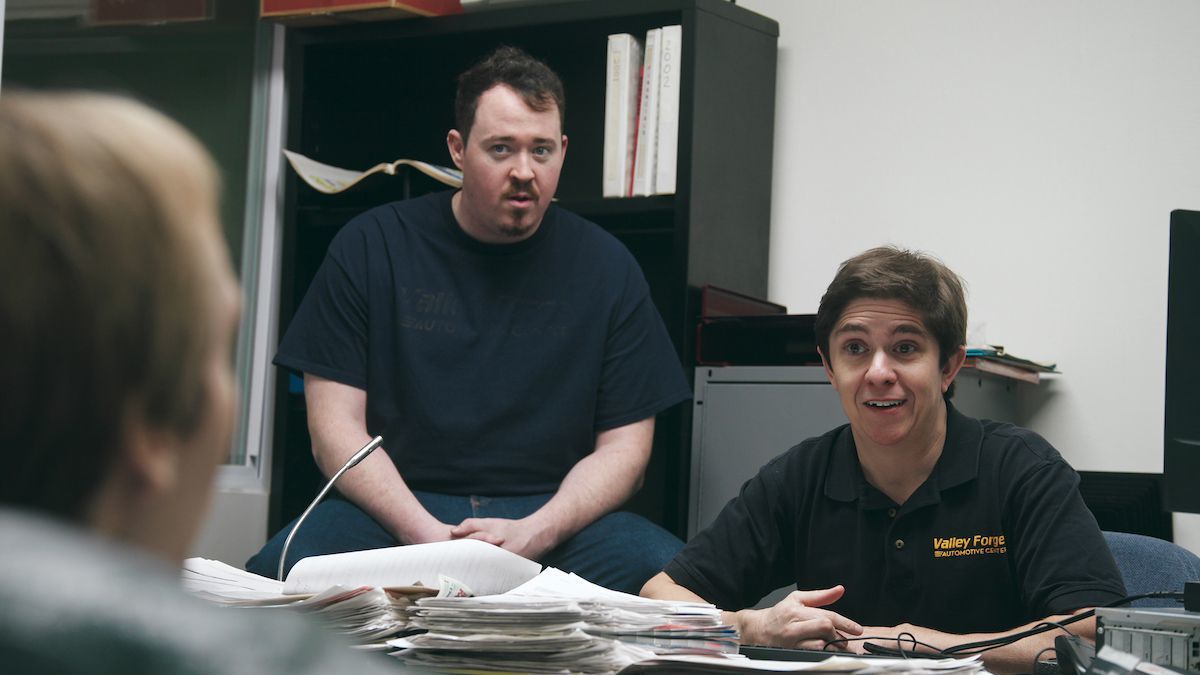
Tires, which had its season three premiere Aug. 13, follows two cousins, Will (Gerben) and Shane (Gillis) as they run the fictional Valley Forge Automotive Center, named after the previous real-life automotive business of Gerben’s father, which was sold in 2011.
“I remember after season one, my dad was on the boardwalk and he saw a Valley Forge Auto shirt in one of the stores, and he was just like, ‘This is insane,’ because it’s this company that he had for 20 years, and then gone, and now we brought it back in a way,” Gerben said.
With Gerben and Gillis on screen, and McKeever as the magic behind the camera, the Tires crew navigates the world of a Pennsylvania small business, rivalries with a national tire chain, and coming to terms with life and romance in your late 30s and 40s.
Tires was recently renewed for a fourth season. That renewal, along with the suburban life he’s created with his girlfriend and cat, has Gerben doubling down on the Philly region. One factor that now rules his life is golf, and how to keep enjoying the sport that eases his mind and boosts his confidence.
“Playing golf is a flow state for me. I get out of a perfect golf swing what I’m sure people that meditate get out of meditation or when people feel a piece of art really speaks to them,” Gerben said.
What started as something to do as a senior at Conestoga High School, joining the Valley Forge Golf Club for $8 after school, has grown into a passion that has seen him playing alongside Eagles players like Jason Kelce and appearing in vlog-style golfing videos with comedian Andrew Santino.
Golf feels like meeting up with an old flame for Gerben, who essentially gave up on the pastime as he attempted to make it in the East Coast stand-up comedy circuit in the 2010s. That’s where he met Gillis and McKeever, doing open mics at the now-closed Raven Lounge and Helium Comedy Club.
While Gillis would continue to rise in stand-up comedy, Gerben said he struggled to find footing. Yet, constants in his life were Gillis and McKeever, who reportedly were known to not take on certain projects unless Gerben could be involved.
But one thing that always sat in Gerben’s back pocket was a script for a show based on his experience working at his father’s Valley Forge tire shop that he initially wrote nearly 15 years before Tires would premiere on Netflix in 2024. Two years later, Tires’ third season debuted in the No. 9 spot on Netflix with 2.4 million views in its opening weekend.
The success doesn’t get to Gerben’s head, as he’s focused on enjoying life in the burbs and golfing as much as possible, he said. With golf swinging back into his life, the sport brings a chance of pace in a busy work schedule and/ allows Gerben, who has had arthritis since he was 2, to stay active.
“I feel so unbelievably healthy because I think it’s about like a five- or six-mile walk each golf session, and you’re not even paying attention to that, given you’re doing this thing that you just absolutely love doing, and is a little bit easier on the joints,” Gerben said.
Gerben also sees golf as a way to meet friends.
“Golf is just a weird addiction that some people have that cuts across generational barriers because you spend so much time with people on the course who have the same passion as you,” he said.
In the meantime, Gerben will continue flirting with the idea of starting his own golfing YouTube career, like “Bryan Bros Golf.” But until Tires is wrapped, Gerben said there would be no official online golf career on the horizon.
Besides, if Gillis finds Gerben’s golf videos, Gerben will never hear the end of it from his best friend, he said.
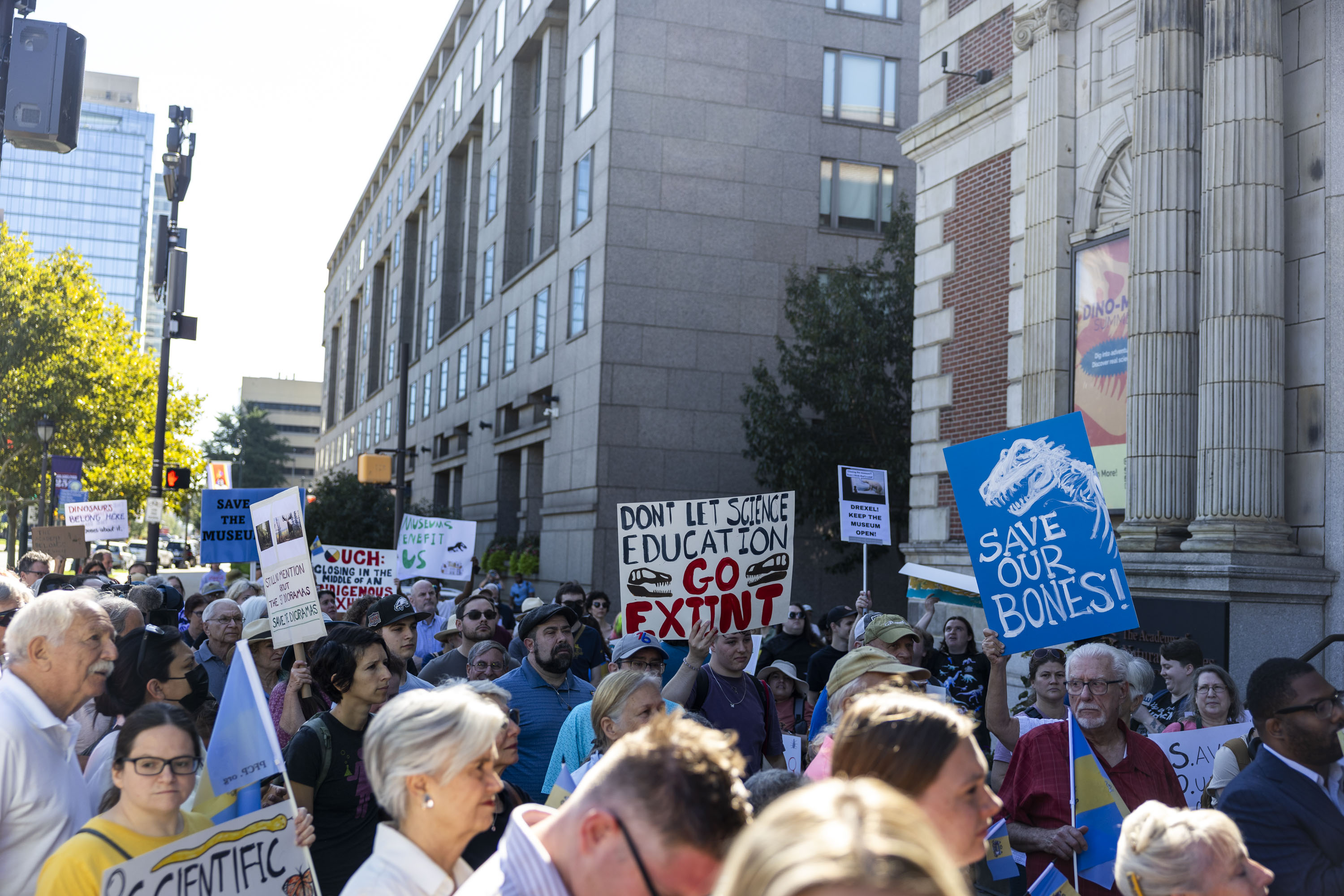
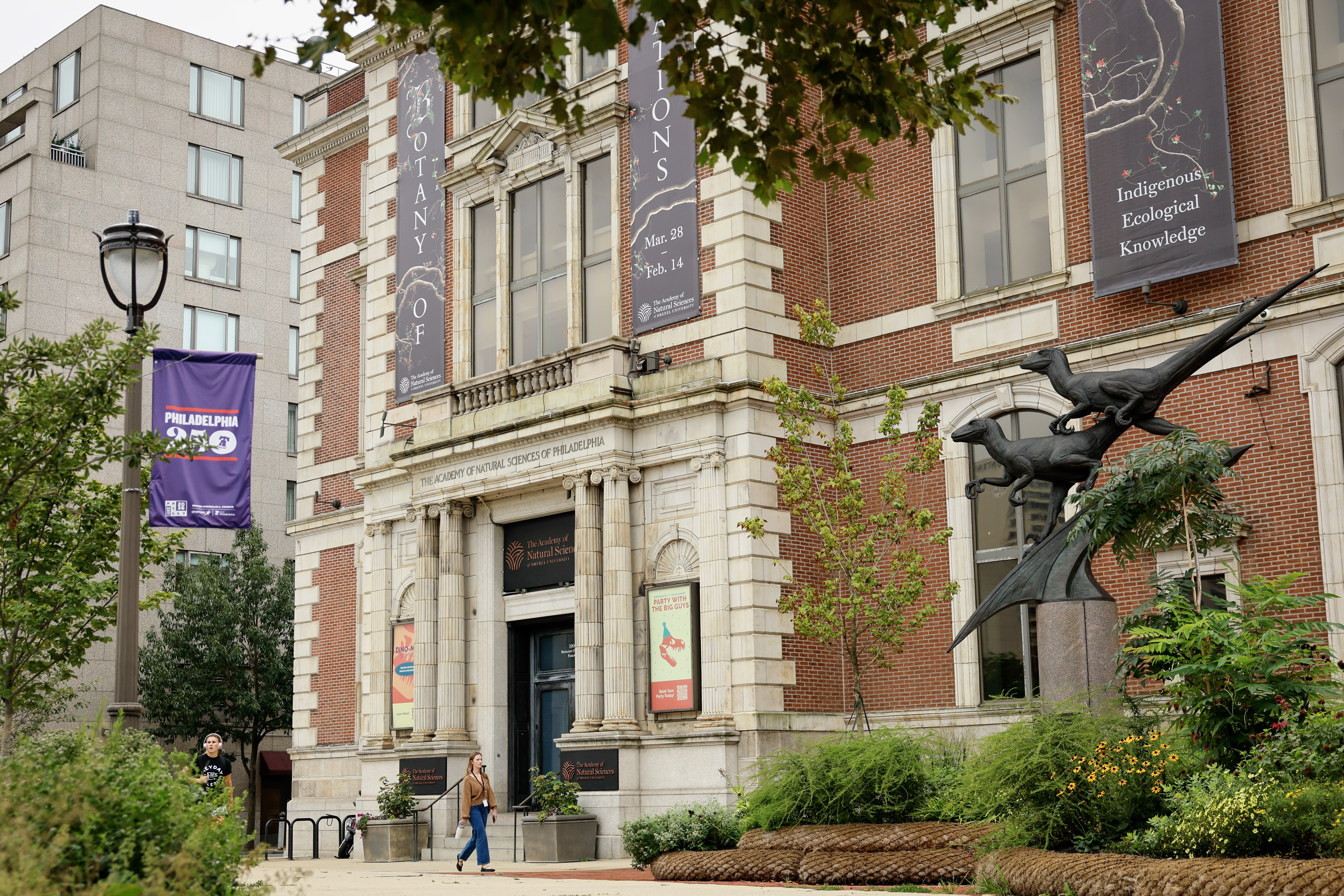
Philadelphians reacted with outrage when Drexel University and the Academy of Natural Sciences announced the closing of its museum on the Ben Franklin Parkway earlier this month.
But the museum is only a part of what the academy does. And while most Philadelphians think of dinosaurs and dioramas,the main business of the academy — its “beating heart,” as one board member calls it — will continue, even if it has often escaped the notice of the general public.
Housed backstage beyond the museum walls is one of the world’s largest repositories of natural specimens: bird carcasses, fish, mollusks, minerals, and bones of various kinds — millions of them amassed over more than two centuries.
And now, amid reports that the academy’s building may be sold and the collection moved, all eyes are on the fate of this trove.
“It’s not just the scope of the collection that’s so important — 19 million specimens representing every aspect of the natural world,” says Robert McCracken Peck, curator of art and artifacts and senior fellow emeritus of the Academy of Natural Sciences of Drexel University. “The collections are not only important because of their associations with historical figures like Lewis and Clark and Thomas Jefferson.
“But these collections were made at specific times in history. We can never go back to collect more of these voucher specimens. They tell us how our world is changing.
“It is by definition irreplaceable.”
Microalgae too numerous to count
Among its peers, the academy’s group of species collections is one of the most significant in the world, and is perhaps unrivaled in certain areas of concentration and historical importance.
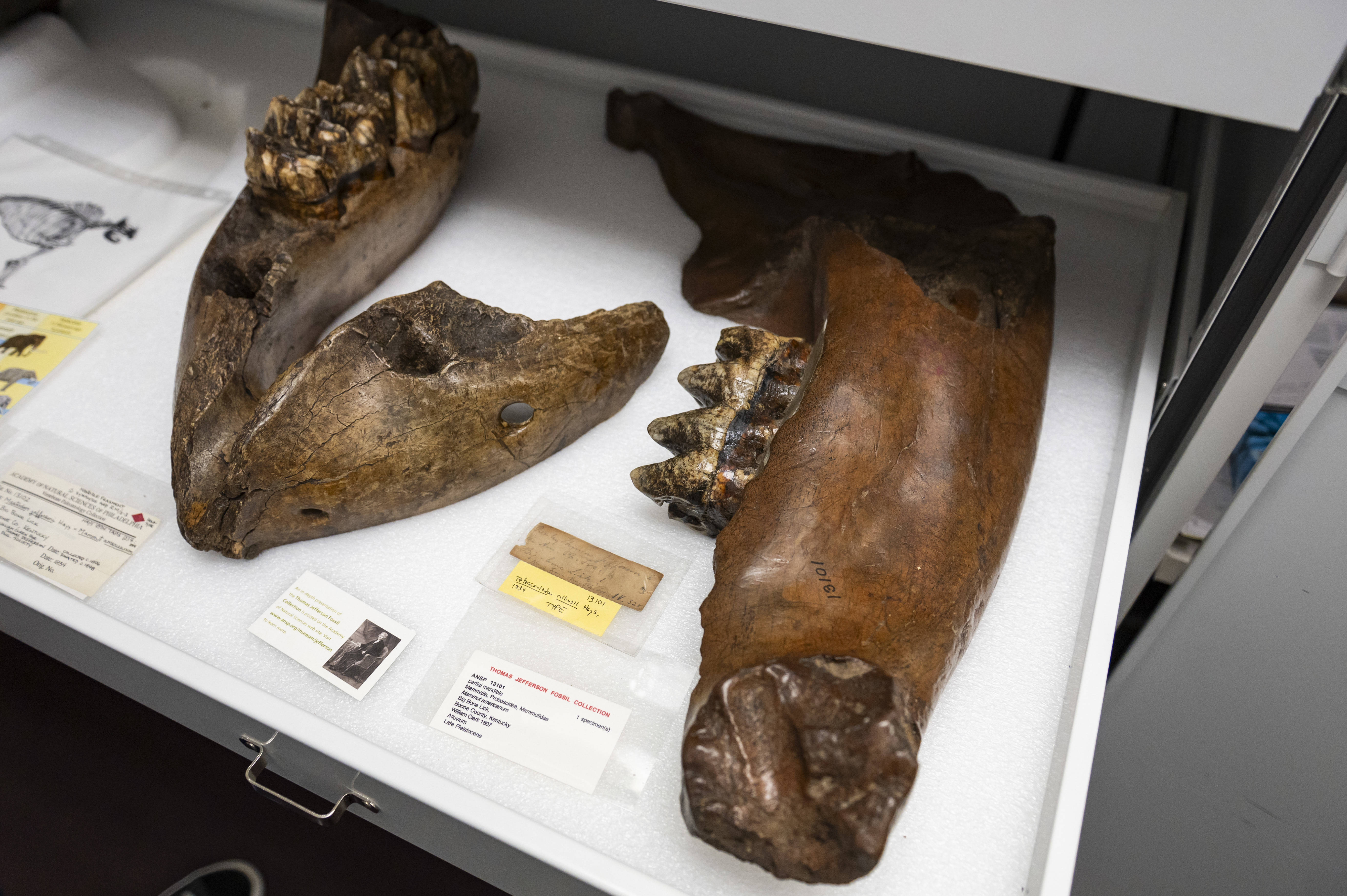
More than 220 plant specimens collected by Lewis and Clark on their landmark 1804-06 expedition between the Mississippi River and the Pacific Ocean are housed at the academy. Among the institution’s corresponding members over the years were Thomas Jefferson, John James Audubon, and Charles Darwin. The American Medical Association was founded here in 1847.
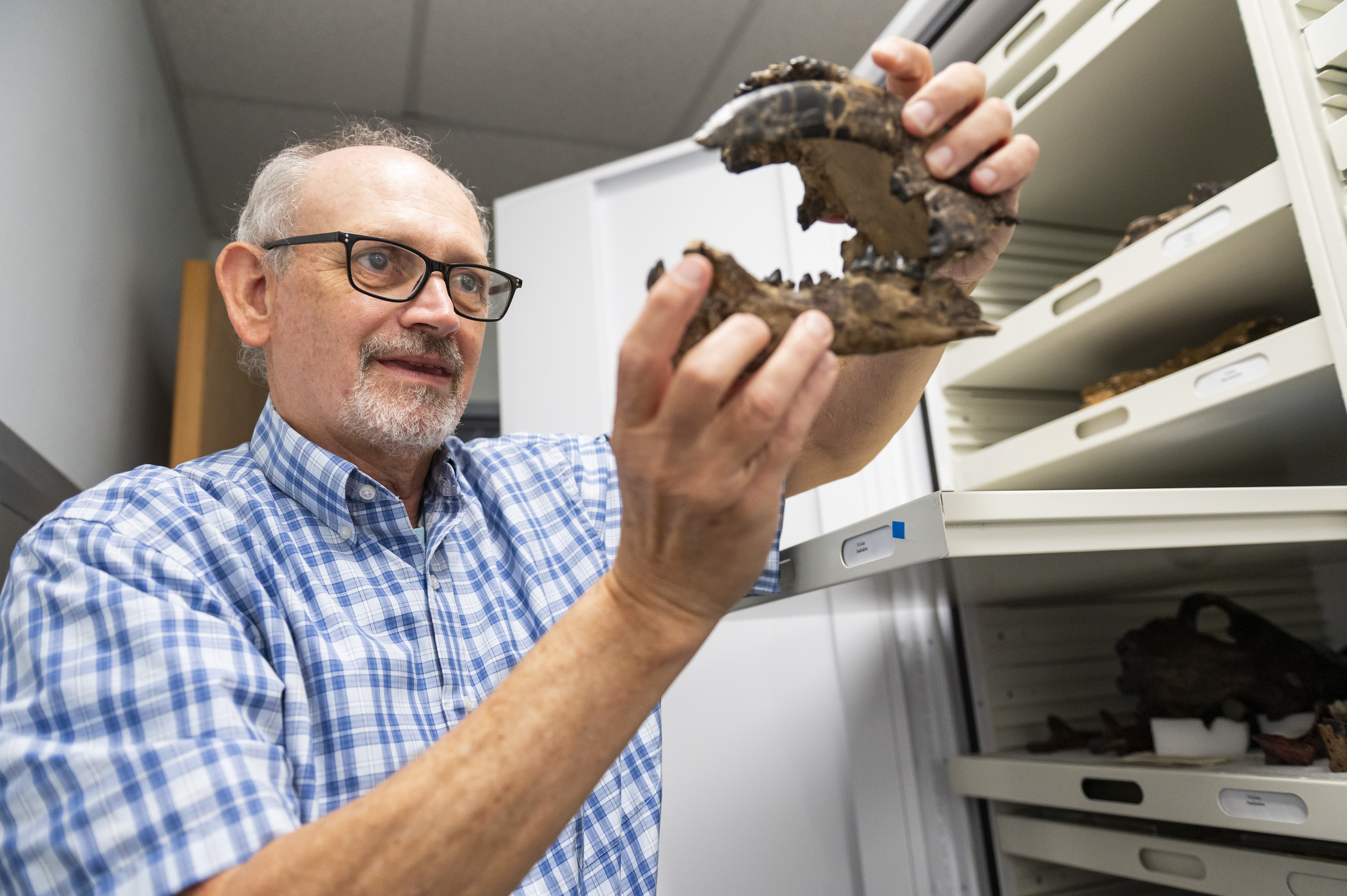
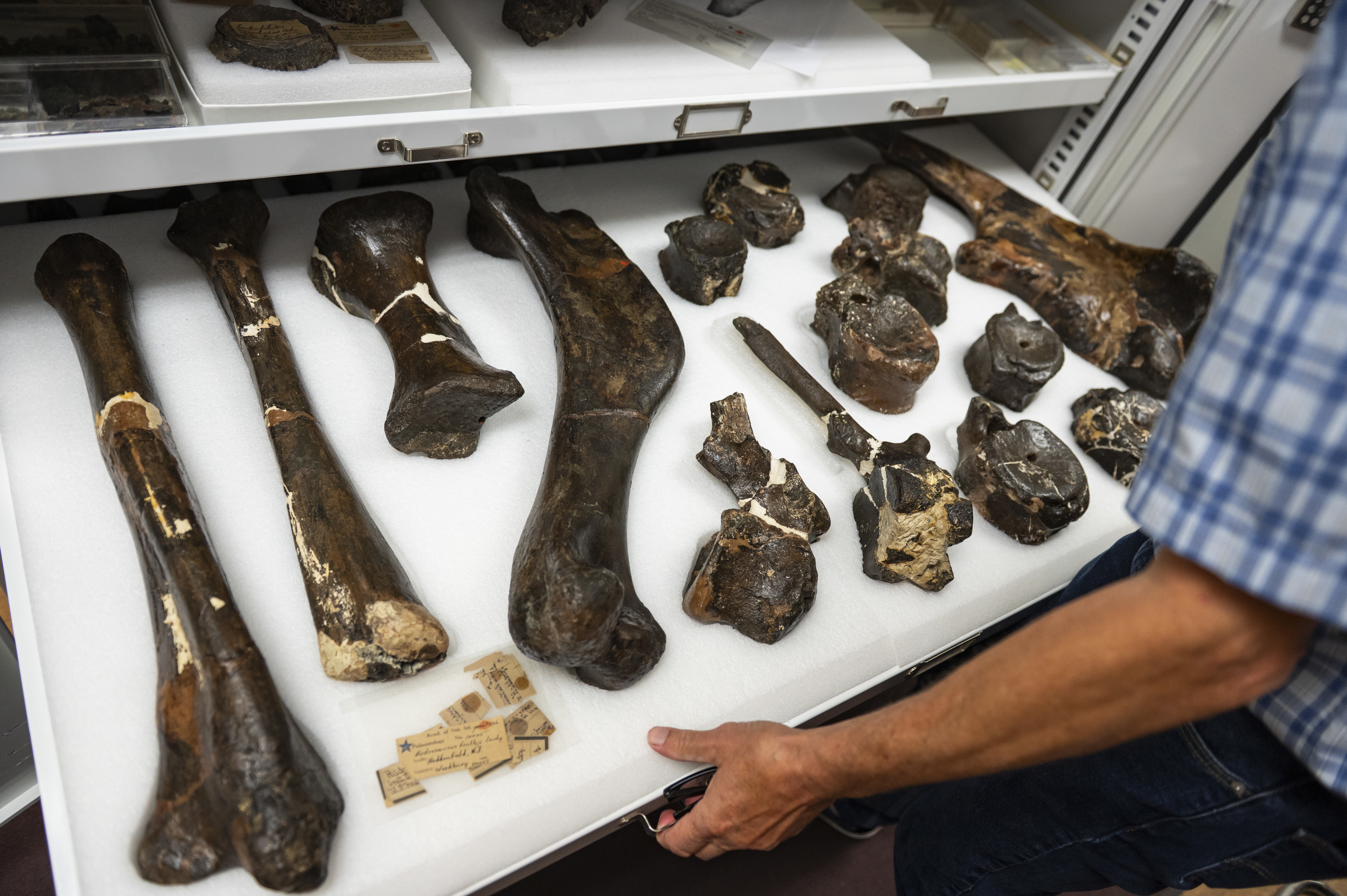
Ned Gilmore, collection manager for vertebrate paleontology, pulls out a drawer filled with bones from the Academy of Natural Sciences’ “Hadrosaurus foulkii.”Allie Ippolito / For The Inquirer
The plants and fungi collection holds 1.4 million specimens of algae, lichens, fungi, and slime molds and includes some of the oldest and most important plant collections in the Americas. The invertebrate paleontology collection is the oldest such collection in the United States.
The number of diatoms in that collection is unknown, says Laura Aycock, manager of the academy’s hoard of the single-celled microalgae that are neither animals nor plants, though the academy has around 300,000 slides, with some slides containing upward of a hundred thousand diatoms.
“I’m not going to attempt to calculate that,” Aycock said.
Laura Aycock, collection manager of diatoms at the Academy of Natural Sciences. The diatoms serve as a time capsule.Allie Ippolito / For The Inquirer
The diatoms captured at the academy — which go back to the 19th century and come from around the world — serve as a time capsule.
“You can actually look at water quality and monitor how it’s changing and biodiversity of the diatoms looking at our slides,” says Aycock. “So people will reach out wanting to see, ‘Hey, can I see a snapshot of what this river looked like X many years ago?’”
The academy’s collections are a magnet internationally, says Ted Daeschler, professor emeritus, curator, and chair of vertebrate zoology at the academy.
“It’s a stopping point for people studying a wide variety of different things,” says Daeschler. “Every time I talk to any mollusk person in the world who’s done research, they’re like, ‘Oh yeah, I’ve been to the academy. I’ve done research there.’ Talk to anybody working on crickets and grasshoppers — ‘Oh yeah, I’ve been to the academy.’ People working on Devonian fish, they all came through at one point or another.”
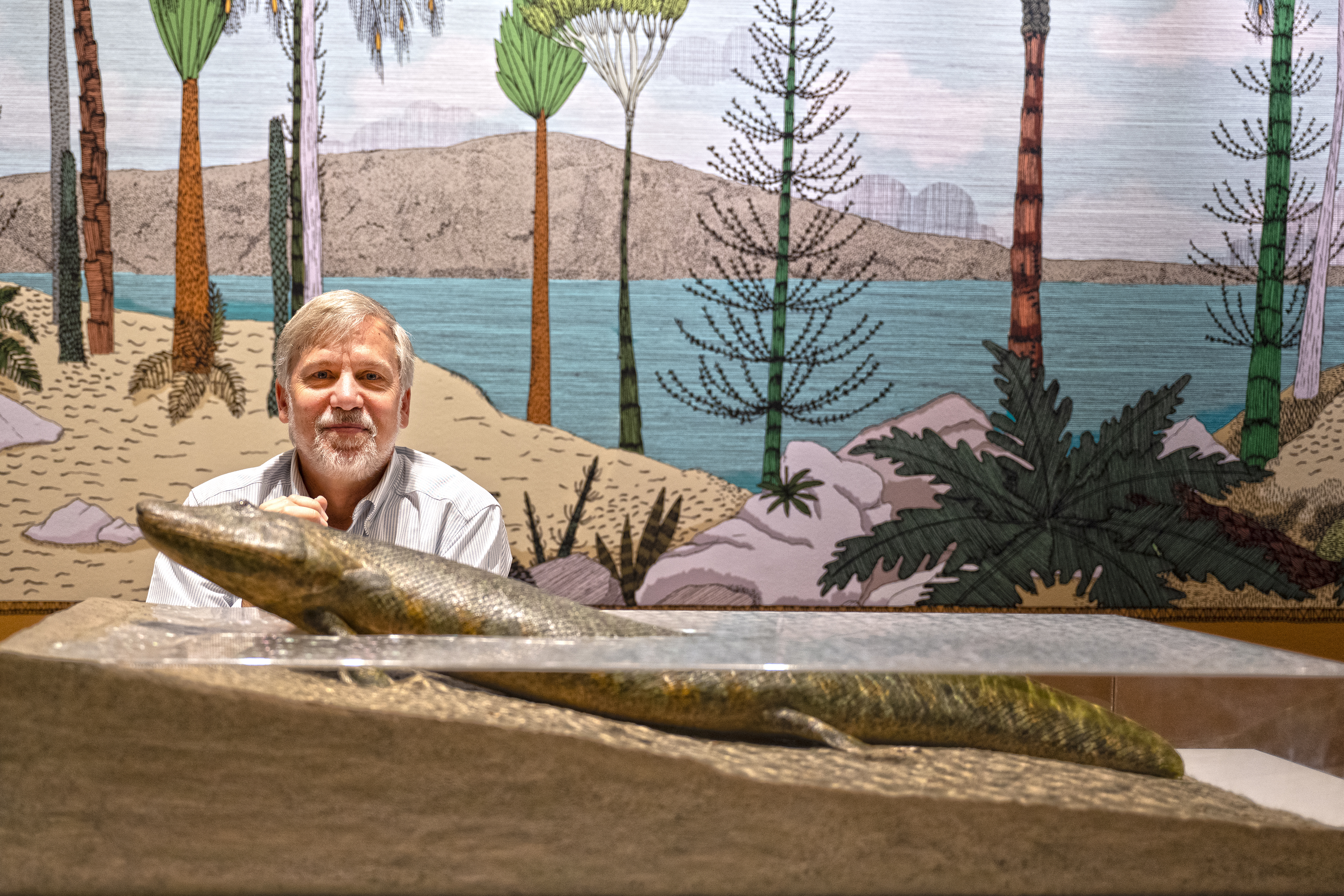
Ted Daeschler in 2023 with a model of “Tiktaalik roseae,” a 375-million-year-old beast whose discovery by Daeschler, Neil H. Shubin, and Farish A. Jenkins Jr. established a new link between fish and land creatures.Jose F. Moreno / Staff Photographer
The academy has seen some novelties over the years: an albacore tuna shipped to the institute from Ernest Hemingway in 1934, fingernail samples from now-retired U.S. Supreme Court Justice Stephen G. Breyer collected in 2010, and two red-eared sliders donated in 1977 by Sylvester Stallone as souvenirs from the original Rocky film.
Hemingway’s tuna remains. But Breyer’s fingernails were tested for stable isotopic composition of carbon and nitrogen to determine the justice’s diet and then discarded, and the turtles Cuff and Link are no longer with us, a spokesperson said.
A key to the ‘next pandemic’?
If some of the collections work and research going on at the academy seems esoteric, there’s no way of knowing what might become urgently relevant at some point.
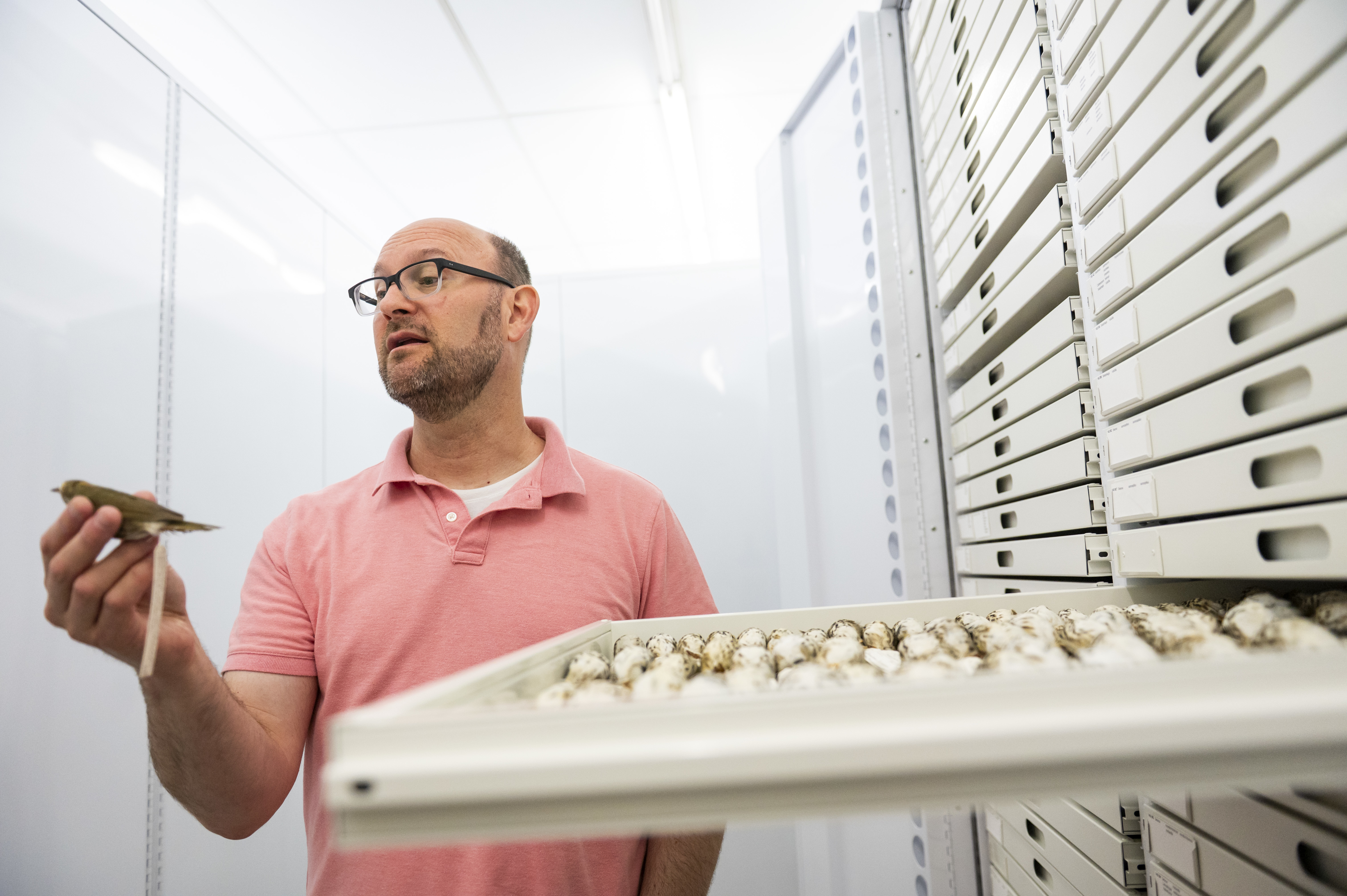
“We all lived through a pandemic recently — pretty much hell on earth for most of us,” says Jason D. Weckstein, curator of the academy’s ornithology collection and professor at Drexel University College of Arts and Sciences.
“Understanding the ecological interactions that lead to those kinds of events is part of this kind of research. So why are some parasites specific to some hosts, whereas other ones can jump between hosts easily, and there are ecological characteristics that allow that?”
Jason Weckstein, curator of orninthology, holds a warbler at the Academy of Natural Sciences.Allie Ippolito / For The Inquirer
“You just never know when something’s going to happen in the world,” says Weckstein, “and then it turns out there’s something here. We have tissue samples from all over the world. It’s possible we could discover something in those samples that is important for understanding the next pandemic.”
That’s possible, in part, because in the future, specimens might be tested for characteristics whose existence is beyond our current base of knowledge.
Paul Callomon, the academy’s collection manager for malacology and general invertebrates, says that when the first snails entered the academy, “We had no idea what an isotope was. Nobody knew anything about that. But we had an unshakable faith that if we preserve and stabilize these things, as time goes on, they’ll become more important to more people. And so it’s turned out to be. And now of course, with climate change and with this enormous Anthropocene influence on the natural system, the number of ways in which our specimens are going to help tell that story is enormous.”
Each specimen functions as an irreplaceable snapshot in time. Organic materials in their environment are continually breaking down and becoming something else. But when a bird or fish is plucked from its environment, it becomes a permanent record — of itself, but also of the world as it existed at that particular moment.
Biological specimens are often called upon to help solve certain mysteries.
“There are examples in the world generally of new pharmaceutical products being developed from the study of mollusks and their venoms,” says Callomon, “or closer to the academy, we provided shells that were material evidence in the lawsuit against BP for the gulf [Deepwater] Horizon oil spill — historical specimens that proved there was oil in the gulf’s waters before any drilling started, but that it was of a very low level.”
There’s a bigger role now for the academy’s species collection to play, Callomon says.
“The real world is on fire. And the real natural world, the natural ecosystem that sustains all life on Earth, is undergoing enormous changes at the moment. And the only place that you can find material evidence for what it was like before that started, or what it was like at an earlier stage of that process, is natural history collections, and they are mostly housed in museums.”
Several hundred Academy of Natural Sciences supporters came out to protest the decision by Drexel University and the Academy to close the Academy’s museum, Sept. 8, 2026.Tyger Williams / Staff Photographer
‘Profound concern’
Curators and scientists say that as the academy has arrived at a vulnerable juncture, its collections and research are more critical than ever given the march of climate change, microplastics contamination, biodiversity loss, and other crises.
The scientific powerhouse’s own future is a question mark at the moment. Drexel is facing deficits and a challenging enrollment environment, and, in a cost-cutting move a decade and a half after a partial merger of Drexel and the academy, the two groups announced last week that the academy museum will end its nearly two-century run at the end of the month.
The aim now is to move the collection and sell the building, according to a source close to the situation who asked not to be identified. This raises questions about the fate of the academy’s historic building and the critical mass of the Parkway’s cultural attractions, as well as concerns for the future of the collection and the academy’s historically significant library and archive, whose holdings span five centuries.
“Profound concern” is how a group whose board includes the largest and most important natural history and science centers in the U.S. has expressed its apprehension over the future of the academy.
“As the oldest natural science research institution and museum in the United States, the academy is a globally important natural history collection and center for biodiversity research,” the Washington, D.C.-based Natural Science Collections Alliance wrote in an April statement after news of a potential schism between Drexel and the academy.
“Any administrative or structural changes at the Academy must prioritize the integrity of these collections. The destabilization of the institutional support or the specialist staff required to maintain these specimens for active use in research would represent an immense loss to the city of Philadelphia, the state of Pennsylvania, and the global scientific community.”
The NSCA’s concerns remain, said president Trina E. Roberts this week, and while “we’re glad to see that the importance of the collection has been acknowledged in public statements,” she said, the closing of the museum was an unwelcome surprise.
“Education, research and collections are all part of a truly functioning natural history museum. It would be wonderful if the academy can find a way to maintain all of those,” she said.
Academy leaders say they will work to find “new and financially sustainable opportunities for the public display of elements” of its collections, but have not specified any details.
In a statement last week, the two institutions affirmed their attention to the trove of specimens, library, and archive.
“The stewardship of the Academy’s collections and their use to advance scientific knowledge will be the focus of our work for the near future,” said a statement from Drexel president Antonio Merlo and academy board chair Suzanne Biemiller.
A Drexel spokesperson this week said there were no immediate plans to move the collection, and, regarding a potential sale of the building, “no decisions have been made regarding its future disposition.”
“The academy’s home will continue to house its collections, library, archives, and laboratories while Drexel and academy leadership consider potential pathways forward,” said Britt Faulstick.
Should relocation become part of a future plan, Faulstick said, “maintaining appropriate access to the collections for research [during a move] would be an important consideration in that process.”
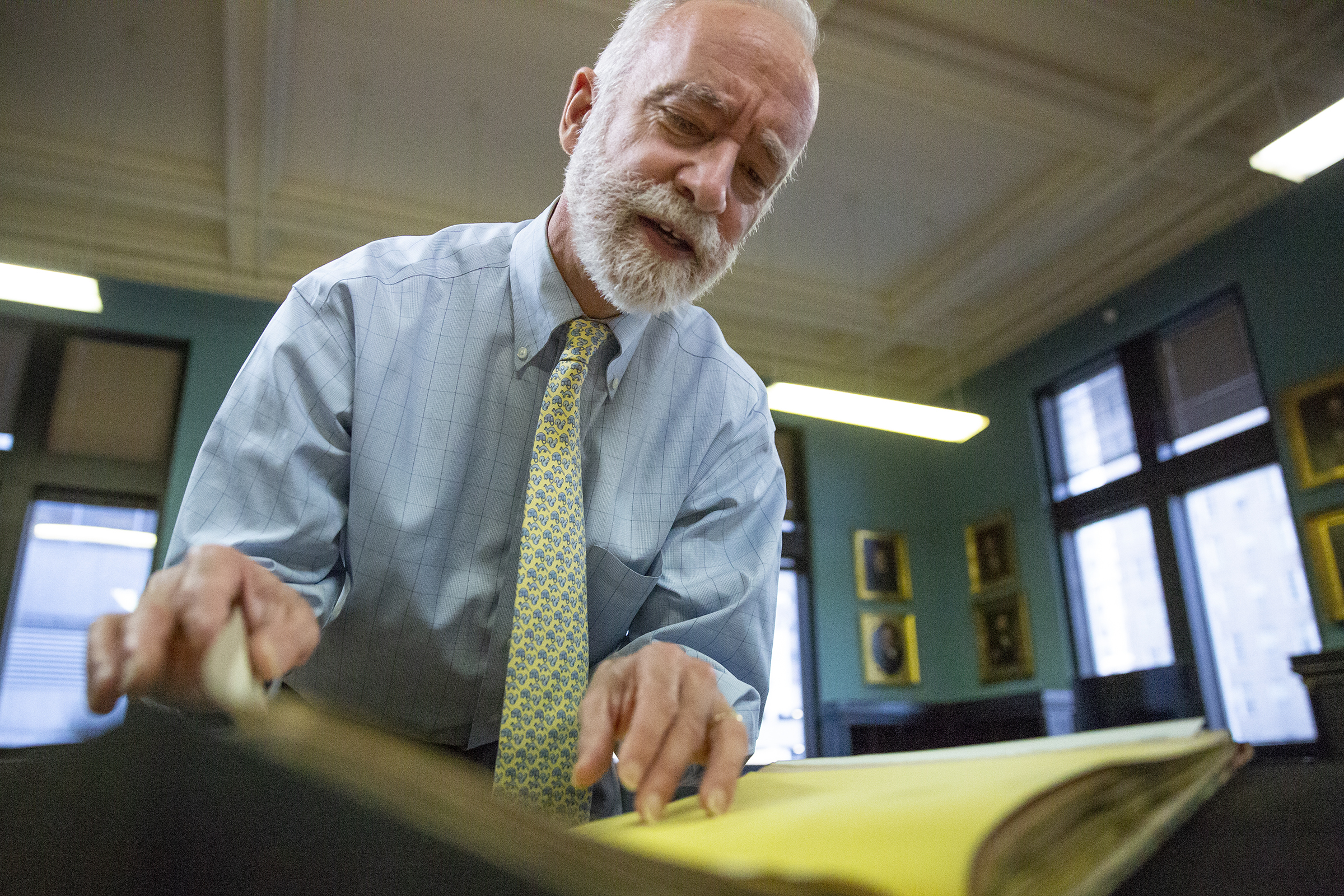
Robert McCracken Peck, curator of art and artifacts and senior fellow emeritus of the Academy of Natural Sciences of Drexel University.HEATHER KHALIFA / Staff Photographer
‘A recipe for disaster’
Moving the collection would be expensive and time-consuming, says Peck, who, with Patricia Tyson Stroud, co-authored AGlorious Enterprise: The Academy of Natural Sciences of Philadelphia and the Making of American Science.
Peck says that in the 1970s, parts of the collection were moved into the former Reliance Standard Life Insurance Co. building on Pennsylvania Avenue now occupied by the Philadelphia Museum of Art, and then, a short time later, were moved back.
“I imagine it would take a couple of years,” he says of a potential move now of 19 million specimens, “because that’s how long it took to move our collections to and from the Art Museum area, and they didn’t even move them all.”
A partial mandible from an American mastodon from the Thomas Jefferson Fossil Collection at the Academy of Natural Sciences.Allie Ippolito / For The Inquirer
“It can be done, and it can be done in a professional and careful way that maintains the integrity of the collection, but you can’t do it in a hurried way,” says the NSCA’s Roberts. “That is a recipe for disaster for a collection of this size and importance. They need to plan for a year before they move any specimens out of the building.”
Collections like these require a specific kind of care, says Roberts, who is also associate vice president for collections at the Natural History Museums of Los Angeles County.
Specimens can degrade over time if not maintained properly, she said.
“We rely on good temperature and humidity control depending on what kind of specimen you have. A dinosaur bone that is basically stone is a lot less sensitive than a plant specimen that is a dried leaf. We’re also concerned about the curatorial and collections expertise that’s represented by the staff.”
Much of the academy’s collection is digitized, and a certain amount of information can be gleaned online, but for some purposes, the actual specimen must be available, which happens either by a visit to Philadelphia or a loan.
“DNA research is just exploding in natural history collections because it turns out that we have this resource we’ve been building for hundreds of years that can still be used for DNA,” says Roberts. “So a plant specimen, an insect specimen, a mammal specimen in a natural history collection from 100 years ago, you can get DNA out of that, and that’s an amazing resource. You absolutely cannot do that from a digitized record.”
It’s possible now, she says, “to look at actual gene expression patterns in different environments — for example, what genes are turned off or turned on in cold vs. hot conditions. That might be something important in an era of climate change if we want to understand how something like plant communities and animal communities are going to respond to that.”
The Academy of Natural Sciences of Drexel University on the Ben Franklin Parkway.Elizabeth Robertson / Staff Photographer
‘It changed their minds completely’
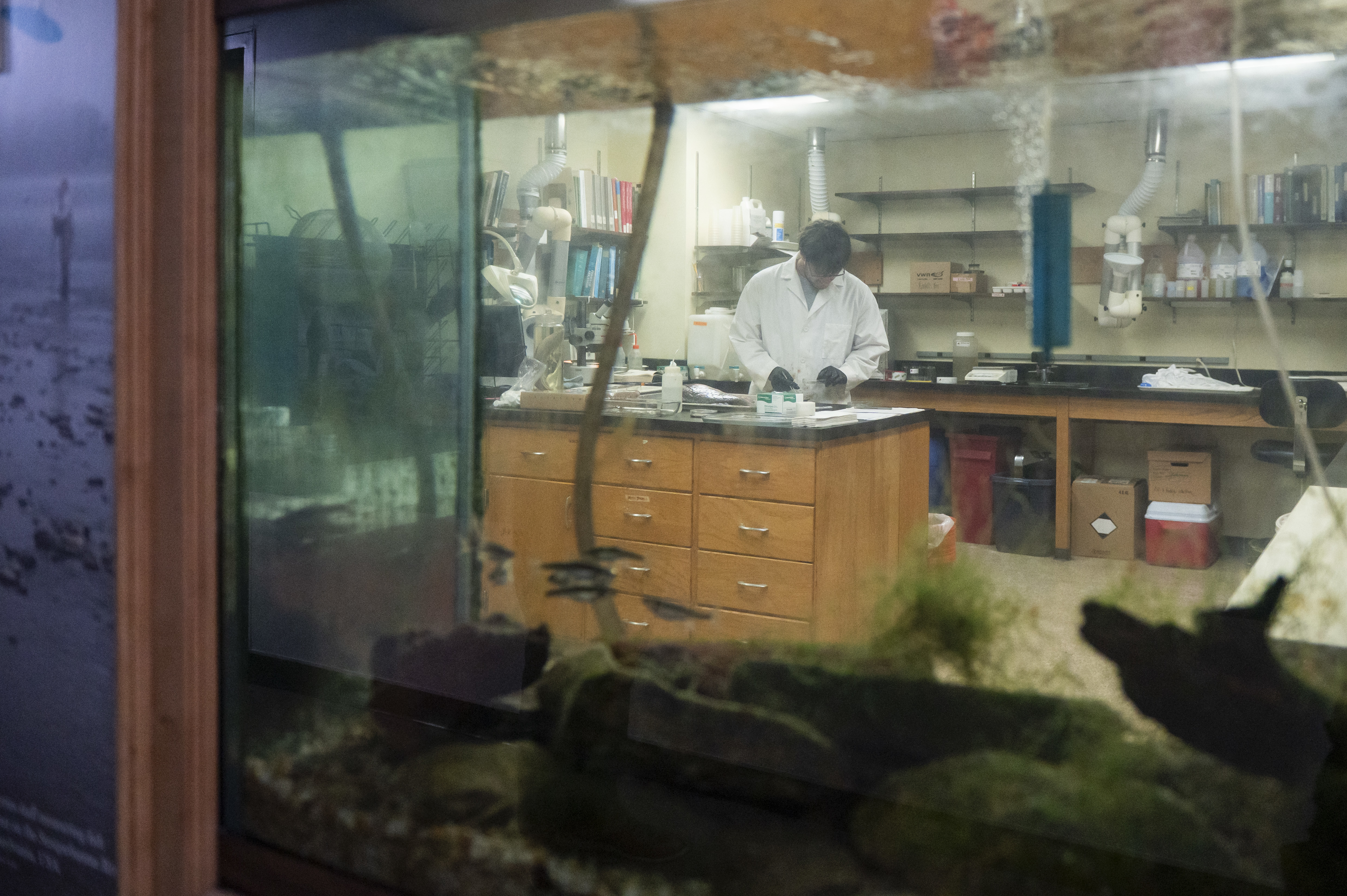
The academy-Drexel partnership, 15 years in, was much in evidence during a several hour visit in early August. In one room at the academy, a group of students was removing organs from birds, and in another, Drexel environmental sciences undergraduate Ean Geller-Nocella was examining a freshwater drum, an invasive species that’s recently turned up in local waters, to see what the fish has been eating.
“I’ve been cutting them open, taking out their stomachs and removing the stomach contents. All that is mussels — freshwater mussels,” he said, referring to a small cluster of crushed up shells.
Another invasive species is being looked at by the academy.
Ean Geller-Nocella, Drexel University co-op student, inspects the contents of the stomach of a freshwater drum in the fisheries department at the Academy of Natural Sciences.Allie Ippolito / For The Inquirer
“Ten years ago in Tinicum, snakeheads weren’t there and we got a picture of what the diet was for the resident fish,” said David Velinsky, senior scientist of the Patrick Center for Environmental Research and professor at Drexel University College of Arts and Sciences. “They’re now there, so we’re doing a study. We already have the samples collected, analyzing on the mass spectrometer how the food web changed, and this gives us an idea of what needs to be protected or not protected.”
Weckstein recently had a Drexel undergraduate student who sequenced the genomes of the parasitic lice living on vultures.
Having students working there “just adds a vibrancy to the place,” says Velinsky.
Says the malacology department’s Callomon:
“I think the role that I’m proudest of our collection’s playing is when Drexel undergrads come here on their co-op and we have successfully diverted careers in medicine, the law, and engineering in favor of working in our part of the world, in our part of science, because of the experience. They came and did a six-month co-op here and it changed their minds completely. It changed their minds because it moved their hearts, and your heart is what drives your mind. But they had no way of previously knowing.”
One persuading factor: at the academy, students have direct, hands-on contact with specimens in the collection.
“Other places use photographs,” says Peck. “Drexel students, thanks to the academy, get to work with real specimens, which dramatically enhances their interest in and understanding of the natural world.”
Just another reason, advocates say, that the academy’s treasures must be kept intact and accessible to all.
“My greatest concern is over keeping the collection together,” says Peck. “It needs to be cared for, for reasons that extend well beyond Philadelphia and the academy. These are collections we hold in trust for the world.”
Staff writer Susan Snyder contributed to this article.
Only 76 songs to encapsulate the history of the boundlessly rich and impossibly varied sound of Philadelphia?
That wasn’t nearly enough.
Earlier this year, in time for the approaching Philly 250 celebration of the nation’s Semiquincentennial, and with the help of my classical music colleague Peter Dobrin, I compiled a list of 76 songs made in the city — or about the city, or by people from the city or region — that are essentially Philadelphian.
I’m not complaining. It was fun and sent me on journeys of discovery to learn stuff I didn’t know about the bottomless depth of Philly soul, the city’s enthralling jazz history, or the range of indie rock that’s become a calling card this century.
But list-making is a difficult, fraught process, and I made lots of choices that I immediately had second thoughts about. Like cutting Grover Washington Jr. to make way for the Trammps, or leaving Sister Sledge or Jazmine Sullivan or personal favorites like Go To Blazes off the list. Or including the Soul Survivors’ “Expressway To Your Heart” but leaving “I-76” by G. Love & Special Sauce parked on the side of the road.
Were those stupid decisions? Possibly. So this list that follows — 25 more essential songs of Philadelphia — is a chance to make room for those shoulda-coulda selections and bring the total number up to a more reasonable 101. Which, quite frankly, will still be an inadequate number for any true Philly music lover.
Some ground rules: Artists who were included in the original 76 were ineligible this time. So while the initial list featured the O’Jays’ “Back Stabbers,” I ruled out another undeniably iconic O’Jays song, “For the Love of Money,” to make way for other artists.
And I didn’t consider holiday songs, which belong in a separate category. So apologies to the Philly Specials’ “Fairytale of Philadelphia” and Alan Mann’s “Christmas on the Block.”
Also, these songs are numbered in reverse, but I thought of them more as a playlist than a worst-to-first ranking. They’re all worthy additions to the original 76.
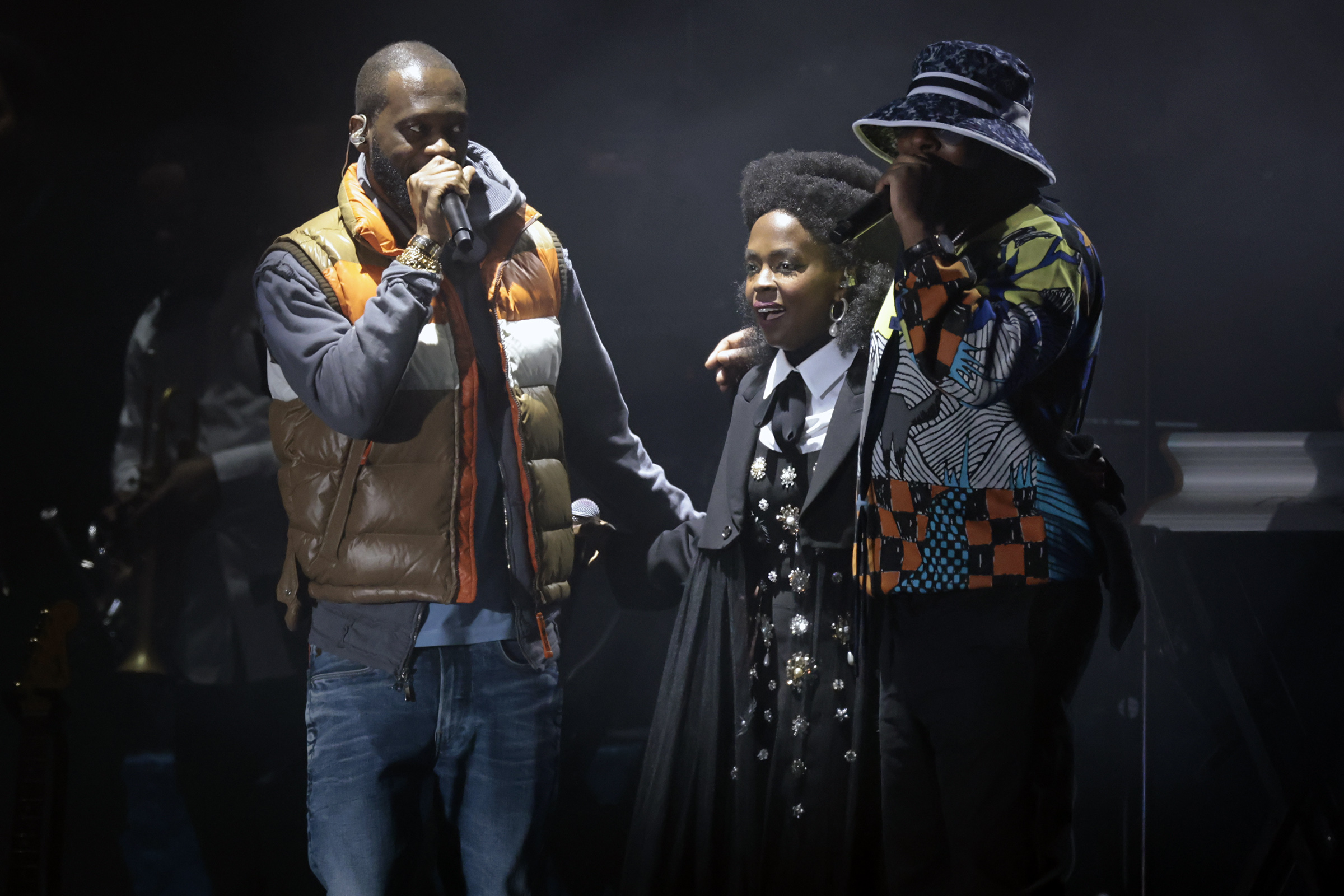
The Fugees reunite as Lauryn Hill (middle) is joined by Pras Michel (left) and Wyclef Jean during the Roots Picnic Philadelphia at the Mann in Fairmount Park on June 3, 2023.Elizabeth Robertson / Staff Photographer
25. The Fugees, “Ready or Not”
The Fugees are not a Philly band — they’re from Haiti and North Jersey. But the hip-hop trio of Lauryn Hill, Wyclef Jean, and Pras Michel recorded for Ruffhouse Records, the Conshohocken label founded by Chris Schwartz and Joe “The Butcher” Nicolo, which also released Hill’s 1998 album The Miseducation of Lauryn Hill, as well as albums by Cypress Hill, Kris Kross, and Ben Arnold. “Ready or Not,” from the Fugees’ 1996 album The Score, represents Ruffhouse because its chorus is based on a Philly soul classic, the Delfonics’ “Ready or Not Here I Come (Can’t Hide From Love),” written by William Hart and Thom Bell.
24. Mark Knopfler, “Sailing To Philadelphia”
“Sailing to Philadelphia” is a song about surveyors. Dire Straits leader Mark Knopfler was making his way through Thomas Pynchon’s 1997 novel Mason & Dixon, about Charles Mason and Jeremiah Dixon, the Englishmen who drew the boundary line that became recognized as the United States’ free states and slave states when he wrote what he once called a “two-minute take on a two-ton book.” (The lovely narrative ballad, which is a duet with James Taylor and the title cut of Knopfler’s 2000 album, is actually five and a half minutes long.)
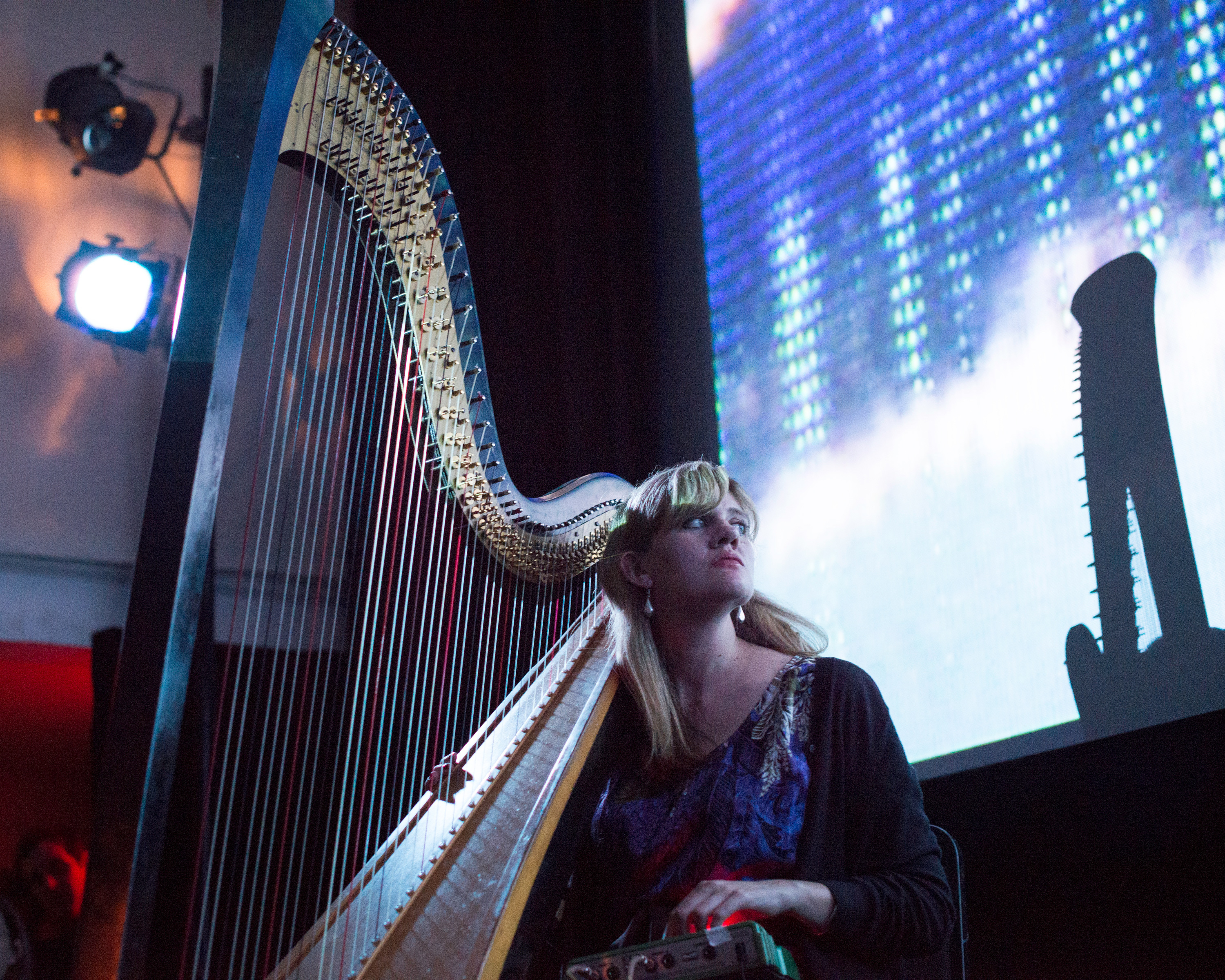
Indie rock harpist and “Wawa By the Ocean” composer Mary Lattimore. Scott Troyan
23. Mary Lattimore, “Wawa by the Ocean”
Philly’s favorite convenience store and the Jersey Shore, all in one song title? Indie rock harpist Mary Lattimore’s sparkling, transporting instrumental was inspired by a Wawa steps away from the beach on Long Beach Island.
22. The Wonder Years, “Came Out Swinging”
The lead track from the Lansdale-born band the Wonder Years’ 2011 album Suburbia I’ve Given You All and Now I’m Nothing reps Philadelphia’s central role in this century’s pop-punk and emo scene, which includes bands like Modern Baseball, Algernon Cadwallader, and Marietta.
Singer Dan “Soupy” Campbell is frank about struggling with his mental health on the song’s coda, repeated three times: “I came out swinging from a South Philly basement, caked in stale beer and sweat under half-lit fluorescents,” Campbell sings (and shouts). “And I spent the winter writing songs about getting better, well, if I’m being honest, I’m getting there.”
21. Clap Your Hands Say Yeah, “The Skin Of My Yellow Country Teeth”
To be honest, I didn’t like this song by the Philly band led by Alec Ounsworth when it came out in 2005. There’s the unappealing title, and I never understood the Talking Heads comparisons, other than a vocal similarity to David Byrne.
But with its driving, hypnotic rhythm, it’s aged well and is a great example of a Philly band at the center of a moment in music history. It’s a “blog-rock” success story from a time when the internet seemed like a wide-open, not malignant place. Bands like CYHSY could make their music available for free download on MP3 blogs and create a buzz that spread like wildfire, resulting in a career still going strong two decades later. Those were the days.
20. Go To Blazes, “New Morning Sun”
Hard-hitting Philly roots-rockers Go To Blazes made a series of bruising blues- and country-infused albums in the 1990s, each one marked by high-quality songwriting by singer Ted Warren and guitarist Tom Heyman that, in retrospect, was ahead of the Americana boom to come. This swaggering song from 1996’s Eric “Roscoe” Ambel-produced Waiting Around for the Crash faces the day after a restless night: “I can’t sleep, for the things I know I had done.”
19. Phyllis Hyman, “Old Friend”
Written by 2026 Rock & Roll Hall of Fame inductee Linda Creed — who died of cancer months before the song’s 1986 release — “Old Friend” is a melancholy ballad by the statuesque Philly soul singer on her first album for Philadelphia International Records. A modest hit, it became a sentimental fan favorite, particularly after Hyman’s death in 1995 at age 45.
18. Bill Haley & His Comets, “Rock Around The Clock”
With his kiss curl and clean-cut image, Bill Haley presented as more palatable to middle America than subversive 1950s sorts like Elvis Presley, Little Richard, and Chuck Berry. But that doesn’t mean Haley didn’t have a sizable pop-cultural impact. With 1954’s “Rock Around The Clock,” which was written by Max C. Freedman and James E. Myers, the singer and bandleader who transitioned from Western swing to rock and roll and grew up in Boothwyn in Delaware County, scored the first rock-and-roll song to top the pop charts in both the U.S. and the U.K.
The Three Degrees.Courtesy of the artist
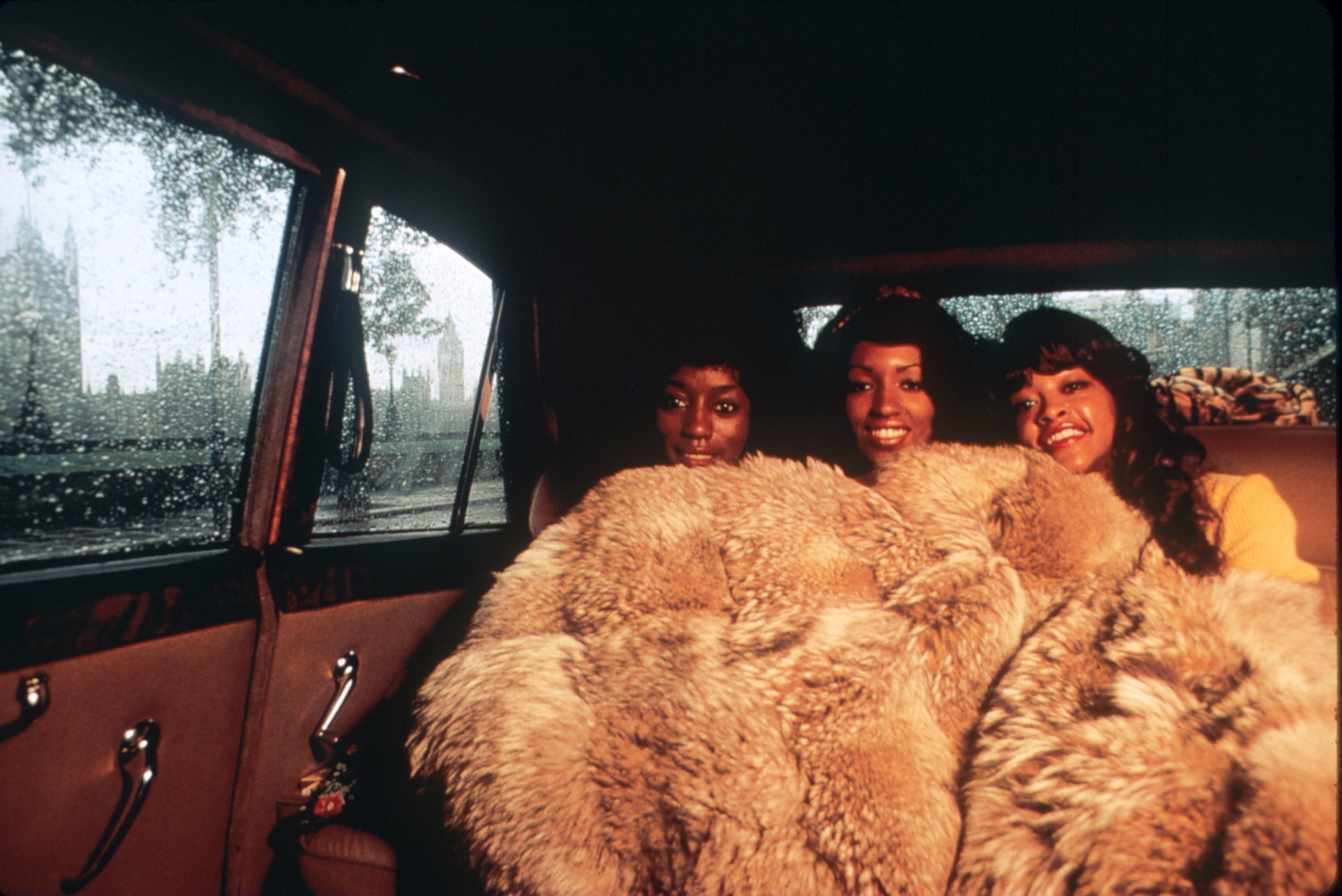
17. The Three Degrees, “When Will I See You Again”
My first exposure to this Gamble and Huff composition with a lead vocal by Sheila Ferguson and support from Fayette Pinkney and Valerie Holiday came from an episode of the 1970s sitcom Sanford and Son in which the Philly soul vocal trio guest-starred as themselves. Another fun fact: In the ‘70s, the Three Degrees were the favorite group of the now-king, Charles III, and performed at his 30th birthday party at Buckingham Palace in 1978 when he was known only as Prince Charles.
16. Benny Golson and the Philadelphians, “I Remember Clifford”
Hard-bop saxophonist Golson — with a band that included his fellow Philly natives Percy Heath, Lee Morgan, Ray Bryant, and Philly Joe Jones — paid tribute to Delaware trumpeter Clifford Brown, who died in a car accident in Pennsylvania in 1956 at 25. The song has been covered by dozens of artists, including Ray Charles and Sonny Rollins.
15. Sylk 130, “The Reason”
Philly DJ, producer, and Blacktronika professor King Britt put his own 1990s house music spin on classic Philly soul with his Sylk 130 project. Jafar Barron’s haunting trumpet and Vicki Miles’ seductive vocal add a touch of class.
14. The Jacksons, “Enjoy Yourself”
Yes, Michael Jackson recorded in Philadelphia. In the years between the Motown era with the Jackson 5 and his partnership with Quincy Jones, Michael and his brothers recorded as the Jacksons at Sigma Sound Studios on both 1976’s The Jacksons and 1977’s Goin’ Places. On the former, the songs were written by Kenny Gamble and Leon Huff. The upbeat “Enjoy Yourself” was the biggest hit from the Jacksons’ Philly years, and the one song from the era that points forward to the unstoppable alchemy that Michael and Jones would find starting with Off the Wall in 1979.
13. Jimmy Smith, “Walk on the Wild Side”
Norristown native Jimmy Smith revolutionized the Hammond B-3 organ as an instrument central to jazz and was the leading light of the long lineage of Philly organists that includes Shirley Scott, Charles Earland, Jimmy McGriff, Trudy Pitts, and Papa John DeFrancesco and Joey DeFrancesco.
“Walk on the Wild Side” is not the Lou Reed song. It’s an instrumental version of the Brook Benton song from a 1962 film noir. Later that year, Smith — whose music would later be sampled by hip-hop artists including the Beastie Boys, Nas, and Gang Starr — scored an unlikely hit from his album Bashin’: The Unpredictable Jimmy Smith.
12. Dee Dee Sharp, “Mashed Potato Time”
A 1962 dance-craze song by Kal Mann and Bernie Lowe that borrowed from the Marvelettes’ “Please Mr. Postman.” The Orlons sang backup vocals on the No. 1 hit from the American Bandstand era, when Philadelphia was the center of the pop music industry until Dick Clark moved the show to California in 1963.
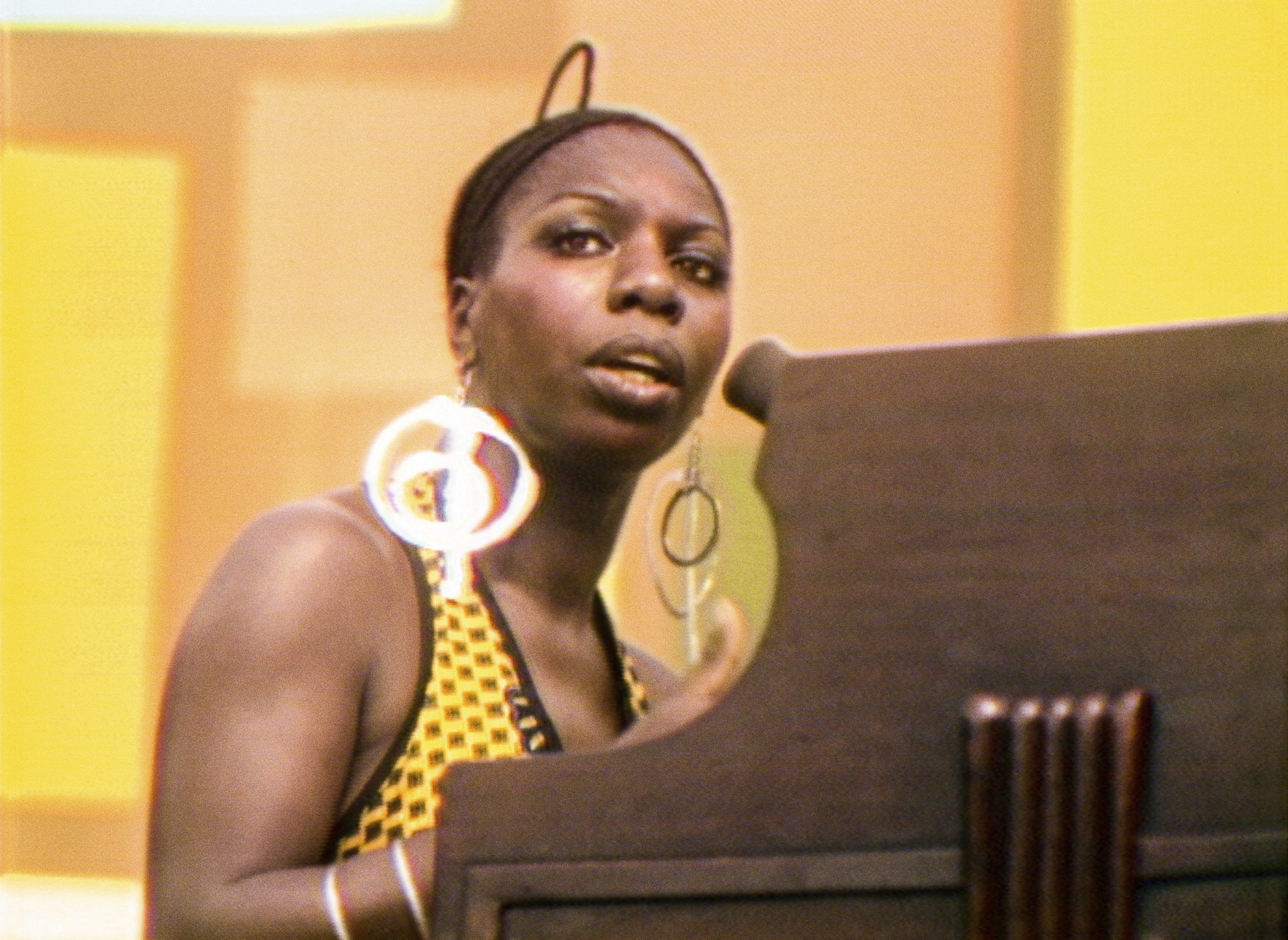
Nina Simone performing at the Harlem Cultural Festival in 1969, featured in the documentary “Summer of Soul.” / AP
But her failure to gain acceptance spurred reinvention: She adopted the stage name Nina Simone while playing piano and singing at the Midtown Bar & Grill in Atlantic City. A great career as an artist and civil rights activist followed. There are many songs to choose from — “Sinnerman,” “Feeling Good”— but I’m going with her most urgent and arresting, written in part as a response to the murder of Medgar Evers in 1963.
10. G. Love & Special Sauce, “I-76”
It might not be the best advice, but it does rhyme: “If you want to get downtown real quick, the only way to go is I-76.” Garrett Dutton’s ode to the Schuylkill Expressway from the hip-hop bluesman’s 1997 album Yeah, It’s That Easy includes shout-outs to Sixers players and the mascot from the 1983 championship year: “Big Shot, and Mo Cheeks and Moses Malone / Julius Erving called Philly his home.”
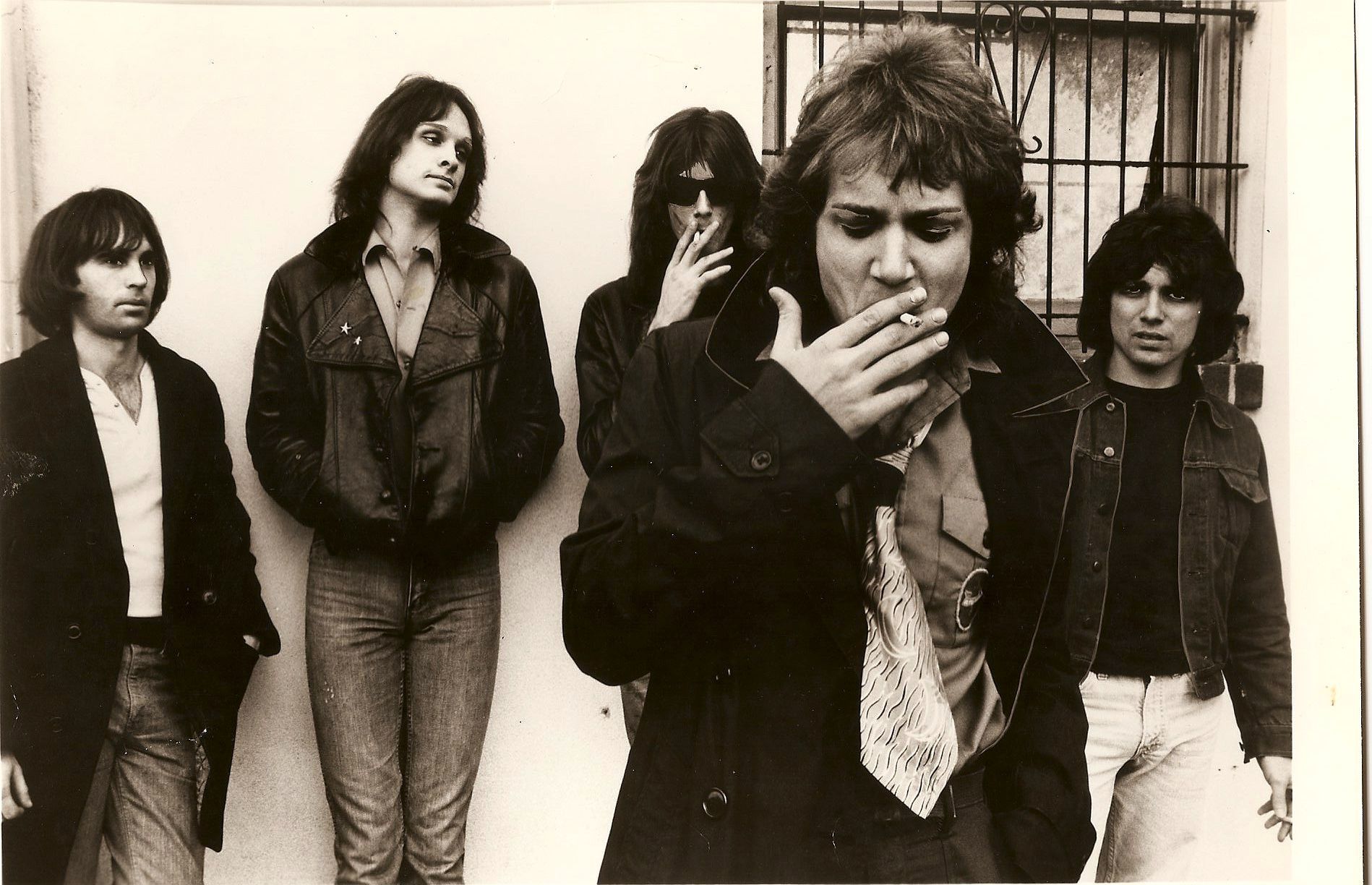
The Philadelphia rock band the A’s in the late 1970s. Left to right: Terry Bortman, Rocco Notte, Rick DiFonzo, Richard Bush, and Mikey Snyder. Courtesy of the A's
9. The A’s, “After Last Night”
A ripping power-pop masterwork that showcases the magnetism of Richard Bush, the lead singer of the A’s, the New Wave-era band that energized the Philly club scene before breaking up in 1982. One of two killer A’s singles written by Bush — who performs locally with his band the Peace Creeps — and songwriting partner Rocco Notte, along with “A Woman’s Got the Power.”
8. Laura Nyro, “Gonna Take A Miracle”
“Gonna Take A Miracle” is a case study in how Kenny Gamble, Leon Huff, Thom Bell, and Sigma Sound Studios founder Joe Tarsia turned Philadelphia into a music mecca in the early 1970s.
Nyro was a New York songwriter three albums into her career when she came to Sigma Sound in 1971 to record an album of cover songs with Labelle — the trio of Patti LaBelle, Nona Hendryx, and Sarah Dash, who would explode in popularity with “Lady Marmalade” three years later.
The Gonna Take a Miracle album was produced by Gamble and Huff, and featured the MFSB Sigma house band, with horn and string arrangements by Bell and Bobby Martin. And the title cut, originally a hit for the Royalettes in 1965, is cowritten by Teddy Randazzo, one of Bell’s musical heroes.
7. John Legend and the Roots, “Wake Up Everybody”
For their 2010 collaborative album Wake Up!, mostly made up of covers of socially conscious R&B songs, Penn grad Legend and the Philly hip-hop band picked a winner. Sure, Legend isn’t equal to Teddy Pendergrass, who sang the original version of the John Whitehead-, Gene McFadden- and Victor Carstarphen-penned title cut from Harold Melvin & the Blue Notes’ 1975 album. But then, who is?
6. The Tymes, “So Much In Love”
Swoony street corner harmony from 1963, written by Tymes singers George Williams and Roy Straigis with producer Billy Jackson, who voices the spoken intro. A hit on the Cameo-Parkway label in pre-Beatles doo-wop era, it was later a hit for R&B vocal group All-4-One in 1993.
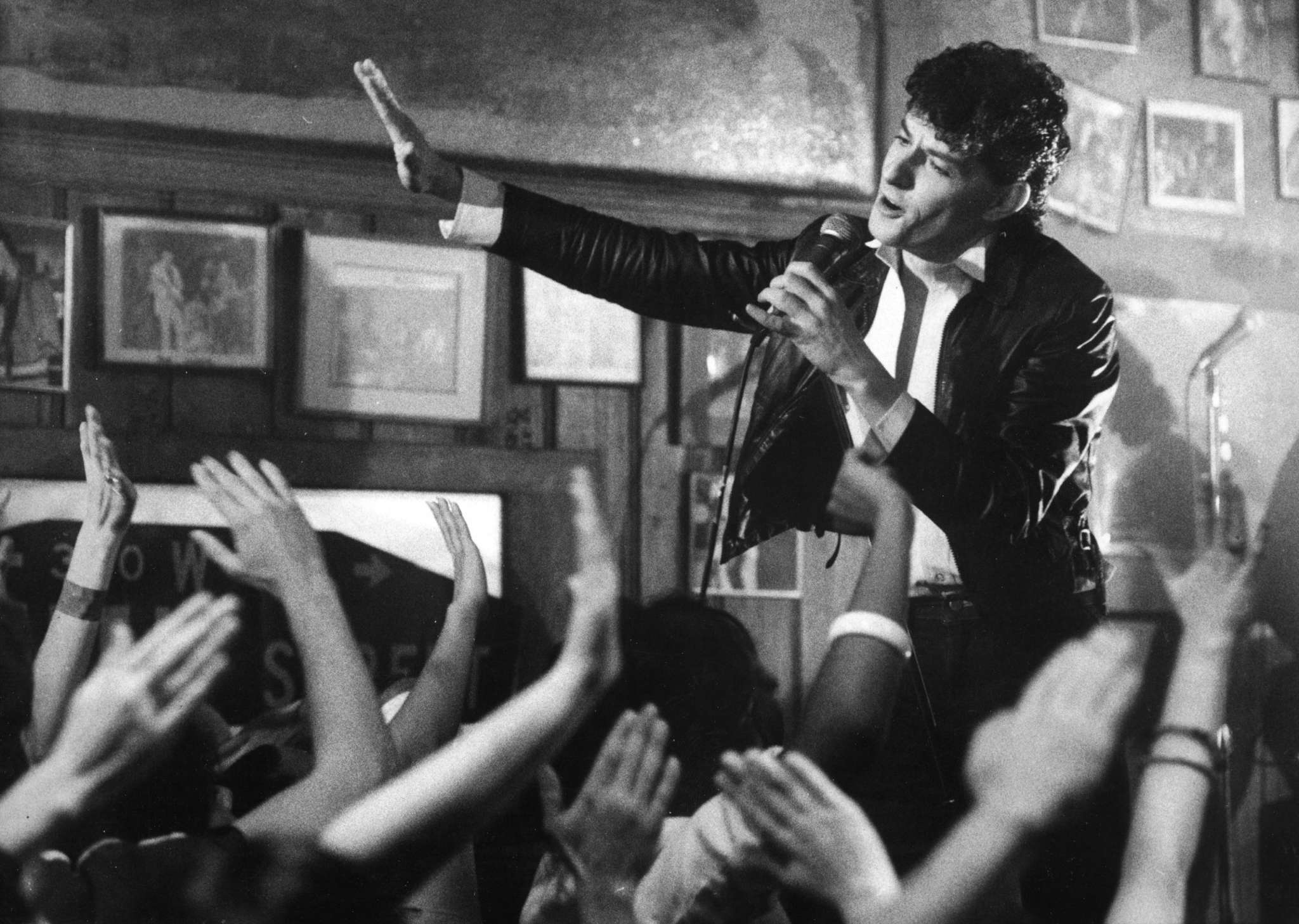
In 1983, Robert Hazard filmed a music video for his song “Change Reaction” at what was then J.C. Dobbs.File Photograph
5. Robert Hazard & the Heroes, “Escalator Of Life”
Along with the Hooters and Tommy Conwell & the Young Rumblers — whose “I’m Not Your Man” is a near miss on this list — Robert Hazard was one of the most-likely-to-succeed faces of Philadelphia rock in the 1980s. The son of a Philadelphia Opera Company tenor wrote and recorded “Girls Just Want To Have Fun” in 1979, four years before Cyndi Lauper turned it into a megahit. Hazard was in heavy rotation on FM stations WMMR and WYSP with this echoey electro-pop hit and “Change Reaction,” from his self-titled 1982 EP.
4. Grover Washington Jr., “East River Drive”
“Just The Two of Us,” Washington’s 1980 team-up with Bill Withers, was the much bigger hit. Will Smith repurposed it for a different song of the same name on 1997’s Big Willie Style. And “Mister Magic,” the nine-minute jazz-R&B jam that’s the title cut from his 1975 album is another Grover contender. But I’m going to go geographical on this smooth-jazz mood piece from the Philly saxophonist, who cruised down what is now Kelly Drive on his 1981 album Come Morning.
Kathy Sledge from Sister Sledge performs with the Roots at the July Fourth concert on the Benjamin Franklin Parkway.
3. Sister Sledge, “We Are Family”
“You couldn’t find room for Sister Sledge’s ‘We Are Family’ on a list of 76 songs?” was a refrain I heard in various forms. In excluding it I might have given too much weight to the fact that “We Are Family” became closely associated with Pittsburgh after the Pirates used it as their theme song on the way to winning the World Series in 1979.
In any case, “We Are Family” endures, well beyond its origins as a 1979 disco hit that was the first song penned by Nile Rodgers and Bernard Edwards outside of their own band, Chic. Kathy Sledge delivered a stirring version of it with the Roots at the One Philly concert on the Ben Franklin Parkway, and just the other night, I heard it at a Phillies game.
2. Maze, “Before I Let Go”
Frankie Beverly grew up in Germantown and didn’t hit his stride as a purveyor of smooth, sensual soul music until moving to San Francisco in the 1970s. Over time, songs like “Joy and Pain” and “Before I Let Go” sung by Eagles quarterback Jalen Hurts’ favorite musician became essential to Black culture, as “the soundtrack of cookouts and summer music fests … and that kind of bliss that is sweet and peaceful,” as novelist S.A. Cosby put it when Beverly died in 2024. Beyoncé covered “Before I Let Go” at Coachella in 2018, and Questlove has called the song “the happiest breakup song ever” and “the national anthem.”
1. Jazmine Sullivan, “Pick Up Your Feelings”
The standout track from Sullivan’s 2021 tour de force Heaux Tales is full of soaring, swooping vocal runs and staccato syncopations. Along with other hits like “Bust Your Windows,” it demonstrates why Sullivan is the premier contemporary embodiment of the grand Philly soul tradition of great vocalists like Patti LaBelle, Teddy Pendergrass, and Russell Thompkins Jr.