During his extensive travels to Europe, 19th-century doctor and Philadelphia socialite William Camac was impressed with the vast zoological parks he visited, especially the one in London.
He soon convinced his well-to-do cronies in the Union League, the Pennsylvania Academy of the Fine Arts, and the Franklin Institute to open a zoological garden in Philadelphia. And on March 21, 1859, the Pennsylvania state legislature passed a charter establishing the Zoological Society of Philadelphia.
Its purpose: to purchase and collect living and wild animals for public exhibition.
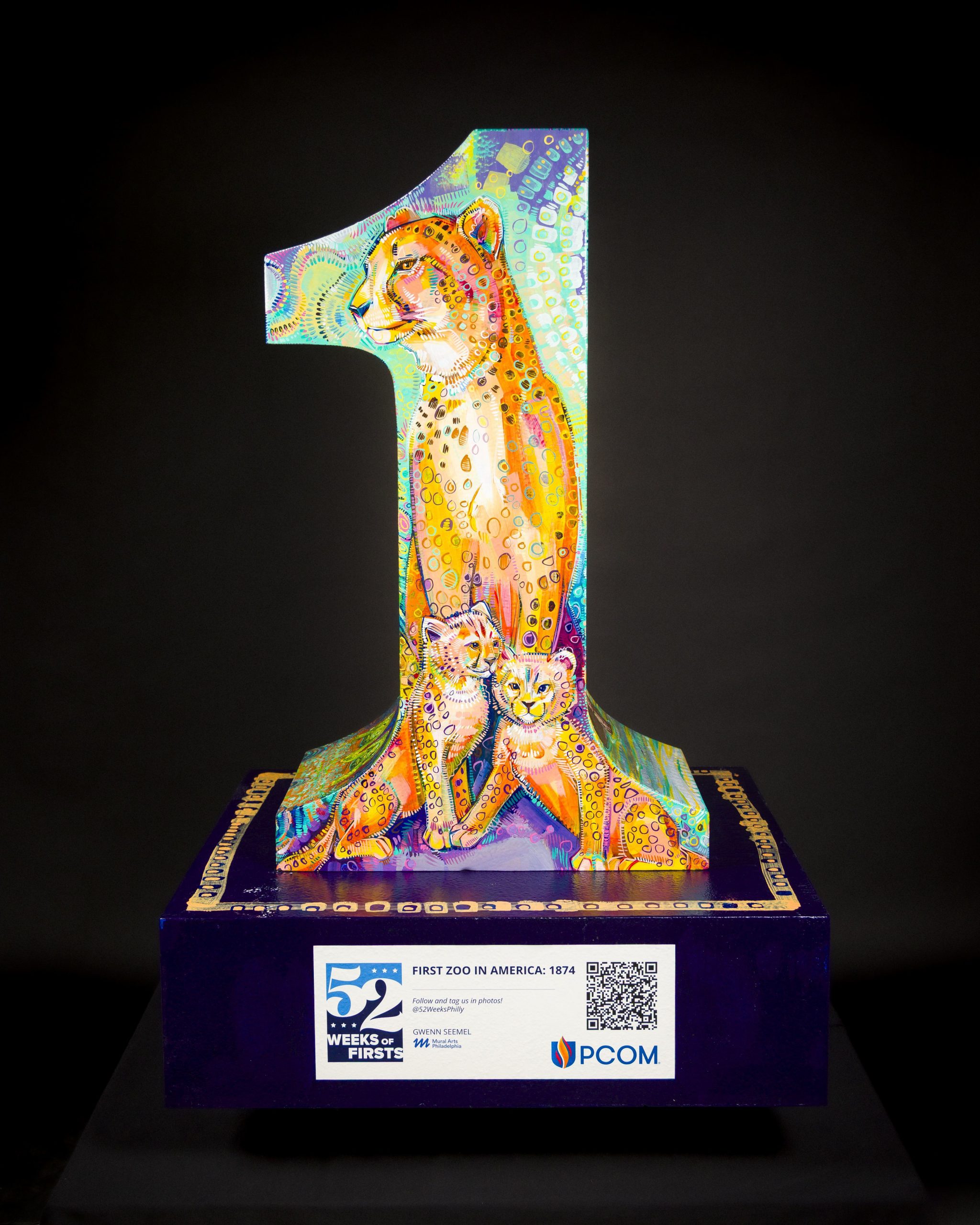
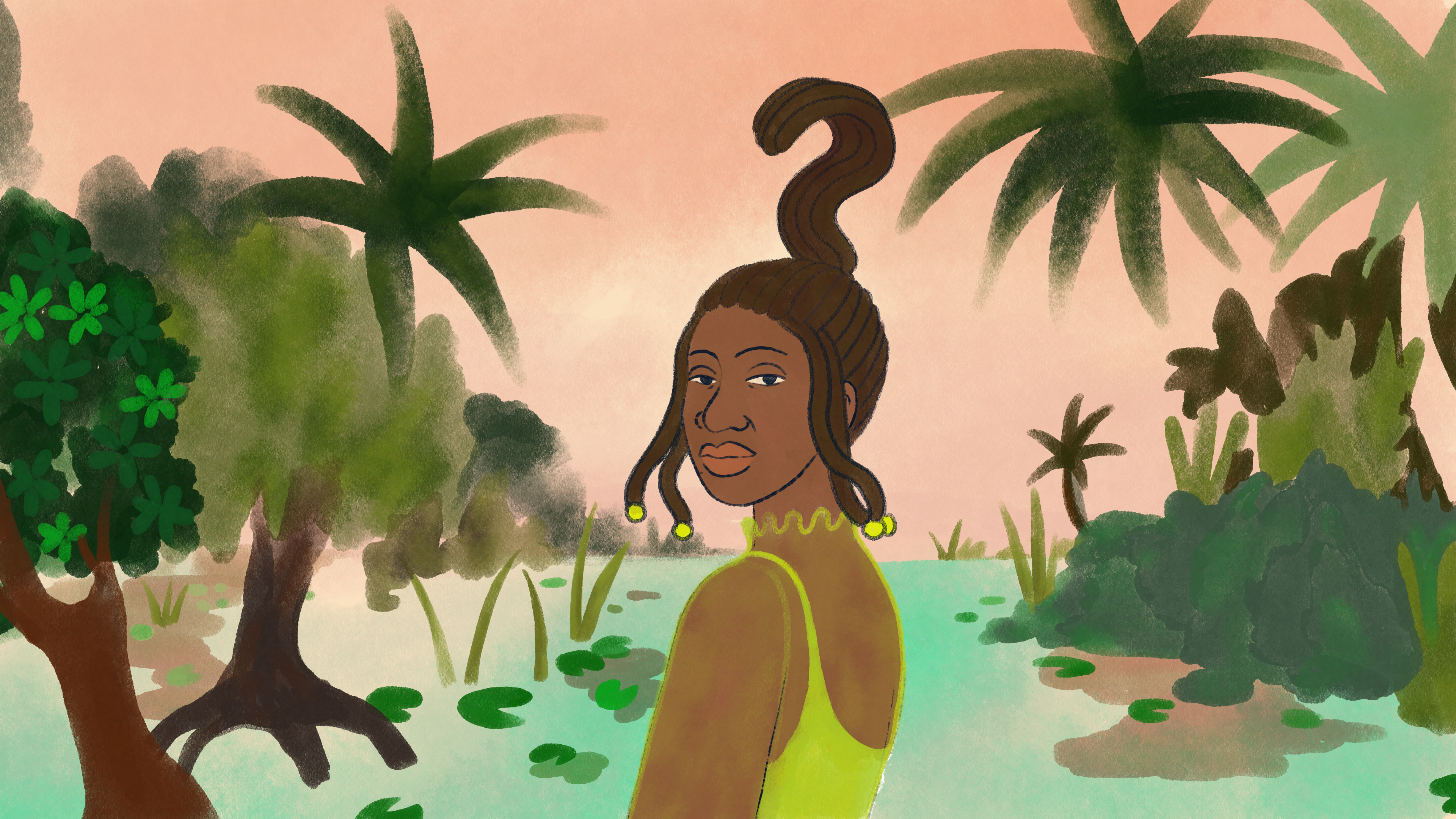
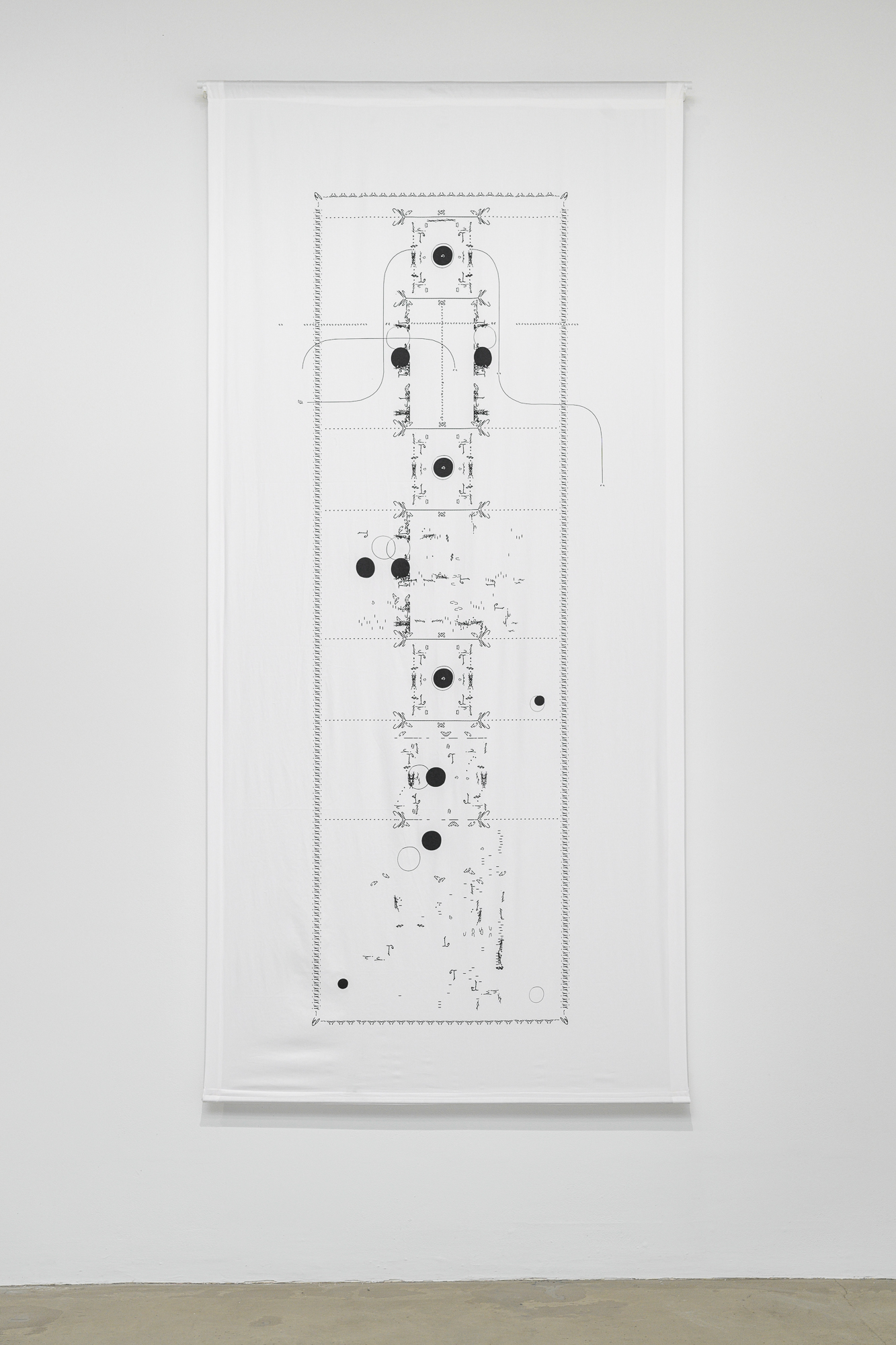
Artist Gwenn Seemel’s No. 1 captures many of the Philadelphia Zoo’s first milestones.Gwenn Seemel and Colibrà Workshop
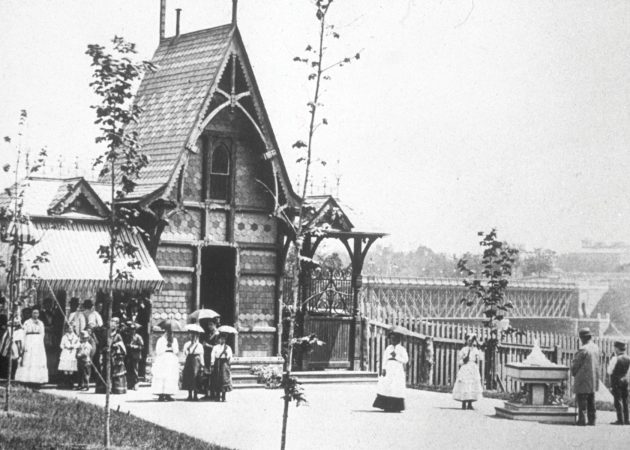
Organizers started building in earnest immediately, but the Civil War slowed down the process. (Camac served as a surgeon in the Union Army.) After the war’s end, in the late 1860s, the city granted the Zoological Society a lease to choose land. The society went with a 42-acre site in West Fairmount Park near the brand new Girard Avenue Bridge.
On July 1, 1874, America’s first zoo opened, in Philadelphia.
The Philadelphia Historical District will celebrate this moment Saturday at the Philadelphia Zoo. The party is part of the historic district’s weekly “Firstivals,” a yearlong recognition of places and events with Philly roots.
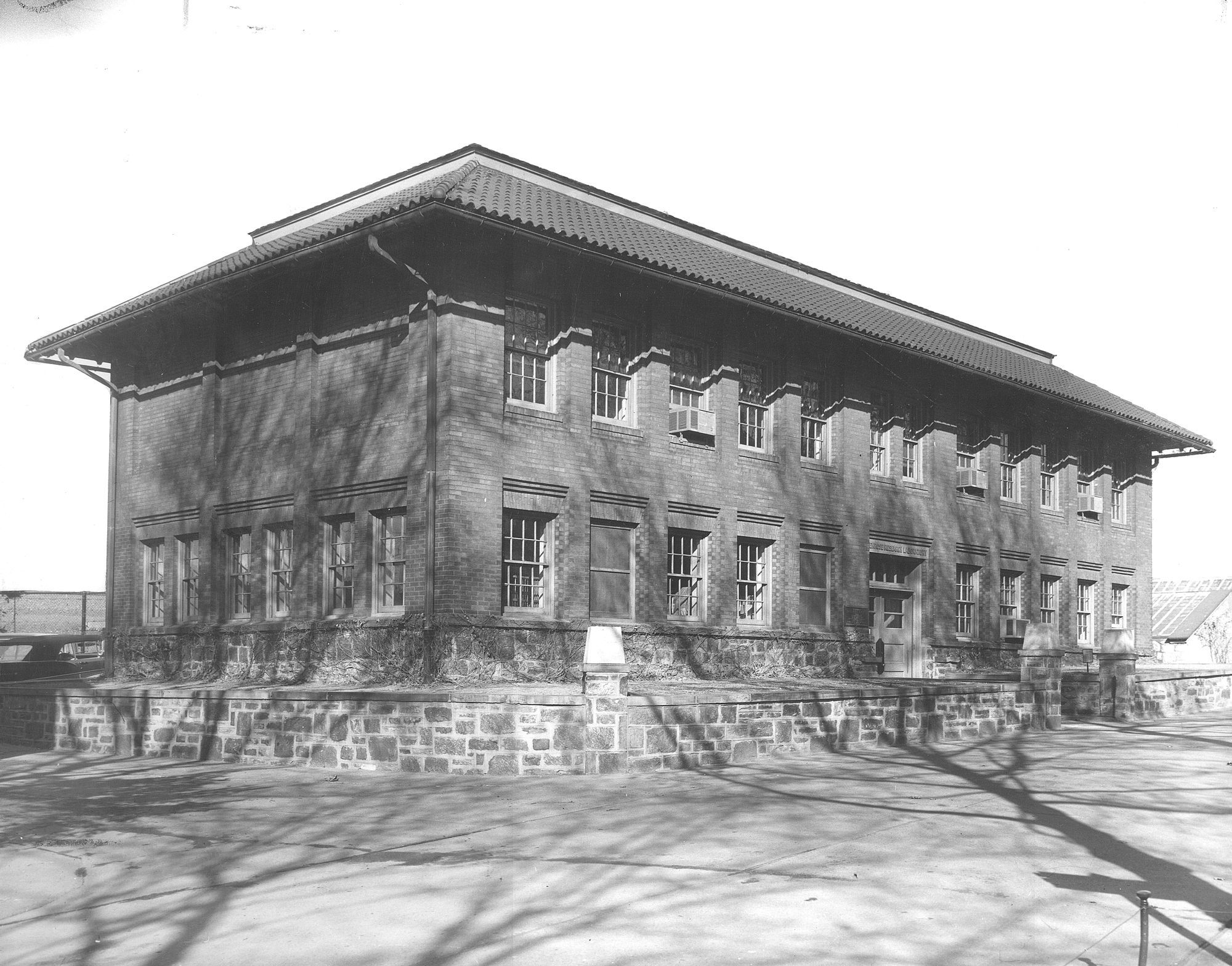
In 1901, the Philadelphia Zoo opened the Penrose Research Laboratory, the world’s first zoological research laboratory.Philadelphia Zoo
Admission to the Philadelphia Zoo on opening day was 25 cents for adults and 10 cents for children. The orchestra played as visitors strolled through the gardens.
Featured exhibits included a prairie dog village, that, according to a 1874 article in The Inquirer, “was not to be found in any other zoological garden in the world.” There was also a buffalo range, a beaver pond, alligators, and “five specimens of grizzly bears.”
More than 227,000 visitors arrived by foot, horse carriage, steamboat, and passenger train during the zoo’s first eight months.
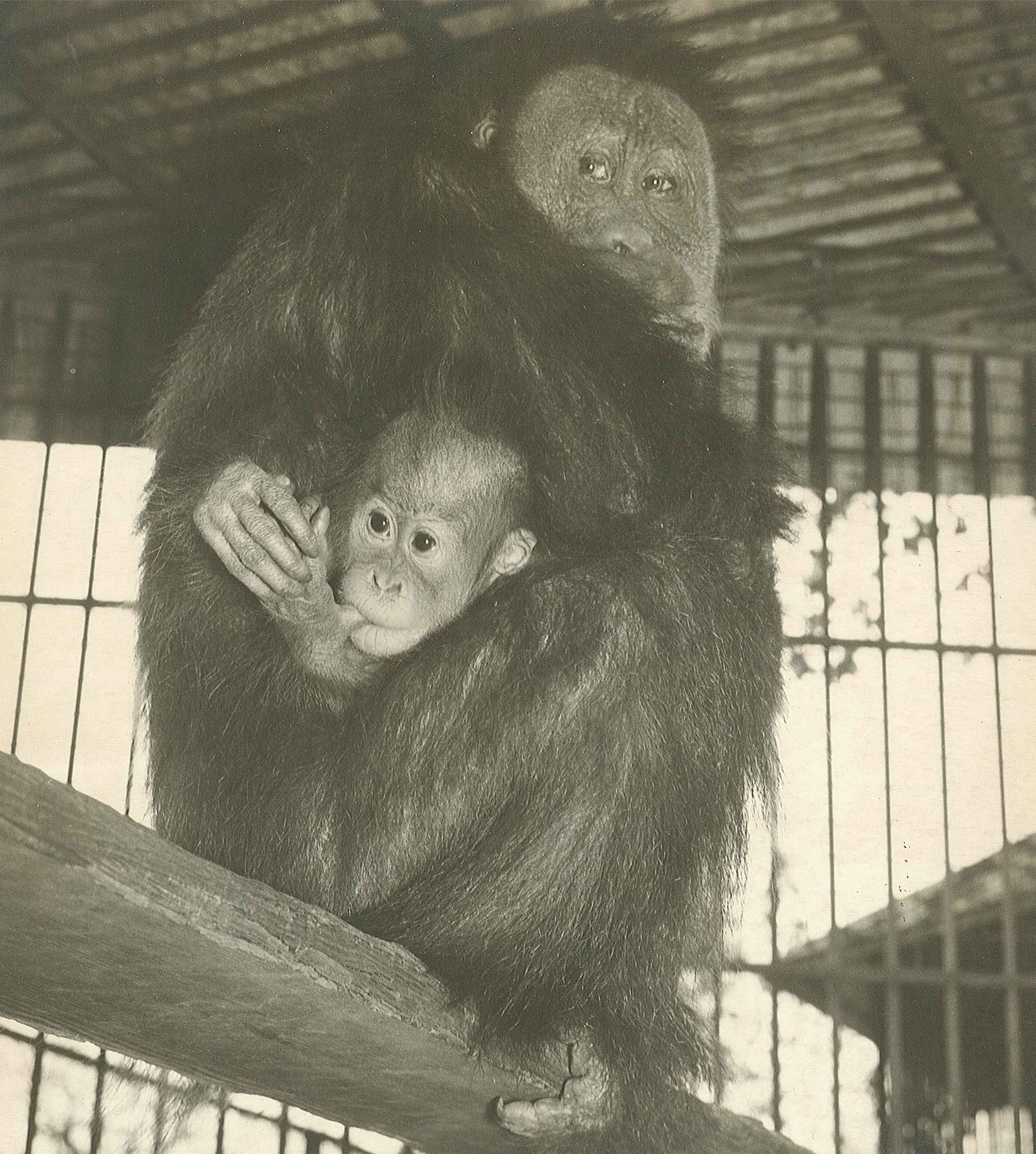
Momma Maggie and Baby Lucky, the first orangutan born in an American zoo, in 1928.The Philadelphia Zoo
Apart from being the first zoo, the Philadelphia Zoo boasts many of the nation’s other zoological firsts.
In 1901, the Philadelphia Zoo opened the world’s first-ever animal health research laboratory, where Charles B. Penrose pioneered the idea of giving zoo animals balanced diets.
In 1928, the first orangutan and the first chimpanzee to be born in an American zoo were born here.
In 1935, Ellen P. Corsen White formulated the first food for zoo animals, called Zoo Cake, which helped the zoo animals be less susceptible to disease.
In 1956, the first cheetahs to be born in an American zoo were born in Philadelphia.
In 1974, the Philadelphia Zoo and the Portland Zoo became the nation’s first officially accredited zoological gardens.
Even today, the Philadelphia Zoo continues to be run by the Zoological Society of Philadelphia. In 2009, it opened a state-of-the-art bird center, and in 2024, the Philadelphia Zoo celebrated its 150th birthday.
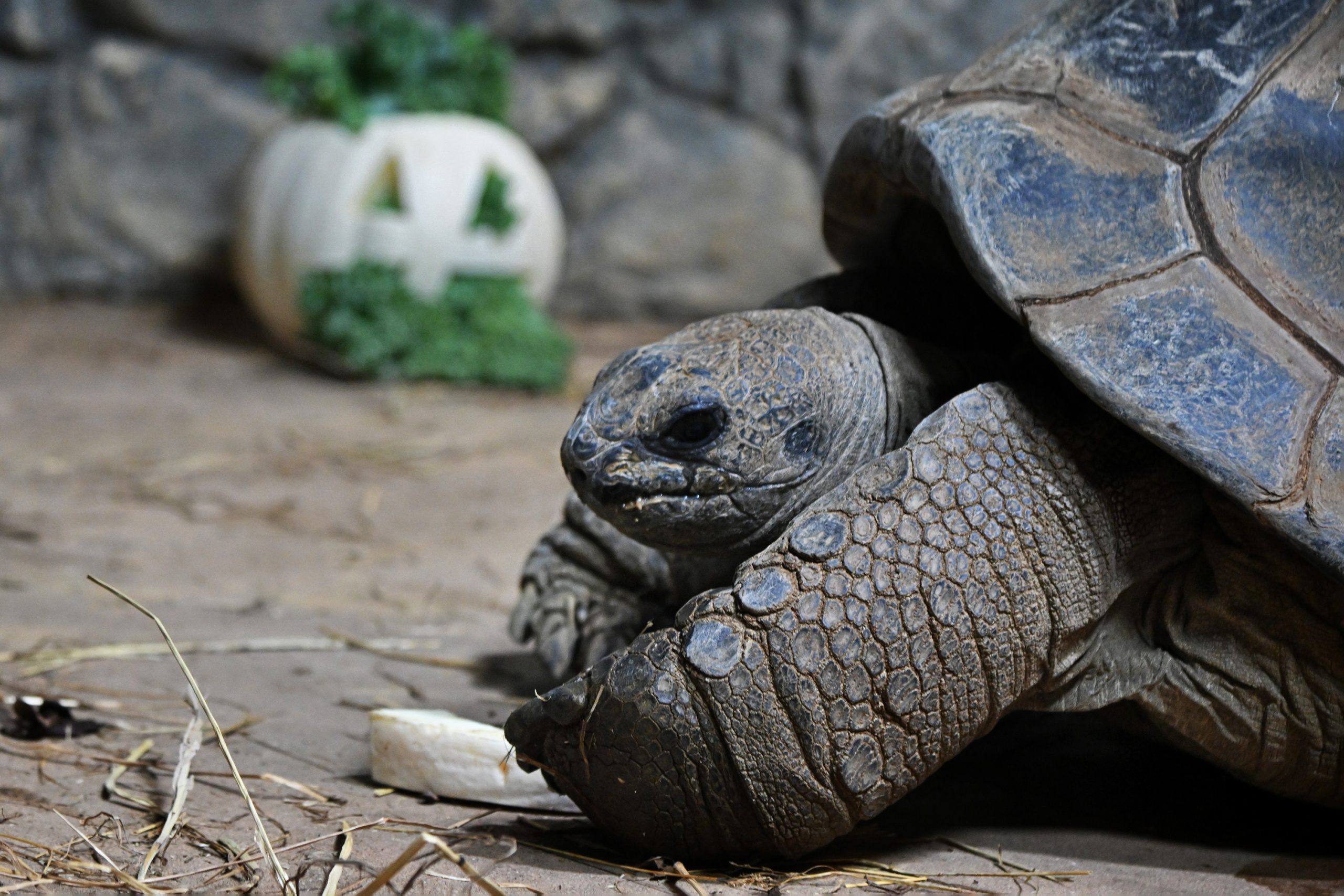
Galapagos tortoise Mommy (estimated to be 97 years ofd) eats a piece of pumpkin at the Philadelphia Zoo on Oct. 28, 2025.Tom Gralish / Staff Photographer
“The Philadelphia Zoo is a part of the fabric of this city,” said Jo-Elle Mogerman, president and CEO of the Philadelphia Zoo. “We have served as a window into the world of wildlife for generations.”
This week’s Firstival is Saturday, Aug. 8, 11 a.m.-1 p.m., at the Philadelphia Zoo, 3400 W. Girard Avenue.
Ahead of the 15th annual celebration of films by Black, brown, and Indigenous filmmakers, we spoke to the local filmmakers whose projects will be featured this year.
They told us about the impact of BlackStar on their careers, Philly’s influence on their filmmaking, and their favorite spots to hang out after a long day on set.
Answers have been edited for length and clarity.
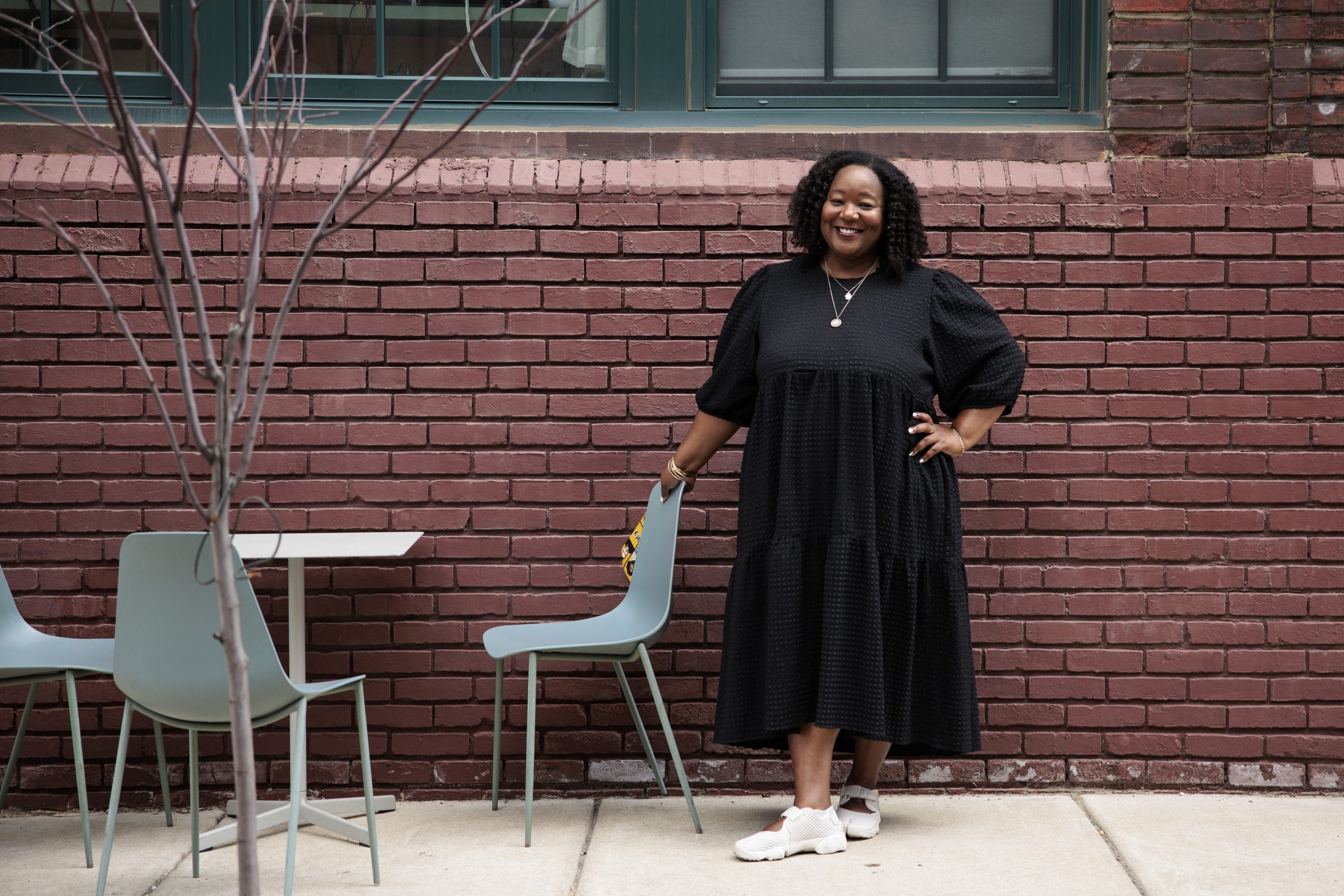
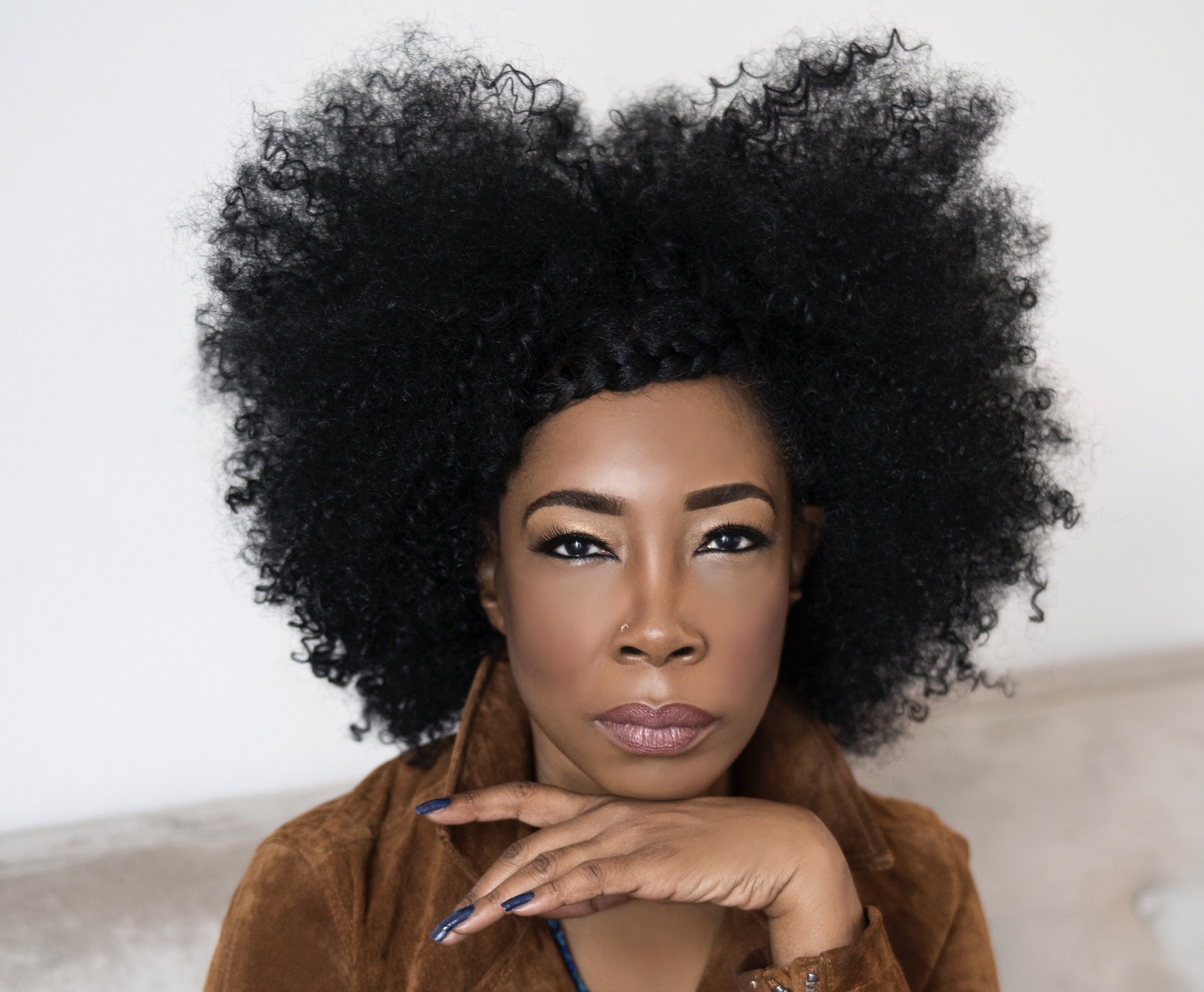
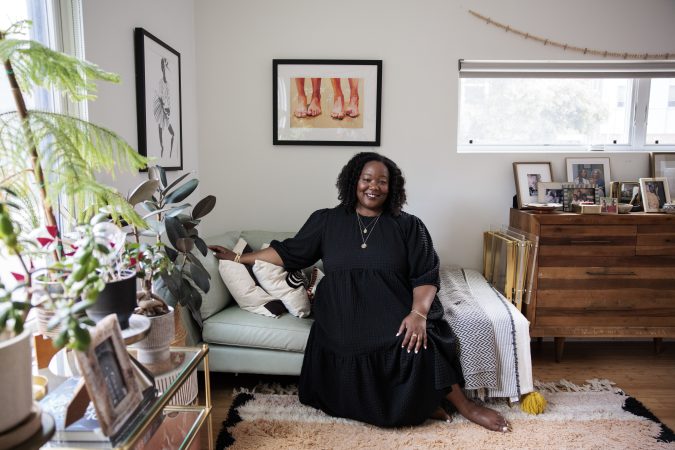
Maori Karmael Holmes poses for a portrait near Forin Cafe on July 22, 2025, in Philadelphia. Her 2006 film, “Scene Not Heard: Women in Philadelphia Hip Hop,” will play at this year’s BlackStar Festival.Monica Herndon / Staff Photographer
Maori Karmael Holmes
‘Scene Not Heard: Women in Philadelphia Hip Hop’
Aug. 7, 4:30 p.m., Suzanne Roberts Theatre and streaming virtually
What’s your film about?
Taking Scene Not Heard: Women in Philadelphia Hip Hop on the festival circuit back in 2006 gave me the bug to launch a festival of my own — the Black Lily Film & Music Festival in 2007. So many of the relationships I made in its production are still relevant to the festival’s origins.
Holding the “hometown premiere” at International House in January 2006 to a packed house [established] my connection to that venue, which was where the first BlackStar took place. Aside from BlackStar, seeing this film and the [culture] scene two decades later, and with some issues still being relevant, it’s sobering in some ways.
What’s your connection to Philly?
I moved to Philadelphia from LA in 2001 to pursue my Master of Fine Art in Film & Media Arts at Temple University. Prior to that, I’d visited the city a few times, as I have some very dear friends from here. Since then, I’ve made my home here and have so many beautiful friends and chosen family now.
How has Philadelphia inspired you as a filmmaker?
The legacy of Black struggles for freedom and intellectual pursuits abounds in Philadelphia, and I am constantly learning about both historical marvels and uncovering new artists and thinkers who live here in the present. I have found a lot of opportunities in my time here, and as someone with a lot of ideas, it has afforded me plenty of space to try out new things in an incredibly supportive community.
How valuable is BlackStar for filmmakers of color?
I think that BlackStar is valuable for filmmakers of color as a platform for everyone to know about their work. Sometimes in mainstream spaces, nuance and humor are misunderstood, or there’s a need to overexplain. BlackStar offers a space for artists of the global majority to present their work in a space that goes beyond the 101 understanding.
We also value experimentation and a lot of artists of color are tapping into ancestral esthetics that fall outside of our contemporary Eurocentric conventions. I imagine it is affirming to present work to audiences who appreciate that kind of exploration.
Your favorite Philly bar or hang when you’re out on the town?
I do a lot of eating out (and in) with my friends. Picnic, which is a few blocks away from my house, is a current favorite.
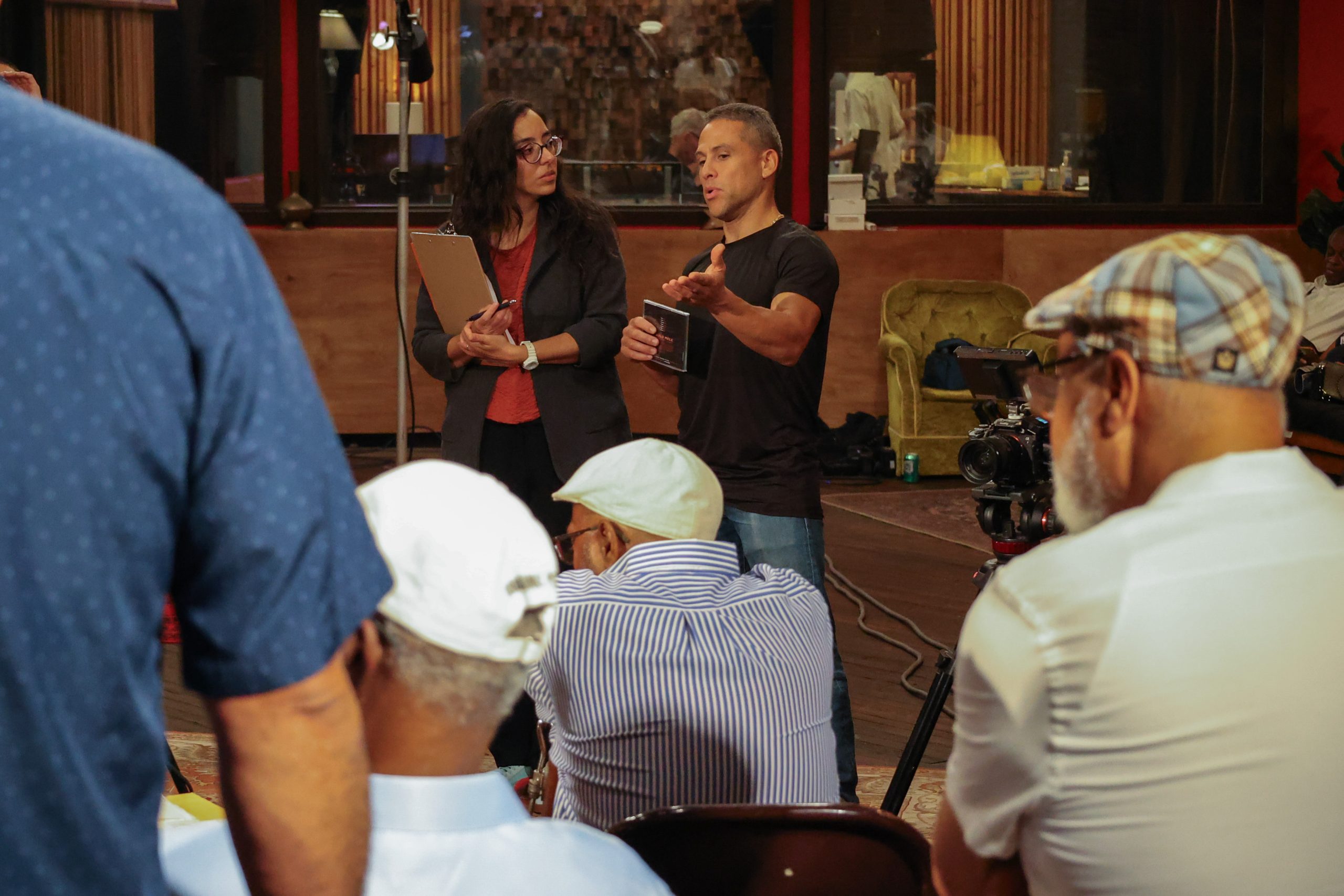
Directors Melissa Beatriz & Andrés Cisneros are set to premiere their short documentary, “Philly Rumba,” at the 2026 BlackStar Film Festival.Courtesy of Luiza Barreto
Melissa Beatriz and Andrés Cisneros
‘Philly Rumba’
Aug. 6, 2:30 p.m., Perelman Theater and streaming virtually
Tell us about your film’s role in starting BlackStar?
Philly Rumba is about a group of African American men in Philadelphia who gravitated toward Cuban rumba as an expression of their African roots during the Civil Rights and Pan African Movements. More than 50 years later, they continue to play rumba together, proving that music can create community and solidarity in difficult times.
What’s your connection to Philly?
MB: I’ve been based in the Philly region for the past 16 years. During my first few years in Philly, I worked with local Latine serving nonprofit organizations in North Philadelphia, including Taller Puertorriqueño and Esperanza. From there, my first community media roles were with Scribe Video Center (shout out to Street Movies!) and Movement Alliance Project.
Philly provided the space for my interest in community media and arts and culture to develop and flourish throughout this time. I’ve gotten to build a network of artists and cultural workers, and develop my body of work that focuses on visualizing underrepresented stories of communities of color in the region.
AC: I came to Philadelphia for what was supposed to be a temporary teaching job. Eighteen years later, the city is home. Through artists and communities like Kùlú Mèlé and Conjunto Philly, I’ve continued to learn, collaborate, and build projects rooted here.
How has Philadelphia inspired you as a filmmaker?
MB: Philadelphia has taught me the power of collaboration, and supported my creative style. I am inspired by the tight-knit community of independent filmmakers and artists, which is often using the arts as a way to catalyze impactful change.
Philly Rumba is technically my first independent film as a director but it was the years of collaborating with the Philly arts community that prepared me to make this short documentary.
AC: A way to empower a community is to give them a chance to show you who they are. As an educator and musician, I know how art brings people together. Filmmaking became another way to preserve culture and tell stories that deserve to be seen.
How valuable is BlackStar for filmmakers of color?
MB: BlackStar is essential for filmmakers of color, as it is a culturally affirming space. It rejects the mainstream gaze and celebrates films that are from the perspectives of filmmakers of color and their broader communities. These films are not exploitative, but instead are deeply rooted in diverse histories and traditions.
AC: BlackStar is an ecosystem of artists, mentors, and collaborators that gives independent filmmakers of color the support and visibility our work deserves.
Your favorite Philly bar or hang when you’re out on the town?
MB: Renata’s in West Philly, Bok Bar in South Philly, and El Nopalito in Camden County.
AC: For years, it was ending the day at rehearsal and making music with friends. These days, I’m just as happy ending the day at home with my family.
Filmmaker Donn Thompson Morelli’s short documentary, “The Philadelphia Sensei: Lovett Hines,” will premiere at the 2026 BlackStar Film Festival.Courtesy of Whitney T
Donn Thompson Morelli
‘The Philadelphia Sensei: Lovett Hines’
Aug. 9, 4:30 p.m., Perelman Theater and streaming virtually
In your own words, what’s your film about?
My film introduces Philadelphia music educator Lovett Hines, teacher to generations of acclaimed artists. Believing there was a gap between the visibility of the artists and the visibility of the person who helped shape them, I sought to heal that gap. I was curious about the idea of legacy through others, how one person can influence culture without necessarily being centered in it.
Lovett’s impact is deeply felt, but not widely documented in this way — until now. The Philadelphia Sensei: Lovett Hines is an introduction to his living legacy and what happens when someone sees you before you see yourself.
What’s your connection to Philly?
West Philly raised me. My family’s musical, two-story rowhouse on Osage Avenue was my launching pad. It’s where I wrote my first poetry and songs.
It continues to drive me to tell stories and buoys every reinvention, including my directorial debut. Philly being Philly, actor Coleman Domingo and I shared an alley. Philly is a magical place.
How has Philadelphia inspired you as a filmmaker?
Philadelphia has main character energy. It inspires me to lean in, watch, and listen. Extraordinary stories are hiding in plain sight.
How valuable is BlackStar for filmmakers of color?
Very. BlackStar elevates our stories and amplifies them to the world. This year, that includes my film about arts education at a time when arts funding is increasingly under pressure. There’s hope in that, and a challenge for culture to course correct.
Your favorite Philly bar or hang when you’re out on the town?
Lately, Honeysuckle. When my creative battery is blinking red, the food, art, and the warm communitythere are a perfect reset.
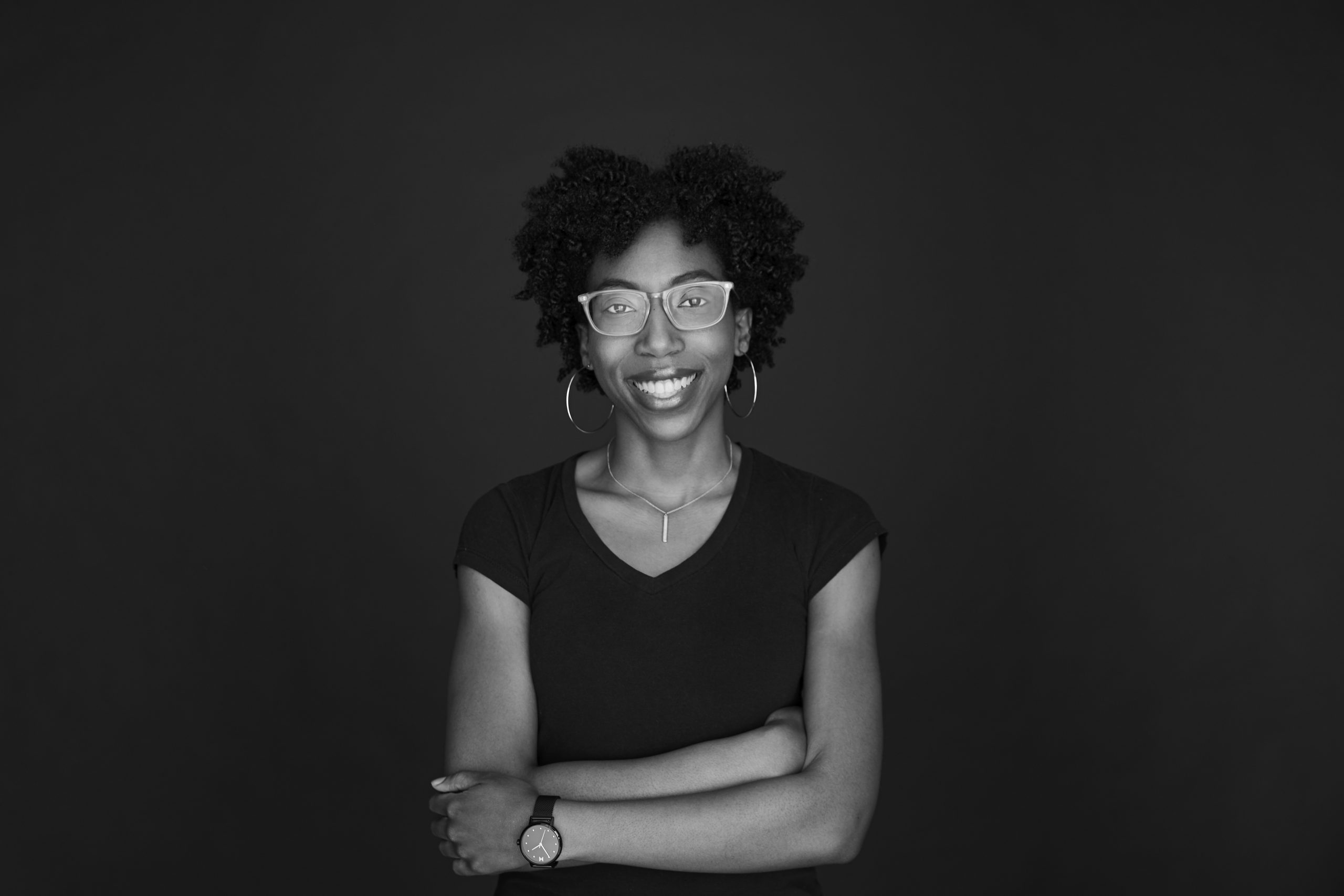
An image of filmmaker Gabrielle Patterson, whos short documentary, “The Seeds We Carry,” will premiere at the 2026 BlackStar Film Festival.Courtesy of Jonathan Pushnik
Gabrielle Patterson
‘The Seeds We Carry’
Aug. 6, 2:30 p.m., Perelman Theater and streaming virtually
In your own words, what’s your film about?
It’s a short documentary about the power of growing, cooking, and sharing food in community. The film weaves together intimate portraits of urban farm stewards in Southwest Philadelphia, whose everyday acts of community care nourish bodies, while also nurturing belonging, forging cross-cultural kinship, and preserving a sense of home amid the pressures of gentrification and displacement.
What’s your connection to Philly?
I came to Philadelphia in 2011 to attend the University of Pennsylvania, where I received my Bachelor of Arts in Fine Arts.
After graduating, I decided to stay in Philly, and the city quickly became my home as I formed deeper bonds with friends, explored new interests, and developed my career in animation and design.
In late 2025, I decided to move back to the Atlanta area to live closer to my parents and sister. However, Philly will always feel like home.
How has Philadelphia inspired you as a filmmaker?
I am inspired by the ordinary, but also by the unexpected wonders of the city’s landscape, from an especially lush front-yard garden to a humorous or insightful conversation with a neighbor.
I am also inspired by fellow artists and filmmakers around me who navigate all sorts of barriers and obstacles to bring their creative visions to life and see them through until the end.
I don’t know if I would be a filmmaker if not for this city. I am grateful for organizations like the Leeway Foundation, Scribe Video Center, People’s Media Fund, SIFT Media Collective, and Termite TV Collective that have supported me on my journey.
How valuable is BlackStar for filmmakers of color?
When I think of what a film festival should be, I think of BlackStar. The quality and diversity of films from around the world is incredible, as is the care and consideration for the participating filmmakers and audiences.
For filmmakers of color, the festival is an amazing opportunity to see how the themes we explore in our work are interconnected, despiteus often coming from vastly different regions and cultures.
Your favorite Philly bar or hang when you’re out on the town?
Ifit’s summertime and the weather is nice, Pentridge Station for DJ Jamz’s Watermelon Glow party. When I’m in need of chill or cozier vibes, dinner and board game night with friends is the way to go.
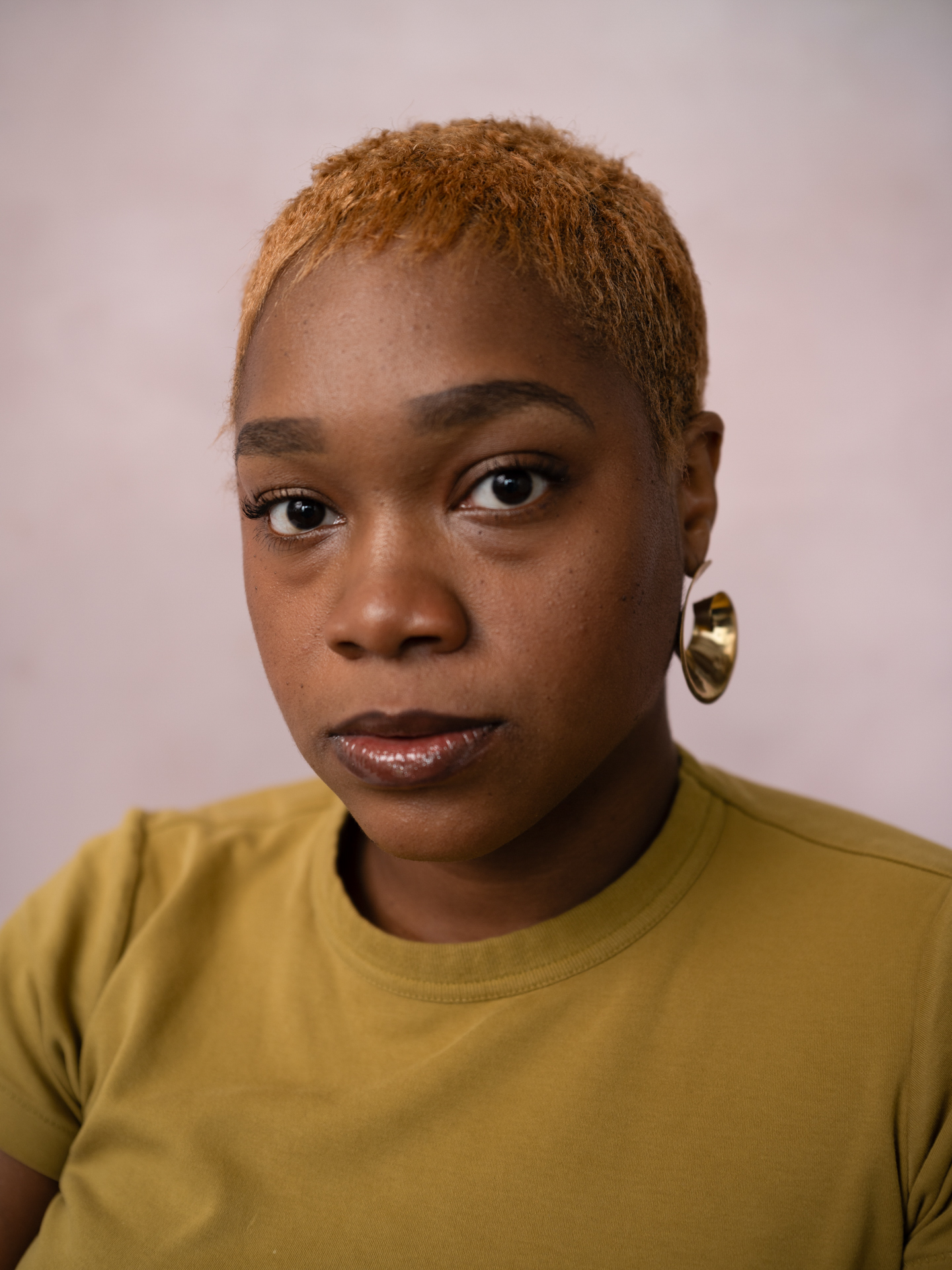
Filmmaker Tshay Meade’s “Tell Me When You Get Home” will make its East Coast premiere at the 2026 BlackStar Film Festival.Courtesy of Naomieh Jovin
Tshay Meade
‘Tell Me When You Get Home’
Aug. 8, 5 p.m., Suzanne Roberts Theatre and streaming virtually
In your own words, what’s your film about?
Tell Me When You Get Home is about an uncle and niece who are making sense of loss, love, and connection during a family party. The film is semi-autobiographical in that it draws on my experience of losing a close loved one.
The film is my attempt to create a portrait of a family reflecting on their connection to each other, both with people who are living and those who have passed on.
What’s your connection to Philly?
I’m a transplant to the city, but in a sense, I grew up here. I moved to Philadelphia for college and have pretty much been here since. In 2015, I began volunteering with BlackStar Film Festival and Scribe Video Center. They aretwo incredible film organizations in the city where I sharpened both my artistic sensibility and political understanding. BlackStar became my film school.
How has Philadelphia inspired you as a filmmaker?
During my six years as a volunteer and staff member at BlackStar, I watched hundreds of movies from filmmakers of all scales and sizes, learning from people who make work across genre, duration, approach, and attitude. This was a formative, nurturing environment for me as a young person interested in the arts, and it inspired me to pursue a life in independent cinema.
A decade later, I’m still in Philly making work with many of the people I met at BlackStar.
How valuable is BlackStar for filmmakers of color?
BlackStar places cinematic work within a context of cultural organizing, which inspires attendees to think about the aesthetic and social implications of the work. It’s about more than watching a movie. The films, panels, side convos, and parties create a container for dialogue, exchange, and uplift around the pressing issues of our time.
Your favorite Philly bar or hang when you’re out on the town?
Blue Corn in South Philly.
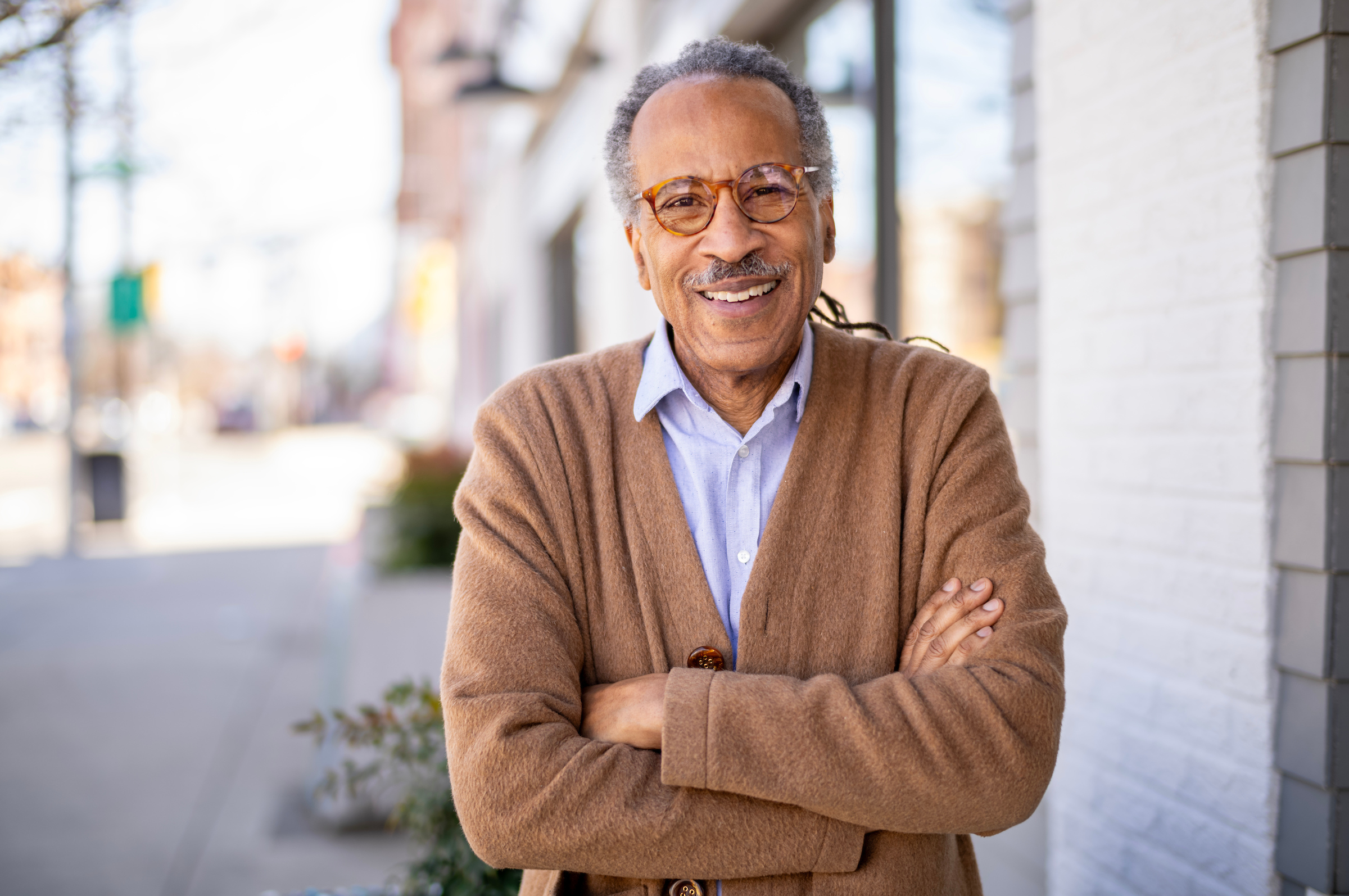
Louis Massiah at the Scribe Video Center in Philadelphia on March 12, 2024.Courtesy of Laurence Kesterso
Louis Massiah
‘Tenants of Lenapehocking in the Age of Magnets’
Aug. 6, 5:30 p.m., Perelman Theater and streaming virtually
In your own words, what’s your film about?
Tenants is a biography of North Philadelphia, as told through the personal stories of 10 present-day and former residents.
It reminds us that we live on a patch of land that wasstewarded by the Lenape for millennia. The period that the film covers is the late 19th century to the mid-20th century, the Age of Industrialization and the Great Migration of Black people from the South to Philadelphia — the Age of Magnets.
And the idea of Tenants is to make clear the impermanency of home. The visuals of the film come primarily from the extraordinary photo archives of the Charles L. Blockson Afro-American Collection at Temple, specifically the photographs of John Mosely.
What’s your connection to Philly?
I’m a lifelong North Philadelphian, still living in the family house where I grew up. And it’s funny, I seldom say Philly. The word Philadelphia helps me stay clear about the history and complexity of the place.
How has Philadelphia inspired you as a filmmaker?
Philadelphia has been a center of time-based media storytelling, film culture, and film industry — from the work of Sigmund Lubin beginning in the late 1890s to the independent film and video movement that blossomed in the 1970s and 1980s.
I must add that my father, Frederick Massiah, was the contractor who built the Royal Theater on South Street. Film for me is very much a Philadelphia thing and a personal thing.
How valuable is BlackStar for filmmakers of color?
What the visionaries of BlackStar have understood is that film is meant to be a communal activity. A film screening is an opportunity to bring our best selves together to share. BlackStar allows film to be part of a much larger project of building and strengthening community. Film is the inspiration of necessary conversations.
Your favorite Philly bar or hang when you’re out on the town?
It’s a toss-up. Madis Coffee shop in West Philadelphia is my place to be nourished if I’m at Scribe Video Center on Lancaster Avenue. If I’m in North Philadelphia, Honeysuckle is the place I dream about because they take food and food culture so deliciously seriously.
The article was updated with responses from Andrés Cisneros and Louis Massiah.
Watching Maori Karmael Holmes’ 2006 documentary Scene Not Heard: Women in Philadelphia Hip Hop is a sweet throwback to the era of Questlove and Mike Nyce on the Tastytreats turntables at Fluid Nightclub.
It’s remembering what it was like seeing Jill Scott, Floetry, Kindred the Family Soul, and the Jazzyfatnastees at Black Lily.
It calls to mind open mic poetry at Crimson Moon coffee shop, the simplicity of Razr cellphones, and the ubiquity of the Honda Accord. Before there were Instagram stories and Facebook feeds, Megan Thee Stallion and Cardi B, Holmes made Scene, an authentically Philly exploration of the life of the lady emcee.
The 44-minute documentary, featuring legendary rappers Bahamadia and Monie Love, deejays Lady B and Dyana Williams, and poets Ursula Rucker and Lady Alma will screen again Friday afternoon at 4:30 p.m. during the 15th BlackStar Film Festival at the Suzanne Roberts Theatre.
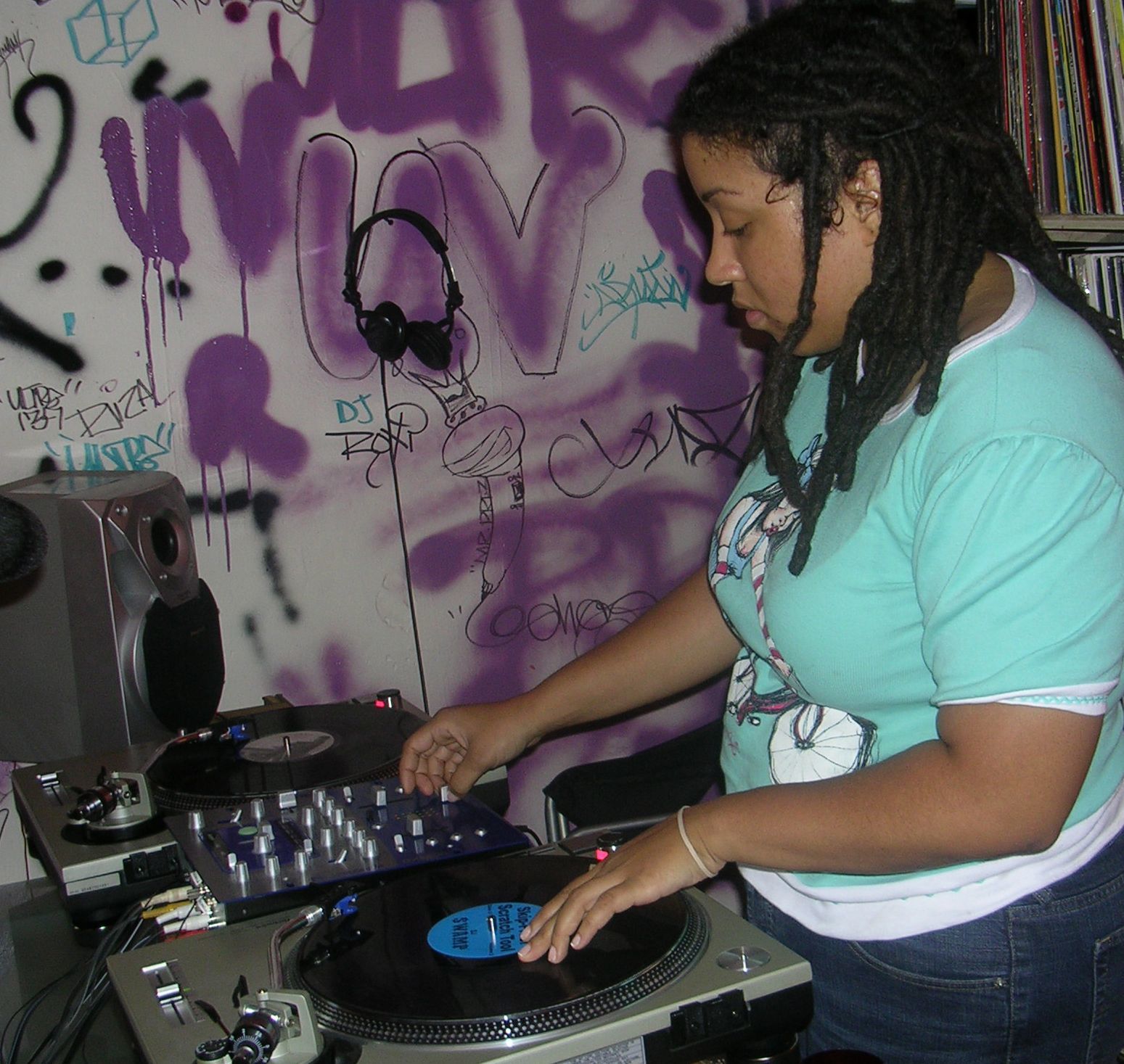
A still from Maori Karmael Holmes’ 2006 documentary “Scene Not Heard” centering the experiences of lady emcees in hip-hop. Pictured here is DJ Ultra Violet.Maori Karmael Holmes
“Scene Not Heard is a part of the BlackStar origin story,” Holmes said in a video call last week. She didn’t know it back then but Scene — her thesis project for her Temple University MFA — would become BlackStar’s foundation.
It feels like a lifetime ago.
“There are so many people who identify me with BlackStar, but they have no idea that I’m a filmmaker. They see me as an arts worker,” said Holmes, who has since released several documentaries and directed the music video for India Arie’s 2018 single That Magic.
Friday’s screening is the first time Scene will be shown at BlackStar. Holmes is a little nervous about rereleasing Scene to a new generation of film festivalgoers, but she’s also curious about what they’ll think about watching the film she made when the festival itself was a distant dream.
For Scene, Holmes masters the art of being the silent observer. She gets more than a dozen women in Philly hip-hop to talk candidly about what it feels like to assume roughneck personas or bepressured to dress scantily to be seen on the scene. That couldn’t have been easy when the male gatekeepers at the time were as vindictive as they were entitled. The women talk about their love of hip-hop but don’t deny how the culture marginalized them.
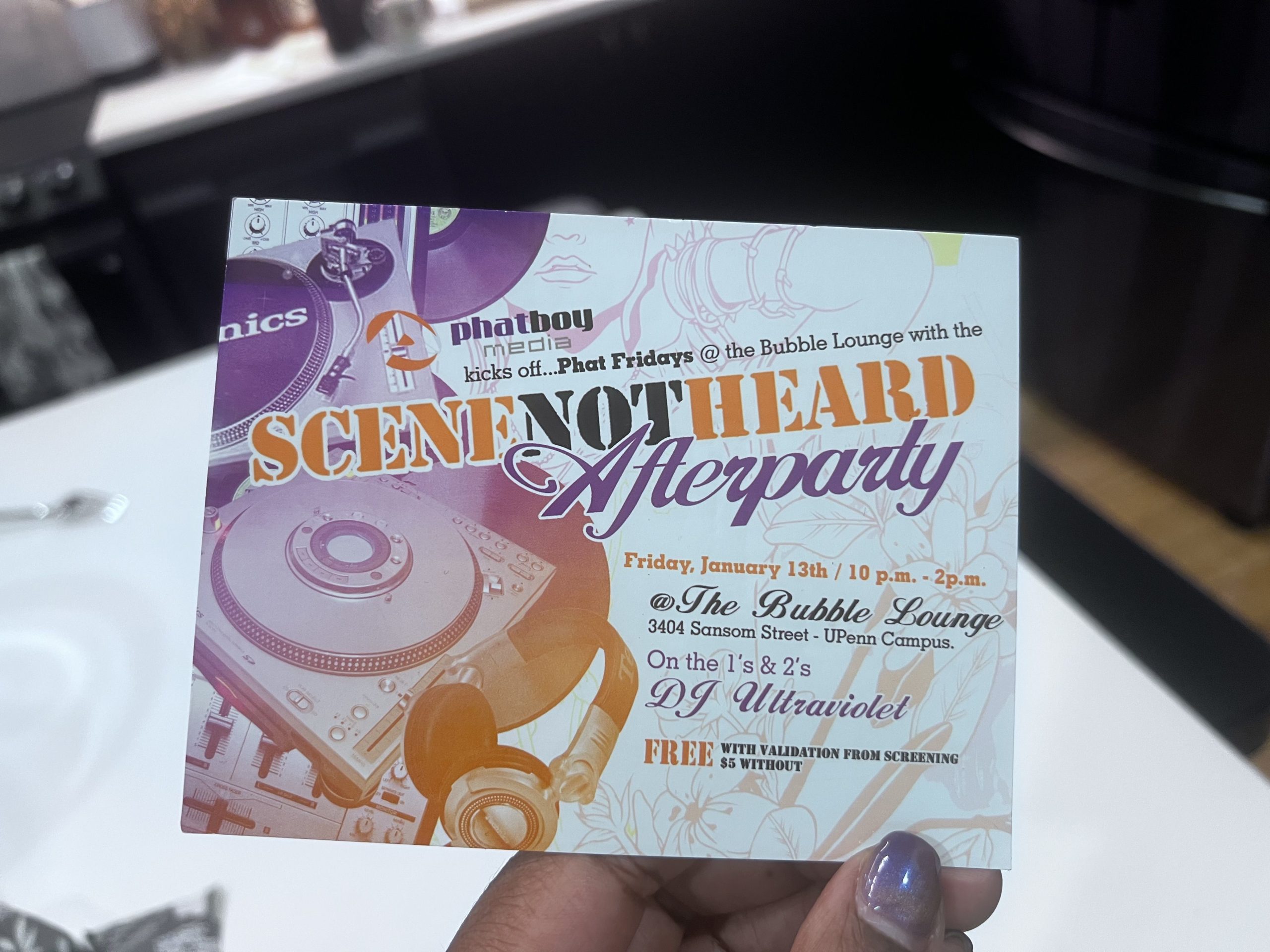
The flyer for the afterparty to the 2006 screening of Maori Karmael Holmes’ “Scene Not Heard” at the International House.Courtesy of Maori Karmael Holmes
Bahamadia cries, recalling how hard it was to break through and how in 2005 she was fighting to remain relevant.
That was 20 years ago. I wondered aloud how she felt now. Holmes wasn’t sure.
Bahamadia is invited to the screening but hasn’t RSVP’d yet. By the end of Scene, it’s clear that Philly B-girls of the late ’90s and early aughts made a way for Cardi, Megan, Tierra Whack, Latto, and Doechii to find their footing in the industry.
“There is so much more visibility for women in hip-hop now,” Holmes said. “It used to be you got one at a time. Nicki Minaj was the last of that era.”
The old and the new at the 15th BlackStar
Scene is one of 91 films from 43 countries featured in the 2026 BlackStar Film Festival, more than double the number of films shown at the first fest in 2012. The festival runs Thursday through Sunday.
This year’s standouts include The Keeper, a horror film by Tananarive Due and her husband, Steven Barnes, scheduled for Saturday, 8:30 p.m., at the Perelman Theater.
Ethiopian filmmaker Haile Gerima’s five-part documentary Black Lions – Roman Wolves: The Children of Adwa will be screened throughout the four-day fest, culminating into a closing-night showing.
“It is the corrective story of the Ethiopian resistance to Italian occupation in Ethiopia,” explained festival director Nehad Khader.
The Daily Jawn Morning Show will return to the Kimmel. BlackStar’s health and wellness program has grown more robust over the years, featuring daily yoga, acupuncture, and breathing sessions.
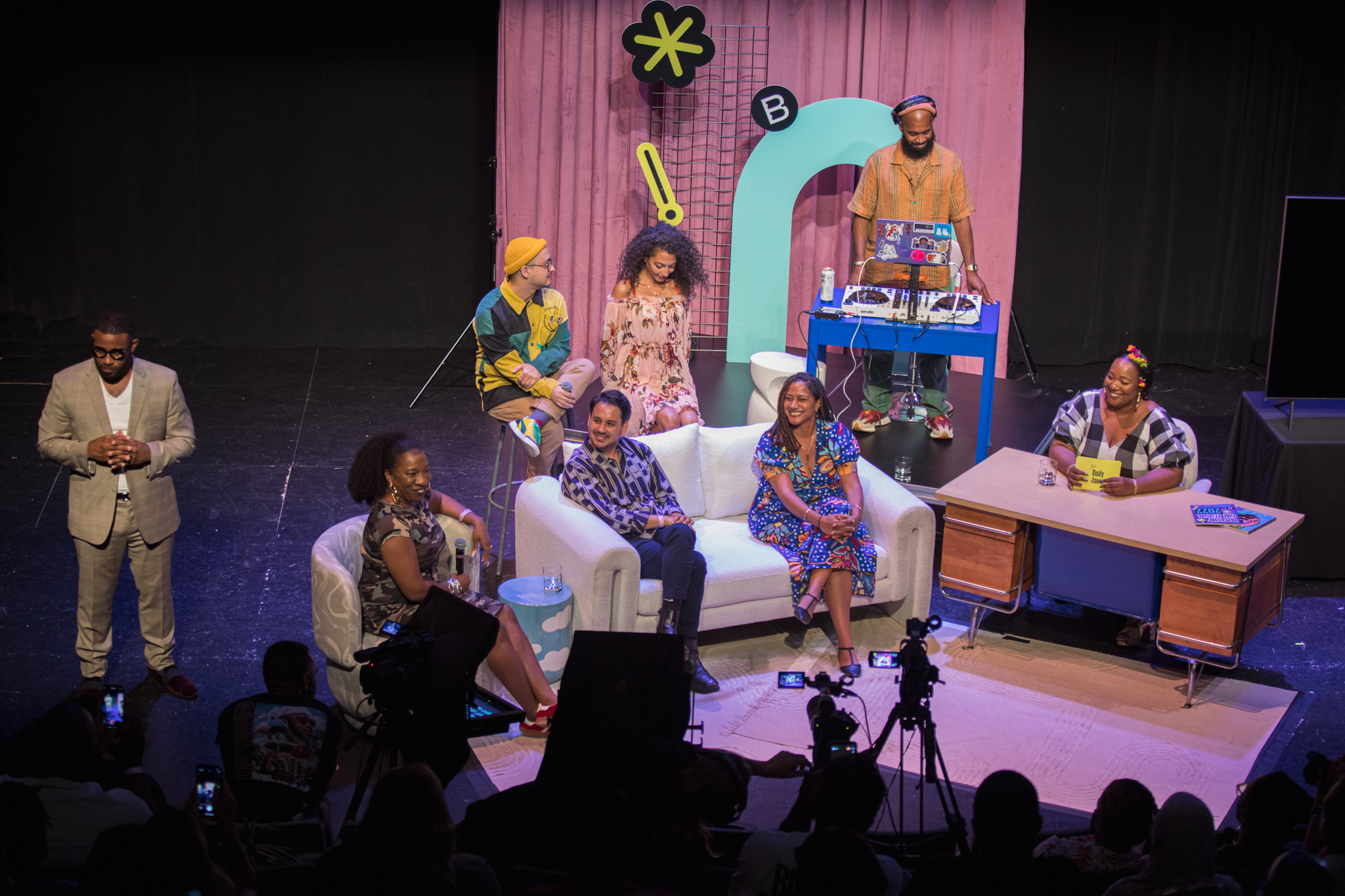
The Daily Jawn stage at the 2023 BlackStar Film Festival.Daniel Jackson for BlackStar Projects
Earlier this year, Scene went through a 2K restoration and was transferred to a digital file. Itis one of two retrospective films featured at the festival this year. Showing throwbacks, Khader says, pays homage to the independent filmmakers from previous generations.
The second is A Different Image, a 1982 film by Alile Sharon Larkin, exploring Black women’s beauty standards. It will be screened Sunday, Aug. 9, at the Wilma Theater. Like Scene, it speaks to how today’s generation of Black women’s mothers and grandmothers demanded to be seen on their own terms, setting the stage for their agency in this millennium.
“We have so many newcomers to BlackStar,” Khader said. “People of this generation may not know these stories. Scene Not Heard is a revival of Philly history, but it’s also Maori’s backstory.”
After its Philly run, Holmes screened the film at more than 40 hip-hop, women’s, music, and movie festivals between 2006 and 2007. Itwon best documentary at the Denver Pan African Film Festival and best short documentary at the Trenton Film Festival, among other awards.
The BlackStar Film Festival in Philadelphia puts Black, brown, and Indigenous artists center stage. Image is from 2022.Daniel Jackson for BlackStar Projects.
Scene, however, didn’t launch Holmes’ film career. She instead began building platforms for other artists to show their work. In 2007 and 2008, Holmes partnered with the Jazzyfatnastees Mercedes Martinez and Tracey Moore to create the Black Lily Film &Music Festival. It ran for two years.
“We launched with 40 films, from four continents over four days,” Holmes said.
BlackStar Film Festival founder Maori Karmael Holmes in 2021.Daniel Jackson
Today, BlackStar is the crown jewel under the BlackStar Projects umbrella. It operates with a $4 million budget and a staff of 15. It publishesthe biannual film journal Seen and hosts the William and Louis Greaves Filmmaker Seminar at Stanford University. BlackStar is a curation partner for programs at the Barnes Foundation and the Philadelphia Museum of Art.
Currently “Freedom Dreams,” a film exhibit Holmes cocurated at the Barnes with its Fleischner Family vice president for engagement of community engagement James Claiborne, is on view.
“The through line for me is curiosity,” Holmes said. “Everything I’ve done, from my exhibitions to my films, is because I’m curious about things. I want to figure out how to make things happen. Sometimes I’m teaching myself along the way. But that curiosity is what fuels me.”
Yesterday’s curiosity leads to today’s conversations.
DJs Sonny James, Lee Jones, Matthew Law, Rich Medina, Ultraviolet, and Mike Nyce at a 2014 party at Fluid Nightclub ( Tim Blackwell / Philly.com )
Friday afternoon’s screening will be followed up Saturday with a panel featuring Holmes, Martinez, and filmmaker Tina Morton. The conversation is to be moderated by Deesha Dyer, Barack and Michelle Obama’s Philly-born former social secretary and author of Undiplomatic. Dyer was a mover and shaker in the scene back in the day, too.
Thanks to the screening of Scene, BlackStar promises to be a reunion of Philly’s hip-hop greats. There will be reminiscing. The scene has changed so much.
The Black Lily is no more. Tastytreats is over. Crimson Moon is closed.
“That film represents a time, the ending of a time, when people went to the culture,” Holmes said. “Now, culture comes to us on YouTube.”
This weekend, we can see the culture for ourselves at BlackStar.
The BlackStar Film Festival 2026 will screen movies throughout Philadelphia from Thursday, Aug. 6, through Sunday, Aug. 9. For a complete schedule, visit BlackStarProjects.org.
Albert Gury, 74, of Philadelphia, lifelong painter, former chair of the painting department at the Pennsylvania Academy of the Fine Arts, award-winning lecturer at the old University of the Arts and other institutions, author, mentor, community advocate, and cat rescuer, died Thursday, June 25, after a long illness at the Hospital of the University of Pennsylvania.
Born in Peoria, Ill., Professor Gury came to Philadelphia in the early 1970s after a professor at St. Louis University advised him to enroll at the Pennsylvania Academy of the Fine Arts. He did, and he never left.
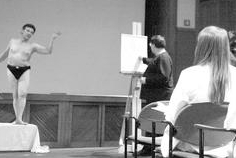
He earned a four-year certificate in painting at PAFA in 1976 and, starting in 1980, taught painting, drawing, figure drawing, anatomy, art history, and art education at PAFA. He was chair of the painting department from 2000 to 2022 and creator of several innovative art education programs.
He painted portraits of young gun violence victims for PAFA’s Lost Dreams on Canvas exhibit and founded and directed the academy’s popular after-school free art program for high school students in 1994. In 2026, he earned a community recognition award from the Philadelphia School District.
“This is a way for us to reach out to the community and really try to do something beneficial,” Professor Gury told The Inquirer in 2005. “We train them as if they are college freshmen, not high school kids. It raises the bar on the quality of their work.”
Professor Gury also lectured for decades at University of the Arts, the Fleisher Art Memorial, the Barnes Foundation, and elsewhere.He instructed students at Jefferson Medical College on anatomy, consulted for the city’s mural arts program, and ran art seminars and painting workshops regionally and in Scotland and Croatia.
He earned a master teacher’s award from University of the Arts and a master’s degree in fine arts at the University of Delaware in 1992. Former students called him “unfailingly caring, and supportive, and smart,” and “very generous in sharing his wealth of knowledge” in online tributes. One said: “What a great example to us all.”
In a tribute, PAFA officials said: “We remember Al not only for what he taught but for how he taught: with patience, conviction, humor, discipline, and an open heart.”
Professor Gury (center) draws and explains the nature of the human form to students at Jefferson Medical College in 2007.
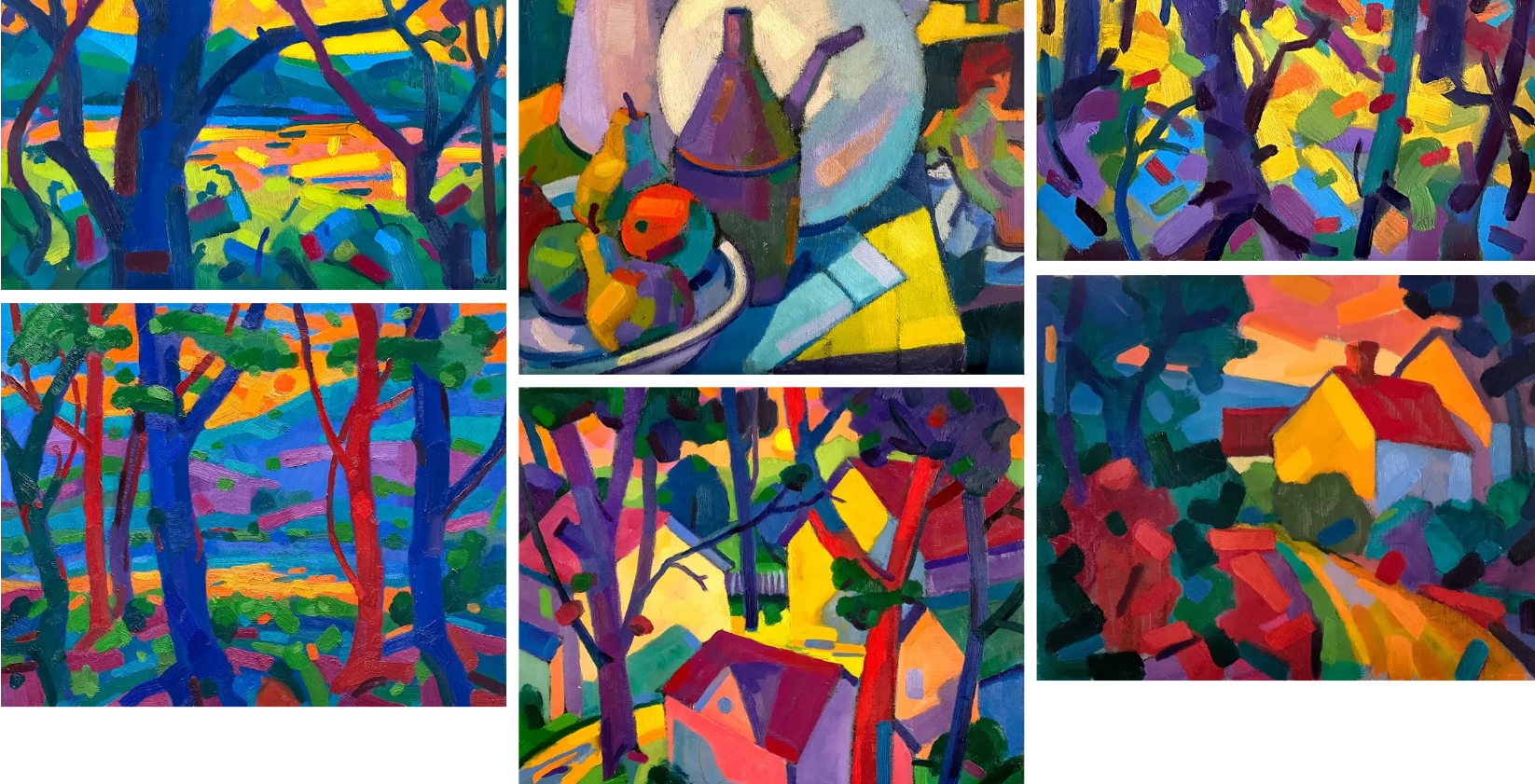
In the studio, Professor Gury painted colorful figures, landscapes, still life, and portraits. His portrait Alice of Dunk’s Ferry hangs in historic Christ Church in Old City, and he showed at the Philadelphia Museum of Art, the F.A.N. Gallery on Arch Street, the National Academy of Design in New York, the U.S. Capitol in Washington, and elsewhere.
He especially enjoyed painting abstract landscapes, he said in a 2014 video, because “they are pure.” He told the Daily News in 2000: “I like to paint the things I love. I like the intimacy of small paintings. I move the paint around and put together elements in nature even if they don’t exist that way. I like to imagine things rather than just paint what is in front of me. Sometimes it becomes a little surreal.”
In 2000, critic Anne R. Fabbri said in the Daily News that many of Professor Gury’s paintings are “united by his layered brushwork, tonal depths, and the creative act that transforms color, line, and composition into a life-enhancing work of art.” He was honored by the Philadelphia Sketch Club in 2017.
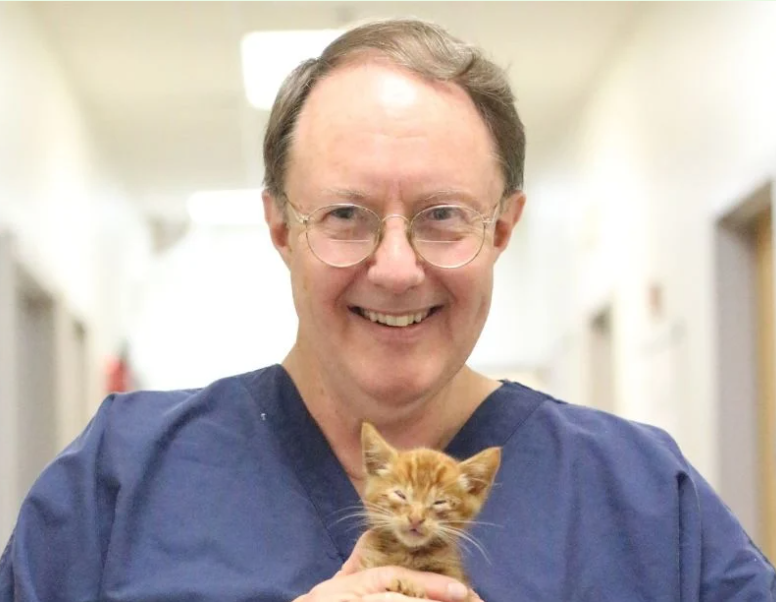
In his neighborhood, Professor Gury advocated for better housing and fostered rescue cats in his home. He volunteered at the Philadelphia Animal Welfare Society and was named its 2015 volunteer of the year. The group renamed its kitten maternity ward after him.
“We are searching for words to express just how extraordinary Al was, what a profound difference he made, and how much we loved and appreciated him,” colleagues at PAWS said in a tribute. “We hope he knew what an immense impact he made, and how much better and more beautiful the world is because of him.”
Albert Francis Gury was born Oct. 23, 1951. A family friend introduced him to painting when he was young, and he spent many days roaming the galleries at the Art Institute of Chicago while his father worked downtown.
He earned a bachelor’s degree in fine arts at St. Louis University in 1973 and won scholarships, grants, and honors as both a student and a professor at PAFA. He collected quilts and rare books on art.
Professor Gury loved animals, especially cats.Philadelphia Animal Welfare Society
In 2018, his apartment building on Chestnut Street burned down in an early-morning fire. Several of his cats and parakeets perished, and much of his artwork was lost. “The whole thing is just tragic,” he told The Inquirer then.
Friends called him “a classic caregiver” and a “protector of the underdog.” Longtime friend and colleague Reza Ghanad said: “If you were feeling down, he would pick you up.”
Friend and colleague Morgan Hobbs said: “He noticed students who could have gone unnoticed without him. He had a special gift for that.”
Professor Gury is survived by several relatives.
His ashes are interred at Christ Church Burial Ground. A celebration of his life is to be held later.
The HBO crime thriller Task has added new cast members who will join stars Mark Ruffalo and Mahershala Ali for its second season.
The Emmy-nominated show from Mare of Easttown creator Brad Ingelsby follows Ruffalo’s Tom Brandis, a priest-turned-FBI agent who leads specialized task forces. This season, his team will investigate (probably) shady DEA agents including Eddie Barnes, played by the Oscar-winning Ali.
Jharrel Jerome — who won an Emmy in 2018 for his heartbreaking role as one of the wrongly accused teens dubbed the Central Park Five in When They See Us — will play Jordan Barnes, while And Just Like That … actor Bethlehem Million plays his sister, Lisa.
Ali seems to be in his own dad era this year, not unlike his costar Ruffalo, as his next project sees him play a single dad-slash-assassin in Your Mother Your Mother Your Mother, out in September.
Brandis’ children will also return to Task this season, with Silvia Dionicio and Andrew Russel reprising their roles as Emily and Ethan Brandis, respectively. Though plot details are still emerging, it appears that Ethan, who struggles with schizophrenia, will return home following his incarceration for accidentally killing his mother — a tragedy that continues to haunt Brandis.
Other newcomers include Tim Blake Nelson (Watchmen, The Testament of Ann Lee) as Denny Coughlin, a veteran cop on Brandis’ task force; Kevin Dunn (Veep, Transformers), who plays Brandis’ boss, Vince Runyan; and Brían F. O’Byrne (Conclave) as Charlie Boylan, Barnes’ mentor.
This slate of actors join previously announced cast members Henry Melling (Pillion), Edgar Ramirez (The Assassination of Gianni Versace), Aminah Nieves (1923), Adam Nagaitis (Star City). Martha Plimpton (The Regime), who appeared in Season 1 of Task as a crooked boss to Brandis, will return to play Kathleen McGinty.
The production has been filming in and around Philadelphia this summer, from Manayunk to Wissahickon Valley Park, so locals might get a glimpse of Ruffalo, Ali, and other stars as they continue working in the area.
Rebecca Cox Jackson was often told no. As a free Black woman in Philadelphia at the start of the 1800s, she wasn’t allowed to learn to read. No, she couldn’t leave her husband. No, she couldn’t become a preacher like her brother at Mother Bethel African Methodist Episcopal Church.
Undeterred, Jackson accomplished everything she set out to do — and more.
A pivotal pioneer who founded the only Black-led Shaker community, Jackson became a spiritual leader whose legacy has far outlasted her wildest dreams. Today, some 150 years after her death, the Shaker preacher still draws passionate followers: artists, filmmakers, and dancers who have created work inspired by her trailblazing life and archived writings.
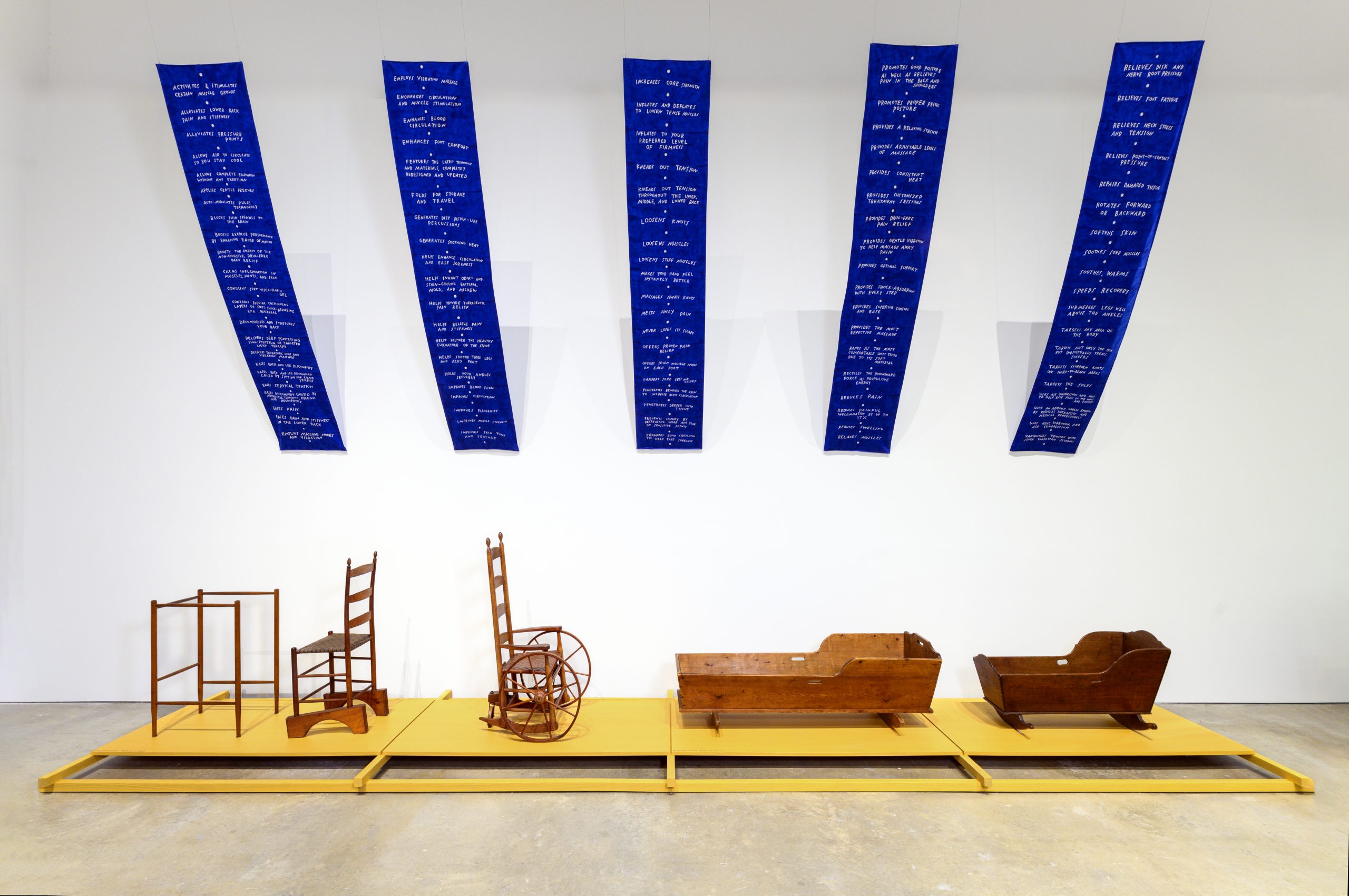
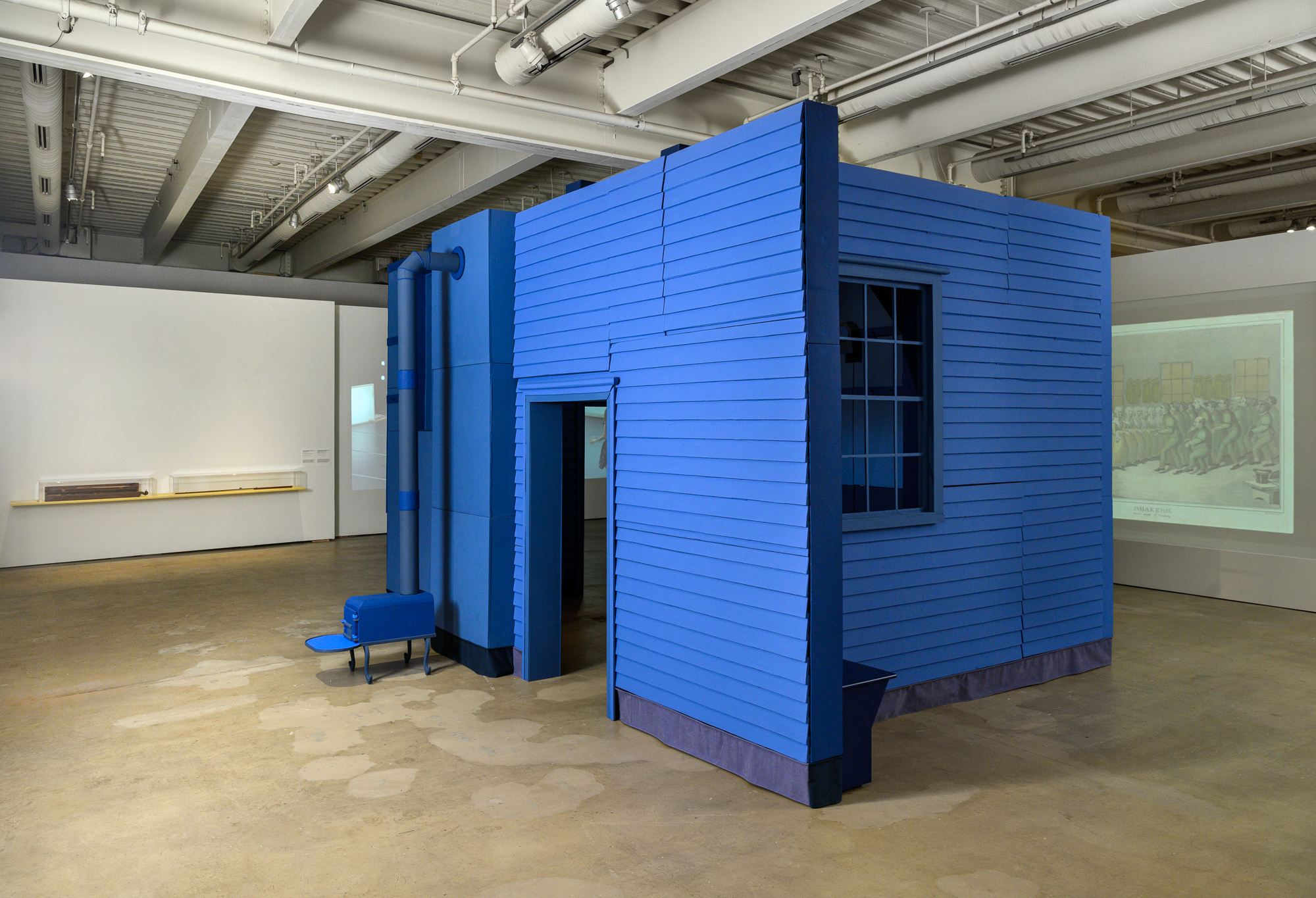
This summer that work took center stage at “A World in the Making: The Shakers,” on view at the Institute of Contemporary Art in West Philly. Running through Aug. 9, the show features several works reflecting specifically on Jackson’s life story as well as highlights of Shaker inventions and creations, like seed packets and minimalist wooden furniture.
Finnegan Shannon’s “I Want to Believe” (blue banners) is on view at “A World in the Making: The Shakers,” at the Institute of Contemporary Art in West Philadelphia. The show ends Aug. 9.Constance Mensch
Shakers have lately seen renewed pop culture interest, with contemporary artists reflecting on the small but impactful Christian sect founded in the 18th century (now only three active members remain). An offshoot of Quakers — initially called “Shaking Quakers” because dance and movement is central to their ecstatic worship — Shakers practice simple communal living, pacifism, celibacy, and gender and racial equality.
“Shakers are kind of everywhere — and we’re hardly the first institution to do a Shaker show — but I think this is a different show because we’ve inverted the emphasis to be on the contemporary contextualization of the Shakers,” said Johanna Burton, the director of ICA.
“All of these artists have independently talked about why it’s so important to them to revisit this material, because it’s about utopia … it’s a kind of flawed model of rethinking society that ultimately has its own conditions that have complications, and nothing’s perfect, but it’s inspirational to watch people do it.”
Revolutionary beliefs
The most prominent Shaker was Ann Lee, one of the founding leaders of the movement that began in mid-1700s England, about 50 years before Jackson was born. An early feminist, Lee believed in a dual nature of divinity that was both male and female, and later was convinced that she was a prophet representing the second coming of Christ, returning to Earth as a woman.
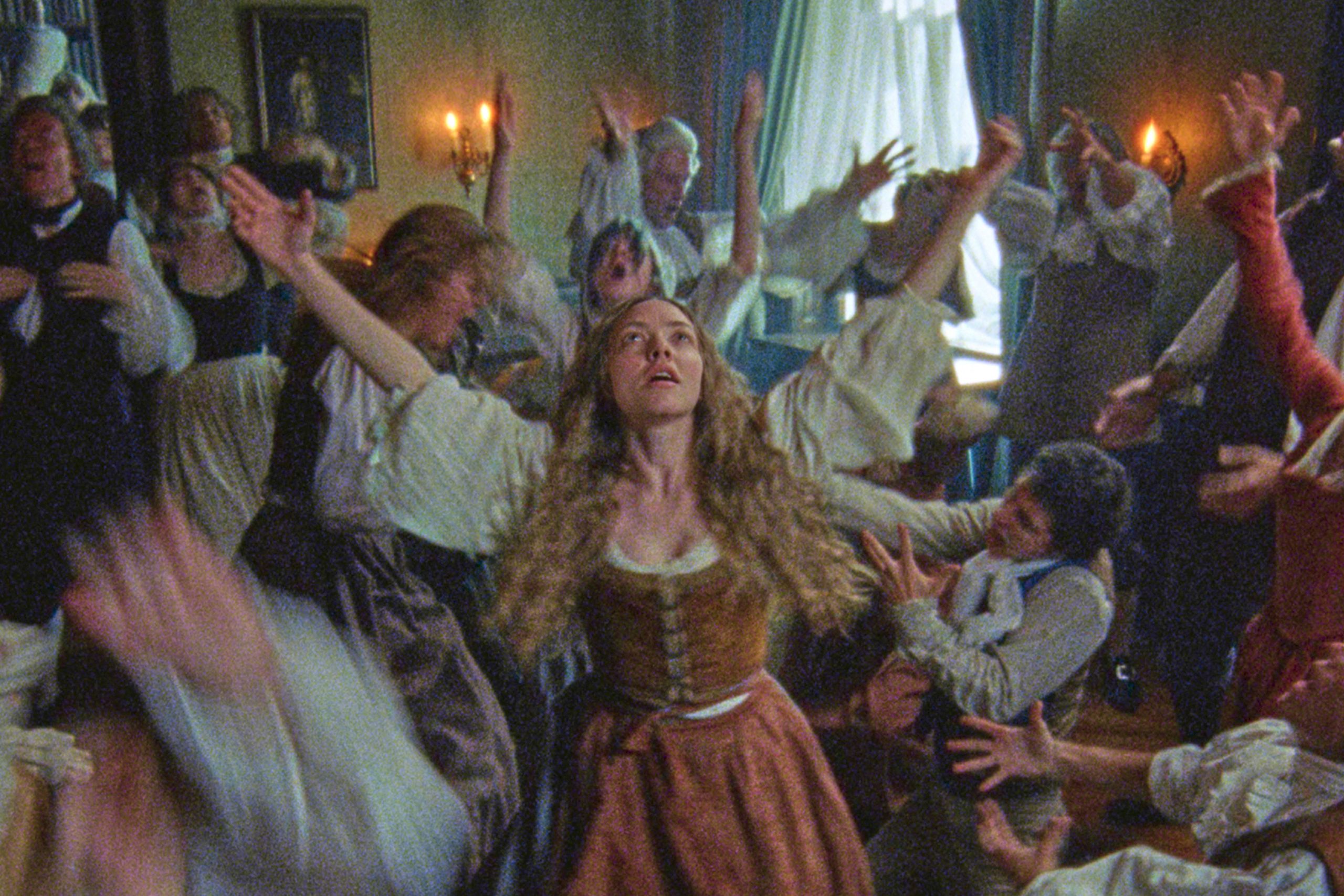
Lee was memorialized in the 2025 film, The Testament of Ann Lee, in which Allentown nativeAmanda Seyfried stars as the charismatic leader (she received a Golden Globe nomination for her riveting performance). It follows Lee’s spiritual awakening and her journey to Watervliet, N.Y., where her congregation built homes, furniture, and a following.
The idea that a woman could serve as a trusted link to divinity and hold the power of a preacher was revolutionary at the time; even more groundbreaking was the conviction that forsaking marriage for a life of celibacy was a means to get closer to God. At a time when women were only ever considered useful as a wife and mother, the belief that they should have control over their bodies was strikingly liberating.
This image released by Searchlight Pictures shows Amanda Seyfried in a scene from “The Testament of Ann Lee.” (Searchlight Pictures via AP)Uncredited
For Jackson, that journey began with a fateful thunderstorm one night in 1830 when she was 35 years old.
“The cloud bursted, the heavens was clear and the mountains was gone,” Jackson wrote in her diary, according to Gifts of Power: The Writings of Rebecca Jackson, Black Visionary, Shaker Eldress. “My spirit was light, my heart was filled with love for God and all mankind, and the lightning which was a moment ago the messenger of death, was now the messenger of peace, joy and consolation. And I rose from my knees, ran down the stairs, opened the door to let the lighting in the house, for it was like sheets of glory to my soul.”
Motivated by her visions — like Lee — Jackson began preaching, going beyond the confines of Mother Bethel AME Church to lead private prayer groups and causing conflict in her neighborhood, modern-day Bella Vista. She left her husband in 1836 and a year later met Rebecca Perot, the woman who would become her life companion and devoted disciple.
After the church accused Jackson of heresy, she and Perot left Philadelphia to preach across Pennsylvania and New York, where they encountered a Shaker service that left them invigorated and inspired. Following years on the road, they eventually moved to the Shaker village in Watervliet, where Jackson felt deeply aligned with the group and soon adopted the title Mother Rebecca Cox Jackson.
Amie Cunat’s “2nd Meetinghouse,” on view at “A World in the Making: The Shakers,” at the Institute of Contemporary Art in West Philadelphia. The show ends Aug. 9.Constance Mensch
By the mid-1800s, Shakers peaked at some 6,000 members in about 20 communities from Maine to Kentucky. But the primarily white village in New York remained rather isolated from the political chaos in other parts of the country as the Civil War neared. Jackson ultimately felt that they were not doing enough to reach Black followers so she and Perot returned to Philadelphia in the 1850s to create their own community.
The pair founded a modest and mighty community of mostly working-class Black women Shakers, including seamstresses, housekeepers, laundresses, who lived and worshipped together at 724 S. Warnock St. (then known as 724 Erie St.).
When Jackson died in 1871, it was Perot who took up the title of Mother Rebecca so that she could continue their important work for decades to come.
Remembering a foremother
In The Testament of Ann Lee, the film hints at the Shaker belief in racial equality. In one instance Lee sees enslaved people on an auction block and shouts, “Shame! Shame! Shame!” Later, some Black women appear in the congregation, though their presence is largely unexplored.
There are no blockbuster movies about Jackson and Perot in development, but Black artists today are ensuring that contemporary conversations about the Shakers do not erase their impact.
As revolutionary as Lee was, Jackson, too, was a foremother for increasingly progressive ideas that still hold urgency hundreds of years later. She fostered a society of Black women in Philadelphia who exercised autonomy over their bodies while slavery remained legal and the Fugitive Slave Act was enforced nationwide.
Kameelah Janan Rasheed’s “Under it, and spread about one yard around…It was all I seen,” inspired by Rebecca Cox Jackson’s writings, appears in “A World in the Making: The Shakers,” running through Aug. 9 at the Institute of Contemporary Art in West Philadelphia.Constance Mensch
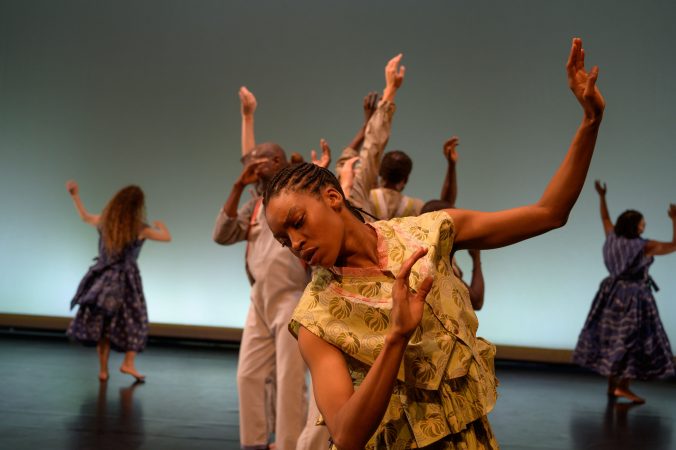
What did their worship look like? How did Jackson’s style of body movement differ from the Shakers in Watervliet? What African influences appeared in their ecstatic dance practices? Those are questions that dancer and choreographer Reggie Wilson has investigated with his Brooklyn-based company, Fist and Heel Performance Group, in recent years. A recording of their dance work POWER, which came to Philadelphia as part of the 2024 Fringe Festival, is on view at ICA.
“I never interpreted the Shakers as running away from their bodies. I felt like they were considering their bodies as sacred. To dance and to move, to go through as much work that they did to have dancing spaces … that’s kind of phenomenal, especially with the legacy of the West of degrading women [and] degrading the body,” said Wilson, who calls himself a “kinesthetic anthropologist.”
In developing the choreography for POWER, Wilson pulled from preserved records of Shaker movements and African traditions of call-and-response, where repetition and rhythm can provide a spiritual experience and lead some into a trance.
“When we started learning the dances and moving together rhythmically in choreographic architecture and patterns and time and space, it just felt good,” said Wilson. “Just the feeling of breathing and moving in unity with other bodies is profound. It’s deeply, deeply profound, sometimes to the point of tears for some members.”
Reaching that profound experience sounds remarkably similar to what Shakers sought to achieve.
“A World in the Making: The Shakers” ends Aug. 9 at the Institute of Contemporary Art, 118 S. 36th St., Phila., 215-898-5911 or icaphila.org.
Philly rock and soul band Low Cut Connie doesn’t have a proper local gig that requires a paid ticket to enter until its Nov. 20 show at Union Transfer. But Adam Weiner and his South Philly crew are still finding a way to celebrate their new protest album Livin in the USAwith a happy hour-timed free street party outside their local, Ray’s Happy Birthday Bar. 6 p.m., corner of Passyunk Avenue and Federal Street, instagram.com/lowcutconnie
Happy Together
This highly successful oldies package tour is now in its 17th year. It won’t be the same this time around due to the 2025 death of Mark Volman, aka Flo of Flo & Eddie, the dual front men of the Turtles, whose 1967 hit gives the tour its name. (His partner, Howard Kaylan, aka Eddie, retired in 2017 for health reasons.) But Happy Together rolls on without them, with hitmakers like the Association, the Troggs, and the Cowsills. Ron Dante, who was the lead vocalist for “Sugar Sugar” animated band the Archies, will do double duty and act as lead vocalist for the Turtles. 7 p.m., Lansdowne Theater, 31 N. Lansdowne Ave., lansdownetheater.org
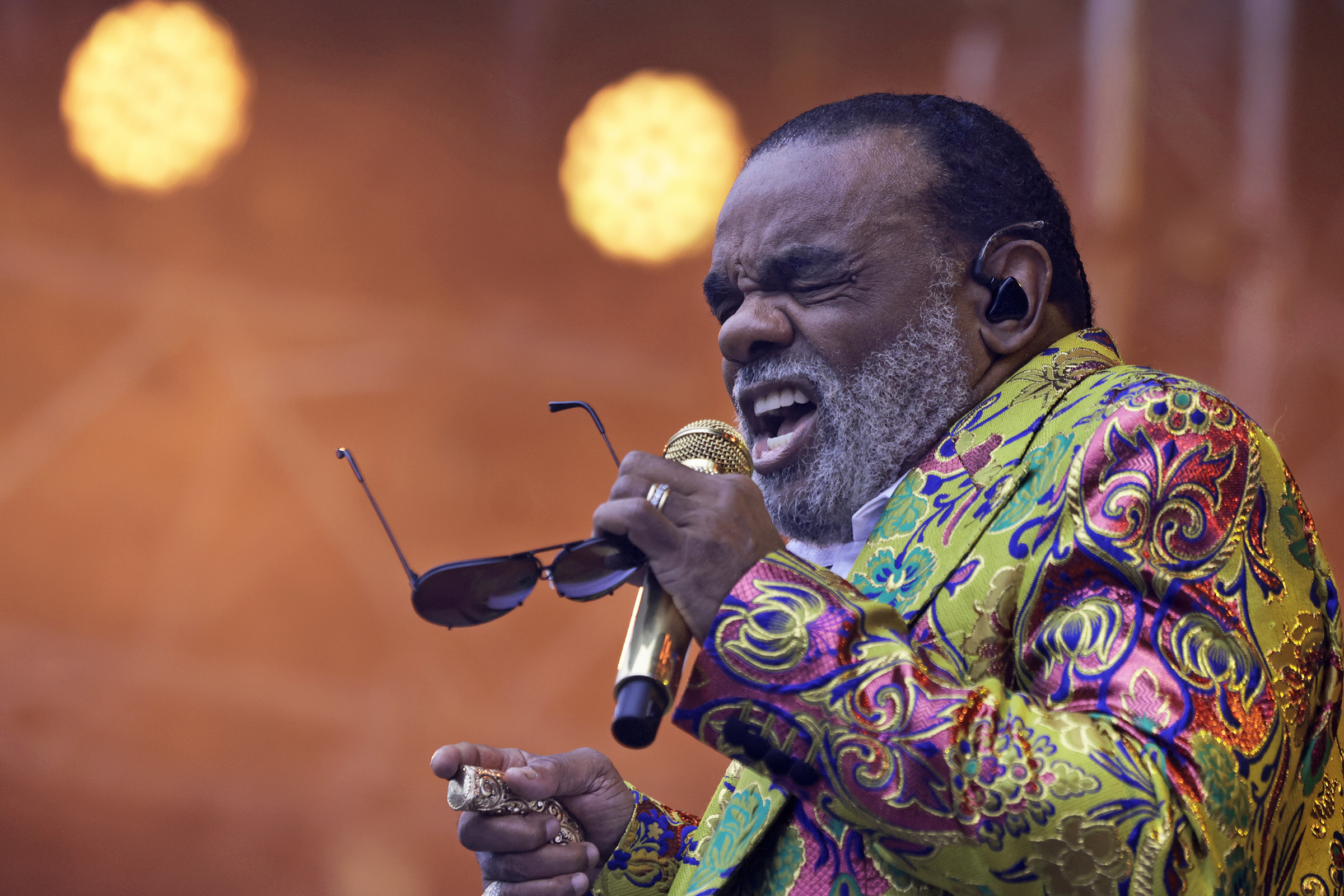
Ronald Isley of the Isley Brothers at the Roots Picnic on June 3, 2023. The surviving Isley Brothers — Ronald and Ernie — perform Thursday at the Dell Music Center.Elizabeth Robertson / Staff Photographer
Thursday, Aug. 6
The Isley Brothers
The Isley Brothers formed in Cincinnati in 1954 and 72 years later, the great Ronald Isley, now 85, is still singing. He and his younger brother, guitarist Ernie Isley, 74, are the only two of the six Isleys still alive. The Isleys were the first to have a hit with “Twist & Shout” — two years before the Beatles — and they have endured through the decades with songs like “This Old Heart of Mine (Is Weak for You),” “That Lady, Pt. 1,” and “Fight the Power.” Stephanie Mills and Breakwater open. 7 p.m., Dell Music Center, 2400 Strawberry Mansion Drive, dellmusiccenter.com.
NoName performs at Union Transfer on Jan. 12, 2022, for the Room 25 tour. She plays Brooklyn Bowl Philadelphia on Thursday. Kristen Balderas
NoName
Chicago rapper NoName — given name: Fatimah Nyeema Warner — first gained notice for her contributions to releases by her fellow Windy City artists Saba and Chance the Rapper. Now, she’s celebrating the 10th anniversary of her 2016 mixtape, Telefone. Opener Cleo Reed is touring behind her 2025 double LP Cuntry, which mixes blues, soul, country, and electronic music to, as Reed describes it, explore “the rage that comes from grappling with the grips of labor on both the body and in the American workplace.” 8 p.m., Brooklyn Bowl Philadelphia, 1009 Canal St., BrooklynBowl.com/philadelphia
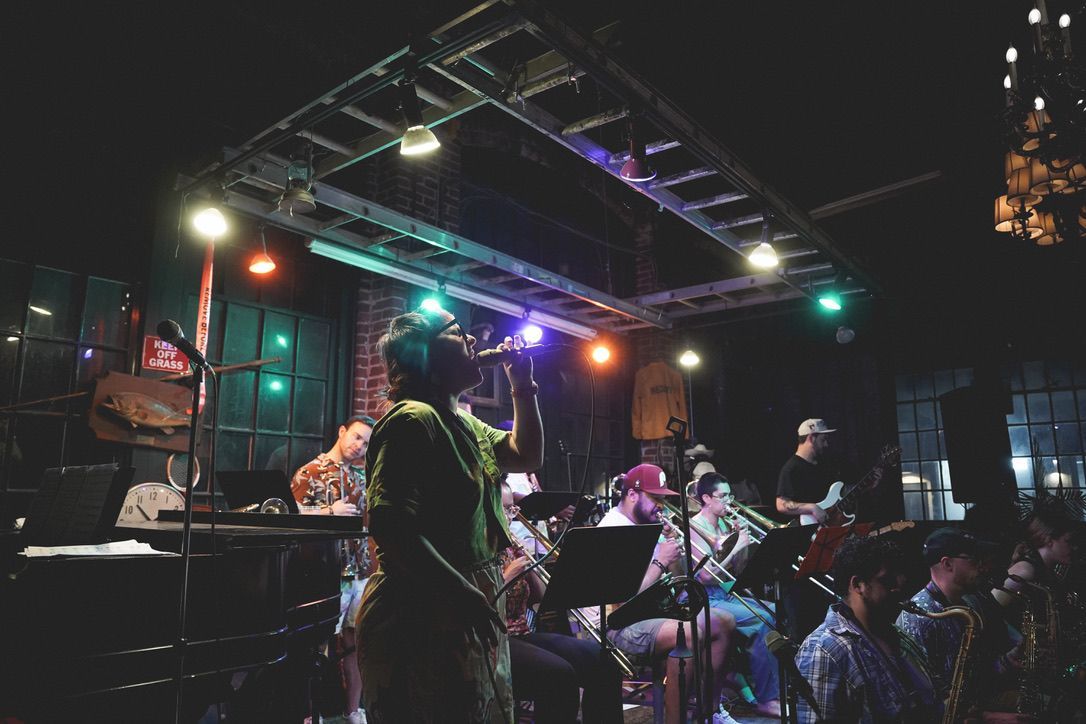
Thinkin’ Big at the Black Squirrel Club in 2025. The big band returns to the Fishtown venue on Thursday.Zoe Salvucci
Thinkin’ Big
Fun will be had at the Black Squirrel Club with this 15-piece ensemble, officially billed as Taylor Kelly with Thinkin’ Big Featuring Tennishu, Aquildawud + Gizelxanath Rodriguez. Philly trumpeter and singer Kelly will join his old Berklee School of Music classmate, Thinkin’ Big band leader Jonah Francese, with guests that include multi-instrumentalist Tennishu, Philly R&B artist Aquildawud, who opened two recent shows for Jill Scott at the Met, and Rodriguez, who is a Latin jazz vocalist and music professor at Bucknell. 7:30 p.m., Black Squirrel Club, 1489 Street, BlackSquirrelClub.com
Chicken Bone Beach Jazz Series
The weekly Chicken Bone Beach free jazz concert series on the Atlantic City Boardwalk kicks off this Thursday with Baltimore vibraphonist Warren Wolf. Keith Hollis opens. The series will continue with Marcus Gilmore on Aug. 13, Amina Figoroa on Aug. 20, and Jen Carne on Aug. 27. 7 p.m., Kennedy Plaza, between Mississippi and Georgia Avenues on the Boardwalk, chickenbonebeach.org
The Red Clay Strays bring their tour for their new album “Grateful” to the TD Pavilion at the Highmark Mann on Friday.Courtesy of the Artist
Friday, Aug. 7
Billy Idol & Devo
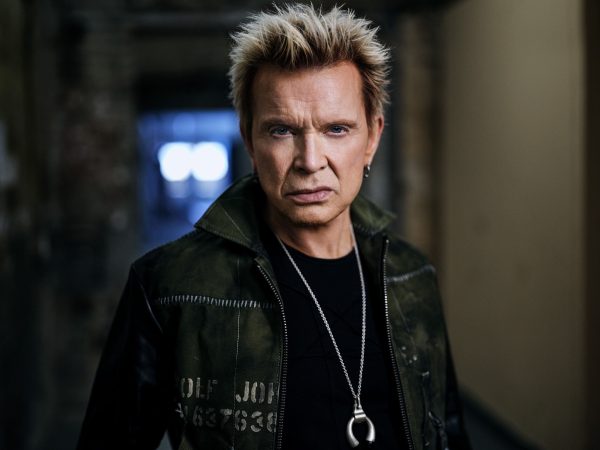
There’s a new documentary streaming on Hulu called Billy Idol Should Be Dead. However, he is not. On the contrary, the “White Wedding” and “Eyes Without a Face” singer, who is going into the Rock and Roll Hall of Fame in November, is enjoying a renaissance. And on this “It’s a Nice Day to … Tour Again!” tour, he’s teamed up with Devo, the “Whip It” men who also are the subject of an excellent doc, simply called Devo, which is streaming on Netflix. 7:30 p.m., the Pavilion at Montage Mountain, 1000 Montage Mountain Road, Scranton, montagepavilion.com
Red Clay Strays
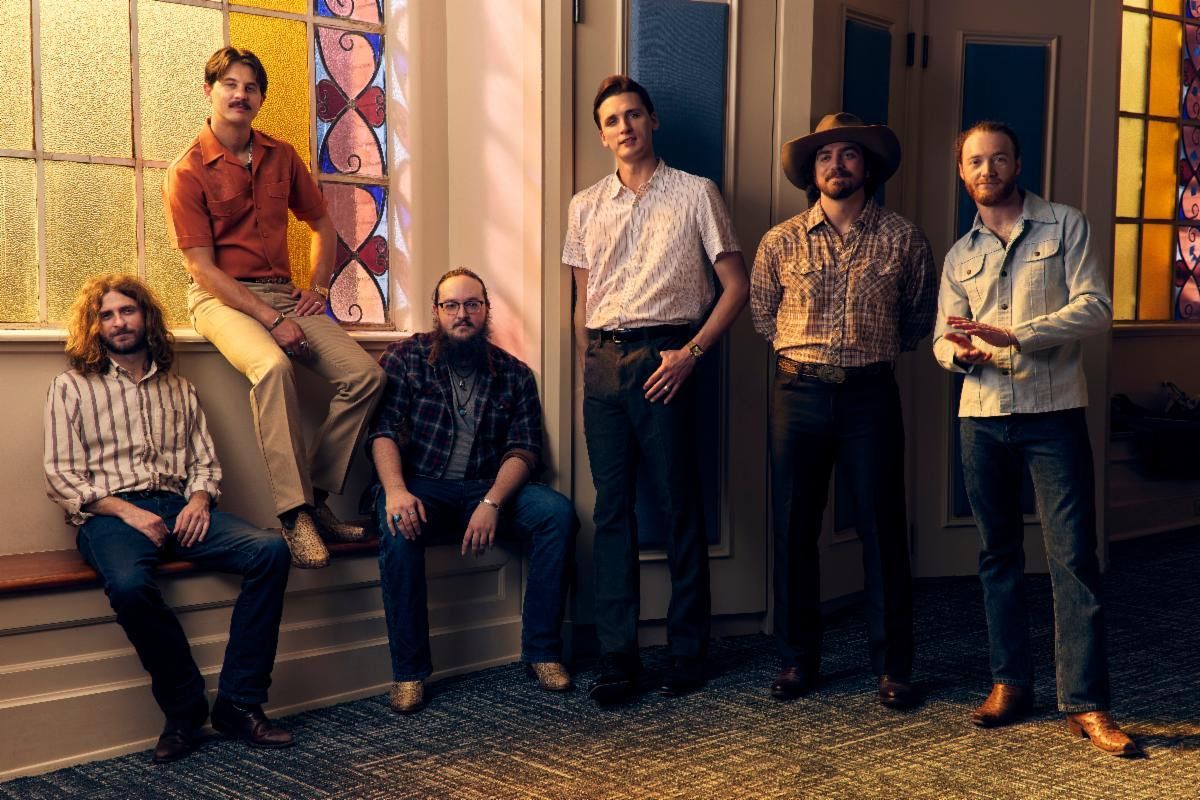
Alabama country band Red Clay Strays leans into both its rock and roll and gospel influences on the new Grateful, the follow-up to the Brandon Coleman-led sextet’s 2024 breakthrough Made By These Moments. The Revivalists and Brent Cobb, the cousin of Grateful producer Dave Cobb, are the openers. 6:30 p.m., Highmark Mann, 5201 Parkside Ave., HighMarkMann.org.
Joan Osborne
On her 1985 debut album Relish — which includes her biggest hit, “One Of Us,” written by Eric Bazilian of the Hooters — Joan Osborne covered Bob Dylan’s “Man in the Long Black Coat.” Since then, she’s dug more into Dylan, and her current tour shares a title with her 2017 interpretive album, Songs of Bob Dylan. Jeffrey Gaines opens. 7 p.m., Concerts Under the Stars, 175 West Valley Forge Road, King of Prussia, concertsunderthestarskop.com
Hot Tuna
This team-up of justifiably revered blues guitar Jorma Kaukonen and his bandmate Jack Casady — both once members of Jefferson Airplane — is an all-acoustic affair. Ross Garren opens. 8 p.m., Scottish Rite Auditorium, 315 White Horse Pike, Collingwood, scottishriteauditorium.com
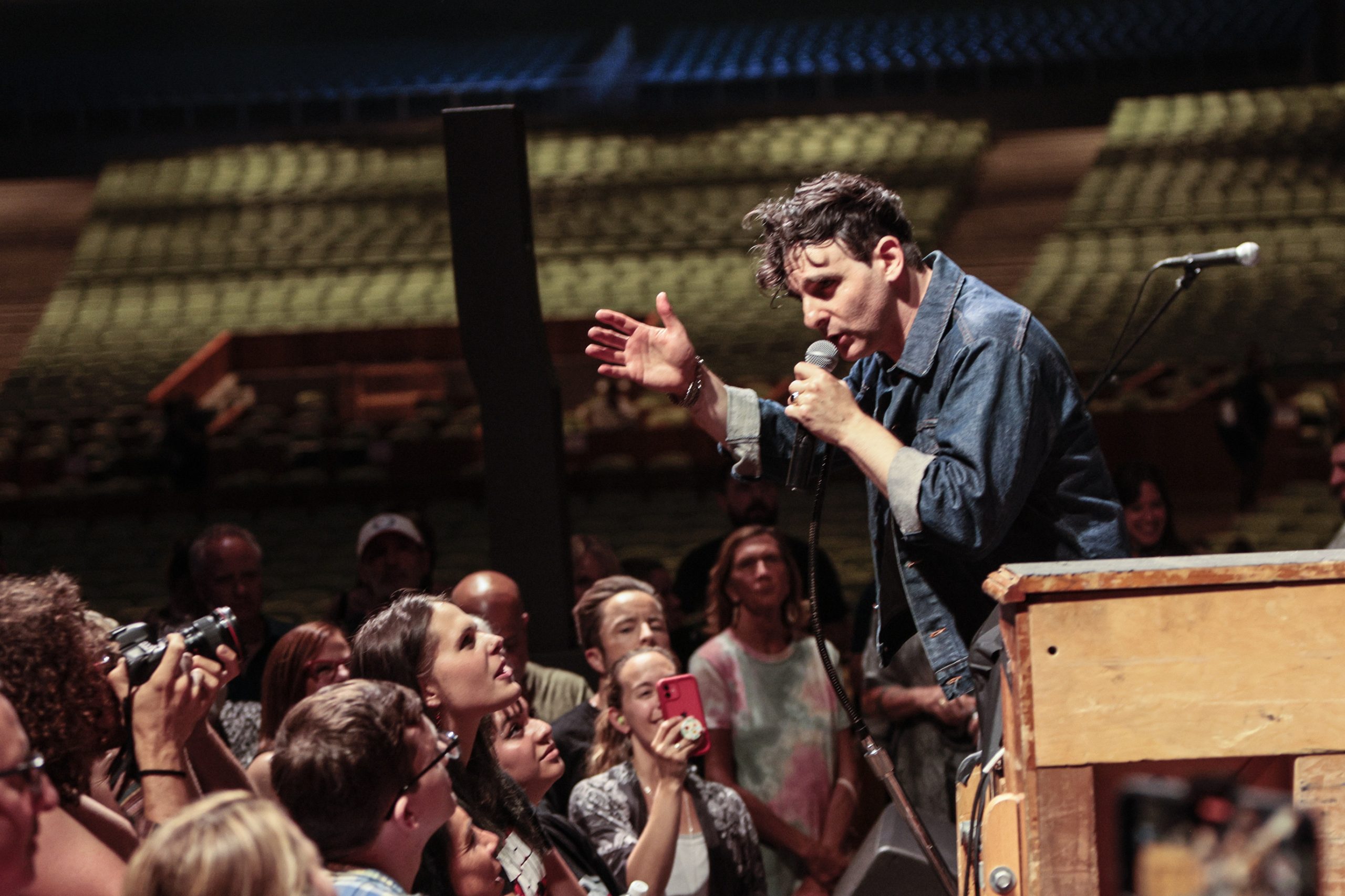
Rock and roller Adam Weiner of Low Cut Connie sings to a group of 300 fans at the Mann in June 2023. The band is throwing a free street party in South Philly on Wednesday. Steven M. Falk / Staff Photographer
Saturday, Aug. 8
Iron Chic
You a real jabroni if you don’t go to this free Iron Chic show. (Sorry, that’s an Iron Sheik joke.) This Iron Chic is a Long Island pop punk band whose rugged approach and shout-along choruses often get compared to New Jersey punk stalwarts Bouncing Souls. Free, 7 p.m., Spruce Street Harbor Park, 121 N. Columbus Blvd, delawareriverwaterfront.com
Sunday, Aug. 9
Hilary Duff
Former Disney channel Lizzie McGuire star Hilary Duff released her first album in 11 years, Luck … or Something, in February. Now she’s out on the “Lucky Me” tour, with Jade LeMac and La Roux opening. 7 p.m., TD Pavilion at Highmark Mann, 5201 Parkside Ave., HighMarkMann.org
Ardmore Rock N’ Ride
Eight bands will play on two stages in downtown Ardmore during this daytime event which mixes music and cycling. Too Many Zooz headlines the Suburban Square stage, where Young Gun Silver Fox also performs. Palmyra and Oh He Dead are highlights on Schauffele Plaza, where Brass Queens go on last, and then lead a Second Line across Lancaster Avenue. Free, noon, Anderson and Coulter Avenues, Ardmore, ardmorerocknride.com
Ever wonder which locally-born celebrities are searched the most?
The Inquirer’s Lizzie Mulvey and Charmaine Runes recently dug into the 2025 most popular celebrities on Wikipedia who were born in the Philadelphia area. The results were a mix of obvious contenders and surprises.
We went even further, looking at the top five most-searched individuals born in Cherry Hill, with the results showcasing some serious acting talent.
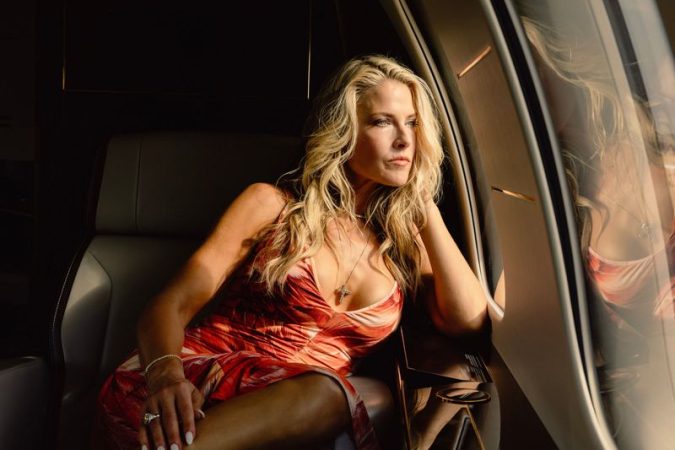
Topping the list of township natives with the most searches is former model and actor Ali Larter, who gained acclaim in the Final Destination films and had roles in Legally Blonde, Marigold, and Obsessed. She’s currently starring in Paramount+ drama Landman.
In addition to topping the local list, Larter is among the most-searched celebrities in the area, landing at No. 6 overall.
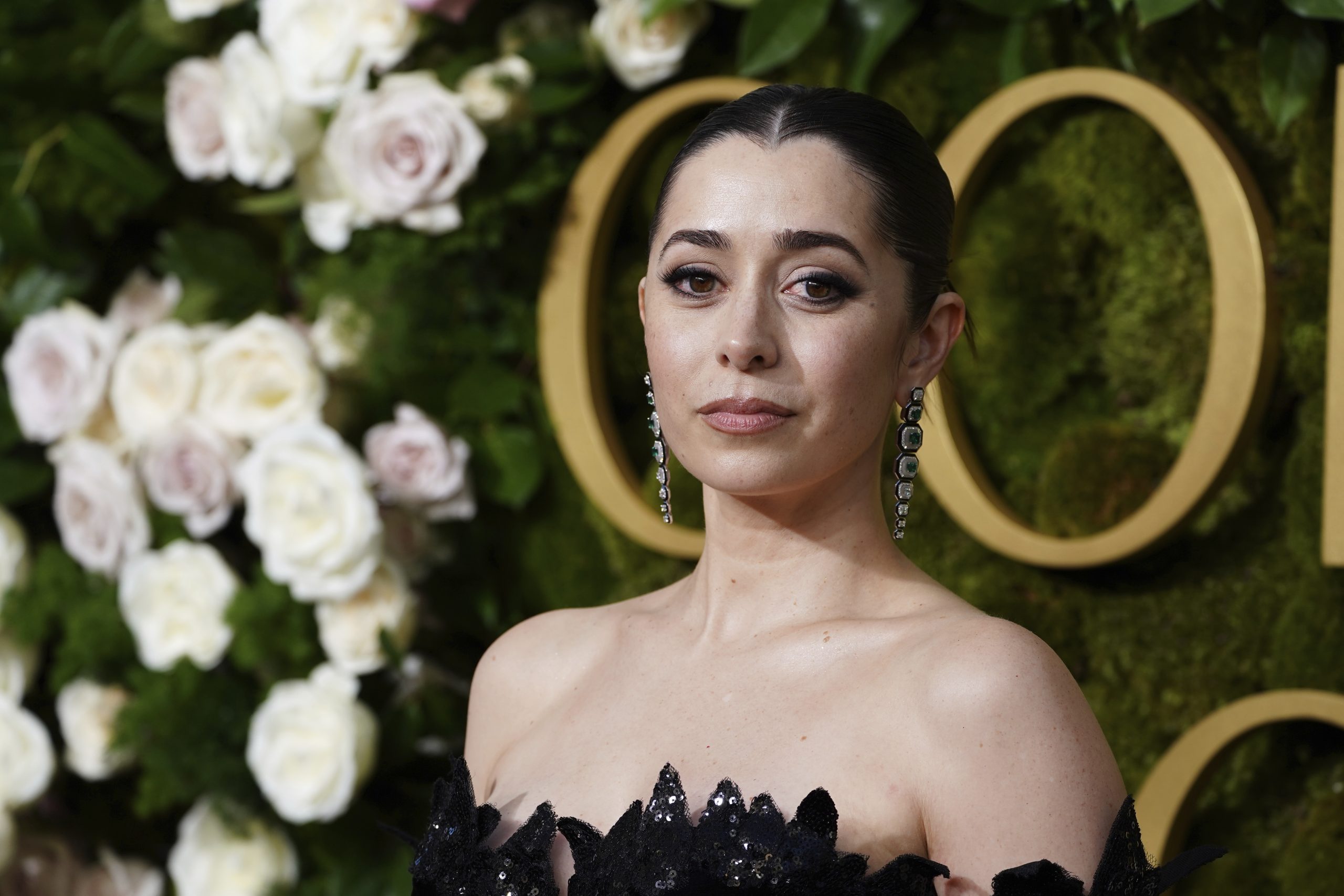
Fellow actor and musician Cristin Milioti is No. 16 on the list overall, but ranks No. 2 locally. She played in sitcom How I Met Your Mother and HBO’s The Penguin. The Cherry Hill High School East alum earned a Grammy award for her performance in Once: A New Musical and got her first Emmy nomination last year for The Penguin.
Cristin Milioti arrives at the 82nd Golden Globes on Sunday, Jan. 5, 2025, at the Beverly Hilton in Beverly Hills, California.Jordan Strauss
Like Larter, she has garnered a lot of search region-wide, ranking No. 16 overall.
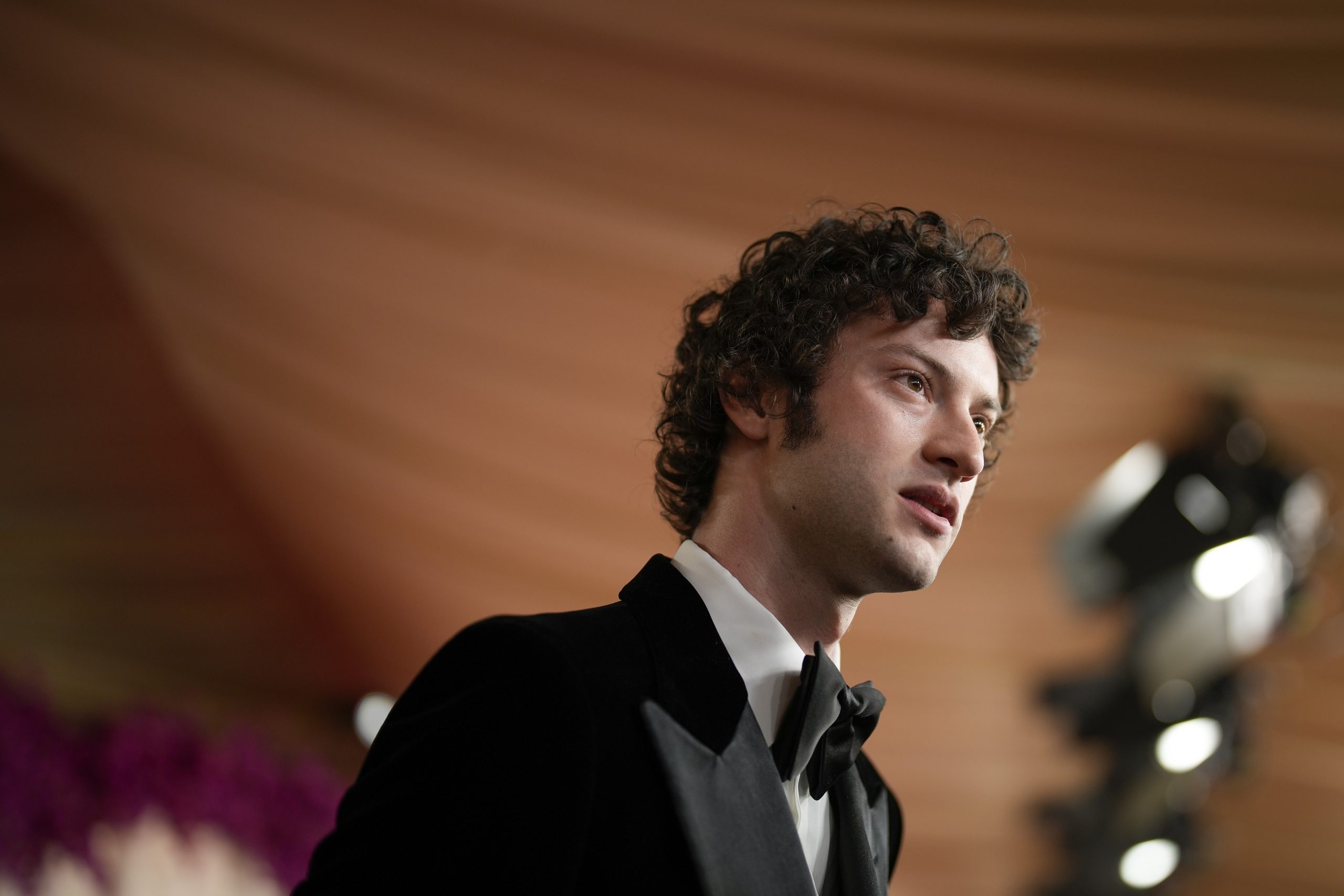
Lauren Cohan of The Walking Dead fame is the third-most-searched Cherry Hill-born celebrity, coming in No. 42 overall. She’s followed by up-and-comer Dominic Sessa, who lands at No. 61 on the larger list. Expect to hear his name a lot more — he’s playing a young Anthony Bourdain in the forthcoming biopic Tony, due out this month.
Dominic Sessa arrives at the Oscars on Sunday, March 10, 2024, at the Dolby Theatre in Los Angeles. John Locher
Rounding out the top five is former NBA player Mike Bibby, who was born here while his father, Henry Bibby, played for the Sixers.
This suburban content is produced with support from the Leslie Miller and Richard Worley Foundation and The Lenfest Institute for Journalism. Editorial content is created independently of the project donors. Gifts to support The Inquirer’s high-impact journalism can be made at inquirer.com/donate. A list of Lenfest Institute donors can be found at lenfestinstitute.org/supporters.
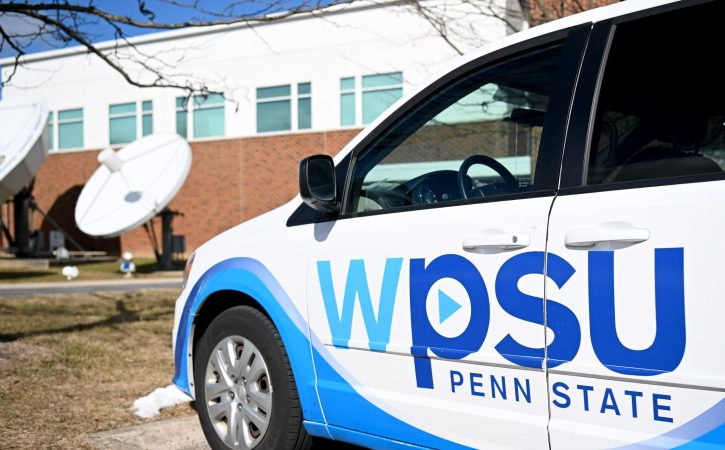
WHYY is one step closer to taking ownership of Pennsylvania State University’s public radio and television station, WPSU, with a new Federal Communications Commission filing.
WHYY and Penn State filed an application with the FCC late last week to transfer WPSU-FM and WPSU-TV, among other properties, to WHYY for a sale price of $1, according to commission records. The station said in a statement that it was “pleased to have reached an agreement with Pennsylvania State University that marks an important milestone.”
“We are appreciative of Penn State’s partnership throughout this process, as they have been integral to ensuring uninterrupted service for WPSU’s viewers, listeners and communities,” the station added. “Our shared goal is to preserve and strengthen WPSU’s longstanding mission of providing trusted local journalism, educational programming and community storytelling for the enjoyment and enrichment of generations to come.”
The FCC needs to approve the deal before it can be completed, the station said. It was not immediately clear how long that process could take, but the review period typically includes a 30-day window during which the public may submit comments.
The application’s submission marks the latest step in a lengthy process. In October, Penn State trustees unanimously approved a revised proposal to sell WPSU’s operating assets to WHYY, which itself revived a path to keep the station alive following a previous failed deal.
Under the approved agreement, WHYY is to continue operating WPSU for at least three years following the station’s sale, and give current employees the opportunity to interview for roles under the new leadership. About 44 employees remained at the station following layoffs in June last year, The Inquirer previously reported.
Previously, WHYY said it was working to raise funds to support WPSU to allow it to continue broadcasting.
In September, WPSU’s days appeared to be numbered, with Penn State saying it planned to wind down the station’s operations and lay off employees by the end of June. The station’s annual budget was funded largely by the university coupled with federal dollars, the latter of which had been slashed after President Donald Trump’s administration stripped away federal funding for public media, The Inquirer previously reported.
School trustees in September unanimously voted down a plan for WPSU’s sale to WHYY, largely citing concerns about $17 million in subsidies Penn State would have to provide to WHYY over five years as part of that deal. Under the plan approved in October, the university said last year, WHYY agreed to raise funds itself.
WPSU began broadcasting more than 70 years ago. When it was faced with a possible closure last year, university leaders said that they received about 1,300 public comments about the station, many of which urged the school to reconsider its decision to wind down operations. WHYY president and CEO Bill Marrazzo later said WPSU would “continue to be here” for listeners.
“WHYY and WPSU are joining forces to expand what is possible — strengthening local journalism, creating new educational opportunities, and developing innovative ways to deliver the content people value most,” Marrazzo said last year.
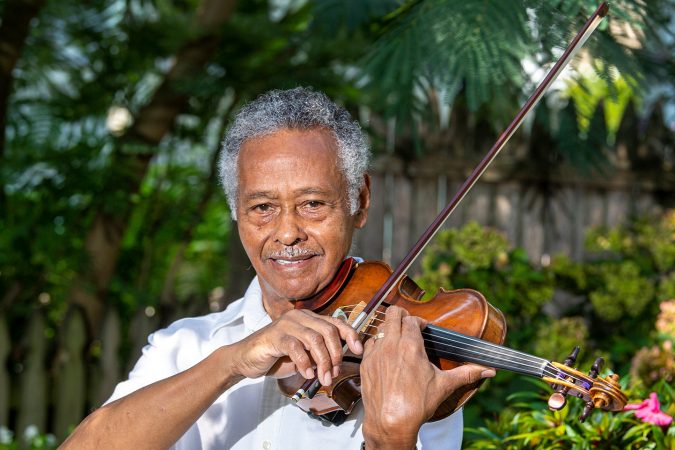
Booker Rowe, 85, of Philadelphia, award-winning violinist, the first Black musician to play with the Philadelphia Orchestra and the Nashville Symphony String Quartet, the second permanent full-time Black player in the Philadelphia Orchestra, teacher, mentor, and role model, died Friday, July 31, of complications from pneumonia and sepsis at Jefferson Abington Hospital.
A lifelong musician — he played piano at age 5 and violin at 11 — Mr. Rowe was invited by famed music director Eugene Ormandy in 1968 to become the first Black musician to perform with the Philadelphia Orchestra. He was a substitute violin during most of the 1968-69 season and returned for good in 1971 as the orchestra’s second Black permanent full-time member.
Mr. Rowe stayed for 49 years.
“My first day, I came in late from New York, and the orchestra was already rehearsing, and I sat myself down on the last stand to play,” Mr. Rowe told The Inquirer’s Peter Dobrin in 2020. “The sound was amazing. It was like stereo all around me. The stage was slanted down, and when the brass and winds would play I had to brace myself with my right leg from being blown off stage. It was just so beautiful.”
For five decades, until his retirement in 2020, Mr. Rowe played with half a dozen elite conductors and traveled the world in the orchestra’s second violin section. He and his colleagues gave thousands of memorable performances at the Academy of Music, the Kimmel Center, and the Mann Center in Philadelphia, Carnegie Hall and the Lincoln Center in New York, and the Saratoga Performing Arts Center in Saratoga Springs, N.Y.
They played at the 1993 World Series at Veterans Stadium, for Pope Francis in 2015, and at the Vail Music Festival in Colorado. They played in Europe, South America, Asia, and elsewhere around the world.
This photo of Mr. Rowe (left) appeared in the Daily News in 1993Newspapers.com
In 1973, the orchestra made a historic 10-day, five-concert cultural exchange tour in China, and Mr. Rowe told the Daily News afterward that he visited a commune and returned with Chinese instruments. In 2008, he mingled with former Secretary of State Alexander Haig and other international notables after a concert in Beijing.
In 2013, he posed for pictures with the Chinese welcoming contingent at Shanghai Airport. “Booker was such a kind soul, and his passion, his artistry, and his humanity are woven into who we are,” Yannick Nézet-Séguin, the orchestra’s music and artistic director, said in a tribute.
Ryan Fleur, the orchestra’s president and chief executive officer, said: “He was a warm and steadying presence in our orchestra.”
Born in Kentucky, Mr. Rowe and his family moved to North Philadelphia when he was 2. His father was a singer, and his mother played piano, and they “pushed me in the direction of classical music,” he told the Daily News in 1981.
He became concertmaster for the West Philadelphia High School orchestra, the All-City high school orchestra, and the old all-Eastern Conference college orchestra. He earned a bachelor’s degree in music at Temple University in 1963 and a master’s degree in music at Yale University in 1968.
Before Philadelphia, he played solo in New York and with symphony orchestras in Nashville, New Haven, Conn., and Washington. Later, he played with the old Symphony Club of Philadelphia, the Lansdowne Symphony Orchestra, and other local groups.
Mr. Rowe (left) stands with fellow musicians Andre Watts (center) and Renard Edwards.Courtesy of the family
He also got freelance gigs with Sammy Davis Jr., Isaac Hayes, Smokey Robinson, the Supremes, Barbra Streisand, Aretha Franklin, and other stars. He played with chamber music ensembles around the country and gave dozens of free concerts for children, churches, and community and scholarship fundraisers.
He championed racial and ethnic diversity, and was active with the Philadelphia Orchestra’s cultural diversity initiative. He sought and performed work by Black and other minority composers, and mentored dozens of colleagues and students.
He encountered at least one racist incident that first year in Philadelphia and told the Daily News in 1981: “The time was right for an Afro-American in the Philadelphia Orchestra. It was just a matter of finding somebody who was ready.”
Mr. Rowe and his family lived in Center City, East Mount Airy, and Germantown. Courtesy of the family
A friend said on Facebook: “His legacy and historical contributions are unparalleled.”
Mr. Rowe taught at Settlement Music School and gave private lessons. He earned music and service awards from City Council, the American Foundation for Negro Affairs, and other groups.
In 2019, he was asked to advise young musicians in a video interview for the Philadelphia Orchestra website, philorch.ensembleartsphilly.org. “Practice, practice, practice,” he said. “But also enjoy, enjoy, enjoy. Do it with love in your heart.”
Booker Taliaferro Washington Vance Rowe Jr. was born Dec. 10, 1940, in Lexington, Ky. In Philadelphia, he studied at the old Philadelphia Musical Academy and Settlement Music School, and his father worked at RCA Victor records in Camden. So their home was always filled with music.
Mr. Rowe (rear center) stands with Philadelphia Orchestra colleagues and members of the Chinese welcoming contingent in 2013.
Jan Regan / Philadelphia Orchestra
He met soprano Patsy Baxter at a Philadelphia Orchestra concert, and they married in 1970 and had a son, Landis, and a daughter, Vivian. They lived in Center City, East Mount Airy, and Germantown, and visited his family often back in Kentucky and Tennessee.
Mr. Rowe enjoyed puzzles, hiking and kayaking with his family, and tai chi. Friends noted his “kindness,” “million-dollar smile,” and “cheerful presence” in Facebook tributes.