Category: Entertainment

  • The Phillies camera operator who brings you the best slo-mo shots from the ballgame just released a stellar jazz album

    The Phillies camera operator who brings you the best slo-mo shots from the ballgame just released a stellar jazz album

    Greg Farnese always loved to sing.

    “I had a tape recorder I would sing into,” said the South Jersey jazz vocalist.

    “I was one of those kids holding a brush in the mirror, singing Billy Joel songs. I was that kid.”

    But it was a roundabout route to the stage for Farnese, whose debut album, Oh No, I’m in Love Again, was just released on Philly jazz pianist Orrin Evans’ Imani Records.

    First, he followed his father, Aldo Farnese — the star of Philadelphia children’s television shows Dickory Doc and Adam Android in the 1960s and 1970s — in pursuing an acting career. After a stint in Hollywood working in production and scoring some small movie and TV roles, he came home to Philly in the mid-1990s.

    Since then, Farnese has had a day job — actually, usually a night job — as a TV camera operator for the Phillies, first at Veterans Stadium and, since 2004, at Citizens Bank Park. He operates a super slo-mo camera from the left field power alley in front of Ghost Energy Deck (formerly Harry the K’s).

    By 2012, Farnese was long settled into that job, and also working Sixers and Flyers games for NBC Sports Philadelphia. In 2012, he won an Emmy for his work on the World Series.

    But then he felt — as he puts it speaking via Zoom from his home in Woolwich Township, Gloucester County, while his golden retrievers Bailey and Oliver lounge on a sofa behind him — “a tap on the shoulder.”
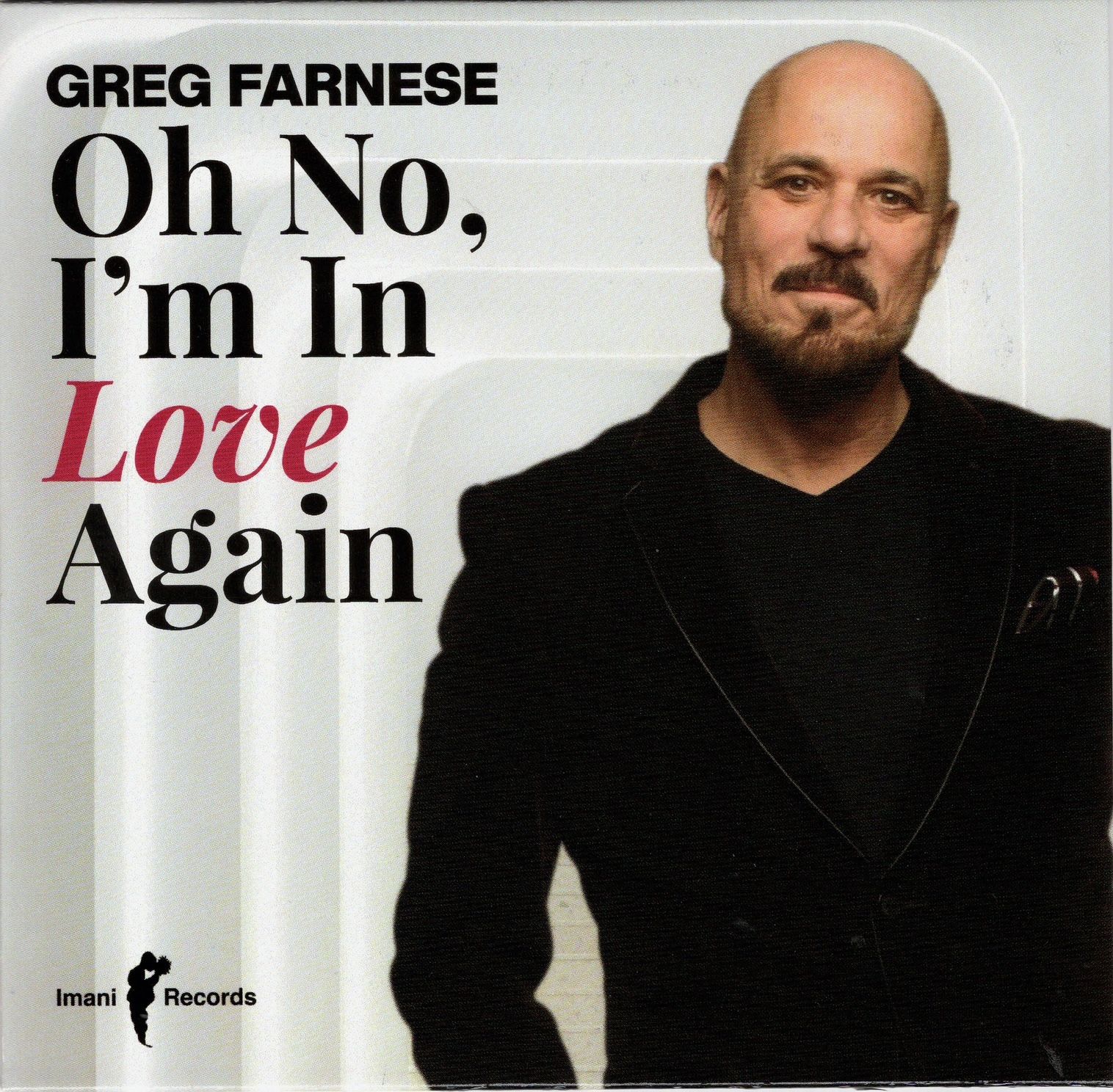
    The cover image to Greg Farnese’s album “Oh No, I’m in Love Again.”Courtesy of Imani Records

    “When I was a kid, my father would sing throughout the house. We would say ‘Dad, you’ve got a great voice, you should be a singer,’” Farnese said. “And he would go, ‘Meh,’ and kind of blow us off.”

    Then one day, he said, “I was singing while putting my son’s air hockey table together.” His wife, Laurie, said “Greg, you’ve got a beautiful voice. You should sing.”

    “I started to go ‘Meh …’ — and then I stopped myself. Because I remembered that as a child, I thought my father was wasting his talent.

    “So I said: ‘Get me a karaoke machine for Christmas, and I’ll start working on my voice.’ And that’s what I did.”

    Farnese, who will perform at Tim McCloone’s Supper Club in Asbury Park on Oct. 4 and the Exit 0 Jazz Festival in Cape May on Oct. 23, is a poised vocalist and skilled song interpreter. Oh No! I’m in Love Again features two originals, including the title cut, both written with Alan Gardner, a former collaborator with Farnese’s father.
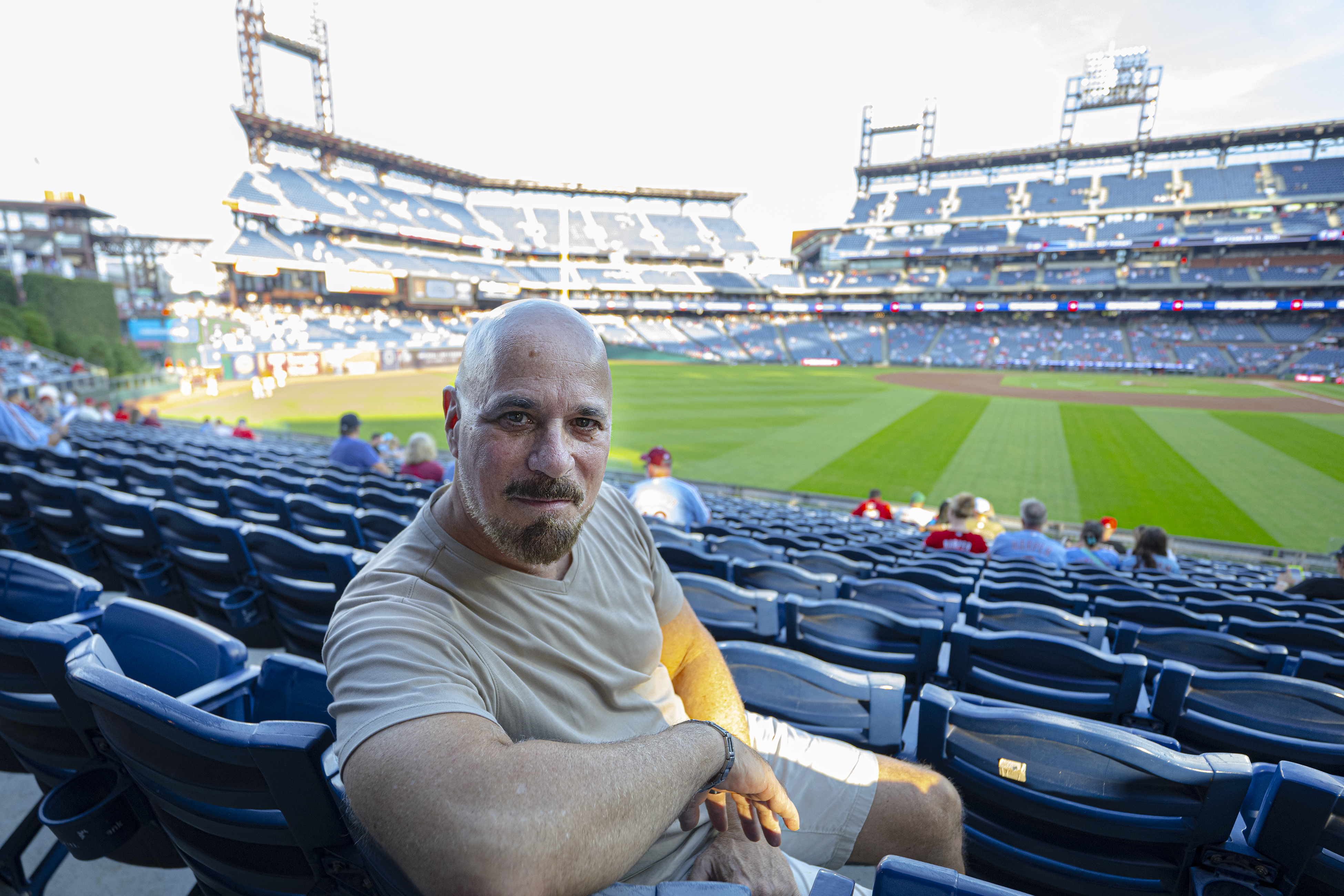
    Greg Farnese, a television cameraman and musician, is photographed Wednesday, Sept. 10, 2026, at Citizens Bank Park in Philadelphia, where he works as a camera operator in left field. Farnese, a crooner, recently released his debut album, “Oh No, I’m in Love Again,” on Grammy-nominated Philadelphia pianist Orrin Evans’ Imani Records. Farnese also works as a Phillies television cameraman for NBC Sports Philadelphia, stationed nightly in the left-field power alley.Jose F. Moreno / Staff Photographer

    ‘The magician canceled, can you come down and sing a song?’

    The album, whose polish belies that it was recorded in a single day at MorningStar Studios in Montgomery County, features Philly jazz players like drummer Leon Jordan Sr. and horn arrangements by trumpeter Elliot Bild.

    Along with a delicate version of Johnny Mercer’s “Dream” accompanied by guitarist Paul Bollenbock, the album includes Green Day, Oasis, and Tears for Fears songs, all artfully rearranged to make familiar sound fresh.

    It’s been a long road of confidence building for Farnese to work with a musician as accomplished as Evans, a three-time Grammy nominee who this spring was named artistic director of the Seattle Repertory Jazz Orchestra. (He’ll split his time between Seattle and Philly.)

    Speaking between innings during a recent Phillies-Astros game — an 11-7 win, thanks to a Kyle Schwarber grand slam — Farnese calls Evans “so smart and honest, and a great pianist. It’s like having Quincy Jones in my corner.”
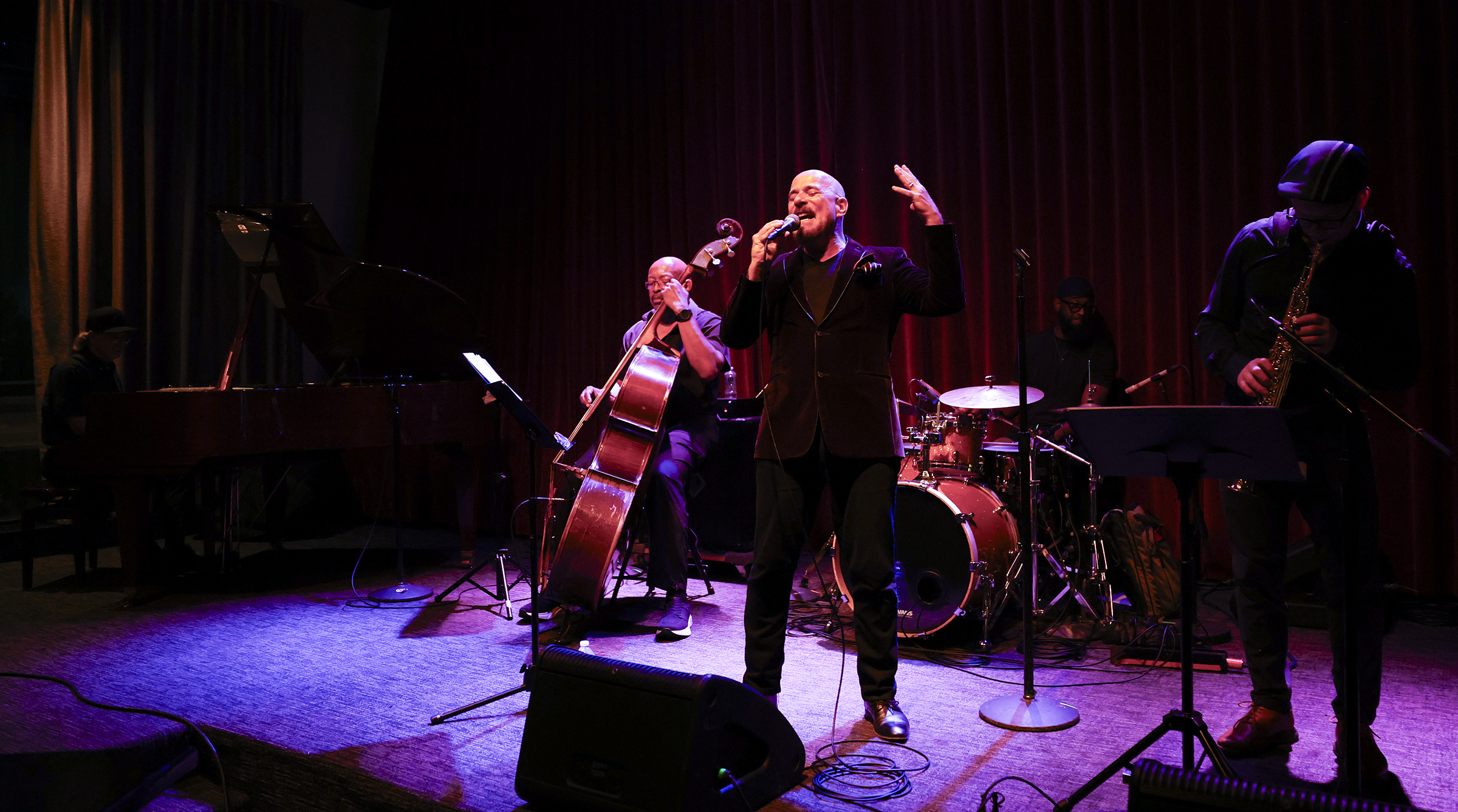
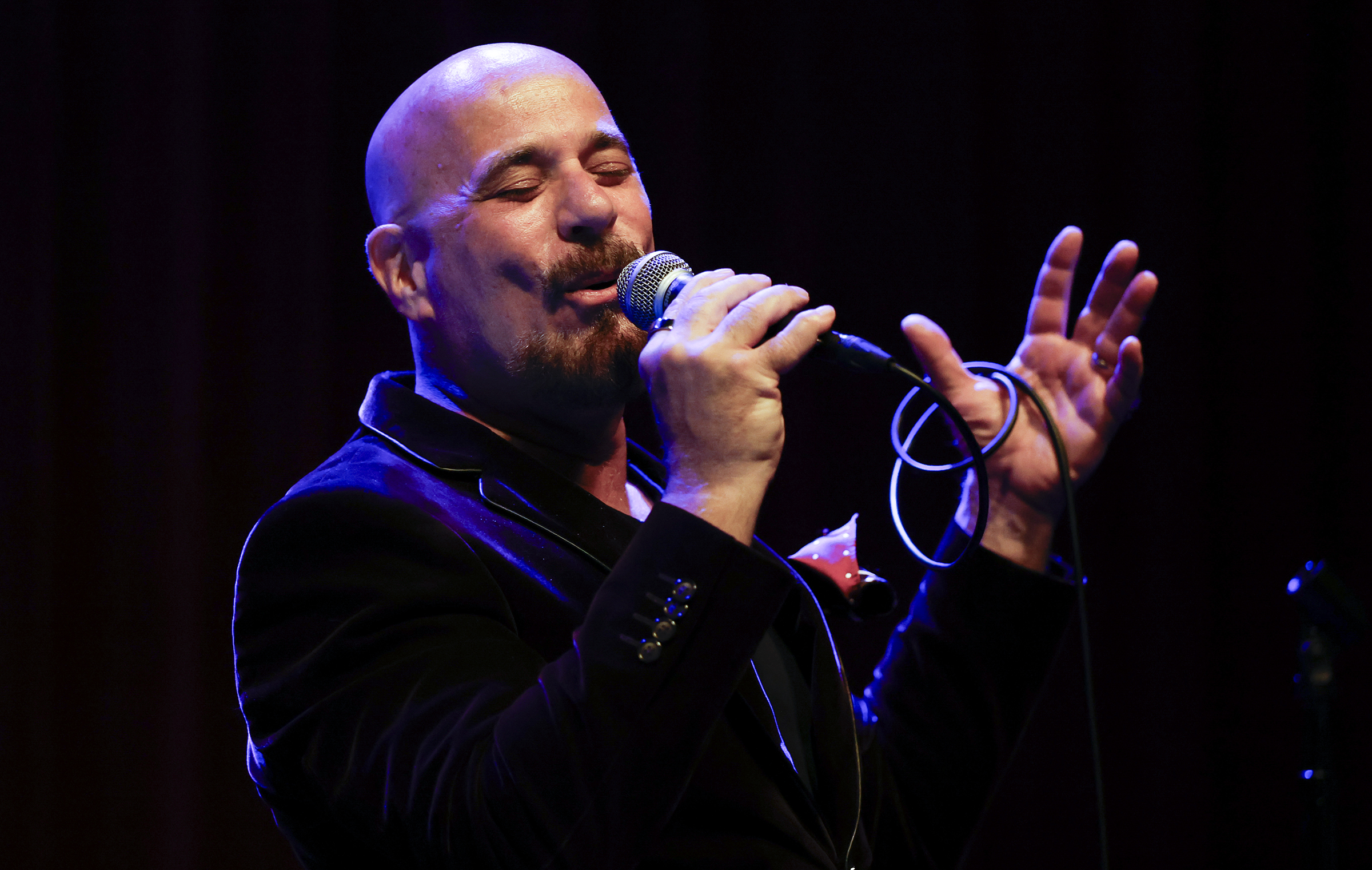
    Greg Farnese (center) performs at the World Stage in University City on Sept. 18, 2026. Farnese just released his debut album, “Oh No, I’m in Love Again.”Yong Kim / Staff Photographer

    “I started out singing in pizza parlors,” said Farnese, 62. “My wife is a psychologist and she used to work at nursing facilities. She called me one day and said, ‘The magician canceled, can you come down and sing a song?’

    “I told her no, I’m not ready yet. She said, ‘Get the hell down here, just do it!’ I was afraid, and I was so self-conscious about being good.”

    But as Farnese sang the 1940s standard “Moonlight in Vermont” to an elderly audience in Egg Harbor Township, he had a revelation.

    “The two ladies in the front started crying. I was bringing them back to when they were young. That moment I realized that it wasn’t really about me. It was about the effect the music had on the audience. I saw them crying and I thought: This is what I want to do.”

    Since then, Farnese has surrounded himself with first-class musicians and sung in area jazz clubs and private events, while also traveling for gigs in New York and Chicago.

    Working with the Phillies suits his ambitions. Knowing his schedule months in advance, he books shows when the team is on the road.

    “We’ve brought him on a couple of times to sing ‘Take Me Out to the Ballgame,’” said Phillies TV play-by-play announcer Tom McCarthy. “I love his energy. He just brings so much professionalism and creativity and knows how to get the crowd involved. He’s an entertainer.”

    Farnese put an exclamation point on one of the Phillies most memorable wins this year.

    “Schwarber hit a home run to center field onto Ashburn Alley,” McCarthy said of the Aug. 23 walk-off win. “It was an amazing comeback, and there was elation from the Phillies fans. But then Greg’s camera moved over to the Cardinals fans who had the total opposite reaction. It really buttoned up the story. It was just awesome.”

    ‘What would Ray Charles do with a Green Day song?’

    Evans wasn’t all that familiar with Farnese’s music before he decided to produce Oh No, I’m in Love Again and put it out on his label, home to artists like Philly keyboard player Luke Carlos O’Reilly and Los Angeles drummer Tina Raymond.

    Choosing who to work with isn’t about “it has to be the best vocalist, or the best saxophonist. It’s if somebody asks me to help them, and I believe in them as a human being.”

    Though he “wasn’t super-duper familiar with Greg’s singing,” Evans said, “I knew some of the people he was playing with. So I know this person doesn’t play with slouches, so he can’t be a slouch.”

    The key to success in recording, Evans says, was trust.

    “I just like working with people I like. And I know that if we can vibe off the bandstand, there’s no way we’re not going to vibe on the bandstand.

    “One of the best things I can say about Greg is his desire and ability to learn. He has an inquisitive spirit. He’s not done evolving. I really love this record, and I’m excited for the next one because of him.”

    “I love jazz and swing music,” Farnese said. “You know, Bennett, Bublé, Sinatra. That’s my wheelhouse. But growing up I was exposed to all these different styles. Everything from Simon and Garfunkel and the Beatles to Curtis Mayfield and Puccini.

    “So I’m creating a vocal style that combines songs I really love in jazz arrangements. What would Ray Charles do with a Green Day song? What would Duke Ellington do with a Blood, Sweat & Tears song? I want to be my own artist that creates my own music in my own style.”

    “I have a great job at NBC Sports Philadelphia. But when I got that tap on the shoulder, that was God saying. ‘This is not what you’re supposed to be doing.’ And being a middle-aged man, this is not a dress rehearsal. This is it. Now’s the time.”

    Greg Farnese will perform Oct. 4 at Tim McCloone’s Supper Club, 1200 Ocean Ave N, Asbury Park, timmcloonessupperclub.com and Oct. 23 at the Exit 0 Jazz Festival, Cape May, exitzerojazzfestival.com.
  • Phillies-Rays: John Kruk out, Cole Hamels in on NBC Sports Philadelphia for wild-card fight

    Phillies-Rays: John Kruk out, Cole Hamels in on NBC Sports Philadelphia for wild-card fight

    The Phillies are “limping into the final weekend” of the season, as John Kruk pointed out during Thursday’s loss to the Milwaukee Brewers.

    But the NBC Sports Philadelphia announcer and former Phillies first baseman won’t be joining them.

    “Last game for John Kruk,” McCarthy said at the end of Thursday’s broadcast, with Kruk quickly interrupting to add, “Not ever!”

    So why isn’t Kruk calling the final series of the season? He’ll be down in San Antonio, Texas, to watch his daughter’s volleyball tournament.

    Replacing Kruk in the booth for the Phillies three-game series against the Tampa Bay Rays will be Ben Davis. NBC Sports Philadelphia will broadcast two of the games — Friday night and Sunday afternoon — while Fox will broadcast the action Saturday night.

    McCarthy will be on hand to call Friday’s game, which begins at 6:30 p.m. with Cristopher Sánchez (18-6, 2.93 ERA) scheduled to take the mound. But he’ll miss Sunday’s season finale because he’ll be calling the Week 3 NFL matchup between the Houston Texans and Indianapolis Colts on CBS.

    The timing is obviously not ideal, especially if the Phillies haven’t clinched a playoff spot heading into Sunday’s game. But the way the calendar worked, McCarthy actually missed fewer games this season than previous years.

    “I don’t miss any games during the regular season, kind of by design,” McCarthy told The Inquirer last month. “Unless it’s my kid’s graduation. … I save it for football season.”

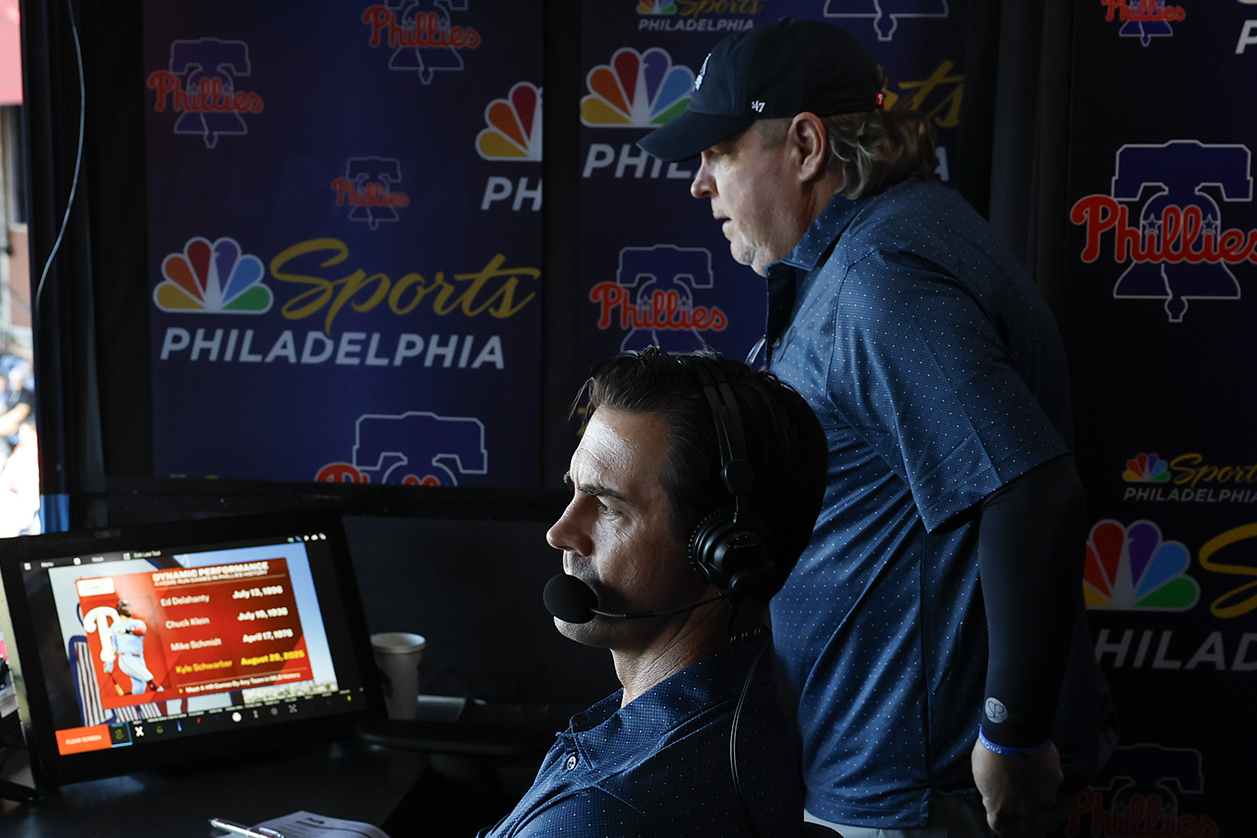
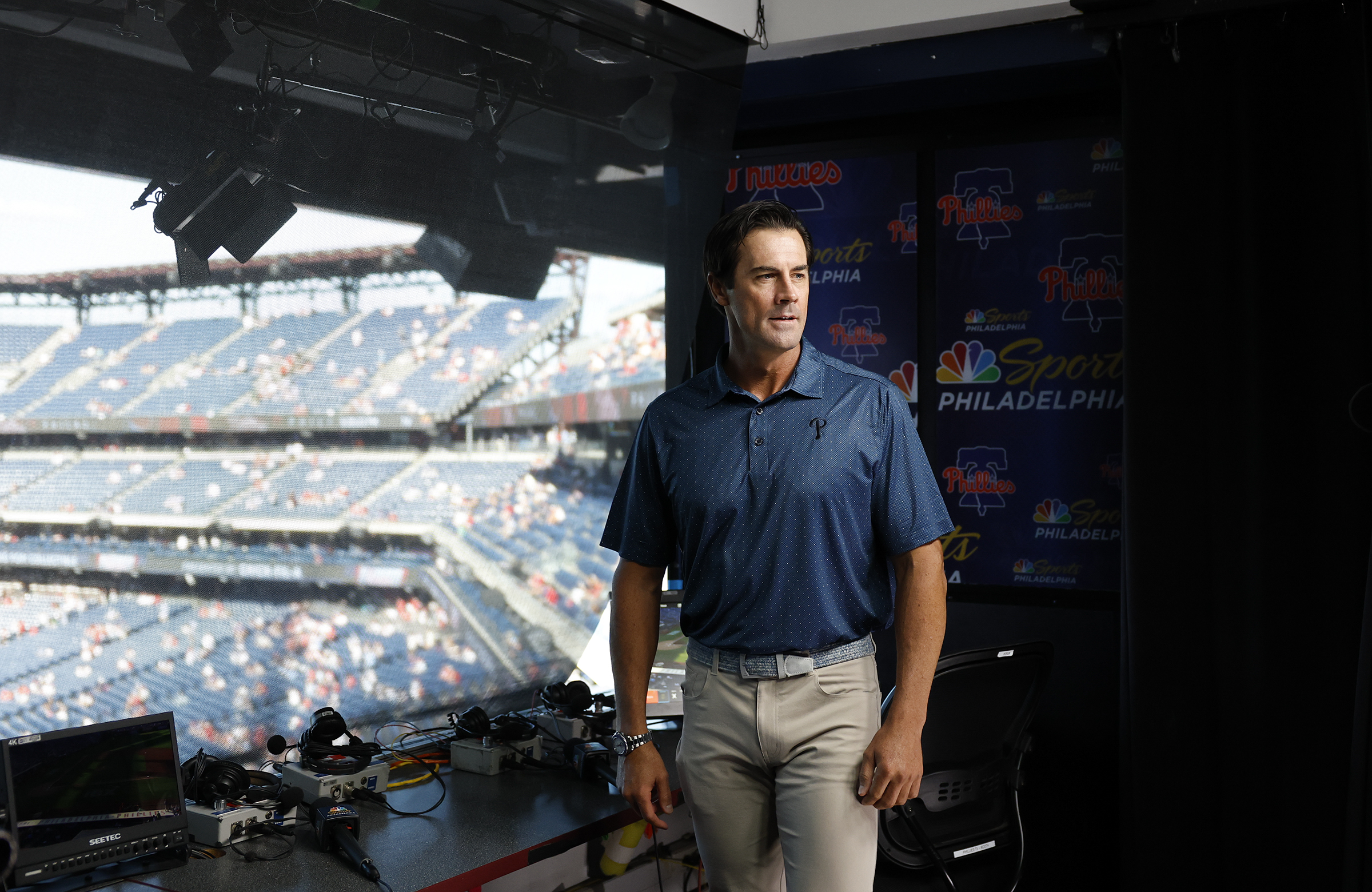
    Former Phillies pitcher Cole Hamels will be back in the booth for Sunday’s season finale. Yong Kim / Staff Photographer

    That means Scott Franzke, in his 21st season as the Phillies radio voice, will make the jump to TV again to call Sunday’s game. He’ll be joined by Davis and former World Series MVP Cole Hamels, who is finishing up his second season calling Phillies games.

    Gregg Murphy will call Sunday’s game on 94.1 WIP alongside Larry Andersen.

    Hamels has essentially replaced Hall of Famer Mike Schmidt, who walked away from broadcasting this season after 12 years as a part-time announcer. Schmidt made one appearance in the booth, but it wasn’t to call a game — he spent an inning alongside fellow Hall of Famer George Brett during a June game against the Kansas City Royals.

    As for Hamels, it’ll be his ninth broadcast of the season, on par with last year. His most recent broadcast was a memorable one — a dramatic comeback win against the St. Louis Cardinals last month capped by Kyle Schwarber’s walk-off home run.

    Friday might not be the last Phillies broadcast for McCarthy. While NBC Sports Philadelphia won’t be airing any playoff games, McCarthy will call one of the four wild-card series for NBC. That means there’s a chance he could finally call a Phillies playoff game on TV — if they hold on to a wild-card spot.

    NBC will name its full roster of wild-card announcers Sunday.

    Phillies playoff picture

    window.addEventListener(“message”,function(a){if(void 0!==a.data[“datawrapper-height”]){var e=document.querySelectorAll(“iframe”);for(var t in a.data[“datawrapper-height”])for(var r,i=0;r=e[i];i++)if(r.contentWindow===a.source){var d=a.data[“datawrapper-height”][t]+”px”;r.style.height=d}}});

    As Yogi Berra famously said, “It’s déjà vu all over again.”

    The Phillies enter Friday needing two wins or a win and some help to clinch a wild-card spot.

    Both the Chicago Cubs and San Diego Padres clinched the playoffs Friday, leaving the Phillies and Arizona Diamondbacks to fight it out for the final wild-card spot.

    The good news is the Phillies still control their own destiny. Here are the scenarios where they end up with a wild-card spot:

    • Two wins against the Rays
    • Two losses by the Diamondbacks against the Padres
    • A Phillies win AND a Diamondbacks loss

    The bad news is the Diamondbacks hold the tiebreaker and are hot, having won five straight games and 12 of 20 games this month. Meanwhile, the Phillies have gone 9-12 in September, haven’t won a series since the beginning of the month, and might be without second baseman Luis Arráez this weekend after he sprained his left ankle Thursday.

    “We know about the 10-game losing streak, which scares the living daylights out of me right now,” former Phillies pitcher Ricky Bottalico said during Thursday’s postgame show. “If they could do it once, they could certainly do it twice.”

    Phillies news

    Bryce Harper could be on the move during the season finale against the Rays. Yong Kim / Staff Photographer

    Remaining Phillies TV schedule

    • Rays at Phillies

    2026 MLB playoff schedule

    • Wild-card series (best-of-three): Begin Sept. 29 (NBC, NBCSN)
    • Divisional series (best-of-five): Begin Oct. 3 (Fox, FS1, TBS, truTV)
    • Championship series (best-of-seven): Begin Oct. 11 (Fox, TBS)
    • World Series: Begins Oct. 23 (Fox)
  • From Indian classical to some patriotic ballet, here are the 9 best dance shows coming to Philadelphia this fall

    From Indian classical to some patriotic ballet, here are the 9 best dance shows coming to Philadelphia this fall

    If you like your dance with a good soundtrack, there are a lot of fun options in Philly this fall.

    Philadelphia Ballet will open its season with a celebration of America’s 250th anniversary, with its orchestra playing “The Stars and Stripes Forever” and other patriotic music and American classics. Philadanco will be dancing to the Sound of Philadelphia at the Kimmel Center in December. Ballets Jazz Montréal will visit the Annenberg with an homage to Leonard Cohen.

    And, of course, holiday music will be back with the dance in December when Philadelphia Ballet brings back George Balanchine’s The Nutcracker. Plus, A Very SW!NG OUT Holiday is coming to the Annenberg, with a live band playing holiday favorites to the dance.

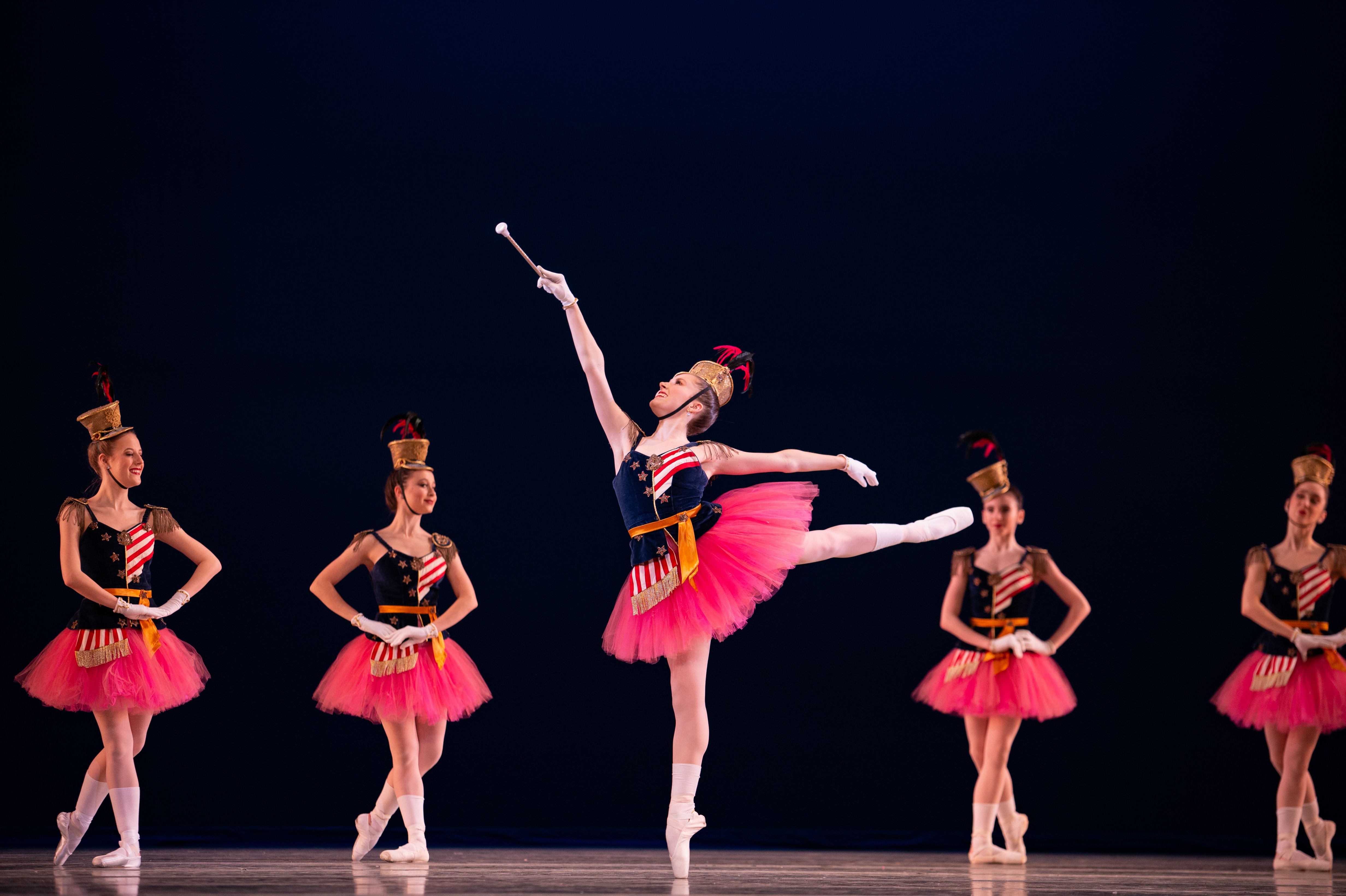
    Philadelphia Ballet in George Balanchine’s “Stars and Stripes.”Arian Molina Soca / Philadelphia Ballet

    ‘Stars and Stripes Forever!’ Philadelphia Ballet

    Oct. 8-11, Academy of Music

    Most of the Semiquincentennial celebrations happened around July Fourth. But Philadelphia Ballet is continuing the party with its season-opening program. It will be dancing Jerome Robbins’ Fancy Free, George Balanchine’s Stars and Stripes and a concert version of Who Cares?, and Eliot Feld’s Variations on “America.” philadelphiaballet.org

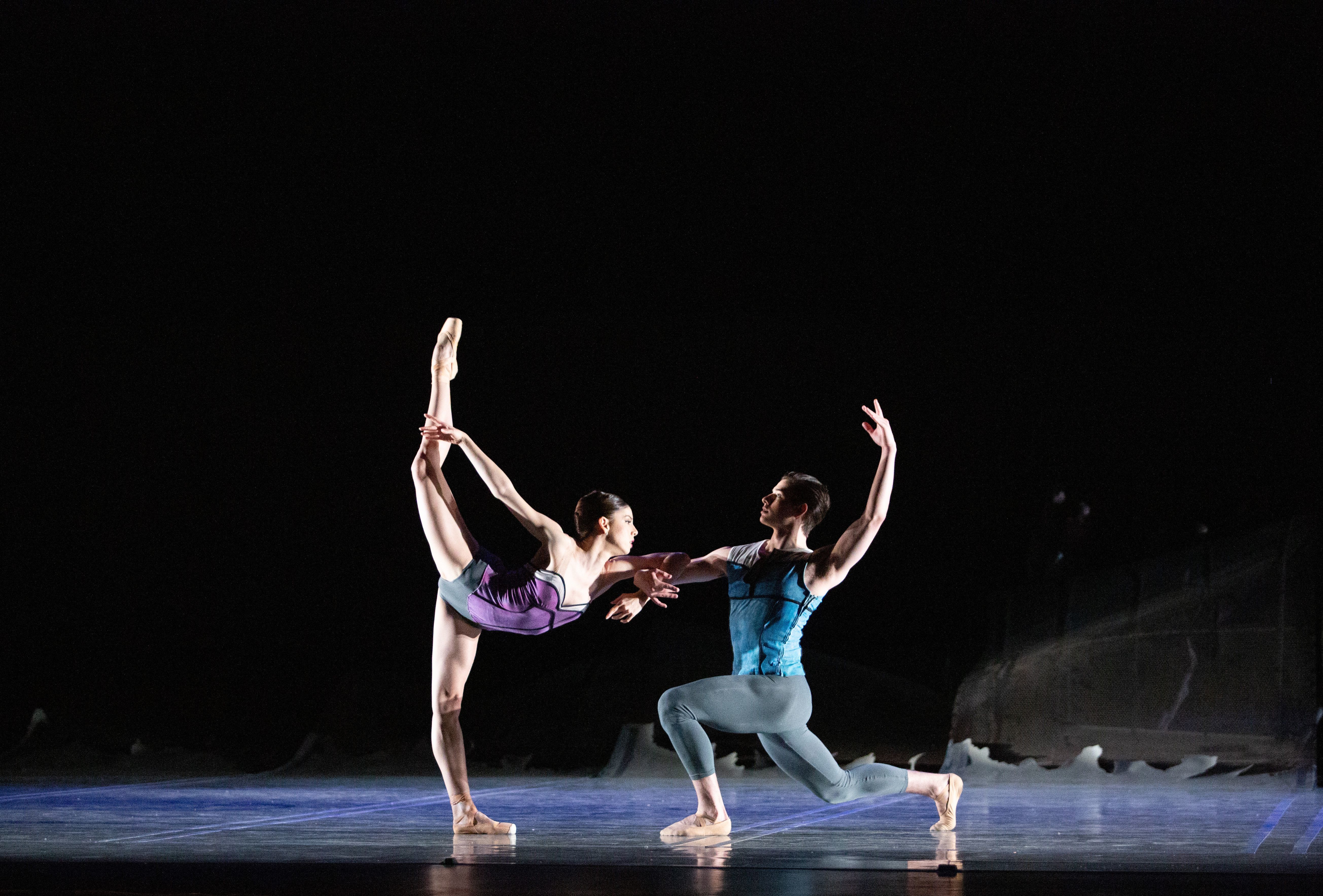
    Philadelphia Ballet dancers Dayesi Torriente and Sterling Baca in Christopher Wheeldon’s “DGV.”Alexander Iziliaev

    ‘Dance at Great Velocity,’ Philadelphia Ballet

    Oct. 15-18, Academy of Music

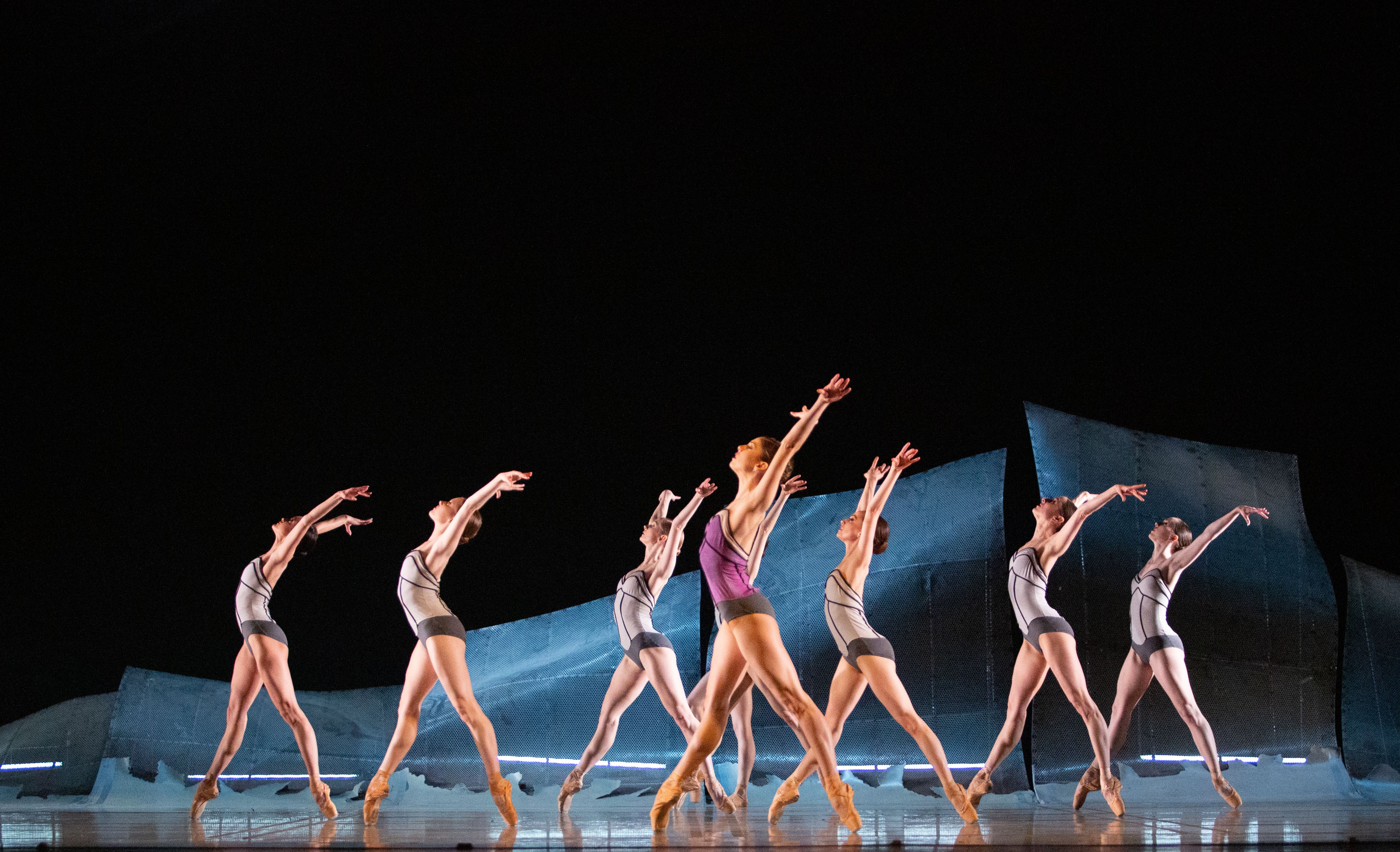
    Just days after its season opener, Philadelphia Ballet returns to the Academy of Music for its second program, one that focuses on the power and speed of a ballet dancer. Of course, the challenge is not only to make it athletic, but to bring great artistry, as well. For this program, the ballet is bringing back Wayne McGregor’s Chroma, Christopher Wheeldon’s DGV: Danse à Grande Vitesse, and Twyla Tharp’s In the Upper Room. philadelphiaballet.org
    Ballets Jazz Montréal in “Dance Me – The Music of Leonard Cohen.”Rolando Paulo Guerzoni / Ballets Jazz Montreal

    Ballets Jazz Montréal

    Oct. 23-24, Zellerbach Theatre

    This Canadian company is stopping in Philly for the final tour of Dance Me, an homage to the late singer/songwriter Leonard Cohen, who had authorized the work. The work includes choreography by Annabelle Lopez Ochoa (a frequent BalletX collaborator), Andonis Foniadakis, and Ihsan Rustem. pennlivearts.org
    Nrityagram Dance Ensemble in “KHANKHANĀ, The Sound of Dancing Feet.”Rajesh Krishna / Nrityagram Dance Ensemble

    Nrityagram Dance Ensemble

    Nov. 5-7, Zellerbach Theatre
    This classical Indian dance company is returning to the Annenberg with the Philadelphia premiere of KHANKHANĀ, The Sound of Dancing Feet. It features three decades of works by artistic director and choreographer Surupa Sen, who specializes in Odissi, one of the nine Indian classical dance styles. pennlivearts.org

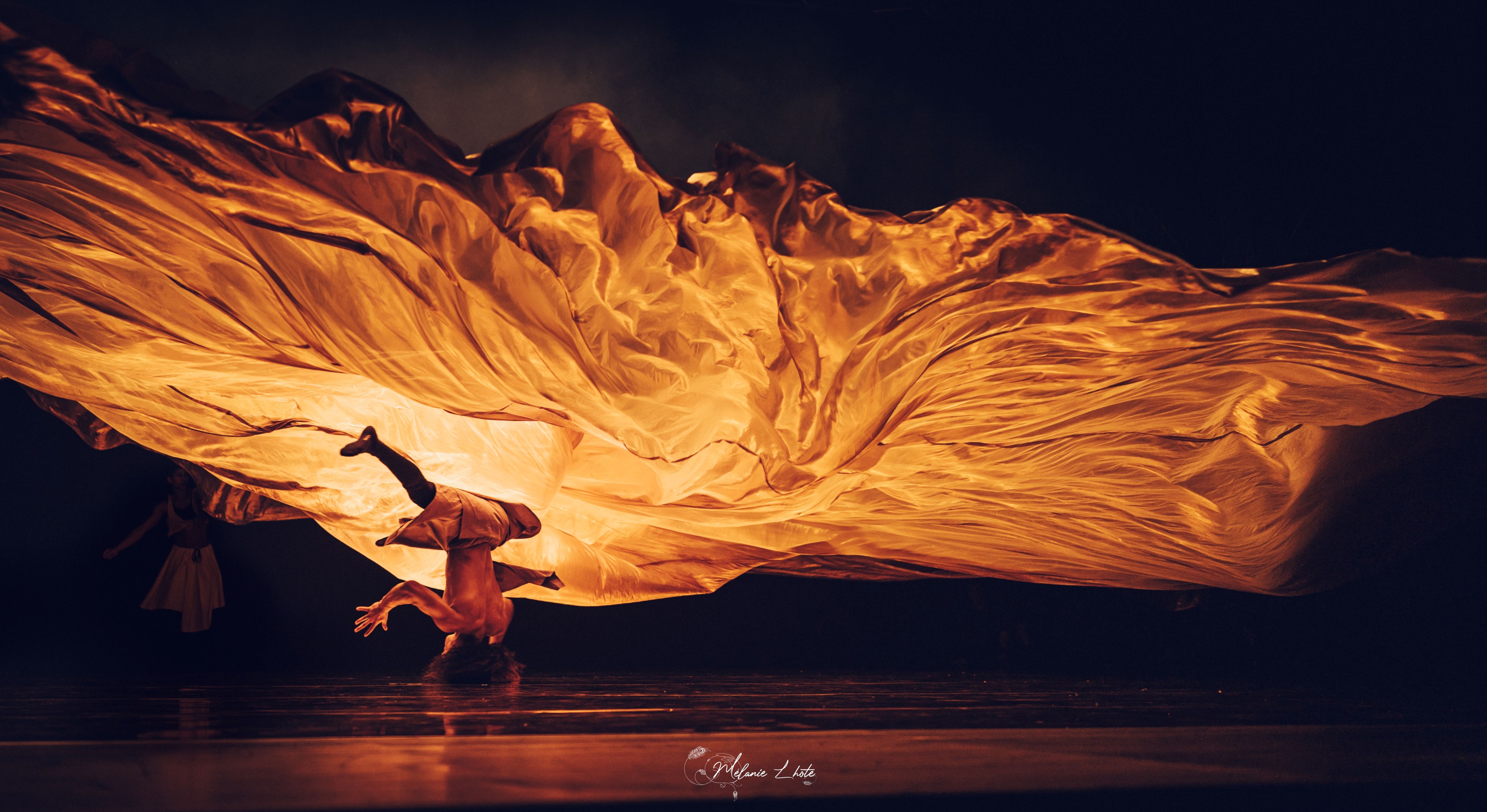
    Compagnie Hervé Koubi in “Sol Invictus.”Mélanie Lhôte / Compagnie Hervé Koubi

    Compagnie Hervé Koubi

    Nov. 20-21, Zellerbach Theatre

    This French company is returning to Philadelphia with Sol Invictus, a work that focuses on love and peace. The style is a combination of contemporary dance, hip-hop, capoeira, and martial arts, and it is set to music by Mikael Karlsson, Steve Reich, and Maxime Bodson. pennlivearts.org

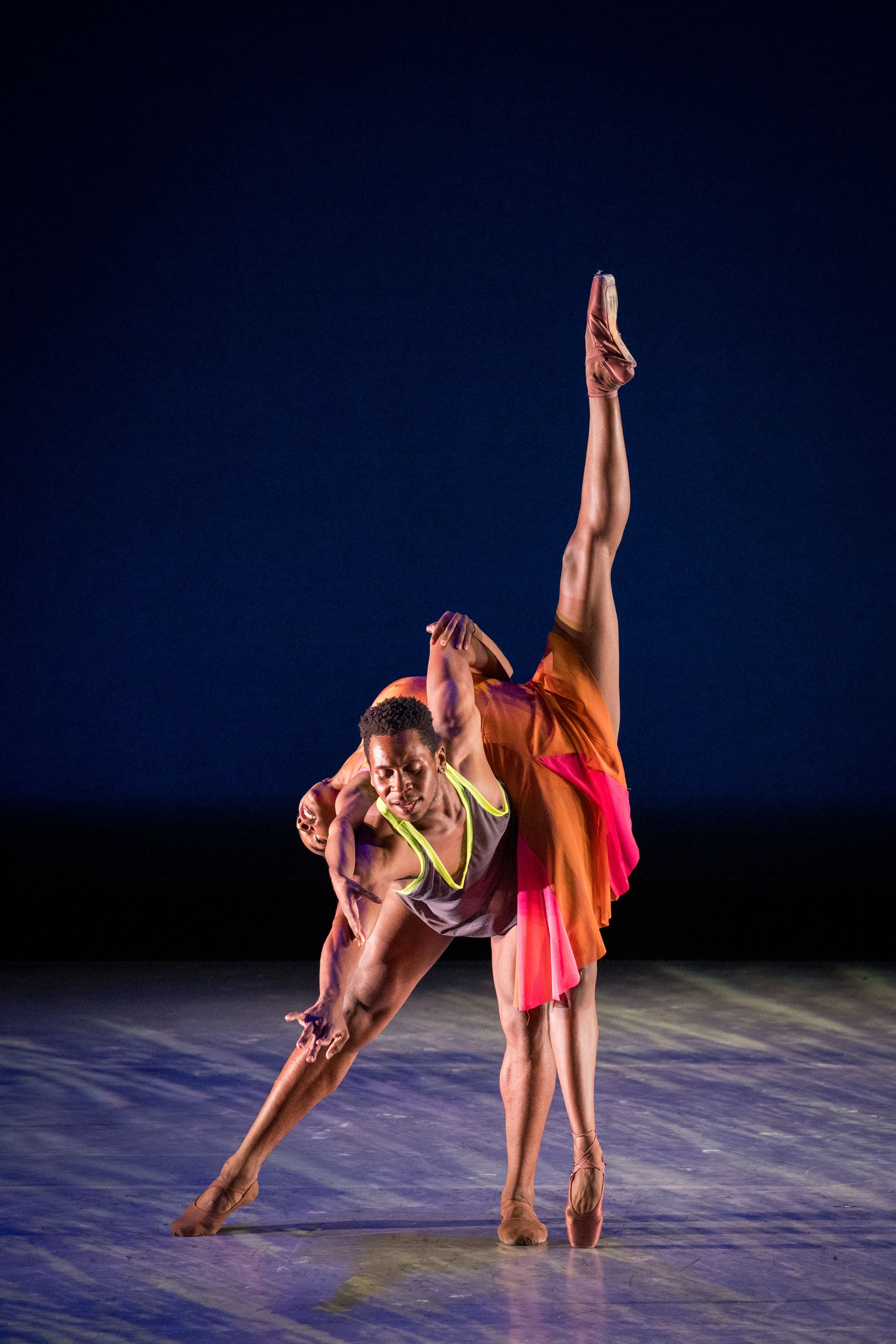
    BalletX dancers Jared Kelly and Ashley Simpson in Amy Hall Garner’s “Switching The Groove.”Christopher Duggan / BalletX

    BalletX fall series

    Nov. 4-15, Suzanne Roberts Theatre

    BalletX is revisiting Prohibition-era Philadelphia in its fall series, with a world premiere from New Zealand choreographer Loughlan Prior. The company mentions jazz, glamour, and danger. Sounds fun! It will also include the return of 2023’s Switching the Groove by Amy Hall Garner and last year’s In the Wake by Christian Denice. balletx.org

    Philadanco will be performing “Sweet Agony” by Gene Hill Sagan in its December program.Philadanco

    ‘For the Love of Philly,’ Philadanco

    Dec. 4-6, Perelman Theater

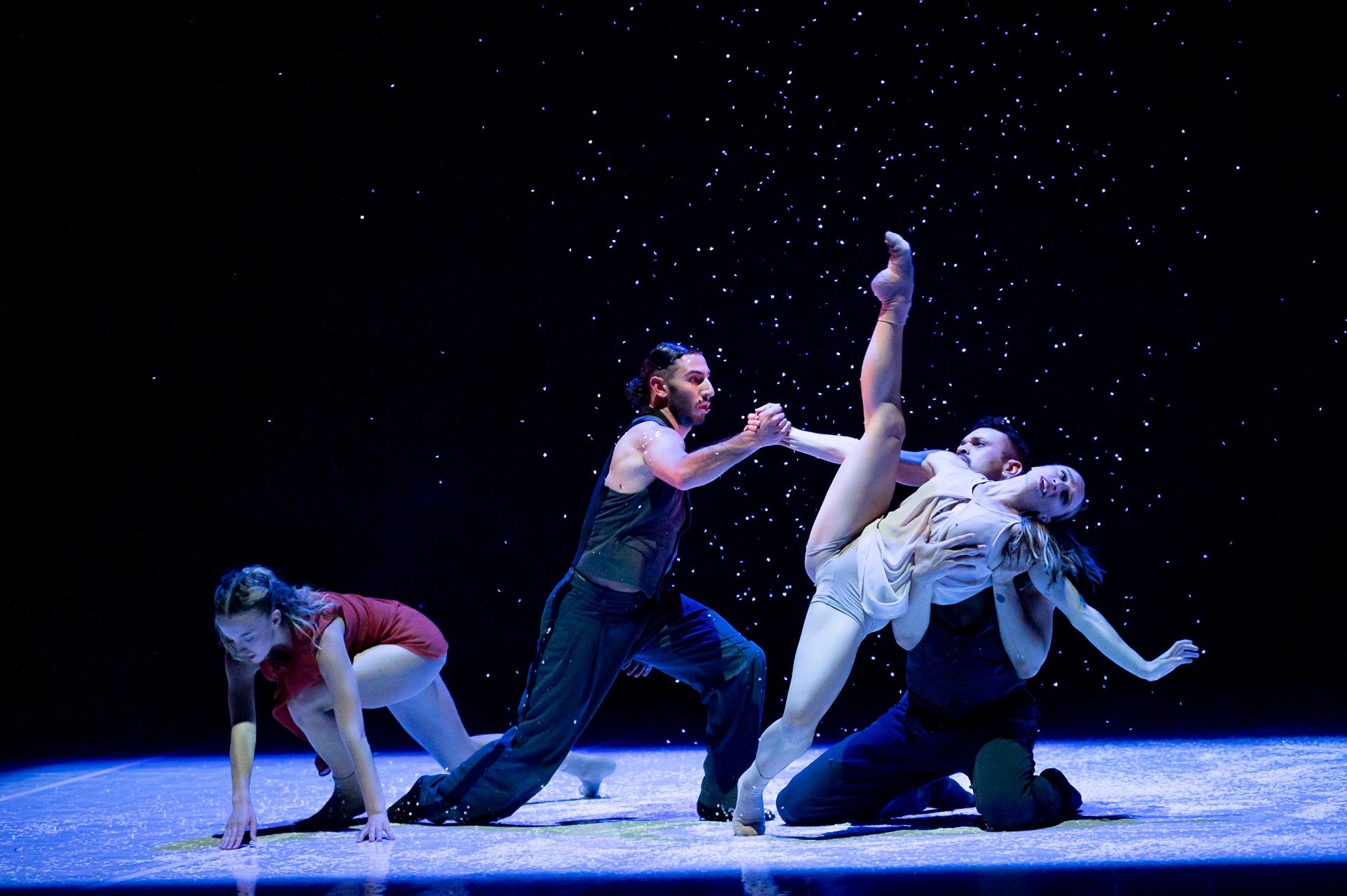
    This season, Philadanco will be celebrating Philly’s Black culture legacy two ways: via its own history and through the Sound of Philadelphia. The program looks meaningful and highly entertaining, featuring world premieres by Rennie Harris and Dawn Marie Bazemore, as well as Sweet Agony by Gene Hill Sagan, Promise Me You Won’t Call by company co-artistic director Tommie-Waheed Evans, and a reimagined version of Dwight Rhoden’s Tribute. The music will be from the Philadelphia International Records catalog and include songs from Patti LaBelle, Teddy Pendergrass, the O’Jays, and others. On opening night, the company will celebrate founder and artistic adviser Joan Myers Brown’s 95th birthday. ensembleartsphilly.org

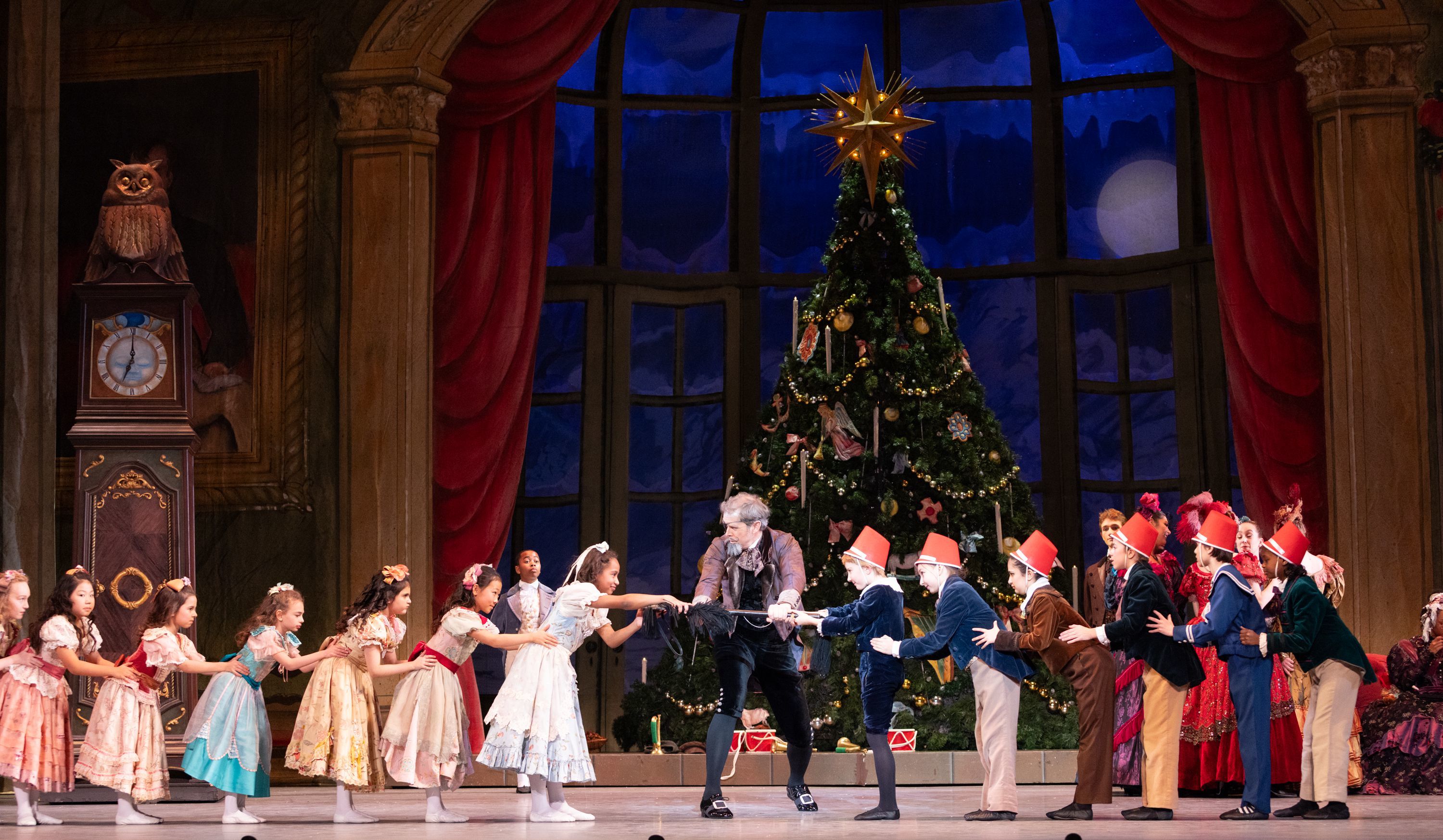
    Philadelphia Ballet rehearsal director Charles Askegard, as Drosselmeier, along with students from the School of Philadelphia Ballet in the party scene in “George Balanchine’s The Nutcracker.”Alexander Iziliaev / Philadelphia Ballet

    ‘George Balanchine’s The Nutcracker,’ Philadelphia Ballet

    Dec. 4-31, Academy of Music

    If you’ve ever seen one ballet, chances are it’s The Nutcracker. If you’ve ever performed in a ballet, it’s likely The Nutcracker. If you ever felt like there’s one performance that really makes it feel like Christmas, it’s likely The Nutcracker. Philadelphia Ballet offers many chances to get that holiday spirit, with performances throughout most of December. The delightful children, Sugar Plum Fairy, snow on stage, and red-coated Philadelphia Boys Choir are fun to see every year. philadelphiaballet.org

    “A Very SW!NG OUT Holiday.”Steven Pisano / Sw!ng Out

    ‘A Very SW!NG OUT Holiday’

    Dec. 11-12, Zellerbach Theatre

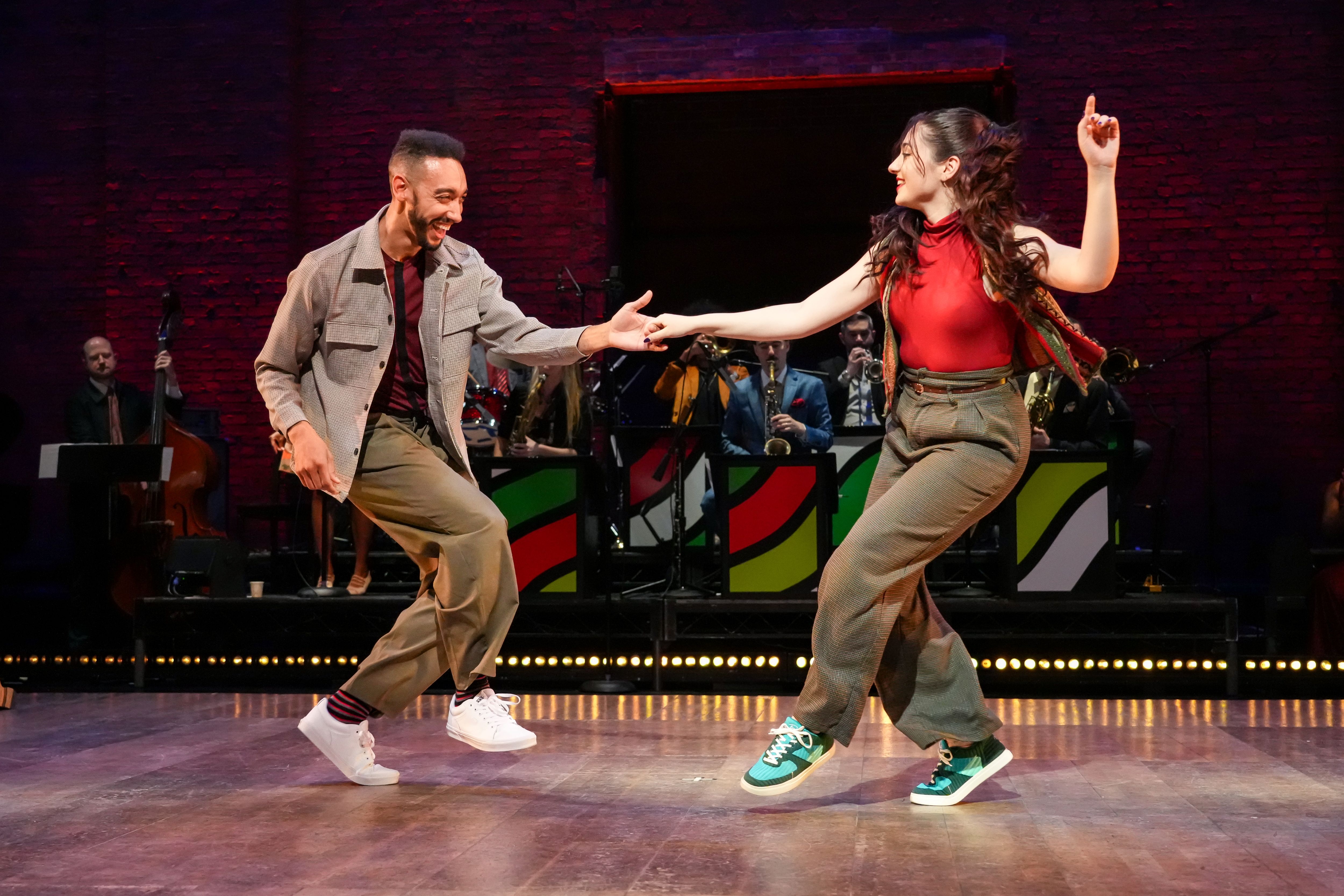
    If you’d like a different type of Christmas dance show, choreographer Caleb Teicher is bringing some holiday Lindy Hop, based on the show SW!NG OUT, which visited the Annenberg in 2023. The show also features holiday music played live by the Eyal Vilner Big Band. pennlivearts.org

  • Looking for pawpaws | Outdoorsy Newsletter

    Looking for pawpaws | Outdoorsy Newsletter

    Welcome back and happy autumn equinox, nature lovers.

    Here’s what we’re up to today:

    • A rare, regional treat: It’s pawpaw season.
    • The fall must go on: South Jersey farmers get creative to stay afloat in the face of a shrunken apple-picking season.
    • Your outdoorsy experience: An adventure at a quiet oasis in Abington Township.

    ☀️ Your weekend weather outlook: Friday will be partly sunny, then showers are expected to douse the region thanks to an early-season nor’easter. Flood warnings are in effect for the Shore.

    — Paola Pérez (outdoorsy@inquirer.com)

    If someone forwarded you this email, sign up for free here.

    A novel delight

    September ushers in pawpaw season, but it won’t last for long. It’s delicate and highly perishable, so now is the time to act.

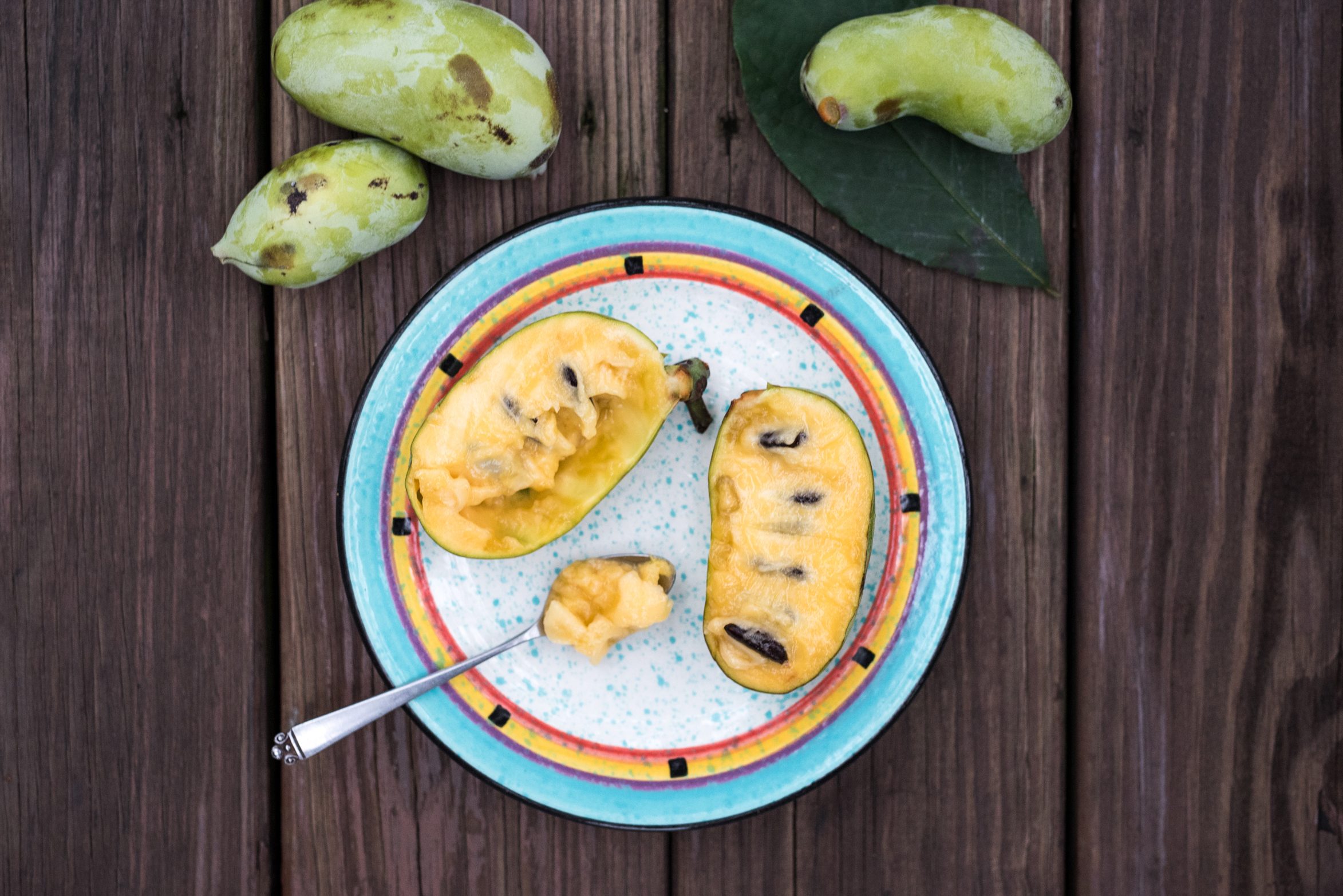
    🥭 The pawpaw is North America’s largest edible native fruit. It’s tropical-like in flavor, combining hints of papaya, mango, banana, and pineapple. My colleague Jenn Ladd said: “It tastes like a cross between a mango and a banana.”

    🧺 You can forage them around the region, but you may also get lucky at a local co-op or farmers market.

    😋 You can eat one straight, or use it as an ingredient. Think ice cream, jam, or pudding. No recipe needed. Just keep in mind that its shelf life is short.

    Keep reading to learn more about the unique sweetness of pawpaws, and send in tips about where you have found and enjoyed the rare fruit.

    News worth knowing

    🌳 Your outdoorsy experience

    My colleague Lisa Dukart, Inquirer Local newsletter writer, wants to take us to a lovely green space that’s well worth checking out:

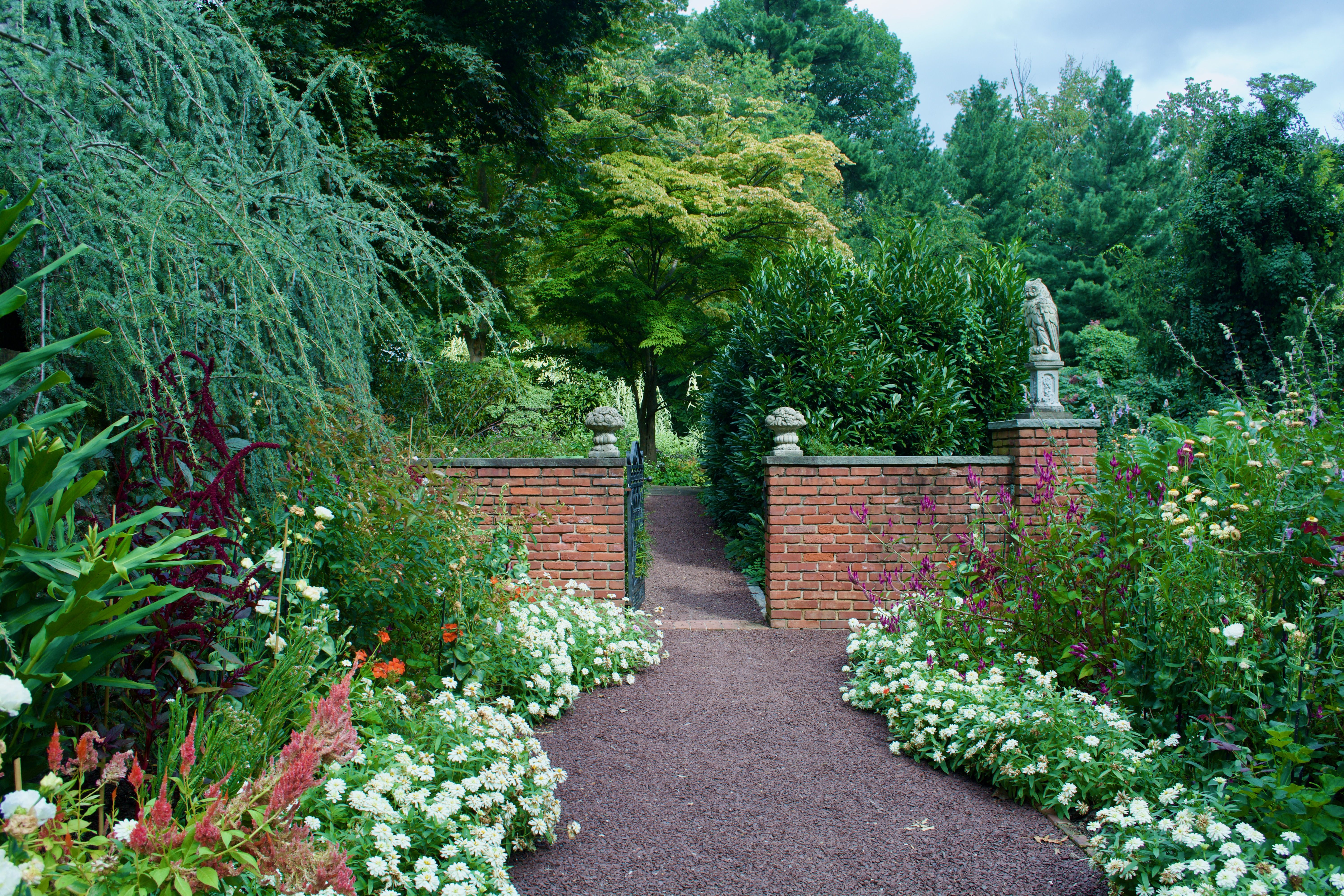
    While it’s not a month that first comes to mind for visiting a garden, late September is an unexpectedly wonderful time to do so. Native flowers are still in bloom, the air’s a touch cooler, and the leaves are getting the first hints of autumn color. While I was prepared for a small dose of beauty, what I found on a recent visit to PHS Meadowbrook Farm was much more magical than I expected.

    This quiet, 21-acre oasis in Abington Township unfolded slowly thanks to its intentional design, giving me space to savor each moment as I meandered the grounds of the stately 1936 home once owned by the Pennock family.

    The beauty begins at the entryway, where the stone facade is surrounded by an array of plants and flowers in a rainbow of colors. Beyond the house, almost seemingly tucked away, are a jewel box of garden rooms — some featuring colorful pollinator flowers or herbs, others showy blooms like roses and dahlias, while others are grounded in architectural details like a fountain or pool. Whichever direction you step, each room feels like a well-kept secret meant to be taken in slowly.

    PHS Meadowbrook Farm is open Wednesdays to Saturdays from 10 a.m. to 6 p.m. through Oct. 17.

    Looks and sounds utterly gorgeous. Thank you, Lisa.

    What about you, dear reader? Got any favorite spots or special outdoor memories to share? Email me here (with pictures, if you have them). You may see your story featured here.

    The fight to make it through fall

    🎤 Let me pass the mic to Inquirer reporter Sarah Nicell.

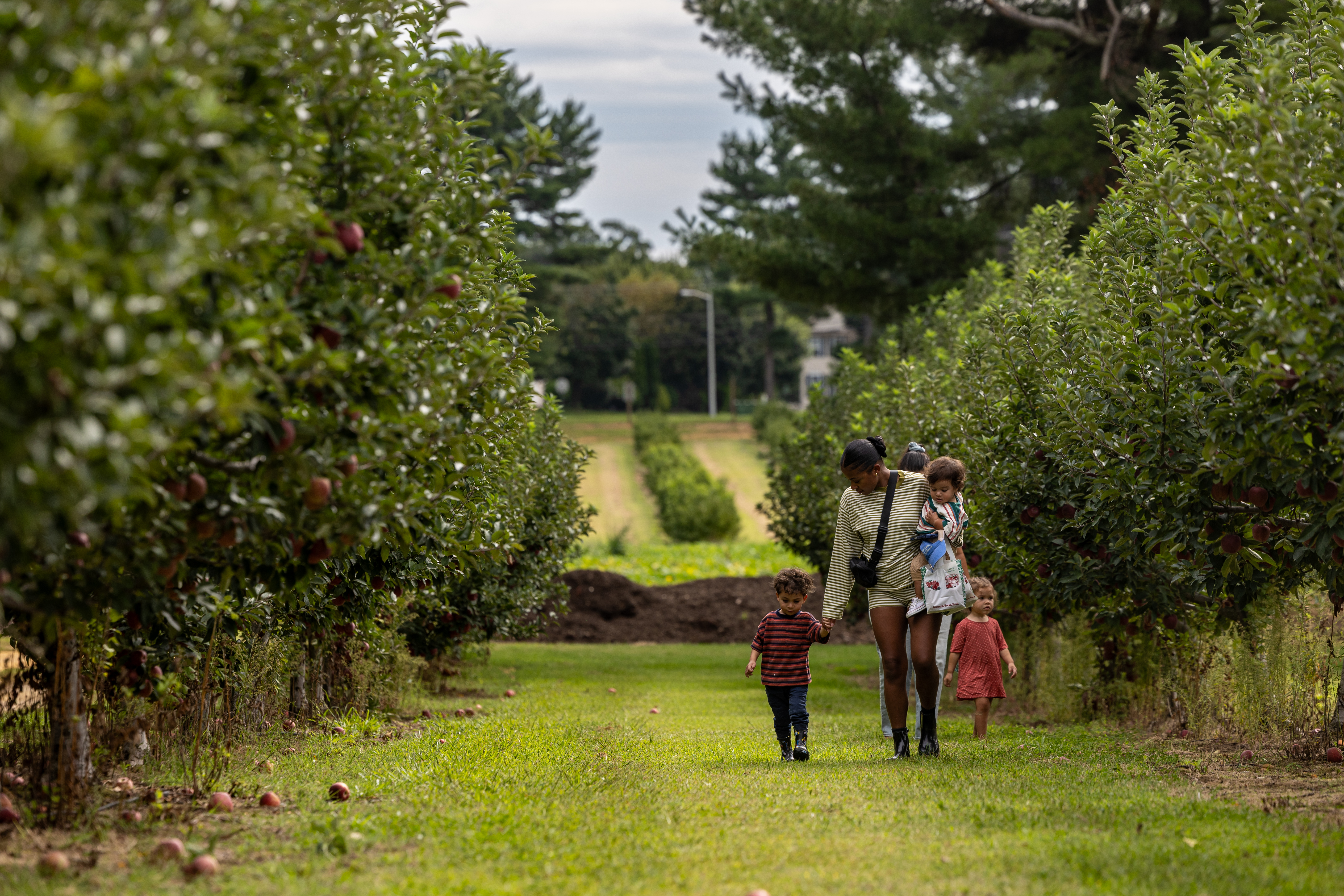
    For many, a quintessential South Jersey fall includes apple picking, a warm cider, and sugared doughnuts.

    But fall in the Garden State might look a little different this year after a spring freeze left farms across the region with damaged apple varieties and huge crop losses — at least $300 million worth, Gov. Mikie Sherrill said in May.

    With pumpkin spice and Halloween decorations already signaling fall’s arrival, farmers and produce sellers are trying their best to get by with fewer apples, or none at all. — Sarah Nicell

    Read on to learn how these farmers are getting creative under these difficult circumstances.

    Paola’s picks

    💭 A quote: “In all things of nature there is something of the marvelous.”

    🎃 A delightful portrait: A record-breaking pumpkin mosaic of Sir David Attenborough.

    🍅 A wicked find: Late-summer tomatoes at a Philly cemetery.

    🧠 A fascinating read: What a fruit fly can — and can’t — do with its 166,000 neurons.

    🏖️ A final score: The Inquirer’s Amy Rosenberg made 10 Shore predictions for 2026. Here’s how she did.

    A nurturing view

    Boots Levinson (left) and Laura White pose in the meadow at their home in Merion Station, Pa.Joe Lamberti / For The Inquirer

    Their Merion Station yard didn’t have much life. Now it’s filled with flowers. See all the colorful blooms and vegetation that adorn their Tudor-style home.

    👋🏽 Our next adventure awaits.

    By submitting your written, visual, and/or audio contributions, you agree to The Inquirer’s Terms of Use, including the grant of rights in Section 10.

  • How Pennsylvania’s quarries went on to inspire a national art movement

    How Pennsylvania’s quarries went on to inspire a national art movement

    What often gets called cobblestones on old Philadelphia streets are actually Belgian blocks. But no, the neat rectangles cut so they can fit tightly together did not come from Belgium. They came from nearby quarries, often from the New Hope area.

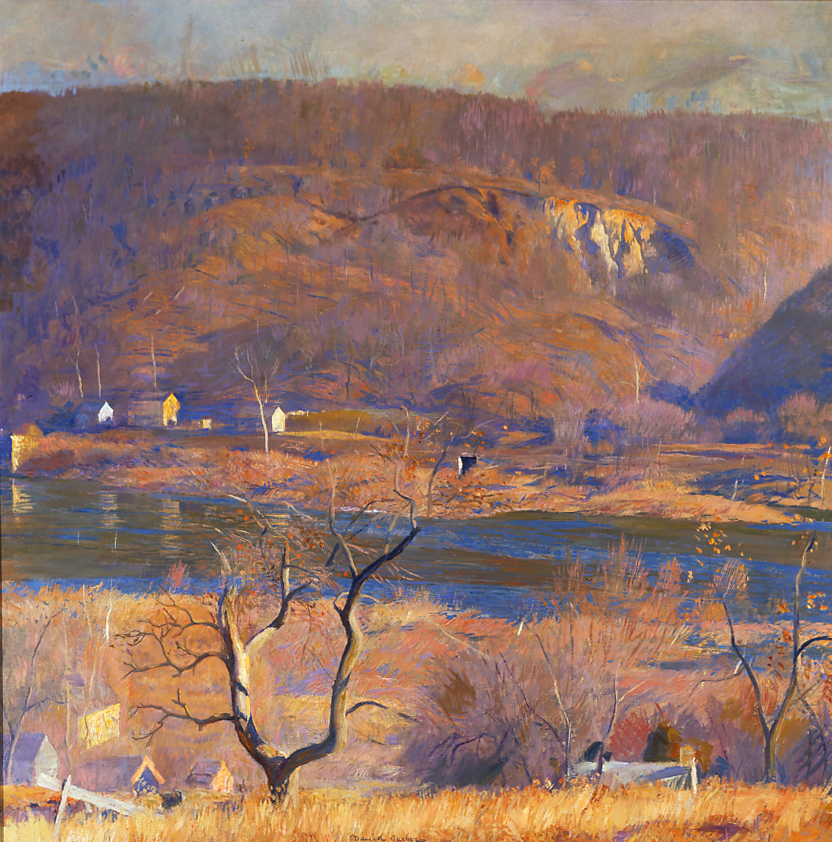
    Apart from the city’s architecture, Bucks County’s stones have also shaped the Pennsylvania Impressionism movement that flourished in the first half of the 20th century. New Hope, with its location on the Pennsylvania-New Jersey border, right by the Delaware River, was home to several artists who could afford to buy homes in the area, commute easily to Philadelphia to teach in art schools like the Pennsylvania Academy of the Fine Arts, and easily get to New York for shows and other networking opportunities.

    “The land was pretty cheap at the time, and artists could move into an old industrial mill or buy a property for not a lot of money. They could also escape urban life and get out into the country. It was just a really beautiful landscape, so people wanted to live in that area,” said Laura Igoe, chief curator at Doylestown’s Michener Museum and curator of the museum’s ongoing “Abstractions of Nature: Quarries and Industry in Pennsylvania Impressionism” show.

    The artists Edward Redfield and William Lathrop, Igoe said, were the first artists to settle in the area around 1900. Their works are a part of the show. Daniel Garber, who studied and taught at PAFA, soon followed them into the area and became one of the foremost artists living in New Hope. Then his students started moving to the area.

    “It was kind of like this self-perpetuating colony in a way,” said Igoe, “There was a very active artistic community there at the time, and also a lot of quarries.”

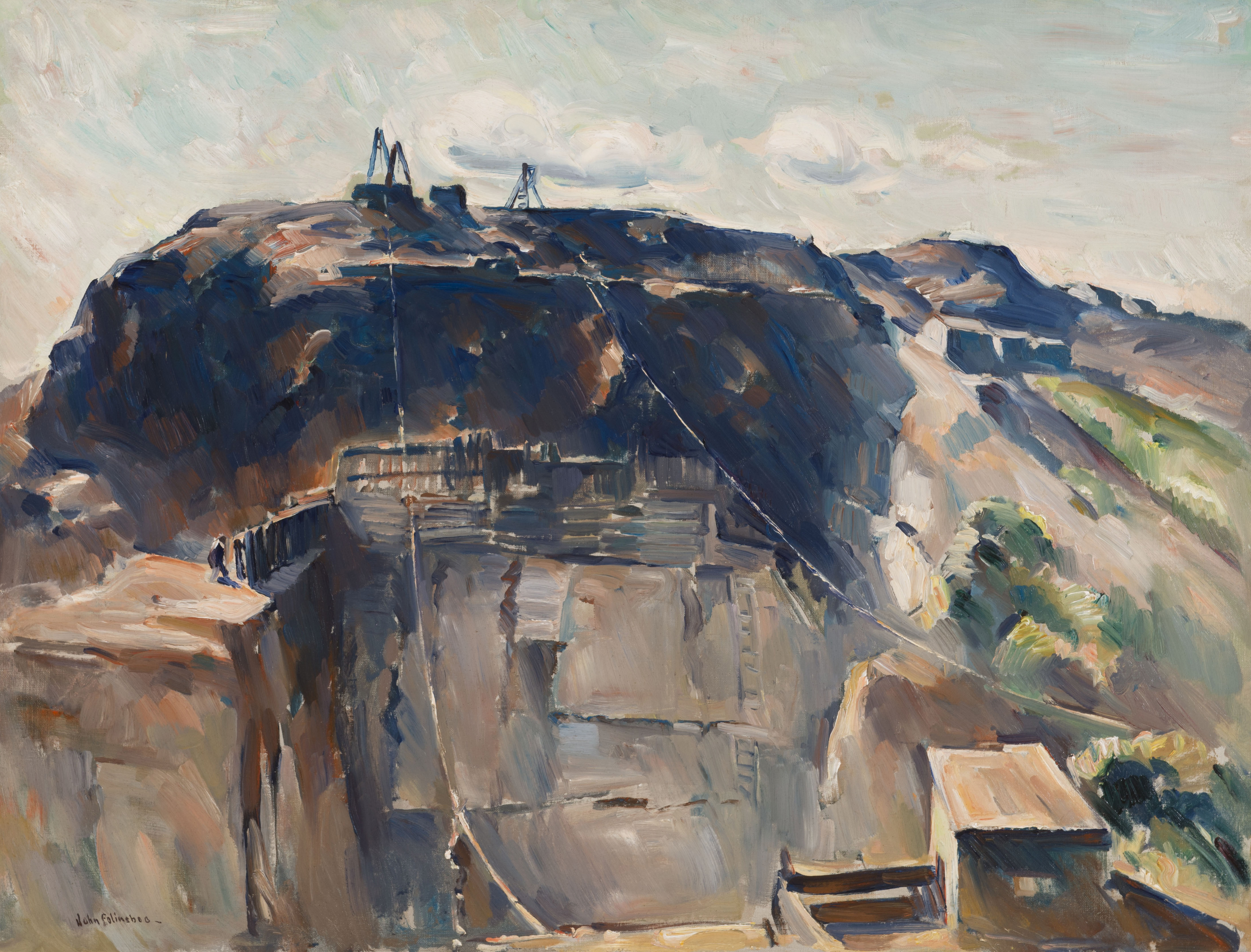
    John Folinsbee (1892-1972), “Slate Quarry, Bangor,” 1929. Oil on canvas, 32 x 40 inches. Courtesy of the Woodmere: Gift of the John F. Folinsbee Art TrustCourtesy of the Michener Art Museum

    Pennsylvania Impressionism by way of Europe

    At the time, there was a new interest in abstraction and Postimpressionism coming from Europe. Cezanne, particularly, was a big influence on some of the New Hope artists who often traveled to Europe and painted in the style of Impressionists like Monet. The Philadelphia art collector Albert Barnes even collected Cezanne paintings where the artist paints abandoned quarries, including Bibémus Quarry (Carrière de Bibémus) (1895).

    Like most Impressionists, the New Hope artists painted landscapes en plein air — outdoors, amid nature, directly drawing from subject matter. Naturally, the quarries that were a part of the landscape made it into the paintings and now form the focus of the exhibition.

    “But while in Europe Impressionism was a much more avant-garde style, it became kind of the style of the academies in the United States,” said Igoe, “so this was what was taught at places like PAFA.”

    “They emphasized capturing effects of light and atmosphere,” said Igoe, “really quick brushwork, quick application of paint.” Many of the artists, she said, were painting landscapes early in the morning or in the evening, painting sunrises and sunsets. “There’s frequently this shimmering sense of light in a lot of these Pennsylvania Impressionist paintings,” she said, “It is this really beautiful reflection of light off the stone that they’re trying to capture.”

    Igoe considers 1900 to the 1930s as the peak of Pennsylvania Impressionism, with the 1915 Panama Pacific Exposition in San Francisco being a highlight. Many of the New Hope Impressionists exhibited their work in the show.

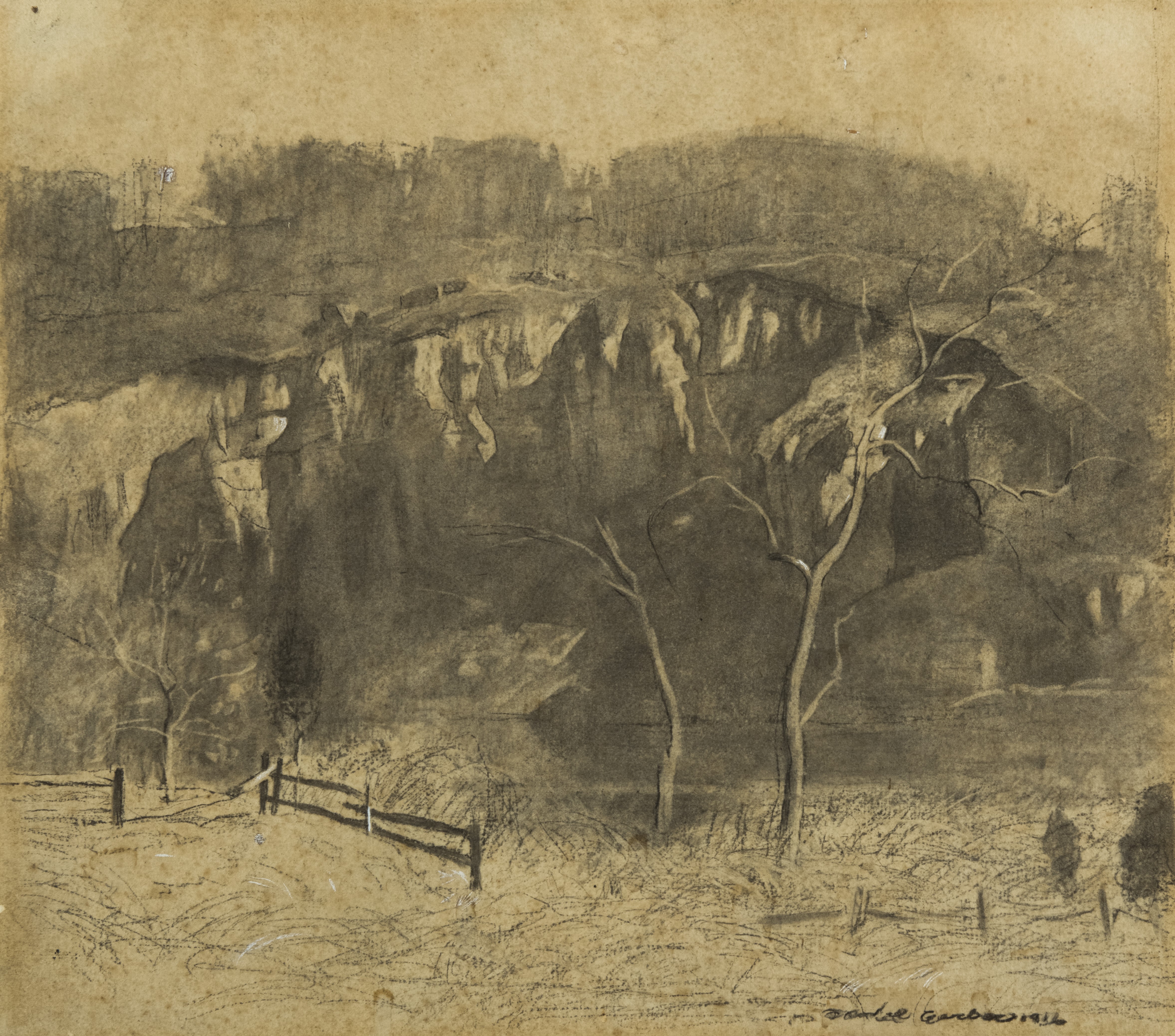
    Daniel Garber (1880-1958), “Abandoned Quarry,” 1916. Charcoal on paper, 10 ¼ x 12 1/8 inches. James A. Michener Art Museum. Michener Art Endowment Challenge Gift of Mr. Herbert WardCourtesy of the Michener Art Museum

    Redfield, notably, had a full room dedicated to his art; “which was an honor that was bestowed upon the likes of John Singer Sargent and Childe Hassam,” said Igoe. Many of the artists won medals at the show “and it led to them being proclaimed by some critics as the most American school of painting at the time,” said Igoe.

    “They painted the landscape of the New Hope area, and they painted in this, what was considered at the time, bold … in this very masculine style. We might not think of Impressionism that way today, but it was considered a very national style for the United States.”

    The artists continued to exhibit under the name of the New Hope Group, and their work was collected by museums across the country. Several women artists were members of the group. Together, they founded the Phillips Mill Community Association in 1929, which remains active as an exhibition venue.

    “The Michener Art Museum was really founded to preserve the legacy of those artists. Especially in Bucks County, those artists have always been well known. But Michener was founded so more people could learn about these artists and preserve their legacy and collect their work,” Igoe said.

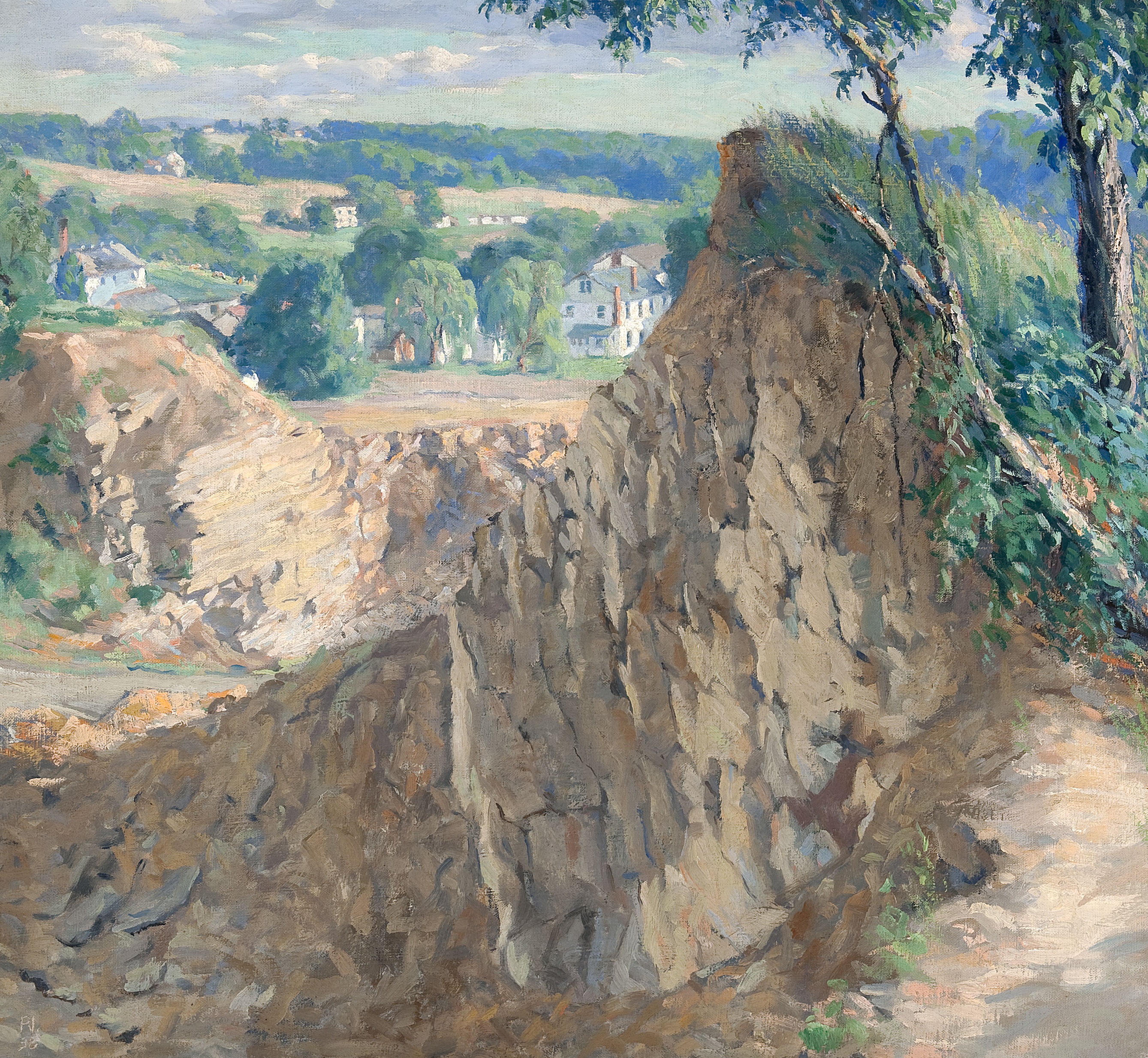
    Roy C. Nuse (1885-1975), “The Quarry at Rushland,” 1938. Oil on canvas, 22 x 24 inches. Courtesy of the Woodmere: Museum purchase, 2012Courtesy of the Michener Art Museum

    Why paint quarries?

    The artists, Igoe said, weren’t always painting exact reproductions of the nature around them, so they had the option of omitting the quarries from their art. “But they frequently chose to include these quarries,” she said, “and that led me to this exhibition where I wanted to look a little more closely at these paintings and think about why artists were so drawn to this subject.”

    Firstly, she thinks, the quarries added a drama to the landscape of New Hope that was attractive to the artists. Comparing quarries to the Grand Canyon, Garber said in an interview that they were “on a scale commensurate with the canvas,” said Igoe.

    “So you can include these dramatic rock faces, but it doesn’t overpower the canvas in the way the Grand Canyon can. You can’t get the Grand Canyon on a canvas, but you can get a quarry,” said Igoe.

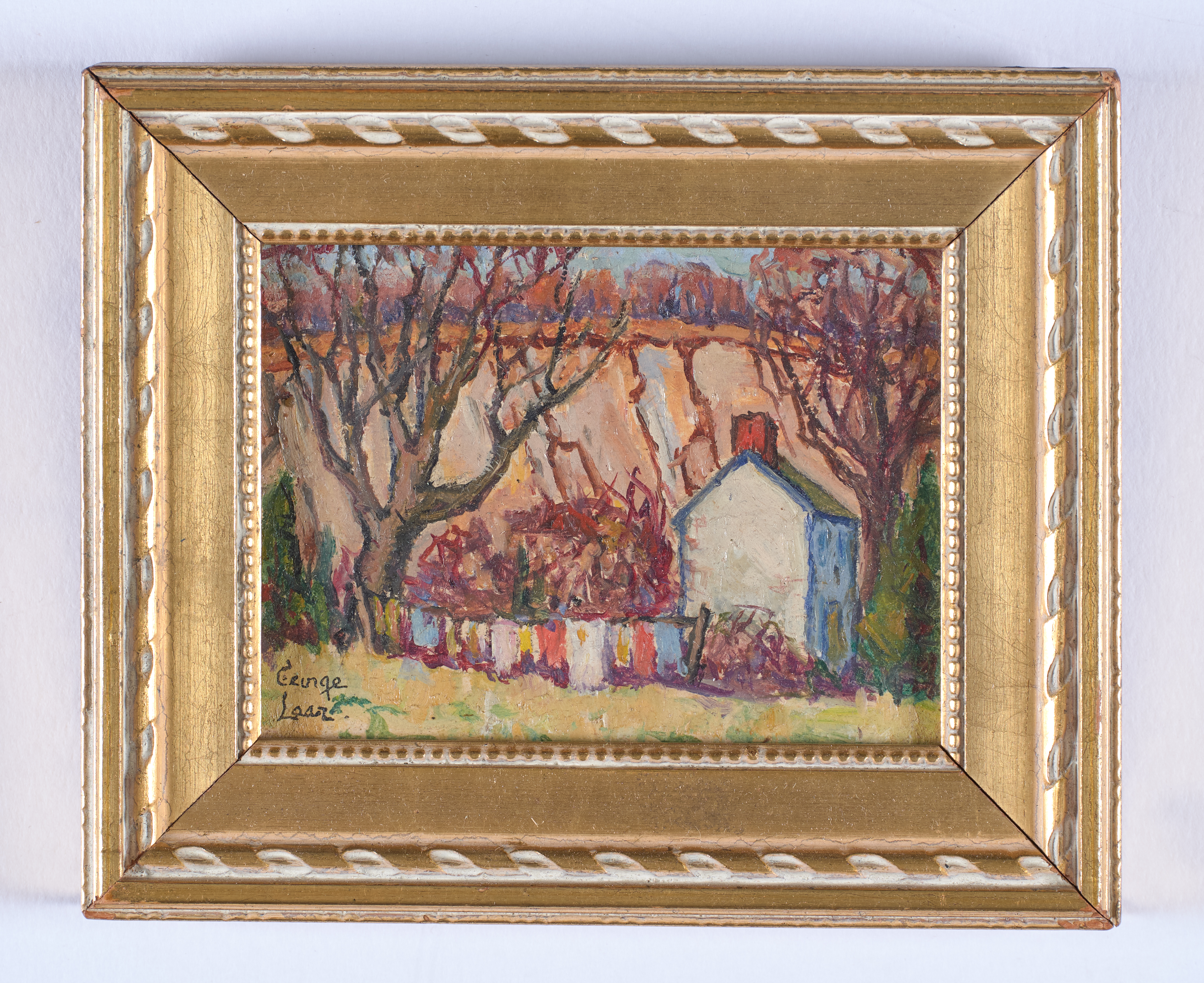
    George Lear (1897-1956), “Quarryman’s House,” ca. 1930-1950. Oil on board, 2 5/8 x 3 ¾ inches. James A. Michener Art Museum. Gift of Drs. Irwin and M. Susan RichmanCourtesy of Michener Art Museum

    The way the light at different times of the day and year reflected off the stones also inspired the artists, as did the geometric forms of the rock face that often inspired the artists to play with abstraction.

    “They were also interested in this human impact on the natural world, the way humans could excavate these rocks, from the landscape, I think was appealing to them,” said Igoe.

    Show highlights

    Many works in the show portray factories, smoke, and industrialization without much critical commentary, but Garber’s Harmonville (1925) shows a landscape near Conshohocken. To Igoe, it is “one of the artworks in the show that is the most critical of industry.” A sickly tree in the foreground of the print, she said, is perhaps Garber’s way of saying “that this industry can be really destructive to nature too.”

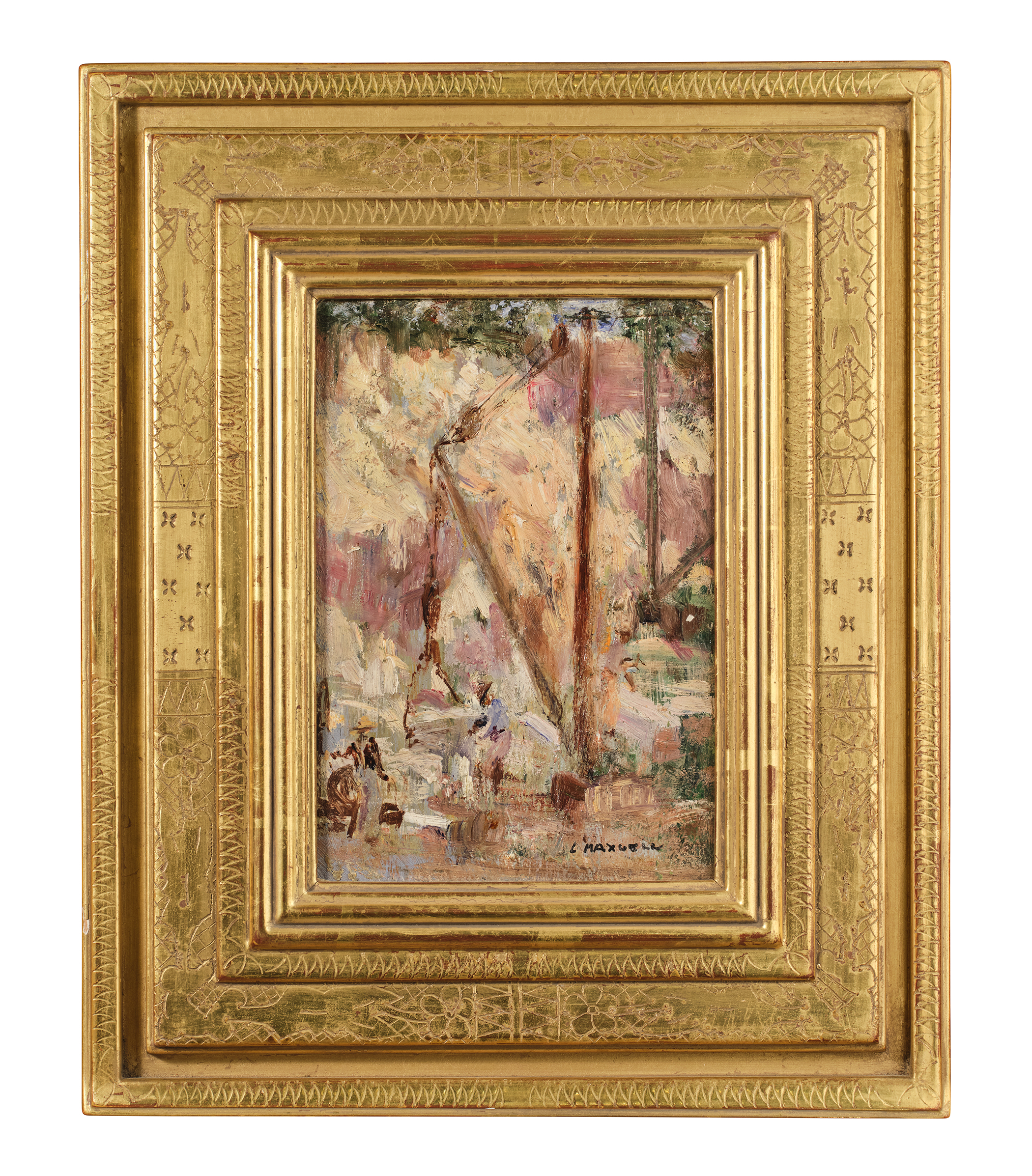
    Other artists in the show include Letitia Maxwell Ely, the lone woman artist in the mix, who was one of Garber’s students. “I just wasn’t finding a lot of paintings of quarries by women artists. I am not sure if it’s because it’s perceived as a more masculine subject,” said Igoe. But Maxwell Ely’s work, she said, stands out in the way the artist paints in proximity to the quarries. Masters like Garber, Igoe said, took a distant view of the quarries, not usually engaging with the human labor at the quarries.

    Letitia Maxwell Ely (1886-1967), “Quarry,” 1914. Oil on board, 8 x 5 inches. James A. Michener Art Museum. Gift of David B. Long.Courtesy of the Michener Art Museum

    But Maxwell Ely, whose work was much smaller in scale, “brings you right into the quarries themselves in those little paintings, and she is more interested in the labor.” In works like Quarry (1914), there are no sweeping vistas, but a more zoomed-in perspective at life of those working in the quarries.

    “There’s not a lot of work known by her that’s still available. She’s an artist that I wish we knew a little bit more about, but she didn’t leave a very large body of work behind,” said Igoe.

    Among the other highlights of the show, according to Igoe, is a postcard-sized painting The Quarryman’s House by the artist George Lear. Another artist is Roy Nuse who lived by the Rushland quarry and painted that quarry many times throughout his life. “Nuse has this reputation as being somewhat of a homebody, he painted things close to his home,” said Igoe. “I just found it interesting that there was a quarry close to his home, and he painted it in all different seasons, in the winter and spring. And I think he really enjoyed the shapes that the quarry provided as well.”

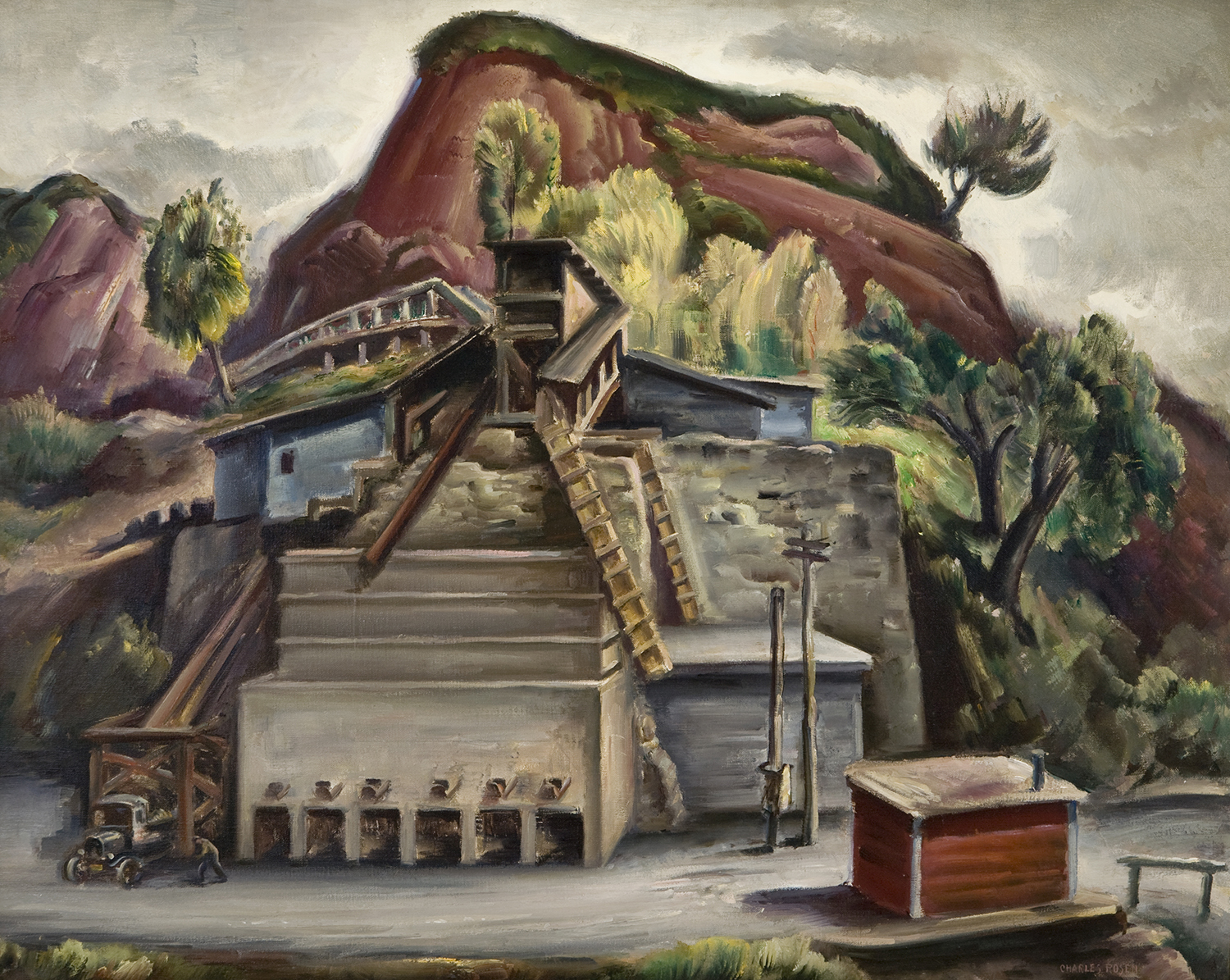
    Charles Rosen (1878-1950), “Quarry and Crusher,” early 1930s. Oil on canvas, 32 x 40 inches. James A. Michener Art Museum. Museum purchase funded by George C. Benson in honor of his friend, John Horton.Courtesy of the Michener Art Museum

    Charles Rosen, another artist in the show, started his career being an Impressionist but moved onto more avant-garde European styles after moving to Woodstock, N.Y.

    Pennsylvania Impressionism eventually dwindled as a movement around the 1940s as public interest shifted to more modern, abstract art forms. Some of the quarries depicted in the show remain active, some are overgrown, and some are part of protected land along the Delaware River.

    Igoe’s colleagues have even picked up some rocks from nearby quarries that, with the art, will also be a part of the show.

    So visitors can touch and feel the stones that they have walked over thousands of times. Stones that, with their jagged faces and smoothened ends, have witnessed artists’ curiosities and have gone on to outlive the hands that painted them.

    “Abstractions of Nature: Quarries and Industry in Pennsylvania Impressionism” runs through Feb. 28, 2027. Michener Art Museum, 138 S. Pine Street, Doylestown, Pa. 18901. michenerartmuseum.org

  • The micro Museum of the Philadelphian celebrates Philly’s macro personality

    The micro Museum of the Philadelphian celebrates Philly’s macro personality

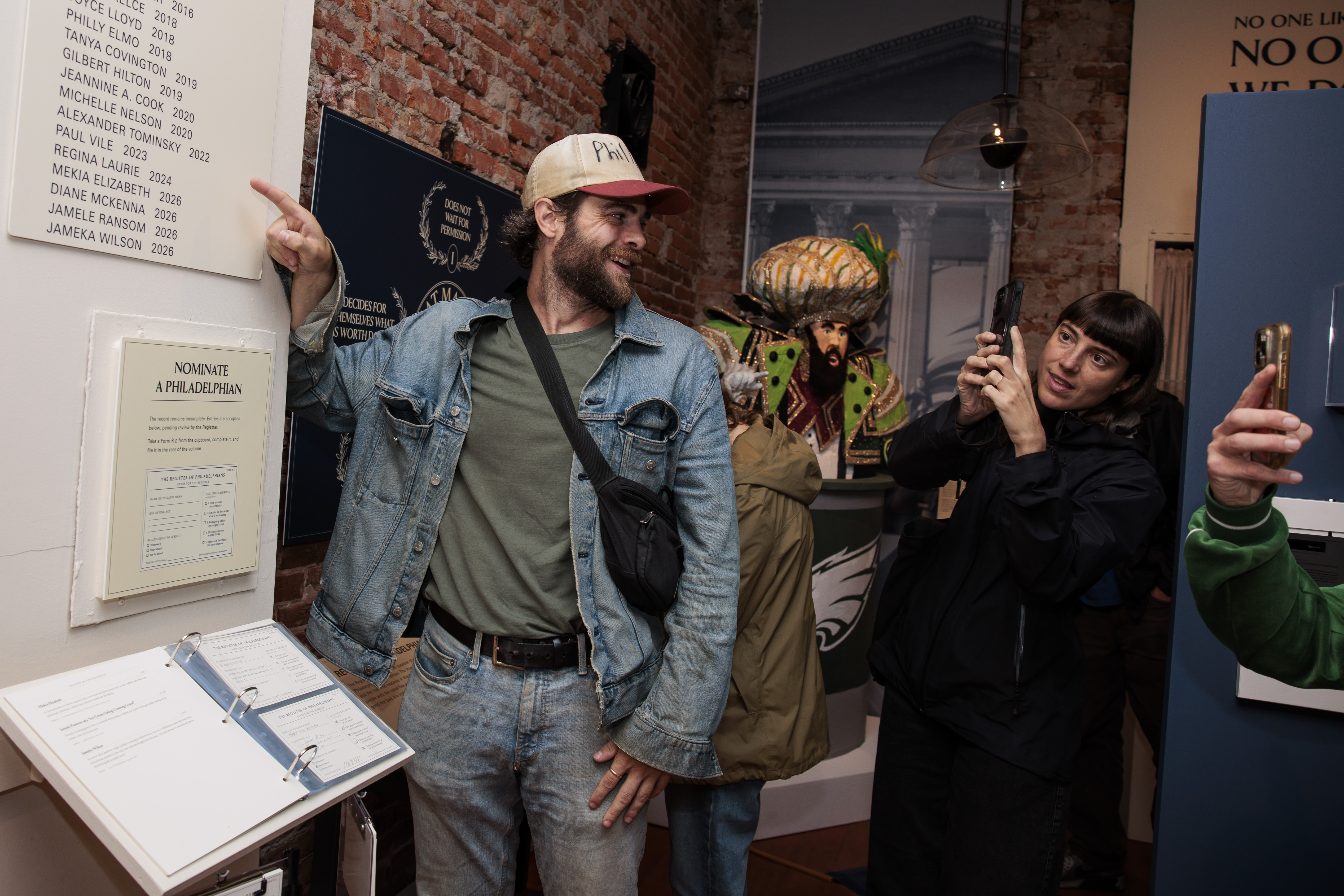
    Alexander “Chicken Man” Tominsky walked into the Museum of the Philadelphian in a Canadian tuxedo and a baseball hat with “Phillies” written on it in marker on Tuesday and was blown away to find his name on a plaque alongside other local legends like Benjamin Franklin and Philly Elmo.

    “No way! Oh my gracious! Who would have known when I was a little kid crying in my pillow something like this would happen,” he said, pointing to his name.

    Tominsky — who became renowned throughout the land in 2022 for eating 40 rotisserie chickens in 40 days, culminating with a public noshing of a chicken on an abandoned Walmart pier in South Philly — was invited to a preview opening for the museum by its founder and creator, Brian Adoff.

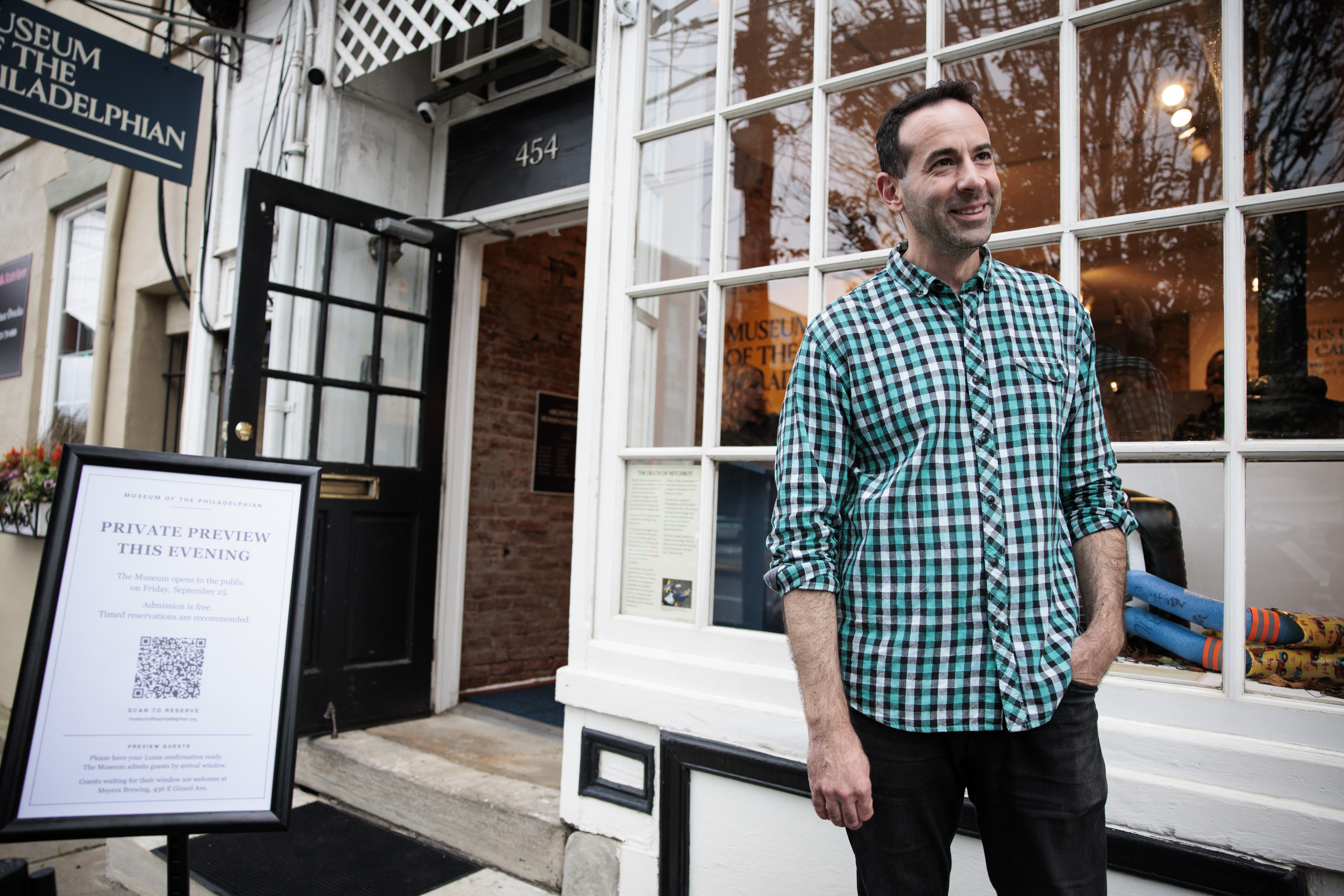
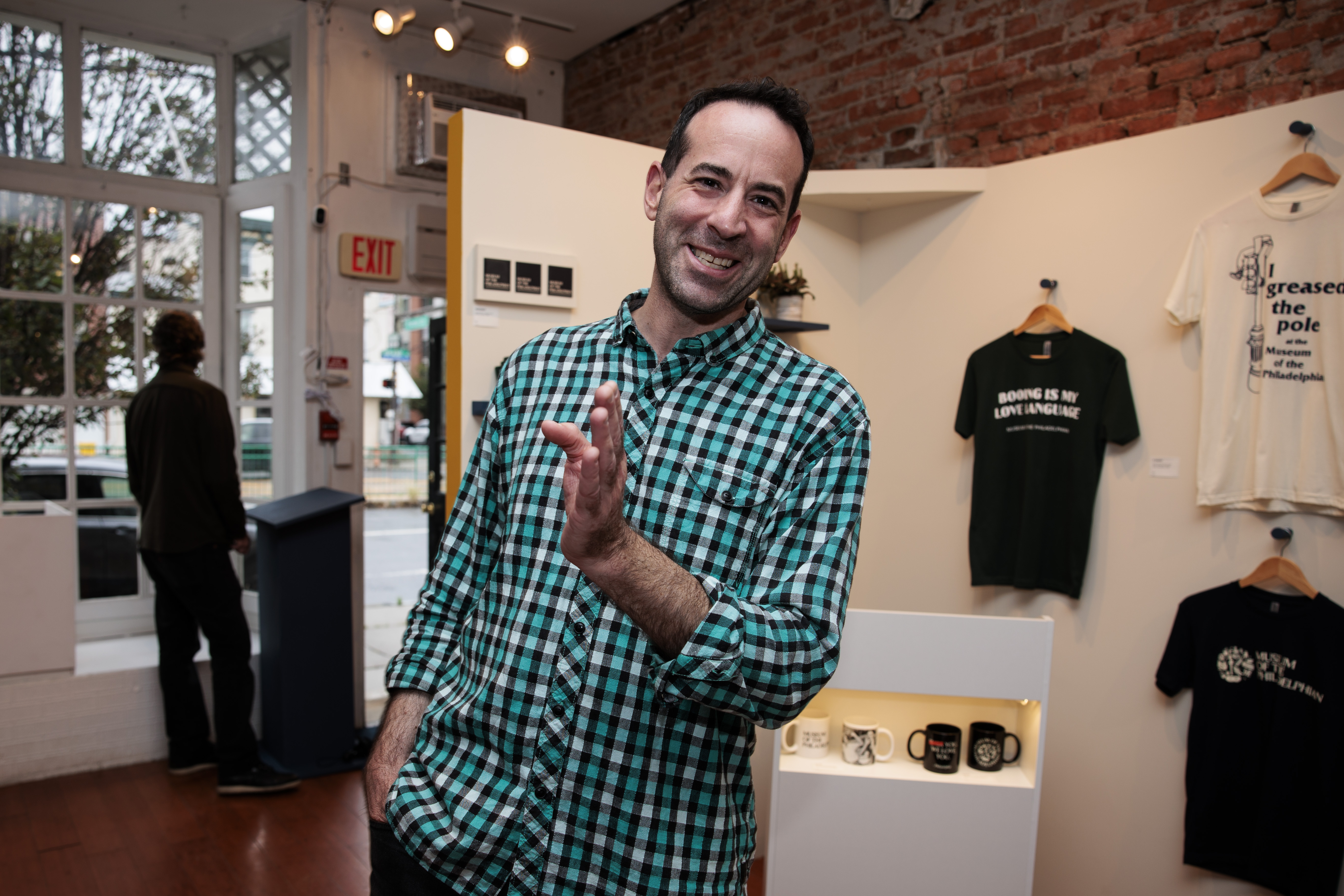
    Founder and creator Brian Adoff outside his Museum of the Philadelphian in Fishtown.Monica Herndon / Staff Photographer

    “The museum is about the personality and attitude and conduct of Philadelphians,” Adoff said. “My personal hope is that you leave inspired to really be the best version of yourself, the best Philadelphian you can be.”

    Located in a 300-square-foot storefront that was previously Adoff’s office on East Girard Avenue in Fishtown, the free, temporary “micro museum” is just down the road from another Philly landmark — the “I Hate Bank of America” sign. The large, yellow banner was put up by a homeowner in 2007, after the bank branch across the street ticked him off. The branch closed many years ago, but the sign remains, a grand tribute to Philadelphians’ spite.

    View on Threads

    What makes Philadelphians this way? And what makes it so oddly endearing? These are questions Adoff explores in his absurd and unexpectedly heartwarming museum, which opens Friday.

    “There’s an emotional narrative arc the museum takes in its 300 square feet, where it ends with literally a book of Philadelphians who exhibit five qualities that I’ve determined, with my crack team of curatorial advisers, that make up a Philadelphian,” Adoff said.

    As of a student of the Philadelphian who’s written hundreds of profiles of the everyday people who make me love this city more every day, I thought Adoff had set a lofty goal for himself when we first met earlier this month. How do you distill what it means to be a Philadelphian in 300 square feet? And how do you decide who makes the cut?

    At the preview Tuesday, I was pleased to find that over the course of about 20 exhibits in the space, Adoff skillfully addresses the Santa-hating-battery-throwing-robot-killing tropes that haunt Philadelphians, while also getting to the oddly-touching truths behind those, and other very Philly stories.

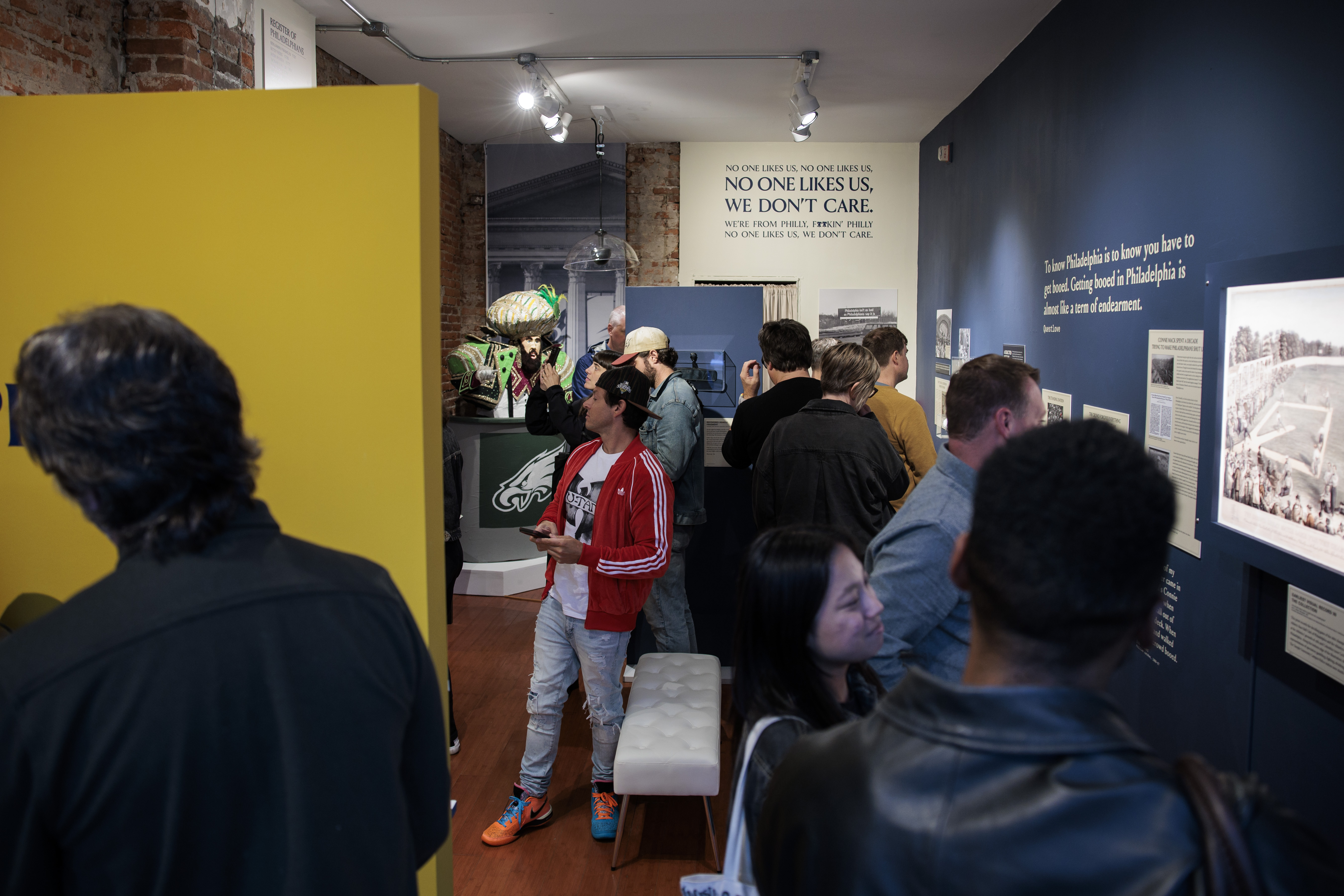
    Visitors browse the Museum of the Philadelphian.Monica Herndon / Staff Photographer

    And while Adoff and his team have compiled a “Register of Philadelphians” with more than 50 names and stories of local folk heroes who epitomize what it means to be a Philadelphian, their best decision may have been to include cards for visitors to nominate their own quintessential Philadelphian. Because if one thing is certain, Philly is going to have thoughts.

    Grease the pole

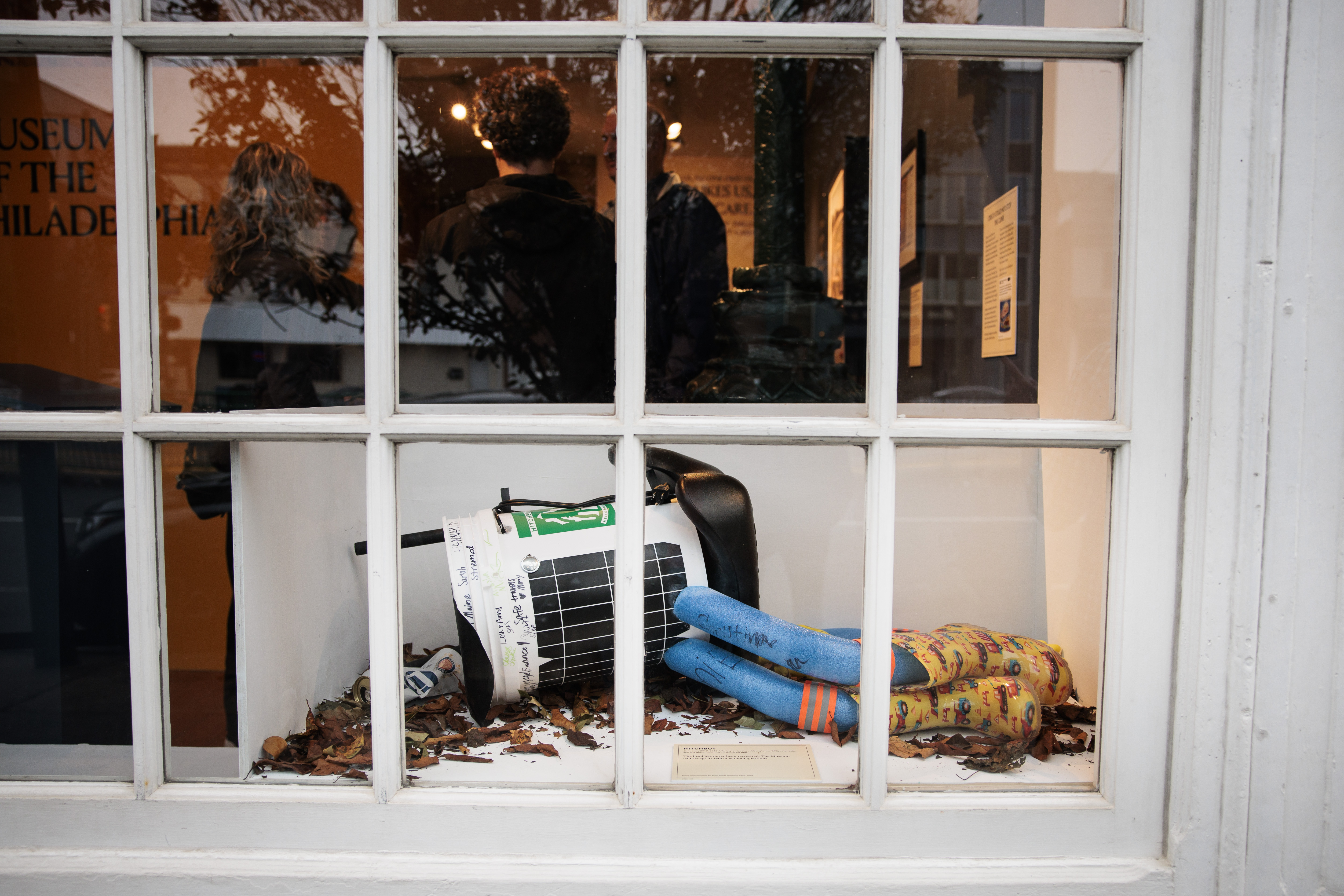
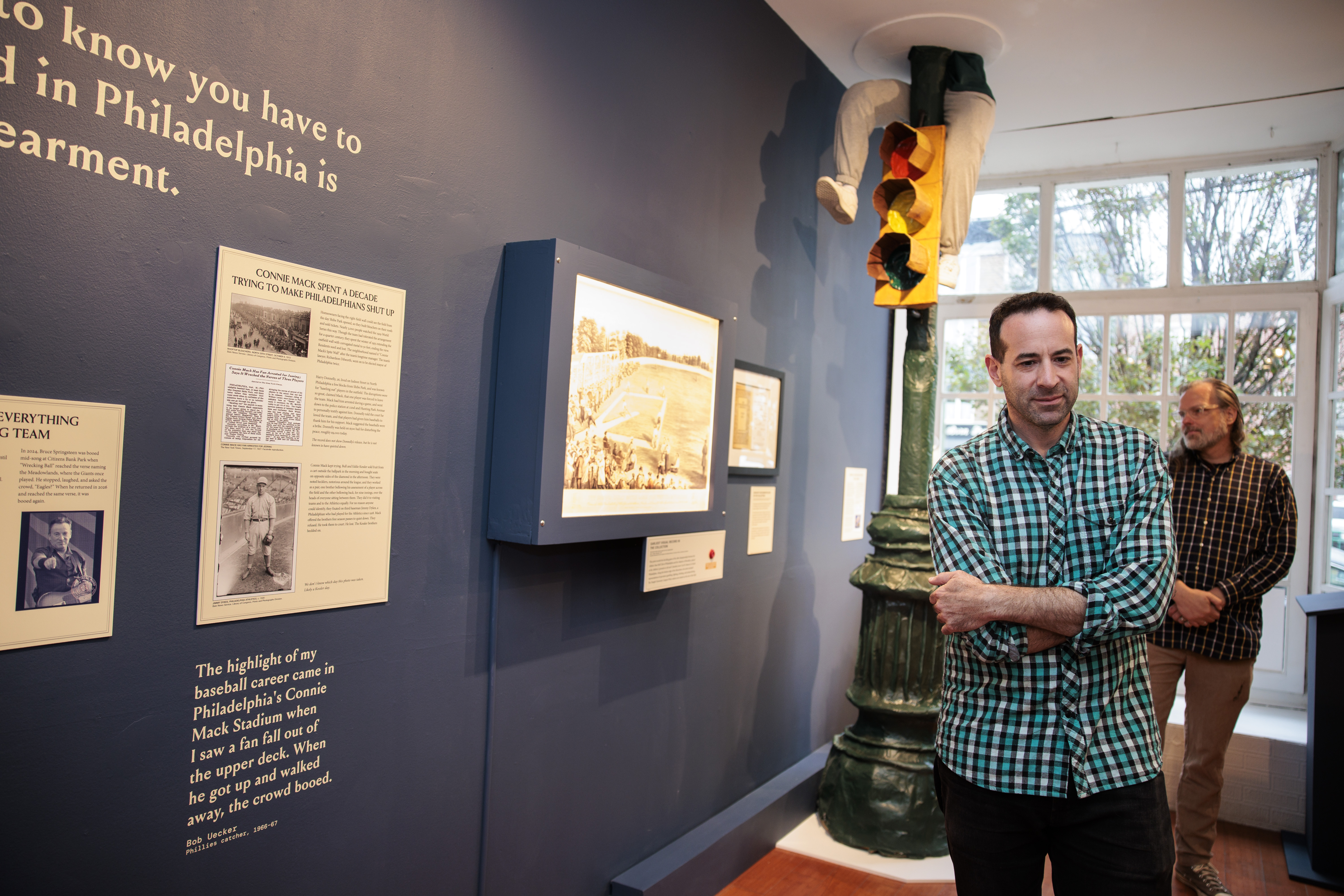
    Guests are greeted in the museum’s front window by a re-creation of the death of hitchBOT, the hitchhiking Canadian robot who traveled across the country on human kindness, only to be dismembered and beheaded in Philly. In the accompanying plaque, Adoff notes that Philadelphians offered to rebuild the robot, and that a Philly police detective jokingly blamed the crime on New Jerseyans.

    A re-creation of the death of hitchBOT is displayed in the front window of the Museum of the Philadelphian.Monica Herndon / Staff Photographer

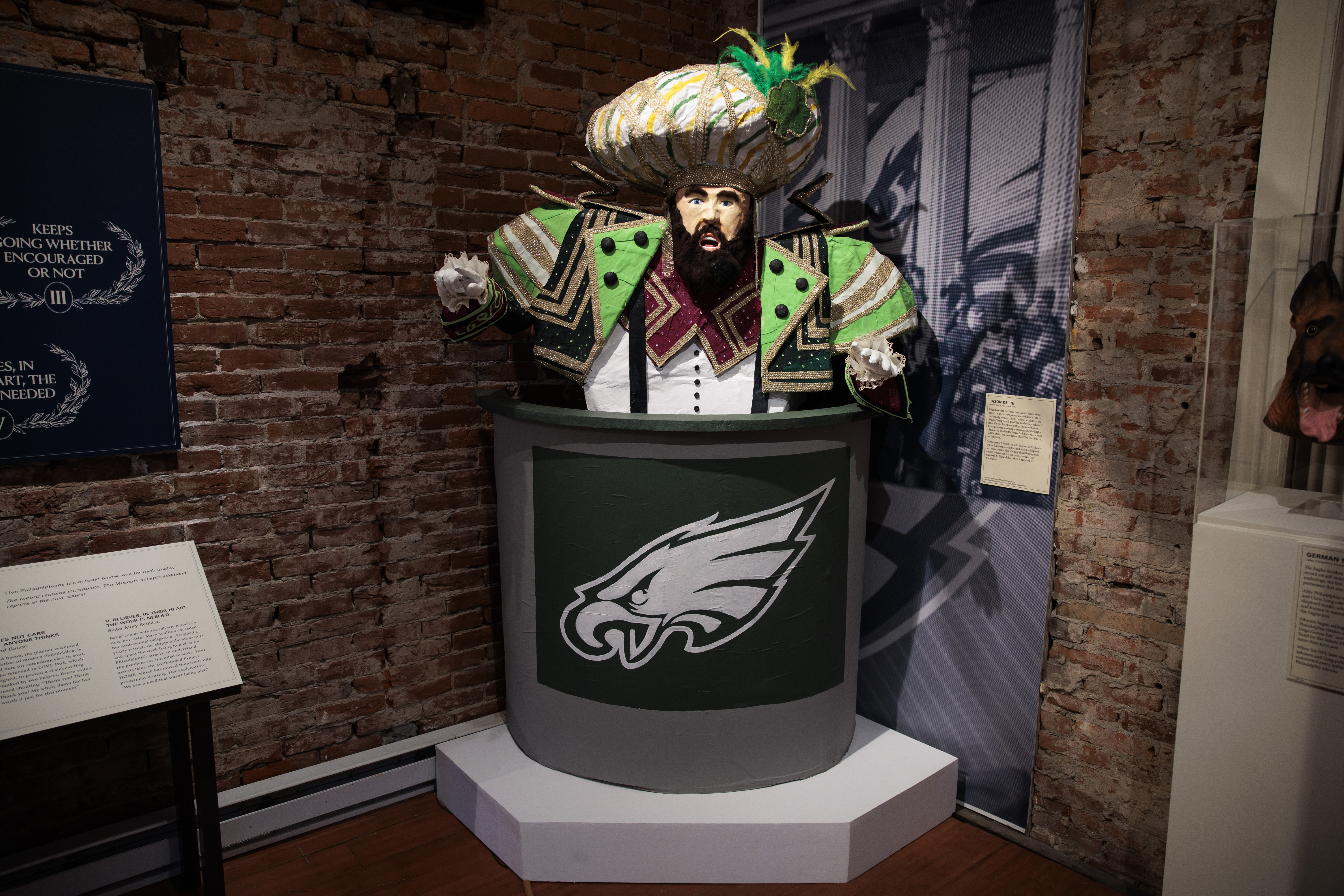
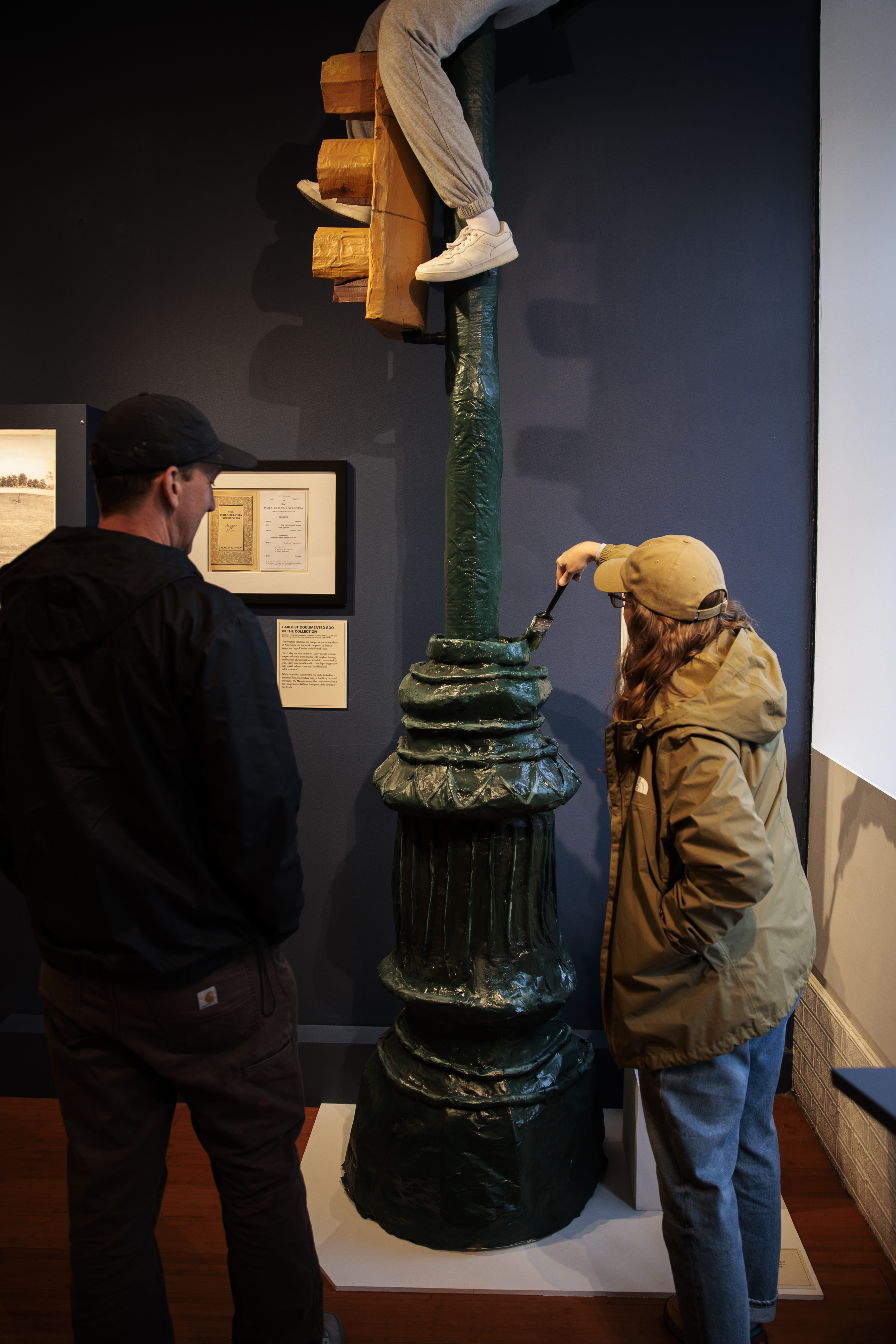
    Once inside the museum, two large papier-mâché sculptures immediately catch the eye — one, of a Philadelphian climbing a greased pole, and the other of Jason Kelce during his Eagles Super Bowl speech. In the first, guests are invited to “grease the pole” with a paintbrush and clear goo from a nearby can (you know I did it!), and at the latter, visitors can stand under a sound dome (fancy!) in front of the sculpture to hear Kelce’s “Hungry Dogs” speech.

    A papier-mâché sculpture of Jason Kelce during his 2018 Eagles Super Bowl speech is featured in the Museum of the Philadelphian.Monica Herndon / Staff Photographer

    In the center of the room is a freestanding wall with a rearview mirror on it. The accompanying plaque tells the story of Ted Passon, whose parked car was flipped in the aftermath of the Phillies 2008 World Series win. Passon created a blog asking Philadelphians who enjoyed the spectacle to help pay for his vehicle, and through the generosity of donors, he was able to get a new car and give $3,000 to someone else whose car was flipped. On an iPad at the exhibit, visitors can play a YouTube video of the flipping and read Passon’s blog.

    I remembered the story well because I interviewed Passon about it in 2008. Seeing him at the event Tuesday was a full-circle Philly moment for both of us. Passon, who’s now an Emmy Award-winning documentarian, said he was happy to loan the mirror of the vehicle Philly claimed from him to the museum.

    “It’s an honor to be included in the story of Philadelphia,” he said. “If I can be a footnote in the city’s history, I did something right in my life.”

    ‘Booing is my love language’

    Other exhibits explore Philadelphians’ history with booing, our history of throwing things, and the five qualities Adoff and his team have decided make a Philadelphian, with number one being, “Does not wait for permission.”

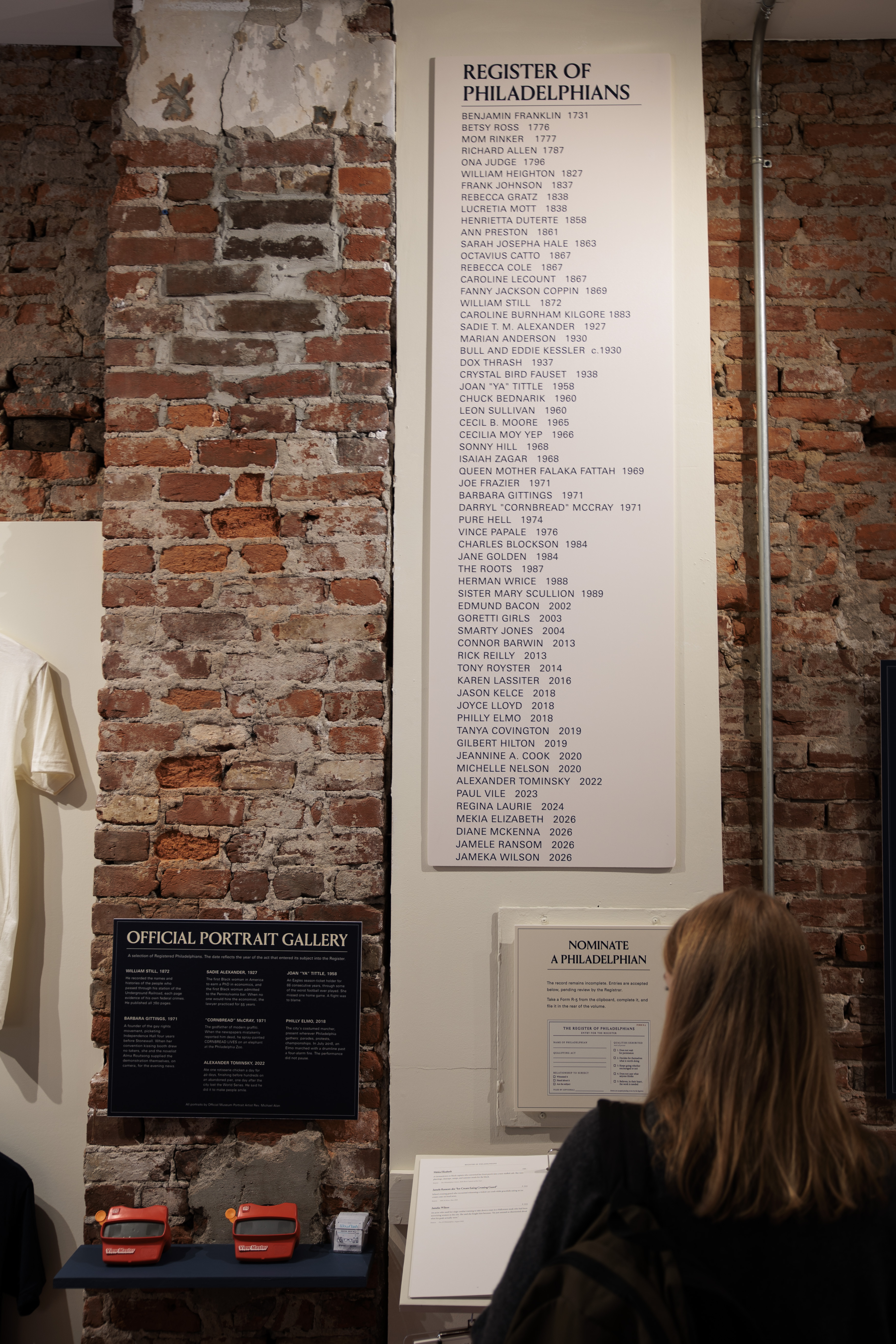
    The “Register of Philadelphians” on the wall and accompanying book begins in 1731 with Benjamin Franklin and ends this year, with Jameka Wilson, the woman who went viral for her TV interview about kicking a man in a Chucky mask who was terrorizing pedestrians.

    The Register of Philadelphians features notable Philadelphians ranging from Ben Franklin to Jameka Wilson. To the left of the register is the museum’s official portrait gallery, which can be seen through two ViewMasters. Monica Herndon / Staff Photographer

    I was excited to see a couple people I’ve written about on the list, including Paul “Jelloman” Vile and the late Gilbert Hilton, who turned heads across the city for years in his “Badillac” car, which was covered in items from Goodwill, and who was one of the most Philly people I’ve ever met.

    There’s also a portrait gallery by the Rev. Michael Alan of seven Philadelphians in the register that can only be seen through an old-school ViewMaster, which were a hit with the crowd.

    “It was a small space and this was a way to make something look bigger without being bigger,” Alan said.

    Creator and founder Brian Adoff talks about the Museum of the Philadelphian in front of the museum’s gift shop. Monica Herndon / Staff Photographer

    The tiny museum even has a gift shop with shirts that say “I greased the pole at the Museum of the Philadelphian” and bumper stickers that read “Booing is my love language.”

    ‘The most Philadelphian thing’

    The museum was funded by Adoff through his experience design studio, Architects of Human Connection, and admission is free because he believes “the Philadelphian has paid enough.”

    The museum is a culmination of Adoff’s many endeavors over the years, from music, clowning, absurdist theater, and working as a tour guide for the Greater Philadelphia Film Office, to managing a software business and, most recently, creating events that connect Philadelphians.

    In 2023, he cofounded the Fishtown Choir,and last year, Adoff created Join Philly, which connects Philadelphians with area clubs and groups.

    The idea for the museum came to Adoff in June, as he was trying to think of uses for his storefront office space. With the help of five paid collaborators, Adoff built the museum in less than three months, which is impressive, given the amount of research that clearly went into the exhibits, plaques, and bios.

    “It started kind of absurd and silly until I was like, ‘Oh, this is just like everything else I do. It matters and it actually has heart and it has meaning,” he said.

    Brian Adoff in the Museum of the Philadelphian he created in Fishtown. Monica Herndon / Staff Photographer

    Here’s the potentially scandalous thing — Adoff isn’t a Philly native. He’s originally from Long Island, moved to Cherry Hill as a kid, and came to Philly to attend the University of Arts. He spent time in Chicago then returned to Fishtown 20 years ago, where now lives with his wife and son.

    Knowing how nativist Philly can be (my native colleagues said transplants can “never” say they’re from Philly if they moved after the age of 13), I had to ask Adoff what gave him the gall to open the museum.

    “Because I express the qualities that make a Philadelphian,” he said.

    “But you decided those qualities, right?” I asked. (They are: 1. Does not wait for permission 2. Decides for themselves what is worth doing 3. Keeps going whether encouraged or not 4. Does not care what anyone thinks 5. Believes, in their heart, the work is needed).

    “Yes, which is the most Philadelphian thing I could have done,” he said.

    Adoff wants people to leave his museum feeling as inspired as he did after watching the opening of the Obama Presidential Center on TV. He dreams of Rob Mac narrating an audio tour of the exhibit, like Steve Buscemi does for Eastern State Penitentiary. And his longterm goal is to open a more universal experience one day — a fart museum. Everybody isn’t lucky enough to be a Philadelphian, but everyone farts.

    I imagine Benjamin Franklin, a fellow Philly transplant who once wrote a satirical essay about flatulence, would think that’s a gas.

    Darrin Rowland (left), and Leslye Rowland grease the pole sculpture at the Museum of the Philadelphian on Tuesday. Monica Herndon / Staff Photographer

    Know before you go

    • The museum, 454 E. Girard Ave., is open Fridays (5 to 8 p.m.), Saturdays (noon to 5 p.m.), and Sundays (noon to 5 p.m.) Sept. 25 through Nov. 1.
    • Admission is free, but timed reservations online are recommended. Opening night is already booked and only a few spots remain for this weekend.
    • Like Philadelphia, there is a lack of public bathrooms at the museum, in that there are none.
    • The museum is wheelchair accessible via a temporary ramp. Email visit@museumofthephiladelphian.org prior to visiting so staff can have the ramp ready.
    • All ages are welcome, but some exhibits do include profanity.
  • See the Orchestra, celebrate Puerto Rican culture, and explore a tiny Philly museum | Things to do

    See the Orchestra, celebrate Puerto Rican culture, and explore a tiny Philly museum | Things to do

    It’s officially fall, and Philadelphia’s arts and events calendar is packed this weekend.

    The Philadelphia Orchestra opens its 127th season, the Puerto Rican Day Parade returns to the Parkway, and fall festivals and cultural celebrations are filling the calendar across the region.

    Here’s what to do this weekend:

    — Earl Hopkins (@earlhopkins_, Email me at thingstodo@inquirer.com)

    If someone forwarded you this email, sign up for free here.

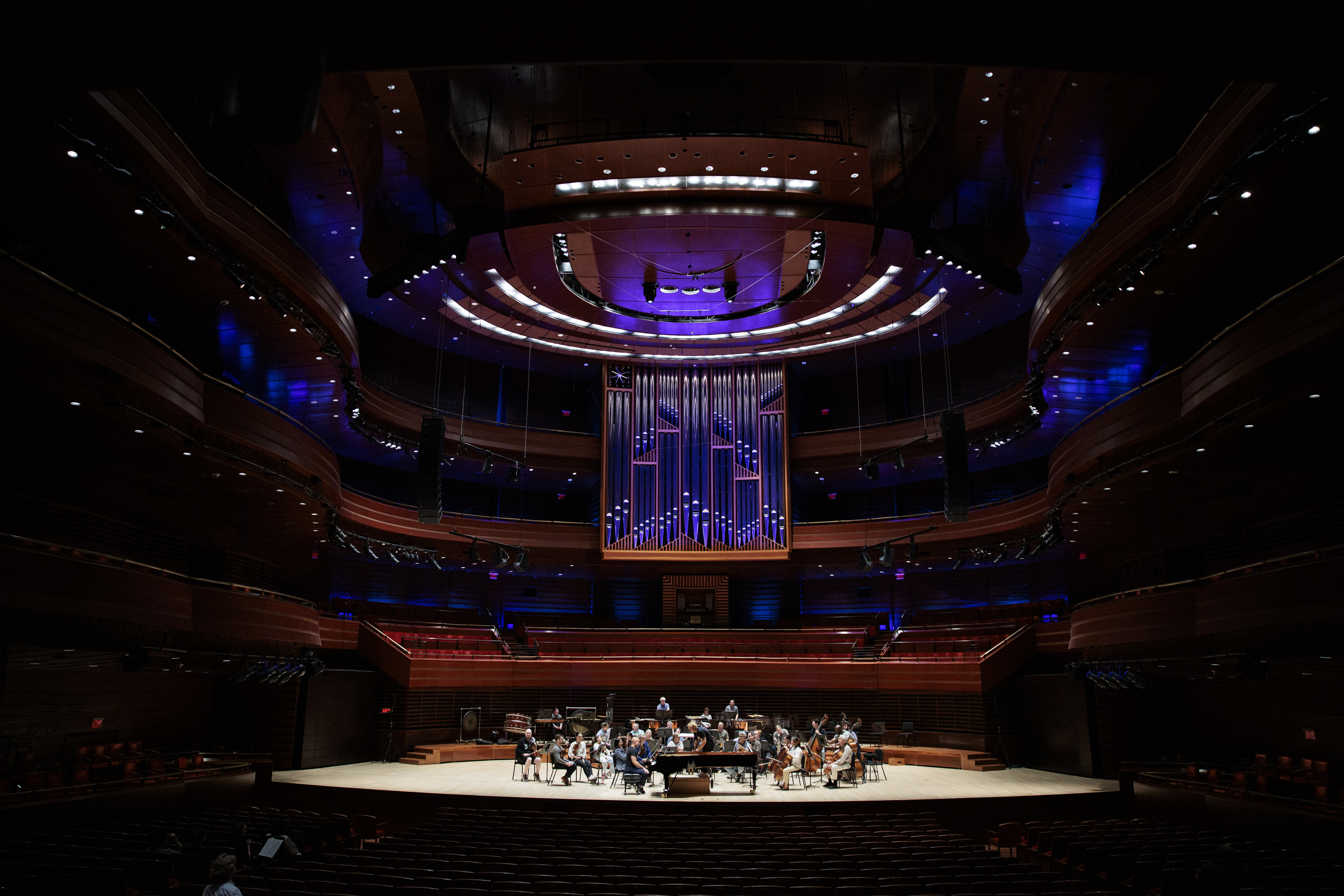
    The Philadelphia Orchestra opens its 127th season

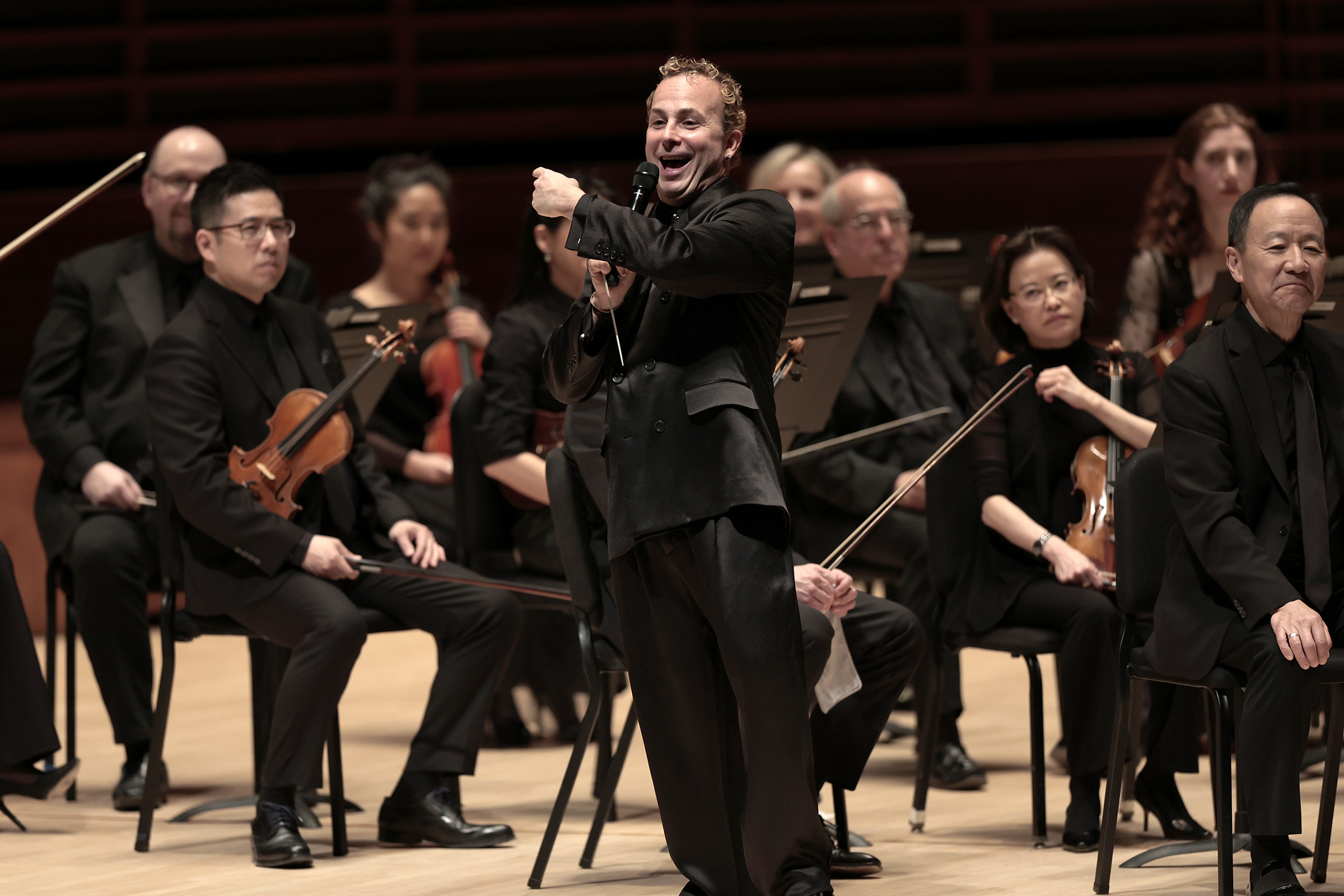
    Philadelphia Orchestra conductor Yannick Nézet-Séguin introduces Lang Lang at the Kimmel Center’s Marian Anderson Hall in Philadelphia on Tuesday, April 7, 2026. Elizabeth Robertson / Staff Photographer

    The Philadelphia Orchestra returns for its 127th season on Thursday under music director Nézet-Séguin.

    As my colleague Peter Dobrin reports, the season offers a mix of standard repertoire with new scores, film music, family concerts, and familiar and first-time guest artists.

    Opening night begins with the U.S. premiere of Joe Hisaishi’s choral piece Orbis, followed by Beethoven’s Ninth Symphony with the Philadelphia Symphonic Choir.

    After opening night, the orchestra will give three performances of the world premiere of a new arrangement of Leonard Bernstein’s Symphonic Rituals from MASS from Friday to Sunday.

    Click here for more details on the 2026-27 season.

    The best things to do this week

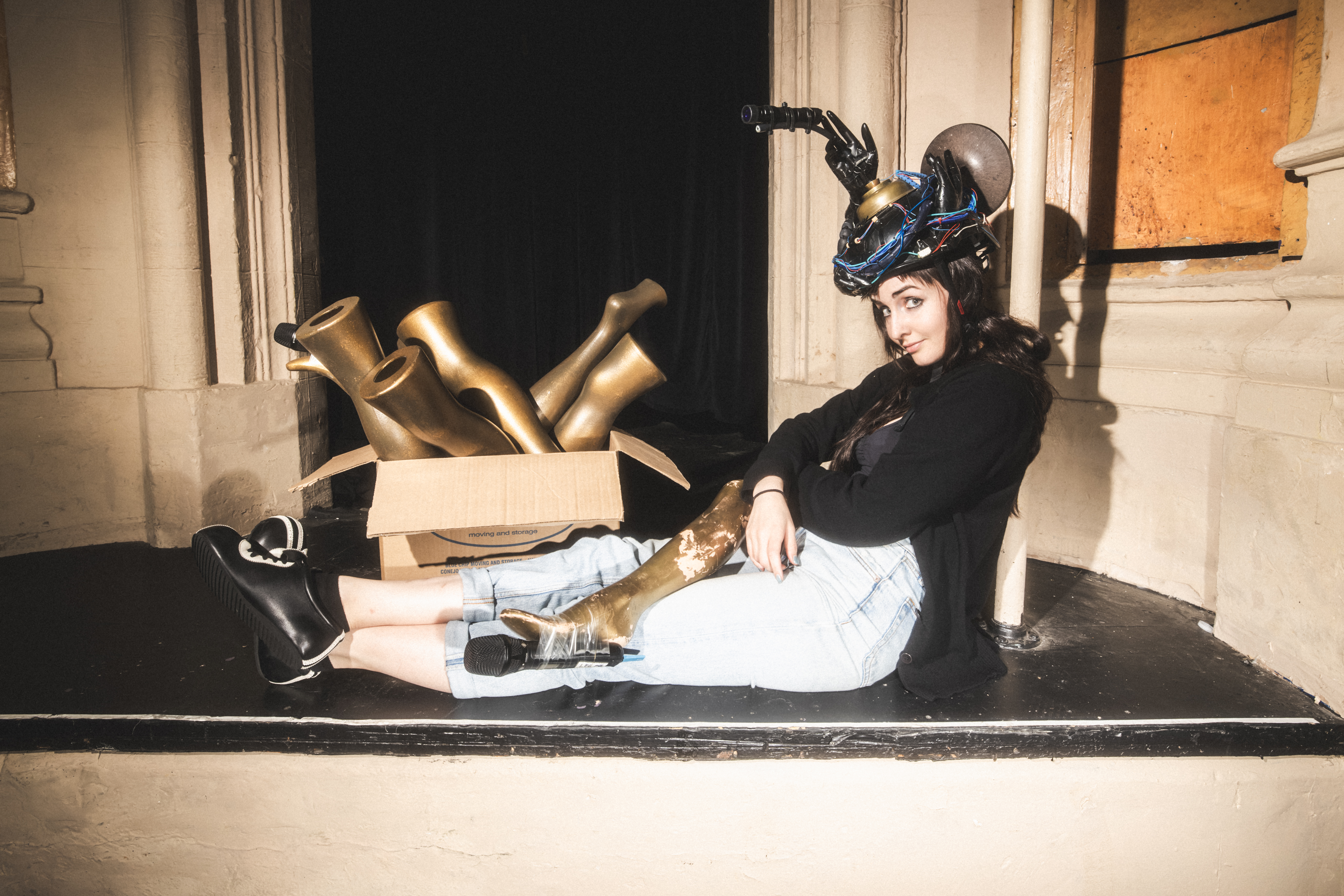
    Julia Masli, whose “ha ha ha ha ha ha ha ha” is playing as part of the Philadelphia Fringes Festival 2026Andrew Levy

    🌊 One final lap: Visit Spruce Street Harbor Park one last time before the Delaware River waterfront attraction closes for the season Sunday.

    🏇🏽Saddle up for a new screening: Head to Muhammad Abdul-Hadi’s Out West on Friday for a screening of the new documentary Fletcher Street, honoring the long-running North Philly horse stable and riding club.

    🎭 Catch the final Fringe shows: Philadelphia Fringe Festival wraps up this weekend, with closing shows including The Adoption Game at Asian Arts Initiative and Murdered Darlings at Deep End Studios.

    🥪 Roll up to the Hoagie Throwdown: More than 20 of the city’s sandwich makers will compete at Other Half Brewing during the second annual Heavyweight Hoagie Throwdown.

    📅 My calendar picks this week: Philly AIDS Thrift Block Party, Monarch Festival, and the Delaware River Festival. Here’s our full list for the week.

    Celebrate at the Puerto Rican Day Parade

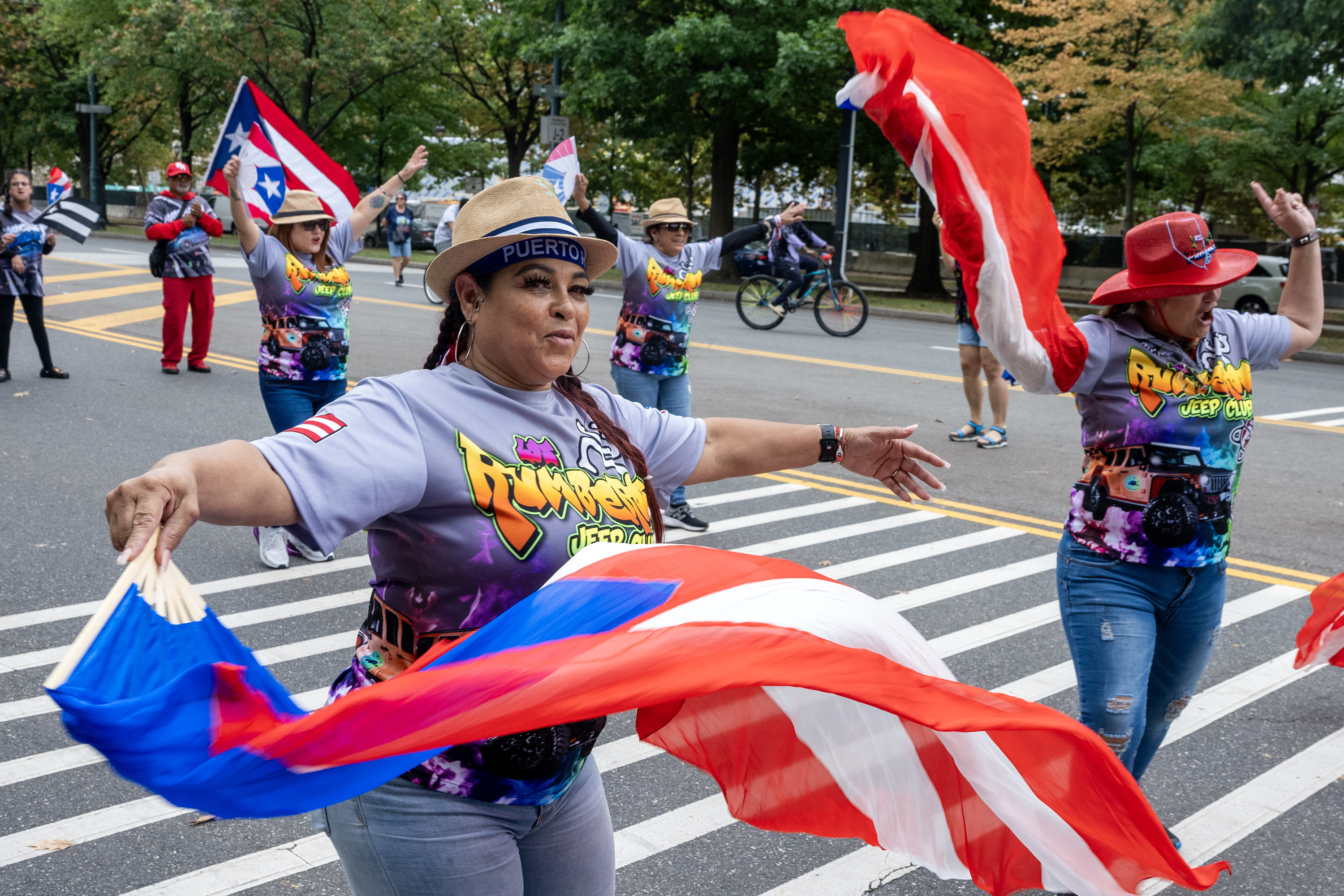
    Erika Sanchez dances with other members of the Rumbero Jeep Club during the 2024 Puerto Rican Day Parade in Philadelphia.Tom Gralish / Staff Photographer

    Join thousands on the Benjamin Franklin Parkway on Sunday to celebrate Puerto Rican culture, music, dance, food, and heritage.

    The Annual Puerto Rican Day Parade 2026 will feature bands, dancers, drill teams, and floats marching through Center City.

    The free event is hosted by Concilio, which has put on the annual celebration for more than 60 years. For more information, visit elconcilio.net.

    Fall fun this week and beyond

    Lynnewood Hall is getting a second chance under new ownership.Monica Herndon

    🖼️ Get to know your city: The Museum of the Philadelphian, whose mantra is “No One Likes Us, We Don’t Care,” begins a limited run inside a Fishtown rowhouse Friday. The micro museum will showcase distinct local gems, like the short-lived hitchBOT, the hitchhiking robot whose cross-country journey famously ended on a Philadelphia street.

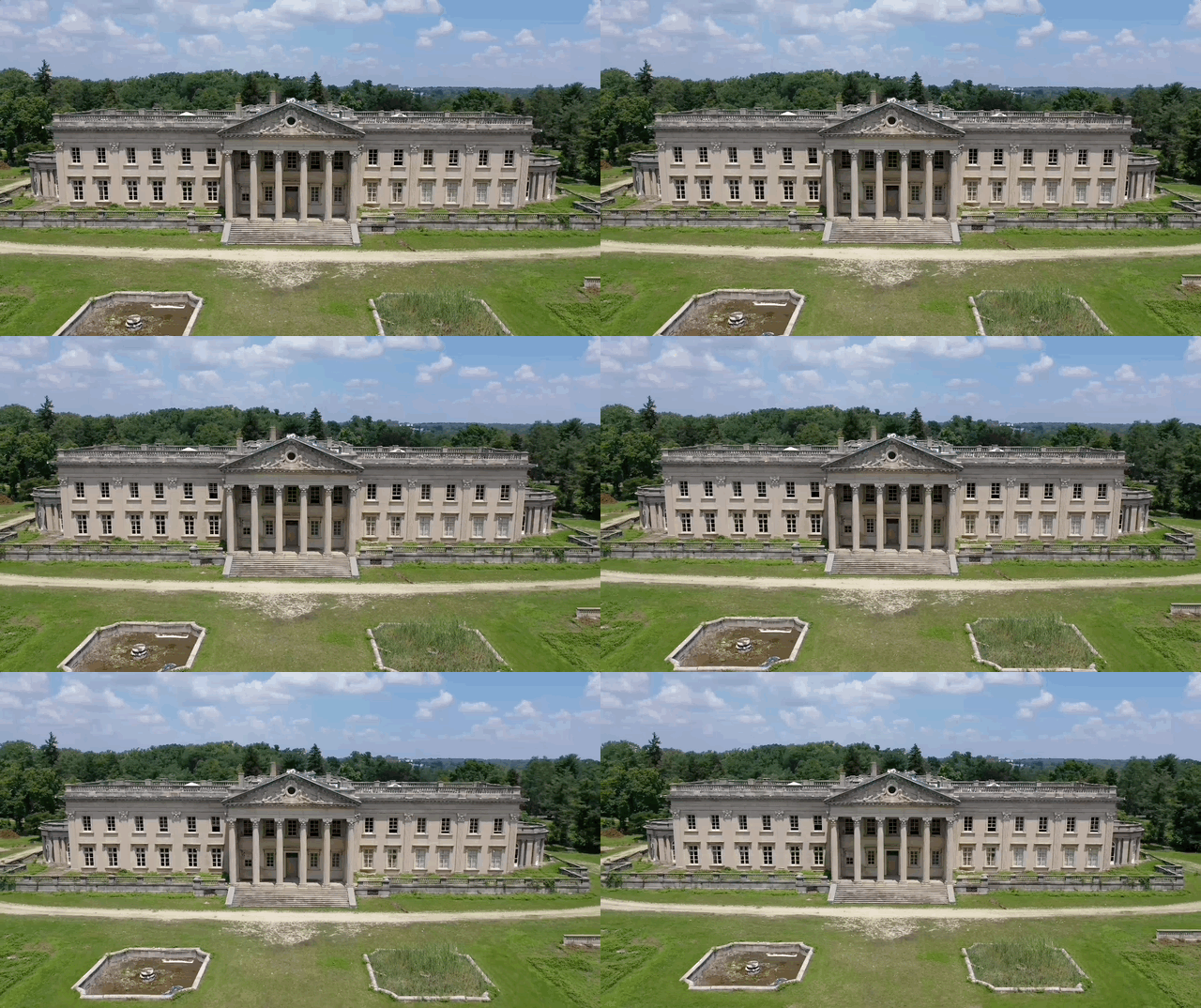
    💐 Step into the Gilded Age: Lynnewood Hall, the iconic Elkins Park mansion, is opening its doors to the public for the first time in 84 years. The 100,000-square-foot home will host Fleurs de Villes: The Gilded Age, a 10-day floral experience inspired by the popular HBO series. The show features life-size mannequins made with thousands of flowers and other floral installations.

    👻 Things are getting spooky: Morticia, Wednesday, and the rest of the clan take over Walnut Street Theatre this fall The Addams Family: The Musical.

    Staffer picks

    Here’s pop music critic Dan DeLuca’s list of the best concerts this weekend.

    🎸 Thursday: Willie Nelson, a 12-time Grammy winner and bona fide outlaw, is co-headlining a show at Highmark Mann with the legendary Neil Young.

    🎤 Friday: The Sex Pistols, with new singer and punk veteran Frank Carter, take the stage at Fillmore Philly on Friday.

    🔊 Saturday: The Haverford Music Festival kicks off Saturday, with singer-songwriter Shannon McNally, home-grown vocalist Abby Lee, Philly Englishman Wesley Stace, and bluegrass and country outfit Demolition String Band performing across two stages.

    🎤 Sunday: Georgia-raised songwriter Katie Pruitt, who comes off as honest and intelligent in her efforts to make sense of modern life, arrives at Ardmore Music Hall on Sunday.

    Tuesday: AC/DC, the electrifying Australian hard rock band, is headlining at Lincoln Financial Field for the “Power Up Tour.”

    Check out Dan’s full concert list here.

    ❓Pop quiz

    What year was the first Concilio’s Annual Puerto Rican Day Parade in Philadelphia?

    A) 1961

    B) 1962

    C) 1963

    D) 1964

    Here’s the answer to last week’s question: What was the original name of Philadelphia Ballet? Answer: Pennsylvania Ballet

    Ask Earl anything

    Many of you have questions about each week’s listings, and others about Philly’s arts, culture, and entertainment scene.

    I have you covered. Have a question? Email me for a chance to have it answered in an upcoming newsletter.

    That’s all for this week. Go see a show, catch a parade, eat a hoagie, and enjoy the first weekend of fall.

    – Earl Hopkins

    By submitting your written, visual, and/or audio contributions, you agree to The Inquirer’s Terms of Use, including the grant of rights in Section 10.

    Giphy.comCourtesy of
  • Archaeologists decode rules of an ancient Roman board game

    Archaeologists decode rules of an ancient Roman board game

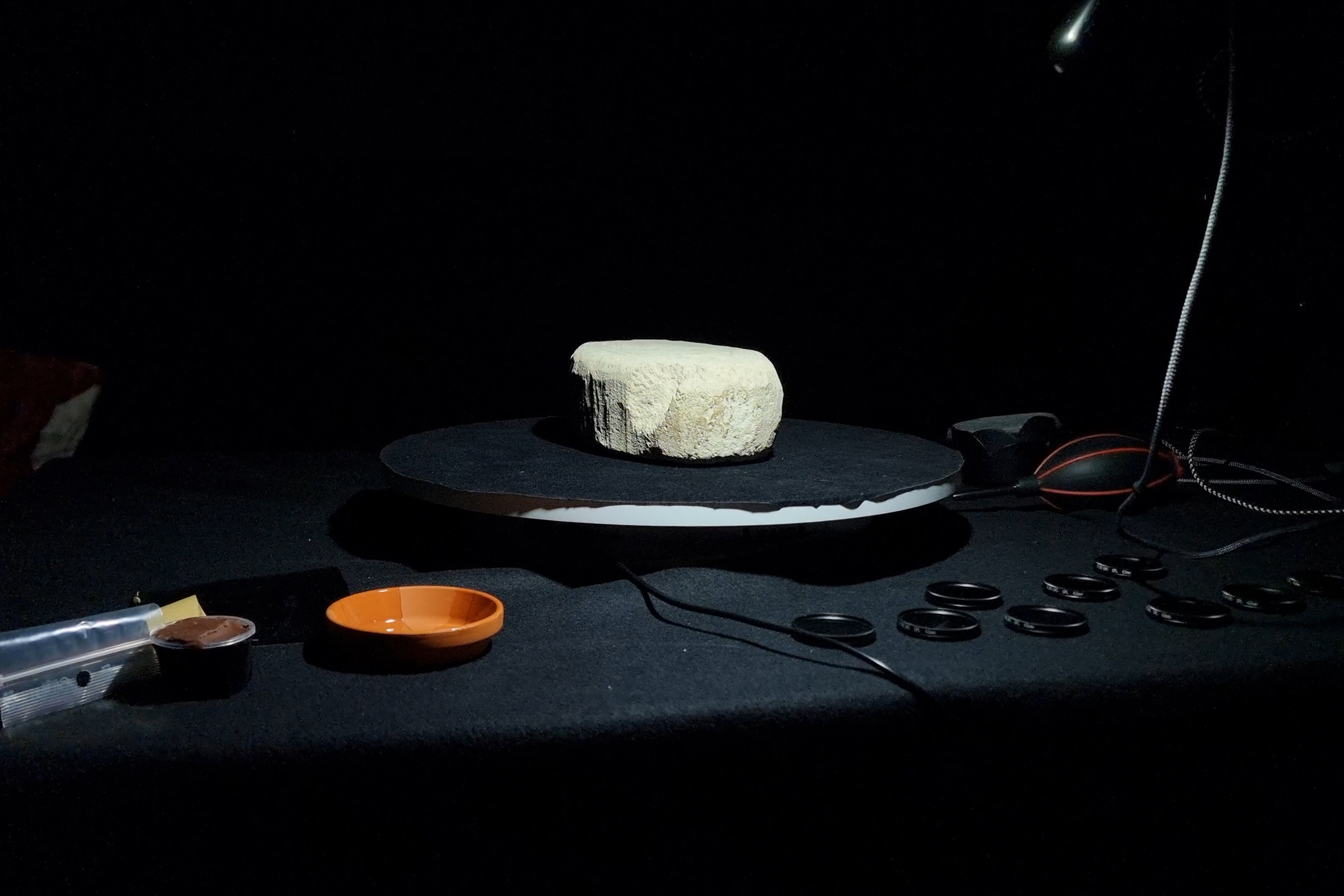
    For decades, a small, worn rock, etched with a pattern of rectangles and lines, sat quietly in a Dutch museum, dismissed by experts as a broken piece of architectural salvage. Now, a study in the journal Antiquity proposes that this unassuming artifact was actually an ancient Roman board game.

    By employing artificial intelligence to analyze wear patterns on the 8-by-6-inch chunk of limestone and running thousands of simulations, researchers believe that they have brought a forgotten pastime back to life, rediscovering how it was played and solving an archaeological mystery in the process.

    Even outside the Colosseum, ancient Romans enjoyed a good distraction and they regularly played tabletop games. Tracing that history is challenging, however, because many games were played on sketches in the sand, or with perishable sticks.

    Yet historical writings and archaeological remnants suggest a sophisticated culture of play. Games included rota (resembling tic-tac-toe), ludus calculorum (similar to the Japanese board game Gomoku), and ludus latrunculi (a precursor to chess).

    Boards of ludus duodecim, akin to backgammon, have been discovered inscribed with bits of Roman trash talk such as “Idiota recede,” Latin for “You idiot, get lost!”

    “Romans made a lot of objects for play and we happen to have a fair number of texts,” said Walter Crist, an archaeologist at Leiden University in the Netherlands and lead author of the new paper.

    In 2020, while visiting the Het Romeins Museum in the Dutch city of Heerlen, formerly the Roman town of Coriovallum, Crist, a specialist in ancient games, was drawn to the oval-shaped slab. The object, discovered in the late 19th or early 20th century, featured a peculiar pattern.

    Intrigued by a geometry he did not recognize, Crist examined the surface and noticed distinct signs of wear — a clue that the artifact may once have been a well-used board game.

    “Players had, over and over again, pushed game pieces across the rock, indicating it was far more than mere decorative graffiti,” Crist said.

    To break the code, researchers used high-resolution 3D scans that mapped microscopic imperfections on the limestone board, revealing telltale grooves. “Those line indicated the most heavily played routes,” Crist said.

    The data was then fed into Ludii, an AI platform that had been trained on roughly 100 ancient Roman board games. By generating dozens of potential rule sets and pitting bots against each other in mock matches, the AI pinpointed a few specific, engaging variants that conformed to the physical wear pattern.

    Programmers ran 130 rule combinations, testing thousands of scenarios against the grooves on the board. Crist said the simulation successfully matched the rub marks to nine plausible sets of rules, indicating that the stone provided a playing surface for a blocking game that required trapping an opponent in the corners of the board. Gamers can now test these strategies themselves by playing this once-forgotten battle of wits against a bot on Ludii.

    Now called ludus coriovalli or the Coriovallum game, the surprisingly modern, asymmetrical recreation challenges previous ideas about the history of gaming.

    Games that require complex blocking strategies were thought to have emerged much later, in the Middle Ages. Crist said the reconstructed game likely involved two players sliding small pieces of glass, bone, or earthenware along the lines, with one party trying to immobilize the other.

    Veronique Dasen, an archaeologist at the University of Fribourg in Switzerland who was not involved in Crist’s research, said the study tackled an important problem in the archaeology of games: how to infer rules from material remains. She noted technology’s potential to uncover hidden history, suggesting that many other unidentified items found at Roman sites could also be game boards waiting for their rules to be rediscovered.

    Not everyone is convinced by the study. Ulrich Schadler, an archaeologist at the University of Fribourg and director of the Swiss Museum of Games, is skeptical of the notion that the curiously etched stone is a genuine Roman relic. Unlike, say, typical, crudely scratched ludus latrunculi game boards, he said, the Heerlen artifact features straight-edged, noncoherent lines, making it a total outlier.

    Does ludus coriovalli represent a breakthrough or just a bored stonemason’s doodle? Schadler has bet on the latter, arguing that our deep knowledge of Roman culture makes this oddment a product of modern projection rather than historical proof. “Draw a geometrical pattern and I will invent a game to be played on it,” he said.

    Crist countered that the artifact’s uniqueness isn’t a flaw, but the very reason for its study. Unlike the ornate playthings of the elite that have been discovered in what were once the Roman Empire’s urban centers, this heavy stone board, he said, represented a lost local tradition on the empire’s fringes that had escaped the notice of Roman historians.

    Just because a game wasn’t written down, doesn’t mean it wasn’t played, Crist said. “We therefore cannot rely solely on this method to say a game may have existed,” he added. “This research provides a potential way to do so when those sources are silent.”

    This article originally appeared in the New York Times.

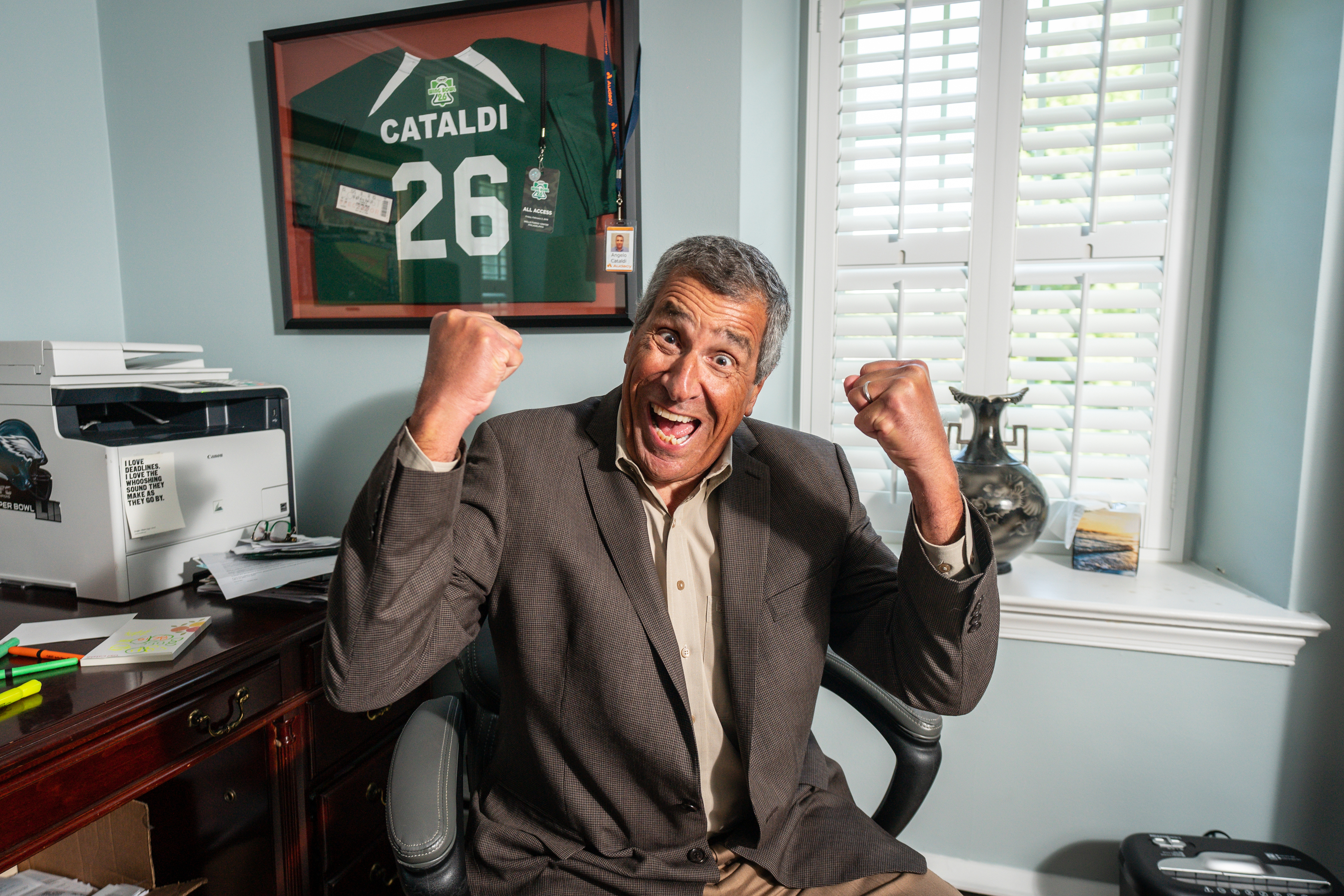
  • Angelo Cataldi is back talking about the Eagles, mostly because of his former WIP producer

    Angelo Cataldi is back talking about the Eagles, mostly because of his former WIP producer

    Angelo Cataldi is back. Sort of.

    The former morning show host, who retired in February 2023 after more than three decades with 94.1 WIP, is back this season offering his opinions about the Eagles on the newly launched BirdBrains podcast for OnPattison, hosted by longtime Birds reporter Derrick Gunn and ex-97.5 The Fanatic host and former Daily News reporter Bob Cooney.

    It’s not a regular thing — he appeared after Week 1 and plans to join the show about once a month, depending how angry the Eagles make him. And the only reason he agreed to it was because of the involvement of his former producer, Joe Weachter, who was all but forced to retire from WIP in 2025.

    “I wanted to do right by him, so I said I would do the first one and sprinkle a couple more in during the course of the season,” Cataldi said, bristling at the idea of being locked into a regular gig talking about Philly sports.

    “I’m too old for that crap. I did it for so long,” Cataldi said. “People really need to hear me anymore? I don’t think so.”

    In a way, he never left. After retiring he wrote columns a few times a week he shares on his website, shades of his previous career as a Pulitzer Prize-nominated journalist with The Inquirer. He’s also made appearances on a handful of podcasts, and even stoked controversy by harshly criticizing longtime NBC Sports Philadelphia reporter Reuben Frank.

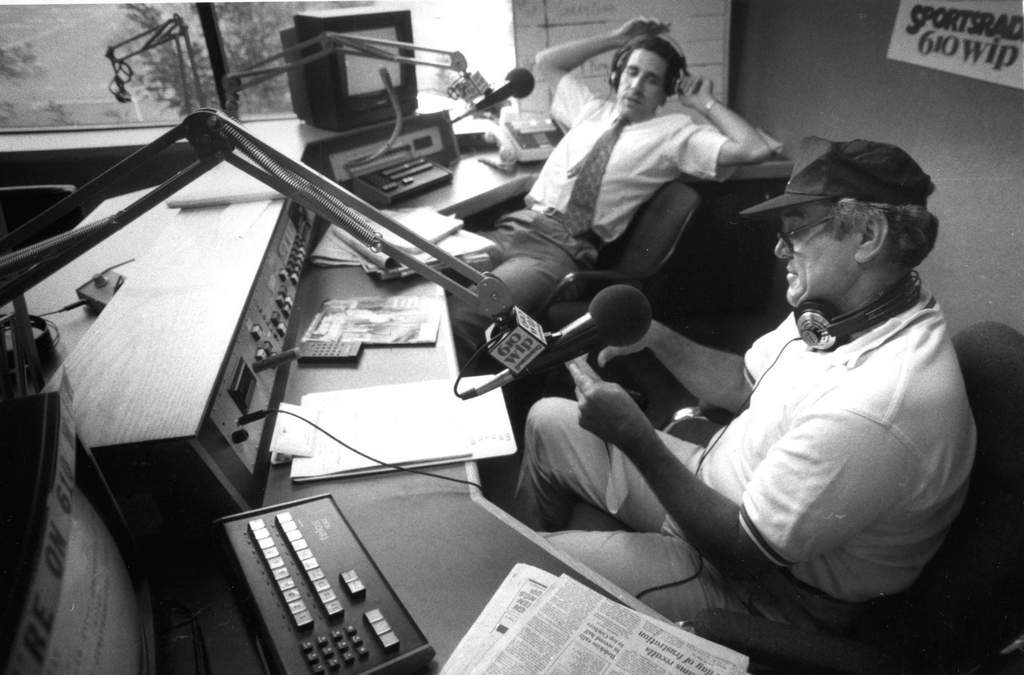
    Angelo Cataldi and Tom Brookshier during WIP’s morning show in 1991.

    He still has strong and sometimes head-scratching opinions — Jalen Hurts is underrated, Nick Sirianni is overrated (“Love Hurts, hate Sirianni, I’m done.”), and Andy Reid is a fraud — but what’s changed in retirement is the need to spew them to the largest audience possible. Cataldi credits the therapy he received from Philly sports psychologist Joel Fish after sliding into a retirement-induced depression with shaping his newfound perspective.

    “He said, ‘Look up at the scoreboard. The game is over. You won. Now just enjoy every day you have left,’” Cataldi said. “It connected with me and totally changed the way I looked at competition, scrounging for more listeners and trying to get more people to read my stuff.”

    That also meant shedding “Radio Guy,” which is what his wife, Gail, dubbed his loud and cantankerous on-air persona. Off the air, he remains a self-described “shy nerd from Providence” who turned his dream of becoming a TV critic into The TV Show, a weekly podcast he’s co-hosted for more than three years alongside longtime WIP co-host Rhea Hughes and Philadelphia comedian Jay Black.

    “The radio guy now may not be dead, but he’s on life support,” Cataldi said. “I get defibrillated like maybe 10 times a year, and the rest of the time he’s going away slowly … I’m just trying to be a regular human being for whatever time I have left.”

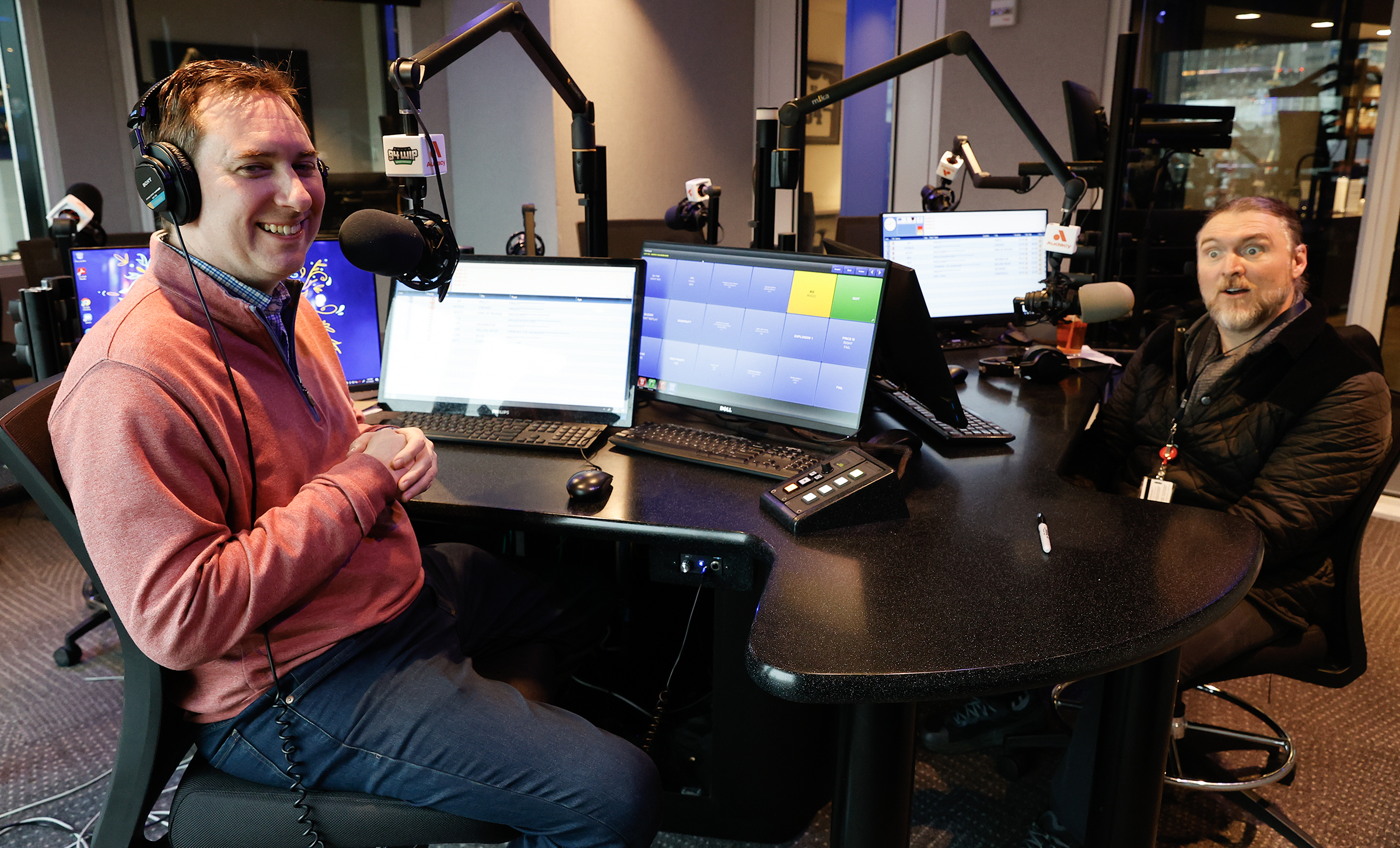
    Current WIP morning show hosts Joe DeCamara (left) and Jon Ritchie.Yong Kim / Staff Photographer

    As for the state of sports talk radio in Philly, Cataldi doesn’t have an opinion, because he doesn’t listen. Not even to his former show, which still features Hughes alongside Joe DeCamara and former Eagles fullback Jon Ritchie.

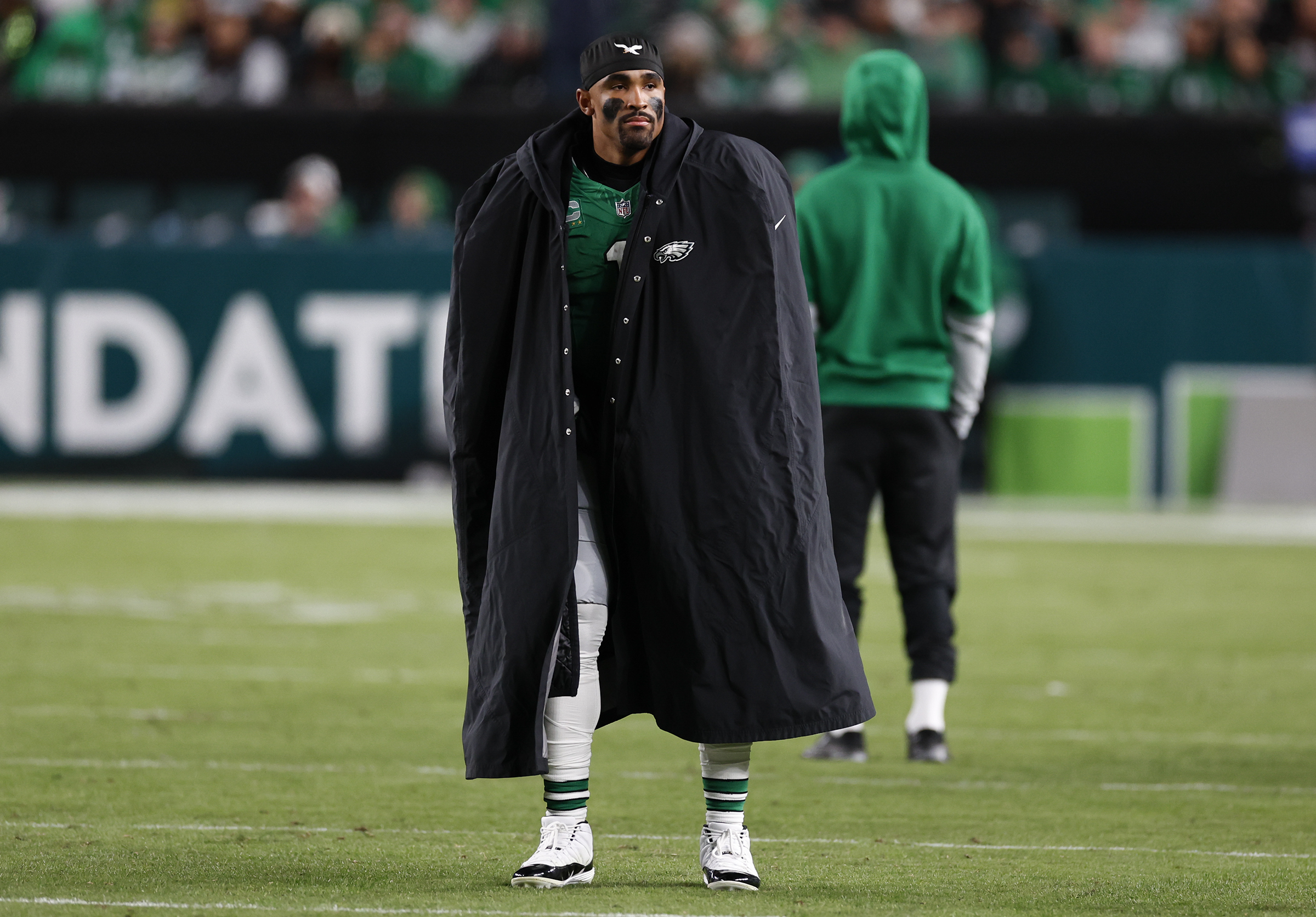
    Jalen ‘Jedi’ Hurts

    Has Jalen Hurts become the Luke Skywalker of Philadelphia?Yong Kim / Staff Photographer

    Cataldi’s tenure on WIP included a number of WIP callers who turned into household names among Philly sports fans — “Big Rube” Harley, “Arson Arnie,” “Cowboy Dave,” “Eagles Shirley,” Levi in Overbrook Park.

    It’s a trend that continues, for better or worse. On WIP’s midday show Tuesday, it was Mark in Jersey who stole the show by offering a cosmic analogy to Hurts’ evolution into a more complete quarterback, a “2.0 version” which carried the Eagles to a 2-0 start.

    “You’re looking at a man that has now achieved Jedi status,” Mark said, immediately catching the attention of co-host and former Eagles defender Hugh Douglas.

    “Oh, talk to me,” Douglas shot back.

    “Early on, in Star Wars one, Mark Hamill … He was good, up and coming, but he had Han Solo, Chewbacca. He had like a team around him,” Mark said. “By the time Return of the Jedi showed up, and he want to Jabba’s cave with that hoodie on, he was the man. He could do everything”

    In Mark’s analogy, new offensive coordinator Sean Mannion has been Hurts’ Yoda, offering him an Empire Strikes Back level of training. There’s also Jabba the Hutt, the loud villain helpfully played in Week 2 by Tennessee Titans defender and Hurts trash talker Jeffery Simmons.

    “He told Jabba, ‘Look man, you’d better give up Han Solo and Chewbacca. Bring them to me, or I’m going to burn this whole place down,” Mark continued. “Jabba laughed … and [Hurts] burned the place down.”

    “Love the analogy,” co-host Joe Giglio said. “That one of the better ones we’ve had.”

    Quick hits

    Is the NFL media world ready for even more Kelce?Yong Kim / Staff Photographer
  • A treasure trove of jewelry awaits at the Woodmere Art Museum’s underground galleries

    A treasure trove of jewelry awaits at the Woodmere Art Museum’s underground galleries

    Each time Theophilus Annor descends the stairs nestled underneath Frances M. Maguire Hall’s grand first-floor banister and into Woodmere’s Jewelry Vault, he’s humbled and proud.

    The 26-year-old metalsmith, 3D printer wiz, and graduate of Temple University’s Tyler School of Art and Architecture has a significant amount of bling on permanent display in the vault, which comprises the Woodmere Art Museum’s three underground galleries dedicated to baubles fashioned by Philadelphia’s most celebrated jewelry artisans.

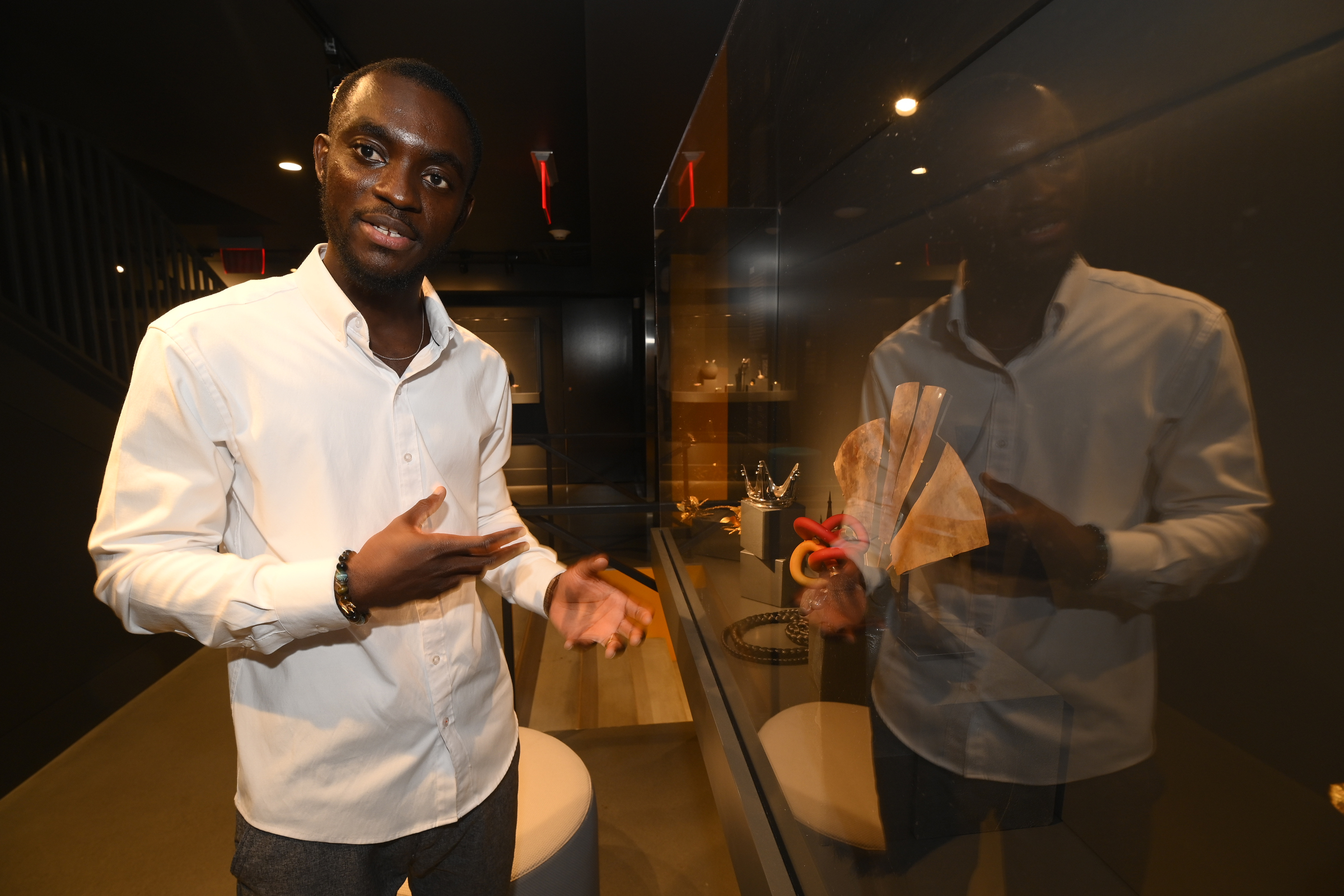
    Theophilus Annor explains the loyalty symbol from Ghana that forms a theme in his artistic jewelry work as he poses next to “Hairpiece,” 2025, on display at the Jewelry Vault of the Woodmere Art Museum in Chestnut Hill, on Aug. 27, 2026.Bastiaan Slabbers / For The Inquirer

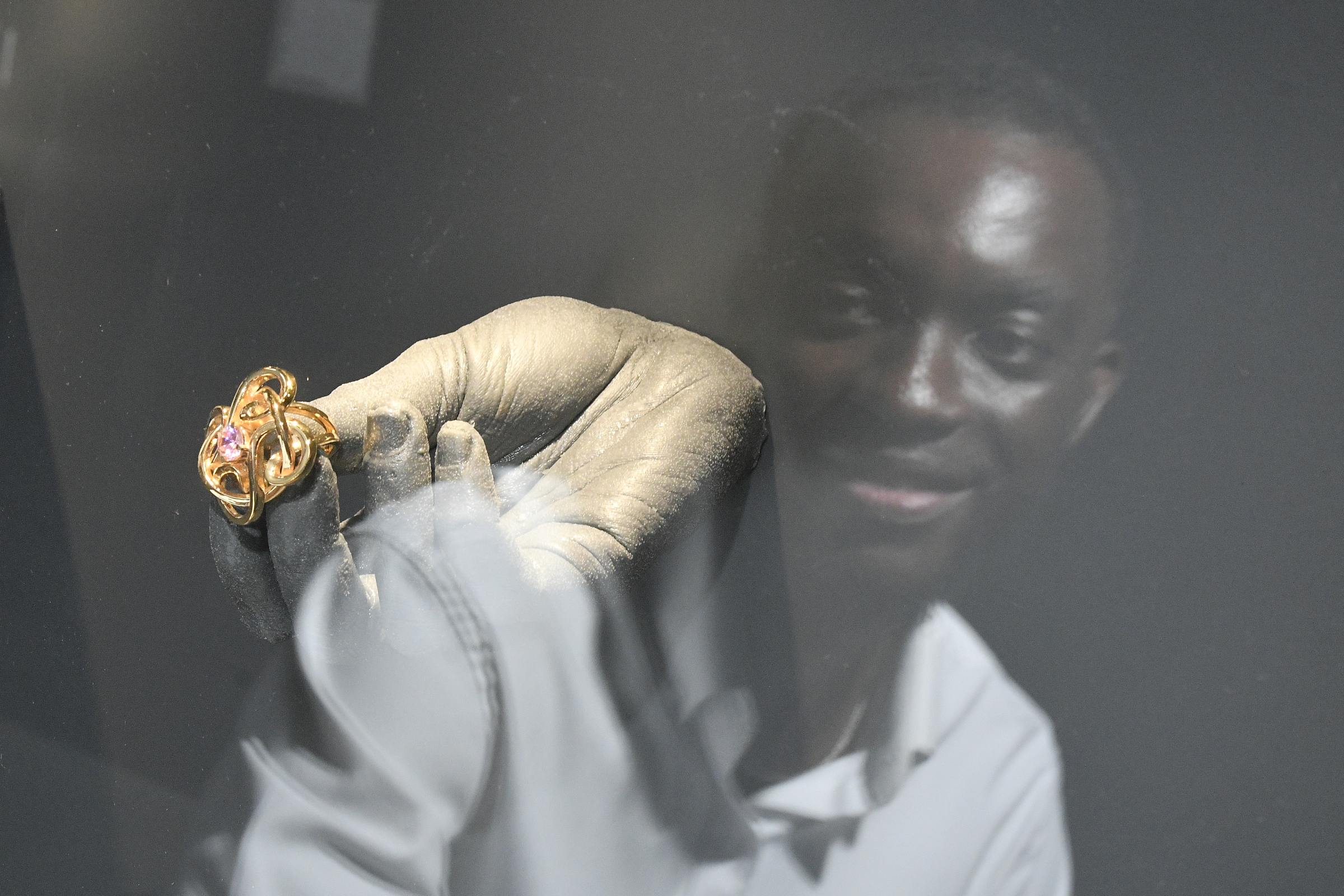
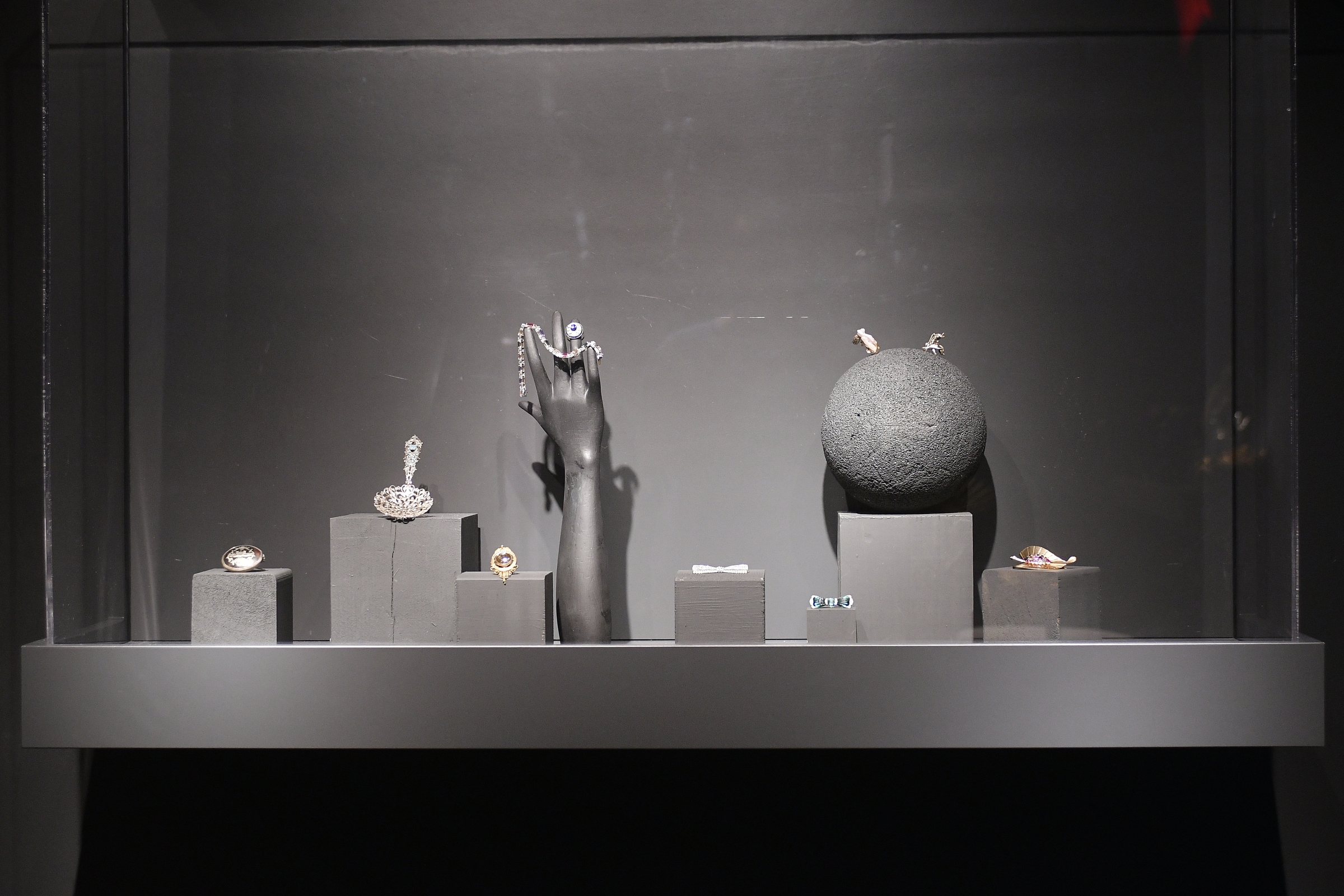
    Holding On is a gold-plated brass ring Annor, one of the youngest artists featured in the vault, fashioned into the Ghanaian Adinkra symbol for loyalty. It sits in the vault’s center display case with its rose gold gemstone sparkling in conversation with more than a dozen other pieces from artisans Richard Reinhardt, Wesley Emmons, Henri David, and Doug Bucci, Annor’s teacher and mentor at Tyler.

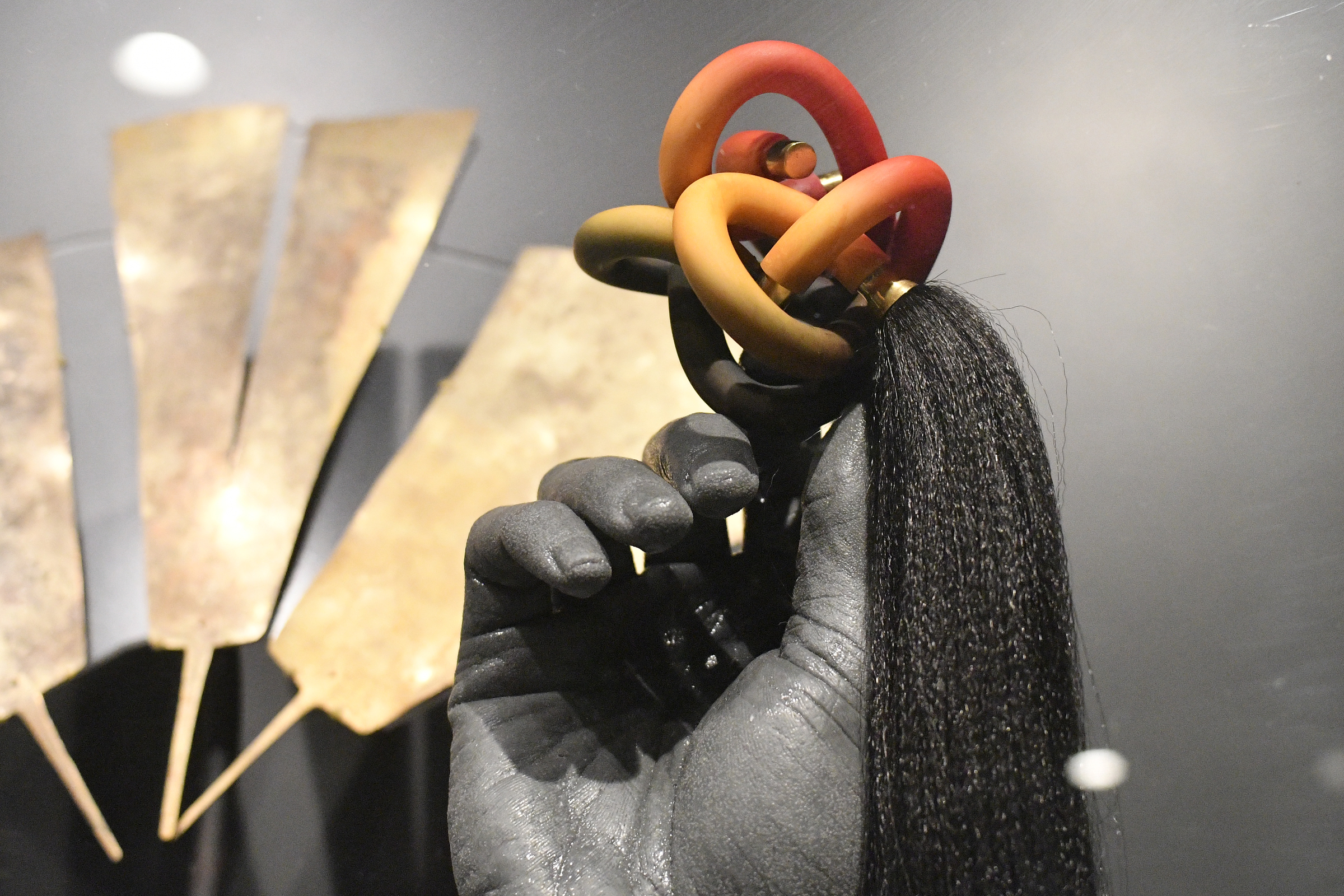
    Each ring in the showcase is delicately planted between the middle finger and thumb of a silicone hand Annor cast from an alginate mold of his own. The lines in the 14 gray palms and shape of each nail bed clutching the trinkets mirror Annor’s lithe ebony hands. The young artist’s hands literally uphold the masterpieces of the artists who came before him.

    Theophilus Annor’s work features the Agyendewura Adinkra symbol, a loyalty symbol from Ghana that forms a theme in his artistic jewelry work as he poses next to “Holding On,” 2024, gold and multifaceted gemstones, on display at the Vault of the Woodmere Art Museum in Chestnut Hill, on Aug. 27, 2026.Bastiaan Slabbers / For The Inquirer

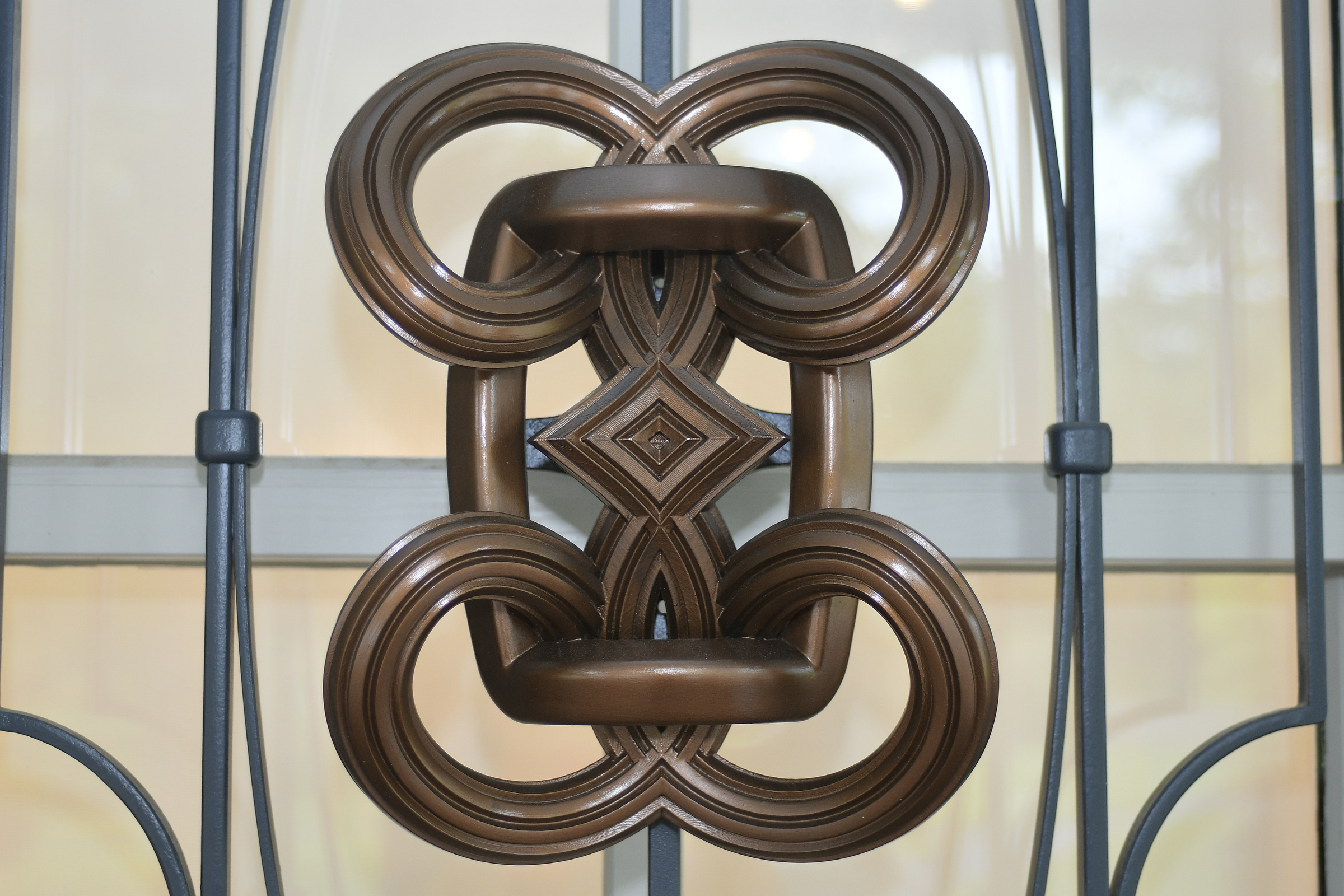
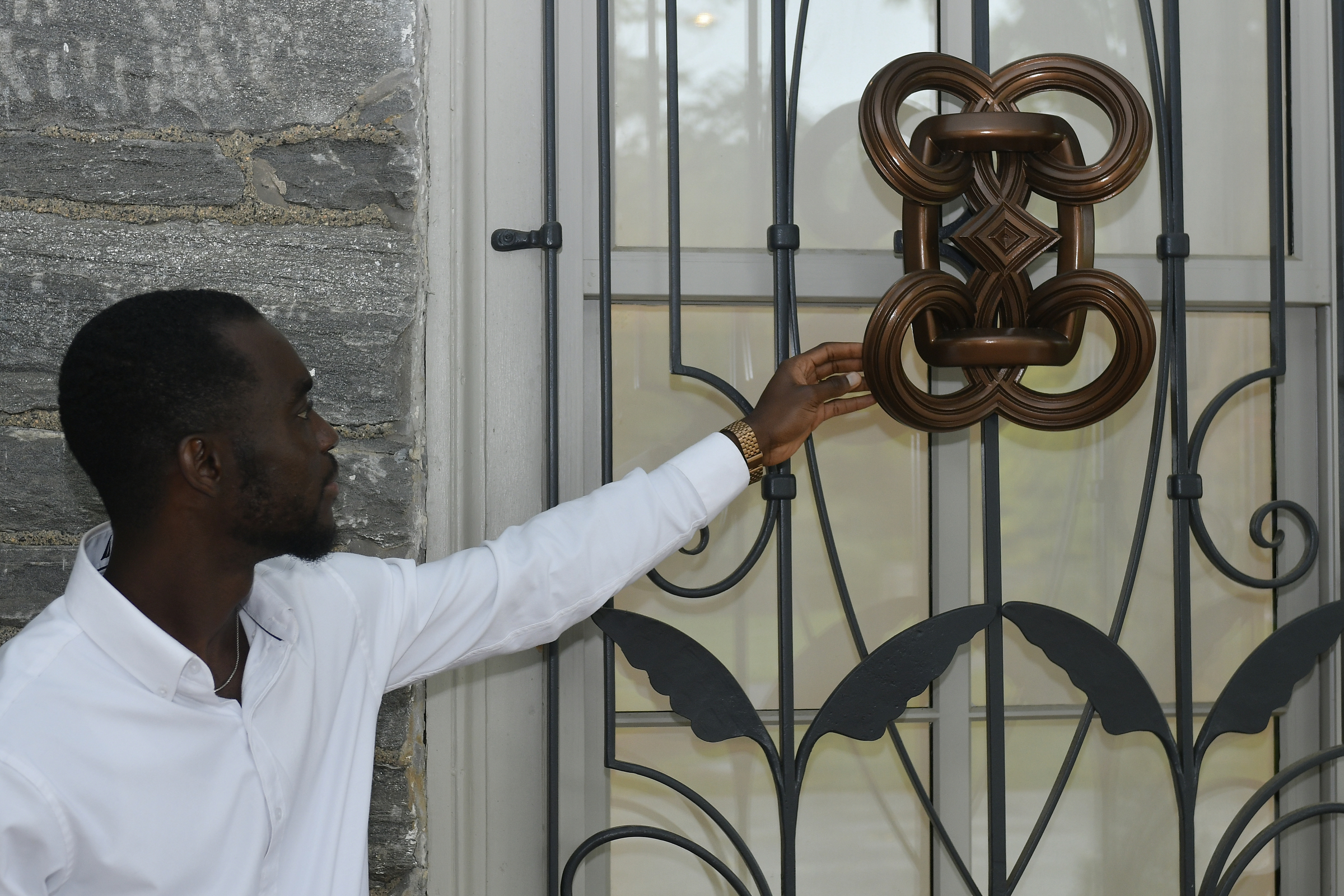
    “Of that I’m so honored,” he said, sitting on a bench on Maguire Hall’s porch. Above him is one of five window grills he designed with Philadelphia blacksmith John Rais.

    Rais created the decorative wrought iron while Annor scaled another Adinkra symbol up to life-size with a bronze, metallic finish.

    He made the ornamentation on a 3D printer, and it took several days to print each of them.

    Woodmere purchased its four-story Victorian mansion home from the Sisters of St. Joseph in 2021. In 2022, the Maguire Foundation gave the museum $10 million in honor of its late matriarch, Frances M. Maguire. Through a capital campaign, Woodmere’s executive director William R. Valerio raised a total of $28 million to purchase, renovate, and create an endowment for Maguire Hall.

    Last October, the 14-gallery space opened, Annor’s touch dispersed throughout, “reminding visitors of the diversity of Philadelphia artists on display here at Woodmere,” Valerio said.

    Theophilus Annor’s work features the Agyendewura Adinkra symbol, a loyalty symbol from Ghana that forms a theme in his artistic jewelry work, as he poses next to “Commissioned,” the collaboration between artists John Rais and himself, at the Jewelry Vault of the Woodmere Art Museum in Chestnut Hill, on Aug. 27, 2026.Bastiaan Slabbers / For The Inquirer

    “My work is next to that of so many amazing artists,” Annor said. “And I’m so excited to be a part of the legacy.”

    As part of Maguire Hall and the vault’s first birthday, Woodmere will host a jewelry trunk show on Oct. 22.

    The 1,000-square-foot vault was conceived to serve as a showcase of Philadelphia artisans and pay homage to the city’s history of jewelry arts. It’s less about engagement rings and more about engagement with the community of Philadelphia artists and their patrons.

    To the right of the entrance, a vitrine beams with exquisite Gilded Age accessories: a J.E. Caldwell sapphire-and-diamond ring twinkles next to a Bailey, Banks & Biddle topaz brooch.

    Jewelry on display in the vault at the Woodmere Art Museum Maguire Hall in Chestnut Hill on Aug. 27, 2026.Bastiaan Slabbers / For The Inquirer

    These brands were featured in the 1876 Centennial as part of its jewelry arts exhibition, which catapulted their popularity. And within the year, Philadelphians’ interest in the jewelry arts led to the opening of the University of the Arts, home of one of the country’s first jewelry arts programs. The university helped Philadelphia become an industry leader in the jewelry arts during the 20th century, Valerio said.

    Of course, many of the vault’s showpieces celebrate the beauty and drama of all that is jewel-encrusted.

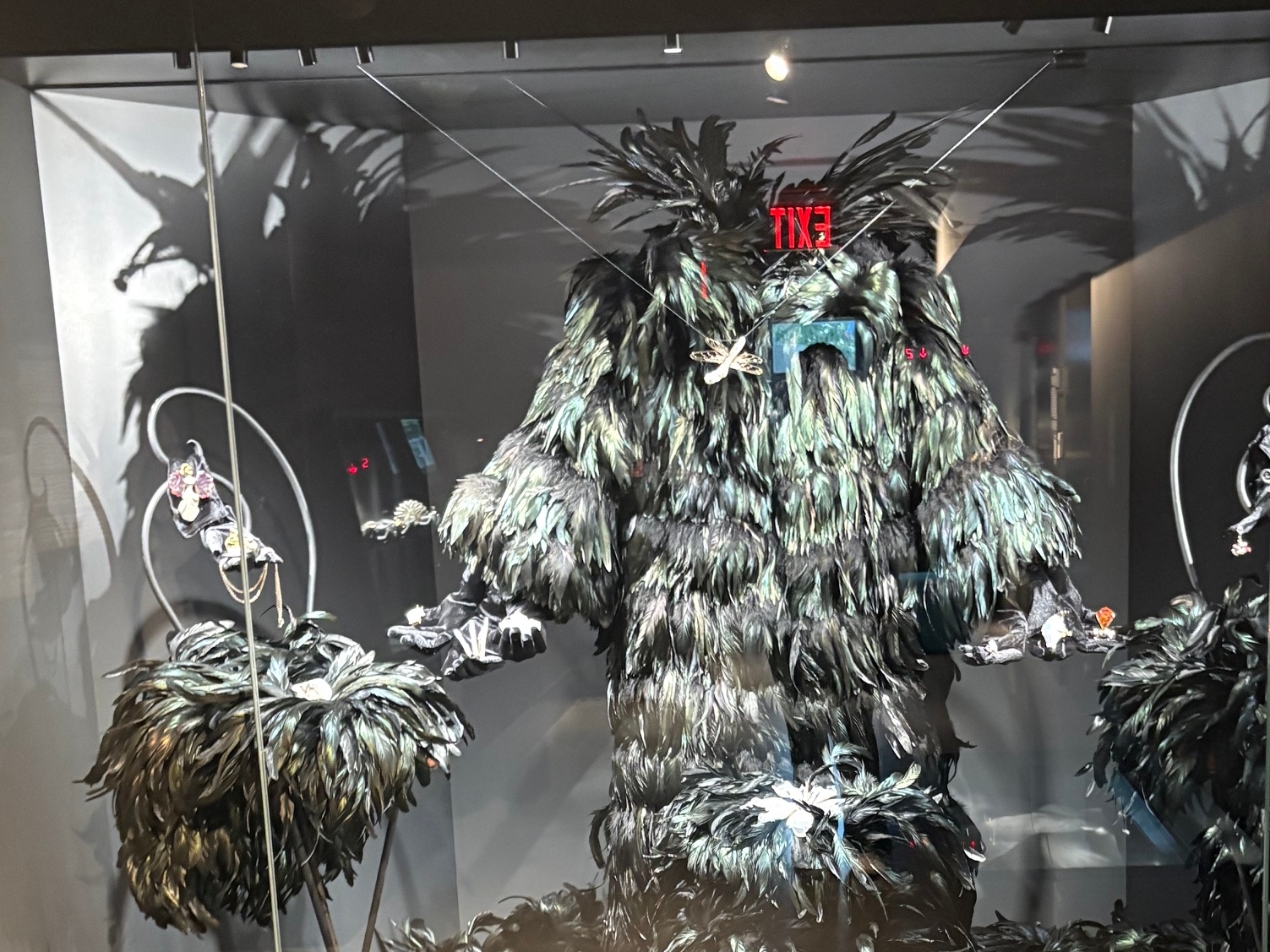
    A Henri David installation gives enchanted forest vibes, taking up the entire back wall of the first gallery. A cloak sewn together from thousands of iridescent feathers from the tails of French roosters is centered next to faux greenery. David’s nature-inspired frippery glistens: a 14-carat yellow-and-gold stingray brooch, a diamond-and-pearl dragonfly brooch, and a druzy agate flower brooch with a pretty black fresh freshwater pearl affixed to its center.

    In the Henri David case, the Philly-based jeweler’s fantastical work takes up the entire back case of the vault in Woodmere’s Maguire Hall.Elizabeth Wellington

    Jewelry innovation is a focus of the vault, too.

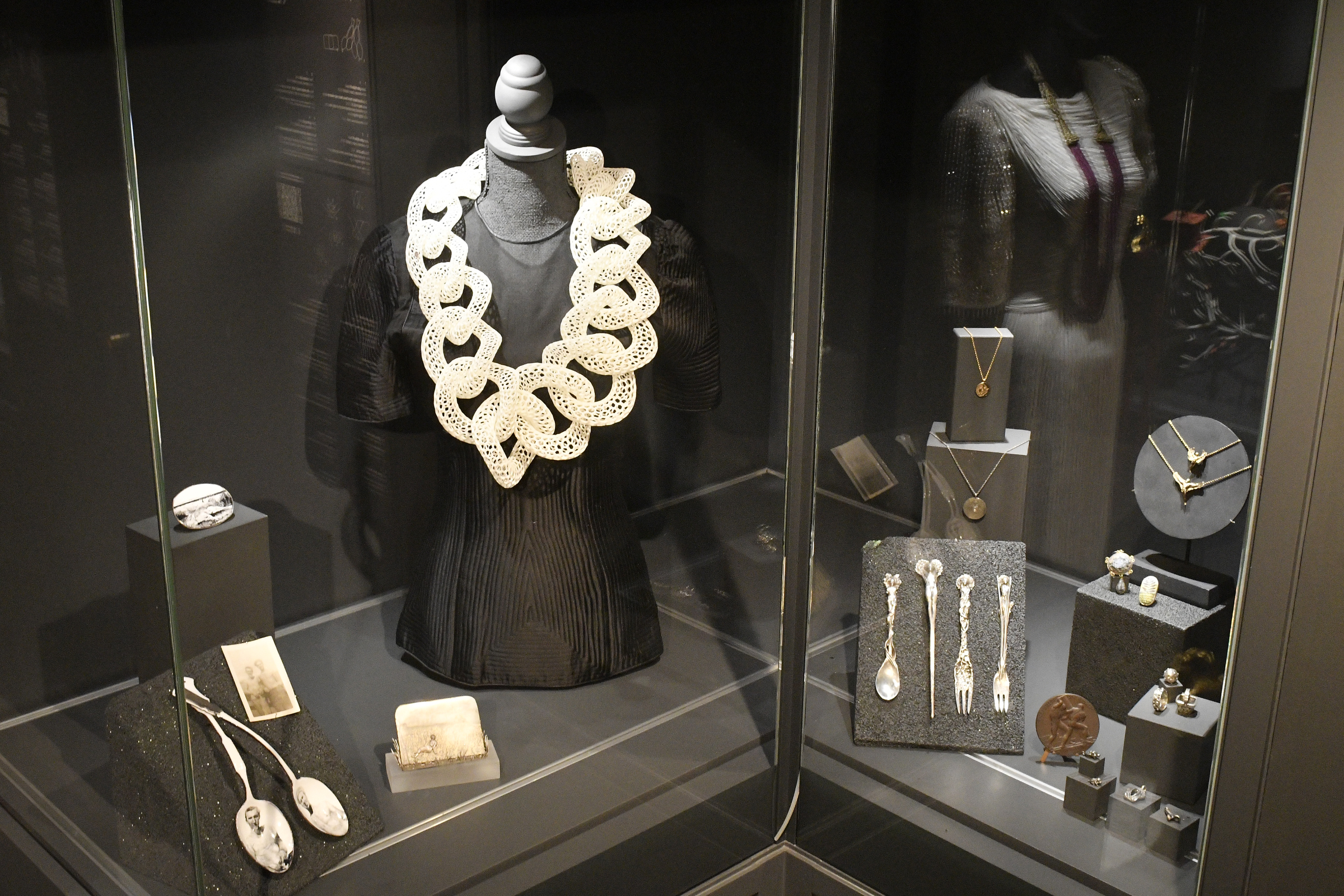
    Across from the ring case is Bucci’s insightful Shroud, a continuous sheet of polylactic acid and cubic zirconia installed into the floor. But Shroud is more than a thin layer of ivory glitz under a glass case that resembles a tomb. It’s a 3D-print installation generated from 30 days of Bucci’s blood glucose data. Bucci is a Type 1 diabetic who wears an around-the-clock insulin monitor. Each day is a vertical slice of Bucci’s metabolic history, brilliant evidence of his lived experience.

    “The funny thing is that we were really just figuring out what to do with the hole in the ground,” Bucci said. “What we came up with was inspired by beauty, inspired by architecture, and the unseen. It’s like the game of Operation where you have that look inside.”

    View of the 3D-printed “Islet I, White a sectional” (Neck Piece) by Doug Bucci, on display in the vault at the Woodmere Art Museum Maguire Hall in Chestnut Hill, on Aug. 27, 2026.Bastiaan Slabbers / For The Inquirer

    Islet — Bucci’s most well-known work that includes a necklace, a ring, and a bracelet — also resides in the vault. Each one of the links in the necklace is a honeycomb-patterned tube that is printed as one piece and interlinked, creating an unbroken chain. Bucci was the first jewelry artisan to manipulate a 3D printer to do that.

    Islet shares gallery space with a purple polyester resin and sterling silver torque, or metal collar, by Stanley Lechtzin, who founded Tyler’s jewelry program in 1962 and served as its head through 2018.

    Lechtzin is considered the grandfather of computer-aided design in the jewelry industry, the first to use a 3D printer to design and produce jewelry. He also developed electroforming, a process that makes big, chunky jewelry light. (It’s why bamboo door-knocker earrings look heavy but are actually light.)

    “Lechtzin is truly an innovator in the design field,” Bucci said. “He is one of my educators, mentors, and heroes. So for my work to stand along his and with my students’ is one of the most important moments of my career.”

    The vault houses the ostentatious and the kitschy. Brooches made from found art and resin by Maximal Art’s John Wind and Hilary Jay are placed next to brooches, cuffs, pendants, and pleated gowns by the late fashion and accessories designer Mary McFadden.

    McFadden — who died two years ago at 84 — made an undisclosed donation to the vault and gave Woodmere several pieces of clothing and jewelry to exhibit. One of the vault’s galleries is named for her.

    Theophilus Annor’s jewelry artwork centers the loyalty symbol from Ghana, as seen here in his “Hairpiece,” 2025, on display at the Vault of the Woodmere Art Museum in Chestnut Hill on Aug. 27, 2026.Bastiaan Slabbers / For The Inquirer

    The vault’s permanent exhibit comes full circle, ending with a glass cabinet filled with hair adornments. It’s called the Crown Case. In this glass cabinet is a laurel crown symbolizing power, sanctity, and celebration designed by McFadden, a wedding tiara by Reinhardt, and a knotted red-and-yellow hair piece by Annor.

    The piece, Annor said, explores the historical significance of knots used in Ghana as ladders during the African slave trade.

    “I am from Ghana, but a lot of my thoughts and experiences as a jewelry maker are here in Philly,” Annor said. “At Woodmere I’m able to blend traditional and contemporary art and honor my heritage.”

    The Woodmere Art Museum’s Frances M. Maguire Hall is located at 9001 Germantown Ave. The Jewelry Trunk Show will be held Oct. 22 from 1 to 5 p.m. at Charles Knox Smith Hall at 9201 Germantown Ave.