Over objections from nearby residents, the affluent Cape May County shore town voted to soften liquor license restrictions for the popular new bar Gully’s, allowing one more hour of outdoor music, until 9 p.m.
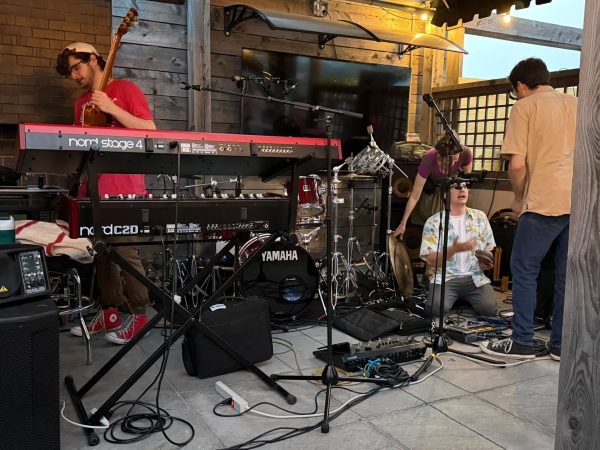
The vote followed an outcry from the town’s locals, old-timers, and music lovers after the band Three and One was told to stop playing at 8 p.m. July 17, two hours earlier than advertised, after complaints from neighbors and a visit from Avalon police.
The 8 p.m. cutoff for outdoor music was a special condition included in the liquor licenses of Gully’s and other bars in town.
But at its August council meeting last Wednesday, the council adopted new restrictions on Gully’s that gives the bar one more hour for outdoor live music.
Gully’s had been appealing those conditions to the state’s Division of Alcohol Beverage Control before the resolution’s adoption.
Councilman Jamie McDermott downplayed the consequences of extending the music one more hour, and said the noise was “part of living within the two blocks of the commercial business district.”
“It’s a summer disruption,” he said. “We’re talking about eight Saturday nights that are going to go until nine o’clock.
“For me, for a summer town, that’s not Sea Isle, that’s the seashore at its best,” he said.
According to the resolution, Gully’s has retained a sound engineer to help with noise volume from its bands.
“Each band will be given the sound engineer’s phone number so that the engineer can approve the band’s system before it is set up,” the resolution states.
In addition, “bands will be warned that they will be cut off and not paid if they do not keep the volume reasonable.”
The council noted that Gully’s space is mostly outdoors, unlike other bars in town with bigger indoor footprints for music, and that the borough itself has outdoor music until 9 p.m. at its public concerts.
The extension to 9 p.m. was characterized as a temporary solution for the rest of the summer. The issue will be revisited before next summer.
Gully’s has agreed to withdraw its appeal, for now, Nicole Curio, the municipal solicitor, told the council.
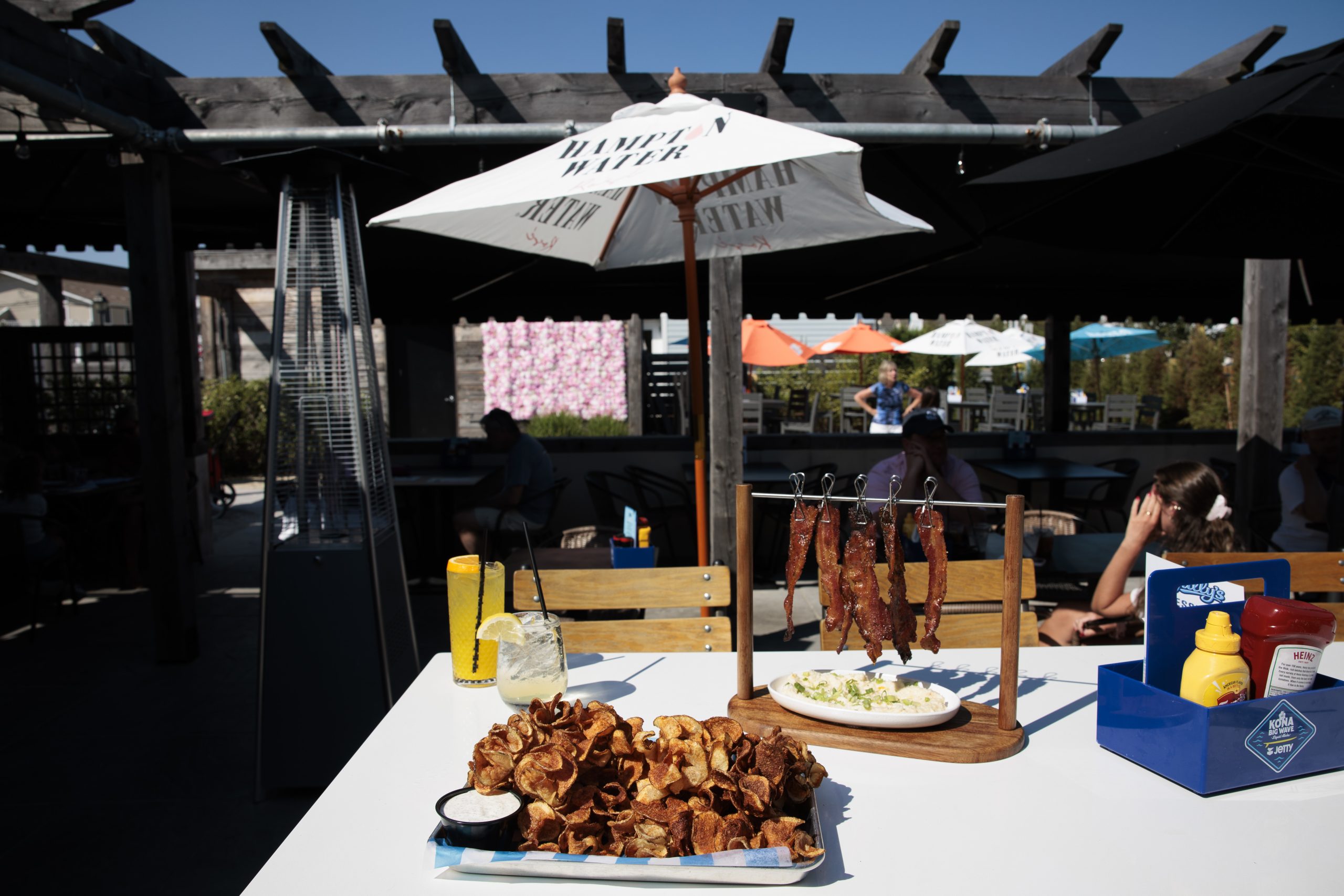
The hanging candied bacon served over grits and Gully’s blooming potato at Gully’s on Wednesday, June 17, 2026, in Avalon, NJ.Monica Herndon / Staff Photographer
The resolution requires Gully’s bands to have smaller sound systems, no 18-inch or larger bass speakers, and to monitor their volume. The restaurant announced the change on its Facebook page.
The resolution also states that concerned neighbors will be given a number to text if they have issues with the volume.
Gully’s has also agreed to reposition the stage so that bands are facing the building rather than the neighborhood, the resolution states.
City Council President Greg “Chet” Johnson said at the meeting that the town needed to ensure that all the new people investing in summer homes had places to go once they arrived in Avalon.
“The town has changed,” Johnson said, addressing residents who had objected to the new regulation. “It’s a more affluent community that’s coming here. You’ve had great appreciation in your property. This is going to continue to grow and boom. People that come down now, they’re not bringing their groceries. They want to go to restaurants. They want entertainment.”
The popularity of Gully’s, in a space where a previous business had not flourished, showed that it was something the town as a whole supported, he said.
Larry Hayes, a neighbor who lives about 500 yards away and has complained about the noise, said he was opposed to the new regulations. Others said Avalon was caving to Gully’s.
Council Vice President Sam Wierman said it was unrealistic for neighbors near Avalon’s commercial district to want “everything shut off” at 8 p.m.
“That’s the reality of living,” he said. “I don’t think 9 p.m. is unreasonable. It’s a middle ground.”
Curio, the solicitor, noted that the resolution did not address other events at Gully’s, like its amplified Monday minnow races, which were also receiving attention from PETA, the animal rights group.
Resident Jody Kyle, meanwhile, noted a noise issue she thought was worse than Gully’s: The noise from the nearby Wawa, which she said went on until midnight or 2 a.m. some nights.
“It’s underaged kids who belong at home,” she told council.
Deli Boys, a crime dramedy set in Philadelphia, has been canceled after two seasons, according to Deadline.
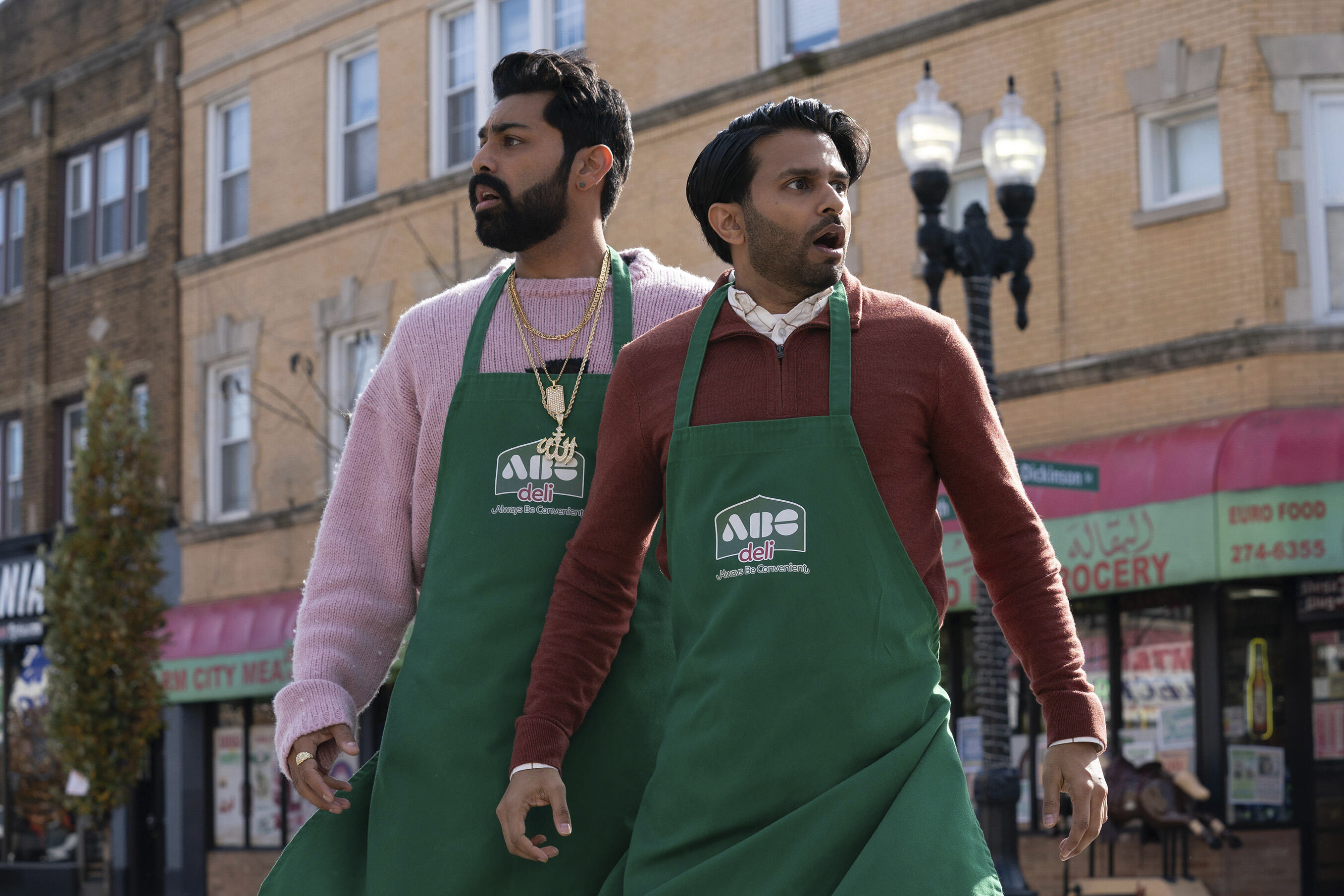
The Hulu series followed a pair of Pakistani American brothers, Raj and Mir (played by Saagar Shaikh and Asif Ali, respectively), as they took over their deli-magnate father’s empire — and reckoned with his secret criminal enterprises.
Created by Temple University alum and former Philadelphia Weekly journalist Abdullah Saeed and executive produced by South Philly native Michelle Nader, Deli Boys packed plenty of Philly references into its 16-episode run, from SEPTA jokes to expired Tastykakes and a Super Bowl watch party.
And the titular delicatessen, “ABC Deli,” was inspired by a real Philly institution at Third and Poplar Streets in Northern Liberties.
The show, however, was filmed in Chicago.
Deli Boys also centered on South Asian characters, with the core cast being of South Asian descent — a “rarity in Hollywood in 2026,” Deadline wrote.
“Thank you to every brown and Muslim and Pakistani and immigrant person who saw themselves in my show,” Saeed wrote on Instagram. “I created this world and these characters for YOU.”
Saeed told the next generation in his post: “I hope I helped you see that you deserve the airwaves, no matter how hard you have to fight for your rightful place.”
Queer Eye star Tan France, who played a British Pakistani gang leader on the show’s first season, previously told The Inquirer that the show “represents us [South Asians] so beautifully.”
France reprised his role for season two, and Saturday Night Live alum Fred Armisen also joined the cast as a Philly gambling savant.
Deli Boys “gives us a chance to be real, fully formed humans,” France said.
The show “failed to find a wide enough audience” to justify a third season, according to Variety, and sources told Deadline the show’s cancellation was due to ratings.
Hayden Panettiere, a former child actor who rose to fame and starred in TV shows Heroes and Nashville, died Aug. 16 in South Carolina. She was 36.
South Carolina’s Greenville County Coroner’s Office confirmed her death, saying she was in cardiac arrest before she died. Emergency medical services responded to a 911 call reporting a cardiac arrest at 1:51 p.m. on Sunday at a residence in Greenville, where they found Ms. Panettiere unresponsive. She was pronounced dead at 2:32 p.m. after lifesaving measures were attempted. There were no signs of trauma, and the cause of death needs further investigation, the office said in a statement.
In May, Ms. Panettiere released a memoir, This Is Me: A Reckoning, in which she detailed her life growing up in the spotlight, and her struggles with postpartum depression, substance abuse, and domestic abuse.
She began acting as a child, gaining her first television credit before she turned 5 on the soap opera One Life to Live. At 10, she starred in the movie Remember the Titans.
Her big break came when she played a high school cheerleader with regenerative superpowers in Heroes in 2006; the TV series ran for four seasons. She later portrayed rising country artist Juliette Barnes on Nashville. She also had roles in the Scream horror franchise, Bring It On: All or Nothing and the rom-com I Love You, Beth Cooper.
Tributes to the actor poured in Monday. “I wish the world had more time with you because I had a burning curiosity about who you were becoming. I saw this beautiful Phoenix rising from the ashes,” actor Viola Davis posted on Instagram.
In an interview on Jay Shetty’s On Purpose podcast released in May, Ms. Panettiere described her debilitating anxiety, alcoholism, and custody battle over her child, circumstances she said were written into her character on Nashville. “It felt like it never ended. I didn’t know where Juliette began and Hayden ended,” she said.
In her memoir and press tour interviews, she described her struggles with postpartum depression, drugs, and alcohol, and the death of her brother three years ago. She also discussed the pressure to please everyone and her fractured relationship with her mother, who served as her manager for years in her childhood, where “everything was business.”
“I finally feel like I have shaken off all of this darkness and this negativity. … And that means I closed one door and another door is opened,” she said on the podcast. “And I can feel all the … exciting possibilities. I feel like I have a lot more life to live.”
Auditioning before she could walk
Ms. Panettiere began acting when she was 11 months old, auditioning for a Playskool train commercial. By 1994, she landed a role on ABC’s soap opera One Life to Live.
“Part of me just wanted to have friends, a place at a cafeteria table, teachers who were kind to me, and lots of fun at recess. But another part of me loved the rush I got from acting and the fact that it made Mom so proud,” she wrote in her memoir.
At 10 years old, she had caught the attention of the casting director for Remember the Titans. She went on to play Sheryl Yoast, a football-loving preteen. “As Sheryl, I was strong and authentic, and on Remember the Titans I was the happiest I’d ever felt as an actor,” Ms. Panettiere wrote.
Soon after, at 12, she secured a guest role as the nerdy babysitter on Malcolm in the Middle. The role was thanks to her mother, Lesley Vogel, who had played the wife of Bryan Cranston’s character on Loving. In her memoir, Ms. Panettiere recalled Cranston, an episode director for Malcolm, saying, “Hayden is so wrong for this role, but we’re going to make this work.”
Once Ms. Panettiere turned 17, she was well known by casting executives, and she was asked to audition for the role of Claire Bennet — the Texas cheerleader with self-healing powers on NBC’s Heroes. She is best known for her performance in Heroes and her role as Juliette Barnes on Nashville.
Barnes’ struggles with postpartum depression and addiction mirrored Ms. Panettiere’s life. In her memoir, Ms. Panettiere wrote about realizing the Nashville writers were modeling the script after her life; playing Barnes became “looking in a funhouse mirror, seeing a distorted reflection,” and diving “headfirst into my own hell.” She took a leave of absence from the show to seek professional treatment.
Struggles with addiction
Ms. Panettiere had long struggled with body dysmorphia, anxiety, and depression, according to her memoir. In the book, she described one paparazzi photograph of herself that showed the back of her thighs. A magazine published it with a banner over her legs: “CELLULITE.”
At an industry event, when she was about 16, a former representative pulled her aside to offer her a “happy pill” before a press interview, she recalled in her memoir. The pills, Ms. Panettiere wrote, “were the gateway drug that ushered me toward the good of pharmaceuticals and the downfall of addiction.”
While nerves pushed her forward as a child actor, they eventually overtook her, she wrote. She was prescribed Klonopin but turned to alcohol since it interfered less with work.
After the birth of her daughter in 2014, her drinking increased as she dealt with postpartum depression. Antidepressants wouldn’t mix well with alcohol, and “I wasn’t ready to stop drinking,” Ms. Panettiere said on a 2023 television appearance. Around the same time, an old neck injury had flared up, and she’d begun taking opioids, she said.
Ms. Panettiere developed jaundice from alcohol abuse. In the memoir, she recalled a doctor’s warning that she’d be dead in five years if she didn’t stop drinking.
She put herself in rehab during the middle of production for the fourth season of Nashville in 2015. The producers temporarily wrote her character out of the script. By her return, Ms. Panettiere’s personal life matched much of the script: Juliette Barnes had postpartum depression, an alcohol and pill addiction, and an impending divorce.
At the time of writing her 2026 memoir, Ms. Panettiere was in recovery.
A complex personal life
Ms. Panettiere’s personal life was relentlessly complex and often tragic. Her parents separated in 2008 while Ms. Panettiere was starring on Heroes, and their protracted divorce proceedings concluded in 2016.
Ms. Panettiere was in an on-and-off relationship with the Ukrainian heavyweight fighter Wladimir Klitschko from 2009 to 2018. The couple got engaged in 2013 but never married.
After the birth of their daughter, Kaya, in 2014, Ms. Panettiere’s postpartum depression led her to seek treatment for substance abuse. In 2018, Klitschko requested full custody of Kaya in Ukraine; Ms. Panettiere granted it.
From 2018 to 2022, Ms. Panettiere dated actor Brian Hickerson. Their breakup resulted in Ms. Panettiere obtaining a protective order against Hickerson, and her memoir describes their relationship as physically abusive.
Ms. Panettiere’s brother, Jansen — a fellow actor — died in 2023 at 28 from complications of an enlarged heart. Ms. Panettiere, 33 at the time, said she had “lost half my soul.”
In adulthood, Ms. Panettiere had a difficult relationship with Vogel, her mother, she said. A former soap opera actor, Vogel was her daughter’s manager early on, and she disputed Ms. Panettiere’s accounts of being pushed too hard in her childhood acting years.
Besides her father and her mother, survivors include her daughter, who lives with Klitschko. Ms. Panettiere had said in May she maintained a strong bond with her daughter and remained close to Klitschko.
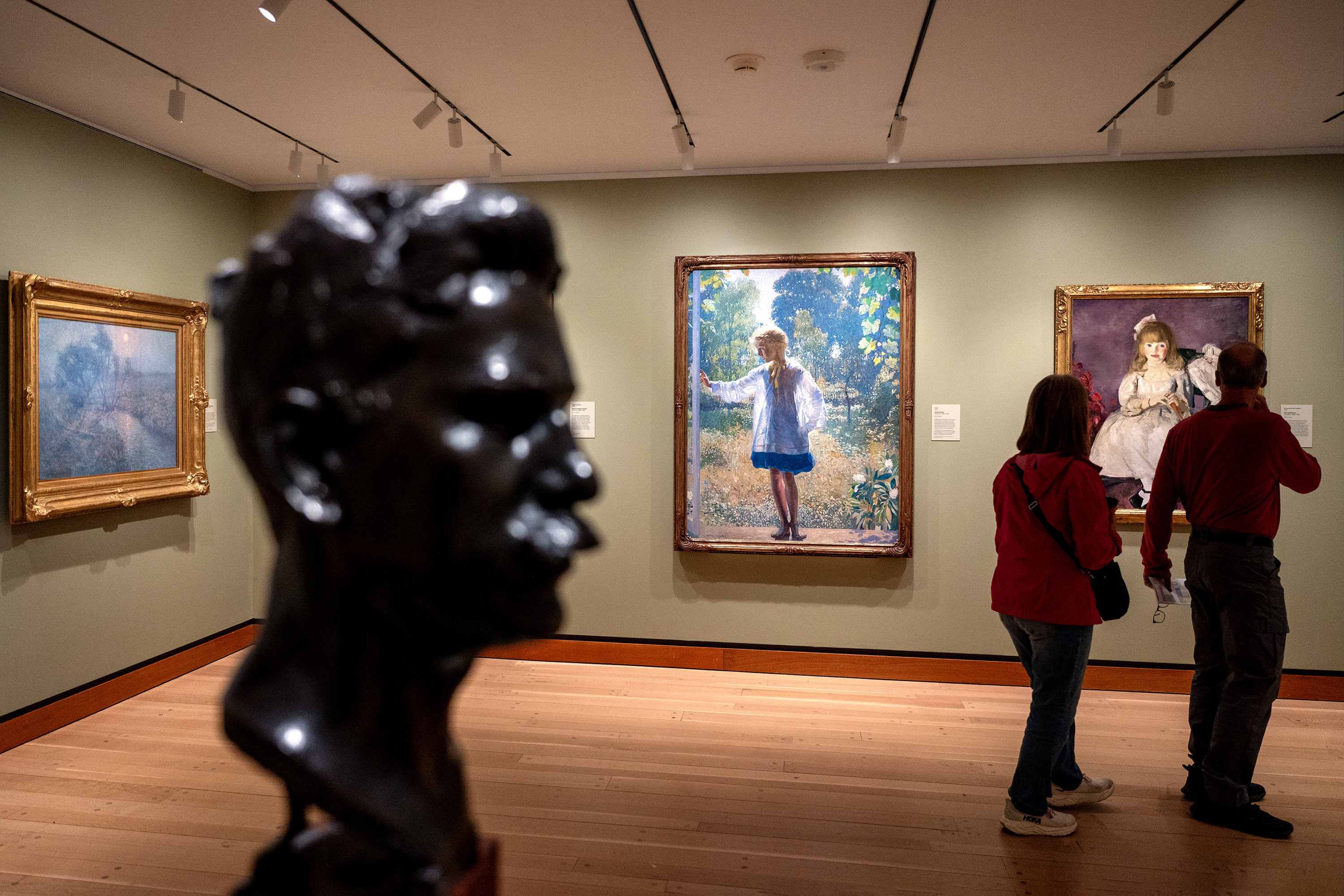
To find “A Nation of Artists” at the Philadelphia Museum of Art, you walk from the Great Stair Hall down a long gallery lined with art that’s not part of the show. The path zigs left and tightens into what looks like a service corridor, and then zags right past the bathrooms.
After this distinctly unceremonious approach, you’ve arrived at one of the museum’s most spectacular events of recent years.
Not only is “A Nation of Artists” momentous — it is billed as the “most expansive presentation of American art ever mounted in Philadelphia” — but it comes with the added juice of inaugurating the museum’s newly renovated American wing on the second floor after a 14-month closure.
The occasion brings yet another distinction: amazingly, after three more galleries open in the wing, it will be the first time in a decade that all of the galleries in the main building will have been open at the same time.
The odd journey to the second-floor American galleries has long been in place, but it seems especially odd now. It would have been nice to reopen this major piece of real estate with more of an architectural drumroll than a drab, winding hallway, especially for an institution that, after the tumultuous year it’s had, could use a thing or two to celebrate.
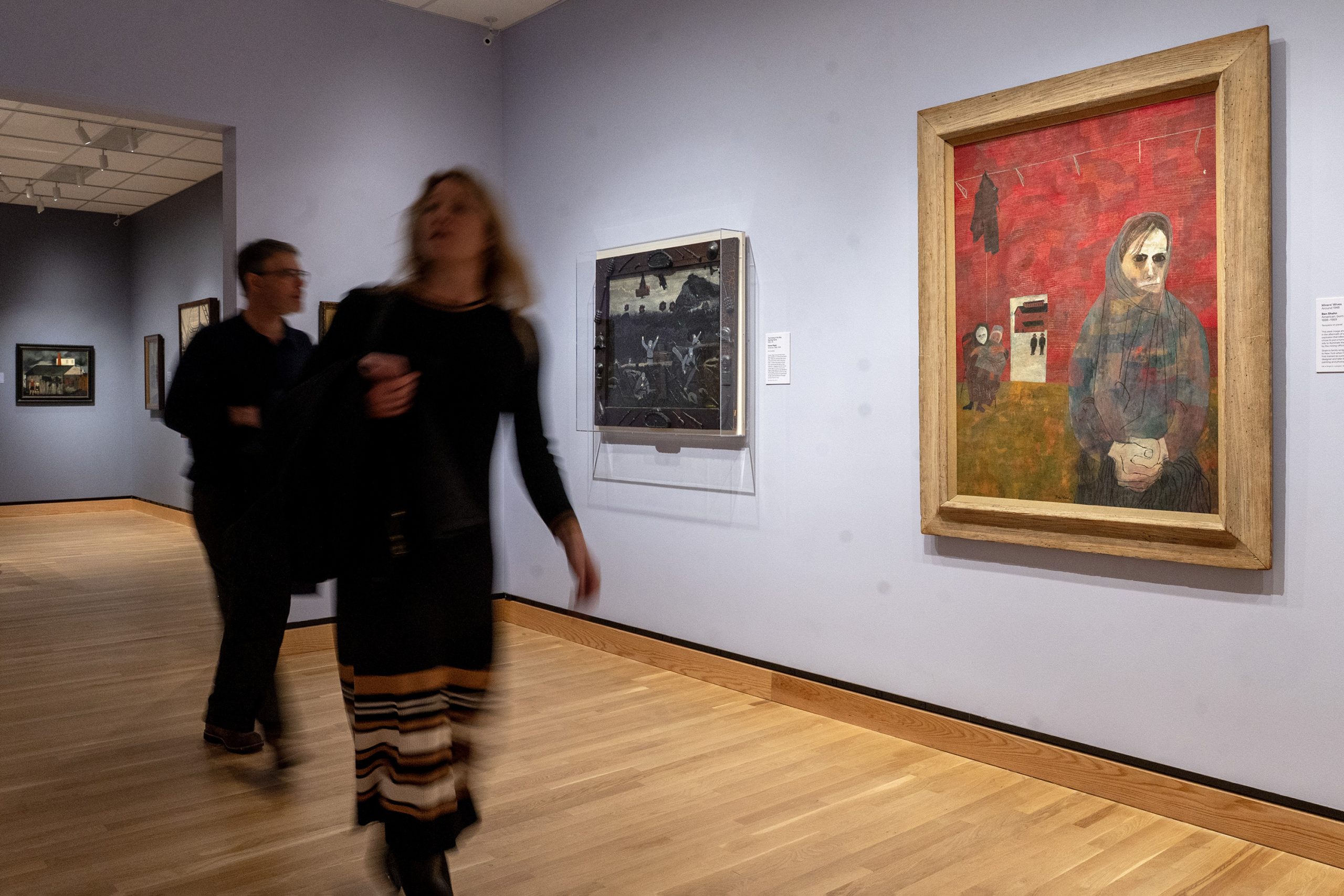
“Miners’ Wives” (right) by Ben Shahn and “The End of the War, Starting Home” by Horace Pippin at the Philadelphia Museum of Art.Tom Gralish / Staff Photographer
It might also be easy to miss the show’s greater significance to the museum and its cohost, the Pennsylvania Academy of the Fine Arts. “A Nation of Artists,” which opened in April with more than 1,000 works at both museums, arrives as a bolt of ambition as the groups work their way through deficits and reorganizations and remind audiences and funders that beyond crisis, there is art, and it is glorious.
The show is the city’s major visual arts celebration of the nation’s 250th anniversary, and while it’s an impossible task to compress the story of art in America into any single show, the overall image that emerges is not a cohesive snapshot, but a fascinating mirror.
There’s sometimes a random, almost improvisatory feeling to “A Nation of Artists” — despite the show’s attempt to place works around themes like the American West or inequity — because America is itself ever-random and improvisatory.
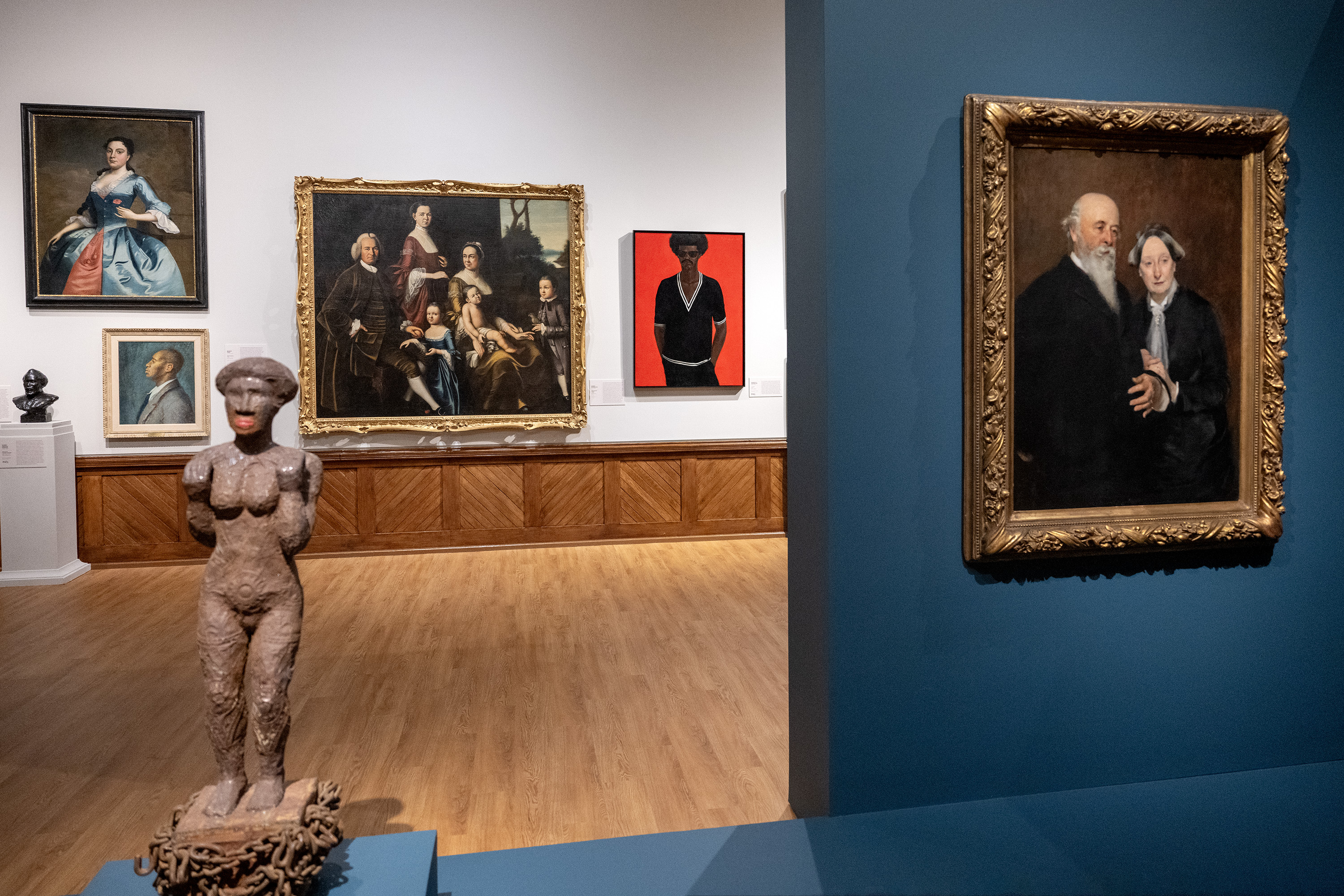
Works in thematically grouped ensembles in ‘A Nation of Artists’ in the newly renovated Furness and Hewitt building at the Pennsylvania Academy of the Fine Arts.Tom Gralish / Staff Photographer
More than 120 works from the collection of John and Leigh Middleton and their family are augmenting “A Nation of Artists.” But after the show closes and the Middleton works are gone, PAFA will put in place a newly curated permanent collection, and the PMA will be left with a sweeping look at American art that starts on the first floor with earlier works and proceeds to the second to bring it up to the mid-20th century.
In other words, “A Nation of Artists” absorbs the Middleton works, but also spotlights the incredible riches in residence nearly all the time. That’s no small thing at a time when arts and culture in Philadelphia is struggling for engagement in the attention economy.
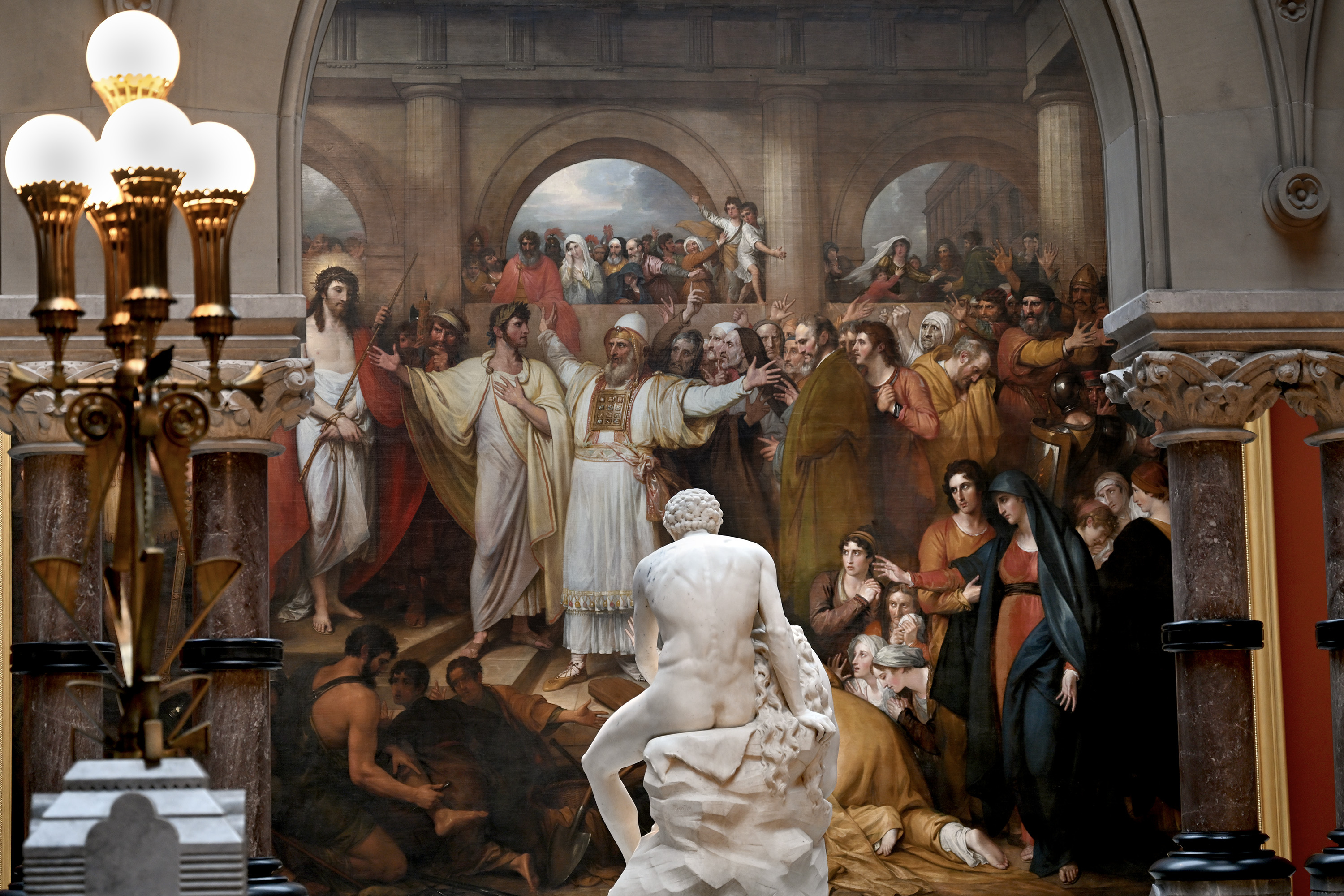
The painting “Christ Rejected” by Benjamin West and marble sculpture “Paradise Lost” by Joseph A. Bailly at the Pennsylvania Academy of the Fine Arts.Tom Gralish / Staff Photographer
A crisp reset at PAFA
At PAFA, the outside world seems to creep in in ways both positive and worrisome.
How can you admire the fruitful pedagogy at PAFA on display by generations of academy students and instructors without feeling concern for the place? The relationship between the museum and school — a specific artistic legacy unique to Philadelphia — is what makes PAFA special, and it remains to be seen whether a recently revamped certificate program at the school is the ultimate answer, artistically or financially.
The exhibition marks a crisp reset: the reopening of PAFA’s jewel of a building, the riotously detailed 1876 Furness and Hewitt-designed landmark, after a renovation project that included a new HVAC system and other renovations.
Laylights (variously utilizing natural or artificial light) in the newly renovated Furness and Hewitt building at the Pennsylvania Academy of the Fine Arts.Tom Gralish / Staff Photographer
It’s good news that there are no dramatic changes; the building continues to dazzle. I visited the show there a half dozen times, and via the church-like rose window and skylights, nature played handmaiden to art. When clouds parted, sun filtered into some of the spaces, and in one gallery the natural light made the whites and colors of George Bellows’ North River pop.
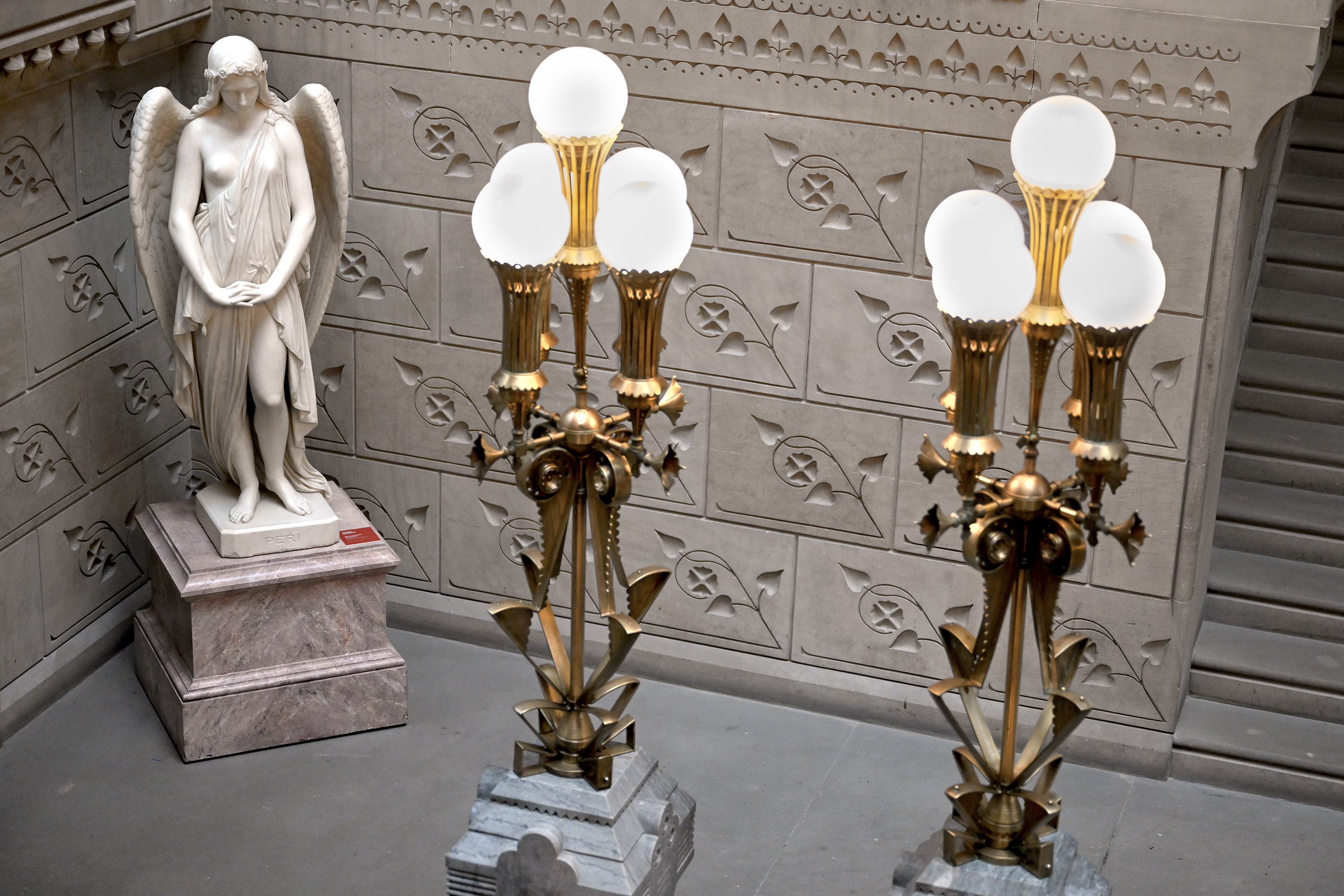
The marble sculpture “Peri at the Gates of Paradise” by Thomas Crawford in the grand staircase at the Pennsylvania Academy of the Fine Arts.Tom Gralish / Staff Photographer
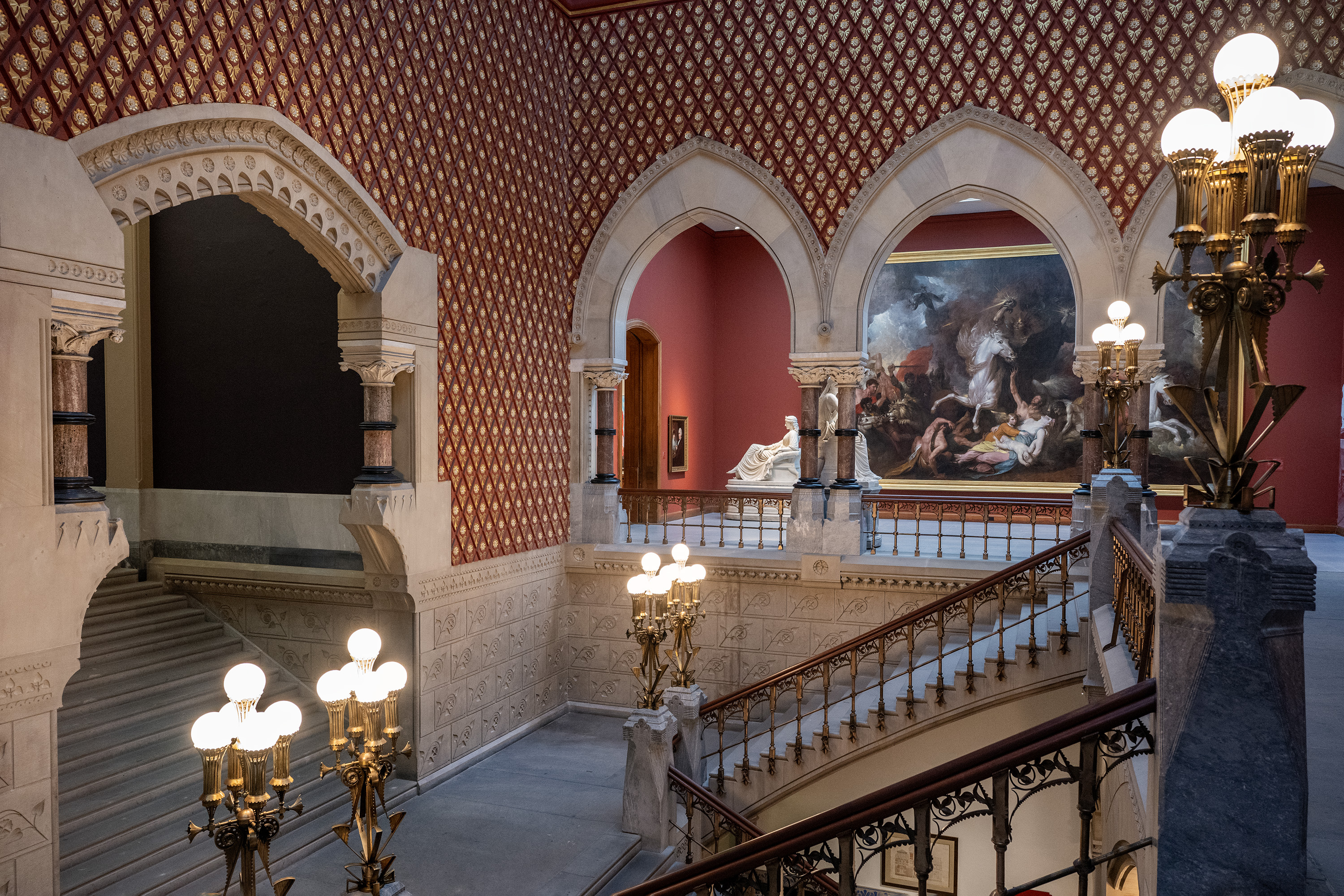
On another morning, the sunlight made the grand stair hall of the Furness building practically vibrate. The smooth white of marble sculptures like Thomas Crawford’s Peri at the Gates of Paradise glowed and the stars-on-cobalt pattern beneath the skylight seemed to be showering down.
Here on this day, there was no more beautiful interior in the city.
At the Pennsylvania Academy of the Fine Arts. In the rear is the oil painting “Death on the Pale Horse” by Benjamin West.Tom Gralish / Staff Photographer
A more sequestered PMA
If PAFA maintains a lively relationship with the outside world, the PMA’s new American wing feels sequestered. There are no visible windows letting in light in the second floor American galleries — no natural light except for a small opening in a staircase.
The layout and footpath (including that unceremonious approach) is largely the same as it had been before the renovation. But the flow within and from gallery to gallery is more open, and there is now a central spine of four continuous middle galleries that opens up a vista that helps to orient the visitor. Three remaining galleries in the renovated American wing are expected to reopen, though the date is uncertain.
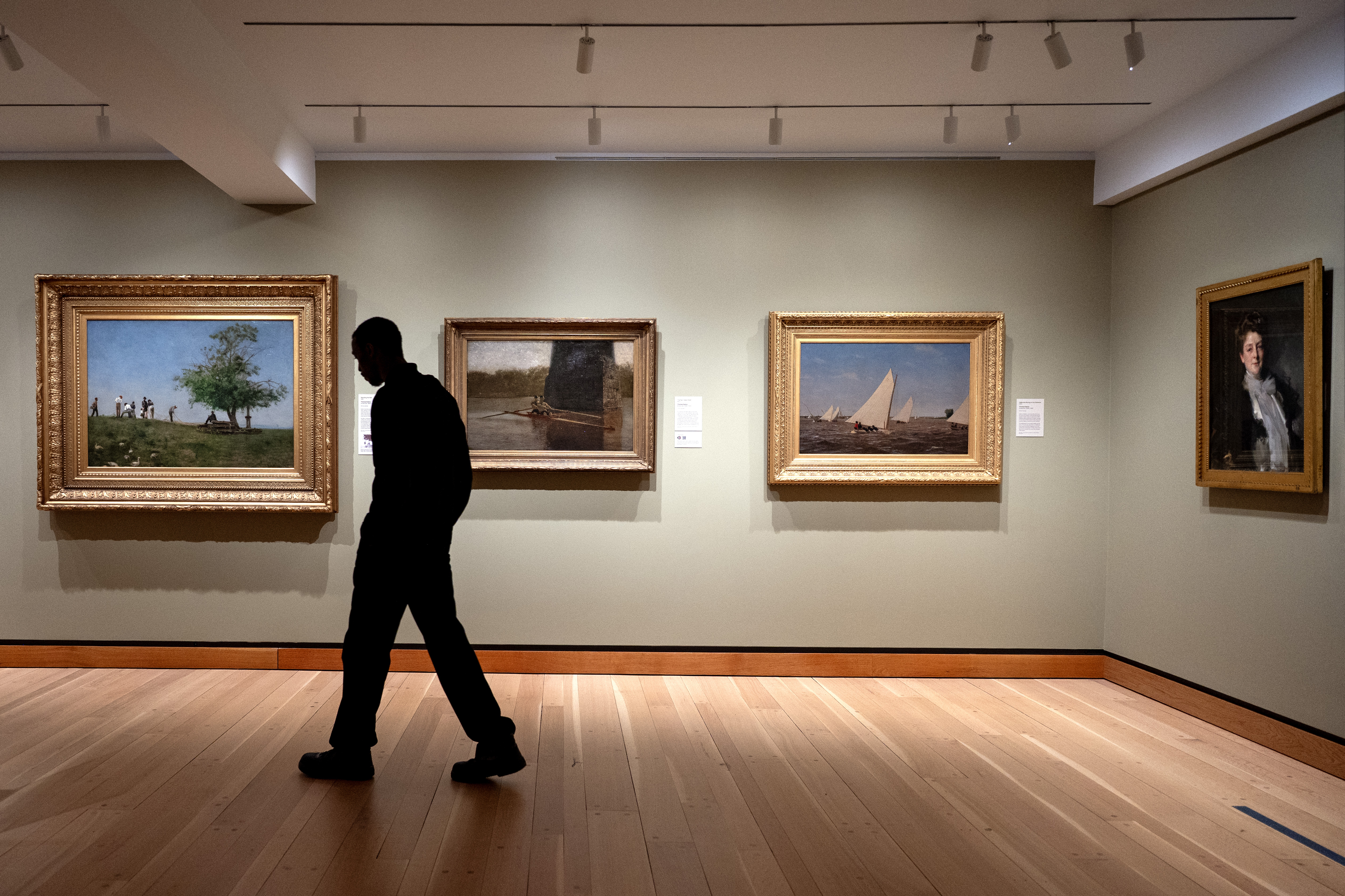
Three Thomas Eakins oils (from left): “Mending the Net,” “The Pair-Oared Shell,” and “Sailboats Racing on the Delaware.”Tom Gralish / Staff Photographer
The PMA half of “A Nation of Artists” features a lot of big names (Andrew Wyeth, John Singer Sargent, Georgia O’Keeffe), as well as about three dozen works by Thomas Eakins — intimate portraits as well as epic canvases. There’s a beautiful sequence of three Eakins oils, all painted within a decade of one another, all with rivers in various hues and states of excitement: The Pair-Oared Shell, Sailboats Racing on the Delaware, and the stunning Mending the Net, a seemingly ordinary scene that gathers filmic mystery and story through minutely detailed figures mending a fishing net by the river against a gauzy beyond.
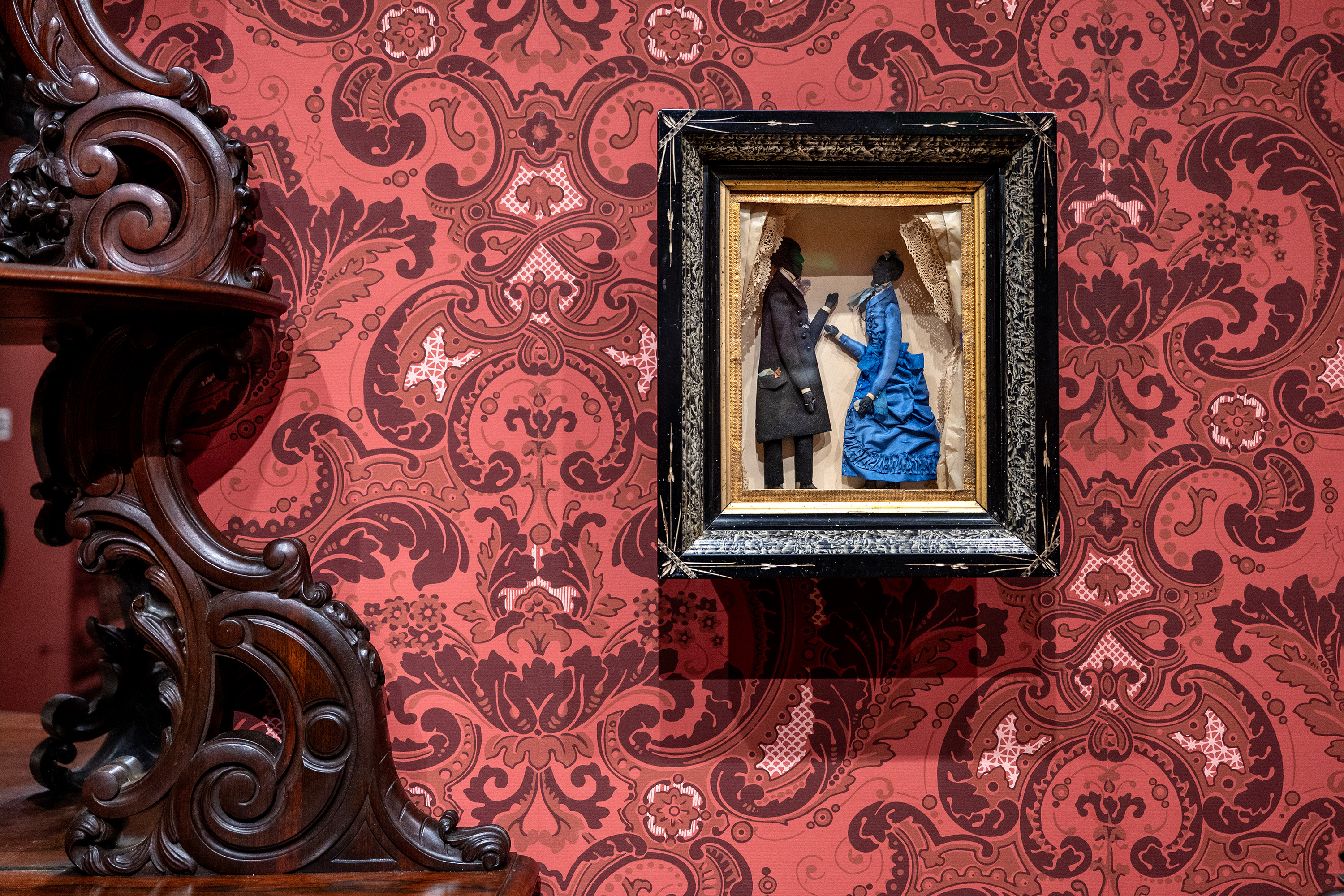
In terms of visitor experience, the new second floor American space succeeds most in moments of drama. The wall in one gallery uses a specially reproduced rich-burgundy period wallpaper, and the relationships among the paintings, furniture, pottery, and other items in the room ricochet beautifully.
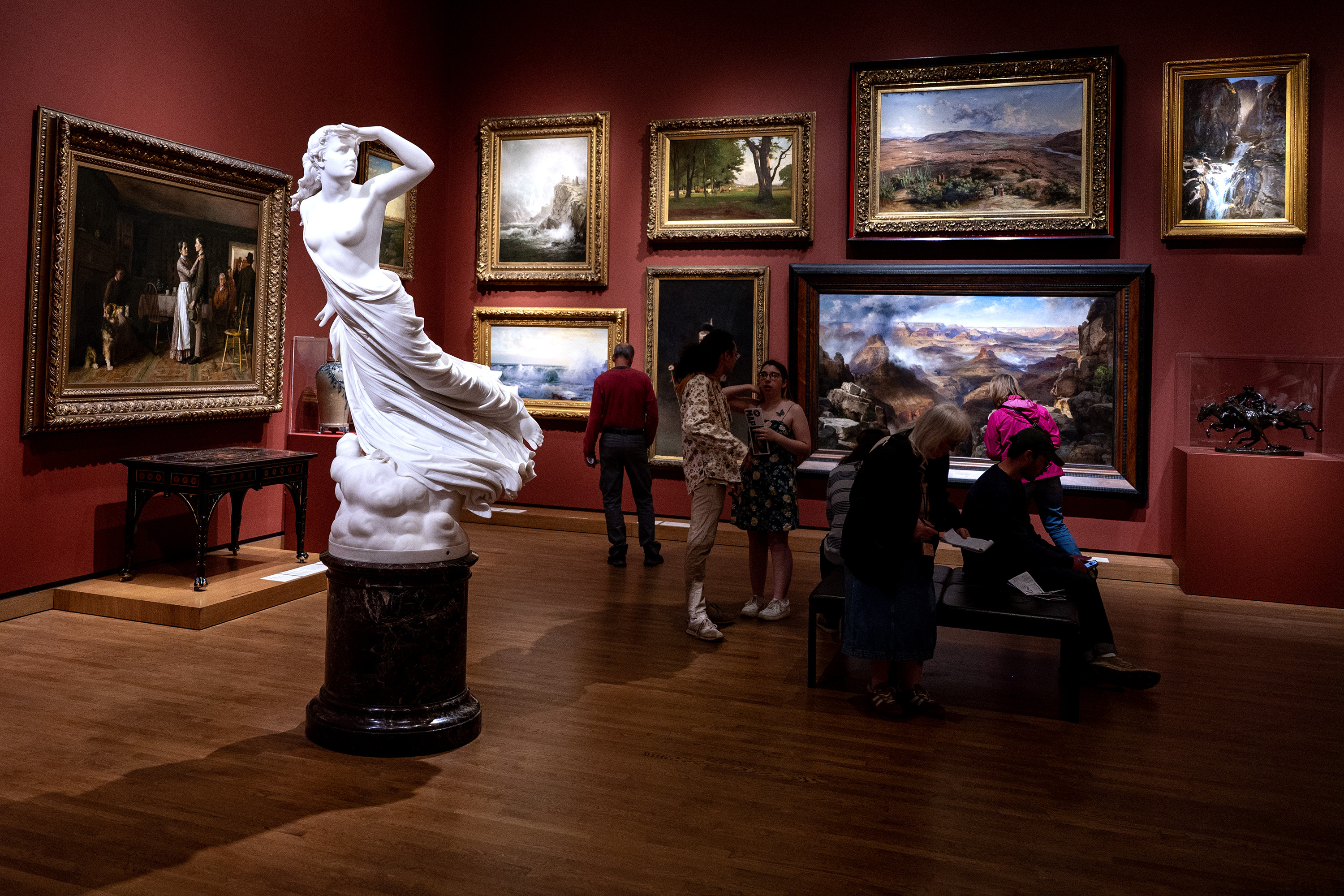
“The Lost Pleiad” by Randolph Rogers in the Philadelphia Museum of Art’s salon-style gallery.Tom Gralish / Staff Photographer
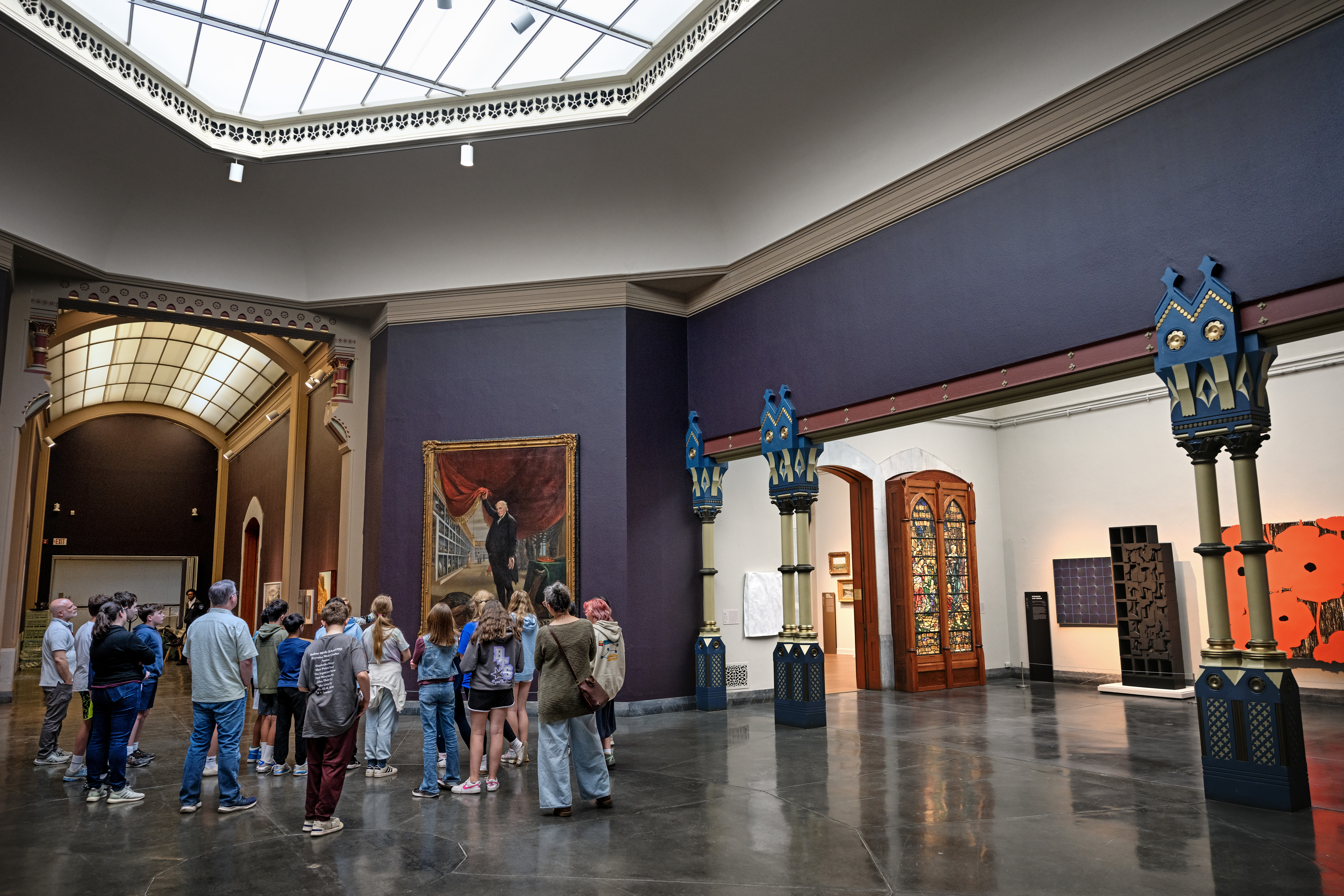
A sumptuous feeling immerses visitors in the high-ceilinged salon-style room (gallery 211) that includes vast landscapes and marble sculpture. Though it’s not immediately obvious, the first-floor American works are also part of the show, and they hold yet more Middleton works.
Classics and surprises, and a lot of charm
There’s greater poetry in the architecture at PAFA, but the work itself at both museums is undeniably impressive in scope, and especially at the PMA: painting, sculpture, furniture, silver, fabric, works in clay, and more.
The curators — Kathleen A. Foster and Alexandra A. Kirtley at the PMA, and Leah Triplett and Lea C. Stephenson at PAFA — have delivered not just old favorites, but also surprises.
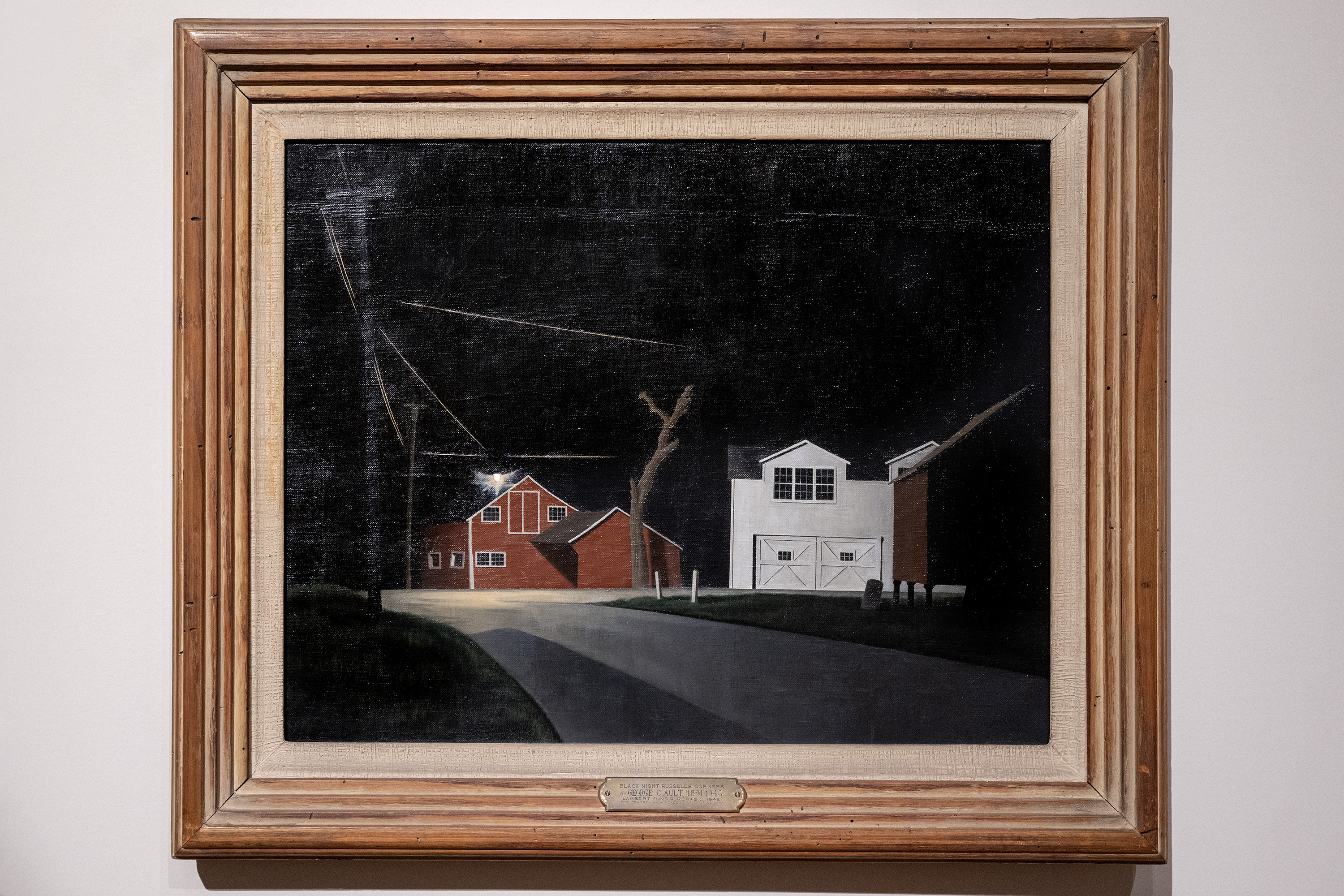
“Black Night: Russell’s Corners” by George Copeland Ault at the Pennsylvania Academy of the Fine Arts.Tom Gralish / Staff Photographer
PAFA’s classics include Winslow Homer’s Fox Hunt; the Jasper Johns Flag1960-66 from the Middletons (which the couple brought home from an auction in 2010 for $28.6 million); and George Copeland Ault’s Black Night: Russell’s Corners (1943), whose flat, cold, electric light suggesting a modern encroachment on agrarian life, can only be appreciated in person.
Among the pieces to which I kept returning: Pink Flower with Clock by PAFA 2011 graduate Aubrey Levinthal, because of the smart way it plays with the idea of photographic positive and negative imagery even though it is an oil; and Harriet Goodhue Hosmer’s Puck on a Toadstool, from 1856, whose supernatural energy is so potent that the figure appears poised to shape-shift and break free of its marble confines.
At the PMA, a single canvas has me reconsidering Edward L. Loper Sr., the Wilmington artist who had his beginnings working for the WPA. Loper’s Abandoned Ferry Terminal is a complex refraction of shadows and colors from 1958 whose geometries never seem to stop shifting.
A small shadowbox of a man and woman formally costumed from around 1880 might be the most unassuming bit of charm in the entire exhibition. Its maker is unknown.
Custom wallpaper at the Philadelphia Museum of Art, with “Portrait Figures of a Man and a Woman, in a Shadowbox.”Tom Gralish / Staff Photographer
Leaning into representation
If you ever wanted a lesson in the difference how a work is displayed can make, just consider how much more substantial an achievement The Gross Clinic looked a few months ago. With bright but warm lighting at the PMA, Eakins’ 1875 canvas was frightening in its vividness, the red of blood on the surgeons’ hands glistening. Today, at PAFA, it looks a little washed out, overpowered by the light coming through the nearby rose window.
Both museums have made a conscious effort to represent a spectrum of identity — gender, regional origin, ethnicity, and so on. This is all to the good, of course. Everyone will find something relatable in this exhibition, and many will discover works that aren’t necessarily relatable on first examination but become so. This is why museums, and good curators, are important.
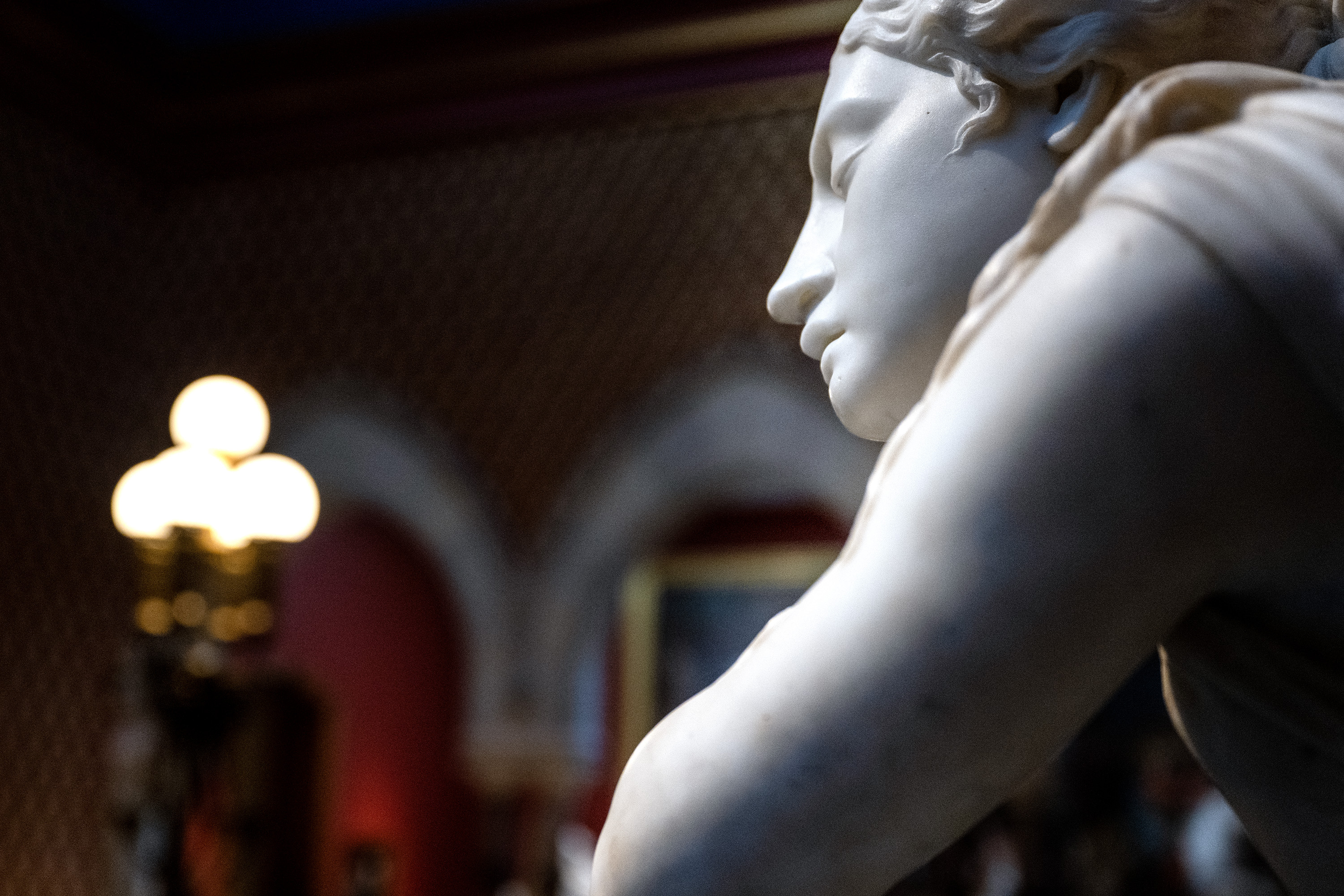
Detail of “Nydia, the Blind Girl of Pompeii” by Randolph Rogers at the Pennsylvania Academy of the Fine Arts.Tom Gralish / Staff Photographer
It’s a fascinating marker of time to think about the cultural whiplash of the past couple of years in this country, and how vulnerable the simple concept of representation now feels. The tastes of the art establishment change, and so too does how we perceive art.
How could it be otherwise? Every movement comes in with an air of moral and scholarly authority that purports to lay down once and for all an accurate cultural perspective.
The prevailing ethos arrives as the new reality. Then the next reality comes along.
“A Nation of Artists” runs through July 5, 2027, at the PMA, 2600 Ben Franklin Parkway; and Sept. 5, 2027, at PAFA, Broad and Cherry Streets. philamuseum.org, pafa.org.
Behold a marvelous menagerie of Americana — a curated cornucopia of century-old curios and Victorian age sensibility.
Stroll the sepia-toned rows of travel-worn valises and towering top hats. Cast iron railway signs and old pub mirrors. Dime store novels and Gilded Age comic strips. Handcrafted, model pond yachts and leather-worn sporting relics. Glamorous art deco advertisements and dreamlike Jazz Age prints.
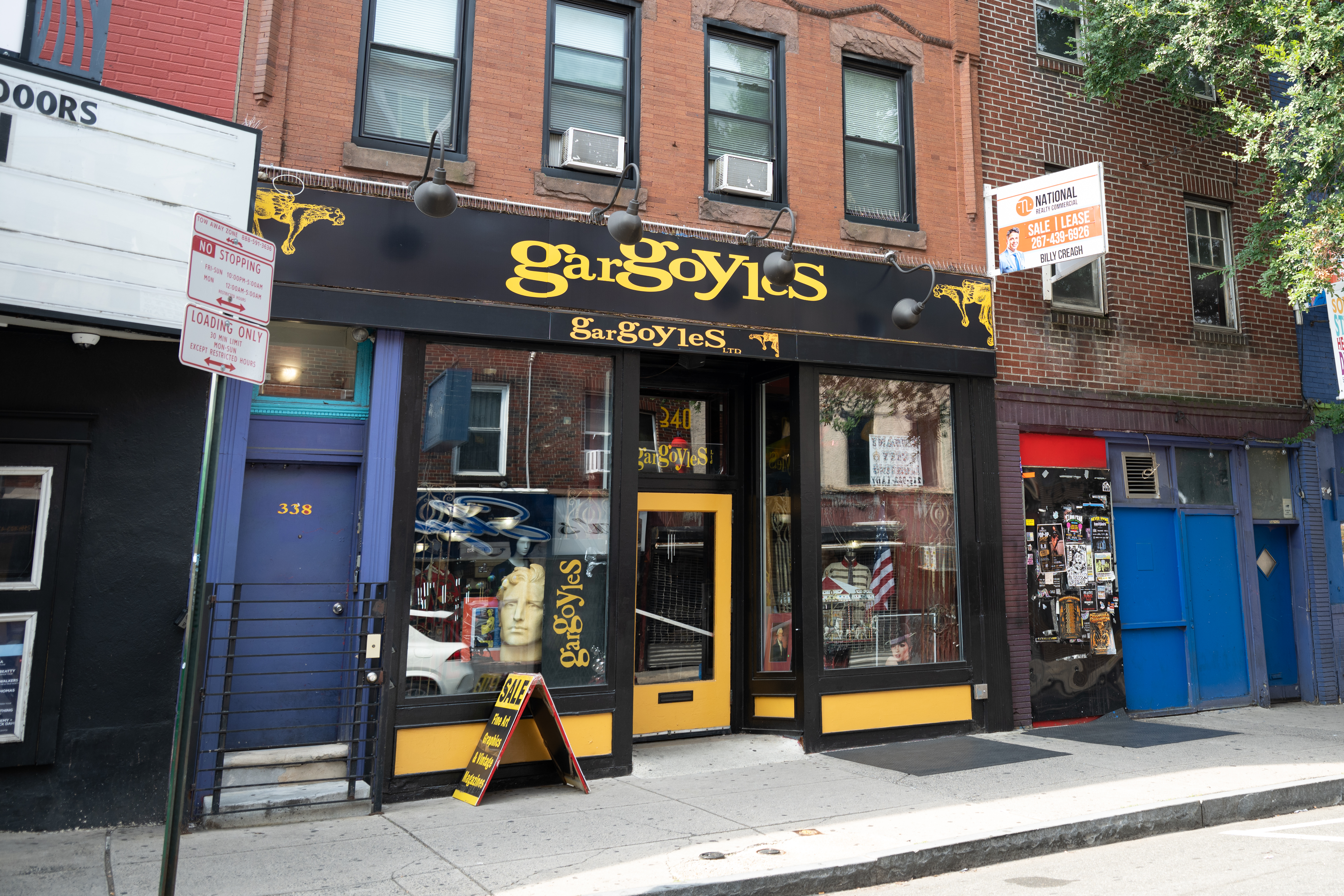
The exterior of Gargoyles, a vintage shop at 338-340 South Street in Philadelphia, on Aug. 11, 2026.Erin Blewett / For The Inquirer
Endless architectural embellishments, like terra cotta cupids and stone lion heads, ornamental arches, columns, mantels, and fine wooden sideboards culled from the English countryside or rescued from bygone wrecking balls.
All of it carefully chosen and displayed for its taste and excellence by Hadassah Zuberi, 80, a lioness of architectural salvage, who for decades sold architectural vestiges, rare memorabilia, and period props to Philadelphia’s grand department stores — including Gimbels, Strawbridge & Clothier, and Wanamakers — as display furnishings.
And all of it, once again on South Street.
Confident of change
In May, almost 22 years after shuttering her storied showroom — Gargoyles ltd., which she operated in a pair of South Third Street storefronts, steps off South, for nearly 35 years before closing in 2004 — Zuberi returned home to Philadelphia.
Her store’s latest incarnation is located at 340 South St., former home of the Hurricane Alley bar, and across from the iconic Eye’s Gallery. It has quickly become a popular staple on the famed, if perpetually embattled, Philly thoroughfare that now sprouts signs of rebirth after quality-of-life issues and nuisance businesses.
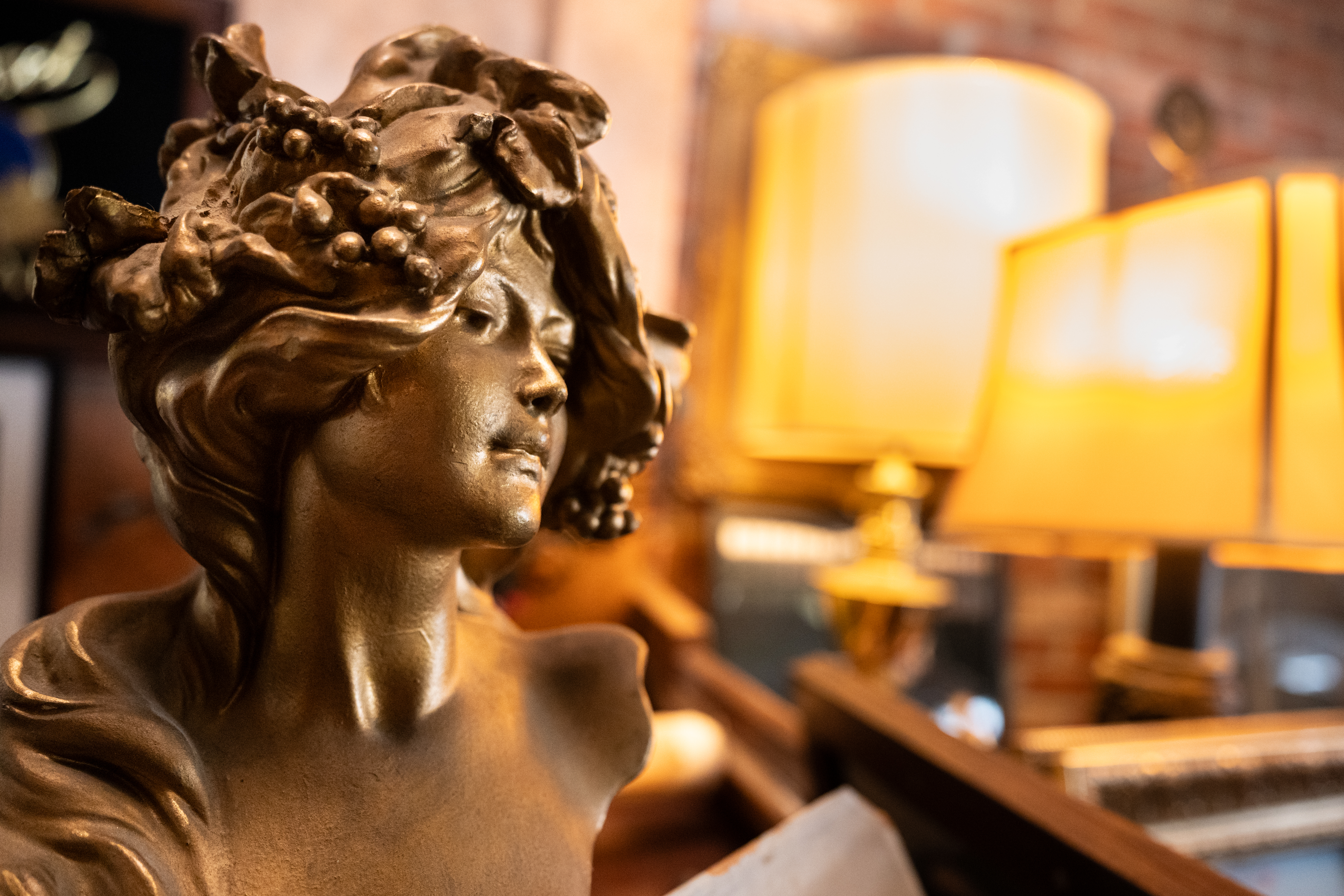
A decorative bust is displayed among vintage furnishings for sale at Gargoyles on South Street in Philadelphia on Aug. 11, 2026.Erin Blewett / For The Inquirer
“We’re going to elevate the character of the street,” said Zuberi on a recent afternoon, perched in her oversize leather shop chair as classical music played. “It’s been run-down. I’m confident it’s going to change.”
Zuberi had relocated her business to the arts enclave of Kingston, N.Y, amid rising property taxes and the shuttering of national department stores.
The move comes after Rick Milan, former owner of the legendary South Street punk store Zipperhead and now a board member of the South Street District, who owns properties on the street, including the former Hurricane Alley space, lobbied Zuberi to come back to Philly.
A former customer, who once bought vintage ski equipment from Gargoyles as home decor, Milan serendipitously wandered into the Kingston shop during a vacation in 2024.
“I knew right away this was the Gargoyles from Third Street,” he said. “South Street is currently going through a big vintage surge. And I really wanted to recruit Hadassah back to South Street.”
Preserved vestiges of old Philadelphia
More than a half century had passed since Zuberi, born and raised in Jerusalem, opened her original Philly shop, a joint venture with her first husband, Richard Serbin.
Studying graphic design at the Bezalel Academy of Arts and Design — Israel’s oldest and most prestigious school of art, design, and architecture — Zuberi moved to Philadelphia in 1967 at the age of 21.
At the time, Philadelphia was busy remaking itself.
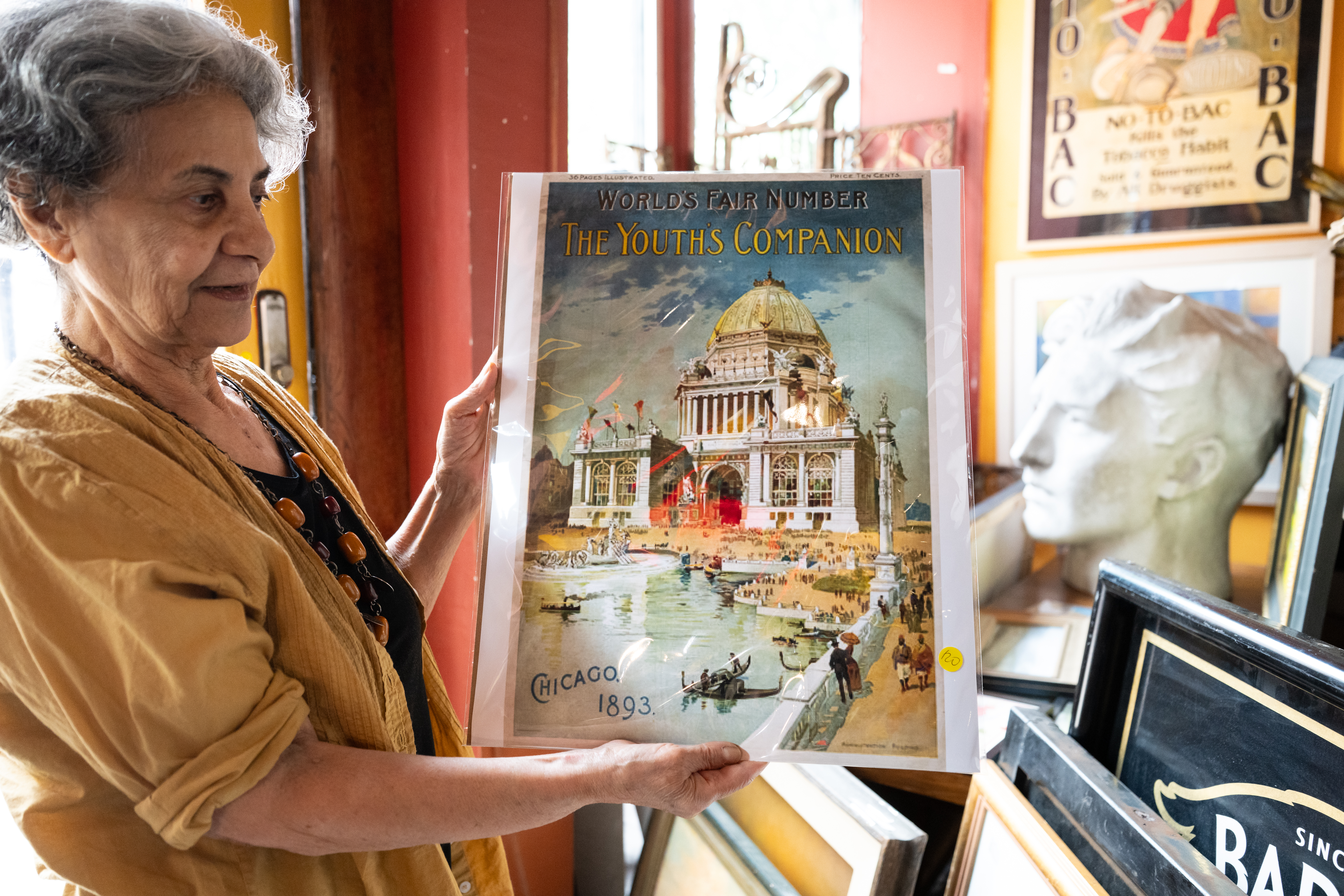
Hadassah Zuberi displays a reproduction print of an 1893 World’s Fair issue of the Youth’s Companion magazine at her vintage shop, Gargoyles, on South Street in Philadelphia on Tuesday, Aug. 11, 2026.Erin Blewett / For The Inquirer
“Nineteenth-century Philadelphia was falling away,” she said. “They were tearing down incredible mansions, which was criminal. They demolished some amazing landmarks.”
Designing a home of their own, the newlyweds hired prominent Philadelphia architect Adolph DeRoy Mark and began to purchase the architectural salvage of stately Philly residences, public buildings, and churches destined for destruction. They filled the shop — massive twin storefronts at 512-514 S. Third St., which Zuberi’s father-in-law purchased for $18,000, and which is now a rowhouse — with preserved vestiges of old Philadelphia, including a specially made gargoyle.
“We got a whole bunch of amazing ironwork and Tiffany stained glass windows,” she said. “Cherubs. Magnificent columns. We had a couple thousand door knobs that were brass and copper. Just fantastic stuff.”
South Street to the pyramids
Enjoying the earliest days of its renaissance by the late ‘60s and early ’70s, South Street was a near-deserted strip, an empty canvas fast filling with hippies, hipsters, and hucksters. Transforming into a stronghold of bohemia, the neighborhood was still touch and go, Zuberi remembered.
“We had one of our employees who would go to the front door with a baseball bat because he didn’t know who was going to come in,” she said.
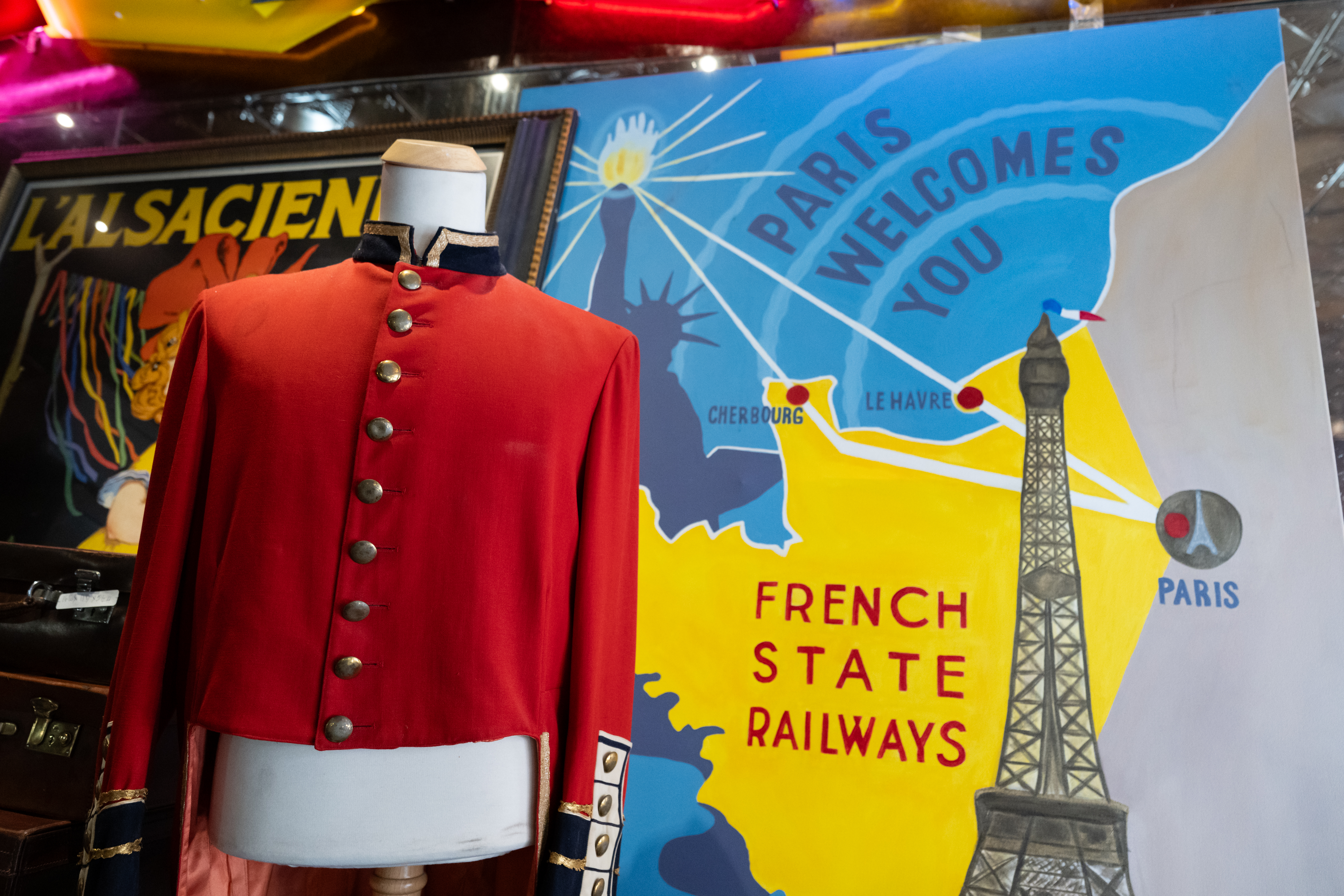
A vintage uniform jacket and travel posters are displayed inside Gargoyles, Hadassah Zuberi’s vintage shop on South Street in Philadelphia, on Tuesday, Aug. 11, 2026.Erin Blewett / For The Inquirer
Selling architectural remnants to restaurants and hotels — and local eateries, like Downey’s Irish Pub, Saloon Restaurant, and the Borgia Tea Room in Headhouse Square — the shop became one of the East Coast’s largest dealers in antique architectural embellishments. The couple traveled through England and Belgium, filling department store orders and printed catalogs for national chains.
“My mother was at the pyramids in Egypt and she had a Gargoyles bag,” said a laughing Zuberi of the Philly heyday. “And someone was like, ‘Oh, I was at the store in Philadelphia.’”
The shop outlasted her marriage. On her own in the shop, and raising children, Zuberi embraced a newfound sense of artistic freedom, buffeting her inventory with vintage memorabilia and curios she found inspiring, and more of her own artwork and paintings.
“It was passion,” she said. “This idea that you can take anything that has some semblance of design and use it anywhere. No rules.”
All the while, South Street rose and fell, embracing its bohemian roots and transforming into a vibrant punk and counterculture stronghold, and eventually battling corporate encroachment and abandonment.
By 2004, developers were buying buildings for investments, losing sight of the character of the neighborhood, Zuberi said.
“It lost its magic touch,” she said.
Back on South Street
“What the hell are you doing here?” she remembered Milan asking, when he happened into her Kingston store in 2024. “Listen, I want you back on South Street.”
While Kingston brought more success from locals and New York City tourists, Philadelphia, where she still kept a home, never stopped calling.
“I was homesick,” she said. “Philadelphia has all the culture in the world.”
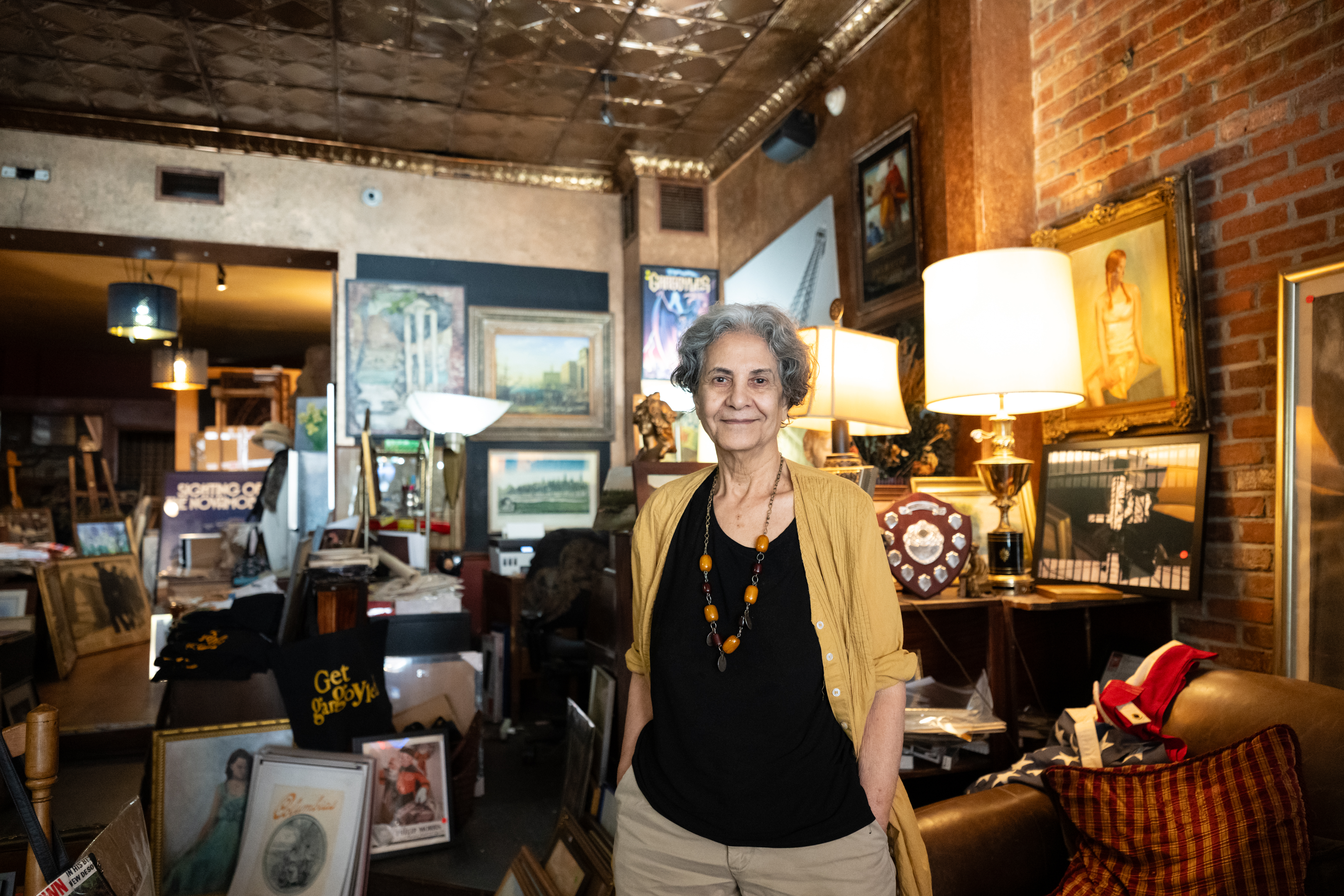
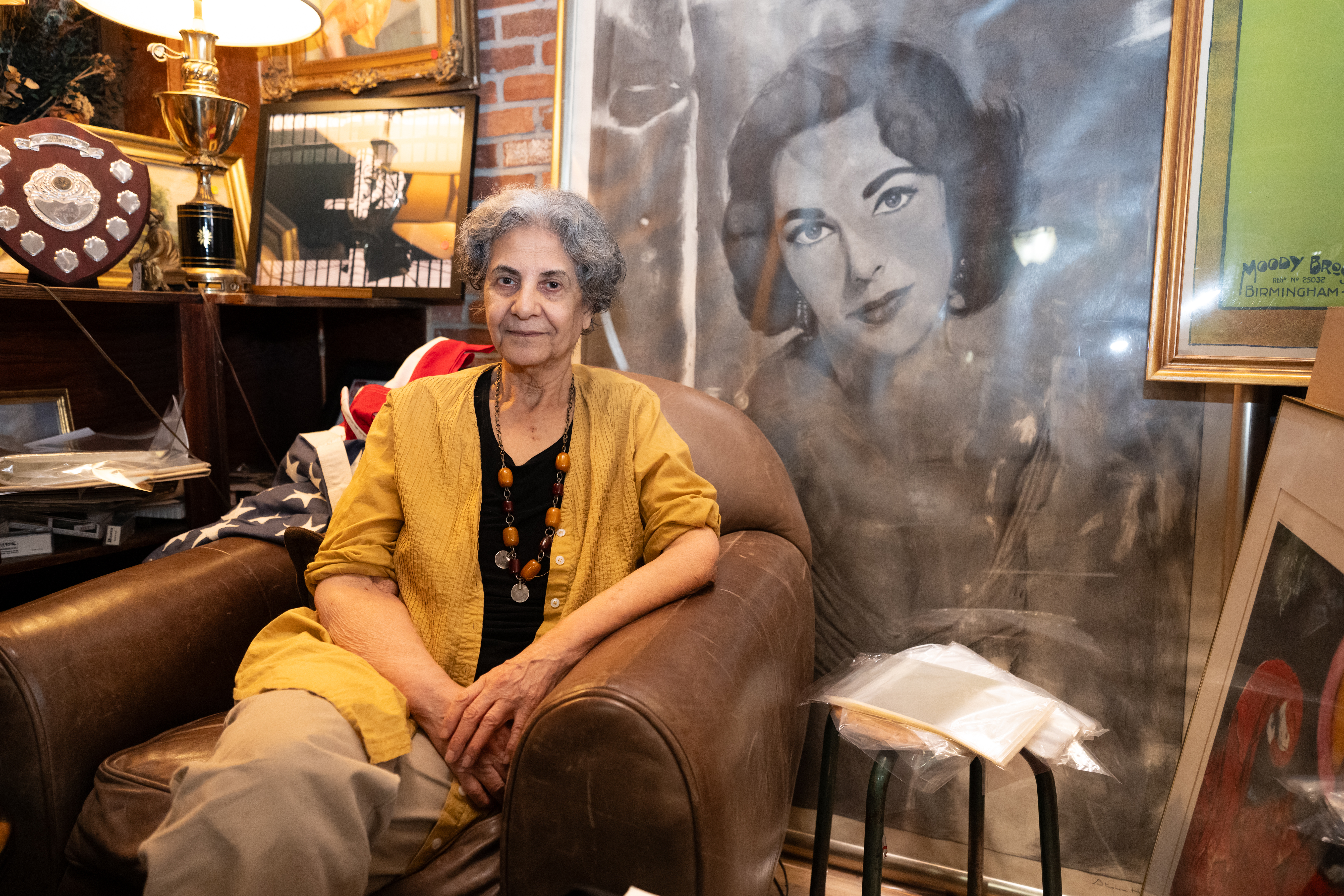
Hadassah Zuberi, owner of Gargoyles, poses for a portrait in front of a charcoal portrait of Elizabeth Taylor at her vintage shop on South Street in Philadelphia on Aug. 11, 2026.Erin Blewett / For The Inquirer
Earlier this year, after selling her New York building, she called Milan, who envisions Gargoyles as a one-of-a-kind legacy business that can help attract life to South Street. The Hurricane Alley space — which still includes the old wooden bar — made for a match.
“It’s a lovely shop, and she’s a lovely woman,” he said.
On a recent afternoon, Zuberi, elegantly reposed in her leather chair and framed by a favorite portrait of Elizabeth Taylor, warmly greeted a steady stream of customers.
She is glad to be back in Philadelphia, surrounded by her treasures, and encouraged by the view of the changing street outside, she said.
“This is my la la land,” she said, over the strains of a concerto playing on the speakers. “If I want to pretend the world is beautiful and everybody has taste, all I have to do is look around and avoid the rest.”
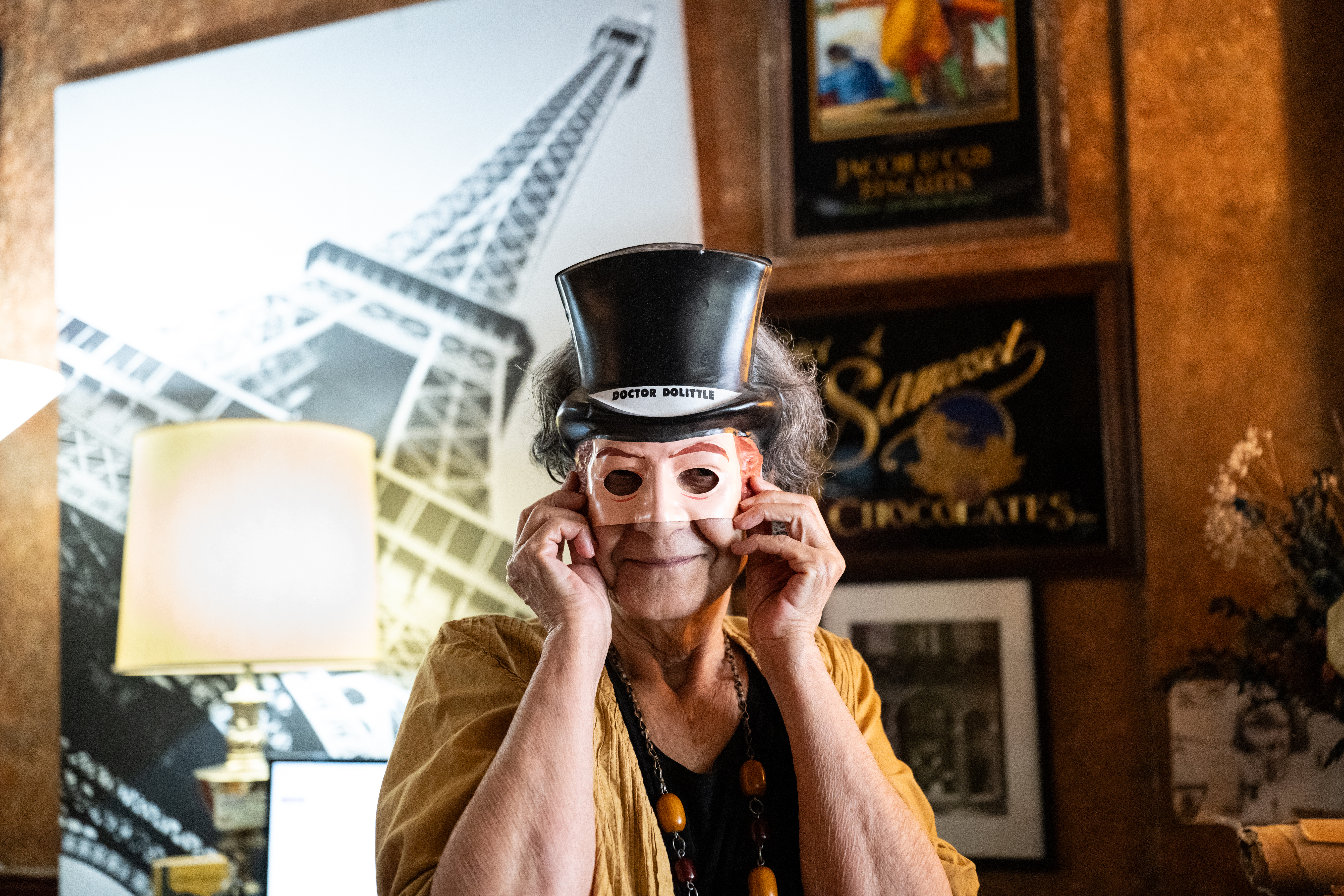
Hadassah Zuberi, owner of Gargoyles, tries on a vintage “Doctor Dolittle” mask at her shop on South Street in Philadelphia on Aug. 11, 2026.Erin Blewett / For The Inquirer
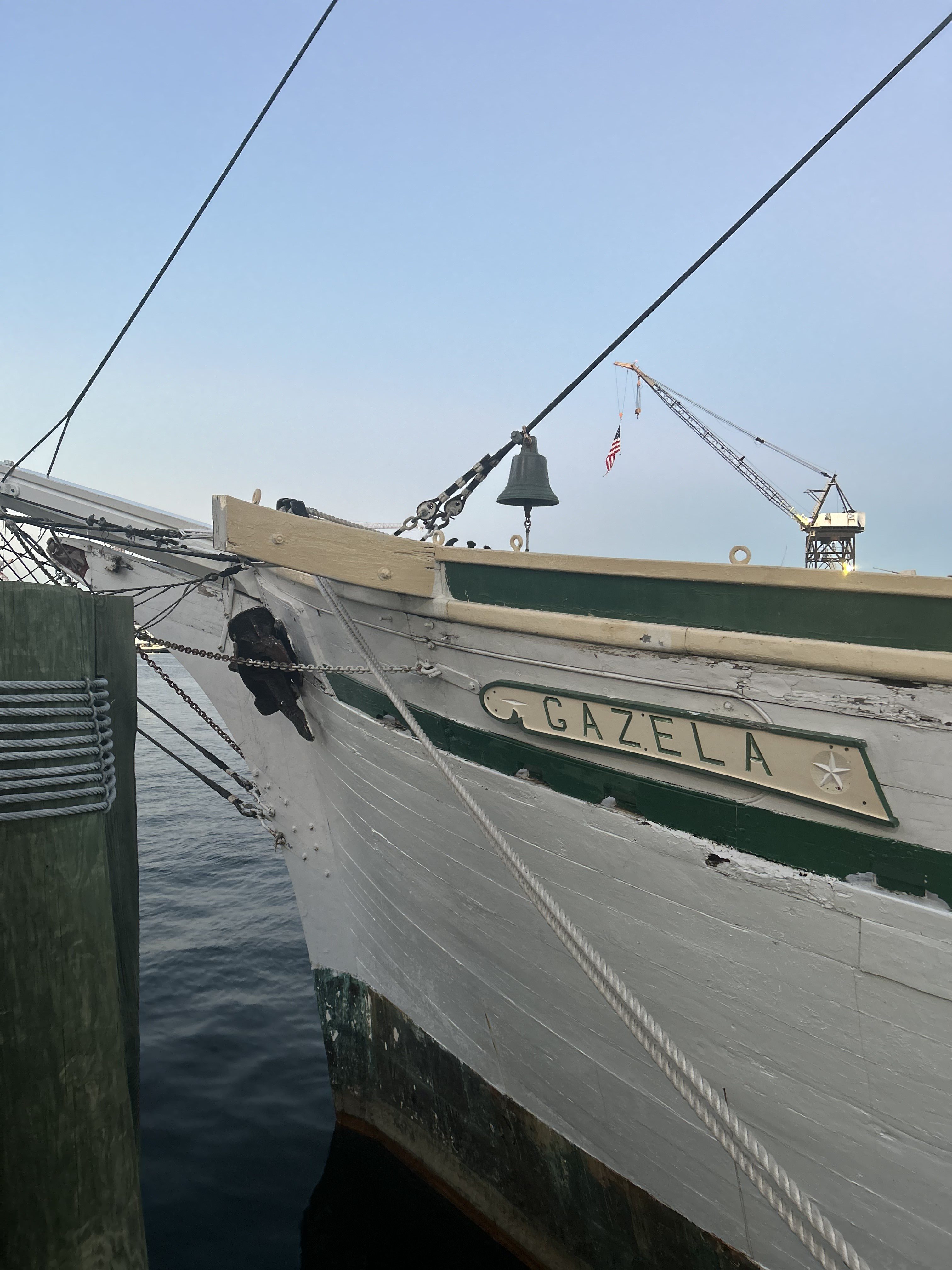
125-year-old Gazela weighs 299 gross tons and is 177 feet tall. The ship has traveled across the Atlantic, appeared in the 1994 movie Interview with the Vampire, and was once, according to one of the ship’s longtime volunteer custodians, blessed by a group of nuns.
It is also the official tall ship of Philadelphia, a role that requires it to take on some very serious duties. That included setting sail to Virginia’s Norfolk area, making stops at East Coast ports along the way, to represent the city at Sail250 Virginia, a celebration of the country’s 250th birthday, where the ship was one of the 60-plus visiting vessels from about 20 countries.
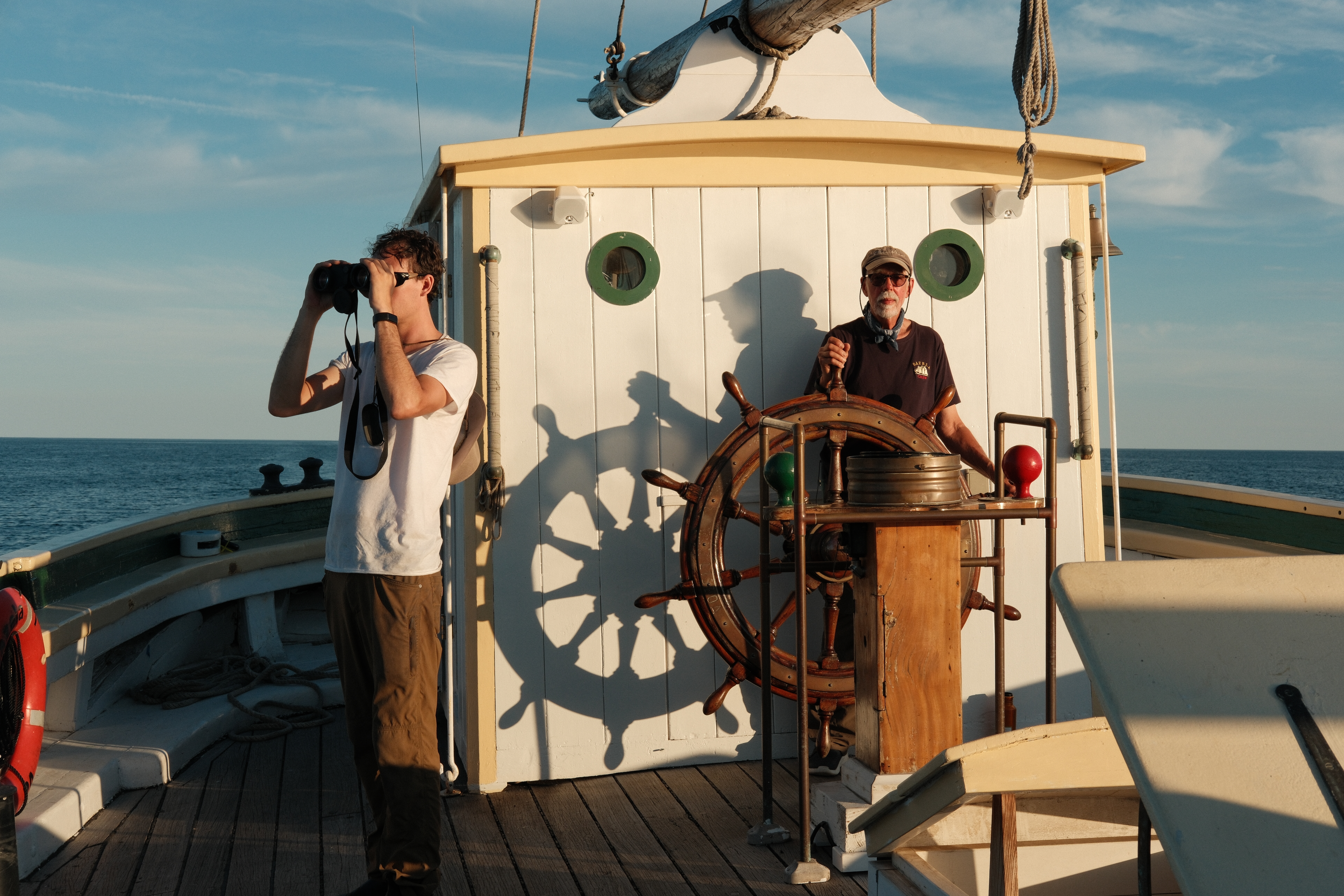
Second mate Chris Peterson and crewmember Gary Dos Santos helm Gazela.Gael Chang Ortiz
125 years of sailing
Hailing from Portugal, the Gazela was first a cod fishing vessel from 1901 — when the ship was built — to 1969. During those years, the ship traveled thousands of miles, fishing off the coast of Newfoundland, and getting packed with salt and cod to bring back to Europe.
In 1969, after a disastrous trip of horrible weather, broken gear, and a dismally low amount of fish caught, Gazela was finally laid up, putting the ship out of service. In 1971, Philadelphia philanthropist William Wikoff Smith brought the ship to the Philadelphia Maritime Museum. Just one year after arriving in America, Gazela was almost destroyed in an arsonist’s fire.
As part of the Bicentennial celebration in 1976, Gazela participated in a race to Bermuda, where, during the last five minutes, the ship was wedged between two other vessels and nearly crushed.
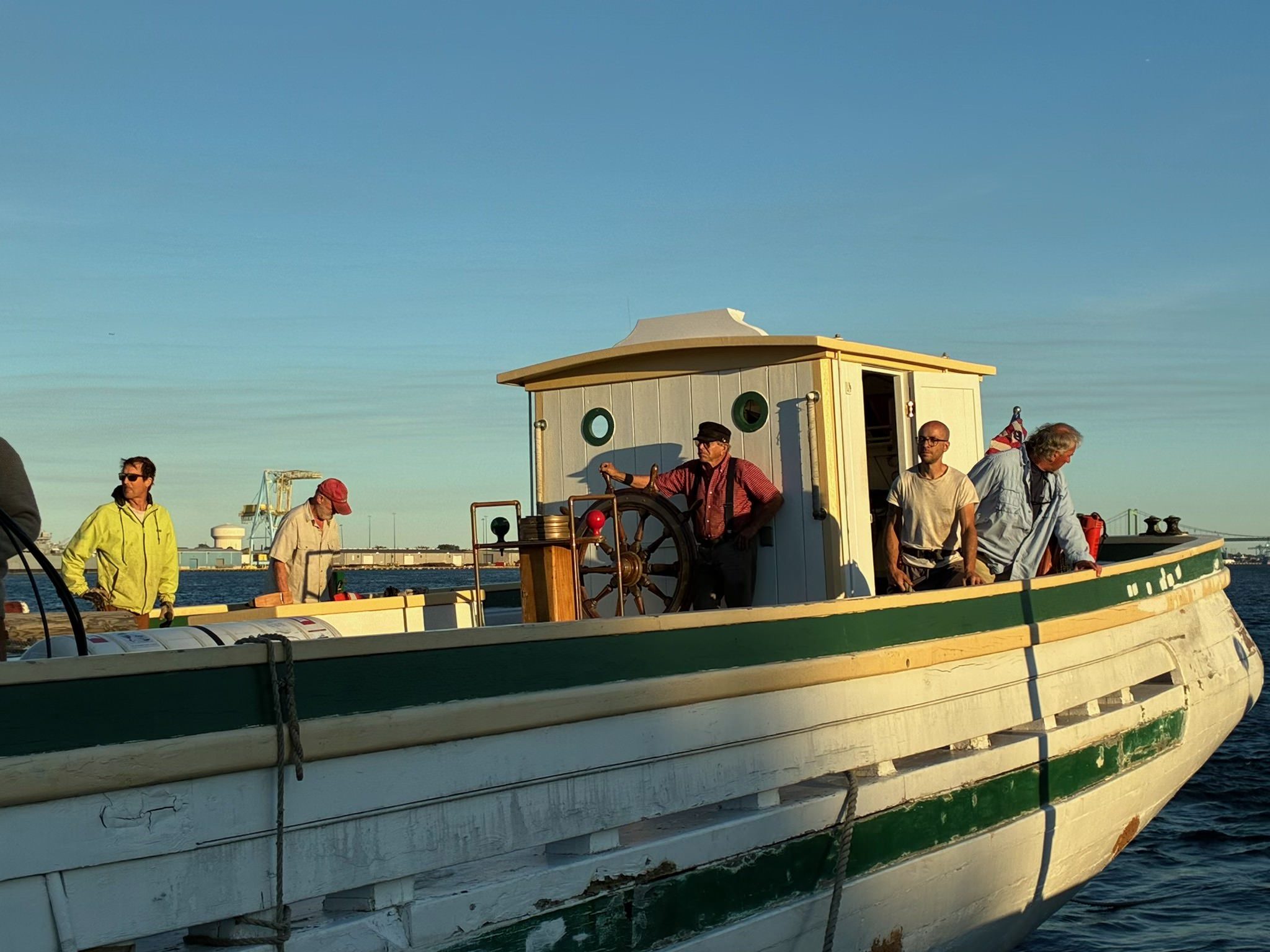
Gazela prepares to set sail from Philadelphia on June 8.Allison Grosso
When the ship is not at sea, Gazela remains docked at Penn’s Landing, under the care of the Philadelphia Ship Preservation Guild, providing an education to tall ship enthusiasts. Groups tour the decks; volunteers learn about carpentry, knots, and ship maintenance. The ship provides a venue for the guild’s apprenticeship program and a slew of classes aiming to educate folks on building a maritime career.
All that grit has made Gazela a true Philadelphian: scrappy and enduring, no matter what punches life lands. A proud immigrant, the ship is a symbol of both global maritime history and Philly’s specific historical importance as a shipyard.
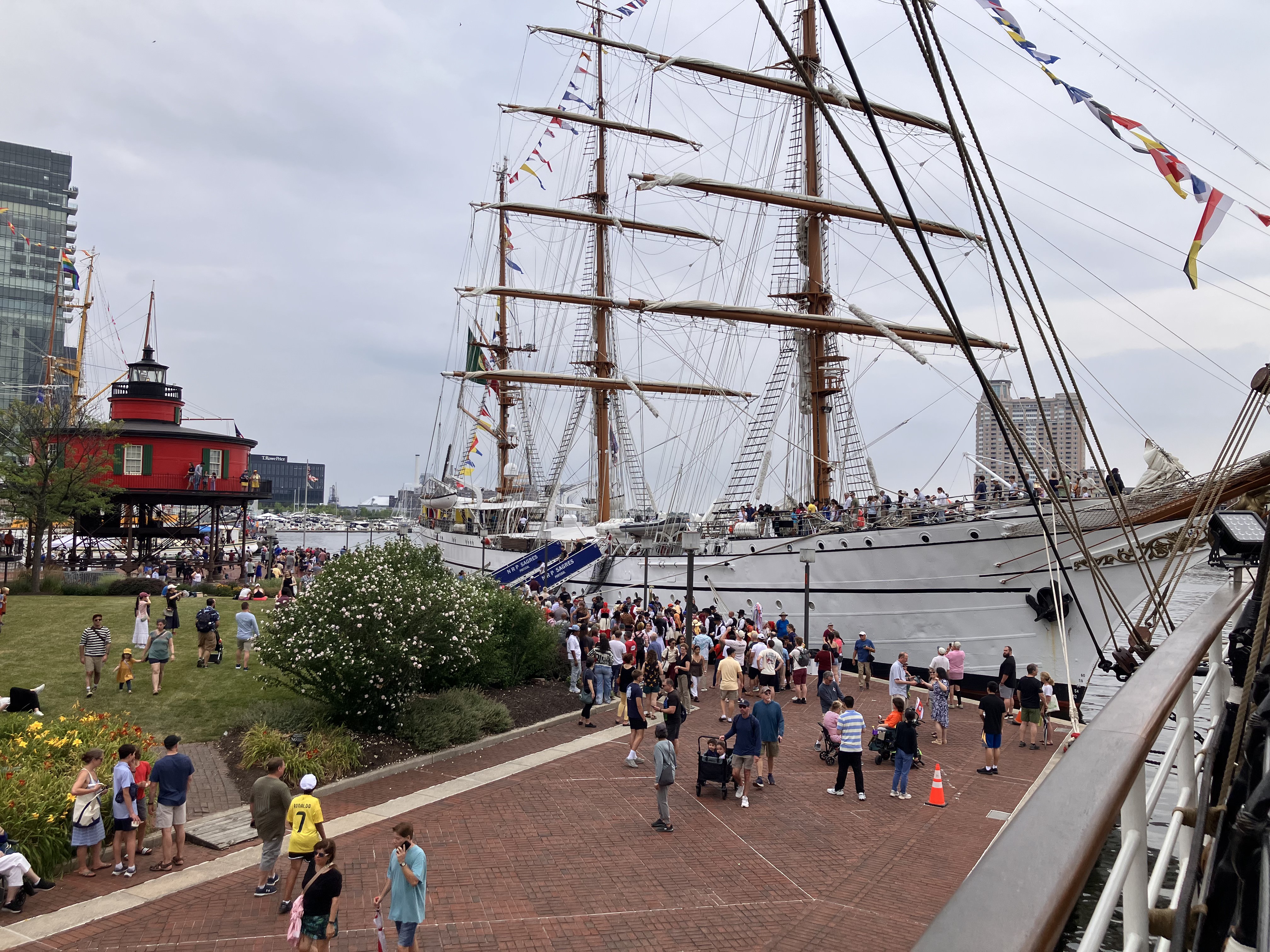
Crowds gather to board the Portuguese naval vessel Sagres in Norfolk, Va.Alisa McDonald
‘We’re from Philly, what of it?’
On June 18, David Goldman, the captain for Gazela’s trip to Portsmouth, one of the ports on their trip, stood with a slew of tall ships behind him. The ships were anchored outside of Norfolk, resting before a parade that would take them to dock alongside the city’s shore.
“This scene could be out of the page of a book from 150 years ago. Please treat it with the reverence it deserves,” he said to the crewmembers. The Gazela stood out a little in the crowd: older than most of the other ships and a bit worn down from its century-plus of sailing. Slightly ragtag, slightly punchy.
One crewmember referred to the ship as an “ugly duckling,” of course, with love.
“We’re from Philly, what of it?” is the attitude that Gina Pickton, PSPG’s executive director, thinks Gazela has.
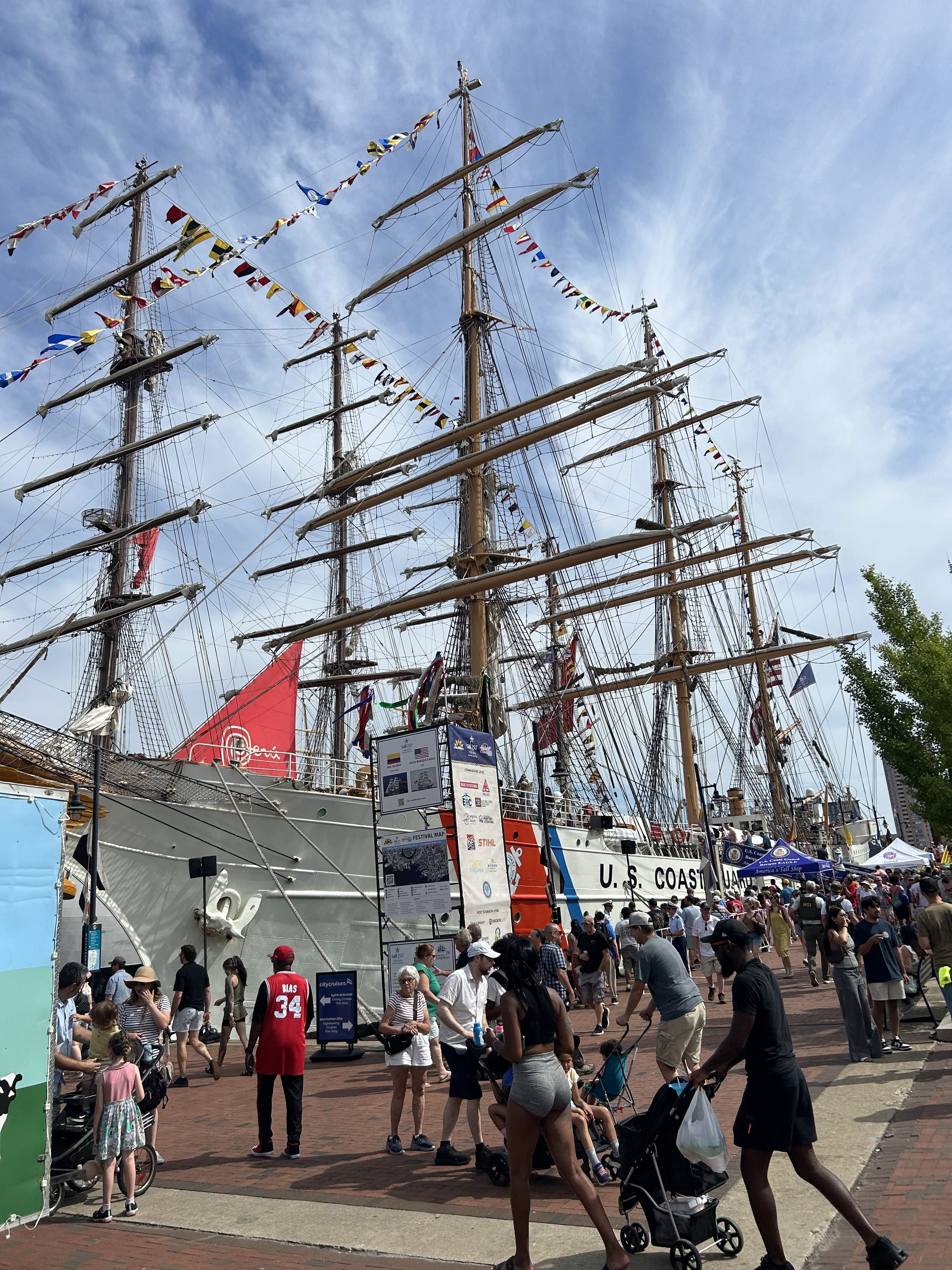
A Coast Guard ship at port in Norfolk, Va.Isaac Pollock
“This has not been easy, this is not a vacation,” said Allison Grosso, who manages events and communications for the guild. “Everybody on this boat feels the same way, and cares that much that we’re doing all this, because it’s that special to us.”
Underway, the crew of 40 volunteers rotated through approximately five-hour shifts. Within each watch, a crewmember stood on lookout, checked the ship’s safety (including the ship engine — one was added in 1938 and updated in the late 20th century), helmed it, and kept it to the correct angle measured on a beautiful brassy compass.
Bunks were stacked in threes in the focsle, with about a foot and a half of space in between, and hung in twos in the hold.
Many of the volunteers have “land jobs” — one works at an environmental nonprofit, another attended art school, and another was in the Air Force. Some are hobbyist retirees; others, adults at the beginning or middle of a maritime career; one, a high school graduate spending as much time with the ship as he can before heading off to Temple in the fall.
They form a tight-knit community.
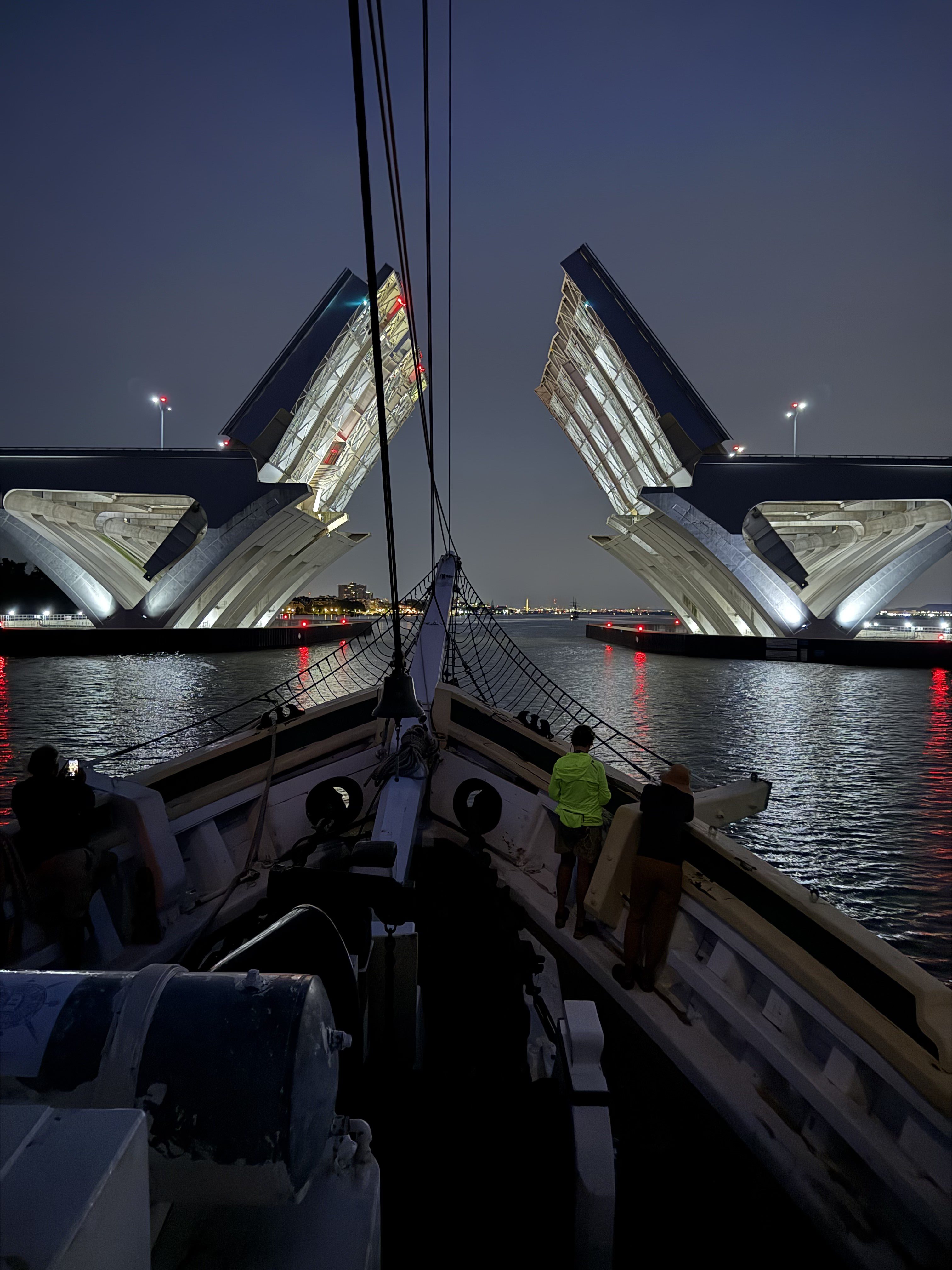
Maryland’s Woodrow Wilson Memorial Bridge opens for Gazela’s passageStephan Botes
“You can just step on[board], and people will be so friendly to you,” said Gael Chang Ortiz, 18. “They’re willing to teach you so much.”
At 125, the tall ship remains an object of endless affection. While the ship was anchored outside of Portsmouth, a rowboat carrying four young men approached the ship’s flank and tossed a friendly offering of Goldfish crackers onto the ship’s deck.
“Gazela’s still a fishing vessel!” shouted a crewmember, holding the bounty high.
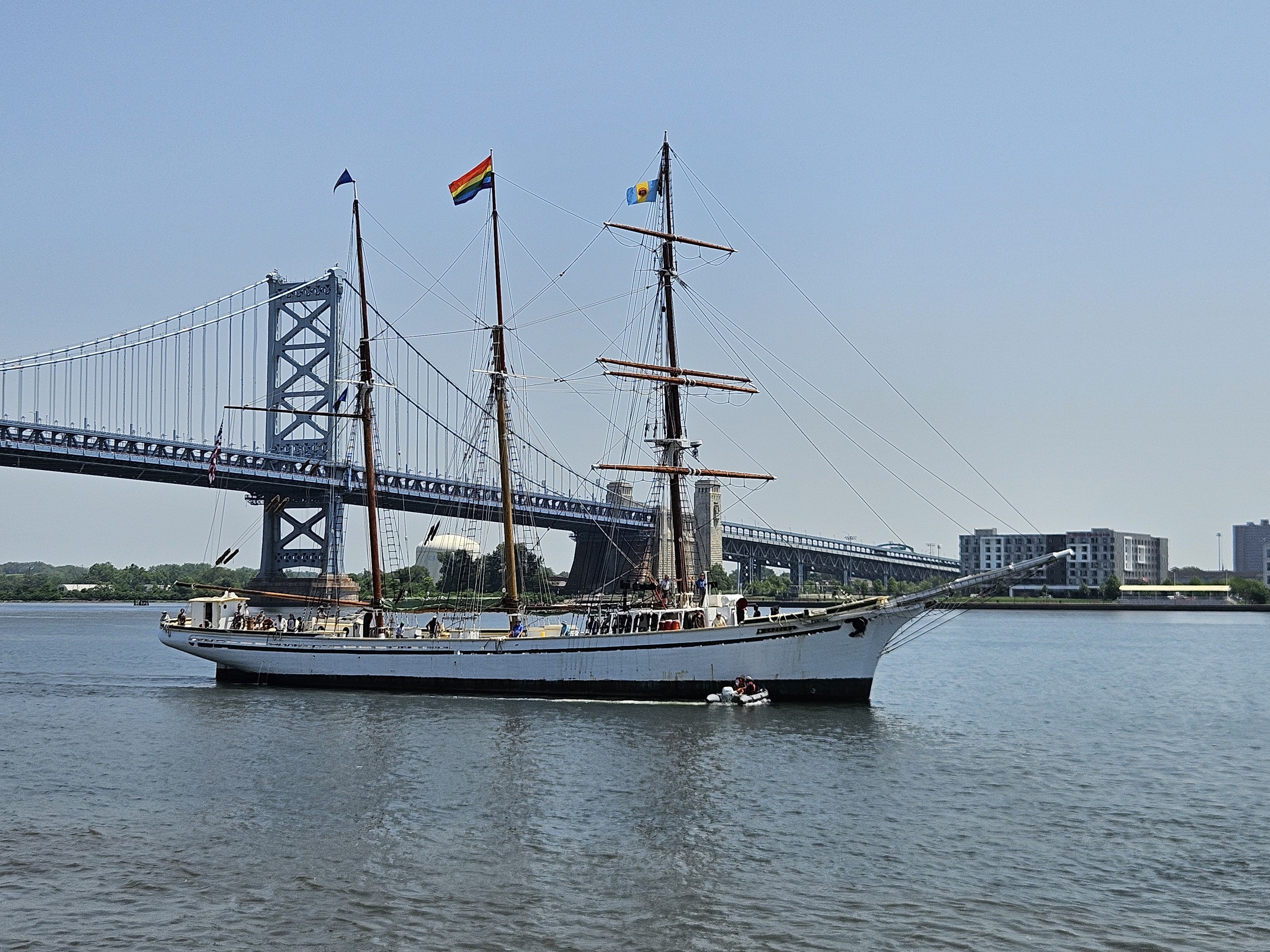
The Gazela just outside of PhiladelphiaAlex McNeil
Documenting history
Beyond preserving the community, the guild is working on preserving Gazela’s history — and not just by repainting the ship’s hull. Nancy Linden, the journey’s third mate, is working on an oral history project about Gazela. Chang Ortiz said he’s considering participating in Gazela’s apprenticeship program; there are PSPG members who started as volunteers and have wound up seeking full-time maritime careers.
Gazela’s crew also thinks it’s important not only to preserve history, but to tell it truthfully.
“Historically, sailing was an interesting pathway for both enslaved Americans as well as free African Americans to make a living,” said Maura Hackett, the chief mate for this journey and a seafarer for about two decades. “It’s really unfortunate that the first thing a lot of people think about [ships] is old white guys.”
Gazela sits at port in Portsmouth, Va.Isaac Pollock
“It’s hard to see yourself doing something if you’re not mirrored in the crew or the representation,” Hackett said. “I’ve had little kids come up to me and say, ‘I can be a captain too?’ And [I’ve said,] ‘Yeah, you can!’”
After 29 days spent as much as 300 miles from home, Gazela returned to Philly.
And as fireworks lit up the sky on July 4, the Portuguese Gazela, half as old as the ship’s adopted country, was just another Philadelphian basking under the night sky of the city it calls home.
It’s not exactly must-see TV, but that’s where the Eagles will be Saturday night to kick off their preseason schedule against the Baltimore Ravens (7 p.m., NBC10).
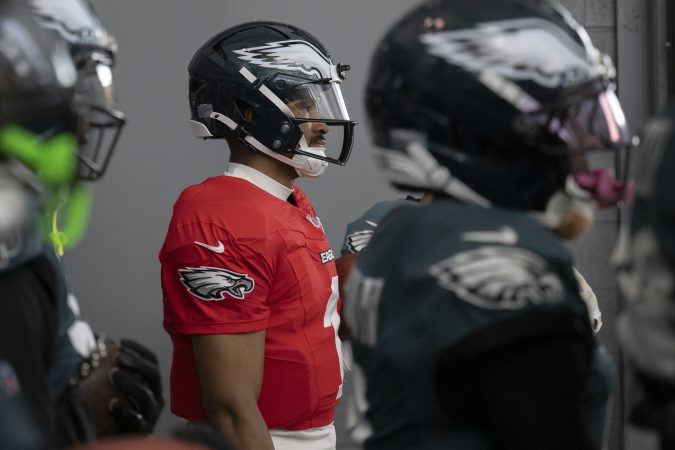
Count the Eagles among the teams that rarely let their offensive stars take the field before the start of the real season. The last time Jalen Hurts took a preseason snap was 2022, and even then he was on the field just one series.
On top of that, teams often use limited playbooks to avoid advance scouting and rely on joint practices to run plays and evaluate players. That might allow “talent to show,” as Green Bay Packers defender and Philly native Zaire Franklin recently told reporters, but it tends to make an already meaningless game way more boring.
“That’s just the nature of preseason these days,” said Ross Tucker, who will call Saturday’s game. “Fortunately I follow the Eagles year-round and follow their backups closely exactly for these three weeks.”
None of that will stop Eagles fans from tuning in. Last season’s first preseason game on NBC10 garnered 1.06 million viewers and aired in 669,000 households, according to Nielsen numbers shared by the station. That’s roughly 21% of the entire Philly TV market tuning in to watch a meaningless Eagles game. Not too shabby.
“I grew up a big-time Eagles fan. Ninety-five percent of my friends and family are Eagles fans,” Tucker said. “I get a bunch of texts doing Eagles preseason games from all sorts of people, including my fourth-grade teacher. … It’s really neat to get feedback from people.”
How to watch the Eagles-Ravens preseason game
Nick Sirianni is entering his sixth season as Eagles head coach. Jose F. Moreno / Staff Photographer
The Eagles’ first preseason game will air in and around Philly on NBC10, with Tucker calling the game alongside former Phillies announcer Scott Graham. But that’s not the only spot you’ll find it.
Regionally, the preseason game will air on a number of local stations, including:
Elsewhere, the game will also be available on WBAL-TV in Baltimore, WLKY in Louisville, Ky. (due to Lamar Jackson’s collegiate connection to the region), and KHII in Honolulu, Hawaii (whose parent company is airing 13 NFL preseason games).
Fans can also listen to the game on 94.1 WIP, where beloved Eagles announcer Merrill Reese is entering his 50th season calling Birds games. He’ll once again be joined by longtime partner and former Eagles wide receiver Mike Quick.
The game can also be heard nationally on SiriusXM NFL Radio.
Where can I stream the Eagles-Ravens preseason game?
Tonight’s game will be free to stream on the Eagles app and PhiladelphiaEagles.com if you live in the Philadelphia or Baltimore TV market.
The game will also stream in the Philadelphia market on any so-called skinny bundle that carries NBC10, including YouTube TV and Hulu + Live TV. Most offer a free trial. You can also stream it on the NBC app, but a cable login is required.
You can also watch NBC10 for free using a digital antenna if you live in and around Philadelphia.
Fans living outside the Philadelphia market can stream the game on NFL+, the league streaming service. It’ll set you back $6.99 a month, though there is a free seven-day trial.
The Eagles play on Thanksgiving and again on Christmas Eve. Then, we have the Sixers on Christmas Day. Really, can you blame the networks? The Eagles are one of the biggest draws in football, and the Sixers just added LeBron James. Basically if you need people to stop talking to their relatives and look at the TV for three hours, Philadelphia can help.
Eagles on Thanksgiving Eagles on Christmas Eve Sixers on Christmas Day
Not everyone considers this a gift. One fan corrected “running” the holidays to “ruining” them, while another pointed out that getting together with family is stressful enough without adding an Eagles game. But nothing brings a family together quite like a holiday, until a questionable fourth-down call has Uncle Mike pacing around the living room refusing to speak to anyone.
The only thing we need to complete the calendar, one fan noted, is the Eagles on Valentine’s Day in Super Bowl LXI.
Every summer, someone discovers how much it costs to vacation at the Jersey Shore and the internet holds a small trial.
This year’s defendant is a Philly mom who went viral after revealing her family pays $10,000 for a Shore rental — one where they still have to bring their own sheets, toilet paper, paper towels, coffee, and, presumably, half the contents of their house, the New York Post reported.
Her description was pretty devastating: “Basically, we’re paying $10,000 to camp.”
Naturally, the internet had feelings. “For $10,000, you could go to Greece! The Caribbean! Somewhere with turquoise water where nobody makes you buy a beach tag!”
And, OK, they’re not wrong. Ten grand is a ridiculous amount of money to spend on a house where you arrive Saturday afternoon and immediately realize someone forgot the cardboard box with the BYO ketchup bottle, olive oil, and salt and pepper shakers.
But the Jersey Shore has never been a purely rational vacation decision. For a lot of families around here, it’s the same town every summer, the same pizza place, the same mini golf course, the same people crammed into a rental house together. You know exactly what you’re getting.
Phillies pitcher Orion Kerkering leaves after allowing three runs during the eighth inning of the game against the Toronto Blue Jays at Citizens Bank Park on Aug. 9, 2026. The Phillies won in extra innings 7 to 6.Monica Herndon / Staff Photographer
The Phillies bullpen experience: C-
At this point, a Phillies starter leaving the game with a four-run lead feels less like good news and more like the beginning of a hostage situation.
Jesús Luzardo gave them seven innings Sunday, struck out 12, and handed the bullpen a 5-2 lead. Orion Kerkering promptly helped turn it into a tie game. The Phillies eventually won, but only after 12 innings and considerably more stress than should have been required.
Luckily, Andrew Painter carried a no-hitter into the sixth, Alan Rangel got within one run of disaster before escaping the eighth, and Jonathan Bowlan needed only 10 pitches to record his first major league save. Mattingly summed up the evening afterward: “We survived, right?”
That’s pretty much where we are. The Phillies have enough talent to get to October, but we’re getting awfully close to the part of the season when “we survived” needs to become a less eventful way to win a baseball game.
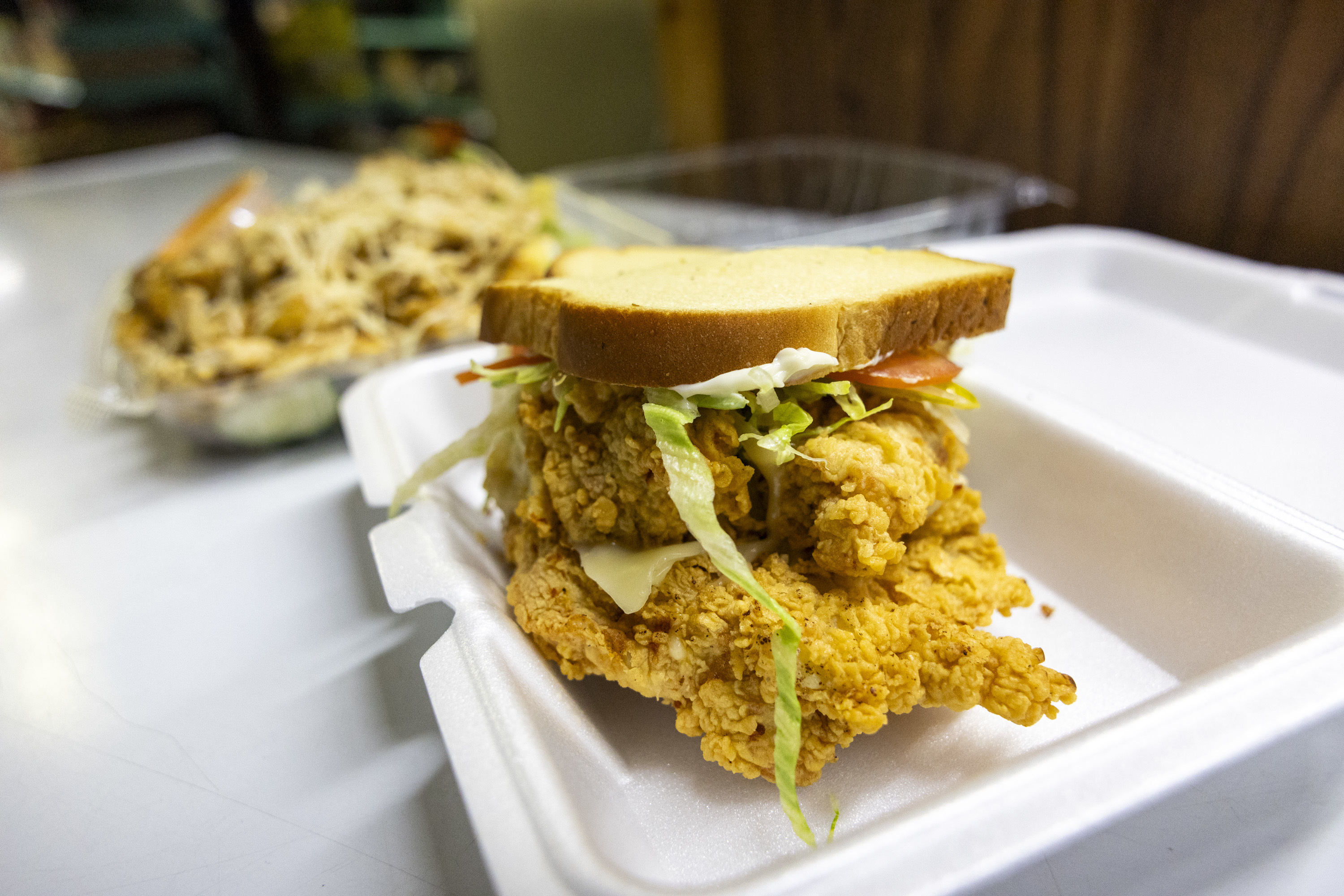
The acclaimed chicken sandwich at the Point Breeze corner store owned by Lynda Cong and her husband, Jimmy Cong, on Aug. 5, 2026.Tyger Williams / Staff Photographer
Some people call it Mrs. Lee’s. Others call it Jimmy’s. Credit card receipts say Kim Woa Store. There’s no visible sign outside to settle the matter, which hasn’t stopped people from finding their way to 17th and Wharton for nearly three decades.
In fact, former Point Breeze residents drive back from New Jersey, Delaware, and even North Carolina for the $9 sandwich, and TikTok has now sent customers from Canada. All for two crispy chicken cutlets on potato bread from a corner store where you can also grab a single roll of toilet paper.
The Cong family says they’re selling about 50 sandwiches a day now, although they seem considerably less impressed by their newfound internet attention than everyone eating them.
Philly vs. the universe: D
The universe put on quite the show Wednesday: a partial eclipse, four planets lined up in the sky, and the Perseid meteor shower reaching its peak overnight.
To be fair, we weren’t missing much with the eclipse. Only about 8% of the sun was blocked here, which an actual astrophysicist said you probably wouldn’t even notice. But the Perseids were supposed to be the real prize, with a moonless sky making this one of the better nights to look up and catch a few meteors.
Unfortunately, after a summer of heat, humidity, and random downpours, the weather couldn’t give us one night off.
The Sixers’ P.J. Tucker tries to block a shot by LeBron James during the Los Angeles Lakers at Philadelphia 76ers game at the Wells Fargo Center on Dec. 9, 2022.Elizabeth Robertson / Staff Photographer
The LeBron tax: B
Remember when we were all having fun with this?
LeBron James is a Sixer! People were sunburning his number into their backs! We’re getting a Christmas Day game! Maybe this really is the year!
Well, here comes the invoice.
Tickets haven’t even officially gone on sale yet, and the cheapest seats on the secondary market for the Sixers’ home opener against Cleveland are already flirting with $500, NBC reported. Last year, comparable seats for opening night were around $100.
It’s not exactly surprising. The Sixers added LeBron James and Jaylen Brown to a team with Tyrese Maxey, and suddenly every game comes with the possibility of seeing something you’ll be talking about for years.
Still, there’s something cruel about finally assembling the kind of Sixers team we’ve been begging for and immediately discovering we may have to enjoy it from the couch. At least it won’t be $30 for a beer at home.
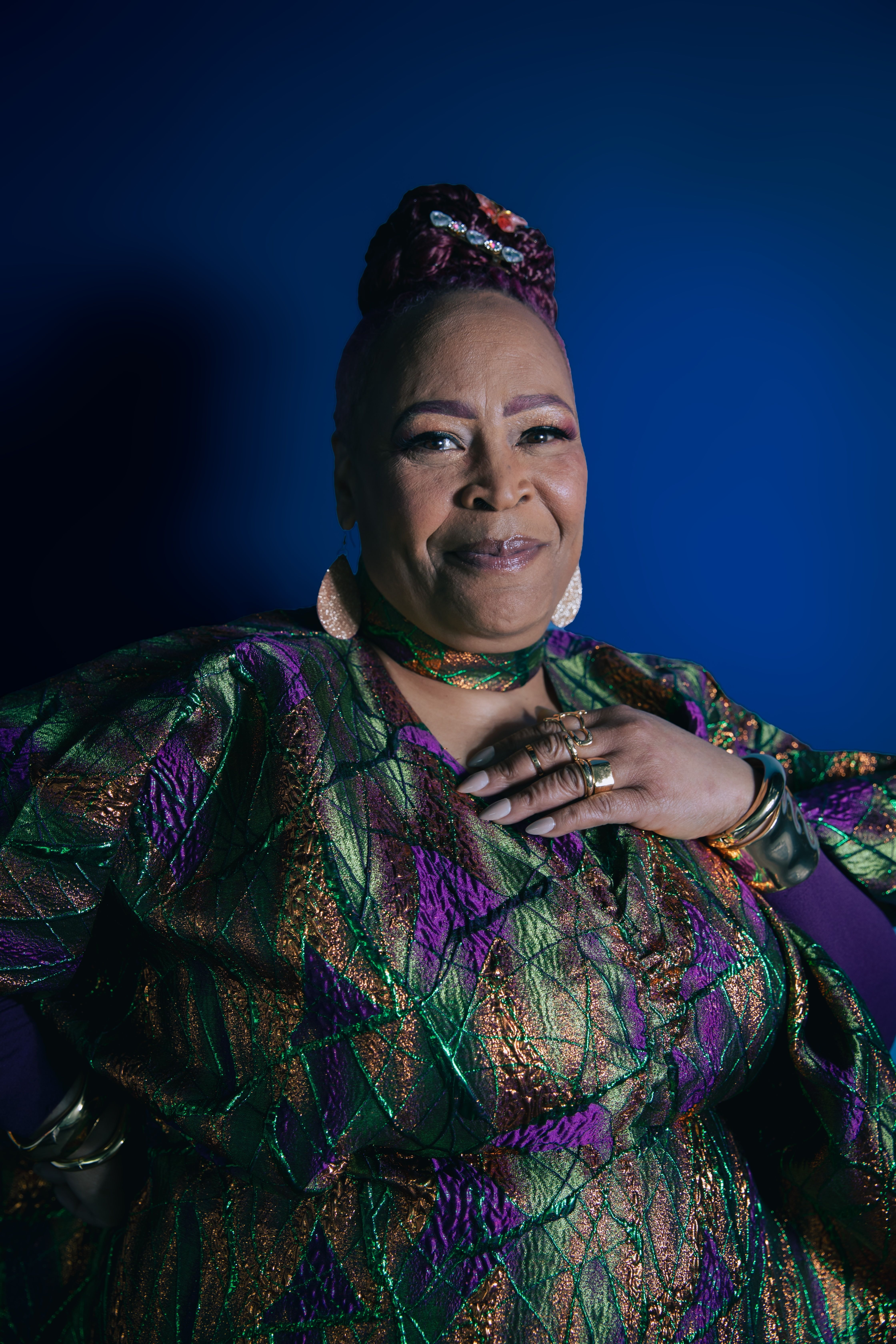
The career of Philly house music singer Alma Hornton — who performs as Lady Alma — stretches back to the 1990s, when she was a featured vocalist at the now “Back 2 Basics” nights at Silk City Lounge and gave voice to projects like King Britt’s soulful “Sylk 130″ and British electronic duo 4Hero.
Hornton had put music aside in the 2010s until a video of a fan dancing to her song “Let It Fall” went viral on Facebook, reviving a career that has gained momentum since, including her 2023 duet with the Eagles’ Jordan Mailata on “Merry Christmas, Baby.”
Lady Alma’s “Liberty” is part of the “Philly Anthems” project by WXPN-FM (88.5) with Pew Center support.Paige Walter
The “Philly Anthems” concept is to give Philadelphia artists “the opportunity to reflect on themes in the Declaration of Independence that resonate today through original music,” according to XPN station manager Roger LaMay.
Hornton does just that in a pulsating dance track that’s a collaboration with esteemed old-school hip-hop producer Marley Marl and 88 Fingerz. “Need some answers for the madness” she sings over a house music groove that aims to find catharsis on the dance floor, “Seeing hope through the sadness.”
In a statement, Hornton describes “Liberty” as “a song that offers an honest perspective on what the world needs right now. The song carries a sense of joy. Embrace the message and find light in the darkness. Celebrate unity, love and the belief that one day we will truly have liberty and justice for all.”
The coming weeks will bring new “Philly Anthems” by Christian McBride and Devon Gilfillian, plus up-and-coming acts Grace Gardner, Black Buttafly, the Bul Bey, J.R. Everhart, Sug Daniels, and Moustapha Noumbissi. A 12-song album will be released timed to Record Store Day in April 2027.
— Dan DeLuca
An arty house in Queen Village
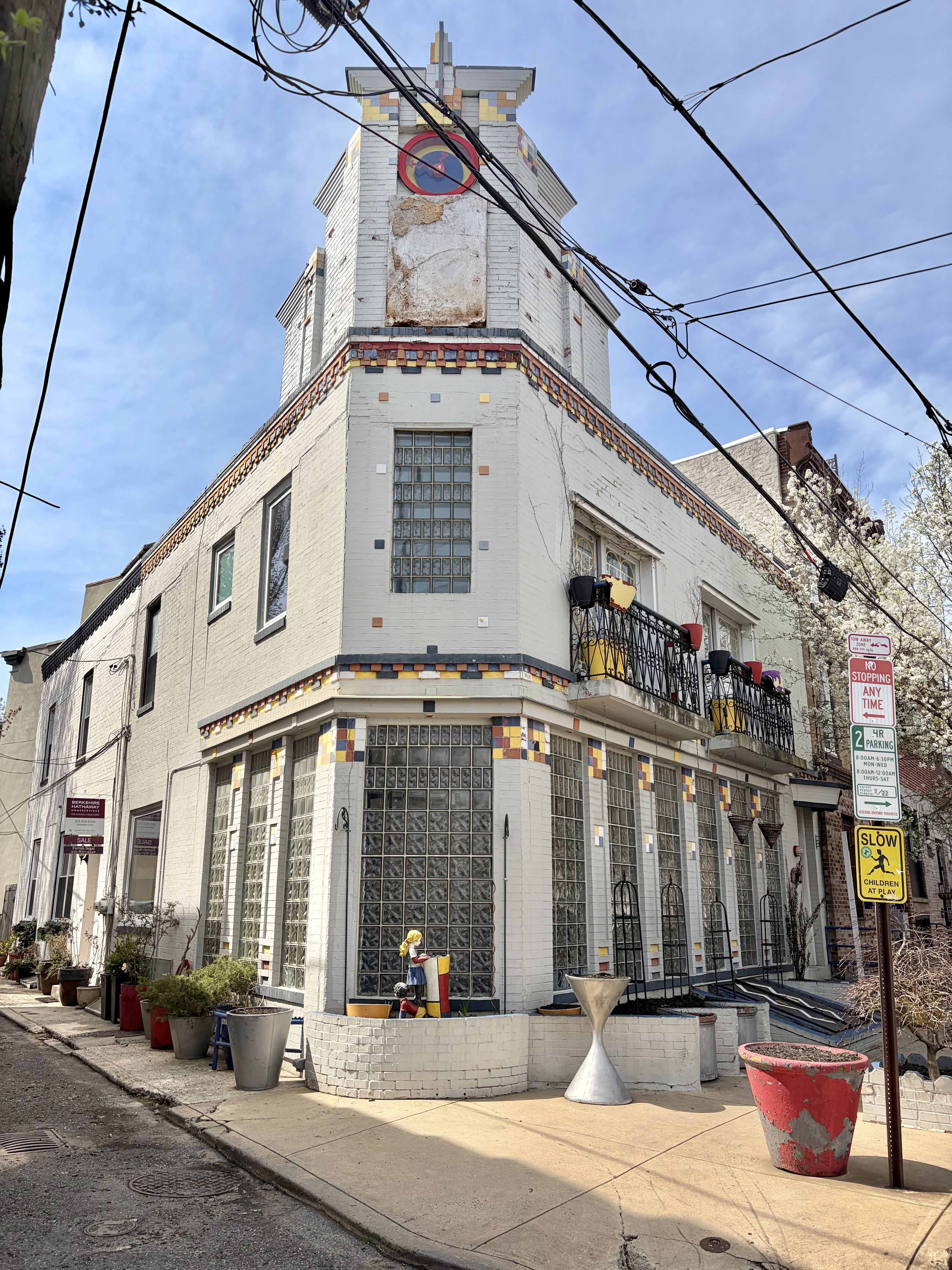
A quirky home at 514 Fitzwater St. in Queen Village.Farrah Segal
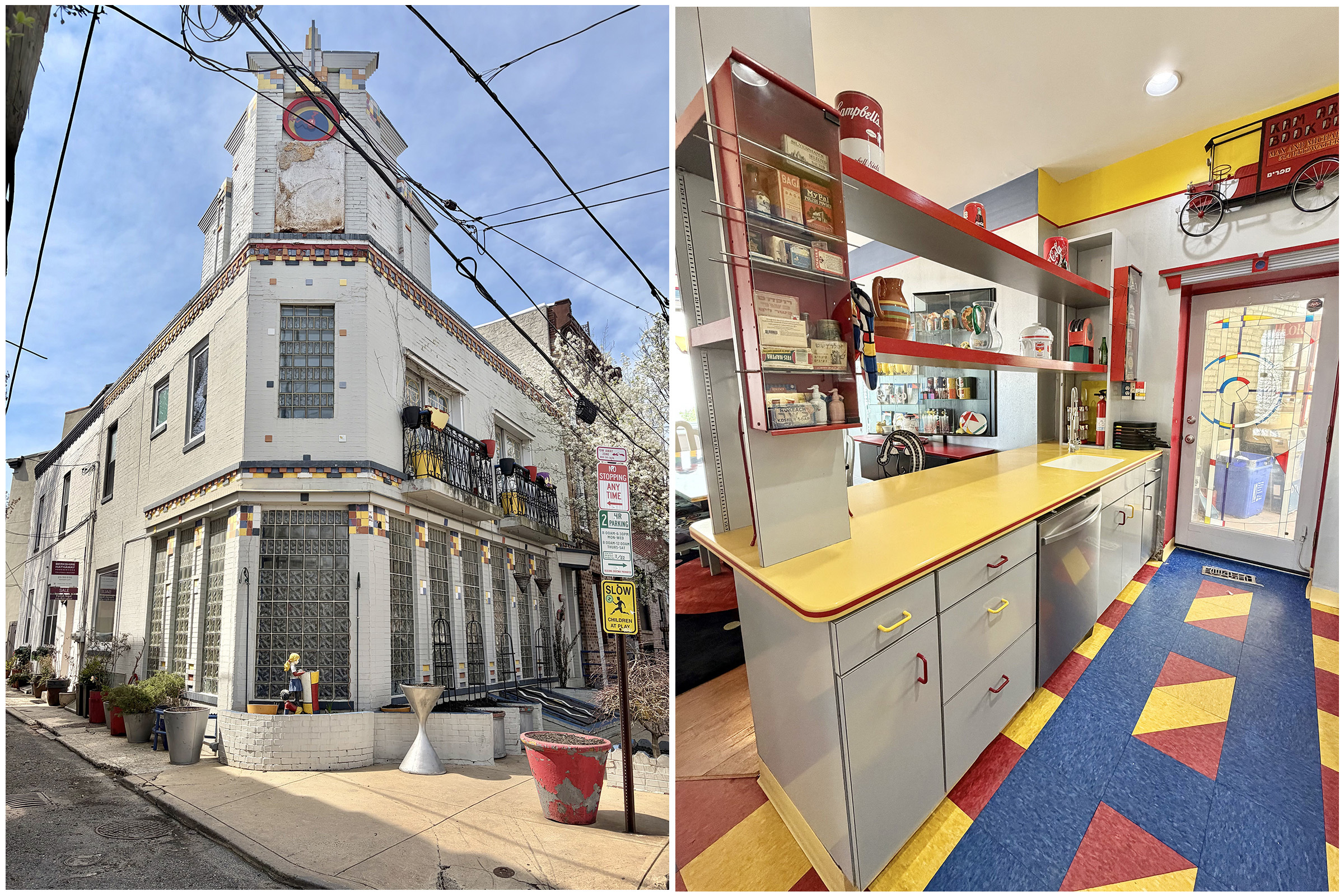
There’s a storied house in Queen Village that holds many names: Lego House, Clock-Tower House, Art Deco House, Mondrian (after Dutch painter Piet Mondrian) House. In a city full of architectural gems, it’s one of my favorites.
The marvelous corner building is dotted with color, featuring a cornice of red, yellow, and blue bricks — evoking Mondrian’s signature style — and a clock on the roof. A small statue of a little girl with yellow hair and a blue skirt is hidden among the lush flowers growing in containers in front of the house. The home dates back more than 100 years and once served as a deli before an architect in the 1980s transformed it into this visual landmark.
As striking as the home is on the outside, there’s now a rare chance for curious Philadelphians to get a peek inside, where the artistry continues with boldly colored staircases and decor. The house was sold earlier this summer and the doors are now open for an antique sale this weekend where you can explore the legendary home and find possible treasures within.
The antique sale runs through Aug. 16, 10 a.m. to 7 p.m. 514 Fitzwater St., Phila.
— Rosa Cartagena
Jon Batiste performing at the Met Philly, Oct. 30, 2025.Elizabeth Robertson / Staff Photographer
Jon Batiste’s ‘Black Mozart’ is a balm for the current times
Alas, we didn’t get Jon Batiste in person this week. The pianist, bandleader, and TV personality no doubt disappointed many when, citing “personal circumstances,” he canceled Friday night’s scheduled appearance at the Highmark Mann Center.
He “truly can’t wait to come back and perform for you soon,” Batiste assured fans in a message posted on the Highmark Mann website.
But Friday did bring us Jon Batiste all the same, via the release of Black Mozart. The new recording finds the musician at the keyboard alone in a jazzy, gospel-y, contemplative (though still energetic) mood. Using Mozart tunes as the departure point, he develops the material liberally — harmonically, rhythmically, sliding back and forth across the centuries and genres, and doing so in a natural, fluid way.
With 10 tracks totaling 35 minutes, Black Mozart’s source material is a Mozart piano sonata, a piano concerto, the Symphony No. 40, and other works. Batiste, who has two degrees from the Juilliard School, is at his best when he gets creative with the 18th-century composer.
Gospel Andante uses the slow movement of Mozart’s Piano Concerto No. 21 in C Major, K. 467 as a framework. But it’s when the power of gospel asserts itself — where the genre line really blurs — that the music lifts off into another emotional dimension.
There is nothing revolutionary about Black Mozart. Performers and composers have blended classical with jazz and other genres for decades. Batiste himself covered similar ground with his 2024 release, Beethoven Blues. But if Beethoven was a generally dramatic and soulful impetus, the quieter moments of Mozart transformed by Batiste are the appeal here. These are the easygoing pleasures that might be the counterprogramming you need in the current atmosphere.
“Black Mozart” is available across all music platforms.
— Peter Dobrin
A road trip featuring Goofy and Max
Odyssey this, Spider-Man: Brand New Day, that.
What about the cinematic brilliance that is Disney’s 1995 classic, A Goofy Movie?
The Philadelphia Film Society and Another Corner — a South Street novelty shop devoted to books, photography, coffee, and other specialties — are screening the movie next week for one night only.
It’s part of the Film Society’s series on road trips and Another Corner’s hobby of the month focusing on “movie loving.” Shop owner Lee Frank will say a few words at the beginning and there will be zines and other film buff collectibles on hand.
The movie, which is 31 years old (sorry millennials, I know that hurts!), focuses on Goofy and his son, Max, reconnecting as they head to a concert. They’re on their way to see the iconic fictional band, Powerline, featuring a “Michael Jackson-styled canine,” as described in the Miami Herald’s original review.
The Herald review praised the film, adding that “this fast-paced movie has enough colorful characters and rollicking gags to keep the tykes from getting bored.”
“A Goofy Movie” plays Aug. 20 at the Philadelphia Film Society Center, 1412 Chestnut St. Tickets are $16 and available on the Film Society’s website.
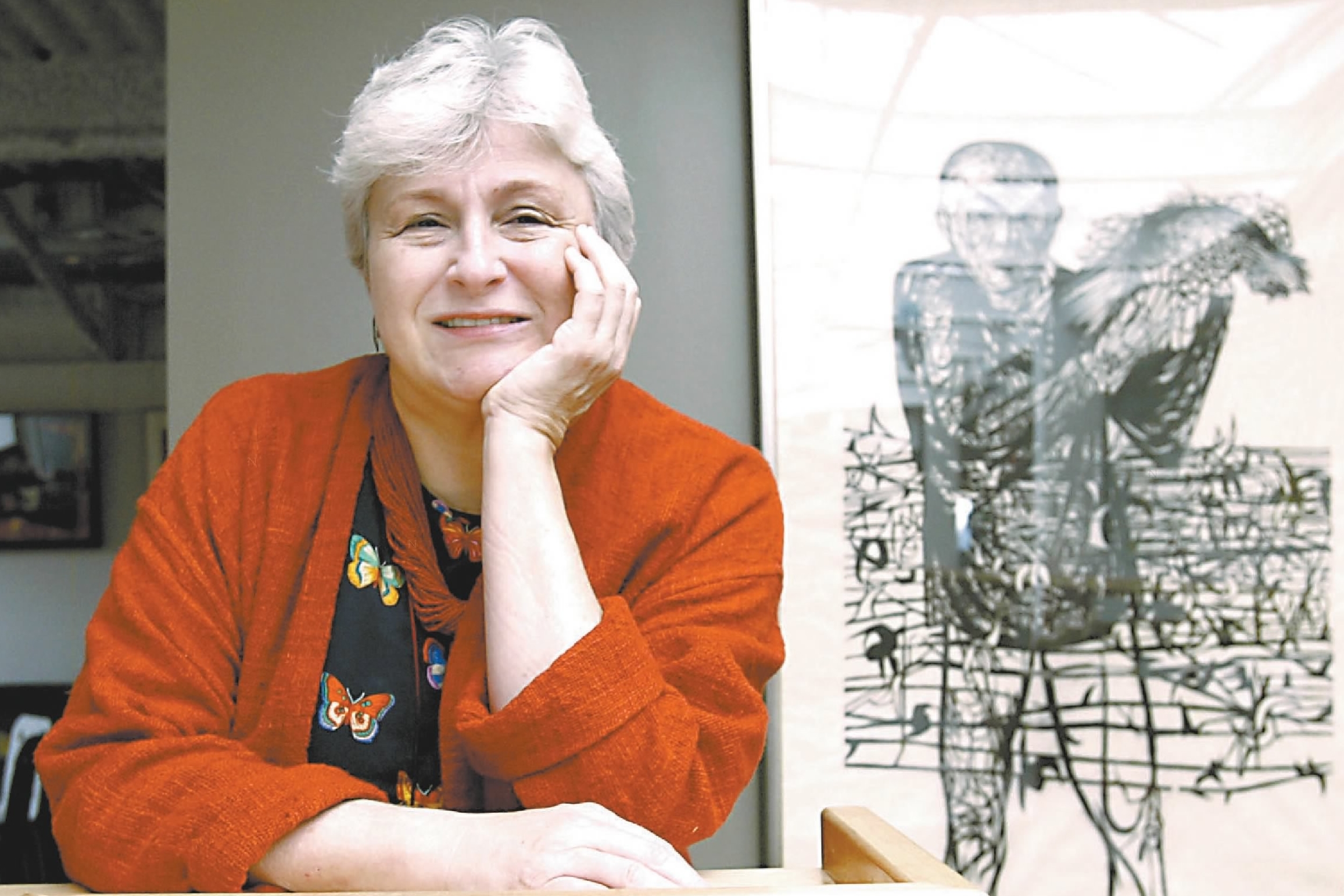
Thora Jacobson, 77, of Philadelphia, award-winning former chief executive officer at the Fleisher Art Memorial, former executive director at the Philadelphia Art Alliance, former director of design review for Mural Arts Philadelphia, former chief operating officer for Philagrafika, former chair of the Philadelphia Art Commission, onetime adjunct instructor at Drexel University, independent curator, artist, mentor, Mummers Parade judge, and much more, died suddenly Sunday, Aug. 2, at her home. The exact cause of her death has not been determined.
Born and reared in Ridley Park, Delaware County, Ms. Jacobson became interested in art education, administration, and conservation at Trinity Washington College in Washington in the 1960s. She settled in South Philadelphia after college in the 1970s and spent the next 50 years organizing, promoting, and inspiring local artists and art organizations.
“Philadelphia richly deserves to be known as a place that honors its own,” she told The Inquirer in 2006.
She joined Fleisher in 1972, rose to CEO in 1983, and left in 2006 to work over the next two decades at Philagrafika, Mural Arts Philadelphia, the Philadelphia Art Alliance, and elsewhere. During her 34 years at Fleisher, she developed its Center for Works on Paper, the Community Partnerships in the Arts program, and the Challenge series juried competition.
She also oversaw three capital campaigns and told The Inquirer that her priority was “seeing connections and possibilities between and among artists, institutions, and their constituencies.” A colleague said on Facebook: “To many of us she was Fleisher.”
John Ittmann, former curator at the Philadelphia Museum of Art, told The Inquirer in 2006: “Thora is a real firecracker. She has a wonderful type of energy that is really infectious.”
Ms. Jacobson was also chair of the Philadelphia Art Commission for a decade, interim director of operations for the Asian Arts Initiative, vice president of the Philadelphia Volunteer Lawyers for the Arts, trustee of the National Guild of Community Arts Education,member of the American Swedish Historical Museum,and, most recently, a visual arts management consultant.
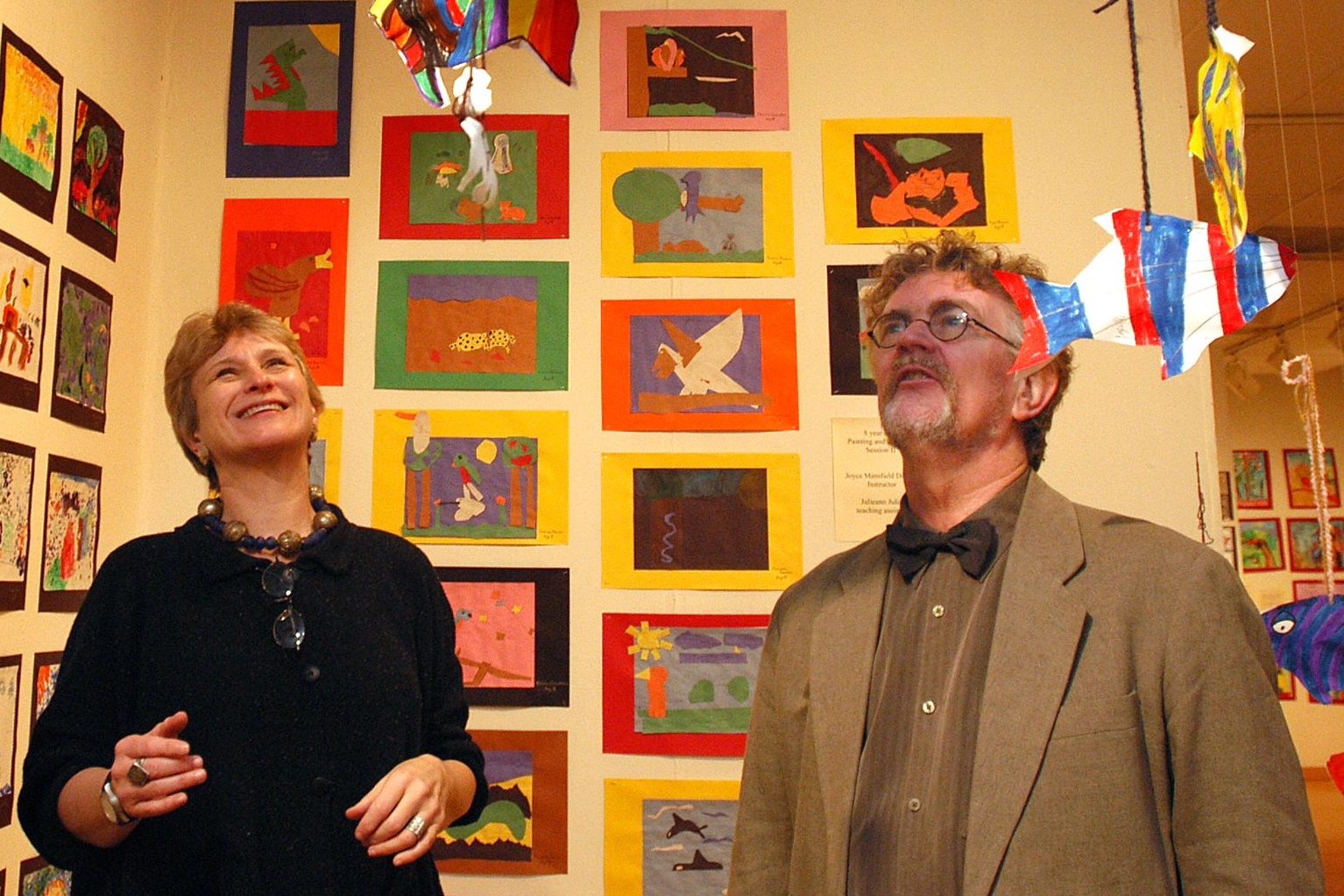
Ms. Jacobson and fellow curator Warren Angle admire an exhibition at the Fleisher Art Memorial in 2002. April Saul / Staff Photographer
“Thora was kind and clear,” colleagues at Social Impact Studios said on Facebook, “but firm as she pushed us to keep tweaking things until they were as strong as they could be.”
She was an adjunct instructor at Drexel University from 2010 to 2014 and led research projects at Drexel and the University of Pennsylvania on social impacts of art in Philadelphia neighborhoods. Her first job out of college was coordinator of the student center at the Art Museum.
She curated and juried shows, and wrote forwards and essays for art books and catalogs. She drew in her spare time and judged the Mummers Parade for years.
She was featured in The Inquirer and Daily News, and appeared in the 1992 TV art documentary Monuments in Love. In 2006, she earned the Visionary Woman Award from Moore College of Art and Design, and was honored for lifetime achievement by Tri-State Artists Equity.
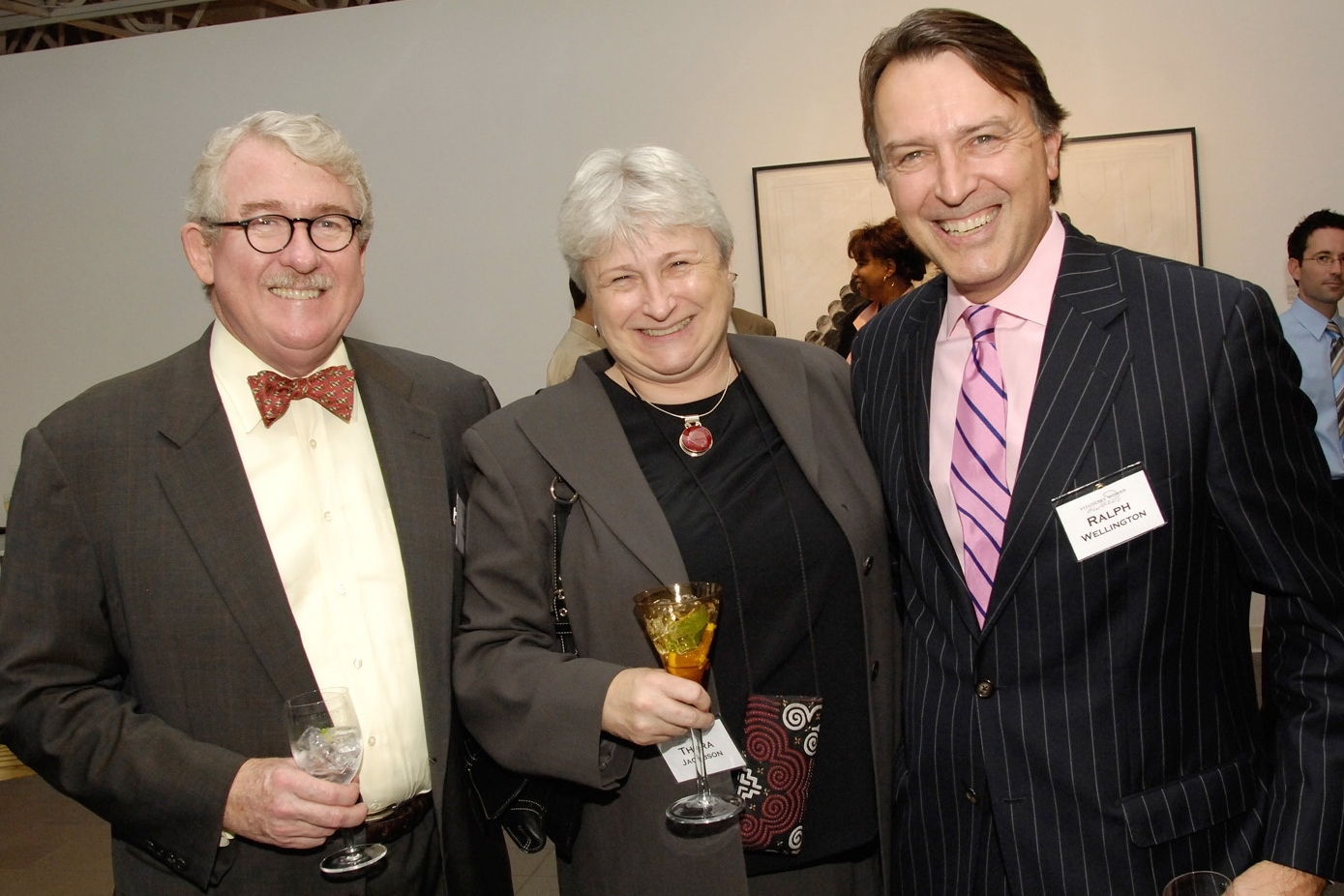
Ms. Jacobson, standing between Jim Straw, to the left, and Ralph Wellington to her right, earned the Visionary Woman Award from Moore College of Art & Design in 2006.Gary Horn Photography
“She’s really respected throughout the arts community in Philadelphia,” Happy Fernandez, then president of Moore, said in 2006. Anne d’Harnoncourt, then director of the Art Museum, said Ms. Jacobson’s “impact has been enormous.”
William Valerio, director and CEO of the Woodmere museum, said: “Thora was a towering figure in the arts of Philadelphia, a builder of institutions whose accomplishments are lasting.”
Thora Elizabeth Jacobson was born Feb. 19, 1949, in Ridley Park. She was the youngest of three children; her father died when she was 3. She played field hockey in high school, was fascinated by words and language, and graduated from the old Holy Child Academy in Sharon Hill.
She met her husband, Antonio Sorgini, when he was taking classes at Fleisher, and they married in 1980 and had a son, Antongiulio. Her husband died in May.
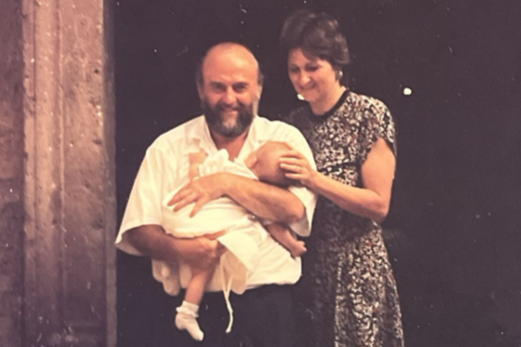
Ms. Jacobson, her husband, Antonio Sorgini, and their son, Antongiulio, lived in South Philadelphia.Courtesy of the family
Ms. Jacobson was a talented seamstress and baker. She did humorous impersonations, collected art, and enjoyed working with young people.
Friends noted her “many kindnesses” and “decades-long advocacy for artists and the cultural community” in online tributes. Woodmere’s Valerio said: “She was both a strong voice and a warm friend to many.”
Her son said: “She had a sharp wit and relished cheerful banter among friends and colleagues. Above all, she took the work of mentorship very seriously.”
In addition to her son, Ms. Jacobson is survived by a sister and other relatives. A brother died earlier.
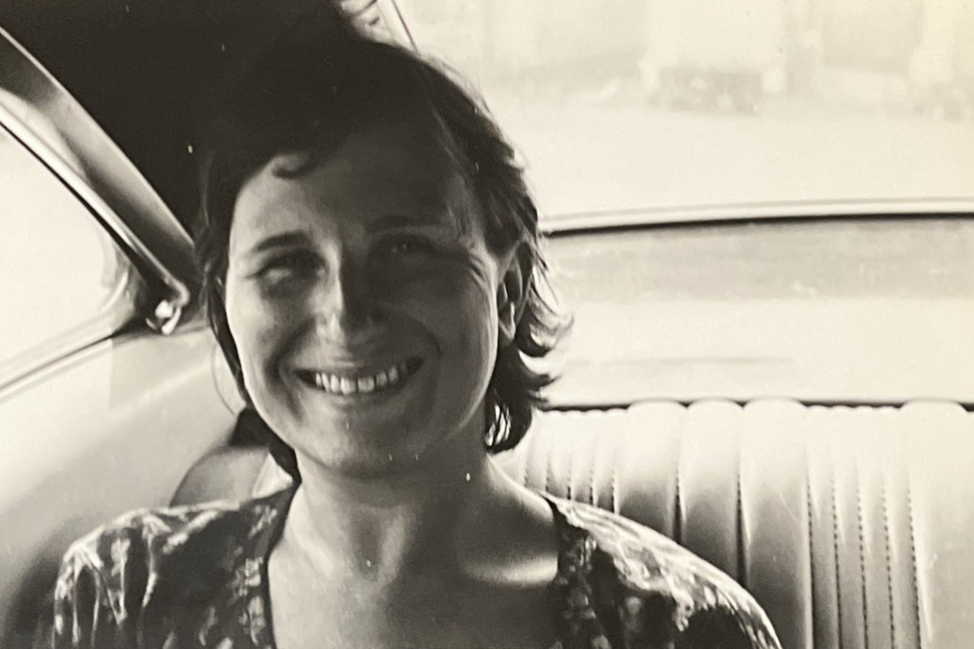
Friends noted Ms. Jacobson’s “many kindnesses” and “decades-long advocacy for artists and the cultural community.”Courtesy of the family
A celebration of her life is to be held later.
Donations in her name may be made to the Fleisher Art Memorial, 719 Catharine St., Philadelphia, Pa. 19147; and Mural Arts Philadelphia, 1727-29 Mount Vernon St., Philadelphia, Pa. 19130.
Ms. Jacobson was a talented seamstress and baker. Mark Garvin, / Philadelphia Museum of Art