Category: Crime & Justice

  • High school sports coach in South Jersey charged with sexual assault of student

    High school sports coach in South Jersey charged with sexual assault of student

    A sports coach at a Gloucester Township high school was charged with having illegal sexual contact with a student, Camden County Prosecutor Grace C. MacAulay said Thursday.

    Joel Deanley Jr., 26, of Gloucester Township, worked at Timber Creek High School, where he was an assistant coach for girls spring track, as well as head coach for boys and girls winter track and an assistant coach for football, MacAulay said.

    In a statement on Thursday, the Black Horse Pike Regional School District said it was cooperating with authorities in the case.

    “The employee has been immediately removed from all duties involving students and barred from all District property,” the district said.

    Deanley was charged with three counts of second-degree sexual assault and three counts of third-degree endangering the welfare of a child, MacAulay said.

    He was taken into custody Wednesday and was being held at the Camden County Correctional Facility pending a detention hearing.

    On Tuesday, Gloucester Township police notified the Camden County Prosecutor’s Office Special Victims Unit that a female student at the high school “reported having a sexual relationship with Deanley,” the Camden County Prosecutor’s Office said.

    Detectives determined that Deanley and the student were involved in illegal sexual contact between June and August, MacAulay said.

    The student was the only victim identified in the case, but the Camden County Prosecutor’s Office will investigate any additional allegations, MacAulay said.

    Anyone with information related to the case may call Detective Todd Jarrell of the Camden County Prosecutor’s Office Special Victims Unit at 856-225-8479 or Detective Daniel Szovati of the Gloucester Township Police Department at 856-228-4500, Ext. 3215. Tips can also be sent to CAMDEN.TIPS.

  • Delco police chief sues town officials, saying her monthslong leave is racial discrimination

    Delco police chief sues town officials, saying her monthslong leave is racial discrimination

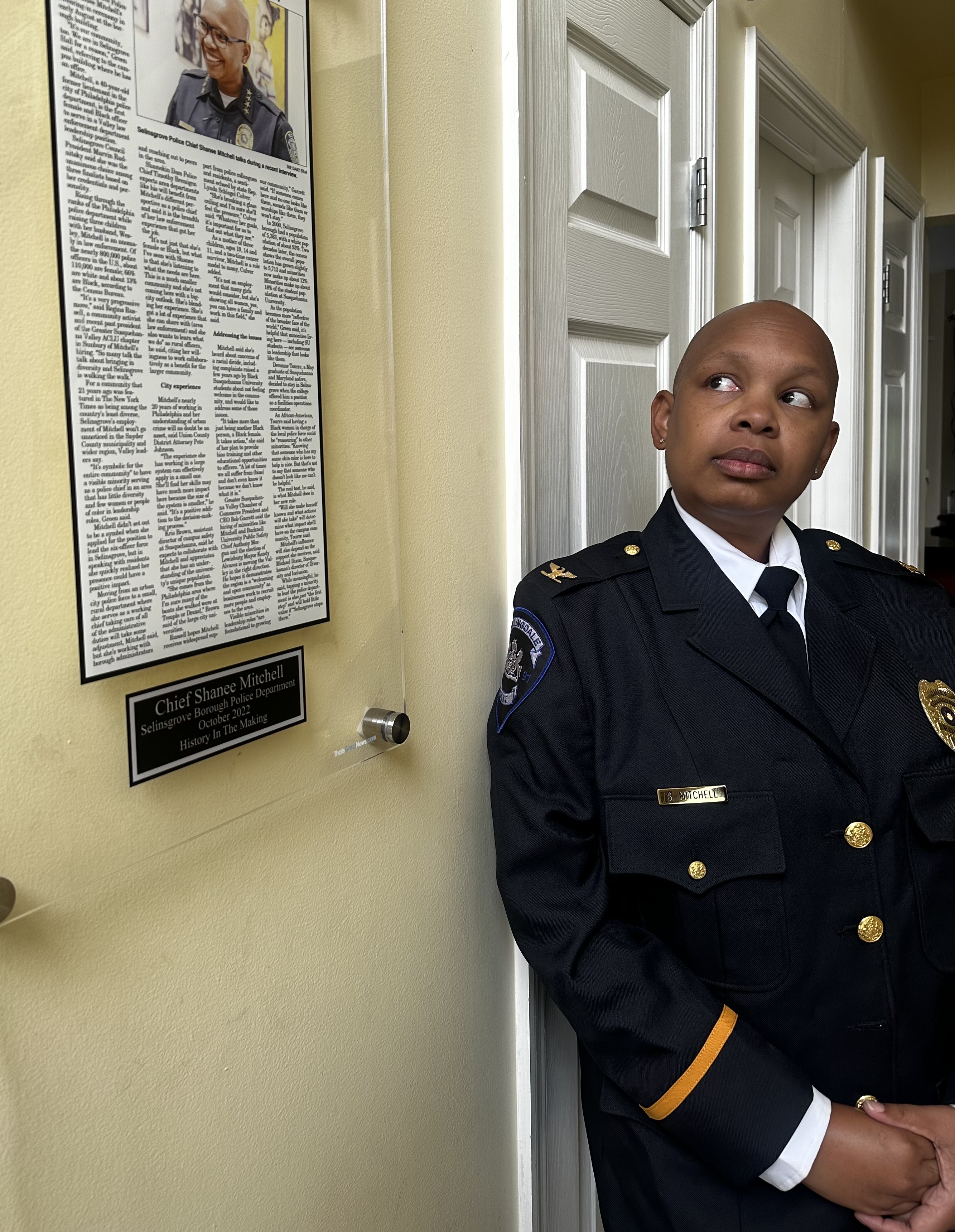
    Collingdale’s police chief had her duties of office stripped away by officials in the Delaware County borough in what her lawyer described in a federal civil rights lawsuit as a racist, sexist plot to force her out of her position.

    Shanee Mitchell, 44, has been on administrative leave since January, according to the lawsuit, filed this week in U.S. District Court. Officially, Mitchell has been placed on leave because of borough officials’ concerns over her not showing up for her scheduled 8 a.m.-to-4 p.m. shifts.

    But her attorney, Mark Schwartz, said the reasoning for her leave is bogus: He contends his client, a Black woman, is being discriminated against because of her race and gender, sidelined by Collingdale’s borough council and mayor until her contract ends in September.

    “Borough Council, the Mayor, and senior borough officials were aware of [Mitchell’s] complaints,” Schwartz wrote in the filing. “Rather than stop the interference or protect her from retaliation, borough officials, including but not limited to those named, permitted the hostile course of conduct to continue.”

    In his filing, Schwartz said that Mitchell’s contract allowed her to set flexible hours, given the expectation that, as chief, she would be attending meetings and other events outside of normal business hours.

    Mitchell’s lawsuit names Collingdale Mayor Donna Matteo-Spadea, as well as borough council president Felecia Coffee, borough council members Stephen Zane and Shannon Murphy, and borough manager Joseph G. Papaleo.

    Collingdale solicitor Deanna Williams declined to comment on the lawsuit.

    Mitchell’s leave was extended in April after borough officials told her she was the subject of a criminal investigation, but she said she was never interviewed by police and received no further details. Borough officials declined to comment on the alleged investigation for this article, and Mitchell has not been charged with any crimes.

    Mitchell filed complaints about the discrimination she allegedly experienced with the federal Equal Employment Opportunity Commission and the Pennsylvania Human Relations Commission in November 2024, early in her tenure. Those reports went unanswered, Schwartz said, and Mitchell believes she was placed on leave in retaliation for them.

    Schwartz said Mitchell “inherited a police department in crisis,” modernized its technology, and improved community relations in the borough of 9,000 people that has struggled with officer shortages. In 2024, shortly before Mitchell took over, Pennsylvania State Police troopers were called in to help bolster overnight patrols.

    However, some local law enforcement officials have been critical of Mitchell’s tenure, particularly a public controversy that erupted over a part-time officer she chose to hire as he was being investigated for a violent road-rage incident.

    Mitchell was placed on administrative leave Jan. 6, the day after the defendants named in the lawsuit took control of borough council, replacing the council members who had voted to hire her.

    But the lawsuit asserts Matteo-Spadea had long wanted to terminate Mitchell, and had made offhand comments for months about how she “can’t wait until January.”

    Matteo-Spadea did not return a request for comment about the allegations in the filing.

    Matteo-Spadea, the lawsuit said, tried to suspend Mitchell on her first day for violating departmental policy. Among those violations was Mitchell’s refusal to wear a reflective vest and act as a crossing guard, something she felt was not her responsibility and was a deliberate attempt to demean her.

    In correspondence with Mitchell, obtained by The Inquirer, Matteo-Spadea defended the crossing-guard duty, saying she had Mitchell’s predecessor, Patrick Kilroy, fill in during the officer shortage. Matteo-Spadea, in issuing Mitchell a formal reprimand for having another officer serve as crossing guard instead, said that, as mayor, she has “full charge and control of the chief and the police department.”

    Matteo-Spadea also directed white, male officers not to listen to Mitchell’s orders and stymied her attempts to fill vacancies in the department’s ranks, the lawsuit said. Two officers Mitchell hired, who are Black, were fired in June during their probationary period with the department.

    The officers, Jerry Christian and Terrell Howard, both wrote in complaints to the EEOC that they believed they were being retaliated against for associating with Mitchell.

    But as Mitchell feuded with the mayor behind closed doors, she faced public scrutiny over one of the officers she hired. In January 2025, Kevon Darden, a part-time officer, was arrested by Pennsylvania State Police just days after joining the department for his alleged role in a road-rage incident.

    Darden, 30, was charged with terroristic threats, simple assault, and related crimes for pointing a gun at a dump truck driver on April 5, 2023, while driving on the Blue Route in Ridley Township, according to the affidavit of probable cause for his arrest. His case is pending in county court.

    Mitchell defended Darden’s hiring in a statement to The Inquirer. But, privately, a top law enforcement official in the county chastised her in an email, accusing her of ignoring warnings not to hire Darden because of the pending criminal charges, according to a copy of that email obtained by The Inquirer.

    Law enforcement sources, who spoke on condition of anonymity to discuss personnel matters, said the controversy over Darden only deepened concerns about Mitchell’s hiring, given the manner in which she had left her previous job.

    Before being hired by Collingdale, Mitchell served as the police chief in Selinsgrove, a central Pennsylvania borough about an hour north of Harrisburg. She resigned there after two years, amid what the Daily Item, a local newspaper, reported as concerns over her living situation: At the time, Mitchell lived in Pottstown, more than 100 miles away, and reported for her shifts only “sporadically,” according to the newspaper.

    Schwartz, Mitchell’s attorney, called those concerns in Selinsgrove overblown, unlike the treatment he said she has received in Delaware County.
  • A police officer in Delaware County shot and killed a person early Thursday morning

    A police officer in Delaware County shot and killed a person early Thursday morning

    A police officer in Delaware County shot and killed a man wielding a knife early Thursday morning, according to Aldan Borough Mayor Michael Ceci.

    Ceci said the shooting by an Aldan Borough police officer happened about 3:30 a.m. near South Clifton and Aldan Avenues. Aldan Borough is a town of about 4,200 people located six miles west of Philadelphia.

    The officer was responding to a 911 call, Ceci said. The officer first deployed a Taser, then shot the man, who was pronounced dead at Lankenau Medical Center.

    The officer was taken to Mercy Fitzgerald Hospital for “evaluation of minor injuries.”

    “Per borough’s use-of-force policy, the officer is being reassigned to administrative duty, pending the completion of an investigation,” Ceci said.

    An Aldan Borough police vehicle is parked outside the police station.Brett Sholtis

    The Delaware County District Attorney’s Office is investigating, Ceci said.

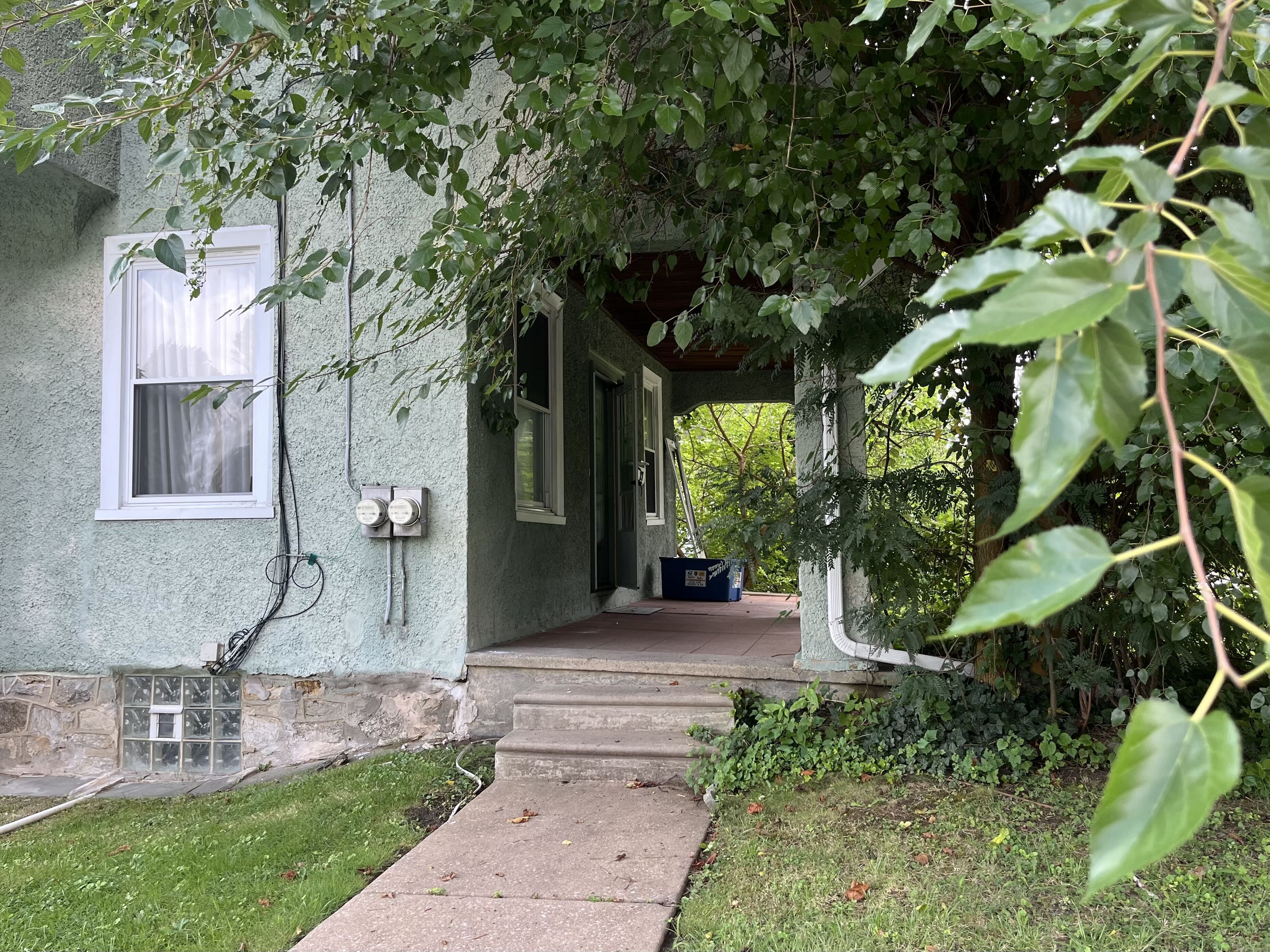
    By late Thursday morning, there were few signs of the deadly encounter in the tree-lined residential neighborhood. News crews gathered at nearby Providence Park, within eyeshot of both the police station and the house where neighbors said the shooting happened.

    Longtime resident Rich Cooper said he was up late working on home renovations when he saw a police car pull up next door.

    Cooper said he heard what he believed to be two gunshots in quick succession. When he stepped outside, he said, he could smell the smoke from the bullets discharging.

    Cooper said he did not hear any argument or shouting prior to the gunfire. “No yelling. They pulled up, and pop, pop.”

    Within minutes, the corner was swarmed with at least 14 police cars, Cooper said.

    Cooper said it was not the first time police had visited the house next to his.

    “I don’t know what they’re doing over there,” Cooper said.

  • Feds will take over gun case of Olney man at center of missing women investigation, as Philly DA withdraws charges

    Feds will take over gun case of Olney man at center of missing women investigation, as Philly DA withdraws charges

    Federal prosecutors will take over the criminal case against the Olney man whose house is at the center of a sprawling investigation into the fate of two missing women, officials said Thursday.

    Assistant District Attorney Alyssa Amoroso withdrew the charges the Philadelphia DA’s office had filed against Eugene Albert Horsch for illegal gun and drug possession Thursday morning, telling a city judge that the U.S. Attorney’s Office would instead handle the case.

    Horsch, 44, has been in federal custody since June after a U.S. park ranger encountered him and another woman inside a black BMW near Independence Hall, acting suspiciously. Police said they searched Horsch — who was not allowed to possess guns because of felony convictions — and found a switchblade and a glass pipe in his pants, as well as two illegal guns, drugs, and a phony federal drug enforcement badge in his car.

    And then, in an unsettling twist, the woman with Horsch presented a fake ID bearing the name of a woman, Blair Tonzelli, who had been reported missing in 2023.

    Horsch was charged with illegal gun and drug possession after his June 19 arrest, and was held on $500,000 bail.

    About a week later, he was charged with a federal firearms violation, allowing him to be held in federal custody until trial.

    Eugene Albert Horsch, 44, of Philadelphia.Courtesy of Philadelphia police

    In the days after Horsch was arrested with the weapons in Center City, local and federal investigators searched his decrepit twin house on Chew Avenue and found another gun, as well as materials to grow marijuana.

    They also discovered a trove of more concerning materials — barrels of chemicals in the basement, several urns holding cremated remains, supplies to make counterfeit IDs, documents tied to at least two women who have been missing for years, and a handwritten letter that described hurting people and mentioned the serial killer Ted Bundy.

    A woman also told investigators Horsch had told her he knew how to use chemicals to melt bodies in the basement.

    As officials investigated the whereabouts of Tonzelli, the woman whose name appeared on the ID handed to park rangers, they learned that she was reportedly last seen at the Chew Avenue house in late 2022.

    They also found that another missing woman was last seen at the address. Amy McHale, the ex-wife of Horsch’s deceased father, Raymond “R.C.” Horsch, disappeared in June 2016.

    In the months since the investigation began, police have repeatedly searched Horsch’s home, excavated its yard to recover pipes to test for DNA, and pored over hundreds of pieces of documents and Horsch’s devices in hopes of learning the fate of the missing women.

    Law enforcement sources said none of the items recovered from inside the home — including what initially appeared to be significant amounts of blood — tested positive for blood or either woman’s DNA. It was not immediately clear if the tests of the excavated pipes have been completed.

    The strange, complex backstory of Eugene Horsch and his father has also clouded portions of the investigation.

    Raymond “R.C.” Horsch in 1999.S. E. Stokowski / Wikimedia

    Raymond Horsch was a porn actor and director who produced films and self-published novels that often featured women in addiction in violent fantasies — including some that depicted various ways to kill women. He cast himself in some of the stories as an “empathetic” serial killer who preyed on addicted women to end their suffering, and billed the books as stories that combined real details from his life story with his fantasies.

    Investigators have since found themselves working to sort fact from fiction in discerning whether anything more sinister happened inside the home, or if it was just a den for troubled drug users.

    Eugene Horsch’s lawyer, Jerome Brown, has said his client did nothing wrong. Brown did not attend Thursday’s hearing.

    Horsch, too, did not appear in court. He remains in federal custody as Philadelphia homicide detectives and federal officials continue to investigate.

  • Judges reinstate convictions for ‘Chester Trio,’ who say they were wrongly accused of woman’s 1997 murder

    Judges reinstate convictions for ‘Chester Trio,’ who say they were wrongly accused of woman’s 1997 murder

    The Pennsylvania Superior Court has reinstated the murder convictions of three men who were granted new trials after being imprisoned for nearly 25 years for a crime they say they did not commit.

    The men, known as the “Chester Trio,” were convicted in separate trials in the 1997 beating death of 70-year-old Henrietta Nickens in her Delaware County home and are serving life in prison.

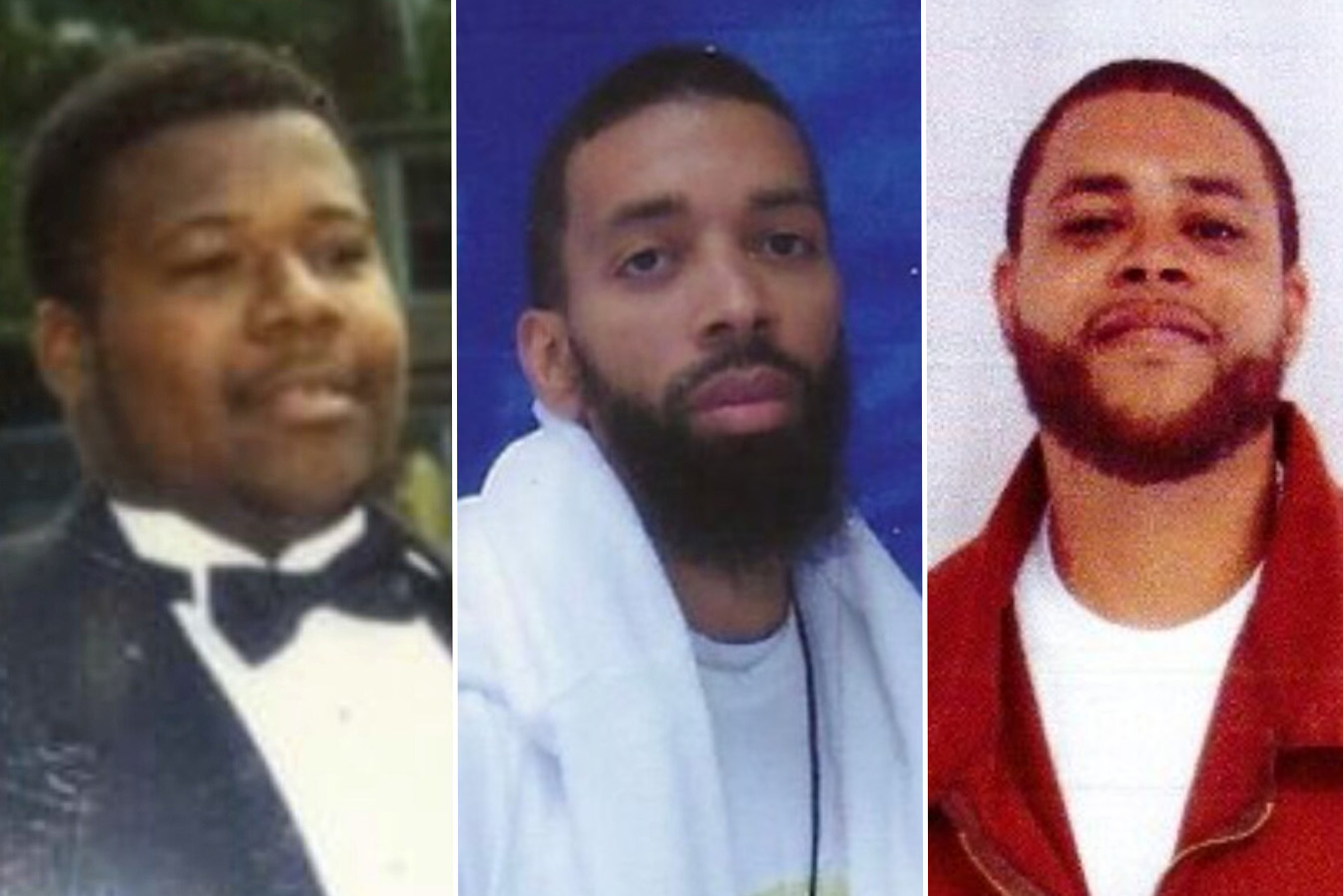
    Derrick Chappell, 44, Morton Johnson, 46, and Samuel Grasty, 49, have insisted for decades that they were not responsible for the death of Nickens, whose battered body was found face down in the bedroom of her Chester home, her bed and walls stained with blood.

    In 2024, a Delaware County Court judge vacated the three men’s convictions, saying newly tested DNA from the crime scene cast doubt on their culpability and might have persuaded jurors to reach a different conclusion had they been presented with that evidence at trial.

    But late last month, a panel of Superior Court judges disagreed and reversed that outcome.

    In a 2-1 decision, the judges said that they did not consider the evidence presented by defense lawyers to be new, and that it therefore would not have changed jurors’ minds.

    Judges Maria McLaughlin and Megan Sullivan said in a 41-page opinion that the newly tested DNA — recovered from Nickens’ dress and bedsheet, a green jacket found at the scene, and items in the jacket’s pockets — did not offer any revelations because it matched an unknown DNA profile that had been presented to the jurors who decided the trio’s fate.

    “This same information was previously considered by all three separate fact-finders and rejected,” the judges said of the verdicts in three trials.

    During the trials, they said, jurors were told that the DNA found at the scene was not a match for any of the defendants.

    And they said the newly tested DNA did not alter the argument defense lawyers made at the earlier trials that someone other than the three men had broken into Nickens’ home, raped her, and beaten her to death.

    Prosecutors relied on witnesses who testified that they had overheard the men discussing their involvement with the crime.

    Their star witness, 15-year-old Richard McElwee, testified that he had acted as a lookout while the men robbed Nickens of $30. He pleaded guilty to third-degree murder in exchange for his testimony and was sentenced to six to 12 years in prison.

    The men’s lawyers have long contended that the prosecution’s witnesses were unreliable and that the investigation was flawed. And they emphasized the lack of a DNA match for the men.

    Paul Casteleiro, legal director of the nonprofit law center Centurion Ministries and Grasty’s attorney, said he was dismayed by the court’s decision and, along with attorneys for Chappell, has filed an appeal.

    “We’re going to fight this every way possible,” he said.

    A spokesperson for Delaware County District Attorney Tanner Rouse said the office appreciated the Superior Court’s affirmation of the jury verdicts.

    As the men continued to assert their innocence, the possibility that Nickens was raped and beaten by a single assailant was central to defense arguments during 2023 hearings in which they sought to overturn their convictions.

    In presentations before Delaware County Court Judge Mary Alice Brennan, the attorneys called on forensic experts who testified that the new tests showed a sample of Nickens’ blood and semen from the unknown assailant were deposited on her bedsheet at the same time, lending credence to their theory that she had been raped and beaten by the same person.

    Prosecutors rejected the contention that Nickens had been sexually assaulted, and suggested the semen found on the sheet and in her body was from an earlier consensual encounter.

    Brennan sided with the defense lawyers when she vacated the murder convictions the following year.

    Jack Stollsteimer, then the Delaware County district attorney, swiftly appealed that decision, leading to the Superior Court decision reinstating the convictions.

    Defense lawyers, in turn, have appealed that decision, saying the Superior Court panel had erred. Their arguments mirrored a strongly worded dissent by Superior Court President Judge Anne Lazarus, who said she believed that the recent DNA testing constituted a new finding — and that it was exculpatory.

    The evidence, she wrote, “does significantly more by excluding the petitioners from being present at all in Nickens’ home.”

    But her colleagues rejected that view in the majority opinion, which was sharply critical of the lower court’s decision to overturn the men’s convictions.

    That decision, they said, was based on “erroneous conclusions.”

    Because of that, the judges said, “we reverse.”

  • 3rd person charged in West Philly shooting that killed 2, wounded 3 others

    3rd person charged in West Philly shooting that killed 2, wounded 3 others

    A third person has been charged in a March shooting that killed two men and wounded three others in West Philadelphia, court records show.

    Nysir Mahoney, 24, was charged with murder, attempted murder, and other offenses in the March 30 shooting at 60th and Delancey Streets, records show.

    Mahoney was being held without bail at Curran-Fromhold Correctional Facility. A court-appointed attorney listed for Mahoney declined to comment on the case.

    Two other men, Andre Bowie, 22, and Marquis Andrews, 23, also have been charged in the case.

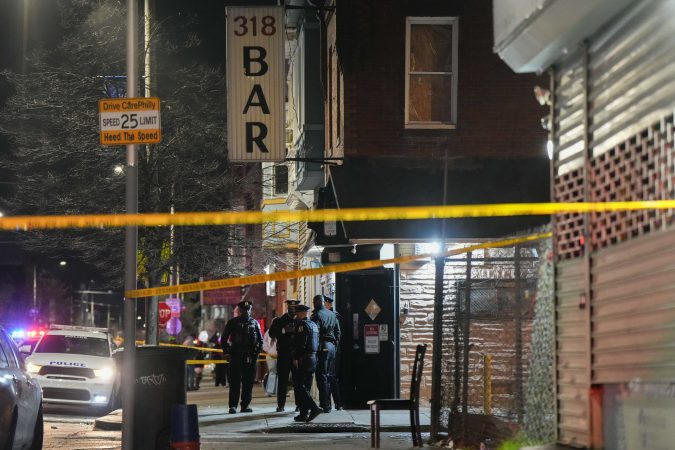
    Police said several assailants drove in a Mercedes to 60th and Delancey Streets on the night of March 30 and opened fire on a group of people standing outside a corner bar, wounding three and killing Paul “PJ” Cobb and Naasir Boyd, both 24.

    More than a dozen shots were fired from three 9mm handguns, police said. Police later found the Mercedes on fire on the 1200 block of Cumberland Street.

    Police investigators believe the March 30 shooting was motivated by a feud and led to a retaliatory shooting that inadvertently killed 20-year-old Imani Ringgold, who was walking with a slice of pizza and talking to her grandmother on the phone when she was shot on Market Street near 60th in April.

    She was an innocent bystander and had no connection to the feud, police said.

  • Hackers target two New Jersey municipal water systems in nationwide cyberattack

    Hackers target two New Jersey municipal water systems in nationwide cyberattack

    Two New Jersey municipal water systems were targeted in a cyberattack that affected multiple local water agencies across the U.S. last week.

    The FBI and the Environmental Protection Agency issued a public warning last Thursday to all critical infrastructure operators that hackers are targeting vulnerable internet-connected control systems responsible for delivering drinking water. At least seven states, including New Jersey, Georgia, Minnesota, Michigan, and Wisconsin, have reported cyber incidents to the FBI since July 27.

    The two New Jersey municipal water systems targeted in the cyberattack have not been publicly disclosed.

    “Both systems have since been secured with strengthened access controls,” said Christopher Thoresen, spokesperson for the New Jersey Cybersecurity and Communications Integration Cell (NJCCIC), part of the New Jersey Department of Homeland Security. “The NJCCIC continues working with these utilities and with water systems statewide to reduce the risk of similar incidents going forward.”

    A water tower is seen Thursday, July 30, 2026, in Plymouth, Minn. A cyberattack targeted the operating technology at over 30 water systems in Minnesota, including Plymouth’s, earlier this week, state officials said. (AP Photo/Ellen Schmidt)Ellen Schmidt

    Three state officials who were briefed on the cyberattack investigation told the New York Times last week that the methods used to exploit the water systems and the lack of a ransom demand had led some analysts to “tentatively conclude” that the cyberattack could be traced back to Iran, amid the U.S.-Iran war. However, federal investigators have not publicly linked Iran to the cyberattacks.

    Hackers accessed the water systems by exploiting small internet-connected devices, called programmable logic controllers (PLCs), that are used to remotely monitor and control aspects of industrial equipment, according to the NJCCIC.

    In July’s attack, hackers targeted logic controllers in municipal water systems that control the pumps and valves used to deliver drinking water. After accessing these devices, hackers changed IP addresses and set new passwords, locking water agencies out of remote monitoring capabilities.

    In New Jersey’s incidents, the municipal water agencies sent out staff to operate the systems manually, leading to no disruption to service or access to drinking water, according to the NJCCIC.

    A water tower in Flint, Mich., Aug. 20, 2020. Michigan and Minnesota are among at least seven states coping with cyberattacks aimed at disrupting water systems nationwide. (Erin Kirkland/The New York Times)ERIN KIRKLAND

    Cyberattacks were also reported in Minnesota, where 30 water-system facilities were targeted, and in Michigan, where nine were attacked. Similar to New Jersey, state officials said at no point during the attacks was drinking water unsafe.

    To protect from future cyberattacks, the FBI is advising all critical infrastructure operators to remove direct internet connections from PLCs through secure firewalls, stronger passwords, and more secure authorized communication.

    In July’s cyberattack, hackers exploited the MicroLogix 1100 and 1400 series of Rockwell Automation/Allen-Bradley PLCs, but the FBI warned that other branded devices can be vulnerable as well.

  • Northwest Philly woman who staged her husband’s death as a suicide pleads guilty to third-degree murder

    Northwest Philly woman who staged her husband’s death as a suicide pleads guilty to third-degree murder

    A Northwest Philadelphia woman who fatally shot her estranged husband and staged his death as a suicide pleaded guilty Wednesday to murder and related crimes.

    Danielle Baxter, 40, was accused of killing 38-year-old Jordan Baxter at her Andorra home in March 2025.

    Investigators said Baxter shot and killed her husband, a longtime SEPTA employee, in the bedroom of her home before dragging his body down the stairs and staging his body between two cars in a nearby driveway.

    Police found Jordan Baxter there around 7 a.m., covered in blood. He had been shot through the back of the head, they said.

    While investigators initially believed Baxter’s death was a suicide because he was found with a 9mm pistol in his hand, they soon questioned the nature of the crime after finding irregularities in statements made by Danielle Baxter.

    Assistant District Attorney Ashley Toczylowski of the homicide unit outlined those details during Baxter’s plea hearing before Common Pleas Court Judge J. Scott O’Keefe.

    It was Danielle Baxter who called police to report her husband’s death, Toczylowski said. She told investigators she came across her husband’s body while she was taking out the trash that morning at her West Bells Mill Road home.

    But investigators noted that Baxter was breathing heavily on the call and was unable to answer basic questions about her husband’s condition, she said.

    Inside the home, police found blood pooling on Baxter’s bed where a pillow would be. Baxter, Toczylowski said, lied when she told police the blood was there because she had recently had her period.

    Investigators later downloaded data from Baxter’s Apple Watch and learned she had recorded a “very steep level of activity” between 1 and 4 a.m. the morning Jordan Baxter was killed, activity they attributed to climbing multiple flights of stairs.

    And investigators eventually determined that the bullet that killed Jordan Baxter was not of the same caliber as the weapon found on his body.

    Rather, the bullet matched a gun that investigators recovered from Danielle Baxter’s closet, Toczylowski said.

    Taken together, those factors led investigators to believe the killing “was not a suicide, but rather a staged homicide,” she said.

    Baxter said little in O’Keefe’s courtroom beyond acknowledging that she was pleading guilty to third-degree murder and possessing an instrument of a crime.

    She is expected to be sentenced Nov. 18.

    Jonathan Strange, Baxter’s attorney with the Defender Association of Philadelphia, declined to comment.

  • Woman charged in 2014 cold case killing of 69-year-old Northeast Philly man who was shot and dumped in the Schuylkill

    Woman charged in 2014 cold case killing of 69-year-old Northeast Philly man who was shot and dumped in the Schuylkill

    For nearly a dozen years, Vito Maglio’s family has agonized over who could have shot him in the head and neck, torched his SUV, then dumped his body into the Schuylkill.

    “I said to myself, maybe I’ll die before I know,” his wife of 40 years, Maria, 75, said from her Bustleton home.

    Then, this week, Philadelphia police arrested a 30-year-old woman in connection with Maglio’s death, saying she and others robbed him of his gold ring, phone, and a small amount of cash, then killed him and tossed his body into the river in December 2014.

    Melanie Morat was taken into custody at her East Frankford home Tuesday afternoon and is expected to be charged with murder, robbery, arson, and related crimes, police said. Detectives are investigating whether at least two other people were involved in the crime, law enforcement sources said.

    The arrest comes as Philadelphia homicide detectives, with more time and resources amid a striking decline in violence, continue to work through a backlog of unsolved cases — a combination of the hundreds of killings from the pandemic-era spike in shootings and higher-profile cases from years past that ran cold.

    The killing of Maglio, 69, was among the latter, a disappearance and death that shocked his family and community, and left police struggling to amass enough evidence to make an arrest.

    Maglio, a father of six, was a mechanic who owned several gas stations and ran a social club, the Napoli Association in Rhawnhurst, for many years before selling the businesses and retiring in November 2014.

    Maria and Vito Maglio had been married for 40 years.

    But on Dec. 14, 2014, he did not return to his Bustleton home, and his family reported him missing. Several days later, police found his GMC Yukon in East Germantown, charred and windowless, with a bullet casing inside and a pool of blood beneath the driver’s seat, police said.

    His remains were not recovered from the Schuylkill until late March. He was identified by his pacemaker.

    The investigation was challenging from the start, officials said, in part because homicide detectives did not take over the case until his body was recovered months after his disappearance. The assigned detective, Gregory Santamala, said in a 2016 interview that police did not know where Maglio was killed because his phone records showed that he was in various neighborhoods on the night he disappeared, and there were no surveillance cameras in the area where his car was burned.

    Detectives suspected he had been set up in a robbery that went awry, he said. An early tip led investigators to interview two women in the Northeast, and both failed polygraph tests. But the women immediately hired lawyers and stopped talking, officials said.

    Santamala retired in 2022, and the case went cold.

    Then, this summer, the case was reassigned to Detectives Joseph Cremen and Robert Daly, who began reviewing phone records and the more than a dozen interviews their colleagues held with suspects and witnesses over the years.

    Investigators told Maglio’s family it was not necessarily new evidence that allowed them to make an arrest this week — but a new style of building cases. Years ago, they said, prosecutors had less experience making cases from cell phone location data and circumstantial evidence. Now, they said, law enforcement has greater expertise in understanding those records, which, alongside the witness statements, allowed prosecutors to conclude there was sufficient evidence to charge Morat with murder.

    Deputy Police Commissioner Frank Vanore said using today’s technology to solve older cases is the crux of cold case review.

    The Philadelphia District Attorney’s Office declined to comment.

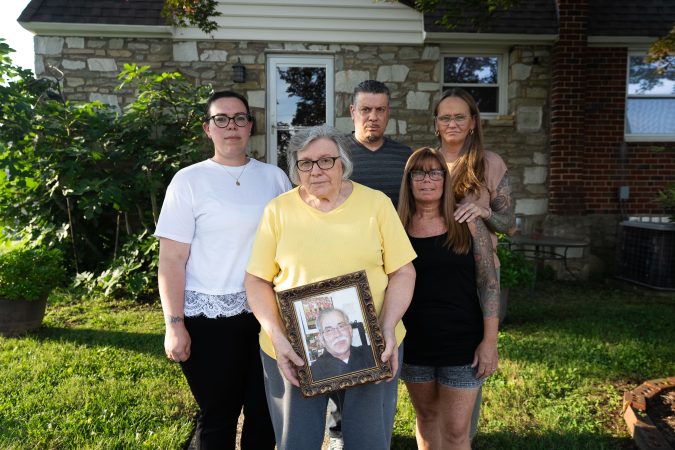
    Maglio’s family said the developments came as a welcome surprise after a decade of fleeting hope. Sitting in the green-walled living room of their parents’ home Tuesday night, Maglio’s children said they were grateful for an arrest and eager for the court process to begin.

    “I’m just glad it didn’t fall through the cracks,” said daughter-in-law Sandra Maglio, 50. “It was our biggest fear. We live in a city where people die every day, sadly. … So I’m just glad that, you know, someone took the initiative to say, ‘Hey, let’s look at this again.’”

    They were also struck by the timing. Maglio’s brother-in-law died Monday. And his son, Donato, died three years ago this month at the age of 47.

    They imagine them all together now.

    “It gives us some kind of closure,” said daughter Lucia Thrasher, 37. “But we already got the outcome we didn’t want to 12 years ago.”

    Thrasher’s eyes welled with tears as she looked at her 6-year-old twins, Charles and Thomas, who never got to meet their grandfather. Charles, bouncing in the doorway, asked why everyone was in the living room.

    “Nonno,” she told him.

    “You know, Nonno,” she said, as he looked away bashfully. “Where’s Nonno?”

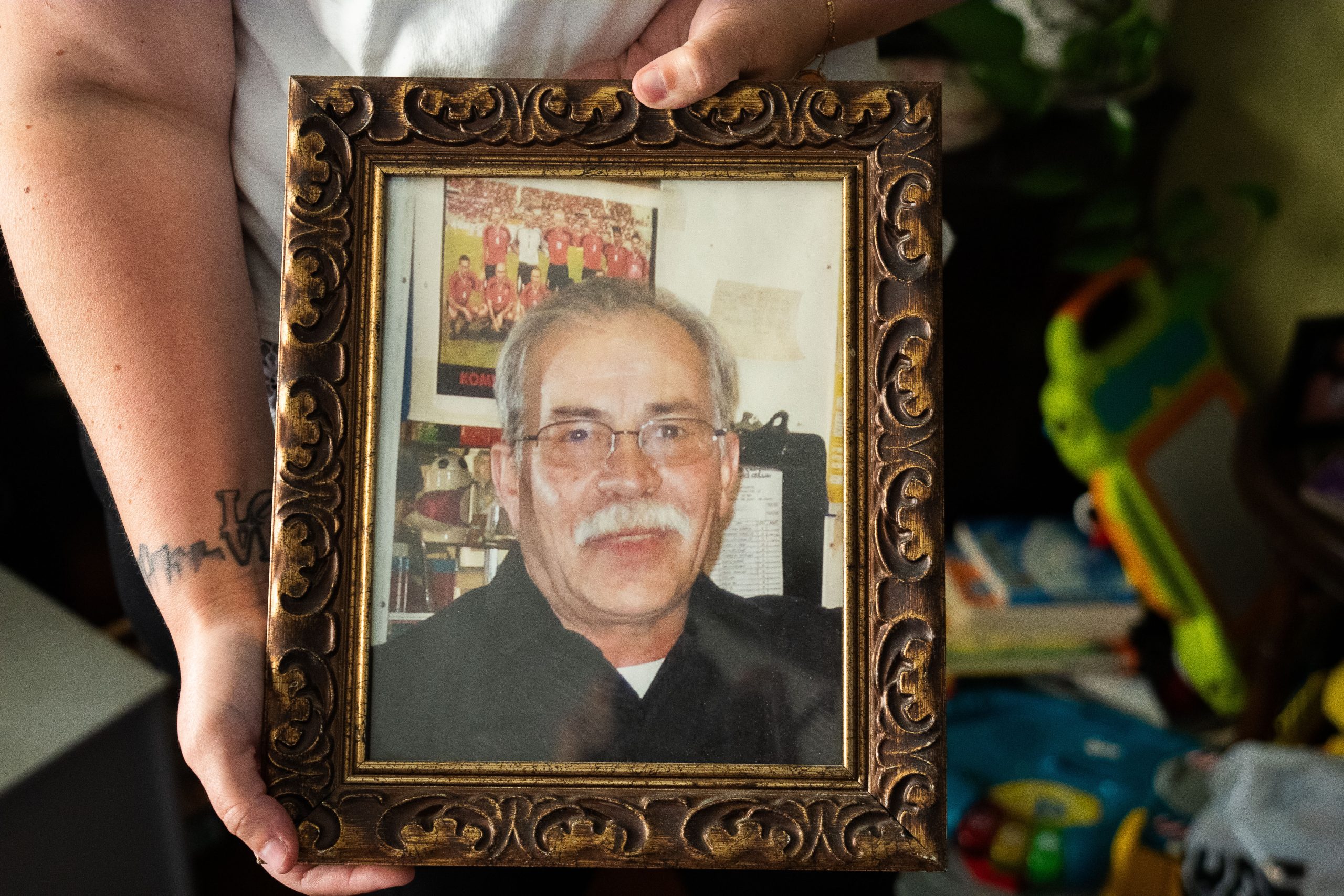
    He pointed toward a gold-flecked picture frame in the corner of the room.

    Vito Maglio, 69, was a father of six.Jessica Griffin / Staff Photographer
  • Police investigating discovery of skeletal remains near Franklin Mall in Northeast Philly

    Police investigating discovery of skeletal remains near Franklin Mall in Northeast Philly

    Police were investigating the discovery of human skeletal remains Tuesday evening near the Franklin Mall in Northeast Philadelphia.

    Around 7 p.m., police responded to a wooded area near the 12000 block of Knights Road, where the skeletal remains of an adult were found.

    Police said the gender and race of the deceased person were not immediately identifiable.

    The Philadelphia Medical Examiner’s Office was working to identify the person and the cause and manner of death, police said.