A Philadelphia judge has ordered a new trial for a former city police officer who was convicted of perjury, finding that one of the jurors on the case failed to disclose ties to a law firm representing the district attorney’s office — an association she said deprived the officer of a fair trial.
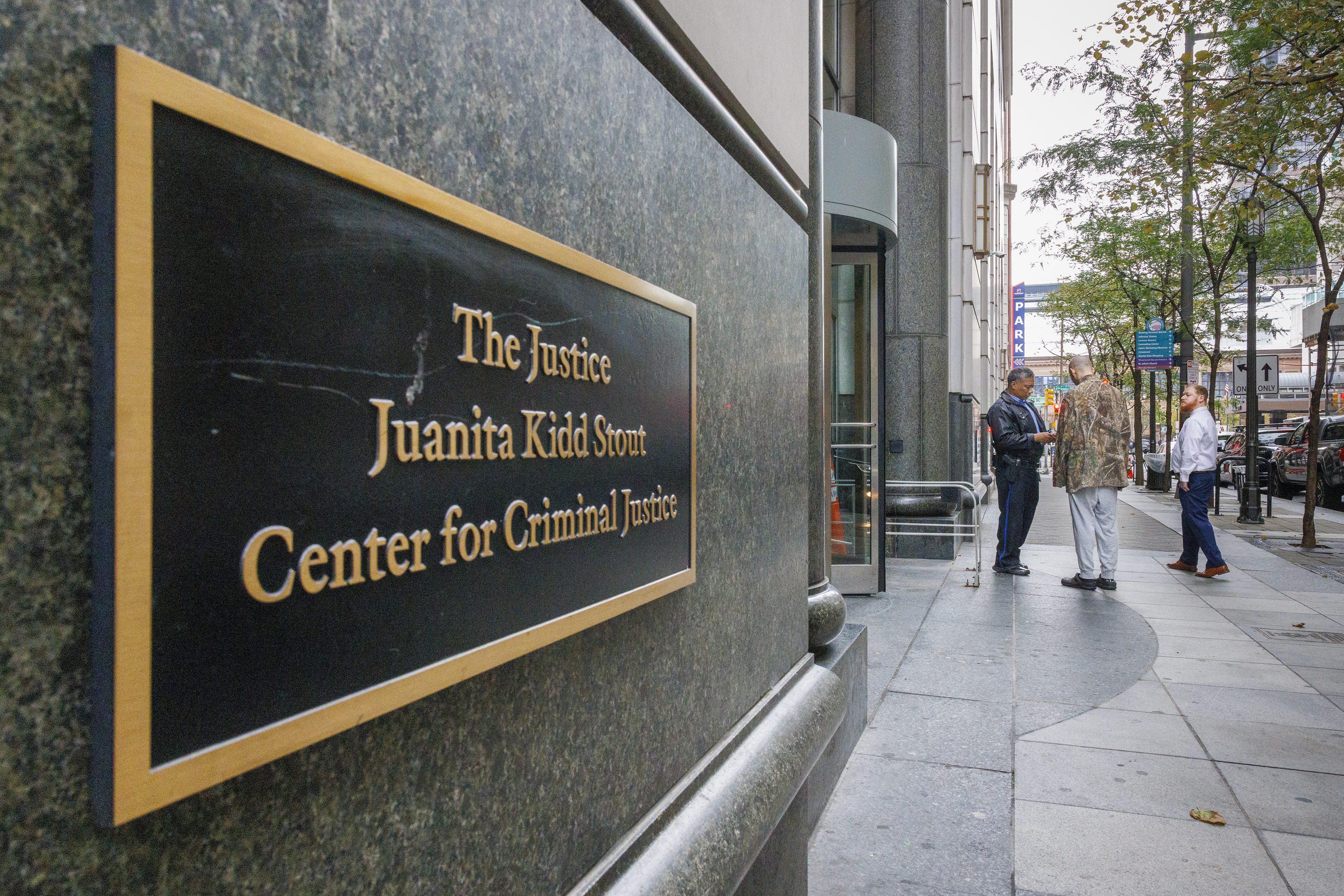
Daniel Levitt, 52, was found guilty of perjury in June for lying under oath about how he recovered a gun during a 2021 traffic stop. But on Thursday, Common Pleas Court Judge Natasha Taylor-Smith vacated the conviction and ordered that Levitt be retried.
Her ruling centered on the jury foreman, a personal injury lawyer who did not disclose that his law firm was representing the Philadelphia District Attorney’s Office in ongoing civil litigation against opioid manufacturers and distributors.
The foreman’s relationship to the law firm became public moments after the jury returned its verdict. Taylor-Smith questioned the jurors and concluded that the foreman’s affiliation had not affected the verdict.
In a letter to the court earlier this month, Levitt’s attorney, Coley Reynolds said he would have exercised a peremptory challenge to strike the juror had he known about the firm’s work for the district attorney’s office.
On Thursday, Taylor-Smith reversed her earlier decision and granted Levitt a new trial.
Reynolds welcomed the ruling, saying, “We believe he did not get a fair trial.”
District Attorney Larry Krasner said Friday that his office would appeal the ruling and if necessary, retry the case.
Prosecutors said Levitt found an illegal firearm inside a bag that he did not have probable cause or a warrant to search during an April 2021 traffic stop. Then, they said, he lied about how he found it during the prosecution of the man he arrested.
Levitt, a 12-year veteran of the force, was the first officer charged after a department review raised concerns that some officers had conducted unlawful searches of people and vehicles before recovering guns. He was fired following his arrest.
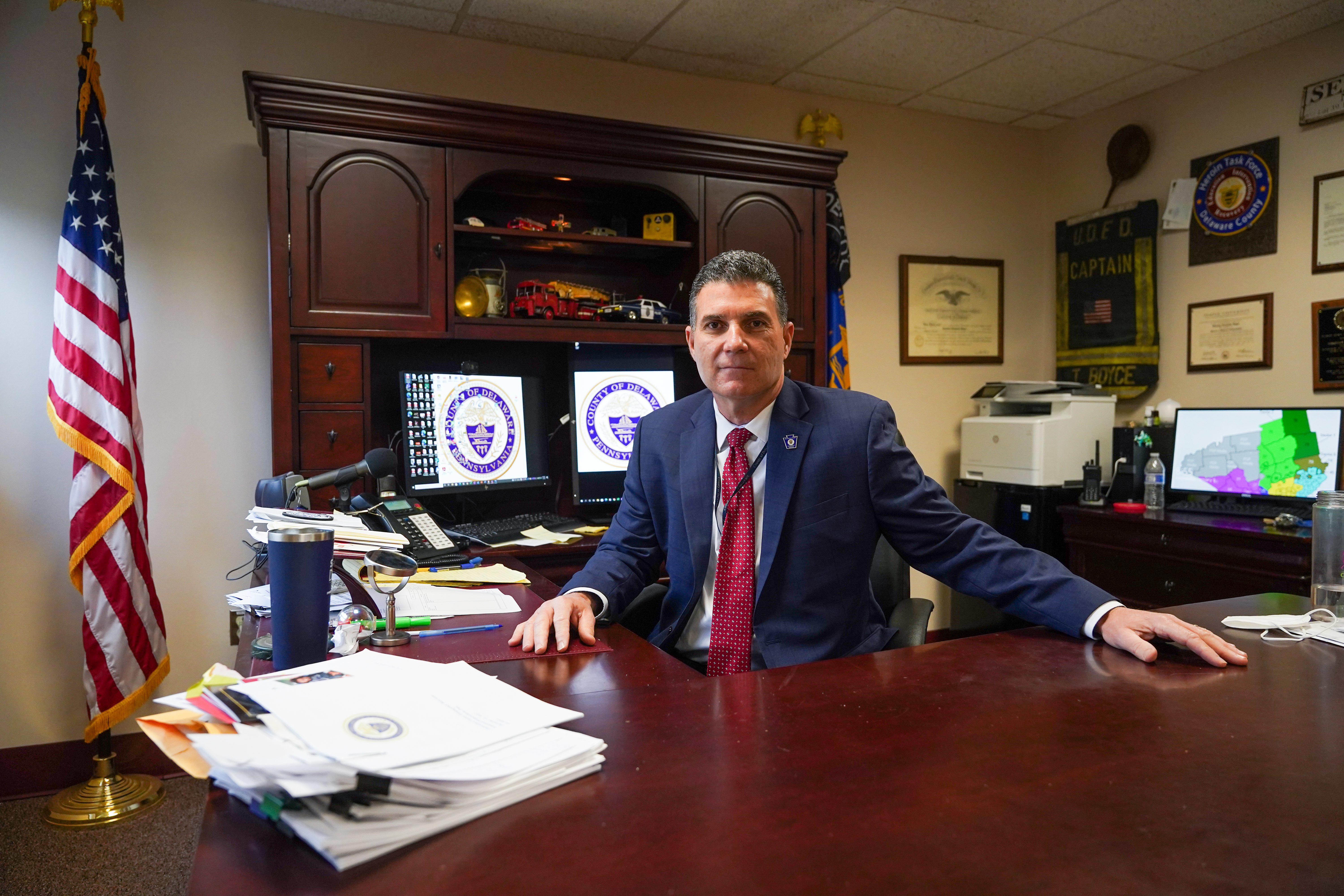
Tim Boyce, the former director of Emergency Services for Delaware County, was convicted Friday of assaulting and harassing two of his female employees.
Weeks later, a second set of charges was filed when another woman Boyce hired and worked with for years, said he showed her pictures of his penis, lifted up her skirt to look at her genitals and once muted a Zoom call she was part of to ask her graphic questions about sexual positions she preferred.
After about nine hours of deliberation, jurors convicted Boyce of all but one count, the simple assault charge.
Boyce was taken into custody after the verdict was read and the judge set his bail at 10% of $50,000. He will be sentenced in December.
His attorney, Andrew Edelberg, said afterward that he was disappointed with the verdict, but respected the jury‘s decision.
County officials fired Boyce shortly before the criminal charges were filed, after the first woman filed a complaint with the Equal Employment Opportunity Commission.
In his closing arguments, Edelberg told jurors that the case against his client was “botched, bungled, fumbled, messed up” by investigators who failed to find evidence corroborating the women’s allegations.
He accused prosecutors of attempting to play on jurors’ emotions with the testimony of the two women, who he said offered unreliable testimony.
“The Commonwealth wants so badly to convict Mr. Boyce, they’re desperately clinging to this story,” he said.
The women’s true intention was money, he said, referring to potential settlements from lawsuits they both have filed against the county.
But Deputy Attorney General Madelyn Abry, in her closing arguments, warned jurors not to be distracted by what she described as “filibustering by the defense.”
“Mr. Boyce is upset, he’s sad, he was devastated because he was caught, because his actions have finally caught up with him,” she said. “And they did so because of these two brave women.”
Abry told the jurors Boyce chose his victims intentionally: Both women were single mothers at the time, desperate for better-paying jobs that would provide health benefits for their families.
“I’m not making excuses because I have nothing to excuse myself for,” he said, calling the second woman’s assertions “absolutely a lie.”
He became emotional under questioning by Edelberg, saying that he checked into a rehab facility in Arizona for treatment of suicidal ideation, and later sought treatment from a second facility in Pennsylvania.
Edelberg, in his closing arguments, described Boyce as a hero who helped recover bodies from Ground Zero during the Sept. 11 attacks, and who once saved three children from a burning building as an Upper Darby firefighter.
He noted that the second woman remained friendly with Boyce after the first alleged assault, which was in 2018. And she later invited him to her wedding, he said.
“Why would you include a man who tells you these horrible, dirty jokes … and not tell anybody?” he asked jurors. “It’s the same theme, ladies and gentlemen: excuse after excuse.”
During her testimony, the woman said she waited to report the first assault, and endured the subsequent ones, because of Boyce’s authority.
“I’m nobody,” she said. “He’s the director in charge of all 911.”
The first woman testified that she sent Boyce a text message after the assault, telling him he had degraded her and made her feel like a piece of meat.
Boyce responded to that text, saying he was “sorry and not making excuses,” according to a copy of that text exchange displayed in court.
When pressed by Abry about that text, Boyce, while denying the assault, said he apologized because he believed the woman was drunk while she was texting him and attempting to “set him up.”
HARRISBURG ― Pennsylvania’s Judicial Conduct Board on Thursday urged a judicial disciplinary court to permanently remove a Philadelphia judge from the bench, saying he had displayed a pattern of unethical and “boorish” behavior that culminated in an effort to influence a colleague’s decision in a criminal case last year.
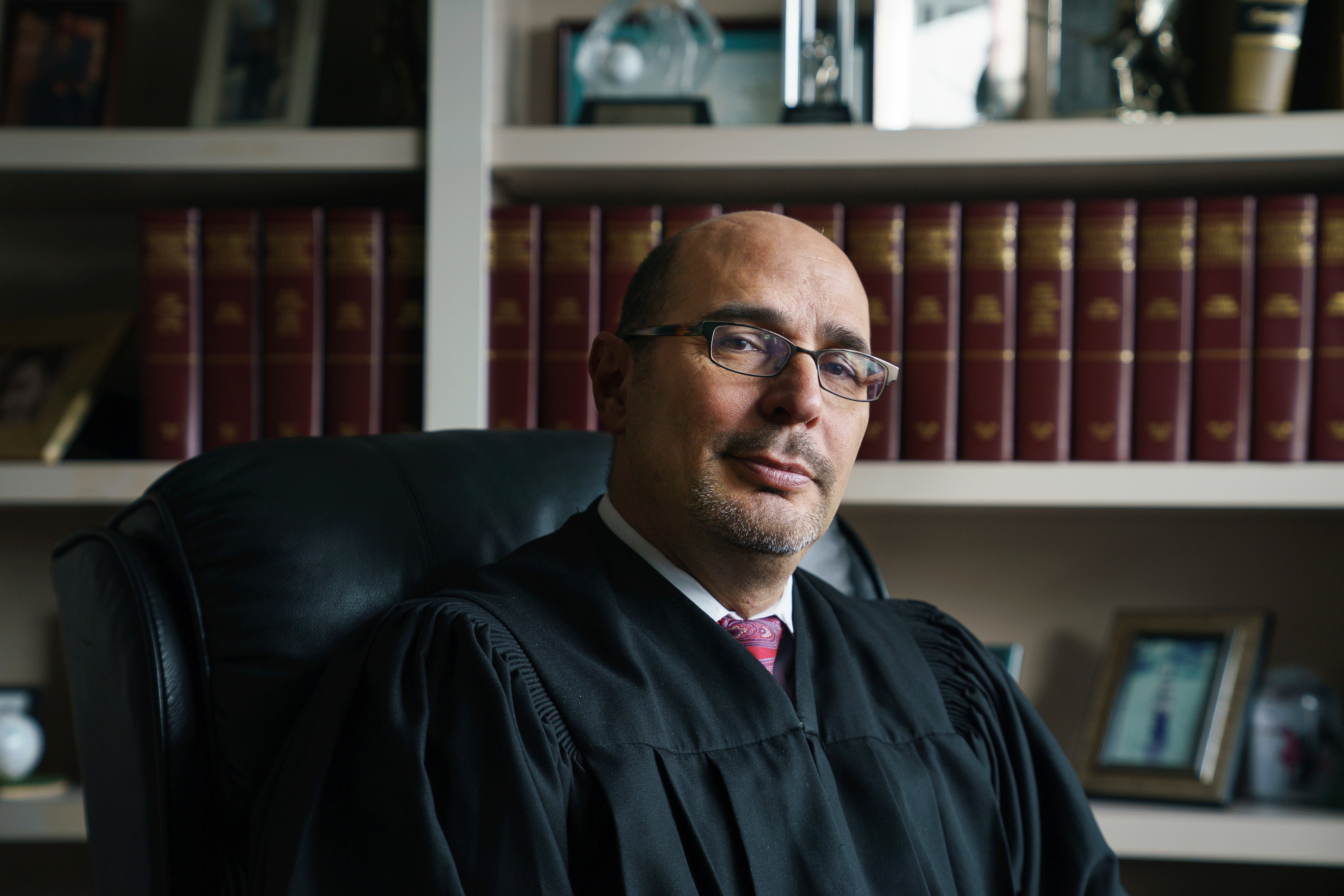
Common Pleas Court Judge Scott DiClaudio showed “little respect for the court and little respect for the rules of the court,” said Elizabeth Hoffheins, deputy counsel for the Judicial Conduct Board.
DiClaudio had a history of disciplinary issues, she said, and he had not taken adequate responsibility for his actions.
“Anything less than removal would fall short of restoring the public’s trust,” Hoffheins said.
The board’s request came after two days of testimony before the Court of Judicial Discipline, which is expected to determine DiClaudio’s fate as a judge in the coming months.
DiClaudio acknowledged Thursday that his remarks to fellow Common Pleas Court Judge Zachary Shaffer were improper, but insisted it was a complete misunderstanding and was never meant to tilt the scale of justice.
“I wish I never said it. I regret ever saying it,” DiClaudio said of the comments to Shaffer. “I wasn’t thinking.”
Shaffer testified that he was on the bench in his courtroom on June 12, 2025, when DiClaudio’s personal assistant, Gary Silver, walked in and said DiClaudio wanted to see him.
Shaffer said he and his clerk, Nicole Vernaccio, had been in touch with DiClaudio that week about buying T-shirts from the cheesesteak shop owned by DiClaudio’s wife. They assumed the request was to go pick them up.
The exchange occurred in the robing room of DiClaudio’s former courtroom inside the city’s criminal courthouse. Alejandro A. Alvarez / Staff Photographer
The two walked to DiClaudio’s courtroom, then gathered in his robing room. They spoke for several minutes about various topics, he said, before DiClaudio asked Vernaccio to leave. Vernaccio also testified that she was asked to step out.
Shaffer said DiClaudio then pulled out a piece of lined paper with “Dwayne Jones, courtroom 905, and Monday’s date” written on it.
DiClaudio held it out at his side, he said, then looked at him and said, “OK?”
Shaffer said he was confused, and hesitantly said, “OK.”
He said DiClaudio ripped up the paper and threw it away.
As Shaffer started to leave, he said, DiClaudio told him: “‘You probably would have done the right thing anyway.’”
Shaffer said he was shocked and believed DiClaudio was suggesting he should give a favorable sentence to Jones, who was scheduled to appear before him in the coming days on charges of illegal gun possession connected to a fatal shooting.
Shaffer reported the conversation to his supervisors the next morning, and they referred the matter to the Judicial Conduct Board. He recused himself from Jones’ case.
The board charged DiClaudio with multiple ethical violations last September. He was later suspended without pay.
All of this came to be, DiClaudio said, after he attended the Roots Picnic in June 2025 — where he said he hung out backstage with Philadelphia rapper Meek Mill. In the common area, he said, Jones approached him and said he had a forthcoming sentencing before Shaffer.
DiClaudio said he didn’t know Jones, and told him only that his colleague was “a good judge who would do the right thing.” When Jones handed him his business card, he said, he put it in his wallet, not wanting to be rude.
DiClaudio denied that he later summoned Shaffer to his courtroom, despite an audio recording that showed that shortly before his assistant went to retrieve Shaffer, DiClaudio asked: “Is Judge Shaffer on the bench right now? Can you call down there and see if he’s still on the bench please?”
DiClaudio said he only asked about Shaffer because he had just addressed a case where a defense attorney Shaffer is dating did not appear in court. He said he wanted to ask Shaffer why she didn’t show. (The courtroom audio confirmed that DiClaudio addressed the woman’s case just before inquiring about Shaffer.)
He said he did not instruct Silver to visit Shaffer, and was surprised when the judge walked in.
Once inside the robing room, DiClaudio said, he, Shaffer, and the clerk discussed various topics. It was only as Shaffer went to leave, he said, that he picked up his phone and wallet holding Jones’ business card, and remembered the concert exchange.
He said he took out the card and told Shaffer: “I saw this guy at a concert. I told him you’re a good judge and you’d do the right thing.”
Then, he said, he tossed it into the trash.
“It was improper and wrong. There was no good reason to say that even though it wasn’t my intention to influence the case,” he said Thursday, adding: “I never wanted him to do anything with that statement other than to say thank you.”
The board had initially said that DiClaudio sought to sway the case because Jones was a friend of Meek Mill. Jones, in an interview last year, also said he was a friend of the artist’s.
DiClaudio, too, is close to Mill.
But Hoffheins did not introduce evidence of that during Thursday’s hearing. She said this week that the board still believed that to be true, but did not need to prove a motive in its case.
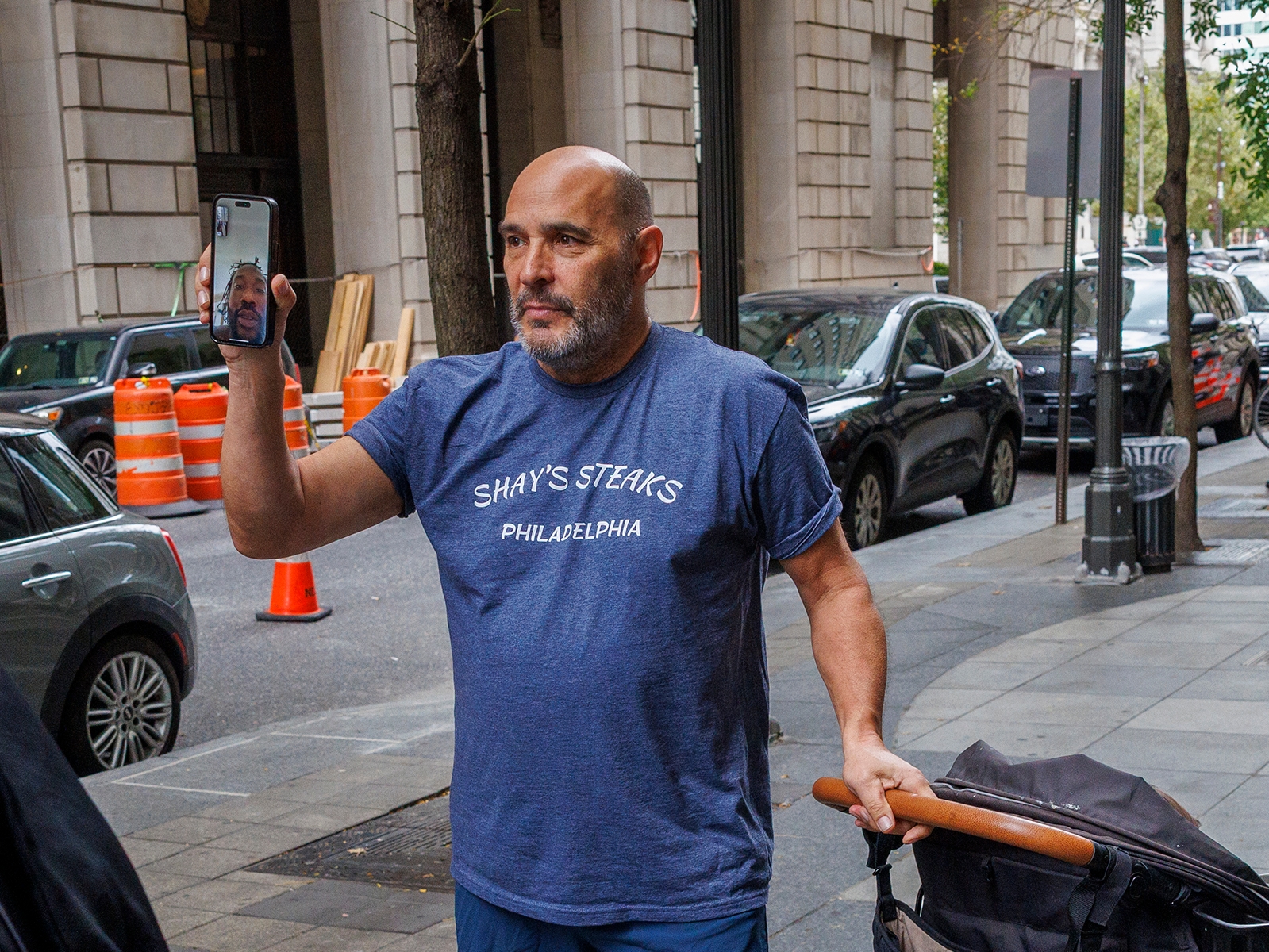
Common Pleas Court Judge Scott DiClaudio speaks with rapper Meek Mill on Facetime outside the Philadelphia courthouse on Sept. 16, 2025. DiClaudio, while on the call, approached the family of Tyree Musier, whose murder conviction was overturned, and said he thought they would appreciate Mill saying hello.Alejandro A. Alvarez / Staff Photographer
“This remark was not simply a compliment, not simply an off-the-cuff remark,” she said. “It was calculated to occur three days prior to this man’s sentencing.”
DiClaudio was elected to Common Pleas Court in November 2015, and took the bench in January 2016. Before his suspension last year, he mostly heard cases filed by people seeking to have their murder convictions overturned.
He presided over many high-profile exonerations and wrongful-conviction cases, and approved the release or resentencing of dozens of people who had been serving life in prison.
DiClaudio was known for working long hours, moving cases efficiently, and thoroughly explaining his decisions to the families of victims and the defendants. But he was also unconventional in his at times brash communication style on the bench.
That was on display again Thursday. He often rambled in a stream of consciousness from the stand, breathlessly veering between accepting responsibility, disputing Shaffer’s testimony, and even relaying his colleague’s dating history. His attorneys, Samuel Stretton and George Bochetto, struggled to reel him in.
“Just stop,” Stretton interjected several times.
Hoffheins pointed to the display, as well as DiClaudio’s previous disciplinary record, as proof of a pattern of misconduct.
Before becoming a judge, DiClaudio was censured by the Pennsylvania Supreme Court for “serial misconduct,” including violating legal ethics rules. Shortly after he took the bench in 2016, Hoffheins said, the Judicial Conduct Board sent him a private disciplinary letter for engaging in “boorish behavior” toward his court staff.
Then, in 2020, the Court of Judicial Discipline determined that he violated the code of conduct for judges when he failed to report debts on annual financial disclosure forms and repeatedly defied a judge’sorders to pay thousands of dollars in overdue bills to a Bala Cynwyd fitness club. He was suspended for two weeks, and placed on probation through 2026.
And last April, the Judicial Conduct Board accused him of using his position as a judge to promote his wife’s cheesesteak shop, eroding public trust in the judiciary, and abusing the prestige of the office for personal gain. DiClaudio has denied the allegations, and the case remains ongoing.
“What I am hearing, what I am feeling, is a persistent theme of your doing things and saying things … that are not wise,” said Judge Charles L. Becker, of the disciplinary panel.
Judge Carolyn Nichols called it “a painful trail of incidents.”
In a final plea, DiClaudio, 63, said if he returned to the bench, he would only work the few weeks necessary to secure his pension and lifetime health insurance to support his wife and two young children. Then he would retire, he said.
He teared up as he spoke of his children and defended his integrity and career.
“I talk a lot, but it’s my greatest strength and my greatest weakness,” he said. While he might be a “crazier judge,” he said, he’s “a judge who makes the right decisions.”
“That may be an explanation,” Becker said, “but, frankly, I’m not sure that’s a defense.”
Stretton, in his closing remarks, asked the panel for mercy.
“Yes he did something bad. And some of his conduct here can get a little rambunctious,” he said. “… But I see a great, decent judge. He’s done a lot of good in the community and on the bench. He’s well-respected.”
The tribunal will now weigh the matter, a process that could take months.
A 13-year-old boy was charged with murder and related crimes after fatally shooting a 16-year-old boy in a Norristown home, authorities said Thursday.
The shooting happened the morning of Sept. 22 at a residence on the 700 block of Arch Street, where prosecutors said Daniel Hawkins-Boyce fatally shot the victim, William Boyd.
Hawkins-Boyce came into possession of a Ruger .380 handgun a week before the shooting, according to the affidavit of probable cause for his arrest. It was not clear how he did so. He told police he “found” it, the document said.
Hawkins-Boyce and Boyd were hanging out in the home’s basement and had recently smoked marijuana when he accidentally discharged the firearm, striking Boyd in the face, the affidavit said.
Hawkins-Boyce called 911, and detectives arrived to find him on the front porch with his mother, where he told them he was responsible for the shooting.
Hawkins-Boyce did not live at the home where the shooting occurred, authorities said. He told investigators that he’d taken the gun to meet Boyd, and that he’d checked to make sure it wasn’t loaded.
In the basement, he told police, he left the gun unattended when he went to the use the bathroom for 10 or 15 minutes.
When he returned, he said, he noticed the gun was in a different position than where he left it.
Hawkins-Boyce told police he began scrolling the social media app TikTok and tapping the gun’s trigger with his index finger, and the gun went off.
After the shooting, he ran home and awakened his mother to tell her what happened, the affidavit said.
Montgomery County District Attorney Kevin Steele said in a statement Thursday that evidence showed the teen had “recklessly fired the firearm at the victim.”
The firearm was reported stolen in Philadelphia in June, according to the affidavit.
Steele said Hawkins-Boyce was charged as an adult in accordance with state law, but he said the case would likely move to juvenile court after a review from a judge.
The teen was arraigned on Sept. 30 and is being held at the Montgomery County Juvenile Detention Center on a $200,000 bail.
He is expected to appear in court for a preliminary hearing on Oct. 14.
All seven justices rejected District Attorney Larry Krasner’s argument that the law unconstitutionally strips the authority of an elected district attorney by granting jurisdictions to crime “within” SEPTA to a special prosecutor appointed by the Pennsylvania attorney general. But they did not unanimously agree on the reason.
The special prosecutor can investigate crimes in all counties in which SEPTA operates, but can take over cases unilaterally only in Philadelphia.
Chief Justice Debra Todd wrote in the majority opinion that the part of the special prosecutor law specific to Philadelphia serves a “legitimate state interest: promoting public safety through the protection of SEPTA employees and riders by supporting the prosecution of crimes within SEPTA, and specifically, SEPTA-related crimes in Philadelphia.”
The law responds to “public safety concerns regarding increased SEPTA-related crime in Philadelphia, and the belief that such crimes were not being sufficiently prosecuted,” Todd wrote.
State Attorney General Dave Sunday, who is authorized to appoint the special prosecutor, said the law “has paid great dividends in holding violent offenders accountable” for crimes on SEPTA.
“Our mass transit prosecutor will continue to prosecute criminals who have killed and assaulted other individuals, perpetrated acts of gun violence, and stolen SEPTA property,” Sunday said in a statement.
A spokesperson for the district attorney’s office did not return a request for comment.
The special prosecutor’s office has become more active in the last year after a slow start. The office initially hired a sole attorney and did not prosecute a case until 2025, two years after its creation. The office has since taken on a portfolio of around two dozen cases, a spokesperson for the attorney general said. Serious crime on SEPTA has trended downward, according to the agency, falling around 20% in mid-2026 compared with the same period the previous year.
Earlier this year, the special prosecutor,Michael Untermeyer, took on an assault case involving a woman accused of pepper-spraying and punching a conservative influencer during a viral confrontation on a SEPTA bus. And a representative for Sunday’soffice said the prosecutor was preparing for a homicide trial in November, and the office was recently referred a case involving an assault on a SEPTA bus driver.
The ruling is the latest in which the Supreme Court has shown willingness to take away from Krasner functions that county prosecutors traditionally havehad sole discretion over. The justices in June found that Philadelphia prosecutors had engaged in a pattern of misleading judges when seeking to overturn murder convictions, and instructed judges to notify the state attorney general’s office so it can review cases when Krasner’s office makes such requests going forward.
But the ruling on the SEPTA special prosecutor might be short-lived.
Krasner’s lawsuit called the law an “unconstitutional, radical, and unprecedented measure” amounting to a “shocking usurpation of power.”
In June, Commonwealth Court issued a 4-3 decision against Krasner, finding the law constitutional. In the majority opinion, Judge Anne E. Covey said the act “does not clearly, palpably, and plainly violate the Pennsylvania Constitution.”
In a Thursday concurring opinion, Justice David Wecht emphasized the ways the special prosecutor law was tailored to Krasner specifically.
The law disqualifies anyone who worked at the Philadelphia district attorney’s office as of roughly the beginning of Krasner’s tenure from serving as special prosecutor, the justice noted. And the measure was set to expire a year after Krasner’s second term ended (he has since won a third, which began in January).
The special prosecutor law is “tailored to hamstring Philadelphia’s thrice-elected and sitting District Attorney’s customary prerogatives relative to crime within the jurisdiction that office serves,” Wecht wrote.
“But none of that matters,” he said, because since 1951 the Pennsylvania Constitution has allowed for laws ”regulating the affairs of the City of Philadelphia.”
Nearly a dozen Philadelphia-area small-business owners stole almost $1 million in public funds by defrauding a program designed to support low-income mothers and their children, authorities said Thursday.
The businesses accused of fraud are small groceries or corner stores located throughout the city, according to the state attorney general’s office, which announced Thursday that it had charged 11 people with theft by deception, forgery, and related crimes.
Prosecutors said the business owners submitted false claims for funds through the federal food assistance program WIC, the Special Supplemental Nutrition Program for Women, Infants, and Children. The program and funds are administered by Pennsylvania’s health department.
Participating businesses are reimbursed through the state for purchasing food and infant formula, which is provided to recipients in stores using a benefits card. Prosecutors said the businesses abused their role as providers, submitting fraudulent claims for purchases — nearly 10,000 in all, they said.
Investigators reviewed thousands of receipts and audited paperwork submitted by the businesses between 2021 and 2025, finding they were “forged and fabricated,” they said.
Attorney General, Dave Sunday on March 13, 2025 in Philadelphia.Jose F. Moreno / Staff Photographer
The fraudulent claims in several cases exceeded $100,000, and almost all amounted to tens of thousands of dollars. Most of the claims were fulfilled, prosecutors said, resulting in the loss of $985,000 in public money.
The largest sum was paid to Felix Sosa, 35, of El Paisano Express Food in South Philadelphia, according to prosecutors. Sosa was reimbursed a total of $342,183 for such claims, they said, and was charged with theft and related crimes.
He was arrested Wednesday and was being held on $25,000 bail. No attorney for him was listed in court records.
Musa Barry, of Uncle Musa Grocery in Southwest Philadelphia, was charged with submitting fraudulent claims totaling $226,557. He was arrested Wednesday and has not hired an attorney.
Nearly all of the remaining business owners are accused of stealing sums in the tens of thousands.
Attorney General Dave Sunday decried the crimes in a statement Thursday, saying the business owners had “intentionally defrauded” state government for years.
Nine of the merchants have been taken into custody, Sunday said.
“This type of criminal activity doesn’t just victimize taxpayers by defrauding the government, it hurts the women and children who rely on the services programs like WIC provide,” he said.
Officials estimate about 175,000 Pennsylvanians are enrolled in the WIC program, about 36,000 of them in Philadelphia. It is available for low-income women who are pregnant or have given birth within six months (if breastfeeding, up to 12 months), as well as children under 5.
The announcement of the criminal charges comes at a challenging time for the Pennsylvania Bureau of Women, Infants, and Children.
The bureau’s director, Sally Zubairu-Cofield, resigned last week, citing “significant and ongoing workplace challenges” and barriers to leadership. She had led the office since 2022 and was appointed during the administration of former Gov. Tom Wolf.
She declined to comment Thursday.
Zubairu-Cofield wrote in her resignation letter that she had faced “multiple allegations and investigations that I understood were subsequently determined to be unfounded” during her tenure, according to Spotlight PA.
She did not elaborate on the nature of those allegations, according to the outlet.
A former Philadelphia woman who voted twice in the 2024 presidential election was sentenced Thursday to three years of probation.
Miya Pack, 40, who now lives in Georgia, pleaded guilty earlier this year to voting more than once in a federal election after prosecutors said she cast ballots in 2024 in Bergen County, N.J. — where she grew up — and in Philadelphia.
Pack was not affiliated with any political party at the time, according to Pennsylvania voter records. And prosecutors did not specify which candidate she voted for.
Pack also did not name her preferred candidate Thursday while addressing U.S. District Judge Joshua D. Wolson. Instead, she simply said she was “nervous” about the election’s outcome, but recognizes now that that was no excuse for voting twice.
“I was wrong,” she said. “I’m very, very sorry.”
Pack voted in-person in North Jersey on Oct. 26, 2024, court documents said, and then cast another ballot in-person in Philadelphia 10 days later, on Election Day.
Assistant U.S. Attorney Nancy Potts said Pack’s crime “violates the trust that we have in one another to abide by the basic rules of society.”
And Wolson, the judge, said Pack’s offense “strikes at the heart of democracy in many respects.”
“There’s a degree of honor code in voting, and breaches of that undermine the public confidence in elections,” he said. “And our elections function in no small part because they rely on a public perception of confidence.”
Pack said she understood. And both she and her attorney said Pack has been left “mortified” and “embarrassed” by the case, which has been covered by a variety of news outlets, making her name and background easy to find online.
Election officials and other experts generally agree that voter fraud has not historically occurred on a large scale, or at rates that might undermine electoral results — particularly in national elections, such as presidential contests.
Pack’s indictment was announced last year alongside the indictment of another man, Matthew Laiss, who voted twice for Trump in 2020. Laiss was sentenced earlier this year to six months of house arrest and three years of probation.
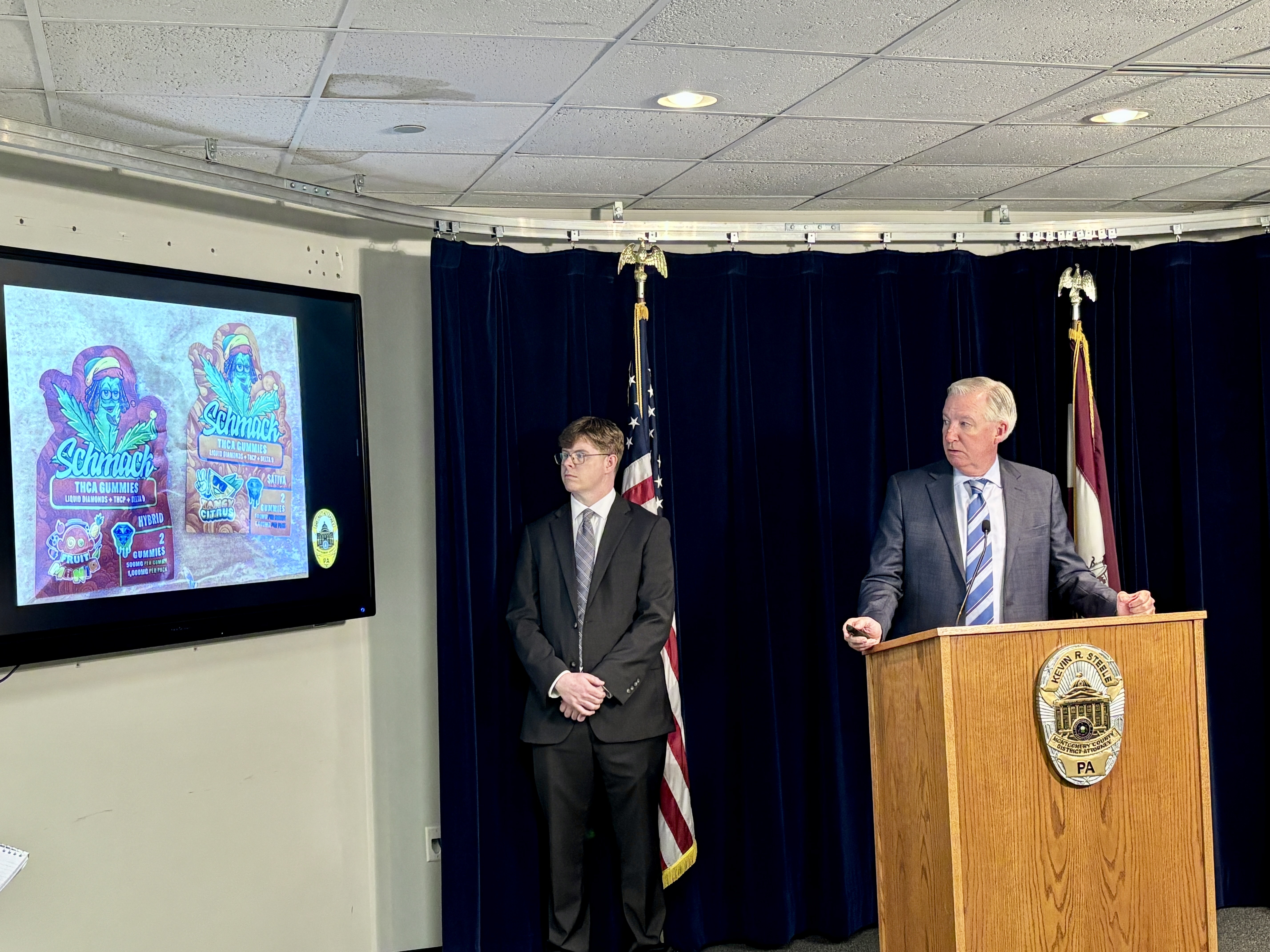
Montgomery County prosecutors announced felony drug charges Wednesday against nearly 50 businesses that they say illegally sold powerful THC products, the latest effort in an ongoing crackdown against smoke shops selling unregulated drugs.
District Attorney Kevin Steele said 46 retailers — including shops, gas stations, and corner stores throughout the county in towns including Haverford, Pottstown, and Narberth — ignored warnings from his office that some of the products on their shelves were illegal to sell in Pennsylvania outside of a medical marijuana dispensary.
“I think folks thought we were blowing smoke, for lack of a better way to say this, about the things that were coming if they didn’t abide,” Steele said. “They haven’t abided, and so … they are facing felony possession with intent to deliver charges.”
The crackdown comes about a year after Steele’s office issued a scathing grand jury report on the proliferation of smoke shops selling illegal THC products. The 107-page report was influenced in part by an Inquirer investigation that found some over-the-counter products were not legal at all — and often rife with harmful contaminants.
The Inquirer began testing over-the-counter THC products in the spring of 2025, at a time when Pennsylvania law enforcement showed little interest in examining the products sold openly at smoke shops.
But enforcement has risen steadily as storefronts multiply across the region — outnumbering schools in Montgomery County, according to Steele. The shops also peddle an array of other potentially dangerous products, from ultra-addictive 7-OH kratom pills masquerading as health supplements to unregulated psychedelic drugs baked into chocolate bars.
Shops attempt to sell these supposedly legal THC products through a legal loophole set by the 2018 U.S. Farm Bill, which allows hemp-derived products to be sold if they contain minuscule amounts of Delta-9THC.
However, the vapes, gummies, and other items sold in the shops investigated by his office were potent, and had enough THC in them to be intoxicating, according to the prosecutor. Some, he said, contained as much as 2,000 mg of THC and were sold in colorful packaging that seemed to target children.
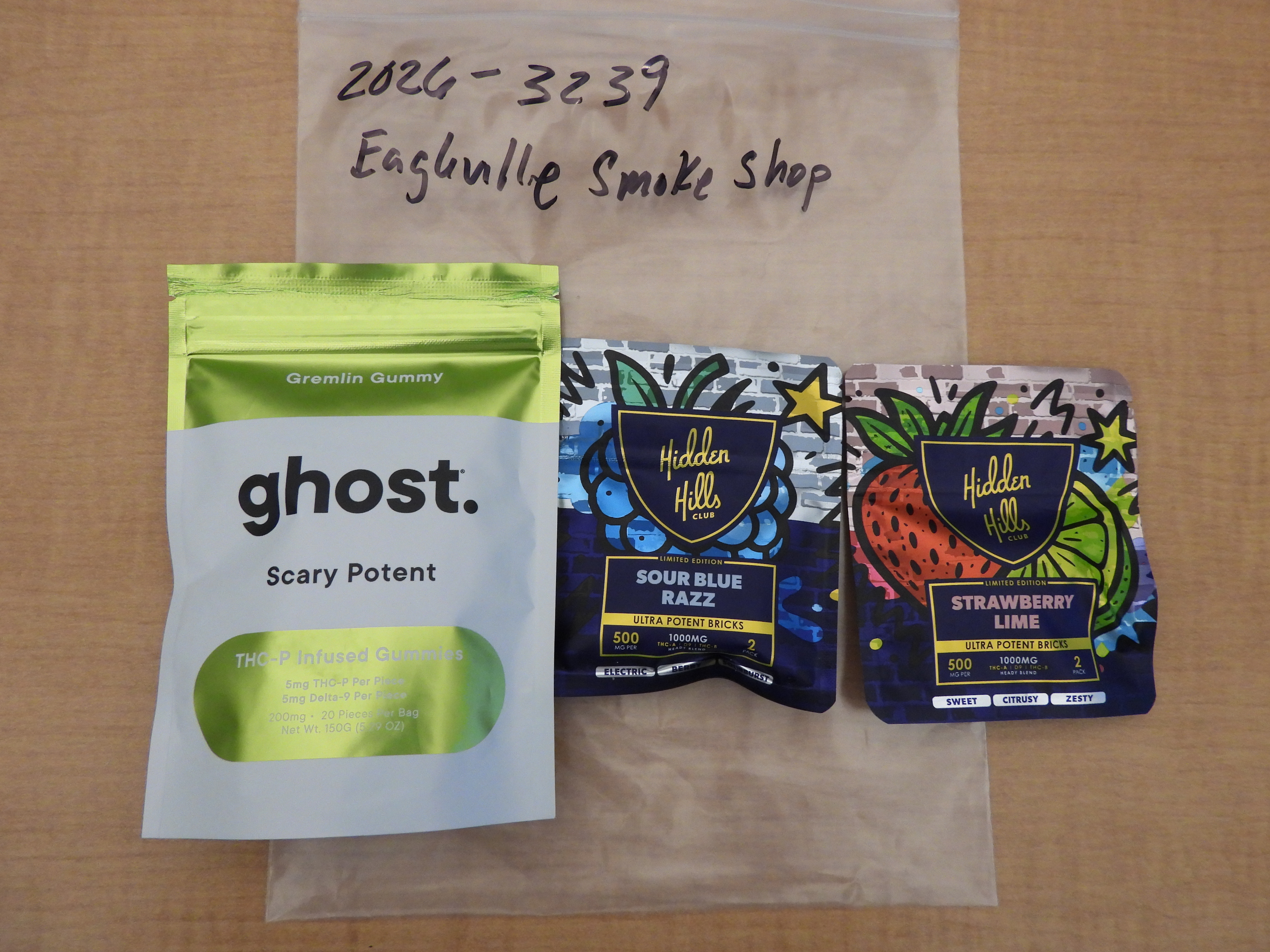
These gummies, which contain an amount of THC illegal to sell outside of a medical marijuana dispensary, were allegedly sold at Eagleville Smoke Shop, according to Montgomery County prosecutors.Montgomery County District Attorney's Office
The charges were not filed against individual owners, but against the businesses themselves, Steele said. Penalties can range from fines to the revocation of business licenses.
If necessary, Steele added, his office could file more serious charges, including racketeering, against individual owners.
He stressed, however, that his efforts are not “anti-business.”
“What we’re trying to do here today is to get businesses operating in Montgomery County to comply with the law, because we care about kids and public safety in our community,” he said.
The letters warned the shops’ owners that the sale of high-THC products was illegal, and asked them to check their inventory and remove any offending products from their shelves.
Follow-up checks by investigators in subsequent months found that 46 of them were still selling the products, triggering the criminal charges.
“I had hoped when we did the grand jury report and put people on notice that would be enough,” Steele said. “It was not.”
Last year’s grand jury report was the product of a joint investigation with prosecutors in Bucks and Chester Counties. It found many stores used “misleading packaging and fraudulent lab reports” to openly sell banned substances across all three counties, and called for greater enforcement of store operators who “knowingly violate the law.”
Nearly 300 stores selling hemp operate in Montgomery County, outnumbering schools, according to the report, a reality it described as “a public health crisis unfolding in plain sight.”
The report’s findings referenced the 2025 Inquirer investigation that found samples of these products purchased from different stores in the Philadelphia region exceeded the 0.3% Delta-9 THC potency level cited in the Farm Bill, making them illegal to sell in Pennsylvania.
Those items contained Delta-9 THC at levels from 200% to more than 2,400% over the federal limit. Six samples, strengthened by other hemp-derived THC variants, were as potent as most dispensary-grade marijuana.
The Inquirer also found that some companies deceived consumers about what was in their products by digitally altering lab results to remove evidence of contamination. Seven of the samples tested by The Inquirer contained a potentially harmful fungus. Three contained pesticides, including one illegal chemical.
Owners of some of the stores investigated by Montgomery County in 2025 told detectives they removed illegal products from their shelves after The Inquirer’s investigation was published that July, according to the grand jury report.
“We are trying to address this for the sake of the children in our community, for the sake of the public who is misinformed about what these items are, and to deface myths that are out there that if a store is selling something like that, it must not be harmful,” Steele said. “That is not the case.”
Staff writer Max Marin contributed to this article.
An 83-year-old woman sitting on the steps in front of her house was wounded by stray gunfire from what police believe was a shootout early Wednesday evening in North Philadelphia, police said.
The woman was struck twice in the torso from two bullets around 5:15 p.m. on the 2300 block of North Gratz Street, Chief Inspector Scott Small said.
She was taken to Temple University Hospital, where she was listed in stable condition.
Police found more than 40 spent shell casings at the scene fired from two different-caliber firearms, Small said.
Nearby on Gratz Street, police found an empty sedan crashed into a light pole with its engine still running and a handgun inside, Small said.
Video showed a blue Honda Accord heading east on Dauphin Street. It stops and someone gets out and starts shooting, Small said.
It was not clear whom that person was shooting at, Small said.
A woman shot and killed a man who police say she knew after he broke into her Crescentville apartment on Wednesday.
The woman shot the man in her second-floor apartment on the 4600 block of Castor Avenue around 5 a.m., Philadelphia Police Chief Inspector Scott Small told reporters on the scene. Neither person has been identified.
First responders found a masked man, 29, in the bedroom, where he was unresponsive with a gunshot wound to the head. The man was pronounced dead at the scene around 5:30 a.m., Small said.
When first responders removed the man’s mask to render medical aid, the woman, who police believe to be in her 20s, said she recognized the man and knew him.
The woman is cooperating with investigators, who said they believe the man was shot after breaking into the woman’s apartment.
“She heard someone breaking windows to the apartment, and then she encountered this male inside of the property,” Small said. “He was wearing a mask covering his face, and she fired one or two shots, striking this male in the head.”