The Pennsylvania Human Relations Commission on Tuesday condemned an incident last week of antisemitic vandalism of a sculpture at the Weitzman National Museum of American Jewish History.
On Thursday evening, “an individual scrawled a hateful message on the museum’s iconic OY/YO sculpture. This marks the second act of vandalism within a year, following spray-painted graffiti on the building, plaza, and an Israeli flag in August 2025,” the commission said in a statement.
State Rep. Tarik Khan (D., Philadelphia) was in the area early Friday morning when he saw the vandalism, which he described as written in black marker on the side of the OY/YO sculpture at the southeast corner of Fifth and Market Streets. The three accusatory words appeared directed at Jews in general.
Khan said he quickly called 911.
“It was like a kick to the stomach,” Khan said Tuesday in a phone interview.
“We have to acknowledge what is happening,” Khan said.
The Weitzman Museum said in a statement: “At a time of heightened antisemitism and hatred directed at Jews in America and around the world, incidents like this are deeply troubling — but they will not intimidate us or change who we are.”
A spokesperson for the Philadelphia Police Department could not be reached for comment.
“Pennsylvania will not tolerate hate in this state and the PHRC will continue to foster inclusion and eradicate hatred in all its forms,” said Jones, who is also a member of Philadelphia City Council.
Less than a year ago, an Israeli flag that was displayed on the west-facing side of the museum was vandalized with red paint. A South Jersey man was charged with ethnic intimidation and related offenses. The case is still pending, court records show.
“Criticism of Israel is not antisemitism. Blaming Jewish people for the Israeli government’s actions is,” Khan wrote in a Saturday post on Facebook.
“This is a time we need to reach out to each other,” Khan said.
The Sept. 15 event, which is free and open to the public, will be held from 6 to 8 p.m. at the Fallser Club, 3721 Midvale Ave.
Raymond Polak, a Holocaust survivor, will be the featured speaker at a community fourm co-hosted by State Rep. Tarik Khan on Sept. 15 in East Falls.State. Rep. Tarik Khan
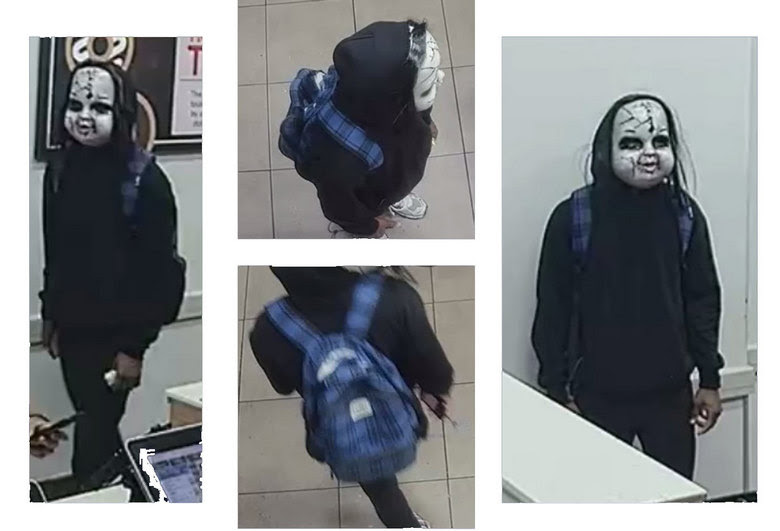
Police are searching for a person in a horror-movie mask who has harassed multiple Center City pedestrians in recent days.
Officials say the suspect — a young man who police believe may be filming the encounters for social media — approached a 40-year-old woman near City Hall last Wednesday and made threatening comments while holding his hand behind his back.
The incident unfolded around 5:30 a.m. on the 1500 block of JFK Boulevard while the woman was out for a jog, authorities said.
The frightening encounter caused her to stumble and injure herself as she fled to a nearby SEPTA station.
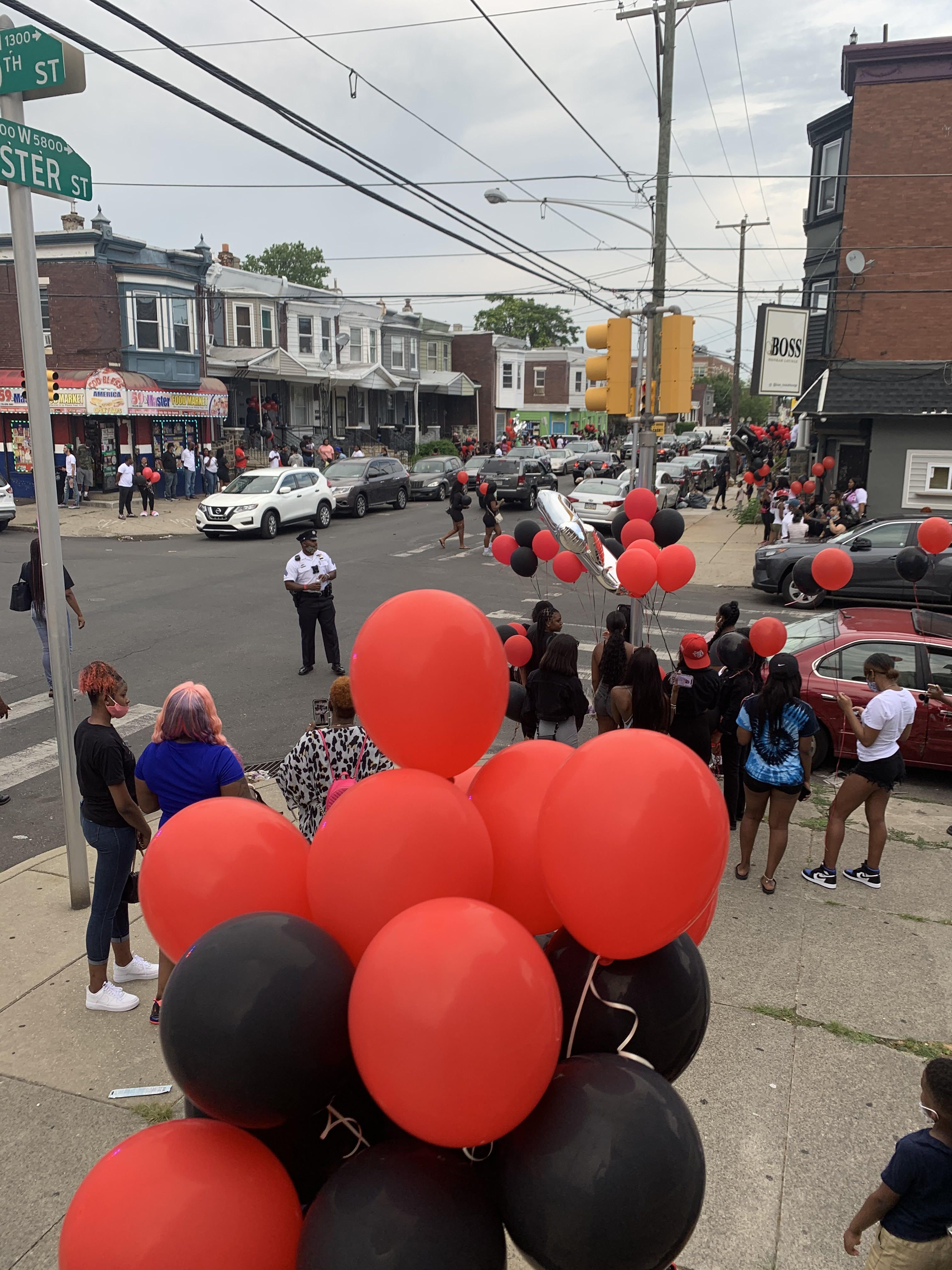
Six years after an up-and-coming teenage rapper was shot to death outside a West Philadelphia home, two of his killers have been convicted and sentenced, prosecutors said.
Donovan Williams, 24, was found guilty last week of first-degree murder in the killing of Aamir Johnson-Daye, known as D4M Skiano, and of the attempted murder of a man who was with him, the Philadelphia District Attorney’s Office announced Tuesday.
A judge on Friday sentenced Williams to life in prison without the possibility of parole, plus 46 to 92 years, court records show.
Williams’ codefendant, Bahij Dini, 28, pleaded guilty earlier this month to third-degree murder, conspiracy, and firearms offenses, and was sentenced to 13½ to 42 years, prosecutors said.
But the two convictions have not closed the case. Prosecutors said that three gunmen climbed from a car on July 5, 2020, and opened fire on the family’s home, but that the third shooter has not yet been identified. Nor was a possible fourth participant, they said, who may have stayed in the vehicle.
“We don’t have all the answers here,” District Attorney Larry Krasner said, appealing for the public’s help.
Johnson-Daye’s parents stood with prosecutors at the news conference, just days before what would have been their son’s 25th birthday, they said.
His mother, Latoya, thanked investigators, saying: “This is a perfect happy birthday for him.”
But she also pressed the public for information on the people being sought who have not yet been identified. “Please just come forward,” she said. “We’re still not done yet.”
One night, two killings
Johnson-Daye was part of a West Philadelphia rap collective whose videos drew hundreds of thousands of views online. His songs were also played on the radio.
Prosecutors said it was possible that his killing on the 1400 block of North 61st Street grew out of an earlier death the same night. A 15-year-old football player, Angelo Walker, was fatally shot nearby on Nassau Road, said Assistant District Attorney Jeff Hojnowski, who helps lead the office’s homicide unit and prosecuted the case against Williams and Dini.
Walker was affiliated with Williams and Dini, and word of his death spread quickly, Hojnowski said. He said a long-running feud between two neighborhood groups — one Williams belonged to and a rival that Johnson-Daye rapped with — may have also played a role in the fatal shootings.
About two hours after Walker was killed, he said, Williams, Dini, and a third gunman drove to the North 61st Street house. Johnson-Daye was on the front porch with another man when the gunmen approached and opened fire, killing him, Hojnowski said. No one else at the home was hit, he said.
Detectives recovered 14 spent casings, Hojnowski said, and determined three guns were used — one for each shooter.
The case against Williams and Dini was built almost entirely from surveillance video, cell phone location data, and digital records rather than eyewitnesses, Hojnowski said. Cameras captured a tinted Buick registered to Williams parking on the block with its lights off, then three figures walking toward the porch and the flashes of discharged bullets.
Prosecutors said the gunman they identified as Williams fired with his left hand — Williams is left-handed — and wore clothing later recovered from his home and car. Cell phone records placed him and Dini at the scene, and tracked them afterward to a hotel near Philadelphia International Airport.
Williams’ attorney did not immediately return a phone call Tuesday.
Dini had initially been charged with first-degree murder. Coley Reynolds, Dini’s attorney, called the plea to third-degree murder “an extremely competitive offer that resolved the case without looking at a possible life sentence.” Cooperation with the ongoing investigation, Reynolds said, was not part of Dini’s deal with prosecutors.
‘We can get these things done’
Johnson-Daye’s 2020 killing came in a year of increasingviolence in the city. The conviction of his killers, Krasner said, comes during one where homicides are down about 18% from last year — when such killings reached a decades-long low.
“We can get these things done,” he said. “But we can’t do anything without the support of the public.”
Anyone with information is encouraged to contact the Philadelphia police tip line at 215-686-TIPS (8477).
Pine after pine rolls by on a windy winter day, until the road becomes sand and snakes its way through this wild stretch of New Jersey.
For millions of visitors, these Pine Barrens are a magical, mysterious place, full of folklore. For Sue Quackenbush, the pines feel ominous, a place to fear ever since her daughter, Danielle Lopez, disappeared there in April 2024.
“This isn’t grief, yet. This is terror,” Quackenbush said on a January afternoon there.
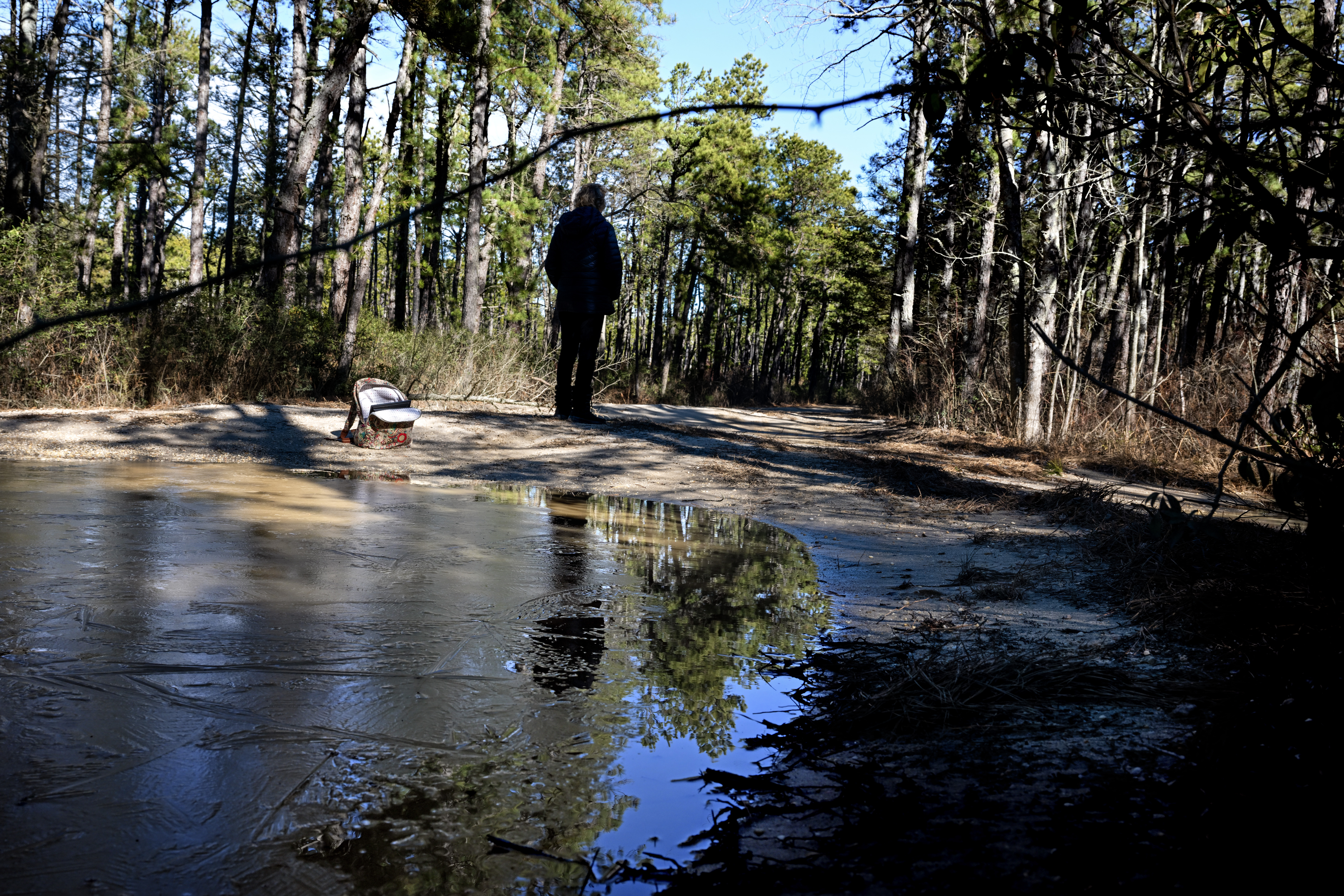
Sue Quackenbush is on Lost Lane Road in Woodland Township on Jan. 12. In April, 2024 her daughter Danielle Lopez disappeared farther up the dirt road while camping with her boyfriend in New Jersey’s Brendan T. Byrne State Forest. She is offering a $25,000 reward for information leading to solving the case.Tom Gralish / Staff Photographer
Vanished from camp
Lopez was 37 at the time of her disappearanceand staying with a boyfriend, James Scott Dunn, at a campground in Brendan T. Byrne State Forest, about 16 miles north of Lost Lane, in April 2024.
Just after 9 a.m. on April 13, 2024, Lopez was captured on surveillance buying coffee at a Burlington County Wawa, not far from the campground.
Later on April 13, around 6 p.m., witnesses saw her walking alone on Lost Lane, a desolate, sandy road pocked with muddy puddles deep in the Pine Barrens.
She was never seen again.
Quackenbush reported Lopez missing 11 days later on April 24. Dunn went to see the police a week later, at Quackenbush’s urging, and was arrested on unrelated drug charges. According to the New Jersey Department of Corrections, Dunn was sentenced to five years in prison on Oct. 25, 2025, on those charges, along with a theft by deception charge. He is currently incarcerated at South Woods State Prison.
Lopez’s car, a 2008 Hyundai Accent, was not discovered until May 1, 2024, disabled and abandoned on Lost Lane, in one of the many muddy holes that dot the road.
Quackenbush, whom the Inquirer has been speaking to since January, said her daughter, known as “D-Lo,” was vivacious and loud. She also had some issues with alcohol, and had sought help for it in the past.
“There’s no denying Danielle had alcohol issues. I’ve never tried to mislead or cover that up. There’s no denying that most people don’t go camping in April … in New Jersey,” she said.
The investigation
The New Jersey State Police are investigating Lopez’s disappearance and have declined to comment to The Inquirer on the case.
In a social media post on the two-year anniversary of her disappearance, police said they were still “seeking the public’s assistance in locating Danielle and gathering any information related to her disappearance.”
In 2024, investigators told NBC’s Dateline that witnesses who saw Lopez walking on Lost Lane that evening on April 13 were filming with a GoPro camera. Based on the footage, investigators told Dateline that Lopez was alone and “did not appear to be in distress” in the video, which has not been released. Lopez allegedly asked those witnesses to help push her car out, but they didn’t.
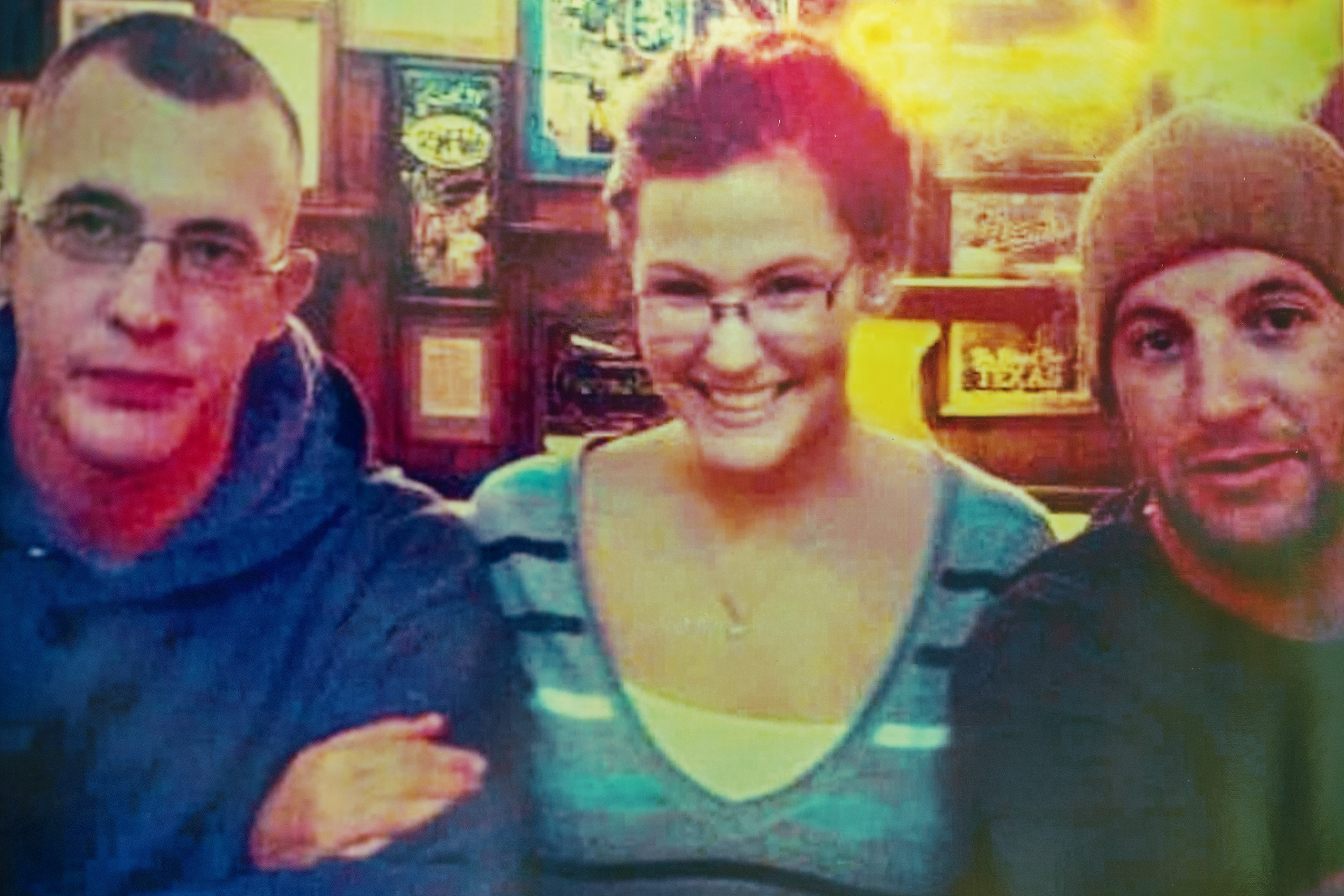
A family photo of Danielle Lopez, who disappeared in April 2024 while camping with her boyfriend in New Jersey’s Brendan T. Byrne State Forest.Courtesy of Sue Quackenbush
Investigators told Dateline they found “multiple items” belonging to Lopez in her car, but not her phone. Police told Dateline there were no signs of suspicious activity associated with the abandoned car.
In an interview with The Inquirer in prison, Dunn said he and Lopez were “homeless” and living in and out of hotels before moving to the campground, which has a 14-day camping limit.
He discussed a handful of alibis that kept him away from the campground for several days: He said he picked up a motorcycle, visited friends, hotels, and a truck stop. When he returned to the campground after April 13, 2024, he said it was in “disarray.”
“And I was wondering where Danielle was,” he said.
(A New Jersey Department of Corrections spokesman sat in on The Inquirer’s interview with Dunn and recorded it for “recordkeeping.” NJSP investigators later shared the recording with Quackenbush. The NJSP did not return a request for comment on why they shared the interview with Quackenbush.)
A mother’s grief
Quackenbush now brings pepper spray when she drives to Lost Lane from Pennsylvania, and her voice trembles a bit as she gets closer to the desolate road where her daughter was last seen alive. On a January afternoon, a large puddle stopped Quackenbush and The Inquirer from visiting the memorial she erected near the site. The water was too murky, and there was no way to tell how deep it was.
Quackenbush suspects her daughter wanted to see Lake Oswego near Lost Lane when the car got stuck, and believes she could have walked the 16 or so miles back to the Brendan Byrne campground, if she knew the way.
A family photo of Danielle Lopez with her two brothers. She disappeared in April 2024 while camping with her boyfriend in New Jersey’s Brendan T. Byrne State Forest.Courtesy of Sue Quackenbush
Quackenbush holds on to hope, the belief that her daughter is alive, because she suffered so deeply in the past.
“More than most,” she said.
Quackenbush lost her eldest son, Eric, to suicide in 2015. Her younger son, Michael, a Marine who served in Afghanistan, died in a Florida car crash in 2016.
Lopez struggled with loss as well, Quackenbush said, including the deaths of her grandfather in May 2020 and her father a month later. Roscoe, Lopez’s beloved rescue dog, had to be euthanized a few months before her disappearance.
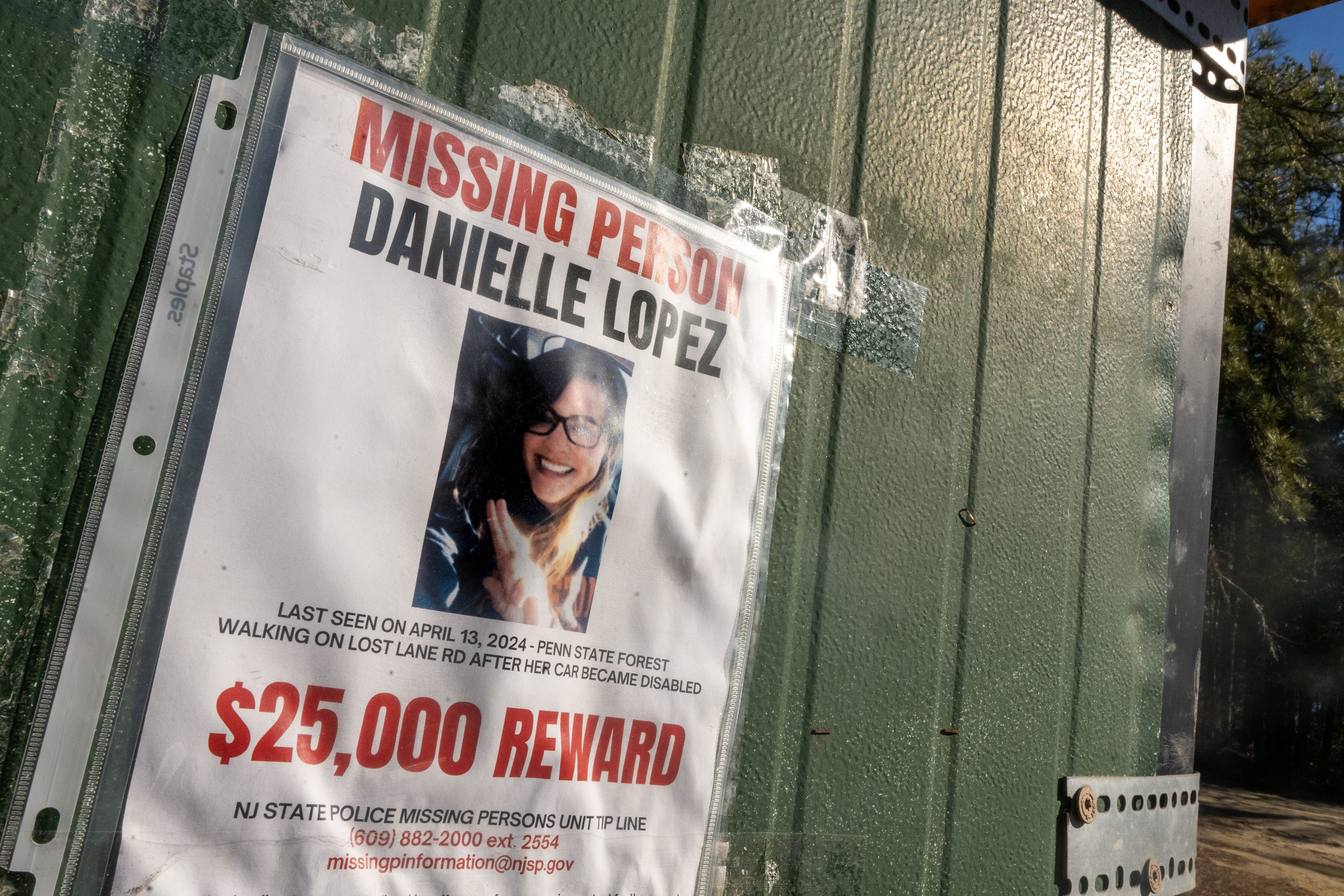
A reward poster on a parking lot restroom on Lost Lane Road in Woodland Township. In April, 2024 Sue Quackenbush’s daughter Danielle Lopez disappeared farther up the dirt road while camping with her boyfriend in New Jersey’s Brendan T. Byrne State Forest.Tom Gralish / Staff Photographer
Quackenbush is offering a $25,000 reward to anyone with information that could solve the case. In January, she said many tips have come in as a result. She’s also been on podcasts and is an administrator of a Facebook group dedicated to the case that has over 1,500 followers.
“Danielle, no day shall erase you from the memory of time,” she wrote on Facebook on the second anniversary of her disappearance.
Sue Quackenbush holds a collage of photos of her daughter Danielle Lopez.Tom Gralish / Staff Photographer
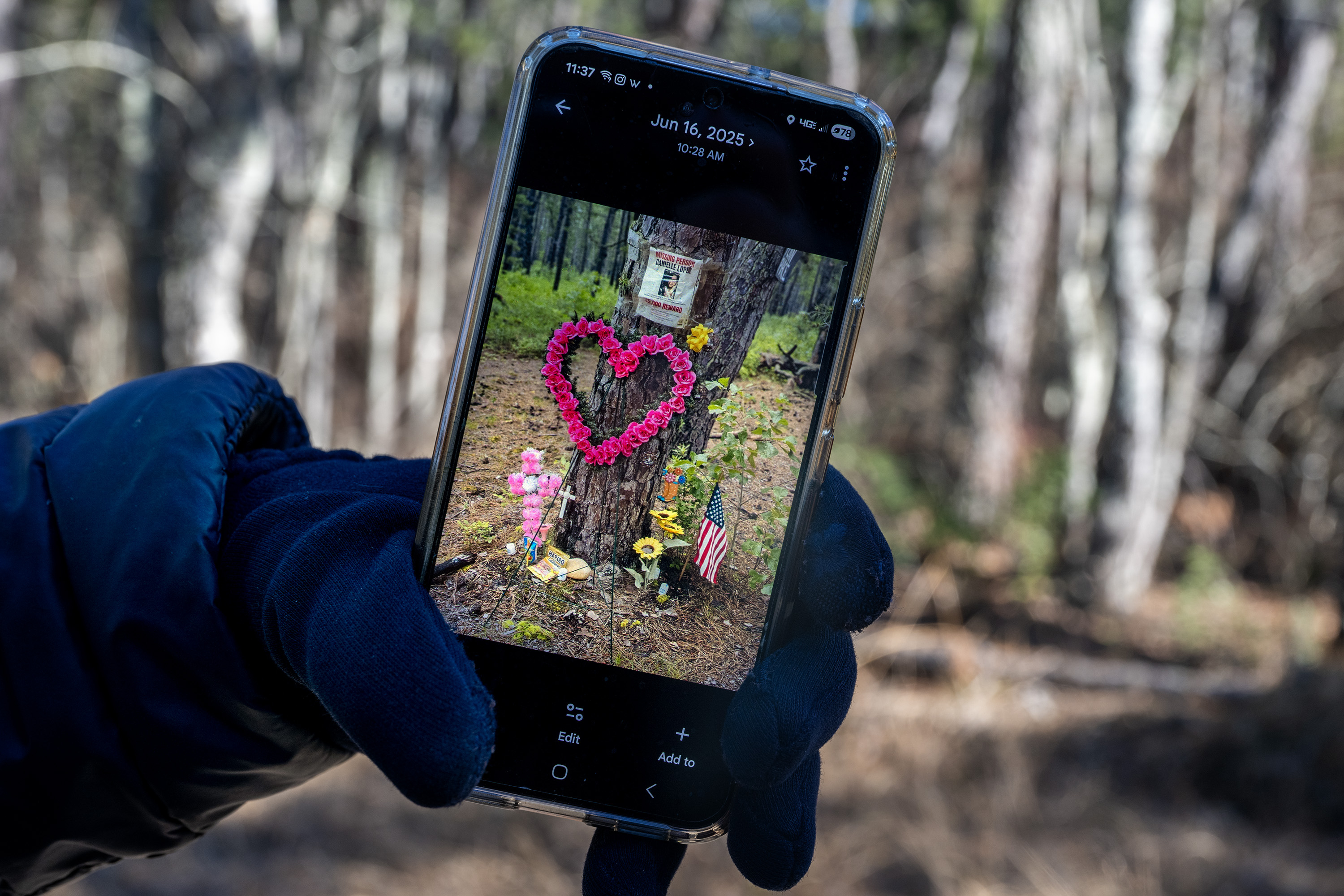
In January, Quackenbush cried during her visit to the Pine Barrens as she clutched photos of her daughter and sons. The memorial for Lopez was still a 20-minute walk beyond the puddle, on Lost Lane.
“It’s my goal to get the name of this road changed,” she said.
Sue Quackenbush holds a photo she took last summer of the memorial she created for her daughter.Tom Gralish / Staff Photographer
Anyone with information is urged to contact the New Jersey State Police Missing Persons Unit at (609) 882-2000 ext. 2554 or email missingpinformation@njsp.gov.
Fourteen people have been charged in a cocaine trafficking case at Pennsylvania State University, the state attorney general’s office announced Monday.
The drug ring involved students’ purchasing large quantities of cocaine from Philadelphia and New York, cutting and packaging it at two fraternity houses, and distributing it to their classmates, prosecutors said.
The alleged ring was active from 2023 to 2024, when all but one of the defendants were students at Penn State. The other defendant is the father of one student, and he was charged with evidence tampering and hindering law enforcement’s investigation. At least four of those charged are still students at Penn State.
“This was a coordinated and highly profitable drug-trafficking crew revolving around two senior members of the fraternities, other fraternity brothers, and pledges,” said Attorney General Dave Sunday in a statement. “According to the evidence uncovered, cutting and packaging cocaine was, for some pledges, an indoctrination into the fraternities,”
The State College Police Department began investigating in September 2024, and used informants to purchase drugs on several occasions, according to a criminal complaint.
The two key suppliers for the group, Agostino Abbatiello, 24, and Thomas Robinson, 23, allegedly made regular trips to Philly and New York to acquire large quantities of cocaine. After Robinson was arrested, he told State College police he purchased cocaine from Abbatiello, including as much as one kilogram for $22,000 at a time, according to the complaint. Abbatiello eventually became known as the main dealer for cocaine on campus, it said.
The cocaine was packaged for distribution primarily at the off-campus Delta Upsilon and Sigma Chi fraternity houses, according to the complaint. Penn State has placed Delta Upsilon on interim suspension while the university’s Office of Student Accountability and Conflict Response investigates. Sigma Chi is not a registered student organization and receives no support from Penn State, the university said in a statement.
“We are horrified by these serious allegations against current and former students,” said Andrea Dowhower,Penn State’s vice president for student affairs. “Criminal activity, including hazing, such as this has no place at our institution, and we will cooperate with law enforcement in any way we can. We will continue to enhance our efforts around health and safety and hazing educational efforts for all our organizations.”
Abbatiello, Robinson, and threeother defendants are charged with felony conspiracy, possession with intention to manufacture or deliver a controlled substance, and other related charges. Eight defendants are charged with misdemeanor drug possession. Lawyers for Abbatiello and Robinson were not listed in court records.
Over the past decade, Penn State’s fraternities and their hazing rituals have been a source of campus misconduct and serious legal violations. In 2024, two fraternity leaders were sentenced to two to four months in prison for their role in the 2017 death of Timothy Piazza, a 19-year old Penn State student who died following a hazing incident while pledging Beta Theta Pi.
Piazza’s parents helped push for the successful passage of the federal “Stop Campus Hazing Act,” which requires institutions of higher education participating in federal student aid programs to report hazing incidents.
More recently, in April, Penn State suspended one fraternity for at least four years after it investigated reports of hazing. Since 2017, the university has fully suspended five fraternities, while four others are technically suspended by the university, but continue to operate with the support of their parent organizations.
Darwin David Espinal del Cid, 27, was taken into custody during the weekend by officials in his native Honduras in the March 7 death of Maria Popol, Bucks County District Attorney Joe Khan said Monday.
Khan, in announcing the arrest, described Popol as a loving daughter and sister who cared deeply about her family. Espinal del Cid, he said, ended her life in a heartless, violent manner and then furthered her family’s suffering by stealing her cellphone and pretending to be her, in text messages he sent them.
Maria Popol was found dead in March by police in Telford.Courtesy of Maria Popol's family
It was an attempt, Khan said, to throw investigators off his trail as he fled the country.
But investigators were able to track Espinal del Cid’s movements, in part through his cellphone, according to Khan.
“This was a place where he thought he would be safe, that he could outrun the law, that the Bucks County DA’s office and the authorities wouldn’t catch up to him,” Khan said. “And at a certain point he may have believed that he was successful, but he was wrong.”
He remains in custody in Honduras, and is awaiting extradition to Bucks County.
Popol’s body was found on March 15 inside a second-floor apartment on North Main Street in Telford where she previously lived with Espinal del Cid. Her parents had filed a missing person’s report two days earlier, on what would have been her 23rd birthday, Khan said.
A neighbor, helping the family search for Popol, entered her apartment and found her.
Her family, in a statement to The Inquirer, said she was in the process of moving to a new apartment nearby, fleeing what they described as an abusive relationship with Espinal del Cid.
Khan said Espinal del Cid stabbing Popol in the neck with a sharp object and hid her body in a closet as she bled to death.
Popol’s family told The Inquirer they last heard from her on March 6, after she rode in an Uber with Espinal del Cid. The two were arguing, prosecutors said, about Popol’s decision to end their relationship.
She texted her mother and told her she was looking for a new apartment, according to the affidavit of probable cause for Epsinal del Cid’s arrest.
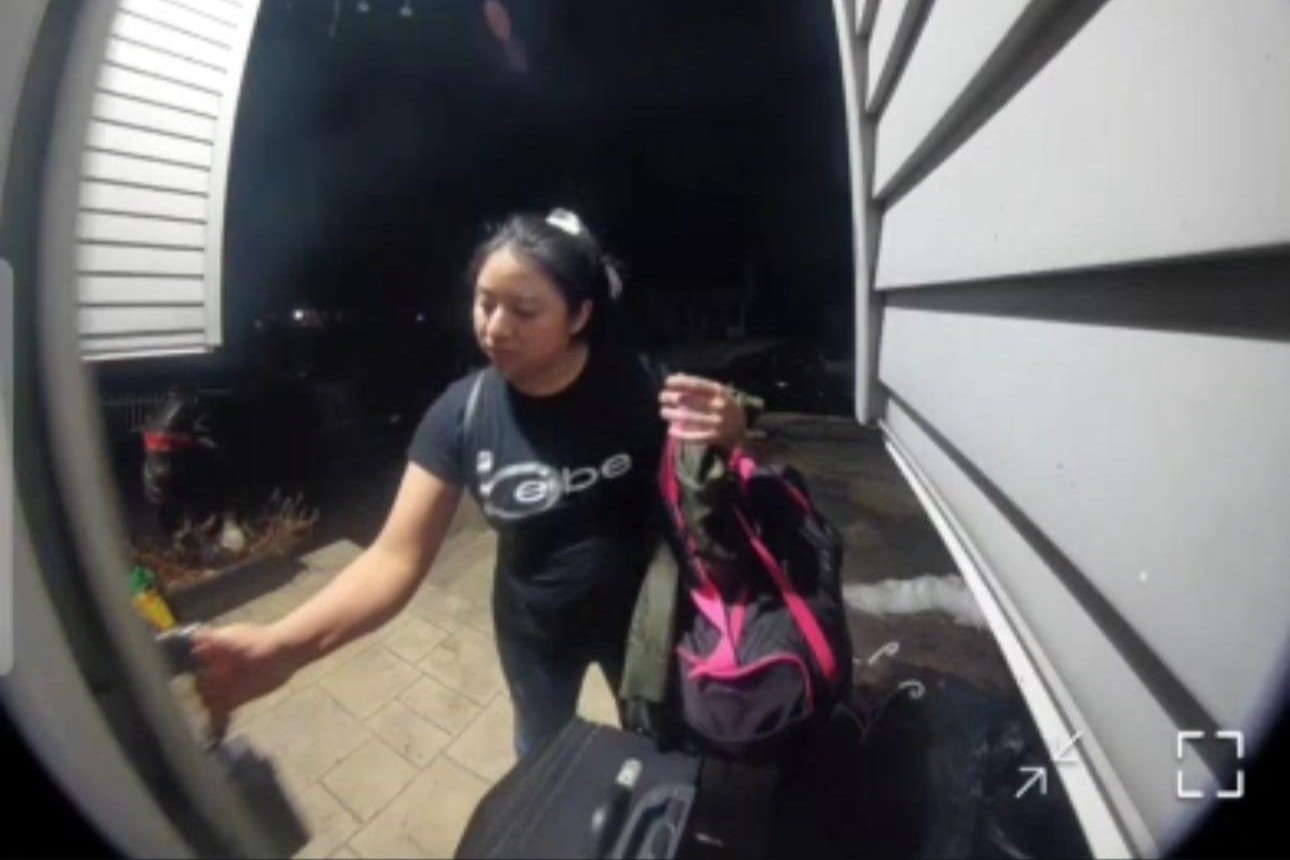
Her brother, Ronaldo, said she was seen hours later in a video from a doorbell security camera carrying luggage while she was moving into her new apartment.
The last time Maria Popol was seen by her family was in a doorbell camera video from March 7 at her new residence. She was found dead March 15 at her old apartment she had shared with a man, her brother said.Rolando Popol
A witness told police that, while picking up Popol to take her to her new apartment, Espinal del Cid forced himself into the car, crying and acting hysterical, saying that he “couldn’t afford to lose her,” the affidavit said.
When Popol returned to the apartment where she lived with Espinal del Cid, the two got into another heated argument, loud enough for neighbors to overhear, according to the affidavit.
In the days that followed, Espinal del Cid continued to act erratically, asking his former boss for money to buy a plane ticket to Honduras, weeping openly in public and saying, “God forgive me.”
A friend of Espinal del Cid who drove him to the airport noted he was carrying three cellphones, one of which appeared to be Popol’s, the affidavit said.
On March 9, Espinal del Cid boarded a plane heading to Honduras by way of Florida at Philadelphia International Airport.
The entire time, investigators said, Epsinal del Cid texted Popol’s friends and employer, asking for money in messages that they agreed were not written in her usual style of talking.
Popol moved to Bucks County from her native Guatemala in 2023 to support her parents, who are in declining health, according to her family. She worked as a waitress at Don Leo, a Latin American restaurant not far from her apartment.
“She had come to this country hoping for a better life,” Ronaldo Popol said, describing his sister as “very affectionate, kind, and patient.”
Khan said Popol’s death is the latest example of fatal domestic violence in Bucks County. Since he took office in January, nearly all of the murders his office has investigated have been committed by one of the victim’s loved ones.
“It’s the reason that we are showing this picture of [Espinal del Cid], not to glorify him, but to ask for the public’s help, because while he thought he was smarter than everyone else, the law was catching up to him and we want the public’s help,” Khan said.
The man, whom police did not identify, was seen on 73rd Street near Buist Avenue, about a block away from the shooting in which 29-year-old Officer Alhassane Barry was killed and another man was critically injured.
Surveillance images released by the department Monday show the suspect wearing a black hoodie and a blue face mask.
Deputy Commissioner Frank Vanore urged the public to come forward with any video or images that may depict the suspect or others who were outside what a social media account linked to the address called “Nipsey’s Hookah Lounge,”an unlicensed nightclub that city inspectors have repeatedly cited and some neighbors described asa nuisance.
Gunfire erupted outside the property on the 7200 block of Elmwood Avenue around 4 a.m., sending bystanders running.
Investigators have not identified a motive for the shooting, and the suspect remains at large.
“We need answers right now,” Vanore said during a news conference in which he sought the public’s help locating the suspect. “We need to solve this case.”
Police said the suspect was last seen fleeing south on 73rd Street.
Investigators recovered a firearm and eight spent 9mm shell casings from the scene, though they said they had yet to determine to whom the gun belongs.
Barry and the other victim, a 35-year-old man whom police did not identify, were rushed to Penn Presbyterian Medical Center, where the officer was pronounced dead at 8 a.m. Sunday.
The second victim, who was struck multiple times, and placed in critical condition, remained in the hospital as of Monday morning. No update on his condition was available.
During a service for Barry held earlier in the day, a procession of mourners shut down traffic outside a mosque in a bustling Southwest Philadelphia neighborhood, where more than a hundred people gathered at the Fouta Islamic Center.
More than a dozen uniformed police officers stood in formation as a hearse carrying Barry’s body departed the mosque, located just blocks from the site of the shooting.
“He was a bright young fellow,” said attendee Amina Sheriff-Comteh, adding that in keeping with Islamic tradition, the burial was being held shortly after the death.
In honor of Barry, Sheriff-Comteh said, she and other attendees prayed for blessings, forgiveness, and peace.
“He was an amazing guy,” said a young man outside the service, who declined to offer his name given that police were still searching for Barry’s killer.
Those who knew Barry spoke proudly of his two-year career with the Philadelphia Police Department, where he was assigned to the 12th District in Southwest Philadelphia, as well as his lengthier tenure in the military.
Barry enlisted in the Pennsylvania National Guard as a cavalry scout in 2015 and spent a decade in service, said Heather J. Hagan, a U.S. Army spokesperson.
He spent two years deployed to Egypt’s Sinai Peninsula and left the Army as a sergeant, according to Hagan.
He was awarded multiple medals and ribbons throughout his service, she added.
Vanore, the deputy commissioner, said police would work tirelessly to locate the suspect.
He said questions about the business practices of the after-hours loungewould have to wait as police take on the more pressing job of arresting Barry’s killer.
Property records for the lounge shows a history of failed licenses and inspections investigations going back to 2021, with the most recent inspection filed in January.
In2023, L&I inspectors wrote that Nipsey’s owners had not obtained a permit to operate the building as an after-hours lounge.
They also wrote additional violations for improper use of extension cords, unsecured compressed gas cylinders, and storing materials that were a fire risk in the rear yard.
Kandyce Stukes, a spokesperson for the Quality of Life division in the city’s Department of Licenses and Inspections, said inspectors issued orders to the building’s owner in 2023 and 2024 to cease operations.
The owner appealed and said they were unaware of the tenant’s conduct.
The case was sent to the Court of Common Pleas, and the L&I has since been navigating the legal process, Stukes said.
The cease-operations order remains in effect and any business operating there is doing so illegally, Stukes added.
A 24-year-old Portuguese man was sentenced Monday to seven years in federal prison for stealing more than $1 million in cryptocurrency from unwitting victims, including a resident of Montgomery County — crimes prosecutors said the man committed while he was associated with an international cybercrime network.
Ruben Filipe Gabriel Martins pleaded guilty last year to wire fraud and identity-theft charges for using sophisticated phishing tactics to obtain victims’ cryptocurrency account information, then stealing their investments.
Prosecutors said Martins committed his fraud while he was part of a group called “the Com,” a global network of people who use technology to commit a variety of crimes across the world, including extortion, theft, and even incitements of violence.
Martins, meanwhile, was associated with a subset known as “CryptoChameleon,” a group that uses a variety of deceptive tactics to obtain account information from cryptocurrency holders. In Martin’s case, prosecutors said, he pretended to be a customer support representative for Coinbase, a cryptocurrency exchange, and told his victims he could offer support for their compromised accounts — tactics he used to get into the accounts and steal the victims’ funds.
Martins then went on to transfer the proceeds into other cryptocurrencies, prosecutors said, and ultimately spent his ill-gotten gains on luxury goods, traveling, and gambling.
His scheme began to unravel in 2024, when prosecutors said a man from Towamencin Township told police that more than $60,000 had been stolen out of his cryptocurrency account after he’d replied to text messages and calls about its security. Authorities were ultimately able to link that activity to Martins, who was born in Portugal and went on to live in Scotland.
Martins’ lawyer said in court documents that Martins had never intended to become “a career criminal.” But after being raised in modest circumstances — including by working in a fish factory as a teenager — Martins was introduced to a host of wealthy benefactors due to his skill in online gaming, his lawyer said, and some of those people then flew him to Paris and recruited him to participate in their digital exploitation operation.
In court Monday, Martins apologized for his actions, saying he was in debt when he committed his crimes and viewed the scheme as a way to make “really easy money.”
“I made a mistake when I was really down,” he said, “and I’d just like to have another chance at life.”
But U.S. District Judge Gerald J. Pappert said it was a significant understatement to describe the crimes as a “mistake ” — saying Martins had used his computer skills and desire for money to turn himself into a “dangerous” person who stopped only when he got caught.
“Not one thing you did in two years was a mistake,” Pappert said. “You needed money. You saw what for you was an easy way to get a lot of money. … And I don’t know to what extent, if at all, you ever felt bad about it, because these people were all behind a computer, and you never had to look them in the eye.”
One of Martins’ victims has seven children, Pappert noted, and others were intelligent people who lost significant portions of their life’s savings.
Martins is expected to be deported to Portugal once he finishes his prison sentence. But Pappert said his victims may never get over the shame and financial hardship he caused them.
“These were horrible crimes,” Pappert said. “None of these people deserved this.”
An athletic director at a Mercer County school district has been charged with loitering and prowling after he leered into the bedroom window of his neighbor’s underage daughter, Plumstead Township Police say.
Winfield “Tripp” Becker, 48, was caught on a surveillance camera Aug. 6 looking into the window, according to the affidavit of probable cause for his arrest. The victim’s mother installed that camera after an unidentified man spent months knocking on the window at night and then “fleeing the area,” the document said.
Neither Becker nor his attorney, Thomas Logan, responded to requests for comment.
Becker lives one street over from the victim in Pipersville, according to court records, and is known to the girl and her family. He was charged via summons, and has a preliminary hearing scheduled for next month.
Becker is the athletic director at Hopewell Valley Regional School District, a district north of Trenton that serves about 3,400 students. In a letter sent to parents, Superintendent Rosetta Treece, without naming Becker, said a district employee was the subject of a criminal investigation, and had been suspended until the conclusion of that investigation.
Treece said the district was working to secure temporary staffing to fill the position.
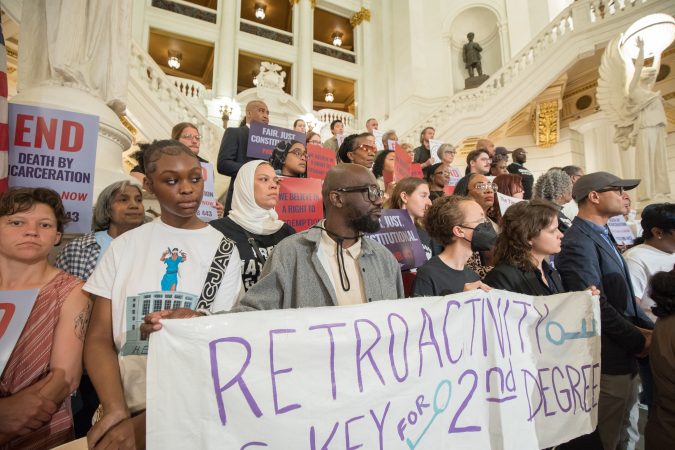
For decades, a second-degree murder conviction in Pennsylvania meant an automatic sentence of life in prison — even for people who did not kill anyone.
But in March, the Pennsylvania Supreme Court ruled that punishment unconstitutional in the case of Derek Lee, a Pittsburgh man who argued the mandatory nature of the sentence violated constitutional prohibitions against cruel punishment.
The high court gave the state legislature 120 days to devise an alternative and decide whether to apply it to those already serving the sentence.
That deadline passed without a resolution on July 24. And in early August, the high court rejected a bid by several district attorneys to give lawmakers more time.
So what happens now? Here’s what to know.
What was the maximum sentence for second-degree murder — and what is it now?
Before the ruling, the punishment was life without parole. Now there is no clear answer.
Setting criminal penalties is the legislature’s job, and lawmakers have not put in place a replacement.
The high court’s ruling did not abolish life without parole for felony murder; it only barred making the punishment automatic. A judge may still impose such a sentence, but only after weighing a defendant’s role in the crime.
The justices declined to say whether the ruling applies retroactively to people already serving those sentences, leaving that question to lawmakers, too.
How will judges sentence second-degree murder now that there’s no mandatory penalty?
With no law to guide them, judges are left to their own decisions. And without statewide guidelines, similar cases could end differently depending on the county in which a defendant is tried and on the judge who hears the case.
Philadelphia District Attorney Larry Krasner has expressed little concern about the lack of guidelines.
In an interview this week, Krasner, a Democrat who has forged a path as a progressive prosecutor, said “there’s nothing unusual” about asking judges to weigh the facts and use their discretion. “I’ve always believed that mandatory sentencing is problematic at best, usually a terrible idea, and that individual justice is what the system is supposed to be about,” he said.
But at a joint GOP policy committee meeting in Hazleton last week, several Republican prosecutors and lawmakers voiced concern about the lack of uniformity across the state.
Luzerne County District Attorney Sam Sanguedolce pointed to a case in which a defendant recently asked to plead guilty to second-degree murder.
“I can’t properly advise the defendant what the consequence might be,” Sanguedolce said. “Second [-degree murder] sounds like it’s better than first, but is it? We don’t even know.”
What happens to the people already serving life in prison?
For the nearly 1,100 people serving life for second-degree murder, nothing changes automatically.
The ruling made only one person eligible for resentencing: Lee. And even he could again receive life without parole, if a judge finds his role warrants it.
Others who wish to have their life sentences reconsidered have to go to court and ask to be resentenced. Bret Grote, a lawyer with the Abolitionist Law Center who represented Lee, said such petitions are likely to be denied by trial courts until retroactivity is settled.
Hundreds are expected to try anyway.
That flood could overwhelm courts and public defenders. Statewide, handling the cases could cost more than $34 million, the Public Defender Association of Pennsylvania estimates. In Philadelphia — home to more than 500 people currently serving such sentences — Chief Defender Keisha Hudson puts her office’s share at $40,000 per defendant, or $24 million total.
“We are going to need substantial funding,” she said last week, adding that she hopes to meet soon with city officials about how to pay for it.
Legal experts expect the question of retroactivity to reach the state Supreme Court again, either through an appeal of a lower court’s denial or a so-called King’s Bench petition asking the justices to take up the issue directly.
Lawmakers could also provide a quicker alternative by writing legislation that allows people serving second-degree murder sentences to seek parole, rather than requiring individual resentencing.
Can lawmakers still pass a fix, and what might that look like?
Lawmakers say negotiations will resume when they return in September. Each chamber has passed its own bill, but the two are far apart, with no compromise in sight.
The bill in the Republican-controlled Senate would set a 35-year mandatory minimum for most second-degree murder convictions, while keeping life without parole as an option. Current lifers would become eligible for parole after 35 years — or 20 years, if they are at least 70.
The measure in the Democratic-led House sets no mandatory minimum, instead directing the Pennsylvania Commission on Sentencing to write guidelines while keeping life without parole available. It would make current lifers parole-eligible after 30 years and add a medical parole option for the terminally ill.
Sen. Lisa Baker (R., Luzerne), who wrote the Senate proposal, said she is still hopeful that her caucus and House Democrats will reach a deal. But the parties remain far apart, she said.
“It’s difficult when you’ve got people whose priorities are no mandatory minimums for any crime,” she said. “I understand that we want to keep nonviolent first-time offenders [out of prison], give people second chances. But there needs to be accountability for these crimes.”
Few expect action before November’s midterm elections. “We can’t, unfortunately, make Harrisburg move any more quickly than they already are,” said Hudson, of the Defender Association. “And in the meantime, there are a lot of questions.”
What does all this mean for victims’ families?
Victims’ families are caught in a limbo of their own, said Melany Nelson, executive director of Northwest Victim Services, a Philadelphia nonprofit that assists crime victims.
Those whose loved ones’ killers have not been sentenced are now waiting to learn what punishment will come, and whether it will feel like justice. Those whose cases closed long ago face now the prospect of being summoned back — to a courtroom or a parole hearing — to confront the killer again and potentially watch them set free.
Nelson urged families to contact prosecutors’ offices and victim-advocate services now, rather than be caught off guard, and to weigh in with their state lawmakers.
“We do not want them to be blindsided by anything,” she said.
Correction: A previous version of this article incorrectly described what could happen to people who wish to appeal their sentences. Bret Grote, a lawyer with the Abolitionist Law Center, said such petitions are likely to be denied by trial courts until the question of whether a recent Pennsylvania Supreme Court ruling applies retroactively is settled.