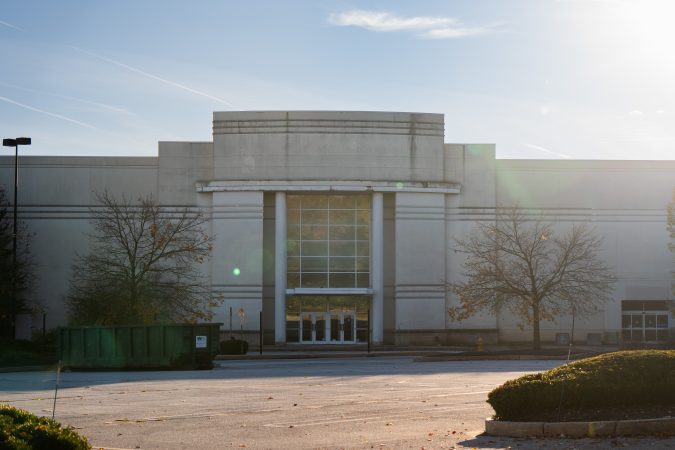
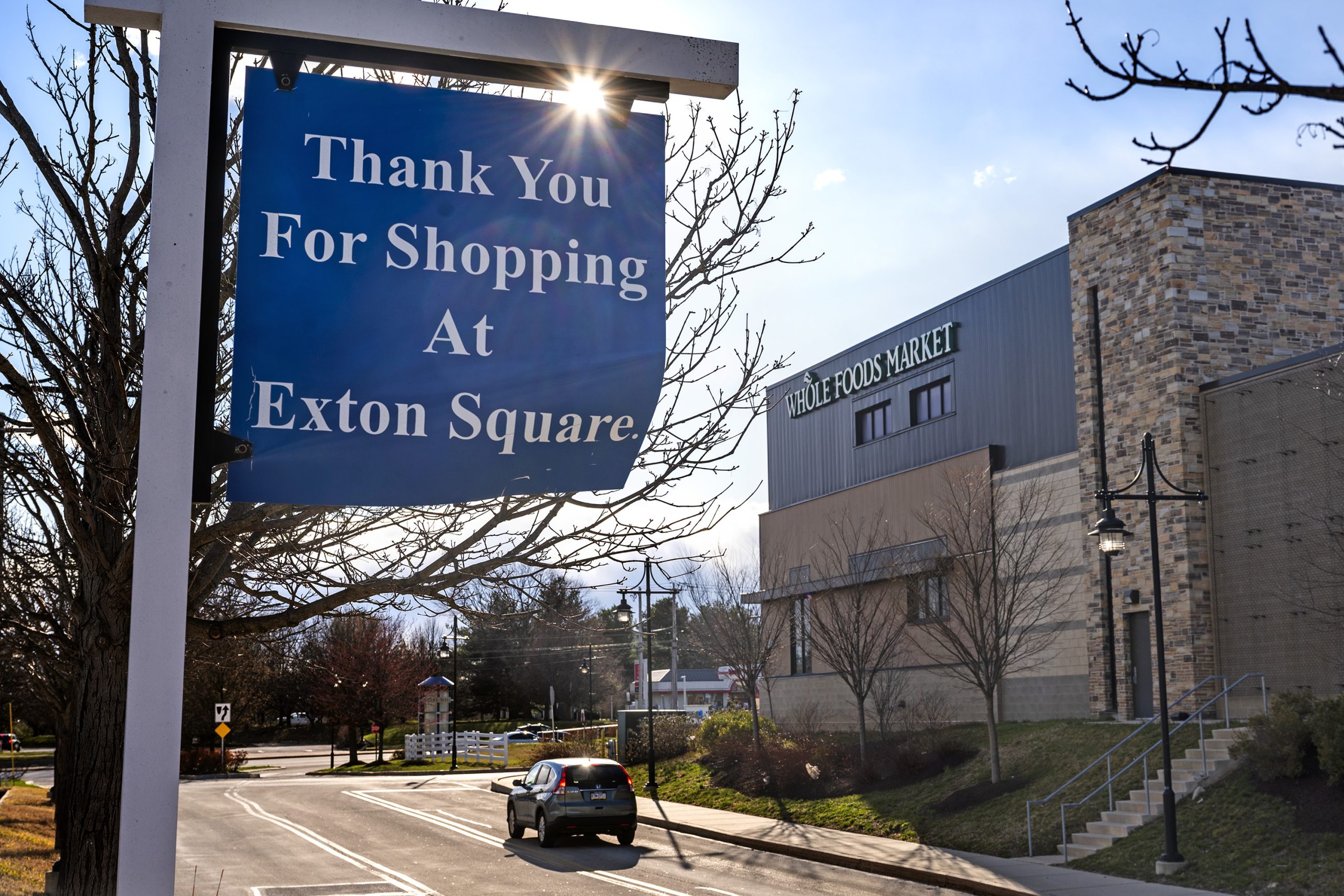
Chester County’s only enclosed mall will soon shut its doors for good.
After five decades as a retail hub, the nearly 1-million-square-foot Exton Square Mall is set to close Tuesday, June 30, according to mall owner Abrams Realty & Development. The Elkins Park-based company has been mired in a legal dispute with local officials over its redevelopment.
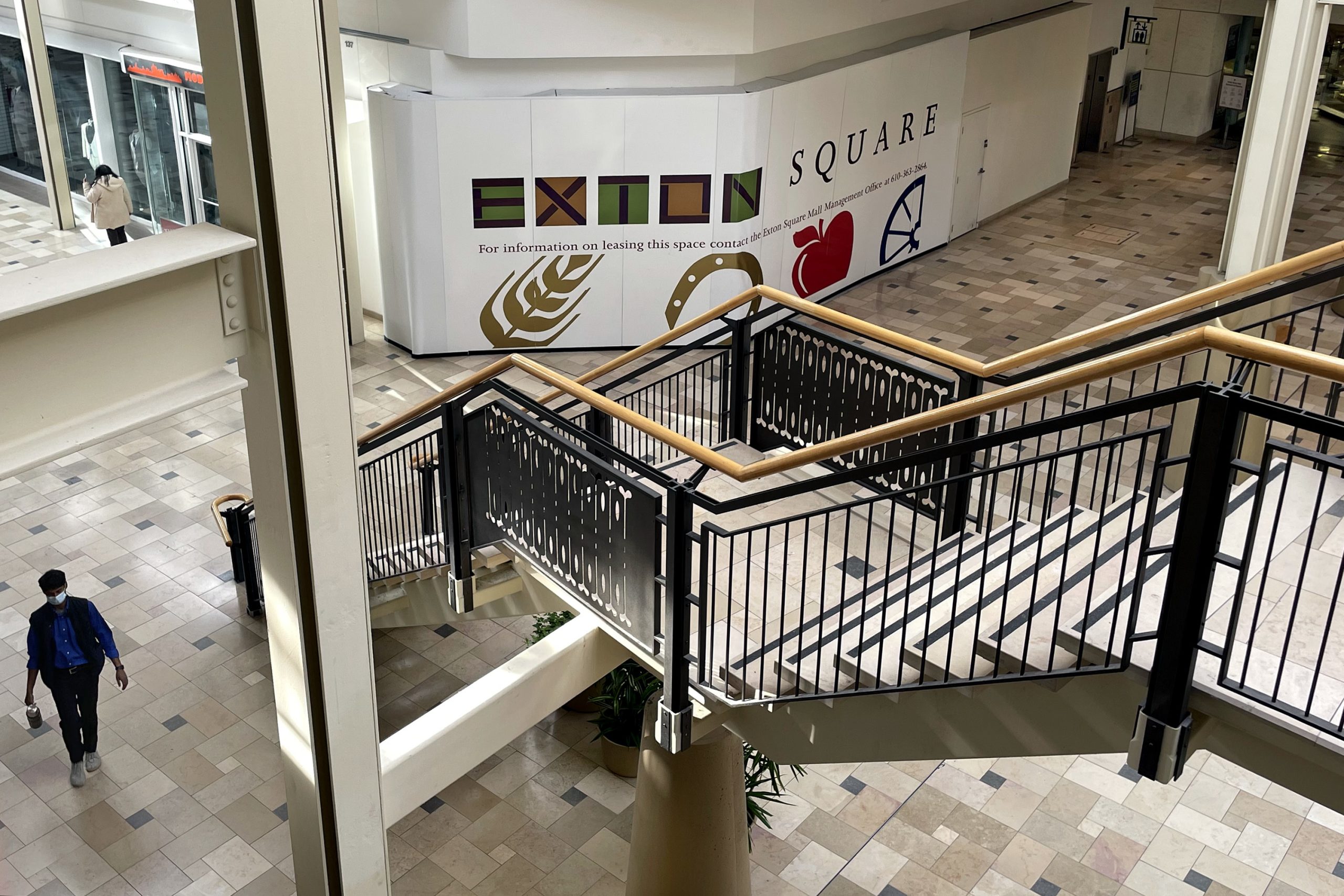
Once a bustling destination that sparked a commercial boom in Exton, the complex has been languishing for years with a desolate interior and only a handful of stores.
Peter Abrams said his firm had no choice but to shutter the mall.
“Operating the interior of the property has become untenable due to deteriorating conditions and rising utility costs,” he said in a statement.
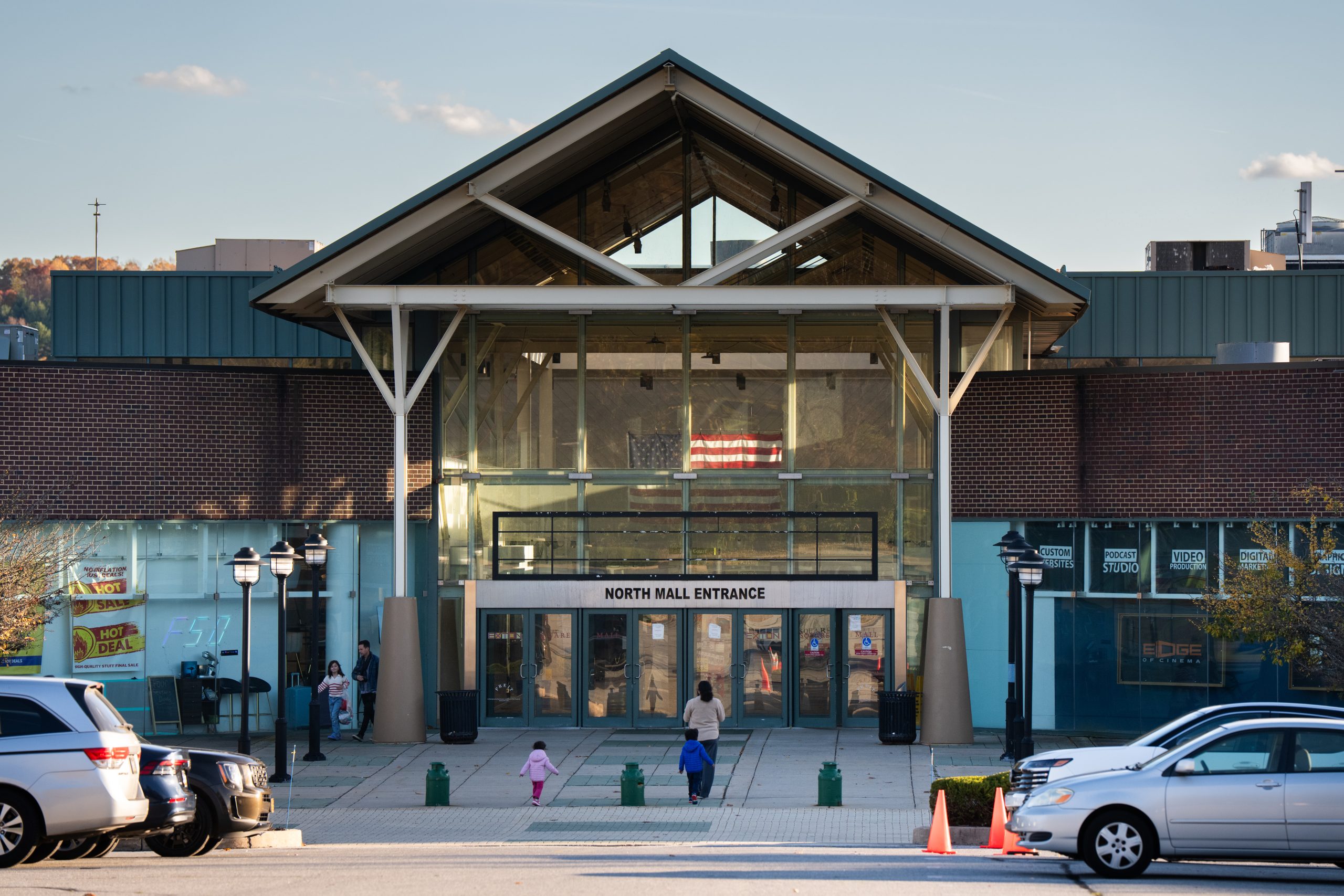
A handful of shoppers walk into the Exton Square Mall in November.Jessica Griffin / Staff Photographer
The Boscov’s, Main Line Health offices, and Round 1 entertainment venue will remain open.
Brian Dunn, chair of the West Whiteland Township Board of Supervisors, declined to comment on the mall’s closure, citing the ongoing litigation.
Abrams, who bought the mall from PREIT for more than $34 million, wants to transform the site into a mixed-use complex with hundreds of townhouses, rental apartments, a 55+ community, and a town center with shops, restaurants, medical offices, and green space.
This fall, despite the planning commission’s recommendation, Dunn and fellow Township Supervisor Rajesh Kumbhardare rejected Abrams’ proposal over sewer, traffic, and density concerns. Abrams then sued the supervisors in an attempt to reverse their decision, saying the plan meets the township’s zoning requirements.
Litigation between Abrams and the supervisors was ongoing as of Wednesday, according to the company, which wants to complete the project by 2028.
The Exton Square Mall opened in 1973 with more than 100 stores, including a Strawbridge & Clothier.
The mall’s construction would prove a harbinger of Exton’s commercialization. “Developers seem bent on heaving this lazy rural area into the mainstream of metropolitan Philadelphia,” The Inquirer reported in 1973.
In the 1990s, the Exton Bypass made the area easier to access from the city and other suburbs. And by the 2000s, more retail complexes, including the Main Street at Exton town center, had opened near Exton Square Mall, which also underwent an expansion.
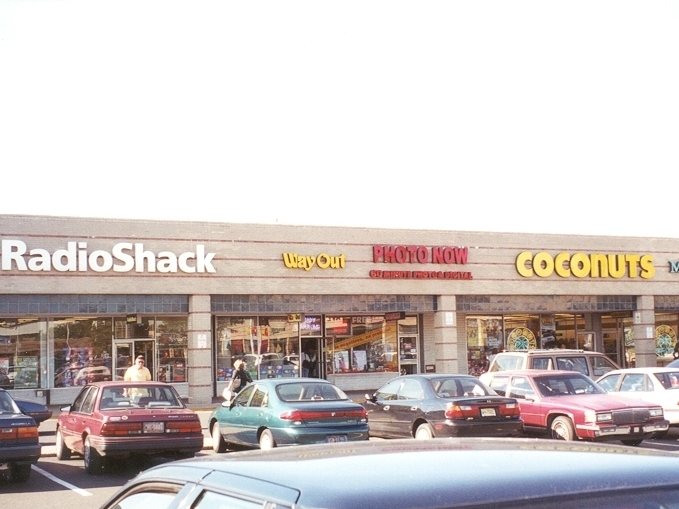
The Exton Square Mall is shown in 2022, when tenants were already starting to dwindle.TOM GRALISH / Staff Photographer
The community has seen a subsequent rise in residential development, with millennials and baby boomers fueling demand for high-end, low-maintenance living. In the past five years, about 3,000 luxury apartments and townhouses have been built in the 13-square-mile township, supervisor Kumbhardare said this fall, and each new complex is at least 90% occupied.
On Tuesday, as word spread about the mall’s closing date, one user posted a video on Facebook with the caption: “It’s official. They’re tearing down the Exton Square Mall, and with it, my entire childhood.”
“They can tear the building down, but they can’t take away the memories of buying graphic tees at Wet Seal and CD shopping at FYE. RIP.”
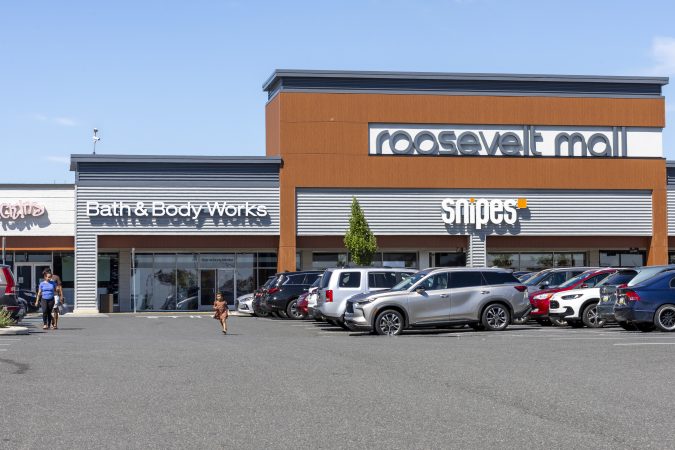
As Brixmor Property Group executives began transforming the Roosevelt Mall, they briefly debated whether to change the name.
After all, the 60-year-old Northeast Philly shopping center is undergoing a more than $70 million makeover that promises to bring it into the modern age with new tenants, upgraded facades, and a better layout.
As Brixmor executives walked around the 620,000-square-foot complex on a recent day, they said they already see the outdoor mall becoming a community hub — with a gym, an organic grocer, and new fast-casual dining options.
Despite these changes, they have decided the Roosevelt Mall should not be rebranded.
“It’s an iconic name,” said David Vender, Brixmor Property Group’s executive vice president for the north region, who is based in Conshohocken. “People know it as a landmark.”
Brixmor operates about 350 shopping centers nationwide, but some of its top executives — including new CEO Brian Finnegan, who grew up in Roxborough — have soft spots for Philly, forged by personal or family connections to the region.
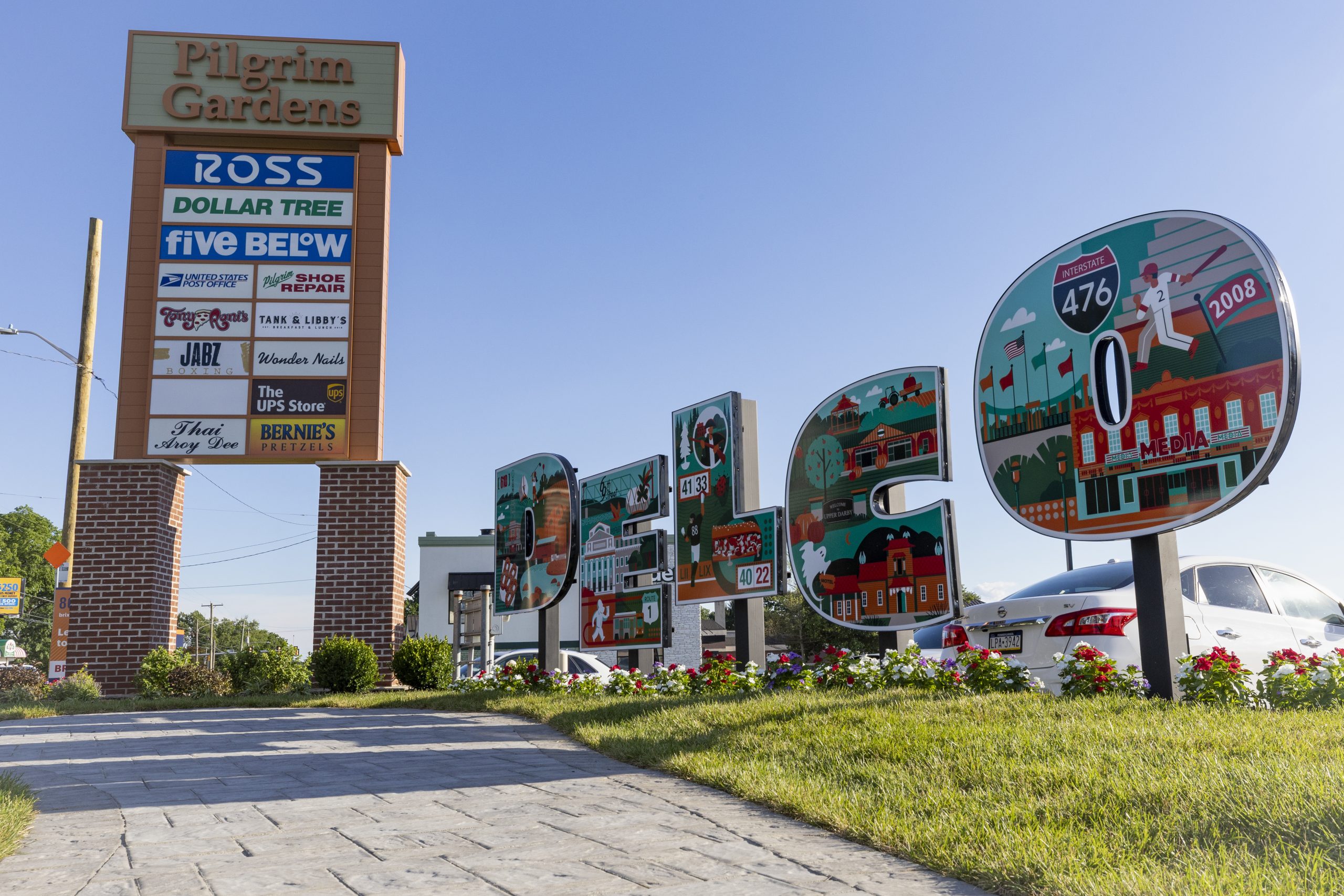
A new Delco sign is shown at Pilgrim Gardens in Drexel Hill on June 16.Aidan T. Gallo / Staff Photographer
And they said their connection to the community around the Roosevelt Mall has only grown stronger since last year’s plane crash, which killed eight people, injured two dozen, damaged nearby homes, and left an 8-foot-deep crater in front of the mall.
Even before the tragedy, they said, they considered how their local redevelopments affected the Philly-area residents who shop, eat, and drive by their centers every day.
At the Roosevelt Mall — which sits on 36 acres between Cottman Avenue, Roosevelt Boulevard, and Bustleton Avenue — these decisions have begun to pay off.
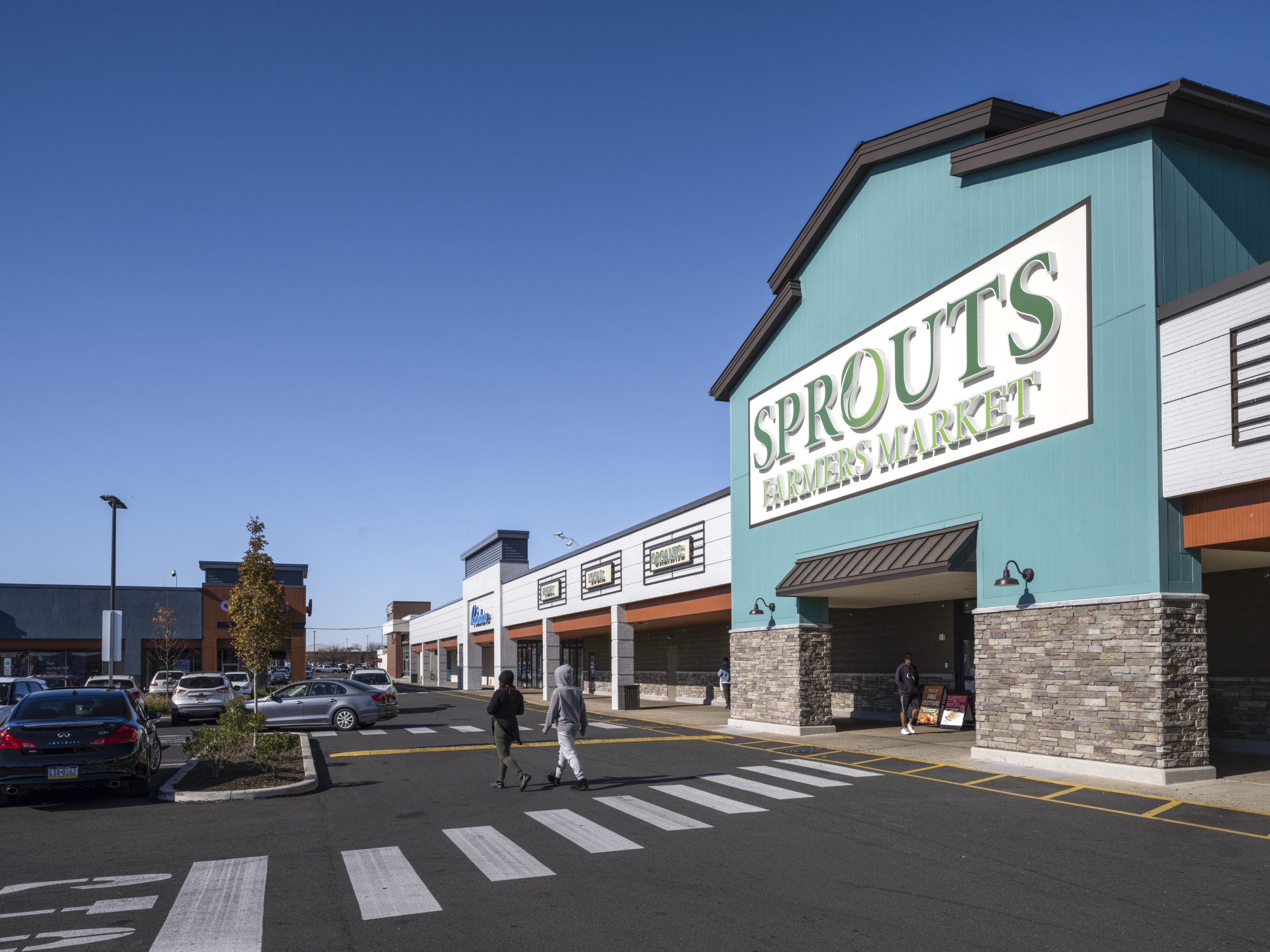
In the last year, the center logged 6.3 million visits, a 5% year-over-year increase and a 19% jump when compared with the 12 months before Sprouts Farmers Market’s 2024 opening, according to company executives.
Occupancy was over 98% this spring, they said, and customers spend about 35 minutes there on average, on par with the national average for all Brixmor complexes.
When you’re able to bring together “higher-quality food and beverage, fitness, service … then you’re also able to attract more elevated retail” stores, said Finnegan, noting that Ulta Beauty and Victoria’s Secret are among the tenants signed on for the next phase of the Roosevelt Mall’s redevelopment.
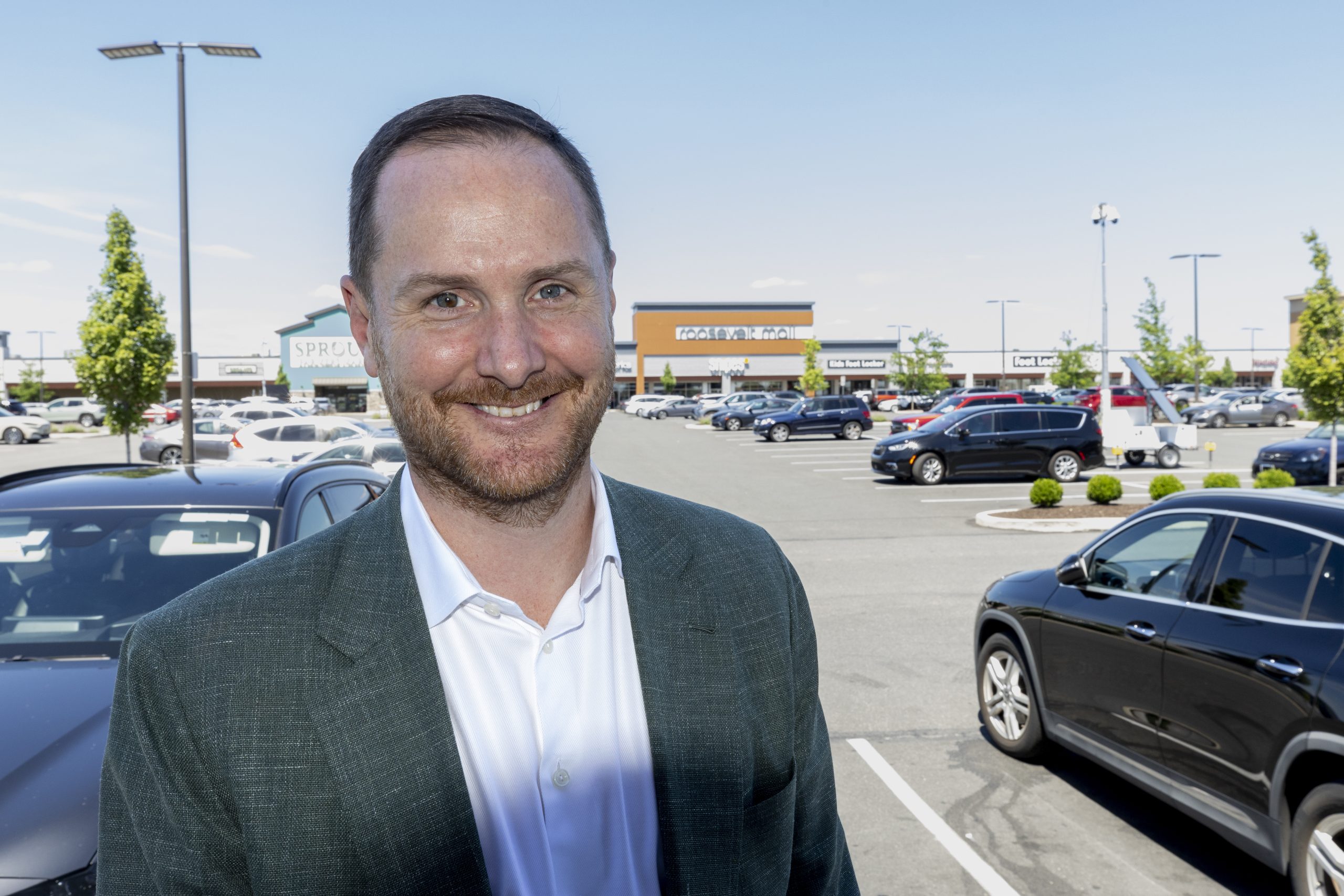
Brian Finnegan, CEO and president, at Brixmor Property Group, at the Roosevelt Mall in Northeast Philadelphia.Aidan T. Gallo / Staff Photographer
Achieving the tenant mix of a modern shopping center
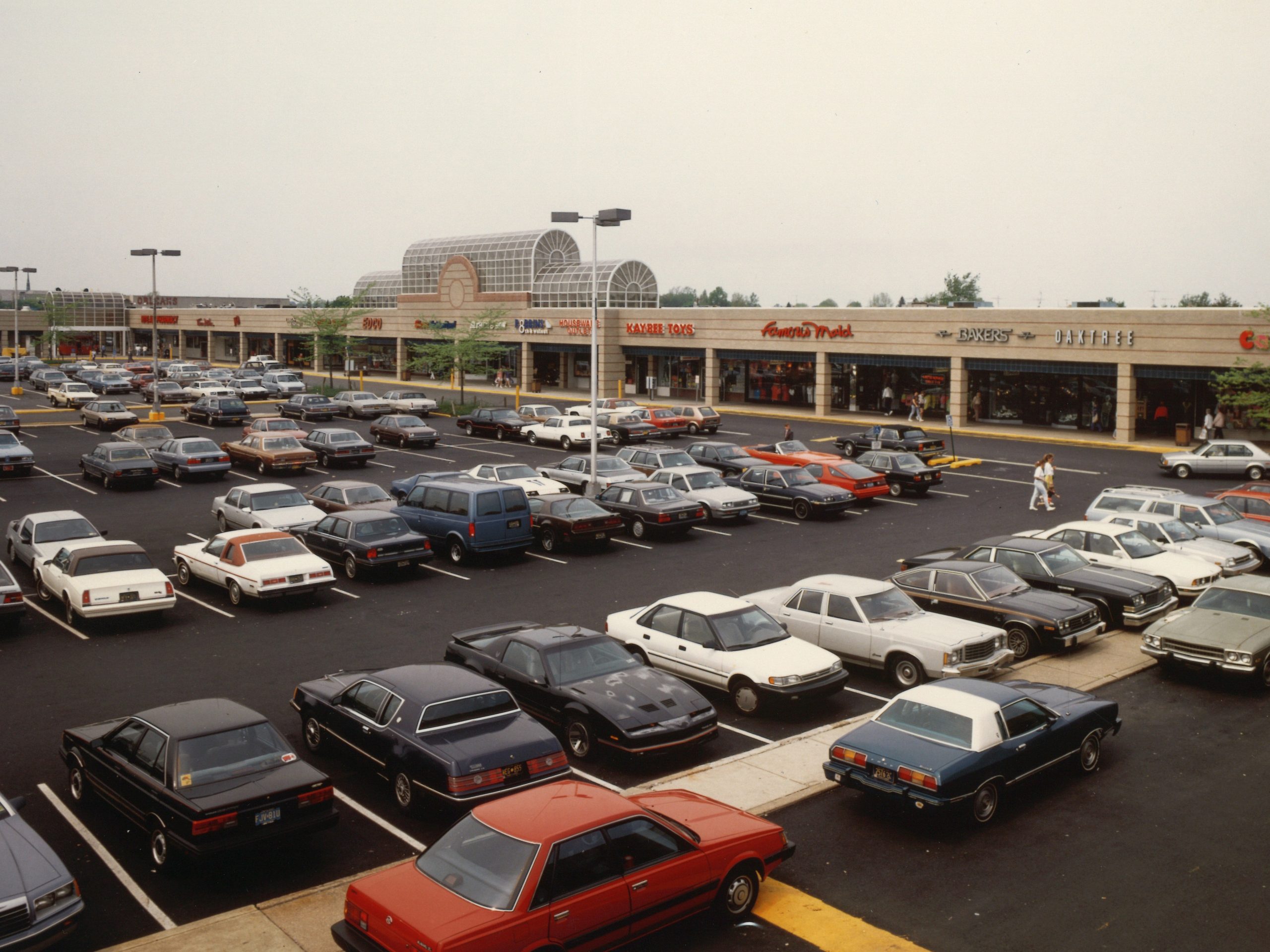
When the Roosevelt Mall opened in 1964, its main promenade was referred to as “Chestnut Street Northeast,” with several outposts of Center City clothing stores, according to an Inquirer article from the time.
The shopping center had apparel shops, such as Baker Shoes and Famous Maid, as well as “the Cavalier, a cafeteria-style restaurant with a game room and a retail bakery,” The Inquirer reported. It was anchored by an S. Klein’s discount department store.
The Roosevelt Mall was built as part of the Roosevelt Boulevard shopping complex, bordered by Cottman and Castor Avenues. The larger development — which also had Gimbels and Lit Bros. department stores — was called the country’s largest “in-town” shopping center at the time.
Roosevelt Mall in Northeast Philadelphia is shown in earlier days, long before Brixmor Property Group remodeled the property.Courtesy Brixmor Property Group
They said they have intentionally brought in tenants that customers may visit multiple times a week and added more pedestrian walkways, open-air plazas, and outdoor seating.
“Historically, shopping centers were very utilitarian, and now they’re really becoming more community assets, so we’re really careful about our merchandising mix,” said Ryan Guheen, Brixmor’s senior vice president of development.
Roosevelt Mall in Northeast Philadelphia is shown in earlier days, long before Brixmor Property Group remodeled the property.Courtesy Brixmor Property Group
The latest redevelopment push began around 2020, when Brixmor opened an LA Fitness outpost on the site of a former Turf Club off-track betting venue, near a new Oak Street Health clinic.
Since then, the company has constructed buildings in underused sections of the parking lot and filled them with popular chain eateries like Raising Cane’s chicken; the American-Chinese food spot Panda Express; and Tous les Jours, a Korean-French bakery and coffee shop.
Annual customer visits to Roosvelt Mall have increased 13% since Sprouts organic grocer opened there in 2024.Courtesy of Brixmor Property Group
The 37,000-square-foot under-construction building, set to house a Victoria’s Secret and an Ulta, will also include fast-casual staples like Shake Shack and Cava, which serves Mediterranean bowls and pitas.
Tenants like these, Guheen said, provide “multiple opportunities for people to stay on property to shop retail, get their workout in, go to the bakery, get a coffee.”
Some mall retailers have found homes in shopping centers
As Brixmor executives diversify the tenant mix at their shopping centers, they say they do not see retail stores going extinct.
Elsewhere in the Northeast, the Franklin Mall, formerly Franklin Mills, has been in decline for years and was recently listed for sale. Real estate investor Dean Adler has said he wants to buy the 137-acre mall and turn it into a youth sports complex with a hotel and Margaritaville-themed water park.
Seven miles away, the Roosevelt Mall is home to several shops that were once found almost exclusively in enclosed malls, such as Bath & Body Works, Foot Locker, and the forthcoming Victoria’s Secret. These companies’ higher-ups have pivoted in recent years, adding more locations in open-air centers.
“It’s not like retailers are leaving malls en masse … at least in the best malls,” Finnegan said. But “as they open stores in open-air shopping centers with grocery stores, with fitness uses, with elevated food and beverage, they’re seeing the sales performance” — and then want to keep investing in shopping centers.
Longer-standing retail tenants are continuing to see success, too. Finnegan said the Roosevelt Mall’s 300,000-square-foot standalone Macy’s is among the company’s top-performing locations in the region, rivaling the King of Prussia Mall store.
The department store is the center’s largest driver of traffic, recording more than 900,000 annual visits, said Brixmor executives, who are not worried about the department store closing as the Center City store did last year.
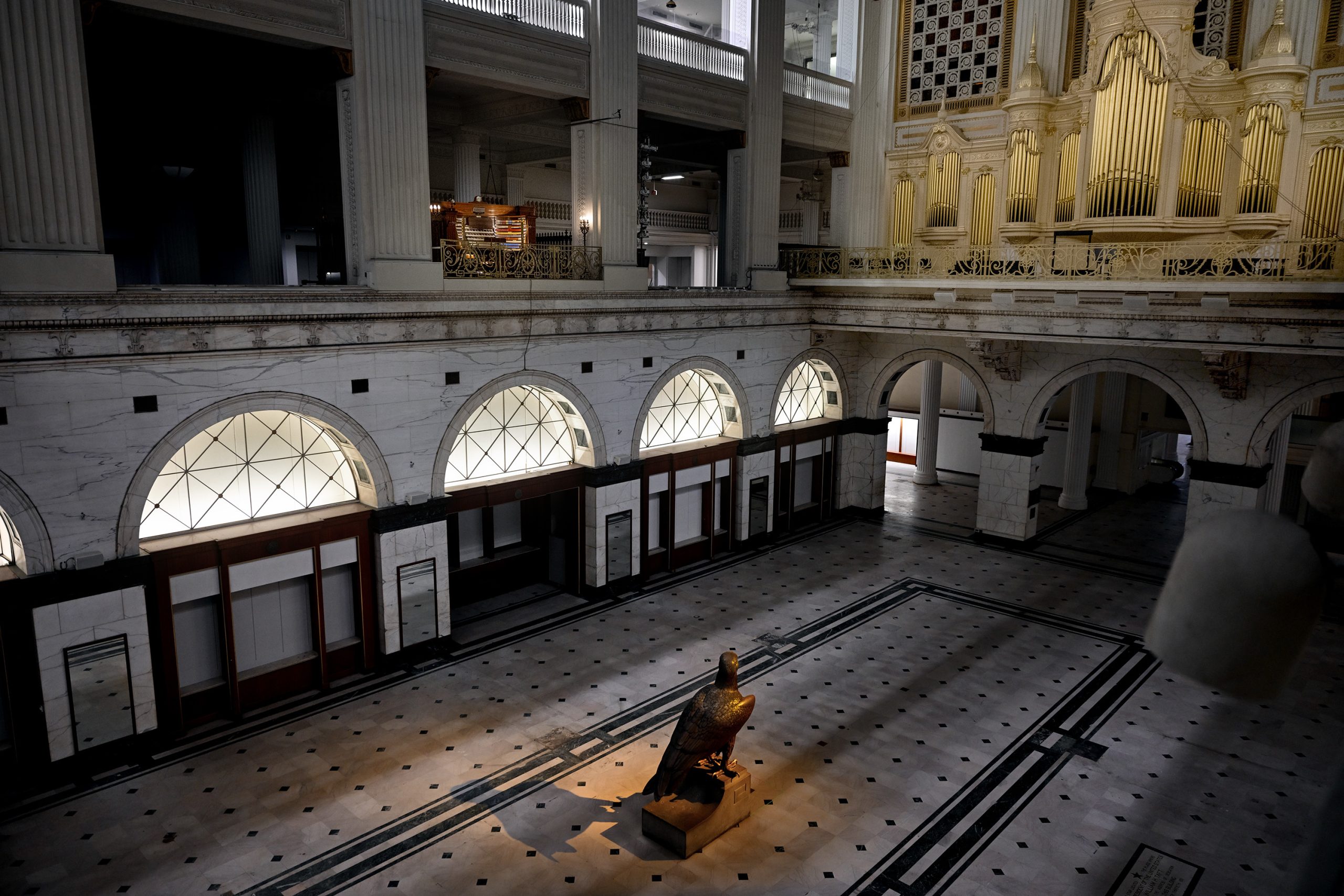
As seen in September, the Macy’s in the Wanamaker Building in Center City now sits empty. It closed last year.Tom Gralish / Staff Photographer
Company executives said they are optimistic this momentum will continue. Along with the under-construction section, redevelopment plans also include another standalone building that has yet to break ground — and the cost of which is not included in the current price tag.
Finnegan put it simply: “Opportunity begets opportunity.”
At a grand-reopening celebration at Stateside Live!, Stateside Vodka president Matt Quigley’s wife, Megan, grabbed his arm and beckoned to the crowd around them in disbelief.
“It was just such a prideful moment of like … we’re here to stay,” Quigley said.
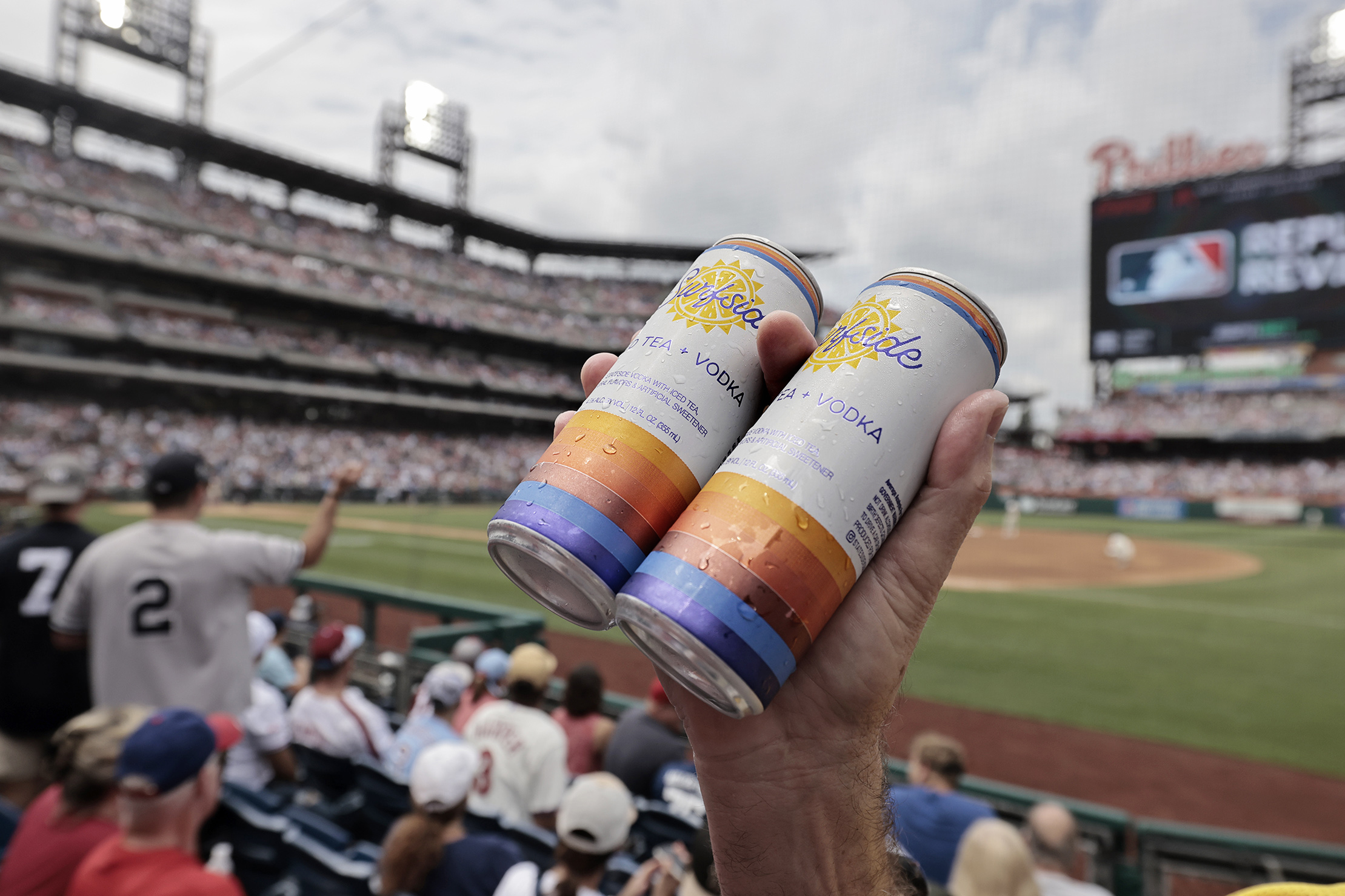
Just a couple years earlier, fellow cofounder and CEO Clement “Clem” Pappas looked around Citizens Bank Park to see as many Surfsides as Miller Lites in the hands of Phillies fans: “Holy s —, this is happening,” Pappas recalled thinking at the time.
At their massive new Center City headquarters last week, Pappas and Quigley said Surfside’s astronomical rise still feels surreal.
In 2015, the area natives founded Stateside Vodka in a distillery near Kensington with their brothers, Zach Pappas and Bryan Quigley. The company started selling canned vodka sodas in 2021. But they launched into a different stratosphere when they debuted their spiked teas and lemonades in 2022.
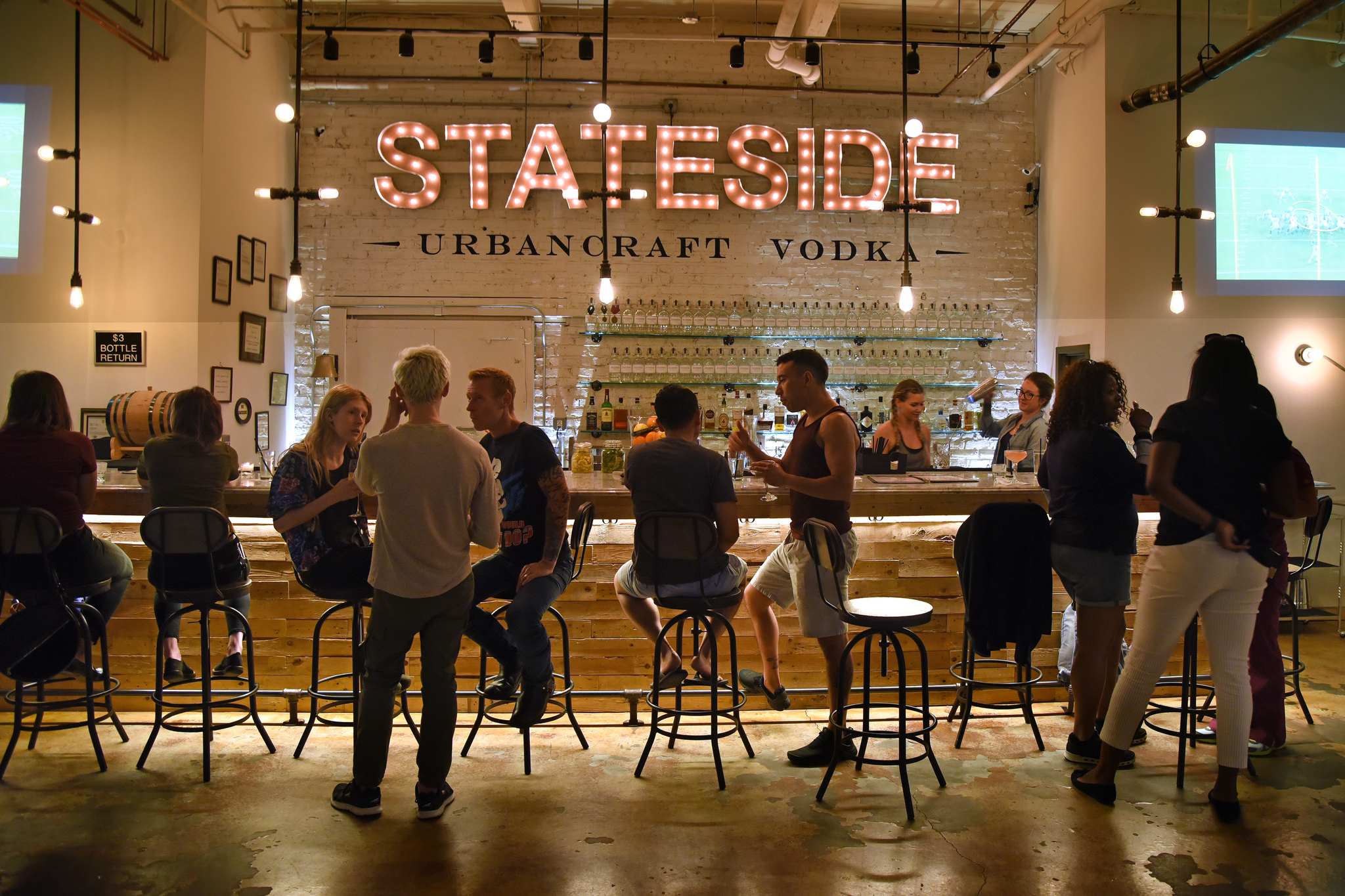
Stateside Vodka’s taproom near Kensington is pictured in 2017, when it was called Federal Distilling. TOM GRALISH / Staff Photographer
Branded as lower-calorie, better-for-you booze, the Surfside cans took off. The cofounders said they sold 200,000 cases in the first year, then 1.3 million in 2023, nearly 5 million in 2024, and a whopping 11.1 million cases last year.
The “slammable” 4.5% ABV cans, as Matt Quigley describes them, are particularly popular in the summertime, a three-month period that accounts for about half the beverage company’s retail sales.
So far this year, Stateside is on track for 70% growth in overall sales, and a 65% growth in Surfside sales, according to the company. That comes after a record year in which the company recorded 111% overall sales growth.
(function(){function e(){window.addEventListener(`message`,function(e){if(e.data[`datawrapper-height`]!==void 0){var t=document.querySelectorAll(`iframe`);for(var n in e.data[`datawrapper-height`])for(var r=0,i;i=t[r];r++)if(i.contentWindow===e.source){var a=e.data[`datawrapper-height`][n]+`px`;i.style.height=a}}})}e()})();
As a private company, Stateside does not have to publicly disclose earnings, and executives declined to share specific sales figures.
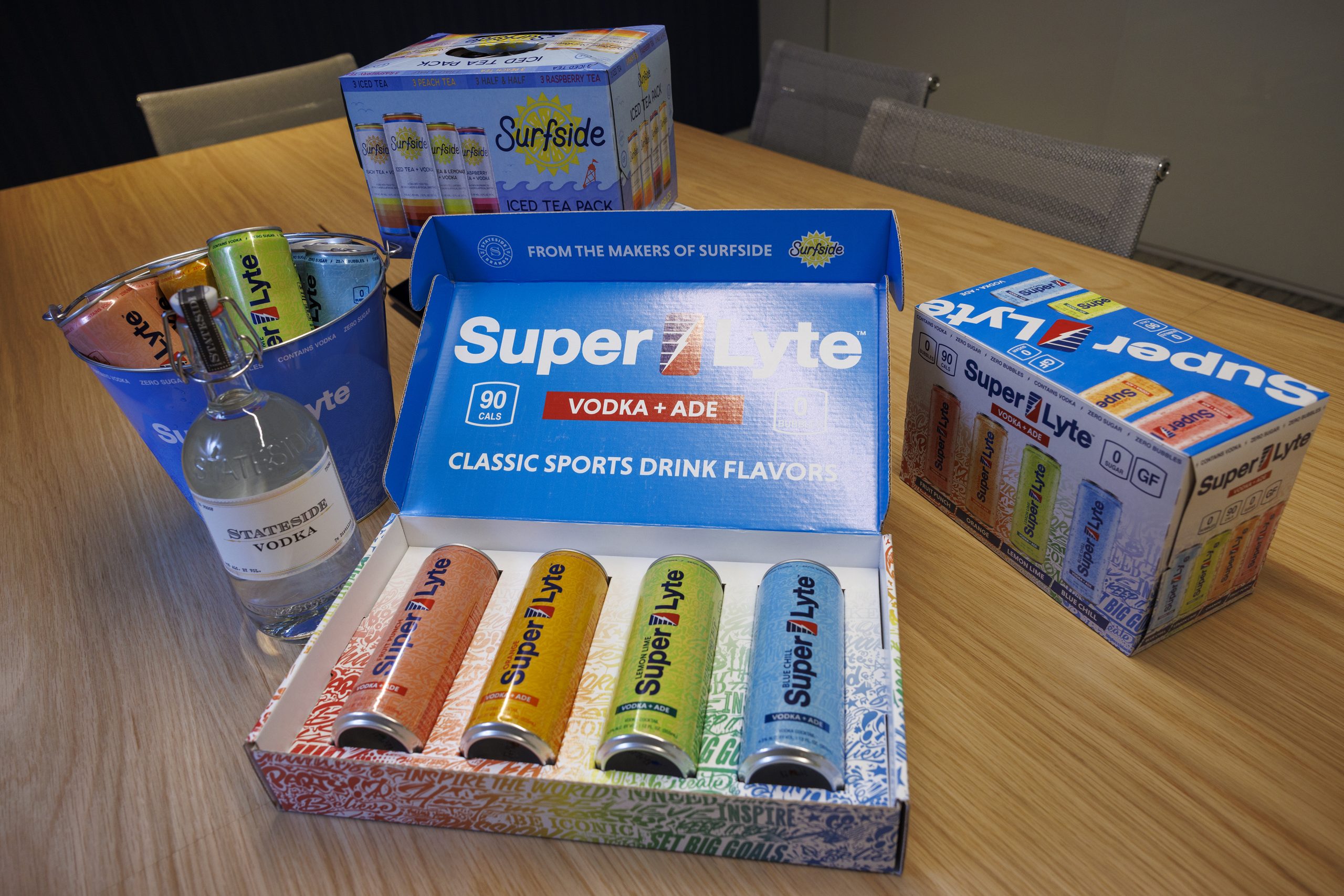
While Surfside has accounted for about 90% of sales in the past year, the top executives are bullish on their latest invention, a sports-drink-inspired canned cocktail called Super Lyte. They said the new beverage had sold nearly 400,000 cases in three months, meaning it could outpace Surfside’s early growth.
“The initial response is way beyond our expectation,” Clem Pappas said. “It feels like another hit.”
The company has achieved this success without the backing of an alcohol giant like Anheuser-Busch InBev or Molson Coors, which together manufactures hundreds of brands.
Quigley, 42, and Pappas, 52, said they’ve been approached by nearly every big beverage company, but they have no interest in selling anytime soon.
“As long as you’re still having fun, I see no reason to hang up the metaphorical cleats,” Quigley said.
“I don’t want to sit on the bench. I want to be in the game,” Pappas said. “We still think it’s early days.”
Stateside keeps Philly at its heart amid national growth
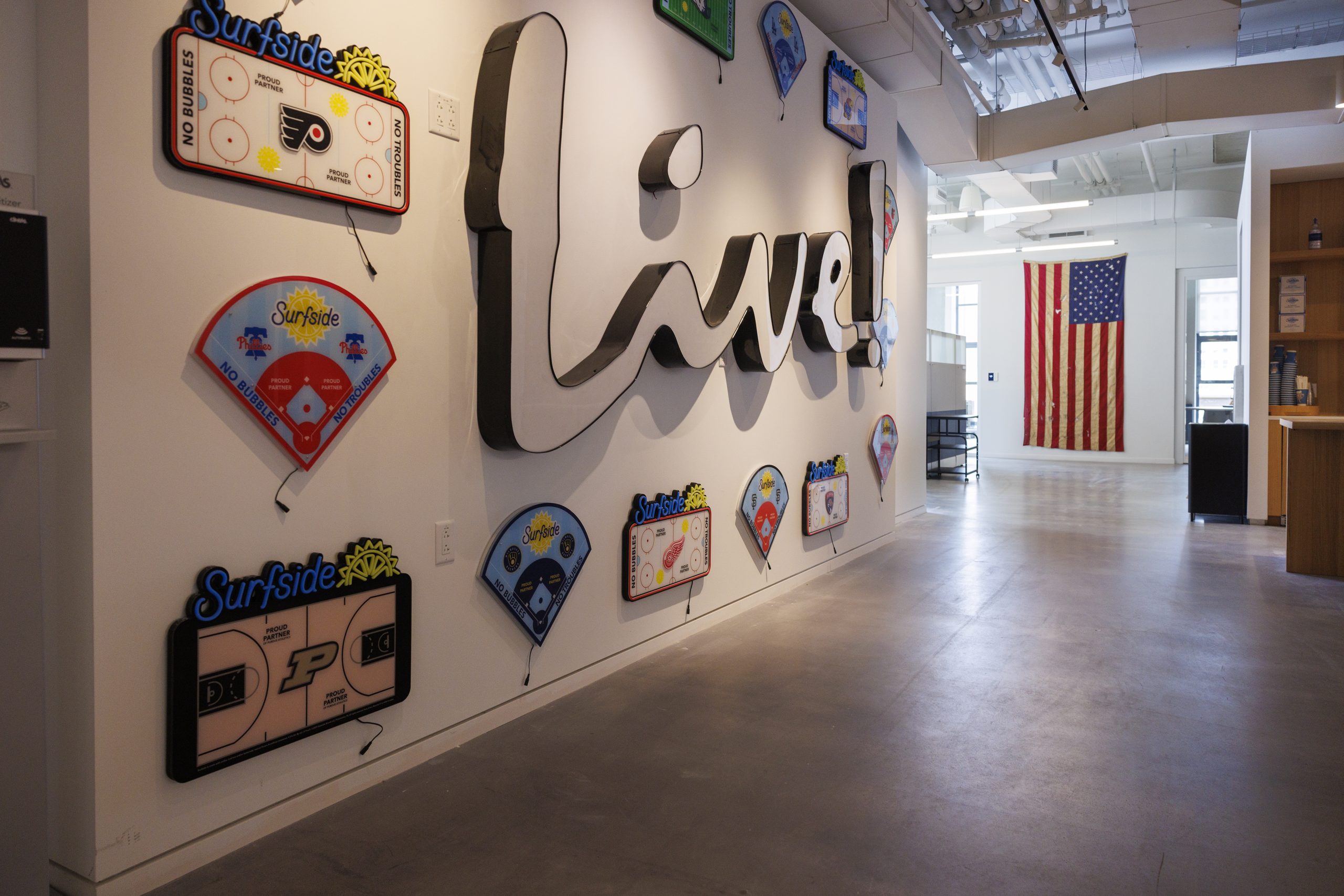
A wall at Stateside Vodka’s new Center City headquarters shows a handful of Surfside’s 170 partnerships.Alejandro A. Alvarez / Staff Photographer
In Stateside’s earliest days, Quigley recalled confiding in Pappas about a pipe dream: “If we ever get super successful, I want a sick office in a high-rise in Center City.”
More than a decade later, they have moved from a temporary office in Feasterville-Trevose, Bucks County, to a chic new headquarters at 11th and Ludlow Streets in Market East.
The company plans to stay put for at least 10 years, the cofounders said. For now, about 80 employees work there four days a week with room to grow.
On a recent day, the office was humming during a new-hire orientation. While everyday operations include the same mundane tasks required of any business, the top bosses pride themselves on keeping the vibes light. “We’re not selling, like, car insurance,” Quigley said.
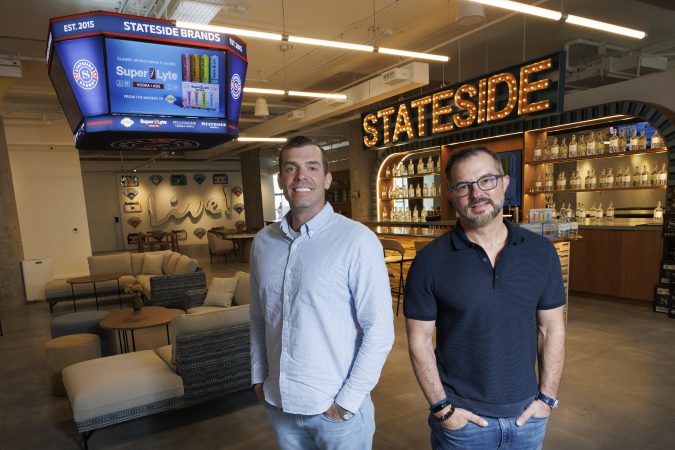
The bright industrial-style space occupies 34,200 square feet across two floors. It is centered around a long bar with a backlit Stateside marquee, a replica of the one at the tasting room. Nearby, there’s an open lounge with couches, underneath a miniature Jumbotron. Ads for Surfside, Super Lyte, and Stateside rotate on the screens.
Office happy hours are a given.
“That’s part of the special sauce,” Pappas said. “We’re in the drinks business.”
Philadelphia has always been at the heart of the company. It’s where they landed their first partnership with the Phillies, which fueled Surfside’s rise. At Citizens Bank Park, the cans have been the top-selling spirit since 2023, according to Stateside executives, citing figures from concessions provider Aramark.
Across the city, the cofounders still run the 7,500-square-foot Kensington-area tasting room and distillery, the latter of which they hope to turn into an event venue.
The distillery has been outgrowing its space for a while. But the need intensified in the past year as the vodka’s retail sales increased 120%.
They attribute the boost in part to greater name recognition thanks to Stateside Live! They said they hope to move vodka production to a larger facility somewhere in the Northeast.
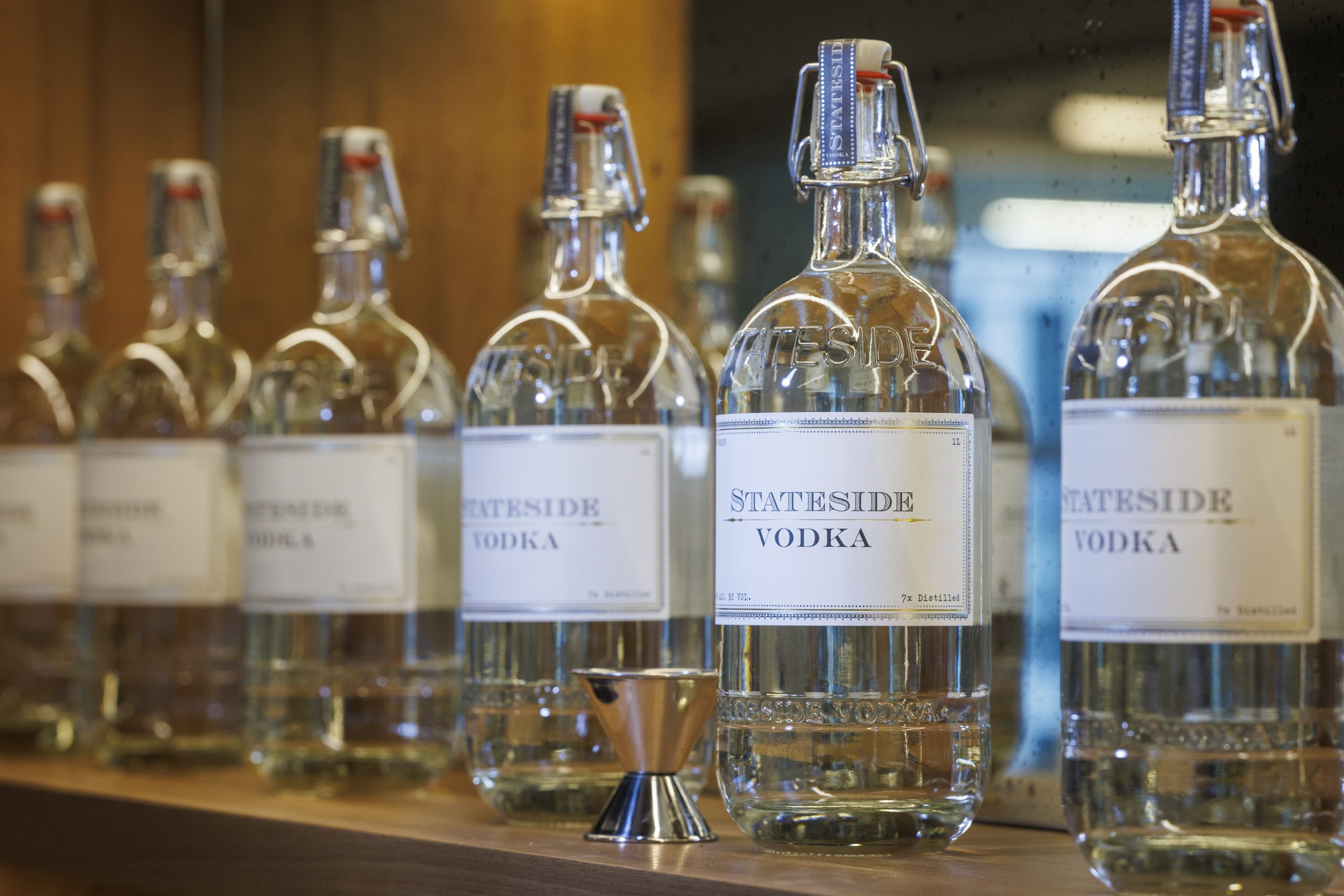
Sales of the original Stateside Vodka, displayed at the company’s office bar, have grown 120% year over year.Alejandro A. Alvarez / Staff Photographer
The cofounders have also stayed local: Quigley, a Fort Washington native, lives in Kensington, and Pappas, originally of Vineland, is in Haddonfield.
Stateside’s reach, meanwhile, has expanded far beyond the region. The company employs about 340 nationwide, up from around 30 in 2022, executives said, and they sell in all 50 states through a network of more than 200 distributors.
Across the country, Surfside has racked up 170 partnerships, including with MLB teams, music festivals, and colleges. Super Lyte has already acquired more than a dozen partnerships, too, including at Penn State, where they said it will be sold at Beaver Stadium this fall.
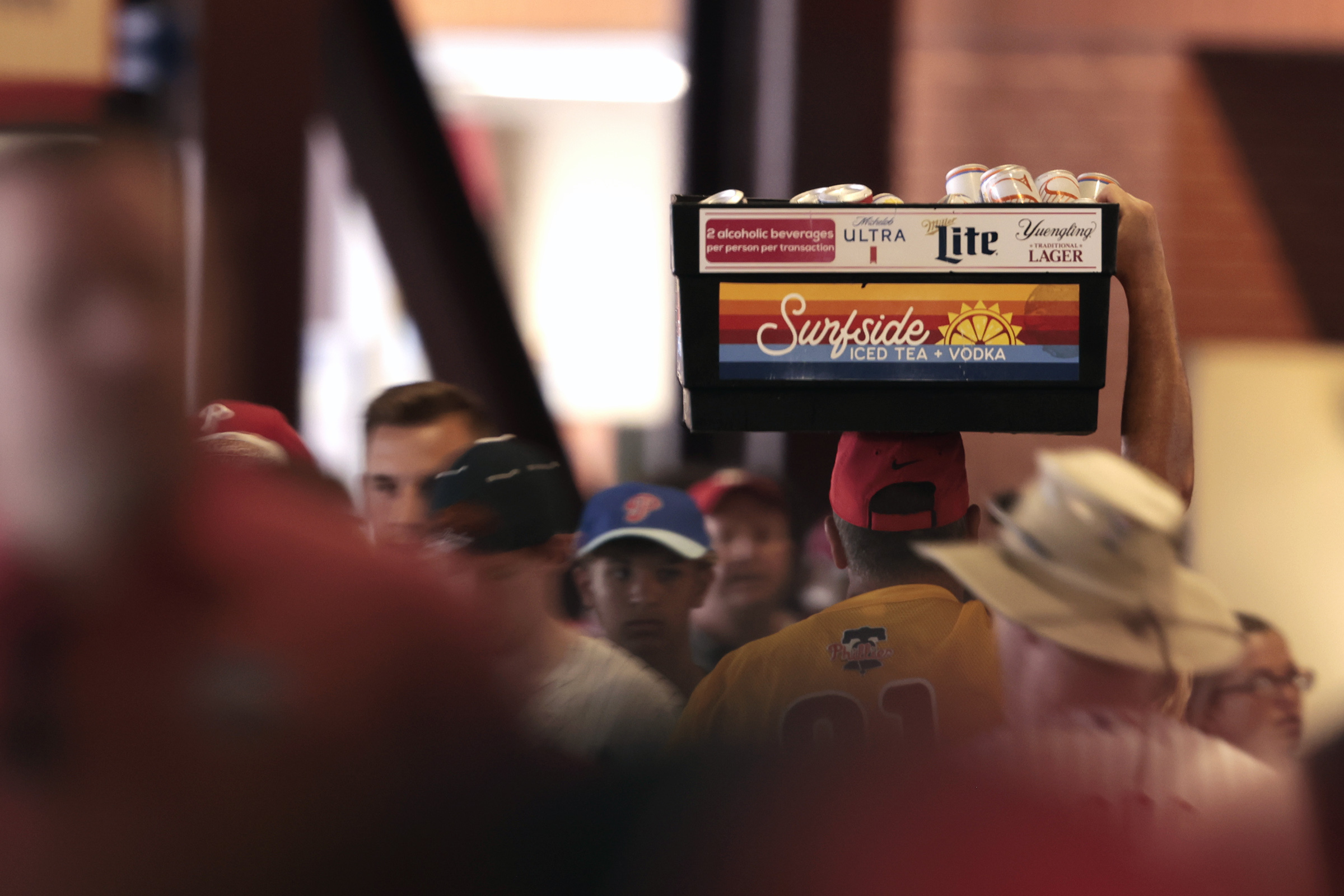
A hawker carries drinks, including Surfsides, around the concourse at Citizens Bank Park in 2024. The brand now has 170 partnerships at venues nationwide.Elizabeth Robertson / Staff Photographer
In many ways, the cofounders said, they’re trying to replicate the strategy that proved successful with Surfside at Citizens Bank Park: Connect with consumers somewhere where it feels only natural to grab a refreshing, familiar-tasting beverage.
“You’re at a hot baseball game,” Pappas said. “You got a hot dog. You got a soft pretzel. You got an iced tea” — or, rather, a Surfside.
Compared to seeing a new canned cocktail at a beer distributor, he added, “It’s more of an authentic, emotional connection.”
A beverage hawker sells Surfside cans during a Phillies game at Citizens Bank Park in 2024. Surfside has been the stadium’s top-selling spirit since 2023.Elizabeth Robertson / Staff Photographer
Surfside succeeds with familiar tastes
When customers first sip a Surfside or Super Lyte, the taste is likely familiar, perhaps even comforting. It’s similar to iced tea, lemonade, tea cooler, or Gatorade, drinks that for many have been staples since childhood.
That’s intentional, Pappas and Quigley said, and is one of the reasons they think their products have become so popular.
“If you remember your first beer, it was like, ‘Oh God, who wants that?’ It’s bitter. It’s foreign,” Pappas said. “It’s an acquired taste.”
But when it comes to these canned cocktails, “these are not acquired tastes,” he added. “They’re light. They’re easy.”
Quigley said he got the idea for Super Lyte after years of mixing vodka into Gatorade and throwing the bottles into beach bags on summer vacations. He recalled thinking: “I can’t be the only person in America that’s been doing that for a long time.”
The initial uptake of Super Lyte confirmed that, he said.
Super Lyte launched in March with four flavors: fruit punch, orange, lemon-lime, and blue chill.
Surfside now has 16 variations of iced tea, lemonade, iced tea-lemonade, and green tea. A 12-ounce Surfside contains 100 calories, 2 grams of sugar, and no carbonation, while a 12-oz Super Lyte contains 90 calories, no sugar, and no carbonation.
Stateside Vodka’s new product line, Super Lyte, is displayed at the company’s new Center City headquarters.Alejandro A. Alvarez / Staff Photographer
In the alcohol industry, “we’re meeting what was previously an unmet demand,” he said. It’s “all the convenience and the alcohol level of [a light] beer, where you can drink a few of them and you’re not getting sloshed.”
Even younger consumers — who are least likely to drink alcohol, according to recent surveys — are gravitating toward Stateside products, with high sales in some college towns.
Pappas and Quigley said they don’t see drinking rates declining much farther. Instead, they predict an evolution in the market, with an even greater focus on ready-to-drink cocktails.
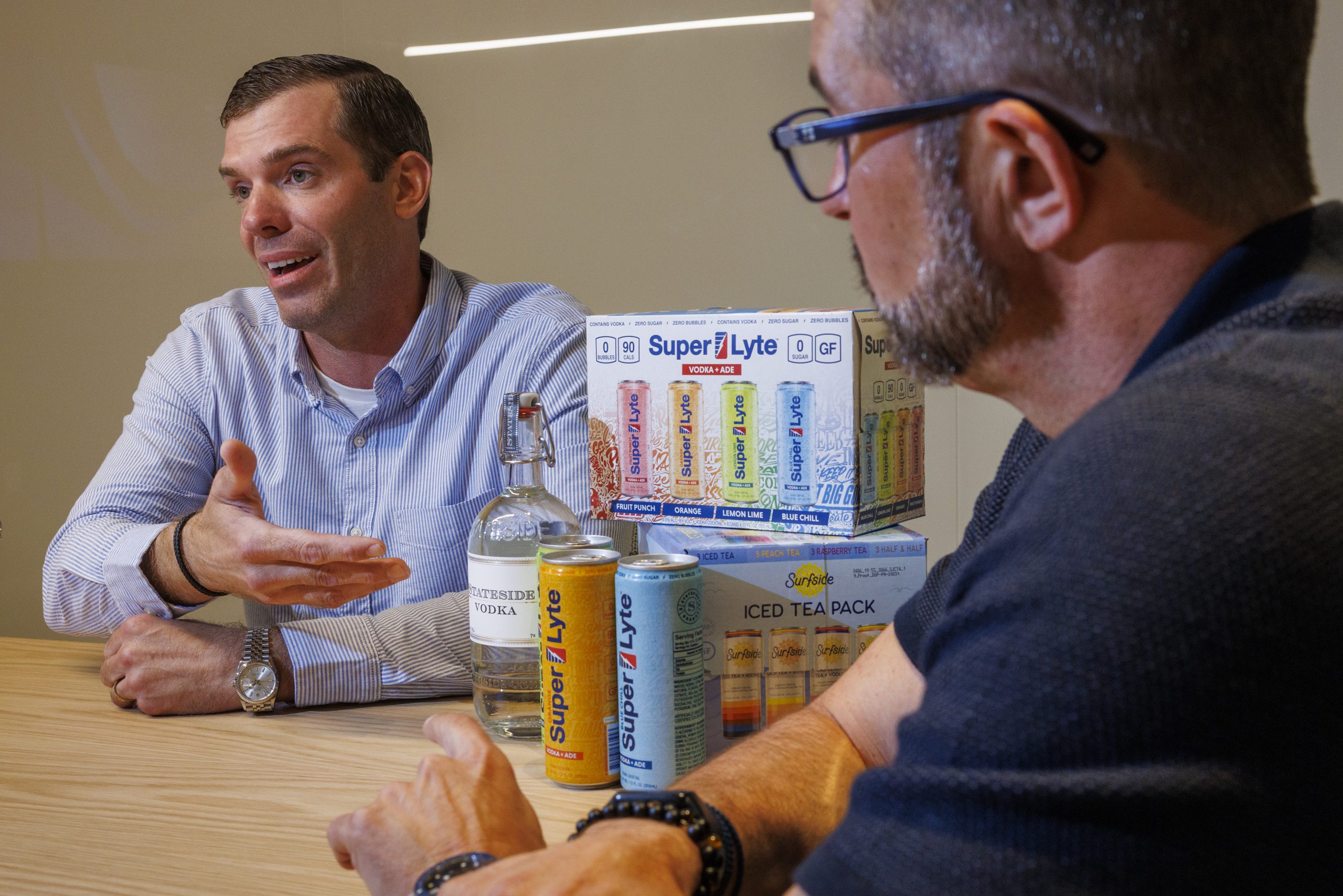
Matt Quigley (left), Stateside’s president and cofounder, talks about the company’s products with fellow cofounder and CEO Clement Pappas.Alejandro A. Alvarez / Staff Photographer
So Stateside’s leaders plan to keep crafting new products, they said, which is one of the reasons they have turned down acquisition offers.
“Big, publicly traded multinational companies just aren’t great at innovating,” Pappas said.
Stateside has now established “enough of the back-end capabilities to really compete pretty effectively,” he said, without losing “that entrepreneurial spirit” and the drive “to innovate and disrupt.”
At the moment, he said, they are working on several beverage ideas, none of which are ready for publication.
But it seems unlikely they’ll dabble in nonalcoholic drinks. As Quigley noted, “then it would just be iced tea.”
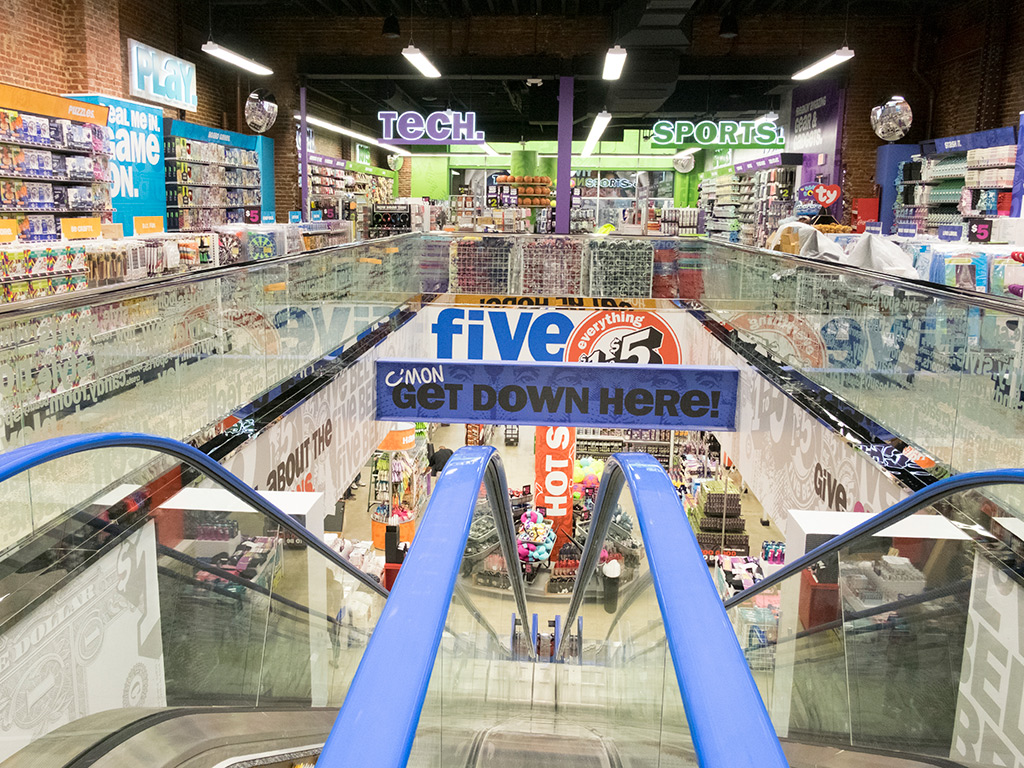
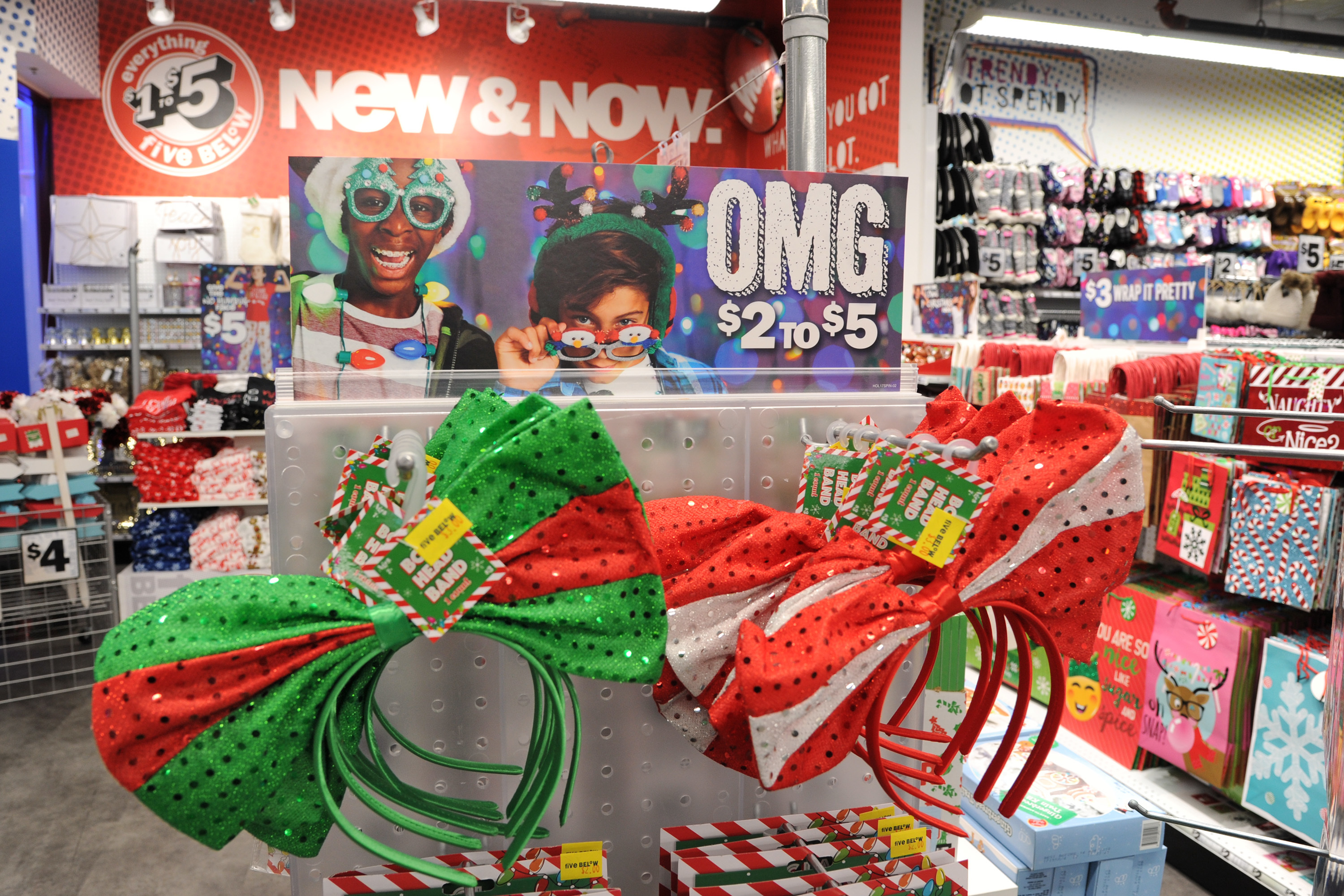
Five Below, the Philadelphia-based discount retailer, has officially done away with its above-$5 section.
But all its products aren’t below $5.
Those higher-priced items — which had been set apart in stores’ “Five Beyond” sections and account for less than 20% of inventory — are now interspersed with the rest of the merchandise, according to chief executive officer Winnie Park.
“We’ve actually seen that product perform better” when placed throughout the store, Park said last week on the company’s earnings call. “If you have a $35 gilt floor mirror, it’s in the room section and not tucked away in the back of the store.”
The move came during a strong quarter for Five Below, which sells toys, games, decor, tech accessories, candy, party supplies, sporting goods, and more to kids, teens, and their parents.
The company’s net sales rose nearly 33% and its net income increased to $123 million, triple the $41 million it recorded in the first quarter last year, according to the latest earning report.
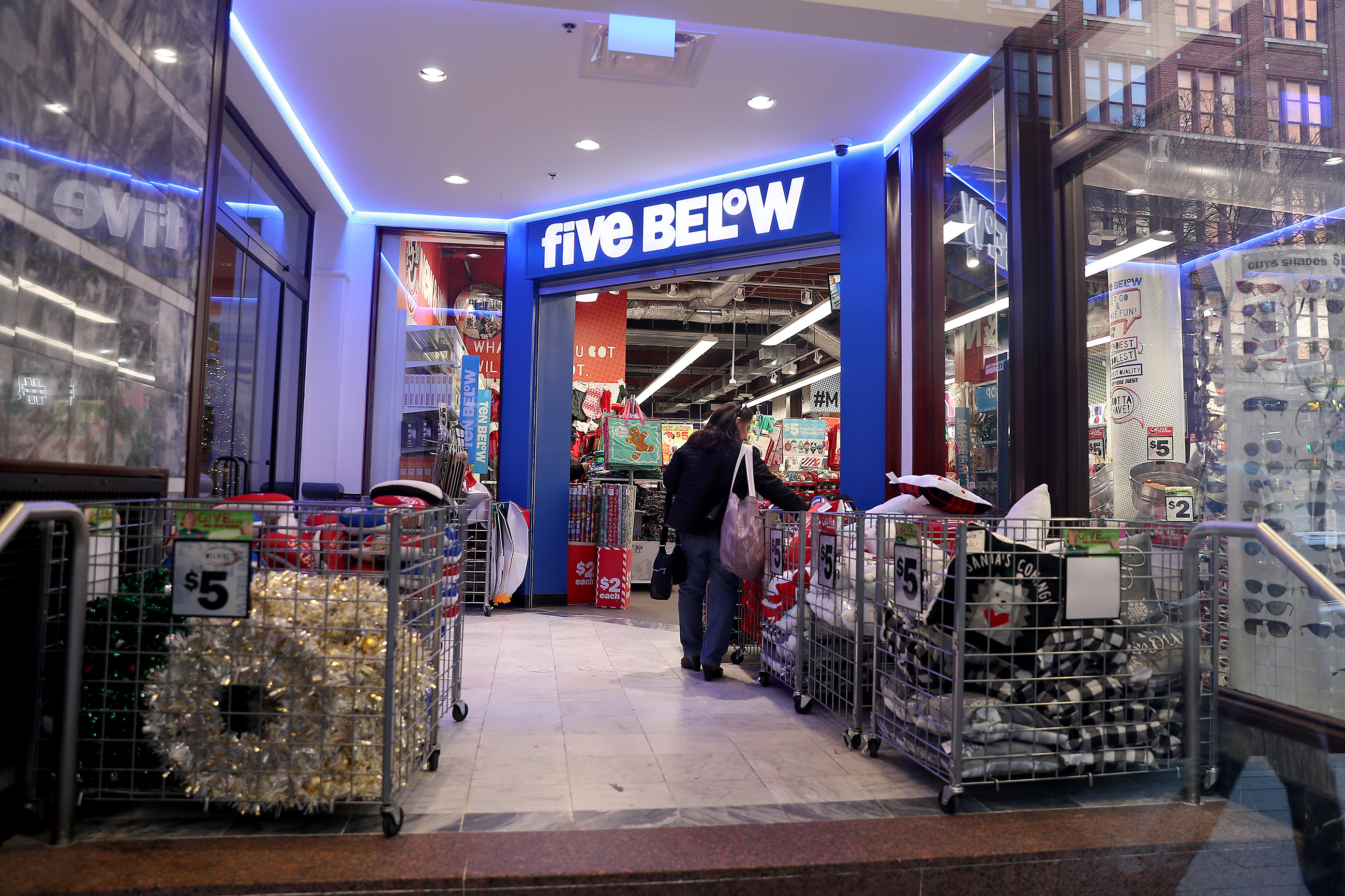
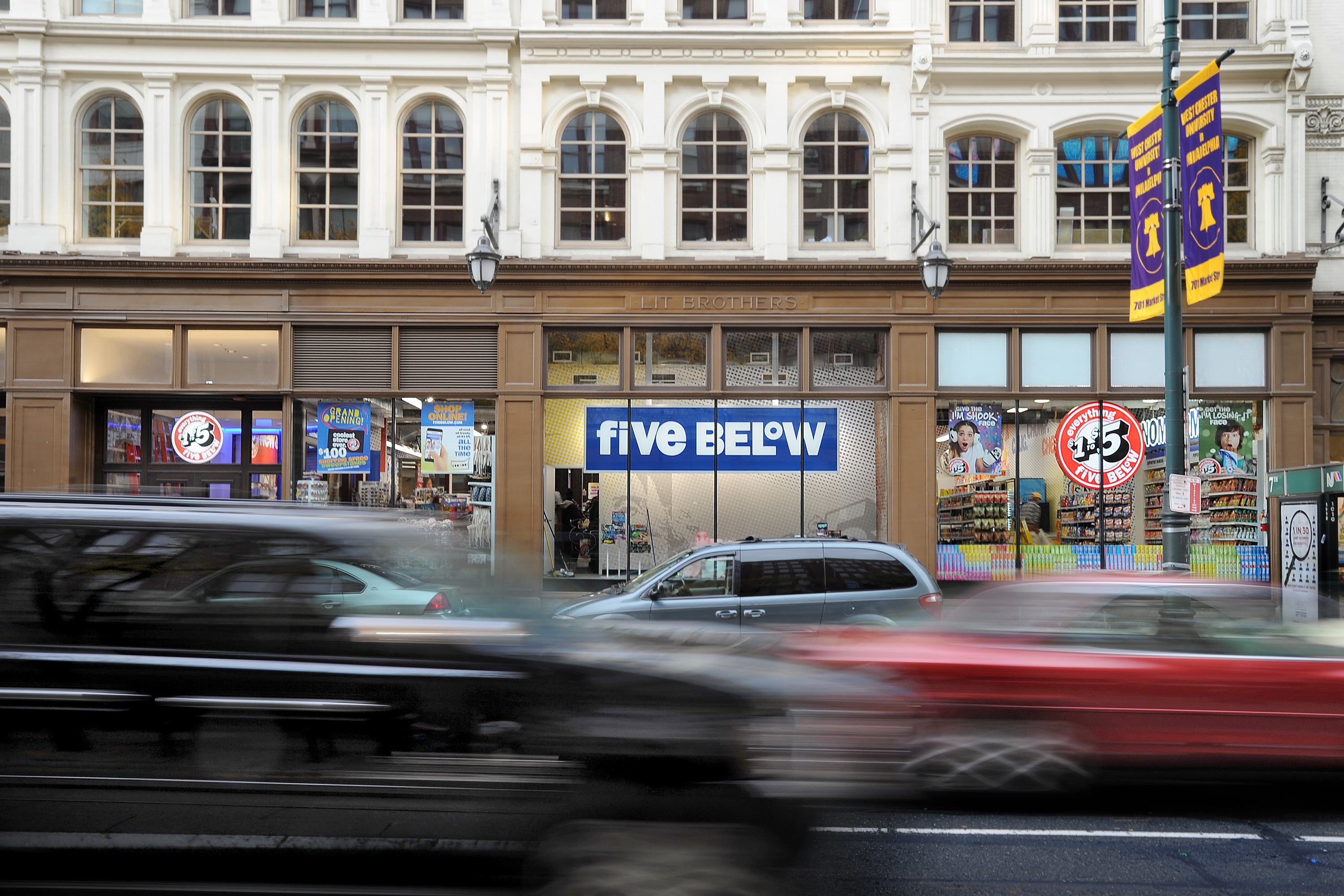
The wide selection of products at Five Below’s Chestnut Street location, one of its flagship stores, is shown in 2019. ED HILLE / Staff Photographer
Executives attributed some of this growth to the popularity of games and toys, “underpinned by strong support of squishy trends and collectibles,” said Dan Sullivan, chief financial officer.
“Everyone has been talking about the squishy dumplings,” the viral fidget toys that Five Below capitalized on, Park said. Pokemon and other trading cards also flew off the shelves.
“We’re constantly looking at what next trend we can amplify,” the CEO said.
At Five Below, executives said they have seen growth across all customer demographics, including millennial moms. Park said exercise gear, including yoga and Pilates equipment, has been a big seller.
Sullivan said he’s curious to see what happens the rest of the year.
“We’re being cautious,” the CFO said. “We’re looking at the world that our customers are living in with rising fuel costs, with very sticky inflation, with a somewhat soft labor market.”
“And we think a piece of that pain that they are feeling wasn’t felt in the first quarter purely because of tax proceeds year-over-year that were significantly up,” he added.
Five Below was founded in Wayne in 2002 and has since grown to include 1,970 stores in 46 states. In 2018, the company opened a massive three-story headquarters in the former Lit Bros. building at 701 Market St. in Center City.
Five Below’s Market Street location is shown before opening in this 2018 file photo.TOM GRALISH / Staff Photographer
Park, the former top boss at Forever 21, took the helm in December 2024, with a mission to reaffirm Five Below’s reputation as an “extreme-value retailer,” as the company called itself in her hiring announcement.
By last summer, the company was rebounding, thanks in part to viral toys like plush Squishmallows and artificial-intelligence tools that now help with inventory.
Analysts told industry publication RetailDive that Five Below’s latest earning report showed the business in a strong position. They noted that stock prices fell initially, however, over concerns about the company’s ability to sustain this growth.
“Looking ahead, the outlook remains very positive but is tempered by a dose of caution,” GlobalData managing director Neil Saunders told the outlet.
Mia Garcia showed off her clothing haul: a multicolored tank top, a backless white tee, a lacy maroon cardigan, and white tights for an upcoming trip to the New Jersey Renaissance Faire.
The 19-year-old was as excited about the bill as she was about the fashion.
Her grand total: $15.
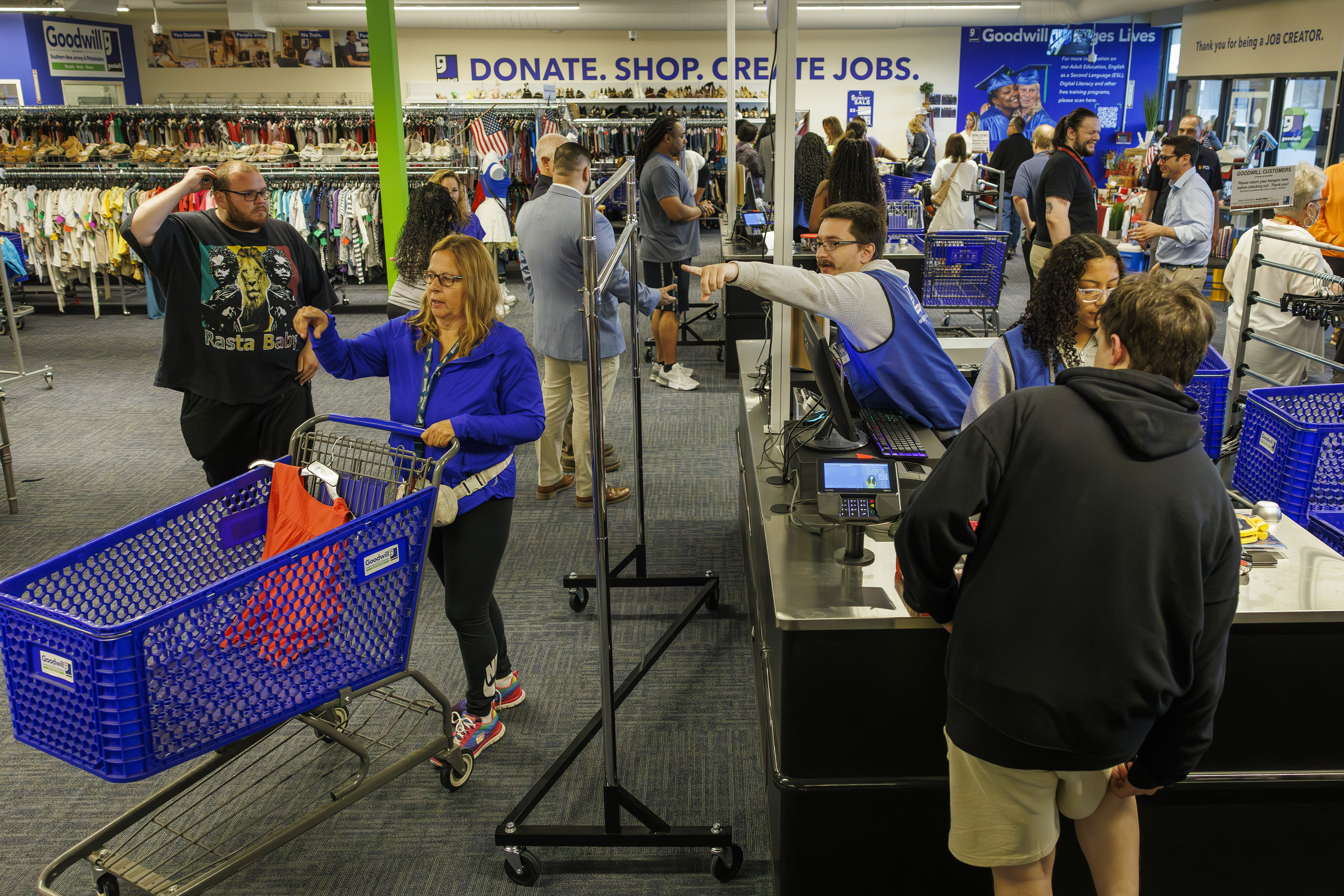
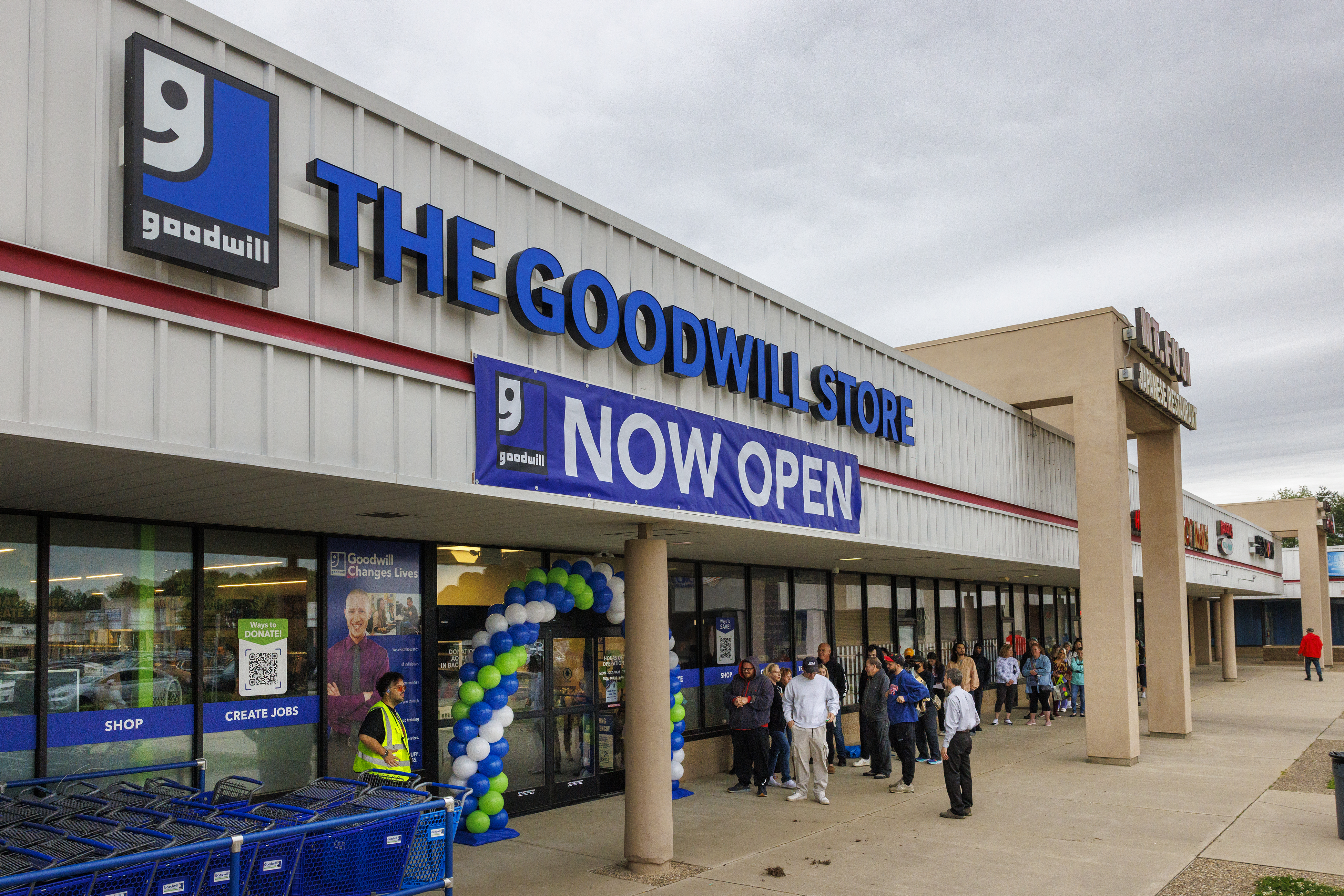
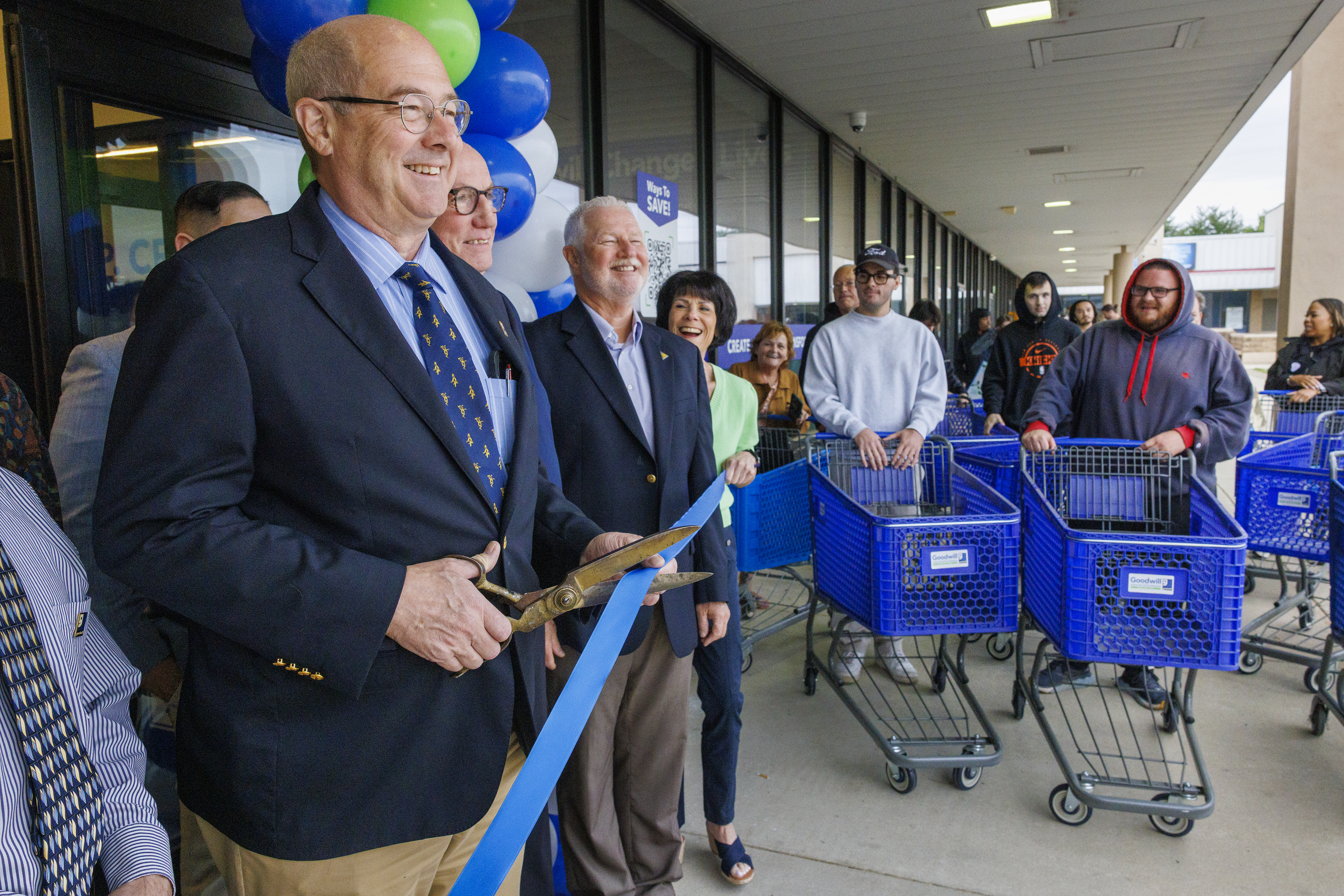
She and her friend, Salsbee Jahan, scored the deals at a massive new Goodwill store in Deptford, where local executives say a growing number of Gen Z shoppers are flocking for clothes, shoes, decor, and more. Young customers are increasingly fueling the world’s largest thrift store chain, which posted record revenue last year.
At Goodwill, “it’s definitely cheaper and easier to find older-style clothes,” like popular Y2K-inspired fits that are sold at a premium elsewhere, Garcia said. At some name-brand stores, “$20 won’t even get you get a shirt.”
The women, both Deptford natives attending Rowan College of South Jersey, say they frequent malls, too. But Jahan, 18, said they’re trying to thrift more because “everything is going up” in price.
Shoppers lined up to get inside the new Goodwill store in Deptford on opening day.Alejandro A. Alvarez / Staff Photographer
The sentiment was echoed by several other customers at the 19,000-square-foot store, which was buzzing with dozens of shoppers around lunchtime Tuesday.
“Gas prices have gone up. Groceries have gone up,” said Kaitlin Deegan, a 38-year-old nurse from Salem County. She was wearing a graphic tee and denim shorts that she had bought for under $10 at another Goodwill. “Now it’s all about thrifting.”
Nearby, one woman put a $6.49 denim skirt in her cart, next to a pair of $7.99 sparkly shoes she’d grabbed earlier. Across the room, children perused shelves of toys, games, and stuffed animals — most under $10 — and teens eyed rows of $1.99 DVDs and 99-cent CDs.
In its first 12 days, the new location on Clements Bridge Road averaged about 600 customers a day, more than double the foot traffic recorded at a smallerGoodwill retail store that recently closed in nearby Woodbury Heights, said regional manager Josef Fortun.
Each Deptford customer has spent about $31 on average, he said, exceeding managers’ goals.
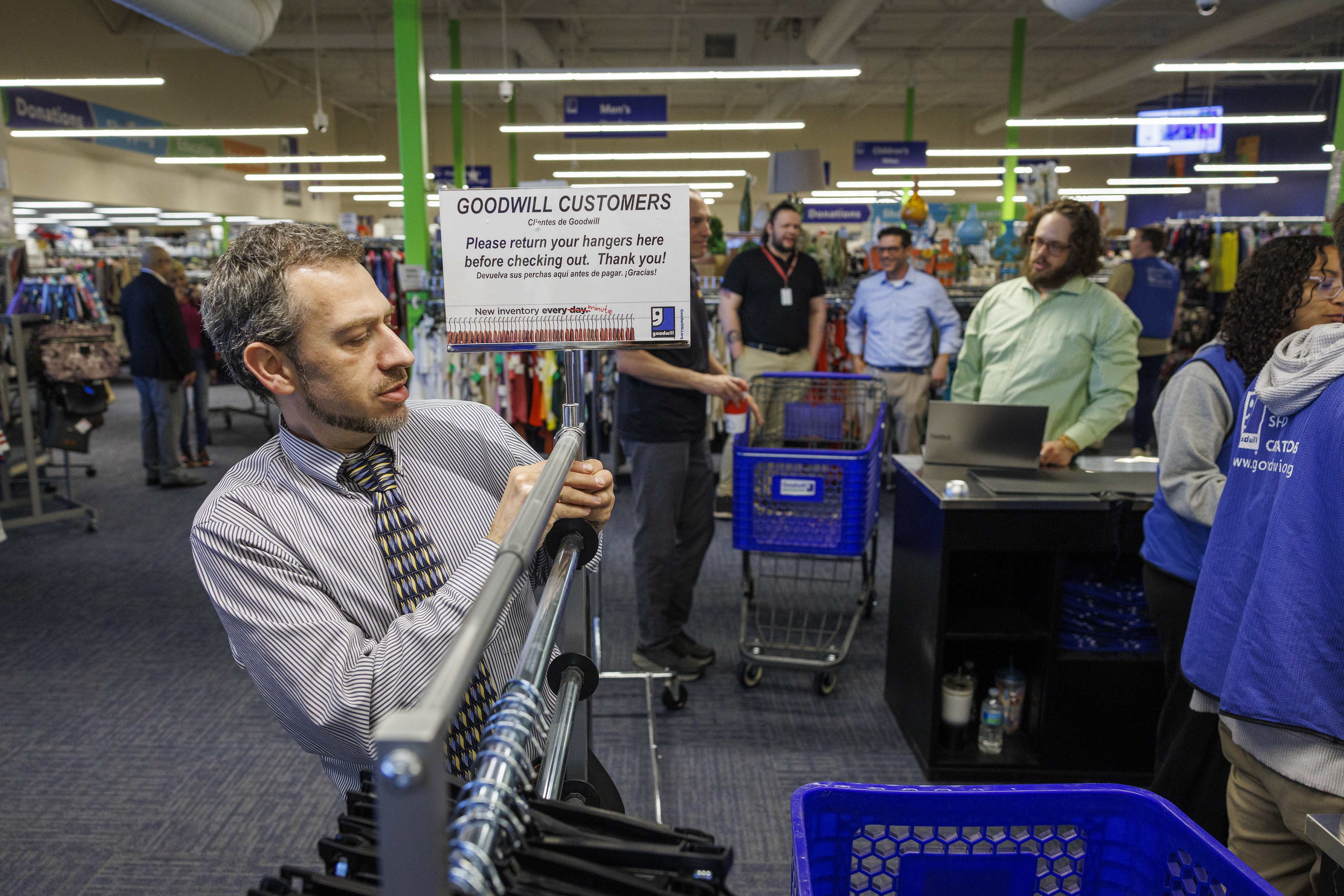
Josef Fortun, regional manager with Goodwill Industries of Southern New Jersey, prepares the new Deptford store to open on May 21.Alejandro A. Alvarez / Staff Photographer
This early success in South Jersey comes amid a larger thrifting resurgence. Last year, the U.S. resale market grew nearly four times faster than the broader apparel market, according to an annual report from the online consignment platform ThredUp.
Goodwill recorded more than $7 billion in revenue last year, the New York Times reported, and annual sales across its 3,400 stores have risen 50% since 2019. Smaller secondhand shops, such as Savers Value Village and ThredUp, have also reported revenue increases, according to the Times.
In the same Deptford shopping center as the new Goodwill, there are three other thrift stores: Once Upon A Child, Plato’s Closet, and Play It Again Sports. All are owned by Winmark Corporation, which has been adding more thrift stores and reporting year-over-year revenue increases.
In nearby Cherry Hill, a Red White & Blue Thrift opened this spring, a half-mile from a 2nd Ave thrift outpost — owned by Savers Value Village — that opened in 2024.
Goodwill also opened a store a year ago in a former Rite Aid in Voorhees. And its Woodbury Heights location, which is still accepting donations, is set to reopen June 15 as a Goodwill Home Medical Equipment Store.
Boyd said the nonprofit chain is looking to expand into Cape May County in the near future.
Why are more people thrifting?
More people are buying secondhand right now for many reasons, said Mark Boyd, president and CEO of Goodwill Industries of Southern New Jersey and Philadelphia.
“Challenging economic times definitely bring people into the Goodwill store, maybe for the first time,” Boyd said. At the same time, “there’s a lot of people out there who care a lot about reuse, and that’s driving particularly younger shoppers into Goodwill.”
Friends Reed Habiak (foreground left) and Anthony Nunez (foreground right), both influencers and resellers, were first in line at the new Goodwill store in Deptford on May 21.Alejandro A. Alvarez / Staff Photographer
And while thrifting is one of the most “tactile” experiences, Boyd said social media is playing a role in its rebirth. Many Goodwill customers are resellers, he said. They find steals in store aisles and then mark up the products to sell online or at flea markets.
On Deptford Goodwill’s opening day last month, professional reseller Anthony Nunez was first in line. He had arrived with a friend around 4:30 a.m., ready to hunt for sports jerseys, Pokemon memorabilia, video games, and vintage clothing to resell on eBay.
Since losing a job in compliance during the pandemic, the 34-year-old Sayreville resident has been reselling full-time, making more than $100,000 a year, he said.
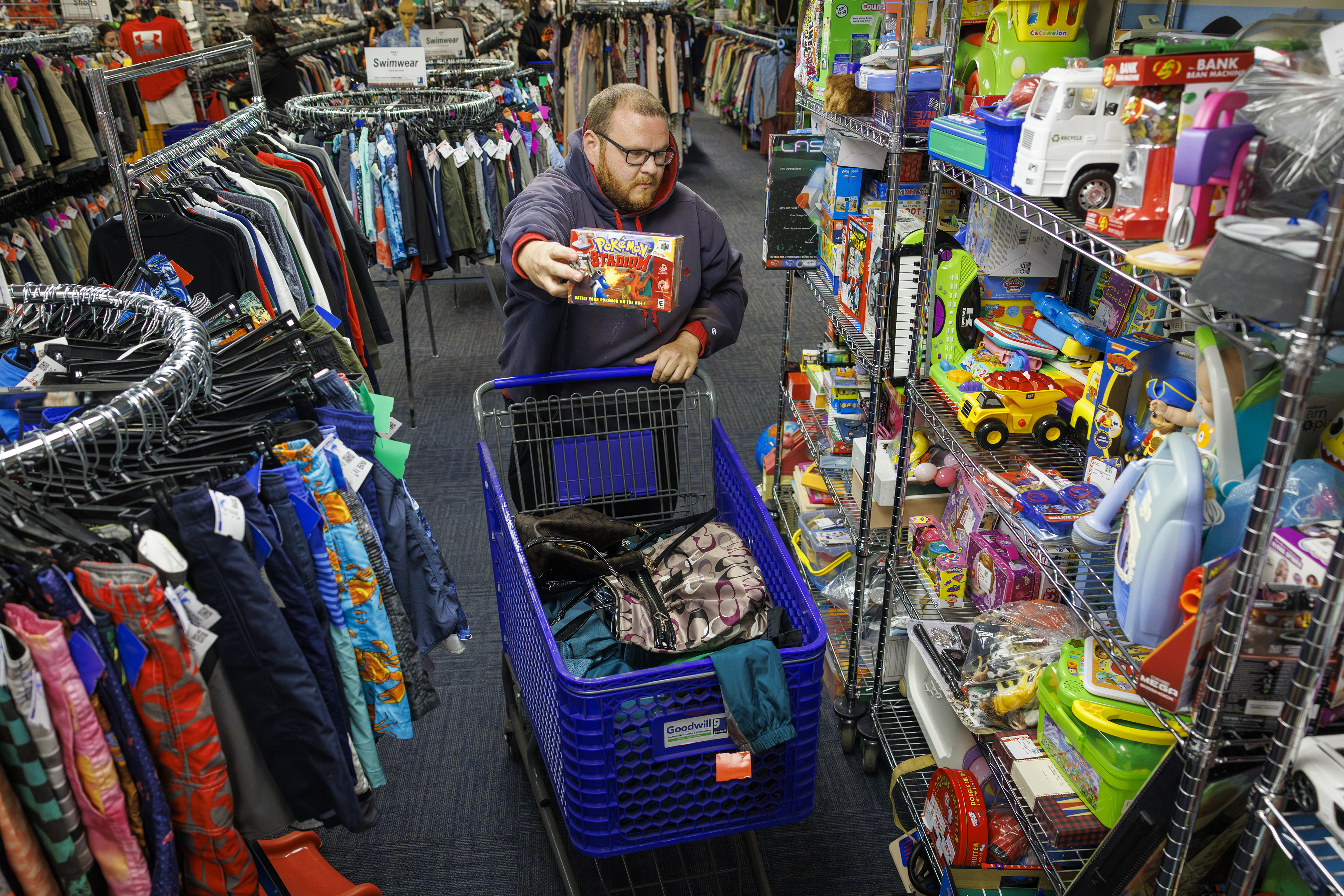
Anthony Nunez flashes a Pokemon Stadium game he picked up in the toy section at the opening of the new Goodwill in Deptford.Alejandro A. Alvarez / Staff Photographer
At the Deptford Goodwill, Nunez made a beeline for items with a high resale value, including a still-in-the-box Pokemon Stadium video game for Nintendo 64. He bought it for $18, Nunez said, and later resold it for $150, recouping the cost of his entire Goodwill trip.
It helped that Goodwill executives had invited several resellers to a store preview, he noted.
“They understand we help them too,” Nunez said. “I don’t know if they would be able to exist without us.”
Some longtime thrifters have started using social media to make extra cash.
Melody Appel got into thrifting decades ago, when she was a student at Drexel University.
Now 47 and living in Monmouth County, N.J., Appel recently got a TikTok account at the urging of her teenage daughters. At first, she just used the account to show off her thrifting hauls. But over the past month, she said she has started reselling items, too, making around $1,500.
Many of her TikTok followers seem to be between the ages of 30 and 60, she said, but she has noticed many younger customers in stores.
“People are seeing what they can find,” said Appel, who works as an educator and interior decorator. “And maybe their perception of what thrifting was is different from what thrifting is.”
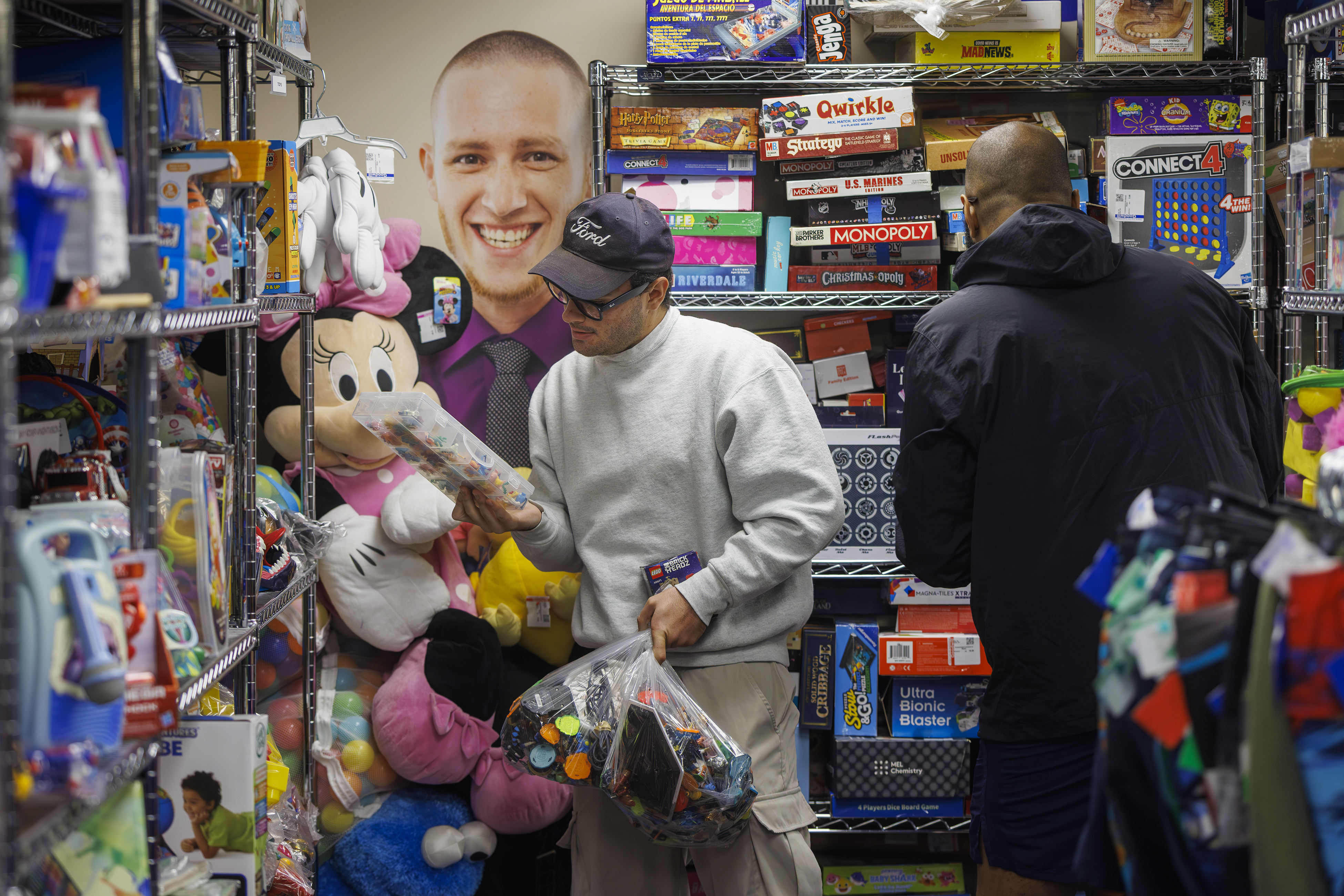
Reed Habiak, a social media influencer and reseller, looks for items in the Deptford Goodwill’s toy section on opening day last month. Alejandro A. Alvarez / Staff Photographer
While some found their way to thrifting through social media, others get hooked when they stumble into a store, said Fortun, the Goodwill regional manager. He has noticed more young people at the Deptford store than at the old location in Woodbury Heights, he said, and he attributes some of that to the Edge Fitness Club right next door.
Customers often come in on a whim, he said, and are in awe of the wide selection and the price tags.
“People always look for deals,” Fortun said. “You go to discount stores like Ross and Burlington, you still don’t find items as cheap.”
Goodwill is trying to keep these customers hooked with a new online loyalty program, which will offer special deals and send push alerts to shoppers when their favorite brands are stocked at a local store, said Boyd, CEO of the South Jersey and Philadelphia locations.
Mark Boyd, CEO at Goodwill Industries of Southern New Jersey and Philadelphia, cuts the ribbon to open the new store in Deptford last month.Alejandro A. Alvarez / Staff Photographer
Executives are also looking into using artificial intelligence to optimize parts of their operations, such as pricing, he said. But he doesn’t think technology could enhance the customer experience much, he added, and over-digitization could detract from it.
“I really think thrifting is like one of the most human experiences you’re going to have, and it’s a great shopping experience,” Boyd said, “and that’s why it’s so popular.”
For more than four decades, hundreds of Philadelphia-area women first laid eyes on their wedding gowns at La Bella Moda.
Even in recent years, as their bridesmaids and mothers increasingly bought dresses online, brides kept the Conshohocken boutique in business.
But last month, the Fayette Street mainstay shut its doors for good.
“It eventually wears on you,” said owner Gabriella Pagano Rush, who decided to close the shop in response to industry pressures and personal timing. The 30-year-old, who took over the store from her grandmother Lena Pagano in 2020, is due to have her first child this summer.
“The business was fine,” Pagano Rush said. “Sometimes you just have to do something that is better for you in the long run.”
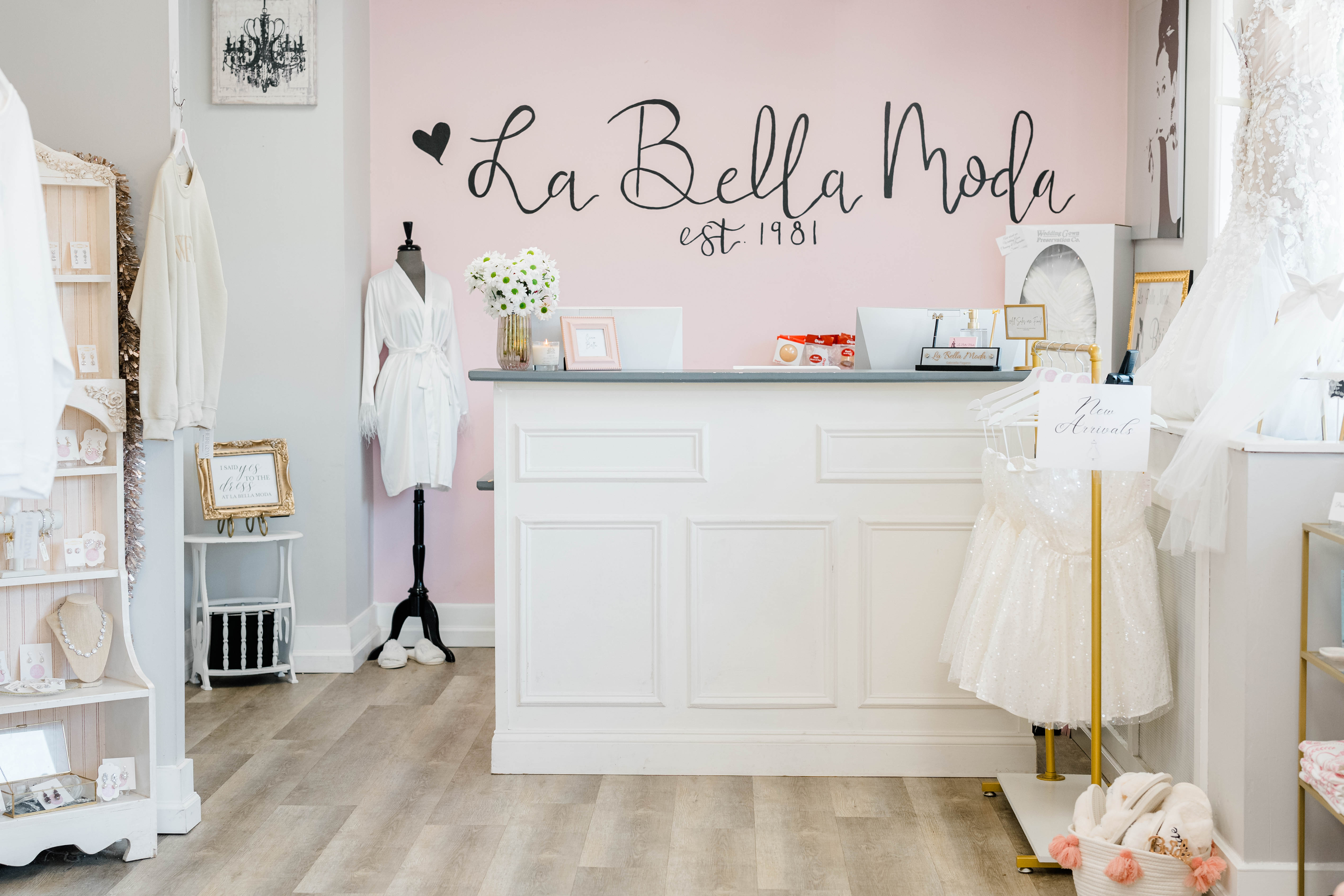
La Bella Moda, shown here in 2023, sold wedding gowns and other formal wear for 45 years before closing its doors in Conshohocken last month.Courtesy Morgan Taylor Artistry
She calls the transition “a happy ending,” one she said marks a new chapter in her life but also comes after years spent struggling to keep up with an evolving wedding industry.
Weddings have become increasingly extravagant, with some Philly-area celebrations costing $40,000 or more.
They have more vendor choices than ever, and small businesses like La Bella Moda, where gowns cost $2,500 on average, must compete with wedding emporiums, which can offer a wider selection for less.
The other options include larger brands, such as King of Prussia-based David’s Bridal, which is expanding its offerings while still selling dresses for under $500.
There are also online retailers, such as Revelry and Azazie, which offer home try-ons and mail custom dresses directly to customers. Even broader ecommerce sites and fast-fashion brands sell wedding accessories.
In recent years, as brides browsed veils and shoes at La Bella Moda, “I would start hearing, ‘Oh, I can get this on Amazon’ or ‘Oh, I can get this on Shein,’” which started out selling wedding dresses online before becoming a retail behemoth, Pagano Rush said.
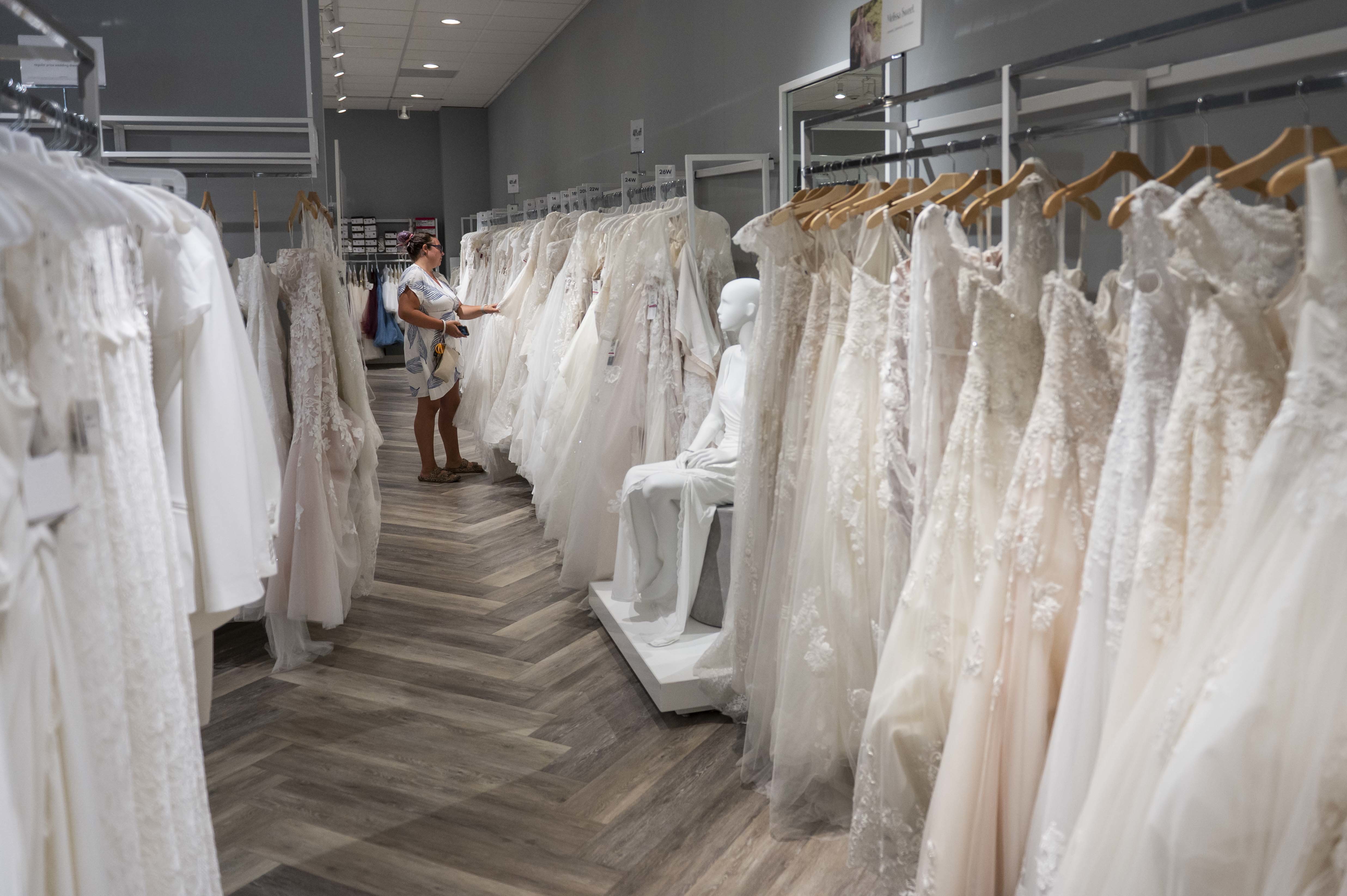
Someone shops for a wedding dress at David’s Bridal in Feasterville-Trevose in 2023. Allie Ippolito / Staff Photographer
In 2023, Pagano Rush stopped selling bridesmaid dresses and other formal wear, which had accounted for about 30% of the shop’s business, she said. Instead, she doubled down on wedding gowns.
She began offering $200 private appointments, during which a bride and up to eight guests got the store to themselves, with champagne, cookies, and a personalized shopping playlist, Pagano Rush said.
“I really wanted brides to feel relaxed when they came into our store,” Pagano Rush said. “Not intimidated, not feeling pressured to find their dress.”
How an Italian immigrant cultivated bridal joy in Conshy
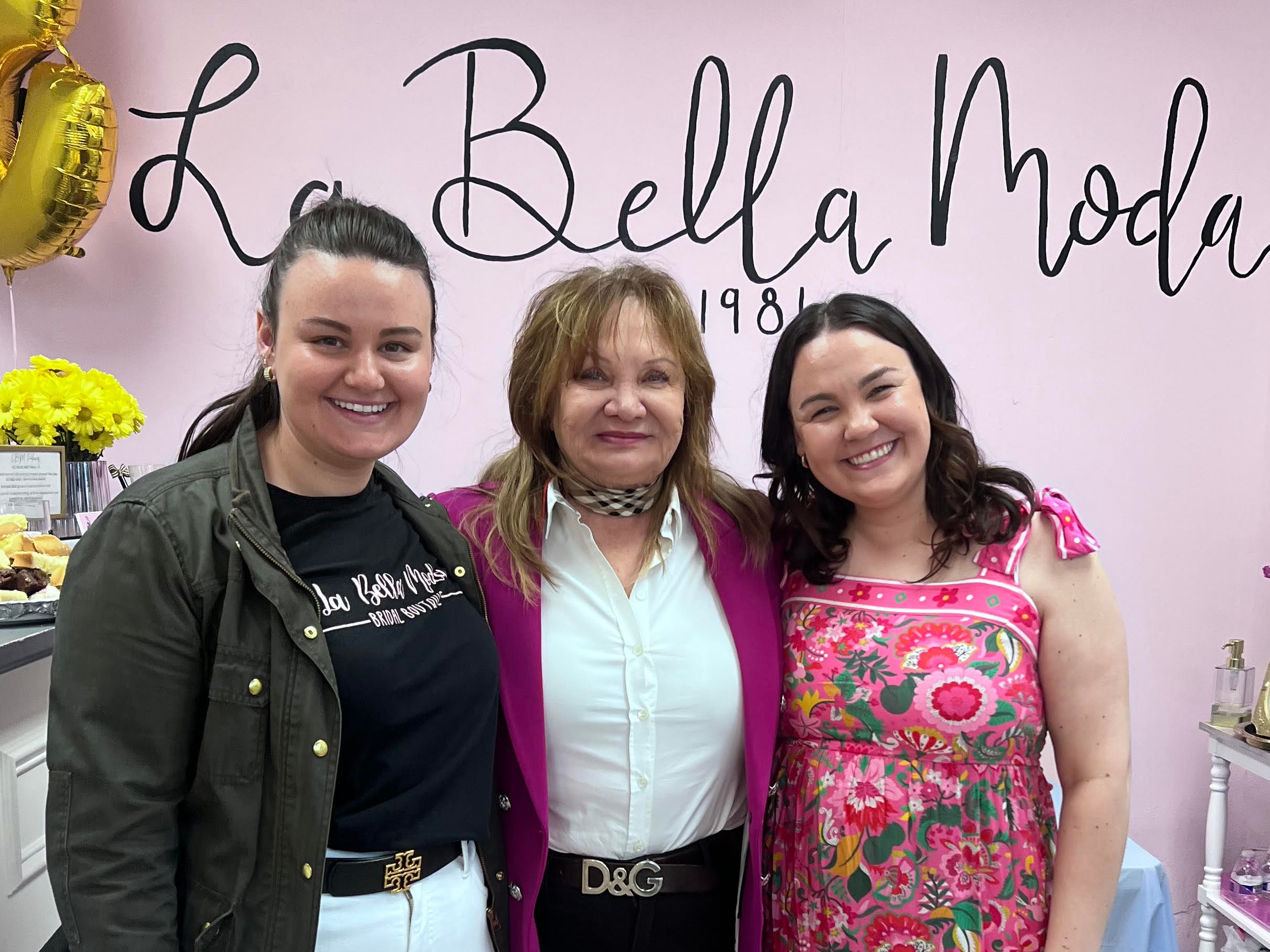
La Bella Moda founder Lena Pagano (center) poses with her granddaughters in the Conshohocken shop. Gabriella Pagano Rush (right) took over as owner in 2020. Pagano Rush’s sister Michaela Bosico (left) encouraged the new owner to renovate the store during the pandemic.Courtesy Gabriella Pagano Rush
Ever since she was a kid watching her “mom mom” Lena run La Bella Moda, Pagano Rush was enthralled by the wedding dress shopping experience.
“I just remember growing up, going and visiting her at the store, helping her for fun, and just in the back of my head being like, ‘Oh, this would be really fun to do,’” said Pagano Rush, who grew up near Lansdale.
At the time, the shop’s second floor was devoted to bridal try-ons, she said. “It was always so exciting when you would walk upstairs and you’d see all the brides up there trying on dresses.”
The joy in the shop was cultivated by Lena Pagano, who emigrated from Italy, married, had three children, taught herself English, and then fulfilled a longtime dream of opening a boutique in 1981, Pagano Rush said.
Lena Pagano, now in her 70s, stepped aside just before the pandemic in 2020, Pagano Rush said, and has been enjoying retirement in Plymouth Meeting.
Meanwhile at La Bella Moda, Pagano Rush’s first few months as a business owner coincided with the early months of the pandemic, when businesses were forced to close. But she took it in stride and used the time to renovate the shop, making for a better customer experience when it reopened that June.
Owner Gabriella Pagano Rush inside a renovated La Bella Moda in Conshohocken in 2023.Courtesy Morgan Taylor Artistry
Montgomery County Commissioners Chair Jamila Winder said the Pagano family’s story exemplifies the immigrant experience.
“In these times where it’s really hard for small business owners and entrepreneurs to start a business and sustain a business, Lena and Gabriella are really the epitome of that grit and that discipline and that vibrancy,” Winder said.
“They’ve brought so much joy to women across Montgomery County, women who were planning for some of the best days of their lives.”
Winder is one of them. A few years ago, she said, she bought her bridesmaids’ dresses at La Bella Moda.
Customers remember their wedding dress fittings
For women across the region, word of La Bella Moda’s May 31 closure brought back similar memories.
Dozens commented on Facebook posts about the news.
“I’ll never forget how gorgeous I felt in my lace gown on my wedding day,” wrote one woman. “Thank you for helping to make it so special, almost 20 years ago.”
“Such amazing memories of the fitting and how beautiful you made me feel!” added another.
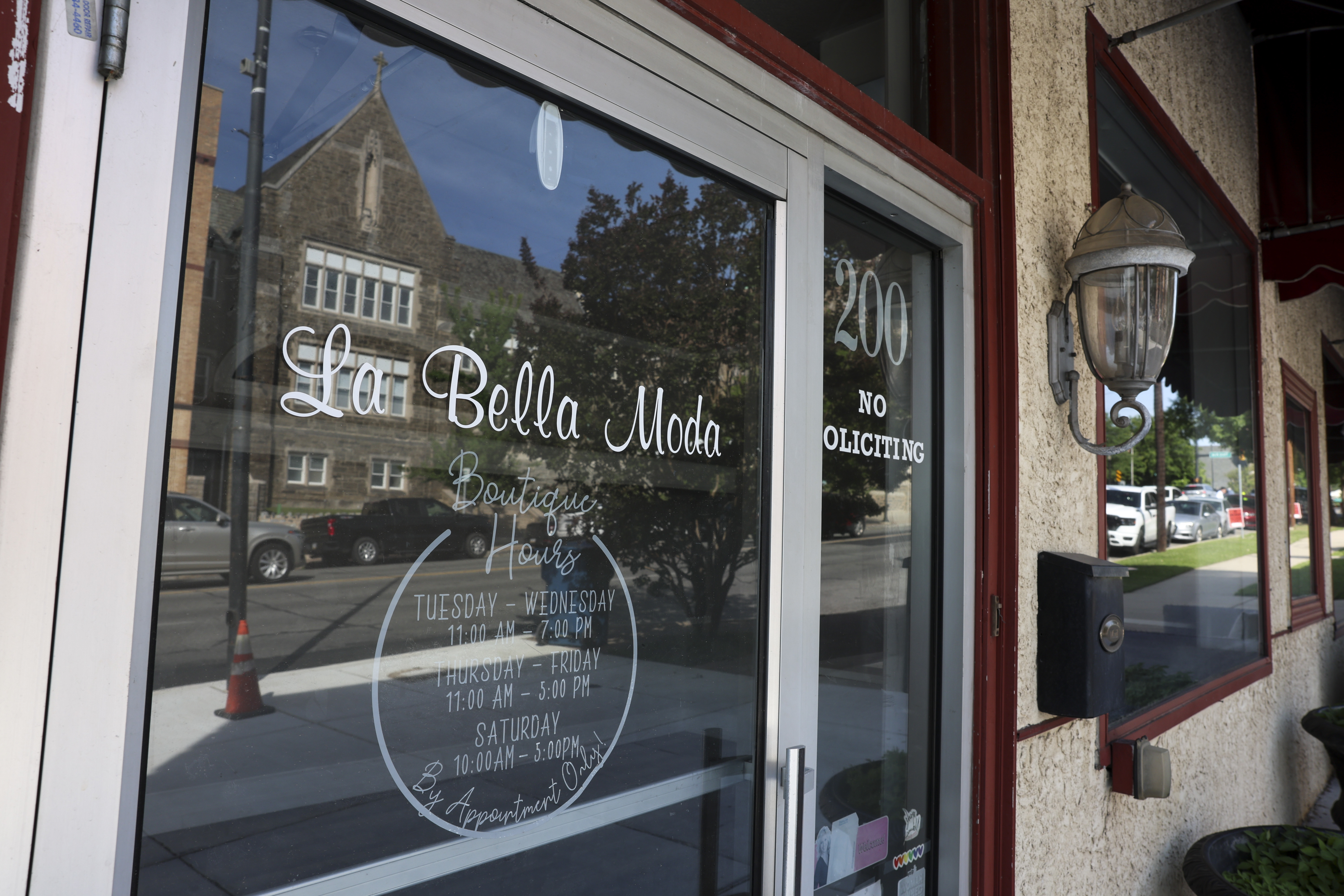
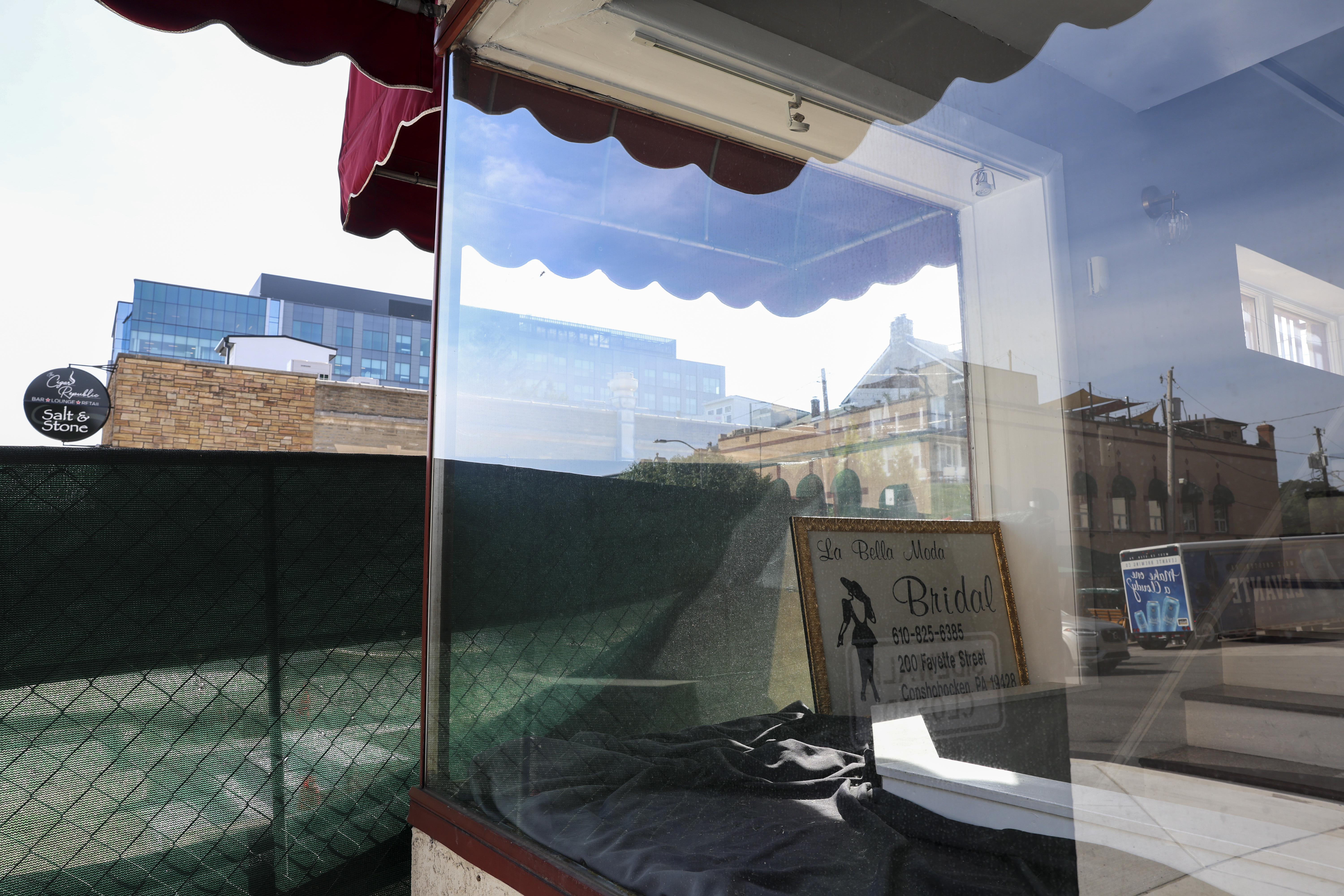
The mostly empty window of La Bella Moda is pictured on June 4 in Conshohocken.Monica Herndon / Staff Photographer
Tina Brennan West said she, too, recalls her wedding-gown fitting there 34 years ago.
“I remember the experience walking through the doors, the smiles, the feeling that they already knew you,” said Brennan West, 55, of Plymouth Meeting, who works at an auto repair shop.
She showed the stylists an inspiration picture from a magazine, she said, and an employee pulled a similar white-satin dress, with a long train, pink rose buds in the appliqué, and puffy sleeves that were popular at the time.
She can still picture trying on the gown, she said, and see her mother and grandmother crying at the sight of her.
Erin McElroy Kraft, now 60, wore her mother’s wedding gown for her 1992 nuptials. But the Plymouth Meeting native bought her bridesmaids outfits — deep-purple velvet skirt sets — at La Bella Moda.
“It was absolutely beautiful,” McElroy Kraft said. “They were just so great at what they did.”
McElroy Kraft, a retired foreign-service worker who now lives in Arlington, Va., said Fayette Street won’t feel the same on her next visit home.
“It’s going to be hard not to see La Bella Moda in Conshohocken,” she said.
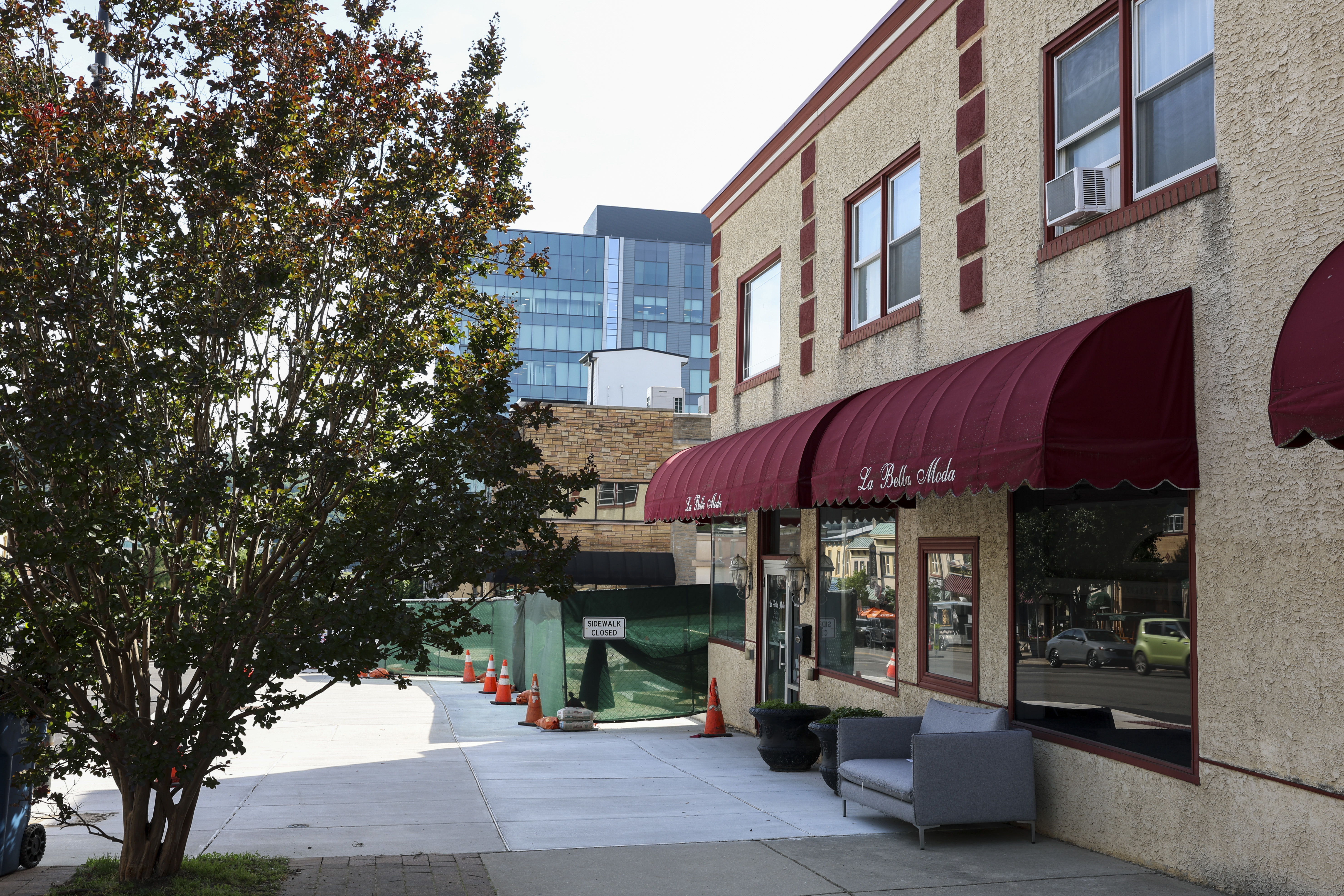
The closed La Bella Moda on Fayette Street in Conshohocken is pictured on June 4.Monica Herndon / Staff Photographer
La Bella Moda sits empty now. Its last dresses were either sold to customers during a recent farewell event, Pagano Rush said, or donated to bridal consignment shops owned by her friends.
As for brides who had recently bought gowns at La Bella Moda, “no one was left without their dress and without a plan,” said Pagano Rush, who referred some customers to a local seamstress for alterations.
The building, owned by Lena Pagano, will be leased to another tenant, Pagano Rush said.
“The borough of Conshohocken has really done an amazing job of attracting businesses to that main corridor,” said Winder, the county commissioners’ chair. “I don’t anticipate that storefront will be vacant for long.”
Pagano Rush said she believes there is still a place for independent shops in the modern wedding industry.
“I can’t tell you how much attention we have gotten since April when we posted that we were even closing,” she said. “I wish small businesses just got this kind of attention and support” all time.