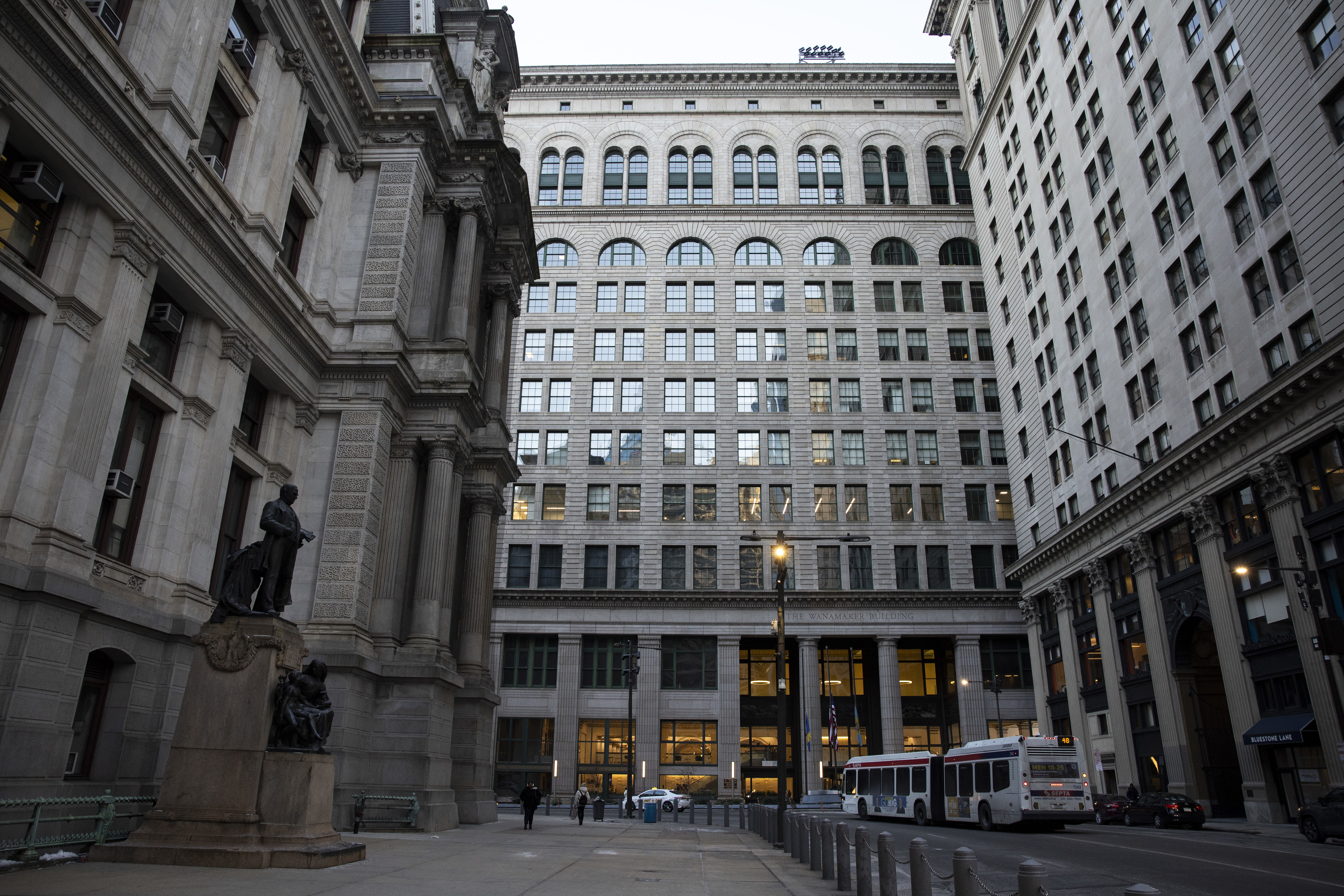
The historic Wanamaker Building in Center City will soon be home to a new $4 million event space.
The Wanamaker Room, the latest addition to the Finley Catering portfolio, will be able to serve as a standalone venue or an expansion of the Crystal Tea Room, where Finley has held weddings and banquets for 25 years.
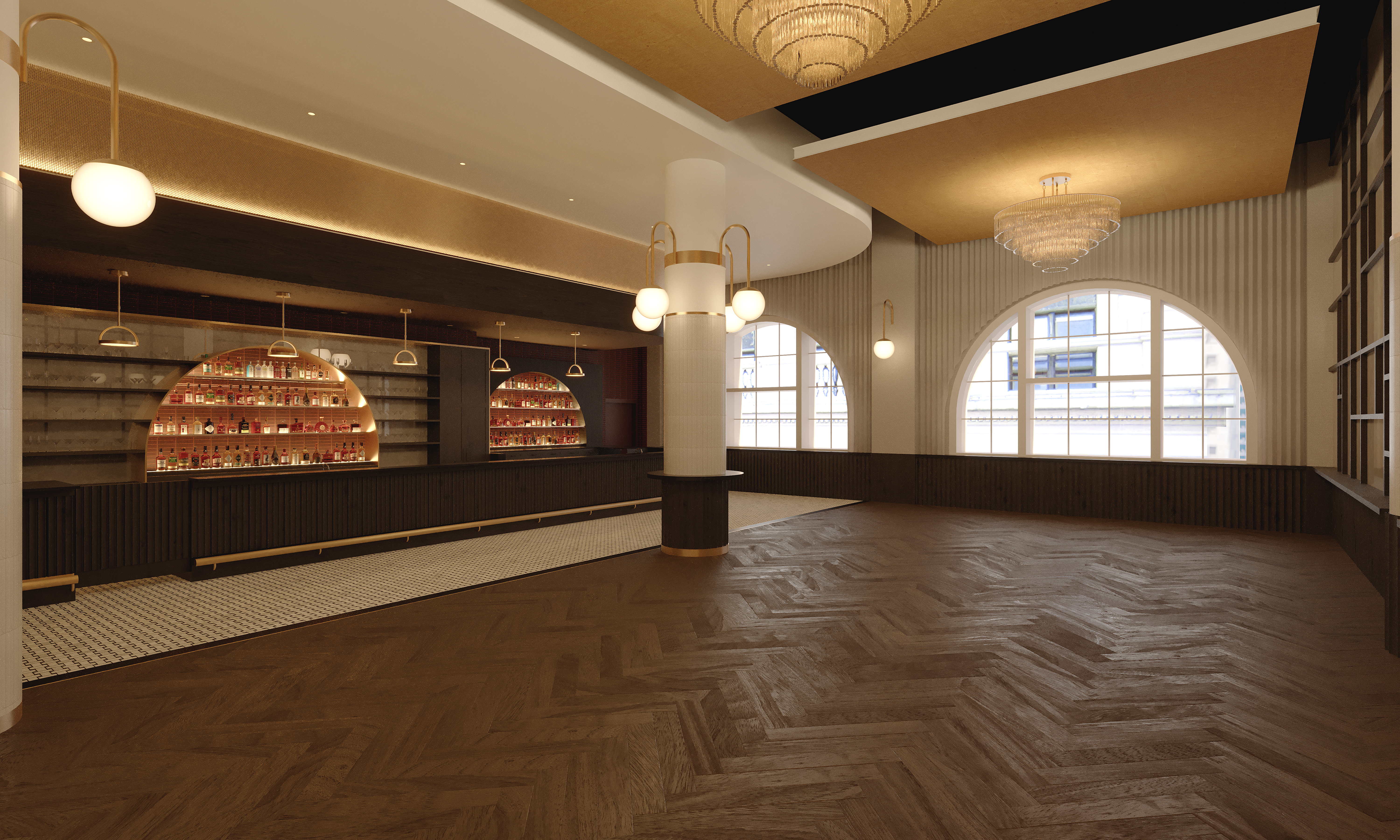
The new 5,000-square-foot space, on the same floor as the Crystal Tea Room, is currently under construction, according to the Finley team, and is set to open in early 2027.
A rendering of the bar area in the Wanamaker Room at the Crystal Tea Room, which is set to be the latest venue in Finley Catering’s portfolio when it opens in 2027.Courtesy JKRP Archiects
“The Wanamaker Room is an investment in the guest experience and in the future of this landmark space,” owner and CEO Steve Finley said in a statement. “We’re excited to give our clients new possibilities for their events while continuing to welcome people to the heart of Philadelphia.”
With large windows overlooking City Hall, the Wanamaker Room will serve as the new cocktail-hour space for weddings at the Crystal Tea Room, a grand ballroom that can fit up to 1,200 people.
The Wanamaker Room will also be available to book for independent events, such as corporate functions, rehearsal dinners, and cocktail receptions, with space for as many as 400 guests.
A rendering of the “flex space” at the Wanamaker Room at the Crystal Tea Room, which is set to be the latest venue in Finley Catering’s portfolio when it opens in 2027.Courtesy JKRP Archiects
The new addition marks the latest change for the Wanamaker Building. Last year, its iconic Macy’s closed after occupying the bottom floors for 19 years. Like many brick-and-mortar retailers, the 435,000-square-foot location had struggled since the pandemic, and the company deemed it “underproductive.”
The company also wants to bring new retail, entertainment, and fitness outlets to the Macy’s shell, which it has owned since 2019. TF Cornerstone has said it sees the building being “a mixed-use anchor for Center City.”
The company also operates the Ballroom at the Ben and Union Trust in the city, as well as two suburban venues, The Ivy at Ellis Preserve and The Ballroom at Ellis Preserve, both in Newtown Square.
When Amber Ayrer bought her Vineland home 25 years ago, she envisioned growing old there, enjoying lazy afternoons with the windows open and a view of farmland from her front door.
After her adult daughter, Ally, suffered a traumatic brain injury, Amber made the rancher accessible, installing a ramp that aides use to push Ally’s wheelchair outside for her daily walks.
The place had all the makings of a forever home, Amber Ayrer said — until a massive AI data center moved in across the street.
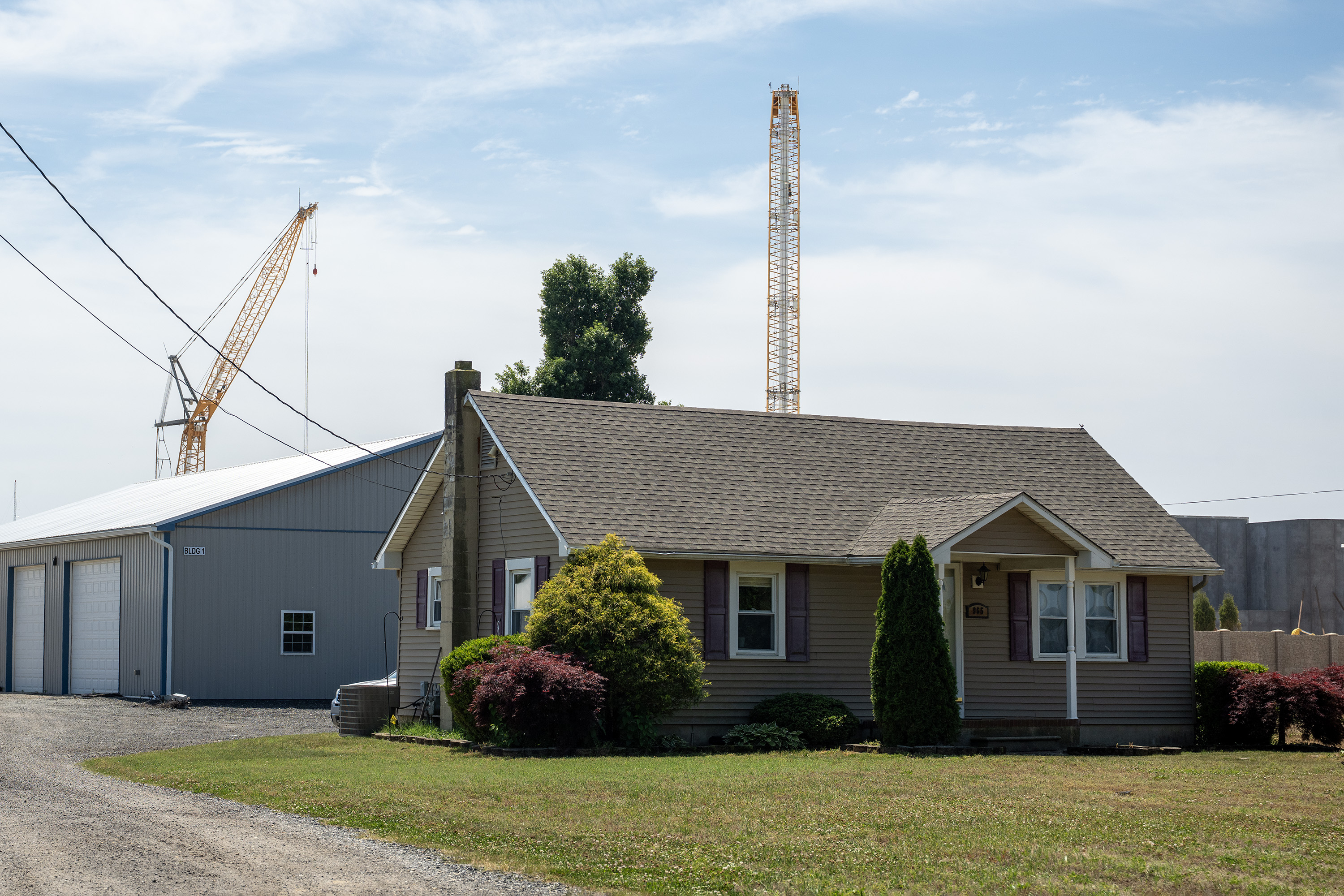
Now, the 71-year-old looks out her front windows at the hulking DataOne facility, a windowless compound surrounded by walls and metal fences.
In recent months, Ayrer said, the 2.4-million-square-foot complex has emitted a near-constant hum. She struggles to sleep, she said, and has suffered from headaches. She turns the TV on to mask the sound.
Residents who live farther away have also complained about the noise, including in a recent lawsuit that was thrown out due to procedural issues. In the suit, residents said the Cumberland County Department of Health measured the hum as higher than 50 decibels a mile away in the middle of the night. A sound higher than 50 decibels is equal to a running refrigerator and is 10 times louder than a typical suburban area at night.
Ayrer, who was not involved in the lawsuit, said she doesn’t want to move, even as she sees neighbors sell their homes to the data center developers.
“In order to get another home, I’d have to get one built” to be accessible, Ayrer said, standing in her entryway. She shrugged, adding, “I need to be here for my daughter.”
The noise had quieted, she noted, since around Sept. 22. That’s when the New Jersey DEP ordered the data center to pay a $1 million fine for running 62 gas generators without the required permits. She isn’t sure why the hum stopped, or whether it was related to the fine.
By late Wednesday, the sound had returned, she said, and she worried it would be even louder when the center is fully operational.
The Ayrers are some of the first Philly-area residents to live in the shadow of a massive AI data center. Only a handful of homeowners live within eyesight of DataOne’s South Lincoln Avenue complex in Vineland.
They used to have more neighbors. But since 2025, DataOne Vineland and LJR Real Estate — which is registered to the address of Northeast Precast, a local company that has partnered with DataOne — have purchased at least five surrounding homes for a combined $3 million, according to online property records.
DataOne and Northeast Precast did not respond to requests for comment about the acquisitions. Several former Vineland residents who sold their homes to these companies could not be reached or declined to comment.
Asked about residents’ concerns, DataOne spokesperson Naomi Rice shared a previous statement, which said in part that the facility was “transitioning to low-emission, quiet fuel cells.” These generate energy through an electrochemical reaction rather than combustion, pistons, or rotating machinery.
Nebius Group, which is operating the center’s internal AI infrastructure, says the fuel cells from Bloom Energy — a company expanding locally — and enhanced sound mitigation will make for a quieter environment than what residents experienced during construction, according to spokesperson Ava Iuliucci.
Charles-Antoine Beyney, DataOne’s founder and chief executive officer, previously said the Vineland center would use “breakthrough” technology to reduce its environmental impact. He said the complex would be a good neighbor, promising a vertical farm — which uses technology to grow crops indoors — to help feed Vineland residents in need.
“Most of the data centers that are being built today suck, big time,” Beyney said in January.
“No freaking way am I going to do what the entire industry is doing … just killing our communities and killing our lungs to make money.”
What it looks like near a South Jersey data center
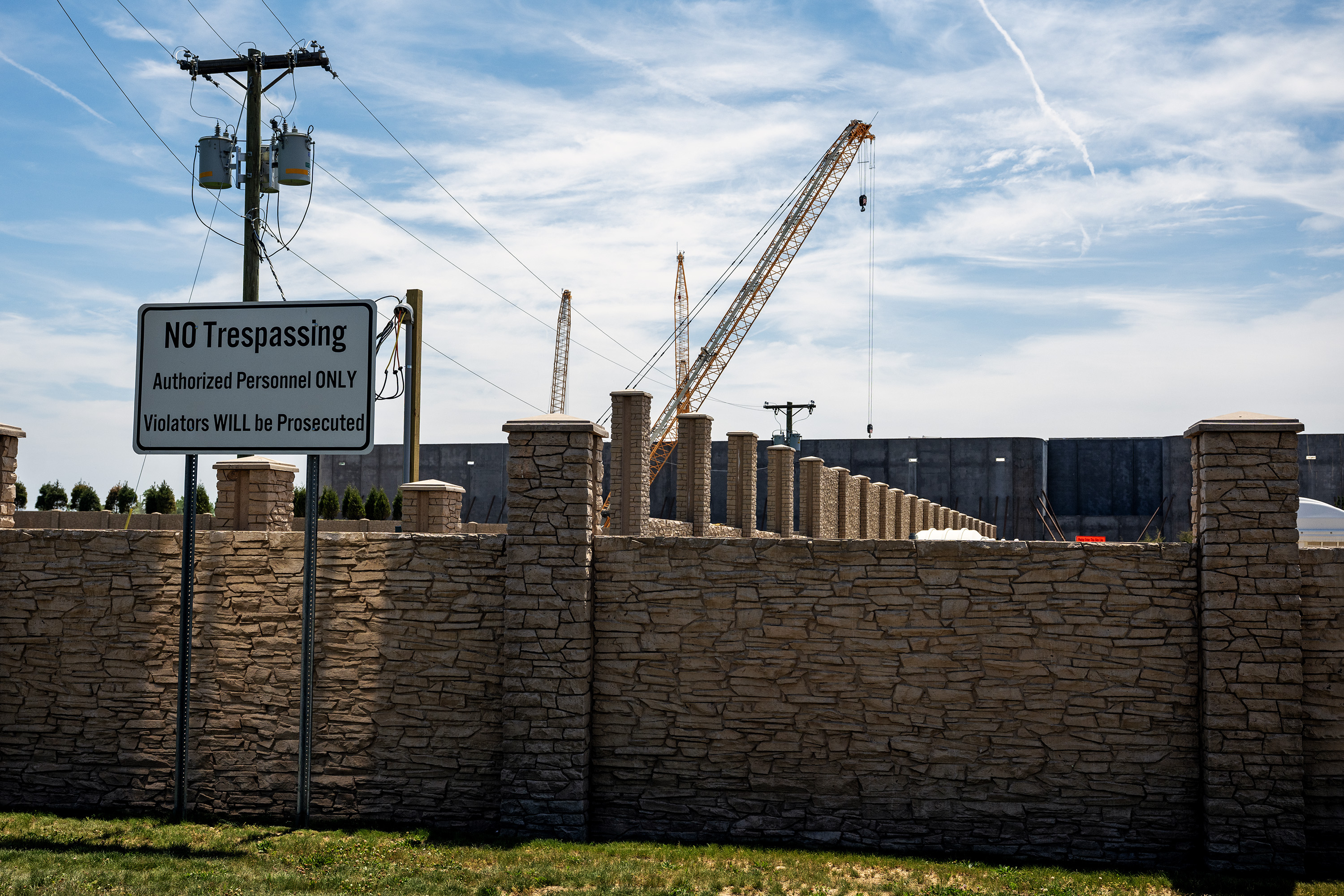
The Vineland DataOne center, as seen in June, could be finished by the end of the year, developers have said. Tom Gralish / Staff Photographer
The dark exterior of DataOne abuts busy South Lincoln Avenue, towering above homes and farms on the outskirts of Vineland City. In spots, rows of crops extend to the data center’s walls.
On a recent day, the data center appeared abuzz with activity, although residents said it was relatively quiet, as cars and yellow school buses drove in and out of its gated-off parking lot. Giant “no trespassing” signs are prominently displayed.
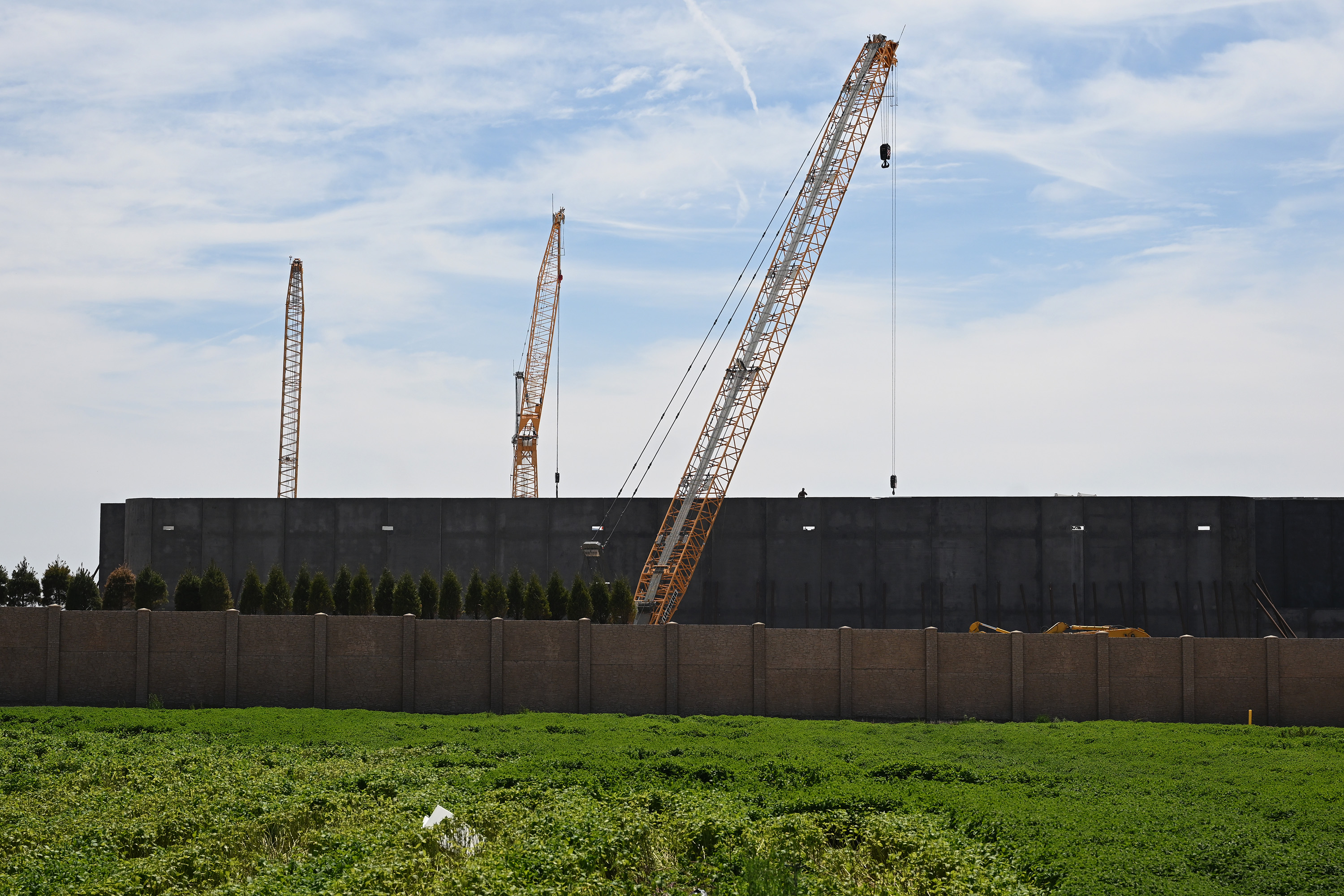
While the front portion of the data center appeared complete, cranes farther back reached into the sky.
Meanwhile, several large homes across from the entrance — purchased by the data center developers and associates — appeared abandoned, with recycling cans askew in the driveways, indoor and outdoor lights on in the middle of the day, and swing sets sitting empty in the backyards. No one answered the doors.
At another home, a woman shook her head, saying she’d lived there forever and would never speak publicly about the development across the street.
DataOne, a French company that manages advanced data centers, is the owner, operator, and builder of the Vineland data center. Its client, Nebius Group, an Amsterdam-based AI-infrastructure company, operates the center’s internal technology, which fuels Microsoft’s AI tools.
As demand for these facilities has surged, so has the controversy surrounding them. Across the country, proposed complexes have received fierce pushback from nearby residents concerned about environmental, noise, quality-of-life, and property-value impacts.
Several of these facilities have been proposed in the Philadelphia region, from King of Prussia to Limerick. But few plans have been approved.
DataOne Vineland could become the region’s first hyperscale AI data center. The developers have said the complex is partially operational, and they expect it to be complete by the end of the year.
Construction continued on the DataOne center as seen from a nearby home in June.Tom Gralish / Staff Photographer
Theresa Lewis, who has owned her home for 47 years, said living by the data center has gotten worse in recent months.
Stepping outside and seeing the building, “I think of a prison, and I’m the prisoner with the noise,” said Lewis, 74, who compares the sound to a tractor trailer idling outside her home all day and night.
“You get up in the morning and you’re in a foul mood,” Lewis said.
Both she and Ayrer said they have called the Cumberland County Department of Health to report excessive noise in the middle of the night, but doing so comes at a cost. They said they then have to get up, get dressed, turn the lights on, and wait for an official to come take a decibel reading, making for another sleepless night.
Data centers are being built in different communities
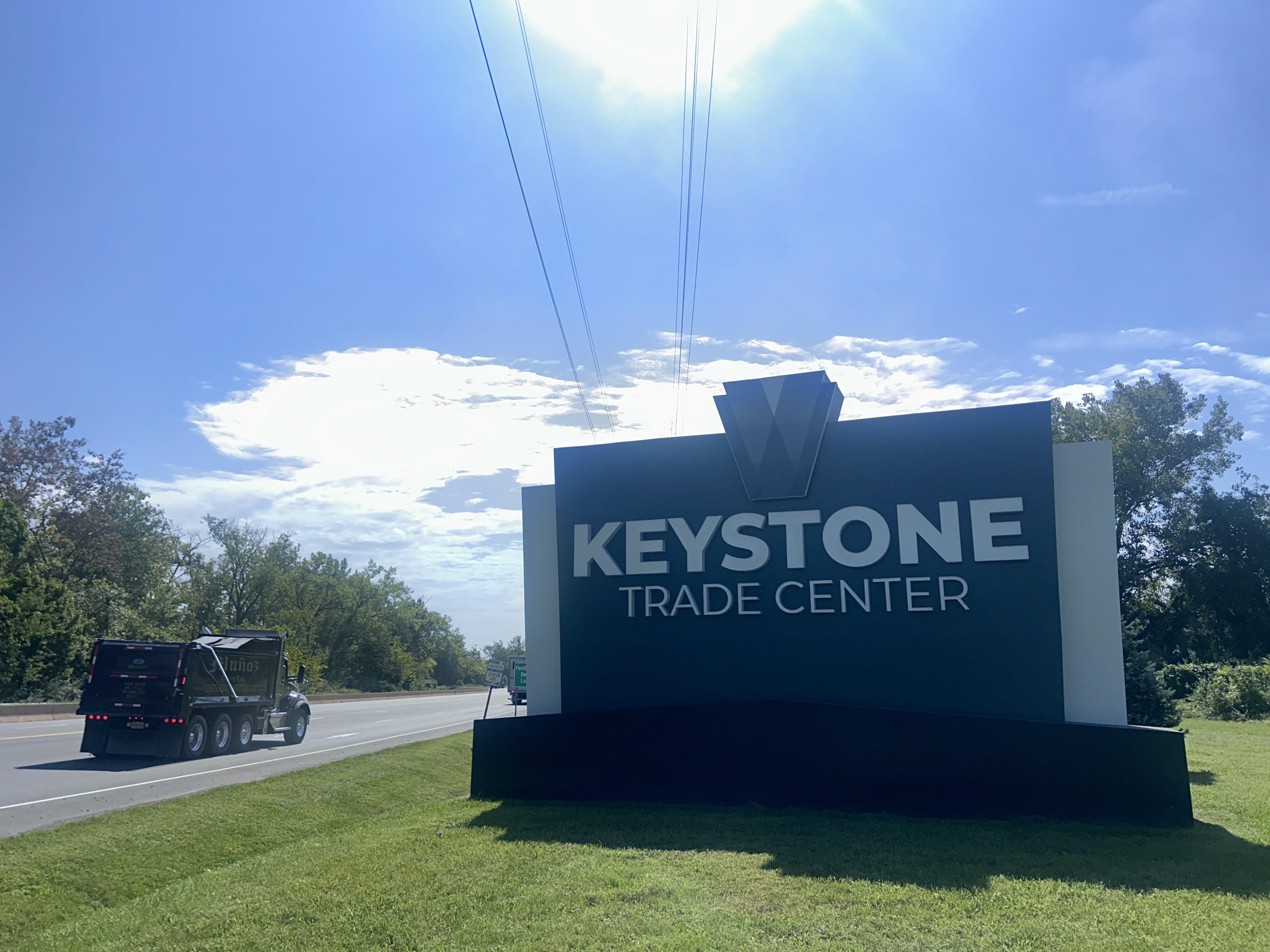
The view outside the Keystone Trade Center in Falls Township. Amazon is building a data center inside the private complex.Erin McCarthy/Staff
The scene in Vineland is vastly different from the one outside Amazon’s 2-million-square-foot data center campus in Falls Township, Bucks County, the Philadelphia region’s other facility nearing completion.
That data center sits deep inside the Keystone Trade Center, an industrial hub surrounded by water, with no homes in sight. On a recent day, tractor trailers whizzed by Keystone’s main entrance. Only the transmission wires overhead hinted at what may be inside the private property.
In Vineland, Lewis said she wishes she and her neighbors had a chance to push back against the data center before it was built. Residents were first asked to provide input about the project at a contentious town hall in January, more than a year after the project was approved by city council and months after construction started.
“I don’t want to move — and who is going to pay what the house is worth with that right there?” Lewis said, motioning to the data center across the street. “But I wake up angry.”
She added: “I can’t imagine living next to this for the rest of my life.”
Editor’s Note: This story has been updated to reflect that the noise from the data center returned Wednesday, according to Ayrer.
A good groomer can save you time and hassle, whether you’ve got a pup with an easy-to-maintain flat coat like beagles and pugs, or a fuzzy breed that requires a pro to maintain its ’do, such as Afghan hounds and standard poodles. Some pros also take care of cats.
A grooming session typically includes bath and blow dry, brushing, nail trimming, ear cleaning, and a hair trim or cut. Time and effort required depends on the breed and the pet’s temperament. Your pet’s ideal grooming frequency depends on breed, size, coat type, and your standards.
Consistent grooming improves hygiene, and having someone familiar with dogs periodically inspect your pet can help you spot potential health problems. Also, frequent grooming helps keep your pet’s coat in good condition, resulting in easier and less expensive appointments. With some breeds, waiting too long between grooming sessions can result in the coat becoming too matted, requiring a full shave.
Groomers work in dedicated pet salons, as well as pet stores, boarding kennels, and at some veterinary practices. Some have mobile operations that come to your home and do the work in specially equipped trucks or vans.
Here are tips on how to find the right groomer at the right price.
Get referrals
Good sources of intel are your vet, friends, neighbors, and coworkers.
You can also use online reviews. Until Nov. 5, Inquirer readers can view nonprofit Delaware Valley Consumers’ Checkbook’s ratings of local groomers via Checkbook.org/Inquirer/groomers. The majority of these ratings are positive, but we also receive comments that warn of rough treatment, sloppy work, and rude service.
Compare prices
Even among highly recommended groomers, you’ll find a wide range of pricing.
To cut hair and groom a cocker spaniel and a golden retriever, Checkbook’s undercover shoppers were quoted prices ranging from $65 or less to $135 for the cocker spaniel and from $85 or less to $156 for the golden retriever.
Don’t assume that low prices signify lousy work—several of the least expensive groomers received high marks from their surveyed customers.
Experience counts
A veteran groomer has had time to perfect the craft and become expert at assessing dogs’ behavior so they can respond appropriately to nervousness and agitation.
Also ask whether the groomer is familiar with your breed — even highly experienced pet pros won’t have extensive experience with all of them. The best groomers will be upfront about their limitations and, if necessary, direct you to another pro who knows the breed better.
Still, many skilled groomers haven’t bothered to take the time or pay the fees to become certified.
Pet groomers should also be certified in cat and dog first aid and CPR to quickly handle salon emergencies like lacerations, heatstroke, or choking. The American Red Cross offers this certification.
Discuss your expectations
Do you want basic grooming services, with no concern that your dog’s trim meets exacting breed-specific standards? Or do you have much higher expectations — a scissored haircut, a sculpted trim, or hand stripping for a terrier?
If you have a certain look in mind, share photos.
Consider your preference for mobile service or drop-off arrangements
Most groomers require appointments. You can usually drop off pets in the morning and pick them up either just after grooming or anytime before the shop closes.
If your pet becomes very upset when visiting a groomer, or it’s difficult to transport them due to age, an injury, or another reason, consider using a mobile grooming operation. They generally offer one-on-one service, minimizing exposure to other animals and keeping the process shorter.
Tour the grooming facility and assess safety
At a groomer’s shop, each pet should have its own space and access to clean water.
Assess how dogs are handled. If dogs are positioned under blow dryers and left to dry instead of hand-dried, staff should be able to easily monitor them. Some breeds must not be left to dry using blow dryers at all, for safety reasons.
Avoid groomers that sedate animals.
While touring the facility, also size up the staff. Does everyone seem to be knowledgeable and caring? Are they willing and able to answer any questions you have?
Make sure the facility requires vaccination records, to prevent disease spread.
And be sure to ask about insurance. The grooming company should have liability insurance to cover veterinary costs should your pet get injured while in its care.
Delaware Valley Consumers’ Checkbook magazine and Checkbook.org is a nonprofit organization with a mission to help consumers get the best service and lowest prices. It is supported by consumers and takes no money from the service providers it evaluates.
Montgomery County officials are starting a new consumer protection collaboration and taking on cash-advance apps in one of its first cases.
Montgomery County District Attorney Kevin R. Steele and the Montgomery County Board of Commissioners announced the effort Monday, saying that the solicitor’s office and district attorney’s office would work together to investigate issues that impact the finances, health, and well-being of residents.
“When companies engage in unlawful or deceptive conduct that harms our residents, we will use every available tool to hold them accountable,” Steele said in a statement.
“This is the first long-term partnership on consumer protection that we’re aware of,” Montgomery County Commissioner Neil K. Makhija said in an interview. He added that it is particularly important given continued economic uncertainty.
“People are struggling to cover everyday needs,” Makhija, a public interest attorney, said. “Some companies see that and they see an opportunity to make a profit.”
Montgomery County Commissioner Neil K. Makhija says digital lending apps have taken advantage of Pennsylvanians who are struggling to make ends meet.Alejandro A. Alvarez / Staff Photographer
Some digital lending apps are among those companies, according to Montgomery officials.
But Montgomery County officials say some apps continue to give out similar loans, disguised as interest-free cash advances.
On Monday, the county district attorney’s office filed two lawsuits against the apps MoneyLion and Dave, alleging that the companies provide short-term cash advances and then tack on fees, tips, and other charges so they effectively function as high-interest loans, violating Pennsylvania law.
Spokespeople for MoneyLion and Dave did not immediately return requests for comment.
More than a million Pennsylvanians have used these apps, Makhija said, and officials hope to learn through the lawsuits how many Montgomery County residents have been impacted. Suits such as these can result in financial settlements or orders to stop illegal practices, the commissioner said.
“The reason this is so powerful is that we are not bound by the fine print” that consumers often agree to when they sign up for these apps, Makhija said. “Consumers today unknowingly are waiving their rights to a jury trial … what we are able to do is take action on behalf of the Commonwealth by our district attorney.”
The county accounted for this effort in its 2026 budget for the district attorney’s office.
“These cases pay for themselves: You’re addressing harm and you’re able to recover funds to continue the work,” Makhija said. “This is not a cost sink for the county.”
Crocs is suing Philadelphia-based discount retailer Five Below, alleging the company knowingly sold knockoff versions of Crocs’ famous foam clogs.
Crocs’ attorneys say Five Below kept selling Crocs look-alikes and accessories even after being notified this March of their trademark, patent, and intellectual property infringement.
The allegations were detailed in a lawsuit filed last week by Crocs and its subsidiary, Jibbitz Charms, in U.S. District Court in Colorado, where Crocs is based.
The plaintiffs take issue with Five Below’s “Juniors Charm Clog,” which look like trademarked Crocs, and the shoe’s accompanying charms, which resemble the patented Jibbitz ones that can be affixed to Crocs.
Five Below is “clearly attempting to trade off the significant investment Crocs has made in its brand,” the attorneys wrote in the lawsuit.
A woman carried rowers’ Crocs at the Stotesbury Regatta in 2022.TYGER WILLIAMS / Staff Photographer
And they were doing so at a lower price point, the lawsuit noted. Crocs’ classic adult clogs range from $50 to $75, while its kids’ version sells for about $40. Five Below’s “Juniors Charm Clog” is listed at $7 on its website.
Five Below spokespeople did not return requests for comment Wednesday.
Crocs’ attorneys have asked for a jury trial and are seeking an unspecified amount in damages, which include lost profits, according to the lawsuit. The company also wants a permanent injunction to prevent Five Below from selling products that resemble Crocs.
Crocs says it sells 150 million pairs of shoes each year, with annual sales of more than $4 billion.
The lawsuit was filed amid positive financial performance for Five Below.
As of August, the company had opened 101 net new stores this year and saw a more than 27% increase in net sales, according to its latest earnings report. Its reported net income was more than $344 million compared to nearly $84 million at the same time last year.
This success has come under the leadership of CEO Winnie Park, who took over in December 2024 with a mission to reaffirm Five Below’s reputation as an “extreme-value retailer,” as the company called itself in her hiring announcement.
Executives have said they’ve also gotten a boost from viral toys like plush Squishmallows and artificial-intelligence tools that help with inventory.
Five Below was founded in Wayne in 2002 and has since expanded to include more than 2,000 stores in 46 states. In 2018, the company opened a massive three-story headquarters in the former Lit Bros. building at 701 Market St. in Center City, where it is currently headquartered.
New Jersey has fined the developers of a data center in Vineland more than $1 million for violating clean-air laws.
State officials say DataOne, a French company that is building the Cumberland County facility, installed and operated 62 large natural-gas power generators without the required DEP permits.
“This enforcement action — by far the largest ever taken against a data center in New Jersey and possibly one of the largest such actions in the nation — sends a clear message that these facilities will not be constructed or operated with impunity in this state,” New Jersey DEP Commissioner Ed Potosnak said in a statement.
During a site inspection July 29, state DEP officials saw the generators, which had not been there during a December visit, according to the enforcement document. Operating such machines — which emit carbon dioxide, nitrogen oxides, carbon monoxide, and other pollutants — without the required permits violates the New Jersey Air Pollution Control Act.
The state’s announcement comes weeks after an investigation by Floodlight and the Guardian, in which the news outlets used thermal drone footage to show the Vineland data center was operating at least 45 of its generators without permits.
DataOne spokesperson Naomi Race said company executives “disagree with the temporary generator determination” but will apply for the needed permits. Race did not respond when asked whether the company planned to pay the fine.
DataOne may request a hearing on the matter within 20 calendar days, according to the state’s enforcement document.
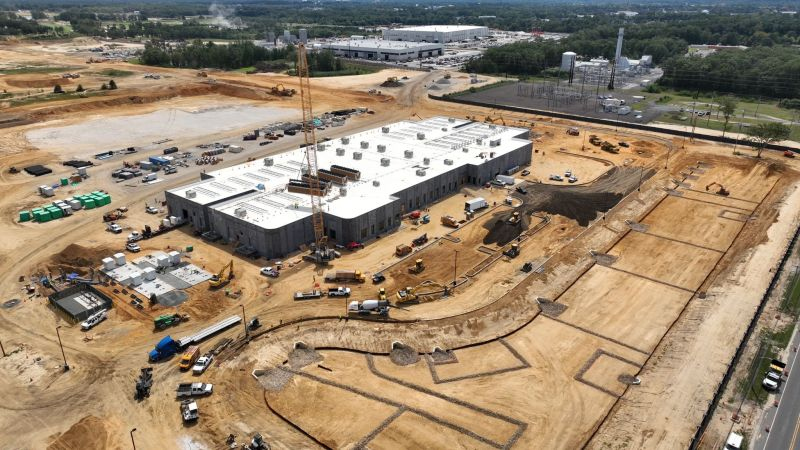
The Vineland data center is shown during an earlier stage of construction. It sits on a former industrial park.Courtesy of DataOne
As for the facility’s permanent power source, the company is “transitioning to low-emission, quiet fuel cells,” for which they “have the necessary approvals in place,” according to Race. Fuel cells generate energy through an electrochemical reaction rather than combustion, pistons, or rotating machinery.
The Vineland facility is on South Lincoln Avenue, off State Route 55, on the site of a former industrial park. The property was sold to DataOne in a private transaction, the details of which Charles-Antoine Beyney, DataOne’s founder and chief executive officer, previously declined to disclose.
He also has not disclosed a price, saying only that the project would be privately funded. Beyney said he turned down a nearly $6.2 million loan from the city due to community pushback.
Some Vineland residents have voiced concerns about the environmental, financial, and quality-of-life impacts of having a data center in their neighborhood. Opponents also took issue with the fact that DataOne did not seek their input until the facility was already under construction.
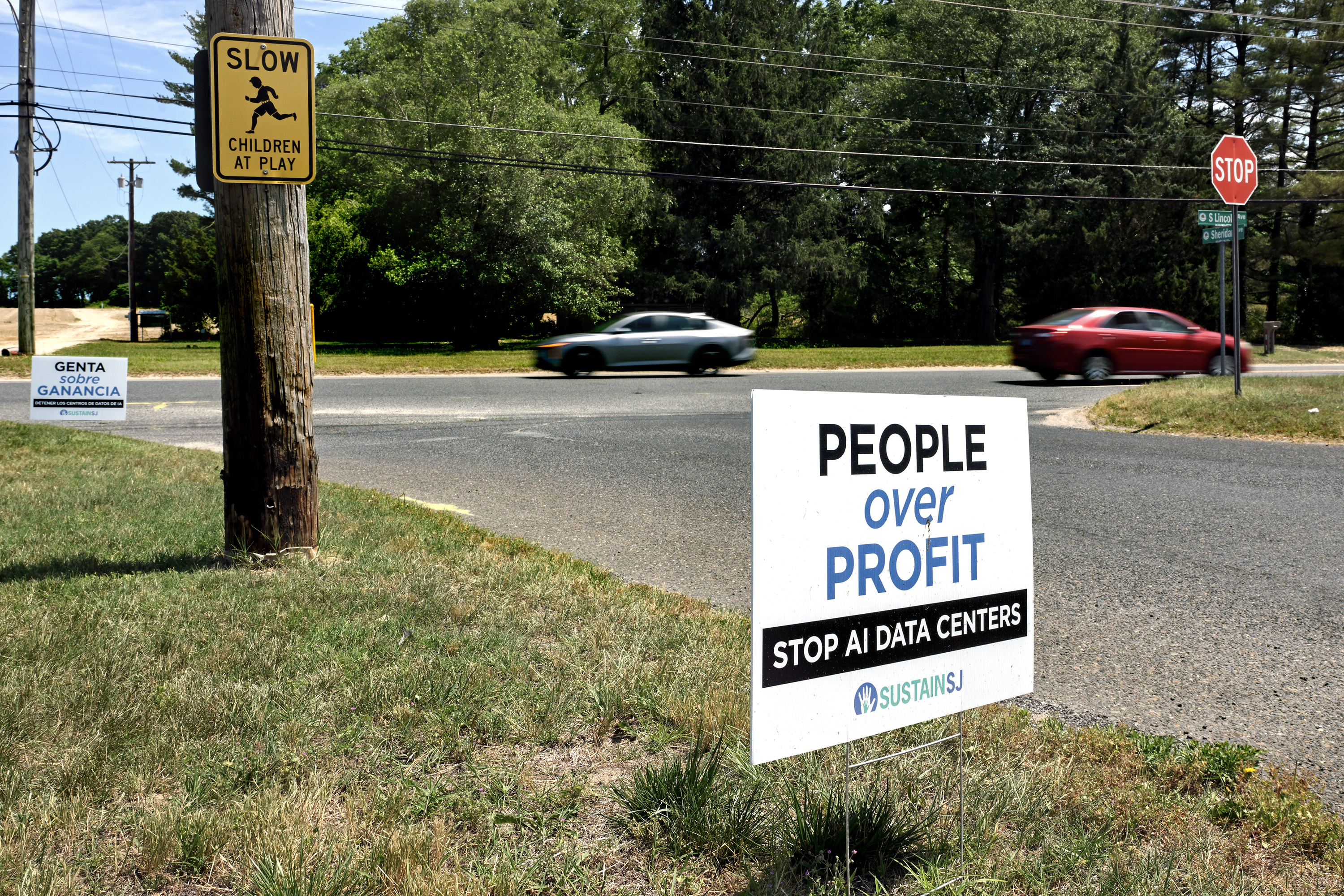
Some Vineland residents have put up signs like this one opposing the AI data center under construction nearby. Tom Gralish / Staff Photographer
At a contentious town hall in January, Beyney tried to assuage these concerns, telling residents they had nothing to worry about because his center would use “breakthrough” technology.
“Most of the data centers that are being built today suck, big time,” Beyney said at the meeting. “No freaking way am I am going to do what the entire industry is doing … just killing our communities and killing our lungs to make money.”
The Vineland facility has been under construction for more than a year. In January, DataOne executives said they expected the project to be complete by November.
Amid the global boom in data center demand, several hyperscale facilities have been proposed in the Philadelphia region, from King of Prussia to Limerick. But few have been approved and begun construction.
The Vineland site is one of them. Once fully operational, it could be the region’s first hyperscale AI data center.
The only other local facility nearing completion is Amazon’s 2 million-square-foot data center campus in Falls Township, Bucks County. As of last month, Amazon was awaiting a decision from the Pennsylvania DEP on permit applications for hundreds of proposed backup natural gas generators.
Pennsylvania Gov. Josh Shapiro shifted his stance on data centers last month and instituted new restrictions, which included the removal of Amazon from the state’s fast-track permitting process.
Developer Brian O’Neill has sued the Upper Merion Township Board of Supervisors over its rejection last month of his proposed 4.6 million-square-foot data center campus.
In lawsuits filed Wednesday in Montgomery County Court of Common Pleas, O’Neill said Upper Merion officials have stated in recent years that data centers — which house the equipment that powers AI — qualify as warehouses and are therefore permitted under its zoning code. They changed their tune, according to O’Neill’s team, only after residents pushed back against the plans.
“The township issued a zoning officer’s determination letter that the proposed use was a permitted use, and then when the people started to bombard them, they did a 180,” said Marc Kaplin, an attorney representing O’Neill. “This is what happens when there is public pressure.”
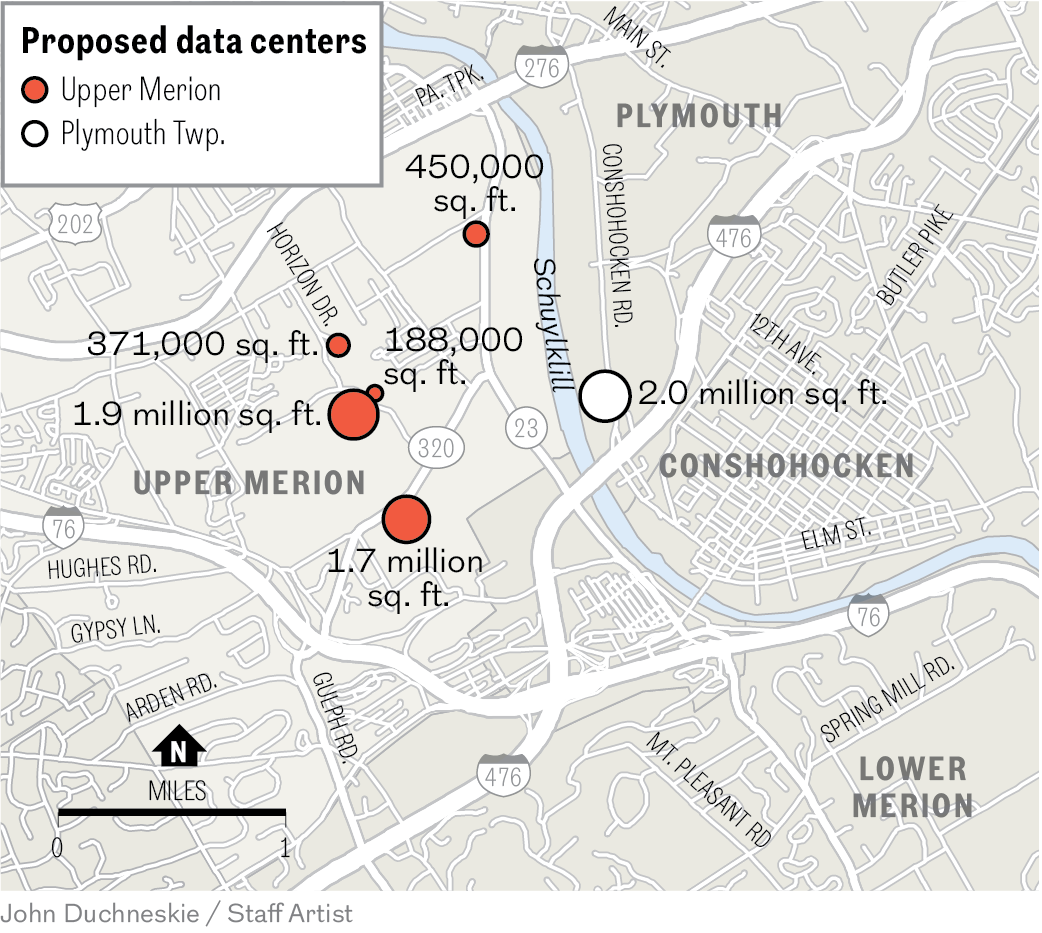
Brian O’Neill has proposed five data centers in Upper Merion Township and one across the river in Plymouth Township.John Duchneskie
Township Manager Anthony Hamaday said Thursday that Upper Merion officials had been informed of O’Neill’s land-use appeals but that the documents had yet to be delivered to them. They declined to comment, pending a full review of the filings.
O’Neill is asking a judge to reverse the supervisors’ denial, give his plans preliminary approval, and appoint an independent third-party “referee” to conduct an evidentiary hearing and oversee the rest of the process. In the lawsuit, O’Neill says the board acted in bad faith and denied his plans over “minor technical items.”
At a contentious Aug. 13 meeting, the supervisors unanimously rejected O’Neill’s five data center plans on the grounds that the proposals lacked specificity, including on fire-safety-related issues, and did not meet zoning requirements. They said O’Neill’s team failed to address their many questions and concerns during the review process.
O’Neill had said his team needed more time to respond and requested an extension until Sept. 30, a request township officials denied.
A day before the supervisors’ vote, the developer sued the township, its planning commission, and its board of supervisors, saying they violated his legal right to an extension. In response, Montgomery County Court Judge Garrett D. Page ordered a pause on township proceedings and decisions related to the data centers. That decision was vacated the next day, just hours before the supervisors’ vote on Aug. 13.
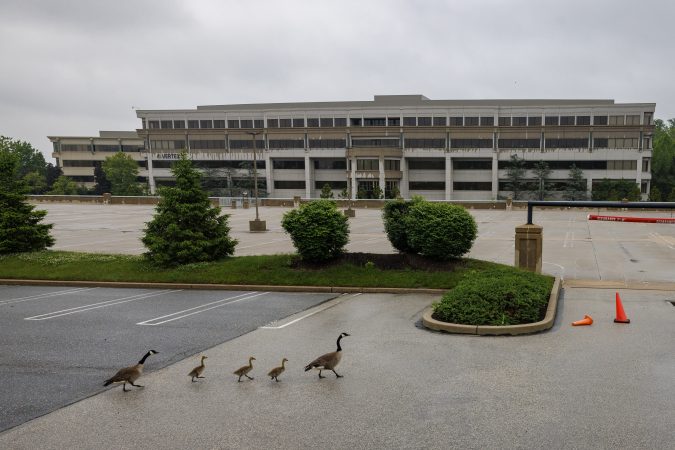
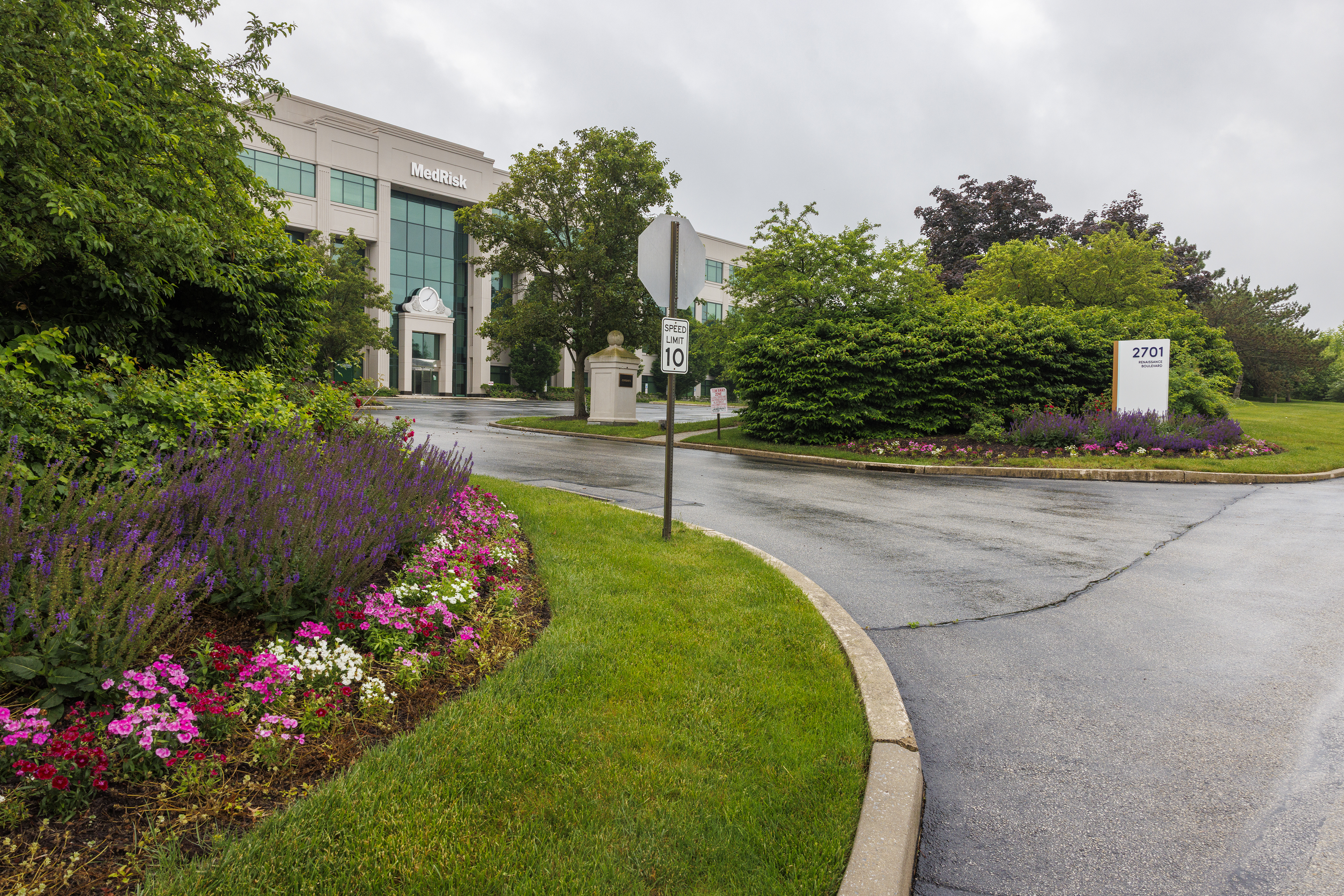
A building at 2701 Renaissance Blvd., as seen in May, is one of the sites that Brian O’Neill wants to turn into a data center in Upper Merion Township.Alejandro A. Alvarez / Staff Photographer
O’Neill has said the centers would emit little light and noise, operate on a closed-loop system that requires no outside water, and provide their own power. They would also be an economic engine for Montgomery County, according to O’Neill, who released an economic impact study saying the project would result in more than 10,000 jobs during construction, more than 700 permanent jobs, and more than $55 million a year in local tax revenue.
Neighborhood groups have rallied against O’Neill’s plans, organizing on social media, packing township meetings, and displaying bright orange lawn signs opposing the project. About 18,000 people had signed a Change.org petition against the Upper Merion data centers as of Friday. Opponents have expressed concerns about pollution, light, noise, electricity prices, property values, and quality of life.
The pushback in Upper Merion mirrors the opposition seen across the Schuylkill River in Plymouth Township, where O’Neill has spent a year trying to get the OK to build another 2 million-square-foot data center on a shuttered steel mill outside Conshohocken. The project was set to be the subject of a Plymouth Township Zoning Hearing Board meeting on Thursday, but the meeting was canceled due to what the township called “an administrative oversight.”
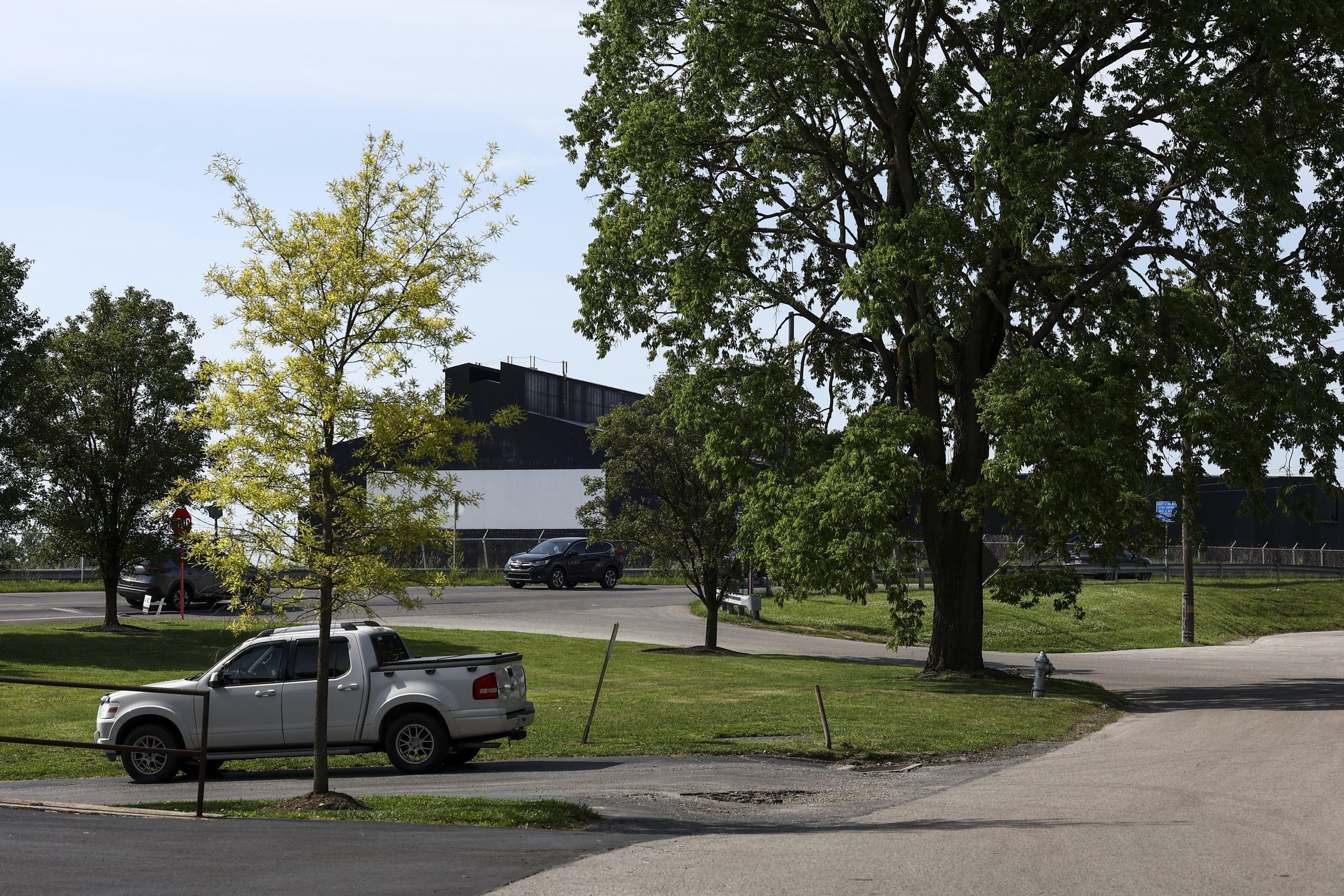
The closed Cleveland-Cliffs steel mill in Plymouth Township, outside Conshohocken, that Brian O’Neill wants to turn into a 2-million-square-foot data center. Monica Herndon / Staff Photographer
Plymouth Township officials failed to post the meeting agenda 24 hours in advance, in violation of the Sunshine Act.
“Out of an abundance of caution and in the interest of legal compliance and public transparency, the board will not convene as scheduled,” Plymouth Township officials said Thursday in a statement, adding that the meeting will be rescheduled.
O’Neill has also faced off with Plymouth Township officials in recent months. In July, he filed a legal challenge to the Plymouth Township zoning ordinance, which prompted township leaders to accuse O’Neill of “throwing a tantrum” in an attempt to bully and intimidate them. O’Neill called their statements “a bald-faced lie.”
Despite pushback, O’Neill’s team remains bullish on data centers.
“Everybody is against data centers but everybody wants their Amazon order delivered instantaneously,” Kaplin said. “We want all these things that are powered by data centers, so you can’t have it both ways.”
Two decades ago, Kaplin said he worked for a developer trying to get several of the region’s Walmarts approved. At the time, there was great public opposition, he said, but now “everybody is like, ‘Walmart is part of the community.’”
“This too shall pass,” Kaplin said. “We have to have this computing power to compete in the world.”
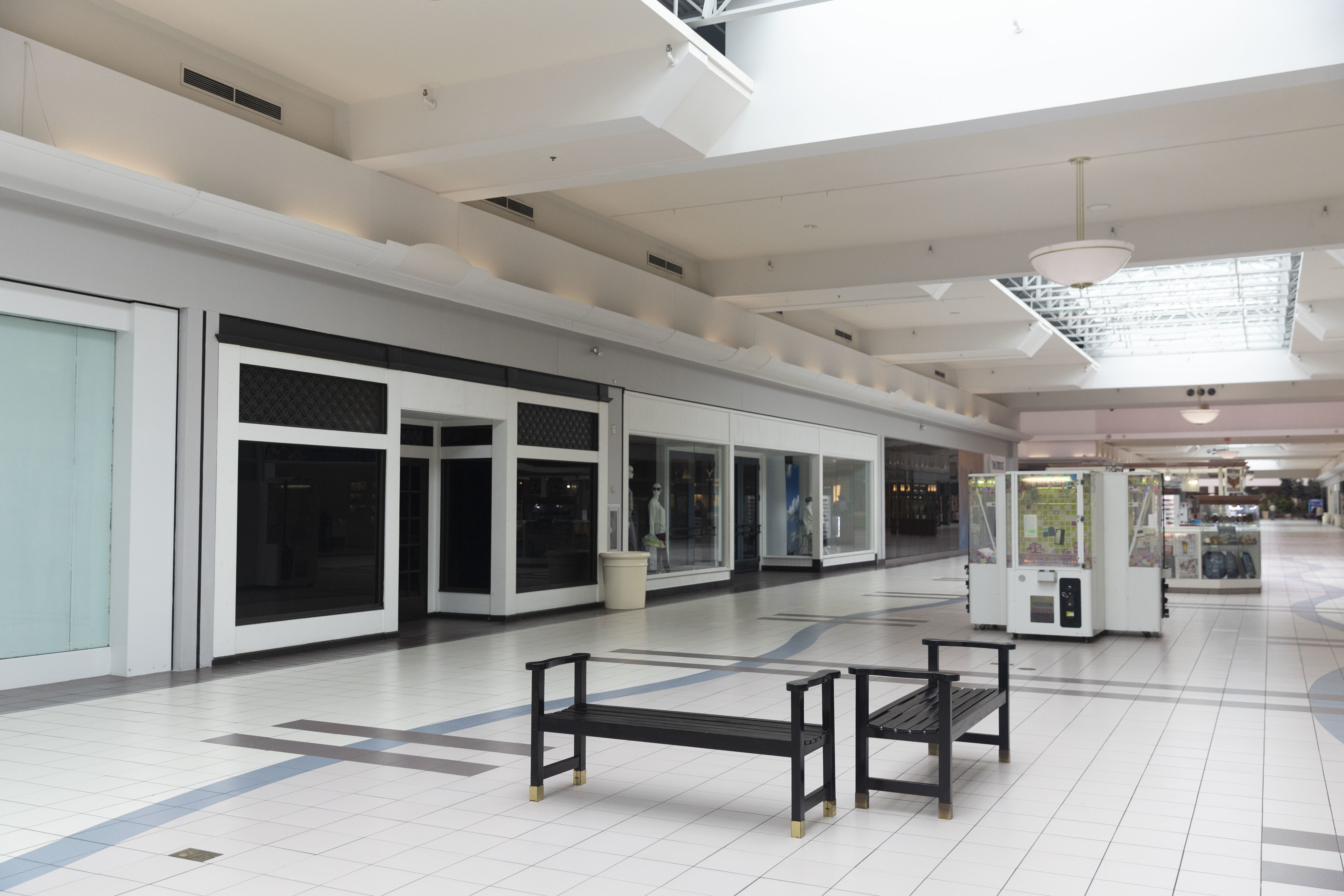
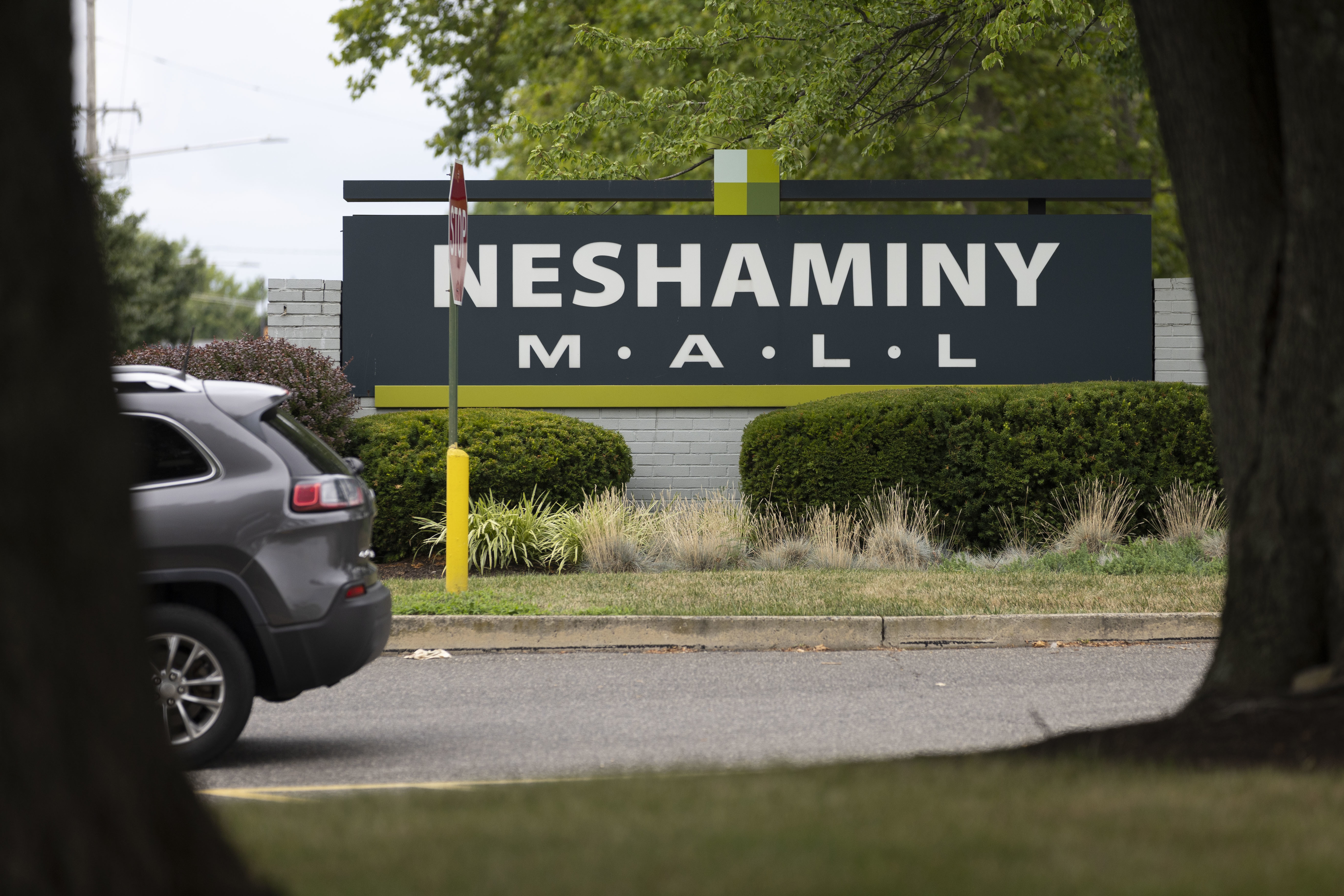
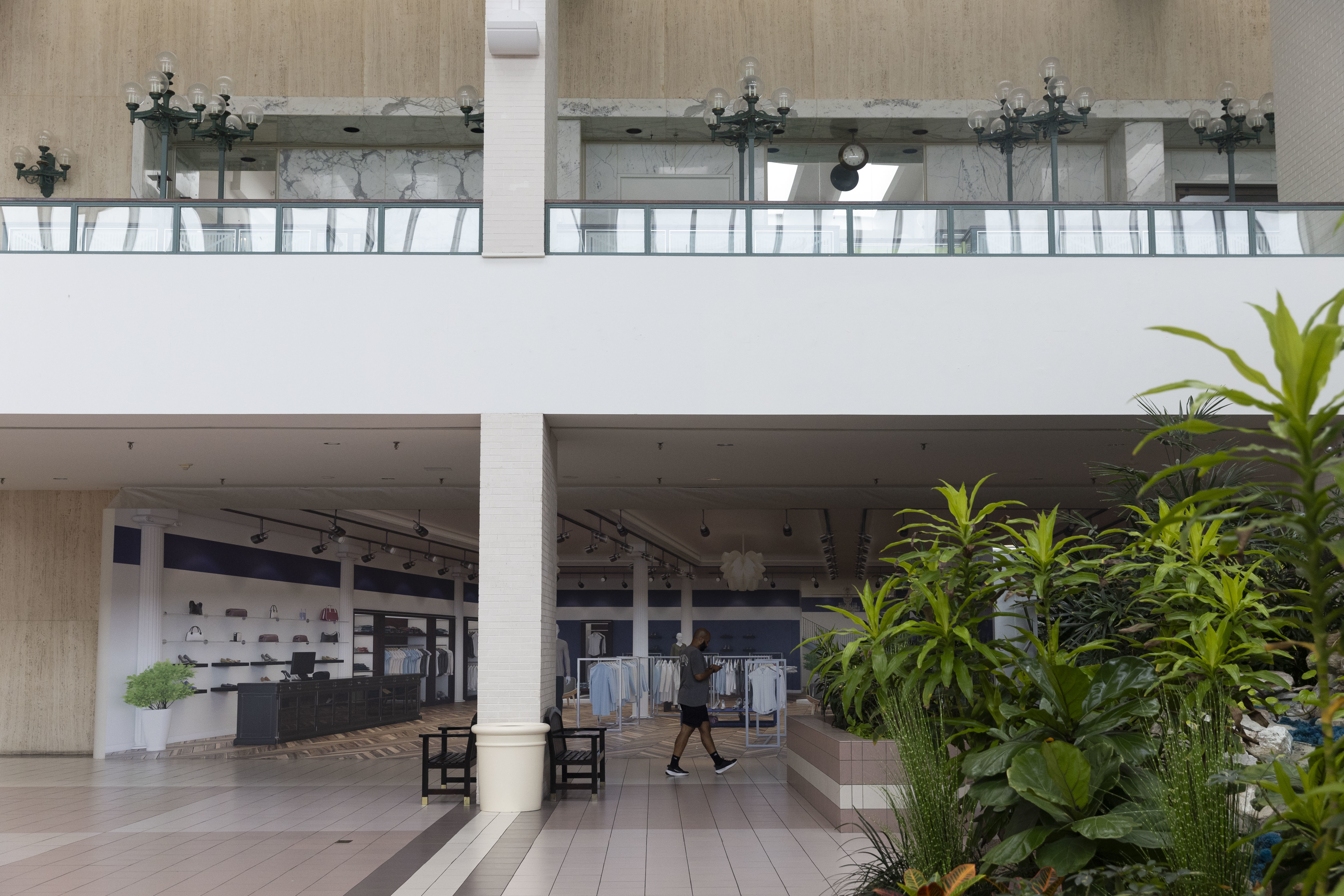
Neshaminy Mall, a 58-year-old Bucks County institution, will not see another holiday season, according to Bensalem Township Mayor Joe DiGirolamo, who said the complex will close by the end of October.
“It’s very bittersweet,” DiGirolamo said, “but the mall has been going downhill for the last few years.”
The 1-million-square-foot center has struggled with rising store vacancies and fewer customers, becoming fodder for TikTokers mourning their teenage stomping grounds.
Neshaminy Mall in Bensalem, Pa., on Monday, July 22, 2024.Monica Herndon / Staff Photographer
Like in Exton, Neshaminy’s Boscov’s will remain open, DiGirolamo said, as will the AMC Movie Theater and Barnes & Noble bookstore.
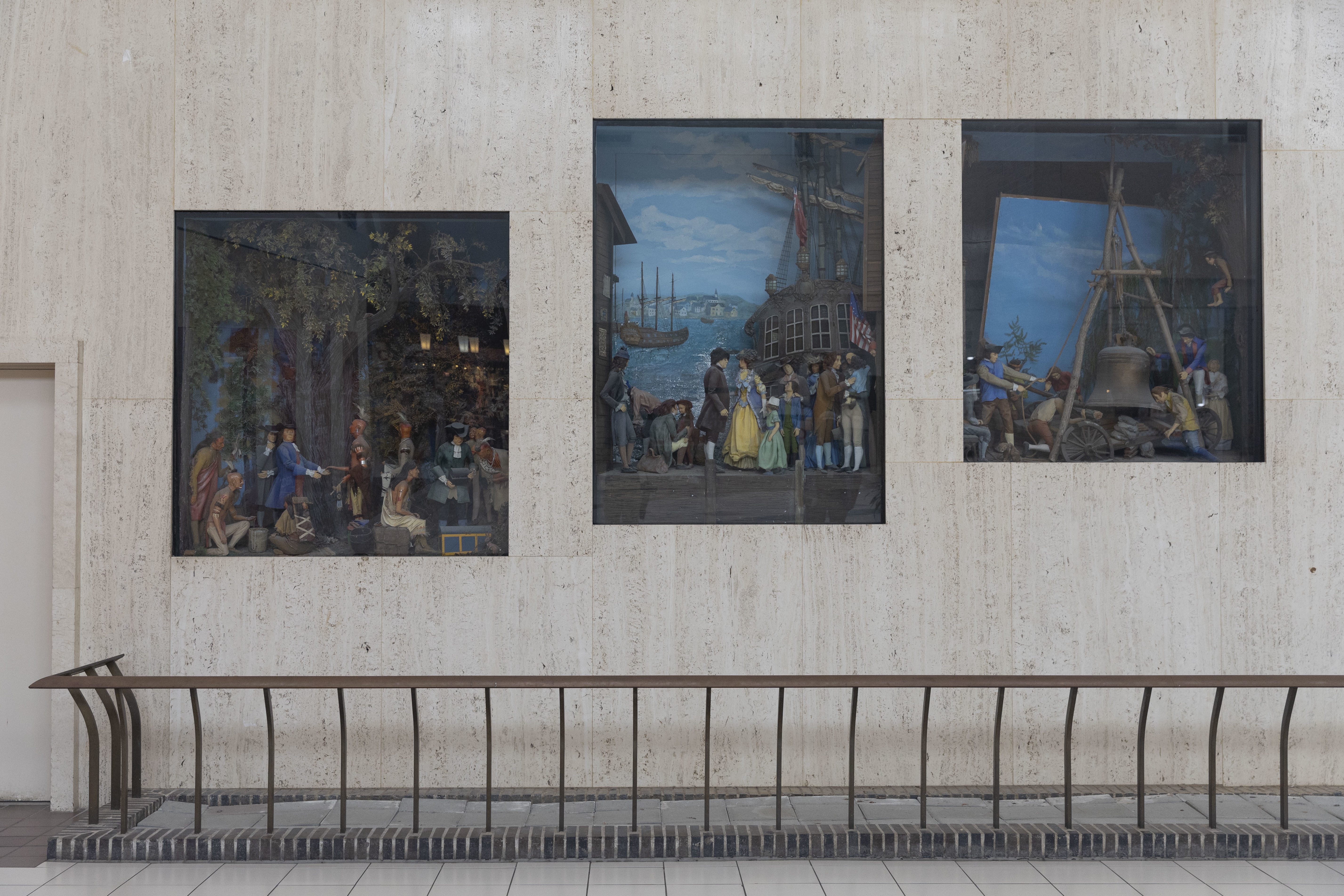
A handful of other mall tenants must close up shop by the end of October, DiGirolamo said. In November, township officials plan to remove the mall’s dioramas, which depict key moments in U.S. history that took place in the Delaware Valley, as well as a bronze Native American statue, for preservation.
Historical dioramas in the Neshaminy Mall, as seen in 2024, will be preserved when the mall closes.Monica Herndon / Staff Photographer
The mayor said the property’s owners,Lakewood, N.J.-based Paramount Realty, want to knock down the mall and build something new in its place, though the company had not applied for a demolition permit or submitted redevelopment plans as of Tuesday. Such plans would require approval by township council.
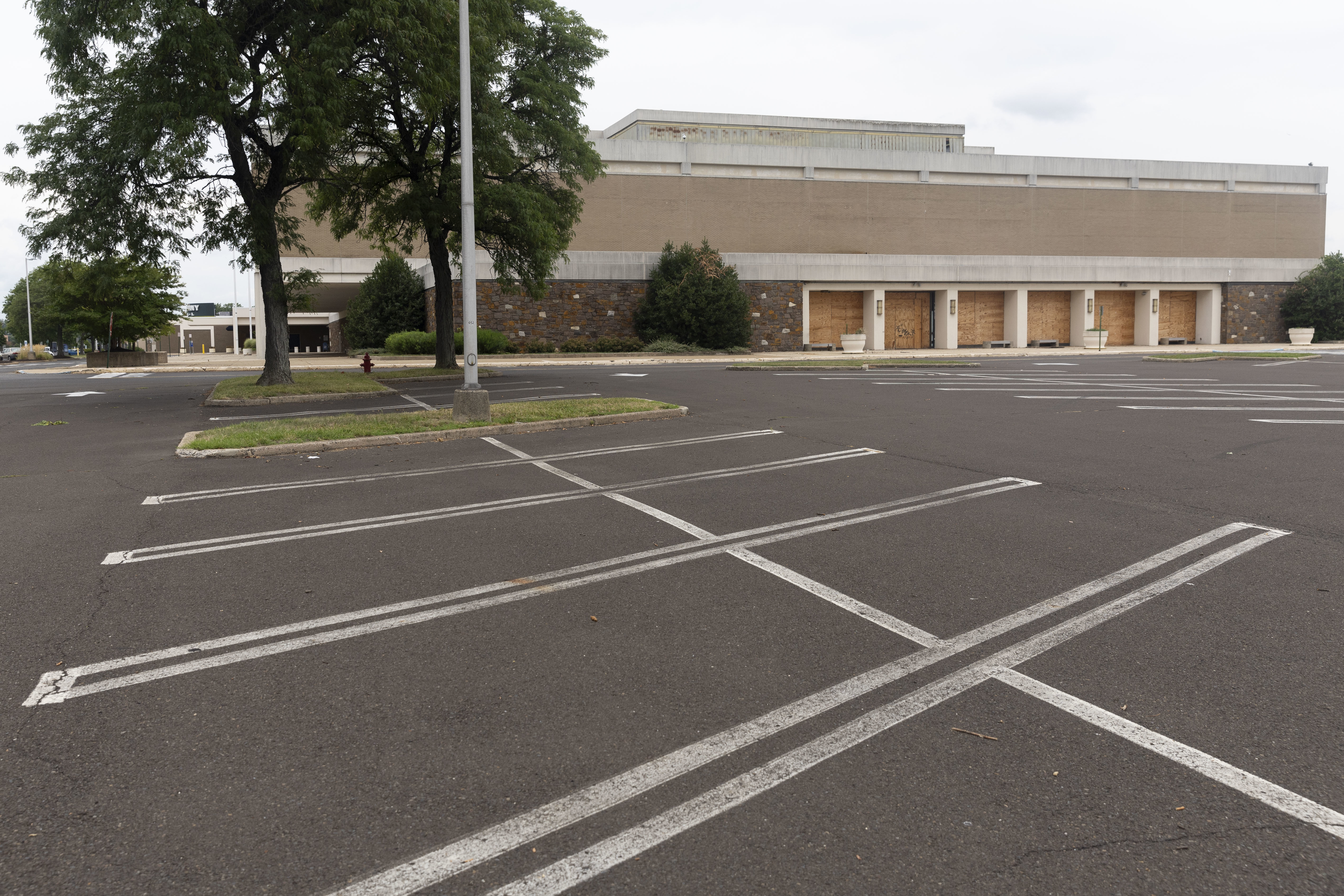
The exterior of the old Macy’s at the Neshaminy Mall, as seen in 2024.Monica Herndon / Staff Photographer
A few have been transformed, or are in the process. In Media, Delaware County, the 1-million-square-foot Granite Run Mall was demolished in 2016 and replaced by a mixed-use town center with apartment buildings, new retail, and medical offices.
At the Neshaminy Mall site, near U.S. Route 1 and the Pennsylvania Turnpike, DiGirolamo said he’s “hopeful they are going to rebuild it in a way that most malls are rebuilt,” in the town-center style with housing and outdoor walkways.
As for the indoor mall’s final days, the mayor said he expects them to be quiet, with some tenants vacating before their leases expire.
DiGirolamo, a lifelong resident of Bensalem, said he remembers when the mall opened in 1968. It was a “regional mall,” he said, that attracted out-of-town visitors.
A faux storefront covered the old Macy’s at the Neshaminy Mall in 2024.Monica Herndon / Staff Photographer
A Philadelphia Daily News article about Neshaminy Mall’s opening called the $25-million complex “America’s most modern shopping center,” with the largest branches of Sears Roebuck & Co. and Strawbridge & Clothier at the time.
A few years later, the Oxford Valley Mall opened in nearby Langhorne. Oxford Valley, which is being partially redeveloped with apartments, will be Bucks County’s only enclosed mall once Neshaminy closes.
Nearly 6 million Reading Terminal Market visitors, a mix of locals and tourists, spent $1.2 billion in Philadelphia last year, according to a new study on the economic impact of the historic Center City market.
It’s the first time the nonprofit Reading Terminal Market Corp. has commissioned such a report, and the stats solidify the market’s status as “a beloved civic institution, and a powerful and vital economic engine for Philadelphia and Pennsylvania,” said Annie Allman, CEO and general manager. With the report, Allman said she is encouraging “continued investment in the market, its merchants, and its infrastructure.”
It highlighted the market’s importance to lower-income residents, with 18 Reading Terminal merchants accepting SNAP and EBT benefits. This accounts for about 55% of the Center City merchants who accept food-assistance programs, according to the report. Reading Terminal Market is considered the largest EBT- and SNAP- redemption location in Pennsylvania.
“Every dollar spent here is a dollar invested in Philadelphia — in our merchants, our hospitality industry, our neighbors, and our future,” Allman said in a statement.
The “Feeding the City, Fueling the Economy” report — released Tuesday and conducted by the Philadelphia firm Econsult Solutions at Reading Terminal Market Corp.’s request — found that the market has contributed about $126 million worth of annual economic activity to the city of Philadelphia and $146 million to the Commonwealth of Pennsylvania. These figures include direct spending at the market’s more than 75 vendors, as well as the subsequent spending by those vendors and the employees they pay.
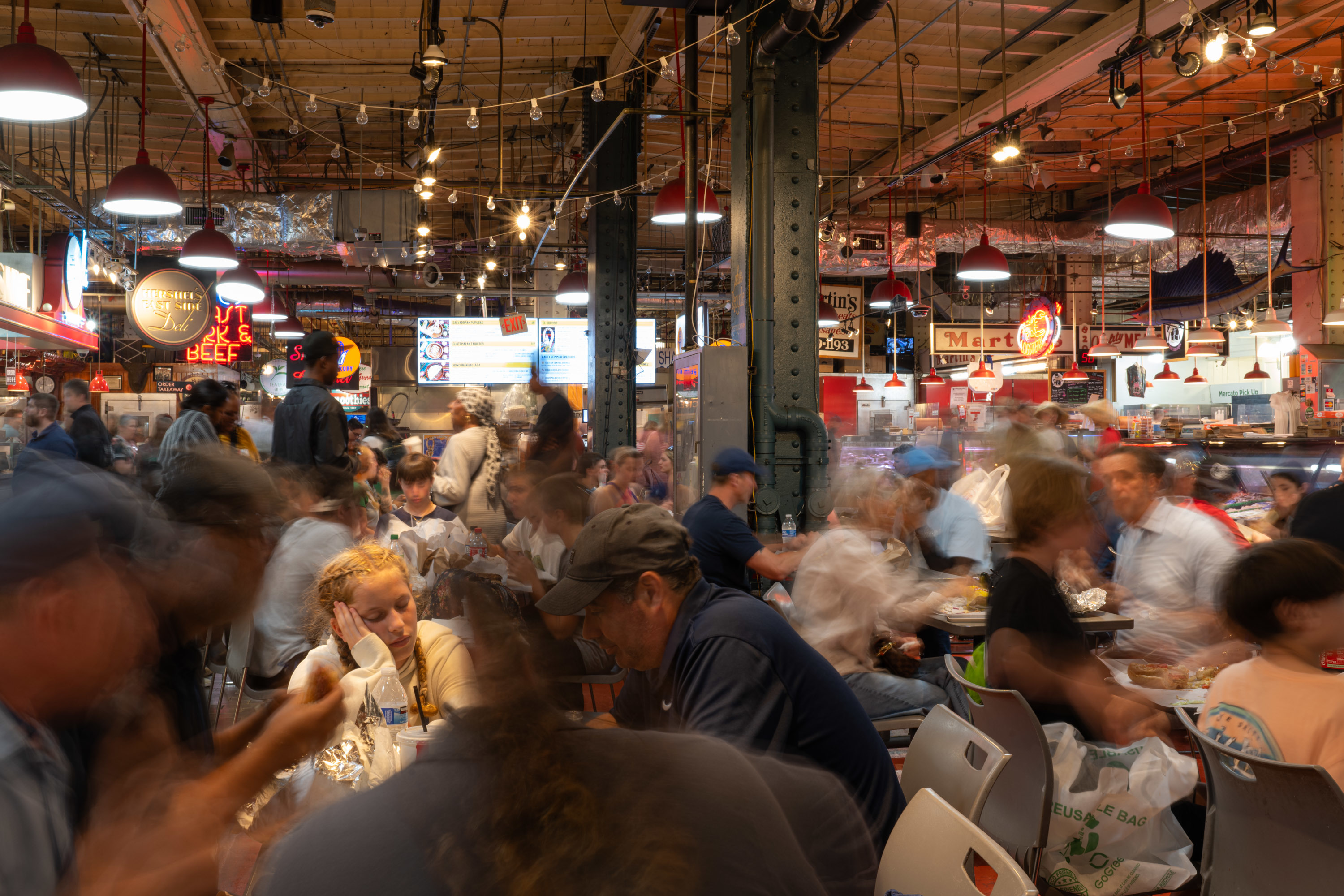
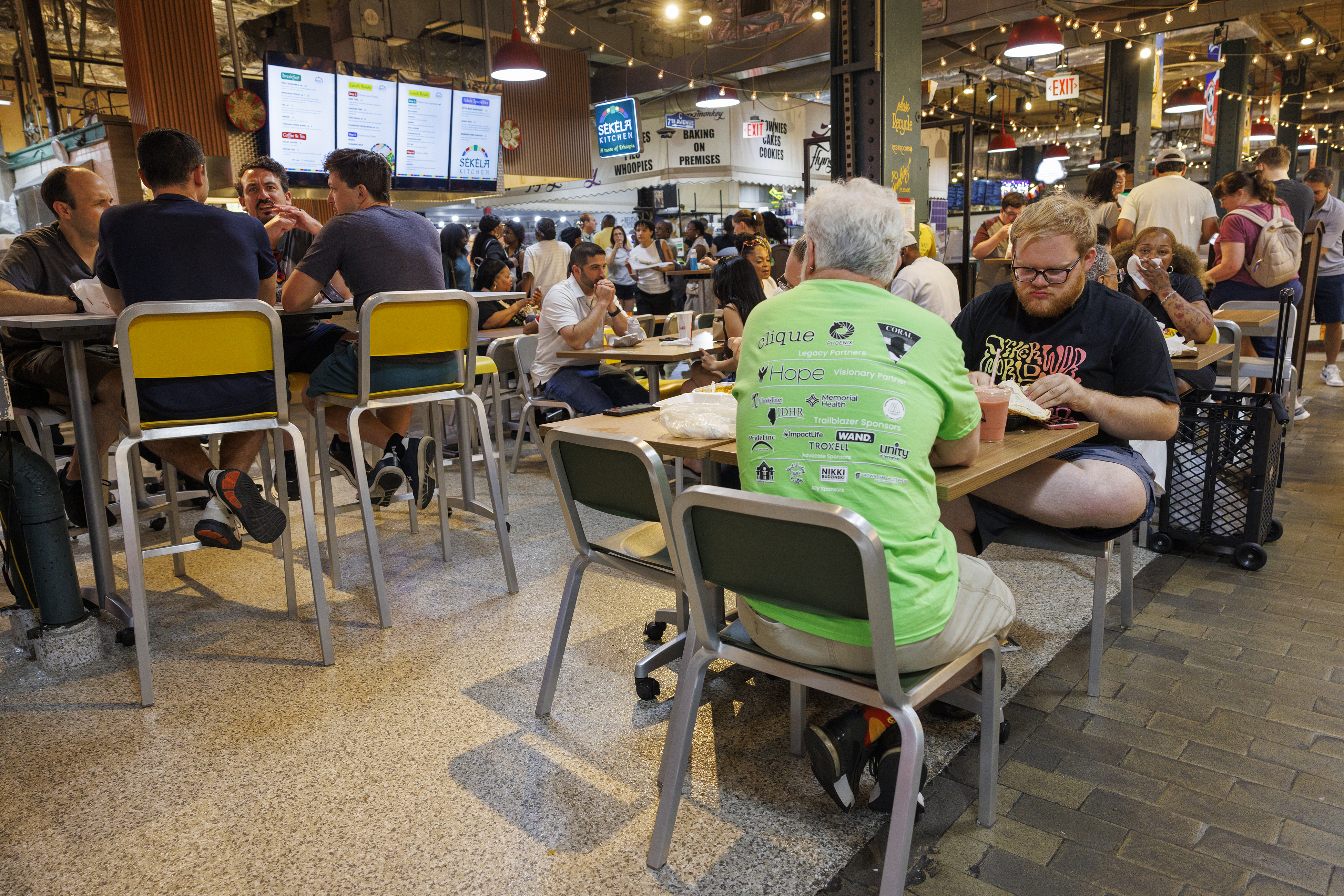
Diners at the Reading Terminal Market in June.Alejandro A. Alvarez / Staff Photographer
The new report found just over half of the market’s visitors last year, 3.1 million customers, were visitors staying overnight in the region, while the rest were Philly-area residents.
Some Reading Terminal customers may have first heard of the market online, on a podcast, or on TV and streaming programs: The report found that Reading Terminal reached 10.8 billion people through these kinds of media mentions, equaling $81 million in “publicity value.”
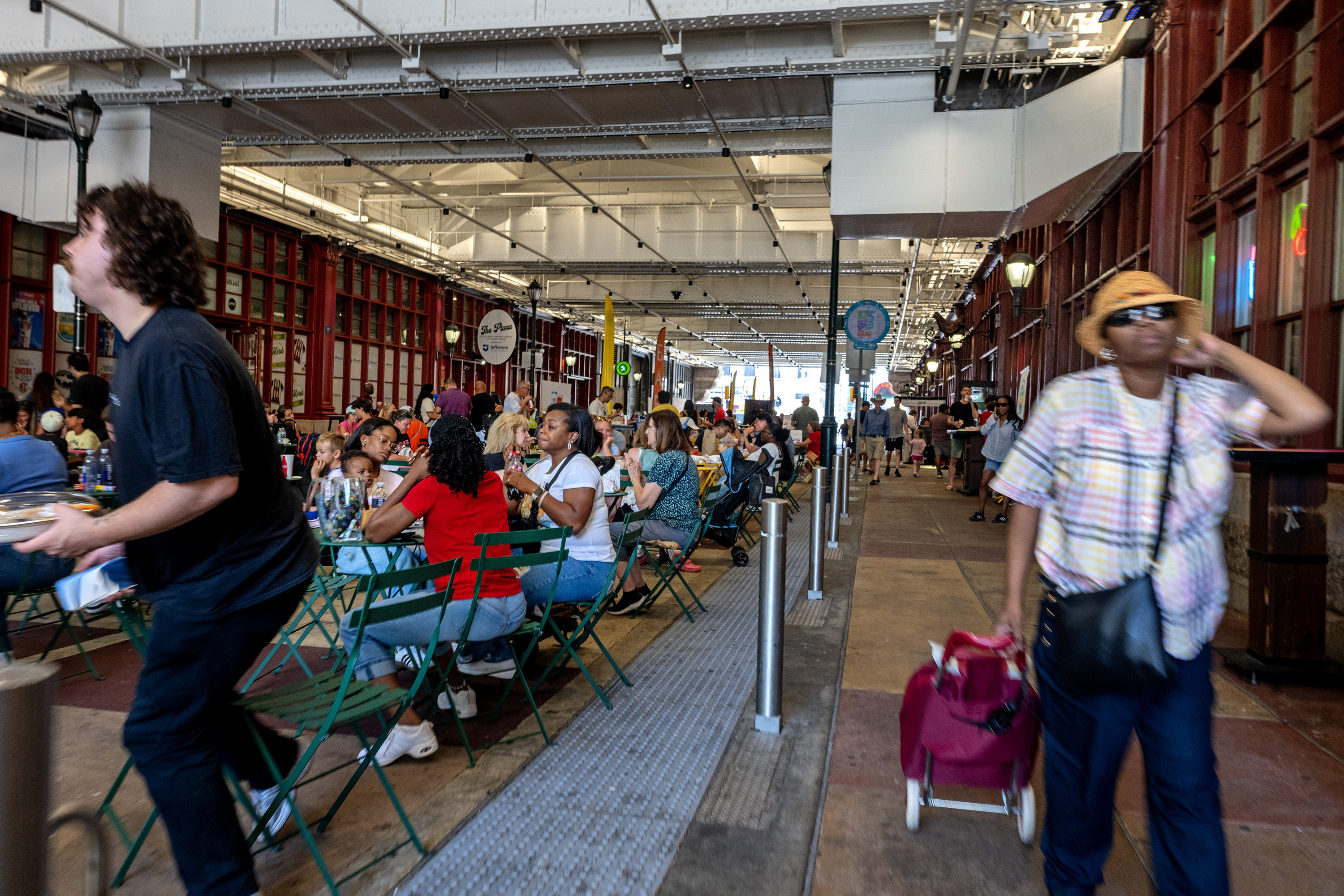
People enjoy the pop-up outdoor area on Filbert Street at Reading Terminal Market in July. Tom Gralish / Staff Photographer
Between the market’s merchants and the corporation that runs it, Reading Terminal pays nearly 700 full-time-equivalent employees a combined $39 million a year, according to the report.
And market partners spend about $6.1 million a year on capital improvements, which include mechanical, plumbing, and electrical upgrades, as well as larger undertakings like the 2022 Filbert Street Project that added 15,000 square feet of pedestrian-friendly outdoor space.
Founded in 1893, Reading Terminal is one of the country’s oldest continuously operating markets. Spanning nearly 80,000 square feet along 12th Street, between Arch and Filbert Streets, the market sells everything from fresh produce and seafood to meats and homemade baked goods.
At its quick-service restaurants, customers can find Caribbean cuisine, Asian street food, Filipino-fusion eats, Thai food, falafel, cheesesteaks, and vegan bites.
Allman, CEO and general manager, said 2026 “brought unprecedented global attention” to Philadelphia. This summer, the city hosted the World Cup, America’s 250th birthday celebrations, and the MLB All-Star Game. Any economic impact those events had on Reading Terminal Market, however, would be reflected in next year’s report.
Correction: This story has been updated to reflect that $1.2 billion is the estimated total spend by Reading Terminal Market visitors in Philadelphia, not in the market alone. It also reflects how much market partners spent on capital improvements.
Data is at the top of everyone’s mind this year: how it’s collected, where it’s stored, who can access it and how it’s used.
The Electronic Frontier Foundation, a data rights NGO, warns in a new report that law enforcement agencies have been partnering with tech companies to collect large swaths of data on private citizens without warrants under the guise of “fighting crime” or “reducing lawlessness.” Police have been using facial recognition software, audio recording devices, automatic license-plate readers and other “dragnet” technologies to aggregate huge databases on the habits of everyday Americans.
Watchdog organizations like the ACLU have sounded the alarm that these databases have already been weaponized against the public by organizations such as U.S. Immigration and Customs Enforcement and the U.S. Department of Homeland Security.
One might be tempted to conclude that this is unprecedented, an outgrowth of the panopticism of the Information Age. But debates about privacy, free speech and data governance have been ongoing for centuries. These debates were especially fraught in the colonial context, where individual rights, national security and public interest were often in conflict.
The British first established police forces in India in the late 1800s, after nearly two centuries of bloody succession conflicts. In 1857, a great rebellion almost dislodged the British from the subcontinent entirely. Initially disgruntled Indian East India Company soldiers led the rebellion against their white commanding officers in a mutiny. However, the conflict quickly spread across the subcontinent, uniting competing segments of Indian society against the British establishment. Though this rebellion didn’t succeed, it left a lasting political and psychological impact. British accounts describe a sense of helpless horror, a feeling for the first time that their place in the world was no longer secure.
The British establishment in India believed that the rebellion occurred due to a failure of British intelligence. They had erred by trusting their Indian allies and intermediaries too freely and missed obvious rumblings of disorder. The crown took direct control of India from the East India Company and began to build a new system of governance from scratch.
The British Raj established its first official police departments in India in 1859, modeled on the Royal Irish Constabulary. The police understood that their job was to maintain order rather than to serve the public. Most departments’ first project was to assemble official statistics and compile them into annual reports. This data, aggregated and synthesized, became the lifeblood of the Empire.
Nowhere was this development more apparent than in the use of crime statistics. In the 1860s police forces in Northern India reported a supposed explosion in crime, perpetrated by wandering gangs, “criminal tribes” who were criminals by birth. Unlike the “ordinary” criminals of Europe who fell into crime by chance, the criminals of India were born into their “professions.”
Officials felt that by bringing quantitative data to policing — counting and tracking crimes, where they occurred, and who committed them — allowed them to more fairly and effectively allocate resources. In truth, though, police and other officials used data to reinforce existing biases, arguing that the numbers showed that race, caste and other “biological traits” could be used to predict criminality. Hyper-policing of certain populations produced even more data “proving” that these populations committed more crimes. This decontextualized data gave the government the veneer of objectivity, while serving as the basis for many harmful and discriminatory policies.
In 1871, the legislative assemblies of three provinces passed the Criminal Tribes Act into law. The Act defined a “criminal tribe” as a “wandering gang, community, or group of persons addicted to the commission of non-bailable offences,” a definition that targeted groups already socially disadvantaged by the caste system.
In truth, “criminal tribes” as described by British administrators probably never existed. Instead, nomadic and semi-nomadic merchants or artisans, groups of religious mendicants, highway men (usually unemployed former soldiers), pastoralists and any other group who did not fit were all folded into the “criminal tribe” label. Unlike settled agriculturists within the dominant caste order, these groups were difficult to control due to their mobility and lack of social or economic capital. Under the law, they were criminalized and subject to extremely intrusive regimes of surveillance. The police tracked the most minute details of the lives of targeted groups: their fingerprints, their bodily measurements, their habits and their preferences.
The impact of the state’s surveillance campaigns was that these communities lived in a state of hypervisibility. Communities complained that they were unable to live, work or travel without being disproportionately targeted by police. The increase in police interactions eventually led to a corresponding increase in arrests—which, in turn, was used to justify further surveillance and policing.
One police officer recounted in the early 1900s that he recommended a whole nomadic community be criminalized under the Act and forcibly settled. The reason? They were reportedly adorned in silver finery while living in weatherworn tents with sparse and shabby furnishings. The only reasonable explanation, he claimed, was that the jewelry was stolen loot.
Data gave the government the visibility and the leverage required to recruit collaborators. Police relied upon wealthy and landed (“trustworthy”) communities to identify “criminal tribes,” and recruited officers from their ranks. In return, the police offered elites protections against peasant uprisings or labor disputes. Data ownership was thus not just a privilege but a favor, doled out by the state to its allies in exchange for “good behavior.”
Data collection and policing transformed everyday life. Community and family spaces—town squares, local government offices, playgrounds, parks, schools, shops, even streets—went from being “private” spaces, governed by the people who inhabited them, to “public” spaces subject to the control and surveillance of the state. Regular community events like food festivals, religious processions and public gatherings often felt distinctly different in the presence of police. People knew they were being watched.
Disputes at street processions and festivities frequently became highly publicized court cases, written about in the newspapers and read aloud in coffee shops and tea stalls. In turn, groups began to use processions to garner such publicity and “make a point” in the first decades of the 20th century: “cow protection” parades by Hindu extremists to intimidate religious minorities, festivals commemorating anti-British war heroes like the Maratha King Shivaji, even protest marches by Muslims against the dissolution of the Ottoman Empire after WWI. Divisive political processions came to replace weddings, funerals and naming ceremonies that had been common in the 19th century.
At a time when it was considered both scientifically sound and fashionable among the Western-educated class to believe that Indians were too loud and disorderly to govern themselves, public gatherings became performances to authority rather than community events. As debates raged about whether India was ready for independence in the 1920s and 1930s, communities policed themselves and each other, critiquing rituals and expressions that were too loud, too emotional, too rowdy.
Where there were multiple communities in conflict over public spaces, police involvement caused small disagreements to escalate. In March 1925, a small fight during a religious procession in Delhi sparked communal riots across Northern India that lasted periodically until late September, causing dozens of casualties and at least six deaths.
Made By History sponsors. FOR USE ON MADE BY HISTORY STORIES ONLY.Inquirer Staff
Class, caste and religious divisions hardened throughout the 1930s and 1940s, leading to the segregation of formerly integrated spaces. In these ways, the British used information to divide and rule communities, to target the vulnerable, and to suppress dissent. These efforts prolonged the British presence in India for decades, until its hasty exit in 1947 after overseeing a violent and bloody partition of the subcontinent. The ghost of the Empire continues to haunt the region today.
One critical lesson the Indian public learned during this era was that the collection of information is never neutral. Power shapes how information is collected, stored and interpreted, and information can be used and abused to protect those in power.
Today every app, website and device contains a back door to collect and sell our information. Companies and officials tell us that these capabilities are benign, used to improve our lives and make us safer—and we believe them at our own peril.
Niveditha (Nive) Senthilvel is a 2026-27 Fulbright-Nehru scholar and PhD Candidate in South Asian History at Boston University.
Made by History takes readers beyond the headlines with articles written and edited by professional historians. Opinions expressed do not necessarily reflect the views of The Inquirer.