Category: College Sports

  • Penn State made head-scratching decisions in its first loss. It also exposed glaring weaknesses.

    Penn State made head-scratching decisions in its first loss. It also exposed glaring weaknesses.

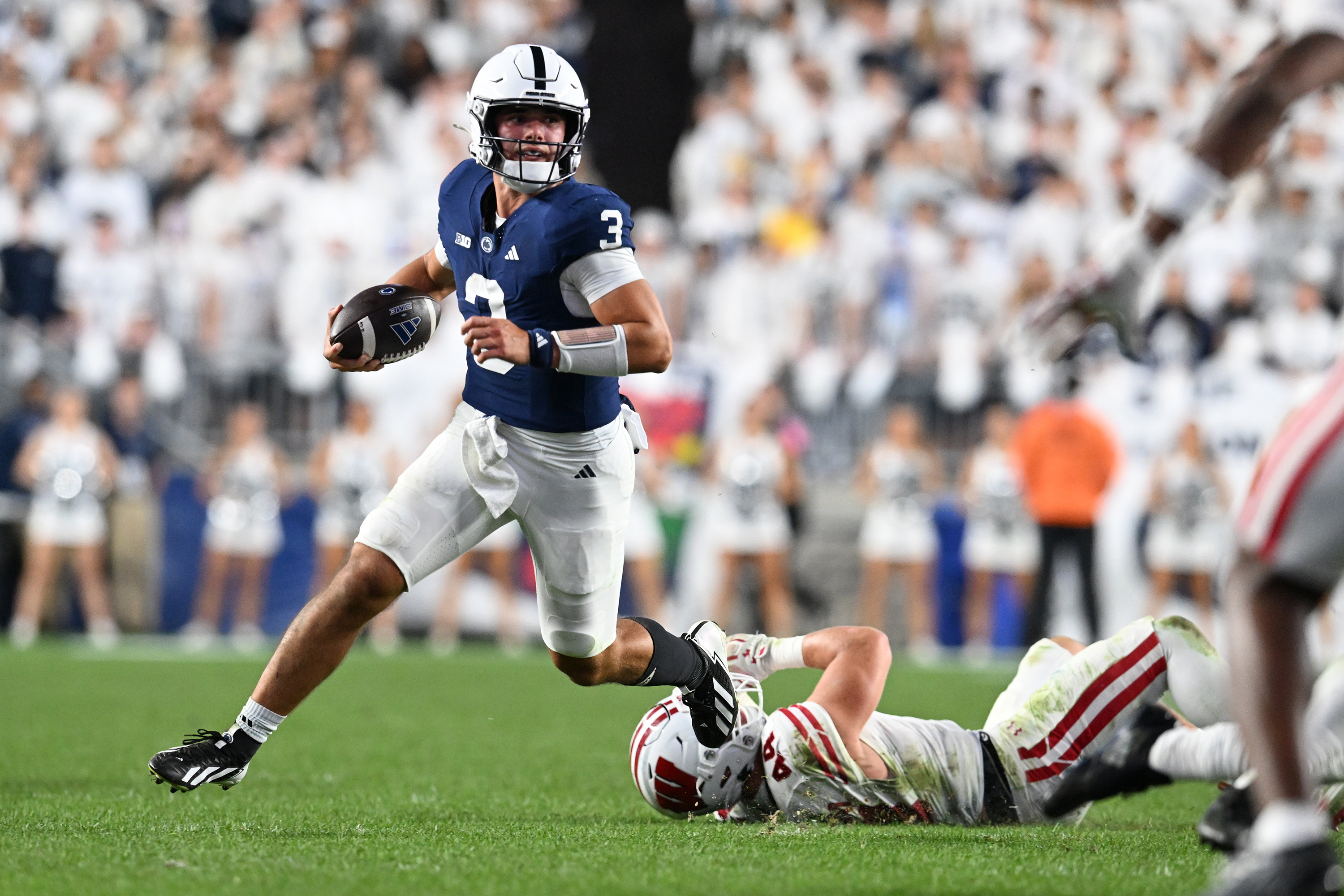
    While leading by 10 points, Penn State decided to run on third-and-12 midway through the fourth quarter. Running back James Peoples didn’t pick up the first down as boos echoed through Beaver Stadium.

    It was the fourth time that offensive coordinator Taylor Mouser called a run in a third-and-long situation in a 24-20 loss to Wisconsin on Saturday.

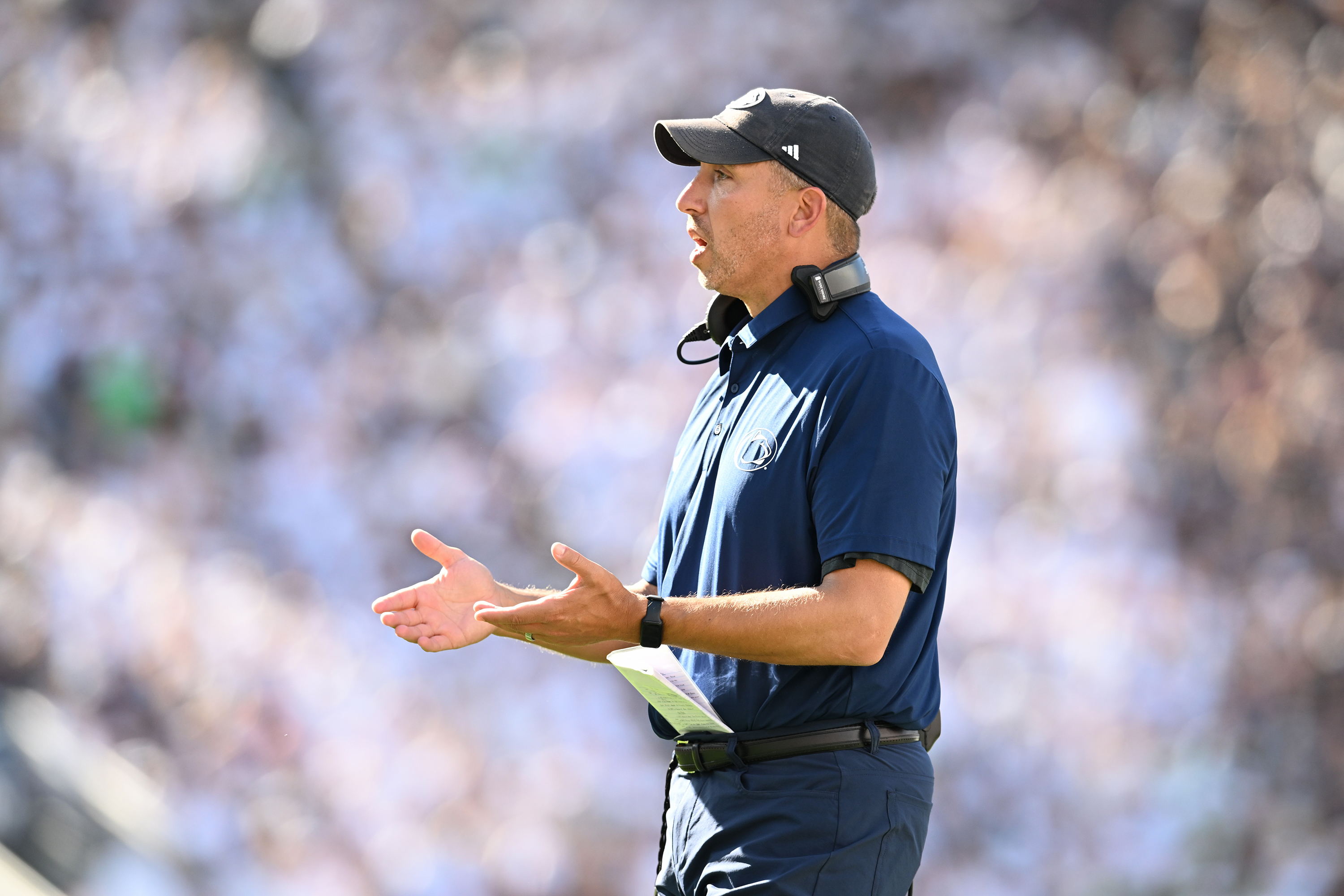
    “It’s always situational for me,” Mouser said Tuesday. “The defense had been playing so good up to that point, didn’t want to put them in a bad spot, have something bad happen. Didn’t have a ton of rhythm going in the pass game up to that point either. So it was take the less of two evils and play the field position game, as dumb as that sounds and as much as I hate to say that.”

    Those third-and-long decisions were just some of the head-scratchers from the Nittany Lions first loss of the season (3-1, 0-1 Big Ten) and showed where the offense needs to grow ahead of their road matchup against Northwestern (2-1, 0-1) on Friday night (8 o’clock).

    “You got to stay focused on what the goal is,” Mouser said. “And the goal for us on a short week has to be the work. We just don’t have the time to be able to dwell on it and feel sorry for yourself. No one else does. And this Northwestern team is going to try to murder us.”

    Red zone struggles

    Penn State has made 20 red-zone trips this year, but only 10 have ended in a touchdown. Against Wisconsin, the Nittany Lions reached the 1-yard line on their second possession, but settled for a field goal.

    “I’m frustrated with that,” Mouser said. “And it’s an ongoing message. … Are we playing the right people? Are we handing it to the right people? Are we throwing to the right people? Are the right people in the right spots to be able to block and execute the plays? We haven’t been able to do that, and it’s our job as coaches to figure that out.”

    Penn State went 1 of 3 on red-zone trips, with the lone touchdown coming off sophomore cornerback Daryus Dixson’s interception that set up the Nittany Lions at the Badgers’ 11-yard line.

    These red-zone struggles first popped up against Temple, with Penn State’s first three opportunities only resulting in three points. The issues haven’t gone away.

    Lack of tight end usage

    Senior Benjamin Brahmer was the only tight end with a catch in Saturday’s loss, finishing with four receptions. Redshirt senior Gabe Burkle was targeted twice, while redshirt junior Andrew Rappleyea was thrown to once.

    “I still walk out of the game frustrated with my inability to get those guys the ball as much as we should,” Mouser said. “Rapp’s one of our best pass catchers and didn’t find a way to get the ball more. Same with Ben and even with Gabe.”

    Mouser took accountability for the lack of targets his tight ends received, and knows he needs to rely on Brahmer and his fellow tight ends in the passing game with top wide receiver Koby Howard out for the foreseeable future.

    “Those three are some of our best pass catchers and we’re going to have to find ways to get them the ball in easier ways that we can make those throws,” Mouser said. “I still don’t think we’ve sniffed just how good that room can be and the standard I think those guys can play with.”

    Becht’s poor showing

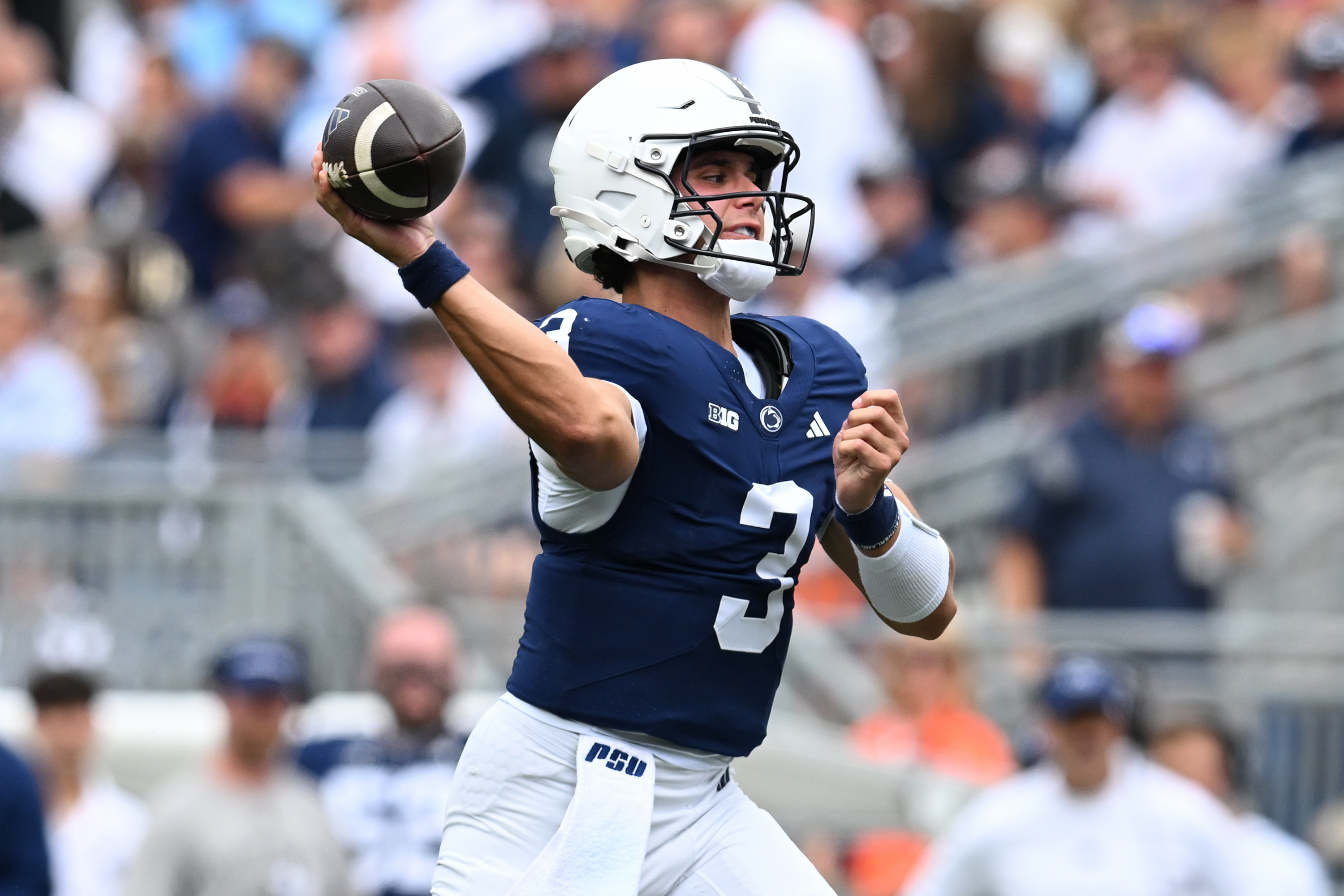
    Rocco Becht said Tuesday he plays better on the road, so it’s a good thing Penn State is headed to Northwestern this weekend after the quarterback’s performance against the Badgers.

    Becht went 12-for-29 with 129 yards, zero touchdowns, and his first interception of the year, though the pass was tipped. He put blame on himself postgame, saying he needs to be better for his team.

    On Tuesday, Mouser took accountability for Becht’s struggles.
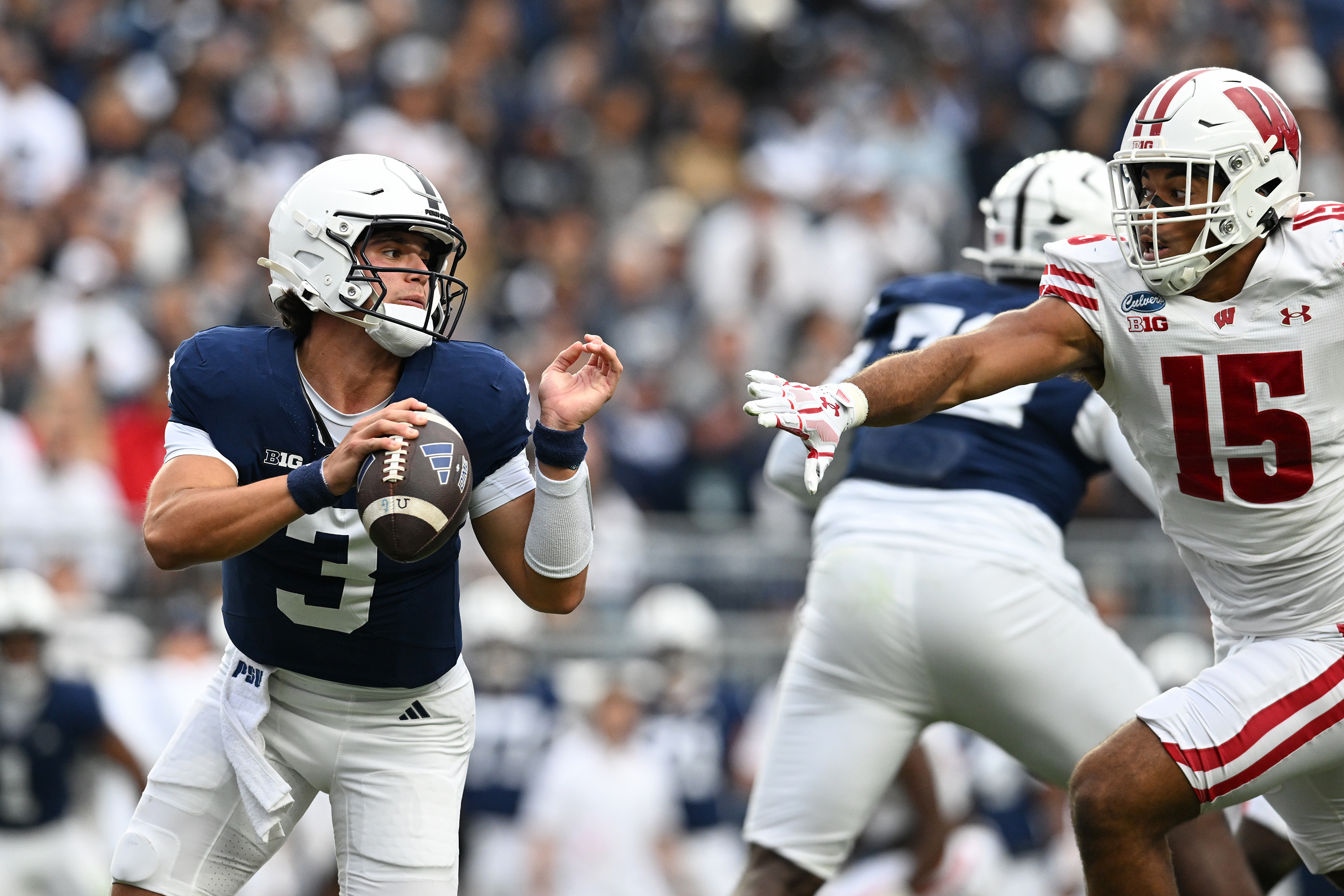
    Rocco Becht went 12-for-29 with 129 yards and zero touchdowns against Wisconsin.Barry Reeger

    “I know what Rocco Becht is,” said Mouser, who also was his offensive coordinator at Iowa State. “He’s a 10,000-yard passer, and I’ve known him for three years, and I know how good he is. So when it’s not working, I’m going to always put it on myself because I know how talented he is and the way that he prepares.”

    The Wildcats’ defense sits at the bottom half of the Big Ten in passing yards allowed this season with 218 per game, potentially giving Becht an opportunity to get himself and his wide receivers going after a tough showing against Wisconsin.

    “We didn’t really show ourselves last Saturday who we were, and we didn’t put enough out there to bring that win home for us,” Becht said Tuesday. “I think for us, it’s just continuing to go out there on Friday and continuing to just do our job and have fun and go out there and play ball.”
  • Temple looks to rebound against South Florida after three straight losses. But it won’t be easy.

    Temple looks to rebound against South Florida after three straight losses. But it won’t be easy.

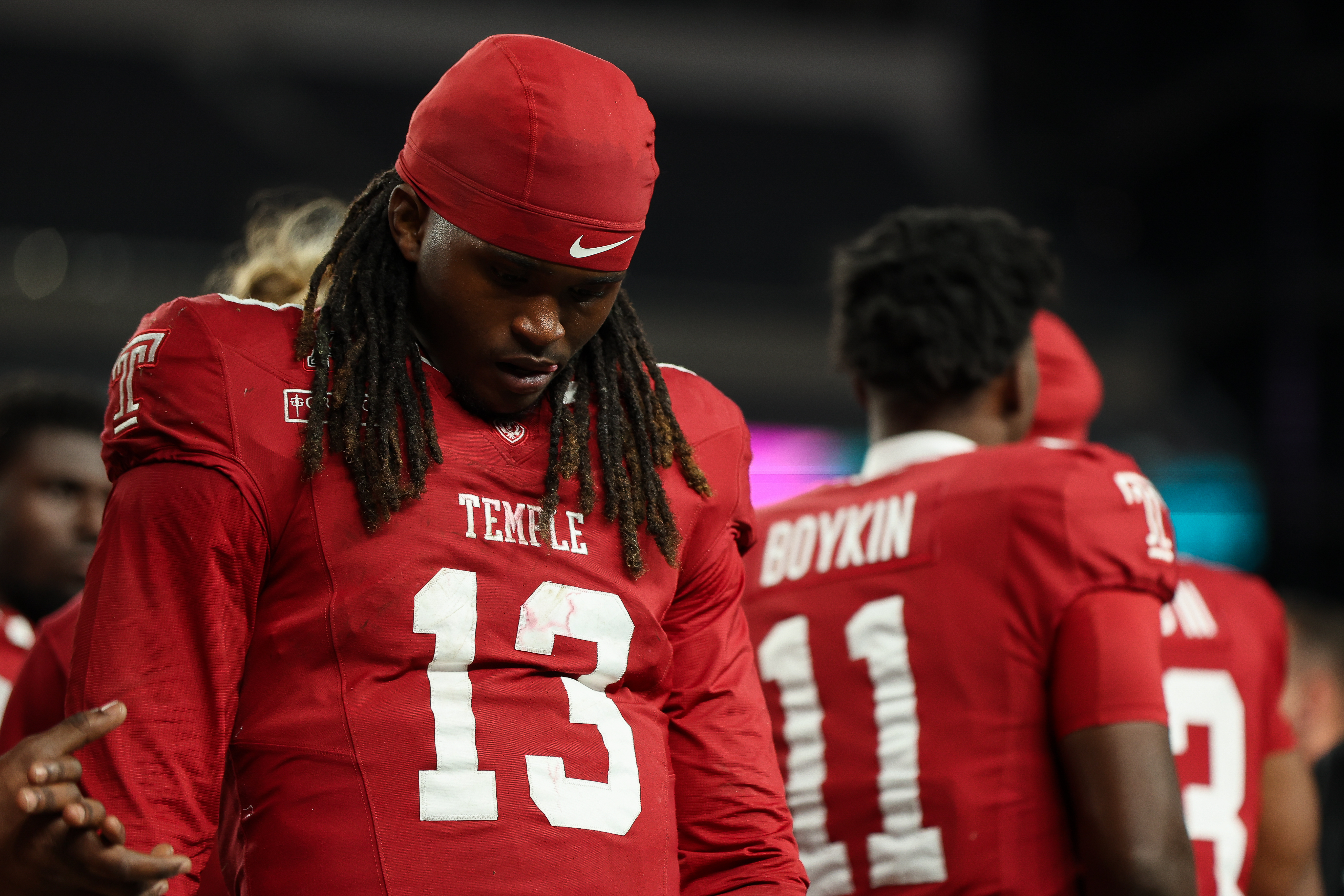
    Three weeks after Temple’s season-opening win, the Owls find themselves on a three-game losing streak.

    The last two stung the most. The Owls fell at Toledo in overtime after leading by 14 and then lost to Army on the final drive. Now, Temple (1-3, 0-1 American Conference) goes back on the road to face South Florida (4-0, 1-0) on Saturday (7 p.m., ESPNU).

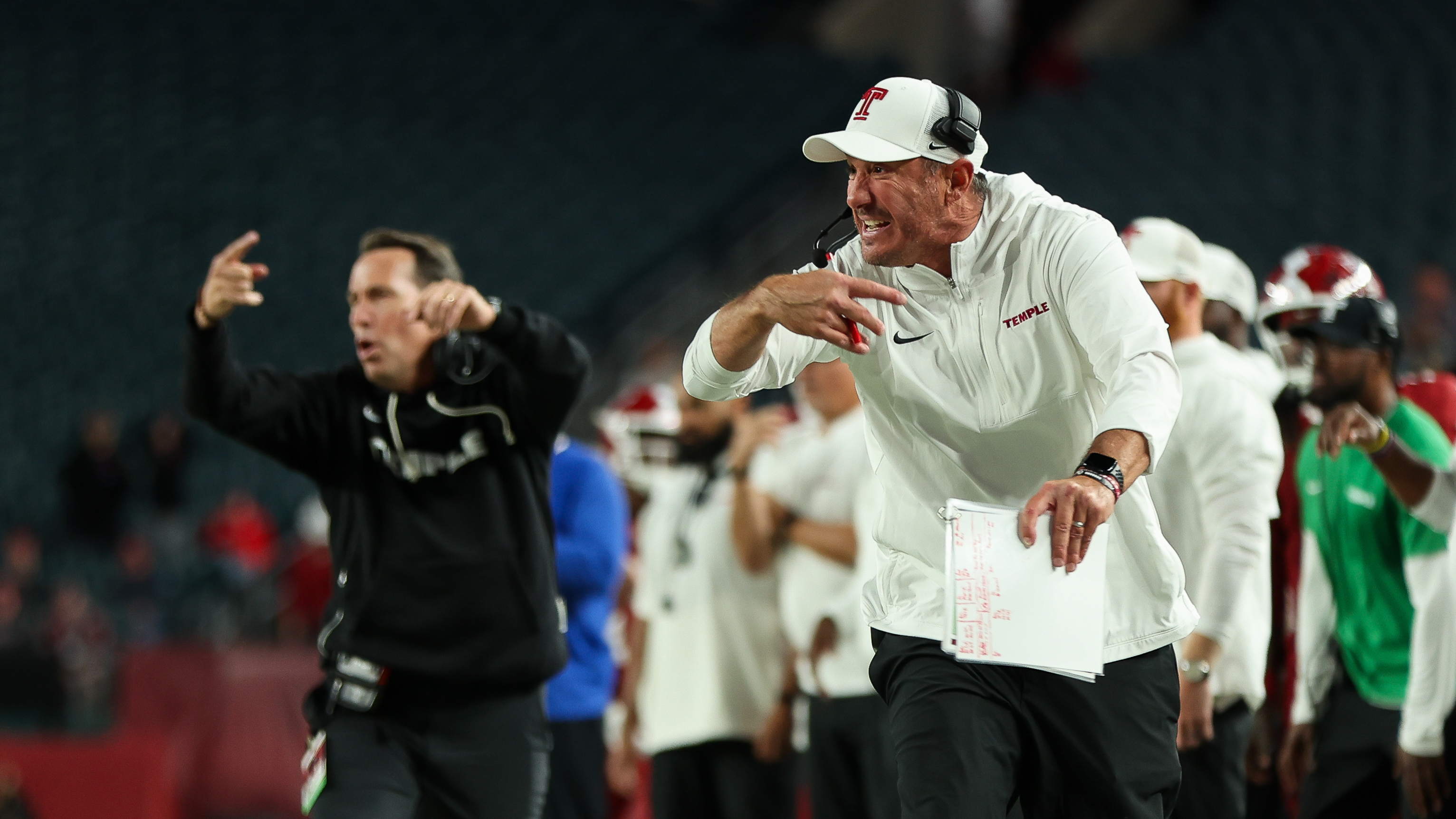
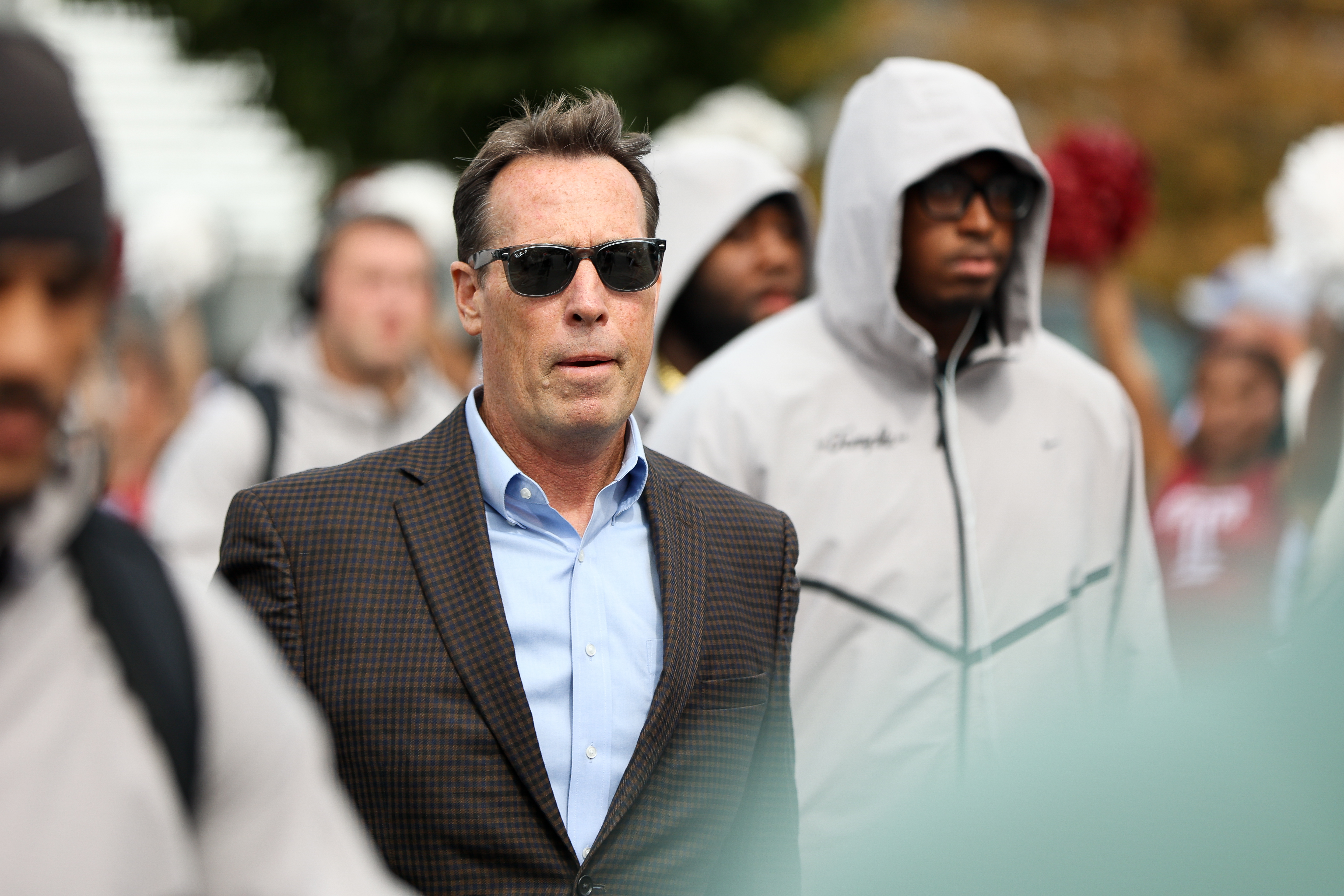
    The Owls have been plagued with late-game breakdowns. But the chance to prove themselves and put those losses behind them excites coach K.C. Keeler.

    “The bad news is, we have to go play South Florida coming off a brutal loss like this,” Keeler said. “The good news is, we get a chance to go play South Florida after a brutal loss like this, because the only thing that gets you right is getting out there and beating a good football team.”

    Running with the Bulls

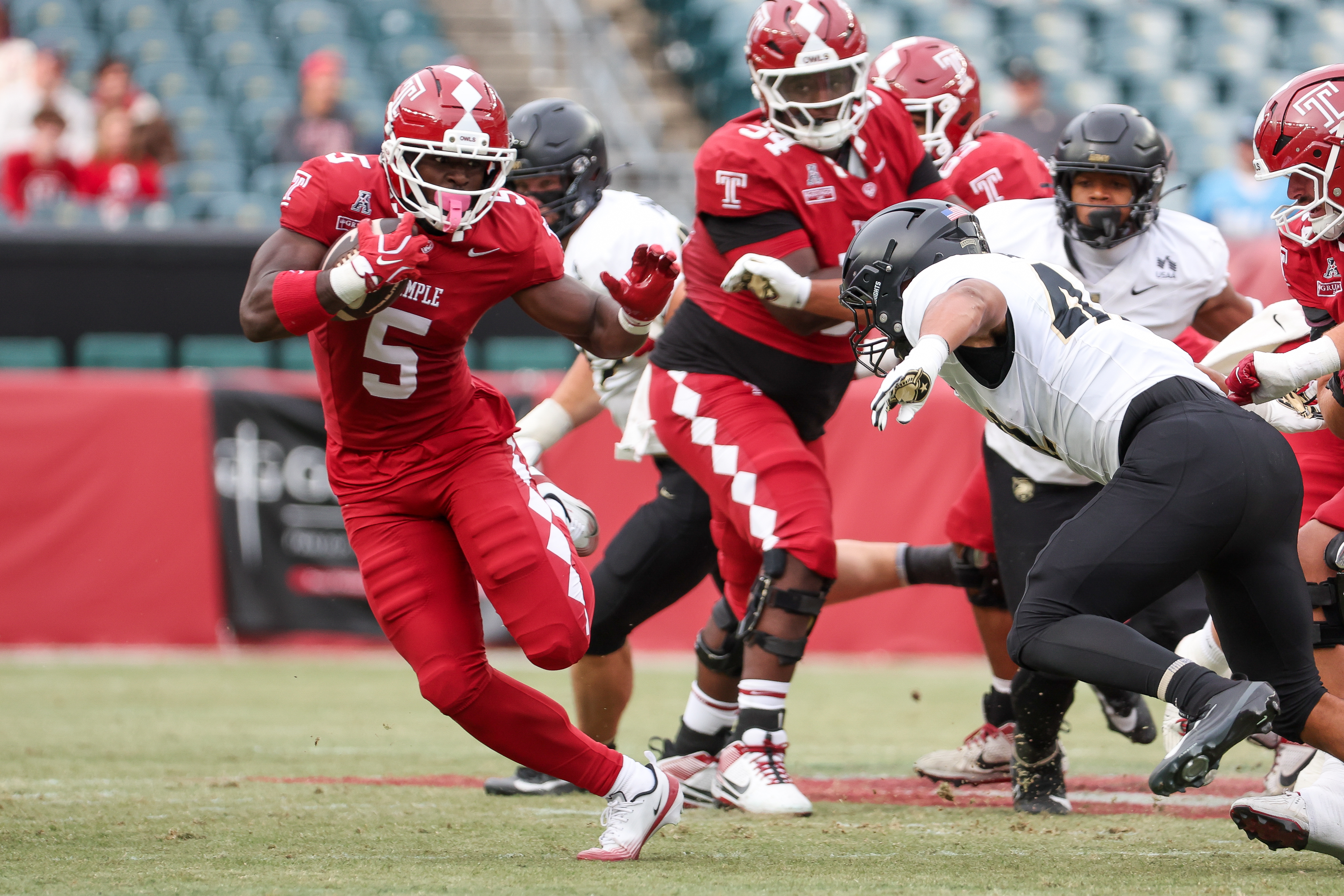
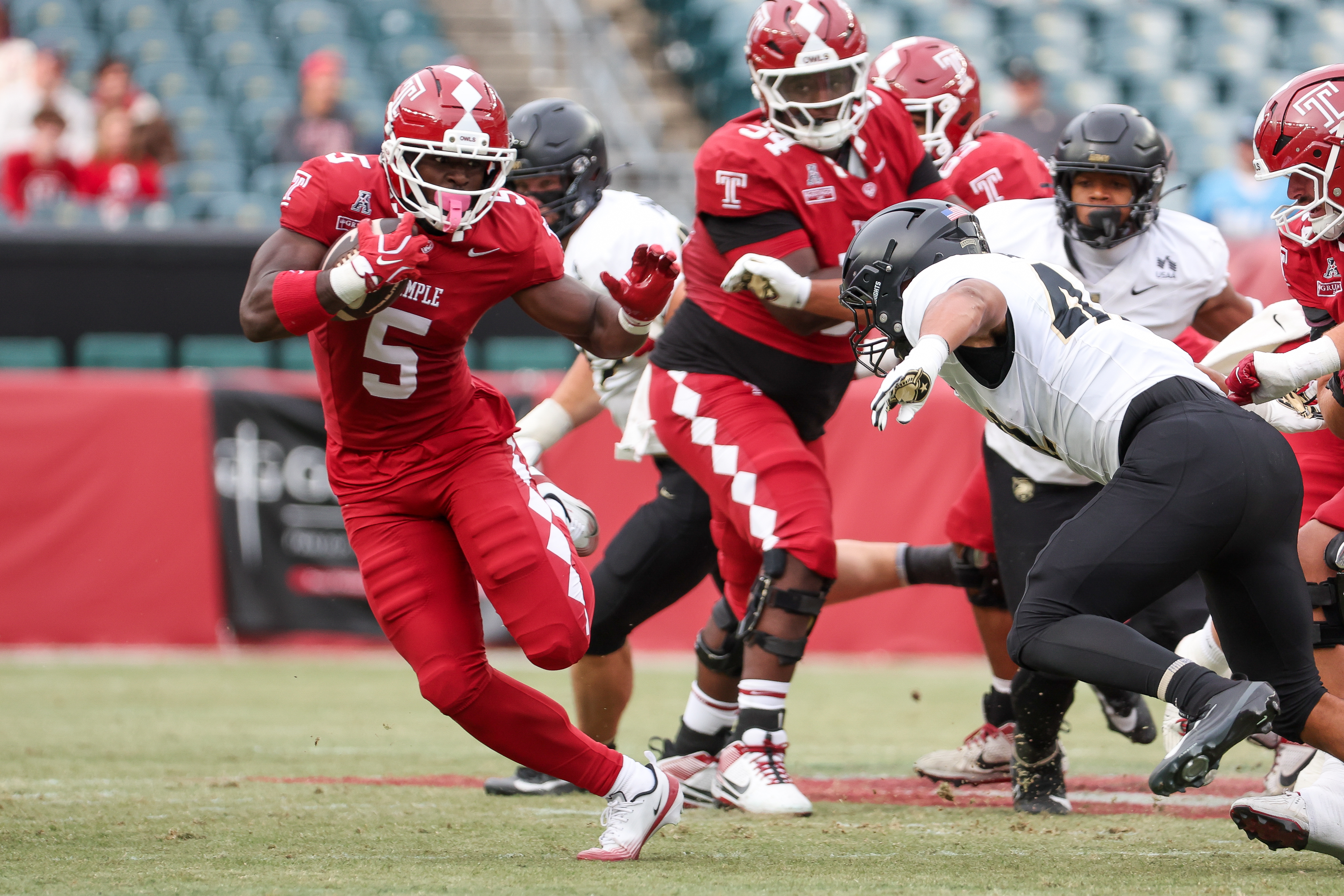
    The Owls’ running back group is headlined by Sam Brown V, whose three touchdowns against the Rockets was tied for second-most in a game in the conference. Temple is ranked 24th nationally in rushing. Keveun Mason ran for a career-high 158 yards in Week 1.

    South Florida’s D.J. Crowther has displayed impressive figures as well, having topped 100 rushing yards in each of the last two games. Crowther averaged 12.6 yards per carry (eight carries for 101 yards and three touchdowns) in the first contest vs. Delaware State before carrying the ball 23 times for 143 yards and a TD in the second vs. Bowling Green.

    Sam Brown V runs the ball during the first quarter against Army Black on Sept. 25.Isaiah Vazquez / For The Inquirer

    Keeler knows how strong the Bulls’ ground game is, and his staff usually reviews rushing footage from the week before to prepare. But that wasn’t a focus in practice Monday, simply because Army was a different beast.

    “Typically today would be a corrections day for [the defense] — they sort of moved on,” Keeler said. “After an Army or Navy game, you don’t get a lot out of that video … there’s not a lot of crossover for what would help today.”

    Sheppard still in shotgun

    Jaxon Smolik started as Temple’s signal-caller against Penn State and Toledo after splitting the job with Ajani Sheppard against Rhode Island. When Smolik went down with an injury after his first throw against the Rockets, Sheppard stepped in and recorded three touchdowns. He continued to impress with 290 all-purpose yards and two touchdowns against Army.

    Keeler is impressed by what he’s seen in Sheppard’s deep passing and explosiveness. Sheppard may get to showcase his talents in Tampa, Fla., as Smolik’s health is still in question.

    “I really haven’t talked to Tyler [Walker] because we’re kind of waiting for someone to say Jaxon is 100%. I don’t think we’re there yet,” Keeler said. “I think he’ll progress this week, but I think we’ll know a lot more during the course of the week than we know right now.”

    Fine-tuning details

    Keeler has drilled one word into the minds of his players: details.

    Temple hasn’t lacked energy through the past three weeks, but its failure to execute in the final minute has cost them games. The Owls weren’t far from being 3-1, Keeler said.

    Special teams coordinator Brian Ginn and head coach K.C. Keeler yells against Army on Sept. 25.Isaiah Vazquez / For The Inquirer

    This weekend, however, Temple can’t afford to leave any boxes unchecked.

    “I can’t ask them to work any harder in practice, except the mental part of it,” Keeler said. “We better really look ourselves in the mirror and say, ‘Are we doing everything we can? Is it looking at your tip sheet? Is it watching an extra video?’ … Let’s really worry about those details.”

  • Senate passes college sports bill that would rein in athlete payments and transfers

    Senate passes college sports bill that would rein in athlete payments and transfers

    WASHINGTON — The Senate passed a sweeping bipartisan bill on Monday that would regulate college sports, an attempt to end “chaos” in an industry that has been upended by skyrocketing athlete payments and near-unrestricted transfers between schools.

    The overwhelming 77-22 vote to pass the legislation is the strongest effort yet by Congress to set national regulations governing payments to college athletes for their name, image and likeness and how often they can transfer. It would give the NCAA new authority over those rules and limited antitrust protections to enforce them.

    The bill is the product of years of Senate negotiations that intensified after a 2025 lawsuit settlement uprooted the college sports landscape by allowing colleges to pay their players. The legislation, which would still have to pass the House, would codify the settlement into law but also establish new guardrails around the system in an attempt to rein in the runaway costs for colleges.

    “It would be nice if college sports could somehow magically fix itself, but this is a matter of law, federal law, and only Congress can fix it,” said Senate Commerce Committee Chairman Ted Cruz, R-Texas, who negotiated the bill with the top Democrat on the panel, Washington Sen. Maria Cantwell.

    The bill’s backers — more than 70 senators from both parties — say it aims to curtail constant litigation and uncertainty across college sports for athletes, schools and fans. It would also give hundreds of thousands of student athletes new health and labor protections.

    But critics say the bill doesn’t do enough to protect athletes or curtail the enormous sums of money flowing to coaches, colleges and conferences.

    “This is a bill that essentially ensconces a system of exploitation, and it doesn’t fix the broader problems,” said Connecticut Sen. Chris Murphy, a Democrat who has worked with labor and civil rights groups to rally opposition to the bill.

    The bill’s future is still unclear.

    President Donald Trump has repeatedly expressed an interest in the legislation, and the White House formally endorsed the bill last month. But it could face an uphill battle in the House, which failed repeatedly over the last year to get a different version to the floor and is in recess until after the November elections.

    Lawmakers will have to start over in the next Congress if the bill doesn’t pass both chambers by the end of the year.

    Bill addresses skyrocketing spending, unlimited transfers

    College sports have been reeling in the wake of the 2025 court settlement allowing colleges to directly pay players for their name, image and likeness. The fallout has reshaped the industry and led to football roster payrolls that can exceed $40 million.

    The bill would codify the court settlement, including a revenue cap that allows schools to share up to $21.5 million in revenue with their players. The legislation would more than double that amount for some schools, allowing up to an additional $27.5 million in payments through a retention fund — a change that helped win the support of the two largest conferences, the Big Ten and Southeastern Conference.

    To help schools raise more revenue, the bill would give schools and conferences the option of pooling their TV media rights.

    The legislation also aims to stabilize the NCAA transfer portal that has led to players constantly switching teams. It would restrict player transfers to one “free” move over five years without sitting out a year, with some exceptions, and also would restrict players to five years of total eligibility.

    The proposed eligibility limit comes amid backlash to schools that have increasingly pushed boundaries, including LSU’s now-canceled plans to place players on the roster who had participated in NFL training camps.

    “That was probably like a big lamp for some people who saw it and said, ‘Oh my God, this is so out of control,’” Cantwell said in a recent interview with The Associated Press.

    The bill also would restrict coaches from leaving their schools during the season, force schools that want to switch conferences to spend three years as an independent and prevent conferences from growing larger than 20 programs — an effort to prevent so-called “superleagues” from taking over sports. A last-minute amendment proposed by Florida Sen. Ashley Moody raised that cap from 19 in the original legislation.

    The vote was delayed several hours on Monday as senators negotiated Moody’s amendment and others that were eventually adopted, including provisions to make it easier for athletes to sue over sexual assault and a requirement to disclose foreign financing.

    The Senate rejected an amendment by Sen. John Kennedy, R-La., that would have put limits on ticket prices for fans and two by Sen. Cory Booker, D-N.J., that would have capped coaches’ salaries at $5 million a year and increased compensation for athletes who have catastrophic injuries.

    Critics say it wouldn’t do enough to help athletes

    The legislation includes new protections for athletes, including caps on agent fees and guarantees for health insurance and scholarships. It would also require schools to maintain a minimum number of sports and roster spots — an effort to ensure that women’s and Olympic sports are not cut in favor of football, basketball and other sports that generate more revenue.

    Still, some Democrats say it wouldn’t do enough to limit the big money in college sports.

    The legislation “places a cap on the students’ cut of the revenues, but there are no caps on coaches’ salaries or on the size of donations to athletic programs,” Murphy said last week.

    Groups like the NAACP, Congressional Black Caucus and AFL-CIO have also opposed the bill, in part, because it leaves unresolved whether athletes should be considered employees with the ability to collectively bargain.

    All four Black Democrats in the Senate — Booker, Raphael Warnock of Georgia, Lisa Blunt Rochester of Delaware and Angela Alsobrooks of Maryland — have opposed the bill.

    Booker, who played football at Stanford in the late 1980s on a scholarship, noted the “outsized role” that Black athletes play in college sports. He said it wasn’t until college athletes were able to begin to win cases in court that the power started to shift, “and now the NCAA is coming here to the United States Senate, asking for sweeping powers” to exempt antitrust laws.

    “We know who this bill is protecting,” Booker said.

    House passage is uncertain

    Despite strong bipartisan support in the Senate, the bill faces a murky path in the House.

    House lawmakers won’t return to Washington until mid-November, after the elections. And it’s unclear what will be on Republican leaders’ agenda in the chaotic last few weeks of the session.

    Pressure from Trump could help push the bill to passage. But some House Republicans have insisted on language explicitly stating that athletes are not employees, which the Senate bill does not have — a key concession to Cantwell to win enough Democratic support.

  • Villanova mascot Will D. Cat inks NIL deal with Friskies. No, seriously.

    Villanova mascot Will D. Cat inks NIL deal with Friskies. No, seriously.

    Even mascots are getting NIL deals now.

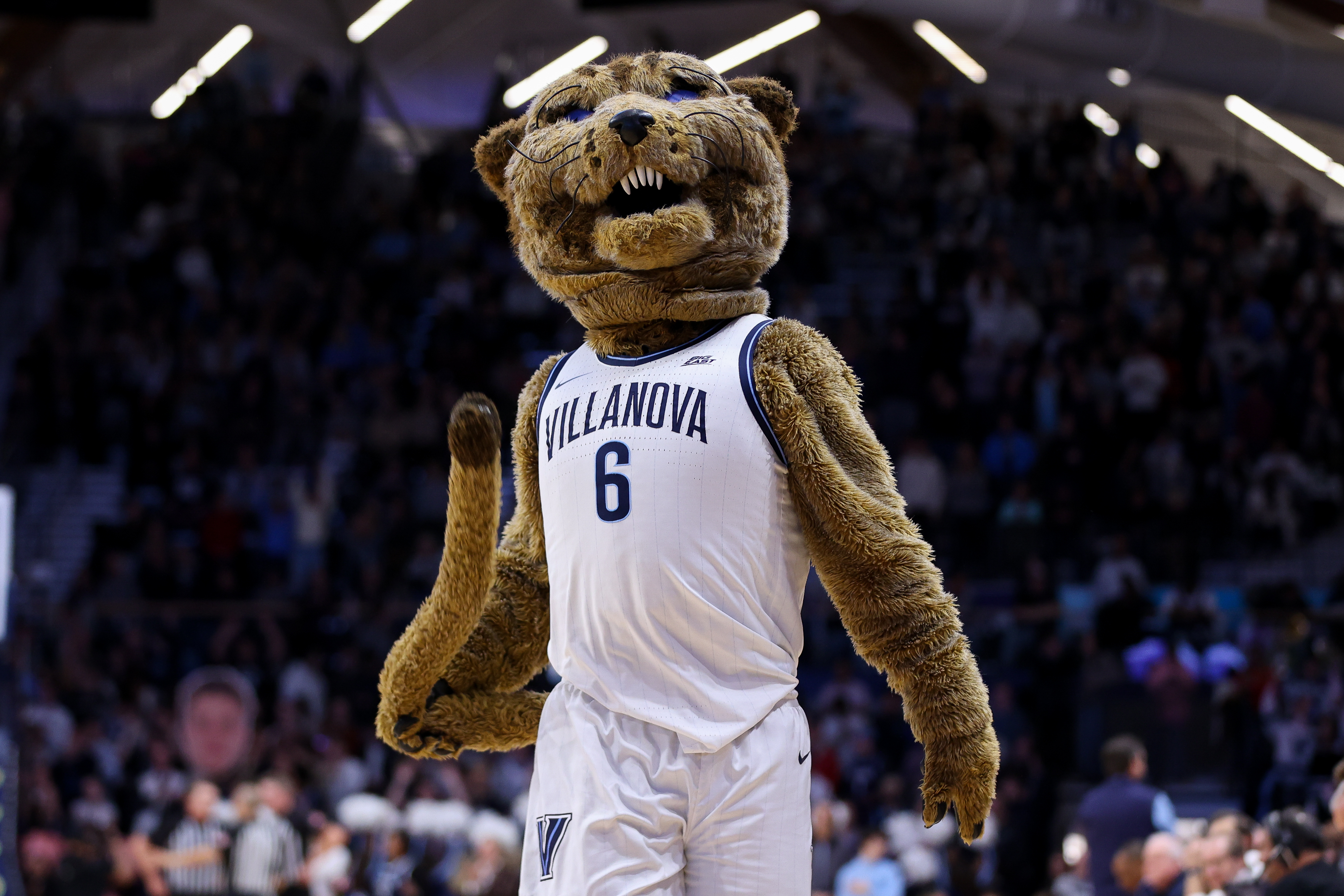
    Villanova’s Will D. Cat is among six feline mascots signed to Friskies’ “Certified Frisky” campaign.

    During football season, the popular cat food brand will donate 10,000 meals to Greater Good Charities for each score to help feed shelter cats in each school’s community.

    It doesn’t matter whether it’s a touchdown, field goal, or a safety; a Wildcats score will translate to more food for cats living in Philly-area shelters.

    Animal Care and Control Team of Philly, the area’s largest animal care and control organization, is open every day (except for major holidays) for pet adoptions.

    Other participating mascots are Wilbur and Wilma Wildcat (Arizona), Truman the Tiger (Missouri), Cosmo the Cougar (BYU), and Aubie the Tiger (Auburn).

    Whether it’s sideline antics or big orange cat energy, these cats bring “playful, surprising, and a little unhinged,” energy. Now, that energy will help kitties across the country.

    The partnership builds upon a collaboration with Arizona during its men’s basketball NCAA Tournament run.

    Greater Good Charities is a 501(c)(3) that has invested more than $1.1 billion into charities supporting people, animals, and the environment since 2006.

  • Florida rides win over Rebels to No. 8 ranking, Penn State falls out of AP Top 25

    Florida rides win over Rebels to No. 8 ranking, Penn State falls out of AP Top 25

    Florida made a massive jump in The Associated Press Top 25 on Sunday and landed in the top 10 for the first time in five years while four new teams joined the rankings in a major shuffle.

    The Gators’ 24-point win over then-No. 4 Mississippi under first-year coach Jon Sumrall on Saturday earned them a 13-rung promotion to No. 8, their highest ranking since 2020 and first top-10 appearance since 2021.

    Texas, Georgia, and Notre Dame continued to hold the top three spots, Miami was a season-high No. 4 and Ohio State moved up two spots to No. 5. Indiana, Alabama, Florida, Mississippi, and BYU completed the top 10.

    The Longhorns received 62 first-place votes from the media voting panel, four more than last week, after they held off Tennessee 20-17 in their first road game.

    Georgia, coming off a convincing win over Oklahoma and outscoring opponents by an average of 41.5 points per game, got six first-place votes, double its number last week. Miami and Indiana each received one first-place vote.

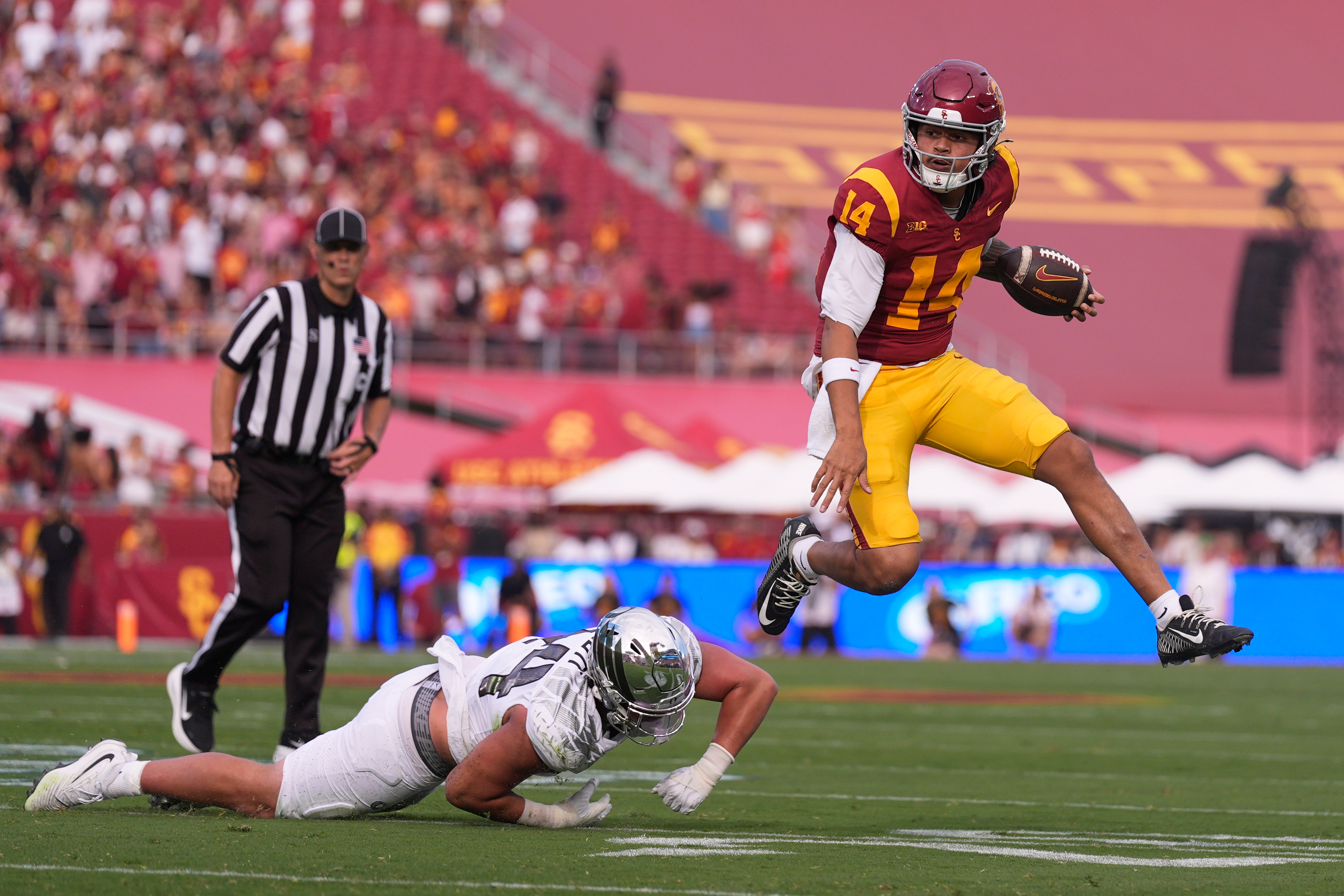
    Mississippi State moved up eight spots to No. 16, its highest ranking in four years, for beating Missouri at home. Oregon was up five spots to No. 15 after winning on the road against Southern California. Houston also moved up five spots to No. 20 after winning at Georgia Southern.

    Iowa earned its highest ranking since 2021, at No. 14, for knocking off Michigan on the road on the final play of the game.

    Seven ranked teams lost in Week 4 and four dropped out of the poll. Penn State took the biggest fall, going from No. 13 to unranked after losing to Wisconsin at home.

    In and out

    No. 19 Oklahoma State, which won at West Virginia for its third straight victory after losing 21 straight against Bowl Subdivision opponents, is ranked for the first time in two years.

    No. 22 Boise State of the Pac-12 is the first Group of Six team to crack the Top 25 this season. The Broncos’ 25-point win at Western Michigan was their third straight win after a narrow loss at Oregon. They hadn’t been ranked since the 2025 preseason poll.

    No. 23 UCLA is 4-0 for the first time in four years after a 51-point road win over Maryland and is ranked for the first time in three years.

    No. 24 Kentucky followed its win at Texas A&M with an easy victory at South Alabama to earn its first ranking since 2023.

    In addition to Penn State, Michigan, Louisville, and Texas A&M fell out of the Top 25.

    Full rankings

    1. Texas
    2. Georgia
    3. Notre Dame
    4. Miami
    5. Ohio State
    6. Indiana
    7. Alabama
    8. Florida
    9. Mississippi
    10. BYU
    11. LSU
    12. Texas
    13. Utah
    14. Iowa
    15. Oregon
    16. Mississippi State
    17. Tennessee
    18. USC
    19. Oklahoma State
    20. Houston
    21. SMU
    22. Boise State
    23. UCLA
    24. Kentucky
    25. Missouri
  • No. 13 Penn State fumbles a 10-point second-half lead to lose to Wisconsin in Big Ten opener

    No. 13 Penn State fumbles a 10-point second-half lead to lose to Wisconsin in Big Ten opener

    STATE COLLEGE, Pa. — After No. 13 Penn State took a 10-point lead at the end of the third quarter, it was all downhill for the Nittany Lions in their Big Ten opener against Wisconsin on Saturday.

    Wisconsin scored two touchdowns in 3 minutes, 31 seconds to defeat the Nittany Lions , 24-20. Quarterback Colton Joseph found tight end Jacob Harris for a 72-yard go-ahead touchdown with 1:13 to go. That play gave the Badgers their first road win since 2024 and first victory over Penn State since 2011.

    Penn State’s offense was inconsistent from the get-go, while its defense couldn’t keep up after three straight three-and-outs on the other side of the ball.

    “We just really struggled to find a rhythm,” coach Matt Campbell said. “Never got into the flow of the game.”

    Offensive struggles

    Offensive coordinator Taylor Mouser’s first crack at calling plays in the Big Ten didn’t go as planned.

    Without top receiver Koby Howard, the passing game struggled. Quarterback Rocco Becht threw his first interception of the season after a ball was tipped at the line of scrimmage and fell right into the hands of Wisconsin defensive end Charles Perkins.

    Becht finished 12-for-29 with 129 yards and an interception. He had multiple bad misses and threw it through the end zone on the final play of the game.

    “I got to be better for the offense,” Becht said. “I got to be better for this team. I can’t put us in scenarios where our backs are backed up and we got to have a big play. We got to continue to move the chains, stay in front of the sticks, and I didn’t do my part today, so I got to do better.”

    The run game couldn’t find the consistency it had last week, and running backs Carson Hansen, Quinton Martin Jr., Cam Wallace, and James Peoples all saw the field in the first quarter in an effort to get something going.

    Peoples ended up being the featured back. The Ohio State transfer finished with 67 yards on 14 attempts, good for 4.8 yards per carry.

    “I thought James ran the ball really well today,” Campbell said. “I thought he made some really key plays in some key situations. I do.”

    Cornerbacks step up

    Penn State’s cornerback room was the most stable following an offseason of transfer portal exits and additions, with eight corners from last year’s squad returning this season.

    True freshman Josiah Zayas and sophomore Daryus Dixson recorded interceptions on back-to-back drives in the second quarter, resulting in a 14-point swing for the Nittany Lions in just over two minutes. Zayas returned his for a touchdown, while Dixson’s set Penn State up at the Badgers’ 11-yard line.

    “Our defense was playing well,” Becht said. “Props to those guys for continuing to go out there and make plays and having our back.”

    On Zayas’ pick-six, he read the screen perfectly, and there was only green grass in front of him once the ball was in his hands. The play was eerily similar to his pick-six in Penn State’s Blue-White Game.

    Redshirt senior Audavion Collins got involved as well with three pass breakups, two of which came late in the fourth quarter.

    Linebacker Tony Rojas tacked on a third interception in the fourth quarter.

    Up next

    Penn State heads to Northwestern and its brand-new Ryan Field for its first Friday game since 2023 (8 p.m., Fox29).

    Northwestern beat the Nittany Lions, 22-21, last season in what ultimately was James Franklin’s last game at Penn State.

  • Mistakes prove costly for Villanova in conference loss to Colgate

    Mistakes prove costly for Villanova in conference loss to Colgate

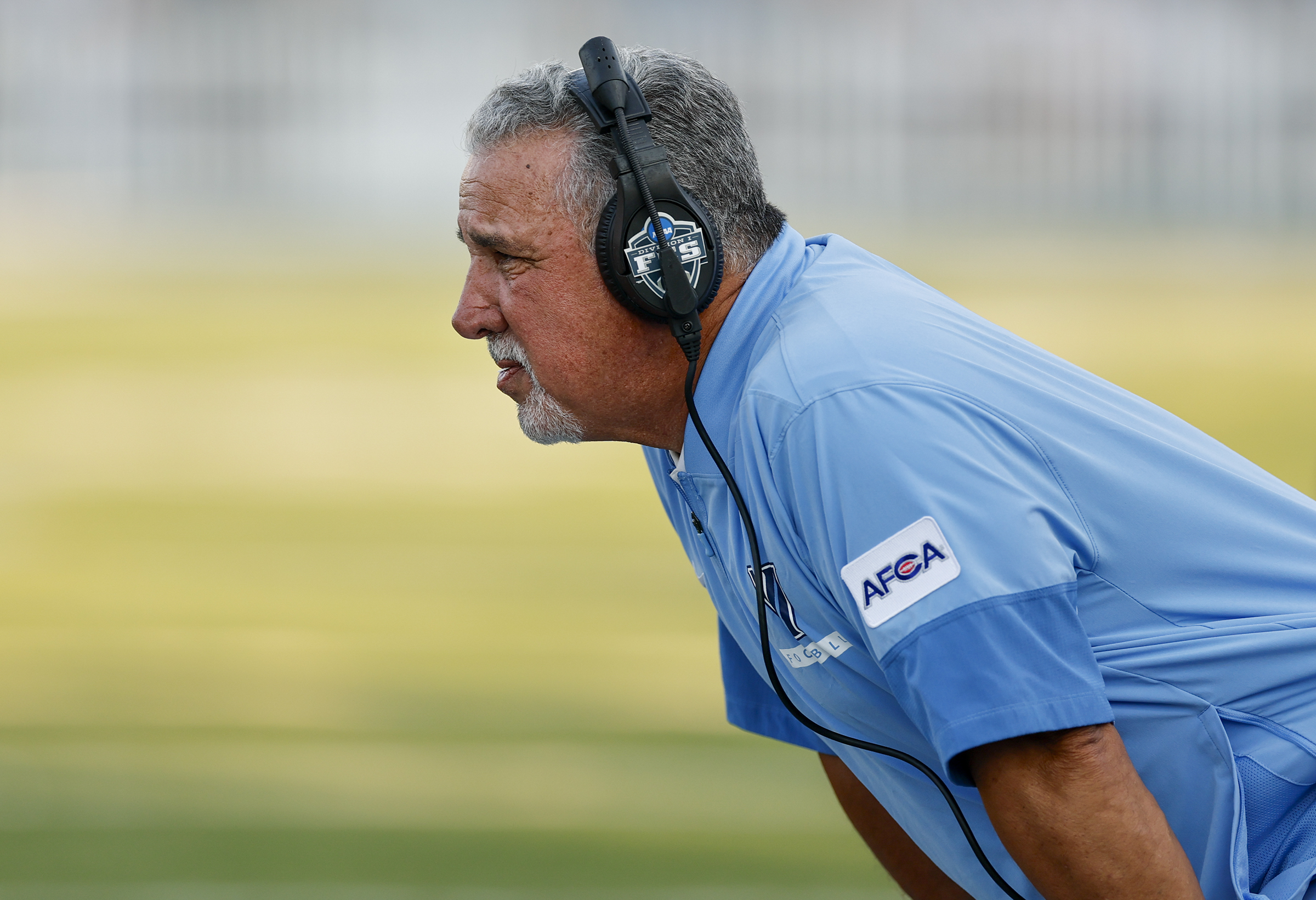
    Villanova coach Mark Ferrante says the Wildcats have become their “own worst enemy.”

    The Wildcats returned home to Villanova Stadium for the first time in four weeks, searching for their first win home win since last November. After a competitive first half, costly penalties, an inability to stop Colgate on third down, and communication miscues led to a 28-21 loss.

    It’s the first time Villanova (2-3, 2-1 Patriot League) has lost to Colgate (4-1, 3-0) since 1978, snapping an eight-game winning streak.

    “We’ve got to stop being the opponent [to] ourselves,” Ferrante said.

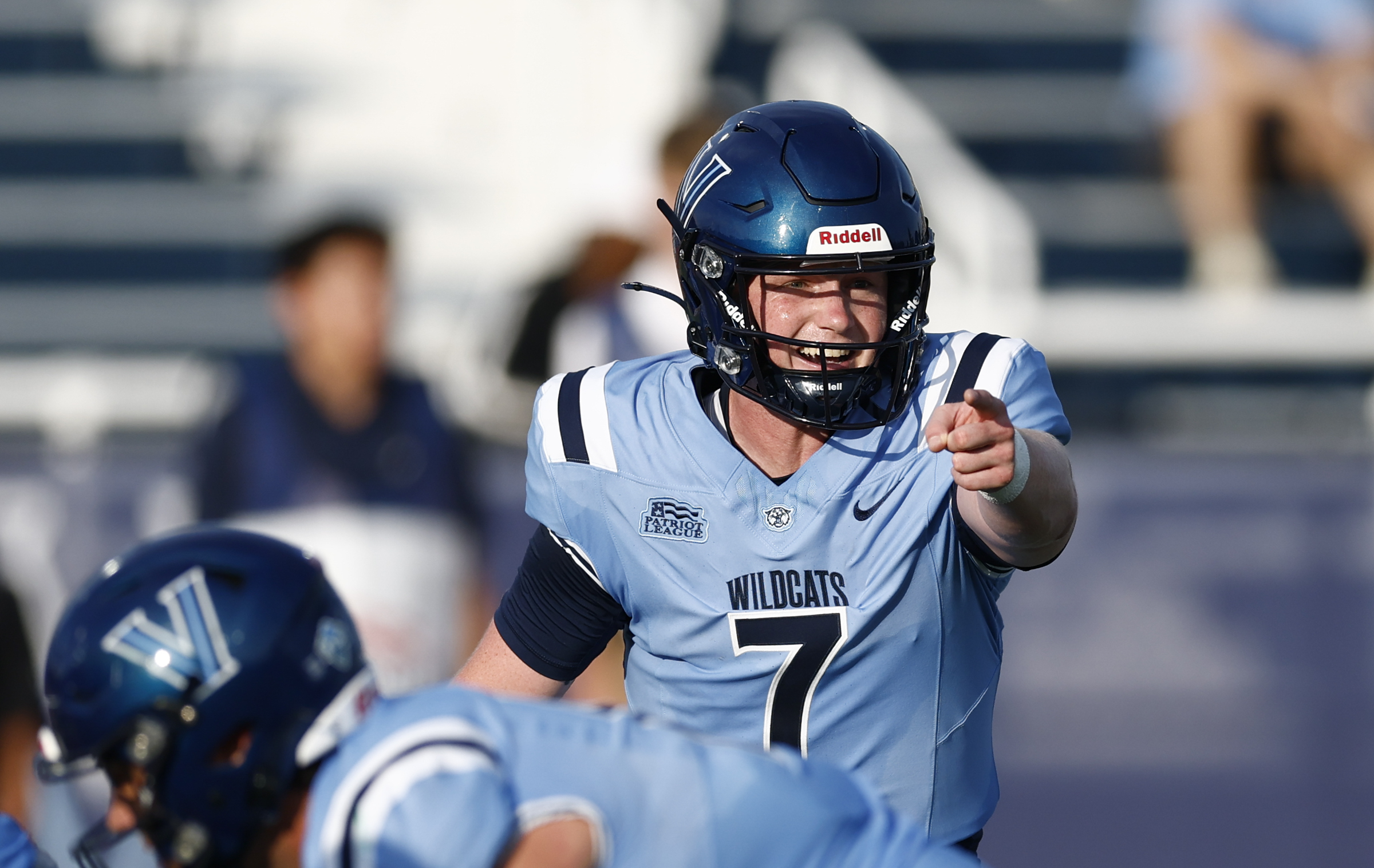
    Graduate quarterback Pat McQuaide completed 12 of 23 passes for 192 yards, two touchdowns, and an interception. McQuaide had a couple of opportunities for big plays with open receivers downfield, but overthrew them.

    Running backs Ja’briel Mace and Isaiah Ragland combined for 98 rushing yards on 23 attempts. Ragland picked up a rushing touchdown in the first half, while Mace hauled in a touchdown catch.

    “But, again, the one-two punch didn’t get us the win today,” Mace said. “So, I mean, the most important thing to me is winning football games, and we’re not doing that right now. We need to be better.”

    Villanova quarterback Pat McQuaide, seen here in a game earlier this season, threw for 192 yards and two touchdowns in a loss to Colgate on Saturday.Yong Kim / Staff Photographer

    Time not on the Wildcats’ side

    The Wildcats were unable to retain possession of the football. Colgate led Villanova in total time of possession by over 15 minutes. A main factor in the discrepancy was the Wildcats’ inability to stop the Raiders on third down, allowing them to go 8 for 15.

    “We’ve got to get off the field on third down on defense,” Ferrante said. “I would say [our opponents] are averaging over 50% against us in the first five games in third-down conversions, and too many of them [are] because of penalties.

    “Looking at the stat sheet, 8 for 15, that’s more than 50%. Time of possession is ridiculous. We need to get off the field on defense. We need to stay on the field and hang on the football on offense.”

    Through its first five games, Villanova has allowed every opponent except one to convert at least 50% of its third downs. The only game under 50% was against Bucknell in Week 2 (30.8%).

    Penalties continue to derail momentum

    Villanova has struggled this season with penalties. The Wildcats have committed seven or more penalties in four of their five games.

    Against Colgate, Villanova was penalized eight times for 79 yards. Some of those came on third downs when Villanova had the opportunity to force Colgate into punting or settling for a field goal.

    “We have to be smarter,” Ferrante said. “We have to be more disciplined. We’re giving up too many first downs in big plays because of our penalties. So we’ve got to make sure, No. 1, we stay outside so we don’t give them a free 5 yards and move the sticks, and No. 2, during the course of the play, we’ve got to make sure that we’re playing clean football as opposed to giving them pass interference calls and hand-to-face calls and personal foul calls.”

    Villanova’s offensive line

    The program has emphasized a strong offensive line in successful seasons.

    But the offensive line has been hit with injuries. That was evident on Saturday, as McQuaide was sacked six times, including on the Wildcats’ final play to seal Colgate’s win.

    At times the pass protection was there, but it was not consistent enough. And the run game was affected, too: No Villanova running back has eclipsed the 100-yard mark this season.

    Last season, Villanova running backs had seven 100-plus-yard rushing performances.

    Up next

    Villanova will stay on the Main Line for a nonconference matchup against Morgan State (3-1). The Bears are coming off a bye week.

    Villanova last faced Morgan State in 2014 and defeated the Bears, 48-28, at Villanova Stadium.

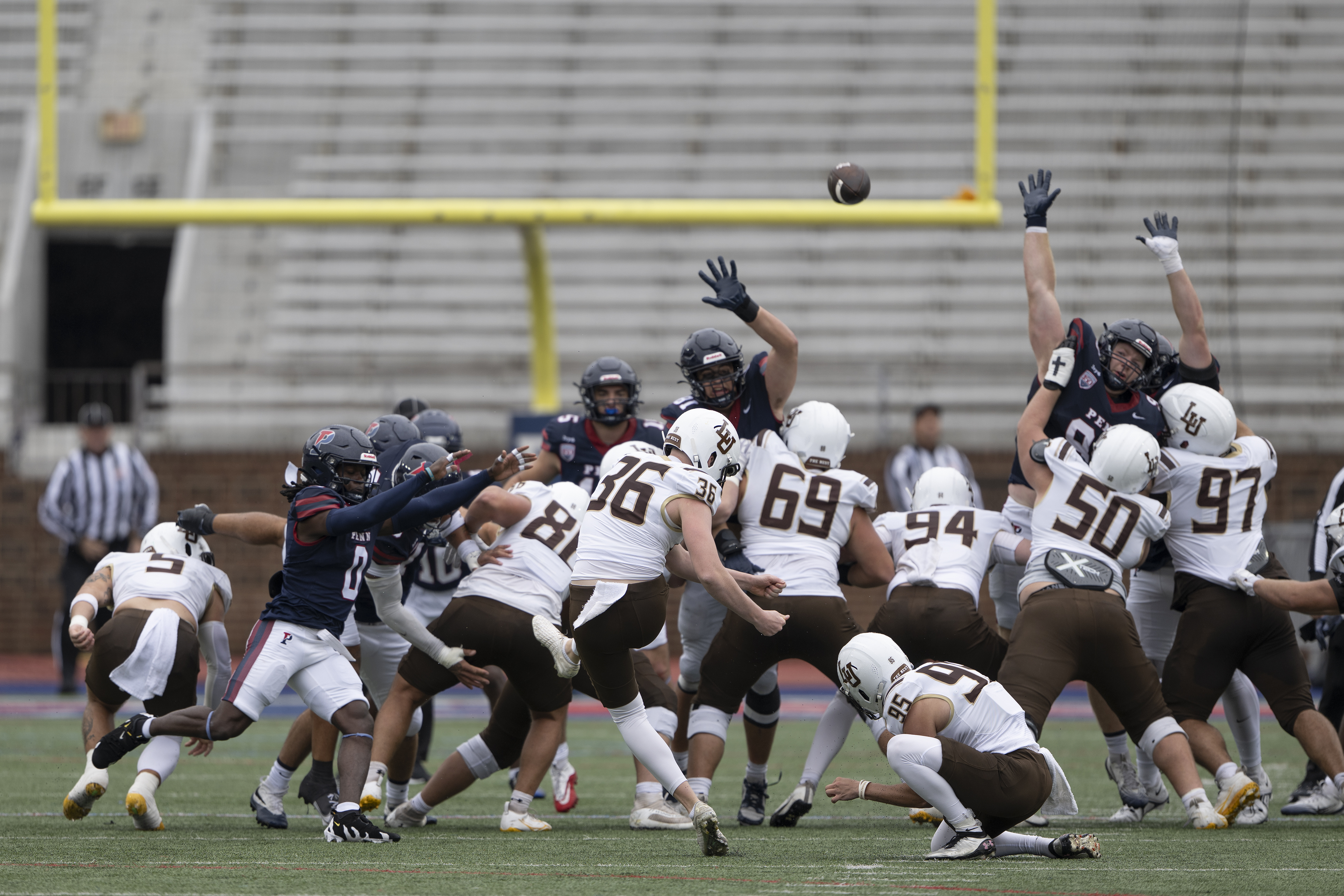
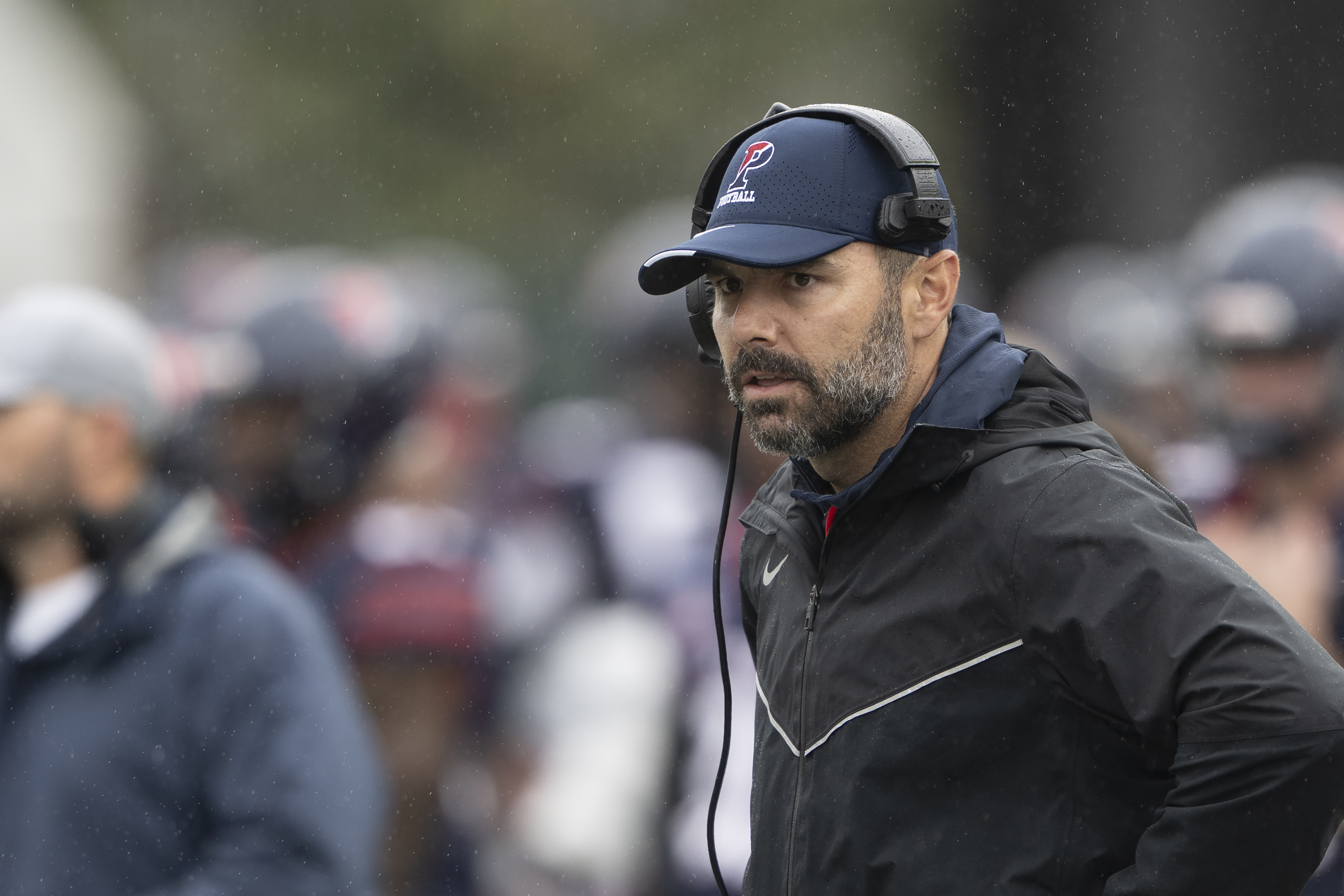
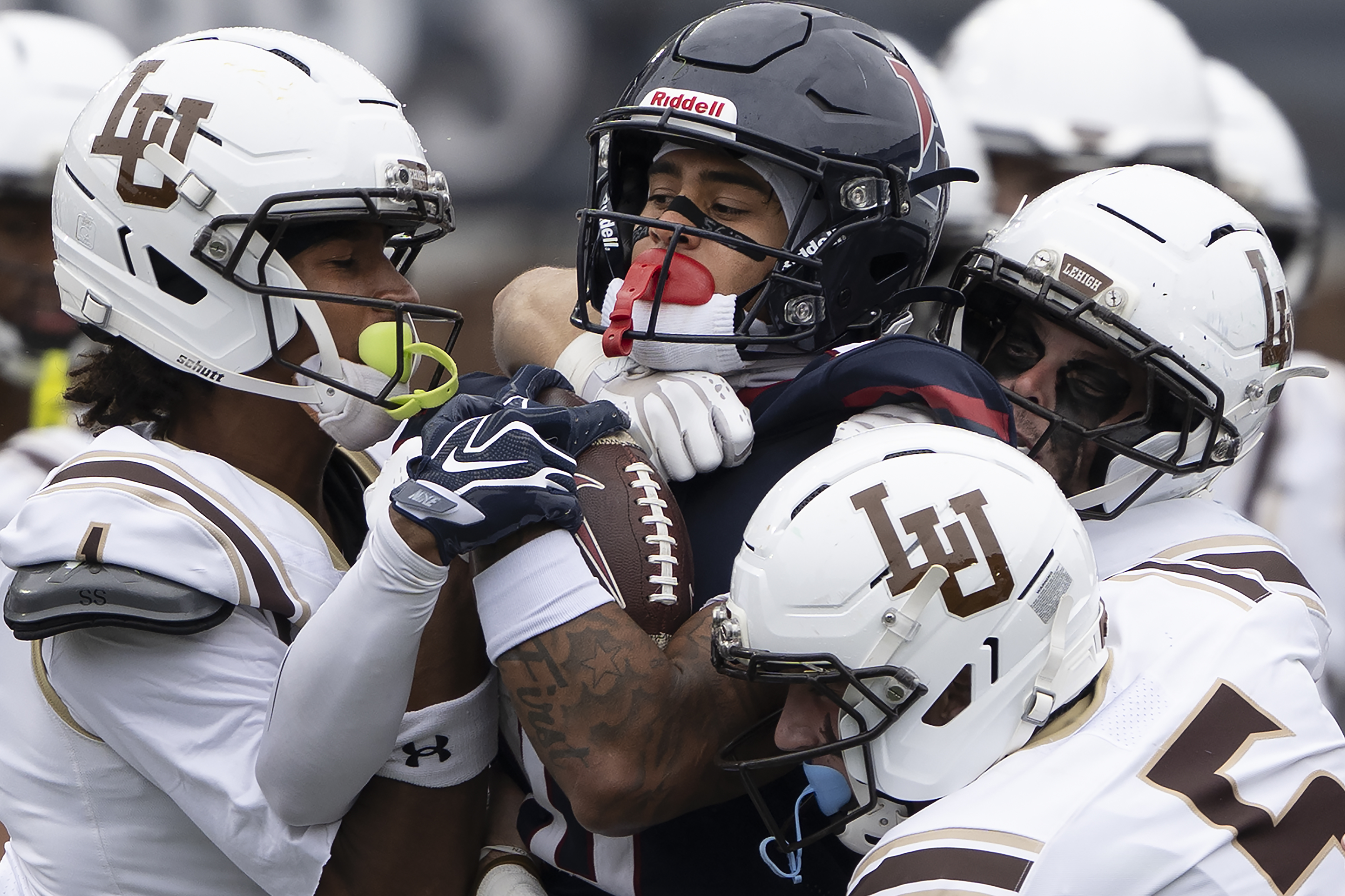
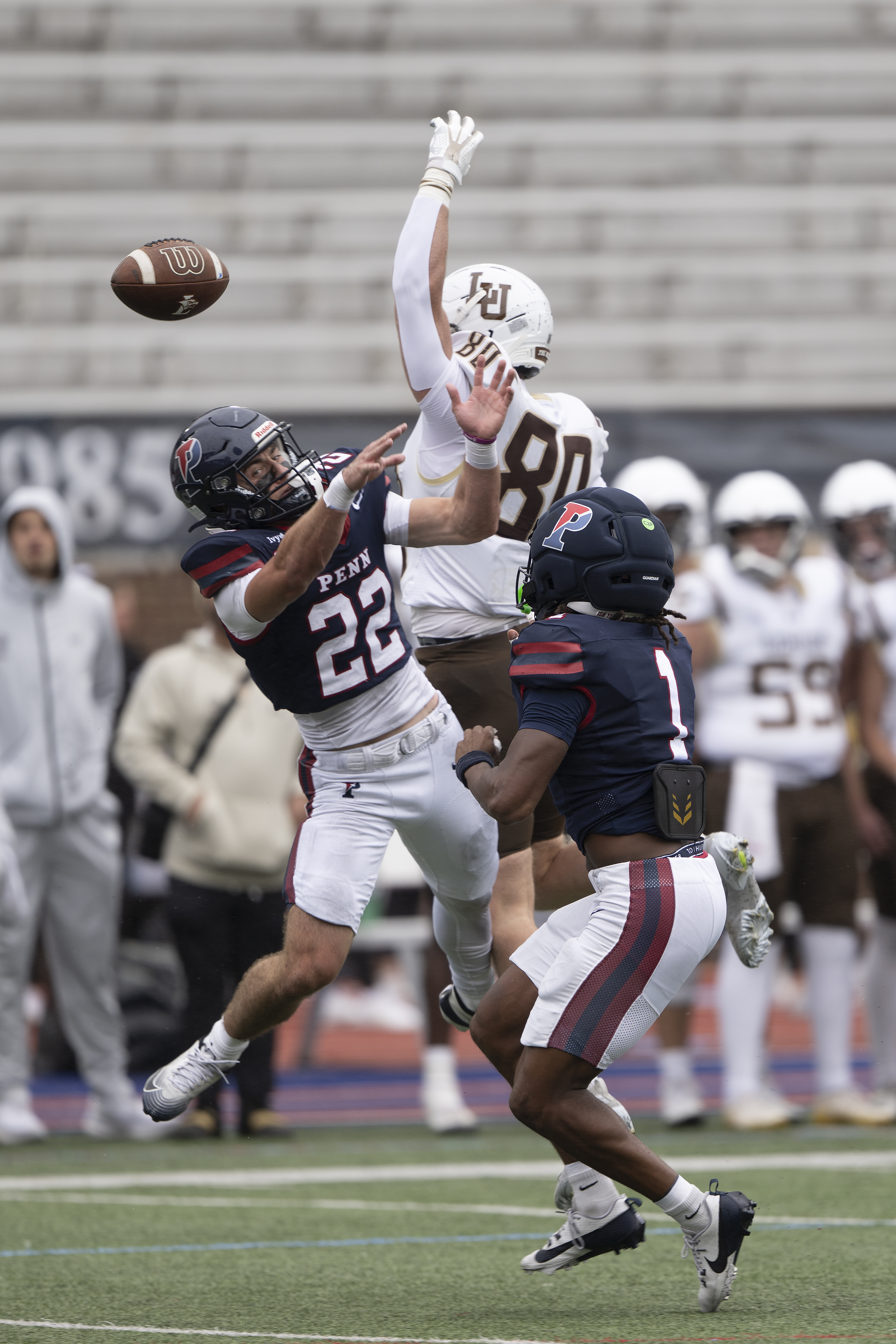
  • After quiet first half, Lehigh surges in Penn home opener

    After quiet first half, Lehigh surges in Penn home opener

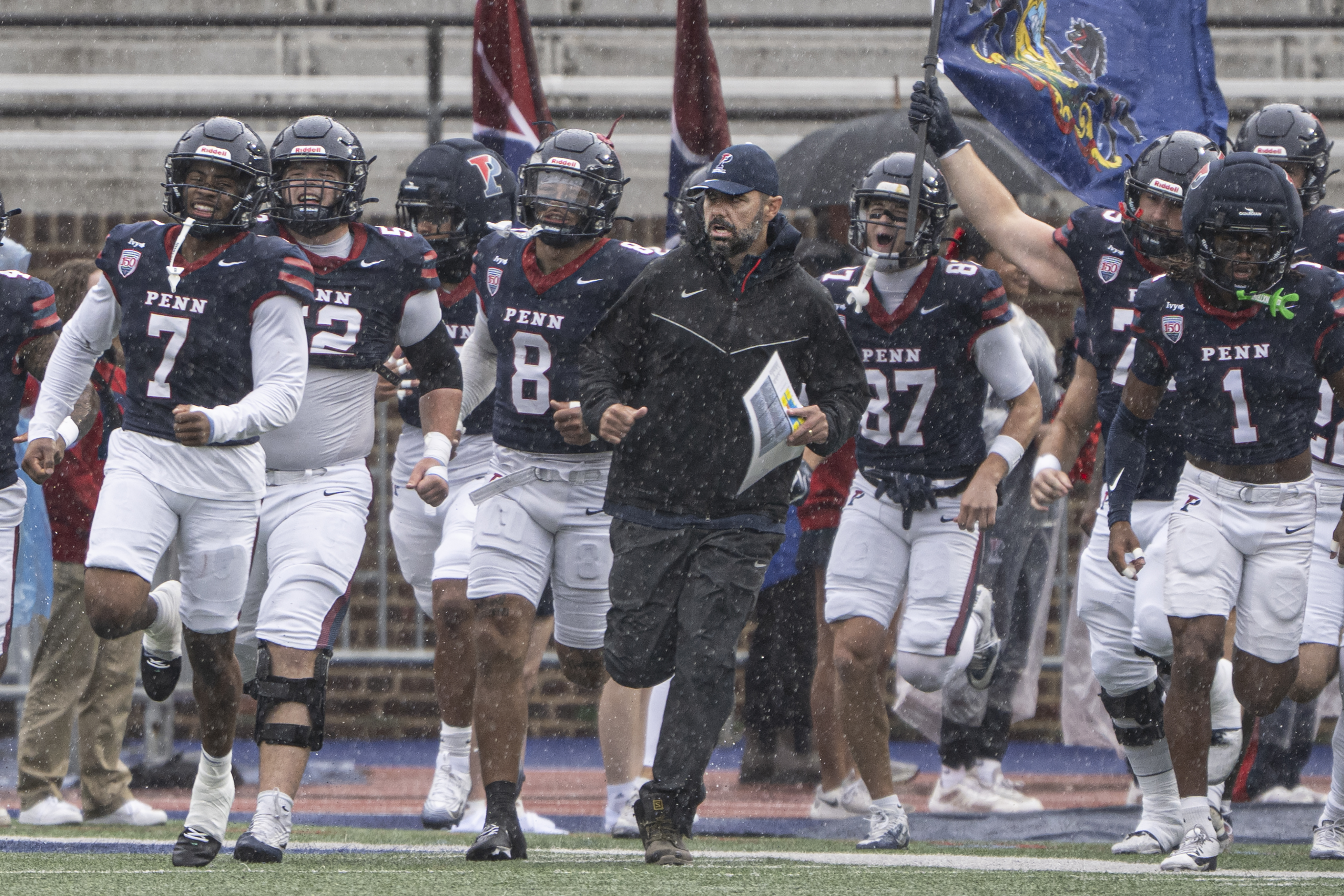
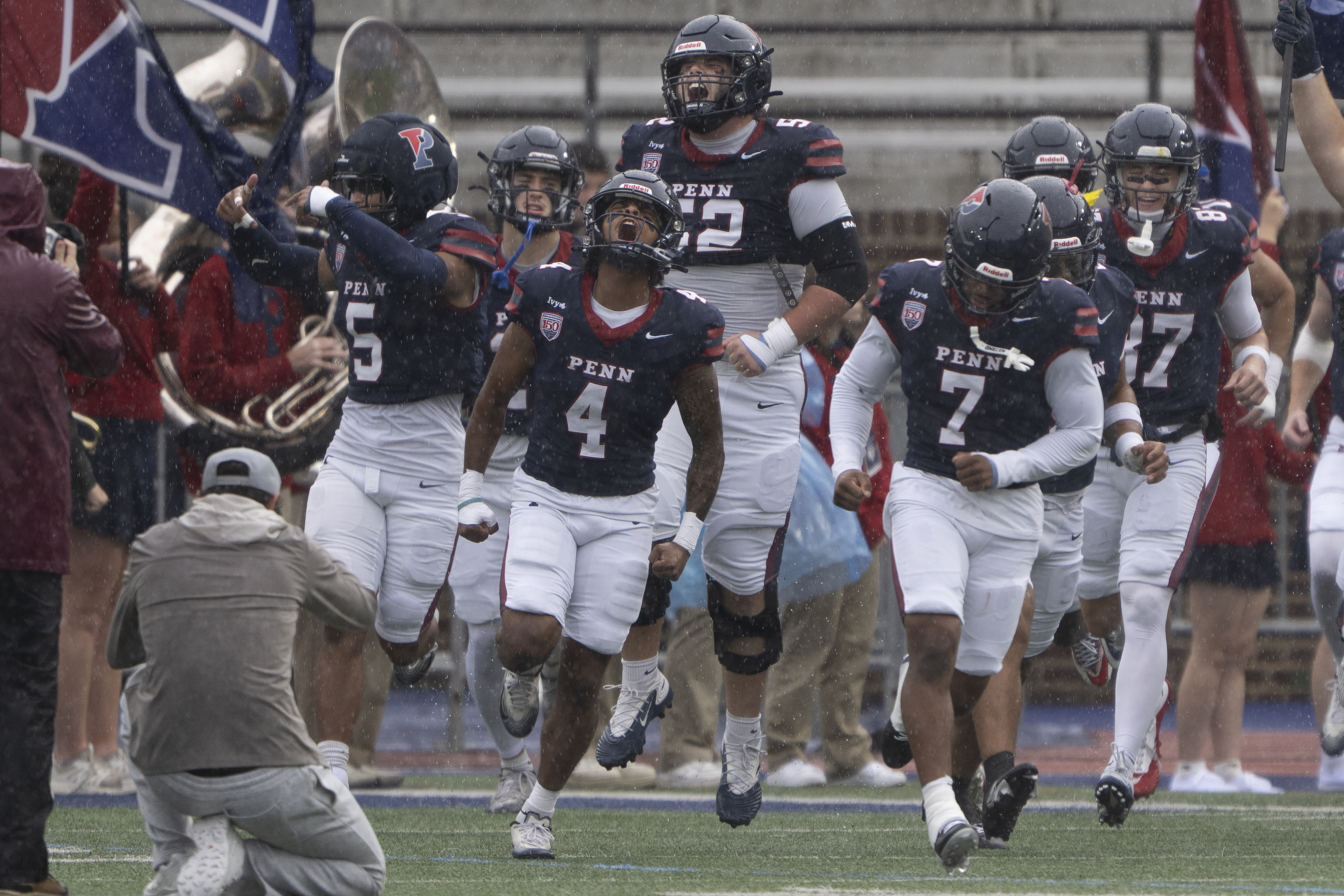
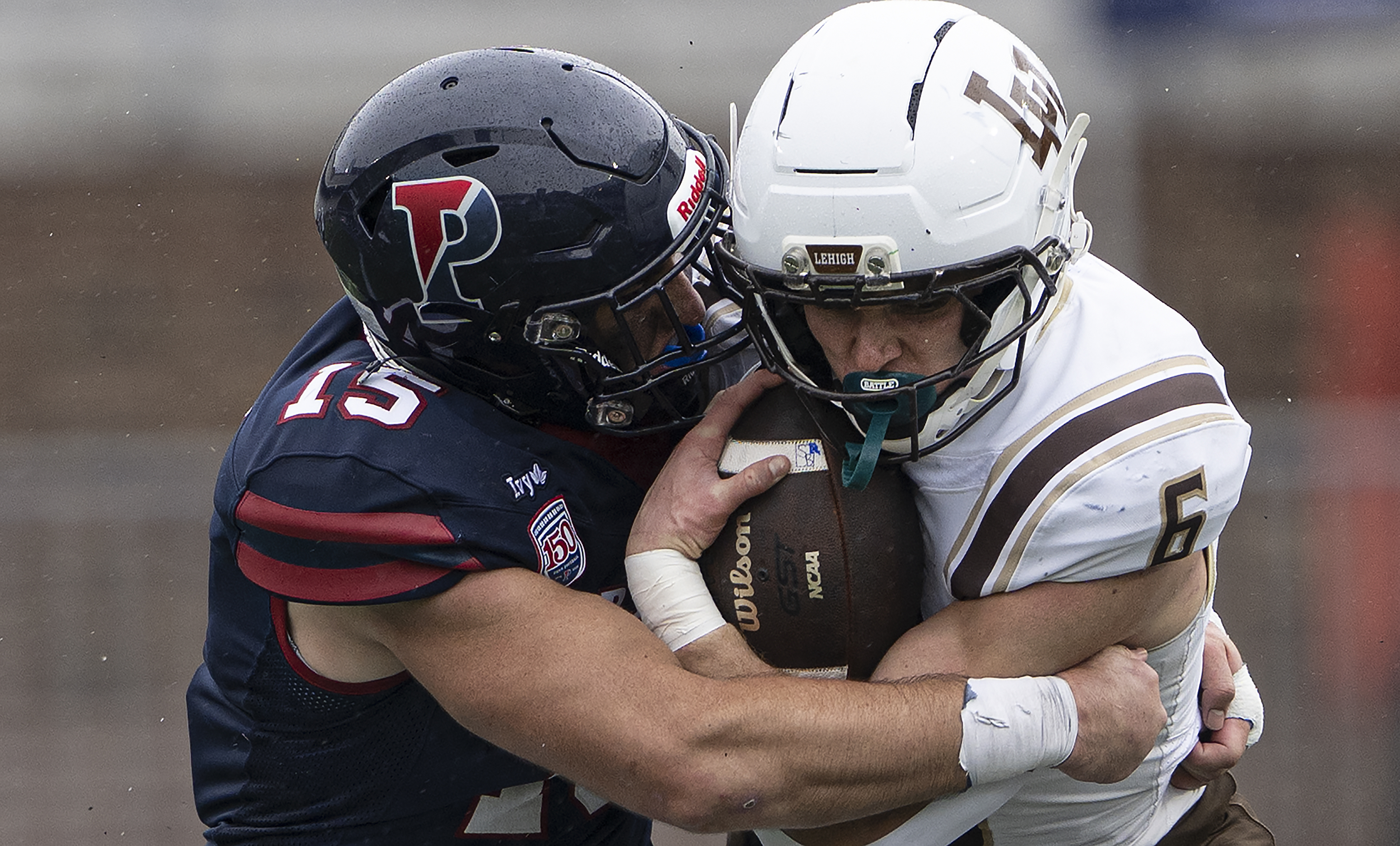
    Seconds before halftime, Penn freshman quarterback Miles Teodecki ran for a 1-yard gain to his own 2-yard line. As the clock wound down to zero and players stood up to head into the locker rooms, Teodecki remained laying on the turf for an extra second.

    The other end zone remained elusive for Penn as it lost its home opener to Lehigh, 20-7.

    At halftime, Penn (1-1) trailed just 3-0. But the Quakers’ last drive of the first half foreshadowed an offense unable to press forward for most of the game.

    Second-half collapse

    Two Lehigh touchdowns in the third quarter sealed Penn’s fate. The Quakers struggled to break through the Hawks’ swarming defense and recorded just 12 first downs.

    Lehigh quarterback Derek Morgan scored the Hawks’ first touchdown on an 11-yard run about a minute-and-a-half into the third quarter. A little over four minutes later, a 20-yard pass from Morgan to wide receiver Jamaire Harden put Lehigh up, 17-0.

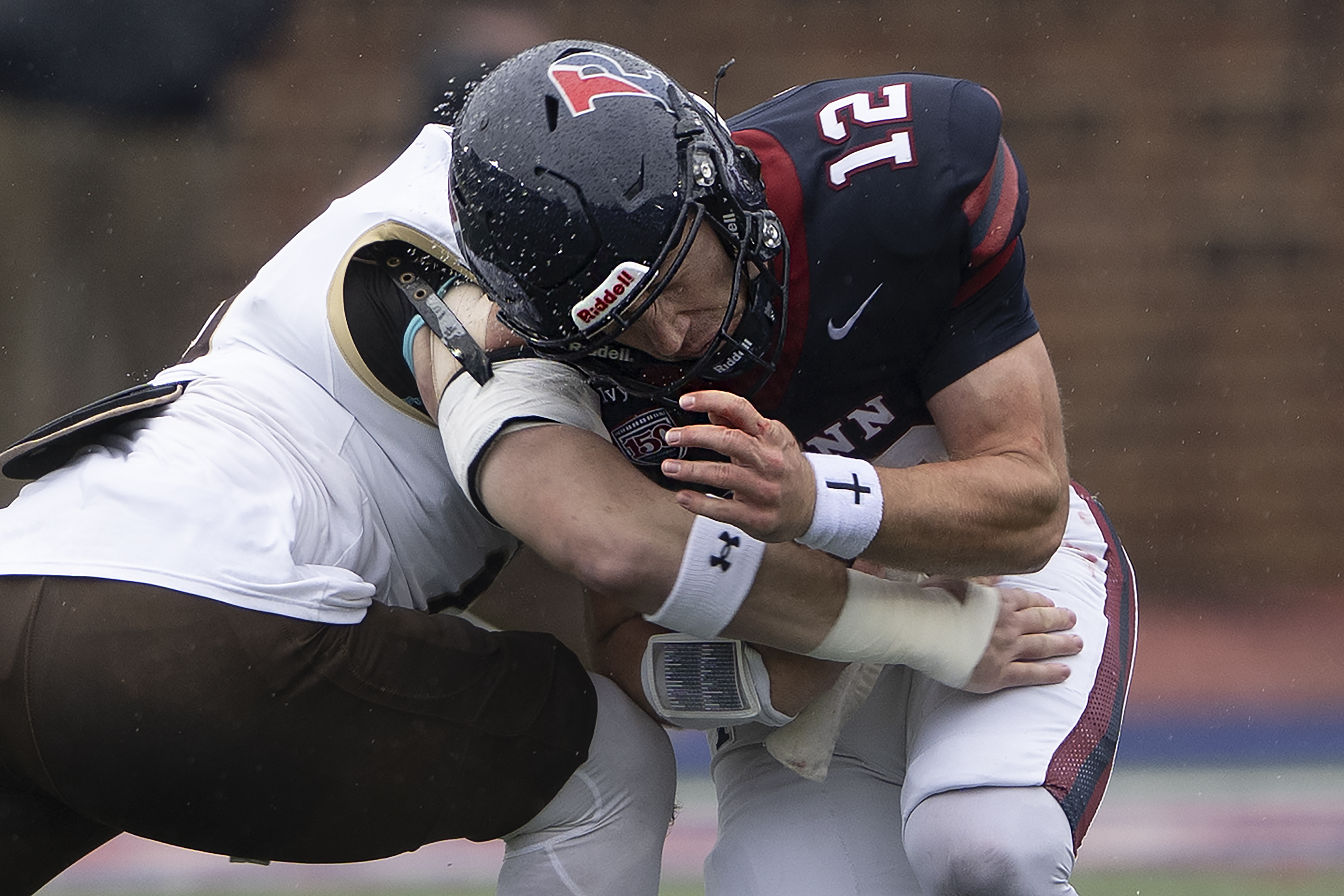
    Teodecki couldn’t find his rhythm. He was sacked four times, was picked off twice, and completed just 49% of his passes (18-of-37) for 133 yards..

    “We need to be better on first down,” Quakers coach Rick Santos said. “So it’s third-and-manageable, not third in obvious passing situations, and that seemed to be the entire third quarter.”

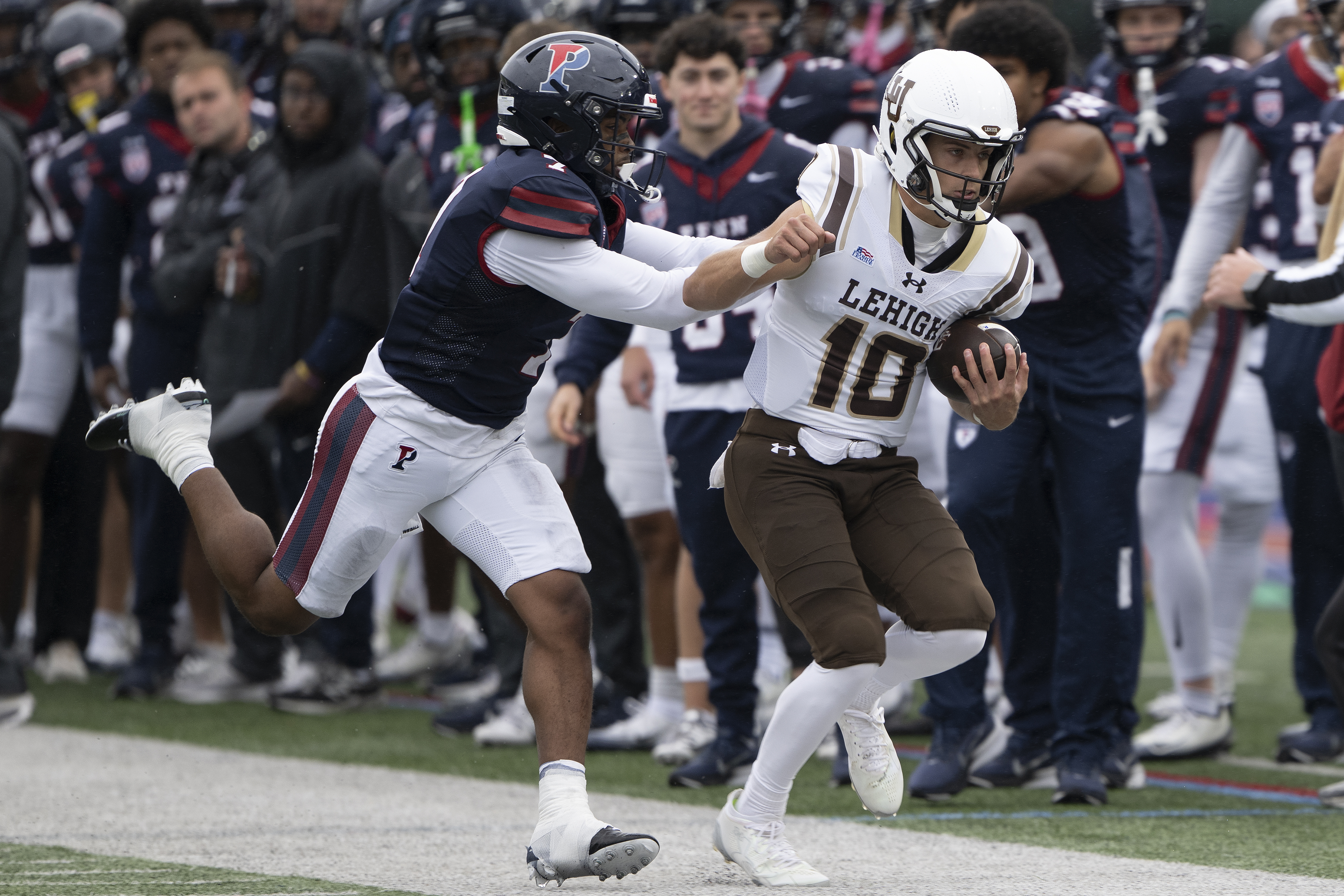
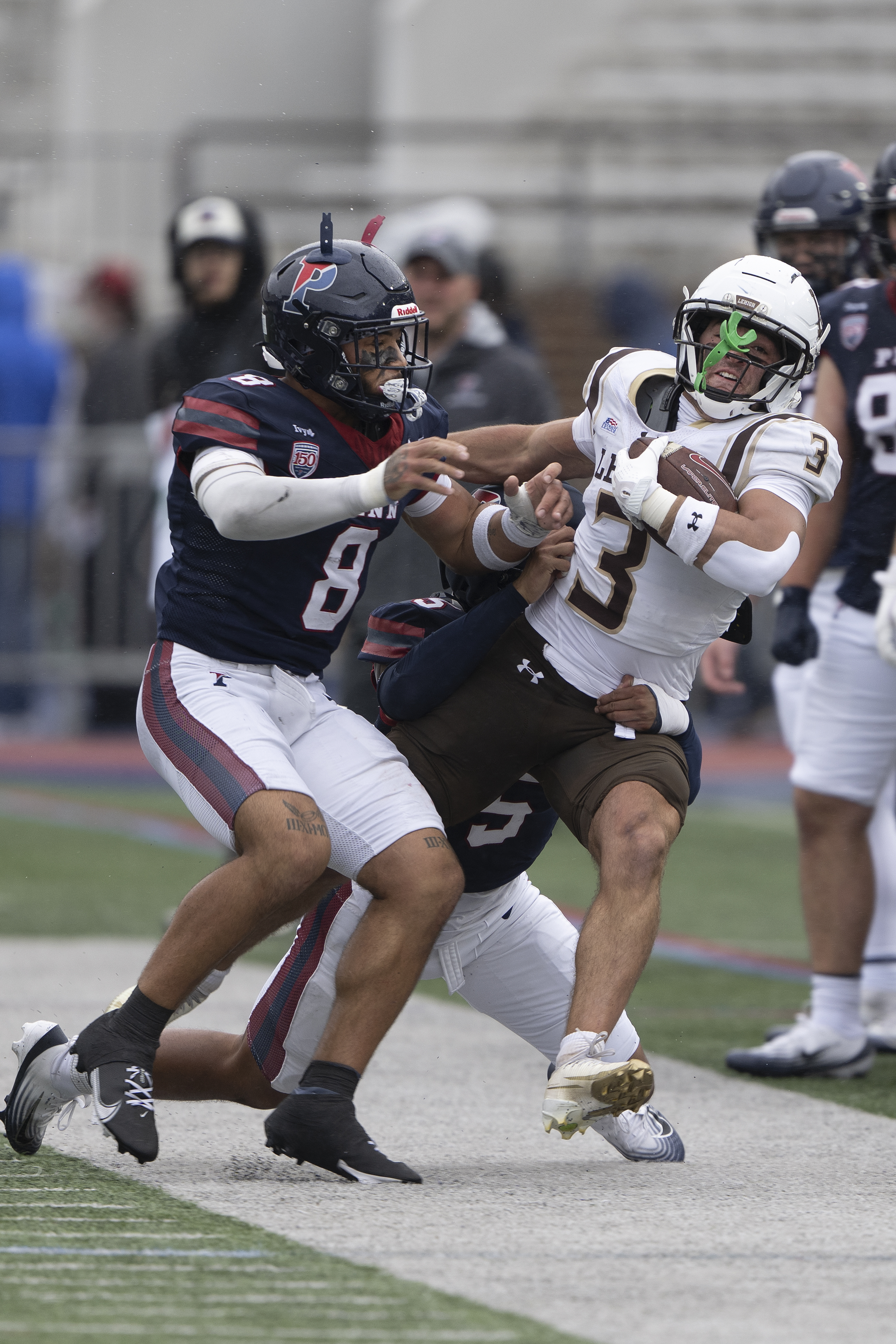
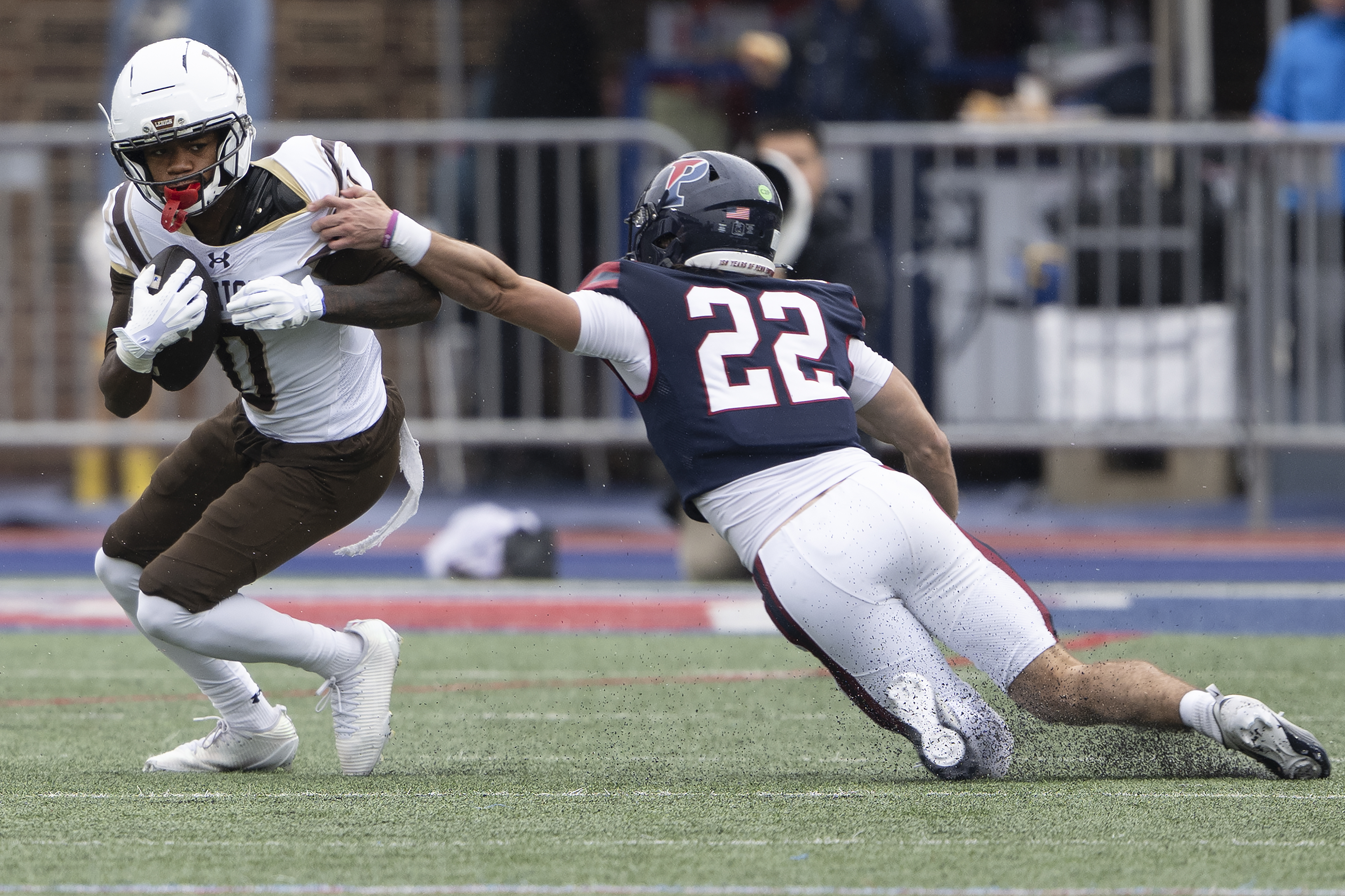
    Lehigh University’s Derek Morgan is pushed out of bounds by Penn’s Nick Palumbo during the second quarter.Jose F. Moreno / Staff Photographer

    But in the last five minutes, several long passes by Teodecki powered Penn’s drive in an attempt to put points on the board. Sophomore running back Tommy Lafayette, whose name garnered “boos” from the Lehigh crowd, scored Penn’s only touchdown on a 1-yard run with 2 minutes, 47 seconds to go.

    “We preached this entire week … ‘We have to win the run game. We have to win the run game. We have to win the run game,’” Lafayette said, “When you’re in a 2-minute situation like that … you have to get something going.”

    Defense shows moments of promise

    Before the matchup, Santos said “stopping the run has to be our No. 1 priority this week.” The defense took that to heart and kept Lehigh star running back Luke Yoder, who entered Saturday averaging 142.3 rushing yards per game, to just 74 yards.

    Though the Hawks (5-0) leaned on their ground game throughout the first half, the Quakers’ defense kept them contained. A minute before halftime, senior linebacker Joey Holliday tackled Yoder a loss of 2 yards. Holliday also had both of Penn’s sacks.

    When Morgan’s passes started connecting in the second half, the defense adjusted. In the Hawks’ first drive following halftime, senior defensive back Jayden Drayton broke up a pass to Lehigh wide receiver Nick Palumbo to force a punt. Zach Darche and Cole Olsztyn led the Quakers with 13 and 11 tackles, respectively.

    “The defense clearly was the most dominant unit on our team today,” Santos said, “I think there is a continuity between the offense and defense, and, again, offensively we have a ways to go.

    “We’ll take a hard look at what we’re doing schematically on offense, but I’m proud of the fight we had right now.”

    Though Penn ended the game with just 49 rushing yards, it held Lehigh, which entered the game averaging 291.8 yards, to 168 yards on the ground. Overall, the Hawks outgained the Quakers, 217-182.

    Up next

    Penn faces Dartmouth (0-2) in Hanover, N.H., next Saturday (1:30 p.m., ESPN+).

  • Temple ‘needed to make one more play’ vs. Army, but coach K.C. Keeler found silver linings in the loss

    Temple ‘needed to make one more play’ vs. Army, but coach K.C. Keeler found silver linings in the loss

    K.C. Keeler called Temple’s 21-17 loss to Army on Friday at Lincoln Financial Field a sign of growth. Six days after a collapse at Toledo that left him questioning his players’ preparation and the team’s culture, it was a striking judgment to make after another loss.

    “I thought we grew up a little bit today, even though we lost the game,” Keeler, the Owls’ coach, said. “Last week was brutal — not only because of the loss, but because we panicked. This week was totally different with the preparation and the energy they brought into the game. They were excited to play.”

    There is evidence for his view. Army entered averaging 394 rushing yards a game, and Temple held it to 279. After the Black Knights scored on their first possession, the Owls forced three consecutive punts. They answered Army’s long scoring drives with a 78-yard catch-and-run by Sam Brown and a 67-yard touchdown pass to Colin Chase. Those responses gave Keeler the evidence he wanted after Toledo.

    Eric Stuart saw a difference from the field. Asked whether Temple’s defense was more cohesive than it had been a week earlier, the redshirt senior linebacker answered, “Yeah, 100%.”

    The offense offered its own reasons for optimism.

    With quarterback Jaxon Smolik sidelined by a foot injury, Ajani Sheppard threw for 242 yards and two touchdowns, rushed for 48 more yards, and committed no turnovers. Brown gained 96 yards on 10 carries in addition to his 78-yard reception.

    Temple ran for 217 yards against an Army team accustomed to controlling games on the ground.

    For all of that, the Owls scored 17 points. Their two touchdown plays accounted for 145 of their 459 yards. The other six possessions yielded one field goal. Temple had enough explosiveness to quickly erase deficits, but it struggled to turn sustained movement into points.

    Three possessions got within Army’s 25 and ended empty. The first stopped on fourth-and-4 at the 23. On the other, holding and a false start against center Grayson Mains turned a second-and-10 at the Army 30 into second-and-25 at the 45.

    Sheppard helped recover much of the lost ground, only for Carl Hardin’s 42-yard attempt to strike the upright. Later, an 88-yard march from Temple’s 1 produced a 29-yard field goal. The Owls reached the red zone only once all afternoon as their final drive stalled at the Black Knights’ 24.

    “When we look at the film, we’re going to feel like we did a lot of good things, but they only give you so many opportunities,” Keeler said. “We needed to make one more play.”

    Army made that problem especially costly. The Black Knights held the ball for just over 38 minutes, giving Temple eight possessions. Keeler said he avoided an early field-goal attempt because of the shifting wind, which is why the Owls went for fourth down on their first drive. Hardin’s miss changed what Temple needed at the end, yet the Owls still gained 8.8 yards per play and scored on only three drives.

    Temple was more cohesive defensively, by Stuart’s account, and kept Army well below its rushing average. But the Black Knights still had 20 rushing first downs. Their three touchdown drives consumed more than 23 minutes, and Temple could not force a single pass on the go-ahead 12-play, 75-yard possession.

    “You need to create negative plays against them because they’re excited when they get 3 yards,” Keeler said. “That’s what they want.”

    Instead, Army converted third-and-2 and third-and-1 in the red zone on its winning drive. Keeler rejected the idea that his defense had been worn down, but Stuart described what changed at the line of scrimmage.

    “I think we just kind of had a little lull,” Stuart said. “They got off the ball and fired off better than we did on that last drive. I think they just got some push.”

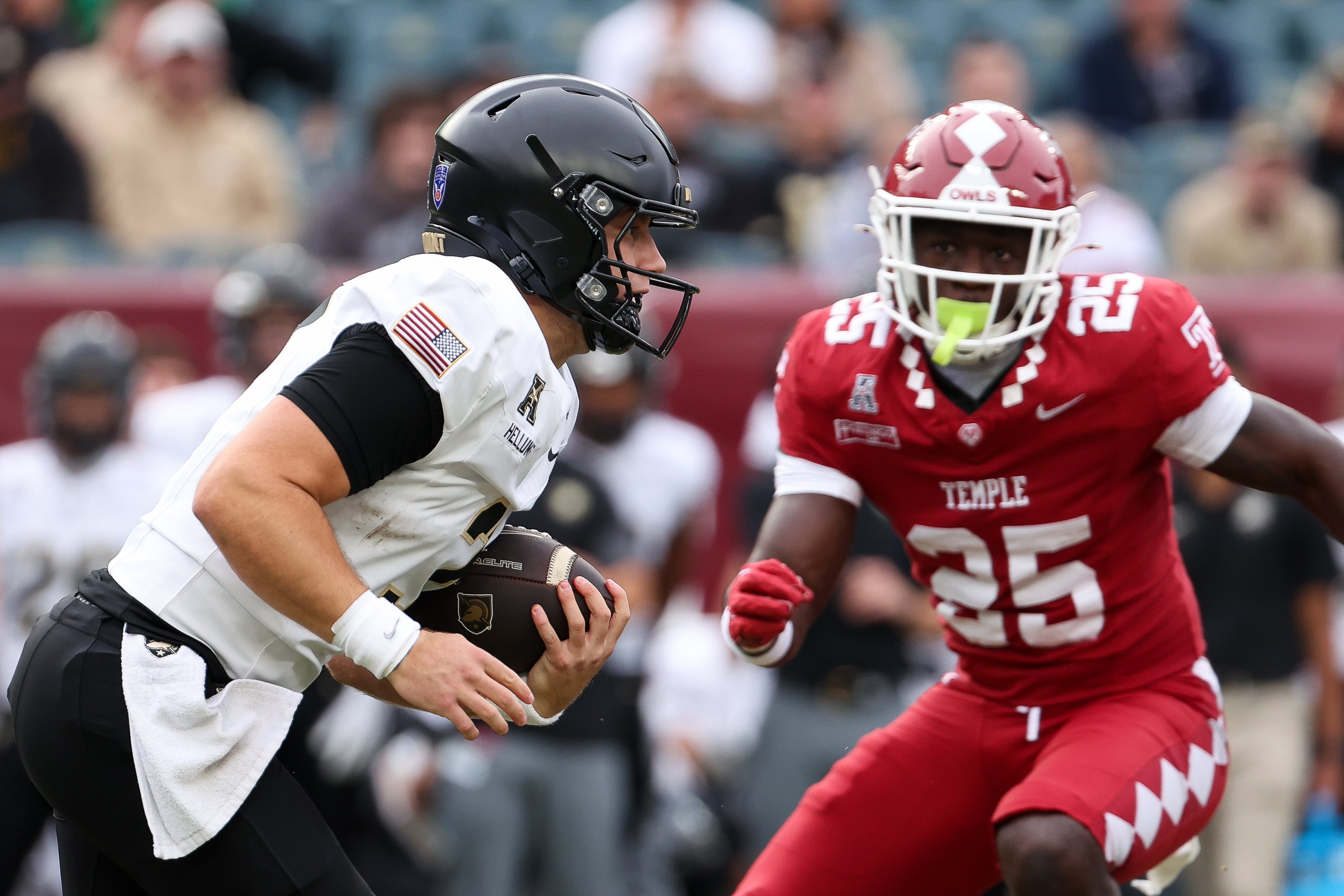
    Army quarterback Cale Hellums (left) runs the ball as Temple’s Orel Gray defends during the first quarter. Hellums led the Black Knights on a game-winning drive in the fourth quarter.Getty Images

    That distinction matters to the question Keeler raised after Toledo.

    A more cohesive defense can still lose a physical matchup. A composed offense can still waste the few possessions Army permits. Temple did not panic after falling behind or when Sheppard got the ball back with 1 minute, 41 seconds remaining. He moved the Owls to Army’s 24 before his fourth-down pass fell incomplete. The failure to finish was different from the collapse at Toledo, but it went into the standings the same way.

    There are reasons to think the Owls can improve. Sheppard made enough plays to keep them competitive without Smolik.

    Brown has supplied a jolt to the running game. And Keeler expects left tackle Giakoby Hill back in roughly three weeks. Yet the line remains unsettled: left guard Eric King has struggled to push off his injured foot, forcing more rotation than Keeler planned.

    “I told our guys going into the season that we’re a dramatically better football team than last year in terms of our talent, but there are still going to be a lot of 50-50 games,” Keeler said. “That’s this conference.”

    Temple has lost two of those games in six days. It heads to South Florida at 1-3 and 0-1 in the American and needs five wins in its final eight games to reach the six wins for bowl eligibility. Friday gave Keeler reasons to believe his team is better. The missed points and the final Army drive gave him areas to improve.

    Temple lost its second straight game on Friday.Isaiah Vazquez / For The Inquirer
  • Temple lets another fourth-quarter lead slip away in 21-17 loss to Army

    Temple lets another fourth-quarter lead slip away in 21-17 loss to Army

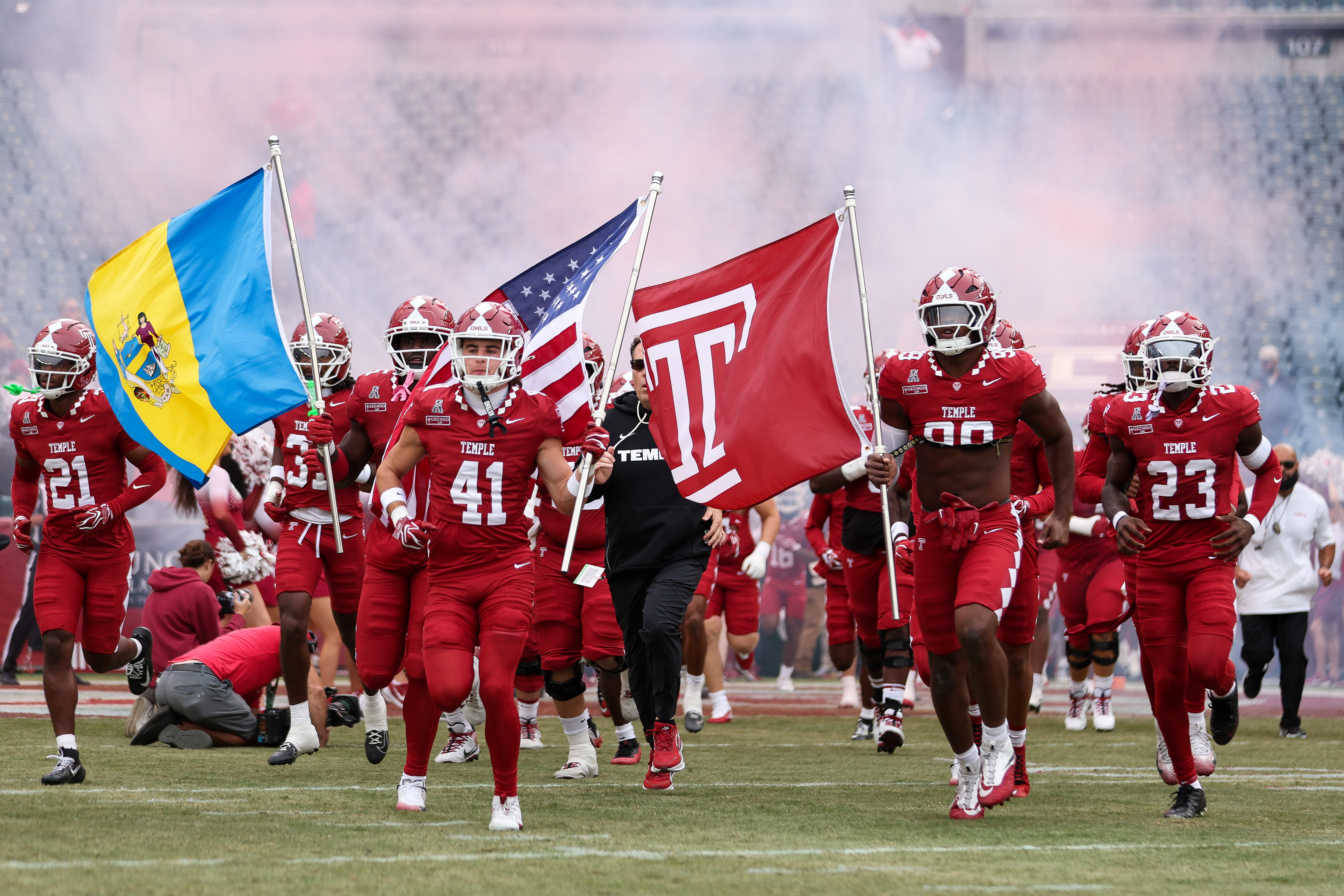
    Temple returned to Lincoln Financial Field on a short week following its collapse to Toledo last week. However, the Owls opened American Conference play with a 21-17 loss to Army on Friday.

    The Black Knights scored on quarterback Cale Hellums’ 3-yard touchdown run with 1 minute, 41 seconds left to give his team the four-point lead and cap a 12-play drive.

    The Owls tried to respond on their final drive, but a fourth-and-3 pass from quarterback Ajani Sheppard to Jayce Freeman fell incomplete at Army’s 23-yard line with 29 seconds remaining.

    “They made one more play than we did,” Temple coach K.C. Keeler said. “I just thought the kids battled all day long, and even when [Army] scored there at the end, our guys battered a drive. We just had to make one more play, and we didn’t make that play.”

    First-quarter frenzy

    After receiving the opening kickoff, Temple (1-3, 0-1) secured two first downs on its first three plays. Running back Keveun Mason and wide receiver Colin Chase combined for 36 yards in that stretch before running back Sam Brown added a first down of his own.

    The Owls’ drive stalled out after Army (2-1, 1-0) made a fourth-down stop on a Brown run.

    The Black Knights took over on offense and used their option attack for moderate gains on the ground to move into Temple territory. Hellums and Samari Howard consistently exposed holes in Temple’s defensive line.

    After Army entered the red zone, Hellums capped the 12-play drive with a 15-yard touchdown run to give the Black Knights a 7-0 lead.

    Sam Brown (5) got Temple on the scoreboard with a 78-yard receiving touchdown.Isaiah Vazquez / For The Inquirer

    The Owls quickly tied the score. Sheppard connected on a play-action pass with Brown, who fled from the pack and scored a 78-yard touchdown to put Temple on the board.

    “I think they had like two guys over top of Peter [Clarke], which left me open, and Ajani gave me a shot,” Brown said. “At that point, it was just beating the safety.”

    On its next possession in the second quarter, Temple ended its series with a missed a 42-yard field goal from Carl Hardin with 8:20 left in the half. Over the next five drives between the two teams, neither team scored again before the halftime break.

    Big gains

    After halftime, Army found itself with a fourth-and-1 on its own 27-yard line, but a Hellums 2-yard rush extended the drive. That quick rush proved consequential for Temple.

    Army used runs of 8 and 11 from Howard and Jake Rendina, respectively, to reach Temple’s 38-yard line. Its final three plays of the drive combined for 40 yards and a touchdown. Hellums capped off the series with a quarterback keeper, faking a handoff to burst to his right and score from 12 yards out to give Army a 14-7 lead.

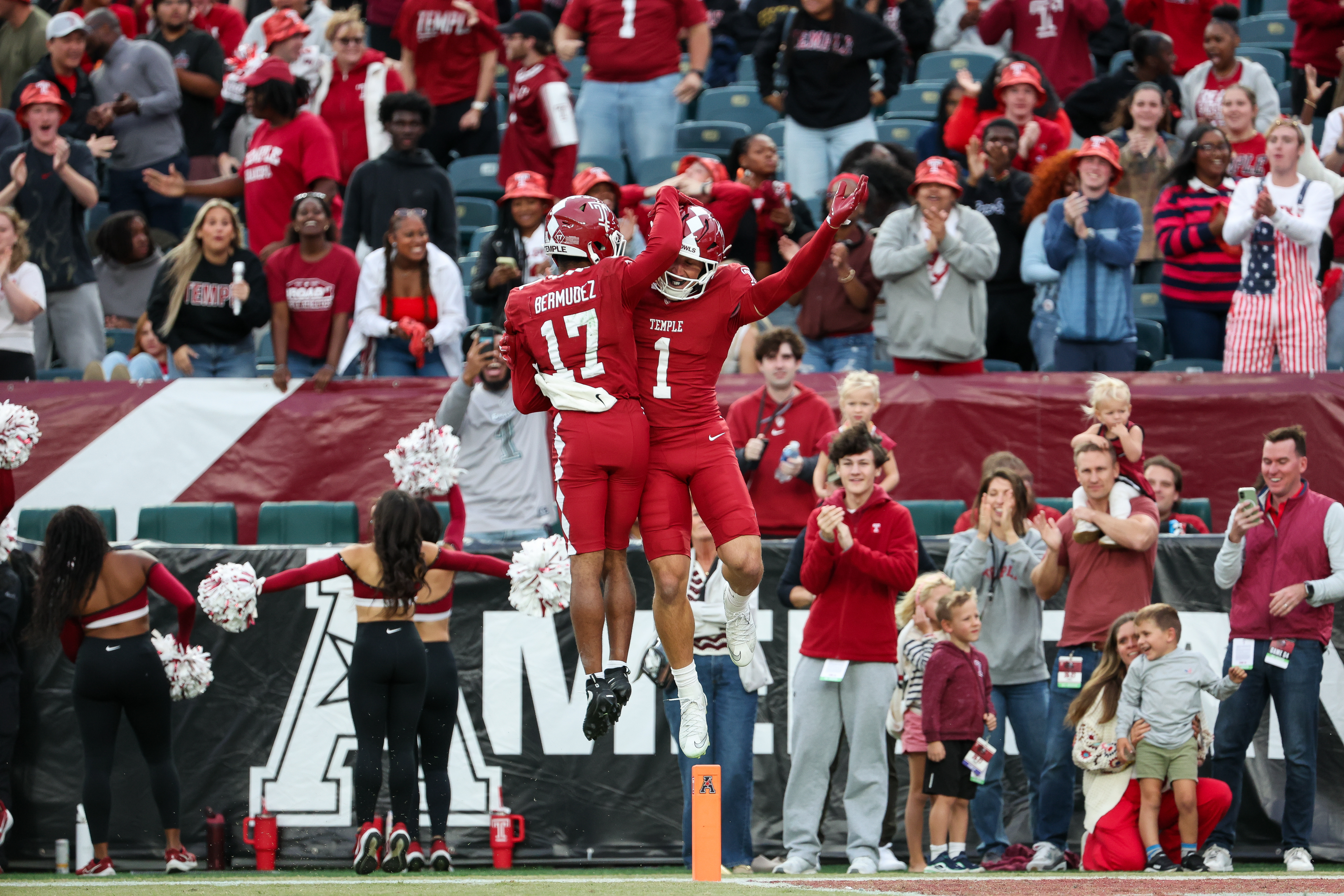
    In similar fashion to the first quarter, the Owls quickly responded. Sheppard found Chase deep on the fourth play of the drive for a 67-yard touchdown to tie the game at 14 with 3:43 left in the third quarter.

    “The corner was low so I knew Ajani was going to give me a shot,” Chase said. “So I kept my angle skinny, and fully over the defense and got the perfect ball.”

    Colin Chase (1) scored a 67-yard receiving touchdown in the third quarter.Isaiah Vazquez / For The Inquirer

    After stalling Army’s next drive, Temple used a 47-yard Brown run and a 22-yard Ryder Kusch reception to reach field goal territory before the drive stalled. Hardin buried the kick to give Temple a 17-14 lead with 7:38 left in the game, which preceded Army’s late score.

    Brown finished as the team’s leading rusher (10 carries, 96 yards) and receiver (78 yards), while Sheppard finished 11-of-20 for 212 yards and two touchdown passes. Hellums led Army with 104 yards on 22 carries.

    Temple outgained Army on offense, 459-315.

    Up next

    Temple will hit the road to face South Florida next Saturday (7:30 p.m., ESPNU).