Category: Retail

  • Manayunk is embarking on another new era after decades of evolution

    Manayunk is embarking on another new era after decades of evolution

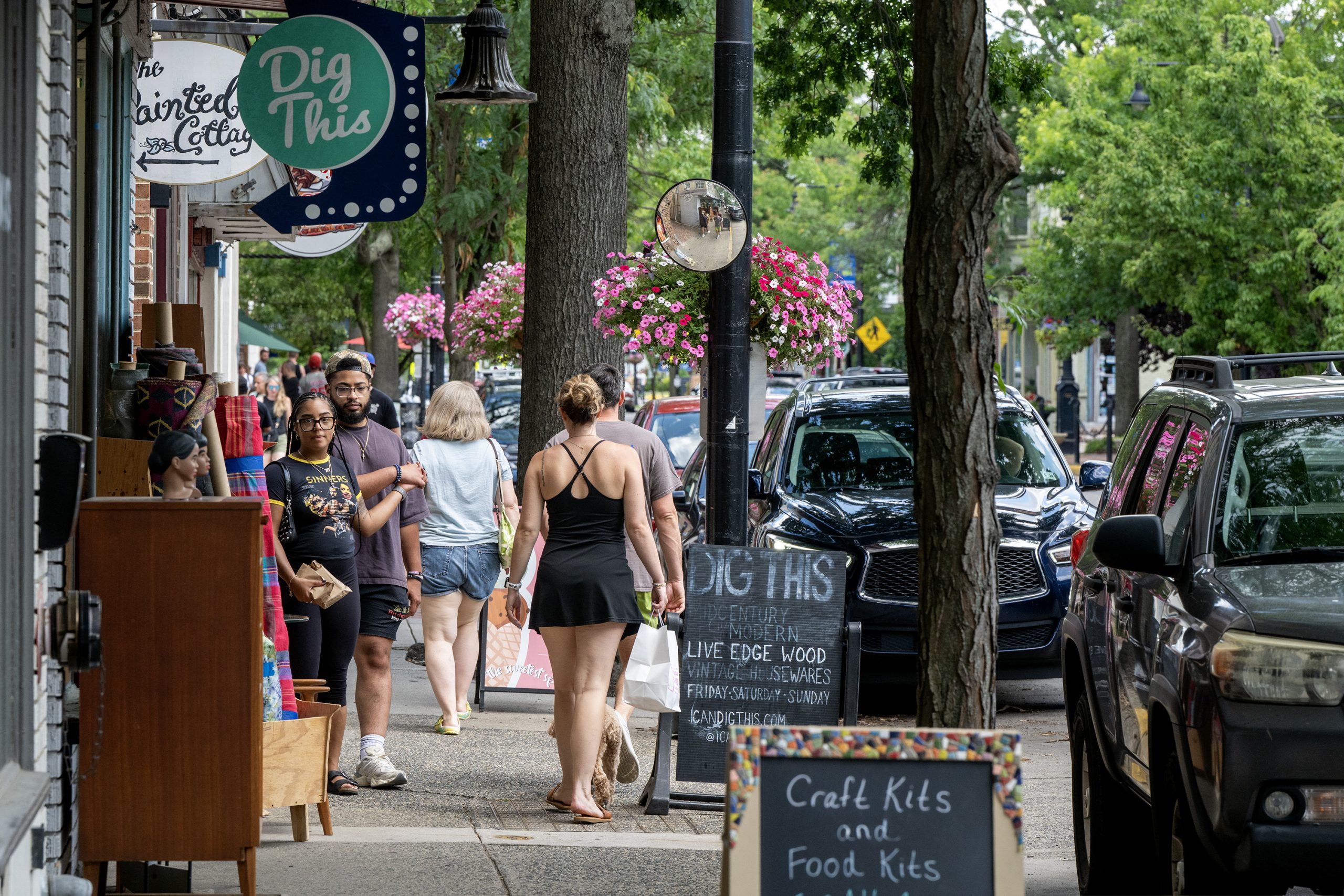
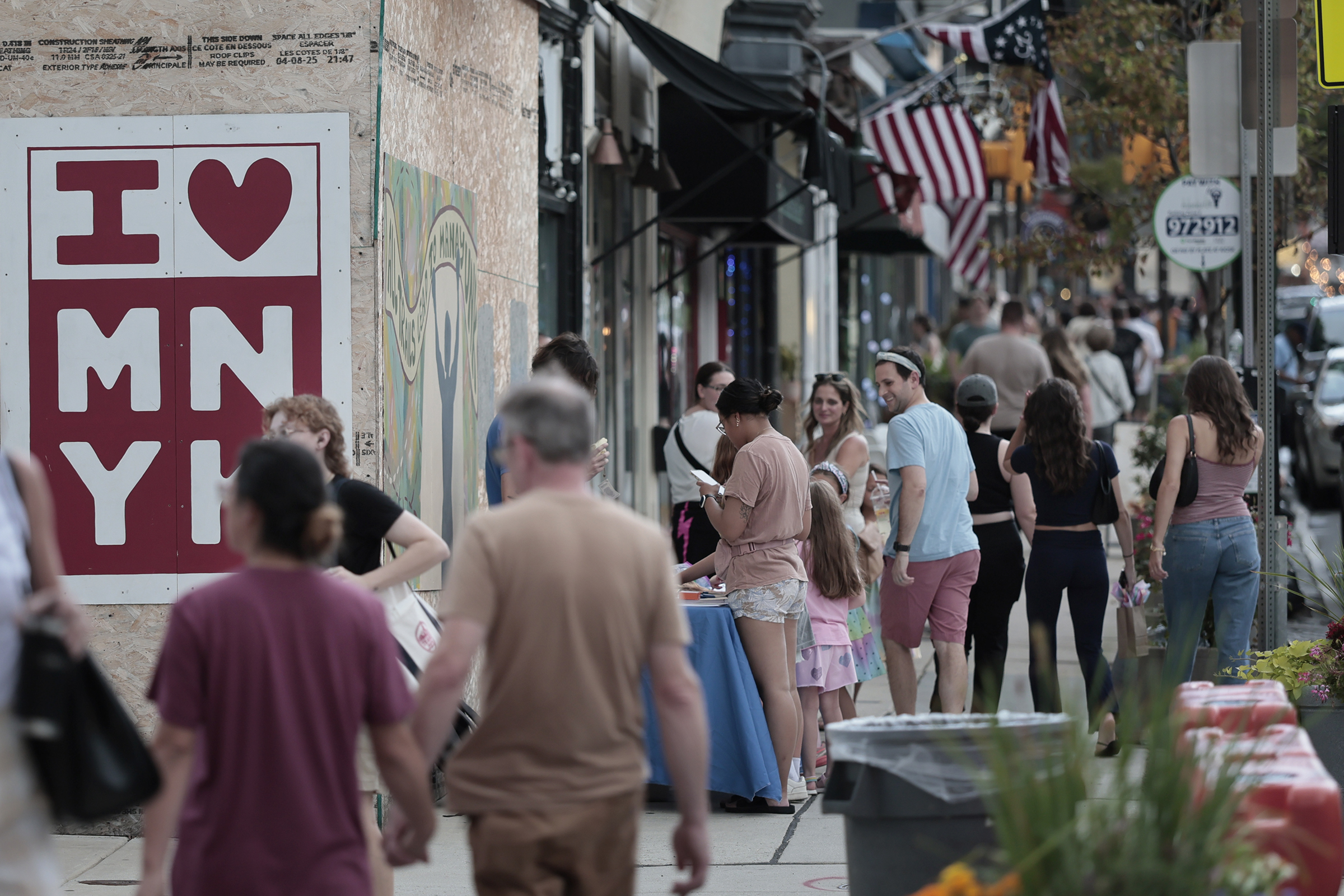
    On the last Thursday of July, during Manayunk’s summertime Stroll After Hours event, throngs of young families pushing strollers and couples walking dogs roamed the business corridor.

    Some stopped at art vendors with frames sprawled across the sidewalk, while others meandered down Grape Street to grab a bite from a food truck or claim a seat at the outdoor screening of Toy Story.

    On such an evening, Main Street Manayunk’s evolution is on full display.

    The riverside neighborhood in Northwest Philadelphia has seen many eras, from textile mills in the 19th century to chain retailers in the 1990s, to today’s collection of local upstarts.

    “It’s the best it’s ever been,” said Jen Wankoff, 51, of Roxborough, who turned out to Stroll After Hours with her friend, Jen Filip, 50.

    “It used to be a lot more commercial. There was a Banana Republic, a Pottery Barn, but then once one left, they all left,” said Filip, who has lived in Roxborough since the early 2000s. “Now it’s all small businesses.”

    More changes are coming to Manayunk. Even as apartment development has slowed in much of Philadelphia, over 1,800 new residential units are proposed along or adjacent to Main Street. All that additional population stokes neighborhood anxiety about traffic and parking, but retailers expect it will be good for business.
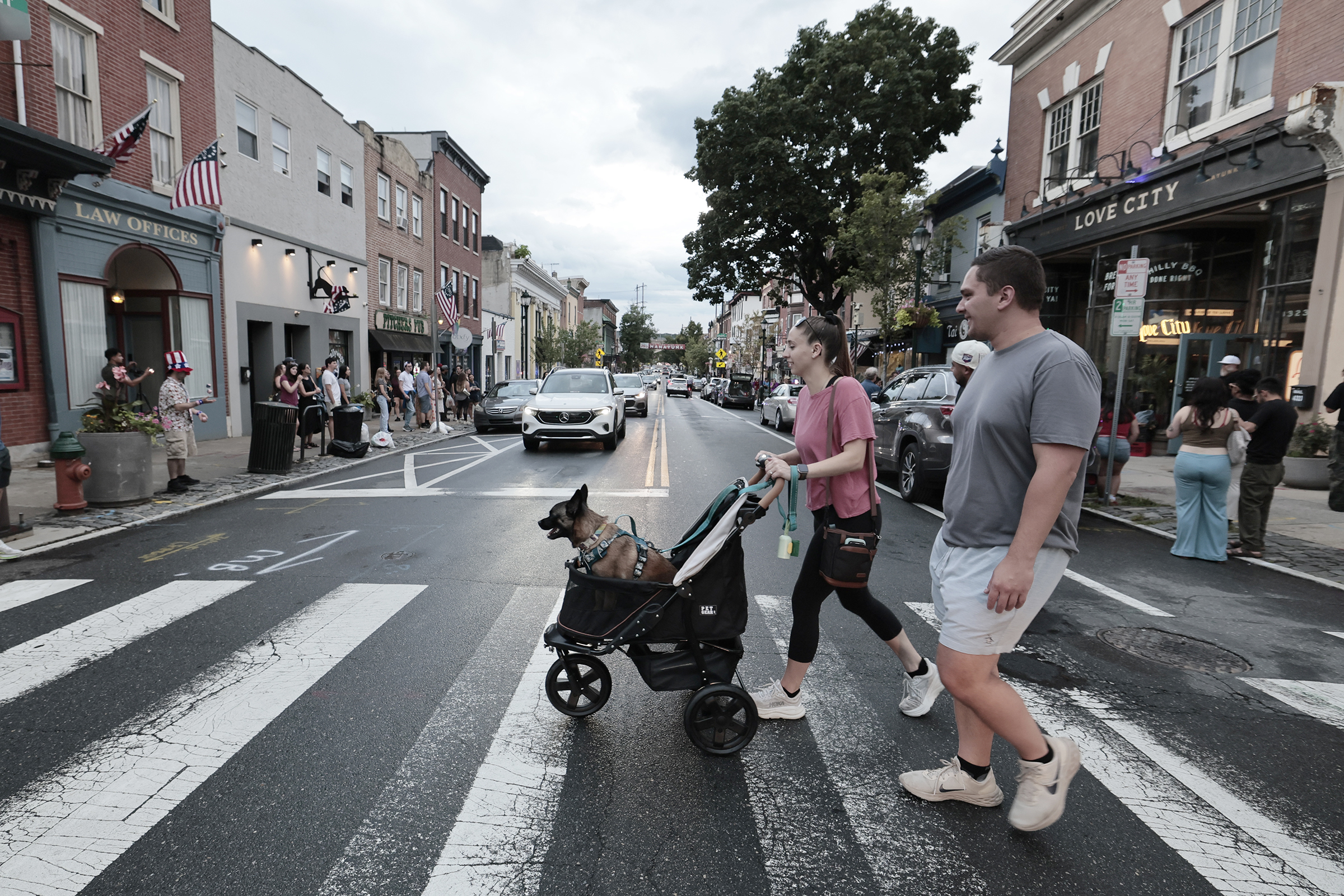
    Kim Albanowski of Philadelphia pushes her dog, Koda, across Main Street in “his chariot” as Jason Pepin looks on.Elizabeth Robertson / Staff Photographer

    “There’s probably going to be 1,600 new people living in those units, and they’re all going to come to Main Street to shop and eat,” said Dan Neducsin, 83, who has long been the largest property owner on Main Street and helped shape the identity of the corridor.

    “The restaurant scene has been strong [since the 1990s], and now I think it’s even going to get stronger,” said Neducsin, who has sold 12 of his properties in recent years to long-term tenants and small-business owners like Tim Spinner, owner of Taqueria Amor.

    “I just want to see the people who I have in there now do well, and my tenants have welcomed the opportunity,” said Neducsin, who emphasized that his company is not closing or selling all its holdings. But “it does make sense now for some new people to come in and take advantage of what’s here.”

    Manayunk’s Main Street appeal

    In the past two years, 12 new businesses opened along Main Street.

    One of them is Riptide Tavern, opened in June by Spinner, who also owns Taqueria Amor next door.

    Spinner said he wanted to open a neighborhood bar with creative cocktails and a cheap beer menu — much like a dream restaurant he conceived for a culinary school project years ago.

    “I wanted to be in the Caribbean or down the Shore, but along the Schuylkill River with the canal back there is close enough,” Spinner said.
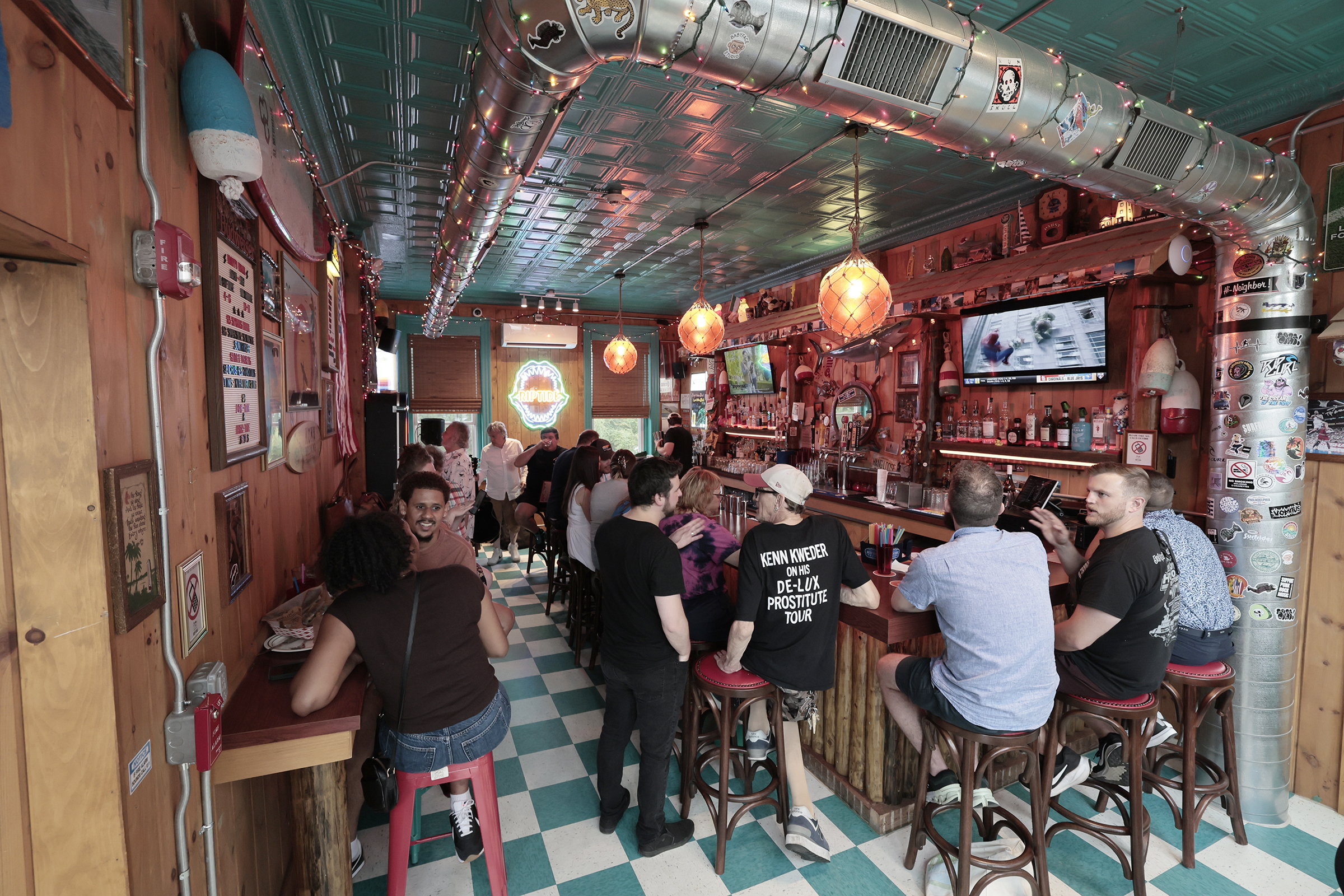
    The Riptide Tavern in Manayunk is packed on a Thursday during Stroll After Hours.Elizabeth Robertson / Staff Photographer

    Eleanor’s Consignment is set to open on Main Street in October. Owner Emily Mannix, a former paralegal who has lived in Manayunk for two years, named the consignment store after her late mother, who died in 2023. They shared a love of secondhand-shopping.

    “This has been something that has been on my mind for the past four years,” Mannix said. “Life is short, and I might as well jump in and try.”

    It’s not a bad place to do that. Realtor Christine Ertz notes that while rent is not low, it’s more affordable than in areas like South Street and Queen Village.

    “Manayunk has the demographic businesses want,” said Ertz. “It has the younger folks, but also the more mature folks that have expendable income, and we’ve got the 27-to-35-year-olds that really enjoy the niche, smaller stores.”

    The apartment boom in Manayunk promises to add even more. Many of the new developments have smaller units, which are likely to attract single people or younger couples. The price points of the new rentals, while lower than Center City or Northern Liberties, also suggest that tenants will have disposable income.

    Those changes haven’t been without controversy. The Manayunk Neighborhood Council has pushed back against development it deems as out of scale with the community, and that’s often lacking new commercial space, affordable housing, and parking while being weighted to small apartments.

    John Hunter, an architect and zoning chair of the Manayunk Neighborhood Council, says few of the new buildings have commercial space to add to the neighborhood’s daytime vitality. He disagrees with the idea that the apartment boom will boost local businesses.

    “We have heard that misrepresentation for years now — that new apartments will generate pedestrian traffic along Main Street,” Hunter said. “Fifteen years of those promises has proved that is not the case.”

    But some neighborhood observers see the development interest along Main Street as a concrete example of the area’s ability to attract people and investors.

    “We’re seeing a diverse group of experienced, well-regarded developers all making independent decisions to put their capital and time into Manayunk,” said Veronica Blum, a retail broker with MPN Realty who has been working with Neduscin on leasing and sales.

    “When that many smart people come to the same conclusion about a neighborhood, it says a lot,” said Blum. “It’s a real vote of confidence in Manayunk’s future, and I think we’re just beginning to see what’s possible.”
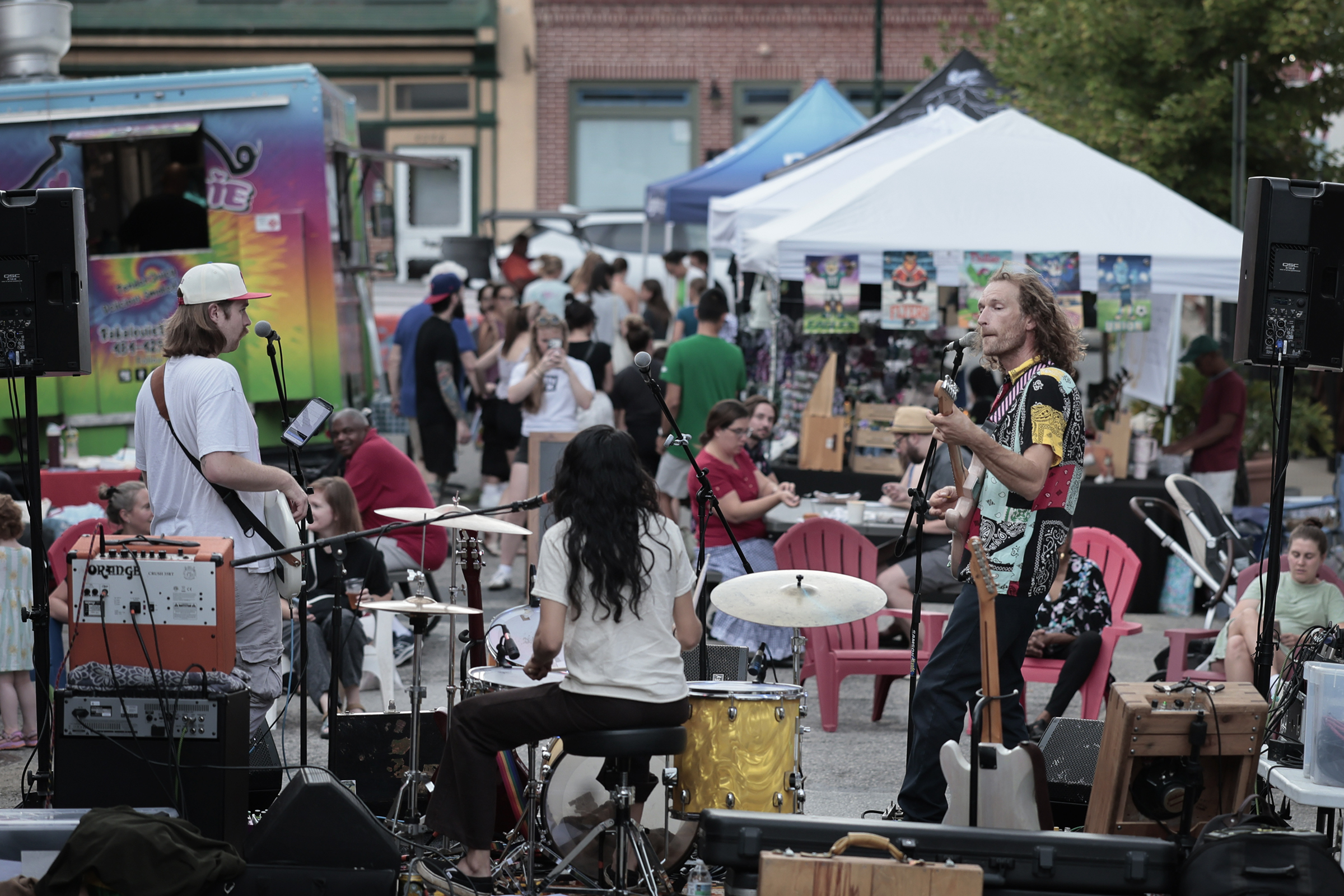
    Nervous Nikki and the Chill Pills perform during the Stroll After Hours event on July 30.Elizabeth Robertson / Staff Photographer

    The cost of staying open

    Still, the commercial corridor has seen turnover and closures.

    Pizza Jawn closed and Kismet Bagels came in its place — Pizza Jawn’s owner bought the former Manayunk Tavern down the street, which became Bar Jawn. Smiley’s closed and Blu Zone Cafe moved in; and Iron Works Fitness opened up in the former Kismet Cowork.

    A large restaurant space sat empty for months after Winnie’s closed last November. But, two Roxborough natives recently leased the space for a new “punk French” restaurant, planned to open in late fall.

    Joan Boroff Denenberg, who does marketing and retail strategy for the Manayunk Development Corp. (MDC), said a few storefronts remain empty because the property owners aren’t local and are backed up with other projects throughout the country.

    Neduscin says he isn’t struck by an unusual number of vacancies along Main Street. But maybe that’s because when he began buying properties there in the late 1980s, much of the commercial strip was vacant to the southeast of Cotton Street.

    “Anytime I saw a property that was available in Manayunk I ended up buying it because I thought if I owned enough properties, I could kind of set the direction of the street,” Neduscin said. “I got to handpick who my potential tenants would be. I tried to bring tenants that I thought would bring additional people here.”
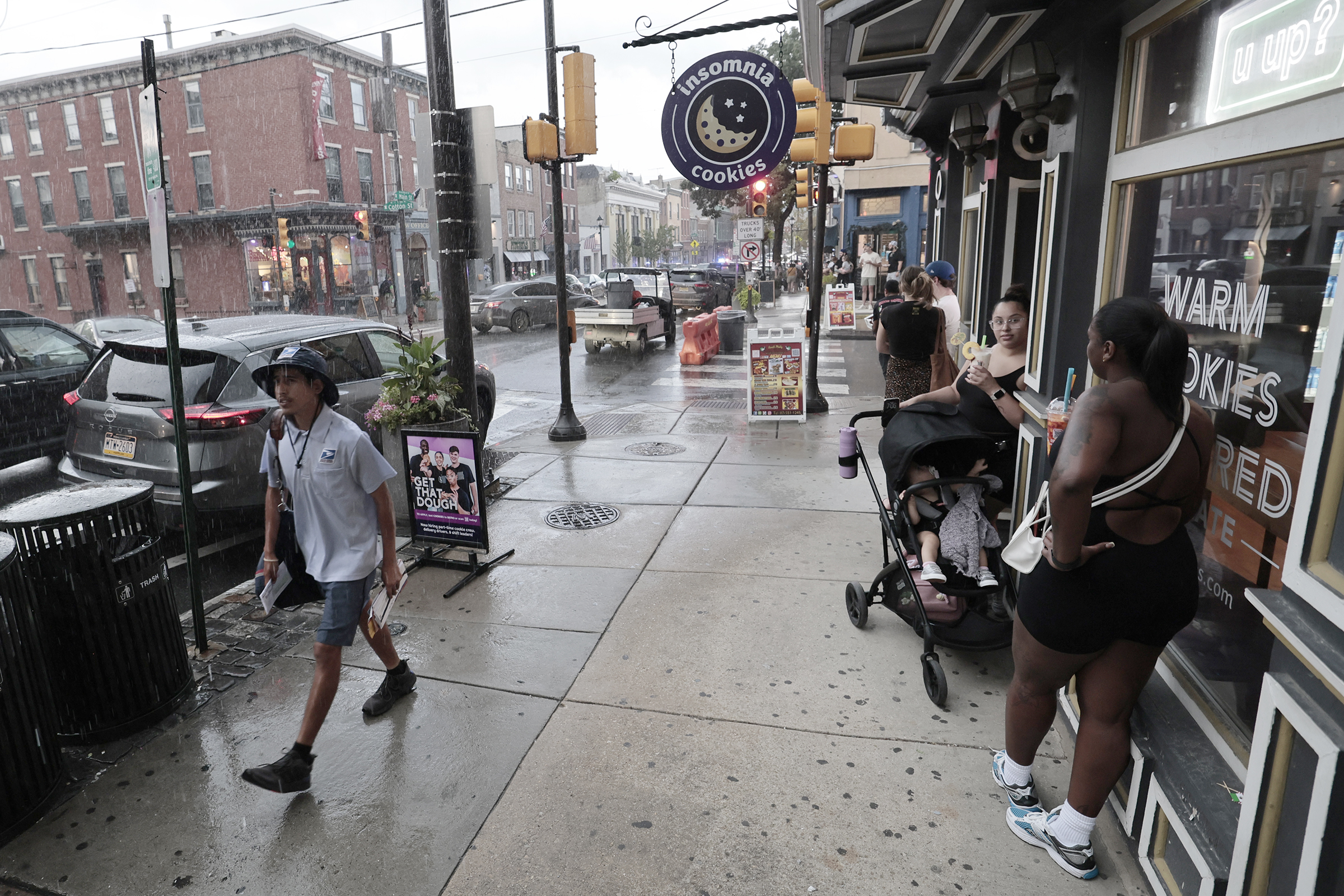
    Insomnia Cookies is one of the few remaining chains with a presence on Main Street in Manayunk.Elizabeth Robertson / Staff Photographer

    The bustle of Main Street now extends all the way down to Shurs Lane, roughly double its occupied length when he started.

    Neduscin also says he really tried to find independent entrepreneurs to lease to — “I didn’t want a McDonald’s on Main Street” — and those restaurateurs and small-business owners gave Main Street a unique identity.

    More than 30 years later, that’s why he wanted to sell some properties to one-time tenants like Spinner.

    Still, business owners say myriad challenges remain. The permitting process is notoriously slow, especially if a trip to the Zoning Board of Adjustment is necessitated. That can leave business owners paying rent without being able to open their doors as they wait for permission.

    “When it takes longer, you have to have deeper pockets, and I think that does scare some prospective businesses,” Neduscin said.

    Further, owners on Main Street face the macro challenges affecting small businesses throughout the region. Brandy Deieso, who opened the gift boutique the Little Apple in 2010, said the cost of goods has increased due to tariffs, shipping costs, and rising gas prices.

    “Being a street full of locally owned small businesses is great,” said Melissa Walter, co-owner of Love City Brewing, which just opened a second location in Manayunk. “But as we all know, running a small business is really hard.”

    Building a business community

    The bubblegum pink Cupid’s Bookshop storefront has built a following and even attracted customers from Baltimore and New York since opening last year. Now, it’s upgrading to a bigger location on Main Street.

    “The growth we’ve had, it’s been amazing,” said owner Tina Long.

    Cupid’s capitalized on the insatiable demand for bodice rippers and love stories, and Long says the bookshop benefited immensely from the MDC’s incubator program. Cupid’s was the first participant.

    The program allowed Long to lease a storefront at 106 Grape St., owned by the business association, for a below-market monthly rent of $1,000 for up to three years, and the MDC provided guidance and support. With her new storefront opening in August and a five-year lease, she’s graduating from the incubator space early.
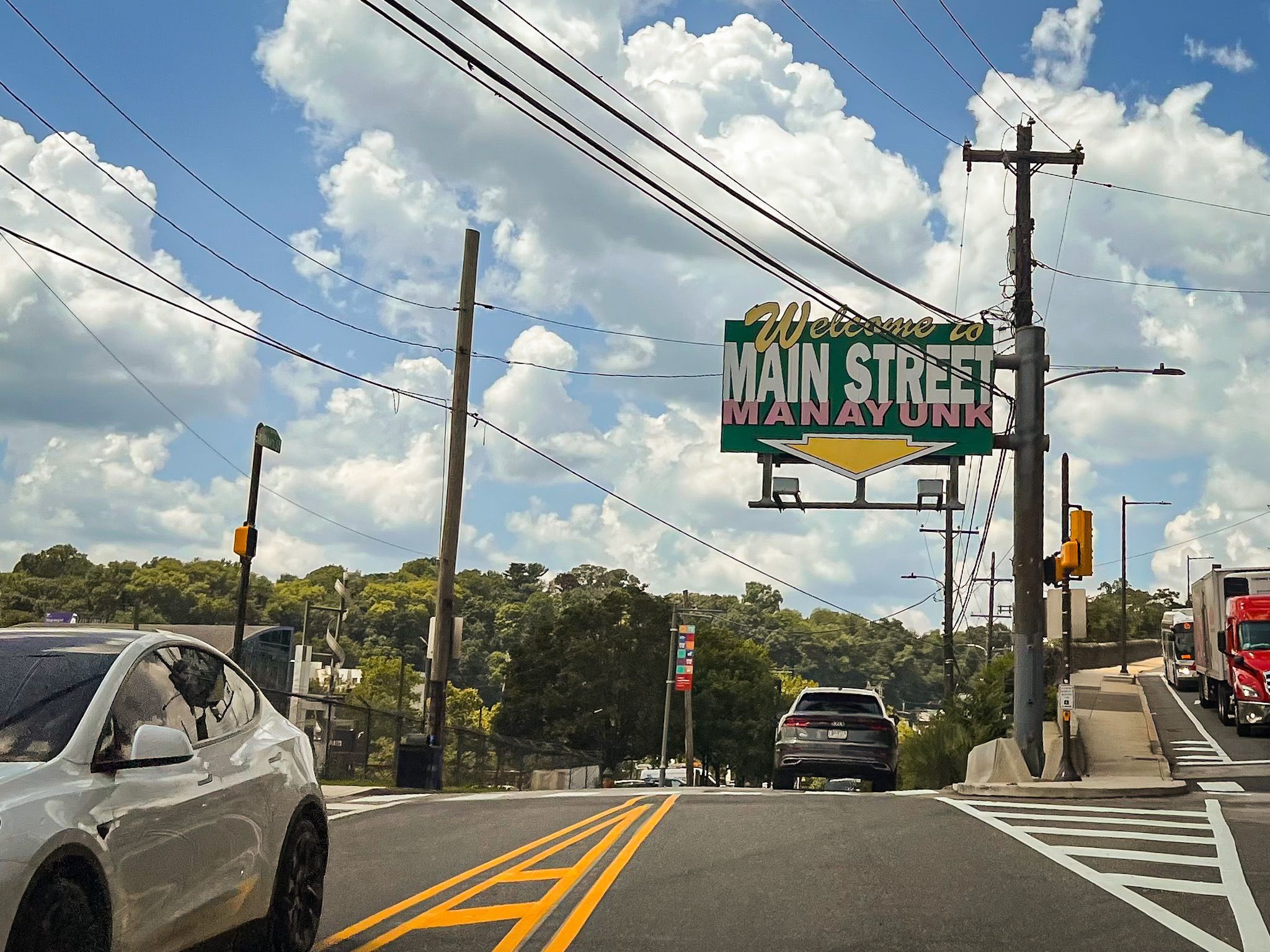
    The “Welcome to Main Street” sign hangs over Main Street at Ridge Avenue in Manayunk.Michael Klein / Staff

    “We loved the idea, but it turned out beyond our wildest dreams,” MDC executive director Gwen Mccauley said. “She’s now becoming part of the fabric of our district.”

    Baby Face Studio also ended up on Main Street in part because of the MDC.

    Artist and owner Kim Canefield in 2022 applied for the MDC’s emerging artist tent at the Manayunk Arts Festival, where she could set up shop for $100 instead of operating a $500 tent on Main Street. The festival draws over 300 artists and 150,000 visitors each June, McCauley said.

    She set up a full-time vendor tent at the next three Arts Festivals. Each time, she was stationed in front of an art gallery, not knowing that the same space would eventually become Baby Face Studio.

    “I just kept looking at it, and peeking through the window,” Canefield said. “The whole time I was staring at the future of what the studio was going to be.”

    Love City Brewing already has a foothold in Callowhill, but saw Manayunk as a place to grow. Its second spot opened in the former Fat Lady Brewing. When searching for a new location, co-owner Walter was attracted to Main Street’s critical mass of small, independent businesses.

    “Seeing them succeed, we thought: ‘Oh, we’re a small, local Philly business too,’” Walter said. “We can make it work there.”
  • These nonprofits called the shuttered Exton mall home. Now, some are struggling to relocate.

    These nonprofits called the shuttered Exton mall home. Now, some are struggling to relocate.

    Cristina Hartley watched her teenage son go from refusing to say more than two lines on stage to taking on the lead role in two performances, thanks to the confidence he built through theater production nonprofit Arts and Athletics Club.

    Now, Hartley, who serves on the organization’s board, is worried about what the future holds for the all-ages theater group. The nonprofit, formally founded in 2019 after starting as a high school senior project, was based for roughly four years in the Exton Square Mall, and lost its space when the mall closed its doors in June. The group has struggled to find a new home and will be forced to take a hiatus until a new location is secured.

    “The arts are always the first program to be cut out of schools, and there’s always a lack of budget to have that in schools or to expand these programs in schools, and we want everybody to have access to anything art-related, whether that’s drawing or trying to sing or trying to perform,” said Hartley, who has been involved with the nonprofit for six years.

    “We know that there’s a space out there. There’s a landlord out there willing to work with a small nonprofit. We just haven’t found it yet,” she said.

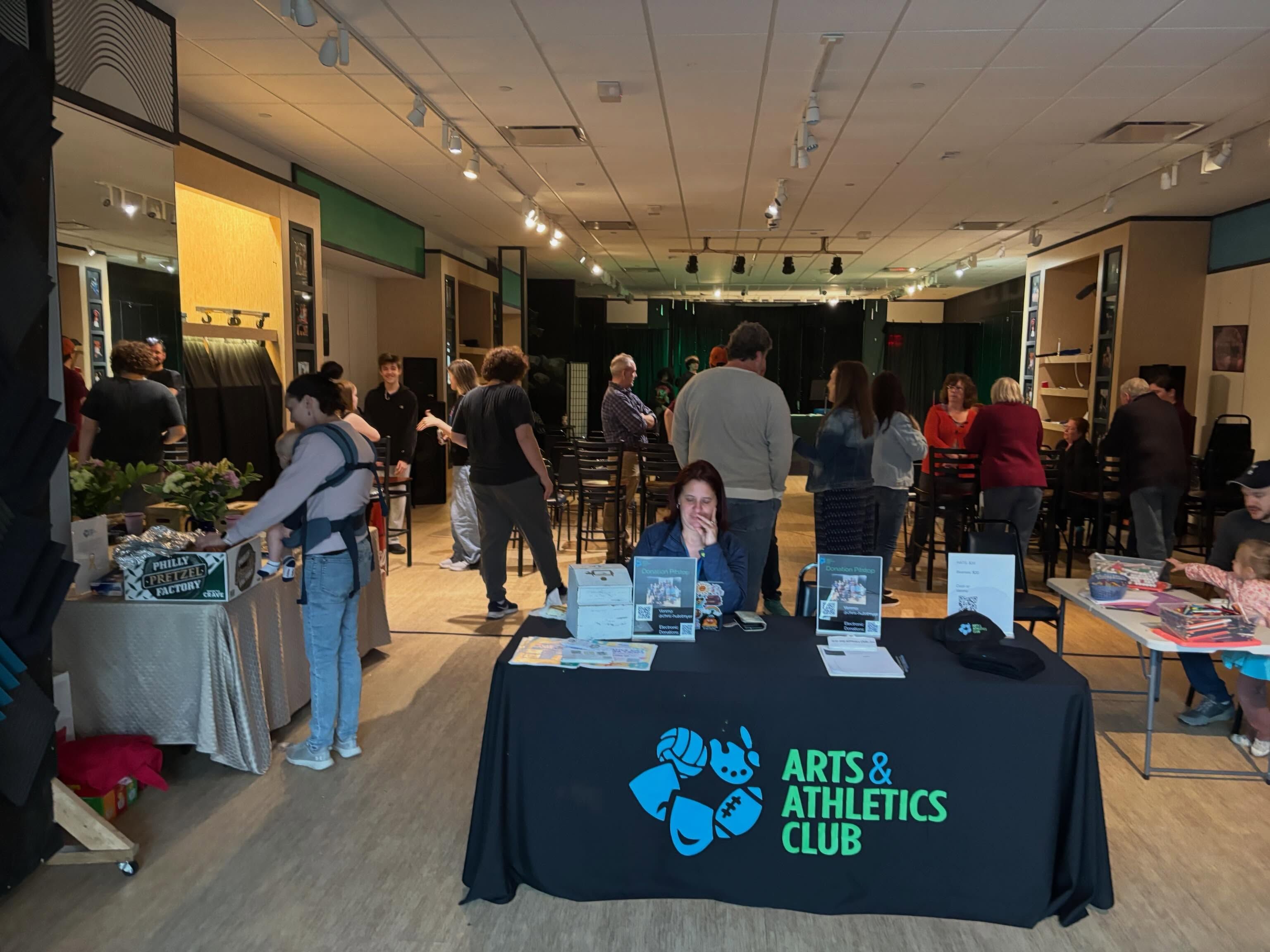
    The Arts and Athletics Club’s interior at the Exton mall. Finding a space for it to hold its productions and activities has been a challenge, leaders say.Photo courtesy of Arts and Athletics Club

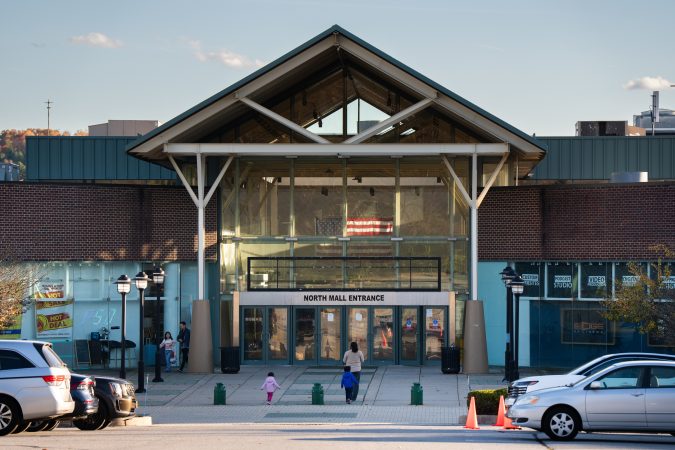
    The roughly 1 million-square-foot Exton Square Mall closed June 30 amid a legal dispute between the property’s owners and local officials over plans for redevelopment. That squabble is still in court.

    For years, the mall declined from traditional retail, with only a handful of stores left when it shuttered after five decades. It was Chester County’s only enclosed mall.

    But even as the mall’s staples dwindled, other organizations — nonprofits, a robotics club, a fencing center, and more — occupied the space, drawing what business leaders said was significant foot traffic.

    In June, those still left at the mall received notice that they would have to be out by the end of the month. For nonprofits like the Arts and Athletics Club without robust budgets to quickly relocate, the abrupt end put them in a bind.

    The Arts and Athletics Club was in the midst of two productions when its leaders learned they would have to vacate, said Chris Hutelmyer, executive director. They took June to move their things out, depositing belongings in people’s garages, and started the real estate hunt in July.

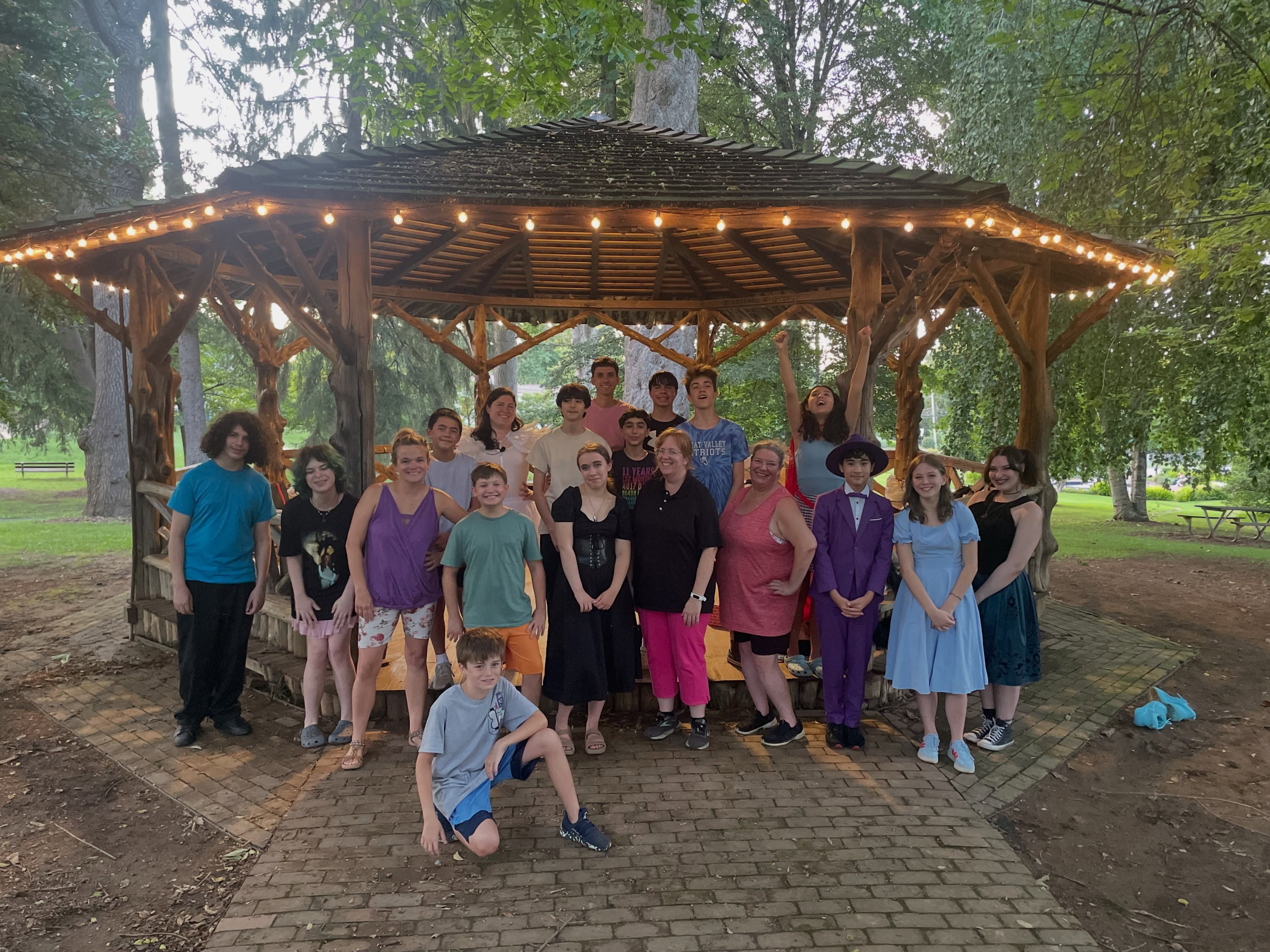
    The two performances, Oh Happy Day and Twisted Tales, went on, albeit under changed circumstances, with one held in a park. After holding a summer bash Saturday, the organization will be on hiatus until it finds a space, Hutelmyer said.

    The mall had been perfect for the group. An old Aéropostale served as its mini black box theater for four years. The former clothing store had no windows, which worked well for staging 10 productions each year, and it was accessible with ample parking. There were bathrooms, dressing rooms, and storage space. And it was a central location for its all-ages community, accessible from Malvern to Downingtown to Coatesville.

    The cast of “Twisted Tales” poses for a photo. Arts and Athletics Club, primarily a theater production nonprofit, has struggled to find a new facility since the Exton mall’s closure in June. Its last production was held in a park, and it hasn’t been able to run a show since.Photo courtesy of Arts and Athletics Club

    Trying to find a comparable space for the Arts and Athletics Club within East and West Whiteland Townships has proved difficult. But its leaders said they want to stay in the area, continuing to provide programming for participants from ages 7 to 70. The mall was the organization’s first permanent location, after performing in parks, libraries, and other community spaces.

    The theater group, which offers its programming for free or little cost, has a limited budget for renting or altering a space to fit its needs. Another challenge has been finding an available location that is the right size: about 1,800 to 3,000 square feet of open space.

    Group leaders have looked at retail locations, warehouses, and churches, and investigated partnering with community centers.

    “We’ve been striking out pretty much everywhere that we’ve been looking,” Hutelmyer said. “It’s just been hard to find a direct match for what we need.”

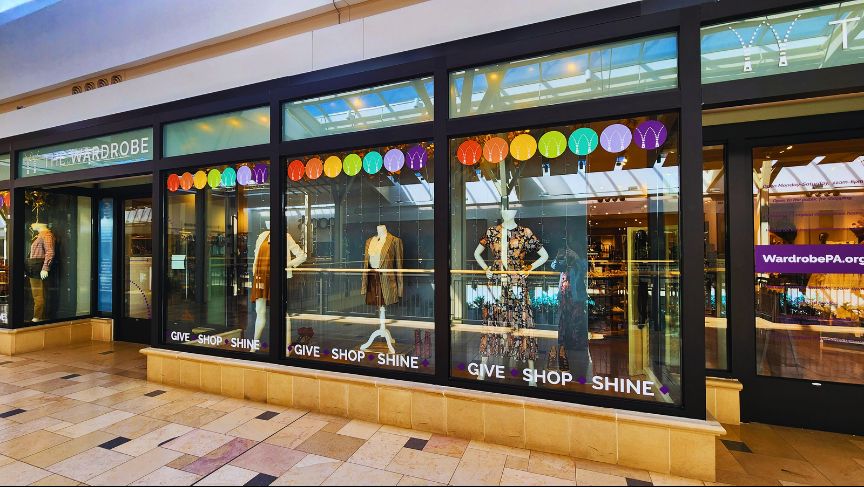
    It was a similar scramble for the Wardrobe, a nonprofit thrift store that accepts and sells secondhand clothing and also provides free clothes to those in need, after having to abruptly move out of the Exton mall.

    Racing to find a new space to avoid laying off any employees, executive director Sherri Cole enlisted a real estate agent, she said, but struggled to find something affordable that also hit the right marks.

    “Everything had to go out of the mall; it’s not like we could be like, ‘OK, we’ll go dark and we’ll move things when we find a new location,’” Cole said.

    The old exterior of the Wardrobe, a clothing store that accepts donations and gives clothes to those in need for free, in Exton mall. The business will open its new location in Malvern in the fall.Photo Courtesy of The Wardrobe

    By early July, the Wardrobe secured a pop-up location in the Plymouth Meeting Mall.

    And this month, the nonprofit found a new, permanent home in the Lincoln Court Shopping Center in Malvern, about a 10-minute drive from the old Exton location. Cole anticipates the store will open by October.

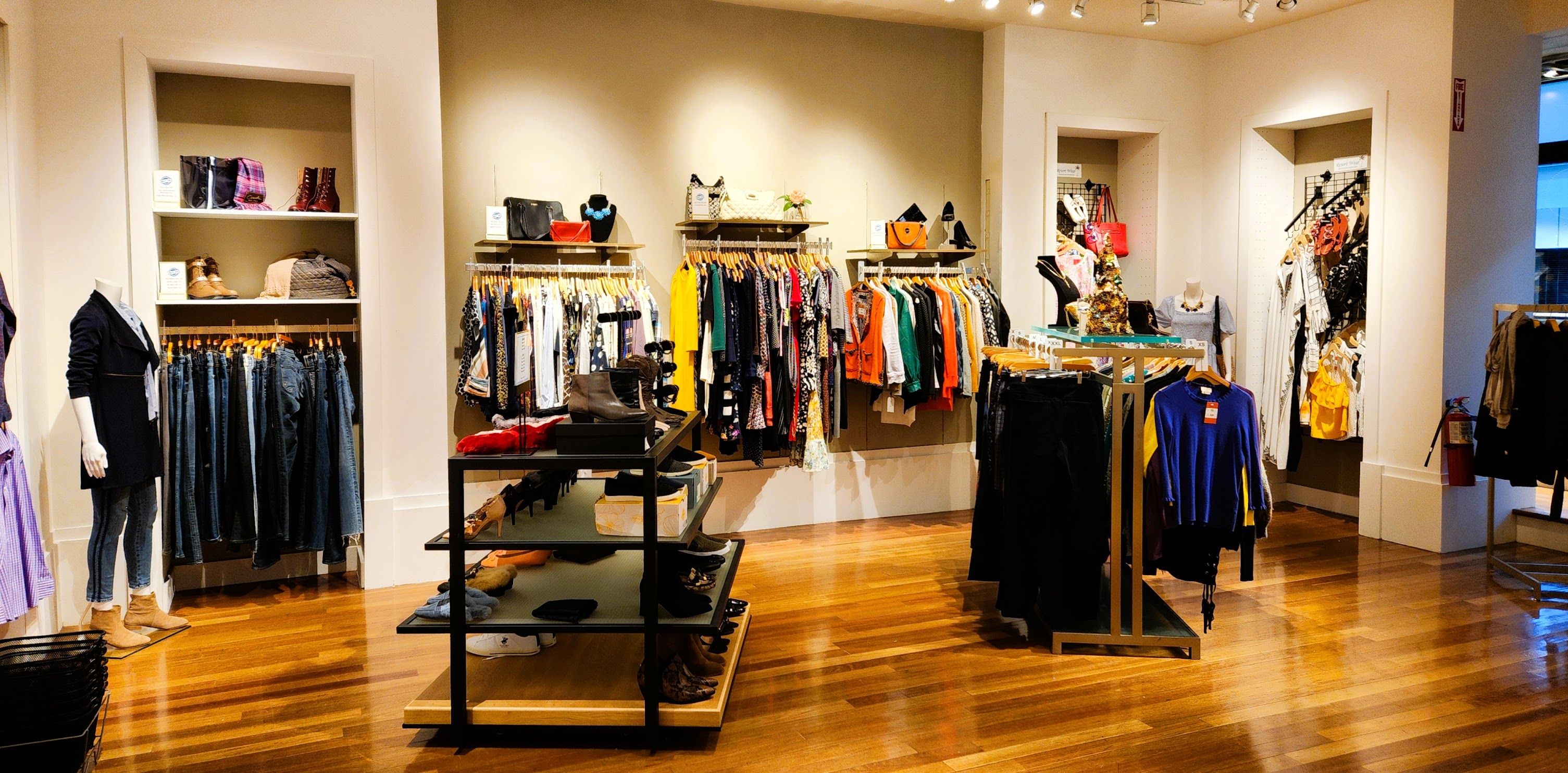
    The interior of The Wardrobe’s former Exton mall location. The nonprofit, which has called the mall home for the last few years, struggled to find a new location in Chester County after the mall shuttered in June.Photo Courtesy of The Wardrobe

    Still, for both the Wardrobe and the Arts and Activities Club, it was hard to lose the Exton mall.

    Out of the Wardrobe’s five locations in the Philadelphia region, the Exton mall location was its second-largest site for foot traffic and retail sales last year, Cole said.

    It proved that people would still show up to a “dead” or “dying” mall if there was something they needed, Cole said. And it was meeting a need.

    “There need to be spaces in the suburbs where everyone feels welcome, and often, the class divide in the suburbs is really stark,” she said. “It’s great that we’re able to find something that is still within the Exton, Malvern neighborhood where we can be providing these services, because even within the suburbs, poverty is really often overlooked.”

    For Hutelmyer, still searching for somewhere for the Arts and Athletics Club to land, it was sad to see a community space like the mall go.

    Housing a constellation of community organizations, the mall “wasn’t what people really expected it to be,” Hutelmyer said.

    “But as it transformed into the community space, at least while we were there, it was still serving a lot of good, and I think that not being there is a big loss for the community,” he said.

    This suburban content is produced with support from the Leslie Miller and Richard Worley Foundation and The Lenfest Institute for Journalism. Editorial content is created independently of the project donors. Gifts to support The Inquirer’s high-impact journalism can be made at inquirer.com/donate. A list of Lenfest Institute donors can be found at lenfestinstitute.org/supporters.

  • Pumpkin spice and Halloween candy are arriving earlier, as seasonal creep is ‘accelerating’

    Pumpkin spice and Halloween candy are arriving earlier, as seasonal creep is ‘accelerating’

    A certain seasonal disorientation is understandable these days, and we’re not talking about whatever is going on with the planet’s climate.

    The Philly-born La Colombe coffee chain began offering its pumpkin spice drinks this week, and while that may seem early for evoking the spirit of Halloween, even among its rivals — Starbucks doesn’t turn to pumpkin until Aug. 25 — La Colombe is miles behind the candy industry, which has been at it for months.

    In early May, as part of its “Halfway to Halloween” promotion, Mars Inc. was offering a “Creepy Crunch” variant of Skittles, Twix “skulls,” and pumpkin-shaped Snickers.

    Over the weekend, as many as 3,000 people showed up for the seasonal grand opening of the Spirit Halloween store in Egg Harbor Township — 37 days before Labor Day, and in an era when summery weather appears to be lingering longer. (Philly’s average temperatures were above normal the last five Septembers.)

    Complaints about the so-called seasonal creep phenomenon are decades old, but what was once a creeping tide has mutated into a tsunami “in the last several years,” in the view of Mark Lang, associate professor of marketing at the University of Tampa and a longtime supermarket executive.

    “It snuck up on us,“ said Lang, an alumnus of both Temple and St. Joseph’s Universities.

    “The guardrails are gone,” he added, saying the creep movement was “racing forward.”

    “I see the movement as accelerating,” agreed Richard George, a St. Joe’s food-marketing emeritus professor.

    However, it is not as though consumers are resisting, he said. For example, Christmas shopping in October is becoming ever more popular. “Consumers want to capture these deals, take advantage of greater product choices, spread out their spending, and avoid some of the stress related to holiday shopping,“ he said.

    But one premature season at a time.

    What is driving seasonal creep?

    Money, for one, Lang said. And competition.

    Sales in the confectionary industry reached a record $55 billion last year, according to Carly Schildhaus, spokesperson for the National Confectioners Association, with Halloween an important bite of that.

    Businesses have to mine everything they can from the peak seasons — which very much include the sales of candy and assorted spooky paraphernalia for Halloween and holiday gifts for Christmas — said Lang, who for 11 years was the No. 2 marketing person at the Publix supermarket chain. And it doesn’t hurt to make those seasons longer.

    “If they don’t beat last year’s seasonal sales, their whole year is off,” he said

    Halloween is becoming the “longest retail season,” according to Mars executive Tim LeBel, who is quoted on the company website as saying, “Culture, not the calendar, is defining the seasons and our strategy.” According to Mars, it would begin in the spring.

    By Mars’ count, 30% of all 20-somethings have participated in “Summerween” events, which have been gaining media attention in recent years. As the word suggests, those are Halloween-themed parties during the sweaty season. (The phrase comes from an animated TV series episode that aired over a decade ago.)

    “Summerween has gained momentum,” said Schildhaus, who also invoked the cultural factor mentioned by LeBel.

    For the retailers, the seasonal creep momentum is more about the economic connection, Lang said.

    Stores are not only competing against one another but also battling “category killers,” like those temporary Halloween stores that put pressure on other shops to offer similar merchandise, he said.

    “Everybody is grabbing at the bag at the same time,” Lang said. “Retailers have to get their piece or the other guy is going to get it. It’s a lack of imagination. I think retailers and vendors are just out of ideas.”

    People gathering for the new Spirit Halloween flagship store in Egg Harbor Township, N.J., on Saturday, Aug. 1, 2026.Tyger Williams / Staff Photographer

    Will the seasons continue to creep?

    The consumer response argues that it will, and George believes the seasons will continue to stretch, and not just Halloween.

    He notes that the big drivers of the movement are the giant retailers, such as Amazon and Walmart, and that Black Friday is no longer merely a Thanksgiving weekend event.

    Online shopping has further blurred seasonal lines, George said, since it “combines technology with information and convenience, making shopping occur whenever consumers are in the mood.”

    But Lang said he was not so sure the elongations would continue to stretch into perpetuity.

    “I hear people saying, ‘Give me a break,’” he said. “When you see Halloween candy in July, it’s like, enough of it.”

    Jumping the seasons induces a certain “holiday fatigue,” he added.

    He said he fears that what was once an occasion “feels like it’s a selling event.”

    For the record, only 139 shopping days until Christmas.

    Staff writer Sarah Nicell contributed to this article.

  • QVC hosts vote to unionize

    QVC hosts vote to unionize

    Most QVC hosts have voted in favor of unionizing, according to SAG-AFTRA, as the West Chester-based shopping network prepares to emerge from bankruptcy.

    About 80% of the hosts voted in favor of joining SAG-AFTRA, according to a news release from the union, which represents 160,000 media professionals nationwide.

    The group includes 53 on-air hosts who sell clothes, home goods, and other products from QVC Group’s West Chester studios. The programs are broadcast on QVC, HSN, and various digital platforms, a segment of the business the company refers to Omni Channel.

    “The strong show of support for unionizing reflects QVC, HSN, and Omni Channel hosts’ professionalism and resolve to improve their workplace and build a better future for themselves and their colleagues,” SAG-AFTRA national executive director and chief negotiator Duncan Crabtree-Ireland said in a statement.

    A QVC Group spokesperson reiterated that the hosts are “deeply valued team members.”

    “While we have long believed that a direct relationship with team members is the best approach, we respect the outcome of the election and our hosts’ right to make this choice,” spokesperson Matthew Goldstein said Friday in a statement, adding that management “will work with SAG-AFTRA on the next steps.”

    The vote comes a month after a supermajority of QVC’s TV and digital hosts presented a petition to company management, asking for voluntary recognition of the union.

    In the petition, the hosts expressed concerns about QVC using artificial intelligence to imitate their image, voice, and likeness without consent or compensation, as well as about pay equity and transparency.

    “As QVC Inc. adapts, we hope to foster a culture in which workers feel valued, trusted, and appreciated, where ideas are recognized and concerns respected,” the hosts wrote in the petition. “This is especially true given the current landscape of artificial intelligence, discussions surrounding the regulation of image and likeness, and concerns of job security.”

    Despite developing a loyal following of fans over 40 years, QVC has struggled recently to expand its customer base and compete with online retailers. After years of declining revenue, QVC Group filed for Chapter 11 protection in April.

    A federal judge last week approved the company’s reorganization plan, which would slash its debt from about $6.6 billion to $1.3 billion. QVC executives have said they hope to emerge from bankruptcy sometime this summer.

  • Bankrupt weed company lays off 86 people at Vineland grow sites

    Bankrupt weed company lays off 86 people at Vineland grow sites

    Two cannabis grow sites in South Jersey will close their doors in October, laying off 86 staff members as multistate operator the Cannabist Company files for Chapter 15 bankruptcy.

    The cultivation facilities — located at 17 W. Park Ave. and 1560 N. West Blvd. in Vineland — will close on Oct. 11, laying off nearly all of the Cannabist’s cultivation and manufacturing employees in New Jersey according to a Worker Adjustment and Retraining Notification, or WARN, filing with the state.

    In its bankruptcy filings, the company stated that due to “regulatory, industry, and financial challenges,” it was facing a severe liquidity crisis and “unable to meet its financial obligations as they become due.” The Cannabist Company did not respond to a request for comment.

    Frank Burkhauser of Woodbury handed his phone to Cannabist employee Jennifer DeWalt so he could have a photo to remember this day that he made a legal marijuana purchase at Cannabist in Deptford on April 21, 2022. Burkhauser said he has been working for the legalization of marijuana since the early ’90s.ELIZABETH ROBERTSON / Staff Photographer

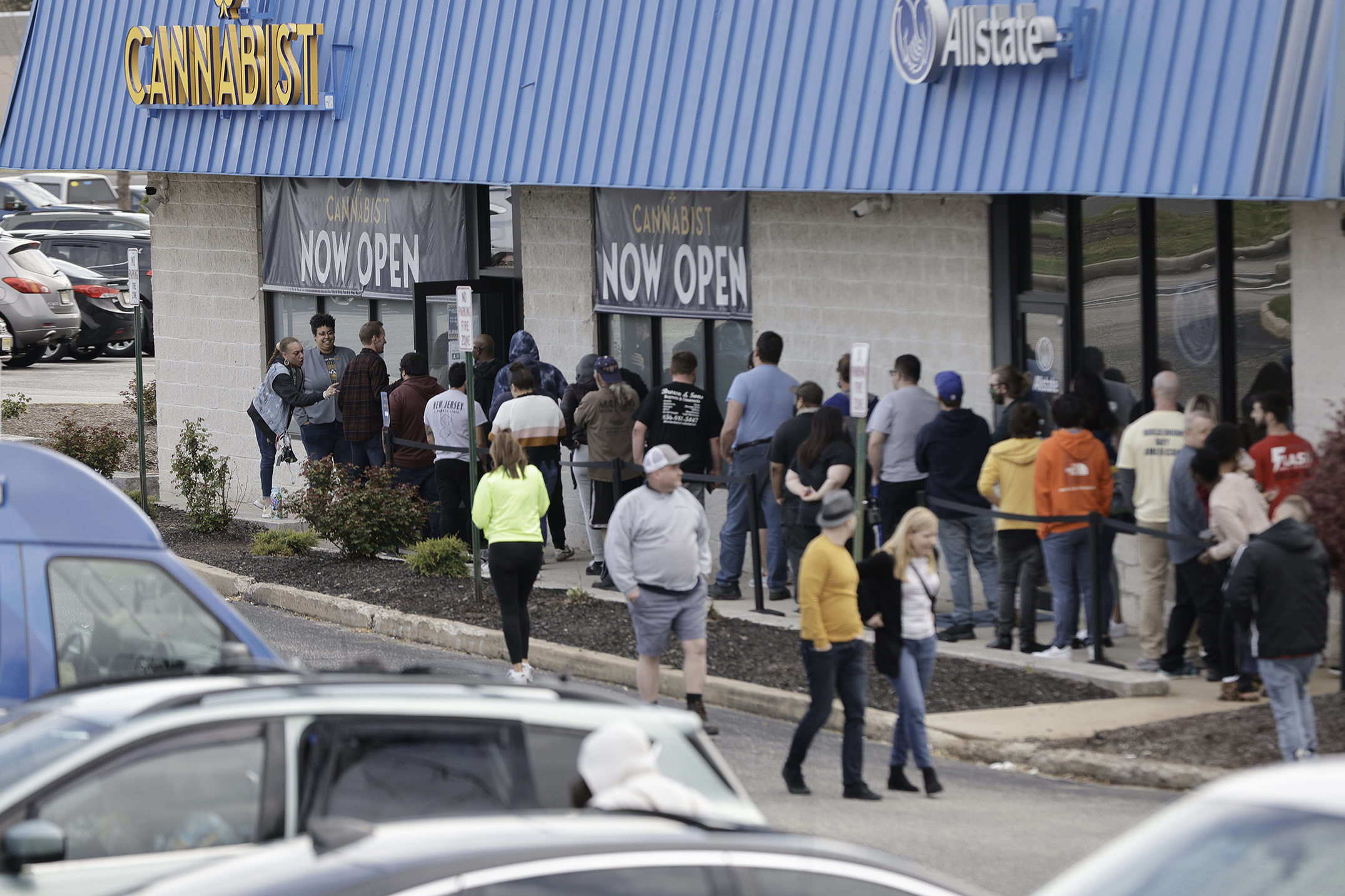
    The Cannabist’s New Jersey dispensaries were among some of the first adult-use locations to open in 2022. It operated one of the closest recreational weed dispensaries to the Philadelphia border. On the first day of Jersey’s recreational weed sales, it attracted consumers from all over, with a line wrapping around the building to the front door.

    The New York-based weed company operates 40 dispensaries and 14 cultivation and manufacturing facilities across 10 markets, including in New Jersey and Delaware. Those sites are being closed or sold off to new buyers. Last week, The Cannabist announced layoffs at one of its Denver grow sites, laying off 50 people in September, according to Colorado WARN notices.

    Customers line up just after 5:30 pm to make legal marijuana purchases at Cannabist in Deptford on April 21, 2022.ELIZABETH ROBERTSON / Staff Photographer

    Following the news of the two Vineland grow site closures, The Cannabist announced it would be selling the rest of its New Jersey operation, including the three retail stores in Deptford, Vineland, and Mays Landing, to Vireo Growth Inc for $35 million. The sale will also include some of the Cannabist’s operations in Colorado, Illinois, Massachusetts, and West Virginia markets.

    The Cannabist Co., which got its start as Colombia Care, began in Massachusetts in 2012 and soon expanded to 10 states. As of February, the company employed more than 1,200 people, including 101 manufacturing and 43 retail workers in New Jersey.

    Frank Burkhauser of Woodbury displays the legal marijuana purchase that he just made at Cannabist in Deptford on its opening day in 2022. ELIZABETH ROBERTSON / Staff Photographer

    In March, Cannabist filed for Chapter 15 bankruptcy due to owing lenders and the IRS more than $270 million. In addition to closing many operations across the country, Cannabist sold its Virginia business to Parma for $130 million, Delaware to Arboretum DE PermitCo for $16.5 million, and its Ohio dealings to Holistic for $47 million.

    Since the Cannabist Company is also filing for bankruptcy in Canada, this case is poised to be the first time a U.S. Bankruptcy Court recognizes a foreign insolvency proceeding related to a marijuana business, despite cannabis remaining federally illegal.

  • High-protein soft pretzels and soups are on the menu as Philly’s iconic food brands compete for GLP-1 consumers

    High-protein soft pretzels and soups are on the menu as Philly’s iconic food brands compete for GLP-1 consumers

    A soft pretzel from Philly Pretzel Factory currently has about 12 grams of protein.

    But sometime soon, you will be able to buy one with much more.

    The company says it is in the early stages of developing a high-protein pretzel, one of several new products it hopes will attract consumers concerned about weight loss.

    “Obviously, the trend is protein,” said company president Marty Ferrill. “Even people who are on GLP-1s, they’re looking for more protein-rich foods.”

    Philly Pretzel Factory is just one of the area companies changing their products to accommodate consumers who are eating less and “protein-maxxing.” The viral nutrition trend refers to an increasing obsession with eating more protein based on the idea that it builds muscle.

    A recent Gallup survey reported approximately one in eight U.S. adults are taking appetite-suppressing GLP-1 medications.

    GLP-1 drugs such as Ozempic and Wegovy were initially created to treat individuals with type 2 diabetes by regulating blood sugar levels, but their hunger-suppressing effects have spurred wider adoption for weight loss. A JPMorgan report estimates that by 2030, up to 30 million Americans may be using GLP-1 medications, especially as pill formats become available.

    As the medications rise in popularity and appetites shrink, the food industry could face headwinds. A recent study found that within six months of starting a GLP-1 medication, households with at least one GLP-user reduce their annual grocery spending by $390 on average.

    But this isn’t the industry’s first rodeo.

    The low-fat craze of the 1980s and the carb-phobic diets of the 2000s also forced food brands to rethink their products.

    “Until there’s a magic pill where you just don’t have to eat, period, the food industry will respond,” said Ernest Baskin, chair of St. Joseph’s University’s Food, Pharma, and Healthcare Department. “They’re going to change their product to appeal to the next generation of consumers.”

    Making every bite count

    Philly Pretzel Factory’s protein-enriched pretzels are an example of functional foods, which are foods that have been formulated to contain added nutrients and health-enhancing substances.

    Functional foods can be especially important for GLP-1 users, who eat smaller portions but still require their necessary vitamins and minerals.

    “In a world where you’re not eating as much, you want everything to count,” said Baskin.

    Campbell’s, the Camden-based food and snack giant, has ventured into the functional foods market with a recent launch of five protein soups that offer 20 grams of protein per can.

    The Campbell’s Company launched five new protein soups with 20 grams of protein per can.The Campbell's Company

    The company also released a new protein-fortified snack option with Snyder’s of Hanover’s harvest wheat pretzel sticks, which offer 6 grams of protein per serving. (As opposed to 3 grams for a standard pretzel stick serving.)

    The options “give consumers choices that fit their nutritional goals and lifestyles while helping get more out of every bite,” says Dave Chalk, Campbell’s vice president of enterprise insights and analytics.

    The recipes of popular Philly foods are changing too, as consumers prioritize better-for-you ingredients. In addition to the protein pretzel at Philly Pretzel Factory, their regular pretzels are undergoing a “clean label” reformulation.

    Ferrill said the company is ensuring consistent taste while changing some components: using unbleached flour instead of bleached, removing the additive potassium bromate, and replacing whey protein with a plant-based substitute. That means the franchise’s iconic pretzels will become vegan this year.

    “The urgency is [greater] now than it was three years ago,” said Ferrill, noting that the company has been developing the clean-label pretzel for years.

    Greater control over meals and portions

    At Honeygrow, a fast-casual chain that offers salads and stir-fries, customization is another option for GLP-1 users, said Todd Miller, senior vice president of marketing.

    More Honeygrow customers are choosing whole-wheat noodles — which offer 17 grams of fiber and 13 grams of protein — for their stir-fries, or crafting more vegetable-forward meals, said Miller.

    A chicken parm stir-fry at Honeygrow is at the 11th Street location in Philadelphia in 2024.Jessica Griffin / Staff Photographer

    “What is becoming increasingly important is the ability to personalize a meal around the nutrients and portions that matter to each customer,” Miller said.

    Campbell’s is banking on similar personalization preferences. Some research shows GLP-1 users are dining out less to control portion sizes and ingredients. With brands like Pacific Foods, Swanson, and Rao’s under the Campbell’s umbrella, the company’s cooking essentials business is benefiting.

    “The biggest opportunity within Campbell’s portfolio is the confidence consumers have gained with cooking at home,” Chalk said.

    People still want good food

    Despite moving toward healthier choices, many food companies are serious about not compromising flavor.

    For Honeygrow, that means continually introducing limited-time offers and keeping up to date with new ingredients to attract customers. Currently, Honeygrow’s seasonal summer menu includes a ginger scallion stir-fry and a pomegranate acai salad.

    “Even though you’re on a GLP-1, that doesn’t mean that you don’t want delicious food,” said Miller.

    Taste matters. When choosing what to eat, people are looking for enjoyment, comfort, and connection, said Ami Lawson, managing director of food and beverage marketing agency Quench.

    “The brands that will win aren’t the ones chasing the GLP-1 trend, they’re the ones delivering foods that people genuinely feel are worth eating,” said Lawson.

    Nostalgia and memory also play a significant role in food choice. Take soft pretzels, a Philly food staple.

    “If you grew up eating pretzels, you’re probably going to give up other things before you give up your pretzels,” Ferrill, of Philly Pretzel Factory, said.

  • Emil DeJohn, celebrated clothing designer and longtime college fashion professor, has died at 88

    Emil DeJohn, celebrated clothing designer and longtime college fashion professor, has died at 88

    Emil DeJohn, 88, of Ambler, celebrated clothing designer, longtime college department chair and professor of fashion, lecturer, volunteer, and mentor to generations of designers, tailors, dressers, models, and students, died Wednesday, June 24, of a heart attack at his home.

    Born in Philadelphia, Professor DeJohn worked for 37 years with Bill Blass and other notable clothing designers on Seventh Avenue in New York, and for 21 years as chair of the fashion department at Moore College of Art and Design, director of fashion career development at Drexel University, and professor of fashion at the now-closed Art Institute of Philadelphia.

    He designed clothing of all kinds for men, women, and children for Jones New York, OshKosh B’Gosh, and other international labels from 1960 to 1997. He established his own label, Alex DeJohn by Emil, in the 1980s, and his creations appeared on the covers of Vogue, Harper’s Bazaar, and other magazines.

    Several of his gowns were offered to singer Barbra Streisand in the 1960s, and he received design compliments from, among others, film star Elizabeth Taylor and Andre Leon Talley, former editor-at-large at Vogue. In the 1980s, he was chosen by then-first lady Nancy Reagan to design a colorful clothing collection promoting her “Just Say No” antidrug campaign.

    In New York, Professor DeJohn showed designs at Bergdorf Goodman, Saks Fifth Avenue, Neiman Marcus, and Macy’s. In Philadelphia, he showed at Bonwit Teller and other top shops.

    He also showed in London, Paris, Milan, Hong Kong, and elsewhere around the world. He lectured about fashion at other universities, represented the industry at high school career fairs, and mentored many young designers.

    At fashion shows, they always gave him a front-row seat. “It’s an incredible profession,” he told The Inquirer in 2001. “Lots of ups and just as many downs. I wouldn’t trade one day.”

    In 1997, looking to engage less with consumers and more with emerging designers, Professor DeJohn left the workshops and showrooms in New York for classrooms in Philadelphia. He spent six years as chair of the fashion design department at Moore, several years as director of fashion career development at Drexel, and finally retired in 2018 as a professor of fashion at the Art Institute.

    At Moore, Professor DeJohn recruited Bob Mackie, Betsey Johnson, and other renowned designers to meet his students and provide internships and jobs. At Drexel, he oversaw the Crystal Star Award for design program and taught a class called Aspects of Fashion and Merchandising.

    Professor DeJohn (left) attended many galas as director of the Crystal Award for design at Drexel. Emil DeJohn

    He hosted a fashion club at the Art Institute and was named the school’s 2017 Teacher of the Year. “He was always happy to answer our questions and tell us about the industry,” a former student said in a tribute. Another said: “He inspired all of us to dream big.”

    Professor DeJohn won the city’s Phashion Phest Philadelphia Award for design in 2001 and told The Inquirer: “Teaching the students has been a gift to me. I never envisioned anything I could enjoy more than designing. But this has become an amazing part of my life. I actually love coming to work.”

    He earned other awards for design and his volunteer work at the Rowan House, the Ronald McDonald House, and other nonprofits. “He stood as a beacon of hope,” said his granddaughter Alexandra, “always making everyone feel like he believed in them, always bringing out what made them special.”

    His granddaughter Isabella said: “His legacy continues to inspire me every day.”

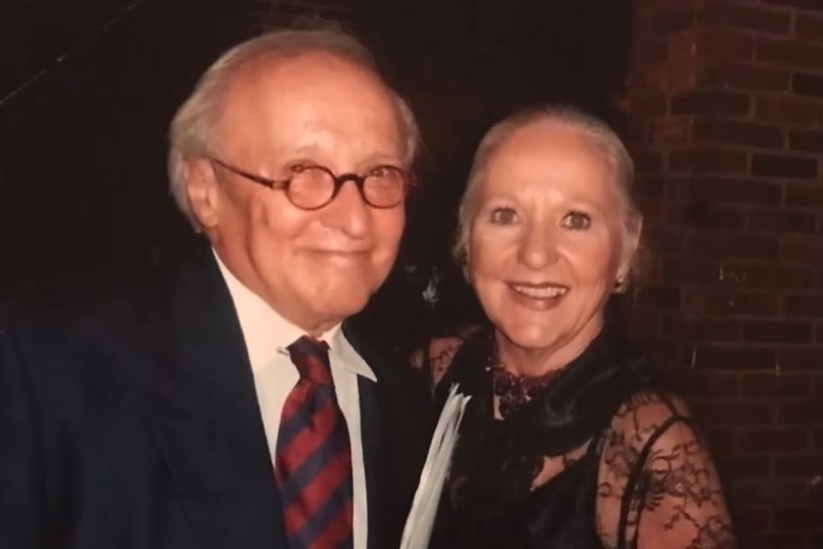
    Professor DeJohn met Bette Anne DeChiaro at a dance at the Shore when he was 17, and they married in 1963. Courtesy of the family

    Emil Joseph DeJohn was born Dec. 20, 1937, in his mother’s bedroom in South Philadelphia. The youngest of three children, he discovered art in grade school, took art classes at Fleisher Art Memorial, and graduated from John Bartram High School.

    He earned a bachelor’s degree in fine arts at the old Pennsylvania Museum and School of Industrial Art in 1959. He won the school’s design citation as a senior and worked at first as an illus­trator for the Bul­letin’s fashion pages.

    He met Bette Anne DeChiaro at a dance at the Shore when he was 17, and they married in 1963. They had a daughter, Leisa, and a son, Christian, and lived in Center City, Wyncote, and Ambler.

    Professor DeJohn liked antiques, flowers, and anything blue and white. He supported the old Carmelites monastery in Philadelphia and belonged to St. Luke the Evangelist Church in Glenside.

    Professor DeJohn first became interested in art and fashion in grade school. Courtesy of the family

    He made friends on his daily two-hour train rides to New York and said he never considered leaving Wyncote. “I loved leaving all that and coming home to cut the grass,” he told The Inquirer in 2001. “My neighbors didn’t even know what I did for a living.”

    He designed his daughter’s wedding dress, took his granddaughters to mesmerizing fashion events, and made memorable trips to Ocean City, N.J., Longwood Gardens, New Hope, New Mexico, and Florida. He especially enjoyed decorating his home and Christmas tree with ornaments and live flowers.

    “He made us all feel seen and special,” his daughter said. “He did that for everyone he met.”

    In addition to his wife and children, Professor DeJohn is survived by four grandchildren, one great-granddaughter, and other relatives. A sister, a brother, and a son-in-law died earlier.

    Professor DeJohn (right) said he would never leave Wyncote for New York. Courtesy of the family

    Services were held earlier.

    Donations in his name may be made to the Carmel of Jesus Crucified Monastery, Attn: Mother Pia, Box 308, Muenster, Texas 76252.

    Professor DeJohn (second from right) enjoyed time with his family.Courtesy of the family
  • Campbell’s jumps on the protein-maxxing trend with 5 new soups

    Campbell’s jumps on the protein-maxxing trend with 5 new soups

    Campbell’s has hopped on the protein trend with a new soup lineup boasting 20 grams of protein per can.

    With enhanced macronutrient profiles on five soups, the Camden-based soup and snack brand has joined the ranks of food companies that recently launched protein-forward products. Chipotle debuted a high-protein menu in December, and Starbucks now offers protein coffee, matcha, and cold foam.

    “As consumers increasingly seek foods that offer both great taste and meaningful nutrition, this innovative product line will bring excitement and drive consumers to the soup category,” Benjamin Crook, senior vice president of soup and broth, said in a news release.

    In 2025, 70% of Americans reported trying to consume more protein, according to a survey by the nonprofit International Food Information Council.

    Campbell’s new soup line includes Italian-style wedding, homestyle chicken and rotini, lemon pepper chicken, Mediterranean lentil, and southwest black bean flavors.

    The updated soups contain more protein than the company’s original iterations. The existing homestyle Italian wedding soup has 7 grams of protein, and the basic chicken noodle has 3 grams.

    The protein soup line is Campbell’s second release of the summer designed to appeal to “better-for-you” consumer preferences. In June, Campbell’s partnered with Banza to introduce its first gluten-free chicken noodle soup. Banza makes chickpea pasta, which has 50% more protein and three times as much fiber as traditional pasta.

    In addition to soups, Campbell’s has a vast food and snack portfolio. Under its umbrella is Pepperidge Farm, the baking company that produces Goldfish and Milano cookies, and Snyder’s-Lance, which owns Cape Cod Potato Chips, Kettle Brand, and Late July. In 2024, Campbell’s acquired the parent company of sauce brand Rao’s.

    The company reported in June that net sales decreased 4% in the third quarter of the 2026 fiscal year. In the meals and beverages segment, sales decreased primarily due to declines in U.S. soup, Prego pasta sauces, and V-8 beverages, but those were partially offset by gains in Rao’s.

    Campbell’s had 13,700 employees in 2025, per the company’s annual report. In 2023, the company launched a $50 million upgrade of its Camden headquarters. The expansion was anticipated to be completed over three years, bringing 330 additional positions to Campbell’s Camden offices.

  • Collingswood’s vibrant downtown needs a weekday evening boost, business owners say

    Collingswood’s vibrant downtown needs a weekday evening boost, business owners say

    Nab a table at Collingswood’s Sabrina’s Cafe at 11 a.m. on a Sunday without a wait? Good luck with that.

    A dinnertime walk-in at one of the town’s many vaunted restaurants might be easier. On a weekday, you’ll practically be a shoo-in.

    Despite its reputation as a South Jersey dinner destination — owing to longtime red-sauce staples like Villa Barone and Il Fiore and newer fine-dining joints like Hearthside and June BYOB — restaurant owners on Collingswood’s popular Haddon Avenue say business isn’t booming on weeknights.

    With thinner margins brought on by the higher costs of food, supplies such as to-go containers, and labor, it’s getting harder for some of these spots to get by.

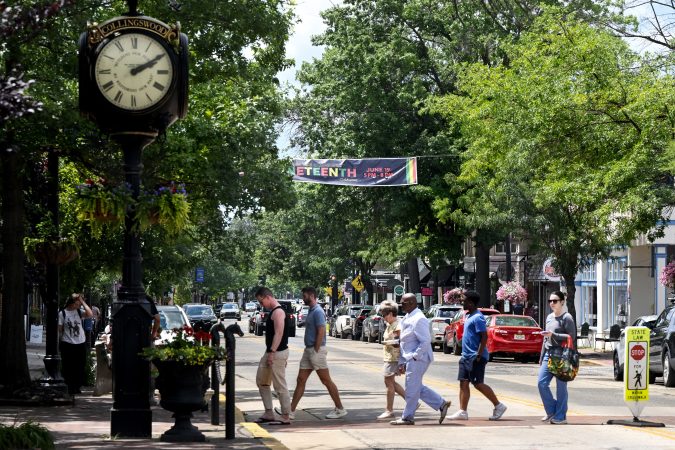
    The Camden County town of 14,000 is hopping with energy on weekend days thanks to the beloved Saturday morning farmer’s market, a bevy of city-organized events, and Collingswood’s variety of stores. But the energy on Haddon Avenue often fizzles come evening.

    Business owners of all types point to one main reason: Collingswood is dry.

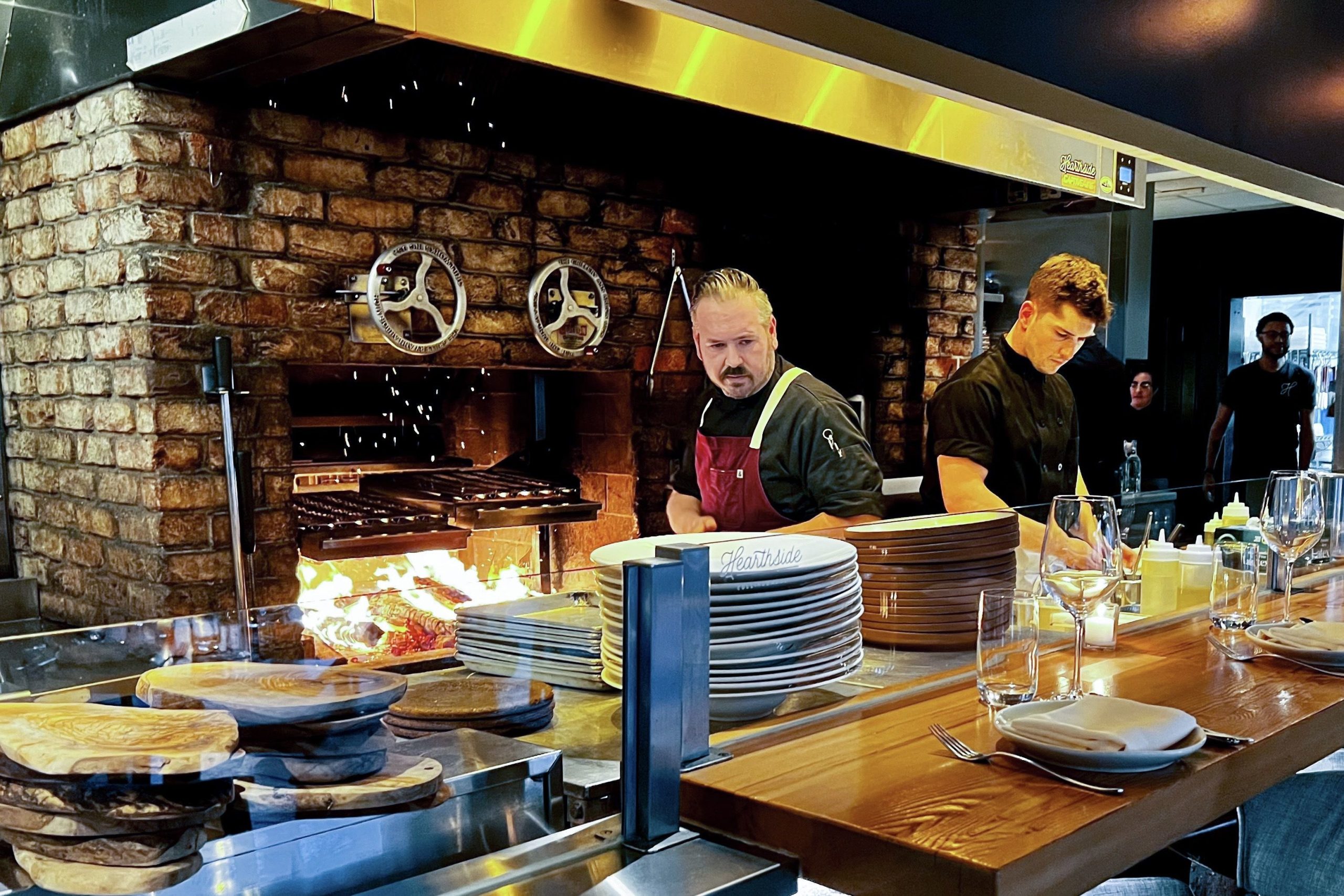
    “During the day on Saturday when we’re prepping, there are people walking around everywhere, but on the weekdays after 5 o’clock, there’s just nobody walking around,” said Dominic Piperno, chef and owner of Hearthside, which opened on Haddon Avenue in 2017.

    People walk along Haddon Avenue in Collingswood. Elected officials and business owners say the town needs more experiential businesses.Tom Gralish / Staff Photographer

    Piperno said weekday evenings have become increasingly quiet in the past few years. There was a boom just after COVID-19 restrictions lifted, when folks were happy to get out of their homes, but it didn’t last. He and other Haddon Avenue restaurant owners say inflation and the rising cost of living are partly to blame, with disposable income for many out the window.

    Giovanni Barone, whose family has owned and operated Haddon Avenue Italian restaurant Villa Barone for 32 years, thinks the town could make some changes to support restaurants. He motioned toward nearby Haddon Township, which has long allowed alcohol sales and on-site consumption.

    There, “on a weekday night — Wednesday or Thursday, for example — I drive down the street and it’s packed,” Barone said. “We’re losing a bit of that piece of the pie.”

    A thriving daytime scene

    Yet amid the challenges, Collingswood’s share of Haddon Avenue is experiencing a wave of new businesses filling long-vacant storefronts and injecting fresh daytime activity.

    Kaival Patel of John’s Friendly Market in nearby Haddon Heights is preparing to open a convenience store-like concept in Collingswood with a deli case and prepared foods in the former Wawa space, likely this summer.

    The business was courted by Collingswood Commissioner and Deputy Mayor Amy Henderson Riley. She campaigned with Mayor Daniela Solano-Ward on the promise of ensuring downtown continued to welcome diverse business owners and shoppers of various income levels. James Maley, a commissioner since 1989 and Collingwood’s mayor from 1997 until Solano-Ward took office, continues to serve as a commissioner.

    “We’re replacing Wawa in our own way,” Patel said. “We’ve heard that people used to get their groceries from Rite Aid next door that closed, too, so we’re going to try to add groceries as much as possible.”

    Nearby, a bank that has sat empty for years is primed for a new life as a three-storefront building topped with condos, said Keller Williams real estate agent Pat Ciervo. The parking lot will become public parking, Ciervo said — a perk for that end of downtown.

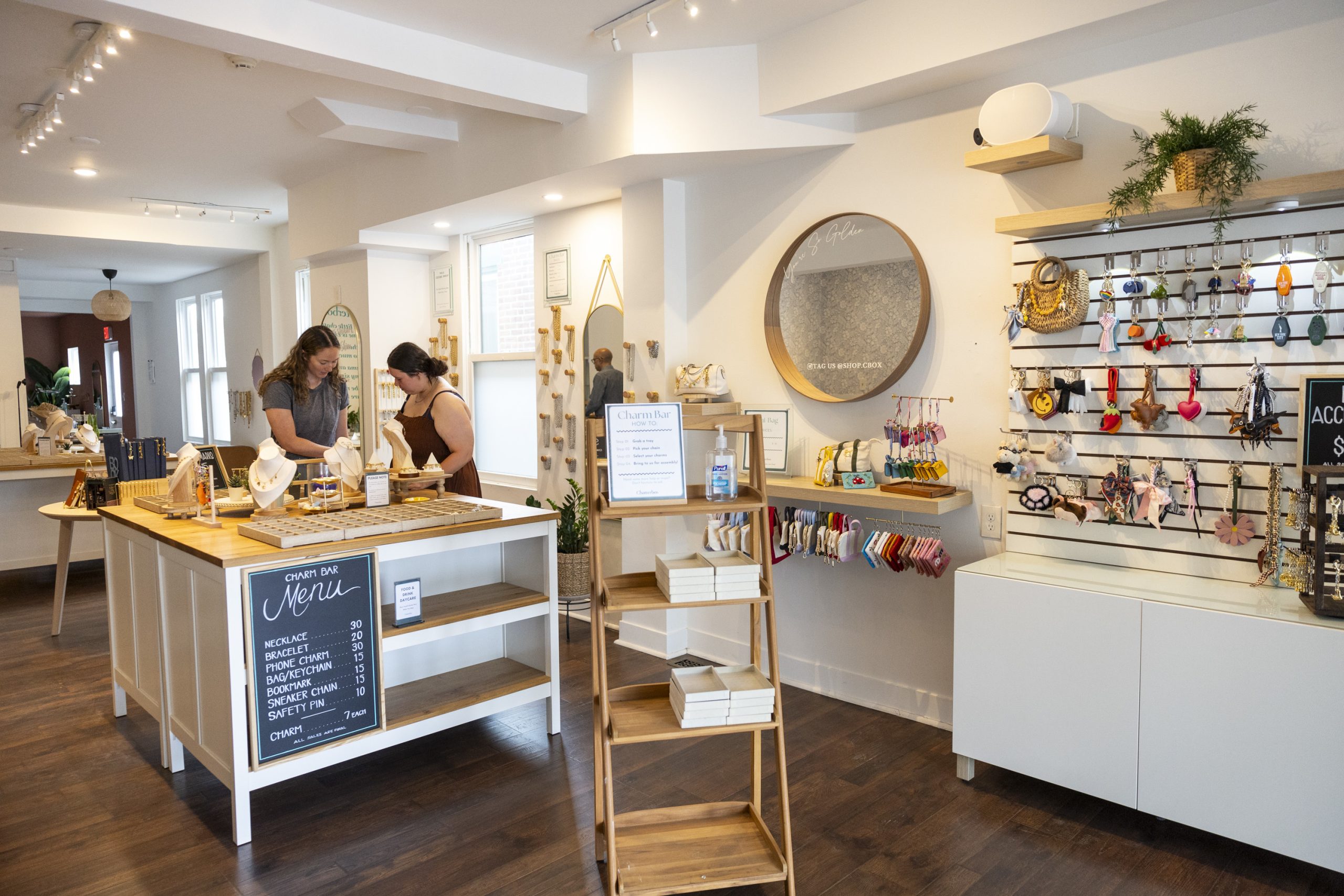
    Charm bar and permanent jewelry studio Chatterbox celebrated its first anniversary July 4. Business has been good for owners Douglas and Nikki Coleman. People are eager to support a Black- and family-owned business, Douglas Coleman said.

    Douglas and Nikki Coleman at their business Chatterbox in Collingswood.Tyger Williams / Staff Photographer

    “Weekends have been very steady for us,” he said. Weekday business fluctuates, “but this has become a destination for people, just the store in itself. We’ve had people come from Boston and Virginia.”

    Lindsey Ferguson, Collingswood’s director of business and community development, praised the store.

    “We have loved the addition of Chatterbox because, simply, their business model includes waiting for your jewelry, so people then walk around and shop” at other businesses on the avenue like suburban birding store House Finch or Occasionette gift shop, she said.

    Ferguson would like to see more so-called experiential businesses like Chatterbox and nearby pottery-painting studio All Fired Up! And she’d like to add nighttime businesses “that can kind of lift everybody up.”

    Ends of the Earth, a cigar lounge that recently debuted in Collingswood’s former fire station, is open until 7 p.m. on Thursday, Friday, and Saturday — a welcome evening addition, according to Ferguson.

    Ferguson said the chasm between daytime and nighttime foot traffic along Haddon Avenue dates to the pandemic years, when some businesses began closing earlier.

    But that lack of deep overlap between so-called daytime and nighttime businesses has left Collingswood’s restaurant scene in the lurch.

    The inside of Douglas and Nikki Coleman’s business Chatterbox in Collingswood.Tyger Williams / Staff Photographer

    ‘Let’s not mess this up’

    Liquor was prohibited by ordinance in Collingswood in the 19th century, dating back to its Quaker roots.

    Now Collingswood’s three-person Board of Commissioners, which includes Henderson Riley and Solano-Ward, is considering a resolution to put liquor sales on the ballot in November.

    “It’s a conversation we need to keep having as a community,” Henderson Riley said. “It would be an influx of cash into the town that would be up to voters to decide.”

    In 2015, Collingswood voted to allow craft breweries, and now Raccoon Taproom operates on Haddon Avenue under a state-issued limited brewery license. The license allows operator Swedesboro Brewing to serve beer in the taproom.

    Chef-owner Dominic Piperno (left) with line cook Christopher Ross at Hearthside in Collingswood in 2023.Michael Klein / Staff

    Henderson Riley said officials are concerned about how to equitably distribute the restaurant and retail liquor licenses. Collingswood would receive up to four, based on its population, which isn’t enough for all of its dinner-serving establishments. And if they are auctioned to the highest bidder, Ferguson noted, out-of-town restaurant groups could come in and create even more competition for licenses.

    “We want to keep restaurants open. We want to keep our downtown thriving,” Henderson Riley said. “We see neighboring towns that are open a little later than us, and the main reason is liquor.”

    And as a result, Henderson Riley said, the restaurants in those neighboring towns have a lower price point for their food.

    Nearby Haddonfield is also a dry town but allows businesses to operate under state-issued manufacturing licenses — not just for beer — and is now home to a brewery, a winery tasting room, and a distillery. Piperno, of Hearthside, sees how these businesses help feed the area’s restaurants, even if the restaurants can’t sell alcohol.

    “My wife and kids and I will walk Haddonfield at night, and like on a Monday, Tuesday, it’s jamming,” Piperno said. “It just has helped that downtown a lot, especially with younger families.”

    Piperno said Fridays and Saturdays at Hearthside are still “jammed,” but “it’s really hard to survive this industry with just two really busy nights.” The restaurant plans to relocate to Haddon Township in 2027, where it will have a liquor license.

    “It’s a bittersweet thing for us because we love Collingswood,” Piperno said, “but something has to change.”

    Still, for Collingswood, much already has. Former Mayor Maley is owed much of the credit, says Henderson Riley, the deputy mayor.

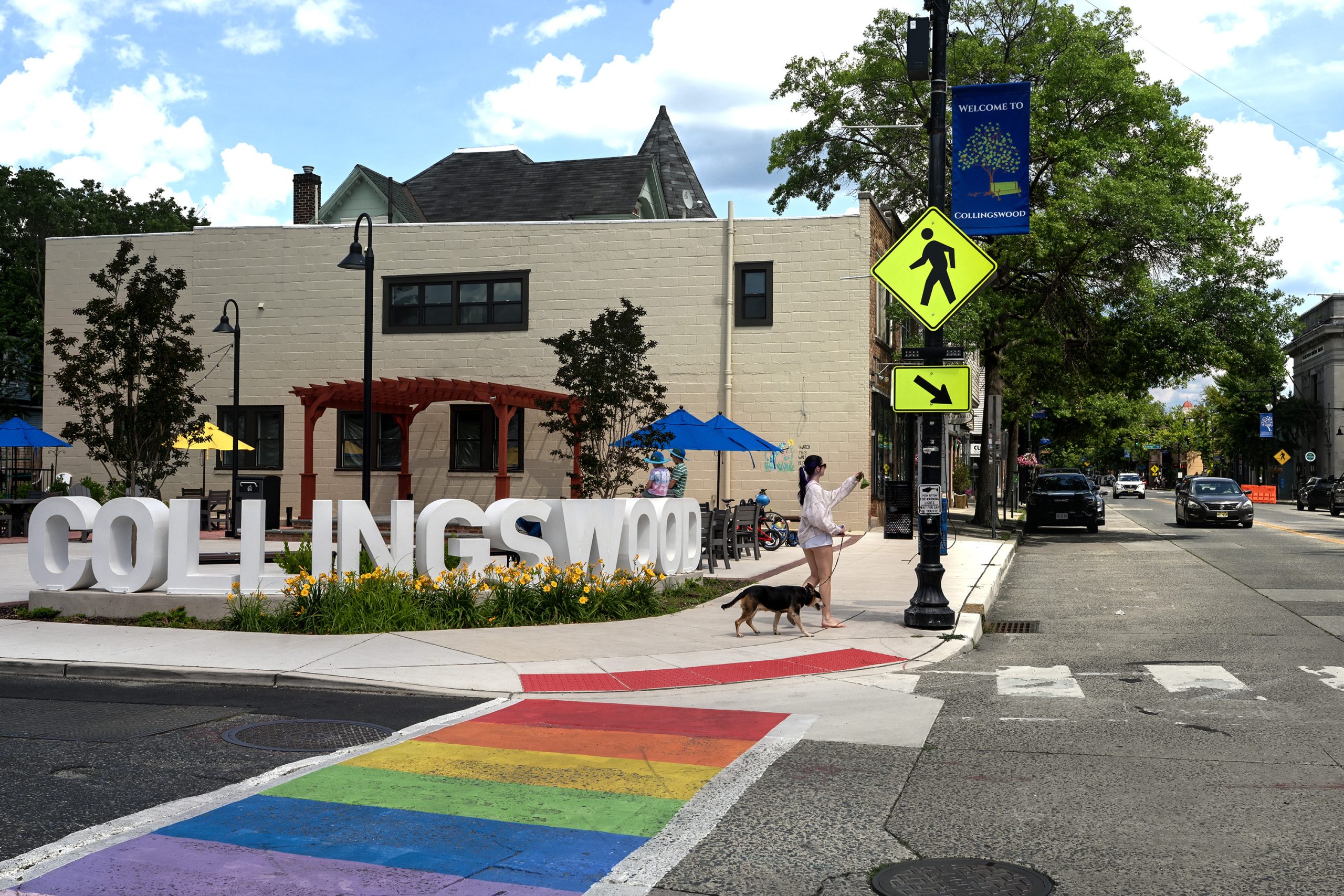
    The downtown pocket park with a “Collingswood” sign.Tom Gralish / Staff Photographer

    Henderson Riley recalled Maley’s efforts to attract new homeowners by incentivizing converting former duplexes into single-family homes, and appeals to Philadelphia’s LGBTQ+ population to move across the bridge.

    “Part of what drew us here was what he used to call the Collingswood story,” Henderson Riley, who has lived there for 15 years, said. The businesses and restaurants that germinated from it are the basis of Haddon Avenue’s reputation today.

    Nikki Coleman, of Chatterbox, grew up in Cherry Hill and has watched throughout her life as Collingswood’s downtown transformed from a dingy strip into a robust retail scene. She has shared her observances with her husband.

    “This has been a great case study for how to take a town and really bring a certain dynamic to it that I think a lot of other small towns wish they had,” Douglas Coleman said. “I don’t know if we’re doing anything wrong, but it’s more of a ‘Let’s not mess this up.’”

  • Richard D. Wood Jr., Wawa chair emeritus and ‘guiding heart and soul,’ has died at 88

    Richard D. Wood Jr., Wawa chair emeritus and ‘guiding heart and soul,’ has died at 88

    Richard D. Wood Jr., 88, of Wawa, Delaware County, chair emeritus and former chief executive officer and president of Wawa Inc., Convenience Store News Hall of Famer, lawyer, trustee, mentor, veteran, and philanthropist, died Friday, July 10, of age-associated decline at his home.

    Born in Philadelphia, Mr. Wood earned a law degree at what is now the University of Pennsylvania’s Carey Law School in 1964 and joined his family’s nascent Wawa food market company in 1970 as its first general counsel. His great-grandfather founded the Wawa dairy in 1902, and his father’s cousin opened the first Wawa food market in 1964.

    By 1977, Mr. Wood had ascended to president of the company, and its innovations, including 24-7 hours of operation and custom-made hoagies, made it the region’s dominant convenience store. He became CEO in 1980 and chair in 1982, and was named chair emeritus in 2020.

    In 2020, Inquirer business writer Joseph N. DiStefano said Mr. Wood “presided over the board during the period of Wawa’s rapid growth from a regional cokes-smokes-milk-and-hoagies chain to a convenience store and gas outlet with more than $12 billion in annual sales and 850 stores from New Jersey to Florida.”

    For more than 40 years, Mr. Wood supervised Wawa’s multistate expansion, addition of gas pumps, expanded inventory, rigorous employee training, and popular employee stock ownership plan. During his tenure, the company grew to more than 36,000 associates and was one of the largest privately held companies in the country.

    Through it all, Mr. Wood was affable and curious, friends and family said. He wanted to know everybody’s name and what they thought, and he enjoyed touring the stores and chatting up associates and customers, especially on Christmas Day. He told colleagues he wanted to “create an environment where each of us believes that we can make a difference.”

    “Dick Wood was our true lead goose who was the guiding heart and soul of the company,” Chris Gheysens, Wawa’s chairman and CEO, said in a tribute. “He is the reason why Wawa is the company we are today and why we enjoy so much share of heart from our customers and dedication from our associates.”

    Mr. Wood hired students and women to work in the stores, and offered flexible schedules to accommodate their availability. He oversaw Wawa’s $200 million of donations to community nonprofits and its college tuition reimbursement plan for associates.

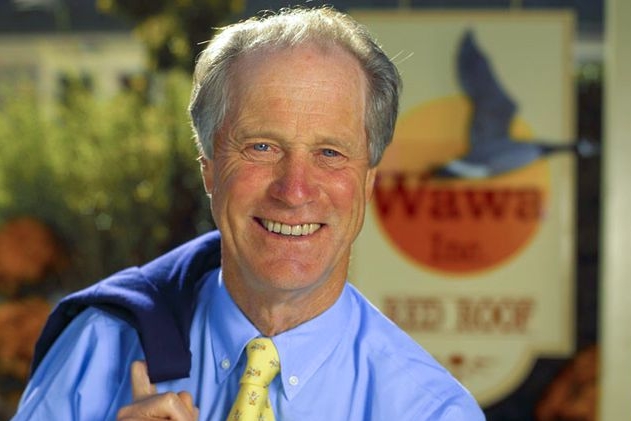
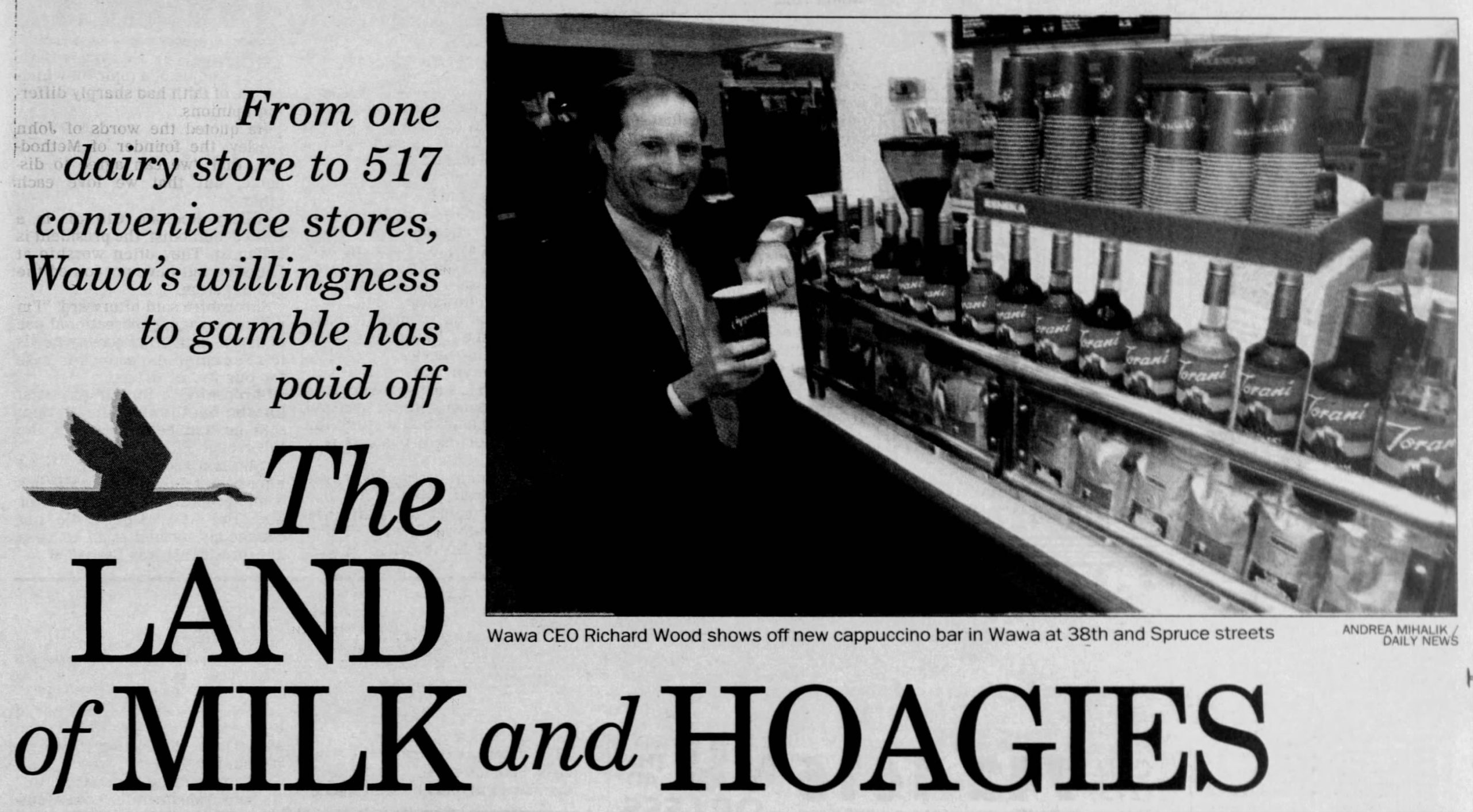
    This photo of Mr. Wood and a story about Wawa appeared in the Daily News in 1994. Newspapers.com

    In 2021, to mark his 50th anniversary at the company, Wawa established the Dick Wood College Scholarship Fund for associates. He told Inc. magazine in 2018: “Values and culture mean more in this company than being smart.”

    Colleagues called him “humble, gracious, curious, and kind” and “a beloved treasure to the company” in tributes. His life-size bronze statue greets visitors at Wawa’s corporate headquarters.

    “He made people feel important,” said Barbara Ennis, his longtime assistant, ”because to him, they were.”

    Mr. Wood was onetime chair of the executive committee of the National Association of Convenience Stores and on boards at Children’s Hospital of Philadelphia, Riddle Memorial Hospital, Philadelphia National Bank, Bok Tower Gardens in Florida, and other organizations. He appeared often in The Inquirer and Daily News, spoke on panels and at conferences about corporate leadership, and was inducted into the Convenience Store News Hall of Fame in 1996.

    Mr. Wood (left) worked closely with fellow CHOP trustee N. Scott Adzick.Children's Hospital of Philadelphia

    He served on the Chester Heights Borough Council in the early 1980s and was named 1996 businessman of the year by the Great Valley Regional Chamber of Commerce. Before Wawa, Mr. Wood was a public defender in Philadelphia and a lawyer at Montgomery McCracken.

    “People loved to follow him,” said his son, Richard D. Wood III. “He was larger than life,” said his daughter, Lisa Wright.

    As a philanthropist, Mr. Wood and his family donated $25 million to Children’s Hospital of Philadelphia in 2021, and CHOP named its Richard D. Wood Jr. Center for Fetal Diagnosis and Treatment in his honor. His family also funded the Richard D. Wood Jr. and Jeanette A. Wood Endowed Chair in Pediatric Diagnostic Medicine, and he instituted a volunteer services program at CHOP.

    Sometimes, his family said, Mr. Wood walked the halls of the hospital, sharing Wawa coffee and conversation with patients and families. CHOP honored him at its 2019 Carousel Ball. Madeline Bell, CEO at CHOP, said: “I will truly miss his warmth, wisdom, and generous spirit.”

    Mr. Wood and his wife, Jeanette, married in 1964.Courtesy of the family

    Howard Stoeckel, former Wawa vice chair, CEO, and president, said in a tribute: “He had a special mix of heart, compassion, empathy, and humility that made him a true believer and practitioner of servant leadership.”

    Richard Davis Wood Jr. was born March 4, 1938. He graduated from St. Paul’s School in Concord, N.H., earned a bachelor’s degree in business at the University of Virginia, and served for a year in the Marine Corps and later in the Marine Corps Reserve.

    He met Jeannette Andrews when he was visiting New York with friends, and they married in 1964. They lived in Philadelphia and Wawa, and had a daughter, Lisa, and a son, Richard III. His wife died in 2025.

    Mr. Wood was an avid golfer, and he belonged to the Gulph Mills and Pine Valley Golf Clubs, and the Mountain Lake Club in Florida. He played tennis and bridge, and was a longtime season ticket holder for the Eagles and Flyers.

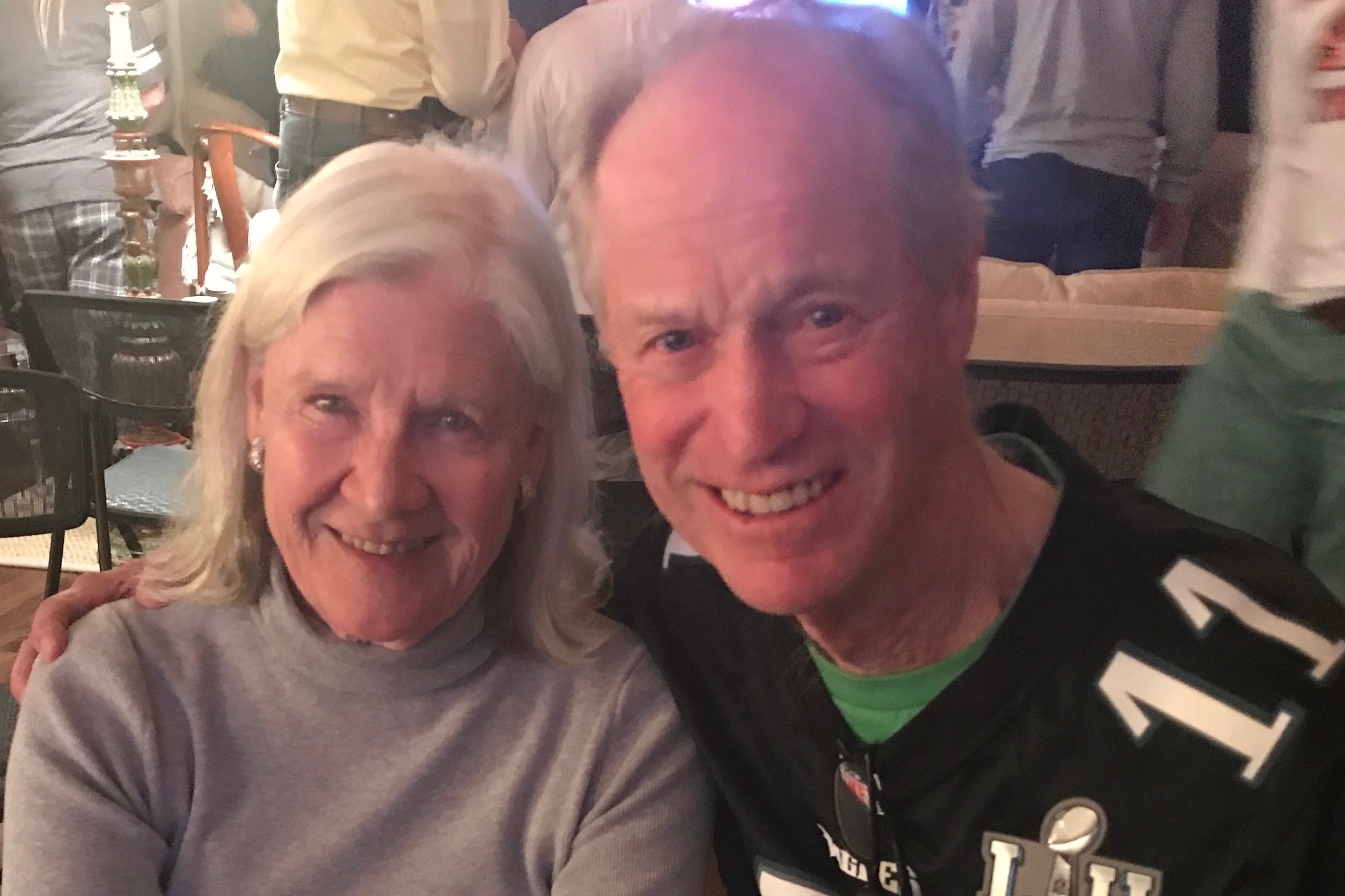
    Mr. Wood (right) enjoyed meeting and talking with Wawa associates and customers.
    Jonathan Wilson / Staff Photographer

    He and his wife traveled, hosted family holiday parties, and spent memorable winters in Lake Wales, Fla. He drove his favorite Honda Accord for years and followed Virginia college football and basketball closely.

    He championed conservation, education, and health. “He treated every single person the same,” his daughter said. His son said: “Humility defined him.”

    Mr. Wood said in a 2020 video for CHOP: “It’s a great feeling to know that you’re helping out.”

    In addition to his children, Mr. Wood is survived by five grandchildren, a sister, a brother, and other relatives. Two brothers died earlier.

    A celebration of his life is to be held later.

    Donations in his name may be made to the Richard D. Wood Jr. Center for Fetal Diagnosis and Treatment at Children’s Hospital of Philadelphia, Box 781352, Philadelphia, Pa. 19178; and Bok Tower Gardens, 1151 Tower Blvd., Lake Wales, Fla. 33853.