Category: Business

  • New CEO of Philadelphia steel company dies suddenly

    New CEO of Philadelphia steel company dies suddenly

    Brian J. Malloy, chief executive officer of Philadelphia-based Carpenter Technology Corp., died “suddenly and unexpectedly” Friday, July 24, three weeks after he was promoted to run the company, which employs 4,500, Carpenter said in a statement. He was 59.

    Malloy made “significant contributions” to the growth of Carpenter, a 137-year-old, $3 billion-a-year company that makes stainless-steel alloys for aerospace, medical, military, and industrial uses at its plants in Berks County, Western Pennsylvania, and Alabama.

    “We are deeply saddened at Brian’s passing,” the company said.

    Tony Thene, Malloy’s predecessor as CEO and executive chairman, has stepped back in to replace Malloy.

    Malloy had been scheduled to report recent results to Carpenter’s investors and discuss its prospects in a conference call Thursday. The call will go ahead on schedule. Shares fell about 4% to around $580 in trading Monday on word of the new CEO’s death.

    The stock had been trading over $600, its highest ever, for the past month, on the expectation that Carpenter would profit on higher U.S. military spending and new space orders.

    Malloy studied engineering at Virginia Tech and held an MBA from the College of William and Mary, as well as certifications in AI from Northwestern University and digital transformation from MIT. He is listed on five patents.

    He joined Carpenter in 2015, heading a unit that includes titanium products and powdered metals. In 2023, he was named chief operating officer before succeeding Thene as CEO when Thene retired earlier this month.

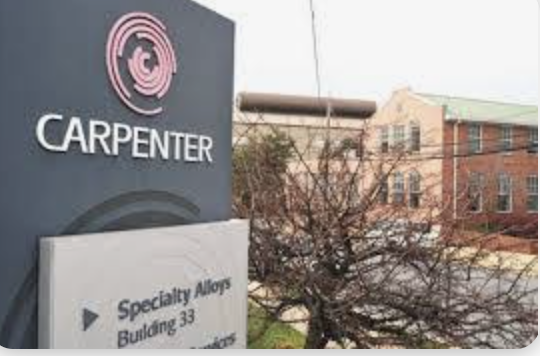
    Part of the Carpenter Technology complex in Reading. The Philadelphia-based specialty steelmaker also has operations in western Pennsylvania and Alabama, and a finishing plant in China.

    Before joining Carpenter, Malloy was an executive at Berwyn-based Ametek and for Alcoa.

    Carpenter moved its headquarters to Philadelphia from Spring Township near Reading, the year after Malloy joined the company, one of several upstate Pennsylvania companies that moved to Philadelphia in hopes of attracting management and technical talent.

  • How to keep your home safe without an expensive security system | Expert opinion

    How to keep your home safe without an expensive security system | Expert opinion

    Do you have good dead bolts on all your doors? Strong latches on your windows? Are you diligent about keeping doors and windows locked? Have a barky dog?

    If you can answer “yes” to the first three questions, you’re way ahead when it comes to home security (and get extra credit for the dog). Despite what thriller movies might suggest, most burglars enter homes by simply opening unlocked doors or windows — or pushing and kicking locked ones until they open.

    Very few pick locks or circumvent alarm systems. Intruders prefer empty homes, visual obscurity, silence, easy entry, and quick exits. So your primary objective when planning home security is to beef up your locks and latches and maintain good security habits.

    You can also DIY your own system by using home security components controlled by a smartphone app or similar interface. Dozens of companies now sell security system components that can easily connect to smart home hubs.

    All this competition and choice means lower prices. You don’t have to pay a home-security service $750 to $3,000 for a professionally installed system plus $1,500 or more each year for monitoring. Instead, for $400 or less, you can assemble a basic DIY system and then pay as little as $200 per year to have it monitored — or nothing at all if you monitor it yourself.

    Keep in mind that many people get annoyed by the alerts that self-monitoring requires and end up turning them off or not replacing batteries if they run out. If this will be you, don’t waste your money on the tech.

    Here are some simple steps to secure your home.

    1. Secure the perimeter. Make your doors and windows as difficult to penetrate as possible. Although intruders prefer unlocked doors and windows, many can quickly and almost silently pry open locked ones. Some break a pane of glass so they can reach in and unlock the window or door.

    Double-hung windows, for example, can be secured by screwing together the two frames.

    Solid-wood doors are much sturdier than hollow ones. Many homeowners in high-crime neighborhoods install metal bar doors.

    2. Get a security audit. Most police departments provide free advice and will send someone to evaluate your home for weaknesses.

    3. Lose lousy locks. Key-in-the knob locks are inadequate. Install good deadbolt locks on all your exterior doors. The locks on sliding glass doors are notoriously flimsy — many doors can be lifted right off their tracks. Numerous how-to videos online can show you how to make yours more secure, or you can pay a locksmith to install reinforcements.

    4. Keep valuables out of sight. Place articles of value out of the view of your front door or front windows. Stash cash and expensive jewelry in unlikely places — for example, in a large envelope or among many paper files. Select containers no one will accidentally discard.

    5. Rent a safe-deposit box. A box may be inconvenient, but it provides a level of security against theft and fire that cannot be duplicated at home for less than several thousand dollars.

    6. Keep your landscaping in check. Doors and windows hidden by garages, bushes, fences, and trees are attractive targets for intruders who prefer to invade unseen.

    7. Light it up. Many burglars will flee if they activate an outdoor light connected to a motion detector.

    8. Keep track of your keys. An AirTag key chain is a good idea if you’re forgetful.

    In addition to improving your home’s physical security:

    • Evaluate your insurance. Consider adding replacement-cost coverage to your homeowners insurance policy for your personal property. If burglars clean out your home, this coverage could save you thousands of dollars. If you own expensive jewelry and other similar items, consider taking out additional policies.
    • Get to know your neighbors. Neighborhood watch groups are one of the most effective ways to protect all the homes in your neighborhood. At the very least, get to know your neighbors and share information on your not-at-home schedules and vacation plans, so everyone can look out for suspicious activities.
    • Keep up appearances. Because most burglars strike when no one is home, make sure your house always appears occupied. Leaving on lights and a TV helps. If you go on vacation, work with neighbors or friends to prevent mail from piling up and to keep your yard maintained.

    Still want a professionally installed system?

    If you decide to go pro, you’ll want a company that ensures your system is effective, convenient, and unobtrusive; minimizes false alarms; and controls costs.

    Have several companies come to your home to propose systems and quote prices. When Checkbook’s undercover shoppers collected proposals from companies for a specific alarm system and three years of monitoring, they were quoted prices ranging from $2,200 to $4,200.

    Read the contract before you sign. Some companies make it very difficult for customers to switch monitoring services by refusing to provide programming codes or to reset systems to their default modes. Choose a company willing to contractually agree to provide you with programming codes.

    Discuss payment terms. The more you can pay after the job is complete, the better.

    Delaware Valley Consumers’ Checkbook magazine and Checkbook.org is a nonprofit organization with a mission to help consumers get the best service and lowest prices. It is supported by consumers and takes no money from the service providers it evaluates. Until Sept. 5, readers can access Checkbook’s home-security ratings and advice free at Checkbook.org/Inquirer/home-security.

  • Your next job interview could be with an AI bot

    Your next job interview could be with an AI bot

    Have you applied for a new job? If you’ve been shortlisted, get ready to be interviewed by artificial intelligence.

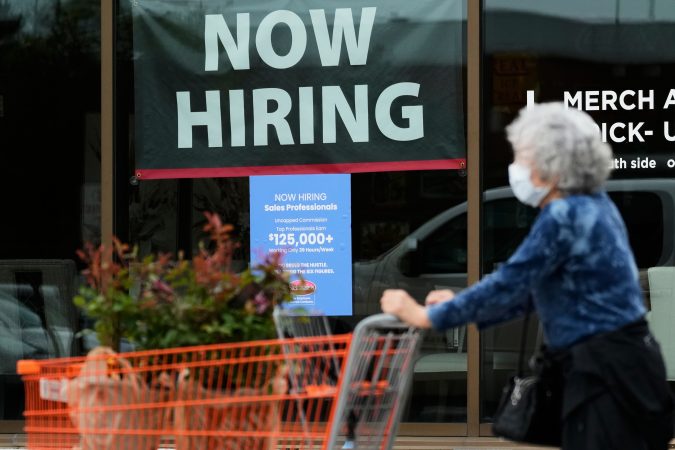
    Deluged by a flood of AI-generated job applications from easy-apply job boards, recruiters are turning to AI to cope. Companies are using chatbots to interview candidates, typically at the screening stage, through phone calls, text messaging, or video chats with onscreen avatars.

    Recruiters have been using AI-powered hiring tools for years to assess job applicants, and their use has been expanding in step with technology advances.

    Many people find AI job interviews unsettling, though the trend seems here to stay. According to recent research by hiring platform Greenhouse, more jobseekers are reporting they’ve faced AI job interviews. But many applicants have walked away from the hiring process because of it, which could be a sign that they’re either creeped out, or they could be fraudulent or were not serious candidates, depending on who you ask.

    Here’s what to expect from an AI job interview and how to do your best:

    Do your homework

    Whatever the interview format, the fundamentals still apply, said Amanda Augustine, a career coach at Careerminds, which helps companies support laid-off workers with resume writing and job search services.

    Ahead of the interview, review the job description, research the organization, and understand what it’s looking for.

    “The more prepared you are, the easier it will be to tailor your responses, even when you’re interacting with AI instead of a person,” she advised.

    Get used to the format

    If you’ve never done an AI job interview before, the first time could be unnerving or unsettling.

    I did a demo AI interview set up by Netherlands-based TestGorilla, one of numerous platforms providing recruitment tools for companies. First came two sets of questions, one that tested problem-solving skills and another gauging work experience. Then I faced an AI-generated female face.

    “My goal is to learn more about you and the experiences, skills, and competencies that you might bring to this role,” it said, adding that I should plan to spend about two minutes to answer each of three questions.

    Unlike a human interview, there was no warm-up chit-chat, no chance to build a rapport. There was no point in smiling or trying to break the ice.

    Experts say the best way to get over that is preparation.

    “You need to practice out loud,” said Priya Rathod, workplace trends editor at online job board Indeed. “And when I say practice out loud, I mean, say the actual answers out loud,” because the chatbot needs to record what you’re saying, she said.

    Also keep in mind you’re providing information about yourself to a machine, not having a conversation.

    “You have to be particularly descriptive and a very clear communicator in your language so that they can pick up on things that a regular interviewer might pick up through your facial expressions and tone,” Rathod said.

    An AI interviewer “cares less about my tone and more about what it is that I’m saying,” she added.

    Use an online interview simulator to prep — there are many available. They can record your answers and provide instant feedback on your content, delivery, or pacing. They’ll also help you get used to speaking into a camera, manage time limits, and give your answers in a structured way without the natural back-and-forth of a live conversation, Augustine said.

    Get ready for behavioral questions

    For my demo interview, the AI grilled me for a communications professional role.

    One question it asked was how I use AI in my “workflow,” including examples of both success and failure. When I replied that I saved lots of time with an AI transcription tool for interviews and other recordings, it summarized my answer and then asked me if I wanted to add anything else. I wasn’t sure whether I had answered satisfactorily.

    I scored “below average” on this question, according to TestGorilla’s assessment, which said I provided “no concrete metric” such as minutes saved. “The improvement claim is therefore vague,” it said.

    AI interviewers are asking these “behavioral questions” because they want candidates to provide examples of how they handled specific work situations, complete with numbers and metrics, Rathod said.

    “Those are the kinds of questions that AI relies heavily on. And the trap that we see a lot of people falling into is giving really vague answers,” she said.

    Candidates should still rely on tried and tested tactics like the STAR method — short for situation, task, action, result.

    So be prepared to talk about a specific work situation and the task assigned to you, the action that you took, and the result, Rathod said.

    “You want to use numbers as much as possible. Even if you’re not in a revenue driving role, there are ways in which you can say (how) you influenced something or impacted something within a group,” she said.

    Setup still matters

    Don’t neglect the physical setup of your desk and computer — it’s still important even if the video-based interview is with AI, and not a person.

    Test your audio and video in advance. Make sure the lighting is bright enough and is on your face. Raise your laptop to eye level so that you’re not looking down at the camera.

    “Small adjustments, such as using a stack of books or a ring light, can make a noticeable difference in how polished and professional you present,” Augustine said.

    Don’t be tempted to use AI shortcuts

    Jobseekers might be tempted to use AI to help come up with answers. After all, they’re so easy to use and if you’re not talking to a human, no one will be able to tell, right?

    “That’s a big no-no because it’s pretty obvious” to both the AI interviewing tool and anyone who might review the recording, said Rathod. Using AI for your answers “can sometimes immediately disqualify you.”

    If you’re having difficulty answering, you can always ask it to clarify or repeat the question.

    The question might even be designed to figure out if you’re using AI to cheat. TestGorilla’s head of marketing, Mehak Chowdhary, said it sometimes poses simple questions worded in a very convoluted way.

    “We do that intentionally to understand whether you are running an AI alongside, because the AI will then try and optimize for the length of the question,” she said. “But if you know your skill set, you will understand what’s being asked.

    “And we strongly recommend candidates put the AI devices aside. This is a test of your capability.”
  • Who lives in the new apartments at the Navy Yard? Turns out, not very many people.

    Who lives in the new apartments at the Navy Yard? Turns out, not very many people.

    A year ago, Priya Brown spent many weekday afternoons sitting in traffic, inching home to Northern Liberties from her job in the Navy Yard.

    Since moving into the new apartments at South Philly’s converted military base in January, the 27-year-old said her daily routine has gotten much more relaxing — with far fewer brake lights. An assistant buyer at Anthropologie, Brown walks 10 minutes to her office at Urban Outfitters’ Navy Yard headquarters.

    “My life is so much easier,” Brown said last week as she walked her tiny basset hound, Momo, around her building, AVE Constitution. The air was quiet, save for an occasional bird chirping and the steady hum of planes making their descent into Philadelphia International Airport.

    “I’m not a city person,” added Brown, an Annapolis native who moved to Philly for work. In Northern Liberties, “I missed grass a lot.”

    The Navy Yard has open space and paths for walking and running, as seen in this 2022 file photo.Yong Kim / Staff Photographer

    Brown pays about $2,400 a month for her one-bedroom, she said, and takes advantage of the free and abundant street parking, a rarity elsewhere in the city.

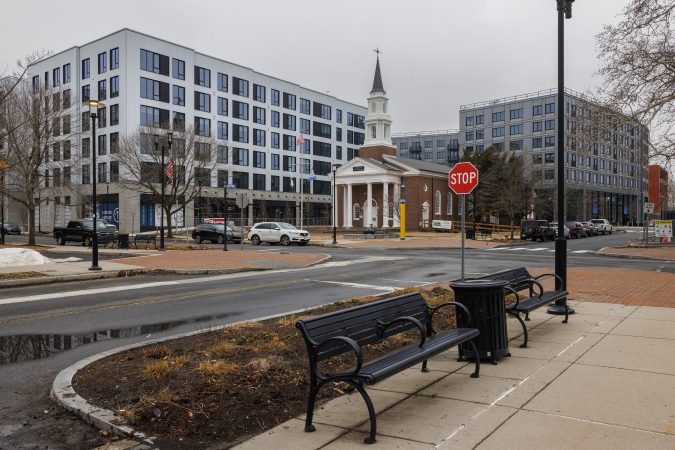
    AVE, the national apartment brand run by Korman Communities, is calling its neighboring Navy Yard complexes, Constitution and Normandy, “Philadelphia’s newest neighborhood.”

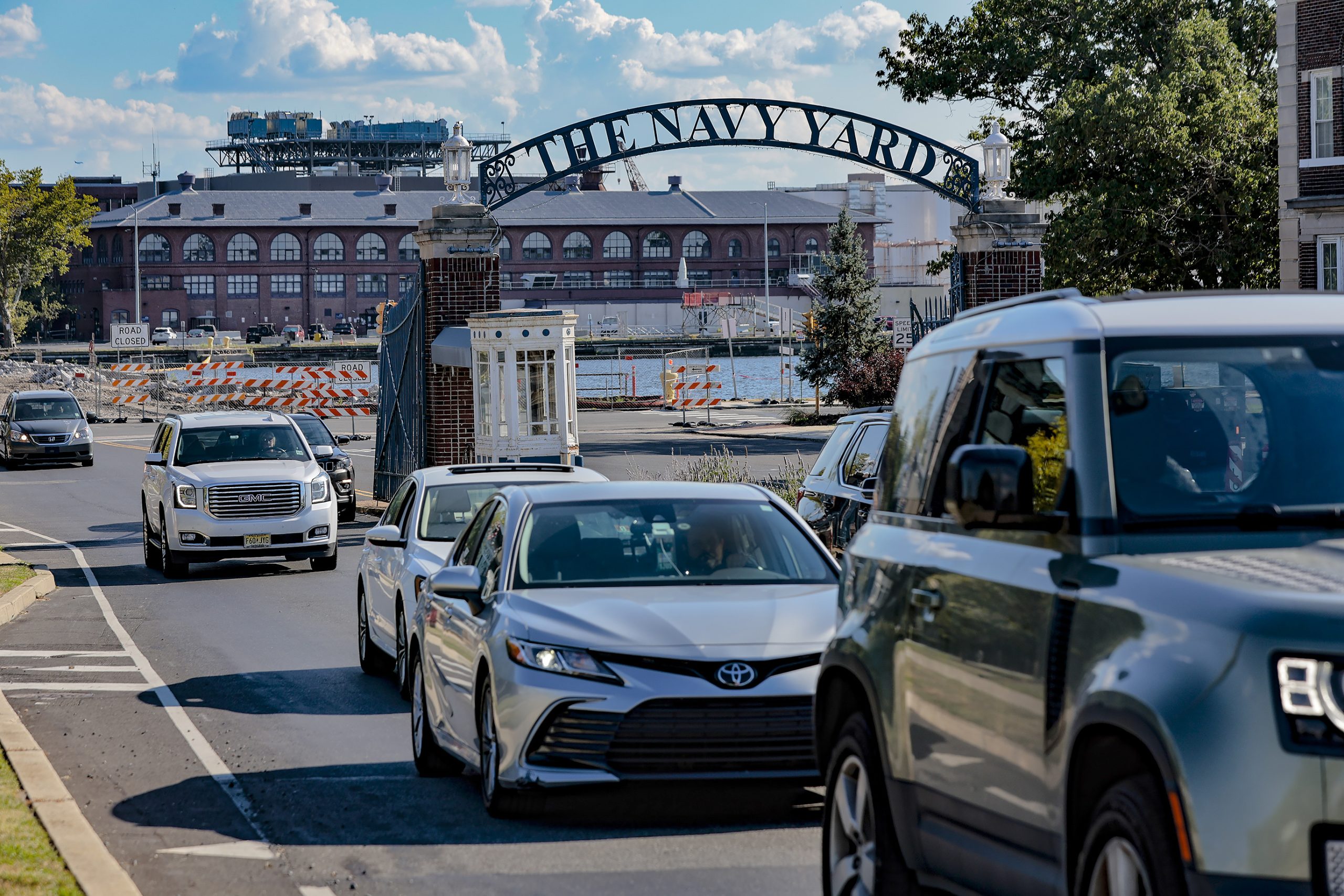
    Constitution opened late last year as the first new private-sector housing complex on the 1,200-acre property at the city’s southernmost edge. The naval base was decommissioned in the 1990s and has since become an office and laboratory hub, with more than 150 companies that employ 16,000 people.

    It also includes more than 20 acres of parks and miles of walking paths, some along the Delaware River, as well as a restaurant and hotel.

    Now, it is also home to a small but growing number of residents.

    More than a third of the 347 units in Constitution are leased, according to Sam Korman, AVE’s director of operations. Next door at Normandy, which opened this spring, more than 20% of the 267 units are leased, according to Korman. Normandy includes unfurnished apartments for tenants, as well as furnished ones that are marketed to business travelers. Lease-ups for buildings of this size typically take about 18 months, a spokesperson for the company said.

    “We are extremely pleased with the reception to AVE Navy Yard through our first few months of operations,” Korman said last month in a statement. “This past month has been our most successful for both furnished and unfurnished leasing, a positive trend that we expect to continue throughout the summer,” a busy season for rentals.

    Navy Yard stakeholders eventually want the property to have 4,000 apartments, along with more retail space and a second hotel, according to its 2022 redevelopment plan.

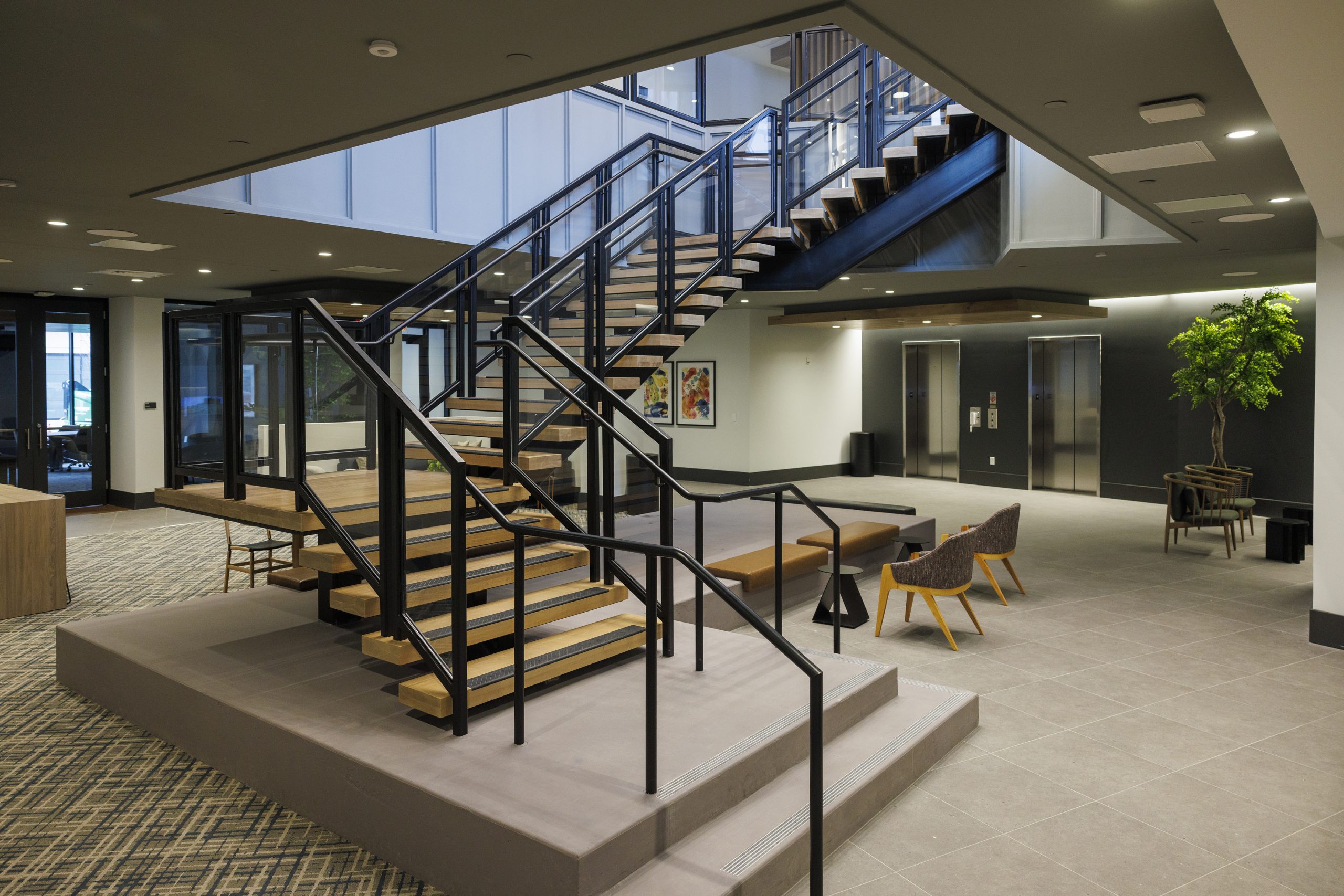
    A one-bedroom apartment at AVE Normandy as seen in March.Alejandro A. Alvarez / Staff Photographer

    Some Navy Yard residents love their ‘secluded spot’

    As cars drove by from the Navy Yard office complexes, headed toward I-76 and I-95 on a recent afternoon, only a handful of people were out and about near the apartment buildings.

    Several food couriers dropped off orders in the Normandy lobby. Nearby, in front of floor-to-ceiling windows, someone walked on the treadmill in an otherwise-empty gym. On an outdoor deck above, people could be heard splashing in the pool.

    Otherwise, passersby were few.

    Brown said she enjoys the suburban-esque solitude, though she’s glad more tenants are moving in. This winter, it felt like only a handful of other people lived in the building, she said, but now her floor seems like it’s almost full, making it “less spooky.”

    A communal space at AVE Normandy in March.Alejandro A. Alvarez / Staff Photographer

    Across the street at Normandy, resident Integra Feliciano has picked up a similar vibe.

    “I have the sense that I’m definitely one of the earlier tenants,” said the 29-year-old, who moved in April and was drawn to the area’s tranquility after living near Passyunk.

    Feliciano commutes to her job at a life sciences company in West Philly. She looked at apartments in Center City but couldn’t find anything as quiet and luxurious — without “ridiculously expensive” parking.

    At her last apartment, she said, she paid more than $300 a month for parking, a rate that was set to hit $500 around the time she moved. Like Brown, she now parks on the street for free.

    The Navy Yard is “a secluded spot, a little gem,” said Feliciano, who pays $2,510 for her one-bedroom. “I like being in proximity to the city, but I don’t like being right in it.”

    The Navy Yard itself is “still up-and-coming in terms of having more restaurants and stuff,” Feliciano said, but there’s plenty to do.

    People leave the Navy Yard at rush hour in August 2022.

    In the spring, she said, she and her boyfriend bought last-minute tickets to a Sixers playoff game and walked over to Xfinity Mobile Arena. While out for a run one day, she discovered the Southeast Asian Market in FDR Park.

    She swims in her building’s pool whenever she can, she said, and often invites family and friends over. And she said her guests love that they don’t have to “circle the block for an hour” to find a parking spot.

    “I had a friend come over, and she just parked right in front,” Feliciano said. “She said, ‘Oh, that’s it?’”

    Why the first resident was drawn to AVE Navy Yard

    Gokul Krishnan is glad more people are discovering the Navy Yard apartments. The 51-year-old, who works as the chief sourcing and global trade compliance officer for URBN brands, was the first person to sign a lease and move into Constitution last November.

    “It feels like home,” said Krishnan, who moved to Philly from the San Francisco area. “It’s so calm.”

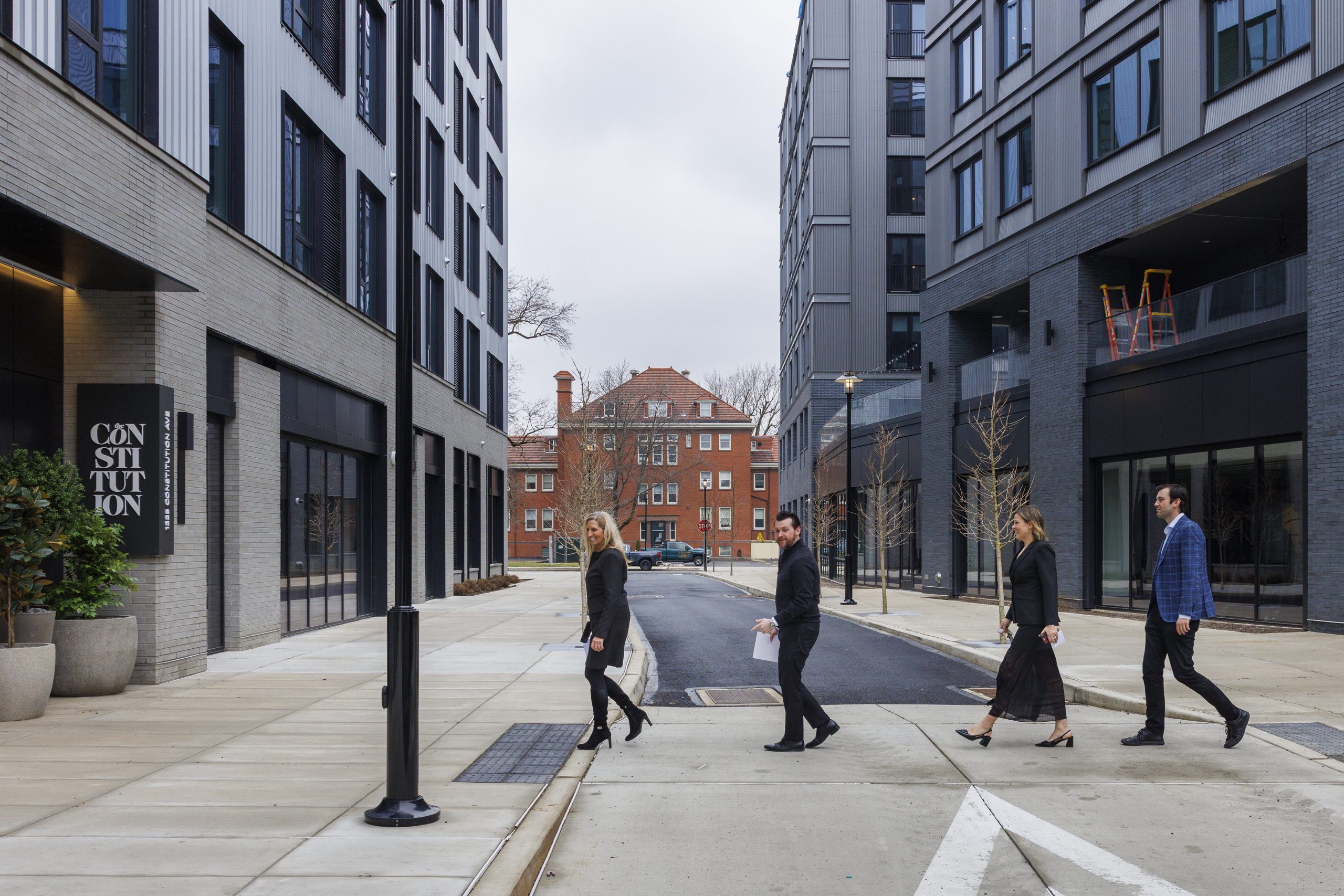
    AVE Navy Yard executives walk between the Constitution and Normandy apartment buildings in March.Alejandro A. Alvarez / Staff Photographer

    He enjoys taking walks around the Navy Yard, using the gym, and spending time in the building’s lounge and outdoor courtyard. The AVE staff is kind and communicative, he said, and he, too, enjoys a 10-minute walking commute to his office at the Urban Outfitters headquarters.

    While he does drive or use a delivery service for groceries, he said he has walked to the Navy Yard’s Gatehouse restaurant or to the Courtyard by Marriott hotel lounge for a bite to eat.

    Krishnan signed an 18-month lease, he said, and pays about $3,000 a month for his one-bedroom, plus parking in the complex’s covered garage. He may upgrade to a larger unit next year, he said. His wife plans to move from California once their son graduates high school, and she’s bringing the couple’s 6-year-old goldendoodle, Simba.

    Editor’s note: This story has been updated with additional information about leasing plans.

  • Meet the Philly tech founder who was a monk, worked for Meta, and is building tech for local government

    Meet the Philly tech founder who was a monk, worked for Meta, and is building tech for local government

    Lilly Chen, 30, wants people to stop thinking local government software “sucks.”

    The cofounder and CEO of Philadelphia-based FSH Technologies once worked at Facebook writing software that trains AI models, lived in a monastery as a teen, and is now on a mission to make local government technology more efficient.

    In the last two years, her company has raised $5.5 million from venture capital, and secured a contract with the city’s Department of Commerce.

    “We’re so gung ho about local government, which is like a weird thing to say, but it’s true,” said Chen.

    The business just moved into a new office at 2400 Market St., where Aramark is headquartered, and opened a smaller outpost in New York City this month. Chen hopes to hire 40 workers by early 2027, adding to the current 12-person staff, to work on contracts the company has already secured. She’s looking for software engineers and client strategists — positions that can come with a starting salary of $150,000 at FSH Technologies, as well as a signing bonus and equity, she said.

    The company is “winning government contracts at a clip,” said Chen, who was born in New Jersey and went to college in Colorado. She was working in San Francisco when the pandemic started, and decided to move closer to her parents in Media.

    She declined to share how much the company brought in last year in revenue but says “it’s in the millions.”

    The Inquirer interviewed Chen on a hot July day over the phone while she enjoyed an ice cream from 1-900-ICE-CREAM. The following conversation has been edited for clarity and brevity.

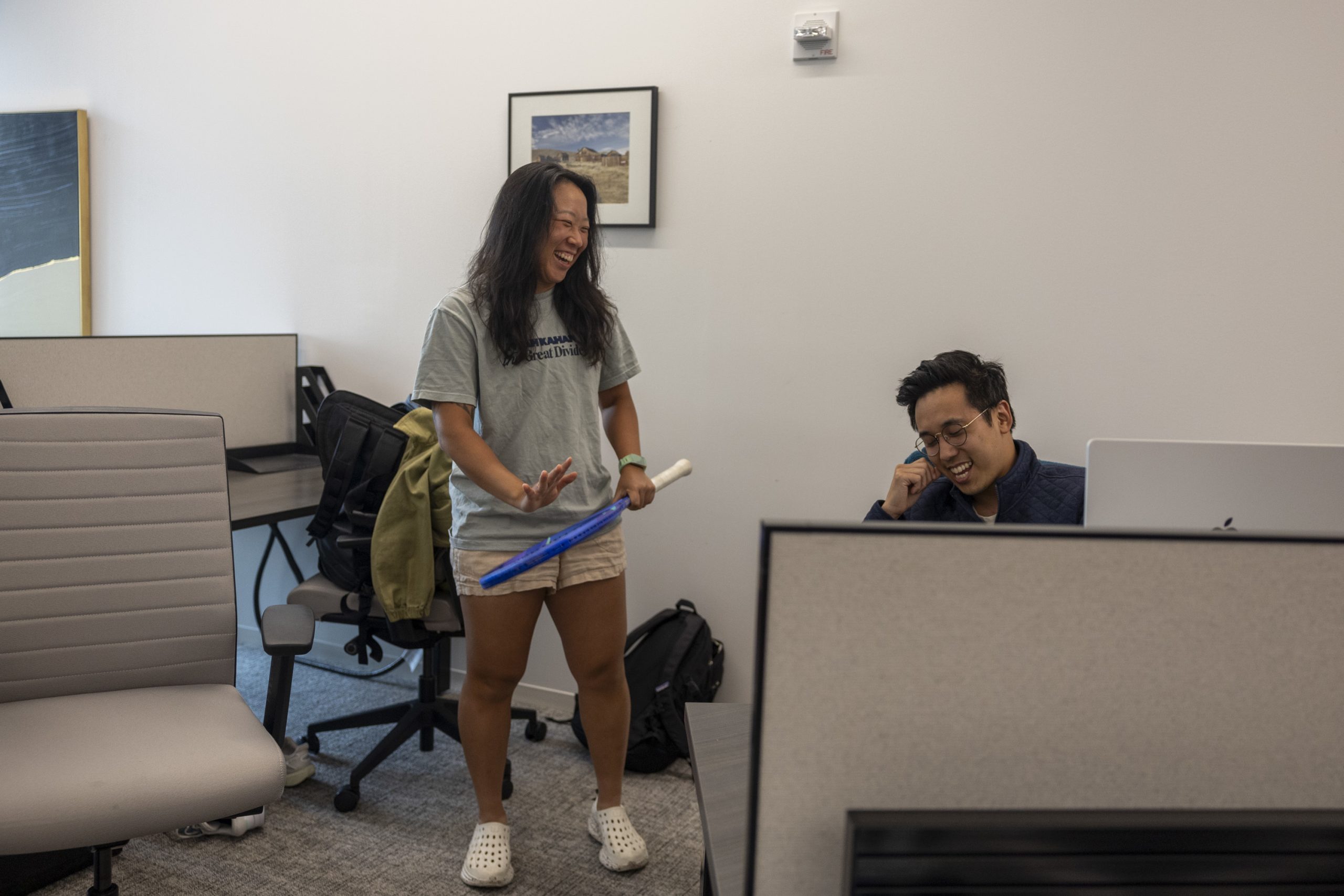
    FSH Technologies cofounder Lilly Chen chats with COO Jason Chen in their Philadelphia office.Tyger Williams / Staff Photographer
    Why did you start this company, FSH Technologies?

    I used to work at Meta … when I worked there it was called Facebook. I was just very disenchanted with the apathetic nature of tech bros and the real-world impact that technology has on regular people.

    FSH technologies is focused on creating software for local government. Why this niche?

    I was [thinking about] what is a net positive on society that I can feel very good about, that I think technology is a good solution for. I landed on local government because it’s the one thing that universally everybody in America has to interface with, and the technology is so outdated. If you’ve tried to pay a parking ticket, get a permit, just try to navigate your local municipality, it’s so hard, it’s so complicated. Usually the software doesn’t even exist. It could be a manual paper thing.

    In the last year there was a lot of talk in the Donald Trump administration of making the federal government more efficient. You’re talking about efficiency at the local government level. Did any of that narrative impact you?

    There was actually no technology involved in the DOGE effort. When you drive real efficiency in government, it’s not rip and burn things. It’s actually getting into the weeds to understand the current process, who’s doing it, how they’re doing it, why they’re doing it, and then iteratively improving and wherever possible digitizing the relative components of that.

    It’s not at all just being like, “Let’s just fire these people and see what happens.”

    What about the name FSH Technologies? Where does that come from?

    I used to be a Buddhist monk. I dropped out of high school when I was 16, and I moved to China and I lived in a monastery….We had a pond where we kept fish, and [my sensei] … would describe to me: “You are the pond, not the fish.”

    If you can kind of separate yourself from the immediate feelings and see things as a bigger picture, as a system, you actually have a much more cohesive understanding and view of the problem.

    You were a monk?

    I was a real troublemaker in high school. I actually ended up getting very sick — I had an autoimmune disease … I was missing a lot of class, I was kind of misbehaving. My mom at one point threw her hands up in the air and was like, “We’re now Buddhists, we are moving to China, we’re going to live in a monastery, we’re shaving our heads.”

    Can you tell me more about your work for the Philadelphia Department of Commerce?

    We build software for the entire Department of Commerce, actually.

    We standardized and unified all their forms into one platform, and then we created business profiles so that businesses would have to input, for example, their EIN number…once, and it’s there. If you put in your revenue, it will show you what you qualify for.

    Prior, if you think about a Google form and you fill it out, you don’t actually know if you qualify, because anybody can open the form, anybody can submit it. It creates a lot of bureaucracy on both ends. You, as the business, don’t know if it was worth your time to fill it out, so you just fill it out – or you don’t fill it out. You, as the city, don’t know if this business is eligible, so you just spend time reviewing stuff for people who don’t qualify. Everything becomes slower and like sludge because the interface is really bad for actually streamlining the process.

    The city spends so much less time reviewing applications now because they only get access to the ones that are actually qualified.

    How are you managing the company’s work with your current staff of 12?

    We have actually won a ton of contracts that are coming down the pipeline, but we haven’t started them yet. We have time to staff up, which is what we’re trying to do. If I can hire 50 people, I would.

    Why can’t you?

    What we do requires two things. One, is a deep passion and empathy for communities, civil servants, public good. You really need to care about the details because if you don’t care about them, you’re going to let people fall through the cracks.

    That’s actually kind of hard to find because … people hear government software and they think it’s boring. They don’t necessarily realize how much impact you can have if you care deeply about this boring thing.

    The second thing is software skill — the craft of building software that just works is hard.

    The Venn diagram of skill and care is hard because a lot of people who are highly, highly skilled in technology end up at these AI frontier labs, which are paying a million dollars in salary.

    What do you want the company to look like in five years? What’s the goal?

    The goal is being able to have people no longer think local government software sucks.

  • Liquid natural gas export facility planned for Eddystone provokes an environmental fight

    Liquid natural gas export facility planned for Eddystone provokes an environmental fight

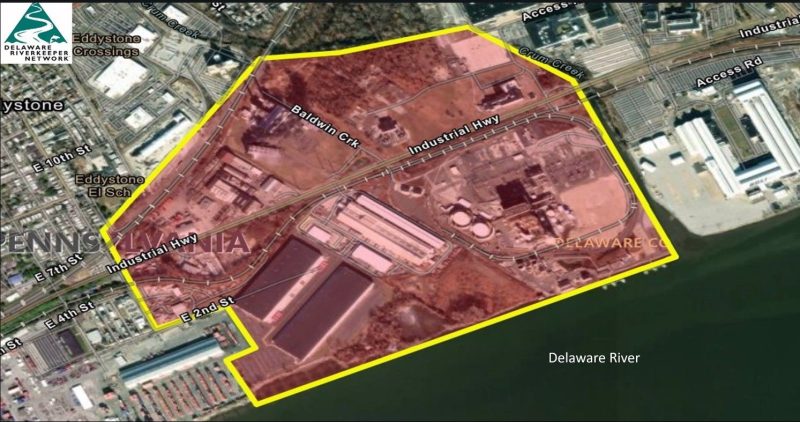
    Two environmental activist groups say they plan to organize resistance against a plan to build a liquefied natural gas (LNG) export facility in Eddystone, a small borough in Delaware County.

    They say the facility would threaten not only the environment, but also public safety.

    The Delaware Riverkeeper Network and Chester Residents Concerned for Quality Living (CRQL) said during an online meeting Wednesday that documents show negotiations have been happening behind closed doors for more than a year.

    They cited a newly released tranche of documents that show the plan has progressed with nondisclosure agreements (NDAs) with state officials.

    More than a year ago, U.S. Sen. David McCormick (R., Pa.) wrote an opinion piece in the Washington Times publicly announcing the $7 billion project by Penn America Energy to build the terminal along the Delaware River in Eddystone.

    Details have been scant, but nearby communities such as Media have stated opposition to the terminal.

    Tracy Carluccio, deputy director of the nonprofit Delaware Riverkeeper Network, said the documents show that the administration of Pennsylvania Gov. Josh Shapiro and Eddystone officials have been talking to, or in negotiations with, a developer for at least a year.

    (function(){function e(){window.addEventListener(`message`,function(e){if(e.data[`datawrapper-height`]!==void 0){var t=document.querySelectorAll(`iframe`);for(var n in e.data[`datawrapper-height`])for(var r=0,i;i=t[r];r++)if(i.contentWindow===e.source){var a=e.data[`datawrapper-height`][n]+`px`;i.style.height=a}}})}e()})();

    The environmental groups say Eddystone Borough officials initially denied open records requests about those negotiations, prompting a yearlong legal mediation.

    The planned facility aims to produce 7.2 million tons of LNG per year from Pennsylvania’s rich Marcellus Shale deposits, Carluccio said, based on a presentation by Penn America to Eddystone Borough on March 7 that was obtained through a records request.

    “There have been no public meetings or public disclosure about the proposed project,“ she said, adding that “the public knows nothing about this, and Eddystone Borough knows all about it.”

    Carluccio said nondisclosure agreements (NDAs) and confidential meetings involving high-level state and local officials have helped shield the project from public scrutiny.

    The Pennsylvania Department of Environmental protection said it had not had any pre-application meetings regarding a proposed LNG export facility and no permits for such a facility are under review.

    In a statement from Eddystone Borough, officials said they are aware of the “public discussion” regarding a potential LNG facility. The statement said that members of Borough Council met with representatives of the project last year “for informational” purposes.

    “Those meetings did not constitute approval or endorsement of any future development,” the statement said. “No approval action is currently before Borough Council.”

    If an application is submitted, the statement said, the borough would conduct a “thorough review” and that the process would be open to the public.

    Pa.’s drive toward LNG

    State, public utility, and elected officials, as well as unions, have been working toward locating an LNG facility in Southeastern Pennsylvania, although no site has been formally proposed.

    The Philadelphia LNG Task Force was created from legislation introduced in 2022 by State Rep. Martina White (R., Philadelphia) to explore the possibility of the first liquefied natural gas export facility along the Delaware River. Former Gov. Tom Wolf, a Democrat, signed the legislation to form the task force.

    Previously, state officials have hosted multiple public sessions on a potential facility, saying it would tap a European market hungry for energy.

    Eddystone deal

    Although McCormick noted Eddystone as a location, no official planning documents have been submitted to Eddystone or the Federal Energy Regulatory Commission (FERC).

    According to records obtained through Pennsylvania’s Right to Know Act, the Pennsylvania Department of Community and Economic Development (DCED) entered into a formalized nondisclosure agreement with Eddystone Energy LLC in October 2025.

    The DCED issued a statement to The Inquirer saying that it “routinely discusses potential projects with companies seeking to do business in the Commonwealth.”

    The agency said the discussions are confidential because they involve proprietary information from companies.

    “Maintaining confidentiality in such discussions is common practice in the business development industry across the country,” the statement said.

    A draft NDA was additionally distributed between Eddystone Borough Council and Penn America Energy Holdings, though it appears it was never officially finalized, Carlucci said.

    Advocates say that Franc James, CEO of the now-dissolved Penn America Holdings LLC, has been the primary figure driving the LNG project forward, alongside an array of state politicians.

    On Wednesday, Carluccio asserted James is behind Eddystone Energy LLC, a Delaware corporation formed in May 2025.

    Internal records reveal that meetings have involved representatives from the offices of Shapiro, State Sen. John Kane, McCormick, and State Rep. Dave Delloso, as well as Eddystone Borough officials.

    For example, a document from Shapiro’s office shows there was an hourlong meeting in February with Eddystone Mayor Ronald Hughes, Borough President William Stewart, Kane, James, multiple union representatives, and Technip Energies, an international energy infrastructure developer with a specialty in LNG.

    And James wrote an email dated July 11 to Samuel Robinson, Shapiro’s deputy chief of staff, stating that the “LNG Eddystone team” would attend the Pennsylvania Energy and Innovation Summit that same month in Pittsburgh. The summit was organized by McCormick.

    Community reaction

    An LNG facility along the Delaware River waterfront in Southeastern Pennsylvania has been discussed for years with James’ Penn America Energy Holdings, also referred to as Penn LNG.

    Though no location had been firmly named, it was initially believed Chester would be the host. However, that location received massive pushback from residents led by Zulene Mayfield, founder of the CRQL advocacy group, and resulted in a political turnover in the city. No project was ever formally proposed for Chester.

    The environmental advocates say the plan for Eddystone is well underway despite the lack of public input. Mayfield said she plans to organize Eddystone residents to oppose it.

    “This project is already rolling, that’s what we’re telling you,“ Mayfield said Wednesday in the webinar she hosted with Carluccio. ”The attempt is already being made to put it right in Eddystone.”

    Mayfield and Carluccio said the borough is too small to host a large LNG export facility, which typically span 1,000 acres. The borough is one-square mile.

    They also fear that an explosion or fire could not only reach neighboring towns but also stretch across the river to New Jersey.

  • Chester City agrees to five-year emergency medical services contract with VMSC

    Chester City agrees to five-year emergency medical services contract with VMSC

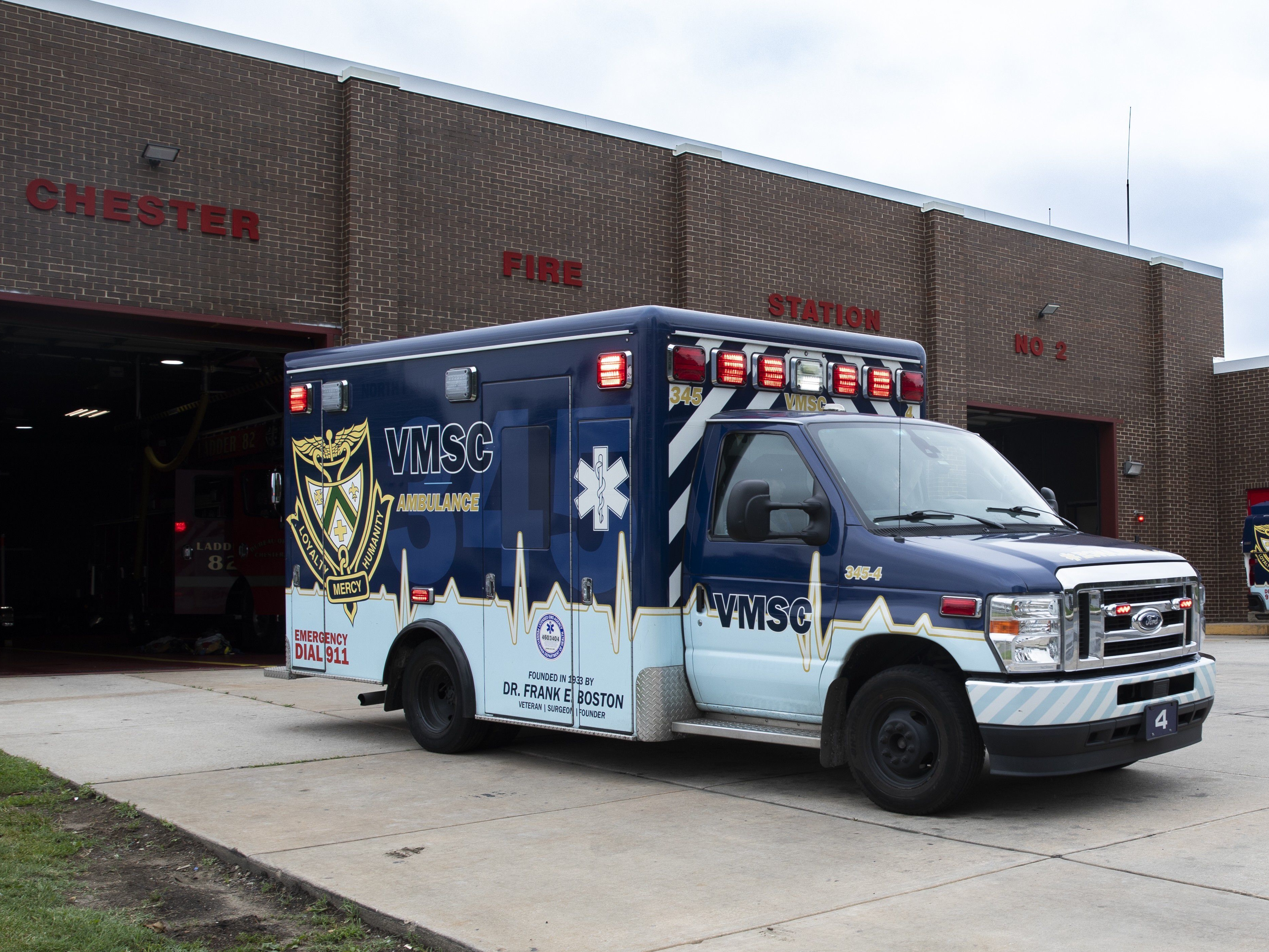
    Chester City agreed to a five-year, $2.8 million contract with VMSC Emergency Medical Services, a nonprofit that started providing ambulance services in the community after the closure of bankrupt Crozer Heath a year ago, the city and VMSC announced Monday.

    During VMSC’s first year in Chester, the Lansdale organization had a $470,000 shortfall, chief executive Shane Wheeler said. The $2.8 million is expected to support operation of the services — including the cost of serving uninsured patients — and pay for equipment needs.

    The ambulance company has responded to 8,324 calls since May 2, but 35% did not require transport to a hospital, Wheeler said. In many cases, the ambulance crew fulfills the function of primary care for residents.

    “We’re assessing blood pressure or helping someone with their medication, helping people get up” from a fall, Wheeler said.

    VMSC’s accomplishments in the first year reducing ambulance response time to about 5½ minutes from more than 12 minutes, according to Wheeler.

    The contract requires VMSC to assign at least three basic ambulances to serve Chester and its direct neighbors, with two staffed 24 hours a day. The organization also must provide at least one commander with training in more advanced treatment.

    “This agreement is about stability, reliability, and protecting the health and safety of our residents,” Chester Mayor Stefan Roots said in Monday’s announcement of the contract. “This is a critical investment in public safety and in the overall well-being of our city.”

  • How realistic is new owner’s ‘aspirational’ plan for Crozer-Chester Medical Center campus?

    How realistic is new owner’s ‘aspirational’ plan for Crozer-Chester Medical Center campus?

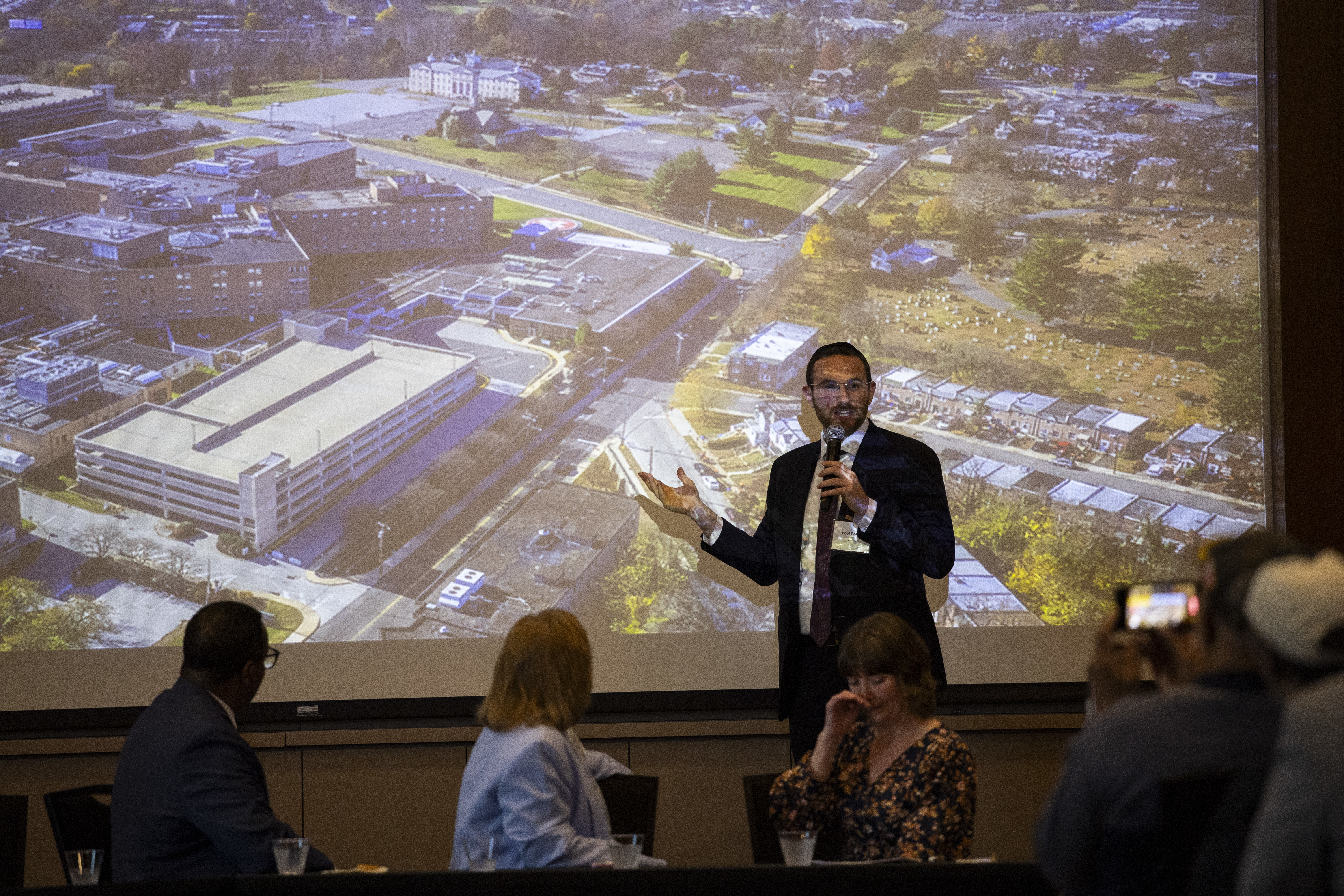
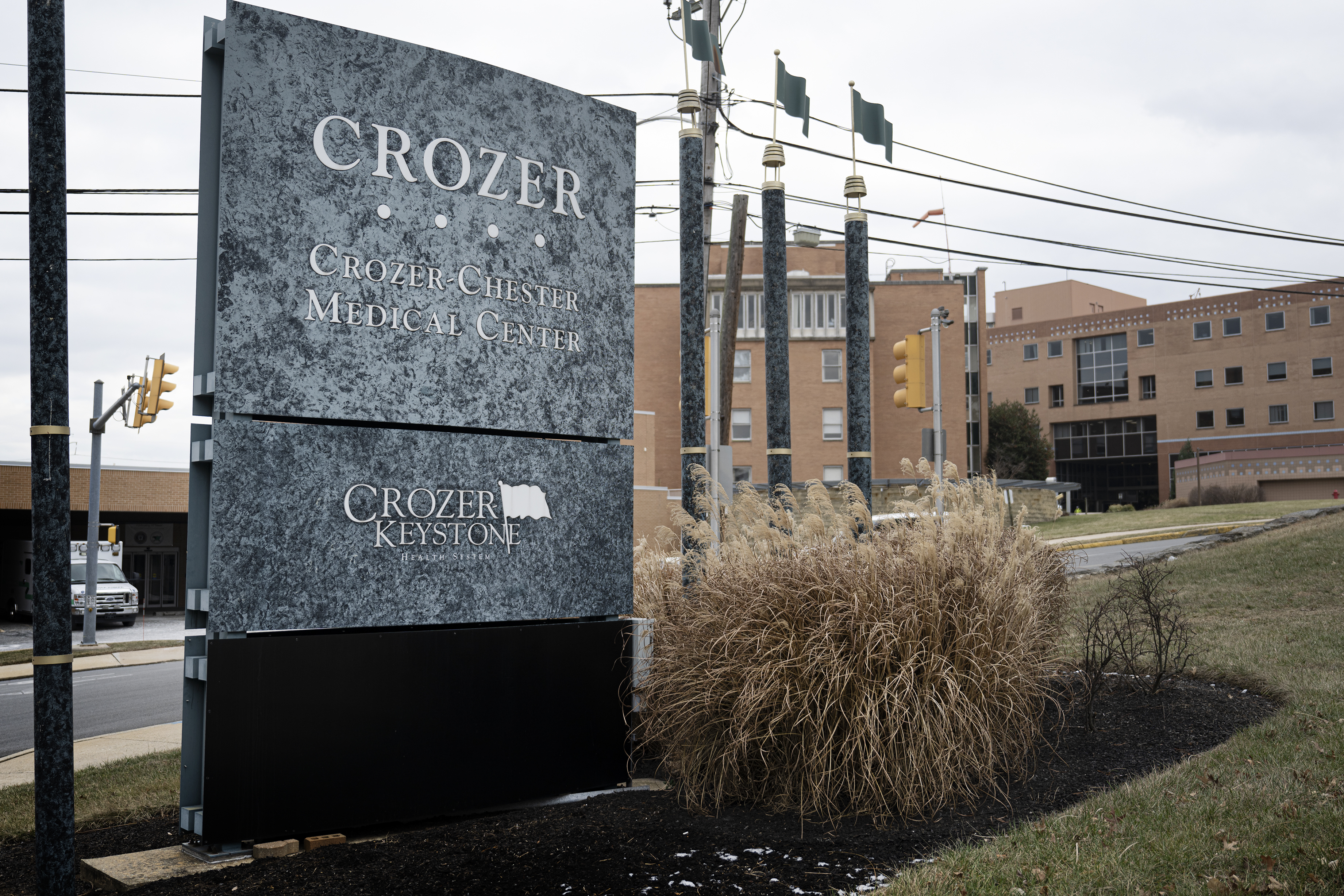
    The new owner of the shuttered Crozer-Chester Medical Center in Delaware County shared what he called an “aspirational” plan to restore healthcare services to the Upland facility at a town hall meeting Tuesday in Chester.

    The vision includes reopening of the emergency department, creating a small hospital above the ED, and developing outpatient services — all operated by one or more local nonprofit health systems, Yoel Polack told a standing-room-only crowd of more than 200 at Widener University.

    Polack is CEO of Chariot Allaire, the for-profit partnership that paid $10 million for Crozer in January. His group has been talking to all the regional health systems for months and expects soon to begin “a study process with two and hopefully three of the major academic medical centers in the region,” he said.

    That is expected to last up to 90 days, he said, “and hopefully at the end of that period, we’re going to be having some outline of partnership with the system.” Polack described his anticipated partner as an institution “you know and trust.”

    The entire process could take two or three years after a partnership is formed, he said Polack, whose company is registered in Lakewood, N.J.

    He provided no details on how much Chariot Allaire would be willing to invest to attract a health system to the site, where state-led efforts previously failed to save a major safety-net provider for Delaware County that closed last May amid the bankruptcy of its California-based owner, Prospect Medical Holdings Inc.

    Chariot Allaire paid relatively little for the 64-acre campus, which gives the company a low cost basis for owning the site. But that doesn’t mean it will be easy to attract a partner at a time of thin to nonexistent profit margins for the region’s health systems.

    “It does not seem like there’s an easy and obvious candidate,” said Dan Grauman, managing director at VMG Health, a national healthcare consulting firm.

    “There’s no question there’s need for care and for services, said Grauman, who has decades of familiarity with the Philadelphia region’s healthcare market.

    A welcome public meeting

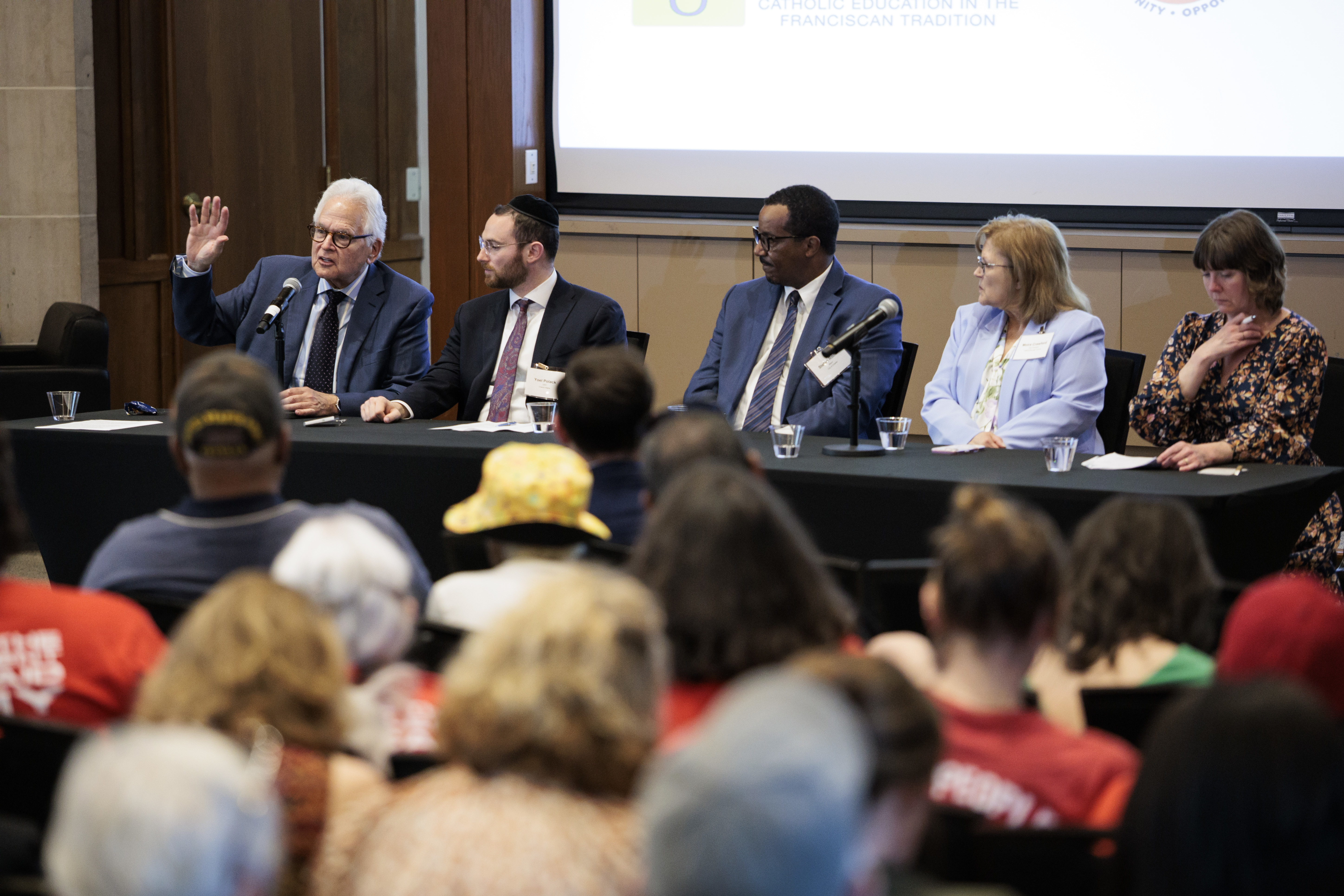
    During an hourlong question and answer session, residents expressed gratitude for the meeting with Polack and his senior medical adviser, Arthur Klein, a pediatric cardiologist who spent decades as an executive at nonprofit health systems in New York.

    A town hall meeting Tuesday in Chester about plans for the former Crozer-Chester Medical Center drew a large crowd.Monica Herndon / Staff Photographer

    “Many times things happen in our community, and we are the last to know, so you started off very, very well,” said Zulene Mayfield, chairperson of Chester Residents Concerned for Quality Living, a community group known for the fight to close a large trash incinerator in the city.

    Some residents pushed back against Polack and Klein’s plans for a much smaller hospital than the more than 400 beds Crozer-Chester Medical Center had at its peak. During a March interview with The Inquirer, Klein suggested the new hospital could have 80 beds.

    “You don’t want a hospital of the 1990s,” Klein said Tuesday.

    The current hospital structure encompasses 750,000 square feet — now completely empty. Crozer’s shuttered ED took up 30,000 of the square feet. Chariot Allaire contemplates opening a hospital a tenth of the size of the old hospital.

    Operating that hospital cost way too much, Polack said. ”It also doesn’t meet the way medical care is done today, which is mainly on the outpatient side,” said Polack, who has worked in healthcare real estate development in New York.

    Simone Development Cos., where Polack worked before striking out on his own, often collaborated on real estate deals with Montefiore, a health system in the Bronx that serves many patients with Medicaid insurance, Grauman said.

    That experience is relevant to the effort here, he said, given that Crozer also served large numbers of people with Medicaid, which pays significantly lower rates than private insurers.

    The role of local health systems

    Before Prospect’s bankruptcy filing in January 2025, a few local health systems explored establishing a new nonprofit to take over Crozer-Chester Medical Center. Those talks continued during the bankruptcy, but failed to produce a solution.

    The University of Pennsylvania Health System said it remains at the table.

    “We continue to work with committed partners to restore crucial healthcare services for Delaware County residents,” Penn said in a statement. “It’s important that any new models for the former Crozer-Chester site are built to be sustainable amid a rapidly changing healthcare landscape and persistent financial challenges.”

    ChristianaCare, which plans to open a micro-hospital in Aston in June, is not in discussions with Chariot Allaire, it said, but supports “their efforts to expand access to quality heath care in Delaware County.”

    Arthur Klein, senior medical adviser (left), and Yoel Polack, CEO of Chariot Allaire, greet attendees during a town hall in Chester on Tuesday.Monica Herndon / Staff Photographer

    While Chariot Allaire is wooing health systems, the new owners of two other closed Crozer Health hospitals, Taylor and Springfield, are doing the same thing. Local investors paid $1 million each for those hospitals. Those low prices could allow the owners to offer below market rate leases to attract tenants.

    Polack noted that if no local systems want to bring services to the Crozer site, he would look farther afield.

    “We don’t control hospital systems and operators, but we are doing everything that we can to put the pieces together to illustrate the opportunity that we see here to those hospital systems,” he said.

  • The new owner of Crozer-Chester Medical Center wants to restore hospital and emergency services

    The new owner of Crozer-Chester Medical Center wants to restore hospital and emergency services

    The new owner of the defunct Crozer-Chester Medical Center wants to restore hospital and emergency services to the 64-acre campus that straddles Chester and Upland Township in Delaware County.

    Newly formed Chariot Equities completed the $10 million purchase Wednesday. The for-profit entity said it expected within six months to have an agreement with a health system that would operate a “right-sized” hospital and emergency department at the facility that had been the county’s largest provider of those services before closing last year.

    The idea is then to open the first phase within two years, Chariot said in a statement.

    Chariot did not say how much it would spend on refurbishing Crozer-Chester, which had suffered from years of neglect under its two previous owners.

    Chariot’s partner at Crozer-Chester is Allaire Health Services, a Jackson, N.J.-based for-profit operator of nursing homes.

    The partners said they are in talks with regional and national nonprofit health systems regarding an operating partnership, but provided no details. The amount of money needed for the project would likely depend on what prospective tenants would want to do at the property.

    “Our belief in Delaware County’s future, and the community’s need for sustainable healthcare access, made this an effort worth committing to well before the finish line,” said Yoel Polack, Chariot’s founder and principal.

    Little is known about the new owners. Polack worked in healthcare real estate in the New York City area before setting his sights on redeveloping Crozer-Chester.

    Federal records list Allaire’s CEO Benjamin Kurland as an owner of 20 nursing homes, including three in the Philadelphia area. Chariot’s statement said Allaire owns a total of 29 facilities in five states.

    Philadelphia-area facilities associated with Kurland are the Center For Rehab & Nursing Washington Township, which was acquired from Jefferson Health; Riverview Estates Rehab & Senior Living Center in Riverton; and West Park Rehabilitation & Nursing Center in West Philadelphia.

    Local interest?

    Main Line Health has been involved in discussions about reopening emergency services at three former Crozer hospitals — Crozer-Chester Medical Center, Springfield Hospital, and Taylor Hospital — at the request of state lawmakers and the property owners, Ed Jimenez, CEO of Main Line Health, said Wednesday at a Riddle Hospital event.

    Jimenez said he would “entertain the concept” of restoring emergency services at one of the hospitals as part of a partnership with other health systems, but only if it can be done on a break-even basis.

    All three of the former hospital buildings visited by Main Line officials are in poor condition and were stripped of medical equipment after the closures. Main Line’s experts estimated it would cost between $15 million and $20 million just to make the emergency department at Taylor functional, Jimenez said.

    ChristianaCare, Delaware’s largest health system, considered acquiring Crozer in 2022. Instead, it took a different path to expansion in Southeastern Pennsylvania. It is planning to open two micro-hospitals in Delaware County. The nonprofit system also took over five former Crozer outpatient locations. Its credit rating was recently downgraded by one notch because of lower profitability.

    The importance of Crozer-Chester

    Crozer-Chester closed in early May during the bankruptcy of owner Prospect Medical Holdings Inc., a for-profit company based in California, and after the failure of government-supported efforts to form a new nonprofit owner for Crozer-Chester and other Crozer Health facilities.

    Crozer-Chester was particularly important as a safety-net provider for a low-income area of Delaware County that has few other nearby options. The Crozer system, which had four hospitals, was the county’s largest health system and largest employer for many years.

    Two local Democratic officials, State Rep. Leanne Krueger and Delaware County Council member Monica Taylor, said they were encouraged by the approach being taken by Chariot and Allaire.

    At Taylor Hospital, the other Crozer hospital that closed last year, new owners are also looking for healthcare tenants. Local investors bought the Ridley Park facility for $1 million. It is less than four miles from Crozer-Chester.

    The same group agreed last week to pay $1 million for Springfield Hospital, another facility that had previously shut down under Prospect ownership.

  • Pa.’s new budget has financial help for Delco’s Riddle and Mercy Fitzgerald Hospitals

    Pa.’s new budget has financial help for Delco’s Riddle and Mercy Fitzgerald Hospitals

    Pennsylvania’s new budget has $5 million in supplemental payments for the two Delaware County Hospitals that have seen significant increases in patient volumes since Crozer-Chester Medical Center and Taylor Hospital closed in the spring.

    Main Line Health’s Riddle Hospital, near Media, is getting $3 million. The amount for Trinity Health Mid-Atlantic’s Mercy Fitzgerald Hospital, in Darby, is $2 million, according to budget documents.

    The $5 million will be doubled by a federal match, said Democratic State Sen. Tim Kearney, who represents part of Delaware County. The $5 million is from a fund used to help hospitals the serve a large number of patients with Medicaid and used to go to Crozer Health, Kearney said Friday.

    Main Line said in a statement Thursday that the money will help it maintain services in the county.

    “Since Crozer’s shutdown in April, Riddle’s Emergency Department has experienced an unprecedented surge — 46% more patients than the same period last year, an increase of nearly 4,000 overall,“ the nonprofit said.

    Main Line, which also owns Lankenau Medical Center, Bryn Mawr Hospital, and Paoli Hospital, said it has seen 55,000 patients from the Crozer market — a 15% increase over the same time period last year. That figure includes 8,000 patients who went to a Main Line facility for the first time, the health system said.

    Trinity Health did not respond to a request for comment.

    Shuttered hospitals in limbo

    While Riddle and Mercy Fitzgerald have scrambled to accommodate patients who used to rely on Crozer Health, efforts are underway to bring healthcare services back to at least Taylor Hospital in Ridley.

    Local investors bought that facility in September for $1 million and are trying to entice one of the region’s nonprofit health systems to bring it back as a hospital.

    A group from New Jersey called Chariot Allaire Partners LLC has agreed to pay $10 million for the former Crozer-Chester Medical Center in Upland but has not disclosed its plans. That facility served as a key safety provider for a low-income area of Delaware County.

    A partnership of Restorative Health Foundation and Syan Investments won an auction for Springfield Hospital for $3 million, but it does not have support from township officials.

    Delaware County legislators also obtained $1 million from the state to buy emergency department equipment if one of the closed hospitals, such as Taylor, reopens, Kearney said.

    Editor’s note: This story has been updated with additional detail on the funding.

    This suburban content is produced with support from the Leslie Miller and Richard Worley Foundation and The Lenfest Institute for Journalism. Editorial content is created independently of the project donors. Gifts to support The Inquirer’s high-impact journalism can be made at inquirer.com/donate. A list of Lenfest Institute donors can be found at lenfestinstitute.org/supporters.