NEW YORK – Larry Berg, a member of Los Angeles FC’s ownership group with roots in Cherry Hill, has been elected as the new commissioner of Major League Soccer.
He will officially take the reins on Jan. 1, with current commissioner Don Garber keeping the job until then. Garber will then take the role of chairman.
“Thanks to the vision and commitment of so many people, Major League Soccer has achieved tremendous success, but I believe our greatest opportunities are still ahead,” Berg said in a statement. “We have an extraordinary opportunity to strengthen the quality of our competition, develop more world-class players, deepen our connection with supporters, and continue elevating Major League Soccer’s place in the global game. Together with our owners, clubs, players, partners, supporters, and league staff, I could not be more excited for what comes next.”
A formal news conference will take place Tuesday at the league’s Manhattan headquarters. Monday’s vote took place there, with representatives of all 30 teams’ ownership groups.
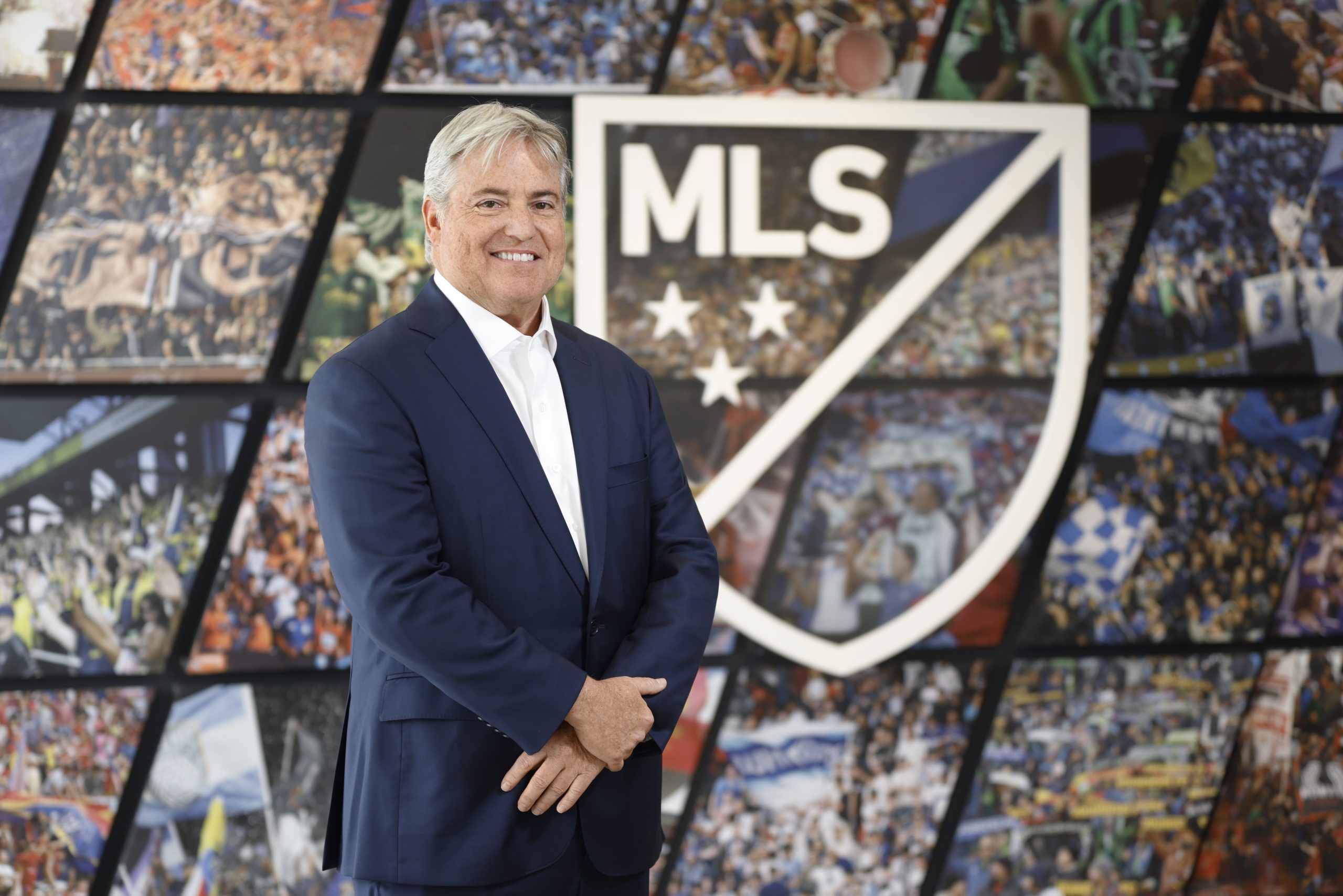
Larry Berg poses for a photo at MLS headquarters after being elected as the league’s new commissioner.Major League Soccer
“Having worked closely with Larry over the past decade, I’ve seen firsthand the qualities that make him an exceptional leader, and I have complete confidence he is the right person to serve as Major League Soccer’s next commissioner,” Garber said. “His integrity, judgment, collaborative leadership, and unwavering commitment to building LAFC and the league have made him an invaluable partner. I look forward to working alongside Larry during this transition and supporting him as he leads MLS into its next chapter.”
Berg, 60, has been part of LAFC’s ownership group since the team launched in 2018. He will be just the league’s third commissioner since it launched in 1996. Doug Logan had the job from 1995-99, and Garber has had it ever since.
Berg topped David Nathanson, a former Fox Sports executive with ownership stakes in teams including the Seattle Sounders, NWSL’s Angel City FC, and NHL’s Seattle Kraken.
Those were the only two candidates, and just one other was known to have been in the race: veteran San Francisco 49ers and Leeds United executive Paraag Marathe. He took himself out in mid-July.
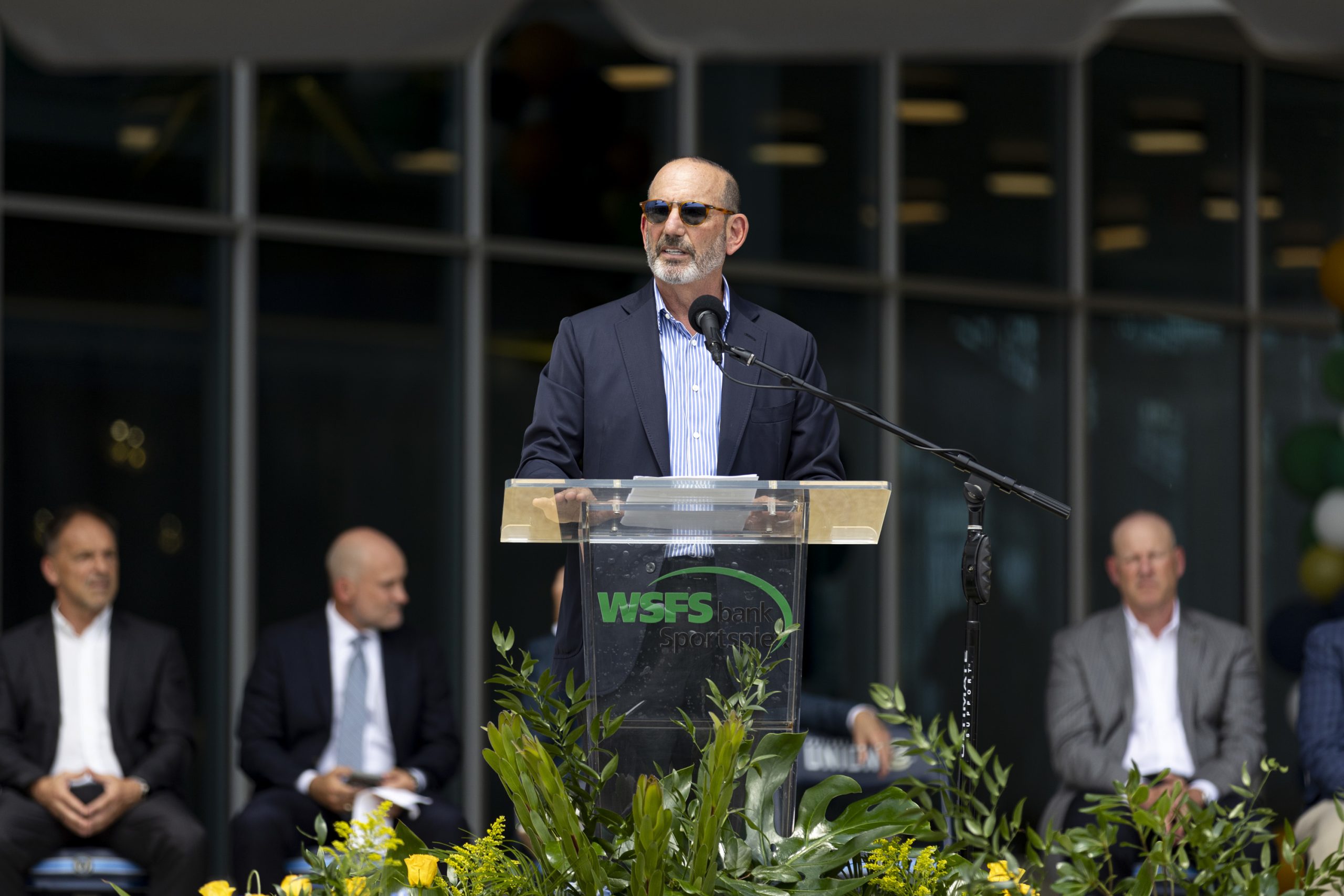
Don Garber has been MLS commissioner since 1999.Tyger Williams / Staff Photographer
Berg has recently been co-chair of MLS’s powerful sporting and competition committee. That group is in charge of setting the league’s roster rules, including a long-anticipated overhaul to push the pace harder in the global game. That overhaul seems close to arriving, and no doubt Berg will be a leading figure in presenting it to the public.
He also has quite a few ties to the Philadelphia area. He’s a Cherry Hill native who played soccer at Cherry Hill East High, and attended Penn’s Wharton business school. He’s a Philadelphia sports fan, from the Eagles to soccer’s Atoms back in the day, and his wife is from the city.
Berg’s career away from soccer has been in the investment world. He knows 76ers lead owner Josh Harris well, having worked at Apollo Global Capital and Harris’ newer 26 North investment firm.
Of course, Berg’s fandom hasn’t extended to the local MLS team here, but that’s no surprise. He has helped build LAFC’s juggernaut, with a history of stars and a 2022 MLS Cup title at the Union’s expense.
Now everyone will see if his business acumen with a club can translate to the overall league.
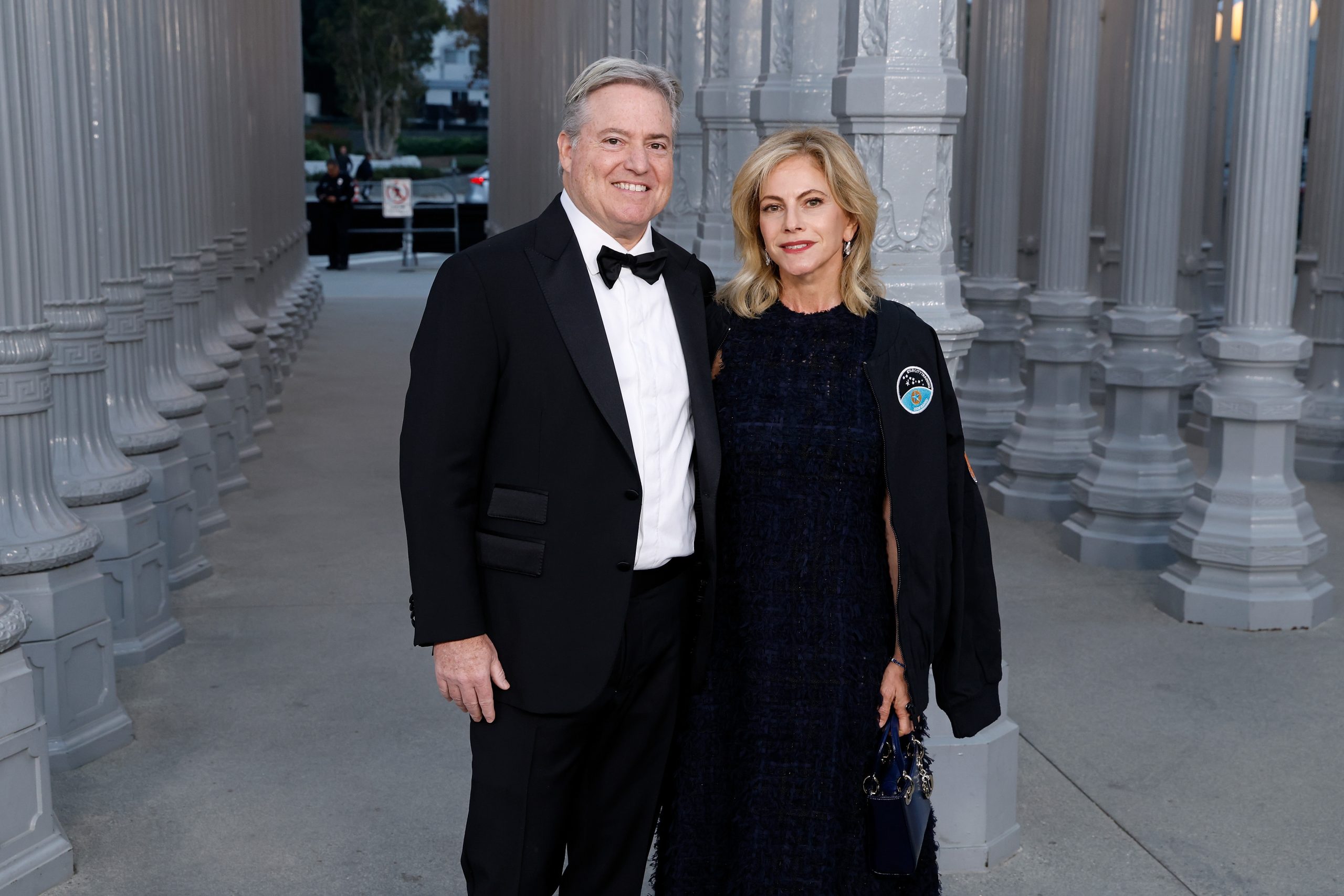
Larry Berg (left) with his wife Allison, a Philadelphia native.FilmMagic
Nathanson spent many years in the media world. His biggest feat was helping Fox land World Cup broadcast rights starting in 2015, after ESPN had held them for decades. He was also involved in deals for Concacaf tournaments and other soccer properties. After leaving Fox in 2017, Nathanson became an investor in a wide variety of areas, including sports teams.
Coincidentally, he also has ties to Philadelphia as a Penn alum, and is a regular visitor to the city. His top selling point as a candidate is having TV rights experience, with MLS already starting to look for its next round of big deals. The all-in-one Apple package will end in 2029, and Fox’s small package of linear broadcasts expires after this year.
Nathanson declined to comment when approached, but he no doubt will be heard from in other ways in the sport.
Union principal owner Jay Sugarman told The Inquirer he was pleased with Berg’s victory.
“We had two very impressive candidates, and both of them had clear plans on how to build on Don Garber’s legacy, which gives us a lot of excitement for the future,” Sugarman said. “I think Larry understands this league inside and out, and I’m excited to move forward with him.”
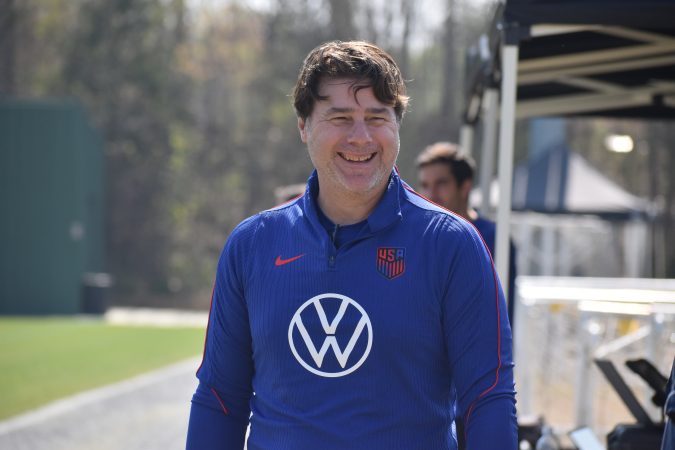
Mauricio Pochettino has signed a new contract to remain the U.S. men’s soccer team’s manager through the 2030 World Cup, U.S. Soccer announced Monday morning.
“I really believe that this is an exciting situation and moment for soccer in the USA,” Pochettino said in a roundtable talk with The Inquirer and other media outlets. ”After 18, 19 months working with the objective that was only the World Cup, now [the goal is] to start in a fresh way with a different approach, trying to create a different philosophy, different idea of what we need to do.”
U.S. Soccer initiated talks on a new deal in late spring, with the understanding on both sides that it would be contingent on success in the summer. After the tournament, both sides took a few weeks, then returned to the table and finished the deal.
“They really believed in us before the start of the World Cup,” Pochettino said, “and that, I think, is another positive point for us.”
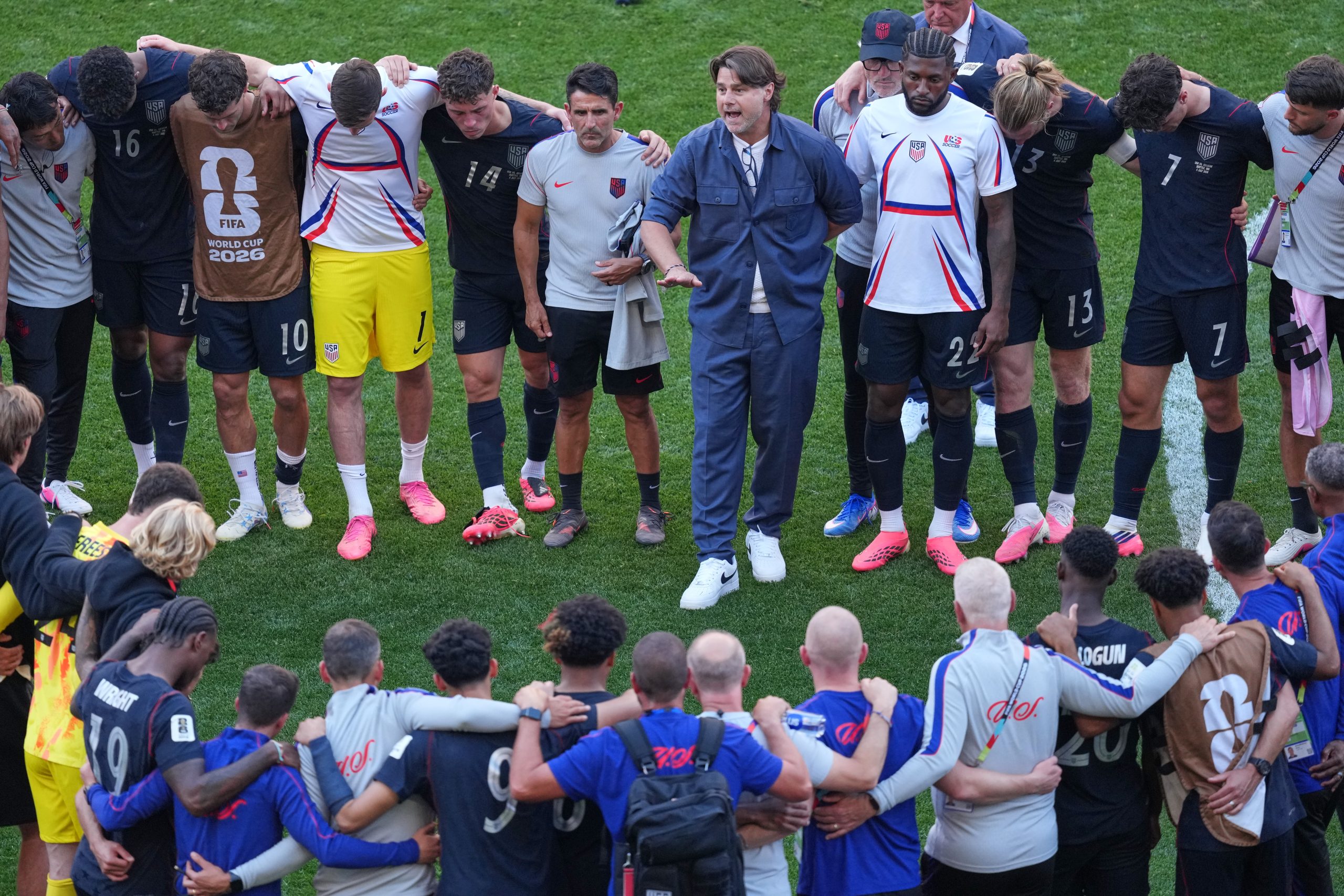
Mauricio Pochettino (center) talking with players and staff after the U.S.’ loss to Belgium that knocked them out of the World Cup.Nick Didlick
The 54-year-old Argentine arrived in late 2024, hired through this year’s World Cup. He accomplished most of what he had set out to achieve, raising standards for players by challenging the big stars to shake off their past complacency.
When the biggest moment came, Pochettino oversaw the first U.S. men’s team to win two group games at a World Cup since 1930, and the first knockout-round win since 2002. That led to an unprecedented wave of fan support across the country, and Pochettino seemed to be genuinely inspired by it.
“The magic thing that happened during the World Cup, in the connection with the people, of course with the whole organization and everything, was a key point to make that decision” to return, he said.
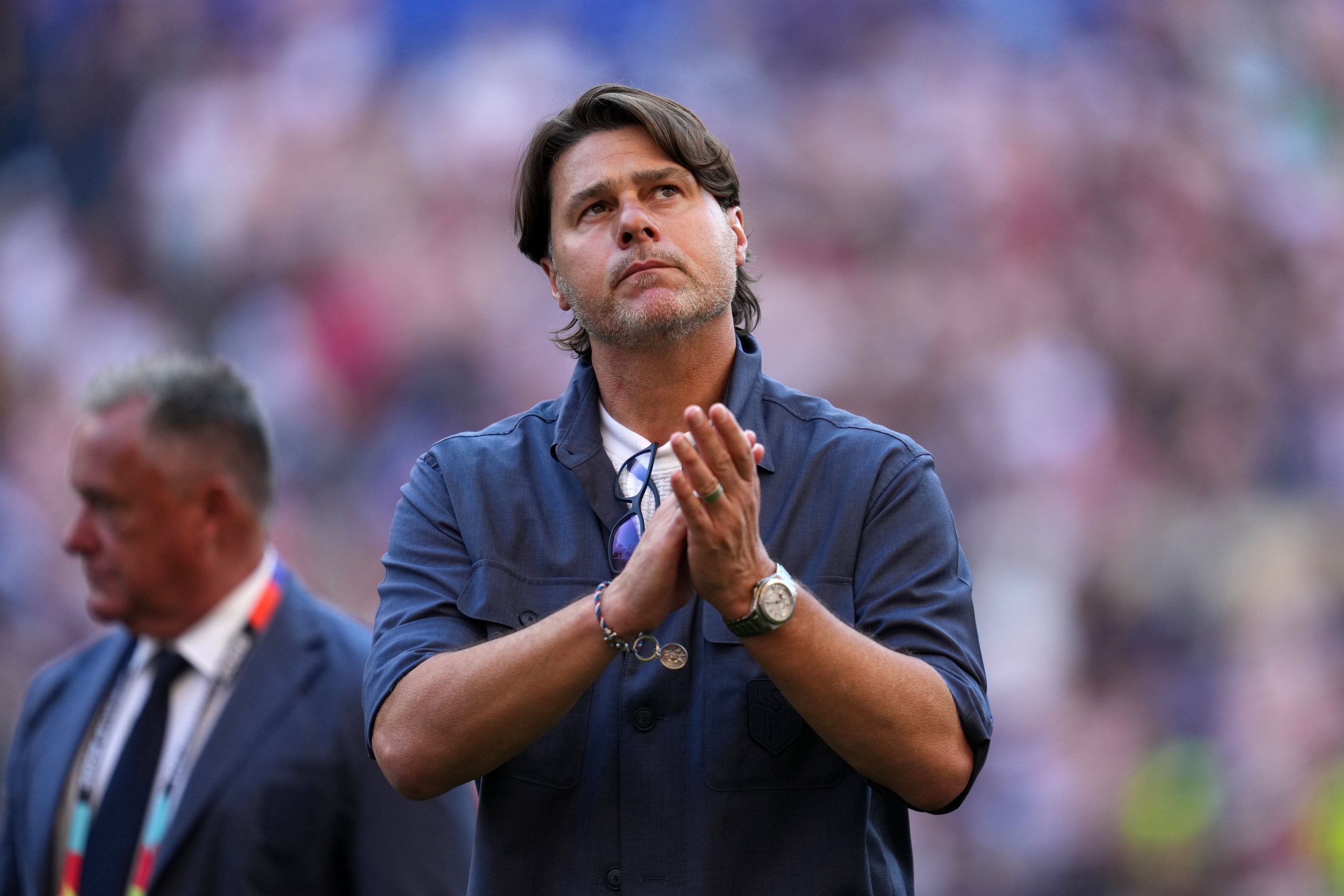
Mauricio Pochettino applauding the fans after the Belgium game.Abbie Parr
Pochettino said Monday that he believes “that gap with the best teams the world is not too big. I think if we will be capable to do things in a different way, to reduce that gap, I think it’s possible.”
The distance includes some of the hardest yards to cover in the sport. So there were serious questions to ask. And to his credit, he answered them pretty directly.
The first question was how much change Pochettino wants to enact, especially with a new generation of young players ready for a shot at the senior squad. He said he is ready for quite a bit.
“I don’t want to think, and that you believe, that it is a continuity of the last 18 months or 19 months that we were working there‚” he said. “The good thing is that we have the experience and the knowledge about the players that were working with us. And of course, now [we] open the pool to bring, players that were playing in the last year or now they are playing more in MLS, but also for players that maybe we didn’t have time to assess during that process that was a very compact and very short period.”
Quinn Sullivan (second from right) is one of many young players with Union ties whom Mauricio Pochettino has called up so far. Cavan Sullivan could easily be on the radar for the next four years.Jonathan Tannenwald
Pochettino added: “It’s going to be key, it’s going to be important, to provide the young kids that we really believe have the potential to arrive in 2030, in four years, to start to work. And to start to know [them], and set up the principle that we expect from them.”
Another big question, one that a lot of fans have in particular: Will Pochettino actually stay here for the duration of his deal? If he continues to do well here, European clubs will no doubt continue to call. It was no secret before and during the World Cup that there was interest, and he was looking.
“For us, every time that we sign a contract, it’s to go to the last day of the contract,” he said. “If now we sign a four-year contract, we need to think to arrive there. And we signed the contract because we really believe that we are going to be four years there.”
But he also acknowledged the obvious: “Nothing is sure — in life, but it’s less in fútbol.”
“Four years’ time is a really long period,” he said. “You never know what can happen in soccer. Today, people really love you, but in X time maybe that feeling changes.”
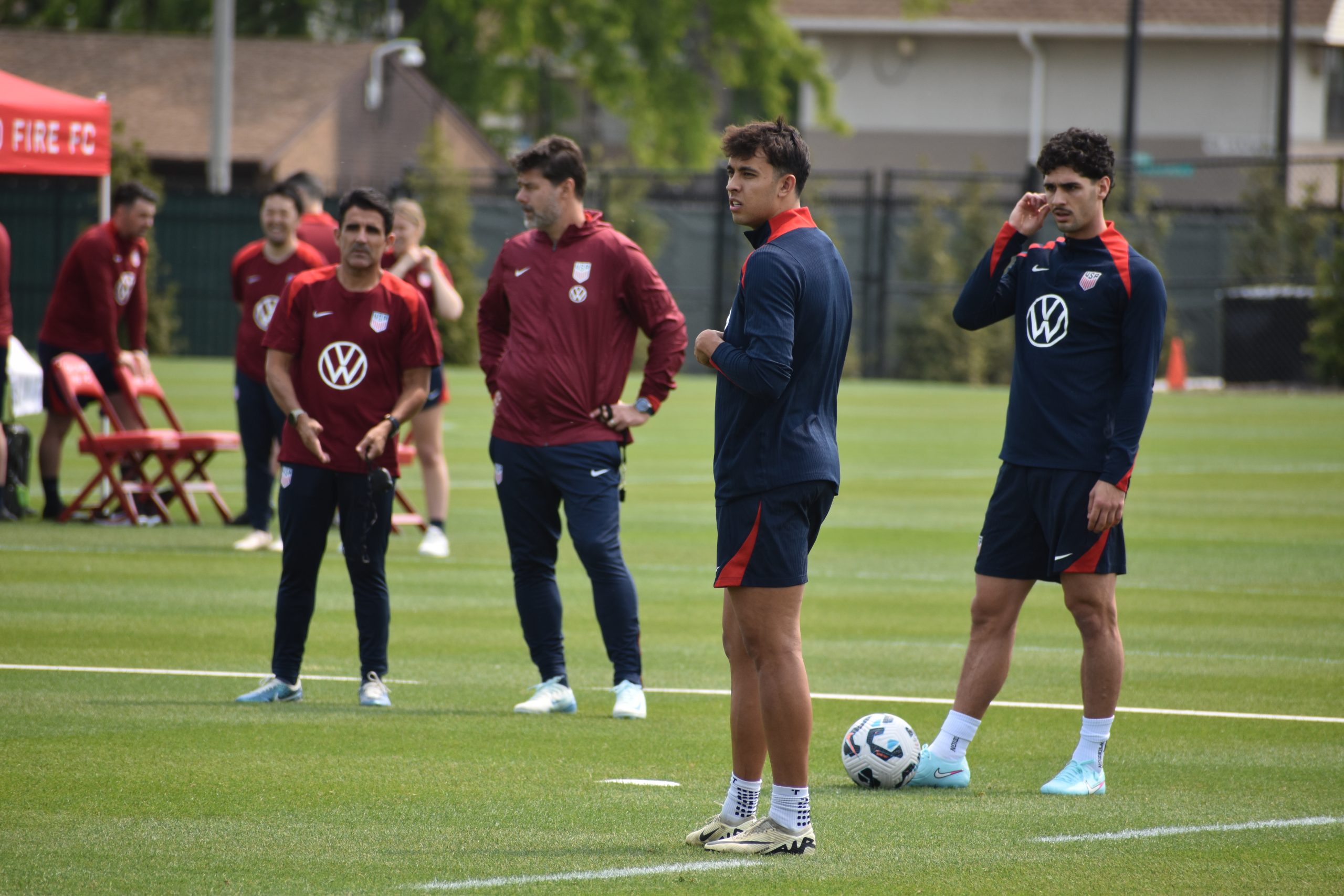
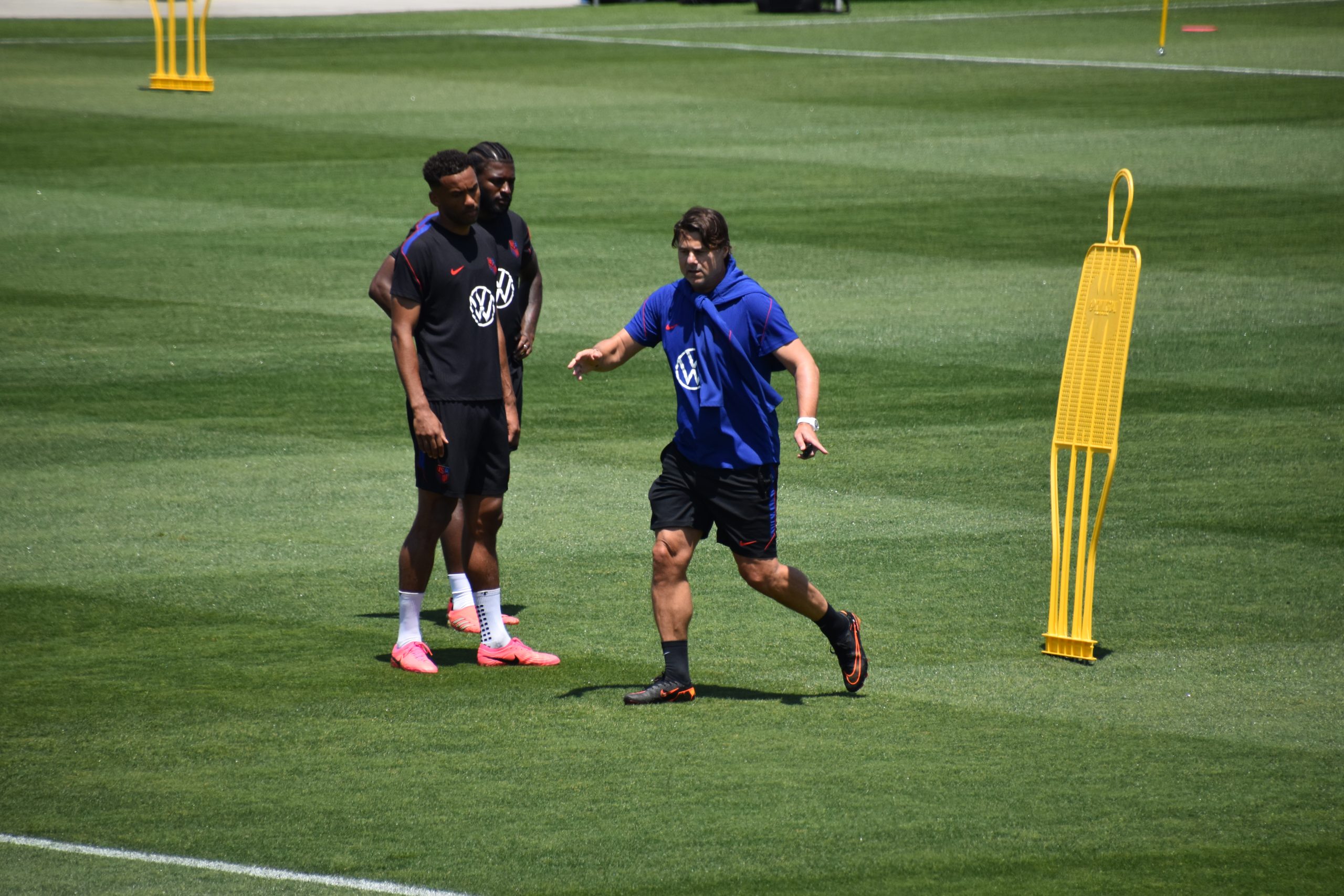
Maurio Pochettino (right) giving instructions to former Union defenders Auston Trusty (left) and Mark McKenzie at a practice during the World Cup.Jonathan Tannenwald
Will he make the U.S. his home?
Another big question is how much time Pochettino and his staff, all of which is also returning, will spend in the United States vs. Europe. They were all based in the latter for the first term, usually only crossing the Atlantic for national team game windows.
He isn’t alone on that count, to be sure. Argentina manager Lionel Scaloni has reached two straight World Cup finals with a home base in Spain, and Canada manager Jesse Marsch doesn’t live full-time in that country.
But there are some optics in the U.S. that aren’t the same in other countries.
This summer’s long-term impact on growing soccer’s fan base here is still to be seen. The NFL and NBA will no doubt take back their pieces of the spotlight in the coming months (we’ll see about baseball’s piece if there’s a work stoppage), so a U.S. coach might have to do more publicity work than was needed heading into a tournament on home turf.
Mauricio Pochettino and his longtime top assistant Jesús Pérez (left).Jonathan Tannenwald
There are also the practical benefits of the senior national team manager spending more time at the national training center in suburban Atlanta, where many youth national team coaches and backroom staff are based.
Put it all together, and it would be nice to see Pochettino and his staff be public presences at more MLS games, and at some of the big youth clubs and events around the country.
“Now [that] we finish with the negotiation and the agreement, I will consider it to move to the USA, of course, because that process is four years,” Pochettino said. “I think I have no problem, and all the coaching staff, we don’t have any problem to move to the USA.”
That felt significant to hear.
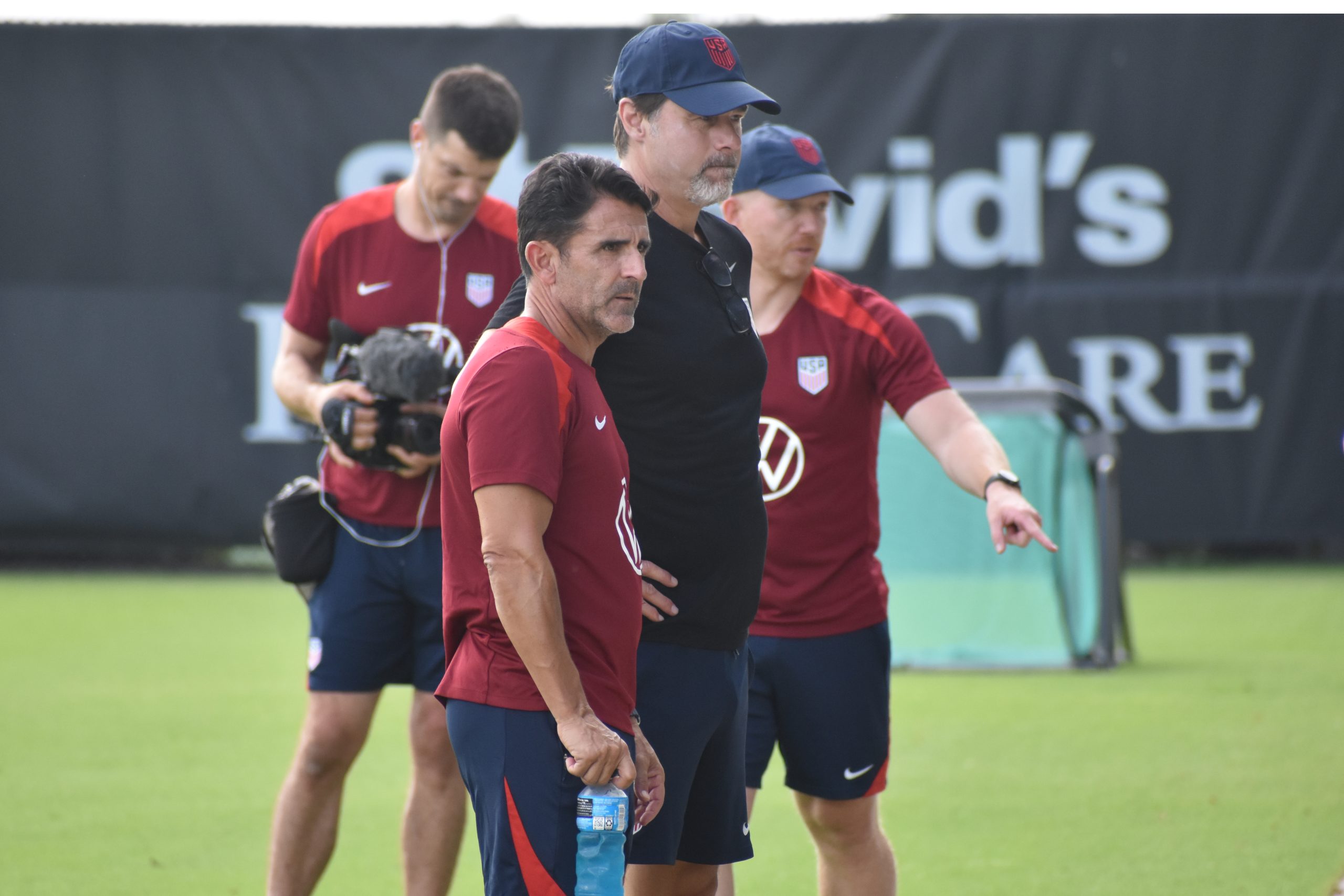
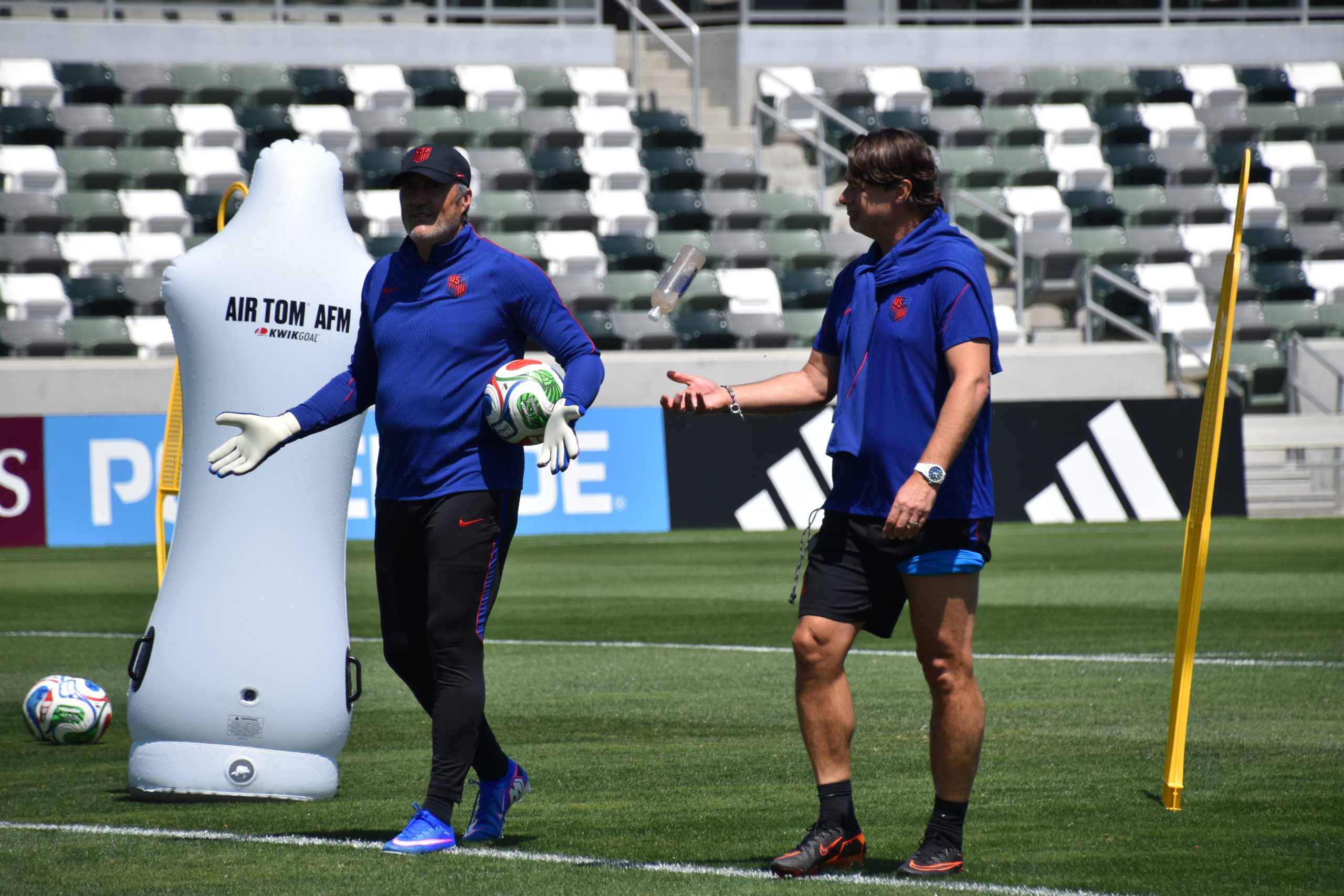
Toni Jiménez (right) is the goalkeeper coach in Mauricio Pochettino’s dedicated group of assistants.Jonathan Tannenwald
And one for the bosses
The last big question goes to U.S. Soccer’s leadership — including the big-money private equity donors who are once again paying Pochettino’s salary. By rehiring him, they are sending an implicit signal that he is better than any American candidate. Do they actually believe that?
None of the top brass were made available to take questions from the media before Monday’s announcement. There were only statements from president Cindy Cone and CEO JT Batson. (Nor have they said anything about the scandal around FIFA president Gianni Infantino, despite repeated requests for comment.)
“Mauricio has built a culture where players trust the group, trust the process and trust each other,” Cone said. “That culture, and the staff who helped build it, are exactly what we want to continue investing in for the men’s national team now and for the future. We are also excited about the experience and perspective Mauricio and his staff can bring across U.S. Soccer as we strengthen our pathways and seek to impact the broader soccer landscape in the United States.”
Batson said: “We know we have a lot of work to do to achieve our clear ambitions, including competing to win men’s World Cups and having soccer become the most played sport in every community.” And he was pretty clear that he believes Pochettino is the person for the job.
“I couldn’t be more excited that Mauricio and team are committed to partnering with all of us to do the hard work to bring those ambitions to life,” he said.
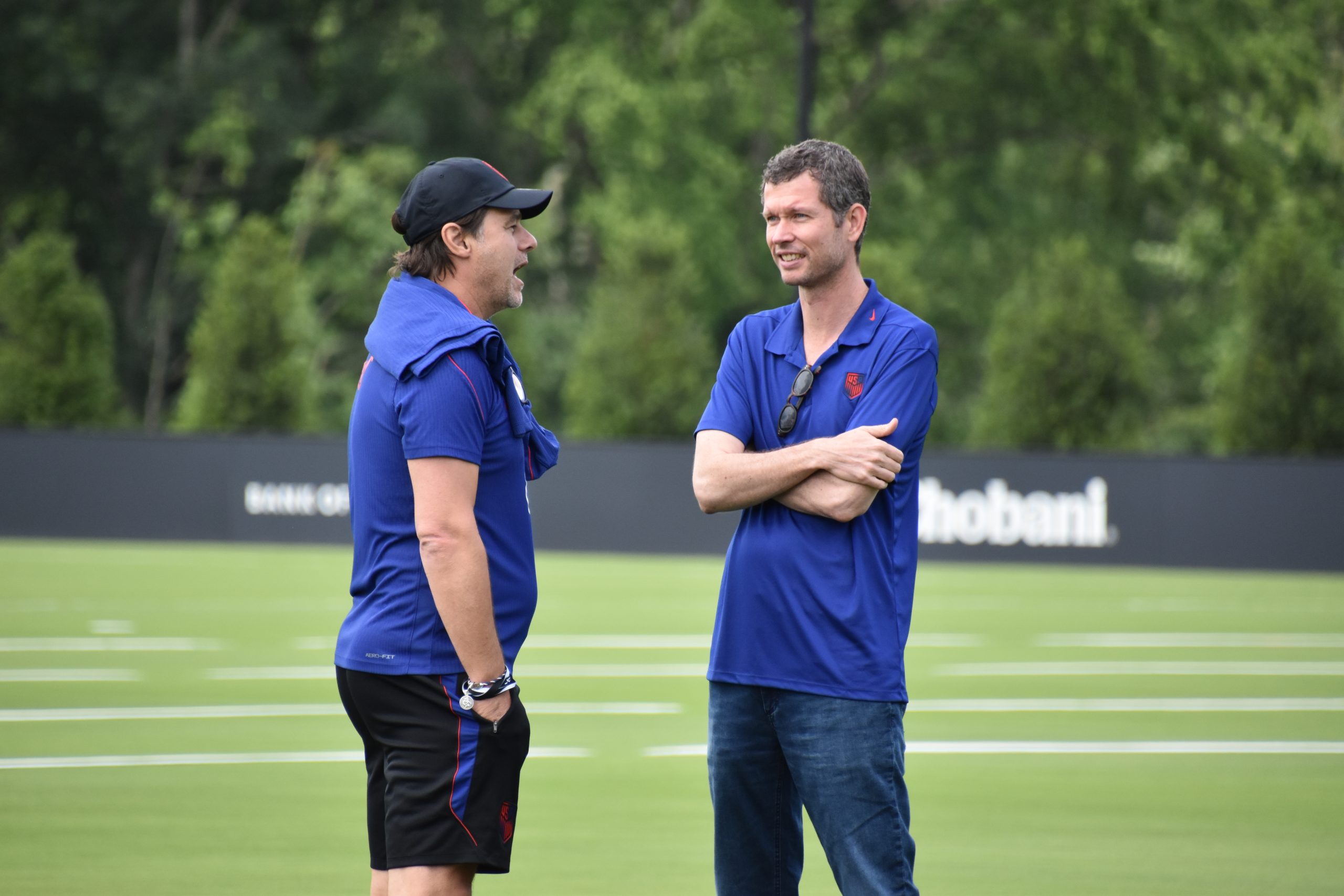
Mauricio Pochettino (left) speaks with JT Batson during the U.S. men’s team’s pre-World Cup training camp at the national training center in May.Jonathan Tannenwald
It felt almost strange to have a game with some stakes in it at Subaru Park for the first time in a while. But the Union’s two-game winning streak coming into Saturday night gave Atlanta United’s visit the shine of a must-win contest.
They’re all must-win in theory, of course, if the Union want to mount a charge toward the playoffs. Still, it mattered that Atlanta specifically was the visitor this time: the team the hosts climbed over last weekend to finally get out of the basement.
For 95 minutes, it seemed the Union were going to not just lose, but lose badly. They’d been a man up since the 26th minute, yet Atlanta scored far-too-easy goals in the 30th and 66th.
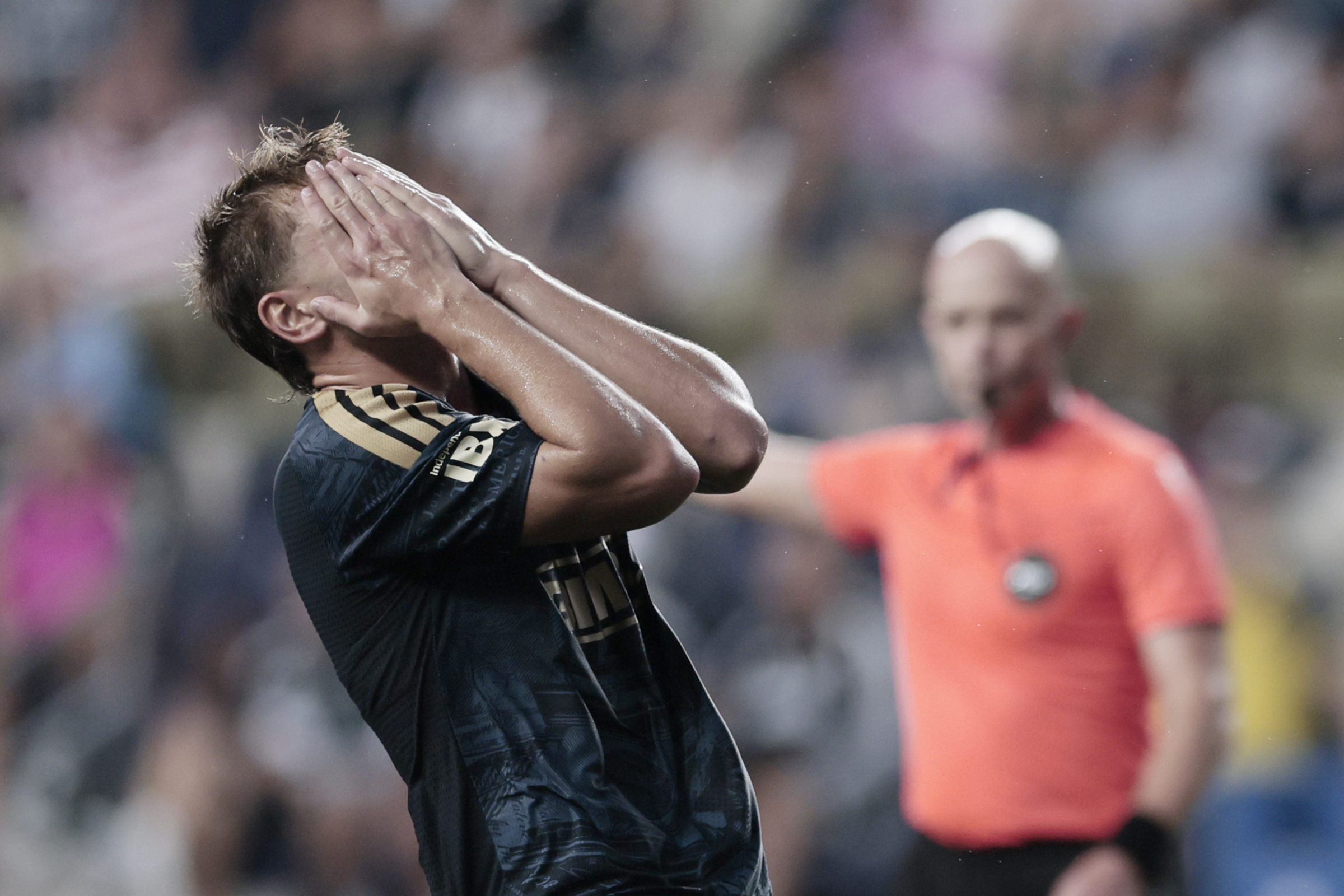
Even after Milan Iloski’s terrific backheeled flick in the 73rd cut the deficit, there were so many more heaves into the box that had no end product against the visitors’ massed defense. It was bad enough that Bruno Damiani only had one shot in his 71 minutes, but it was far worse that he didn’t even contest some of those crosses — the kind of play that’s supposed to be his bread and butter.
Bruno Damini laments one of the Union’s many missed opportunities before their late comeback.Elizabeth Robertson / Staff Photographer
There was, though, one reason to wonder if the Union might be capable of a comeback. Damiani’s departure came as part of not just a double-substitution, but a major tactical change by interim manager Ryan Richter. He gambled on switching from the usual 4-2-2-2 to a 3-4-1-2, withdrawing Nathan Harriel and leaving 18-year-old Neil Pierre as the only true centerback — flanked by outside backs Kai Wagner and Frankie Westfield.
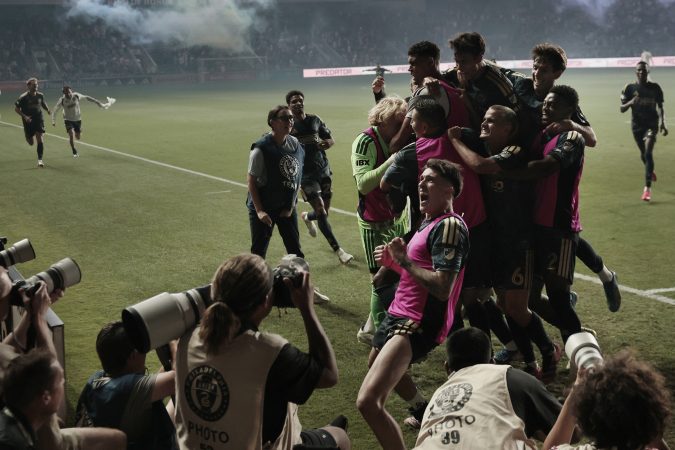
Players win and lose games more than anyone else, especially in soccer with its limited substitutions. But this time, coaching had a genuine impact. The wave of attacks finally broke Atlanta down, as Pierre jumped for the equalizer in the 86th and Ezekiel Alladoh volleyed in the winner 80 seconds later.
For once, Subaru Park was stunned in a good way. And Richter had made a point to people wondering if he should have the job long-term.
“In these games — to me at least — home games in MLS, you have to go for the win,” he said. “It’s not satisfying to go for the tie. One point at home is not enough to make the push that you want throughout a season. So, in all these whenever we’re in this situation, it’s us trying to go for the win.”
One part Richter wouldn’t say, understandably: assume Bradley Carnell wouldn’t have done it. Maybe a lot of managers wouldn’t have. But the point about Carnell needs to be made, because the Union’s bad record wasn’t the only reason to fire him. His stubbornness mattered too.
When Richter was given the job, fans rightly wanted to know if he’d be as rigid. The initial hints were he might not go entirely as far, but was pretty committed, along with sporting director Jon Scheer.
Then Saturday happened. If the Union had lost, you’d be reading here about how the shine was off now. A little of it is anyway, because this game re-exposed this roster’s flaws despite the final score.
For now, though, a win is a win. The celebrations on the field and in the stands were the real thing.
“It’s a risk because you’re just basically saying you’re going to deal with one-v-one situations for the rest of the game,” the manager said. “You’re going to sometimes deal with a two-v-one situation where it’s a direct ball, and if you don’t win the header, it’s trouble. But also, just from a physical perspective, if you want to put someone there, it’s Neil when it’s a direct ball out, or it’s a situation where it’s a one-v-one that he has to win — you trust his physicality in all those moments.”
But Richter was willing to try, and he was rewarded.
“It’s also taking a chance, that part is clear,” he said. “It’s taking a chance to try to go for the goal, and maybe it goes the other way, but it’s a risk that we have to take, because we needed to make that push at the end.”
Wagner, who’s now playing for his third manager at Subaru Park, knew what it meant.
“If I would be honest, this guy has some balls,” he said. “It showed a lot of character from him.”
Union manager Ryan Richter watches the action in the second half at Subaru Park on Saturday. Elizabeth Robertson / Staff Photographer
“I mean, what a goal to score, what a moment to score it,” Richter said. “I think he can put himself in position to probably get easier goals than that. Happy for him, proud of him, and hopefully he takes a lot of confidence from this going forward, and shows a little bit of the talent that he has and what he can do to contribute to this team.”
But Wagner had a lot to say, and it was clear he was speaking on behalf of many players.
“It’s hard for a striker to come as the record [signing] — you come in, you have a lot of pressure on your mind already,” he said. “It’s hard to come to a new country. It’s always hard to adapt so fast … I hope that’s a door-opener for him.”
When Alladoh was told of those remarks, he gave thanks.
“That means so much for me, because I think everybody believes in me,” he said. “They know what I can do.”
The Union still have a long way to go in the standings. Saturday’s results put them 13th in the Eastern Conference (4-10-4, 16 points), seven points back of ninth-place D.C. United for the last playoff spot. It will be a while before that changes, because the scene now shifts to three straight games in the Leagues Cup group stage.
But a three-game winning streak is grounds for a moment of optimism. Especially after a night when, for so long, it seemed like there was only going to be frustration.
If you watch the popular “Welcome to Wrexham” TV show, you might think you’ve gotten to know the Welsh soccer team’s players. And if you’re in Philadelphia, local favorite Rob Mac’s role as part-owner offers another reason to watch.
But the scenes that unfold are real life, with real players in a real English soccer league. They actually live through everything others watch from their couches.
What’s life in the fishbowl actually like? Centerback Max Cleworth knows better than most. Though he’s just 23, he has been with Wrexham since his youth days and has been with the first team since 2019 — a span in which the Red Dragons have earned historic promotions from the fifth-tier National League to the second-tier Championship.
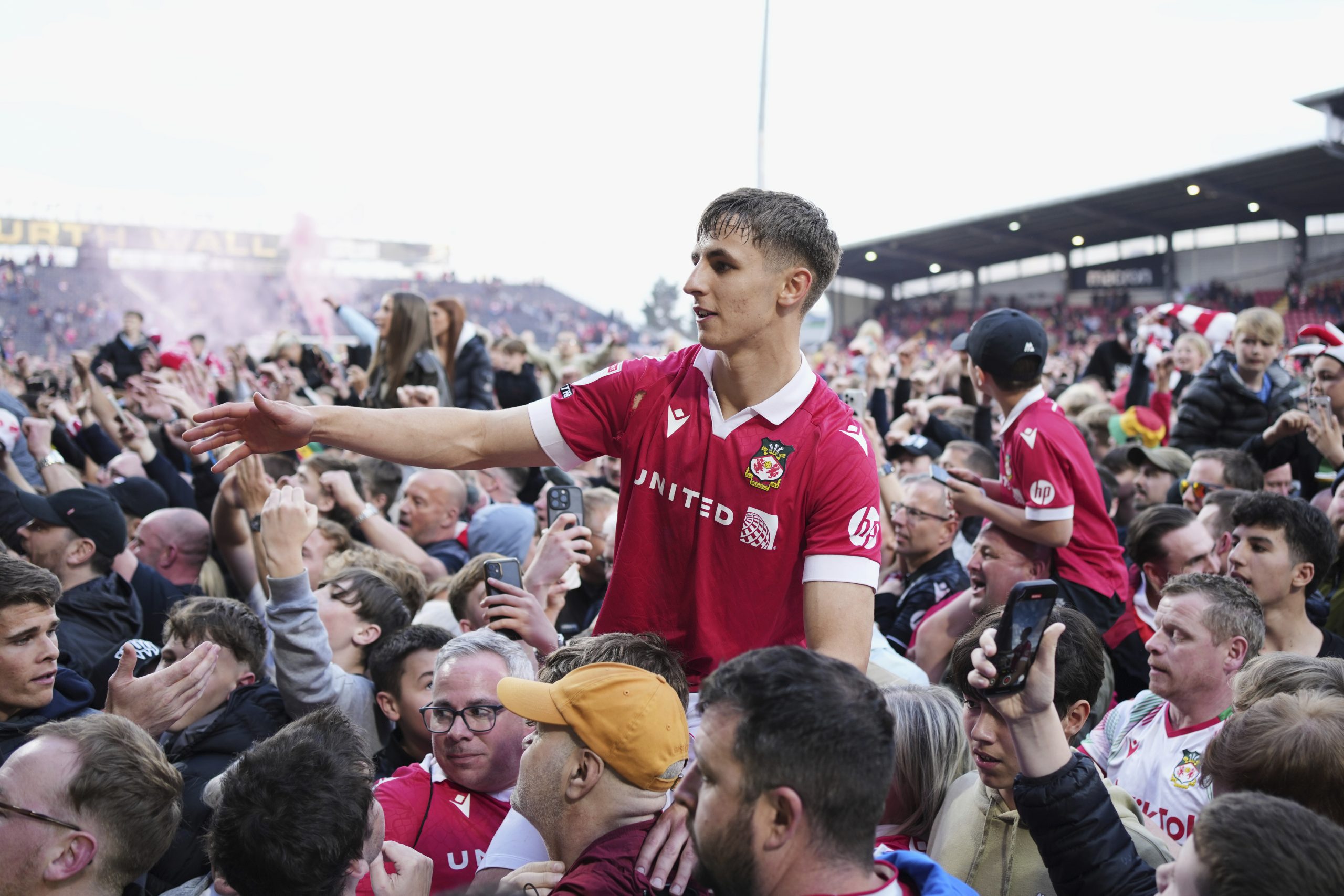
Max Cleworth celebrates with teammates and fans after Wrexham earned promotion from England’s third-tier League One to the second-tier Championship in 2025.Jon Super
“It’s been pretty surreal, to be fair,” Cleworth told The Inquirer. “When I first heard of it, it was probably just over six years ago now, it was a bit like I didn’t believe it, wasn’t sure. And then, obviously, the cameras come in, and I remember the lads at the time were a bit unsure of the whole thing.”
But they are rarer abroad. Locker rooms traditionally aren’t open to the media in the world’s game the way they are in many U.S. sports (including MLS), and that’s especially true in Europe. So it took some convincing to make this show happen.
These days, Cleworth said, Wrexham’s players are used to having cameras around all the time.
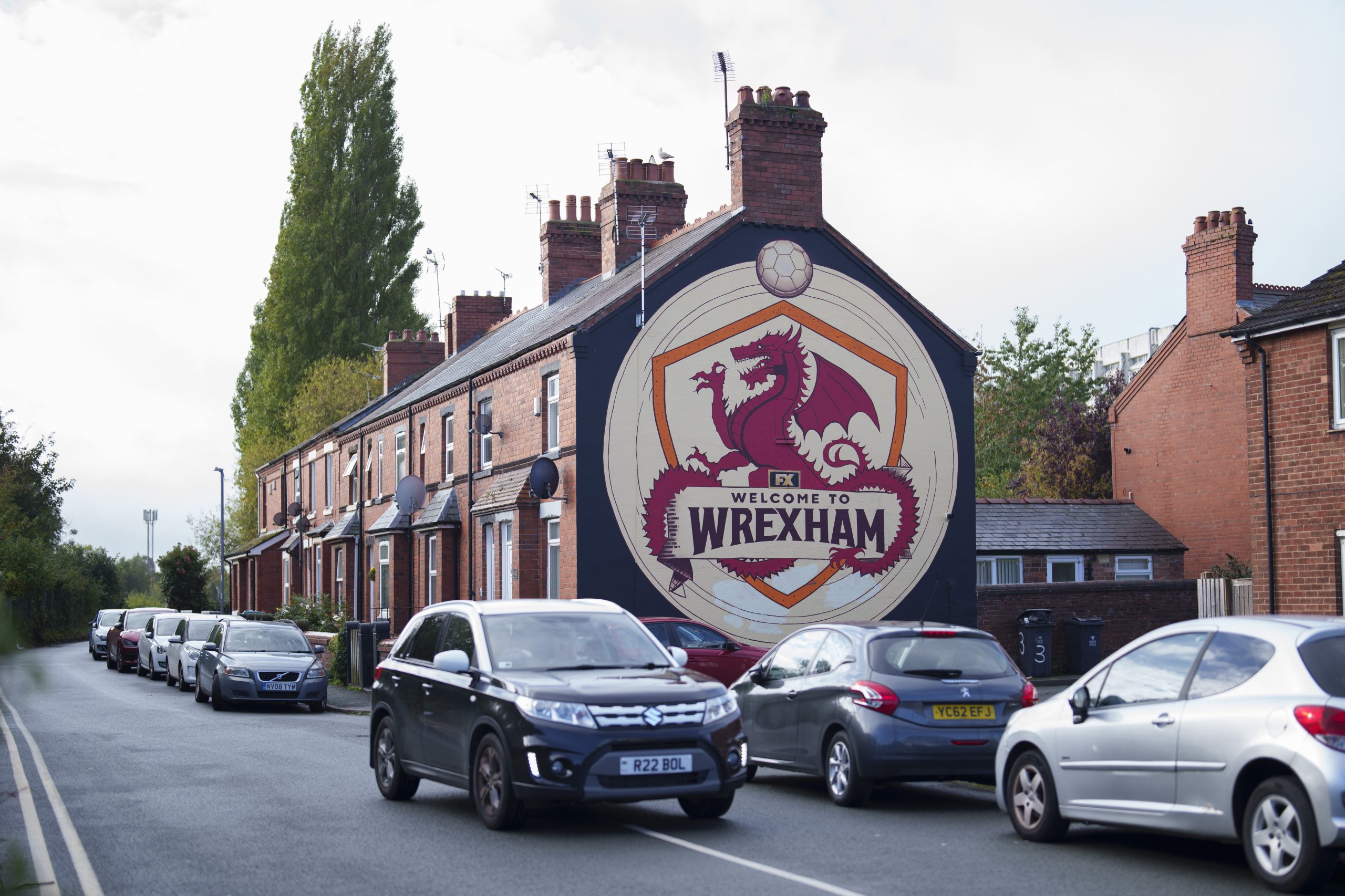
A mural advertising the “Welcome to Wrexham” TV show on the wall of a house in the Welsh city in 2024.Jon Super
“At first it was a bit strange, especially because of the level we were at — it’s [the] National League, not much coverage of that sort of league at all,” he said. “It’s gotten better over the years, but it was really a small amount of coverage. And then as you go up the leagues, the cameras become more and more, and the publicity becomes even bigger. So it’s something I’ve gotten used to, certainly, and something I’ve quite enjoyed, to be fair.”
This season will be Wrexham’s second straight in the Championship, a level they hadn’t previously reached since 2004. Last year, they finished a remarkable seventh in the 24-team standings, just two points short of the playoffs for promotion to the Premier League.
“I think we surprised a few people coming into last year,” Cleworth said. “The people we signed, the squad we had, we knew we’d always have a good chance, and the success we’ve had, we had that momentum that we just wanted to keep pushing and we knew how high we could finish. Obviously, everyone was a bit down after the last game of the season, but that’s past us now, and I think we’re certainly looking to be up near the top again going into this season.”
It’s a wild rise for sure, even though cynics have pointed at the big sums of money (and, of course, publicity) offered by Mac, fellow celebrity co-owner Ryan Reynolds, and the sponsors they’ve attracted.
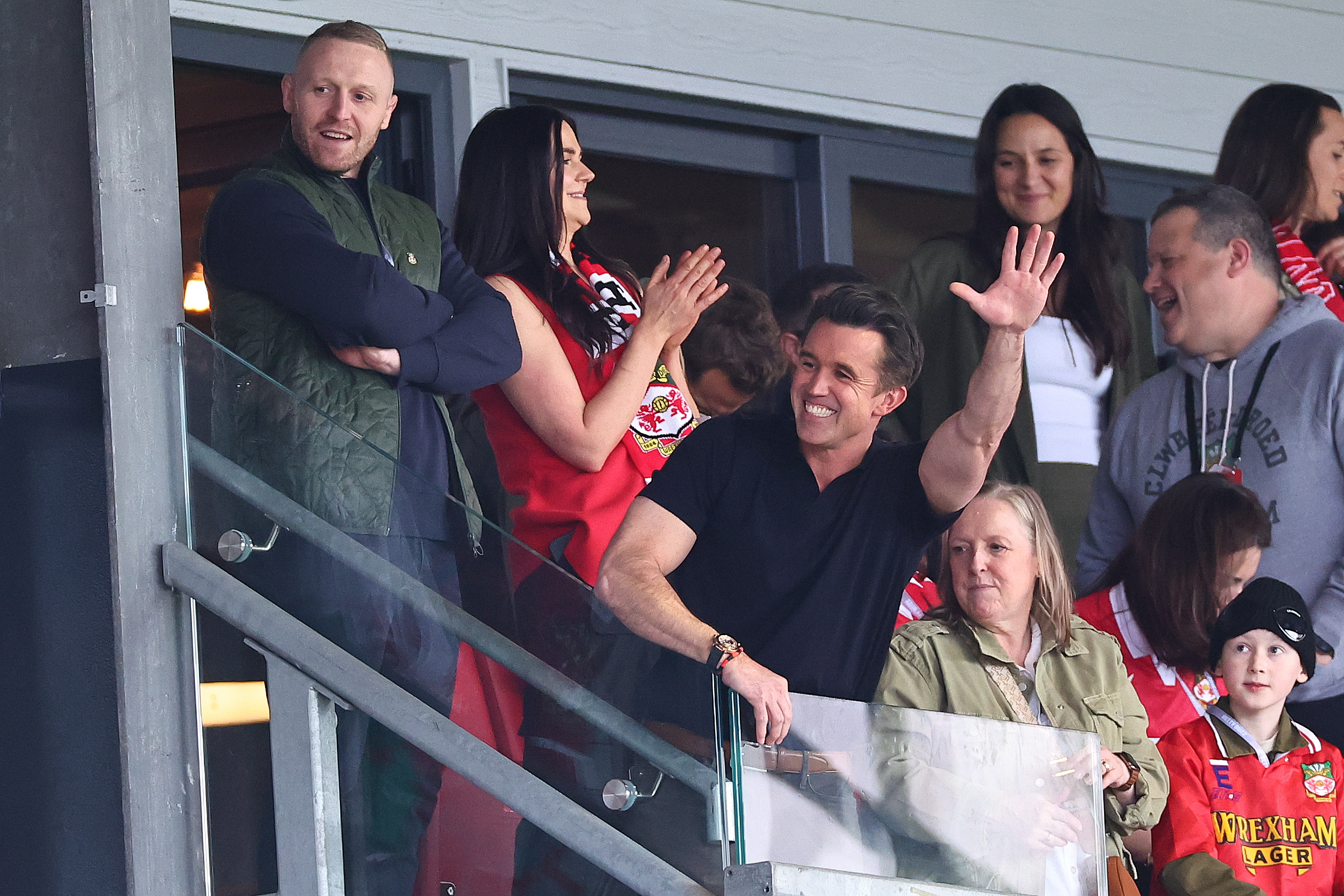
Rob Mac (center) waving to fans at a Wrexham game in 2025.Getty Images
This has led to a lot of roster turnover along the way, though that isn’t as much of a surprise. No one would expect too many fifth-tier players to be as good many levels higher.
So it’s a compliment to Cleworth that he has made it all the way. He played 45 games last season, chipping in three goals along with his defensive work.
“There’s been kind of an unwritten policy here that the gaffer only signs good people first,” he said, using England’s slang term for manager in referring to Phil Parkinson. “So, in that sense, it’s made easier because I’ve never had to share the changing room with what would be considered a bad lad or anything. … I’ve just tried to work hard every day and see it as a challenge to stay within a big part of the group, and I’d like to think I’ve done that over the last few years.”
As for Mac and Reynolds, Cleworth said he has met them “a lot of times,” including at parties to celebrate promotions.
Rob Mac (front) and Ryan Reynolds embrace after Wrexham scored a goal during an FA Cup home game against traditional Premier League power Chelsea in March.Nick Potts
“They have the fame that comes with them, but they’re two really down-to-earth and humble people that do anything they can to help not only us as individuals, but as a collective,” he said. “I have a really good relationship with both of them, and am looking forward to seeing them.”
And yes, he knows about Mac’s rabid Eagles fandom.
“He hasn’t complained too much to me, to be fair,” Cleworth said. “I know a bit about the NBA — my NFL knowledge is a bit worse.”
MORRISTOWN, N.J. — Though the World Cup only just reached the rearview mirror, the soccer world is already speeding toward the new European club season.
Brenden Aaronson is proof.
After taking the three-week break that FIFA’s rules allow for players after major tournaments, the Medford native returned to work at his club, Leeds United of the English Premier League, on Monday. Conveniently, that was right as his teammates arrived in North Jersey amid Leeds’ first preseason tour of the U.S. in nearly 30 years.
“Just great to get home, spend some time in Jersey,” he told The Inquirer. “I just needed to just get home and see family. I hadn’t been home since last September. That’s been probably the longest time I’ve been away from home.”
Leeds fell to Wrexham of the second-tier Championship last Saturday in Tampa, 3-2, then beat fellow Premier League club Sunderland 1-0 on Thursday in Harrison, N.J. The finale is Sunday against powerhouse Liverpool in Chicago (4 p.m., ESPN Deportes), the same day Wrexham and Sunderland meet at Subaru Park (noon, ESPN).
Alas, Aaronson wasn’t in the game squad Thursday, as much as he wanted to play being close to home. He had a lot of friends and family in attendance, and a busload of fans from the Leeds supporters’ group in Philadelphia made the trip. (Their viewing parties at the Black Taxi in Fairmount are lively occasions.)
But if his absence disappointed the box office, it wasn’t too surprising since he’d only just returned. No one begrudged him the time to rest, having gone just about nonstop since the last preseason started.
Not for nothing, too, he was also able to finally enjoy being a husband after his whirlwind wedding that briefly took him out of U.S. camp in late May.
That was just one early turn in a roller-coaster ride through the World Cup.
Brenden Aaronson (left) in action during the U.S.-Turkey group stage game, the only game of the World Cup he played in.Gregory Bull
“It’s a shame that our worst game was in the round of 16,” he said. “I don’t think that we were at our best that game — I don’t think it’s anything to blame this or that, I just think we weren’t at our best. And sometimes you have to put your hands up, because they were also very good on the day, Belgium.”
He added that “it did feel like an opportunity lost” for a group of players who “felt very, very confident” heading into the biggest game of their lives.
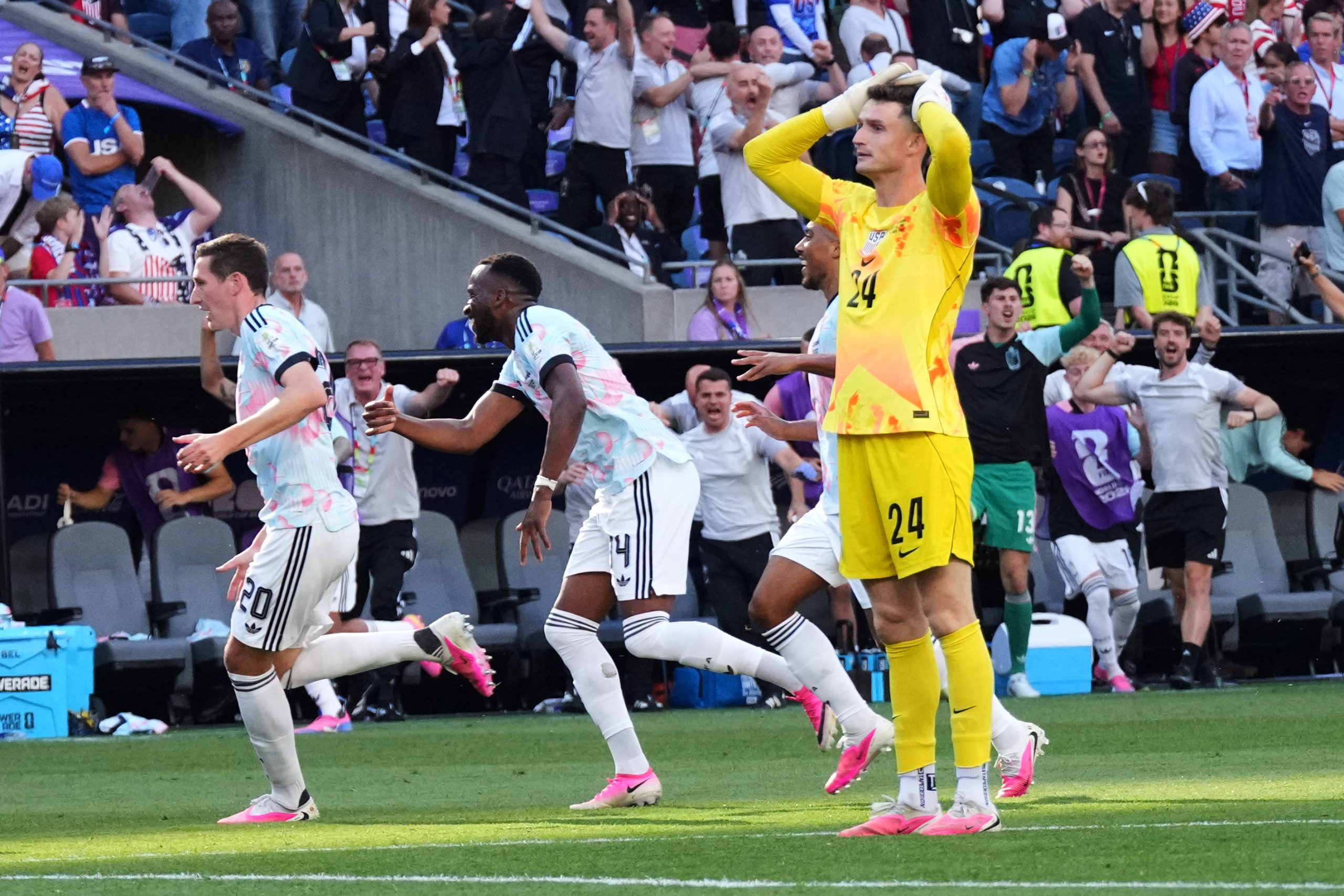
A dejected Matt Freese (right) amid Belgium players celebrating one of their goals against the U.S.Ted S. Warren
“I felt like we knew what we could do and what we could have accomplished, and we knew we could have went farther in the tournament,” Aaronson said. “So I think that’s the thing that hurt the most. … It’s not fun when you lose that type of game, but also, I think we were upset with the way that we played, too.”
The emotions were particularly strong around U.S. centerback and captain Tim Ream, whom Aaronson said “was really upset after the game, knowing that maybe this [was] his last one — it was difficult to see.”
There was never any doubt about how the Balogun scandal affected Belgium’s team, especially President Donald Trump’s intervention with FIFA president Gianni Infantino to get Balogun reinstated. But there hasn’t been too much clarity about how it all affected U.S. players.
Folarin Balogun’s reinstatement might have ended up hurting the U.S. against Belgium more than it helped.Ted S. Warren
Aaronson came down on the latter side.
“I wouldn’t say it affected us,” he said. “I think we did a good job the whole time of kind of just staying in our little bubble and not really paying attention to the outside noise. We know in those moments, of course there’s media, it’s the World Cup, everybody’s going to be talking and stuff like this. But I didn’t really think much of it, to be honest, myself.”
He didn’t hesitate to add, though, “that it gave [Belgium] maybe a little more fire under their belly.”
On to a new season
As the next World Cup cycle begins, it’s natural that some players will move on, and newcomers will be welcomed. That’s likely to start in the fall, when the new FIFA calendar takes effect with a four-game national team window from Sept. 18-Oct. 3. And it will be no surprise if some of the players who’ve succeeded Aaronson at the Union get invitations, such as Cavan Sullivan, Frankie Westfield, and perhaps Quinn Sullivan too.
A lot of U.S. fans want to see Union midfielder Cavan Sullivan (left) get a shot with the senior team this fall.Yong Kim / Staff Photographer
“There’s a time period where you can test things out and try things,” Aaronson said. “So it’ll be interesting to see what goes on the next four years, but I’m excited for it. I think it’s an exciting time for the national team, and we need to keep getting better and better.”
Aaronson hasn’t gotten a ton of playing time from Mauricio Pochettino, who from all indications seems headed toward a new four-year contract as U.S. manager. But it’s hard to believe that a 25-year-old who plays regularly in the Premier League, the world’s top domestic circuit, will be cast off entirely.
He certainly intends to do his part to stay on the radar.
“My aspiration, of course, is to play every game for the club, be a big player at the club and score goals and get assists, and then ultimately transfer that to the national team,” he said. “I want to play every game for the national team — I think that’s what everybody wants to do. That’s just been my aspiration, my goals. I’ve always been hungry like that.”
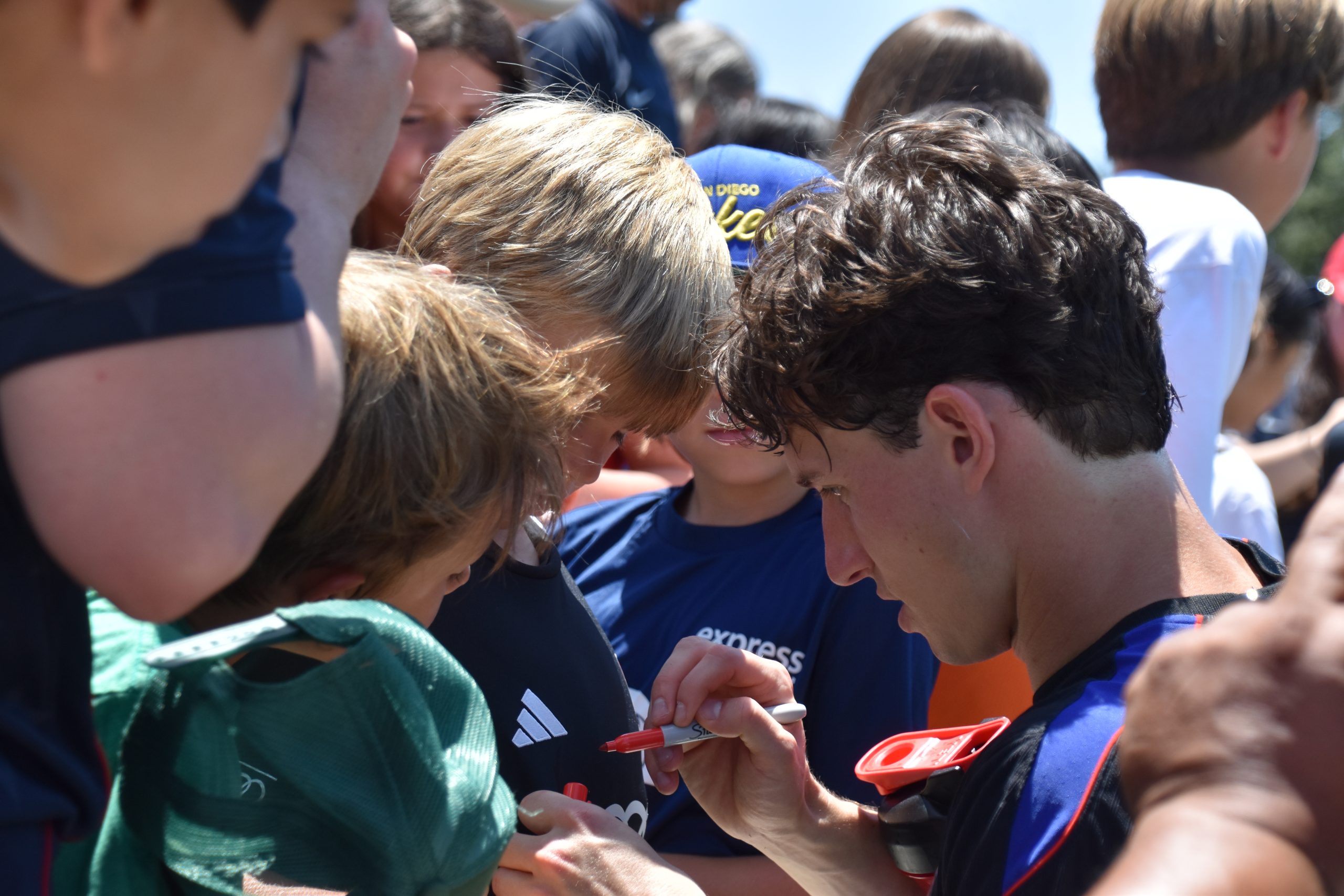
Brenden Aaronson (right) signing autographs for fans during the U.S. team’s World Cup training camp.Jonathan Tannenawld
And he was pleased by the news that Pochettino is likely to return.
“I think it’s something that we can continue to grow on,” Aaronson said. “I mean, he’s coached the best players in the world [over his career]. Being able to study under him and learn from him is massive for me.”
This will be Aaronson’s fourth season at Leeds, one of England’s most passionately supported clubs, and his third in the Premier League. As with last year, when the Peacocks returned to the top flight, the first goal is to stay up. But now Leeds can aim a little higher, with new signings bankrolled by an ownership group tied to the NFL’s San Francisco 49ers.
“I swear, Leeds fans are everywhere,” Aaronson said. “It’s got such a big fan base, and it will continue to grow. Because what we want to do is put this club in the right spot, and that’s being in the top of the Premier League. So that’s the goal.”
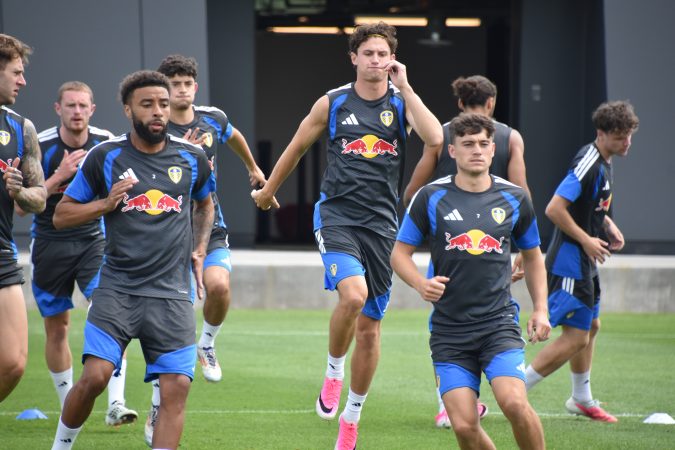
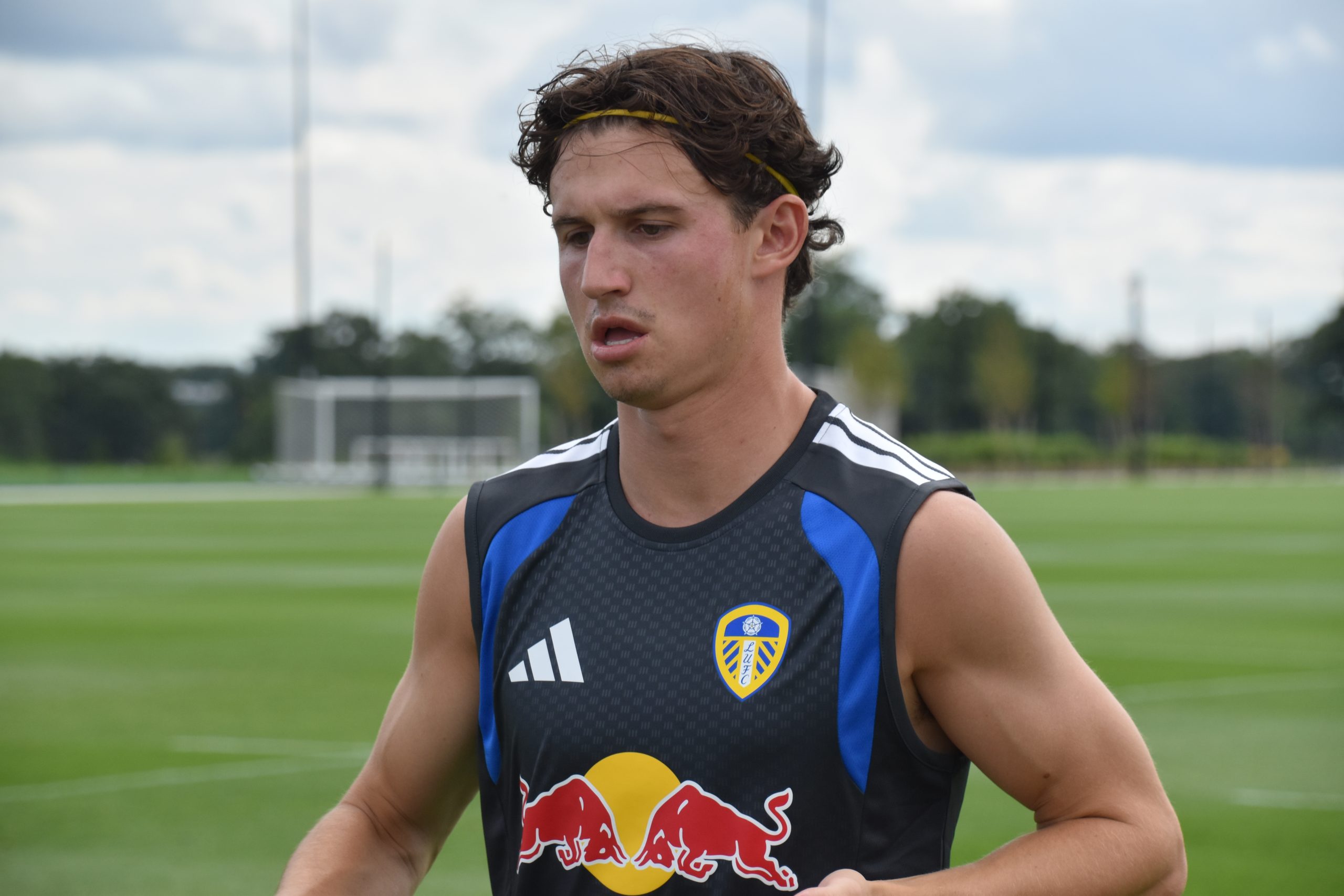
Brenden Aaronson at work during one of Leeds’ practice sessions leading up to Thursday’s game in North Jersey.Jonathan Tannenwald
He has his share of critics in England, largely for the same reason he has them over here: for all his industrious work on the field, he’s an attacking midfielder who doesn’t score a lot of goals. But Leeds manager Daniel Farke has been one of Aaronson’s biggest backers, and intends to stay that way.
“The task is more or less keep going exactly in the same way and develop exactly in the same way that he’s done since I’ve really worked with him,” Farke said. “I’m pleased for him that he was called up to the U.S. team — didn’t play perhaps as many minutes as he was hoping for, but he’s also a player full of potential, and he’s still in an age where he can develop and hopefully make the next steps. He is, in addition to that, also a great human being, and it’s a pleasure to work with him.”
Forward Lukas Nmecha, who scored the winner Thursday, also gave a nice endorsement.
“Firstly, on a personal level, he’s a lovely guy, works really hard,” he said. “On the football side, I think we all know what he brings. He’s very active in the game, he runs a lot, he creates a lot, and he’s just a good guy to have around.”
Olwethu Makhanya has gotten the move from the Union he wanted, and the club has a better return for him than it might have initially gotten.
The 22-year-old centerback is headed to Rangers of Glasgow, Scotland, for what a source with knowledge of the deal said is a transfer fee of around $4.5 million. There’s also a sell-on clause, so the Union would get a chunk of a future sale if there is one.
Though the move hasn’t been officially announced, Rangers manager Derek McInnes all but confirmed it on Wednesday when he said, “we’re pretty close to announcing that, so it’s safe to say that one looks good for us.”
Rangers had scouted Makhanya for a while before making a formal offer. The club had some urgency to get a deal done because Scotland’s Premiership starts its season this weekend — yes, barely two weeks after the World Cup final. Rangers visit Dundee United on Friday (3 p.m., CBS Sports Network, Paramount+) in the league opener.
“He’s coming from MLS into a different country and style of football, but we believe he has the attributes to cope with that,” McIness said. “Getting this one resolved this week, hopefully with an announcement [Wednesday] or [Thursday], would be a big step and we’d be delighted.”
Makhanya did not return to the Union after going to the World Cup with South Africa but not playing. Multiple sources said that was because of personal matters, but he also thought he had an agreement with the club to move to Europe if an offer arrived.
There were different portrayals of what that agreement was — as in, whether the Union would take the first deal or the first good deal.
That ended up costing a team in Belgium understood to be Genk, which offered around $4 million. When the Union said no to the club to which they sold Mark McKenzie nearly six years ago, it clearly ruffled some feathers.
Olwethu Makhanya’s last game for the Union was May 16.Philadelphia Union
Now things have cooled down, and the deal with Rangers is done. Makhanya departs having played 53 games for the Union, all since the start of 2025 — and all with Bradley Carnell as manager. Though he was signed in 2023, Makhanya didn’t see the field for the first team until after Jim Curtin was fired at the end of 2024. And he hasn’t since Carnell was fired, coincidentally on the day South Africa announced its World Cup team.
Makhanya’s case for a sale now was also helped by the fact that his contract is up next year. If the Union were going to sell him (and they certainly hoped to), they had to this summer or this winter, and European teams always are more interested in summer deals. That’s part of why MLS is flipping is calendar next year.
On the club side, it definitely helps the Union that Neil Pierre has looked great since coming back from his loan to Denmark’s Lyngby. Pierre isn’t a finished product, but he has shown over the last two games that he’s ready to play in MLS. He’ll presumably stay a starter for as long as Japhet Sery Larsen is out, and we’ll see if the streak goes past that.
The Union also are heading toward a deal to send outside back Philippe Ndinga on loan to Belgian first-division club Zulte Waregem, with a pre-set option for a purchase price afterward.
Philippe Ndinga (right) also appears to be on his way out after an underwhelming half-season in Chester.Elizabeth Robertson / Staff Photographer
It bears repeating that the player who was supposed to be Kai Wagner’s successor leaves having played 310 minutes in eight games, including four starts. Fortunately for the club’s hopes this season, Wagner wanted to come home, so he ended up succeeding himself.
These are signs of new sporting director Jon Scheer putting his stamp on the organization, two months after Ernst Tanner was pushed out of the role and Scheer had the interim tag removed.
When Danley Jean Jacques stepped back on to the field in a Union game on Wednesday, it had been just under a month since his first trip to a World Cup with Haiti ended.
But for as much as happened after that — 52 of the tournament’s 104 games, plus Major League Soccer’s return to action — the afterglow hadn’t fully faded yet. Nor does it need to for the first active Union player to play in a World Cup.
Jean Jacques will have that title forever. And at least until 2030, he’ll be the only active Union player to have played in a game on the world’s game’s biggest stage.
“I take great pleasure from representing my country in a World Cup,” he said. “We know how much glory there is in a World Cup. It’s great to have played in one.”
Jean Jacques also gets lifetime membership in one of the sports world’s most famous clubs: people who have played in a World Cup. Whether just one game, his three, or Lionel Messi’s record 34, all can say they’ve had the honor.
The memories will last a long time, not just for him but the nation’s fans. After Haiti was unable to play a home World Cup qualifier because of domestic unrest, the diaspora showed up to Philadelphia, Boston, and Atlanta in big numbers: a sea of blue that came through loud and clear to fans worldwide.
“It’s been a long time since we played in front of our home crowd,” Jean Jacques said of a drought that has endured for over five years. “During the World Cup, we had the good luck to play in front of our fans. It feels great to see Haitians cheering on their team, because I know they are thirsty for it. They need that, to see the team play in front of them. It really feels good.”
They also got to see Les Grenadiers put in a fighting effort. Though the team lost all three games, there were two goals to savor in the finale against Morocco, including a contender for goal of the tournament from Wilson Isidor.
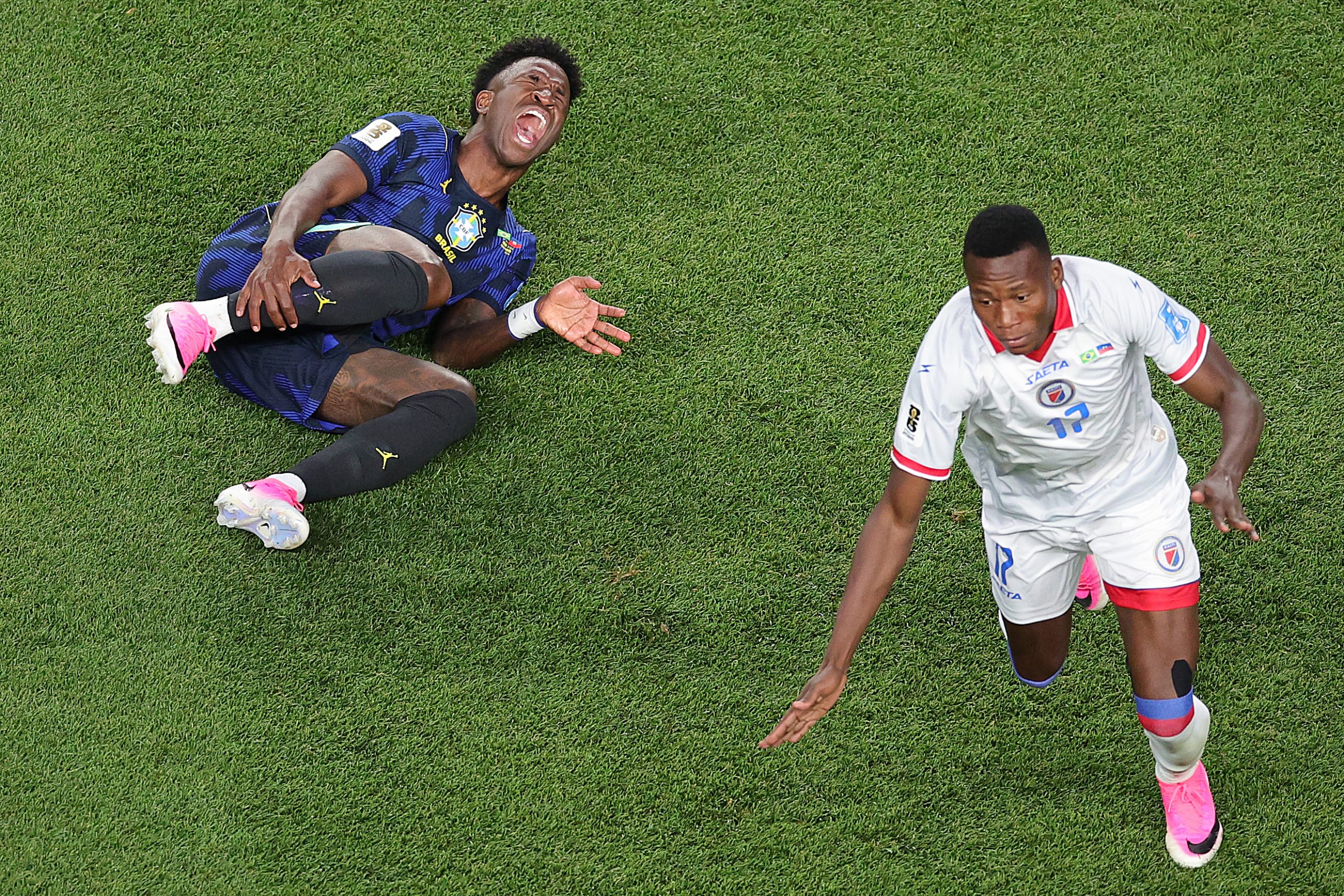
And there was the chance to play against Brazil, not just a soccer superpower but a team that has a proud soccer history with Haiti specifically — with the cherry on top for Jean Jacques of it being in Philadelphia. Though Haiti lost the game 3-0, he got to tussle with stars including Vinícius Júnior, at one point leaving the Real Madrid winger down on the deck after a challenge.
“I say thanks to the fans who came out to support me and my country,” Jean Jacques said. “It was a pleasure to play in a stadium that was full like that, and the fans were fully behind us. They give their all, and we give our all for them, too.”
He lamented that “unfortunately, the result of the game didn’t go our way, but on the field, we made sure to give our absolute best, and I want to thank the fans for spurring us on.”
He also offered a hope that “the best is yet to come,” for Haiti and himself. That might be a tough ask in a Union context this season, with the team facing a big deficit in the standings. But MLS is eternally forgiving, with nine teams from each conference making the playoffs.
Danley Jean Jacques (right) left superst Vinícius Júnior on the ground after a collision during the Brazil-Haiti World Cup game in Philadelphia.David Maialetti / Staff Photographer
“My teammates gave me a warm welcome back,” Jean Jacques said. “Honestly, it feels good to be back here and to start back up with the club again. … My goal for the rest of the season is to stay focused, give the maximum for the team, help the team win, and try to climb the standings too.”
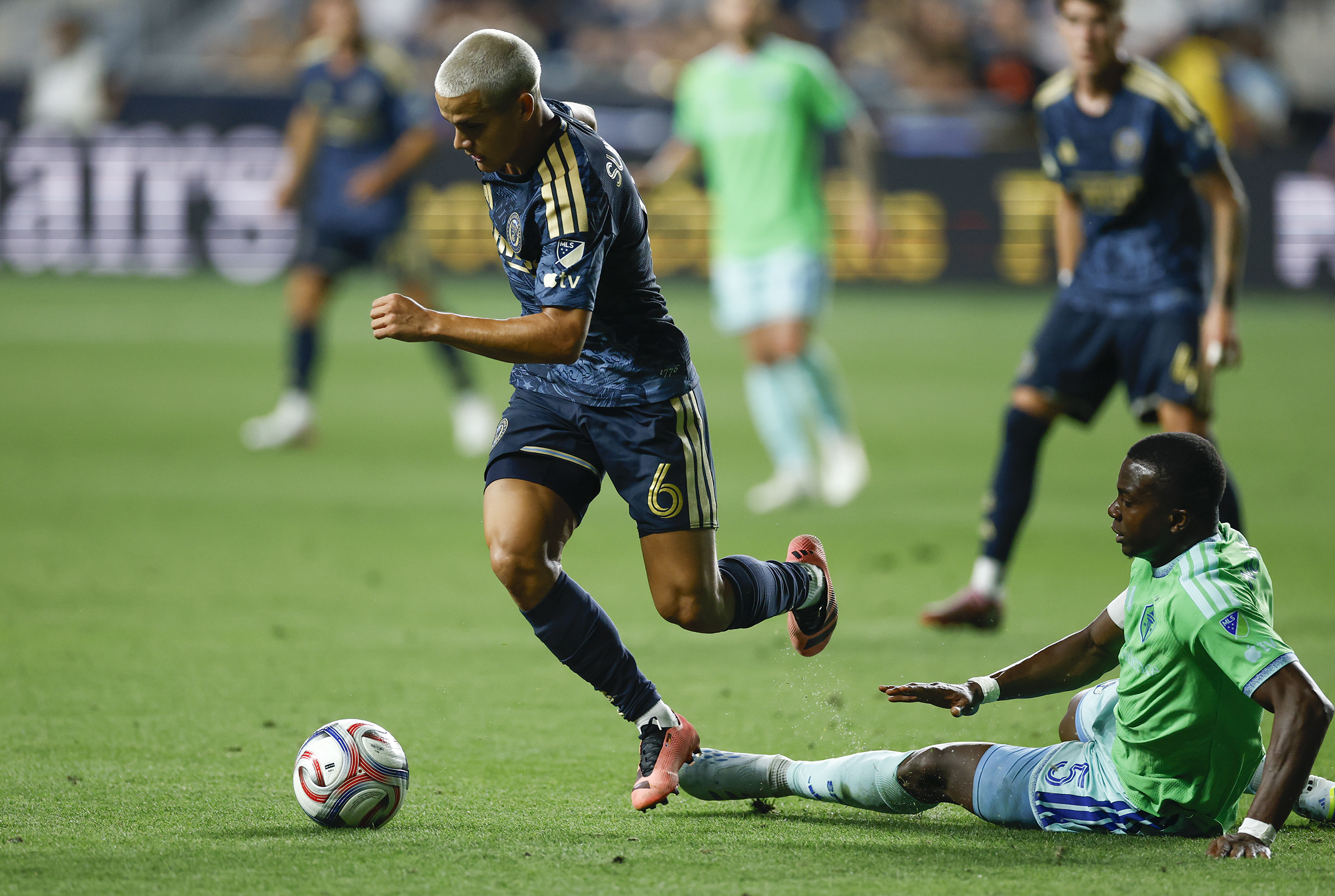
Saturday’s 1-0 win over the Seattle Sounders marked just the halfway point of the regular season in terms of games played. It also marked a second straight win for the Union for the first time this year, raising their record to 3-10-4 (13 points).
Jean Jacques was quietly effective, as he often is. In 80 minutes, he registered two tackles, two clearances, three defensive recoveries, four duels won from eight contested, and 28-of-32 passing including five passes into the attacking third.
Three days earlier, he was more active in the 3-1 win over Red Bull New York: 12 defensive recoveries, five interceptions, two tackles, four duels won from six contested, and 25-of-32 passing including nine passes into the final third.
“When he’s at his best, to me he’s one of the best midfielders in the league,” interim manager Ryan Richter said Saturday night. “We’re getting, from what I see in the first two games [of his tenure], a really good version of him.”
He asked Jean Jacques to “keep working the way you are, keep being a positive influence with your teammates. If this team’s going to be good, Danley has to be one of the best players, and he has been in these first two games.”
As a little extra psychological boost, the Union now aren’t the worst team in MLS anymore. Atlanta United, coincidentally the team that will come to Chester on Saturday (7:30 p.m.), took over that mantle with a 4-1 blowout loss at New England.
Jean Jacques promised that the team is “going to do everything we can to make the playoffs,” and said spirits are high despite the scale of the task.
“It’s good for the team, good for the mindset and morale,” he said. “It had been a long time since we won, but now we’ve got that winning feeling back. So we need to keep that going for the rest of the season.”
When Kai Wagner was introduced in the Union’s starting lineup on Wednesday, the roar was so loud that it drowned out public address announcer Kevin Casey. When Quinn Sullivan jogged up the sideline to finally return to the field in the second half, the buzz in the stands was real and wholesome.
But neither of them ended up as the biggest name in the 3-1 win over Red Bull New York, just the Union’s second league win of the season (2-10-4, 10 points). It wasn’t even interim manager Ryan Richter, who earned a victory in his debut on the first-team bench in the first game back from the MLS World Cup break.
Neil Pierre, the prized centerback prospect, played 34 minutes as a second-half substitute after Japhet Sery Larsen felt some hamstring tightness, and finally showed he’s ready for the big leagues.
It was only Pierre’s second game with the first team. His first was when he was thrown to the lions in last year’s infamous 7-0 blowout loss in Vancouver. This time, he was at home and got to take the field in the 56th minute with the game tied 1-1. Mere seconds later, he leapt at a Wagner corner kick service to slam in a header that put the Union ahead.
“I kind of knew when Kai came back, I told him we’re going to score a lot of goals, we’re going to have a lot of moments,” Pierre said. “And then as soon as I ran up to the ball, I was like, there’s no way. My eyes got a little big — luckily, I scored it.”
But between the game’s momentum and the Union’s fragile psyche, it was far from certain the lead would hold. So it mattered that while his defensive stats totaled just two clearances and one recovery, he helped see out the win.
“I knew, even if I started or came in the game, the team’s confidence in me to play,” Pierre said, reflecting the endorsements Richter and sporting director Jon Scheer have given him lately.
“I’ve come up through the academy, so it’s kind of a dream coming to these games,” Pierre said. “To come on the pitch was obviously an honor, and then to score was like, wow, what a dream.”
Perhaps if someone else had finished that play, Wagner’s return would be the feature item here. But Pierre’s arrival has been anticipated for some time, and this felt like it, even as he also put an almost-comical miss off the crossbar from right underneath it. (Asked how many teammates gave him grief for that, Pierre cracked a smile and said, “Every single one.”)
“I think he made another step forward,” Wagner said. “I think it really helped him to grow as a person, as a player, in Europe a little bit, even as it was probably a lower league. But I think we know that we can throw him in now. Today was a good test for him, a good start, solid start for him.”
At just 18 years old, Pierre has a wide range of tools on his 6-foot-7 frame, including sublime passing skill for a centerback. But as he rose through the Union’s academy and reserve squad, the key question was how he’d handle the physicality of the top flight.
New York didn’t have the kind of old brute who will really stick an elbow in your chest with a veteran’s savvy. But Pierre will face that eventually.
It’s the main reason the Union sent him on a six-month loan to Danish club Lyngby, in which the Union have an ownership stake. Even though Lyngby played in the second tier last season, it’s still a more physical circuit than MLS Next Pro, and Pierre helped the club earn promotion before returning to Chester.
There was also the mental side of going somewhere else for the first time, after a childhood in Harrisburg and now having his family in Media.
“I noticed a lot, especially me growing up, finally being by myself away from home for six months,” Pierre said. “I think it made me really sit with myself and think about certain things I wouldn’t think about being home. And obviously, as a player, it made me more mature on the ball.”
The cherry on top Wednesday was seeing Pierre join a game with many intriguing young Americans on the field. The matchup was hyped as one U.S. national team fans could watch to see players who might contend for the 2030 World Cup squad, and it delivered: Cavan and Quinn Sullivan, Frankie Westfield, Pierre, and New York’s Julian Hall, Adri Mehmeti, and Justin Che.
“I think it kind of showed where MLS is going,” Pierre said. “Trusting the players and showing that yeah, it doesn’t matter your age. I think if you come through the programs and trust the process, you’ll end up playing in MLS and hopefully then going to Europe or whatever it is.”
Quinn Sullivan received a lengthy ovation as he entered for his 2026 debut, just short of 10 months after he tore his ACL. pic.twitter.com/6vxEdg1w7z
When will Pierre play next? It depends in part on how bad Larsen’s hamstring tweak is, with the Seattle Sounders coming to Subaru Park on Saturday (7:30 p.m., Apple TV). Then there’s an Aug. 1 home game against Atlanta United.
An interesting test could come in next month’s Leagues Cup games. Though the tournament understandably still isn’t of much interest to fans, the Union have group stage home games against three Mexican clubs — including former Union striker Julián Carranza’s Necaxa. Those will be interesting tactical tests for Pierre.
For now, it’s a good step that he looked the part in this game. With Olwethu Makhanya away for personal reasons amid transfer rumors, if Larsen is out for any extended time there’s now some proof that Pierre can step in.
“I believe in him,” said Richter, who had his own rise from coaching in the Union’s academy to the reserves to now. “I’ve worked with him since he was 11 years old, and I have seen him progress in every stage of this. I’ve seen him be successful as an academy player, I’ve seen him be the defender of the year in MLS Next Pro, I watched his games when he went on loan and saw him be successful there and work and fight his way into the team there, and now it’s no surprise to see him come in and be ready for this next step.”
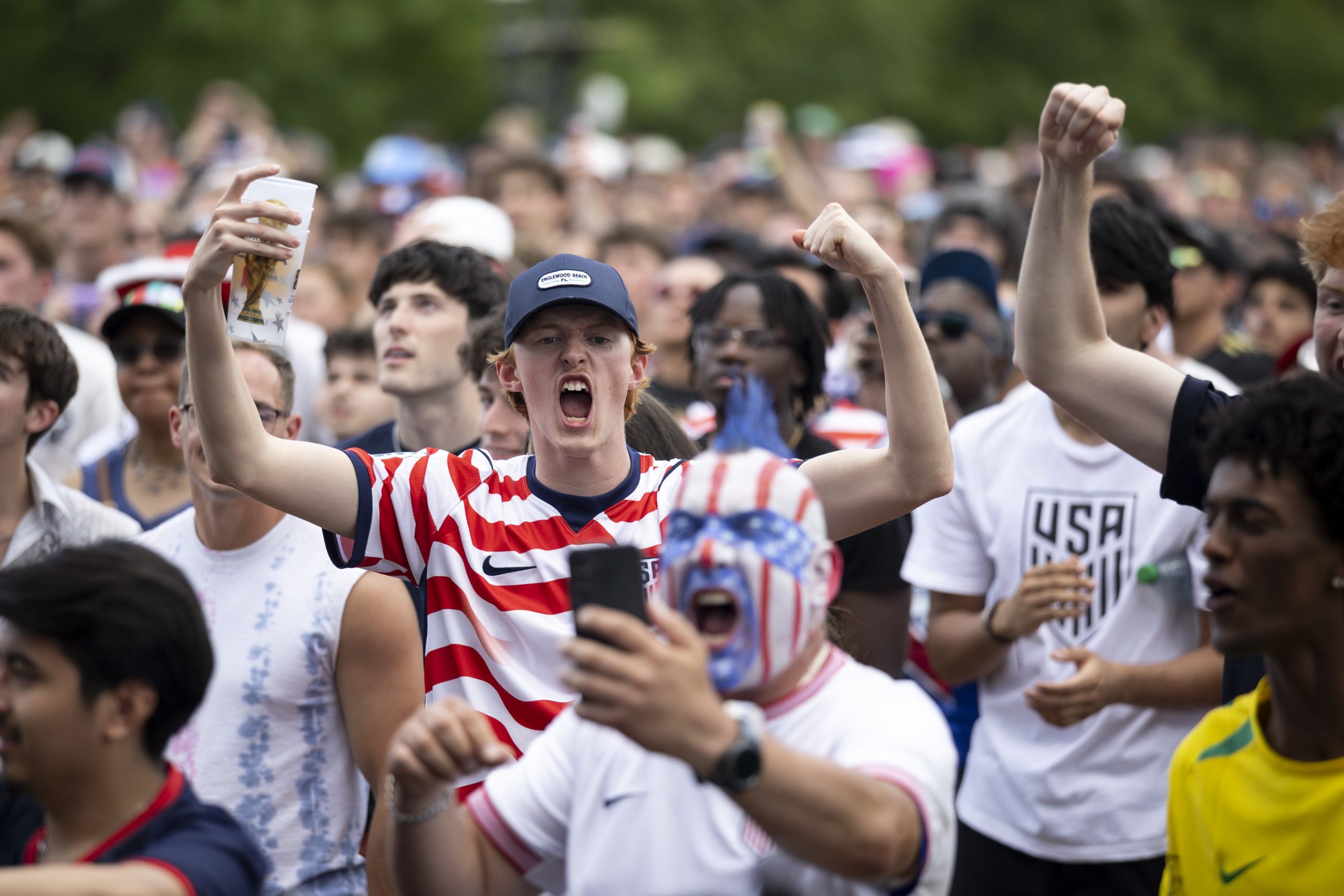
This World Cup made a huge impact on a country where soccer wasn’t always welcome, but is now. Look no further than the massive television audiences, not just for the U.S and Mexico, but across the tournament.
A stunning 63 of the 104 games drew audiences of more than 10 million viewers across Fox’s English and Telemundo’s Spanish coverage. Thirty-one topped 15 million, 18 topped 20 million, 11 topped 25 million, and five topped 30 million — capped off by 46.7 million for Mexico-England, 50.1 million for U.S.-Belgium, and 66.4 million for the Spain-Argentina title game.
Yes, that many people watched a game that had just one goal in 140 minutes of game clock, including stoppage time.
— FIFA World Cup 26 Philadelphia™ (@FWC26Philly) July 19, 2026
But while the World Cup is over, is soccer? Even the critics might finally admit it isn’t. So let’s ask some better questions.
What kind of soccer will Americans now want to watch? Will they treat the sport like track and field at the Olympics, only tuning in every four years? Or will they be interested more often, wanting to see the world’s biggest sports tapestry unfold every week?
If it’s the latter, the line of suitors is already long. The English Premier League, Europe’s UEFA Champions League, and Spain’s La Liga are among the front-runners, along with their respective broadcast partners at NBC, CBS, and ESPN.
They are the most likely to profit from the World Cup’s halo, while showcasing the sport’s biggest stars. But they can’t be alone. The pressure is rising fast on America’s domestic men’s game, Major League Soccer above all.
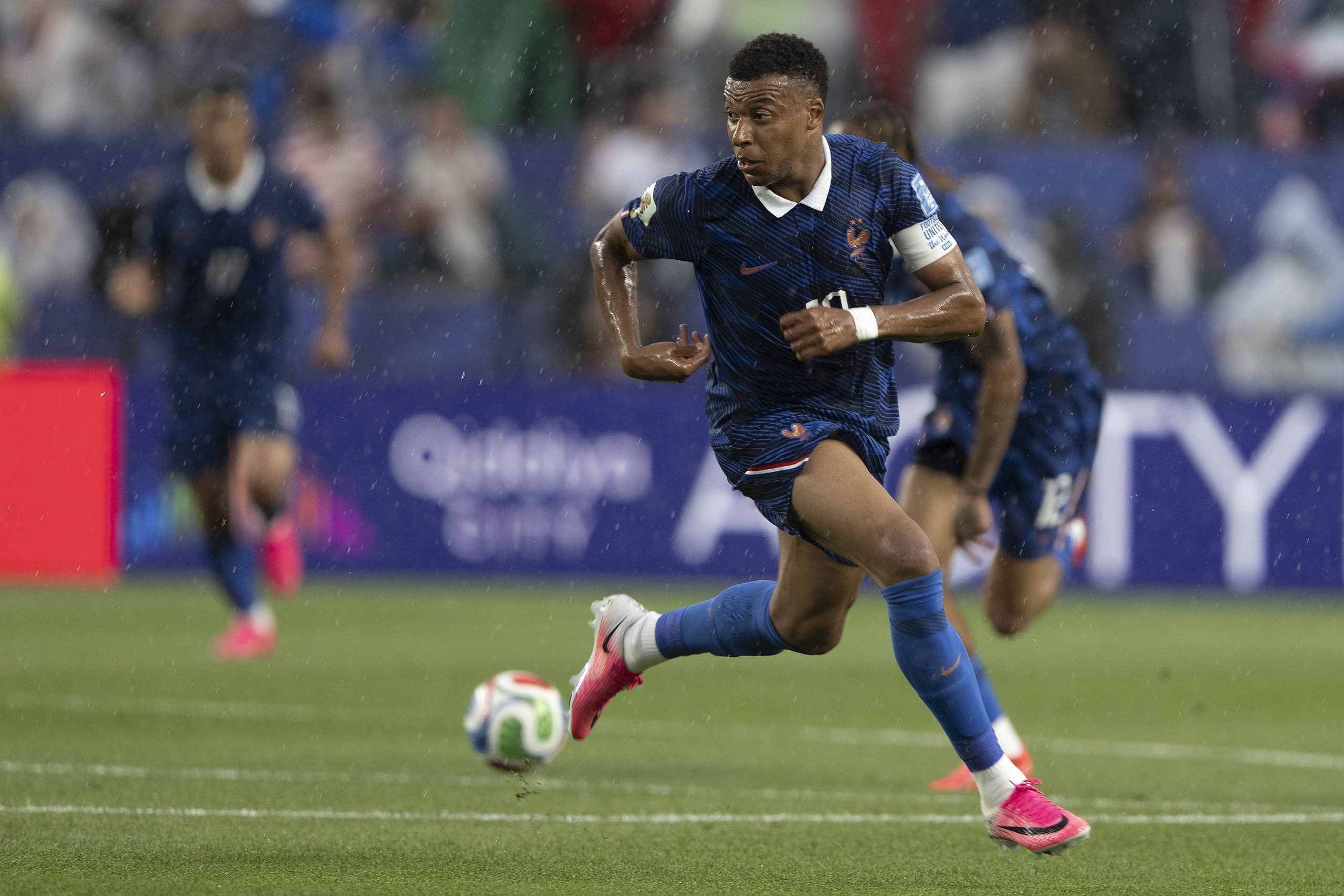
Philadelphia got to see France’s Kylian Mbappé, one of the biggest superstars in world soccer, in person twice during the tournament.Jose F. Moreno / Staff Photographer
No, it doesn’t have the sport’s biggest names, and for some people that will always be what matters. What about an audience that MLS has long failed to properly pursue: People who want to watch the sport in person, and forge a connection with a local team?
You can’t go to Liverpool, Manchester, London, Madrid, and so on every weekend. Once a season, sure, and a Saturday morning at a soccer bar is a fun time. But whether in Chester or the rest of the country, experiencing soccer in person is still unmatched.
This is not meant to cheerlead for the Union. They have to earn fans’ trust, and there’s a history of that not happening. These pages have long chronicled it, especially when it comes to Subaru Park’s woefully limited public transit access.
But soccer also faces a burden that other American sports don’t. Why be a Flyers fan, with no titles in a half-century? Or a Phillies or Eagles fan during the team’s fallow years of the past? Why bother with the eternal angst the Sixers inflict on a basketball city without equal?
We all know the answer, from Northeast Philly lifers to the thousands of newcomers who’ve made Center City a destination. It’s about feeling those teams are yours. Through good times and bad, nothing fuels emotions like that sense of deep connection.
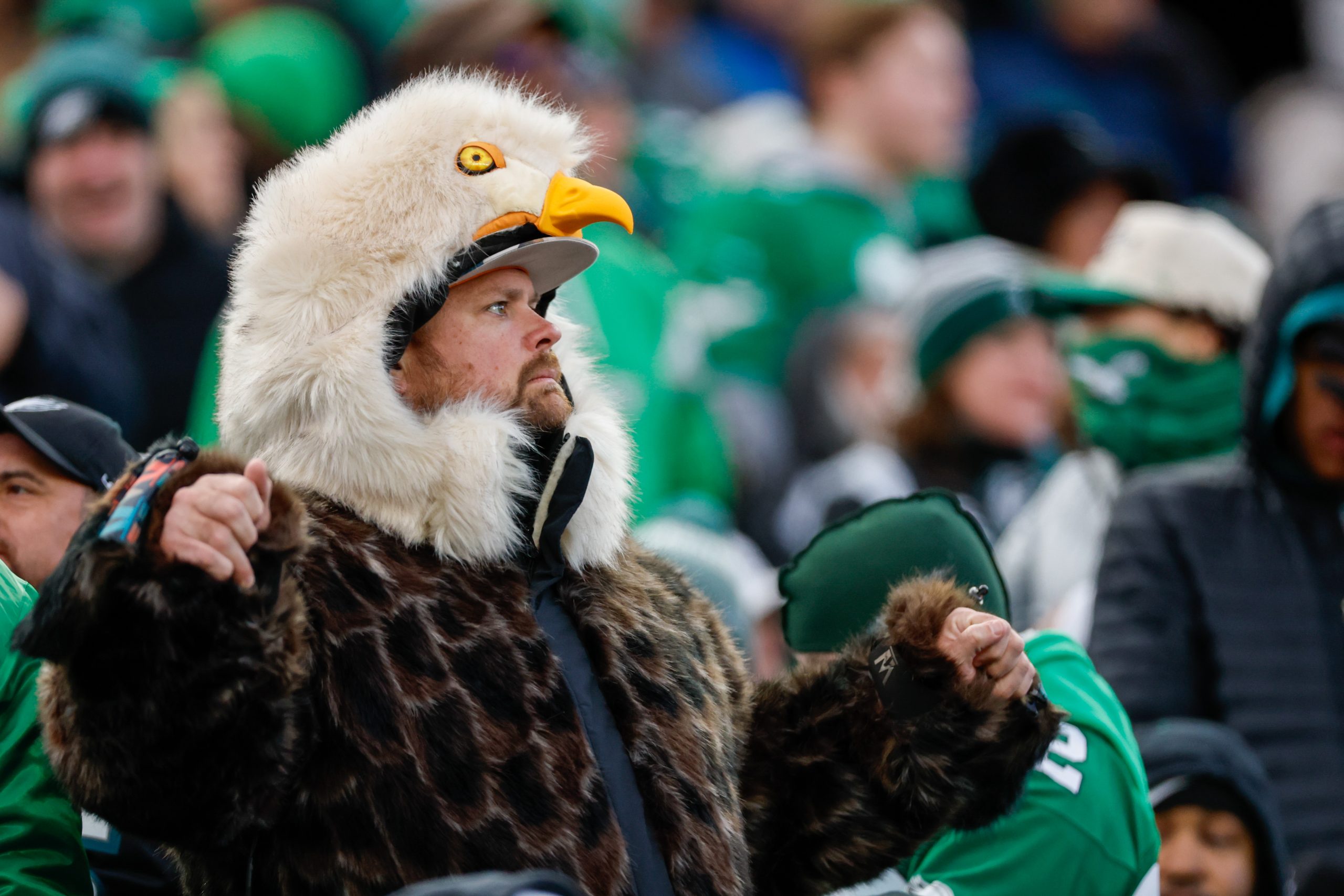
The passion that Philadelphians have for the Eagles is similar to how Europeans feel about soccer, but this city doesn’t always extend the favor to its own soccer team.Yong Kim / Staff Photographer
Emotion trumps data
For most of its 30-year history, MLS has shied away from doing the work needed to forge those bonds. Instead, it has chased sugar highs from signing big names.
That path has been profitable, to be sure, and the list is long: David Beckham, Thierry Henry, Didier Drogba, Javier Hernández, Lionel Messi, Son Heung-Min, and now Antoine Griezmann and Robert Lewandowski.
But the foundations are still missing in too many cities leaguewide, with Philadelphia high up that list. New York, Chicago, Boston, and Houston are also perennially on it.
This came to a head when commissioner Don Garber met the press at the U.S.-Australia game in Seattle last month. Behind him, a scene unfurled that American soccer fans dreamed of for decades: A thunderous home crowd in a city that not only loves the sport, but loves this country’s game specifically.
How can the league build connections like that elsewhere?
“Part of it is time and part of that is tactical; part of it is actually doing the work,” Garber said to start. He referenced how MLS “got FIFA’s permission to do Fan Fests in every market,” which sounds nice until you realize the need to ask is yet more of FIFA’s greed.
“We want to bring everybody together,” Garber said. “But we want to know, if people are going to support a World Cup match, what can we do to talk to them and give them exciting news and information and connections to become a fan of Sporting Kansas City or the Seattle Sounders? Some of that is just the data and intelligence that we’re going to gather, and be able to do that.”
He sounded good until the words data and intelligence. Because the problem here isn’t a rational one, it’s an emotional one.
For many years, the response from fans to MLS has been: I don’t care, because your product isn’t as good as others.
A league now in its fourth decade should be mature enough to shoot right back: So what? That isn’t the point.
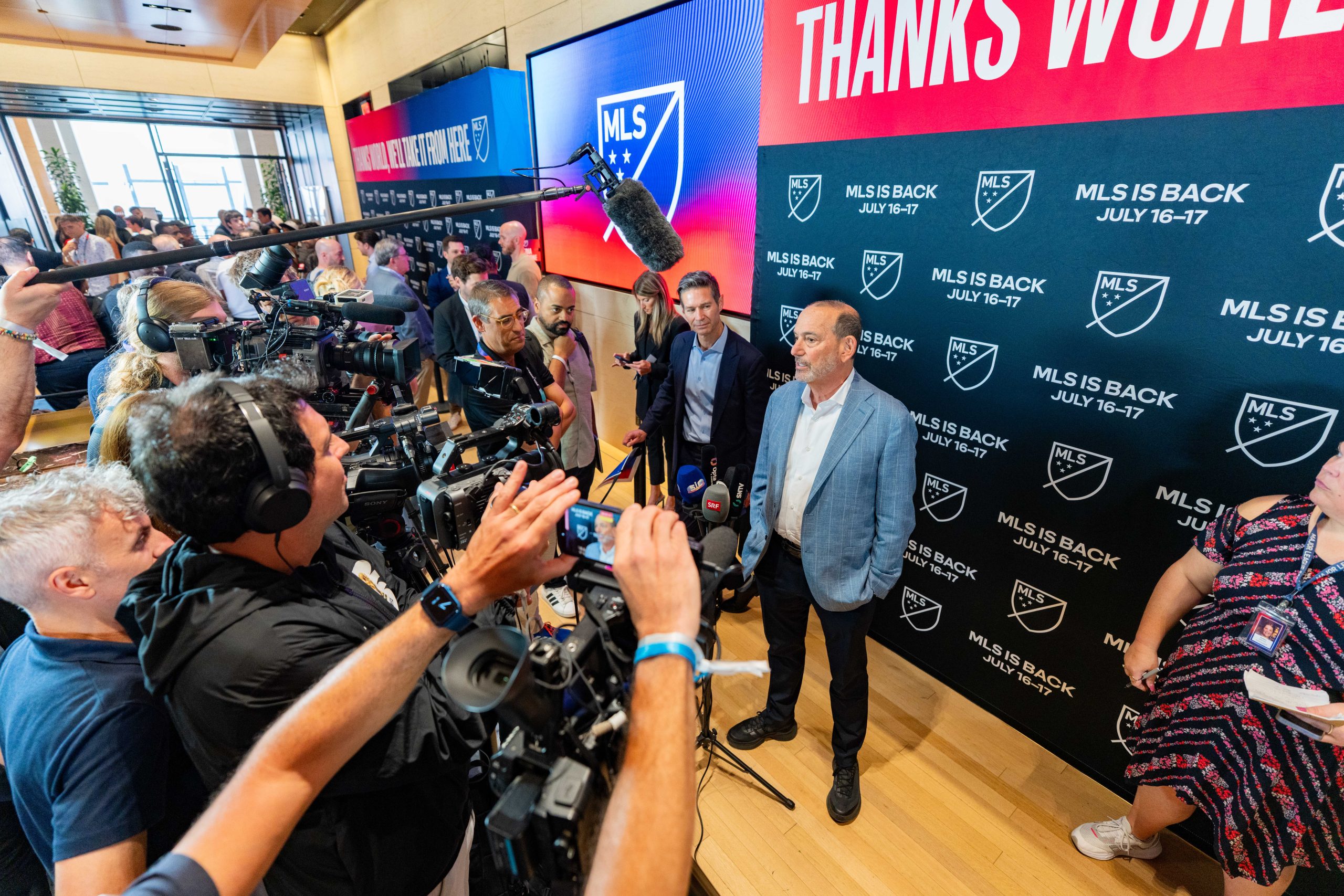
Don Garber facing the media during a pre-World Cup final publicity event at the league’s headquarters last week.Vanja Savic
There’s nothing stopping any soccer fan from watching European games on a Saturday morning and their local team on a Saturday night. Nor do some of the English Premier League’s loyalists understand England’s thriving lower leagues, where crowds can be bigger than Europe’s other top flights.
Why would a Londoner pick Charlton over giant Arsenal? Why bother in Bolton when Manchester is a stone’s throw away? It isn’t just because they dream of winning promotion. To those fans, the teams are theirs in a way the giants will never be.
MLS, meanwhile, has often been too timid to make the case.
“I will say to everybody who has said to me from the day I took this job: If you don’t believe, that’s OK,” he answered. “Right now, soccer is the third most popular sport in our country. We’ve got to make MLS a bigger part of that pie, but the market’s there and it’s up to us to convert it. If we don’t convert it, shame on us.”
That’s more like it. Because though Garber’s legacy is unquestionable ahead of his retirement next year, the league missed a big opportunity after the last World Cup. Now it risks another one.
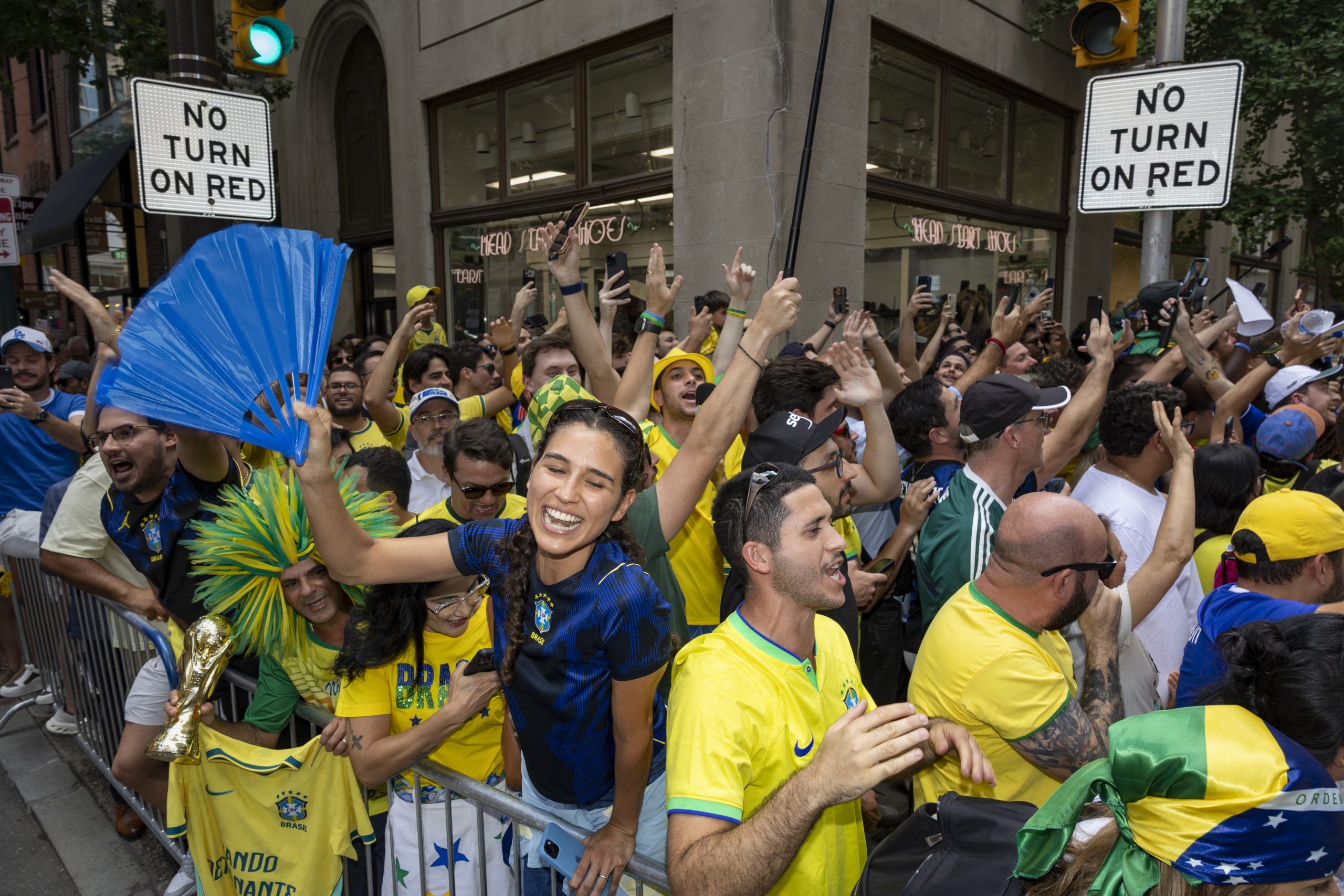
How many of the Brazil fans who electrified Philadelphia when their team played here would go to a Union game?Aidan T. Gallo / Staff Photographer
‘Not just about’ the stars
The second the 2022 tournament ended, North America’s hosting in 2026 was on the clock. MLS could easily have boasted its players featured this year — not just for the United States, but many countries. So what if they would be in Europe later? They were in the league now, and worth watching.
This summer, MLS was almost invisible during the tournament. Of course it was right to not have games, but the lack of publicity on TV was shocking. Especially on World Cup broadcaster Fox, which airs MLS games throughout the year.
And where, yet again, was the marketing heft from Apple? The world’s most famous tech brand was also pretty quiet, instead of trumpeting to new soccer fans that it has every MLS game.
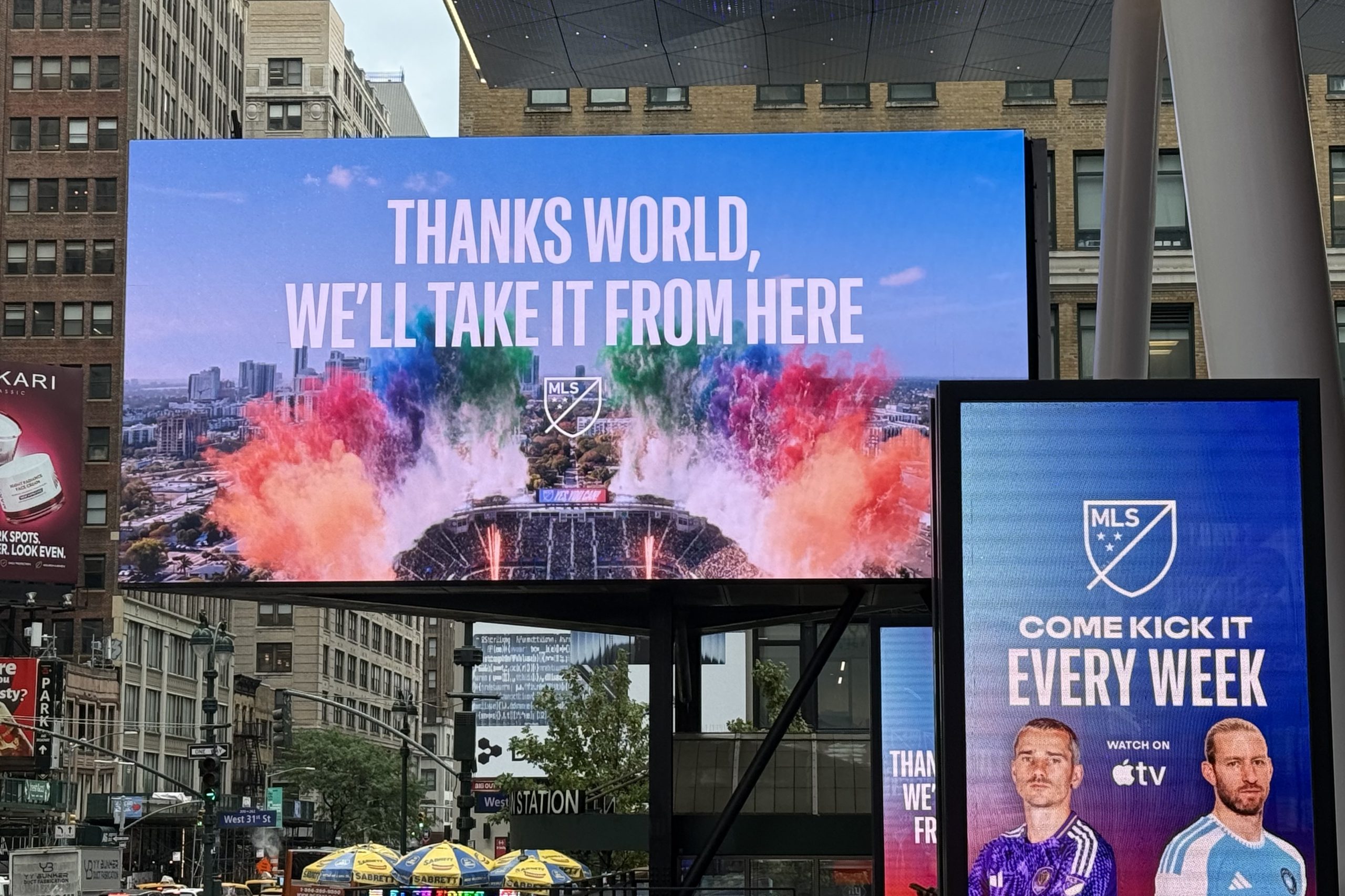
MLS bought flashy advertisements for its return from the World Cup at Madison Square Garden in the heart of New York. But will soccer fans pay attention?Jonathan Tannenwald
Rank the domestic leagues of the world by how many players they sent to this World Cup, and MLS had the second-most of any outside Europe’s traditional big five: England, Spain, Germany, Italy, and France. Saudi Arabia took No. 6 — by just two players — thanks to the exorbitant, oil-and-gas fueled salaries paid by clubs with sovereign wealth backing.
Along with that, this reporter counted a total of 115 players spanning 24 World Cup teams who play or have played in the U.S. or Canada, whether in the pros, college, or high school.
Those are marketable numbers if the league wants. But how many people know about them?
When MLS hosted the media at its new Manhattan offices last Thursday, Garber was grilled again, and seemed to get it right again.
“It’s not just about those Designated Players, the big names,” he said. “It’s about Alex Freeman, who started as a youth player, played in an academy, played in MLS Next Pro, and now is playing overseas after he was a starter for Orlando City.”
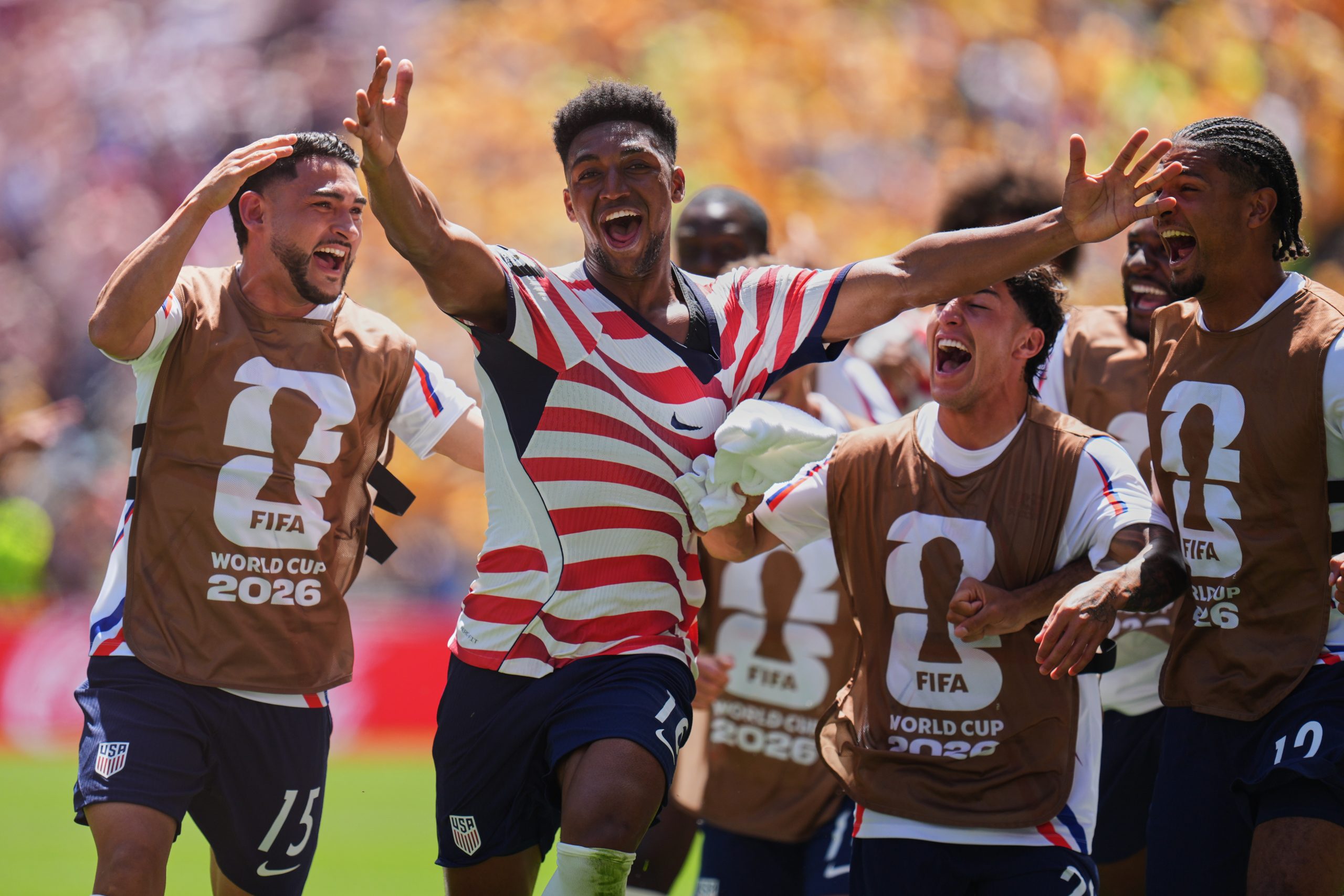
Alex Freeman (center) celebrating his World Cup goal against Australia.Manu Fernandez
As that famous poet Batman might say: Right again, commissioner.
Yes, MLS is absolutely right about Freeman, the U.S. team’s breakout name of this World Cup who moved from Orlando to Spain’s Villarreal last winter. But the league has also been too afraid to admit it’s a launchpad to Europe, even though doing so would likely bring more global eyeballs. Tracking future stars in soccer has become as profitable as doing so in basketball and football.
The Union’s game on Wednesday against Red Bull New York at Subaru Park (7:30 p.m., Apple TV) will be a prime example. At least five young candidates for the 2030 U.S. World Cup team will be on the field: the Union’s Cavan Sullivan, Frankie Westfield, and Malik Jakupović, and the visitors’ Julian Hall and Adri Mehmeti.
Soccer fans know those names are worth watching, but the new World Cup fans in town don’t yet. The burden is on MLS to make the point, and there’s no better time than right now.
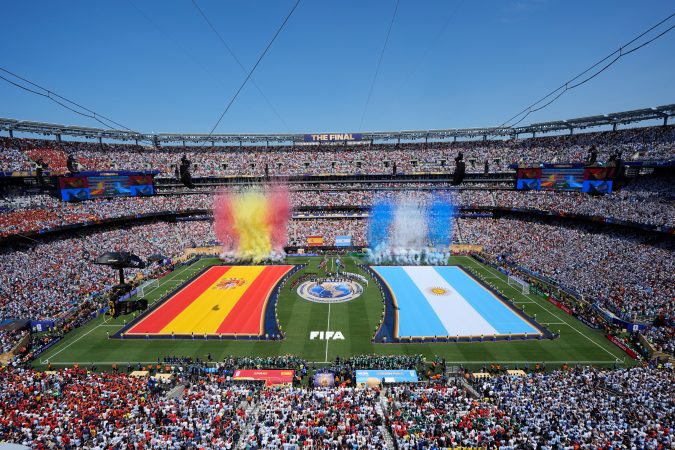
A historic summer for soccer in the United States was capped off Sunday with one more record broken, as 66.4 million Americans watched Spain’s title win over Argentina.
The audience showed up despite the game ending in a 1-0 score including extra time. Ferran Torres had the breakthrough in the 106th of what proved to be 140 minutes of game clock, counting all the stoppage time.
Fox reported an audience of 42.5 million for its English-language broadcast, a new high for a soccer audience on a single channel. Telemundo’s audience of 23.9 million also set a record for the biggest viewership of a soccer game in Spanish.
¡¡¡GOOOOOOOOOOOOOOOL DE ESPAÑAAAAAAAAAA!!! ¡¡¡FERRAN TORRES!!! ¡¡¡GOL HISTÓRICO!!!
El jugador de Barcelona la manda a guardar y le está dando la Copa del Mundo a La Roja.
— Telemundo Deportes (@TelemundoSports) July 19, 2026
With the book now closed on the tournament, the big-picture view shows how much the world’s game broke through in America this summer.
A remarkable 63 games of 104 drew over 10 million viewers combined between Fox and Telemundo. Before this World Cup, 42 all-time broadcasts had topped that mark, according to data compiled by The Inquirer over the years. Thirty-one games of this World Cup drew over 15 million viewers; 18 over 20 million; 11 over 25 million; and five over 30 million.
Those five were the Norway-England quarterfinal (34.796 million); U.S.-Bosnia (36.195 million) and Mexico-England (46.690 million) in the round of 16; the U.S.-Belgium quarterfinal (50.125 million); and the final.
The top nine soccer broadcasts of all time in the U.S. were recorded this summer, as were 11 of the top 15 and 14 of the top 20. Each of the new entries involved at least one of the U.S., Mexico, Lionel Messi’s Argentina, star-studded England, or historic power Brazil — the last of which was playing another star in Erling Haaland’s Norway.
The big crowd at Philadelphia’s World Cup fan fest for one of the U.S. games.Tyger Williams / Staff Photographer
Take it out to the top 25 all-time, and 18 of them came this summer. Of the four additions, three had France, with Kylian Mbappé among many big names; and the fourth was Cristiano Ronaldo’s Portugal facing Luka Modrić’s Croatia in the round of 32.
All these big numbers will not be lost on the networks, their advertisers, or likely the teams themselves. Some of them already knew how popular they’d be in this country, and the rest came to learn it.
Before this World Cup, the most-watched soccer game in U.S. history was the 2014 men’s final, which drew 27,314,274 viewers across ABC, Univision, and their respective streaming platforms. It now stands as No. 8.
The English-only record had stood since the 2015 women’s World Cup final, 25.632 million viewers for the U.S. ending its 16-year title drought in time zone-friendly Canada. The prior Spanish record was the 2014 men’s final, which became the first of Messi’s three title games.
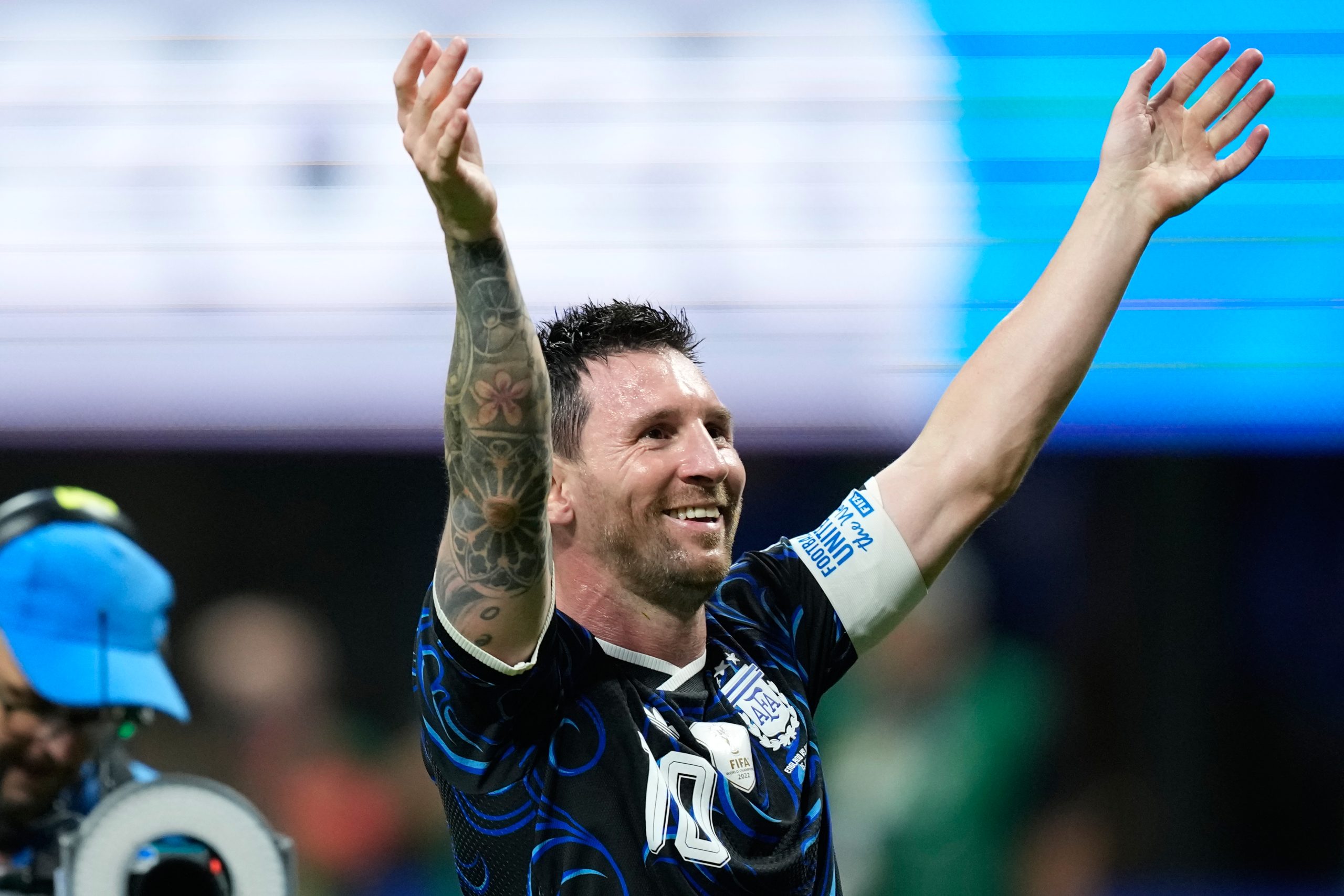
It was no surprise that Lionel Messi’s Argentina was one of the biggest TV draws in this World Cup.Rebecca Blackwell
When will these records be challenged again? That’s a big question around the sport. The next two women’s World Cups are in Brazil and the U.S., which opens the door for big audiences, but their broadcast rights here are currently held by Netflix. The streaming giant has not yet agreed to any sublicensing deal to put some games on traditional television, and there haven’t been any hints about whether it will.
FIFA hasn’t done broadcast deals for the 2030 or 2034 tournaments, and now is racing to try to cash in. But it might struggle.
The 2030 tournament will be held in Spain, Portugal, and Morocco, with a game each in Argentina, Uruguay, and Paraguay to celebrate the men’s World Cup’s 100th birthday.
The 2034 tournament will be held in Saudi Arabia. It’s likely to be moved to the winter to escape the Middle East’s summer heat, as the 2022 edition in Qatar was. But that would again put games in the middle of the American football season instead of on their own summer stage.