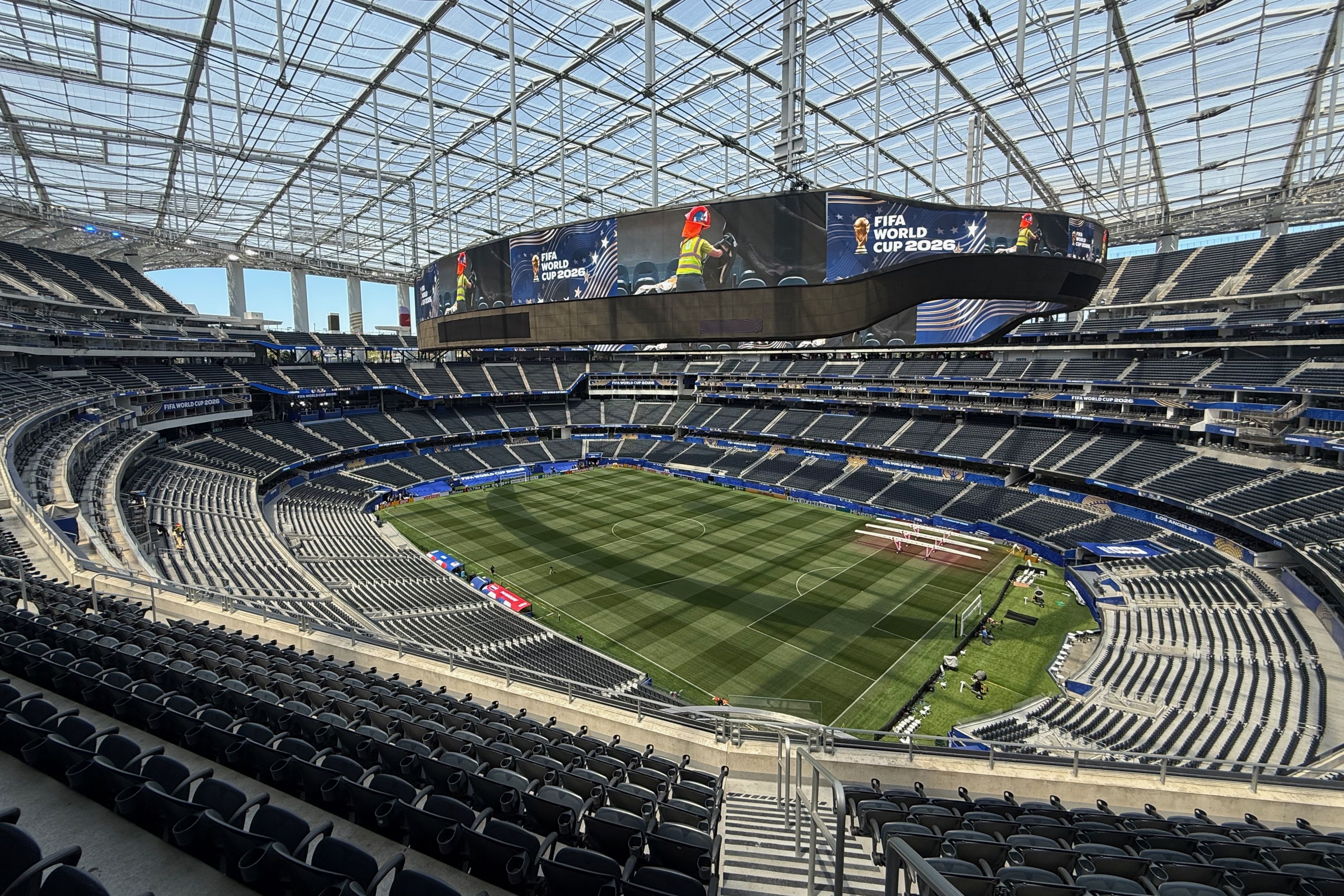
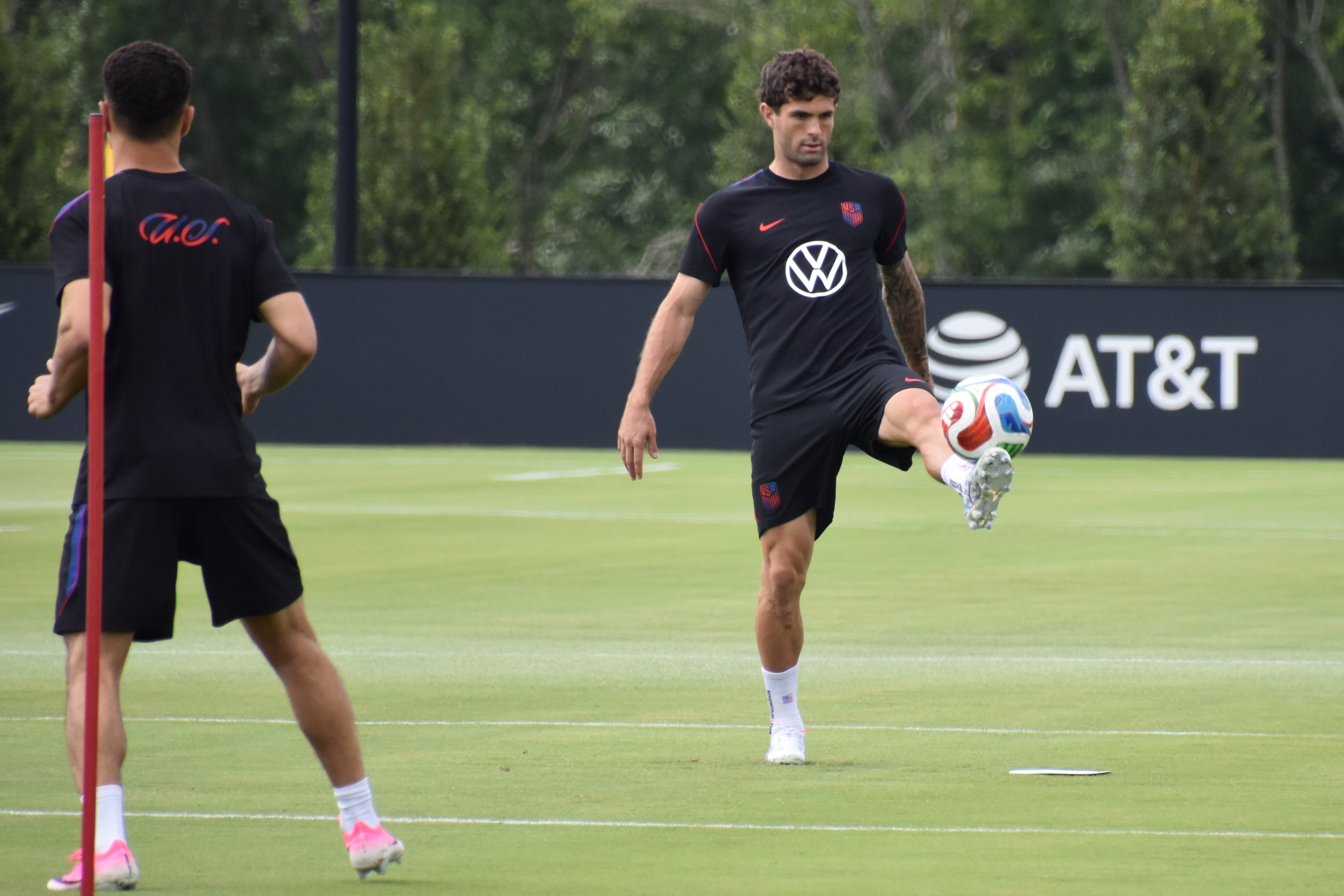
INGLEWOOD, Calif. — Simply put, the U.S. men’s soccer team’s World Cup got off to a dream start.
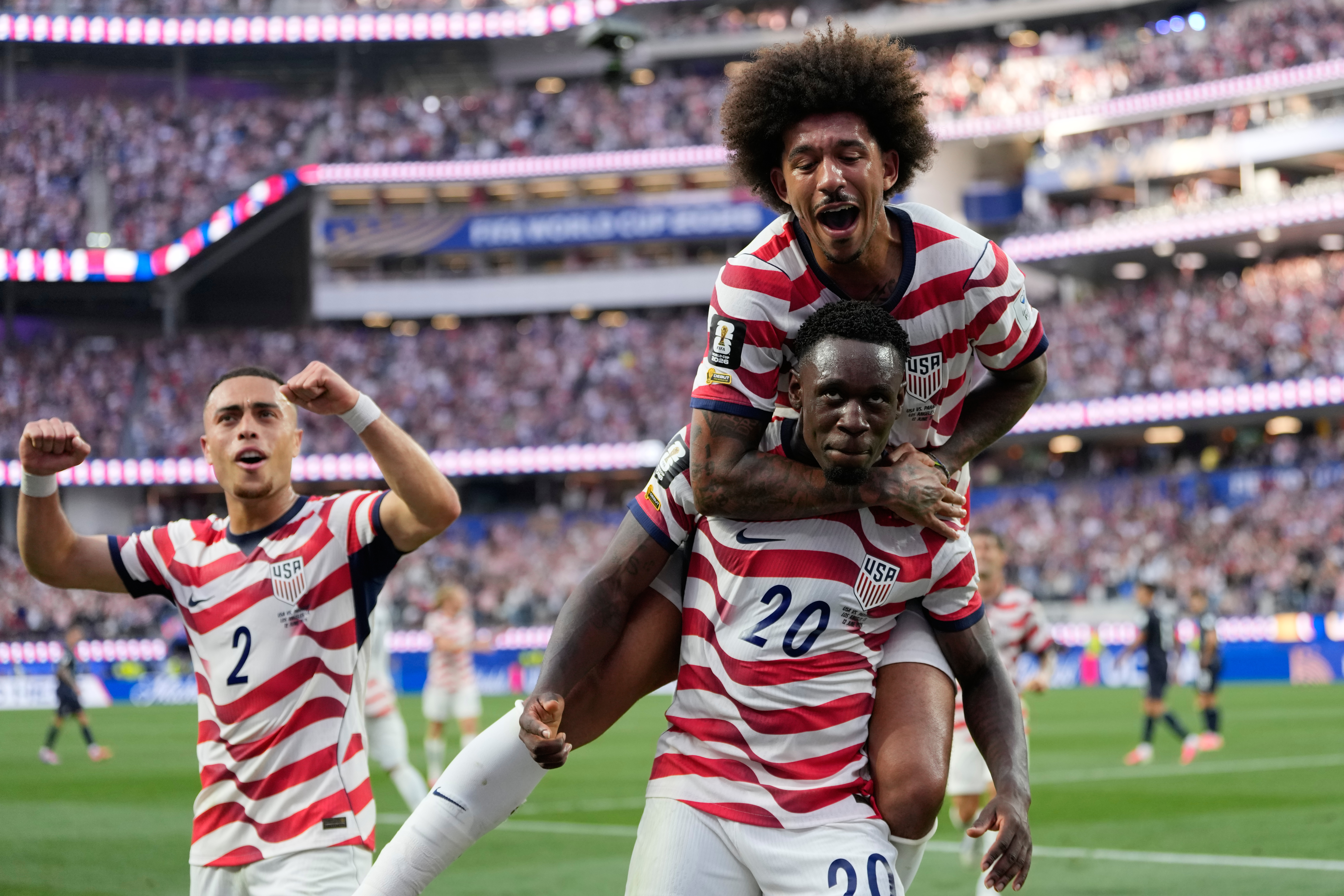
Folarin Balogun’s goals and Christian Pulisic’s playmaking led the Americans to a 4-1 win over Paraguay in their tournament opener, the highest-scoring performance ever by the U.S. men in a World Cup.
The crowd of 70,492 played a role too, belting out out the national anthem along with celebrity singers Dan + Shay and chanting “USA!” throughout the game.
With that as fuel, the U.S. needed just seven minutes to get on the scoreboard.
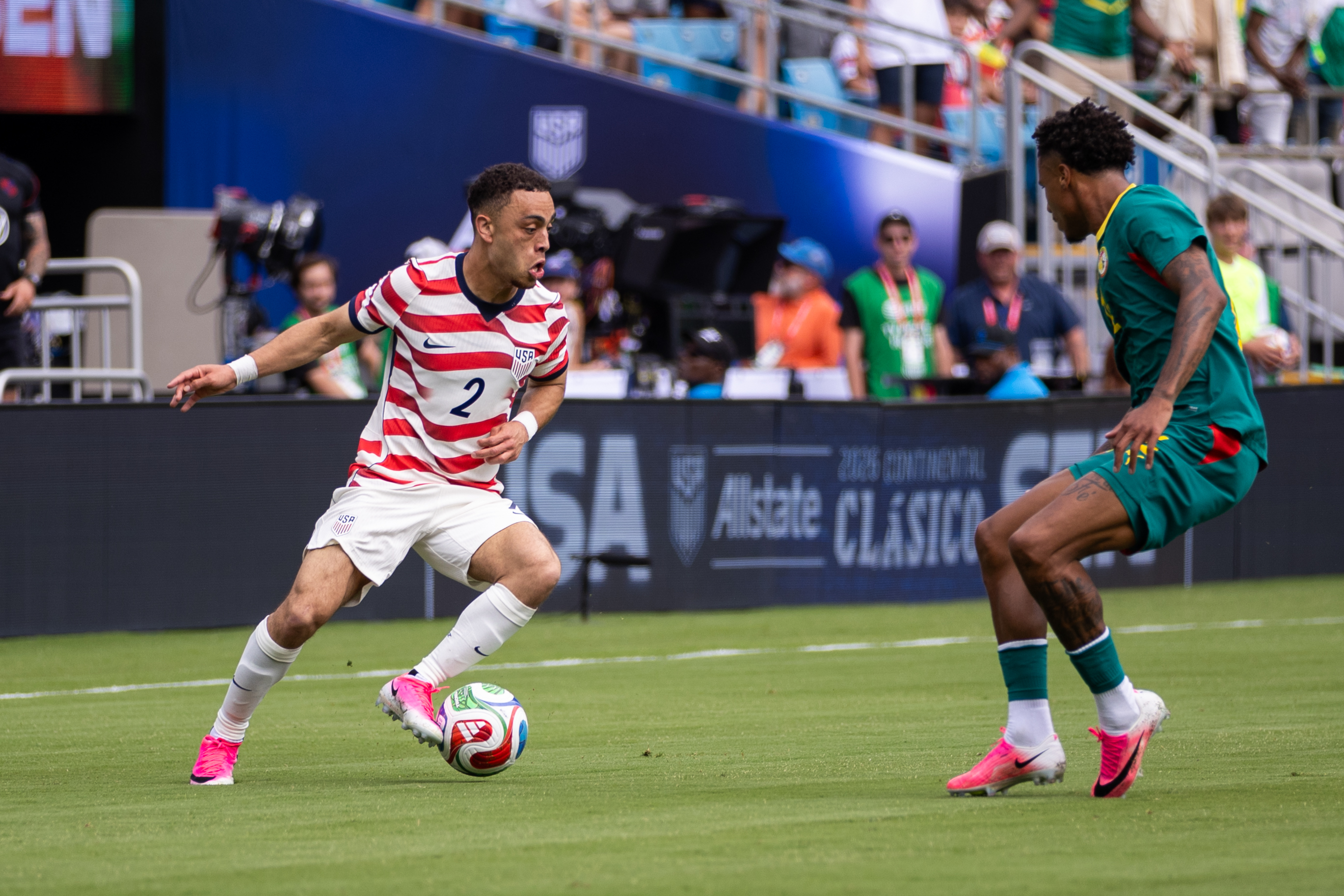
Weston McKennie created the opener in tandem with Pulisic. McKennie drove hard up the middle, including a cutback between two Paraguayan players, then fed Pulisic on the left. The Hershey, Pa., native uncorked a dazzling split of two players and a slip past a third, with the latter move sending the ball to McKennie. He aimed to lay it off for Balogun, but Paraguay’s Damián Bobadilla did the job instead by deflecting the ball into his own net.
It could have been 2-0 in the 28th, but Pulisic was offside in the buildup, and Balogun was off at the end. But the real thing arrived three minutes later, and this time, it was a no-doubter.
Pulisic was front and center again, seizing a sharp through ball from Antonee Robinson and charging up the left flank. The centering pass was on the money for a charging Balogun, who held up behind Paraguay’s back line and easily slotted home.
The crowd erupted again, a real roar despite FIFA’s price-gouged tickets that have kept so many soccer fans out of World Cup stadiums. There were pockets of empty seats, especially in the most expensive sections, another indictment of the governing body.
But the fans who were here, for all they paid, delivered. From the anthem to thunderous “USA!” chants, they showed up in a way the U.S. team often hasn’t felt — especially in Southern California. One need only think back to last year’s Concacaf Nations League final four in this same stadium, when indifference and unhelpful kickoff times left the Americans drowned out.
The U.S. lost both of those games. Now, in their first of two group games here, they were rolling — and not done scoring yet.
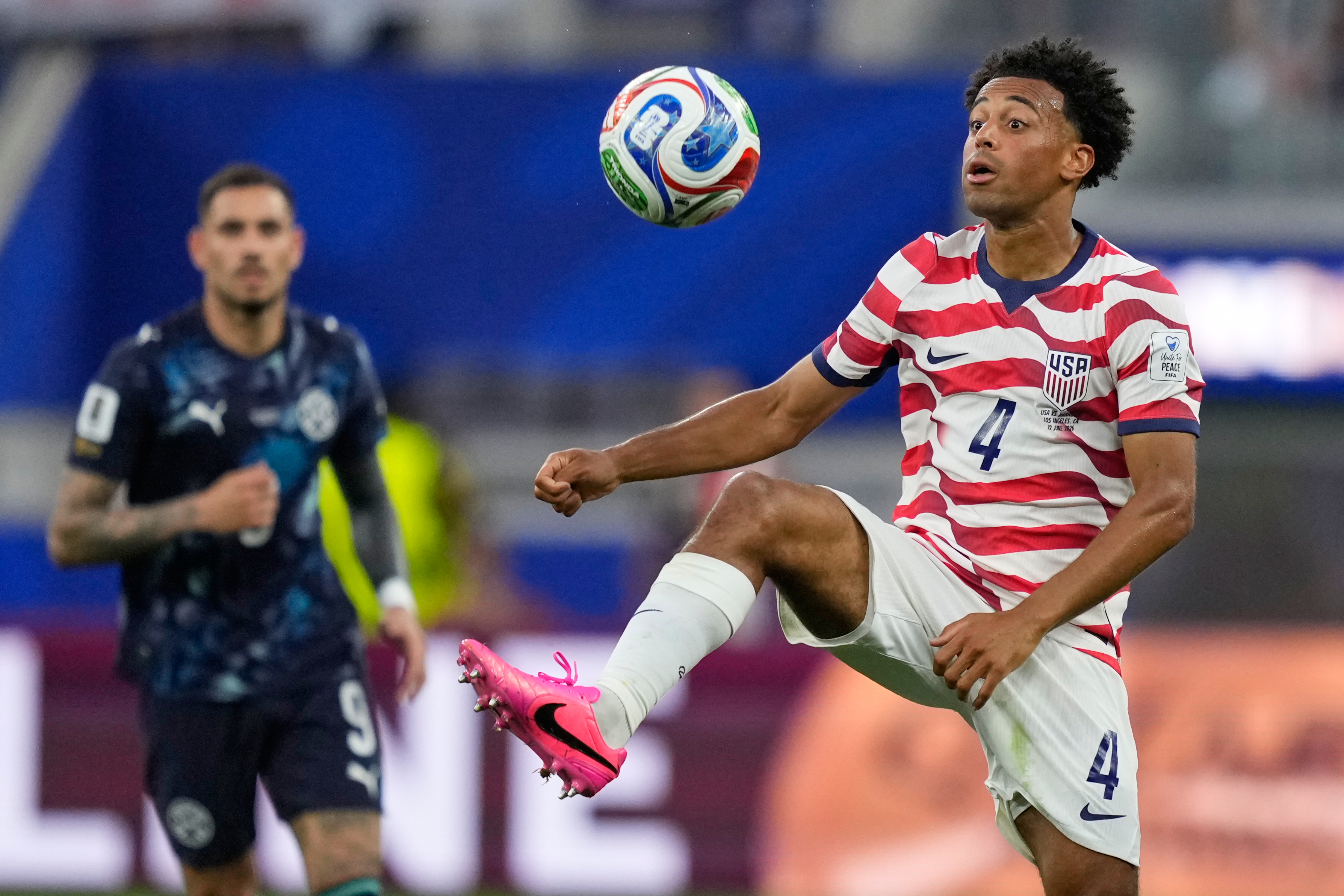
In the last minute of first-half stoppage time, Antonee Robinson corralled a loose ball in his own half. He gave it to Tim Ream, who had no pressure on him and took his time before passing to Tyler Adams. Paraguay again did not press, so Adams offered the ball to Malik Tillman. He turned, took one touch, then zinged a low pass through four Paraguayan players.
Balogun saw it coming even before Tillman had fully turned and was off to the races. He was past Paraguayan centerback Omar Alderete — of English Premier League club Sunderland — and stayed on his feet as Alderete tried to slide at him. He then cut left past a spinning Gustavo Gómez and slammed a shot into the top corner.
The goal made Balogun the first U.S. men’s player to score multiple goals in a World Cup game since Bert Patenaude at the first ever World Cup in 1930, coincidentally also against Paraguay. And the half was the highest-scoring by a U.S. men’s team since the famed 3-2 win over Portugal in 2002.
The second half started with a shock: Pulisic was subbed out. Sebastian Berhalter replaced him and went to a deeper central midfield spot, which sent Tillman up to Pulisic’s spot.
“I just got a bit of a kick in the first half,” Pulisic said postgame. “Back of my leg, sort of my calf area. Staying positive. I don’t think it’s anything.”
A U.S. Soccer spokesperson said manager Mauricio Pochettino would address the matter postgame.
Ream and Adams drew yellow cards early in the second half, though Ream’s was canceled. The Adams booking was especially significant, given the roster’s lack of central midfield depth.
Tyler Adams (right) will have to be careful to not get a yellow card in the next game against Australia. If he does, he’ll be suspended for the group stage finale vs. Turkey.Mark J. Terrill
Adams must now avoid cards through the second group-stage game, against Australia next Friday in Seattle (3 p.m., Fox29, Telemundo 62), to avoid being suspended for the crucial group-stage finale against Turkey on June 25.
With 25 minutes to go, the joy of the first half was replaced by nerves. Even though the U.S. was up, 3-0, Pulisic’s departure and Adams’ yellow put the building on edge.
Pochettino made two more substitutions in the 72nd, Tim Weah for Sergiño Dest and Ricardo Pepi for Balogun, but Adams stayed in.
Seconds later, Paraguay scored far too easily. Goalkeeper Orlando Gill sent a long ball forward, Miguel Almirón knocked it down to Julio Enciso, and he fed Maurício for an open shot.
The crowd could tell the vibes were changing and tried to stir the home team with another loud “USA!” chant. Weah shot high, and Tillman shot straight at Gill.
Gio Reyna was the last substitute, replacing Tillman in the 82nd.
There were seven minutes of stoppage time to endure at the end — and quite a few hard hits from Paraguayan players.
But the Americans endured and even earned one of the sport’s most famous compliments. As they ran out the clock in stoppage time, the crowd chanted “Olé!” as they passed the ball around the field.
In the final seconds, Reyna gave them an electric parting gift. A long passing sequence finished at his feet just outside the 18-yard box, and he stepped up unmarked to smash in the finale.
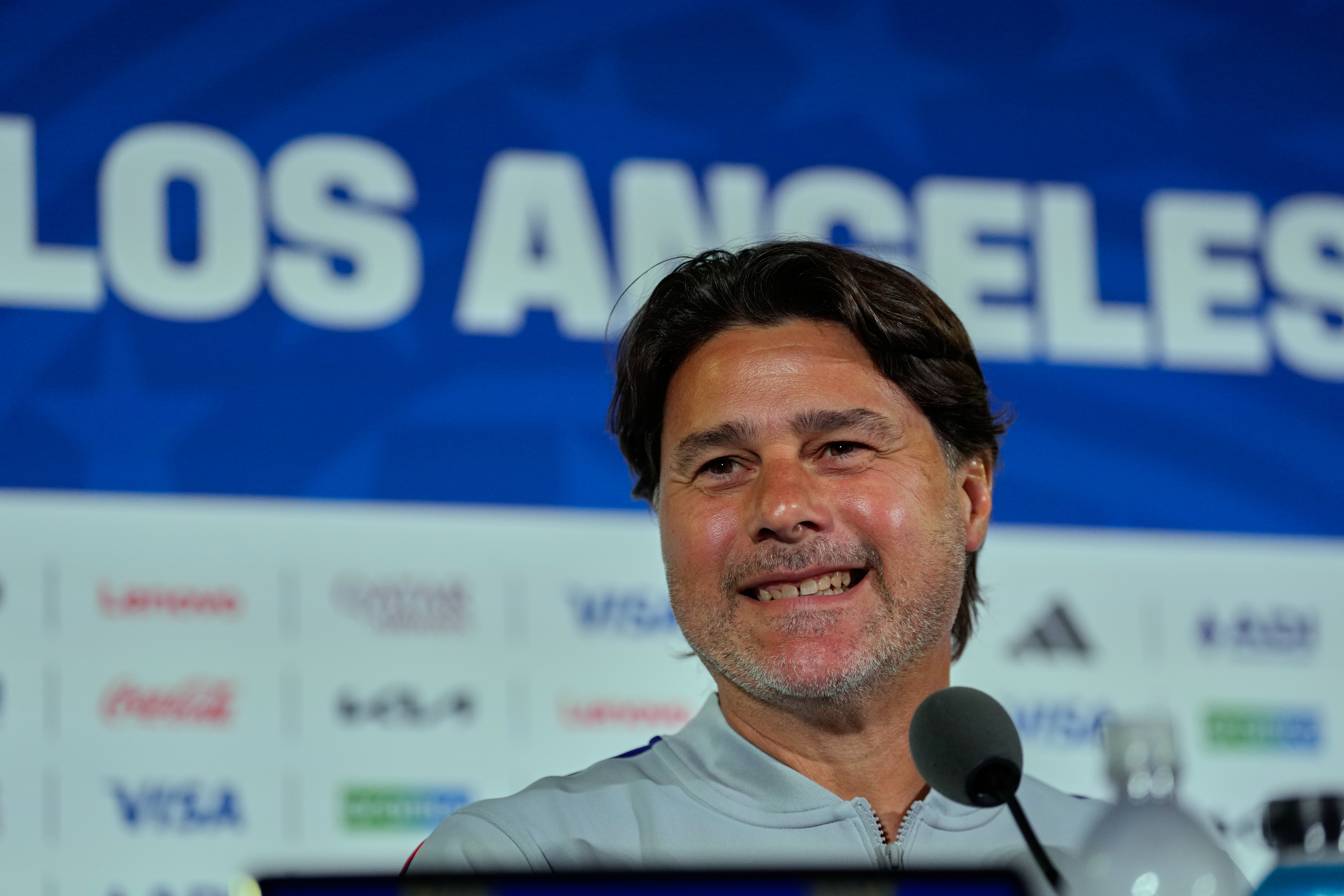
INGLEWOOD, Calif. — U.S. men’s soccer team manager Mauricio Pochettino has said many times during his tenure that he wants his players to believe they can win this World Cup.
If it’s unrealistic, or derided by fans and media, he does not care. His job has been to make his players think they can do it, and use that belief to put extra fuel in the tank.
(For the record, reaching the quarterfinals is the bar most outsiders have set; and if you ask this reporter’s opinion, that’s correct.)
On Thursday, in his final remarks before Friday’s opening game against Paraguay (9 p.m., Fox29, Telemundo 62), Pochettino finally turned to a more realistic tone.
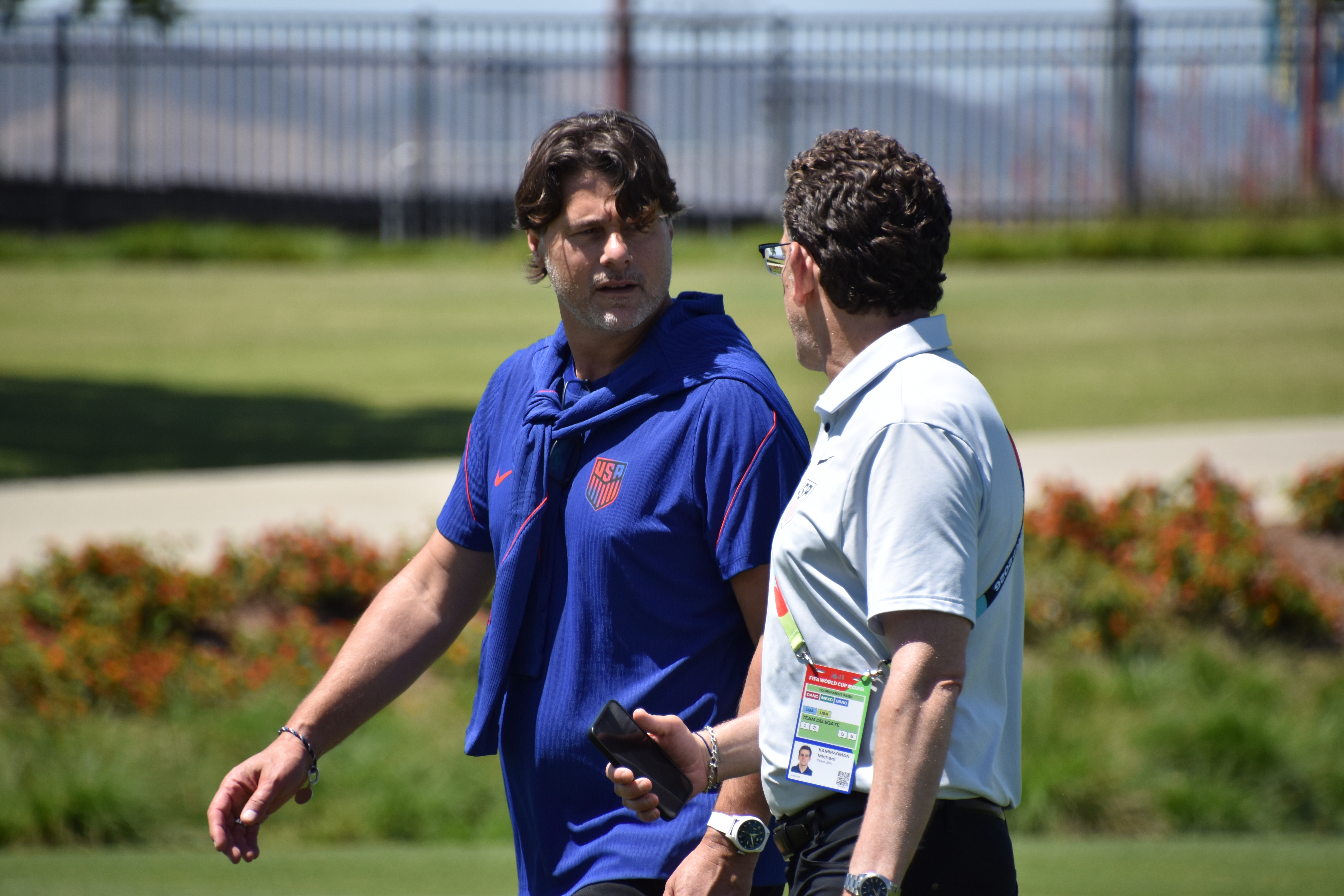
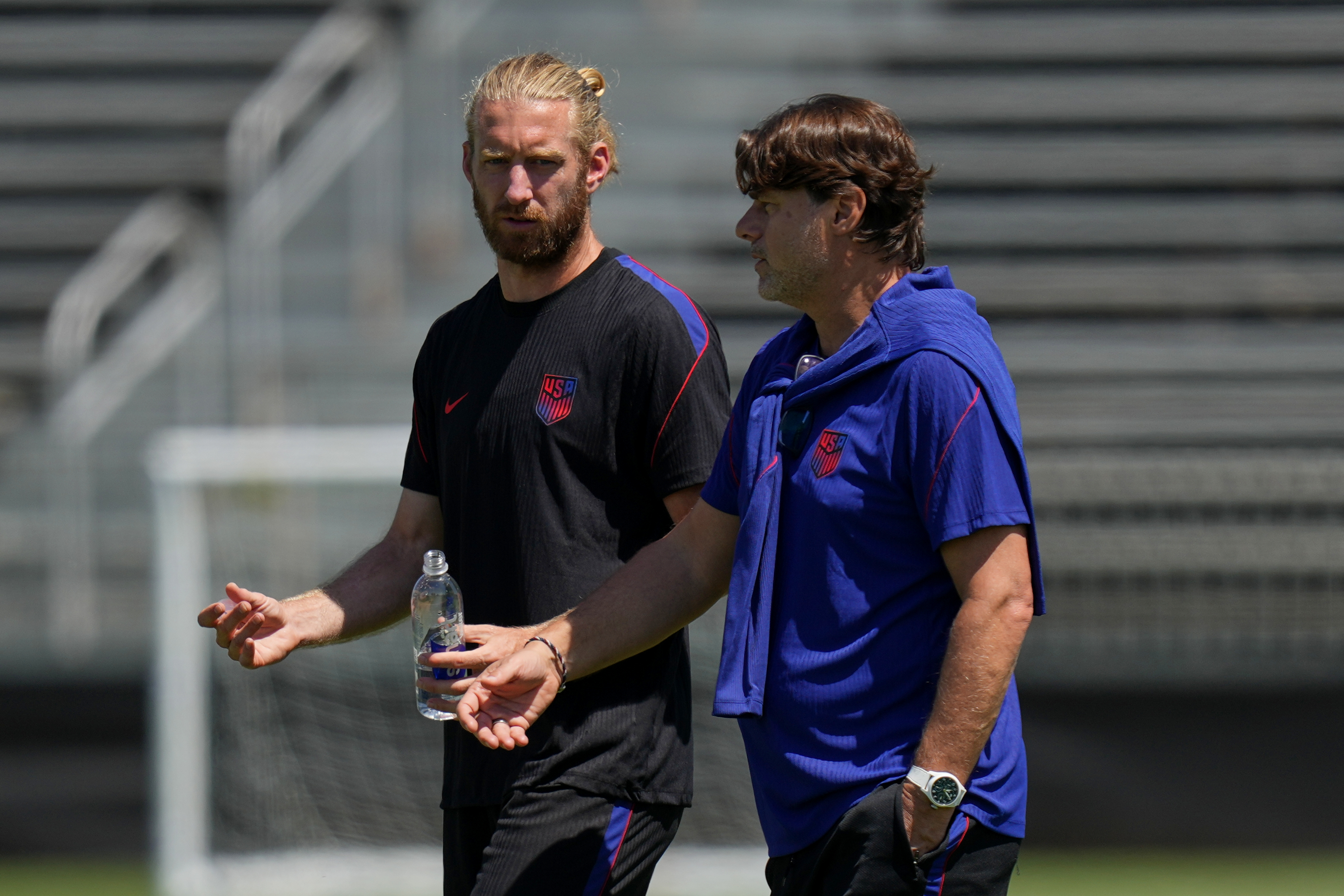
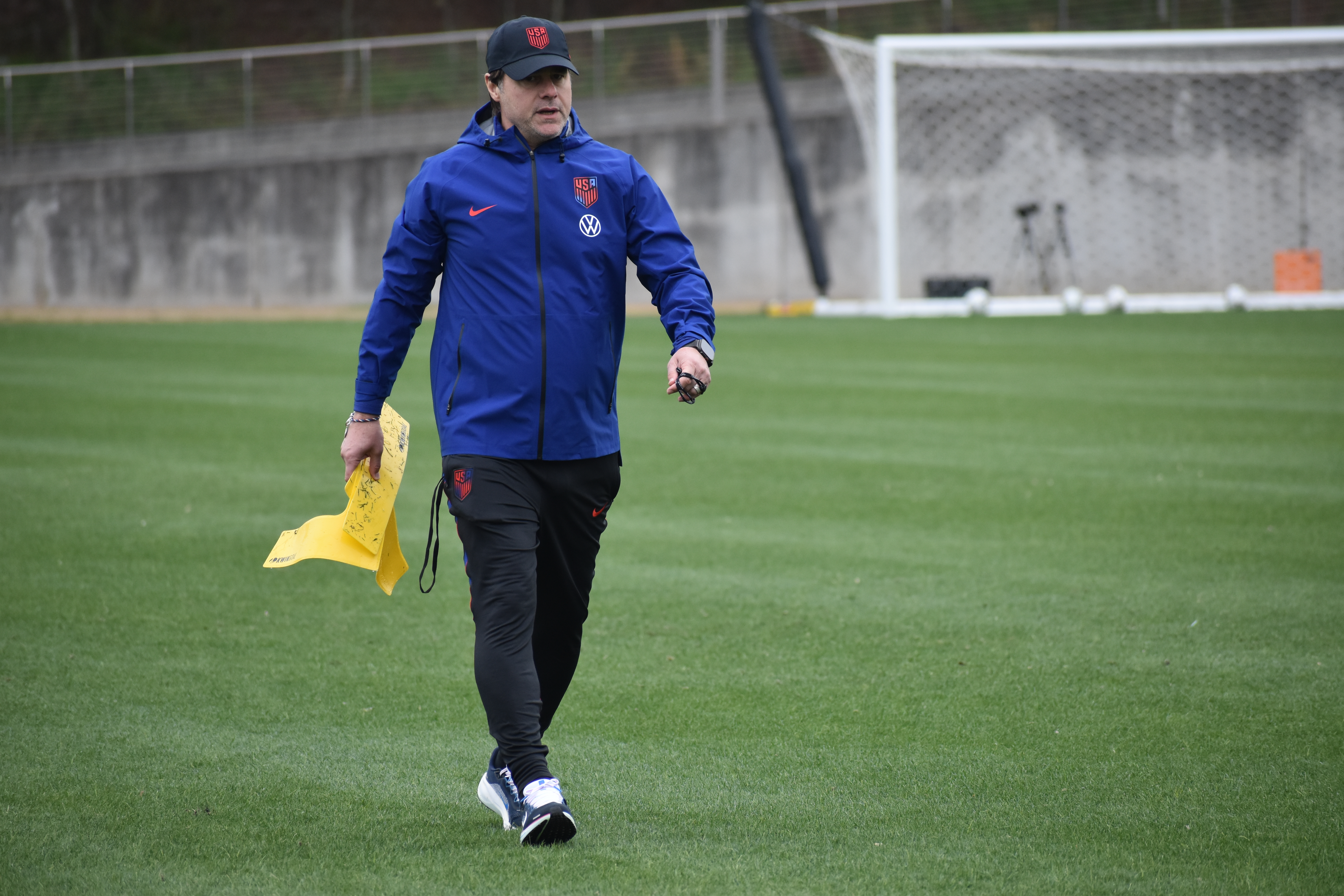
Mauricio Pochettino (left) walking with a U.S. team staffer at Thursday’s practice.Jonathan Tannenwald
Asked how he defines success now, he started by saying “it’s difficult.” Then, acknowledging those who hadn’t heard his passionate stances in the past, he set out his explanation.
“I think for me, ‘successful’ is winning,” he said. “It’s win tomorrow, and win after tomorrow, and win. If we don’t arrive to the final and we don’t win the World Cup, to talk about ‘successful’ is, I don’t know — for me and my mindset.”
Pochettino has heard from plenty of people in his 22-month tenure to date about the mountains American men’s soccer must climb, and the obstacles along the way. And now he knows firsthand how his players truly stack up against the world’s best, especially after games against powers Belgium, Portugal, Senegal, and Germany.
“If you say to me, oh, the conditions, or this [other thing], or we play against good national teams, I say, OK, OK,” he said. “But when we signed here, it’s because we wanted to come here, and to be involved in that unique event, but with the possibility to compete well, and believing in winning.”
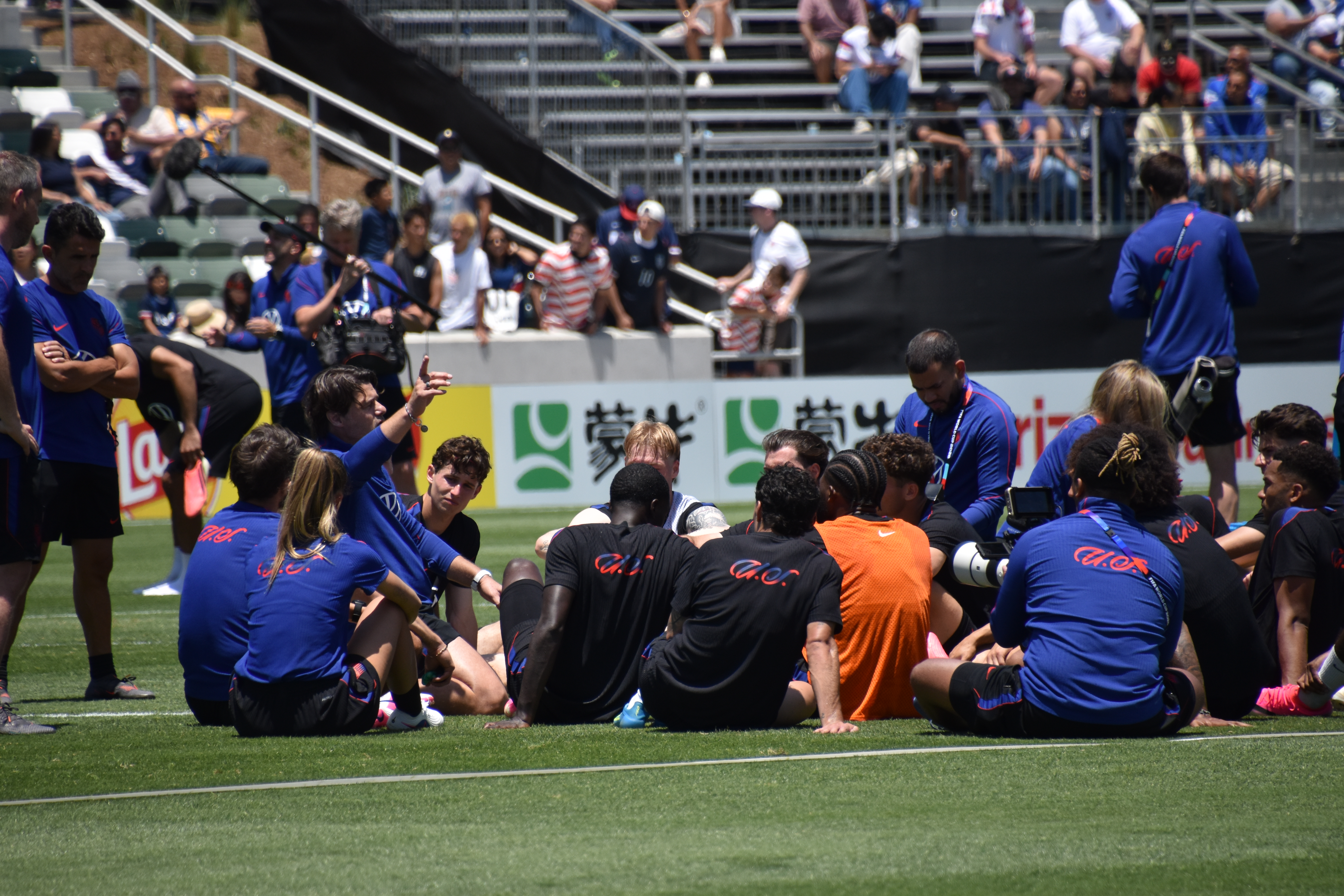
Mauricio Pochettino making a point to a group of players during the U.S. team’s open practice on Monday.Jonathan Tannenawld
Asked what he’ll say to his players before Friday’s kickoff, Pochettino joked that “I already spoke, I already talked — too much. I said [to them], don’t expect an unbelievable speech Friday.”
That’s mainly because in his opinion, they “don’t need an external motivation” at this point.
“They need the motivational speech and inspiration when they need to go to train and improve in every single area,” he said. “And then tomorrow, it’s late. … If you are not ready, sorry guys, it’s impossible to perform. What were [we] doing all this year and a half [we’ve been preparing]?”
‘Their emotional intelligence is very high’
But in a way, the manager gave that speech to the media from the podium on Thursday, in a news conference where he alternated freely between English and Spanish.
Mauricio Pochettino (right) talking with U.S. captain Tim Ream at Thursday’s practice.Andre Penner
“The players, tomorrow, need to go on the field and feel in a bad way that they need to perform,” he said. “And to perform is to respect some rules, but also the most important is not to be disconnected with your emotional relationship with the game. And we were talking about that: they need to think tomorrow and play like they are a child, with no pressure, with no responsibility.”
He also said he wants his players to “take it step by step,” and that “the key is not to look at the finish line before you actually get there.”
Pochettino particularly applied that to the players he’ll summon from the bench, a key part of any manager’s strategy with five substitutes allowed per game.
“How many players aren’t starters early in the World Cup, but end up big figures in the tournament?” he said. “It’s not just about how you start, but how you continue and how you finish.”
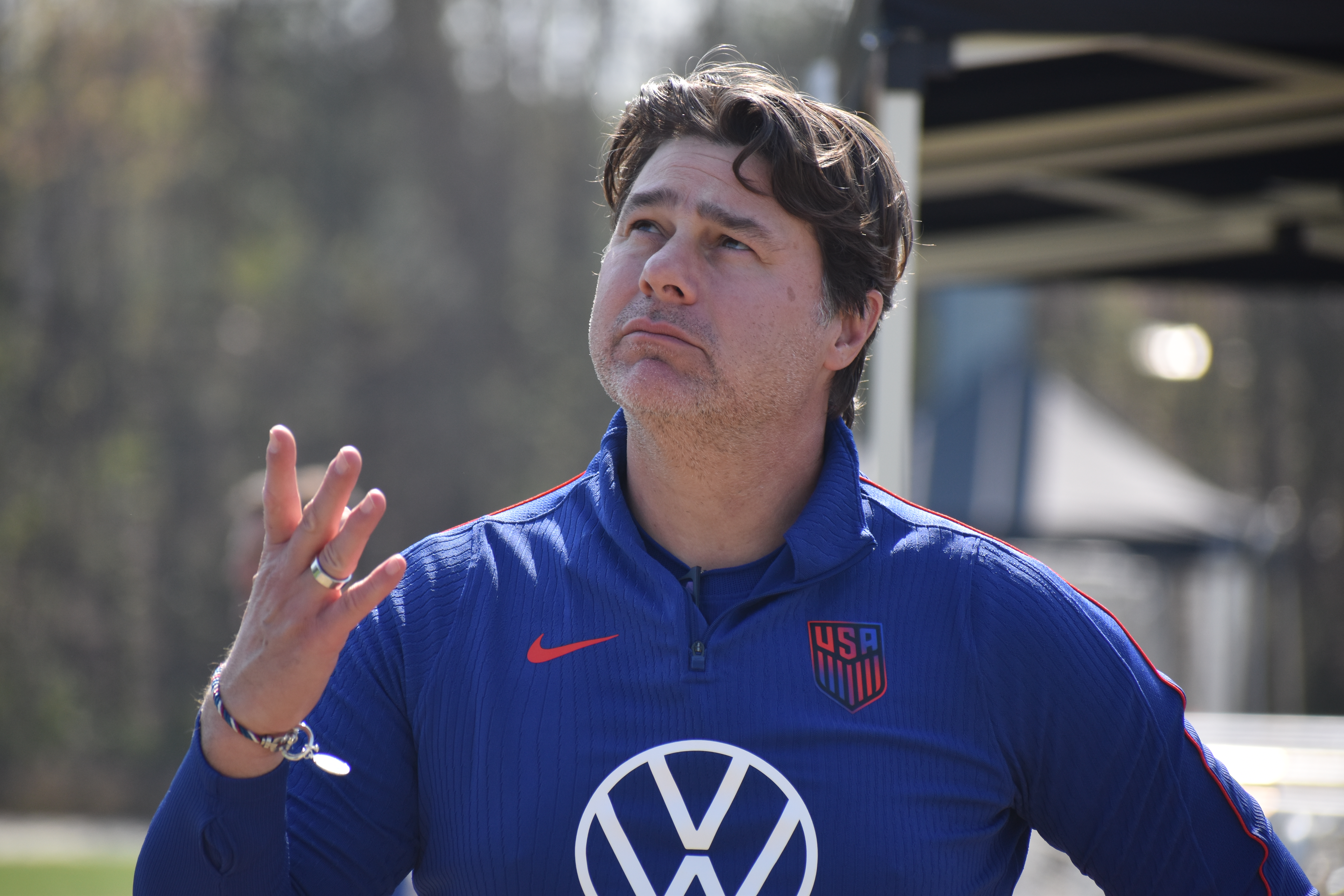
Mauricio Pochettino looks to the heavens during a philosophical moment at a U.S. practice in March.Jonathan Tannenwald
Perhaps his most revealing words came when he opened up about what he has learned from the players, for as much as they have learned from him.
“I really admire the players’ mindset,” Pochettino said. “I don’t think they should be underestimated, because their emotional intelligence is very high — well above the global average. They become great athletes because they possess that capacity and talent, and they develop that mental strength. I tell you, they are all intelligent.”
He has also learned the different ways required to connect with the 26 players on this squad, and the over 70 he has had in U.S. camps over his tenure.
“The trick is getting to know each individual so you can communicate effectively, finding the right frequency,” he said. “You realize that, ultimately, they all feel the same things, face the same struggles, and have the same needs. It’s about finding the right frequency to connect with each personality. They are giving us so much, and honestly, we are really enjoying the whole group.”
Keeping the lineup secret
As nice as it was to hear Chris Richards declare himself “ready” on Wednesday, that only counted for so much without his boss’s blessing. Pochettino gave it on Thursday, calling the key centerback “available.” He also said all 26 players on the roster are fit to play.
But he backed off saying whether Richards has the green light to start.
“Chris is available to be selected, and then we will decide if he’ll start from the beginning of the game or is on the bench,” Pochettino said. “But I think we celebrate the job that our medical staff and performance [staff] did — worked really hard to recover Chris, and recover some other players that arrived with minor things. No big issues. … It’s a really good feeling to have 26 players available to be selected.”
Pochettino said he knows what his starting lineup will be, but signaled that he hasn’t told the players. That includes the goalkeepers, the subject that has been second to Richards’ health in the most-discussed rankings.
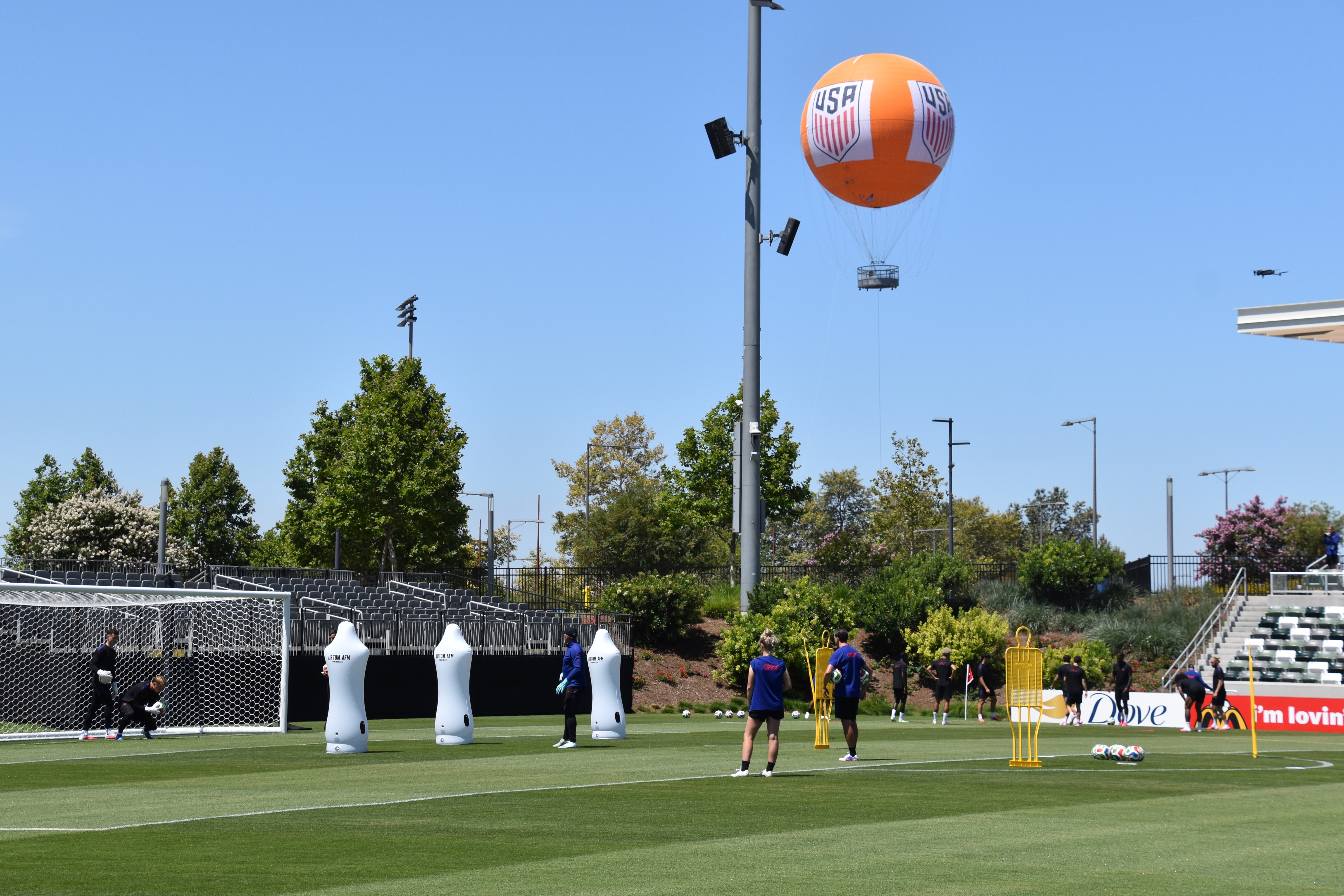
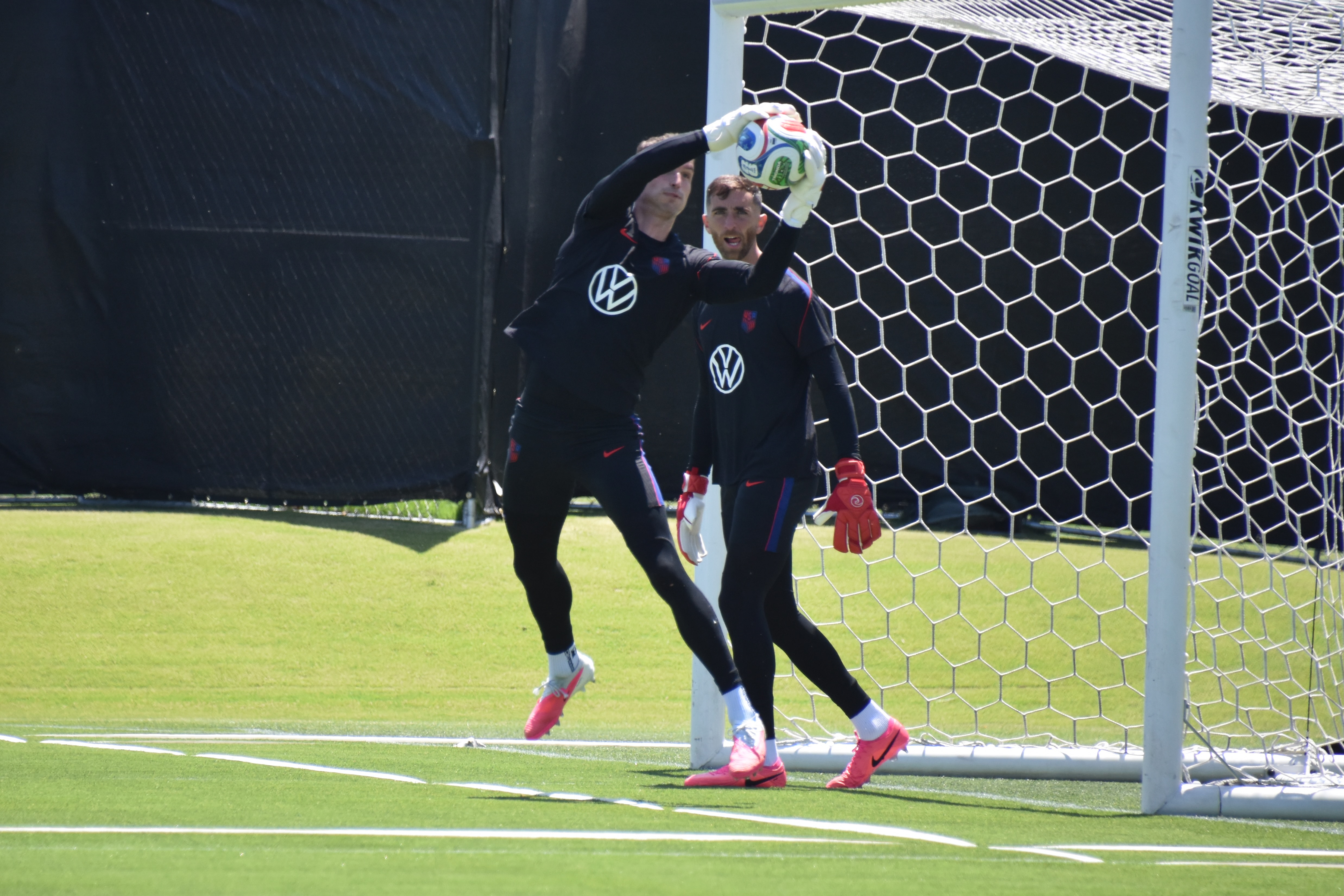
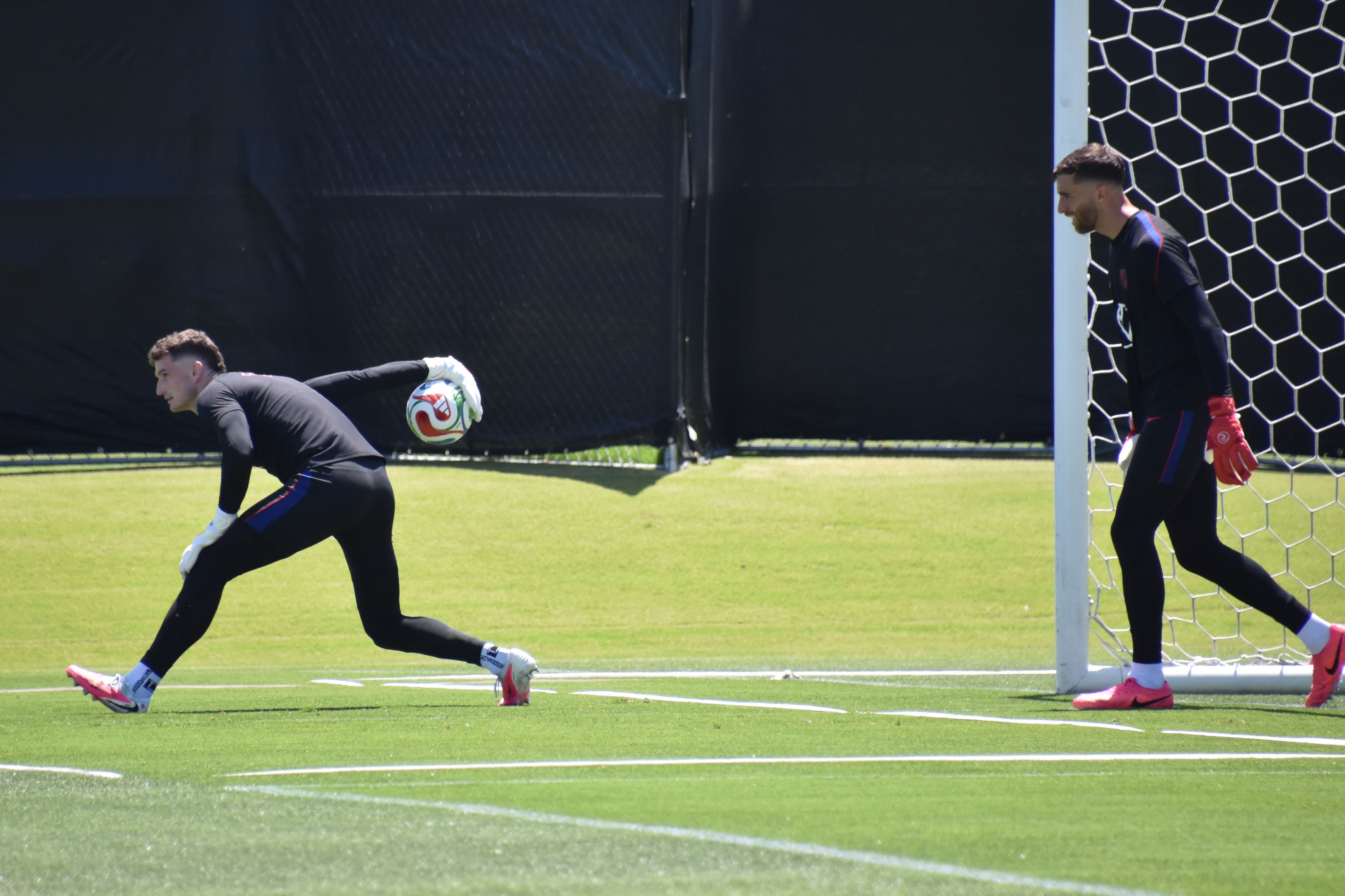
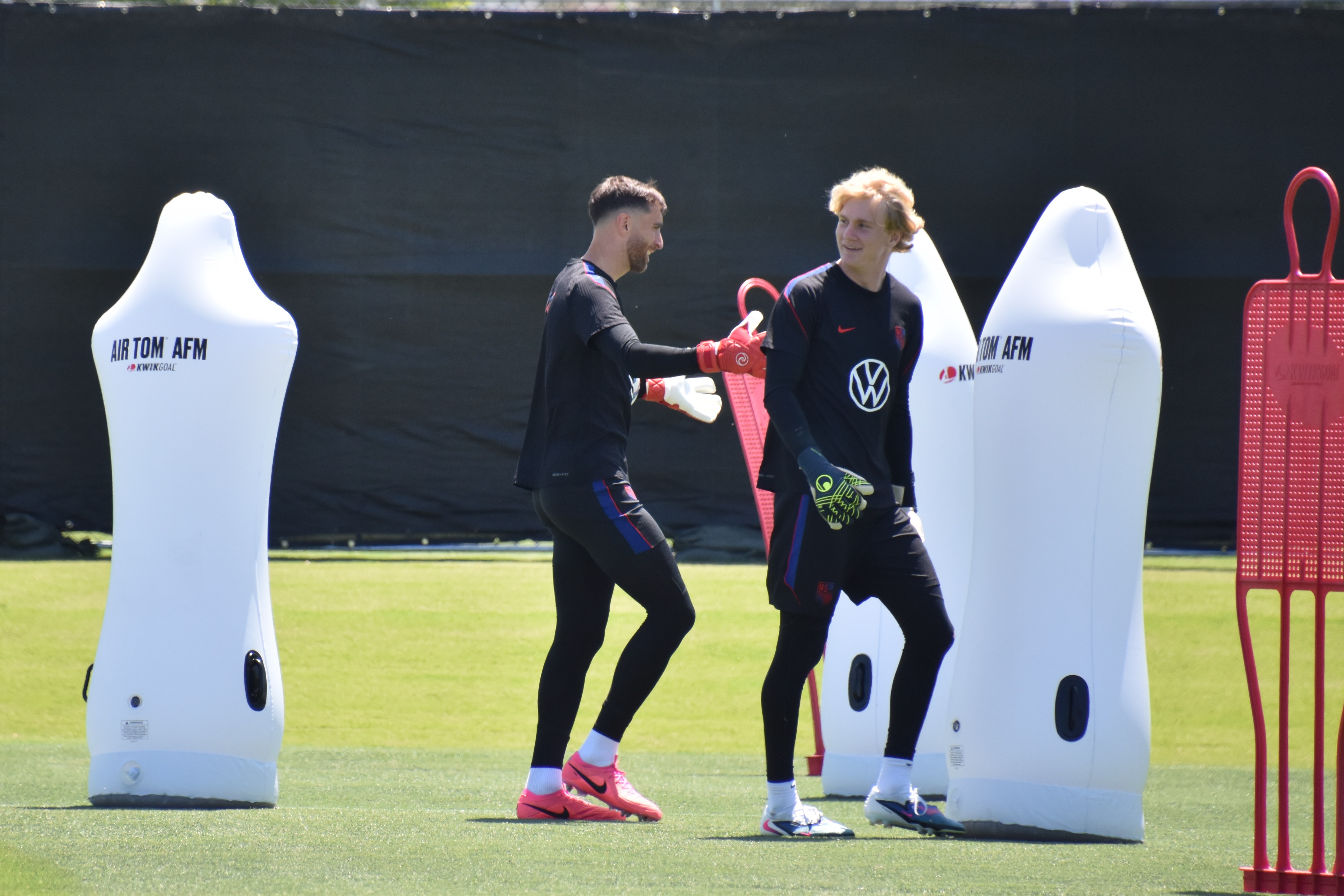
The goalkeepers at work during Friday’s practice in Irvine, Calif., amid a backdrop including a balloon decorated with U.S. Soccer’s logo.Jonathan Tannenwald
“No, I’m not going to tell you,” he said when invited to. “But I already decided. Only if something happens before the game [would it change].”
Asked if the players know, he said: “I don’t know if they know. Because if they know, you are going to start to call them.”
The room laughed with him at that. Such leaks are a tradition in other countries, including Pochettino’s native Argentina, and England where he worked for many years. It isn’t in the United States, though, at least not yet.
IRVINE, Calif. — There is no question that this U.S. men’s soccer team has players with talent and pedigree like never before. Even some of their predecessors, who are as prone to claiming “back in my day” as in any other sport, have said as much lately.
Now, at last, the time has arrived to prove it. For all the pomp and circumstance that Friday’s World Cup opener against Paraguay (9 p.m., Fox29, Telemundo 62) will bring, it also will serve as the ultimate measuring stick.
This is the 12th men’s World Cup in which a U.S. squad has taken part. In the first 11, going all the way back to the inaugural edition in 1930, the Americans have played 37 games.
They have won just nine.
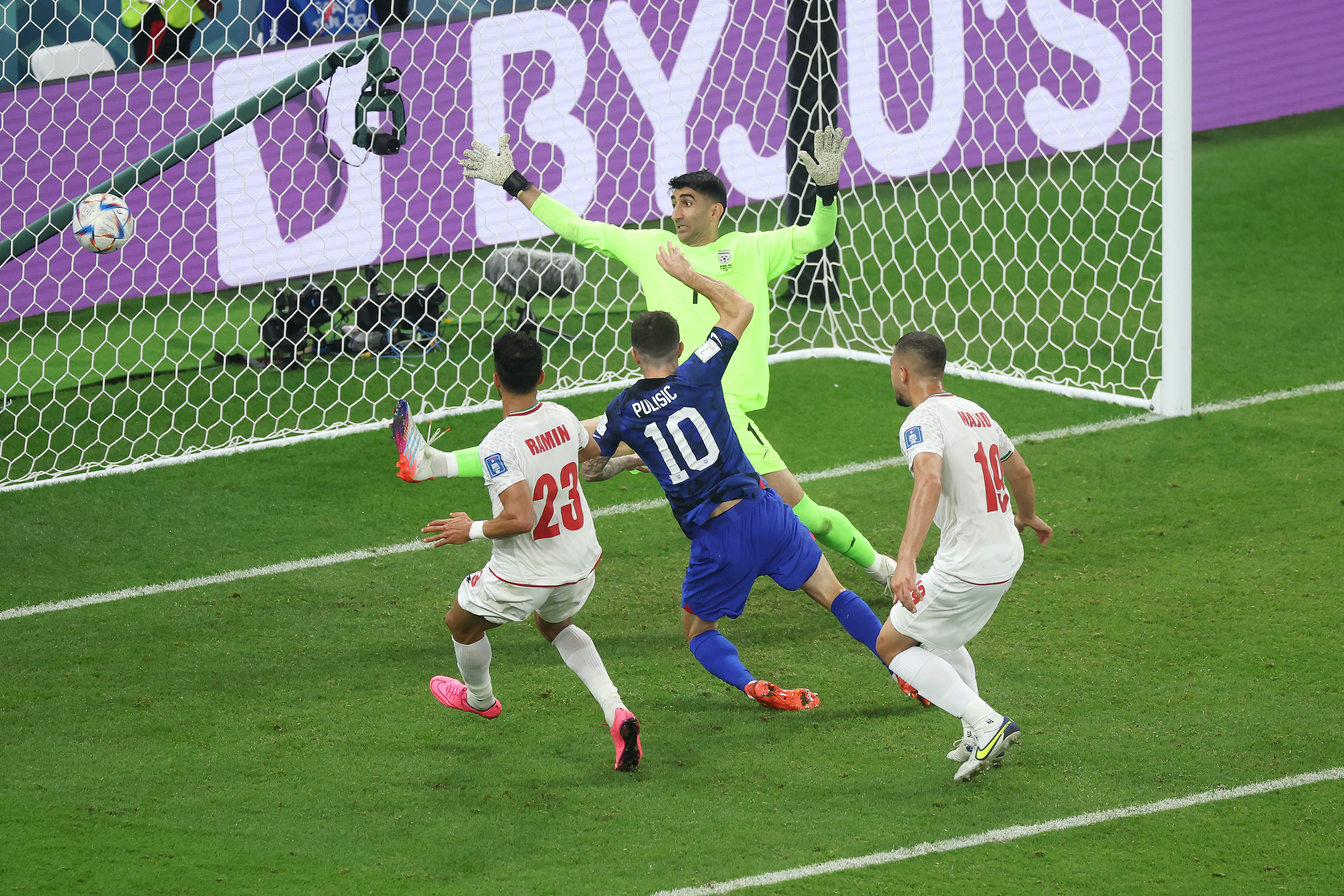
Christian Pulisic’s goal against Iran in 2022 came in the only U.S. win in that tournament.Alex Grimm
It’s not just that number, sitting alongside 20 losses and eight ties. It’s that the U.S. men haven’t won two games in a group stage since that 1930 tournament. They haven’t won two games in a single tournament since 2002, when they reached the quarterfinals with a round of 16 win over Mexico.
That, in turn, still stands as the only World Cup knockout-round win in program history. And the fact that it came against the opponent the U.S. knows best in the world means that while there isn’t an asterisk, it’s still not the same as beating a team from elsewhere.
Can this be the summer when that finally changes? And if so, what will it take?
“I think the maturity of the group now, I would say,” U.S. midfield star and longtime leader Tyler Adams said at Friday’s practice. “I know we’ve got some faces [for whom] it will be their first experience in the World Cup. But that being said, they’re all playing at a high level somewhere in the world, if not in MLS, and they’re all going to be able to contribute at a high level.”
Tyler Adams (left) speaking with the media before Friday’s practice.Jonathan Tannenwald
The U.S.’s group is easier than others, lacking a European or South American superpower and coincidentally having three rematches of friendlies from last year. A smaller gap in talent means intangibles like mentality and home-field advantage might make a difference.
“I think just continuing to put in good performances, and believing,” said Christian Pulisic, the Americans’ most important playmaker. “I think having the confidence that we’re able to beat anyone, I think that’s what it is. And I think we’ve gained some experience, especially the last World Cup, a lot of guys being around, and now we have an opportunity to prove it.”
Indeed, Pulisic and Adams are among 13 players on this World Cup squad — exactly half the roster — who were also in Qatar in 2022. But the message has also gotten through to players who weren’t, such as fast-rising defender Alex Freeman.
“I feel like for us it’s having, that confidence in ourselves,” he said. “Knowing that we’re on home soil and it’s a different type of environment, knowing that we have the fans behind us. Now it’s kind of just to show what we can do, knowing that on the field it’s going to be a different type of confidence, different type of intensity that we’ll have to show.”
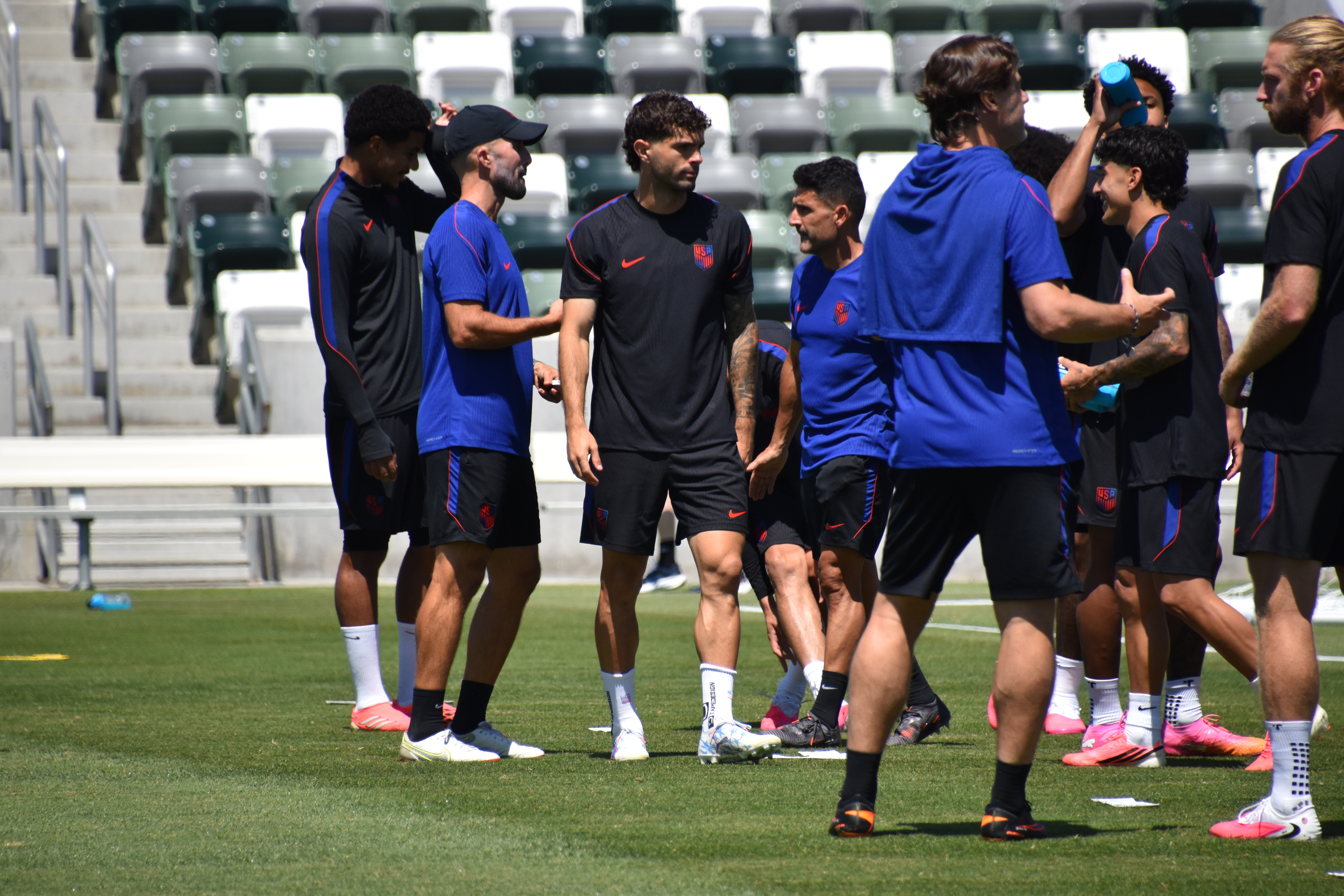
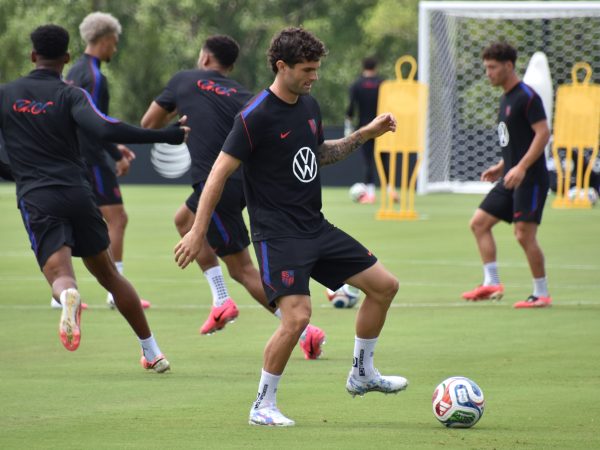
Christian Pulisic (center) getting to work on Friday.Jonathan Tannenwald
And how did they feel on game day eve?
“A good nervous, I feel like,” Adams said “I’ve never get nervous for games, but I just feel like … it just feels really real in the moment. And I’m to get out there with this group of guys, because I’m confident in what we can do.”
Adams wasn’t on the squad when the U.S. beat Paraguay in Chester last November because of an injury suffered a few days before that game. So when asked if that game matters now, his first answer was, “I mean, I didn’t play in it, so to me it doesn’t matter.”
But after the laughs all around that ensued, he agreed that the experience does help the team overall.
“It is nice when you’re breaking down film of an opponent, and you’re breaking down watching with players that we have on the field,” he said. “So I think for a lot of guys, it was probably a good experience.”
Freeman was on the field and became the center of attention when a brawl broke out at the end of the game. That was the latest lesson for the 21-year-old defender, who made a big move from Orlando City to Spain’s Villarreal two months later.
“I think for me and the team, we know how intense it is, right? And aggressive as well,” he said. “We feel like in those games, it’s going to be kind of the battle, who can strike first. I think for us, it’s to be aggressive first — I think we want to be those people that can go and make the game the way we want to do.”
So, here they are, in the final hours before the biggest game of their lives, with the opportunity for more biggest games of their lives afterward.
Final preparations were underway Thursday afternoon at the stadium in Inglewood, Calif., where the U.S. and Paraguay will meet on Friday night.Jonathan Tannenwald / Staff
“It’s not quite here — still got another day,” Pulisic said. “But definitely feeling more real, getting excited.”
And Adams gave one more rallying cry, adding to the list of them he has given.
“This is, for me, the biggest opportunity to just really grow the game, to inspire people, to show that American players are at the level of the rest of the world,” he said. “I’m not going to say it’s difficult to showcase that week in week out when you’re playing abroad, but that’s not the collective. Now you have a group of Americans playing together at a high level — let’s show everyone what we’re capable of doing.”
Earlier today, Tyler Adams was asked about the burden Christian Pulisic has carried on his shoulders for a decade as the biggest #USMNT star.
Here was Adams' eloquent response, and what Pulisic said a few minutes later about whether he feels less of a burden now:
Some people might be surprised to realize that the United States has been part of the World Cup tournament since the very first edition in 1930 — and Philadelphia has been a part of that as well. The Philadelphia area has contributed players, coaches and administrators to the United States men’s national team for all that time.
Here’s a look at the World Cups the U.S. men’s team has participated in, the pepople in them with Philadelphia connections, and the Union connections to soccer’s biggest stage over the team’s history.
Uruguay, 1930
Players: A Penn graduate who played soccer and football and ran track in his time there, James Gentle signed as a striker with the Philadelphia Field Club and later coached at Haverford School.
Born in Scotland, Bart McGhee moved to Philadelphia as a child and played for numerous area teams. Against Belgium, McGhee scored the first-ever U.S. World Cup goal (the second overall World Cup goal) en route to a 3-0 win.
Goals from Bart McGhee, Tom Florie and Bert Patenaude led the 🇺🇸 to a 3-0 tournament-opening victory against 🇧🇪in Montevideo. pic.twitter.com/OTxIO4kzua
— U.S. Soccer Men's National Team (@USMNT) July 13, 2020
Jimmy Douglas, the USA’s goalkeeper, is credited with the first-ever World Cup shutout. He also played briefly for Philadelphia Field Club in his pro career.
The debut tournament of the World Cup was where the U.S. had its best-ever finish, reaching the semifinals. Host Uruguay won the tournament.
Players: Bill Fiedler was born, raised, and played his entire pro career in Philadelphia for the Philadelphia German-Americans and the Philadelphia Passon. He didn’t enter the one game the U.S. team played in the 1934 tournament.
Neither did Al Harker, who also had a long career for the Philadelphia German-Americans, playing for them for well over a decade.
Peter Pietras was born in Trento and played for five years with the Philadelphia German-Americans. He played in the game against Italy.
German-born Herman Rapp, appropriately enough, also played for the Philadelphia German-Americans when he went to Italy as part of the World Cup team, but he saw no action in the one game.
Francis “Hun” Ryan, born and raised in Philly, was the first World Cup player to have played for the still-active Lighthouse Boys Club team. He also played for the Philadelphia German-Americans and in the match against Italy.
Administration: Elmer Schroeder, who was the first American-born director of the U.S. Soccer organization, was previously the director at Lighthouse, starting at the age of 19.
David Gould, appointed as team manager by Schroeder, played for years in the area and also coached Penn soccer for 27 years.
The 1934 tournament was entirely single-elimination. The U.S. lost its one game to Italy, 7-1, which still remains a record for both countries at the World Cup, since that is the most goals Italy has ever scored in the competition. The score also remains the most goals the U.S. has ever conceded at the World Cup. Italy, the host country, went on to win the tournament.
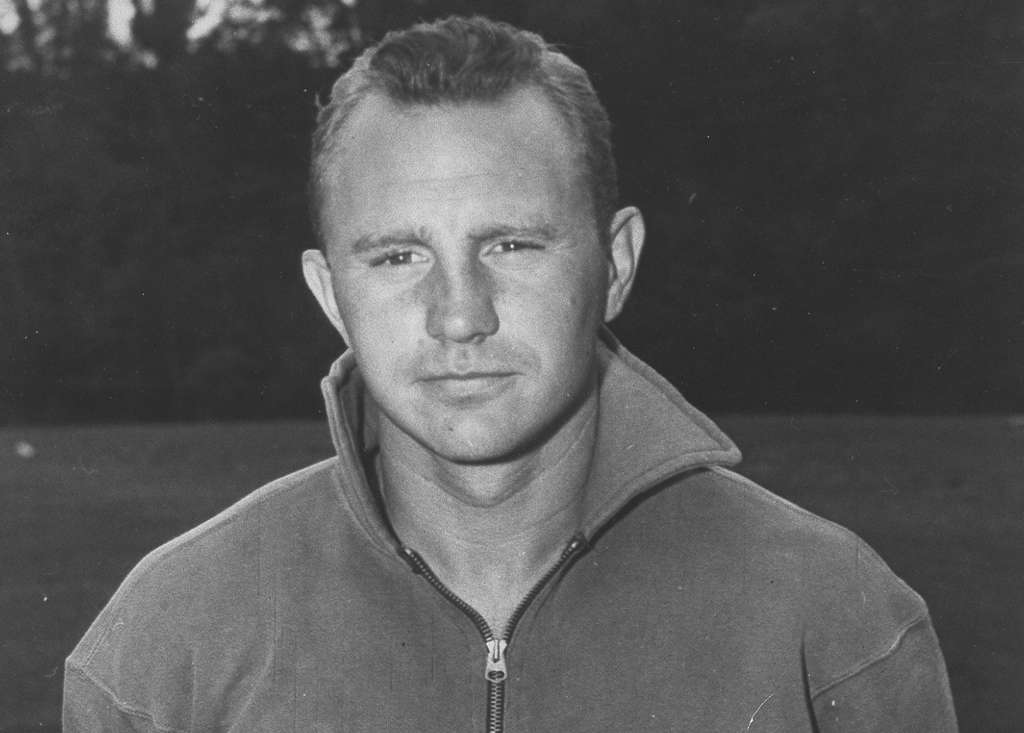
Walter Bahr is one of seven National Soccer Hall of Famers who started at the Lighthouse in Kensington.
Brazil, 1950
Players: Walter Bahr was born, lived, and played professionally in the area with the Philadelphia Nationals. Bahr captained the team in all three group games the Americans played at the World Cup, including the stunning 1-0 upset of England. He provided the assist on the winning goal.
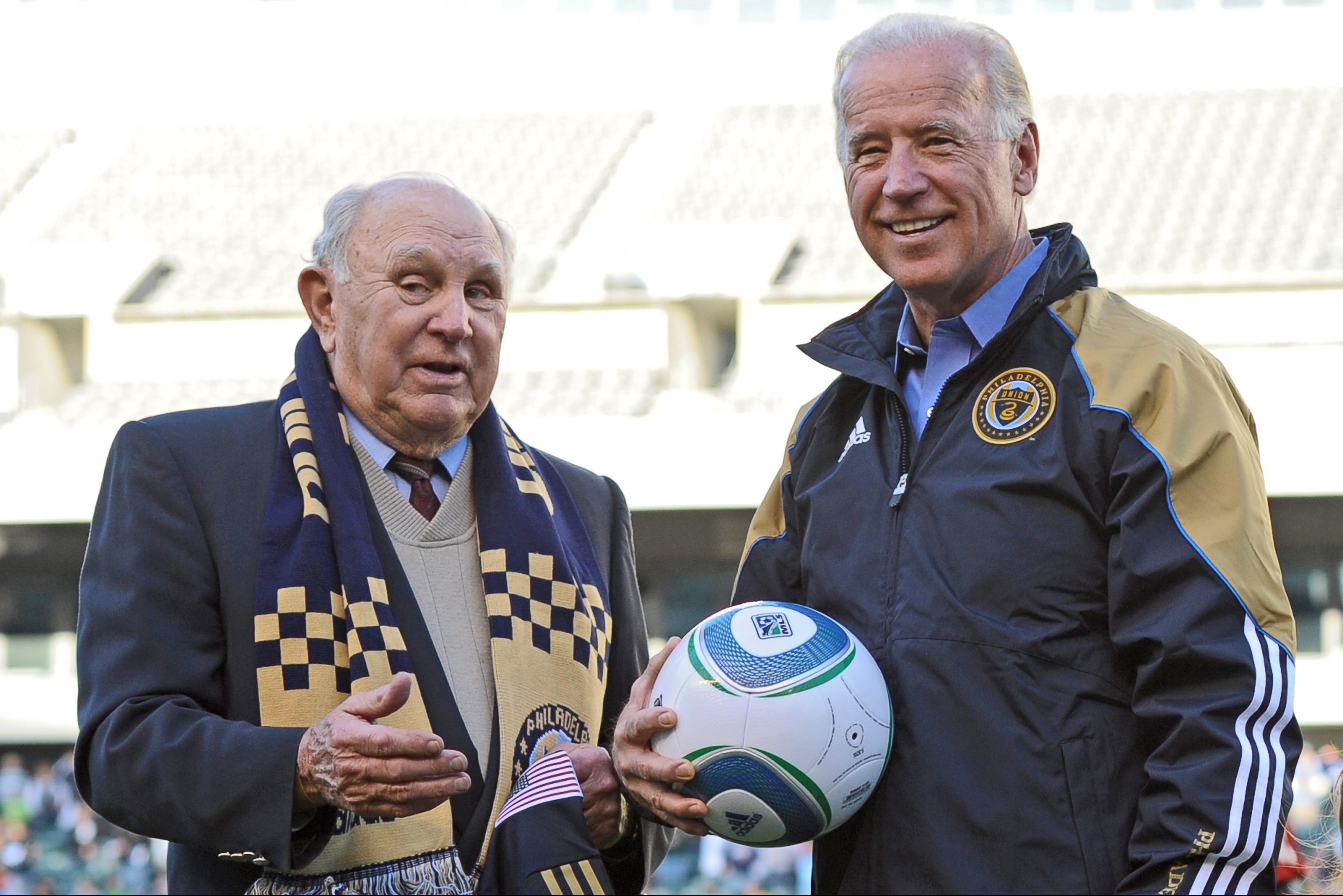
Sixty years later, he bridged the generations when he stood on the sideline with then-U.S. Vice President Joe Biden at the first home game in Union history.
Ed McIlvenny, who briefly played for Wrexham in Wales (now owned partly by Philly’s own Rob McElhenney), was a Scot who immigrated to the Philadelphia area. He became a teammate of Bahr’s on the Philadelphia Nationals and won a league title before returning to Britain for a short stint with Manchester United.
Administration: William Jeffrey was the manager of the U.S. team. Another native Scot, he coached Penn State for 26 seasons.
The United States lost their group games against Spain, 3-1, and Chile, 5-2, and did not advance to the knockout stage. The champion was Uruguay, which claimed its second title.
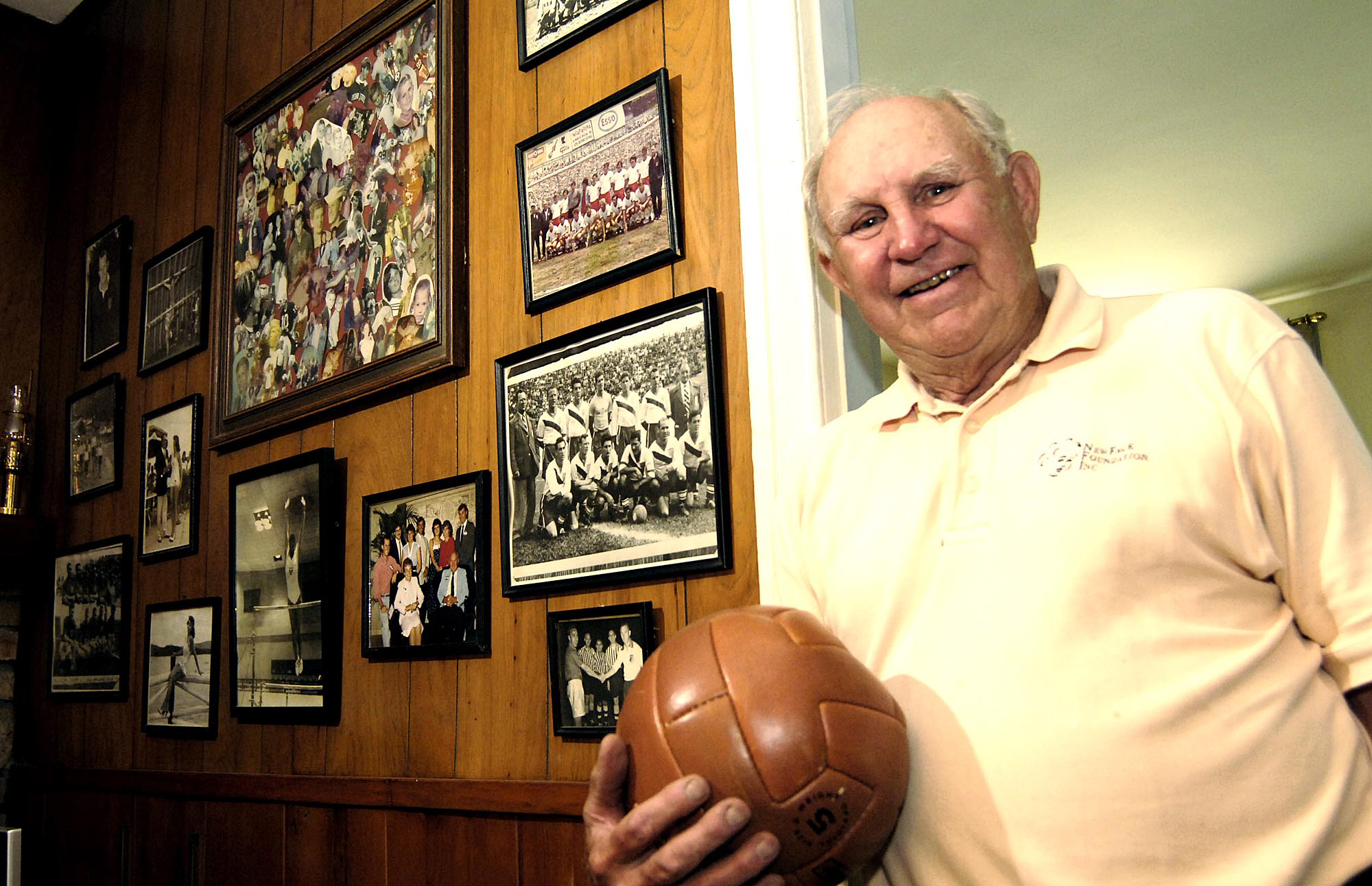
Walter Bahr at his home in Boalsburg, Pa., in 2006. Bahr kept lots of memorabilia from his days as a U.S. national team player.
Italy, 1990
Players: Peter Vermes, who grew up in Delran, played college soccer at Rutgers. He went on to earn 66 caps with the U.S. men’s national team and played in every group game at the World Cup.
The U.S. lost to Czechoslovakia, 5-1, Italy, 1-0, and Austria, 2-1. The champion that year was West Germany.
United States, 1994
Players: While the Dutch American former midfielder Earnie Stewart was raised abroad, his connection to Philadelphia was established when he arrived to take on his first stateside job in 2015 as sporting director of the Union. Now Stewart serves as sporting director of the United States Soccer Federation.
In 1994, Stewart helped the American team advance from group play. He scored a goal in the team’s 2-1 win over Colombia, and played in the other group games, a 1-1 draw with Switzerland and a 1-0 loss to Romania.
The U.S. was eliminated in a 1-0 loss in the next round against Brazil, the eventual champion.
USSF sporting director Earnie Stewart previously held a similar role with the Union.
France, 1998
Players: Stewart also took part in this World Cup, where the U.S. lost to Germany, 2-0, Iran, 2-1 and Yugoslavia, 1-0. Host country France claimed the title for the first time.
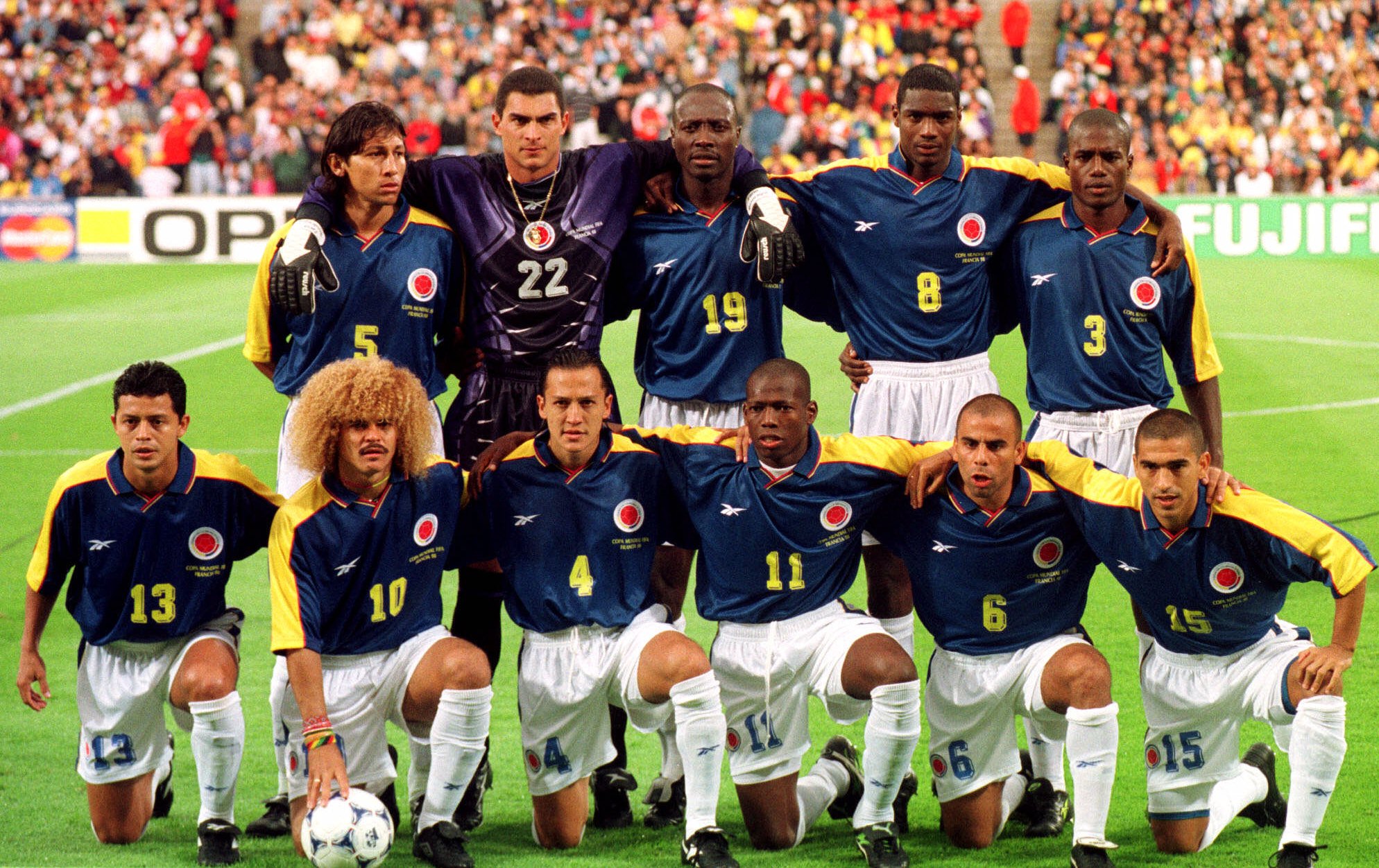
A future Union player was in this tournament, 12 years before the Union launched and a decade before Philadelphia even was announced as a future expansion market. (In fact, it was just the third year of MLS’s existence.) Goalkeeper Faryd Mondragón started all three of Colombia’s group games in net.
Faryd Mondragón stands second from left in the back row of Colombia’s team photo before its 1998 World Cup game against Romiania.
South Korea/Japan 2002
Players: Stewart again participated, playing in every game of the tournament for the U.S. and helping the team to its greatest tournament success since 1930. The Americans advanced out of the group stage after defeating Portugal, 3-2, losing to Poland, 3-0, and drawing with South Korea, 1-1.
The United States then advanced to the knockout rounds and defeated Mexico, 2-0. In the quarterfinals, the Americans played a tough match against Germany, but were eliminated, 1-0.
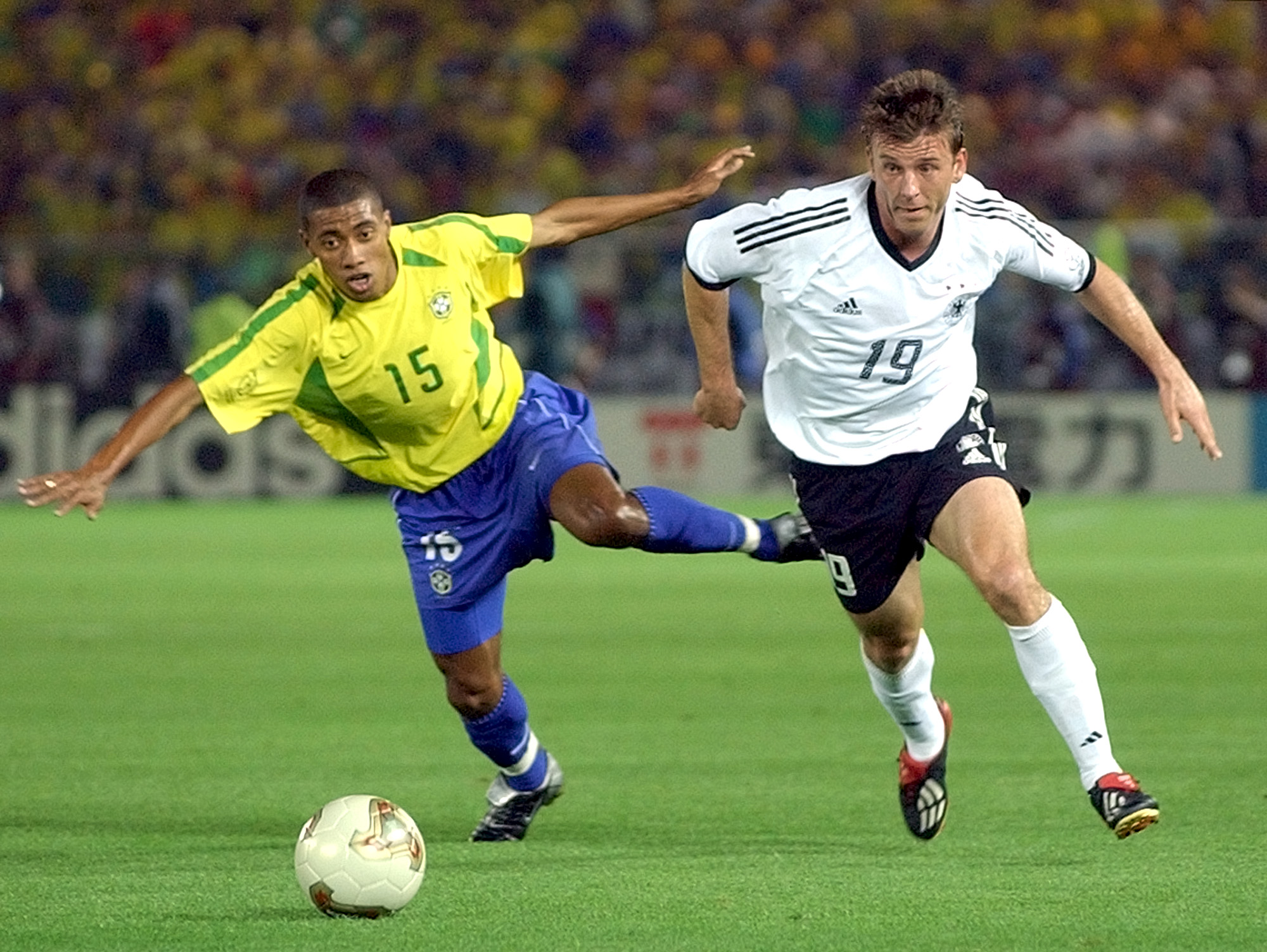
A future Union player was one of the stars of Brazil’s championship squad. Kléberson had two assists in the tournament, including on the goal in the final that sealed a 2-0 win and the Seleçao’s record fifth title.
Kléberson (left) in action during the 2002 World Cup final.
Germany, 2006
Players: Chris Albright, born and raised in Philadelphia, also played professionally for the Union and served on the team’s technical staff. He did not play in the tournament.
Bobby Convey, born and raised in Philadelphia, a former Penn Charter student, did play in all three group games, a 3-0 loss to the Czech Republic, a 1-1 draw with Italy, and a 2-1 loss to Ghana. Convey’s free kick helped create the own goal against Italy for the draw.
Middletown native Ben Olsen, who played for FC Delco, a local soccer powerhouse, played as a substitute against Ghana after Claudio Reyna was injured.
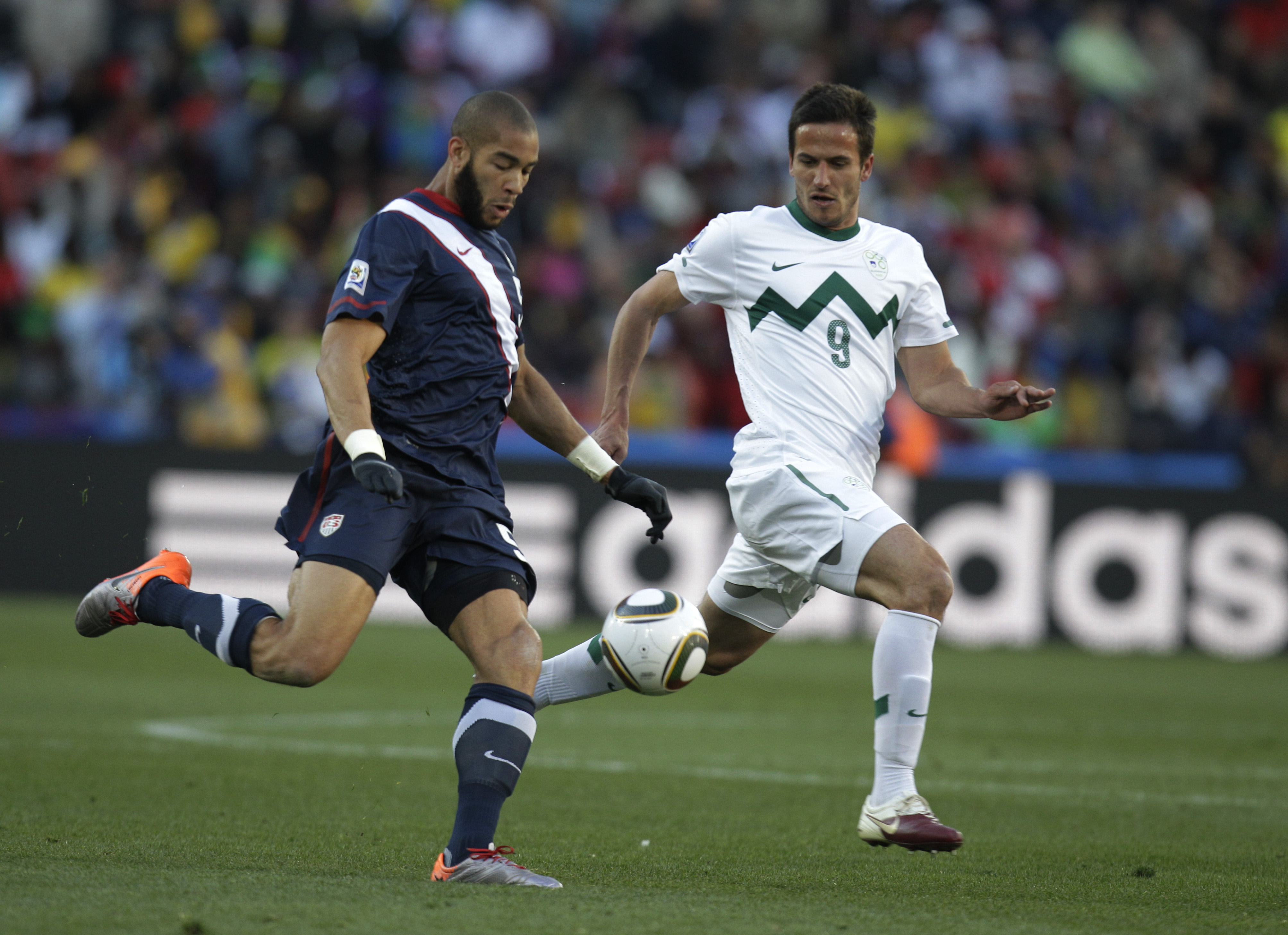
Future Union player Oguchi Onyewu started all three games of the tournament. The centerback signed with the club in 2017, his final professional season before retirement.
The Americans failed to advance. Italy won the tournament.
Philly native Bobby Convey played multiple games in the 2006 World Cup for the United States.
South Africa, 2010
Players: Maurice Edu, who would go on to become one of the premier signings for the Union in 2015, played in the two games of the group stage following the 1-1 draw with England. He volleyed in a shot against Slovenia in the 2-2 draw that would have been the winning goal if it had not been waved off for a foul. He also played in the 1-0 win over Algeria.
Onyewu played in the first two games of the tournament.
A pair of future Union players featured for other countries: Tranquillo Barnetta for Switzerland and Kléberson for Brazil.
The United States advanced to the knockout stage but lost there to Ghana, 2-1, in added extra time.
Spain won its first title at this World Cup.
Oguchi Onyewu (left) in action at the 2010 World Cup.
Brazil, 2014
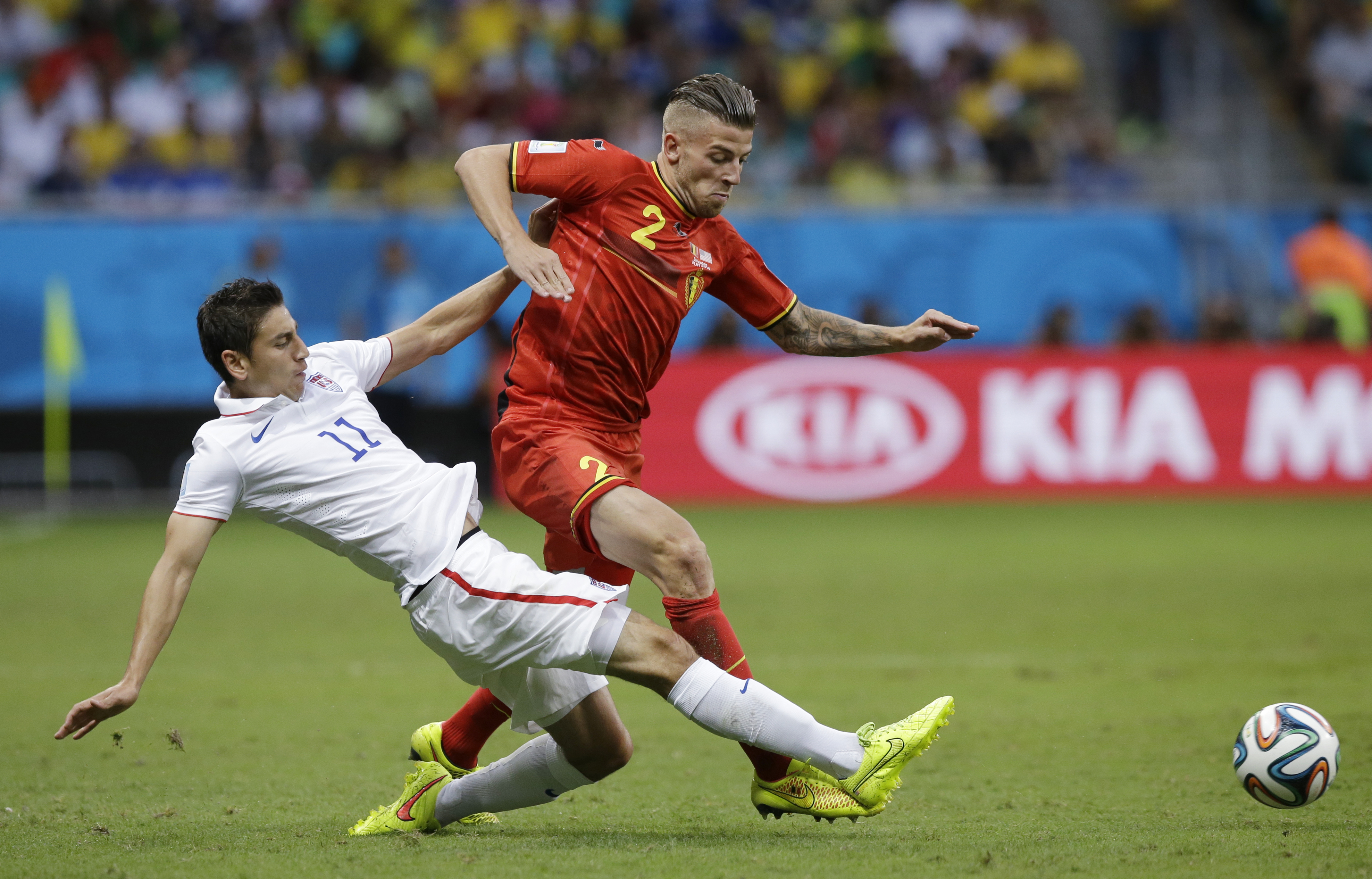
Players: Alejandro Bedoya, the Union’s longtime captain, played in all four U.S. games at the tournament. The Americans defeated Ghana, 2-1, drew Portugal, 2-2, and lost to Germany, 1-0. That was good enough to advance to the round of 16, where the U.S. lost in added extra time to Belgium.
Union centerback Carlos Valdés played for Colombia, though at the time he was on a string of loans away from the team. He’d asked for them because the Cafeteros’ coach at the time, José Pékerman, didn’t rate MLS. So Valdés tried to get elsewhere to make an impression (and he wasn’t alone).
Haris Medunjanin played for Bosnia, memorably getting Lionel Messi’s jersey after facing Argentina in the group stage. And David Myrie, who was on the Union’s inaugural season squad in 2010 (but didn’t last long), was on Costa Rica’s team.
Germany won the tournament, claiming its fourth title.
Alejandro Bedoya (left) in action for the U.S. during the round of 16 battle with Belgium.
Russia, 2018
Players: The U.S. infamously failed to qualify, which obviously put a big dent in things. But a former Union player and a future Union player took part for other countries. Gabriel Gómez played for Panama six years after his one season in Chester, and Marco Fabián played for Mexico eight months before he joined the club.
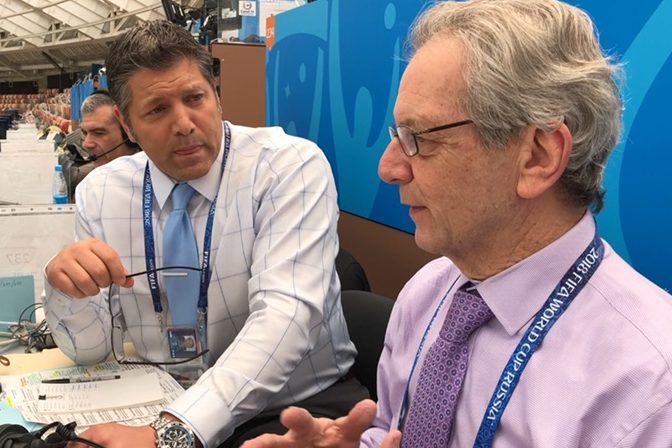
Broadcasting: Philly fans also heard a familiar voice on Fox’s TV coverage. This was the 13th World Cup of longtime Union play-by-play voice JP Dellacamera’s Hall of Fame career, including the eighth men’s tournament.
France won the title, led by Kylian Mbappé’s emergence as the sport’s new superstar.
JP Dellacamera (right) with his broadcast partner at the 2018 World Cup, former U.S. goalkeeper Tony Meola.
Qatar, 2022
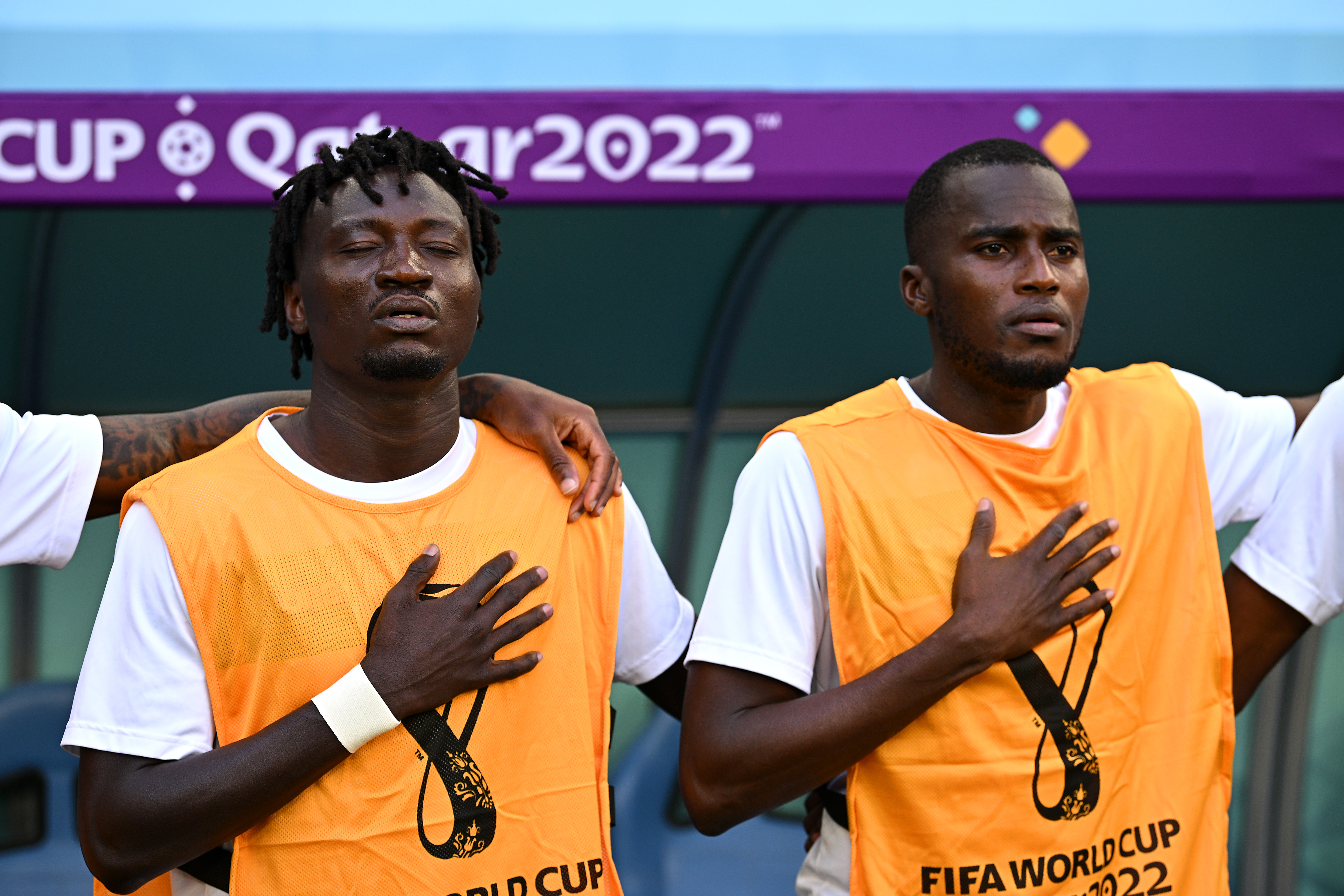
Players:Olivier Mbaizo became the first active Union player to make a World Cup roster, with Cameroon. He never got on the field, though if the Indomitable Lions had advanced from the group stage he’d likely have played in the round of 16 due to a teammate’s suspension.
Union alum Brenden Aaronson made his first U.S. World Cup team, two years after moving to Europe. The Medford native was at England’s Leeds United then, his second club after initially going from Chester to Austria’s Red Bull Salzburg for $6 million. The later move to Leeds commanded a $30 million transfer fee, and the Union banked $5 million of it in a sell-on fee.
Hershey’s Christian Pulisic was also on the U.S. squad, scoring the winning goal against Iran and finally fulfilling his promise as a superstar. The Americans advanced to the round of 16, then lost to the Netherlands.
Steven Vitória played for Canada seven years after his one season in Chester.
Administration: This was Stewart’s World Cup as U.S. Soccer’s sporting director.
A coach: Ventnor City native and Ursinus grad B.J. Callaghan was one of U.S. manager Gregg Berhalter’s top assistants.
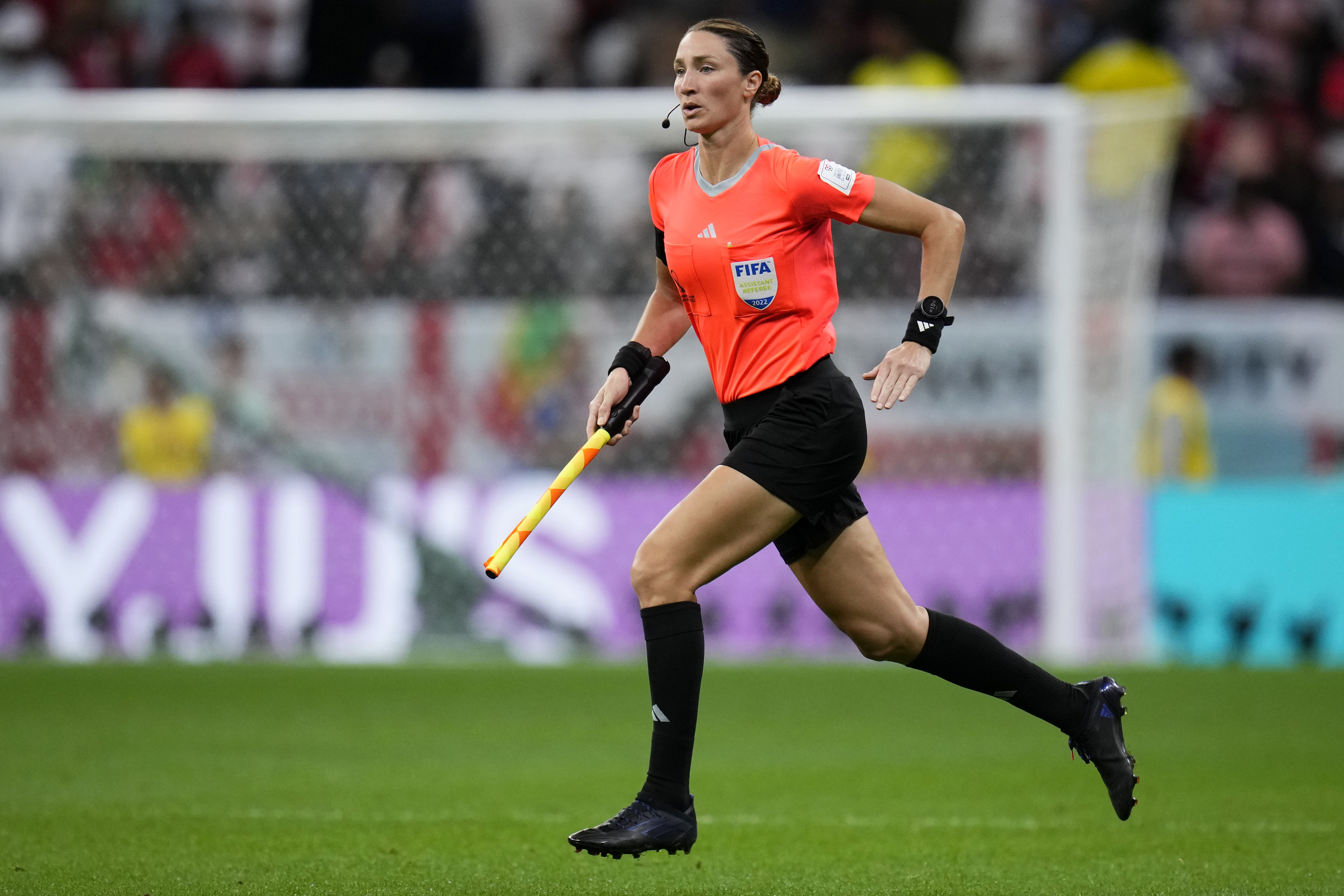
A referee: Though Kathryn Nesbitt wasn’t born in Philadelphia, the assistant ref had lived in the city since 2019 when she was appointed to her first World Cup.
Broadcasting: Dellacamera was in Fox’s booth again, while former Union captain Maurice Edu and Delran’s Carli Lloyd joined the network as analysts. Fox reporter Tom Rinaldi spent part of his college years at Penn, and was another familiar voice from plenty of trips to Philly for other sports.
Argentina won the tournament, finally giving Lionel Messi the biggest trophy and crowning him as men’s soccer’s greatest player of all time.
Olivier Mbaizo (left) on Cameroon’s bench at the 2022 World Cup.
USA/Canada/Mexico, 2026
Players: The Union’s Danley Jean Jacques and Olwethu Makhanya made the rosters of Haiti and South Africa, respectively. Jean Jacques was a stalwart of Les Grenadiers, and had the bonus of Haiti getting a group stage game in Philadelphia against Brazil. That was one of six tournament games in the city, as the men’s World Cup finally came here for the first time.
Makhanya’s inclusion, meanwhile, was surprising at the time.
Haiti’s squad also included Penn alum Duke Lacroix, who made the big stage over a decade after his college years with the Quakers.
Four Union alums made the U.S. squad: Aaronson, Wayne’s Matt Freese, Media’s Auston Trusty, and Bear, Del.’s Mark McKenzie. It was the most players from the Philadelphia region on a U.S. team since 1934. (Pulisic could count as an honorary fifth.)
Brenden Aaronson (center) made his second straight World Cup team in 2026.
Former Union midfielder Jamiro Monteiro made Cape Verde’s squad for its first ever World Cup. So did Philadelphia native CJ dos Santos, who had played for U.S. youth teams but switched to the nation of his father’s roots. He was in the Union academy for a while before leaving to Portugese club Benfica, then returning to MLS in 2022 with Inter Miami. In 2024, he moved to San Diego FC, and that was his club at the time of the World Cup.
A referee: Nesbitt was selected to her second straight men’s World Cup on the sidelines. Since 2022, she had been selected for the 2023 women’s tournament, and was part of the first American refereeing team to officiate a women’s World Cup final. (It hadn’t happened before because of how many times the U.S. made the final.)
Broadcasting: Dellacamera, Lloyd and Edu were back with Fox, this time joined by Philadelphia resident and former Independence and U.S. women’s team player Lori Lindsey. She and Dellacamera called some games together, including Ivory Coast vs. Ecuador.
Kathryn Nesbitt at the 2023 World Cup. The 2026 tournament was her third between men and women combined.
IRVINE, Calif. — The first men’s soccer World Cup on U.S. soil in 32 years kicks off this week, with great anticipation in Philadelphia and nationwide. That’s true for the 26 players of the U.S. team, too, as they seek to make a lasting mark on the tournament and the sport.
Here’s what to know about each of the players whom manager Mauricio Pochettino picked for his squad. They’re listed by position, then in alphabetical order.
U.S. manager Mauricio Pochettino.Jonathan Tannenwald
Goalkeepers
Chris Brady
Jersey number: 26 Age: 22 Club: Chicago Fire Hometown: Naperville, Ill. Height and weight: 6-foot-3, 170 pounds Senior national team games (Caps): 1
A clear and understandable third on the depth chart, he was picked to gain experience for what should be more trips to World Cups in the future.
Chris Brady (left) is on the team to get experience for the future.Jonathan Tannenwald
Matt Freese
Number: 24 Age: 27 Club: New York City FC Hometown: Wayne, Pa. Height and weight: 6-3, 194 Caps: 15
His rise through Harvard, the Union, New York FC, and now the national team might be the most underappreciated story of this U.S. squad. Freese made his senior U.S. debut last summer and immediately became Pochettino’s No. 1 netminder. Now, he seems on the cusp of starting at the World Cup, though the manager has repeatedly not committed to naming the starter in advance.
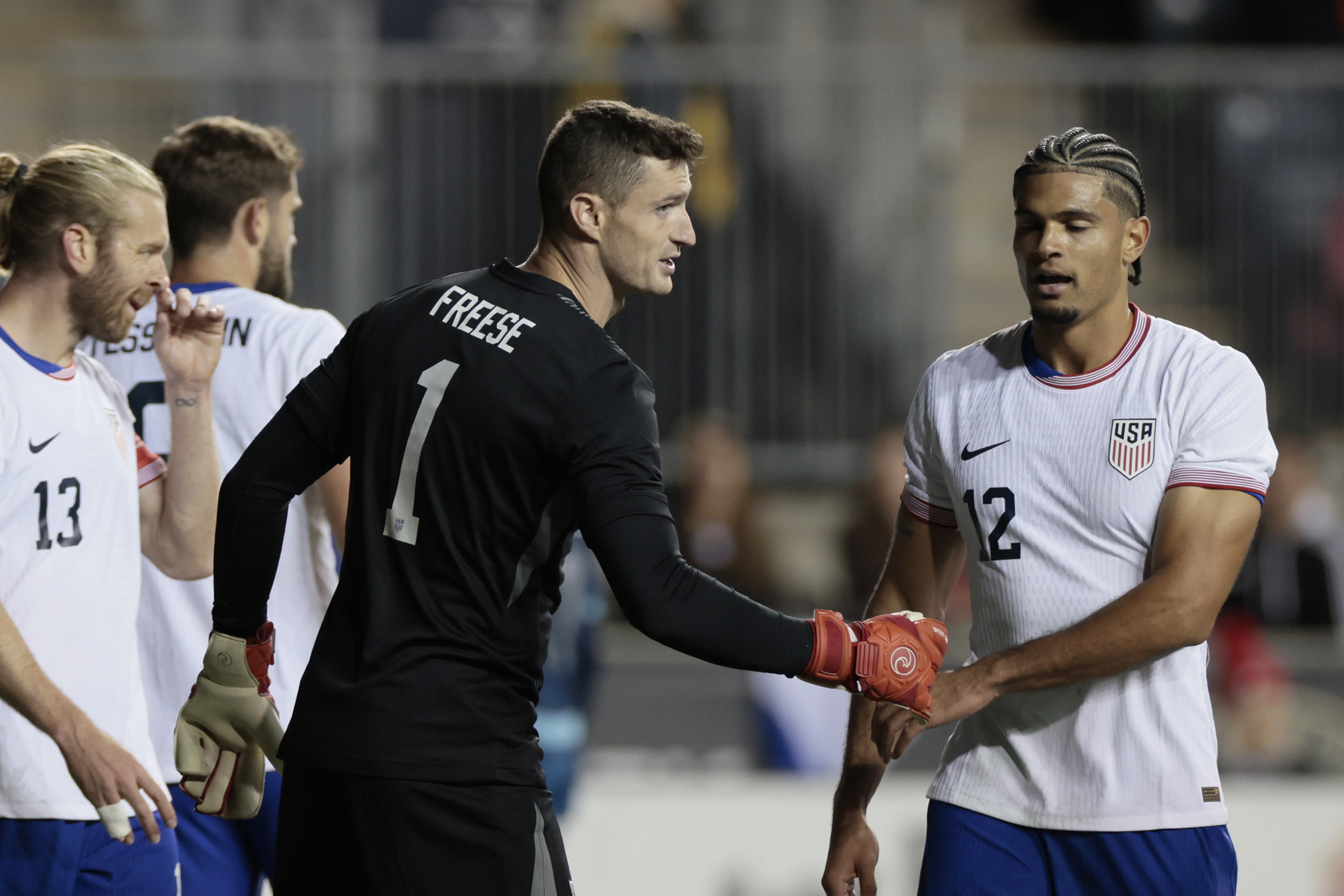
Matt Freese in the U.S. net when the Americans played Paraguay at Subaru Park last November.Elizabeth Robertson / Staff Photographer
Matt Turner
Number: 1 Age: 31 Club: New England Revolution Hometown: Park Ridge, N.J. Height/weight: 6-3, 185 Caps: 54
The starter from the last World Cup until the start of last summer, when the last of a few subpar performances cost him his spot. He’s been better than Freese statistically in MLS this year, but wasn’t as good with the national team in March.
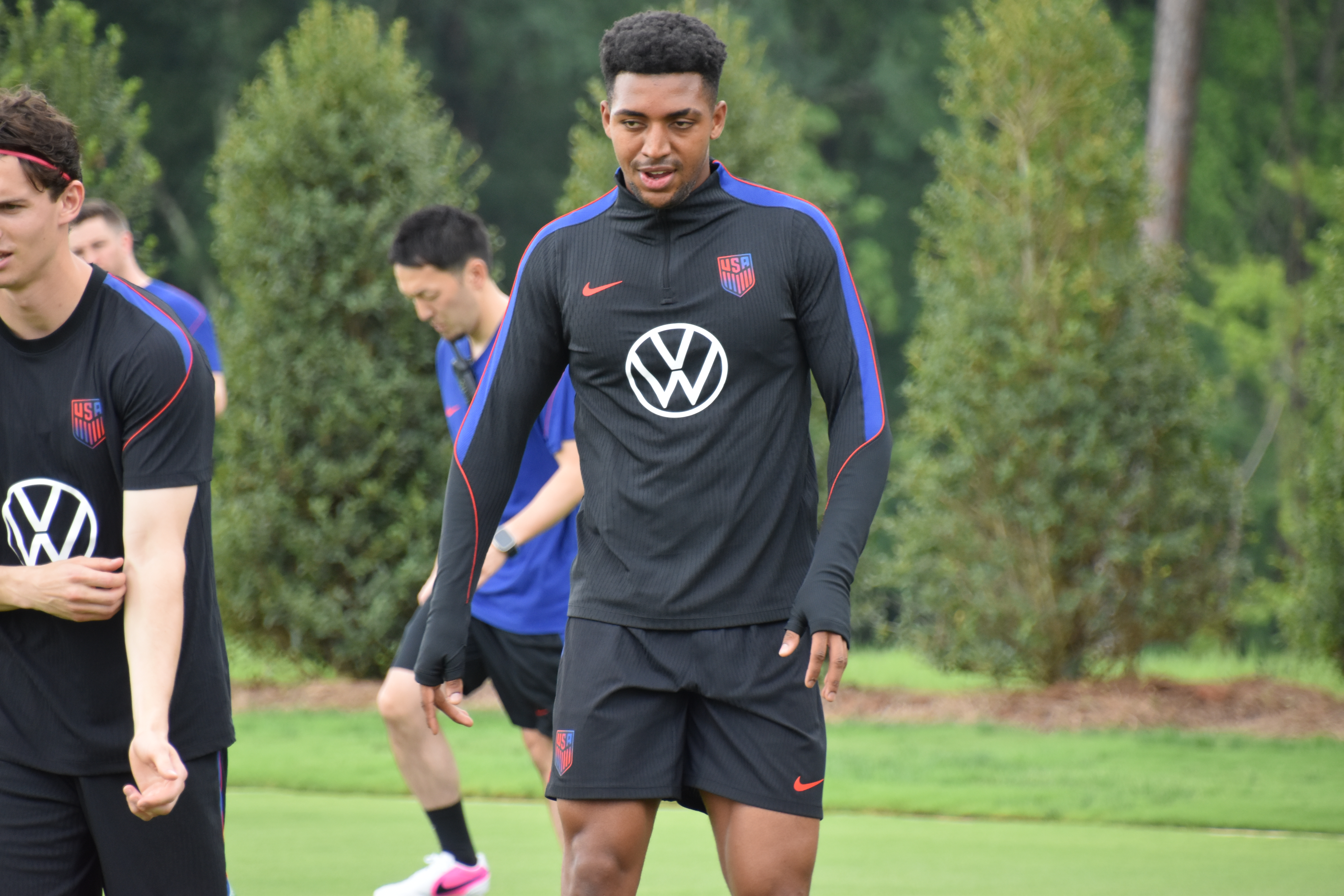
Until a few days ago, we’d have listed him as an outside back who can also play centerback. But he did very well in a more central spot in the two pre-World Cup warmup games. Now, he might take the role again, especially early in the group stage as Chris Richards finishes rehabbing an injury.
Alex Freeman is the son of former Eagles and Packers wide receiver Antonio Freeman.Jonathan Tannenwald
Mark McKenzie
Number: 22 Age: 27 Club: Toulouse, France Hometown: Bear, Del. (though born in the Bronx, N.Y.) Height/weight: 6-0, 183 Caps: 29
Talented, charismatic, humble, and owner of one of the best resumes of any U.S. defender. His path from the Union to Belgium’s Genk to a stalwart of France’s Ligue 1 is the ideal path for a player to follow. Though he’s prone to occasional big mistakes, he also does a lot to make up for them.
Mark McKenzie (center) is one of the best-performing U.S. defenders in Europe.Jonathan Tannenwald
Tim Ream
Number: 13 Age: 38 Club: Charlotte FC Hometown: St. Louis Height/weight: 6-1, 176 Caps: 82
He’s been the captain almost since the start of Pochettino’s tenure in late 2024. Age is catching up to him, but his role in the locker room is unquestioned. If Pochettino sticks with a 3-4-2-1 tactical formation, that will give Ream some cover for having slowed down.
Tim Ream’s experience made him manager Mauricio Pochettino’s choice for captain.Jonathan Tannenwald
Chris Richards
Number: 3 Age: 26 Club: Crystal Palace, England Hometown: Birmingham, Ala. Height/weight: 6-2, 192 Caps: 36
The most irreplaceable player on the back line, his absence from the warmup games due to torn ankle ligaments was crystal clear. He seems close to returning to action, but until he’s officially on the field, U.S. fans will be understandably worried.
It may be impolite to say he’s last on the depth chart at this position, but it’s true — and his performances in the warmup games didn’t help his case to change that. Facing Kai Havertz and Nicolas Jackson is a different level from MLS. If Robinson was picked as insurance against Richards having to withdraw, that’s understandable, but he was Pochettino’s most-criticized choice.
Eleven years ago, he was a fast-rising prospect in the Union and U.S. youth ranks. Only now, though, all this time and five clubs later, has he finally made it to the biggest stage. He still cherishes his Philly area roots, serving on the Union academy’s board.
He’s better as a left wingback in a 3-4-2-1 than as a left back in a 4-2-3-1, especially on defense. Other than that, he was an easy choice to be Antonee Robinson’s backup on that side of the field.
Simply put, a special talent. He’s a havoc-wreaking talent on the right flank, and can pitch in on the left if needed. Dest has also improved his defensive game lately. The 3-4-2-1 setup is perfect for unleashing him.
Sergiño Dest (left) is a dynamic force for the U.S. on the flank.Scott Kinser
Antonee Robinson
Number: 5 Age: 28 Club: Fulham, England Hometown: Liverpool, England Height/weight: 6-0, 152 Caps: 54
Not far from Richards on the irreplaceable ranking. Left back has long been the toughest position for the U.S. to find talent at, but Robinson has had it locked down for five years — at least when he’s healthy. He’s a big presence in the locker room, too.
Antonee Robinson is a key player on the field and in the locker room for the U.S.Jonathan Tannenwald
Joe Scally
Number: 23 Age: 23 Club: Borussia Mönchengladbach, Germany Hometown: Lake Grove, N.Y. Height/weight: 6-0, 174 Caps: 26
For a while, it seemed he wouldn’t make the cut, with Dest and Freeman ahead of him at right wingback. Then he did enough at club level down the stretch of the Bundesliga season to earn the call. It also helps that he can also step in at centerback or defensive midfielder if needed.
He’s officially listed on the roster as a forward, but could play attacking midfield or wingback — and he’s done all three over time. The last of them feels likely in a 3-4-2-1 setup, so that’s why he’s listed here for now. If Pochettino switches to a 4-2-3-1, Weah’s best fit is as a winger instead of an isolated right back. But while that’s for arguing over, his talent, creativity, and pedigree are unquestioned.
Tim Weah (left) is the son of Liberian soccer legend George Weah, but has now carved out his own career in the world’s game.Jonathan Tannenwald
Central/defensive midfielders
Tyler Adams
Number: 4 Age: 27 Club: Bournemouth, England Hometown: Wappingers Falls, N.Y. Height/weight: 5-9, 159 Caps: 54
No longer the official captain, but the unofficial one for years. On the field, on camera, and in the locker room, the U.S. doesn’t have a better leader. Unfortunately, as we’re about to get into, a lack of depth at this position puts him in a tricky spot. Can he avoid yellow cards in the first two games so he isn’t suspended for the big finale against Turkey’s stars?
Although Tyler Adams (left) isn’t officially the U.S. captain anymore, he remains one of the team’s biggest leaders.Jonathan Tannenwald
Sebastian Berhalter
Number: 14 Age: 25 Club: Vancouver Whitecaps Hometown: Columbus, Ohio (born in London, England) Height/weight: 5-9, 154 Caps: 13
He’s another unlikely success story, but the son of former U.S. manager Gregg Berhalter earned his spot. Sebastian helped the Vancouver Whitecaps reach last year’s MLS Cup and Concacaf Champions Cup finals, and with the national team combines hard work with great skill at set pieces. In fact, he might be the best at them on the roster. Could that earn him a starting spot next to Adams?
The veteran was so far out of Pochettino’s picture that he went on vacation at the start of the September FIFA window. Then the manager suddenly needed him, and Roldan answered the call. It immediately felt like he’d never left, and he hasn’t left since then.
It isn’t his fault that this is the end of the depth chart. Will Pochettino regret not bringing Tanner Tessmann or Aidan Morris, both of whose talents merited inclusion? World Cups have a habit of nailing managers on the biggest risk they take. Jürgen Klinsmann learned it the hard way by leaving Landon Donovan home in 2014, and Gregg Berhalter bet a lot on benching Gio Reyna in 2022.
Cristian Roldan (center) has been a familiar face to U.S. fans for years.Jonathan Tannenwald
Attacking midfielders
Brenden Aaronson
Number: 11 Age: 25 Club: Leeds United, England Hometown: Medford, N.J. Height/weight: 5-10, 150 Caps: 58
Making his second straight World Cup team makes him the standard-bearer for Philadelphia on soccer’s global stage. So does earning a stalwart role at one of England’s most historic clubs, even if the first priority has been just staying in the Premier League. He’s happy to embrace being a role model for everyone back home, and now has the added emotional boost of a new wedding ring.
He’s a near-lock as a starter, but where will he play? The obvious answer of on the field can’t be enough. Will he be an attacking midfielder, the role he probably fits best, but potentially exposing the lack of depth behind him? Or will Pochettino slot McKennie next to Adams to try to get another playmaker on the field, and hope it doesn’t unbalance things?
He isn’t officially Captain America, but he knows better than anyone that that’s his unofficial designation. It took much of his decade-long national team career to become comfortable in that spotlight, and it still doesn’t always fit him easily. But he also knows better than anyone that if he delivers when it counts at the World Cup, he can carry his country to greatness.
Christian Pulisic remains the biggest star on the U.S. men’s team.Jonathan Tannenwald
Gio Reyna
Number: 7 Age: 23 Club: Borussia Mönchengladbach, Germany Hometown: Bedford, N.Y. (born in Sunderland, England) Height/weight: 6-1, 174 Caps: 38
For all his talent — and it’s up there with Pulisic — he only just did enough for club and country to make this squad. If he comes off the bench as expected, he might not have much time in games to make an impact. There will be real pressure to deliver.
His raw talent isn’t in question. Whether he can show it at a World Cup might be. Pochettino clearly likes Tillman, giving him lots of playing time. But things don’t always work right when he and McKennie are on the field. If Berhalter goes next to Adams and McKennie starts, Tillman might be relegated to a supersub — and have to compete with all the other candidates for minutes.
Malik Tillman has a lot of skill, but we’ll see how he shows it in the World Cup.Jonathan Tannenwald
Alejandro Zendejas
Number: 26 Age: 28 Club: Club América, Mexico Hometown: Juárez, Mexico and El Paso, Texas Height/weight: 5-6, 146 Caps: 14
He gets two hometowns because he grew up on both sides of the border, carrying the dreams of being a child of immigrants. The world’s game opened doors, and he charged through them from FC Dallas’ youth academy to Mexico’s Club America. Add a mix of skill and graft on the field, and you get a popular pick for this team.
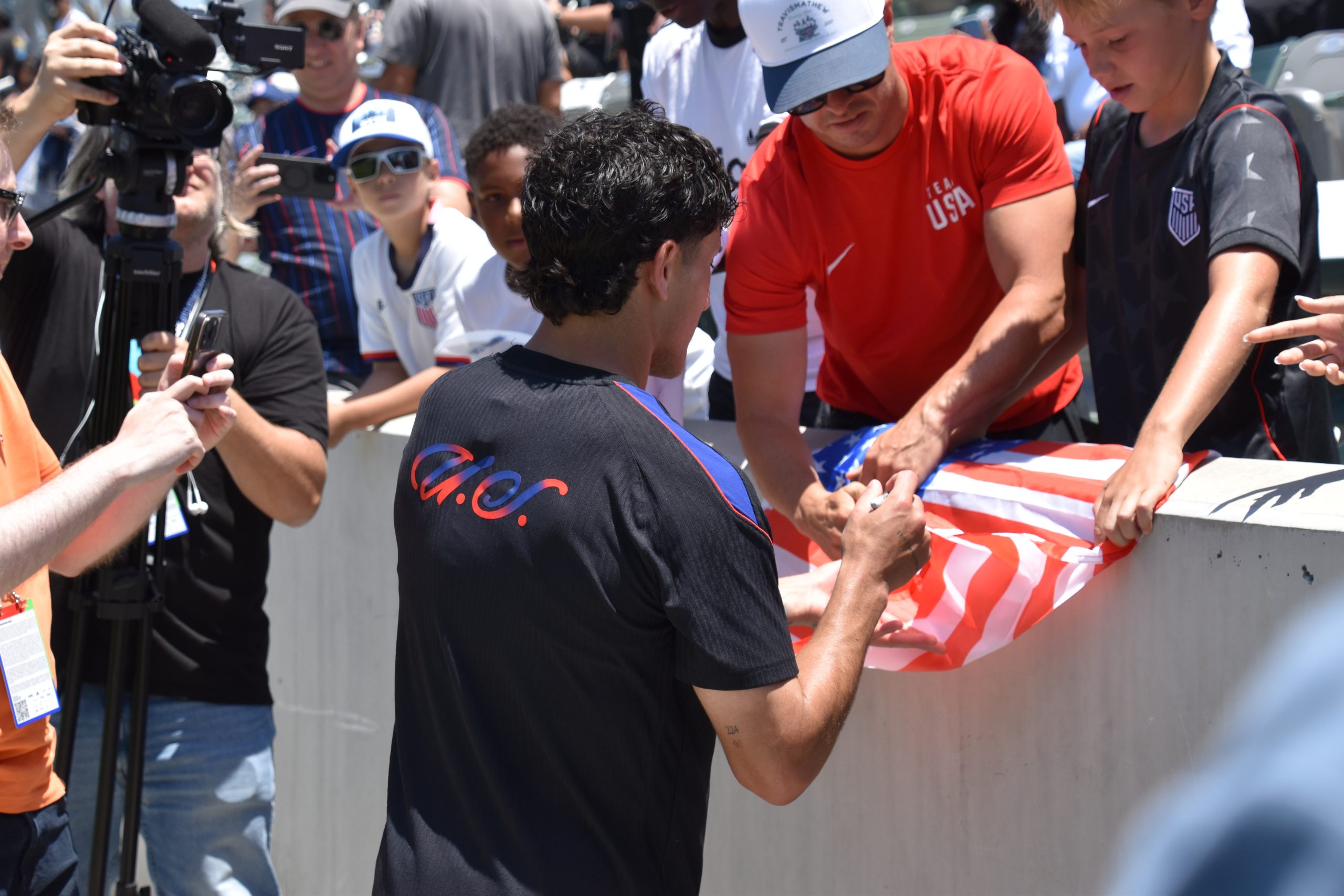
Alejandro Zendejas autographing a fan’s American flag during the U.S. team’s open practice a few days ago.Jonathan Tannenawld
Forwards
Folarin Balogun
Number: 20 Age: 24 Club: AS Monaco, France Hometown: London, England Height/weight: 5-10, 161 Caps: 27
He was recruited in 2023 with all the pomp of a college football team chasing a star quarterback. Though injuries since then limited his appearances, he has shown overall why U.S. Soccer was right to push for him. Now the biggest payoff moment of all has arrived.
The last and most controversial cut from the 2022 World Cup team, he has finally made it four years later. He put in a terrific amount of work in that time, including having to overcome a move from FC Dallas to Germany’s Augsburg that didn’t work out. But he was always strong with the national team, scoring big goals and hustling all over the field. Like Zendejas, a lot of U.S. fans will root for him in particular.
Ricardo Pepi (right) and Folarin Balogun (left) running together during a U.S. practice.Jonathan Tannenawld
Haji Wright
Number: 19 Age: 28 Club: Coventry City, England Hometown: Los Angeles Height/weight: 6-3, 174 Caps: 20
The last player to score a goal for the U.S. men at a World Cup, and the first formally listed as a striker to do so in 20 years. At club level, he was a key player for Coventry this season to help the Sky Blues earn promotion back to the Premier League after 25 years in lower leagues. Though he’s third on this U.S. depth chart, his size and speed should ensure he gets on the field.
IRVINE, Calif. — It only took two words for one of the U.S. men’s soccer team’s most important players to get everyone talking.
“I’m ready,” star centerback Chris Richards said before Wednesday’s practice, and after a few days on the field, where he looked good in his recovery from torn ankle ligaments.
“It’s a World Cup, so I’ll make myself ready regardless,” he continued as he stood in front of a big pack of media, a sign of the World Cup’s arrival and his importance. “I’m feeling good. Maybe a little swollen, but nothing tape can’t help. … If there’s any time to sacrifice yourself, it’s now. I want to play Friday, but I’m not the one making the decision.”
Richards suffered the injury on May 17, playing for his club team, England’s Crystal Palace. He hasn’t featured in a game for club or country since then, which is four total: the May 24 Premier League finale, the May 27 UEFA Europa Conference League final, and the U.S.’s two World Cup warmup games.
Chris Richards running during Wednesday’s practice.Jonathan Tannenwald
“When I first came out of the injury, I was pretty devastated, and I was honestly fearing the worst,” he said, later adding: “The first time I could probably relax was when I did get the diagnosis. After the game, my ankle was huge, and I came off in a boot and crutches. When I saw the diagnosis I was like, ‘All right, cool — whatever it takes, I have to make it for this first game.’”
He made the bench for the Conference League final, and the TV cameras caught him running onto the field at the final whistle to celebrate with teammates. That was a good sign. But it’s still nothing like a live game, and that’s now the question.
“I think the first time I really realized that I would be 100% for Friday was probably last week,” Richards said. “It was a lot of massages, a lot of ice, a lot of compression, things like that. But once I was finally on the pitch, it felt good. And I think that was the main thing.”
It also helps that the U.S. will have seven days between its first and second group games, with the latter June 19 against Australia in Seattle. The Americans’ World Cup opener is Friday vs. Paraguay (9 p.m., Fox 29) in Inglewood, Calif.
Chris Richards getting up close with the ball during a drill.Jonathan Tannenwald
“We have enough time between the games where I can get some recovery in,” Richards said. “So for me, if I can start on Friday, it’s not going to put the rest of the tournament in jeopardy for me.”
Granted, that was his opinion, and he has given it to U.S. coaches when asked.
“Every time they’ve asked me, I’ve told them I’m good — even when I first got into camp, I told them I’m good,” Richards said. “I think they’ve seen the progression over the last few weeks, and they’ve definitely seen me personally. I think I look good on the pitch now. Hopefully it’s been a good sign for them … Whatever they decide on Friday, I’ll back them, but I want to be on that field on Friday.”
He added that he has not been told if he’ll be subject to a minutes limit in the game.
Chris Richards (left) hasn’t played in a live game since May 17.Jonathan Tannenwald
“I’ve done full practices the last few days, and I think y’all have seen the intensity of our practices — they’re not light,” the Alabama native said. “So I feel good, no reaction to it, and I’m confident for what’s to come.”
Richards noted the minor controversy that arose when U.S. manager Mauricio Pochettino accused Crystal Palace of not being fully transparent about his status. He tried to be sympathetic to both sides.
“Palace wanted me to potentially be available for the Conference League final — which I understand, it’s a final — and it took me two days to get here [to U.S. camp] as well,” he said. “I expected it. I’ve had ankle injuries before, and there wasn’t really any setback. It was just a case of getting swelling down, then seeing what it’s like being on the pitch, and it just sometimes can take a little bit longer than expected.”
He said, “the initial diagnosis was day to day, but I think for me I was a bit more two to three weeks. We were right on schedule, and I feel good right now.”
Richards’ teammates know how much he means to the group. Fellow centerback and longtime friend Mark McKenzie spoke about that soon after Richards’ turn at the mic.
“To see that live, to see the rehab work he’s put in, whether it’s on the field and working with a lot of the performance coaches, trying to get that ankle exposed to as many different actions as possible,” the Union alumnus said, “and then off the field, you talk about recovery, you talk about every modality you could possibly think of and modalities you probably don’t even know about. Doing everything possible to get himself as fit as he could be for this game.”
As Richards spoke, former U.S. centerback Marcelo Balboa stood nearby. Now a media member, recalled his own race to make the 1994 World Cup after tearing his ACL in April 1993 — an era when recoveries could last over 12 months.
But he made it just in time to play in the tournament, started all four U.S. games, and almost scored an all-time goal when a bicycle kick attempt against Colombia went just wide.
“Never trust a player,” Balboa said with a laugh, but also some seriousness. “A player will always tell you he feels great and he’s ready to go. I think they have to evaluate how he is in training, if he’s full contact, if he’s ready to go 90 minutes, or is it better to make sure he’s ready for the rest of the tournament.”
He also emphasized that for a player, “mentally is the biggest part.” Judging by Richards’ remarks, he certainly seemed ready — even as Balboa’s words are a good reminder of the big picture.
“I wouldn’t put myself in the position if I didn’t think I could do everything 100%,” Richards said. “Part of playing this sport is you’re going to have some pain at some point, and I’m totally OK with that as long as functionally I’m good. That’s the No. 1 thing for me.”
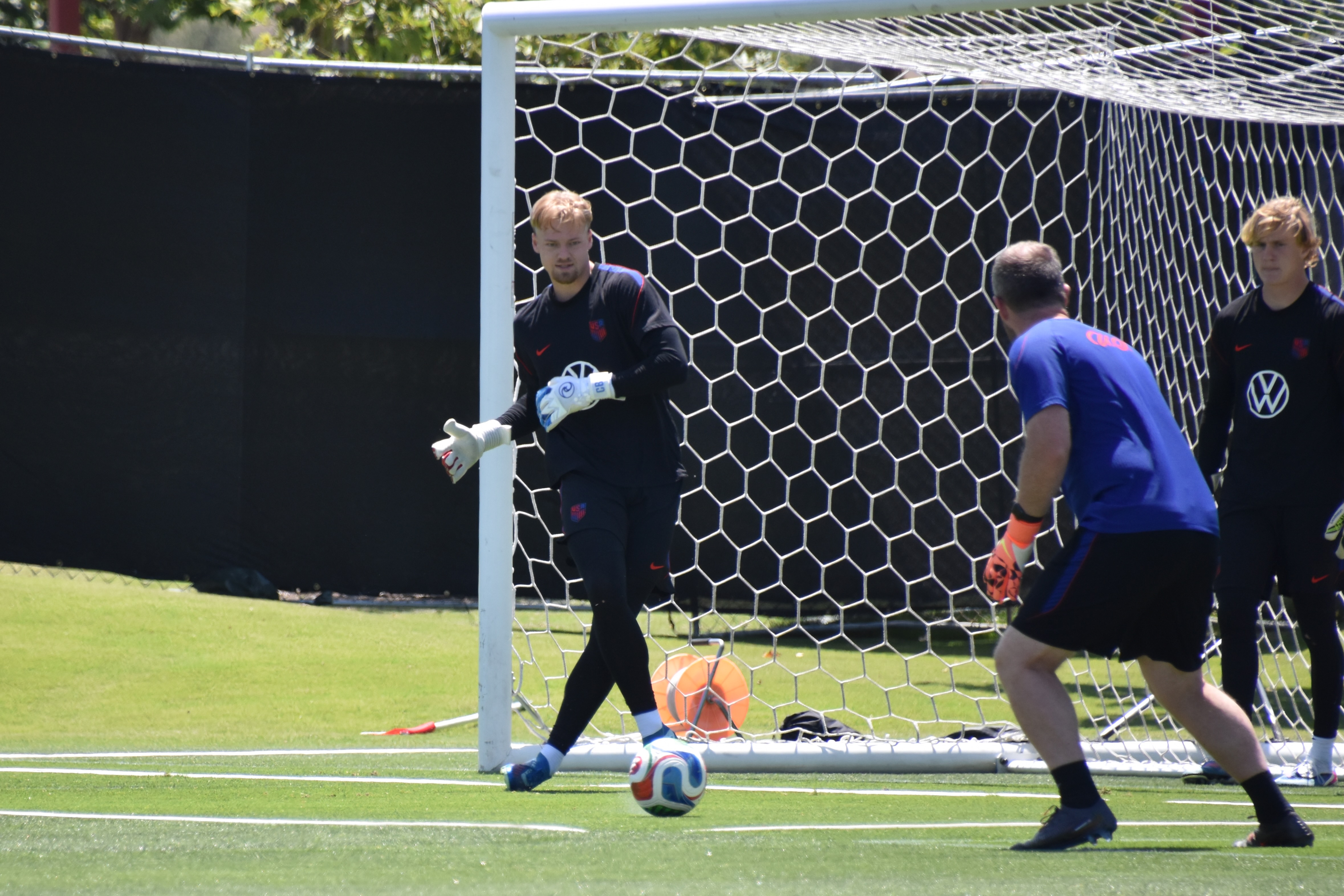
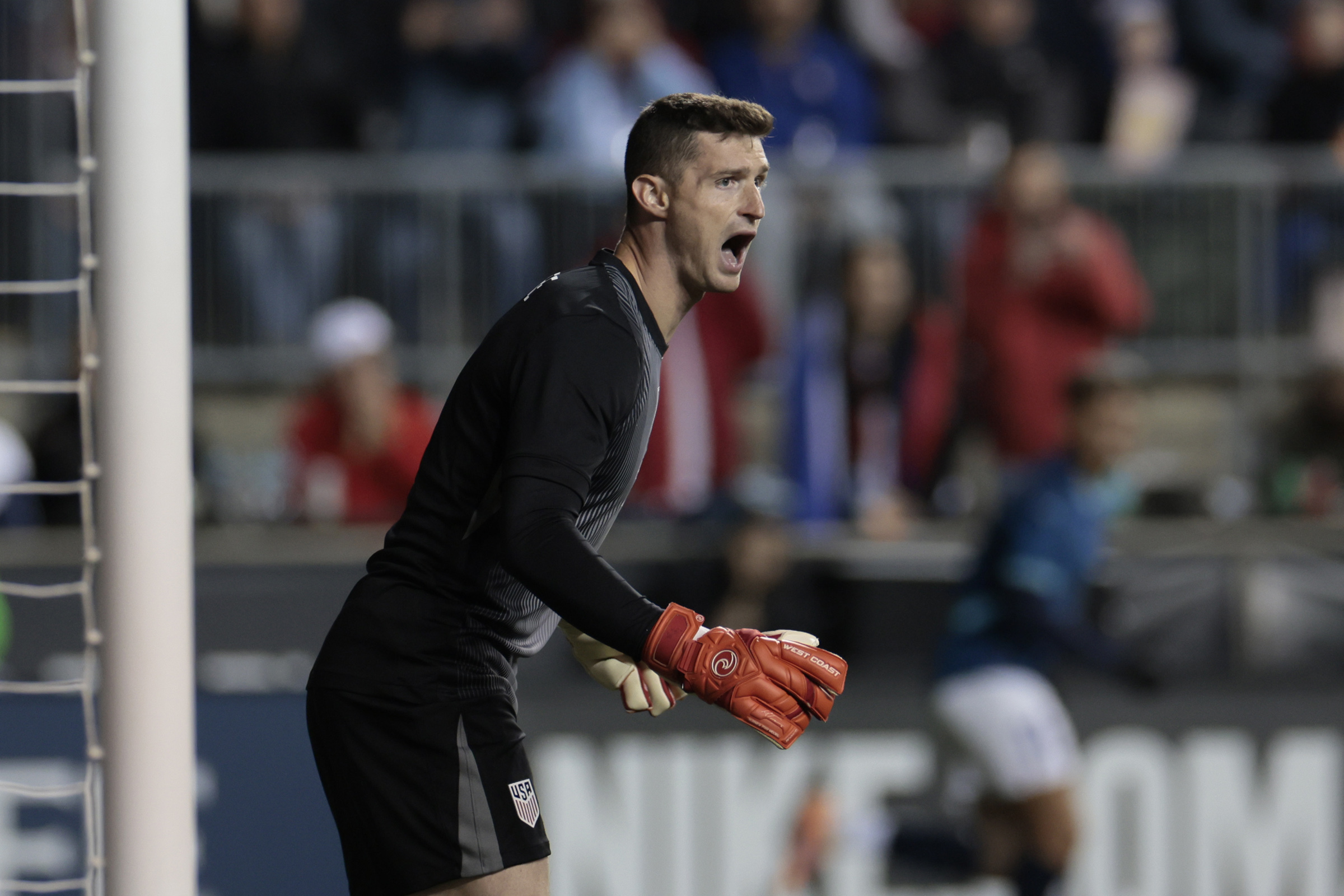
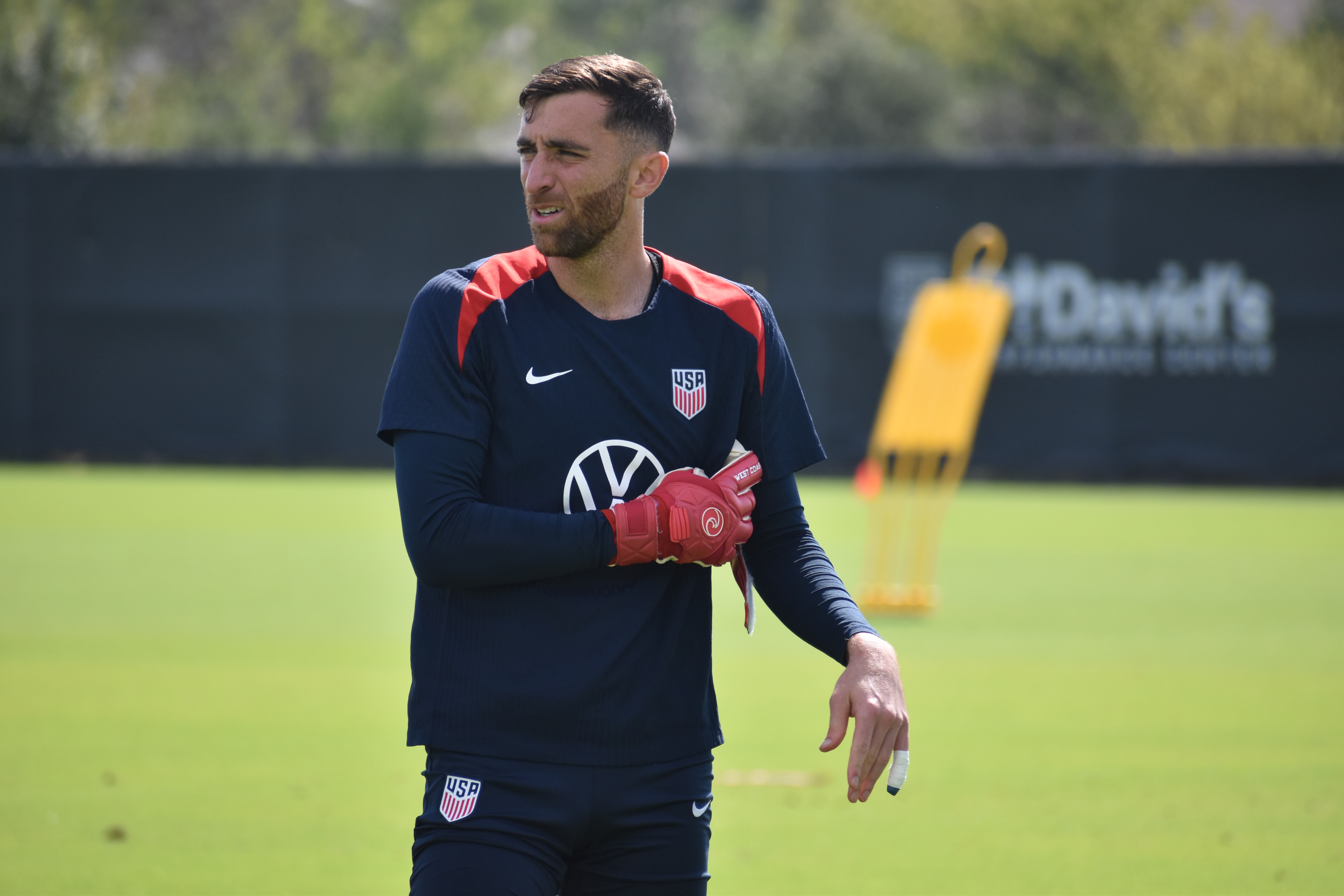
IRVINE, Calif. — Most of the time in soccer, one of the first things a team does is set its starting goalkeeper. But for the U.S. men, it appears that will be one of the last things that happens.
Leading candidates Matt Freese and Matt Turner have said in recent days that they don’t know who will get the nod for Friday’s group stage opener vs. Paraguay (9 p.m., Fox29, Telemundo 62).
“Not a ton of clarity,” Turner said Tuesday as he met with the media before the day’s practice. “It’s about training really well, keep fighting, and then the decision will be made on Friday.”
A day earlier, when Freese asked if he’d been told who the starter will be, he said, “No, just focused on training today.”
Matt Turner (right) watches Matt Freese in a drill at Friday’s practice.Jonathan Tannenwald
This is despite the fact that Freese has started 15 of the Americans’ 18 games since his debut last June, including a Gold Cup tournament that cemented his rise and U.S. manager Mauricio Pochettino’s demotion of Turner.
That demotion, in turn, came despite Turner having been the starter at the 2022 World Cup and for a long time afterward. Now, he’s the only goalkeeper on this World Cup squad with experience in the tournament.
With the clock ticking toward Friday night, what happens now — or at least until Pochettino is asked about it at his news conference on Thursday?
Even then, he might choose not to name a starter publicly.
If Mauricio Pochettino has made his decision about his starting goalkeeper, he hasn’t said so publicly.Jonathan Tannenwald
From most of the indications we have so far, Freese is ahead. The fact that he started the final tuneup game vs. Germany signaled that after Turner played the first half of the first tuneup vs. Senegal.
What is certain is that each is laser-focused on trying to win the race and on his individual tasks to get there.
After two years on campus, he left to turn pro with the Union, and served as Andre Blake’s backup for four seasons before getting a trade to New York City FC so he could become a starter. He has kept improving since then, combining his saves, passing, and a work ethic that Pochettino appreciates.
Matt Freese (center) during the U.S. team’s game against Paraguay at Subaru Park in November. The teams will meet again in their World Cup opener on Friday.Elizabeth Robertson / Staff Photographer
“I think the mentality that I always have, and I always will have for the next 15 years of playing, is to never expect to be in a roster,” Freese said in a recent news conference. “You always want to chase it, no matter what. And even if you’re a guy who’s played 100 games in a row for the national team, I’m going to be someone that is chasing that next one.”
As cliché as it is to say, consistency is key, and Freese lives it intentionally.
“I think every player has his own routines and strategies, but what works for me is taking every game the same and doing the same routine,” he said, “and doing the same preparation, same mind work, same physical work. Because then you arrive into the game in your standard situation.”
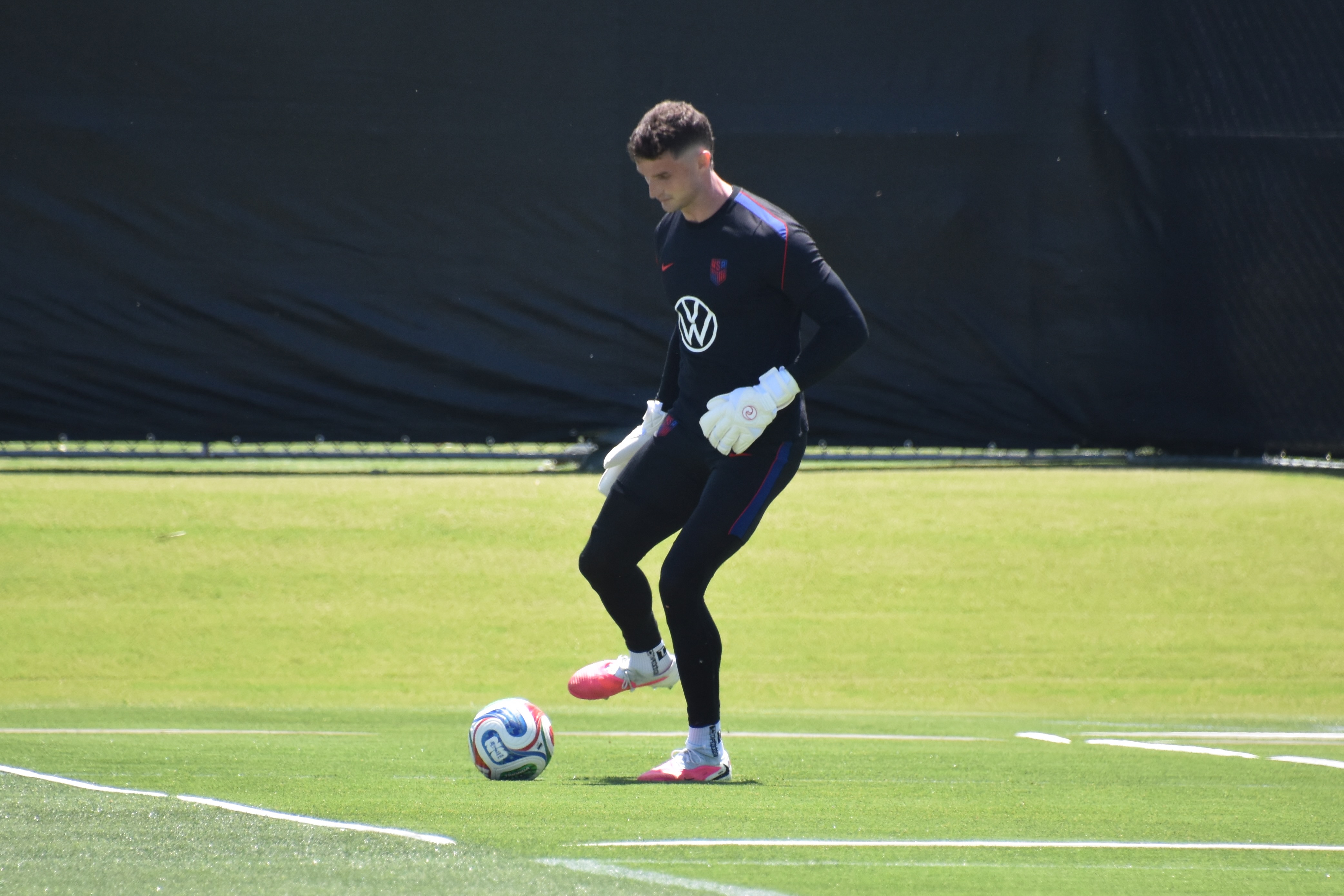
Matt Freese has started 15 of the U.S. men’s soccer team’s last 18 games.Jonathan Tannenwald
Freese acknowledged that “it’s obviously a World Cup, and it’s obviously different, and it’s obviously special: a once, twice hopefully, in a lifetime experience. And so that excitement will be there, naturally.”
But he persists, all the way down to what he packed for the trip.
“I bring my tea kettle, so I make the same tea. I’ve brought my own alarm clock from home,” he said. “The exact same stuff. I love keeping things consistent because if it works for you in small moments, then the game itself doesn’t change. So it helps me, at least, deal with those big moments and that pressure.”
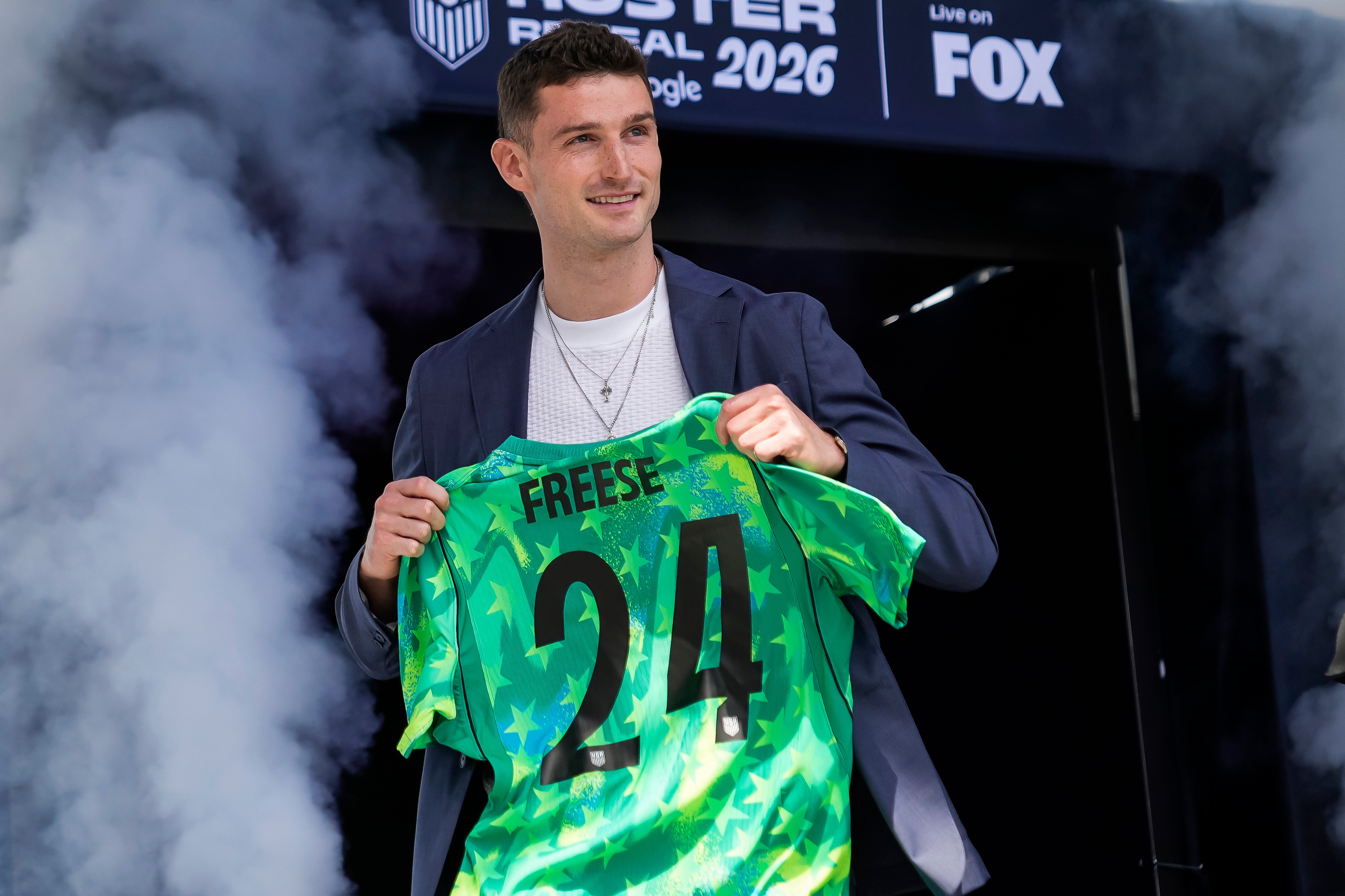
And there undoubtedly is pressure: to make a historic impact at this World Cup, and on him personally to continue the legacy built by Tony Meola, Kasey Keller, Brad Friedel, and Tim Howard. Howard often wore No. 24, the same one that’s on Freese’s back this summer.
Matt Freese with his No. 24 jersey at the introduction of the U.S. World Cup team last month.Eduardo Munoz Alvarez
“I was a fan of that goalkeeping corps for much of my life — still am,“ Freese said. “And so it’s an honor to be on this team and be part of that group, to hopefully continue that great legacy.”
He summed it up this way: “The ones that work hard without the promise of reward are the ones that usually succeed.”
Now to Turner, who has his own remarkable story. The 31-year-old North Jersey native wasn’t well-known when the New England Revolution signed him undrafted out of Fairfield in 2016, but he quickly became a stalwart. That led not just to being the 2022 World Cup starter, but to a $6 million move to England’s Arsenal earlier that year.
But he failed to establish himself there, so he moved across England to Nottingham Forest, then Crystal Palace on loan, then France’s Lyon. None of those moves brought stability, and his U.S. stock started falling as a result.
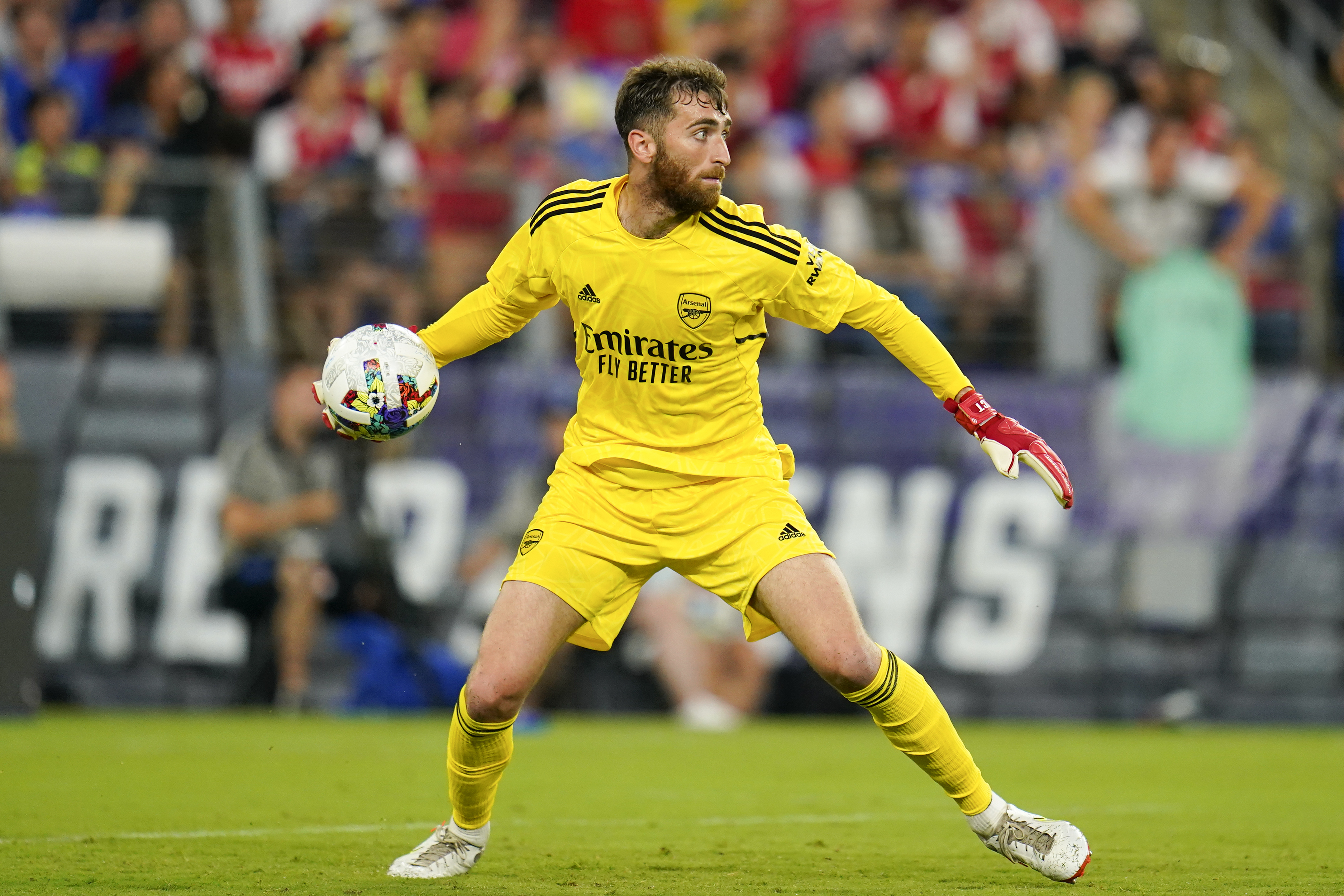
Matt Turner played just seven games for Arsenal in his short time with the English Premier League giant.Julio Cortez
So he returned to New England on loan last summer, and this year has finally regained his form. By some statistical measures, he has done better than Freese in MLS this year.
With the U.S., Freese looked better in the March games vs. Belgium in Portugal. If Turner looked slightly better against Senegal than Freese did in conceding an early free kick goal to Germany, the fact that Turner only played half of his game means a full comparison isn’t possible.
“I think playing consistent minutes at the level that I’ve been playing at this year has helped me tremendously with staying ready,” Turner said, “unlike in the past, where I was kind of scrapping for minutes at the club level, and then when you show up to the national team, you’re not as sharp when your number is called. So it’s obviously been really great to be playing consistently, be an important player for my team as well, and, of course, that just helps with my preparation on a weekly basis, daily basis.”
One of Pochettino’s goals in his tenure has been to foster competition across the roster, so no player feels assured of a place — which can breed the complacency that sank the team at the 2024 Copa América. In that context, Turner was asked to expand on his “lack of clarity” remark: Is it a good dynamic or too unsettling?
Matt Turner (left) with the Union’s Andrew Rick, who’s serving as a guest player for U.S. practices this summer.Jonathan Tannenwald
“I think it’s a great thing, and I think he’s constructed a roster of guys that buy into that,” he said. “And it creates competition in training for spots on a weekly basis. Just because [a group of] 11 starts one game doesn’t mean the next 11 is going to be the same. Everybody knows that they’re looked at in the same light in the coach’s eyes, and if they merit and deserve an opportunity with this coach, they’re going to get one.”
And asked if he prefers to not have the starter at his position set yet, Turner was just as direct.
“Well, given the fact that I haven’t played a ton in the last year for the national team, of course, for me, that makes me feel like the door is always cracked [open] — everyone has a chance,” he said. “But I think the coach will always pick the guy that’s playing the best, and he’s going to make the right decision for the team. And whatever my role is going to be, I’m going to be ready to do it to the best of my ability.”
With the FIFA World Cup kicking off this week, Soccer Extra dives into Philadelphia’s preparations to host the world’s biggest sporting events. The Inquirer’s Jonathan Tannenwald and CBS Sports’ Lisa Carlin discuss the city’s plans to welcome thousands of visitors, the impact the tournament will have on the region, and whether Philadelphia is ready for the global spotlight. They also examine the current state of the U.S. men’s national team, recent performances, and what fans should expect as the World Cup gets underway.
IRVINE, Calif. — When the U.S. men’s soccer team left Qatar after the last World Cup, the repeated lament was the lack of a No. 1 striker.
Folarin Balogun’s name wasn’t entirely new at that point. Born in New York to Nigerian parents and raised in London, he had played for a U.S. youth squad in 2018. He started playing first-team club soccer at England’s Middlesbrough in the first half of 2022, and a brief hot streak there got him on U.S. fans’ radar.
The next European season brought Balogun’s real breakout and a bigger spotlight. Now not only did the U.S. want him, but so did Nigeria and the England program of which he played on youth clubs from 2018 to 2021.
For a stretch of spring 2023, the noise resembled college football teams recruiting a five-star high school quarterback. U.S. fans flooded Balogun’s Instagram page with comments, then-manager Anthony Hudson dropped hints about conversations, and even then-England manager Gareth Southgate was pulled into the chattering class.
Folarin Balogun on the ball during Monday’s U.S. practice, the only open one the team will have leading up to the World Cup.Jonathan Tannenawld
In March, it really looked like a recruiting circus. Around that month’s FIFA window, Balogun was spotted courtside at an Orlando Magic game, then at Yankees spring training, with U.S. Soccer’s help behind the scenes.
Now comes the biggest moment. Balogun, 24, almost certainly will be the Americans’ starting striker at the World Cup, beginning with Friday’s group stage opener against Paraguay in Inglewood, Calif. (9 p.m., Fox29, Telemundo 62).
“I feel like my individual journey is a bit full-circle now, approaching the World Cup,” he said Monday, the opening day of the U.S. team’s stay at its World Cup base camp. “Especially with the World Cup being here, the opportunity to represent my nation in front of a home crowd is going to be something special for me, for my family, for my friends, and for the team. So I’m definitely looking forward to it and very proud.”
Folarin Balogun (center) among his teammates at Monday’s practice.Jonathan Tannenawld
His teammates know what he brings to the squad.
“His movements: left, right, being able to hold a ball up and bring other players in, and then his movement in behind,” U.S. centerback and captain Tim Ream said. “Just being in positions, and getting himself into goal-scoring positions, is something that we’ve been crying out for for a long time with the team and the group, and he brings that.”
Ream sat next to Balogun on the podium, so he joked about being wary of giving too many compliments. But he went on with them anyway.
“He’s probably the most annoying striker for me to have to deal with in training because he is so quick with his movements,” Ream said. “Physically strong and able to seemingly glide past people.”
Balogun admitted that being so close to the World Cup doesn’t feel real yet, but he knows the time is coming.
“I think it’s probably going to start to feel more real to me when I’m lining up and preparing to go out on to the pitch and I’m hearing the fans shouting and screaming,” he said. “I definitely think it will be real to me the closer I get, but this is the first opportunity for me to play in a World Cup. So I don’t really have any expectations, and I’m just trying to stay present, stay in the moment, soak everything in.”
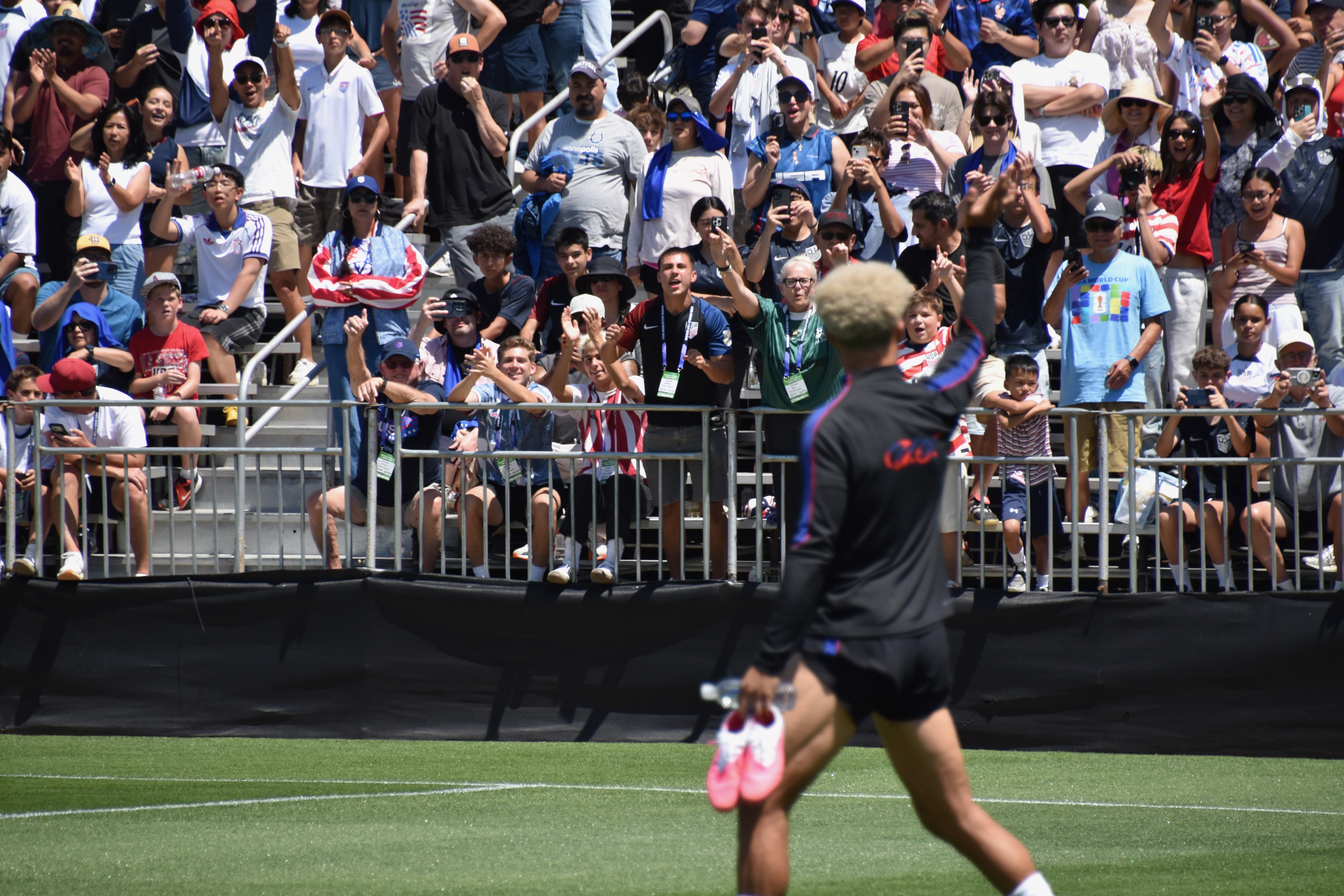
There were a few moments to enjoy on Monday, when the U.S. held an open practice for fans, its only one of camp. A full house of 5,500 fans attended at Championship Soccer Stadium, home of the second-tier USL Championship’s Orange County SC, with free admission through registration with the city of Irvine. U.S. Soccer said there were over 32,000 applicants.
Quite a few of them cheered for Balogun specifically, along with the many “USA!” chants that rose all morning.
Fans cheering for Antonee Robinson as he walked onto the field.Jonathan Tannenawld
“As I said before, it’s just coming to a full-circle moment, being able to perform on the biggest stage and give back to the fans,” he said. “That’s something I’m looking forward to doing, and I’m just happy I have the opportunity to do that.”
And he hasn’t forgotten that whirlwind time leading up to his commitment and what it showed him about soccer’s growth in the United States.
“I just remember an immense amount of appreciation from the fans,” Balogun said. “I didn’t realize at that moment how big football, soccer, was here in America. And to really feel that in full force was something that was inspirational for me. It made my decision easier.”
Alejandro Zendejas autographing a fan’s American flag after practice.Jonathan Tannenawld
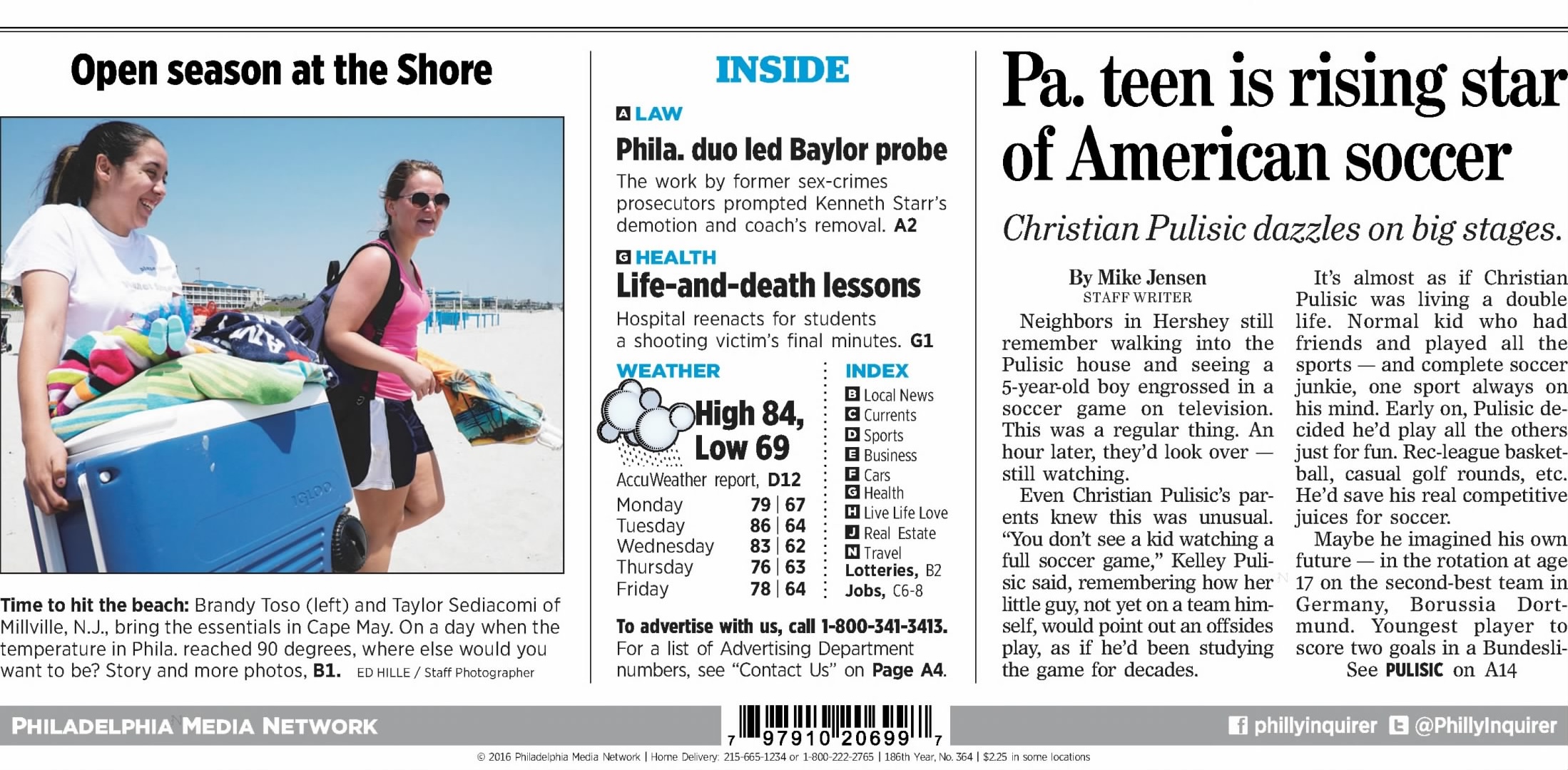
“Pa. teen is rising star of American soccer,” it said — and yes, we mean the actual newspaper, not just the internet. “Christian Pulisic dazzles on big stages.”
A few weeks after that, a then-17-year-old phenom born in Hershey came to Philadelphia as a U.S. national team player during the Copa América Centenario. He didn’t play in the Americans’ game here, but his presence alone was enough to draw attention and another round of headlines.
How many have there been since then? Too many to count, no doubt. But another from along the way still resonates now.
A clipping from the front page of The Inquirer on May 29, 2016, the first time Christian Pulisic was featured in the newspaper.Inquirer Archives
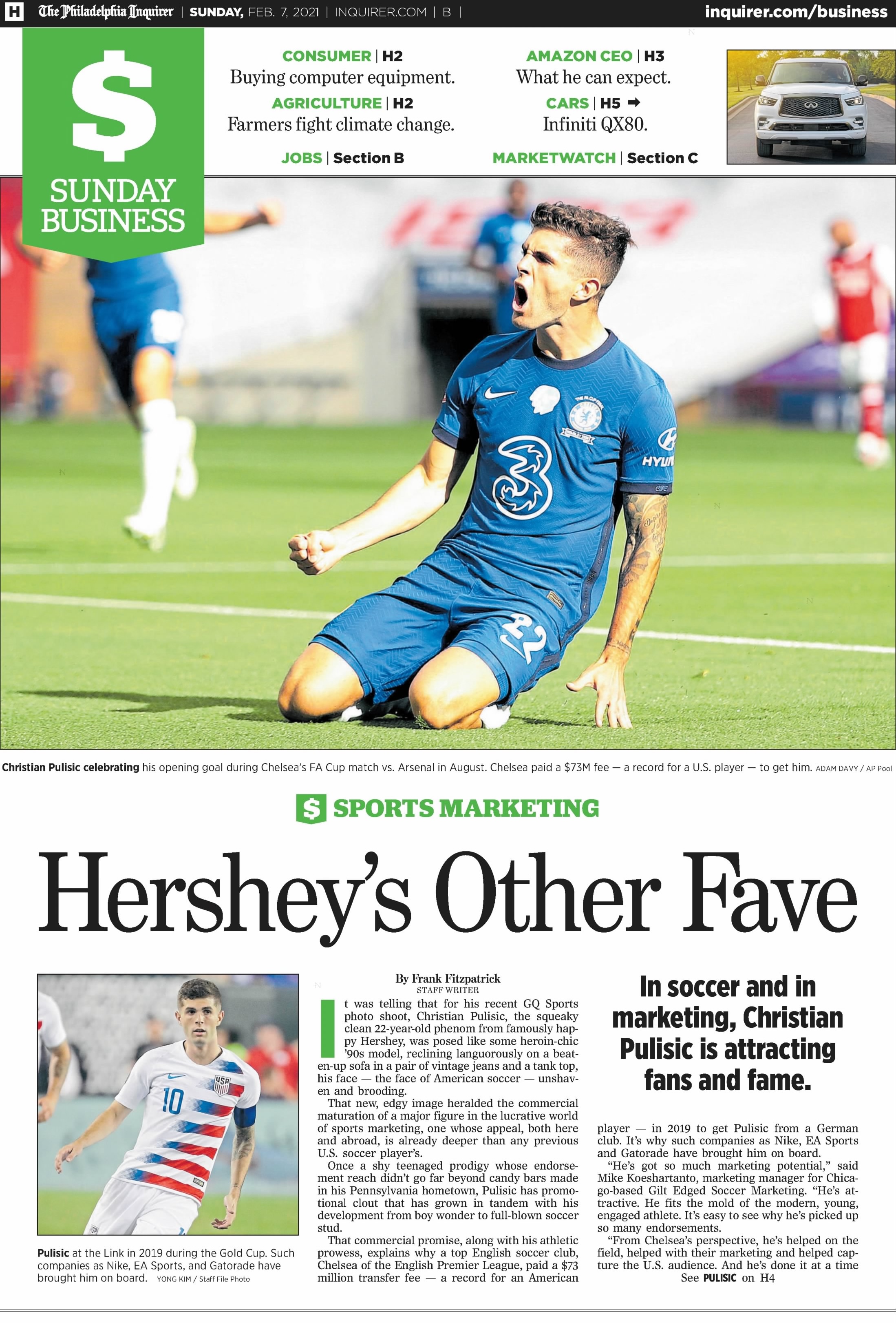
It was five years ago, this time in the business section — a feat of its own kind, along with his goals and assists.
“In soccer and marketing, Christian Pulisic is attracting fans and fame,” the big type declared, for a feature noting how rare this was for an American men’s soccer player.
Now here he is at age 27, on the cusp of one of soccer’s rarest privileges: playing in a World Cup on home soil. Pulisic is still very much an American poster boy, even as the sport has grown so much that he’s no longer the only one.
There are so many ways to measure the time that has passed. But doing so keeps bringing the mind back to the word decade.
How has it been that long already?
A clipping from the front page of The Inquirer’s business section on Feb. 7, 2021, putting Christian Pulisic in the spotlight again.Inquirer Archives
“I think of that every once in a while, and it is pretty crazy,” he told The Inquirer in an interview earlier this month, when he had a rare moment to not be as rushed as he is after games or in news conferences. “In some ways I still feel like I’m a young player. And then I realize, you see guys playing now born in [2006], and it makes you think: ‘like, wow, I really have been around for a while.’”
Not that he is old, for the record. His age is a soccer player’s prime, right on time for the biggest stage of his life.
“I still feel like I have a long road ahead of me,” he said. “It is crazy, though, that I’ve been doing this for so long. It’s not easy to maintain this level and to keep going, and I’m happy and I’m just so blessed that this is what I get to do.”
A national star, but still a hometown hero
The arrival of this World Cup has brought Pulisic a new round of endorsement deals, joining what was already a long list. They’re all on his Instagram page if you want to see them, and some are even on that old-fashioned platform called television commercials.
There sometimes feels to be a contrast between seeing him in so many ads and knowing he isn’t much of a talker on camera. He never has been, and though he has opened up more with age, he’s still never going to be the most chatty. He admitted as much again in this interview.
“I’m obviously in this position, and I think in some ways, it’s important to give my opinion on some things, and I get it,” he said, “People want to hear from me at times, and I’ve gotten more comfortable with it. But no, I haven’t changed really much, I would say.”
He added that for “people that know me and have spoken to me, it’s definitely not how people view me, and I’m OK with that. I think there’s a lot of athletes like that.”
And though these times seem oversaturated with commerce, some of Pulisic’s deals genuinely pull at the heartstrings — including his own. When a Hershey native gets his name and likeness on the city’s world-famous chocolate bar, that counts for something extra, and the company’s ads nailed the tone.
“I think I’ve officially made it,” Pulisic says in one of them, a staged phone call with his mother. “Happiness is knowing home is already rooting for you,” a chocolatier says in another, as he ships a box of bars to Milan, the player’s club soccer home. On arrival, a doorman delivers them to Pulisic, and he looks genuinely moved.
Even the biggest food conglomerate imaginable has a genuine place in Pulisic’s heart. He was one of countless kids who’d go to McDonald’s after a game. Now he’s one of nine global soccer stars on the fast food chain’s soda cups and combo meals, along with legends David Beckham, Ronaldinho, and Thierry Henry, and four big names who’ll play this summer: Canada’s Alphonso Davies, Mexico’s Santi Giménez, South Korea’s Son Heung-Min, and Spain’s Lamine Yamal.
“Driving home from soccer tournaments, the amount of times stopping at McDonald’s and picking up a nice meal there,” he said, “to now be a part of this, have this FIFA World Cup meal, have a chance to win one of my cups — obviously it’s something I just never expected.”
Even though Pulisic was speaking on the sponsor’s behalf, you can take a moment to say there’s significance in an American being in such company. Some years ago, longtime Inquirer writer Mike Jensen got a chance to interview Pelé when offered by one of the Brazilian legend’s sponsors. That was news on its own, as Pulisic’s turn is now.
‘Exactly where I’m meant to be’
Though Pulisic spends most of his days abroad, and his family moved to Florida a few years ago, he still says Hershey “will always be home.”
He spoke of “that house I grew up in,” and how “when I think of home, that’s what it is. That’s where I grew up and spent most of my life.”
He knew who he was speaking to, for sure, and for how long The Inquirer has chronicled his career. But these words also sounded genuine.
Christian Pulisic (right) has 33 goals and 20 assists in 85 games for the U.S. men’s soccer team.Jonathan Tannenwald
“I’m really proud to be from there, and that’s it,” Pulisic said. “It’s kind of sad that I don’t get to go back as much as I’d like to, with such a busy schedule during the year. But Pennsylvania, whenever my friends always talk about who they rep, Pennsylvania, that’s me. I rep Pennsylvania, central and eastern PA — it’s always a big part of my life.”
That includes being a 76ers fan, albeit casually these days; and it is, he admitted, “the only Philly team I really do support.” But that has rarely been a secret. His longtime allegiance to the NFL’s New York Jets, in particular, has been written about plenty.
(Pulisic has a small tie to the Union, too, having played for one of the club’s youth teams in a tournament in 2012. Asked if any photos exist somewhere, he said they probably do, but he doesn’t have them.)
On the field, he arrives at this World Cup in the company of teammates who are also longtime friends, especially Tyler Adams, Weston McKennie, Haji Wright, and Alejandro Zendejas.
“It just feels like this is exactly where I’m meant to be,” Pulisic said. “I’ve known some of these guys for so long, and so now to share the biggest stage with them, it’s incredible. We talked about it, we dreamed about this together.”
He described the moment as “everything we could have imagined and more, and we’re just thankful that this is what we get to do.”