Author: Aliya Schneider

  • New Burlington County shuttle bus will connect Philly suburbs with regional transportation options

    New Burlington County shuttle bus will connect Philly suburbs with regional transportation options

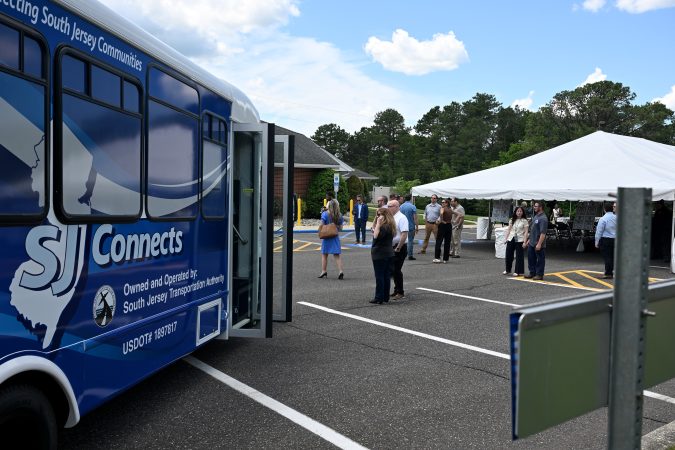
    A new free shuttle bus in Burlington County will be concentrated in a small slice of the county in some of the places closest to Philadelphia and Camden, according to a draft brochure for the service.

    But it’ll also serve as a transfer point for other residents in the area.

    SJ Connects, a free shuttle bus service run by the South Jersey Transportation Authority (SJTA), was granted $5 million under former Gov. Phil Murphy’s administration for an 18- to 24-month trial run to improve transit in the region. All of the service’s routes already began running except for Burlington County’s bus, which is expected to start service in September despite being included in a June 1 launch announcement.

    The SJTA has not yet posted the details of the Burlington County route but The Inquirer obtained its draft brochure through a public records request. The document shows that the planned 11-stop route connects Burlington County’s Palmyra, Moorestown, Cinnaminson, Mount Laurel, and Maple Shade with the Pennsauken Transit Center in Camden County.

    While it will most directly service the residents who live along the route, the planned route will also connect with existing transportation centers in the area to serve as a transfer point for riders.

    Locally, the bus is slated to stop at Cooper University Health Care‘s Moorestown campus, Moorestown Library and Town Hall, Cinnaminson Shop Rite, Fox Meadow Apartments, and the Mount Laurel Walmart Supercenter.

    Stops at the Moorestown Mall and Pennsauken Transit Center will connect riders to NJ Transit buses that go to Philadelphia’s 30th Street Station, Trenton, Camden County municipalities such as Cherry Hill, Haddonfield and Gloucester City, and other Burlington County locations such as Mount Holly and Willingboro. It will also link riders with the RiverLine and Atlantic City Rail.

    (function() {
    var l2 = function() {
    new pym.Parent(‘BURLCO28-A’,
    ‘https://media.inquirer.com/storage/inquirer/projects/innovation/arcgis_iframe/BURLCO28-A.html’);
    };
    if (typeof(pym) === ‘undefined’) {
    var h = document.getElementsByTagName(‘head’)[0],
    s = document.createElement(‘script’);
    s.type = ‘text/javascript’;
    s.src = ‘https://pym.nprapps.org/pym.v1.min.js’;
    s.onload = l2;
    h.appendChild(s);
    } else {
    l2();
    }
    })();

    Dominic D’Amico, director of transportation services at the SJTA, said the agency designed the routes to connect with NJ Transit’s existing infrastructure and the region’s “eds and meds.”

    Some parts of Burlington County that are excluded from SJ Connects — such as Pemberton and Mount Holly — have access to a separate, existing system called the BurLINK shuttle, which is administered by the county and run by a private company.

    The new SJ Connects route is not slated to directly connect with BurLINK. But riders can transfer between the two services using the River Line, for example.

    Assembly member Andrea Katz, a Burlington County Democrat, said in an interview earlier this month that she hopes SJ Connects will expand further into her district in the future. The long-term viability for the program will likely depend on whether its advocates can convince Democratic Gov. Mikie Sherrill and legislative leaders that it’s worth funding in future state budgets.

    “We have very little down here in Burlington County, and in South Jersey as a whole, but folks still have those issues that they need a ride to the hospital, they need a ride to a grocery store,” Katz said. “They need to get access to these things, and we’re finally starting to see this expansion into South Jersey.”

  • New Jersey enacts law to prevent surveillance pricing of groceries. Here’s what to know.

    New Jersey enacts law to prevent surveillance pricing of groceries. Here’s what to know.

    New Jersey Gov. Mikie Sherrill signed a surveillance pricing ban into law on Thursday as she champions herself as a fighter for lower costs in New Jersey.

    The Democrat lauded the initiative as part of her broader agenda and campaign promise of making life more affordable in the state. Also in line with her messaging, she blamed President Donald Trump’s tariffs and the war in Iran for high grocery prices at a news conference announcing the new law.

    “Surveillance pricing essentially gives Big Brother a look into your shopping cart,” she said. “It’s incredibly invasive and it’s expensive.”

    Several states across the country have similar bills under consideration, but New Jersey is just the third to write the ban into law, after Maryland and Connecticut.

    Here’s what to know about the new law.

    What is surveillance pricing?

    Essentially, it’s when grocery stores or apps create individualized pricing based on shoppers’ personal data.

    As defined by the new law, it’s a pricing strategy in which food prices are adjusted, optimized, or recommended by an algorithm or automatic system that uses personal data, such as through biometrics, cameras, sensors, device tracking, or other forms of observing consumers’ personal attributes.

    What does this law do?

    The new law, called the Fair Price Protection Act, bans surveillance pricing or other pricing strategies that determine the cost of groceries based on consumers’ data. The law takes aim specifically at groceries and not at restaurants or other places that sell food or beverage for immediate consumption.

    It also implements a one-year ban on new electronic shelf labels and requires the state to study the use of such labels. The New Jersey Innovation Authority is required to submit findings no more than six months before the end of the moratorium along with policy recommendations surrounding the practice. Companies are allowed to repair or replace existing electronic shelf labels during this moratorium.

    These labels allow companies to update prices more efficiently and do not mean surveillance pricing is being used. But a group that has lobbied for a surveillance pricing ban — the United Food and Commercial Workers International Union — has also called for bans on electronic price tags and called them “the missing piece of the surveillance pricing puzzle.”

    The surveillance pricing ban will not take effect for a year, but the electronic shelf label moratorium will begin in six months.

    A violation of the new law carries penalties of up to $10,000 for the first offense and up to $20,000 for further violations, and the attorney general can pursue additional civil penalties.

    What did lawmakers think of this bill?

    Earlier this year, some South Jersey legislators said they wish the bill had gone further and banned the practice across other industries.

    The bill passed both chambers of the legislature on June 30 as part of a slew of last-minute actions before the budget deadline.

    It passed largely along party lines, though two Democrats voted against it in the Senate, including Sen. James Beach, a Camden County Democrat who had been listed as a cosponsor on the bill. He did not immediately respond to a request for comment Friday.

    In the Assembly, seven Democrats did not vote on the bill, and one Republican voted for it.

    Does Instacart use surveillance pricing?

    At her news conference, Sherrill cited figures from a Consumer Reports study that found Instacart used artificial intelligence-driven pricing that left customers with price tags differing as much as 23% per item for an annual household cost difference of $1,200 per year.

    However, Instacart has said it did not use personal information to set those prices, and therefore it did not involve surveillance pricing — a practice the company said it does not use. The company also said it has changed its practices outlined in the study.

    That being said, experts have warned that the combination of AI pricing models and the mass amounts of data collected on U.S. shoppers paves the way for surveillance pricing, per Consumer Reports.

    Will this law interfere with your loyalty discounts?

    Opponents of the bill, such as business groups and Republican lawmakers, have argued that the bill will have the opposite effect than intended, leading to higher prices because of negative effects on loyalty discount programs.

    “The reason so many businesses pushed back on ‘The Fair Price Protection Act’ wasn’t because they want to price gouge customers, it’s because the bill threatens the loyalty programs, discount apps, and member pricing that brings in customers and actually brings prices down for everyday shoppers. … This law threatens to take that all away,” Assembly Republicans said in a post on X on Thursday.

    But Sherrill insists the new law will not go after those discounts.

    “Deals are fine,” Sherrill said. “Surveillance-driven surcharges driving up costs are not. If companies violate your privacy to try and make a buck, they’ll be held accountable under our state’s Consumer Fraud Act.”

    The law specifically says it does not prevent discounts with publicly shared eligibility requirements, such as being a teacher or veteran. It also allows companies to offer discounts through loyalty programs that shoppers opt in to and provide discounts based on customers’ purchases as long as all members of the program are eligible to receive them under the same conditions.

  • Gov. Mikie Sherrill says motor vehicle vendor is responsible for issues beyond N.J. voter registration error

    Gov. Mikie Sherrill says motor vehicle vendor is responsible for issues beyond N.J. voter registration error

    New Jersey Gov. Mikie Sherrill revealed Thursday that her administration had already been trying to get rid of the vendor that she blames for thousands of illegal voter registrations in the state before she discovered the misstep.

    Sherrill, a first-term Democrat, announced Tuesday that she had learned almost a week earlier that about 6,600 noncitizens had been registered to vote between June 2023 and June 2024 under her predecessor, former Democratic Gov. Phil Murphy. She said fewer than 400 of those people had voted.

    The news coincided with President Donald Trump’s effort to revive conspiracy theories about the 2020 election. In an attempt to bolster his proposal for a national overhaul of elections, his administration has alleged large numbers of noncitizens are registered in a handful of states.

    Sherrill said a glitch in software at the New Jersey Motor Vehicle Commission (MVC) operated by a vendor called IDEMIA registered people to vote through the state’s automatic motor vehicle voter registration program even after they identified themselves as noncitizens.

    The term noncitizen can refer to people who are in the United States legally on green cards or visas as well as undocumented people, who have been able to get driver’s licenses in New Jersey since 2021. The state has allowed citizens to register to vote automatically at the MVC since 2018 unless they opt out.

    “I think it’s well known that the motor vehicle commission has been a mess, and IDEMIA is at the heart of that,” Sherrill said after a news conference Thursday.

    Sherrill said in remarks on Tuesday that her administration would replace the vendor but did not discuss the depth of her issues with the company before the recent scandal. She focused her criticism on the administration of her predecessor, Murphy, who has remained publicly silent on the issue.

    But on Thursday, the governor took more aim at IDEMIA.

    She blamed the company for long waits, bureaucracy, and red tape, and said she had already viewed the MVC as a “failure” prior to this incident. She said New Jerseyans have been told to get a passport because it would be faster than the process of getting a REAL ID in New Jersey, one of which is required for travel to avoid extra fees.

    “That’s the disarray that was going on there,” she said.

    Sherrill said Rosalie Johnson, whom she said she recruited from Colorado to appoint as the new MVC administrator this year, “was already in the process of removing them for their incompetence.”

    Johnson said Tuesday that her team has already made improvements at the MVC, is implementing additional safeguards, and is “actively working with a new vendor to ensure this type of technical malfunction does not happen in the future.” She said she expects the new vendor to begin next year.

    Additionally, Sherrill said her administration hired an independent firm to investigate what happened.

    In a separate news conference Thursday, New Jersey Republicans said an independent, bipartisan committee with subpoena power should also investigate the circumstances that led to the faulty registrations.

    New Jersey GOP chair Christine Hanlon said she believes there may be more instances of noncitizens improperly registered than what Sherrill disclosed.

    According to a sampling of data collected by the state party, she said, there were “hundreds” of noncitizens who had proactively requested to be removed from the voter rolls outside the time frame between 2023 and 2024. Not every county provided data, so the results show an incomplete picture, she said.

    “It just shows us we need a lot more information about what happened and when,” she said.

    Federally, Assistant Attorney General Harmeet Dhillon said in a post on X that the Civil Rights Division of the Department of Justice “is investigating this unlawful dilution of American votes.” U.S. Rep. Josh Gottheimer, a North Jersey Democrat who unsuccessfully ran for governor last year, called for a national audit of IDEMIA.

    IDEMIA released a statement Tuesday blaming the improper voter registrations on the New Jersey Department of State’s Division of Elections, saying the department is “ultimately responsible for verifying eligibility to vote.”

    The company’s responsibility was to transmit information from the motor vehicle system to the New Jersey Department of State, but the information “must still be validated and adjudicated by the Division of Elections,” the statement said. IDEMIA did not respond to a request for further comment on Thursday.

    Sherrill blasted the company’s justification on Thursday.

    “To suggest somehow that the fact that they had a huge software error like this for a year that they did not catch is somehow not something they were responsible for, I mean, this is why we’re getting rid of them,” she said.

  • How 6,600 noncitizens were registered to vote in New Jersey and what happens next

    How 6,600 noncitizens were registered to vote in New Jersey and what happens next

    New Jersey Gov. Mikie Sherrill was handed an election security crisis that took place under her predecessor just days after President Donald Trump’s administration pushed out claims of widespread noncitizen voting.

    Sherrill revealed Tuesday that about 6,600 noncitizens had been illegally registered as voters in New Jersey due to a system error in the state’s department of motor vehicle voter registration program under former Gov. Phil Murphy.

    The governor said fewer than 400 of those people had voted. There is no evidence that their ballots changed any election outcomes, but the news has thrust the Garden State into the middle of the national debate over election security.

    “This failure didn’t occur on my watch, but accountability starts now,” she said at a news conference Tuesday.

    Here is what to know about what happened and how, and what the fallout could be — both in Trenton and in Washington.

    How many noncitizens got registered in New Jersey and how many voted?

    About 6,600 people who identified themselves as noncitizens were registered to vote in New Jersey between June 2023 and June 2024 “through no fault of their own” due to the glitch, though fewer than 400 cast a ballot, Sherrill said.

    Sherrill said at a news conference that the error “was caught and stopped in 2024” but that her administration is now working to remove those hundreds of voters from the rolls. She said they could have voted in any elections since then but there is no evidence at this time that they could have swayed any results. She said they were registered as Democrats, Republicans, and mostly unaffiliated, and scattered throughout the state.

    She said her team is “taking a hard look at the process failures that occurred under the previous administration and the guardrails we can put down for the future.” Through a spokesperson, Murphy declined to comment.

    Sherrill, a former member of Congress who began her term in January, campaigned on changing the culture in Trenton and distanced herself from Murphy on the campaign trail but remained cordial with him. Her tone sharply changed this week.

    “This entire situation is unacceptable,” she said. “It’s unacceptable that the vendor released software with such a glaring error. It’s unacceptable that the MVC [Motor Vehicle Commission] took a year to get this fixed, and it’s unacceptable that no one in the previous administration brought this to light, demanded accountability, or took action when it happened years ago.”

    How did this happen?

    Sherrill called the issue a “serious software error in New Jersey’s motor vehicle system.”

    New Jersey began automatic voter registration in 2018, which allows citizens to be automatically registered to vote when they get an ID at the MVC unless they opt out.

    The noncitizens who were improperly registered had answered “no” when asked on a keypad at the MVC whether they were a U.S. citizen, Sherrill said. But she said the system registered them anyway “through no fault of their own.” She said the error could put those individuals’ immigration status at risk. It would be hypocritical for the state to charge the individuals and she wants to protect them, she said, but she “would not put it past” the federal government to charge them.

    U.S. Rep. Josh Gottheimer, a North Jersey Democrat who unsuccessfully ran for governor last year, called for a national audit into IDEMIA, the vendor whose software was used for the registrations.

    But IDEMIA pointed a finger at the New Jersey Department of State, noting that while the vendor’s role is to transmit information between the motor vehicle and state departments, it is ultimately the state department’s responsibility to verify voter eligibility.

    “Information submitted by IDEMIA must still be validated and adjudicated by the Division of Elections,” the company said in a statement.

    When did Gov. Sherrill find out?

    Sherrill said she learned about the error last Wednesday, the day before Trump’s speech. She announced the discovery on Tuesday.

    What is Gov. Sherrill doing about it?

    Sherrill said she immediately ordered an investigation when she learned about the issue and ordered the removal of the noncitizens from the voter rolls. She said that Rosalie Johnson, whom Sherrill appointed as New Jersey Motor Vehicle Commission administrator this year, had already begun replacing the system vendor.

    The governor said her administration hired an independent firm, CSG Law, to conduct the investigation. She said “they will be moving very quickly” and had already found the figures she has been citing. She said she will “present the findings” of the investigation to the public.

    Johnson said she expects to launch the new vendor next year and is working on creating additional safeguards to regularly review information before sending it to the elections division.

    Sherrill said her administration is looking at ways to make the state’s elections more secure and vowed to hold any government workers accountable.

    “Should there be anyone that is identified that is still working in this space that has not done the right thing, I will hold them personally accountable for this,” she said.

    How is the Trump administration responding?

    The Trump administration and other prominent Republicans are using the issue to call for the passage of the SAVE Act, a federal bill that Republicans say would improve election security but Democrats warn would suppress millions of voters.

    Assistant Attorney General Harmeet Dhillon said in a post on X that the Civil Rights Division of the Department of Justice “is investigating this unlawful dilution of American votes.”

    Additionally, the department argued in a letter that the incident justifies the Trump administration’s efforts to obtain the state’s unredacted voter rolls.

    Vice President JD Vance called on New Jersey U.S. Sens. Cory Booker and Andy Kim, both Democrats, to support the legislation in a post on X, given the issue in their home state.

    “If only there was a way to stop this type of ‘software error’ that allowed non citizens to vote in our elections,” Vance said in the tongue-in-cheek post.

    Booker said he trusts the Sherrill administration to solve the problem and criticized “those who will choose to weaponize this issue.” Kim declined to comment on the matter.

    Why is the timing beneficial for the president?

    The news came at an opportune time for Trump, just days after his speech in which he reignited conspiracy theories about his 2020 election loss. The same day, the White House shared claims of widespread noncitizen voting, including in New Jersey.

    DHS Secretary Markwayne Mullin claimed that more than 35,000 noncitizens could be registered in New Jersey. The department has not shared how it arrived at that number, and experts cautioned it could include new citizens who have not been updated in a system meant to check work eligibility.

    Sherrill said her administration received a letter with that 35,000 figure after Trump’s speech — which was also after she said she had learned about the 6,600 noncitizen voters.

    “We have asked them for any evidence of this, where they got that number, who this is,” she said. “We’ve received nothing back yet.”

    Sherrill said that the president “knows that if he provides us any credible information we will of course investigate it” but that he has “zero credibility on the issue of election integrity.”

    “For the past 10 years he’s cried wolf and peddled bizarre conspiracy theories about fraud with no evidence,” she said.

    Trump called for the passage of a national proof of citizenship requirement Wednesday during a speech in Georgia, but he did not directly reference New Jersey.

    How will New Jersey lawmakers respond?

    State Sen. Anthony Bucco of North Jersey, the Senate Republican leader, said the state should “at the very least” suspend the automatic voter registration program until a full investigation is complete and next steps are made clear.

    He also called on the state to enact a voter identification requirement.

    New Jersey requires identification or a Social Security number to register to vote, and first-time voters who registered to vote by mail may need to provide ID at the polls. But overall, most voters do not need to show ID at the polls in New Jersey.

    Republican-led efforts to enact legislation following this incident are unlikely to succeed in Trenton because Democrats hold a supermajority in the Assembly and a majority in the Senate.

    Sherrill said at the Tuesday news conference that the problem is not with the state’s laws, but rather with how the state government has been operating — further pushing blame on her predecessor.

    “I see no reason why our state cannot run our election system well and have a computer program that can operate well, and should any problem occur it should be caught quickly … it’s a problem with accountability,” she said. “It’s a problem with making sure government is effective and running well, and it really is a lack of responsibility.”

    Has this happened before?

    In 2017 Pennsylvania Secretary of State Al Schmidt, a Republican city commissioner in Philadelphia at the time, uncovered and resolved a similar glitch at the Pennsylvania Department of Transportation in which all Pennsylvania drivers were asked if they wanted to be registered to vote regardless of citizenship status.

    Schmidt said at the time that the glitch led to 168 noncitizens registering to vote in Philadelphia but that just 44 ballots were cast in the city as a result.

    Schmidt has since said that noncitizen voting is rare and that the threat has been exaggerated.

    Staff writers Michelle Baruchman and Abraham Gutman contributed to this article.
  • A worker was hospitalized after suffering life-threatening injuries at EMR in Camden, shortly after a judge allowed it to reopen

    A worker was hospitalized after suffering life-threatening injuries at EMR in Camden, shortly after a judge allowed it to reopen

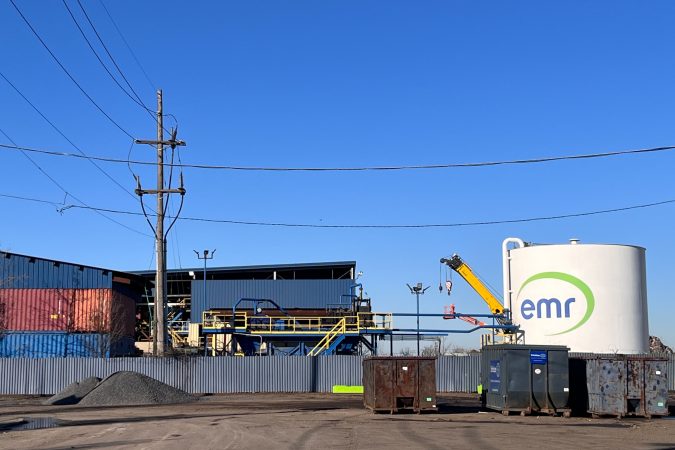
    A worker was sent to the hospital with life-threatening injuries on Saturday, just days after the EMR scrap metal recycling plant reopened in Camden, following a court ruling.

    The company had sued Camden after the city suspended its operations last month following the latest in a string of fires at the facility. Just under two weeks ago, a judge permitted the company to reopen with heightened safety precautions meant to prevent further fires. The company announced Monday of last week that it would begin activities on site that day and start full operations this past Friday.

    The next day, an employee working on behalf of EMR was sent to the hospital with “life-threatening injuries,” confirmed Dan Keashen, Camden County spokesperson.

    He said the Camden County Police Department is investigating the “industrial accident.”

    Emergency response units responded to a report of a male with injuries from an accident inside the EMR facility about 11:30 p.m. Saturday, Keashen said.

    He said emergency medical services transported the man to Cooper Medical Center and, as of Tuesday, the worker was in critical but stable condition.

    Camden city spokesperson Vincent Basara confirmed that the Camden Fire Department and EMS were called to the EMR facility on Saturday regarding an injury in the workplace and a person was “taken to the hospital with significant injuries.”

    Representatives for EMR did not respond to requests for comment on Tuesday. The company also faced an emergency across the river last week when a blaze broke out at an EMR facility in Darby, Delaware County, prompting air quality concerns.

  • Philly and Camden may need federal aid, but the politics of FEMA are getting messy

    Philly and Camden may need federal aid, but the politics of FEMA are getting messy

    New Jersey Gov. Mikie Sherrill and Philadelphia Mayor Cherelle L. Parker are assessing whether they’ll need to ask the federal government for help following recent storms in Philadelphia and Camden as President Donald Trump rejects more disaster aid from blue areas.

    Camden residents said they witnessed the worst flooding in recent memory just two days after celebrating Independence Day.

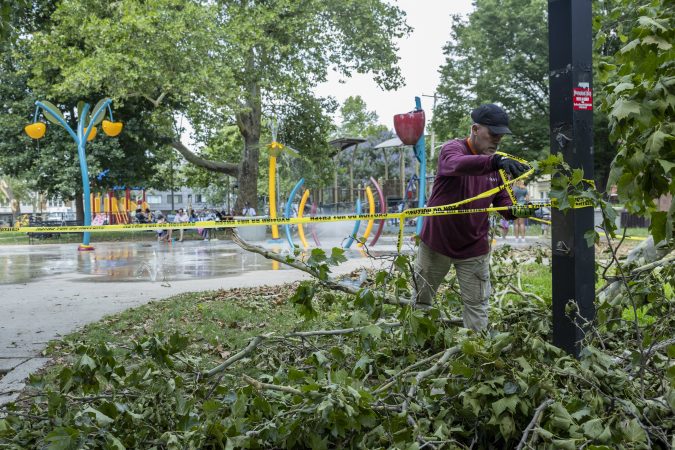
    Less than a week later, in parts of Philadelphia and Montgomery County, at least four storms called microbursts caused fallen trees, leading to electrical outages and road closures.

    Sherrill and Parker have both signaled they anticipate seeking federal emergency aid, but first they need to see if there’s enough damage to qualify. New Jersey is still trying to get aid for a snowstorm that took place just one month into Sherrill’s term — a request that Trump denied — and Pennsylvania has faced several Federal Emergency Management Agency request rejections in recent years.

    Sen. Andy Kim, a South Jersey Democrat who serves as the ranking member on the subcommittee that oversees FEMA, recently led a group of senators accusing the Trump administration in a letter of a “significant partisan disparity” in federal disaster aid.

    “Right now, there’s no predictability with this administration, and that’s just scary when you’re dealing with disaster response,” Kim said in an interview Wednesday.

    Here is what to know about federal emergency aid at this moment.

    How does FEMA aid work?

    First, local officials work to assess the extent of the damage after a storm and report it to the county, which works with the state to assess the damage. If the disaster has caused more harm than the local and state government can address, the governor can request the president declare a major disaster. That’s required to unlock public FEMA aid.

    Individuals can only apply directly for FEMA aid if the president approves individual assistance as part of a disaster declaration.

    Residents should report damage to their insurance companies and begin the claims process as soon as possible and report damage to the Office of Emergency Management, said Joseph Walsh, a sergeant first class with New Jersey’s Office of Emergency Management.

    “There are technical things we need to meet,” Sherrill said during her visit to Camden after the storm. “I think we probably will, but we’re collecting that now.”

    Sean Higgins, a Sherrill spokesperson, said in a statement Wednesday that the governor’s team “has been working around the clock to ensure communities have the support they need and we will ensure that New Jersey applies for any and all help that we qualify for.”

    In Philadelphia, Dominick Mireles, the city’s director of emergency management, said earlier this week that the city is figuring out the “financial price tag” of the damage, a process that will continue in the coming weeks. Then the city will determine what may be needed — and what it’s eligible to receive — from state and federal resources.

    “This might be something above and beyond what we can navigate on our own,” Mireles said.

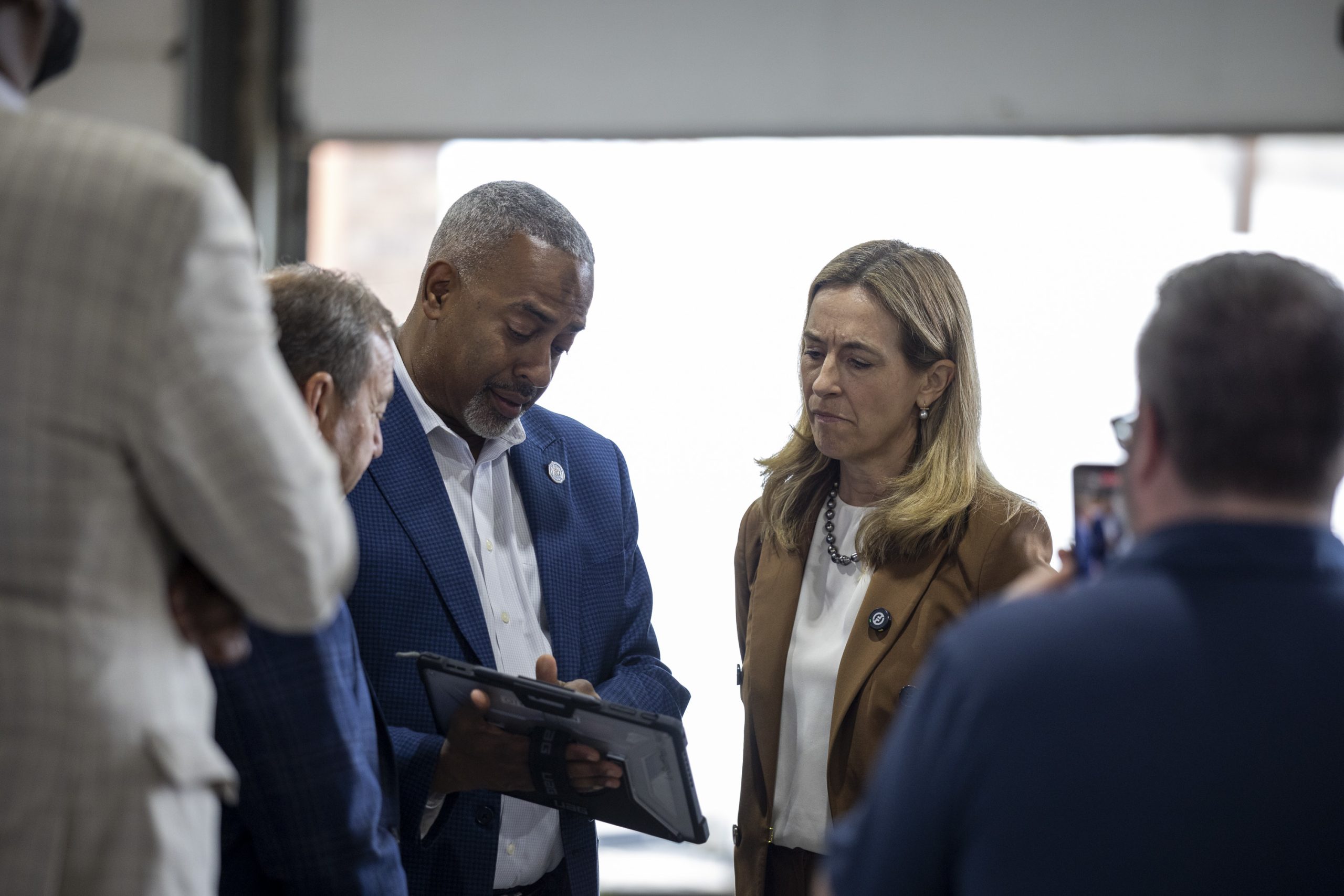
    Camden Mayor Victor Carstarphen shows New Jersey Gov. Mikie Sherrill visuals of the recent storm in Camden on a tablet on Tuesday.Tyger Williams / Staff Photographer

    Has Trump denied FEMA aid to Pennsylvania and New Jersey?

    New Jersey is in the process of appealing a FEMA rejection for Winter Storm Hernando from February of this year, Walsh said.

    The rejection was part of a $227 million denial in disaster aid requests from four Democratic-led states, along with New York, Rhode Island, and Massachusetts. Higgins said more than $84 million of that pool represented costs from New Jersey municipalities and counties.

    “Without that aid, our local governments will be stuck with the costs of an unprecedented snowstorm that didn’t care about political boundaries. … Sherrill will continue to fight for every dime that New Jerseyans are owed, regardless of political party,” Higgins said in a statement.

    FEMA data also show a 2018 rejection for a severe storm and flooding event in New Jersey during Trump’s first term. Walsh said the state requested aid for several counties even though the damage did not meet the threshold for federal assistance.

    The data show that Pennsylvania faced denials from the Trump administration during his first term for a winter storm in March 2017 and storms and landslides from February to April 2018, following a close 2016 win for Trump in Pennsylvania during Democrat Tom Wolf’s gubernatorial administration. After losing the 2020 election to former President Joe Biden, Trump on Nov. 18 rejected requests for aid in Philadelphia and surrounding counties for the August 2020 Tropical Storm Isaias.

    Pennsylvania’s appeal for the 2017 storm was rejected for not meeting the “severity and magnitude” for a disaster declaration, and an appeal for the 2018 incidents were rejected for being “separate and distinct” and not meeting the required threshold, according to documents from the Pennsylvania Emergency Management Agency.

    The state did not appeal the rejection for damage from Isaias.

    The commonwealth also faced rejections during Biden’s administration following flooding in July and September 2023, and a snowstorm in November 2024 after Trump flipped back Pennsylvania.

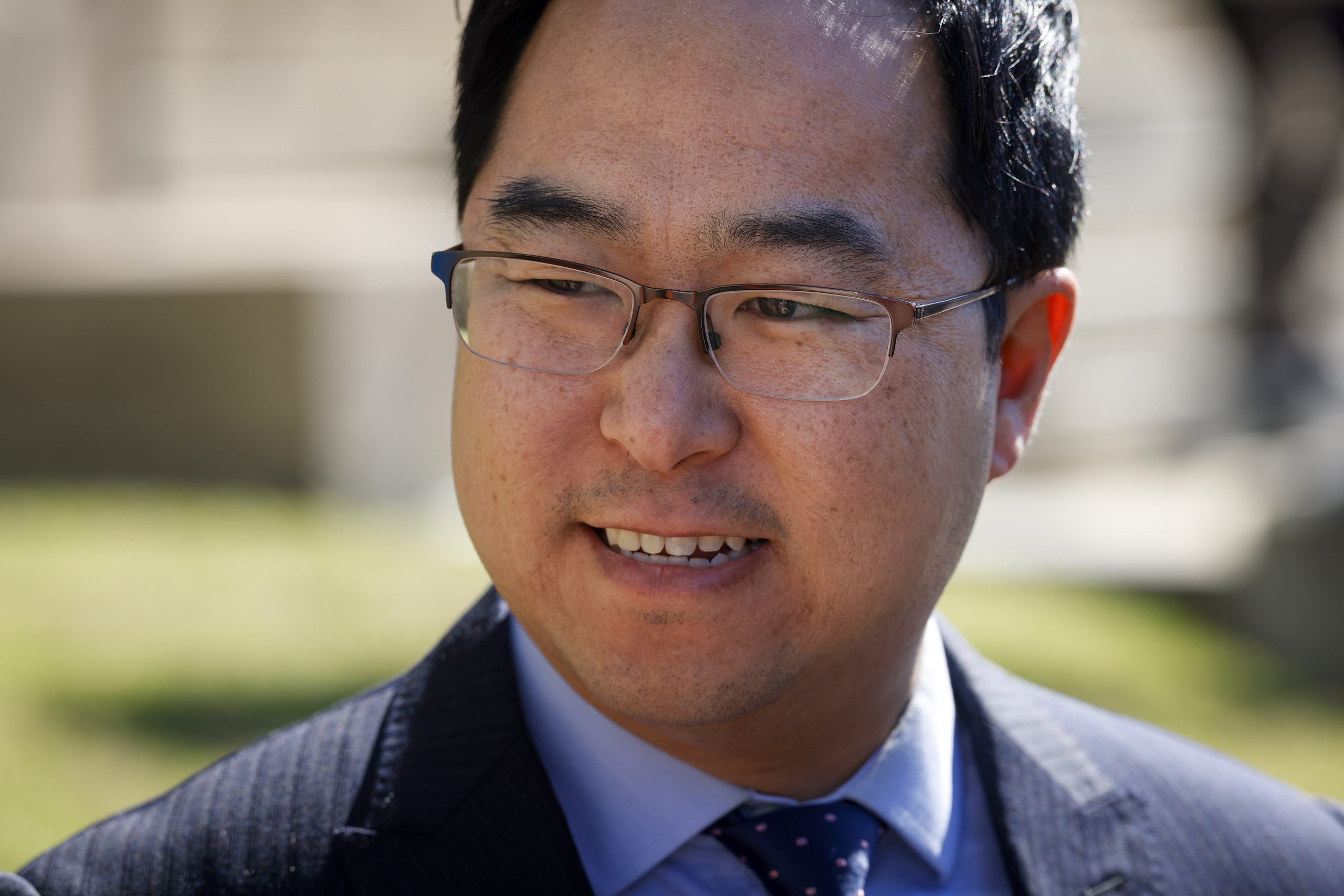
    Sen. Andy Kim and other Democratic senators have asked for a meeting with FEMA to discuss disaster assistance.Alejandro A. Alvarez / Staff Photographer

    What is Andy Kim accusing Trump of?

    Kim said Wednesday that Trump has been treating government money like “his own personal slush fund.”

    “These are about families that are struggling, and you can’t punish them because of political retribution,” the senator said.

    He was joined by 16 members of the Senate Democratic caucus in writing a letter last month to Russell Vought, the director of the federal Office of Management and Budget, citing a Politico report that said Trump’s second administration rejected disaster aid for Democratic-run states at the highest rate in the 47 years that FEMA has existed.

    Trump has approved 23% of disaster declaration requests from states with a Democratic governor and two Democratic senators, compared with 89% of requests from states with a Republican governor and two Republican senators so far during his second term, and Democratic-led states also had longer wait times to find out the decision, the report said.

    “To be clear, this reporting suggests that in the wake of disasters, as President, President Trump, who has the sole authority to grant or deny this assistance, may be punishing Americans who live in states with Democratic Senators and Governors, by denying access to disaster relief funding,” the senators said in the letter.

    FEMA did not respond to a request for comment on the letter. White House spokesperson Abigail Jackson has previously told news outlets that “there is no politicization” in Trump’s disaster relief decisions and that he “provides a more thorough review of disaster declaration requests than any Administration has before him.”

    The senators contended there are specific approval criteria and called for more transparency on the administration’s process.

    In response to their letter, the budget office told the senators to talk to FEMA, so they sent the letter to FEMA to ask for a meeting and are awaiting a response, Kim’s office said Wednesday.

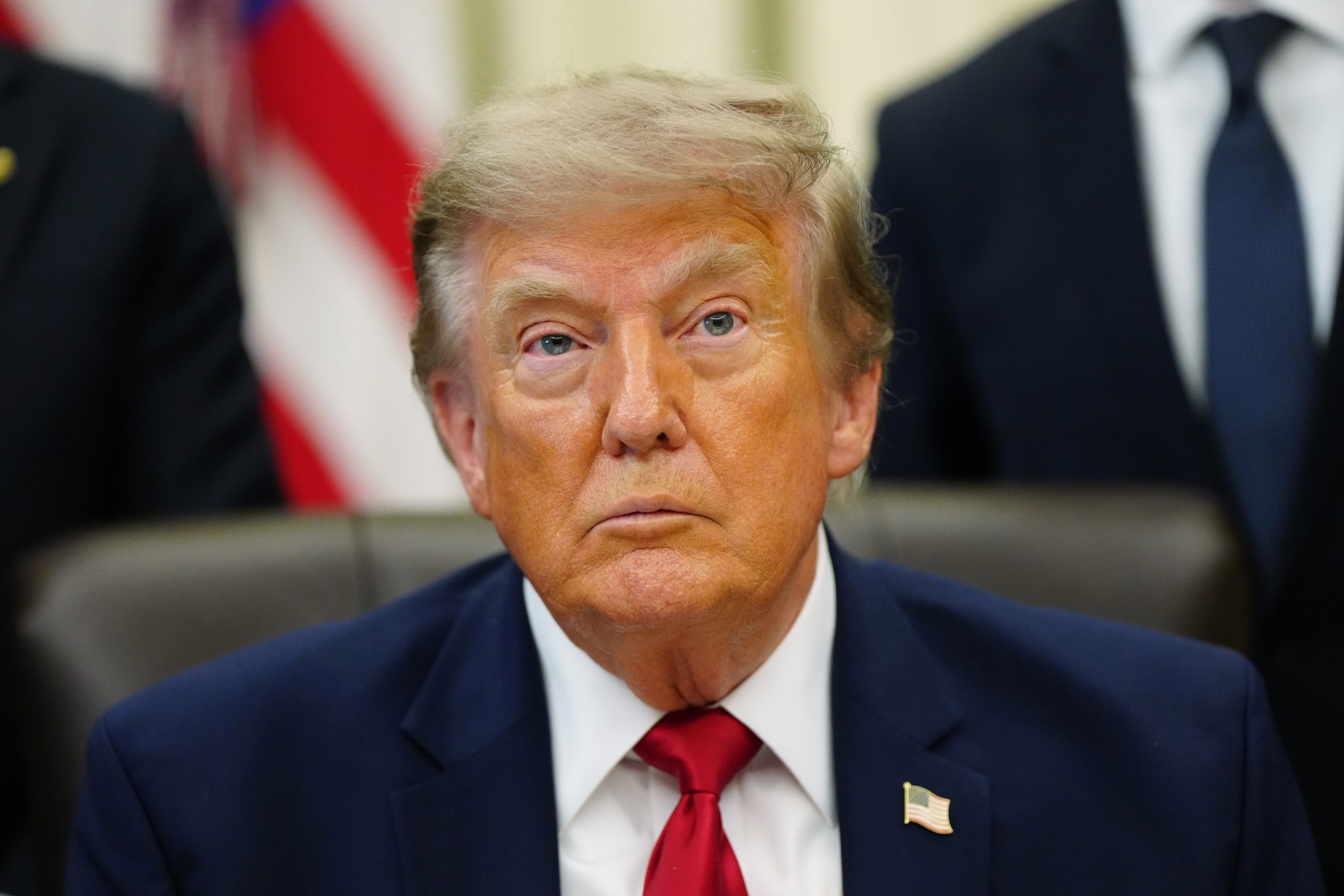
    President Donald Trump has touted FEMA funding for states with candidates he supports.Julia Demaree Nikhinson

    What has Trump’s approach to FEMA been?

    The president previously called for the dismantling of FEMA, a stance his own advisers have rejected. But a council of Trump appointees more recently suggested big changes to the agency.

    In the meantime, the president has attempted to use the agency to advance his agenda.

    A report by House Democrats found the Trump administration improperly diverted resources from FEMA by sending staffers to help with immigration enforcement, Trump’s hallmark policy.

    His administration also recently threatened to withhold FEMA terrorism prevention money for states that don’t run their elections the way the president wants them to.

    During his first term, Trump opposed disaster funding for Puerto Rico and said he wanted more aid to go to Texas and Florida, according to news reports.

    Recently, Trump touted FEMA funding for states with candidates he supports.

    But the administration’s efforts haven’t always succeeded.

    Pennsylvania and New Jersey were part of a lawsuit against the Trump administration for cutting certain FEMA funding meant for preventing harm from natural hazards through infrastructure upgrades. That program, called Building Resilient Infrastructure and Communities (BRIC), has since been reinstated. As a result, Pennsylvania was awarded nearly $838,000 for recovery from the 2024 Tropical Storm Debby.

    Trump signed BRIC into law during his first term, but during his second term FEMA criticized it for being too “focused on ‘climate change’” under Biden.

    Kim said he has advocated for the program’s expansion to help prevent damage from major weather events before they happen.

    “This is not a shock that Camden had the flooding that it did,” he said. “We’ve known for a long time that their drainage and sewage and other types of efforts to mitigate flooding are just not to the level that is needed for the people there.”

  • Burlington County was left out of a new free shuttle bus launch in South Jersey. Here’s when and why that’ll change.

    Burlington County was left out of a new free shuttle bus launch in South Jersey. Here’s when and why that’ll change.

    Burlington County was left behind when a new free shuttle bus for South Jersey launched in June. That is going to change in September.

    The South Jersey Transportation Authority (SJTA) announced June 1 that a free shuttle bus program called South Jersey Connects was launching that day with routes in all seven southern counties: Atlantic, Camden, Cape May, Cumberland, Gloucester, Salem — and Burlington.

    But as the other routes launched, the promised Burlington County route never began. On the authority’s website, it is still marked as “coming soon.”

    That is because until recently, the transportation authority was not actually authorized to operate in Burlington County. The county considered operating its own route for the program but ultimately agreed to have the authority run it instead.

    But that required legislation.

    South Jersey lawmakers had proposed bringing Burlington County into the authority back in the 2022-23 legislative session, but it was not until the South Jersey Connects program was about to launch this year that legislators had the wherewithal to actually hit the gas pedal in Trenton.

    “We worked in partnership with our county commissioner, then the administration of Burlington County, and just realized we just couldn’t pull that off,” Sen. Troy Singleton, a Burlington County Democrat, said in an interview. “And speaking with the administration, they were like, look, we feel more comfortable running this through the SJTA, and we already had this legislative vehicle, so that’s when it took on a greater sense of urgency.”

    The bill to bring Burlington County into the SJTA passed the Assembly in mid-May and was approved by the Senate just a few days before the June 1 announcement. But Gov. Mikie Sherrill did not sign it into law until the night of the budget deadline — a month after the program had been announced.

    “The timing just didn’t work out,” Singleton said.

    The Burlington route is expected to start in September, said Dominic D’Amico, director of transportation services at the SJTA, but a start date has not been announced.

    The new shuttle’s path has been finalized but has not been shared publicly. D’Amico said in an interview that, like the other routes that launched June 1, it will connect with NJ Transit’s existing infrastructure and the region’s “eds and meds.”

    Burlington County Commissioner Felicia Hopson said the new shuttle will enhance the NJ Transit River Line and help residents access jobs, appointments, stores, and schools.

    “Stretching 820 square-miles, Burlington County is New Jersey’s largest county, making transportation essential but also challenging for residents without motor-vehicles,” she said in a statement.

    The idea of South Jersey Connects emerged from the Chamber of Commerce Southern New Jersey’s advocacy after former Gov. Phil Murphy implemented the 2.5% Corporate Transit Fee on businesses to fund NJ Transit in 2024.

    The project was granted $5 million for an 18-24 month pilot, and the future beyond that is uncertain. The South Jersey chamber unsuccessfully requested more money for the effort in this year’s budget, and proponents of the project are hoping to show that it is worth the investment during next year’s budget negotiations.

    The summer launch so far has been a little slow, which is to be expected, according to D’Amico.

    The authority has seen about 600 one-way trips in the first month of the program, he said, a number he expects to go up as people learn about the routes and as school starts in the fall. He wants to see the service hit at least 5,000 one-way trips each month.

    “It takes some time to spread the word, for the marketing campaign to reach the social media platforms, getting brochures delivered to each facility — all those types of things factor into what is a normal slow start,” he said.

    “It could be worse, it could be better,” he said.

    Why wasn’t Burlington County part of the SJTA before?

    Sherrill said in a statement that Burlington County deserves to be part of the authority as “a vital part of the region.”

    The reason Burlington County has not been included in SJTA is not because anyone was denying the county is part of South Jersey. Rather, the agency was set up to replace an entity that oversaw the Atlantic City Expressway, which does not go into Burlington, said David Zappariello, the authority’s director of communications.

    Along with adding Burlington County to the authority’s coverage zone, the new law allows Sherrill to appoint another member to its board. Members of the board represent the region as a whole, not their home county, Zappariello said, and there is already a Burlington County resident sitting on the board.

    Assembly member Alex Sauickie, an Ocean County Republican who also represents part of Burlington County, voted against the bipartisan legislation because it did not also add Ocean County to the authority.

    “I just don’t like it when you’re picking winners and losers for political reasons,” he said.

    Assembly member Andrea Katz, a Burlington County Democrat, said none of the South Jersey Connects routes will touch her district, where she has concerns about transit deserts. But she is hopeful about public transit expanding in the region and the county getting a seat at the transit table.

    “Burlington County now being included means that we’re going to get to have that voice,” she said. “We’re going to get to not be the one stuck in the middle there. We’re going to start to get our own access to public transportation.”

  • Democrat Mark Pinsley’s former campaign manager enters guilty plea for fraudulent petitions in 2024 auditor general race

    Democrat Mark Pinsley’s former campaign manager enters guilty plea for fraudulent petitions in 2024 auditor general race

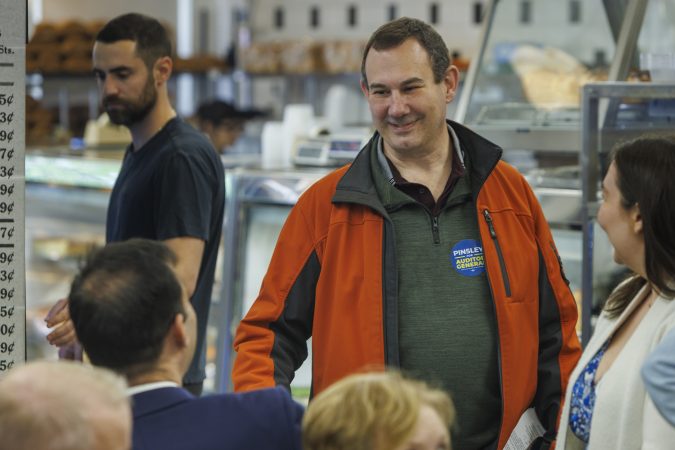
    A Democratic campaign manager for Mark Pinsley’s 2024 campaign for auditor general agreed to a guilty-plea deal in Chester County over fraudulent petitions in that race last week.

    Mariel Kornblith-Martin, 41, of Philadelphia, was charged earlier this year by the Chester County District Attorney’s Office with filing fraudulent nomination petitions while working for Pinsley, the Lehigh County controller, during his unsuccessful 2024 primary campaign against State Rep. Malcolm Kenyatta (D., Philadelphia). Kenyatta went on to lose in the general election to the Republican incumbent, Timothy DeFoor.

    Kornblith-Martin was accused of paying college students to sign off on campaign petitions with forged signatures on them. Those signatures included the names of multiple elected officials, including a Chester County judge.

    She pleaded guilty to one charge of criminal solicitation, specifically unsworn falsification to authorities. She had been charged with 50 crimes: 40 counts of criminal solicitation and 10 counts of breaking election law.

    The political operative was sentenced Tuesday to two years’ probation and ordered to pay a $1,000 fine plus costs associated with the case.

    Pinsley is now the Democratic nominee for a key state Senate seat that includes parts of Bucks and Lehigh Counties.

    The Inquirer reported in 2024 that his petitions for the auditor general race contained the names of multiple elected officials who said they had never signed them, including Coatesville City Council members Carmen Green and Khadija Al-Amin, and West Goshen Township Supervisor Nate Wolman.

    Perhaps most striking was a fraudulent signature for Chester County Court Judge Alita Rovito. Rovito, a Democrat, told The Inquirer in 2024 that she had reported the forgery to the district attorney’s office. She said at the time that “the use of my name and signature is concerning to me due [to] the potential implications on my role as a member of the independent judiciary.”

    Ironically, Rovito initially had been assigned to Kornblith-Martin’s case in May. She recused herself and Judge Sarah Black took over the case.

    Kornblith-Martin had given three college students “stacks of pages containing signatures of supporters” and asked them to sign the required sworn declaration at the bottom of each page in exchange for money, according to the district attorney’s complaint. The Inquirer previously identified these young people as Temple University students.

    Al-Amin, one of the local elected officials and a member of the county’s Democratic committee, said in an interview Friday she was satisfied that the campaign manager was “held accountable for her actions.”

    “I’ve sat on many campaigns in different positions: consultant, chair, manager,” she said. “I would never even think about doing something like that. If you can’t win an election honestly, then the position is not for you.”

    But she questioned what she sees as a failure in oversight on Pinsley’s part. In his current role, he is responsible for overseeing audits in Lehigh County.

    “As her boss, I think he should have known what she was doing. … She ran his campaign,” she said. “He should have had regular contact with her.”

    Gary Masino, Pinsley’s current campaign manager, said in a statement Friday that “Mark believes the justice system worked effectively and fairly in this case.”

    “He was disheartened to learn about Mariel’s crime, but respects that she took responsibility by pleading guilty and that the matter is resolved,” he said.

    Pinsley previously told The Inquirer that his campaign had reviewed the signature issue after concerns were raised but lacked “enough verified information” to reach a conclusion.

    The petitions had glaring red flags, Al-Amin noted, such as the town of Downingtown being written as “Downtown.” She pointed out at the time that the geographic routes on the petitions did not make sense. And petitions had dates on them prior to the petitioning period, names written oddly, and signatures in strikingly similar handwriting.

    “You could look at the pages and you could tell that there was really something wrong,” she said Friday.

    Back in 2024, Martin had told The Inquirer that the campaign was doing an internal investigation and declined to comment further. She has not responded to requests for comment since a text message in February of that year in which she said: “We are still doing an investigation internally. I have no further statement until our investigation is over.”

  • EMR will reopen Camden facility after recent fire, following judge’s ruling

    EMR will reopen Camden facility after recent fire, following judge’s ruling

    The EMR scrap metal recycling plant will reopen after Camden suspended its operations following a late May fire, the latest in a string of fires in recent years.

    The decision fell to Camden Superior Court Judge Stephen J. Polansky on Wednesday after the Camden City Council voted unanimously on Tuesday against a settlement that would have allowed EMR to reopen under certain safety precautions. EMR had sued Camden for suspending its junkyard license last month for the facility, where Camden officials say there have been more than a dozen fires in the last six years.

    Shortly after the hearing, New Jersey Gov. Mikie Sherrill’s office announced that she signed a bill into law aimed at increasing safety in the scrap metal industry led by Assembly member Bill Moen, a Camden County Democrat. He introduced the bill after a four-alarm fire in February 2025 at EMR.

    The court fight to open EMR

    The judge said EMR can open its doors only if it follows a list of safety precautions. The company’s legal team told The Inquirer that it had already fulfilled those requirements and is ready to open as soon as the judge submits his order.

    “We intend to open and operate in accordance with the judge’s order, which directly incorporates the recommendations of EMR’s third-party fire expert,” Joe Balzano, CEO of EMR USA, told The Inquirer after the hearing Wednesday. “EMR is the only scrap metal recycling facility in the state of New Jersey that has a facility-wide fire suppression system installed and operating.”

    Among the required precautions are a 24-7 fire watch, fire suppression system testing, and procedures for scanning material coming into the facility and responding to fires.

    In court, EMR’s legal team argued that the city did not have the authority to suspend its license without proper hearing or notice, and that the company has undergone irreparable harm as a result. It has lost millions of dollars, endured tainted industry relationships, and, as of Wednesday morning, sent more than 300 layoff notices, said Kathleen Campbell, a lawyer for EMR.

    The fire took place on May 29, at which point EMR voluntarily shut down its operations. The city issued an immediate suspension notice days later, on June 4. A big question in the courtroom was whether there was enough of an emergency at that point that the city could circumvent its normal due process.

    “The city can regulate,” Campbell said in court. “What it can’t do is continue an emergency shutdown when there is no basis for it. The fire is over. The testing that this court authorized is complete.”

    She argued that the city is more worried about a “desire to keep EMR closed” than an actual immediate danger.

    William Tambussi, the city’s lawyer, argued that the possibility of another fire was enough to present an emergency.

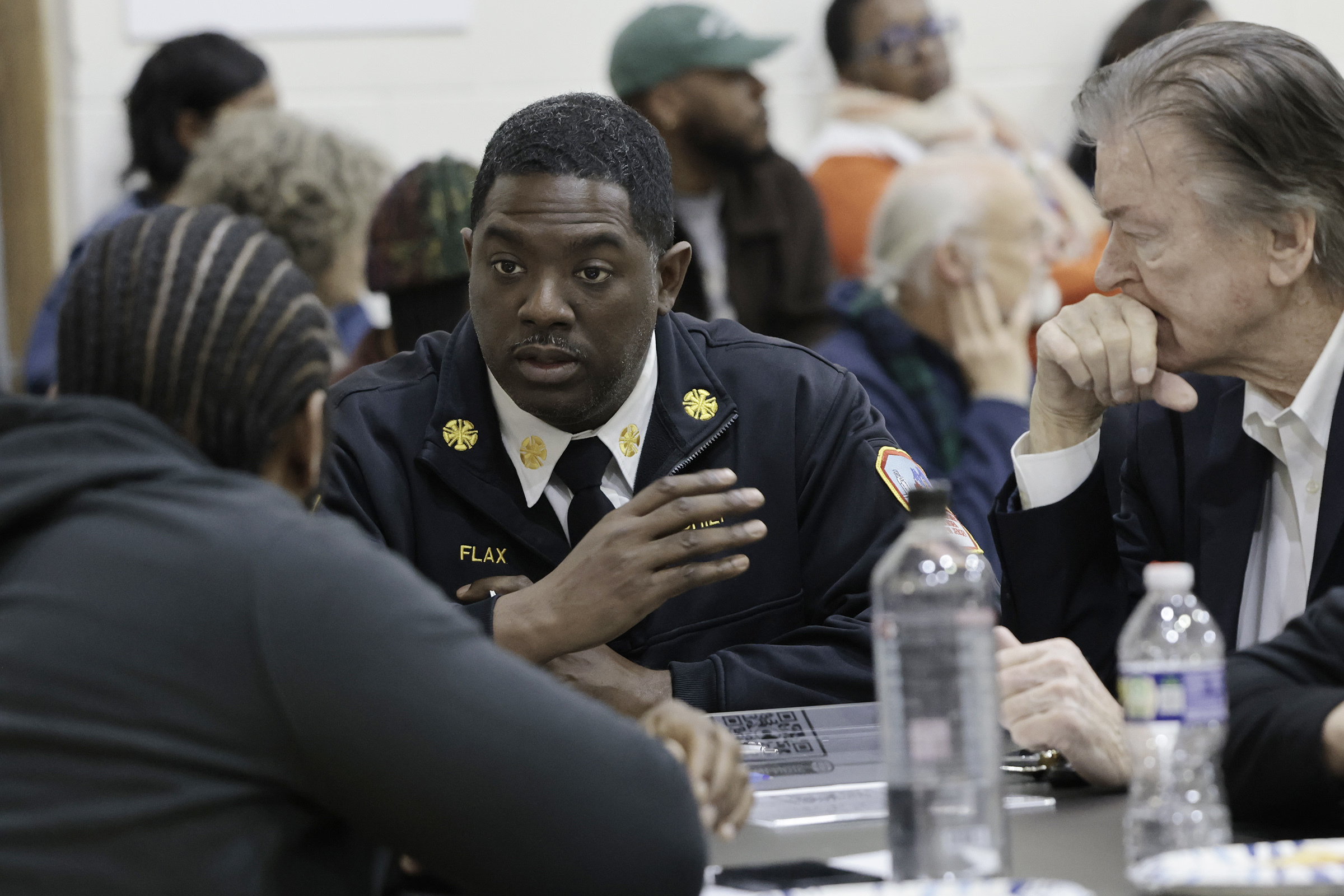
    Camden Fire Chief Jesse Flax talks with people during a community meeting for residents, affected by a 2025 fire at EMR, at MJD Fieldhouse Gym on Broadway in Camden on Sunday, February 23, 2025.Elizabeth Robertson / Staff Photographer

    “The city is required and has the right to protect its citizens from the harms that come,” he said in court.

    Tambussi said after the hearing that the judge’s decision is still a win for the city because the safety precautions EMR has to follow overlap with what the city wants from the company.

    “The judge found that the city rushed the process, which the city doesn’t apologize for,” he said in an interview.

    Camden and EMR will meet again in court in August, where they will assess whether EMR has complied. The city can also attempt to shut down EMR through a full hearing process if it finds that the company has violated its terms of opening. The city cannot, however, just shut the company down.

    A new law stemming from a Camden County legislator’s fight against EMR

    The law Sherrill signed on Wednesday, which goes into effect in a year, will require heat detection equipment, publicly accessible fire safety plans developed with local fire officials, and compliance with certain fire prevention standards. It also requires fire suppression systems that can be remotely operated and limits the height allowed for piles of material.

    The legislation is part of a four-bill package Moen has been pushing for in Trenton, but is the only one to make it to the governor’s desk before the summer recess.

    “We were met at every step of the way with opposition from a well-funded industry,” Moen said in an interview Wednesday.

    Balzano, the CEO of EMR USA, said in an interview Wednesday that he believes his Camden site is mostly in line with what the new law requires. But he said the height limit would be “very detrimental to the industry and probably to the environment,” arguing that it is too broad and applies to scrap metal that is not prone to fires. He said that could have “unintended consequences” by having scrap metal spread out across more space.

    “I fully support the premise of it,” said Balzano, who has pointed to lithium-ion batteries as a source of scrap metal fires.

    Moen emphasized that while the issue of scrap metal fires has become particularly important in Camden, it is not restricted to the city’s borders. Scrap metal sites in Vineland and Newark, for example, have also seen fires in recent years.

    “This will be the first step in hopefully many of the state bringing greater transparency, accountability, and an expected level of responsibility for these scrap facilities,” Moen said.

  • Gov. Mikie Sherrill says fighting data centers is part of her response to extreme weather during Camden visit after flooding

    Gov. Mikie Sherrill says fighting data centers is part of her response to extreme weather during Camden visit after flooding

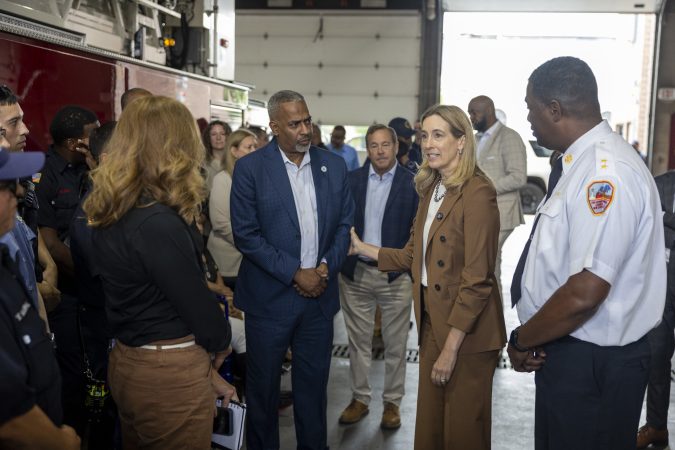
    New Jersey Gov. Mikie Sherrill climbed onto an emergency water vehicle in Camden on Tuesday with Camden Fire Chief Jesse Flax. That vehicle, called the High Water One, was used by local emergency responders on Monday to rescue 14 people from the flooded streets of Camden, Flax said.

    The vehicle had arrived in the city one week earlier, just in time for what officials said was the worst flooding they had ever seen in the city, including from Hurricane Sandy in 2012.

    “I’ve never seen this in my whole career,” said Flax, who has worked in the city for three decades. “I’ve seen bad fires, I’ve seen a lot of different things. But I’ve never seen it flood in this capacity.”

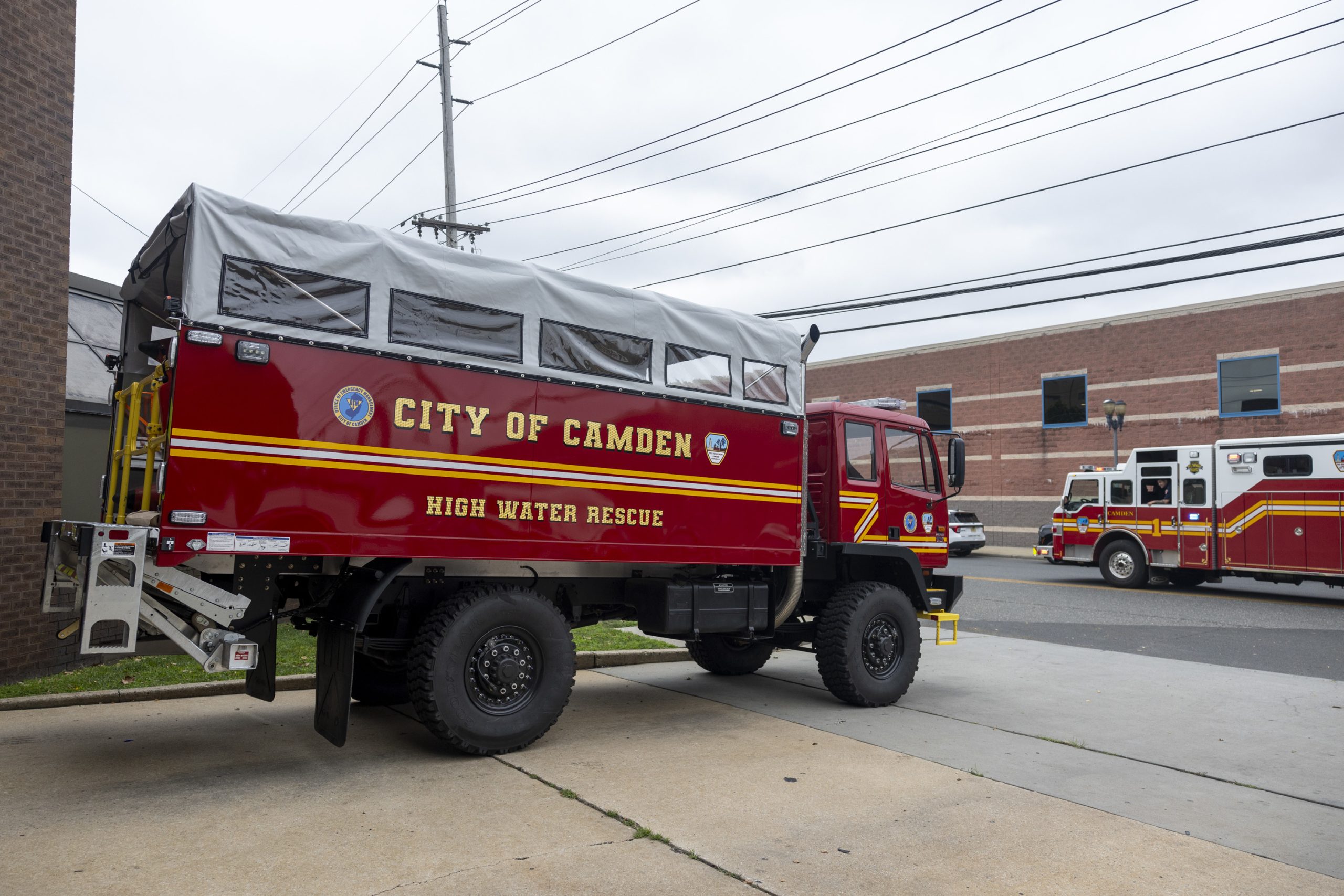
    The new High Water Rescue vehicle that was used in the recent rainfall and flooding at the Fire Administration Building in Camden on Tuesday.Tyger Williams / Staff Photographer

    No one was reported injured among 1,000 calls to emergency services.

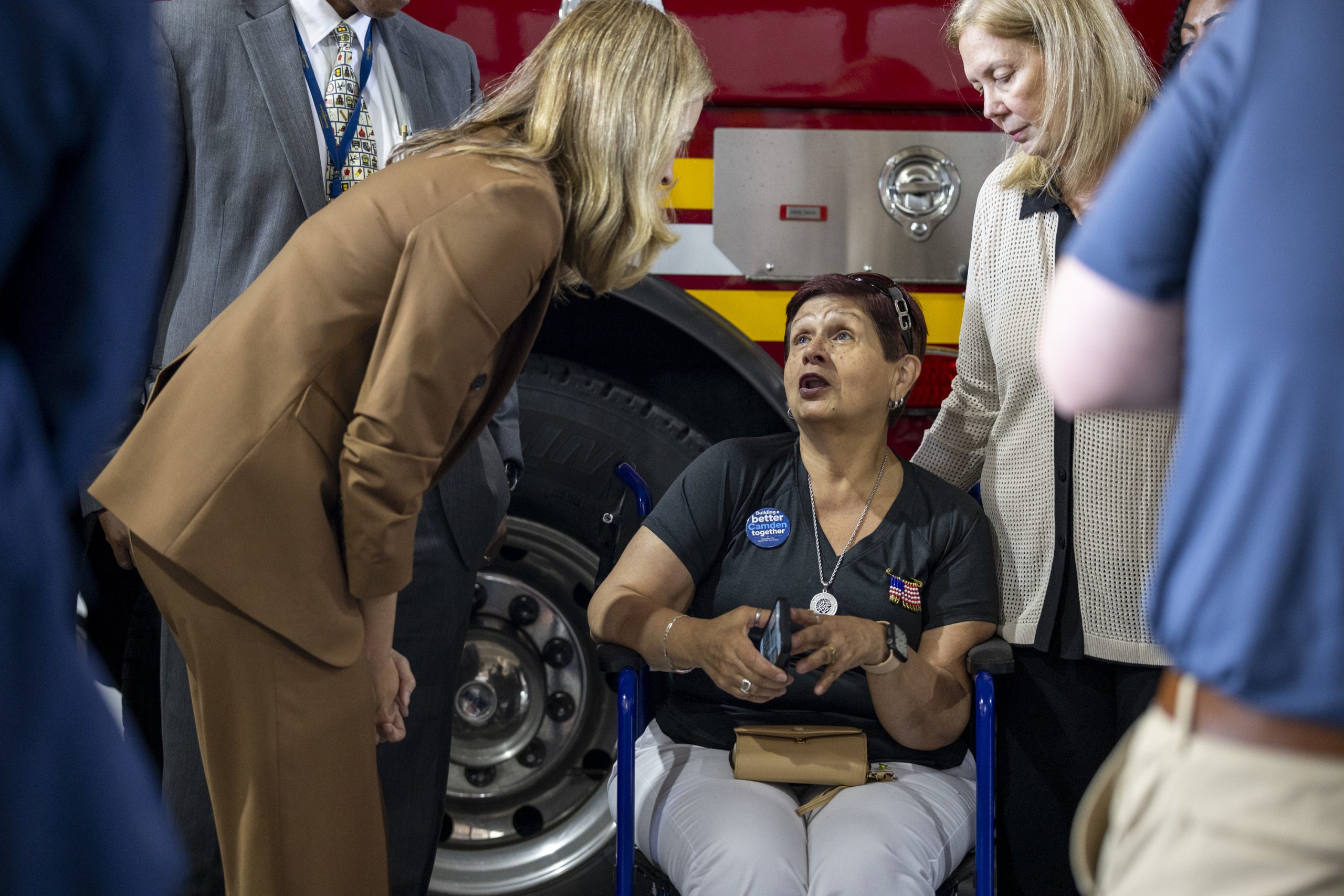
    Sherrill thanked emergency responders and comforted Maria Perez, a Camden resident recovering from surgery who worked with her neighbors to fight the flooding by “telling them what to do and keeping them calm.”

    “I wanted them to keep plastic bags on their feet, too, because you don’t know what’s in that water. … I’m so glad that we had such a great team,” Perez, a member of the Camden schools advisory board, said in an interview.

    The governor’s visit came just a little more than an hour after she signed legislation in Salem County aimed at data centers. She said that very work can help prevent strain on the power grid during future storms and that the electrical grid is “top of mind” for her.

    Gov. Mikie Sherrill, left, speaks with Maria Perez, center, and Sen. Nilsa Cruz-Perez, right, at the fire house in Camden on Tuesday.Tyger Williams / Staff Photographer

    “We are seeing these extreme weather events more and more and more frequently,” said Sherrill, who was dealt a historic snowstorm just weeks into her term and has recently seen a deadly heat wave. After her stop in Camden, she went to a BJ’s Wholesale Club store in Monmouth County where a roof fell in from Monday’s flooding.

    One of the bills Sherrill signed into law on Tuesday creates a new ratepayer class and rate structure for data centers that is meant to ensure they pay for their own energy. Another creates more oversight for utility companies’ grid upgrades to try to save money.

    “We’ve set them aside in a separate class of utility users, so that if we have storms like this, they will be first impacted, not normal rate payers,” Sherrill said.

    Data centers have caused concern on both sides of the aisle in South Jersey, with towns including Medford taking steps to block their development locally. But according to county spokesperson Dan Keashen, Camden did not have widespread power outages during the storm, just a handful that were rectified the same day.

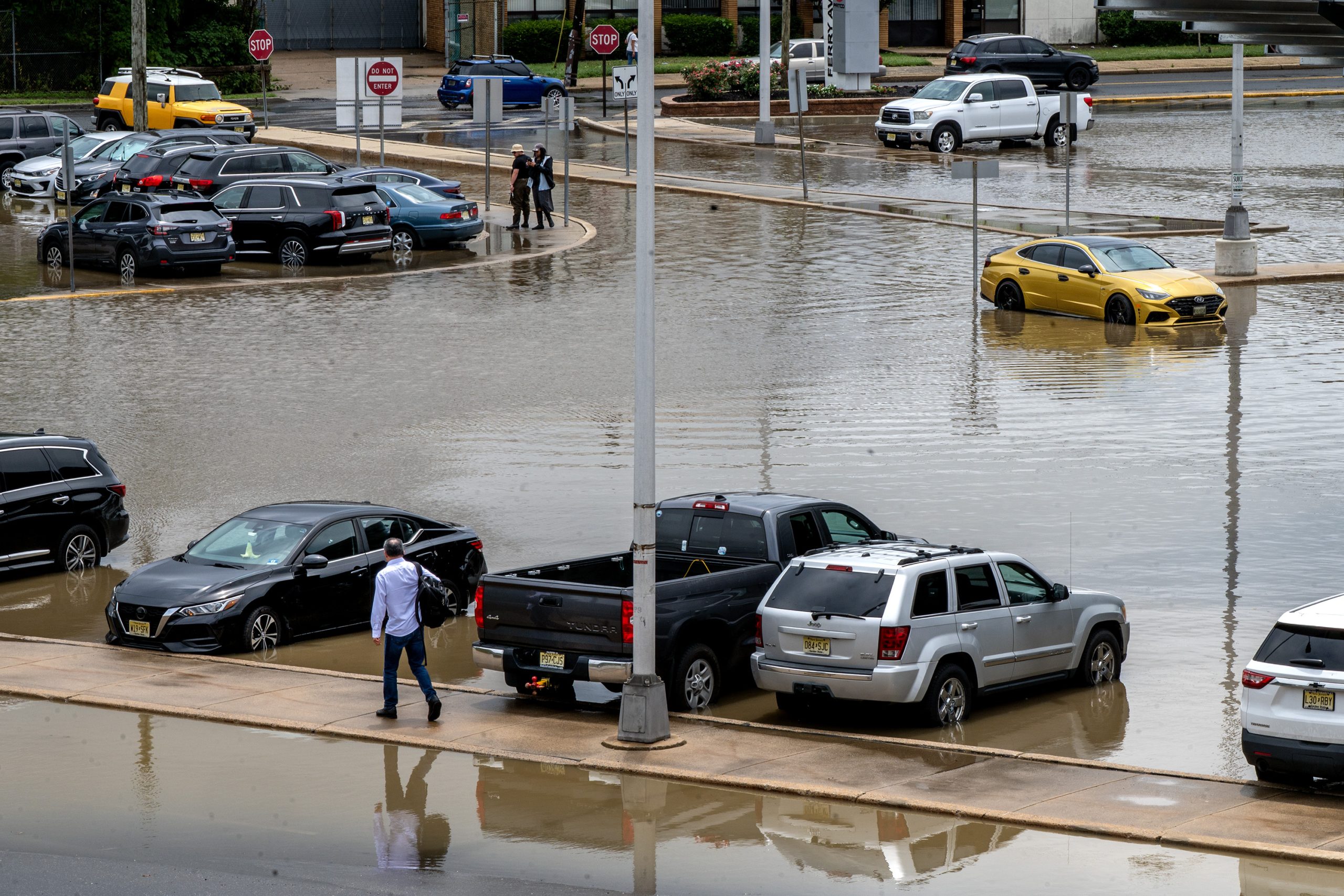
    Oscar Parra makes his way to his car in the flooded parking lot at the Ferry Avenue PATCO station in Camden on Monday amid a flash flood threat for the region.Tom Gralish / Staff Photographer

    So what about the damage in Camden?

    Sherrill said residents should report damage through the New Jersey Office of Emergency Management so the state can calculate how much federal assistance to request.

    “There are technical things we need to meet,” she said. “I think we probably will, but we’re collecting that now.”

    American Red Cross workers in Camden on Tuesday were providing cleaning supplies like mops, bleach cleaners, gloves, and tarps — as well as snacks and water, said Diane Concannon, the organization’s communications director for the New Jersey region.

    “Flooding is horrible for any family … because everyone wants to be able to save everything,” she said.

    While the rain was intense, it cleared up quickly because the city has maintained its sewers so well, Sherrill said.

    “They have done a really good job here in Camden with some of these resiliency efforts,” she said. “It’s why this wasn’t worse.”