Author: No Author

  • Pope Leo XIV has become the first pope in history to vote in a US election

    Pope Leo XIV has become the first pope in history to vote in a US election

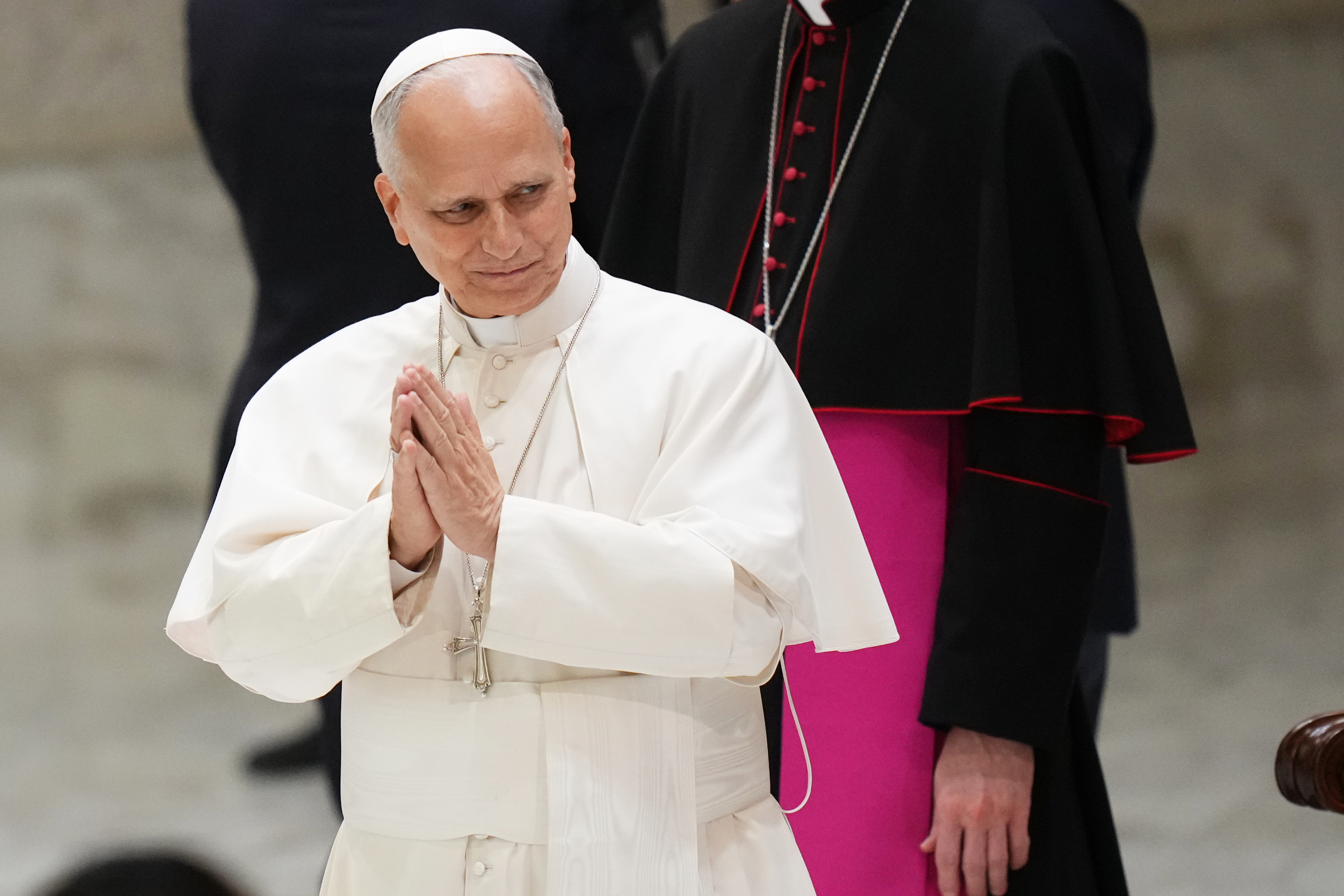
    VATICAN CITY — Pope Leo XIV has become the first pontiff to vote in a U.S. general election, casting a mail-in ballot in a contest that will decide America’s political future as the Trump era slowly comes to an end.

    The Vatican confirmed Friday that the Chicago-born pontiff had submitted a mail-in ballot in the city ahead of the Nov. 3 midterm elections, citing his long-standing belief in civic participation.

    Leo, formerly Robert Prevost, “has exercised his right to vote as a United States citizen” as he has done “whenever he was eligible to do so,” the Holy See press office said.

    The statement said he had also voted while living in Peru, where he lived as a missionary priest and bishop for over 20 years.

    “The Holy Father expresses his belief in the right and the duty of citizens to participate in democratic processes,” it added.

    Leo holds U.S. and Peruvian citizenship, and is also the head of state of a foreign country, the Holy See. The city-state is an absolute monarchy with no political elections.

    U.S. federal law allows citizens living abroad, even those working for foreign governments, to vote via absentee ballot. Americans working for foreign governments aren’t automatically at risk of forfeiting their U.S. citizenship, though the U.S. State Department says on its website that it may “actively review” the citizenship status of Americans who “serve as a foreign head of state, foreign head of government, or foreign minister.”

    This election, Illinois voters are deciding whether to elect Illinois Gov. JB Pritzker to his third term, and they’re also filling an open U.S. Senate seat after longtime Catholic Democrat Dick Durbin’s retirement. There are no statewide issues on the Illinois ballot. President Donald Trump is not on the ballot, but he has campaigned hard to try to preserve Republican control of the U.S. House and Senate for the final two years of his second term.

    The pope, registered at a New Lenox, Ill., address, requested a mail-in ballot on Oct. 3, said Kim Fladhammer, chief of staff to the Will County clerk, on Friday. The Chicago Sun-Times first reported the request.

    The request was made just 10 days before Leo underwent surgery to remove a cancerous tumor from his right lung. Leo has been slowly resuming his activities at the Vatican after being released from the hospital Oct. 17.

    It is unclear how Leo returned the ballot. The pope’s older brother, John Prevost, was in Rome this week accompanying parishioners from St. Jude’s, an Augustinian-run parish in New Lenox. The elder Prevost attends Mass there, and Leo gave a talk at the parish in 2024 while still a cardinal.

    Prevost’s past votes have gone Democratic and Republican

    Since 2000, Robert Prevost has voted in five primary elections, requesting Democratic ballots twice and Republican ballots three times, according to records held by the Illinois State Board of Elections.

    The records do not show which candidates he supported. Illinois voters must declare a party preference to receive a primary ballot. No such declaration is required in general elections.

    While registered in heavily Democratic Cook County, Prevost requested Democratic primary ballots in 2008 and 2010. After moving to the more conservative suburban Will County, he requested Republican primary ballots in 2012, 2014, and 2016.

    The records also show that he submitted ballots in every general election since 2000 except those in 2020 and 2022.

    Clashes with Trump

    Since becoming pope, Leo has drawn criticism from Trump for repeatedly condemning the U.S.-Israeli war in Iran and calling for dignified treatment of immigrants, following the Trump administration’s crackdown and mass deportation program.

    Earlier this year, Trump called Leo “weak” and captive to the “radical left,” kicking off a remarkable back-and-forth public argument that dominated Leo’s April trip to Africa.

    Responding to Trump, Leo told reporters en route to Algeria: “I’m not afraid of the Trump administration or of speaking out loudly about the message of the Gospel, which is what the church works for.”

    The public dispute has subsided in recent months.

    “We try to let things pass if there are misunderstandings,” the Vatican foreign minister, Archbishop Richard Paul Gallagher, told reporters this week. “With anybody, we would be looking to approach it and say, ‘OK, there may be a misunderstanding, let’s move on and try to rebuild trust and confidence.’”

    Leo and Trump have not spoken by phone since the pope’s May 2025 election. Last week, however, Leo spoke with Russian President Vladimir Putin and Ukrainian President Volodymyr Zelensky about the humanitarian crisis in the Ukrainian city of Oleshky.

    Asked why Trump and Leo haven’t spoken, Gallagher said the Holy See has found a capable conduit in the U.S. ambassador to the Holy See, Brian Burch, and hadn’t needed to elevate any issue higher.

    A pope who follows U.S. politics closely

    Leo has made clear on several occasions that he follows local and national U.S. politics closely and is not afraid to intervene.

    Recently, Leo reiterated official church teaching declaring the death penalty “inadmissible.” He made the pronouncement in a social media post on the World Day Against the Death Penalty, which came as the U.S. announced plans to livestream an execution by firing squad. The plans were later scrapped.

    In 2025, Leo intervened in a debate over abortion, after Chicago Cardinal Blase Cupich announced plans to give a lifetime achievement award to Sen. Durbin. The plans drew objection from some conservative U.S. bishops given the powerful Democratic senator’s support for abortion rights. Leo called for respect for both sides, but he also pointed out the contradiction between people who call themselves “pro-life” but also support the death penalty.

    Also in 2025, Leo said he was “very disappointed” that his home state of Illinois approved a law allowing medically assisted dying, which is condemned by the Catholic Church.

    The U.S. Conference of Catholic Bishops, in a note commenting on the confirmation of Leo’s midterm vote, urged Catholics to put “our faith before our politics” and uphold human dignity and the common good.

    “As Catholics and Americans, we are blessed to be able to participate in our nation’s political and public life,” said the conference’s director of public affairs, Chieko Noguchi. “In voting, our Holy Father sets the example that encourages each citizen to exercise their civic responsibility.”

  • Blockchain intelligence firms link North Korea to $6.3B hack on Binance

    Blockchain intelligence firms link North Korea to $6.3B hack on Binance

    A U.S.-based blockchain intelligence firm says a North Korean unit was likely behind the hack that impacted more than $6 billion on Binance, the world’s biggest cryptocurrency exchange.

    Binance said it worked with blockchain partners to freeze roughly $3 billion in affected assets. It said Friday that it was beginning to recover assets for users.

    The cryptocurrency exchange said deposits were unaffected, while withdrawals have been suspended and are expected to resume in the next day or two. It said it will cover all losses.

    The company said on X that an initial investigation suggested the incident may have involved a compromised laptop, but that a subsequent investigation uncovered additional “points of breach.”

    TRM, in a post on its website Thursday, attributed the attack to TraderTraitor, which it described as North Korea’s elite hacking unit. “We make this judgment with high confidence,” the firm said.

    “An attacker moved approximately USD 6.36 billion out of Binance wallets on ten blockchains, most of it in about 20 minutes,” TRM said. That would make the hack the largest cryptocurrency theft on record, it said.

    In February last year, another cryptocurrency exchange, Bybit, suffered a $1.5 billion hit when it was hacked. The FBI said North Korea and TraderTraitor were responsible for the hack.

    “Several features of this attack match earlier North Korea-linked heists, including the Bybit hack,” TRM said.

    Blockchain analysis company Chainalysis also believed the Binance hack was “likely done by DPRK group TraderTraitor,” its co-founder and CEO Jonathan Levin wrote on X. DPRK stands for the Democratic People’s Republic of Korea, North Korea’s official name.

    Asked about the potential ties to North Korea, a Binance spokesperson said only that the company is “working closely with our law enforcement partners to confirm the identity of the criminals and bring them to justice.”

    Experts say North Korea has turned to crypto hacking and other illicit cyber activities as a source of badly needed foreign currency to support its troubled economy and fund its nuclear program in the wake of tough U.N. sanctions and other difficulties.

    In December 2022, South Korea’s spy agency said North Korean hackers had stolen an estimated 1.5 trillion won ($1.1 billion) in cryptocurrency and other virtual assets in the past five years, more than half of it in 2022 alone. It said North Korea’s capacity to steal digital assets was considered among the best in the world.

    Changpeng Zhao, also known as CZ, founded Binance in 2017. In 2023, he pleaded guilty to a felony linked to failing to prevent money laundering on the platform, and stepped down as the company’s CEO. U.S. President Donald Trump pardoned Zhao in 2025.

    Zhao posted Thursday on X that “User funds are safe!” but added that the theft “does look like a hack on Binance.” He added that while he doesn’t manage Binance anymore, “as a shareholder, I expect all user funds will be fully covered.”

    The event, meanwhile, also raises questions about why stronger approval controls were not in place, said Kok Tin Gan, co-founder and CEO of cybersecurity firm NyxLab.

    “This looks like one signature that gave the attacker a never-expiring, full-access token to a Binance hot wallet,” he said, referring to cryptocurrency wallets that hold users’ “private keys,” or unique authorizations, digitally and which are connected to the internet.

    Binance said on X it had “found no evidence of any wallet private key leak” and that the company would release more technical details when its probe is complete.

  • Letters to the Editor | Oct. 30, 2026

    Letters to the Editor | Oct. 30, 2026

    Easing the pain

    I have not stopped thinking about Lindsay Clancy, who acknowledged killing her children before she attempted to kill herself. I have not been involved in this case or reviewed any professional records. However, as a psychotherapist, I have worked with women who shared Clancy’s hellish pain and confusion. Women driven to kill themselves feel so worthless they believe all whom they love will have better lives without them. In my experience, when they also attempt to kill their children, they seek heaven where their little ones can finally be safe in their care. I longed for the opportunity to work with this population before such horrific acts could take place, and found it in a most unlikely way: through the Philadelphia District Attorney’s Office.

    Early in our professional lives, I had the privilege of getting to know Lynne Abraham, and we became trusting friends. As a determined district attorney, she understood this city well and cared deeply for Philadelphians’ well-being, especially our children. During the years she was our DA, carefully selected cases involving first offenders, in which there were no fatalities, were referred to me for (pro bono) intensive therapy rather than incarceration. Abraham’s office also publicly supported the birth of the Sabbath of Domestic Peace Coalition, which identified clergy as an essential missing link in addressing domestic violence, stressing that prayer alone cannot change a violent partner, and that couples facing this distress should never be seen together for counseling.

    There are times when I see former clients out and about with their families, enjoying their lives, possibly because Abraham understood the difference between a hardened criminal act and a cry for help.

    SaraKay Smullens, Philadelphia

    Poll observers

    In the 1960s, the federal government sent observers to the Deep South, particularly Alabama and Mississippi, during the Civil Rights Movement. My husband, a federal employee of the Office of Personnel Management, was one of them.

    These people went to rural areas in pairs to ensure fair and open elections. They were not to interact or interfere, just be there.

    Needless to say, they were not popular, and when they went into town for a meal, they stood out in their suits and were met with suspicion and hostility. At the polls, they were protected by the local sheriff, who one evening had to stand on the porch and ward off a truckload of rednecks shooting up into the air. He knew them all and simply told them to move on and go home, which they did.

    Today, we face similar problems, but it’s the federal government that is trying to interfere, not the people. Time after time, it has been proven that our elections are fair and above board. We should not have to have hordes of observers of either party at the polls to protect the integrity of the vote. It is already ensured.

    Carol N. Wright, Malvern

  • Letters to the Editor | Oct. 29, 2026

    Letters to the Editor | Oct. 29, 2026

    Who’s to blame?

    The open enrollment season for Medicare recipients is upon us. For 53 days, seniors get to dive down the rabbit hole of monthly premiums, annual deductibles, copays, and the five-tier drug formularies of star-rated health insurance companies.

    Alarmed by the monthly increase in our Plan D premiums, I clicked my way through the step-by-step set of instructions on Medicare.gov. My search led to switching our prescription Plan D from a 3-star provider to a 4.5-star provider. The savings were considerable. The coverage is comparable.

    Certain politicians would have us believe the rising health insurance costs are caused by immigrants draining our safety-net resources. I found this not to be the case. In fact, undocumented immigrants are ineligible to receive standard Social Security and Medicare benefits, and SAVE, the Systematic Alien Verification for Entitlements program that cross-checks all applicants, reports that the percentage of wrongfully collected benefits is less than 1%.

    Further, the Cato Institute (hardly a progressive left-wing bastion) concluded after a 30-year study that legal and undocumented immigrants generated a $14.5 trillion surplus, which reduced the national debt by at least $1.7 trillion by paying $1.70 in taxes for every $1.00 they received.

    A difference of note in my search was CEO compensation. The more expensive 3-star provider’s top CEO’s earnings were $60.94 million for one year; the 4.5-star CEO provider’s a mere $18.76 million. Seems the fault of rising health insurance premiums may lie not with immigrants, but with CEO compensation levels.

    Terry Fox, Narberth

    Cats retreat

    I am not surprised by Villanova’s decision to leave the Big 5. Villanova is a suburban university, and this decision suggests little willingness to give back to the city that has long supported it. Its priorities appear to center on fundraising rather than strengthening its connection to Philadelphia. As an exclusive and affluent institution, Villanova could benefit from deeper engagement with the city’s diversity, culture, and rich history. Unfortunately, this decision sends the opposite message.

    Michael Zuckerman, Philadelphia

    Goldfinger reincarnated

    In 2025, Donald Trump reportedly disclosed 28,700 financial transactions. Joe Biden made 13 in four years, Barack Obama 16 in eight years.

    His greatest grift is staring us right in the face. Trump told New York magazine reporter Ben Terris he’s building monuments to himself because he knows nobody else will memorialize him. Now all Americans face the bill for his multibillion-dollar, gold-plated vanity projects while Americans struggle with an affordability crisis. Our real-life Goldfinger is making the James Bond movie Goldfinger a must-see again.

    Meanwhile, Goldfinger reincarnated is driving our best allies away. “If I don’t trade with Mexico,” he says, “they have nothing that we have to have. I mean, hot tamales, tomatoes, a couple of things.” Goldfinger calls Canada “one of the worst countries in the world.” I’m not saying Democrats are the answer. I’m saying America must always come before any one man. Restoring that responsibility rests especially with MAGA supporters and fair-minded Republicans.

    At the end of Goldfinger, James Bond and Pussy Galore parachute to safety. Asked about Goldfinger’s whereabouts, Bond famously responds, “Oh, he’ll be somewhere.” It’s a fitting line for this moment. America deserves leadership and integrity over one man’s selfish ego. Let’s reclaim our dignity, restore our values, and put America first. It’s time for our new Goldfinger to find somewhere else to be. Let’s do this for our grandchildren in America.

    Joseph Lipa, Seminole, Fla.

  • Wendy’s, struggling with beef prices and growing competition, gets a buyout offer

    Wendy’s, struggling with beef prices and growing competition, gets a buyout offer

    Wendy’s shares closed up 15% Wednesday after noted investor Nelson Peltz made an offer to buy the chain, which has been struggling with high beef prices and aging stores.

    Peltz’s Trian Fund Management and several partners are offering Wendy’s $7.35 per share in cash, or a premium of nearly 19% over the stock’s closing price on Tuesday, in a deal that would take the company private.

    Wendy’s, which is based in Dublin, Ohio, declined to comment Wednesday. At the end of last year, Wendy’s had 5,969 restaurants in the U.S. and 1,428 outlets in 38 countries.

    Wendy’s, founded in 1969 by Dave Thomas and named after his daughter, is known for its square burgers and Frosty desserts. The fast-growing chain introduced the drive-thru window in 1970 and went public in 1976. In the 1980s, as it jockeyed for sales with McDonald’s and Burger King, Wendy’s launched salad bars and ran its iconic “Where’s the beef?” ad campaign.

    But as the fast-food market grew even more competitive and rival burger-focused chains like In-N-Out and Five Guys expanded, Wendy’s fell behind. Wendy’s share of U.S. burger chain sales fell from 11.5% in 2019 to 10.4% last year, according to Technomic, a market research company.

    In recent years, inflation has also hurt Wendy’s and other U.S. fast-food chains, which have seen traffic from lower-income consumers fall as they raised prices to combat rising labor, food, and packaging costs.

    Wendy’s has been closing outdated U.S. restaurants so it can focus on its more profitable locations. The company closed 240 restaurants in 2024 and said earlier this year that it planned to shutter up to 358 locations this year.

    Then, last month, one of the largest U.S. franchisees for Wendy’s filed for bankruptcy protection after the chain tried to terminate its franchise agreement. Michigan-based Meritage Hospitality Group operates 314 Wendy’s restaurants in 15 states.

    In a letter to the company’s board of directors, Peltz said going private “will deliver the best outcome for the broader stakeholder base.”

    “Wendy’s sits at a critical juncture,” Peltz wrote. “The external environment has become increasingly challenging given the significant pressures on the U.S. consumer, economic uncertainty, persistent commodity inflation and intensifying competition, particularly within the QSR (quick service restaurant) burger category.”

    Peltz has invested in companies from Procter & Gamble and Disney to DuPont. According to a regulatory document filed Wednesday, Trian’s stake in Wendy’s totals 16.3%.

    Peltz considered a take-private bid for Wendy’s in 2022 but told the company in January 2023 that he had decided against it, citing its improved business momentum, according to TD Cowen analyst Andrew Charles.

    Charles said an independent special committee is expected to evaluate the proposal and both parties have entered into a confidentiality arrangement.

    “In our view, a take-private makes sense as Wendy’s turnaround is likely to be prolonged given the challenged state of the lower-income consumer and soft state of the quick service burger category,” Charles wrote Wednesday in a note to investors.

    Wendy’s is scheduled to report its quarterly financial results next week. Analysts expect the company to post earnings of 9 cents per share on sales of $531 million, according to FactSet.

    Editor’s Note: This article has been updated to include the closing results of Wendy’s shares.

  • Letters to the Editor | Oct. 28, 2026

    Letters to the Editor | Oct. 28, 2026

    The real danger

    How can President Donald Trump aid and abet Russia’s invasion of Ukraine? Russia is the greatest threat to the freedom and safety of Europe since the Soviet Union occupied Eastern Europe. Russia is sabotaging European defense plants, railroads, and communications infrastructure.

    The danger to U.S. national security isn’t the press, as Trump contends, but his Russia-Ukraine policy. The president views the war as an opportunity for our country to make a profit, not to defend European democracy and to protect defenseless civilian populations targeted by Russia. Russia will not stop at Ukraine if it wins this war.

    Gerry Koren, Exton

    He has it coming, but …

    While I appreciate all of your opinions in your recent series of essays calling for impeachment, I disagree. Would it be deserved? Absolutely. Even within the — thanks to the U.S. Supreme Court — narrow definition of crimes a president is not allowed to commit, this one may have committed most of them. He should be arrested immediately — as in right now. But impeaching the president would be a waste of time — and a failed conviction would only further undermine the rule of law.

    Catherine Freimiller, Philadelphia

    Actionable awareness

    In response to the guest essay about how all lung cancer patients deserve the same support Pope Leo XIV has received: I agree that there should be more awareness about the struggles facing people who are battling cancer, especially those of us who are not regularly in the headlines.

    It’s great to see people with colored ribbons or a sports team wearing pink accessories. But sometimes simply spreading the word isn’t enough. Stories similar to Pope Leo’s can be most effective if they are used to help people learn more about the different organizations that assist those battling cancer, and how they can be supported. That’s a way to combine awareness with action.

    Charley Mahar, Warrington

    Pound for pound

    Each time we have an election, ridiculous amounts of money pour into the coffers of candidates — and the winners start campaigning for the next race the day after they are elected. Why can’t we have a system like in the United Kingdom, in which the government supplies modest subsidies and limits the spending by campaigns? The size of our country certainly mandates a longer but still limited period for voters to assess candidates — and Congress needs to act to pass the laws that will enable reason to rule our campaigns instead of dollar signs.

    Gail M. Harp, Philadelphia

    Outrageous fortune

    Donald Trump recently said with regard to the profits being made by the oil and gas companies, and I quote: “I don’t give a damn, I’m going to say it, we’re making a freaking fortune.”

    Who is the “we” he is talking about? It certainly isn’t the American people, who are paying 40% more at the pump since the start of the Iran war, or who are paying higher prices for everything that relies on gas and diesel in the supply chain. It is a revealing declaration that Trump is pleased the oil companies are “making a freaking fortune” on the backs of the American public, and that he is comfortable using the word we in this regard.

    We should all remember this on Nov. 3.

    Bill Maginnis, North Wales

    May the best Dan win

    The latest effort by the weaponized U.S. Department of Justice to cast doubt on the certification of the Alaska U.S. Senate race based on the potential confusion by voters of two Dan Sullivans on the ballot is a pathetic yet predictable assault on the rule of law. The Alaska Supreme Court already decided the issue, in which the sitting Republican senator is clearly identified as the incumbent on the ballot, reflecting the fact that the Constitution stipulates the states, not the federal government, administer elections.

    To disabuse any legitimate good-faith measure in this futile effort, the president himself proudly admitted that he was behind the decision to file the lawsuit, transforming the longtime independence of the department into an utter myth. Coupled with the department’s attacks on mail voting and legislative proposals by the president’s allies to simply make it harder to vote, these actions represent a perfect storm of voter intimidation efforts. This is all meant to sow distrust in elections at a time when most independent polls indicate that the popularity of the president and his party is sagging.

    We have almost become numb to the shock value of these unlawful attempts to undermine our elections, especially after the president’s unrelenting efforts to undermine the legitimacy of the 2020 election. We should not normalize the injustice of this behavior.

    Anthony Arnaud, Laguna Niguel, Calif.

    . . .

    Alaska voters, especially Republicans, selected Lisa Murkowski for their U.S. senator in 2010 — by the 101,000 write-in votes she received, surpassing the votes cast for a different Republican whose name was on the ballot, and without Murkowski’s name on the ballot. Every vote that was counted for her in that election was a ballot on which the voter took the time to legibly write her name in its proper space. It was an unprecedented write-in victory in the history of U.S. elections. However, with the faltering support within the Republican Party for the current administration’s policies, Donald Trump has no confidence that Alaska’s majority of GOP voters will carry the day for his choice for U.S. senator. He insinuates that the shrewd Alaskan voters do not have the chops to cope with two very similar names on this year’s election ballot for U.S. Senate. Those two candidates are listed one immediately below the other for easy comparison, respectively, as “Sullivan, Dan S. (Registered Republican) Incumbent” and “Sullivan, Daniel J. Jr. (Registered Republican).”

    President Trump is making a federal case of this — literally — by suing to block certification of Alaska’s U.S. Senate​ vote — but only if the incumbent Republican loses, not if he wins. When I was a kid, we called it “heads I win, tails you lose.” Citizens who live with six months of darkness, and who may suddenly face travel through deep snow to get a loaf of bread, the mail, or to see a friend, know too much about being prepared to be flummoxed by which name to check on a ballot.

    Wayne Williams, Malvern

  • Letters to the Editor | Oct. 27, 2026

    Letters to the Editor | Oct. 27, 2026

    Phones are needed

    Regarding the recent article about how Pennsylvania students soon won’t be able to use cell phones in school, the fact that we are reading about a plan to ban phones in schools not one week after a school shooting appalls me.

    Yes, phones are “addictive algorithms,” but they also provide safety, allowing you to access those you need when you need them. As a student in the Philadelphia School District, I have experienced incidents year after year in which my school has gone into lockdown due to a safety issue, and my phone was the only way I could reach my parents and let them know I was safe. During the Robb Elementary School shooting in Uvalde, Texas, a student used her phone to call 911 from within a classroom. At Arapahoe High School in Centennial, Colo., students used their phones to tell their parents they were safe while an active shooter was roaming the halls. The bill states “schools must provide parents with a phone number … to be used for receiving messages during school,” but what happens when that number blows up?

    I understand we need to alleviate digital harm, but right now physical harm is an ever-present, constant risk in schools, and we need our phones.

    Maram Osman, Philadelphia

    Optimism

    Gene Marks’ column on small businesses and the midterm elections in The Inquirer overlooks a growing crisis closer to home: the elimination of Philadelphia’s $100,000 Business Income and Receipts Tax (BIRT) exemption for small businesses. Several colleagues and I are considering relocating our small businesses to the suburbs because of this, and it certainly deserves attention alongside speculation about how national elections might affect our “optimism.”

    Although the exemption ended following a legal challenge, City Council has left replacement relief languishing while business owners face firm tax deadlines. As LIFTphilly.org explains, relief is possible; what’s missing is any political urgency.

    Council’s inaction is especially galling after The Inquirer reported that approximately $20 million owed to the city sat undisbursed in sheriff’s office accounts until an audit uncovered it. Its eventual transfer does not erase the oversight failure. A city demanding more from taxpayers owes us competent management of public money.

    Council should pass the pending BIRT relief legislation before more small businesses leave, taking economic activity and neighborhood investment with them. If Philadelphia wants small-business optimism, it should give us a reason to stay — and The Inquirer’s coverage should hold officials accountable for doing so.

    Jeanne Andrews, Philadelphia

    Public feud

    Episodes of Law & Order open with: “In the criminal justice system, the people are represented by two separate yet equally important groups: the police, who investigate crime, and the district attorneys, who prosecute the offenders. These are their stories.” I don’t recall ever watching an episode that had such a vicious war of words between the police commissioner and the district attorney as I’ve witnessed between Police Commissioner Kevin J. Bethel and District Attorney Larry Krasner. It’s time for these city leaders to stop publicly voicing their frustration with their partner in Philadelphia’s criminal justice system and instead fulfill their responsibility to represent the interests of the people to live in a safe city.

    Paul L. Newman, Merion Station

  • Letters to the Editor | Oct. 26, 2026

    Letters to the Editor | Oct. 26, 2026

    Tech threats

    In raising the possibility of a Donald Trump-led coup if Democrats gain control of one or both chambers of Congress, Inquirer columnist Will Bunch asks whether Americans would come together to stop such an unthinkable act.

    I wonder if we could, given how much we’ve come to depend on digital technology for both information and communication.

    Meta’s deactivation of the No Kings Coalition’s Instagram account on Oct. 17 should scare anyone who wants to protect democracy and the free flow of information. Regardless of whether this incident was a mistake, as Meta maintains, it shows what Big Tech can do if it allows itself to become one of the Trump regime’s most useful tools.

    Of course, I also worry about the harm Congress would continue to rubber-stamp if it remains in GOP hands. And I long for the days when elections were routine matters, not something to fear regardless of the outcome.

    Lisa Von Ahn, Pottsville

    …

    Will Bunch’s column informed us that there are Presidential Emergency Action Documents that give the president power to void the Constitution. They were designed in the event of a destructive nuclear war. Additionally, a 2025 law may be used against people the administration defines as enemies — no war or insurrection needed. What happens if Donald Trump and the GOP decide to vacate the results of next month’s elections? Is there any doubt that he would abuse these powers? He already has National Guard in Washington, U.S. Immigration and Customs Enforcement, regular military, reservists, and more National Guard throughout the country. How would we act? My son-in-law, a Marine who participated in the first invasion of Iraq, told me, “I was in favor of the Second Amendment in case we were invaded. In Iraq, I saw what our military could do and realized those small arms were useless” against a military force. As a Vietnam vet, I agree. In the 20th century, military or violent revolutions only led to dictator or totalitarian governments. The only thing is to peacefully take to the streets. If that fails, we will need to organize underground, as in The Handmaid’s Tale.

    John “Jack” Marquess, Haddon Heights

    …

    Will Bunch’s column in Tuesday’s paper adds to other frightening warnings about the possibility of upheaval in our country’s democracy. His piece draws a line from President Donald Trump’s actions — undermining our voting system, attacking the judiciary and the press, weaponizing the Justice Department, etc. — to the potential creation of a totalitarian state. Then there are Trump’s imperialistic ambitions, which we see in his attack on Venezuela to seize the country’s oil, the decrease in our critical support for Ukraine, the inhumane strangulation of Cuba, the ongoing conflict with Canada, and the quest to control Greenland. Added to these ominous signs is the fact that those around Trump are involved in initiating, participating in, or approving these actions, including the GOP-controlled Congress. It brings to mind a goal of an attempt to divide up the world among dictators: Russia gets Europe, China gets Asia, and the U.S. gets North, Latin, and South America. Horror of all horrors. We Americans must recognize that the threats to our democracy and the world order are obvious. The coming elections will be critical. We desperately need leaders who will break the growing misdirection of our country.

    Luis W. Morales, Paoli

    …

    How is it that Will Bunch’s column — “Are the secrets to a postelection coup locked in a White House safe?” — is not on the front page of The Inquirer? The emergency powers that a rogue president can invoke as well as the Presidential Emergency Action Documents are startling. How come we’ve never heard of this?

    Donald Trump is a thug, and we’ve already seen how Congress, the Department of Justice, Supreme Court, and all his Republican cronies are in his pocket.

    If the Democrats do win control of either chamber of Congress next month, that optimism will be deflated shortly; Trump is a dictator and dictators don’t relinquish power easily. Trump almost always finds a way to get what he wants, and he will not go down without a fight by claiming the election was rigged.

    Wake up America, Nov. 3 will be déjà vu — Jan. 6, 2021 all over again.

    Cynthia Davis, Lansdale

    Real and surreal

    I suspect the benefits of artificial intelligence may have to follow the same paved highway littered with the same skepticism that today’s ubiquitous personal computers once traveled before they became an integral part of our daily lives.

    The past can offer valuable lessons as we attempt to anticipate and prepare for the future. But history also reminds us that even the most influential figures can be spectacularly wrong when predicting the course of technological progress.

    Thomas J. Watson Sr., the longtime chair of IBM, is often credited with predicting that the worldwide market for computers would amount to only five machines — a quotation whose authenticity remains uncertain.

    Then there was Ken Olsen, founder and president of Digital Equipment Corporation (DEC), who was widely reported to have said in 1977, “There is no reason anyone would want a computer in their home.”

    Both remarks are enduring examples of how even prominent technology leaders can underestimate the potential of an emerging technology. IBM went on to become a giant of the computer industry, while DEC helped pioneer smaller computers that brought computing power beyond the realm of massive mainframes.

    The lesson is not that every modern technology deserves uncritical enthusiasm. Rather, it is that skepticism about an innovation’s usefulness should not be confused with an accurate prediction of its future. The personal computer transformed how we work, communicate, learn, and live.

    Whether artificial intelligence will prove equally transformative — or something more consequential — remains to be seen. But history urges humility before we confidently declare what people will or will not want, need, or benefit from in the future.

    Steve Wenick, Voorhees

    Breaking silence

    As a fellow Philadelphian and a woman who has had experiences similar to Jane Doe’s, I think it’s extremely important to recognize the importance of supporting survivors of sexual assault and holding the perpetrators accountable. I’ve personally seen a disgusting amount of backlash against and harassment of Jane Doe on social media, including sickening remarks from even my own peers at school. And it’s especially upsetting that, despite Jane Doe’s allegations, criminal charges were not initially pursued against the men. When one case isn’t taken seriously, it discourages other victims from speaking out because they fear they won’t be taken seriously either. I think the protesters’ decision to share their own experiences was powerful because it shows others that sexual violence is not an isolated issue or something that we should keep to ourselves. In my own life, the publicity surrounding this case has made me less afraid to speak about my experiences and has encouraged me to use them to help others. As a society, we should continue creating spaces where survivors can speak about sexual assault and support one another, while pushing for meaningful action and accountability rather than allowing these issues to be ignored.

    Annie Goldrick, Philadelphia

    Join the conversation: Send letters to letters@inquirer.com. Limit length to 150 words and include home address and day and evening phone number. Letters run in The Inquirer six days a week on the editorial pages and online.

  • Letters to the Editor | Oct. 25, 2026

    Letters to the Editor | Oct. 25, 2026

    Moral compass

    Our president rolls out the red carpet for Russian and Chinese dictators but chastises Ukrainian President Volodymyr Zelensky, who leads a fellow democratic nation that’s engaged in a fight for its very survival. Whose side is President Donald Trump on — dictators or democracy? And now this administration has restricted Ukraine from using the Starlink communication system used to identify potential Russian missile strikes.

    This administration makes a deal to buy Russian diesel fuel, which gives Russia more money to continue the war. At the same time he tells Ukraine to stop hitting Russia oil refineries.

    Our country, under this administration, has lost its moral compass.

    Ken Biles, Douglassville

    Deed delays

    As a court-appointed receiver for some of Philadelphia’s most troubled properties, including the Brith Sholom House and the Bentley Apartments, I have seen firsthand how the sheriff’s office’s failure to deliver deeds after foreclosure sales harms tenants, lenders, and taxpayers.

    Winning bidders at a commercial sheriff’s sale must pay the full purchase price within 30 days. Yet under Sheriff Rochelle Bilal, they can wait a year or more for a deed, despite a 2003 court order requiring transfer within 40 days. Until the deed is delivered, the new owner cannot take control of the property or invest in it. Buildings deteriorate, fire-code and life-safety violations go unaddressed, tenants are put at risk, and values keep falling. As these properties lose value, their assessments fall, costing the school district millions in future tax revenue.

    Lenders suffer, too. To avoid a sheriff’s sale, banks sell their loans at steep discounts. Delinquent borrowers, knowing the alternative is a yearlong wait for title, demand concessions in exchange for cooperating in a sale outside foreclosure. When properties do go to auction, buyers lower their bids to account for the delay. Lenders absorb these losses, and Philadelphia becomes one of the least attractive lending markets in the country. The result is smaller loans and higher interest rates for every commercial property in the city. Just as with homes, costlier financing lowers what buyers can pay, pushing property values down further.

    On Aug. 26, Judge Paula Patrick ordered six months of independent oversight of the deed process. The sheriff’s office has since tried to back out of that arrangement. City leaders should insist that the review proceed in full. If the office cannot perform this core function, they should move sheriff sales elsewhere or abolish the office.

    Alan Jovinelly, Wynnewood

    Join the conversation: Send letters to letters@inquirer.com. Limit length to 150 words and include home address and day and evening phone number. Letters run in The Inquirer six days a week on the editorial pages and online.

  • Letters to the Editor | Oct. 23, 2026

    Letters to the Editor | Oct. 23, 2026

    To impeach …

    The Inquirer is to be congratulated on its special Sunday Opinion section, “The Case for Impeachment,” in which its Editorial Board forthrightly calls for the impeachment of President Donald Trump. The board’s central argument was amplified through a series of accompanying essays by prominent scholars and public figures.

    In the first week of Trump’s first term, I counted half a dozen reasons justifying Trump’s removal from office. At this point, 21 months into his second term, a full and detailed accounting of his misdeeds would require an encyclopedia.

    The only drawback of an impeachment — apart from the Republican members of both chambers of Congress who shirk their duty — is that a successful Trump conviction in the Senate would elevate JD Vance to the presidency; if there were any justice, Vance’s loyal service to the man he once described as “America’s Hitler” should disqualify him from office as well.

    First things first, however: The man who most immediately threatens our democracy should be dealt with by the mechanisms in our Constitution provided for that purpose. Further delay imperils us — and stains our history.

    Robert Zaller, Bala Cynwyd

    … or not impeach

    The Inquirer’s rationale for impeaching President Donald Trump (again) is, in essence, “maladministration” — a phrase that George Mason originally wanted to add to the Constitution as grounds for impeachment, along with bribery and treason. James Madison would have none of it: “So vague a term would be the equivalent to a tenure during pleasure of the Senate.” In essence, if a nebulous term like that were added to the Constitution, Congress could remove any president whose policies it didn’t like.

    The editorial also cites Trump’s ignoring judicial rulings — as did Presidents Thomas Jefferson in 1807 (the Embargo Act), Andrew Jackson in 1832, and Abraham Lincoln in 1861. Trump, the editorial says, has launched military operations without congressional authorization. As did Presidents Bill Clinton (Kosovo, 1999) and Barack Obama (Libya, 2011.)

    The attorney Michael Coard repeats the over-the-top contention that Trump “fomented sedition” by promoting the violent Capitol riot on Jan. 6, 2021. His exhortation to his audience actually was: “I know that everyone here will soon be marching over to the Capitol building to peacefully and patriotically make your voices heard.” Sound familiar? “The right of the people peaceably to assemble and to petition the Government for a redress of grievances” is in the First Amendment. The editorial cites “accepting a $400 million luxury jet from a foreign government” as if it were a gift to the president. It was presented to the nation, specifically the Department of Defense, as a temporary replacement of the now 36-year-old Air Force One, because of Boeing’s delay in completing the new one. Even the Trump-hating James Carville says that impeachment would be a waste of time and energy when there are so many other urgent things to address.

    Nicholas O’Dell, Phoenixville

    …

    While the Editorial Board makes an overwhelmingly compelling case for Donald Trump’s impeachment, I hope the Democrats will resist the temptation to do so, even if they take back the House and Senate. There is no scenario in which the Senate will get the 67 votes needed to convict Trump. Please don’t waste the next two years going after Trump and his family. Yes, they are corrupt and should be held accountable, but an impeachment process that ends up with no consequences for Trump will play right into his victim mentality. It’s what led to his resurgence in 2024. I hope the Democrats spend the next two years legislating and earning the voters’ trust ahead of the 2028 presidential election. Then they can really institute meaningful change to restore our democracy and help those who are suffering as a result of Trump’s corrupt, evil, and immoral actions.

    Scott Applebaum, Philadelphia

    …

    There were several interesting opinion pieces in Sunday’s Inquirer laying out arguments for impeachment of President Donald Trump — valid all, but to what end? A Democratic House could certainly muster the necessary votes to impeach, but the odds of conviction by two-thirds of the Senate are so small as to approach zero. Then, if not convicted, Trump could truthfully say he was acquitted of all charges. Candidates are currently focused on the economy and the war in Iran — important areas where they might actually accomplish something. That is where the focus should remain, not on a Don Quixote-like quest for the impossible dream of impeachment.

    Ron Fronduti, Media

    …

    We have already passed the point at which the 25th Amendment should have been invoked. It is clear to any reasonable person that the circumstances warrant it, but Republicans will not act. And even if Democrats regain control of Congress next month, I still do not believe the 25th Amendment will be used — not because they don’t want to use it, but because America cannot bring itself to admit to the world that we have failed to elect a competent and respected leader.

    Just as with Vietnam, apartheid, and the Iraq War, we are in this mess too deep. Instead, we will try to manage the problem from within, with the same predictable result: limited, marginal successes while the world watches and waits for us to act decisively and do the right thing.

    That, unfortunately, is the reality as I see it.

    Tom Rosenberg, Camden County

    …

    Lately, as we approach the midterm election, I have noticed increased discussions about a third impeachment of Donald Trump. Such speculation centers on the distinct possibility that the Democrats may take back one or both chambers of Congress. A number of letters to the editor in The Inquirer have been published recently to that effect.

    Another impeachment represents an exercise in futility. Articles of impeachment may well be brought in the House, but the trial would be held in the Senate. A two-thirds majority would be required to convict. That translates to 66 votes. Now let us suppose that the Democrats take back the Senate with a majority of 53 or 54 senators. Let us further speculate that a few Republicans would also vote to convict, bringing the total to convict to 57 or 58. That, of course, is far too few to convict. Congress would have attained the power to thwart Trump’s worst impulses and end the Iran war, but he would still remain president.

    Gary Kaplan, Warwick

    Join the conversation: Send letters to letters@inquirer.com. Limit length to 150 words and include home address and day and evening phone number. Letters run in The Inquirer six days a week on the editorial pages and online.