Author: No Author

  • White House press secretary Karoline Leavitt, youngest person to hold role, to leave at month’s end

    White House press secretary Karoline Leavitt, youngest person to hold role, to leave at month’s end

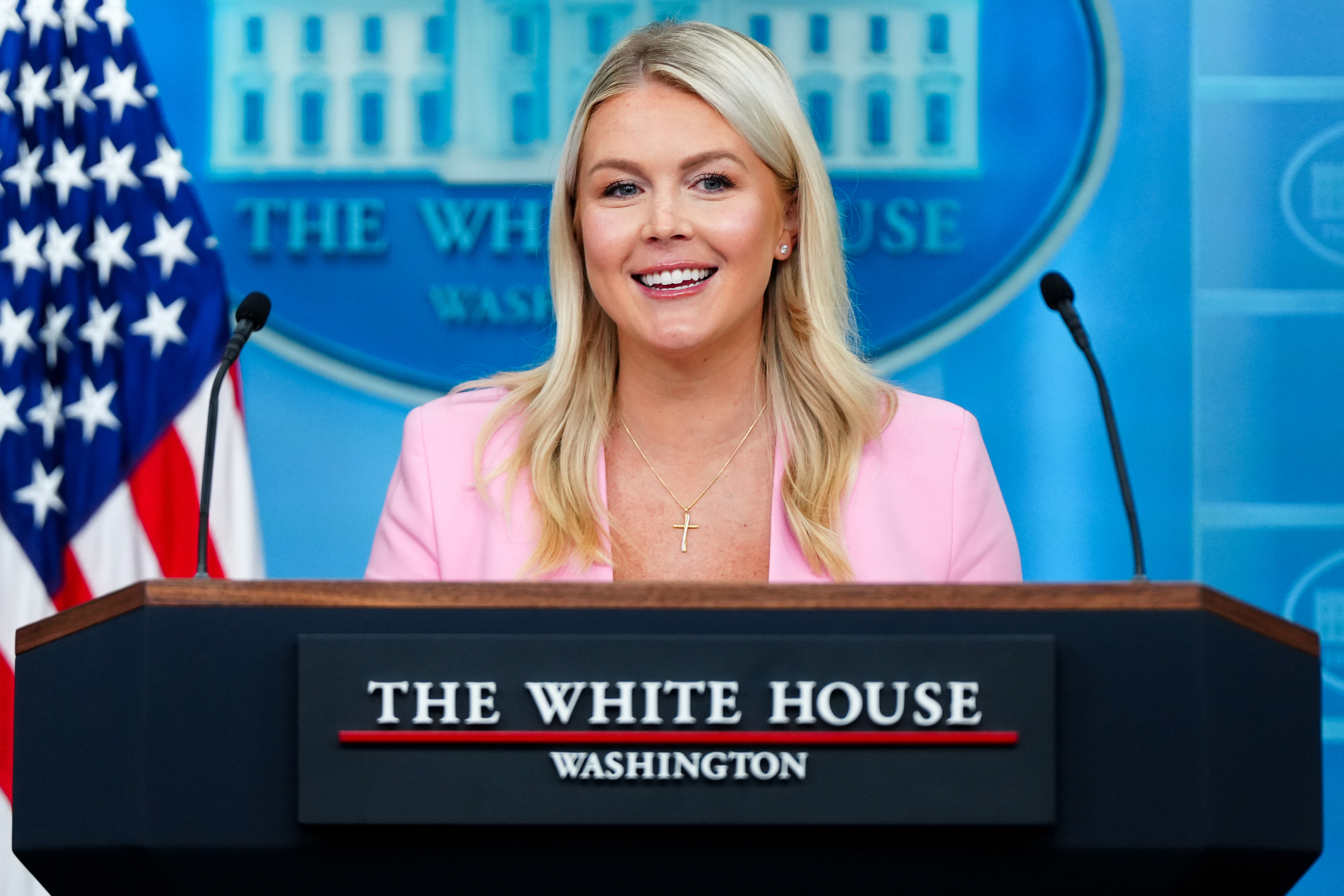
    WASHINGTON — White House press secretary Karoline Leavitt, the youngest person to hold the role, will leave at month’s end, President Donald Trump announced Wednesday.

    Leavitt, 28, just recently returned to the White House after taking a brief leave for the birth of her second child in May.

    Leavitt has been one of the most visible advocates of Trump’s “Make America Great Again” movement. The Republican president described her as one of his “most trusted aides” in a social media post announcing her departure.

    He said Leavitt “will be departing her role at the end of the month so she can spend more time with her beautiful young children and family, a decision I totally understand and respect! Karoline will now be one of my top outside advisors, and an influential voice within the Republican Party, as we work to defy History, and conclusively win the Midterm Elections.”

    Leavitt recently returned to work after taking leave following the birth of her second child, a daughter, in May. She also has a 2-year-old son.

    “The truth is since returning to the White House after the birth of my daughter, I have felt in my heart that I cannot be the best mom my two young children deserve while devoting the constant time, energy, and attention required of the White House Press Secretary — and that is why I have ultimately made the bittersweet decision to depart the White House and embark on a new chapter in my life,” Leavitt said in a social media post.

    Trump did not outline plans for who might replace her in the high-profile role.

    She worked as a spokesperson for MAGA Inc., a super PAC supporting Trump, before joining his 2024 campaign. In 2022, she ran for Congress in New Hampshire, winning a 10-way Republican primary before losing to incumbent Democratic Rep. Chris Pappas.

    During Trump’s first term in office, Leavitt worked as a press aide in the White House press office. She then became communications director for New York Republican Rep. Elise Stefanik.

    Leavitt briefed from the White House press room less frequently than some of her recent predecessors. Trump, who regularly engages with reporters during White House events and during his travels, primarily deployed Leavitt to Fox News and other conservative news outlets to trumpet his agenda and take shots at Democrats and the mainstream media.

    Trump’s first-term press secretaries were Sean Spicer and Sarah Huckabee Sanders, who were known for quarreling with reporters. Another, Stephanie Grisham, never held a briefing. Her successor, Kayleigh McEnany, often lectured the news media during her appearances in the press briefing room.

  • Toyota recalls 655K Camrys over display error that may deactivate turn signals and other indicators

    Toyota recalls 655K Camrys over display error that may deactivate turn signals and other indicators

    CHICAGO — Toyota is recalling about 655,000 of its Camry vehicles globally, the automaker confirmed Tuesday, due to a display error that may deactivate safety indicators like turn signals and hazard lights during start-up.

    Most of the now-recalled cars were sold in the U.S. — where more than 508,000 model year 2025-2026 Camry Hybrids are affected.

    According to documents published by the National Highway Traffic Safety Administration, these vehicles are equipped with a 7-inch display combination meter that can become blank at start-up. And beyond turn signals and hazard lights, certain warnings like seat belt reminders and “key left in ignition” buzzers may also not function as a result.

    These display failures increase crash risks — both for drivers who may not be able to see telltale indicators and “the ability of other road users to recognize the driver’s intent to change direction or indicate a vehicle hazard,” the NHTSA warns.

    Texas-based Toyota Motor North America — a subsidiary of the larger Japanese automaker — says it will notify all known owners of the affected Camrys to bring their vehicles into a certified dealer. To remedy the issue, those dealers will later provide a software update free of charge.

    Owner letters are set to be mailed starting Sept. 21 in the U.S., and Toyota expects to complete those notifications by early October. In the meantime, customers can check the NHTSA’s and Toyota’s online recall lookups to see if their car is affected.

    Toyota confirmed to the Associated Press via email Tuesday that its recall affects markets in North America, the Middle East, Asia, and some countries in other regions. The company said the 655,000 vehicles impacted globally were produced between December 2023 and July 2026 — across three plants located in the U.S., Japan, and Thailand.

    For more information, customers can visit Toyota’s website or contact customer support at 800-331-4331.

  • Zuckerberg spokesperson says his yacht did not hear call for maritime assist

    Zuckerberg spokesperson says his yacht did not hear call for maritime assist

    The crew of a yacht owned by Mark Zuckerberg did not hear a radio call for a maritime assist from a small skiff that ran out of fuel off the coast of Alaska, and by the time it did, another nearby ship had already rendered assistance, a spokesperson for the Meta CEO said.

    The Alaska Beacon reported that the skiff had issued a call for assistance through the U.S. Coast Guard last week and a nearby small cruise ship, the Wilderness Legacy, towed it into nearby Farragut Bay in Southeast Alaska and refueled it.

    Although it was closer, Zuckerberg’s yacht, called Launchpad, had not responded to the call.

    “I’m on a small-ship Alaska cruise with my son,” Michael Love, a passenger who said he was on the Wilderness Legacy cruise ship, wrote on Bluesky on Aug. 5.

    “Our boat rescued a stranded vessel last night and apparently we did that after the Coast Guard radioed Mark Zuckerberg’s yacht — which was closer — and they repeatedly refused to respond. (There was near unanimous booing when the captain announced this),” he said.

    The Alaska Beacon reported that the spokesperson told them via email on Sunday that the yacht Launchpad did not initially hear the call for assistance.

    “Mark and his family were not on board at the time of the incident. As the Coast Guard noted, the boat was not in distress, and by the time the crew reviewed the Coast Guard contact on a different radio channel from the one they were operating on, the assist was already underway. We’re grateful all parties are safe,” the email to the Alaska Beacon said.

  • Letters to the Editor | Aug. 3, 2026

    Letters to the Editor | Aug. 3, 2026

    Future focused

    Inga Saffron’s recent column about the William Way LGBT Community Center overlooked the mission guiding our plans for the future.

    Our responsibility is to create an accessible home equipped to serve our community while allowing William Way to remain in the Gayborhood. Throughout this process, we continue to provide essential programs, arts and cultural initiatives, community connections, and support.

    The article dismissed the extensive planning that informed this direction. Our board voted unanimously after more than a year of evaluating options, engaging stakeholders, and studying the financial realities of preserving the existing building.

    At a time when LGBTQ+ people and institutions face renewed threats, our community needs safe and welcoming places to find support, connection, and belonging. As plans for 1315 Spruce St. continue to evolve, William Way remains focused on creating an accessible and lasting home that will be here for our community now and for generations to come.

    Laura Ryan and Dave Huting, co-board chairs, William Way LGBT Community Center Board of Directors

    …

    Inga Saffron’s column reminds us that tearing down the William Way LGBT Community Center’s longtime home would mean losing much more than a building. Since relocating to 1315 Spruce St. in 1996, William Way has become one of Philadelphia’s key LGBTQ+ landmarks, where generations have found support, services, culture, history, and community.

    There is no disagreement on the need for more services, better accessibility, or affordable housing for LGBTQ+ seniors. These are important goals, even if housing has not historically been part of the center’s mission. However, the public has yet to see why those goals require demolition, or if preservation and reuse options have been thoroughly considered.

    This should not be viewed as a choice between affordable housing and LGBTQ+ history. Philadelphia has shown that historic buildings can be updated for modern needs. William Way deserves the same consideration, and a creative preservation approach could preserve the best of the existing structure while allowing a modern addition.

    The Preservation Alliance is urging William Way’s board to pause irreversible actions, publicly review reuse options, and organize meaningful community meetings before making final decisions. The future of William Way should involve the community, not just be handed down to it.

    Paul Steinke, executive director, Preservation Alliance for Greater Philadelphia, and former, William Way Board co-chair (2016—2020)

    Who knew?

    I read your editorial about John Fetterman’s threat to quit the Democratic Party with incredulity. Just how were Southeast Pennsylvania voters to know anything about Candidate Fetterman when The Inquirer seemed reluctant to ask him any substantive questions during his campaign? Your coverage of his Senate race that year was highly dependent on quotes from his staff and postings on Twitter. The most we learned was that he was pro-union, advocated for the decriminalization of marijuana, and supported abortion rights. Beyond that, nada.

    Even toward the end of his campaign, after meeting with the Inquirer’s Editorial Board, the paper stated “However, Fetterman was often vague in describing specific policies or the role he hoped to carve out in the Senate as he spoke for nearly 30 minutes with The Inquirer’s Editorial Board and two reporters.”

    Don’t pretend voters knew John Fetterman when The Inquirer could have done a much better job of letting us know who he was.

    Paul Withington, West Chester

    Protesting protesters

    Citizens Bank, in its news release announcing its winding down of lending to private prison firms CoreCivic and The Geo Group, notes that this is “a business decision based on changed commercial circumstances.” Yet, it goes on in the release to extensively castigate activists who protested its lending practice, saying “Citizens has been disappointed that the activists have dragged it into what is largely a political matter.” If, in fact, theirs was purely a business decision, then why does Citizens feel the need to lash out against those who protested this lending practice in support of our immigrant neighbors? Methinks the bank doth protest too much.

    Louis Pilla, King of Prussia

    Altered reality

    In 2019, Donald Trump used a black Sharpie to change the path of a hurricane to match his earlier tweet. Now he has taken a metaphorical Sharpie to American soldiers who died in the Iran war. He changed the number of dead from 18 to 14, claiming the last four died after a ceasefire was declared. Next he will be sending FBI agents armed with black Sharpies to gas stations around the country, slashing the price of regular gas from $4.09 a gallon to $3.09 a gallon. At long last he will make good on his campaign promise to solve the affordability crisis.

    Gary Goldman, Newtown

    Contrasting legacies

    On Tuesday, President Donald Trump eulogized Sen. Lindsey Graham at the National Cathedral, stating that Graham “was truly hawkish. He never saw a war that he didn’t like.”

    At roughly the same time, I was attending a Memorial Mass for the Feast of Blessed Stanley Rother, an Oklahoma-born priest and martyr, at the Basilica of the National Shrine of the Immaculate Conception, also in Washington — where I heard a very different message.

    On July 28, 1981, a brutal right-wing Guatemalan government death squad assassinated Father Rother in the church where he pastored Indigenous people attempting to improve the quality of their impoverished lives.

    Rother’s message remains that our lives be like his life of human sacrifice and inspiration always in the pursuit of peace and understanding.

    Reggie Regrut, Phillipsburg

    History’s lessons

    Your editorial on how President Donald Trump can find a way out of his failed Iran war raises several good points, the most significant one being that Trump’s obvious failure to support the NATO alliance and our European allies has destroyed the possibility of multinational diplomacy. You also argue rightly that simply withdrawing from the Obama-era international agreement that convinced Iran to avoid building nuclear weapons was a mistake. I would add that the killing of Iran’s top leader, the Ayatollah Ali Khamenei, only angered and even emboldened the country.

    Unfortunately, you neglect one all-important fact about the prior nuclear agreement — it did nothing to curtail Iran’s proxy forces that menace its neighbors, including our ally Israel. This threat alone justifies pressure on Iran beyond that which produced the prior agreement. You also ignore past history, which rhymes with what is happening now.

    In 1979, Iran had our hostages. Today, they hold the Strait of Hormuz and the world’s oil supply. While Jimmy Carter got Iran close to releasing the hostages, what brought that episode to a close was the election of Ronald Reagan and the Iranians’ realization that he was likely to treat them aggressively rather than stopping at diplomacy. Further, it looks as if Iran is simply stalling against our unilateral negotiations at this time. It’s hardly a sure thing that multinational negotiations would do much better.

    Some experts have opined that having our military forcibly open and patrol the strait is the only leverage we have in the present situation. The only way out of this nightmare may very well prove to be escalation rather than continuing the present failed course, and past history suggests strongly that this is so — a probability that The Inquirer’s Editorial Board needs to consider.

    John Baxter, Toano, Va.

    Join the conversation: Send letters to letters@inquirer.com. Limit length to 150 words and include home address and day and evening phone number. Letters run in The Inquirer six days a week on the editorial pages and online.
  • FIFA president Gianni Infantino abandons plans to sell World Cup profits to private equity

    FIFA president Gianni Infantino abandons plans to sell World Cup profits to private equity

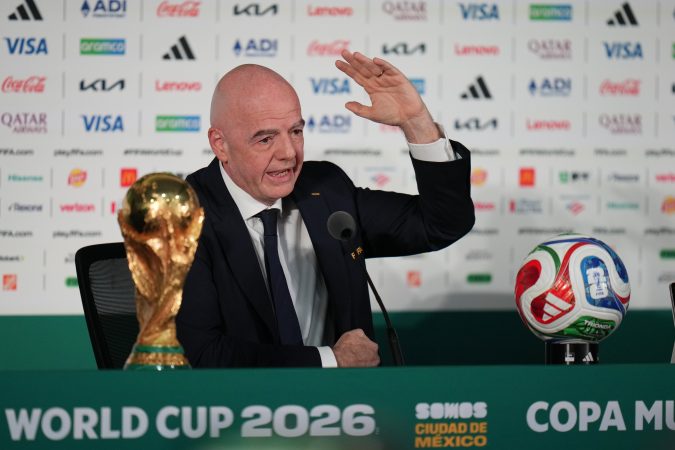
    ZURICH — FIFA president Gianni Infantino is abandoning his divisive plan to sell World Cup profits to private equity after receiving pushback from all corners of the soccer world.

    Infantino’s decision came after his senior adviser who sat on a White House panel resigned and Asia’s soccer body joined Europe and North America in opposing it.

    “Having listened carefully to all the views, it has become clear that the project has created divisions of a nature that, regardless of the level of support, are no longer in the interest of the objective set out in the first place,” Infantino said in a statement on Friday. “Our purpose has always been — and will always be — to unite and improve. As a result, this proposal will not proceed.”

    Infantino had proposed creating a $20 billion company to run the World Cup with private investors including the Kushner family, but drew backlash that grew every day since Tuesday’s announcement.

    European soccer body UEFA’s 55-member nations agreed to boycott the World Cup and all other FIFA competitions over Infantino’s plan on Thursday. North America’s Concacaf and the Asian Football Confederation also said they opposed the plan.

    “Some things are simply too important to sell,” UEFA said in a statement. “The FIFA World Cup belongs to football. It always will. And so long as Europe has a voice, it will never be for sale.”

    Infantino’s senior adviser, Carlos Cordeiro, a former Goldman Sachs banker who represented the soccer body on the White House Task Force for the World Cup, resigned on Friday and urged other senior FIFA staff to speak out.

    “I cannot stand by while FIFA considers selling a stake in the World Cup,” Cordeiro said in a statement, just hours after FIFA insisted: “Nobody is selling football.”

    Hours later, FIFA chief operating officer Kevin Lamour issued a statement to the Associated Press, saying FIFA staff were deceived by Infantino’s lack of openness in planning the sale over recent months and that the project must not continue.

    “It is the project of one person,” Lamour, a longtime colleague of Infantino at FIFA and UEFA, wrote. “Not only must this project not go ahead … but the time has now come for football political leaders to ask themselves the right questions and make the right decisions.”

    Infantino proposed spinning off FIFA’s commercial businesses — including World Cups and Club World Cups for men and women — into a $20 billion subsidiary with 20% owned by private investors.

    The “anchor investor,” described by FIFA, is a New York-based investment firm created by Joshua Kushner, the younger brother of U.S. President Donald Trump’s son-in-law, Jared Kushner.

    The next FIFA competition is the women’s Under-20 World Cup, which starts Sept. 5 in Poland — which UEFA members said they would boycott.

    The misstep could prove costly for Infantino, particularly after the interventions by Lamour and Cordeiro.

    Reelected unopposed in 2019 and 2023, Infantino is allowed one more four-year term under FIFA statutes. The deadline for the next presidential contest is Nov. 18, exactly four months ahead of the vote in Rabat, Morocco, where FIFA has its African headquarters.

    Infantino’s job seemed secure, despite long-term unease with his style and previous attempts to force through unpopular projects, but could become more tenuous with the failed private equity proposal.

  • Letters to the Editor | July 31, 2026

    Letters to the Editor | July 31, 2026

    Phantom fraud

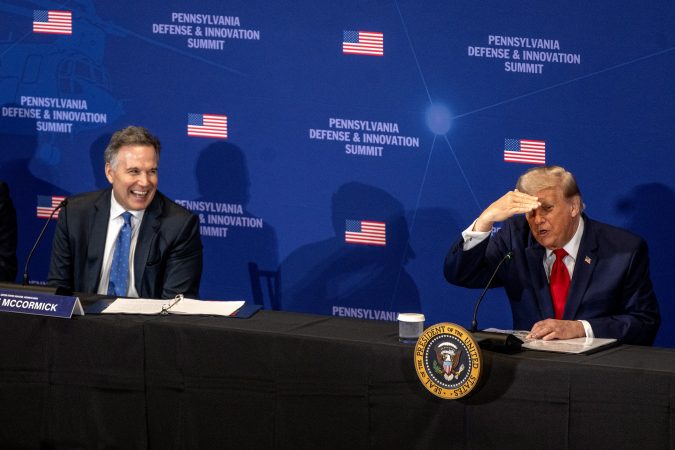
    In April, Sen. David McCormick wrote a letter to the editor touting the SAVE America Act. I, along with others, responded to his rosy and misleading picture of the act’s purported benefits with the facts, including how difficult it would be for millions of Americans (not coincidentally mainly women and people of color who tend to vote Democratic) to comply with the guidelines in the SAVE Act as written. Now McCormick has written a letter, published by the so-called liberal Inquirer, again touting the “commonsense” voting restrictions contained therein. McCormick and other supporters of the SAVE Act, especially Donald Trump, don’t want people to realize that you already need to prove citizenship to vote. The recent acknowledgment by New Jersey Gov. Mikie Sherrill that a software glitch allowed 6,600 noncitizens to register to vote is fuel for supporters of this wrong-headed proposal, but the glitch would have happened regardless of the restrictions that are written into the SAVE Act. Sen. McCormick should spend more time urging his fearless leader to end the war in Iran and less time pushing for an undemocratic — and frankly un-American — law that is nothing but a voter suppression tactic.

    Scott Chelemer, Mount Laurel, chelesb@msn.com

    …

    There are more than 6 million registered voters in New Jersey, so the 6,600 who shouldn’t have been able to register represents an error-rate of 0.098%. That’s pretty amazing. I challenge Sen. Dave McCormick to provide any program at the national level that has an error rate that low. We have a system that is not perfect, but 6,600 voters out of 6 million cannot be called a crisis. He is my representative; so I’m asking him to stop with the attempt to challenge the integrity of our election system. Your leader, not mine, has made those claims for years. I’m asking Sen. McCormick for proof that the election was stolen; not allegations, proof. I have yet to see any, so, if you have it, either produce it or stop this nonsense. Credibility is all you truly own in this world; his is quickly fading. I have to have faith in my elected officials, who need to concentrate on real problems, not suggest solutions in search of a problem. Yes, 6,600 false registrations is bad; but let’s not make a mountain out of a molehill. I await his reply.

    John R. Waters, Havertown

    Join the conversation: Send letters to letters@inquirer.com. Limit length to 150 words and include home address and day and evening phone number. Letters run in The Inquirer six days a week on the editorial pages and online.

  • Congo’s Ebola outbreak has killed over 1,000 people

    Congo’s Ebola outbreak has killed over 1,000 people

    BUNIA, Congo — More than 1,000 people have died in the Ebola outbreak in Congo, according to Africa’s top health body, a grim toll in the fastest Ebola outbreak in history, as conflict, community resistance and an uneven response fuel its spread.

    Speaking at a health summit in Ghana on Wednesday, Jean Kaseya, director-general of the Africa Centres for Disease Control and Prevention, said 1,031 deaths have been confirmed.

    “These are people dying. They are dying because we don’t have vaccines, we don’t have medicine, we don’t have funding,” he added.

    The latest update from Congo’s Ministry of Health showed that as of Monday, 2,473 cases had been recorded in the latest outbreak. At least 737 patients were in isolation or hospitalized, it said.

    The outbreak, which was declared on May 15, is unlike most previous Ebola outbreaks because the Bundibugyo virus responsible for it has no approved vaccines or treatments. It has also killed more people at a faster rate than any outbreak on record, including the 2013-2016 outbreak that is considered the worst on record with over 11,000 deaths out of at least 28,000 cases. That outbreak took about eight months from the first case to reach 1,000 deaths.

    Conflict and community resistance are complicating the response

    The World Health Organization has said that the true scale of the outbreak could be ⁠two to four times larger than official figures indicate. Some communities at its epicenter also remain difficult to reach, mainly because of fighting involving rebel groups.

    Ebola is rare, but highly contagious and can be contracted through contact with bodily fluids such as vomit, blood, or semen. It can cause severe illness and is often fatal.

    Officials have warned that 80% of new cases have emerged outside known chains of transmission, a sign the outbreak is spreading faster than health officials can track it even as they step up their response in Ituri province, the epicenter of the outbreak, and four other provinces where cases have been recorded.

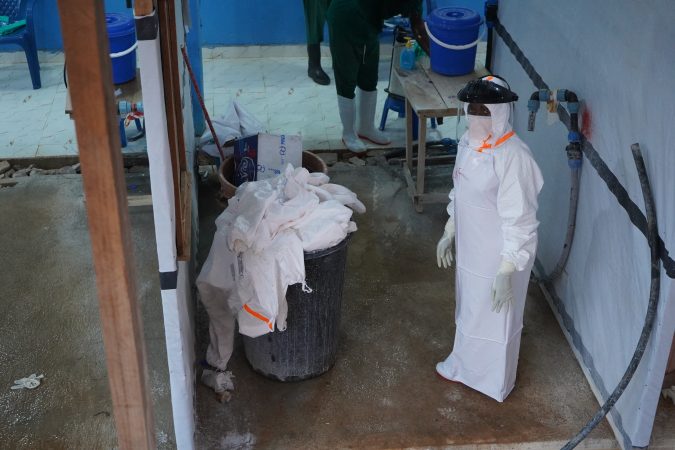
    Community resistance to Ebola teams, particularly those carrying out safe burials, has also hampered the response. Robert Ndjalonga, head of civil protection in Ituri province, said some communities have refused to allow burial teams to operate because they prefer traditional burials, increasing the risk of further transmission.

    “The biggest challenge remains resistance from or outright refusal by some communities to accept response teams,” Ndjalonga said. ”On several occasions, burial teams have had to be escorted by security forces to ensure that safe and dignified burials could be carried out without incident.”

    Shortages of burial supplies have delayed responses to reported deaths, while some affected health zones still lack operational burial teams, Ndjalonga said.

    Attacks on health facilities and response teams have also forced front-line workers and aid groups out of some areas. Some health workers have gone on strike, saying they haven’t been paid since the outbreak started.

    A member of a team carrying out safe Ebola burials was recently injured when assailants threw stones at the team’s vehicle following a burial in Bunia last week, according to provincial civil protection authorities.

    The attack highlighted the challenges facing the response in eastern Congo. In Ituri’s Irumu territory, the local military administrator recently described Ebola as a greater threat than the Islamic State-affiliated Allied Democratic Forces insurgency and urged residents to support, rather than attack, health workers.

    Containment efforts are faltering

    A humanitarian worker involved in the response, speaking on condition of anonymity because he was not authorized to speak publicly, cited poor coordination between response agencies, delays in transferring patients to treatment centers and waits of more than four days for some Ebola test results.

    “At times, it’s unclear who is doing what and where,” the worker said.

    The delays have led some patients to leave health facilities before they can be diagnosed, increasing the risk of further transmission, the worker said.

    Africa CDC head Kaseya called for intensified efforts to slow the outbreak on the first day of the health summit in Ghana on Tuesday.

    “If we do not stop this outbreak today, it could become one of the worst Ebola outbreaks the world has ever documented,” Kaseya said.

    Less than 9% of the contacts of confirmed patients who are expected to be traced are currently being monitored, far below the level needed to contain the outbreak, according to Africa CDC. More than 60% of deaths are occurring in the community before patients can receive care.

    Pierre Akilimali, the Ebola response incident manager at the National Public Health Institute of the Democratic Republic of the Congo, said the high number of community deaths suggests many infections are not being detected or isolated in time, allowing the virus to continue spreading.

    Experts warn of a worsening crisis

    Last month, researchers at the U.S. Centers for Disease Control and Prevention used computer modeling to estimate how the outbreak could evolve. In a worst-case scenario, they said it could approach the scale of the 2014-2016 West Africa epidemic.

    “There’s never been an Ebola outbreak that started with so many cases because it was so late to be identified,” said Trish Newport, emergency program manager for Doctors Without Borders, who has been working in Congo.

    “It’s like the outbreak is outrunning the response,” Newport said.

    University of Pittsburgh epidemiologist Jean Nachega, who is advising African health authorities, said he does not expect the outbreak to reach the CDC’s worst-case scenario but cautioned that the challenges remain “huge.”

  • US gas prices hit an average of $4 a gallon again as the US and Iran launch attacks

    US gas prices hit an average of $4 a gallon again as the US and Iran launch attacks

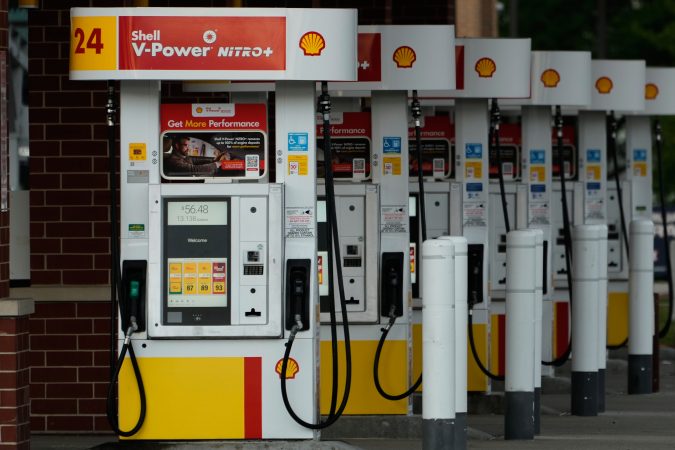
    NEW YORK — U.S. gas prices jumped to an average of $4 a gallon again Monday as the U.S. and Iran launched more attacks.

    According to motor club federation AAA, the national average for a gallon of regular gasoline is now back to $4. The average price a year ago was $3.14 a gallon.

    The price is a national average, meaning drivers in some states have been paying well over $4 a gallon for a while now, while others pay less. Prices vary between states due to factors ranging from nearby supply to differing tax rates.

    People around the world are also dealing with high gas prices as a result of the war.

    Gas prices first went over $4 a gallon on average at the end of March. They dipped below that in mid-June and continued to fall as crude oil prices eased when the U.S. and Iran reached an interim deal. Even then, President Donald Trump expressed frustration that gas prices weren’t falling as quickly as oil prices.

    Affordability is likely to be a key issue for voters in the U.S. midterm elections, and higher gas and oil prices can help push up prices for groceries and other goods.

    Oil prices have climbed again in recent days as the U.S. and Iran move closer to resuming an all-out war.

    Brent crude, the international standard, rose 3.2% to $90.95 per barrel Monday and benchmark U.S. crude climbed 2.8% to $84.04 per barrel.

  • U.S. military identifies 2 soldiers killed in Iranian attack on Jordan

    U.S. military identifies 2 soldiers killed in Iranian attack on Jordan

    WASHINGTON — Two U.S. Army soldiers killed in Jordan while defending against Iranian ballistic missile and drone attacks were identified on Monday — the first U.S. troop deaths from direct Iranian fire since the opening days of the war.

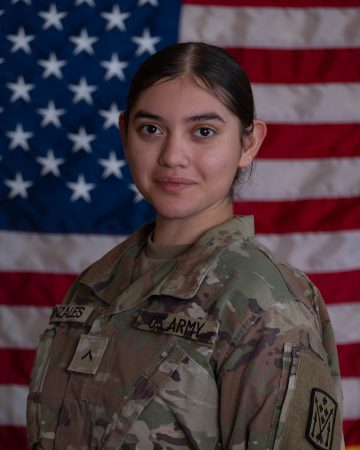
    The Defense Department said in a statement that James Feehan, 25, of Ewa Beach, Hawaii, and Isabella Gonzales, 19, of Carrollton, Texas, were killed in Jordan in Friday’s attacks.

    Feehan, a first lieutenant, will be posthumously promoted to the rank of captain and awarded the Bronze Star, Purple Heart, and Combat Action Badge medals. The Army did not provide details about his commendations. He was assigned out of Fort Bragg, North Carolina, to the 32nd Army Air Missile Defense Command.

    Gonzales was a private with the 10th Army Air Missile Defense Command in Ansbach, Germany. She graduated last year from Hebron High School in Carrollton, near Dallas, school officials said.

    “She gave her life in that service, and our district is heartbroken by her loss,” the Lewisville Independent School District said in a statement. “Her decision to serve after graduation speaks volumes of her character.”

    The military said Gonzales died on Friday and Feehan died the following day. It did not provide details.

    A third service member was reported missing in the attacks that killed Feehan and Gonzales. U.S. Central Command said Sunday that “unidentified remains” have been found and were being examined.

    Military says 17 U.S. service members have been killed in the war with Iran

    The deaths reflect the complicated reality that American soldiers don’t need to be on the ground in Iran for there to be lethal risks in a conflict that involves drones, missiles, and airplanes. American forces are arrayed across the Middle East, making other nations targets of Iran and its allies as the fighting has escalated after a breakdown in peace talks.

    U.S. President Donald Trump has said the war is necessary to stop Iran from developing nuclear weapons. Trump, a Republican, now faces political pressure to bring the war to a close and avoid the kind of prolonged Middle East conflict he had campaigned against.

    Drones and missiles claiming lives on both sides

    An American service member was also killed in northern Iraq on Saturday during a “controlled detonation” of unexploded ordnance from a downed Iranian drone, U.S. Central Command said Sunday. A second service member was wounded and was receiving medical treatment for a minor injury.

    The military said it was withholding additional information until 24 hours after families had been notified.

    Iranian authorities said U.S. strikes in just the past three weeks have killed at least 50 people and wounded more than 500 others, including eight killed in a strike on a bridge Friday.

    Both sides have targeted civilian infrastructure relied on by millions of people. Workers on ships, as well as foreign workers and others in Gulf nations, Israel, and Lebanon have also died in the conflict.

    First U.S. military fatalities came soon after the war started

    Shortly after the U.S. and Israel began the war on Feb. 28, an Iranian drone strike at a civilian port in Kuwait killed six American soldiers. The soldiers were part of a supply and logistics unit based in Iowa who were working at a shipping container-style building that had no defenses.

    A seventh soldier died more than a week after being wounded during a March 1 attack by Iran on the Prince Sultan Air Base in Saudi Arabia.

    Later in March, six service members were killed when a KC-135 refueling aircraft supporting U.S. military operations against Iran crashed in Iraq. The aircraft was in “friendly” airspace when an unspecified incident involving another aircraft took place, according to U.S. Central Command.

    Last week, the U.S. military said a Navy pilot died in a helicopter crash in the Arabian Sea. The Navy initially described the July 1 crash as an emergency landing and said there was “no indication the emergency was caused by hostile action.” The remaining three sailors aboard the helicopter were rescued.

  • Europe’s early heat wave led to a spike in deaths, may have killed over 10,000

    Europe’s early heat wave led to a spike in deaths, may have killed over 10,000

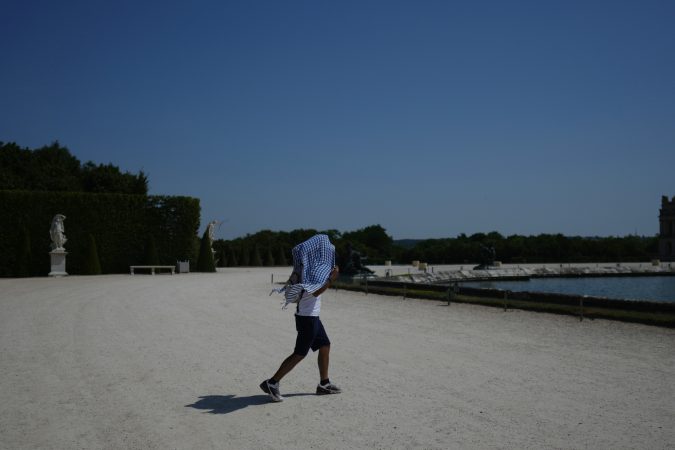
    Heat that hit Europe exceptionally early and hard this year appears to have led to a spike in deaths, with well over 10,000 more people dying at the height of the heat wave than would normally have been expected, according to figures that are still emerging across the continent.

    Measures of what researchers call “excess mortality” — the difference between the normally expected number of deaths and the actual number — spiked in late June, when parts of Europe experienced record temperatures. Experts caution that it takes a while for a full picture to emerge, and that many heat-related deaths will never formally be recorded as such. For example, a heart attack, which can be triggered by extreme heat exposure, especially in people who are older or have underlying health issues, may be listed on a death certificate simply as a heart attack.

    It’s an alarming start to the summer. Several heat waves have killed thousands of people in the past few years in Europe. Still, 2003 stands as the deadliest year in Europe for heat, with about 70,000 deaths. The frequency and intensity of heat waves are supercharged by climate change, which comes from the burning of fuels like coal, oil and gas.

    An exceptionally deadly week in early summer 2026

    The EuroMOMO mortality monitoring hub, which receives data from two dozen countries, gave an estimate of 14,260 for excess mortality from all causes in the week ending June 28, more than 12,000 of those deaths being among people age 65 and older. That’s out of a total 84,583 deaths that week. Figures in the preceding and following weeks were far lower.

    Lasse Vestergaard of Denmark’s Statens Serum Institut, which coordinates EuroMOMO, said that “we attribute this to the heat wave affecting quite a lot of countries in Europe, and we do that because there is no other obvious explanation that could explain such a high excess mortality happening at the moment.”

    Such a high excess in a single week is “highly unusual,” he added. EuroMOMO doesn’t give absolute numbers for individual countries, but found the highest rates of excess in France, Belgium and Germany.

    Nations that bore the brunt of the heat have issued their own estimates — which don’t always follow the same methodology or timelines. Here is a snapshot of heat-related deaths being reported by various countries.

    Germany

    Germany’s disease control center, the Robert Koch Institute, directly attributed 6,830 deaths to heat this year through early July, 6,470 of them among people 65 and older. Temperatures in Germany late last month hit their highest levels since records began, peaking with a measurement of 41.7 degrees Celsius (107.06 Fahrenheit) on June 28, according to the German Weather Service.

    United Kingdom

    Britain’s Met Office, the national weather agency, said that 2,700 people are believed to have died from heat-related causes during heat waves in England and Wales in May and June. Of those deaths, it says that about 550 occurred in late May and about 2,200 in late June. This year brought national heat records for May of 35.1 Celsius (95.18 Fahrenheit) and for June of more than 37 Celsius (98.6 Fahrenheit).

    France

    France’s public health authority said there were at least 2,000 more deaths in the week of June 22-28 than the previous week, when temperatures were already climbing. France recorded its hottest-ever days on June 24 and 25, when the Meteo France weather service said the national thermal indicator — an average of daily temperatures measured at 30 weather stations — hit 30 Celsius (86 Fahrenheit). More than 40% of France saw peak temperatures of above 40 Celsius (104 Fahrenheit).

    Spain

    An estimated 937 deaths in Spain in June were attributed to excess heat, according to the Carlos III Health Institute, an official Spanish monitoring agency. Last month was Spain’s second-hottest June on record, with temperatures 3.2 Celsius (5.8 Fahrenheit) above the monthly normal average, according to the AEMET weather agency. A five-day heat wave saw temperatures regularly surpass 40 Celsius (104 Fahrenheit), AEMET said.

    Belgium

    There were 1,747 deaths above what would usually be expected during the heat wave that ran from June 18 to July 1, according to Sciensano, Belgium’s public health institute. It said that “a certain excess mortality is expected during heat waves, as during waves of cold weather and flu epidemics. Nevertheless, the heatwave of June 2026 is distinguished by its exceptional breadth.”

    At the peak of the heat wave, there was a measurement of 35.5 Celsius (95.9 Fahrenheit) on June 26, the IRM weather institute said.

    Netherlands

    An initial estimate of excess death figures from the June heat wave found that the Netherlands had 480 more deaths than expected, according to the public health service. Increased mortality was particularly notable in eastern and southern areas, where the temperatures were the highest.

    The country saw its highest temperature ever for June, with the Dutch weather service registering 36.8 degrees Celsius (98.24 Fahrenheit). That’s more than a degree Celsius (1.8F) higher than the previous record, set in 1947.