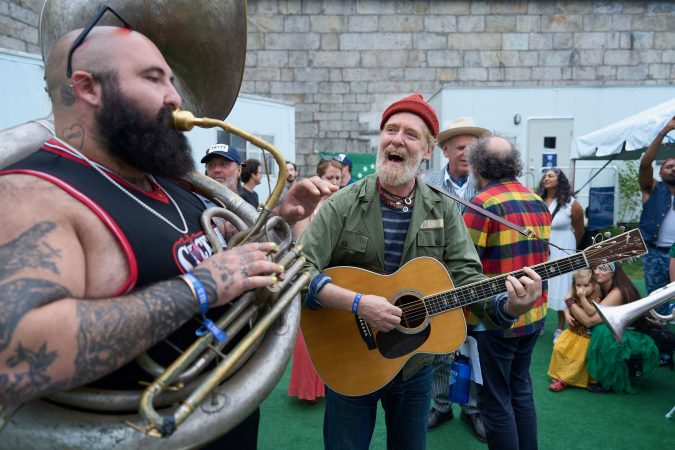
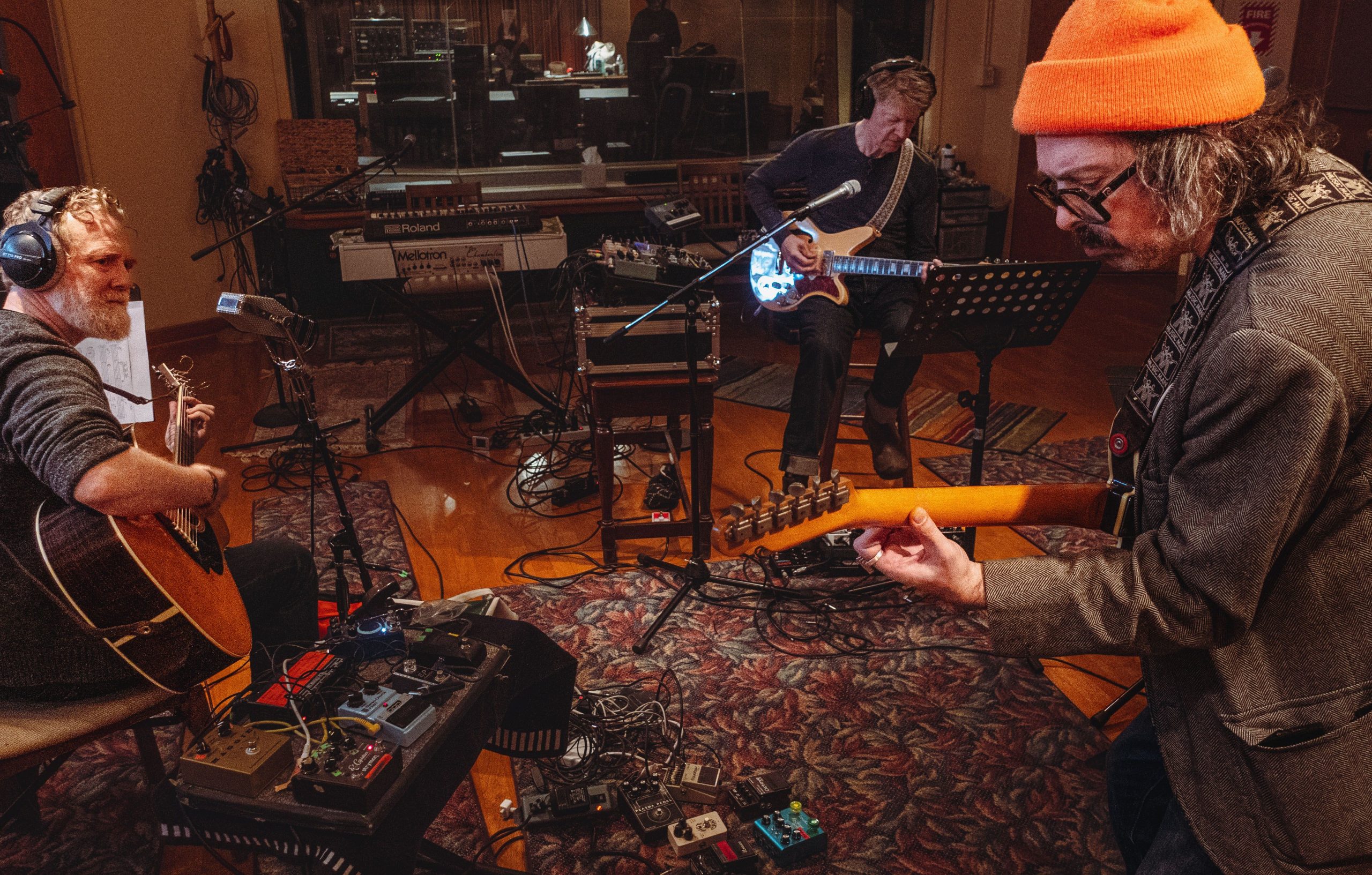
Before he died, Glen Hansard found inspiration in Philadelphia. In 2025, the Irish singer — mourned worldwide after he died at age 56 in a July motorbike crash in Dublin — began work on an unfinished Philly album, recording with local musicians at a Conshohocken studio. Before that, Hansard, who began his musical career as a street busker in Dublin, played World Cafe Live with Philly street musicians, and even donned a faux Sixers jersey performing with the Philly band Snacktime at the Met Philly. His final Philly performance, only months before his death, was in the upstairs Sanctuary at the First Unitarian Church.
Now, Philadelphia is taking inspiration from Hansard.
On Dec. 6, at the Keswick Theatre, Philly musicians will host the Philly Busk — a holiday concert inspired by Hansard’s beloved Christmas Eve busking in Dublin to help unhoused people.
Ticket information and a lineup for the event have yet to be announced. All of the proceeds from the Philly Busk will benefit Project HOME — one of the city’s largest nonprofit housing agencies — and the Irish Center of Philadelphia, a Mount Airy cultural hub founded in 1958 to preserve Irish heritage, music, and dance.
The concert — though not traditional busking, usually performed in a street or subway station — was originally planned for the Irish Center, but organizers quickly shifted to the Keswick after an outpouring of interest and support from local artists, and after the theater expressed interest in helping.
From left: Glen Hansard, Nels Cline, and Charlie Hall at Elm Street Studios in Conshohocken in January 2026.James Farrell
Street musicians will also play outside the theater before the concert, in the tradition of busking.
“We realize we need a bigger space, a bigger stage,” said organizer Liz Kerr, special events coordinator for the Irish Center. “The number of people reaching out to us, offering help in any way — there’s been so much generosity. Everybody has been so positive about it.”
For 15 years, Hansard, who fronted the Frames and won a best song Oscar for “Failing Slowly” from the 2007 film Once, hosted an annual, open-air charity music event on Dublin’s Grafton Street or outside the Gaiety Theatre. The beloved Irish tradition grew to include superstars like Bono, Sinéad O’Connor, and Shane MacGowan singing together on holiday classics like the Pogues’ “Fairytale of New York.”
The seed of the Philly concert grew out of grief, Kerr said. And wanting to help others in Hansard’s memory. The first person Kerr reached out to was Dublin-native and Philly-based singer-songwriter John Byrne, who busked himself back in Ireland before moving to Philly. Byrne immediately agreed to play — and to help land other musicians.
“We know the Dublin busk had meant so much to him,” said Byrne. “And Philadelphia had become a place he loved to come to. To do something like this — and have the proceeds go to a homeless charity — is just a really great way of honoring Glen Hansard.”
Outdoor venues, like outside City Hall, were initially considered but abandoned by planners due to unpredictable winter weather. Though the musicians for the event have yet to be announced, Byrne said it quickly became clear that they will need a big stage. For the memory of Hansard — and the desire to help others in need.
“It’s a way of bringing people together,” he said. “A way of giving them a chance to gather as a community and do something meaningful. I think we’re going to get a really good response from the music community. And I have a lot of hope that we’re going to have a really great crowd in there.”
Planners expect to announce more details in the coming weeks.
Kerr, also a Hansard fan, said they are thrilled to help an organization like Project HOME, a nonprofit founded in 1989 by Sister Mary Scullion that works to eradicate chronic homelessness and has a longstanding partnership with the Jon Bon Jovi Soul Foundation, in the musician’s memory.
“Project HOME has touched so many people,” she said. “We’re just so grateful and thrilled to help them.”
Behold a marvelous menagerie of Americana — a curated cornucopia of century-old curios and Victorian age sensibility.
Stroll the sepia-toned rows of travel-worn valises and towering top hats. Cast iron railway signs and old pub mirrors. Dime store novels and Gilded Age comic strips. Handcrafted, model pond yachts and leather-worn sporting relics. Glamorous art deco advertisements and dreamlike Jazz Age prints.
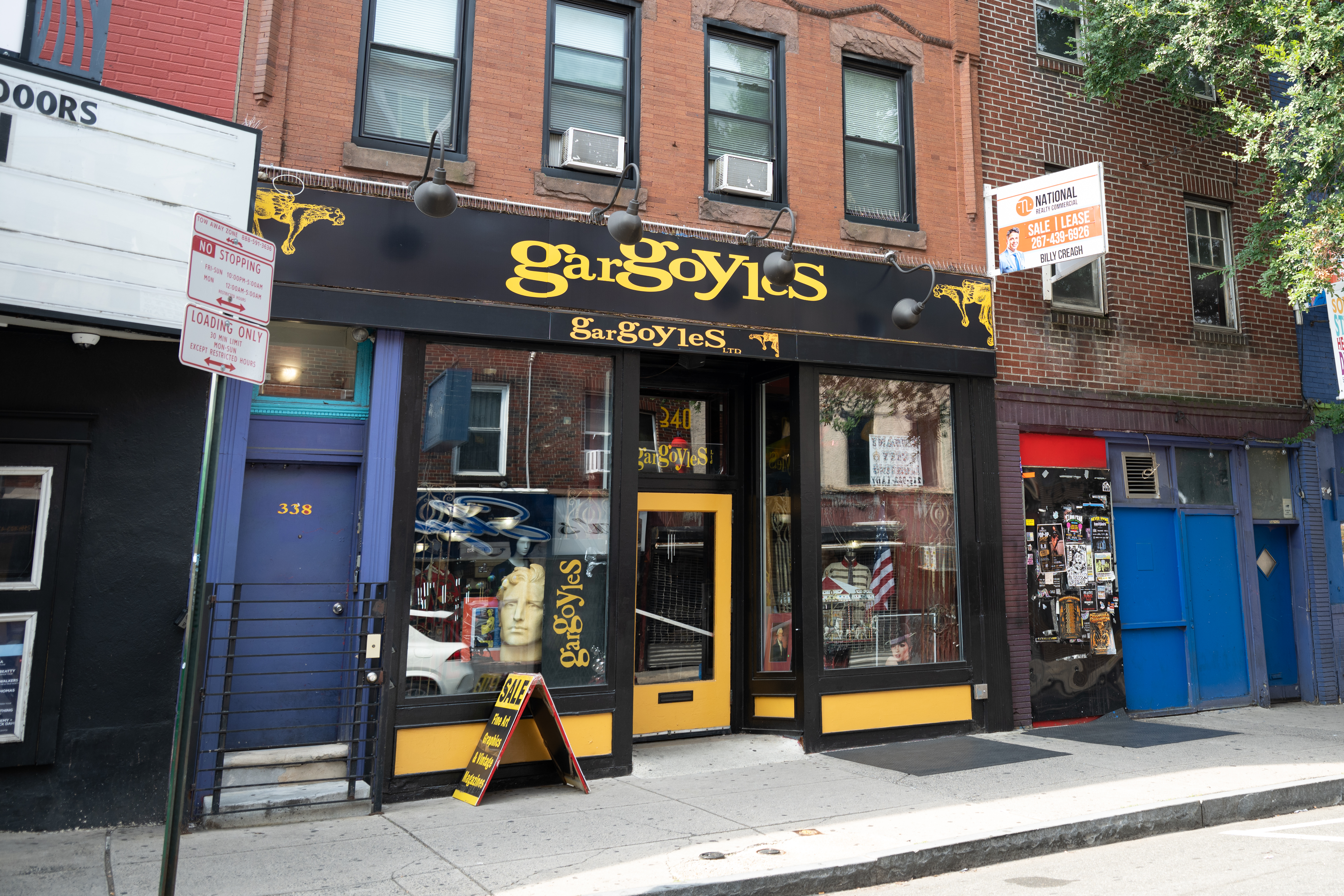
The exterior of Gargoyles, a vintage shop at 338-340 South Street in Philadelphia, on Aug. 11, 2026.Erin Blewett / For The Inquirer
Endless architectural embellishments, like terra cotta cupids and stone lion heads, ornamental arches, columns, mantels, and fine wooden sideboards culled from the English countryside or rescued from bygone wrecking balls.
All of it carefully chosen and displayed for its taste and excellence by Hadassah Zuberi, 80, a lioness of architectural salvage, who for decades sold architectural vestiges, rare memorabilia, and period props to Philadelphia’s grand department stores — including Gimbels, Strawbridge & Clothier, and Wanamakers — as display furnishings.
And all of it, once again on South Street.
Confident of change
In May, almost 22 years after shuttering her storied showroom — Gargoyles ltd., which she operated in a pair of South Third Street storefronts, steps off South, for nearly 35 years before closing in 2004 — Zuberi returned home to Philadelphia.
Her store’s latest incarnation is located at 340 South St., former home of the Hurricane Alley bar, and across from the iconic Eye’s Gallery. It has quickly become a popular staple on the famed, if perpetually embattled, Philly thoroughfare that now sprouts signs of rebirth after quality-of-life issues and nuisance businesses.
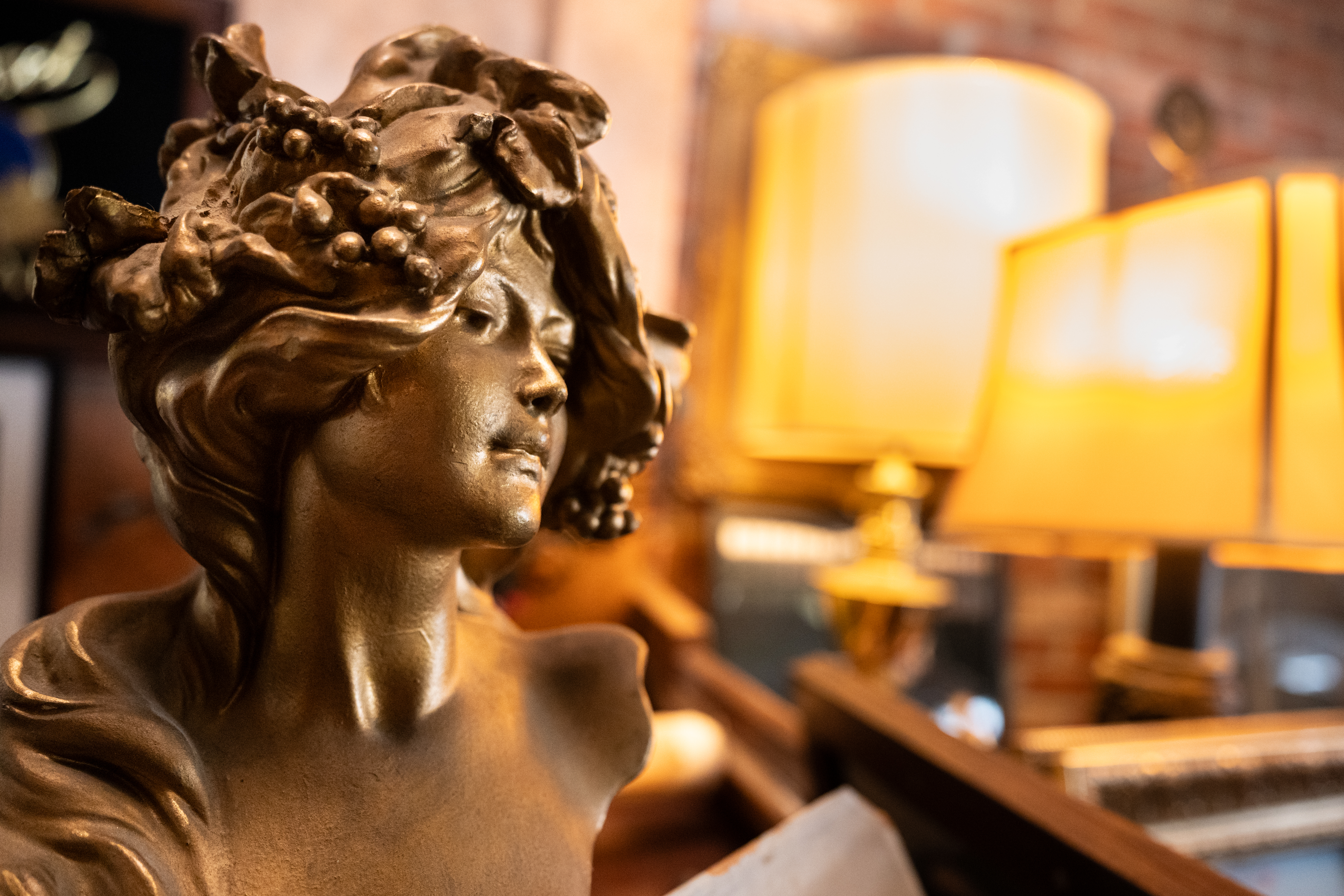
A decorative bust is displayed among vintage furnishings for sale at Gargoyles on South Street in Philadelphia on Aug. 11, 2026.Erin Blewett / For The Inquirer
“We’re going to elevate the character of the street,” said Zuberi on a recent afternoon, perched in her oversize leather shop chair as classical music played. “It’s been run-down. I’m confident it’s going to change.”
Zuberi had relocated her business to the arts enclave of Kingston, N.Y, amid rising property taxes and the shuttering of national department stores.
The move comes after Rick Milan, former owner of the legendary South Street punk store Zipperhead and now a board member of the South Street District, who owns properties on the street, including the former Hurricane Alley space, lobbied Zuberi to come back to Philly.
A former customer, who once bought vintage ski equipment from Gargoyles as home decor, Milan serendipitously wandered into the Kingston shop during a vacation in 2024.
“I knew right away this was the Gargoyles from Third Street,” he said. “South Street is currently going through a big vintage surge. And I really wanted to recruit Hadassah back to South Street.”
Preserved vestiges of old Philadelphia
More than a half century had passed since Zuberi, born and raised in Jerusalem, opened her original Philly shop, a joint venture with her first husband, Richard Serbin.
Studying graphic design at the Bezalel Academy of Arts and Design — Israel’s oldest and most prestigious school of art, design, and architecture — Zuberi moved to Philadelphia in 1967 at the age of 21.
At the time, Philadelphia was busy remaking itself.
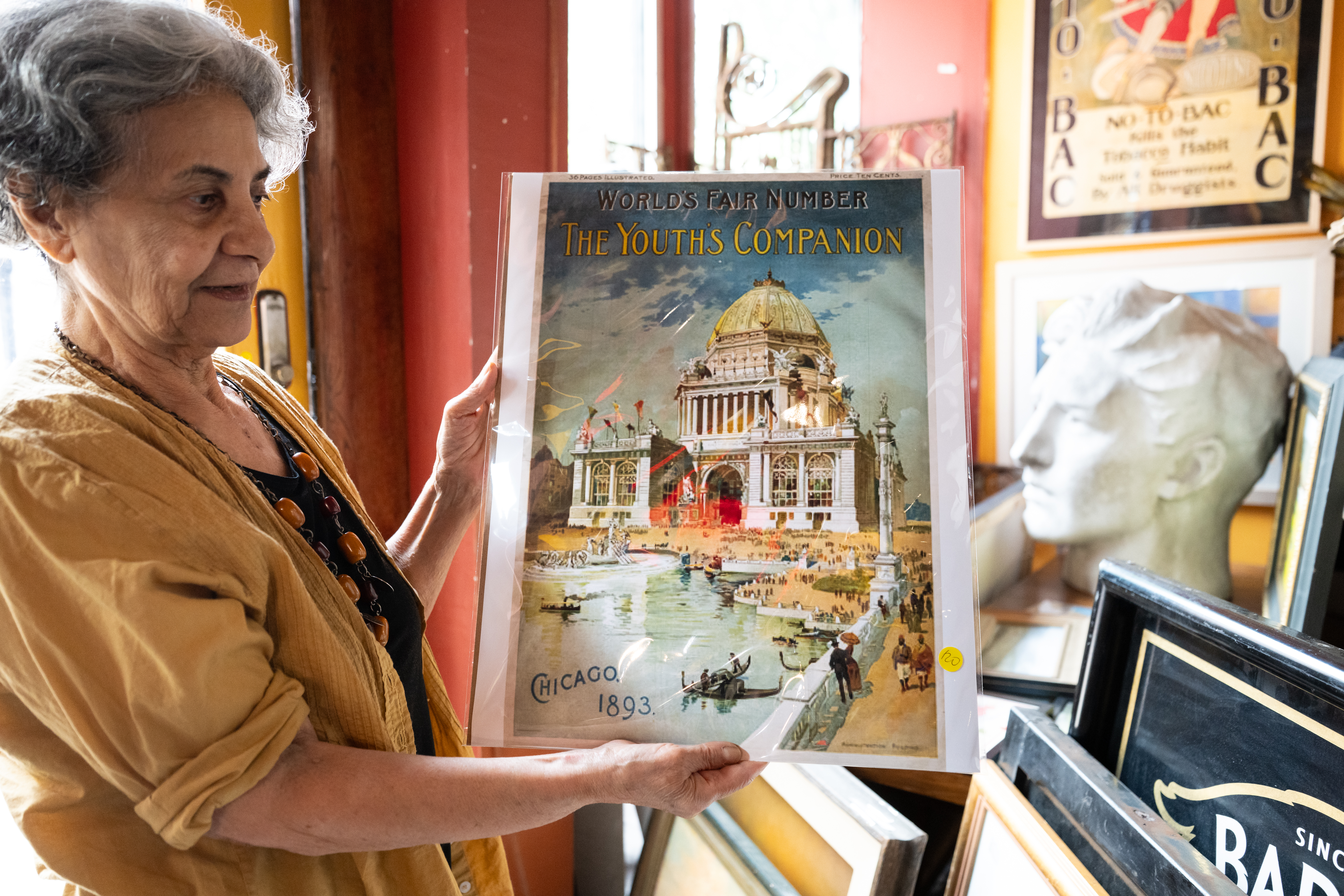
Hadassah Zuberi displays a reproduction print of an 1893 World’s Fair issue of the Youth’s Companion magazine at her vintage shop, Gargoyles, on South Street in Philadelphia on Tuesday, Aug. 11, 2026.Erin Blewett / For The Inquirer
“Nineteenth-century Philadelphia was falling away,” she said. “They were tearing down incredible mansions, which was criminal. They demolished some amazing landmarks.”
Designing a home of their own, the newlyweds hired prominent Philadelphia architect Adolph DeRoy Mark and began to purchase the architectural salvage of stately Philly residences, public buildings, and churches destined for destruction. They filled the shop — massive twin storefronts at 512-514 S. Third St., which Zuberi’s father-in-law purchased for $18,000, and which is now a rowhouse — with preserved vestiges of old Philadelphia, including a specially made gargoyle.
“We got a whole bunch of amazing ironwork and Tiffany stained glass windows,” she said. “Cherubs. Magnificent columns. We had a couple thousand door knobs that were brass and copper. Just fantastic stuff.”
South Street to the pyramids
Enjoying the earliest days of its renaissance by the late ‘60s and early ’70s, South Street was a near-deserted strip, an empty canvas fast filling with hippies, hipsters, and hucksters. Transforming into a stronghold of bohemia, the neighborhood was still touch and go, Zuberi remembered.
“We had one of our employees who would go to the front door with a baseball bat because he didn’t know who was going to come in,” she said.
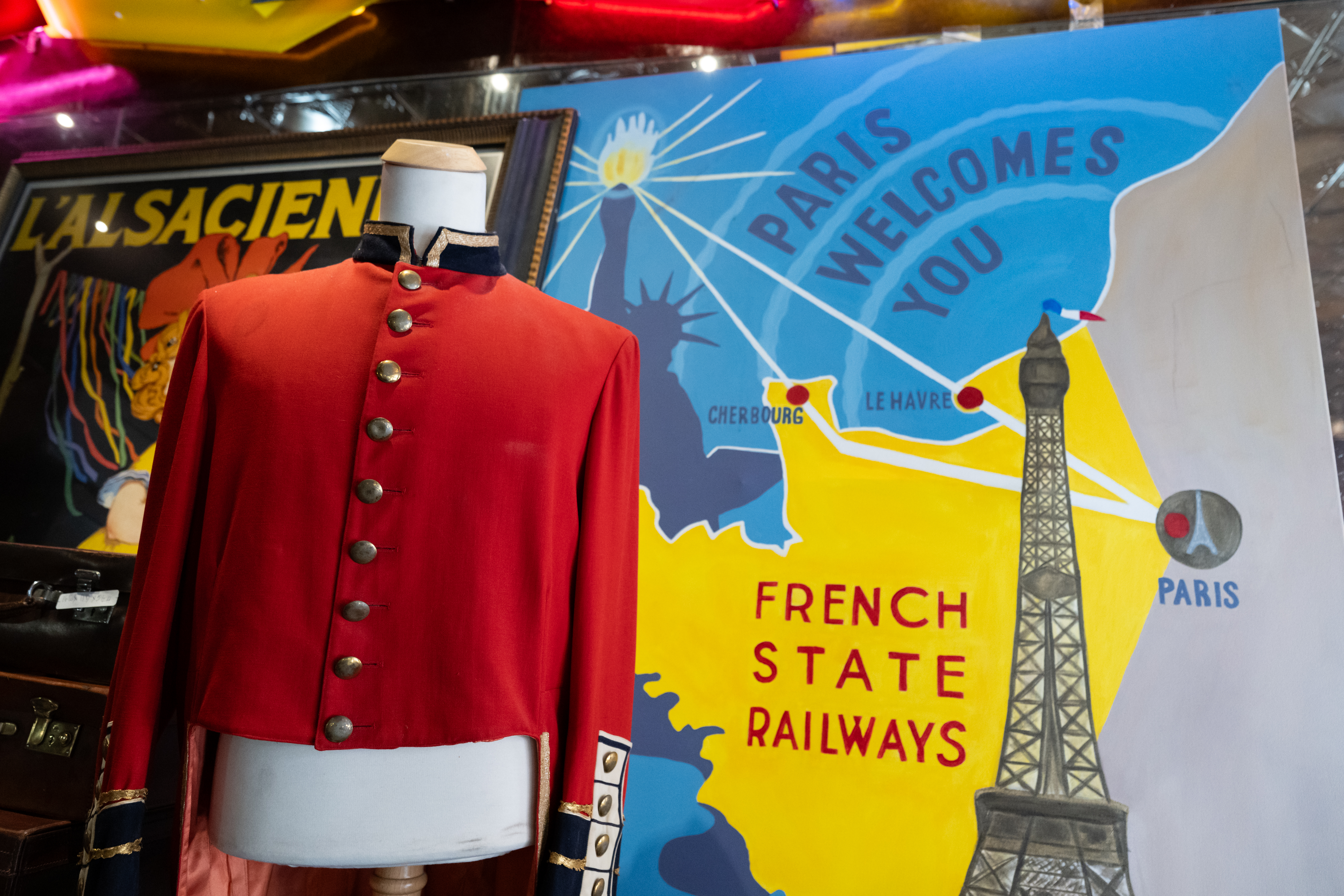
A vintage uniform jacket and travel posters are displayed inside Gargoyles, Hadassah Zuberi’s vintage shop on South Street in Philadelphia, on Tuesday, Aug. 11, 2026.Erin Blewett / For The Inquirer
Selling architectural remnants to restaurants and hotels — and local eateries, like Downey’s Irish Pub, Saloon Restaurant, and the Borgia Tea Room in Headhouse Square — the shop became one of the East Coast’s largest dealers in antique architectural embellishments. The couple traveled through England and Belgium, filling department store orders and printed catalogs for national chains.
“My mother was at the pyramids in Egypt and she had a Gargoyles bag,” said a laughing Zuberi of the Philly heyday. “And someone was like, ‘Oh, I was at the store in Philadelphia.’”
The shop outlasted her marriage. On her own in the shop, and raising children, Zuberi embraced a newfound sense of artistic freedom, buffeting her inventory with vintage memorabilia and curios she found inspiring, and more of her own artwork and paintings.
“It was passion,” she said. “This idea that you can take anything that has some semblance of design and use it anywhere. No rules.”
All the while, South Street rose and fell, embracing its bohemian roots and transforming into a vibrant punk and counterculture stronghold, and eventually battling corporate encroachment and abandonment.
By 2004, developers were buying buildings for investments, losing sight of the character of the neighborhood, Zuberi said.
“It lost its magic touch,” she said.
Back on South Street
“What the hell are you doing here?” she remembered Milan asking, when he happened into her Kingston store in 2024. “Listen, I want you back on South Street.”
While Kingston brought more success from locals and New York City tourists, Philadelphia, where she still kept a home, never stopped calling.
“I was homesick,” she said. “Philadelphia has all the culture in the world.”
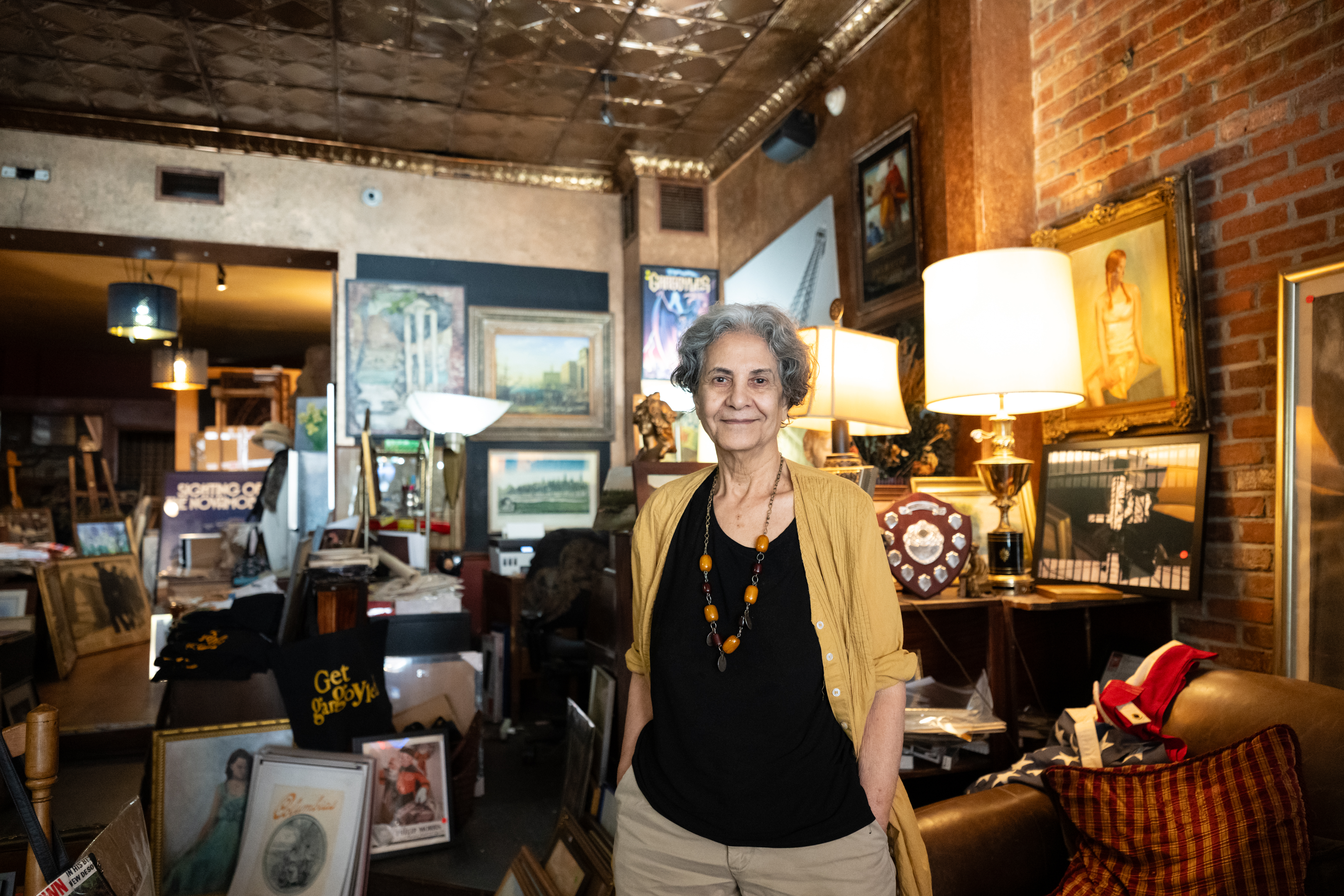
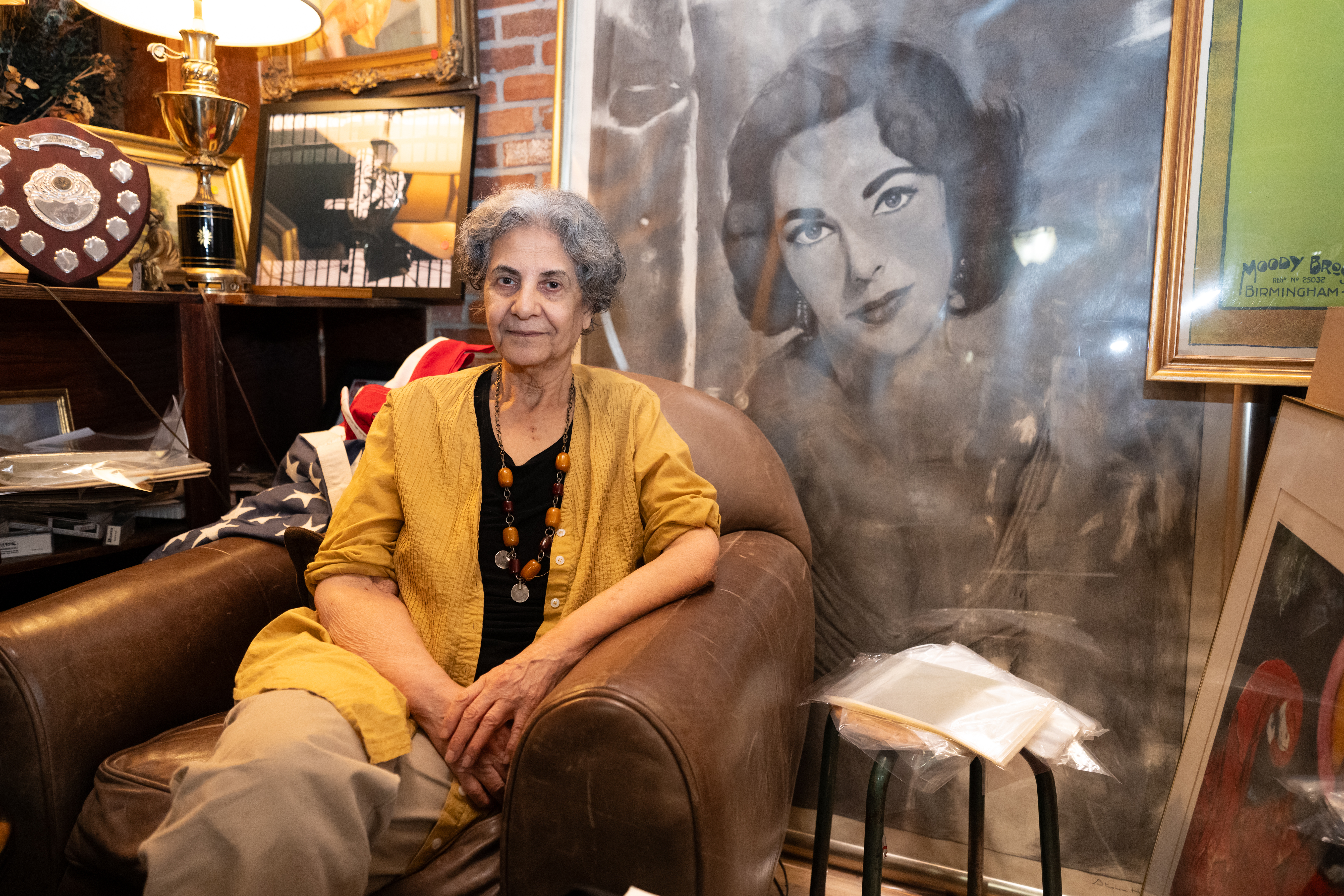
Hadassah Zuberi, owner of Gargoyles, poses for a portrait in front of a charcoal portrait of Elizabeth Taylor at her vintage shop on South Street in Philadelphia on Aug. 11, 2026.Erin Blewett / For The Inquirer
Earlier this year, after selling her New York building, she called Milan, who envisions Gargoyles as a one-of-a-kind legacy business that can help attract life to South Street. The Hurricane Alley space — which still includes the old wooden bar — made for a match.
“It’s a lovely shop, and she’s a lovely woman,” he said.
On a recent afternoon, Zuberi, elegantly reposed in her leather chair and framed by a favorite portrait of Elizabeth Taylor, warmly greeted a steady stream of customers.
She is glad to be back in Philadelphia, surrounded by her treasures, and encouraged by the view of the changing street outside, she said.
“This is my la la land,” she said, over the strains of a concerto playing on the speakers. “If I want to pretend the world is beautiful and everybody has taste, all I have to do is look around and avoid the rest.”
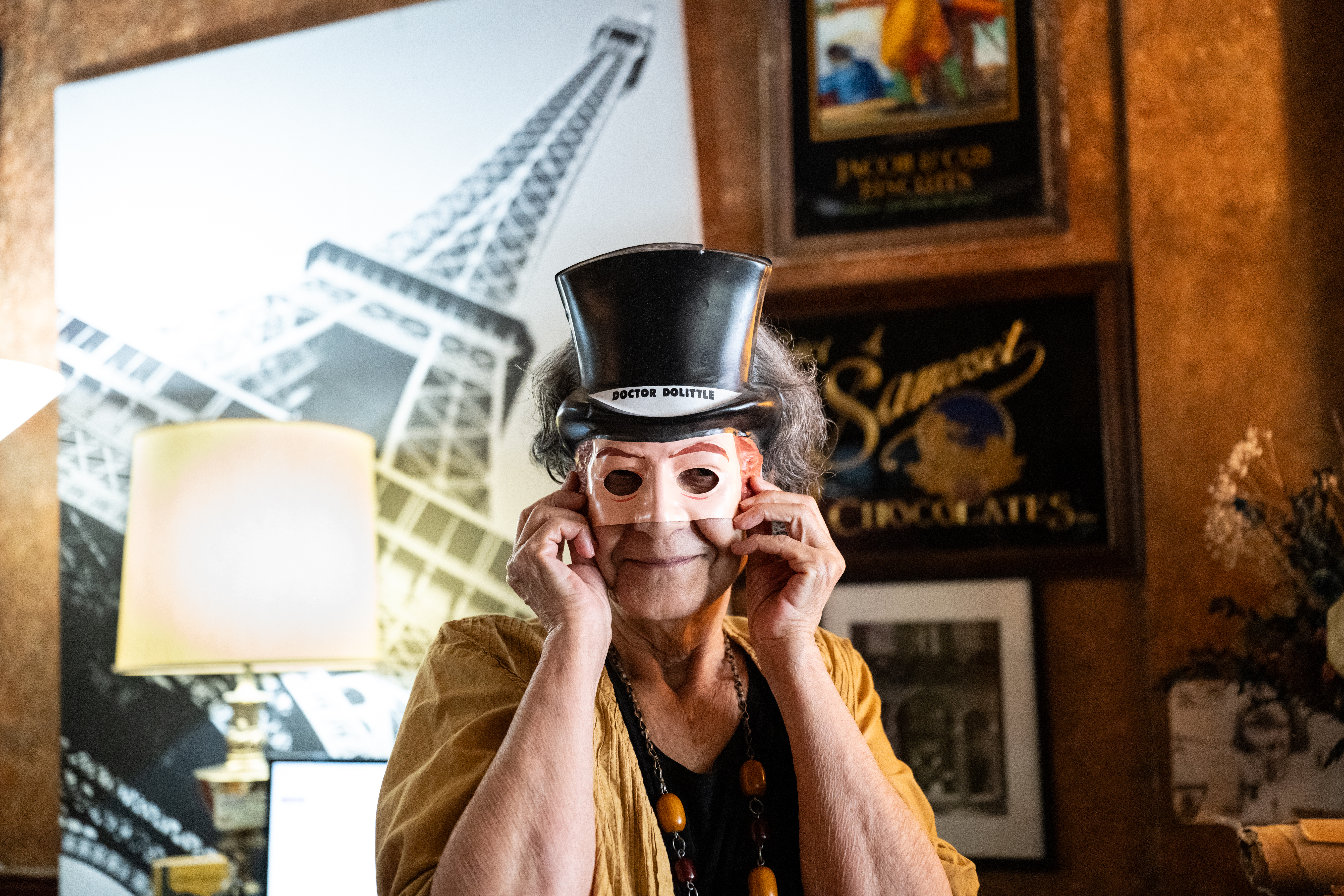
Hadassah Zuberi, owner of Gargoyles, tries on a vintage “Doctor Dolittle” mask at her shop on South Street in Philadelphia on Aug. 11, 2026.Erin Blewett / For The Inquirer
It’s a story about America’s founding that doesn’t begin in a Philadelphia state house — but on a rancid English slave ship sailing for Pennsylvania shores. It’s a story about the bustling slave auctions that once occupied the cobblestones outside the Old London Coffee House, while patriots plotted insurrection inside the Old City shop. A story about countless Black Philadelphians who sacrificed their own lives to a yellow fever epidemic — nursing dying victims and hauling the dead — to prove their worth to white Philadelphia residents.
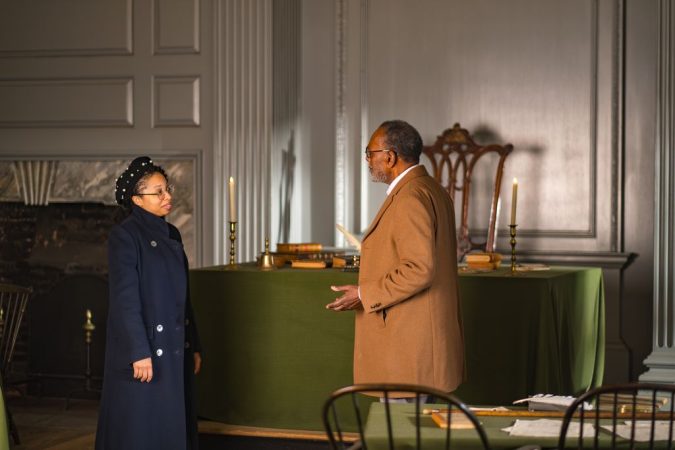
Becoming American: Philadelphia’s Story, a new documentary now streaming on PBS.org, tells the story of Philadelphia and the creation of America through the lens and experiences of Black Philadelphians.
“At its core, this film is about people,” said executive producer Oliver St. Clair Franklin. “Those whose stories have too often gone untold — and the city that brought them together.”
While telling the story of America’s founding in its 250th year, the film stays firmly rooted in colonial Philadelphia neighborhoods, and the lives of lesser-known activists and artisans who shaped the republic — and the age.
People like Anthony Benezet, a French-born abolitionist who formed the African Free School out of his Chestnut Street home in 1770. Cyrus Bustill, a Revolutionary-era brewer and baker, who helped found the Philadelphia Free African Society. And the soaring lives of Richard Allen and Absalom Jones, pioneering Philadelphia abolitionists and rights leaders, both born into slavery.
“I wanted to tell the story that would connect African Americans to the founding era,” said Franklin, 80, scholar and former chief arts and cultural official for the city of Philadelphia. “In the process of doing this film, I realized that it will connect a lot of people to the founding because it’s a story of resistance and resilience.”
Franklin, who grew up in Baltimore, attended Lincoln University before earning a bachelor’s of philosophy in economics from Balliol College at University of Oxford in 1970. For years, he served as Philly’s chief British delegate.
Produced jointly with Bear House Media, a UK-based television production company, the film explores the nation’s origins through the racially diverse melting pot of colonial Philadelphia — its first makeshift capital and meeting points of cultures, ideas, and identities. And home to a vibrant free Black community fighting on the front lines for America’s freedom — and their own.
“I couldn’t have done this film 50 years ago,” said Franklin, crediting recent decades of research into the experiences of Revolutionary-Era Black Americans. “It makes it possible to tell a really coherent story — a human story — that touches everybody.”
In his film, bursting with Philly voices like historians Kelli Racine Barnes, a Mellon humanities postdoctoral fellow, and Emma Lapsansky-Werner, a visiting professor of history at Haverford College, those human stories are often about ordinary Philadelphians. Free, enslaved, Native, and immigrant people all doing extraordinary things for freedom.
“We focus on the lesser-known stories of individuals, whose dreams and challenges we explore at the ground level,” he said.
There’s math games and math art. Math theater and math music. Math for the family. Math for the kids. Mathdramatics. Math on stage. Math movies. Math podcasts. Math murals. Math rock stars. Math awards. Math in sports. Math in culture. Philly math.
Ancient math. Existential math! Asking whether it would even matter if machines solve the greatest math questions of all time but no human understands how. The beauty of math. The patterns and excitement. Ubiquity and mystery. The undeniable logic and truth. Of Math.
Welcome to the Super Bowl of Math. It’s in Philly, if you didn’t already know. For a limited time only.
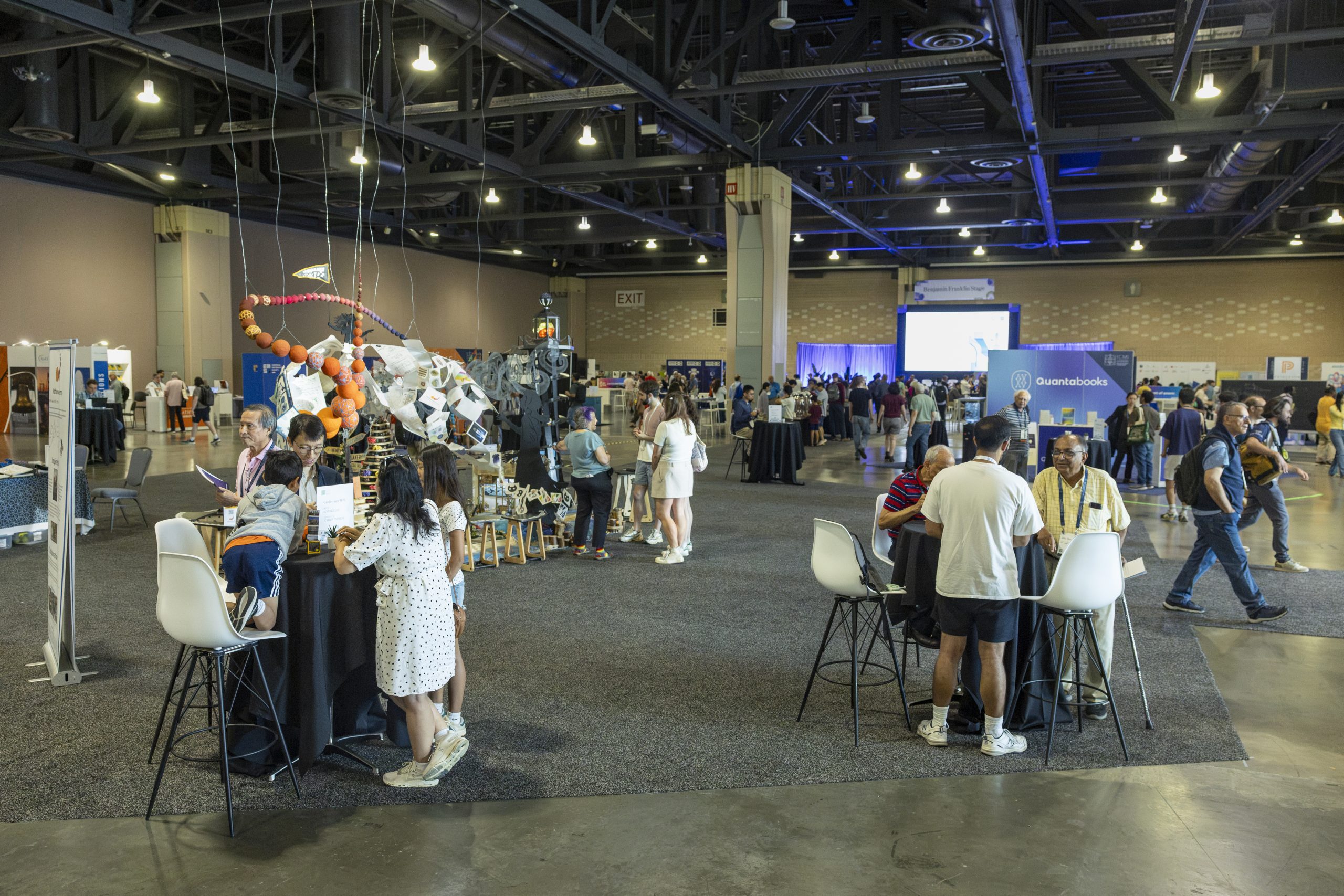
The second level of the 2026 International Congress of Mathematicians at the Convention Center on Saturday, July 25, 2026, in Philadelphia.Aidan T. Gallo / Staff Photographer
“It’s like the Olympics of math every four years,” said Thomas Sumner, a local official for the International Congress of Mathematicians, held this year at the Convention Center, from July 23 to 30, with public events from July 24 to 28. “Celebrating the beauty and ubiquity of all things math.”
The International Congress of Mathematicians is a big deal. Among the largest math gatherings in the world, it is where the Nobel Prize of math — the Fields Medal — is awarded. Hosted in rotating nations, like the Olympics, the prestigious affair this year marks the first time it has been held in the United States since 1986, when it was hosted in Berkeley, Calif. Previously it had been held in Cambridge, Mass., in 1950.
Controversy and awards
It was not without some controversy that the eminent math event returns to America. In March, Tarik Aougab, an associate professor of mathematics and statistics at Haverford College, circulated a petition — eventually signed by more than 2,600 mathematicians — to boycott the nearly 130-year-old conference this year if it was not moved out of the United States.
Petitioners expressed concern that some international colleagues would be unable to get visas to enter the United States due to President Donald Trump’s administration mostlysuspending entry for citizens of dozens of countries. Other concerns included fear of U.S. Immigration and Customs Enforcement and reluctance to travel to the United States at a time when the nation is embroiled in a war in the Middle East.
In response the International Mathematical Union, which oversees the conference, assured attendees it was committed to providing a safe and welcoming environment for all participants and had made “additional arrangements to help mitigate risk.”
On Saturday, at the Convention Center, crowds filled the event’s free math festival in the center’s exhibit hall. Sumner said that while some potential attendees did experience travel issues, over 3,000 mathematicians from all over the world made it to Philly .
“This is where they give out the top prizes,” said Sumner, managing editor for the Simons Foundation, one of the largest charitable mathematics organizations in the United States, and the congress’ main organizing partner. “This is where the most important talks in math are happening.”
Veer Mehta (center), 11, of Lower Merion, listens to a keynote panel discussion with headphones alongside his mother, Pooja Kapadia (to the left), during the 2026 International Congress of Mathematicians at the Convention Center on Saturday in Philadelphia.Aidan T. Gallo / Staff Photographer
Indeed, the congress’ Philly locale did not come up at all at a jammed-packed news conference Thursday when Sumner introduced the four mathematicians under 40 — including ones from the U.S., Canada, and China — to become Fields Medals recipients. The prizes are accompanied by a $10,600 award and a gold medal with the face of Archimedes, an ancient Greek math whiz. This year represented the first time the winners included more than one Asian mathematician — and also included just the third woman to ever be honored with a Fields: Hong Weng, 35, a New York University professor, awarded for breakthrough work in harmonic analysis.
‘How do we adapt?’
The conference comes as the discipline — like so much else — faces existential questions about its future from the threat of AI. On Friday, Terence Tao, an Australian American mathematician considered a rock star in the math world — and awarded the Fields in 2006 for his contributions to partial differential equations — offered a keynote address in the hall on “Mathematics in the Age of AI.”
“It’s starting to solve math problems that have been stumping people for decades,” Sumner said of AI. “How do we adapt to this future?”
But on Saturday, the Convention Center floor was filled less with the angst about the future and more with the everyday joys and esoteric wonders of math. Families from all over crowded into the math festival — as symposiums and lectures continue through Tuesday.
Math magicians performed magic card tricks while budding mathematicians from the world over struggled through math proofs on portable chalkboards, Good Will Hunting-style. On a stage, a sports analytics panel — with representatives from every Philly sports franchise — discussed how math helps them make their moves.
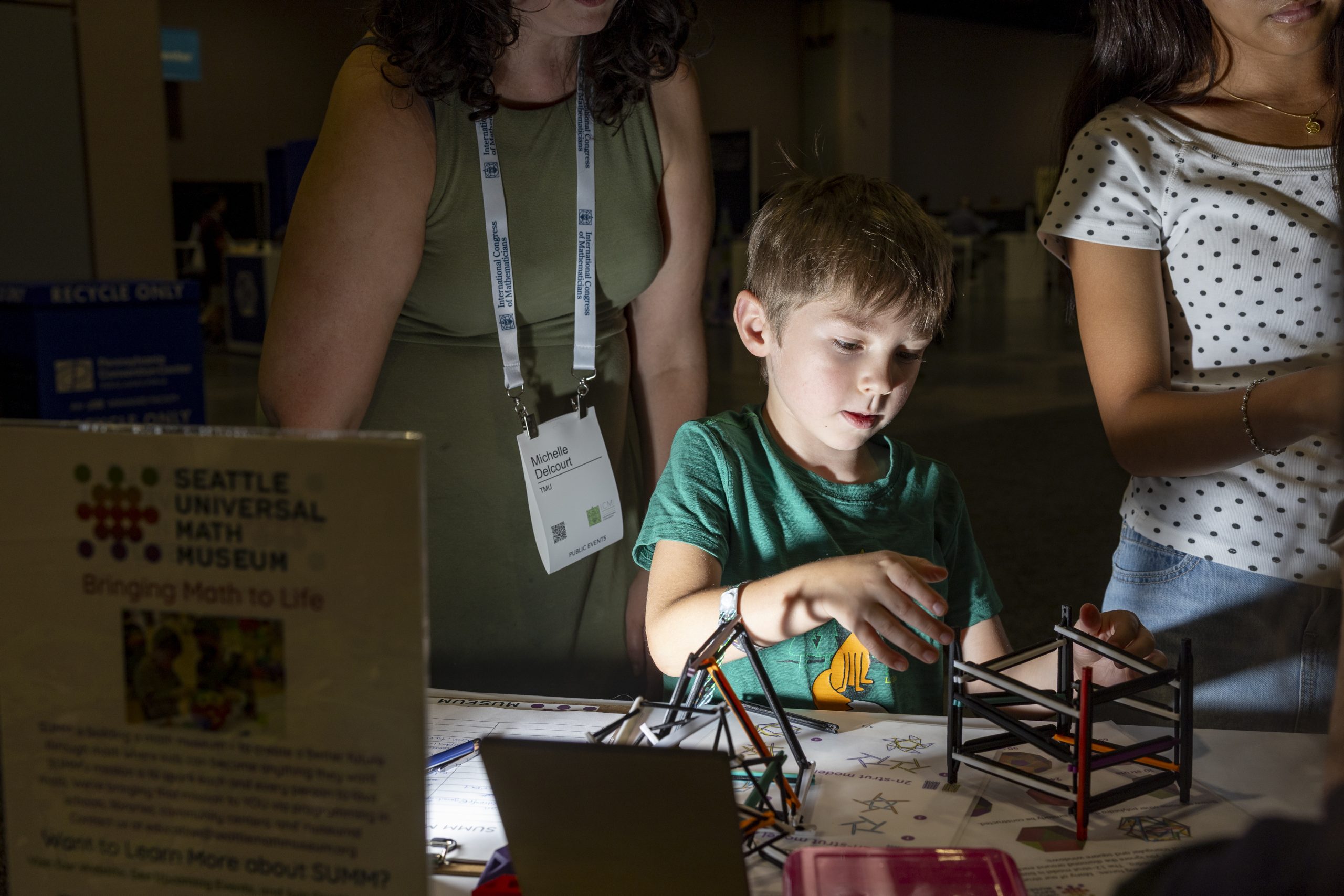
Magnus Postle, 5, of Waterloo, Canada, builds a tensegrity kit, which is a system of balancing tension and compression to create architectural pieces to appear to “float” during the 2026 International Congress of Mathematicians conference Saturday in Philadelphia.Aidan T. Gallo / Staff Photographer
In a bustling nook, renowned Duke University mathematician Ingrid Daubechies — another math rock star — showcased her world-famous multimedia art installation, Mathemalchemy. The 20-foot-long whimsical math wonderworld features tiny creatures and structures embodying complex mathematical concepts. She had created the installation with 23 other mathematicians and artists to showcase the beauty and creativity of math. Like a little model cat named Arnold who bakes perfectly rounded pi-cookies.
“People are constantly surrounding it,” Daubechies said, as crowds moved in.
At the festival, some mathematicians posed Philly-related probabilities. Like picking a random seat at Lincoln Financial Field that just happens to be in the premium club section (0.16), the likelihood that Kyle Schwarber hits a home run during the next Phillies game (0.36), or getting into the University of Pennsylvania (0.05).
“So it’s harder getting into Penn than it is getting a club seat,” explained Alissa Crans, a professor of mathematics at Loyola Marymount University, working the booth. “Got to have some Philly math fun!”
Others, like Ariana Chin, 26, who studies algebraic combinatorics at UCLA — an area of pure math that uses abstract algebra to solve elusive counting and structural problems — talked about what they love about math, and the hope it can bring, even amid the uncertainty.
“The beauty is the connections,” she said in the quiet of the crowd. “The beauty of mathematics is expanding those connections between things you wouldn’t expect to be connected.”
An off-duty Philadelphia police officer is a suspect in a homicide in Northampton County, according to the Philadelphia Police Department.
Police said Saturday that they are aware that the off-duty cop — identified as Kenroy Cummings — was involved in a shooting in Allen Township.
Shortly before 2 p.m. Friday, Pennsylvania State Police responded to the report of a domestic incident on the 1200 block of Old Gate Road.
At the scene, police discovered a 27-year-old man suffering from gunshot wounds. He soon died at a local hospital. After a brief car pursuit, the suspect returned to the scene, and surrendered to investigators.
“The Philadelphia Police Department’s Internal Affairs Bureau has been notified and has initiated the appropriate administrative investigation,” said a department spokesperson.
Pennsylvania State Police have not yet announced any charges in the investigation, or details on the victim. A coroner said Saturday that out of respect for the family’s privacy, the victim’s identity would not be released until after the autopsy.
It’s an interactive, color-soaked journey through creation that transforms at the whims of visitors.
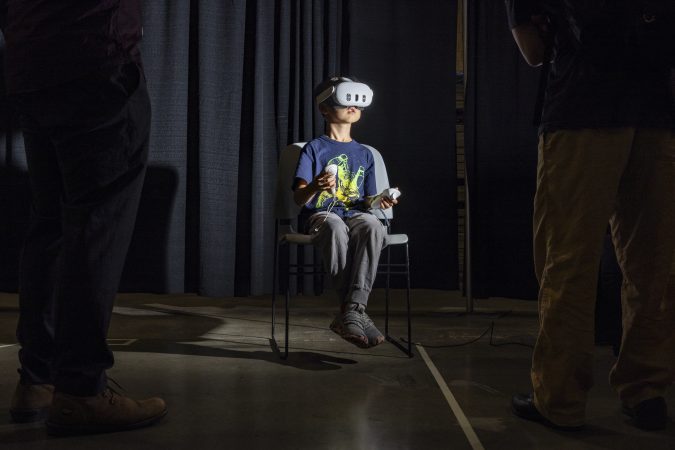
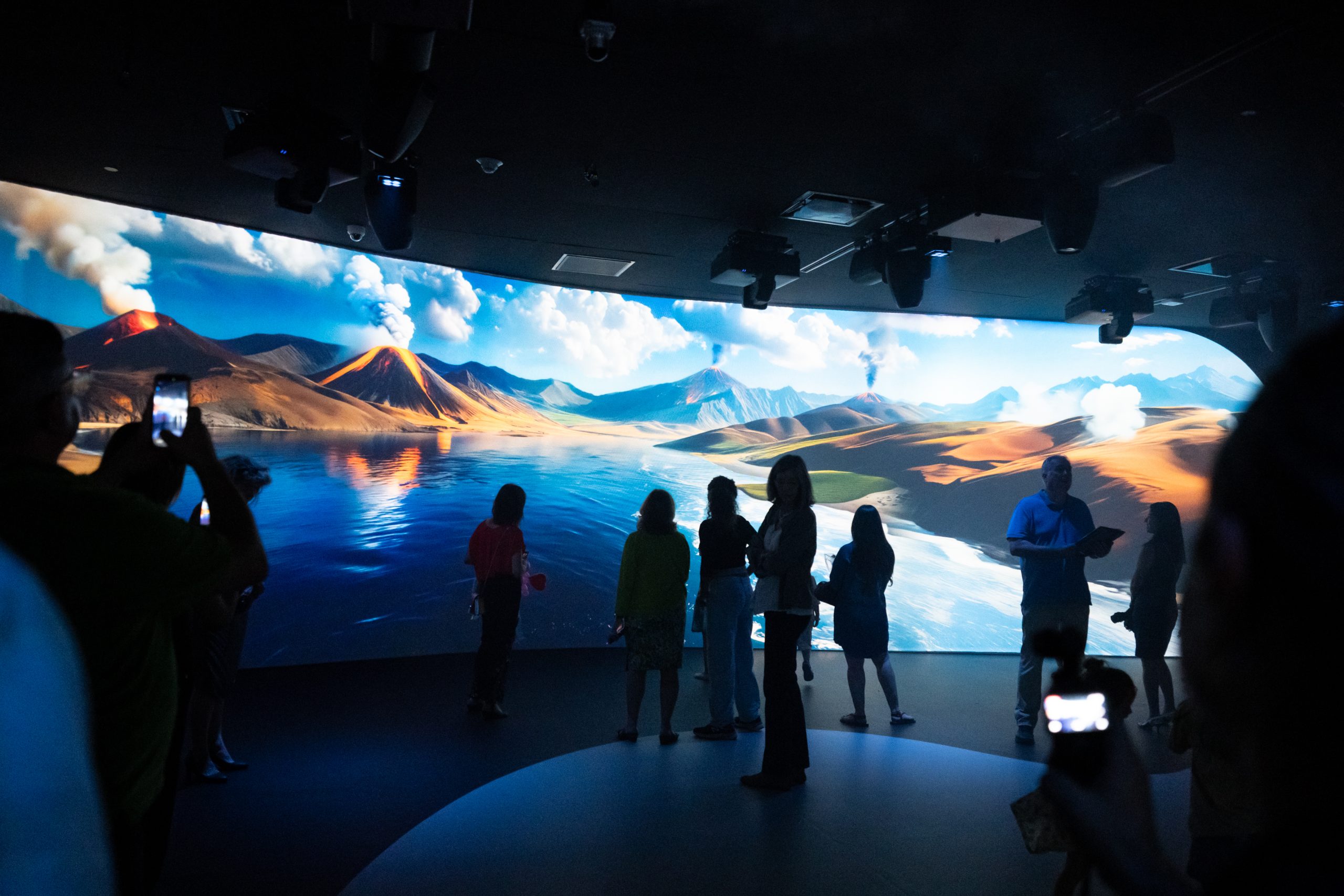
“Colors of Creation,” the centerpiece exhibit of a large new family gallery at the Weitzman National Museum of American Jewish History, opened July 21. The panoramic experience inspired by the story of creation combines concert-style lighting, interactive projections, and original music to present a form-shifting world of sound, light, and imagery.
“‘Colors of Creation’ is The Weitzman like you’ve never seen us before,” said Dan Tadmor, President and CEO of The Weitzman. “We started with a story that we all know to create this visually stunning — and most importantly, fun — space for families and visitors of all ages. It’s also a glimpse of where The Weitzman is headed: a museum where stories come alive.”
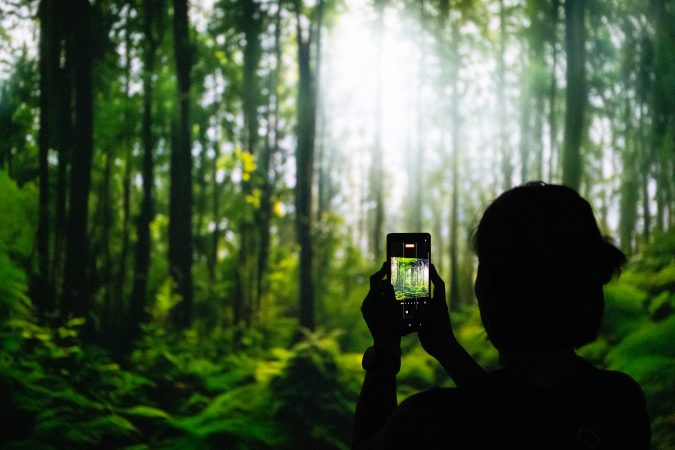
Attendees view panoramic projections during the Colors of Creation show at a preview event at the Weitzman National Museum of American Jewish History in Philadelphia on Tuesday, July 21, 2026.Erin Blewett / For The Inquirer
Designed to be inclusive of all faith traditions and scientific understandings of creation, “Colors of Creation” invites children on a multisensory journey through the origins of the world, Tadmor said.
Stepping inside the 30-minute explosion of color feels like entering the elusive Hall of Mirrors of an amusement park. Then color and sound blossoms all around, with light transforming into new images of life at a visitor’s every move.
“It’s an immersive space,” said Tadmor, on a recent afternoon, standing amid the changing colors and shifting images of an expanding universe. “And as more things are introduced into the world, more colors are introduced.”
The 7,000-square-foot gallery — including a hands-on play space for children featuring peg walls, magnetic puzzles, and light tables — is the second of three major openings at the Weitzman in 2006. “First Salute” — the museum’s landmark 250th exhibit exploring a forgotten story about Jews who helped win the Revolutionary War — opened in April.
In October, the museum plans to open a new exhibition dedicated to modern antisemitism. The renewal of the 100,000-square-foot museum, which opened its new building on Independence Mall in 2010, comes as it recently unveiled a $100 million fundraising campaign. With half the money already raised, those funds will go to revamping exhibitions, renovations, and an endowment.
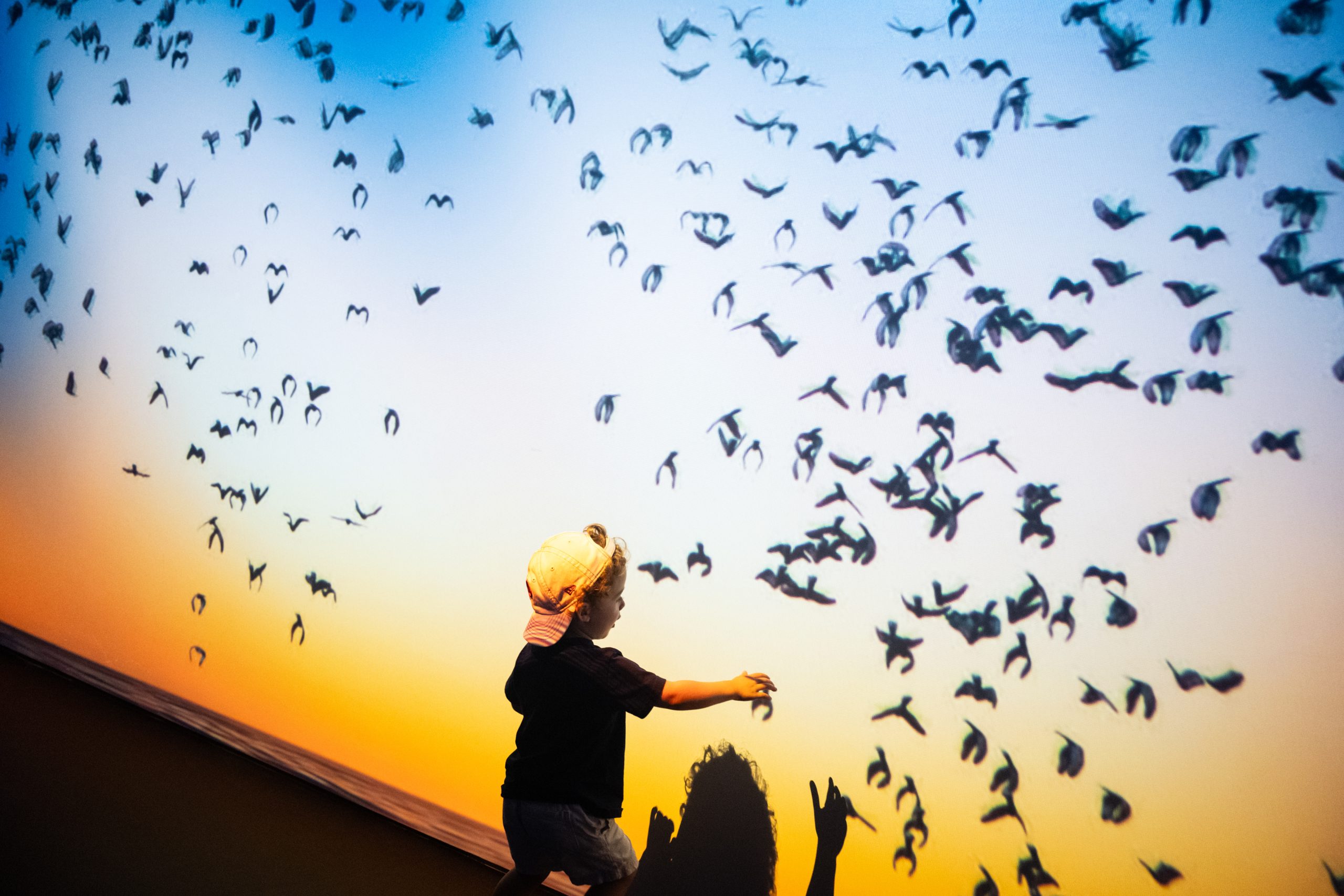
Asher Kirschner interacts with projected imagery during the Colors of Creation show at a preview event at the Weitzman National Museum of American Jewish History in Philadelphia on Tuesday, July 21, 2026.Erin Blewett / For The Inquirer
As visitors move through “Colors of Creation,” more colors explode onto one the exhibition’s screens, an expanding universe of life followed by a vast sky of shooting stars and far away galaxies.
”It’s a chance to be mindful of the beauty and value of what we’ve been given,” said Tadmor, worlds of color forming all around. “We’ve got this gift — let’s appreciate it and take care of it.”
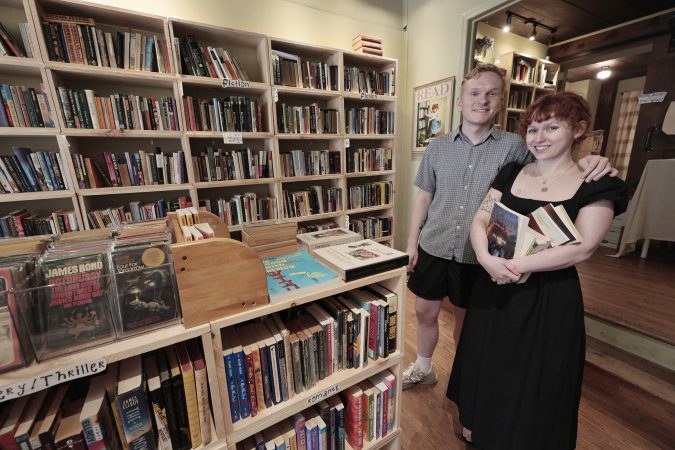
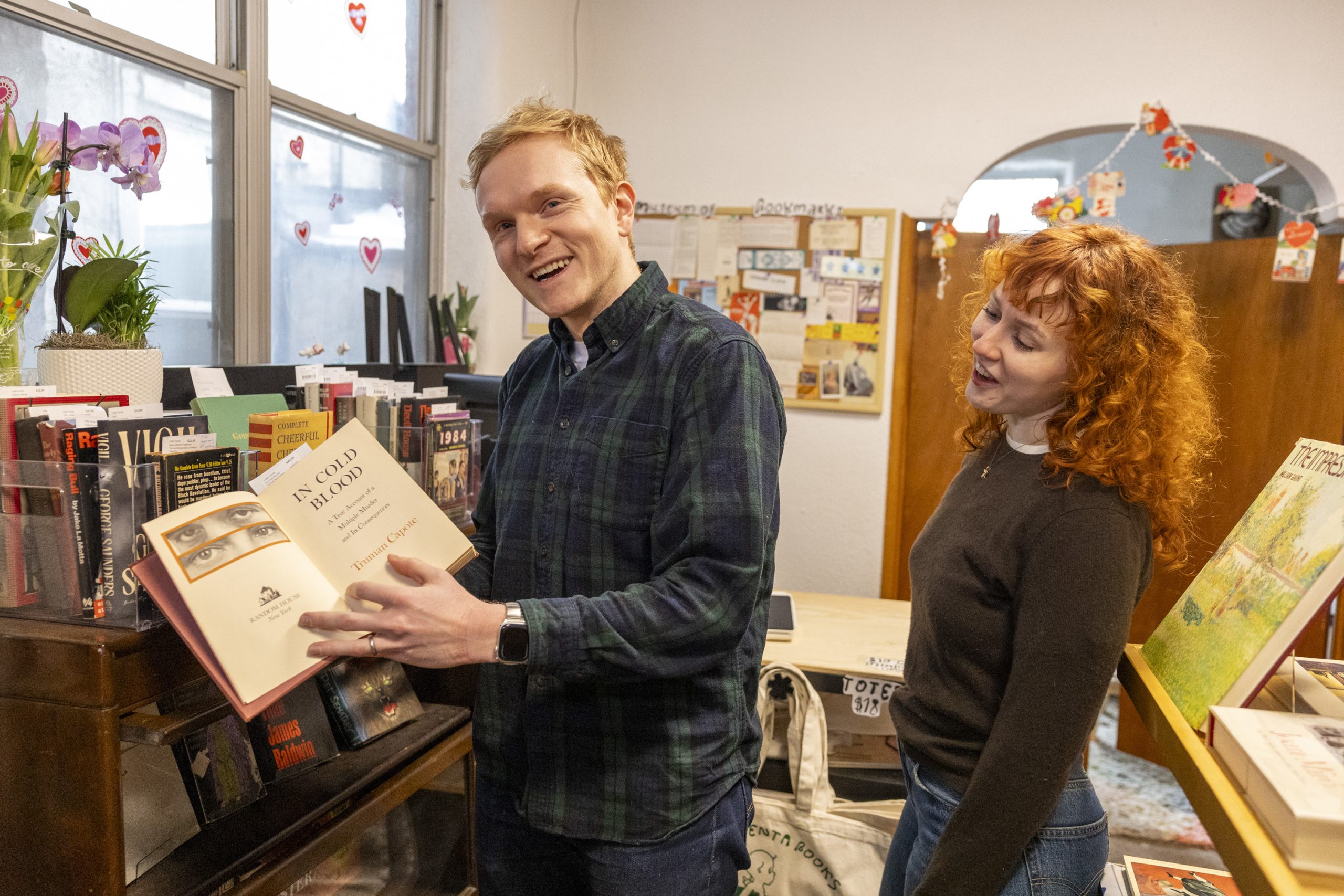
When Ariel and Simon Censor opened their tiny used bookshop — Little Yenta Books — in the back of a South Philly children’s dressmaking shop in February, they knew it was an unconventional setup.
What the couple — in life and now books — could not know is just how fast they would outgrow the space.
And although they’re relinquishing the unofficial appellation as Philadelphia’s tiniest used book shop, the pair has moved their impressive literary thicket from their 150-square-foot loft space into a full-sized rented storefront on Passyunk Avenue.
The problem was a great one: Business is booming.
“People were telling us that they would walk by because it was way too crowded and they couldn’t fit,” said Ariel Censor, sitting behind the counter of the new shop, located at 1912 E. Passyunk Ave., home of the former Civil Stock General Store, which closed earlier this year. “We also just ran out of shelf space. We had way more books than we could fit.”
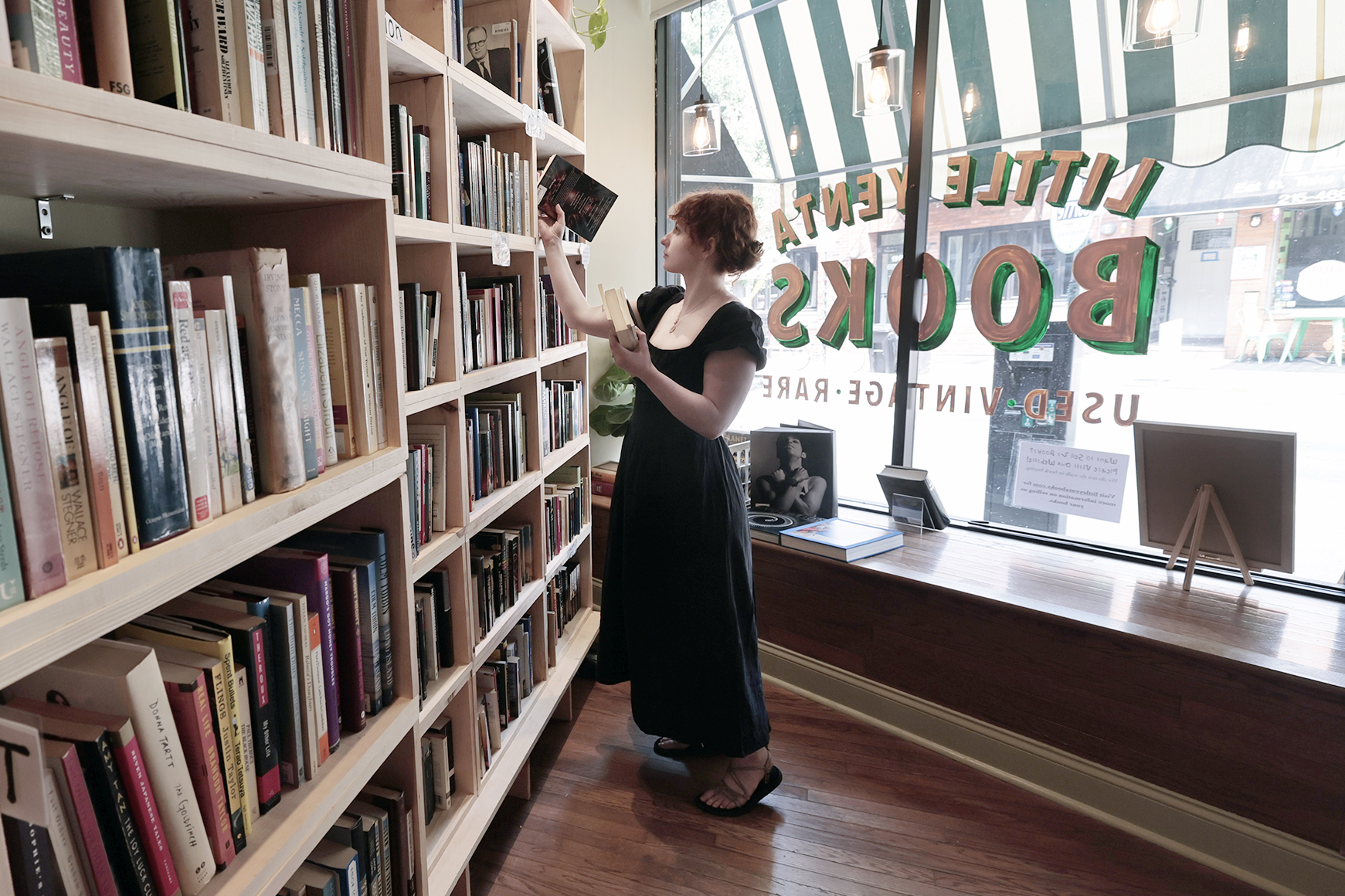
Little Yenta Books co-owner Ariel Censor stocks the shelves with books at the new shop on East Passyunk Avenue in Philadelphia on Friday, July 17, 2026.Elizabeth Robertson / Staff Photographer
The popular used bookstore — the only one along Passyunk — has nearly tripled its titles in the new storefront, which they opened last month. That means a whole lot more of the popular and literary fiction, classics, vintage sci-fi, poetry, and rare books customers have been buying up.
“People really complimented our curation,” Censor, 27, said of the shop’s success. “People thought our taste was good, and our prices were good, and that they are really happy to have us.”
The couple — Haverford College grads who live in the neighborhood — opened their initial tiny shop as a passion project, after holding used book pop-ups in South Philly bars.
Simon Censor, of Providence R.I., and Ariel Censor, of New York City, opened Little Yenta Books, in East Passyunk in February. They have now moved into a larger space nearby.Tyger Williams / Staff Photographer
Situated speakeasy-style, in a postage-stamp-sized loft above the Painted Lady children’s boutique, the shop burst with over 1,500 titles.
Now, with its green-and-white striped awning, stained-glass light fixture, and charming decor, the new shop has a spacious, homey feel.
“One thing we got with the little shop is that people really liked that it wasn’t overwhelming,” said Censor. “They could look at every book. We have tripled the amount of books but wanted to make it feel manageable and still have a real eye to curation. I’m really excited about the mix of modern and classics that we have.”
The expanded shop comes with expanded hours, with Little Yenta Books now open every day except Tuesday and Wednesday.
On a recent afternoon, Aine McCauley, 24, dropped in at the new shop on her way home from work. She perused the shelves before landing on a copy of André Aciman’s 2008 coming-of-age novel, Call Me by Your Name.
“It’s so awesome,” she told Censor about the shop. “You have every good book in here.”
The sacred space sits quiet now. But amid the ruins and solemn silence, one can almost hear the ghostly prayers of the damned. Inmates from a century ago, whose bodies were incarcerated, but whose souls found escape.
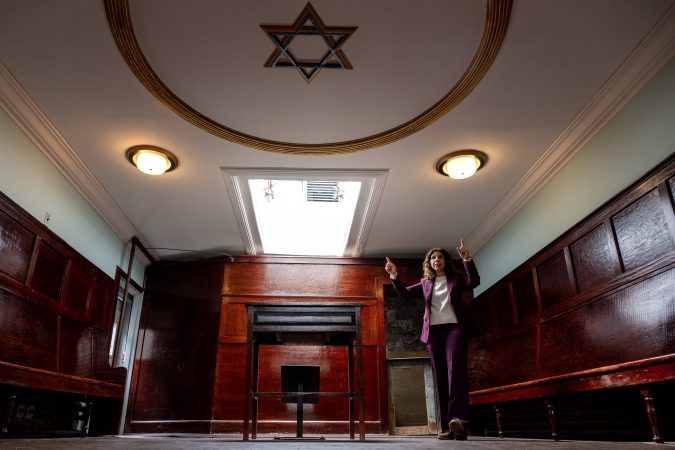
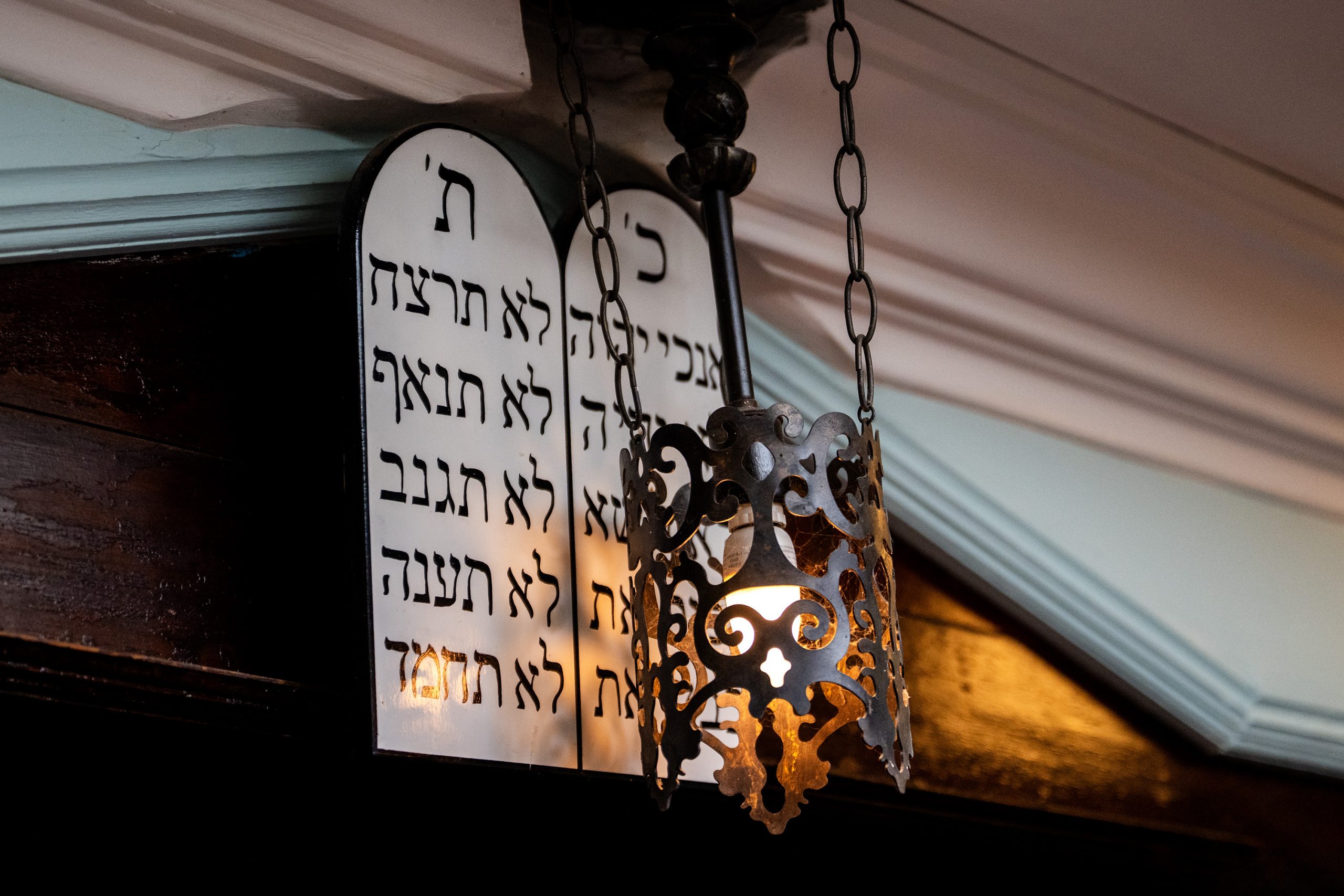
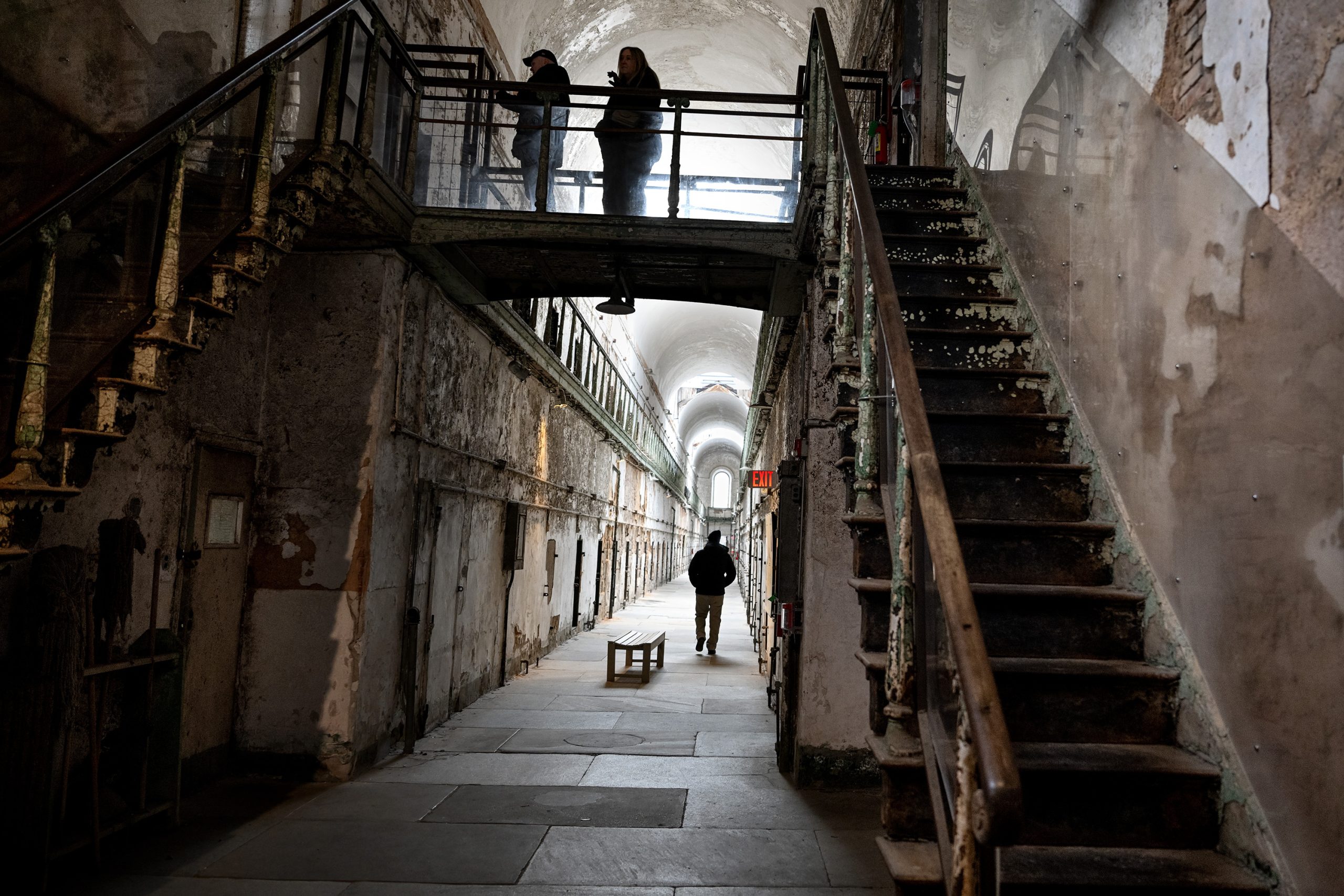
On July 2, Eastern State Penitentiary opened its new permanent exhibition, “Freedom Through Faith: Judaism at Eastern State and Beyond.” Centered in the historic penitentiary’s painstakingly restored synagogue — the first within a U.S. prison — the exhibit powerfully recounts how incarcerated Jewish people and local Philadelphians came together amid rising antisemitism in the 1920s to construct a sacred space unlike any other in the United States.
A Ten Commandments tablet in Eastern State Penitentiary’s Alfred W. Fleisher Memorial Synagogue.Tom Gralish / Staff Photographer
“We are so excited to open our newest permanent exhibition, especially in such a powerful year, to explore this remarkable story,” said Kerry Sautner, president and CEO of Eastern State. “This is a powerful sacred space that all Americans should visit and learn from.”
A tale of hope
As the nation continues to celebrate the 250th anniversary of the Declaration of Independence, the exhibit examines how one of America’s founding ideals — religious liberty — was experienced at America’s first penitentiary, opened in Fairmount in 1829, and which emphasized strict solitary confinement as a path to true penitence.
By combining a gripping mix of personal stories, archival materials, letters, photographs, and historical artifacts, and the power of the space itself, the exhibit tells a tale of hope.
The space was first established as an informal synagogue in 1922 in a former prison yard and weaving shop. It was restored by researchers in 2009.
“In the very place that invented solitary confinement, a small group of civically minded Philadelphians came together to build a community rooted in faith and belonging,” said Sautner, who served as chief learning officer at the National Constitution Center before coming to Eastern State in 2023. “Their work was revolutionary then, and we still have much to learn from it today.”
The story of Jewish Philadelphia
To tell the tale of the forgotten synagogue, Eastern State researchers tell the tale of Jewish Philadelphia itself.
Fleeing pogroms and poverty in Eastern Europe, more than two million Jews immigrated to America between 1880 and 1924. Tens of thousands settled in Philadelphia, where, like so many other marginalized immigrant groups, they experienced hardships and prejudice. Some landed behind Eastern State’s imposing 30-foot granite walls, and served their sentences mostly in solitude.
Until the synagogue, Christianity dominated life in the prison, where ministers preached in the cell blocks. Isolated from their families and religious life, Jewish inmates were pressured to convert, Sautner said.
“The only time people got real human contact with another human was the rabbi and the clergy from the Jewish community coming in and checking on their cells,” she said.
With urging from the outside community, prison officials allowed Jewish inmates to hold religious ceremonies in the prison’s cramped emergency hospital in 1913. It was the first known communal gathering in the prison’s history.
“This is a revolutionary act,” said Sautner. “It happens because of the influence of the Jewish community in Philadelphia.”
A grim mellowness
Soon the inmates were holding weekly Shabbat services. In 1917, an article in The Jewish Exponent, a local Philadelphia paper, reported on the first inmates-led Passover Seder at the prison. The article described how the inmates built a Torah ark — the sacred and ornate chamber that houses the Torah scrolls — for the service.
Visitors in a cellblock at Eastern State Penitentiary on Feb. 26. The historic prison is hosting a yearlong slate of free public programming celebrating the 250th anniversary of America.Tom Gralish / Staff Photographer
By 1922, with the help of Philadelphia philanthropist and prison reformer Alfred W. Fleisher, the inmates began meeting in their makeshift synagogue in the tucked away weaving shop. In 1928, the prison rabbi, Isaac Feinberg, worked with local Philly design firms to design a proper synagogue, which was unprecedented in an American prison.
“The Jewish community on the outside is working with the community on the inside,” said Sautner. “This is communal teamwork to give one another a chance to hold onto their identity and hope.”
The designs were eventually implemented by two incarcerated men: Jacob Forbes and David Goldman — and other inmates who learned trades to help complete the synagogue.
“It was designed and developed by incarcerated people here,” Sautner said. “Some who were Jewish and some who were not. But it was really about, ‘How do you hold onto community?’”
Named in memory of Fleisher, the completed synagogue, according to a 1920s newspaper article, “lends a mellowness to that grim institution.”
The synagogue was built of dark cherry wood with a white-tiled ceiling, and bearing a metal Star of David on the door.
‘A sacred place’
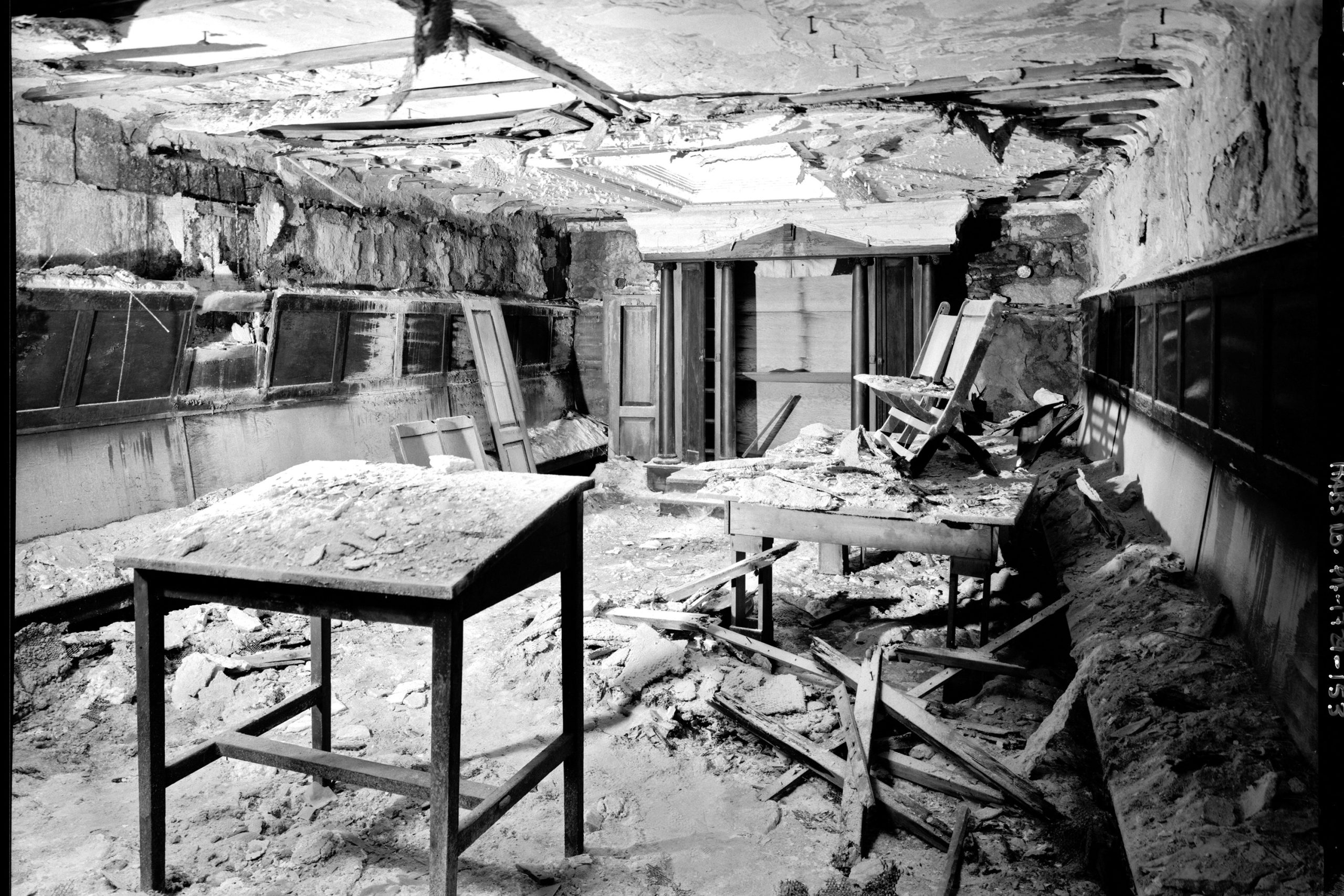
By 2009, the synagogue was in ruins, buried beneath a caved-in roof in a mostly abandoned section of the prison. Researchers meticulously sifted through the dirt and disrepair, finding a jar holding the synagogue’s former Star of David.
The 1924 Alfred W. Fleisher Memorial Synagogue as it appeared in 1998, before restoration. It was the first dedicated Jewish house of worship in a U.S. prison, and was restored in 2009 to its 1959 appearance.Jack E. Boucher / Library of Congress
For the exhibit, the nonprofit that owns the former prison spent more than $500,000 to restore the space to its 1950s solemnity, also rehabbing a nearby prep kitchen that served as the synagogue Seder space.
The exhibit, open seven days a week, occupies an adjacent room, allowing visitors to stand in the quiet of the synagogue to imagine the peace and belonging found there by souls gone by.
“We wanted you to be in the synagogue,” said Sautner. “To be in a sacred place.”
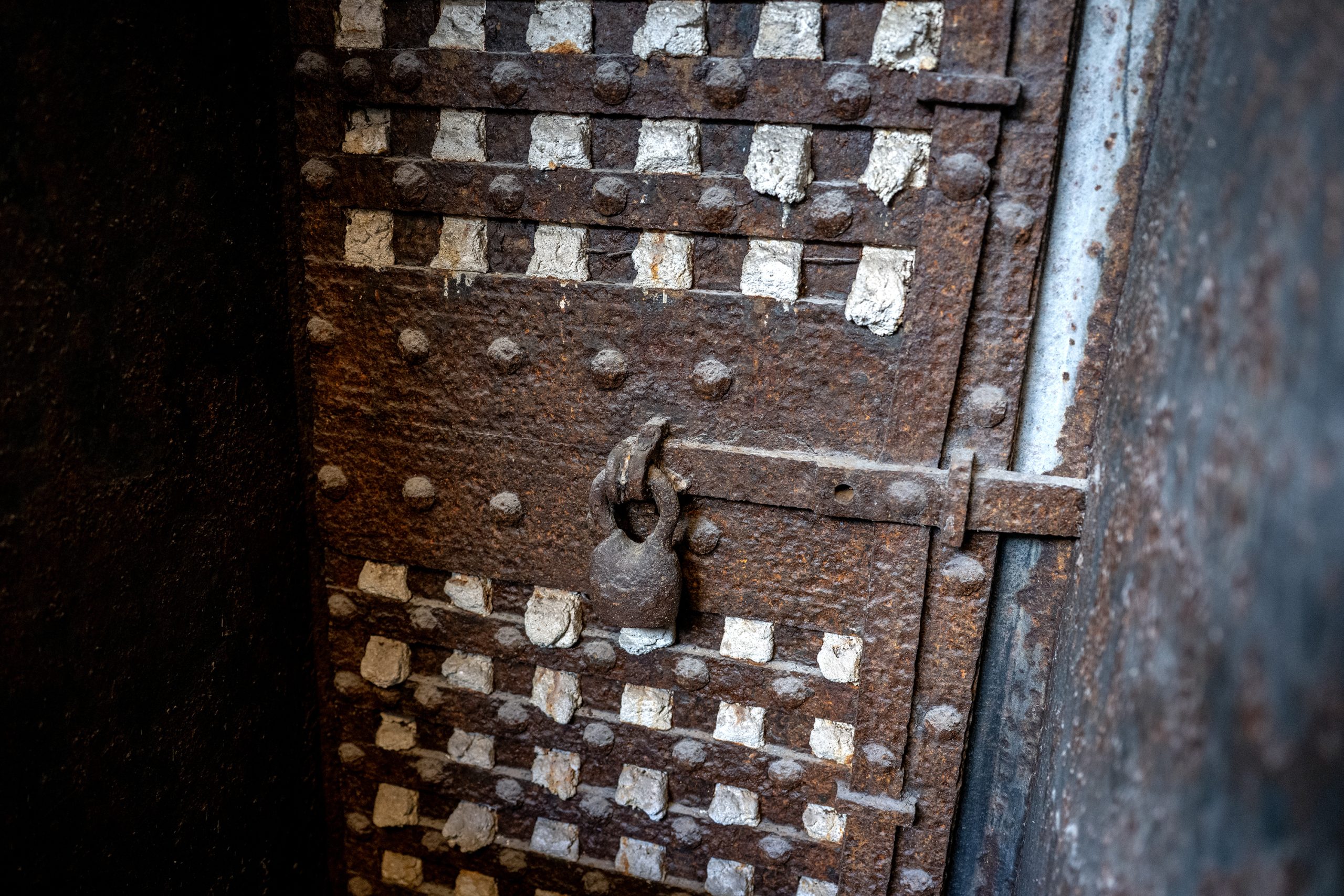
Metal doors — with huge 1830s padlocks sealed behind a wall in 1924 — in Eastern State Penitentiary’s restored 1924 Alfred W. Fleisher Memorial Synagogue. It was the first dedicated Jewish house of worship in a U.S. prison, and was restored in 2009 to its 1959 appearance. The metal doors were revealed when the walls were removed during the renovation. The doorway once led from cells in Cellblock 7 to individual exercise yards. The metal door kept the prisoners in while wooden doors kept the weather out.Tom Gralish / Staff Photographer
Philadelphia hotels reached nearly 90% occupancy on July 4, according to exclusive new data released Friday by Visit Philadelphia. The number represents the highest average daily rate since the agency began tracking July 4 data in 2007.
The previous high was 60% occupancy on July 4, 2016.
“The July 4 holiday gave us an early glimpse of what’s possible this year,” said Angela Val, president & CEO of Visit Philadelphia, the nonprofit that serves as the city’s official leisure-tourism marketing organization. “Hotels were nearly full, and the strong demand we’re seeing is a great sign for the months ahead.”
City hotels generated nearly $6 million in revenue alone on July 4, the data showed. Overall, Philadelphia County hotels reaped more than $7 million.
The average city hotel daily room rate soared to $459 on July 4 — more than double last year, Val said. Philadelphia County room rates reached $413.
“We’re only halfway through 2026,” Val said. “There are still major events and celebrations to come, and we’re focused on making this a year that inspires people to come back to Philadelphia again and again.”
Those numbers come just as the Philadelphia Convention and Visitors Bureau announced Friday that Philly hotel revenue jumped more than 50% during the city’s six FIFA World Cup matches.
“Philadelphia thrives when our city, business community, and hospitality industry come together to welcome the world and showcase all that our city has to offer,” said Gregg Caren, president and CEO of the PHLCVB. “We anticipate the FIFA World Cup will inspire not only future international travel to the city but serve as a shining example of how we can successfully execute major global events, drawing key future business to Philadelphia.”
In June, officials from the Greater Philadelphia Hotel Association expressed concern that some of Center City’s 14,500 hotel rooms were still available on match days, hosted at Philadelphia Stadium from June 14 to July 4.
On Friday, John Fricke, chair of the GPHA, said the crowds came.
“We’re fortunate that our city and hotel team are used to welcoming guests during major events in Philadelphia,” Frickle said in a statement. “But the FIFA World Cup was something truly unique. Hearing guests share how much they enjoyed Philadelphia’s history, neighborhoods, food, and their overall experience was incredibly rewarding — it was a proud moment for us, and a great reminder of why hospitality is so special.”
More than 400,000 fans from 190 countries attended the matches, while crowds of 250,000 packed into the FIFA Fan Festival at Lemon Hill, according to the Philadelphia Convention and Visitors Bureau.
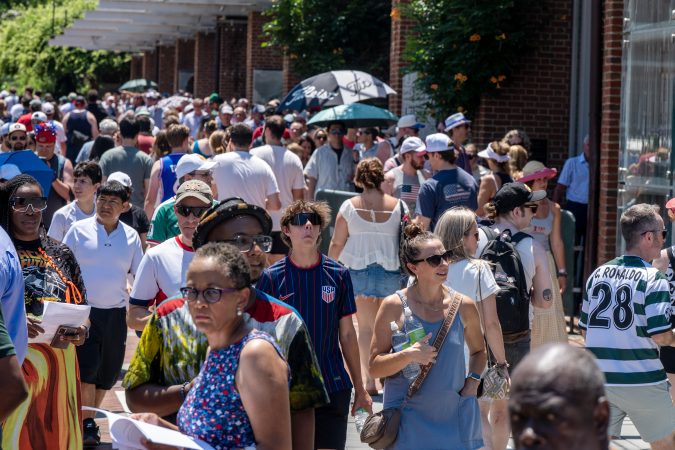
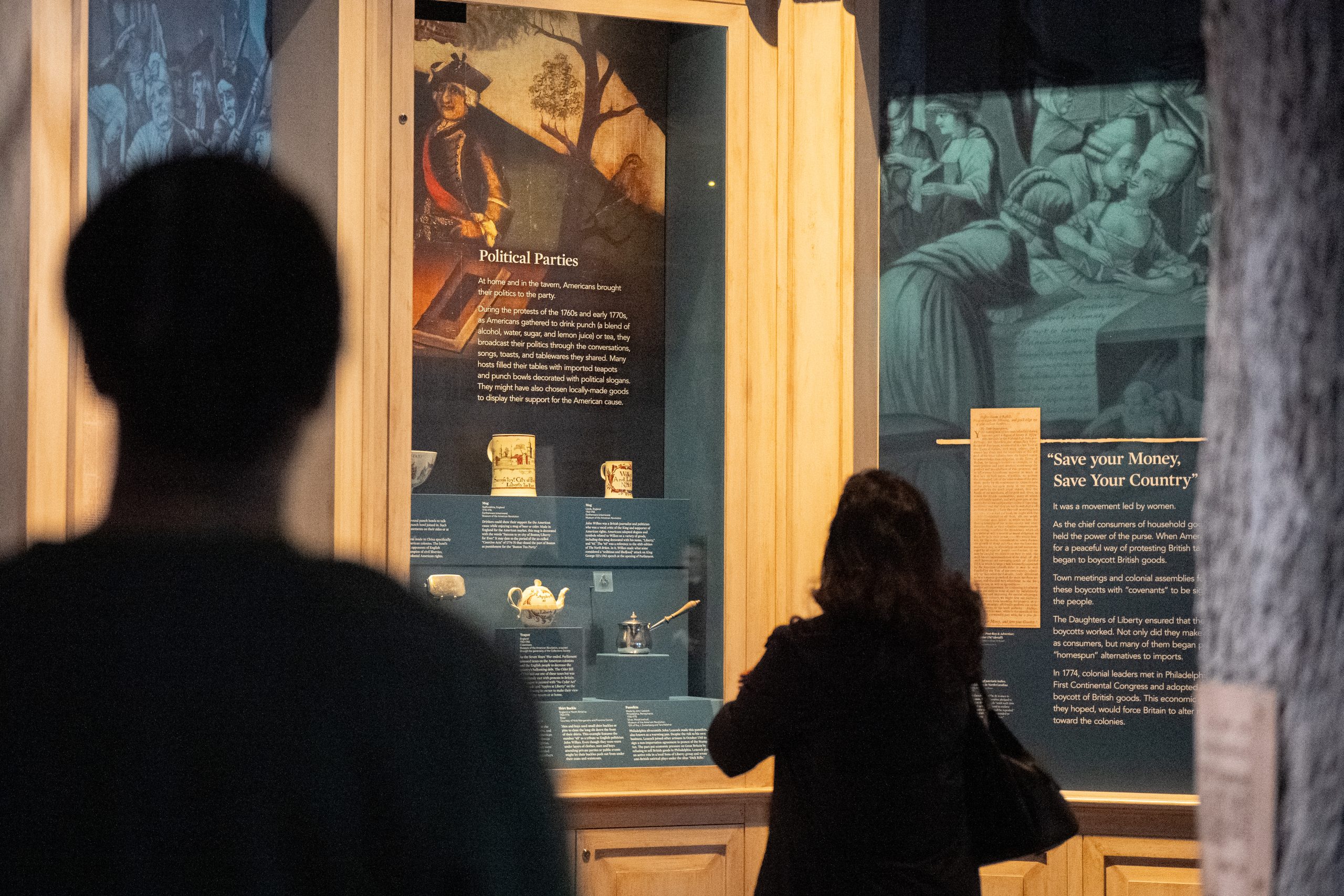
Guests tour the Museum of the American Revolution in Old City.Jessica Griffin / Staff Photographer
Philadelphia cultural institutions also reported historic numbers, with more than 12,000 people visiting the National Constitution Center and the Museum of the American Revolution during Independence Week, according to data released by the city.
The Revolution museum hosted 8,000 visitors over the holiday weekend alone, its highest three-day attendance ever.
“The 1st to the 5th was the biggest week we’ve had,” said Scott Stephenson, president and CEO of the museum, which opened in 2017. “July 3 was our biggest payday since the museum opened.”
The museum was nearly at capacity on July 3 and 4, said Stephenson, who spent hours letting long lines of guests into the museum’s grand theater exhibit featuring George Washington’s original field tent, which ran every 15 minutes instead of once an hour.
And it wasn’t just the crowds. It was the vibe that was special, Stephenson said.
“I was just so positive,” he said. “It was just a lot of pride and optimism. People were chatting with each other and having such a great time together, really celebrating our country.”
“You know we wondered in the years leading up to this if there still was an impulse for families to come to Philadelphia for the 250th,” he said. “The question was, ‘Well, are they going to come?’ And boy, they came.”
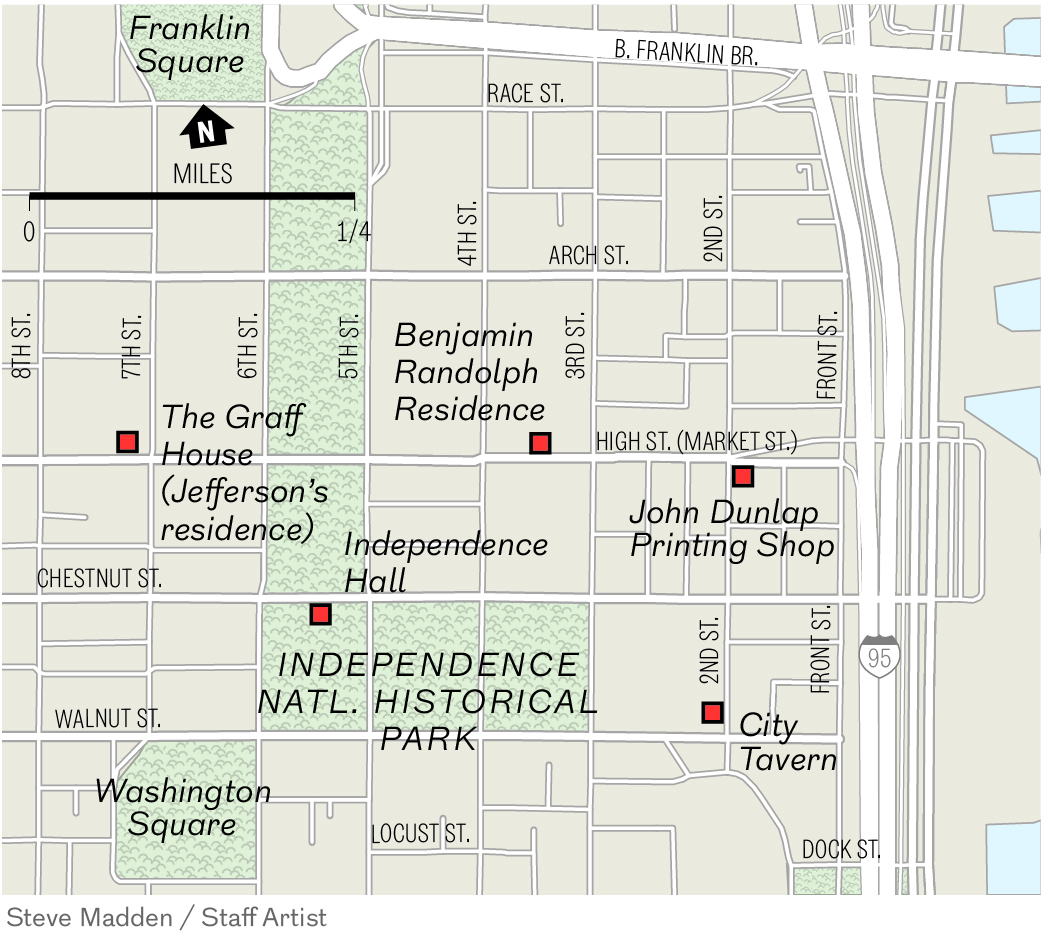
John Dunlap, 29, an immigrant from Northern Ireland who operates a printing shop at Second and High Streets, a short stroll from the Pennsylvania State House, where the rebels conspire, has watched with keen attention the epochal events of the preceding days.
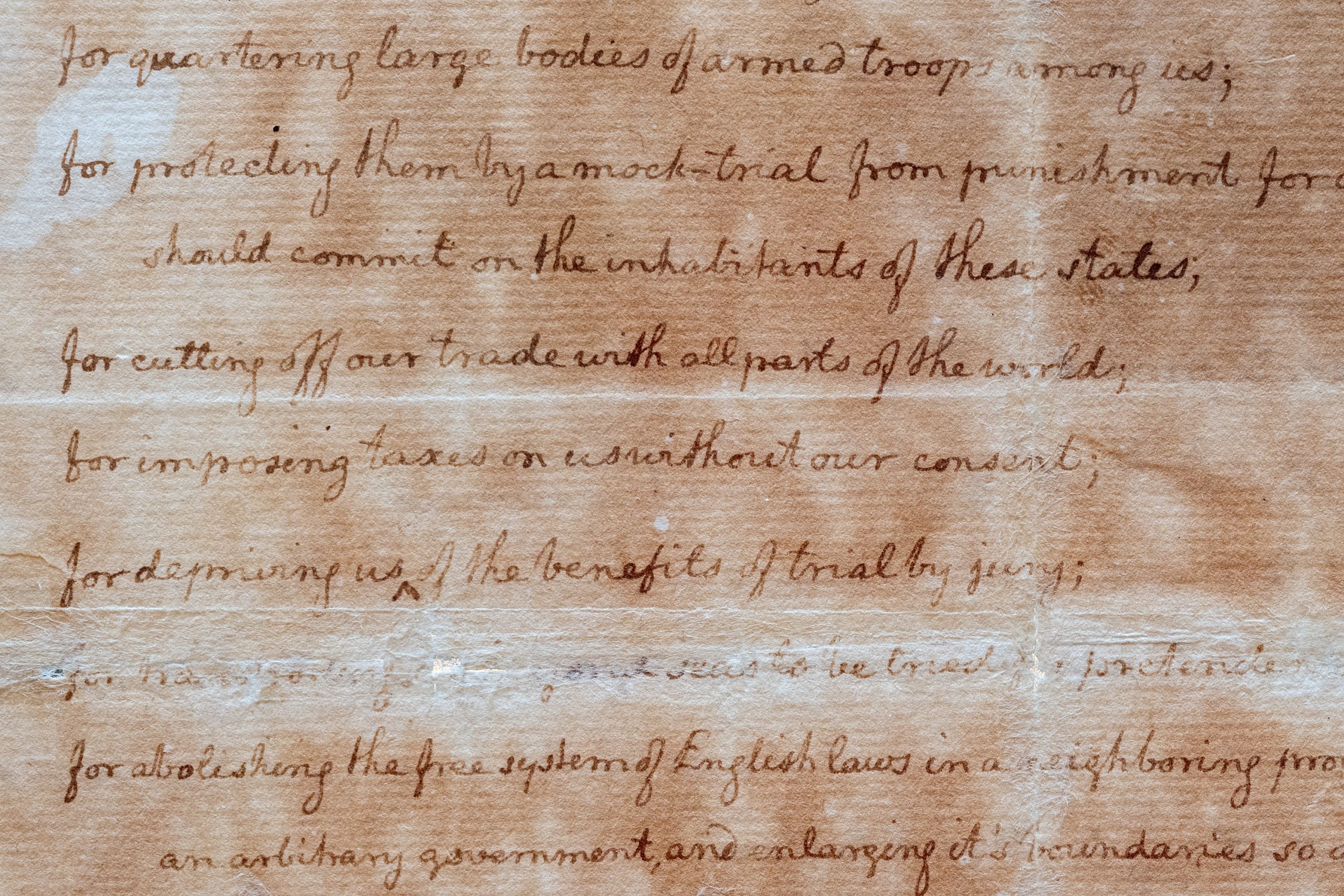
A faded copy of a draft of the Declaration of Independence handwritten by Thomas Jefferson.Tom Gralish / Staff Photographer
The exultant patriots and curiosity seekers who braved suffocating summer heat to stand watch outside the State House on July 1, when the 56 delegates of the Second Continental Congress finally commence their locked-door debate on independence. The rapture that seems to ring out from every Philly tavern and tippling joint, coffee house, and street corner on July 2, when word that Congress voted to sever ties with King George III spreads through America’s largest and wealthiest city, like a bolt from one of Dr. Franklin’s electricity experiments. The joy. Hope.
And now, as an unusually mild morning gives way to rain-laden clouds, Philadelphia holds its breath upon the brink of a mighty happening.
Cloistered inside their chambers, the delegates fiercely debate and painstakingly parse Thomas Jefferson’s draft of America’s founding creed. Its passage will formalize independence.
The ink-stained Irishman with the whipcord build of a jockey prepares the shop for the Herculean task he knows is coming. The delegates will desire to thunder out the news of American independence before the iron gall ink even dries on the Dutch paper. John Hancock, 40, charismatic president of the Congress, will want as many broadsides as Dunlap can muster by dawn. Printing broadsides by hand in sweltering, trembling candlelight — meticulously setting the type, carefully rolling the ink, and pulling the heavy presses — is messy, demanding work, the hardened printer knows. He’ll plan to toil until morning’s light.
Outside, citizens collect in High Street. Soon, the print shop door pushes open. A man, his face obscured by the sun, darkens the doorway. He holds something close. A rag paper manuscript written in fine hand, still wet from fresh changes, and borne by delicate hand to the expectant printer. Words upon which a nation now rests. A declaration.
At the Second Street boarding house of Mrs. Sarah Yard, John Adams, 40, awakes before dawn. The unyielding lawyer and farmer from Massachusetts has become accustomed to the city’s morning clarion cry of crowing roosters, ringing bells, clanking ships, and cursing sailors. But not its heat.
Behold this atlas of independence at his breaking point. Exhausted. Homesick. Hot. Beyond cantankerous that any rational being could yet flinch at the surety and necessity of American independence. For weeks, Adams answers angry letters from citizens demanding to know why Congress stalls.
“The only question is concerning the proper time for making a specific declaration in words,” Adams writes, barely concealing his own impatience. “But remember you can’t make thirteen clocks strike precisely alike at the same second.”
John Adams and his cousin, Samuel, shared a boarding house near the City Tavern in July 1776. This reconstruction of the original tavern was built in 1975.Tom Gralish / Staff Photographer
For nearly two years, John Adams has fought for liberty like a bruising prizefighter, while his less refined older cousin, Samuel, 53, conducts a campaign of persuasion in the shadows. No one has done more than John Adams for independence. On this morning, John Adams dresses in the twilight, wishing that he had been blessed with the graces and gifts of ancient orators.
“This morning is assigned the greatest debate of all,” Adams writes before leaving for the State House. “A declaration, that these colonies are free and independent states, has been reported by a committee some weeks ago for that purpose, and this day or tomorrow is to determine its fate. May heaven prosper this newborn republic.”
At 9 a.m. on July 1, 1776, Andrew McNair, old and gray bellman of the State House, pulls shut the chamber’s heavy doors. Hancock gavels history to order.
In the silence, rises Pennsylvania’s reluctant rebel, John Dickinson. His writings once rallied American farmers against British taxes. Now, ghostly and gaunt from illness, he remains a dogged dissenter against independence. Summoning his strength, he abides his conscience, arguing America is not yet ready.
To proceed with a declaration during an uncertain struggle would be “to brave the storm in a skiff made of paper,” he tells his colleagues, before sitting.
Outside, the heat breaks. Rain beats against the chamber’s tall windows. Thunder booms. Lightning flashes.
Adams stands. He speaks over the stormy din. His precise words are lost to posterity. He speaks for two hours. John Adams moves men.
Adams speaks “with a power of thought and expression that moves us from our seats,” Jefferson, remaining characteristically mum at his table, will later recall.
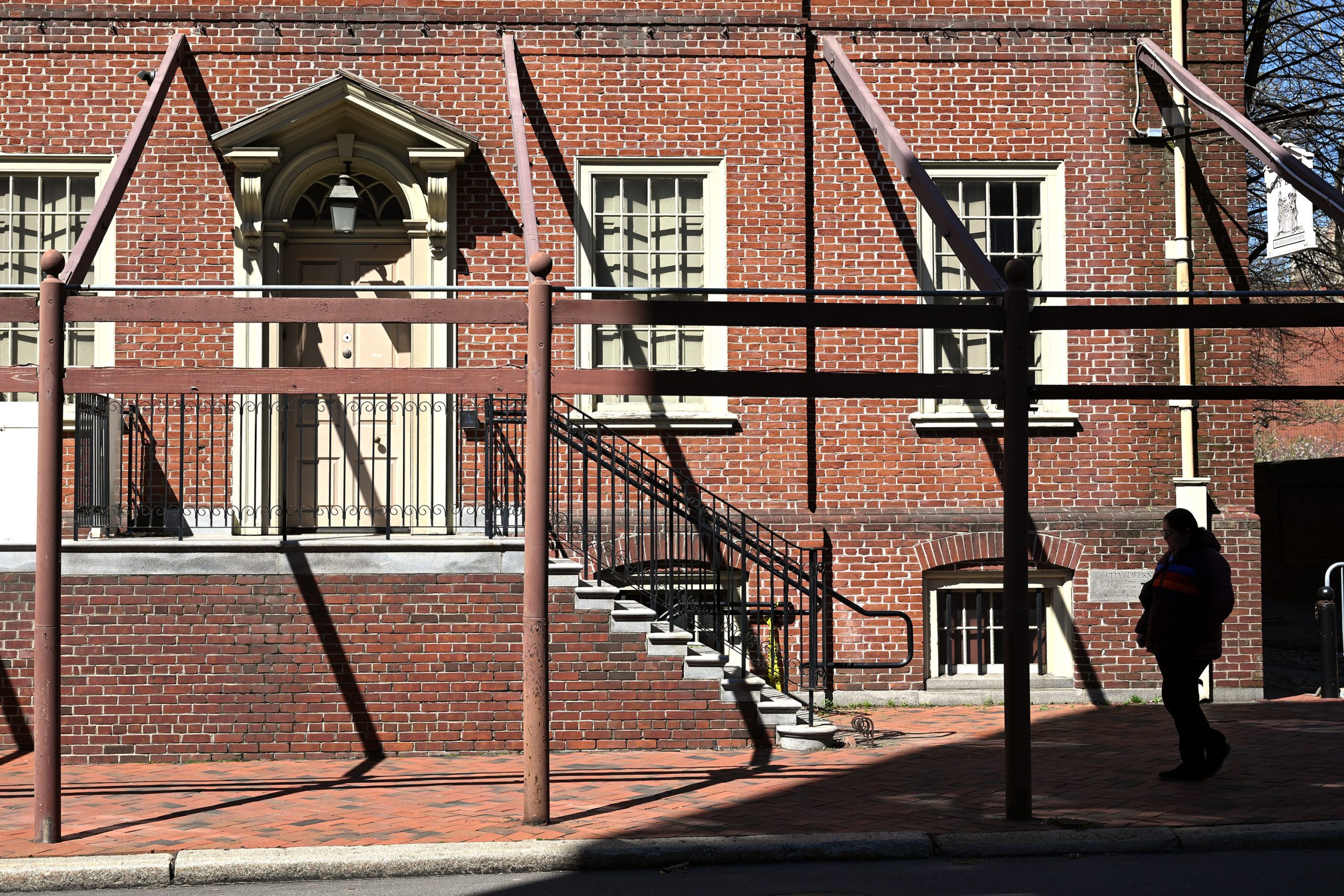
Recreating the daily hub of the Revolutionary City in 1776. You can hear the cannons from the bell tower of the Pennsylvania State House at Sixth and Chestnut Streets, where the rebels conspire. Now, it’s Independence Hall, photographed April 14, 2026.Tom Gralish / Staff Photographer
A preliminary vote is taken by candlelight. Despite popular opinion, four colonies — including four members of Pennsylvania’s critical seven-man delegation — vote no.
Late into the night, at the City Tavern, the delegates drink upon tenterhooks.
July 2, 1776
The second day of debate begins with a prosperous portent. Caesar Rodney, of Delaware, mud-splattered boots and spurs, arms akimbo, bursts in before the doors to Congress close. The gravely ill delegate rode 80 miles through the tempest to cast his vote for independence.
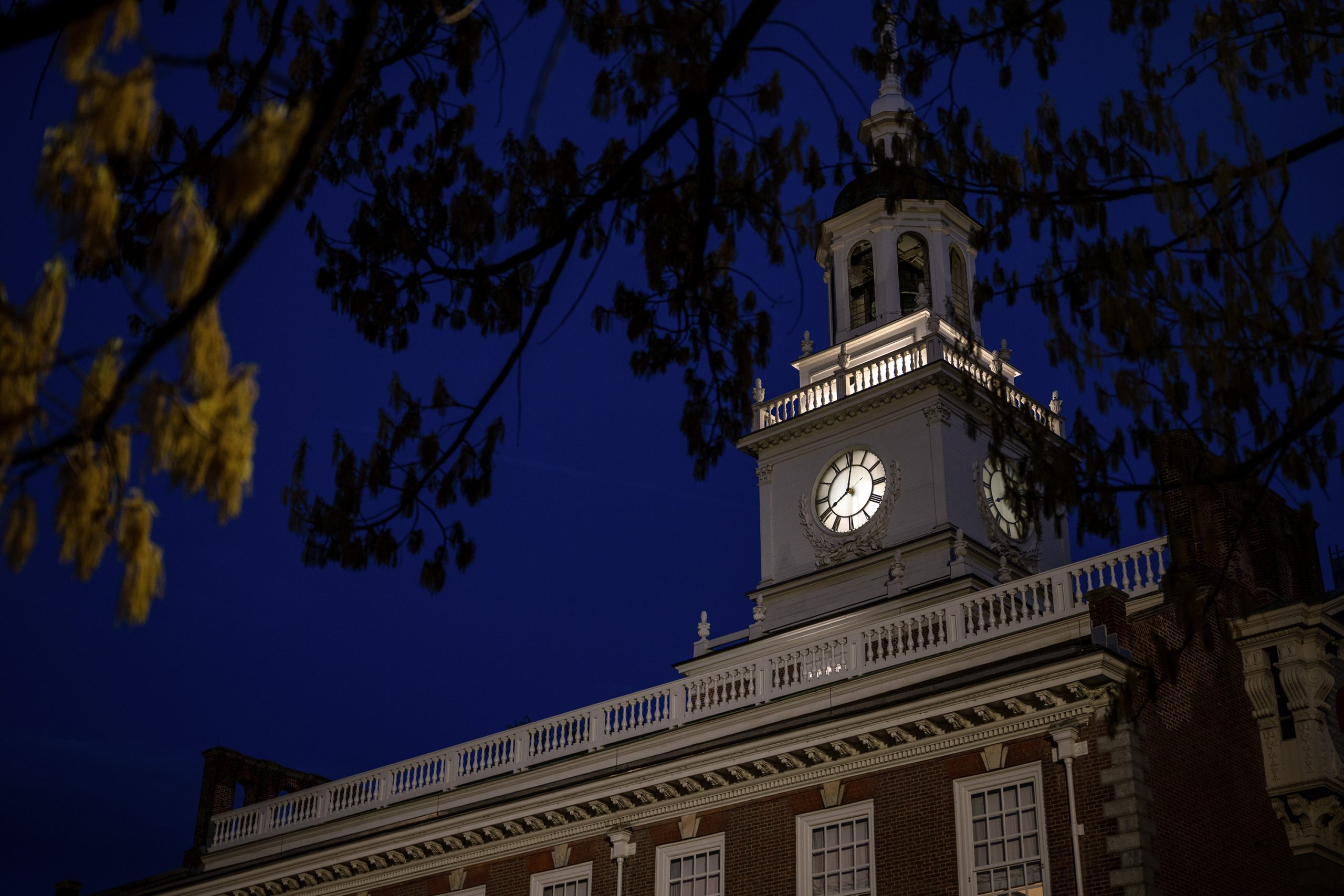
Replica desks in the Assembly Room in Independence Hall, known as the Pennsylvania State House in 1776. This is the exact space where the Second Continental Congress met and the Declaration of Independence was adopted.Tom Gralish / Staff Photographer
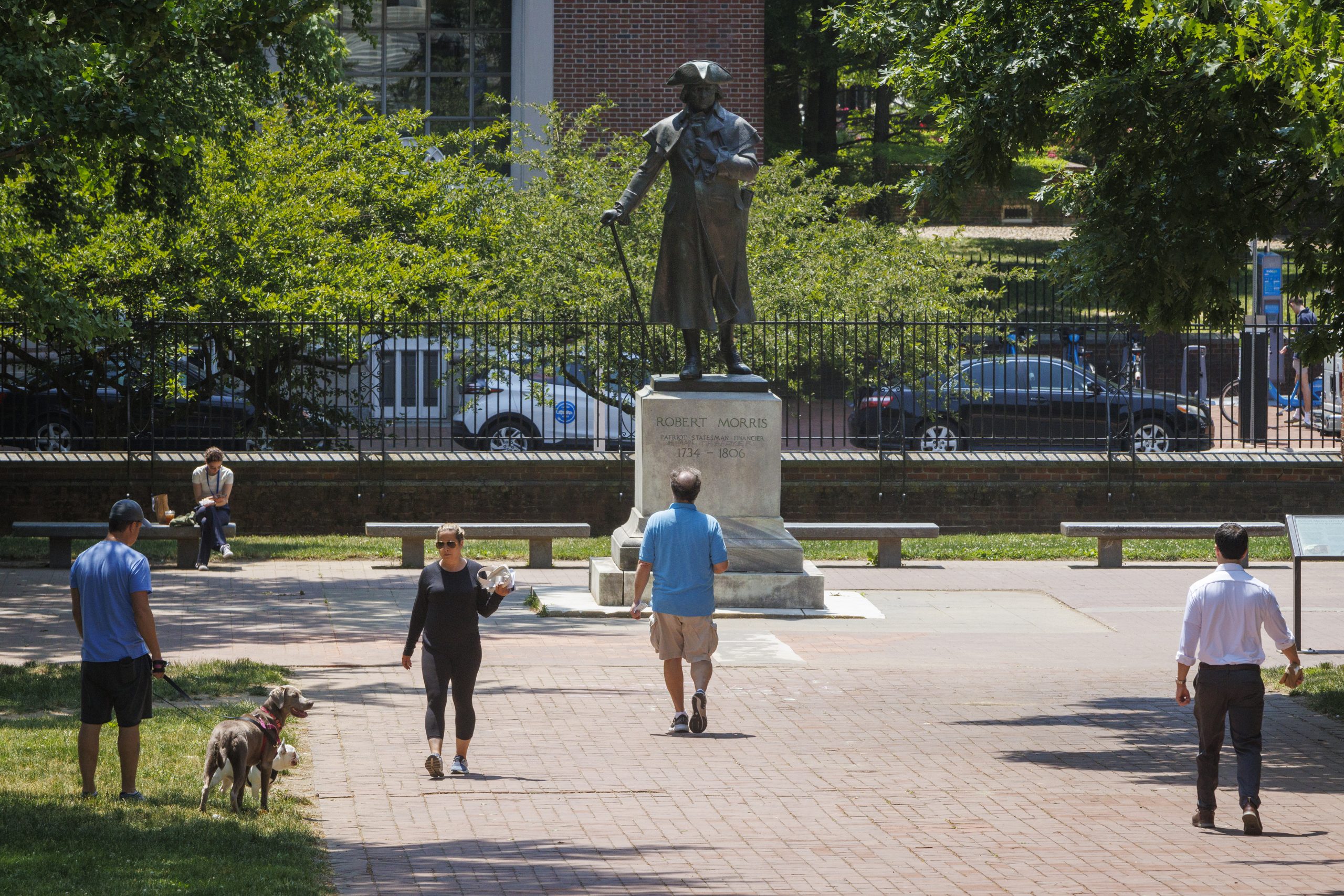
Better still are the two conspicuously empty chairs at the Pennsylvania table. Unable to vote for independence, but unwilling to thwart unanimity, Dickinson and fellow delegate, Robert Morris, voluntarily abstain. Despite his feelings, Dickinson will soon join the rebel militia — to fight for his country.
The statue of Robert Morris in Independence National Historical Park on May 31, 2023. Alejandro A. Alvarez
Again, the skies open up, raindrops drumming upon the glass.
With New York abstaining — and Pennsylvania swinging toward independence — the vote goes quick.
It is done.
Independence.
July 3, 1776
The Congress continues without a break.
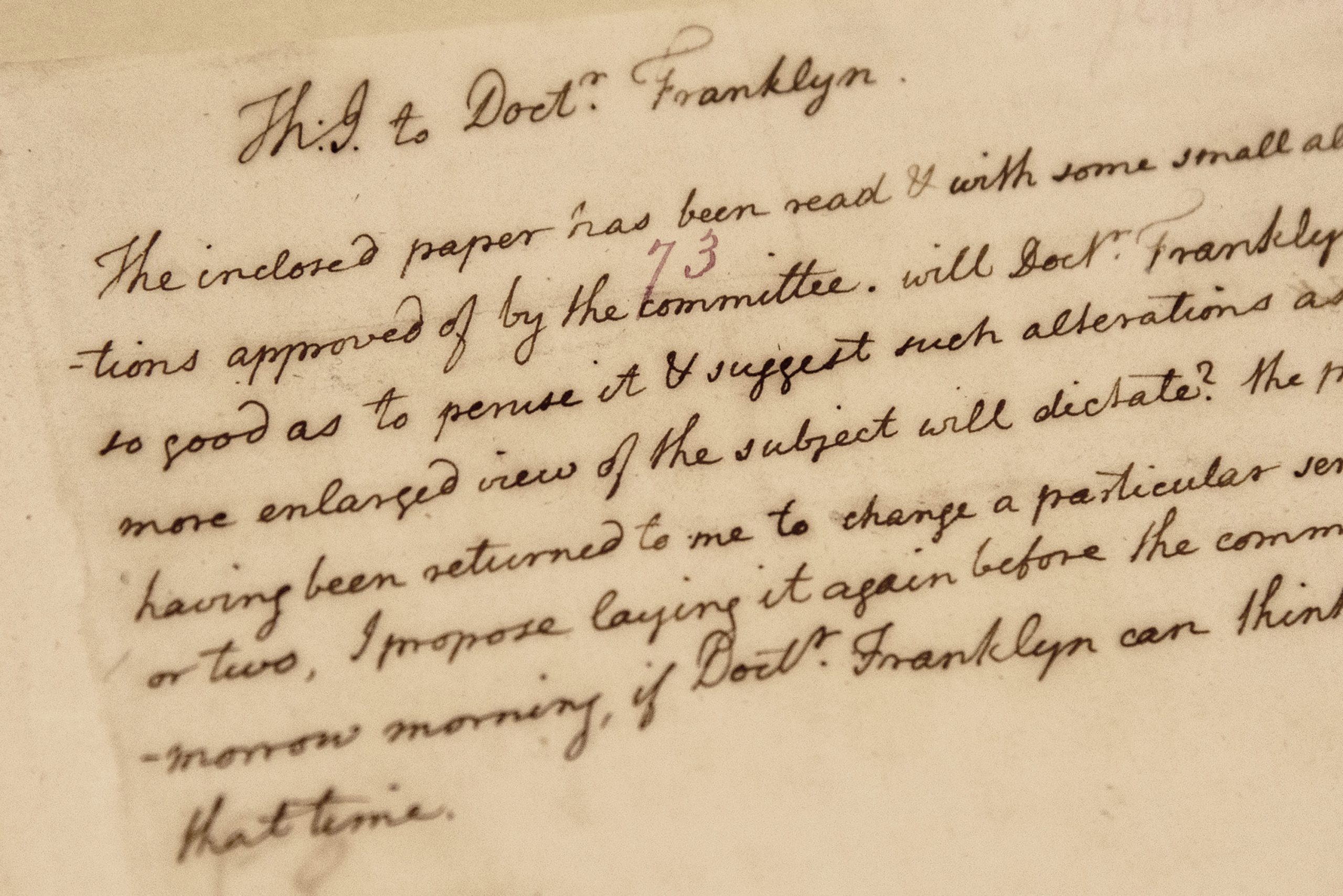
Days earlier, before handing in his draft of the Declaration of Independence, Thomas Jefferson turned to Benjamin Franklin for one last look.
A letter from Thomas Jefferson to “Doct. Franklyn” (Benjamin Franklin) in June 1776 asking for suggestions on the Declaration of Independence.Tom Gralish / Staff Photographer
“Will Doctr. Franklyn be so good as to peruse it and suggest such alterations as his more enlarged view of the subject will dictate?” Jefferson inquires, in a note delivered to the silver-haired statesman’s High Street home.
It’s Franklin, sly satirist, homespun philosopher — grand auteur of America’s self-made aura — who possibly suggests, the inspiring “self-evident” phrasing, replacing Jefferson’s initial “sacred and undeniable truths.”
And it is Franklin, 70, spectacled lion of liberty, sage of Philadelphia, tamer of lightning, dean of American charm and wit, wooer of women, broad of bow and frame, portly of paunch and plain of coat, a winsome spark dancing across his gray-blue eyes, who comforts the young writer as delegates slash away at his declaration. The winking newspaperman unspools a tale about an enterprising hatmaker who wishes to advertise his wares. By the time the hatter’s friends finish their edits, all that remains is the man’s name, and a photo of a hat, Franklin jokes.
The delegates trim Jefferson’s harsher language about King George. They excise completely his evisceration of the slave trade. Jefferson does not publicly protest.
July 4, 1776
At 11 a.m., debate is closed.
The moment will eventually be memorialized in painting. The towering trio — Adams, Jefferson, Franklin — presenting America’s credo for approval. Imagine them, these Founding Fathers. These imperfect men for the ages who hazard everything to chance a republic, and change a world.
There is little ceremony. Horseflies from a nearby stable buzz. One after another, a chorus of “Ayes.”
Delegates break the tension with gallows humor about whose necks will snap the swiftest.
History does not record the face of the man who darkens the doorway of John Dunlap’s print shop. Perhaps it was Adams, unable to yield his obsession even in its ultimate realization. Perhaps, it was Franklin, delivering the declaration with a deliciously wry aphorism. Or Jefferson, solemn and silent with the weight of his words.
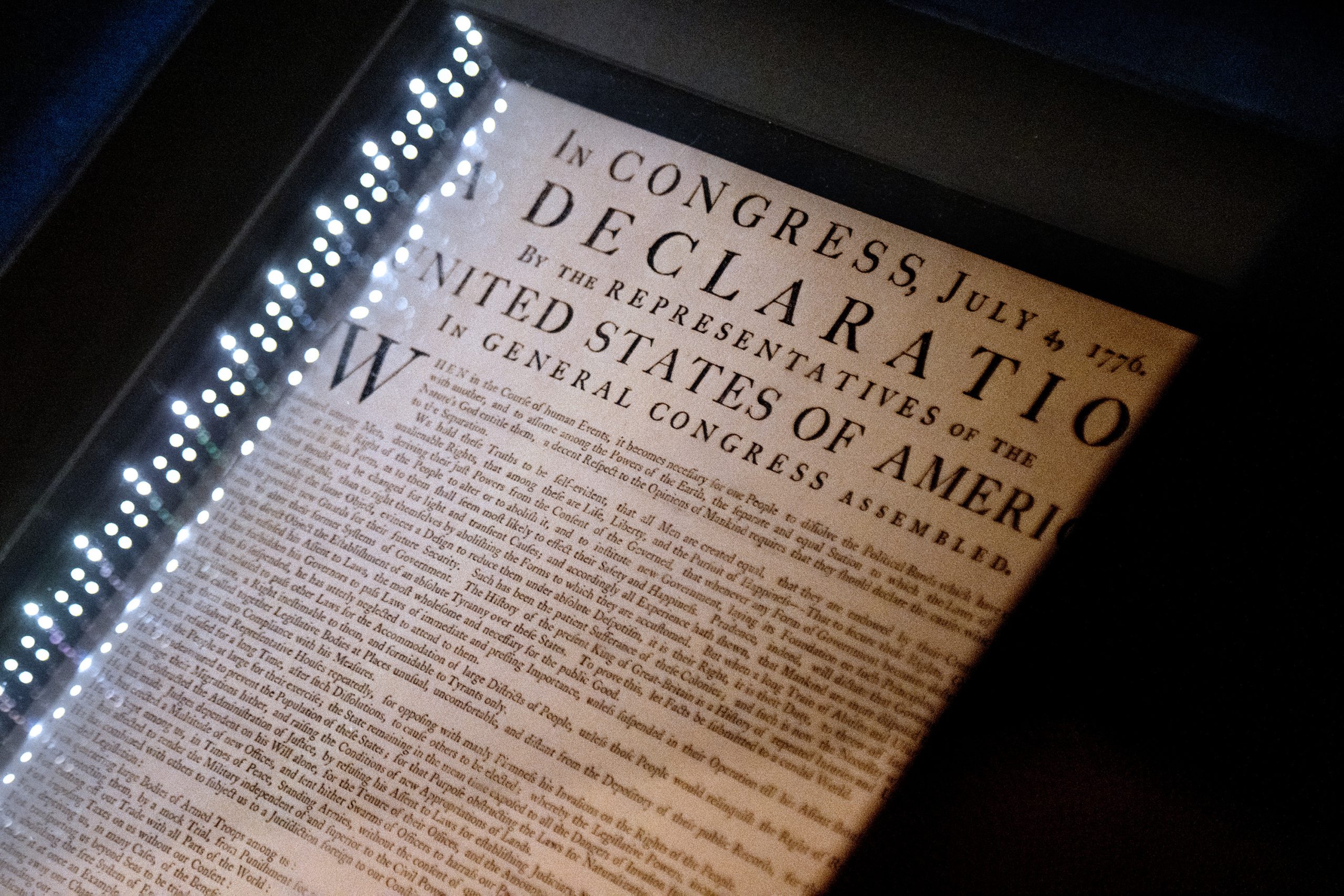
Dunlap works all night to the thumping groan of the presses. By morning, roughly 200 broadsides start to spread America’s newly minted founding document far beyond Philadelphia. Breathless riders herald the news in town squares.
In the trenches in New York, Washington orders the declaration read aloud. Bells ring. Troops parade. Bonfires alight. Candles burn. Prayers are whispered, for those sons and fathers who will die in the bloody conflict ahead.
By July 6, the Pennsylvania Evening Post, a paper published near Dunlap’s shop, prints the declaration word for word. Its previous issue had been put to press too early to capture the momentous events.
Instead, the July 4, 1776 edition included usual fare.
“To be sold,” read one back-page ad. “A NEGRO BOY, about four or five years of age.”
Crowds pack the State House yard, where the rebels had long conspired. A military officer reads the manifesto to the hushed masses.
Words that birth the American experiment on an ideal — and the sin of slavery. Words that will endure Civil War and oppression. Words that beckon centuries of American promise and possibility, triumph and failure. Words that inspire new revolutions, new freedoms, new fights. Words that transform. Words that twist. Words that promise a pursuit of happiness — but withhold so much from so many. Words that stand tested still.
Words written in Philadelphia.
An original broadside copy of the Declaration of Independence printed by John Dunlap on display in the “Great Essentials” exhibit in the West Wing of Independence Hall on July 29, 2025.Tom Gralish / Staff Photographer