Author: Mike Newall

  • Sheriff Bilal has never needed a court ruling to show her contempt | Mike Newall

    Sheriff Bilal has never needed a court ruling to show her contempt | Mike Newall

    Every Sunday, Mike Newall brings you an inside look at a story defining Philly this week and a preview of what’s coming in the week ahead.

    It may take another week before a city judge decides whether to hold Philadelphia Sheriff Rochelle Bilal’s office in contempt of court.

    The sheriff, meanwhile, has never needed a court ruling to show her contempt for the people of Philadelphia.

    Common Pleas Court Judge Paula Patrick could push a decision on Bilal until after Thanksgiving. And it’s understandable that she might want a turkey break, given the enormity of her task: trying to make sense of a Gordian knot of a municipal office where even the most basic paperwork seems to be a mystery.

    If (alleged) neglect were a public service, Bilal might be Philadelphia’s most dedicated civil servant. There is something almost impressive about it.

    Bilal’s disastrous handling of a decidedly unglamorous arm of city government is nothing if not comprehensive. The mission is straightforward: Guard the courts. Transfer prisoners. Oversee property auctions. Her alleged malfeasance borders on performance art.

    For the uninitiated, let’s consult the ledger (assuming anyone can find it):

    • $20 million in misplaced proceeds
    • Skyrocketing courthouse security incidents
    • Glaring staffing turnover, glacial deed delays, unaccounted firearms, slush funds, no-bid contracts, sexual harassment, retaliation against whistleblowers
    • Nearly $10,000 spent on a costumed mascot

    Not bad for a proclaimed reformer swept into office in 2019 on vows to spruce up a department synonymous with scandal. The reported dysfunction has grown so spectacular that Bilal’s defenders appear to have settled on a curious standard of innocence: Unless that misplaced $20 million turns up in her mattress, what’s the problem?

    It all seemingly earned Bilal, 69, the respect of her colleagues. Or at least the endorsement of the Democratic City Committee, which had Bilal’s back for a second term in 2023 even as the mismanagement mounted. Earlier this month, City Council, which honored Bilal just months ago, announced it has finally decided to look under the hood, if not the mattress.

    My colleagues Willian Bender and Ryan Briggs have been doggedly following this positively byzantine case for years. The judge’s pending contempt decision represents the next big domino. The Inquirer will be there when the decision comes down.

    Bender told me, “In terms of [Council President Kenyatta] Johnson stepping in and saying, ‘We want to hold hearings to look at this significant office’ — I think that’s pretty significant, assuming they follow through with the hearings and are interested in getting to the bottom of it.”

    Hearings are easy. Answers are harder.

    Johnson, who authorized the hearings scheduled for next month, was careful to note that he remains “good friends” with Bilal. Nothing personal, Sheriff. It’s just the public’s money.

    Data deep dive: A.C. street-legal edition

    (function(){function e(){window.addEventListener(`message`,function(e){if(e.data[`datawrapper-height`]!==void 0){var t=document.querySelectorAll(`iframe`);for(var n in e.data[`datawrapper-height`])for(var r=0,i;i=t[r];r++)if(i.contentWindow===e.source){var a=e.data[`datawrapper-height`][n]+`px`;i.style.height=a}}})}e()})();

    Atlantic City bet big on legal weed. The payoff? Shuttered storefronts, struggling businesses, and a federal bribery investigation, as my colleague Amy Rosenberg reports. A distinctly Atlantic City kind of bad trip.

    Video of the Week
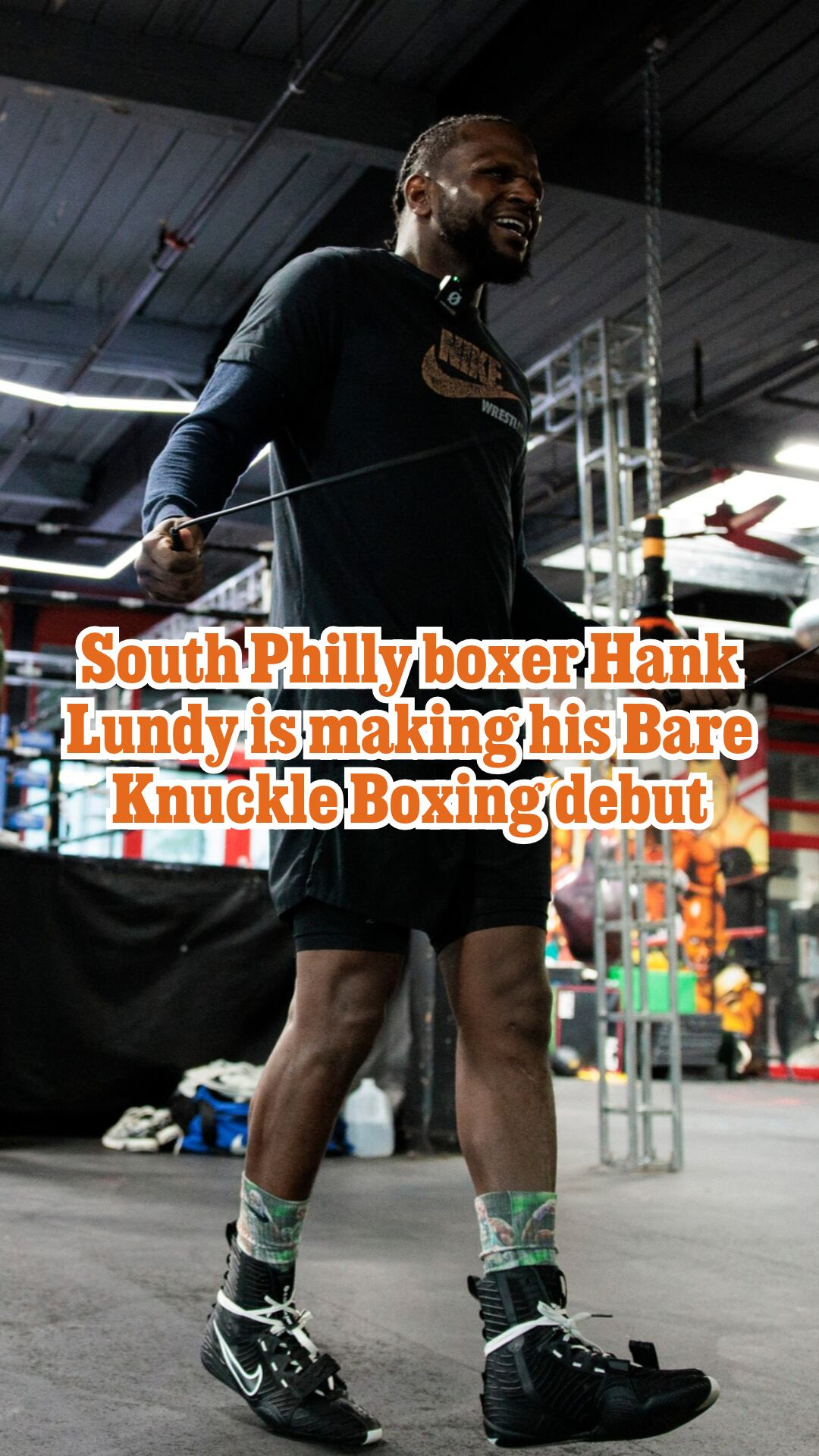
    South Philly boxer Hank Lundy is making his Bare Knuckle Boxing debut
    Video: South Philly boxer Hank Lundy is making his Bare Knuckle Boxing debut

    Holiday-week homework: Read my colleague Ariel Simpson’s fist-pumping profile of South Philly boxer Hank Lundy, who’s transforming himself into an old-school practitioner of the sweet science. Root for Lundy as he makes his bare-knuckle boxing debut on Saturday at Estrella Studios in Burbank, Calif.

    A look ahead: Turkey Week edition

    One more thing: The American Revolution faced doom in December 1776
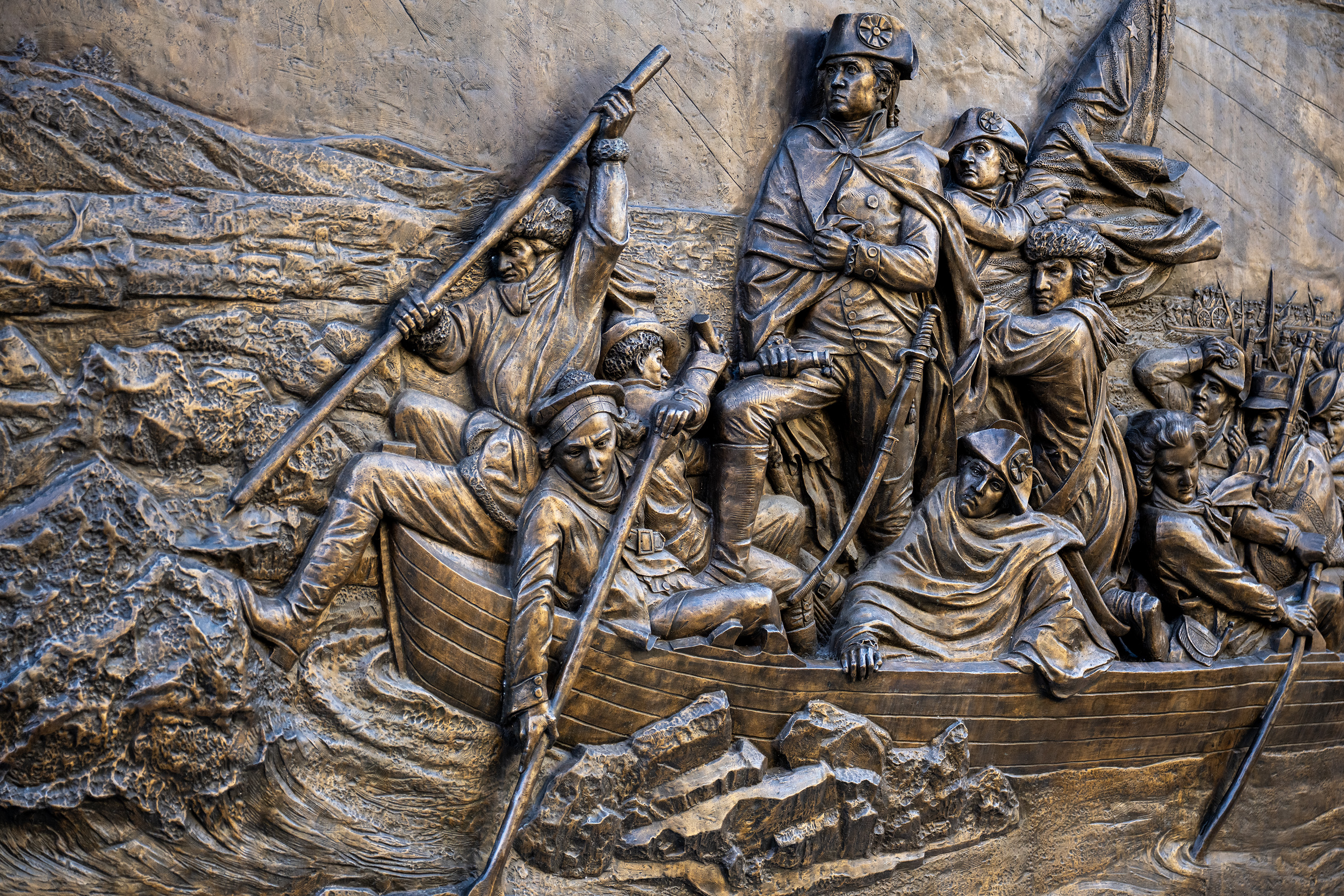
    “Washington Crossing the Delaware” as seen outside the Museum of the American Revolution Tuesday. The museum is exhibiting a rare letter handwritten by George Washington during the darkest hours of the Revolution in the Winter of 1776.Tom Gralish / Staff Photographer

    Bucks County. December 1776.

    The American Revolution is on the brink of collapse. And George Washington knows it. He trembles for Philadelphia.

    Washington, 44, writes by wavering candlelight in the borrowed rooms of a stately stone mansion. He wishes to Heaven his quill could convey a more favorable tale. The general is on the run. The British have blasted him from his fortifications in New York and chased him clear across New Jersey, and over the Delaware River into Pennsylvania. His soldiers are sick and starving and disappearing. The Revolution is coming apart. George Washington is fighting to keep his army alive.

    In Philadelphia, not 30 miles away, the citizenry has calculated the grim arithmetic. An estimated 15,000 Philadelphians —roughly half the city — flee for Bucks and Chester Counties, or to Delaware and Maryland. Even the Congress, conspiring at the State House at Sixth and Chestnut, reconvenes in Baltimore. The birthplace of American independence can be mistaken for a ghost town.

    “If this fails,” Washington writes of his hopes for fresh troops to a cousin at Mount Vernon, letting the mask of command slip, “I think the game will be pretty well up.”
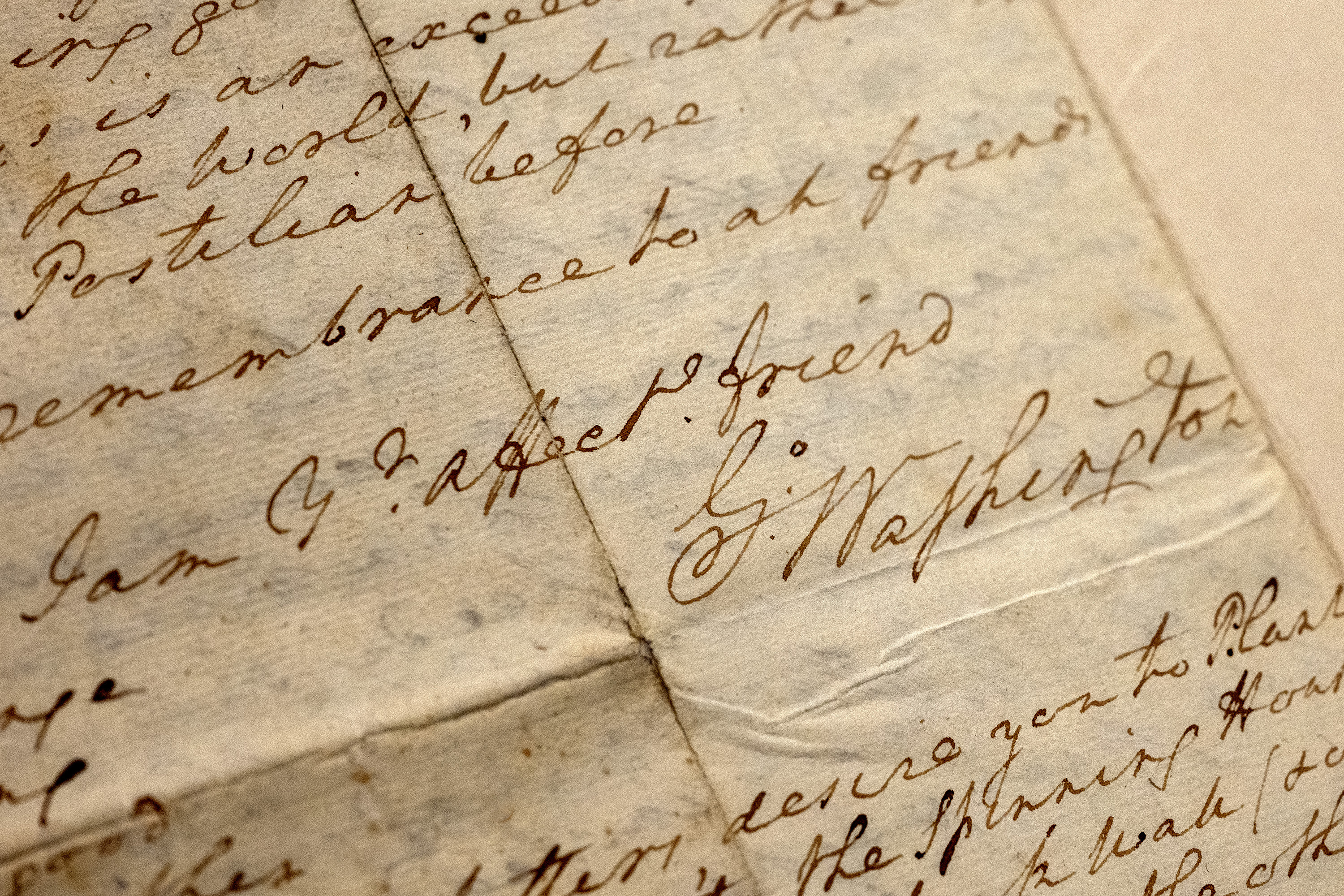
    The signature of George Washington at the Museum of the American Revolution. Tom Gralish / Staff Photographer

    This week, I’ll be writing more about these dark days of rebellion, just before a remarkable turn of fortune: the Ten Crucial Days, when Washington and his ragtag army snatched improbable victories at Trenton and Princeton, reviving a dying cause.

    In the meantime, use a bit of your holiday week to check out that very December 1776 Washington letter, now on display at the Museum of the American Revolution. A rare glimpse of Washington at his lowest, the relic marks 250 years since that winter of 1776, when a newly minted nation teetered on extinction. Desperation pours through Washington’s elegant, looping script. A reminder of how close it all came to ending before it had barely begun. It gave me chills.

    Like a lot of you, I’m taking next weekend to relax with my family. I’ll be back on the first Sunday in December. Happy Thanksgiving! Go Birds!
  • The children of a Warwick cop are running the Philly marathon to raise money for cancer research

    The children of a Warwick cop are running the Philly marathon to raise money for cancer research

    Back when the kids were younger, Shawn Needham always knew how to scope out the best spots at their track meets.

    “The good spots to be when you needed a little extra push,” says his daughter Sarah Needham, 23.

    A former Maryland State Trooper, and now a cop in Warwick Township — and a hall-of-fame track star at Holy Ghost Prep in Bensalem — Shawn Needham, now 59, raced home three hours after night shifts to make the kids’ running events. Worked overtime so he and his wife, Linda, could afford the league payments. Ate peanut and butter and jelly in the squad car so he could take the kids to Applebee’s after a race.

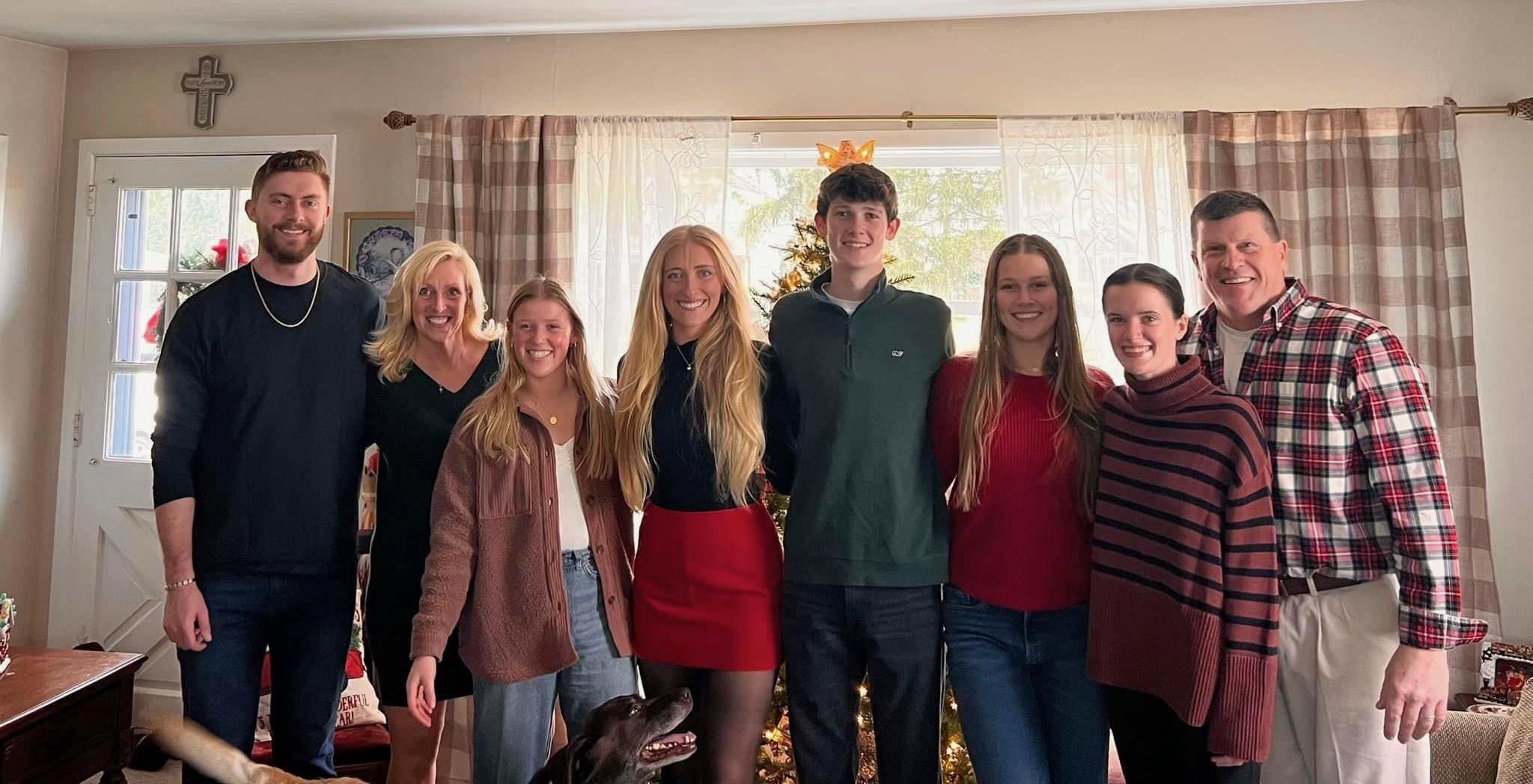
    Needham Family (L. to R.): William Hoehne, Linda Needham, Grace Needham , Sabrina Hoehne , Christian Needham, Ella Needham, Sarah Needham, Shawn NeedhamCourtesy of Needham Family (Custom Credit)

    “Anything broke he could fix,” said Sabrina Hoehne, who is 28, and Needham’s stepdaughter. “He spent all his money on our sports.”

    But last November, Shawn Needham confronted a nightmare he couldn’t fix. Not alone, anyway. A life-altering diagnosis of cholangiocarcinoma, an aggressive cancer of the bile duct, which affects only about 8,000 Americans annually.

    This weekend, five of Shawn Needham’s children — Hoehne, Sarah Needham, Grace Needham, Christian Needham, and Ella Needham — will run in the Philadelphia Half Marathon and Marathon to raise money for the Cholangiocarcinoma Foundation.

    “We decided the best thing we could do is to raise some money for other families going through this and to support research into this rare disease,” said Sarah Needham. “So we decided we needed to run.”

    Shawn Needham was visiting his daughter in Boston last October, when the stomach pain turned severe. Soon, he was jaundiced, and in the hospital. Weeks of tests provided few answers. Finally, doctors figured it out.

    Notoriously difficult to detect — and often showing few symptoms until advanced stages — cholangiocarcinoma is responsible for only a tiny fraction of the nearly 2 million cancer diagnoses a year.

    “Of course, I’m just like, “Well, all right, I guess, I got it,” said Shawn Needham. “I never look back. I just kind of keep going forward and trust in the doctors I have.”

    Undergoing radiation and chemotherapy treatment at Penn, Shawn Needham is on the “National Liver Transplant Waiting List.” He’s also eligible for a living donor.

    Shawn Needham knows exactly where he’ll be. He’s already scoped out a good spot — behind the Art Museum, where the runners loop around multiple times — and which will leave him time to race back to the finish line.

    “I’m proud,” he said. “I’m very proud.”

  • New Ken Burns-produced crime and punishment doc features Philly prisons and Larry Krasner

    New Ken Burns-produced crime and punishment doc features Philly prisons and Larry Krasner

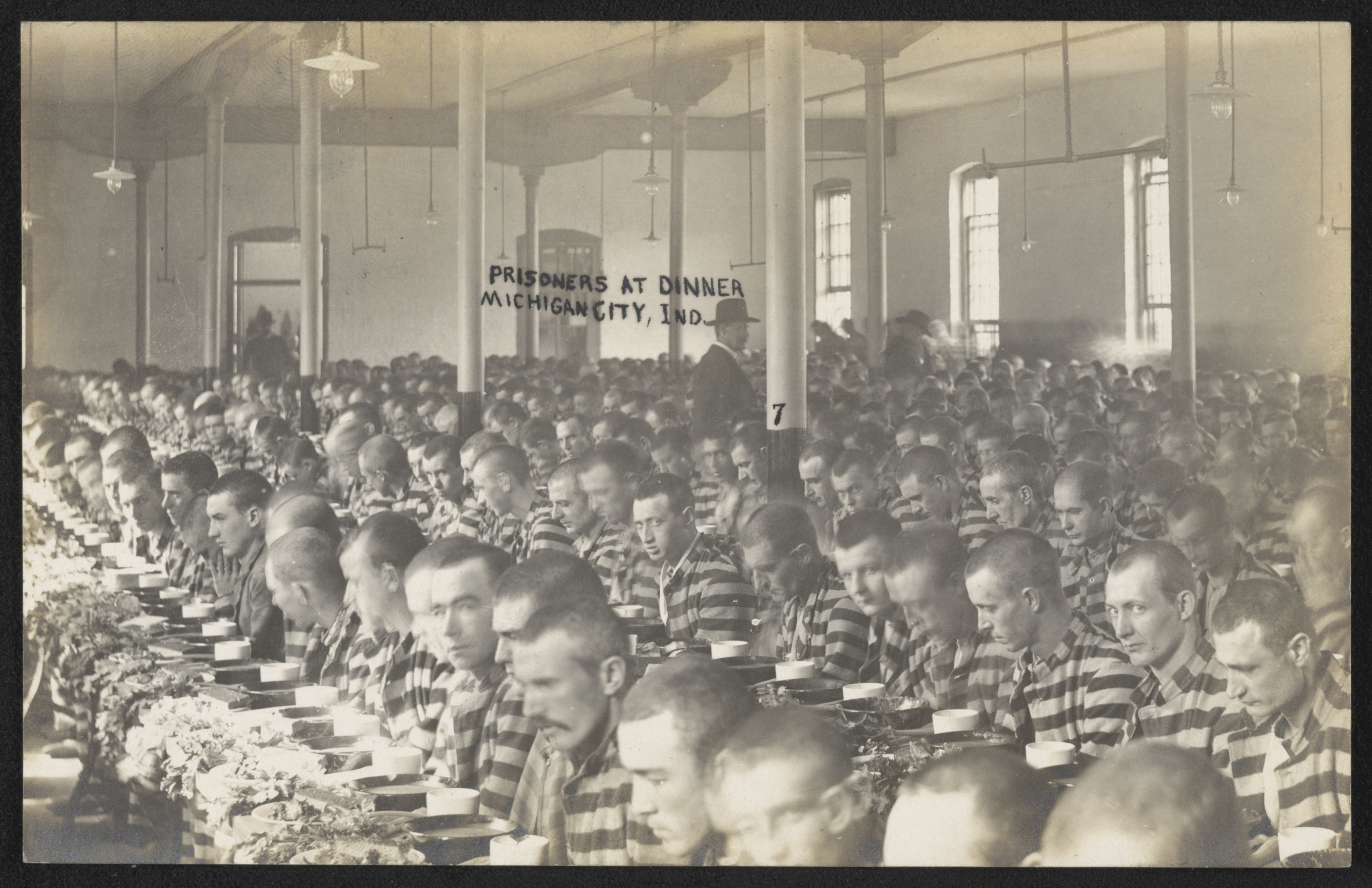
    Philadelphia invented American democracy — and the American penitentiary.

    Philly’s role in the creation of American mass incarceration takes center stage in episode one of Crime and Punishment in America, the four-part PBS documentary directed by Lynn Novick and executive produced by Ken Burns, and now streaming on WHYY. A sweeping reckoning of 250 years of the American criminal justice system, blending evocative historical imagery, talking heads, and dramatic readings with contemporary scenes from American prisons, Novick traces how the Founding Fathers’ grand experiment of American liberty gave birth to the far messier realities of the American criminal justice system.

    Philly reformers, like Benjamin Rush, a physician and signer of the Declaration of Independence, fought for a criminal justice system more befitting the lofty ideals of American liberty — one that moved away from public hangings and brutal floggings for petty crimes to repentance and reform.

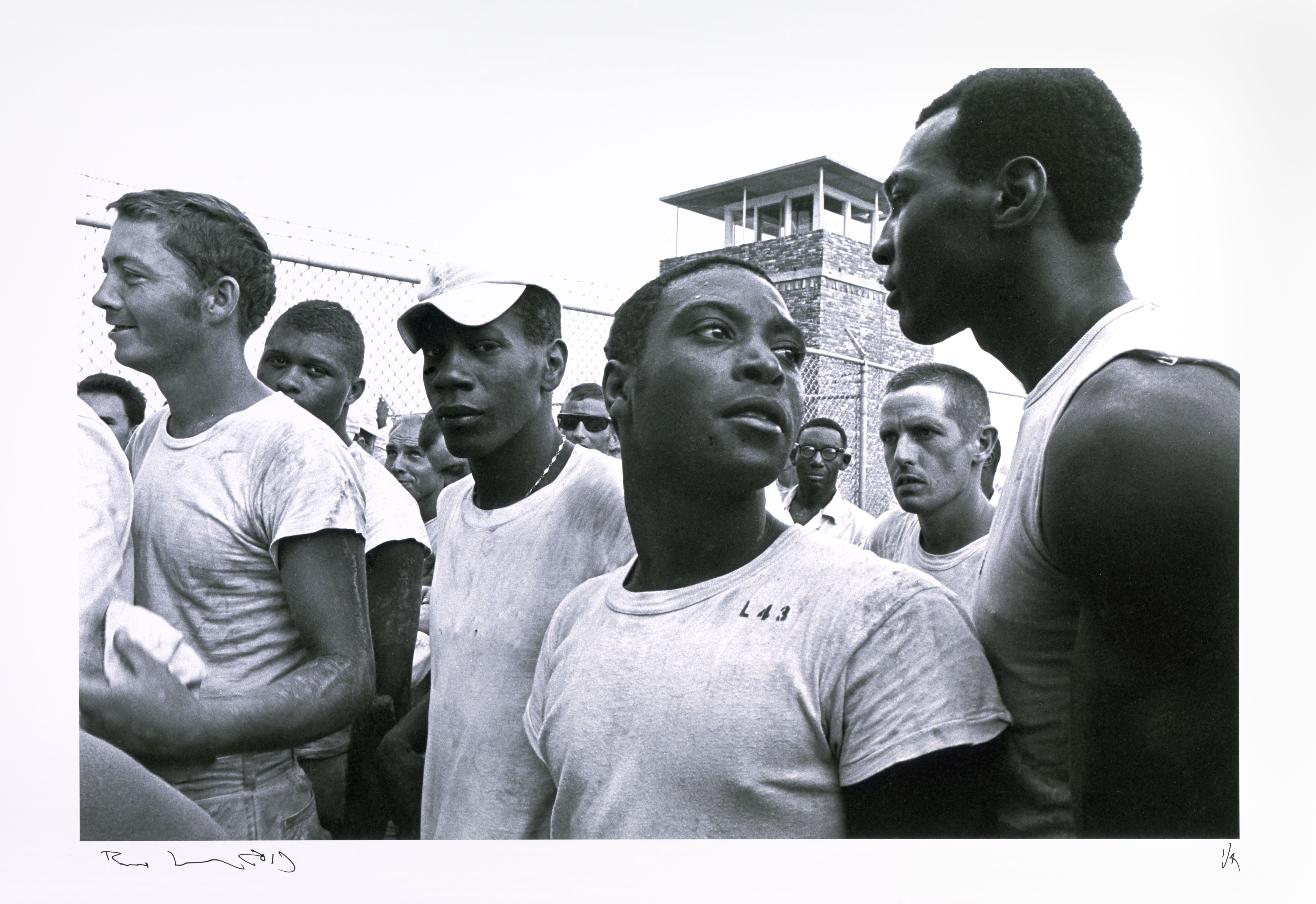
    A 1972 image of Inmates from Cummins Prison Farm in Arkansas as seen in “Crime and Punishment in America” on PBS.Bruce Jackson

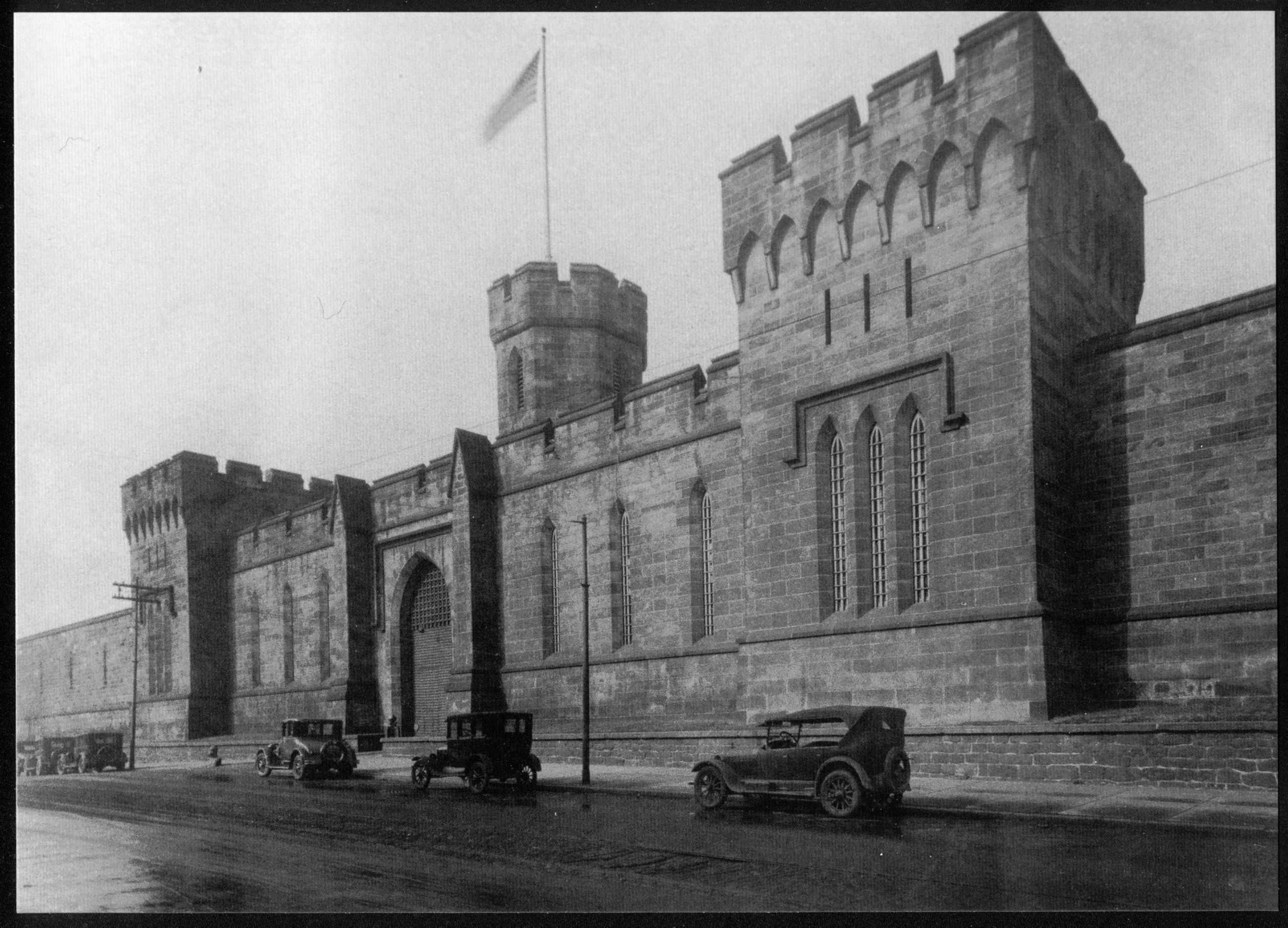
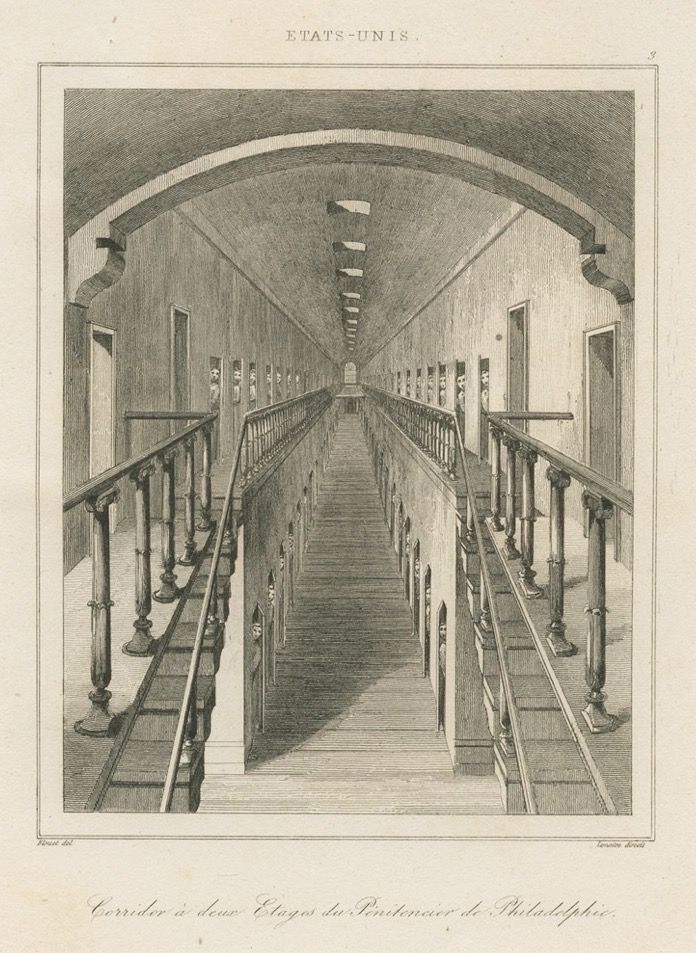
    It led to the wretched confines of Walnut Street Jail, first opened across from Independence Hall in 1776, and eventually considered the first true prison in the United States and the world. Those incarcerated were herded from filthy mass holding rooms to individual cells. And at Eastern State Penitentiary, built in a cherry field outside downtown Philadelphia in 1829 with chapel-like cells with running water and flush toilets, and the first prison anywhere to emphasize reform over punishment, where inmates initially served in total isolation, 24 hours a day.

    “The centrality of Philadelphia in developing the model of incarceration as both a punishment and a method of rehabilitation cannot be overstated,” said Novick. “It has become so baked into our way of thinking about what justice looks like for those who break the law that we can’t even imagine a world where that wasn’t the case — and it all began in Philadelphia.”

    Eastern State Penitentiary exterior 1920sCourtesy of Eastern State Penitentiary

    In later episodes, Philadelphia District Attorney Larry Krasner emerges in form as one of the more provocative interview subjects, bluntly eviscerating a criminal justice system stacked against the poor and vulnerable.

    “Broke people get screwed,” Krasner says in “Episode 3: Public Enemies (1929-1969.)” “Would you like more? I mean, that’s how it works. Broke people get screwed.”

    In an interview this week, Novick discussed Philly’s founding roots in the American industrial prison system, Krasner, and finally focusing on the thread of American crime and punishment.

    The idea of moving away from routine public executions to reform isn’t just an American idea — it’s a Philadelphia idea?

    There was a larger conversation going on around the time of the Revolution about public punishment and about capital punishment. So it wasn’t unique to Philadelphia that people were asking questions about [whether] our system of punishment and justice was appropriate for this new democracy. Philadelphia is extremely important because that is the place where the idea of the penitentiary was first expressed and actually brought into fruition.

    The Founding Fathers could literally peer into the wretched wards of Walnut Street Jail, where colonial prisoners were held for trial and punishment, from the courtyard of Independence Hall?

    There were terrible unsanitary conditions, to put it mildly. Disease was rampant. Food was inadequate. People were just thrown together. There was disorder, chaos, violence. They were seen as breeding grounds for crime.

    This didn’t sit well with newly minted Americans?

    There was a sense of outrage that the jails were a danger to the society at large and to the people inside there. The first idea was we’ll take part of the Walnut Street Jail and create this new thing called the Walnut Street Prison. They created individual cells. The intention was to separate people from each other, give them time and space to repent.

    But that didn’t sit well with those incarcerated.

    It was a new idea, and I don’t think it was welcomed by the people that were held there. Before this, when you broke the law, you would be punished and held up, and then you would go back about your business if you weren’t put to death. Now you’re being deprived of your liberty. There were riots. People tried to escape. They’d be leaning out the windows, trying to sort of harass passersby.

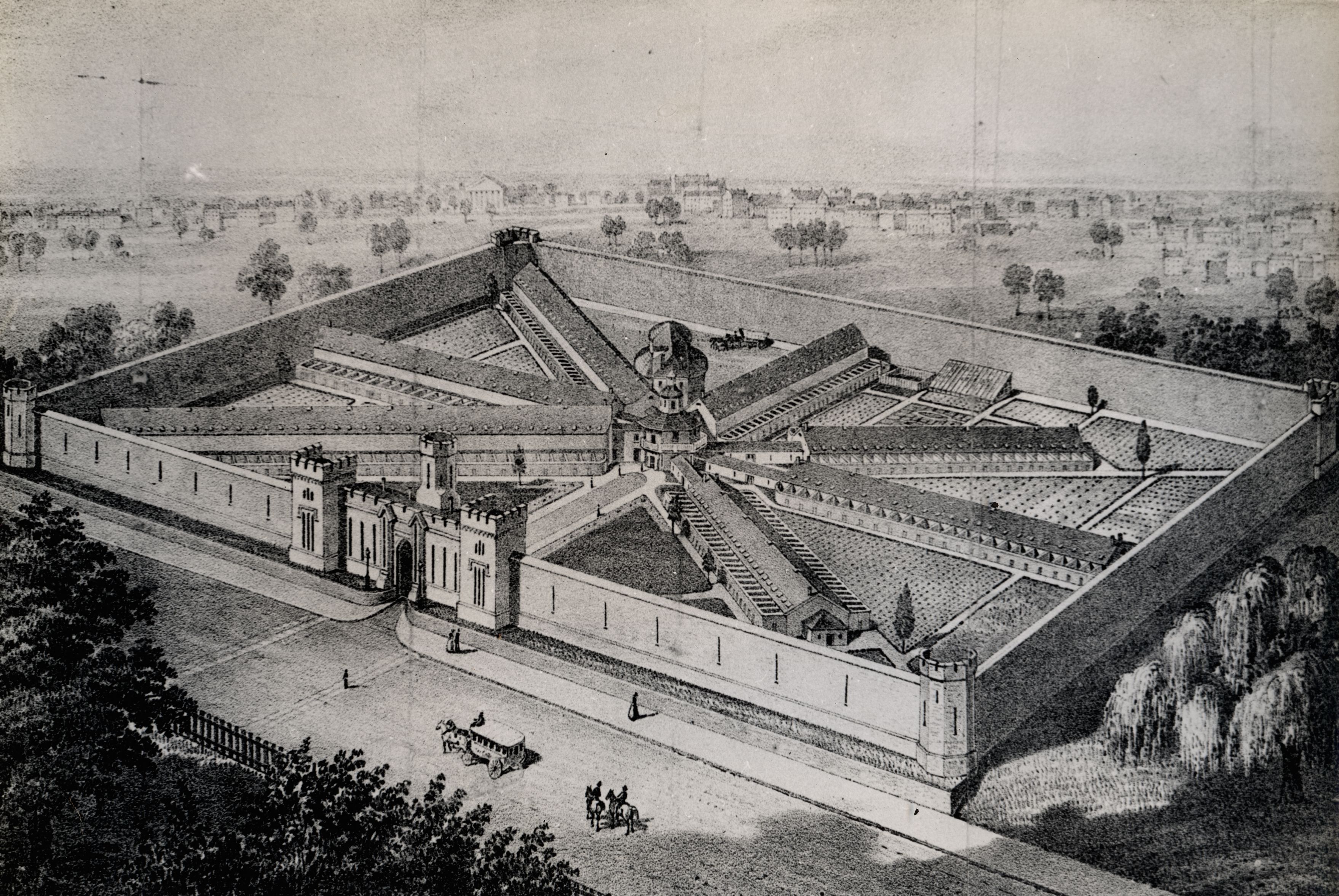
    A lithograph of Eastern State Penitentiary from 1855.Eastern State Penitentiary

    And all right in the heart of the city.

    Eastern State Penitentiary was sort of a response to that — they created this institution that was built on the idea that pure isolation for people was the goal.

    By 1842, a visiting Charles Dickens described the total isolation of Eastern State as “being buried alive”?

    We are social animals. We need exposure and companionship to thrive. Depriving human beings of any contact with any other human beings for long periods of time is cruel and, to some degree, torturous.

    Eastern State Penitentiary cellblock in 1837.Eastern State Penitentiary

    So many strains of your and Ken Burns’ other subjects, from the Revolution to the Civil War to the American West and Prohibition, appear in the film, but with a new angle.

    We’ve done many different walks through American history, but never focused on the prison system and the justice system. And it’s right there the whole time. We just sort of shifted the focus over here.

    Why did you feel Larry Krasner was an essential voice?

    He has his detractors — he’s a controversial figure. He’s not speaking about his career. He’s just sharing his perspective on white collar crime, on deinstitutionalization, on policing, on sentencing, and how the justice system functions in our society. He’s very direct. He doesn’t beat around the bush. I’ve interviewed a lot of public politicians and public officials, and they tend to be very careful and speak in platitudes, and that isn’t necessarily what you want when you’re making a documentary like this. Larry Krasner is really the opposite of that.

  • KYW’s Larry Kane signs off after six decades of broadcasting

    KYW’s Larry Kane signs off after six decades of broadcasting

    Every Sunday, Mike Newall brings you an inside look at a story defining Philly this week and a preview of what’s coming in the week ahead.

    The big story tonight: Philadelphians won’t have Larry Kane to tell them the truth anymore.

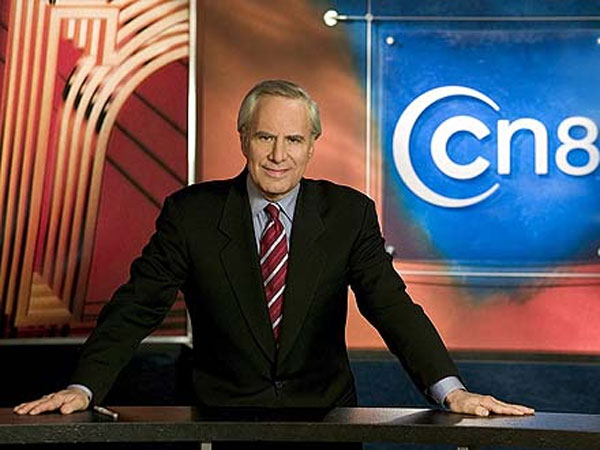
    Kane, Philly’s answer to Walter Cronkite during the golden age of local news, retired from broadcasting today at 84.

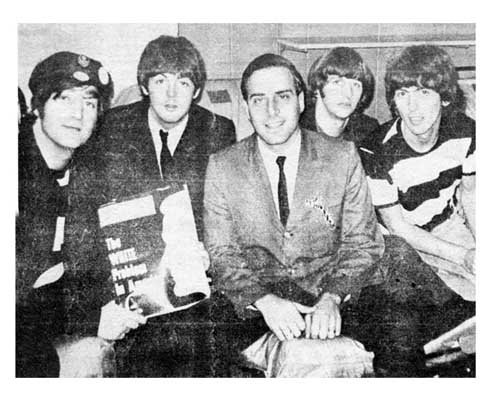
    Larry Kane with the Beatles.

    Kane, who worked at all three major networks in the city and transformed nightly news with his catchphrase — “The big story on Action News” — was king of the airwaves when anchormen were civic institutions and celebrities. When local news was appointment viewing and ratings and rivalries roared.

    At 27, he became the youngest major-market television news anchor in America, and eventually the only Philly anchor to helm all three major networks. Proudly Jewish, he said in 2005 that he once battled doubts he could succeed in a town that was “really run by the white Protestant establishment.”

    He rode shotgun with the Beatles during the fever pitch of Beatlemania. Covered presidents and popes and world leaders. And endless Philadelphia triumph and tragedy. He witnessed Philadelphia bomb itself.

    For nearly 60 years, Larry Kane told Philadelphians the news — and why it mattered. And Philadelphians believed him.

    Before his farewell broadcast Sunday on KYW Newsradio, where he has offered commentary for over two decades, the iconic newsman issued a warning about attacks on the media and the slow erosion of local journalism.

    “It’s all about local news,” Kane told me. “If people don’t have local news, they can’t understand what’s going on around them.

    I’ll be reporting more on Kane’s singular career in the coming weeks — and would love to include some of your favorite Larry stories. Share them with me at mnewall@inquirer.com.

    For now, let’s hear from Larry.

    Mike: You were the only broadcast journalist to travel to every stop on the Beatles 1964 and 1965 North American tours. It was an assignment you famously almost turned down.

    Larry: The first time I met them, I went down there to their room. I was wearing a suit and a skinny tie. Very conservative. Before I could even open my mouth, John said, “Who are you and what planet are you from?” I said, “It’s better than not brushing your hair.” At that point, I asked him some questions about the war in Vietnam and the racial unrest in Great Britain. I went back to my room, thinking, “I don’t think I’m going to last another day on this trip.” All of a sudden I felt two hands on my neck, and John actually gave me a little hug, and said, “That was really great, I look forward to traveling with you.”

    Mike: You got Lennon to take an Amtrak from New York City to 30th Street Station for a station charity event in 1975. He wound up doing an Action News weather report.

    Larry: It was his first Metroliner (laughing). The doors opened and he had a little box and bag. I said, “What’s in there?” He said, “That’s for me to know, and you not to know.” The people on the train said, “Bye, John. Great to see you, John.” He said, “Let’s take a little tour, so I took him to the Liberty Bell.” He was kind of dazzled by the fact that people knew who I was.

    Mike: You arrived in Philly from Miami in 1966, at 23. What was it like?

    Larry: I spent the first two years here on the streets [reporting]. When you’re out on the streets of the city — you see everything. You know the suburbs. You know the geography. You come to streets nobody has been on. When I went on the air, I was so familiar with the streets, people thought I was here my whole life.

    Mike: Who most shaped the Philadelphia of today?

    Larry: Ed Rendell. In some ways, he brought together the city and suburbs in a quiet bond.

    Mike: Philly can break your heart. Did you fall in love with it?

    Larry: Absolutely When I went to New York [briefly in 1977], it was professional pressure. I commuted most of the time. The minute I got there, I wanted to come back. I wanted my family to be here — and I wanted to be here. It was my home.

    Mike: What did you love about it all?

    Larry: Recognition and glamour wasn’t really something I loved. I loved doing the news. I loved the interaction with people about the news.

    Data deep dive: Shapiro vs. the Pack

    Gov. Josh Shapiro’s strongest case for the White House may be written in the election returns, reports Inquirer political reporter Michelle Baruchman. Shapiro’s landslide victory outperformed Kamala Harris’ 2024 Pennsylvania showing by nearly 12 points. Shapiro’s edge over Harris also bested five other Democrats with White House dreams. Does Shapiro’s Pennsylvania slamdown automatically propel him to the top of the 2028 contenders? That’s a different ballgame altogether.

    (function(){function e(){window.addEventListener(`message`,function(e){if(e.data[`datawrapper-height`]!==void 0){var t=document.querySelectorAll(`iframe`);for(var n in e.data[`datawrapper-height`])for(var r=0,i;i=t[r];r++)if(i.contentWindow===e.source){var a=e.data[`datawrapper-height`][n]+`px`;i.style.height=a}}})}e()})();

    Video of the Week

    Watching the SS United States sink off the coast of Florida
    Video: Watching the SS United States sink off the coast of Florida

    No more shall we behold a fallen jewel of the Atlantic during our weekend Ikea runs. The SS United States spent decades as South Philly’s most awesome piece of waterfront clutter. The great liner slowly sank to its grave at the bottom of the Florida Panhandle, where it will become a marine life habitat.

    A look ahead

    • Rochelle Bilal has elevated dysfunction and scandal into an absurdist art form at the Philadelphia Sheriff’s Office. With City Council finally promising action — and even defenders urging reporters to check beneath her mattress for $20 million in misplaced funds — a judge could rule as early as next week on whether to hold a contempt hearing against the embattled sheriff. “The judge’s decision could come any day,” says Inquirer Investigations reporter William Bender. “It seems like the judge so far has been focused on forcing the sheriff’s office to accept an outside forensic audit and to pay for it.”
    • Inquirer investigations reporter Samantha Melamed powerfully explains how Carprice Williams — a public schoolteacher previously accused of abusing a foster child who nearly died — ended up caring for 10-year-old Malayshia Allford. Now the city needs to answer for the devastating systemic failures that preceded the discovery of the girl’s body in a car trunk last month. “There were many, many documented red flags that seemingly should have prevented any child from being placed in that home,” says Melamed. “How was Carprice Williams able to take in children over and over again?”
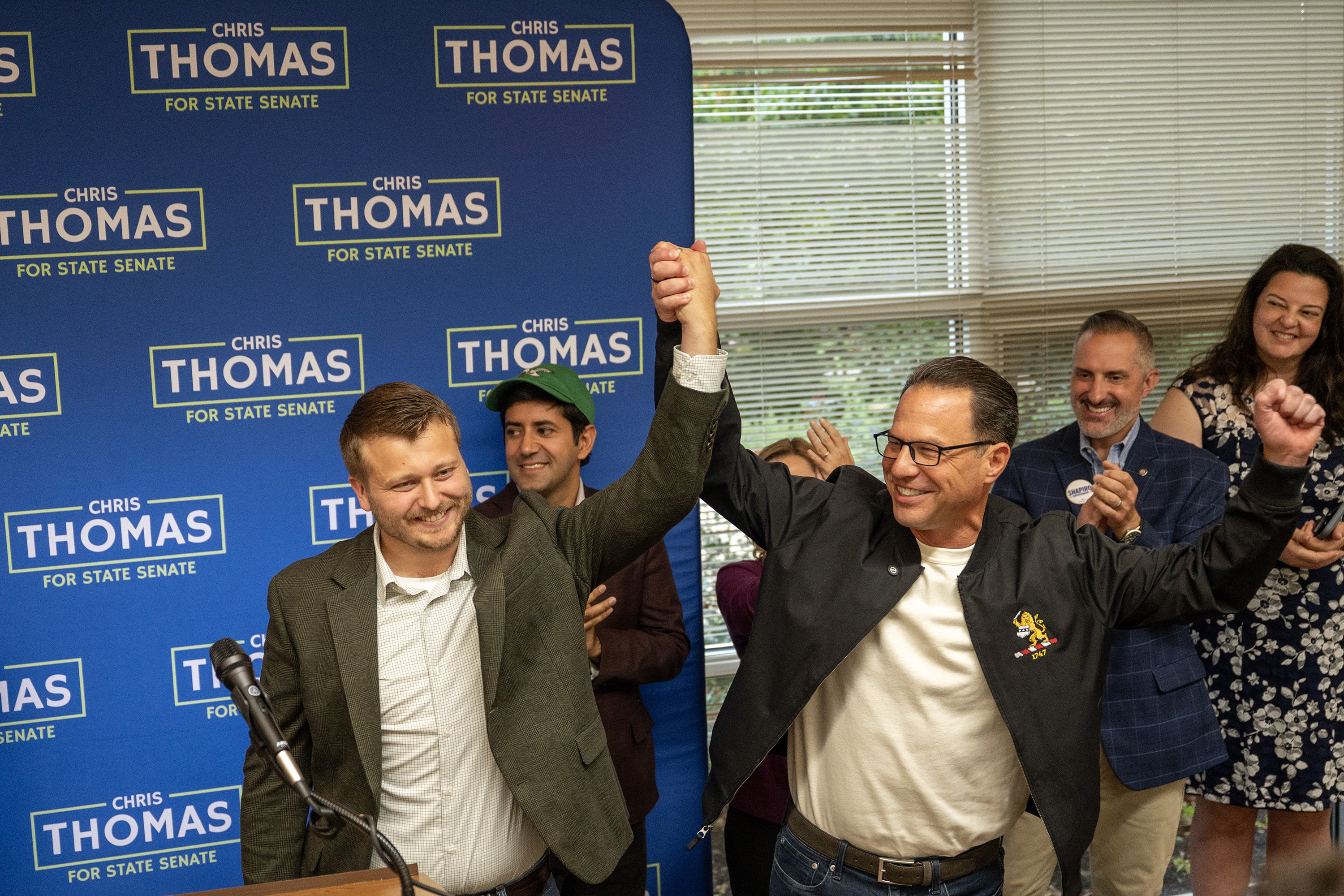
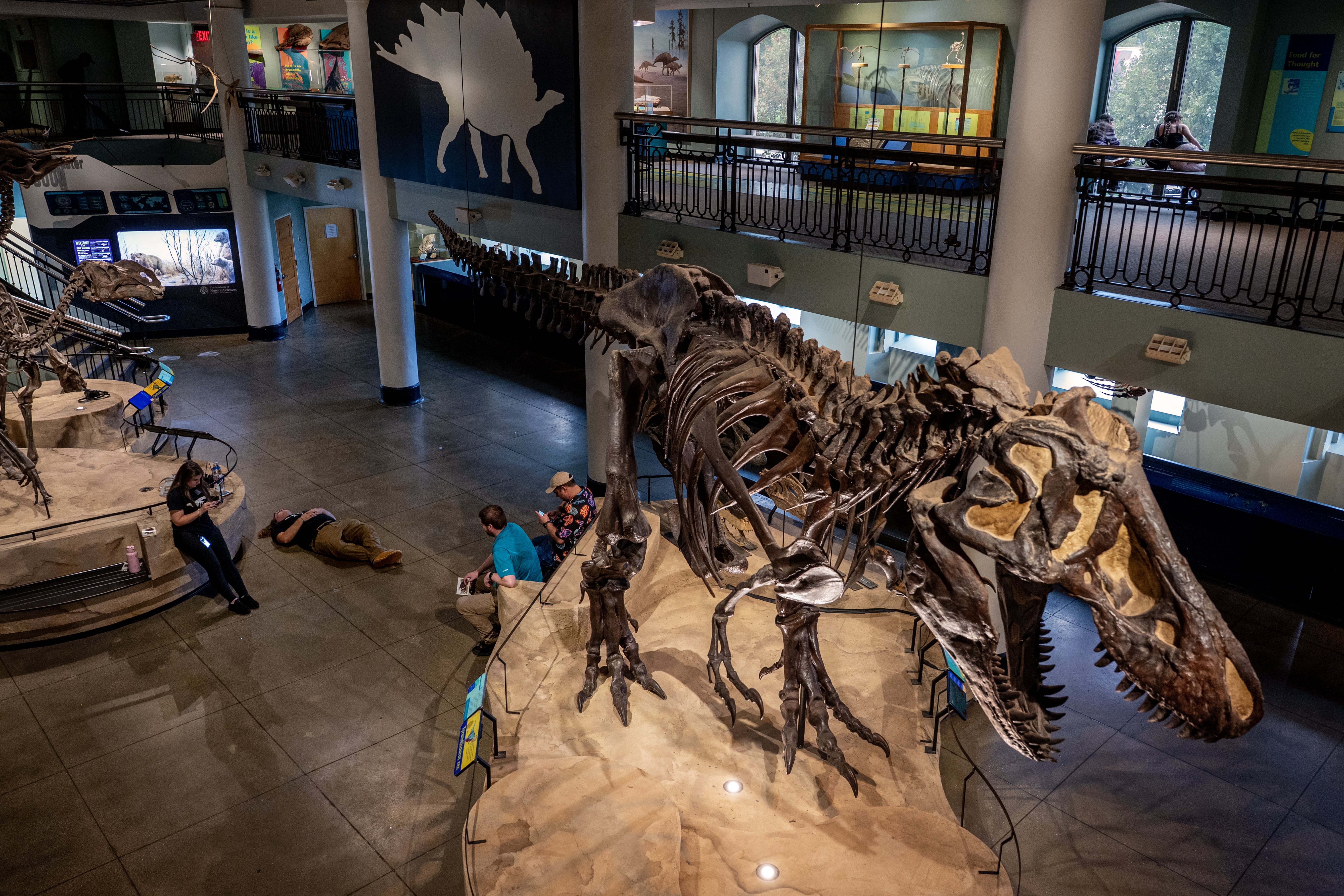
    • Is Philly’s endangered Dino museum saved? Not yet, as contentious talks to save the Academy of Natural Sciences come to a standstill. Look for more details to come from Monday’s City Council hearing where subpoenaed Drexel and Academy officials are expected to testify. “Folks are asking for clarity on how we got to this point — and what options do we have in the future,” Councilmember Isaiah Thomas told me.
    • Ken Burns’ sweeping new reckoning with 250 years of America’s criminal justice system debuts Monday on PBS. Early episodes of the 8-hour documentary — titled “Crime and Punishment in America” and directed by Lynn Novick — chronicles how Philadelphia helped create the American penitentiary. “These ideas don’t just start in America,” says Kerry Saunter, president and CEO of Eastern State Penitentiary Historic Site, which features heavily. “These ideas started in Philadelphia.”

    One more thing: The marathon is more than running

    Shawm Needham (second to the right) with his (left to right) stepdaughter Sabrina Hoehne, daughter Sarah Needham, wife Linda Needham, and son Christian Needham.Courtesy of the Needham Family (Custon Credit)

    Back when the kids were younger, Shawn Needham always knew how to scope out the best spots at their track meets.

    “The good spots to be when you needed a little extra push,” says his daughter Sarah Needham, 23.

    A former Maryland state trooper, and now a cop in Warwick Township — and a hall-of-fame track star at Holy Ghost Prep in Bensalem — Shawn Needham, now 59, raced home three hours after night shifts to make the kids’ running events. He worked overtime so he and his wife, Linda, could afford the league payments. And he ate peanut butter and jelly in the squad car so he could take the kids to Applebee’s after a race.

    “Anything broke he could fix,” said Sabrina Hoehne, who is 28, and Needham’s stepdaughter. “He spent all his money on our sports.”

    But last November, Shawn Needham confronted a nightmare he couldn’t fix. Not alone, anyway. A life-altering diagnosis of cholangiocarcinoma, an aggressive cancer of the bile duct, that affects only about 8,000 to 10,000 Americans annually.

    Next weekend, five of Shawn Needham’s children — Hoehne, Sarah Needham, Grace Needham, Christian Needham, and Ella Needham will run in the Philadelphia Half Marathon and Marathon to raise money for the Cholangiocarcinoma Foundation.

    With thanks to his doctors at Penn, Shawn Needham knows exactly where he’ll be. He’s already scoped out a good spot — behind the Art Museum, where the runners loop around multiple times — and which will leave him time to race back to the finish line.

    “I’m proud,” he said. “I’m very proud.”

  • AI art on Philly’s walls? | Mike Newall

    AI art on Philly’s walls? | Mike Newall

    Every Sunday, Mike Newall brings you an inside look at a story defining Philly this week and a preview of what’s coming in the week ahead.

    Nobody wants to look at AI slop. Not in public art. And certainly not in Philly, one of the world’s great outdoor art galleries.

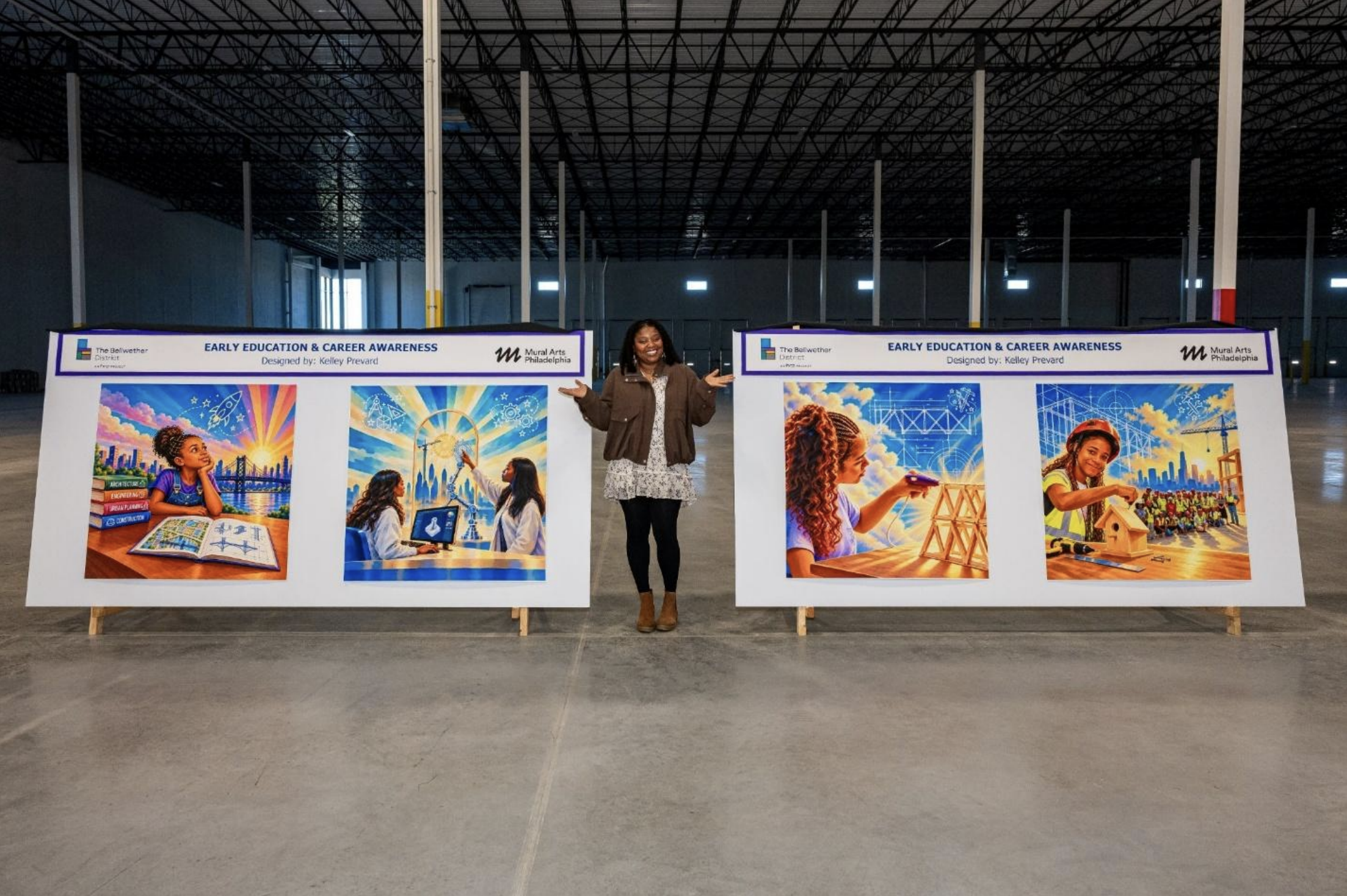
    But that’s just what Mural Arts served up last month — according to scores of social media sleuths and at least one AI scholar — when they unveiled designs for banners that will adorn a fence along the Bellwether District development in South Philly. Part of Mural Arts’ citywide “Throughlines” installation, the temporary banners are intended to dress up the dreary worksite.

    Instead, they’ve sparked debate about the role of AI in Philly’s public art — and drawn ire over Mural Arts’ lack of a formal AI policy. It’s a conversation poised to intensify at a Mural Arts Town Hall Thursday on the issue.

    Four designs by muralist Kelley Prevard quickly set off alarm bells. One featured a skyline bearing a closer resemblance to Chicago than Philly.

    No one at Mural Arts seemed to notice. And, the organization did itself no favors.

    Emily Mello, months into her tenure as executive director of Mural Arts — the nation’s largest public art program — did not answer my colleague Rosa Cartagena’s queries last week on whether the banners used AI-generated imagery, or how they were approved. (The artist has refused to comment.)

    Brushing aside social media outcry — including questions over its commitment to local artists — Mural Arts says it will go ahead with the banner’s planned installation later this month. The Windy City skyline will be altered to look more like Philly, a spokesperson said.

    The public art imbroglio has touched a nerve in the local art world’s AI reckoning, raising a disconcerting question: What happens when the “Mural Capital of the World” can’t get its own skyline right?

    Cartagena, who has her finger on the pulse of Philly’s art scene, is here to tell us the questions she wants answered at the Town Hall, when local artists will review Mural Arts’ working AI policy draft.

    Mike: Mural Arts has yet to explain their internal review process, right?

    Rosa: True. It’s really easy to focus on the individual artist, but in this case her work was unveiled with Mural Arts approval. The responsibility of this commission is with Mural Arts.

    Mike: This is bigger than Mural Arts, of course?

    Rosa: These are really big questions for any arts organization in the city or the world. What are we going to do with these tools, and what does it mean moving forward?

    Mike: The anger has been real. Some social media users are predicting the banners will be vandalized?

    Rosa: There’s this sense of this isn’t what we want, this isn’t real, and this is not Philadelphia.

    Data deep dive: Shapiro’s resounding rout

    (function(){function e(){window.addEventListener(`message`,function(e){if(e.data[`datawrapper-height`]!==void 0){var t=document.querySelectorAll(`iframe`);for(var n in e.data[`datawrapper-height`])for(var r=0,i;i=t[r];r++)if(i.contentWindow===e.source){var a=e.data[`datawrapper-height`][n]+`px`;i.style.height=a}}})}e()})();

    Gov. Josh Shapiro is having a political moment. As my colleague, Gillian McGoldrick reports, Shapiro staked his reputation and rising presidential prospects on flipping Pennsylvania from red to blue in the midterms — and won big. Shapiro outperformed his 2022 gubernatorial win in 65 of Pennsylvania’s 67 counties, according to an Inquirer analysis. The coronation is far from complete. Election oracle Nate Silver predicted his slam dunk favorite for president in 2028 — and it ain’t Shapiro.

    A look ahead

    • The Tun Legacy Foundation — a nonprofit working to rebuild the Tun Tavern in Old City, birthplace of the Marines in November 1775 — will host its third annual block party Tuesday celebrating the Marine Corps birthday.
    • Alaska and Mississippi’s Senate races may finally be called next week, which could further “Fetterman proof” the U.S. Senate for Democrats.
    • The 41st Legislative District race in Lancaster between incumbent Republican Brett Miller and Democrat Brad Chambers might also be called, possibly strengthening the Dems’ trifecta. The Dems have so far won 111 House seats, to the Republicans 88. It‘s the last uncalled House race in Pennsylvania.
    • “Bouquet of Stories: Celebrating Philadelphia’s Gardening Heritage” — a free exhibition presented by the Athenaeum of Philadelphia and the Pennsylvania Horticultural Society — opens fully to the public on Monday. Exploring three centuries of Philly gardening, the exhibition unearths stories of bygone gardeners who helped transform Philadelphia into a horticultural hub, says exhibit curator Tracy Qiu.
    • Gov. Shapiro is scheduled to be at the Navy Yard on Friday. Last month, he announced a $371 million investment in Philly’s port that he said will create 6,000 jobs.
    • 2026’s other national milestone is upon us: The 50th anniversary of the release of Rocky. (Official events, including local screenings this week of Rocky and I Play Rocky, a biopic chronicling Sylvester Stallone’s real-life struggles making the film, are listed here.)

    Yo Adrian, I cannot wait to read this book!

    One more thing: The damaged tombs of Philly’s oldest Jewish cemetery.

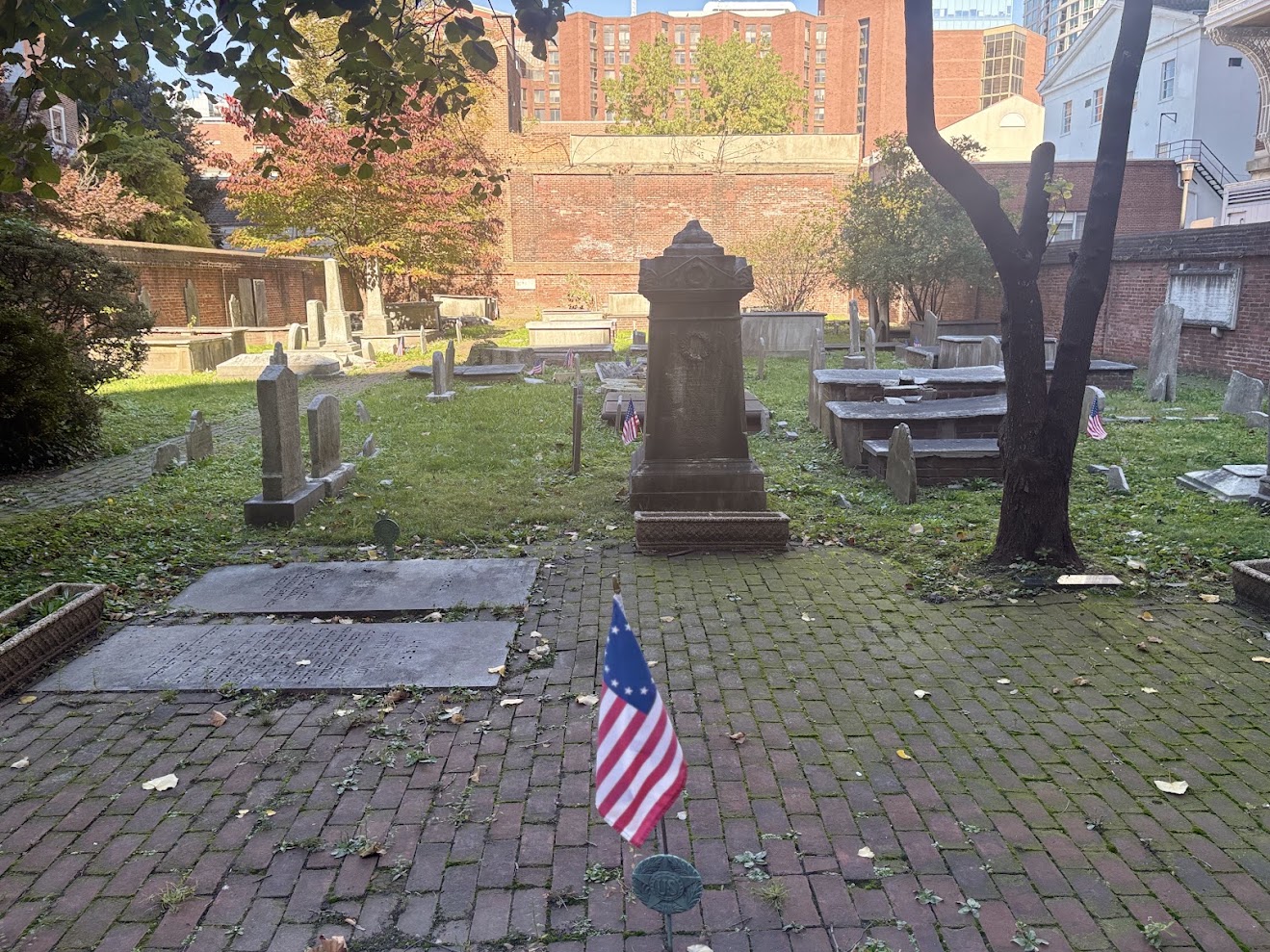
    Graves at Historic Mikveh Israel Cemetery in Center City were damaged in a July storm. An effort is underway to restore and preserve the burial ground.Courtesy of Congregation Mikveh Israel (Custom Credit)

    The historic cemetery sits off 8th and Spruce Street, like a hidden timehole. Nestled behind iron gates and a high brick wall, Mikveh Israel Cemetery, established in 1740, is the oldest Jewish burial ground in Philadelphia. The souls who take their rest in the postage stamp-sized graveyard include a who’s who of Philadelphia’s colonial-era Jewish community.

    Haym Solomon, the forgotten founding father, a principal financier of the fledgling Continental Army and government, who died penniless for his troubles. Rebecca Gratz, the influential Jewish philanthropist and educator. Nathan Levy, a merchant and community leader, whose ship, the Myrtilla, transported the Liberty Bell across the Atlantic.

    “If you are a Jew from anywhere in the world, it’s relevant to you, and if you are an American of any religion, it is still relevant to you,” said Rabbi Yosef Zarnighian of Congregation Mikveh Israel in Old City, which maintains the cemetery. “This is an American story.”

    The latest chapter of the cemetery is a trying one.

    In July, a severe microburst storm caused a large oak tree to collapse, damaging historic graves, including the plot of Levy’s young son, whose name is lost to time. The child’s marble tomb is shattered — and others are cracked in half.

    Last month, Congregation Mikveh Israel kicked off a fundraising effort for $200,000 to restore the sacred burial ground. On Tuesday, the congregation will post its second installment of “Stories from the Cemetery” — a series of Instagram videos highlighting remarkable Philadelphians buried at Mikveh Israel (this week features Solomon).

    Donors can “Adopt an Ancestor” by directly supporting the maintenance and restoration of graves.

    On a recent afternoon, Rabbi Zarnighian walked among the damaged graves.

    “Heartbreaking,” he said. “It’s our job to tend to the dignity of those who lie here.”

  • On Tuesday, the country may once again look to Pennsylvania | Mike Newall

    On Tuesday, the country may once again look to Pennsylvania | Mike Newall

    Every Sunday, Mike Newall brings you an inside look at a story defining Philly this week and a preview of what’s coming in the week ahead.

    Okay, Pennsylvania. We got our extra hour of sleep — the longest weekend until the very end of the century. Now, it’s time to “save the republic,” according to Gov. Josh Shapiro.

    Once again, the balance of power in Washington could hang on a few key Keystone State counties. We got this. Right, Pennsylvania?

    Here’s the basic state of play: Democrats need a net gain of three seats to win back control of Congress. They can win them in four nationally watched Pennsylvania swing districts. Gov. Josh Shapiro leads by double digits. Trump is sinking like a stone in the Schuylkill. The economy. War in Iran. Surging gas prices. Surging inflation. The desperation feels real, the anger urgent.

    In Pennsylvania, where we’ve been bombarded with more than $121 million in ads, polls are mainly within the margin of error. Ready the cold pizza and warm beer. It could be a long night on Tuesday.

    Fear not. We got you. First, don’t be a crumb bum. Vote! Just type your address into this exceptionally handy Inquirer 2026 midterms Voter’s Guide. It has everything you need to know to cast your ballot without a hitch.

    Inquirer political reporters Fallon Roth and Sam Janesch have been pounding the pavement of Pennsylvania battlegrounds for months. They’re here to cut through the noise and tell us all we need to channel our inner Steve Kornacki (khakis optional).

    Mike: Hey guys! So what’s your white board look like right now?

    Sam: So many more races are in play. The map has expanded across all these Republican areas over just the last month.

    Mike: All eyes on Bucks County where five-term Republican U.S. Rep. Brian Fitzpatrick is narrowly losing in polls to Democratic county commissioner Bob Harvie.

    Sam: Fitzpatrick is the moderate, least-Trumpy house Republican trying to hold on in the worst political environment of the Trump Era.

    Fallon: All of our political rating agencies and forecasters are saying it’s a toss-up. If Bob Harvie is able to pull off a win, that would be monumental for Democrats. A Democrat has not represented Bucks County since 2011. It would be the last of the four collar counties to flip blue.

    Mike: Things have gotten particularly nasty in the Harrisburg-area race where Republican U.S. Rep. Scott Perry and Democrat Janelle Stelson remain tied.

    Sam: One of the biggest Trump supporters in Congress, Perry, is trying to skate through again after Democrats thought they had him on the ropes a few years ago in Harrisburg.

    Mike: Rumors of Trump’s demise have long abounded.

    Sam: It really is all about Trump, and this is maybe the last major election where that is going to be true. It’s all about his staying power. How it actually plays out, which districts they win and lose and how big Shapiro likely wins by, will determine a lot about what democrats do in the next two years, and who they nominate in 2028.

    Fallon: It just reinforces that Pennsylvania is always going to be so important politically, no matter what happens.

    Video of the Week

    Inside Zitner's new chocolate factory
    Video: Inside Zitner’s new chocolate factory

    Zitner’s Fine Confections is back! The century-old Philly candy company — famed for its cream-filled chocolate Easter eggs — missed last year’s holiday season after it shuttered its North Philly plant. Inquirer food reporter Michael Klein recently visited Zitner’s shiny new Montgomery County factory, where humming production lines crank out 220 eggs a minute. The candy could hit shelves before Christmas.

    A look ahead: midterms edition

    The Justice Department plans to dispatch 1,000 election monitors nationwide Tuesday, including to polling stations in Philadelphia, Allegheny, Luzerne, and Lehigh Counties. The monitors may observe and take notes but cannot interfere with voting, according to a letter obtained by the Inquirer.

    Read Inquirer alum, Jeremy Roebuck, who now covers the Justice Department for the Washington Post, on the Trump administration’s frenetic planning to protest an election that hasn’t even happened yet.

    Philly’s dry spell could end by the end of next week with potentially “prolific” rainfall. But no worries, Election Day forecasts call for a balmy 69 degrees in Philadelphia.

    And in a bit of unrelated, but equally consequential news, Philly will celebrate the 50th anniversary of the release of Rocky next week with events at the Philadelphia Visitor Center and the Art Museum steps.

    In honor of the pending milestone, I asked John Giordano, former owner of P & F Giordano Fruit and Produce and a teenage fruit vendor back in 1976, of his memories of the day an unknown actor named Sylvester Stallone showed up in the Italian Market to film the movie’s now iconic training montage.

    “There were always people filming down on Ninth Street,” he said, with a laugh. “It was really low budget, like a single camera on the back of a van. We were just working in the store, and like, ‘there’s another guy making a movie.’ Now I must have seen that movie a hundred times.”

    One more thing: ‘The mini-Rocky statue of her time’

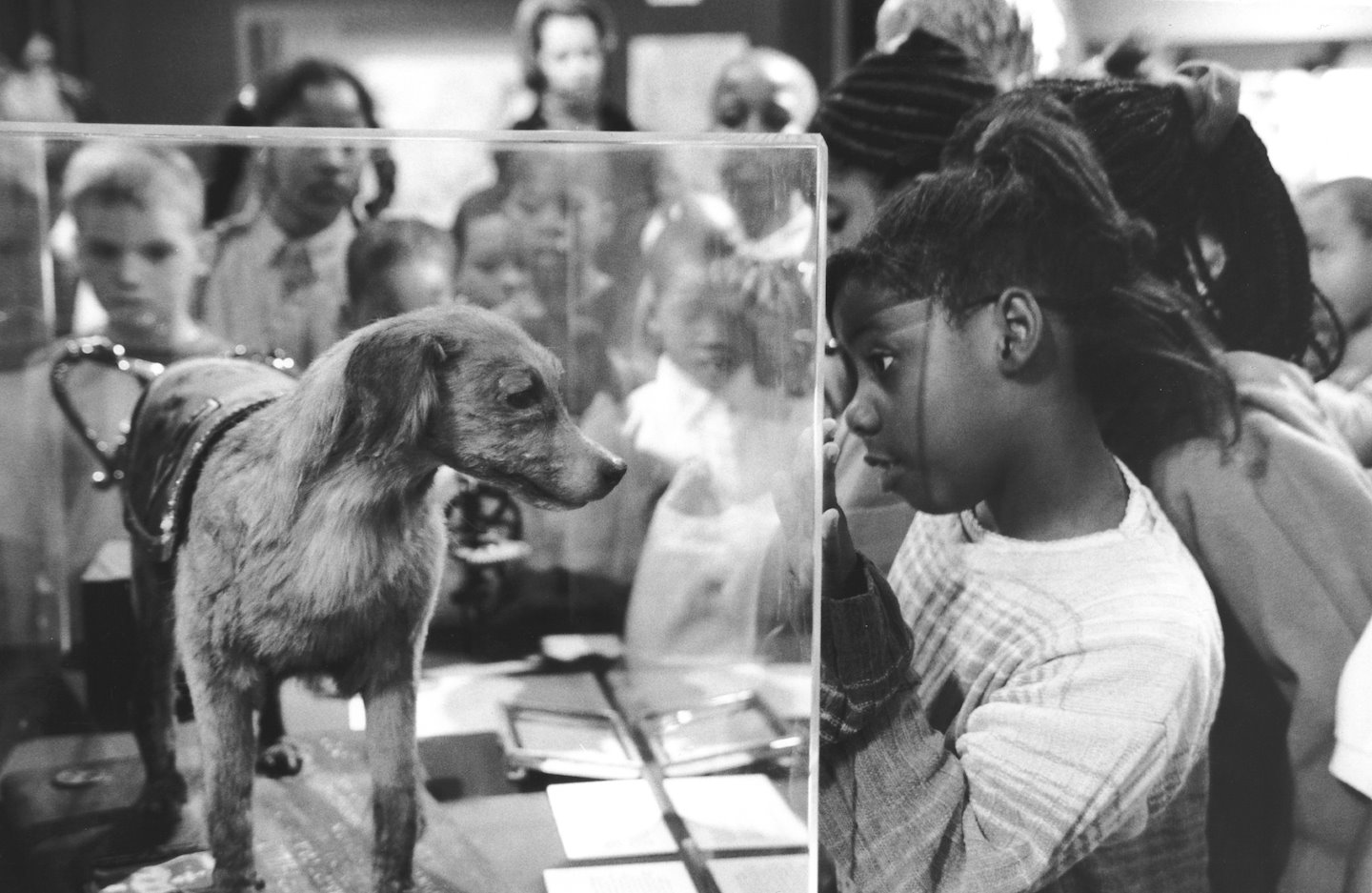
    A taxidermy of Philly the war dog, a hero of World War I, was displayed for years at the Atwater Kent Museum.Courtesy of the Atwater Kent Collection of Drexel University (Custom Credit)

    Her name was Philly. And she was said to be the greatest war dog of them all. Her origins remain a mystery. By 1917, the pint-sized stray with a scruffy coat and devilish grin rambled into the training camp of “Philadelphia’s Own” — a famed World War I Army unit made up of local raw recruits.

    When the Doughboys shipped off to war, a sergeant smuggled the beloved mascot in a shirtsleeve.

    Philly excelled at war. On the blood-soaked Western Front, she earned a reputation as a fierce sentry. She was wounded. Poison gas and some shrapnel in the tail. Pinned with makeshift “Purple Hearts,” she returned to duty. She was a comfort to the men. Tired of her heroics, Germans placed a 50 Deutsche mark bounty on her head.

    At war’s end, she marched in Washington with the troops. President Woodrow Wilson cheered the “Heroine of the Trenches.”

    Living out her life in Frankford, she enjoyed meals of lamb liver at unit reunions, before dying peacefully of old age in 1932. Her owner, an old sergeant, buried her in his driveway until the 315th raised funds for a taxidermist to preserve and mount her. For years, Philly was displayed behind glass at the 315th’s division headquarters on Wissahickon Avenue, and then the Atwater Kent Museum. She has been wrapped in Mylar in storage at the Pennsylvania Academy of Fine Arts since the museum shuttered in 2018.

    Recently, Michael Shepherd, an associate director of the Atwater Kent Collection, received an unexpected call from a national institution wanting temporarily display the old war dog (he doesn’t want to say which yet). This week, Shepherd will consult researchers at Drexel University’s Materials Characterization Core lab, about testing taxidermy for hazardous chemicals, like arsenic, once used by taxidermists. His fingers are crossed.

    “She was like the mini-Rocky statue of her time,” he said. “She meant something to people. She was a hero and she deserves to be honored.”

  • The National Constitution Center has named a new president

    The National Constitution Center has named a new president

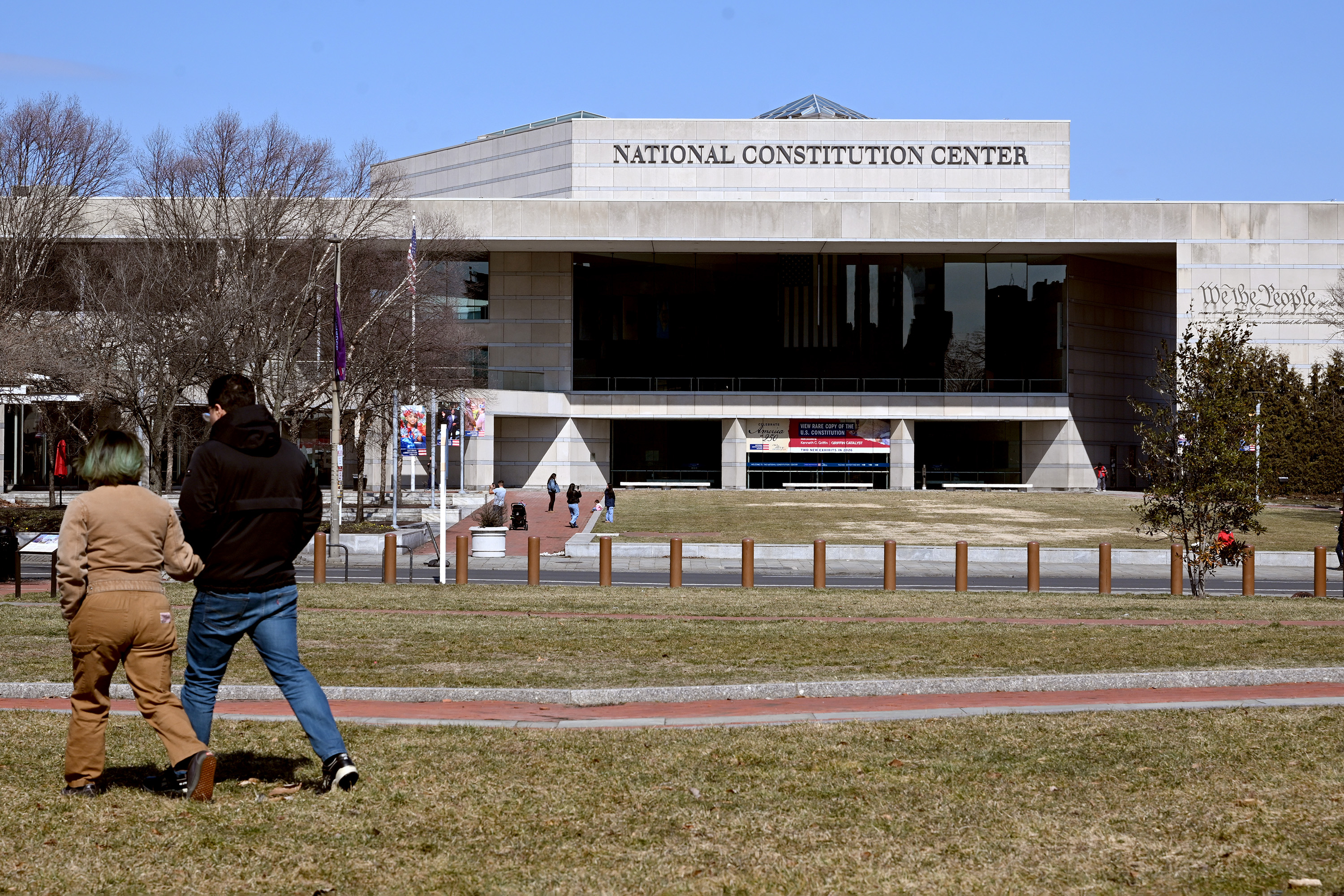
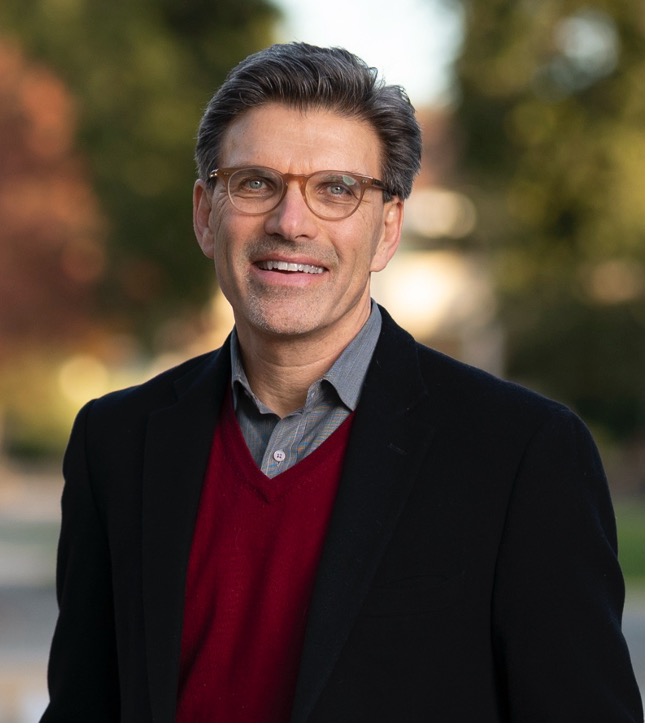
    The National Constitution Center has named Hiram E. Chodosh as its new president and chief executive officer.

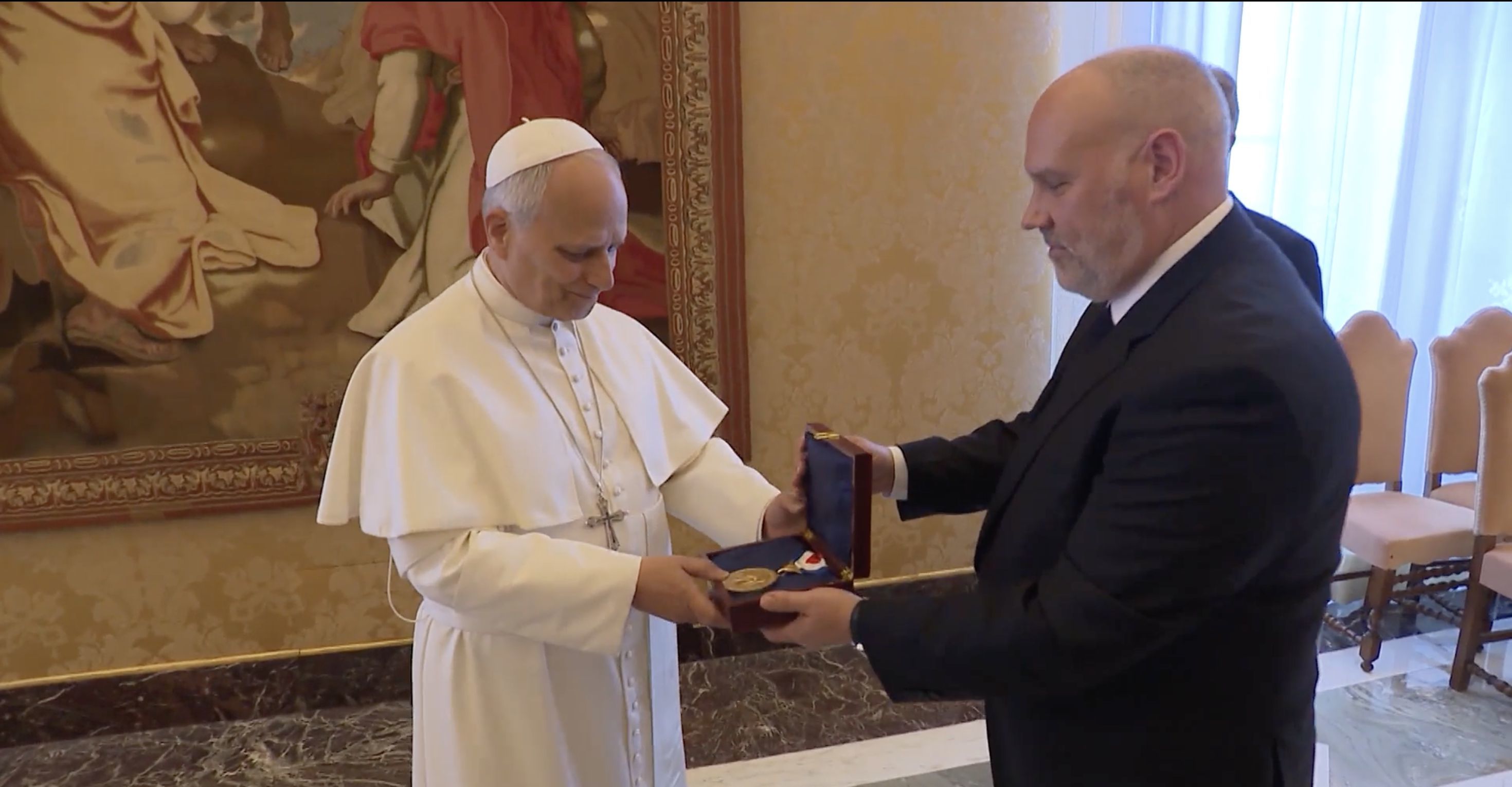
    Vince Stango, the interim president and CEO who led the center’s ambitious initiatives commemorating America’s 250th birthday in 2026 — from major exhibitions to presenting Pope Leo XIV with a historic Liberty Medal — will transition into a new role as deputy chief executive officer and copresident.

    Chodosh, 64, a legal scholar, judicial reform expert, and president emeritus of Claremont McKenna College, brings a formidable reputation as an institution-builder, a fundraiser, an educational innovator, and a committed defender of free speech.

    He has a personal story that lends those accomplishments a deeper resonance: that of a disengaged public school student from Elizabeth, N.J., who eventually became a Yale-trained lawyer and one of the most respected college presidents of his generation.

    Hiram Chodosh is currently president emeritus of Claremont McKenna College.Courtesy of Anibal Ortiz (Custom Credit)

    Mike George, chair of the National Constitution Center’s board of trustees, said in an interview that the leadership change comes at a critical time for the center as it seeks to vastly expand its national influence, reach, and impact.

    “Hiram is a transformational leader with a rare combination of intellectual distinction, entrepreneurial vision, and an extraordinary record of institutional achievement,” George said.

    During a phone interview from California on Wednesday, Chodosh praised the center as “a world-class museum in Philadelphia.”

    Now it falls to him, he said, to transform the center’s programmatic reach and impact amid the country’s roiling political landscape.

    “We’re focused on what the country needs from us,” he said. “It’s a big moment of challenge and opportunity — so transformation and nothing less.”

    A sudden departure and a national search

    The announcement follows a nearly 10-month national search stemming from the sudden departure of Jeffrey Rosen, who stepped down as the center’s chief in January after 12 years.

    Rosen, 61, a legal scholar, journalist, and author — and regular fixture on C-Span — is credited with resuscitating a once-struggling museum that for years was sliding toward financial uncertainty and institutional drift. His unexpected exit on the cusp of the national milestone — and amid accounts of an escalating management dispute and a chaotic board meeting — raised questions of a “constitutional crisis” at Philadelphia’s cathedral to the nation’s founding ideals and its lasting arguments.

    Jeffrey Rosen, former president and CEO of the National Constitution Center, departed the center earlier this year.MONICA HERNDON / Staff Photographer

    At the time, the nonprofit, nonpartisan museum and event forum, which opened on Independence Mall in 2003, framed Rosen’s shift as a desire to devote himself to “scholarship and public dialogue.” He remains the center’s CEO emeritus.

    The New York Times reported that friction had developed over how Rosen’s responsibilities intersected with Stango’s role managing day-to-day operations. The Guardian reported that Rosen’s ouster was internally viewed by at least one board member as a move to curry favor with President Donald Trump.

    George, who is also board chair of the QVC Group social shopping company, denied reports of a crisis.

    “By any objective metric, this was the most successful year in the NCC’s history in terms of reach, impact, engagement, donor network, and growth of philanthropic support,” he said, noting that the center surpassed its 2026 fundraising goal of $13.4 million by more than $5 million.

    Vince Stango, interim president and CEO of the National Constitution Center, presents Pope Leo XIV with the Liberty Medal.The Vatican and National Constitution Center

    George added, “The one thing we are resolute about and will never waver on is that politics will never enter into any conversation we ever have in the boardroom of the NCC.”

    Chodosh and Stango, who joined the Constitution Center in 2000, before the museum opened, will not be pigeonholed into rigid leadership roles, George said. Both will be expected to help lead the center’s operations and philanthropy, as well as its more public-facing educational and scholarly initiatives.

    Ed Rendell, the former Pennsylvania governor and Philadelphia mayor who played a foundational role in establishing the Constitution Center and serves as chair emeriti, praised the selection of the experienced Stango as the second in charge.

    “He has done some excellent work as the interim president and has proved himself a great leader,” Rendell said. “I think they are going to be a very good team.”

    A free-speech advocate

    For Chodosh, a public school graduate raised in working-class and diverse Hillside, N.J., his humble origins stand in contrast to the prestigious institutions he would later lead. He credits his grandmother, Rose Goldberg, who fled the persecution of the Jews in a village near Odesa, in present-day Ukraine, for instilling the values of perseverance, responsibility, and freedom that have guided his career. The family dinner table — and the robust world debates he found there — was his first real classroom, he said.

    “She was the oldest of her generation in my extended family, and I was the youngest of mine,” he said of his grandmother in a 2013 interview. “We spent a lot of time together, playing cards at the table in her kitchenette. She told me lots of stories in order to make me understand how fortunate I was, stories about what little she had, stories about the violence she fled in the early 20th century, stories about the importance of family.”

    After graduating from Yale Law School in 1990, he practiced law in New York before working on major legal reform projects in more than a dozen countries. He has served in advisory roles with the World Bank, International Monetary Fund, and U.S. State Department. He received the Gandhi Peace Award in 2011.

    He has made free speech and intellectual diversity a linchpin of his 13-year tenure at the helm of Claremont McKenna College, a highly selective liberal arts school outside Los Angeles, recognized for his commitment to preparing students for public service.

    “The last 12 years have seen extraordinary threats to free speech on campus, along with a sharp decline in public trust in higher education,” said Jonathan Haidt, social psychologist and author of The Anxious Generation and coauthor of The Coddling of the American Mind. “One of the few leaders who navigated through the turbulence and gave their institutions a better speech climate and greater national respect was Hiram Chodosh.”

    It was also at Claremont McKenna that Chodosh honed his skills as a fundraising powerhouse. Under his leadership, the college completed a record-breaking $1.076 billion fundraising campaign and championed a $400 million sciences center.

    “He is, in my view, far and away the best college president of his generation,” said Guido Calabresi, a senior circuit judge of the United States Court of Appeals and former dean of Yale Law.

    In 2017, his administration suspended five students who blocked access to a campus lecture by Heather Mac Donald, an advocate of “zero-tolerance” policing.

    “We kept everybody safe, and I was committed to hold the students accountable,” Chodosh said in the interview this week.

    What does this mean for the Constitution Center?

    Chodosh and Stango’s vision for the future of the Constitution Center is ambitious.

    “We have in this country lost a good sense of ourselves,” Chodosh said, “We’ve lost a large amount of focus on civic life in our approach to education, and I think that we’ve created tremendous vacuums and a sense of division.”

    The goal is for the Constitution Center to fill those voids. That means building partnerships and collaborations at every civic level — and across partisan divides.

    “It’s about making sure that whatever we’re doing is reaching all communities,” he said. “We have to make sure, whether rural America or whether it’s the confines of our major cities, we have to look far and wide to make sure that we’re reaching people.”

    It does not mean being a sparring partner with Trump, he said.

    “The role of the center is not to adjudicate major controversies,” he said. “The NCC is not the Supreme Court. It’s not Congress.”

    Neil M. Gorsuch, associate justice of the U.S. Supreme Court and honorary cochair of the Constitution Center, said he is optimistic about Chodosh’s ability to lead.

    “Hiram Chodosh brings an unparalleled record of educational leadership, a deep commitment to lifelong learning, and a demonstrated ability to bring people together around serious questions and constructive dialogue.”

    More than ever, Chodosh said, he wants the Constitution Center to be the national forum where everyday citizens from all over can find common ground on the issues dividing them.

    “We need to bring back that set of mutual commitments that are so central to the values that are expressed in our Constitution,” he said.

  • Is an Academy of Natural Sciences divorce coming? | Mike Newall

    Is an Academy of Natural Sciences divorce coming? | Mike Newall

    Every Sunday, Mike Newall brings you an inside look at a story defining Philly this week and a preview of what’s coming in the week ahead.

    The divorce at the Academy of Natural Sciences feels real. Drexel, once lauded as the endangered dino museum’s white night, lost money, then interest. Academy administrators lost their ATM. Philadelphians just plain lost.

    This Monday, Drexel leadership and Academy stewards will finally face public heat over their bungling of Philadelphia’s 200-year-old prehistoric palace — the oldest natural science museum in the Western Hemisphere before the portals to its lost worlds were padlocked.

    The keepers of its collections are expected to testify at a City Council hearing on the matter Monday. Until now, love for the museum has mainly fallen on deaf ears — at least in the cloistered rooms where Drexel and Academy officials claim to still be talking. Now it falls to Councilmembers Nina Ahmad and Jeffrey Young Jr. to excavate a little candor from the museum bigwigs on a question that should have been aired geological ages ago: How did they allow a Philadelphia treasure to slide so near into extinction?

    While it remains to be seen just how searching the council’s inquiry will be, we’ve got the Inquirer’s Peter Dobrin, a reporter steeped in the city’s cultural life, who has been all over the Academy saga from the start, to fill us on in on what he’ll be looking out for at the hearings.

    Mike: What are the questions you want answers to?

    Peter: I’m looking to learn more about what each side actually wants — if one or both sides are looking for a disaffiliation, then under what terms and conditions, and over what period of time? Both Drexel and the Academy are going to need some time to adjust to a divorce before it’s finalized if divorce is where this is going.

    Mike: You’ve reported that there seems to be no savior on the horizon?

    Peter: What’s really been missing so far is an indication that someone is doing due diligence to get the kind of information needed to make an intelligent decision.

    Is someone commissioning a facilities study to determine the extent and cost of deferred maintenance to the Parkway building and how urgent those needs are? Has a study been commissioned to gauge the fundraising appetite locally, nationally and internationally? Is a business plan being researched that would establish what it would cost to run a first-class natural science museum?

    Mike: Why all the secrecy?

    Peter: I’d like to know what the apparent rush is. This is a more-than-two-century-old institution of worldwide significance. Its future deserves to be considered carefully and soberly, armed with as much information as possible. Why was it necessary to shut down the museum with just 30 days’ notice, before the general public had a chance to participate in a rescue?

    Mike: Can the hearings have an impact at this point?

    Peter: The hearing is likely to play a role in keeping the dialogue going. There is a lot of energy focused on the Academy right now, and any solution is going to take a diverse group — concerned citizens; money from government, foundation, corporate and individual angels, and the scientific community.

    Video of the Week

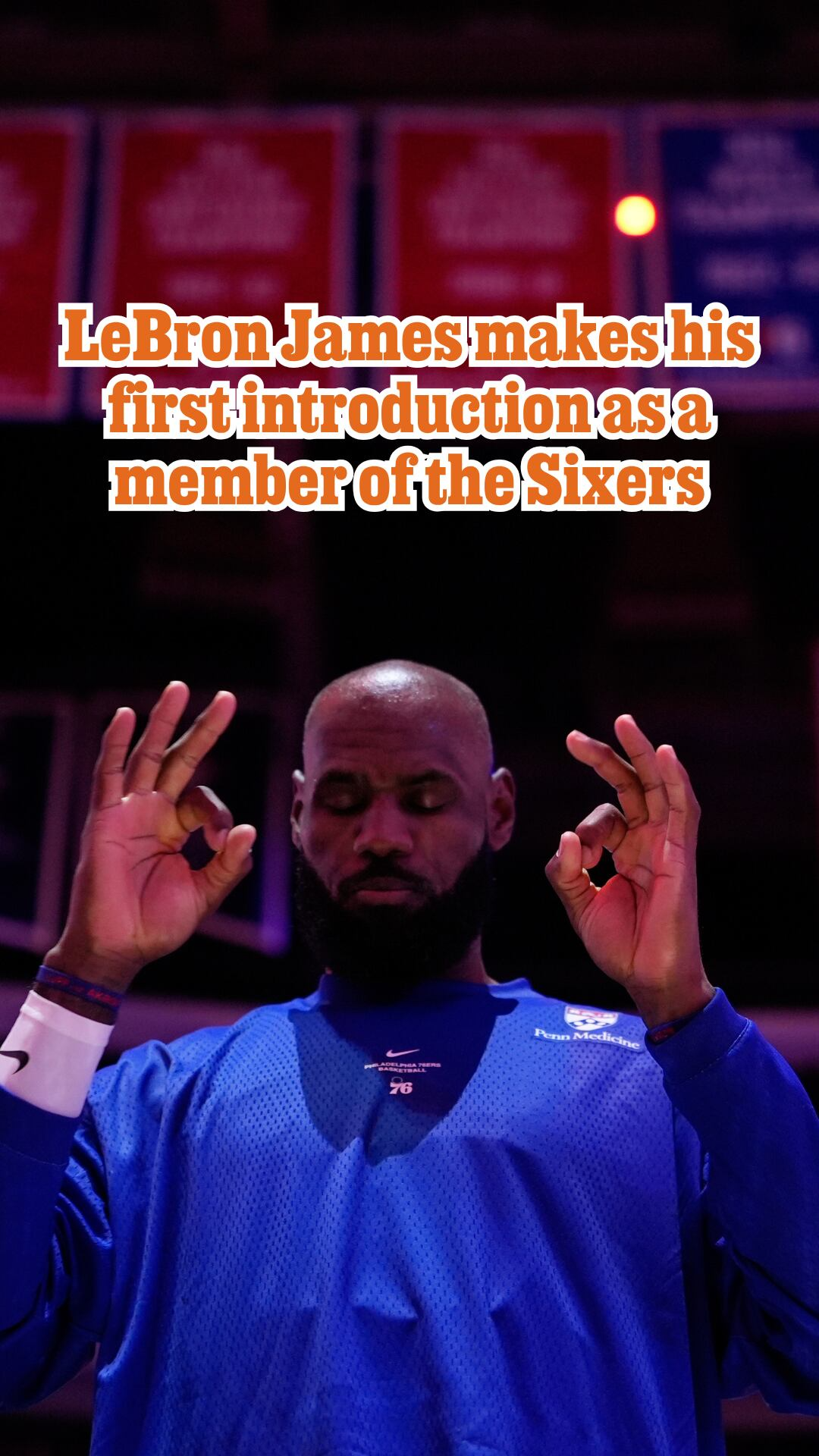
    LeBron James makes his first introduction as a member of the Sixers
    Video: LeBron James makes his first introduction as a member of the Sixers

    He got the boos. He got the cheers. And then he heard Philadelphia fans blow the roof off the building. LeBron James’ South Philly debut was nothing short of “electric,” says Inquirer sports columnist David Murphy. With a new Sixers era underway, a question remains: When the World Champion Knicks come to South Broad on Friday, will Xfinity Mobile Arena once again be “MSG South?”

    A look ahead

    One more thing

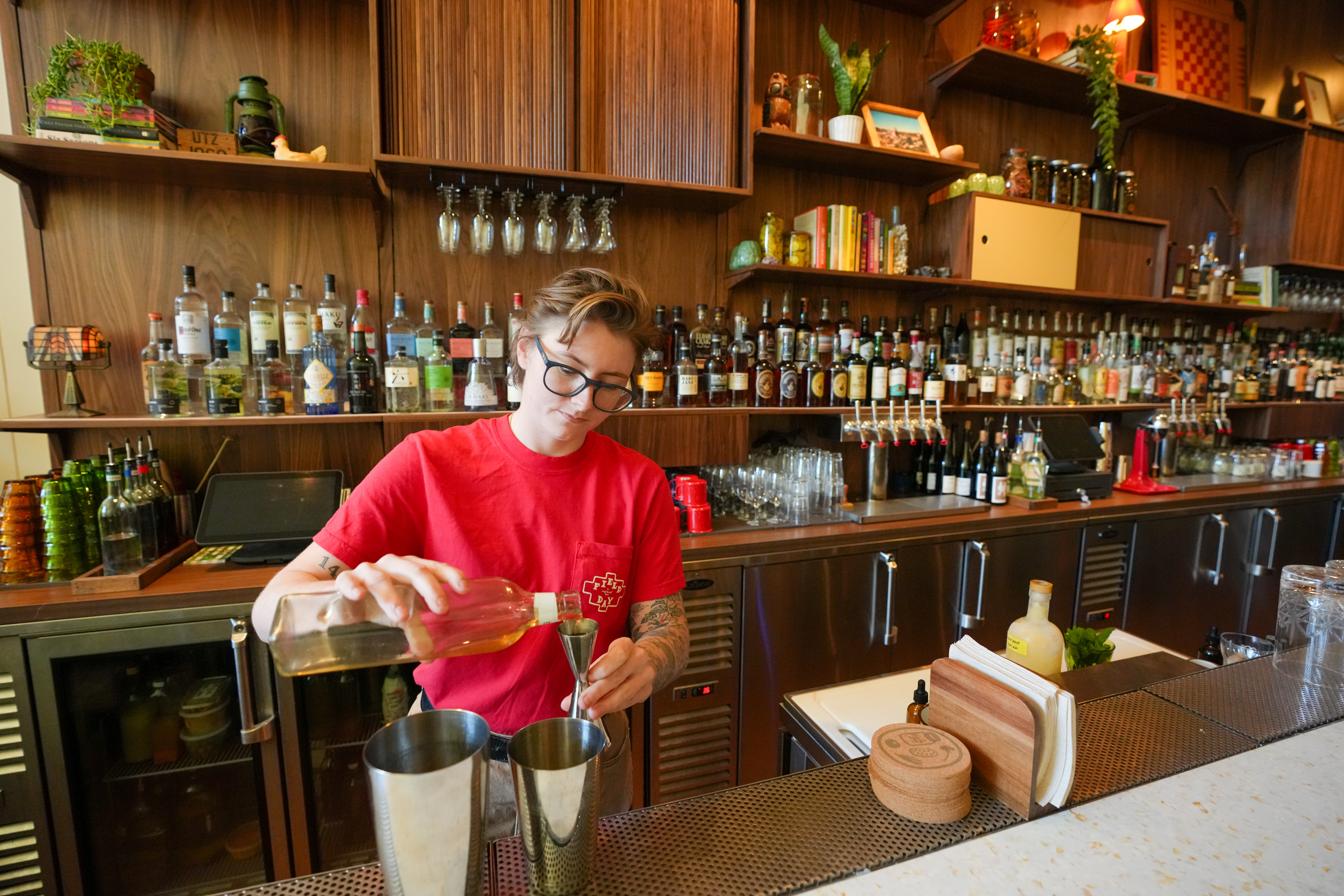
    Erin Dassler makes cocktails at the bar Field Day, in Philadelphia, October 20, 2026.Jessica Griffin / Staff Photographer

    During my decade tending bar in Philly, I’m embarrassed to admit the most creative I ever got with a non-alcoholic drink was wedging a lime into a bottle of Kaliber non-alcoholic beer.

    The doctorate-level mixologists at Field Day — Danny Child’s highly anticipated new cocktail bar and restaurant, which opened up in Northern Liberties on Wednesday — take far better care of their nondrinking brethren.

    “We really wanted to make sure that there were just as many options and beautiful touches to these non-alcoholic drinks as you would for alcoholic ones,” said bartender Erin Dassler, sliding open Field Day’s lauded drink menu on a recent afternoon, sunlight tossing shadows across the bar’s midcentury pastoral backdrop, as a crowd filled the stools.

    Read Jenn Ladd’s gorgeous deep-dive for how Childs — the James Beard Award-winning bartender and leader in the Slow Drinks movement, essentially farm-to-table for cocktails — is sowing the seeds of a beverage revolution far beyond Philly.

    Childs, and his wife, and co-owner, Katie, pour the same craftsmanship into their non-boozy concoctions — a treat for rising non-imbibers, like myself, sober a decade now, and enjoyer of the occasional buzzless highball.

    I went for the no-groni, which Dassler made with precision (Dassler and Childs recently drove to Jersey to collect birch branches for their delicious Birch beer). Non-alcoholic wine, aromatic pine and juniper water, and just a touch of hibiscus. All local, all fresh — and as perfect as a nonguilt gulp can be.

  • An embattled Larry Krasner is back on the attack | Mike Newall

    Every Sunday, Mike Newall brings you an inside look at a story defining Philly this week and a preview of what’s coming in the week ahead.

    On Tuesday, Philadelphia will grieve fallen Officer Shane Seiber, fatally shot while responding to a call in West Philadelphia. The 40-year-old, who leaves behind a wife and two young children, will be mourned according to the rituals and militarylike precision of how the Philadelphia Police Department has buried its dead for generations — in solemn funerals attended by hushed tides of blue.

    But beneath the silence simmers the recriminations of who is to blame. Embattled District Attorney Larry Krasner made sure of it.

    Disregarding a bit of unwritten decorum — assigning blame while a family freshly grieves — Krasner seemed to be chomping at the bit to point the finger. In a surreal, self-recorded YouTube video, Krasner declared that Eric Lewis — the water department employee accused of killing Seiber and severely wounding another officer — was free to commit his crimes because of the “arguably criminal” actions of two police officers. Krasner vehemently defended the actions of his prosecutors during a calamitously mishandled 2023 murder trial against Lewis.

    But Krasner’s blistering broadside raises critical questions about his own office’s conduct in a train wreck of a murder trial and sets up a likely looming battle between a district attorney’s office and police department with an already rocky relationship.

    Krasner had a bad summer, from a Supreme Court scolding to a potential federal probe into his own possible crimes. Now he’s in a street fight with the cops. While ignoring questions regarding his own office’s possible culpability, Krasner has since suggested a possible inquiry into “police misconduct.” The records in the 2023 case are now sealed.

    Ellie Rushing, who covers criminal justice and law enforcement for the Inquirer, has been reporting on both the police and the district’s attorney’s office’s handling of the case. She’s here to update us on her reporting and tell us where the tragic story might be headed.

    Mike: What are the questions that need answering?

    Ellie: There were obvious issues with both the police investigation and the prosecutorial strategy. Our questions, from conversations with experts and other prosecutors, are:

    • Is the police department conducting a review of the homicide detective’s other cases?
    • Did the internal affairs investigation conclude that crimes were committed?
    • When did the D.A.‘s office become aware of these alleged crimes that police may have made in this case? And did they investigate then?
    • Part of a prosecutor’s job is to oversee the homicide investigation. What sort of prep work was done in this case?
    • And if this case had such glaring weaknesses, why was it brought to trial?

    Mike: This looks like it’s going to get ugly.

    Ellie: We’ll see what Police Commissioner Bethel has to say after the funeral.

    Data deep dive

    (function(){function e(){window.addEventListener(`message`,function(e){if(e.data[`datawrapper-height`]!==void 0){var t=document.querySelectorAll(`iframe`);for(var n in e.data[`datawrapper-height`])for(var r=0,i;i=t[r];r++)if(i.contentWindow===e.source){var a=e.data[`datawrapper-height`][n]+`px`;i.style.height=a}}})}e()})();

    Urban birding across Philly and its burbs is soaring, reports my colleague Frank Kummer. Residual COVID-19 isolation. Campus clubs. A thicket of nature apps. Whatever the reasons, Philly is cuckoo for birds, and I love it (even if my knowledge ends at the differences between a penguin and pigeon). Philly may have more birding activity and research than anywhere in the Western Hemisphere, one expert told Kummer. Beat it, Colombia. Go (Philly) Birds!

    With peak fall migration upon us, here are the best regional spots to watch everything from songbirds and sparrows to warblers and raptors.

    Video of the Week

    The Museum of the American Revolution recreates Rocky… sort of.Museum of the American Revolution

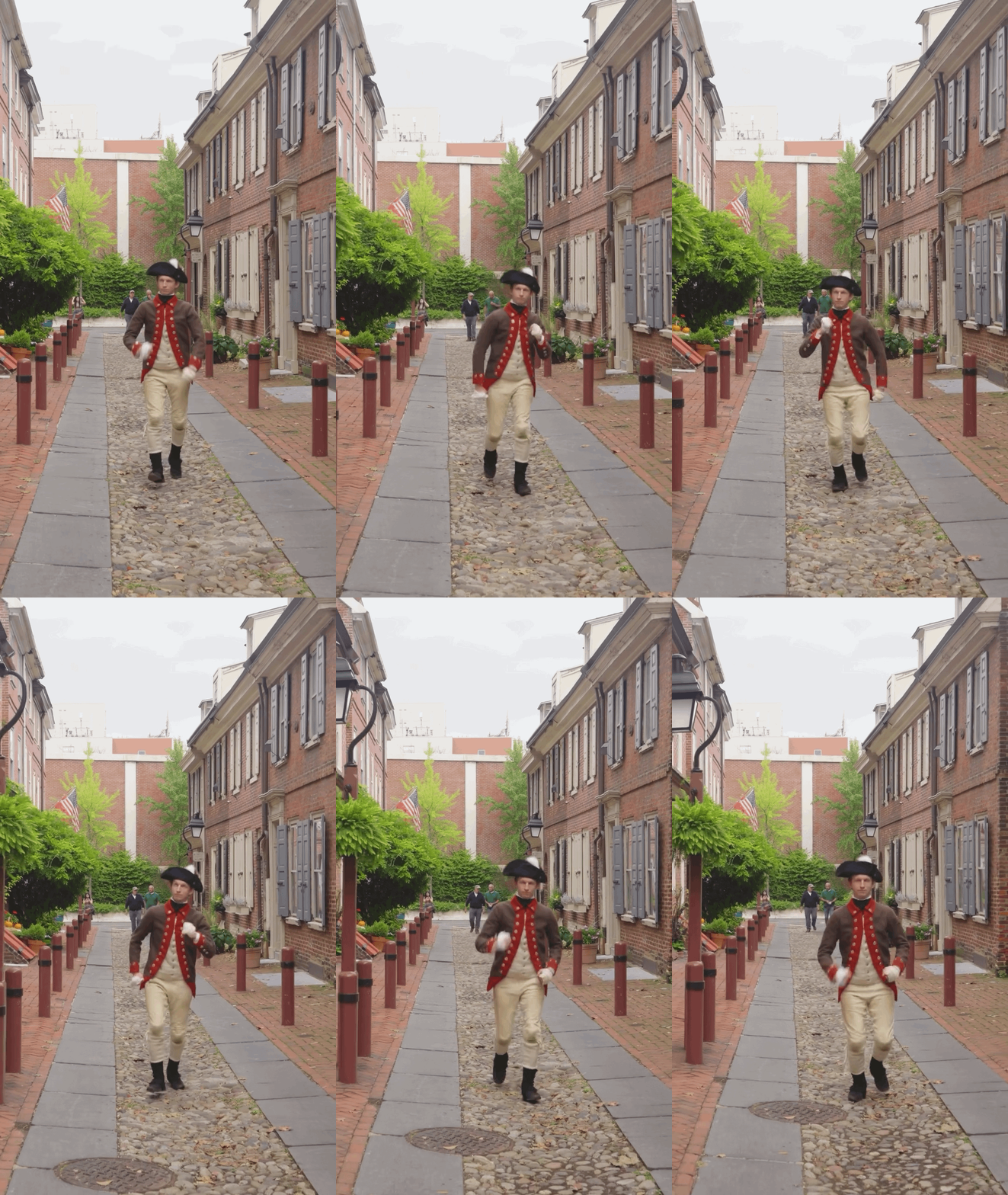
    The Museum of the American Revolution is far from done commemorating the 250th birthday of America. Tipping my Tricorne hat to their hilarious Revolutionary Rocky spoof. Yo Adrian: Huzzah!

    A look ahead

    One more thing

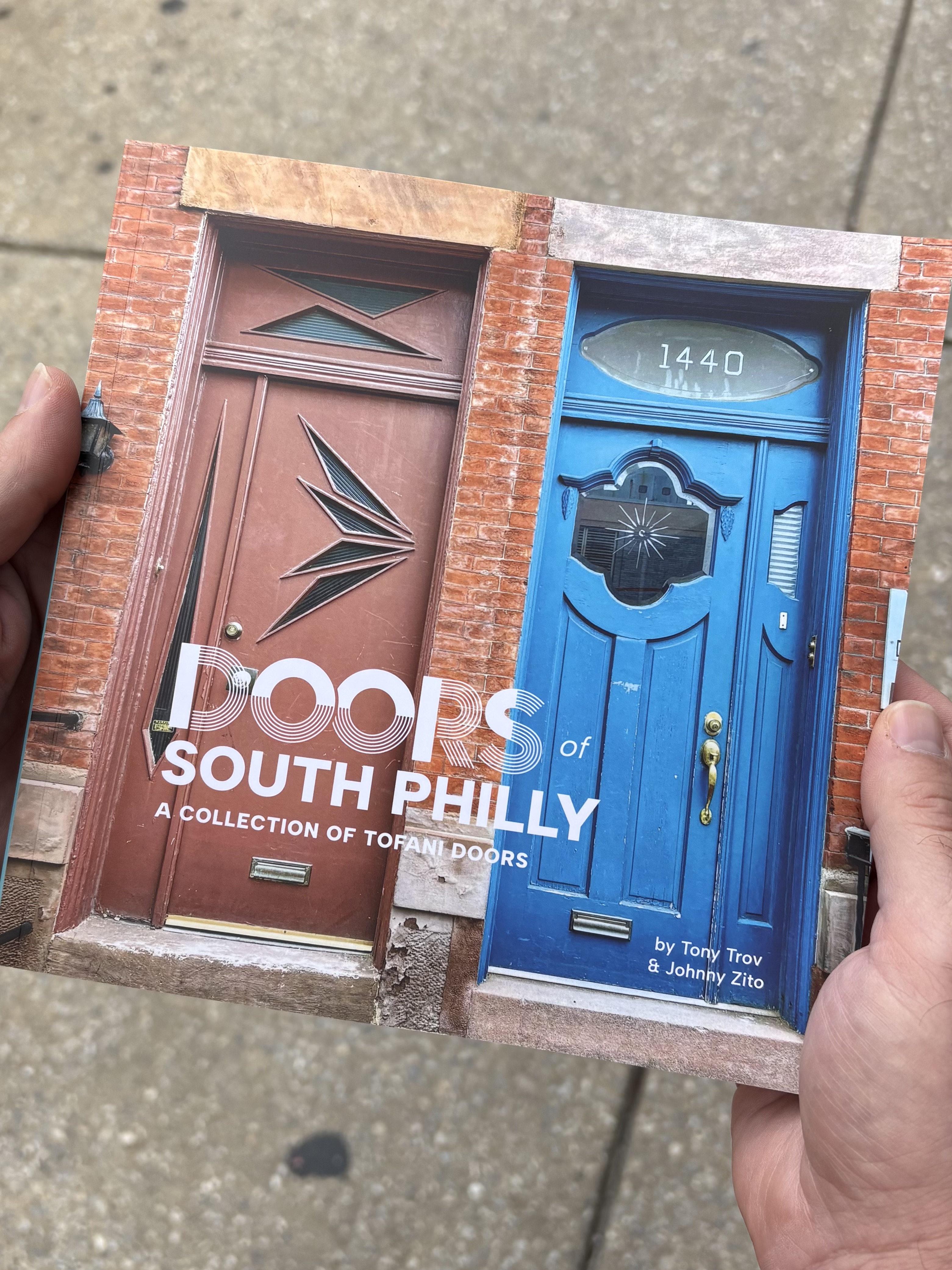
    Doors of South Philly: A Collection of Tofani Doors offers a visual celebration of South Philly’s distinctive Atomic Age doors.Courtesy of Tony Tt)

    Lovers of Tofani doors: Check out South Fellini’s love letter to the fading jewels of South Philly Atomic Age design: Doors of South Philly: A Collection of Tofani Doors. The book offers a stunning visual celebration of the iconic, mid-century doors adorned with dazzling glasswork patterned in starbursts, keyhole, heart, and diamond shapes that still dot South Philly rowhouses.

    Tony Trov and Johnny Zito, co-founders of South Fellini, the East Passyunk Avenue culture and lifestyle shop, have been photographing and collecting disregarded Tofani doors for a decade. The books offer over a 100 photos of their favorites and a deep dive into the local family business that made the doors almost a century ago.

    When my wife and I bought our South Philly rowhouse we immediately fell in love with our Tofani door — a Galápagos-blue beauty with beveled windows in the shape of Wolverine claws. For us, the door brought character and style — a sense of history and place. The way the razor-blade shaped windows throw light and shadows. The door’s deep thud. Like the book says, a Tofani door “turns any rowhouse into a rowhome.”

  • The fall of 1776 was grim in Philadelphia

    The fall of 1776 was grim in Philadelphia

    Philadelphia. Fall 1776.

    Independence hangs on by the slenderest thread. Philadelphia panics.

    And Thomas Paine seeks once more to summon lightning with his quill.

    Paine, 39, the Revolution’s most dangerous pen, witnesses firsthand the despair of the Continental Army. Traveling with the troops, Philly’s firebrand pamphleteer details the patriots’ sacrifice and suffering. The author of “Common Sense” — a 47-page thunderclap mocking the monarchy that, only months earlier, transformed independence from a daydream into a public demand — hopes to return to Philadelphia to set his latest revolutionary rallying cry to type. The American experiment, still in its infancy, may depend on it.

    That is, if Philadelphia itself can survive.

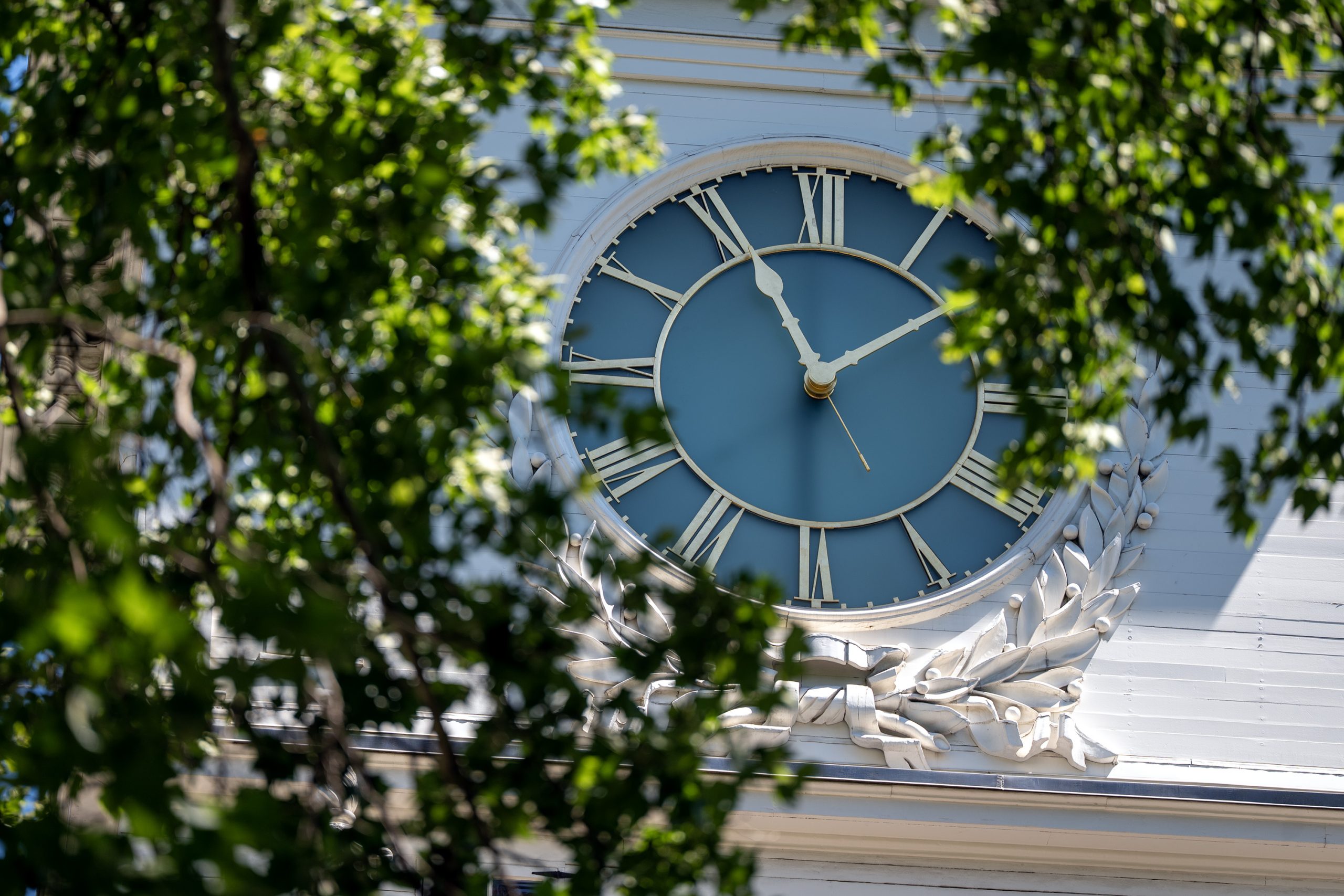
    Clock tower at Independence Hall (Pennsylvania State House) Monday, June 15, 2026.

    Only months after the intoxicating euphoria of July 4, when a world-shaking Declaration rang out from the makeshift capital, unease and uncertainty now reigns in Philadelphia. After a series of defeats, the Redcoats have Washington on the run in New York. The Founders are convinced Philly is next.

    Rumors of impending invasion course the stricken city. Outside the State House, where the Founders conspire, officials rally volunteers to the city’s defense. Militias train. Desertion grows. Newspapers plead with subscribers to go door-to-door to raise $50,000 for the city’s defenders. Smallpox rages. Hunger and fear mount. The dead of Philadelphia are buried in shallow trenches near Walnut Street Prison.

    By December, as the British advance just 30 miles outside the city, Philadelphia businesses shutter for safety. Congress flees. Philadelphians abandon their city for the rural hinterlands.

    “This city for days was the greatest scene of distress that you can conceive,” writes Philadelphia patriot Robert Morris a few days before Christmas 1776. “Now it looks dismal and melancholy.”

    ‘Times that tried Men’s Souls’

    Independence was not easy. Especially in Philly. It wasn’t all Declarations and fireworks and drinks at the City Tavern, said Tyler Putman, senior manager of Gallery Interpretation at the Museum of the American Revolution.

    “Independence was announced in July, but by October and November and December, all signs from New York are that it’s not going to be successful,” he said. “The mood would be that the Republic is not going to survive the year.”

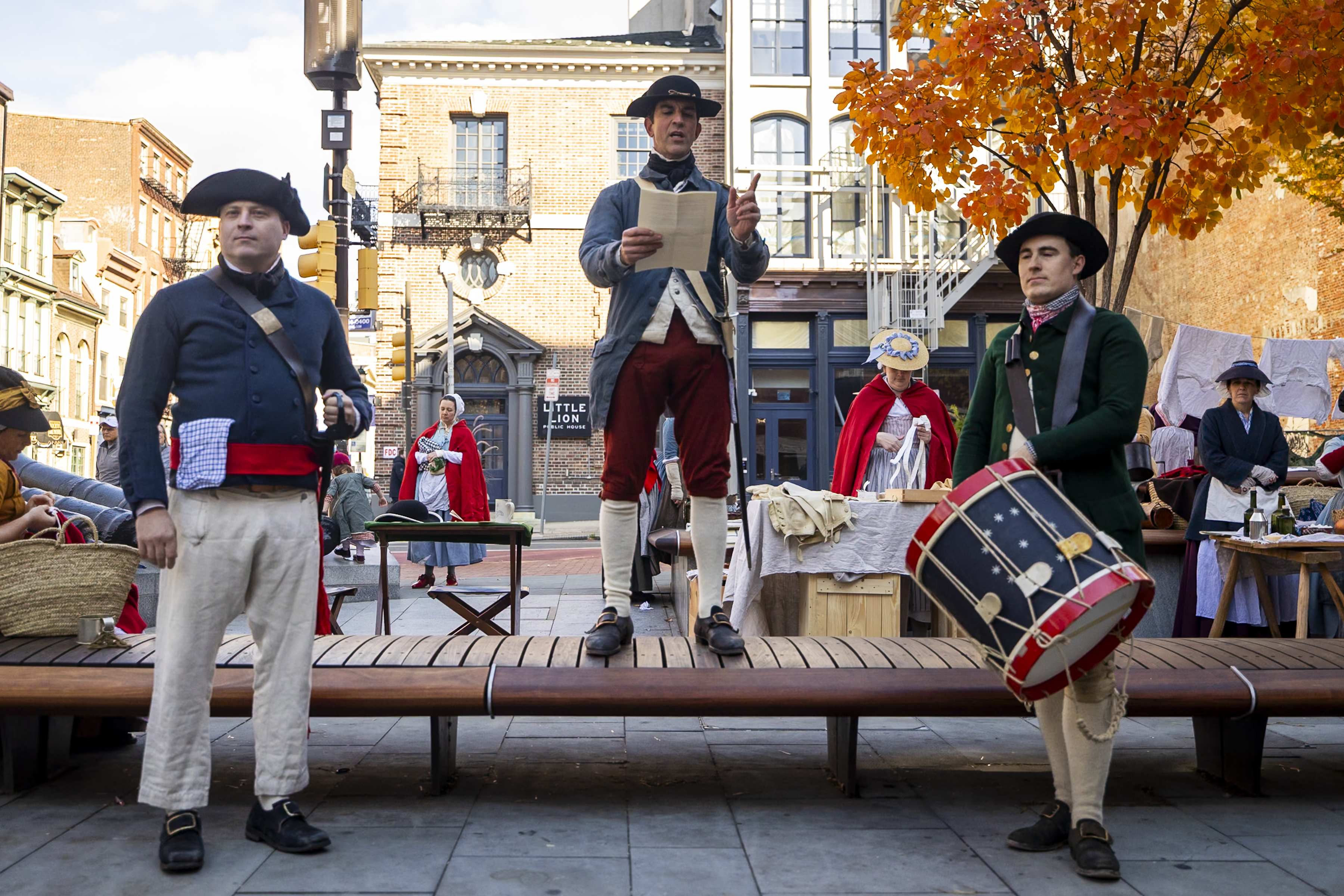
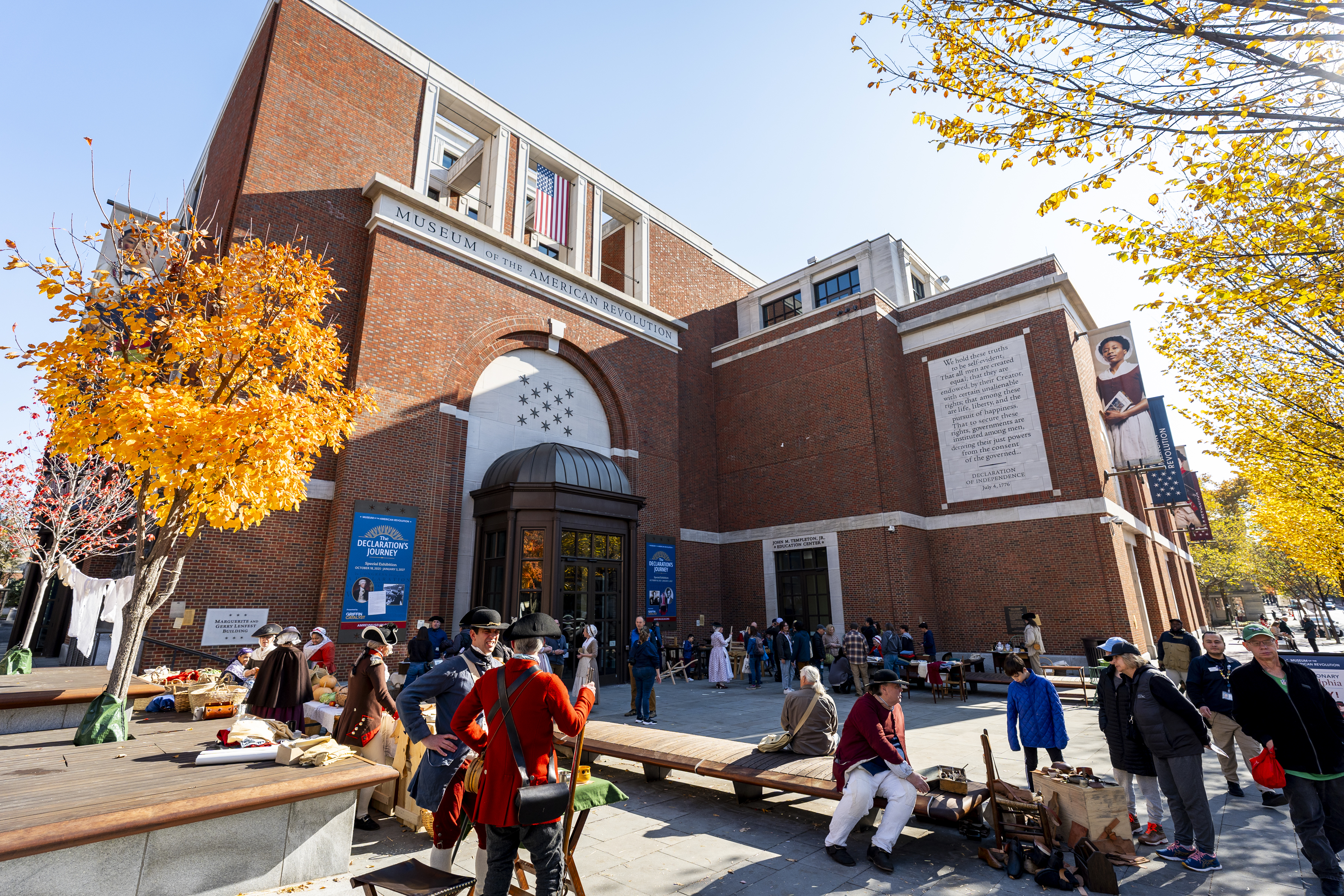
    This weekend, the Museum of the American Revolution aims to recreate those perilous, often overlooked months, when independence seemed fleeting, and doom knocked on Philadelphia’s door, in its largest-ever living-history festival.

    Entitled “Revolutionary Philadelphia: 1776″ and scheduled for Oct. 17 and 18, the event stretches beyond the museum’s galleries, onto the plaza and sidewalks outside the Old City plaza with recreations of colonial markets and military camp grounds, scores of reenactors, guided walking tours, book-signings, dramatic vignettes, street theater, and even a Halloween costume contest for the kiddos.

    Falling just months after the nation celebrated the 250th anniversary of the Declaration of Independence, it seemed only natural to focus the annual event on the travails of Philadelphians in the months that followed that world-changing event, officials said.

    “I think it is easy to forget that the Revolutionary War took eight years and was a closely run race,” said Putman, who will serve among the ranks of reenactors, and recently donned a tricorner hat and waistcoat in a hilariously engaging Revolutionary War Rocky spoof advertising the event.

    The goal is to make history feel real and provide a fuller understanding of a time when independence was new — and far from guaranteed.

    The Museum of the American Revolution hosts a two-day living history festival event on October 17 and 18.Courtesy of the Museum of the American Revolution (Custom Credit)

    “You get to really meet people in a specific moment of history,” he said.

    Like Paine, Philly’s working-class literary bomb-thrower, who in those cold, hard days of 1776 was determined to rekindle the fading fires of rebellion. Paine did not know that in the weeks ahead, Washington would read his powerful clarion call for American resilience — the “American Crisis, No. 1” — to the troops in the trenches, just before their daring Christmas Eve raid across the ice-choked Delaware at Trenton that rescued America’s fading chances.

    Paine wrote, “These are the times that try men’s souls.”