Author: Jason Nark

  • Inside the world of competitive Amish volleyball

    INTERCOURSE, Pa. — A young Amish woman stood barefoot in the back right corner of a grassy volleyball court, spinning a ball in her hands.

    She wore a simple green dress with a black apron, and when she leapt and hammered a serve over the net with a grunt, her prayer covering looked as white as the passing clouds.

    On this beautiful afternoon in late June, the coed competitors were among the hundreds of young Amish players from Pennsylvania, Ohio, and other states who converged on Intercourse Community Park, about 60 miles west of Philadelphia, in Lancaster County, for the annual volleyball tournament. Hundreds gathered around the courts in lawn chairs to watch, including Amish men with long beards alongside “English” children in sneakers and sports jerseys.
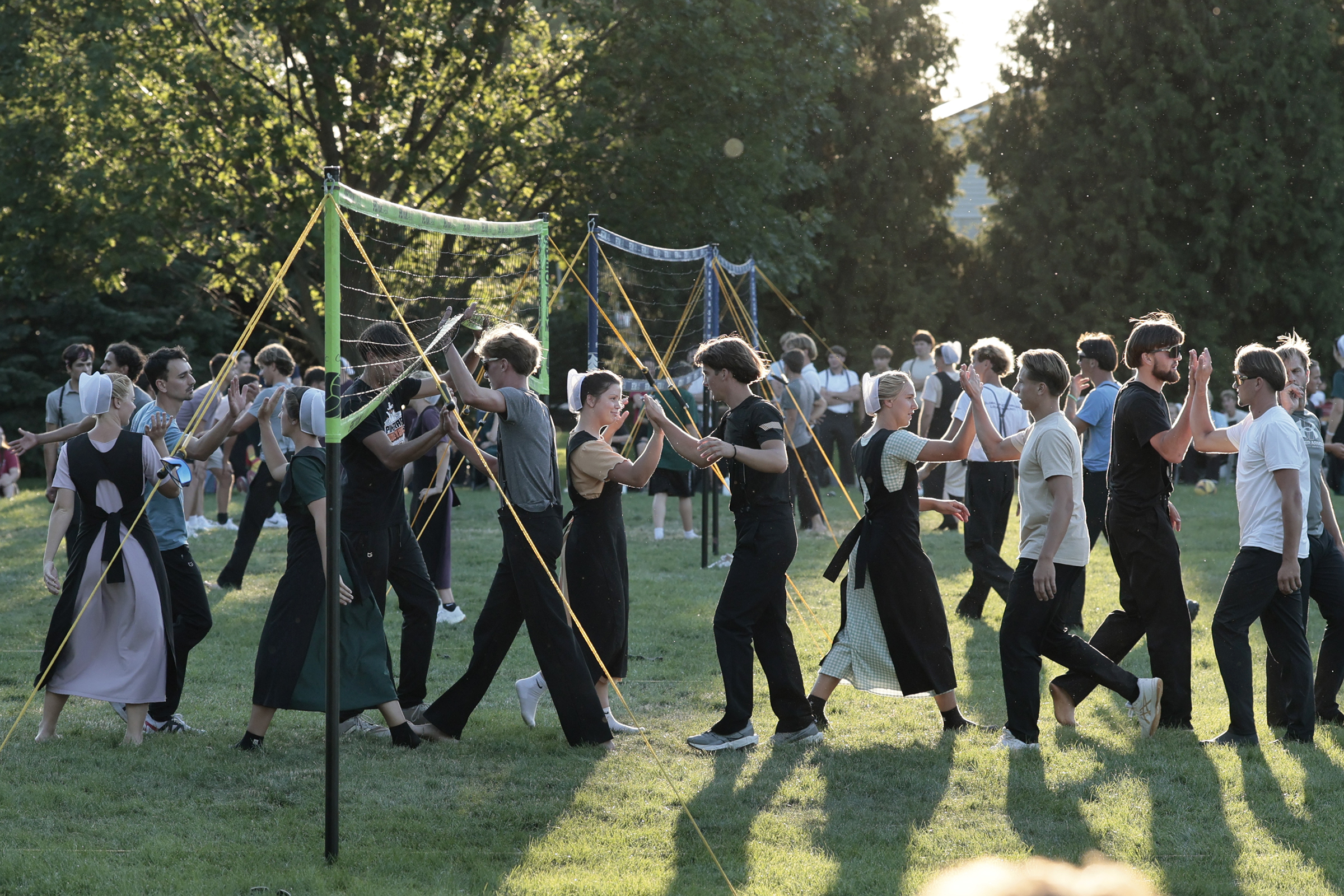
    Teams high-five each other after a volleyball match during the first day of the Heritage Days Volleyball Tournament at Intercourse Community Park in Gordonville, Pa., on June 19.

    The Amish in Pennsylvania, for reasons few could fully explain, love competitive volleyball. Some simply shrugged their shoulders when asked why. Others said they play volleyball because previous generations played too, a skill they learned just by watching, much the same as shoeing buggy horses or baking whoopie pies.

    “I guess it’s just part of our culture,” said Ray Beiler, the tournament’s organizer. ”Competition-wise, though, it’s slow-pitch and volleyball, but volleyball is probably the biggest.”

    The Amish also dabble in ice hockey when ponds freeze, Beiler said, and, in Indiana, they play basketball, of course. In Intercourse, the sharp pop of pickleball paddles on this Friday afternoon revealed another growing sport among the Amish.

    Volleyball, it seems, has always been there, some said.

    Ray Beiler updates the scores and standings during the Intercourse Heritage Days and Heritage Days Volleyball Tournament at Intercourse Community Park in Gordonville, Pa., on June 19.Elizabeth Robertson / Staff Photographer

    “I grew up with it,” said competitor Irv Beiler, 18, of Christiana, Lancaster County. “It’s a team game.”

    One older Amish man said he grew up playing softball, but reckoned volleyball was a new phenomenon. When asked his name, the man spoke to his wife in Pennsylvania Dutch, and declined to answer.

    The Amish do have a traditional game called cornerball, or “eck balle” in Pennsylvania Dutch, that looks like a cross between baseball and dodgeball, but is played in a cow pen. According to AmishAmerica.com, the sport was originally played with homemade balls made by “wrapping a quarter-sized steel nut in twine and covering it with black tire tape.”

    According to the website, eck balle is a disappearing sport.

    Erik Wesner, founder of AmishAmerica.com, said the purpose of volleyball and other sports in Amish communities is mostly about socialization, not competition.

    “This is a game that’s played commonly at the Sunday youth group gatherings or meetings at church members’ houses for dinner,” he said. “It’s a way for teens and young adults to interact.”

    Older Amish in Intercourse didn’t know much about the rise in popularity, but, ever efficient and resourceful, said volleyball takes up little room, compared to say, soccer, and can keep a lot of children busy at a gathering.

    Irv Beiler serves the ball during the Heritage Days Volleyball Tournament at Intercourse Community Park in Gordonville, Pa., on June 19.Elizabeth Robertson / Staff Photographer

    John Lapp, 51, of Gap, Lancaster County, said there are “volleyball barns” in the area where the more serious players gather in the winter.

    “I played softball,” he said. “Volleyball was just a sport that took hold, I suppose.”

    There doesn’t appear to be much trash talk in the competitive world of Amish volleyball, unless you understand Pennsylvania Dutch, but the talent is plain as day. That makes sense, locals said, if you consider the day-to-day life of Amish youth. They’re wrangling calves, riding kick scooters, and lifting hay, building muscle and balance the whole time.

    “I used to play too,” said Simon Stoltzfus. “I just can’t jump as high as I could or stay up there as long.”

    Wesner said sports tend to be more prevalent in progressive Amish communities, like in Lancaster County, and less so in more conservative areas, like Mifflin and Clearfield Counties.
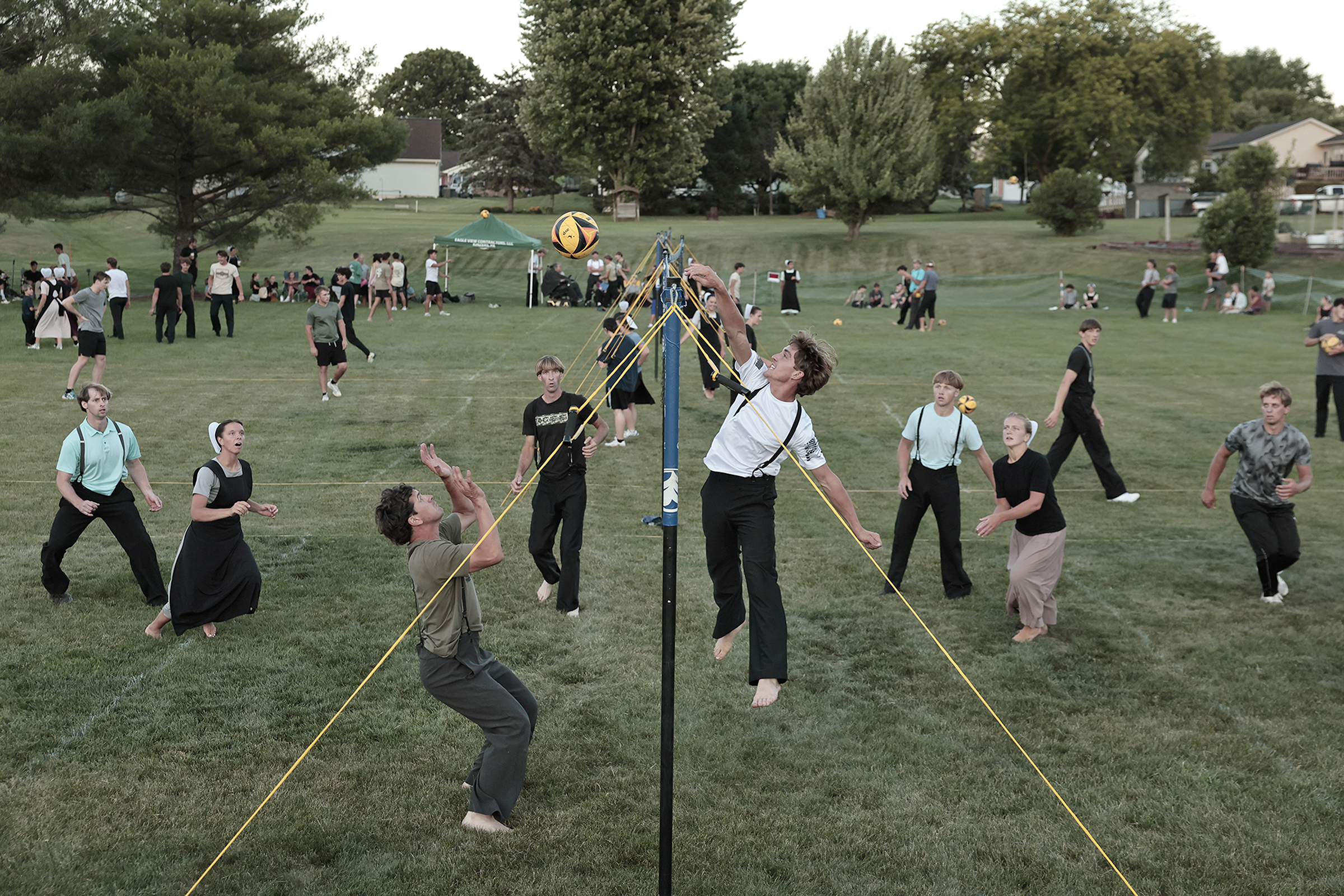
    Serious play during the Heritage Days Volleyball Tournament at Intercourse Community Park in Gordonville, Pa., on June 19.Elizabeth Robertson / Staff Photographer

    Last year, The Inquirer spoke to Melvin Byler, who grew up Amish in Western Pennsylvania, after he won the Professional Bull Riding event in Reading. Byler had to leave his Amish community to pursue bull riding as a profession.

    “I didn’t even see bull riding until I was 14, and when I told my parents I wanted to do it, they said it was a phase,” Byler said.

    Steven Nolt, an Elizabethtown College professor who has researched and written about the Amish extensively, said situations like Byler’s are rare. Ray Beiler said a college coach came to one of the Intercourse tournaments and said many of the competitors could play at higher levels, but Nolt said it’s unlikely that even the most talented volleyball players would pursue the sport more competitively.

    “It would be hard to imagine,” Nolt said. “They’d be making a choice not to join the Amish.”

    Chris Haley oversaw the pickleball tournament at the Intercourse Heritage Days, where there are new courts. He said the Amish quickly took up that sport, too, and some have makeshift courts at their house.

    “They are talented and determined,” Haley said.

    They compete in sports for the fun of it, not for the prospects of future scholarships, and, at a tournament as big as Intercourse, the socializing was front and center. Young Amish slipped off their black leather boots and Crocs for sneakers or went barefoot, dozens chatting up one another in both English and Pennsylvania Dutch.

    “This tournament is most definitely for the fun of it,” said Wilmer Stoltzfus, 20.
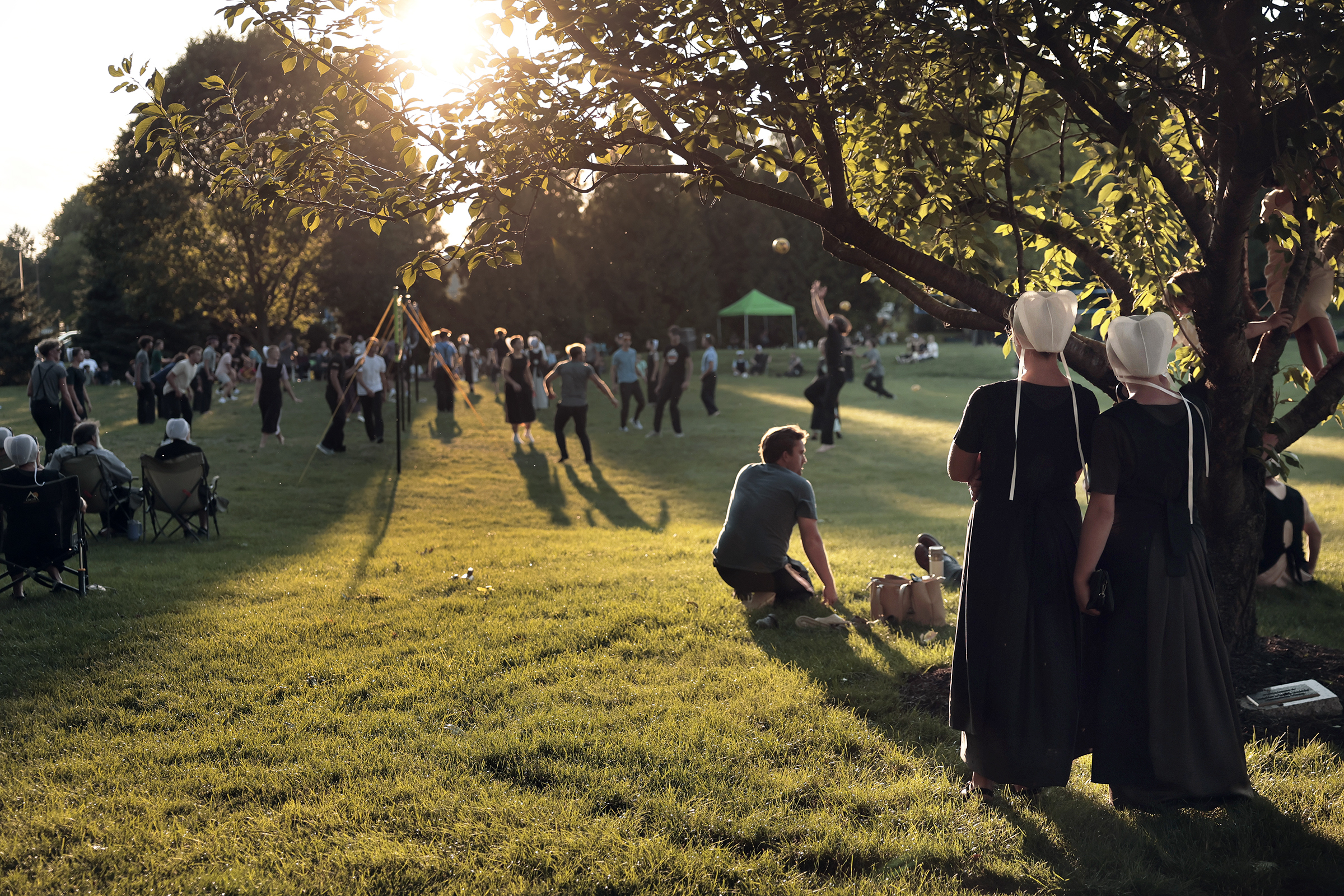
    Friends and family watch the play during the Heritage Days Volleyball Tournament at Intercourse Community Park in Gordonville, Pa., on June 19.Elizabeth Robertson / Staff Photographer

    The players took big gulps from jugs of water and walked onto one of several courts spread out over several acres in the park. Some of the men wore thick, black work pants with suspenders, but others wore shorts. When one young Amish man dove for a dig and missed, his teammates rushed to help him up.

    “Good job,” they said.

    By Saturday night, only one net would remain, and a few thousand spectators would be crowding the court for the finals. The winners would get tall trophies housed in an exhibition room, with silver and gold volleyballs fastened to the tops.

    They’d also get bragging rights until next year, maybe.

    “Not bragging, no,” said Wilmer Stoltzfus. “We don’t really brag.”
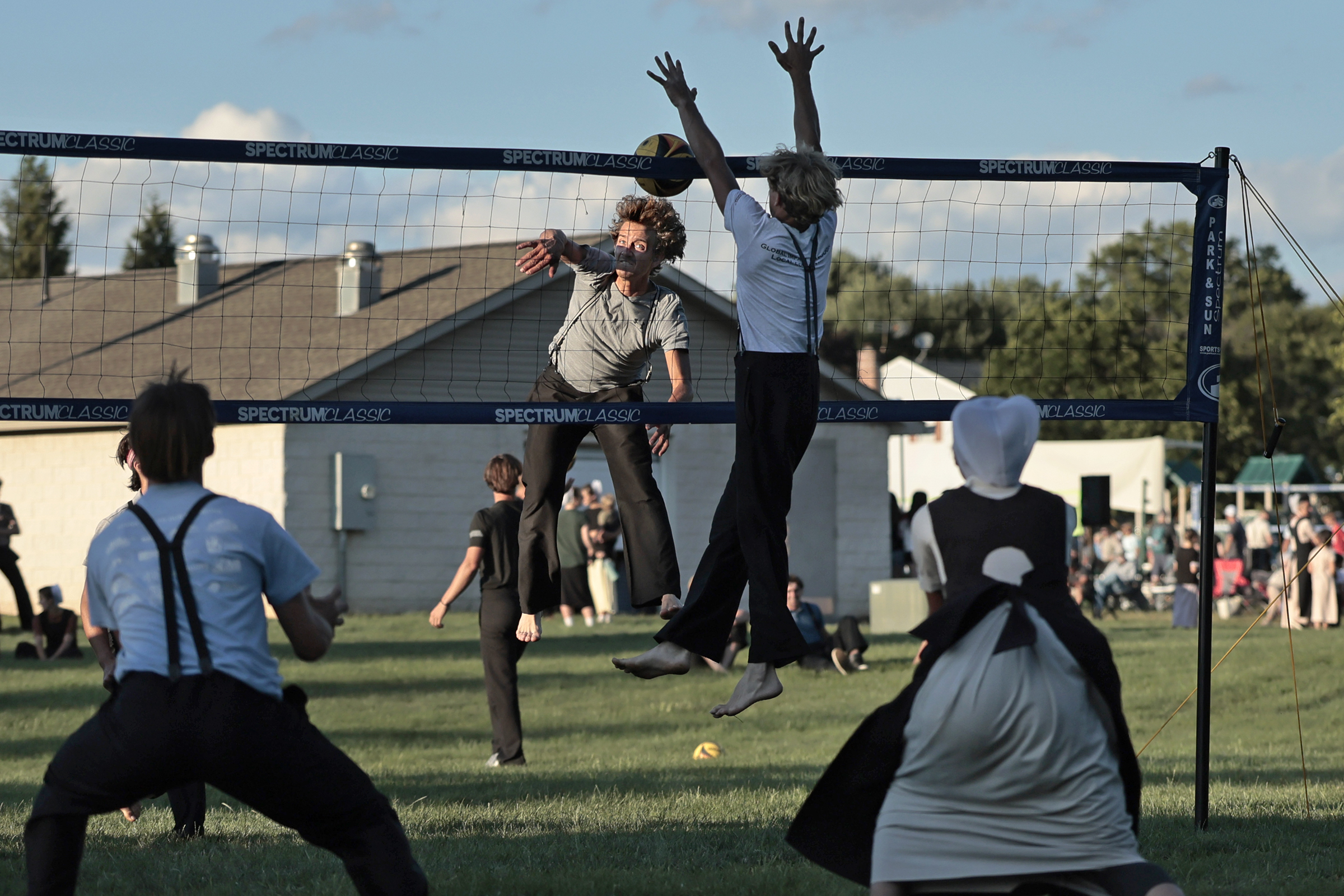
    Serious play during day one of the Heritage Days Volleyball Tournament at Intercourse Community Park in Gordonville, Pa., on June 19.Elizabeth Robertson / Staff Photographer
  • How children, good lyrics, and love brought me around to country (ish) music

    How children, good lyrics, and love brought me around to country (ish) music

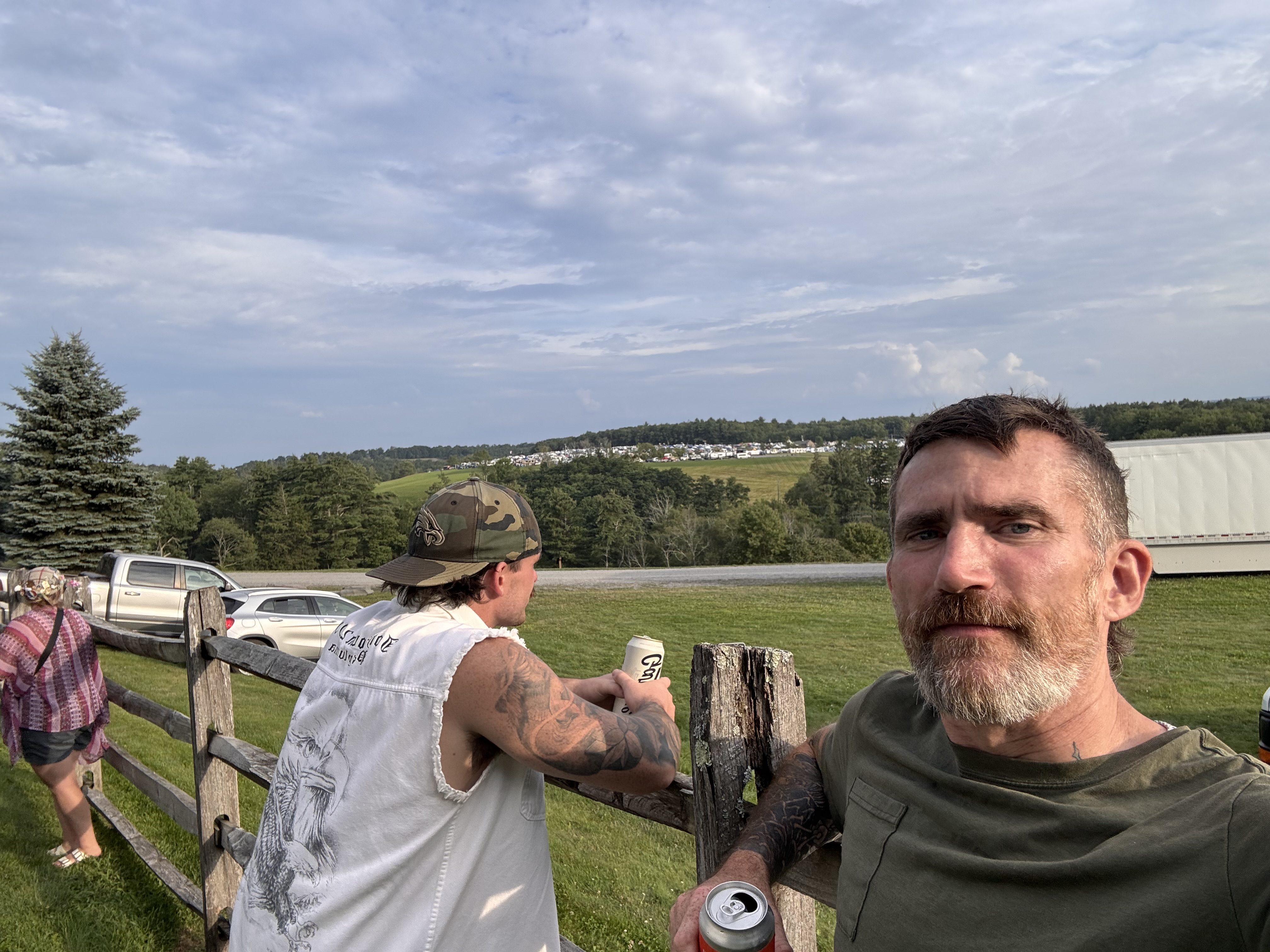
    My son and I sat on the tailgate of his truck on a recent summer afternoon, sipping beers and looking out at the crowd filling up the fields at the site of the original Woodstock.

    He was shirtless in jeans and cowboy boots and a camo Eagles hat. Other trucks filled the spaces around us, but Subarus and Toyota Priuses rolled in, too. I saw an Arthur Russell bumper sticker on one truck and smiled, a man in a Primus shirt by another, not to mention hundreds of people, of all ages, I’d guess were major Phish fans.

    “I don’t know,” I told my son. “This doesn’t look like a country music crowd.”

    “Billy’s not country,” he replied.

    About an hour later, Nashville musician Billy Strings was deep into a brain-melting jam, fingerpicking his Martin acoustic guitar for about 15,000 people at the Bethel Woods Center for the Arts in New York. Mandolin, banjo, upright bass, and fiddle filled in around him, and I flashed back to a similar, much smaller jam I saw atop a Tennessee mountain years ago.

    “I don’t know anything about music,” I said to myself as Billy blistered on.

    Ronan (left) and Jason Nark tailgating at the Billy Strings show in Bethel, N.Y.Jason Nark

    People told me as much, way back in 2013, when I wrote a story for the Daily News about the rise of country music in the Philadelphia area and how it baffled me.

    I was — forgive me — snarky.

    “There’s plenty of songs about booze or guns or bonfires or getting muddy with carefree girls. Often, it’s a combination of all those things in one song, and America eats it up,” I wrote.

    Rereading the piece now, in 2026, it’s not as bad as I remembered. I interviewed experts, fans, and radio personalities, and let them have their say.

    “It’s mainstream. It’s rock ‘n’ roll now; it’s not that old twangy country people think of. It’s music people can understand and relate to,” one fan told me back then, during WXTU’s 29th anniversary concert in Camden.

    Still, a few people came for me online.

    Former conservative talk show host Chris Stigall brought me on his Philadelphia-based show, and I knew I was in trouble. I can’t find a recording, but I recall him calling me an “elitist” or “smug,” and he may have laughed when I told him my favorite band was Black Sabbath.

    I took that same son, a middle-schooler back then, to see Sabbath in Philly that very year. Friends were hitting up Toby Keith and Kenny Chesney shows at the time, though, asking me to tag along. I was still very much listening to metal and indie rock, bands like Built to Spill, who I’ve seen live about two dozen times. I held fast.

    “What’s next?” I wondered. “Jimmy Buffett?”

    Ronan and Jason Nark at an Iron Maiden show in Camden in 2012.Jason Nark

    But then a few things happened that changed me, life events that cut me down a bit: my best friend died, I got divorced, and some of my snark just faded away. I was also sent out into rural Pennsylvania after the 2016 election to get a better understanding of the state for The Inquirer. I wrote about deer urine farmers, demolition derbies, transgender women, immigrant families, terrible internet service, the Amish, and even an elderly yodeler.

    I spent a lot of time driving, my radio scanning from country to Christian, and interviewed Pennsylvanians in barns, old coal towns, campgrounds, and general stores. Many of these people had different concerns, backgrounds, musical tastes, and voting records than most Philadelphians. The more time I spent with them, the harder it was to label anyone, anywhere.

    I also met my second wife, who was from Chattanooga, Tenn., around that time too, and she introduced me to a South I didn’t know. During one early visit to her hometown, she took me to the Mountain Opry, a little community hall atop Signal Mountain where they served popcorn and soda. The tiny show, with artists as talented as Billy Strings, felt like a treasure she gifted me, and I remain grateful for that.

    We went to an Austin honky-tonk together too, where I may have hooted and hollered when the Beaumonts played their raunchy songs. Later, in 2019, we danced to Chris Stapleton in a former church in downtown Chattanooga at our wedding. I still have “Rocky Top” in my running playlist.

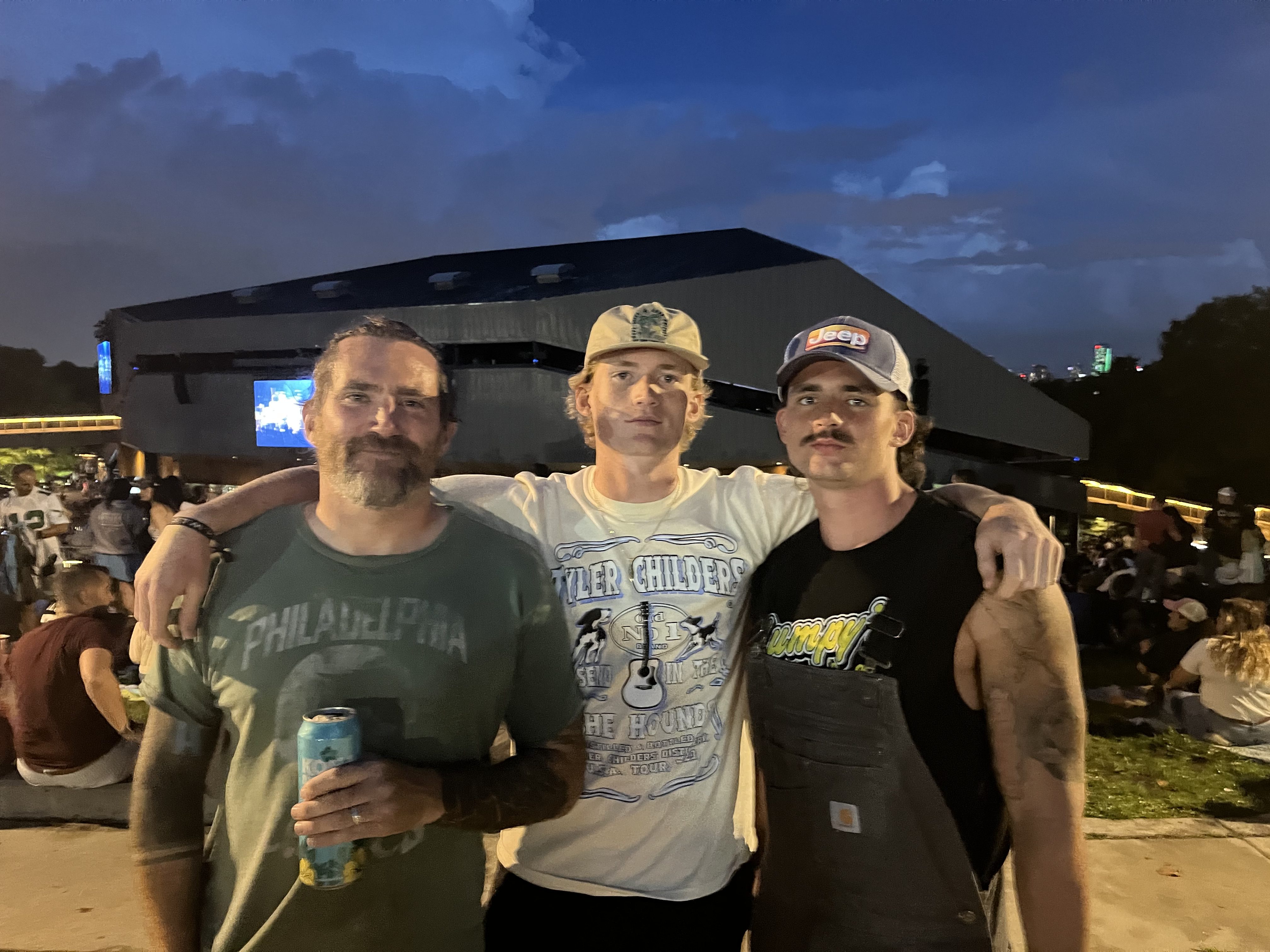
    The author with his sons, Zenon and Ronan, at the Tyler Childers show in Philadelphia in 2023.Jason Nark

    During all this time, I thought about that 2013 story I wrote, with growing regret.

    My children finally tipped the scales when they got to high school and became adults, and some of the lyrics coming out of their speakers began to catch me off guard, artists like Lost Dog Street Band and Zach Bryan. I went looking for more and found Sierra Ferrell, Sturgill Simpson, Lydia Loveless, and Margo Cilker.

    Was it country? Americana? Folk? Bluegrass? Who cares, I’m a fan of whatever it is, and now, as I hover close to 50, I couldn’t care less about who listens to what.

    When I went to see Tyler Childers at the Highmark Mann Center for the Performing Arts, I was surprised to see how young the crowd was and remembered, fondly, getting busted for underage drinking there at a Metallica, Danzig, and Suicidal Tendencies show decades earlier.

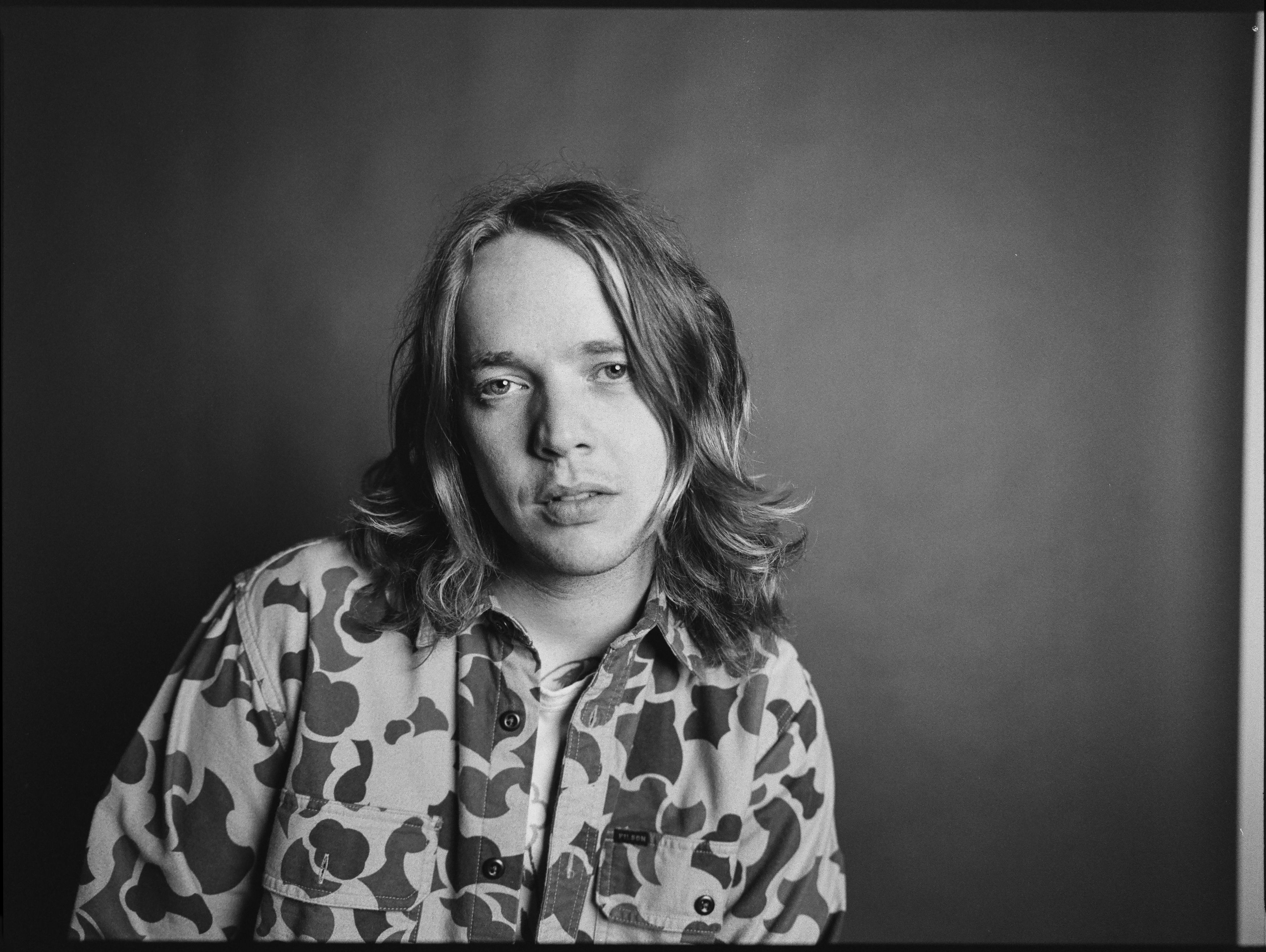
    Billy Strings Alysse Gafkjen

    Fast-forward a few years, and my son and I were camping along the Delaware River, fishing and eating kielbasa, ahead of the Billy Strings show. I hadn’t heard of Strings before I visited the Martin factory in Northeastern Pennsylvania last year, but my son is a devotee, and I’d dragged him to metal shows as a kid, and even a jazz show in Philly last year.

    “It sounds like everyone in the band is playing a different song,” he said about the jazz.

    From quick listens, I assumed Billy Strings was playing country music, but my son was right. It’s something different, something I don’t need to label. I’ve seen Strings described as psychedelic or “jamgrass,” and they both sound fine to me. The crowd — he sold out two nights at Bethel — was losing its mind, twirling around for hours on the grass like at the original Woodstock on the grounds, back in 1969.

    We drove back to the campground with smiles stuck to our faces.

    Later, when I got home, I learned Strings grew up in Michigan, in a household full of bluegrass and heavy metal. One of his favorite bands, it turns out, was Black Sabbath, just like me: further proof that we can like what we like, without labels.