Author: Jason Nark

  • More than two years later, no good answers about woman who went missing in the Pine Barrens

    More than two years later, no good answers about woman who went missing in the Pine Barrens

    Pine after pine rolls by on a windy winter day, until the road becomes sand and snakes its way through this wild stretch of New Jersey.

    For millions of visitors, these Pine Barrens are a magical, mysterious place, full of folklore. For Sue Quackenbush, the pines feel ominous, a place to fear ever since her daughter, Danielle Lopez, disappeared there in April 2024.

    “This isn’t grief, yet. This is terror,” Quackenbush said on a January afternoon there.
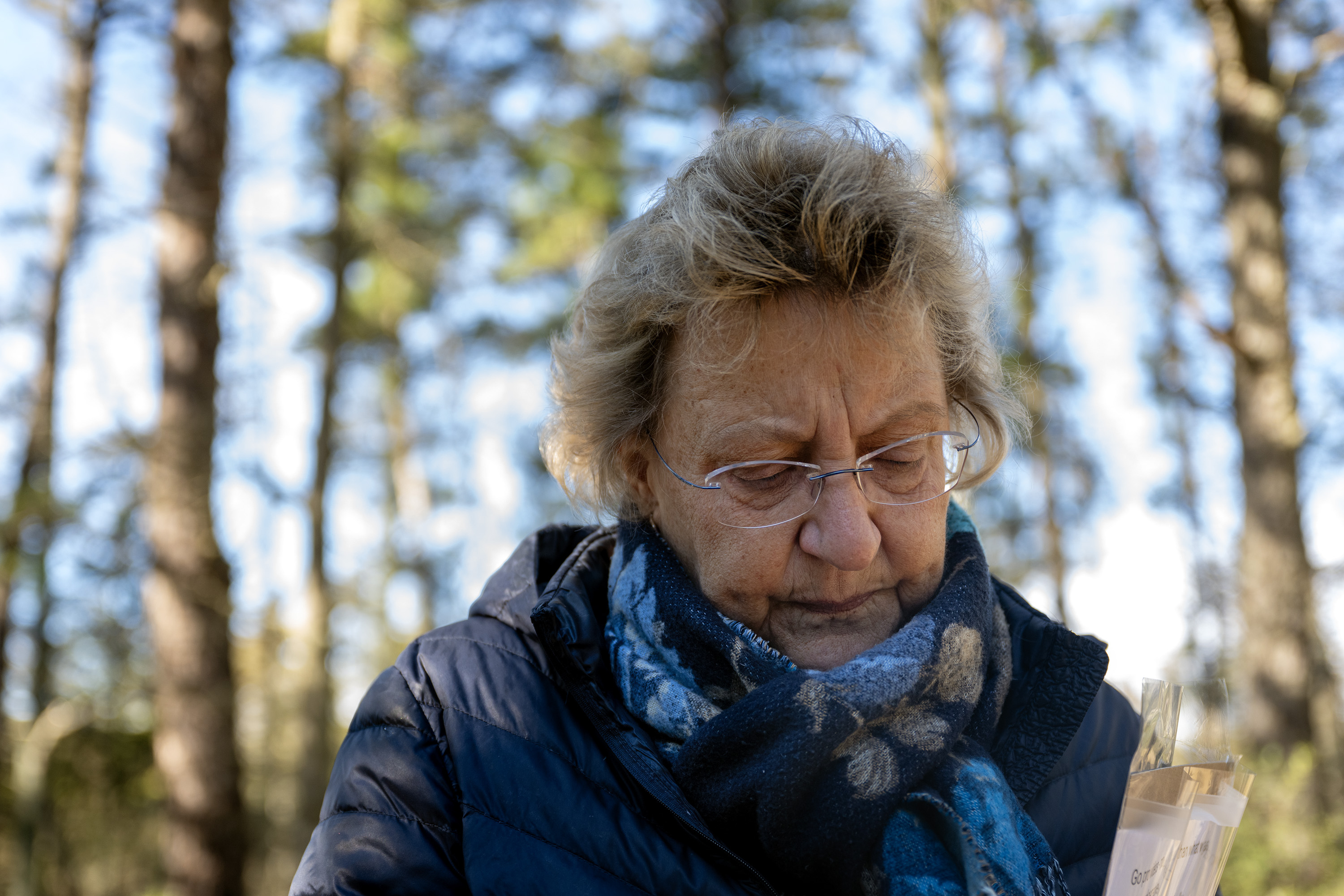
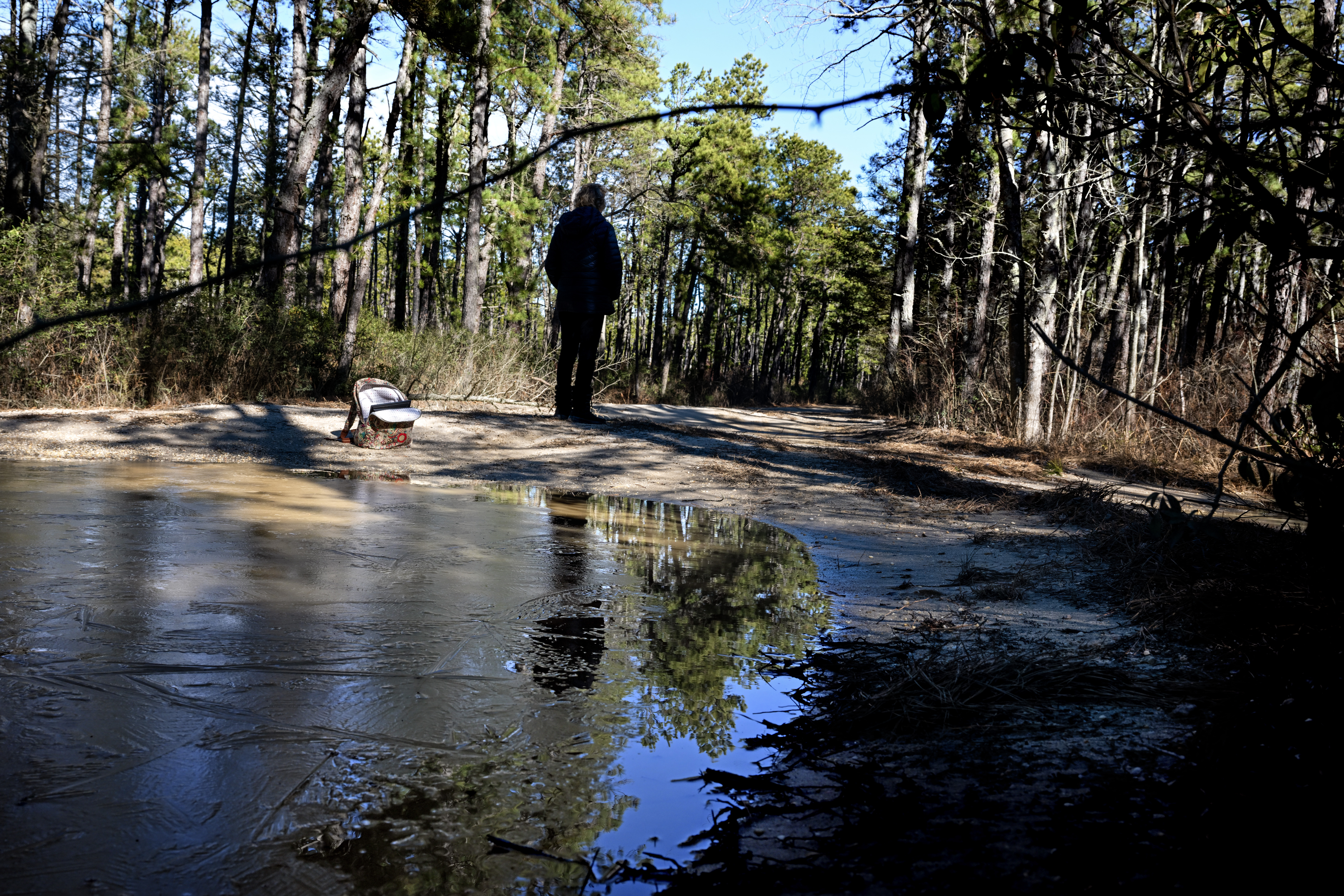
    Sue Quackenbush is on Lost Lane Road in Woodland Township on Jan. 12. In April, 2024 her daughter Danielle Lopez disappeared farther up the dirt road while camping with her boyfriend in New Jersey’s Brendan T. Byrne State Forest. She is offering a $25,000 reward for information leading to solving the case.Tom Gralish / Staff Photographer

    Vanished from camp

    Lopez was 37 at the time of her disappearance and staying with a boyfriend, James Scott Dunn, at a campground in Brendan T. Byrne State Forest, about 16 miles north of Lost Lane, in April 2024.

    Just after 9 a.m. on April 13, 2024, Lopez was captured on surveillance buying coffee at a Burlington County Wawa, not far from the campground.

    Later on April 13, around 6 p.m., witnesses saw her walking alone on Lost Lane, a desolate, sandy road pocked with muddy puddles deep in the Pine Barrens.

    She was never seen again.

    Quackenbush reported Lopez missing 11 days later on April 24. Dunn went to see the police a week later, at Quackenbush’s urging, and was arrested on unrelated drug charges. According to the New Jersey Department of Corrections, Dunn was sentenced to five years in prison on Oct. 25, 2025, on those charges, along with a theft by deception charge. He is currently incarcerated at South Woods State Prison.

    Lopez’s car, a 2008 Hyundai Accent, was not discovered until May 1, 2024, disabled and abandoned on Lost Lane, in one of the many muddy holes that dot the road.

    Quackenbush, whom the Inquirer has been speaking to since January, said her daughter, known as “D-Lo,” was vivacious and loud. She also had some issues with alcohol, and had sought help for it in the past.

    “There’s no denying Danielle had alcohol issues. I’ve never tried to mislead or cover that up. There’s no denying that most people don’t go camping in April … in New Jersey,” she said.

    The investigation

    The New Jersey State Police are investigating Lopez’s disappearance and have declined to comment to The Inquirer on the case.

    In a social media post on the two-year anniversary of her disappearance, police said they were still “seeking the public’s assistance in locating Danielle and gathering any information related to her disappearance.”

    In 2024, investigators told NBC’s Dateline that witnesses who saw Lopez walking on Lost Lane that evening on April 13 were filming with a GoPro camera. Based on the footage, investigators told Dateline that Lopez was alone and “did not appear to be in distress” in the video, which has not been released. Lopez allegedly asked those witnesses to help push her car out, but they didn’t.
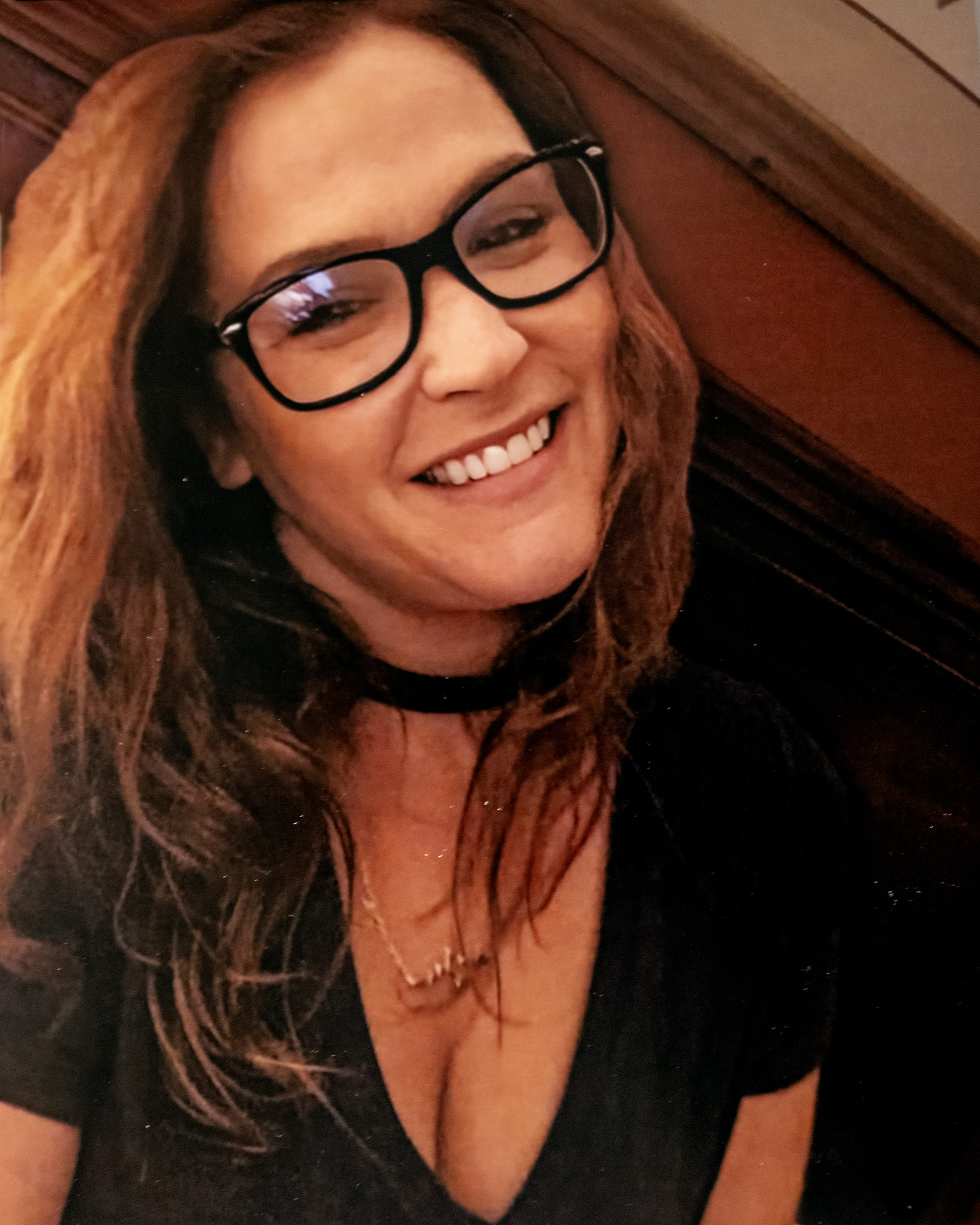
    A family photo of Danielle Lopez, who disappeared in April 2024 while camping with her boyfriend in New Jersey’s Brendan T. Byrne State Forest.Courtesy of Sue Quackenbush

    Investigators told Dateline they found “multiple items” belonging to Lopez in her car, but not her phone. Police told Dateline there were no signs of suspicious activity associated with the abandoned car.

    In an interview with The Inquirer in prison, Dunn said he and Lopez were “homeless” and living in and out of hotels before moving to the campground, which has a 14-day camping limit.

    He discussed a handful of alibis that kept him away from the campground for several days: He said he picked up a motorcycle, visited friends, hotels, and a truck stop. When he returned to the campground after April 13, 2024, he said it was in “disarray.”

    “And I was wondering where Danielle was,” he said.

    (A New Jersey Department of Corrections spokesman sat in on The Inquirer’s interview with Dunn and recorded it for “recordkeeping.” NJSP investigators later shared the recording with Quackenbush. The NJSP did not return a request for comment on why they shared the interview with Quackenbush.)

    A mother’s grief

    Quackenbush now brings pepper spray when she drives to Lost Lane from Pennsylvania, and her voice trembles a bit as she gets closer to the desolate road where her daughter was last seen alive. On a January afternoon, a large puddle stopped Quackenbush and The Inquirer from visiting the memorial she erected near the site. The water was too murky, and there was no way to tell how deep it was.

    Quackenbush suspects her daughter wanted to see Lake Oswego near Lost Lane when the car got stuck, and believes she could have walked the 16 or so miles back to the Brendan Byrne campground, if she knew the way.
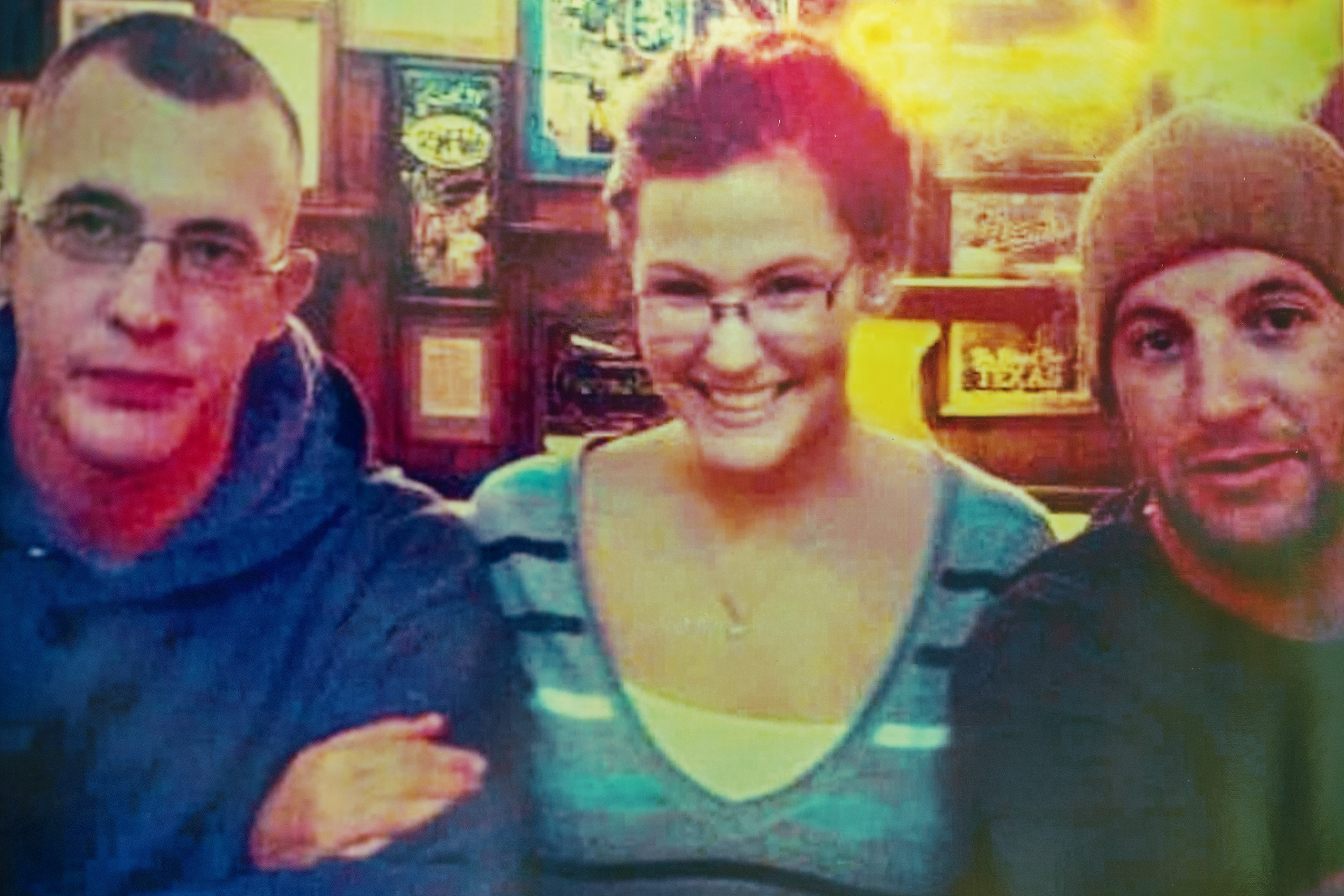
    A family photo of Danielle Lopez with her two brothers. She disappeared in April 2024 while camping with her boyfriend in New Jersey’s Brendan T. Byrne State Forest.Courtesy of Sue Quackenbush

    Quackenbush holds on to hope, the belief that her daughter is alive, because she suffered so deeply in the past.

    “More than most,” she said.

    Quackenbush lost her eldest son, Eric, to suicide in 2015. Her younger son, Michael, a Marine who served in Afghanistan, died in a Florida car crash in 2016.

    Lopez struggled with loss as well, Quackenbush said, including the deaths of her grandfather in May 2020 and her father a month later. Roscoe, Lopez’s beloved rescue dog, had to be euthanized a few months before her disappearance.
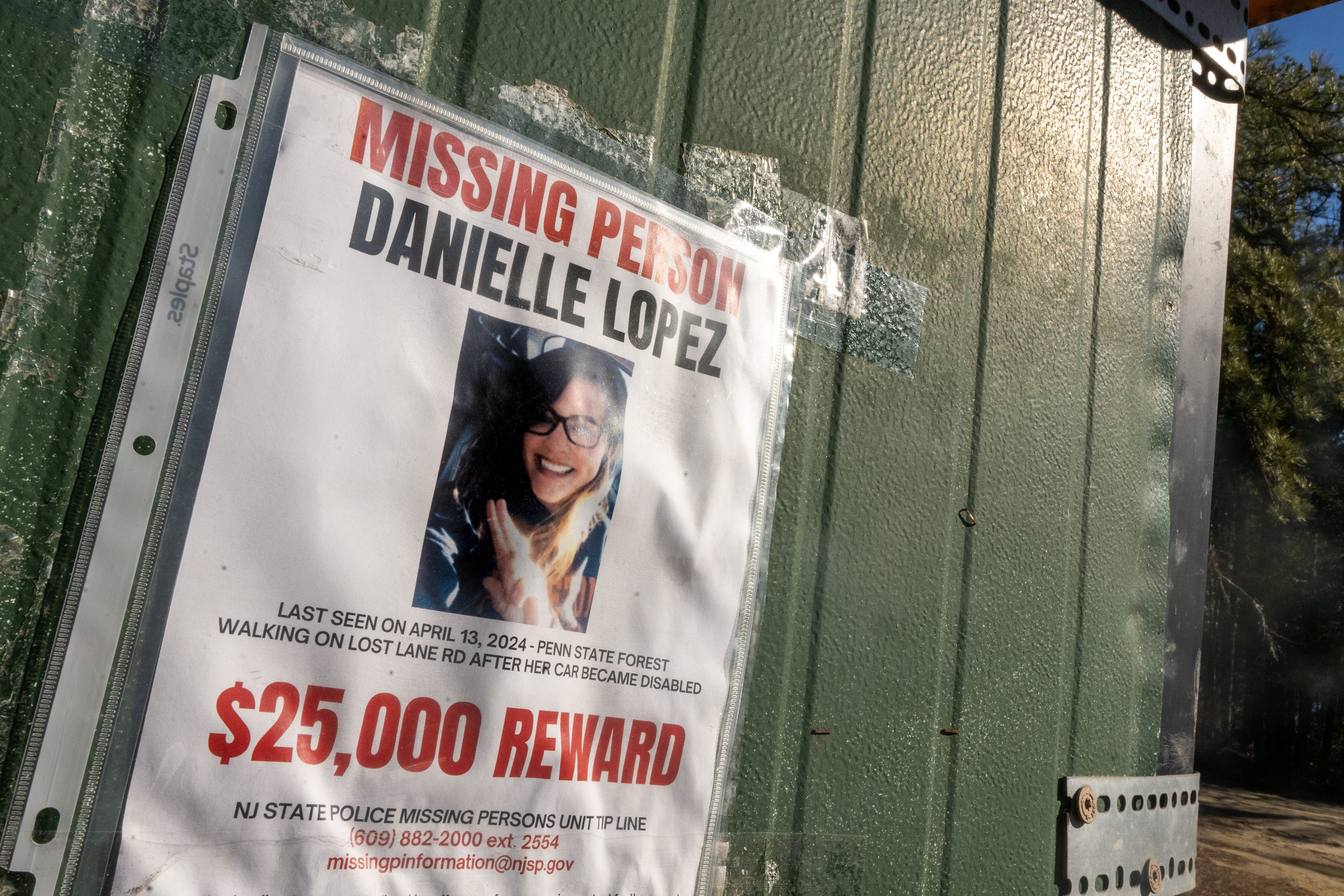
    A reward poster on a parking lot restroom on Lost Lane Road in Woodland Township. In April, 2024 Sue Quackenbush’s daughter Danielle Lopez disappeared farther up the dirt road while camping with her boyfriend in New Jersey’s Brendan T. Byrne State Forest.Tom Gralish / Staff Photographer

    Quackenbush is offering a $25,000 reward to anyone with information that could solve the case. In January, she said many tips have come in as a result. She’s also been on podcasts and is an administrator of a Facebook group dedicated to the case that has over 1,500 followers.

    “Danielle, no day shall erase you from the memory of time,” she wrote on Facebook on the second anniversary of her disappearance.

    Sue Quackenbush holds a collage of photos of her daughter Danielle Lopez.Tom Gralish / Staff Photographer

    In January, Quackenbush cried during her visit to the Pine Barrens as she clutched photos of her daughter and sons. The memorial for Lopez was still a 20-minute walk beyond the puddle, on Lost Lane.

    “It’s my goal to get the name of this road changed,” she said.
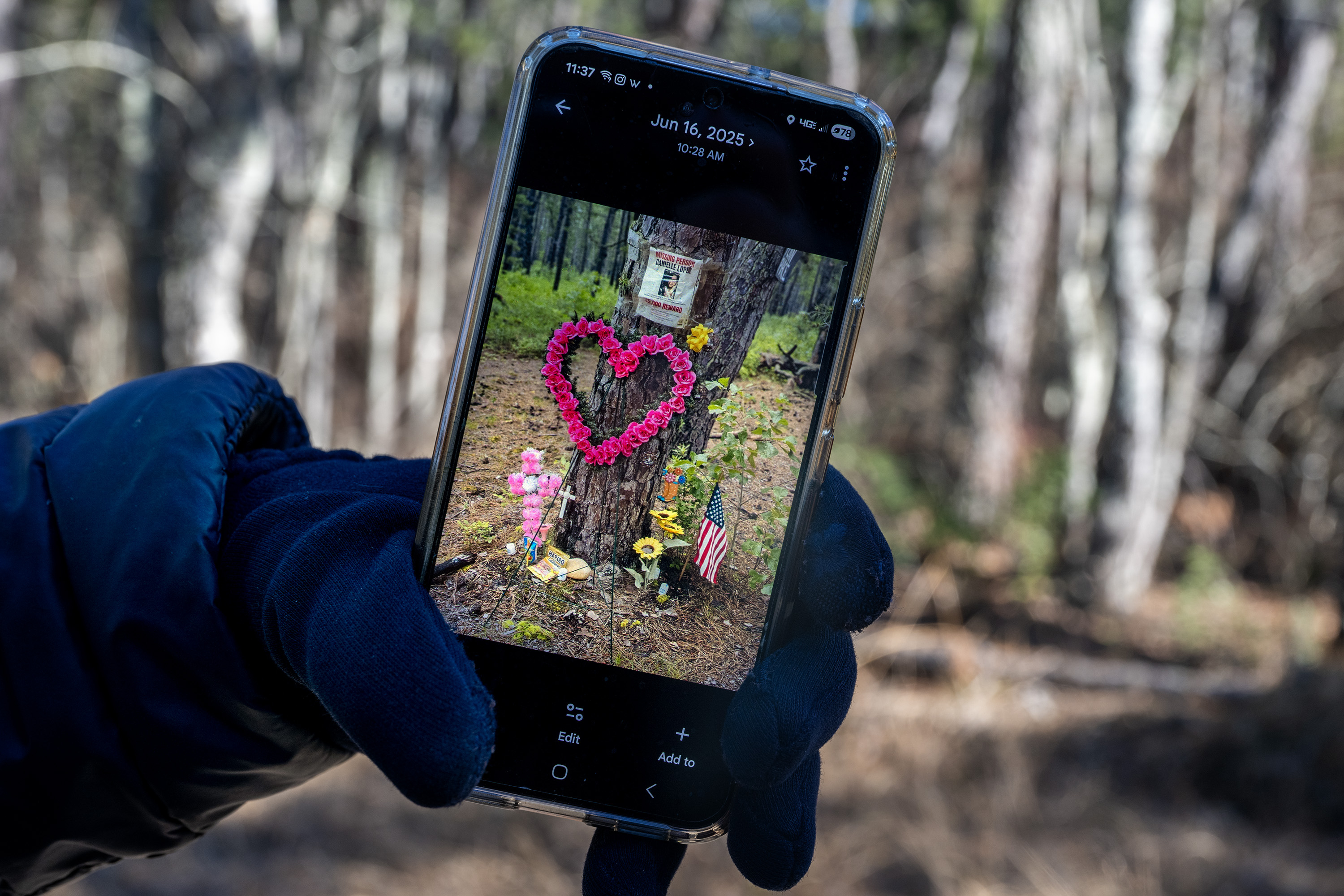
    Sue Quackenbush holds a photo she took last summer of the memorial she created for her daughter.Tom Gralish / Staff Photographer

    Anyone with information is urged to contact the New Jersey State Police Missing Persons Unit at (609) 882-2000 ext. 2554 or email missingpinformation@njsp.gov.
  • Inside the world of competitive Amish volleyball

    Inside the world of competitive Amish volleyball

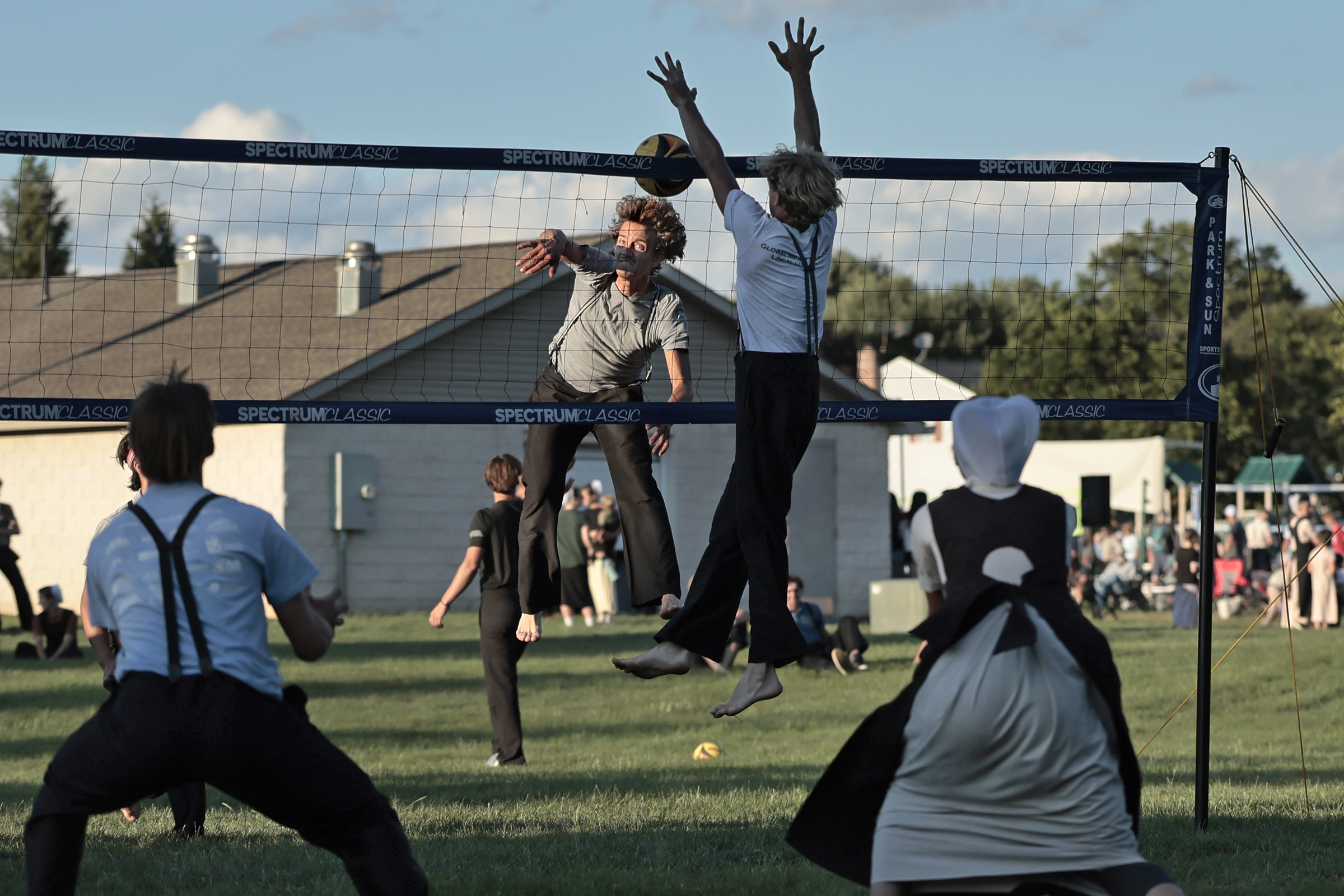
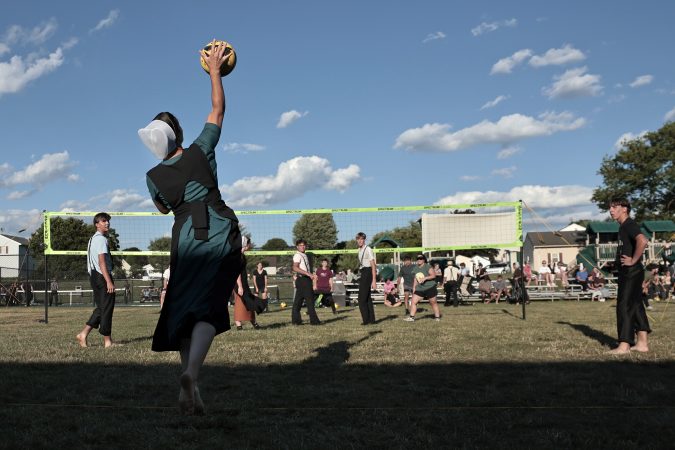
    INTERCOURSE, Pa. — A young Amish woman stood barefoot in the back right corner of a grassy volleyball court, spinning a ball in her hands.

    She wore a simple green dress with a black apron, and when she leapt and hammered a serve over the net with a grunt, her prayer covering looked as white as the passing clouds.

    On this beautiful afternoon in late June, the coed competitors were among the hundreds of young Amish players from Pennsylvania, Ohio, and other states who converged on Intercourse Community Park, about 60 miles west of Philadelphia, in Lancaster County, for the annual volleyball tournament. Hundreds gathered around the courts in lawn chairs to watch, including Amish men with long beards alongside “English” children in sneakers and sports jerseys.

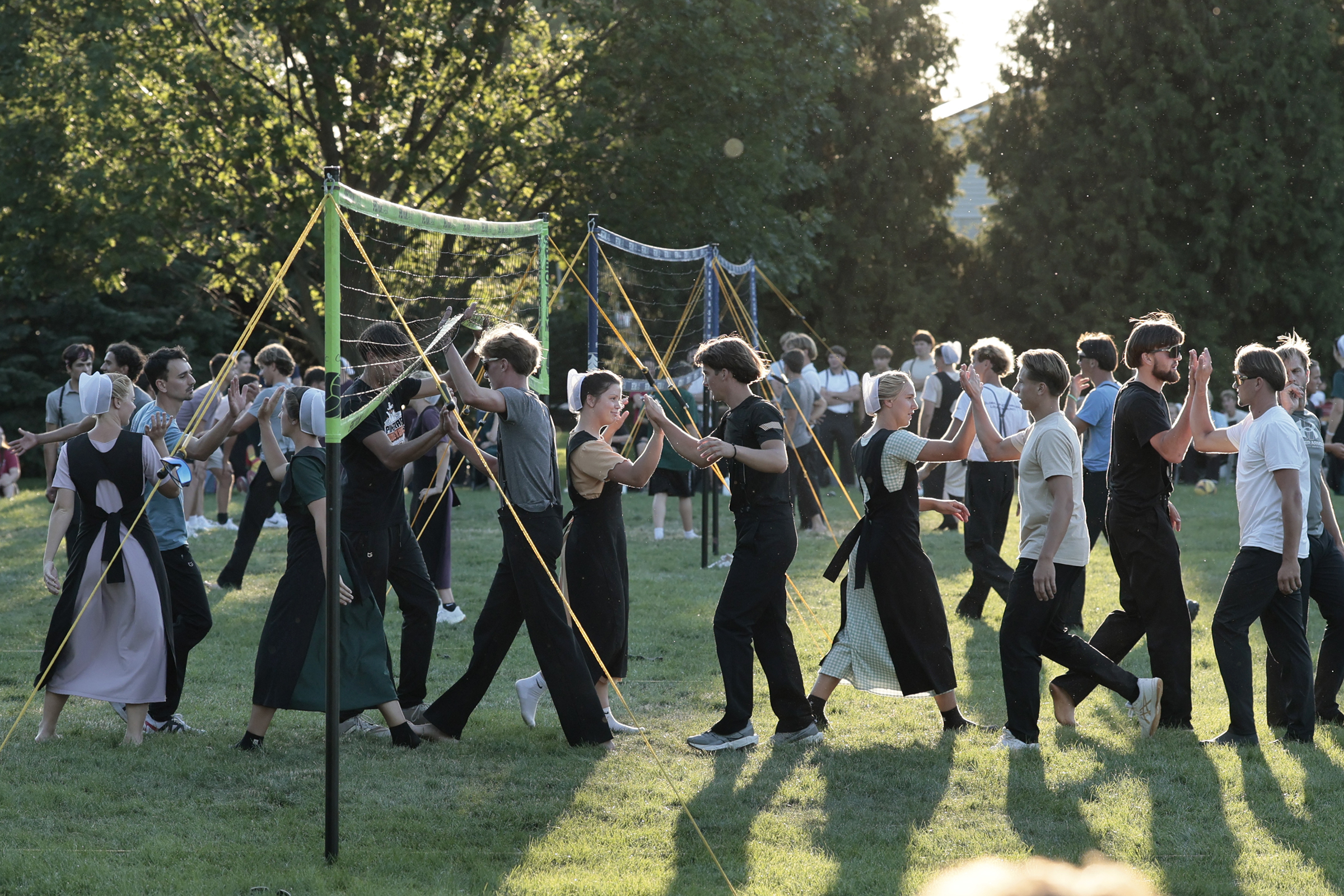
    Teams high-five each other after a volleyball match during the first day of the Heritage Days Volleyball Tournament at Intercourse Community Park in Gordonville, Pa., on June 19.Elizabeth Robertson / Staff Photographer

    The Amish in Pennsylvania, for reasons few could fully explain, love competitive volleyball. Some simply shrugged their shoulders when asked why. Others said they play volleyball because previous generations played too, a skill they learned just by watching, much the same as shoeing buggy horses or baking whoopie pies.

    “I guess it’s just part of our culture,” said Ray Beiler, the tournament’s organizer. ”Competition-wise, though, it’s slow-pitch and volleyball, but volleyball is probably the biggest.”

    The Amish also dabble in ice hockey when ponds freeze, Beiler said, and, in Indiana, they play basketball, of course. In Intercourse, the sharp pop of pickleball paddles on this Friday afternoon revealed another growing sport among the Amish.

    Volleyball, it seems, has always been there, some said.

    Ray Beiler updates the scores and standings during the Intercourse Heritage Days and Heritage Days Volleyball Tournament at Intercourse Community Park in Gordonville, Pa., on June 19.Elizabeth Robertson / Staff Photographer

    “I grew up with it,” said competitor Irv Beiler, 18, of Christiana, Lancaster County. “It’s a team game.”

    One older Amish man said he grew up playing softball, but reckoned volleyball was a new phenomenon. When asked his name, the man spoke to his wife in Pennsylvania Dutch, and declined to answer.

    The Amish do have a traditional game called cornerball, or “eck balle” in Pennsylvania Dutch, that looks like a cross between baseball and dodgeball, but is played in a cow pen. According to AmishAmerica.com, the sport was originally played with homemade balls made by “wrapping a quarter-sized steel nut in twine and covering it with black tire tape.”

    According to the website, eck balle is a disappearing sport.

    Erik Wesner, founder of AmishAmerica.com, said the purpose of volleyball and other sports in Amish communities is mostly about socialization, not competition.

    “This is a game that’s played commonly at the Sunday youth group gatherings or meetings at church members’ houses for dinner,” he said. “It’s a way for teens and young adults to interact.”

    Older Amish in Intercourse didn’t know much about the rise in popularity, but, ever efficient and resourceful, said volleyball takes up little room, compared to say, soccer, and can keep a lot of children busy at a gathering.

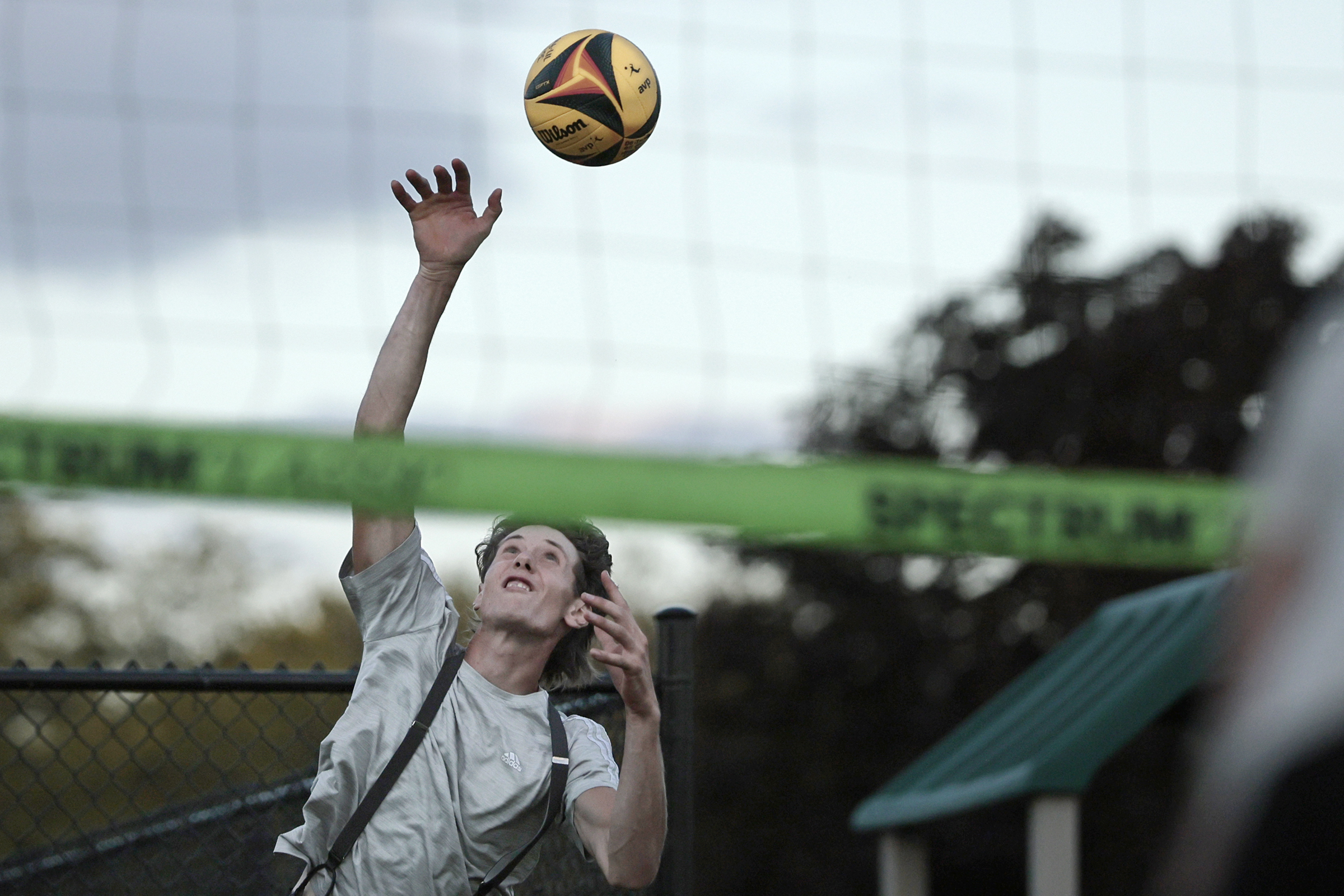
    Irv Beiler serves the ball during the Heritage Days Volleyball Tournament at Intercourse Community Park in Gordonville, Pa., on June 19.Elizabeth Robertson / Staff Photographer

    John Lapp, 51, of Gap, Lancaster County, said there are “volleyball barns” in the area where the more serious players gather in the winter.

    “I played softball,” he said. “Volleyball was just a sport that took hold, I suppose.”

    There doesn’t appear to be much trash talk in the competitive world of Amish volleyball, unless you understand Pennsylvania Dutch, but the talent is plain as day. That makes sense, locals said, if you consider the day-to-day life of Amish youth. They’re wrangling calves, riding kick scooters, and lifting hay, building muscle and balance the whole time.

    “I used to play too,” said Simon Stoltzfus. “I just can’t jump as high as I could or stay up there as long.”

    Wesner said sports tend to be more prevalent in progressive Amish communities, like in Lancaster County, and less so in more conservative areas, like Mifflin and Clearfield Counties.

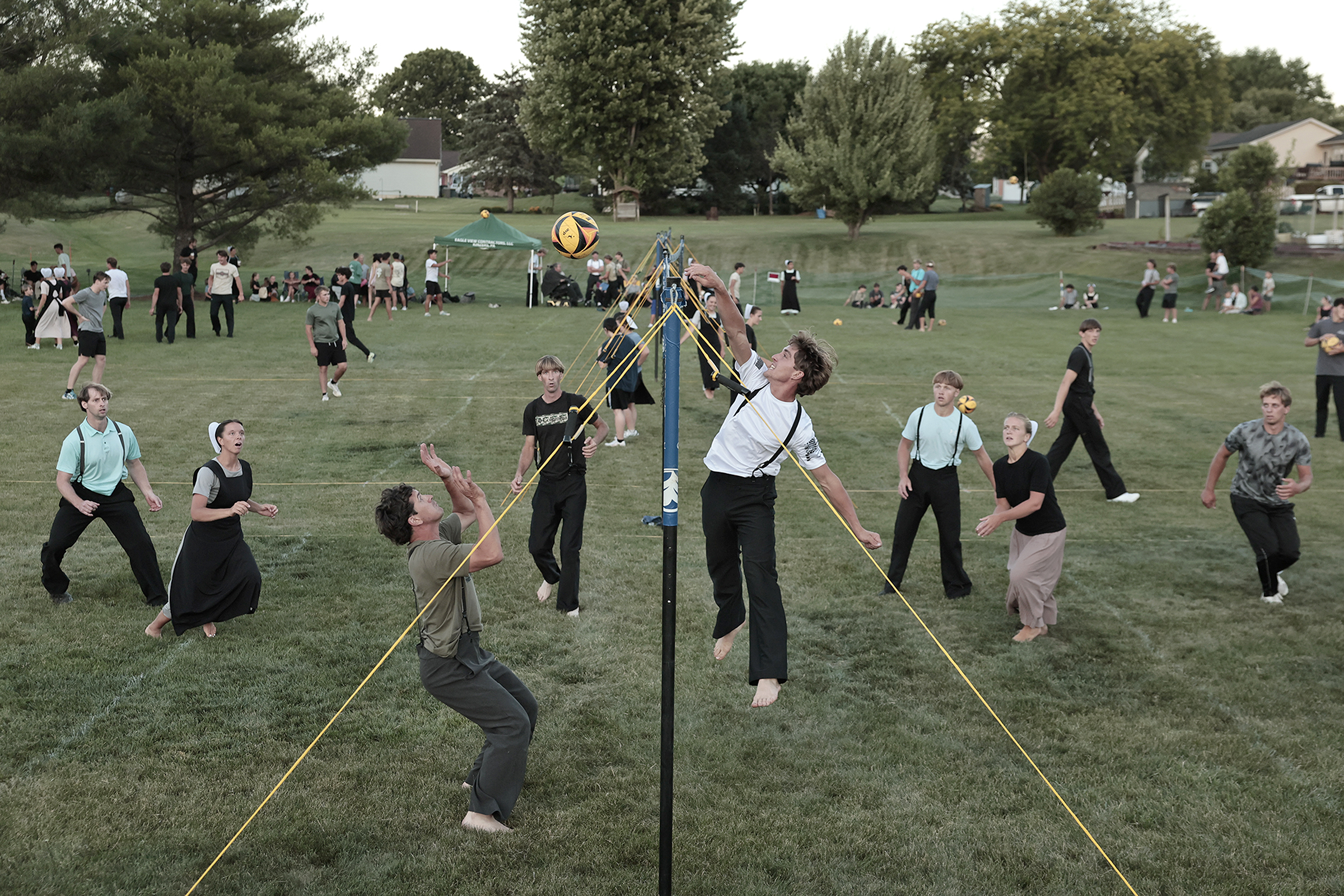
    Serious play during the Heritage Days Volleyball Tournament at Intercourse Community Park in Gordonville, Pa., on June 19.Elizabeth Robertson / Staff Photographer

    Last year, The Inquirer spoke to Melvin Byler, who grew up Amish in Western Pennsylvania, after he won the Professional Bull Riding event in Reading. Byler had to leave his Amish community to pursue bull riding as a profession.

    “I didn’t even see bull riding until I was 14, and when I told my parents I wanted to do it, they said it was a phase,” Byler said.

    Steven Nolt, an Elizabethtown College professor who has researched and written about the Amish extensively, said situations like Byler’s are rare. Ray Beiler said a college coach came to one of the Intercourse tournaments and said many of the competitors could play at higher levels, but Nolt said it’s unlikely that even the most talented volleyball players would pursue the sport more competitively.

    “It would be hard to imagine,” Nolt said. “They’d be making a choice not to join the Amish.”

    Chris Haley oversaw the pickleball tournament at the Intercourse Heritage Days, where there are new courts. He said the Amish quickly took up that sport, too, and some have makeshift courts at their house.

    “They are talented and determined,” Haley said.

    They compete in sports for the fun of it, not for the prospects of future scholarships, and, at a tournament as big as Intercourse, the socializing was front and center. Young Amish slipped off their black leather boots and Crocs for sneakers or went barefoot, dozens chatting up one another in both English and Pennsylvania Dutch.

    “This tournament is most definitely for the fun of it,” said Wilmer Stoltzfus, 20.

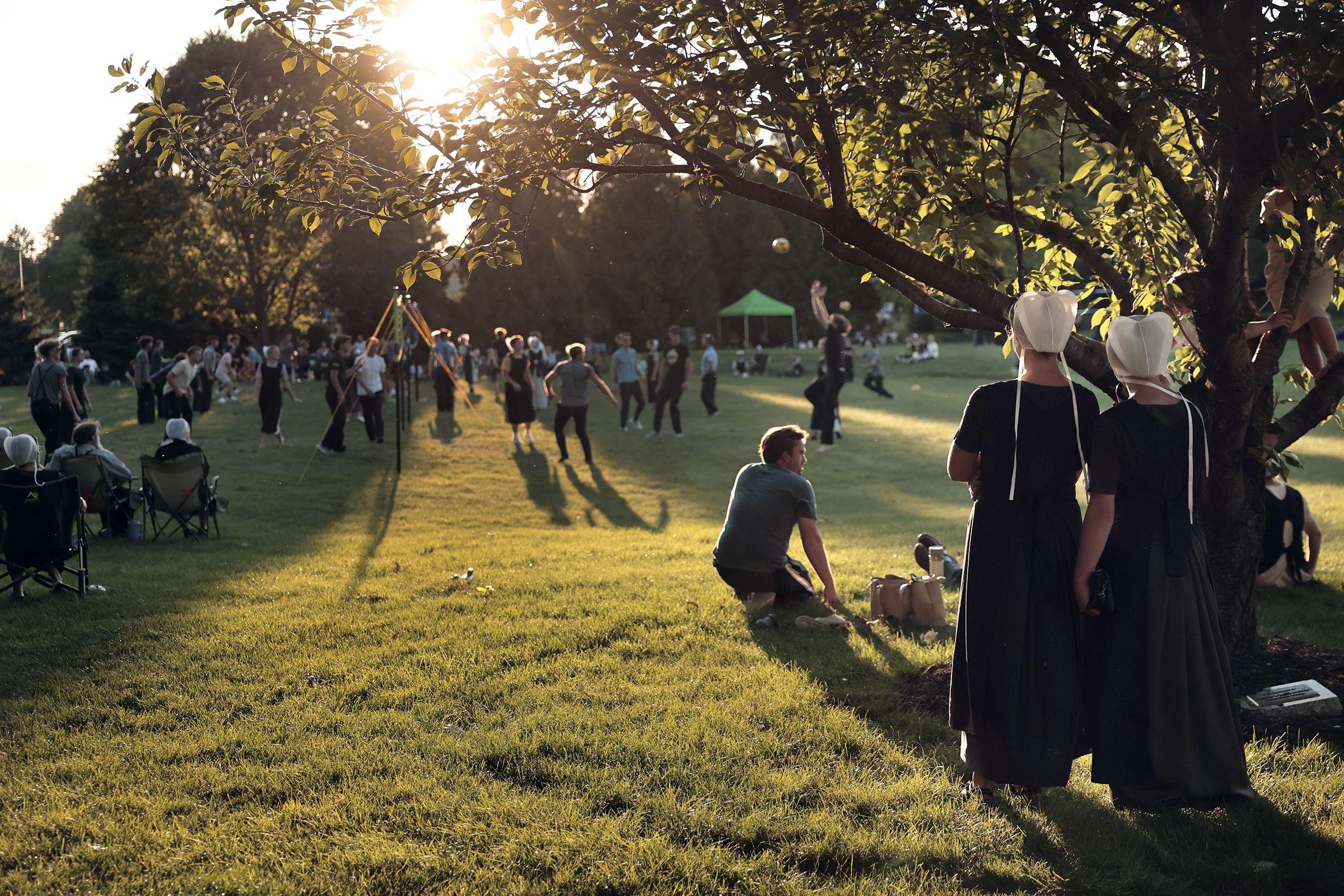
    Friends and family watch the play during the Heritage Days Volleyball Tournament at Intercourse Community Park in Gordonville, Pa., on June 19.Elizabeth Robertson / Staff Photographer

    The players took big gulps from jugs of water and walked onto one of several courts spread out over several acres in the park. Some of the men wore thick, black work pants with suspenders, but others wore shorts. When one young Amish man dove for a dig and missed, his teammates rushed to help him up.

    “Good job,” they said.

    By Saturday night, only one net would remain, and a few thousand spectators would be crowding the court for the finals. The winners would get tall trophies housed in an exhibition room, with silver and gold volleyballs fastened to the tops.

    They’d also get bragging rights until next year, maybe.

    “Not bragging, no,” said Wilmer Stoltzfus. “We don’t really brag.”

    Serious play during day one of the Heritage Days Volleyball Tournament at Intercourse Community Park in Gordonville, Pa., on June 19.Elizabeth Robertson / Staff Photographer
  • How children, good lyrics, and love brought me around to country (ish) music

    How children, good lyrics, and love brought me around to country (ish) music

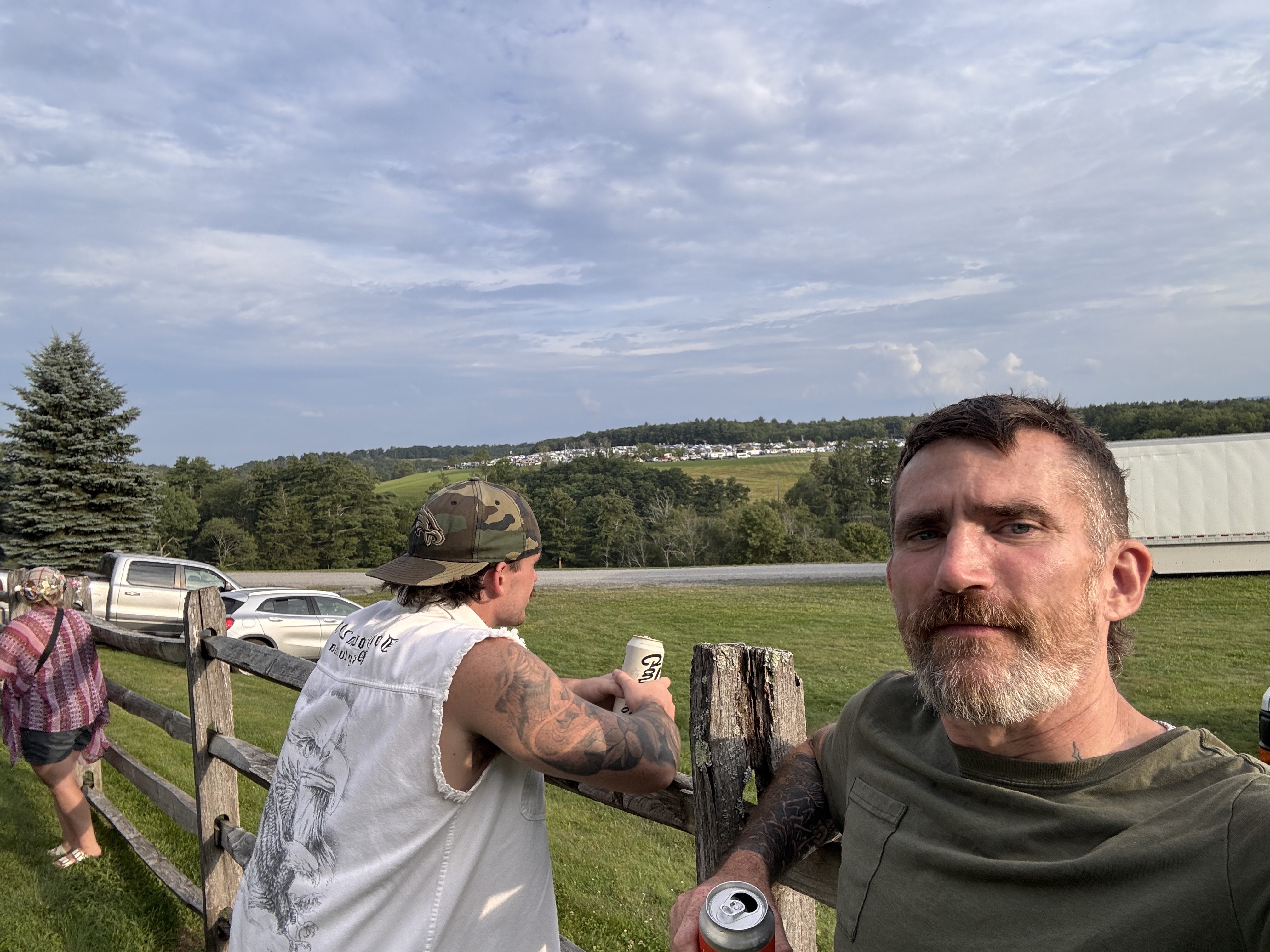
    My son and I sat on the tailgate of his truck on a recent summer afternoon, sipping beers and looking out at the crowd filling up the fields at the site of the original Woodstock.

    He was shirtless in jeans and cowboy boots and a camo Eagles hat. Other trucks filled the spaces around us, but Subarus and Toyota Priuses rolled in, too. I saw an Arthur Russell bumper sticker on one truck and smiled, a man in a Primus shirt by another, not to mention hundreds of people, of all ages, I’d guess were major Phish fans.

    “I don’t know,” I told my son. “This doesn’t look like a country music crowd.”

    “Billy’s not country,” he replied.

    About an hour later, Nashville musician Billy Strings was deep into a brain-melting jam, fingerpicking his Martin acoustic guitar for about 15,000 people at the Bethel Woods Center for the Arts in New York. Mandolin, banjo, upright bass, and fiddle filled in around him, and I flashed back to a similar, much smaller jam I saw atop a Tennessee mountain years ago.

    “I don’t know anything about music,” I said to myself as Billy blistered on.

    Ronan (left) and Jason Nark tailgating at the Billy Strings show in Bethel, N.Y.Jason Nark

    People told me as much, way back in 2013, when I wrote a story for the Daily News about the rise of country music in the Philadelphia area and how it baffled me.

    I was — forgive me — snarky.

    “There’s plenty of songs about booze or guns or bonfires or getting muddy with carefree girls. Often, it’s a combination of all those things in one song, and America eats it up,” I wrote.

    Rereading the piece now, in 2026, it’s not as bad as I remembered. I interviewed experts, fans, and radio personalities, and let them have their say.

    “It’s mainstream. It’s rock ‘n’ roll now; it’s not that old twangy country people think of. It’s music people can understand and relate to,” one fan told me back then, during WXTU’s 29th anniversary concert in Camden.

    Still, a few people came for me online.

    Former conservative talk show host Chris Stigall brought me on his Philadelphia-based show, and I knew I was in trouble. I can’t find a recording, but I recall him calling me an “elitist” or “smug,” and he may have laughed when I told him my favorite band was Black Sabbath.

    I took that same son, a middle-schooler back then, to see Sabbath in Philly that very year. Friends were hitting up Toby Keith and Kenny Chesney shows at the time, though, asking me to tag along. I was still very much listening to metal and indie rock, bands like Built to Spill, who I’ve seen live about two dozen times. I held fast.

    “What’s next?” I wondered. “Jimmy Buffett?”

    Ronan and Jason Nark at an Iron Maiden show in Camden in 2012.Jason Nark

    But then a few things happened that changed me, life events that cut me down a bit: my best friend died, I got divorced, and some of my snark just faded away. I was also sent out into rural Pennsylvania after the 2016 election to get a better understanding of the state for The Inquirer. I wrote about deer urine farmers, demolition derbies, transgender women, immigrant families, terrible internet service, the Amish, and even an elderly yodeler.

    I spent a lot of time driving, my radio scanning from country to Christian, and interviewed Pennsylvanians in barns, old coal towns, campgrounds, and general stores. Many of these people had different concerns, backgrounds, musical tastes, and voting records than most Philadelphians. The more time I spent with them, the harder it was to label anyone, anywhere.

    I also met my second wife, who was from Chattanooga, Tenn., around that time too, and she introduced me to a South I didn’t know. During one early visit to her hometown, she took me to the Mountain Opry, a little community hall atop Signal Mountain where they served popcorn and soda. The tiny show, with artists as talented as Billy Strings, felt like a treasure she gifted me, and I remain grateful for that.

    We went to an Austin honky-tonk together too, where I may have hooted and hollered when the Beaumonts played their raunchy songs. Later, in 2019, we danced to Chris Stapleton in a former church in downtown Chattanooga at our wedding. I still have “Rocky Top” in my running playlist.

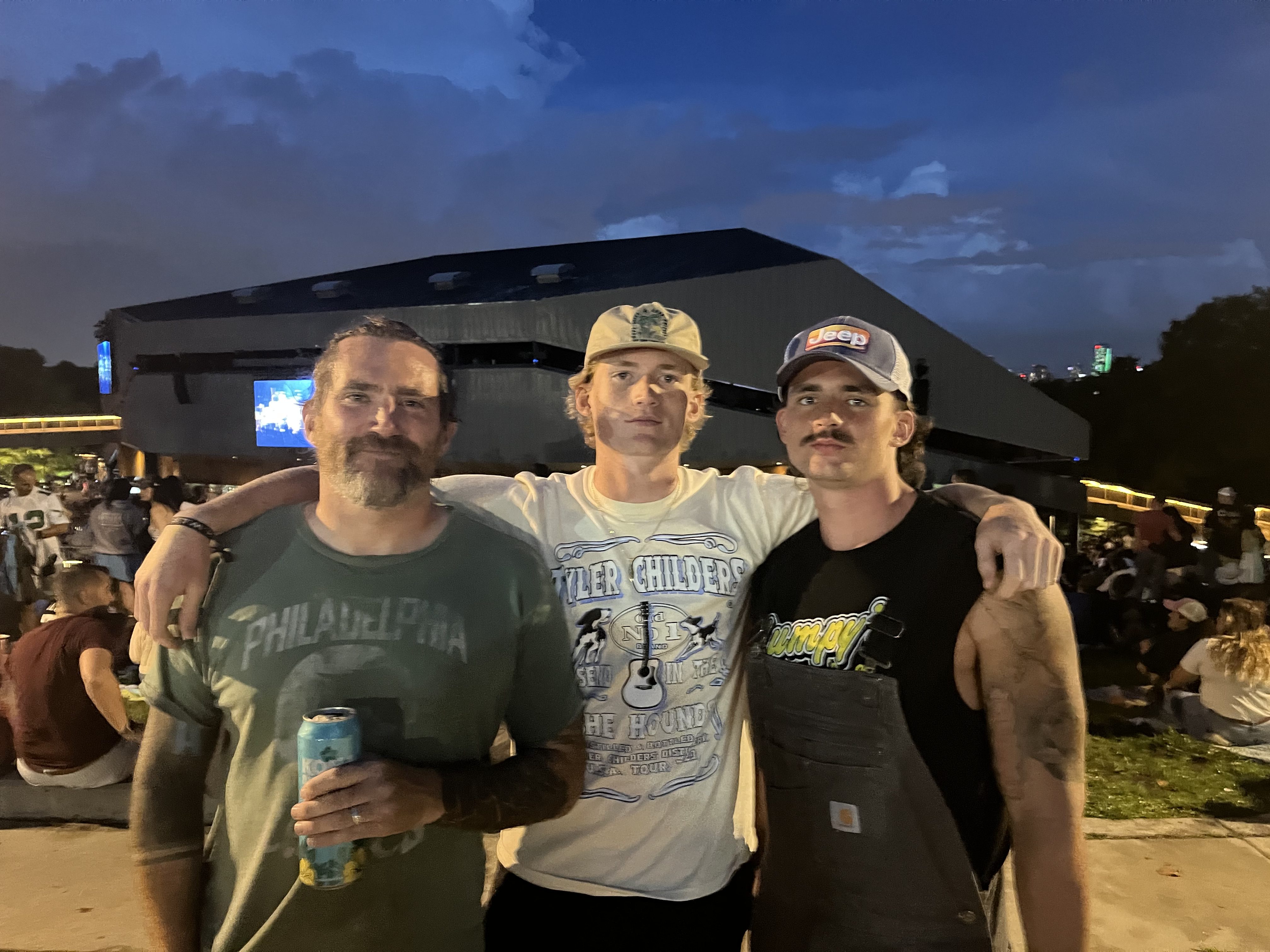
    The author with his sons, Zenon and Ronan, at the Tyler Childers show in Philadelphia in 2023.Jason Nark

    During all this time, I thought about that 2013 story I wrote, with growing regret.

    My children finally tipped the scales when they got to high school and became adults, and some of the lyrics coming out of their speakers began to catch me off guard, artists like Lost Dog Street Band and Zach Bryan. I went looking for more and found Sierra Ferrell, Sturgill Simpson, Lydia Loveless, and Margo Cilker.

    Was it country? Americana? Folk? Bluegrass? Who cares, I’m a fan of whatever it is, and now, as I hover close to 50, I couldn’t care less about who listens to what.

    When I went to see Tyler Childers at the Highmark Mann Center for the Performing Arts, I was surprised to see how young the crowd was and remembered, fondly, getting busted for underage drinking there at a Metallica, Danzig, and Suicidal Tendencies show decades earlier.

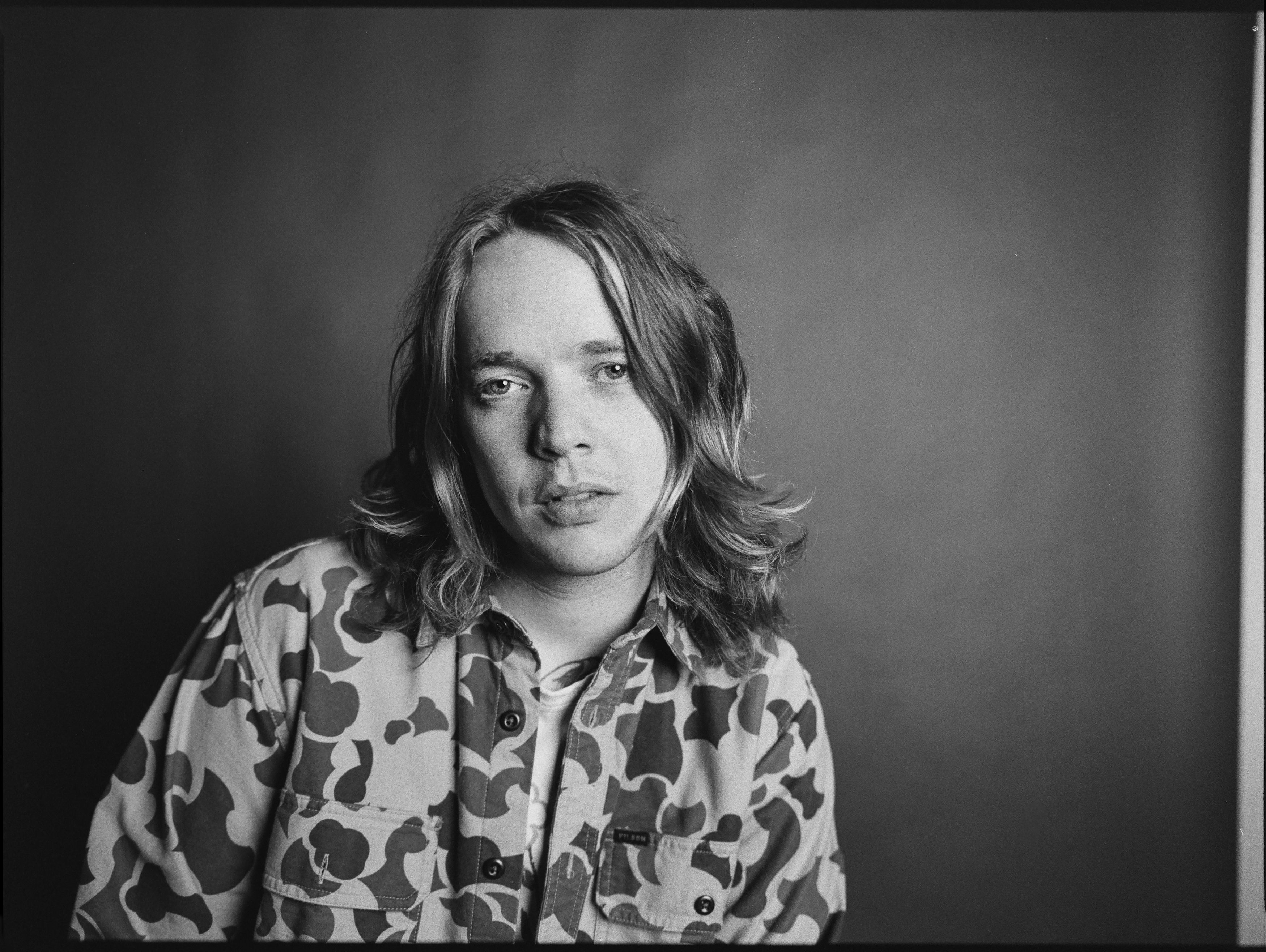
    Billy Strings Alysse Gafkjen

    Fast-forward a few years, and my son and I were camping along the Delaware River, fishing and eating kielbasa, ahead of the Billy Strings show. I hadn’t heard of Strings before I visited the Martin factory in Northeastern Pennsylvania last year, but my son is a devotee, and I’d dragged him to metal shows as a kid, and even a jazz show in Philly last year.

    “It sounds like everyone in the band is playing a different song,” he said about the jazz.

    From quick listens, I assumed Billy Strings was playing country music, but my son was right. It’s something different, something I don’t need to label. I’ve seen Strings described as psychedelic or “jamgrass,” and they both sound fine to me. The crowd — he sold out two nights at Bethel — was losing its mind, twirling around for hours on the grass like at the original Woodstock on the grounds, back in 1969.

    We drove back to the campground with smiles stuck to our faces.

    Later, when I got home, I learned Strings grew up in Michigan, in a household full of bluegrass and heavy metal. One of his favorite bands, it turns out, was Black Sabbath, just like me: further proof that we can like what we like, without labels.

  • South Street’s Tattooed Mom says city has put a halt to live events at the iconic bar

    South Street’s Tattooed Mom says city has put a halt to live events at the iconic bar

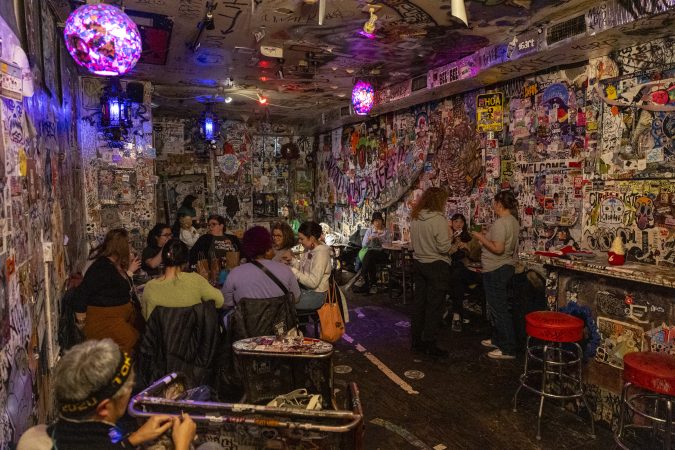
    Tattooed Mom, one of the city’s most iconic bars, said it has been ordered to cease all live music and performances by the Philadelphia Department of Licenses and Inspections.

    A message posted Saturday morning on the South Street bar’s Instagram page said the order came on March 27 with “no notice.” Along with live music, Tattooed Mom said, it must also stop hosting “drag, burlesque, and karaoke events.”

    Now, more than three months later, the order still stands.

    “We’re working with legal, government, and small business support groups to figure out the daunting, complicated, and expensive next steps for zoning, permits, and licenses. We believe the interpretation of some of these rules is unjust to queer communities and creative spaces. There’s no clear timeline yet, but we’ll do our best to keep you in the loop,” someone from the bar wrote on Instagram.

    Neither Tattooed Mom nor L&I could be immediately reached for comment Saturday. The Instagram post had thousands of likes and numerous comments from supporters, including State Rep. Malcolm Kenyatta (D., Philadelphia).

    “What?! Happy to help however I can!” Kenyatta wrote. “I sent a message.”

    Others pointed out that Tattooed Mom is a haven for the LGBTQ+ community.

    “Wouldn’t be Philly without you,” one fan wrote.

    The bar vowed to fight on.

    “No red tape can stop Tattooed Mom from being a queer creative space. We will continue to speak out and support the LGBTQIA+ community while navigating outdated policy. We miss the vibrant energy that drag and burlesque bring to Mom’s and hope to welcome these events back again soon,” someone wrote. “In the meantime, we are continuing to create new models to host more queer community events, including workshops, art shows, meetups, and more.”

  • A cow beauty pageant honors rural Pennsylvania’s shrinking dairy industry

    A cow beauty pageant honors rural Pennsylvania’s shrinking dairy industry

    TOWANDA, Pa. — Her full name was Cashells Jry Shakira-Red-ET — Shakira to keep it simple — and like her namesake, the big red and white Holstein had 6-foot hips that didn’t lie as she hoofed down Main Street.

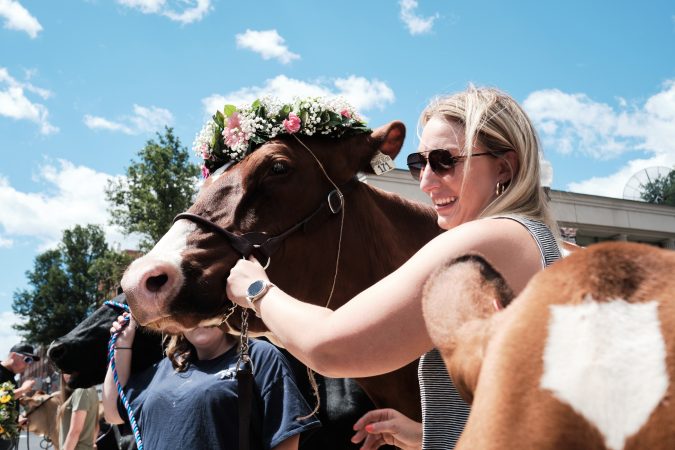
    Shakira is a showgirl accustomed to winning, one of the few cows that allowed judges to place a floral crown on her head at the Bradford County dairy cow beauty pageant in Towanda on June 20, about 100 years after their last one.

    “The most beautiful dairy cow in Bradford County, folks,” said Duane Naugle, Bradford County’s community planner and the day’s emcee.

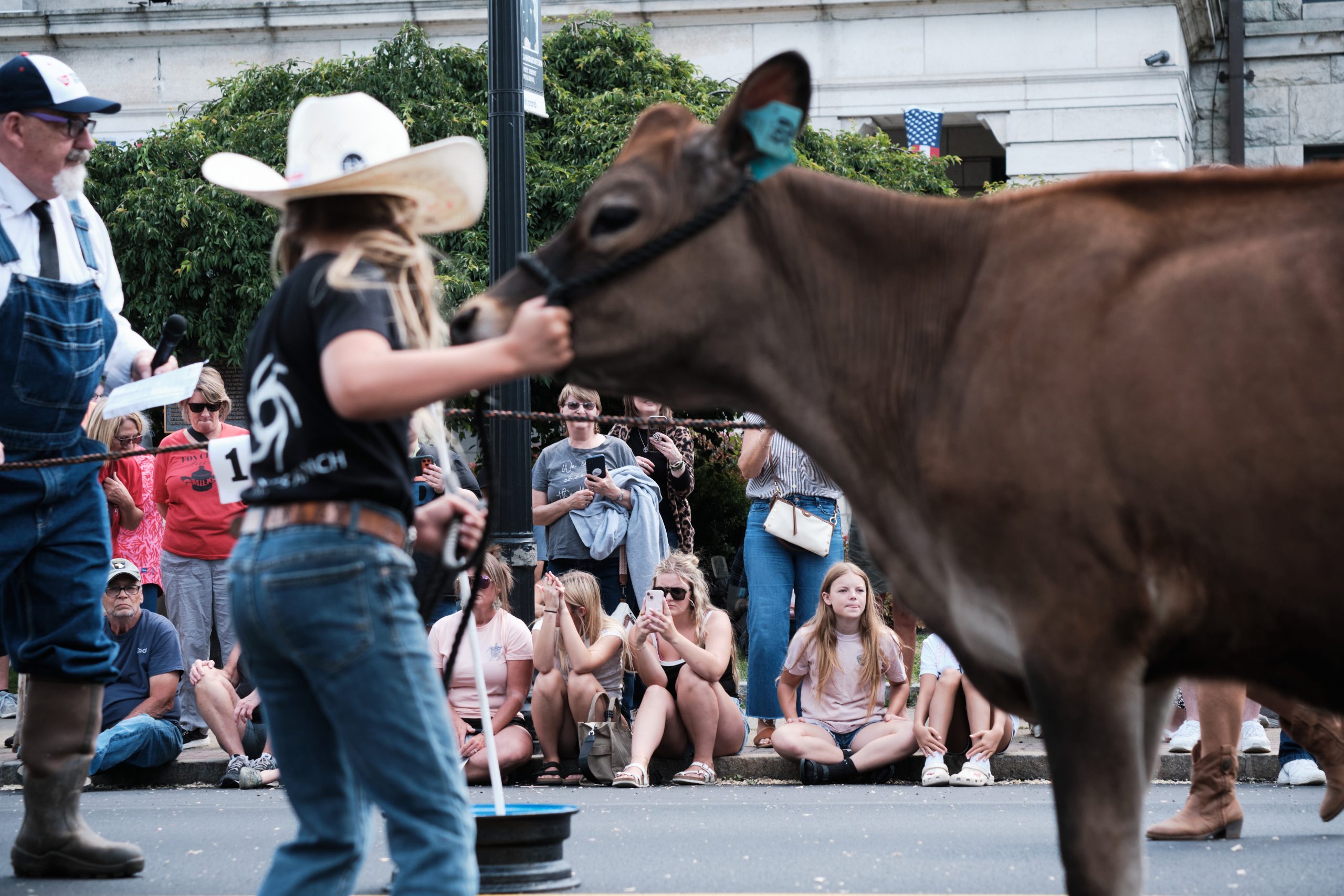
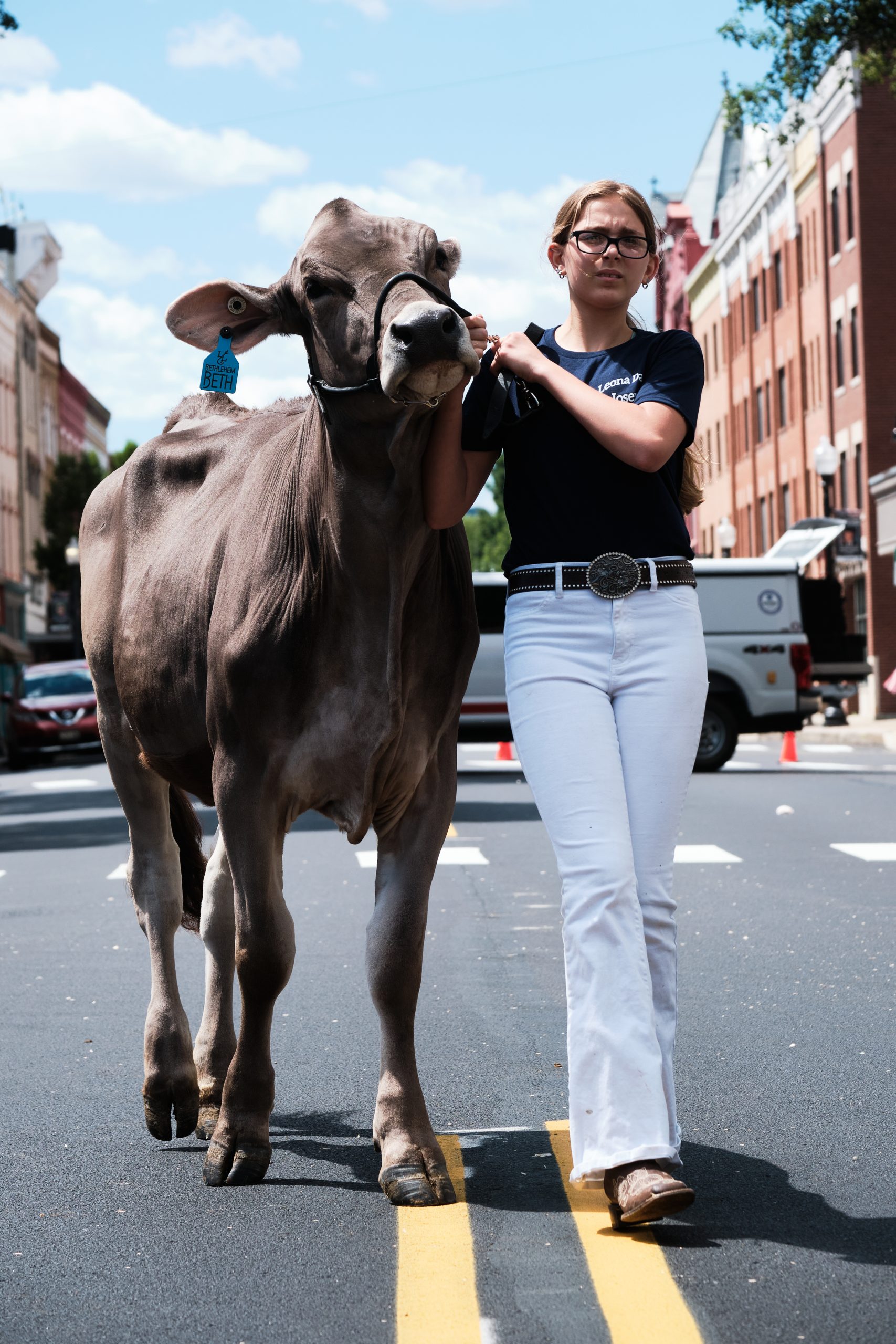
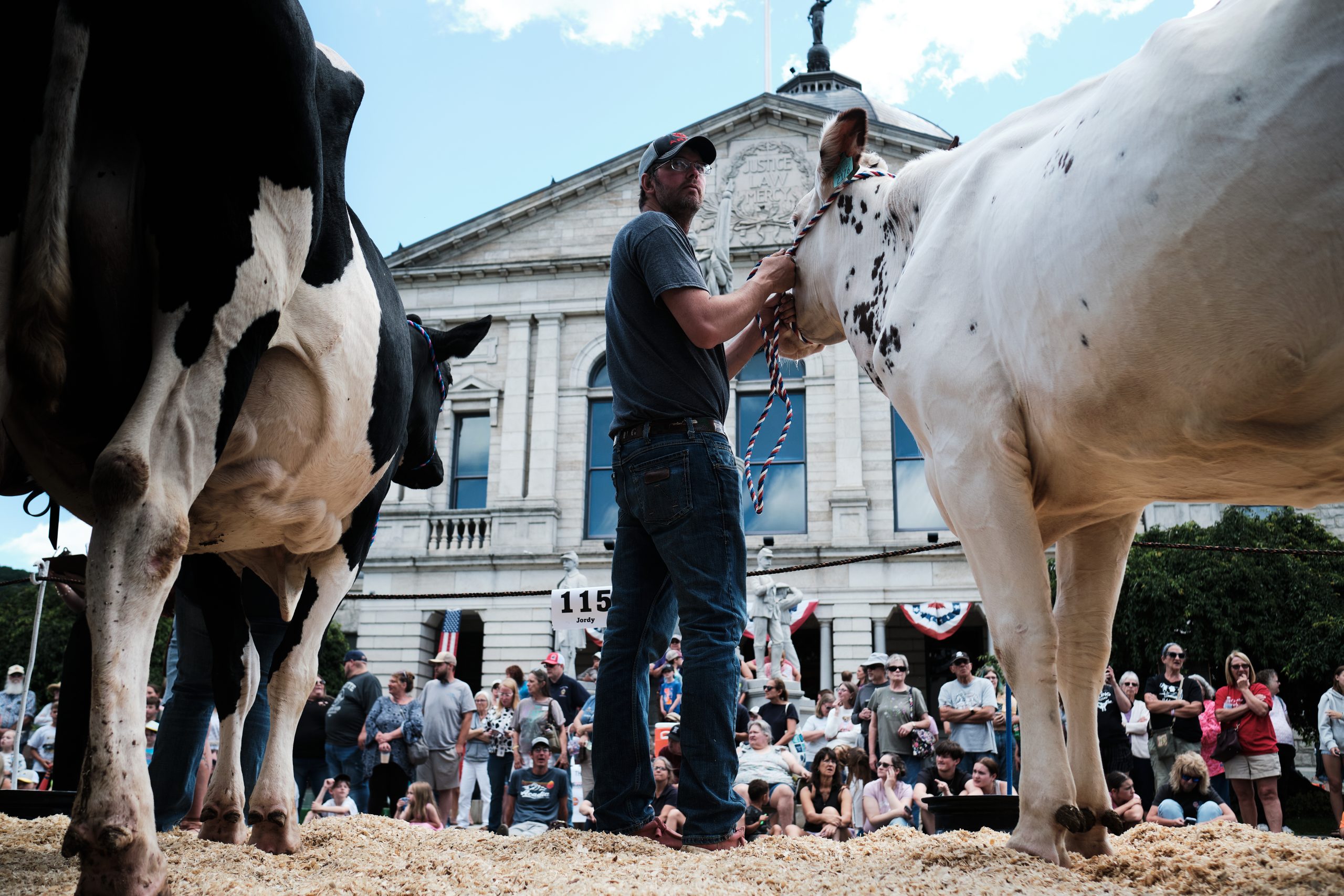
    A heifer is walked down Main St. in front of the County Courthouse in Towanda, Pa., for a cow beauty contest held on Saturday, June 20, 2026.Max Blease / For The Inquirer

    Other winners were Skylar, a Lineback heifer, and Camo, a doe-eyed Brown Swiss calf.

    “They’re my favorite breed. They’re just so dopey and docile,” Miranda Neville, a dairy farmer out of Warren Center, said of Camo. “I mean, just look at her.”

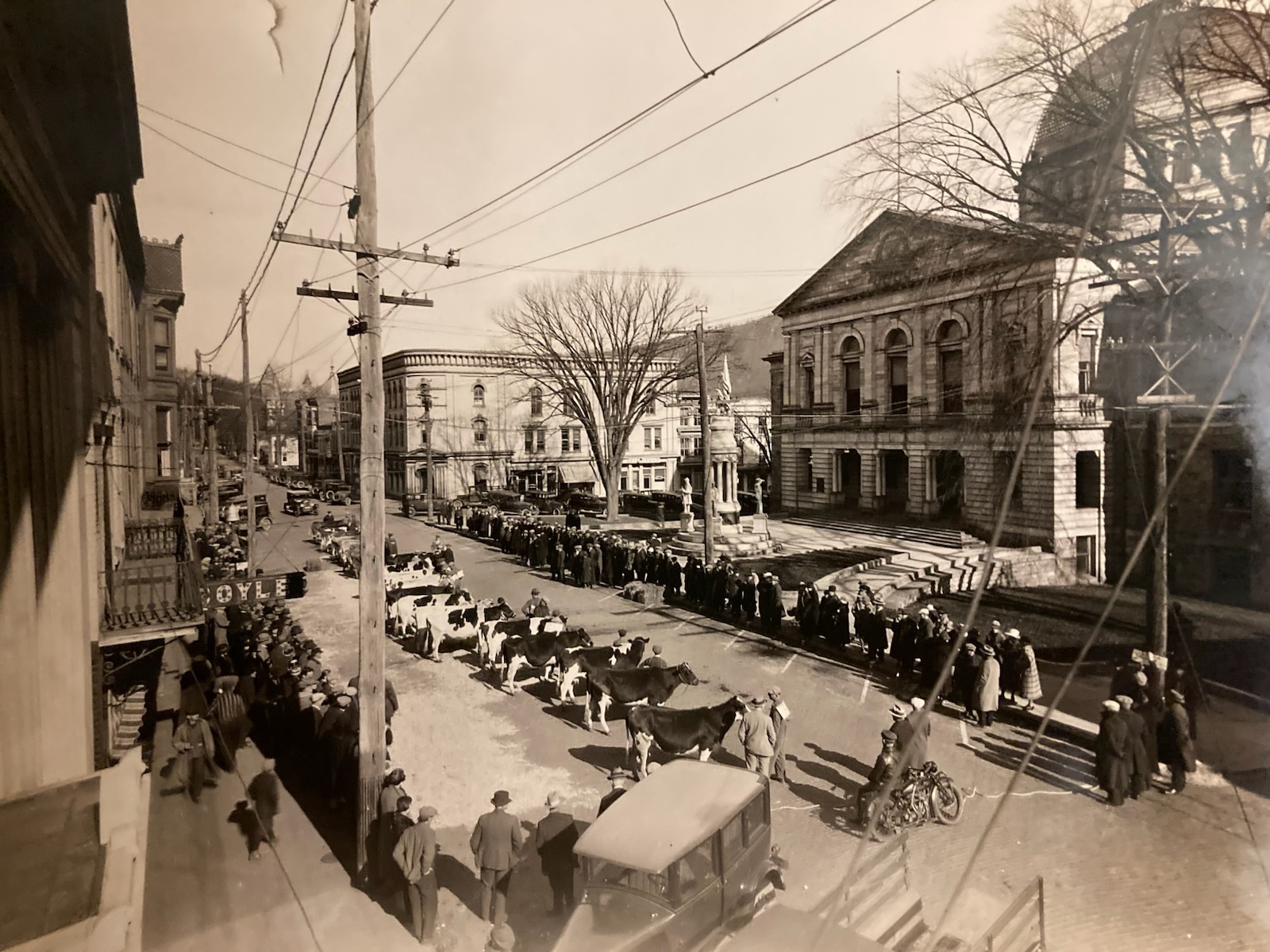
    Bradford County, population 59,600, sits about 175 miles northwest of Philadelphia in North Central Pennsylvania. County officials said they found an old, black-and-white photo of a similar beauty pageant from 1926 in the county courthouse recently.

    The 1926 event in Bradford County.Bradford County

    The purpose of that contest a century ago, organizers said, was to highlight the county’s bustling dairy industry.

    “Getting down to the main idea, it may be stated that the Chamber of Commerce has seized upon this opportunity of giving recognition to the basic industry of Bradford County — dairying,” The Daily Review newspaper wrote in 1926.

    Officials figured that old photo was a sign, a good-enough reason to get cows on Main Street as part of the county’s ongoing celebration of America’s 250th. There was also free ice cream, a cow milking contest, and other livestock to pet.

    Dixie Joseph leads her heifer down Main Street in Towanda, Pa., for a cow beauty contest in front of the Bradford County courthouse on June 20.Max Blease / For The Inquirer

    A lot has changed in dairy over the decades, as dairy farms have shuttered by the thousands, nationwide. In 2025, the USDA reported 23,609 dairy farms across the country, a 70% decrease in just 20 years.

    Earlier this year, The Inquirer chronicled the plight of a longtime dairy farm in New Jersey’s most rural county. Owners there were denied a variance to install solar panels and stopped milking shortly after.

    “We have been losing money for the last 10 years,” a young farmer there told The Inquirer.

    Henry Farley, the mayor of Sayre, Bradford County, said there were 41,311 dairy cows in the county in 1920. That number is down to 10,059 dairy cows today, he said.

    “We remain an agricultural county, and dairy is still a big part of it,” he said. “This is still rural America, and this was a great way to showcase that.”

    A cow owner glances back in front of a crowd gathered at the Bradford County courthouse for a cow beauty contest in Towanda, Pa., on June 20.Max Blease / For The Inquirer

    Top employers in Bradford County include medical facilities, a mill, Walmart, and Cargill, a beef-processing plant in Wyalusing, where most major league baseballs are made from dairy cow hides.

    Many of the farmers in Towanda on June 20 owned small farms, which are the hardest to keep afloat. Most of the owners couldn’t depend on dairy as a full-time income and worked other jobs as a result.

    Many dairy farms in Bradford County have transitioned to beef, poultry, or swine.

    “Well, it’s pretty simple. Dairy prices are down, and beef is up,” said dairy farmer McKenzie Slater.

    Neville said she still milks 60 cows at her dairy, Vin-Deb Farms, but it’s not her only source of income. She also works for Bradford County’s conservation district.

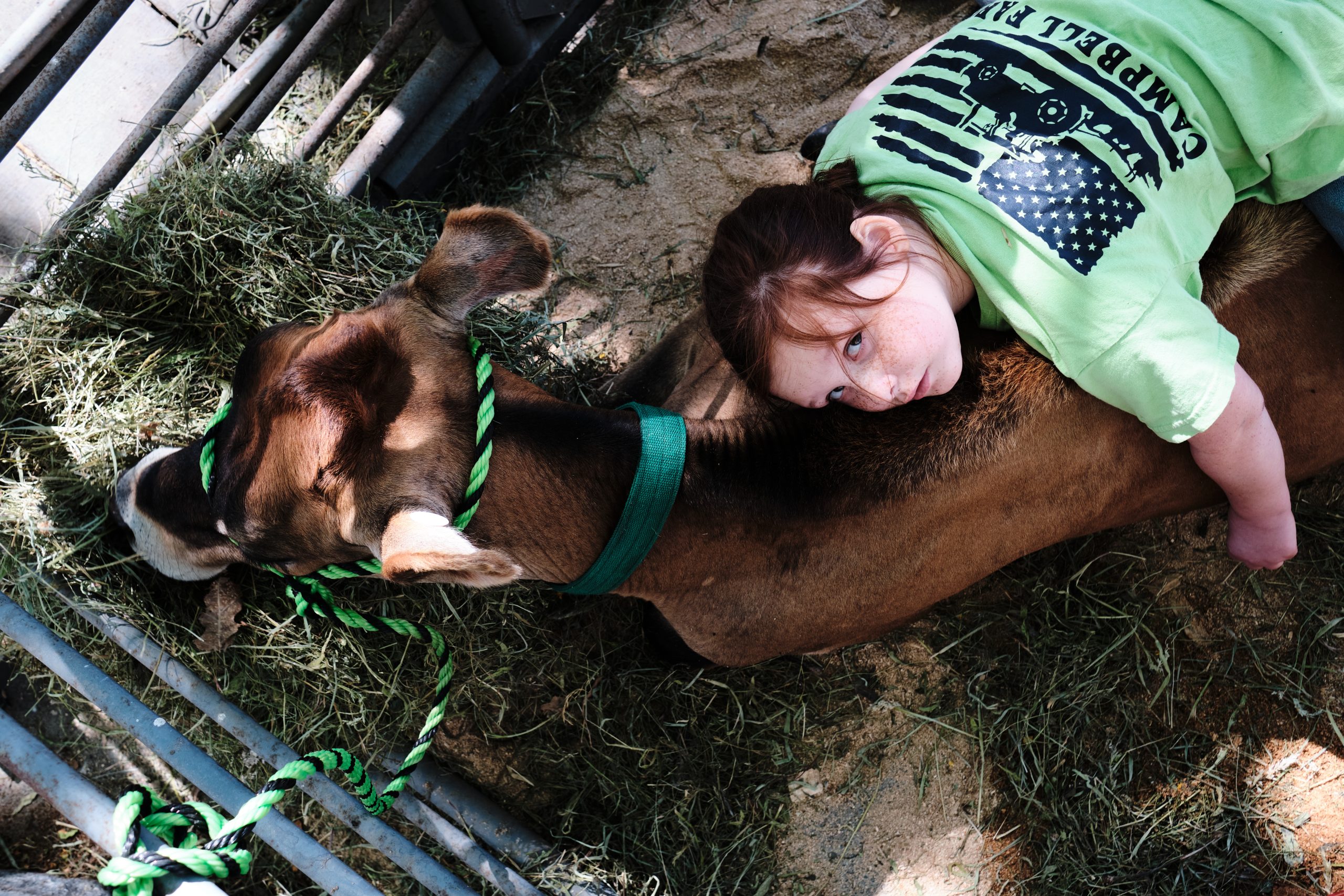
    Sheyann of Campbell Farm rests on top of her calf, Norma, ahead of Bradford County’s cow beauty contest in Towanda, Pa., on June 20.Max Blease / For The Inquirer

    “We all have full-time jobs, too, along with farming,” Neville said. “That’s normal around here.”

    Even Shakira, the showgirl, still milks, producing more than 11 gallons per day. She’s just preened and washed a bit more. Her udders hung low on Main Street.

    “She’s milking pretty heavy right now,” said owner Hannah Watson, of Columbia Crossroads, Bradford County. “It’s whole milk, straight from the cow.”

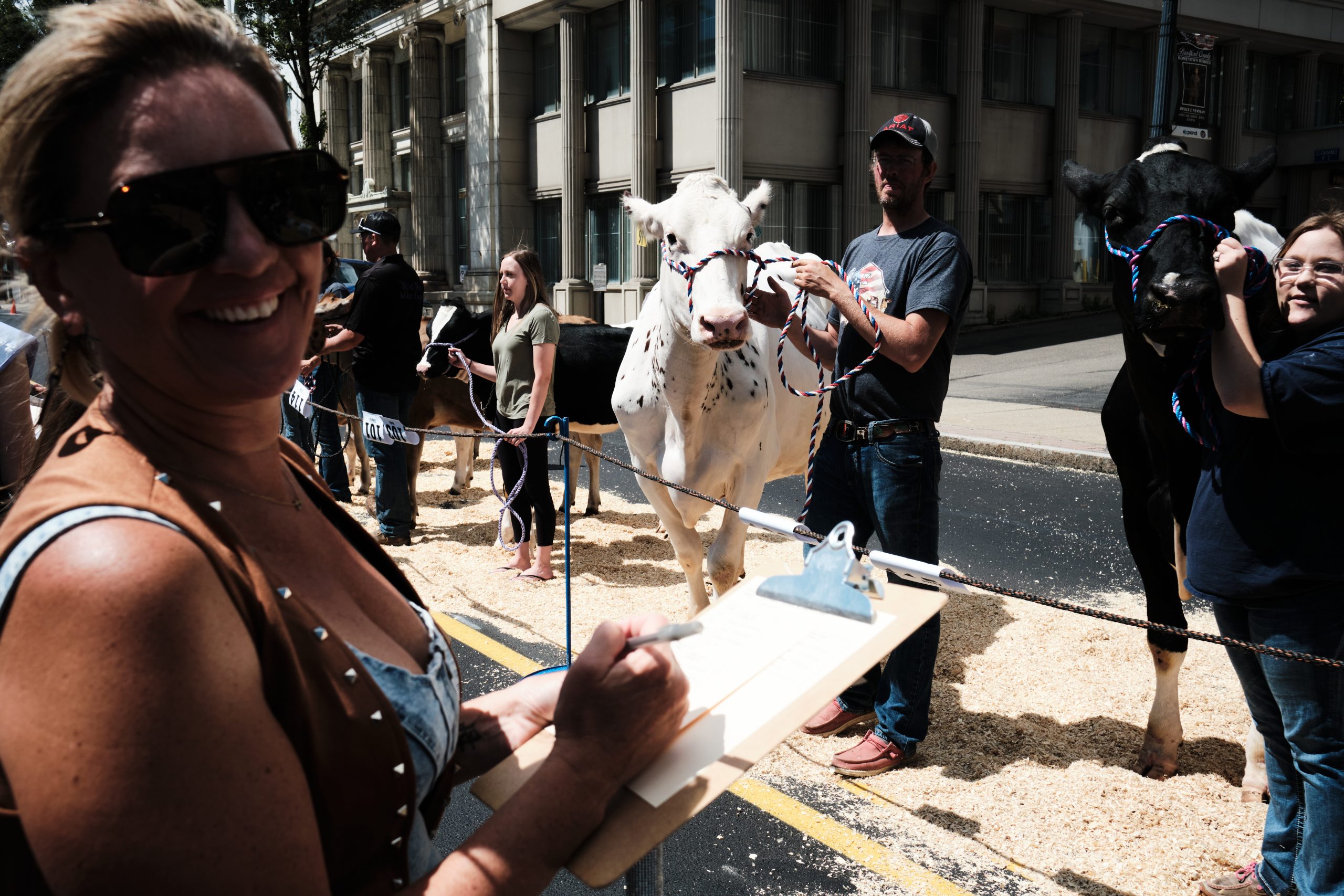
    A judge scores the cows on their beauty in front of the Bradford County courthouse in Towanda, Pa., on June 20.Max Blease / For The Inquirer
  • What makes July 4th in Philly? A block party.

    What makes July 4th in Philly? A block party.

    Few things are more American, more emblematic of our collective melting pot, than a city block party on the Fourth of July.

    Neighbors catch up to hold new babies and learn who’s passed. They talk about the Sixers trade or their latest surgeries, and, of course, the heat that hangs all over us.

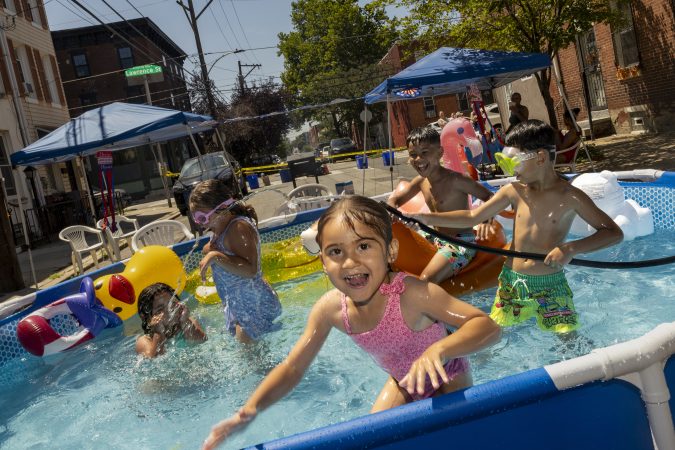
    Hopefully, someone’s inflating a pool or filling a water balloon.

    Everyone and everything is sweating, including the beers. The air smells of charcoal briquettes, sparklers, and, in the Ludlow section of Philadelphia, hints of jerk seasoning and Spanish rice.

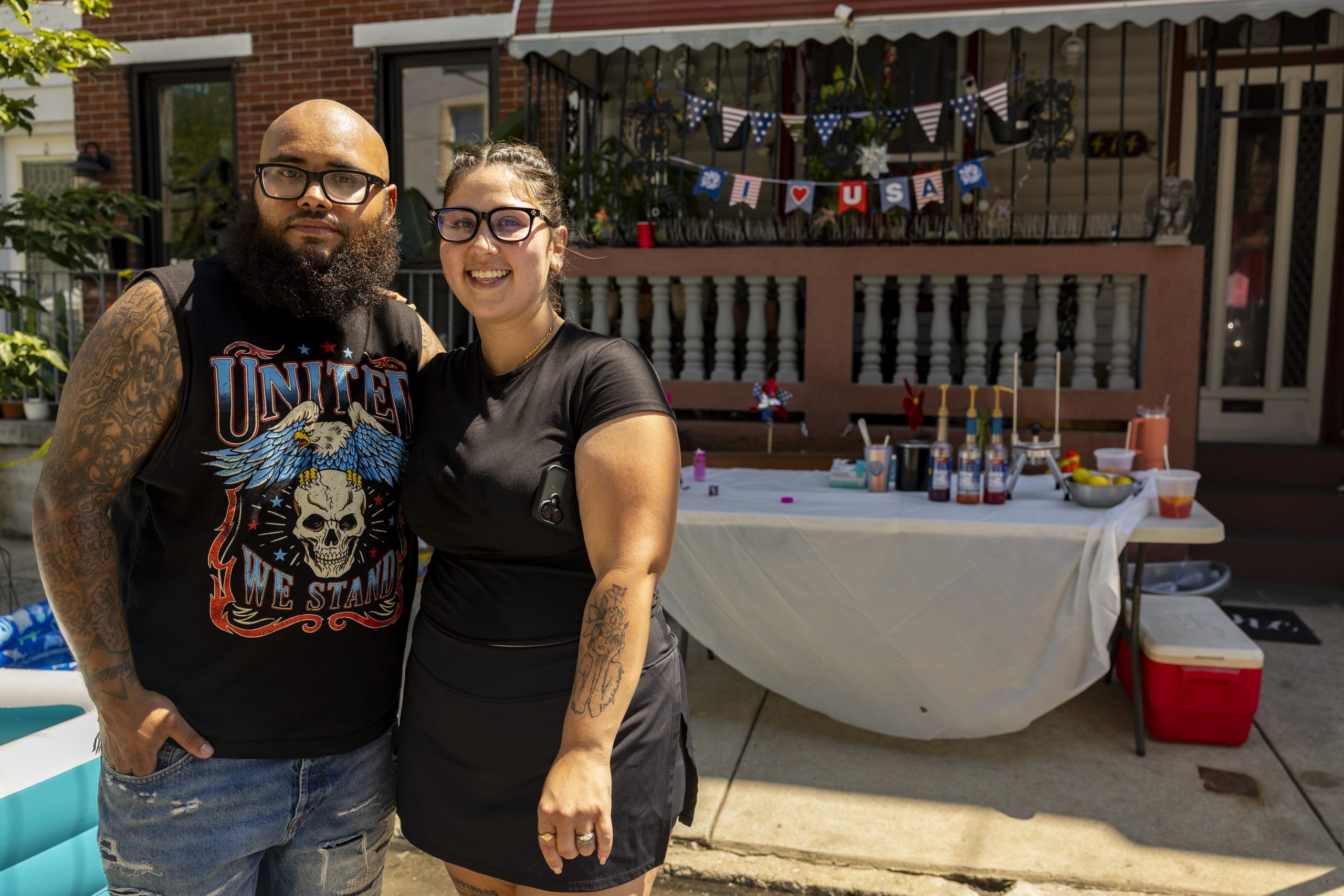
    That’s where Johanna Rodriguez and Michael Cunningham were mixing fresh lemonade Saturday as they watched their daughter and son splash around in the above-ground swimming pool in the middle of their Jefferson Street block.

    “Obviously, having a block party with all the neighbors coming together is always the best. Just hanging out and talking about the old days. It brings back the classic vibes,” Rodriguez said. “On top of that, it’s about making sure our kids get to experience what we got when we were their age.”

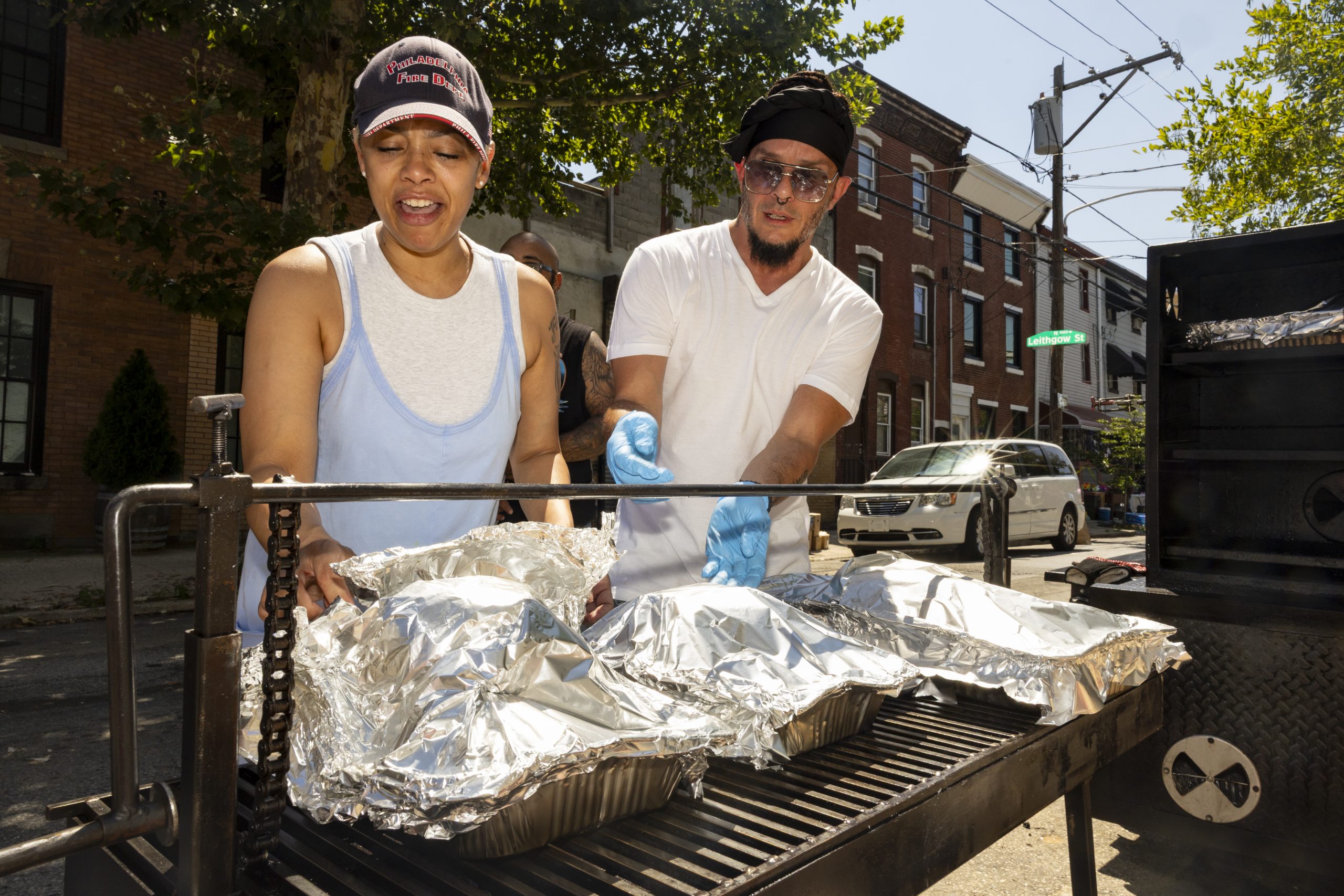
    Lisa Desamoir (left) and Danny Torres prepare pork shoulders at their block party in the Ludlow section of Philadelphia on Saturday.Aidan T. Gallo / Staff Photographer

    The block’s “OGs” were out in full force, applying for permits, coordinating who will be grill master, and erecting party tables to turn Jefferson Street into a Puerto Rican Fourth of July, Cunningham said, gesturing to his mother-in-law, Carmen “Terry” Torres, the block captain and resident of more than 50 years.

    Rodriguez said the block takes Fourth of July seriously because it’s one of the only times of the year where everyone comes outside to enjoy the festivities and see each other in person. It also provides the classic July Fourth fun outside during a time where many kids are used to hanging out inside.

    Torres, alongside her neighbor of more than 30 years, Elizabeth Reyes, transforms Jefferson Street into a barbacoa party, taking the cuisine pioneered by the Taino people.

    No one sacrifices more on 100-degree Independence Day than the grill master. In Ludlow, that was Danny Torres, who runs the barbeque business The Latin Grill, only lives a few houses down from Torres and Reyes, and along with his wife, Lisa Desamoir, will be supplying the prized smoked meats to the entire neighborhood.

    A little girl loses her popsicle while riding an inflatable water slide during a block party in Point Breeze on Saturday, July 4, 2026, in Philadelphia.Aidan T. Gallo / Staff Photographer

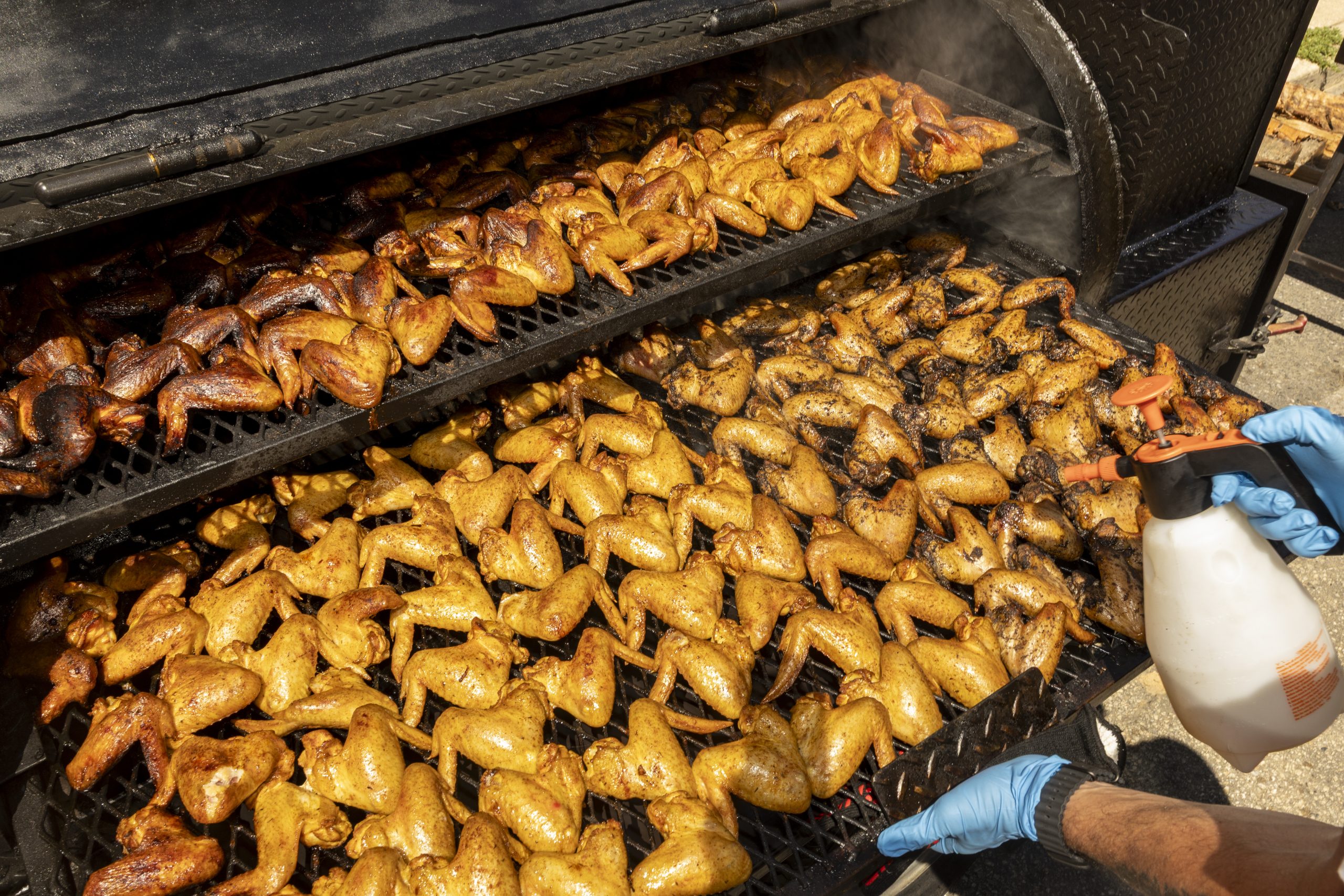
    Desamoir, a retired firefighter who had the local Engine 29 truck stop by to treat the kids earlier in the day, was taking inventory of the more than 50 chicken wings, whole slabs of pork shoulder (with a crunchy skin for added texture), and nearly dozens of chicken kebabs. These would go nicely alongside the macaroni salad, corn on the cob, Spanish rice, and more sides that neighbors prepared, Desamoir said.

    “Danny is making a whole Caribbean vibe cause he’s got the jerk seasoning and Puerto Rican flavors,” Desamoir said.

    Danny Torres, who runs the barbecue business The Latin Grill, prepares Puerto Rican and jerk seasoned chicken wings on a grill at his block party in the Ludlow section of Philadelphia on Saturday.Aidan T. Gallo / Staff Photographer

    In Point Breeze, Robin Miller and her neighbors were having an inaugural block party. Miller and another neighbor had a small outdoor hangout, then wanted to make it official and invite the whole block. What better day to throw the block’s first party than the 250th anniversary of the United States? Miller said.

    A bounce castle took over the middle of the block and, in an inflatable pool nearby, a group of young children and teens lay with just their faces sticking out of the water, like alligators.

    Joy Fields-Butler and Christine Mardre, neighbors and friends, sat underneath one of the canopies situated along the street. For them, this block party is about bringing together all walks of life on the block, from fostering formative memories for the children to bringing a diverse array of adults to kick back, share a beer, and even join in on the water gunfights with the little ones, Mardre said.

    Michael Cunningham and Joanna Rodriguez stand for a portrait outside their house near the Ludlow section of Philadelphia on Saturday.Aidan T. Gallo / Staff Photographer

    “It’s diverse on this block, and days like today have all of us coming together,” she said. “Today, there is no arguing, there is no drama, it’s just a party.”

    Miller enjoyed the experience of neighbors coming together to do something special, feeling very Philadelphian, she said, as the city is known for its rich neighborhood culture.

    “Our neighborhood pitched in, and a lot of us pooled together to get the inflatable pool or the bounce castle,” Miller said. “The food spread is basically for the entire neighborhood, and people just keep coming out and replenishing anything that’s run out.”

    Meanwhile, an annual South Philly block party near 21st and McKean Streets was celebrating decades of tradition. Resident Monica Elder, who’s been there 38 years, said the party dates back decades. Now 55, Elder has become one of the leaders on the block who watch over children and preside over the festivities.

    “Cooking, eating, dancing — everybody participates. Whether we know you or not, everyone is welcome,” Elder said.

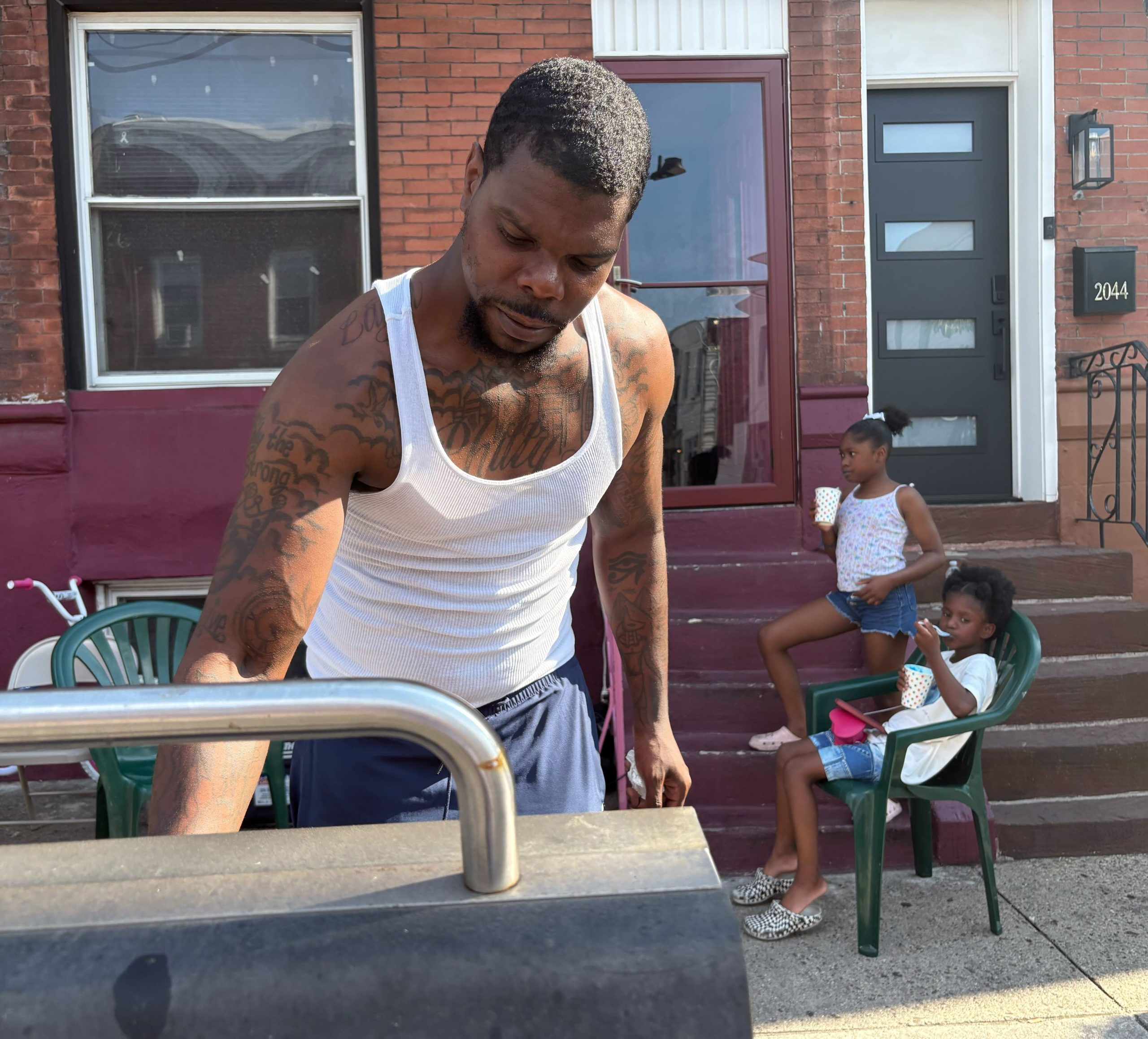
    By 5 p.m., the good times were getting a bit of a late start due to the blistering temps. Elder’s son, Jeremiah Worthem, helmed the grill. He said block parties build community and serve as a chance for neighbors — many have been here for decades — to meet up. “It’s a good time,” Worthem said. “Just building these memories.”

    Jeremiah Worthem helms the grill at a block party in South Philly. Brett Sholtis
  • Bam Margera is sober, skating, and is (sort of) back in the final ‘Jackass’

    Bam Margera is sober, skating, and is (sort of) back in the final ‘Jackass’

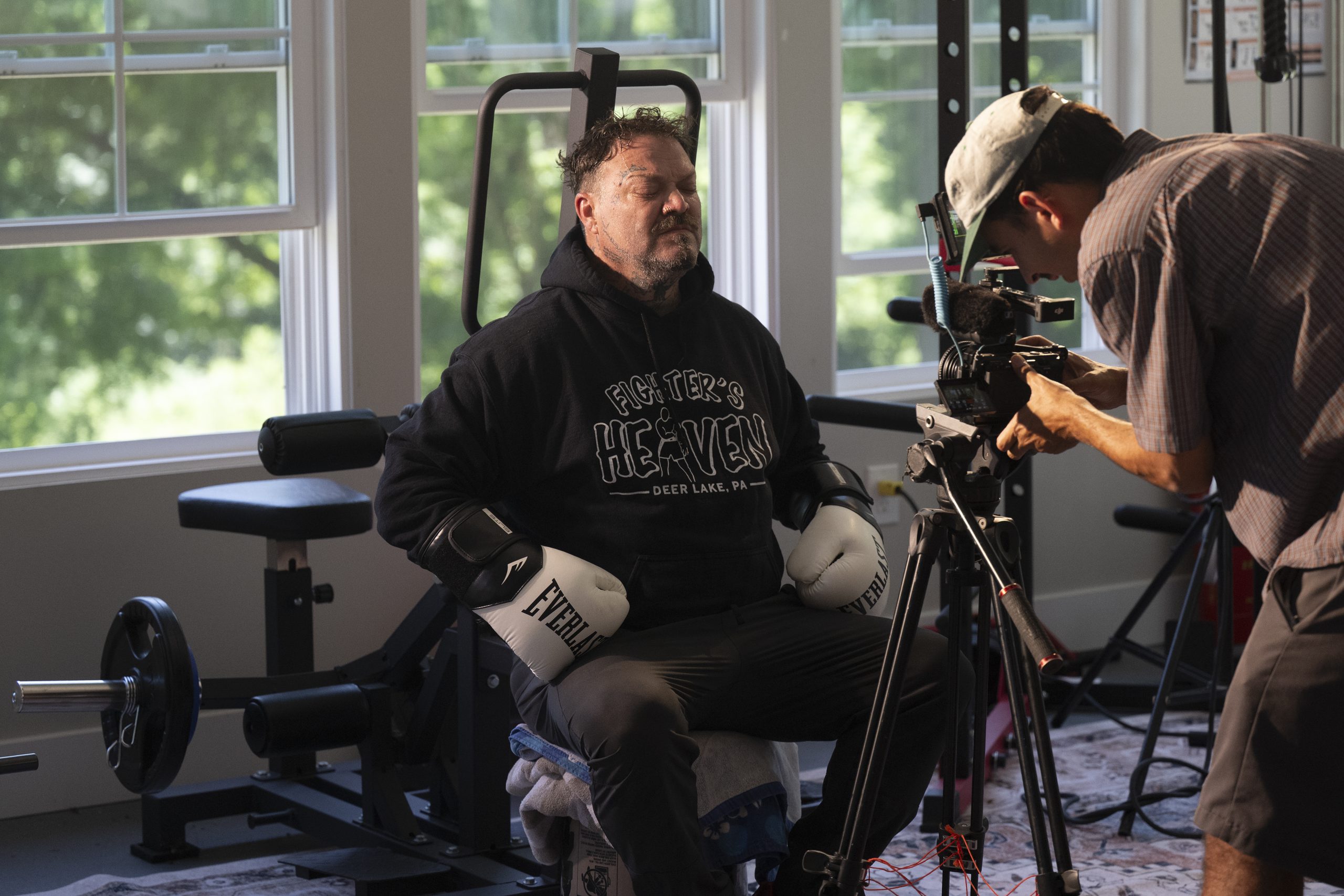
    A former bouncer with hands like 5-pound hams was peppering Bam Margera with rib punches in a small gym at his Chester County castle.

    Every few minutes, Margera waved his hands in surrender. He started looking for a place to sit down. Sweat poured down his face, and he struggled to catch his breath

    “I need a second,” he said.

    Margera had strung together years of bad days recently, but, despite the pain, this wasn’t one of them. Today, he’s sober, in love, skateboarding, spending some time with his family and son, Phoenix Wolf, and, on this early June afternoon, working out, too.

    Fans of the Jackass series will get to see him on Friday, June 26, when Jackass: Best and Last, the fifth and final film in the series, is released.

    “I think this is the grand finale of it all,” he said.

    While Margera didn’t film new stunts or pranks for the latest film and had no interest in attending any premieres (his parents attended) or promotional events, he signed a deal allowing unseen archival footage and outtakes from early Jackass days to be used in the film.

    Margera had a public falling out with the Jackass crew over sobriety demands they placed on him before the release of 2022’s Jackass Forever. (He still blames Johnny Knoxville’s “sharp tacks” stunt in a Viva La Bam episode for damaging his feet and hurting his skateboarding career.)

    “I’m not ready to reunite with anybody,” he said recently.

    Paramount Pictures alleged Margera broke a “wellness agreement” that required him to undergo regular drug and alcohol tests and take prescribed medication to be in the 2022 film. When the film was released, Margera had a brief cameo, and The Inquirer noted that it suffered without Margera’s trademark heartagram symbol and Philly hoagiemouth accent.

    Some stars of the show and films, including Stephen “Steve-O” Glover and Brandon Novak, a longtime friend of Margera’s, have gotten sober. While Margera was seemingly blowing up friendships at his worst, Novak, a former pro skater, said he never took it personally.

    “I always have and will still love him, wherever he is in his journey,” he told The Inquirer in June.

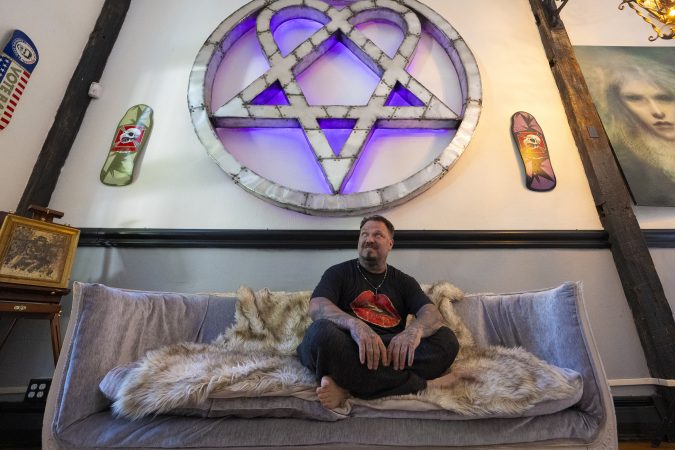
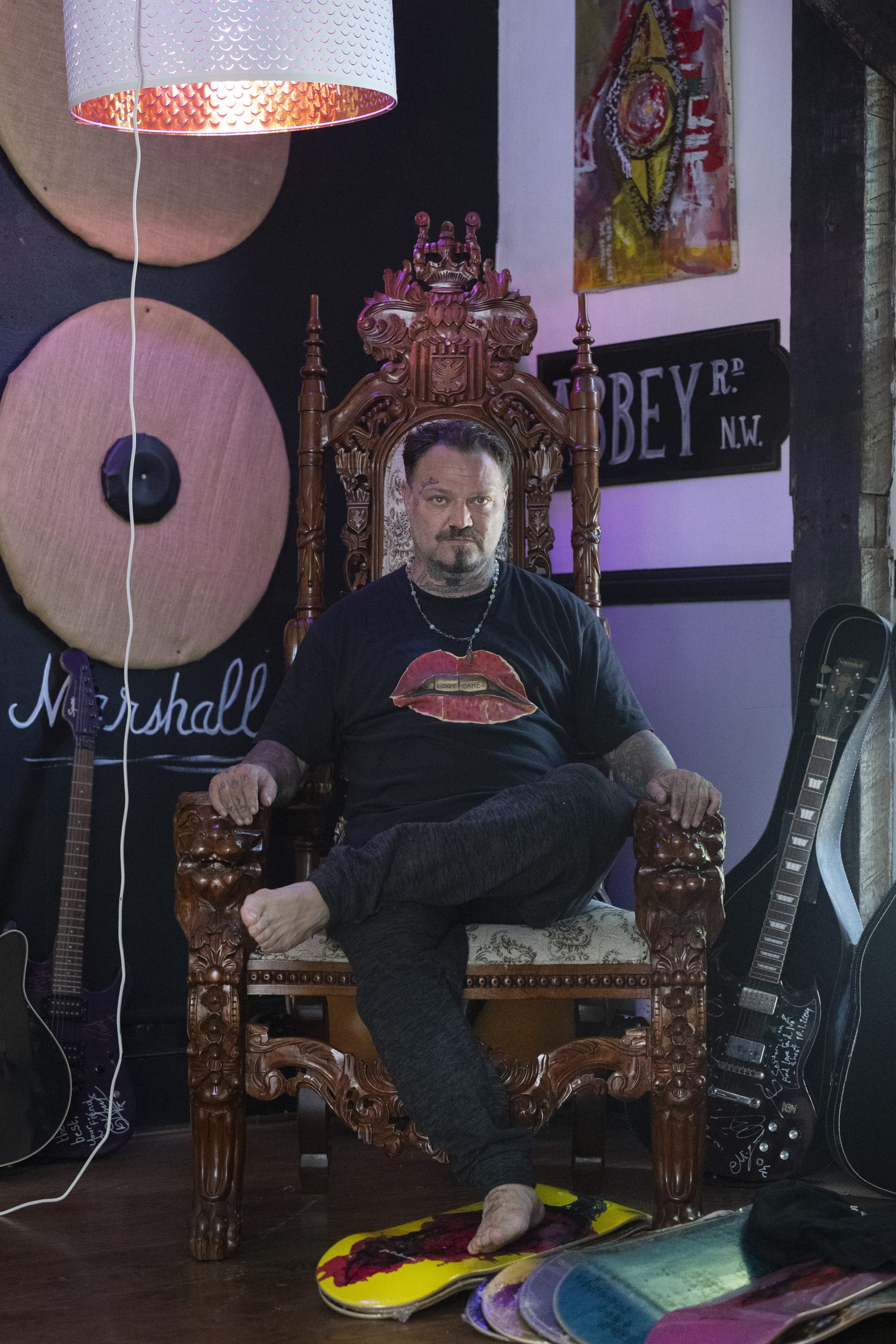
    West Chester native Bam Margera poses for a portrait at his home in Pocopson Township, Chester County on June 4, 2026. After years of personal struggles, Margera says he is sober, skating again, and reconnecting with the “Jackass” franchise, allowing producers to use archival footage of him in the latest film.Jose F. Moreno / Staff Photographer

    Three years ago, Margera seemed hell-bent on burning his own bridges to a better life. He was in California, a long way from his home and family in Chester County. He was even further from good publicity, from his passion — skateboarding — or any semblance of a normal life. In his own words, he became a professional “piece of s—.”

    Margera was mired in a custody battle with his ex-wife, Nikki Boyd, along with a slew of other legal issues and lawsuits in Pennsylvania and beyond, plus the subsequent attorney fees. He was in and out of rehabilitation centers for drugs and alcohol, and dealing with medical and mental health issues.

    When The Inquirer spoke to Steve-O about Margera in 2023, he said he was ready to help.

    “I just can’t do it for him,” Steve-O said at the time. “I tried everything I could to encourage him to want to get better, and none of it worked, so here we are. He has to want to get better.”

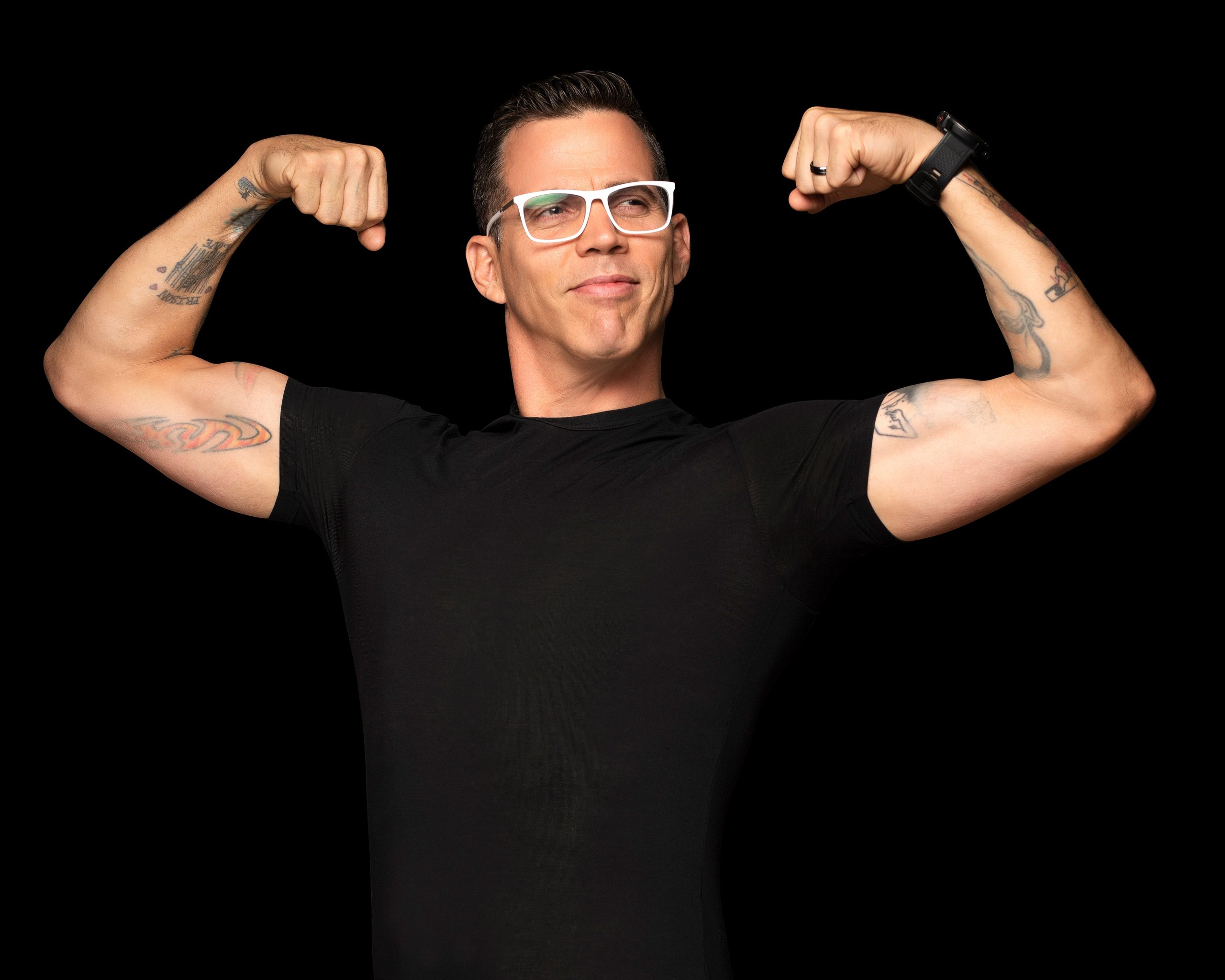
    “Jackass” star Steve “Steve-O” Glover has been sober for several years but he says his stunts are better than ever.SteveO.com

    Margera was placed on a 5150 psychiatric hold when he was found acting erratically outside Trejo’s Tacos in Los Angeles in June of 2023. When he was released, he checked into the Sunset Marquis hotel with more drugs than he’d ever had. Looking back, Margera said he wasn’t suicidal, but he didn’t really expect to wake up.

    Still, he said a little prayer that night.

    If he survived, Margera expected God to deliver him the “hottest eye candy with a tan pit bull” to save him. When he woke up, surprised to be alive, Margera went out by the pool, ordered a Bloody Mary, and met Daani Marie, a model and stretch coach he later married.

    Margera and Daani Marie, who now spend most of their time in Florida, hit it off immediately.

    “I really like you,” she said. “Do you want to walk my dog with me?

    “What kind of dog do you have?” Bam asked.

    “A tan pit bull.”

    He looked up at the sun and smiled.

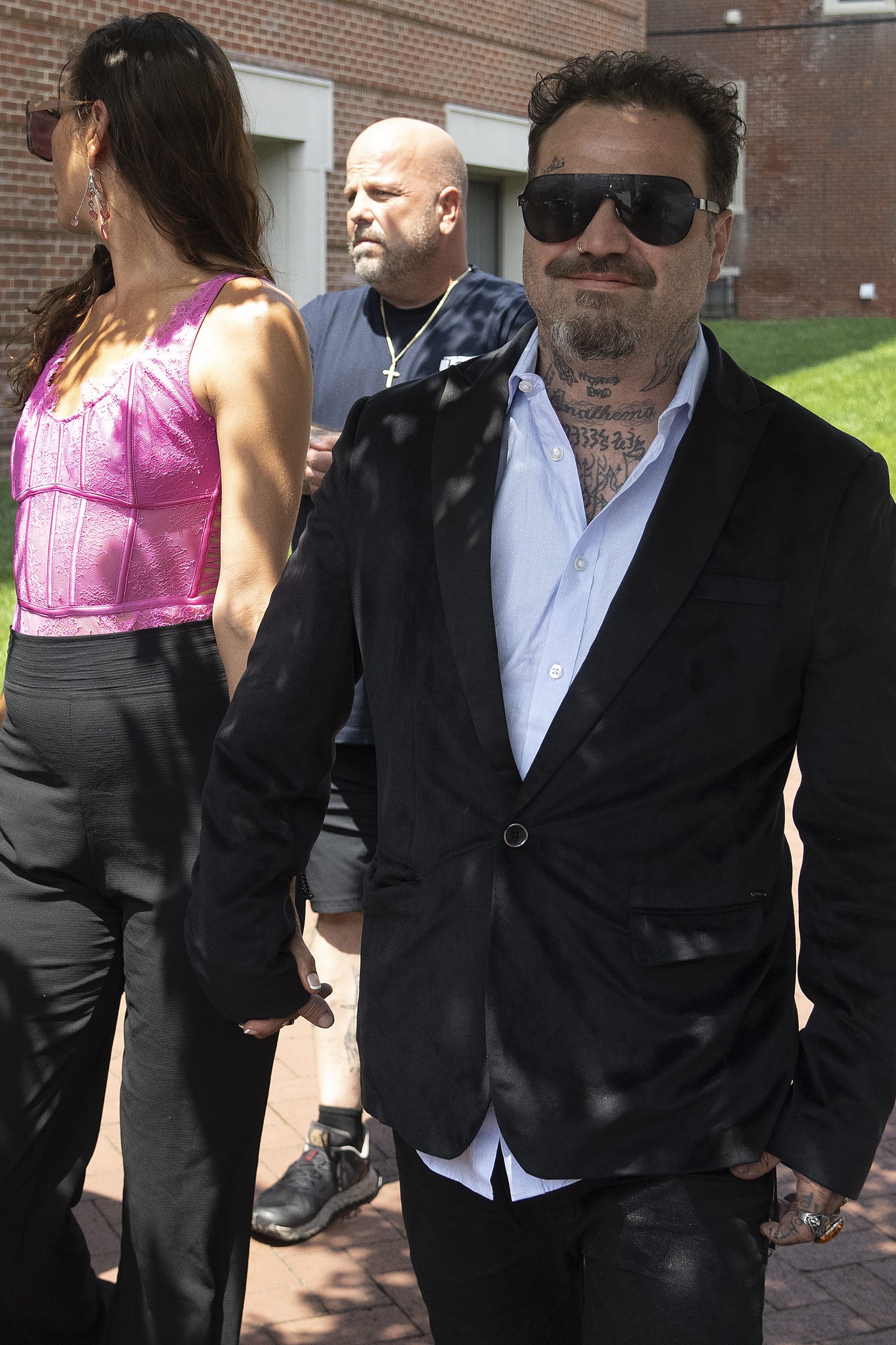
    Former Jackass star Bam Margera walks to the Chester County Justice Center on July 27, 2023, for a preliminary hearing.Jose F. Moreno/ Staff Photographer

    While he didn’t get sober immediately, Margera credits that night, that chance meeting with Daani Marie the next morning, for at least putting him on the path. The two were married in New Mexico a year later.

    “Enough was enough,” Margera said. “I knew if I continued this lifestyle, I’m gonna die this way.”

    Margera said he hadn’t been back to Castle Bam in 10 months, and on this June afternoon, was paying Andrew Mehan, a former bouncer in West Chester, for boxing lessons.

    Mehan had to kick Margera out of some West Chester bars back in the day. He’d seen Margera in worse shape.

    “Come on, get up,” he commanded.

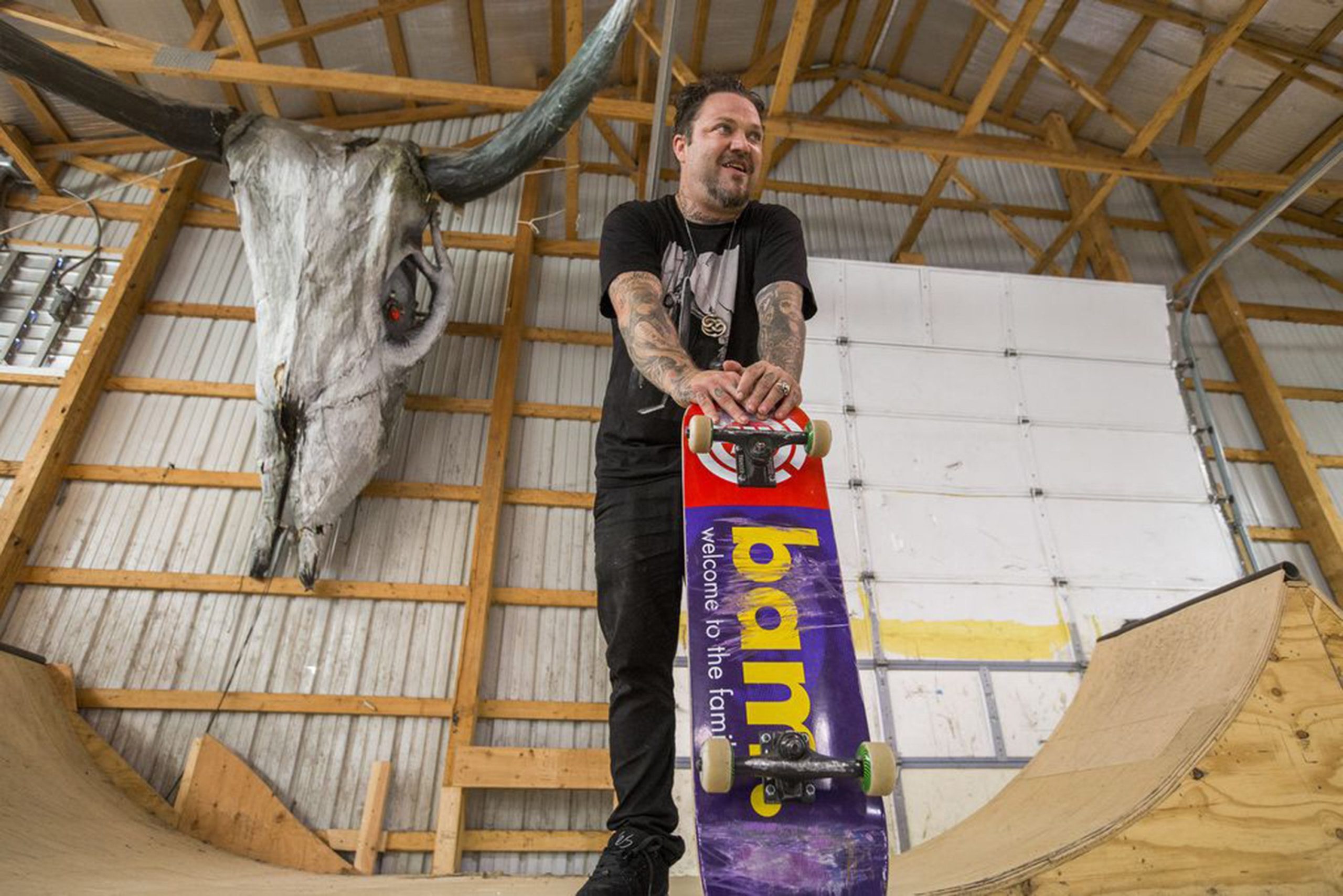
    Bam Margera in his personal skateboard park in Chester County, Pennsylvania, in 2011. (Charles Fox/The Philadelphia Inquirer/TNS)Charles Fox / MCT

    Suddenly, Margera would rise from his rest with a groan — he still smokes — and snap a few jabs at Mehan.

    His father, Phil, the lovable victim of countless pranks and a few punches from Bam over the years, sat in the wings, beaming with pride as his son countered with a few jabs.

    “Yeah, he put me through it, but I’ll sit through anything as long as he’s sober,” Phil said.

    Margera’s solo show, Viva La Bam!, was set almost entirely in and around Castle Bam, his notorious home and compound in Pocopson Township, Chester County, and also at his parents’ home. The show ran for five seasons on MTV, from October 2003 to August 2005.

    Many of Castle Bam’s mainstays were still there: purple luxury cars — a Bentley and Audi in the driveway — skateboard decks on the walls, and lots of Margera’s paintings leaning against the walls. Margera described his style as “Jackson Pollock-ish.”

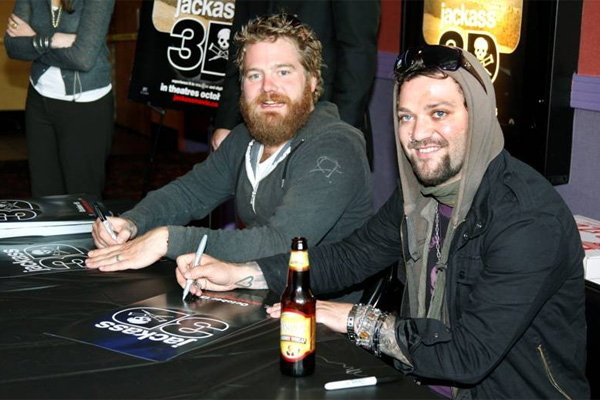
    Brandon “Bam” Margera (right) of MTV’s “Jackass” was born in West Chester, and friend and costar Ryan Dunn moved there as a teen. Above, they were signing autographs after a screening of the movie “Jackass 3D” at Manayunk’s UA Main Street 6 in October 2010.SCOTT WEINER

    One skateboard deck featured Ryan Dunn, another steady fixture at Castle Bam back in the day. Dunn, Margera’s longtime friend and a fellow Jackass star, died in a fiery crash after a night of drinking in Chester County in 2011. The two met at 15, at West Chester East High School, and were nearly inseparable thereafter. In the wake of Dunn’s death, Margera turned to food and alcohol — pints of vodka and Gatorade, food binges followed by purges — to deal with the grief.

    Margera was interviewed by a television station at the scene. He was mostly sobbing, and when asked how he would get through it, he said he “couldn’t.”

    On this June afternoon, there were people, young and old, everywhere at the Castle: in the pool, putting skateboards together, or doing yard work. His wife doesn’t love the cold, so he didn’t plan on spending too much time back at the Castle or any one place, for very long. Pocopson Township, he said, cracked down on his ability to host big gatherings and do outlandish stunts.

    “I love Pennsylvania, but I love to travel, too,” he said. “Boredom is my trigger.”

    Friends popped in and out, including Dennis Wood, a West Chester native who used to skate at Margera’s as a teen.

    “Obviously, there’s been trials and tribulations throughout the years; he took some steps forward, some steps back,” Wood said. “In the last couple of years, this is the best I’ve seen him.”

    Margera had very public fallouts with his family during the worst years, too. He was charged with assaulting his brother at Castle Bam in 2023.

    Margera’s mother, April, said his legal issues have been resolved and that he seems to be “out of the darkness.” She went to California with him and Phil recently to visit Phoenix Wolf.

    “I would like to say I’m really proud of him. He came a long way. We’ve all been through the fire and brimstone, and we seem to be coming out on the other side,” April said in a text message.

    Novak, a former star of Jackass and Viva La Bam! who now owns sober living houses in Delaware and New Jersey, said Margera’s family was always the grounding force, a source of unconditional love, and he was happy to hear the Margeras have made amends.

    He also loves that Margera is skating again.

    “Where he seems to be now is a healing stage,” Novak said recently. “To what degree, I can’t speak on, but it’s better than it was when he wasn’t speaking to his family or the majority of his friends.”

    Margera started skateboarding as a teen, with Phil driving him all over the area to pursue his passion, including the late Love Park and FDR Park. Margera’s earliest stunts appeared in videos for his brother’s alt-metal band, CKY, and he got noticed by MTV. His crew was teamed up with other wild men, like Johnny Knoxville and Steve-O. Jackass was born. Margera and Dunn were featured in the first episode on Oct. 1, 2000, riding — crashing, rather — shopping carts.

    Phil watched his son’s recent torturous boxing lesson with pride.

    “He’s still cute, even at 46,” Phil said.

    When the final sparring round was over, Mehan helped pull Margera’s gloves off. Margera slumped down and took deep breaths. A few minutes later, he shuffled out of the gym and walked straight into the deep end of the pool, fully clothed.

    “I need to quit smoking,” he said along the way.

    Mehan put the day’s boxing lesson into a deeper perspective while he unwrapped his own hands.

    “That’s the worst he’ll ever look,” Mehan said of the boxing lesson. “Here’s the deal: He fought through it. He kept saying he was done, that he wanted to quit, but he kept going.”

    West Chester native Bam Margera is filmed by a documentary crew as he rests during a boxing workout at his home in Pocopson Township, Chester County.Jose F. Moreno / Staff Photographer
  • A popular but deadly hiking trail will reopen in the Poconos

    A popular but deadly hiking trail will reopen in the Poconos

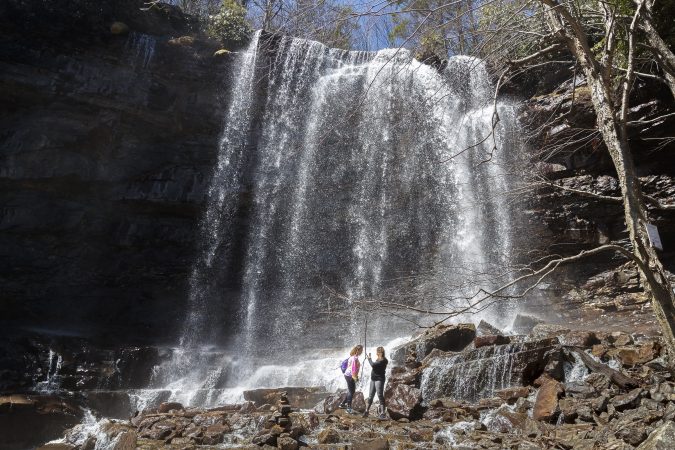
    JIM THORPE, Pa. — Long considered one of Pennsylvania’s most popular and scenic hikes, the Glen Onoko Falls Trail was also one of the state’s most dangerous.

    Many people have been injured on the steep rocky trail, 85 miles north of Philadelphia, in Jim Thorpe, Carbon County. Others have died. In 1983, David R. Carlyon, 23, of Hazleton, dove across the top of the falls, trying to save his 3-year-old nephew, Ian Russell. Both fell and died. Over the last 50 years, at least 10 hikers have died.

    When the Pennsylvania Game Commission closed the trail in 2019, citing safety and trail deterioration issues, Thomas Russell recounted the tragic day his son died.

    “I saw him,” he told The Inquirer in 2019. “I saw him clutching at vegetation, at a branch or something, and I guess his hands slipped, or it didn’t hold, and then he was gone.”

    Russell did not want the state to close the trail, however.

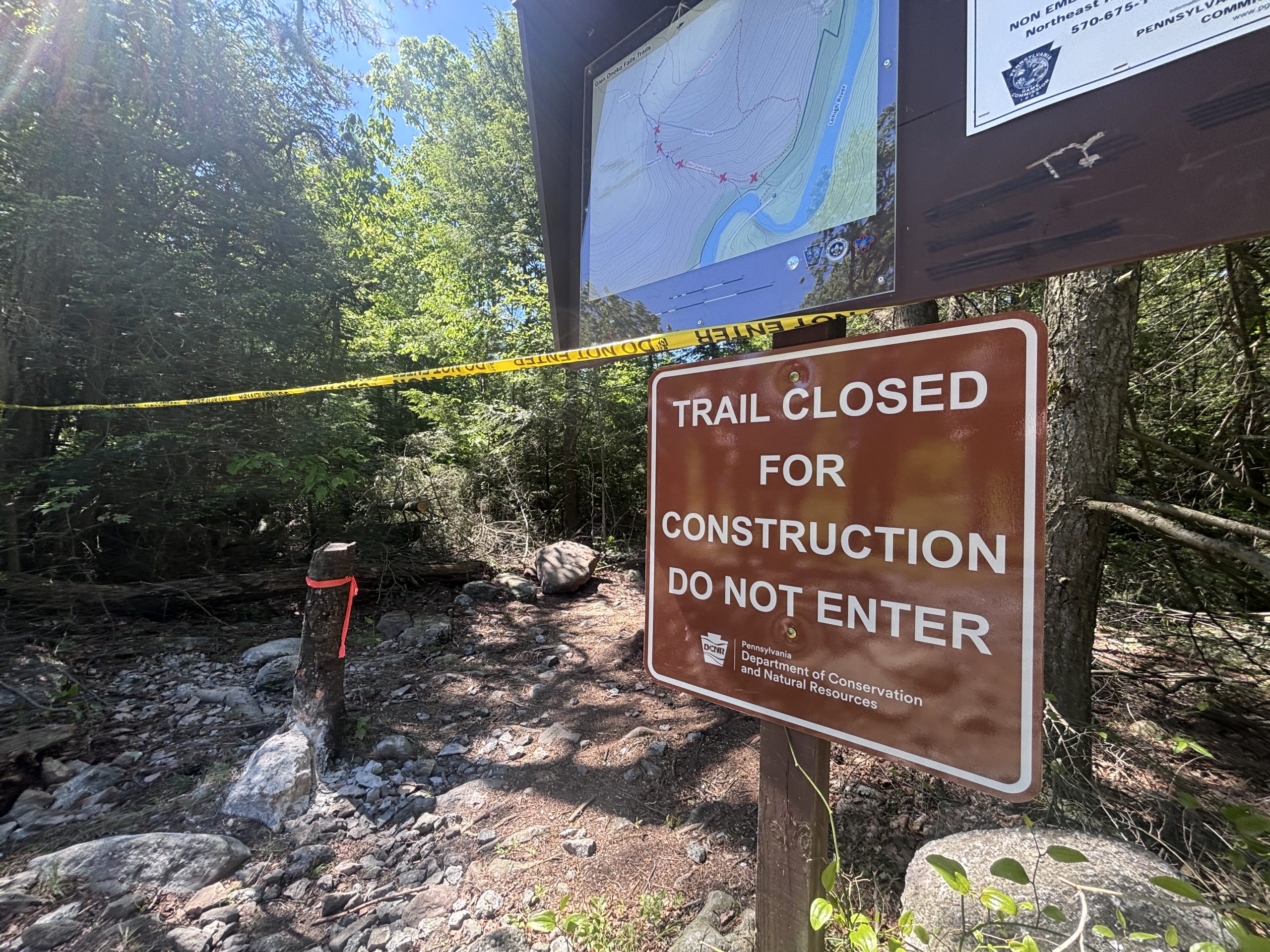
    Now, seven years later, it’s still closed and being transformed into a safer destination. The Pennsylvania Department of Conservation and Natural Resources’ Outdoor Corps has begun a project that will make the trail safer for hikers and more easily accessible to first responders who have to rescue the injured.

    The project, according to DCNR, is expected to take anywhere from three to five years. When finished, the trail would reopen and become part of Lehigh Gorge State Park.

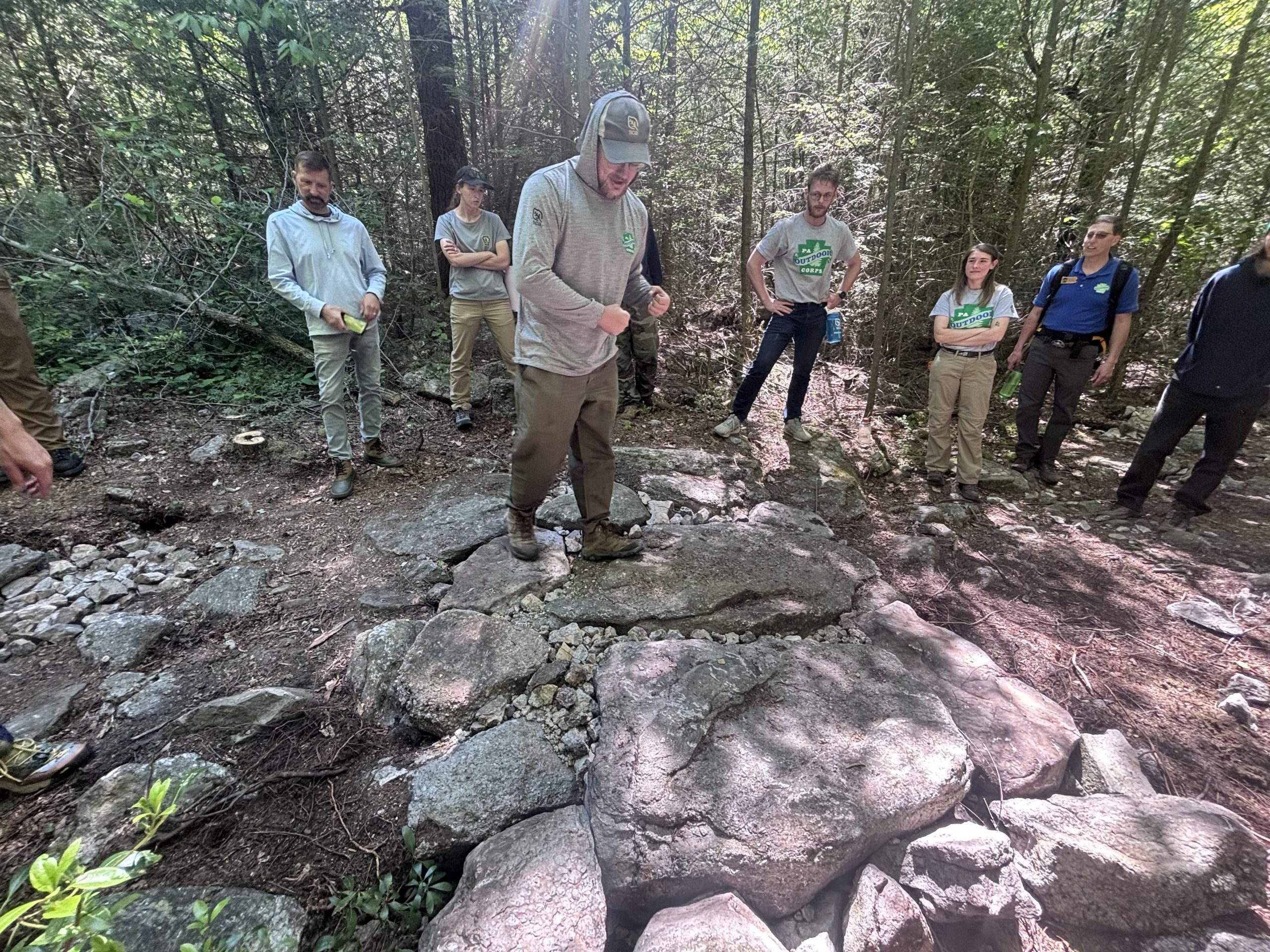
    A portion of Glen Onoko Falls Trail is being reconstructed to allow for easier access in case of emergencies.Jason Nark

    Members of the Outdoor Corps have been methodically moving or smashing large boulders on the upper portion of the trail, creating a safer route for first responders to reach injured hikers with UTVs. Many of the trails would be wider when the work is completed.

    It’s sweaty, calculating work that often requires heavy hydraulics to move boulders that weigh more than cars. Some of the biggest rocks — most of them sandstone — have earned names, like Belinda, Gertrude, and Turkey Leg.

    “When we crush a rock open, that’s the first time the inside of that rock has seen daylight in millions of years,” one Corps worker said.

    Earlier this month, a worker with the Pennsylvania Outdoor Corps discusses boulders that will be removed or pulverized on the Glen Onoko Falls Trail.Jason Nark

    In 2019, the Pennsylvania Game Commission cited overuse as an additional factor in the decision to close the trail. More than 8,500 people signed a petition at the time to keep the trail open.

    Despite the closure and citations issued to hikers found on the trail, it has remained popular, officials said. Officials said the trail is even more dangerous, with hydraulics under high tension to move rocks, during the reconstruction process.

    “Even though it’s closed, the public still comes on here,” said Rich Fritsky, regional supervisor for the Pennsylvania Outdoor Corps. “They ignore the signs. They duck under the ropes, but it’s extremely dangerous.”

    A hiker had to be rescued just a month after the trail closed, and in 2022, a 72-year-old hiker fell and died there. On a recent tour, two hikers were resting by the falls.

    “Last winter, a guy was ice climbing and had to be rescued,” said Timm Berger, the district director for State Rep. Doyle Heffley.

    On a recent gathering at the trail rehabilitation site, Berger said Heffley’s office has received countless calls over the years from hikers asking when Glen Onoko will reopen.

    “People are anxious,” Berger said.

    The popular website AllTrails.com lists Glen Onoko Falls as a difficult hike where proper shoes are required. The trail is a 3.7-mile loop and ascends easily, with flat terrain, for about a quarter-mile beyond the parking lot, following Glen Onoko Run closely. But it grows steeper and rockier as it goes upward, with some narrow ledges that appear to be eroding and some steep drop-offs. Often, hikers need to scramble over wet rocks.

    AllTrails also warns hikers that the trail is “temporarily inaccessible,” but many are not heeding the warning.

    “It started off fairly easy, but then got fairly difficult,“ one hiker wrote on AllTrails in March. “I can definitely understand why the trail is closed.”

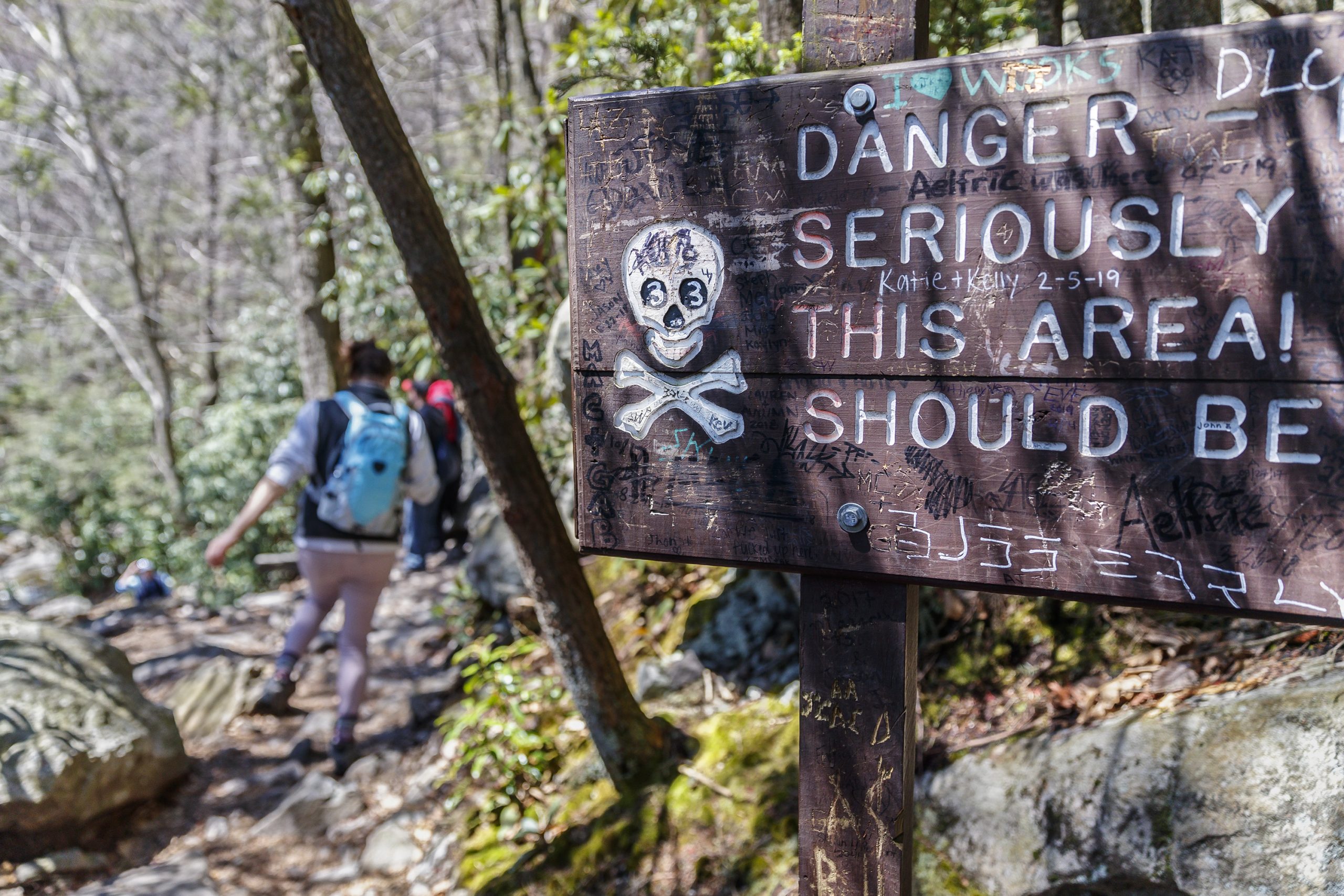
    A sign near the middle falls on the Glen Okono Falls Trail uses a skull and crossbones to warn hikers just how serious the threat of danger exists on the trail at this point. The Pennsylvania Game Commission closed the main Glen Onoko Falls trail in Jim Thorpe on May 1, 2019.MICHAEL BRYANT / Staff Photographer
  • A perfect weekend in Princeton, N.J., from record stores to ice cream and ivy-covered quads | Field Trip

    A perfect weekend in Princeton, N.J., from record stores to ice cream and ivy-covered quads | Field Trip

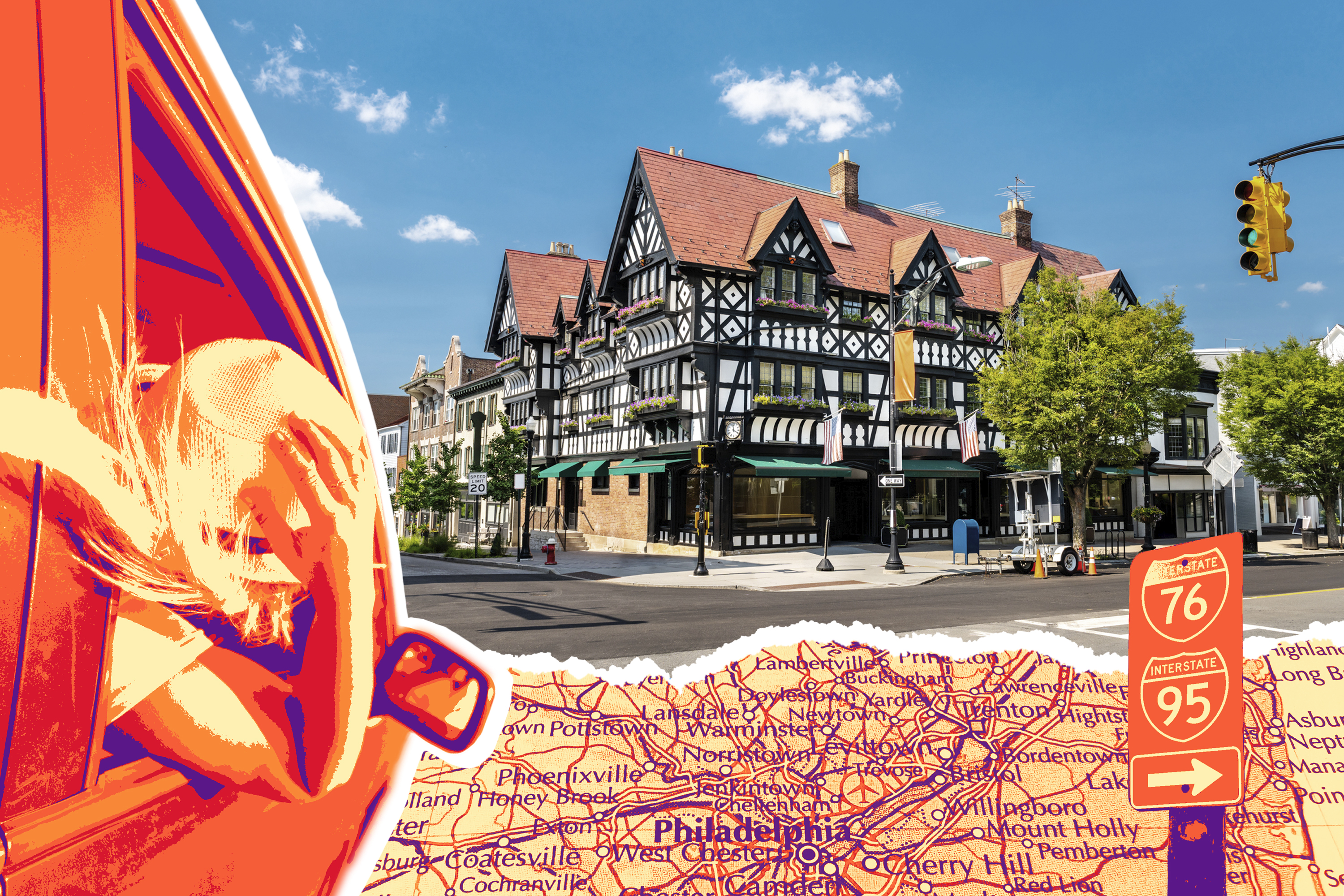
    A college campus in Central New Jersey might not sound like the ideal getaway, but Princeton has a Ph.D. in historic charm, boutique shops, eateries, and museums. As a lifelong New Jerseyan, I keep forgetting how much I love it there.

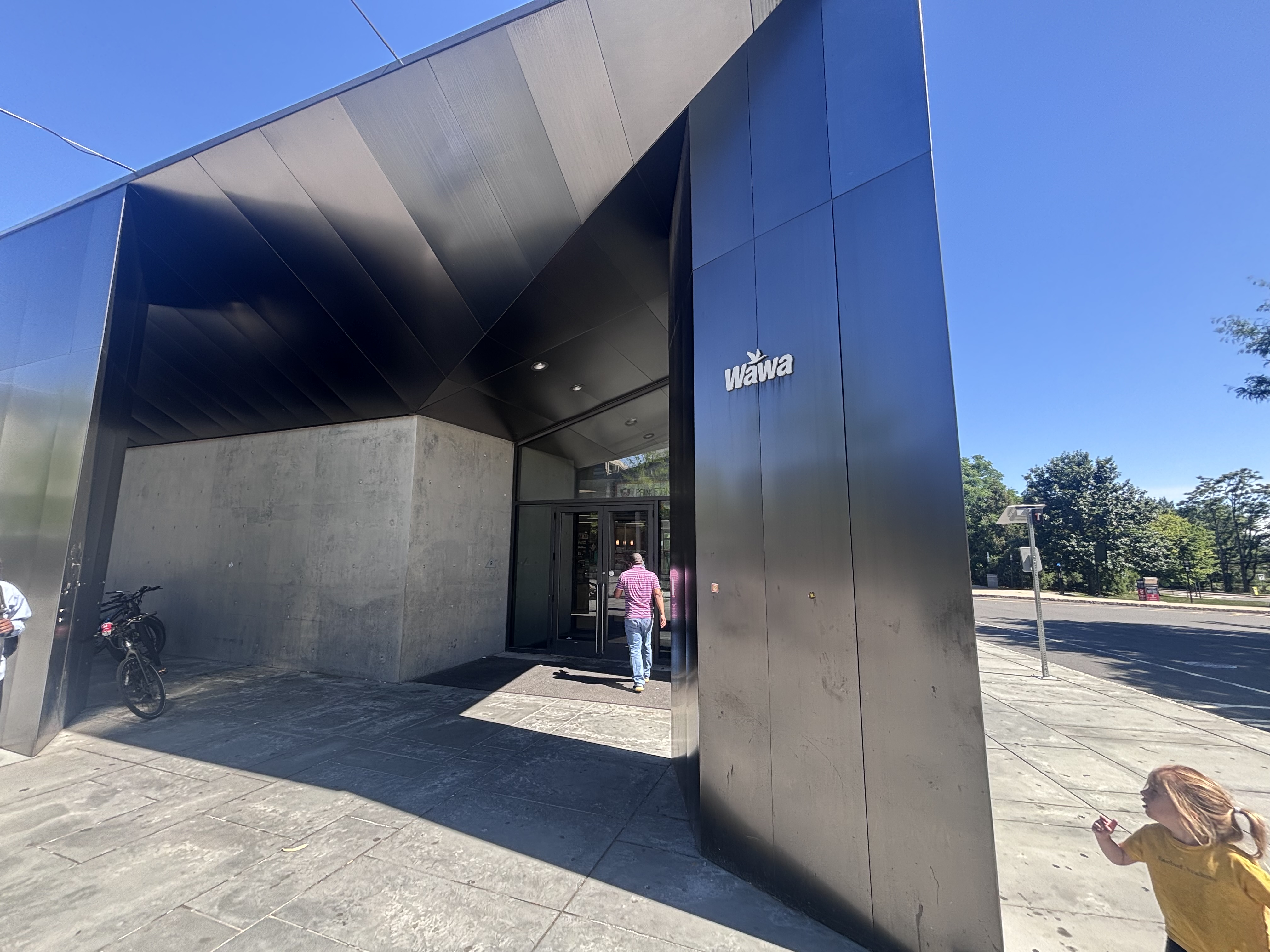
    Even the Wawa is a work of art.

    “Princeton is just a beautiful little town and, in my opinion, there are only a few places like it in all of New Jersey,” said John Lambert, owner of the iconic Princeton Record Exchange.

    Strolling through Princeton University’s ivy-covered campus, as Albert Einstein used to, is almost worth the trip alone, particularly if you go on a bustling fall weekend. The campus is teeming with sculptures, massive churches, and historic school buildings. The town is only 50 miles northeast of Philadelphia and is even accessible by Amtrak at 30th Street Station.

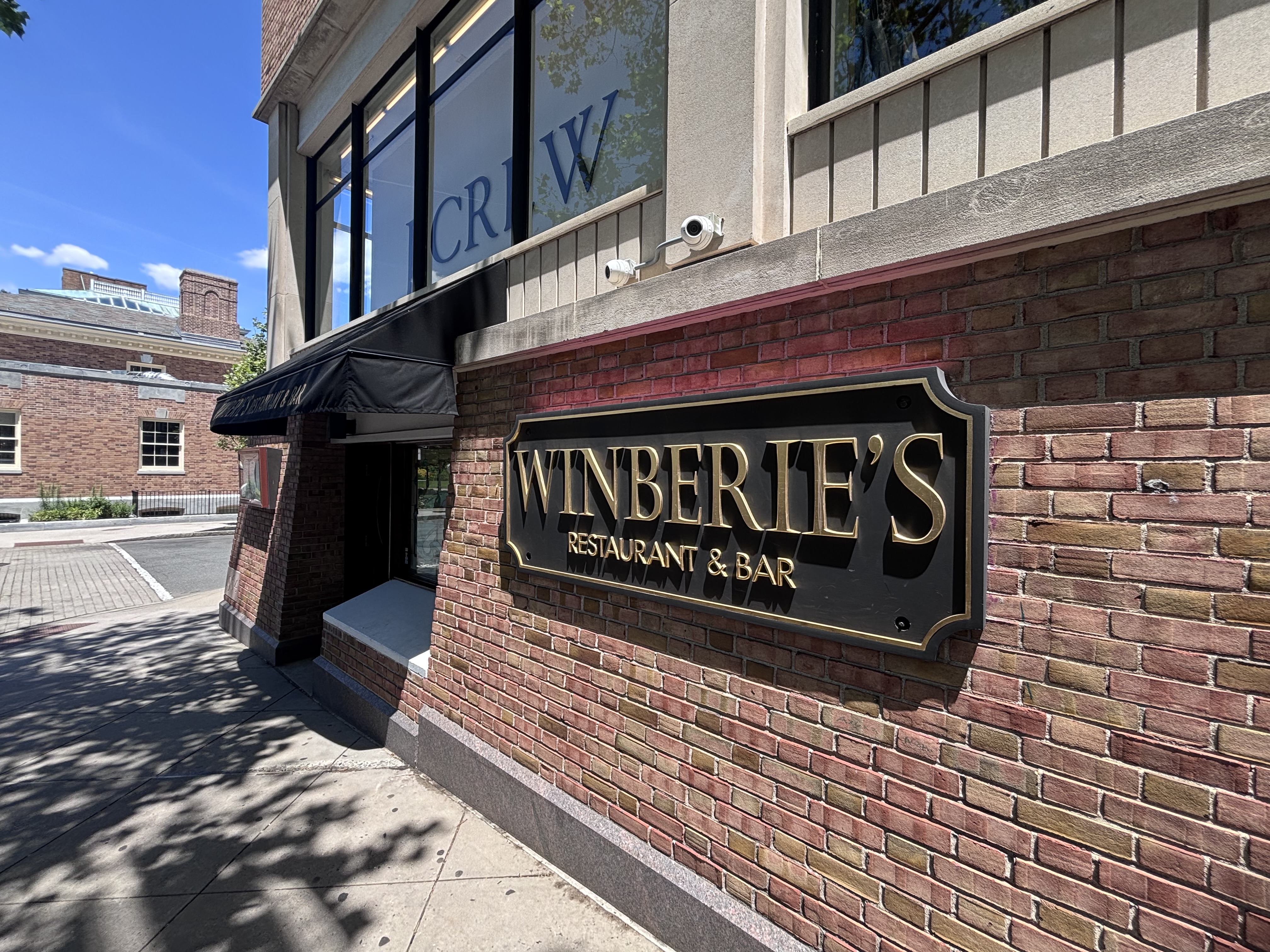
    Winberie’s is a Princeton staple.Jason Nark

    Fuel

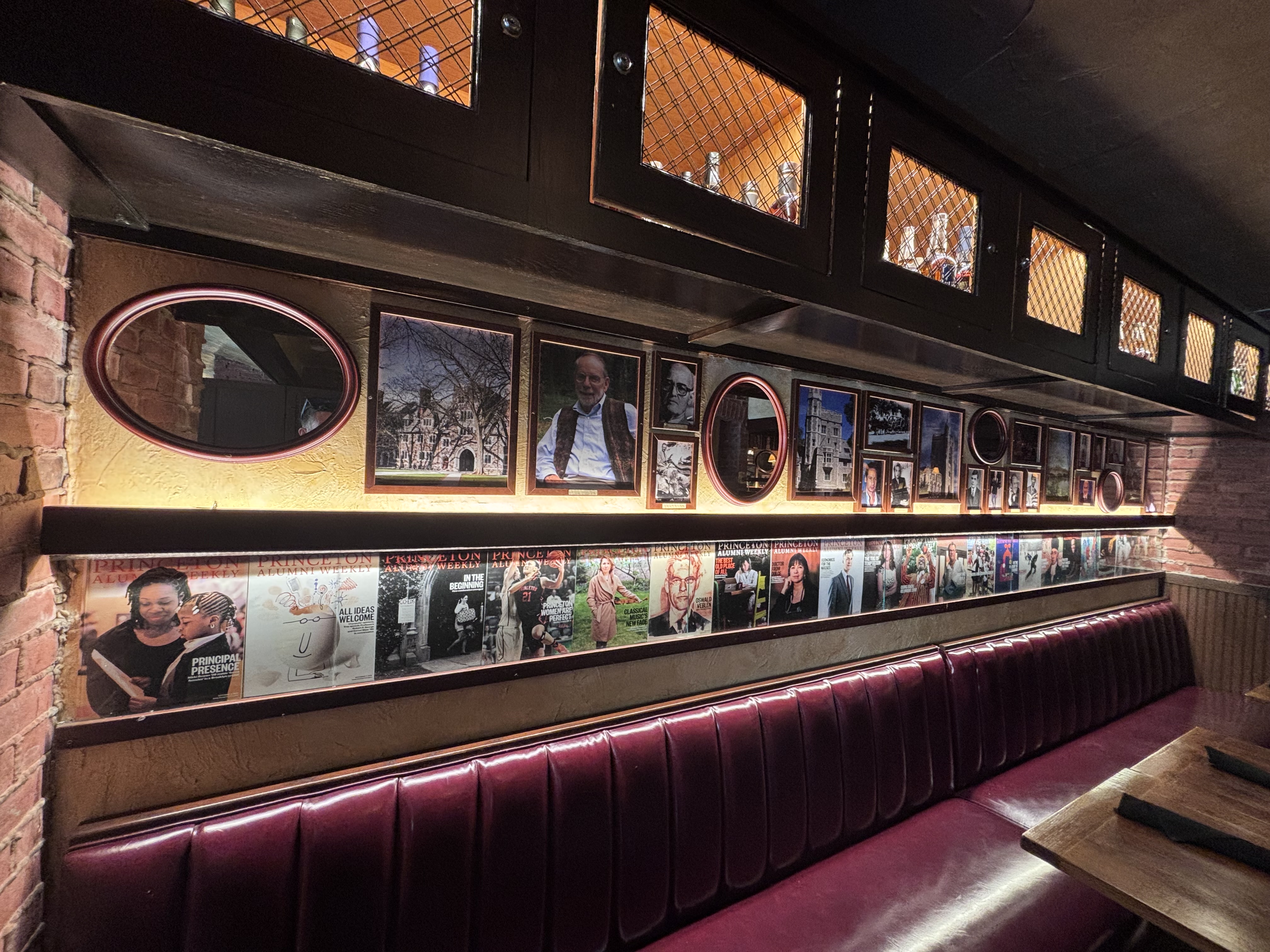
    I’m a sucker for a downstairs pub, and I’ve been to Winberie’s Restaurant & Bar a handful of times. It’s dark and bedecked in stained glass and brick, and images of Princeton icons, like author John McPhee and basketball legend Bill Bradley, line the walls.

    It’s not the only bar in town, but Winberie’s seems like the ideal place to grab a craft beer or wine before or after a Tiger football or basketball game. It sits right on Palmer Square in the middle of town.

    Princeton legends like John McPhee line the walls at Winberie’s.Jason Nark

    Winberie’s has full entrees, including pan-roasted, crispy skin salmon, and braised, beef short ribs, but I also get one of their burgers. On a recent weekday in June, I ordered the smash burger on rye bread with mustard.

    Afterward, while walking off the meal around Palmer Square, I made a note to try Teresa’s Pizza & Wine Bar next time. Princeton’s Triumph Brewing is an elevated brewing experience with duck, lamb, and oysters on the menu. It was named a 2025 Diners’ Choice by OpenTable.

    📍 Winberie’s Restaurant & Bar, 1 Palmer Square E., Princeton, N.J. 08542

    📍Teresa’s Pizza & Wine Bar, 23 Palmer Square E., Princeton, N.J. 08542

    📍Triumph Brewing Company, 20 Palmer Sq. E, Princeton, N.J. 08542

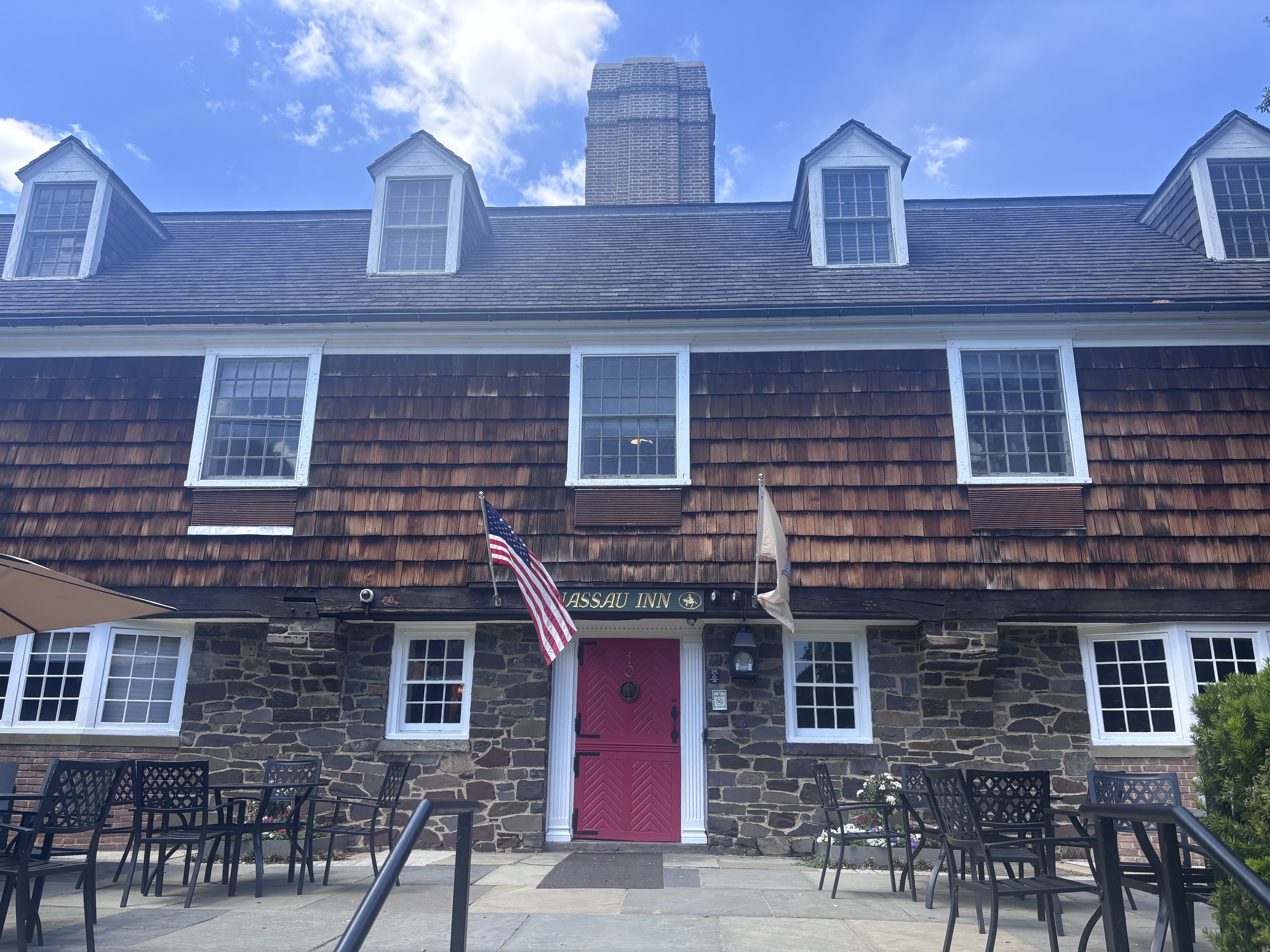
    The Nassau Inn has been in operation in Princeton since 1775.Jason Nark

    Stay

    Princeton can be an easy day trip for anyone in Philadelphia. That’s a great option too, because overnights can be expensive, particularly when school is in session, and there are large events on campus.

    The Nassau Inn, on Palmer Square, is Princeton’s most iconic hotel, and it offers summer getaway deals starting at $175 a night. Rooms jump to $325 a night come mid-September. The Nassau, established in 1775, offers 16 craft beers, plus breakfast, lunch, and dinner at its Yankee Doodle Tap Room.

    The Graduate Hotel, by Hilton, has a breathtaking lobby, but the prices are breathtaking too. There are some simple and relatively affordable Airbnbs downtown, too, but expect the prices to double during the school year.

    📍 Nassau Inn, 10 Palmer Square E., Princeton, N.J. 08542

    📍 Graduate Princeton, 10 Chambers St., Princeton, N.J. 08542

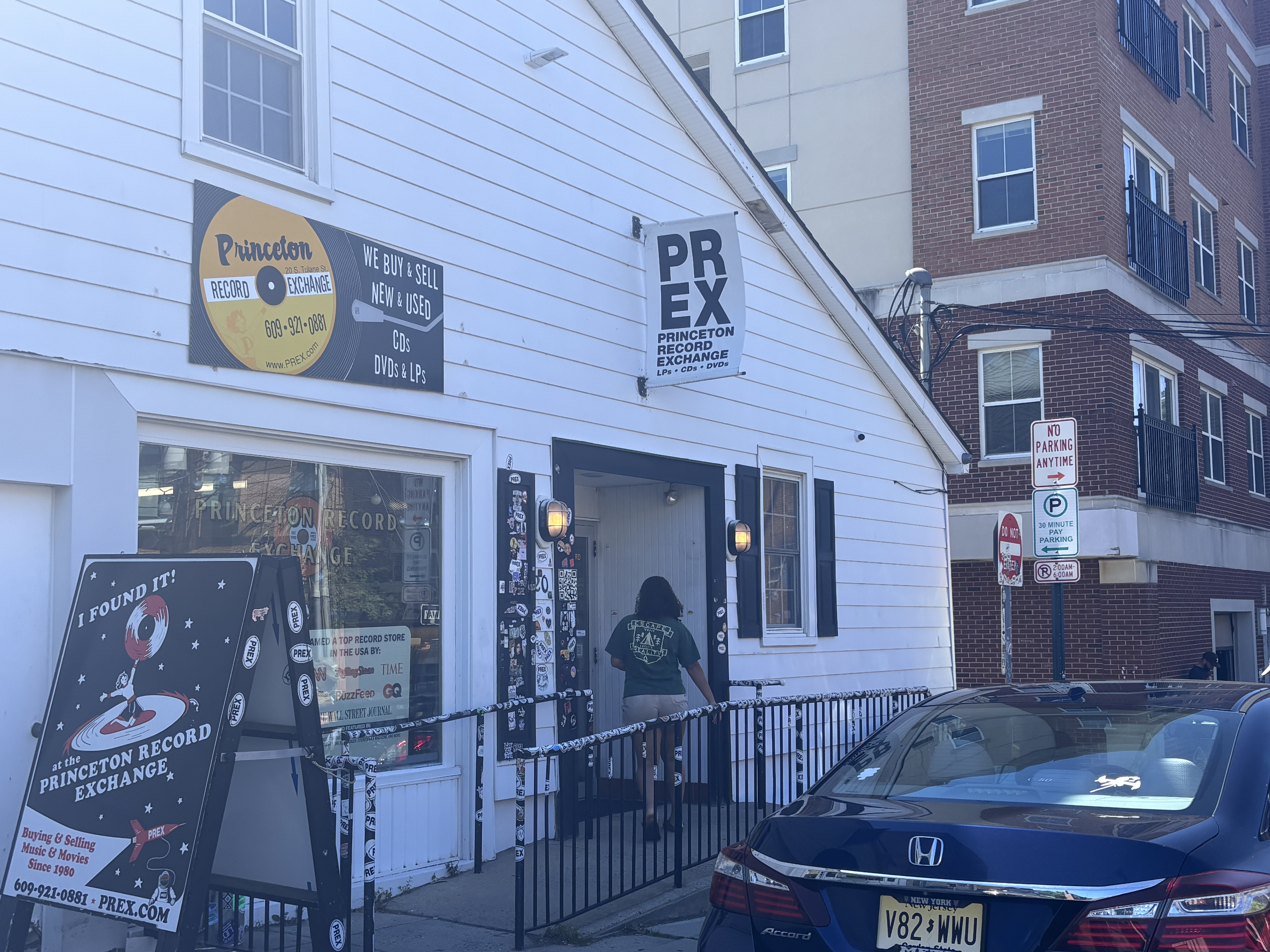
    The Princeton Record Exchange is considered one of the country’s best places to get vinyl.Jason Nark

    Shop

    There are almost too many options to choose from, but the Princeton Record Exchange, or PREX, is a must-see. As the sign in the window attests, it’s one of the nation’s, even the world’s, best record stores with over 100,000 albums, cassettes, and CDs spread out over 4,500 square feet.

    James Murphy, of LCD Soundsystem, said PREX “saved his life.”

    Owner Jon Lambert said he has visitors from all over the world, and he’s found the average customer spends over an hour in the store. Sometimes they’re simply browsing and reminiscing, and Lambert said that’s just fine.

    “We want you to feel comfortable here, to have a tactile, sensorial experience,” he said. “We know you’ll probably be back.”

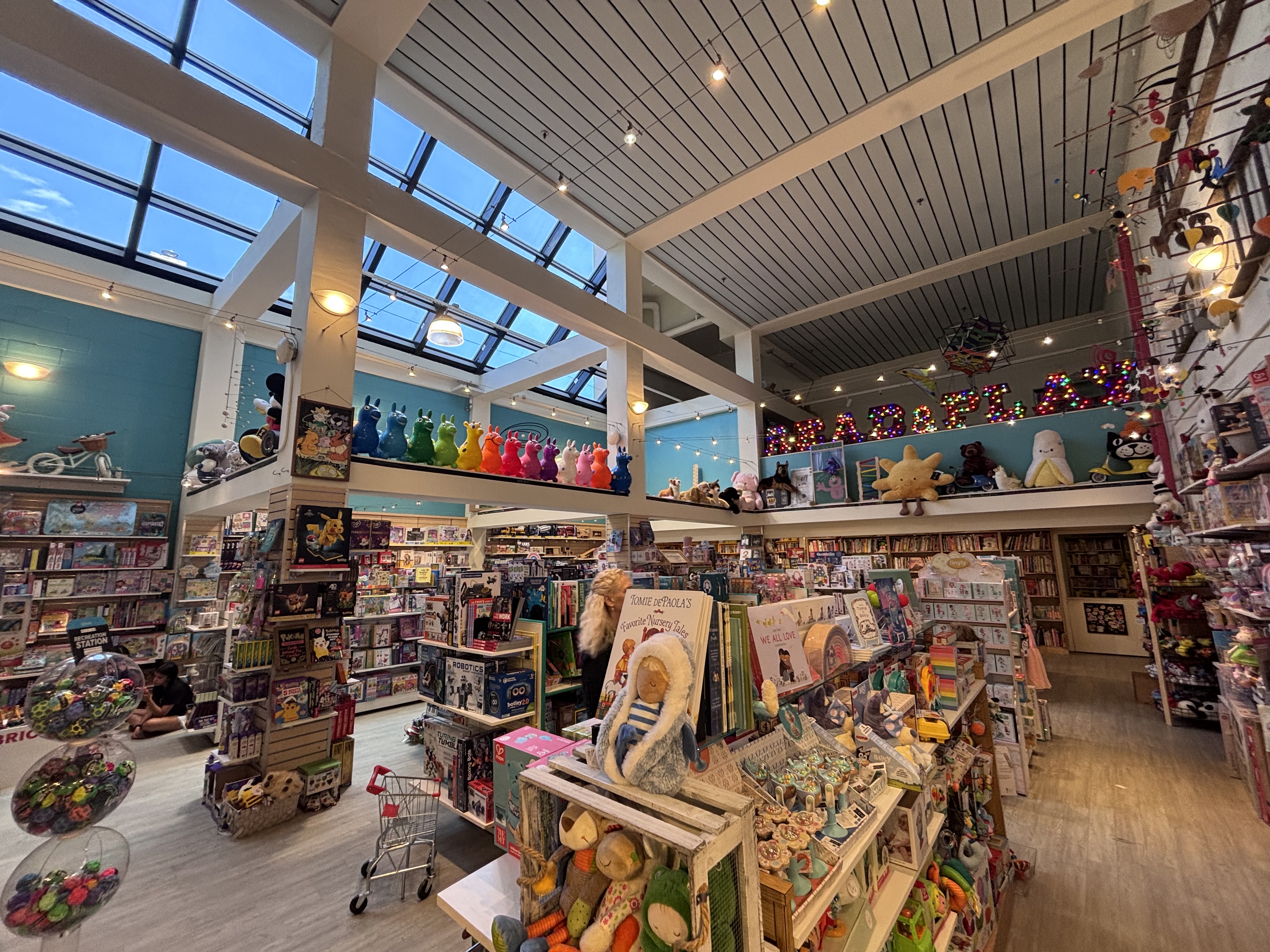
    Toys from floor to ceiling at jaZams in Princeton.Jason Nark

    Other must-sees are jaZams, arguably the greatest toy story ever (I managed to spend just $14) and Labyrinth Books, which specializes in rare and academic titles.

    📍 Princeton Record Exchange, 20 S. Tulane St., Princeton, N.J. 08542

    📍 jaZams, 25 Palmer Square E., Princeton, N.J. 08542

    📍 Labyrinth Books, 122 Nassau St., Princeton, N.J. 08542

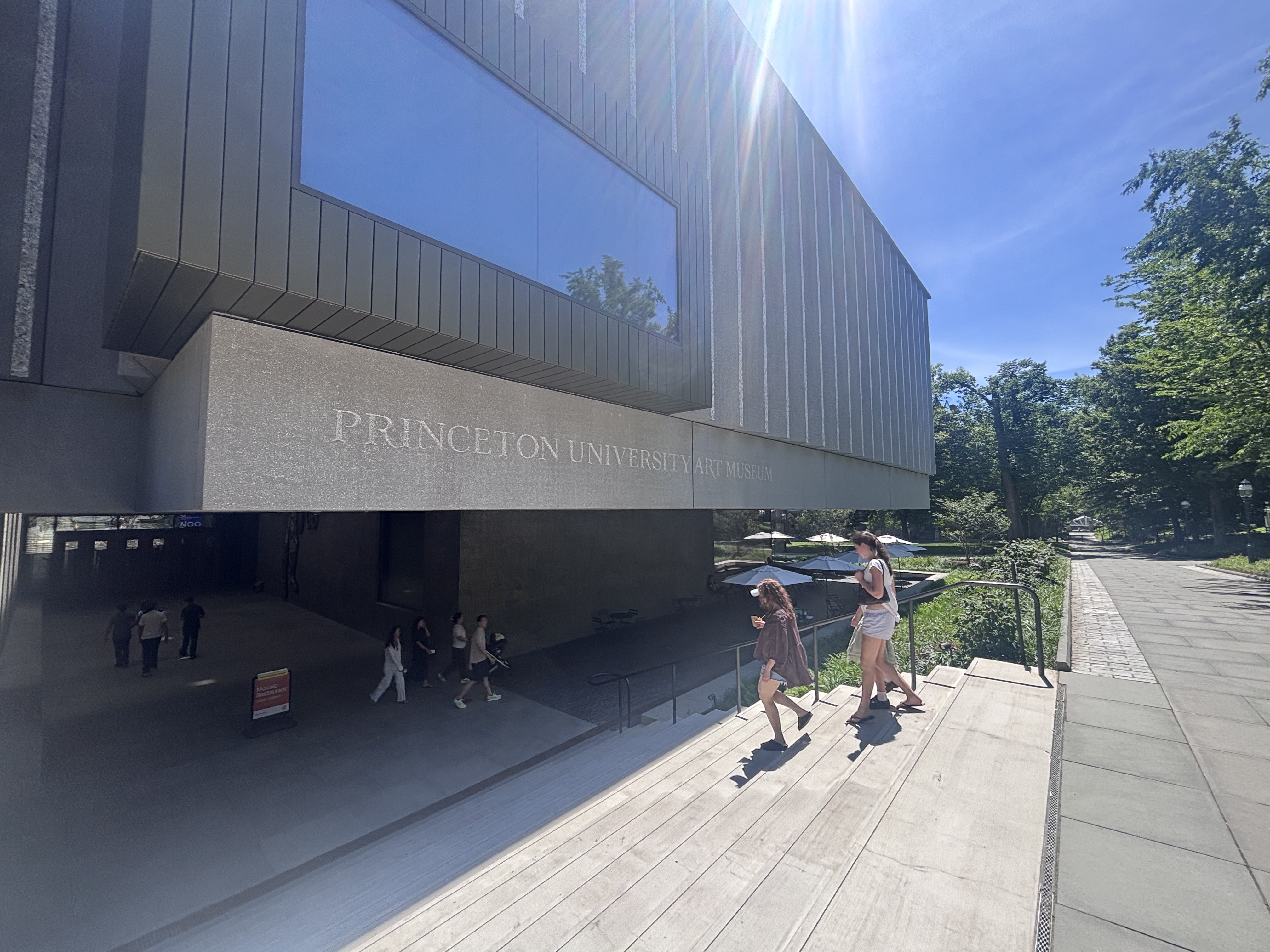
    The Princeton University Art Museum is free to the public.Jason Nark

    See

    The Princeton University Art Museum was the biggest surprise of my visit, a vast, modern building full of pieces, large and small, that touch on, well, everything. My daughter, just 4 years old, was captivated.

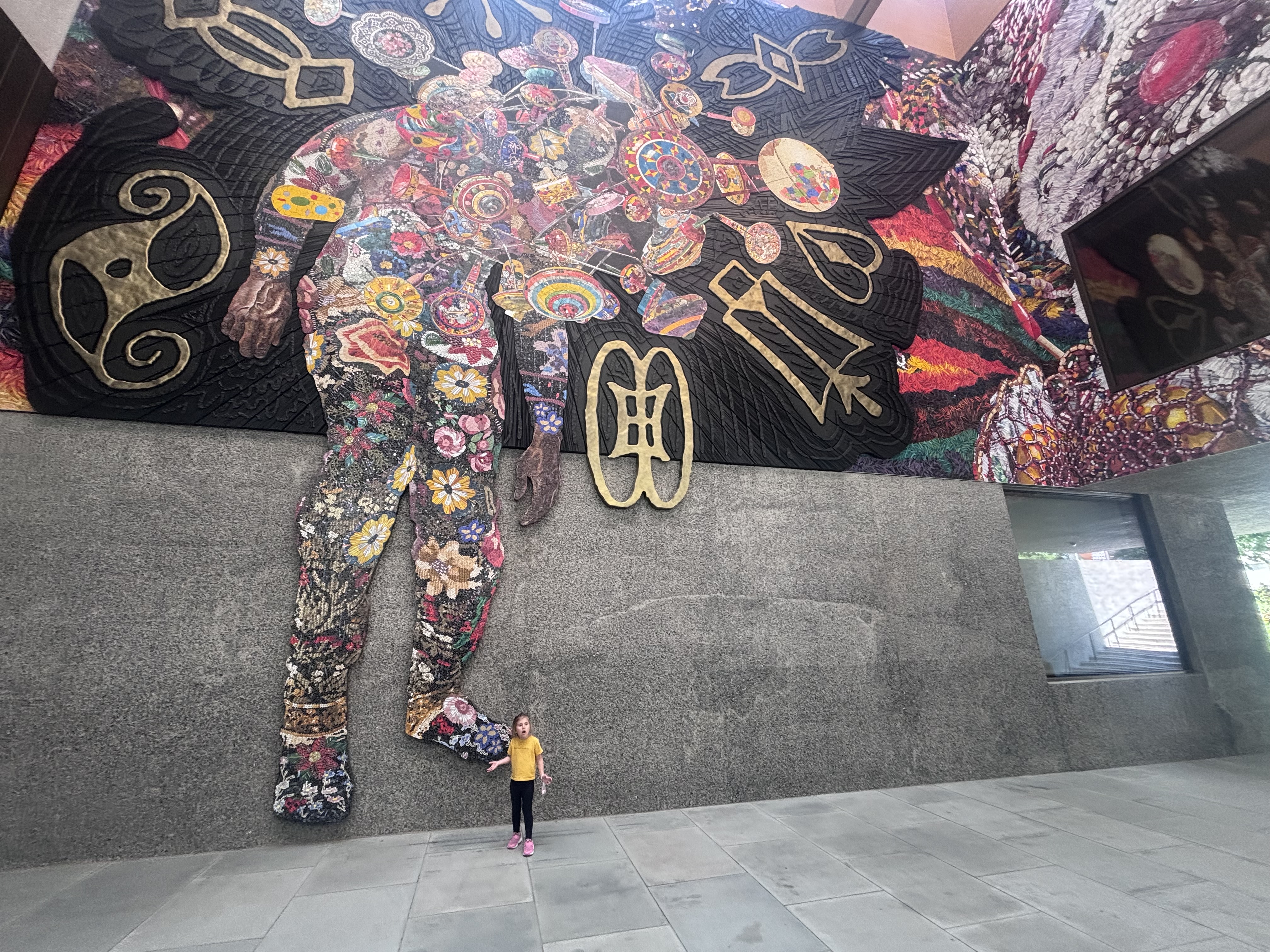
    There’s a Warhol, Monet, some German expressionism, gold-ground paintings from the 1400s, and massive, modern pieces by sculptor Nick Cave.

    In honor of America’s 250th celebration, the museum has an exhibit titled “What Is an American?” running through November.

    Even better: It’s free.

    📍 45 Elm Dr., Princeton, N.J. 08544

    The author’s daughter stands by a Nick Cave piece at The Princeton University Art Museum.Jason Nark

    Sweets

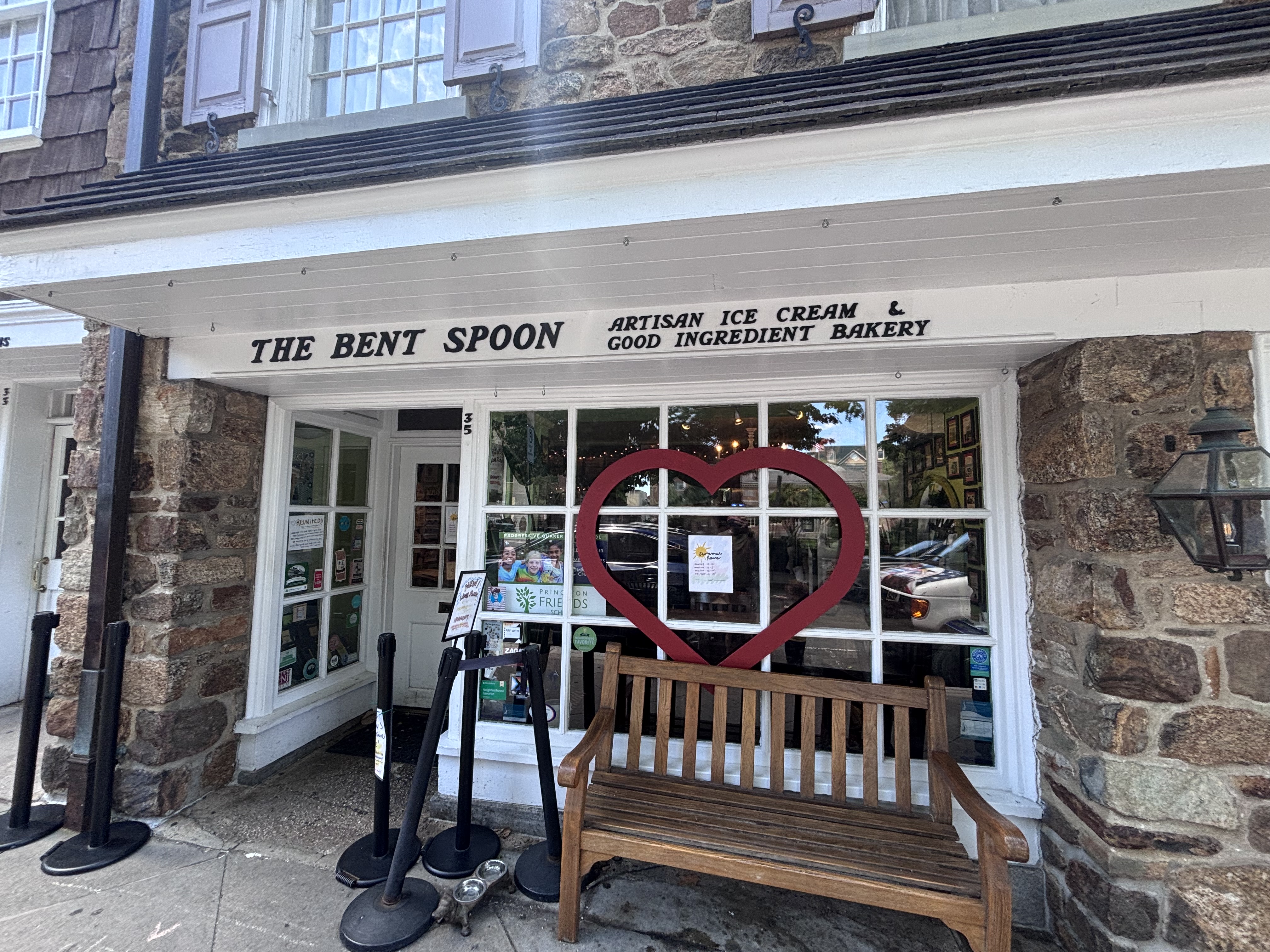
    The Bent Spoon, an artisan ice cream shop on Palmer Square, has crafted hundreds of flavors since it opened in 2004. The small shop, which is open year-round, redefines “farm to spoon,” which means you have to grab flavors like blueberry and strawberry when they’re available.

    “We really try to celebrate the seasons, for real,” said co-owner Gabrielle Carbone. “We get our strawberries from South Jersey, and they’re only available until the strawberries run out.”

    The Bent Spoon has been making artisanal ice cream on Palmer Square since 2004.Jason Nark

    I ordered vanilla bean — sourced from Madagascar. My daughter had a vegan vanilla with organic rainbow sprinkles. We swapped.

    Carbone says blueberry ice cream and blueberry-lemonade sorbet will be in around July, but not for long. Princeton is bustling come winter, too, she said.

    “We’re known for our hot chocolate,” she said.

    📍 35 Palmer Square W., Princeton, N.J. 08542

    The Princeton Wawa was designed by architect Rick Joy.Jason Nark

    Wawa

    You know Wawas. You’ve seen hundreds of them and, for the most part, they all look the same.

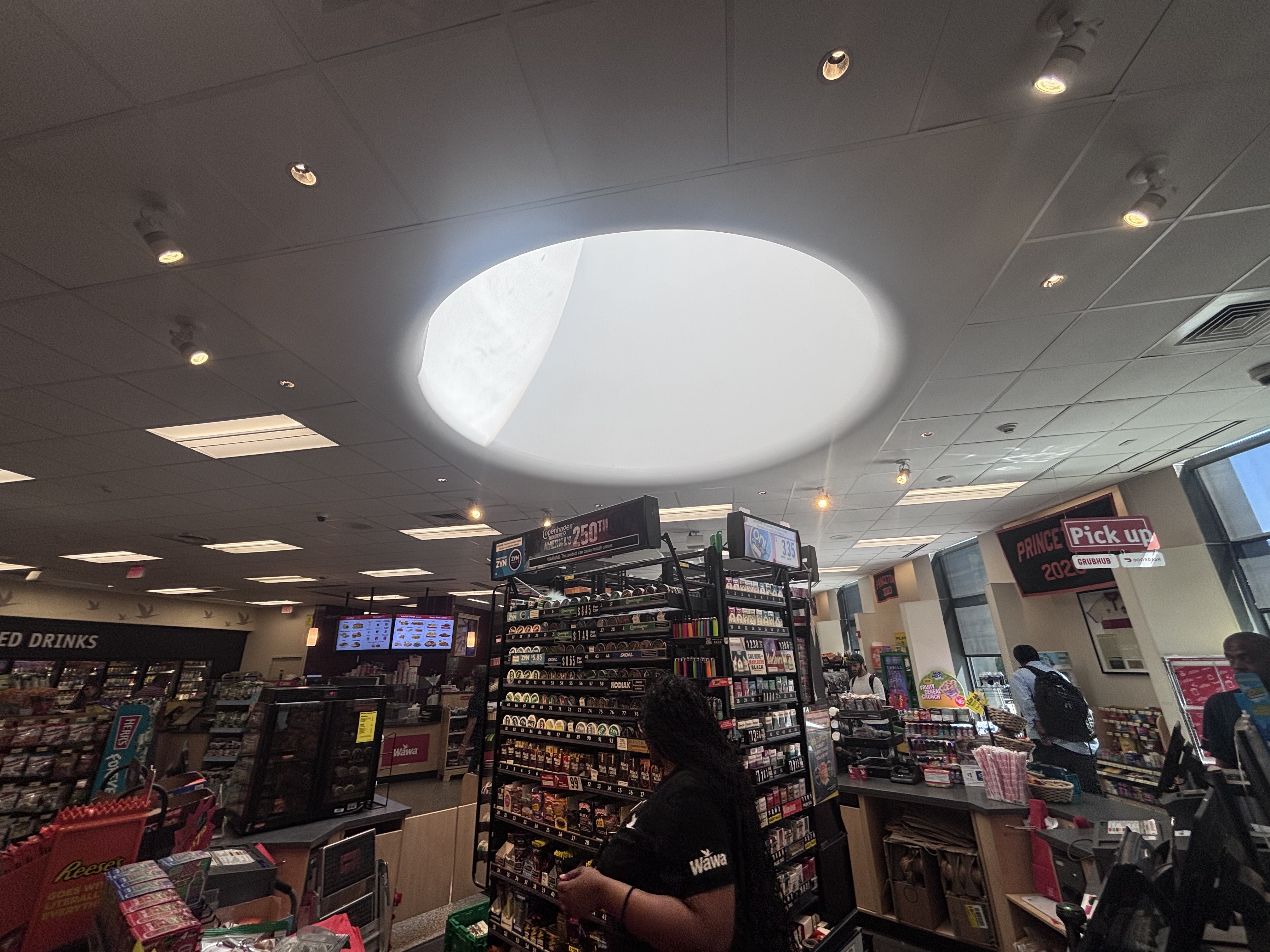
    The Wawa at the Princeton Station train stop was designed by architect Rick Joy, though, and features exterior walls with sharp angles and columns made of blackened steel panels. Inside, above the cash register, is a large skylight.

    The Wawa even has a green roof, along with the ubiquitous shorties and hot coffee.

    📍 152 Alexander St., Princeton, N.J. 08540

    The cash register at the Princeton Wawa is bathed in sunlight.Jason Nark
  • Catholicism is growing in Philly and New Jersey. Who’s filling the pews?

    Catholicism is growing in Philly and New Jersey. Who’s filling the pews?

    Church bells rang out from one of Philadelphia’s oldest cathedrals, echoing off downtown parking garages and office buildings, while one of the city’s newer Catholics tried to explain his conversion.

    Daniel Yesilonis, 32, grew up evangelical in the Harrisburg area and converted to Mormonism while studying at Temple University. He said his Mormon mission to Colorado Springs, Colo., was deflating, though, and after he came out as gay during the COVID-19 pandemic, he officially left that church.

    Like millions of Americans, Yesilonis figured he would try his best to be decent, to be spiritual without a label or building attached to it. But he soon felt a sense of loss.

    “It was like something was missing, maybe a sense of community or something,” Yesilonis said outside the church in April.

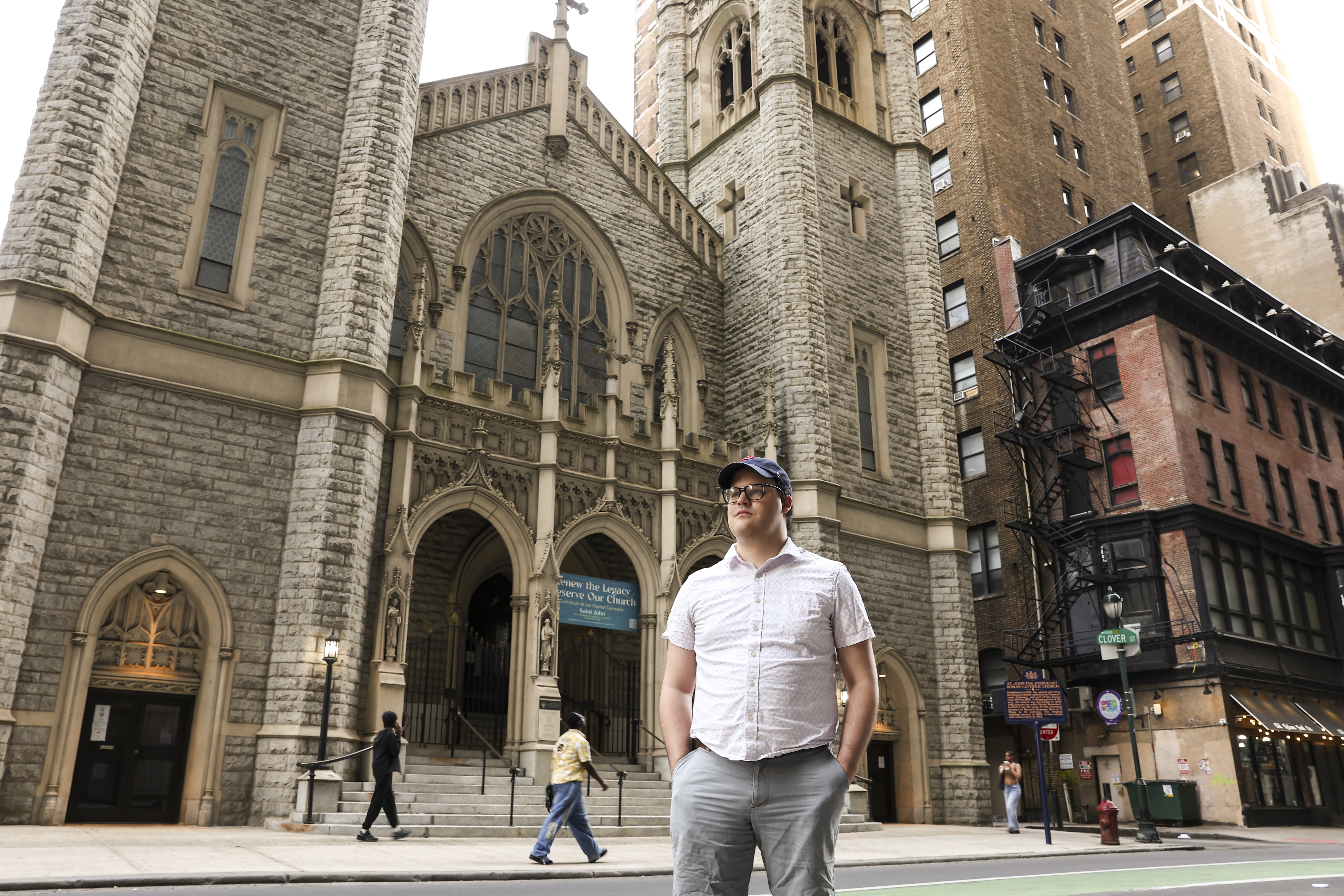
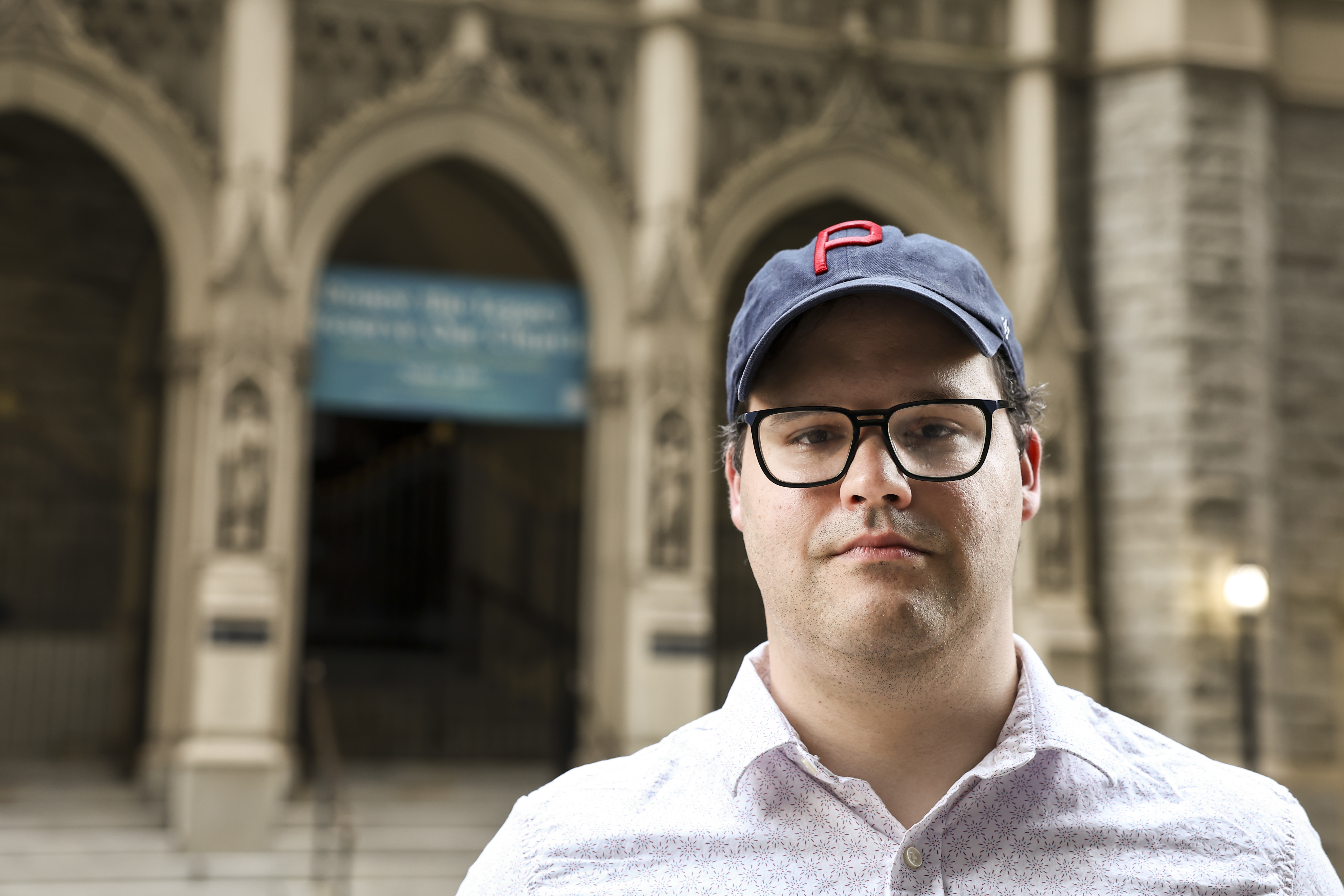
    Daniel Yesilonis posed for a portrait outside of St. John The Evangelist Church on Wednesday, April 15, 2026 in Philadelphia.Monica Herndon / Staff Photographer

    So, at an Easter vigil Mass in 2024, Yesilonis was among a group of candidates (people who were already baptized) and catechumens (those who were never baptized) who became Catholic and joined St. John the Evangelist on 13th Street.

    Converts like Yesilonis are on the rise at churches all over Philadelphia and New Jersey, diocese officials said, a conversion boom that is being reported globally, including large spikes in Canada and France. In Philly, there have been 1,162 candidates and catechumens this year, which is a 60% increase since 2025 and a 100% increase since 2017.

    Researchers and religious scholars said it was too soon to say much about the recent spike, but noted that a rise would be bucking long-term trends. Earlier this year, the Pew Research Center found that Catholicism has lost more people than it has gained in 24 countries it surveyed, including the United States. A 2025 Pew study found that Christianity’s long-term losses were starting to “level off,” but according to the Archdiocese of Philadelphia, two high schools closed in 2021, and the last time a new Catholic school and parish opened was back in 2010.

    Since 2012, 34 Catholic churches have closed in the archdiocese. So the trend, while noticeable, is still a small change.

    “There would have to be a huge swing, something dramatic would have to happen, for the church to start gaining huge numbers,” said Patricia Tevington, a Pew Research assistant who lives in Philadelphia.

    There is no one reason for the recent increase, diocese officials said.

    In the Philadelphia Archdiocese, the Rev. Gerald Dennis Gill said, many new devotees were baptized as children but did not grow up with Catholicism because their parents or other elders had stopped practicing. He believes they are experiencing a vacuum in their life and are seeking to fill that.
    “Our culture is not offering something objectively good and true and beautiful, but it’s within all of us to seek that out,” he said. “People of all ages are finding the need to have a relationship with the Lord, for meaning and the promise of heaven.”

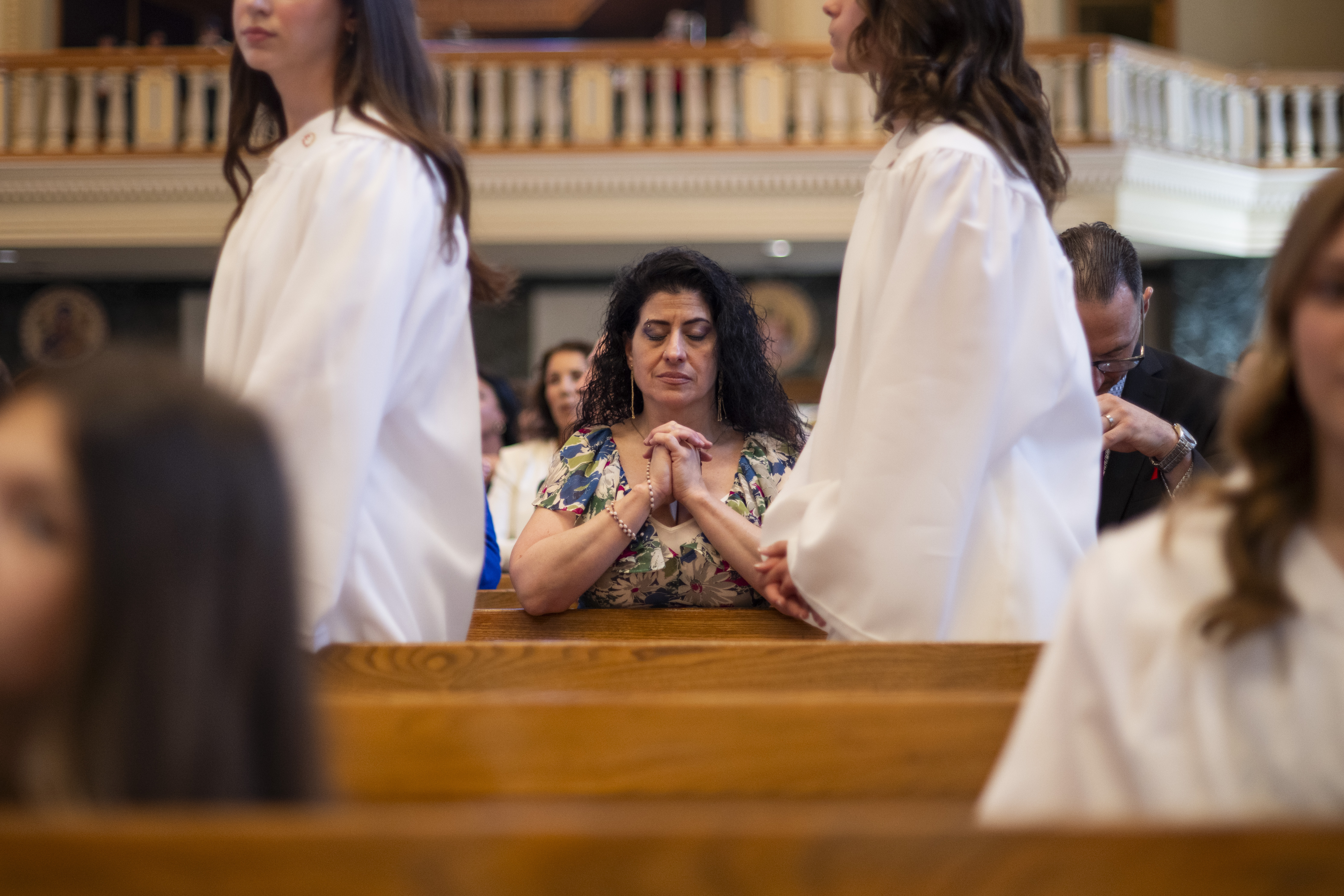
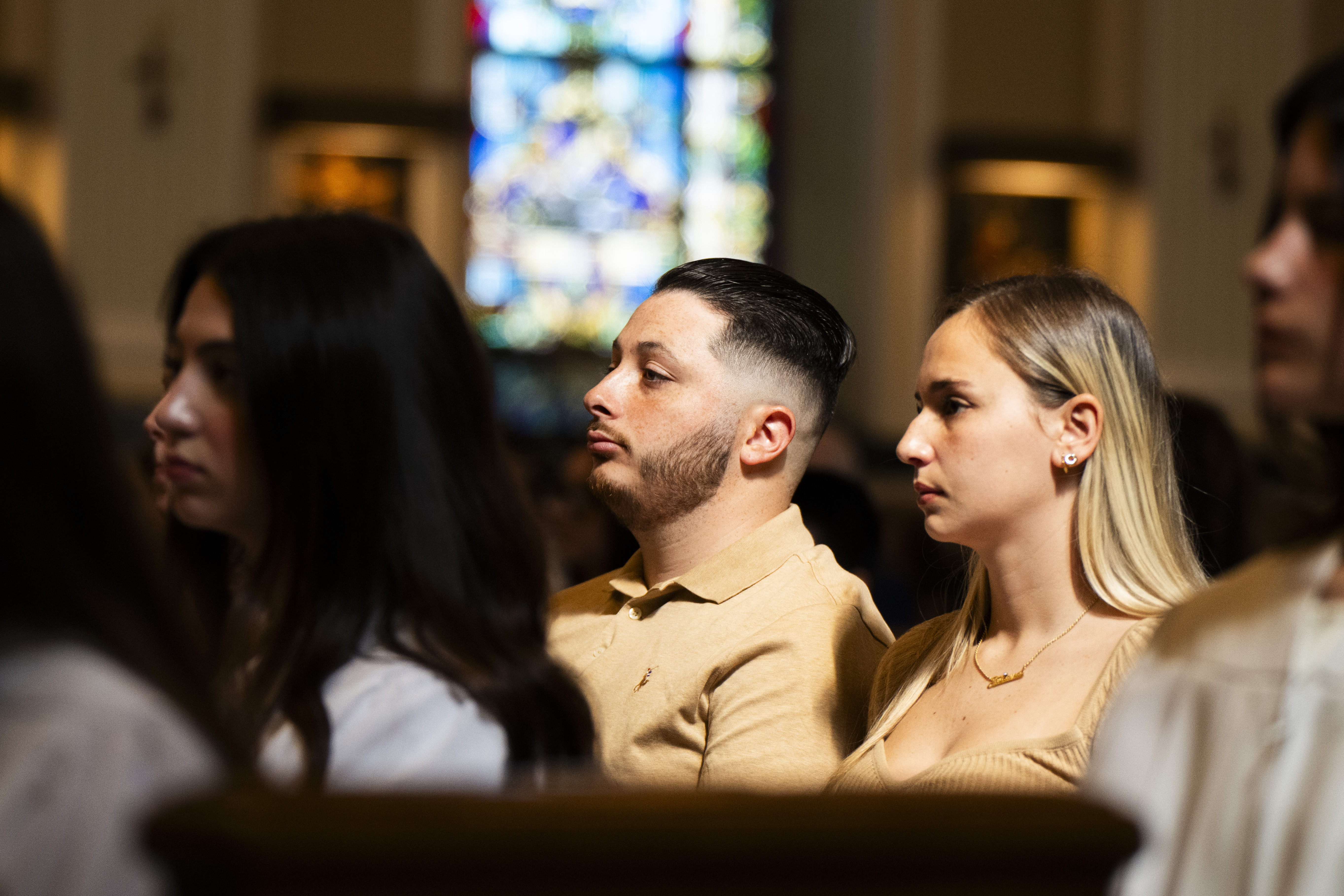
    A confirmation mass is held at St. Monica Roman Catholic Church in Philadelphia on Saturday, April 18, 2026.Joe Lamberti / For The Inquirer

    Across the river in the Camden Diocese, spokesperson Michael Walsh said, the number of catechumens grew from 194 last year to 238 in 2026, a nearly 23% increase.

    Catholics are not knocking on doors the way Yesilonis had to in Colorado, but members of St. Agatha-St. James Parish had an “Ask a Catholic” tent at West Philly’s 68th annual Spruce Hill May Fair in Clark Park on May 9.

    Newer Catholics whom The Inquirer spoke to in recent months (including this reporter’s adult son) cited a slew of different personal reasons for their decision.

    “We’re all looking to God to help us, to save us. For me, it was time,” said Jana Muhammad, a “middle-aged” candidate who received the sacrament of confirmation at St. Monica’s in South Philly earlier this spring. “It’s really a rough, rough time out there right now. There’s no peace right now, and people are really looking for peace, and it’s not there right now. For me, personally, when it gets really rough, I absolutely pray to God.”

    There is, however, a litany of theories being tossed around online and in the media about the increase in Catholicism that are sometimes at odds with one another.

    The trend has been attributed to increasing conservatism in young men. Catholicism has also been offered up as an antidote to the so-called red pill, a “manosphere” belief that society now caters to women. Some say the increase is a Gen Z response to the isolation of the pandemic. Others say that technology burnout is fueling it. There have been stories about the rise of Catholic social media influencers and the popularity of the prayer app Hallow, which has been downloaded 32 million times since it debuted in 2018.

    “People ask why priests always wear black. ’Cause everyday is a funeral for the haters,” the Rev. David Michael Moses, a Catholic “priestfluencer” with 1.1 million followers on Instagram, said in a post.

    Actor Mark Wahlberg, a partner in Hallow, is a proud Catholic, but so is Shia LaBeouf, a recent convert who reportedly yelled, “I’m a Catholic,” while allegedly shouting homophobic slurs in New Orleans earlier this year.

    The middle-ground, welcoming approach taken by the late Pope Francis and his successor, Pope Leo XIV, who has been vocal against President Donald Trump’s war on Iran, has also pulled people closer to Catholicism.

    “Pope Francis inspired my decision,” Yesilonis said.

    Daniel Yesilonis posed for a portrait outside of St. John The Evangelist Church on Wednesday, April 15, 2026 in Philadelphia.Monica Herndon / Staff Photographer

    Yesilonis said he knows he could never marry a man in the Catholic Church, but he has found solace among the LGBTQ+ parishioners at St. John the Evangelist.

    “I found a community as much as I found a church,” he said.

    The Rev. Thomas Betz, of St. John’s, said the church “teaches and believes” the same tenet as the wider church, but has been open.

    “St. John, by its very nature, is in the heart of the city and open to different races, and people who think differently, politically,” he said. “Everyone is welcome.”

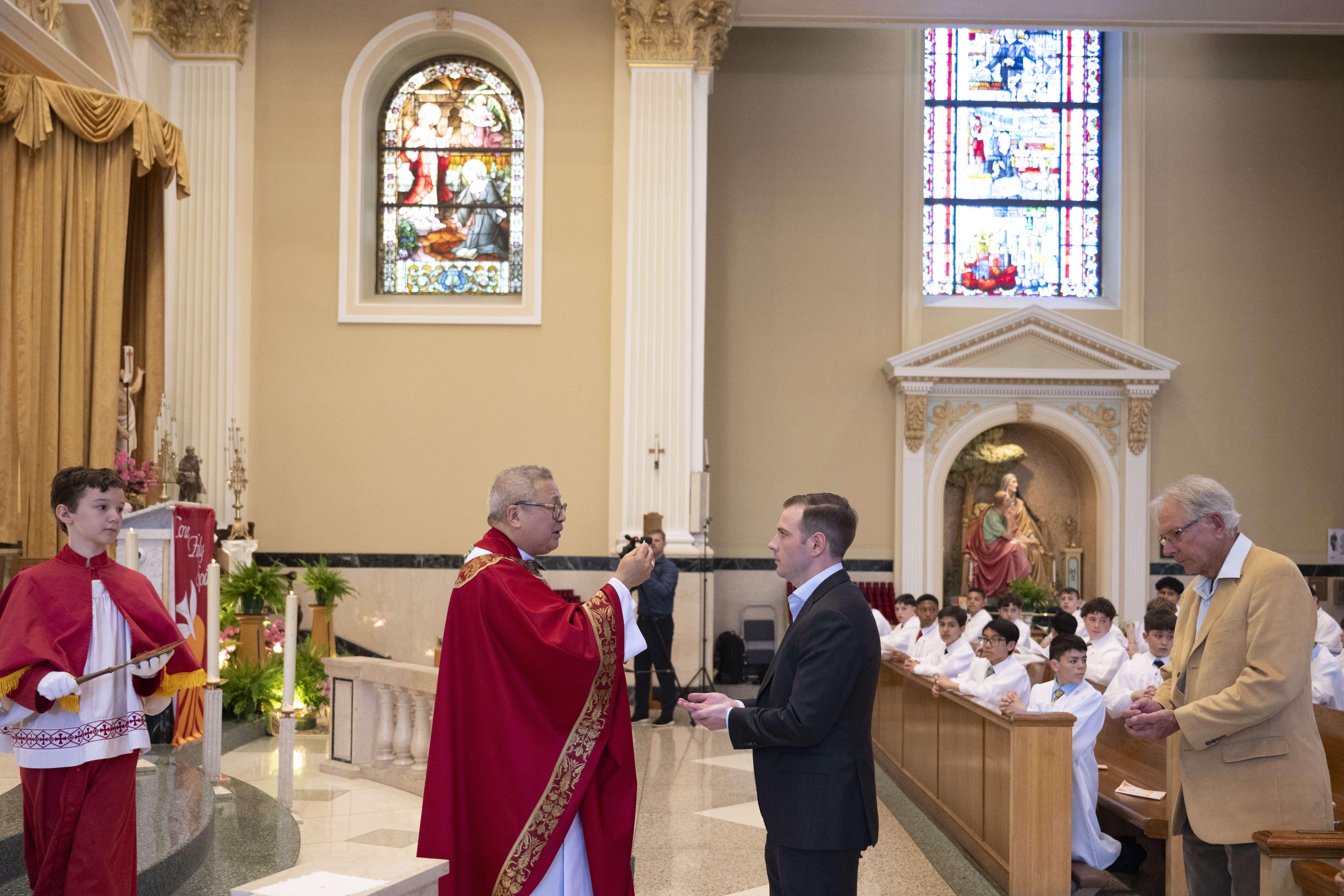
    Mark Schiavo, 26, waits to be confirmed at St. Monica Roman Catholic Church in Philadelphia on Saturday, April 18, 2026.Joe Lamberti / For The Inquirer

    Down in Cape May, Sara Kelly said she grew up in a family that gave up on formal religion, but still held on to a strong spiritual sense of right and wrong. Her father, Kurt, suffered from head and neck cancer for years, and after he died in 2019, she constantly wondered about the afterlife.

    Kelly and her husband went to some nondenominational churches in Philadelphia, where she lived at the time, but did not find the answers she was looking for. The couple moved to the Shore and struggled with finances.

    One day, while walking on the Delaware Bay beach, she fell to her knees and asked God for help.

    “I’ve never done anything like that before,” she said.

    At the advice of a relative, Kelly began sitting in a Catholic church in 2025, and later downloaded the Hallow app. She bought a rosary, too, and began going back to church multiple times a week, and eventually signed up for Order of Christian Initiation of Adults (OCIA) classes.

    “I know for me, it was really enjoyable to go to a place where the focus is only on love and trying to help others,” she said. “At every Mass, we’re praying for people caught up in war, people in Gaza and Ukraine.”

    On a breezy April morning in South Philly, hundreds of people filed into St. Monica’s for the Rite of Confirmation Mass. A few dozen teens in white filled the front pews, but just behind them were a handful of adults, like Jana Muhammad, there to receive their final sacrament and take the name of a saint.

    Muhammad chose Angelica. She was baptized as a child and grew up going to church. She said her stepmother did not want to “force” religion on her and gave her the choice to make up her own mind as an adult.

    “And it was just time,” she said.

    The Rev. Edward Town led the Christian initiation processes there and said the reasons adults come back vary from simple to profound.

    “People want stability in their lives,” he said. “To young people, the world seems very unstable, and there’s a lot of uncertainty. I think our faith gives us a little hope, right?”

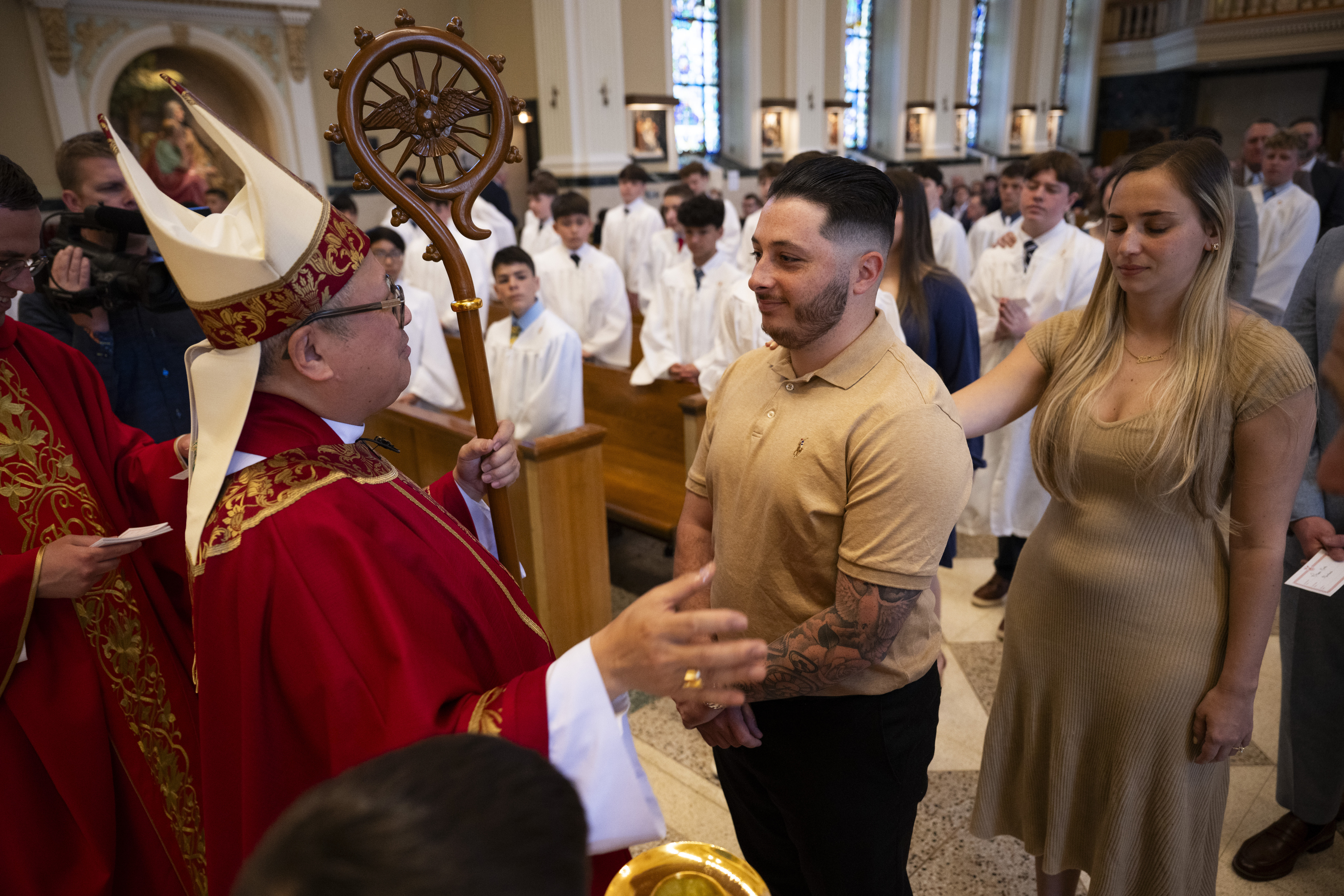
    When the Mass was finished, the Rev. Efren V. Esmilla, auxiliary bishop of Philadelphia, extended an invitation to any other seekers sitting in the church.

    “Come find us,” he said. “Our door is always open.”

    Mark Schiavo, 26, is confirmed at St. Monica Roman Catholic Church in Philadelphia on Saturday, April 18, 2026.Joe Lamberti / For The Inquirer