Author: Alfred Lubrano

  • Indigenous chef and author Sean Sherman delivers the lost history and sublime story of Indigenous American foods

    Indigenous chef and author Sean Sherman delivers the lost history and sublime story of Indigenous American foods

    Kids today can “name more Kardashians than types of trees,” according to Sean Sherman, a James Beard Award-winning Oglala Lakota Sioux chef, activist, and cookbook author.

    They — and their parents, for that matter — know almost nothing about the forests, plants, and animals that fed Sherman’s Native American ancestors and cultivated whole nations of Indigenous people, he said in a talk Saturday at the Academy of Natural Sciences of Drexel University.

    Sherman was on hand to discuss his new book, Turtle Island: Foods and Traditions of the Indigenous Peoples of North America, which includes 100 ancestral and modern recipes.

    In his career, Sherman has won the 2018 James Beard Award for Best American Cookbook for his book, The Sioux Chef’s Indigenous Kitchen; the James Beard Leadership Award in 2019 for his dedication to revitalizing Indigenous food systems; and the 2022 James Beard Award for Best New Restaurant, for his Minneapolis restaurant, Owamni (co-owned with Dana Thompson).

    Sherman is famous for, among other dishes, wild rice-crusted walleye, cedar-braised bison, and hunter’s stew with bear meat (or lamb if bears are scarce).

    He said he learned his craft the hard way.

    “I couldn’t very well go online to learn how to do Native American cooking,” said Sherman, 52, who was born on the Pine Ridge reservation in South Dakota, and now lives in Minneapolis. “Nothing was there. So much of it was lost to history so quickly.”

    He read academic books on plants that were used as food and medicines by Native Americans. He learned how to prepare the game meats that provided protein to long-ago ancestors. And he worked in Minnesota restaurants to cook what he calls “colonial food,” derived from European cuisines, to hone his chops in the kitchen.

    Many Native Americans have long been unaware of the knowledge gleaned by their forebears. Showing a slide of a bologna sandwich on white bread, Sherman told the 240 people in his audience, “This was Lakota food when I was young.” Also on the menu: unadorned cans bearing the words, “Beef with juices.”

    Sherman is wry with a biting wit — “lawns are [expletive] stupid, aren’t they?”

    He also shows little reverence for the 250th celebration of the signing of the Declaration of Independence, dismissing the document as a “break-up letter to King George” that described Sherman’s ancestors as “merciless Indian savages.”

    When Sherman was done, the crowd moved outside to the Benjamin Franklin Parkway, where ethnobotanist Linda Black Elk, director of education for NATIFS (that’s North American Traditional Indigenous Food Systems), was holding court.

    Ethnobotanist Linda Black Elk talks plants with people attending chef Sean Sherman’s event at the Academy of Natural Sciences.Elizabeth Robertson / Staff Photographer

    She showed visitors a garden of plants used by Indigenous people that grow easily in Philadelphia, and can be harnessed for use.

    Anise hyssop can be made into a tea that’s “good for the lungs, and helped during COVID,” Black Elk said.

    Mountain mint, which battles indigestion, was growing near elderflowers, “one of the most antiviral plants in the world,” according to Black Elk. “And you can simply grow it in your yard.”

    Black Elk added that the well-known “three sisters” — squash, corn, and beans — easily grow at Philadelphia’s latitude as well.

    Impressed by the plants, as well as Sherman himself, Lucas Figueroa, 28, of South Philadelphia, an AmeriCorps VISTA volunteer, said, “Food connects everybody to culture and the land. I’m so very passionate about this.”

    Sara Marine, 51, an archeologist from Lancaster, praised Sherman for not merely trying to recreate the past, but for “bringing it to life.”
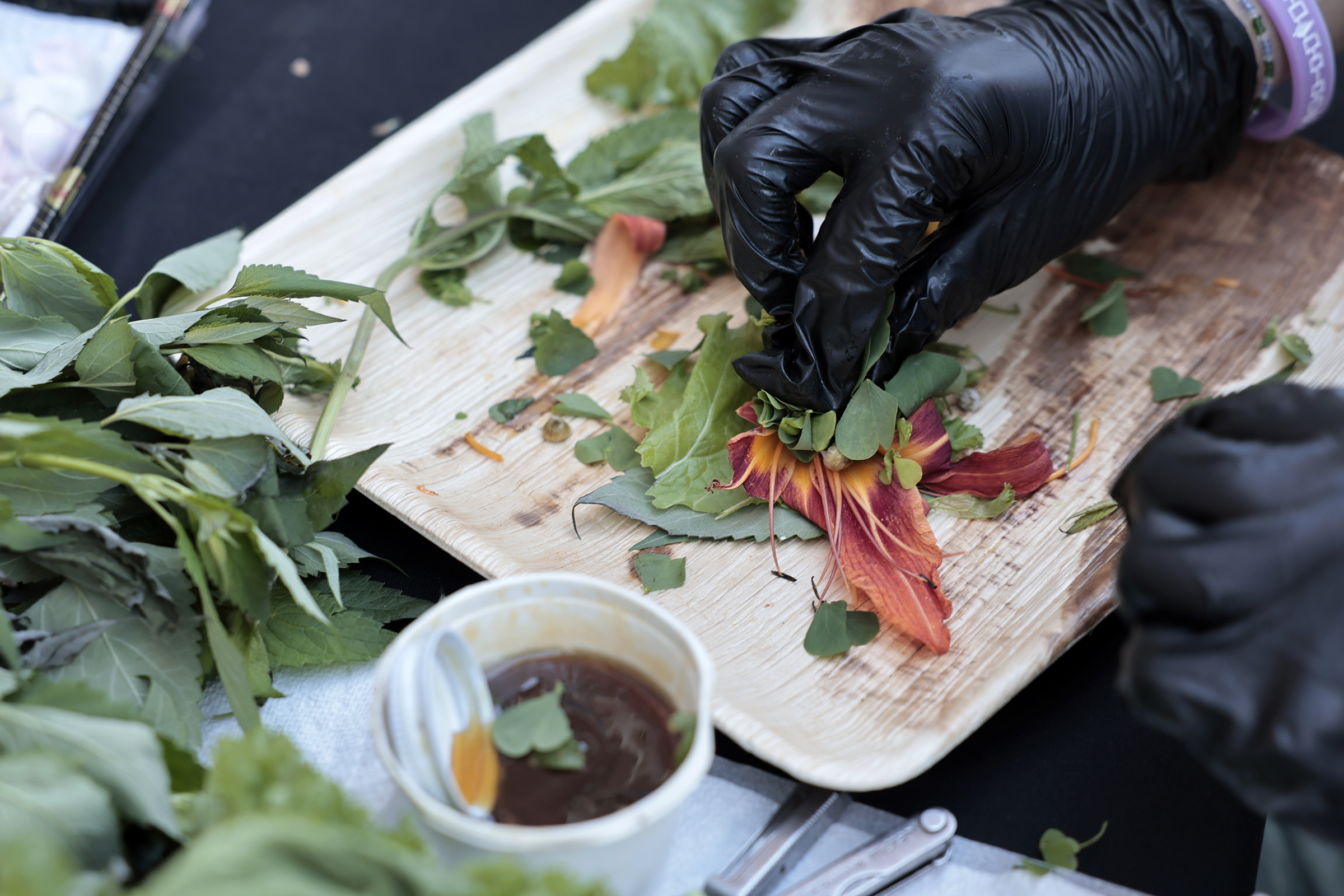
    Salad wraps that included mustard greens, daylilies, and rose petals were sampled during chef Sean Sherman’s event at the Academy of Natural Sciences.Elizabeth Robertson / Staff Photographer

    Steps from the garden, visitors were treated to snacks with Native American roots that can be made today with local ingredients: aronia berry granola (with oats and flax seed); sumac honey spritz (made with seltzer); and cornmeal elderberry cookies (sweetened with maple sugar).

    Sherman said he wanted his audience to understand that he doesn’t like simply telling people, “this is how we cooked in 1491.” Rather, he said, “I want to show people that we’re moving forward … coming up with food that can be beautiful and hopeful.

    “This is real American food. That label isn’t just for the hamburger.”

    Sherman’s appearance was presented in partnership with ArtPhilly’s What Now: 2026 festival and WHYY. The event is connected to the Academy’s new exhibition Botany of Nations, on view through Feb. 14, 2027.
  • More people in Philly and region struggle with insufficient food after Trump cuts: ‘Hunger has never been higher’

    More people in Philly and region struggle with insufficient food after Trump cuts: ‘Hunger has never been higher’

    Shelly Gaither, 51, of Cheltenham, makes sure her three sons, ages 6, 9, and 18, get their meals while she manages with whatever is left over — if anything ever is.

    “Oh, my God, groceries are too expensive,” said Gaither, a former data analyst who suffers from a disability that makes working difficult. She visits a food pantry regularly to make sure her kids eat chicken when they can. Her monthly SNAP (Supplemental Nutrition Assistance Program) benefits were reduced from $400 to $200 earlier this year because of changes to the program under President Donald Trump’s One Big Beautiful Bill Act.

    “I don’t think there’s hope,” she said. “I feel guilty for bringing children into a world that doesn’t want them to exist because the government makes cuts that take away their food and their healthcare.”

    For people like Gaither throughout the United States, levels of food insecurity have seen a “remarkable” rise since the pandemic in 2020, according to a national survey taken earlier this year and released in late May by the Federal Reserve Bank of New York.

    Around 10% of 1,300 heads of households polled in February reported a lack of enough food and said their children were missing meals, according to the survey. Nearly 16% relied on food donations. Among families taking in less than $50,000 a year, almost 20% reported being forced to skip meals or go without.

    In 2020, when the federal government stepped in to help families at the height of the pandemic, just 4% of households reported missing meals, including less than 7% of families earning less than $50,000 a year, according to the survey.

    At that time, temporary supplemental unemployment benefits, expanded SNAP payments, and direct government relief payments helped stave off hunger among Americans. Food insecurity increased after COVID-19 relief expired, according to the Urban Institute.

    But the recent surge in hunger has also been attributed to the sweeping law Trump signed last year, which reduces SNAP benefits and other safety net programs to help pay for his tax cut.

    Findings in the bank’s report also reflect Gaither’s sense of despair, a pessimism about personal finances and the overall economy among people with low incomes. That same group exhibits diminished expectations for finding a job and declining levels of consumer confidence, the survey says.

    (function(){function e(){window.addEventListener(`message`,function(e){if(e.data[`datawrapper-height`]!==void 0){var t=document.querySelectorAll(`iframe`);for(var n in e.data[`datawrapper-height`])for(var r=0,i;i=t[r];r++)if(i.contentWindow===e.source){var a=e.data[`datawrapper-height`][n]+`px`;i.style.height=a}}})}e()})();

    According to the reserve bank’s report, non-white Americans have been especially hard hit. The number of such households that reported missing meals increased from 4% in 2020 to 19% in February. At the same time, the number of non-white people receiving SNAP benefits jumped from 14% to more than 26%.

    Overall, the survey found food insecurity was particularly acute among lower-educated and lower-income households, as well as households with young children. Many families are experiencing financial stress due to the high cost of living, persistent inflation, and high interest rates, even as the stock market has been steadily rising, according to the survey.

    Pantries struggle to keep up with demand

    More people are flocking to food pantries, but they are not equipped to take up the slack of reduced SNAP benefits.

    “Pantries across the state are in perpetual crisis mode,” said Stuart Haniff, CEO of Hunger-Free Pennsylvania in Pittsburgh. Add to that the advent of summer, when kids are no longer receiving free breakfast and lunch at school. “Families must now provide those 60 to 80 meals a month,” Haniff said.

    In Norristown, “immense need” has increased the number of people frequenting Martha’s Choice Marketplace, the largest food pantry in Montgomery County, by 100% since 2022, said Patrick Walsh, director of programs. “And I don’t expect things to get better.”

    Food prices are also up 3.2% this spring over last, according to U.S. Department of Agriculture figures, exacerbating the issue.

    In South Jersey, “we are seeing record numbers at our food distributions,” said Jane Asselta, president and CEO of the Food Bank of South Jersey, in a statement to The Inquirer. “Life is getting harder to afford for more and more people.”

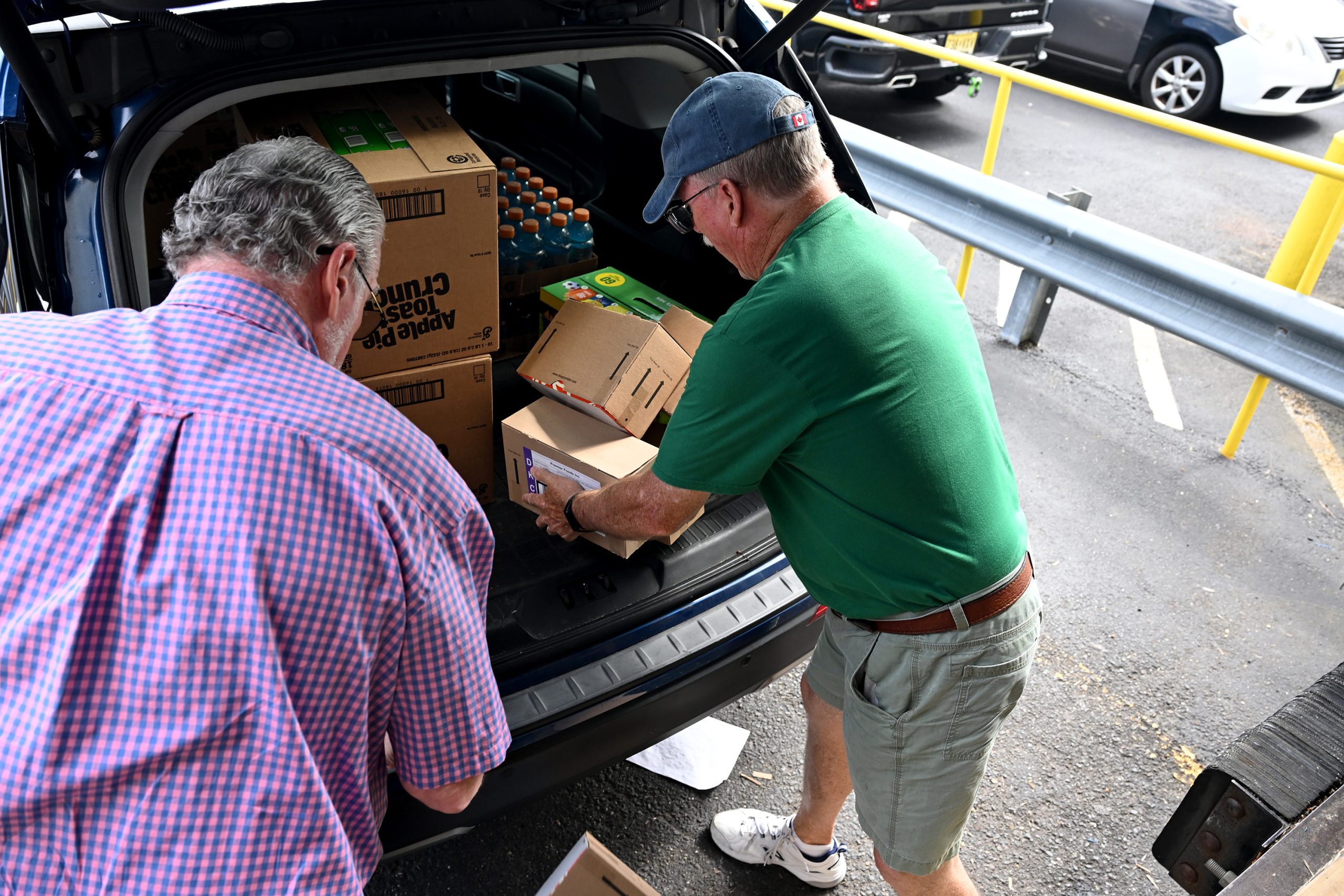
    Matt McDevitt (left) and Michael Hickey load their vehicle at the Food Bank of South Jersey Thursday, June 11, 2026. The men are volunteers at the Temple Lutheran Church in Pennsauken and their food bank is open from 5-6 p.m. every Thursday.Tom Gralish / Staff Photographer

    Asselta said the Federal Reserve Bank’s report “mirrors” what her organization has observed through its network of 300 community partners.

    “Hunger has never been higher,” said Pastor Sonita Johnson, who runs the food pantry at St. John’s Pentecostal Outreach Church in Salem City, Salem County. “Food prices are high, and the lines you see you would not believe — a 50% increase in people just over the last two months.”

    Nationwide, between January 2025 and January 2026, SNAP rolls decreased by more than 4 million people — from 42 million to 38 million — according to USDA figures.

    Between last September and April of this year, nearly 90,000 Pennsylvanians lost SNAP benefits due to new eligibility requirements stipulated by the Trump administration, according to an analysis by the Pennsylvania Department of Human Services (DHS).

    And between December 2025 and last month, more than 32,000 Philadelphians lost benefits, DHS figures show.

    In New Jersey, SNAP participation has fallen by more than 50,000 individuals between March 2025 and March of this year, New Jersey Department of Human Services figures show.

    The Trump administration’s SNAP changes include an expansion of work requirements for people who receive SNAP benefits and increased documentation requirements “designed to make maintaining eligibility increasingly difficult,” according to the Food Research and Action Center (FRAC), the largest anti-hunger lobby in the United States.

    Deputy White House press secretary Anna Kelly said in a statement that Trump signed the changes to strengthen SNAP and to ensure that it is “sustainable for future generations.” She added that Trump was “elected to eliminate runaway spending across the federal government.”

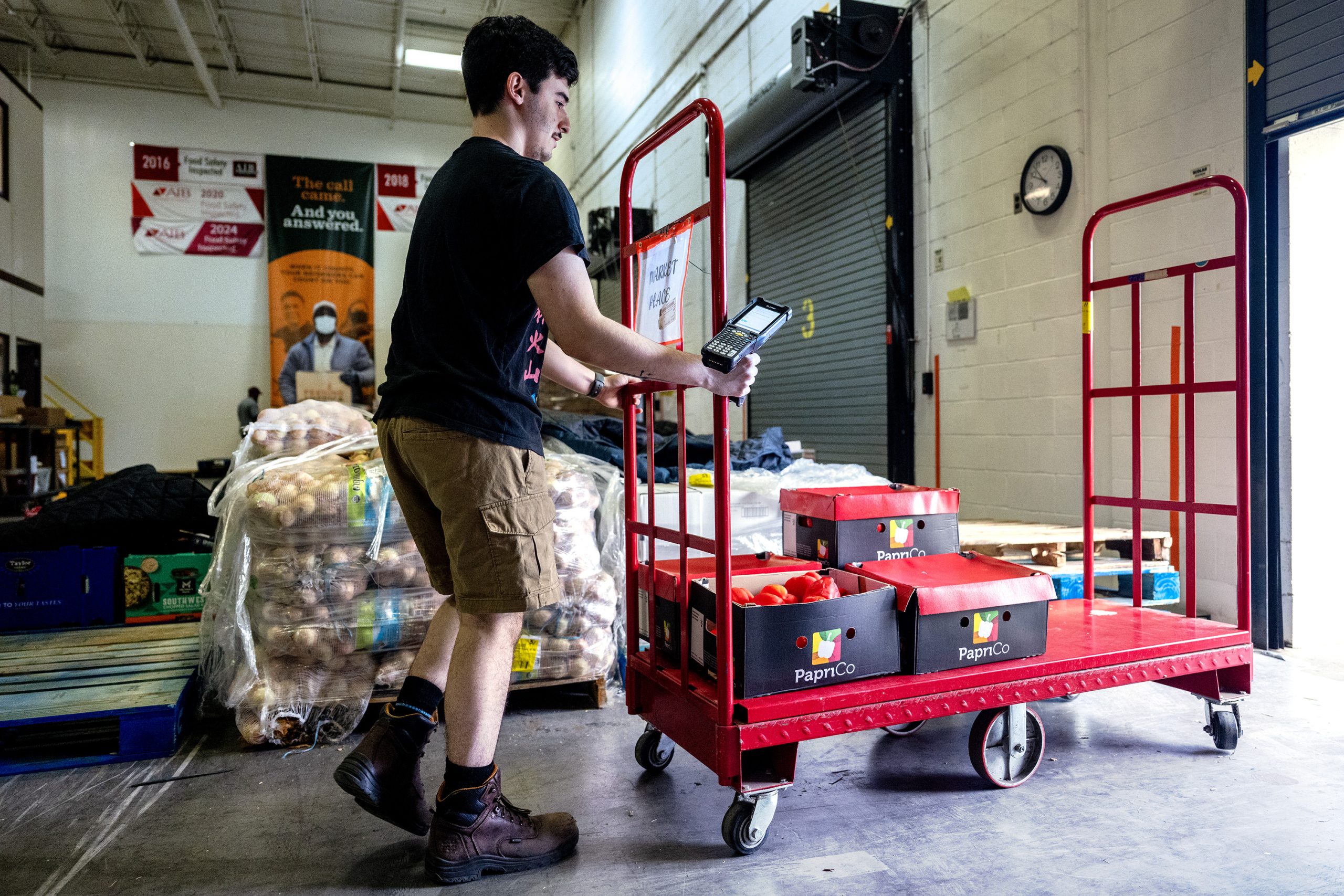
    William Meo works on the loading dock at the Food Bank of South Jersey Thursday, June 11, 2026. Tom Gralish / Staff Photographer

    For people like Shelley Gaither, how her reduced SNAP benefits could be seen as part of “runaway spending” is tough for her to figure, given her needs. To survive this precarious moment, Gaither said, she will do whatever she can.

    “We eat more vegetarian meals and I don’t buy my kids cookies or snacks,” she said. “If I drink enough coffee, maybe I just need one meal a day. This is our existence now. This is how we live.”