Author: Alfred Lubrano

  • Pope Leo XIV is popular with Pa. Democrats after feud with Trump. But Republicans are split.

    Pope Leo XIV is popular with Pa. Democrats after feud with Trump. But Republicans are split.

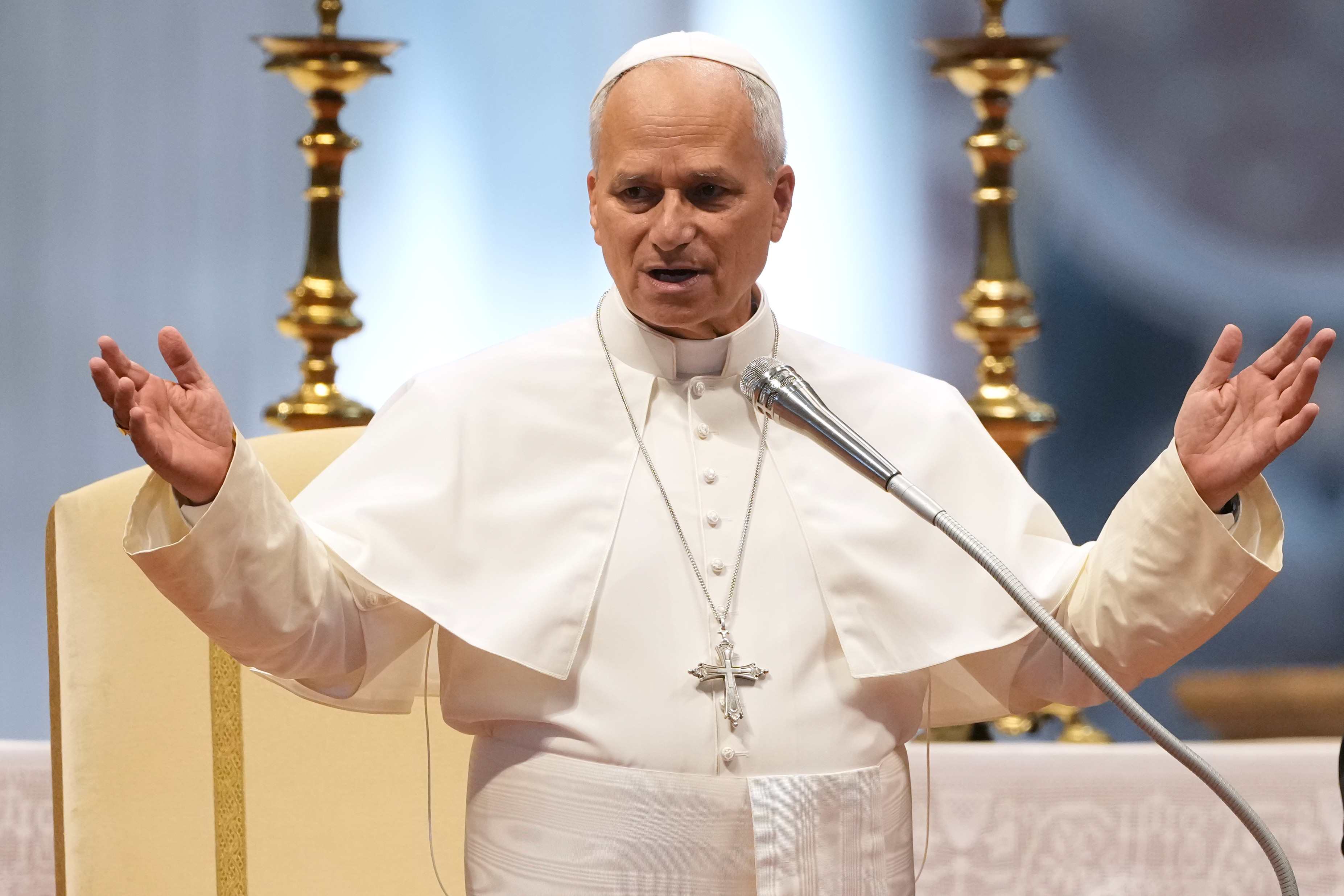
    Pope Leo XIV is significantly more popular among Pennsylvania Democrats than Republicans in the state, according to an Inquirer/New York Times/Siena University poll released this week.

    While 75% of Democrats expressed a favorable opinion of Leo, only 40% of Republicans did. Meanwhile, 37% of Republicans viewed the pope unfavorably, compared with just 7% of Democrats, according to the poll.

    The pope’s disfavor with GOP voters likely links back to his widely publicized dispute with President Donald Trump in the spring over the Iran war, when the two engaged in contentious exchanges, said Don Levy, who supervises the Siena Research Institute’s political polls.

    (function() { var l = function() { new pym.Parent( ‘nyt-pope__graphic’, ‘https://media.inquirer.com/storage/inquirer/ai2html/nyt-pope/index.html’); }; if(typeof(pym) === ‘undefined’) { var h = document.getElementsByTagName(‘head’)[0], s = document.createElement(‘script’); s.type = ‘text/javascript’; s.src = ‘https://pym.nprapps.org/pym.v1.min.js’; s.onload = l; h.appendChild(s); } else { l(); } })();

    Among independent voters, 64% viewed the pope favorably and only 16% viewed him unfavorably.

    Similarly, voters who cast their ballots for Vice President Kamala Harris in 2024 were more likely to hold a favorable view of the pope than were Trump voters: 79% of Harris voters held favorable views of Leo, compared with just 38% for Trump voters.

    Among all likely Pennsylvania voters, nearly 60% have a favorable opinion of the first U.S.-born pope — making him about as popular as Democratic Gov. Josh Shapiro, according to the poll of 760 likely Pennsylvania voters conducted between Aug. 17 and 21.

    Leo has ties to Pennsylvania, having attended Villanova University as an undergraduate student and earning a bachelor of science in mathematics in 1977.

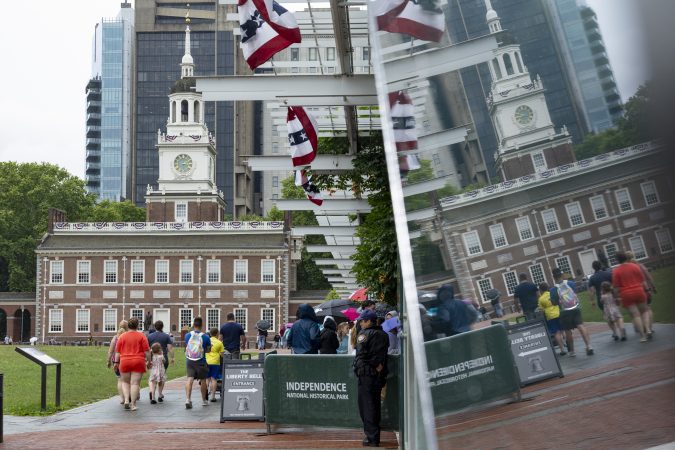
    The pontiff made a virtual appearance in Philadelphia on the eve of the United States’ 250th birthday to accept the National Constitution Center’s prestigious Liberty Medal. In a speech live streamed to an interfaith crowd inside the Center City museum, the pope extolled the virtues of immigration, drawing a clear contrast with the president.

    One day later, he spent his home country’s anniversary visiting migrants in the Mediterranean.

    “Pope Leo has embodied a different way of being an American on the world stage. He believes in collaboration with other nations, and has concerns about immigration,” said Massimo Faggioli, a professor of theology and religious studies at Villanova University and an expert on the papacy.

    “He’s relatable, and many Americans like that,” Faggioli added about Leo’s appeal.

    Vince Stango, interim president and CEO of the National Constitution Center, presents Pope Leo XIV with the Liberty Medal.The Vatican and National Constitution Center

    In the spring, the war with Iran brought tensions between the Vatican and the White House to the forefront of the national political conversation as the U.S.-born pope emerged as a leading international voice against Trump’s policies.

    “Pope Leo never wanted to get into a fight with Trump about the war,” Faggioli said. “But certain things Trump said were not acceptable to the pope.”

    The Leo-vs.-Trump fracas caught fire in April, when Trump threatened Iran by saying a “whole civilization will die tonight, never to be brought back again,” if the country’s leaders did not open up the Strait of Hormuz.

    Within hours, the pope labeled Trump’s words “truly unacceptable.”

    Days later, Trump posted on Truth Social that “Pope Leo is WEAK on Crime, and terrible for Foreign Policy.”

    Trump also claimed that Leo had been selected as pope only because of his election as president and referred to the fact that one of the pope’s brothers is a Trump supporter.

    Trump went further in a lengthy post: “I don’t want a Pope who thinks it’s OK for Iran to have a Nuclear Weapon. … And I don’t want a Pope who criticizes the President of the United States because I’m doing exactly what I was elected, IN A LANDSLIDE, to do.”

    During that same period, Vice President JD Vance said the pope should “be careful” when talking about religion.

    Pope Leo responded: “I have no fear of the Trump administration.”

    Around the same time, Trump posted an image of himself dressed as Jesus healing the sick as an American solider and others reverently gaze upon him. Trump claimed that the now-deleted post was meant to show him as a doctor.

    A majority of likely Pennsylvania voters — 58% — disapprove of Trump’s performance as president and an even greater number — 66% — disapprove of his handling of the war, including 30% of Trump voters, according to the poll.

    (function(){function e(){window.addEventListener(`message`,function(e){if(e.data[`datawrapper-height`]!==void 0){var t=document.querySelectorAll(`iframe`);for(var n in e.data[`datawrapper-height`])for(var r=0,i;i=t[r];r++)if(i.contentWindow===e.source){var a=e.data[`datawrapper-height`][n]+`px`;i.style.height=a}}})}e()})();

    For the poll, 592 likely Pennsylvania voters completed the full survey and responded to the question about the pope.

    Among that group Catholic voters, in particular, had a more favorable view of the pope than the overall electorate, with 81% viewing him favorably, while 15% viewed the head of the church unfavorably.

    Trump won a majority of Catholic voters in 2024, according to national exit polls. But Catholic voters were split on the president’s performance in the new Pennsylvania poll — 50% disapproved of Trump, while 44% approved.

    Explaining how people feel about the pope, the Rev. Paul Galetto, the pastor of St. Paul’s Church in South Philadelphia and a friend of Pope Leo’s for 51 years, said Tuesday that “everyone knows this pontiff is focused on peace in the world.”

    Father Paul Galetto shown here at St. Paul’s Roman Catholic parish, in Philadelphia, Friday, April 10, 2026. Galetto studied with the pope in Rome in the 1980s. Jessica Griffin / Staff Photographer

    More basically, people are drawn to his “intellect and his humbleness,” Galetto said.

    “I think Pope Leo’s favorability comes about because he is seeking solutions to problems that affect all of humanity,” he added. “People will always be attracted to someone with a larger vision to help the common good.”

    Staff writer Joe Yerardi contributed to this article.
  • New Jersey Gov. Sherrill signs a law to protect reproductive and gender-affirming healthcare. Here’s what to know.

    New Jersey Gov. Sherrill signs a law to protect reproductive and gender-affirming healthcare. Here’s what to know.

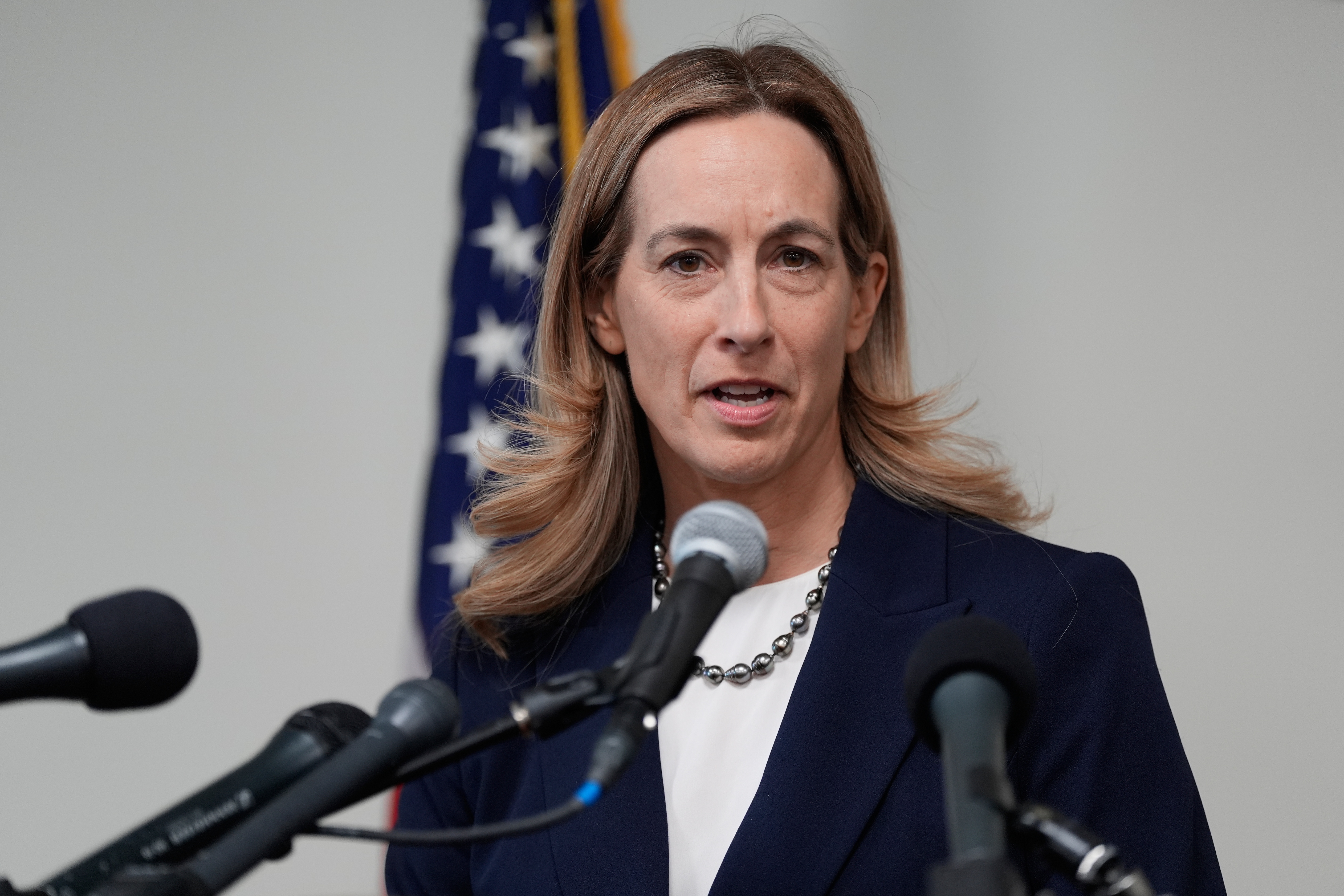
    New Jersey Gov. Mikie Sherrill signed a bill Thursday that offers greater protections for reproductive and gender-affirming healthcare — both for patients and for providers in the state — by making it a crime to intervene against such care.

    The new law strengthens existing reproductive healthcare protections and also broadens them to now include gender-affirming care. It is meant to cover residents as well as people traveling to the state.

    “This is a very big deal. It’s amazing,” said Martha Madrigal, a transgender woman who leads the Collingswood chapter of PFLAG, a national advocacy group for the families of LGBTQ+ people.

    She added that the law is a “solid declaration” that interfering with transgender rights “does not stand in New Jersey. We’re letting out an enormous sigh of relief today.”

    The legislation expands New Jersey’s shield laws by expressly including gender-affirming care in the definition of “protected reproductive healthcare services.”

    Essentially, the law creates a new crime for interfering with someone trying to access reproductive healthcare, such as an abortion, or gender-affirming care.

    It is now a fourth-degree crime (a low-level felony like shoplifting, punishable by up to 18 months in prison) to injure, threaten, intimidate, or physically block patients or providers, or to damage property in an effort to interfere with such care.

    The law would also protect providers from extradition to other states that have banned abortion or gender-affirming care for minors.

    Sherrill said New Jersey is “standing firm in defense of reproductive freedoms — including the right to choose and the right to receive gender-affirming care.”

    In comments after the signing, Sherrill referenced “attacks” and efforts to impose restrictions on access to abortion and gender-affirming healthcare by the Trump administration and Republican-led states.

    She said the transgender community has been “relentlessly attacked” by the Trump administration.

    “They’ve pulled tactics straight out of the ‘Red Scare’ playbook to restrict transgender people’s healthcare,” Sherrill contended.

    Since returning to office last year, President Donald Trump has issued orders to block federal funding for gender-affirming care for people under 19, oust transgender military personnel, and prevent transgender people from using the gender they self-identify as on passports.

    “We are not going to pay for our innocent children to undergo these barbaric surgeries and practices, which result in unthinkable and irreversible harm to their young bodies,” Trump said on Truth Social earlier this month after Medicaid ended reimbursement for hormone treatment and surgeries for minors.

    Surgeries for minors are extremely rare. And fewer than 1 in 1,000 U.S. adolescents receive medication for gender-affirming care, according to a Harvard University study released last year.

    State Sen. Teresa Ruiz (D., Essex), a chief sponsor of the bill and the Senate’s majority leader, said the bill makes New Jersey “a beacon of hope” in the nation.

    “You can’t tell us what we can read on a library shelf but want to be up in our uterus in an exam room,” she said.

    The law empowers patients and providers to take legal action against individuals who interfere with their access to or delivery of protected care.

    And it protects healthcare providers from professional penalties or adverse actions involving their medical malpractice insurance for providing care that is legal in New Jersey.

    Speaking for healthcare providers in New Jersey, Kristyn Brandi and Catherine Obando, doctors from Union who are preparing to open a clinic providing abortions and gender-affirming care, praised the law as an assurance that providers could deliver care without “risking their freedom or professional license” in the state.

    “We are grateful to know that our patients and staff will be protected from criminalization and harassment,” Brandi and Obando said in a statement as founders of the Luminosas Wellness Collective.

  • Philly kids in Head Start would have fewer teachers and English-only instruction under Trump administration plan

    Philly kids in Head Start would have fewer teachers and English-only instruction under Trump administration plan

    Like scattered billiard balls, 16 Early Head Start children scampered across a rubber-matted playground in Southwest Philadelphia last week.

    Vigilant for tumbles or conflicts, four teachers calmly monitored the 1- and 2-year-olds in their high-energy frolic at an early learning center run by KenCrest, a nonprofit that operates Head Start and other programs in seven neighborhoods throughout Philadelphia.

    Head Start’s low ratio of one teacher for every four toddlers is a hallmark of standards for the 61-year-old federal program that provides free education, health, nutrition, family support, and daycare services for low-income children from birth to age 5.

    But now, advocates say, Head Start risks being eviscerated by changes proposed by the Trump administration.

    The vaunted teacher-child ratio, along with other foundational principles that make Head Start unique, is being threatened by plans to “deregulate” the program — overhauling the way it operates by eliminating more than 1,400 regulatory mandates that dictate how the program is administered.

    “We could be going to two staff members for 25 toddlers and two for 30 older kids,” said Melanie Brennan, executive director of early learning programs at KenCrest.

    “What’ll bathroom time look like?”

    The Trump administration defends its proposed changes as the building blocks for a better Head Start, which serves 700,000 low-income children nationwide, including an estimated 7,500 in Philadelphia.

    “We are removing unnecessary bureaucracy, strengthening nutrition and physical health, trusting parents and local communities,” said Health and Human Services Secretary Robert F. Kennedy Jr., whose department administers Head Start at the federal level.

    That does not ring true to Head Start professionals in Philadelphia.

    “It’s laughable to say all they’re trying to do is take away some bureaucracy,” Brennan said. “By ending rules that guide Head Start’s high, uniform standards, the administration’s real goal is to leave the education business.”

    In Philadelphia, more than $70 million in federal funding for Head Start goes through the Philadelphia School District, the program’s largest provider in the city, said Diane Castelbuono, the district’s deputy chief for early learning.

    KenCrest Director Josie Jones with staff and Early Head Start students.Jessica Griffin / Staff Photographer

    The district uses that money to directly operate Head Start programming in more than 60 school buildings, mostly elementary schools, throughout the city, she said. It also works with approved contractors who run Head Start classrooms at approximately 75 childcare sites in Philadelphia, Castelbuono added.

    Asked for comment on the proposed changes, the school district said in a statement that the Head Start program has “positively impacted” students and that district officials “remain committed to preserving the robust standards that have proven essential to our program’s success.”

    ‘Stunned and sad’

    While only Congress can repeal the statutory authorization for Head Start, which has an annual budget of about $12 billion, opponents of the Trump administration’s proposal warn the new rules would weaken the program to the point it became unrecognizable — or stopped existing altogether.

    The plan, called “Reducing Federal Burden for Head Start Programs,” was released Aug. 7.

    Public comment will be accepted until October, when the administration hopes to finalize the rules.

    Kush Desai, a spokesperson for the White House, said the changes would enable the government to provide a stronger program that ensures services “are delivered effectively to children and families in need” by reducing “unnecessary administrative burden.”

    Advocates who have spent their late-summer vacations reading the complex, nearly 200-page document say they are in the process of marshaling opposition, which they hope will delay or alter the administration’s plans.

    “There’s so much to unpack,” said Kara McFalls, executive director of the Pennsylvania Head Start Association in Harrisburg. “We’re checking with experts to see if Head Start becomes gravely harmed.”

    Advocates say initial readings of the new rule justify their concerns.

    Beyond altering teacher-child ratios, the administration would lower the cap on Head Start administrative program costs from 15% to 5%, which means local programs could spend only up to 5% of their total budget on operational overhead like management, human resources, IT, and administrative salaries.

    That would be “devastating,” McFalls said, making it harder for programs to pay staff working in these departments.

    An Early Head Start student plays with a doll at KenCrest in Southwest Philadelphia.Jessica Griffin / Staff Photographer

    Additionally, the administration would require instruction to be conducted in English only — which could hit several Head Start programs across the city that offer bilingual education.

    “That policy would be ridiculous and biased,” said Rachel Sanders, executive director of Your Child’s World Learning Center, which includes Head Start programs in Southwest and Northeast Philadelphia, as well as in West Oak Lane. “Our children speak multiple languages.”

    While all primary instruction is in English, Sanders said, children who speak Spanish, Mandarin, Arabic, or another language are taught the lessons either by teachers fluent in those languages or by translators brought in to help. She added that 50% of the students in the Northeast location do not speak English on the first day of instruction, but that the additional support helps them eventually learn the language.

    “No way would we ever discontinue translating,” she said.

    Under the Trump administration plan, requirements for math and literacy curricula would be removed. Also gone would be stipulations that programs check on whether families have provided their children with immunizations, dental visits, wellness checks, and mental health consultations.

    And hygiene training — including the Head Start tradition that children brush their teeth in class — would end.

    The proposed changes “left me stunned and sad,” said Chandell Craig-Cromwell, 39, of West Philadelphia, a mother of two Head Start graduates who works in human resources in a city agency.

    “This isn’t just education, or babysitting. It’s developmental support,” she said. “I’m upset for all the moms who’ll get this new version of Head Start.”

    If the administration alters Head Start so profoundly, said Sharon Wolf, an early education expert at the University of Pennsylvania, she questioned whether the program should still keep its name.

    “I fear we could be moving to weakened, ordinary childcare,” she said. “Then, is it Head Start anymore?”

    Madison Marino Doan, a policy analyst in the Center for Education Policy at the conservative Heritage Foundation, disputed the notion that the administration’s proposal represented an effort to eliminate Head Start.

    “The current proposal under consideration is an effort to deregulate the program and give states greater flexibility to design programs that reflect the needs of their communities while maintaining current funding,” she said.

    Doan added that Congress should simply end the program — a recommendation made in the foundation’s Project 2025, a conservative blueprint for a second Trump administration.

    Some advocates warn the administration’s push to change the program has more to do with ideology than concerns about efficiency.

    Tyrone Scott, a director at First Up, a Philadelphia-based early education nonprofit, said he often runs into people who self-identify as conservatives at public forums who say that part of Head Start’s true mission is to “indoctrinate kids with a political ideology that includes ideas like racial justice.”

    But, he said, the mission of Head Start is a lot simpler than that.

    “It teaches kindness,” he said. “That isn’t a political philosophy.”

  • National hunger fighter visits Northeast Philly to criticize ‘a dangerous double whammy’ of SNAP cuts and rising prices

    National hunger fighter visits Northeast Philly to criticize ‘a dangerous double whammy’ of SNAP cuts and rising prices

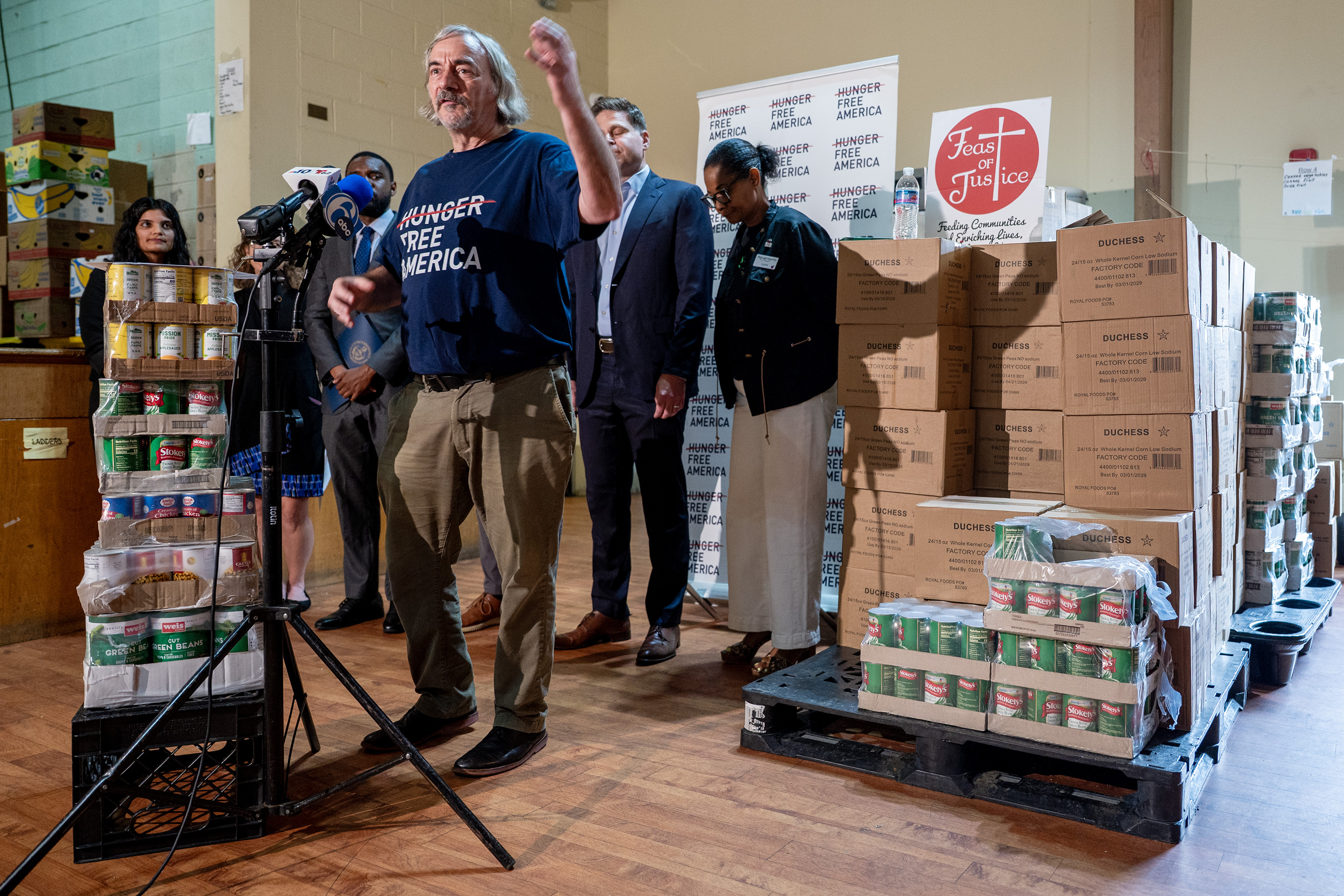
    People throughout the Philadelphia region, hampered by cuts to federal food aid and soaring prices, are “facing a dangerous double whammy causing a skyrocketing hunger crisis,” said Joel Berg, a national hunger fighter, speaking in Northeast Philadelphia on Tuesday.

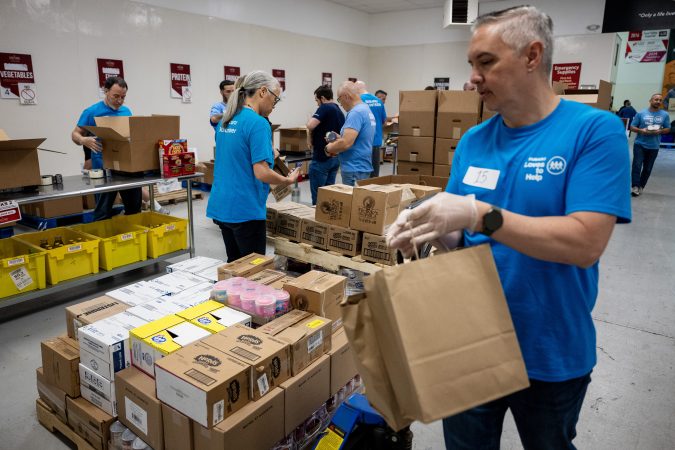
    Berg, CEO of the New York-based nonprofit Hunger Free America, was visiting Feast of Justice, one of the largest food pantries in the city with “probably the most diverse food pantry clientele in the nation,” he said. That is proof, according to Berg, that food insecurity can affect anyone, from any background.

    Feast of Justice, he added, “is the food affordability issue in the flesh.”

    Especially critical of the One Big Beautiful Bill Act, signed into law by President Donald Trump on July 4, 2025, Berg noted that it included more than $1.1 trillion in cuts to Medicaid and the Supplemental Nutrition Assistance Program (SNAP).

    Roughly 4 million Americans are expected to lose SNAP benefits in 2026 under the law. Many of them do not meet work or age requirements newly added to the anti-hunger program. The reductions in SNAP and Medicaid benefits helped pay for tax cuts ordered by Trump.

    Alahallak Abdelmenim and his children Asil (left), 6, and Hasan (right), 8, load groceries into their shopping cart at the Feast of Justice Food Pantry Tuesday, Aug. 11, 2026.Tom Gralish / Staff Photographer

    In Pennsylvania, around 144,000 SNAP recipients could see benefits cut this year — an estimated 45,000 in Philadelphia and 12,000 in its collar counties, according to Pennsylvania Department of Human Services estimates. In New Jersey, around 50,000 individuals could lose SNAP benefits, New Jersey Department of Human Services figures show.

    It’s not “rocket science,” said Berg, who used a pallet of canned beans and apple sauce as a lectern as he addressed a small crowd at the pantry. “When there’s a drought and you take away water, the drought’s going to get worse. When there’s a hunger crisis, and you take away food, the hunger crisis is going to get worse, especially after you throw in inflation,” he added.

    In response, Trump spokesperson Anna Kelly said Tuesday that Trump is “strengthening” SNAP to sustain it into the future. Changes to SNAP “crack down on waste, fraud, and abuse,” she said. Kelly added that Trump is “uplifting every American’s financial situation by passing the largest tax cut in history — which every congressional Democrat opposed — and bringing historic numbers of jobs and investments into our country.”

    Pastor Tricia Neale, executive director of Feast of Justice, said Tuesday that since the enactment of the One Big Beautiful Bill Act, an additional 1,850 families in Northeast Philadelphia have turned to the pantry for help. Overall within the last five years, she said, the number of households the pantry supports has grown from 2,750 to 6,425, a more than 200% increase.

    “And,” Neale added, “the crisis is accelerating.”

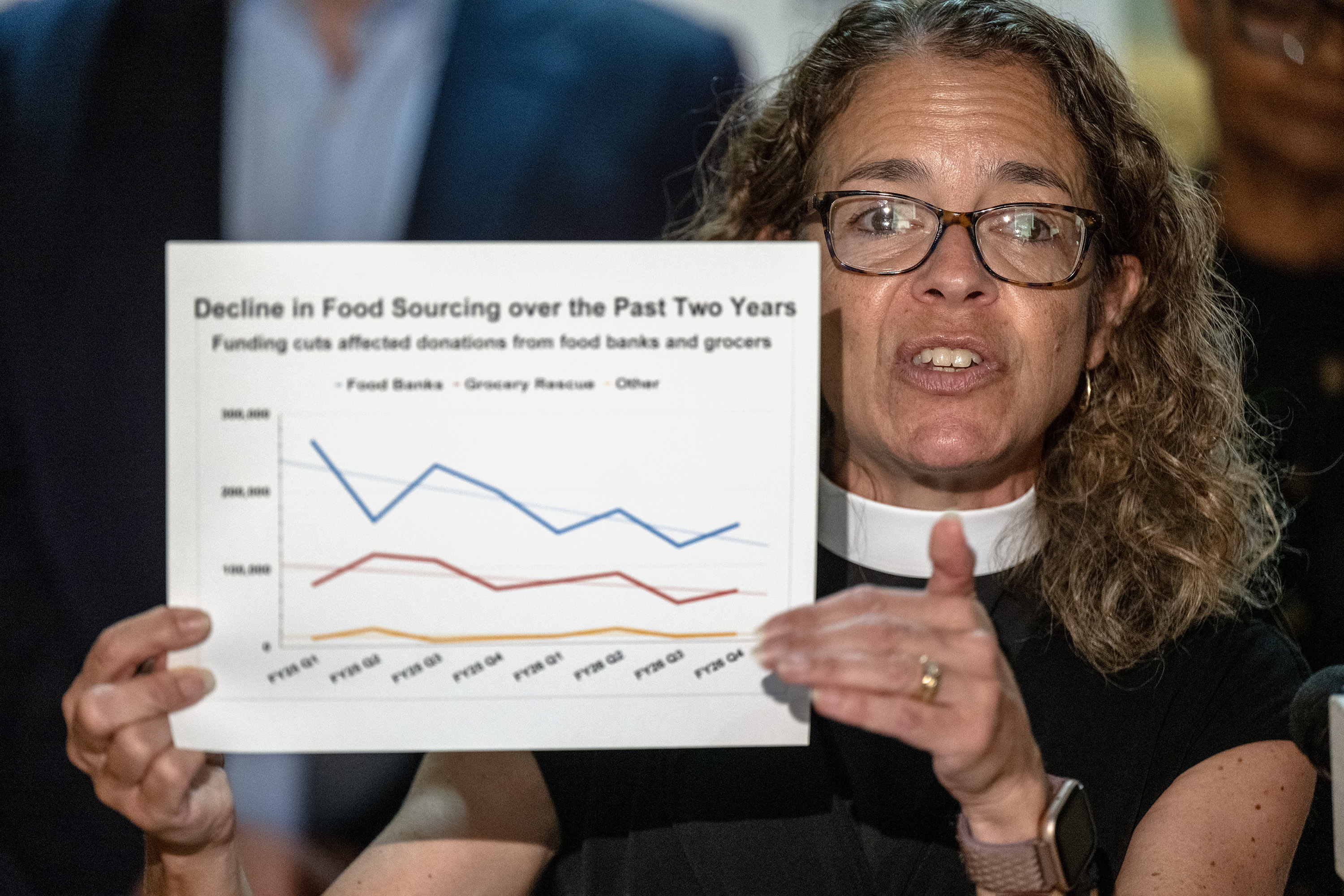
    Pastor Tricia Neale, executive director at Feast of Justice, displays a chart showing the decline in food sourcing as she speaks at a press conference at the food pantry Tuesday, Aug. 11, 2026. Tom Gralish / Staff Photographer

    The pantry has been forced to absorb a 35% decline in donated food it receives, in part because of cuts to federal and state food programs that have been so vital, she added.

    Even with diminished supplies, Feast of Justice is an essential institution, according to Angie Bryant, 55, of Tacony, a client. Formerly a phlebotomist who can no longer work, Bryant said she recently lost her SNAP benefits because new age restrictions exclude her participation.

    “In the body, hunger is hurtful,” she said. “Without this place, I don’t know how I could make it.”

    Food banks such as Philabundance and Share Food Program do their best to provide Feast of Justice whatever food they can, Neale emphasized.

    Volunteer Daniel Khan (center) restocks the shelves as clients load groceries into their shopping carts at the Feast of Justice Food Pantry Tuesday, Aug. 11, 2026. Tom Gralish / Staff Photographer

    If SNAP is the safety net, “we’re the safety net of the safety net,” said Loree Jones Brown, CEO of Philabundance, who joined Berg and Neale at Feast of Justice on Tuesday. “But we can’t make up for the cuts.”

    She added that “this is a crucial time for food banks, legislators, and community organizations to stand together for our neighbors and against hunger.”

    That Feast of Justice does its best to beat back hunger is widely appreciated in the community, said client Anthony Morales, 27, of Mayfair. Laid off from a warehouse job, he said he is responsible for feeding his 7-year-old daughter and his partner, and he needs the pantry’s support.

    “When you fall,” he said, “this place lifts you up. You have a lot of fear and anxiety without enough food. It can give you hope and confidence that tomorrow could be better.”

  • Trump administration may be forcing immigrant parents to choose between green cards and benefits for their U.S.-born children

    Trump administration may be forcing immigrant parents to choose between green cards and benefits for their U.S.-born children

    President Donald Trump’s administration may be creating a difficult choice for low-income immigrants who could be denied green cards by seeking public assistance to feed and access healthcare for their U.S.-born children.

    Under the “public charge” rule — which the administration plans to put in place on Sept. 18 — a person could be denied permanent residency in the United States if immigration officers believe the individual would become a drain on the country by accessing government benefits, which could include SNAP, Medicaid, and housing vouchers.

    In Philadelphia and throughout the region, the rule, though not yet official, is nevertheless having a chilling effect, frightening parents who are legal immigrants into avoiding public benefits for their children, say advocates who work with immigrants and low-income communities.

    “It could prevent families from going to food cupboards, or keep women from accessing domestic violence shelters. The effect will be broad,” said Maripat Pileggi, an attorney with Community Legal Services in Center City.

    Advocates say the administration’s public charge rule could have a major impact on so-called mixed-status families made up of immigrant adults awaiting green cards and their children who are U.S. citizens.

    Immigrant parents have customarily been permitted to apply for the Supplemental Nutrition Assistance Program as well as Medicaid and housing assistance on behalf of their children, as long as they were not seeking help for themselves.

    A spokesperson for the U.S. Department of Homeland Security said people in the United States legally “have nothing to fear” and reiterated that U.S. policy has been that immigrants “should not depend on U.S. taxpayer resources to meet their needs.”

    As the Trump administration pursues its highly public crackdown on undocumented immigrants, the rule highlights ways in which its policies have also targeted all immigrants, including ones on track for lawful permanent residency.

    “They throw another hurdle people have to worry about into their path, making America seem less desirable,” said Jeff DeCristofaro, executive director of the Camden Center for Law and Justice.

    “What happens next is people gathering around their kitchen table and deciding it’s too difficult to be in this country. So they give up and self-deport.”

    DeCristofaro said his organization, which provides free and low-cost legal services to individuals with low incomes, is “already getting calls from people who have to make agonizing choices.”

    What is the public charge rule?

    The public charge rule dates back to the Immigration Act of 1891, when entry to the United States was denied to people who could not take care of themselves, primarily “paupers.”

    In 1999, the Clinton administration clarified the public charge to deny entry to a person who would be primarily dependent on the government for cash subsistence, such as TANF (previously known as welfare), Supplemental Security Income (SSI), or long-term Medicaid. However, the guidance explicitly said that noncash benefits such as SNAP, non-long-term Medicaid, or housing help would not be considered public charge determinations.

    But near the end of Trump’s first term, the public charge definition was expanded to penalize green card applicants for using legal public benefits such as Medicaid of any kind, SNAP, and housing assistance. President Joe Biden later rescinded Trump’s version of the public charge, reestablishing the earlier iteration of the rule.

    Currently, the Trump administration’s second version of the public charge rule does not explicitly state which benefits will be penalized. Advocates, however, expect a return to 2019 standards.

    The Department of Homeland Security has calculated that more than 950,000 individuals will either disenroll from public benefits or forgo enrollment into them because of the policy, according to the Federal Register.

    Ann Sanders, the director of public benefits policy at Just Harvest, an anti-hunger nonprofit in Allegheny County, worries the disenrollments will exacerbate the already growing demands on food pantries in the state.

    “You’re going to have kids going hungry because parents will be trying to keep families together by not going for SNAP benefits,” she said. “It’s insidious. It’s awful.”

    The fear among advocates is that by not delineating the public benefits that can trip up a legal immigrant, U.S. immigration officers will be free to use the public charge rule in any way they see fit, which could severely limit the number of people accepted into the country.

    That is not the best way to assess the policy, according to Hans von Spakovsky, a senior legal fellow at Advancing American Freedom, a conservative think tank created by former Vice President Mike Pence.

    “It allows immigration officers to take a holistic view of the alien being considered for a green card. The old rules about obtaining cash and noncash benefits were rigid,” said von Spakovsky, who was a contributor to Project 2025, a more than 900-page document intended to serve as a conservative blueprint for Trump’s second presidency.

    He called the public charge rule an important tool for determining who should obtain a green card, a major step toward U.S. citizenship. “We want immigrants to be productive members helping the economy without relying on benefits,” von Spakovsky said. “It’s a matter of being more selective.”

    The public charge rule is expected to be challenged in court before the end of the summer.

    Jonathan Grode, an immigration attorney in Center City and adjunct law professor at Temple University, argued the policy stems from one of the goals of Project 2025, which is to reduce all immigration, not just illegal entry into the country.

    “What’s in the rule is secondary to the rule’s primary purpose: changing people’s idea to come to this country in the first place,” Grode said.

  • Touring Camden’s Cathedral Kitchen, Andy Kim calls Trump’s cuts to SNAP ‘devastating and cruel’

    Touring Camden’s Cathedral Kitchen, Andy Kim calls Trump’s cuts to SNAP ‘devastating and cruel’

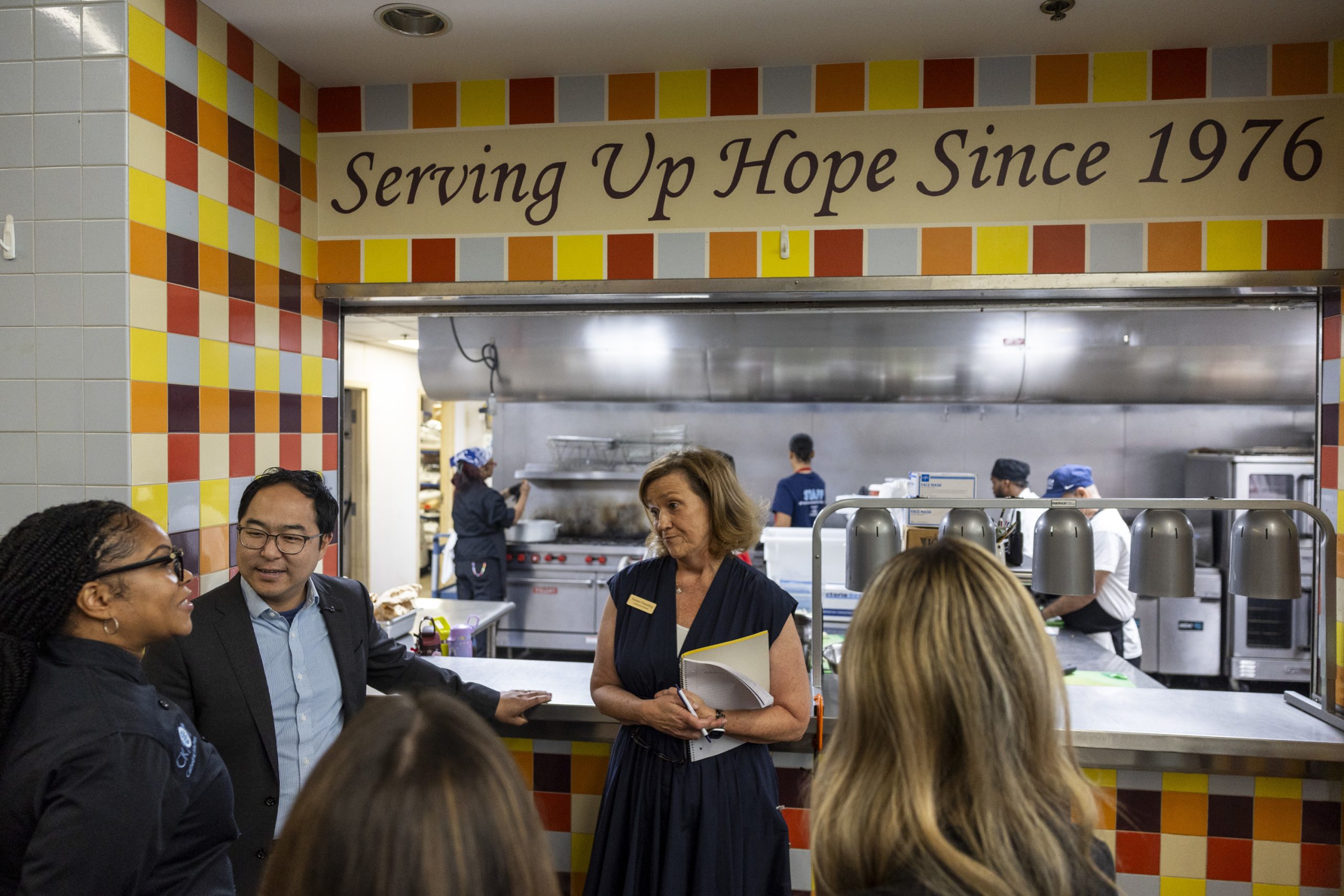
    Touring Cathedral Kitchen, the largest emergency meal supplier in South Jersey, Democratic Sen. Andy Kim praised the 50-year-old Camden institution Friday for the food it has served and the people it has saved.

    “The Kitchen is building community, right here in New Jersey,” said Kim, who noted that the nonprofit distributes 28,000 meals a month while training low-income people to be chefs and restaurant workers. Cathedral Kitchen also works to help people obtain IDs, apply for jobs and benefits, and find housing.

    Its work is needed more than ever, the New Jersey lawmaker said, with hunger on the rise because of high food prices and President Donald Trump’s One Big Beautiful Bill Act, which reduced federal food assistance such as SNAP (the Supplemental Nutrition Assistance Program) beginning July 4 of last year.

    Cutting SNAP benefits and changing eligibility requirements, Kim said, is a “devastating and cruel thing to do” at a time when cost of living has been climbing.

    “Why are we taking away necessary support at this time?” Kim asked. “I mean, we’re talking about food, the basics of being a human. Why is this happening now, at a time when people are struggling with affordability?”

    New Jersey Sen. Andy Kim visits Cathedral Kitchen in Camden, speaking to the workers who provide food for their community and those in need.Tyger Williams / Staff Photographer

    The food assistance cuts are coinciding with the economic fallout from tariffs and the Iran war, Kim noted.

    Nationwide, between January 2025 and January 2026, SNAP rolls decreased by more than 4 million people — from 42 million to 38 million — according to USDA figures.

    In New Jersey, SNAP participation has fallen by more than 50,000 individuals between March 2025 and March of this year, New Jersey Department of Human Services figures show.

    And in Pennsylvania, nearly 90,000 people lost SNAP benefits between July 2025 and April due to new eligibility requirements, according to an analysis by the Pennsylvania Department of Human Services (DHS).

    At the same time, food prices have risen more than 3% in the last year.

    As a result, in Camden, Burlington, Gloucester, and Salem Counties, the number of meals distributed to help those in need grew by 34% over the last four years, according to the Food Bank of South Jersey

    “I know the Camden area,” said Kim, who grew up in nearby Marlton and Cherry Hill. “I’ve seen the struggles that have been here and still persist.”

    The Trump administration has said the cuts it’s made to SNAP, Medicaid, and other programs were necessary to staunch “waste, fraud, and abuse.” It maintains that it’s instituted strict work requirements for SNAP to move more people into the workforce and reduce dependency on government support.

    Kim said many Americans don’t understand that a large number of people who live in poverty also work. “Millions with jobs are still poor, and this country needs a mindset shift to understand that,” Kim said.

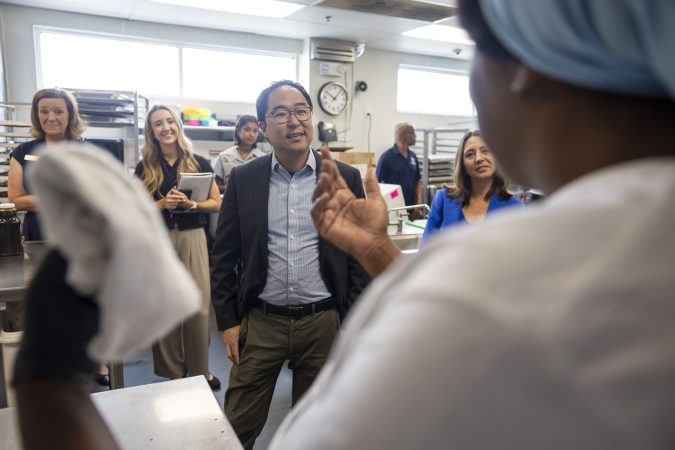
    Sen. Andy Kim (D., N.J.) speaks with Naimah Rutling, executive chef at Cathedral Kitchen in Camden, N.J., on Friday.Tyger Williams / Staff Photographer

    As he continued his Tour of Cathedral Kitchen, Kim invariably found himself in the organization’s actual kitchen, bustling with food workers slicing carrots and onions, preparing for meals ahead.

    Clearly enjoying the moment, Kim said that at home, he makes his own bread, including pizza dough.

    Kim asked executive chef Naimah Rutling what her favorite food is. “Grilled cheese,” she said without hesitating. Kim laughed and said, “I have a 9-year-old and a 10-year-old. About 90% of what we eat is grilled cheese.”

    Before leaving, Kim praised workers in the kitchen for their diligence and dedication in preparing food for those who need it.

    “It gives meaning and purpose to their lives,” he said. “I love the passion I see.”

  • Poverty in New Jersey is three times higher than the federal measure, experts say

    Poverty in New Jersey is three times higher than the federal measure, experts say

    Dana Brown-Toure, 52, says her life is in a place “somewhere between drowning and surviving.”

    A former health aide living on disability benefits, Brown-Toure contends with diabetes that threatens to blind her, while rising bills continue to overwhelm her. Brown-Toure shares an arduous existence with her two children, ages 8 and 21, in the house they rent in Camden, made harder by her former husband’s recent stroke, which hampers his ability to contribute money.

    Still, despite their troubles, the family takes in enough money to place Brown-Toure just above the official federal poverty level.

    That the U.S. government does not consider her to be living in poverty is hard for Brown-Toure to believe. “Life’s a struggle,” she said Monday. “I would say this feels below the poverty line.”

    So would the Poverty Research Institute (PRI) of Legal Services of New Jersey, a statewide legal aid nonprofit that has released a new report asserting that the actual rate of poverty in the state is about triple what the U.S. government calculates.

    That means, the report says, the official number of residents living in poverty in New Jersey in 2024 — the latest statistics available — was close to 3 million, rather than the federal figure of 859,000. Brown-Toure did not want her exact income to be disclosed, but the federal poverty level for a family of three such as hers in 2024 was just over $25,000.

    A person living below the official poverty level can more readily qualify for various assistance programs, such as SNAP (Supplemental Nutrition Assistance Program), Medicaid, Head Start, and school meals. The problem, experts say, is that even people with incomes that are twice the poverty rate need help, according to the Center on Budget and Policy Priorities.

    The government “severely understates poverty for high-cost states like New Jersey,” PRI director Shivi Prasad said.

    New Jersey’s cost of living ranks third-highest among states, behind California and Hawaii, according to the U.S. Bureau of Economic Analysis in the Department of Commerce. It also has the highest real estate property taxes in the United States, according to the Tax Foundation, a nonprofit that analyzes tax policy. The average annual tax bill in the state exceeds $10,000, compared with a national average of around $3,119, the foundation said.

    As the issue of affordability continues to plague Americans, thrusting many deeper into poverty, it’s becoming clear that the government‘s methods to measure deprivation are inadequate, PRI explains.

    The report, released in June and titled “2024 Poverty Data at a Glance: How the Federal Measurement Falls Short for New Jersey,” says that “the hard reality is that poverty remains deeply entrenched with millions left behind — a paradox for a state considered among the wealthiest in the nation.”

    The PRI measures what it calls True Poverty Level, described as the minimum income working families need to afford basic necessities without any public or private support, without making tradeoffs such as eating less to make rent payments.

    The basic flaw of the official federal poverty level, according to the PRI and other experts, is that it is a simplistic standard based on computations from 1964.

    “It’s a super-inadequate measure, like the federal minimum wage of $7.25 an hour,” said Laura Napolitano, a sociologist at Rutgers University-Camden. “We’re looking at a dated calculation that’s been unchanged for years.”

    Back in the mid-1960s, poverty thresholds were derived by taking the U.S. Department of Agriculture’s calculation for the minimum cost of food, then multiplying it by three to account for other family expenses. The thinking was that food was one-third of a family’s budget. Each year, the poverty level is updated to keep up with inflation, but the equation has remained the same for more than 60 years.

    Importantly, Prasad said in an interview, as the decades have gone by, the federal poverty level has not accounted for the actual costs of housing, childcare, food, transportation, healthcare, and other aspects of everyday life. And the federal poverty level does not allow for geographic differences in cost across the nation. For example, the average monthly rent for a two-bedroom apartment in Manhattan ($5,746) is vastly higher than it is in Omaha ($1,441), according to Apartments.com.

    “We look at all these realistic costs to see how much a family really needs to make it,” Prasad said. “We want to see how much you’d need to survive on your own, without help from the government or from family.”

    To determine how much basic survival costs in New Jersey, Prasad noted that an average monthly rent in the state is around $1,800 for a two-bedroom apartment. That would make a year’s rent more than $21,000.

    Now look at childcare, Prasad said, where the maximum monthly rate that can be charged for a toddler is $1,417, according to the New Jersey Department of Human Services, which comes to around $17,000 a year.

    With rent and childcare adding up to almost $40,000 annually, even if you are making $50,000 — almost twice the federal poverty rate for a family of three — “you really don’t have enough to survive,” Prasad said.

    And that says nothing about skyrocketing food costs, she added. The Food Bank of South Jersey reported that over the last four years in Burlington, Camden, Gloucester, and Salem Counties, the number of meals distributed to compensate for increasing food expenses grew by 34%.

    “More of our neighbors are turning to us amid an affordability crisis that’s hitting a high-cost state like New Jersey harder than poverty measures may show,” Jane Asselta, the food bank’s president and chief executive officer, said in a statement.

    For a more detailed analysis of the area the food bank serves, Prasad focused on South Jersey data for The Inquirer. In Burlington County in 2024, the true poverty rate was 27.2%, Prasad said. Similarly, Camden County’s true poverty rate was 38%, while Gloucester County’s sat at 29%. All rates as calculated by the PRI were more than three times the federal poverty levels for the counties in 2024, figures show.

    Ultimately, Brown-Toure said, no matter how the government classifies poverty, the one constant she endures is that life’s hardships are wearing her down.

    “I’m feeling depressed,” she said. “I miss working and my weekly paycheck. And the dream I once had to own a house is all gone.

    “There’s a lot of struggle right now, a lot trauma. It’s hard. And the hardship never stops.”

  • Pa. residents stand to lose an average of $520 a month in Social Security benefits in six years unless Congress acts

    Pa. residents stand to lose an average of $520 a month in Social Security benefits in six years unless Congress acts

    For 30 years, Nettie King, 92, has relied on Social Security to survive.

    She and her former employers at the Oak Lane Diner near her home paid into Social Security through payroll taxes for years.

    While the storied institution closed in 2015, the Social Security benefit checks that King’s work generated have kept coming. “It’s been comfortable,” explained King, who said she was the diner’s first server of color in 1963.

    But now there’s a problem.

    King is among 68 million Americans facing possible reductions of 22% to their benefits by 2032 unless Congress acts, according to a new report by Social Security Administration (SSA) trustees released last month.

    Pennsylvania residents could lose an average of $520 each from their monthly Social Security checks, according to the Committee for a Responsible Federal Budget, a nonpartisan think tank. That would affect an estimated 255,000 Philadelphians receiving Social Security benefits, according to Olivia Mitchell, director of the Boettner Center on Pensions and Retirement Research at the Wharton School of the University of Pennsylvania.

    “Losing that much would be a disaster,” King said. “I pray the money doesn’t stop.”

    It won’t if Congress overcomes its partisan divide and creates a workable solution to make Social Security solvent, say advocates for the elderly — including AARP, whose senior vice president Bill Sweeney warned in a recent press call that “the longer they wait, the harder it gets.”

    Speaking for the Trump administration, Treasury Secretary Scott Bessent said in a statement, “We are working to preserve Social Security … and recognize that more work remains to secure benefits for future beneficiaries.”

    Someday soon

    Analysts have long predicted the Old Age and Survivors Insurance trust fund from which most retired Social Security claimants draw benefits could dissipate, said Temple University labor economist Samuel Solomon. But that was always regarded as a “someday” event.

    “Someday” may now be just six years away. “That’s a big deal,” Solomon said.

    The SSA wouldn’t stop paying benefits altogether, Mitchell said. Although the report predicts the fund’s reserves could be tapped out by 2032, “continuing payroll tax revenue [from people currently working] would cover about 78% of scheduled retirement benefits,” she added.

    At nearly $1.6 trillion annually, Social Security represents more than 20% of the U.S. budget and is the nation’s largest single expense, Solomon said.

    Various factors have combined recently to accelerate the fund’s potential depletion, according to the report submitted by SSA trustees, who include Bessent, as well as Health Secretary Robert F. Kennedy Jr.

    First, the fertility rate this year is going down faster than predicted: 1.75 children per woman vs. 1.9.

    Also, immigration is lower than estimated. That trend will continue as the government maintains restrictive immigration policies, experts say. It represents a potentially immense loss of revenue, according to Wharton research, which shows that “unauthorized immigrants” paid $24 billion in Social Security payroll taxes in 2024, despite being ineligible to collect any benefits.

    Both the slowed fertility and diminished immigration rates have lowered the anticipated number of workers and the payroll taxes they’d have contributed to Social Security, said Kathleen Romig, Social Security expert with the Center on Budget Priorities and Policies, a left-leaning research group.

    The final factor, the trustees report said, is that the One Big Beautiful Bill Act that decreased income tax rates has reduced revenue that would’ve flowed into the program.

    The SSA didn’t respond for requests to comment.

    The Social Security system had been strained long before the trustees report. The giant baby boomer generation has been retiring since around 2011, siphoning millions from the program, Solomon said.

    In 1950, when the first boomers were 4 years old, every 100 workers paid the Social Security benefits of 13 elderly people, Solomon said. Today, it’s 25 elderly people per 100 workers — “more responsibility on a single working person to support more retirees,” Solomon said.

    That worries Doris Kitt, 81, of Jenkintown, a Social Security benefits recipient who still works at a South Jersey pediatric dental practice.

    Doris Kitt talks with coworker Asia Bagby. Kitt, who is 81, still works and also collects Social Security benefits.
    Tom Gralish / Staff Photographer

    “Less Social Security when rent and food continue to cost more is a challenge,” Kitt said.

    ‘Give me what I’m due’

    Through the years, Republicans and Democrats have forwarded competing remedies for repairing Social Security.

    GOP suggestions include raising the retirement age to 70, and privatizing the system.

    Democrats call for raising payroll taxes and ending the payroll tax cap. (Currently, wages above $184,500 are not subject to Social Security taxes. Democrats would eliminate the cap so higher-income earners pay into the system on 100% of their earnings.)

    In a statement, U.S. Rep. Brendan Boyle, a Northeast Philadelphia Democrat running for reelection in November against Republican challenger Jessica Arriaga, said the trustees report makes it clear that “we must act to protect Social Security benefits for all generations.“

    He referenced a bill he introduced in May 2025 that would require Americans earning more than $400,000 to contribute a greater percentage of their wages to Social Security. It’s now before the House Ways and Means Committee.

    U.S. Rep. Lloyd Smucker, a Republican representing Lancaster County, also issued a statement, saying Social Security could be fixed by a “bipartisan fiscal commission” to “build consensus” and eliminate depletions of benefits. Smucker is being opposed by Democrat Nancy Mannion in his bid for reelection.

    “We must preserve the trust fund millions of Americans rely on and keep our promise to those who have been paying into the system their entire lives,” he said.

    That covenant must be honored, said Shirley Stringfield, 70, a retired city worker from Germantown.

    “I spent 55 years of my life paying into Social Security,” she said, “so I want them to give me my due. I expect to receive my benefits until I expire. I need every cent.”

  • New Jersey’s Tom Kean ends his months-long absence from Congress, saying he was being treated for depression

    New Jersey’s Tom Kean ends his months-long absence from Congress, saying he was being treated for depression

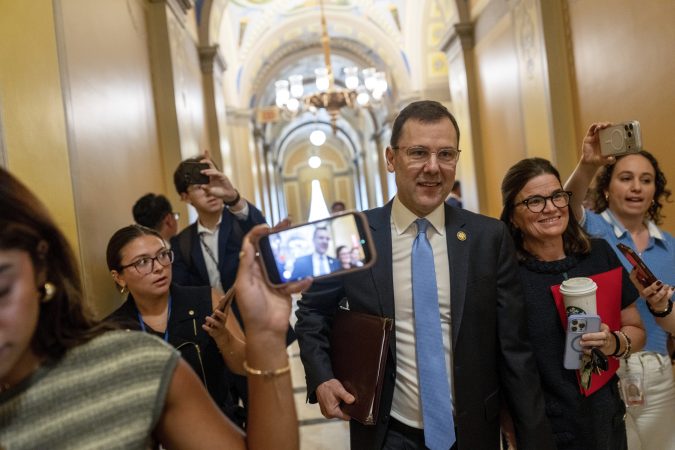
    U.S. Rep. Tom Kean Jr., who had not been seen since March in Congress or in his competitive New Jersey district, said Tuesday that he had been hospitalized to treat depression.

    “I believe I owe an explanation to the people of New Jersey’s 7th District,” Kean, a Union County Republican, said in a five-minute speech in the House chamber on his first appearance on Capitol Hill in more than 100 days.

    “I was given the diagnosis of depression. … It is physical, it is emotional, and until you experience it yourself, it’s difficult to fully understand how powerful this illness can be.”

    Kean’s district could determine control of the U.S. House next year. The two-term Republican and son of a former governor is widely seen as New Jersey’s most vulnerable incumbent as he faces Democratic nominee Rebecca Bennett.

    Addressing his nearly four-month absence from public life, Kean said he hadn’t believed treatment would result in a long-term hospital stay. But, he added, “there is no timeline for recovery, only the work of getting better one day at a time.”

    He said that during his treatment, he began to understand how long “depression had been affecting my life.” Kean added that when he initially told people, he had hoped to return in a matter of weeks, “I believed it.”

    Kean, 57, has not voted on a bill since March 5. Throughout that time, his office cited vague health issues without any specificity, even though Kean was facing a tough election in a swing district that includes parts of North and Central Jersey.

    Kean flipped his district in 2022, ousting then-Democratic Rep. Tom Malinowski by roughly 3 points after redistricting pushed the seat toward the GOP. Kean won reelection by roughly 5 points in 2024 in a strong year for Republicans.

    But now, with President Donald Trump polling poorly in the wake of high gas prices and an unpopular war, Republicans realize that keeping their majority in the midterm elections will be a challenging fight and that Kean’s absence had become a campaign trail issue.

    In attacks during Kean’s long absence, his Democratic challenger, Bennett, called him a “coward” for missing votes while accepting his House salary. “You are failing us, and you do not deserve to represent us in Washington,” she said.

    Bennett said in a statement she was “relieved” that Kean is well and wished him good health. But, she added, Kean was “failing our community long before this absence,” citing his support for Trump’s One Big Beautiful Bill Act, which made cuts to Medicaid.

    In a statement congratulating Kean for his “courage” while excoriating Bennett for her “reprehensible” remarks during Kean’s absence, New Jersey GOP state committee chair Christine Giordano Hanlon said Tuesday that Kean’s “strength is measured by the willingness to face adversity.”

    Kean, who previously served 19 years in the state Senate, including 14 as the Republican Party’s leader, returned home last week.

    Kean is not the first lawmaker to seek treatment for depression. In a very similar personal battle, Sen. John Fetterman (D., Pa.) was absent from the Capitol after a six-week hospitalization for clinical depression in 2023 — though unlike Kean, Fetterman’s office at the time disclosed the reason for his hospitalization.

    Fetterman, whose treatment for depression followed a 2022 stroke, details the experience in his memoir, Unfettered, which was released last year. In the book, Fetterman says he should have quit the Senate race he won that year.

    “Because of the way the brain works in depression — you are always searching for a way to hate yourself — I began to wonder if some of my opponents’ insults were true,” Fetterman wrote in the memoir.

    Staff writer Aliya Schneider contributed to this article

  • Pollsters asked 500 Philadelphians to pick the focus of a ‘new revolution’ Philly could lead. Here is how they responded.

    Pollsters asked 500 Philadelphians to pick the focus of a ‘new revolution’ Philly could lead. Here is how they responded.

    Two hundred and fifty years after the Declaration of Independence was signed in Philadelphia, nearly 50% of Philadelphians said the most important “new revolution” the city needs to lead is “closing the educational and economic wealth gap,” according to a new CityView poll by Suffolk University and The Inquirer.

    The poll of 500 Philadelphians living in all 66 city wards was conducted between June 16 and June 20. The margin of error was 4.4 percentage points.

    A majority of those who supported eliminating barriers to education and economic opportunity — 57% — were women, while respondents aged 18 to 24 supported the educational/wealth “new revolution” at the same percentage.

    Mai Miksic, executive director of the nonprofit advocacy group Children First in Spring Garden, said she “loved” to see poll results like these, but was not surprised by them.

    “From speaking with parents, I know that moms are incredibly aware of the gap between how kids are educated here and future prosperity,” she said. “Mobility and economic security really resonate with them.” As for young people, she said, “it’s important because this is directly about their lives.”

    The poll’s other findings showed that 17% of Philadelphians felt that it was more important to support “revolutionizing community-led public safety”; 14% were behind making the city “the top hub for technology and medical innovation”; and 12% wanted to fight for “clean energy and green urban spaces.”

    It makes sense that poll respondents linked education to increased prosperity. Philadelphia residents with a bachelor’s degree had an average annual income of $64,205 — more than twice the income of residents with less than a high school diploma, who earned about $29,000, according to estimates from the Census’s 2023 American Community Survey.

    High school graduates in Philadelphia make an average salary of about $44,077, more than 30% less than a college graduate, according to Zip Recruiter.

    Healthcare a right?

    In another poll question connected to the theme of America’s creation, city residents were asked, “If the Framers of the U.S. Constitution rewrote the document in Philadelphia today, what right should be added first?”

    Nearly 38% of respondents named “the right to affordable, high-quality healthcare,” as their first pick followed by ”secure, affordable housing for all” (24%); then — echoing the “new revolution” poll answer about schooling and wealth — “equitable, fully funded public education” (15%); and finally, “a safe, healthy environment and clean air” (nearly 13%).

    Ann Marie Healy, executive director of Philadelphia Health Partnership, believes healthcare is very much a right. The foundation, located in Center City, is committed to improving the health and well-being of people in Philadelphia.

    “Everyone, whether you’re a citizen or not, should have a right and opportunity to access quality healthcare in a manner aligned with their beliefs,” Healy said.

    This is change “that could take generations,” Healy acknowledged. It will require a combination of harnessing new technologies and finding alternate, untraditional ways of administering healthcare, such as relying more on nurse practitioners and tools such as telehealth.

    (function(){function e(){window.addEventListener(`message`,function(e){if(e.data[`datawrapper-height`]!==void 0){var t=document.querySelectorAll(`iframe`);for(var n in e.data[`datawrapper-height`])for(var r=0,i;i=t[r];r++)if(i.contentWindow===e.source){var a=e.data[`datawrapper-height`][n]+`px`;i.style.height=a}}})}e()})();

    Espousing the opposite view, Kevin Flynn, president of HealthCare Advocates Inc., a patient advocacy organization in Center City, had a succinct rebuttal.

    “Health care is a privilege, not a right for most people,” he said.

    “One has to work at a job to be able to obtain healthcare,” Flynn said. Beyond Medicaid and Medicare, it isn’t something “that’s bestowed,” he added.

    Even a system like Obamacare, built to help people without traditional health insurance, has become expensive and difficult to manage, Flynn said.

    While it sounds like a good idea to think of the ability to see a doctor as an inalienable right, Flynn said, “healthcare isn’t a life, liberty, and the pursuit of happiness sort of thing.”

    Whether healthcare is seen as a right or a privilege, says the nonpartisan Builders Movement, a nonprofit dedicated to finding common ground on knotty issues, there’s one clear takeaway: Healthcare isn’t easy to navigate, and so in the end, “what people really want is a system that works.”