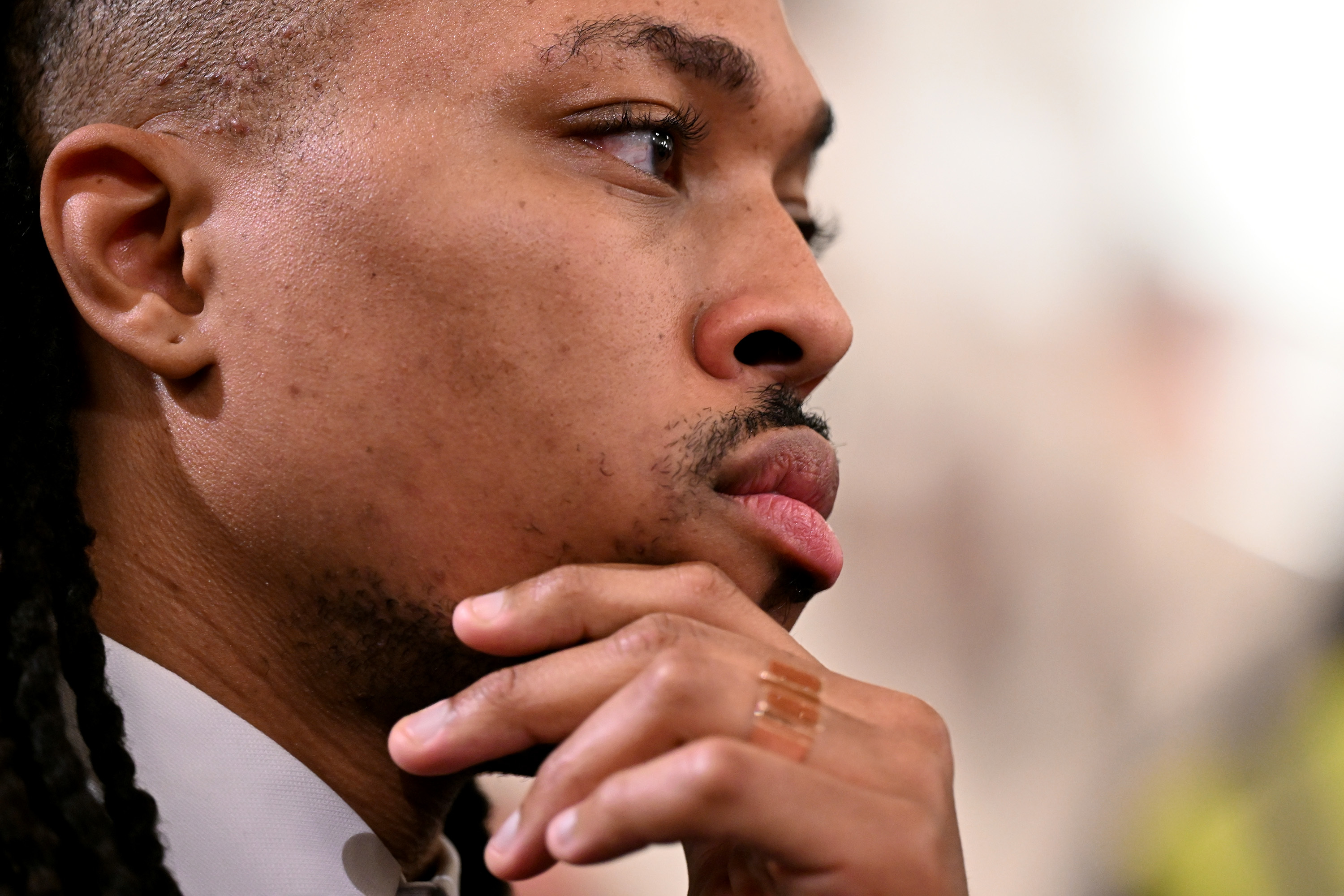
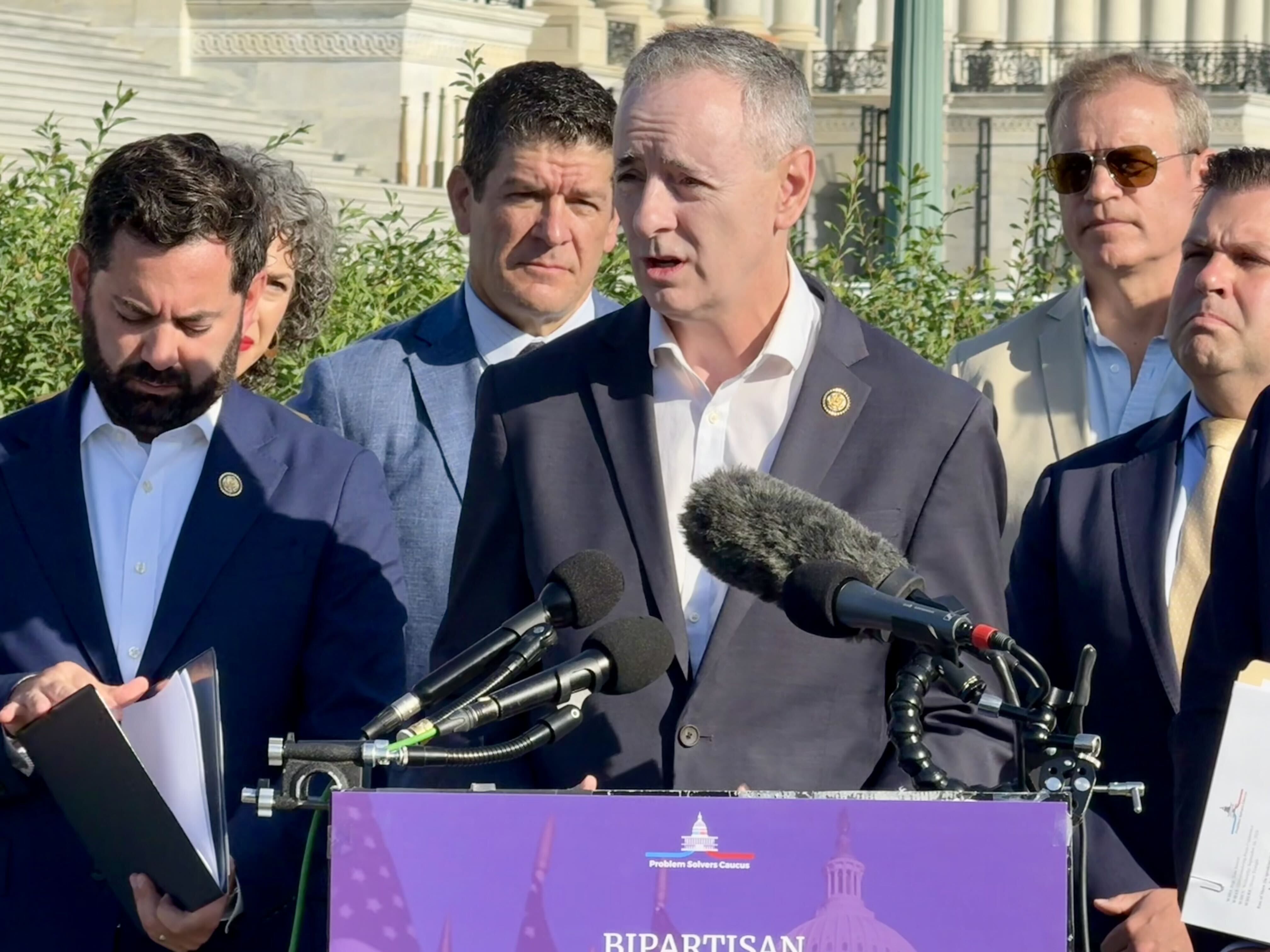
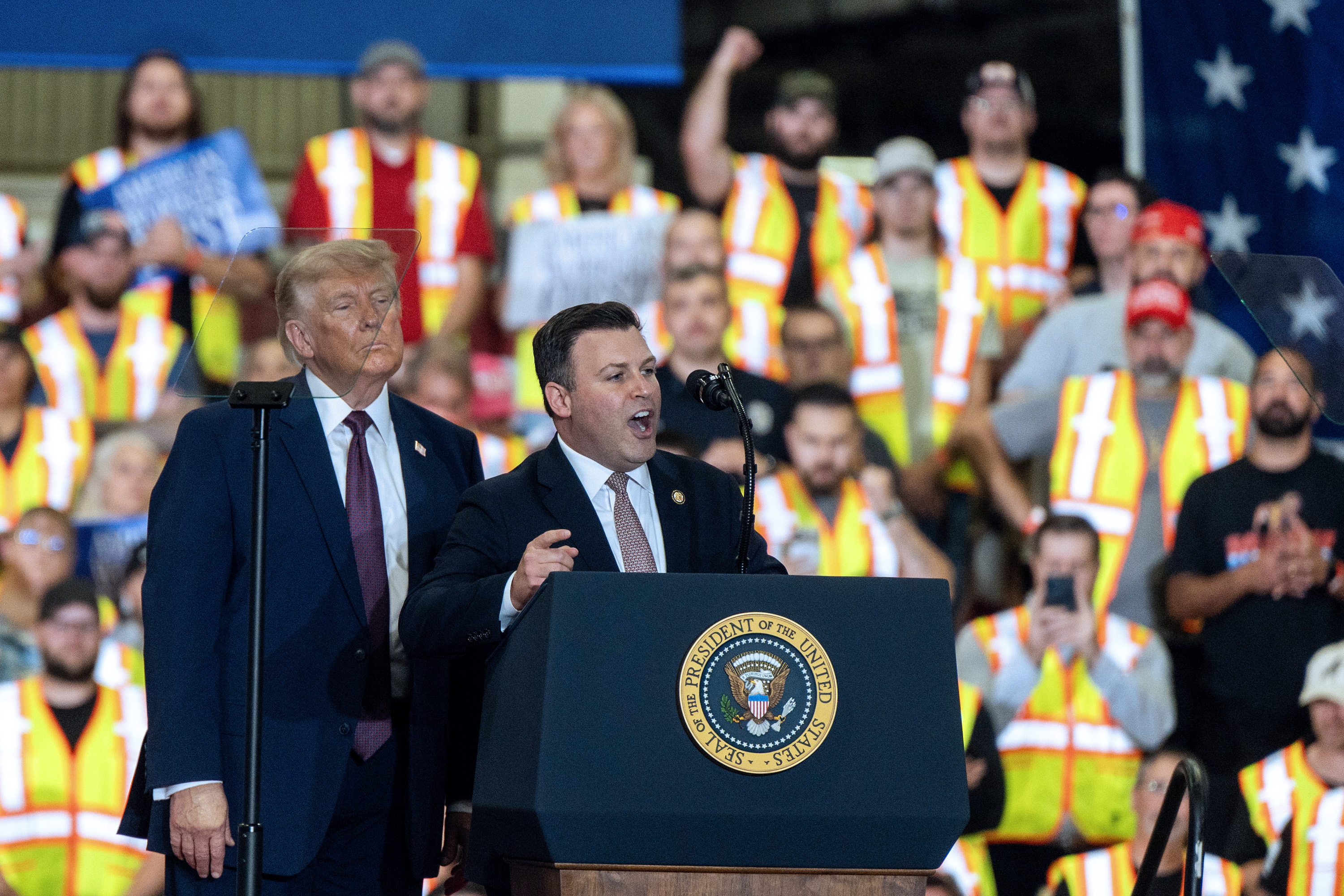
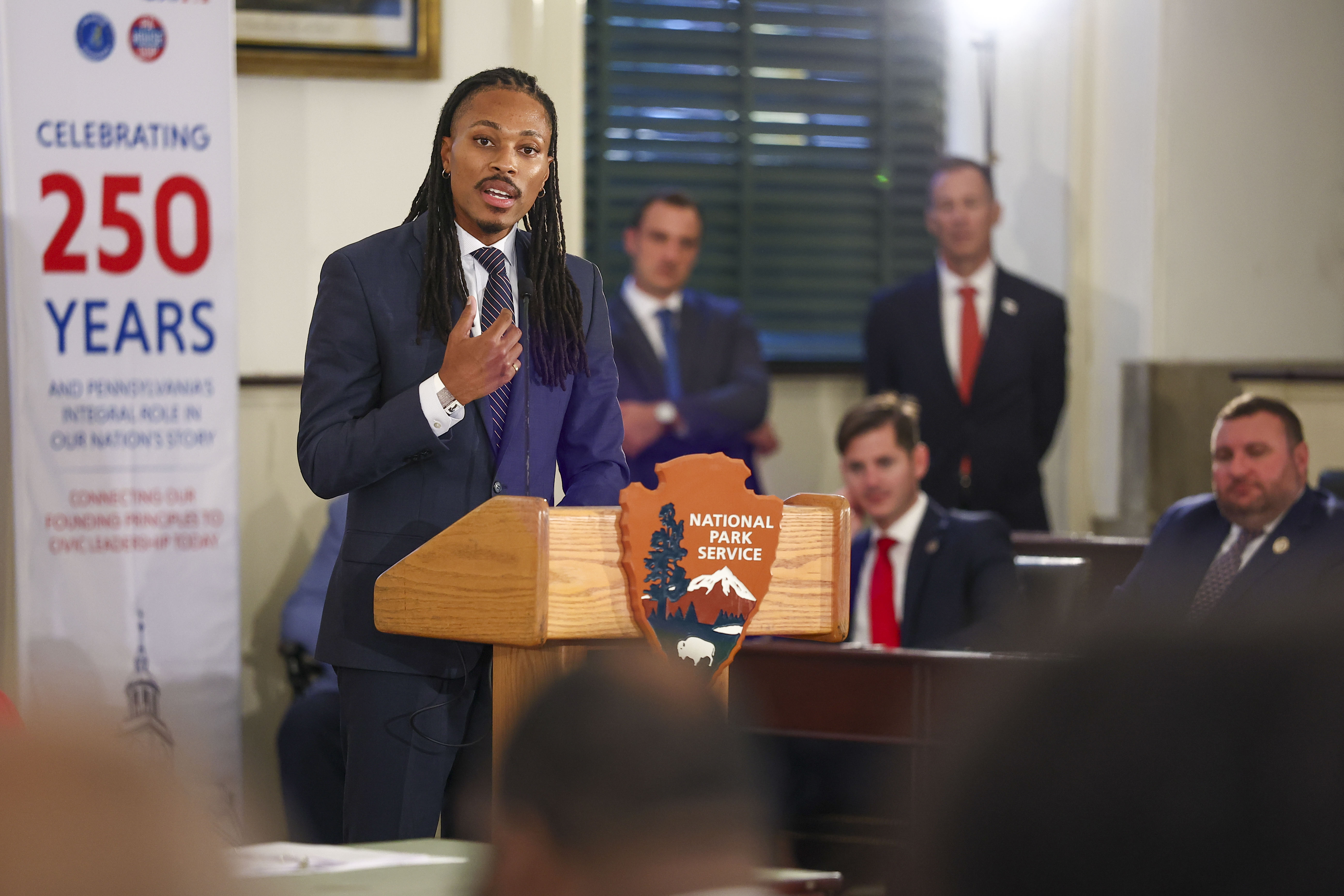
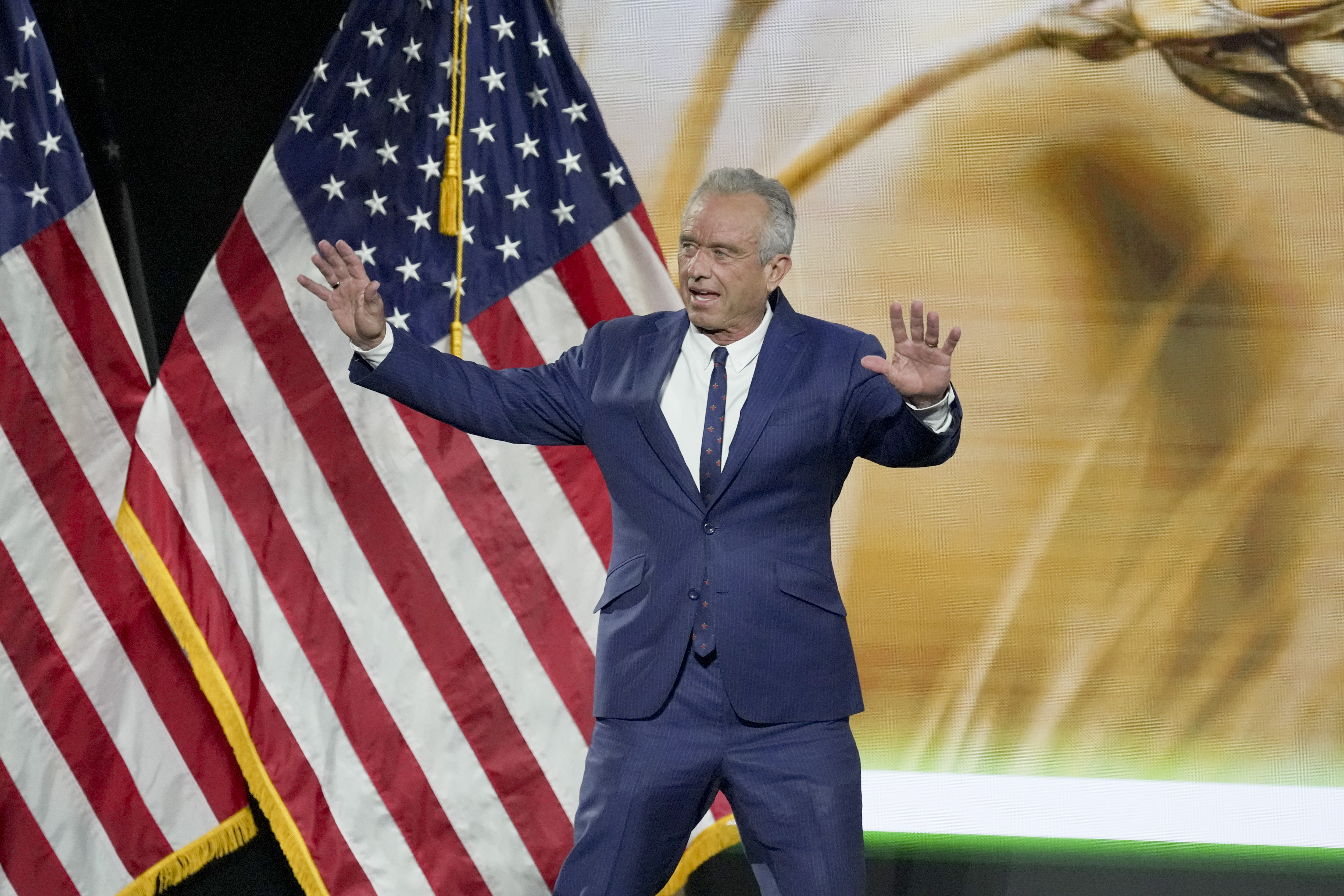
Democratic State Rep. Malcolm Kenyatta on Friday called for Republican Rep. Aaron Bernstine to resign from the Pennsylvania House after he reportedly useda homophobic slur against Kenyatta, who is gay, earlier this week.
“Pennsylvania is better and bigger than this,” Kenyatta, who represents Philadelphia, said in a video message posted to X Friday.
He added that he’s calling for Bernstine, who represents portions of Butler and Lawrence Counties in Western Pennsylvania, to step down “not because I’m angry at him or because he hurt my feelings. It’s because his behavior falls so far beneath what it must mean to be a member of the House of Representatives.”
“And when you use language that demonizes people, that belittles people, it’s never about one person. It’s indicative of what you will do to anybody, and what he’d say about any Pennsylvanian,” Kenyatta said.
Along with the alleged slur, Bernstine also allegedly said in a Harrisburg bar earlier in the week that Kenyatta had lost weight, which Bernstine reportedlyattributed to AIDS, according to PennLive.
Kenyatta was not present when the alleged remarks were made.
In his post, Kenyatta said he was “deeply grateful” to leaders of the Pennsylvania Building and Construction Trades Council “who stood up in real time.”
Michael Ford, the organization’s secretary/treasurer, overheard Bernstine’s alleged remarks and told PennLive, according to the news organization. Ford didn’t respond to requests for comment.
Addressing the incident in a statement Thursday, Bernstine said, “The allegations attributed to me are false. This is a political attack.”
After news broke, various legislative groups spoke out against Bernstine, including the Democratic National Committee, for which Kenyatta serves as vice chair.
“Hateful, homophobic, and racist attacks like this have absolutely no place in our politics, our communities, or our country,” DNC chair Ken Martin said in a statement.
Several Democratic lawmakers called for Berstine’s resignation. House Democratic leadership said it was “exploring potential next steps” and called on GOP leadership to hold Berstine accountable.
The Pennsylvania House Republican Caucus called the reported conduct by Bernstine, one of its members, “troubling,” and said it “does not comport with the values and professionalism Pennsylvanians expect of their state lawmakers.”
Bernstine has been the subject of controversy in the past.
In 2020, House Republican leaders called for Bernstine’s resignation after videos of him encouraging his young son to smoke and curse surfaced. Soon after, Bernstine was reelected, and the demands quieted.
Three years earlier, in the midst of Black Lives Matter demonstrations in which motorists were blocked, Bernstine posted on X, “If anyone EVER tries to stop my car on a highway with negative intentions… I will not stop under any conditions.”
On Friday, in concluding his remarks on X, Kenyatta suggested it’s time to move on.
“Let’s all in united voice demand better, demand more, and then let’s get back to work on the serious stuff,” he said.
SCRANTON — Four of Mike Parry’s tenants can no longer afford to pay their rent. Suddenly, their financial pain is his.
“It’s the affordability of everything that’s the problem,” said Parry, 60, of Clarks Summit, Lackawanna County. “We’re all feeling it now.”
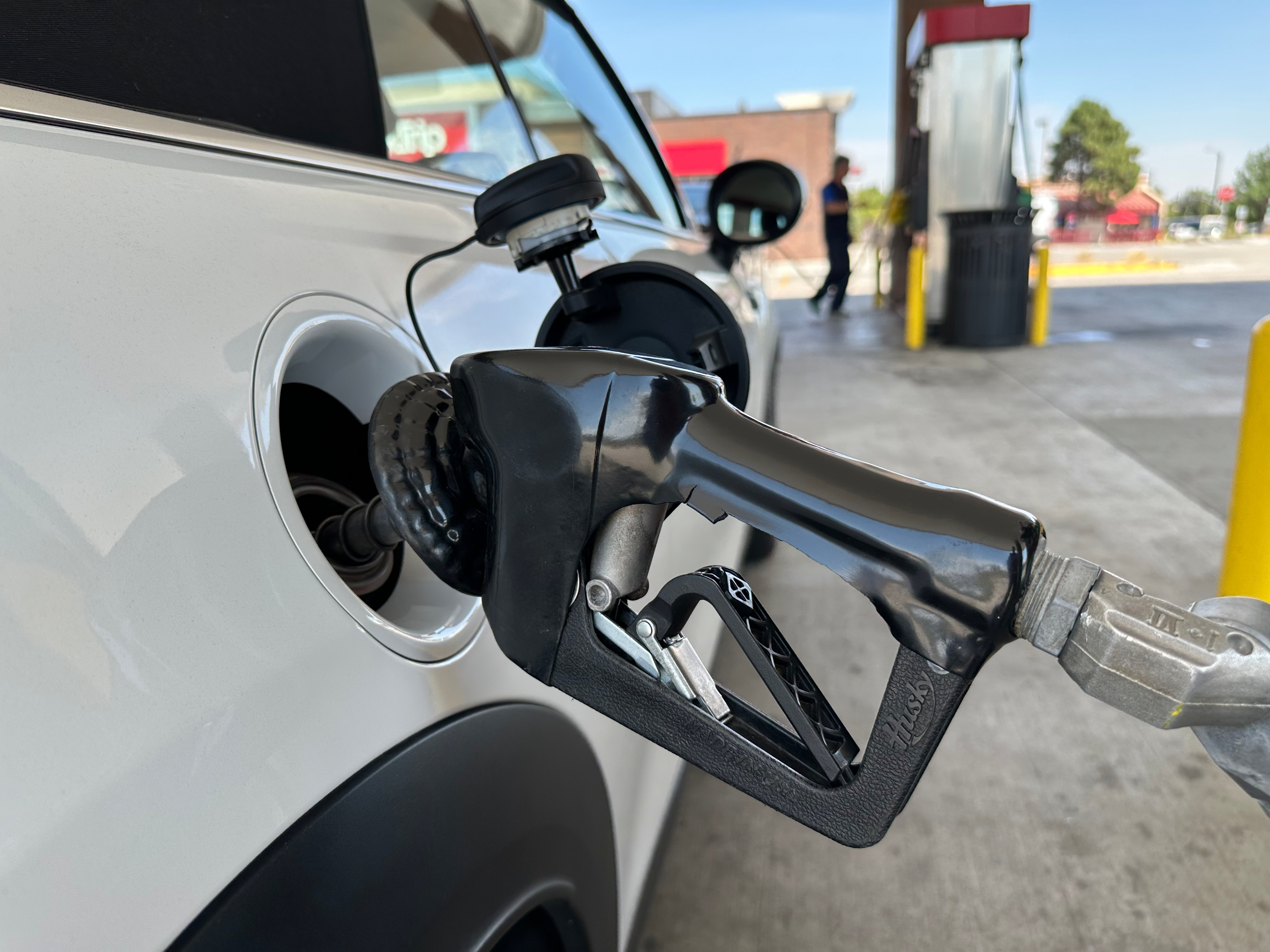
With the war in Iran rocketing gas to almost $5 a gallon, inflation surging to 3.4% from 2.6% in 2025, and food prices up nearly 3% over last year, the high cost of living is weighing on the minds of many voters — and candidates — as the midterm elections draw near.
Nowhere is that more critical than in four tightly contested Pennsylvania congressional districts that could decide the control of the U.S. House — in Bucks County, the Lehigh Valley, the Harrisburg area, and Northeast Pennsylvania.
Mike Parry of Clark Summit, Lackawanna County.Courtesy of Mike Parry
Parry, a Republican and supporter of President Donald Trump, said he is aware that many Americans hold the president and his party accountable for the affordability crisis, including in the 8th Congressional District, where Parry plans to back GOP U.S. Rep. Rob Bresnahan over Scranton Mayor Paige Cognetti, the Democratic nominee.
But other voters might not be so kind to Trump-aligned incumbents this fall.
Among likely voters in Pennsylvania, 75% disapprove of how Trump is handling the cost of living, compared with just 25% who approve, according to a recent poll fromThe Inquirer, the New York Times, and Siena University. And 73% disapprove of how he has handled gas prices, vs. 24% who approve. About 65% disapprove of his handling of the economy, vs. 34% who approve.
“It doesn’t matter what party you’re in,” Parry said. “We’re all getting hammered the same.”
‘Spend less’
At his local Wawa gas station in Allentown, P.J. Santos, 32, removed his finger from the pump trigger before his tank filled.
“So I buy less than I need,” he added, tightening his gas cap. “Same goes for date nights with my wife: Spend less.”
That is harder when you’re buying food, said Tammy McCoy, 52, of Easton,in the same district.“Walk into any grocery store,” said McCoy, a Democrat and professional cook. “It’s like you have to hand them $50 at the door.”
(function(){function e(){window.addEventListener(`message`,function(e){if(e.data[`datawrapper-height`]!==void 0){var t=document.querySelectorAll(`iframe`);for(var n in e.data[`datawrapper-height`])for(var r=0,i;i=t[r];r++)if(i.contentWindow===e.source){var a=e.data[`datawrapper-height`][n]+`px`;i.style.height=a}}})}e()})();
Trump, she remembered, promised to lower priceson Day 1 of his presidency. Not only did that not happen, she added, he raised tariffs, making imported staples like coffee, nuts, and olive oil more expensive. “Because of that,” McCoy added, “I’m against him and Republicans.”
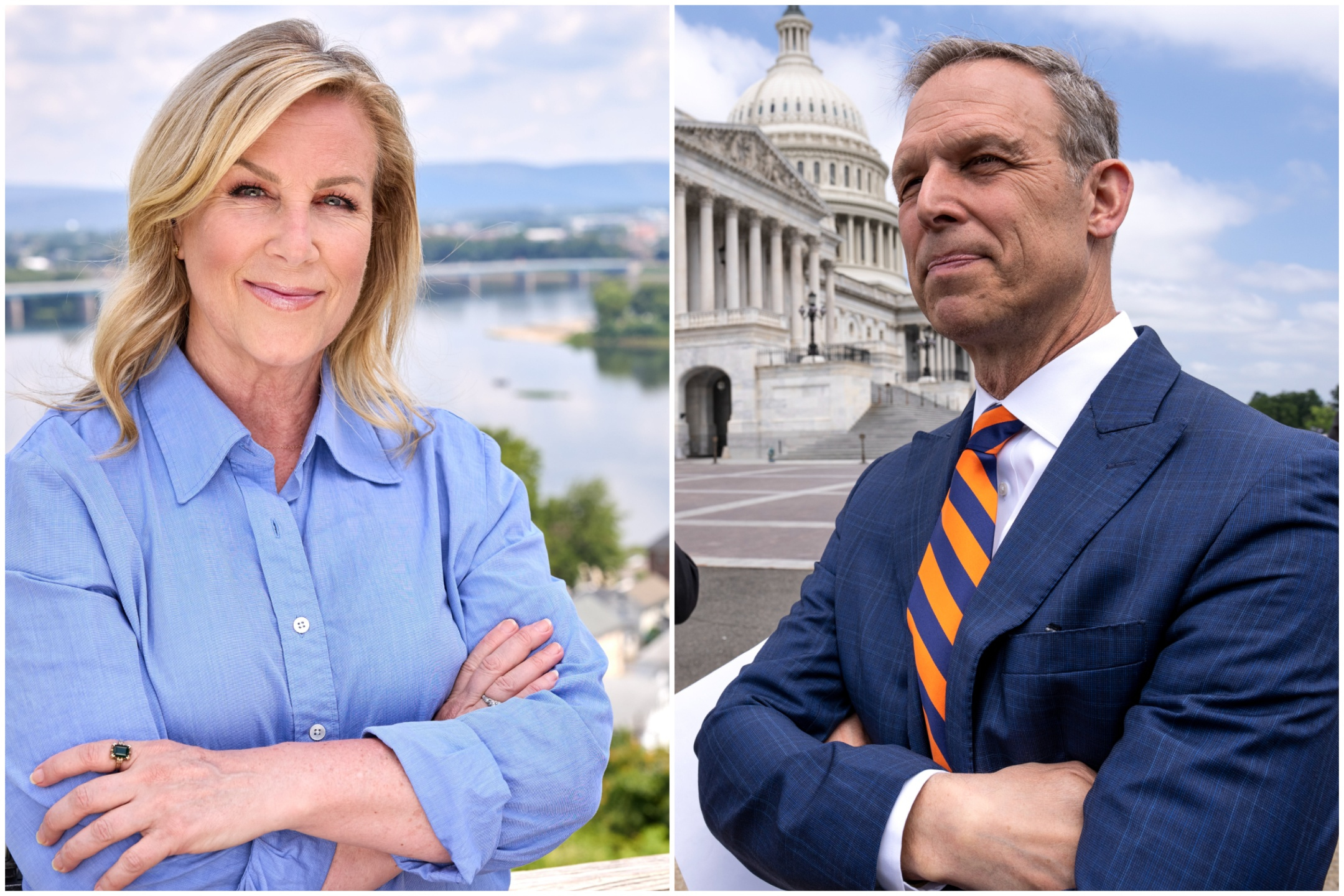
Tapping into the frustration over food prices, Democrat Janelle Stelson’s campaign is pointing to the cost of hamburgers as she seeks to oust Republican U.S. Rep. Scott Perry in the 10th Congressional District.
Janelle Stelson (left) and Rep. Scott Perry, R-Pa.(right) from a Stelson campaign photo in 2024, the last time the two squared off against each other in a bid to represent the 10th Congressional District. Stelson Campaign, AP
Stelson eats a burger in a TV ad that says Americans now pay $7.29 for a pound of ground beef —a result of tariffs Trump imposed and Perry supported.
But criticism of Trump’s tariffs will not sway Tammy Green, 60, a Republican voter in the 8th Congressional District who supports Bresnahan over Democrat Cognetti.
“Because he’s a businessman, President Trump understands the economy. … He’s negotiating fair prices with tariffs,” said Green, a former travel agent who lives in West Wyoming, Luzerne County.
More households need help
On a hot September day in Levittown, people gathered to celebrate the grand opening of the new headquarters of the United Way of Bucks County. Focused on helping anyone experiencing financial hardship, the building features an expanded HELP Center, where diapers, fresh produce, and clothing are available at no charge.
As need skyrockets, the nonprofit expects a 40% to 50% increase in demand this year, Marissa Christie, president and CEO, said in an interview.
“Folks are telling us that in the grocery store, their budget is not going as far as it used to,” Christie said. “When they go to fill up their gas tank, their money is not going as far as they expected.”
Attending the event alongside other local lawmakers was U.S. Rep. Brian Fitzpatrick (R., Bucks), who secured $4.15 million in federal funds for the building and said the agency will “always be in that top-10 list” of key nonprofits helping those in need.
U.S. Rep. Brian Fitzpatrick (R., Bucks) speaks outside the U.S. Capitol about legislation to put national restrictions on gerrymandering on Sep. 16, 2026.Sam Janesch / Staff
The cost of living has become a focal point in the 1st Congressional District race as Fitzpatrick fends off a challenge from Democratic County Commissioner Bob Harvie in the Bucks County-based swing district.
Pennsylvania Democrats, including Harvie, have centered their campaign messaging on affordability in hopes of appealing to voters across the political spectrum.
“Costs are what affect people every single day … whether it’s at the pump, whether it’s in the grocery store,” Harvie said in an interview with The Inquirer’s Editorial Board. “Housing costs obviously are huge. It’s a major issue here in this district, especially in the county.”
(The Editorial Board, which runs The Inquirer’s opinion pages and decides endorsements, operates independently from the newsroom. Newsroom editors and reporters have no role in endorsements, and opinion staffers have no role in news coverage.)
Fitzpatrick, too, acknowledged in an interview at the U.S. Capitol last month that affordability is the top issue not just in this election, but in every election.
“The No. 1priority, the No. 1 focus, has to be on affordability — has to be,” he said. “That’s the issue that got Trump elected in ’24. It’s what got [New York Mayor Zohran] Mamdani elected in ’25. It’s what people care about.”
‘Affordability front and center’
Demonstrating their awareness of voter focus on the high cost of living, Trump administration officials and local Republicans repeatedly emphasized “affordability” as they touted their work to combat rising electricity prices at a PPL Electric Utilities facility in Allentown last week.
“This is a quick way to lower electricity prices and increase reliability,” U.S. Energy Secretary Chris Wright said as he announced up to $71.5 million in federal funding for PPL, which was among $2 billion in new spending aimed at improving the electric grid.
Upgrades to existing transmission lines will include new technology like sensors to detect weather conditions, improving efficiency and ultimately lowering electricity costs, according to the Energy Department.
Asked how quickly consumers might see those improvements, Wright did not specify a timeline but noted that new, large-scale energy users — like data centers — are negotiating with utilities about how much of the increased demand they will cover.
Mackenzie, a freshman lawmaker whose district includes the Lehigh Valley and Poconos, also emphasized a bill he supports that would set federal standards for data centers to pay for their electricity use, and another to promote transparency around retail electric costs.
President Donald Trump invites 7th District U.S. Rep. Ryan Mackenzie (right) to the stage to visit Mack Trucks in Macungie, outside Allentown in the Lehigh Valley, in June.Tom Gralish / Staff Photographer
Mackenzie said energy policy needs tokeep“affordability front and center.”
The war’s economic consequences
Some Trump voters say they are willing to pay more for gas and other essentials as the president pursues his policy goals at home and in Iran.
“We incur a cost that stinks now to avoid another Sept. 11 later,” said T.J. Fitzgerald, 60, a Republican bail bondsman from Nanticoke, Luzerne County, in the 8th Congressional District. “Fighting Iran, a terrorist organization, is worth inflation at the pump.”
Ryan Kavulich, a 37-year-old project manager from Dunmore in nearby Lackawanna County, disagreed with that logic.
“The war’s a nightmare with what it’s costing for diesel,” said Kavulich, a Democrat who plans to back Cognetti in November.
(function(){function e(){window.addEventListener(`message`,function(e){if(e.data[`datawrapper-height`]!==void 0){var t=document.querySelectorAll(`iframe`);for(var n in e.data[`datawrapper-height`])for(var r=0,i;i=t[r];r++)if(i.contentWindow===e.source){var a=e.data[`datawrapper-height`][n]+`px`;i.style.height=a}}})}e()})();
People in the 8th District know that Bresnahan voted against ending the war with Iran in September, Kavulich said.
“And that makes voting for Paige [Cognetti] in November the easiest choice ever,” he said. “So many people around Scranton have a blue-collar, kitchen-table, commonsense vibe. They know going into Iran isn’t what you do. They know it’s time to be over Bresnahan and Trump.”
As the cost of fuel continues to climb, even some longtime Republicans in the district are expressing their doubts about the economic consequences of Trump’s war.
“I voted for Trump three times,” said Greg Kerrick, 58, a Republican voter from Scranton.
“But I don’t like him pushing up gas prices,” added Kerrick, who is unemployed. “And I feel for anyone paying over $4 a gallon.”
The Pennsylvania House Republican Caucus chastised a GOP state legislator Thursday after hereportedly hurled a homophobic slur earlier in the week at Democratic State Rep. Malcolm Kenyatta of Philadelphia, who is gay.
State Rep. Aaron Bernstine, a Republican who represents portions of Butler and Lawrence Counties in Western Pennsylvania, also allegedly said in a Harrisburg bar that Kenyatta had lost weight, which Bernstine allegedly attributed to AIDS, according to reporting by PennLive. Kenyatta was not present when the alleged remarks were made.
“The alleged conduct is troubling and does not comport with the values and professionalism Pennsylvanians expect of their state lawmakers,” Republican Caucus spokesperson Jason Gottesman said in a statement.
“All elected officials, regardless of party or position, must act in a manner consistent with the expectations of their constituents. When they fall short of that standard, it is upon them to take personal and individual responsibility for their actions quickly and appropriately.”
Kenyatta didn’t respond to several requests for comment, but other Democrats expressed their outrage on his behalf, including the Democratic National Committee, for which Kenyatta serves as vice chair.
“Hateful, homophobic, and racist attacks like this have absolutely no place in our politics, our communities, or our country,” DNC chair Ken Martin said in a statement.
The Democratic leaders of Pennsylvania’s Legislative LGBTQ Equality Caucus, as well as the Black Caucus, demanded Berstine’s immediate resignation in a joint statement Thursday, saying that Bernstine’s “unacceptable” conduct has rendered him “unfit to serve.”
“We are calling on all House members, but especially Republican leaders, to denounce his behavior, to join us in demanding his resignation, and for Republican leaders to identify the steps they will take to guard against this kind of pathetic behavior within their caucus,” said the statement from Black Caucus Chair Napoleon Nelson (Montgomery County), and LGBTQ Equality co-Chairs Ismail Smith-Wade-El (portions of Lancaster County), and Jessica Benham (portions of Lancaster County).
Bernstinedenied that he made the comments.
“The allegations attributed to me are false. This is a political attack,” he said in a statement Thursday.
He also referenced an altercation he had at the bar that same night with individuals he identified as being with the Pennsylvania Building Trades Council. Saying he was the subject of threats, he added that he alerted local police.
Berstine went on to criticize reporters who initially broke the story. “Reporters should scrutinize elected officials, including me,” he said. “But scrutiny is not a license to publish falsehoods or omit critical context. We are exploring all available legal remedies.”
The Philadelphia House Delegation posted a statement on X Thursday afternoon, calling for Bernstine’s resignation in response to his “alleged disgusting, hate-filled tirade.”
House Democratic leadership said it was “exploring potential next steps” and that majority party looks forward to “hearing what repercussions Republican House leadership will impose for his abhorrent behavior.”
Expulsion requires two-thirds majority in the House, which could happen if some Republicans crossed the aisle in the narrowly divided chamber.
In 2020, House Republican leaders called for Bernstine’s resignation after videos of him encouraging his young son to smoke and curse surfaced. Soon after, Bernstine was reelected, and the demands quieted.
Three years earlier, in the midst of Black Lives Matter demonstrations in which motorists were blocked, Bernstine posted on X, “If anyone EVER tries to stop my car on a highway with negative intentions… I will not stop under any conditions.”
Staff writers Gill McGoldrick and Michelle Baruchman contributed reporting.
A large majority of likely Pennsylvania voters dislike Health and Human Services Secretary Robert F. Kennedy Jr., according to a poll conducted in the wake of his clash with Gov. Josh Shapiro over the state’s measles outbreak.
The poll, released Thursday, found that 61% of respondents have an unfavorable view of Kennedy, while only 33% said they hold a favorable one of him.
Kennedy,who has a history of anti-vaccine activism, has been embroiled in a heated debate with Shapiro, the state’s popular governor, over measles-associated deaths in Pennsylvania.
“The poll shows that people see RFK Jr. for what he is: the single worst person to be HHS secretary during a massive measles epidemic,” said Paul Offit, director of the Vaccine Education Center at Children’s Hospital of Philadelphiaand a longtime critic of Kennedy.
(function(){function e(){window.addEventListener(`message`,function(e){if(e.data[`datawrapper-height`]!==void 0){var t=document.querySelectorAll(`iframe`);for(var n in e.data[`datawrapper-height`])for(var r=0,i;i=t[r];r++)if(i.contentWindow===e.source){var a=e.data[`datawrapper-height`][n]+`px`;i.style.height=a}}})}e()})();
State health officials have been responding to a measles outbreak of more than 800 cases, as of Wednesday, that included four deaths, two of them infants.
The survey of likely voters was conducted between Sept. 15 and 21, a period that overlaps the war of words between the Democratic governor and Trump’s health secretary.
“This serious situation continues to be made worse by RFK Jr. playing games with public health and safety,” Shapiro said on X last week. “It’s long past time for [Kennedy] to stop stoking vaccine skepticism and misinformation and compromising the serious mission of the nation’s public health agencies.”
For his part, Kennedy, in a post on X last month, accused Shapiro of choosing “to politicize this outbreak instead of implementing a unified public health response.” He also contended in that post that he has promoted vaccination as the “most effective way to prevent measles infection.”
But Kennedy has explicitly stated that vaccines cause autism, Offitnoted, and late last year, Kennedy orderedthe CDC to change its website to say its long established position that vaccines don’t cause autism is not an evidence-based claim.
Kennedy has also said that the measles vaccine was never fully tested and that it wanes over time, both of which have been disputed by medical authorities with decades of evidence backing its safety and efficacy.
Lesa Yeager, a 63-year-old independent voter from State College who participated in the survey, said she was concerned about the spread of measles in Central Pennsylvania, and she wished Kennedy would “encourage people to the get the vaccines.”
She wasn’t familiar with his back-and-forth with the governor, but said her frustration with Kennedy is longstanding.
“I have a kid with special needs, and [Kennedy]is going on about how the vaccines cause autism, and everybody knows that’s not true,” she said. “He has spread such misinformation, and he’s wackadoodle.”
For weeks, the CDC did not publicly list Pennsylvania’s measles-associated deaths, reportedly at Kennedy’s order, a charge his agency denied. “It looks as though RFK is ignoring measles deaths here,” Offit said.
On Wednesday, the CDC acknowledged that a measles-associated death had occurred in 2026, without saying where it happened. The CDC said the number is “subject to change.” Pennsylvania is the only state where a measles death has been widely reported.
In a statement, Emily Hilliard, HHS press secretary, declined to address the poll, but said that the public’s trust in vaccines was eroded significantly during the pandemic, caused by “mismanagement, overreach, misinformation, and mandates.”
“Attributing the measles resurgence to the Trump administration fundamentally misrepresents when and why the resurgence began,” Hilliard said, adding that Kennedy has “been clear that vaccination remains the most effective way to prevent measles.”
Kennedy and Shapiro have repeatedly battled over vaccine policy during the Trump administration. Shapiro joined a lawsuit earlier this year over federal changes to the childhood vaccine schedule.
Trump last month signed an executive order that saidthe MMR vaccine — a combination vaccine that protects against measles, mumps and rubella — “should be administered in three separate single-disease shots” during three separate doctor’s visits. Immunologists have disparaged the idea, saying there’s no medical reason to do so.
Shapiro has said Pennsylvania won’t alter immunization guidelines in response to Trump’s order.
(function(){function e(){window.addEventListener(`message`,function(e){if(e.data[`datawrapper-height`]!==void 0){var t=document.querySelectorAll(`iframe`);for(var n in e.data[`datawrapper-height`])for(var r=0,i;i=t[r];r++)if(i.contentWindow===e.source){var a=e.data[`datawrapper-height`][n]+`px`;i.style.height=a}}})}e()})();
The poll found that 53% of likely voters trust Shapiro to do a better job on vaccine policy than his Republican opponent Stacy Garrity, a Trump-backed candidate who participated in Kennedy’s “Make American Healthy Again” event in Harrisburg earlier this year.
Staff writers Michelle Baruchman and Gillian McGoldrick contributed to this article.
The Trump administration will be overhauling the SNAP program in two major steps, forcing Pennsylvania to pay more for the federal food program and jeopardizing those in need, according to Gov. Josh Shapiro’s office.
The first phase begins Oct. 1, when states will have to pay for 75% of the expense of administering the Supplemental Nutrition Assistance Program, an end to the 50-50 cost-sharing relationship between the federal government and the states that existed for decades.
The second and more dramatic change is scheduled to commence a year from now, when the Trump administration demands that states pay for a portion of SNAP benefits — an unprecedented arrangement that could put Pennsylvania on the hook for as much as $400 million of the approximately $4 billion the state receives in SNAP benefits annually.
That’s a price the state is not ready to pay.
“Pennsylvania’s state budget cannot make up for huge cuts to federal SNAP funding that will shift these costs onto states,” Shapiro spokesperson Rosie Lapowsky said in a statement. “And those cuts risk leaving hungry Pennsylvanians without food assistance.”
The Trump administration plan, part of President Donald Trump’s One Big Beautiful Bill Act, is roiling Democrats and SNAP advocates who view it as an effort to weaken the food benefits program by saddling Pennsylvania and other states with the responsibility of paying for something they cannot afford.
In anticipation of the first new rule going into effect in two weeks, Shapiro earmarked $87 million in the state budget to administer the SNAP program in the state, which includes paying for operating expenses.
Burdening states with increased financial demands is “catastrophic,” said St. Joseph’s University sociologist Maria Kefalas.
Kefalas said it will force states to make drastic moves to make up for lost dollars, including making eligibility rules harder and shrinking benefits.
“The pressure on states to push people off SNAP will be tremendous,” she said. “The Trump act was written to shift blame for cuts to safety-net programs from the federal government to the states. Now, the states will be seen as the bad guys.”
The original even split for administrative costshad the state and the federal government each paying $250 million in SNAP administrative costs, according to the Pennsylvania Independent Fiscal Office (IFO), anonpartisanlegislative agency that analyzes budgetary issues.But after Sept. 30, the state could be looking at as much as a $125 million increase in payments annually, IFO figures show.
Shapiro’s $87 million budget infusion covers that increase for a portion of the state fiscal year, said Brandon Cwalina, press secretary for the Pennsylvania Department of Human Services, which oversees SNAP.
The Trump administration says that by forcing states to put skin in the game, it is incentivizing them to cut waste, fraud, and abuse in the program.
“President Trump is strengthening SNAP for the Americans who need it by ensuring these programs are sustainable for future generations,” White House spokesperson Anna Kelly said in a statement.
She added that the One Big Beautiful Bill Act implements “reasonable” cost-sharing measures with states.
Kelly also said that by signing the bill into law, Trump is “uplifting every American’s financial situation by passing the largest tax cut in history.”
But concern is growing that by compensating for SNAP shortfalls, states will pull funds from other sources.
“Does this mean money will be taken from police, courts, and other critical functions to pay for SNAP?”asked State Sen. Art Haywood, the top Democrat on the Health and Human Services Committee, who represents part of Philadelphia and Montgomery County.
Error rates
How much the state will have to pay in SNAP benefits in October 2027 depends on its payment error rate, a measure of overpayments and underpayments of benefits.
Error rates are largely unintentional and are not fraud, according to the Food and Nutrition Administration of the U.S. Department of Agriculture, which runs the SNAP program.
“It’s like doing your taxes and accidentally switching numbers,” said Ann Sanders, director of public benefits policy and programs for Just Harvest, a Pittsburgh-based anti-hunger nonprofit. “Not a crime, just a mistake.”
In fiscal 2025, Pennsylvania’s error rate was 9.2%, mostly representing overpayments, said IFO director Matt Knittel.
Even though it is below the national error rate of 10.6%, if the 9.2% level holds, Pennsylvania could be made to pay as much as $400 million a year when the new rule takes effect, IFO figures show.
“These are costs Gov. Shapiro has made clear we cannot backfill,” Cwalina said. The Shapiro administration, which has had some success lowering error rates, has introduced new technology that helps flag potential errors before incorrect payments are made.
The reorganization of SNAP’s functions and financing comes during an ongoing affordability crisis, said George Matysik, executive director of the Share Food Program, which supplies many food pantries in the Philadelphia area.
“Instead of the federal government helping to solve it, it’s just passing the buck onto the consumer,” he said. “Prices are going up, while Washington punches down on the working class.”
While the new changes have yet to kick in, Trump’s One Big Beautiful Bill Act has already altered SNAP to help pay for his tax cut.
The administration has expanded work and documentation requirements for SNAP recipients, resulting in millions of people seeing their benefits lowered or eliminated.
Nationwide, between July 2025 and May, SNAP rolls have decreased by more than 5 million people, or 12%, according to the Center on Budget and Policy Priorities, a left-leaning Washington-based think tank.
As of July, the latest Pennsylvania DHS estimates show that 94,200 people have lost benefitssince Trump’s law took effect.
The changing contours of the SNAP program worry legislators accustomed to its normally steady rhythms.
“There was a 60-year-long partnership between the federal government and the states on SNAP, without problems,” Haywood said.
“SNAP worked well since it got its start in 1964.But now, unfortunately, the current administration is dramatically changing it.”
Ask Pastor Daniel Cho why Korean culture has become so popular in the United States, and he just smiles, shaking his head in wonderment.
“I’m not sure, but we’re pleasantly shocked,” said Cho, 59, a Montgomery County Presbyterian minister, who is leaving soon for missionary work in Vietnam. “Turn on the TV and see Korean dramas, K-pop music, and Korean food being everywhere.
Pastor Daniel ChoAlfred Lubrano
“It’s wonderful how we’ve gotten to share our culture. When someone loves what you love, it’s exciting.”
That excitement was palpable Saturday at Montgomery County Community College in Blue Bell, where about 1,500 people gathered for “Happy Chuseok Fest 2026,” a Korean Thanksgiving celebration.
Part of a 2,000-year-old tradition, Chuseok is the time Koreans pause to reflect on family, gratitude, ancestors, harvest, and respect for nature.
“I love it because I get to spend time with my family,” said Kelsey Chung, 14, a ninth grader from Newtown Square. “It’s important to remember the traditions.”
Sponsored by the Korean Culture Community Foundation and Montgomery County, the Chuseok festival is highly significant for the roughly 30,000 to 40,000 Korean Americans living in Pennsylvania, said Sharon Hartz, president of the foundation.
“We know Christian and Jewish holidays,” she said. “But Koreans didn’t really have a holiday that was theirs. Chuseok is becoming more widely known.”
At the festival, vendors were selling kimchi (fermented cabbage), kimbap (rice, vegetables, and meat in seaweed), bulgogi (marinated beef), and, of course, fried chicken, the most popular Korean food abroad, according to the Korea Herald.
Beyond chicken, Korea is widely known for a “deep-rooted culture that people around the world have grabbed onto,” said sociologist Sam Richards of Pennsylvania State University, a Korean scholar who spoke at Saturday’s event.
“South Korea was poor 60 years ago, but it’s an economic superpower now,” said Richards, described by the Korea Times as a “megastar” whose YouTube videos are popular in Korea because of his love for and understanding of the culture.
“The Korean government rebuilt the country by putting money into exporting culture — music, television, movies.”
Americans, he said, are quite familiar with the K-pop superstars BTS, the most popular band in the world. Then, among other works, there is Squid Game, the dystopian thriller TV series, as well as the black-comedy film Parasite, Richards said.
“The government succeeded, as people were attracted to what South Korea has exported.”
A key to the appeal of Korean entertainment is that humility, a national trait, stands out among actors and musical artists, Richards said. Also, he noted, “you won’t see Korean artists putting themselves forward.”
“Pop stars say ‘we,’ not ‘I,’” Richards said.
Korea’s new role in the American zeitgeist is remarkable, said Nani Shin, executive director of the Philadelphia Asian American Film Foundation, whose organization was tabling at the Chuseok event.
“No one in the 1970s knew where Korea was,” Shin, who was born in South Korea, said. “Now, the culture isn’t only known, but celebrated. It’s wild.”
It is important to remember, however, that Koreans look to keep their traditions alive for themselves and their children.
“That’s why I’m here,” said Will Press, 43, who stood outside the event Saturday. He married a Korean woman, he said, which means “she, and I, want our children to know that Korea is part of their heritage.”
Gov. Josh Shapiro on Thursday called on the federal government to enact new guardrails on artificial intelligence, days after a number of tech industry figures raised concerns about the danger posed by AI’s rapid development.
As he spoke in Pittsburgh, the Democratic governor was critical of both House Speaker Mike Johnson (R., La.) and President Donald Trump for refusing to erect such safety measures “whether out of willful ignorance or personal greed.”
And, he said, he does not believe that concern about this technology “is a hoax, as our president has called it.”
But as he urged more regulation of the industry, he also warned against adopting an overly pessimistic view of the technology.
“I am not a doomer. I don’t think it is inevitable that AI is going to take over the world, or that someone will misuse it to kill us all or to do harm,” Shapiro said.
Shapiro’s appearance at the AI Horizons PGH Summit, sponsored by Microsoft and the Bank of New York, helps position the governor as a leader on the issue among Democrats.
Last week, former President Barack Obama urged Democrats running for the White House to define the risks of AI, according to the Washington Post.
That advice — and Shapiro’s speech — followed warnings from AI executives last week that the technology is developing too quickly, and that it poses threats to human life.
“I won’t lie to you — there are real dangers,” said Anthropic CEO Dario Amodei, adding that the development of AI has accelerated much faster than he had expected.
Shapiro —who has consistently led his November opponent, Stacy Garrity, in polls — is widely expected to pursue a presidential run in 2028 after this fall’s reelection contest.
A growing concern among voters, AI is expected to continue being a significant issue for candidates, and Shapiro has shifted his stance in recent months to reflect questions about the technology.
In August, he issued an executive order that restricts data center development in the state, a noticeable shift from when he enthusiastically supported a $20 billion commitment from Amazon last year to build at least two data centers in Bucks and Luzerne Counties.
Shapiro now says future developments require local approval for projects to receive state permits, which in effect may block many developments from moving forward.
“The real folks I listen to are the people of Pennsylvania,” Shapiro told Politico before Thursday’s speech.
In contrast to the growing voices calling for AI guardrails, President Donald Trump on Monday wrote on social media that the only guardrail the industry needed it already had: “a STRONG AND SMART (High IQ!) PRESIDENT.”
Shapiro, in his speech, said he is calling on the federal government to establish “strict rules of the road” regarding AI, and then to enforce those rules.
“I’ve called on the federal government to step up and regulate the AI industry, just like they do for nearly every other industry,”he said.
Industry leaders should not exclusively guide the regulatory process, Shapiro said. The government should also work with leading researchers.
What is vital, Shapiro said, is establishing rules that require independent third-party oversight of “frontier” — most advanced — models, increasing transparency into the development of these models, and prioritizing safety.
Protections might mean placing some limits on technology sharing and slowing down frontier AI development until we can be sure that these systems are safe, Shapiro said.
Acknowledging that building a regulatory network from the ground up is hard work, Shapiro took a jab at Congress, and Johnson in particular, when he said “too many in Congress are content to do absolutely nothing.”
Shapiro noted that the speaker adjourned the House until after the election just days after companies issued “apocalyptic” warnings about the real dangers of AI.
“He has abdicated his responsibility to lead at a time when we cannot afford weakness and retreat,” Shapiro said of Johnson.
The United States should work with other nations on an international consensus on how to use AI, but that is hard to do when Trump has “isolated” us from the world, Shapiro said.
When Trump meets with Chinese President Xi Jinping next week, Shapiro said, he hopes Trump will “leave bluster and the showmanship at the door” and engage productively with him.
As for the home front, Shapiro said, “I’ll be leading the conversation here in Pennsylvania for safe and responsible use of AI.”
Philly just finished celebrating America’s 250th anniversary with crackling fireworks,an early morning concertanda string of patriotic events throughout the summer.
But now that the confetti has been swept away and the World Cup traffic has finally subsided, you may be thinking it’s a good time to get your head out of the 18th century.
If only it were that easy.
In a mere 11 years, Philadelphia will be the center of yet another semiquincentennial celebration: the 250th anniversary of the U.S. Constitution.
And because you live in the city where they invented America, you’re in store for another round of historic commemorations.
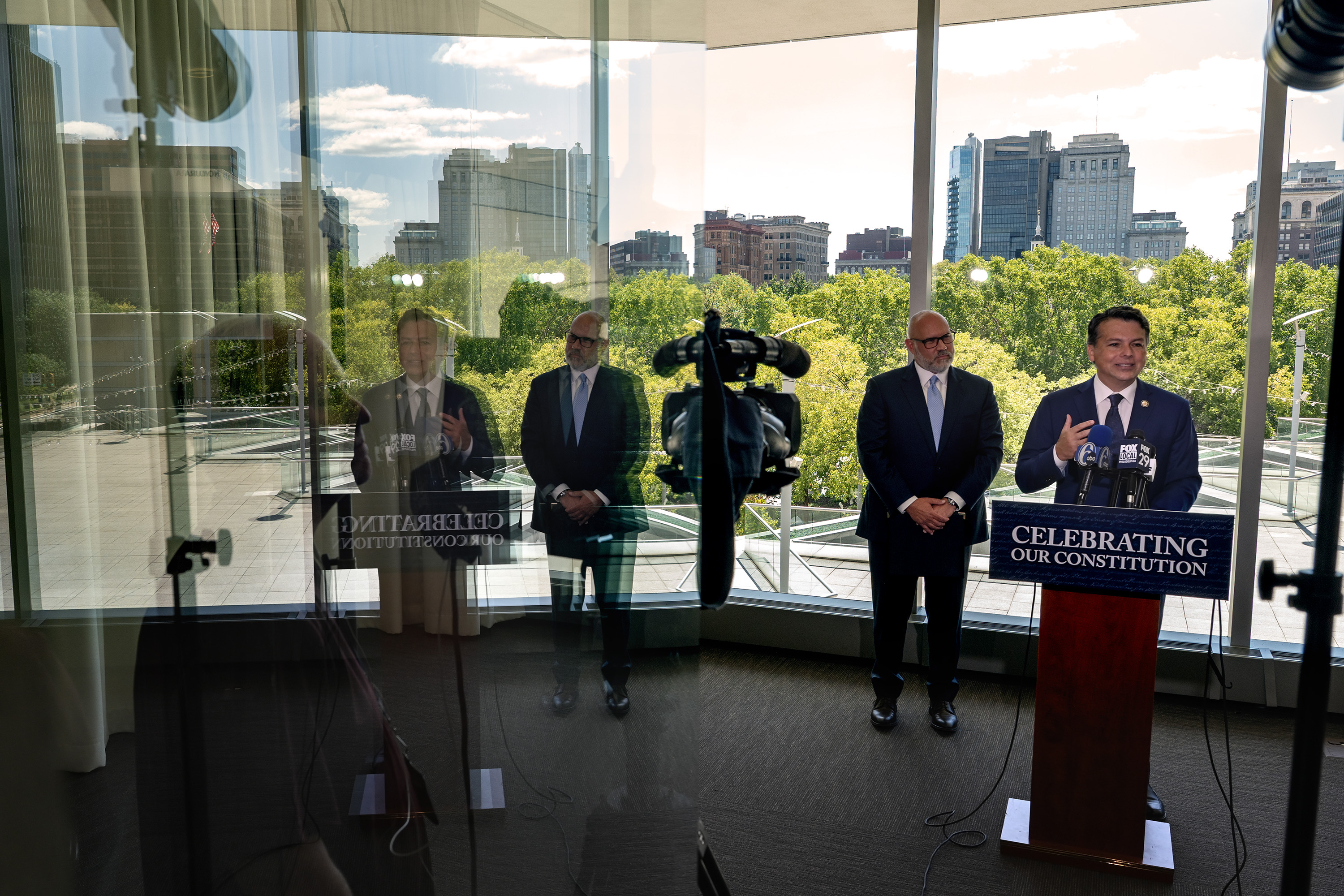
To drive home the point, Democratic U.S. Rep. Brendan Boyle of Philadelphia announced Monday at the National Constitution Center that he’ll be introducing legislation to create afederal commission to plan the celebration of the original 4,543-word document (7,591 words if you count all 27 amendments) in the year 2037.
Vince Stango (left) interim president and CEO of the NCC and and U.S. Congressman Brendan F. Boyle.Tom Gralish / Staff Photographer
“It’s a special moment,” Boyle said. “We can’t waste any time to be fully prepared to meet that moment.”
As though sensing that people here might have a historical hangover, Boyle added gleefully, “I never met a Philadelphian who’s partied out!”
Vince Stango, interim president and CEO of the National Constitution Center, said it’s never too early to start planning the party.
“This gives us the opportunity to carry forward the momentum of 2026,” he said. What comes between now and 2037, Stango said, is a “civic decade” of speaking about and getting more knowledgeable of the document that set up America’s national government, and that protects citizens’ rights.
“Here in Philadelphia,” he said, reminding us of our local duties, “we have a special responsibility” to honor the Constitution, a made-in-Philly product that the world has long envied and admired.
Boyle added that “so many of the freedoms protected by the Constitution are very much a live issue today.” He added that the start of planning for 2037 “very much coincides with the national conversation we are having over a whole host of constitutional rights.”
Though Boyle wasn’t specific, the nation has been arguing over many of the 281 executive orders President Donald Trump has issued since returning to office last year, demonstrating a reliance on Article II of the Constitution.
As an example, in June, the U.S. Supreme Court struck down Trump’s executive order to end birthright citizenship, guaranteed under the14th Amendment to the Constitution.
Boyle reminded listeners that he’s been very much involved with 250th-style celebrations.
Two days before the July Fourth celebration this year, more than30 members of the 119th Congress attended an event at Independence Hall marking the passage of the declaration. Boyle, whose district includes the site, had long endeavored to gather his colleagues for the occasion.
“Anniversaries are not just about honoring the dead, but educating the living.” Boyle said.
And keep in mind Stango’s parting words Monday: We will all be celebrating the 250th anniversary of the Bill of Rights here in Philadelphia in 2041.
Don’t forget to reserve your spot to see the fireworks then.
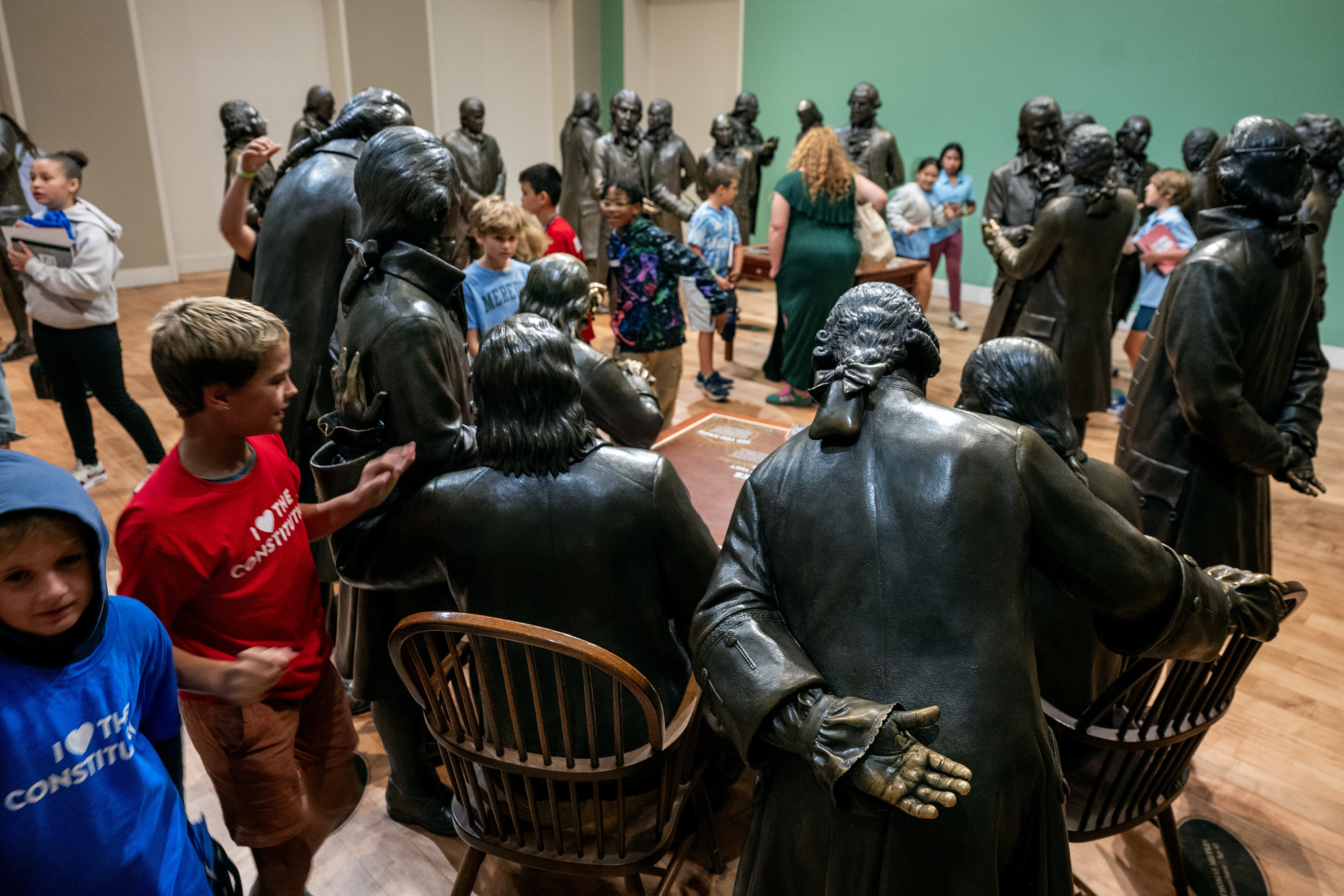
Students from the William M. Meredith School in Queen Village mingle with 42 life-size, bronze statues of the framers of the U.S. Constitution at the National Constitution Center during a Sept. 17, 2025 visit, on the 238th anniversary of the document’s signing.Tom Gralish / Staff Photographer
Pennsylvania Gov. Josh Shapiro has “real concerns” about the way Flock cameras — automated license plate readers that capture and store data gleaned from moving cars — are being used in the state, a spokesperson said Wednesday.
Open to banning the technology, Shapiro is wary of how Pennsylvanians’ privacy can be protected, Rosie Lapowsky, Shapiro’s spokesperson, said in a statement. Flock cameras can record license plates and other vehicle features such as bumper stickers of every car that passes them.
Lapowsky added that commonwealth agencies, including the Pennsylvania State Police and the Department of Transportation, “do not own Flock cameras and will not allow them to be used or installed on Commonwealth property.”
Shapiro, a Democrat up for reelection in November, has pointed out that there a several proposals being weighed by the Pennsylvania General Assembly that would either ban or strictly regulate this technology, Lapowsky said.
“And,” she added, “our administration is working with the General Assembly on what piece of legislation could make it to the governor’s desk in order to protect Pennsylvanians’ privacy.”
A bipartisan proposal would establish statewide privacy and accountability protections for automated license plate reader systems. The bill, which was introduced by Philadelphia Democratic State Rep. Tarik Khan, would create guardrails to prevent the misuse of personal data and to protect civil liberties.
In a statement Wednesday, Flock spokesperson Paris Lewbelcharacterized the cameras as “important public safety tools … helping [law enforcement] officers solve serious crimes and find missing people.”
But organizations such as the American Civil Liberties Union call the cameras “creepy” and part of what could grow into a nationwide, warrantless surveillance system.
Last week at a news conference in Franklin County, Shapiro said, “I think law enforcement needs to have tools to keep communities safe. Flock cameras are not a tool that I support. I would welcome bipartisan legislation to ban these across the state.”
The county announced it would terminate its contract with Flock, even though the sheriff’s department supported the technology.
Similarly, the Abington Township Police Department ended a contract last month that supplied the agency with Flock cameras over concerns about data security. The governor resides in Abington.
Concerns grew after it was learned that the network uses artificial intelligence to identify cars that frequently drive together, and allows officers to search for vehicles by behavior, rather than plate number.
Lewbel added that the company would “support thoughtful, bipartisan legislation that puts strong privacy, transparency, and accountability guardrails in place while preserving law enforcement’s ability to use technology responsibly to keep people safe.”
U.S. Sen. John Fetterman said Monday he agreed with President Donald Trump’s call to “Let Data Reign” after the president made a lengthy post criticizing the widespread backlash to data centers.
“There’s nothing more damaging to a Democrat than agreeing with Trump AND data centers — but what’s right is right,” said Fetterman, who has repeatedly angered members of his own party by backing Trump’s agenda.
“We must win the war for AI supremacy over China. They foment the ‘anti’ argument through misinformation,” Fetterman said on X.
The issue has increasingly taken center stage ahead of the midterm election, including in Pennsylvania. Fetterman, who does not face reelection until 2028, blamed China for fueling the public outcry against data center development in the U.S. as the two nations compete in the AI industry.
Fetterman has remained supportive of development even as voter sentiment has turned sharply against the industry. Six in 10 likely Pennsylvania voters said they opposed the construction of data centers to support artificial intelligence in a poll released last week by The Inquirer, New York Times, and Siena University.
Trump made similar arguments on his Truth Social platform earlier in the day, saying that China “could not be happier” with the political movement against data centers.
“The only reason that communities throughout the U.S.A. should not want Data Centers is if they want to end up being backwards and poor. If they want to be successful and rich, with far lower taxes and jobs all over the place, let Data Reign,” Trump said.
That Fetterman backed the president on data centers may not have come as a surprise to voters who’ve been following the senator’s moves.
Two-thirds of Pennsylvania Democrats who are likely to vote this year believe Fetterman supports Trump too frequently, according to last week’s poll.
Overall, 69% of Democratic voters have an unfavorable opinion of him, which could be trouble if he seeks reelection as a Democrat in 2028.
And Democrats were also the voters most likely to oppose data centers — with 77% opposing their construction in the Pennsylvania poll.
Fetterman’s post in support of data centers comes as the state’s other top Democrat, Gov. Josh Shapiro, has been backing away from his previous support.
Shapiro issued an executive order two weeks ago enacting a host of restrictions for new projects. And the governor has traded attack ads with his Republican opponent Stacy Garrity over who has been more supportive of the industry.
Fetterman, on the other hand, said in a post last week that China would benefit from an overreaction by U.S. politicians.
“I reject the political pandering and hyperbole over data centers or AI doomsdaying,” he said.